EP0365960B1 - Appareil et procède de production d'images animées par ordinateur - Google Patents
Appareil et procède de production d'images animées par ordinateur Download PDFInfo
- Publication number
- EP0365960B1 EP0365960B1 EP89119147A EP89119147A EP0365960B1 EP 0365960 B1 EP0365960 B1 EP 0365960B1 EP 89119147 A EP89119147 A EP 89119147A EP 89119147 A EP89119147 A EP 89119147A EP 0365960 B1 EP0365960 B1 EP 0365960B1
- Authority
- EP
- European Patent Office
- Prior art keywords
- requested
- database
- scene
- file
- files
- Prior art date
- Legal status (The legal status is an assumption and is not a legal conclusion. Google has not performed a legal analysis and makes no representation as to the accuracy of the status listed.)
- Expired - Lifetime
Links
Images






Classifications
-
- G—PHYSICS
- G06—COMPUTING OR CALCULATING; COUNTING
- G06T—IMAGE DATA PROCESSING OR GENERATION, IN GENERAL
- G06T13/00—Animation
-
- G—PHYSICS
- G06—COMPUTING OR CALCULATING; COUNTING
- G06F—ELECTRIC DIGITAL DATA PROCESSING
- G06F16/00—Information retrieval; Database structures therefor; File system structures therefor
- G06F16/40—Information retrieval; Database structures therefor; File system structures therefor of multimedia data, e.g. slideshows comprising image and additional audio data
Definitions
- the present invention relates to a computer animation production system for processing digital image data to at least one information processing device (workstation) for enabling users to develop, utilize and enhance feature-film animation. More particularly, the computer animation production system includes a first global area network and a second global area network; the first global area network communicates digital control information to the at least one information processing device and the second network separately communicates digital image data to the at least one information processing device.
- Animation for feature-films is generally of the highest quality involving several cel layers, extensive background work, and careful attention to production details such as cel cleanliness, image detail and accuracy.
- feature film animation is typically recorded on 35 mm film
- the centralized processing strategy quickly becomes a bottleneck for storing, updating and transferring digital image data. Under such circumstances, the production efficiency for creating computerized feature-film animation is substantially degraded.
- WO-A-87/05767 relates to a distributed system for enabling processing of information such as image information at different work stations.
- the system includes processing devices connected to a central portion for storing and management of the information.
- the central portion comprises a CPU and storage means and is connected to the work stations by means of two separate networks, a first network for communication control information from the central portion to the work stations and a second network for communicating image information.
- the present invention relates to a computer image production system as claimed in claim 1 and to a method as claimed in claim 20.
- the preferred embodiment of the invention is a computerized information processing apparatus which contains a first global area network and a second global area network.
- the first global area network communicates digital control information to at least one information processing device (workstation).
- the digital control information includes database information.
- the second global area network is for communicating digital image data to the at least one information processing device.
- the digital image data includes pixel characteristic information for image reproduction on the at least one information processing device.
- the second global area network also includes at least one means for arbitrating access (parallel disk controller) of the digital image data for the at least one information processing device.
- a temporary memory means (disk cluster) for storing digital image data likely to be accessed by the at least one information processing device.
- the second global area network also contains an archival memory means for storing digital image data and associated database information (Animation Logistics System) for longer periods of time.
- the archival memory means typically includes an optical disk configuration or high capacity tape drive(s).
- the preferred embodiment also includes a preferred method for use with the computer animation production system for processing digital image data.
- the method includes three steps. First, requesting a segment of digital image data and associated database information for further processing at one of the information processing devices; second, determining the location of the segment of digital image data; and third, transferring the requested segment of digital image data over the second global area network to the requesting information processing device for further processing, only when the requested segment of digital image data is not presently controlled by the requesting information processing device.
- the architecture and methodology of the present invention reduce the cost of producing animation in the classical animation style, by using information processing devices to assist in the animation process.
- the information processing devices essentially distribute the processing power from a central location, as discussed in YABBA DABBA DEC, to dispersed locations along the first and the second networks. In this way, the intensive data requirements of a centralized system are distributed among several information processing devices simultaneously.
- the architectural design and methodology of the present invention maximize the throughput of digital image data and control information by utilizing two independent global area networks, while minimizing the potential downtime caused by any system malfunction by distributing the processing power to the information processing devices.
- a sophisticated data base management system (Animation Logistics System) also enhances efficiency by keeping track of all memory storage allocation and production scheduling; supervisors of the production process are kept informed at all times of the status of any task being performed at the dispersed information processing devices.
- the architectural design is such that expansion is easily accommodated.
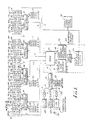
- Fig. 1 depicts a schematic block diagram of a computer information processing device 2 (or computer animation production system) for processing digital image data.
- the computer animation production system 2 consists of two global area networks.
- the first global area network 4 communicates digital control information to seventeen information processing devices (workstations) 44, 46, 48, 50, 52, 54, 56, 58, 60, 62, 64, 66, 68, 70, 72, 74 and 77) (44-77).
- Control information includes database information managed by a Database Management System 20 within Animation Logistics System 23 which is dedicated to both the first and second global area networks (4, 6, 8, 10, 12 and 14).
- the database of the Animation Logistics System 23 is a relational database stored on magnetic disk drive(s) 21.
- the Animation Logistics System 23 improves overall system efficiency by coordinating the production work at the distributed workstations 44-77 and providing control information to the workstations 44-77.
- the Animation Logistics System 23 in the preferred embodiment performs the following functions:
- the Animation Logistics System 23 is the "backbone" of the computer animation production system 2 since it provides control over an enormous amount of digital image data and database information.
- the second global area network provides a series of high speed buses 6, 8, 10, 12 and 14 for the transfer of digital image data to and from workstations 44-77.
- the second global area network 6, 8, 10, 12 and 14 links together to a series of storage units 17, 19, 28, 30, 32, 34, and 35 which together maintain approximately 1.25 million mega bytes of data.
- the storage units consist of optical disk 17, high capacity tape drive 19, and disk cluster locations 28, 30, 32, 34 and 35.
- the Animation Logistics System 23 keeps track of the storage allocation on each of these storage units.
- the Animation Logistics Systems 23 includes Slave 22 for performing archival storage operations for the optical disk or "jukebox” 17 and high capacity tape drive(s) or "jukebox” 19, both for storing large amounts of digital image data for long periods of time. More particularly, the high capacity tape drive(s) 19 is used for backups (i.e. in case of power loss, loss of equipment or human error) and for access of digital image data not currently stored on the disk clusters 28, 30, 32, 34 and 35. Tape drive(s) 19 is also used as a secondary data storage device for files that are not currently accessed as often as those files presently on the disk clusters 28-30, 32, 34 and 35.
- storage requirements for tape drive(s) 19 are in the range of several hundred gigabytes to a terabyte of data.
- the files on tape drive(s) 19 consist of a mix of ASCII files and compressed binary image data files.
- Optical disk(s) 17 also involves a high volume of archival image data storage.
- optical disk(s) 17 is a write-once disk system which maintains finished scenes for future reference.
- the files stored on the optical disk also consist of a mix of ASCII files and compressed binary data files, with similar storage data requirements as the tape drive system 19.
- Both forms of archival storage i.e. tape drive(s) 19 and optical disk(s) 17 perform an extremely valuable function in preserving the finished animation film product against loss or damage.
- the Animation Logistics System 23 is responsible for archiving all of the information needed to make finished products as well as maintaining a record of the location of all of the image data stored on either form of archival storage. (See Section III).
- Each high speed bus 6, 8, 10, 12 and 14 of the second global area network is coupled to a parallel disk controller 42, 40, 38, 36 and 43 which acts as a local area network coordinating access to each of the disk clusters 28, 30, 32, 34 or 35.
- Each disk cluster 28, 30, 32, 34 and 35 preferably consists of 16 disk drives having a total storage capacity of 16 gigabytes of digital image data.
- the preferred embodiment of the parallel disk controller is a "Strategy 1TM" disk controller sold by Maximum Strategy, Inc., 160 East Virginia Street, San Jose, California 95112, and a user's manual entitled "Strategy 1--File Access Controller" is herein incorporated by reference.
- parallel disk controllers 42, 40, 88, 36 and 43 are capable of transferring data at a rate of up to four times the speed of a normal disk controller, by reading and writing to four of the sixteen disks of a particular cluster in parallel. Since the data transfers are very efficient and do not take long to complete, up to five workstations can operationally share a single parallel disk controller and its associated disk cluster. The disk space available in a cluster provides an abundance of disk capacity for the associated workstations. It is envisioned that the disk clusters will be utilized for scenes that are currently being accessed or those scenes anticipated to be accessed. More particularly, the scenes that are anticipated to be accessed are prefetched and stored on the appropriate clusters in anticipation of a particular workstation needing to access the digital image data.
- the parallel disk controller enables the associated workstations to communicate in terms of logical blocks rather than physical disk parameters such as cylinders, tracks and sectors. This strategy relieves the user and the workstation of the burden of dealing with lower level access details including logical to physical block mapping, block management and data error recovery.
- the image data is sent to the parallel disk controller associated with the requesting workstation and stored in the local disk cluster first.
- the parallel disk controller creates a copy of the digital image data and sends it to the requesting workstation.
- Other workstations connected to the parallel disk controller may have access to the requested digital image data after the requesting workstation has completed its present task.
- Single frame video system 24 inputs artwork (i.e., backgrounds and character sketches) into the computer animation production system 2 by scanning the artwork and converting it into digital image data.
- the digital image data is sent by the first global area network 4 to a digitizing camera check workstation where a user cleans up the digitized images if necessary, etc. (See Section II).
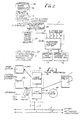
- FIG. 2 an alterate architecture for the computer animation production system 2 of Fig. 1 is depicted.
- Workstation 44, a parallel disk controller 38, and disk cluster 28 are shown connected to high speed bus 12 of the second global area network.
- the coordination of archival storage 22 of digital image data and the digital control database 20 are merged into one super-computer labeled Animation Logistics System 22, 20.
- Both the first 4 and second 12 global area networks are connected to the Animation Logistics System 22, 20.
- the operation of the Animation Logistics System 22, 20 is precisely the same as the Animation Logistics System 23 (Fig. 1) discussed above, however, only one computer system instead of two performs both the archival storage operations and database control functions.
- optical disk 19 and cartridge tape 17 are both attached to Animation Logistics System 22, 20 for storing both digital image data and control database information.
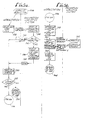
- each of the 17 workstations (44-77) comprise the same components as the workstation to be described and as shown in Fig. 3.
- workstation 44 is coupled to both the first 4 and second 12 global area networks.
- the first global area network 4 communicates digital control information to workstation 44
- the second global area network 12 separately communicates digital image data to workstation 44.
- Workstation 44 consists of an image processor 76 and a host computer 78. Attached to image processor 76 is an image display 200 for displaying artwork and completed animation. Coupled to host computer 78 is control information display 202, keyboard 206 and mouse 204.
- a disk drive 140 for retaining operating system software (preferably a Unix operating system), local application software and database information received from the database 20 of the Animation Logistics System 23.
- Mouse 204, keyboard 206, and graphics tablet 203 enable a user at the workstation to communicate with host computer 78 by manipulating information on the control information display 202. Updating exposure-sheets, requests for digital image data, etc., are made by keyboard 206, mouse 204 or graphics tablet 203.
- image processor 76 is a Pixar Image Computer by Pixar Inc., San Rafael, California 94913, which is designed to accommodate pixel digital image data.
- Four color pixels are stored as four 12-bit quantities, one for red, green, blue and alpha "channels" of a picture. Together, these four channels define the color (RGB) and transparencies (alpha) of any particular pixel location in memory.
- the images are stored on the local disk cluster 28, 30, 32, 34 or 35.
- the host computer 78 is either a Sun Series 3, Silicon Graphics Iris 3100 series or a Dec micro VAXII/Ultrix system.
- the host computer coordinates all communications with the first and second global area networks 4 and 12, all interfacing with the user via keyboard 206, mouse 204, graphic tablet 203, and at disk drive 140.
- Each workstation is capable of performing any of the following tasks:
- the digitizing camera check workstation capability enables the user to correct digitized images by correcting color edges, etc. More particularly, areas not fully enclosed within lines are closed. Smudges are removed and cleaned-up frames are sent via one of the second global area network's high speed buses 6, 8, 10, 12 or 14 to a local disk cluster 28, 30, 32, 34 or 35. Character sketches are assumed to be black and white line drawings, pencil or ink, on standard animation paper. Backgrounds are assumed to be standard color background paintings, generally designed for scanning. Those skilled in the art are readily familiar with the various types of apparatus and techniques for digitizing and scanning artwork.
- the cel coloring capability of the workstation enables a user to change the color of lines and fill in areas with arbitrary colors selected from a customized palette.
- the history of fills and touchups to each frame is saved in order to automatically repaint the artwork at a later time should the colors be redesigned.
- the image compositing capability of the workstation enables the system to wipe, pan, truck, cross dissolve and fade. Additionally, filters for focusing, fogging, diffusion, and tinting can also be applied. This capability is driven by an exposure sheet (see Section III) which is generated by the scene planning capability of the workstation. More particularly, the scene planning capability enables the user to construct and update exposure sheets. Additionally, multiplaning can be implemented with controls for smooth interpolation of resizing, rotation, shearing and translation on individual levels.
- the background painting capability of the workstation is designed for enabling the user to pan large backgrounds and paint desired areas. This capability includes painting brushes of different sizes and shapes, transparency, different styles of painting (including "airbrush,” smear and blur), screens, lines, area clears and fills, palette control, picture storage and retrieval, cut and paste, magnification and cursor control.
- the color modeling capability of the workstation enables a user to design palettes for use in the cel coloring and background painting capabilities. Individual colors can be mixed from the primaries (red, green and blue) or from the perpetual parameters (hue, saturation, and value). Palettes are designed by assigning desired colors to the desired locations in the palette. This capability enables the painter to capture desired colors as if he were painting with real oils. Layout capability enables the user to plan action: movement of characters over backgrounds, camera pans and zooms.
- each workstation will have several other capabilities, but for purposes of explaining the present invention, these capabilities need not be discussed.
- each workstation acts as a mini-production house with all of the capabilities of a traditional studio and more. In this way, the processing power of the computer animation production system 2 is dispersed along the first and second global area networks at workstations 44-76.
- Animation Logistics System 23 Due to the relative importance of the Animation Logistics System 23 (Fig. 1), a more detailed discussion of the pertinent functions and database content of the Animation Logistics System 23 is now presented. Recall that the Animation Logistics System 23 forms the "backbone" of the computer animation production system 2 for efficiently coordinating and controlling the entire production of feature-film animation. Earlier, a partial list of specific functions of the Animation Logistics System 23 was presented:
- Animation Logistics System 23 includes all of the functions that interactively allow an administrator or supervisory person to establish or change the production priorities in the computer animation production system 2.
- the Animation Logistics System 23 maintains a separate Production Management Database which maintains all information needed to produce management reports detailing the exact production status on each scene and on the production as a whole. The following is a partial listing of the information maintained for each scene:
- the information is structured in a table format in the form of a relational database.
- a relational database enables users to perform powerful relational operations to retrieve and manipulate data in the Production Management Database. For example, a "SELECT" operation can be performed to retrieve progress information on all scenes associated with a particular production. In this way, status information on the production can be retrieved and a report on the progress of each scene can be generated.
- the File Tracking Database provides the location of digital image data for each scene stored on disk cluster locations 28, 30, 32, 34 or 35. Each disk cluster is preferably separated into four volumes and each volume has a separate cluster volume directory associated with it.
- the File Tracking Database maintains the cluster and volume location for each image data file on the system. Normally, to perform a search of a particular cluster for a given scene, up to four accesses to the cluster directories would be necessary to locate the given scene. Whereas, the File Tracking Database would only require one access to locate the requested scene.
- the File Tracking Database and the Production Management Database together keep track of the location of image data, along with the status of each scene in the system (e.g., whether it has been digitized, colored, cut into a story reel, etc.). As stated earlier, this information can be delivered to the supervisory personnel in the form of a printed report.
- Each entry on the Production Management Database corresponds to one or more scene databases which contains all of the information related to a scenes' organization and its informational content.
- the scene database contains all the information required to access any of the files associated with a particular scene including exposure sheets, binding lists, scene composite databases and tests.
- Exposure sheets contain the bulk of information regarding a single scene: items such as fielding, timing, motion, special effects, cel order, etc. They are organized in the scene database reflecting the structure of the production, that is, they are retrieved by the production, sequence and scene numbers.
- the binding list denotes the specific artwork version associated with each artwork designator listed in the exposure sheet. For example, there may be three different versions of a particular piece of artwork for the character, "Basil.”
- the binding list designates which version of "Basil” should be retrieved when the actual digital image data is obtained from memory storage (i.e. disk cluster, archival storage, etc.).
- a separate database called the scene composite database links the appropriate binding list to an exposure sheet so that the proper version of the characters, etc., is shown in the appropriate order and sequence.
- test is a "dry run” of a scene (a trial of the animation) which is established by merging the exposure sheet and binding list together.
- the result of the test is saved in storage in the form of a composite digital image datafile.
- the Animation Logistics System 23 also maintains an Archival Production Management Database (Archival Database) in the form of a relational database.
- the Archival Database keeps track of all files which are stored on optical disk 17 or high capacity tape drive 19 for temporary or long-term storage.
- a partial listing of the information stored in the Archival Database is the following:
- Items 5, 6, and 7 constitute the name and location of stored digital image data in either archival memory device 17 or 19.
- the Animation Logistics System 23 updates the Archival Database to insure that the archived files are properly tracked.
- Animation Logistics System 23 also maintains a Worklist Database in the form of a relational database for providing production workflow.
- the production of an animated feature can be thought of as a pipeline, where the work to be performed generally proceeds from one area to another in a fixed sequence. The order is not always rigid, however; often a scene will have to be returned to a previous stage to be redone.
- the worklist provides an organization for which the users are provided work assignments for particular scenes, etc.
- the database for a partial list of the information stored in the worklist includes:
- Relational operations i.e. SELECT operations, etc.
- SELECT operations can be performed to retrieve worklist information regarding desired scenes of particular productions.
- a locking mechanism will prevent more than one user from simultaneously trying to update the same worklist.
- Animation Logistics System 23 allows the files to be accessed in one of three ways:
- a user may wish to acquire a scene database file and the related image data files without affecting the contents of the files. For example, the user may wish to perform a test, look at frames, or perform other operations which do not affect the contents of the file.
- "read-only" permission status is made available which enables a user to obtain a particular scene database file without being able to alter or add to the contents of the file.
- a copy of the file is made available to the requesting user and this copy is not allowed to be returned to storage.
- the Animation Logistics System 23 does not track the number or location of the "read-only" copy because it will not alter the contents of the original file; it will eventually be deleted. For a more detailed discussion, see Section IV(m).
- the work for a particular scene will be divided among several users of different workstations simultaneously (e.g., digitizing, camera, background, etc.).
- a special set of rules is devised to allow the workstations to share the scene database file.
- the method envisioned enables each user to have a particular portion of the scene database file with "read-write" permission status to affect only their own particular portion of the scene file. This arrangement is known as "limited read-write" permission status.
- the updated portions of the scene database file and image data files will be returned and merged with one another to form newly updated scene database and image data files.
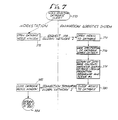
- FIG. 4 a flow diagram entitled USER INTERACTION is shown for detailing the overall sequence of operations necessary for retrieving and returning scene database files and image data files.
- the oval shaped blocks depict subroutine calls which are more fully depicted in accompanying Figures.
- the routine WORK SELECTION (Fig. 5) (see Section IV(b)) is called to determine the production, sequence, and scene numbers (or identification) associated with a particular scene the user wishes to work on.
- the ACCESS ARBITRATION routine Figs. 8a and 8b
- Section IV(e) is called to determine whether anyone else on the computer animation production system 2 currently has access to the requested scene.
- the ACCESS ARBITRATION routine (Figs.
- the scene database contains all of the information about a particular scene including the computer exposure sheets, binding lists, scene version lists, tests, etc. (see Section III).
- the SCENE DATABASE ACQUISITION routine (Fig. 9) determines the location of the scene database file, obtains a copy of the file, and moves it to the local disk drive 140, 142, 144, 146, 148, 150, 152, 154, 156, 158, 160...174 associated with the requesting workstation 44-76.
- the digital image data associated with the scene database is retrieved by the routine IMAGE DATA ACQUISITION (Fig. 10) (see Section IV(g)) at block 310.
- the IMAGE DATA ACQUISITION routine locates the digital image data file associated with the scene database file and, if needed, moves the image data to the disk cluster 28, 30, 32, 34 or 35 associated with the requesting workstation 44-76. When the digital image data resides at the local disk cluster, a copy of the image data file is made and sent to the requesting workstation. The user can make enhancements to the image data at his workstation during the DATA ENHANCEMENT routine (Fig. 14) (see Section IV(k)) during block 312.
- a determination on whether the user needs to acquire additional image data files for enhancement purposes is made. If the user wishes to continue, then processing continues at blocks 310, 312 and 314 until the user specifies that he/she is finished obtaining and updating image data. Assuming that the user does not wish to continue "cycling", processing continues at block 316, during which the ACCESS RELEASE routine (Figs. 15a, 15b, and 15c) (see Section IV(c)) is called.
- ACCESS RELEASE routine (Figs. 15a, 15b and 15c) is for releasing access and returning both the scene database and the image data files which have been currently opened.
- processing continues to block 302.
- the user has the opportunity to restart the entire process of acquiring, using, and returning scene database files and related image data files. If the user does not wish to continue, the process simply halts and waits for the next command by the user.
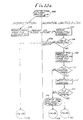
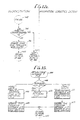
- FIGs. 6a and 6b a detailed discussion of the WORKLIST ACQUISITION routine referenced in the WORK SELECTION routine (Fig. 5) at block 322 is now presented.
- Figs. 6a and 6b are separated into two portions.
- the left-hand side of the flow chart depicts processing at the requesting workstation, and the right-hand side of the flow chart shows processing at the Animation Logistics System 23.
- Lines in between both sides show flow of communications over the first or second global area networks. Dotted lines mean that the particular path shown is optional pending the outcome of a particular block.
- the user at the requesting workstation sends a worklist request along with the host computer's and user's identification.
- the requestor's credentials are received by the Animation Logistics System 23.
- the Animation Logistics System 23 determines whether the host and user's identification are valid. If, for example, the user is not an authorized user of the system, then processing continues at block 344, during which a "invalid" message is sent back to the workstation over the first global area network 4 (Figs. 1 and 3).
- the "invalid" message is received by the workstation 44-77. Assuming that the requestor's credentials are valid, processing continues at block 346 during which a worklist is built for the requesting user.
- a "done” message is returned to the requesting workstation.
- the "done” message is received by the workstation, and during block 352 the workstation determines if the status returned by the Animation Logistics System 23 is "done.” If the status returned was an "invalid” message, processing returns with an error message to the WORK SELECTION routine (Fig. 5) at block 328. An error message is returned because something unusual has occurred--the user's credentials are invalid.
- processing continues to block 356 and to Fig. 6b at block 358.
- the location of the worklist file associated with the requesting user is determined.
- a worklist is copied by the requesting workstation and sent to the local disk drive associated with the work station.
- This step incorporates block 362 during which the operating system of the Animation Logistics System 23 coordinates processing over the first global area network 4 to transfer the worklist file to the requesting workstation.
- the retrieved worklist is displayed to the user at the workstation.
- processing returns to the WORK SELECTION routine (Fig. 5) at block 328.
- the user presents his query in the form, for example, of an SQL "SELECT" operation at the requesting workstation. This step effectively opens access to the Production Management Database or any of the other databases located on the system.
- the request is sent via the first global area network 4 and at block 374 the Animation Logistics System 23 receives the query.
- the specified relational operation is performed according to the user's search criteria.
- the results of the search are assembled into a table which provides the production, sequence, and scene numbers and other information for those scenes which match the search criteria.
- ACCESS ARBITRATION routine (Fig. 8a and 8b) verifies whether the user can be granted access to the scene database by evaluating the permission levels associated with the user and the scene database. Earlier, the permission levels were stated to be:
- Processing begins at the user's workstation at block 382, during which the permission level of the user is determined according to the operation the user wishes to perform.
- the identificational requested scene database along with the user's permission level are sent over the first global area network to the Animation Logistics System 23 and, during block 386, the user's credentials are received by the Animation Logistics System 23.
- a determination is made on whether the user's credentials are valid. If the user has invalid credentials, during block 390 an "invalid" message is returned over the first global area network 4. The "invalid" message is received by the requesting workstation at block 428 (Fig. 8b). Assuming that the user's credentials are valid, processing continues at block 392.
- the Production Management Database is searched to determine whether the requested scene is stored in a row of the database. Assuming that scene is stored on the Production Management Database, the File Tracking Database is searched to determine if the requested scene database files are stored in one or more of the disk clusters 28, 30, 32, 34 or 35. Assuming that the requested scene database is not at any of the disk clusters 28, 30, 32, 34 or 35, then processing continues at block 394. During block 394, a search of the Archival Production Management Database is performed to determine if the requested scene database has been archived. If the scene database has not been archived, then during block 396 an "unknown" message is returned to the workstation at block 428 (Fig. 8b).
- an "archived” message is returned to the workstation at block 428 (Fig. 8b).
- the user can then separately initiate the ARCHIVAL STORAGE MANAGEMENT routine (Fig. 17) (see Section IV(n)) to move the desired scene database file from the particular archival media (tape drive 19 or optical disk 17) to the local disk cluster 28, 30, 32, 34 or 35 associated with the user's workstation 44-76.
- the ARCHIVAL STORAGE MANAGEMENT routine Fig. 17
- Animation Logistics System 23 determines if the user's permission level is "read-only status.” The Animation Logistics System 23 determines the status of the requested scene database file by referring to the "lock" status of the scene database entry in the Production Management Database. Assuming that the permission level requested is read-only status, processing continues to block 402 during which a "granted" message is returned to the workstation at block 428 (Fig. 8b).
- the Animation Logistics System 23 determines whether the scene database file is "locked” due to another user having access to the scene database file with read-write status. Recall that if a scene database file is "locked,” the database cannot be changed by any user other than the read-write user who currently has access to it; nothing may be added or deleted from the scene database file. Therefore, if the scene database file is presently being accessed by someone who has read-write status, processing continues at block 404 during which a "not available" message is returned to the requesting workstation at block 428 (Fig. 8b). If the scene database file is not presently locked, then processing continues at block 410 (Fig. 8b).
- a determination of whether the scene database file is currently being accessed by another user under "limited read-write" status is made. If the scene database file is currently locked under the limited read-write status, processing continues at block 412 during which a determination on whether the requesting user has limited read-write status is made. Assuming that the requesting user does not have limited read-write status, then during block 414 a "not available" message is returned to the user's workstation at block 420. However, if the requesting user has limited read-write status, then processing continues at block 416. During block 416, a determination is made on whether the user wishes to access portions of the scene database file which are already accessed by another limited read-write user.
- a message "not available" is returned to the user's workstation at block 428.
- Information on which users currently have access is also provided.
- a "limited read-write granted" message is returned and received by the user's workstation at block 428.
- processing continues at block 422.
- a determination on whether the requesting user has read-write status is made. If the user does not have read-write status, then during block 424 a "bad request" message is returned to the requesting workstation at block 428.
- a "bad request” message occurs because the user has limited read-write status, however, the scene database does not have limited read-write status.
- There is an inconsistency in the way the scene database is set up and in the permission level of the user. The only way a user with limited read-write status can obtain a scene database file is if the scene database is also set up with limited read-write status. The scene database was not previously "locked” into limited read-write status by the supervisor to enable the user with the same status to obtain the file.
- the "bad request” message will inform the user to take appropriate actions to have the file locked properly.
- processing continues at block 426 during which a "read-write-granted" message is returned to the requesting workstation at block 428. Processing returns at block 438 to the USER INTERACTION routine (Fig. 4) at block 306.
- This step involves the step of transferring the requested scene database from the Animation Logistics System 23 to the local disk cluster 28, 30, 32, 34 or 35 associated with the requesting workstation 44-77 over the global area network during block 448. Then during block 450, a determination of whether any more scene database files are required is made. If more scene database files are necessary, then processing continues at blocks 442, 444, 446, 448 and 450 until all of the required scene database files have been retrieved. Assuming that no more scene databases need to be accessed, then processing returns during block 452 to the USER INTERACTION routine (Fig. 4) at block 310.
- IMAGE DATA ACQUISITION routine referenced during the USER INTERACTION routine (Fig. 4) at block 310 is now presented.
- the purpose of this routine is for determining location and acquiring image data files associated with the scene database files.
- identification for the image data files associated with the selected scene database file are determined.
- the routine ACQUIRE FILE FROM LOCAL DISK CLUSTER (Fig. 11) (see Section IV(h)) is called.
- This routine checks the local disk cluster 28, 30, 32, 34 or 35 associated with the workstation 44-76 to determine if the image data file requested resides there.
- the IMAGE DATA ACQUISITION routine checks the local disk cluster first because in the majority of circumstances the requested image data file will have been previously saved on the local disk cluster in anticipation of the workstation's request. For a more detailed discussion, see Section III.
- a determination of whether the image data file was found is made. Assuming that the image data file cannot be found on the local disk cluster, then processing continues at block 462. During block 462, the ACQUIRE FILE FROM REMOTE DISK CLUSTER routine (Figs. 12a, 12b and 12c) (see Section IV(f)) is called to search the remaining disk clusters for the requested image data file. At block 464, a determination is made on whether the requested image data file had been found. Assuming that the image data file cannot be found on the remote disk clusters, then during block 466 a system error is returned to the user indicating that the requested image data file is not presently on any of the disk clusters 28, 30, 32, 34 or 35.
- the requested image data file may reside on one of the archival storage devices. If the file does not exist on the archival storage, then it probably never existed.
- the ARCHIVAL STORAGE MANAGEMENT routine (Fig. 17) may be separately initiated by the user to retrieve the image data file from archival storage (see Section IV(n)).
- processing continues at block 468.
- block 468 a determination is made on whether additional image data files need to be located and retrieved. Assuming that additional image data files are needed, then processing continues at blocks 456, 458, 460, 462, 464, 466 and 468 until all of the required image data files are obtained. This scenario may occur, for example, when the user requests a "test" performance of the images associated with a particular scene database file. According to the exposure sheets and the binding list, the appropriate image data files will be obtained to assemble an entire scene.
- Each workstation attached to a local disk cluster has a private directory associated with at least one of four separate partitions or volumes of the cluster.
- the disk clusters 28, 30, 32, 34 or 35 contain four partitions, however, the disk clusters can be partitioned as many times as logically feasible.
- the workstation will identify the disk cluster volume associated with the workstation to begin searching. Each volume contains the following subdirectory of information for each file:
- processing continues at block 482.
- a copy of the requested image data file is transferred from the local disk cluster to the requesting workstation.
- a "found" message is returned to the IMAGE DATA ACQUISITION routine (Fig. 10) at block 460.
- the ACQUIRE IMAGE FILE FROM LOCAL DISK CLUSTER routine (Fig. 11) is unsuccessful, the ACQUIRE IMAGE FILE FROM REMOTE DISK CLUSTER routine (Figs. 12a, 12b and 12c) is called to retrieve the requested image data file from a remote cluster location 28, 30, 32, 34 or 35 and deliver it to the local cluster associated with the requesting workstation 44-77.
- the requesting workstation initiates the formal request for acquiring the specified image data file as well as other information including the user and workstation identification.
- the request is sent over the first global area network 4 to the Animation Logistics System 23 and is received at block 502.
- the Animation Logistics System 23 determines if the credentials of the user's and workstation's identification are valid. If the credentials are invalid, then an "invalid" message is returned and received by the requesting workstation at 540 (Fig. 12b). Assuming that the requestor's identification is valid, then processing continues at block 508.
- the Animation Logistics System 23 searches the File Tracking Database for the location (cluster and volume identification) of the requested image data file.
- the requested image data file will be indexed by the File Tracking Database.
- processing continues to block 512 during which the Animation Logistics System 23 verifies that the image file actually exists at the location specified by the File Tracking Database. This procedure is provided as a safeguard for insuring that the File Tracking Database is currently up-to-date.
- block 514 a determination on whether the requested image data file exists at the specified location is made. Assuming that the requested image data file does not exist at the specified location, processing continues at block 516, during which the SEARCH EACH DISK CLUSTER DIRECTORY routine (Fig. 13) is called (as discussed above). However, assuming that the requested image data file does exist at the specified location, processing continues to block 521 and then to block 528 (Fig. 12b).
- a copy of the requested image data file will be made if the image data file is presently being accessed, or the image data file will be moved entirely to the local cluster associated with the requesting workstation if no workstation is currently working with the image data file. This process reduces unnecessary image file duplication and provides a natural migration of the image data files to clusters where they are needed.
- a determination on whether the transfer is complete is determined. If the transfer is not complete, then an "error" message is returned to and received by the workstation at block 540. However, assuming the transfer is complete, then processing continues at block 534.
- the File Tracking Database will be updated with the new location (cluster and volume numbers) of the image data file.
- the Animation Logistics System 23 returns a "complete" message to the requesting workstation over the first global area network. Processing continues at block 542 and to block 544 (Fig. 12c).
- the workstation determines whether the file has been located and transferred. If, for some reason, the file has not been both located and transferred, processing will continue at block 550 during which a "not found" message is returned to the IMAGE DATA ACQUISITION routine (Fig. 10) at block 464.
- processing continues at block 546, during which the ACQUIRE IMAGE FILE FROM LOCAL DISK CLUSTER routine (Fig. 11) (see Section IV(h)) is called to obtain the image data file from the local cluster.
- processing continues at block 540 during which processing returns to the IMAGE DATA ACQUISITION routine (Fig. 10) at block 464.
- Fig. 13 is a flow diagram of the SEARCH EACH CLUSTER VOLUME DIRECTORY routine which was referenced during the ACQUIRE IMAGE FILE FROM REMOTE DISK CLUSTER routine (Figs. 12a, 12b and 12c) at block 516.
- a search scenario is selected. More particularly, because a search of the volume directories associated with the local disk cluster were previously performed by the ACQUIRE IMAGE FILE FROM LOCAL DISK CLUSTER routine (Fig. 11), there is no reason to search these directories again. Therefore, the search will be devised so that only the volume directories for the remaining clusters will be searched. Processing continues at block 556, during which the first disk cluster directory to be searched is selected.
- one of the four volumes of the selected disk cluster is chosen.
- a search is performed on the cluster volume directory for the requested image data file.
- a determination on whether the digital image data file is located on the current cluster volume directory is made. Assuming that the digital image data file is not located on the present cluster volume directory, then processing continues at block 564.
- processing will continue from block 564 to block 566, during which a determination is made on whether any other disk cluster 28, 30, 32, 34 or 35 of the computer animation production system 2 should be searched.
- processing continues at blocks 556, 558, 560, 562, 564, 566 until the requested image data file is found or until all of the volume directories of each of the clusters 28, 30, 32, 34 or 35 have been searched. Assuming that all of the disk clusters 28, 30, 32, 34 or 35 have been searched and the image data file is not found, processing continues at block 570, during which a "not found" message is returned to the ACQUIRE IMAGE FILE FROM REMOTE DISK CLUSTER routine (Figs. 12a, 12b and 12c) at block 518. Eventually, the "not found” message works its way back to the IMAGE DATA ACQUISITION routine (Fig.
- a system error is returned to the user as discussed earlier in Section IV(g).
- the system error indicates that the digital image data file is not present on any one of the disk clusters.
- the user of the system will be alerted of the system error and may retrieve the digital image data file from archival storage by initiating the ARCHIVAL STORAGE MANAGEMENT routine (Fig. 17) (see Section IV(n)), assuming that the file actually exists.
- Fig. 14 is a flow diagram of the DATA ENHANCEMENT routine referenced during the USER INTERACTION routine (Fig. 4) at block 312.
- the digital image data to be enhanced is loaded into the image processor 76 (Fig. 3) of the workstation 44 (Fig. 3).
- any one of the various capabilities of the workstation is initiated including cel coloring, image compositing, color modeling, scene planning, layout design or background painting (see Section II).
- a determination on whether the enhancements should be saved is made. Enhancements would be saved in a disk file space in the cluster volume currently not previously allocated to the user. Assuming that the enhancements are not going to be saved, then processing continues at block 586.
- the image data which has been enhanced is deleted.
- processing continues at block 580.
- the scene database files are updated to reflect the current status of the scene.
- the new version of the image data file is saved on the local disk cluster and at block 584, processing returns to the USER INTERACTION routine (Fig. 4) at block 314.
- Figs. 15a, 15b and 15c depict a flow diagram of the ACCESS RELEASE routine referenced during the USER INTERACTION routine (Fig. 4) at block 316. This routine assures that scene database files and image database files are not improperly saved or improperly deleted.
- the user determines which scene database files and their associated image data files need to be returned. Then, during block 594, a copy of the scene database files are transferred to the Animation Logistics System 23 (more particularly, to disk drive 21) which is coordinated by the operating system of the computer animation production system 2 at block 596. Then, during block 598, the workstation requests that the access rights to the scene database files be removed.
- the host's and user's identification along with the release access request are sent over the first global area network 4 to the Animation Logistics System 23 and received by it at block 600. During block 602 the identification credentials are checked. If the credentials are invalid, then an "invalid" message at block 604 is returned to the workstation via the first global area network 4.
- processing continues at block 606.
- a determination on whether the request is valid is made. This step is performed to ensure that the requested release properly operates on valid files. For example, if the scene database files are being returned by a user who does not exist, then a "bad request" message is returned at block 608. However, assuming that the request is valid, processing continues at block 612 and then to block 616 (Fig. 15b).
- a complete list of the scene database files to be returned is tabulated.
- Processing continues at block 620, during which a determination on whether any more scene database files need to be processed is made.
- processing continues at blocks 618 and 620 until all of the specified scene database files are returned. Assuming that no more scene database files need to be returned, then processing continues at block 622. During block 622, the entries corresponding to the returned scene database files on Production Management Database are updated by removing all locks on the returned scene database files. Processing continues at block 626 during which an encoded result "success" is formulated and is sent to the workstation by the first global area network 4 at block 628. After the return operation has been completed and the "done" message is sent to the workstation, processing occurs concurrently at both the workstation and the Animation Logistics System 23 as shown by Fig. 15c.
- the workstation removes all of the original copies of the scene database files currently stored on the local disk 140-174. Earlier, copies of the scene database files were made and sent at block 594 to the Animation Logistics System 23. Now that the scene database files have been returned, there is no reason to continue to retain additional copies of the files at the local disk 140-174. Additionally, at block 634, all image data files associated with the released scene database files which were created or enhanced under read-only status are deleted from the local cluster. The read-only image data files are only copies of the original file which do not have to be saved. At block 636 processing returns to the USER INTERACTION routine (Fig. 4) at block 302.
- the Animation Logistics System 23 at blocks 638 and 640 performs a series of backup operations. Specifically, at block 638, a copy of the modified scene database files are stored in an alternate memory area (no shown). Additionally, at block 640, any locks that may have been associated with the scene database are removed from the corresponding entry of the Production Management Database in the alternate memory. At block 636, processing also returns to the USER INTERACTION routine (Fig. 4) at block 302.
- Fig. 16 is a flow diagram of the RETURN SCENE DATABASE FILE routine referenced during the ACCESS RELEASE routine (Figs. 15a, 15b and 15c) at block 618.
- a determination of the permission level associated with the user is made. Assuming that the user has a permission level status of "read-write", processing continues to block 648.
- the original scene database file is replaced with the new and modified scene database file returned during block 594 of the ACCESS RELEASE routine (Figs. 15a, 15b and 15c).
- the File Tracking Database is updated with the new cluster and volume locations of the modified image data files associated with the returned scene database files.
- the file returned during block 594 of the ACCESS RELEASE routine (Fig. 15a, 15b and 15c) will be deleted during block 650.
- any user may request files on a "read-only" permission level in order to perform test composites, look at frames, or other operations that will not affect the content of the production file.
- the read-only scene database file copies are returned, there is no reason to store them and, therefore, they are deleted.
- the permission level of the user is determined to be limited read-write at block 646, then during block 652 the additional or updated portions of the modified scene database file will be appended or updated to the original scene database file.
- Processing will continue at block 653, during which the File Tracking Database is updated with the cluster and volume locations of the modified image data files associated with the returned scene database files. Regardless of the permission level status of the user, processing will continue from blocks 649, 650 or 653 to block 654, during which processing returns to the ACCESS RELEASE routine (Figs. 15a, 15b and 15c) at block 620.
- Fig. 17 is a flow diagram of the ARCHIVAL STORAGE MANAGEMENT routine which may be initiated by the user of a workstation during the ACCESS ARBITRATION routine (Figs. 8a, 8b and 8c) (see Section IV(e)).
- a determination is made on whether a requested segment of data (including one or more files or a scene (many files)) has been requested from archival storage or whether the segment of data will be stored to archival storage. Assuming that a request for the segment of data has been initiated, processing continues at block 660.
- the location of the requested segment of data is determined by referencing the Archival Production Management database.
- the archival medium type and the storage media identification are determined.
- processing continues at block 664 to obtain the requested segment of data from optical disk 17.
- processing continues at block 666, during which the requested segment of data is obtained from tape drive 19.
- processing will continue at block 668 during which the Production Management Database is updated with the requested data information.
- the requested segment of data is transferred over the second global area network to the local disk cluster of the requesting workstation.
- the associated parallel disk controller 36, 38, 40, 42 or 43 will attempt to place the new segment of data in the cluster associated with the requesting workstation.
- Another portion of the cluster may be used to handle the overflow by creating an addendum to the private directory associated with the requesting workstation. In either case, the directory associated with the workstation must be updated to reflect the new files stored there. Additionally, the File Tracking Database maintained by the Animation Logistics System 23 is also updated to reflect the cluster and volume locations associated with the new data segment. Processing returns to the calling program at block 670.
- processing continues at block 672.
- An assumption is made that the ARCHIVAL STORAGE MANAGEMENT routine (Fig. 17) has been called to store a file in archival storage.
- a determination is made on whether the data segment is being stored for a long term or short term. Assuming that long term archival storage is required, processing continues at block 674 during which the data segment is stored on optical disk 17. Long term storage for optical disks may last up to approximately 100 years, which is more than an adequate time frame for storing the file.
- Processing continues at block 676 during which the Archival Production Management Database is updated with the new archival file locations of the data segment information. Then during block 677, the stored data segment entries are deleted from the File Tracking Database to indicate that the stored file no longer exists on any cluster.
- processing returns to the calling program.
- processing continues at block 680 during which the data segment is stored on high capacity tape drive 19.
- a typical scenario requiring short term storage involves situations where a particular scene is not ready for further enhancements.
- the artwork is stored on tape 19 to free up space on the disk clusters.
- Processing continues at block 682 during which the Archival Production Management Database is updated to reflect the new file locations for the data segment.
- the stored file entries of the data segment are deleted from the File Tracking Database to indicate that the stored file no longer exists on any cluster. Processing returns to the calling program at block 670.
Landscapes
- Engineering & Computer Science (AREA)
- Theoretical Computer Science (AREA)
- Physics & Mathematics (AREA)
- General Physics & Mathematics (AREA)
- Multimedia (AREA)
- Data Mining & Analysis (AREA)
- Databases & Information Systems (AREA)
- General Engineering & Computer Science (AREA)
- Processing Or Creating Images (AREA)
- Image Processing (AREA)
- Controls And Circuits For Display Device (AREA)
- Computer And Data Communications (AREA)
- Control By Computers (AREA)
- Radar Systems Or Details Thereof (AREA)
- Warehouses Or Storage Devices (AREA)
- General Factory Administration (AREA)
Claims (47)
- Système de production d'images par ordinateur permettant à des utilisateurs d'accéder efficacement à des données d'image numériques et d'afficher, d'examiner, de développer et d'améliorer efficacement de telles données organisées sous la forme d'un fichier ou d'une pluralité de fichiers d'images, par l'intermédiaire d'une pluralité de dispositifs (44,46,...,74,77) de traitement d'informations, le système possédant un système logistique (23) pour mémoriser le ou la pluralité de fichiers d'images et maintenir des données de commande concernant le ou chacun des fichiers d'images, la pluralité de dispositifs de traitement d'informations (44,46,...,74, 77) ayant accès à des données de commande mémorisées dans le système logistique (23) par l'intermédiaire d'un premier réseau (4) couplant chaque dispositif de la pluralité de dispositifs de traitement d'informations (44,46,...,74,77) au système logistique (23), la pluralité de dispositifs de traitement d'informations (44,46,...,74,77) ayant accès aux fichiers d'images par l'intermédiaire d'un second réseau (6,8,10,12,14), caractérisé en ce que :
le second réseau (6,8,10,12,14) comprend une pluralité de bus indépendants de transmission de données à grande vitesse, dont chacun couple le système logistique (23) à des moyens formant contrôleur (36,38,40,42,43), les moyens formant contrôleur (36,38,40,42,43) servant à commander le transfert du fichier d'images ou de la pluralité de fichiers d'images entre le système logistique (23) et un dispositif de mémoire temporaire (28,30,32, 34,35) couplé à ce système, les moyens formant contrôleur servant également à commander l'accès au fichier d'images transféré ou à la pluralité de fichiers d'images transférés, mémorisés dans le dispositif de mémoire temporaire (28,30,32,34,35) parmi un sous-ensemble (par exemple 44,46,48,50) de la pluralité de dispositifs de traitement d'informations (44,46,...,74,77) couplés directement au dispositif de mémoire temporaire (38,30,32, 34,35) par l'intermédiaire des moyens formant contrôleur (36,38,40,42,43). - Dispositif selon la revendication 1, dans lequel le dispositif de mémoire temporaire (28,30,32,34,35) est un groupe de disques comprenant une pluralité d'unités de disques.
- Dispositif selon la revendication 2, dans lequel les moyens formant contrôleur comprennent un contrôleur de disques parallèle apte à accéder en parallèle à plus d'une unité de disques parmi la pluralité d'unités de disques du dispositif de mémoire temporaire.
- Dispositif selon la revendication 1, dans lequel le système logistique (23) comprend en outre des moyens formant mémoire d'archivage (17,19) servant à mémoriser le fichier d'images ou la pluralité de fichiers d'images et/ou les données de commande pendant de longs intervalles de temps.
- Dispositif selon la revendication 2, dans lequel les moyens formant mémoire d'archivage (17,19) sont constitués par une ou plusieurs configurations de disques optiques pour mémoriser le fichier d'images ou la pluralité de fichiers d'images et/ou les données de commande.
- Dispositif selon la revendication 2, dans lequel les moyens formant mémoire d'archivage (17,19) sont constitués par un ou plusieurs systèmes d'entraínement de bande de grande capacité pour mémoriser le fichier d'images ou la pluralité de fichiers d'images et/ou les données de commande.
- Dispositif selon la revendication 2, dans lequel l'information de commande comprend une information d'emplacement de fichiers d'archivage pour des fichiers d'images mémorisés dans les moyens formant mémoire d'archivage (17,19), et dans lequel le système logistique (23) comprend en outre des moyens (20) formant base de données de gestion de production pour maintenir l'information d'emplacements de fichiers d'archivage en tant que base de données d'archivage.
- Dispositif selon la revendication 5, dans lequel la base de données d'archivage est une base de données relationnelle pour associer l'information d'emplacements de fichiers d'archivage aux fichiers d'images mémorisés dans les moyens formant mémoire d'archivage (17,19).
- Dispositif selon la revendication 1, dans lequel chaque dispositif parmi la pluralité de dispositifs de traitement d'informations (44,46,...,74,77) est un poste de travail informatisé d'utilisateur permettant au moins à un utilisateur de développer, d'utiliser et d'améliorer le fichier d'images ou la pluralité de fichiers d'images et/ou l'information de commande associée au fichier d'images ou à la pluralité de fichiers d'images.
- Dispositif selon la revendication 1 ou 2, dans lequel l'information de commande inclut une information de production nécessaire pour produire des rapports de gestion de production, et dans lequel le système logistique (23) comporte en outre des moyens formant base de données de gestion (20) pour associer l'information de production à un ou plusieurs fichiers d'images en tant que base de données de gestion de production.
- Dispositif selon la revendication 10, dans lequel la donnée de base de gestion de production est une donnée de base relationnelle pour associer l'information de production au fichier d'images ou à la pluralité de fichiers d'images.
- Dispositif selon la revendication 1 ou 11, dans lequel l'information de commande comprend une information d'emplacements de fichiers pour chacun des fichiers d'images mémorisés dans un ou plusieurs des dispositifs de mémoire temporaire (28,30,32,34,35) et dans lequel le système logistique (23) comporte en outre des moyens (20) formant base de données de gestion pour maintenir l'information d'emplacement de fichier en tant que base de données de suivi de fichier.
- Dispositif selon la revendication 12, dans lequel la base de données de suivi de fichier est une base de données relationnelle pour associer une information d'emplacement de fichier au fichier d'images ou à chacun de la pluralité de fichiers d'images mémorisés dans les dispositifs de mémoire temporaire (28,30,32,34,35).
- Dispositif selon la revendication 1, 11 ou 13, dans lequel l'information de commande inclut une information de flux de travail de production pour le fichier d'images ou la pluralité de fichiers d'images et/ou l'information de commande, et dans lequel le système logistique (23) comprend en outre des moyens (20) de gestion de la base de données pour maintenir l'information de flux de travail de production en tant que base de données de liste de travail.
- Dispositif selon la revendication 14, dans lequel la base de données de la liste de travail est une base de données relationnelle pour associer l'information de flux de travail de production au fichier d'images ou à la pluralité de fichiers d'images et/ou à l'information de commande.
- Dispositif selon la revendication 14 ou 15, dans lequel le système logistique (23) réalise un arbitrage de l'accès au fichier d'images ou à chacun de la pluralité de fichiers d'images et à l'information de flux de travail de production qui leur est associée.
- Dispositif selon la revendication 16, dans lequel l'arbitrage exécuté par le système logistique (23) permet seulement au dispositif de traitement d'informations ou à seulement l'un de la pluralité de dispositifs de traitement d'informations (44,46,...,74,77) de mettre à jour le fichier d'images ou l'un de la pluralité de fichiers d'images et l'information de flux de travail de production, qui lui est associée, à un instant quelconque.
- Dispositif selon la revendication 16 ou 17, dans lequel l'arbitrage exécuté par le système logique (23) permet à un ou plusieurs dispositifs de la pluralité de dispositifs de traitement d'informations (44,46,...,74,77) d'obtenir une copie du fichier d'images ou de l'un de la pluralité de fichiers d'images uniquement pour exécuter une lecture seule.
- Dispositif selon la revendication 16, 17, 18, dans lequel l'arbitrage exécuté par le système logique (23) permet au dispositif de traitement d'informations ou à l'un de la pluralité de dispositifs de traitement d'informations (44,46,...,74,77) de mettre à jour une partie affectée du fichier d'images ou de l'un de la pluralité de fichiers d'images et une partie correspondante de l'information de flux de travail de production qui lui est associée.
- Procédé pour traiter efficacement des données d'images numériques, organisées sous la forme d'un ou de plusieurs fichiers d'images, moyennant l'utilisation d'un système de production d'images par ordinateur, le système de production comprenant un système logistique (23) pour la mémorisation et l'arbitrage de l'accès au fichier d'images ou à la pluralité de fichiers d'images et pour maintenir et coordonner l'accès à une information de commande associée au fichier d'images ou à chacun de la pluralité de fichiers d'images, une pluralité de postes de travail (44,46,...,74, 77) pour accéder, afficher et améliorer des images représentées par le fichier d'images ou la pluralité de fichiers d'images, le système logistique (23) étant couplé aux postes de travail (44,46,...,74,77) au moyen d'un premier réseau (4) pour transférer l'information de commande entre le système logistique (23) et le poste de travail ou la pluralité de postes de travail (44,46, ..., 74,77), et le système logistique (23) étant en communication avec les postes de travail (44,46,...,74,77) au moyen d'un second réseau (6,8,10,12,14) pour transférer le fichier d'images ou la pluralité de fichiers d'images entre les postes de travail (44,46,...,74,77) et le système logistique,
caractérisé en ce que :le second réseau comprend une pluralité de buses de transmission de données à grande vitesse (6,8,10,12,14), dont chacun accouple le système logistique (23) à des moyens formant contrôleur (36,38,40,42,43) pour commander le transfert de fichiers d'images entre le système logistique et un dispositif de mémoire temporaire (28,30,32,34, 35) couplé à ce système, et pour commander l'accès aux fichiers d'images transférés, mémorisés dans le dispositif de mémoire temporaire (28,30,32,34,35) parmi un sous-ensemble de la pluralité de postes de travail (par exemple 46-50) couplés directement au dispositif de mémoire temporaire (par exemple 28) par l'intermédiaire des moyens formant contrôleur (par exemple 36), ledit procédé comprenant les étapes consistant à :envoyer une première demande pour au moins le fichier d'images ou l'un de la pluralité de fichiers d'images à partir d'un poste de travail demandeur (par exemple 44) de la pluralité de postes de travail (44,46, ...,74,77) au dispositif de mémoire temporaire (par exemple 28) couplé directement au poste de travail demandeur (par exemple 44);si le au moins fichier d'images demandé est mémorisé dans le dispositif de mémoire temporaire (par exemple 28) couplé directement, transférer le au moins un fichier d'images demandé depuis le dispositif de mémoire temporaire (par exemple 28) couplé directement, au poste de travail demandeur (par exemple 44);si ce n'est pas le cas, envoyer une seconde demande pour le au moins un fichier d'images demandé depuis le poste de travail demandeur (par exemple 44) au système logistique (23) par l'intermédiaire du premier réseau (4);déterminer où, dans le système de production, est situé le au moins un fichier d'images demandé;si le au moins un fichier d'images demandé est situé dans le dispositif de mémoire temporaire ou l'un de la pluralité de dispositifs de mémoire temporaire (par exemple 30,32,34,35) non couplé directement au poste de travail demandeur (par exemple 44) :transférer, par l'intermédiaire du second réseau (6,8,10,12,14), le au moins un fichier d'images demandé, depuis son emplacement actuel dans l'un des dispositifs de mémoire temporaire (par exemple 30,32,34,35) non couplés directement, au dispositif de mémoire temporaire (par exemple 28) couplé directement; etenvoyer le au moins un fichier d'images demandé au poste de travail demandeur (par exemple 44). - Procédé selon la revendication 20, selon lequel l'étape de détermination de l'emplacement du au moins un fichier d'images demandé, dans le système de production, est réalisée par référence à l'information de commande conservée par le système logistique (23).
- Procédé selon la revendication 20, comprenant en outre les étapes consistant à :prévoir une base de données de suivi de fichier maintenue par un système (20) de gestion de la base de données du système logistique (23);maintenir des entrées dans la base de données et le suivi de fichier pour le fichier de mémoire ou l'un quelconque de la pluralité de fichiers de mémoire mémorisés dans le dispositif de mémoire temporaire ou dans la pluralité de dispositifs de mémoire temporaire (28,30,32,34,35), chacune des entrées spécifiant un emplacement du fichier d'images associé à l'entrée; etselon lequel l'étape de détermination de l'emplacement du au moins un fichier d'images demandé comprend en outre l'étape consistant à déterminer si le au moins un fichier d'images demandé est contenu dans l'un quelconque des dispositifs de mémoire temporaire non couplés (par exemple 30,32,34,35) par recherche de la base de données de suivi de fichier pour l'une des entrées associées ou au moins un fichier d'images demandé.
- Procédé selon la revendication 22, selon lequel l'étape consistant à déterminer où le au moins un fichier d'images demandé est situé dans le système de production, comprend en outre les étapes consistant à :si aucune des entrées de la base de données de suivi de fichier n'est associée au au moins un fichier d'image demandé, déterminer si le au moins un fichier d'images demandé est contenu dans l'un des dispositifs de mémoire temporaire non couplé directement (par exemple 30,32,34,35) par recherche de chacun des dispositifs de mémoire temporaire non couplés directement (par exemple 30,32,34,35) pour le au moins un fichier d'images demandé;si le au moins un fichier d'images demandé est trouvé :transférer, par l'intermédiaire du second réseau (par exemple 8,10,12,14) le au moins un fichier d'images d'images demandé depuis son emplacement actuel dans l'un des dispositifs de mémoire temporaire non couplés directement (par exemple 30,32,34,35) au dispositif de mémoire temporaire couplé directement (par exemple 28);envoyer le au moins un fichier d'images demandé au poste de travail demandeur (par exemple 44); etcréer une entrée dans la base de données de suivi de fichier associée au au moins un fichier d'images demandé, spécifiant son emplacement dans le dispositif de mémoire temporaire couplé directement (par exemple 28).
- Procédé selon la revendication 23, selon lequel le système logistique (23) comprend des moyens formant mémoire d'archivage (17, 19) pour mémoriser les fichiers d'images et l'information de commande, qui leur est associée, pendant de longs intervalles de temps, et selon lequel l'étape consistant à déterminer l'emplacement du au moins un fichier d'images demandé, comprend en outre les étapes consistant à :si le au moins un fichier d'images demandé n'est pas trouvé dans le dispositif de mémoire temporaire (28,30,32,34,35), déterminer si le au moins un fichier d'images demandé est situé dans les moyens formant mémoire d'archivage (17,19); etsi la réponse est oui :accéder au au moins un fichier d'images demandé à partir du dispositif de mémoire d'archivage (17,19);transférer le au moins un fichier d'images demandé, par l'intermédiaire du second réseau (par exemple 6) depuis le système logistique (23) au dispositif de mémoire temporaire couplé directement (par exemple 28); etenvoyer le au moins un fichier d'images demandé au poste de travail demandeur (par exemple 44).
- Procédé selon la revendication 24, comprenant en outre les étapes consistant à :préparer une base de données d'archivage maintenue par un système (20) de gestion de base de données du système logistique (23);maintenir des entrées dans la base de données et d'archivage pour l'un quelconque des fichiers d'images mémorisés dans les moyens formant mémoire d'archivage (17, 19) du système logistique (23), chacune des entrées de la base de données d'archivage spécifiant l'emplacement du fichier d'images associé à l'entrée; etselon lequel l'étape consistant à déterminer si le au moins un fichier d'images demandé est contenu dans les moyens formant mémoire d'archivage (17,19) comprenant en outre l'étape consistant à rechercher dans la base de données d'archivage l'une des entrées associées au au moins un fichier d'images demandé.
- Procédé selon la revendication 20, 23 ou 24, selon lequel l'étape consistant à envoyer le au moins un fichier d'images demandé au poste de traitement demandeur (par exemple 44) comprend en outre l'étape consistant à transférer une copie du au moins un fichier d'images demandé à partir du dispositif de mémoire temporaire (par exemple 28) couplé directement au poste de traitement demandeur (par exemple 44).
- Procédé selon la revendication 22, selon lequel l'étape consistant à déterminer si le au moins un fichier d'images demandé est contenu dans l'un quelconque des dispositifs de mémoire temporaire non couplés (par exemple 30,32,34,35) comprend en outre l'étape consistant à vérifier que le au moins un fichier demandé est mémorisé à l'emplacement spécifié par l'entrée associée au au moins un fichier d'images demandé.
- Procédé selon la revendication 27, dans lequel l'étape de vérification comprend en outre des étapes consistant à :si le au moins un fichier d'images demandé est mémorisé à l'emplacement spécifié, transférer le au moins un fichier d'images demandé depuis l'emplacement spécifié au dispositif de mémoire temporel couplé directement (par exemple 28) par l'intermédiaire du système logistique (23);si le au moins un fichier d'images demandé n'est pas mémorisé à l'emplacement spécifié, rechercher le au moins un fichier d'images demandé dans chacun des dispositifs de mémoire temporaire non couplés directement (par exemple 30,32,34,35).
- Procédé selon la revendication 28, selon lequel l'étape consistant à effectuer une recherche dans chacun des dispositifs de mémoire temporaire non couplés directement (par exemple 30,32,34,35) comprend en outre les étapes consistant à :si le au moins un fichier d'images demandé est trouvé, transférer le au moins un fichier d'images demandé au dispositif de mémoire temporaire couplé directement (par exemple 28);si le au moins un fichier d'images demandé n'est pas trouvé, envoyer un message non trouvé au poste de travail demandeur (par exemple 44).
- Procédé selon les revendications 20, 23, 24, 26, 28 ou 29, selon lequel le transfert du au moins un fichier d'images demandé depuis le dispositif de mémoire temporaire non couplé directement (par exemple 30,32,34,35) au dispositif de mémoire couplé directement (par exemple 28) est exécuté au moyen du système logistique (23).
- Procédé selon les revendications 23, 24, 26, 28 ou 29, selon lequel l'étape de transfert du au moins un fichier d'images demandé depuis le dispositif de mémoire temporaire non couplé directement (par exemple 30,32,34,35) au dispositif de mémoire temporaire couplé directement (par exemple 28) comprend en outre l'étape consistant à mettre à jour la base de données de suivi de fichiers pour spécifier à quel endroit, dans le dispositif de mémoire couplé temporairement (par exemple 28), le au moins un fichier d'images demandé est mémorisé après le transfert.
- Procédé selon l'une quelconque des revendications précédentes, selon lequel les fichiers d'images représentent une ou plusieurs cellules, les cellules comprenant une ou plusieurs trames, les trames comprenant une ou plusieurs scènes, les scènes étant organisées en tant que production conformément à un script, l'organisation et le contenu de chacune des scènes étant définis par un plan d'une scène conformément au script, le procédé comprenant les étapes consistant à :prévoir une base de données de scènes conservée dans un système (20) de gestion de la base de données du système logistique (23); etcréer un ou plusieurs fichiers de la base de données de scènes dans la base de données de scènes pour chacune des scènes de la production, le fichier de base de données de scènes ou chacun de la pluralité de fichiers de base de données de scènes comprenant des données définissant le contenu et l'organisation pour chacune des scènes en fonction du plan pour chacune des scènes, les données définissant le contenu et l'organisation incluant des données identifiant les fichiers d'images représentatifs des images comprenant la scène ou chacune de la pluralité de scènes.
- Procédé selon la revendication 32, comprenant en outre les étapes consistant à :transmettre une demande d'accès à une ou plusieurs bases de données de scènes depuis le poste de travail demandeur (par exemple 44) vers le système logistique (23) par l'intermédiaire du premier réseau (4);recevoir le fichier de base de données de scène ou au moins l'un de la pluralité de la base de données demandées ou la pluralité de bases de données de scènes demandées, dans le poste de travail demandeur (par exemple 44); etdans lequel le au moins un fichier d'images demandé est identifié par le au moins un fichier de bases de données de scènes reçu.
- Procédé selon la revendication 33, comprenant en outre-les étapes consistant à :libérer le au moins un fichier d'images demandé; etlibérer la base de données de scènes ou la pluralité de bases de données de scènes, auxquelles l'accès est réalisé, lorsqu'elles ne sont plus requises.
- Procédé selon la revendication 32, comprenant en outre l'étape consistant à accéder à l'étape d'accès d'arbitrage à la base de données de scène demandée ou à la pluralité de bases de données de scènes demandées, l'étape d'arbitrage comprenant en outre les étapes consistant à :demander un niveau d'autorisation pour la base de données de scènes demandée ou la pluralité de bases de données de scènes demandées, sur la base d'opérations devant être exécutées sur le au moins un fichier d'images demandé identifié par le fichier ou la pluralité de fichiers de la base de données de scènes demandée ou de la pluralité de bases de données de scènes demandées; etenvoyer le niveau d'autorisation demandé ainsi que la demande pour la base de données de scènes ou la pluralité de bases de données de scènes.
- Procédé selon la revendication 35, selon lequel l'étape d'arbitrage comprend en outre les étapes consistant à :déterminer, dans le système logistique (23), si la base de données de scènes demandée ou chacune de la pluralité de bases de données de scènes demandées possède un état d'autorisation débloqué ou bloqué;si l'état d'autorisation de la base de données de scènes demandée ou la pluralité de bases de données de scènes demandées n'est pas bloquée, envoyer le fichier ou la pluralité de fichiers de la base de données de scènes demandées ou de la pluralité de bases de données de scènes demandées au poste de travail demandeur (par exemple 44); etsi l'état d'autorisation de la base de données de scènes demandées ou de la pluralité de bases de données de scènes demandées est bloqué et si le niveau d'autorisation demandé est seulement lu, envoyer le fichier ou la pluralité de fichiers de la base de données de scènes demandées ou la pluralité de bases de données de scènes demandées au poste de travail demandeur (par exemple 44).
- Procédé selon la revendication 36, selon lequel l'étape d'arbitrage comprend en outre l'étape consistant à envoyer un message non disponible au poste de travail demandeur (par exemple 44), si le niveau d'autorisation demandé et la lecture - l'écriture et l'état d'autorisation de la base de données de scènes demandée ou de la pluralité de bases de données de scènes demandées est bloqué.
- Procédé selon la revendication 36 ou 37, selon lequel l'étape d'arbitrage comprend en outre les étapes consistant à :déterminer si un utilisateur du poste de traitement demandeur (par exemple 44) a un état de lecture - d'écriture limitée;si ce n'est pas le cas où si l'état d'autorisation de la base de données de scènes demandée ou de la pluralité de bases de données de scènes demandées est bloqué, envoyer un message non disponible au poste de travail demandeur (par exemple 44);si la réponse est oui et si la demande pour la base de données de scènes ou la pluralité de bases de données de scènes comprend une demande pour des parties du fichier ou de la pluralité de fichiers de la base de données de scènes ou de la pluralité de bases de données de scènes, auquel un accès a déjà été réalisé par d'autres utilisateurs ayant un état de lecture - d'écriture limitée, envoyer un message non disponible au poste de travail demandeur (par exemple 44); etsi la réponse est oui et si la demande pour la base de données de scènes ou la pluralité de bases de données de scènes comprend une demande pour des parties du fichier ou de la pluralité de fichiers de la base de données de scènes demandée ou de la pluralité de base de données de scènes demandées, auxquelles un accès n'a pas déjà été réalisé par d'autres utilisateurs ayant un état de lecture - d'écriture limitée, envoyer les parties demandées de la base de données de scènes ou de la pluralité de bases de données de scènes au poste de travail demandeur (par exemple 44).
- Procédé selon la revendication 32 ou 38, comprenant en outre l'étape consistant à prévoir un base de données de gestion de production conservée par un système (20) de gestion de base de données du système logistique (23), la base de données de gestion de production comprenant une pluralité d'entrées correspondant chacune au moins à la scène ou au moins à l'une de la pluralité de scènes de la production, chacune de la pluralité d'entrées contenant des données désignant des états de production de la scène ou de la pluralité de scènes, auxquelles l'entrée correspondant.
- Procédé selon la revendication 39, selon lequel l'étape d'autorisation pour la base de données de scènes ou la pluralité de bases de données de scènes est conservée dans la base de données de gestion de production.
- Procédé selon la revendication 38, 39 ou 40, comprenant en outre l'étape consistant à produire un rapport de gestion de production pour au moins la scène ou pour au moins l'une de la pluralité de scènes en utilisant les données mémorisées dans la base de données de gestion de production.
- Procédé selon la revendication 37, selon lequel l'état de libération de la base de données de scènes ou de la pluralité de bases de données de scènes, auxquelles l'accès est réalisé, comprend en outre les étapes consistant à :mémoriser des versions améliorées des fichiers d'images, auxquels l'accès est exécuté, et des fichiers reçus de la base de données de scènes, à laquelle l'accès est réalisé, devant être libérés à la place de versions, qui existaient au préalable, des fichiers d'images, auxquels l'accès est réalisé des fichiers reçus de la base de données de scènes, lorsque l'état d'autorisation de la base de données de scènes, à laquelle l'accès est réalisé, devant être libérée, est la lecture - l'écriture ou la lecture - l'écriture limitée; etsupprimer des versions améliorées des fichiers d'images, auxquels l'accès est réalisé, et des fichiers de la base de données de scènes, auxquels l'accès est réalisé, devant être libérée lorsque l'état d'autorisation de la base de données de scènes, auquel l'accès est réalisé, devant être libérée, est la lecture seule.
- Procédé selon la revendication 31, selon lequel l'étape consistant à accéder à la base de données de scènes ou à la pluralité de bases de données de scènes comprend en outre l'étape consistant à sélectionner les bases de données de scènes, auxquelles l'accès doit être réalisé, en fonction d'une liste de travail.
- Procédé selon la revendication 31, selon lequel l'étape consistant à accéder à la base de données de scènes ou à la pluralité de bases de données de scènes comprend en outre l'étape consistant à sélectionner les bases de données de scènes, auxquelles l'accès doit être réalisé, en utilisant des données mémorisées dans une base de données de sélection de travail, conservée par un système (20) de gestion de la base de données du système logistique (23).
- Procédé selon la revendication 31, selon lequel l'étape consistant à accéder à la base de données de scènes ou à la pluralité des bases de données de scènes comprend en outre l'étape consistant à sélectionner la base de données de scènes, auquel l'accès doit être réalisé, d'une manière non basée sur le système.
- Procédé selon la revendication 31, selon lequel le fichier ou la pluralité de fichiers de la base de données de scènes ou de la pluralité de bases de données de scènes comprend en outre des feuilles d'exposition.
- Procédé selon l'une quelconque des revendications précédentes, comprenant en outre les étapes consistant à :créer le fichier d'images ou la pluralité de fichiers d'images au moyen d'une illustration par balayage numérique représentant l'image ou la pluralité d'images représentées par les données d'images numériques; etmémoriser le fichier d'images ou la pluralité de fichiers d'images dans les dispositifs de mémoire temporaire (28,30,32,34,35).
Applications Claiming Priority (2)
| Application Number | Priority Date | Filing Date | Title |
|---|---|---|---|
| US26342988A | 1988-10-24 | 1988-10-24 | |
| US263429 | 1988-10-24 |
Publications (3)
| Publication Number | Publication Date |
|---|---|
| EP0365960A2 EP0365960A2 (fr) | 1990-05-02 |
| EP0365960A3 EP0365960A3 (fr) | 1992-01-29 |
| EP0365960B1 true EP0365960B1 (fr) | 1998-04-08 |
Family
ID=23001736
Family Applications (1)
| Application Number | Title | Priority Date | Filing Date |
|---|---|---|---|
| EP89119147A Expired - Lifetime EP0365960B1 (fr) | 1988-10-24 | 1989-10-14 | Appareil et procède de production d'images animées par ordinateur |
Country Status (8)
| Country | Link |
|---|---|
| EP (1) | EP0365960B1 (fr) |
| JP (2) | JP2679777B2 (fr) |
| AT (1) | ATE164960T1 (fr) |
| AU (2) | AU622493B2 (fr) |
| CA (1) | CA1329433C (fr) |
| DE (1) | DE68928637T2 (fr) |
| ES (1) | ES2115585T3 (fr) |
| IE (1) | IE80790B1 (fr) |
Families Citing this family (4)
| Publication number | Priority date | Publication date | Assignee | Title |
|---|---|---|---|---|
| JPH06505817A (ja) * | 1990-11-30 | 1994-06-30 | ケンブリッジ アニメーション システムズ リミテッド | 画像合成及び処理 |
| GB2258790A (en) * | 1991-08-12 | 1993-02-17 | Cambridge Animation Syst | Animation |
| KR20010092018A (ko) * | 2001-09-10 | 2001-10-24 | 황철수 | 애니메이션온라인제작방법 |
| KR20030089963A (ko) * | 2002-05-20 | 2003-11-28 | 김현순 | 인터넷을 이용한 애니메이션 제작관리 방법 |
Family Cites Families (9)
| Publication number | Priority date | Publication date | Assignee | Title |
|---|---|---|---|---|
| US4600919A (en) * | 1982-08-03 | 1986-07-15 | New York Institute Of Technology | Three dimensional animation |
| DE3580354D1 (de) * | 1984-08-24 | 1990-12-06 | Eastman Kodak Co | Verfahren zum bearbeiten von videostandbildern. |
| US4604743A (en) * | 1984-11-21 | 1986-08-05 | North American Philips Corporation | Bus structure for an image processor |
| JPS63503105A (ja) * | 1986-03-20 | 1988-11-10 | イーストマン・コダック・カンパニー | 制御チャンネル及びイメージチャンネルを有する通信システム |
| CA1272312A (fr) * | 1987-03-30 | 1990-07-31 | Arthur Gary Ryman | Methode et systeme de traitement d'images bidimensionnelles dans un microprocesseur |
| IT1211696B (it) * | 1987-08-05 | 1989-11-03 | Enea | Stazione di lavoro computerizzata per l'approntamento e/o elaborazione di bozzetti per oggetti di abbigliamento o simili |
| US5018078A (en) * | 1987-12-09 | 1991-05-21 | Fuji Photo Film Co., Ltd. | Apparatus and method for processing huge image information at high speed |
| SE8801043D0 (sv) * | 1988-03-22 | 1988-03-22 | Orjan Strandberg | Genimator |
| WO1990014627A1 (fr) * | 1989-05-15 | 1990-11-29 | Bennett Mark J | Procede de production de cartes |
-
1989
- 1989-09-29 CA CA000615076A patent/CA1329433C/fr not_active Expired - Lifetime
- 1989-10-14 AT AT89119147T patent/ATE164960T1/de not_active IP Right Cessation
- 1989-10-14 ES ES89119147T patent/ES2115585T3/es not_active Expired - Lifetime
- 1989-10-14 DE DE68928637T patent/DE68928637T2/de not_active Expired - Lifetime
- 1989-10-14 EP EP89119147A patent/EP0365960B1/fr not_active Expired - Lifetime
- 1989-10-17 IE IE333989A patent/IE80790B1/en unknown
- 1989-10-17 AU AU42984/89A patent/AU622493B2/en not_active Expired
- 1989-10-24 JP JP1278312A patent/JP2679777B2/ja not_active Expired - Lifetime
-
1992
- 1992-07-07 AU AU19509/92A patent/AU639185B2/en not_active Expired
-
1995
- 1995-06-14 JP JP7147937A patent/JP2820908B2/ja not_active Expired - Fee Related
Also Published As
| Publication number | Publication date |
|---|---|
| IE80790B1 (en) | 1999-02-24 |
| IE893339L (en) | 1990-04-24 |
| JP2679777B2 (ja) | 1997-11-19 |
| DE68928637D1 (de) | 1998-05-14 |
| AU1950992A (en) | 1992-09-10 |
| EP0365960A2 (fr) | 1990-05-02 |
| JPH0887604A (ja) | 1996-04-02 |
| ATE164960T1 (de) | 1998-04-15 |
| AU639185B2 (en) | 1993-07-15 |
| DE68928637T2 (de) | 1998-09-10 |
| AU4298489A (en) | 1990-04-26 |
| AU622493B2 (en) | 1992-04-09 |
| JPH02244283A (ja) | 1990-09-28 |
| JP2820908B2 (ja) | 1998-11-05 |
| ES2115585T3 (es) | 1998-07-01 |
| CA1329433C (fr) | 1994-05-10 |
| EP0365960A3 (fr) | 1992-01-29 |
Similar Documents
| Publication | Publication Date | Title |
|---|---|---|
| US5764980A (en) | Method for coordinating production of an animated feature using a logistics system | |
| AU650179B2 (en) | A compositer interface for arranging the components of special effects for a motion picture production | |
| CA1282178C (fr) | Systeme de bureautique a gestion d'images integree | |
| US8024356B2 (en) | Database-managed image processing | |
| US6005560A (en) | Multi-media project management and control system | |
| US20040054659A1 (en) | Method software program for creating an image product having predefined criteria | |
| WO2004003842A1 (fr) | Editeur pour systeme de visite video interactif | |
| EP0602547B1 (fr) | Méthode d'exécution d'un processus de reproduction et dispositif pour sa mise en oeuvre | |
| EP1499104A1 (fr) | Procede d'enregistrement d'informations, terminal d'enregistrement d'informations, systeme d'enregistrement d'informations et support d'enregistrement | |
| AU639185B2 (en) | Animation logistics system | |
| CN110633250A (zh) | 资源管理系统和方法 | |
| WO2001060060A1 (fr) | Commande sequentielle d'operations de modification d'une video | |
| US6128020A (en) | Computer system supporting design operation of three-dimensional object and method therefor | |
| US8645403B2 (en) | Database-managed rendering | |
| CA1340763C (fr) | Systeme de logistique pour animation | |
| Draycott | The Wellcome Trust Medical Photographic Library Digitization Project: a case study | |
| CA2202741C (fr) | Systeme, appareil et methode de gestion de l'utilisation et du stockage de l'information numerique | |
| JPH03254570A (ja) | 画像編集装置 | |
| Ferm | Case study: The Historic Media Collection at Seattle Art Museum | |
| US20030191746A1 (en) | Image managing apparatus and method, image retrieving apparatus and method, and storage medium | |
| Weinstein | Designing an Image Database: A Holistic Approach | |
| WO2001055953A2 (fr) | Processus de gestion de photo-cd | |
| JPH0535802A (ja) | アルバム型画像データベースシステム | |
| Dochev et al. | Multimedia Data Management-Characteristics and Requirements | |
| Higginbotham et al. | TECHNICAL SERVICES REPORT |
Legal Events
| Date | Code | Title | Description |
|---|---|---|---|
| PUAI | Public reference made under article 153(3) epc to a published international application that has entered the european phase |
Free format text: ORIGINAL CODE: 0009012 |
|
| AK | Designated contracting states |
Kind code of ref document: A2 Designated state(s): AT BE CH DE ES FR GB GR IT LI LU NL SE |
|
| PUAL | Search report despatched |
Free format text: ORIGINAL CODE: 0009013 |
|
| AK | Designated contracting states |
Kind code of ref document: A3 Designated state(s): AT BE CH DE ES FR GB GR IT LI LU NL SE |
|
| 17P | Request for examination filed |
Effective date: 19920729 |
|
| 17Q | First examination report despatched |
Effective date: 19940908 |
|
| GRAG | Despatch of communication of intention to grant |
Free format text: ORIGINAL CODE: EPIDOS AGRA |
|
| GRAG | Despatch of communication of intention to grant |
Free format text: ORIGINAL CODE: EPIDOS AGRA |
|
| GRAH | Despatch of communication of intention to grant a patent |
Free format text: ORIGINAL CODE: EPIDOS IGRA |
|
| GRAH | Despatch of communication of intention to grant a patent |
Free format text: ORIGINAL CODE: EPIDOS IGRA |
|
| GRAA | (expected) grant |
Free format text: ORIGINAL CODE: 0009210 |
|
| AK | Designated contracting states |
Kind code of ref document: B1 Designated state(s): AT BE CH DE ES FR GB GR IT LI LU NL SE |
|
| PG25 | Lapsed in a contracting state [announced via postgrant information from national office to epo] |
Ref country code: GR Free format text: LAPSE BECAUSE OF FAILURE TO SUBMIT A TRANSLATION OF THE DESCRIPTION OR TO PAY THE FEE WITHIN THE PRESCRIBED TIME-LIMIT Effective date: 19980408 Ref country code: BE Free format text: LAPSE BECAUSE OF FAILURE TO SUBMIT A TRANSLATION OF THE DESCRIPTION OR TO PAY THE FEE WITHIN THE PRESCRIBED TIME-LIMIT Effective date: 19980408 Ref country code: AT Free format text: LAPSE BECAUSE OF FAILURE TO SUBMIT A TRANSLATION OF THE DESCRIPTION OR TO PAY THE FEE WITHIN THE PRESCRIBED TIME-LIMIT Effective date: 19980408 |
|
| REF | Corresponds to: |
Ref document number: 164960 Country of ref document: AT Date of ref document: 19980415 Kind code of ref document: T |
|
| REG | Reference to a national code |
Ref country code: CH Ref legal event code: NV Representative=s name: PATENTANWALTSBUREAU R. A. MASPOLI Ref country code: CH Ref legal event code: EP |
|
| REF | Corresponds to: |
Ref document number: 68928637 Country of ref document: DE Date of ref document: 19980514 |
|
| ET | Fr: translation filed | ||
| ITF | It: translation for a ep patent filed | ||
| REG | Reference to a national code |
Ref country code: ES Ref legal event code: FG2A Ref document number: 2115585 Country of ref document: ES Kind code of ref document: T3 |
|
| PG25 | Lapsed in a contracting state [announced via postgrant information from national office to epo] |
Ref country code: LU Free format text: LAPSE BECAUSE OF NON-PAYMENT OF DUE FEES Effective date: 19981014 |
|
| PLBE | No opposition filed within time limit |
Free format text: ORIGINAL CODE: 0009261 |
|
| STAA | Information on the status of an ep patent application or granted ep patent |
Free format text: STATUS: NO OPPOSITION FILED WITHIN TIME LIMIT |
|
| 26N | No opposition filed | ||
| REG | Reference to a national code |
Ref country code: GB Ref legal event code: IF02 |
|
| PGFP | Annual fee paid to national office [announced via postgrant information from national office to epo] |
Ref country code: NL Payment date: 20061024 Year of fee payment: 18 |
|
| PGFP | Annual fee paid to national office [announced via postgrant information from national office to epo] |
Ref country code: ES Payment date: 20061026 Year of fee payment: 18 |
|
| PGFP | Annual fee paid to national office [announced via postgrant information from national office to epo] |
Ref country code: CH Payment date: 20061027 Year of fee payment: 18 Ref country code: SE Payment date: 20061027 Year of fee payment: 18 |
|
| PGFP | Annual fee paid to national office [announced via postgrant information from national office to epo] |
Ref country code: IT Payment date: 20061031 Year of fee payment: 18 |
|
| EUG | Se: european patent has lapsed | ||
| REG | Reference to a national code |
Ref country code: CH Ref legal event code: PL |
|
| NLV4 | Nl: lapsed or anulled due to non-payment of the annual fee |
Effective date: 20080501 |
|
| PG25 | Lapsed in a contracting state [announced via postgrant information from national office to epo] |
Ref country code: LI Free format text: LAPSE BECAUSE OF NON-PAYMENT OF DUE FEES Effective date: 20071031 Ref country code: CH Free format text: LAPSE BECAUSE OF NON-PAYMENT OF DUE FEES Effective date: 20071031 |
|
| REG | Reference to a national code |
Ref country code: FR Ref legal event code: ST Effective date: 20080630 |
|
| PG25 | Lapsed in a contracting state [announced via postgrant information from national office to epo] |
Ref country code: SE Free format text: LAPSE BECAUSE OF NON-PAYMENT OF DUE FEES Effective date: 20071015 Ref country code: NL Free format text: LAPSE BECAUSE OF NON-PAYMENT OF DUE FEES Effective date: 20080501 |
|
| PGFP | Annual fee paid to national office [announced via postgrant information from national office to epo] |
Ref country code: FR Payment date: 20061017 Year of fee payment: 18 |
|
| REG | Reference to a national code |
Ref country code: ES Ref legal event code: FD2A Effective date: 20071015 |
|
| PGFP | Annual fee paid to national office [announced via postgrant information from national office to epo] |
Ref country code: DE Payment date: 20081014 Year of fee payment: 20 |
|
| PG25 | Lapsed in a contracting state [announced via postgrant information from national office to epo] |
Ref country code: FR Free format text: LAPSE BECAUSE OF NON-PAYMENT OF DUE FEES Effective date: 20071031 Ref country code: ES Free format text: LAPSE BECAUSE OF NON-PAYMENT OF DUE FEES Effective date: 20071015 |
|
| PGFP | Annual fee paid to national office [announced via postgrant information from national office to epo] |
Ref country code: GB Payment date: 20081008 Year of fee payment: 20 |
|
| PG25 | Lapsed in a contracting state [announced via postgrant information from national office to epo] |
Ref country code: IT Free format text: LAPSE BECAUSE OF NON-PAYMENT OF DUE FEES Effective date: 20071014 |
|
| REG | Reference to a national code |
Ref country code: GB Ref legal event code: PE20 Expiry date: 20091013 |
|
| PG25 | Lapsed in a contracting state [announced via postgrant information from national office to epo] |
Ref country code: GB Free format text: LAPSE BECAUSE OF EXPIRATION OF PROTECTION Effective date: 20091013 |