EP0366640B1 - Antimikrobielle Fluorochinolonylcephemderivate - Google Patents
Antimikrobielle Fluorochinolonylcephemderivate Download PDFInfo
- Publication number
- EP0366640B1 EP0366640B1 EP89870151A EP89870151A EP0366640B1 EP 0366640 B1 EP0366640 B1 EP 0366640B1 EP 89870151 A EP89870151 A EP 89870151A EP 89870151 A EP89870151 A EP 89870151A EP 0366640 B1 EP0366640 B1 EP 0366640B1
- Authority
- EP
- European Patent Office
- Prior art keywords
- fluoroquinolonyl
- approximately
- cephem
- antimicrobial
- cephems
- Prior art date
- Legal status (The legal status is an assumption and is not a legal conclusion. Google has not performed a legal analysis and makes no representation as to the accuracy of the status listed.)
- Expired - Lifetime
Links
Classifications
-
- C—CHEMISTRY; METALLURGY
- C07—ORGANIC CHEMISTRY
- C07D—HETEROCYCLIC COMPOUNDS
- C07D501/00—Heterocyclic compounds containing 5-thia-1-azabicyclo [4.2.0] octane ring systems, i.e. compounds containing a ring system of the formula:, e.g. cephalosporins; Such ring systems being further condensed, e.g. 2,3-condensed with an oxygen-, nitrogen- or sulfur-containing hetero ring
- C07D501/14—Compounds having a nitrogen atom directly attached in position 7
- C07D501/16—Compounds having a nitrogen atom directly attached in position 7 with a double bond between positions 2 and 3
- C07D501/20—7-Acylaminocephalosporanic or substituted 7-acylaminocephalosporanic acids in which the acyl radicals are derived from carboxylic acids
- C07D501/24—7-Acylaminocephalosporanic or substituted 7-acylaminocephalosporanic acids in which the acyl radicals are derived from carboxylic acids with hydrocarbon radicals, substituted by hetero atoms or hetero rings, attached in position 3
- C07D501/26—Methylene radicals, substituted by oxygen atoms; Lactones thereof with the 2-carboxyl group
- C07D501/34—Methylene radicals, substituted by oxygen atoms; Lactones thereof with the 2-carboxyl group with the 7-amino radical acylated by carboxylic acids containing hetero rings
-
- A—HUMAN NECESSITIES
- A61—MEDICAL OR VETERINARY SCIENCE; HYGIENE
- A61P—SPECIFIC THERAPEUTIC ACTIVITY OF CHEMICAL COMPOUNDS OR MEDICINAL PREPARATIONS
- A61P31/00—Antiinfectives, i.e. antibiotics, antiseptics, chemotherapeutics
- A61P31/04—Antibacterial agents
-
- C—CHEMISTRY; METALLURGY
- C07—ORGANIC CHEMISTRY
- C07D—HETEROCYCLIC COMPOUNDS
- C07D501/00—Heterocyclic compounds containing 5-thia-1-azabicyclo [4.2.0] octane ring systems, i.e. compounds containing a ring system of the formula:, e.g. cephalosporins; Such ring systems being further condensed, e.g. 2,3-condensed with an oxygen-, nitrogen- or sulfur-containing hetero ring
- C07D501/14—Compounds having a nitrogen atom directly attached in position 7
- C07D501/16—Compounds having a nitrogen atom directly attached in position 7 with a double bond between positions 2 and 3
- C07D501/20—7-Acylaminocephalosporanic or substituted 7-acylaminocephalosporanic acids in which the acyl radicals are derived from carboxylic acids
- C07D501/24—7-Acylaminocephalosporanic or substituted 7-acylaminocephalosporanic acids in which the acyl radicals are derived from carboxylic acids with hydrocarbon radicals, substituted by hetero atoms or hetero rings, attached in position 3
- C07D501/26—Methylene radicals, substituted by oxygen atoms; Lactones thereof with the 2-carboxyl group
Definitions
- This invention relates to novel antimicrobial compounds and compositions.
- the compounds of this invention contain a quinolone moiety and a cephem moiety, in a new chemical entity.
- antimicrobial i.e., capable of destroying or suppressing the growth or reproduction of microorganisms, such as bacteria.
- antibacterials include a large variety of naturally-occurring (antibiotic), synthetic, or semi-synthetic compounds.
- aminoglycosides ansamacrolides, beta-lactams (including penicillins and cephalosporins), lincosaminides, macrolides, nitrofurans, nucleosides, oligosaccharides, peptides and polypeptides, phenazines, polyenes, polyethers, quinolones, tetracyclines, and sulfonamides.
- antibacterials and other antimicrobials are described in Antibiotics, Chemotherapeutics, and Antibacterial Agents for Disease Control (M. Grayson, editor, 1982), and E. Gale et al., The Molecular Basis of Antibiotic Action 2d edition (1981).
- beta-lactam antibacterials act through inhibiting the essential penicillin binding proteins (PBPs) in bacteria, which are responsible for cell wall synthesis.
- PBPs penicillin binding proteins
- quinolones act by inhibiting synthesis of bacterial DNA, thus preventing the bacteria from replicating.
- the pharmacological characteristics of antibacterials and other antimicrobials also vary considerably.
- the classes of antimicrobials may vary in their relative efficacy against different types of microorganisms, and their susceptibility to development of microbial resistance.
- These antimicrobials may also differ in their pharmacological characteristics, such as their bioavailability, and biodistribution. Accordingly, selection of an appropriate antibacterial (or other antimicrobial) in any given clinical situation can be a complicated analysis of many factors, including the type of organism involved, the desired method of administration, and the location of the infection to be treated.
- microbial resistance is one factor in the selection of an appropriate antimicrobial (particularly antibacterials), which is of increasing concern in medical science.
- This "resistance" can be defined as existence of organisms, within a population of a given microbial species, that are less susceptible to the action of a given antimicrobial agent. Such resistant strains may subvert the mechanism of action of a particular antimicrobial, or chemically degrade the antimicrobial before it can act.
- bacterial resistance to beta-lactam antibacterials has arisen through development of bacterial strains that produce beta-lactamase enzymes, which degrade the antibacterial.
- the present invention provides a compound of the formula: and pharmaceutically-acceptable salts [and biohydrolyzable esters thereof, and hydrates] thereof.
- the compounds of this invention are effective antimicrobial agents against a broad range of pathogenic microorganisms. These compounds provide advantages versus antimicrobial agents among those known in the art, including (for example) the spectrum of antimicrobial activity, potency, the avoidance of microbial resistance, and reduced toxicity.
- the present invention encompasses certain novel fluoroquinolonyl cephems, methods for their manufacture, use; dosage forms, and methods of administering the fluoroquinolonyl cephems to a human or other animal subject.
- Specific compounds and compositions to be used in the invention must, accordingly, be pharmaceutically acceptable.
- a "pharmaceutically-acceptable" component is one that is suitable for use with humans and/or animals without undue adverse side effects (such as toxicity, irritation, and allergic response) commensurate with a reasonable benefit/risk ratio.
- fluoroquinolonyl cephem is of the formula: and pharmaceutically-acceptable salts [and biohydrolyzable esters thereof, and hydrates] thereof.
- a "pharmaceutically-acceptable salt” is a cationic salt formed at any acidic (e.g., carboxyl) group, or an anionic salt formed at any basic (e.g., amino) group.
- Preferred cationic salts include the alkali metal salts (such as sodium and potassium), and alkaline earth metal salts (such as magnesium and calcium).
- Preferred anionic salts include the halides (such as chloride salts).
- a “biohydrolyzable ester” is an ester of a fluoroquinolonyl cephem that does not essentially interfere with the antimicrobial activity of the compounds, or that are readily metabolized by a human or lower animal subject to yield an antimicrobially-active fluoroquinolonyl cephem.
- esters include those that do not interfere with the biological activity of quinolone antimicrobials or beta-lactam antimicrobials (cephems, for example). Many such esters are known in the art, as described in World Patent Publication 87/05297, Johnston et al., published September 11, 1987.
- esters include lower alkyl esters, lower acyloxy-alkyl esters (such as acetoxymethyl, acetoxyethyl, aminocarbonyloxymethyl, pivaloyloxymethyl and pivaloyloxyethyl esters), lactonyl esters (such as phthalidyl and thiophthalidyl esters), lower alkoxyacyloxyalkyl esters (such as methoxycarbonyloxymethyl, ethoxycarbonyloxyethyl and isopropoxycarbonyloxyethyl esters), alkoxyalkyl esters, choline esters and alkyl acylamino alkyl esters (such as acetamidomethyl esters).
- lower alkyl esters such as acetoxymethyl, acetoxyethyl, aminocarbonyloxymethyl, pivaloyloxymethyl and pivaloyloxyethyl esters
- lactonyl esters such as phthali
- substituent groups may themselves be substituted. Such substitution may be with one or more substituents.
- substituents include those listed in C. Hansch and A. Leo, Substituent Constants for Correlation Analysis in Chemistry and Biology (1979).
- Preferred substituents include (for example) alkyl, alkenyl, alkoxy, hydroxy, oxo, nitro, amino, aminoalkyl (e.g., aminomethyl, etc.), cyano, halo, carboxy, alkoxyaceyl (e.g., carboethoxy, etc.), thiol, aryl, cycloalkyl, heteroaryl, heterocycloalkyl (e.g., piperidinyl, morpholinyl, pyrrolidinyl, etc.), imino, thioxo, hydroxyalkyl, aryloxy, arylalkyl, and combinations thereof.
- alkyl alkenyl, alkoxy, hydroxy, oxo, nitro, amino, aminoalkyl (e.g., aminomethyl, etc.), cyano, halo, carboxy, alkoxyaceyl (e.g., carboethoxy, etc.), thiol, aryl
- X is a reactive leaving group (such as halo, a sulfonate ester or other activated hydroxyl functionality)
- Ceph generically represents an appropriately protected cephalosporin
- Quin represents an appropriately Protected quinolone.
- the reaction can be envisioned as a nucleophilic displacement of the reactive X substituent from the cephalosporin by the quinolone carboxylic acid or salt, to form an ester coupled conjugate of the cephalosporin and quinolone.
- certain functional groups contained in the structures may need to be blocked in order to prevent undesired, competing side reactions with X.
- suitable protecting groups for carboxyl substituents include esters; protecting groups for hydroxyl substituents include ethers, esters, and carbonates; and protecting groups for amino substituents include carbamates, amides, and carbonates. If such protecting groups are employed, then appropriate deprotecting chemistry, that will not decompose the ester coupled conjugate, may be required to obtain antimicrobially active products.
- the cephalosporin starting material may be available from any of a variety of commercial sources. Synthetic methods for producing such beta-lactams are well-known in the chemical literature. See, for example, Antibiotics, Chemotherapeutics, and Antibacterial Agents for Disease Control , pages 107-125 (M. Grayson, editor, 1982).
- the cephalosporin starting material can be esterified and converted to the 10-iodo derivative by methods well-known in the art.
- the fluoroquinolone starting material may also be commercially available (e.g., 1-cyclopropyl-6-fluoro-1,4-dihydro-4-oxo-7-(1-piperazinyl)-3-quinolinecarboxylic acid, known as "ciprofloxacin"). Syntheses of fluoroquinolones are described in US-A-4,670,444, Grohe et al., issued June 2, 1987.
- the quinolone starting material may be made with appropriate protecting groups, by methods well-known in the art. For example, the piperazine nitrogen of ciprofloxacin can be readily converted to an alkyl carbamate.
- compositions are:
- compositions of this invention comprise:
- compositions of this invention are preferably provided in unit dosage form.
- a "unit dosage form” is a composition of this invention containing an amount of a fluoroquinolonyl cephem that is suitable for administration to a human or lower animal subject, in a single dose, according to good medical practice.
- These compositions preferably contain from about 30 mg to about 20,000 mg, more preferably from about 50 mg (milligrams) to about 7000 mg, more preferably from about 500 mg to about 1500 mg, of a fluoroquinolonyl cephem.
- compositions of this invention may be in any of a variety of forms, suitable (for example) for oral, rectal, topical or parenteral administration.
- a variety of pharmaceutically-acceptable carriers well-known in the art may be used. These include solid or liquid fillers, diluents, hydrotropes, surface-active agents, and encapsulating substances.
- Optional pharmaceutically-active materials may be included, which do not substantially interfere with the antimicrobial activity of the fluoroquinolonyl cephem.
- the amount of carrier employed in conjunction with the fluoroquinolonyl cephem is sufficient to provide a practical quantity of material for administration per unit dose of the fluoroquinolonyl cephem.
- pharmaceutically-acceptable carriers for systemic administration include sugars, starches, cellulose and its derivatives, malt, gelatin, talc, calcium sulfate, vegetable oils, synthetic oils, polyols, alginic acid, phosphate buffer solutions, emulsifiers, isotonic saline, and pyrogen-free water.
- Preferred carriers for parenteral administration include propylene glycol, ethyl oleate, pyrrolidone, ethanol, and sesame oil.
- the pharmaceutically-acceptable carrier, in compositions for parenteral administration comprises at least about 90% by weight by the total composition.
- oral dosage forms can be used, including such solid forms as tablets, capsules, granules and bulk powders. These oral forms comprise a safe and effective amount, usually at least about 5%, and preferably from about 25% to about 50%, of the fluoroquinolonyl cephem. Tablets can be compressed, tablet triturates, enteric-coated, sugar-coated, film-coated, or multiple-compressed, containing suitable binders, lubricants, diluents, disintegrating agents, coloring agents, flavoring agents, flow-inducing agents, and melting agents.
- Liquid oral dosage forms include aqueous solutions, emulsions, suspensions, solutions and/or suspensions reconstituted from non-effervescent granules, and effervescent preparations reconstituted from effervescent granules, containing suitable solvents, preservatives, emulsifying agents, suspending agents, diluents, sweeteners, melting agents, coloring agents and flavoring agents.
- Preferred carriers for oral administration include gelatin, propylene glycol, cottonseed oil and sesame oil.
- compositions of this invention can also be administered topically to a subject, i.e., by the direct laying on or spreading of the composition on the epidermal or epithelial tissue of the subject.
- Such compositions include, for example, lotions, creams, solutions, gels and solids.
- These topical compositions preferably comprise a safe and effective amount, usually at least about 0.1%, and preferably from about 1% to about 5%, of the fluoroquinolonyl cephem.
- Suitable carriers for topical administration preferably remain in place on the skin as a continuous film, and resist being removed by perspiration or immersion in water.
- the carrier is organic in nature and capable of having dispersed or dissolved therein the fluoroquinolonyl cephem.
- the carrier may include pharmaceutically-acceptable emolients, emulsifiers, thickening agents, and solvents.
- This invention also provides a use of the fluoroquinolonyl cephem compound herein for the manufacture of a medicament in treating or preventing an infectious disorder in a human or other animal subject, by administering a safe and effective amount of a fluoroquinolonyl cephem to said subject.
- an "infectious disorder” is any disorder characterized by the presence of a microbial infection.
- Preferred uses of this invention are for the treatment of bacterial infections.
- infectious disorders include (for example) central nervous system infections, external ear infections, infections of the middle ear (such as acute otitis media), infections of the cranial sinuses, eye infections, infections of the oral cavity (such as infections of the teeth, gums and mucosa), upper respiratory tract infections, lower respiratory tract infections, genitourinary infections, gastrointestinal infections, gynecological infections, septicemia, bone and joint infections, skin and skin structure infections, bacterial endocarditis, burns, antibacterial prophylaxis of surgery, and antibacterial prophylaxis in immunosuppressed patients (such as patients receiving cancer chemotherapy, or organ transplant patients).
- central nervous system infections for example, central nervous system infections, external ear infections, infections of the middle ear (such as acute otitis media), infections of the cranial sinuses, eye infections, infections of the oral cavity (such as infections of the teeth, gums and mucosa), upper respiratory tract infections, lower respiratory tract infections, genitourinary infections, gastrointestinal infections,
- the fluoroquinolonyl cephems and compositions of this invention can be administered topically or systemically.
- Systemic application Includes any method of introducing the fluoroquinolonyl cephem into the tissues of the body, e.g., intrathecal, epidural, intramuscular, transdermal, intravenous, intraperitoneal, subcutaneous, sublingual, rectal, and oral administration.
- the specific dosage of antimicrobial to be administered, as well as the duration of treatment, are mutually dependent.
- the dosage and treatment regimen will also depend upon such factors as the specific fluoroquinolonyl cephem used, the resistance pattern of the infecting organism to the fluoroquinolonyl cephem used, the ability of the fluoroquinolonyl cephem to reach minimum inhibitory concentrations at the site of the infection, the nature and extent of other infections (if any), the personal attributes of the subject (such as weight), compliance with the treatment regimen, and the presence and severity of any side effects of the treatment.
- treatment regimens preferably extend from about 3 to about 56 days, preferably from about 7 to about 28 days, in duration.
- Prophylactic regimens may extend 6 months, or longer, according to good medical practice.
- a preferred method of parenteral administration is through intramuscular injection.
- all formulations for parenteral administration must be sterile.
- individual doses of from about 100 mg to about 7000 mg, preferably from about 500 mg to about 1500 mg, are acceptable.
- a preferred method of systemic administration is oral. Individual doses of from about 100 mg to about 2500 mg, preferably from about 250 mg to about 1000 mg are preferred.
- Topical administration can be used to deliver the fluoroquinolonyl cephem systemically, or to treat a local infection.
- the amounts of fluoroquinolonyl cephem to be topically administered depends upon such factors as skin sensitivity, type and location of the tissue to be treated, the composition and carrier (if any) to be administered, the particular fluoroquinolonyl cephem to be administered, as well as the particular disorder to be treated and the extent to which systemic (as distinguished from local) effects are desired.
- ciprofloxacin (I) is dissolved in approximately 352 ml (milliliters) of distilled water, and cooled to approximately 0°C (32°F). The pH is then raised to approximately pH 12 by adding 1N sodium hydroxide. While stirring, approximately 88 ml of acetone is added, followed by dropwise addition of approximately 5.3 g of allylchloroformate in approximately 65.9 ml of acetone. The temperature of the solution is maintained at approximately 0°C (32°F), and the pH is maintained at approximately 12 by addition of sodium hydroxide. The reaction is stirred approximately 60 minutes.
- reactant (IV) is prepared by suspending approximately 50 g of commercially-available cephalothin, sodium salt in a mixture of DMF (dimethylformamide) (468 ml) and dioxane (375 ml). The mixture is cooled to approximately 3°C (37°F). Allyl iodide (13.2 ml, 0.144 mole) is added. The reaction is then stirred in the dark, under nitrogen, at room temperature for approximately 46 hours. This reaction mixture is poured into a mixture of saturated sodium chloride (1600 ml) and ethyl acetate (800 ml). Some solid sodium chloride is precipitated and filtered off.
- the layers formed are separated, and the aqueous phase extracted with ethyl acetate.
- the organic solutions are combined, washed with saturated sodium chloride, water, 10% sodium bicarbonate, and then water.
- the solution is then dried, filtered and evaporated.
- the residue is triturated with ether, and a solid intermediate collected by filtration.
- An antimicrobial composition for parenteral administration is made comprising:
- the above ingredients are mixed, forming a suspension.
- Approximately 2.0 ml of the suspension is systemically administered, via intramuscular injection, to a human subject suffering from a lower respiratory tract infection, with Streptococcus pneumoniae present. This dosage is repeated twice daily, for approximately 14 days. After 4 days, symptoms of the disease subside, indicating that the pathogen has been substantially eradicated.
- An enteric coated antimicrobial composition for oral administration is made comprising the following core tablet composition:
- the components are admixed into a bulk mixture.
- Compressed tablets are formed, using tabletting methods known in the art.
- the tablets are then coated with a suspension of methacrylate acid/methacrylate ester polymer in isopropanol/acetone.
- a human subject having a urinary tract infection with Escherichia coli present, is orally administered two of the tablets, every 8 hours, for 14 days. Symptoms of the disease then subside, indicating substantial eradication of the pathogen.
Landscapes
- Chemical & Material Sciences (AREA)
- Organic Chemistry (AREA)
- Health & Medical Sciences (AREA)
- Life Sciences & Earth Sciences (AREA)
- General Health & Medical Sciences (AREA)
- General Chemical & Material Sciences (AREA)
- Medicinal Chemistry (AREA)
- Nuclear Medicine, Radiotherapy & Molecular Imaging (AREA)
- Oncology (AREA)
- Pharmacology & Pharmacy (AREA)
- Communicable Diseases (AREA)
- Animal Behavior & Ethology (AREA)
- Chemical Kinetics & Catalysis (AREA)
- Public Health (AREA)
- Veterinary Medicine (AREA)
- Pharmaceuticals Containing Other Organic And Inorganic Compounds (AREA)
- Cephalosporin Compounds (AREA)
- Medicinal Preparation (AREA)
- Nitrogen And Oxygen Or Sulfur-Condensed Heterocyclic Ring Systems (AREA)
- Acyclic And Carbocyclic Compounds In Medicinal Compositions (AREA)
- Compositions Of Macromolecular Compounds (AREA)
Claims (5)
- Die Verbindungund die pharmazeutisch annehmbaren Salze hievon [und die biologisch hydrolysierbaren Ester hievon und die Hydrate hievon].
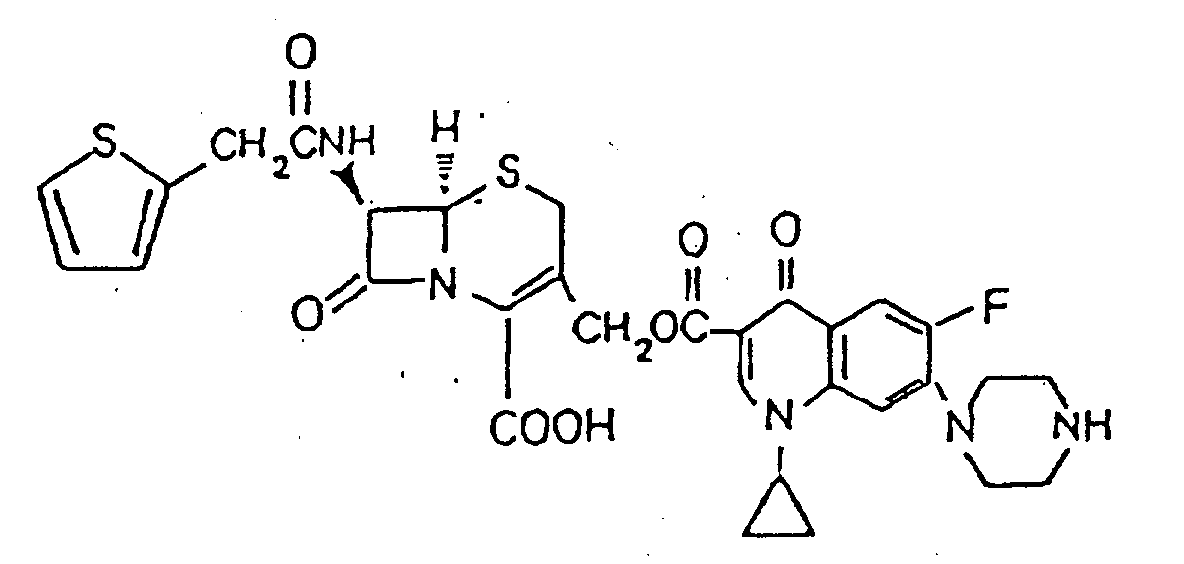
- Zusammensetzung zur Behandlung oder Verhütung einer infektiösen Erkrankung bei einem Menschen oder einem anderen Tier, umfassend(1) eine sichere und wirksame Menge der Verbindung nach Anspruch 1; und(2) einen pharmazeutisch annehmbaren Träger.
- Zusammensetzung zur Behandlung oder Verhütung einer infektiösen Erkrankung bei einem Menschen oder einem anderen Tier nach Anspruch 2, worin die genannte Zusammensetzung zur parenteralen Verabreichung geeignet ist.
- Zusammensetzung zur Behandlung oder Verhütung einer infektiösen Erkrankung bei einem Menschen oder einem anderen Tier nach Anspruch 2, worin die genannte Zusammensetzung zur oralen Verabreichung geeignet ist.
- Verwendung der Verbindung nach Anspruch 1 zur Herstellung eines Arzneimittels zur Behandlung einer infektiösen Erkrankung bei einem Menschen oder einem anderen Tier.
Applications Claiming Priority (4)
| Application Number | Priority Date | Filing Date | Title |
|---|---|---|---|
| US26194988A | 1988-10-24 | 1988-10-24 | |
| US261949 | 1988-10-24 | ||
| US41802589A | 1989-10-12 | 1989-10-12 | |
| US418025 | 1989-10-12 |
Publications (3)
| Publication Number | Publication Date |
|---|---|
| EP0366640A2 EP0366640A2 (de) | 1990-05-02 |
| EP0366640A3 EP0366640A3 (de) | 1992-01-02 |
| EP0366640B1 true EP0366640B1 (de) | 1999-02-03 |
Family
ID=26948930
Family Applications (1)
| Application Number | Title | Priority Date | Filing Date |
|---|---|---|---|
| EP89870151A Expired - Lifetime EP0366640B1 (de) | 1988-10-24 | 1989-10-20 | Antimikrobielle Fluorochinolonylcephemderivate |
Country Status (14)
| Country | Link |
|---|---|
| EP (1) | EP0366640B1 (de) |
| JP (1) | JPH03503421A (de) |
| KR (1) | KR0139638B1 (de) |
| AT (1) | ATE176473T1 (de) |
| AU (1) | AU620651B2 (de) |
| CA (1) | CA2001204A1 (de) |
| DE (1) | DE68928925T2 (de) |
| DK (1) | DK527389A (de) |
| ES (1) | ES2129388T3 (de) |
| GR (1) | GR3030052T3 (de) |
| NZ (1) | NZ231113A (de) |
| PH (1) | PH26519A (de) |
| SG (1) | SG54293A1 (de) |
| WO (1) | WO1990004595A1 (de) |
Families Citing this family (17)
| Publication number | Priority date | Publication date | Assignee | Title |
|---|---|---|---|---|
| US5147871A (en) * | 1986-07-03 | 1992-09-15 | Hoffmann La-Roche, Inc. | Anti-bacterial cephalosporin compounds |
| CS273349B2 (en) * | 1988-03-31 | 1991-03-12 | Hoffmann La Roche | Method of cephalosporin's new derivatives production |
| US5336768A (en) * | 1988-05-24 | 1994-08-09 | Hoffmann-La Roche Inc. | Antibacterial cephalosporin compounds |
| US5180719A (en) * | 1988-10-24 | 1993-01-19 | Norwich Eaton Pharmaceuticals, Inc. | Antimicrobial quinolonyl lactam esters |
| US5491139A (en) * | 1988-10-24 | 1996-02-13 | The Procter & Gamble Company | Antimicrobial quinolonyl lactams |
| CA2001203C (en) * | 1988-10-24 | 2001-02-13 | Thomas P. Demuth, Jr. | Novel antimicrobial dithiocarbamoyl quinolones |
| US5273973A (en) * | 1988-10-24 | 1993-12-28 | Norwich Eaton Pharmaceuticals, Inc. | Antimicrobial quinolonyl esters |
| EP0997466A1 (de) * | 1988-10-24 | 2000-05-03 | PROCTER & GAMBLE PHARMACEUTICALS, INC. | Antimikrobielle Laktamchinolone |
| US5328908A (en) * | 1988-10-24 | 1994-07-12 | Procter & Gamble Pharmaceuticals, Inc. | Antimicrobial quinolone thioureas |
| US5159077A (en) * | 1989-07-21 | 1992-10-27 | Hoffmann-La Roche Inc. | Penam antibacterial compounds |
| US5162523A (en) * | 1989-07-21 | 1992-11-10 | Hoffmann-La Roche Inc. | Cephalosporin antibacterial compounds |
| DK0525057T3 (da) * | 1990-04-18 | 2000-07-31 | Procter & Gamble Pharma | Antimikrobielle quinolonyllactamer |
| US5066800A (en) * | 1990-04-27 | 1991-11-19 | Hoffmann-La Roche Inc. | Qunoline intermediates useful therein for synthesizing antibacterial compounds |
| KR100253825B1 (ko) * | 1991-10-01 | 2000-05-01 | 제이코버스 코넬리스 레이서 | 항미 생물성 퀴놀로 닐락탐의 제조방법 |
| DE4234330A1 (de) * | 1992-10-12 | 1994-04-14 | Bayer Ag | Chinoloncarbonsäuren |
| FR2873695A1 (fr) * | 2004-07-30 | 2006-02-03 | Palumed Sa | Molecules hybrides qa ou q est une aminoquinoleine et a est un antibiotique ou un inhibiteur de resistance), leur synthese et leurs utilisations en tant qu'agent antibacterien |
| GB201818410D0 (en) * | 2018-11-12 | 2018-12-26 | Imperial Innovations Ltd | Compounds |
Citations (1)
| Publication number | Priority date | Publication date | Assignee | Title |
|---|---|---|---|---|
| EP0322810A2 (de) * | 1987-12-28 | 1989-07-05 | F. Hoffmann-La Roche Ag | Cephalosporinderivate |
Family Cites Families (7)
| Publication number | Priority date | Publication date | Assignee | Title |
|---|---|---|---|---|
| JPS565484A (en) * | 1979-06-27 | 1981-01-20 | Dainippon Pharmaceut Co Ltd | Cephalosporin derivative and its salt |
| JPS565485A (en) * | 1979-06-27 | 1981-01-20 | Dainippon Pharmaceut Co Ltd | Cephalosporin derivative and its salt |
| ZA874696B (en) * | 1986-07-03 | 1988-01-04 | F. Hoffmann-La Roche & Co. Aktiengesellschaft | Acyl derivatives |
| JP2676082B2 (ja) * | 1987-12-25 | 1997-11-12 | 住友化学工業株式会社 | ゴキブリ防除用マイクロカプセル剤 |
| EP0997466A1 (de) * | 1988-10-24 | 2000-05-03 | PROCTER & GAMBLE PHARMACEUTICALS, INC. | Antimikrobielle Laktamchinolone |
| EP0366193A3 (de) * | 1988-10-24 | 1992-01-08 | Norwich Eaton Pharmaceuticals, Inc. | Antimikrobielle Quinolonyllactame |
| CA2001203C (en) * | 1988-10-24 | 2001-02-13 | Thomas P. Demuth, Jr. | Novel antimicrobial dithiocarbamoyl quinolones |
-
1989
- 1989-10-20 AT AT89870151T patent/ATE176473T1/de not_active IP Right Cessation
- 1989-10-20 SG SG1996007907A patent/SG54293A1/en unknown
- 1989-10-20 ES ES89870151T patent/ES2129388T3/es not_active Expired - Lifetime
- 1989-10-20 DE DE68928925T patent/DE68928925T2/de not_active Expired - Fee Related
- 1989-10-20 EP EP89870151A patent/EP0366640B1/de not_active Expired - Lifetime
- 1989-10-23 CA CA002001204A patent/CA2001204A1/en not_active Abandoned
- 1989-10-24 NZ NZ231113A patent/NZ231113A/en unknown
- 1989-10-24 AU AU43697/89A patent/AU620651B2/en not_active Ceased
- 1989-10-24 WO PCT/US1989/004768 patent/WO1990004595A1/en not_active Ceased
- 1989-10-24 PH PH39400A patent/PH26519A/en unknown
- 1989-10-24 KR KR1019890015236A patent/KR0139638B1/ko not_active Expired - Fee Related
- 1989-10-24 JP JP2501184A patent/JPH03503421A/ja active Pending
- 1989-10-24 DK DK527389A patent/DK527389A/da not_active Application Discontinuation
-
1999
- 1999-04-26 GR GR990401132T patent/GR3030052T3/el unknown
Patent Citations (1)
| Publication number | Priority date | Publication date | Assignee | Title |
|---|---|---|---|---|
| EP0322810A2 (de) * | 1987-12-28 | 1989-07-05 | F. Hoffmann-La Roche Ag | Cephalosporinderivate |
Also Published As
| Publication number | Publication date |
|---|---|
| DE68928925T2 (de) | 1999-08-26 |
| AU4369789A (en) | 1990-04-26 |
| CA2001204A1 (en) | 1990-04-24 |
| NZ231113A (en) | 1992-06-25 |
| JPH03503421A (ja) | 1991-08-01 |
| WO1990004595A1 (en) | 1990-05-03 |
| EP0366640A3 (de) | 1992-01-02 |
| KR900006347A (ko) | 1990-05-08 |
| AU620651B2 (en) | 1992-02-20 |
| SG54293A1 (en) | 1998-11-16 |
| GR3030052T3 (en) | 1999-07-30 |
| DE68928925D1 (de) | 1999-03-18 |
| KR0139638B1 (ko) | 1998-06-01 |
| DK527389D0 (da) | 1989-10-24 |
| EP0366640A2 (de) | 1990-05-02 |
| ES2129388T3 (es) | 1999-06-16 |
| ATE176473T1 (de) | 1999-02-15 |
| DK527389A (da) | 1990-04-25 |
| PH26519A (en) | 1992-08-07 |
Similar Documents
| Publication | Publication Date | Title |
|---|---|---|
| AU659996B2 (en) | Antimicrobial quinolone thioureas | |
| KR0139638B1 (ko) | 살균성 플루오로퀴놀닐 세펨 | |
| CA2001205C (en) | Antimicrobial quinolonyl lactams | |
| IE49880B1 (en) | Penicillin derivatives | |
| RU2126000C1 (ru) | Производные 5-гидразинохинолона, композиция для лечения или профилактики инфекционного заболевания, способ лечения или профилактики | |
| EP0525057B1 (de) | Antimikrobielle chinolonyl-lactame | |
| JPH03502933A (ja) | 新規な抗微生物キノロニルラクタムエステル | |
| RU2281948C2 (ru) | Цефалоспориновые антибиотики, фармацевтическая композиция на их основе и способ лечения инфекции | |
| JPH0899978A (ja) | セファロスポリン誘導体 | |
| DD204257A5 (de) | Verfahren zur herstellung von cephalosporinen, die in position 3 substituiert sind | |
| HK1013067A (en) | Novel antimicrobial fluoroquinolonyl cephems | |
| US4695565A (en) | Antibacterial 7β-heterocyclic-cephem | |
| KR0162984B1 (ko) | 항미생물성 퀴놀로닐 락탐 에스테르 및 이를 함유하는 조성물 | |
| IL92091A (en) | Quinolonyl lactam esters and pharmaceutical preparations containing them | |
| IL92031A (en) | Quinolonil for cuttings and pharmaceutical preparations containing them | |
| HK1013984B (en) | Novel antimicrobial quinolonyl lactam esters | |
| CS216936B2 (cs) | Způsob výroby derivátů 7/3-aminothiazolylacetainido- -3-cefem-4-karboxylové kyseliny |
Legal Events
| Date | Code | Title | Description |
|---|---|---|---|
| PUAI | Public reference made under article 153(3) epc to a published international application that has entered the european phase |
Free format text: ORIGINAL CODE: 0009012 |
|
| AK | Designated contracting states |
Kind code of ref document: A2 Designated state(s): AT BE CH DE ES FR GB GR IT LI LU NL SE |
|
| PUAL | Search report despatched |
Free format text: ORIGINAL CODE: 0009013 |
|
| AK | Designated contracting states |
Kind code of ref document: A3 Designated state(s): AT BE CH DE ES FR GB GR IT LI LU NL SE |
|
| 17P | Request for examination filed |
Effective date: 19920615 |
|
| 17Q | First examination report despatched |
Effective date: 19941004 |
|
| GRAG | Despatch of communication of intention to grant |
Free format text: ORIGINAL CODE: EPIDOS AGRA |
|
| GRAG | Despatch of communication of intention to grant |
Free format text: ORIGINAL CODE: EPIDOS AGRA |
|
| GRAH | Despatch of communication of intention to grant a patent |
Free format text: ORIGINAL CODE: EPIDOS IGRA |
|
| RAP1 | Party data changed (applicant data changed or rights of an application transferred) |
Owner name: PROCTER & GAMBLE PHARMACEUTICALS, INC. |
|
| GRAH | Despatch of communication of intention to grant a patent |
Free format text: ORIGINAL CODE: EPIDOS IGRA |
|
| GRAA | (expected) grant |
Free format text: ORIGINAL CODE: 0009210 |
|
| AK | Designated contracting states |
Kind code of ref document: B1 Designated state(s): AT BE CH DE ES FR GB GR IT LI LU NL SE |
|
| REF | Corresponds to: |
Ref document number: 176473 Country of ref document: AT Date of ref document: 19990215 Kind code of ref document: T |
|
| REG | Reference to a national code |
Ref country code: CH Ref legal event code: EP |
|
| REG | Reference to a national code |
Ref country code: CH Ref legal event code: NV Representative=s name: RITSCHER & SEIFERT |
|
| REF | Corresponds to: |
Ref document number: 68928925 Country of ref document: DE Date of ref document: 19990318 |
|
| ITF | It: translation for a ep patent filed | ||
| ET | Fr: translation filed | ||
| REG | Reference to a national code |
Ref country code: ES Ref legal event code: FG2A Ref document number: 2129388 Country of ref document: ES Kind code of ref document: T3 |
|
| PGFP | Annual fee paid to national office [announced via postgrant information from national office to epo] |
Ref country code: GB Payment date: 19990913 Year of fee payment: 11 |
|
| PGFP | Annual fee paid to national office [announced via postgrant information from national office to epo] |
Ref country code: AT Payment date: 19990914 Year of fee payment: 11 |
|
| PGFP | Annual fee paid to national office [announced via postgrant information from national office to epo] |
Ref country code: NL Payment date: 19990921 Year of fee payment: 11 |
|
| PGFP | Annual fee paid to national office [announced via postgrant information from national office to epo] |
Ref country code: FR Payment date: 19991013 Year of fee payment: 11 |
|
| PGFP | Annual fee paid to national office [announced via postgrant information from national office to epo] |
Ref country code: SE Payment date: 19991014 Year of fee payment: 11 Ref country code: LU Payment date: 19991014 Year of fee payment: 11 |
|
| PGFP | Annual fee paid to national office [announced via postgrant information from national office to epo] |
Ref country code: ES Payment date: 19991015 Year of fee payment: 11 |
|
| PGFP | Annual fee paid to national office [announced via postgrant information from national office to epo] |
Ref country code: GR Payment date: 19991027 Year of fee payment: 11 Ref country code: DE Payment date: 19991027 Year of fee payment: 11 |
|
| PGFP | Annual fee paid to national office [announced via postgrant information from national office to epo] |
Ref country code: BE Payment date: 19991117 Year of fee payment: 11 |
|
| PLBE | No opposition filed within time limit |
Free format text: ORIGINAL CODE: 0009261 |
|
| STAA | Information on the status of an ep patent application or granted ep patent |
Free format text: STATUS: NO OPPOSITION FILED WITHIN TIME LIMIT |
|
| PGFP | Annual fee paid to national office [announced via postgrant information from national office to epo] |
Ref country code: CH Payment date: 19991220 Year of fee payment: 11 |
|
| 26N | No opposition filed | ||
| PG25 | Lapsed in a contracting state [announced via postgrant information from national office to epo] |
Ref country code: LU Free format text: LAPSE BECAUSE OF NON-PAYMENT OF DUE FEES Effective date: 20001020 Ref country code: GB Free format text: LAPSE BECAUSE OF NON-PAYMENT OF DUE FEES Effective date: 20001020 Ref country code: AT Free format text: LAPSE BECAUSE OF NON-PAYMENT OF DUE FEES Effective date: 20001020 |
|
| PG25 | Lapsed in a contracting state [announced via postgrant information from national office to epo] |
Ref country code: ES Free format text: LAPSE BECAUSE OF NON-PAYMENT OF DUE FEES Effective date: 20001021 |
|
| PG25 | Lapsed in a contracting state [announced via postgrant information from national office to epo] |
Ref country code: SE Free format text: THE PATENT HAS BEEN ANNULLED BY A DECISION OF A NATIONAL AUTHORITY Effective date: 20001030 |
|
| PG25 | Lapsed in a contracting state [announced via postgrant information from national office to epo] |
Ref country code: LI Free format text: LAPSE BECAUSE OF NON-PAYMENT OF DUE FEES Effective date: 20001031 Ref country code: GR Free format text: LAPSE BECAUSE OF NON-PAYMENT OF DUE FEES Effective date: 20001031 Ref country code: CH Free format text: LAPSE BECAUSE OF NON-PAYMENT OF DUE FEES Effective date: 20001031 Ref country code: BE Free format text: LAPSE BECAUSE OF NON-PAYMENT OF DUE FEES Effective date: 20001031 |
|
| BERE | Be: lapsed |
Owner name: PROCTER & GAMBLE PHARMACEUTICALS INC. Effective date: 20001031 |
|
| PG25 | Lapsed in a contracting state [announced via postgrant information from national office to epo] |
Ref country code: NL Free format text: LAPSE BECAUSE OF NON-PAYMENT OF DUE FEES Effective date: 20010501 |
|
| GBPC | Gb: european patent ceased through non-payment of renewal fee |
Effective date: 20001020 |
|
| REG | Reference to a national code |
Ref country code: CH Ref legal event code: PL |
|
| EUG | Se: european patent has lapsed |
Ref document number: 89870151.1 |
|
| PG25 | Lapsed in a contracting state [announced via postgrant information from national office to epo] |
Ref country code: FR Free format text: LAPSE BECAUSE OF NON-PAYMENT OF DUE FEES Effective date: 20010629 |
|
| NLV4 | Nl: lapsed or anulled due to non-payment of the annual fee |
Effective date: 20010501 |
|
| PG25 | Lapsed in a contracting state [announced via postgrant information from national office to epo] |
Ref country code: DE Free format text: LAPSE BECAUSE OF NON-PAYMENT OF DUE FEES Effective date: 20010703 |
|
| REG | Reference to a national code |
Ref country code: FR Ref legal event code: ST |
|
| REG | Reference to a national code |
Ref country code: ES Ref legal event code: FD2A Effective date: 20011113 |
|
| REG | Reference to a national code |
Ref country code: HK Ref legal event code: WD Ref document number: 1013067 Country of ref document: HK |
|
| PG25 | Lapsed in a contracting state [announced via postgrant information from national office to epo] |
Ref country code: IT Free format text: LAPSE BECAUSE OF NON-PAYMENT OF DUE FEES;WARNING: LAPSES OF ITALIAN PATENTS WITH EFFECTIVE DATE BEFORE 2007 MAY HAVE OCCURRED AT ANY TIME BEFORE 2007. THE CORRECT EFFECTIVE DATE MAY BE DIFFERENT FROM THE ONE RECORDED. Effective date: 20051020 |