EP0379968B1 - Selektive Veretherung - Google Patents
Selektive Veretherung Download PDFInfo
- Publication number
- EP0379968B1 EP0379968B1 EP90100972A EP90100972A EP0379968B1 EP 0379968 B1 EP0379968 B1 EP 0379968B1 EP 90100972 A EP90100972 A EP 90100972A EP 90100972 A EP90100972 A EP 90100972A EP 0379968 B1 EP0379968 B1 EP 0379968B1
- Authority
- EP
- European Patent Office
- Prior art keywords
- added
- formula
- compound
- ascorbic acid
- carbon atoms
- Prior art date
- Legal status (The legal status is an assumption and is not a legal conclusion. Google has not performed a legal analysis and makes no representation as to the accuracy of the status listed.)
- Expired - Lifetime
Links
- 0 NC(C(C1O)O)O*1=O Chemical compound NC(C(C1O)O)O*1=O 0.000 description 1
Classifications
-
- C—CHEMISTRY; METALLURGY
- C07—ORGANIC CHEMISTRY
- C07D—HETEROCYCLIC COMPOUNDS
- C07D307/00—Heterocyclic compounds containing five-membered rings having one oxygen atom as the only ring hetero atom
- C07D307/02—Heterocyclic compounds containing five-membered rings having one oxygen atom as the only ring hetero atom not condensed with other rings
- C07D307/34—Heterocyclic compounds containing five-membered rings having one oxygen atom as the only ring hetero atom not condensed with other rings having two or three double bonds between ring members or between ring members and non-ring members
- C07D307/56—Heterocyclic compounds containing five-membered rings having one oxygen atom as the only ring hetero atom not condensed with other rings having two or three double bonds between ring members or between ring members and non-ring members with hetero atoms or with carbon atoms having three bonds to hetero atoms with at the most one bond to halogen, e.g. ester or nitrile radicals, directly attached to ring carbon atoms
- C07D307/62—Three oxygen atoms, e.g. ascorbic acid
Definitions
- the present invention relates to a process for producing ascorbic acid derivatives which are useful as antioxidants for food and agents for ameliorating and preventing functional disorders of circulatory and digestive systems.
- the main object of the present invention is to provide an industrially advantageous process for producing ascorbic acid derivatives by direct alkylation or alkenylation of the hydroxy group at 2-position of ascorbic acid or 5,6-protected ascorbic acid.
- the present invention also provides a process for producing a compound of the formula (V): wherein R1 is as defined in claim 1, which comprises reacting a compound of the formula (I'): where R°' is (wherein X is as defined in claim 1), with a compound of the formula (II): R1-Y (II) wherein R1 and Y are as defined in claim 1, in the presence of a compound of the formula (III): ROZ (III) wherein R and Z are as defined in claim 1, to obtain a compound of the formula (IV'): wherein R1 are as defined in claim 1 and X is as defined above and, when X being acetal or ketal, hydrolyzing the compound of the formula (IV').
- the alkyl having 1 to 6 carbon atoms represented by R0 can be either straight or branched-chain alkyl. Examples thereof include methyl, ethyl, n-propyl, isopropyl, n-butyl, isobutyl, n-pentyl and n-hexyl.
- the alkyl moiety of the alkyl group having up to 22 carbon atoms which may be substituted with phenyl or alkoxy having 1 to 22 carbon atoms represented by R1 can be either straight or branched-chain alkyl having 1 to 22 carbon atoms.
- Examples thereof include methyl, ethyl, n-propyl, isopropyl, n-butyl, isobutyl, n-pentyl, n-hexyl, n-heptyl, n-octyl, n-nonyl, n-decyl, n-undecyl, n-dodecyl, n-tridecyl, n-tetradecyl, n-pentadecyl, n-hexadecyl, n-heptadecyl, n-octadecyl, n-nonadecyl, n-icosyl, n-heneicosyl and n-docosyl.
- the alkyl has 9 to 20 carbon atoms.
- straight-chain alkyl having 14 to 20 carbon atoms is preferred.
- the alkenyl moiety of the alkenyl group having up to 22 carbon atoms which may be substituted with phenyl or alkoxy having 1 to 22 carbon atoms represented by R1 can be either straight or branched-chain alkenyl. Examples thereof include vinyl, propenyl, butenyl, pentenyl, hexenyl, heptenyl, octenyl, nonenyl, decenyl, undecenyl, dodecenyl, tridecenyl, tetradecenyl, pentadecenyl, hexadecenyl, heptadecenyl, octadecenyl, nonadecenyl and icosenyl.
- the above alkoxy having 1 to 22 carbon atoms can be either straight or branched-chain alkoxy. Examples thereof include methoxy, ethoxy, n-propoxy, isopropoxy, n-butoxy, isobutoxy, n-pentyloxy, n-hexyloxy, n-decyloxy, n-tetradecyloxy, n-octahexyloxy and n-octadecyloxy.
- the acetal residue represented by X includes, for example, that represented by the formula: R2 - CH ⁇ wherein R2 is alkyl having 1 to 3 carbon atoms, phenyl or p-methoxyphenyl.
- the ketal residue includes, for example, that represented by the formula: wherein R3 and R4 are the same or different and alkyl having 1 to 3 carbon atoms, or R3 together with R4 forms -(CH2) a -(in which a is 4 or 5).
- the above alkyl having 1 to 3 carbon atoms includes, for example, methyl, ethyl, n-propyl, isopropyl.
- the halogen represented by Y includes chlorine, bromine and iodine. Among them, iodine is preferred.
- the substituent of the optionally substituted sulfonyloxy group represented by Y includes alkyl having 1 to 6 carbon atoms (for example, those illustrated with respect to R0 group) and aryl (e.g., phenyl, p-tolyl, p-nitrophenyl, p-chlorophenyl).
- Examples of the optionally substituted sulfonyloxy group include sulfonyloxy, alkyl sulfonyloxy such as methylsulfonyloxy, ethylsulfonyloxy, propylsulfonyloxy and the like, and aryl sulfonyloxy such as phenylsulfonyloxy, p-tolylsulfonyloxy, P-nitrophenylsulfonyloxy and p-chlorophenylsulfonyloxy.
- aryl sulfonyloxy group is particularly preferred.
- the primary, secondary or tertiary alkyl having 1 to 10 carbon atoms represented by R includes primary alkyl having 1 to 10 carbon atoms (e.g., methyl, ethyl, propyl and butyl.), secondary alkyl having 3 to 10 carbon atoms (e.g., isopropyl and isobutyl.) and tertiary alkyl having 4 to 10 carbon atoms (e.g., tertiary butyl, tertiary amyl).
- the alkali metal of Z includes lithium (Li), sodium (Na), and potassium (K), and the alkali earth metal includes calcium (Ca) and magnesium (Mg). Among them, the alkali metal is preferred.
- a simple substance of the metal represented by Z or a hydride of Z can be used without any trouble because it is converted into ROZ in a reaction system.
- the reaction is carried out by using a primary, secondary or tertiary alcohol as a reaction solvent.
- a primary, secondary or tertiary alcohol examples thereof include primary alcohols such as methyl alcohol, ethyl alcohol, n-propyl alcohol and n-butyl alcohol, secondary alcohols such as isopropyl alcohol and isobutyl alcohol, and tertiary alcohols such as t-butyl alcohol and t-amyl alcohol.
- primary alcohols such as methyl alcohol, ethyl alcohol, n-propyl alcohol and n-butyl alcohol
- secondary alcohols such as isopropyl alcohol and isobutyl alcohol
- tertiary alcohols such as t-butyl alcohol and t-amyl alcohol.
- Other solvents can be used together with the above primary, secondary or tertiary alcohol.
- Examples thereof include dioxane, tetrahydrofuran, ethylene glycol dimethyl ether, acetonitrile, toluene, dimethylformamide and dimethyl sulfoxide. They can be appropriately mixed with the alcohol by taking into consideration of solubility of the compounds (I) and (II).
- the compound (II) is used in an amount of 0.5 to 3.0 molar equivalent, particularly, 0.8 to 2.0 molar equivalent based on the compound (I).
- the amount of the compound (III) is used in an amount of 1.5 to 3.0 molar equivalent, particularly, 1.8 to 2.2 molar equivalent based on the compound (I).
- the preferred reaction temperature of the reaction of the compounds (I) and (II) is generally in the range of from 10°C to the boiling point of the reaction solvent. Particularly, the reaction is suitably carried out at 40 to 80°C.
- reaction time varies depending upon reaction conditions such as reaction temperature. Generally, however, the reaction time is suitably 1 to 4 hours, when the reaction is carried out at 40 to 80°C.
- the reaction is preferably carried out in the presence of an inert gas (e.g., nitrogen gas, helium gas, argon gas).
- an inert gas e.g., nitrogen gas, helium gas, argon gas.
- the reaction mixture is subjected to hydrolysis, if necessary, with addition of water, in the presence of an acid catalyst such as hydrochloric acid, sulfuric acid, phosphoric acid, acetic acid, p-toluenesulfonic acid, methanesulfonic acid, camphorsulfonic acid, or a cation exchange resin at 10 and 80°C for 1 to 2 hours.
- an acid catalyst such as hydrochloric acid, sulfuric acid, phosphoric acid, acetic acid, p-toluenesulfonic acid, methanesulfonic acid, camphorsulfonic acid, or a cation exchange resin at 10 and 80°C for 1 to 2 hours.
- the 2-alkylated compound is separated from the reaction mixture of 2-alkylation and then hydrolyzed.
- the reaction is preferably carried out in water or an organic solvent such as methanol, ethanol, dioxane, tetrahydrofuran, dimethylformamide, dichloroethane or a water-containing solvent of these organic solvents in the presence of the above acid catalyst at 10 to 80°C for 1 to 2 hours.
- the ascorbic acid derivatives (IV) and (V) thus produced can be isolated and collected according to known separation and purification means (e.g., column chromatography using silica gel, polystyrene resin, activated carbon, extraction and recrystallization).
- separation and purification means e.g., column chromatography using silica gel, polystyrene resin, activated carbon, extraction and recrystallization.
- the mixture was extracted with ethyl acetate (140 ml x 2), and the organic phase was dried over anhydrous sodium sulfate and concentrated under reduced pressure to obtain 17.6 g of 5,6-isopropylidene-3-O-ethoxymethyl-2-O-octadecyl-L-ascorbic acid as an oil.
- the oil was dissolved in ethyl alcohol (28 ml), 1 N hydrochloric acid (9.4 ml) was added thereto and the mixture was refluxed for about one hour.
- the reaction mixture was concentrated under reduced pressure, ethyl acetate (80 ml) was added to the residue and the mixture was heated to obtain a solution.
- the mixture was extracted with ethyl acetate (25 ml x 2), and the organic phase was dried over anhydrous sodium sulfate and concentrated under reduced pressure to obtain 3.6 g of 5,6-isopropylidene-3-ethyoxymethyl-2-O-octadecyl-L-ascorbic acid as an oil.
- the oil was dissolved in ethyl alcohol (10 ml), 1 N hydrochloric acid (1.8 ml) was added thereto and the mixture was refluxed for about one hour.
- the reaction mixture was concentrated under reduced pressure, and ethyl acetate (10 ml) was added to the residue.
- the mixture was heated to obtain a solution and it was cooled and stirred at about 10°C for one hour.
- the hydroxy group at 2-position of ascorbic acid can be subjected to a substitution reaction without protecting the hydroxy group at 3-position. Therefore, from the industrial point of view, the process of the present invention is economically and operationally advantageous because it involves less reaction steps. Further, in the substitution reaction of the hydroxy group at 2-position, there is less possibility that the process of the present invention is accompanied by the side reaction wherein the hydroxy group at 3-position is partly substituted. Therefore, ascorbic acid derivatives wherein the hydroxy group at 2-position is substituted can be advantageously produced in an industrial scale.
Landscapes
- Chemical & Material Sciences (AREA)
- Organic Chemistry (AREA)
- Furan Compounds (AREA)
- Cosmetics (AREA)
- Pharmaceuticals Containing Other Organic And Inorganic Compounds (AREA)
- Polysaccharides And Polysaccharide Derivatives (AREA)
- Plural Heterocyclic Compounds (AREA)
- Organic Low-Molecular-Weight Compounds And Preparation Thereof (AREA)
- Low-Molecular Organic Synthesis Reactions Using Catalysts (AREA)
Claims (10)
- Verfahren zur Herstellung einer Verbindung der Formel (IV):

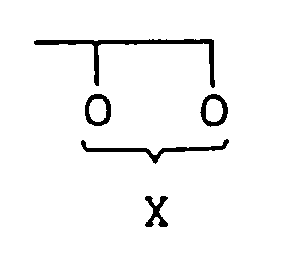

R¹ - Y (II),
wobei R¹ wie oben definiert ist und Y Halogen oder wahlweise substituiertes Sulfonyloxy ist, in Gegenwart einer Verbindung der Formel (III):
ROZ (III),
wobei R Wasserstoff oder ein primäres, sekundäres oder tertiäres Alkyl mit 1 bis 10 Kohlenstoffatomen ist und Z ein Alkalimetall oder ein Erdalkalimetall ist. - Verfahren nach Anspruch 1, wobei die Reaktion in Gegenwart eines primären, sekundären oder tertiären Alkohols durchgeführt wird.
- Verfahren nach Anspruch 1, wobei die Reaktion in Gegenwart eines Inertgases durchgeführt wird.
- Verfahren nach Anspruch 1, wobei die Reaktion bei einer Temperatur von 10 °C bis zum Siedepunkt des verwendeten Lösungsmittels durchgeführt wird.
- Verfahren nach Anspruch 4, wobei die Reaktion 1 bis 4 Stunden lang bei 40 bis 80 °C durchgeführt wird.
- Verfahren nach Anspruch 1, wobei die Verbindung der Formel (II) in einer Menge von 0,5 bis 3,0 molaren Equivalenten, bezogen auf die Verbindung der Formel (I), verwendet wird.
- Verfahren nach Anspruch 1, wobei die Verbindung der Formel (III) in einer Menge von 1,5 bis 3,0 molaren Equivalenten, bezogen auf die Verbindung der Formel (I), verwendet wird.
- Verfahren zur Herstellung einer Verbindung der Formel (V):


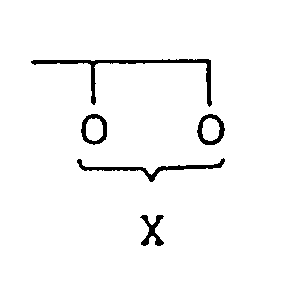
R¹-Y (II),
worin R¹ und Y wie in Anspruch 1 definiert sind, in Gegenwart einer Verbindung der Formel (III):
ROZ (III),
worin R und Z wie in Anspruch 1 definiert sind, um eine Verbindung der Formel (IV'):
- Verfahren nach Anspruch 8, wobei eine Hydrolyse im Sauren durchgeführt wird.
- Verfahren nach Anspruch 9, wobei die Hydrolyse 1 bis 2 Stunden lang bei 10 bis 80 °C durchgeführt wird.
Applications Claiming Priority (2)
| Application Number | Priority Date | Filing Date | Title |
|---|---|---|---|
| JP1275589 | 1989-01-21 | ||
| JP12755/89 | 1989-01-21 |
Publications (3)
| Publication Number | Publication Date |
|---|---|
| EP0379968A2 EP0379968A2 (de) | 1990-08-01 |
| EP0379968A3 EP0379968A3 (de) | 1991-02-06 |
| EP0379968B1 true EP0379968B1 (de) | 1995-01-11 |
Family
ID=11814224
Family Applications (1)
| Application Number | Title | Priority Date | Filing Date |
|---|---|---|---|
| EP90100972A Expired - Lifetime EP0379968B1 (de) | 1989-01-21 | 1990-01-18 | Selektive Veretherung |
Country Status (8)
| Country | Link |
|---|---|
| US (1) | US5008405A (de) |
| EP (1) | EP0379968B1 (de) |
| JP (1) | JP2830268B2 (de) |
| KR (1) | KR900011751A (de) |
| AT (1) | ATE116978T1 (de) |
| CA (1) | CA2008125A1 (de) |
| DE (1) | DE69015831T2 (de) |
| HU (1) | HU208533B (de) |
Families Citing this family (8)
| Publication number | Priority date | Publication date | Assignee | Title |
|---|---|---|---|---|
| US5656662A (en) * | 1990-01-12 | 1997-08-12 | The Ohio State University Research Foundation | Synthesis of optically pure 4-alkenyl- or 4-alkanyl-2-hydroxytetronic acids |
| US5504107A (en) * | 1990-01-12 | 1996-04-02 | The Ohio State University Research Foundation | Optically pure 4-alkenyl- or 4-alkanyl-2-hydroxytetronic acids and pharmaceutical use thereof |
| US5504108A (en) * | 1990-01-12 | 1996-04-02 | The Ohio State University Research Foundation | Optically pure 4-aryl-2-hydroxytetronic acids |
| US5399721A (en) * | 1990-01-12 | 1995-03-21 | The Ohio State University Research Foundation | Synthesis of optically pure 4-aryl-2-hydroxytetronic acids |
| US5399717A (en) * | 1993-09-29 | 1995-03-21 | Merck & Co., Inc. | Glycosidation route to 4"-epi-methylamino-4"-deoxyavermectin B1 |
| JPH08134055A (ja) * | 1994-11-08 | 1996-05-28 | Nippon High Potsukusu:Kk | 3−o−置換アスコルビン酸の製造方法 |
| ATE244707T1 (de) * | 1998-03-27 | 2003-07-15 | Lg Chem Investment Ltd | Polyethoxylierte ascorbinsäurederivate als neue antioxidantien und verfahren zu ihrer herstellung |
| KR100500503B1 (ko) * | 2001-05-30 | 2005-07-14 | (주)코스몰 | 결정성 3-0-알킬아스코르빈산의 제조방법 |
Family Cites Families (4)
| Publication number | Priority date | Publication date | Assignee | Title |
|---|---|---|---|---|
| US4552888A (en) * | 1982-01-15 | 1985-11-12 | Eli Lilly And Company | Ascorbic acid ethers in angiogene |
| JPS60130582A (ja) * | 1983-12-19 | 1985-07-12 | Takeda Chem Ind Ltd | 食品用酸化防止剤,アスコルビン酸誘導体およびその製造法 |
| ZA852614B (en) * | 1985-05-17 | 1986-10-09 | Takeda Chemical Industries, Ltd. | Ascorbic acid ethers and their production |
| JP2515556B2 (ja) * | 1986-08-29 | 1996-07-10 | 武田薬品工業株式会社 | ヒドロキシブテノライド誘導体およびその製造法 |
-
1990
- 1990-01-11 JP JP2005146A patent/JP2830268B2/ja not_active Expired - Lifetime
- 1990-01-18 EP EP90100972A patent/EP0379968B1/de not_active Expired - Lifetime
- 1990-01-18 DE DE69015831T patent/DE69015831T2/de not_active Expired - Fee Related
- 1990-01-18 AT AT90100972T patent/ATE116978T1/de active
- 1990-01-19 KR KR1019900000633A patent/KR900011751A/ko not_active Abandoned
- 1990-01-19 CA CA002008125A patent/CA2008125A1/en not_active Abandoned
- 1990-01-19 HU HU90204A patent/HU208533B/hu not_active IP Right Cessation
- 1990-01-19 US US07/467,419 patent/US5008405A/en not_active Expired - Fee Related
Also Published As
| Publication number | Publication date |
|---|---|
| HU208533B (en) | 1993-11-29 |
| EP0379968A2 (de) | 1990-08-01 |
| US5008405A (en) | 1991-04-16 |
| KR900011751A (ko) | 1990-08-02 |
| JP2830268B2 (ja) | 1998-12-02 |
| JPH02275874A (ja) | 1990-11-09 |
| CA2008125A1 (en) | 1990-07-21 |
| HU900204D0 (en) | 1990-03-28 |
| ATE116978T1 (de) | 1995-01-15 |
| EP0379968A3 (de) | 1991-02-06 |
| DE69015831D1 (de) | 1995-02-23 |
| DE69015831T2 (de) | 1995-07-27 |
| HUT53628A (en) | 1990-11-28 |
Similar Documents
| Publication | Publication Date | Title |
|---|---|---|
| EP0141927B1 (de) | Antivirale Guanin-Derivate | |
| US4900828A (en) | Intermediate compounds and an improved procedure for the synthesis of 2',3'-dideoxycytidine | |
| PL133764B1 (en) | Method of obtaining new derivatives of erythromycin a | |
| US5008405A (en) | Selective etherification | |
| US20110201810A1 (en) | Method for Preparing 4-[9-(6-Aminopurine)]-2-(S)-Hydroxyl-Butyric Acid Methyl Ester | |
| DK170233B1 (da) | Fremgangsmåde til fremstilling af alkoxymethylether- og alkoxymethylesterderivater af glyceroler | |
| AU2006209453B2 (en) | Process for producing (Z)-1-phenyl-1-(N,N-diethylaminocarbonyl)-2-phthalimidomethylcyclopropane | |
| US5461157A (en) | Process for preparing pyrrolidinylacetamide derivatives | |
| EP0644192A1 (de) | Verfahren zur Herstellung eines Benzothiadiazolderivats | |
| US4143227A (en) | Process for substituted 5-benzyl-2,4-diamino-pyrimidines | |
| JPH07179445A (ja) | セフェムプロドラッグエステルの製造に有用な中間体 | |
| US5124442A (en) | Process for preparing azt (3'-azido-3'-deoxy-thymidine) and related compounds | |
| EP0389110A2 (de) | Verfahren zur Herstellung von 2'Deoxy-5-trifluoromethyl-ss-uridin | |
| EP0273321B1 (de) | 7-Brom-beta-Carbolin-Derivate und Verfahren zu ihrer Herstellung | |
| US4255574A (en) | Process for preparing 2,4-diamino-pyrimidines | |
| US4958029A (en) | Process for the production of isoindoline derivatives, novel intermediates and process for their production | |
| US20040138232A1 (en) | Acyl derivatives of 5-(2-(4-(1,2 benzisothiazole-3-yl)-1-piperazinyl)ethyl)-6-chloro-1,3-dihydro-2h-indol-2-one having neuroleptic activity | |
| KR100203729B1 (ko) | 3'-알킬또는아릴실릴옥시벤즈옥사지노리파마이신유도체 | |
| EP0125777B1 (de) | Verfahren und Zwischenprodukte zur Herstellung von 2-substituierten 4-Acetyl-Imidazolen | |
| US4091095A (en) | Phosphinyl compounds | |
| US4542209A (en) | Fluorine-containing uridine derivative and preparation and use thereof | |
| CA1229619A (en) | Method for the synthesis of 5-thio-1,2,3-thiadiazole | |
| NO179903B (no) | Fremgangsmåte for fremstilling av et halogenacetamidderivat samt et pyrrolidinylacetamidderivat | |
| HU209437B (en) | Process for producing purinyl and pyrimidinyl tetrahydrofuran derivatives and pharmaceutical preparations containing them | |
| US5081268A (en) | Process for the preparation of oxetanes from 1,3-glycol monosulfates |
Legal Events
| Date | Code | Title | Description |
|---|---|---|---|
| PUAI | Public reference made under article 153(3) epc to a published international application that has entered the european phase |
Free format text: ORIGINAL CODE: 0009012 |
|
| AK | Designated contracting states |
Kind code of ref document: A2 Designated state(s): AT BE CH DE DK ES FR GB GR IT LI LU NL SE |
|
| PUAL | Search report despatched |
Free format text: ORIGINAL CODE: 0009013 |
|
| AK | Designated contracting states |
Kind code of ref document: A3 Designated state(s): AT BE CH DE DK ES FR GB GR IT LI LU NL |
|
| 17P | Request for examination filed |
Effective date: 19910622 |
|
| RAP3 | Party data changed (applicant data changed or rights of an application transferred) |
Owner name: TAKEDA CHEMICAL INDUSTRIES, LTD. |
|
| 17Q | First examination report despatched |
Effective date: 19930524 |
|
| GRAA | (expected) grant |
Free format text: ORIGINAL CODE: 0009210 |
|
| AK | Designated contracting states |
Kind code of ref document: B1 Designated state(s): AT BE CH DE DK ES FR GB GR IT LI LU NL SE |
|
| PG25 | Lapsed in a contracting state [announced via postgrant information from national office to epo] |
Ref country code: NL Effective date: 19950111 Ref country code: GR Free format text: LAPSE BECAUSE OF FAILURE TO SUBMIT A TRANSLATION OF THE DESCRIPTION OR TO PAY THE FEE WITHIN THE PRESCRIBED TIME-LIMIT Effective date: 19950111 Ref country code: ES Free format text: THE PATENT HAS BEEN ANNULLED BY A DECISION OF A NATIONAL AUTHORITY Effective date: 19950111 Ref country code: DK Effective date: 19950111 Ref country code: BE Effective date: 19950111 Ref country code: AT Effective date: 19950111 |
|
| REF | Corresponds to: |
Ref document number: 116978 Country of ref document: AT Date of ref document: 19950115 Kind code of ref document: T |
|
| PG25 | Lapsed in a contracting state [announced via postgrant information from national office to epo] |
Ref country code: LU Free format text: LAPSE BECAUSE OF NON-PAYMENT OF DUE FEES Effective date: 19950131 |
|
| ET | Fr: translation filed | ||
| REF | Corresponds to: |
Ref document number: 69015831 Country of ref document: DE Date of ref document: 19950223 |
|
| ITF | It: translation for a ep patent filed | ||
| PG25 | Lapsed in a contracting state [announced via postgrant information from national office to epo] |
Ref country code: SE Effective date: 19950411 |
|
| NLV1 | Nl: lapsed or annulled due to failure to fulfill the requirements of art. 29p and 29m of the patents act | ||
| PLBE | No opposition filed within time limit |
Free format text: ORIGINAL CODE: 0009261 |
|
| STAA | Information on the status of an ep patent application or granted ep patent |
Free format text: STATUS: NO OPPOSITION FILED WITHIN TIME LIMIT |
|
| 26N | No opposition filed | ||
| PGFP | Annual fee paid to national office [announced via postgrant information from national office to epo] |
Ref country code: CH Payment date: 19961211 Year of fee payment: 8 |
|
| PGFP | Annual fee paid to national office [announced via postgrant information from national office to epo] |
Ref country code: FR Payment date: 19961219 Year of fee payment: 8 |
|
| PGFP | Annual fee paid to national office [announced via postgrant information from national office to epo] |
Ref country code: DE Payment date: 19961231 Year of fee payment: 8 |
|
| PGFP | Annual fee paid to national office [announced via postgrant information from national office to epo] |
Ref country code: GB Payment date: 19970109 Year of fee payment: 8 |
|
| PG25 | Lapsed in a contracting state [announced via postgrant information from national office to epo] |
Ref country code: GB Free format text: LAPSE BECAUSE OF NON-PAYMENT OF DUE FEES Effective date: 19980118 |
|
| PG25 | Lapsed in a contracting state [announced via postgrant information from national office to epo] |
Ref country code: LI Free format text: LAPSE BECAUSE OF NON-PAYMENT OF DUE FEES Effective date: 19980131 Ref country code: FR Free format text: THE PATENT HAS BEEN ANNULLED BY A DECISION OF A NATIONAL AUTHORITY Effective date: 19980131 Ref country code: CH Free format text: LAPSE BECAUSE OF NON-PAYMENT OF DUE FEES Effective date: 19980131 |
|
| GBPC | Gb: european patent ceased through non-payment of renewal fee |
Effective date: 19980118 |
|
| REG | Reference to a national code |
Ref country code: CH Ref legal event code: PL |
|
| PG25 | Lapsed in a contracting state [announced via postgrant information from national office to epo] |
Ref country code: DE Free format text: LAPSE BECAUSE OF NON-PAYMENT OF DUE FEES Effective date: 19981001 |
|
| REG | Reference to a national code |
Ref country code: FR Ref legal event code: ST |
|
| PG25 | Lapsed in a contracting state [announced via postgrant information from national office to epo] |
Ref country code: IT Free format text: LAPSE BECAUSE OF NON-PAYMENT OF DUE FEES;WARNING: LAPSES OF ITALIAN PATENTS WITH EFFECTIVE DATE BEFORE 2007 MAY HAVE OCCURRED AT ANY TIME BEFORE 2007. THE CORRECT EFFECTIVE DATE MAY BE DIFFERENT FROM THE ONE RECORDED. Effective date: 20050118 |