EP0380559B1 - Procedes et reactifs de fonctionnalisation d'oligonucleotides - Google Patents
Procedes et reactifs de fonctionnalisation d'oligonucleotides Download PDFInfo
- Publication number
- EP0380559B1 EP0380559B1 EP88908841A EP88908841A EP0380559B1 EP 0380559 B1 EP0380559 B1 EP 0380559B1 EP 88908841 A EP88908841 A EP 88908841A EP 88908841 A EP88908841 A EP 88908841A EP 0380559 B1 EP0380559 B1 EP 0380559B1
- Authority
- EP
- European Patent Office
- Prior art keywords
- oligonucleotide
- hydrogen
- reagent
- sulfhydryl
- moiety
- Prior art date
- Legal status (The legal status is an assumption and is not a legal conclusion. Google has not performed a legal analysis and makes no representation as to the accuracy of the status listed.)
- Expired - Lifetime
Links
- 108091034117 Oligonucleotide Proteins 0.000 title claims abstract description 78
- 239000003153 chemical reaction reagent Substances 0.000 title claims abstract description 75
- 238000000034 method Methods 0.000 title claims abstract description 28
- 125000002887 hydroxy group Chemical group [H]O* 0.000 claims abstract description 45
- 125000003396 thiol group Chemical group [H]S* 0.000 claims abstract description 36
- 125000002924 primary amino group Chemical group [H]N([H])* 0.000 claims abstract description 25
- 230000002194 synthesizing effect Effects 0.000 claims abstract description 8
- 150000008300 phosphoramidites Chemical class 0.000 claims description 24
- -1 amino, sulfhydryl Chemical group 0.000 claims description 21
- 238000005859 coupling reaction Methods 0.000 claims description 20
- 229910052739 hydrogen Inorganic materials 0.000 claims description 18
- 230000008878 coupling Effects 0.000 claims description 17
- 238000010168 coupling process Methods 0.000 claims description 17
- 239000001257 hydrogen Substances 0.000 claims description 17
- 150000002009 diols Chemical class 0.000 claims description 14
- 150000001875 compounds Chemical class 0.000 claims description 13
- 125000002496 methyl group Chemical group [H]C([H])([H])* 0.000 claims description 12
- RIOQSEWOXXDEQQ-UHFFFAOYSA-N triphenylphosphine Chemical compound C1=CC=CC=C1P(C=1C=CC=CC=1)C1=CC=CC=C1 RIOQSEWOXXDEQQ-UHFFFAOYSA-N 0.000 claims description 12
- 125000004169 (C1-C6) alkyl group Chemical group 0.000 claims description 11
- UFHFLCQGNIYNRP-UHFFFAOYSA-N Hydrogen Chemical compound [H][H] UFHFLCQGNIYNRP-UHFFFAOYSA-N 0.000 claims description 8
- 125000004435 hydrogen atom Chemical class [H]* 0.000 claims description 8
- 229920001223 polyethylene glycol Polymers 0.000 claims description 8
- 125000003277 amino group Chemical group 0.000 claims description 6
- 150000001412 amines Chemical class 0.000 claims description 5
- 125000001424 substituent group Chemical group 0.000 claims description 5
- 125000004191 (C1-C6) alkoxy group Chemical group 0.000 claims description 4
- 229910052736 halogen Inorganic materials 0.000 claims description 4
- 150000002367 halogens Chemical group 0.000 claims description 4
- LFQSCWFLJHTTHZ-UHFFFAOYSA-N Ethanol Chemical compound CCO LFQSCWFLJHTTHZ-UHFFFAOYSA-N 0.000 claims description 3
- 239000002202 Polyethylene glycol Substances 0.000 claims description 3
- 125000001449 isopropyl group Chemical group [H]C([H])([H])C([H])(*)C([H])([H])[H] 0.000 claims description 2
- 125000001997 phenyl group Chemical group [H]C1=C([H])C([H])=C(*)C([H])=C1[H] 0.000 claims description 2
- 150000001298 alcohols Chemical class 0.000 claims 2
- 125000006850 spacer group Chemical group 0.000 abstract description 16
- JLCPHMBAVCMARE-UHFFFAOYSA-N [3-[[3-[[3-[[3-[[3-[[3-[[3-[[3-[[3-[[3-[[3-[[5-(2-amino-6-oxo-1H-purin-9-yl)-3-[[3-[[3-[[3-[[3-[[3-[[5-(2-amino-6-oxo-1H-purin-9-yl)-3-[[5-(2-amino-6-oxo-1H-purin-9-yl)-3-hydroxyoxolan-2-yl]methoxy-hydroxyphosphoryl]oxyoxolan-2-yl]methoxy-hydroxyphosphoryl]oxy-5-(5-methyl-2,4-dioxopyrimidin-1-yl)oxolan-2-yl]methoxy-hydroxyphosphoryl]oxy-5-(6-aminopurin-9-yl)oxolan-2-yl]methoxy-hydroxyphosphoryl]oxy-5-(6-aminopurin-9-yl)oxolan-2-yl]methoxy-hydroxyphosphoryl]oxy-5-(6-aminopurin-9-yl)oxolan-2-yl]methoxy-hydroxyphosphoryl]oxy-5-(6-aminopurin-9-yl)oxolan-2-yl]methoxy-hydroxyphosphoryl]oxyoxolan-2-yl]methoxy-hydroxyphosphoryl]oxy-5-(5-methyl-2,4-dioxopyrimidin-1-yl)oxolan-2-yl]methoxy-hydroxyphosphoryl]oxy-5-(4-amino-2-oxopyrimidin-1-yl)oxolan-2-yl]methoxy-hydroxyphosphoryl]oxy-5-(5-methyl-2,4-dioxopyrimidin-1-yl)oxolan-2-yl]methoxy-hydroxyphosphoryl]oxy-5-(5-methyl-2,4-dioxopyrimidin-1-yl)oxolan-2-yl]methoxy-hydroxyphosphoryl]oxy-5-(6-aminopurin-9-yl)oxolan-2-yl]methoxy-hydroxyphosphoryl]oxy-5-(6-aminopurin-9-yl)oxolan-2-yl]methoxy-hydroxyphosphoryl]oxy-5-(4-amino-2-oxopyrimidin-1-yl)oxolan-2-yl]methoxy-hydroxyphosphoryl]oxy-5-(4-amino-2-oxopyrimidin-1-yl)oxolan-2-yl]methoxy-hydroxyphosphoryl]oxy-5-(4-amino-2-oxopyrimidin-1-yl)oxolan-2-yl]methoxy-hydroxyphosphoryl]oxy-5-(6-aminopurin-9-yl)oxolan-2-yl]methoxy-hydroxyphosphoryl]oxy-5-(4-amino-2-oxopyrimidin-1-yl)oxolan-2-yl]methyl [5-(6-aminopurin-9-yl)-2-(hydroxymethyl)oxolan-3-yl] hydrogen phosphate Polymers Cc1cn(C2CC(OP(O)(=O)OCC3OC(CC3OP(O)(=O)OCC3OC(CC3O)n3cnc4c3nc(N)[nH]c4=O)n3cnc4c3nc(N)[nH]c4=O)C(COP(O)(=O)OC3CC(OC3COP(O)(=O)OC3CC(OC3COP(O)(=O)OC3CC(OC3COP(O)(=O)OC3CC(OC3COP(O)(=O)OC3CC(OC3COP(O)(=O)OC3CC(OC3COP(O)(=O)OC3CC(OC3COP(O)(=O)OC3CC(OC3COP(O)(=O)OC3CC(OC3COP(O)(=O)OC3CC(OC3COP(O)(=O)OC3CC(OC3COP(O)(=O)OC3CC(OC3COP(O)(=O)OC3CC(OC3COP(O)(=O)OC3CC(OC3COP(O)(=O)OC3CC(OC3COP(O)(=O)OC3CC(OC3COP(O)(=O)OC3CC(OC3CO)n3cnc4c(N)ncnc34)n3ccc(N)nc3=O)n3cnc4c(N)ncnc34)n3ccc(N)nc3=O)n3ccc(N)nc3=O)n3ccc(N)nc3=O)n3cnc4c(N)ncnc34)n3cnc4c(N)ncnc34)n3cc(C)c(=O)[nH]c3=O)n3cc(C)c(=O)[nH]c3=O)n3ccc(N)nc3=O)n3cc(C)c(=O)[nH]c3=O)n3cnc4c3nc(N)[nH]c4=O)n3cnc4c(N)ncnc34)n3cnc4c(N)ncnc34)n3cnc4c(N)ncnc34)n3cnc4c(N)ncnc34)O2)c(=O)[nH]c1=O JLCPHMBAVCMARE-UHFFFAOYSA-N 0.000 abstract description 14
- SXADIBFZNXBEGI-UHFFFAOYSA-N phosphoramidous acid Chemical group NP(O)O SXADIBFZNXBEGI-UHFFFAOYSA-N 0.000 abstract description 7
- OKKJLVBELUTLKV-UHFFFAOYSA-N Methanol Chemical compound OC OKKJLVBELUTLKV-UHFFFAOYSA-N 0.000 description 33
- XEKOWRVHYACXOJ-UHFFFAOYSA-N Ethyl acetate Chemical compound CCOC(C)=O XEKOWRVHYACXOJ-UHFFFAOYSA-N 0.000 description 24
- 239000000047 product Substances 0.000 description 24
- VYPSYNLAJGMNEJ-UHFFFAOYSA-N Silicium dioxide Chemical compound O=[Si]=O VYPSYNLAJGMNEJ-UHFFFAOYSA-N 0.000 description 23
- 238000006243 chemical reaction Methods 0.000 description 23
- YMWUJEATGCHHMB-UHFFFAOYSA-N Dichloromethane Chemical compound ClCCl YMWUJEATGCHHMB-UHFFFAOYSA-N 0.000 description 21
- HEDRZPFGACZZDS-UHFFFAOYSA-N Chloroform Chemical compound ClC(Cl)Cl HEDRZPFGACZZDS-UHFFFAOYSA-N 0.000 description 16
- 239000000203 mixture Substances 0.000 description 16
- 108010001336 Horseradish Peroxidase Proteins 0.000 description 15
- ZMXDDKWLCZADIW-UHFFFAOYSA-N N,N-Dimethylformamide Chemical compound CN(C)C=O ZMXDDKWLCZADIW-UHFFFAOYSA-N 0.000 description 15
- 239000002904 solvent Substances 0.000 description 12
- 229910052681 coesite Inorganic materials 0.000 description 11
- 229910052906 cristobalite Inorganic materials 0.000 description 11
- 239000000377 silicon dioxide Substances 0.000 description 11
- 235000012239 silicon dioxide Nutrition 0.000 description 11
- 229910052682 stishovite Inorganic materials 0.000 description 11
- 238000003786 synthesis reaction Methods 0.000 description 11
- 229910052905 tridymite Inorganic materials 0.000 description 11
- 230000015572 biosynthetic process Effects 0.000 description 10
- 150000002148 esters Chemical class 0.000 description 10
- 239000011541 reaction mixture Substances 0.000 description 10
- RTZKZFJDLAIYFH-UHFFFAOYSA-N Diethyl ether Chemical compound CCOCC RTZKZFJDLAIYFH-UHFFFAOYSA-N 0.000 description 9
- 238000007306 functionalization reaction Methods 0.000 description 9
- CSCPPACGZOOCGX-UHFFFAOYSA-N Acetone Chemical compound CC(C)=O CSCPPACGZOOCGX-UHFFFAOYSA-N 0.000 description 8
- XKRFYHLGVUSROY-UHFFFAOYSA-N Argon Chemical compound [Ar] XKRFYHLGVUSROY-UHFFFAOYSA-N 0.000 description 8
- 238000010511 deprotection reaction Methods 0.000 description 8
- 239000000523 sample Substances 0.000 description 8
- 108020004414 DNA Proteins 0.000 description 7
- 239000000463 material Substances 0.000 description 7
- 125000006239 protecting group Chemical group 0.000 description 7
- 241000894007 species Species 0.000 description 7
- 238000003756 stirring Methods 0.000 description 7
- 239000000725 suspension Substances 0.000 description 7
- XLYOFNOQVPJJNP-UHFFFAOYSA-N water Chemical compound O XLYOFNOQVPJJNP-UHFFFAOYSA-N 0.000 description 7
- QTBSBXVTEAMEQO-UHFFFAOYSA-N Acetic acid Chemical compound CC(O)=O QTBSBXVTEAMEQO-UHFFFAOYSA-N 0.000 description 6
- WEVYAHXRMPXWCK-UHFFFAOYSA-N Acetonitrile Chemical compound CC#N WEVYAHXRMPXWCK-UHFFFAOYSA-N 0.000 description 6
- FAPWRFPIFSIZLT-UHFFFAOYSA-M Sodium chloride Chemical class [Na+].[Cl-] FAPWRFPIFSIZLT-UHFFFAOYSA-M 0.000 description 6
- DKGAVHZHDRPRBM-UHFFFAOYSA-N Tert-Butanol Chemical compound CC(C)(C)O DKGAVHZHDRPRBM-UHFFFAOYSA-N 0.000 description 6
- ZMANZCXQSJIPKH-UHFFFAOYSA-N Triethylamine Chemical compound CCN(CC)CC ZMANZCXQSJIPKH-UHFFFAOYSA-N 0.000 description 6
- 239000002253 acid Substances 0.000 description 6
- 238000000921 elemental analysis Methods 0.000 description 6
- 239000000178 monomer Chemical group 0.000 description 6
- 238000002360 preparation method Methods 0.000 description 6
- 125000004432 carbon atom Chemical group C* 0.000 description 5
- 238000009396 hybridization Methods 0.000 description 5
- 239000002244 precipitate Substances 0.000 description 5
- 239000007787 solid Substances 0.000 description 5
- UWHCKJMYHZGTIT-UHFFFAOYSA-N tetraethylene glycol Chemical compound OCCOCCOCCOCCO UWHCKJMYHZGTIT-UHFFFAOYSA-N 0.000 description 5
- 230000006820 DNA synthesis Effects 0.000 description 4
- 239000007832 Na2SO4 Substances 0.000 description 4
- JUJWROOIHBZHMG-UHFFFAOYSA-N Pyridine Chemical compound C1=CC=NC=C1 JUJWROOIHBZHMG-UHFFFAOYSA-N 0.000 description 4
- PMZURENOXWZQFD-UHFFFAOYSA-L Sodium Sulfate Chemical compound [Na+].[Na+].[O-]S([O-])(=O)=O PMZURENOXWZQFD-UHFFFAOYSA-L 0.000 description 4
- UIIMBOGNXHQVGW-UHFFFAOYSA-M Sodium bicarbonate Chemical compound [Na+].OC([O-])=O UIIMBOGNXHQVGW-UHFFFAOYSA-M 0.000 description 4
- 150000007513 acids Chemical class 0.000 description 4
- 229910052786 argon Inorganic materials 0.000 description 4
- 239000012044 organic layer Substances 0.000 description 4
- 239000008363 phosphate buffer Substances 0.000 description 4
- 238000000746 purification Methods 0.000 description 4
- SQGYOTSLMSWVJD-UHFFFAOYSA-N silver(1+) nitrate Chemical compound [Ag+].[O-]N(=O)=O SQGYOTSLMSWVJD-UHFFFAOYSA-N 0.000 description 4
- 229910052938 sodium sulfate Inorganic materials 0.000 description 4
- 235000011152 sodium sulphate Nutrition 0.000 description 4
- 0 C*C(CC(N1C)=O)C1=O Chemical compound C*C(CC(N1C)=O)C1=O 0.000 description 3
- LYCAIKOWRPUZTN-UHFFFAOYSA-N Ethylene glycol Chemical compound OCCO LYCAIKOWRPUZTN-UHFFFAOYSA-N 0.000 description 3
- SJRJJKPEHAURKC-UHFFFAOYSA-N N-Methylmorpholine Chemical compound CN1CCOCC1 SJRJJKPEHAURKC-UHFFFAOYSA-N 0.000 description 3
- 239000004721 Polyphenylene oxide Substances 0.000 description 3
- HEMHJVSKTPXQMS-UHFFFAOYSA-M Sodium hydroxide Chemical compound [OH-].[Na+] HEMHJVSKTPXQMS-UHFFFAOYSA-M 0.000 description 3
- YXFVVABEGXRONW-UHFFFAOYSA-N Toluene Chemical compound CC1=CC=CC=C1 YXFVVABEGXRONW-UHFFFAOYSA-N 0.000 description 3
- 230000003213 activating effect Effects 0.000 description 3
- 125000001931 aliphatic group Chemical group 0.000 description 3
- BHELZAPQIKSEDF-UHFFFAOYSA-N allyl bromide Chemical compound BrCC=C BHELZAPQIKSEDF-UHFFFAOYSA-N 0.000 description 3
- 239000012491 analyte Substances 0.000 description 3
- 239000003795 chemical substances by application Substances 0.000 description 3
- 238000001816 cooling Methods 0.000 description 3
- 238000001212 derivatisation Methods 0.000 description 3
- 239000000706 filtrate Substances 0.000 description 3
- 238000002372 labelling Methods 0.000 description 3
- VLKZOEOYAKHREP-UHFFFAOYSA-N n-Hexane Chemical compound CCCCCC VLKZOEOYAKHREP-UHFFFAOYSA-N 0.000 description 3
- 239000002773 nucleotide Substances 0.000 description 3
- 125000003729 nucleotide group Chemical group 0.000 description 3
- 229910000489 osmium tetroxide Inorganic materials 0.000 description 3
- 239000012285 osmium tetroxide Substances 0.000 description 3
- XKJCHHZQLQNZHY-UHFFFAOYSA-N phthalimide Chemical compound C1=CC=C2C(=O)NC(=O)C2=C1 XKJCHHZQLQNZHY-UHFFFAOYSA-N 0.000 description 3
- 229920000570 polyether Polymers 0.000 description 3
- 239000006188 syrup Substances 0.000 description 3
- 235000020357 syrup Nutrition 0.000 description 3
- 238000004809 thin layer chromatography Methods 0.000 description 3
- RMVRSNDYEFQCLF-UHFFFAOYSA-N thiophenol Chemical compound SC1=CC=CC=C1 RMVRSNDYEFQCLF-UHFFFAOYSA-N 0.000 description 3
- JBWYRBLDOOOJEU-UHFFFAOYSA-N 1-[chloro-(4-methoxyphenyl)-phenylmethyl]-4-methoxybenzene Chemical compound C1=CC(OC)=CC=C1C(Cl)(C=1C=CC(OC)=CC=1)C1=CC=CC=C1 JBWYRBLDOOOJEU-UHFFFAOYSA-N 0.000 description 2
- 125000003903 2-propenyl group Chemical group [H]C([*])([H])C([H])=C([H])[H] 0.000 description 2
- ATVJXMYDOSMEPO-UHFFFAOYSA-N 3-prop-2-enoxyprop-1-ene Chemical compound C=CCOCC=C ATVJXMYDOSMEPO-UHFFFAOYSA-N 0.000 description 2
- ZAMOUSCENKQFHK-UHFFFAOYSA-N Chlorine atom Chemical compound [Cl] ZAMOUSCENKQFHK-UHFFFAOYSA-N 0.000 description 2
- 108020003215 DNA Probes Proteins 0.000 description 2
- 239000003298 DNA probe Substances 0.000 description 2
- LSDPWZHWYPCBBB-UHFFFAOYSA-N Methanethiol Chemical compound SC LSDPWZHWYPCBBB-UHFFFAOYSA-N 0.000 description 2
- 238000006751 Mitsunobu reaction Methods 0.000 description 2
- 238000002835 absorbance Methods 0.000 description 2
- 125000000217 alkyl group Chemical group 0.000 description 2
- 150000001768 cations Chemical class 0.000 description 2
- 239000000460 chlorine Substances 0.000 description 2
- 229910052801 chlorine Inorganic materials 0.000 description 2
- 230000000295 complement effect Effects 0.000 description 2
- FAMRKDQNMBBFBR-BQYQJAHWSA-N diethyl azodicarboxylate Substances CCOC(=O)\N=N\C(=O)OCC FAMRKDQNMBBFBR-BQYQJAHWSA-N 0.000 description 2
- 230000000694 effects Effects 0.000 description 2
- FAMRKDQNMBBFBR-UHFFFAOYSA-N ethyl n-ethoxycarbonyliminocarbamate Chemical compound CCOC(=O)N=NC(=O)OCC FAMRKDQNMBBFBR-UHFFFAOYSA-N 0.000 description 2
- WGCNASOHLSPBMP-UHFFFAOYSA-N hydroxyacetaldehyde Natural products OCC=O WGCNASOHLSPBMP-UHFFFAOYSA-N 0.000 description 2
- 239000005457 ice water Substances 0.000 description 2
- 239000012452 mother liquor Substances 0.000 description 2
- 239000003960 organic solvent Substances 0.000 description 2
- IOLCXVTUBQKXJR-UHFFFAOYSA-M potassium bromide Chemical compound [K+].[Br-] IOLCXVTUBQKXJR-UHFFFAOYSA-M 0.000 description 2
- VVWRJUBEIPHGQF-UHFFFAOYSA-N propan-2-yl n-propan-2-yloxycarbonyliminocarbamate Chemical compound CC(C)OC(=O)N=NC(=O)OC(C)C VVWRJUBEIPHGQF-UHFFFAOYSA-N 0.000 description 2
- UMJSCPRVCHMLSP-UHFFFAOYSA-N pyridine Natural products COC1=CC=CN=C1 UMJSCPRVCHMLSP-UHFFFAOYSA-N 0.000 description 2
- 230000009257 reactivity Effects 0.000 description 2
- 229910001961 silver nitrate Inorganic materials 0.000 description 2
- 235000017557 sodium bicarbonate Nutrition 0.000 description 2
- 229910000030 sodium bicarbonate Inorganic materials 0.000 description 2
- JVBXVOWTABLYPX-UHFFFAOYSA-L sodium dithionite Chemical compound [Na+].[Na+].[O-]S(=O)S([O-])=O JVBXVOWTABLYPX-UHFFFAOYSA-L 0.000 description 2
- FRUFOUVTWCKBKQ-UHFFFAOYSA-M sodium;4-[6-(2,5-dioxopyrrol-1-yl)hexanoyloxy]-3-nitrobenzenesulfonate Chemical compound [Na+].[O-][N+](=O)C1=CC(S([O-])(=O)=O)=CC=C1OC(=O)CCCCCN1C(=O)C=CC1=O FRUFOUVTWCKBKQ-UHFFFAOYSA-M 0.000 description 2
- CKYLHMGDNIAAPE-UHFFFAOYSA-M sodium;4-hydroxy-3-nitrobenzenesulfonate Chemical class [Na+].OC1=CC=C(S([O-])(=O)=O)C=C1[N+]([O-])=O CKYLHMGDNIAAPE-UHFFFAOYSA-M 0.000 description 2
- 238000010189 synthetic method Methods 0.000 description 2
- AVBGNFCMKJOFIN-UHFFFAOYSA-N triethylammonium acetate Chemical compound CC(O)=O.CCN(CC)CC AVBGNFCMKJOFIN-UHFFFAOYSA-N 0.000 description 2
- 125000003088 (fluoren-9-ylmethoxy)carbonyl group Chemical group 0.000 description 1
- ADFXKUOMJKEIND-UHFFFAOYSA-N 1,3-dicyclohexylurea Chemical compound C1CCCCC1NC(=O)NC1CCCCC1 ADFXKUOMJKEIND-UHFFFAOYSA-N 0.000 description 1
- XEZNGIUYQVAUSS-UHFFFAOYSA-N 18-crown-6 Chemical compound C1COCCOCCOCCOCCOCCO1 XEZNGIUYQVAUSS-UHFFFAOYSA-N 0.000 description 1
- 238000005160 1H NMR spectroscopy Methods 0.000 description 1
- HEWZVZIVELJPQZ-UHFFFAOYSA-N 2,2-dimethoxypropane Chemical compound COC(C)(C)OC HEWZVZIVELJPQZ-UHFFFAOYSA-N 0.000 description 1
- BFSVOASYOCHEOV-UHFFFAOYSA-N 2-diethylaminoethanol Chemical compound CCN(CC)CCO BFSVOASYOCHEOV-UHFFFAOYSA-N 0.000 description 1
- SHLSSLVZXJBVHE-UHFFFAOYSA-N 3-sulfanylpropan-1-ol Chemical compound OCCCS SHLSSLVZXJBVHE-UHFFFAOYSA-N 0.000 description 1
- MRLGQNWMBLCWBJ-UHFFFAOYSA-N 6-[(2,5-dioxopyrrol-1-yl)amino]hexanoic acid Chemical compound OC(=O)CCCCCNN1C(=O)C=CC1=O MRLGQNWMBLCWBJ-UHFFFAOYSA-N 0.000 description 1
- LQVMZVKOVPITOO-UHFFFAOYSA-N 9h-fluoren-1-ylmethyl carbonochloridate Chemical compound C1C2=CC=CC=C2C2=C1C(COC(=O)Cl)=CC=C2 LQVMZVKOVPITOO-UHFFFAOYSA-N 0.000 description 1
- 108700028369 Alleles Proteins 0.000 description 1
- VHUUQVKOLVNVRT-UHFFFAOYSA-N Ammonium hydroxide Chemical compound [NH4+].[OH-] VHUUQVKOLVNVRT-UHFFFAOYSA-N 0.000 description 1
- KPSHHQRIRVYKEU-KHPPLWFESA-N CC(C)OC(/N=N\C([O](C(C)C)=C)=O)=O Chemical compound CC(C)OC(/N=N\C([O](C(C)C)=C)=O)=O KPSHHQRIRVYKEU-KHPPLWFESA-N 0.000 description 1
- 102000053602 DNA Human genes 0.000 description 1
- 238000001712 DNA sequencing Methods 0.000 description 1
- QOSSAOTZNIDXMA-UHFFFAOYSA-N Dicylcohexylcarbodiimide Chemical compound C1CCCCC1N=C=NC1CCCCC1 QOSSAOTZNIDXMA-UHFFFAOYSA-N 0.000 description 1
- 108090000790 Enzymes Proteins 0.000 description 1
- 102000004190 Enzymes Human genes 0.000 description 1
- LFTLOKWAGJYHHR-UHFFFAOYSA-N N-methylmorpholine N-oxide Chemical compound CN1(=O)CCOCC1 LFTLOKWAGJYHHR-UHFFFAOYSA-N 0.000 description 1
- 101001068640 Nicotiana tabacum Basic form of pathogenesis-related protein 1 Proteins 0.000 description 1
- 229920005654 Sephadex Polymers 0.000 description 1
- 239000012507 Sephadex™ Substances 0.000 description 1
- QAOWNCQODCNURD-UHFFFAOYSA-N Sulfuric acid Chemical compound OS(O)(=O)=O QAOWNCQODCNURD-UHFFFAOYSA-N 0.000 description 1
- XSTXAVWGXDQKEL-UHFFFAOYSA-N Trichloroethylene Chemical compound ClC=C(Cl)Cl XSTXAVWGXDQKEL-UHFFFAOYSA-N 0.000 description 1
- 238000010306 acid treatment Methods 0.000 description 1
- 150000001408 amides Chemical class 0.000 description 1
- 125000006242 amine protecting group Chemical group 0.000 description 1
- NSXIZAVGLZWTNH-UHFFFAOYSA-N aminooxyphosphonamidous acid Chemical compound NOP(N)O NSXIZAVGLZWTNH-UHFFFAOYSA-N 0.000 description 1
- 235000011114 ammonium hydroxide Nutrition 0.000 description 1
- 238000004458 analytical method Methods 0.000 description 1
- 239000012736 aqueous medium Substances 0.000 description 1
- 239000003125 aqueous solvent Substances 0.000 description 1
- 125000003118 aryl group Chemical group 0.000 description 1
- 238000010533 azeotropic distillation Methods 0.000 description 1
- 125000005604 azodicarboxylate group Chemical group 0.000 description 1
- 239000000872 buffer Substances 0.000 description 1
- AXCZMVOFGPJBDE-UHFFFAOYSA-L calcium dihydroxide Chemical compound [OH-].[OH-].[Ca+2] AXCZMVOFGPJBDE-UHFFFAOYSA-L 0.000 description 1
- 239000000920 calcium hydroxide Substances 0.000 description 1
- 235000011116 calcium hydroxide Nutrition 0.000 description 1
- 229910001861 calcium hydroxide Inorganic materials 0.000 description 1
- 229910052799 carbon Inorganic materials 0.000 description 1
- 239000007795 chemical reaction product Substances 0.000 description 1
- NEHMKBQYUWJMIP-UHFFFAOYSA-N chloromethane Chemical compound ClC NEHMKBQYUWJMIP-UHFFFAOYSA-N 0.000 description 1
- 238000004587 chromatography analysis Methods 0.000 description 1
- 238000004440 column chromatography Methods 0.000 description 1
- 230000021615 conjugation Effects 0.000 description 1
- 238000007796 conventional method Methods 0.000 description 1
- ARUVKPQLZAKDPS-UHFFFAOYSA-L copper(II) sulfate Chemical compound [Cu+2].[O-][S+2]([O-])([O-])[O-] ARUVKPQLZAKDPS-UHFFFAOYSA-L 0.000 description 1
- 229910000366 copper(II) sulfate Inorganic materials 0.000 description 1
- 239000005547 deoxyribonucleotide Substances 0.000 description 1
- 125000002637 deoxyribonucleotide group Chemical group 0.000 description 1
- 230000001687 destabilization Effects 0.000 description 1
- VHJLVAABSRFDPM-QWWZWVQMSA-N dithiothreitol Chemical compound SC[C@@H](O)[C@H](O)CS VHJLVAABSRFDPM-QWWZWVQMSA-N 0.000 description 1
- 239000012467 final product Substances 0.000 description 1
- 239000012634 fragment Substances 0.000 description 1
- 150000003278 haem Chemical group 0.000 description 1
- IIRDTKBZINWQAW-UHFFFAOYSA-N hexaethylene glycol Chemical compound OCCOCCOCCOCCOCCOCCO IIRDTKBZINWQAW-UHFFFAOYSA-N 0.000 description 1
- 150000002431 hydrogen Chemical class 0.000 description 1
- 230000002209 hydrophobic effect Effects 0.000 description 1
- 238000010348 incorporation Methods 0.000 description 1
- 239000010410 layer Substances 0.000 description 1
- 238000004519 manufacturing process Methods 0.000 description 1
- 238000010369 molecular cloning Methods 0.000 description 1
- 238000012544 monitoring process Methods 0.000 description 1
- 238000003541 multi-stage reaction Methods 0.000 description 1
- PSHKMPUSSFXUIA-UHFFFAOYSA-N n,n-dimethylpyridin-2-amine Chemical compound CN(C)C1=CC=CC=N1 PSHKMPUSSFXUIA-UHFFFAOYSA-N 0.000 description 1
- 108020004707 nucleic acids Proteins 0.000 description 1
- 102000039446 nucleic acids Human genes 0.000 description 1
- 150000007523 nucleic acids Chemical class 0.000 description 1
- 239000012038 nucleophile Substances 0.000 description 1
- 239000002777 nucleoside Substances 0.000 description 1
- JLFNLZLINWHATN-UHFFFAOYSA-N pentaethylene glycol Chemical compound OCCOCCOCCOCCOCCO JLFNLZLINWHATN-UHFFFAOYSA-N 0.000 description 1
- 229920001451 polypropylene glycol Polymers 0.000 description 1
- XAEFZNCEHLXOMS-UHFFFAOYSA-M potassium benzoate Chemical compound [K+].[O-]C(=O)C1=CC=CC=C1 XAEFZNCEHLXOMS-UHFFFAOYSA-M 0.000 description 1
- 150000003141 primary amines Chemical class 0.000 description 1
- 239000013014 purified material Substances 0.000 description 1
- 230000002285 radioactive effect Effects 0.000 description 1
- 238000011084 recovery Methods 0.000 description 1
- 150000003839 salts Chemical class 0.000 description 1
- 239000000741 silica gel Substances 0.000 description 1
- 229910002027 silica gel Inorganic materials 0.000 description 1
- 239000011780 sodium chloride Substances 0.000 description 1
- 238000010561 standard procedure Methods 0.000 description 1
- 239000007858 starting material Substances 0.000 description 1
- 239000000126 substance Substances 0.000 description 1
- PXQLVRUNWNTZOS-UHFFFAOYSA-N sulfanyl Chemical compound [SH] PXQLVRUNWNTZOS-UHFFFAOYSA-N 0.000 description 1
- 235000011149 sulphuric acid Nutrition 0.000 description 1
- 150000003573 thiols Chemical class 0.000 description 1
- 238000000870 ultraviolet spectroscopy Methods 0.000 description 1
- 238000005303 weighing Methods 0.000 description 1
- 229910009112 xH2O Inorganic materials 0.000 description 1
- DGVVWUTYPXICAM-UHFFFAOYSA-N β‐Mercaptoethanol Chemical class OCCS DGVVWUTYPXICAM-UHFFFAOYSA-N 0.000 description 1
Classifications
-
- C—CHEMISTRY; METALLURGY
- C07—ORGANIC CHEMISTRY
- C07D—HETEROCYCLIC COMPOUNDS
- C07D209/00—Heterocyclic compounds containing five-membered rings, condensed with other rings, with one nitrogen atom as the only ring hetero atom
- C07D209/02—Heterocyclic compounds containing five-membered rings, condensed with other rings, with one nitrogen atom as the only ring hetero atom condensed with one carbocyclic ring
- C07D209/44—Iso-indoles; Hydrogenated iso-indoles
- C07D209/48—Iso-indoles; Hydrogenated iso-indoles with oxygen atoms in positions 1 and 3, e.g. phthalimide
-
- C—CHEMISTRY; METALLURGY
- C07—ORGANIC CHEMISTRY
- C07C—ACYCLIC OR CARBOCYCLIC COMPOUNDS
- C07C323/00—Thiols, sulfides, hydropolysulfides or polysulfides substituted by halogen, oxygen or nitrogen atoms, or by sulfur atoms not being part of thio groups
- C07C323/10—Thiols, sulfides, hydropolysulfides or polysulfides substituted by halogen, oxygen or nitrogen atoms, or by sulfur atoms not being part of thio groups containing thio groups and singly-bound oxygen atoms bound to the same carbon skeleton
- C07C323/11—Thiols, sulfides, hydropolysulfides or polysulfides substituted by halogen, oxygen or nitrogen atoms, or by sulfur atoms not being part of thio groups containing thio groups and singly-bound oxygen atoms bound to the same carbon skeleton having the sulfur atoms of the thio groups bound to acyclic carbon atoms of the carbon skeleton
- C07C323/12—Thiols, sulfides, hydropolysulfides or polysulfides substituted by halogen, oxygen or nitrogen atoms, or by sulfur atoms not being part of thio groups containing thio groups and singly-bound oxygen atoms bound to the same carbon skeleton having the sulfur atoms of the thio groups bound to acyclic carbon atoms of the carbon skeleton the carbon skeleton being acyclic and saturated
-
- C—CHEMISTRY; METALLURGY
- C07—ORGANIC CHEMISTRY
- C07C—ACYCLIC OR CARBOCYCLIC COMPOUNDS
- C07C43/00—Ethers; Compounds having groups, groups or groups
- C07C43/02—Ethers
- C07C43/03—Ethers having all ether-oxygen atoms bound to acyclic carbon atoms
- C07C43/04—Saturated ethers
- C07C43/10—Saturated ethers of polyhydroxy compounds
- C07C43/11—Polyethers containing —O—(C—C—O—)n units with ≤ 2 n≤ 10
-
- C—CHEMISTRY; METALLURGY
- C07—ORGANIC CHEMISTRY
- C07C—ACYCLIC OR CARBOCYCLIC COMPOUNDS
- C07C43/00—Ethers; Compounds having groups, groups or groups
- C07C43/02—Ethers
- C07C43/03—Ethers having all ether-oxygen atoms bound to acyclic carbon atoms
- C07C43/14—Unsaturated ethers
- C07C43/178—Unsaturated ethers containing hydroxy or O-metal groups
-
- C—CHEMISTRY; METALLURGY
- C07—ORGANIC CHEMISTRY
- C07D—HETEROCYCLIC COMPOUNDS
- C07D317/00—Heterocyclic compounds containing five-membered rings having two oxygen atoms as the only ring hetero atoms
- C07D317/08—Heterocyclic compounds containing five-membered rings having two oxygen atoms as the only ring hetero atoms having the hetero atoms in positions 1 and 3
- C07D317/10—Heterocyclic compounds containing five-membered rings having two oxygen atoms as the only ring hetero atoms having the hetero atoms in positions 1 and 3 not condensed with other rings
- C07D317/14—Heterocyclic compounds containing five-membered rings having two oxygen atoms as the only ring hetero atoms having the hetero atoms in positions 1 and 3 not condensed with other rings with substituted hydrocarbon radicals attached to ring carbon atoms
- C07D317/18—Radicals substituted by singly bound oxygen or sulfur atoms
- C07D317/22—Radicals substituted by singly bound oxygen or sulfur atoms etherified
-
- C—CHEMISTRY; METALLURGY
- C07—ORGANIC CHEMISTRY
- C07F—ACYCLIC, CARBOCYCLIC OR HETEROCYCLIC COMPOUNDS CONTAINING ELEMENTS OTHER THAN CARBON, HYDROGEN, HALOGEN, OXYGEN, NITROGEN, SULFUR, SELENIUM OR TELLURIUM
- C07F9/00—Compounds containing elements of Groups 5 or 15 of the Periodic Table
- C07F9/02—Phosphorus compounds
- C07F9/06—Phosphorus compounds without P—C bonds
- C07F9/22—Amides of acids of phosphorus
- C07F9/24—Esteramides
- C07F9/2404—Esteramides the ester moiety containing a substituent or a structure which is considered as characteristic
- C07F9/2408—Esteramides the ester moiety containing a substituent or a structure which is considered as characteristic of hydroxyalkyl compounds
-
- C—CHEMISTRY; METALLURGY
- C07—ORGANIC CHEMISTRY
- C07F—ACYCLIC, CARBOCYCLIC OR HETEROCYCLIC COMPOUNDS CONTAINING ELEMENTS OTHER THAN CARBON, HYDROGEN, HALOGEN, OXYGEN, NITROGEN, SULFUR, SELENIUM OR TELLURIUM
- C07F9/00—Compounds containing elements of Groups 5 or 15 of the Periodic Table
- C07F9/02—Phosphorus compounds
- C07F9/06—Phosphorus compounds without P—C bonds
- C07F9/22—Amides of acids of phosphorus
- C07F9/24—Esteramides
- C07F9/2404—Esteramides the ester moiety containing a substituent or a structure which is considered as characteristic
- C07F9/2433—Compounds containing the structure N-P(=X)n-X-acyl, N-P(=X)n-X-heteroatom, N-P(=X)n-X-CN (X = O, S, Se; n = 0, 1)
- C07F9/2441—Compounds containing the structure N-P(=X)n-X-acyl, N-P(=X)n-X-heteroatom, N-P(=X)n-X-CN (X = O, S, Se; n = 0, 1) containing the structure N-P(=X)n-X-C(=X) (X = O, S, Se; n = 0, 1)
-
- C—CHEMISTRY; METALLURGY
- C07—ORGANIC CHEMISTRY
- C07F—ACYCLIC, CARBOCYCLIC OR HETEROCYCLIC COMPOUNDS CONTAINING ELEMENTS OTHER THAN CARBON, HYDROGEN, HALOGEN, OXYGEN, NITROGEN, SULFUR, SELENIUM OR TELLURIUM
- C07F9/00—Compounds containing elements of Groups 5 or 15 of the Periodic Table
- C07F9/02—Phosphorus compounds
- C07F9/06—Phosphorus compounds without P—C bonds
- C07F9/22—Amides of acids of phosphorus
- C07F9/24—Esteramides
- C07F9/2454—Esteramides the amide moiety containing a substituent or a structure which is considered as characteristic
- C07F9/2458—Esteramides the amide moiety containing a substituent or a structure which is considered as characteristic of aliphatic amines
-
- C—CHEMISTRY; METALLURGY
- C07—ORGANIC CHEMISTRY
- C07F—ACYCLIC, CARBOCYCLIC OR HETEROCYCLIC COMPOUNDS CONTAINING ELEMENTS OTHER THAN CARBON, HYDROGEN, HALOGEN, OXYGEN, NITROGEN, SULFUR, SELENIUM OR TELLURIUM
- C07F9/00—Compounds containing elements of Groups 5 or 15 of the Periodic Table
- C07F9/02—Phosphorus compounds
- C07F9/06—Phosphorus compounds without P—C bonds
- C07F9/22—Amides of acids of phosphorus
- C07F9/24—Esteramides
- C07F9/2454—Esteramides the amide moiety containing a substituent or a structure which is considered as characteristic
- C07F9/2479—Compounds containing the structure P(=X)n-N-acyl, P(=X)n-N-heteroatom, P(=X)n-N-CN (X = O, S, Se; n = 0, 1)
- C07F9/2487—Compounds containing the structure P(=X)n-N-acyl, P(=X)n-N-heteroatom, P(=X)n-N-CN (X = O, S, Se; n = 0, 1) containing the structure P(=X)n-N-C(=X) (X = O, S, Se; n = 0, 1)
-
- C—CHEMISTRY; METALLURGY
- C07—ORGANIC CHEMISTRY
- C07F—ACYCLIC, CARBOCYCLIC OR HETEROCYCLIC COMPOUNDS CONTAINING ELEMENTS OTHER THAN CARBON, HYDROGEN, HALOGEN, OXYGEN, NITROGEN, SULFUR, SELENIUM OR TELLURIUM
- C07F9/00—Compounds containing elements of Groups 5 or 15 of the Periodic Table
- C07F9/02—Phosphorus compounds
- C07F9/06—Phosphorus compounds without P—C bonds
- C07F9/22—Amides of acids of phosphorus
- C07F9/26—Amides of acids of phosphorus containing P-halide groups
-
- C—CHEMISTRY; METALLURGY
- C07—ORGANIC CHEMISTRY
- C07F—ACYCLIC, CARBOCYCLIC OR HETEROCYCLIC COMPOUNDS CONTAINING ELEMENTS OTHER THAN CARBON, HYDROGEN, HALOGEN, OXYGEN, NITROGEN, SULFUR, SELENIUM OR TELLURIUM
- C07F9/00—Compounds containing elements of Groups 5 or 15 of the Periodic Table
- C07F9/02—Phosphorus compounds
- C07F9/547—Heterocyclic compounds, e.g. containing phosphorus as a ring hetero atom
- C07F9/553—Heterocyclic compounds, e.g. containing phosphorus as a ring hetero atom having one nitrogen atom as the only ring hetero atom
- C07F9/5537—Heterocyclic compounds, e.g. containing phosphorus as a ring hetero atom having one nitrogen atom as the only ring hetero atom the heteroring containing the structure -C(=O)-N-C(=O)- (both carbon atoms belong to the heteroring)
-
- C—CHEMISTRY; METALLURGY
- C07—ORGANIC CHEMISTRY
- C07H—SUGARS; DERIVATIVES THEREOF; NUCLEOSIDES; NUCLEOTIDES; NUCLEIC ACIDS
- C07H21/00—Compounds containing two or more mononucleotide units having separate phosphate or polyphosphate groups linked by saccharide radicals of nucleoside groups, e.g. nucleic acids
-
- C—CHEMISTRY; METALLURGY
- C08—ORGANIC MACROMOLECULAR COMPOUNDS; THEIR PREPARATION OR CHEMICAL WORKING-UP; COMPOSITIONS BASED THEREON
- C08G—MACROMOLECULAR COMPOUNDS OBTAINED OTHERWISE THAN BY REACTIONS ONLY INVOLVING UNSATURATED CARBON-TO-CARBON BONDS
- C08G65/00—Macromolecular compounds obtained by reactions forming an ether link in the main chain of the macromolecule
- C08G65/02—Macromolecular compounds obtained by reactions forming an ether link in the main chain of the macromolecule from cyclic ethers by opening of the heterocyclic ring
- C08G65/32—Polymers modified by chemical after-treatment
- C08G65/329—Polymers modified by chemical after-treatment with organic compounds
- C08G65/335—Polymers modified by chemical after-treatment with organic compounds containing phosphorus
- C08G65/3356—Polymers modified by chemical after-treatment with organic compounds containing phosphorus having nitrogen in addition to phosphorus
-
- C—CHEMISTRY; METALLURGY
- C12—BIOCHEMISTRY; BEER; SPIRITS; WINE; VINEGAR; MICROBIOLOGY; ENZYMOLOGY; MUTATION OR GENETIC ENGINEERING
- C12Q—MEASURING OR TESTING PROCESSES INVOLVING ENZYMES, NUCLEIC ACIDS OR MICROORGANISMS; COMPOSITIONS OR TEST PAPERS THEREFOR; PROCESSES OF PREPARING SUCH COMPOSITIONS; CONDITION-RESPONSIVE CONTROL IN MICROBIOLOGICAL OR ENZYMOLOGICAL PROCESSES
- C12Q1/00—Measuring or testing processes involving enzymes, nucleic acids or microorganisms; Compositions therefor; Processes of preparing such compositions
- C12Q1/68—Measuring or testing processes involving enzymes, nucleic acids or microorganisms; Compositions therefor; Processes of preparing such compositions involving nucleic acids
- C12Q1/6813—Hybridisation assays
- C12Q1/6816—Hybridisation assays characterised by the detection means
-
- G—PHYSICS
- G01—MEASURING; TESTING
- G01N—INVESTIGATING OR ANALYSING MATERIALS BY DETERMINING THEIR CHEMICAL OR PHYSICAL PROPERTIES
- G01N33/00—Investigating or analysing materials by specific methods not covered by groups G01N1/00 - G01N31/00
- G01N33/48—Biological material, e.g. blood, urine; Haemocytometers
- G01N33/50—Chemical analysis of biological material, e.g. blood, urine; Testing involving biospecific ligand binding methods; Immunological testing
- G01N33/53—Immunoassay; Biospecific binding assay; Materials therefor
- G01N33/531—Production of immunochemical test materials
- G01N33/532—Production of labelled immunochemicals
- G01N33/535—Production of labelled immunochemicals with enzyme label or co-enzymes, co-factors, enzyme inhibitors or enzyme substrates
Definitions
- the present invention relates generally to oligonucleotide functionalizing reagents, and more particularly relates to novel reagents for the introduction of sulfhydryl, amino and hydroxyl groups into synthetic oligonucleotides.
- Non-isotopically labeled synthetic DNA fragments have found broad application in molecular biology--e.g., in the areas of DNA sequencing, DNA probe-based diagnostics, and the like.
- the reagents disclosed herein facilitate the labeling of oligonucleotides with specific groups by incorporating one or more unique, modifiable sulfhydryl, amino or hydroxyl groups within the oligonucleotide at any position, typically at the 5' terminus.
- oligonucleotide functionalizing reagents which give stable, water-soluble derivatized oligonucleotides upon coupling.
- oligonucleotide functionalizing reagents which are substantially linear in structure, at one end provided with a phosphoramidite moiety which is reactive with hydroxyl groups on an oligonucleotide chain, at an opposing end provided with a sulfhydryl, amino or hydroxyl group, the two ends linked by a relatively long hydrophilic chain.
- the hydrophilic chain is a polyether spacer having at least 8 carbon atoms therein.
- these reagents are used to functionalize an oligonucleotide chain to introduce, after deprotection, at least one sulfhydryl, amino or hydroxyl group.
- the coupling reaction is effected using standard techniques for coupling a phosphoramidite to the terminal hydroxyl group of an oligonucleotide.
- the oligonucleotide may be derivatized at the introduced sulfhydryl, amino or hydroxyl moiety with a detectable species.
- “Functionalizing” as used herein means incorporating a protected or unprotected sulfhydryl (-SH) or amino (-NH- ⁇ where ⁇ is hydrogen or lower alkyl) moiety into an oligonucleotide chain.
- the sulfhydryl, amino or hydroxyl group introduced by functionalization is typically spaced apart from the oligonucleotide chain by a spacer chain as will be described herein.
- “Oligonucleotide functionalizing reagents” are thus reagents which effect the incorporation of sulfhydryl, amino or hydroxyl groups into oligonucleotide chains, yielding "functionalized oligonucleotide chains”.
- Derivatizing as used herein means reacting a functionalized oligonucleotide at the added sulfhydryl, amino or hydroxyl moiety with a detectable species, i.e., one that serves as a label in probe-based applications.
- a "derivatized” oligonucleotide is thus one that is detectable by virtue of the "derivatizing” species.
- oligonucleotide as used herein is a single-stranded or double-stranded, typically a single-stranded, chain of nucleotide, typically deoxyribonucleotide, monomer units. While the reagents and methods of the present invention may be used in conjunction with a single nucleotide monomer or with a full-length DNA strand, the "oligonucleotides” herein are typically single-stranded and of from about 2 to about 400 monomer units, and more typically, for most probe-based applications, from about 2 to about 100 monomer units.
- a sulfhydryl or amino group that is "protected” is one that has been reacted with a protecting moiety such that the resulting protected group will not be susceptible to any sort of chemical reaction during the synthetic step or steps during which the protecting group is present.
- each individual aromatic ring may be substituted at one or more carbon atoms with moieties which do not substantially affect function or reactivity.
- novel compounds are substantially linear functionalizing reagents having a phosphoramidite moiety at one end linked through a hydrophilic spacer chain to an opposing end provided with a protected or unprotected sulfhydryl, amino or hydroxyl moiety.
- R is a protected or unprotected amino, sulhydryl or hydroxyl moiety
- R* is hydrogen, -CH2OH, or a substitutent having the structure in which X1, X2, X3, X4, X5 and X6 may be the same or different and are selected from hydrogen, C1-C6 alkyl and C1-C6 alkoxy
- R1 and R2 are independently selected from hydrogen and C1-C6 alkyl
- R3 is ⁇ -cyanoethyl or methyl
- the Q moieties are selected from and may be the same of different
- n', n'' and n''' are integers from 2 to 10 inclusive, more typically from 2 to 6 inclusive
- n is an integer from 2 to 30 inclusive, and more typically is from 2 to 20 inclusive.
- Structure (6) represents one example of a particularly preferred embodiment where R, R*, R1, R2, R3 and n are as given above.
- the hydrophilic spacer chain in such as case is a polyether linkage--e.g., as shown, formed from polyethylene glycol. (In other embodiments encompassed by general structure (4), the spacer chain may also be formed from polypropylene glycol or the like, or from poly(oxyalkyleneamines) such as the Jeffamines sold by Texaco Chemical Co.)
- the R moiety is a protected sulfhydryl, amino or hydroxyl moiety.
- the protecting group is selected so that the sulfhydryl, amino or hydroxyl moiety remains intact during the phosphoramidite coupling step--i.e., in which the phosphoramidite group of the reagent reacts with the hydroxyl moiety on the oligonucleotide chain.
- the conditions for this reaction are those used in the conventional method of synthesizing DNA via the so-called "phosphoramidite" route, described, for example, in Beaucage and Caruthers, Tetrahedron Lett. 22 :1859-1862 (1981).
- R* will in most embodiments be a hydroxyl moiety protected with an acid-labile protecting group such as DMT (see structure (5)), it is preferred when R is a protected hydroxyl moiety as well that the protecting group be functionally distinguishable from that at R*, i.e., be other than acid-labile.
- Typical hydroxyl protecting groups for "R” are thus base-labile moieties, e.g., esters such as fluorenyl methyl chloroformate (FMOC).
- the opposing end of the functionalizing reagent defined by the phosphoramidite group is selected so as to couple to a free hydroxyl moiety, which for most uses will be the terminal 5' hydroxyl of a growing or completed oligonucleotide chain.
- R1 and R2 are either hydrogen or lower alkyl, and may be the same or different; in a particularly preferred embodiment, both R1 and R2 are isopropyl.
- R3 is either methyl or ⁇ -cyanoethyl; in a particularly preferred embodiment, R3 is ⁇ -cyanoethyl.
- the spacer chain is a hydrophilic chain wherein n, n', n'' and n''' are integers having values as set forth above.
- the spacer chain is the polyether moiety wherein n is typically 2-30, more typically 2-20.
- Optimal values for n provide the spacer chain with a total of at least about 8 carbon atoms along its length.
- the length of the spacer chain is quite relevant to the effectiveness of the present reagents, as providing greater distance between the sulfhydryl, amino or hydroxyl group and the oligonucleotide chain: (1) facilitates coupling of the reagent to DNA; (2) avoids steric interference which would hinder hybridization and destabilize the functionalized or derivatized oligonucleotide chain; and (3) simulates a "solution" type environment in that freedom of movement of the derivatized sulfhydryl or amine moiety is enhanced.
- the fact that the spacer chain is hydrophilic also enhances the solubility of the functionalized or derivatized oligonucleotide chains in aqueous media.
- R* is either hydrogen, -CH2OH, or the aromatic substituent given by (5). Where R* is (5), it is selected so that the chromogenic cation is monitorable upon release. That is, after coupling of the functionalizing reagent to DNA, deprotection will yield cation (5a) in solution.
- An example of a particularly preferred substituent is dimethoxytrityl (DMT)--i.e., R* is -CH2-O-DMT.
- R* is bonded to the carbon atom adjacent to the phosphoramidite group, it is also possible that R* may be bonded to one or more other carbon atoms along the spacer chain as illustrated by formula (4).
- the coupling reaction between the novel functionalizing reagents and a hydroxyl-containing compound may be represented by the following scheme:
- X is typically an oligonucleotide chain.
- the reaction conditions are the same as those used in the phosphoramidite route to DNA synthesis, as noted earlier and as described, inter alia , by Beaucage and Caruthers (1981), supra .
- Compound (14) is deprotected as follows. Where R* is given by formula (5), conversion to an unprotected hydroxyl group is carried out by treatment with acid.
- the protected amino or hydroxyl substituent at "R” is deprotected, generally, by treatment with a base. Treatment with NH4OH, for example, not only deprotects the oligonucleotide chain, but, where R is amino or hydroxyl, deprotects the R substituent as well.
- R is a protected sulfhydryl moiety
- deprotection may be effected with--e.g., silver nitrate.
- Step (1) represents the Mitsunobu reaction as is well known in the art. Briefly, the reaction involves admixture of compounds (17), (18), (19) and (20) in a polar, organic solvent for at least several hours, preferably overnight (see Example 1).
- Compound (21) is isolated and coupled to the phosphoramidite (wherein X represents a halogen, preferably chlorine) as follows. A molar excess of the phosphoramidite is added to compound (21) in a suitable solvent, again, one that is preferably a polar, organic solvent, under an inert atmosphere. Compound (22) is isolated--e.g., by column chromatography.
- steps 1a-1c and 1a'-1b' represent alternative routes to intermediate (25).
- the protected diol (25) is formed by: reaction of the polyethylene glycol (17) with allyl bromide (reaction carried out at room temperature for at least about a few hours, preferably overnight) to give (23); reaction of (23) with osmium tetroxide to give diol (24) under conventional, known conditions; and protection of the diol by reaction with 2,2-dimethoxypropane.
- Steps 1a'-1b' give (25) via reaction of the tosylated glycol (23') with the solketal anion.
- Step 2 represents the Mitsunobu reaction as shown in Scheme II, where R is as defined earlier, while the acid treatment of Step 3 deprotects the diol.
- Step 4-1 introduces chromogenic moiety (5a) where Y is given by (5a) and Step 4-2 introduces the phosphoramidite (12).
- "X" is both Steps 4-1 and 4-2 is a halogen leaving group, preperably chlorine.
- a third synthetic method, specific for the production of sulfhydryl functionalizing reagents, is given by Scheme IV.
- Step 1 is carried out at a low temperature, preferably about 0 o C or less, and the triphenylphosphine, diisopropylazodicarboxylate and S-tritylmercaptan are allowed to react overnight.
- Intermediate 28 is purified, and the phosphoramidite is added in Step 2, and (29) is obtained in good yield.
- the functionalized oligonucleotide chains prepared using the novel reagents are primarily useful in probe-based applications. That is, the primary purpose of introducing sulfhydryl, amino or additional hydroxyl groups into oligonucleotides is to enable derivatization at that site with a labeled species.
- labeled species are fluorophores, chromophores, radioactive isotopes and enzymes.
- derivatized oligonucleotides may be prepared which are covalent conjugates of a functionalized oligonucleotide chain and horseradish peroxidase (HRP), the conjugates given by the structure (28) wherein R*, Q, n, n', n'' and n''' are as defined above for structure (4), and X is an oligonucleotide chain.
- HRP horseradish peroxidase
- the length of the oligonucleotide chain is typically in the range of about 2 and 100 monomer units.
- the number of monomer units in the chain is preferably about 13-21.
- conjugates may be represented by the structure (29) where R*, X and n are as given above.
- the conjugates of formula (29) result from coupling of sulfhydryl functionalizing reagent (4) to oligomer X.
- mal-sac-HNSA i.e., the (N-maleimido-6-aminocaproyl [mal-sac] derivative of 4-hydroxyl-3-nitrobenzene sulfonic acid sodium salt [HNSA]) and the corresponding mal-sac-HNSA HRP complex (30) is described in Examples 6 and 7 below.
- Thiolated oligonucleotide (31) is prepared as described hereinabove. Typically, the tritylthio oligonucleotides are detritylated to reagent (19) just prior to use in the reaction of Scheme II.
- the mal-sac HRP complex (30) is coupled to thiolated oligonucleotide (31) by simple admixture, preferably at room temperature or lower.
- the reaction mixture is allowed to remain at low temperature--e.g., about 0 o C--at least overnight and preferably at least about several days, at which point the covalent HRP conjugate (28) is isolated and purified, preferably chromatographically.
- the conjugates Prior to use in probe-based applications, the conjugates are stored in a phosphate buffer (added salts optional) maintained at a pH of from about 5.5 to about 7.5, preferably about 6.0, at a temperature of from about -10 o C to about 30 o C (with the proviso that the solution not be frozen), optimally about 4 o C.
- a phosphate buffer added salts optional maintained at a pH of from about 5.5 to about 7.5, preferably about 6.0, at a temperature of from about -10 o C to about 30 o C (with the proviso that the solution not be frozen), optimally about 4 o C.
- the conjugate solutions are normally diluted (the final concentration varying depending on use) with hybridization buffer and used according to standard hybridization techniques (see, e.g., Maniatis, et al., Molecular Cloning , New York: Cold Spring Harbor Laboratory, 1982).
- the general procedure followed is well known in the art, and typically involves: (1) providing a covalent conjugate as disclosed above, which conjugate includes an oligomer having a nucleotide sequence substantially complementary to that of an analyte of interest, i.e., sufficiently complementary to enable hybridization; (2) contacting, in solution, the analyte of interest with the covalent conjugate; and (3) detecting the presence of nucleic acid complexes which form by assaying for HRP activity.
- the covalent conjugate hybridizes to an analyte that is attached to a solid support and is then detected thereon.
- HNSA 4-hydroxy-3-nitrobenzene sulfonic acid sodium salt
- DMF dimethylformamide
- a white precipitate of dicyclohexylurea was formed.
- the precipitate was filtered and 300 mL diethyl ether was added to the mother liquor. After about 10 minutes to 4 hours a gummy solid precipitated from the mother liquor. This solid was found to contain 58% of active HNSA ester and 42% of free HNSA.
- the analysis consisted of dissolving a small amount of the precipitate in 10 mM phosphate buffer at pH 7.0 and measuring absorbance at 406 nm; this reading provides the amount of unreacted free HNSA which is the contaminating material in the crude HNSA ester. Addition of very small amounts of concentrated strong base (5N NaOH) hydrolyzed the ester. A second reading was taken. Subtraction of the first reading from the second yielded the amount of ester in the original material. For purification purposes, the solid was dissolved in DMF, placed on a LH20 Sephadex® column and eluted with DMF so that the ester was separated from the contaminating free HNSA.
- the ester thus obtained was found to dissolve fully in water and was found to be stable in water for several hours, provided no nucleophiles were added.
- the purified ester was found to be stable for extended periods when stored desiccated.
- An amide of mal-sac HNSA ester and HRP was prepared as follows: A total of 40 mg (1.0 umoles) of HRP (Sigma Chemical Co.) was dissolved in 0.5 mL of 0.1 M phosphate buffer at pH 7.0 to yield a total amine concentration of 3.7 x 10 ⁇ 3 M. Then, 5 mg (1.1 x 10 ⁇ 5 moles) of the mal-sac HNSA ester of Example 5A, calculated from the data in Example 6A, was dissolved in 0.5 mL of the HRP solution. The mixture was stirred at room temperature, and the HRP fraction (2.8 mL) was collected on a Pharmacia® G-25 column using 0.1 M phosphate buffer, pH 6.0, as eluant.
- a thiol-functionalized oligomer was prepared using the following 19-mer which had been synthesized on a Biosearch 8630 DNA Synthesizer: d(TGTTTGCCTGTTCTCAGAC).
- Example 1(b) The sulfhydryl functionalizing reagent obtained in Example 1(b) was mixed with a solution of the oligomer and coupled thereto under standard phosphoramidite coupling conditions (see, e.g., Beaucage and Caruthers (1981), supra ).
- the tritylthio oligomer was purified by a standard chromatographic technique using a preparative PRP-1 column and the following solvent gradient (wherein solvent “A” designates CH3CN and "B” designates 5% CH3CN in 0.1M TEAA, pH 7.3): (1) A, 10% --> 40%, 15 min.; (2) A, 40% --> 100%, 15 min. and (3) A, 100%, 5 min.
- solvent “A” designates CH3CN
- B designates 5% CH3CN in 0.1M TEAA, pH 7.3
- the purified tritylthio oligomer so obtained was detritylated using silver nitrate and dithiothreitol (0.1 M and 0.15 M, respectively, in 0.1 M TEAA, pH 6.5).
- the ditritylated oligomer was then passed through a G-25 (NAP-10) column, concentrated under vacuum to approximately 100 ul, and used right away in the following conjugation reaction.
- the mal-sac HRP complex prepared in Example 7 was aliquoted into the thiooligomer to give a final volume of 800 ul.
- the individual reaction vessels were allowed to remain at room temperature for approximately one hour, and then at about 4 o C for two days, at which point the four conjugates were removed and purified on a DEAE Nucleogen column using the following solvent gradient ("B” designates 20 mM Na2PO4, pH 6; "C” designates 20 mM Na2PO4 + 1M NaCl, pH 6): (1) B, O --> 100%, 30 min.; (2) C, 100%, 10 min.; and (3) C, 100 --> 0%, 5 min.
Landscapes
- Chemical & Material Sciences (AREA)
- Organic Chemistry (AREA)
- Health & Medical Sciences (AREA)
- Life Sciences & Earth Sciences (AREA)
- Molecular Biology (AREA)
- Biochemistry (AREA)
- General Health & Medical Sciences (AREA)
- Immunology (AREA)
- Engineering & Computer Science (AREA)
- Crystallography & Structural Chemistry (AREA)
- Biotechnology (AREA)
- Microbiology (AREA)
- Zoology (AREA)
- Hematology (AREA)
- Biomedical Technology (AREA)
- Urology & Nephrology (AREA)
- Genetics & Genomics (AREA)
- Medicinal Chemistry (AREA)
- Physics & Mathematics (AREA)
- Analytical Chemistry (AREA)
- Wood Science & Technology (AREA)
- Proteomics, Peptides & Aminoacids (AREA)
- Food Science & Technology (AREA)
- Chemical Kinetics & Catalysis (AREA)
- Polymers & Plastics (AREA)
- General Chemical & Material Sciences (AREA)
- Biophysics (AREA)
- Pathology (AREA)
- General Physics & Mathematics (AREA)
- Cell Biology (AREA)
- Bioinformatics & Cheminformatics (AREA)
- General Engineering & Computer Science (AREA)
- Saccharide Compounds (AREA)
- Measuring Or Testing Involving Enzymes Or Micro-Organisms (AREA)
Abstract
Claims (12)
- Agent de fonctionnalisation d'oligonucléotides possédant la structure suivante :

R est un résidu amino, sulfhydryle ou hydroxyle protégé ou non;
R* est un atome d'hydrogène, un groupe -CH₂OH ou un substituant dont la formule est la suivante:
R¹ et R² sont choisis de manière indépendante entre un atome d'hydrogène un groupe alkyle de C1 à C6;
R³ est un groupe β-cyanoéthyle ou méthyle;
les résidus Q sont choisis entre -O-, -NH-, -S-,
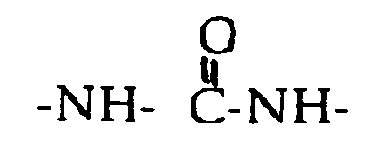
n', n'' et n''' représentent des nombres entiers de 2 à 10 inclus et
n est un nombre entier de 2 à 30 inclus. - Réactif selon la revendication 1 dans lequel R est un groupe -OH, -SH ou -NH-a, a étant un atome d'hydrogène ou un groupe alkyle de C1 à C6.
- Réactif selon la revendication 1 dans lequel R est un groupe amino protégé ou un groupe sylfhydryle protégé.
- Réactif selon la revendication 3 dans lequel R est choisi parmi

- Réactif selon l'une des revendications 1 à 4, dans lequel R* est un groupe -CH₂-O-DMT;
- Réactif selon l'une des revendications 1 à 5, dans lequel R¹ et R² représentent un groupe alkyle de C1 à C6, éventuellement un groupe isopropyle.
- Réactif selon la revendication 1 dont la structure est la suivante :
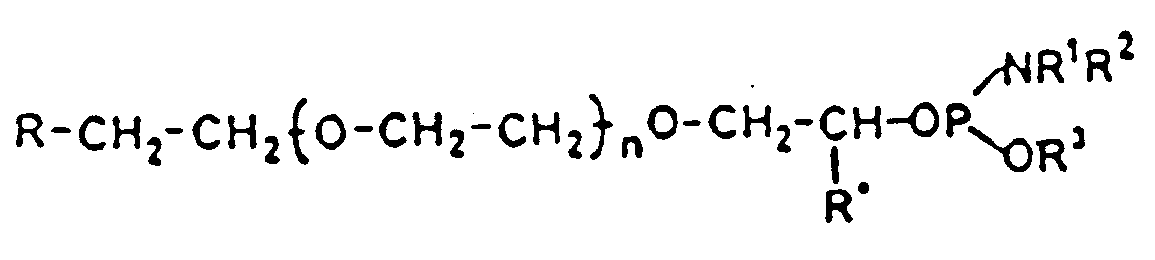
- Procédé de fonctionnalisation d'un groupe hydroxyle d'une chaîne oligonucléotidique permettant d'introduire un résidu amine ou sulfhydryle, comprenant les étapes consistant à:
faire réagir un agent fonctionnalisant selon la revendication 3 avec une chaîne oligonucléotidique possédant un groupe hydroxyle libre dans des conditions de couplage de telle sorte que la chaîne oligonucléotidique soit munie d'un résidu amine protégé ou d'un résidu sulfhydryle protégé. - Procédé selon la revendication 8 dans lequel une pluralité de groupes hydroxyle sont fonctionnalisés et/ou dans lequel un groupe hydroxyle terminal est fonctionnalisé.
- Procédé de synthèse d'un réactif de fonctionnalisation d'oligonucléotides possédant la structure suivante:

R est un résidu amino, sulfhydryle ou hydroxyle protégé ou non;
R* représente un atome d'hydrogène, un groupe -CH ₂OH ou un substituant de formule:
R¹ et R² sont choisis de manière indépendante entre un atome d'hydrogène un groupe alkyle de C1 à C6;
R³ est un groupe β-cyanoéthyle ou méthyle et
n est un nombre entier de 2 à 10 inclus.
où le procédé comprend les étapes consistant à:
coupler un diol de formule HO-CH₂-CH₂-(O-CH₂-CH₂)nO-CH₂-CH₂-OH avec un composé de formule R-H afin de produire un alcool de formule R-CH₂-CH₂-(O-CH₂-CH₂)nO-CH₂-CH₂-OH ; et
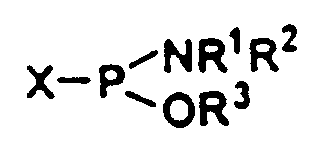
à faire réagir l'alcool ainsi obtenu avec un phosphoramidite dont la structure est la suivante:
- Procédé de synthèse d'un agent de fonctionnalisation d'oligonucléotides de formule :
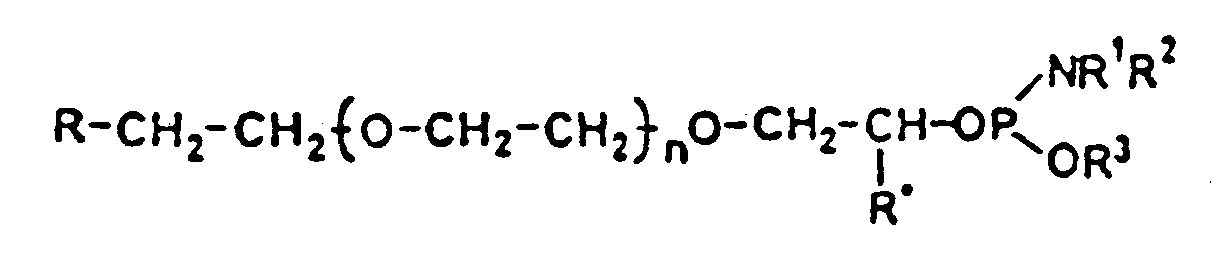
R est un résidu amino, sulfhydryle ou hydroxyle protégé ou non;
R* est un atome d'hydrogène, un groupe -CH₂OH ou un substituant de formule:
R¹ et R² sont choisis de manière indépendante entre un atome d'hydrogène un groupe alkyle de C1 à C6;
R³ est un groupe β-cyanoéthyle ou méthyle; et
n est un nombre entier de 2 à 10 inclus,
où le procédé comprend les étapes consistant à:
coupler un polyéthylène glycol tosylé avec l'anion solcétal pour obtenir un cétal de structure
déprotéger le cétal substitué par R pour obtenir un diol de structure

- Procédé de synthèse d'un agent de fonctionnalisation d'oligonucléotides dont la structure est la suivante:

φ représente un groupement phényle;
R¹ et R² sont choisis de manière indépendante entre un atome d'hydrogène et un groupe alkyle de C1 à C6 ;
R³ est un groupe β-cyanoéthyle ou méthyle, comprenant les étapes consistant à:
coupler un diol de structure
à φ₃C-SH

Priority Applications (1)
| Application Number | Priority Date | Filing Date | Title |
|---|---|---|---|
| AT88908841T ATE98996T1 (de) | 1987-10-02 | 1988-09-19 | Oligonukleotidfunktionierungsmittel und verfahren. |
Applications Claiming Priority (2)
| Application Number | Priority Date | Filing Date | Title |
|---|---|---|---|
| US104200 | 1987-10-02 | ||
| US07/104,200 US4914210A (en) | 1987-10-02 | 1987-10-02 | Oligonucleotide functionalizing reagents |
Publications (2)
| Publication Number | Publication Date |
|---|---|
| EP0380559A1 EP0380559A1 (fr) | 1990-08-08 |
| EP0380559B1 true EP0380559B1 (fr) | 1993-12-22 |
Family
ID=22299185
Family Applications (1)
| Application Number | Title | Priority Date | Filing Date |
|---|---|---|---|
| EP88908841A Expired - Lifetime EP0380559B1 (fr) | 1987-10-02 | 1988-09-19 | Procedes et reactifs de fonctionnalisation d'oligonucleotides |
Country Status (8)
| Country | Link |
|---|---|
| US (1) | US4914210A (fr) |
| EP (1) | EP0380559B1 (fr) |
| JP (1) | JP2714090B2 (fr) |
| CA (1) | CA1310600C (fr) |
| DE (1) | DE3886543T2 (fr) |
| IE (1) | IE61046B1 (fr) |
| IL (1) | IL87879A (fr) |
| WO (1) | WO1989002931A1 (fr) |
Families Citing this family (126)
| Publication number | Priority date | Publication date | Assignee | Title |
|---|---|---|---|---|
| US5359100A (en) * | 1987-10-15 | 1994-10-25 | Chiron Corporation | Bifunctional blocked phosphoramidites useful in making nucleic acid mutimers |
| US5082780A (en) * | 1989-09-12 | 1992-01-21 | Eastman Kodak Company | Oligonucleotide-enzyme conjugate that can be used as a probe in hybridization assays and polymerase chain reaction procedures |
| US5272077A (en) * | 1989-09-12 | 1993-12-21 | Eastman Kodak Company | Method for preparing a covalent conjugate of an oligonucleotide and an enzyme |
| US5254469A (en) * | 1989-09-12 | 1993-10-19 | Eastman Kodak Company | Oligonucleotide-enzyme conjugate that can be used as a probe in hybridization assays and polymerase chain reaction procedures |
| US5410068A (en) * | 1989-10-23 | 1995-04-25 | Perseptive Biosystems, Inc. | Succinimidyl trityl compounds and a process for preparing same |
| US7037646B1 (en) | 1990-01-11 | 2006-05-02 | Isis Pharmaceuticals, Inc. | Amine-derivatized nucleosides and oligonucleosides |
| US6395492B1 (en) | 1990-01-11 | 2002-05-28 | Isis Pharmaceuticals, Inc. | Derivatized oligonucleotides having improved uptake and other properties |
| US5578718A (en) * | 1990-01-11 | 1996-11-26 | Isis Pharmaceuticals, Inc. | Thiol-derivatized nucleosides |
| US6114513A (en) | 1990-01-11 | 2000-09-05 | Isis Pharmaceuticals, Inc. | Thiol-derivatized oligonucleotides |
| US6153737A (en) * | 1990-01-11 | 2000-11-28 | Isis Pharmaceuticals, Inc. | Derivatized oligonucleotides having improved uptake and other properties |
| US5852182A (en) * | 1990-01-11 | 1998-12-22 | Isis Pharmaceuticals Inc. | Thiol-derivatized oligonucleosides |
| US6753423B1 (en) | 1990-01-11 | 2004-06-22 | Isis Pharmaceuticals, Inc. | Compositions and methods for enhanced biostability and altered biodistribution of oligonucleotides in mammals |
| US5236694A (en) * | 1990-02-21 | 1993-08-17 | The Board Of Regents, The University Of Texas System | 19f labelled dextrans and antibodies as nmr imaging and spectroscopy agents |
| US5387505A (en) * | 1990-05-04 | 1995-02-07 | Eastman Kodak Company | Preparation and isolation of single-stranded biotinylated nucleic acids by heat avidin-biotin cleavage |
| US6147204A (en) * | 1990-06-11 | 2000-11-14 | Nexstar Pharmaceuticals, Inc. | Nucleic acid ligand complexes |
| US6465188B1 (en) | 1990-06-11 | 2002-10-15 | Gilead Sciences, Inc. | Nucleic acid ligand complexes |
| US6168778B1 (en) | 1990-06-11 | 2001-01-02 | Nexstar Pharmaceuticals, Inc. | Vascular endothelial growth factor (VEGF) Nucleic Acid Ligand Complexes |
| US20060084797A1 (en) * | 1990-06-11 | 2006-04-20 | Gilead Sciences, Inc. | High affinity TGFbeta nucleic acid ligands and inhibitors |
| US5155166A (en) * | 1990-06-18 | 1992-10-13 | Eastman Kodak Company | Use of 1-(1-pyrrolidinylcarbonyl)pyridinium salts to attach compounds to carboxylated particles and a kit containing same |
| US5245022A (en) * | 1990-08-03 | 1993-09-14 | Sterling Drug, Inc. | Exonuclease resistant terminally substituted oligonucleotides |
| US5210015A (en) * | 1990-08-06 | 1993-05-11 | Hoffman-La Roche Inc. | Homogeneous assay system using the nuclease activity of a nucleic acid polymerase |
| US5420330A (en) * | 1990-09-07 | 1995-05-30 | Pharmacia P-L Biochemicals Inc. | Lipo-phosphoramidites |
| GB9021625D0 (en) * | 1990-10-04 | 1990-11-21 | Ici Plc | Synthesis of oligonucleotides |
| US5200462A (en) * | 1991-01-25 | 1993-04-06 | Eastman Kodak Company | Succinimide containing polymers and lattices prepared from same |
| CA2065719A1 (fr) | 1991-04-30 | 1992-10-31 | John B. Findlay | Amplification d'acides nucleiques et methodes de detection faisant appel au cycle rapide de la reaction en chaine a la polymerase |
| US5495006A (en) * | 1991-09-27 | 1996-02-27 | Allelix Biopharmaceuticals, Inc. | Antiviral polynucleotide conjugates |
| US6831166B2 (en) | 1992-10-23 | 2004-12-14 | Isis Pharmaceuticals, Inc. | Derivatized oligonucleotides having improved uptake and other properties |
| EP0638087A1 (fr) * | 1992-03-17 | 1995-02-15 | Life Technologies Inc. | Nucleotides modifies |
| US6080851A (en) * | 1992-12-04 | 2000-06-27 | American Home Products Corporation | Ribozymes with linked anchor sequences |
| US20060257885A1 (en) * | 1993-01-05 | 2006-11-16 | Gelfand David H | Homogeneous assay system |
| US6653458B1 (en) | 1993-09-03 | 2003-11-25 | Isis Pharmaceuticals, Inc. | Modified oligonucleotides |
| US5622822A (en) | 1994-09-13 | 1997-04-22 | Johnson & Johnson Clinical Diagnostics, Inc. | Methods for capture and selective release of nucleic acids using polyethyleneimine and an anionic phosphate ester surfactant and amplification of same |
| US5705366A (en) | 1994-09-15 | 1998-01-06 | Johnson & Johnson Clinical Diagnostics, Inc. | Coamplification of target nucleic acids using volume exclusion agent in reaction composition, test kit and test device useful therefor |
| US5582988A (en) | 1994-09-15 | 1996-12-10 | Johnson & Johnson Clinical Diagnostics, Inc. | Methods for capture and selective release of nucleic acids using weakly basic polymer and amplification of same |
| US8071737B2 (en) * | 1995-05-04 | 2011-12-06 | Glead Sciences, Inc. | Nucleic acid ligand complexes |
| JP2809601B2 (ja) * | 1995-07-13 | 1998-10-15 | 株式会社分子バイオホトニクス研究所 | 塩基配列増幅方法 |
| US5853990A (en) * | 1996-07-26 | 1998-12-29 | Edward E. Winger | Real time homogeneous nucleotide assay |
| US6426335B1 (en) * | 1997-10-17 | 2002-07-30 | Gilead Sciences, Inc. | Vascular endothelial growth factor (VEGF) nucleic acid ligand complexes |
| US6051698A (en) * | 1997-06-06 | 2000-04-18 | Janjic; Nebojsa | Vascular endothelial growth factor (VEGF) nucleic acid ligand complexes |
| WO2000066783A2 (fr) * | 1999-05-04 | 2000-11-09 | Ortho-Clinical Diagnostics, Inc. | Capture rapide et efficace d'adn dans un prelevement sans recours a un reactif de lyse cellulaire |
| US6528254B1 (en) | 1999-10-29 | 2003-03-04 | Stratagene | Methods for detection of a target nucleic acid sequence |
| EP1136569A3 (fr) * | 2000-03-24 | 2004-01-28 | Bayer Corporation | Sondes d'acides nucléiques qui ont des marqueurs non-nucléosidiques à haute hydrophilicité comprenant plusieurs autres marqueurs et leur utilisation |
| US7262006B1 (en) | 2000-05-01 | 2007-08-28 | Ortho-Clinical Diagnostics, Inc. | Rapid and efficient capture of DNA from sample without using cell lysing reagent |
| WO2001092579A2 (fr) * | 2000-05-30 | 2001-12-06 | Pe Corporation (Ny) | Methodes de detection d'acides nucleiques cibles au moyen d'une ligation et d'une amplification couplees |
| US6743905B2 (en) | 2001-04-16 | 2004-06-01 | Applera Corporation | Mobility-modified nucleobase polymers and methods of using same |
| US20040106109A1 (en) * | 2001-10-02 | 2004-06-03 | Belly Robert T | Detection of ras mutations |
| US10731151B2 (en) * | 2002-03-15 | 2020-08-04 | Nuevolution A/S | Method for synthesising templated molecules |
| DE60335116D1 (de) | 2002-06-28 | 2011-01-05 | Primeradx Inc | Verfahren zum nachweis von sequenzunterschieden |
| EP1556325A4 (fr) * | 2002-09-20 | 2007-09-19 | Integrated Dna Tech Inc | Colorants extincteurs de fluorescence a base d'anthraquinone et procedes de fabrication et d'utilisation |
| US20040235005A1 (en) * | 2002-10-23 | 2004-11-25 | Ernest Friedlander | Methods and composition for detecting targets |
| AU2004230569B2 (en) | 2003-03-31 | 2007-12-06 | F. Hoffmann-La Roche Ag | Compositions and methods for detecting certain flaviviruses, including members of the Japanese encephalitis virus serogroup |
| WO2005001129A2 (fr) * | 2003-06-06 | 2005-01-06 | Applera Corporation | Cassettes de mobilite |
| NZ592039A (en) * | 2003-08-27 | 2013-03-28 | Ophthotech Corp | Combination therapy for the treatment of ocular neovascular disorders |
| US7439341B2 (en) * | 2003-11-14 | 2008-10-21 | Integrated Dna Technologies, Inc. | Fluorescence quenching azo dyes, their methods of preparation and use |
| US7939251B2 (en) | 2004-05-06 | 2011-05-10 | Roche Molecular Systems, Inc. | SENP1 as a marker for cancer |
| WO2006127507A2 (fr) | 2005-05-20 | 2006-11-30 | Integrated Dna Technologies, Inc. | Composes et procedes de marquage d'oligonucleotides |
| US7892795B2 (en) | 2005-08-02 | 2011-02-22 | Focus Diagnostics, Inc. | Methods and compositions for detecting BK virus |
| CA3042781C (fr) | 2006-04-03 | 2021-10-19 | Roche Innovation Center Copenhagen A/S | Composition pharmaceutique comprenant des oligonucleotides antisens anti-microarn |
| EA201100811A1 (ru) * | 2006-04-03 | 2012-06-29 | Сантарис Фарма А/С | Фармацевтическая композиция |
| EP3796002B1 (fr) | 2006-07-14 | 2023-11-22 | The Regents of The University of California | Biomarqueurs du cancer et leurs procédés d'utilisation |
| EP2076597A2 (fr) * | 2006-10-09 | 2009-07-08 | Santaris Pharma A/S | Composés antagonistes de l'arn pour la modulation de pcsk9 |
| US8580756B2 (en) * | 2007-03-22 | 2013-11-12 | Santaris Pharma A/S | Short oligomer antagonist compounds for the modulation of target mRNA |
| US8470791B2 (en) * | 2007-03-22 | 2013-06-25 | Santaris Pharma A/S | RNA antagonist compounds for the inhibition of Apo-B100 expression |
| DK2152879T3 (da) | 2007-05-01 | 2013-02-18 | Santaris Pharma As | RNA antagonistforbindelser til modulering af beta-catenin |
| AU2008250033A1 (en) | 2007-05-11 | 2008-11-20 | Enzon Pharmaceuticals, Inc. | RNA antagonist compounds for the modulation of HER3 |
| US20110054011A1 (en) * | 2007-08-30 | 2011-03-03 | Mccullagh Keith | RNA Antagonist Compounds for the Modulation of FABP4/AP2 |
| DK2205737T3 (da) * | 2007-10-04 | 2013-05-21 | Santaris Pharma As | Mikromirer |
| NZ585327A (en) * | 2007-11-26 | 2012-10-26 | Santaris Pharma As | Lna antagonists targeting the androgen receptor |
| US8450290B2 (en) * | 2007-11-26 | 2013-05-28 | Enzon Pharmaceuticals, Inc. | Methods for treating androgen receptor dependent disorders including cancers |
| US7863437B2 (en) * | 2007-12-03 | 2011-01-04 | Enzon Pharmaceuticals, Inc. | RNA antagonist compounds for the modulation of PIK3CA expression |
| US20090197254A1 (en) * | 2007-12-14 | 2009-08-06 | Ming-Chou Lee | Variant scorpion primers for nucleic acid amplification and detection |
| EP2268811A1 (fr) * | 2008-03-07 | 2011-01-05 | Santaris Pharma A/S | Compositions pharmaceutiques pour le traitement de maladies associées aux microarn |
| NZ589143A (en) | 2008-05-14 | 2012-02-24 | Genomic Health Inc | Colorectal cancer response prediction based on AREG EREG DUSP6 and SLC26A3 expression levels |
| US8492357B2 (en) | 2008-08-01 | 2013-07-23 | Santaris Pharma A/S | Micro-RNA mediated modulation of colony stimulating factors |
| EP2463385B1 (fr) | 2008-11-13 | 2014-08-27 | RiboxX GmbH | Kit pour la détection d'ARN |
| US9034837B2 (en) * | 2009-04-24 | 2015-05-19 | Roche Innovation Center Copenhagen A/S | Pharmaceutical compositions for treatment of HCV patients that are poor-responders to interferon |
| EP2256215A1 (fr) | 2009-04-30 | 2010-12-01 | Steffen Mergemeier | Système d'analyse utilisant une activité de nucléase d'une polymérase d'acide nucléique |
| WO2010142805A1 (fr) | 2009-06-12 | 2010-12-16 | Santaris Pharma A/S | Nouveaux composés antisens anti-apob puissants |
| US8563528B2 (en) | 2009-07-21 | 2013-10-22 | Santaris Pharma A/S | Antisense oligomers targeting PCSK9 |
| CN102712696A (zh) | 2009-09-16 | 2012-10-03 | 弗·哈夫曼-拉罗切有限公司 | 包含卷曲螺旋和/或系链的蛋白质复合体及其用途 |
| US9364495B2 (en) | 2009-10-20 | 2016-06-14 | Roche Innovation Center Copenhagen A/S | Oral delivery of therapeutically effective LNA oligonucleotides |
| WO2011054811A1 (fr) | 2009-11-03 | 2011-05-12 | Santaris Pharma A/S | Traitement combiné par des antagonistes d'arn ciblant hsp-27 |
| WO2011120049A1 (fr) | 2010-03-26 | 2011-09-29 | Integrated Dna Technologies, Inc. | Procédés pour améliorer l'hybridation des acides nucléiques |
| US9506057B2 (en) | 2010-03-26 | 2016-11-29 | Integrated Dna Technologies, Inc. | Modifications for antisense compounds |
| TW201138821A (en) | 2010-03-26 | 2011-11-16 | Roche Glycart Ag | Bispecific antibodies |
| US9206216B2 (en) | 2010-04-21 | 2015-12-08 | Pierce Biotechnology, Inc. | Modified nucleotides methods and kits |
| US8536323B2 (en) | 2010-04-21 | 2013-09-17 | Pierce Biotechnology, Inc. | Modified nucleotides |
| US8278049B2 (en) | 2010-04-26 | 2012-10-02 | Ann & Robert H. Lurie Children's Hospital of Chicago | Selective enrichment of CpG islands |
| EP2564200B8 (fr) | 2010-04-27 | 2019-10-02 | The Regents of The University of California | Biomarqueurs de cancer et leurs procédés d'utilisation |
| WO2012007477A1 (fr) | 2010-07-12 | 2012-01-19 | Santaris Pharma A/S | Oligomères anti-vhc |
| CA2809457C (fr) | 2010-09-07 | 2019-07-30 | Integrated Dna Technologies, Inc. | Modifications pour composes antisens |
| WO2012034942A1 (fr) | 2010-09-13 | 2012-03-22 | Santaris Pharma A/S | Composés pour la modulation de l'expression de la kinase aurora b |
| EP2646553A4 (fr) | 2010-11-12 | 2015-01-07 | Santaris Pharma As | Compositions et procédés pour le traitement de troubles dépendant des récepteurs androgènes y compris les cancers |
| WO2012066092A1 (fr) | 2010-11-19 | 2012-05-24 | Santaris Pharma A/S | Composés de modulation de l'expression de l'aurora kinase a |
| WO2012066093A1 (fr) | 2010-11-19 | 2012-05-24 | Santaris Pharma A/S | Composés pour la modulation de l'expression de la protéine kinase pbk à liaison avec pdz |
| EP2659269B1 (fr) | 2010-12-23 | 2016-10-26 | Roche Diagniostics GmbH | Détection d'un polypeptide modifié après traduction par un agent de liaison bivalent |
| EP2655413B1 (fr) | 2010-12-23 | 2019-01-16 | F.Hoffmann-La Roche Ag | Complexe polypeptide-polynucléotide et son utilisation dans l'administration d'une fraction effectrice ciblée |
| CN103384681B (zh) | 2010-12-23 | 2018-05-18 | 霍夫曼-拉罗奇有限公司 | 结合剂 |
| WO2012107537A1 (fr) | 2011-02-09 | 2012-08-16 | Riboxx Gmbh | Procédé pour la détection de séquences polynucléotidiques |
| WO2012110457A2 (fr) | 2011-02-14 | 2012-08-23 | Santaris Pharma A/S | Composés pour la modulation de l'expression de l'ostéopontine |
| WO2012143427A1 (fr) | 2011-04-19 | 2012-10-26 | Santaris Pharma A/S | Composés anti-polyomavirus |
| WO2012175733A1 (fr) | 2011-06-23 | 2012-12-27 | Santaris Pharma A/S | Polythérapie anti-vhc |
| EP2726610A1 (fr) | 2011-06-30 | 2014-05-07 | Stella ApS | Polythérapie anti-vhc |
| KR20140058536A (ko) | 2011-06-30 | 2014-05-14 | 스텔라 에이피에스 | Hcv 조합 치료 |
| EP2776590B1 (fr) | 2011-11-07 | 2016-10-26 | Roche Innovation Center Copenhagen A/S | Procédé prognostique d'évaluation de l'efficacité d'inhibiteurs micro rna-122 en hcv+ patients |
| US20140343127A1 (en) | 2011-11-11 | 2014-11-20 | Santaris Pharma A/S a corporation | Compounds for the modulation of smn2 splicing |
| MX2014009565A (es) | 2012-02-10 | 2014-11-10 | Genentech Inc | Anticuerpos monocatenarios y otros heteromultimeros. |
| EP2828407A4 (fr) | 2012-03-20 | 2016-02-10 | UNIVERSITé LAVAL | Procédé de détection d'acides nucléiques comprenant des sondes d'indexation spécifiques d'une cible (tsip) comprenant un segment pouvant être libéré à détecter par l'intermédiaire de la fluorescence lorsqu'il est lié à une sonde de capture |
| ES2597228T3 (es) | 2012-06-27 | 2017-01-17 | F. Hoffmann-La Roche Ag | Procedimiento para la selección y la producción de entidades de objetivación, como dianas, altamente selectivas y multiespecíficas, personalizadas, las cuales contienen por lo menos dos entidades de unión diferentes, y utilización de éstas |
| KR20150030744A (ko) | 2012-06-27 | 2015-03-20 | 에프. 호프만-라 로슈 아게 | 표적에 특이적으로 결합하는 하나 이상의 결합 단위를 포함하는 항체 Fc-영역 접합체의 제조 방법 및 그의 용도 |
| MX2015004191A (es) | 2012-10-04 | 2016-04-04 | Univ Leland Stanford Junior | Metodos y reactivos para la deteccion, cuantificacion y serotipado de virus del dengue. |
| CA2889044A1 (fr) | 2012-11-15 | 2014-05-22 | Roche Innovation Center Copenhagen A/S | Composes conjugues antisens anti-apob |
| BR112015012051A2 (pt) | 2012-11-26 | 2017-12-12 | Roche Innovation Ct Copenhagen As | composições e métodos para modulação de expressão de fgfr3 |
| MX367083B (es) | 2013-06-27 | 2019-08-05 | Roche Innovation Ct Copenhagen As | Oligomeros antisentido y conjugados con diana en la proteina-convertasa subtilisina/kexina tipo 9(pcsk9). |
| SI4374873T1 (sl) | 2013-07-12 | 2026-01-30 | Astellas Us Llc | Sredstvo za uporabo pri zdravljenju ali preprečevanju oftalmoloških stanj |
| WO2015073707A1 (fr) | 2013-11-15 | 2015-05-21 | The Board Of Trustees Of The Leland Stanford Junior University | Procédés de traitement d'une insuffisance cardiaque avec des agonistes de récepteur 2 d'hypocrétine |
| GB201408623D0 (en) | 2014-05-15 | 2014-07-02 | Santaris Pharma As | Oligomers and oligomer conjugates |
| WO2016024205A1 (fr) | 2014-08-15 | 2016-02-18 | Pfizer Inc. | Oligomères ciblant l'expansion d'une répétition hexanucléotidique dans le gène c9orf72 humain |
| WO2016087416A1 (fr) | 2014-12-03 | 2016-06-09 | F. Hoffmann-La Roche Ag | Anticorps multispécifiques |
| DK3234131T3 (da) | 2014-12-16 | 2020-06-29 | Roche Innovation Ct Copenhagen As | Fremgangsmåde til screening af kiral toksicitet |
| WO2017180420A1 (fr) | 2016-04-11 | 2017-10-19 | Board Of Regents, The University Of Texas System | Procédés et compositions pour détecter la séquence et l'affinité vis-à-vis d'un récepteur unique de lymphocyte t |
| JP2021524450A (ja) | 2018-05-18 | 2021-09-13 | エフ.ホフマン−ラ ロシュ アーゲーF. Hoffmann−La Roche Aktiengesellschaft | マイクロrna関連疾患の処置のための薬学的組成物 |
| WO2023077107A1 (fr) | 2021-10-29 | 2023-05-04 | Sana Biotechnology, Inc. | Procédés et réactifs pour amplifier des produits d'acide nucléique de vecteur viral |
| CN120418451A (zh) | 2023-01-06 | 2025-08-01 | Dna斯克瑞普特公司 | 用于获得正确组装核酸的方法 |
| AU2024363859A1 (en) | 2023-10-18 | 2026-04-09 | Amgen Inc. | Evaluation of mrna transcript levels using ddpcr for early pool and single-cell clone assessment in cell line development |
| EP4553174A1 (fr) | 2023-11-08 | 2025-05-14 | Consejo Superior De Investigaciones Científicas | Procédés pour déterminer la fonction thymique par un système de pcr numérique à gouttelettes |
Family Cites Families (3)
| Publication number | Priority date | Publication date | Assignee | Title |
|---|---|---|---|---|
| US4522735A (en) * | 1983-06-17 | 1985-06-11 | The B. F. Goodrich Company | Polyphosphoramidite oligomers and stabilizer compositions thereof |
| US4582789A (en) * | 1984-03-21 | 1986-04-15 | Cetus Corporation | Process for labeling nucleic acids using psoralen derivatives |
| US4617261A (en) * | 1984-03-21 | 1986-10-14 | Cetus Corporation | Process for labeling nucleic acids and hybridization probes |
-
1987
- 1987-10-02 US US07/104,200 patent/US4914210A/en not_active Expired - Lifetime
-
1988
- 1988-09-19 EP EP88908841A patent/EP0380559B1/fr not_active Expired - Lifetime
- 1988-09-19 JP JP63508099A patent/JP2714090B2/ja not_active Expired - Fee Related
- 1988-09-19 DE DE88908841T patent/DE3886543T2/de not_active Expired - Fee Related
- 1988-09-19 WO PCT/US1988/003212 patent/WO1989002931A1/fr not_active Ceased
- 1988-09-27 CA CA000578519A patent/CA1310600C/fr not_active Expired - Lifetime
- 1988-09-29 IL IL87879A patent/IL87879A/xx not_active IP Right Cessation
- 1988-09-30 IE IE297188A patent/IE61046B1/en not_active IP Right Cessation
Also Published As
| Publication number | Publication date |
|---|---|
| US4914210A (en) | 1990-04-03 |
| IE61046B1 (en) | 1994-09-07 |
| IE882971L (en) | 1989-04-02 |
| WO1989002931A1 (fr) | 1989-04-06 |
| IL87879A0 (en) | 1989-03-31 |
| DE3886543T2 (de) | 1994-04-21 |
| DE3886543D1 (de) | 1994-02-03 |
| JP2714090B2 (ja) | 1998-02-16 |
| CA1310600C (fr) | 1992-11-24 |
| IL87879A (en) | 1993-06-10 |
| JPH03501383A (ja) | 1991-03-28 |
| EP0380559A1 (fr) | 1990-08-08 |
Similar Documents
| Publication | Publication Date | Title |
|---|---|---|
| CA1310600C (fr) | Reactifs et methodes pour greffer des groupes fonctionnels a des oligonucleotides | |
| US4962029A (en) | Covalent oligonucleotide-horseradish peroxidase conjugate | |
| KR920007274B1 (ko) | 변형된 포스포라미디트를 이용하는 변형 핵산의 제조방법 | |
| US5371241A (en) | Fluorescein labelled phosphoramidites | |
| US5254469A (en) | Oligonucleotide-enzyme conjugate that can be used as a probe in hybridization assays and polymerase chain reaction procedures | |
| EP0359225B1 (fr) | Réactifs pour la préparation d'oligonucléotides marqués en 5' | |
| EP0261283B1 (fr) | Agents de liaison à base de phosphites et phosphates aiyant des fonctions amino, produits liés à ceux-ci et précurseurs phosphoramiditiques | |
| US5430138A (en) | Hydroxyl-protecting groups attached to cytidine nucleotide compounds which are orthogonally removable | |
| JPH04503059A (ja) | 5′―ビオチン化オリゴヌクレオチド製造用の試剤 | |
| US5258538A (en) | 2,3-disubstituted-1,3,2-oxazaphosphacycloalkanes as nucleic acid linking agents | |
| CA1300532C (fr) | Conjugat covalent oligonucleotide-peroxydase du raifort | |
| Reines et al. | New fluorescent hydrazide reagents for the oxidized 3'-terminus of RNA | |
| JPH03155779A (ja) | オリゴヌクレオチドと酵素の結合物およびその製造方法 | |
| EP0198207B1 (fr) | Ioduration spécifique d'acide nucléique | |
| EP0537994B1 (fr) | Conjugations effectives entre genes et probes par une méthode non-conformiste utilisant un anhydride mixte | |
| US20030104380A1 (en) | Compositions and methods for labeling oligonucleotides | |
| US7282575B2 (en) | Functional peptide nucleic acid monomer and process for producing the same | |
| US5859259A (en) | Activated esters of 1-phenylpyrazolin-5-one for labeling amine-functionalized molecules | |
| EP0310312A2 (fr) | Réactifs non nucléotides pour substituer les extrémités d'oligonucléotides | |
| WO1984002526A1 (fr) | Procede de production de polynucleotides | |
| US5272077A (en) | Method for preparing a covalent conjugate of an oligonucleotide and an enzyme | |
| JPH01199990A (ja) | アミノ配糖体の製造法 | |
| JPWO1988003149A1 (ja) | オリゴヌクレオチドの合成法および高分子保護基形成用化合物 |
Legal Events
| Date | Code | Title | Description |
|---|---|---|---|
| PUAI | Public reference made under article 153(3) epc to a published international application that has entered the european phase |
Free format text: ORIGINAL CODE: 0009012 |
|
| 17P | Request for examination filed |
Effective date: 19900322 |
|
| AK | Designated contracting states |
Kind code of ref document: A1 Designated state(s): AT BE CH DE FR GB IT LI LU NL SE |
|
| 17Q | First examination report despatched |
Effective date: 19920324 |
|
| RAP1 | Party data changed (applicant data changed or rights of an application transferred) |
Owner name: CETUS ONCOLOGY CORPORATION |
|
| GRAA | (expected) grant |
Free format text: ORIGINAL CODE: 0009210 |
|
| ITF | It: translation for a ep patent filed | ||
| AK | Designated contracting states |
Kind code of ref document: B1 Designated state(s): AT BE CH DE FR GB IT LI LU NL SE |
|
| REF | Corresponds to: |
Ref document number: 98996 Country of ref document: AT Date of ref document: 19940115 Kind code of ref document: T |
|
| REF | Corresponds to: |
Ref document number: 3886543 Country of ref document: DE Date of ref document: 19940203 |
|
| ET | Fr: translation filed | ||
| PLBE | No opposition filed within time limit |
Free format text: ORIGINAL CODE: 0009261 |
|
| STAA | Information on the status of an ep patent application or granted ep patent |
Free format text: STATUS: NO OPPOSITION FILED WITHIN TIME LIMIT |
|
| 26N | No opposition filed | ||
| EAL | Se: european patent in force in sweden |
Ref document number: 88908841.5 |
|
| REG | Reference to a national code |
Ref country code: GB Ref legal event code: 732E |
|
| PGFP | Annual fee paid to national office [announced via postgrant information from national office to epo] |
Ref country code: SE Payment date: 19970821 Year of fee payment: 10 |
|
| PGFP | Annual fee paid to national office [announced via postgrant information from national office to epo] |
Ref country code: AT Payment date: 19970825 Year of fee payment: 10 |
|
| PGFP | Annual fee paid to national office [announced via postgrant information from national office to epo] |
Ref country code: BE Payment date: 19970909 Year of fee payment: 10 |
|
| PGFP | Annual fee paid to national office [announced via postgrant information from national office to epo] |
Ref country code: LU Payment date: 19971003 Year of fee payment: 10 |
|
| NLS | Nl: assignments of ep-patents |
Owner name: CHIRON CORPORATION |
|
| REG | Reference to a national code |
Ref country code: FR Ref legal event code: TP |
|
| PG25 | Lapsed in a contracting state [announced via postgrant information from national office to epo] |
Ref country code: LU Free format text: LAPSE BECAUSE OF NON-PAYMENT OF DUE FEES Effective date: 19980919 Ref country code: AT Free format text: LAPSE BECAUSE OF NON-PAYMENT OF DUE FEES Effective date: 19980919 |
|
| PG25 | Lapsed in a contracting state [announced via postgrant information from national office to epo] |
Ref country code: SE Free format text: LAPSE BECAUSE OF NON-PAYMENT OF DUE FEES Effective date: 19980920 |
|
| PG25 | Lapsed in a contracting state [announced via postgrant information from national office to epo] |
Ref country code: BE Free format text: LAPSE BECAUSE OF NON-PAYMENT OF DUE FEES Effective date: 19980930 |
|
| REG | Reference to a national code |
Ref country code: CH Ref legal event code: NV Representative=s name: PATENTANWAELTE SCHAAD, BALASS, MENZL & PARTNER AG Ref country code: CH Ref legal event code: PFA Free format text: CETUS ONCOLOGY CORPORATION TRANSFER- CHIRON CORPORATION |
|
| BERE | Be: lapsed |
Owner name: CHIRON CORP. Effective date: 19980930 |
|
| REG | Reference to a national code |
Ref country code: CH Ref legal event code: PUE Owner name: CHIRON CORPORATION TRANSFER- CHIRON DIAGNOSTICS CO |
|
| EUG | Se: european patent has lapsed |
Ref document number: 88908841.5 |
|
| NLS | Nl: assignments of ep-patents |
Owner name: CHIRON DIAGNOSTICS CORPORATION |
|
| REG | Reference to a national code |
Ref country code: FR Ref legal event code: TP |
|
| REG | Reference to a national code |
Ref country code: GB Ref legal event code: 732E |
|
| REG | Reference to a national code |
Ref country code: GB Ref legal event code: IF02 |
|
| PGFP | Annual fee paid to national office [announced via postgrant information from national office to epo] |
Ref country code: NL Payment date: 20050829 Year of fee payment: 18 |
|
| PGFP | Annual fee paid to national office [announced via postgrant information from national office to epo] |
Ref country code: GB Payment date: 20050914 Year of fee payment: 18 |
|
| PGFP | Annual fee paid to national office [announced via postgrant information from national office to epo] |
Ref country code: FR Payment date: 20050919 Year of fee payment: 18 |
|
| PGFP | Annual fee paid to national office [announced via postgrant information from national office to epo] |
Ref country code: CH Payment date: 20050921 Year of fee payment: 18 |
|
| PGFP | Annual fee paid to national office [announced via postgrant information from national office to epo] |
Ref country code: DE Payment date: 20051031 Year of fee payment: 18 |
|
| PG25 | Lapsed in a contracting state [announced via postgrant information from national office to epo] |
Ref country code: CH Free format text: LAPSE BECAUSE OF NON-PAYMENT OF DUE FEES Effective date: 20060930 Ref country code: LI Free format text: LAPSE BECAUSE OF NON-PAYMENT OF DUE FEES Effective date: 20060930 |
|
| PGFP | Annual fee paid to national office [announced via postgrant information from national office to epo] |
Ref country code: IT Payment date: 20060930 Year of fee payment: 19 |
|
| PG25 | Lapsed in a contracting state [announced via postgrant information from national office to epo] |
Ref country code: NL Free format text: LAPSE BECAUSE OF NON-PAYMENT OF DUE FEES Effective date: 20070401 |
|
| PG25 | Lapsed in a contracting state [announced via postgrant information from national office to epo] |
Ref country code: DE Free format text: LAPSE BECAUSE OF NON-PAYMENT OF DUE FEES Effective date: 20070403 |
|
| REG | Reference to a national code |
Ref country code: CH Ref legal event code: PL |
|
| GBPC | Gb: european patent ceased through non-payment of renewal fee |
Effective date: 20060919 |
|
| NLV4 | Nl: lapsed or anulled due to non-payment of the annual fee |
Effective date: 20070401 |
|
| REG | Reference to a national code |
Ref country code: FR Ref legal event code: ST Effective date: 20070531 |
|
| PG25 | Lapsed in a contracting state [announced via postgrant information from national office to epo] |
Ref country code: GB Free format text: LAPSE BECAUSE OF NON-PAYMENT OF DUE FEES Effective date: 20060919 |
|
| PG25 | Lapsed in a contracting state [announced via postgrant information from national office to epo] |
Ref country code: FR Free format text: LAPSE BECAUSE OF NON-PAYMENT OF DUE FEES Effective date: 20061002 |
|
| PG25 | Lapsed in a contracting state [announced via postgrant information from national office to epo] |
Ref country code: IT Free format text: LAPSE BECAUSE OF NON-PAYMENT OF DUE FEES Effective date: 20070919 |