EP0389948A2 - Verfahren zur Behandlung von Polyethylenterephthalat, Polyethylenterephthalat zur Verwendung als Formmasse und Verfahren zu dessen Herstellung - Google Patents
Verfahren zur Behandlung von Polyethylenterephthalat, Polyethylenterephthalat zur Verwendung als Formmasse und Verfahren zu dessen Herstellung Download PDFInfo
- Publication number
- EP0389948A2 EP0389948A2 EP90105337A EP90105337A EP0389948A2 EP 0389948 A2 EP0389948 A2 EP 0389948A2 EP 90105337 A EP90105337 A EP 90105337A EP 90105337 A EP90105337 A EP 90105337A EP 0389948 A2 EP0389948 A2 EP 0389948A2
- Authority
- EP
- European Patent Office
- Prior art keywords
- polyethylene terephthalate
- temperature
- polycondensation
- weight
- solid phase
- Prior art date
- Legal status (The legal status is an assumption and is not a legal conclusion. Google has not performed a legal analysis and makes no representation as to the accuracy of the status listed.)
- Granted
Links
Images
Classifications
-
- C—CHEMISTRY; METALLURGY
- C08—ORGANIC MACROMOLECULAR COMPOUNDS; THEIR PREPARATION OR CHEMICAL WORKING-UP; COMPOSITIONS BASED THEREON
- C08G—MACROMOLECULAR COMPOUNDS OBTAINED OTHERWISE THAN BY REACTIONS ONLY INVOLVING UNSATURATED CARBON-TO-CARBON BONDS
- C08G63/00—Macromolecular compounds obtained by reactions forming a carboxylic ester link in the main chain of the macromolecule
- C08G63/78—Preparation processes
-
- C—CHEMISTRY; METALLURGY
- C08—ORGANIC MACROMOLECULAR COMPOUNDS; THEIR PREPARATION OR CHEMICAL WORKING-UP; COMPOSITIONS BASED THEREON
- C08G—MACROMOLECULAR COMPOUNDS OBTAINED OTHERWISE THAN BY REACTIONS ONLY INVOLVING UNSATURATED CARBON-TO-CARBON BONDS
- C08G63/00—Macromolecular compounds obtained by reactions forming a carboxylic ester link in the main chain of the macromolecule
- C08G63/02—Polyesters derived from hydroxycarboxylic acids or from polycarboxylic acids and polyhydroxy compounds
- C08G63/12—Polyesters derived from hydroxycarboxylic acids or from polycarboxylic acids and polyhydroxy compounds derived from polycarboxylic acids and polyhydroxy compounds
- C08G63/16—Dicarboxylic acids and dihydroxy compounds
- C08G63/18—Dicarboxylic acids and dihydroxy compounds the acids or hydroxy compounds containing carbocyclic rings
- C08G63/181—Acids containing aromatic rings
- C08G63/183—Terephthalic acids
-
- C—CHEMISTRY; METALLURGY
- C08—ORGANIC MACROMOLECULAR COMPOUNDS; THEIR PREPARATION OR CHEMICAL WORKING-UP; COMPOSITIONS BASED THEREON
- C08G—MACROMOLECULAR COMPOUNDS OBTAINED OTHERWISE THAN BY REACTIONS ONLY INVOLVING UNSATURATED CARBON-TO-CARBON BONDS
- C08G63/00—Macromolecular compounds obtained by reactions forming a carboxylic ester link in the main chain of the macromolecule
- C08G63/78—Preparation processes
- C08G63/80—Solid-state polycondensation
-
- C—CHEMISTRY; METALLURGY
- C08—ORGANIC MACROMOLECULAR COMPOUNDS; THEIR PREPARATION OR CHEMICAL WORKING-UP; COMPOSITIONS BASED THEREON
- C08G—MACROMOLECULAR COMPOUNDS OBTAINED OTHERWISE THAN BY REACTIONS ONLY INVOLVING UNSATURATED CARBON-TO-CARBON BONDS
- C08G63/00—Macromolecular compounds obtained by reactions forming a carboxylic ester link in the main chain of the macromolecule
- C08G63/78—Preparation processes
- C08G63/82—Preparation processes characterised by the catalyst used
- C08G63/85—Germanium, tin, lead, arsenic, antimony, bismuth, titanium, zirconium, hafnium, vanadium, niobium, tantalum, or compounds thereof
-
- C—CHEMISTRY; METALLURGY
- C08—ORGANIC MACROMOLECULAR COMPOUNDS; THEIR PREPARATION OR CHEMICAL WORKING-UP; COMPOSITIONS BASED THEREON
- C08G—MACROMOLECULAR COMPOUNDS OBTAINED OTHERWISE THAN BY REACTIONS ONLY INVOLVING UNSATURATED CARBON-TO-CARBON BONDS
- C08G63/00—Macromolecular compounds obtained by reactions forming a carboxylic ester link in the main chain of the macromolecule
- C08G63/88—Post-polymerisation treatment
- C08G63/90—Purification; Drying
Definitions
- This invention relates to processes for treatment of polyethylene terephthalate used in molding therefrom bottles, sheets, films or the like molded articles, and more particularly to the processes for the treatment of polyethylene terephthalate to obtain such polyethylene terephthalate as may be useful for molding purposes, by the use of which the contamination of the mold therewith is difficult to occur.
- the invention relates to polyethylene terephthalate used in molding therefrom bottles, sheets, films or the like molded articles, the more particularly to polyethylene terephthalate, by the use of which the contamination of the mold therewith is difficult to occur, and also to processes for preparing the same.
- the invention relates to polyethylene terephthalate used in molding therefrom bottles, sheets, films, or the like molded articles, by the use of which acetaldehyde is difficult to form.
- polyethylene terephthalate is a useful material for forming containers to be filled particularly beverages such as fruit juices, cooling drinks and carbonated drinks.
- known polyethylene terephthalate obtained by the conventional procedure as mentioned above contains oligomers such as cyclic trimer, with the result that the oligomers attach to the inner surface of blow-molding mold and contaminate the mold therewith or attach to the vent portion of mold of the injection machine as mentioned above and contaminate the mold therewith.
- the present inventors extensively studied with the view of obtaining polyethylene terephthalate, by the use of which the contamination of the mold therewith is difficult to occur, and have found that the contamination of the mold at the time of molding polyethylene terephthalate is mainly attributable to an increased amount of oligomers such as cyclic trimers contained in the polyethylene terephthalate, said oligomers being formed in large amounts at the time when said polyethylene terephthalate is molded.
- the present inventors further studied on the basis of the above-mentioned finding, and eventually have found that the increase in amount of the oligomers in polyethylene terephthalate at the time of molding may be inhibited by bringing the polyethylene terephthalate into contact with water, and they have accomplished the present invention.
- the present inventors have found that there is an intimate relationship between a rate of polycondensation at the time when polyethylene terephthalate used for molding is subjected under specific conditions to solid phase polycondensation treatment and an increasing amount of oligomers formed at the time of molding, and that if the rate of polycondensation treatment of the polyethylene terephthalate is less than a specific value, the contamination of the mold at the time of molding is difficult to occur, on the basis of which finding the present invention has been accomplished.
- Japanese Patent L-O-P Publn. No. 25815/1984 discloses a process which comprises treating particulate polyethylene terephthalates prior to solid phase polycondensation thereof, with water vapor heated to above 110°C so as to crystallize the polyethylene terephthalate.
- Japanese Patent L-O-P Publn. No. 219328/1984 discloses a process for preparing polyesters of high polymerization degree, which comprises a step of moisture conditioning a polyester having ethylene terephthalate units as the main repeating units and having an intrinsic viscosity of at least 0.4 dl/g and a density of less than 1.35 g/cm3 so as to have the moisture content of at least 0.2% by weight, a step of precrystallizing the polyester thus treated, and a step of solid phase polymerizing the precrystallized polyester at a temperature of above 180°C and below 240°C in an inert gas atmosphere or under reduced pressure.
- the present invention is intended to solve such problems associated with the prior art as mentioned above, and an object of the invention is to provide processes for treatment of polyethylene terephthalate to obtain such polyethylene terephthalate as may be useful for molding purposes, by the use of which an increasing amount of oligomers such as cyclic trimer formed at the time of molding is small and the contamination of mold therewith is difficult to occur.
- a further object of the invention is to provide polyethylene terephthalate for molding purposes, by the use of which the amount of oligomers such as cyclic trimer formed at the time of molding is small and the contamination of mold therewith is difficult to occur, and processes for preparing the same.
- the process for treatment of polyethylene terephthalate of the present invention is characterized by bringing polyethylene terephthalate into contact with water, said polyethylene terephthalate having an intrinsic viscosity of at least 0.50 dl/g and a density of more than 1.38 g/cm3.
- Such contact of polyethylene terephthalate with water may be effected, for example, by bringing the polyethylene terephthalate into contact with water at a temperature of from 1°C to 150°C for a period of 1 minute to 100 hours.
- the contact of polyethylene terephthalate with water may be effected by bringing the polyethylene terephthalate into contact with water vapor or a water vapor containing gas at a temperature of from 1° to 150°C for a period of 1 minute to 1 year.
- the process for preparing polyethylene terephthalate of the invention is characterized by comprising an esterification step which comprises esterifying terephthalic acid or its ester-forming derivative with ethylene glycol or its ester-forming derivative, a liquid phase polycondensation step which comprises heating and melting the esterification product obtained in the above-mentioned esterification step in the presence of a polycondensation catalyst, a solid phase polycondensation step which comprises heating the polycondensation reaction product obtained in the above-mentioned liquid phase polycondensation step to a temperature below its melting point in an inert atmosphere, and a water treatment step which comprises bringing the polycondensation reaction product obtained in the above- mentioned solid phase polycondensation step into contact with water.
- an esterification step which comprises esterifying terephthalic acid or its ester-forming derivative with ethylene glycol or its ester-forming derivative
- a liquid phase polycondensation step which comprises heating and melting the esterification product
- the first polyethylene terephthalate of the invention is characterized in that the polyethylene terephthalate has an intrinsic viscosity of at least 0.50 dl/g and a density of more than 1.38 g/cm3, and that the rate of polycondensation employed at the time when said polyethylene terephthalate is subjected to the solid phase polycondensation treatment at a temperature of 215°C in an inert atmosphere is less than 0.0055 dl/g ⁇ hr.
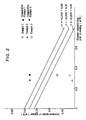
- the second polyethylene terephthalate of the invention is characterized in that the polyethylene terephthalate has an intrinsic viscosity of at least 0.50 dl/g, a density of more than 1.38 g/cm3 and the oligomer (the cyclic trimer) content of less than 0.50% by weight, and that the increased amount y (wt%) of the oligomer contained in the polyethylene terephthalate after said polyethylene terephthalate has been molded into a stepped square plate by melting at 290°C is defined as y ⁇ -0.20x + 0.2 wherein y is an increased amount (wt%) of the oligomer after molding, and x is the oligomer concentration (wt%) prior to molding.
- the third polyethylene terephthalate of the invention is characterized in that the polyethylene terephthalate has an intrinsic viscosity of at least 0.50 dl/g, a density of more than 1.38 g/cm3, and that when a rate of polycondensation in the solid phase polycondensation treatment of the polyethylene terephthalate conducted by heating at a temperature of 215°C in an inert atmosphere is taken as V0, and when a rate of polycondensation in the solid phase polycondensation treatment conducted after bringing the polyethylene terephthalate into contact with hot water kept at 95°C for 8 hours is taken as V1, the V1/V0 ratio is defined as 0.2-1.0.
- the fourth polyethylene terephthalate of the invention is characterized in that the polyethylene terephthalate has an intrinsic viscosity of at least 0.50 dl/g, a density of more than 1.38 g/cm3 and the oligomer content of less than 0.5% by weight, and that when the oligomer content in a stepped square plate obtained by injection molding the polyethylene terephthalate, as it is, at a molding temperature of 290°C is taken as W0 (wt%), and when the oligomer content in a stepped square plate obtained by drying the polyethylene terephthalate after being immersed in hot water kept at 95°C for 8 hours and injection molding the thus treated polyethylene terephthalate into the molded article is taken as W1 (wt%), the remainder left by subtracting W1 from W0 is 0-0.12% by weight.
- Such polyethylene terephthalate as used in the invention may be prepared from starting materials comprising of terephthalic acid or its ester-forming derivative and ethylene glycol or its ester-forming derivative, and this polyethylene terephthalate may also be copolycondensed with less than 20 mol% of other dicarboxylic acids and/or other glycols.
- Dicarboxylic acids other than terephthalic acid, which may be used in the copolycondensation mentioned above include, for example, aromatic dicarboxylic acids such as phthalic acid, isophthalic acid, naphthalenedicarboxylic acid, diphenyldicarboxylic acid and diphenoxyethanedicarboxylic acid, aliphatic dicarboxylic acids such as adipic acid, sebacic acid, azelaic acid and decanedicarboxylic acid, and alicyclic dicarboxylic acids such as cyclohexanedicarboxylic acid.
- aromatic dicarboxylic acids such as phthalic acid, isophthalic acid, naphthalenedicarboxylic acid, diphenyldicarboxylic acid and diphenoxyethanedicarboxylic acid
- aliphatic dicarboxylic acids such as adipic acid, sebacic acid, azelaic acid and decanedicarboxy
- Glycols other than ethylene glycol, which may be used in the above-mentioned copolycondensation include, for example, aliphatic glycols such as trimethylene glycol; propylene glycol, tetramethylene glycol, neopentyl glycol, hexamethylene glycol and dodecamethylene glycol; alicyclic glycols such as cyclohexane dimethanol; bisphenols; and aromatic diols such as hydroquinone and 2,2-bis(4- ⁇ -hydroxyethoxyphenyl)propane.
- aliphatic glycols such as trimethylene glycol
- alicyclic glycols such as cyclohexane dimethanol
- bisphenols bisphenols
- aromatic diols such as hydroquinone and 2,2-bis(4- ⁇ -
- the slurry as prepared above contains 1.02-1.4 moles, preferably 1.03-1.3 moles, based on 1 mole of terephthalic acid or its ester-forming derivative, of ethylene glycol or its ester-forming derivative. This slurry is fed continuously to an esterification reaction process.
- the esterification reaction is carried out with an apparatus having at least two esterification reactors connected in series under the conditions where ethylene glycol is refluxed, while removing out of the system the water formed by the reaction by means of a rectification column.
- the reaction conditions under which the esterification reaction is carried out are such that the temperature of the first stage esterification reaction is usually 240-270°C, preferably 245-265°C, the pressure is usually 0.2-3 kg/cm2 G, preferably 0.5-2 kg/cm2 G, the temperature of the final stage esterification reaction is usually 250-280°C, preferably 255-275°C, and the pressure is usually 0-1.5 kg/cm2 G, preferably 0-1.3 kg/cm2 G.
- the reaction temperature of the second stage esterification reaction is usually 245-275°C, preferably 250-270°C, and the pressure is usually 0-2 kg/cm2 G, preferably 0.2-1.5 kg/cm2 G.
- the rate of reaction to be attained in each stage of these esterification reactions it is desirable that the increase and degree of the rate of reaction in each stage are smoothly distributed and the rate of reaction attained in the esterification reaction product of the final stage is usually at least 90%, preferably at least 93%.
- the lower condensate thus obtained is fed to a liquid phase polycondensation process wherein this lower condensate is polycondensed under reduced pressure in the presence of a polycondensation catalyst while heating at a temperature of above a melting point of the resulting polyethylene terephthalate and removing out of the system the glycol formed at that time.
- the liquid phase polycondensation reaction as referred to above may be carried out in a single stage or by dividing the process into plurality of stages.
- the polycondensation reaction conditions employed are such that the reaction temperature of the first stage polycondensation is usually 250-290°C, preferably 260-280°C and the pressure is usually 500-20 Torr, preferably 200-30 Torr, and the temperature of the final stage polycondensation reaction is usually 265-300°C, preferably 270-295°C and the pressure is usually 10-0.1 Torr, preferably 5-0.5 Torr.
- the polyethylene terephthalate thus obtained has a density of usually 1.33 g/cm3-1.35 g/cm3.
- the polycondensation reaction as illustrated above is desirably carried out in the presence of catalyst and stabilizers.
- the catalysts used may include germanium compounds such as germanium dioxide, germanium tetraethoxide and germanium tetra-n-butoxide, antimony catalysts such as antimony trioxide, and titanium catalysts such as titanium tetrabutoxide.
- germanium dioxide is preferred because the resulting polyethylene terephthalate is excellent in hue and transparency.
- the stabilizers used may include phosphoric acid esters such as trimethyl phosphate, triethyl phosphate, tri-n-butyl phosphate, trioctyl phosphate, triphenyl phosphate and tricresyl phosphate; phosphorous acid esters such as triphenyl phosphite, trisdodecyl phosphite and trisnonylphenyl phosphite; acid phosphate such as methyl acid phosphate, isopropyl acid phosphate, butyl acid phosphate, dibutyl acid phosphate and dioctyl phosphate; and phosphoric compounds such as phosphoric acid and polyphosphoric acid.
- phosphoric acid esters such as trimethyl phosphate, triethyl phosphate, tri-n-butyl phosphate, trioctyl phosphate, triphenyl phosphate and tricresyl phosphate
- the amount, based on the weight of the mixture of terephthalic acid and ethylene glycol, of the catalyst used is usually 0.0005-0.2% by weight, preferably 0.001-0.05% by weight in terms of the weight of the metal in the catalyst, and the amount of the stabilizer used is usually 0.001-0.05% by weight, preferably 0.002-0.02% by weight in terms of the weight of phosphorus atom in the stabilizer.
- These catalysts and stabilizers may be added at the stage of the esterification reaction process or may be fed to the reactor of the first stage polycondensation reaction process.
- the pre-crystallization process mentioned above may be carried out by heating the particulate polyethylene terephthalate in a dried state at a temperature of usually 120-200°C, preferably 130-180°C for a period of from 1 minute to 4 hours, or by heating the particulate polyethylene terephthalate in a water vapor atmosphere or a water vapor containing inert gas atmosphere at a temperature of usually 120-200°C for a period of at least 1 minute.
- the solid phase polycondensation process to which the particulate polyethylene terephthalate is fed comprises at least one stage, and the solid phase polycondensation reaction is carried out in an atmosphere of inert gas such as nitrogen gas, argon gas or carbonic gas under the conditions such that the polycondensation temperature is usually 190-230°C, preferably 195-225°C, and the pressure is usually from 1 kg/cm2 G to 10 Torr, preferably from normal pressure to 100 Torr.
- inert gas such as nitrogen gas, argon gas or carbonic gas
- nitrogen gas preferred is nitrogen gas.
- the polyethylene terephthalate thus obtained through the solid phase polycondensation process desirably has an intrinsic viscosity of usually at least 0.50 dl/g, preferably at least 0.54 dl/g.
- This polyethylene terephthalate desirably has a density of usually 1.38 g/cm3 or more, preferably at least 1.39 g/cm3.
- the amount of the oligomer, a cyclic trimer of the formula contained in the above-mentioned polyethylene terephthalate is less than 0.9% by weight, preferably less than 0.5% by weight, further preferably less than 0.45% by weight and especially less than 0.4% by weight.
- a predetermined amount of polyethylene terephthalate is dissolved in o-chlorophenol, separated again with tetrahydrofuran, and filtered to remove linear polyethylene terephthalate from the filtrate. Subsequently, the filtrate obtained is fed to a liquid chromatograph (LC 7 A, manufactured by Shimadzu Seisakusho Ltd.) to obtain the amount of oligomer contained in the polyethylene terephthalate, and the value of said amount of oligomer is divided by the amount of the polyethylene terephthalate used in the measurement and the result obtained is taken as the oligomer content (wt%).
- LC 7 A liquid chromatograph
- the particulate polyethylene terephthalate thus obtained is subjected to water treatment, wherein this particulate polyethylene terephthalate is brought into contact with water, water vapor or water vapor-containing gas.
- the contact of the particulate polyethylene terephthalate with water may be accomplished by immersing said polyethylene terephthalate in water kept at a temperature of from 1°C to 150°C for a period of from 1 minute to 100 hours or more, preferably from 5 minutes to 10 hours.
- the particulate polyethylene terephthalate is immersed in hot water kept at 30-150°C for a period of from 1 minute to 10 hours. More desirably, the particulate polyethylene terephthalate is immersed in hot water kept at 40-110°C for a period of from 3 minutes to 5 hours.
- the particulate polyethylene terephthalate is immersed in hot water kept at 50-100°C for a period of from 5 minutes to 3 hours.
- the contact of the particulate polyethylene terephthalate with water vapor or water vapor-containing gas may be accomplished by passing through said particulate polyethylene the water vapor, water vapor-containing gas or water vapor-containing air kept at a temperature of usually from 1°C to 150°C, preferably 40-150°C and especially 50-110°C in an amount of at least 0.5 g in terms of water vapor per 1 kg of said particulate polyethylene terephthalate, thereby bringing the particulate polyethylene terephthalate into contact with the water vapor.
- the contact may also be accomplished in an atomosphere of water vapor or water vapor-containing gas.
- the contact of the particulate polyethylene terephthalate with water vapor mentioned above is effected for a period of usually from 1 minute to 1 year, preferably from 5 minutes to 14 days.
- the thus water-treated polyethylene terephthalate in the manner as illustrated above may be prepared by carrying out a series of steps which involve a step of esterifying terephthalic acid or its ester-forming derivative with ethylene glycol or its ester-forming derivative, a step of liquid phase polycondensing the esterification product obtained in the above-mentioned step by heating said product to melt in the presence of a polycondensation catalyst, a step of solid phase polycondensing the polycondensation reaction product obtained in the above-mentioned liquid phase polycondensation step in an inert atmosphere by heating said reaction product to a temperature below the melting point thereof, and a step of water-treating the polycondensation reaction product obtained in the above-mentioned solid phase polycondensation step by bringing said reaction product into contact with water.
- the rate of solid phase polycondensation of which has been decreased is solid phase polycondensed by heating at a temperature of 215°C in an inert gas atmosphere, the rate of polycondensation is less than 0.0055 dl/g ⁇ hr, preferably less than 0.005 dl/g ⁇ hr, further preferably less than 0.004 dl/g ⁇ hr and especially less than 0.003 dl/g ⁇ hr.
- the rate of polycondensation of polyethylene terephthalate at the time when said polyethylene terephthalate is solid phase polycondensed is measured in the following manner.
- a cylindrical stainless steel container of 22 mm in inside diameter and 80 mm in height is filled with 60 g of particulate polyethylene terephthalate, and then sealed.
- This container has at the bottom portion a nozzle for breathing inert gas, and is so designed that the inert gas is discharged out of the system through the upper portion thereof.
- the solid phase polycondensation is carried out by passing nitrogen gas as the inert gas through the sealed stainless steel container packed with the particulate polyethylene terephthalates said stainless steel container having been fitted to and held in a sand bath having a heating equipment (containing aluminum oxide, manufactured by Nippon Percalizino Co.)
- the nitrogen gas used has a dew point of less than -50°C and an oxygen content of less than 20 ppm, and is preheated, prior to feeding to the stainless steel container, so as to have the same temperature as that of the bath.
- the nitrogen gas is fed to the stainless steel container at a rate of 200 Nl/hr.
- the sand bath is brought by means of air to a fluid state so that the temperature of the bath becomes uniform and no temperature distribution occurs.
- the heater of the sand bath is so controlled that the bath temperature coincides with the predetermined solid phase polycondensation temperature by means of a program controller.
- IV of the particulate polyethylene terephthalate is measured, except that the retention time at 215°C is changed from 4 hours to 20 hours. This IV value as obtained is taken as B dl/g.
- the rate of solid phase polycondensation is calculated from the following equation. wherein R is a rate of solid phase polycondensation (dl/g ⁇ hr), and A and B individually represent IV value (dl/g) as measured after the retention time at 215°C for 4 and 20 hours, respectively.
- the increased amount y (wt%) of the oligomer formed in the stepped square plate molded out of the water-treated polyethylene terephthalate of the present invention heated to melt at a temperature of 290°C is usually y ⁇ -0.20x + 0.2, preferably y ⁇ -0.20x + 0.18 and further preferably y ⁇ -0.20x + 0.16, wherein x is the oligomer concentration (wt%) in the polyethylene terephthalate prior to being molded into the stepped square plate.
- the increased amount y (wt%) of the oligomer formed in the stepped square plate molded out of the particulate polyethylene terephthalate is measured in the following manner.
- 2 kg of the particulate polyethylene terephthalate, the oligomer content of which has previously measured (measured value %), is dried for at least 16 hours with a tray dryer at a temperature of 140°C and a pressure of 10 Torr so that the moisture content of said polyethylene terephthalate becomes less than 50 ppm.
- the dried particulate polyethylene terephthalate is fed to an injection molding machine (M-70A, manufactured by Meiki Seisakusho K.K.) and injection molded at a cylinder temperature of 290°C and a temperature of water cooling mold of 15°C to obtain a molded stepped square plate.
- M-70A manufactured by Meiki Seisakusho K.K.
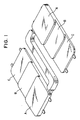
- the molded stepped square plate 1 has such a shape as shown in Fig. 1, and a thickness of portion A of said plate is about 6.5 mm, that of portion B is about 5 mm and that of portion C is about 4 mm. Using this portion C, the increased amount of the oligomer formed in the polyethylene terephthalate as molded into the stepped square plate is measured.
- This molded plate having a thickness of 4 mm is then cut into chips which are then used as specimens for measuring the oligomer content.
- the oligomer content in the polyethylene terephthalate constituting the stepped square plate is measured in the same manner as mentioned above.
- the rate of solid phase polycondensation of which has been decreased as mentioned above is solid phase polycondensed by heating at a temperature of 215°C in an inert gas atmosphere, the rate of polycondensation as measured at that time is taken as V0, and when said polyethylene terephthalate is immersed in hot water kept at 95°C for 8 hours followed by drying and solid phase polycondensed in the same manner as above, the rate of solid phase polycondensation as measured at that time is taken as V1, it is desirable that a ratio of polycondensation rate V1/V0 is 0.2-1.0, preferably 0.22-1.0 and especially 0.25-1.0.
- W0 acetaldehyde content of an article obtained by injection molding the polyethylene terephthalate at a molding temperature of 290°C
- W1 acetaldehyde content of an article obtained by injection molding likewise the polyethylene terephthalate which has been immersed in hot water kept at 95°C for 8 hours and dried is taken as W1 (wt%)
- W0-W1 is 0-5 ppm by weight.
- polyethylene terephthalate By subjecting polyethylene terephthalate to water treatment in the manner as mentioned hereinbefore, not only the rate of polycondensation of the polyethylene terephthalate decreases but also an increase in amount of oligomers such as the cyclic trimer or acetaldehyde contained in the polyethylene terephthalate at the time of molding thereof can be inhibited, and this is considered ascribable to the fact that by subjecting the polyethylene terephthalate to water treatment, a polycondensation catalyst, for example, germanium catalyst undergoes deactivation and accordingly a decomposition reaction or ester interchange reaction scarcely proceeds and, on that account, the amount of oligomers such as the cyclic trimer formed thereby becomes small.
- a polycondensation catalyst for example, germanium catalyst undergoes deactivation and accordingly a decomposition reaction or ester interchange reaction scarcely proceeds and, on that account, the amount of oligomers such as the cyclic trimer formed thereby becomes small
- the polyethylene terephthalate subjected to water treatment contains small amounts of oligomer formed at the time of molding said polyethylene terephthalate. Accordingly, when this polyethylene terephthalate is fed to a molding machine such as an injection molding machine and molded into a preform for blow molding, this preform is stretch blow molded by inserting it into a mold of a predetermined shape and then, if necessary, heat set to obtain a blow molded container, the contamination of the mold with oligomers such as the cyclic trimer is difficult to occur and further acetaldehyde is difficult to form.
- the polyethylene terephthalate treated with water in accordance with the present invention is molded into a molded article, there is no need for cleaning the mold frequently and thereby to improve productivity of molded articles such as bottle.
- the bottle molded out of the water-treated polyethylene terephthalate can be prevented from chalking and, moreover, practically little acetaldehyde is formed at the time of molding said polyethylene terephthalate.
- the stainless steel container charged with the polyethylene terephthalate and distilled water was heated externally to control the temperature inside the container to 90°C (the temperature inside the container was elevated to 90°C in 10 minutes), and the water treatment of the polyethylene terephthalate was carried out for 4 hours while maintaining at that temperature, and the water-treated polyethylene terephthalate was dehydrated and dried in a nitrogen gas atmosphere at 140°C for 14 hours.
- the rate of polycondensation was 0.0026 dl/g ⁇ hr when the dried polyethylene terephthalate was subjected in the manner as already illustrated in the present specification to solid phase polycondensation treatment by heating at a temperature of 215°C in a nitrogen gas atmosphere.
- a molded article obtained by the same procedure as in Example 1 had the oligomer content of 0.29% by weight, thus an increased amount of the oligomer was 0.01% by weight.
- a stainless steel container was charged 5 kg of the same polyethylene terephthalate as used in Example 1, and water vapor was passed therethrough at a rate of 0.5 kg/hr for 30 minutes.
- the polyethylene terephthalate thus treated was dried in the same procedure as in Example 1 and measured for a rate of solid phase polycondensation, whereby the rate of polycondensation as measured was 0.0048 dl/g ⁇ hr.
- a slurry prepared by mixing 1473 parts by weight of high purity terephthalic acid with 645 parts by weight of ethylene glycol was continuously fed per hour to the first reactor in which 3750 parts by weight of a reaction liquid had previously been retained with stirring at 255°C and 1.7 kg/cm2 G to carry out the first stage esterification reaction.
- a mixture of 203 parts by weight of water and 3 parts by weight of ethylene glycol was distilled off.
- the first stage esterification reaction product was so controlled that an average retention time becomes 2.0 hours, and the reaction product was introduced with stirring into the second reactor maintained at 260°C and 0.8 kg/cm2 G.
- the third esterification reaction product was also so controlled that an average retention time becomes 2.0 hours, and the reaction product was continuously introduced with stirring into the fourth reactor maintained at 275°C and 70 mm Hg.
- a mixture of 62 parts by weight of water and 6 parts by weight of ethylene glycol per hour was continuously distilled off, and the first stage polycondensation reaction was carried out.
- the first stage polycondensation reaction product was so controlled that an average retention time becomes 1.0 hour, and the reaction product was continuously introduced with stirring into the fifth reactor maintained at 280°C and 5 mm Hg.
- An article molded out of the above-mentioned polyethylene terephthalate using an injection molding machine (M-70A manufactured by Meiki Seisakusho K.K.) at 290°C had the oligomer content of 0.35% by weight, thus an increased amount of the oligomer was 0.04% by weight.
- Example 6 was repeated except that the water treatment of polyethylene terephthalate was conducted by charging a pressure stainless steel container with 5 kg of the polyethylene terephthalate (A) and passing therethrough water vapor (saturation temperature 110°C) of 0.43 kg/cm2 at a rate of 0.5 kg/hr for 30 minutes.
- Example 10 In the same procedure as in Example 10, 5 kg of polyethylene terephthalate having an intrinsic viscosity of 0.78 dl/g, a density of 1.40 g/cm3 and the oligomer content of 0.28% by weight was subjected to hot water treatment to measure a rate of solid phase polycondensation, whereby the rate of polycondensation as measured was 0.0016 dl/g ⁇ hr.
- the polyethylene terephthalate used in Example 10 was dried at 140°C in a nitrogen gas atmosphere for 14 hours, and then subjected to solid phase polycondensation treatment by heating at a temperature of 215°C in a nitrogen atmosphere to measure a rate of solid phase polycondensation, whereby the rate of polycondensation as measured was 0.0067 dl/g ⁇ hr.
- Example 11 The polyethylene terephthalate used in Example 11 was measured for a rate of solid phase polycondensation in the same procedure as in Comparative Example 4, whereby the rate of polycondensation as measured was 0.0057 dl/g ⁇ hr.
- the dried particulate polyethylene terephthalate was injection molded into a stepped square plate having a thickness of 4 mm using an injection molding machine (M-70A of Meiki Seisakusho K.K.) at a cylinder temperature of 290°C and a temperature of water cooling the mold of 15°C.
- Example 13 The polyethylene terephthalate used in Example 13 was dried in a nitrogen gas at 140°C for 14 hours, and then molded, as it was, into a stepped square plate in the same procedure as in Example 13 to measure the amount of oligomer contained in this plate, whereby the oligomer content was 0.51% by weight, thus an increased amount of the oligomer was 0.18% by weight.
- the oligomer content as measured was 0.35% by weight, and the acetaldehyde concentration was 7.6 ppm.
- Example 16 was repeated except that particulate polyethylene terephthalate having an intrinsic viscosity of 0.78 dl/g, a density of 1.40 g/cm3 and the oligomer content of 0.28% by weight was used.
- a stainless steel container was charged with 5 kg of particulate polyethylene terephthalate having an intrinsic viscosity of 0.80 dl/g, a density of 1.40 g/cm3 and the oligomer content of 0.33% by weight, and water vapor was passed therethrough for 0.5 hour at a rate of 0.5 kg/hr.
- Comparative Example 8 was repeated except that particulate polyethylene terephthalate having an intrinsic viscosity of 0.78 dl/g, a density of 1.40 g/cm3 and the oligomer content of 0.28% by weight was used instead.
- Comparative Example 8 was repeated except that particulate polyethylene terephthalate having an intrinsic viscosity of 0.82 dl/g, a density of 1.40 g/cm3 and the oligomer content of 0.39% by weight was used instead.
- a stainless steel container was charged with 5 kg of particulate polyethylene terephthalate having an intrinsic viscosity of 0.80 dl/g, a density of 1.40 g/cm3 and the oligomer content of 0.33% by weight, and water vapor kept at 100°C was passed therethrough at a rate of 0.5 kg/hr for 0.5 hour.
- Example 27 was repeated except that the water vapor was passed through the stainless steel container charged with the particulate polyethylene terephthalate for 2 hours instead of 0.5 hour.
- W0 was 14.2 ppm and W1 was 6.0 ppm and accordingly W0-W1 was 8.2 ppm.
- Comparative Example 16 was repeated except that particulate polyethylene terephthalate having an intrinsic viscosity of 0.82 dl/g, a density of 1.40 g/cm3 and the acetaldehyde content of 0.8 ppm was used instead.
Landscapes
- Chemical & Material Sciences (AREA)
- Health & Medical Sciences (AREA)
- Chemical Kinetics & Catalysis (AREA)
- Medicinal Chemistry (AREA)
- Polymers & Plastics (AREA)
- Organic Chemistry (AREA)
- Polyesters Or Polycarbonates (AREA)
- Treatments Of Macromolecular Shaped Articles (AREA)
- Reciprocating, Oscillating Or Vibrating Motors (AREA)
- Iron Core Of Rotating Electric Machines (AREA)
Priority Applications (1)
| Application Number | Priority Date | Filing Date | Title |
|---|---|---|---|
| EP98110419A EP0867458B1 (de) | 1989-03-31 | 1990-03-21 | Polethylenterephthalate Span |
Applications Claiming Priority (24)
| Application Number | Priority Date | Filing Date | Title |
|---|---|---|---|
| JP8335589 | 1989-03-31 | ||
| JP8335689 | 1989-03-31 | ||
| JP8335389 | 1989-03-31 | ||
| JP8335489 | 1989-03-31 | ||
| JP83354/89 | 1989-03-31 | ||
| JP83353/89 | 1989-03-31 | ||
| JP83355/89 | 1989-03-31 | ||
| JP83356/89 | 1989-03-31 | ||
| JP8335389 | 1989-03-31 | ||
| JP8335689 | 1989-03-31 | ||
| JP8335489 | 1989-03-31 | ||
| JP8335589 | 1989-03-31 | ||
| JP9459689 | 1989-04-14 | ||
| JP94597/89 | 1989-04-14 | ||
| JP9459789 | 1989-04-14 | ||
| JP9459789 | 1989-04-14 | ||
| JP94596/89 | 1989-04-14 | ||
| JP9459689 | 1989-04-14 | ||
| JP13817989 | 1989-05-31 | ||
| JP138180/89 | 1989-05-31 | ||
| JP13818089 | 1989-05-31 | ||
| JP138179/89 | 1989-05-31 | ||
| JP13817989 | 1989-05-31 | ||
| JP13818089 | 1989-05-31 |
Related Child Applications (1)
| Application Number | Title | Priority Date | Filing Date |
|---|---|---|---|
| EP98110419A Division EP0867458B1 (de) | 1989-03-31 | 1990-03-21 | Polethylenterephthalate Span |
Publications (3)
| Publication Number | Publication Date |
|---|---|
| EP0389948A2 true EP0389948A2 (de) | 1990-10-03 |
| EP0389948A3 EP0389948A3 (de) | 1991-11-27 |
| EP0389948B1 EP0389948B1 (de) | 2003-11-05 |
Family
ID=27572750
Family Applications (2)
| Application Number | Title | Priority Date | Filing Date |
|---|---|---|---|
| EP90105337A Expired - Lifetime EP0389948B1 (de) | 1989-03-31 | 1990-03-21 | Verfahren zur Herstellung von Polyethylenterephthalat |
| EP98110419A Expired - Lifetime EP0867458B1 (de) | 1989-03-31 | 1990-03-21 | Polethylenterephthalate Span |
Family Applications After (1)
| Application Number | Title | Priority Date | Filing Date |
|---|---|---|---|
| EP98110419A Expired - Lifetime EP0867458B1 (de) | 1989-03-31 | 1990-03-21 | Polethylenterephthalate Span |
Country Status (5)
| Country | Link |
|---|---|
| EP (2) | EP0389948B1 (de) |
| KR (1) | KR950013878B1 (de) |
| AT (2) | ATE296325T1 (de) |
| CA (1) | CA2012577C (de) |
| DE (2) | DE69034193T2 (de) |
Cited By (13)
| Publication number | Priority date | Publication date | Assignee | Title |
|---|---|---|---|---|
| US5393871A (en) * | 1993-01-04 | 1995-02-28 | Eastman Chemical Company | Production of polyesters and polyester articles having good clarity |
| EP0661326A3 (de) * | 1993-12-28 | 1996-08-14 | Mitsui Petrochemical Ind | Verfahren zur Herstellung von Polyester. |
| EP0738749A1 (de) * | 1995-04-19 | 1996-10-23 | E.I. Du Pont De Nemours And Company | Polyäthylenterephthalatfolie für elektrische Isolierung und Herstellungsverfahren |
| EP0677078B1 (de) * | 1993-01-04 | 1997-08-27 | Eastman Chemical Company | Herstellung von verzweigten polyestern |
| WO1997036736A1 (de) * | 1996-03-31 | 1997-10-09 | Bernhard Lipp | Verfahren und vorrichtung zum konditionieren von kunststoffteilen mit wasserdampf |
| EP0764672A4 (de) * | 1995-04-10 | 1998-11-04 | Mitsui Petrochemical Ind | Verfahren zur herstellung von polyethylenterephthalat |
| EP0982367A3 (de) * | 1998-08-27 | 2000-04-19 | Toyo Boseki Kabushiki Kaisha | Polyesterharz und Verfahren zu seiner Herstellung |
| US6346070B1 (en) | 1998-12-25 | 2002-02-12 | Mitsui Chemicals Inc | Catalyst for polyester production, process for producing polyester using the catalyst, polyester obtained by the process, and uses of the polyester |
| EP1268572A4 (de) * | 2001-01-04 | 2004-03-10 | Plastic Techn Inc | Verfahren zum kühlen von postreaktor polyethylenterephthalat |
| EP1842662B2 (de) † | 2006-04-06 | 2014-01-08 | Mitsubishi Polyester Film GmbH | Hydrolysebeständige, mehrschichtige Polyesterfolie mit Hydrolyseschutzmittel |
| EP2048179A4 (de) * | 2006-08-02 | 2015-04-22 | Mitsubishi Chem Corp | Polyesterharzteilchen und herstellungsverfahren dafür |
| EP3116932B1 (de) | 2014-03-11 | 2018-05-09 | Synvina C.V. | Polyester und verfahren zur herstellung eines derartigen polyesters |
| CN115774036A (zh) * | 2023-02-15 | 2023-03-10 | 西南科技大学 | 一种叶片表面夹砂率检测方法、系统及装置 |
Families Citing this family (4)
| Publication number | Priority date | Publication date | Assignee | Title |
|---|---|---|---|---|
| US7329723B2 (en) | 2003-09-18 | 2008-02-12 | Eastman Chemical Company | Thermal crystallization of polyester pellets in liquid |
| CA2482056A1 (en) | 2003-10-10 | 2005-04-10 | Eastman Chemical Company | Thermal crystallization of a molten polyester polymer in a fluid |
| WO2005085328A1 (ja) * | 2004-03-09 | 2005-09-15 | Mitsubishi Chemical Corporation | ポリブチレンテレフタレートペレット、そのコンパウンド製品および成形品ならびにそれらの製造方法 |
| US7875184B2 (en) | 2005-09-22 | 2011-01-25 | Eastman Chemical Company | Crystallized pellet/liquid separator |
Family Cites Families (11)
| Publication number | Priority date | Publication date | Assignee | Title |
|---|---|---|---|---|
| JPS5945148B2 (ja) * | 1976-10-06 | 1984-11-05 | オリンパス光学工業株式会社 | 静電潜像現像方法 |
| US4154920A (en) * | 1978-03-13 | 1979-05-15 | Owens-Illinois, Inc. | Methods for producing improved stable polyethylene terephthalate |
| JPS5513715A (en) * | 1978-07-14 | 1980-01-30 | Nippon Ester Co Ltd | Preparation of polyester pellet |
| JPS5925815A (ja) * | 1982-08-04 | 1984-02-09 | Teijin Ltd | ポリエステルの結晶化方法 |
| US4591629A (en) * | 1983-04-21 | 1986-05-27 | Ems-Inventa Ag | Process for the purification of high molecular weight polyesters |
| JPS59219328A (ja) * | 1983-05-28 | 1984-12-10 | Toyobo Co Ltd | 高重合度ポリエステルの製造方法 |
| US4605721A (en) * | 1984-04-30 | 1986-08-12 | Eastman Kodak Company | Novel graft copolymers and process for the preparation thereof |
| DE3503300A1 (de) * | 1985-01-31 | 1986-08-07 | Rudi 7080 Aalen Körner | Fraesmaschine |
| DE3503330A1 (de) * | 1985-02-01 | 1986-08-07 | Herberts Gmbh, 5600 Wuppertal | Verfahren zur verminderung des geruchs von polyesterharzen und deren verwendung |
| US4609721A (en) * | 1985-06-21 | 1986-09-02 | Celanese Corporation | Process for making molding grade polyethylene terephthalate |
| IT1211471B (it) * | 1987-07-24 | 1989-11-03 | Cobarr Spa | Procedimento per la riduzione di impurezze di resine poliesteri |
-
1990
- 1990-03-20 CA CA002012577A patent/CA2012577C/en not_active Expired - Lifetime
- 1990-03-21 AT AT98110419T patent/ATE296325T1/de not_active IP Right Cessation
- 1990-03-21 DE DE69034193T patent/DE69034193T2/de not_active Expired - Lifetime
- 1990-03-21 AT AT90105337T patent/ATE253609T1/de not_active IP Right Cessation
- 1990-03-21 DE DE69034114T patent/DE69034114T2/de not_active Expired - Lifetime
- 1990-03-21 EP EP90105337A patent/EP0389948B1/de not_active Expired - Lifetime
- 1990-03-21 EP EP98110419A patent/EP0867458B1/de not_active Expired - Lifetime
- 1990-03-30 KR KR1019900004309A patent/KR950013878B1/ko not_active Expired - Lifetime
Cited By (18)
| Publication number | Priority date | Publication date | Assignee | Title |
|---|---|---|---|---|
| US5393871A (en) * | 1993-01-04 | 1995-02-28 | Eastman Chemical Company | Production of polyesters and polyester articles having good clarity |
| EP0677078B1 (de) * | 1993-01-04 | 1997-08-27 | Eastman Chemical Company | Herstellung von verzweigten polyestern |
| EP0661326A3 (de) * | 1993-12-28 | 1996-08-14 | Mitsui Petrochemical Ind | Verfahren zur Herstellung von Polyester. |
| CN1049669C (zh) * | 1993-12-28 | 2000-02-23 | 三井化学株式会社 | 制备聚酯的方法 |
| EP0764672A4 (de) * | 1995-04-10 | 1998-11-04 | Mitsui Petrochemical Ind | Verfahren zur herstellung von polyethylenterephthalat |
| CN1073128C (zh) * | 1995-04-10 | 2001-10-17 | 三井化学株式会社 | 聚对苯二甲酸乙二醇酯的制造方法 |
| EP0738749A1 (de) * | 1995-04-19 | 1996-10-23 | E.I. Du Pont De Nemours And Company | Polyäthylenterephthalatfolie für elektrische Isolierung und Herstellungsverfahren |
| WO1997036736A1 (de) * | 1996-03-31 | 1997-10-09 | Bernhard Lipp | Verfahren und vorrichtung zum konditionieren von kunststoffteilen mit wasserdampf |
| US6129961A (en) * | 1998-08-27 | 2000-10-10 | Toyo Boseki Kabushiki Kaisha | Polyester resin and production method thereof |
| EP0982367A3 (de) * | 1998-08-27 | 2000-04-19 | Toyo Boseki Kabushiki Kaisha | Polyesterharz und Verfahren zu seiner Herstellung |
| US6346070B1 (en) | 1998-12-25 | 2002-02-12 | Mitsui Chemicals Inc | Catalyst for polyester production, process for producing polyester using the catalyst, polyester obtained by the process, and uses of the polyester |
| USRE40571E1 (en) | 1998-12-25 | 2008-11-11 | Mitsui Chemicals, Inc. | Catalyst for polyester production, process for producing polyester using the catalyst, polyester obtained by the process, and uses of the polyester |
| EP1268572A4 (de) * | 2001-01-04 | 2004-03-10 | Plastic Techn Inc | Verfahren zum kühlen von postreaktor polyethylenterephthalat |
| US6825311B2 (en) | 2001-01-04 | 2004-11-30 | Phoenix Technologies, L.P. | Method for cooling post reactor polyethylene terephthalate flakes |
| EP1842662B2 (de) † | 2006-04-06 | 2014-01-08 | Mitsubishi Polyester Film GmbH | Hydrolysebeständige, mehrschichtige Polyesterfolie mit Hydrolyseschutzmittel |
| EP2048179A4 (de) * | 2006-08-02 | 2015-04-22 | Mitsubishi Chem Corp | Polyesterharzteilchen und herstellungsverfahren dafür |
| EP3116932B1 (de) | 2014-03-11 | 2018-05-09 | Synvina C.V. | Polyester und verfahren zur herstellung eines derartigen polyesters |
| CN115774036A (zh) * | 2023-02-15 | 2023-03-10 | 西南科技大学 | 一种叶片表面夹砂率检测方法、系统及装置 |
Also Published As
| Publication number | Publication date |
|---|---|
| EP0867458A2 (de) | 1998-09-30 |
| EP0389948A3 (de) | 1991-11-27 |
| EP0867458B1 (de) | 2005-05-25 |
| EP0867458A3 (de) | 1999-06-02 |
| KR900014459A (ko) | 1990-10-24 |
| CA2012577A1 (en) | 1990-09-30 |
| ATE296325T1 (de) | 2005-06-15 |
| EP0389948B1 (de) | 2003-11-05 |
| CA2012577C (en) | 1995-12-12 |
| DE69034114T2 (de) | 2004-08-26 |
| KR950013878B1 (ko) | 1995-11-17 |
| ATE253609T1 (de) | 2003-11-15 |
| DE69034193T2 (de) | 2006-03-23 |
| DE69034193D1 (de) | 2005-06-30 |
| DE69034114D1 (de) | 2003-12-11 |
Similar Documents
| Publication | Publication Date | Title |
|---|---|---|
| EP0661326B1 (de) | Verfahren zur Herstellung von Polyester | |
| US5241046A (en) | Process for treatment of polyethylene terephthalate, polyethylene terephthalate for molding purposes and process for preparation thereof | |
| US5830981A (en) | Process for producing polyethylene terephthalate | |
| US4609721A (en) | Process for making molding grade polyethylene terephthalate | |
| EP0389948B1 (de) | Verfahren zur Herstellung von Polyethylenterephthalat | |
| JPWO1996032433A1 (ja) | ポリエチレンテレフタレートの製造方法 | |
| US5270444A (en) | Process for treatment of polyethylene terephthalate, polyethylene terephthalate for molding purposes and process for preparation thereof | |
| JPH08283393A (ja) | ポリエチレンテレフタレートおよびその製造方法 | |
| JPH0347830A (ja) | ポリエチレンテレフタレートの製造方法 | |
| JPH08253563A (ja) | ポリエチレンテレフタレートの処理方法 | |
| JP2583008B2 (ja) | ポリエチレンテレフタレートの製造方法 | |
| JPH0764920B2 (ja) | ポリエチレンテレフタレート | |
| JP2854834B2 (ja) | ポリエチレンテレフタレートの製造方法 | |
| JP3357489B2 (ja) | ポリエステルの製造方法 | |
| JPH10114819A (ja) | ポリエチレンテレフタレート | |
| JPH0737515B2 (ja) | ポリエチレンテレフタレートの処理方法 | |
| JP3357488B2 (ja) | ポリエステルの製造方法 | |
| JP3205350B2 (ja) | ポリエチレンテレフタレート | |
| JP3015061B2 (ja) | ポリエチレンテレフタレートおよびその製造方法 | |
| JPH0372523A (ja) | ポリエチレンテレフタレート | |
| JPH03215521A (ja) | ポリエチレンテレフタレート | |
| JPH07165894A (ja) | ポリエチレンテレフタレート | |
| JP3685896B2 (ja) | ポリエステル樹脂の乾燥方法 | |
| JPH0931178A (ja) | ポリエチレンテレフタレートの製造方法 | |
| JP2000136232A (ja) | ポリエチレンテレフタレ―トおよびその製造方法 |
Legal Events
| Date | Code | Title | Description |
|---|---|---|---|
| PUAI | Public reference made under article 153(3) epc to a published international application that has entered the european phase |
Free format text: ORIGINAL CODE: 0009012 |
|
| AK | Designated contracting states |
Kind code of ref document: A2 Designated state(s): AT BE CH DE DK ES FR GB GR IT LI LU NL SE |
|
| PUAL | Search report despatched |
Free format text: ORIGINAL CODE: 0009013 |
|
| AK | Designated contracting states |
Kind code of ref document: A3 Designated state(s): AT BE CH DE DK ES FR GB GR IT LI LU NL SE |
|
| 17P | Request for examination filed |
Effective date: 19920409 |
|
| 17Q | First examination report despatched |
Effective date: 19940909 |
|
| RAP1 | Party data changed (applicant data changed or rights of an application transferred) |
Owner name: MITSUI CHEMICALS, INC. |
|
| GRAG | Despatch of communication of intention to grant |
Free format text: ORIGINAL CODE: EPIDOS AGRA |
|
| GRAG | Despatch of communication of intention to grant |
Free format text: ORIGINAL CODE: EPIDOS AGRA |
|
| APAB | Appeal dossier modified |
Free format text: ORIGINAL CODE: EPIDOS NOAPE |
|
| APAB | Appeal dossier modified |
Free format text: ORIGINAL CODE: EPIDOS NOAPE |
|
| APAD | Appeal reference recorded |
Free format text: ORIGINAL CODE: EPIDOS REFNE |
|
| APAB | Appeal dossier modified |
Free format text: ORIGINAL CODE: EPIDOS NOAPE |
|
| APAB | Appeal dossier modified |
Free format text: ORIGINAL CODE: EPIDOS NOAPE |
|
| GRAH | Despatch of communication of intention to grant a patent |
Free format text: ORIGINAL CODE: EPIDOS IGRA |
|
| GRAH | Despatch of communication of intention to grant a patent |
Free format text: ORIGINAL CODE: EPIDOS IGRA |
|
| GRAG | Despatch of communication of intention to grant |
Free format text: ORIGINAL CODE: EPIDOS AGRA |
|
| GRAA | (expected) grant |
Free format text: ORIGINAL CODE: 0009210 |
|
| AK | Designated contracting states |
Kind code of ref document: B1 Designated state(s): AT BE CH DE DK ES FR GB GR IT LI LU NL SE |
|
| PG25 | Lapsed in a contracting state [announced via postgrant information from national office to epo] |
Ref country code: ES Free format text: LAPSE BECAUSE OF FAILURE TO SUBMIT A TRANSLATION OF THE DESCRIPTION OR TO PAY THE FEE WITHIN THE PRESCRIBED TIME-LIMIT Effective date: 20031105 Ref country code: LI Free format text: LAPSE BECAUSE OF FAILURE TO SUBMIT A TRANSLATION OF THE DESCRIPTION OR TO PAY THE FEE WITHIN THE PRESCRIBED TIME-LIMIT Effective date: 20031105 Ref country code: BE Free format text: LAPSE BECAUSE OF FAILURE TO SUBMIT A TRANSLATION OF THE DESCRIPTION OR TO PAY THE FEE WITHIN THE PRESCRIBED TIME-LIMIT Effective date: 20031105 Ref country code: CH Free format text: LAPSE BECAUSE OF FAILURE TO SUBMIT A TRANSLATION OF THE DESCRIPTION OR TO PAY THE FEE WITHIN THE PRESCRIBED TIME-LIMIT Effective date: 20031105 Ref country code: AT Free format text: LAPSE BECAUSE OF FAILURE TO SUBMIT A TRANSLATION OF THE DESCRIPTION OR TO PAY THE FEE WITHIN THE PRESCRIBED TIME-LIMIT Effective date: 20031105 |
|
| REG | Reference to a national code |
Ref country code: GB Ref legal event code: FG4D |
|
| REG | Reference to a national code |
Ref country code: CH Ref legal event code: EP |
|
| REF | Corresponds to: |
Ref document number: 69034114 Country of ref document: DE Date of ref document: 20031211 Kind code of ref document: P |
|
| PG25 | Lapsed in a contracting state [announced via postgrant information from national office to epo] |
Ref country code: DK Free format text: LAPSE BECAUSE OF FAILURE TO SUBMIT A TRANSLATION OF THE DESCRIPTION OR TO PAY THE FEE WITHIN THE PRESCRIBED TIME-LIMIT Effective date: 20040205 Ref country code: SE Free format text: LAPSE BECAUSE OF FAILURE TO SUBMIT A TRANSLATION OF THE DESCRIPTION OR TO PAY THE FEE WITHIN THE PRESCRIBED TIME-LIMIT Effective date: 20040205 Ref country code: GR Free format text: LAPSE BECAUSE OF FAILURE TO SUBMIT A TRANSLATION OF THE DESCRIPTION OR TO PAY THE FEE WITHIN THE PRESCRIBED TIME-LIMIT Effective date: 20040205 |
|
| PG25 | Lapsed in a contracting state [announced via postgrant information from national office to epo] |
Ref country code: LU Free format text: LAPSE BECAUSE OF NON-PAYMENT OF DUE FEES Effective date: 20040321 |
|
| REG | Reference to a national code |
Ref country code: CH Ref legal event code: PL |
|
| ET | Fr: translation filed | ||
| PLBE | No opposition filed within time limit |
Free format text: ORIGINAL CODE: 0009261 |
|
| STAA | Information on the status of an ep patent application or granted ep patent |
Free format text: STATUS: NO OPPOSITION FILED WITHIN TIME LIMIT |
|
| 26N | No opposition filed |
Effective date: 20040806 |
|
| APAH | Appeal reference modified |
Free format text: ORIGINAL CODE: EPIDOSCREFNO |
|
| PGFP | Annual fee paid to national office [announced via postgrant information from national office to epo] |
Ref country code: NL Payment date: 20090315 Year of fee payment: 20 |
|
| PGFP | Annual fee paid to national office [announced via postgrant information from national office to epo] |
Ref country code: GB Payment date: 20090318 Year of fee payment: 20 |
|
| PGFP | Annual fee paid to national office [announced via postgrant information from national office to epo] |
Ref country code: DE Payment date: 20090319 Year of fee payment: 20 Ref country code: IT Payment date: 20090320 Year of fee payment: 20 |
|
| PGFP | Annual fee paid to national office [announced via postgrant information from national office to epo] |
Ref country code: FR Payment date: 20090316 Year of fee payment: 20 |
|
| REG | Reference to a national code |
Ref country code: NL Ref legal event code: V4 Effective date: 20100321 |
|
| REG | Reference to a national code |
Ref country code: GB Ref legal event code: PE20 Expiry date: 20100320 |
|
| PG25 | Lapsed in a contracting state [announced via postgrant information from national office to epo] |
Ref country code: GB Free format text: LAPSE BECAUSE OF EXPIRATION OF PROTECTION Effective date: 20100320 |
|
| PG25 | Lapsed in a contracting state [announced via postgrant information from national office to epo] |
Ref country code: NL Free format text: LAPSE BECAUSE OF EXPIRATION OF PROTECTION Effective date: 20100321 |
|
| PG25 | Lapsed in a contracting state [announced via postgrant information from national office to epo] |
Ref country code: DE Free format text: LAPSE BECAUSE OF EXPIRATION OF PROTECTION Effective date: 20100321 |