EP0406433B2 - Compose a base de tetrafluoroethane pour refrigerateurs - Google Patents
Compose a base de tetrafluoroethane pour refrigerateurs Download PDFInfo
- Publication number
- EP0406433B2 EP0406433B2 EP89912503A EP89912503A EP0406433B2 EP 0406433 B2 EP0406433 B2 EP 0406433B2 EP 89912503 A EP89912503 A EP 89912503A EP 89912503 A EP89912503 A EP 89912503A EP 0406433 B2 EP0406433 B2 EP 0406433B2
- Authority
- EP
- European Patent Office
- Prior art keywords
- group
- compound
- tetrafluoroethane
- cst
- hydroxyl groups
- Prior art date
- Legal status (The legal status is an assumption and is not a legal conclusion. Google has not performed a legal analysis and makes no representation as to the accuracy of the status listed.)
- Expired - Lifetime
Links
Classifications
-
- C—CHEMISTRY; METALLURGY
- C09—DYES; PAINTS; POLISHES; NATURAL RESINS; ADHESIVES; COMPOSITIONS NOT OTHERWISE PROVIDED FOR; APPLICATIONS OF MATERIALS NOT OTHERWISE PROVIDED FOR
- C09K—MATERIALS FOR MISCELLANEOUS APPLICATIONS, NOT PROVIDED FOR ELSEWHERE
- C09K5/00—Heat-transfer, heat-exchange or heat-storage materials, e.g. refrigerants; Materials for the production of heat or cold by chemical reactions other than by combustion
- C09K5/02—Materials undergoing a change of physical state when used
- C09K5/04—Materials undergoing a change of physical state when used the change of state being from liquid to vapour or vice versa
-
- C—CHEMISTRY; METALLURGY
- C10—PETROLEUM, GAS OR COKE INDUSTRIES; TECHNICAL GASES CONTAINING CARBON MONOXIDE; FUELS; LUBRICANTS; PEAT
- C10M—LUBRICATING COMPOSITIONS; USE OF CHEMICAL SUBSTANCES EITHER ALONE OR AS LUBRICATING INGREDIENTS IN A LUBRICATING COMPOSITION
- C10M171/00—Lubricating compositions characterised by purely physical criteria, e.g. containing as base-material, thickener or additive, ingredients which are characterised exclusively by their numerically specified physical properties, i.e. containing ingredients which are physically well-defined but for which the chemical nature is either unspecified or only very vaguely indicated
- C10M171/008—Lubricant compositions compatible with refrigerants
-
- C—CHEMISTRY; METALLURGY
- C09—DYES; PAINTS; POLISHES; NATURAL RESINS; ADHESIVES; COMPOSITIONS NOT OTHERWISE PROVIDED FOR; APPLICATIONS OF MATERIALS NOT OTHERWISE PROVIDED FOR
- C09K—MATERIALS FOR MISCELLANEOUS APPLICATIONS, NOT PROVIDED FOR ELSEWHERE
- C09K5/00—Heat-transfer, heat-exchange or heat-storage materials, e.g. refrigerants; Materials for the production of heat or cold by chemical reactions other than by combustion
- C09K5/02—Materials undergoing a change of physical state when used
- C09K5/04—Materials undergoing a change of physical state when used the change of state being from liquid to vapour or vice versa
- C09K5/041—Materials undergoing a change of physical state when used the change of state being from liquid to vapour or vice versa for compression-type refrigeration systems
- C09K5/044—Materials undergoing a change of physical state when used the change of state being from liquid to vapour or vice versa for compression-type refrigeration systems comprising halogenated compounds
- C09K5/045—Materials undergoing a change of physical state when used the change of state being from liquid to vapour or vice versa for compression-type refrigeration systems comprising halogenated compounds containing only fluorine as halogen
-
- C—CHEMISTRY; METALLURGY
- C09—DYES; PAINTS; POLISHES; NATURAL RESINS; ADHESIVES; COMPOSITIONS NOT OTHERWISE PROVIDED FOR; APPLICATIONS OF MATERIALS NOT OTHERWISE PROVIDED FOR
- C09K—MATERIALS FOR MISCELLANEOUS APPLICATIONS, NOT PROVIDED FOR ELSEWHERE
- C09K2205/00—Aspects relating to compounds used in compression type refrigeration systems
- C09K2205/24—Only one single fluoro component present
Definitions
- the present invention relates to a composition for a refrigerator comprising a tetrafluoroethane and a polyether which is compatible at any optional ratio with a tetrafluoroethane, preferably 1,1,1,2-tetrafluoroethane (R-134a), as a cooling medium at a temperature of from -20°C or lower to +40°C or higher and which has a low hygroscopic property.
- a tetrafluoroethane preferably 1,1,1,2-tetrafluoroethane (R-134a)
- R-12 (dichlorodifluoromethane) is used as an excellent cooling medium in a refrigerating cycle of e.g refrigerators or car air conditioners.
- R-12 is likely to destroy the ozone layer in the stratosphere and adversely affect the living bodies. Therefore, a study for a substitute material is being made.
- R-134a As a substitute for R-12, R-134a is considered to be most prospective.
- a naphthene mineral oil and a paraffin mineral oil which are refrigerator oils commonly used for R-12, are incompatible with R-134a. Therefore, such a naphthene mineral oil or paraffin mineral oil can not be used as a refrigerator oil for R-134a.
- Polyether oils having the structures as identified in Table 1, are known as substances relatively well compatible with R-134a.
- the polyether oil (a) is disclosed, for example, in Dupont Research Disclosure (17483, Oct., 1978).
- the polyether oil (b) is disclosed, for example, in US Patent 4,755,316.
- the polyether oils as identified in Table 1 had the following problems.
- Compatibility with R-134a is not adequate.
- the oil is compatible with R-134a and capable of being circulated in the system together with R-134a.
- the upper critical solution temperatures are as shown in Table 1 in the case where the kinematic viscosity at 40°C is 100x10 -6 m 2 /s (100 cSt). The compatibility can hardly be regarded as adequate.
- Hygroscopicity is high.
- the freezer oils (a) and (b) are highly hygroscopic and apt to absorb moisture. Inclusion of moisture brings about adverse affects such as a deterioration of insulation resistance and an increase of corrosiveness to metal.
- Table 1 Conventional polyether oils and their upper critical solution temperatures No. Structure Upper critical solution temperature* of a product with 100 x 10 -6 m 2 /s (100 cSt) at 40°C (a) C 4 H 9 -O(C 3 H 6 O) n H 12°C (b) 40°C (*) Upper critical temperature: The oil and R-134a are mixed in a weight ratio of 15:85 and sealed. The temperature is gradually raised, and the temperature at which turbidity or phase separation has started, is taken as the upper critical solution temperature. The better the compatibility, the higher the upper critical solution temperature.
- the present inventors have presumed that the hygroscopicity of the polyether oils is attributable to the terminal hydroxyl groups. Therefore, by using polyethers having from 1 to 3 terminal hydroxyl groups, all or a part of the terminal hydroxyl groups of such polyethers have been acylated or alkylated, and evaluation of such acylated or alkylated compounds for usefulness as freezer oils for R-134a has been conducted. As a result, it has been found that not only the hygroscopicity but also the compatibility with R-134a and the viscosity indexes have been improved. The present invention has been accomplished on the basis of this discovery.
- the present invention provides a refrigeration composition, with functions of prevention of friction, abrasion and seizing of sliding portions as defined by the claims.
- the disclaimer in claim 2 is based on EP-A 0 377 122.
- the alkyl group includes, for example, a methyl group, an ethyl group, a propyl group, a butyl group, a 2-ethylhexyl group and a nonyl group.
- the aralkyl group includes, for example, a benzyl group, a phenylethyl group and a methylbenzyl group.
- the aryl group includes, for example, a phenyl group and a tolyl group. All or a part of hydrogen atoms of these hydrocarbon groups may be substituted by halogen atoms such as fluorine atoms or chlorine atoms.
- a hydroxyalkyl group includes a hydroxymethyl group, a hydroxyethyl group or a hydroxybutyl group.
- the acyl group may be an acyl group of the formula wherein A is the above-mentioned alkyl, aralkyl or aryl group.
- Y 1 is a residue obtained by removing both hydroxyl groups from a dicarboxylic compound having at least 3 carbon atoms.
- the dicarboxylic compound includes, for example, aliphatic dicarboxylic acids such as malonic acid, succinic acid, glutaric acid, adipic acid, sebacic acid, suberic acid, methyl succinic acid, methyl adipic acid, maleic acid, fumaric acid and itaconic acid; aromatic dicarboxylic acids such as phthalic acid, diphenyl dicarboxylic acid and diphenyl methane dicarboxylic acid; hydrogenated products of the above aromatic dicarboxylic acids, such as alicyclic dicarboxylic acids; and dicarboxylic acids prepared by introducing carboxyl groups to both terminals of polyalkylene glycols having a molecular weight of from 50 to 1,000.
- X 1 in the formula (2) is preferably a residue obtained by removing hydroxyl groups from a dihydroxy compound, such as an ethylene glycol residue or a propylene glycol residue, or a residue obtained by removing hydroxyl groups from the same dicarboxylic compound as mentioned above for the definition of Y 1 .
- X 2 in the formula (3) is preferably a residue obtained by removing hydroxyl groups from a trihydroxy compound, such as a glycerol residue or a trimethylol propane residue, or a residue obtained by removing hydroxyl groups from a tricarboxylic compound such as trimellitic acid or trimesic acid.
- a trihydroxy compound such as a glycerol residue or a trimethylol propane residue
- a residue obtained by removing hydroxyl groups from a tricarboxylic compound such as trimellitic acid or trimesic acid.
- R 1 in the formulas (1) to (3) and in the radical of the formula is an alkylene group such as an ethylene group, a propylene group, a butylene group or a tetramethylene group. These alkylene groups may be present alone or in combination in the form of a random or block state. In the case of the combination, the main component is preferably a propylene group.
- R 1 in the formulas (2) and (3) may be the same or different.
- the corresponding initiators are respectively, and the numbers of active hydrogen groups thereof are 1, 2 and 3, respectively.
- the compounds of the formulas (1) to (3) are desired to have a kinematic viscosity of from 12x10 -6 to 300x10 -6 m 2 /s (12 to 300 cSt) (40°C), so that they provide adequate functions as freezer oils such as the functions for preventing friction, abrasion and seizing of sliding portions of e.g. compressors. Accordingly, it is desirable that the molecular weights of the compounds of the formulas (1) to (3) or the values for l , m and n and the value for p in the formula are selected so as to bring the kinematic viscosity within the above-mentioned range.
- the values for l , m, n and p are from 6 to 30, and they may be the same or different.
- the weight ratio of the compounds of the formulas (1) to (3) to R-134a is usually from 1/99 to 99/1, preferably from 5/95 to 60/40.
- R-134a may contain a small amount of 1,1,2,2-tetrafluoroethane (R-134).
- the compounds of the formulas (1) to (3) may be used alone or in combination as their mixtures.
- composition of the present invention is particularly effective when applied to a refrigerating cycle intended for freezing, for refrigerating and for air conditioning. However, it is also useful for other various heat recovery technologies such as a Rankine cycle.
- the composition of the present invention has excellent heat stability and requires no stabilizer under a usual application condition. However, if an improvement of the heat stability for use under a severe condition is desired, a small amount of a stabilizer including a phosphite compound such as dimethyl phosphite, diisopropyl phosphite or diphenyl phosphite, a phosphine sulfide compound such as triphenoxy phosphine sulfide or trimethyl phosphine sulfide, and other glycidyl ethers, may be added.
- a stabilizer including a phosphite compound such as dimethyl phosphite, diisopropyl phosphite or diphenyl phosphite, a phosphine sulfide compound such as triphenoxy phosphine sulfide or trimethyl phosphine sulfide, and other glycidy
- the compounds of the formulas (1) to (3) of the present invention may be used in combination with conventional oils such as a naphthene mineral oil, a paraffin mineral oil, an alkylbenzene synthetic oil, a poly- ⁇ -olefin synthetic oil, a fluorine type lubricating oil such as a perfluoropolyether oil or a fluorine-containing silicone oil, or polyether oils other than the polyether oils of the present invention.
- conventional oils such as a naphthene mineral oil, a paraffin mineral oil, an alkylbenzene synthetic oil, a poly- ⁇ -olefin synthetic oil, a fluorine type lubricating oil such as a perfluoropolyether oil or a fluorine-containing silicone oil, or polyether oils other than the polyether oils of the present invention.
- additives including a phenol type or amine type antioxidant, a sulfur or phosphorus type high pressure additive, a silicone type anti-foaming agent or a metal inactivating agent such as benzotriazole, may be added to the composition of the present invention.
- the hydrophilicity is lowered by the modification such as acylation or alkylation of the terminal hydroxyl groups and the hygroscopicity oil is thereby lowered.
- the mechanism for the compatibility of the oils of the present invention with tetrafluoroethane as a cooling medium, is not clearly understood. However, a certain interaction between tetrafluoroethane and the carbonyl group of the ester bond or the like, is related thereto.
- a compound (1) and R-134a were sealed in a glass ampoule at a weight ratio of 30/70, and the solubility of the compound (1) in R-134a was determined by a visual observation of whether or not phase separation was observed. The results are shown in Table 1 together with the results of the Comparative Example.
- a compound (1) and R-134a were sealed in a SUS316 pressure container in a weight ratio of 50/50 together with SS41 and Cu as representative metals and left to stand for 14 days at a high temperature of 175°C in a constant temperature tank. After the test, deterioration of the compound (1), R-134a and the metals was determined in comparison with the deterioration of the conventional combination of R-12 and Sniso 4GS. The results are shown in Table 4.
- a compound (2) and R-134a were sealed in a glass ampoule in a weight ratio of 30/70, and the solubility of the compound (2) in R-134a was determined by a visual observation of whether or not phase separation was observed. The results are shown in Table 5 together with the Comparative Example.
- a compound (2) and R-134a were sealed in a SUS316 pressure container in a weight ratio of 50/50 together with SS41 and Cu as representative metals and left to stand for 14 days at a high temperature of 175°C in a constant temperature tank. After the test, deterioration of the compound (2), R-134a and the metals was ascertained in comparison with the deterioration of a conventional combination of R-12 and Sniso 4GS. The results are shown in Table 6.
- a compound (3) and R-134a were sealed in a glass ampoule in a weight ratio of 30/70, and the solubility of the compound (3) in R-134a was determined by a visual observation of whether or not phase separation was observed. The results are shown in Table 7 together with the Comparative Example.
- a compound (3) and R-134a were sealed in a SUS316 pressure container in a weight ratio of 50/50 together with SS41 and Cu as representative metals and left to stand for 14 days at a high temperature of 175°C in a constant temperature tank. After the test, deterioration of the compound (3), R-134a and the metals was ascertained in comparison with the deterioration of a conventional combination of R-12 and Sniso 4GS. The results are shown in Table 8.
- Example 8-1 Polyether Kinematic viscosity at 40°C (cSt) x 10 -6 m 2 /s Upper critical solution temperature (°c) (Compatibility with R-134a) Weight increase (%) (Hygroscopicity)
- Example 8-2 100 58 0.6 Comparative Example 8-2 101 40 1.5
- Example 8-3 100 63 0.8 Comparative Example 8-3 103 52 3.2
- Example 8-5 100 53 1.0 Comparative Example 8-4 104 44 2.9
- the viscosity index is a value representing the temperature dependency of the viscosity of a lubricating oil. The larger the value, the smaller the change of the viscosity due to the temperature, and accordingly the better the lubricating properties.
- An oil and R-134a are mixed in a weight ratio of 15:85 and sealed. The temperature is maintained at 25°C, and the solubility is visually observed.
- compositions of the present invention provide good compatibility of tetrafluoroethane and polyether oils, and they are capable of adequately providing functions such as the prevention of the friction, abrasion and seizing of sliding portions of e.g. compressors. Further, their hygroscopicity is low, and inclusion of moisture can be minimized, whereby a decrease of insulation resistance can be prevented, and the progress of corrosion of a metal such as a copper pipe by the moisture can be prevented.
Landscapes
- Chemical & Material Sciences (AREA)
- Engineering & Computer Science (AREA)
- Chemical Kinetics & Catalysis (AREA)
- Organic Chemistry (AREA)
- Physics & Mathematics (AREA)
- Combustion & Propulsion (AREA)
- Thermal Sciences (AREA)
- Materials Engineering (AREA)
- General Chemical & Material Sciences (AREA)
- Oil, Petroleum & Natural Gas (AREA)
- Lubricants (AREA)
- Organic Low-Molecular-Weight Compounds And Preparation Thereof (AREA)
Abstract
Claims (18)
- Composition de réfrigération avec des fonctions de prévention des frottements, de l'abrasion et du grippage de parties coulissantes, qui comprend un tétrafluoroéthane et au moins un polyéther choisi dans le groupe constitué par :


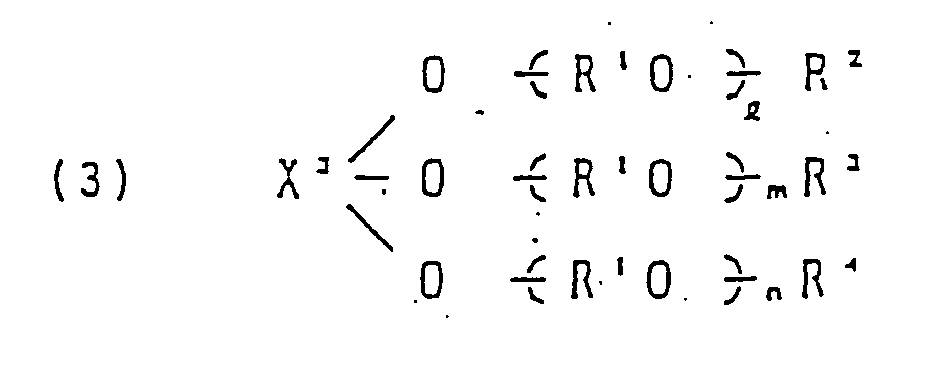
1, m et n, qui peuvent être identiques ou différents, sont des entiers qui amènent la viscosité cinématique des composés de formules (1) à (3) jusqu'à un niveau de 12·10-6 à 300·10-6 m2/s (12 à 300 cst) à 40°C. - Composition de réfrigération avec des fonctions de prévention des frottements, de l'abrasion et du grippage de parties coulissantes, qui comprend un tétrafluoroéthane et au moins un polyéther choisi dans le groupe constitué par :


 (a) un polyoxypropylèneglycol diéthyléther obtenu à partir d'un polyoxypropylèneglycol ayant un poids moléculaire moyen de 1100 ; et(b) un polyoxypropylèneglycol triéthyléther obtenu à partir d'un polyoxypropylèneglycol ayant un poids moléculaire moyen de 1000 et obtenu par polymérisation d'oxyde de propylène en utilisant le glycérol en tant qu'initiateur.
 - Composition de réfrigération avec des fonctions de prévention des frottements, de l'abrasion et du grippage de parties coulissantes, qui comprend du 1,1,1,2-tétrafluoro-éthane et un composé représenté par la formule :

- Composition de réfrigération avec des fonctions de prévention des frottements, de l'abrasion et du grippage de parties coulissantes, qui comprend du 1,1,1,2-tétrafluoro-éthane et un composé représenté par la formule :
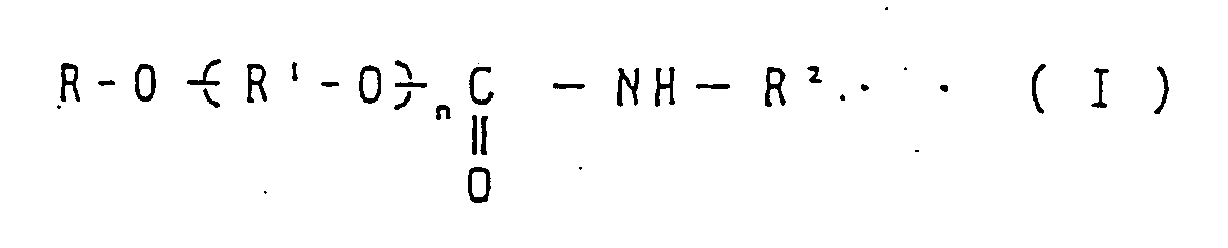
- Composition de réfrigération avec des fonctions de prévention des frottements, de l'abrasion et du grippage de parties coulissantes, qui comprend du 1,1,1,2-tétrafluoroéthane et un composé représenté par la formule :

- Composition de réfrigération avec des fonctions de prévention des frottements, de l'abrasion et du grippage de parties coulissantes, qui comprend du 1,1,1,2-tétrafluoroéthane et un composé représenté par la formule :
R-O(̵R1-O)̵nR2 (I)
dans laquelle R est un groupe alkyle, un groupe aralkyle ou un groupe aryle, R1 est un groupe alkylène, R2 est un groupe alkyle fluoré, et n est un entier qui amène la viscosité du composé (I) jusqu'à un niveau de 12·10-6 à 300·10-6 m2/s (12 à 300 cst) à 40°C. - Composition de réfrigération avec des fonctions de prévention des frottements, de l'abrasion et du grippage de parties coulissantes, qui comprend un tétrafluoroéthane et au moins un polyéther choisi dans le groupe constitué par :


- Composition de réfrigération avec des fonctions de prévention des frottements, de l'abrasion et du grippage de parties coulissantes, qui comprend un tétrafluoroéthane et au moins un polyéther choisi dans le groupe constitué par :


- Composition de réfrigération avec des fonctions de prévention des frottements, de l'abrasion et du grippage de parties coulissantes, qui comprend un tétrafluoroéthane et au moins un polyéther choisi dans le groupe constitué par :


- Composition de réfrigération avec des fonctions de prévention des frottements, de l'abrasion et du grippage de parties coulissantes, qui comprend un tétrafluoroéthane et au moins un composé choisi dans le groupe constitué par :

- Composition de réfrigération avec des fonctions de prévention des frottements, de l'abrasion et du grippage de parties coulissantes, qui comprend un tétrafluoroéthane et au moins un polyéther choisi dans le groupe constitué par :


- Composition selon l'une quelconque des revendications 1, 2 et 7 à 11, dans laquelle le tétrafluoroéthane est le 1,1,1,2-tétrafluoroéthane.
- Composition selon l'une quelconque des revendications 1 à 11, dans laquelle le rapport en poids du polyéther sur le tétrafluoroéthane est de 1/99 à 99/1.
- Composition selon l'une quelconque des revendications 1 à 11, qui contient en outre au moins un membre choisi dans le groupe constitué par une huile minérale de naphtène, une huile minérale de paraffine, une huile synthétique d'alkylbenzène, une huile synthétique de poly-α-oléfine et une huile de silicone fluorée.
- Composition selon l'une quelconque des revendications 1 à 11, qui contient en outre au moins un agent stabilisant choisi dans le groupe constitué par un composé phosphite, un composé sulfure de phosphine et un composé éther glycidylique.
- Composition selon l'une quelconque des revendications 1, 2 et 4 à 11, dans laquelle R1 dans les formules (1) à (3) est un groupe éthylène, un groupe propylène ou un mélange d'un groupe éthylène et d'un groupe propylène.
- Composition selon l'une quelconque des revendications 1, 2 et 4 à 11, dans laquelle X2 est un résidu de propylène glycol.
- Composition selon l'une quelconque des revendications 1, 2 et 4 à 11, dans laquelle X3 est un résidu de triméthylol propane.
Applications Claiming Priority (27)
| Application Number | Priority Date | Filing Date | Title |
|---|---|---|---|
| JP63284008A JPH02132176A (ja) | 1988-11-11 | 1988-11-11 | 圧縮式冷凍機用組成物 |
| JP63284009A JPH02132177A (ja) | 1988-11-11 | 1988-11-11 | 圧縮式冷凍機用組成物 |
| JP284009/88 | 1988-11-11 | ||
| JP63284010A JPH02132178A (ja) | 1988-11-11 | 1988-11-11 | 圧縮式冷凍機用組成物 |
| JP284008/88 | 1988-11-11 | ||
| JP284010/88 | 1988-11-11 | ||
| JP63284011A JP2745585B2 (ja) | 1988-11-11 | 1988-11-11 | 圧縮式冷凍機用組成物 |
| JP284011/88 | 1988-11-11 | ||
| JP262/89 | 1989-01-06 | ||
| JP261/89 | 1989-01-06 | ||
| JP26189 | 1989-01-06 | ||
| JP64000260A JPH02180986A (ja) | 1989-01-06 | 1989-01-06 | テトラフルオロエタン系冷凍機用組成物 |
| JP64000262A JPH02180987A (ja) | 1989-01-06 | 1989-01-06 | テトラフルオロエタン系冷凍機用組成物 |
| JP260/89 | 1989-01-06 | ||
| JP1344/89 | 1989-01-10 | ||
| JP1001344A JP2837861B2 (ja) | 1989-01-10 | 1989-01-10 | テトラフルオロエタン系冷凍機用組成物 |
| JP1001345A JPH02182781A (ja) | 1989-01-10 | 1989-01-10 | テトラフルオロエタン系冷凍機用組成物 |
| JP1345/89 | 1989-01-10 | ||
| JP1089825A JP2787083B2 (ja) | 1989-01-06 | 1989-04-11 | テトラフルオロエタン系冷凍機用組成物 |
| JP89825/89 | 1989-04-11 | ||
| JP1184528A JP2773266B2 (ja) | 1989-07-19 | 1989-07-19 | テトラフルオロエタン系冷凍機用組成物 |
| JP184528/89 | 1989-07-19 | ||
| JP1217550A JPH0381394A (ja) | 1989-08-25 | 1989-08-25 | テトラフルオロエタン系冷凍機用組成物 |
| JP1217551A JPH0381395A (ja) | 1989-08-25 | 1989-08-25 | テトラフルオロエタン系冷凍機用組成物 |
| JP217550/89 | 1989-08-25 | ||
| JP217551/89 | 1989-08-25 | ||
| PCT/JP1989/001150 WO1990005172A1 (fr) | 1988-11-11 | 1989-11-09 | Compose a base de tetrafluoroethane pour refrigerateurs |
Publications (4)
| Publication Number | Publication Date |
|---|---|
| EP0406433A1 EP0406433A1 (fr) | 1991-01-09 |
| EP0406433B1 EP0406433B1 (fr) | 1997-03-12 |
| EP0406433B2 true EP0406433B2 (fr) | 2007-01-03 |
| EP0406433B9 EP0406433B9 (fr) | 2007-10-10 |
Family
ID=27584077
Family Applications (1)
| Application Number | Title | Priority Date | Filing Date |
|---|---|---|---|
| EP89912503A Expired - Lifetime EP0406433B9 (fr) | 1988-11-11 | 1989-11-09 | Compose a base de tetrafluoroethane pour refrigerateurs |
Country Status (6)
| Country | Link |
|---|---|
| EP (1) | EP0406433B9 (fr) |
| KR (1) | KR960007698B1 (fr) |
| AU (1) | AU616073B2 (fr) |
| CA (1) | CA2002693C (fr) |
| DE (1) | DE68927858T3 (fr) |
| WO (1) | WO1990005172A1 (fr) |
Families Citing this family (37)
| Publication number | Priority date | Publication date | Assignee | Title |
|---|---|---|---|---|
| US5543068A (en) * | 1988-04-08 | 1996-08-06 | Japan Energy Corporation | Lubricating oils for flon compressors, compositions adapted for flon compressors and composed of mixtures of said lubricating oils and flon, and process for lubricating flon compressor by using said lubricating oils |
| JP2831400B2 (ja) * | 1989-11-02 | 1998-12-02 | 三井化学株式会社 | 冷凍機用潤滑油組成物 |
| GB2247466B (en) * | 1990-07-23 | 1994-11-16 | Castrol Ltd | Retrofilling mechanical vapour recompression heat transfer devices |
| CA2075956A1 (fr) * | 1991-02-06 | 1992-08-07 | Masanori Ikeda | Refrigerant contenant du fluoroalcane et un lubrifiant aromatique a base de fluor a miscibilite elevee |
| US5182040A (en) * | 1991-03-28 | 1993-01-26 | E. I. Du Pont De Nemours And Company | Azeotropic and azeotrope-like compositions of 1,1,2,2-tetrafluoroethane |
| AU1775492A (en) * | 1991-04-08 | 1992-11-02 | Allied-Signal Inc. | Stabilized polyoxyalkylene glycols |
| AU648435B2 (en) * | 1991-09-19 | 1994-04-21 | Japan Energy Corporation | Lubricating oils for flon compressors, compositions adapted for flon compressors and composed of mixtures of said lubricating oils and flon, and process for lubricating flon compressor by using said lubricating oils |
| TW203098B (fr) * | 1991-09-27 | 1993-04-01 | Mitsui Petroleum Chemicals Ind | |
| JP3200127B2 (ja) * | 1991-12-18 | 2001-08-20 | 旭電化工業株式会社 | 冷凍機用の潤滑剤 |
| JPH05255680A (ja) * | 1992-01-13 | 1993-10-05 | Mitsui Petrochem Ind Ltd | ポリカーボネートおよびその用途 |
| AU655345B2 (en) * | 1992-02-18 | 1994-12-15 | Idemitsu Kosan Co. Ltd | Lubricant for refrigerating machine employing refrigerant comprising tetrafluoroethane |
| GB9209079D0 (en) * | 1992-04-27 | 1992-06-10 | Bp Chem Int Ltd | Polyethers |
| US5355695A (en) * | 1992-11-30 | 1994-10-18 | Mitsubishi Denki Kabushiki Kaisha | Refrigeration device using hydrofluorocarbon refrigerant |
| MY110063A (en) * | 1993-04-27 | 1997-12-31 | Mitsubishi Electric Corp | Refrigerant circulating system |
| EP0846926A3 (fr) * | 1993-04-27 | 1999-04-28 | Mitsubishi Denki Kabushiki Kaisha | Système de circulation de frigorigène |
| PT635562E (pt) | 1993-07-20 | 2000-10-31 | Fina Research | Oleo lubrificante para sistemas de refrigeracao do tipo de compressor |
| US5372737A (en) * | 1993-09-17 | 1994-12-13 | Spauschus; Hans O. | Lubricating oil composition for refrigerant and method of use |
| CA2155166C (fr) * | 1994-08-03 | 2005-04-26 | Katsuya Takigawa | Composition de frigorigene et composition fluide de frigorigene |
| US6251300B1 (en) | 1994-08-03 | 2001-06-26 | Nippon Mitsubishi Oil Corporation | Refrigerator oil compositions and fluid compositions for refrigerator |
| JP3742853B2 (ja) * | 1999-05-12 | 2006-02-08 | ダイキン工業株式会社 | 冷凍回路用電動ニードル弁及びこれを備えた冷凍装置 |
| US6991744B2 (en) | 2000-12-08 | 2006-01-31 | E. I. Du Pont De Nemours And Company | Refrigerant compositions containing a compatibilizer |
| US6962665B2 (en) | 2000-12-08 | 2005-11-08 | E. I. Du Pont De Nemours And Company | Refrigerant compositions containing a compatibilizer |
| US6899820B2 (en) | 2002-06-10 | 2005-05-31 | E. I. Du Pont De Nemours And Company | Fluorocarbon, oxygenated and non-oxygenated lubricant, and compatibilizer composition, and method for replacing refrigeration composition in a refrigeration system |
| US6841088B2 (en) | 2002-06-10 | 2005-01-11 | E. I. Du Pont De Nemours And Company | Fluorocarbon, oxygenated and non-oxygenated lubricant, and compatibilizer composition, and method for replacing refrigeration composition in a refrigeration system |
| JP5572284B2 (ja) | 2007-02-27 | 2014-08-13 | Jx日鉱日石エネルギー株式会社 | 冷凍機油および冷凍機用作動流体組成物 |
| JP5193485B2 (ja) * | 2007-03-27 | 2013-05-08 | Jx日鉱日石エネルギー株式会社 | 冷凍機油及び冷凍機用作動流体組成物 |
| US20100282999A1 (en) * | 2007-10-29 | 2010-11-11 | Nippon Oil Corporation | Refrigerator oil and working fluid composition for refrigerating machine |
| JP5771799B2 (ja) | 2011-02-10 | 2015-09-02 | 株式会社Moresco | 軸受用潤滑剤およびその利用 |
| US9187682B2 (en) | 2011-06-24 | 2015-11-17 | Emerson Climate Technologies, Inc. | Refrigeration compressor lubricant |
| CA2890948A1 (fr) | 2012-11-16 | 2014-05-22 | Basf Se | Compositions lubrifiantes comprenant des composes epoxydes pour ameliorer la compatibilite d'un joint d'etancheite en fluoropolymere |
| CN103772695A (zh) * | 2014-01-15 | 2014-05-07 | 中国石油天然气股份有限公司 | 一种亲co2聚合物及其制备方法和应用 |
| WO2015109095A1 (fr) | 2014-01-16 | 2015-07-23 | Shrieve Chemical Products, Inc. | Composition de lubrifiant frigorifique synthétique desséchant |
| CN107011975B (zh) * | 2017-04-25 | 2019-11-26 | 中国石油化工股份有限公司 | 一种有机物朗肯系统用润滑油 |
| CN111378110B (zh) * | 2018-12-27 | 2023-08-11 | 联泓(江苏)新材料研究院有限公司 | 一种高燃点聚醚及其制备方法和应用 |
| CN112521594B (zh) * | 2020-11-27 | 2023-08-18 | 广东石油化工学院 | 聚醚衍生物及其制备方法 |
| WO2022110068A1 (fr) * | 2020-11-27 | 2022-06-02 | 广东石油化工学院 | Dérivé polyéther et procédé de préparation associé |
| CN112608465B (zh) * | 2020-11-27 | 2023-04-28 | 广东石油化工学院 | 一种抗氧剂及其制备方法 |
Family Cites Families (16)
| Publication number | Priority date | Publication date | Assignee | Title |
|---|---|---|---|---|
| AR207202A1 (es) * | 1971-05-17 | 1976-09-22 | Thermo King Corp | Composicion refrigerante lubricante para un equipo refrigerante a compresor |
| JPS5679175A (en) * | 1979-11-30 | 1981-06-29 | Daikin Ind Ltd | Absorption refrigerant carrier composition |
| DE2948515C2 (de) * | 1979-12-01 | 1983-12-22 | Kernforschungszentrum Karlsruhe Gmbh, 7500 Karlsruhe | Verfahren zur Fixierung von radioaktiven Edelgasen |
| DE3003471C2 (de) * | 1980-01-31 | 1983-02-17 | M.A.N. Maschinenfabrik Augsburg-Nürnberg AG, 8000 München | Arbeitsstoffpaar für Sorptions-Wärmepumpen |
| JPS592477B2 (ja) * | 1980-02-12 | 1984-01-18 | 三洋電機株式会社 | 吸収冷凍機用吸収液 |
| JPS57124664A (en) * | 1981-01-28 | 1982-08-03 | Hitachi Ltd | Absorbing liquid for absorption type refrigerating machine |
| EP0062516B1 (fr) * | 1981-04-07 | 1985-08-07 | Matsushita Electric Industrial Co., Ltd. | Composition pour la réfrigération par absorption |
| DE3235561A1 (de) * | 1982-09-25 | 1984-03-29 | Deutsche Bp Ag, 2000 Hamburg | Arbeitsstoffpaar zur verwendung in sorptionskaeltemaschinen, enthaltend trifluorethanol |
| DE3514108A1 (de) * | 1985-04-19 | 1986-10-23 | Dieter Dipl.-Ing. 7024 Filderstadt Seher | Mehrstoffgemische fuer sorptionswaermepumpen, sorptionskaeltemaschinen und sorptionswaermetransformatoren |
| JPH0631363B2 (ja) * | 1985-06-06 | 1994-04-27 | 日本石油株式会社 | 冷凍機用潤滑油組成物 |
| DE3524737A1 (de) * | 1985-07-11 | 1987-01-15 | Univ Essen Angewandte Thermody | Stoffgemische fuer sorptionsprozesse |
| DE3543171A1 (de) * | 1985-12-06 | 1987-06-11 | Hoechst Ag | Stoffpaar fuer absorptionswaermetransformatoren |
| ES2058368T3 (es) * | 1988-04-06 | 1994-11-01 | Nippon Oil Co Ltd | Composiciones de aceites lubrificantes para refrigeradores. |
| JPH0662977B2 (ja) * | 1988-04-08 | 1994-08-17 | 株式会社共石製品技術研究所 | フロン圧縮機用冷凍機油 |
| JP2556547B2 (ja) * | 1988-04-08 | 1996-11-20 | 株式会社ジャパンエナジー | カーエアコン用フロン圧縮機用潤滑油 |
| EP0377122B1 (fr) * | 1988-12-06 | 1995-06-28 | Idemitsu Kosan Company Limited | Utilisation d'un dérivé spécifique de polyalkyleneglycol en tant que lubrifiant dans des réfrigérateurs à compression, méthode de lubrification et un système de réfrigérateur à compression le contenant |
-
1989
- 1989-11-09 DE DE68927858T patent/DE68927858T3/de not_active Expired - Lifetime
- 1989-11-09 WO PCT/JP1989/001150 patent/WO1990005172A1/fr not_active Ceased
- 1989-11-09 EP EP89912503A patent/EP0406433B9/fr not_active Expired - Lifetime
- 1989-11-09 AU AU45087/89A patent/AU616073B2/en not_active Expired
- 1989-11-10 CA CA002002693A patent/CA2002693C/fr not_active Expired - Lifetime
-
1990
- 1990-07-11 KR KR1019900701488A patent/KR960007698B1/ko not_active Expired - Lifetime
Also Published As
| Publication number | Publication date |
|---|---|
| EP0406433A1 (fr) | 1991-01-09 |
| DE68927858T3 (de) | 2007-05-03 |
| EP0406433B9 (fr) | 2007-10-10 |
| KR960007698B1 (ko) | 1996-06-08 |
| WO1990005172A1 (fr) | 1990-05-17 |
| DE68927858D1 (de) | 1997-04-17 |
| EP0406433B1 (fr) | 1997-03-12 |
| DE68927858T2 (de) | 1997-06-26 |
| KR900701955A (ko) | 1990-12-05 |
| CA2002693C (fr) | 2004-03-30 |
| AU4508789A (en) | 1990-05-28 |
| AU616073B2 (en) | 1991-10-17 |
| CA2002693A1 (fr) | 1990-05-11 |
Similar Documents
| Publication | Publication Date | Title |
|---|---|---|
| EP0406433B9 (fr) | Compose a base de tetrafluoroethane pour refrigerateurs | |
| US4948525A (en) | Lubricating oil compositions for refrigerators | |
| US4959169A (en) | Esterified polyglycol lubricants for refrigeration compressors | |
| AU632785B2 (en) | Polyglycol lubricants for refrigeration compressors and process for preparing the same | |
| EP0378176B1 (fr) | Lubrifiants pour compresseurs frigorifiques | |
| EP0336171B1 (fr) | Utilisation de compositions d'huile lubrifiante pour réfrigérateurs | |
| EP2284247A2 (fr) | Composition d'huile lubrifiante pour refrigerateurs et procédé de lubrification à l'aide de cette composition | |
| JP2556548B2 (ja) | フロン圧縮機に用いる潤滑油 | |
| JP2595346B2 (ja) | カーエアコン用冷凍機油組成物 | |
| EP0881278A1 (fr) | Huile de refrigerateur, fluide hydraulique pour refrigerateur, et procede pour lubrifier un systeme de refrigeration | |
| JP2700155B2 (ja) | 1.1.1.2−テトラフルオルエタン冷媒を使用する冷凍機用潤滑油 | |
| EP0557796B1 (fr) | Lubrifiant pour machine frigorifique utilisant un réfrigérant contenant du tétrafluoroéthane | |
| EP0400894B1 (fr) | Compositions de réfrigération et procédé d'utilisation | |
| JPH0823030B2 (ja) | カーエアコン用冷凍機油組成物 | |
| JP2843119B2 (ja) | 冷凍機油 | |
| JP2673587B2 (ja) | 1.1.1.2―テトラフルオルエタン冷媒を使用する冷凍機用潤滑油 | |
| JPH02182780A (ja) | テトラフルオロエタン系冷凍機用組成物 | |
| JPH03109492A (ja) | フロン圧縮機用潤滑油 | |
| JP2787083B2 (ja) | テトラフルオロエタン系冷凍機用組成物 | |
| JPH0428792A (ja) | 冷凍機油組成物 | |
| JPH08239676A (ja) | テトラフルオロエタン系冷凍機用組成物 | |
| WO1992018580A1 (fr) | Compositions de refrigeration contenant un refrigerant hydrofluorocarbure et un lubrifiant | |
| EP3371287B1 (fr) | Polyalkylène glycols miscibles dans l'huile et leurs utilisations | |
| JPH03221594A (ja) | テトラフルオロエタン系冷凍機用組成物 | |
| JPH02180986A (ja) | テトラフルオロエタン系冷凍機用組成物 |
Legal Events
| Date | Code | Title | Description |
|---|---|---|---|
| PUAI | Public reference made under article 153(3) epc to a published international application that has entered the european phase |
Free format text: ORIGINAL CODE: 0009012 |
|
| 17P | Request for examination filed |
Effective date: 19900711 |
|
| AK | Designated contracting states |
Kind code of ref document: A1 Designated state(s): DE FR GB IT NL SE |
|
| 17Q | First examination report despatched |
Effective date: 19930518 |
|
| GRAG | Despatch of communication of intention to grant |
Free format text: ORIGINAL CODE: EPIDOS AGRA |
|
| GRAH | Despatch of communication of intention to grant a patent |
Free format text: ORIGINAL CODE: EPIDOS IGRA |
|
| GRAH | Despatch of communication of intention to grant a patent |
Free format text: ORIGINAL CODE: EPIDOS IGRA |
|
| GRAA | (expected) grant |
Free format text: ORIGINAL CODE: 0009210 |
|
| AK | Designated contracting states |
Kind code of ref document: B1 Designated state(s): DE FR GB IT NL SE |
|
| ITF | It: translation for a ep patent filed | ||
| REF | Corresponds to: |
Ref document number: 68927858 Country of ref document: DE Date of ref document: 19970417 |
|
| ET | Fr: translation filed | ||
| PLBQ | Unpublished change to opponent data |
Free format text: ORIGINAL CODE: EPIDOS OPPO |
|
| PLBI | Opposition filed |
Free format text: ORIGINAL CODE: 0009260 |
|
| PLBF | Reply of patent proprietor to notice(s) of opposition |
Free format text: ORIGINAL CODE: EPIDOS OBSO |
|
| 26 | Opposition filed |
Opponent name: NIPPON OIL CO. LTD. Effective date: 19971212 |
|
| NLR1 | Nl: opposition has been filed with the epo |
Opponent name: NIPPON OIL CO. LTD. |
|
| PLBF | Reply of patent proprietor to notice(s) of opposition |
Free format text: ORIGINAL CODE: EPIDOS OBSO |
|
| PLBF | Reply of patent proprietor to notice(s) of opposition |
Free format text: ORIGINAL CODE: EPIDOS OBSO |
|
| REG | Reference to a national code |
Ref country code: FR Ref legal event code: CA |
|
| REG | Reference to a national code |
Ref country code: GB Ref legal event code: IF02 |
|
| PLAW | Interlocutory decision in opposition |
Free format text: ORIGINAL CODE: EPIDOS IDOP |
|
| APBP | Date of receipt of notice of appeal recorded |
Free format text: ORIGINAL CODE: EPIDOSNNOA2O |
|
| APAA | Appeal reference recorded |
Free format text: ORIGINAL CODE: EPIDOS REFN |
|
| APAH | Appeal reference modified |
Free format text: ORIGINAL CODE: EPIDOSCREFNO |
|
| APAH | Appeal reference modified |
Free format text: ORIGINAL CODE: EPIDOSCREFNO |
|
| APBU | Appeal procedure closed |
Free format text: ORIGINAL CODE: EPIDOSNNOA9O |
|
| PUAH | Patent maintained in amended form |
Free format text: ORIGINAL CODE: 0009272 |
|
| STAA | Information on the status of an ep patent application or granted ep patent |
Free format text: STATUS: PATENT MAINTAINED AS AMENDED |
|
| 27A | Patent maintained in amended form |
Effective date: 20070103 |
|
| AK | Designated contracting states |
Kind code of ref document: B2 Designated state(s): DE FR GB IT NL SE |
|
| NLR2 | Nl: decision of opposition |
Effective date: 20070103 |
|
| NLR3 | Nl: receipt of modified translations in the netherlands language after an opposition procedure | ||
| REG | Reference to a national code |
Ref country code: SE Ref legal event code: RPEO |
|
| ET3 | Fr: translation filed ** decision concerning opposition | ||
| PGFP | Annual fee paid to national office [announced via postgrant information from national office to epo] |
Ref country code: DE Payment date: 20081107 Year of fee payment: 20 Ref country code: NL Payment date: 20081103 Year of fee payment: 20 |
|
| PGFP | Annual fee paid to national office [announced via postgrant information from national office to epo] |
Ref country code: SE Payment date: 20081107 Year of fee payment: 20 Ref country code: IT Payment date: 20081126 Year of fee payment: 20 |
|
| PGFP | Annual fee paid to national office [announced via postgrant information from national office to epo] |
Ref country code: FR Payment date: 20081112 Year of fee payment: 20 |
|
| PLAB | Opposition data, opponent's data or that of the opponent's representative modified |
Free format text: ORIGINAL CODE: 0009299OPPO |
|
| PGFP | Annual fee paid to national office [announced via postgrant information from national office to epo] |
Ref country code: GB Payment date: 20081105 Year of fee payment: 20 |
|
| REG | Reference to a national code |
Ref country code: GB Ref legal event code: PE20 Expiry date: 20091108 |
|
| NLV7 | Nl: ceased due to reaching the maximum lifetime of a patent |
Effective date: 20091109 |
|
| PG25 | Lapsed in a contracting state [announced via postgrant information from national office to epo] |
Ref country code: NL Free format text: LAPSE BECAUSE OF EXPIRATION OF PROTECTION Effective date: 20091109 |
|
| PG25 | Lapsed in a contracting state [announced via postgrant information from national office to epo] |
Ref country code: GB Free format text: LAPSE BECAUSE OF EXPIRATION OF PROTECTION Effective date: 20091108 |