EP0417568B1 - Préparation aqueuse de résine synthétique - Google Patents
Préparation aqueuse de résine synthétique Download PDFInfo
- Publication number
- EP0417568B1 EP0417568B1 EP90116728A EP90116728A EP0417568B1 EP 0417568 B1 EP0417568 B1 EP 0417568B1 EP 90116728 A EP90116728 A EP 90116728A EP 90116728 A EP90116728 A EP 90116728A EP 0417568 B1 EP0417568 B1 EP 0417568B1
- Authority
- EP
- European Patent Office
- Prior art keywords
- synthetic resin
- monomers
- weight
- monoethylenically unsaturated
- aqueous
- Prior art date
- Legal status (The legal status is an assumption and is not a legal conclusion. Google has not performed a legal analysis and makes no representation as to the accuracy of the status listed.)
- Expired - Lifetime
Links
- XIPYVMBPTIEQOZ-UHFFFAOYSA-N CC(C(C=CC1)=CC[N]1(C)OC)=O Chemical compound CC(C(C=CC1)=CC[N]1(C)OC)=O XIPYVMBPTIEQOZ-UHFFFAOYSA-N 0.000 description 1
Classifications
-
- C—CHEMISTRY; METALLURGY
- C08—ORGANIC MACROMOLECULAR COMPOUNDS; THEIR PREPARATION OR CHEMICAL WORKING-UP; COMPOSITIONS BASED THEREON
- C08K—Use of inorganic or non-macromolecular organic substances as compounding ingredients
- C08K5/00—Use of organic ingredients
- C08K5/04—Oxygen-containing compounds
- C08K5/13—Phenols; Phenolates
- C08K5/132—Phenols containing keto groups, e.g. benzophenones
-
- C—CHEMISTRY; METALLURGY
- C09—DYES; PAINTS; POLISHES; NATURAL RESINS; ADHESIVES; COMPOSITIONS NOT OTHERWISE PROVIDED FOR; APPLICATIONS OF MATERIALS NOT OTHERWISE PROVIDED FOR
- C09D—COATING COMPOSITIONS, e.g. PAINTS, VARNISHES OR LACQUERS; FILLING PASTES; CHEMICAL PAINT OR INK REMOVERS; INKS; CORRECTING FLUIDS; WOODSTAINS; PASTES OR SOLIDS FOR COLOURING OR PRINTING; USE OF MATERIALS THEREFOR
- C09D133/00—Coating compositions based on homopolymers or copolymers of compounds having one or more unsaturated aliphatic radicals, each having only one carbon-to-carbon double bond, and at least one being terminated by only one carboxyl radical, or of salts, anhydrides, esters, amides, imides, or nitriles thereof; Coating compositions based on derivatives of such polymers
- C09D133/04—Homopolymers or copolymers of esters
- C09D133/06—Homopolymers or copolymers of esters of esters containing only carbon, hydrogen and oxygen, the oxygen atom being present only as part of the carboxyl radical
- C09D133/062—Copolymers with monomers not covered by C09D133/06
- C09D133/064—Copolymers with monomers not covered by C09D133/06 containing anhydride, COOH or COOM groups, with M being metal or onium-cation
-
- B—PERFORMING OPERATIONS; TRANSPORTING
- B29—WORKING OF PLASTICS; WORKING OF SUBSTANCES IN A PLASTIC STATE IN GENERAL
- B29K—INDEXING SCHEME ASSOCIATED WITH SUBCLASSES B29B, B29C OR B29D, RELATING TO MOULDING MATERIALS OR TO MATERIALS FOR MOULDS, REINFORCEMENTS, FILLERS OR PREFORMED PARTS, e.g. INSERTS
- B29K2027/00—Use of polyvinylhalogenides or derivatives thereof as moulding material
- B29K2027/12—Use of polyvinylhalogenides or derivatives thereof as moulding material containing fluorine
- B29K2027/18—PTFE, i.e. polytetrafluoroethylene, e.g. ePTFE, i.e. expanded polytetrafluoroethylene
Definitions
- DE-A 17 20 603 relates to aqueous synthetic resin dispersions whose synthetic resins, in addition to monomers such as acrylic and methacrylic acid esters, styrene, acrylonitrile and vinyl esters, contain copolymerized monoethylenically unsaturated acetophenone and / or benzophenone derivatives, and which in the presence of nonionic emulsifiers such as can be obtained by radical emulsion polymerization.
- These synthetic resin dispersions are recommended as pigment binders, for film and paper coating as well as for the production of self-gloss emulsions and textile finishes. However, the elasticity of these binders in the solidified state is not fully satisfactory.
- the present invention was therefore based on the object of remedying the disadvantages described by means of more suitable compositions. Accordingly, the synthetic resin preparations defined at the outset were found.
- esters of acrylic and methacrylic acid are particularly suitable as monomers a.
- the esters of methanol, ethanol, propanols, butanols, pentanols, 2-ethylhexanol, iso-octanol and n-decanol and n-dodecanol are of particular importance.
- Particularly suitable vinyl esters are vinyl formate, vinyl acetate, vinyl propionate and vinyl butyrate, among which vinyl propionate is particularly preferred.
- Preferred monomers b are ⁇ , ⁇ -monoethylenically unsaturated mono- or dicarboxylic acids such as acrylic acid, methacrylic acid, ethacrylic acid, itaconic acid, fumaric acid and maleic acid and their anhydrides.
- the monomers b are also the half-amides of dicarboxylic acids such as maleic, fumaric and itaconic acid and the half-esters of these ⁇ , ⁇ -monoethylenically unsaturated dicarboxylic acids with alkanols containing 1 to 18 carbon atoms.
- the synthetic resins A advantageously contain> 1 to 6% by weight of the monomers b polymerized.
- Possible monomers d include, inter alia, no carboxyl group-containing monoethylenically unsaturated nitrogen compounds, such as acrylic and methacrylamide, N-vinylformamide, N-vinylpyrrolidone, the amides of acrylic or methacrylic acid and tetrahydrofurfurylamine, acrylonitrile and methacrylonitrile, and ureido monomers such as ⁇ -ureidoethyl acrylate, ⁇ -Ureidoethyl vinyl ether, N-dimethylaminoethyl-N'-vinyl-N, N'-ethylene urea and N-methacrylamidomethyl-N, N'-ethylene urea.
- no carboxyl group-containing monoethylenically unsaturated nitrogen compounds such as acrylic and methacrylamide, N-vinylformamide, N-vinylpyrrolidone, the amides of acrylic or methacrylic acid and te
- monomers d are acrylic or methacrylic acid esters of diols, for example 2-hydroxyethyl acrylate or 1,4-butanediol monoacrylate, and of tetrahydrofurfuryl alcohol, vinylaromatic monomers such as styrene or vinyltoluene, halogen-containing vinyl monomers such as vinyl chloride and vinylidene chloride, unsaturated hydrocarbons such as ethylene, propylene, isobutene , Butadiene and isoprene and lower vinyl ethers.
- the amounts of the polyunsaturated monomers d, for example butadiene are preferably less than 5% by weight.
- Monomers d are preferred which, such as tetrahydrofurfuryl-2-methacrylate or tetrahydrofurfuryl-2-acrylamide, contain ether, ketal, acetal, aminal, hemiaminal or thioacetal groups, ether groups being particularly advantageous.
- the proportion by weight of such monomers in the synthetic resins A should generally be less than 20% by weight. be.
- silicon-containing monomers such as vinyltriethoxysilane, 8-methacryloxypropyltrimethoxisilane or vinyltris-2-methoxysilane are also polymerized.
- monomers d are compounds which improve wet adhesion, such as 1- (methacryloxyethyl) imidazolidin-2-one.
- the glass transition temperatures of the monomers a, b and d are essentially known and are described, for example, in J. Brandrup, EH Immergut, Polymer Handbook 1 st Ed. J. Wiley, New York 1966, 2 nd Ed. J. Wiley, New York 1975.
- the polymers to be used as synthetic resins A are obtainable by the known methods of radical substance, solution, suspension and emulsion polymerization.
- the preferred embodiment of the aqueous synthetic resin preparations according to the invention is the aqueous dispersion, it is advisable to also use synthetic resin A in this form and accordingly it is preferably prepared by polymerizing the respective monomers in an aqueous medium under the known conditions of free-radical emulsion polymerization in the presence of water-soluble radical-forming initiators and emulsifiers D and, if appropriate, in the presence of protective colloids D and regulators and further auxiliaries.
- nonionic and anionic surfactants have proven themselves as emulsifiers D.
- Preferred nonionic surfactants are ethoxylated alkanols (EO grade: 2 to 100, alkyl radical: C8 to C36), ethoxylated mono-, di- or tri-alkylphenols or naphthols (EO degree: 2 to 100, alkyl radical: C4 to C36 ) and ethoxylated aliphatic monocarboxylic acids (EO grade: 6 to 50, alkyl radical: C8 to C24).
- Anionic surfactants used in an advantageous manner are the alkali metal salts of the sulfated derivatives of alkanols containing 6 to 18 carbon atoms, ethoxylated alkanols (EO degree: 4 to 30, alkyl radical: C12 to C18) and of ethoxylated alkylphenols (EO degree: 4 to 30, the alkali metal and ammonium salts of higher fatty acids and the alkali metal salts of alkyl sulfonic acids containing 12 to 18 carbon atoms, and the alkali metal salts of alkyl aryl sulfonic acids and disulfonated alkyl diphenol oxides (alkyl radical: C10 to C18).
- Suitable protective colloids D can be compounds such as Polyvinyl alcohols, polyvinyl pyrrolidones, cellulose derivatives, polyacrylamides, polymethacrylamides, polycarboxylic acids or their alkali metal or ammonium salts are used M z this protective colloid is preferably 2 ⁇ 104 to 105.
- Suitable polymerization initiators are, above all, inorganic peroxides such as hydrogen peroxide or alkali metal peroxydisulfates.
- Azo compounds such as 2,2'-azobisisobutyronitrile, 2,2'-azobis (methyl isobutyrate), 2,2'-azobis (2,4-dimethylvaleronitrile), 2,2'-azobis (4-methoxy-2,4) are also suitable -dimethylvaleronitrile), 2,2'-azobis (N, N'-dimethyleneisobutyramidine) dihydrochloride, 2,2'-azobis (2-amidinopropane) dihydrochloride or 4,4'-azobis (4-cyanvaleric acid).
- Organic acyl peroxides such as dibenzoyl peroxide, dilauroyl peroxide, didecanoyl peroxide and di-iso-nonanoyl peroxide, alkyl peresters such as t-butyl perpivalate, t-butyl per-2-ethylhexanoate, t-butyl permaleinate, t-butyl peracetate and t-butyl peroxide peroxide as well , combined systems which are composed of at least one organic reducing agent and at least one peroxide and / or hydroperoxide, for example t-butyl hydroperoxide and the sodium salt of hydroxymethanesulfinic acid, and combined systems which moreover contain a small amount of a metal compound which is soluble in the polymerization medium, the metallic of which Component in several severity levels can occur, contain, for example, ascorbic acid / iron (II) sulfate / sodium peroxydisul
- the emulsion polymerization temperature and the amount of polymerization initiators used is measured in a manner known per se so that a weight-average molecular weight M w of the dispersed synthetic resin A from 5 ⁇ 104 to 2 ⁇ 106, preferably from 2 ⁇ 105 to 106 is obtained.
- the emulsion polymerization temperature is 30 to 90, preferably 45 to 85 ° C., and the polymerization initiators are usually used in amounts, based on the total amount of monomers, of 0.1 to 10% by weight.
- additional molecular weight regulators can be added, usually in amounts of 0.1 to 5% by weight, based on the total amount of monomers, for example alcohols such as butenediol or isopropanol, or mercapto compounds such as mercaptosuccinic acid or haloform compounds such as bromoform or chloroform .
- the amount of dispersant D, emulsifiers and / or protective colloids used essentially determines the average diameter of the resulting dispersed synthetic resin particles and the stability of the dispersion.
- Their proportion by weight, based on the total weight of the monomers, is normally from 0.05 to 10% by weight.
- the emulsion polymerization for the production of the synthetic resin A can be carried out either as a batch process or in the form of a feed process, including steps or gradient procedures. Preference is given to the feed process, in which part of the polymerization batch is introduced, heated to the polymerization temperature and then the remainder fed in separate feeds, one or more of which contain the monomers in pure or in emulsified form, continuously, stepwise or by superimposing a concentration gradient .
- the solids content of the aqueous starting dispersions obtainable in this way and containing at least one synthetic resin A in the use of dispersant D in dispersed form is preferably 30 to 60, particularly preferably 45 to 55% by weight.
- Suitable starting elements for metallic cations with a charge number of 2 to 4 are, in particular, alkaline earth metals, aluminum, zinc, tin, cadmium, iron, cobalt, copper, nickel, titanium, manganese, vanadium or zirconium, among them zinc is preferred.
- the cations B are generally introduced into the aqueous synthetic resin preparations according to the invention by a compound containing the metallic component, in pure form or in a suitable solvent, e.g. Water or lower alcohols, dissolved, incorporated into an aqueous starting dispersion containing at least one synthetic resin A, e.g. Stirring, wherein the compounds are preferred, which have a relatively good water solubility.
- a suitable solvent e.g. Water or lower alcohols
- the compounds are preferred, which have a relatively good water solubility.
- these are the salts of inorganic or organic acids such as the formates, acetates, sulfates, sulfites, nitrates or hydroxides. Oxides, carbonates and hydrogen carbonates, which are less soluble in water, are also suitable, especially if they are incorporated into weakly acidic starting dispersions.
- suitable complexing agents are alkali metal salts of oxalic acid, tartaric acid, citric acid, pyrophosphoric acid or ethylenediaminetetraacetic acid, amino acids such as alanine, glycine, valine, norvaline, leucine, norleucine, N-methylaminoacetic acid, N-ethylaminoacetic acid, N-phenolaminoacetic acid, N-phenolaminoacetic acid, N-phenolaminoacetic acid, methacrylic acids and very particularly preferably ammonia.
- metal chelates are metal acetylacetonates such as Al (III) acetylacetonate, Cr (III) acetylacetonate, zinc (II) acetylacetonate or titanium (IV) acetylacetonate and titanium (IV) acid esters such as tetramethyl orthotitanate or tetraethyl orthotitanate.
- Zn (II) is preferably incorporated as an aqueous ammoniacal Zn (II) ammonium hydrogen carbonate solution.
- the addition of the metallic component B in a complex bond simultaneously reduces the tendency of the dispersion to coagulate.
- the latter can also be avoided in particular by preferably using nonionic emulsifiers or protective colloids for the preparation of the starting dispersion containing at least one synthetic resin A.
- nonionic emulsifiers or protective colloids for the preparation of the starting dispersion containing at least one synthetic resin A.
- Particularly preferred in this context are ethoxylated alkanols (EO degree: 10 to 30, alkyl radical: C8 to C16), ethoxylated mono-alkylphenols (EO degree: 10 to 30, alkyl radical: linear C12 to C18) and as protective colloids hydroxyethyl celluloses, polyvinyl alcohols or polyvinyl pyrrolidones.
- aqueous starting dispersions which is preferably used, consists in increasing the pH of the dispersion medium to pH 6 to 12 by adding ammonia or amines such as lower primary, secondary or tertiary alkylamines or cyclic amines such as morpholine and hydroxides such as alkali metal hydroxides, where Ammonia is particularly preferably used.
- the total amount of cations B is such that it is able to neutralize 0.5 to 2 times the amount of its conjugate bases corresponding to the amount of acid functions incorporated into the resin A in the form of the monomers II, where the range of equivalence (neutralization of 1-fold amount) is particularly preferred.
- component C compounds of the general formula XI proven, in the R27 4-CH3, 4-OH, 4-NH2, 4-Cl, 4-COOH, 4-COOCH3, 2-COOH, 2-COOCH3, 2-NH2, 2-OH, 3-NO2, 3rd -COOH or 3-COOCH3 can be.
- Compounds XI are preferred in which R27 represents 4-CH3, 4-OH, 4-NH2, 4-Cl, 4-COOH or 4-COOCH3. Connections such as
- Benzophenone is particularly preferably used, mixtures of benzophenone and suitable auxiliary substances which are liquid at room temperature being particularly advantageous in terms of application technology.
- suitable auxiliary substances which are liquid at room temperature being particularly advantageous in terms of application technology.
- examples of such mixtures are 2,4,6-trimethylbenzophenone / benzophenone in a molar ratio of 1.3: 1 to 1: 1 or 1-hydroxycyclohexylphenyl ketone / benzophenone in a molar ratio of 1: 1.
- Such mixtures include described in EP-A 209 831.
- Component C is expediently incorporated by stirring, preferably with heating, into an aqueous starting dispersion containing at least one synthetic resin A.
- the polymerisation of monomers c into the synthetic resins A is preferred over the incorporation of components C into the synthetic resin preparations according to the invention, since the polymerisation achieves a more homogeneous distribution of the phenone compounds, which is caused by external influences such as e.g. Temperature is essentially independent and which is essentially retained even during and after filming of the aqueous synthetic resin preparations according to the invention.
- Aluminum silicates, quartz, precipitated or pyrogenic silica (which can be hydrophobicized), light and heavy spar, talc, dolomite, calcium carbonate, barium sulfate, hornblende or wollastonite are advantageously used as component F of the synthetic resin preparations according to the invention.
- Coloring pigments may also be used as component F. Titanium white, lead white, zinc white, lithopone and antimony white are preferred as white pigments, iron oxide black, manganese black, cobalt black, antimony black and carbon black as black pigments, e.g. as colored pigments e.g. Chrome yellow, red lead, zinc yellow, zinc green, pink red, cadmium red, cobalt blue, Berlin blue, ultramarine, manganese violet, cadmium yellow, molybdenum orange or strontium yellow.
- the fillers are usually applied in fine grain.
- the average grain size as the arithmetic mean of the largest diameter, is preferably 0.5 to 200 »m.
- the fillers can also be added as granules with an average grain size of 0.1 to 10 mm, for example when the preparations according to the invention are used as plasters.
- fibrous materials such as cellulose fibers, polyacrylonitrile fibers or staple fibers made of polyamide can also be used as finely divided fillers.
- the fillers F are generally stirred in as the last constituent in synthetic resin dispersions already containing components A to E.
- the preparations according to the invention can, in minor amounts, conventional auxiliaries such as preservatives, for example chloroacetamide or benzthiazolinone, defoamers, for example based on esters of higher fatty acids, modified silicones or mineral oils, film-forming aids such as white spirit (bp 180 to 200 ° C) or esters Glutaric, adipic and succinic acid with isobutanol, thickening agents, for example on the basis of cellulose ethers such as methyl celluloses, hydroxyethyl celluloses or methyl hydroxypropyl celluloses, or on the basis of polyurethanes, pH-buffering and softening agents such as the alkali metal salts of polyphosphoric acids, leveling agents such as polyethylene or diglycol-di-n-butyl ether or pigment distributors such as alkali metal or ammonium salts of polyacrylic acids with a number average molecular weight M z of about 2 ⁇ 104
- the pH of the finished aqueous synthetic resin preparations according to the invention is preferably 6 to 12, the same basic agents advantageously being used for adjusting the pH as for adjusting the pH of the initial dispersion containing at least one synthetic resin A, that is to say preferably ammonia.
- aqueous synthetic resin preparations according to the invention are characterized in that on the one hand their surface stickiness during and after filming, in particular under the influence of actinic radiation, e.g. Sunlight in outdoor applications decreases to an increased extent, which reduces the tendency to become dirty, and on the other hand they nevertheless have increased elasticity when solidified.
- actinic radiation e.g. Sunlight in outdoor applications decreases to an increased extent, which reduces the tendency to become dirty, and on the other hand they nevertheless have increased elasticity when solidified.
- the preparations according to the invention even in the absence of actinic radiation, already show an increased decrease in surface tack when filming.
- Another essential feature of the preparations according to the invention is that their elasticity in the solidified state is essentially retained as a function of time under the usual environmental influences, which applies in particular to preparations which contain colored pigments and which are characterized by essentially constant elongation at break values of the solidified coatings .
- the films also have increased water resistance.
- the preparations according to the invention are therefore particularly suitable for coating, gluing, sealing or impregnating substrates of the most varied materials, such as textile fabrics, fabrics made of fiberglass, articles made of plastics such as polyvinyl chloride, polyvinylidene chloride, polystyrene, polyacrylonitrile or cellulose acetate, made of glass, metal, concrete, asbestos cement, Stone, sand, steel, leather, wood, ceramic or slate.
- plastics such as polyvinyl chloride, polyvinylidene chloride, polystyrene, polyacrylonitrile or cellulose acetate, made of glass, metal, concrete, asbestos cement, Stone, sand, steel, leather, wood, ceramic or slate.
- preparations according to the invention are particularly suitable as paints for walls, floors and ceilings, as marking paints for paths and streets and as plasters, ensuring permanent crack bridging.
- a monomer mixture of 71 g of n-butyl acrylate, 24 g of methyl methacrylate, 2.5 g of acrylonitrile and 2.5 g of acrylic acid were mixed with 1.5 g of sodium salt of the disulfonated dodecyldiphenyl oxide and 1 g of a mixture of ethoxylated C12 to C14 alkanols (EO -Grad: 20) emulsified in 100 g water.
- aqueous emulsion 10% of the aqueous emulsion was mixed with 10% of an aqueous solution of 0.5 g sodium peroxydisulfate in 10 g water and heated to the emulsion polymerization temperature of 85 ° C. with stirring. Then, while maintaining the polymerization temperature and stirring, the remaining amount of the aqueous emulsion was fed continuously over a period of 2 hours and, synchronously, the remaining amount of the aqueous initiator solution over 2.25 hours via separate feeds. After the initiator feed had ended, the polymerization was continued for 1 h.
- the films formed were then pulled off the glass plate and, according to A. Zosel, "Research on the Properties of cured films of aqueous dispersions of polymers" in Double Liaison-Chimie des Peintures - No. 384, October 1987, at -30 and 50 ° C the modulus of elasticity (E '[N / mm2]) determined. The results are also shown in Table 1. The films were then repeated and the films formed were carried out at a speed of 1 m / min at a distance of 15 cm under a medium-pressure mercury lamp (120 W / cm) and then, as described, surface tack and modulus of elasticity were determined. The results are shown in Table 1.
- the coated fiber cement boards were then exposed to sunlight for 1 week at an inclination angle of 45 ° to the south, and the surface tack test was repeated.
- the results are shown in Table 2.
- film formations of the facade paints containing the starting dispersions D1 to D3 were produced by drying for 24 hours under normal conditions and the elongation at break (%) of these films was determined in accordance with DIN 53 455 at -10 ° C. This test was repeated on films that were also exposed to external weather for 3 weeks. The results are also shown in Table 2.
- the preparation was filmed as in b) and the elongation at break of the film was determined. The result is shown in Table 4.
- the following preparation was produced as a filler: 170 g starting dispersion 21 g 3% aqueous solution of methylhydroxypropyl cellulose 2.5 g tetrapotassium pyrophosphate (as a 50% aqueous solution) 3 g polyethylene wax dispersion 4 g mineral oil-based defoamer 2 g benzthiazolinone 20 g white spirit (bp 180 ° C) 20 g of a mixture of esters of adipic, glutaric and succinic acid with isopropanol 32 g titanium white (average grain size 1 »m) 267 g calcium carbonate (average grain size 40 »m) 77 g calcium carbonate (average grain size 130 »m) 79 g aluminum silicate (average grain size 5 »m) 300 g calcium carbonate granules (average grain size 3 »m) The filler plaster was then applied to a fiber cement board and dried as in b), and the surface t
Landscapes
- Chemical & Material Sciences (AREA)
- Organic Chemistry (AREA)
- Health & Medical Sciences (AREA)
- Materials Engineering (AREA)
- Wood Science & Technology (AREA)
- Engineering & Computer Science (AREA)
- Life Sciences & Earth Sciences (AREA)
- Chemical Kinetics & Catalysis (AREA)
- Medicinal Chemistry (AREA)
- Polymers & Plastics (AREA)
- Paints Or Removers (AREA)
- Compositions Of Macromolecular Compounds (AREA)
- Adhesives Or Adhesive Processes (AREA)
- Addition Polymer Or Copolymer, Post-Treatments, Or Chemical Modifications (AREA)
- Agricultural Chemicals And Associated Chemicals (AREA)
Claims (10)
- Préparations aqueuses de résines synthétiques, qui contiennent, essentiellement,A) 3 à 75% en poids d'au moins une résine synthétique, qui est constituée dea) 50 à 99,9% en poids d'au moins un ester d'acides carboxyliques α,β-monoéthyléniquement insaturés, comportant de 3 à 6 atomes de carbone et d'alcanols comportant de 1 à 18 atomes de carbone, ou d'au moins un ester vinylique d'un acide monocarboxylique aliphatique, comportant de 2 à 8 atomes de carbone, ou d'un mélange de ces monomères (monomères a),b) 0,1 à 12% en poids d'au moins un acide monobasique ou dibasique, α,β-monoéthyléniquement insaturé, comportant de 3 à 8 atomes de carbone, de ses anhydrides, ou d'un mélange de ces monomères (monomères b),c) 0 à 10% en poids d'un ou plusieurs dérivés de l'acétophénone ou de la benzophénone, monoéthyléniquement insaturés, ou d'un mélange de ces monomères (monomères c) etd) 0 à 35% en poids d'un ou plusieurs d'autres monomères monoéthyléniquement insaturés et copolymérisables (monomères d), sous forme incorporée par polymérisation,où les fractions pondérales des monomères a, b et d sont choisies, parmi les limites indiquées, en une manière telle qu'une résine synthétique qui ne serait constituée que de ces monomères seulement, présentât une température de transition vitreuse de 40 à -50°C,B) au moins un cation métallique d'une charge de 2 à 4, sous forme soluble dans l'eau,C) 0 à 10% en poids, par rapport à la résine synthétique A, de benzophénone ou d'acétophénone, ou d'un ou plusieurs dérivés de l'acétophénone ou de la benzophénone non monoéthyléniquement insaturés, ou d'un mélange de ces substances actives,D) des proportions actives d'émulsifs ou de colloïdes protecteurs, ou de mélanges de ces substances actives,E) au moins 5% en poids d'eau etF) 0 à 85% en poids de charges finement divisées,avec la condition que la quantité totale, formée des monomères c et du composant C, rapportée à la résine synthétique A, atteigne 0,05 à 10% en poids et qu'elle permette de neutraliser 0,2 à 6 fois la quantité de la proportion de ses bases conjuguées correspondant en fonctions acide à la quantité incorporée à la résine synthétique A sous forme de monomères b.
- Préparations de résines synthétiques suivant la revendication 1, dont les résines synthétiques A contiennent, à titre de monomères b, des acides monocarboxyliques ou dicarboxyliques α,β-monoéthyléniquement insaturés, leurs anhydrides, ou des mélanges de ces monomères.
- Préparations de résines synthétiques suivant la revendication 1 ou 2, dont les résines synthétiques A contiennent, à titre de monomères c, au moins l'un des composés

- Préparations de résines synthétiques suivant l'une quelconque des revendications 1 à 3, dont les résines synthétiques A contiennent les monomères a, b et d incorporés par polymérisation en proportions telles qu'une résine synthétique qui ne serait constituée que des monomères a, b et d seulement présentât une température de transition vitreuse de -30 à -10°C.
- Préparations de résines synthétiques suivant l'une quelconque des revendications 1 à 4, qui contiennent Zn²⁺ à titre de cation métallique.
- Préparations de résines synthétiques suivant l'une quelconque des revendications 1 à 5, qui contiennent, à titre de cation métallique, Zn²⁺ sous forme d'une solution ammoniacale aqueuse d'hydrogénocarbonate de Zn(II)-ammonium.
- Préparations de résines synthétiques suivant l'une quelconque des revendications 1 à 6, qui contiennent de la benzophénone à titre de composant C.
- Préparations de résines synthétiques suivant l'une quelconque des revendications 1 à 7, caractérisées en ce qu'elle contiennent, à titre de composant D, un composé de la formule générale X
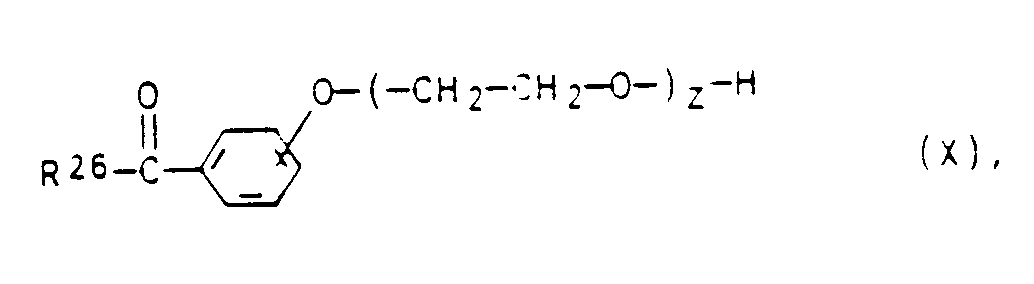 z est un ombre dont la valeur varie de 1 à 200,R²⁶ représente un groupe -CH₃, -C₆H₅, ou un radical phényle substitué par des radicaux alkyle à chaîne droite ou à chaîne ramifiée, comportant de 1 à 18 atomes de carbone.
 - Procédé de fabrication de préparations de résines synthétiques suivant l'une quelconque des revendications 1 à 8, caractérisé en ce que l'on polymérise par voie radicalaire les monomères a à d en présence d'émulsifs D en émulsion aqueuse et on incorpore les composants B, C et F à la dispersion de résine synthétique ainsi obtenue.
- Utilisation des préparations aqueuses de résines synthétiques suivant l'une quelconque des revendications 1 à 8, pour le revêtement, le collage, l'étanchement ou le masticage, ou l'imprégnation.
Applications Claiming Priority (2)
| Application Number | Priority Date | Filing Date | Title |
|---|---|---|---|
| DE3930585 | 1989-09-13 | ||
| DE3930585A DE3930585A1 (de) | 1989-09-13 | 1989-09-13 | Waessrige kunstharzzubereitungen |
Publications (3)
| Publication Number | Publication Date |
|---|---|
| EP0417568A2 EP0417568A2 (fr) | 1991-03-20 |
| EP0417568A3 EP0417568A3 (en) | 1992-01-15 |
| EP0417568B1 true EP0417568B1 (fr) | 1994-07-20 |
Family
ID=6389346
Family Applications (1)
| Application Number | Title | Priority Date | Filing Date |
|---|---|---|---|
| EP90116728A Expired - Lifetime EP0417568B1 (fr) | 1989-09-13 | 1990-08-31 | Préparation aqueuse de résine synthétique |
Country Status (7)
| Country | Link |
|---|---|
| US (1) | US5162415A (fr) |
| EP (1) | EP0417568B1 (fr) |
| JP (1) | JP3105228B2 (fr) |
| AT (1) | ATE108814T1 (fr) |
| AU (1) | AU625748B2 (fr) |
| CA (1) | CA2023650A1 (fr) |
| DE (2) | DE3930585A1 (fr) |
Families Citing this family (61)
| Publication number | Priority date | Publication date | Assignee | Title |
|---|---|---|---|---|
| US5264533A (en) * | 1988-06-16 | 1993-11-23 | Basf Aktiengesellschaft | Benzophenone derivatives and their preparation |
| DE4011044A1 (de) * | 1990-04-05 | 1991-10-10 | Fraunhofer Ges Forschung | Silane, verfahren zu ihrer herstellung und ihre verwendung zur herstellung von polymerisaten und polykondensaten |
| DE4016056A1 (de) * | 1990-05-18 | 1991-11-21 | Basf Ag | Waessrige kunstharzzubereitungen |
| JP2533974B2 (ja) † | 1991-02-06 | 1996-09-11 | ユーホーケミカル株式会社 | 被覆材組成物 |
| DE4105354A1 (de) * | 1991-02-21 | 1992-08-27 | Basf Ag | Waessrige polymerdispersionen, enthaltend organische verbindungen mit carbonat- und carbonylgruppen, sowie damit hergestellte anstrich- und beschichtungssysteme |
| CA2071756A1 (fr) * | 1991-07-03 | 1993-01-04 | Rohm And Haas Company | Liant agissant en plusieurs etapes, utilise dans les revetements, les materiaux de calfeutrement et les agents d'etancheite elastomeriques |
| JPH0559309A (ja) * | 1991-08-30 | 1993-03-09 | Nippon Paint Co Ltd | アルカリ水溶性保護塗料用塗膜形成体 |
| FR2703061B1 (fr) † | 1993-03-24 | 1995-06-30 | Cray Valley Sa | Latex pour peintures sans solvants possédant une lessivabilité améliorée. |
| SG43447A1 (en) | 1995-12-07 | 1997-10-17 | Rohm & Haas | Soil resistant polymers |
| DK0882773T3 (da) * | 1997-06-03 | 2004-11-29 | Ostendorf J W Gmbh & Co Kg | Vandig lak og fremgangsmåde til fremstilling deraf |
| DE19749642A1 (de) | 1997-11-10 | 1999-05-12 | Basf Ag | Verwendung von wässrigen Zubereitungen, die als filmbildenden Bestandteil ein Copolymer P enthalten |
| KR100607534B1 (ko) * | 1998-08-25 | 2006-08-02 | 클라리언트 파이넌스 (비브이아이)리미티드 | 자외선-활성제의 수성 조성물, 이의 제조방법 및 용도 |
| AU771383B2 (en) * | 1998-12-08 | 2004-03-18 | Rohm And Haas Company | Dirt pickup resistant coating binder and coatings |
| US6531541B1 (en) | 2000-05-19 | 2003-03-11 | Ppg Industries Ohio, Inc. | Coating compositions, coated substrates and methods for inhibiting sound transmission through a substrate |
| DE10105073A1 (de) * | 2001-02-05 | 2002-08-08 | Basf Ag | Verwendung wässriger Zusammensetzungen für die Beschichtung von Bauteilen aus Metall |
| DE10153932A1 (de) | 2001-11-06 | 2003-05-22 | Basf Ag | Wässrige Kunstharzzubereitung |
| CN1325580C (zh) * | 2002-09-30 | 2007-07-11 | 罗姆和哈斯公司 | 聚合纳米颗粒配方及其在改进涂层的抗积尘性方面的应用 |
| WO2006059352A1 (fr) * | 2004-12-02 | 2006-06-08 | Cray Valley Italia S.R.L. | Dispersion aqueuse de polymère pouvant être employée dans la préparation de formules de couche de base pour cuir imprimé |
| DE102005032194B4 (de) | 2005-07-09 | 2008-11-27 | Celanese Emulsions Gmbh | Wässrige Kunststoff-Dispersionen, Verfahren zu deren Herstellung sowie deren Verwendung |
| DE102006030557A1 (de) * | 2006-07-03 | 2008-01-10 | Celanese Emulsions Gmbh | Verfahren zur Herstellung wässriger Vinylester-Dispersionen |
| US7695770B2 (en) * | 2006-09-21 | 2010-04-13 | Rohm And Haas Company | Coating binder polymer and coatings |
| DE102007028917A1 (de) | 2007-06-22 | 2008-12-24 | Celanese Emulsions Gmbh | Vernetzbare Polymerdispersionen, Beschichtungsmittel enthaltend diese und deren Verwendung |
| US20090004394A1 (en) | 2007-06-29 | 2009-01-01 | Anne Denise Koller | Aqueous polymeric composition |
| DE102007033595A1 (de) | 2007-07-19 | 2009-01-22 | Celanese Emulsions Gmbh | Polyvinylesterdispersionen, Verfahren zu deren Herstellung und deren Verwendung |
| DE102007033596A1 (de) | 2007-07-19 | 2009-01-22 | Celanese Emulsions Gmbh | Beschichtungsmittel mit hoher Bewitterungsbeständigkeit, Verfahren zu deren Herstellung und deren Verwendung |
| US7897660B2 (en) * | 2007-10-29 | 2011-03-01 | Eastman Chemical Company | Incorporation of a resin dispersion to improve the moisture resistance of gypsum products |
| NO20084095L (no) | 2007-11-29 | 2009-06-02 | Rohm & Haas | Vandig sammensetning omfattende homopolymer |
| NO20084094L (no) | 2007-11-29 | 2009-06-02 | Rohm & Haas | Sammensetninger omfattende vandig emulsjon kopolymer |
| WO2009080614A1 (fr) | 2007-12-21 | 2009-07-02 | Basf Se | Dispersions polymères aqueuses, leur procédé de fabrication et leur utilisation |
| EP2077301B1 (fr) | 2008-01-02 | 2016-10-19 | Rohm and Haas Company | Revêtement résistant à la friction et aux taches |
| EP2141181B1 (fr) * | 2008-07-03 | 2012-05-02 | Rohm and Haas Company | Compositions de revêtement de cuir ayant une capacité de gaufrage améliorée |
| ATE529488T1 (de) | 2008-12-29 | 2011-11-15 | Rohm & Haas | Hochglänzende emulsionsfarben mit erweitertem alkalyd |
| EP2371870B1 (fr) | 2010-04-01 | 2012-07-11 | Rohm and Haas Company | Polymère d'émulsion à phases multiples et revêtements formés à partir de celui-ci |
| US8735507B2 (en) | 2010-06-16 | 2014-05-27 | Dow Global Technologies Llc | Crosslinkable composition and method of producing the same |
| US8440766B2 (en) | 2010-07-28 | 2013-05-14 | Celanese Emulsions Gmbh | Heterogeneous vinyl acetate based copolymers as binder for paints |
| US8722756B2 (en) | 2010-09-01 | 2014-05-13 | Basf Se | Aqueous emulsion polymers, their preparation and use |
| AU2011298374B2 (en) * | 2010-09-01 | 2015-04-23 | Basf Se | Aqueous emulsion polymers, production of same and use thereof |
| US8754151B2 (en) | 2010-12-21 | 2014-06-17 | Basf Se | Multistage polymer dispersions, processes for preparing them, and use thereof |
| AU2011347669B2 (en) | 2010-12-21 | 2016-03-17 | Basf Se | Multistage polymer dispersions, method for producing same, and use thereof |
| EP2471881B1 (fr) | 2010-12-28 | 2014-06-18 | Rohm and Haas Company | Composition de revêtement aqueuse, procédé de revêtement et substrat à base de ciment revêtu avec celle-ci |
| EP2675855B1 (fr) * | 2011-02-17 | 2016-06-08 | Covestro Deutschland AG | Système de revêtement acrylique aqueux et procédé permettant d'améliorer l'apparence des surfaces grainées en bois |
| EP2586835B1 (fr) | 2011-08-25 | 2019-08-21 | Rohm and Haas Company | Dispersions aqueuses épaissies et substrat revêtu obtenu à partir de celles-ci |
| EP2586836B1 (fr) | 2011-08-25 | 2017-08-23 | Rohm and Haas Company | Revêtement mat clair |
| CN102952462B (zh) | 2011-08-25 | 2016-06-29 | 罗门哈斯公司 | 底涂层/透明涂层涂料 |
| AU2013273573B2 (en) | 2012-06-05 | 2016-05-26 | Basf Se | Use of multi-stage polymerizate dispersions to coat metal sheets |
| BR112015000169A2 (pt) | 2012-07-06 | 2017-06-27 | Basf Se | aglutinante híbrido aquoso, sistema de resina alquídica aquosa, composição de revestimento, processo para a preparação de um aglutinante híbrido aquoso, usos de um aglutinante híbrido aquoso e um sistema alquídico aquoso, e, método para aumentar o desenvolvimento de dureza |
| AU2013209338B2 (en) | 2012-08-17 | 2014-09-25 | Rohm And Haas Company | Substrate marking system |
| EP2749596A1 (fr) | 2012-12-27 | 2014-07-02 | Dow Global Technologies LLC | Composition réticulable et son procédé de production |
| BR112015023291B1 (pt) | 2013-03-15 | 2022-01-04 | Swimc Llc | Método para preparar uma composição à base de água, e, composição à base de água |
| US10196537B2 (en) | 2013-03-15 | 2019-02-05 | The Sherwin-Williams Company | Dirt pick-up resistant composition |
| CN110023426B (zh) | 2016-10-14 | 2022-09-23 | 陶氏环球技术有限责任公司 | 水性无光泽涂料组成物 |
| EP3658637B1 (fr) * | 2017-07-27 | 2023-10-25 | Dow Global Technologies LLC | Composition de revêtement aqueuse |
| EP3456695B1 (fr) | 2017-09-13 | 2020-11-11 | Dow Global Technologies LLC | Compositions de revêtement à base d'eau |
| US10640581B2 (en) | 2017-10-11 | 2020-05-05 | Dow Global Technologies Llc | Waterborne damping composition |
| WO2019232051A1 (fr) | 2018-05-29 | 2019-12-05 | Swimc Llc | Compositions à base d'eau à conservation du brillant à long terme |
| US11440978B2 (en) | 2018-06-07 | 2022-09-13 | Celanese International Corporation | Polymer dispersions, their preparation and use |
| EP3935093B1 (fr) | 2019-03-07 | 2024-11-06 | Celanese International Corporation | Dispersions aqueuses de copolymère et leur utilisation dans des compositions de revêtement |
| EP3956270A1 (fr) | 2019-04-16 | 2022-02-23 | Dow Global Technologies LLC | Additif à prise rapide stable au gel-dégel |
| EP4136130A1 (fr) | 2020-04-17 | 2023-02-22 | Basf Se | Dispersions aqueuses de polymère |
| JP7495829B2 (ja) * | 2020-06-24 | 2024-06-05 | アイカ工業株式会社 | 壁面に意匠性を付与する水系塗材組成物 |
| WO2025103901A1 (fr) | 2023-11-14 | 2025-05-22 | Basf Se | Dispersions polymères pour des revêtements |
Family Cites Families (5)
| Publication number | Priority date | Publication date | Assignee | Title |
|---|---|---|---|---|
| DE1720603C3 (de) * | 1967-01-18 | 1975-06-12 | Hoechst Ag, 6000 Frankfurt | Verfahren zur Herstellung von wäßrigen Dispersionen lichtvernetzbarer Polymerisate |
| DE1644988B2 (de) * | 1967-06-28 | 1973-09-06 | Badische Anilin & Soda Fabrik AG, 6700 Ludwigshafen | Ueberzugs- und verklebungsmittel auf basis von gemischen von acetylacetatgruppen aufweisenden polymerisaten aethylenisch ungesaettigterverbindungen, acetoacetaten mehrwertiger metalle und verduennungsmittel |
| CA1150434A (fr) * | 1978-10-10 | 1983-07-19 | Lawrence S. Frankel | Mastics, et produits de calfeutrage et de scellement a surface moins collante |
| US5049597A (en) * | 1987-09-11 | 1991-09-17 | E. I. Du Pont De Nemours And Company | Impact resistant filler-containing polymer/elastomeric fiber composites |
| DE3800984A1 (de) * | 1988-01-15 | 1989-07-27 | Basf Ag | Bindemittel fuer klebfreie, nicht schmutzende, elastische beschichtungen |
-
1989
- 1989-09-13 DE DE3930585A patent/DE3930585A1/de not_active Withdrawn
-
1990
- 1990-08-20 CA CA002023650A patent/CA2023650A1/fr not_active Abandoned
- 1990-08-31 AT AT90116728T patent/ATE108814T1/de not_active IP Right Cessation
- 1990-08-31 DE DE59006489T patent/DE59006489D1/de not_active Expired - Lifetime
- 1990-08-31 EP EP90116728A patent/EP0417568B1/fr not_active Expired - Lifetime
- 1990-09-12 AU AU62477/90A patent/AU625748B2/en not_active Ceased
- 1990-09-13 JP JP02241373A patent/JP3105228B2/ja not_active Expired - Lifetime
- 1990-09-13 US US07/583,847 patent/US5162415A/en not_active Expired - Lifetime
Also Published As
| Publication number | Publication date |
|---|---|
| JP3105228B2 (ja) | 2000-10-30 |
| EP0417568A3 (en) | 1992-01-15 |
| DE3930585A1 (de) | 1991-03-21 |
| AU6247790A (en) | 1991-03-21 |
| ATE108814T1 (de) | 1994-08-15 |
| CA2023650A1 (fr) | 1991-03-14 |
| EP0417568A2 (fr) | 1991-03-20 |
| DE59006489D1 (de) | 1994-08-25 |
| JPH03106958A (ja) | 1991-05-07 |
| AU625748B2 (en) | 1992-07-16 |
| US5162415A (en) | 1992-11-10 |
Similar Documents
| Publication | Publication Date | Title |
|---|---|---|
| EP0417568B1 (fr) | Préparation aqueuse de résine synthétique | |
| EP0458144B1 (fr) | Préparations aqueuses de résine synthétique | |
| EP0821660B2 (fr) | Procede de conservation d'un corps moule mineral | |
| EP2225289B1 (fr) | Procédé de fabrication de dispersions polymères aqueuses | |
| US4855349A (en) | Mastic and caulking compositions and composite articles | |
| EP1182179B1 (fr) | Utilisation de dispersions de polymères libre d'ammoniac comme additif pour des materiaux de construction à base de liants hydrauliques | |
| EP0492210B1 (fr) | Beton revêtu de polymère | |
| EP0754657B1 (fr) | Utilisation de compositions polymériques aqueuses pour modifier des matériaux de construction minéraux | |
| EP1771509B1 (fr) | Composition de melange contenant des copolymeres a base de derives insatures d'acide carboxylique et d'alcenylether, et des co- et terpolymeres qui contiennent des groupes sulfo, ainsi que son utilisation | |
| WO2000037516A1 (fr) | Dispersion aqueuse de copolymere, son procede de production et son utilisation | |
| EP0441221A1 (fr) | Méthode pour éviter les phénomènes d'efflorescence sur les substrats minéraux | |
| DE68927772T2 (de) | Wasserabsorbierendes Polymer und Verfahren zu seiner Herstellung | |
| EP0630920A1 (fr) | Polymère en poudre | |
| DE69308459T2 (de) | Wässrige Zusammensetzung | |
| EP0982279B1 (fr) | Composition aqueuse comprenant un polymère filmifiant et un émulsifiant anionique | |
| EP0941977A1 (fr) | Procédé de revêtement des pièces minérales | |
| EP1129049B1 (fr) | Utilisation de preparations aqueuses filmogenes pour appliquer un revetement sur des corps moules mineraux | |
| EP1069093B1 (fr) | Matériau de revêtement et procédé de revêtement de corps minéraux | |
| EP1062186B1 (fr) | Utilisation de preparations filmogenes aqueuses a base de copolymeres d'alkylesters d'acide methacrylique pour le recouvrement de materiaux moules mineraux | |
| DE10153932A1 (de) | Wässrige Kunstharzzubereitung | |
| EP1250387B1 (fr) | Produits de revetement a complexe polymere, procede de fabrication desdits produits et leur utilisation | |
| EP0499844B1 (fr) | Utilisation de compositions polymériques aqueuses comme revêtements | |
| DE3437920A1 (de) | Verfahren zur herstellung von vinylpropionatcopolymerisat-dispersionen |
Legal Events
| Date | Code | Title | Description |
|---|---|---|---|
| PUAI | Public reference made under article 153(3) epc to a published international application that has entered the european phase |
Free format text: ORIGINAL CODE: 0009012 |
|
| 17P | Request for examination filed |
Effective date: 19901227 |
|
| AK | Designated contracting states |
Kind code of ref document: A2 Designated state(s): AT BE CH DE FR GB IT LI |
|
| PUAL | Search report despatched |
Free format text: ORIGINAL CODE: 0009013 |
|
| AK | Designated contracting states |
Kind code of ref document: A3 Designated state(s): AT BE CH DE FR GB IT LI |
|
| 17Q | First examination report despatched |
Effective date: 19930923 |
|
| GRAA | (expected) grant |
Free format text: ORIGINAL CODE: 0009210 |
|
| AK | Designated contracting states |
Kind code of ref document: B1 Designated state(s): AT BE CH DE FR GB IT LI |
|
| REF | Corresponds to: |
Ref document number: 108814 Country of ref document: AT Date of ref document: 19940815 Kind code of ref document: T |
|
| REF | Corresponds to: |
Ref document number: 59006489 Country of ref document: DE Date of ref document: 19940825 |
|
| GBT | Gb: translation of ep patent filed (gb section 77(6)(a)/1977) |
Effective date: 19940810 |
|
| ITF | It: translation for a ep patent filed | ||
| ET | Fr: translation filed | ||
| PLBI | Opposition filed |
Free format text: ORIGINAL CODE: 0009260 |
|
| 26 | Opposition filed |
Opponent name: ROHM AND HAAS COMPANY Effective date: 19950419 Opponent name: HOECHST AKTIENGESELLSCHAFT Effective date: 19950418 |
|
| PLBO | Opposition rejected |
Free format text: ORIGINAL CODE: EPIDOS REJO |
|
| PLBN | Opposition rejected |
Free format text: ORIGINAL CODE: 0009273 |
|
| STAA | Information on the status of an ep patent application or granted ep patent |
Free format text: STATUS: OPPOSITION REJECTED |
|
| 27O | Opposition rejected |
Effective date: 19961113 |
|
| PGFP | Annual fee paid to national office [announced via postgrant information from national office to epo] |
Ref country code: AT Payment date: 19970731 Year of fee payment: 8 |
|
| PGFP | Annual fee paid to national office [announced via postgrant information from national office to epo] |
Ref country code: CH Payment date: 19970805 Year of fee payment: 8 |
|
| PGFP | Annual fee paid to national office [announced via postgrant information from national office to epo] |
Ref country code: BE Payment date: 19970808 Year of fee payment: 8 |
|
| PGFP | Annual fee paid to national office [announced via postgrant information from national office to epo] |
Ref country code: GB Payment date: 19970815 Year of fee payment: 8 |
|
| PG25 | Lapsed in a contracting state [announced via postgrant information from national office to epo] |
Ref country code: GB Free format text: LAPSE BECAUSE OF NON-PAYMENT OF DUE FEES Effective date: 19980831 Ref country code: LI Free format text: LAPSE BECAUSE OF NON-PAYMENT OF DUE FEES Effective date: 19980831 Ref country code: BE Free format text: LAPSE BECAUSE OF NON-PAYMENT OF DUE FEES Effective date: 19980831 Ref country code: AT Free format text: LAPSE BECAUSE OF NON-PAYMENT OF DUE FEES Effective date: 19980831 Ref country code: CH Free format text: LAPSE BECAUSE OF NON-PAYMENT OF DUE FEES Effective date: 19980831 |
|
| BERE | Be: lapsed |
Owner name: BASF A.G. Effective date: 19980831 |
|
| REG | Reference to a national code |
Ref country code: CH Ref legal event code: PL |
|
| GBPC | Gb: european patent ceased through non-payment of renewal fee |
Effective date: 19980831 |
|
| PG25 | Lapsed in a contracting state [announced via postgrant information from national office to epo] |
Ref country code: IT Free format text: LAPSE BECAUSE OF NON-PAYMENT OF DUE FEES Effective date: 20050831 |
|
| PGFP | Annual fee paid to national office [announced via postgrant information from national office to epo] |
Ref country code: FR Payment date: 20090814 Year of fee payment: 20 |
|
| PGFP | Annual fee paid to national office [announced via postgrant information from national office to epo] |
Ref country code: DE Payment date: 20090827 Year of fee payment: 20 |
|
| PG25 | Lapsed in a contracting state [announced via postgrant information from national office to epo] |
Ref country code: DE Free format text: LAPSE BECAUSE OF EXPIRATION OF PROTECTION Effective date: 20100831 |