EP0431609A2 - Sulfosuccinatgruppen enthaltende Organopolysiloxane - Google Patents
Sulfosuccinatgruppen enthaltende Organopolysiloxane Download PDFInfo
- Publication number
- EP0431609A2 EP0431609A2 EP90123398A EP90123398A EP0431609A2 EP 0431609 A2 EP0431609 A2 EP 0431609A2 EP 90123398 A EP90123398 A EP 90123398A EP 90123398 A EP90123398 A EP 90123398A EP 0431609 A2 EP0431609 A2 EP 0431609A2
- Authority
- EP
- European Patent Office
- Prior art keywords
- radical
- organopolysiloxane
- formula
- groups
- average
- Prior art date
- Legal status (The legal status is an assumption and is not a legal conclusion. Google has not performed a legal analysis and makes no representation as to the accuracy of the status listed.)
- Granted
Links
Classifications
-
- C—CHEMISTRY; METALLURGY
- C08—ORGANIC MACROMOLECULAR COMPOUNDS; THEIR PREPARATION OR CHEMICAL WORKING-UP; COMPOSITIONS BASED THEREON
- C08G—MACROMOLECULAR COMPOUNDS OBTAINED OTHERWISE THAN BY REACTIONS ONLY INVOLVING UNSATURATED CARBON-TO-CARBON BONDS
- C08G77/00—Macromolecular compounds obtained by reactions forming a linkage containing silicon with or without sulfur, nitrogen, oxygen or carbon in the main chain of the macromolecule
- C08G77/04—Polysiloxanes
- C08G77/38—Polysiloxanes modified by chemical after-treatment
-
- C—CHEMISTRY; METALLURGY
- C08—ORGANIC MACROMOLECULAR COMPOUNDS; THEIR PREPARATION OR CHEMICAL WORKING-UP; COMPOSITIONS BASED THEREON
- C08G—MACROMOLECULAR COMPOUNDS OBTAINED OTHERWISE THAN BY REACTIONS ONLY INVOLVING UNSATURATED CARBON-TO-CARBON BONDS
- C08G77/00—Macromolecular compounds obtained by reactions forming a linkage containing silicon with or without sulfur, nitrogen, oxygen or carbon in the main chain of the macromolecule
- C08G77/04—Polysiloxanes
- C08G77/38—Polysiloxanes modified by chemical after-treatment
- C08G77/382—Polysiloxanes modified by chemical after-treatment containing atoms other than carbon, hydrogen, oxygen or silicon
- C08G77/392—Polysiloxanes modified by chemical after-treatment containing atoms other than carbon, hydrogen, oxygen or silicon containing sulfur
Definitions
- DD-A 239 596 (issued October 1, 1986, G. Sonnek et al., VEB Chemiewerk Nünchritz) describes a process for the preparation of siloxanyl-buten-2-diol-1,4-compounds in which 2- Organopolysiloxane containing butyne-1,4-diol with Si-bonded hydrogen atoms is reacted in the presence of hexachloroplatinic acid, the ratio of triple bond in 2-butyne-1,4-diol to SiH groups in organopolysiloxane having Si-bonded hydrogen atoms in the reaction 1 : 1 to 1: 3, ie organopolysiloxane containing SiH groups is preferably used in excess.
- the organopolysiloxane containing excess SiH groups can no longer be separated from the end product after the hydrosilylation reaction.
- the reactive hydroxyl groups in 2-butyne-1,4-diol are used according to the examples of DD-A 239 596 protected from the hydrosilylation reaction by trimethylsilyl groups, which then have to be split off again after the reaction, ie the process consists of a total of three stages.
- Example 11 of DD-A 239 596 the only example in which the trimethylsilyl protective groups are dispensed with, 2-butyne-1,4-diol is used in a stoichiometric ratio directly with heptamethyltrisiloxane, which has only one Si-bonded hydrogen atom per molecule implemented, but the end product, the 2-heptamethyltrisiloxanyl-buten-2-diol-1,4, is obtained only in low purity and in moderate yield.
- DD-A 255 346 (issued March 30, 1988, G. Sonnek et al., Academy of Sciences of the GDR) describes a process for the preparation of siloxanyl-alkenediyl-bis-carboxylates in which siloxanyl-buten-2-diol 1,4-compounds can be reacted with saturated or unsaturated anhydrides in the presence of an esterification catalyst.
- an esterification catalyst only 2-heptamethyltrisiloxanyl-but-2-en-1,4-diol or 2-pentadecamethylheptasiloxanyl-but-2-en-1,4-diol, i.e. an organopolysiloxane with only one Si-bonded dihydroxyalkenyl group per molecule used.
- organopolysiloxanes containing sulfosuccinate groups are known which are initially reacted with maleic anhydride with organopolysiloxane with Si-bonded hydroxyalkyl groups and then with the maleinate groups thus obtained in the organopolysiloxane with sodium bisulfite in the presence of water and a basic substance.
- the organopolysiloxanes with Si-bonded hydroxyalkyl groups used as starting materials are difficult to access, since according to W.
- the object was to provide organopolysiloxanes containing sulfosuccinate groups which have better surface-active properties than hitherto and which can be prepared in a simple process and in good yields.
- the object is achieved by the invention.
- the organopolysiloxanes containing sulfosuccinate groups according to the invention preferably have an average molecular weight of 400 to 50,000 g / mol, preferably 400 to 5,000 g / mol.
- the invention further relates to a process for the preparation of organopolysiloxanes containing sulfosuccinate groups, characterized in that initially
- the maleate groups of the organopolysiloxane obtained in the second stage are reacted with alkali hydrogen sulfite or ammonium hydrogen sulfite in the presence of water and a basic compound.
- the invention further relates to a process for the preparation of organopolysiloxanes containing dihydroxyalkenyl groups by reacting dihydroxyalkyne (1) with organopolysiloxane (2) with at least one Si-bonded hydrogen atom per molecule in amounts of 1.03 to 2.0 mol of dihydroxyalkyne (1) each Gram atom of Si-bonded hydrogen in organopolysiloxane (2) in the presence of catalyst (3) which promotes the attachment of Si-bonded hydrogen to aliphatic multiple bonds.
- radicals R are alkyl radicals, such as the methyl, ethyl, n-propyl, iso-propyl, 1-n-butyl, 2-n-butyl, iso-butyl, tert-butyl, n-pentyl, iso-pentyl, neo-pentyl, tert-pentyl, hexyl, such as the n-hexyl, heptyl, such as the n-heptyl, octyl, such as the n-octyl and iso-octyl, such as 2,2,4-trimethylpentyl radical, nonyl radicals such as the n-nonyl radical, decyl radicals such as the n-decyl radical, dodecyl radicals such as the n-dodecyl radical, octadecyl radicals such as the n-octa
- halogenated radicals R are haloalkyl radicals, such as the 3,3,3-trifluoro-n-propyl radical, the 2,2,2,2 ', 2', 2'-hexafluoroisopropyl radical, the heptafluoroisopropyl radical, and haloaryl radicals, such as the o- , m- and p-chlorophenyl.
- alkyl radicals R1 are the methyl, ethyl, n-propyl, iso-propyl, 1-n-butyl, 2-n-butyl, iso-butyl and tert-butyl radical.
- the radical R 1 is preferably a hydrogen atom.
- the ions M + sodium ions and hydrogen ions are preferred in the organopolysiloxanes containing sulfosuccinate groups according to the invention.
- radical Z is the radical of the formula where Y is a radical of the formula is.
- Dihydroxyalkyne (1) is preferably reacted with organopolysiloxane (2) with at least one Si-bonded hydrogen atom per molecule in amounts of 1.03 to 1.10 mol per gram atom of Si-bonded hydrogen in the organopolysiloxane (2).
- organopolysiloxane (2) having at least one Si-bonded hydrogen atom per molecule of the formula
- organopolysiloxane (2) used in the process according to the invention is preferably that of the general formula
- the viscosity of the organopolysiloxanes (2) with at least one Si-bonded hydrogen atom per molecule is preferably 1 to 10,000 mm2 . s -1 at 25 ° C, preferably 1 to 1000 mm2 . s -1 at 25 ° C.
- organopolysiloxanes (2) are copolymers of dimethylhydrosiloxane and dimethylsiloxane units, copolymers of dimethylhydrosiloxane, dimethylsiloxane and methylhydrogensiloxane units, copolymers of trimethylsiloxane and methylhydrogensiloxane units and Copolymers of trimethylsiloxane, dimethylsiloxane and methylhydrogensiloxane units.
- organopolysiloxanes (2) with at least one Si-bonded hydrogen atom per molecule including those of the preferred type, are known.
- catalysts (3) promoting the attachment of Si-bonded hydrogen to aliphatic multiple bonds the same catalysts can also be used in the process according to the invention as have previously been used to promote the attachment of Si-bonded hydrogen to aliphatic multiple bonds.
- the catalysts (3) are preferably a metal from the group of platinum metals or a compound or a complex from the group of platinum metals.
- platinum halides for example PtCl4, H2PtCl6 * 6H2O, Na2PtCl4 * 4H2O, platinum-olefin complexes, Platinum-alcohol complexes, platinum-alcoholate complexes, platinum-ether complexes, platinum-aldehyde complexes, platinum-ketone complexes, including reaction products of H2PtCl6 * 6H2O and cyclohexanone, platinum-vinylsiloxane complexes, such as platinum-1,3- divinyl-1,1,3,3-tetramethyldisiloxane complexes with or without a detectable amount of inorganically bonded halogen, bis (gamma-picoline), trimethylenedipyridineplatinum, dicyclopentadieneplatinum, Dimethylsulfoxyde
- platinum halides for example PtCl4, H2PtCl6 * 6H2O, Na2PtCl4 * 4H2O
- the catalyst (3) is preferably in amounts of 1 to 1,000 ppm by weight (parts by weight per million parts by weight), preferably in amounts of 5 to 50 ppm by weight, in each case calculated as elemental platinum and based on the total weight of dihydroxyalkyne ( 1) and organopolysiloxane (2) with at least one Si-bonded hydrogen atom per molecule.
- the addition reaction (or hydrosilylation reaction) in the 1st stage of the process according to the invention is preferably carried out at the pressure of the surrounding atmosphere, that is to say at about 1020 hPa (abs.), But it can also be carried out at higher or lower pressures. Furthermore, the addition reaction is preferably carried out at a temperature of 80 ° C. to 140 ° C., preferably 110 ° C. to 140 ° C.
- inert organic solvents are preferably used in amounts of 0 to 70% by weight, based on the total weight of dihydroxyalkyne (1) and organopolysiloxane (2) with at least one Si-bonded hydrogen atom per molecule.
- inert organic solvents are toluene, xylene, ethylbenzene, dioxane, 1,2-dimethoxyethane, butyl acetate and ethyl butyrate.
- Preferred organopolysiloxane containing dihydroxyalkenyl groups is that of the general formula
- the organopolysiloxanes containing dihydroxyalkenyl groups preferably have an average molecular weight of 200 to 50,000 g / mol, preferably 200 to 5,000 g / mol.
- the dihydroxyalkenyl groups X of the organopolysiloxane obtained in the first stage are esterified with maleic anhydride in accordance with the following reaction scheme and an organopolysiloxane containing maleate groups is obtained:
- maleic anhydride containing the dihydroxyalkenyl groups X of the organopolysiloxane obtained in the first stage is preferably used in amounts of 2.0 to 3.0 mol, preferably 2.1 to 2.5 mol, of maleic anhydride per mol of dihydroxyalkenyl group X implemented in organopolysiloxane.
- inert organic solvent is preferably used in amounts of 0 to 70% by weight, based on the total weight of organopolysiloxane containing dihydroxyalkenyl groups.
- inert organic solvents are toluene, xylene, ethylbenzene, dioxane, 1,2-dimethoxyethane, butyl acetate and ethyl butyrate.
- an esterification catalyst such as titanium butylate, magnesium acetate or calcium oxide can optionally be used.
- the esterification in the second stage of the process according to the invention is preferably carried out at 60 ° C. to 120 ° C., preferably 80 ° C. to 110 ° C., and preferably at the pressure of the surrounding atmosphere, that is to say at about 1020 hPa (abs.). If desired, higher and lower pressures can also be used.
- the organopolysiloxane containing maleinate groups is preferably of the general formula
- the maleinate groups Y 'of the organopolysiloxane obtained in the second stage are preferably reacted with sodium bisulfite.
- Alkali hydrogen sulfite can be added directly or in the form of a precursor which converts in situ to alkali hydrogen sulfite under the reaction conditions, e.g. B. Na2S2O5, which converts to NaHSO3 in the presence of water.
- Alkali hydrogen sulfite or ammonium hydrogen sulfite or precursors thereof are preferably used in the third stage of the process according to the invention in amounts such that 0.8 to 1.2 mol, preferably 0.9 to 1.1 mol, of alkali hydrogen sulfite or ammonium hydrogen sulfite per mole of maleate group Y 'in the Organopolysiloxane obtained in the 2nd stage.
- Basic compounds which are used in the 3rd stage of the process according to the invention are those which react with the carboxyl group of the maleinate group Y 'with salt bonding.
- Examples of basic compounds are alkali hydroxides, such as sodium hydroxide and potassium hydroxide, with sodium hydroxide being preferred.
- Water and basic compound in the form of an aqueous NaOH solution are therefore preferably used.
- preferably short-chain alkanols such as methanol, ethanol, propanol or isopropanol, with methanol being preferred, in amounts of preferably 20 to 80% by weight, based on the total weight of organopolysiloxane containing maleinate groups, also used.
- the sulfonation in the third stage of the process according to the invention is preferably carried out at 60 ° C. to 100 ° C., preferably 70 ° C. to 90 ° C., and preferably at the pressure of the surrounding atmosphere, that is to say at about 1020 hPa (abs.). If desired, however, higher or lower pressures can also be used.
- the third stage of the process according to the invention is preferably carried out in such a way that the organopolysiloxane obtained in the second stage, which contains maleinate groups Y ', is mixed with short-chain alkanol, such as methanol, then NaHSO3 or Na2S2O5 is added to the mixture and to which The reaction mixture is then added to an aqueous NaOH solution until it preferably has a pH in the range from 6 to 8, preferably about 7.
- the various stages of the process according to the invention can be carried out in succession in one and the same reaction vessel or in separate reaction vessels. It is preferably carried out in succession in one and the same reaction vessel.
- the process according to the invention can be carried out batchwise, semi-continuously or fully continuously.
- organopolysiloxanes containing sulfosuccinate groups according to the invention have both hydrophobic and hydrophilic groups in the same molecule and therefore have pronounced surface-active properties. They can therefore be used in aqueous systems as emulsifiers or foaming agents.
- a mixture of 181 g (2.1 mol) of 2-butyne-1,4-diol, 6 mg of platinum, in the form of a solution of platinum tetrachloride in 1-octene, and 40 g of toluene is heated to 110 ° C. under a nitrogen atmosphere .
- 612 g of an ⁇ , ⁇ -dihydrogendimethylpolysiloxane with a viscosity of 4 mm2 are then added to the heated mixture .
- s -1 was added dropwise at 25 ° C. (corresponding to 2.0 grams atom of Si-bonded hydrogen), the temperature of the mixture rising to approximately 130 ° C.
- the solid obtained in this way is an organopolysiloxane composed of trimethylsiloxane units, dimethylsiloxane units and siloxane units of the formula where Y is a radical of the formula is.
- a 1% aqueous solution of this organopolysiloxane has a surface tension of 24.6 dym / cm.
- the organopolysiloxane thus obtained contains trimethylsiloxane units, dimethylsiloxane units and siloxane units of the formula Bonds of the following type, -CH2-O-Si ⁇ , which would originate from a reaction of the hydroxyl group of the 2-butyne-1,4-diol with the Si-bonded hydrogen atoms in the methylhydrogensiloxane units of the copolymer, are from the 29Si-NMR spectrum cannot be recognized, are therefore below the detection limit.
- Example 5 The procedure described in Example 5 is repeated with the modification that instead of 88.6 g (1.03 mol) of 2-butyne-1,4-diol, 84.3 g (0.98 mol) of 2-butyne-1, 4-diol can be used. It becomes a clear product with a viscosity of 2.38 ⁇ 105 mm2 . s -1 received.
- the viscosity which is approximately twice as high as in Example 5, is indicated by a Occurring side reaction - reaction of the hydroxyl group of the 2-butyne-1,4-diol with the Si-bonded hydrogen atoms of the copolymer - caused. From this side reaction, bonds of the following type, -CH2-O-Si ⁇ , can be seen from the 29Si-NMR spectrum at -60 ppm.
Landscapes
- Chemical & Material Sciences (AREA)
- General Chemical & Material Sciences (AREA)
- Health & Medical Sciences (AREA)
- Chemical Kinetics & Catalysis (AREA)
- Medicinal Chemistry (AREA)
- Polymers & Plastics (AREA)
- Organic Chemistry (AREA)
- Silicon Polymers (AREA)
Abstract
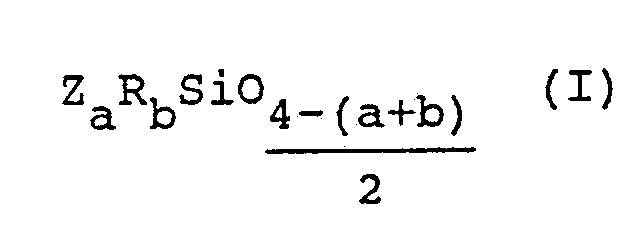
wobei R gleiche oder verschiedene, einwertige, gegebenenfalls halogenierte Kohlenwasserstoffreste mit 1 bis 18 Kohlenstoffatom(en) je Rest bedeutet, Z ein Rest der Formel
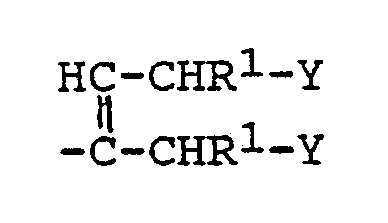
ist, wobei y ein Rest der Formel
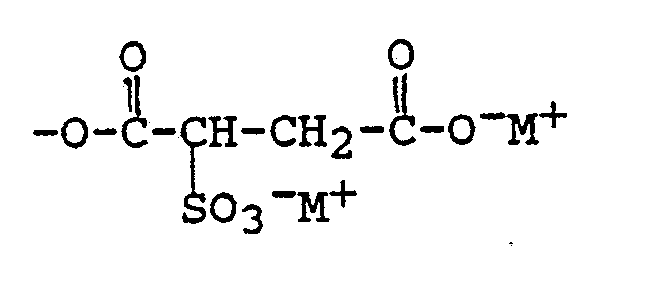
- R¹ ein Wasserstoffatom oder einen Alkylrest mit 1 bis 4 Kohlenstoffatom(en) je Rest und
- M+ ein Wasserstoffion und/oder ein Alkalimetallion bzw. ein Ammoniumion bedeutet,
- a 0 oder 1, durchschnittlich 0,03 bis 1,0 und
- b 0, 1, 2 oder 3, durchschnittlich 1,0 bis 2,5 bedeutet und die Summe a+b nicht größer als 3 ist,
Description
- In DD-A 239 596 (ausgegeben am 1. Oktober 1986, G. Sonnek et al., VEB Chemiewerk Nünchritz) ist ein Verfahren zur Herstellung von Siloxanyl-buten-2-diol-1,4-Verbindungen beschrieben, bei dem 2-Butin-1,4-diol mit Si-gebundene Wasserstoffatome aufweisendem Organopolysiloxan in Gegenwart von Hexachloroplatinsäure umgesetzt wird, wobei bei der Umsetzung das Verhältnis Dreifachbindung im 2-Butin-1,4-diol zu SiH-Gruppen im Si-gebundene Wasserstoffatome aufweisendem Organopolysiloxan 1 : 1 bis 1 : 3 beträgt, also SiH-Gruppen aufweisendes Organopolysiloxan bevorzugt im Überschuß eingesetzt wird. Das überschüssige SiH-Gruppen aufweisende Organopolysiloxan läßt sich aber nach der Hydrosilylierungsreaktion nicht mehr vom Endprodukt abtrennen. Um eine Reaktion zwischen den reaktiven Hydroxylgruppen im 2-Butin-1,4-diol und den SiH-Gruppen im Organopolysiloxan zu vermeiden, werden gemäß den Beispielen der DD-A 239 596 die reaktiven Hydroxylgruppen im 2-Butin-1,4-diol vor der Hydrosilylierungsreaktion durch Trimethylsilylgruppen geschützt, die dann nach der Umsetzung wieder abgespalten werden müssen, d.h. das Verfahren besteht insgesamt aus drei Stufen. Im Beispiel 11 der DD-A 239 596, das einzige Beispiel, bei dem auf die Trimethylsilylschutzgruppen verzichtet wird, wird 2-Butin-1,4-diol direkt mit Heptamethyltrisiloxan, das nur ein Si-gebundenes Wasserstoffatom je Molekül aufweist, im stöchiometischen Verhältnis umgesetzt, wobei aber das Endprodukt, das 2-Heptamethyltrisiloxanyl-buten-2-diol-l,4, nur in geringer Reinheit und in mäßiger Ausbeute erhalten wird.
- In DD-A 255 346 (ausgegeben 30. März 1988, G. Sonnek et al., Akademie der Wissenschaften der DDR) ist ein Verfahren zur Herstellung von Siloxanyl-alkendiyl-bis-carboxylaten beschrieben, bei dem Siloxanyl-buten-2-diol-1,4-Verbindungen mit gesättigten oder ungesättigten Anhydriden in Gegenwart eines Veresterungskatalysators umgesetzt werden. In den Beispielen wird jeweils nur 2-Heptamethyltrisiloxanyl-but-2-en-1,4-diol oder 2-Pentadecamethylheptasiloxanyl-but-2-en-1,4-diol, also ein Organopolysiloxan mit nur einer Si-gebundenen Dihydroxyalkenylgruppe je Molekül eingesetzt.
- Aus EP-A 283 156 (offengelegt 21. September 1988, A.R.L. Colas et al., Dow Corning Limited) sind Sulfosuccinatgruppen enthaltende Organopolysiloxane bekannt, die zunächst durch Umsetzung von Maleinsäureanhydrid mit Organopolysiloxan mit Si-gebundenen Hydroxyalkylgruppen und anschließend durch Umsetzung der so erhaltenen Maleinatgruppen in dem Organopolysiloxan mit Natriumbisulfit in Gegenwart von Wasser und einer basischen Substanz hergestellt werden. Die als Ausgangsstoffe eingesetzten Organopolysiloxane mit Si-gebundenen Hydroxyalkylgruppen sind schwer zugänglich, da gemäß W. Noll, Chemistry and Technology of Silicones, Academic Press, Inc., 1968, Seite 163 der formal einfachste Weg zu ihrer Herstellung, die Addition der SiH-Bindung in SiH-Gruppen aufweisenden Organopolysiloxanen an ungesättigte Alkohole wegen der Reaktivität der SiH-Bindung auch gegenüber der C-OH-Gruppe nicht gangbar ist.
- Es bestand die Aufgabe, Sulfosuccinatgruppen enthaltende Organopolysiloxane bereitzustellen, die bessere oberflächenaktive Eigenschaften als bisher aufweisen und die in einem einfachen Verfahren und in guten Ausbeuten hergestellt werden können. Die Aufgabe wird durch die Erfindung gelöst.
- Gegenstand der Erfindung sind Sulfosuccinatgruppen enthaltende Organopolysiloxane aus durchschnittlichen Einheiten der allgemeinen Formel

Z ein Rest der Formel

- R¹ ein Wasserstoffatom oder einen Alkylrest mit 1 bis 4 Kohlenstoffatom(en) je Rest und
- M+ ein Wasserstoffion und/oder ein Alkalimetallion bzw. ein Ammoniumion bedeutet,
- a 0 oder 1, durchschnittlich 0,03 bis 1,0 und
- b 0, 1, 2 oder 3, durchschnittlich 1,0 bis 2,5 bedeutet und die Summe a+b nicht größer als 3 ist,
- Bevorzugt als Sulfosuccinatgruppen enthaltende Organopolysiloxane sind solche der allgemeinen Formel

- c 0 oder 1,
- n 0 oder eine ganze Zahl von 1 bis 500 und
- m 0 oder eine ganze Zahl von 1 bis 50 ist,
- Die erfindungsgemäßen Sulfosuccinatgruppen enthaltenden Organopolysiloxane besitzen vorzugsweise ein durchschnittliches Molekulargewicht von 400 bis 50 000 g/Mol, bevorzugt 400 bis 5 000 g/Mol.
- Gegenstand der Erfindung ist weiterhin ein Verfahren zur Herstellung von Sulfosuccinatgruppen enthaltenden Organopolysiloxanen, dadurch gekennzeichnet, daß zunächst
- in einer 1. Stufe
Dihydroxyalkin (1) mit Organopolysiloxan (2) mit mindestens einem Si-gebundenen Wasserstoffatom je Molekül in Mengen von 1,03 bis 2,0 Mol Dihydroxyalkin (1) je Grammatom Si-gebundener Wasserstoff im Organopolysiloxan (2) in Gegenwart von die Anlagerung von Si-gebundenen Wasserstoff an aliphatische Mehrfachbindung förderndem Katalysator (3) umgesetzt wird, - in einer 2. Stufe
die Dihydroxyalkenylgruppen des in der 1. Stufe erhaltenen Organopolysiloxans mit Maleinsäureanhydrid umgesetzt werden und dann - in einer 3. Stufe
die Maleinatgruppen des in der 2. Stufe erhaltenen Organopolysiloxans mit Alkalihydrogensulfit oder Ammoniumhydrogensulfit in Gegenwart von Wasser und einer basischen Verbindung umgesetzt werden. - Gegenstand der Erfindung ist weiterhin ein Verfahren zur Herstellung von Dihydroxyalkenylgruppen enthaltenden Organopolysiloxanen durch Umsetzung von Dihydroxyalkin (1) mit Organopolysiloxan (2) mit mindestens einem Si-gebundenen Wasserstoffatom je Molekül in Mengen von 1,03 bis 2,0 Mol Dihydroxyalkin (1) je Grammatom Si-gebundener Wasserstoff im Organopolysiloxan (2) in Gegenwart von die Anlagerung von Si-gebundenen Wasserstoff an aliphatische Mehrfachbindung förderndem Katalysator (3).
- Gemäß der oben genannten DD-A 239 596 war nicht zu erwarten, daß durch die Verwendung eines geringen Überschusses an Dihydroxyalkin (1) keine Schutzgruppen mehr für die reaktiven Hydroxylgruppen des Dihydroxyalkins eingeführt werden müssen und Dihydroxyalkenylgruppen enthaltende Organopolysiloxane, auch wenn sie mehr als nur eine Si-gebundene Dihydroxyalkenylgruppe je Molekül enthalten, in hoher Reinheit und in guten Ausbeuten gewonnen werden. Beispiele für Reste R sind Alkylreste, wie der Methyl-, Ethyl-, n- Propyl-, iso-Propyl-, 1-n-Butyl-, 2-n-Butyl-, iso-Butyl-, tert.-Butyl-, n-Pentyl-, iso-Pentyl-, neo-Pentyl-, tert.-Pentylrest, Hexylreste, wie der n-Hexylrest, Heptylreste, wie der n-Heptylrest, Octylreste, wie der n-Octylrest und iso-Octylreste, wie der 2,2,4-Trimethylpentylrest, Nonylreste, wie der n-Nonylrest, Decylreste, wie der n-Decylrest, Dodecylreste, wie der n-Dodecylrest, Octadecylreste, wie der n-Octadecylrest; Alkenylreste, wie der Vinyl- und der Allylrest; Cycloalkylreste, wie Cyclopentyl-, Cyclohexyl-, Cycloheptylreste und Methylcyclohexylreste; Arylreste, wie der Phenyl-, Naphthyl- und Anthryl- und Phenanthrylrest; Alkarylreste, wie o-, m-, p-Tolylreste, Xylylreste und Ethylphenylreste; und Aralkylreste, wie der Benzylrest, der α- und der β-Phenylethylrest. Bevorzugt ist der Methylrest.
- Beispiele für halogenierte Reste R sind Halogenalkylreste, wie der 3,3,3-Trifluor-n-propylrest, der 2,2,2,2',2',2'-Hexafluorisopropylrest, der Heptafluorisopropylrest, und Halogenarylreste, wie der o-, m- und p-Chlorphenylrest.
- Beispiele für Alkylreste R¹ sind der Methyl-, Ethyl-, n-Propyl-, iso-Propyl-, 1-n-Butyl-, 2-n-Butyl-, iso-Butyl- und tert.-Butylrest. Bevorzugt ist der Rest R¹ ein Wasserstoffatom.
- Bevorzugt sind in den erfindungsgemäßen Sulfosuccinatgruppen enthaltenden Organopolysiloxanen die Ionen M+ Natriumionen und Wasserstoffionen.
- Bevorzugt als Rest Z ist der Rest der Formel


- Bevorzugt wird Dihydroxyalkin (1) mit organopolysiloxan (2) mit mindestens einem Si-gebundenen Wasserstoffatom je Molekül in Mengen von 1,03 bis 1,10 Mol je Grammatom Si-gebundenen Wasserstoff im Organopolysiloxan (2) umgesetzt.
- Vorzugsweise wird bei dem erfindungsgemäßen Verfahren als Dihydroxyalkin (1) solches der allgemeinen Formel

- Vorzugsweise wird bei dem erfindungsgemäßen Verfahren als Organopolysiloxan (2) mit mindestens einem Si-gebundenen Wasserstoffatom je Molekül solches der Formel

- wobei R die oben dafür angegebene Bedeutung hat,
- d 0 oder 1, durchschnittlich 0,03 bis 1,0 und
- e 0, 1, 2 oder 3, durchschnittlich 1,0 bis 2,5 ist und die Summe d+e nicht größer als 3 ist,
- Als Organopolysiloxan (2) wird bei dem erfindungsgemäßen Verfahren bevorzugt solches der allgemeinen Formel
- HfR₃-fSiO(SiR₂O)o(SiRHO)pSiR₃-fHf,
- wobei R die oben dafür angegebene Bedeutung hat,
- f 0 oder 1,
- o 0 oder eine ganze Zahl von 1 bis 500 und
- p 0 oder eine ganze Zahl von 1 bis 50 ist,
- Die Viskosität der Organopolysiloxane (2) mit mindestens einem Si-gebundenen Wasserstoffatom je Molekül beträgt vorzugsweise 1 bis 10 000 mm².s-1 bei 25°C, bevorzugt 1 bis 1 000 mm².s-1 bei 25°C.
- Bevorzugte Beispiele für Organopolysiloxane (2) sind Mischpolymerisate aus Dimethylhydrogensiloxan- und Dimethylsiloxaneinheiten, Mischpolymerisate aus Dimethylhydrogensiloxan-, Dimethylsiloxan- und Methylhydrogensiloxaneinheiten, Mischpolymerisate aus Trimethylsiloxan-und Methylhydrogensiloxaneinheiten und Mischpolymerisate aus Trimethylsiloxan-, Dimethylsiloxan- und Methylhydrogensiloxaneinheiten.
- Verfahren zur Herstellung von Organopolysiloxanen (2) mit mindestens einem Si-gebundenen Wasserstoffatom je Molekül, auch von solchen der bevorzugten Art sind bekannt.
- Als die Anlagerung von Si-gebundenem Wasserstoff an aliphatische Mehrfachbindung fördernde Katalysatoren (3) können auch bei dem erfindungsgemäßen Verfahren die gleichen Katalysatoren eingesetzt werden, die auch bisher zur Förderung der Anlagerung von Si-gebundenen Wasserstoff an aliphatische Mehrfachbindung eingesetzt werden konnten. Bei den Katalysatoren (3) handelt es sich vorzugsweise um ein Metall aus der Gruppe der Platinmetalle oder um eine Verbindung oder einen Komplex aus der Gruppe der Platinmetalle. Beispiele für solche Katalysatoren sind metallisches und feinverteiltes Platin, das sich auf Trägern, wie Siliciumdioxyd, Aluminiumoxyd oder Aktivkohle befinden kann, Verbindungen oder Komplexe von Platin, wie Platinhalogenide, z.B. PtCl₄, H₂PtCl₆*6H₂O, Na₂PtCl₄*4H₂O, Platin-Olefin-Komplexe, Platin-Alkohol-Komplexe, Platin-Alkoholat-Komplexe, Platin-Ether-Komplexe, Platin-Aldehyd-Komplexe, Platin-Keton-Komplexe, einschließlich Umsetzungsprodukten aus H₂PtCl₆*6H₂O und Cyclohexanon, Platin-Vinylsiloxankomplexe, wie Platin-1,3-Divinyl-1,1,3,3-tetramethyldisiloxankomplexe mit oder ohne Gehalt an nachweisbarem anorganisch gebundenem Halogen, Bis-(gamma-picolin)-platindichlorid, Trimethylendipyridinplatindichlorid, Dicyclopentadienplatindichlorid, Dimethylsulfoxydethylenplatin-(II)-dichlorid sowie Umsetzungsprodukte von Platintetrachlorid mit Olefin und primärem Amin oder sekundärem Amin oder primärem und sekundärem Amin gemäß US-A 4 292 434, wie das Umsetzungsprodukt aus in 1-Octen gelöstem Platintetrachlorid mit sec.-Butylamin, oder Ammonium-Platinkomplexe gemäß Ep-B 110 370.
- Der Katalysator (3) wird vorzugsweise in Mengen von 1 bis 1 000 Gew.-ppm (Gewichtsteilen je Million Gewichtsteilen), bevorzugt in Mengen von 5 bis 50 Gew.-ppm, jeweils berechnet als elementares Platin und bezogen auf das Gesamtgewicht von Dihydroxyalkin (1) und Organopolysiloxan (2) mit mindestens einem Si-gebundenen Wasserstoffatom je Molekül eingesetzt.
- Die Additionsreaktion (oder Hydrosilylierungsreaktion) in der 1. Stufe des erfindungsgemäßen Verfahrens wird vorzugsweise beim Druck der umgebenden Atmosphäre, also etwa bei 1020 hPa (abs.), durchgeführt, sie kann aber auch bei höheren oder niedrigeren Drücken durchgeführt werden. Ferner wird die Additionsreaktion vorzugsweise bei einer Temperatur von 80°C bis 140°C, bevorzugt 110°C bis 140°C, durchgeführt.
- In der 1. Stufe des erfindungsgemäßen Verfahrens werden vorzugsweise inerte organische Lösungsmittel in Mengen von 0 bis 70 Gew.%, bezogen auf das Gesamtgewicht von Dihydroxyalkin (1) und Organopolysiloxan (2) mit mindestens einem Si-gebundenen Wasserstoffatom je Molekül, mitverwendet. Beispiele für inerte organische Lösungsmittel sind Toluol, Xylol, Ethylbenzol, Dioxan, 1,2-Dimethoxyethan, Butylacetat und Ethylbutyrat.
- Bei der in der 1. Stufe des erfindungsgemäßen Verfahrens durchgeführten Hydrosilylierung wird ein Dihydroxyalkenyl gruppen enthaltendes Organopolysiloxan nach folgendem Reaktionsschema erhalten:


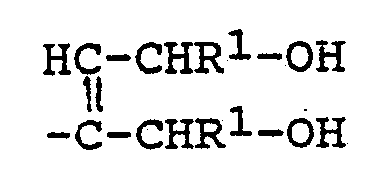
- g 0 oder 1, durchschnittlich 0,03 bis 1,0 und
- h 0, 1, 2 oder 3, durchschnittlich 1,0 bis 2,5 ist und die Summe g+h nicht größer als 3 ist,
- Bevorzugt wird als Dihydroxyalkenylgruppen enthaltendes Organopolysiloxan solches der allgemeinen Formel
-
XxR₃-xSiO(SiR₂O)y(SiRXO)zSiR₃-xXx,
- wobei R und X die oben dafür angegebene Bedeutung haben,
- x 0 oder 1,
- y 0 oder eine ganze Zahl von 1 bis 500 und
- z 0 oder eine ganze Zahl von 1 bis 50 ist,
- Die Dihydroxyalkenylgruppen enthaltenden Organopolysiloxane besitzen vorzugsweise ein durchschnittliches Molekulargewicht von 200 bis 50 000 g/Mol, bevorzugt 200 bis 5 000 g/Mol.
- Von dem in der 1. Stufe des erfindungsgemäßen Verfahrens erhaltenen, Dihydroxyalkenylgruppen enthaltenden Organopolysiloxan wird überschüssiges Dihydroxyalkin (1) sowie gegebenenfalls mitverwendetes inertes organisches Lösungsmittel destillativ entfernt.
- Entsprechend folgendem Reaktionsschema werden in der 2. Stufe des erfindungsgemäßen Verfahrens die Dihydroxyalkenylgruppen X des in der 1. Stufe erhaltenen Organopolysiloxans mit Maleinsäureanhydrid verestert und es wird ein Maleinatgruppen enthaltendes Organopolysiloxan gewonnen:

- In der 2. Stufe des erfindungsgemäßen Verfahrens wird Maleinsäureanhydrid mit den Dihydroxyalkenylgruppen X des in der 1. Stufe erhaltenen Organopolysiloxans vorzugsweise in Mengen von 2,0 bis 3,0 Mol, bevorzugt 2,1 bis 2,5 Mol, Maleinsäureanhydrid je Mol Dihydroxyalkenylgruppe X im Organopolysiloxan umgesetzt.
- Vorzugsweise wird in der 2. Stufe des erfindungsgemäßen Verfahrens inertes organisches Lösungsmittel, in Mengen von 0 bis 70 Gew.-%, bezogen auf das Gesamtgewicht an eingesetztem, Dihydroxyalkenylgruppen enthaltendem Organopolysiloxan, mitverwendet. Beispiele für inerte organische Lösungsmittel sind Toluol, Xylol, Ethylbenzol, Dioxan, 1,2-Dimethoxyethan, Butylacetat und Ethylbutyrat.
- In der 2. Stufe des erfindungsgemäßen Verfahrens kann gegebenenfalls ein Veresterungskatalysator, wie Titanbutylat, Magnesiumacetat oder Calciumoxid mitverwendet werden.
- Die Veresterung in der 2. Stufe des erfindungsgemäßen Verfahrens wird vorzugsweise bei 60°C bis 120°C, bevorzugt 80°C bis 110°C, und vorzugsweise beim Druck der umgebenden Atmosphäre, also etwa bei 1020 hPa (abs.), durchgeführt. Falls erwünscht können aber auch höhere und niedrigere Drücke angewendet werden.
- Vorzugsweise wird in der 2. Stufe des erfindungsgemäßen Verfahrens als Maleinatgruppen enthaltendes Organopolysiloxan solches aus durchschnittlichen Einheiten der Formel


- g' 0 oder 1, durchschnittlich 0,03 bis 1,0 und
- h' 0, 1, 2 oder 3, durchschnittlich 1,0 bis 2,5 ist und die Summe g'+h' nicht größer als 3 ist,
- Bevorzugt wird in der 2. Stufe des erfindungsgemäßen Verfahrens als Maleinatgruppen enthaltendes Organopolysiloxan solches der allgemeinen Formel
-
X'x,R3-x,SiO(SiR₂O)y,(SiRX'O)z,SiR3-x,X'x, ,
wobei R und x' die oben dafür angegebene Bedeutung hat, - x' 0 oder 1,
- y' 0 oder eine ganze Zahl von 1 bis 500 und
- z' 0 oder eine ganze Zahl von 1 bis 50 ist,
- In der 3. Stufe des erfindungsgemäßen Verfahrens werden die Maleinatgruppen Y' des in der 2. Stufe erhaltenen Organopolysiloxans vorzugsweise mit Natriumhydrogensulfit umgesetzt. Alkalihydrogensulfit kann dabei direkt zugegeben werden oder in Form einer Vorstufe, die sich unter den Reaktionsbedingungen in situ in Alkalihydrogensulfit umwandelt, z. B. Na₂S₂O₅, das sich in Gegenwart von Wasser in NaHSO₃ umwandelt.
- Alkalihydrogensulfit oder Ammoniumhydrogensulfit oder Vorstufen davon werden in der 3. Stufe des erfindungsgemäßen Verfahrens vorzugsweise in solchen Mengen eingesetzt, daß 0,8 bis 1,2 Mol, bevorzugt 0,9 bis 1,1 Mol Alkalihydrogensulfit oder Ammoniumhydrogensulfit je Mol Maleinatgruppe Y' in dem in der 2. Stufe erhaltenen Organopolysiloxan vorliegen.
- Basische Verbindungen die in der 3. Stufe des erfindungsgemäßen Verfahrens eingesetzt werden, sind solche die mit der Carboxylgruppe der Maleinatgruppe Y' unter Salzbindung reagieren. Beispiele für basische Verbindungen sind Alkalihydroxide, wie Natriumhydroxid und Kaliumhydroxid, wobei Natriumhydroxid bevorzugt ist. Bevorzugt werden daher Wasser und basische Verbindung in Form einer wäßrigen NaOH-Lösung eingesetzt.
- In der 3. Stufe des erfindungsgemäßen Verfahrens werden vorzugsweise kurzkettige Alkanole, wie Methanol, Ethanol, Propanol oder Isopropanol, wobei Methanol bevorzugt ist, in Mengen von vorzugsweise 20 bis 80 Gew.-%, bezogen auf das Gesamtgewicht von eingesetztem, Maleinatgruppen enthaltenem Organopolysiloxan, mitverwendet.
- Die Sulfonierung in der 3. Stufe des erfindungsgemäßen Verfahrens wird vorzugsweise bei 60°C bis 100°C, bevorzugt 70°C bis 90°C, und vorzugsweise beim Druck der umgebenden Atmosphäre, also etwa bei 1020 hPa (abs.) durchgeführt. Falls erwünscht können aber auch höhere oder niedrigere Drücke verwendet werden.
- Die 3. Stufe des erfindungsgemäßen Verfahrens wird bevorzugt so durchgeführt, daß das in der 2. Stufe erhaltene Organopolysiloxan, das Maleinatgruppen Y' enthält, mit kurzkettigem Alkanol, wie Methanol, gemischt wird, dann NaHSO₃ oder Na₂S₂O₅ zu der Mischung zugegeben wird und zu der Reaktionsmischung anschließend soviel einer wäßrigen NaOH-Lösung zugegeben wird, bis sie vorzugsweise einen pH-Wert im Bereich von 6 bis 8, bevorzugt von in etwa 7 aufweist.
- Die verschiedenen Stufen des erfindungsgemäßen Verfahrens können in ein und demselben Reaktionsgefäß hintereinander oder in von einander getrennten Reaktionsgefäßen durchgeführt werden. Vorzugsweise wird es in ein und demselben Reaktionsgefäß hintereinander durchgeführt. Das erfindungsgemäße Verfahren kann absatzweise, halbkontinuierlich oder vollkontinuierlich durchgeführt werden.
- Die erfindungsgemäßen Sulfosuccinatgruppen enthaltenden Organopolysiloxane besitzen sowohl hydrophobe als auch hydrophile Gruppen im selben Molekül und weisen daher ausgeprägte oberflächenaktive Eigenschaften auf. Sie lassen sich daher in wäßrigen Systemen als Emulgatoren oder Schaummittel verwenden.
- Eine Mischung aus 181 g (2,1 Mol) 2-Butin-1,4-diol, 6 mg Platin, in Form einer Lösung aus Platintetrachlorid in 1-Octen, und 40 g Toluol wird unter Stickstoff-Atmosphäre auf 110°C erwärmt. Zu der erwärmten Mischung werden dann 612 g eines α,ω-Dihydrogendimethylpolysiloxans mit einer Viskosität von 4 mm².s-1 bei 25°C (entsprechend 2,0 Grammatom Si-gebundenem Wasserstoff) zugetropft, wobei die Temperatur der Mischung auf ca. 130°C ansteigt. Nach ca. 8 Stunden Reaktionszeit bei 130°C sind ca. 99 % der Si-gebundenen Wasserstoffatome des α,ω-Dihydrogendimethylpolysiloxans umgesetzt. Bei 140°C und 10-3 hPa (abs.) werden die flüchtigen Bestandteile, wie überschüssiges 2-Butin-1,4-diol und Toluol, destillativ entfernt. Es werden 720 g (92 % d. Th.) eines Diorganopolysiloxans mit einer Viskosität von 356 mm².s-1 bei 25°C erhalten. Gemäß dem ¹H-NMR-Spektrum und dem ²⁹Si-NMR-Spektrum ergibt sich für das Diorganopolysiloxan folgende Formel
-
HOCH₂CH=C(CH₂OH)SiMe₂O[SiMe₂O]aMe₂SiC(CH₂OH)=CHCH₂OH ,
wobei Me ein Methylrest und a durchschnittlich 6,6 ist. Folgende Daten werden aus dem ²⁹Si-NMR-Spektrum erhalten:
-
- a) 165 g des Diorganopolysiloxans, dessen Herstellung in Beispiel 1 beschrieben ist, werden mit 98 g Maleinsäureanhydrid bei 70°C zur Reaktion gebracht. Nach 6 Stunden Reaktionszeit werden bei 100°C und 8 hPa (abs.) die flüchtigen Bestandteile, wie überschüssiges Maleinsäureanhydrid, destillativ entfernt. Gemäß dem IR-Spektrum wird ein Dimethylpolysiloxan erhalten mit je einem Si-gebundenen Rest der Formel

- b) Das oben unter a) erhaltene, Maleinatgruppen aufweisende Dimethylpolysiloxan wird in 800 ml Methanol gelöst. Zu der Lösung werden 75,5 g Na₂S₂O₅ zugegeben. Der pH-Wert der Reaktionsmischung wird durch Zugabe von In NaOH auf einen Wert von ca. 7 eingestellt. Die Reaktionsmischung wird dann 7 Stunden bei 76°C erwärmt. Wasser und Methanol werden dann bei 100°C und 10 hPa destillativ entfernt. Es werden 300 g eines gelblichen Feststoffs, der eine gute Wasserlöslichkeit aufweist, erhalten. Eine 1 %ige Lösung des so gewonnenen Dimethylpolysiloxans mit je einer Si-gebundenen Gruppe der Formel


- Eine Mischung aus 181 g (2,1 Mol) 2-Butin-1,4-diol, 6 mg Platin, in Form einer Lösung aus Platintetrachlorid in 1-Octen, und 40 g Toluol wird unter Stickstoff-Atmosphäre auf 125°C erwärmt. Zu dieser Mischung werden innerhalb von 2 Stunden 364 g eines Mischpolymerisats aus Methylhydrogensiloxan-, Dimethylsiloxan- und Trimethylsiloxaneinheiten, das 0,55 Gew.-% Si-gebundenen Wasserstoff enthält und eine Viskosität von 11,2 mm².s-1 bei 25°C besitzt, zugetropft.
- Nach ca. 8 Stunden Reaktionszeit bei 125°C sind 99 % der Si-gebundenen Wasserstoffatome des Mischpolymerisats umgesetzt. Von dem Rohprodukt werden bei 140°C und 10-3 hPa (abs.) die flüchtigen Bestandteile destillativ entfernt. Es werden 510 g (95 % d. Th.) eines Organopolysiloxans aus Trimethylsiloxaneinheiten, Dimethylsiloxaneinheiten und Siloxaneinheiten der Formel


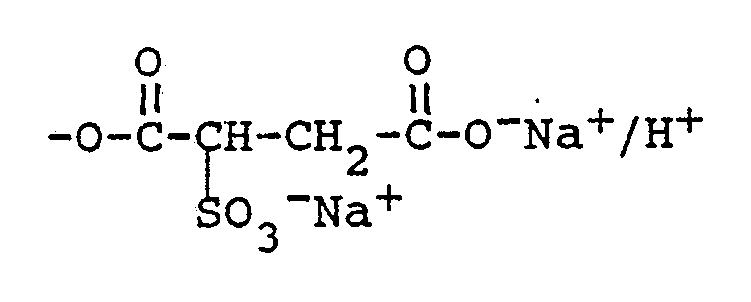
- 130 g des Organopolysiloxans, dessen Herstellung in Beispiel 3 beschrieben ist, werden in 50 g Toluol gelöst. Zu der Lösung werden 120 g Maleinsäureanhydrid zugegeben und die Reaktionsmischung wird 5 Stunden lang bei 80°C gerührt. Von der klaren Lösung werden dann die bei 100°C und 8 hPa (abs.) flüchtigen Bestandteile, wie Toluol und überschüssiges Maleinsäureanhydrid destillativ entfernt. Das zurück bleibende Öl wird in 1 Liter Methanol gelöst. Zu der Lösung werden in der Wärme 92 g Na₂S₂O₅ zugegeben, die Reaktionsmischung wird dann mit 1 n NaOH neutralisiert und anschließend 6 Stunden unter Rückfluß gekocht. Von dem Rohprodukt werden bei 100°C und 10 hPa (abs.) die flüchtigen Bestandteile destillativ entfernt. Es werden 350 g eines schwach gelblichen Feststoffs erhalten. Der so gewonnene Feststoff ist ein Organopolysiloxan aus Trimethylsiloxaneinheiten, Dimethylsiloxaneinheiten und Siloxaneinheiten der Formel

- Eine Mischung aus 88,6 g (1,03 Mol) 2-Butin-1,4-diol, 3 mg Platin in Form einer Lösung von Platintetrachlorid in 1-Octen und 20 g Toluol werden unter Stickstoffatmosphäre auf 115°C erwärmt. Zu der erwärmten Mischung werden dann 182 g (entsprechend 1,00 Grammatom Si-gebundenem Wasserstoff) eines Mischpolymerisats aus Methylhydrogensiloxan-, Dimethylsiloxan- und Trimethylsiloxaneinheiten, das 0,55 Gew.-% Si-gebundenen Wasserstoff enthält, zugetropft, wobei die Temperatur der Mischung auf 125°C ansteigt. Nach ca. 24 Stunden Reaktionszeit bei 125°C sind 98,9 % der Si-gebundenen Wasserstoffatome des Mischpolymerisats umgesetzt. Bei 100°C und 12 hPa (abs.) werden innerhalb einer Stunde die flüchtigen Bestandteile destillativ entfernt. Es wird ein klares Produkt mit einer Viskosität von 1,16·10⁵ mm².s-1 bei 25°C erhalten.
- Das so erhaltene Organopolysiloxan enthält Trimethylsiloxaneinheiten, Dimethylsiloxaneinheiten und Siloxaneinheiten der Formel

- Die in Beispiel 5 beschriebene Arbeitsweise wird wiederholt mit der Abänderung, daß anstelle von 88,6 g (1,03 Mol) 2-Butin-1,4-diol 84,3 g (0,98 Mol) 2-Butin-1,4-diol eingesetzt werden. Es wird ein klares Produkt mit einer Viskosität von 2,38·10⁵ mm².s-1 erhalten. Die im Vergleich mit dem Beispiel 5 ca. doppelt so hohe Viskosität wird durch eine auftretende Nebenreaktion - Reaktion der Hydroxylgruppe des 2-Butin-1,4-diols mit den Si-gebundenen Wasserstoffatomen des Mischpolymerisats - verursacht. Von dieser Nebenreaktion stammende Bindungen folgender Art, -CH₂-O-Si≡, sind aus dem ²⁹Si-NMR-Spektrum bei -60 ppm zu entnehmen.
verwendet.
erhalten.
erhalten.
erhalten.
erhalten.
Claims (7)
- Sulfosuccinatgruppen enthaltende Organopolysiloxane aus durchschnittlichen Einheiten der allgemeinen Formel


 a 0 oder 1, durchschnittlich 0,03 bis 1,0 undb 0, 1, 2 oder 3, durchschnittlich 1,0 bis 2,5 bedeutet und die Summe a+b nicht größer als 3 ist,mit der Maßgabe, daß mindestens ein Rest Z je Molekül enthalten ist.
 - Sulfosuccinatgruppen enthaltende Organopoylsiloxane nach Anspruch 1, dadurch gekennzeichnet, daß es solche der allgemeinen Formel


 R¹ ein Wasserstoffatom oder einen Alkylrest mit 1 bis 4 Kohlenstoffatom(en) je Rest undM+ ein Wasserstoffion und/oder ein Alkalimetallion bzw. ein Ammoniumion bedeutet,c 0 oder 1,n 0 oder eine ganze Zahl von 1 bis 500 undm 0 oder eine ganze Zahl von 1 bis 50 ist,mit der Maßgabe, daß mindestens zwei Reste Z je Molekül enthalten sind.
 - Verfahren zur Herstellung von Sulfosuccinatgruppen enthaltenden Organopolysiloxanen nach Anspruch 1 oder 2, dadurch gekennzeichnet, daß zunächst
in einer 1. Stufe
Dihydroxyalkin (1) mit Organopolysiloxan (2) mit mindestens einem Si-gebundenen Wasserstoffatom je Molekül in Mengen von 1,03 bis 2,0 Mol Dihydroxyalkin (1) je Grammatom Si-gebundener Wasserstoff im Organopolysiloxan (2) in Gegenwart von die Anlagerung von Si-gebundenen Wasserstoff an aliphatische Mehrfachbindung förderndem Katalysator (3) umgesetzt wird,
in einer 2. Stufe
die Dihydroxyalkenylgruppen des in der 1. Stufe erhaltenen Organopolysiloxans mit Maleinsäureanhydrid umgesetzt werden und dann
in einer 3. Stufe
die Maleinatgruppen des in der 2. Stufe erhaltenen Organopolysiloxans mit Alkalihydrogensulfit oder Ammoniumhydrogensulfit in Gegenwart von Wasser und einer basischen Verbindung umgesetzt werden. - Verfahren zur Herstellung von Dihydroxyalkenylgruppen enthaltenden Organopolysiloxanen durch Umsetzung von Dihydroxyalkin (1) mit Organopolysiloxan (2) mit mindestens einem Si-gebundenen Wasserstoffatom je Molekül in Mengen von 1,03 bis 2,0 Mol Dihydroxyalkin (1) je Grammatom Si-gebundener Wasserstoff im Organopolysiloxan (2) in Gegenwart von die Anlagerung von Si-gebundenen Wasserstoff an aliphatische Mehrfachbindung förderndem Katalysator (3).
- Verfahren nach Anspruch 3 oder 4, dadurch gekennzeichnet, daß als Dihydroxyalkin (1) solches der allgemeinen Formel

- Verfahren nach Anspruch 3, 4 oder 5, dadurch gekennzeichnet, daß als Organopolysiloxan (2) mit mindestens einem Si-gebundenen Wasserstoffatom je Molekül solches der allgemeinen Formel
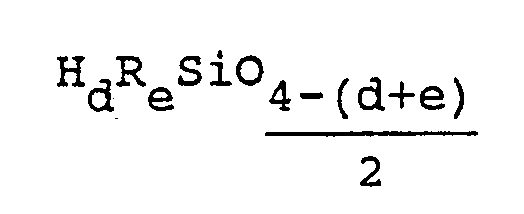 d 0 oder 1, durchschnittlich 0,03 bis 1,0 unde 0, 1, 2 oder 3, durchschnittlich 1,0 bis 2,5 ist und die Summe d+e nicht größer als 3 ist,verwendet wird.
 - Verfahren nach einem der Ansprüche 3 bis 6, dadurch gekennzeichnet, daß als Organopolysiloxan (2) solches der allgemeinen Formel
 f 0 oder 1,o 0 oder eine ganze Zahl von 1 bis 500 undp 0 oder eine ganze Zahl von 1 bis 50 ist,mit der Maßgabe, daß mindestens zwei Wasserstoffatome je Molekül enthalten sind,
verwendet wird.
Applications Claiming Priority (2)
| Application Number | Priority Date | Filing Date | Title |
|---|---|---|---|
| DE3940536 | 1989-12-07 | ||
| DE3940536A DE3940536A1 (de) | 1989-12-07 | 1989-12-07 | Sulfosuccinatgruppen enthaltende organopolysiloxane |
Publications (3)
| Publication Number | Publication Date |
|---|---|
| EP0431609A2 true EP0431609A2 (de) | 1991-06-12 |
| EP0431609A3 EP0431609A3 (en) | 1992-02-26 |
| EP0431609B1 EP0431609B1 (de) | 1994-11-09 |
Family
ID=6395038
Family Applications (1)
| Application Number | Title | Priority Date | Filing Date |
|---|---|---|---|
| EP90123398A Expired - Lifetime EP0431609B1 (de) | 1989-12-07 | 1990-12-06 | Sulfosuccinatgruppen enthaltende Organopolysiloxane |
Country Status (5)
| Country | Link |
|---|---|
| US (1) | US5151473A (de) |
| EP (1) | EP0431609B1 (de) |
| JP (1) | JPH0629325B2 (de) |
| CA (1) | CA2029480C (de) |
| DE (2) | DE3940536A1 (de) |
Cited By (4)
| Publication number | Priority date | Publication date | Assignee | Title |
|---|---|---|---|---|
| EP0554863A1 (de) * | 1992-02-07 | 1993-08-11 | Wacker-Chemie Gmbh | Verfahren zum Imprägnieren von organischen Fasern |
| WO1993022464A1 (de) * | 1992-04-29 | 1993-11-11 | Chemische Fabrik Stockhausen Gmbh | Verfahren zur hydrophobierung von materialien faseriger struktur und mittel zur durchführung des verfahrens |
| US11090255B2 (en) | 2018-12-04 | 2021-08-17 | Momentive Performance Materials Inc. | Use of polycarboxylic acid compounds for the treatment of fibrious amino acid based substrates, especially hair |
| US11179312B2 (en) | 2017-06-05 | 2021-11-23 | Momentive Performance Materials Inc. | Aqueous compositions for the treatment of hair |
Families Citing this family (2)
| Publication number | Priority date | Publication date | Assignee | Title |
|---|---|---|---|---|
| DE4325359A1 (de) * | 1993-07-28 | 1995-02-02 | Wacker Chemie Gmbh | Estergruppen aufweisende Organopolysiloxane |
| DE10258126B3 (de) * | 2002-12-12 | 2004-01-29 | Wacker-Chemie Gmbh | Alkinolgruppen aufweisende Organosiliciumverbindungen sowie diese enthaltend vernetzbare Massen und daraus herstellbare Formkörper |
Family Cites Families (7)
| Publication number | Priority date | Publication date | Assignee | Title |
|---|---|---|---|---|
| US4605712A (en) * | 1984-09-24 | 1986-08-12 | Ciba-Geigy Corporation | Unsaturated polysiloxanes and polymers thereof |
| DD239596A1 (de) * | 1985-07-26 | 1986-10-01 | Nuenchritz Chemie | Verfahren zur herstellung von siloxanyl-buten-2-diol-1,4-verbindungen |
| JPS63125528A (ja) * | 1986-11-17 | 1988-05-28 | Polyplastics Co | ケイ素含有コポリエステル及びその製造法 |
| DD255346A1 (de) * | 1986-12-22 | 1988-03-30 | Akad Wissenschaften Ddr | Verfahren zur herstellung von siloxanyl-alkendiyl-bis-carboxylaten |
| GB8706093D0 (en) * | 1987-03-14 | 1987-04-15 | Dow Corning Ltd | Organosilicon sulphosuccinates |
| DD282692A5 (de) * | 1988-09-09 | 1990-09-19 | Akad Wissenschaften Ddr | Verfahren zur herstellung von siliciummodifizierten monosalzen von alpha, omega-dicarbonsaeure-monoalkenylestern |
| DD282014A5 (de) * | 1988-09-09 | 1990-08-29 | Akad Wissenschaften Ddr | Verfahren zur herstellung von organosilyl-, organosiloxanyl- bzw. organopolysiloxanylsubstituierten alkenol-verbindungen |
-
1989
- 1989-12-07 DE DE3940536A patent/DE3940536A1/de not_active Withdrawn
-
1990
- 1990-11-06 US US07/609,680 patent/US5151473A/en not_active Expired - Fee Related
- 1990-11-07 CA CA002029480A patent/CA2029480C/en not_active Expired - Fee Related
- 1990-11-20 JP JP2312982A patent/JPH0629325B2/ja not_active Expired - Lifetime
- 1990-12-06 DE DE59007691T patent/DE59007691D1/de not_active Expired - Fee Related
- 1990-12-06 EP EP90123398A patent/EP0431609B1/de not_active Expired - Lifetime
Cited By (5)
| Publication number | Priority date | Publication date | Assignee | Title |
|---|---|---|---|---|
| EP0554863A1 (de) * | 1992-02-07 | 1993-08-11 | Wacker-Chemie Gmbh | Verfahren zum Imprägnieren von organischen Fasern |
| WO1993022464A1 (de) * | 1992-04-29 | 1993-11-11 | Chemische Fabrik Stockhausen Gmbh | Verfahren zur hydrophobierung von materialien faseriger struktur und mittel zur durchführung des verfahrens |
| AU671281B2 (en) * | 1992-04-29 | 1996-08-22 | Chemische Fabrik Stockhausen Gmbh | Process and agents for waterproofing materials having a fibrous structure |
| US11179312B2 (en) | 2017-06-05 | 2021-11-23 | Momentive Performance Materials Inc. | Aqueous compositions for the treatment of hair |
| US11090255B2 (en) | 2018-12-04 | 2021-08-17 | Momentive Performance Materials Inc. | Use of polycarboxylic acid compounds for the treatment of fibrious amino acid based substrates, especially hair |
Also Published As
| Publication number | Publication date |
|---|---|
| US5151473A (en) | 1992-09-29 |
| DE3940536A1 (de) | 1991-06-13 |
| CA2029480C (en) | 1996-02-20 |
| EP0431609A3 (en) | 1992-02-26 |
| EP0431609B1 (de) | 1994-11-09 |
| JPH03190930A (ja) | 1991-08-20 |
| DE59007691D1 (de) | 1994-12-15 |
| JPH0629325B2 (ja) | 1994-04-20 |
| CA2029480A1 (en) | 1991-06-08 |
Similar Documents
| Publication | Publication Date | Title |
|---|---|---|
| EP0396130B1 (de) | Alkenyloxyfunktionelle Organosiliciumverbindungen, deren Herstellung und Verwendung | |
| EP0439777B1 (de) | Alkenyloxygruppen aufweisende Siloxancopolymere, deren Herstellung und Verwendung | |
| EP0018624B1 (de) | Verfahren zur Herstellung von vernetzten Organopolysiloxanen und deren Verwendung als Wirkstoff für abhäsive Beschichtungsmassen für flächige Träger | |
| EP0415204A2 (de) | Anhydridfunktionelle Organo(poly)siloxane, Verfahren zu ihrer Herstellung und Verwendung dieser Organo(poly)siloxane | |
| EP0646617A1 (de) | Estergruppen aufweisende Organopolysiloxane | |
| EP0646616A1 (de) | Organopolysiloxane mit bifunktionellen endständigen Siloxaneinheiten | |
| WO2009109560A2 (de) | Verfahren zur herstellung von siliconpolyethern | |
| EP0831111B1 (de) | Aminogruppen aufweisende Organosiliciumverbindungen, deren Herstellung und Verwendung | |
| EP0431609B1 (de) | Sulfosuccinatgruppen enthaltende Organopolysiloxane | |
| EP0720985B1 (de) | Phosphorhaltige Organosiliciumverbindungen | |
| EP0439778A2 (de) | Alkenylgruppen aufweisende Siloxancopolymere, deren Herstellung und Verwendung | |
| EP0639206B1 (de) | Vinyloxygruppen aufweisende siloxancopolymere, deren herstellung und verwendung | |
| EP0508491A1 (de) | (Meth)acryloxygruppen aufweisende Organosiliciumverbindungen, deren Herstellung und Verwendung | |
| EP0503668B1 (de) | Alkenylgruppen aufweisende Organosiliciumverbindungen, Verfahren zu ihrer Herstellung und Verwendung dieser Organosiliciumverbindungen | |
| DE3935775A1 (de) | Alkenylgruppen aufweisende organosiliciumverbindungen, verfahren zu ihrer herstellung und verwendung dieser organosiliciumverbindungen | |
| EP0609246B1 (de) | Verfahren zur herstellung von schwefel enthaltende organische reste aufweisenden organosiliciumverbindungen | |
| EP0675150B1 (de) | Verfahren zur Herstellung von Carboxylgruppen aufweisenden Organosiliciumverbindungen | |
| EP0924237B1 (de) | Amino-alkylenoxidfunktionelle Organosiliciumverbindungen, deren Herstellung und Verwendung | |
| EP2029661B1 (de) | Verfahren zur herstellung von hochmolekularen organopolysiloxanen | |
| EP0413346B1 (de) | Verfahren zur Herstellung von Organo(poly)siloxanen mit Si-gebunden konjugierten Dienylgruppen | |
| EP0639205B1 (de) | Vinyloxygruppen aufweisende siloxancopolymere, deren herstellung und verwendung | |
| EP0690062A1 (de) | Furanylgruppen aufweisende Organosiliciumverbindungen | |
| EP0818495B1 (de) | Hydrophile, permanente Organosiliciumverbindungen | |
| EP0818494A1 (de) | Permanente Organosiliciumverbindungen, deren Herstellung und Verwendung | |
| EP0538868B1 (de) | Buntesalzgruppen aufweisende Organosiliciumverbindungen, Verfahren zu ihrer Herstellung sowie ihre Verwendung |
Legal Events
| Date | Code | Title | Description |
|---|---|---|---|
| PUAI | Public reference made under article 153(3) epc to a published international application that has entered the european phase |
Free format text: ORIGINAL CODE: 0009012 |
|
| 17P | Request for examination filed |
Effective date: 19901206 |
|
| AK | Designated contracting states |
Kind code of ref document: A2 Designated state(s): BE DE FR GB IT NL |
|
| PUAL | Search report despatched |
Free format text: ORIGINAL CODE: 0009013 |
|
| RAP1 | Party data changed (applicant data changed or rights of an application transferred) |
Owner name: WACKER-CHEMIE GMBH |
|
| AK | Designated contracting states |
Kind code of ref document: A3 Designated state(s): BE DE FR GB IT NL |
|
| 17Q | First examination report despatched |
Effective date: 19930816 |
|
| GRAA | (expected) grant |
Free format text: ORIGINAL CODE: 0009210 |
|
| ITF | It: translation for a ep patent filed | ||
| AK | Designated contracting states |
Kind code of ref document: B1 Designated state(s): BE DE FR GB IT NL |
|
| REF | Corresponds to: |
Ref document number: 59007691 Country of ref document: DE Date of ref document: 19941215 |
|
| GBT | Gb: translation of ep patent filed (gb section 77(6)(a)/1977) |
Effective date: 19941215 |
|
| ET | Fr: translation filed | ||
| PLBE | No opposition filed within time limit |
Free format text: ORIGINAL CODE: 0009261 |
|
| STAA | Information on the status of an ep patent application or granted ep patent |
Free format text: STATUS: NO OPPOSITION FILED WITHIN TIME LIMIT |
|
| 26N | No opposition filed | ||
| PGFP | Annual fee paid to national office [announced via postgrant information from national office to epo] |
Ref country code: FR Payment date: 19951114 Year of fee payment: 6 |
|
| PGFP | Annual fee paid to national office [announced via postgrant information from national office to epo] |
Ref country code: NL Payment date: 19951122 Year of fee payment: 6 |
|
| PGFP | Annual fee paid to national office [announced via postgrant information from national office to epo] |
Ref country code: BE Payment date: 19951123 Year of fee payment: 6 |
|
| PGFP | Annual fee paid to national office [announced via postgrant information from national office to epo] |
Ref country code: GB Payment date: 19951124 Year of fee payment: 6 |
|
| PGFP | Annual fee paid to national office [announced via postgrant information from national office to epo] |
Ref country code: DE Payment date: 19951228 Year of fee payment: 6 |
|
| PG25 | Lapsed in a contracting state [announced via postgrant information from national office to epo] |
Ref country code: GB Effective date: 19961206 |
|
| PG25 | Lapsed in a contracting state [announced via postgrant information from national office to epo] |
Ref country code: BE Effective date: 19961231 |
|
| BERE | Be: lapsed |
Owner name: WACKER-CHEMIE G.M.B.H. Effective date: 19961231 |
|
| PG25 | Lapsed in a contracting state [announced via postgrant information from national office to epo] |
Ref country code: NL Effective date: 19970701 |
|
| GBPC | Gb: european patent ceased through non-payment of renewal fee |
Effective date: 19961206 |
|
| PG25 | Lapsed in a contracting state [announced via postgrant information from national office to epo] |
Ref country code: FR Effective date: 19970829 |
|
| NLV4 | Nl: lapsed or anulled due to non-payment of the annual fee |
Effective date: 19970701 |
|
| PG25 | Lapsed in a contracting state [announced via postgrant information from national office to epo] |
Ref country code: DE Effective date: 19970902 |
|
| REG | Reference to a national code |
Ref country code: FR Ref legal event code: ST |
|
| PG25 | Lapsed in a contracting state [announced via postgrant information from national office to epo] |
Ref country code: IT Free format text: LAPSE BECAUSE OF NON-PAYMENT OF DUE FEES;WARNING: LAPSES OF ITALIAN PATENTS WITH EFFECTIVE DATE BEFORE 2007 MAY HAVE OCCURRED AT ANY TIME BEFORE 2007. THE CORRECT EFFECTIVE DATE MAY BE DIFFERENT FROM THE ONE RECORDED. Effective date: 20051206 |