EP0441255B1 - Dicyanoimidazolderivat, Magentatoner, gefärbtes Harz, geformtes Element aus gefärbtem Harz und dieses Element umfassender Farbfilter - Google Patents
Dicyanoimidazolderivat, Magentatoner, gefärbtes Harz, geformtes Element aus gefärbtem Harz und dieses Element umfassender Farbfilter Download PDFInfo
- Publication number
- EP0441255B1 EP0441255B1 EP91101353A EP91101353A EP0441255B1 EP 0441255 B1 EP0441255 B1 EP 0441255B1 EP 91101353 A EP91101353 A EP 91101353A EP 91101353 A EP91101353 A EP 91101353A EP 0441255 B1 EP0441255 B1 EP 0441255B1
- Authority
- EP
- European Patent Office
- Prior art keywords
- resin
- group
- compound derivative
- styrene
- colored
- Prior art date
- Legal status (The legal status is an assumption and is not a legal conclusion. Google has not performed a legal analysis and makes no representation as to the accuracy of the status listed.)
- Expired - Lifetime
Links
- XUEFTHOPQOREDY-FPLPWBNLSA-N CC(C)=N/C(/C)=C(/C)\NC Chemical compound CC(C)=N/C(/C)=C(/C)\NC XUEFTHOPQOREDY-FPLPWBNLSA-N 0.000 description 1
- VOWZNBNDMFLQGM-UHFFFAOYSA-N Cc1cc(N)c(C)cc1 Chemical compound Cc1cc(N)c(C)cc1 VOWZNBNDMFLQGM-UHFFFAOYSA-N 0.000 description 1
Images
Classifications
-
- C—CHEMISTRY; METALLURGY
- C09—DYES; PAINTS; POLISHES; NATURAL RESINS; ADHESIVES; COMPOSITIONS NOT OTHERWISE PROVIDED FOR; APPLICATIONS OF MATERIALS NOT OTHERWISE PROVIDED FOR
- C09B—ORGANIC DYES OR CLOSELY-RELATED COMPOUNDS FOR PRODUCING DYES, e.g. PIGMENTS; MORDANTS; LAKES
- C09B43/00—Preparation of azo dyes from other azo compounds
- C09B43/11—Preparation of azo dyes from other azo compounds by introducing hydrocarbon radicals or substituted hydrocarbon radicals on primary or secondary amino groups
-
- C—CHEMISTRY; METALLURGY
- C09—DYES; PAINTS; POLISHES; NATURAL RESINS; ADHESIVES; COMPOSITIONS NOT OTHERWISE PROVIDED FOR; APPLICATIONS OF MATERIALS NOT OTHERWISE PROVIDED FOR
- C09B—ORGANIC DYES OR CLOSELY-RELATED COMPOUNDS FOR PRODUCING DYES, e.g. PIGMENTS; MORDANTS; LAKES
- C09B35/00—Disazo and polyazo dyes of the type A<-D->B prepared by diazotising and coupling
- C09B35/02—Disazo dyes
- C09B35/039—Disazo dyes characterised by the tetrazo component
- C09B35/34—Disazo dyes characterised by the tetrazo component the tetrazo component being heterocyclic
-
- G—PHYSICS
- G03—PHOTOGRAPHY; CINEMATOGRAPHY; ANALOGOUS TECHNIQUES USING WAVES OTHER THAN OPTICAL WAVES; ELECTROGRAPHY; HOLOGRAPHY
- G03G—ELECTROGRAPHY; ELECTROPHOTOGRAPHY; MAGNETOGRAPHY
- G03G9/00—Developers
- G03G9/08—Developers with toner particles
- G03G9/09—Colouring agents for toner particles
- G03G9/0906—Organic dyes
- G03G9/091—Azo dyes
Definitions
- the present invention relates to a dicyanoimidazole compound derivative and a magenta toner for color electrophotography, colored resin, colored molded resin member and resin color filter incorporating the dicyanoimidazole compound derivative.
- thermoplastic resins thermosetting resins, color filters, etc.
- various pigments and dyes are used according to respective uses and purposes.
- organic pigments are commonly utilized since they are excellent in color fastness to light and heat resistance and offer a wide variety of colors, particularly distinct colors.
- oil-soluble dyes and dispersion dyes are used to obtain toners with distinct color for color electrophotography and colored resins with transparency and gloss since they are highly soluble in resin.
- a toner for color electrophotography incorporating a sublimational dye makes it possible to obtain images which are high in both chromaticity and lightness.
- Japanese Patent Publication Open to Public Inspection Nos. 295069/1987, 155555/1987 and 217465/1989 respectively disclose a color toner incorporating various oil-soluble or dispersion dyes, a magenta toner incorporating a Rhodamine dye, and a magenta toner incorporating an anthraquinone dispersion dye.
- color toners with improved light transmittance are proposed in Japanese Patent Publication Open to Public Inspection Nos. 52560/1987 and 75645/1987.
- Optical color filters needed for television cameras, liquid crystal televisions, flat panel displays on computers, etc., must be good in spectral property and transparency.
- red pigments for optical filters include those disclosed in Japanese Patent Publication Open to Public Inspection No. 278569/1989.
- color filters are often produced by dyeing a dyable film of gelatin, casein, polyvinyl alcohol, or the like on a transparent resin or glass base plate with a pigment having a given spectral property by printing, sublimational transfer, etc., it is desirable to color the resin itself from the viewpoint of durability.
- organic pigments often fail to satisfy the requirement for transparency because they are almost insoluble in resin.
- oil-soluble dyes and dispersion dyes are prone to discoloration, fading, and bleeding.
- sublimation dyes they often show re-sublimation over a long period, which in turn may cause image density reduction or staining; therefore, their application is limited to auxiliary use for the above-mentioned purposes.
- a dicyanoimidazole compound derivative of the present invention is represented by the formula [I] given below.
- R1 and R2 independently represent alkyl group (C1-C12), alkoxyalkyl group (C3-C12), hydroxyalkyl group, ⁇ -cyanoethyl group, ⁇ -chloroethyl group, aralkyl group or aryl group;
- X represents hydrogen atom, lower alkoxy group, methyl group or halogen atom;
- Y represents hydrogen atom, methyl group, methoxy group, formylamino group, alkyl (C1-C8) carbonylamino group, alkyl (C1-C8) sulfonylamino group or alkoxy (C1-C8) carbonylamino group;
- -Q- represents -(CR2) n - wherein n represents an integer of 1 to 12 and R independently represents hydrogen atom or alkyl group which may be branched, -CH
- the magenta toner for color electrophotography of the present invention incorporates at least one kind of the dicyanoimidazole compound derivative represented by the formula [I] above as coloring agent.
- the magenta toner for color electrophotography of the present invention comprises at least a binder resin, a coloring agent, and a charge control agent. It is preferable that the magenta toner for color electrophotography of the present invention comprises at least a binder resin, a coloring agent and a charge control agent, and that the coloring agent be at least one kind of the dicyanoimidazole compound derivative represented by the formula [I] above and the binder resin and charge control agent described above be substantially colorless.
- the colored resin of the present invention incorporates at least one kind of the dicyanoimidazole compound derivative represented by the formula [I] above in solution.
- the colored molded resin member of the present invention is dyed with at least one kind of the dicyanoimidazole compound derivative represented by the formula [I] above.
- the resin color filter of the present invention incorporates at least one kind of the dicyanoimidazole compound derivative represented by the formula [I] above in solution.
- Another mode of the resin color filter of the present invention is dyed with at least one kind of the dicyanoimidazole compound derivative represented by the formula [I] above in solution.
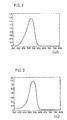
- Figure 1 is a visible-band absorption spectrum of the dicyanoimidazole compound derivative obtained in Preparation Example 1 (Example Compound 1).
- Figure 2 is a visible-band absorption spectrum of the dicyanoimidazole compound derivative obtained in Preparation Example 2 (Example Compound 8).
- the alkyl groups (C1 -C12), alkoxyalkyl groups (C3 -C12) and hydroxyalkyl groups represented by R1 and R2, the lower alkoxy group represented by X, the alkyl (C1 -C8) carbonylamino group, alkyl (C1 -C8) sulfonylamino group and alkoxy (C1 -C8) carbonylamino group represented by Y may be branched.
- Examples of such groups include methyl, ethyl, butyl, isoamyl, octyl, 2-ethylhexyl, nonyl, dodecyl, methoxyethyl, ethoxyethyl, hexyloxyethyl, ⁇ -hydroxyethyl, 3 -hydroxybutyl, methoxy, ethoxy, isopropoxy, sec-butoxy, ethylcarbonylamino, methylsulfonylamino and ethoxycarbonylamino.
- the aralkyl group and aryl group represented by R1 and R2 may be substituted with a phenyl group, halogen atom, lower alkyl group, lower alkoxy group or another substituent.
- aralkyl or aryl groups include benzyl, phenylethyl, methylbenzyl, 2-(4-fluorophenyl)ethyl, 2-(4-methylphenyl)ethyl, naphthylmethyl, phenyl, methoxyphenyl, tolyl, xylyl, biphenylyl and naphthyl.
- 2-amino-4,5-dicyanoimidazole represented by the formula (a) is diazotized by a standard method, followed by coupling with an aniline represented by the formula (b) wherein X, Y, R1 and R2 have the same definitions as above, to yield a known dicyanoimidazole compound represented by the formula (c) wherein X, Y, R1 and R2 have the same definitions as above.
- the compound of the formula (c) is reacted with any one of the compounds represented by the formulas (d) through (h) given below in the presence of potassium carbonate or another neutralizing agent in an organic solvent (e.g., dimethylformamide, acetone, methyl ethyl ketone) to yield the desired product.
- an organic solvent e.g., dimethylformamide, acetone, methyl ethyl ketone
- the compound which forms the linkage chain (-Q-) is exemplified by the compounds represented by the following formulas (d) through (h).
- Z-(CR2) n -Z (d) wherein Z represents a halogen atom; n represents an integer of 1 to 12, preferably 2 to 6; R independently represents hydrogen atom or alkyl group which may be branched. wherein Z has the same definition as above.
- Z-CH CH-Z (f) wherein Z has the same definition as above.
- Z-CH2CH CHCH2-Z (g) wherein Z has the same definition as above.
- Z-CH2-CH CH-Z (h) wherein Z has the same definition as above.
- the magenta toner for color electrophotography of the present invention contains as a coloring agent at least one kind of the dicyanoimidazole compound derivative represented by the formula [I] above, and it is preferable that it incorporate at least a substantially colorless binder resin and charge control agent.
- the color toner of the present invention can incorporate almost any one of the conventional known binder resins for toner.
- binder resins for toner.
- properties such as transparency, substantial freedom of color (i.e., absence of color or presence of a color such that toner images do not undergo tone deterioration), capability of dissolving the dicyanoimidazole compound derivative of the present invention, positive or negative chargeability as such or by the addition of a charge control agent, fluidity under appropriate heating or pressurizing conditions, and pulverizability.
- resins which can serve well as described above include polystyrene resin, acryl and acrylic resins, styrene (meth)acrylate copolymer, and polyester resin.
- Other usable resins include epoxy resin, polyamide resin, polyvinylal resin, polyethylene resin, polypropylene resin and polyolefin. These resins may be used singly or in blend of several kinds.
- the color toner of the present invention may contain a charge control agent for the purpose of improving its triboelectrical chargeability.
- the charge control agent is preferably substantially colorless.
- substantially colorless means the absence of color or a color such that toner images do not undergo tone deterioration.
- Examples of preferably usable charge control agents include those for imparting negative charge such as metal complexes of aromatic o-oxycarboxylic acid, e.g., chromium complex, zinc complex or aluminum complex of alkyl-substituted salicylic acid, or chromium complex, zinc complex or aluminum complex of oxynaphthoic acid, and metal complexes of aromatic dicarboxylic acid such as chromium complex or zinc complex thereof.
- Examples of those which impart positive charge include quaternary ammonium compounds and polyamine resin.
- a coloring agent for toner of the present invention it is preferable to add a dicyanoimidazole compound derivative represented by the formula [I] in a ratio of 0.5 to 10 parts by weight, more preferably 1 to 5 parts by weight, per 100 parts by weight of binder resin.
- the toner of the present invention may incorporate one or more other coloring agents as long as they do not interfere with the purpose or effect thereof.
- the charge control agent is preferably added in a ratio of 0.1 to 10 parts by weight, more preferably 0.5 to 5 parts by weight, per 100 parts by weight of toner resin.
- additives other than the charge control agent such as a fluidity improving agent and image peeling preventing agent.
- magenta toner for color electrophotography of the present invention is, for example, produced as follows:
- a toner of 5 to 20 ⁇ m in average particle size can be obtained by thoroughly mixing the dicyanoimidazole compound derivative of the present invention, a binder resin, a charge control agent and, if necessary, a magnetic material, a fluidizing agent and other additives using a ball mill or another mechanical mixer, subsequently kneading the mixture in a molten state using a hot kneader such as a heat roll, kneader or extruder, cooling and solidifying the mixture, followed by pulverization and classification.
- a hot kneader such as a heat roll, kneader or extruder
- Other usable methods include the method in which the starting material is dispersed in a binder resin solution and then spray drying the dispersion, and the polymerizing toner production method in which a given set of materials are mixed in a monomer for binder resin to yield an emulsified suspension and then polymerizing it to yield the desired toner.
- the toner of the present invention When using the toner of the present invention as a two-component developer, the toner is used in mixture with carrier powder and developed by the two-component magnetic brush developing process, etc.
- any known carrier can be used.
- the carrier include iron powder, nickel powder, ferrite powder, and glass beads of 50 to 200 ⁇ m in particle size, and such materials as coated with acrylate copolymer, styrene-acrylate copolymer, styrene-methacrylate copolymer, silicon resin, polyamide resin, ethylene fluoride resin, or the like.
- the toner of the present invention When using the toner of the present invention as a single-component developer, a small amount of finely divided magnetic powder of iron, nickel, ferrite or the like is added and dispersed upon preparing the toner as described above. Examples of developing processes which can be used in this case include contact development and jumping development.
- the colored resin of the present invention comprises at least one kind of the dicyanoimidazole compound derivative represented by the formula [I] above in solution, the colored resin constituting resin being exemplified by thermoplastic resins such as styrene resin, acryl resin, styrene-acryl copolymer, polycarbonate, polyamide, polybutylene terephthalate, polyethylene, polypropylene and polyacetal, and thermosetting resins such as polyester, polyurethane and phenol resin.
- thermoplastic resins such as styrene resin, acryl resin, styrene-acryl copolymer, polycarbonate, polyamide, polybutylene terephthalate, polyethylene, polypropylene and polyacetal
- thermosetting resins such as polyester, polyurethane and phenol resin.
- the colored resin of the present invention can, for example, be produced by kneading in a molten state the compound derivative of the present invention, represented by the formula [I].
- the compound derivative of the present invention is normally compounded at 0.1 to 1% by weight to the resin. Molding can be achieved by a known means such as injection molding.
- the colored resin of the present invention can be used in combination with one or more other coloring agents as long as they do not interfere with the purpose or effect thereof.
- the colored molded resin member of the present invention has been dyed with at least one kind of the dicyanoimidazole compound derivative represented by the formula [I], and examples of the resin constituting said colored molded resin member include the same as mentioned for the colored resin described above.
- This colored molded resin member can be obtained by dyeing a molded resin with the compound derivative of the present invention by transfer, printing, sublimational deposition or other means.
- a mode of the resin color filter of the present invention comprises at least one kind of the dicyanoimidazole compound derivative represented by the formula [I] in solution, and another mode of the resin color filter of the present invention has been dyed with at least one kind of the dicyanoimidazole compound derivative represented by the formula [I].
- Examples of the resin constituting these color filters include the same as mentioned for the colored resin described above.
- These color filters of resin can, for example, be produced by the method described in Japanese Patent Publication Open to Public Inspection No. 278569/1989 or another method in accordance therewith. Accordingly, examples of such methods include the method in which a dye is mixed with resin and solvent, followed by kneading to yield an ink, which is then used to dye a dyeable plastic base plate of polyester, polyamide, acryl resin or the like, the method in which a dye is kneaded in resin, followed by sheet molding, the method in which a synthetic resin film is dyed in a solvent such as ethylene glycol, and the method in which an ink composition is applied on paper etc. and dyeing a resin plate by transfer.
- Example Compound 1 listed in Table 1 below This compound had a melting point of 256 to 257 °C. Its visible-band absorption spectrum is as shown in Figure 1, with a maximum absorption ⁇ max of 530 nm. In Figures 1 and 2, the abscissa indicates wavelength and the ordinate indicates absorbance.
- Example Compounds 2 through 7 and 9 through 36 were obtained.
- Table 1 the figures in the column for ⁇ max show the visible absorption maxima of respective Example Compounds.
- magenta toner for color electrophotography of the present invention and the actual imaging performance of developers incorporating said toner will be explained by means of Examples 1 through 5 below.
- the above ingredients were uniformly pre-mixed using a high-speed mixer, and then kneaded in a molten state using an extruder, cooled, and roughly milled in a vibration mill.
- the obtained coarse product was pulverized using an air jet mill equipped with a classifier to obtain fine powder of 5 to 20 ⁇ m in particle size.
- To this powder 1% by weight of colloidal silica was added to yield a toner.
- This developer was found to be -20.1 ⁇ C/g in the amount of initial blowoff charges.
- the amounts of initial blowoff charges of this developer under low-temperature low-humidity conditions (5°C , 30% relative humidity) and high-temperature high-humidity conditions (35°C , 90% relative humidity) were -20.3 ⁇ C/g and -20.5 ⁇ C/g, respectively, indicating very high stability.
- Example 2 The above ingredients were treated in the same manner as in Example 1 to yield a toner. Three parts of the obtained toner were admixed with 97 parts of iron powder carrier [TEFV200/300 (trade name), produced by Nippon Teppun Co., Ltd.] to yield a developer. This developer was found to be -22.7 ⁇ C/g in the amount of initial blowoff charges.
- This developer was used on a sheet for OHP to form toner images.
- the sheet was used for OHP to obtain distinct magenta images on screen.
- Example 2 The above ingredients were treated in the same manner as in Example 1 to yield a toner. Three parts of the obtained toner were admixed with 97 parts of iron powder carrier [TEFV200/300 (trade name), produced by Nippon Teppun Co., Ltd.] to yield a developer. This developer was found to be -20.5 ⁇ C/g in the amount of initial blowoff charges.
- Example 2 The above ingredients were treated in the same manner as in Example 1 to yield a toner. Three parts of the obtained toner was admixed with 97 parts of iron powder carrier [TEFV200/300 (trade name), produced by Nippon Teppun Co., Ltd.] to yield a developer. This developer was found to be +22.2 ⁇ C/g in the amount of initial blowoff charges.
- a toner was prepared and used to form copied images in the same manner as in Example 1 except that the dicyanoimidazole compound derivative according to the present invention (Example Compound 1) was replaced with the compound (A) shown in Preparation Example 1.
- the initially obtained copied images had a distinct magenta color, but repeated copying for a long period resulted in uneven copying with color density degradation and staining.
- the obtained copies had a color fastness to light of grade 5, lower by 2 grades than in Example 1.
- the colored resin of the present invention will be described in more detail by means of Examples 6 and 7 below.
- Example Compound 1 as coloring agent were placed in a stainless steel tumbler and mixed thoroughly with stirring for 1 hour. This mixture was kneaded in a molten state at 200 °C using a vent-type extruder and pelletized by a standard method to yield colored pellets.
- Example Compound 1 well endured the heat during kneading in a molten state and molding, giving a red molded plate with excellent transparency.
- the color fastness to light of this molded plate was found to be of grade 7, and its bleeding resistance was of grade 5.
- the bleeding resistance was determined by leaving the test plate at 120 °C for 24 hours while keeping the test plate under a load of 1.96 N/cm (200 g/cm) between two uncolored molded plates of the same material as the test plate, and then evaluating the degree of staining onto the uncolored molded plates using a grey scale (Japanese Industrial Standard JIS L0805). The same applies in Examples below.
- Example Compound 8 as coloring agent were placed in a stainless steel tumbler and mixed thoroughly with stirring for 1 hour. This mixture was kneaded in a molten state at 210 °C using a vent-type extruder and pelletized by a standard method to yield colored pellets. When these pellets were treated in the same manner as in Example 6, Example Compound 8 well endured heat during kneading in a molten state and molding, giving a red molded plate with excellent transparency. This molded plate was found to be good in color fastness to light at grade 7 and bleeding resistance at grade 5.
- Example Compound 1 used in Example 6 was replaced with 0.125 g of the compound (A) shown in Preparation Example 1.
- This molded plate was found to be of grade 5 in color fastness to light and grade 3 or 4 in bleeding resistance, lower by 2 grades and 1 to 2 grades, respectively, in comparison with Example 6.
- the resin color filter of the present invention will be hereafter described in more detail by means of Examples 8 and 9.
- a sheet of transfer paper prepared from 2 g of Example Compound 1, 10 g of Pyronal MD1200 [(trade name), produced by Toyobo Corporation] and 1 g of silica gel, was placed, followed by calendering at 200°C to yield a red filter as a result of dyeing the molded plate.
- This filter was found to be of grade 7 in color fastness to light and of grade 5 in bleeding resistance. Its spectral transmittance also was good.
- Example Compound 11 5 g of polyester film and 2 g of Example Compound 11 were placed into 1000 g of ethylene glycol, and the polyester film was dyed at 120°C for 90 minutes to yield a red filter.
- This filter was found to be of grade 6 to 7 in color fastness to light and of grade 5 in bleeding resistance. Its spectral transmittance also was good.
- Example Compound 11 used in Example 9 was replaced with 1 g of a monoazo compound represented by the structural formula given below.
- This red filter was found to be of grade 5 in color fastness to light and of grade 3 in bleeding resistance, lower by 1 to 2 grades and 2 grades, respectively, in comparison with Example 9.
Landscapes
- Chemical & Material Sciences (AREA)
- Organic Chemistry (AREA)
- Physics & Mathematics (AREA)
- General Physics & Mathematics (AREA)
- Developing Agents For Electrophotography (AREA)
- Optical Filters (AREA)
- Compositions Of Macromolecular Compounds (AREA)
- Nitrogen Condensed Heterocyclic Rings (AREA)
Claims (11)
- Dicyanoimidazolderivat dargestellt durch die Formel (I),


- Magentatoner für Farbelektrofotografie enthaltend mindestens ein Binderharz, einen Farbstoff und eine zur Ladungssteuerung wirksame Menge eines Ladungssteuerungsmittels, wobei mindestens eine Art des Dicyamoimidazolderivats nach Anspruch 1 als Farbstoff enthalten ist, und das Binderharz und das Ladungssteuerungsmittel im wesentlichen farblos sind.
- Magentatoner zur Farbelektrofotografie nach Anspruch 2, wobei das Ladungssteuerungsmittel ein Metallkomplex einer aromatischen o-Oxycarbonsäure oder ein Metallkomplex einer aromatischen Dicarbonsäure ist.
- Magentatoner zur Farbelektrofotografie nach Anspruch 2, wobei das Ladungssteuerungsmittel eine quarternäre Ammoniumverbindung oder ein Polyaminharz ist.
- Magentatoner für die Farbelektrofotografie nach Anspruch 2, wobei das Binderharz eine oder mehrere Arten von Harz ist, ausgewählt aus der Gruppe bestehend aus Polystyrolharz, Acryl und Acrylharze, Styrol-(meth)Acrylatcopolymer, Polyesterharz, Epoxyharz, Polyamidharz, Polyvinylalharz, Polyethylenharz, Polypropylenharz und Polyolefin.
- Magentatoner zur Farbelektrofotografie nach Anspruch 2, beinhaltend mindestens eine Art des Dicyanoimidazolderivats nach Anspruch 1 als Farbstoff und ein Ladungssteuerungsmittel in einer Menge von 0,5 bis 10 Gewichtsteilen bzw. 0,1 bis 10 Gewichtsteilen pro 100 Gewichtsteile des Binderharzes.
- Gefärbtes thermoplastisches Harz ausgewählt aus der Gruppe bestehend aus Styrolharz, Acrylharz, Styrolacrylcopolymer, Polycarbonat, Polyamid, Polybutylenterephthalat, Polyethylen, Polypropylen und Polyacetal oder gefärbte in Wärme aushärtende Harze ausgewählt aus der Gruppe bestehend aus Polyester, Polyurethan und Phenolharz, enthaltend mindestens eine Art des Dicyanoimidazolderivats nach Anspruch 1 in Lösung.
- Gefärbtes Harz nach Anspruch 7 beinhaltend mindestens eine Art des Dicyanoimidazolderivats nach Anspruch 1 in einer Menge von 0,1 bis 10 Gew.% des Harzes.
- Geformtes Element aus gefärbtem Harz, wobei das Harz, das das geformte Element aus Harz bildet, ein Harz ist ausgewählt aus der Gruppe bestehend aus Styrolharz, Acrylharz, Styrol-Acryl-Copolymer, Polycarbonat, Polyamid, Polybutylenterephthalat, Polyethylen, Polypropylen, Polyacetal, Polyester, Polyurethan und Phenolharz, gefärbt mit mindestens einer Art des Dicyanoimidazolderivats nach Anspruch 1.
- Harzfarbfilter mit einem Harz, ausgewählt aus der Gruppe bestehend aus Styrolharz, Acrylharz, Styrol-Acryl-Copolymer, Polycarbonat, Polyamid, Polybutylenterephthalat, Polyethylen, Polypropylen, Polyacetal, Polyester, Polyurethan und Phenolharz, enthaltend mindestens einer Art des Dicyanoimidazolderivats nach Anspruch 1 in Lösung.
- Harzfarbfilter mit einem Harz ausgewählt aus der Gruppe bestehend aus Styrolharz, Acrylharz, Styrol-Acryl-Copolymer, Polycarbonat, Polyamid, Polybutylenterephthalat, Polyethylen, Polypropylen, Polyacetal, Polyester, Polyurethan und Phenolharz gefärbt mit mindestens einer Art des Dicyanoimidazolderivats nach Anspruch 1.
Applications Claiming Priority (2)
| Application Number | Priority Date | Filing Date | Title |
|---|---|---|---|
| JP24850/90 | 1990-02-03 | ||
| JP2024850A JP2759697B2 (ja) | 1990-02-03 | 1990-02-03 | ジシアノイミダゾール系色素誘導体及びその関連技術 |
Publications (3)
| Publication Number | Publication Date |
|---|---|
| EP0441255A2 EP0441255A2 (de) | 1991-08-14 |
| EP0441255A3 EP0441255A3 (en) | 1992-02-26 |
| EP0441255B1 true EP0441255B1 (de) | 1996-05-01 |
Family
ID=12149692
Family Applications (1)
| Application Number | Title | Priority Date | Filing Date |
|---|---|---|---|
| EP91101353A Expired - Lifetime EP0441255B1 (de) | 1990-02-03 | 1991-02-01 | Dicyanoimidazolderivat, Magentatoner, gefärbtes Harz, geformtes Element aus gefärbtem Harz und dieses Element umfassender Farbfilter |
Country Status (4)
| Country | Link |
|---|---|
| US (2) | US5233028A (de) |
| EP (1) | EP0441255B1 (de) |
| JP (1) | JP2759697B2 (de) |
| DE (1) | DE69119106T2 (de) |
Families Citing this family (23)
| Publication number | Priority date | Publication date | Assignee | Title |
|---|---|---|---|---|
| US5482545A (en) * | 1993-12-28 | 1996-01-09 | Canon Kabushiki Kaisha | Ink, and ink-jet recording method and instrument using the same |
| US5437953A (en) * | 1994-03-18 | 1995-08-01 | Hewlett-Packard Company | Dye-polymer toners for electrophotography |
| EP0823927A2 (de) * | 1995-05-01 | 1998-02-18 | Zeneca Limited | Tintenzusammensetzung |
| GB9508810D0 (en) * | 1995-05-01 | 1995-06-21 | Zeneca Ltd | Compounds |
| DE19623565C2 (de) * | 1996-06-13 | 2000-12-14 | Clariant Gmbh | Toner für elektrophotographische Entwickler, enthaltend ein Azomagentapigment |
| US6159649A (en) * | 1996-06-13 | 2000-12-12 | Clariant Gmbh | Electrophotographic, resin-containing, electret, or inkjet compositions containing magenta azo pigment and use thereof |
| US6225023B1 (en) * | 1996-11-20 | 2001-05-01 | Mitsubishi Chemical Corporation | Sulfonamide compound and method for its production, metal chelate compound employing the sulfonamide compound, and optical recording medium employing the metal chelate compound |
| CN1245516A (zh) | 1996-11-27 | 2000-02-23 | 伊斯曼化学公司 | 制备吸光聚合物组合物的方法 |
| US5935383A (en) * | 1996-12-04 | 1999-08-10 | Kimberly-Clark Worldwide, Inc. | Method for improved wet strength paper |
| US6001524A (en) * | 1998-03-19 | 1999-12-14 | Hna Holdings, Inc. | Toner particles for electrophotographic imaging applications |
| TW554013B (en) * | 1999-05-25 | 2003-09-21 | Mitsui Chemicals Inc | Aqueous ink for ink jet recording |
| US6387583B1 (en) | 1999-12-09 | 2002-05-14 | Matsci Solutions, Inc. | Method of producing toner for developing latent electrostatic images by way of dispersion dyeing |
| US6287742B1 (en) | 2000-05-16 | 2001-09-11 | Matsci Solutions, Inc. | Toner compositions and method of producing toner for developing latent electrostatic images |
| US6780368B2 (en) | 2001-04-10 | 2004-08-24 | Nanotek Instruments, Inc. | Layer manufacturing of a multi-material or multi-color 3-D object using electrostatic imaging and lamination |
| US6461783B1 (en) | 2001-05-18 | 2002-10-08 | Dpi Solutions, Inc. | Micro-serrated color toner particles and method of making same |
| US6544705B2 (en) | 2001-05-18 | 2003-04-08 | Dpi Solutions, Inc. | Micro-serrated, dyed color toner particles and method of making same |
| US6531255B2 (en) | 2001-05-18 | 2003-03-11 | Dpi Solutions, Inc. | Micro-serrated particles for use in color toner and method of making same |
| US6878196B2 (en) | 2002-01-15 | 2005-04-12 | Fuji Photo Film Co., Ltd. | Ink, ink jet recording method and azo compound |
| US6923855B2 (en) | 2002-08-06 | 2005-08-02 | Fuji Photo Film Co., Ltd. | Ink, ink-jet-recording method and bis-azo compound |
| KR100481466B1 (ko) * | 2003-05-14 | 2005-04-07 | 주식회사 디피아이 솔루션스 | 정전 잠상 현상용 토너 조성물, 이의 제조방법 및 이를포함하는 정전 잠상 현상제 조성물 |
| US7399566B2 (en) * | 2005-01-18 | 2008-07-15 | Milliken & Company | Color toner and developer compositions and processes for making and using such compositions |
| EP2642343B1 (de) * | 2007-02-02 | 2015-10-07 | Canon Kabushiki Kaisha | Magenta Toner und Vielfarben-Bilderzeugungsverfahren |
| WO2017192444A1 (en) | 2016-05-03 | 2017-11-09 | Jp Laboratories | A time-temperature indicator based on increased thermal reactivity of a diacetylene upon melt recrystallization |
Family Cites Families (10)
| Publication number | Priority date | Publication date | Assignee | Title |
|---|---|---|---|---|
| GB1213995A (en) * | 1967-09-29 | 1970-11-25 | Ici Ltd | Azo colouring matters containing imide groups |
| US4097475A (en) * | 1974-04-03 | 1978-06-27 | E. I. Du Pont De Nemours And Company | Disperse mono- and bisazo dyes derived from 2-amino-4,5-dicyanoimidazole |
| JPS53134974A (en) * | 1977-04-22 | 1978-11-25 | Mitsubishi Chem Ind | Transfer printing |
| CH632291A5 (de) * | 1978-01-10 | 1982-09-30 | Sandoz Ag | Organische azoverbindungen. |
| US4313731A (en) * | 1980-09-12 | 1982-02-02 | Mitsubishi Chemical Industries Limited | Mono-azo compound, mono-azo dye and dyeing process for polyester fibers |
| JPS57109859A (en) * | 1980-12-26 | 1982-07-08 | Mitsubishi Chem Ind Ltd | Monoazo dye for synthetic fiber |
| JPS5919947A (ja) * | 1982-07-26 | 1984-02-01 | Konishiroku Photo Ind Co Ltd | 感光体 |
| JPS6018549A (ja) * | 1983-07-12 | 1985-01-30 | Mitsubishi Chem Ind Ltd | モノアゾ化合物及び反応型モノアゾ染料 |
| DE3424899A1 (de) * | 1984-07-06 | 1986-02-06 | Agfa-Gevaert Ag, 5090 Leverkusen | Farbfotografisches aufzeichnungsmaterial |
| DE3600387A1 (de) * | 1985-08-08 | 1987-02-12 | Bayer Ag | Herstellung von illustrationstiefdruckfarben |
-
1990
- 1990-02-03 JP JP2024850A patent/JP2759697B2/ja not_active Expired - Fee Related
-
1991
- 1991-02-01 EP EP91101353A patent/EP0441255B1/de not_active Expired - Lifetime
- 1991-02-01 US US07/649,759 patent/US5233028A/en not_active Expired - Fee Related
- 1991-02-01 DE DE69119106T patent/DE69119106T2/de not_active Expired - Fee Related
-
1992
- 1992-10-27 US US07/967,178 patent/US5296325A/en not_active Expired - Fee Related
Also Published As
| Publication number | Publication date |
|---|---|
| US5296325A (en) | 1994-03-22 |
| DE69119106D1 (de) | 1996-06-05 |
| JP2759697B2 (ja) | 1998-05-28 |
| JPH03229764A (ja) | 1991-10-11 |
| EP0441255A3 (en) | 1992-02-26 |
| US5233028A (en) | 1993-08-03 |
| DE69119106T2 (de) | 1996-12-19 |
| EP0441255A2 (de) | 1991-08-14 |
Similar Documents
| Publication | Publication Date | Title |
|---|---|---|
| US5233028A (en) | Dicyanoimidazole compound derivative, and magenta toner, for colored resin, colored molded resin member and a color filter incorporating it | |
| US4433040A (en) | Electrophotographic toner containing a metal complex dye | |
| EP0712049B1 (de) | Calixarene als Ladungsstabilisatoren und Toner | |
| JP2584450B2 (ja) | ロ−ダミンエステル染料を含むエレクトロスコピックトナ−とそれ用の消去染料 | |
| WO1995000885A1 (en) | Composition | |
| US6110634A (en) | Electrophotographic toner | |
| US5952145A (en) | Calix arene charge control agent and toner for developing electrostatic images | |
| KR910006738B1 (ko) | 마젠타계 칼라 토너 조성물 | |
| KR100278335B1 (ko) | 전하 제어제 조성물 및 그 조성물을 함유하는 토너 | |
| EP0579207A1 (de) | Ladungskontrollmittel und positiv aufladbarer Toner zur Entwicklung elektrostatischer Bilder | |
| EP0490253A2 (de) | Magenta-Toner für die Entwicklung elektrostatischer Bilder | |
| US5254420A (en) | Magenta toner for developing electrostatic images, colored resin, colored molded resin member and color filter | |
| JP2841100B2 (ja) | トナー及びカラーフィルタ | |
| US5853929A (en) | Trichromatic set of colored toners | |
| US5679489A (en) | Electrostatic image developing toner | |
| JPH0659510A (ja) | 後染色型イエロー色カラートナー用色素及びカラートナー | |
| JP2644300B2 (ja) | イエロー系カラートナー組成物 | |
| JPH0667467A (ja) | 後染色型カラートナー用色素及びカラートナー | |
| KR0185676B1 (ko) | 전하 제어제로서 아연 벤조에이트 화합물을 함유한 전자사진용 토너 | |
| US5368971A (en) | Electrophotographic toner containing a zinc benzoate compound | |
| JPH0667466A (ja) | 後染色型カラートナー用色素及びカラートナー | |
| JPH0762113B2 (ja) | 金属錯塩化合物および電子写真用トナ− | |
| JPH0248676A (ja) | イエロー系カラートナー組成物 | |
| JPH07209912A (ja) | マゼンタ色系カラートナー用色素及び組成物 | |
| EP0341842A2 (de) | Isopropyl-1-amino-4-m-toluidinanthrachinon-2-carboxylat und diese Verbindung enthaltende Cyanzusammensetzungen für Aufzeichnung durch Sublimationsübertragung und Farbtoner |
Legal Events
| Date | Code | Title | Description |
|---|---|---|---|
| PUAI | Public reference made under article 153(3) epc to a published international application that has entered the european phase |
Free format text: ORIGINAL CODE: 0009012 |
|
| AK | Designated contracting states |
Kind code of ref document: A2 Designated state(s): CH DE FR GB LI |
|
| PUAL | Search report despatched |
Free format text: ORIGINAL CODE: 0009013 |
|
| AK | Designated contracting states |
Kind code of ref document: A3 Designated state(s): CH DE FR GB LI |
|
| 17P | Request for examination filed |
Effective date: 19920506 |
|
| 17Q | First examination report despatched |
Effective date: 19950224 |
|
| GRAH | Despatch of communication of intention to grant a patent |
Free format text: ORIGINAL CODE: EPIDOS IGRA |
|
| GRAA | (expected) grant |
Free format text: ORIGINAL CODE: 0009210 |
|
| AK | Designated contracting states |
Kind code of ref document: B1 Designated state(s): CH DE FR GB LI |
|
| REF | Corresponds to: |
Ref document number: 69119106 Country of ref document: DE Date of ref document: 19960605 |
|
| ET | Fr: translation filed | ||
| PLBE | No opposition filed within time limit |
Free format text: ORIGINAL CODE: 0009261 |
|
| STAA | Information on the status of an ep patent application or granted ep patent |
Free format text: STATUS: NO OPPOSITION FILED WITHIN TIME LIMIT |
|
| 26N | No opposition filed | ||
| PGFP | Annual fee paid to national office [announced via postgrant information from national office to epo] |
Ref country code: GB Payment date: 19990105 Year of fee payment: 9 |
|
| PGFP | Annual fee paid to national office [announced via postgrant information from national office to epo] |
Ref country code: FR Payment date: 19990127 Year of fee payment: 9 |
|
| PGFP | Annual fee paid to national office [announced via postgrant information from national office to epo] |
Ref country code: CH Payment date: 19990211 Year of fee payment: 9 |
|
| PGFP | Annual fee paid to national office [announced via postgrant information from national office to epo] |
Ref country code: DE Payment date: 19990226 Year of fee payment: 9 |
|
| PG25 | Lapsed in a contracting state [announced via postgrant information from national office to epo] |
Ref country code: GB Free format text: LAPSE BECAUSE OF NON-PAYMENT OF DUE FEES Effective date: 20000201 |
|
| PG25 | Lapsed in a contracting state [announced via postgrant information from national office to epo] |
Ref country code: LI Free format text: LAPSE BECAUSE OF NON-PAYMENT OF DUE FEES Effective date: 20000229 Ref country code: CH Free format text: LAPSE BECAUSE OF NON-PAYMENT OF DUE FEES Effective date: 20000229 |
|
| GBPC | Gb: european patent ceased through non-payment of renewal fee |
Effective date: 20000201 |
|
| REG | Reference to a national code |
Ref country code: CH Ref legal event code: PL |
|
| PG25 | Lapsed in a contracting state [announced via postgrant information from national office to epo] |
Ref country code: FR Free format text: LAPSE BECAUSE OF NON-PAYMENT OF DUE FEES Effective date: 20001031 |
|
| PG25 | Lapsed in a contracting state [announced via postgrant information from national office to epo] |
Ref country code: DE Free format text: LAPSE BECAUSE OF NON-PAYMENT OF DUE FEES Effective date: 20001201 |
|
| REG | Reference to a national code |
Ref country code: FR Ref legal event code: ST |