EP0454781B1 - Cellules de recombinaison pour des therapies d'infections et de troubles hyperproliferatifs et la preparation de ces cellules - Google Patents
Cellules de recombinaison pour des therapies d'infections et de troubles hyperproliferatifs et la preparation de ces cellules Download PDFInfo
- Publication number
- EP0454781B1 EP0454781B1 EP90902891A EP90902891A EP0454781B1 EP 0454781 B1 EP0454781 B1 EP 0454781B1 EP 90902891 A EP90902891 A EP 90902891A EP 90902891 A EP90902891 A EP 90902891A EP 0454781 B1 EP0454781 B1 EP 0454781B1
- Authority
- EP
- European Patent Office
- Prior art keywords
- construct
- acting
- cis
- hiv
- sequence
- Prior art date
- Legal status (The legal status is an assumption and is not a legal conclusion. Google has not performed a legal analysis and makes no representation as to the accuracy of the status listed.)
- Expired - Lifetime
Links
- 208000037265 diseases, disorders, signs and symptoms Diseases 0.000 title claims abstract description 40
- 208000015181 infectious disease Diseases 0.000 title claims abstract description 38
- 230000003463 hyperproliferative effect Effects 0.000 title claims abstract description 32
- 238000002560 therapeutic procedure Methods 0.000 title claims description 7
- 238000002360 preparation method Methods 0.000 title description 5
- 108090000623 proteins and genes Proteins 0.000 claims abstract description 133
- 230000014509 gene expression Effects 0.000 claims abstract description 76
- 230000001105 regulatory effect Effects 0.000 claims abstract description 72
- 239000012636 effector Substances 0.000 claims abstract description 61
- 108091023040 Transcription factor Proteins 0.000 claims abstract description 42
- 108091033319 polynucleotide Proteins 0.000 claims abstract description 26
- 102000040430 polynucleotide Human genes 0.000 claims abstract description 26
- 239000002157 polynucleotide Substances 0.000 claims abstract description 26
- 238000011282 treatment Methods 0.000 claims abstract description 18
- 230000006378 damage Effects 0.000 claims abstract description 13
- 108010070875 Human Immunodeficiency Virus tat Gene Products Proteins 0.000 claims abstract description 10
- 210000004027 cell Anatomy 0.000 claims description 156
- 239000013598 vector Substances 0.000 claims description 114
- 230000001177 retroviral effect Effects 0.000 claims description 31
- 238000000034 method Methods 0.000 claims description 28
- 208000031886 HIV Infections Diseases 0.000 claims description 27
- 101710149951 Protein Tat Proteins 0.000 claims description 26
- 208000035475 disorder Diseases 0.000 claims description 23
- 230000003612 virological effect Effects 0.000 claims description 23
- 241000713772 Human immunodeficiency virus 1 Species 0.000 claims description 20
- 241000713340 Human immunodeficiency virus 2 Species 0.000 claims description 19
- 239000012678 infectious agent Substances 0.000 claims description 18
- 108020004414 DNA Proteins 0.000 claims description 17
- 102000004169 proteins and genes Human genes 0.000 claims description 16
- 241001430294 unidentified retrovirus Species 0.000 claims description 15
- 239000000203 mixture Substances 0.000 claims description 12
- 102000004127 Cytokines Human genes 0.000 claims description 11
- 108090000695 Cytokines Proteins 0.000 claims description 11
- 230000027455 binding Effects 0.000 claims description 11
- 108091026890 Coding region Proteins 0.000 claims description 10
- 108091092562 ribozyme Proteins 0.000 claims description 10
- 108090000994 Catalytic RNA Proteins 0.000 claims description 9
- 102000053642 Catalytic RNA Human genes 0.000 claims description 9
- 238000012423 maintenance Methods 0.000 claims description 8
- 102000008070 Interferon-gamma Human genes 0.000 claims description 7
- 108010074328 Interferon-gamma Proteins 0.000 claims description 7
- 201000010099 disease Diseases 0.000 claims description 7
- 229940044627 gamma-interferon Drugs 0.000 claims description 7
- 230000026731 phosphorylation Effects 0.000 claims description 7
- 238000006366 phosphorylation reaction Methods 0.000 claims description 7
- 102000006992 Interferon-alpha Human genes 0.000 claims description 5
- 108010047761 Interferon-alpha Proteins 0.000 claims description 5
- 102000003996 Interferon-beta Human genes 0.000 claims description 5
- 108090000467 Interferon-beta Proteins 0.000 claims description 5
- 108010002350 Interleukin-2 Proteins 0.000 claims description 5
- 102000000588 Interleukin-2 Human genes 0.000 claims description 5
- 102000006382 Ribonucleases Human genes 0.000 claims description 5
- 108010083644 Ribonucleases Proteins 0.000 claims description 5
- 239000002502 liposome Substances 0.000 claims description 5
- 210000004962 mammalian cell Anatomy 0.000 claims description 5
- 239000002245 particle Substances 0.000 claims description 5
- 102000004887 Transforming Growth Factor beta Human genes 0.000 claims description 4
- 108090001012 Transforming Growth Factor beta Proteins 0.000 claims description 4
- 230000013595 glycosylation Effects 0.000 claims description 4
- 238000006206 glycosylation reaction Methods 0.000 claims description 4
- ZRKFYGHZFMAOKI-QMGMOQQFSA-N tgfbeta Chemical compound C([C@H](NC(=O)[C@H](C(C)C)NC(=O)CNC(=O)[C@H](CCC(O)=O)NC(=O)[C@H](CCCNC(N)=N)NC(=O)[C@H](CC(N)=O)NC(=O)[C@H](CC(C)C)NC(=O)[C@H]([C@@H](C)O)NC(=O)[C@H](CCC(O)=O)NC(=O)[C@H]([C@@H](C)O)NC(=O)[C@H](CC(C)C)NC(=O)CNC(=O)[C@H](C)NC(=O)[C@H](CO)NC(=O)[C@H](CCC(N)=O)NC(=O)[C@@H](NC(=O)[C@H](C)NC(=O)[C@H](C)NC(=O)[C@@H](NC(=O)[C@H](CC(C)C)NC(=O)[C@@H](N)CCSC)C(C)C)[C@@H](C)CC)C(=O)N[C@@H]([C@@H](C)O)C(=O)N[C@@H](C(C)C)C(=O)N[C@@H](CC=1C=CC=CC=1)C(=O)N[C@@H](C)C(=O)N1[C@@H](CCC1)C(=O)N[C@@H]([C@@H](C)O)C(=O)N[C@@H](CC(N)=O)C(=O)N[C@@H](CCC(O)=O)C(=O)N[C@@H](C)C(=O)N[C@@H](CC=1C=CC=CC=1)C(=O)N[C@@H](CCCNC(N)=N)C(=O)N[C@@H](C)C(=O)N[C@@H](CC(C)C)C(=O)N1[C@@H](CCC1)C(=O)N1[C@@H](CCC1)C(=O)N[C@@H](CCCNC(N)=N)C(=O)N[C@@H](CCC(O)=O)C(=O)N[C@@H](CCCNC(N)=N)C(=O)N[C@@H](CO)C(=O)N[C@@H](CCCNC(N)=N)C(=O)N[C@@H](CC(C)C)C(=O)N[C@@H](CC(C)C)C(O)=O)C1=CC=C(O)C=C1 ZRKFYGHZFMAOKI-QMGMOQQFSA-N 0.000 claims description 4
- 230000009466 transformation Effects 0.000 claims description 4
- 108700007698 Genetic Terminator Regions Proteins 0.000 claims description 3
- 241000701161 unidentified adenovirus Species 0.000 claims description 3
- 241000702421 Dependoparvovirus Species 0.000 claims description 2
- 206010046865 Vaccinia virus infection Diseases 0.000 claims description 2
- 208000007089 vaccinia Diseases 0.000 claims description 2
- 239000003937 drug carrier Substances 0.000 claims 3
- 239000013603 viral vector Substances 0.000 claims 3
- 102000003886 Glycoproteins Human genes 0.000 claims 1
- 108090000288 Glycoproteins Proteins 0.000 claims 1
- 241001465754 Metazoa Species 0.000 claims 1
- 239000008194 pharmaceutical composition Substances 0.000 claims 1
- 241000700588 Human alphaherpesvirus 1 Species 0.000 abstract description 41
- 238000013518 transcription Methods 0.000 abstract description 18
- 230000035897 transcription Effects 0.000 abstract description 18
- 239000003795 chemical substances by application Substances 0.000 abstract description 7
- 108020004440 Thymidine kinase Proteins 0.000 abstract description 5
- 108010039491 Ricin Proteins 0.000 abstract description 4
- 102000006601 Thymidine Kinase Human genes 0.000 abstract description 4
- 229960004150 aciclovir Drugs 0.000 abstract description 3
- MKUXAQIIEYXACX-UHFFFAOYSA-N aciclovir Chemical compound N1C(N)=NC(=O)C2=C1N(COCCO)C=N2 MKUXAQIIEYXACX-UHFFFAOYSA-N 0.000 abstract description 3
- IRSCQMHQWWYFCW-UHFFFAOYSA-N ganciclovir Chemical compound O=C1NC(N)=NC2=C1N=CN2COC(CO)CO IRSCQMHQWWYFCW-UHFFFAOYSA-N 0.000 abstract description 3
- 229960002963 ganciclovir Drugs 0.000 abstract description 2
- 230000030833 cell death Effects 0.000 abstract 2
- 241000725303 Human immunodeficiency virus Species 0.000 description 33
- 241000700605 Viruses Species 0.000 description 30
- 239000013612 plasmid Substances 0.000 description 30
- 239000003550 marker Substances 0.000 description 23
- 238000004806 packaging method and process Methods 0.000 description 22
- 108091032973 (ribonucleotides)n+m Proteins 0.000 description 16
- 239000003623 enhancer Substances 0.000 description 15
- 108010035563 Chloramphenicol O-acetyltransferase Proteins 0.000 description 13
- 241000713869 Moloney murine leukemia virus Species 0.000 description 12
- 101150071065 Ddn gene Proteins 0.000 description 11
- 101150003725 TK gene Proteins 0.000 description 11
- 229930193140 Neomycin Natural products 0.000 description 10
- 229960004927 neomycin Drugs 0.000 description 10
- 230000008488 polyadenylation Effects 0.000 description 10
- 206010028980 Neoplasm Diseases 0.000 description 9
- 230000000694 effects Effects 0.000 description 9
- 239000012634 fragment Substances 0.000 description 9
- 230000001413 cellular effect Effects 0.000 description 8
- 238000010276 construction Methods 0.000 description 8
- 230000010354 integration Effects 0.000 description 8
- 239000000047 product Substances 0.000 description 8
- 230000010076 replication Effects 0.000 description 8
- 102000004190 Enzymes Human genes 0.000 description 7
- 108090000790 Enzymes Proteins 0.000 description 7
- 241000700584 Simplexvirus Species 0.000 description 7
- 210000001744 T-lymphocyte Anatomy 0.000 description 7
- 210000004698 lymphocyte Anatomy 0.000 description 7
- 210000002540 macrophage Anatomy 0.000 description 7
- 238000010561 standard procedure Methods 0.000 description 7
- 238000001890 transfection Methods 0.000 description 7
- 208000037357 HIV infectious disease Diseases 0.000 description 6
- 108010068250 Herpes Simplex Virus Protein Vmw65 Proteins 0.000 description 6
- 108010033040 Histones Proteins 0.000 description 6
- 241000598436 Human T-cell lymphotropic virus Species 0.000 description 6
- 241000699670 Mus sp. Species 0.000 description 6
- 102100036011 T-cell surface glycoprotein CD4 Human genes 0.000 description 6
- 210000002798 bone marrow cell Anatomy 0.000 description 6
- 238000012217 deletion Methods 0.000 description 6
- 230000037430 deletion Effects 0.000 description 6
- 208000033519 human immunodeficiency virus infectious disease Diseases 0.000 description 6
- 238000001727 in vivo Methods 0.000 description 6
- 230000005764 inhibitory process Effects 0.000 description 6
- 241000894006 Bacteria Species 0.000 description 5
- 241000701022 Cytomegalovirus Species 0.000 description 5
- 102000014150 Interferons Human genes 0.000 description 5
- 108010050904 Interferons Proteins 0.000 description 5
- 108700008625 Reporter Genes Proteins 0.000 description 5
- 239000003242 anti bacterial agent Substances 0.000 description 5
- 239000000427 antigen Substances 0.000 description 5
- 108091007433 antigens Proteins 0.000 description 5
- 102000036639 antigens Human genes 0.000 description 5
- 238000003556 assay Methods 0.000 description 5
- 201000011510 cancer Diseases 0.000 description 5
- 238000010367 cloning Methods 0.000 description 5
- 239000002299 complementary DNA Substances 0.000 description 5
- 238000009472 formulation Methods 0.000 description 5
- 108010027225 gag-pol Fusion Proteins Proteins 0.000 description 5
- 210000003958 hematopoietic stem cell Anatomy 0.000 description 5
- 210000000987 immune system Anatomy 0.000 description 5
- 230000002458 infectious effect Effects 0.000 description 5
- 150000002632 lipids Chemical class 0.000 description 5
- 108020004999 messenger RNA Proteins 0.000 description 5
- 230000001566 pro-viral effect Effects 0.000 description 5
- 210000001519 tissue Anatomy 0.000 description 5
- HBOMLICNUCNMMY-XLPZGREQSA-N zidovudine Chemical compound O=C1NC(=O)C(C)=CN1[C@@H]1O[C@H](CO)[C@@H](N=[N+]=[N-])C1 HBOMLICNUCNMMY-XLPZGREQSA-N 0.000 description 5
- DIGQNXIGRZPYDK-WKSCXVIASA-N (2R)-6-amino-2-[[2-[[(2S)-2-[[2-[[(2R)-2-[[(2S)-2-[[(2R,3S)-2-[[2-[[(2S)-2-[[2-[[(2S)-2-[[(2S)-2-[[(2R)-2-[[(2S,3S)-2-[[(2R)-2-[[(2S)-2-[[(2S)-2-[[(2S)-2-[[2-[[(2S)-2-[[(2R)-2-[[2-[[2-[[2-[(2-amino-1-hydroxyethylidene)amino]-3-carboxy-1-hydroxypropylidene]amino]-1-hydroxy-3-sulfanylpropylidene]amino]-1-hydroxyethylidene]amino]-1-hydroxy-3-sulfanylpropylidene]amino]-1,3-dihydroxypropylidene]amino]-1-hydroxyethylidene]amino]-1-hydroxypropylidene]amino]-1,3-dihydroxypropylidene]amino]-1,3-dihydroxypropylidene]amino]-1-hydroxy-3-sulfanylpropylidene]amino]-1,3-dihydroxybutylidene]amino]-1-hydroxy-3-sulfanylpropylidene]amino]-1-hydroxypropylidene]amino]-1,3-dihydroxypropylidene]amino]-1-hydroxyethylidene]amino]-1,5-dihydroxy-5-iminopentylidene]amino]-1-hydroxy-3-sulfanylpropylidene]amino]-1,3-dihydroxybutylidene]amino]-1-hydroxy-3-sulfanylpropylidene]amino]-1,3-dihydroxypropylidene]amino]-1-hydroxyethylidene]amino]-1-hydroxy-3-sulfanylpropylidene]amino]-1-hydroxyethylidene]amino]hexanoic acid Chemical compound C[C@@H]([C@@H](C(=N[C@@H](CS)C(=N[C@@H](C)C(=N[C@@H](CO)C(=NCC(=N[C@@H](CCC(=N)O)C(=NC(CS)C(=N[C@H]([C@H](C)O)C(=N[C@H](CS)C(=N[C@H](CO)C(=NCC(=N[C@H](CS)C(=NCC(=N[C@H](CCCCN)C(=O)O)O)O)O)O)O)O)O)O)O)O)O)O)O)N=C([C@H](CS)N=C([C@H](CO)N=C([C@H](CO)N=C([C@H](C)N=C(CN=C([C@H](CO)N=C([C@H](CS)N=C(CN=C(C(CS)N=C(C(CC(=O)O)N=C(CN)O)O)O)O)O)O)O)O)O)O)O)O DIGQNXIGRZPYDK-WKSCXVIASA-N 0.000 description 4
- 101000899111 Homo sapiens Hemoglobin subunit beta Proteins 0.000 description 4
- 102000003792 Metallothionein Human genes 0.000 description 4
- 108090000157 Metallothionein Proteins 0.000 description 4
- 108010067390 Viral Proteins Proteins 0.000 description 4
- 230000002950 deficient Effects 0.000 description 4
- 239000003814 drug Substances 0.000 description 4
- 229940079593 drug Drugs 0.000 description 4
- 230000006801 homologous recombination Effects 0.000 description 4
- 238000002744 homologous recombination Methods 0.000 description 4
- 239000002773 nucleotide Substances 0.000 description 4
- 125000003729 nucleotide group Chemical group 0.000 description 4
- 244000045947 parasite Species 0.000 description 4
- 230000023603 positive regulation of transcription initiation, DNA-dependent Effects 0.000 description 4
- 102000004196 processed proteins & peptides Human genes 0.000 description 4
- 108090000765 processed proteins & peptides Proteins 0.000 description 4
- 238000010839 reverse transcription Methods 0.000 description 4
- 230000008685 targeting Effects 0.000 description 4
- 230000002103 transcriptional effect Effects 0.000 description 4
- 208000030507 AIDS Diseases 0.000 description 3
- 208000032791 BCR-ABL1 positive chronic myelogenous leukemia Diseases 0.000 description 3
- 108010041397 CD4 Antigens Proteins 0.000 description 3
- 241000233866 Fungi Species 0.000 description 3
- 241000711549 Hepacivirus C Species 0.000 description 3
- 241000701024 Human betaherpesvirus 5 Species 0.000 description 3
- 241000701806 Human papillomavirus Species 0.000 description 3
- 241001529936 Murinae Species 0.000 description 3
- 241000714177 Murine leukemia virus Species 0.000 description 3
- 108010057466 NF-kappa B Proteins 0.000 description 3
- 102000003945 NF-kappa B Human genes 0.000 description 3
- 108700026244 Open Reading Frames Proteins 0.000 description 3
- 102000016387 Pancreatic elastase Human genes 0.000 description 3
- 108010067372 Pancreatic elastase Proteins 0.000 description 3
- 240000004808 Saccharomyces cerevisiae Species 0.000 description 3
- 108060008682 Tumor Necrosis Factor Proteins 0.000 description 3
- 108020000999 Viral RNA Proteins 0.000 description 3
- 208000036142 Viral infection Diseases 0.000 description 3
- 230000009471 action Effects 0.000 description 3
- 230000004913 activation Effects 0.000 description 3
- 229940088710 antibiotic agent Drugs 0.000 description 3
- 239000003443 antiviral agent Substances 0.000 description 3
- 210000003719 b-lymphocyte Anatomy 0.000 description 3
- 102000004441 bcr-abl Fusion Proteins Human genes 0.000 description 3
- 108010056708 bcr-abl Fusion Proteins Proteins 0.000 description 3
- 230000033228 biological regulation Effects 0.000 description 3
- 210000001185 bone marrow Anatomy 0.000 description 3
- 210000000234 capsid Anatomy 0.000 description 3
- 238000004113 cell culture Methods 0.000 description 3
- 238000006243 chemical reaction Methods 0.000 description 3
- 230000001472 cytotoxic effect Effects 0.000 description 3
- 238000010586 diagram Methods 0.000 description 3
- 231100000676 disease causative agent Toxicity 0.000 description 3
- 108700004025 env Genes Proteins 0.000 description 3
- 101150030339 env gene Proteins 0.000 description 3
- 239000013604 expression vector Substances 0.000 description 3
- 230000004927 fusion Effects 0.000 description 3
- 230000012010 growth Effects 0.000 description 3
- 210000005260 human cell Anatomy 0.000 description 3
- 206010020718 hyperplasia Diseases 0.000 description 3
- 230000001939 inductive effect Effects 0.000 description 3
- 238000002347 injection Methods 0.000 description 3
- 239000007924 injection Substances 0.000 description 3
- 229940079322 interferon Drugs 0.000 description 3
- 239000002609 medium Substances 0.000 description 3
- 108091008819 oncoproteins Proteins 0.000 description 3
- 102000027450 oncoproteins Human genes 0.000 description 3
- 239000013600 plasmid vector Substances 0.000 description 3
- 229920001184 polypeptide Polymers 0.000 description 3
- 230000002265 prevention Effects 0.000 description 3
- 238000012545 processing Methods 0.000 description 3
- 230000001225 therapeutic effect Effects 0.000 description 3
- 231100000331 toxic Toxicity 0.000 description 3
- 230000002588 toxic effect Effects 0.000 description 3
- 238000012546 transfer Methods 0.000 description 3
- 230000014616 translation Effects 0.000 description 3
- 102000003390 tumor necrosis factor Human genes 0.000 description 3
- 238000011144 upstream manufacturing Methods 0.000 description 3
- 229960005486 vaccine Drugs 0.000 description 3
- 230000009385 viral infection Effects 0.000 description 3
- KUOAJOVOKFATQE-UHFFFAOYSA-N 2-[(2-amino-6-oxo-3h-purin-9-yl)methoxy]ethyl dihydrogen phosphate Chemical compound N1C(N)=NC(=O)C2=C1N(COCCOP(O)(O)=O)C=N2 KUOAJOVOKFATQE-UHFFFAOYSA-N 0.000 description 2
- KDCGOANMDULRCW-UHFFFAOYSA-N 7H-purine Chemical compound N1=CNC2=NC=NC2=C1 KDCGOANMDULRCW-UHFFFAOYSA-N 0.000 description 2
- 208000009746 Adult T-Cell Leukemia-Lymphoma Diseases 0.000 description 2
- 208000016683 Adult T-cell leukemia/lymphoma Diseases 0.000 description 2
- 108020005544 Antisense RNA Proteins 0.000 description 2
- 208000023275 Autoimmune disease Diseases 0.000 description 2
- 102100026189 Beta-galactosidase Human genes 0.000 description 2
- HEDRZPFGACZZDS-UHFFFAOYSA-N Chloroform Chemical compound ClC(Cl)Cl HEDRZPFGACZZDS-UHFFFAOYSA-N 0.000 description 2
- 208000010833 Chronic myeloid leukaemia Diseases 0.000 description 2
- 108091062157 Cis-regulatory element Proteins 0.000 description 2
- 108010071942 Colony-Stimulating Factors Proteins 0.000 description 2
- 108050006400 Cyclin Proteins 0.000 description 2
- 230000006820 DNA synthesis Effects 0.000 description 2
- 102000016928 DNA-directed DNA polymerase Human genes 0.000 description 2
- 108010014303 DNA-directed DNA polymerase Proteins 0.000 description 2
- 101150013359 E7 gene Proteins 0.000 description 2
- 102100038132 Endogenous retrovirus group K member 6 Pro protein Human genes 0.000 description 2
- XEKOWRVHYACXOJ-UHFFFAOYSA-N Ethyl acetate Chemical compound CCOC(C)=O XEKOWRVHYACXOJ-UHFFFAOYSA-N 0.000 description 2
- 108700028146 Genetic Enhancer Elements Proteins 0.000 description 2
- 108700039691 Genetic Promoter Regions Proteins 0.000 description 2
- 102100039620 Granulocyte-macrophage colony-stimulating factor Human genes 0.000 description 2
- 241000713858 Harvey murine sarcoma virus Species 0.000 description 2
- 241000700721 Hepatitis B virus Species 0.000 description 2
- 241000282412 Homo Species 0.000 description 2
- 241000701044 Human gammaherpesvirus 4 Species 0.000 description 2
- 241000341655 Human papillomavirus type 16 Species 0.000 description 2
- 102000018251 Hypoxanthine Phosphoribosyltransferase Human genes 0.000 description 2
- 108010091358 Hypoxanthine Phosphoribosyltransferase Proteins 0.000 description 2
- 108010030317 Macrophage-1 Antigen Proteins 0.000 description 2
- 241000699666 Mus <mouse, genus> Species 0.000 description 2
- 241000699660 Mus musculus Species 0.000 description 2
- 208000033761 Myelogenous Chronic BCR-ABL Positive Leukemia Diseases 0.000 description 2
- 108700020796 Oncogene Proteins 0.000 description 2
- 241000233872 Pneumocystis carinii Species 0.000 description 2
- 102100036691 Proliferating cell nuclear antigen Human genes 0.000 description 2
- 108010076504 Protein Sorting Signals Proteins 0.000 description 2
- 108091027981 Response element Proteins 0.000 description 2
- 108091081024 Start codon Proteins 0.000 description 2
- 108700005077 Viral Genes Proteins 0.000 description 2
- HMNZFMSWFCAGGW-XPWSMXQVSA-N [3-[hydroxy(2-hydroxyethoxy)phosphoryl]oxy-2-[(e)-octadec-9-enoyl]oxypropyl] (e)-octadec-9-enoate Chemical compound CCCCCCCC\C=C\CCCCCCCC(=O)OCC(COP(O)(=O)OCCO)OC(=O)CCCCCCC\C=C\CCCCCCCC HMNZFMSWFCAGGW-XPWSMXQVSA-N 0.000 description 2
- 201000006966 adult T-cell leukemia Diseases 0.000 description 2
- 125000000539 amino acid group Chemical group 0.000 description 2
- 150000001413 amino acids Chemical class 0.000 description 2
- 238000013459 approach Methods 0.000 description 2
- 230000008901 benefit Effects 0.000 description 2
- 108010005774 beta-Galactosidase Proteins 0.000 description 2
- 230000003115 biocidal effect Effects 0.000 description 2
- 231100000504 carcinogenesis Toxicity 0.000 description 2
- 101150055766 cat gene Proteins 0.000 description 2
- 230000032823 cell division Effects 0.000 description 2
- 230000000295 complement effect Effects 0.000 description 2
- 239000003184 complementary RNA Substances 0.000 description 2
- 238000012258 culturing Methods 0.000 description 2
- 231100000433 cytotoxic Toxicity 0.000 description 2
- 230000007423 decrease Effects 0.000 description 2
- 238000011161 development Methods 0.000 description 2
- 230000018109 developmental process Effects 0.000 description 2
- 206010013023 diphtheria Diseases 0.000 description 2
- 230000008030 elimination Effects 0.000 description 2
- 238000003379 elimination reaction Methods 0.000 description 2
- 239000000284 extract Substances 0.000 description 2
- 238000001943 fluorescence-activated cell sorting Methods 0.000 description 2
- 230000006870 function Effects 0.000 description 2
- 108700004026 gag Genes Proteins 0.000 description 2
- 101150098622 gag gene Proteins 0.000 description 2
- 239000003102 growth factor Substances 0.000 description 2
- 230000002390 hyperplastic effect Effects 0.000 description 2
- 238000000338 in vitro Methods 0.000 description 2
- 230000006698 induction Effects 0.000 description 2
- 239000003112 inhibitor Substances 0.000 description 2
- 230000000977 initiatory effect Effects 0.000 description 2
- 238000011081 inoculation Methods 0.000 description 2
- 238000003780 insertion Methods 0.000 description 2
- 230000037431 insertion Effects 0.000 description 2
- 229940047124 interferons Drugs 0.000 description 2
- 230000003834 intracellular effect Effects 0.000 description 2
- 208000032839 leukemia Diseases 0.000 description 2
- 230000000670 limiting effect Effects 0.000 description 2
- 230000036210 malignancy Effects 0.000 description 2
- 230000003211 malignant effect Effects 0.000 description 2
- 229910052751 metal Inorganic materials 0.000 description 2
- 239000002184 metal Substances 0.000 description 2
- 230000001613 neoplastic effect Effects 0.000 description 2
- 231100000590 oncogenic Toxicity 0.000 description 2
- 230000002246 oncogenic effect Effects 0.000 description 2
- 230000002018 overexpression Effects 0.000 description 2
- 230000001575 pathological effect Effects 0.000 description 2
- 125000002924 primary amino group Chemical group [H]N([H])* 0.000 description 2
- -1 promoter Proteins 0.000 description 2
- 238000001243 protein synthesis Methods 0.000 description 2
- 108020003175 receptors Proteins 0.000 description 2
- 102000005962 receptors Human genes 0.000 description 2
- 230000006798 recombination Effects 0.000 description 2
- 238000005215 recombination Methods 0.000 description 2
- 230000002829 reductive effect Effects 0.000 description 2
- 230000004044 response Effects 0.000 description 2
- 108091008146 restriction endonucleases Proteins 0.000 description 2
- 230000000717 retained effect Effects 0.000 description 2
- 241000894007 species Species 0.000 description 2
- 238000006467 substitution reaction Methods 0.000 description 2
- 208000024891 symptom Diseases 0.000 description 2
- 231100000167 toxic agent Toxicity 0.000 description 2
- 231100000816 toxic dose Toxicity 0.000 description 2
- 239000003440 toxic substance Substances 0.000 description 2
- 238000011830 transgenic mouse model Methods 0.000 description 2
- 239000001226 triphosphate Substances 0.000 description 2
- 235000011178 triphosphate Nutrition 0.000 description 2
- UNXRWKVEANCORM-UHFFFAOYSA-N triphosphoric acid Chemical compound OP(O)(=O)OP(O)(=O)OP(O)(O)=O UNXRWKVEANCORM-UHFFFAOYSA-N 0.000 description 2
- 230000007486 viral budding Effects 0.000 description 2
- 230000029812 viral genome replication Effects 0.000 description 2
- 102000040650 (ribonucleotides)n+m Human genes 0.000 description 1
- TZCPCKNHXULUIY-RGULYWFUSA-N 1,2-distearoyl-sn-glycero-3-phosphoserine Chemical compound CCCCCCCCCCCCCCCCCC(=O)OC[C@H](COP(O)(=O)OC[C@H](N)C(O)=O)OC(=O)CCCCCCCCCCCCCCCCC TZCPCKNHXULUIY-RGULYWFUSA-N 0.000 description 1
- LDGWQMRUWMSZIU-LQDDAWAPSA-M 2,3-bis[(z)-octadec-9-enoxy]propyl-trimethylazanium;chloride Chemical compound [Cl-].CCCCCCCC\C=C/CCCCCCCCOCC(C[N+](C)(C)C)OCCCCCCCC\C=C/CCCCCCCC LDGWQMRUWMSZIU-LQDDAWAPSA-M 0.000 description 1
- WEVYNIUIFUYDGI-UHFFFAOYSA-N 3-[6-[4-(trifluoromethoxy)anilino]-4-pyrimidinyl]benzamide Chemical compound NC(=O)C1=CC=CC(C=2N=CN=C(NC=3C=CC(OC(F)(F)F)=CC=3)C=2)=C1 WEVYNIUIFUYDGI-UHFFFAOYSA-N 0.000 description 1
- SYMHUEFSSMBHJA-UHFFFAOYSA-N 6-methylpurine Chemical compound CC1=NC=NC2=C1NC=N2 SYMHUEFSSMBHJA-UHFFFAOYSA-N 0.000 description 1
- 102000007469 Actins Human genes 0.000 description 1
- 108010085238 Actins Proteins 0.000 description 1
- OTZMRMHZCMZOJZ-SRVKXCTJSA-N Arg-Leu-Glu Chemical compound [H]N[C@@H](CCCNC(N)=N)C(=O)N[C@@H](CC(C)C)C(=O)N[C@@H](CCC(O)=O)C(O)=O OTZMRMHZCMZOJZ-SRVKXCTJSA-N 0.000 description 1
- 241000972773 Aulopiformes Species 0.000 description 1
- 101150054493 BG gene Proteins 0.000 description 1
- 208000035143 Bacterial infection Diseases 0.000 description 1
- 241000588832 Bordetella pertussis Species 0.000 description 1
- 108091003079 Bovine Serum Albumin Proteins 0.000 description 1
- 102000017420 CD3 protein, epsilon/gamma/delta subunit Human genes 0.000 description 1
- 108050005493 CD3 protein, epsilon/gamma/delta subunit Proteins 0.000 description 1
- 210000004366 CD4-positive T-lymphocyte Anatomy 0.000 description 1
- 241000222122 Candida albicans Species 0.000 description 1
- 208000005623 Carcinogenesis Diseases 0.000 description 1
- 206010008631 Cholera Diseases 0.000 description 1
- 108020004705 Codon Proteins 0.000 description 1
- 102000007644 Colony-Stimulating Factors Human genes 0.000 description 1
- SFRQEQGPRTVDPO-NRPADANISA-N Cys-Gln-Val Chemical compound [H]N[C@@H](CS)C(=O)N[C@@H](CCC(N)=O)C(=O)N[C@@H](C(C)C)C(O)=O SFRQEQGPRTVDPO-NRPADANISA-N 0.000 description 1
- OETOANMAHTWESF-KKUMJFAQSA-N Cys-Phe-His Chemical compound C1=CC=C(C=C1)C[C@@H](C(=O)N[C@@H](CC2=CN=CN2)C(=O)O)NC(=O)[C@H](CS)N OETOANMAHTWESF-KKUMJFAQSA-N 0.000 description 1
- JIVJQYNNAYFXDG-LKXGYXEUSA-N Cys-Thr-Asn Chemical compound [H]N[C@@H](CS)C(=O)N[C@@H]([C@@H](C)O)C(=O)N[C@@H](CC(N)=O)C(O)=O JIVJQYNNAYFXDG-LKXGYXEUSA-N 0.000 description 1
- JIZRUFJGHPIYPS-SRVKXCTJSA-N Cys-Tyr-Cys Chemical compound C1=CC(=CC=C1C[C@@H](C(=O)N[C@@H](CS)C(=O)O)NC(=O)[C@H](CS)N)O JIZRUFJGHPIYPS-SRVKXCTJSA-N 0.000 description 1
- 102000053602 DNA Human genes 0.000 description 1
- 102000052510 DNA-Binding Proteins Human genes 0.000 description 1
- 230000004568 DNA-binding Effects 0.000 description 1
- 206010012289 Dementia Diseases 0.000 description 1
- 108010053187 Diphtheria Toxin Proteins 0.000 description 1
- 239000012591 Dulbecco’s Phosphate Buffered Saline Substances 0.000 description 1
- 239000006144 Dulbecco’s modified Eagle's medium Substances 0.000 description 1
- 102000018386 EGF Family of Proteins Human genes 0.000 description 1
- 108010066486 EGF Family of Proteins Proteins 0.000 description 1
- 241000196324 Embryophyta Species 0.000 description 1
- 241000991587 Enterovirus C Species 0.000 description 1
- 101710091045 Envelope protein Proteins 0.000 description 1
- YQYJSBFKSSDGFO-UHFFFAOYSA-N Epihygromycin Natural products OC1C(O)C(C(=O)C)OC1OC(C(=C1)O)=CC=C1C=C(C)C(=O)NC1C(O)C(O)C2OCOC2C1O YQYJSBFKSSDGFO-UHFFFAOYSA-N 0.000 description 1
- 208000031637 Erythroblastic Acute Leukemia Diseases 0.000 description 1
- 208000036566 Erythroleukaemia Diseases 0.000 description 1
- 241000206602 Eukaryota Species 0.000 description 1
- 108700024394 Exon Proteins 0.000 description 1
- 208000034951 Genetic Translocation Diseases 0.000 description 1
- 241000224466 Giardia Species 0.000 description 1
- NYCVMJGIJYQWDO-CIUDSAMLSA-N Gln-Ser-Arg Chemical compound [H]N[C@@H](CCC(N)=O)C(=O)N[C@@H](CO)C(=O)N[C@@H](CCCNC(N)=N)C(O)=O NYCVMJGIJYQWDO-CIUDSAMLSA-N 0.000 description 1
- LXXLEUBUOMCAMR-NKWVEPMBSA-N Gly-Asp-Pro Chemical compound C1C[C@@H](N(C1)C(=O)[C@H](CC(=O)O)NC(=O)CN)C(=O)O LXXLEUBUOMCAMR-NKWVEPMBSA-N 0.000 description 1
- CSMYMGFCEJWALV-WDSKDSINSA-N Gly-Ser-Gln Chemical compound NCC(=O)N[C@@H](CO)C(=O)N[C@H](C(O)=O)CCC(N)=O CSMYMGFCEJWALV-WDSKDSINSA-N 0.000 description 1
- ZWZWYGMENQVNFU-UHFFFAOYSA-N Glycerophosphorylserin Natural products OC(=O)C(N)COP(O)(=O)OCC(O)CO ZWZWYGMENQVNFU-UHFFFAOYSA-N 0.000 description 1
- 229940121672 Glycosylation inhibitor Drugs 0.000 description 1
- 108091005904 Hemoglobin subunit beta Proteins 0.000 description 1
- 102100021519 Hemoglobin subunit beta Human genes 0.000 description 1
- 208000009889 Herpes Simplex Diseases 0.000 description 1
- 229920000209 Hexadimethrine bromide Polymers 0.000 description 1
- QCBYAHHNOHBXIH-UWVGGRQHSA-N His-Pro-Gly Chemical compound C([C@H](N)C(=O)N1[C@@H](CCC1)C(=O)NCC(O)=O)C1=CN=CN1 QCBYAHHNOHBXIH-UWVGGRQHSA-N 0.000 description 1
- 101001095043 Homo sapiens Bone marrow proteoglycan Proteins 0.000 description 1
- 108010071893 Human Immunodeficiency Virus rev Gene Products Proteins 0.000 description 1
- 241000598171 Human adenovirus sp. Species 0.000 description 1
- 108700000788 Human immunodeficiency virus 1 tat peptide (47-57) Proteins 0.000 description 1
- 101100156155 Human papillomavirus type 16 E7 gene Proteins 0.000 description 1
- 108700002232 Immediate-Early Genes Proteins 0.000 description 1
- 206010022004 Influenza like illness Diseases 0.000 description 1
- 102100034353 Integrase Human genes 0.000 description 1
- 108010002352 Interleukin-1 Proteins 0.000 description 1
- 102000010789 Interleukin-2 Receptors Human genes 0.000 description 1
- 108010038453 Interleukin-2 Receptors Proteins 0.000 description 1
- 108010002386 Interleukin-3 Proteins 0.000 description 1
- 108010063738 Interleukins Proteins 0.000 description 1
- 102000015696 Interleukins Human genes 0.000 description 1
- 108091092195 Intron Proteins 0.000 description 1
- 241000222722 Leishmania <genus> Species 0.000 description 1
- 241000222727 Leishmania donovani Species 0.000 description 1
- 206010024229 Leprosy Diseases 0.000 description 1
- CCQLQKZTXZBXTN-NHCYSSNCSA-N Leu-Gly-Ile Chemical compound [H]N[C@@H](CC(C)C)C(=O)NCC(=O)N[C@@H]([C@@H](C)CC)C(O)=O CCQLQKZTXZBXTN-NHCYSSNCSA-N 0.000 description 1
- AHFOKDZWPPGJAZ-SRVKXCTJSA-N Lys-Lys-Cys Chemical compound C(CCN)C[C@@H](C(=O)N[C@@H](CCCCN)C(=O)N[C@@H](CS)C(=O)O)N AHFOKDZWPPGJAZ-SRVKXCTJSA-N 0.000 description 1
- PLOUVAYOMTYJRG-JXUBOQSCSA-N Lys-Thr-Ala Chemical compound [H]N[C@@H](CCCCN)C(=O)N[C@@H]([C@@H](C)O)C(=O)N[C@@H](C)C(O)=O PLOUVAYOMTYJRG-JXUBOQSCSA-N 0.000 description 1
- 241000124008 Mammalia Species 0.000 description 1
- 108010052285 Membrane Proteins Proteins 0.000 description 1
- 102000018697 Membrane Proteins Human genes 0.000 description 1
- OGAZPKJHHZPYFK-GARJFASQSA-N Met-Glu-Pro Chemical group CSCC[C@@H](C(=O)N[C@@H](CCC(=O)O)C(=O)N1CCC[C@@H]1C(=O)O)N OGAZPKJHHZPYFK-GARJFASQSA-N 0.000 description 1
- 206010027476 Metastases Diseases 0.000 description 1
- XZFYRXDAULDNFX-UHFFFAOYSA-N N-L-cysteinyl-L-phenylalanine Natural products SCC(N)C(=O)NC(C(O)=O)CC1=CC=CC=C1 XZFYRXDAULDNFX-UHFFFAOYSA-N 0.000 description 1
- 108010011356 Nucleoside phosphotransferase Proteins 0.000 description 1
- 208000001388 Opportunistic Infections Diseases 0.000 description 1
- 108091005804 Peptidases Proteins 0.000 description 1
- 108091000080 Phosphotransferase Proteins 0.000 description 1
- FYKUEXMZYFIZKA-DCAQKATOSA-N Pro-Pro-Gln Chemical compound [H]N1CCC[C@H]1C(=O)N1CCC[C@H]1C(=O)N[C@@H](CCC(N)=O)C(O)=O FYKUEXMZYFIZKA-DCAQKATOSA-N 0.000 description 1
- RMJZWERKFFNNNS-XGEHTFHBSA-N Pro-Thr-Ser Chemical compound [H]N1CCC[C@H]1C(=O)N[C@@H]([C@@H](C)O)C(=O)N[C@@H](CO)C(O)=O RMJZWERKFFNNNS-XGEHTFHBSA-N 0.000 description 1
- FYXCBXDAMPEHIQ-FHWLQOOXSA-N Pro-Trp-Lys Chemical compound C1C[C@H](NC1)C(=O)N[C@@H](CC2=CNC3=CC=CC=C32)C(=O)N[C@@H](CCCCN)C(=O)O FYXCBXDAMPEHIQ-FHWLQOOXSA-N 0.000 description 1
- 239000004365 Protease Substances 0.000 description 1
- 102000001253 Protein Kinase Human genes 0.000 description 1
- 101710188315 Protein X Proteins 0.000 description 1
- 108010071563 Proto-Oncogene Proteins c-fos Proteins 0.000 description 1
- 102000007568 Proto-Oncogene Proteins c-fos Human genes 0.000 description 1
- 201000004681 Psoriasis Diseases 0.000 description 1
- 230000007022 RNA scission Effects 0.000 description 1
- 108020004511 Recombinant DNA Proteins 0.000 description 1
- 241001068295 Replication defective viruses Species 0.000 description 1
- 101001059240 Saccharomyces cerevisiae (strain ATCC 204508 / S288c) Site-specific recombinase Flp Proteins 0.000 description 1
- 206010039491 Sarcoma Diseases 0.000 description 1
- BQWCDDAISCPDQV-XHNCKOQMSA-N Ser-Gln-Pro Chemical compound C1C[C@@H](N(C1)C(=O)[C@H](CCC(=O)N)NC(=O)[C@H](CO)N)C(=O)O BQWCDDAISCPDQV-XHNCKOQMSA-N 0.000 description 1
- BYCVMHKULKRVPV-GUBZILKMSA-N Ser-Lys-Gln Chemical compound [H]N[C@@H](CO)C(=O)N[C@@H](CCCCN)C(=O)N[C@@H](CCC(N)=O)C(O)=O BYCVMHKULKRVPV-GUBZILKMSA-N 0.000 description 1
- FHXGMDRKJHKLKW-QWRGUYRKSA-N Ser-Tyr-Gly Chemical compound OC[C@H](N)C(=O)N[C@H](C(=O)NCC(O)=O)CC1=CC=C(O)C=C1 FHXGMDRKJHKLKW-QWRGUYRKSA-N 0.000 description 1
- FAPWRFPIFSIZLT-UHFFFAOYSA-M Sodium chloride Chemical compound [Na+].[Cl-] FAPWRFPIFSIZLT-UHFFFAOYSA-M 0.000 description 1
- 101710172711 Structural protein Proteins 0.000 description 1
- 108091027544 Subgenomic mRNA Proteins 0.000 description 1
- 108091008874 T cell receptors Proteins 0.000 description 1
- 102000016266 T-Cell Antigen Receptors Human genes 0.000 description 1
- 102100025237 T-cell surface antigen CD2 Human genes 0.000 description 1
- 102100024219 T-cell surface glycoprotein CD1a Human genes 0.000 description 1
- 206010043376 Tetanus Diseases 0.000 description 1
- MSIYNSBKKVMGFO-BHNWBGBOSA-N Thr-Gly-Pro Chemical compound C[C@H]([C@@H](C(=O)NCC(=O)N1CCC[C@@H]1C(=O)O)N)O MSIYNSBKKVMGFO-BHNWBGBOSA-N 0.000 description 1
- CYVQBKQYQGEELV-NKIYYHGXSA-N Thr-His-Gln Chemical compound C[C@H]([C@@H](C(=O)N[C@@H](CC1=CN=CN1)C(=O)N[C@@H](CCC(=O)N)C(=O)O)N)O CYVQBKQYQGEELV-NKIYYHGXSA-N 0.000 description 1
- KRDSCBLRHORMRK-JXUBOQSCSA-N Thr-Lys-Ala Chemical compound [H]N[C@@H]([C@@H](C)O)C(=O)N[C@@H](CCCCN)C(=O)N[C@@H](C)C(O)=O KRDSCBLRHORMRK-JXUBOQSCSA-N 0.000 description 1
- 102000040945 Transcription factor Human genes 0.000 description 1
- 102000009618 Transforming Growth Factors Human genes 0.000 description 1
- 108010009583 Transforming Growth Factors Proteins 0.000 description 1
- 102100040247 Tumor necrosis factor Human genes 0.000 description 1
- DDNIHOWRDOXXPF-NGZCFLSTSA-N Val-Asp-Pro Chemical compound CC(C)[C@@H](C(=O)N[C@@H](CC(=O)O)C(=O)N1CCC[C@@H]1C(=O)O)N DDNIHOWRDOXXPF-NGZCFLSTSA-N 0.000 description 1
- VHIZXDZMTDVFGX-DCAQKATOSA-N Val-Ser-Leu Chemical compound CC(C)C[C@@H](C(=O)O)NC(=O)[C@H](CO)NC(=O)[C@H](C(C)C)N VHIZXDZMTDVFGX-DCAQKATOSA-N 0.000 description 1
- 108020005202 Viral DNA Proteins 0.000 description 1
- 101000756604 Xenopus laevis Actin, cytoplasmic 1 Proteins 0.000 description 1
- ATBOMIWRCZXYSZ-XZBBILGWSA-N [1-[2,3-dihydroxypropoxy(hydroxy)phosphoryl]oxy-3-hexadecanoyloxypropan-2-yl] (9e,12e)-octadeca-9,12-dienoate Chemical compound CCCCCCCCCCCCCCCC(=O)OCC(COP(O)(=O)OCC(O)CO)OC(=O)CCCCCCC\C=C\C\C=C\CCCCC ATBOMIWRCZXYSZ-XZBBILGWSA-N 0.000 description 1
- 108700025690 abl Genes Proteins 0.000 description 1
- 230000002159 abnormal effect Effects 0.000 description 1
- 230000007488 abnormal function Effects 0.000 description 1
- 238000009825 accumulation Methods 0.000 description 1
- 230000003213 activating effect Effects 0.000 description 1
- 208000021841 acute erythroid leukemia Diseases 0.000 description 1
- 102000002287 alpha Subunit Glycoprotein Hormones Human genes 0.000 description 1
- 108010000732 alpha Subunit Glycoprotein Hormones Proteins 0.000 description 1
- 102000018568 alpha-Defensin Human genes 0.000 description 1
- 108050007802 alpha-defensin Proteins 0.000 description 1
- AWUCVROLDVIAJX-UHFFFAOYSA-N alpha-glycerophosphate Natural products OCC(O)COP(O)(O)=O AWUCVROLDVIAJX-UHFFFAOYSA-N 0.000 description 1
- 238000004458 analytical method Methods 0.000 description 1
- 239000002259 anti human immunodeficiency virus agent Substances 0.000 description 1
- 230000002141 anti-parasite Effects 0.000 description 1
- 230000000840 anti-viral effect Effects 0.000 description 1
- 230000002155 anti-virotic effect Effects 0.000 description 1
- 210000000612 antigen-presenting cell Anatomy 0.000 description 1
- 108010072041 arginyl-glycyl-aspartic acid Proteins 0.000 description 1
- 208000022362 bacterial infectious disease Diseases 0.000 description 1
- 230000015572 biosynthetic process Effects 0.000 description 1
- 210000000601 blood cell Anatomy 0.000 description 1
- 210000001124 body fluid Anatomy 0.000 description 1
- 239000010839 body fluid Substances 0.000 description 1
- 238000009583 bone marrow aspiration Methods 0.000 description 1
- 238000010322 bone marrow transplantation Methods 0.000 description 1
- 239000001506 calcium phosphate Substances 0.000 description 1
- 229910000389 calcium phosphate Inorganic materials 0.000 description 1
- 235000011010 calcium phosphates Nutrition 0.000 description 1
- 230000036952 cancer formation Effects 0.000 description 1
- 125000003178 carboxy group Chemical group [H]OC(*)=O 0.000 description 1
- 230000022131 cell cycle Effects 0.000 description 1
- 230000024245 cell differentiation Effects 0.000 description 1
- 230000010261 cell growth Effects 0.000 description 1
- 108091092356 cellular DNA Proteins 0.000 description 1
- 210000003169 central nervous system Anatomy 0.000 description 1
- 208000019065 cervical carcinoma Diseases 0.000 description 1
- 230000009920 chelation Effects 0.000 description 1
- 238000002512 chemotherapy Methods 0.000 description 1
- 210000004978 chinese hamster ovary cell Anatomy 0.000 description 1
- 229960005091 chloramphenicol Drugs 0.000 description 1
- WIIZWVCIJKGZOK-RKDXNWHRSA-N chloramphenicol Chemical compound ClC(Cl)C(=O)N[C@H](CO)[C@H](O)C1=CC=C([N+]([O-])=O)C=C1 WIIZWVCIJKGZOK-RKDXNWHRSA-N 0.000 description 1
- 239000013611 chromosomal DNA Substances 0.000 description 1
- 210000000349 chromosome Anatomy 0.000 description 1
- 238000000975 co-precipitation Methods 0.000 description 1
- 229940047120 colony stimulating factors Drugs 0.000 description 1
- 230000002860 competitive effect Effects 0.000 description 1
- 230000001276 controlling effect Effects 0.000 description 1
- 238000011461 current therapy Methods 0.000 description 1
- 108010004073 cysteinylcysteine Proteins 0.000 description 1
- 210000001151 cytotoxic T lymphocyte Anatomy 0.000 description 1
- 230000007547 defect Effects 0.000 description 1
- 230000007123 defense Effects 0.000 description 1
- 230000001419 dependent effect Effects 0.000 description 1
- 230000004069 differentiation Effects 0.000 description 1
- 238000010790 dilution Methods 0.000 description 1
- 239000012895 dilution Substances 0.000 description 1
- 239000000539 dimer Substances 0.000 description 1
- 238000006471 dimerization reaction Methods 0.000 description 1
- 238000001035 drying Methods 0.000 description 1
- 238000004520 electroporation Methods 0.000 description 1
- 230000002708 enhancing effect Effects 0.000 description 1
- 108010078428 env Gene Products Proteins 0.000 description 1
- 230000000925 erythroid effect Effects 0.000 description 1
- 235000019439 ethyl acetate Nutrition 0.000 description 1
- 230000001747 exhibiting effect Effects 0.000 description 1
- 239000012091 fetal bovine serum Substances 0.000 description 1
- 108700025906 fos Genes Proteins 0.000 description 1
- 239000012737 fresh medium Substances 0.000 description 1
- 238000001415 gene therapy Methods 0.000 description 1
- 102000034356 gene-regulatory proteins Human genes 0.000 description 1
- 108091006104 gene-regulatory proteins Proteins 0.000 description 1
- 238000007429 general method Methods 0.000 description 1
- 238000010353 genetic engineering Methods 0.000 description 1
- 239000003862 glucocorticoid Substances 0.000 description 1
- 108010078144 glutaminyl-glycine Proteins 0.000 description 1
- 230000002414 glycolytic effect Effects 0.000 description 1
- 210000003494 hepatocyte Anatomy 0.000 description 1
- 102000056236 human PRG2 Human genes 0.000 description 1
- 230000000887 hydrating effect Effects 0.000 description 1
- 125000002887 hydroxy group Chemical group [H]O* 0.000 description 1
- 210000002865 immune cell Anatomy 0.000 description 1
- 230000036039 immunity Effects 0.000 description 1
- 238000001114 immunoprecipitation Methods 0.000 description 1
- 230000036046 immunoreaction Effects 0.000 description 1
- 230000001506 immunosuppresive effect Effects 0.000 description 1
- 238000010348 incorporation Methods 0.000 description 1
- 238000001802 infusion Methods 0.000 description 1
- 230000002401 inhibitory effect Effects 0.000 description 1
- 229940047122 interleukins Drugs 0.000 description 1
- 244000000056 intracellular parasite Species 0.000 description 1
- 238000001990 intravenous administration Methods 0.000 description 1
- 238000010253 intravenous injection Methods 0.000 description 1
- 238000002955 isolation Methods 0.000 description 1
- 231100000518 lethal Toxicity 0.000 description 1
- 230000001665 lethal effect Effects 0.000 description 1
- 239000006166 lysate Substances 0.000 description 1
- 108010009298 lysylglutamic acid Proteins 0.000 description 1
- 201000004792 malaria Diseases 0.000 description 1
- 239000000463 material Substances 0.000 description 1
- 230000035800 maturation Effects 0.000 description 1
- 230000007246 mechanism Effects 0.000 description 1
- 230000004060 metabolic process Effects 0.000 description 1
- 229910021645 metal ion Inorganic materials 0.000 description 1
- 230000009401 metastasis Effects 0.000 description 1
- 230000000813 microbial effect Effects 0.000 description 1
- 238000010369 molecular cloning Methods 0.000 description 1
- 239000000178 monomer Substances 0.000 description 1
- 150000004712 monophosphates Chemical class 0.000 description 1
- 230000035772 mutation Effects 0.000 description 1
- 230000010309 neoplastic transformation Effects 0.000 description 1
- 238000006386 neutralization reaction Methods 0.000 description 1
- 230000003472 neutralizing effect Effects 0.000 description 1
- 231100000252 nontoxic Toxicity 0.000 description 1
- 230000003000 nontoxic effect Effects 0.000 description 1
- 230000030147 nuclear export Effects 0.000 description 1
- 230000008520 organization Effects 0.000 description 1
- 238000012856 packing Methods 0.000 description 1
- 210000004923 pancreatic tissue Anatomy 0.000 description 1
- 230000001717 pathogenic effect Effects 0.000 description 1
- 210000004197 pelvis Anatomy 0.000 description 1
- 230000000144 pharmacologic effect Effects 0.000 description 1
- 210000004214 philadelphia chromosome Anatomy 0.000 description 1
- 150000004713 phosphodiesters Chemical class 0.000 description 1
- 102000020233 phosphotransferase Human genes 0.000 description 1
- 238000006116 polymerization reaction Methods 0.000 description 1
- 239000002244 precipitate Substances 0.000 description 1
- 230000002250 progressing effect Effects 0.000 description 1
- 230000035755 proliferation Effects 0.000 description 1
- 108010053725 prolylvaline Proteins 0.000 description 1
- 230000005855 radiation Effects 0.000 description 1
- 238000001959 radiotherapy Methods 0.000 description 1
- 230000009467 reduction Effects 0.000 description 1
- 102000037983 regulatory factors Human genes 0.000 description 1
- 108091008025 regulatory factors Proteins 0.000 description 1
- 230000003362 replicative effect Effects 0.000 description 1
- 238000012552 review Methods 0.000 description 1
- 235000019515 salmon Nutrition 0.000 description 1
- 238000012216 screening Methods 0.000 description 1
- 210000002966 serum Anatomy 0.000 description 1
- 208000026775 severe diarrhea Diseases 0.000 description 1
- 239000002356 single layer Substances 0.000 description 1
- 239000011780 sodium chloride Substances 0.000 description 1
- 239000000243 solution Substances 0.000 description 1
- 239000007921 spray Substances 0.000 description 1
- 210000000130 stem cell Anatomy 0.000 description 1
- 239000006228 supernatant Substances 0.000 description 1
- 230000002195 synergetic effect Effects 0.000 description 1
- 238000003786 synthesis reaction Methods 0.000 description 1
- 101150101054 tar gene Proteins 0.000 description 1
- 108700004027 tat Genes Proteins 0.000 description 1
- 101150098170 tat gene Proteins 0.000 description 1
- 238000012360 testing method Methods 0.000 description 1
- 238000004809 thin layer chromatography Methods 0.000 description 1
- 230000001052 transient effect Effects 0.000 description 1
- 238000013519 translation Methods 0.000 description 1
- 230000005945 translocation Effects 0.000 description 1
- QORWJWZARLRLPR-UHFFFAOYSA-H tricalcium bis(phosphate) Chemical compound [Ca+2].[Ca+2].[Ca+2].[O-]P([O-])([O-])=O.[O-]P([O-])([O-])=O QORWJWZARLRLPR-UHFFFAOYSA-H 0.000 description 1
- 230000010415 tropism Effects 0.000 description 1
- 201000008827 tuberculosis Diseases 0.000 description 1
- 210000004881 tumor cell Anatomy 0.000 description 1
- 108700026220 vif Genes Proteins 0.000 description 1
- 230000007442 viral DNA synthesis Effects 0.000 description 1
- 230000006656 viral protein synthesis Effects 0.000 description 1
- 210000000605 viral structure Anatomy 0.000 description 1
- 230000006490 viral transcription Effects 0.000 description 1
Images


Classifications
-
- A—HUMAN NECESSITIES
- A61—MEDICAL OR VETERINARY SCIENCE; HYGIENE
- A61K—PREPARATIONS FOR MEDICAL, DENTAL OR TOILETRY PURPOSES
- A61K31/00—Medicinal preparations containing organic active ingredients
- A61K31/70—Carbohydrates; Sugars; Derivatives thereof
-
- A—HUMAN NECESSITIES
- A61—MEDICAL OR VETERINARY SCIENCE; HYGIENE
- A61P—SPECIFIC THERAPEUTIC ACTIVITY OF CHEMICAL COMPOUNDS OR MEDICINAL PREPARATIONS
- A61P31/00—Antiinfectives, i.e. antibiotics, antiseptics, chemotherapeutics
- A61P31/12—Antivirals
-
- A—HUMAN NECESSITIES
- A61—MEDICAL OR VETERINARY SCIENCE; HYGIENE
- A61P—SPECIFIC THERAPEUTIC ACTIVITY OF CHEMICAL COMPOUNDS OR MEDICINAL PREPARATIONS
- A61P35/00—Antineoplastic agents
-
- C—CHEMISTRY; METALLURGY
- C12—BIOCHEMISTRY; BEER; SPIRITS; WINE; VINEGAR; MICROBIOLOGY; ENZYMOLOGY; MUTATION OR GENETIC ENGINEERING
- C12N—MICROORGANISMS OR ENZYMES; COMPOSITIONS THEREOF; PROPAGATING, PRESERVING, OR MAINTAINING MICROORGANISMS; MUTATION OR GENETIC ENGINEERING; CULTURE MEDIA
- C12N15/00—Mutation or genetic engineering; DNA or RNA concerning genetic engineering, vectors, e.g. plasmids, or their isolation, preparation or purification; Use of hosts therefor
- C12N15/09—Recombinant DNA-technology
- C12N15/63—Introduction of foreign genetic material using vectors; Vectors; Use of hosts therefor; Regulation of expression
- C12N15/79—Vectors or expression systems specially adapted for eukaryotic hosts
- C12N15/85—Vectors or expression systems specially adapted for eukaryotic hosts for animal cells
-
- Y—GENERAL TAGGING OF NEW TECHNOLOGICAL DEVELOPMENTS; GENERAL TAGGING OF CROSS-SECTIONAL TECHNOLOGIES SPANNING OVER SEVERAL SECTIONS OF THE IPC; TECHNICAL SUBJECTS COVERED BY FORMER USPC CROSS-REFERENCE ART COLLECTIONS [XRACs] AND DIGESTS
- Y02—TECHNOLOGIES OR APPLICATIONS FOR MITIGATION OR ADAPTATION AGAINST CLIMATE CHANGE
- Y02A—TECHNOLOGIES FOR ADAPTATION TO CLIMATE CHANGE
- Y02A50/00—TECHNOLOGIES FOR ADAPTATION TO CLIMATE CHANGE in human health protection, e.g. against extreme weather
- Y02A50/30—Against vector-borne diseases, e.g. mosquito-borne, fly-borne, tick-borne or waterborne diseases whose impact is exacerbated by climate change
Definitions
- This invention relates to genetic engineering and the treatment of hyperproliferative disorders and infection.
- Bacterial infection is typically treated with agents, such as antibiotics, which take advantage of the differences in metabolism between the infecting organism and its host.
- agents such as antibiotics
- viruses largely employ the host's own enzymes to effect their replication, and thus leave few opportunities for pharmacological intervention. By employing strong regulatory elements, the virus obtains transcription and translation of its own genes at the expense of host genes.
- HIV-1 herpes simplex virus-1
- HSV-1 herpes simplex virus-1
- Retroviruses carry the infectious form of their genome in the form of a strand of RNA.
- the RNA genome is reverse-transcribed into DNA, and is typically then integrated into the host's chromosomal DNA at a random site.
- integration occurs at a site which truncates a gene encoding an essential cellular receptor or growth factor, or which places such a gene under control of the strong viral cis-acting regulatory element, which may result in transformation of the cell into a malignant state.
- Viruses may also be oncogenic due to the action of their trans-acting regulatory factors on host cell regulatory sequences.
- oncogenesis was the characteristic which lead to the discovery of the first known retroviruses to infect humans.
- HTLV-I and HTLV-II human T-lymphotropic viruses I and II
- ATL adult T-cell leukemia
- HTLV-I and II preferentially infect human lymphocytes, and on occasion, cause their transformation into malignancy.
- two additional retroviruses have been found to infect humans: HIV-I and HIV-II, the etiological agents of AIDS.
- HIV-I and II apparently contribute to cancer only through their immunosuppressive effects.
- HIV I and II apparently infect cells which express the CD4 surface protein. This protein is present in abundance on thymocytes and some T-lymphocytes, and to a lesser extent, on some antigen-presenting cells. HIV infection is initially characterized by flu-like symptoms, followed by a long latency period, which may last five to ten years. Upon entering its active phase, HIV infection results in a rapid decline in the population of "helper" T-lymphocytes (T H ), which is usually recognized as a decline in the ratio of T4 + /T8 + (CD4 + /CD8 + ) T-lymphocytes. The patient typically experiences severe diarrhea, and if the central nervous system is infected, exhibits a form of dementia.
- helper T-lymphocytes T H
- T H cells cripples the immune system, and the patient succumbs to an opportunistic infection by, for example P. carinii or cytomegalovirus, or to Karposi's sarcoma.
- the natural immune system appears wholly incapable of combatting HIV infection, despite the typical presence of apparently neutralizing serum antibody titers during latency.
- AZT dideoxynucleoside
- a ddN Upon incorporation, a ddN stops polymerization, as it lacks the 3' hydroxyl group necessary for the next phosphodiester linkage.
- the ddNs are typically inactive in their administered form, and depend on phosphorylation by host cell enzymes for conversion to the active triphosphate ddNTP.
- Speculated therapies included administration of antisense RNA (as free strands or encoded by an "antivirus") to inhibit viral transcription, administration of glycosylation inhibitors, administration of interferons to inhibit viral budding, and administration of dideoxynucleoside analogues to inhibit viral replication.
- Dideoxynucleoside analog drugs useful for HIV therapy e.g., AZT, ddc, etc. depend on host cell enzymes for activation by phosphorylation.
- A.I. Dayton et al, Cell (1986) 44 :941-47 disclosed that the HIV tat gene is essential for viral protein synthesis and replication. Dayton suggested that one might inhibit HIV by interference with tat, without otherwise affecting the host cell. M.A. Muesing et al, Cell (1987) 48 :691-701 disclosed that the tat protein (rather than tat mRNA alone) is essential for transactivation. Muesing also found that a tat-art fusion (having 114 amino acids fused to the C-terminus of tat by deletion of 7 nucleotides) retained full tat activity. A.D.
- the amino acid sequence reported for tat from one HIV-1 isolate is Met Glu Pro Val Asp Pro Arg Leu Glu Pro Trp Lys His Pro Gly Ser Gln Pro Lys Thr Ala Cys Thr Asn Cys Tyr Cys Lys Lys Cys Cys Phe His Cys Gln Val Cys Phe IIe Thr Lys Ala Leu Gly Ile Ser Tyr Gly Arg Lys Lys Arg Arg Gln Arg Arg Pro Pro Gln Gly Ser Gln Thr His Gln Val Ser Leu Ser Lys Gln Pro Thr Ser Gln Ser Arg Gly Asp Pro Thr Gly Pro Lys Glu.
- a similar protein is found in HIV-2.
- the tar sequence which acts in cis and is regulated by HIV tat, is found approximately at nucleotides +19 to +82 in the HIV-1 genome.
- the sequence contains two extended, inverted repeats, and is thus predicted to be able to form stem loop structures (Muessing, supra ). HIV-2 exhibits a similar region.
- Haseltine, US 4,738,922 disclosed the HTLV I and II LTR promoter regions, and their use with trans-activators (luk) in vectors for amplified expression of heterologous proteins, exemplified by chloramphenicol acetyltransferase (CAT).
- HTLV-I LTR apparently promotes constitutive expression, which is further amplified in the presence of HTLV-I luk, while HTLV-II LTR apparently requires HTLV-II luk for expression.
- Haseltine mentioned that viral trans-acting factors can alter the expression of host cell genes as well as viral genes, and Haseltine disclosed the concept of inserting a vector having the HTLV LTR fused to a heterologous gene into a cell having the HTLV genome, which results in the trans-activation of the heterologous gene and the overexpression of its product. Haseltine disclosed the use of the HTLV LTR in the absence of luk to generate empty capsid vaccines, and suggested using the HTLV LTR for expression of antigens, to provide for destruction of the cell by monoclonal or polyclonal antibodies.
- Dzierzak removed bone marrow cells from mice, exposed the mice to lethal radiation, and introduced human ⁇ -globin (BG) genes into the removed marrow using a retroviral vector, pSV(X)neo.
- the BG gene was inserted to read in the opposite direction from proviral transcription, and constructs both with and without the viral LTR enhancer regions were prepared. The mice were then reconstituted with the recombinant bone marrow, containing hematopoietic stem cells.
- Dzierzak found that human ⁇ -globin was expressed in the resulting recombinant mice, and that the expression was found only in cells of erythroid lineage.
- SIN vectors are created by deleting the promoter and enhancer sequences from the U3 region of the 3' LTR.
- a functional U3 region in the 5' LTR permits expression of the recombinant viral genome in appropriate packaging cell lines.
- the U3 region of the 5' LTR of the original provirus is deleted, and is replaced with the U3 region of the 3' LTR.
- the non-functional 3' LTR U3 region replaces the functional 5' LTR U3 region, and renders the virus incapable of expressing the full-length genomic transcript.
- Yu constructed a recombinant virus using the Mo-MuLV LTR regions and packaging (psi) sequence, and inserted a neomycin resistance (Neo) gene under control of either a metallothionein promoter (virus MT-N), an HSV tk promoter (virus TK-N), or a SV40 promoter (virus SV-N) as a selectable marker.
- Yu also inserted a human c- fos gene under control of a human metallothionein promoter (hMT) into TK-N, and demonstrated inducible transcription of c- fos in NIH 3T3 cells after infection with the recombinant virus.
- hMT human metallothionein promoter
- a linear vector was prepared having a region homologous to a target gene, a neomycin resistance gene inserted in an exon of the homologous region, and an HSV-tk gene outside the homologous region.
- the transformed cell displays a phenotype negative for the target region and HSV-tk, and positive for neomycin resistance (homologous recombination into the target site disrupts the target site gene, and fails to incorporate the tk gene).
- the phenotype distinguishes cells having homologous recombination from non-specific integration, as the latter cells will display a phenotype positive for the target gene, HSV-tk, and neomycin resistance.
- Neomycin resistance is tested by culturing cells in neomycin, while tk + is tested by culturing cells in gancyclovir (which is converted to a toxic product by tk).
- diphtheria toxin gene in such a construct could, for example, be substituted by a ricin A gene (see Piatak et al., J. Biol. Chem. (1988) 263 , 4837-4843).
- HNPs human neutrophil antimicrobial peptides
- MBP human eosinophil granule major basic protein
- VP16 acts as a trans activator for transcription of the immediate early genes in herpes simplex virus (HSV-1).
- HSV-1 herpes simplex virus
- the promoter was replaced with the Mo-MSV promoter, and the carboxy terminal of the VP16 was deleted.
- the resulting plasmid codes for a mutant VP16 protein which competes with wild type VP16 for DNA binding.
- Transfected cells exhibited resistance to HSV-1 replication upon later infection. Friedman suggested that one might induce resistance to HIV by transfecting with a dominant mutant of the HIV transactivator protein (tat).
- J. Sodroski et al, Science (1985) 229 :74-77 disclosed the location of the HIV tat gene.
- J. Sodroski et al, Science (1985) 227 :171-73 disclosed construction of a plasmid having CAT under control of the HIV LTR.
- the HIV LTR contains the transactivating region (tar) gene which is induced by tat. Sodroski discovered that transactivating factors would induce transcription of genes under control of the HIV LTR.
- B.M. Peterlin et al, Proc Nat Acad Sci USA (1986) 83 :9734-38 disclosed plasmids having the HIV tar gene, and the effects of orientation and position of tar on transactivation by tat.
- B.K. Felber et al, Science (1988) 239 :184-87 disclosed an assay for HIV, using CD4-expressing cell lines transfected with the chloramphenicol acetyltransferase (CAT) gene under control of the HIV LTR. Upon infection with HIV, the transfected cell lines expressed CAT in proportion to the amount of virus present. Felber suggested using the assay as a means for screening possible anti-HIV drugs for their ability to inhibit viral growth, and for identifying anti-tat drugs.
- CAT chloramphenicol acetyltransferase
- EP-A 0334301 which has an earlier priority date, but was not published until 27th September 1989, discloses replication defective recombinant retroviruses for use in therapeutic treatment including such retroviruses carrying a vector construct capable of directing expression in human cells of Herpes simplex virus thymidine kinase under the control of a promoter which is regulatable by an intracelluiar signal associated with a human disease state. Ex vivo host cells containing such vector constructs are also proposed in EP-A 0334301 for use in therapeutic treatment.
- the present invention now provides a method for treating a host cell ex vivo for a hyperproliferative disorder or infection by an infectious agent, said infection or hyperproliferative disorder being characterized by a human disease-associated trans-acting regulatory factor capable of regulating expression of genes, which method comprises:
- Another aspect of the invention is a DNA construct for use in the above-described method of the invention.
- Another aspect of the invention is a composition useful for delivering the DNA constructs of the invention to host cells.
- Another aspect of the invention is a polynucleotide construct useful for protecting a selected cell population from infection, which comprises a cis-acting sequence which promotes expression of an effector gene only in the presence of human-disease associated trans-acting factors found substantially only in the selected cell population; and under control of the cis-acting sequence, an effector gene suitable for a method of the invention as defined above the expression of which renders cells of said cell population susceptible to protection or destruction.
- the cis-acting sequence is derived from the host.
- Figure 1 is a diagram of a generic polynucleotide construct of the invention.
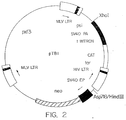
- Figure 2 is a diagram of the vector pTB1.
- Figure 3 is a diagram of the vector pMXSVNeo-tar/tk.
- treatment refers to reducing or alleviating symptoms in a subject, preventing symptoms from worsening or progressing, inhibition or elimination of the causative agent, or prevention of the infection or disorder in a subject who is free therefrom.
- treatment of a cancer patient may be reduction of tumor size, elimination of malignant cells, prevention of metastasis, or the prevention of relapse in a patient who has been cured.
- Treatment of infection includes destruction of the infecting agent, inhibition of or interference with its growth or maturation, neutralization of its pathological effects, and the like.
- infection includes infection by viruses, bacteria, fungi, and other parasites, such as leishmania and malarial parasites.
- infectious agents within the scope of this invention include viruses such as HIV-I, HIV-II, HTLV-I, HTLV-II, herpes simplex virus (HSV), cytomegalovirus (CMV), Epstein-Barr virus (EBV), human papilloma viruses (HPV), hepatitis B virus (HBV), hepatitis C virus (HCV), polio virus, and the like; bacteria such as B.
- pertussis and the causative agents of tetanus, diphtheria, cholera, and the like
- mycobacteria such as M. tuberculosis , and the causative agent of leprosy
- yeasts and fungi such as C. albicans and P. carinii
- parasites such as malarial Plasmodia , giardia, and the like.
- hyperproliferative disorder refers to disorders characterized by an abnormal or pathological proliferation of cells, for example, cancer, psoriasis, hyperplasia and the like.
- cis-acting regulatory sequence refers to a polynucleotide sequence which is capable of responding to a trans-acting factor, and enhancing transcription of cis-located genes. Most appropriate cis-acting regulatory sequences may be derived from the infectious agent they will be used to combat. For example, the tar region of the HIV-1 LTR is a suitable cis-acting regulatory sequence for treatment of HIV-1.
- cis-acting sequences such as, for example, (for T-cells) the CD2 antigen (Genbank HUMATCCD2), IL-2 (Genbank HUMIL2A), IL-2 receptor (Genbank HUMIL2R1), CD1 antigen (Genbank HUMHTA1), CD3 antigen (Genbank HUMATCT31), CD4 antigen (Genbank HUMATCT4), T-cell protease (Genbank MUSSPTCS); for B-cells, IgG (Genbank HUMIGCA1), MHC-1 antigen (Genbank HUMMHA2); for macrophages, Mac-1 antigen (Genbank HUMLAP), IL-1 (Genbank HUMIL1P), and the like.
- the cis-acting regulatory sequence may be used in multiple tandem copies, in order to increase its competition with the endogenous cis-acting regulatory site.
- Suitable sequences for treatment of hyperproliferative disorders are obtainable from the binding sites of known oncoproteins, or by identification of a known protein whose expression is altered by an oncogene.
- the cis-acting regulatory sequence must be capable of providing sufficient expression of the effector gene to confer susceptibility to protection or destruction of the cell when activated by the trans-acting factor, without allowing substantial constitutive expression in the absence of the trans-acting factor.
- the choice of cis-acting sequence will depend upon the trans-acting factor associated with the infection or disorder to be treated, and on the effector gene selected.
- the HIV LTR contains both the tar region, which is highly selective for HIV tat, and also a region activated by the endogenous nuclear factor NF- ⁇ B (the LTR has tandem NF- ⁇ B binding regions).
- the tar sequence strongly suppresses expression in the absence of tat (see for example Muesing, Peterlin, supra )
- the cis-acting elements upstream of the tar sequence influence the degree of constitutive expression (“leakiness") that occurs in the absence of tat.
- the degree of leakiness in the absence of tat can be controlled by deletion or substitution of the cis-acting elements (e.g., NF- ⁇ B binding sites) within the HIV-1 LTR.
- the phrase "susceptible to protection or destruction” means that upon infection or occasion of a hyperproliferative disorder, the presence of the effector gene within the host cell renders the cell either (a) capable of inhibiting the infectious agent or hyperproliferative condition , or (b) the effector gene kills the host cell, or renders it sensitive to an additional exogenous toxic agent.
- the additional "toxic agent” does not include the host immune system or antibodies, as immunity is often suppressed or ineffective in cases of infection or hyperproliferative disease.
- a polynucleotide construct of the invention can, for example, encode cytokines which may interfere with or inhibit infectious agents, or which may be cytotoxic, for example, interferons, interleukins, tumor necrosis factors, colony-stimulating factors, transforming growth factors ( ⁇ and ⁇ ), epidermal growth factors, and the like. Cytokine expression is also useful in the treatment of hyperproliferative disorders. For example, cytokines may inhibit or kill tumors directly, or may induce differentiation into a final (non-neoplastic) state.
- effector gene refers to a polynucleotide sequence which, when expressed (due to action by the trans-acting factor on the cis-acting regulatory sequence), renders the host cell susceptible to protection or destruction, as defined above.
- the effector gene must be a gene which is not naturally regulated by the cis-acting regulatory region employed.
- suitable effector genes includes genes functional at the mRNA level, in particular genes encoding ribozymes (V. Walbot et al, Nature (1988) 334 :196-97).
- effector genes includes genes encoding cytokines useful for antiviral or anti-hyperproliferative disorders, such as tumor necrosis factor, ⁇ interferon, ⁇ interferon, gamma interferon, transforming growth factor- ⁇ and interleukin-2.
- Other effector genes for a construct of the invention encode inhibitors of glycoslation, phosphorylation, or myristylation of viral proteins. RNase is also suitable.
- One may alternatively "titrate" the trans-acting factor by providing a plurality of cis-acting sequences in conjunction with a strong termination sequence.
- the effector gene In the context of cell-specific expression, the effector gene must confer susceptibility of the cell to protection, but not destruction. Thus, one avoids deleting an entire class of cells, such as the class of T H cells.
- Polynucleotide constructs of the invention may also be designed to treat autoimmune disorders, by using a cis-acting sequence which responds to a trans-acting factor characteristic of those specific immune cells which participate in the particular autoimmune disorder treated, and an effector gene which suppresses the activity of those cells.
- ribozyme refers to a catalytic RNA polynucleotide capable of catalyzing RNA cleavage at a specific sequence. Ribozymes are useful for attacking particular mRNA molecules. For example, in chronic myelogenous leukemia, a chromosomal translocation involving the genes bcr and abl (Philadelphia chromosome) results in expression of a bcr-abl fusion protein, which is believed to result in abnormal function of the abl oncoprotein.
- the spliced bcr-abl fusion transcript contains only two possible sequences at the splice junction between the bcr and abl exons.
- a ribozyme specific for either of the two bcr-abl fusion mRNA splice junctions may be prepared, and thus may inhibit expression of the corresponding oncoprotein
- vector refers to any polynucleotide construct capable of encoding the cis-acting regulatory sequence and the effector gene(s) selected, and capable of transferring these genes into suitable target cells.
- Vectors may be linear or circular, double stranded or single stranded.
- Vectors may comprise DNA, RNA, DNA/RNA hybrids; and DNA and/or RNA polynucleotides having chemically modified bases.
- Suitable vectors within the scope of this invention include linear dsDNA segments, plasmids, recombinant viruses (e.g., recombinant vaccinia, adenovirus, adeno-associated viruses, and the like), replication-defective retroviral vectors (including human, simian, murine, and the like), suitably non-pathogenic derivatives of replication-competent retroviral vectors, and the like. Replication defective retroviral vectors are presently preferred.
- Preparation of polynucleotide constructs is conducted using methods known generally in the art. Once an infectious agent or hyperproliferative disorder has been selected for treatment, the first step is to identify an associated trans-acting factor, an appropriate cis-acting sequence, and an effector gene.
- viral trans-acting factors are already known and characterized.
- Other viral trans-acting factors may be identified by deletion analysis of the cloned viral genome. For example, a new virus may be cloned and sequenced using standard techniques, and the open reading frames identified. Then, deletion mutants are prepared using restriction enzymes, and the mutant viruses assayed for transcriptional competence in suitable host cells. Mutants which exhibit very low mRNA transcription probably lack either a gene encoding a trans-acting factor, or a cis-acting regulatory sequence.
- Whether the deletion affects the trans-acting factor or the cis-acting sequence can generally be determined by examination of the position and content of the genomic sequence (e.g., cis-acting viral regulatory sequences are generally found upstream of open reading frames). The sequence of the cis-acting viral region may be compared for homology to known cis-acting regions. As homologous cis-acting sequences may react with the same trans-acting factor, appropriate endogenous trans-acting factors may thus be identified. Alternatively, viral proteins may be expressed recombinantly in appropriate hosts (e.g., bacteria, yeast, mammalian cell culture), and purified extracts labeled and screened for binding to the viral genome library.
- appropriate hosts e.g., bacteria, yeast, mammalian cell culture
- trans-acting factor/cis-acting sequence pairs may be identified.
- the suitability of the pair may be evaluated using the CAT expression assay detailed below and in the examples.
- the cis-acting sequence is cloned into a suitable vector, and a suitable reporter gene (e.g., CAT, ⁇ -galactosidase, etc.) ligated to the cis-acting sequence to provide for cis-control.
- the test construct is then transferred into a suitable host cell (e.g., mammalian cell culture) and assayed for reporter gene expression in the presence and absence of the trans-acting factor.
- suitable effector genes are known in the art, or may be cloned using standard techniques.
- Intracellular parasites including viruses
- Intracellular parasites often induce interferon expression.
- isolation of the interferon cis-acting sequence should allow identification of trans-acting factors involved in the anti-parasite response, and preparation of appropriate polynucleotide constructs of the invention.
- Hyperproliferative disorders are characterized by inappropriate gene regulation or gene product activity, typically involving cell growth or differentiation factors, and occasionally genes encoding structural proteins. Inappropriate gene regulation may result from the expression of a dysfunctional trans-acting factor (e.g., a factor in which truncation or mutation has eliminated inhibition of the factor, or which binds irreversibly, etc.), from the overexpression of a trans-acting factor or receptor (e.g., due to the translocational juxtaposition of a strong promoter), or other defects. In any case, the disorder characteristically exhibits a trans-acting factor which is either different from those found in normal cells, or is present in abnormally large quantities.
- a dysfunctional trans-acting factor e.g., a factor in which truncation or mutation has eliminated inhibition of the factor, or which binds irreversibly, etc.
- a trans-acting factor or receptor e.g., due to the translocational juxtaposition of a strong promoter
- the disorder characteristically exhibit
- Trans-acting factors encoded by viruses associated with hyperproliferative disorders may also be used to regulate expression of an effector gene, as described herein. Once the affected cis-acting sequence is identified, a suitable effector gene may be selected. As the characteristic trans-acting factors are generally at least somewhat homologous to normal trans-acting factors, the cis-acting sequence is likely to exhibit some regulation by endogenous trans-acting factor in normal cells. Thus, preferred effector genes for treatment of hyperproliferative disorders are those which are relatively non-toxic to the host cell at low levels.
- the activity of the trans-acting factors may be constitutively high in the hyperproliferative cells, whereas the activity may be lower and fluctuating (as during the cell cycle) in normal cells. This difference may be exploited to allow accumulation of high levels of effector gene product in hyperplastic cells.
- a trans-acting factor associated with a hyperproliferative disorder and its cis-acting regulatory sequence will be identical to normal, cell-type specific trans-acting factors and regulatory sequences.
- the hyperproliferative disorder is typically caused by an excess concentration of trans-acting factor. Accordingly, the effector gene must be carefully selected.
- the vector comprises a 5' retroviral LTR and primer binding site ( 1 ), a psi encapsidation (packaging) signal sequence ( 2 ), an optional 3' RNA processing signal sequence ( 3 ), an effector gene ( 4 ), a 5' cis-acting regulatory sequence ( 5 ) including a promoter, optionally a promoter ( 6 ) and selectable marker gene ( 7 ), and a 3' retroviral LTR and primer binding site ( 8 ).
- Sequences 1 - 8 constitute the retroviral portion of the vector, while sequence 9 is typically derived from a plasmid, and provides for maintenance of the vector in cell culture.
- the 5' LTR ( 1 ) and 3' LTR ( 8 ) provide for reverse transcription and integration of the vector into the host cell genome.
- Suitable LTRs include those derived from Moloney murine leukemia virus (Mo-MuLV) (Shinnick et al, Nature (1981) 293 :543), Harvey murine sarcoma virus (Ha-MSV), (Van Beveran et al, Cell (1981) 27 :97), HTLV-I, HTLV-II, HIV-1, and HIV-2.
- Mo-MuLV Moloney murine leukemia virus
- Ha-MSV Harvey murine sarcoma virus
- HTLV-I HTLV-II
- HIV-1 HIV-1
- HIV-2 HIV-2.
- replication-defective retroviruses the U3 region of the 3' LTR ( 8 ) is inactivated.
- Psi sequence ( 2 ) must be included in order for the vector to be included in viral capsids generating in the packaging cell line, but is otherwise inactive once integrated into the host genome. Suitable psi sequences have been described by Cepko et al, Cell (1984) 37 :1053-62; Guild et al, supra ; and Kriegler et al, Cell (1984) 38 :483. Where the vector is nonretroviral, and is to be inserted by transfection rather than infection, the LTR sequences and psi sequence may be omitted.
- the effector gene ( 4 ) is as described above.
- the effector gene ( 4 ) is provided with its own promoter/cis-acting regulatory sequence ( 5 ) and terminator sequence/polyadenylation sequence ( 4 ) (although the terminator and PA sequences may be derived from the effector gene).
- the effector gene may be oriented in either direction, but is usually oriented in the direction opposite to the LTR reading frame.
- the effector gene ( 4 ) is oriented in the same direction as the LTR, and is not provided with a separate cis-acting regulatory sequence ( 5 ) or terminator sequence/polyadenylation sequence ( 4 ). Instead, the cis-acting regulatory sequence is provided within the 3' LTR ( 8 ) U3 region, so that the effector gene is controlled by the cis-acting regulatory region only after reverse transcription.
- the selectable marker typically encodes an enzyme conferring resistance to an antibiotic, for example chloramphenicol, neomycin (Southern et al, J Mol Appl Gen (1982) 1 :327-41), or hygromycin (Gritz et al, Gene (1983) 25 :179-88).
- the selectable marker when employed, is usually provided with its own promoter ( 6 ) which allows expression of the marker gene during selection of transfected/infected cells. Suitable marker gene promoters include the histone promoter, HSV-1 tk promoter, and the metallothionein promoter.
- Sequence 9 is a polynucleotide maintenance sequence, which provides for the stable maintenance of the vector within producer cells.
- sequence 9 is derived from a plasmid, and provides an origin of replication (such as pBR322 ori, or the yeast 2 ⁇ origin) and (usually) an antibiotic resistance marker.
- Suitable maintenance sequences include pXf3, pBR322, pUC18, pML, and the like.
- the vector may be linearized at a point within sequence 9 .
- the LTR regions 1 and 8 are replaced with sequences homologous to the sequence of desired targeted recombination.
- Sequence 2 is deleted.
- Sequence 9 includes polynucleotide sequences which provide for maintenance and replication in microbial hosts, and additionally includes a counter-selection marker (which provide for deletion of transfected host cells which undergo non-specific integration).
- HSV-1 tk can activate a variety of dideoxynucleoside analogues (ddNs) by conversion of these drugs to the (5') monophosphate species.
- ddNs dideoxynucleoside analogues
- the ddNMPs can act as competitive inhibitors of cellular nucleotide or nucleoside kinases, causing depletion of cellular nucleotide pools; following conversion to triphosphate species by cellular enzymes, ddNTPs can be incorporated into nascent DNA (and possibly RNA) strands, causing chain termination.
- acyclo-G One of the best-characterized ddNs which can be activated by HSV-1 tk is acyclovir (acyclo-G).
- acyclo-GMP to acyclo-GTP, which is incorporated into DNA by HSV-1 DNA polymerase causing termination of viral DNA synthesis.
- Acyclo-GTP inhibits HSV-1 DNA synthesis at about 1/20 the concentration required for similar inhibition of cellular DNA synthesis (P.A. Furman et al, J Virol (1979) 32 :72-77).
- the cis-acting regulatory sequence may be cloned into a plasmid with a suitable reporter gene, such as CAT or ⁇ -galactosidase.
- the plasmid is then transfected into a suitable cell line (e.g., CHO cells, HeLa, HUT78, and the like).
- the trans-acting factor may be supplied by selecting a host cell line which expresses the trans-acting factor, or by cotransfecting the host cell line with a plasmid encoding the trans-acting factor under control of a different promoter (either inducible or constitutive).
- the transfected host cells are then assayed for expression of the reporter gene.
- the suitability of an effector gene such as HSV-1 tk is assessed by cloning into a suitable plasmid under control of the selected cis-acting regulatory region.
- the plasmid also preferably contains a selectable marker, allowing one to select those cells which have become genetically transformed by the vector.
- retroviral vectors which can be used to generate recombinant retroviruses containing an effector gene linked to cis-acting regulatory elements is shown in Figure 1.
- the basic retroviral vectors for expression of HSV-1 tk were derived from Moloney Murine Leukemia Virus (Mo-MuLV). All of the Mo-MuLV genes (gag, pol and env) were removed from the vectors in order to generate completely replication-defective viruses. The remaining components are required for expression and packaging of viral RNA, reverse transcription and integration, and transcription of the tk gene (and marker gene, if desired) in the target cells. These components consist of the Mo-MuLV Long Terminal Repeats (LTRs), the plus- and minus-strand primer binding sites, and the RNA encapsidation signal (Psi sequence).
- LTRs Mo-MuLV Long Terminal Repeats
- Psi sequence RNA encapsidation signal
- a hybrid transcription unit is constructed in which the HSV-1 tk coding sequence replaces the coding sequence of a cell type-specific transcription unit.
- the HSV-1 tk gene via these vectors can be accomplished in two ways.
- the first type of vector uses a separate enhancer/regulatory element to regulate expression of HSV-1 tk.
- transcription of HSV-1 tk proceeds in the opposite orientation to the plus-sense of the provirus (as shown in Figure 1).
- the tk gene is provided with its own polyadenylation signal, and, if desired, also can be provided with an intron between the tk coding sequence and polyadenylation signal.
- Potential transcriptional interference in this first class of vectors can be reduced by removing the enhancer/regulatory element sequences from the 3' LTR of the vector.
- the Mo-MLV LTR provides the enhancer and regulatory element sequences that control expression of the HSV-1 tk gene.
- the Mo-MLV LTR can drive expression of heterologous genes in a variety of cell types (excluding hematopoietic stem cells), but is most efficient in T-cells. Control of cell type-specific gene expression of HSV-1 tk may be achieved by substitution of specific enhancer/regulatory element sequences for the enhancer/regulatory element sequences within the 3' Mo-MLV LTR.
- the 5' Mo-MLV LTR is retained in the vector to allow efficient expression of viral RNA in the packaging cell line used to generate infectious virus.
- a selectable marker gene can be incorporated into these vectors 3' to the HSV-1 tk gene in order to allow in vitro selection of transformed cells.
- Expression of the marker gene is provided by its own regulatory element. In general, this regulatory element would be derived from a moderately active cellular gene that is constitutively expressed in all tissues. Some examples of such regulatory elements would be the cytoplasmic ⁇ actin promoter, histone promoters, and promoters for glycolytic enzymes.
- the second type of vector uses a separate enhancer/regulatory element to regulate expression of HSV-1 tk.
- transcription of HSV-1 tk proceeds in the opposite orientation to the plus-sense of the provirus.
- the tk gene is provided with its own polyadenylation signal, and, if desired, also can be provided with an intron between the tk coding sequence and polyadenylation signal.
- Potential transcriptional interference in this second class of vectors can be reduced by removing the enhancer/regulatory element sequences from the 3' LTR of the vector. This allows integration of the proviral cDNA, but results in loss of the enhancers and regulatory elements from both LTRs of the provirus.
- a selectable marker can be provided, as in the first class of vectors, and is transcribed in the opposite direction from HSV-1 tk. Transcription thus initiates in the center of the integrated provirus and proceeds in opposite directions, in a manner analogous to the transcription of the E2/E3 genes of human adenoviruses.
- the polynucleotide constructs of the invention may be formulated, depending on the form of construct.
- the vector may be formulated in the same manner as live virus vaccines.
- Such formulations are typically buffered, physiologic saline for injection, or buffered oral formulations, either of which may optionally contain antibiotics.
- Liposome formulations may be prepared by standard methods, for example by suspending lipids in chloroform, drying the lipids onto the walls of a vessel, and hydrating the lipids with a solution containing the polynucleotide construct.
- Suitable lipids are known in the art, including phosphatidyl serine, phosphatidyl glycerol, lethicin, and the like.
- a synthetic lipid particularly useful for polynucleotide transfection is N-[1-(2,3-dioleyloxy)propyl]-N,N,N-trimethylammonium chloride, which is commercially available under the name Lipofectin® (available from BRL, Gaithersburg, MD), and is described by P.L. Felgner et al, Proc Nat Acad Sci USA (1987) 84 :7413.
- Recombinant retroviral vectors may also be formulated for in vivo administration (if replication defective).
- Vectors which are based on HIV-1 or HIV-2 will demonstrate the same cellular tropisms as the native virus, thus providing an efficient and comprehensive means for targeting the appropriate cell populations in vivo when treating HIV-1 or HIV-2 infection.
- Vectors based on HIV may employ the HIV LTR promoters, tar sequence, and the tat gene for control of expression of heterologous genes.
- One may refine the target cell specificity of the vector by an appropriate choice of packaging constructs (e.g., env gene).
- the isolate HIV-1 SF162 M.
- retroviral vectors may be administered by inoculation, parenterally or orally. Where the vector is an infectious recombinant virus, administration may be by parenteral injection, oral or intranasal administration, and the like.
- Liposome formulations are preferably administered by intranasal spray or intravenous injection.
- the presently preferred method of administration is by incubating defective retroviral vectors with aspirated autologous bone marrow cells or T lymphocytes ex vivo , followed by reintroduction of the treated cells by standard techniques.
- bone marrow cells are aspirated by techniques known in the art for bone marrow transplants, and are generally aspirated from the pelvis. If desired (particularly in the treatment of leukemia and other hyperplastic disorders), the subject may be treated with chemotherapy or radiotherapy following bone marrow aspiration, in order to reduce the burden of infected or hyperproliferating cells.
- the aspirate may be screened to remove undesirable material (e.g., tumor cells, bacteria, viral particles, and the like), for example by immunoprecipitation, immunoadsorption, immunoreaction with complement fixation, fluorescence-activated cell sorting (FACS), and the like.
- FACS fluorescence-activated cell sorting
- hematopoietic stem cells are labeled and isolated using stem cell-specific MAbs.
- the screened aspirate is then transfected or infected with a construct of the invention.
- One method of infection is to maintain the aspirated cells in culture in contact with infectious titers of replication-defective retroviral vectors for a period sufficient to insure efficient inoculation.
- Growth factors for hematopoietic cells for example IL-3 may be added during cocultivation (E.A. Dzierzak, supra ).
- the calcium phosphate transfection techniques known for murine cells may be used (see for example, E.A. Dzierzak, supra ; S-F. Yu et al, Proc Nat Acad Sci USA (1986) 83 :3194-98).
- Constructs may also be introduced by electroporation (S.
- the infected cells may be screened or selected, if desired. The infected cells are then reintroduced into the subject using methods employed for autologous bone marrow transplantation, typically by intravenous infusion or injection.
- a transfection agent such as Lipofectin®.
- the infected cells may be screened or selected, if desired. The infected cells are then reintroduced into the subject using methods employed for autologous bone marrow transplantation, typically by intravenous infusion or injection.
- One may also transfect or infect lymphocytes either in vivo or ex vivo using constructs of the invention. Infection using MLV-based constructs is preferably conducted ex vivo , as the envelope is inactivated by human complement. Specific subsets of the lymphocyte population may be selected by employing monoclonal antibodies to separate the desired subset, or by other methods known in the art: see for example P.W. Kantoff et al, Proc Nat Acad Sci USA (1986) 83
- independent constructs capable of expressing the viral genes encoding gag-pol and env followed by insertion of a vector of the invention.
- Retroviral vectors were constructed using standard techniques for manipulation of recombinant DNA (T. Maniatis et al., Molecular Cloning: A Laboratory Manual (New York, Cold Spring Harbor Laboratory, 1982)). Plasmids used in construction of retroviral vectors were obtained from the following sources: pMX1112SVNeo was a gift from M. McMann (UCSF), SV-N was a gift from E. Gilboa (constructed as described by Yu, supra ).
- Plasmid pMX1112SVNeo is constructed by inserting a Cla-Cla fragment of the SV40 early promoter linked to the neo r gene into the plasmid pMX1112 (described by A.M.C. Brown et al, "Retroviral Vectors", pp. 189-212, in "DNA Cloning: a practical approach, vol. 3 (D.M. Glover, ed, IRL Press, 1987)).
- the SV40-neo r gene is positioned between the psi packaging sequence and the 3' Mo-MuLV LTR region on the plasmid.
- Plasmid pMXSVNeo18 was prepared from pMX1112SVNeo by removing the EcoRI site upstream of the 5' Mo-MuLV LTR, inserting an EcoRI linker at the XhoI site, and adding the pUC18 polylinker between the new EcoRI site and the HindIII site.
- Plasmid pTAR1 contains the HIV 5' LTR (including the tar sequence), a gene encoding CAT, and an SV40 polyadenylation signal and t intron, and was constructed by cloning the XhoI-NarI fragment of HIV-1 (SF2) (R. Sanchez-Pescador et al, Science (1982) 227 :484-92) into pML.
- a synthetic polylinker was added at the NarI site, and the Stu1-BamHI fragment of pSV2CAT (C.M. Gorman et al, Proc Nat Acad Sci USA (1982) 79 :6777-81) containing the CAT gene and SV40 RNA processing signals was inserted to provide pTAR1.
- the pTAR1 was cleaved with Asp718 and XhoI, and the resulting fragment cloned into pMXSVNeo18 to produce pTB1, shown in Figure 2.
- Plasmid pTAT1 was constructed with the HIV tat gene under control of the SV40 EP, and flanked by the SV40 polyadenylation signal (Peterlin et al, supra ).
- Plasmid pRT contains the HSV-1 tk gene, promoter, and RNA processing signals.
- the plasmid ptar/tk was prepared by cloning the BglII-EcoRI fragment of pRT (containing the tk coding sequence and polyadenylation signal) into pTAR1 in place of the CAT gene.
- Plasmid pMXSVNeo-tar/tk was constructed by cloning the Asp718-EcoRI portion of ptar/tk into the pMXSYNeo18 polylinker (pMXSVNeo-tar/tk is depicted in Figure 3).
- Amphotropic retroviruses capable of infecting human cells were prepared by standard techniques (R. Mann et al, Cell (1983) 33 :153-59). Briefly, the amphotropic packaging cell line PA-317 (Miller et al, Mol Cell Biol (1986) 6 :2895-902; ATCC CRL 9078) was transfected with plasmid vector using the CaPO 4 coprecipitation technique (R. Graham et al, Virol (1973) 52 :456-67). 10 ⁇ g of plasmid vector plus 25 ⁇ g salmon sperm DNA carrier were applied as a CaPO 4 coprecipitate to 5 x 10 5 PA-317 cells in a 60 mm tissue culture dish for 8-16 h.
- the precipitate was removed and the monolayer was rinsed with Dulbecco's phosphate-buffered saline.
- Fresh medium (Dulbecco's modified Eagles medium, DMEM, supplemented with 10% fetal bovine serum and antibiotics) was applied and the cells were allowed to grow and recover for 2 d.
- the transfected cells were then trypsinized and transferred to a 150 mm2 T-flask and grown for 10-14 d in medium containing 0.8 mg/mL G418.
- the resulting G418-resistant colonies were trypsinized and cloned by limiting dilution in 96-well tissue culture plates.
- Recombinant retrovirus produced by individual clones was characterized by infection of human cell lines (HeLa, ATCC CCL 2: HUT78, ATCC TIB 161) to determine viral titer and generation of the correct proviral structure.
- Ecotropic recombinant retroviruses were prepared as described above, except that the ecotropic packaging cell line Psi-2 (R. Mann, supra ) was used instead of PA-317.
- Cell lines were infected with recombinant retroviruses using standard procedures (R. Mann, supra ). Briefly, 5 x 10 6 cells were plated into 60 mm tissue culture dishes and allowed to grow for 16 h. Cell-free supernatants from packaging cells containing plasmid vectors was applied to the target cells for 6-8 h in the presence of 8 ⁇ g/mL polybrene. In the case of viruses carrying the G418-resistance marker, cells were grown, selected, and cloned as described for preparation of packing clones, above.
- Retro-viruses carrying HSV-1 tk, but lacking the G418-resistance marker were titered using tk- cell lines: L-M (tk-) (ATCC CCL 1.3) for ecotropic viruses, 143 B cells (ATCC CRL 8303) for amphotropic viruses. Selection for tk + colonies was performed using HAT medium.
- Plasmids pTAR1, pTB1, and pTB2 (having the HIV LTR region in the opposite orientation from pTB1), encoding CAT under control of the HIV tab cis-acting regulatory sequence, were transfected into HeLa cells. Plasmid pTAT1, expressing the HIV tat trans-acting agent, was transfected into half of the HeLa cells. After 48 hours, the cells were lysed, and 14 C-chloranphenicol was incubated with the lysates. The products were extracted with EtOAc, and analyzed by thin-layer chromatography.
- CAT was expressed in HeLa cells which contained both a tar-encoding plasmid and a tat-encoding plasmid, but not in HeLa cells lacking the pTAT1 plasmid.
- level of constitutive expression (leakiness) varied little between pTAR1, pTB1, and pTB2
- CAT expression in response to HIV tat was higher in cells containing pTB1 and pTB2 than in cells containing pTAR1 (lacking the Mo-MuLV LTRs and SV40 enhancer).
- Retroviral vectors falling within the scope of the invention as claimed include vectors analogous to, or identical to, vectors now described below having the general structure shown in Figure 1.
- SIN-tar/tk-H4Neo This vector employs the self-inactivating vector described by Yu, using the HIV tar cis-acting sequence and the HSV-1 tk effector gene, and containing neomycin resistance under control of the H4 histone promoter. This plasmid confers susceptibility to ddNs on cells infected with HIV.
- SIN-CD4/tk (-H4Neo): This vector is identical to the SIN-tar/tk-H4Neo vector described above, except that the tar cis-acting sequence is replaced with the cis-acting sequence which promotes expression of CD4 antigen in T H cells.
- the histone promoter/neomycin resistance marker is optional.
- This vector confers susceptibility to ddNs on all CD4 + cells. As the CD4 antigen is currently believed to be important in the mode of entry for HIV, this vector would also be useful in the treatment of HIV infection.
- SIN-Mac1/tk (-H4Neo) This vector is like SIN-tar/tk-H4Neo, with the HIV tar cis-acting sequence replaced by the cis-acting sequence regulating Mac1 antigen expression in macrophages.
- the histone promoter/neomycin resistance marker is optional. This vector confers susceptibility to ddNs on all macrophages, which also serve as host cells to HIV.
- SIN-tar/rA-H4Neo This vector employs the HIV-1 tar cis-acting sequence, controlling the ricin A effector gene, using neo r as a selectable marker.
- This vector employs the self-inactivating vector described by Yu, using the fos oncogene cis-acting sequence (R. Treisman Cell (1986) 46 :567-74) using a plant phosphotransferase effector gene.
- This vector in combination with a ddN, would be useful in the treatment of fos -type malignancies.
- SIN-pcna/tnf This vector uses the cis-acting sequence regulating Proliferating Cell Nuclear Antigen (described by J.E. Selis, Leukemia (1988) 2 :561-601) and a tumor necrosis factor effector gene. Although PCNA is expressed in all cells, the expression is transient, and occurs only during cell division. Thus, normal cells infected with the vector would not produce toxic concentrations of TNF, whereas neoplastic hyperproliferating cells which are constantly in cell division would express toxic concentrations.
- SIN-acg/ifn This vector employs the cis-acting regulatory sequence which provides expression of ⁇ chorionic gonadotropin (S.E. Goelz, Science (1985) 228 :187-90) in combination with a ⁇ -interferon effector gene.
- This vector like the preceding vector, relies on the fact that acg is infrequently expressed in normal cells, and would be useful in cancer treatment.
- SIN-IgG/Rbz This vector employs the cis-acting sequence from IgG, along with a ribozyme effector gene specific for the bcl/abl splice site which occurs in chronic myelogenous leukemia (CML). As IgG is expressed in B-cells, cell-type protection against CML is obtained.
- SIN-e7/Ld This vector uses the cis-acting sequence responding to the E7 gene of human papilloma virus type 16 (HPV16) in conjunction with a Leishmania donovani purine 2'-deoxyribonucleosidease gene.
- HPV16 E7 gene As expression of HPV16 E7 gene is associated with carcinoma of the uterine cervix (Phelps et al, Cell (1988) 53 :539-47), this vector (in combination with the drug 6-methylpurine 2-deoxyriboside) destroys cells in which the E7 gene is expressed.
- HIV-2/tk This vector is derived from HIV-2 from which all of the internal genes are deleted except for the portion of the gag gene which overlaps the psi (encapsidation) signal and the rev-response element from the env gene.
- the HSV-1 tk gene is inserted 3' from the psi sequence, and is expressed under control of the HIV-2 LTR. If desired, the HIV-1 tar sequence can be substituted for the HIV-2 tar sequence.
- This vector may be used to express HSV-1 tk from a genome-length RNA by deleting or altering the HIV gag sequence ATG codons (Guild et al, supra ), obtaining expression of the HSV-1 tk gene from its own ATG start codon.
- expression of HSV-1 tk is dependent upon complementation by tat from either a resident HIV-1 provirus or a superinfecting HIV-1 virus.
- Expression of tk in combination with administration of ACV or GCV then activates toxic levels of the antiviral agent, thus destroying the infected cell.
- These constructs may be packaged in either HIV-2 envelopes or in HIV-1 SF162 envelopes, the latter being useful for targeting and destroying infected macrophages.
- HIV-2/TCR-tk This construct incorporates the T-cell receptor promoter internally to drive expression of HSV-1 tk, and contains the RRE from env and psi signal from the 5' end of the HIV-2 gag gene.
- the 3' LTR of the vector is modified by inserting the TCR ⁇ constant region enhancer sequence (described by Ho et al, Proc Nat Acad Sci USA (1909) 86 :6714), according the principle disclosed by J. Overhauser et al, J Virol (1985) 54 :133-34 for construction of a glucocorticoid-responsive MoMLV.
- the HIV-2/TCR-tk vector may be used to infect and genetically transform CD4 + cells in vivo .
- T4 cell As neither the vector nor the T4 cell normally contains tat, no expression of transcripts initiating in the viral LTR occurs in the absence of infection with HIV. Initiation of transcription (expression of tk) occurs from the internal TCR promoter. Expression from this promoter is enhanced by the presence of the TCR ⁇ enhancers incorporated into the proviral LTRs.
- This vector provides constitutive expression of tk in the genetically transformed T H lymphocytes, which in turn activates an antiviral agent (e.g., ACV, ddC and the like).
- An analogous vector may be prepared by substituting MLV virus components for the HIV sequences used, and employing an MLV amphotropic packaging cell line.
Landscapes
- Health & Medical Sciences (AREA)
- Life Sciences & Earth Sciences (AREA)
- Chemical & Material Sciences (AREA)
- Genetics & Genomics (AREA)
- Organic Chemistry (AREA)
- General Health & Medical Sciences (AREA)
- Veterinary Medicine (AREA)
- Engineering & Computer Science (AREA)
- Medicinal Chemistry (AREA)
- Pharmacology & Pharmacy (AREA)
- Animal Behavior & Ethology (AREA)
- Public Health (AREA)
- Biomedical Technology (AREA)
- Bioinformatics & Cheminformatics (AREA)
- Zoology (AREA)
- General Chemical & Material Sciences (AREA)
- Chemical Kinetics & Catalysis (AREA)
- Wood Science & Technology (AREA)
- Biotechnology (AREA)
- General Engineering & Computer Science (AREA)
- Molecular Biology (AREA)
- Nuclear Medicine, Radiotherapy & Molecular Imaging (AREA)
- Microbiology (AREA)
- Plant Pathology (AREA)
- Biophysics (AREA)
- Physics & Mathematics (AREA)
- Biochemistry (AREA)
- Epidemiology (AREA)
- Virology (AREA)
- Communicable Diseases (AREA)
- Oncology (AREA)
- Medicines That Contain Protein Lipid Enzymes And Other Medicines (AREA)
- Pharmaceuticals Containing Other Organic And Inorganic Compounds (AREA)
- Micro-Organisms Or Cultivation Processes Thereof (AREA)
Claims (29)
- Une méthode pour le traitement d'une cellule hôte ex vivo contre un trouble hyperprolifératif ou une infection par un agent infectieux, ladite infection ou ledit trouble hyperprolifératif étant caractérisé par un facteur régulateur agissant en trans associé à une maladie humaine capable de réguler l'expression de gènes, laquelle méthode comprend :l'insertion dans ladite cellule d'une construction polynucléotidique comprenant une séquence régulatrice agissant en cis qui est contrôlable par ledit facteur régulateur agissant en trans et d'un gêne effecteur sous le contrôle de ladite séquence régulatrice agissant en cis, dont l'expression rend ladite cellule sensible à la protection ou à la destruction, ledit gêne effecteur codant pour un produit de gène qui est :(a) une cytokine ;(b) une protéine qui inhibe la glycosylation, la myristylation ou la phosphorylation de protéines d'un agent infectieux ou de protéines spécifiques dudit trouble hyperprolifératif ;(c) une RNase ; ou(d) un ribozyme.
- Une méthode telle que revendiquée à la revendication 1 dans laquelle ledit produit de gène effecteur est une cytokine sélectionnée parmi l'interféron α, l'interféron β, l'interféron γ, le facteur de croissance transformant β, l'interleukine-2 ou une combinaison de ceux-ci.
- Une méthode telle que revendiquée à la revendication 2 dans laquelle ledit produit de gène effecteur est l'interféron γ.
- Une méthode telle que revendiquée dans l'une quelconque des revendications 1 à 3 dans laquelle ladite séquence régulatrice agissant en cis est présente en au moins deux copies en tandem liées de manière fonctionnelle audit gène effecteur.
- Une méthode telle que revendiquée dans l'une quelconque des revendications 1 à 4 dans laquelle ledit gêne effecteur est lié de manière fonctionnelle à :au moins deux copies d'une séquence polynucléotidique homologue d'une région d'élément régulateur dudit agent infectieux ou trouble hyperprolifératif, et capable de se lier à un facteur agissant en trans associé audit agent infectieux ou audit trouble hyperprolifératif, où lesdites séquences polynucléotidiques homologues entrent en compétition avec lesdites régions de l'élément régulateur de l'agent infectieux ou lesdits éléments régulateurs du trouble hyperprolifératif pour ledit facteur agissant en trans ; etune région de terminateur fort.
- Une méthode telle que revendiquée à la revendication 5, dans laquelle ledit agent infectieux comprend HIV-1 ou HIV-2 et ledit facteur régulateur agissant en trans comprend tat.
- Une méthode de préparation d'une construction polynucléotidique pour le traitement d'une cellule hôte contre un trouble hyperprolifératif ou une infection par un agent infectieux, ladite infection ou ledit trouble hypeprolifératif étant caractérisé par un facteur activateur en trans associé à une maladie humaine capable de réguler l'expression d'un ADN, qui comprend l'insertion dans un précurseur de ladite construction de :une séquence régulatrice agissant en cis qui est contrôlable par ledit facteur régulateur agissant en trans ; etun gène effecteur sous le contrôle de ladite séquence régulatrice agissant en cis, dont l'expression rend ladite cellule sensible à la protection ou à la destruction, ledit gêne effecteur codant pour un produit de gène qui est :(a) une cytokine ;(b) une protéine qui inhibe la glycosylation, la myristylation ou la phosphorylation de protéines d'un agent infectieux ou de protéines spécifiques dudit trouble hyperprolifératif ;(c) une RNase ; ou(d) un ribozyme.
- Une méthode telle que revendiquée à la revendication 7 dans laquelle ledit gène effecteur code pour une cytokine sélectionnée parmi l'interféron α, l'interféron β, l'interféron γ, le facteur de croissance transformant β, l'interleukine-2 ou une combinaison de ceux-ci.
- Une méthode telle que revendiquée à la revendication 8 dans laquelle ledit gène effecteur code pour l'interféron γ.
- Une méthode telle que revendiquée dans l'une quelconque des revendications 7 à 9 dans laquelle ladite construction comprend en outre :une séquence polynucléotidique de maintenance qui permet le maintien stable de ladite construction dans des cellules de mammifères.
- Une méthode telle que revendiquée à la revendication 10 dans laquelle ladite séquence de maintenance comprend un vecteur viral ou un vecteur de gène cible.
- Une méthode telle que revendiquée dans l'une quelconque des revendications 7 à 11 dans laquelle ladite construction polynucléotidique comprend un vecteur viral recombinant sélectionné parmi le virus de la vaccine, HIV-1, HIV-2, un adénovirus et un virus adéno-associé.
- Une méthode telle que revendiquée dans l'une quelconque des revendications 7 à 11 dans laquelle ladite construction polynucléotidique comprend un vecteur rétroviral défectif pour la réplication.
- Une méthode telle que revendiquée à la revendication 13 dans laquelle ledit vecteur rétroviral défectif pour la réplication comprend en outre une séquence codant pour la glycoprotéine gp160env provenant de HIV-1 ou HIV-2.
- Une méthode telle que revendiquée dans l'une quelconque des revendications 7 à 14 dans laquelle ladite séquence régulatrice agissant en cis est capable de répondre à la protéine tat de HIV.
- Une méthode telle que revendiquée dans l'une quelconque des revendications 7 à 15 dans laquelle ladite séquence régulatrice agissant en cis est insérée en au moins deux copies en tandem liées de manière fonctionnelle audit gène effecteur.
- Une méthode telle que revendiquée dans l'une quelconque des revendications 7 à 16 qui comprend en outre la combinaison de ladite construction polynucléotidique et d'un véhicule pharmaceutiquement acceptable.
- Une méthode telle que revendiquée à la revendication 17 dans laquelle ledit véhicule pharmaceutiquement acceptable comprend un liposome.
- Une méthode telle que revendiquée à la revendication 18 dans laquelle ledit liposome comprend en outre des anticorps spécifiques des cellules hôtes que l'on souhaite traiter.
- Une méthode de préparation d'une construction polynucléotidique pour protéger une population sélectionnée de cellules dans un organisme contre une infection ou une transformation hyperproliférative, qui comprend l'insertion dans un précurseur de ladite construction de :une séquence agissant en cis qui entraíne l'expression d'un gène effecteur uniquement en présence de facteurs agissant en trans associés à une maladie humaine trouvés sensiblement uniquement dans la population sélectionnée de cellules ; etsous le contrôle de la séquence agissant en cis, un gène effecteur sous le contrôle de la séquence régulatrice agissant en cis dont l'expression rend les cellules de ladite population de cellules sensibles à la protection ou à la destruction, ledit gène effecteur codant pour un produit de gène qui est :(a) une cytokine ;(b) une protéine qui inhibe la glycosylation, la myristylation ou la phosphorylation de protéines de l'agent infectieux ou de protéines spécifiques dudit trouble hyperprolifératif ;(c) une RNase ; ou(d) un ribozyme.
- Une méthode telle que revendiquée à la revendication 20 dans laquelle ledit gène effecteur code pour une cytokine sélectionnée parmi l'interféron α, l'interféron β, l'interféron γ, le facteur de croissance transformant β, l'interleukine-2 ou une combinaison de ceux-ci.
- Une méthode telle que revendiquée à la revendication 21 dans laquelle ledit gène effecteur code pour l'interféron γ.
- Une méthode telle que revendiquée dans l'une quelconque des revendications 20 à 22 dans laquelle ladite séquence régulatrice agissant en cis est insérée en au moins deux copies en tandem liées de manière fonctionnelle audit gêne effecteur.
- Une construction polynucléotidique pour le traitement d'une cellule hôte contre un trouble hyperprolifératif ou une infection par un agent infectieux, ladite infection ou ledit trouble hyperprolifératif étant caractérisé par un facteur agissant en trans associé à une maladie humaine capable de réguler l'expression de l'ADN, laquelle construction comprend :une séquence régulatrice agissant en cis qui est contrôlable par ledit facteur régulateur agissant en trans ; etun gène effecteur sous le contrôle de ladite séquence régulatrice agissant en cis dont l'expression rend ladite cellule sensible à la protection ou à la destruction, ledit gène codant pour un produit de gène qui est :(a) une cytokine ;(b) une protéine qui inhibe la glycosylation, la myristylation ou la phosphorylation de protéines d'un agent infectieux ou de protéines spécifiques dudit trouble hyperprolifératif ;(c) une RNase ; ou(d) un ribozyme.
Priority Applications (1)
| Application Number | Priority Date | Filing Date | Title |
|---|---|---|---|
| EP97113730A EP0832980B1 (fr) | 1989-01-23 | 1990-01-22 | Thérapie recombinante des infections et désordres hyperprolifératifs |
Applications Claiming Priority (6)
| Application Number | Priority Date | Filing Date | Title |
|---|---|---|---|
| US30063789A | 1989-01-23 | 1989-01-23 | |
| US300637 | 1989-01-23 | ||
| US46146190A | 1990-01-17 | 1990-01-17 | |
| US461461 | 1990-01-17 | ||
| PCT/US1990/000445 WO1990007936A1 (fr) | 1989-01-23 | 1990-01-22 | Therapies de recombinaison pour infections et troubles hyperproliferatifs |
| CA002047363A CA2047363C (fr) | 1989-01-23 | 1991-07-18 | Therapies a base de recombinaison pour les infections et troubles hyperproliferatifs |
Related Child Applications (2)
| Application Number | Title | Priority Date | Filing Date |
|---|---|---|---|
| EP97113730A Division EP0832980B1 (fr) | 1989-01-23 | 1990-01-22 | Thérapie recombinante des infections et désordres hyperprolifératifs |
| EP97113730.2 Division-Into | 1997-08-08 |
Publications (3)
| Publication Number | Publication Date |
|---|---|
| EP0454781A1 EP0454781A1 (fr) | 1991-11-06 |
| EP0454781A4 EP0454781A4 (en) | 1992-07-08 |
| EP0454781B1 true EP0454781B1 (fr) | 1998-12-16 |
Family
ID=27168929
Family Applications (2)
| Application Number | Title | Priority Date | Filing Date |
|---|---|---|---|
| EP97113730A Expired - Lifetime EP0832980B1 (fr) | 1989-01-23 | 1990-01-22 | Thérapie recombinante des infections et désordres hyperprolifératifs |
| EP90902891A Expired - Lifetime EP0454781B1 (fr) | 1989-01-23 | 1990-01-22 | Cellules de recombinaison pour des therapies d'infections et de troubles hyperproliferatifs et la preparation de ces cellules |
Family Applications Before (1)
| Application Number | Title | Priority Date | Filing Date |
|---|---|---|---|
| EP97113730A Expired - Lifetime EP0832980B1 (fr) | 1989-01-23 | 1990-01-22 | Thérapie recombinante des infections et désordres hyperprolifératifs |
Country Status (3)
| Country | Link |
|---|---|
| EP (2) | EP0832980B1 (fr) |
| JP (1) | JP2752788B2 (fr) |
| WO (1) | WO1990007936A1 (fr) |
Cited By (1)
| Publication number | Priority date | Publication date | Assignee | Title |
|---|---|---|---|---|
| US8889844B2 (en) | 2005-08-16 | 2014-11-18 | Takara Bio Inc. | Nucleic acid for treatment or prevention of immunodeficiency virus infection |
Families Citing this family (320)
| Publication number | Priority date | Publication date | Assignee | Title |
|---|---|---|---|---|
| US5585254A (en) * | 1987-08-21 | 1996-12-17 | University Of Colorado Foundation, Inc. | Autonomous parvovirus gene delivery vehicles and expression vectors |
| US5554528A (en) * | 1987-08-21 | 1996-09-10 | Board Of Revents Of University Of Colorado | Compositions and methods for inhibition of HIV production |
| US5306631A (en) * | 1987-08-21 | 1994-04-26 | University Of Colorado Foundation, Inc. | Compositions and method for inhibition of HIV production |
| US5716826A (en) | 1988-03-21 | 1998-02-10 | Chiron Viagene, Inc. | Recombinant retroviruses |
| US6569679B1 (en) | 1988-03-21 | 2003-05-27 | Chiron Corporation | Producer cell that generates adenoviral vectors encoding a cytokine and a conditionally lethal gene |
| US5997859A (en) * | 1988-03-21 | 1999-12-07 | Chiron Corporation | Method for treating a metastatic carcinoma using a conditionally lethal gene |
| US5662896A (en) | 1988-03-21 | 1997-09-02 | Chiron Viagene, Inc. | Compositions and methods for cancer immunotherapy |
| US6133029A (en) | 1988-03-21 | 2000-10-17 | Chiron Corporation | Replication defective viral vectors for infecting human cells |
| US6337209B1 (en) | 1992-02-26 | 2002-01-08 | Glaxo Wellcome Inc. | Molecular constructs containing a carcinoembryonic antigen regulatory sequence |
| US6245560B1 (en) * | 1990-01-18 | 2001-06-12 | The United States Of America As Represented By The Department Of Health And Human Services | Vector with multiple target response elements affecting gene expression |
| US6555108B1 (en) * | 1990-09-14 | 2003-04-29 | The General Hospital Corporation | Implanting HSV-TK retrovirus producing cells to treat tumors |
| US6537541B1 (en) * | 1990-09-14 | 2003-03-25 | The General Hospital Corporation | Implantation of HSV-TK retrovirus producer cells to destroy glioma |
| US6027722A (en) * | 1990-10-25 | 2000-02-22 | Nature Technology Corporation | Vectors for gene transfer |
| GB9028062D0 (en) * | 1990-12-24 | 1991-02-13 | Agricultural & Food Res | Production of transgenic animals |
| US5714345A (en) * | 1990-12-24 | 1998-02-03 | Pharmaceutical Proteins Limited | Increased expression of a gene by a second transferred mammary gland specific sequence transgenic |
| GB9100612D0 (en) * | 1991-01-11 | 1991-02-27 | Univ Edinburgh | Method of altering the metabolic state of non-dividing cells,transgenic animals and therapeutic agents |
| GB9104165D0 (en) * | 1991-02-27 | 1991-04-17 | Wellcome Found | Novel entities for hiv therapy |
| ATE276373T1 (de) * | 1991-10-04 | 2004-10-15 | Univ North Carolina State | Pathogenresistente transgene pflanzen |
| WO1993010218A1 (fr) * | 1991-11-14 | 1993-05-27 | The United States Government As Represented By The Secretary Of The Department Of Health And Human Services | Vecteurs comprenant des genes etrangers et des marqueurs selectifs negatifs |
| DE69313443T2 (de) * | 1992-05-01 | 1998-03-19 | Us Health | Warte-effekt bei tumorzerstörender therapie |
| GB9223084D0 (en) * | 1992-11-04 | 1992-12-16 | Imp Cancer Res Tech | Compounds to target cells |
| BE1006437A3 (fr) * | 1992-12-10 | 1994-08-30 | Company S A Z | Sequence nucleotidique destinee au traitement du cancer et des infections. |
| US6008436A (en) * | 1993-01-21 | 1999-12-28 | North Carolina State University | Nematode-resistant transgenic plants |
| EP0688358A4 (fr) * | 1993-03-12 | 1997-10-01 | Univ Creighton | Vecteurs ameliores en therapie genique |
| AU7568794A (en) * | 1993-08-20 | 1995-03-21 | St. Luke's-Roosevelt Hospital Center | Hiv (vif)-related compositions, and prophylactic and therapeutic uses thereof |
| KR960703172A (ko) | 1993-11-18 | 1996-06-19 | 스티븐 제이. 멘토 | 조건적으로 치사적인 유전자를 활용하기 위한 조성물 및 방법(Compositions and methods for utilizing conditionally lethal genes) |
| EP0758387B1 (fr) * | 1994-05-02 | 2001-12-19 | University of Washington | Mutants de la thymidine kinase |
| US6451571B1 (en) | 1994-05-02 | 2002-09-17 | University Of Washington | Thymidine kinase mutants |
| DE69535669T2 (de) | 1994-05-09 | 2008-12-04 | Oxford Biomedica (Uk) Ltd. | Retrovirale vektoren mit verminderter rekombinationsrate |
| US6013517A (en) | 1994-05-09 | 2000-01-11 | Chiron Corporation | Crossless retroviral vectors |
| AU2648295A (en) * | 1994-06-07 | 1996-01-04 | Immunomedics Inc. | Safe retroviral vectors, their production and use |
| AU711269B2 (en) | 1994-08-16 | 1999-10-07 | Crucell Holland B.V. | Recombinant vectors derived from adenovirus for use in gene therapy |
| FR2732348B1 (fr) * | 1995-03-31 | 1997-04-30 | Rhone Poulenc Rorer Sa | Systeme d'expression conditionnel |
| US6248555B1 (en) | 1995-08-31 | 2001-06-19 | The General Hospital Corporation | Genetic alterations related to familial alzheimer's disease |
| US6426412B1 (en) | 1995-12-20 | 2002-07-30 | Subsidiary No. 3, Inc. | Nucleic acids encoding human immunodeficiency virus type 1 genetic suppressor elements |
| US6316210B1 (en) | 1995-12-20 | 2001-11-13 | Subsidiary No. 3, Inc. | Genetic suppressor elements against human immunodeficiency virus |
| EP2298900A1 (fr) | 1996-09-17 | 2011-03-23 | Novartis Vaccines and Diagnostics, Inc. | Compositions et procédés de traitement de maladies intracellulaires |
| US6544523B1 (en) | 1996-11-13 | 2003-04-08 | Chiron Corporation | Mutant forms of Fas ligand and uses thereof |
| GB9701425D0 (en) | 1997-01-24 | 1997-03-12 | Bioinvent Int Ab | A method for in vitro molecular evolution of protein function |
| CA2284726A1 (fr) * | 1997-04-11 | 1998-10-22 | G.D. Searle & Co. | Anticorps de l'integrine a action antagoniste anti-avb3 |
| US6071743A (en) | 1997-06-02 | 2000-06-06 | Subsidiary No. 3, Inc. | Compositions and methods for inhibiting human immunodeficiency virus infection by down-regulating human cellular genes |
| US6537972B1 (en) | 1997-06-02 | 2003-03-25 | Subsidiary No. 3., Inc. | Compositions and methods for inhibiting human immunodeficiency virus infection by down-regulating human cellular genes |
| GB9712512D0 (en) | 1997-06-16 | 1997-08-20 | Bioinvent Int Ab | A method for in vitro molecular evolution of protein function |
| DE69838584T2 (de) | 1997-08-04 | 2008-06-26 | Cell Genesys, Inc., Foster City | Enhancer des menschlichen glandulären kallikreingens, vektoren die ihn enthalten und methoden für seine verwendung |
| CA2306443A1 (fr) | 1997-10-14 | 1999-04-22 | Darwin Molecular Corporation | Mutants et proteines de fusion de thymidine kinase presentant des activites de thymidine kinase et de guanylate kinase |
| BR9813930A (pt) | 1997-11-06 | 2006-12-19 | Chiron Spa | antìgeno neisserial |
| ATE446368T1 (de) | 1998-01-14 | 2009-11-15 | Novartis Vaccines & Diagnostic | Antigene aus neisseria meningitidis |
| MX343752B (es) | 1998-05-01 | 2016-11-22 | Novartis Vaccines & Diagnostics Inc | Antigenos de neisseria meningitidis y composiciones que los contienen. |
| US6613506B1 (en) | 2000-11-28 | 2003-09-02 | Subsidiary No. 3, Inc. | Compositions and methods for inhibiting human immunodeficiency virus infection by down-regulating human cellular genes |
| US7153655B2 (en) | 1998-06-16 | 2006-12-26 | Alligator Bioscience Ab | Method for in vitro molecular evolution of protein function involving the use of exonuclease enzyme and two populations of parent polynucleotide sequence |
| EP1121437B1 (fr) | 1998-10-15 | 2008-02-20 | Novartis Vaccines and Diagnostics, Inc. | Genes regules dans les cellules du cancer du sein metastatique et du cancer du colon |
| US20040009535A1 (en) | 1998-11-27 | 2004-01-15 | Celltech R&D, Inc. | Compositions and methods for increasing bone mineralization |
| ES2639020T3 (es) | 1998-11-27 | 2017-10-25 | Ucb Pharma S.A. | Composiciones y métodos para incrementar la mineralización de la substancia ósea |
| DK1141331T3 (da) | 1998-12-16 | 2009-01-05 | Novartis Vaccines & Diagnostic | Human cyclinafhængig kinase (hPNQALRE) |
| US7063850B1 (en) | 1998-12-22 | 2006-06-20 | University Of Tennessee Research Foundation | Protective antigen of group A Streptococci |
| US7935805B1 (en) | 1998-12-31 | 2011-05-03 | Novartis Vaccines & Diagnostics, Inc | Polynucleotides encoding antigenic HIV Type C polypeptides, polypeptides and uses thereof |
| AU2221600A (en) | 1998-12-31 | 2000-07-31 | Chiron Corporation | Improved expression of hiv polypeptides and production of virus-like particles |
| US7625859B1 (en) | 2000-02-16 | 2009-12-01 | Oregon Health & Science University | HER-2 binding antagonists |
| US6903244B1 (en) | 1999-02-26 | 2005-06-07 | University Of Utah Research Foundation | Mice which are +/− or −/− for the elastin gene as models for vascular disease |
| WO2000053775A2 (fr) * | 1999-03-10 | 2000-09-14 | Board Of Supervisors Of Louisiana State University And Agricultural And Mechanical College | Prevention et traitement d'infections virales |
| US6864235B1 (en) | 1999-04-01 | 2005-03-08 | Eva A. Turley | Compositions and methods for treating cellular response to injury and other proliferating cell disorders regulated by hyaladherin and hyaluronans |
| US6911429B2 (en) | 1999-04-01 | 2005-06-28 | Transition Therapeutics Inc. | Compositions and methods for treating cellular response to injury and other proliferating cell disorders regulated by hyaladherin and hyaluronans |
| NZ571167A (en) | 1999-04-30 | 2010-05-28 | Novartis Vaccines & Diagnostic | Fragments from Neisseria protein ORF 953 and their use in medicaments and diagnostic reagents |
| GB9911683D0 (en) | 1999-05-19 | 1999-07-21 | Chiron Spa | Antigenic peptides |
| GB9916529D0 (en) | 1999-07-14 | 1999-09-15 | Chiron Spa | Antigenic peptides |
| US20030108539A1 (en) | 2000-02-14 | 2003-06-12 | Christophe Bonny | Cell-permeable peptide inhibitors of the JNK signal transduction pathway |
| PT2275551E (pt) | 1999-10-29 | 2015-06-29 | Novartis Vaccines & Diagnostic | Péptidos antigénicos de neisseria |
| PT1232264E (pt) | 1999-11-18 | 2009-11-26 | Novartis Vaccines & Diagnostic | Gene fgf-21 humano e produtos da expressão do gene |
| ES2588917T3 (es) | 2000-01-17 | 2016-11-07 | Glaxosmithkline Biologicals Sa | Vacuna de VME suplementada contra meningococo |
| EP1854476A3 (fr) | 2000-02-09 | 2008-05-07 | Bas Medical, Inc. | Utilisation de la relaxine pour traiter des maladies associées à la vasoconstriction |
| WO2001066595A2 (fr) | 2000-03-08 | 2001-09-13 | Chiron Corporation | Gene humain fgf-23 et produits d'expression associes |
| GB0008966D0 (en) | 2000-04-13 | 2000-05-31 | Imp College Innovations Ltd | Vectors for gene therapy |
| EP1950297A2 (fr) | 2000-05-31 | 2008-07-30 | Novartis Vaccines and Diagnostics, Inc. | Compositions et procédés de traitement de maladie néoplastique utilisant la chimiothérapie et des sensibilisateurs à rayonnement |
| US7700359B2 (en) | 2000-06-02 | 2010-04-20 | Novartis Vaccines And Diagnostics, Inc. | Gene products differentially expressed in cancerous cells |
| DE60134275D1 (de) | 2000-06-15 | 2008-07-10 | Novartis Vaccines & Diagnostic | Polynukleotide zur bestimmung von kolonkrebs |
| US7939087B2 (en) | 2000-10-27 | 2011-05-10 | Novartis Vaccines And Diagnostics, Inc. | Nucleic acids and proteins from Streptococcus groups A & B |
| WO2002046477A2 (fr) | 2000-12-07 | 2002-06-13 | Chiron Corporation | Retrovirus endogenes regules positivement dans le cancer de la prostate |
| US6958213B2 (en) | 2000-12-12 | 2005-10-25 | Alligator Bioscience Ab | Method for in vitro molecular evolution of protein function |
| US20020086292A1 (en) | 2000-12-22 | 2002-07-04 | Shigeaki Harayama | Synthesis of hybrid polynucleotide molecules using single-stranded polynucleotide molecules |
| EP1361892A4 (fr) | 2001-01-17 | 2004-10-13 | Trubion Pharmaceuticals Inc | Proteines de fusion d'immunoglobuline de domaine de liaison |
| US7829084B2 (en) | 2001-01-17 | 2010-11-09 | Trubion Pharmaceuticals, Inc. | Binding constructs and methods for use thereof |
| US7754208B2 (en) | 2001-01-17 | 2010-07-13 | Trubion Pharmaceuticals, Inc. | Binding domain-immunoglobulin fusion proteins |
| GB0107661D0 (en) | 2001-03-27 | 2001-05-16 | Chiron Spa | Staphylococcus aureus |
| GB0107658D0 (en) | 2001-03-27 | 2001-05-16 | Chiron Spa | Streptococcus pneumoniae |
| AU2002303261A1 (en) | 2001-04-06 | 2002-10-21 | Georgetown University | Gene brcc2 and diagnostic and therapeutic uses thereof |
| WO2002081641A2 (fr) | 2001-04-06 | 2002-10-17 | Georgetown University | Gene scc-112 et utilisations diagnostique et therapeutique de ce gene |
| WO2002081642A2 (fr) | 2001-04-06 | 2002-10-17 | Georgetown University | Gene brcc-3 et ses utilisations diagnostiques et therapeutiques |
| US7507542B2 (en) | 2001-05-08 | 2009-03-24 | Ucb Sa | Method for regulating immune function using the FOXP3 protein |
| EP1409694A4 (fr) | 2001-07-05 | 2006-02-08 | Chiron Corp | Polynucleotides codant pour des polypeptides antigeniques du vih de sous-type b et/ou de sous-type c, polypeptides et leurs utilisations |
| AU2002320314A1 (en) | 2001-07-05 | 2003-01-21 | Chiron, Corporation | Polynucleotides encoding antigenic hiv type c polypeptides, polypeptides and uses thereof |
| AU2002365184A1 (en) | 2001-10-26 | 2003-07-30 | Id Biomedical Corporation Of Washington | Efficient protein expression system |
| ATE466020T1 (de) | 2001-11-09 | 2010-05-15 | Univ Georgetown | Neue isoform des gefässendothelzell wachstumshemmers (vegi) |
| ES2386386T3 (es) | 2001-12-12 | 2012-08-20 | Novartis Vaccines And Diagnostics S.R.L. | Inmunización contra Chlamydia trachomatis |
| EP1472375B1 (fr) | 2002-01-08 | 2009-04-01 | Novartis Vaccines and Diagnostics, Inc. | Produits geniques a expression differenciee dans des cellules cancereuses du sein et methodes d'utilisation associees |
| CA2479118A1 (fr) | 2002-03-15 | 2003-09-25 | Wyeth Holdings Corporation | Mutants de la proteine p4 de haemophilus influenzae non typable a activite enzymatique reduite |
| WO2003080808A2 (fr) | 2002-03-21 | 2003-10-02 | Sagres Discovery, Inc. | Nouvelles compositions et nouveaux procedes pour le cancer |
| US7138512B2 (en) | 2002-04-10 | 2006-11-21 | Georgetown University | Gene SHINC-2 and diagnostic and therapeutic uses thereof |
| US7244565B2 (en) | 2002-04-10 | 2007-07-17 | Georgetown University | Gene shinc-3 and diagnostic and therapeutic uses thereof |
| AU2003228067B2 (en) | 2002-04-22 | 2008-05-29 | Recopharma Ab | Mucin fusion polypeptide vaccines, compositions and methods of use thereof |
| ATE356871T1 (de) | 2002-05-17 | 2007-04-15 | Alligator Bioscience Ab | Eine methode zur in vitro molekularen evolution der proteinfunktion |
| US8518694B2 (en) | 2002-06-13 | 2013-08-27 | Novartis Vaccines And Diagnostics, Inc. | Nucleic acid vector comprising a promoter and a sequence encoding a polypeptide from the endogenous retrovirus PCAV |
| US7255860B2 (en) | 2002-10-08 | 2007-08-14 | Rinat Neuroscience Corp. | Methods for treating post-surgical pain by administering an anti-nerve growth factor antagonist antibody |
| UA80447C2 (en) | 2002-10-08 | 2007-09-25 | Methods for treating pain by administering nerve growth factor antagonist and opioid analgesic | |
| WO2004032870A2 (fr) | 2002-10-08 | 2004-04-22 | Rinat Neuroscience Corp. | Procedes de traitement d'une douleur post-chirurgicale par administration d'un antagoniste du facteur de croissance neuronal, et compositions renfermant celui-ci |
| AU2002952993A0 (en) | 2002-11-29 | 2002-12-12 | The Corporation Of The Trustees Of The Order Of The Sisters Of Mercy In Queensland | Therapeutic and diagnostic agents |
| US7569364B2 (en) | 2002-12-24 | 2009-08-04 | Pfizer Inc. | Anti-NGF antibodies and methods using same |
| DK1575517T3 (da) | 2002-12-24 | 2012-05-14 | Rinat Neuroscience Corp | Anti-ngf-antistoffer og fremgangsmåder til anvendelse af samme |
| US9498530B2 (en) | 2002-12-24 | 2016-11-22 | Rinat Neuroscience Corp. | Methods for treating osteoarthritis pain by administering a nerve growth factor antagonist and compositions containing the same |
| US20040170982A1 (en) | 2003-02-14 | 2004-09-02 | Morris David W. | Novel therapeutic targets in cancer |
| US7767387B2 (en) | 2003-06-13 | 2010-08-03 | Sagres Discovery, Inc. | Therapeutic targets in cancer |
| JP2007524362A (ja) | 2003-02-14 | 2007-08-30 | サイグレス ディスカバリー, インコーポレイテッド | 癌における治療gpcr標的 |
| KR20050111598A (ko) | 2003-02-19 | 2005-11-25 | 리나트 뉴로사이언스 코퍼레이션 | 신경 성장 인자 길항제 및 nsaid를 투여함으로써통증을 치료하는 방법 및 그것을 함유하는 조성물 |
| AU2003901325A0 (en) | 2003-03-21 | 2003-04-03 | Stephen Locarnini | Therapeutic, prophylactic and diagnostic agents |
| GB0308198D0 (en) | 2003-04-09 | 2003-05-14 | Chiron Srl | ADP-ribosylating bacterial toxin |
| US20070178066A1 (en) | 2003-04-21 | 2007-08-02 | Hall Frederick L | Pathotropic targeted gene delivery system for cancer and other disorders |
| EP2353389B1 (fr) | 2003-04-21 | 2015-11-04 | Epeius Biotechnologies Corporation | Compositions permettant de traiter les troubles |
| US9532994B2 (en) | 2003-08-29 | 2017-01-03 | The Regents Of The University Of California | Agents and methods for enhancing bone formation by oxysterols in combination with bone morphogenic proteins |
| US20050222068A1 (en) | 2003-10-23 | 2005-10-06 | Mourich Dan V | Method and antisense composition for selective inhibition of HIV infection in hematopoietic cells |
| JP4503617B2 (ja) | 2003-12-23 | 2010-07-14 | ライナット ニューロサイエンス コーポレイション | アゴニスト抗trkC抗体および該抗体を用いる方法 |
| CA2551189A1 (fr) | 2003-12-24 | 2005-07-07 | The Walter And Eliza Hall Institute Of Medical Research | Agents therapeutiques et utilisations |
| KR101222281B1 (ko) | 2004-03-29 | 2013-01-28 | 가르파마 컴퍼니 리미티드 | 신규 갈렉틴 9 개변체 단백질 및 그 용도 |
| KR101637908B1 (ko) | 2004-04-07 | 2016-07-11 | 리나트 뉴로사이언스 코프. | 신경성장인자 길항제의 투여에 의한 골암 통증의 치료방법 |
| NZ551828A (en) | 2004-05-12 | 2009-03-31 | Inst Medical W & E Hall | A method of cell isolating a homogenous population of mammary stem cells using specific cell surface marker proteins |
| GB0413702D0 (en) | 2004-06-18 | 2004-07-21 | Molmed Spa | Thymidine kinase |
| TR201808440T4 (tr) | 2004-07-09 | 2018-07-23 | Henry M Jackson Found Advancement Military Medicine Inc | Hendra ve nipah virüsü G glikoproteininin çözünebilen formları. |
| US20060024677A1 (en) | 2004-07-20 | 2006-02-02 | Morris David W | Novel therapeutic targets in cancer |
| AU2005290250A1 (en) | 2004-07-30 | 2006-04-06 | Rinat Neuroscience Corp. | Antibodies directed against amyloid-beta peptide and methods using same |
| JP2008530245A (ja) | 2005-02-18 | 2008-08-07 | ノバルティス ヴァクシンズ アンド ダイアグノスティクス, インコーポレイテッド | 尿路病原性菌株由来の抗原 |
| CA2604844A1 (fr) | 2005-04-07 | 2006-10-19 | Novartis Vaccines And Diagnostics, Inc. | Genes associes au cancer |
| AU2006235276A1 (en) | 2005-04-07 | 2006-10-19 | Novartis Vaccines And Diagnostics Inc. | CACNA1E in cancer diagnosis, detection and treatment |
| EP1910535B1 (fr) | 2005-06-24 | 2016-08-17 | The Walter And Eliza Hall Institute Of Medical Research | Molécules thérapeutiques pro-apoptotiques similaires à bh3 et procédés de génération et/ou de sélection desdites molécules |
| RU2486204C2 (ru) | 2005-07-22 | 2013-06-27 | Уай'З Терапьютикс Ко., Лтд. | Антитела против сd26 и способы их применения |
| AU2006272555B2 (en) | 2005-07-25 | 2012-03-08 | Aptevo Research And Development Llc | B-cell reduction using CD37-specific and CD20-specific binding molecules |
| WO2007031098A1 (fr) | 2005-09-12 | 2007-03-22 | Xigen S.A. | Inhibiteurs peptidiques permeables aux cellules de la voie de transduction de signal jnk |
| SI3045182T1 (en) | 2005-11-14 | 2018-08-31 | Teva Pharmaceuticals International Gmbh | An antibody to a peptide-associated peptide antagonist to calcitonin for treating a headache in aggregates |
| AU2007217366A1 (en) | 2006-02-27 | 2007-08-30 | The Regents Of The University Of California | Oxysterol compounds and the hedgehog pathway |
| BRPI0712850A8 (pt) | 2006-06-07 | 2018-05-02 | Bioalliance Cv | anticorpos que reconhecem um epitopo contendo carboidrato em cd-43 e cea expressados em células cancerígenas e métodos de uso dos mesmos |
| DK2054431T3 (da) | 2006-06-09 | 2012-01-02 | Novartis Ag | Konformere af bakterielle adhæsiner |
| CN105837690A (zh) | 2006-06-12 | 2016-08-10 | 新兴产品开发西雅图有限公司 | 具有效应功能的单链多价结合蛋白 |
| EP2586790A3 (fr) | 2006-08-16 | 2013-08-14 | Novartis AG | Immunogènes d'Escherischia coli pathogènes des voies urinaires |
| EP2468300B1 (fr) | 2006-09-26 | 2017-12-20 | Infectious Disease Research Institute | Composition de vaccin contenant un adjuvant synthétique |
| US20090181078A1 (en) | 2006-09-26 | 2009-07-16 | Infectious Disease Research Institute | Vaccine composition containing synthetic adjuvant |
| EP2139447A2 (fr) | 2007-03-20 | 2010-01-06 | Harold Brem | Compositions gm-csf cosméceuticales et leurs procédés d'utilisation |
| AP2009005028A0 (en) | 2007-04-10 | 2009-12-31 | Univ Tulane | Soluble and membrane-anchored forms of lassa virussubunit proteins |
| GB0714963D0 (en) | 2007-08-01 | 2007-09-12 | Novartis Ag | Compositions comprising antigens |
| US9526737B2 (en) | 2007-12-03 | 2016-12-27 | The Regents Of The University Of California | Oxysterols for activation of hedgehog signaling, osteoinduction, antiadipogenesis, and Wnt signaling |
| JP5737944B2 (ja) | 2007-12-17 | 2015-06-17 | ファイザー・リミテッドPfizer Limited | 間質性膀胱炎の治療 |
| CN105732813A (zh) | 2007-12-18 | 2016-07-06 | 生物联合公司 | 识别癌细胞上表达的cd-43和cea的含糖表位的抗体及其使用方法 |
| AU2009234389B2 (en) | 2008-04-10 | 2014-08-21 | Cell Signaling Technology, Inc. | Compositions and methods for detecting EGFR mutations in cancer |
| NZ603059A (en) | 2008-04-11 | 2014-07-25 | Emergent Product Dev Seattle | Cd37 immunotherapeutic and combination with bifunctional chemotherapeutic thereof |
| WO2009143864A1 (fr) | 2008-05-30 | 2009-12-03 | Xigen S.A. | Utilisation d'inhibiteurs peptidiques perméables aux cellules de la voie de transduction du signal jnk pour le traitement de maladies digestives inflammatoires chroniques ou non chroniques |
| WO2009143865A1 (fr) | 2008-05-30 | 2009-12-03 | Xigen S.A. | Utilisation d'inhibiteurs peptidiques des voies de traduction du signal jnk perméables aux cellules pour le traitement de diverses maladies |
| GB2460717A (en) | 2008-06-11 | 2009-12-16 | Sense Proteomic Ltd | Autoantibodies for the detection of a predisposition to Lupus |
| WO2009150623A1 (fr) | 2008-06-13 | 2009-12-17 | Pfizer Inc | Traitement de la prostatite chronique |
| TWI445716B (zh) | 2008-09-12 | 2014-07-21 | Rinat Neuroscience Corp | Pcsk9拮抗劑類 |
| US20110287026A1 (en) | 2008-09-23 | 2011-11-24 | President And Fellows Of Harvard College | Sirt4 and uses thereof |
| US8592386B2 (en) | 2008-12-17 | 2013-11-26 | Sarepta Therapeutics, Inc. | Antisense compositions and methods for modulating contact hypersensitivity or contact dermatitis |
| WO2010080985A1 (fr) | 2009-01-08 | 2010-07-15 | Dana-Farber Cancer Institute, Inc. | Compositions et procédés pour induire la différenciation du tissu adipeux brun |
| WO2010086828A2 (fr) | 2009-02-02 | 2010-08-05 | Rinat Neuroscience Corporation | Anticorps monoclonaux agonistes anti-trkb |
| WO2010100632A2 (fr) | 2009-03-06 | 2010-09-10 | Novartis Ag | Antigènes de chlamydia |
| WO2010118243A2 (fr) | 2009-04-08 | 2010-10-14 | Genentech, Inc. | Utilisation d'antagonistes de il-27 pour traiter le lupus |
| EP2419129A2 (fr) | 2009-04-14 | 2012-02-22 | Novartis AG | Compositions pour l'immunisation contre staphylococcus aureus |
| CA2764374C (fr) | 2009-06-05 | 2019-11-19 | Infectious Disease Research Institute | Adjuvants lipidiques synthetiques a base de glucopyranosyle |
| WO2010146511A1 (fr) | 2009-06-17 | 2010-12-23 | Pfizer Limited | Traitement d'une vessie hyperactive |
| US10988511B2 (en) | 2009-07-07 | 2021-04-27 | Glaxosmithkline Biologicals Sa | Conserved Escherichia bacterial IG-like domain (group 1) protein (ORF405) immunogens |
| CA2768343A1 (fr) | 2009-07-16 | 2011-01-20 | Novartis Ag | Immunogenes d'escherichia coli detoxifies |
| US8563261B2 (en) | 2009-09-28 | 2013-10-22 | The Trustees Of The University Of Pennsylvania | Method of diagnosing and treating interstitial cystitis |
| GB0919690D0 (en) | 2009-11-10 | 2009-12-23 | Guy S And St Thomas S Nhs Foun | compositions for immunising against staphylococcus aureus |
| AU2011207348A1 (en) | 2010-01-21 | 2012-08-02 | Dana-Farber Cancer Institute, Inc. | Context specific genetic screen platform to aid in gene discovery and target validation |
| AU2010346373A1 (en) | 2010-02-19 | 2012-08-02 | Universite De Liege | A polynucleotide for use in treatment of influenza A virus induced diseases, encoding modified Mx protein, said modified Mx protein, and a transgenic animal expressing gene encoding modified Mx protein |
| AR080291A1 (es) | 2010-02-24 | 2012-03-28 | Rinat Neuroscience Corp | Anticuerpos antagonistas anti receptor de il-7 y procedimientos |
| GB201003333D0 (en) | 2010-02-26 | 2010-04-14 | Novartis Ag | Immunogenic proteins and compositions |
| NZ602220A (en) | 2010-03-11 | 2014-10-31 | Rinat Neuroscience Corp | Antibodies with ph dependent antigen binding |
| GB201005625D0 (en) | 2010-04-01 | 2010-05-19 | Novartis Ag | Immunogenic proteins and compositions |
| WO2011133931A1 (fr) | 2010-04-22 | 2011-10-27 | Genentech, Inc. | Utilisation d'antagonistes d'il-27 pour traiter une maladie intestinale inflammatoire |
| JP2013533286A (ja) | 2010-07-30 | 2013-08-22 | セントルイス ユニバーシティ | 疼痛を治療する方法 |
| EP2627346B1 (fr) | 2010-10-14 | 2016-03-23 | Xigen Inflammation Ltd. | Inhibiteurs peptidiques, aptes à pénétrer dans les cellules, de la voie de transduction du signal jnk pour l'utilisation dans le traitement de uvéite |
| AU2010362444B2 (en) | 2010-10-14 | 2015-08-06 | Xigen Inflammation Ltd. | Use of cell-permeable peptide inhibitors of the JNK signal transduction pathway for the treatment of chronic or non-chronic inflammatory eye diseases |
| WO2012064743A2 (fr) | 2010-11-08 | 2012-05-18 | The Johns Hopkins University | Procédés d'amélioration de la fonction cardiaque |
| EP2698635A3 (fr) | 2010-12-01 | 2014-05-28 | The University Of North Carolina At Chapel Hill | Procédés et compositions pour cibler des sites de croissance néovasculaire |
| WO2012072769A1 (fr) | 2010-12-01 | 2012-06-07 | Novartis Ag | Epitopes rrgb de pneumocoque et combinaisons de variantes |
| NZ616304A (en) | 2011-04-08 | 2016-01-29 | Immune Design Corp | Immunogenic compositions and methods of using the compositions for inducing humoral and cellular immune responses |
| KR101293620B1 (ko) | 2011-08-19 | 2013-08-13 | 국립암센터 | 트랜스-스플라이싱 라이보자임 및 암치료 유전자를 포함하는 재조합 아데노바이러스 및 이의 용도 |
| US20130071375A1 (en) | 2011-08-22 | 2013-03-21 | Saint Louis University | Compositions and methods for treating inflammation |
| WO2013028527A1 (fr) | 2011-08-23 | 2013-02-28 | Indiana University Research And Technology Corporation | Compositions et procédés pour traiter le cancer |
| CA2848368C (fr) | 2011-09-13 | 2023-02-14 | Dana-Farber Cancer Institute, Inc. | Compositions et procedes pour induction et activite de tissu adipeux brun a l'aide de fndc5 |
| US10378060B2 (en) | 2011-10-14 | 2019-08-13 | Dana-Farber Cancer Institute, Inc. | ZNF365/ZFP365 biomarker predictive of anti-cancer response |
| SG11201401699WA (en) | 2011-11-11 | 2014-09-26 | Rinat Neuroscience Corp | Antibodies specific for trop-2 and their uses |
| WO2013079213A1 (fr) | 2011-11-30 | 2013-06-06 | Xigen Inflammation Ltd. | Utilisation d'inhibiteurs peptidiques pouvant pénétrer dans des cellules de la voie de transduction de signal jnk pour le traitement du syndrome de sécheresse oculaire |
| WO2013093693A1 (fr) | 2011-12-22 | 2013-06-27 | Rinat Neuroscience Corp. | Anticorps spécifiques de staphylococcus aureus et leurs utilisations |
| RU2014123030A (ru) | 2011-12-22 | 2016-02-20 | Ринат Ньюросайенс Корп. | Антагонистические антитела против человеческого рецептора гормона роста и способы их применения |
| PL2811981T3 (pl) | 2012-02-07 | 2019-09-30 | Infectious Disease Research Institute | Ulepszone formulacje adiuwantowe zawierające agonistę TLR4 oraz sposoby ich zastosowania |
| CN104321335A (zh) | 2012-02-24 | 2015-01-28 | 诺华股份有限公司 | 菌毛蛋白质和组合物 |
| PL2844282T3 (pl) | 2012-05-04 | 2019-11-29 | Pfizer | Antygeny związane z gruczołem krokowym i schematy immunoterapii oparte na szczepionce |
| CA2872751A1 (fr) | 2012-05-07 | 2013-11-14 | The Regents Of The University Of California | Oxy133, un analogue de l'oxysterol, induisant l'osteo-genese et la signalisation hedgehog et inhibant l'adipogenese |
| SMT201800368T1 (it) | 2012-05-16 | 2018-09-13 | Immune Design Corp | Vaccini per l'infezione da virus-2 herpes simplex |
| US8603470B1 (en) | 2012-08-07 | 2013-12-10 | National Cheng Kung University | Use of IL-20 antagonists for treating liver diseases |
| RU2015115956A (ru) | 2012-11-09 | 2017-01-10 | Пфайзер Инк. | Антитела, специфичные в отношении фактора роста тромбоцитов в, и их композиции и применения |
| CN105142666A (zh) | 2012-11-30 | 2015-12-09 | 葛兰素史密丝克莱恩生物有限公司 | 假单胞菌抗原和抗原组合 |
| JP2016524590A (ja) | 2013-03-14 | 2016-08-18 | エペイウス バイオテクノロジーズ コーポレイション | 遺伝子療法適用のためのチミジンキナーゼ診断アッセイ |
| JP2016513682A (ja) | 2013-03-15 | 2016-05-16 | ダイアックス コーポレーション | 抗血漿カリクレイン抗体 |
| CA2909221A1 (fr) | 2013-04-18 | 2014-10-23 | Immune Design Corp. | Monotherapie par gla pour une utilisation dans le traitement du cancer |
| JP2016517888A (ja) | 2013-05-02 | 2016-06-20 | ザ リージェンツ オブ ザ ユニバーシティ オブ カリフォルニア | 骨選択的骨形成のオキシステロール骨標的薬剤 |
| CN105189560A (zh) | 2013-05-07 | 2015-12-23 | 瑞纳神经科学公司 | 抗胰高血糖素受体抗体和其使用方法 |
| US9463198B2 (en) | 2013-06-04 | 2016-10-11 | Infectious Disease Research Institute | Compositions and methods for reducing or preventing metastasis |
| WO2015197098A1 (fr) | 2014-06-26 | 2015-12-30 | Xigen Inflammation Ltd. | Nouvelle utilisation d'inhibiteurs peptidiques perméables aux cellules de la voie de transduction du signal jnk pour le traitement de diverses maladies |
| WO2014206427A1 (fr) | 2013-06-26 | 2014-12-31 | Xigen Inflammation Ltd. | Nouvelle utilisation d'inhibiteurs de peptides à perméabilité cellulaire dans la voie de transduction du signal jnk pour le traitement de diverses maladies |
| WO2015006641A2 (fr) | 2013-07-12 | 2015-01-15 | Georgia State University Research Foundation, Inc. | Procédés et compositions d'interférence pour polymérase d'adn et synthèse d'adn |
| US10208125B2 (en) | 2013-07-15 | 2019-02-19 | University of Pittsburgh—of the Commonwealth System of Higher Education | Anti-mucin 1 binding agents and uses thereof |
| MX371455B (es) | 2013-08-02 | 2020-01-28 | Pfizer | Anticuerpos anti-cxcr4 y conjugados de anticuerpo y farmaco. |
| CN105814081B (zh) | 2013-11-13 | 2021-02-02 | 辉瑞大药厂 | 肿瘤坏死因子样配体1a特异性抗体及其组合物和用途 |
| WO2015087187A1 (fr) | 2013-12-10 | 2015-06-18 | Rinat Neuroscience Corp. | Anticorps anti-sclérostine |
| WO2015109212A1 (fr) | 2014-01-17 | 2015-07-23 | Pfizer Inc. | Anticorps anti-il-2 et compositions et utilisations de ceux-ci |
| MX378344B (es) | 2014-03-21 | 2025-03-10 | Teva Pharmaceuticals Int Gmbh | Anticuerpos antagonistas dirigidos contra el peptido relacionado con el gen de calcitonina y metodos que usan los mismos. |
| IL247942B (en) | 2014-03-27 | 2022-09-01 | Dyax Corp | Compositions and methods for drops in macular edema as a result of diabetes |
| EP3134546A4 (fr) | 2014-04-24 | 2017-12-06 | Dana-Farber Cancer Institute, Inc. | Suppresseur de tumeur et biomarqueurs oncogènes prédictifs de réponse à un inhibiteur de point de contrôle anti-immunitaire |
| WO2015168474A1 (fr) | 2014-04-30 | 2015-11-05 | President And Fellows Of Harvard College | Protéines de fusion pour le traitement du cancer et procédés associés |
| ES2913205T3 (es) | 2014-05-13 | 2022-06-01 | Bioatla Inc | Proteínas biológicas activas condicionalmente |
| WO2015200905A2 (fr) | 2014-06-28 | 2015-12-30 | Oligasis, Llc | Doubles antagonistes de pdgf/vegf |
| DK3186284T3 (da) | 2014-08-28 | 2022-05-09 | Bioatla Inc | Betinget aktive kimæriske antigenreceptorer til modificerede t-celler |
| US11111288B2 (en) | 2014-08-28 | 2021-09-07 | Bioatla, Inc. | Conditionally active chimeric antigen receptors for modified t-cells |
| US10513699B2 (en) | 2014-09-03 | 2019-12-24 | Bioatla, Llc | Discovering and producing conditionally active biologic proteins in the same eukaryotic cell production hosts |
| WO2016040441A1 (fr) | 2014-09-09 | 2016-03-17 | Unum Therapeutics | Récepteurs chimériques et utilisations de ceux-ci en thérapie immunitaire |
| US20170248603A1 (en) | 2014-10-06 | 2017-08-31 | Dana-Farber Cancer Institute, Inc. | Angiopoiten-2 biomarkers predictive of anti-immune checkpoint response |
| EP3204031A2 (fr) | 2014-10-08 | 2017-08-16 | Xigen Inflammation Ltd. | Nouvelle utilisation d'inhibiteurs peptidiques perméables aux cellules de la voie de transduction du signal jnk pour le traitement de diverses maladies |
| AU2015328163B2 (en) | 2014-10-09 | 2020-10-15 | Dana-Farber Cancer Institute, Inc. | Multiple-variable IL-2 dose regimen for treating immune disorders |
| TWI595006B (zh) | 2014-12-09 | 2017-08-11 | 禮納特神經系統科學公司 | 抗pd-1抗體類和使用彼等之方法 |
| CA2972800A1 (fr) | 2015-01-02 | 2016-07-07 | Dyax Corp. | Anticorps bispecifiques agissant a l'encontre la kallicreine plasmatique et du facteur xii |
| HK1248812A1 (zh) | 2015-03-06 | 2018-10-19 | Dana-Farber Cancer Institute, Inc. | 预测在食管胃癌中pd-1通路抑制剂响应的pd-l2生物标记 |
| US9758575B2 (en) | 2015-04-06 | 2017-09-12 | Yung Shin Pharmaceutical Industrial Co. Ltd. | Antibodies which specifically bind to canine vascular endothelial growth factor and uses thereof |
| HUE057285T2 (hu) | 2015-04-13 | 2022-04-28 | Pfizer | Terápiás ellenanyagok és alkalmazásaik |
| EP3325516B1 (fr) | 2015-07-21 | 2021-12-15 | Takeda Pharmaceutical Company Limited | Anticorps monoclonal inhibiteur, dirigé contre le facteur xiia |
| WO2017015334A1 (fr) | 2015-07-21 | 2017-01-26 | Saint Louis University | Compositions et méthodes pour diagnostiquer et traiter l'infertilité associée à l'endométriose |
| US11066481B2 (en) | 2015-07-23 | 2021-07-20 | The Regents Of The University Of California | Antibodies to coagulation factor XIa and uses thereof |
| EP3337827B1 (fr) | 2015-08-19 | 2026-07-08 | Pfizer Inc. | Anticorps d'inhibiteur de la voie du facteur tissulaire et leurs utilisations |
| EA038146B1 (ru) | 2015-09-15 | 2021-07-13 | Сколар Рок, Инк. | Антитела к про-/латентному миостатину и их применения |
| HK1251480A1 (zh) | 2015-09-21 | 2019-02-01 | Aptevo Research And Development Llc | Cd3结合多肽 |
| WO2017066561A2 (fr) | 2015-10-16 | 2017-04-20 | President And Fellows Of Harvard College | Modulation de pd-1 des lymphocytes t régulateurs pour réguler les réponses immunitaires effectrices des lymphocytes t |
| IL258491B2 (en) | 2015-10-16 | 2023-09-01 | Univ Columbia | Preparations and methods for inhibiting antigens of a particular lineage |
| EP3365369A1 (fr) | 2015-10-23 | 2018-08-29 | Pfizer Inc | Anticorps anti-il-2, compositions les contenant et leurs utilisations |
| WO2017075037A1 (fr) | 2015-10-27 | 2017-05-04 | Scholar Rock, Inc. | Facteurs de croissance amorcés et leurs utilisations |
| JP6877419B2 (ja) | 2015-10-27 | 2021-05-26 | ザ ユニバーシティー オブ クイーンズランド | 治療の方法およびそのために有用な剤 |
| EP3368157B1 (fr) | 2015-10-29 | 2022-06-29 | Dana-Farber Cancer Institute, Inc. | Procédés pour identifier, évaluer, prévenir et traiter des troubles métaboliques au moyen de pm20d1 et d'acides aminés n-lipidés |
| CN106699889A (zh) | 2015-11-18 | 2017-05-24 | 礼进生物医药科技(上海)有限公司 | 抗pd-1抗体及其治疗用途 |
| IL290457B2 (en) | 2015-12-30 | 2025-02-01 | Kodiak Sciences Inc | Antibodies and their conjugates |
| ES2904593T3 (es) | 2016-01-21 | 2022-04-05 | Pfizer | Anticuerpos monoespecíficos y biespecíficos para la variante III del receptor del factor de crecimiento epidérmico y CD3 y sus usos |
| JP2019512271A (ja) | 2016-03-21 | 2019-05-16 | デイナ ファーバー キャンサー インスティチュート,インコーポレイテッド | T細胞疲弊状態特異的遺伝子発現調節因子およびその使用 |
| EP3448987A4 (fr) | 2016-04-29 | 2020-05-27 | Voyager Therapeutics, Inc. | Compositions pour le traitement de maladies |
| EP3448874A4 (fr) | 2016-04-29 | 2020-04-22 | Voyager Therapeutics, Inc. | Compositions pour le traitement de maladies |
| EP4122958A1 (fr) | 2016-05-13 | 2023-01-25 | BioAtla, Inc. | Anticorps anti-ror2, fragments d'anticorps, leurs immunoconjugués et leurs utilisations |
| RU2761870C2 (ru) | 2016-05-16 | 2021-12-13 | Инфекшес Дизис Рисёрч Инститьют | Состав, содержащий агонист tlr, и способы применения |
| EP3463300A1 (fr) | 2016-06-01 | 2019-04-10 | Infectious Disease Research Institute | Nanoparticules d'alun contenant un agent d'encollage |
| AU2017290805B2 (en) | 2016-07-01 | 2023-11-16 | Research Development Foundation | Elimination of proliferating cells from stem cell-derived grafts |
| CA3034643A1 (fr) | 2016-09-20 | 2018-03-29 | Ellen Weisberg | Compositions et methodes pour l'identification, l'evaluation, la prevention et le traitement de la lma au moyen de biomarqueurs usp10 et de modulateurs |
| WO2018080573A1 (fr) | 2016-10-28 | 2018-05-03 | Massachusetts Institute Of Technology | Plate-forme de criblage régulatrice globale crispr/cas |
| WO2018148246A1 (fr) | 2017-02-07 | 2018-08-16 | Massachusetts Institute Of Technology | Procédés et compositions pour circuits génétiques à guidage par arn |
| US11198735B2 (en) | 2017-03-03 | 2021-12-14 | Rinat Neuroscience Corp. | Anti-GITR antibodies and methods of use thereof |
| WO2018167621A1 (fr) | 2017-03-16 | 2018-09-20 | Pfizer Inc. | Prototrophie à la tyrosine |
| CA3059938A1 (fr) | 2017-04-14 | 2018-10-18 | Kodiak Sciences Inc. | Anticorps antagonistes du facteur d du complement et leurs conjugues |
| WO2018200620A1 (fr) | 2017-04-25 | 2018-11-01 | National Cheng Kung University | Utilisation d'antagonistes de l'il-20 pour le traitement de maladies oculaires |
| JP7234142B2 (ja) | 2017-06-02 | 2023-03-07 | ファイザー・インク | Flt3に特異的な抗体およびその使用 |
| WO2018226685A2 (fr) | 2017-06-06 | 2018-12-13 | Dana-Farber Cancer Institute, Inc. | Procédés de sensibilisation de cellules cancéreuses à une destruction médiée par des lymphocytes t par modulation de voies moléculaires |
| CN111033631B (zh) | 2017-06-13 | 2024-03-12 | 波士顿基因公司 | 用于生成分子功能谱、对其进行可视化和分类的系统和方法 |
| CN110997002A (zh) | 2017-07-13 | 2020-04-10 | 麻省理工学院 | 靶向hdac2-sp3复合体以增强突触功能 |
| WO2019016784A1 (fr) | 2017-07-21 | 2019-01-24 | Universidade De Coimbra | Anticorps anti-nucléoline |
| US11970707B2 (en) | 2017-09-18 | 2024-04-30 | Children's Hospital Medical Center | Strong insulator and uses thereof in gene delivery |
| AU2018344859A1 (en) | 2017-10-04 | 2020-04-30 | Hesperix SA | Articles and methods directed to personalized therapy of cancer |
| WO2019084343A1 (fr) | 2017-10-25 | 2019-05-02 | The Administrators Of The Tulane Educational Fund | Compositions peptidiques et procédés d'utilisation de ces compositions |
| WO2019084553A1 (fr) | 2017-10-27 | 2019-05-02 | New York University | Anticorps anti-galectine-9 et leurs utilisations |
| MX2020008183A (es) | 2018-02-01 | 2020-09-22 | Pfizer | Anticuerpos especificos para cd70 y sus usos. |
| MX2020008184A (es) | 2018-02-01 | 2020-09-22 | Pfizer | Receptores de antigeno quimericos dirigidos a cd70. |
| MX387358B (es) | 2018-02-28 | 2025-03-18 | Pfizer | Variantes de il-15 y usos de las mismas |
| EP3759125A4 (fr) | 2018-02-28 | 2021-12-08 | Dana-Farber Cancer Institute, Inc. | Méthodes de traitement du cancer à l'aide de combinaisons d'agents de blocage anti-btnl2 et points de contrôle immunitaires |
| CA3092588A1 (fr) | 2018-03-02 | 2019-09-06 | Kodiak Sciences Inc. | Anticorps anti-il-6 et constructions de fusion et conjugues associes |
| EP3762500A1 (fr) | 2018-03-06 | 2021-01-13 | Voyager Therapeutics, Inc. | Génomes aav partiels auto-complémentaires fabriqués par des cellules d'insectes |
| MX2020010094A (es) | 2018-04-06 | 2021-01-15 | Dana Farber Cancer Inst Inc | Kir3dl3 como receptor de hhla2, anticuerpos anti-hhla2 y usos de estos. |
| AU2019274654B2 (en) | 2018-05-23 | 2023-07-20 | Pfizer Inc. | Antibodies specific for CD3 and uses thereof |
| US11525010B2 (en) | 2018-05-23 | 2022-12-13 | Pfizer Inc. | Antibodies specific for GUCY2c and uses thereof |
| WO2020010110A1 (fr) | 2018-07-03 | 2020-01-09 | Unum Therapeutics Inc. | Récepteurs chimériques en association avec des molécules de métabolisme trans améliorant l'importation de glucose et leurs utilisations thérapeutiques |
| WO2020037066A1 (fr) | 2018-08-14 | 2020-02-20 | Unum Therapeutics Inc. | Récepteurs d'antigène chimériques en association avec des molécules de trans-métabolisme modulant le cycle de krebs et leurs utilisations thérapeutiques |
| CA3110837A1 (fr) | 2018-08-28 | 2020-03-05 | Vor Biopharma Inc. | Cellules souches hematopoietiques genetiquement modifiees et utilisations associees |
| CN112805301B (zh) | 2018-10-15 | 2023-07-21 | 安立玺荣生医(香港)有限公司 | 粒细胞-巨噬细胞集落刺激因子的抗体及其用途 |
| TWI851634B (zh) | 2018-12-21 | 2024-08-11 | 大陸商沐特圖公司 | Muc18特異性抗體 |
| CA3127103A1 (fr) | 2019-01-23 | 2020-07-30 | New York University | Anticorps specifiques de la chaine delta 1 du recepteur des lymphocytes t |
| US20220289854A1 (en) | 2019-04-30 | 2022-09-15 | Dana-Farber Cancer Institute, Inc. | Methods for treating cancer using combinations of anti-cx3cr1 and immune checkpoint blockade agents |
| WO2021028726A2 (fr) | 2019-07-03 | 2021-02-18 | Bostongene Corporation | Systèmes et procédés pour la préparation d'échantillons, le séquençage d'échantillons, la correction de biais de données de séquençage et le contrôle de qualité |
| US20240050529A1 (en) | 2019-10-07 | 2024-02-15 | University Of Virginia Patent Foundation | Modulating lymphatic vessels in neurological disease |
| CA3157509A1 (fr) | 2019-10-10 | 2021-04-15 | Kodiak Sciences Inc. | Procedes de traitement d'un trouble oculaire |
| EP4041773A1 (fr) | 2019-10-11 | 2022-08-17 | Beth Israel Deaconess Medical Center, Inc. | Anticorps anti-tn et leurs utilisations |
| US20230067811A1 (en) | 2020-01-24 | 2023-03-02 | University Of Virginia Patent Foundation | Modulating lymphatic vessels in neurological disease |
| WO2021150925A1 (fr) | 2020-01-24 | 2021-07-29 | Dana-Farber Cancer Institute, Inc. | Utilisations de biomarqueurs pour améliorer une immunothérapie |
| WO2021205325A1 (fr) | 2020-04-08 | 2021-10-14 | Pfizer Inc. | Anticorps anti-gucy2c et leurs utilisations |
| US20230181750A1 (en) | 2020-05-06 | 2023-06-15 | Crispr Therapeutics Ag | Mask peptides and masked anti-ptk7 antibodies comprising such |
| US20230235007A1 (en) | 2020-06-15 | 2023-07-27 | Ming-Che Shih | Humanized ace2-fc fusion protein for treatment and prevention of sars-cov-2 infection |
| MX2023000662A (es) | 2020-07-17 | 2023-02-27 | Pfizer | Anticuerpos terapeuticos y sus usos. |
| WO2022023972A1 (fr) | 2020-07-30 | 2022-02-03 | Pfizer Inc. | Cellules ayant des duplications de gènes et leurs utilisations |
| EP4343004A3 (fr) | 2020-10-19 | 2024-09-11 | Dana-Farber Cancer Institute, Inc. | Biomarqueurs germinaux de réponse clinique et de bénéfice d'une thérapie par inhibiteur de point de contrôle immunitaire |
| US20240024474A1 (en) | 2020-11-13 | 2024-01-25 | David Avigan | Personalized fusion cell vaccines |
| US20240029829A1 (en) | 2020-12-04 | 2024-01-25 | Bostongene Corporation | Hierarchical machine learning techniques for identifying molecular categories from expression data |
| WO2022159793A2 (fr) | 2021-01-25 | 2022-07-28 | Dana-Farber Cancer Institute, Inc. | Procédés et compositions pour identifier un cancer de la prostate neuroendocrinien |
| EP4330969A1 (fr) | 2021-04-29 | 2024-03-06 | BostonGene Corporation | Techniques d'apprentissage machine pour estimer une expression de cellules tumorales dans un tissu tumoral complexe |
| WO2022261183A2 (fr) | 2021-06-08 | 2022-12-15 | Dana-Farber Cancer Institute, Inc. | Compositions et procédés de traitement et/ou d'identification d'un agent pour le traitement de cancers intestinaux |
| US20240327496A1 (en) | 2021-08-02 | 2024-10-03 | Pfizer Inc. | Improved Expression Vectors and Uses Thereof |
| MX2024004009A (es) | 2021-09-27 | 2024-06-19 | Sotio Biotech Inc | Polipéptidos receptores quiméricos en combinación con moléculas transmetabólicas que redirigen metabolitos de glucosa fuera de la vía de la glucólisis y usos terapéuticos de estos. |
| CA3237201A1 (fr) | 2021-11-16 | 2023-05-25 | Sotio Biotech Inc. | Traitement de patients atteints de liposarcome myxoide/a cellules rondes |
| WO2023097119A2 (fr) | 2021-11-29 | 2023-06-01 | Dana-Farber Cancer Institute, Inc. | Méthodes et compositions pour moduler riok2 |
| AU2023213817A1 (en) | 2022-01-31 | 2024-08-01 | Bostongene Corporation | Machine learning techniques for cytometry |
| EP4473096A1 (fr) | 2022-02-02 | 2024-12-11 | Pfizer Inc. | Prototrophie cystéinique |
| CA3249166A1 (fr) | 2022-02-16 | 2023-08-24 | The Johns Hopkins University | Procédés de diminution de l'alpha-synucléine pathologique à l'aide d'agents qui modulent fndc5 ou des fragments biologiquement actifs de celui-ci |
| US20240029884A1 (en) | 2022-07-15 | 2024-01-25 | Bostongene Corporation | Techniques for detecting homologous recombination deficiency (hrd) |
| US20260053924A1 (en) | 2022-08-19 | 2026-02-26 | Sotio Biotech Inc. | Genetically engineered immune cells with chimeric receptor polypeptides in combination with multiple trans metabolism molecules and therapeutic uses thereof |
| WO2024040207A1 (fr) | 2022-08-19 | 2024-02-22 | Sotio Biotech Inc. | Cellules tueuses naturelles (nk) génétiquement modifiées avec des polypeptides récepteurs chimériques en combinaison avec des molécules de trans-métabolisme et leurs utilisations thérapeutiques |
| EP4694916A1 (fr) | 2023-04-14 | 2026-02-18 | SOTIO Biotech Inc. | Cellules immunitaires modifiées pour le traitement d'un cancer en combinaison avec des agonistes ?? du récepteur il-2/il-15 |
| WO2024215987A1 (fr) | 2023-04-14 | 2024-10-17 | Sotio Biotech Inc. | CELLULES IMMUNITAIRES POUR LE TRAITEMENT DU CANCER EN COMBINAISON AVEC DES CONJUGUÉS IL-15/IL-15Rα |
| WO2025030010A1 (fr) | 2023-08-01 | 2025-02-06 | Vor Biopharma Inc. | Compositions comprenant des cellules souches hématopoïétiques génétiquement modifiées et leurs méthodes d'utilisation |
| WO2025034542A1 (fr) | 2023-08-04 | 2025-02-13 | Cornell University | Panel de signature génique prédisant une réponse cancéreuse à un blocage de point de contrôle immunitaire et radiothérapie |
| US20260120879A1 (en) | 2023-10-31 | 2026-04-30 | Bostongene Corporation | Machine learning technique for identifying ici responders and non-responders |
| US20250253011A1 (en) | 2024-02-02 | 2025-08-07 | Seven Bridges Genomics Inc. | Techniques for improved tumor mutational burden (tmb) determination using a population-specific genomic reference |
| WO2025176217A1 (fr) * | 2024-02-22 | 2025-08-28 | The University Of Hong Kong | Système d'épissage conditionnel pour le contrôle étroit de gènes de chevauchement viral |
| US20260217841A1 (en) | 2024-12-10 | 2026-07-30 | Absci Corporation | Antibodies specific to prolactin receptor and therapeutic uses thereof |
Family Cites Families (8)
| Publication number | Priority date | Publication date | Assignee | Title |
|---|---|---|---|---|
| US4738922A (en) * | 1984-05-25 | 1988-04-19 | Dana Farber Cancer Institute | Trans-acting transcriptional factors |
| CA1310924C (fr) * | 1986-04-24 | 1992-12-01 | Francis P. Mccormick | Systeme d'administration d'un medicament a l'aide de particules infectieuses |
| US5276019A (en) * | 1987-03-25 | 1994-01-04 | The United States Of America As Represented By The Department Of Health And Human Services | Inhibitors for replication of retroviruses and for the expression of oncogene products |
| CN1038306A (zh) * | 1988-03-21 | 1989-12-27 | 维吉恩公司 | 重组反转录病毒 |
| WO1990011359A1 (fr) * | 1989-03-20 | 1990-10-04 | Whitehead Institute For Biomedical Research | Procede intracellulaire d'inhibition de l'hiv dans des cellules de mammiferes |
| EP1001032A3 (fr) * | 1989-08-18 | 2005-02-23 | Chiron Corporation | Rétrovirus de recombinaison apportant des constructions de vecteur à des cellules cibles |
| GB8919607D0 (en) * | 1989-08-30 | 1989-10-11 | Wellcome Found | Novel entities for cancer therapy |
| WO1991010453A1 (fr) * | 1990-01-18 | 1991-07-25 | The United States Of America, As Represented By The Secretary, U.S. Department Of Commerce | Vecteur a elements multiples de reponse de cibles affectant l'expression de genes |
-
1990
- 1990-01-22 EP EP97113730A patent/EP0832980B1/fr not_active Expired - Lifetime
- 1990-01-22 WO PCT/US1990/000445 patent/WO1990007936A1/fr not_active Ceased
- 1990-01-22 EP EP90902891A patent/EP0454781B1/fr not_active Expired - Lifetime
- 1990-01-22 JP JP2503423A patent/JP2752788B2/ja not_active Expired - Fee Related
Cited By (2)
| Publication number | Priority date | Publication date | Assignee | Title |
|---|---|---|---|---|
| US8889844B2 (en) | 2005-08-16 | 2014-11-18 | Takara Bio Inc. | Nucleic acid for treatment or prevention of immunodeficiency virus infection |
| US9822380B2 (en) | 2005-08-16 | 2017-11-21 | Takara Bio Inc. | Nucleic acid for treatment or prevention of immunodeficiency virus infection |
Also Published As
| Publication number | Publication date |
|---|---|
| EP0454781A1 (fr) | 1991-11-06 |
| JP2752788B2 (ja) | 1998-05-18 |
| EP0832980B1 (fr) | 2002-06-19 |
| EP0832980A1 (fr) | 1998-04-01 |
| EP0454781A4 (en) | 1992-07-08 |
| WO1990007936A1 (fr) | 1990-07-26 |
| JPH04504843A (ja) | 1992-08-27 |
Similar Documents
| Publication | Publication Date | Title |
|---|---|---|
| EP0832980B1 (fr) | Thérapie recombinante des infections et désordres hyperprolifératifs | |
| US5861290A (en) | Methods and polynucleotide constructs for treating host cells for infection or hyperproliferative disorders | |
| EP0702084B1 (fr) | Rétrovirus recombinants | |
| CA2234931C (fr) | Nouveaux vecteurs d'expression et procedes d'utilisation correspondants | |
| US6806080B2 (en) | Hybrid vectors for gene therapy | |
| Von Rüden et al. | Inhibition of human T-cell leukemia virus type I replication in primary human T cells that express antisense RNA | |
| AU696399B2 (en) | Delivery system controlled through factors associated with HIV and cell | |
| US5650306A (en) | Recombinant nucleic acids for inhibiting HIV gene expression | |
| WO1997034638A1 (fr) | Approche anti-sens de l'inhibition des genes | |
| Ragheb et al. | Inhibition of human immunodeficiency virus type 1 by Tat/Rev-regulated expression of cytosine deaminase, interferon alpha2, or diphtheria toxin compared with inhibition by transdominant Rev | |
| CA2047363C (fr) | Therapies a base de recombinaison pour les infections et troubles hyperproliferatifs | |
| EP0716710B1 (fr) | Procedes de suppression de la reponse immunitaire par therapie genique | |
| JPH10506007A (ja) | 機能修飾されたhsv1−tk | |
| US20050214258A1 (en) | Vectors for delivering viral and oncogenic inhibitors | |
| OBARU et al. | Gene therapy for adult T cell leukemia using human immunodeficiency virus vector carrying the thymidine kinase gene of herpes simplex virus type 1 | |
| US6953687B1 (en) | Vectors for delivering viral and oncogenic inhibitors | |
| EP0879294B1 (fr) | Cellules souches hematopoietiques transduites | |
| EP0977881B1 (fr) | Expression d'une proteine d'enveloppe modifiee de virus spumeux | |
| EP0859854B1 (fr) | Vecteurs retroviraux porteurs d'inhibiteurs 1 derives de cellules senescentes (sdi-1) ou de sequences de nucleotides de sdi-1 antisens | |
| Gentry | T Lymphocyte Based HIV Gene Therapy Strategies | |
| Tzeng et al. | Genetic Modulation of inducible nitric oxide synthase expression | |
| Kim | A simple human immunodeficiency virus vector system for selective infection of CD4 (+) cells and inducible expression of foreign genes | |
| HK1034283B (en) | Use of triplex structure dna sequences for transferring nucleotide sequences | |
| HK1034283A1 (en) | Use of triplex structure dna sequences for transferring nucleotide sequences | |
| CA2588670A1 (fr) | Vecteurs d'administration d'inhibiteurs de cellules virales et oncogenes |
Legal Events
| Date | Code | Title | Description |
|---|---|---|---|
| PUAI | Public reference made under article 153(3) epc to a published international application that has entered the european phase |
Free format text: ORIGINAL CODE: 0009012 |
|
| 17P | Request for examination filed |
Effective date: 19910809 |
|
| AK | Designated contracting states |
Kind code of ref document: A1 Designated state(s): AT BE CH DE DK ES FR GB IT LI LU NL SE |
|
| A4 | Supplementary search report drawn up and despatched |
Effective date: 19920515 |
|
| AK | Designated contracting states |
Kind code of ref document: A4 Designated state(s): AT BE CH DE DK ES FR GB IT LI LU NL SE |
|
| 17Q | First examination report despatched |
Effective date: 19941212 |
|
| GRAG | Despatch of communication of intention to grant |
Free format text: ORIGINAL CODE: EPIDOS AGRA |
|
| GRAG | Despatch of communication of intention to grant |
Free format text: ORIGINAL CODE: EPIDOS AGRA |
|
| GRAG | Despatch of communication of intention to grant |
Free format text: ORIGINAL CODE: EPIDOS AGRA |
|
| GRAG | Despatch of communication of intention to grant |
Free format text: ORIGINAL CODE: EPIDOS AGRA |
|
| GRAH | Despatch of communication of intention to grant a patent |
Free format text: ORIGINAL CODE: EPIDOS IGRA |
|
| GRAH | Despatch of communication of intention to grant a patent |
Free format text: ORIGINAL CODE: EPIDOS IGRA |
|
| GRAA | (expected) grant |
Free format text: ORIGINAL CODE: 0009210 |
|
| AK | Designated contracting states |
Kind code of ref document: B1 Designated state(s): AT BE CH DE DK ES FR GB IT LI LU NL SE |
|
| PG25 | Lapsed in a contracting state [announced via postgrant information from national office to epo] |
Ref country code: ES Free format text: THE PATENT HAS BEEN ANNULLED BY A DECISION OF A NATIONAL AUTHORITY Effective date: 19981216 Ref country code: BE Free format text: LAPSE BECAUSE OF FAILURE TO SUBMIT A TRANSLATION OF THE DESCRIPTION OR TO PAY THE FEE WITHIN THE PRESCRIBED TIME-LIMIT Effective date: 19981216 Ref country code: AT Free format text: LAPSE BECAUSE OF FAILURE TO SUBMIT A TRANSLATION OF THE DESCRIPTION OR TO PAY THE FEE WITHIN THE PRESCRIBED TIME-LIMIT Effective date: 19981216 |
|
| REF | Corresponds to: |
Ref document number: 174514 Country of ref document: AT Date of ref document: 19990115 Kind code of ref document: T |
|
| XX | Miscellaneous (additional remarks) |
Free format text: TEILANMELDUNG 97113730.2 EINGEREICHT AM 08/08/97. |
|
| REG | Reference to a national code |
Ref country code: CH Ref legal event code: EP |
|
| ITF | It: translation for a ep patent filed | ||
| PG25 | Lapsed in a contracting state [announced via postgrant information from national office to epo] |
Ref country code: LU Free format text: LAPSE BECAUSE OF NON-PAYMENT OF DUE FEES Effective date: 19990122 |
|
| REF | Corresponds to: |
Ref document number: 69032841 Country of ref document: DE Date of ref document: 19990128 |
|
| ET | Fr: translation filed | ||
| REG | Reference to a national code |
Ref country code: CH Ref legal event code: NV Representative=s name: PATENTANWAELTE SCHAAD, BALASS, MENZL & PARTNER AG |
|
| PG25 | Lapsed in a contracting state [announced via postgrant information from national office to epo] |
Ref country code: SE Free format text: LAPSE BECAUSE OF FAILURE TO SUBMIT A TRANSLATION OF THE DESCRIPTION OR TO PAY THE FEE WITHIN THE PRESCRIBED TIME-LIMIT Effective date: 19990316 Ref country code: DK Free format text: LAPSE BECAUSE OF FAILURE TO SUBMIT A TRANSLATION OF THE DESCRIPTION OR TO PAY THE FEE WITHIN THE PRESCRIBED TIME-LIMIT Effective date: 19990316 |
|
| PLBE | No opposition filed within time limit |
Free format text: ORIGINAL CODE: 0009261 |
|
| STAA | Information on the status of an ep patent application or granted ep patent |
Free format text: STATUS: NO OPPOSITION FILED WITHIN TIME LIMIT |
|
| 26N | No opposition filed | ||
| REG | Reference to a national code |
Ref country code: GB Ref legal event code: IF02 |
|
| PGFP | Annual fee paid to national office [announced via postgrant information from national office to epo] |
Ref country code: GB Payment date: 20030115 Year of fee payment: 14 |
|
| PGFP | Annual fee paid to national office [announced via postgrant information from national office to epo] |
Ref country code: FR Payment date: 20030117 Year of fee payment: 14 |
|
| PGFP | Annual fee paid to national office [announced via postgrant information from national office to epo] |
Ref country code: CH Payment date: 20030120 Year of fee payment: 14 |
|
| PGFP | Annual fee paid to national office [announced via postgrant information from national office to epo] |
Ref country code: NL Payment date: 20030121 Year of fee payment: 14 |
|
| PGFP | Annual fee paid to national office [announced via postgrant information from national office to epo] |
Ref country code: DE Payment date: 20030131 Year of fee payment: 14 |
|
| PG25 | Lapsed in a contracting state [announced via postgrant information from national office to epo] |
Ref country code: GB Free format text: LAPSE BECAUSE OF NON-PAYMENT OF DUE FEES Effective date: 20040122 |
|
| PG25 | Lapsed in a contracting state [announced via postgrant information from national office to epo] |
Ref country code: LI Free format text: LAPSE BECAUSE OF NON-PAYMENT OF DUE FEES Effective date: 20040131 Ref country code: CH Free format text: LAPSE BECAUSE OF NON-PAYMENT OF DUE FEES Effective date: 20040131 |
|
| PG25 | Lapsed in a contracting state [announced via postgrant information from national office to epo] |
Ref country code: NL Free format text: LAPSE BECAUSE OF NON-PAYMENT OF DUE FEES Effective date: 20040801 |
|
| PG25 | Lapsed in a contracting state [announced via postgrant information from national office to epo] |
Ref country code: DE Free format text: LAPSE BECAUSE OF NON-PAYMENT OF DUE FEES Effective date: 20040803 |
|
| GBPC | Gb: european patent ceased through non-payment of renewal fee |
Effective date: 20040122 |
|
| REG | Reference to a national code |
Ref country code: CH Ref legal event code: PL |
|
| PG25 | Lapsed in a contracting state [announced via postgrant information from national office to epo] |
Ref country code: FR Free format text: LAPSE BECAUSE OF NON-PAYMENT OF DUE FEES Effective date: 20040930 |
|
| NLV4 | Nl: lapsed or anulled due to non-payment of the annual fee |
Effective date: 20040801 |
|
| REG | Reference to a national code |
Ref country code: FR Ref legal event code: ST |
|
| PG25 | Lapsed in a contracting state [announced via postgrant information from national office to epo] |
Ref country code: IT Free format text: LAPSE BECAUSE OF NON-PAYMENT OF DUE FEES Effective date: 20050122 |