EP0461165B2 - System zur bearbeitung von hefe, welches eine zur bearbeitungsstelle benachbarte negativ geladene aminosäure beeinhaltet - Google Patents
System zur bearbeitung von hefe, welches eine zur bearbeitungsstelle benachbarte negativ geladene aminosäure beeinhaltet Download PDFInfo
- Publication number
- EP0461165B2 EP0461165B2 EP90904258A EP90904258A EP0461165B2 EP 0461165 B2 EP0461165 B2 EP 0461165B2 EP 90904258 A EP90904258 A EP 90904258A EP 90904258 A EP90904258 A EP 90904258A EP 0461165 B2 EP0461165 B2 EP 0461165B2
- Authority
- EP
- European Patent Office
- Prior art keywords
- glu
- leu
- asp
- polypeptide
- amino acids
- Prior art date
- Legal status (The legal status is an assumption and is not a legal conclusion. Google has not performed a legal analysis and makes no representation as to the accuracy of the status listed.)
- Expired - Lifetime
Links
Images









Classifications
-
- C—CHEMISTRY; METALLURGY
- C12—BIOCHEMISTRY; BEER; SPIRITS; WINE; VINEGAR; MICROBIOLOGY; ENZYMOLOGY; MUTATION OR GENETIC ENGINEERING
- C12N—MICROORGANISMS OR ENZYMES; COMPOSITIONS THEREOF; PROPAGATING, PRESERVING, OR MAINTAINING MICROORGANISMS; MUTATION OR GENETIC ENGINEERING; CULTURE MEDIA
- C12N15/00—Mutation or genetic engineering; DNA or RNA concerning genetic engineering, vectors, e.g. plasmids, or their isolation, preparation or purification; Use of hosts therefor
- C12N15/09—Recombinant DNA-technology
- C12N15/63—Introduction of foreign genetic material using vectors; Vectors; Use of hosts therefor; Regulation of expression
- C12N15/79—Vectors or expression systems specially adapted for eukaryotic hosts
- C12N15/80—Vectors or expression systems specially adapted for eukaryotic hosts for fungi
- C12N15/81—Vectors or expression systems specially adapted for eukaryotic hosts for fungi for yeasts
-
- C—CHEMISTRY; METALLURGY
- C12—BIOCHEMISTRY; BEER; SPIRITS; WINE; VINEGAR; MICROBIOLOGY; ENZYMOLOGY; MUTATION OR GENETIC ENGINEERING
- C12N—MICROORGANISMS OR ENZYMES; COMPOSITIONS THEREOF; PROPAGATING, PRESERVING, OR MAINTAINING MICROORGANISMS; MUTATION OR GENETIC ENGINEERING; CULTURE MEDIA
- C12N15/00—Mutation or genetic engineering; DNA or RNA concerning genetic engineering, vectors, e.g. plasmids, or their isolation, preparation or purification; Use of hosts therefor
- C12N15/09—Recombinant DNA-technology
- C12N15/11—DNA or RNA fragments; Modified forms thereof; Non-coding nucleic acids having a biological activity
- C12N15/62—DNA sequences coding for fusion proteins
- C12N15/625—DNA sequences coding for fusion proteins containing a sequence coding for a signal sequence
-
- C—CHEMISTRY; METALLURGY
- C07—ORGANIC CHEMISTRY
- C07K—PEPTIDES
- C07K14/00—Peptides having more than 20 amino acids; Gastrins; Somatostatins; Melanotropins; Derivatives thereof
- C07K14/435—Peptides having more than 20 amino acids; Gastrins; Somatostatins; Melanotropins; Derivatives thereof from animals; from humans
- C07K14/575—Hormones
- C07K14/62—Insulins
-
- C—CHEMISTRY; METALLURGY
- C07—ORGANIC CHEMISTRY
- C07K—PEPTIDES
- C07K14/00—Peptides having more than 20 amino acids; Gastrins; Somatostatins; Melanotropins; Derivatives thereof
- C07K14/81—Protease inhibitors
- C07K14/8107—Endopeptidase (E.C. 3.4.21-99) inhibitors
- C07K14/811—Serine protease (E.C. 3.4.21) inhibitors
- C07K14/8114—Kunitz type inhibitors
- C07K14/8117—Bovine/basic pancreatic trypsin inhibitor (BPTI, aprotinin)
-
- C—CHEMISTRY; METALLURGY
- C12—BIOCHEMISTRY; BEER; SPIRITS; WINE; VINEGAR; MICROBIOLOGY; ENZYMOLOGY; MUTATION OR GENETIC ENGINEERING
- C12N—MICROORGANISMS OR ENZYMES; COMPOSITIONS THEREOF; PROPAGATING, PRESERVING, OR MAINTAINING MICROORGANISMS; MUTATION OR GENETIC ENGINEERING; CULTURE MEDIA
- C12N1/00—Microorganisms; Compositions thereof; Processes of propagating, maintaining or preserving microorganisms or compositions thereof; Processes of preparing or isolating a composition containing a microorganism; Culture media therefor
- C12N1/14—Fungi; Culture media therefor
- C12N1/16—Yeasts; Culture media therefor
-
- C—CHEMISTRY; METALLURGY
- C12—BIOCHEMISTRY; BEER; SPIRITS; WINE; VINEGAR; MICROBIOLOGY; ENZYMOLOGY; MUTATION OR GENETIC ENGINEERING
- C12N—MICROORGANISMS OR ENZYMES; COMPOSITIONS THEREOF; PROPAGATING, PRESERVING, OR MAINTAINING MICROORGANISMS; MUTATION OR GENETIC ENGINEERING; CULTURE MEDIA
- C12N15/00—Mutation or genetic engineering; DNA or RNA concerning genetic engineering, vectors, e.g. plasmids, or their isolation, preparation or purification; Use of hosts therefor
- C12N15/09—Recombinant DNA-technology
- C12N15/11—DNA or RNA fragments; Modified forms thereof; Non-coding nucleic acids having a biological activity
- C12N15/62—DNA sequences coding for fusion proteins
-
- C—CHEMISTRY; METALLURGY
- C07—ORGANIC CHEMISTRY
- C07K—PEPTIDES
- C07K2319/00—Fusion polypeptide
- C07K2319/01—Fusion polypeptide containing a localisation/targetting motif
- C07K2319/033—Fusion polypeptide containing a localisation/targetting motif containing a motif for targeting to the internal surface of the plasma membrane, e.g. containing a myristoylation motif
-
- C—CHEMISTRY; METALLURGY
- C07—ORGANIC CHEMISTRY
- C07K—PEPTIDES
- C07K2319/00—Fusion polypeptide
- C07K2319/01—Fusion polypeptide containing a localisation/targetting motif
- C07K2319/036—Fusion polypeptide containing a localisation/targetting motif targeting to the medium outside of the cell, e.g. type III secretion
-
- C—CHEMISTRY; METALLURGY
- C07—ORGANIC CHEMISTRY
- C07K—PEPTIDES
- C07K2319/00—Fusion polypeptide
- C07K2319/01—Fusion polypeptide containing a localisation/targetting motif
- C07K2319/04—Fusion polypeptide containing a localisation/targetting motif containing an ER retention signal such as a C-terminal HDEL motif
-
- C—CHEMISTRY; METALLURGY
- C07—ORGANIC CHEMISTRY
- C07K—PEPTIDES
- C07K2319/00—Fusion polypeptide
- C07K2319/61—Fusion polypeptide containing an enzyme fusion for detection (lacZ, luciferase)
-
- C—CHEMISTRY; METALLURGY
- C07—ORGANIC CHEMISTRY
- C07K—PEPTIDES
- C07K2319/00—Fusion polypeptide
- C07K2319/70—Fusion polypeptide containing domain for protein-protein interaction
- C07K2319/74—Fusion polypeptide containing domain for protein-protein interaction containing a fusion for binding to a cell surface receptor
- C07K2319/75—Fusion polypeptide containing domain for protein-protein interaction containing a fusion for binding to a cell surface receptor containing a fusion for activation of a cell surface receptor, e.g. thrombopoeitin, NPY and other peptide hormones
Definitions
- the present invention relates to polypeptides expressed and processed in yeast, a DNA construct comprising a DNA sequence encoding such polypeptides, vectors carrying such DNA fragments and yeast cells transformed with the vectors, as well as a process of producing heterologous proteins in yeast.
- Yeast organisms produce a number of proteins synthesized intracellularly, but having a function outside the cell. Such extracellular proteins are referred to as secreted proteins. These secreted proteins are expressed initially inside the cell in a precursor or a pre-protein form containing a presequence ensuring effective direction of the expressed product across the membrane of the endoplasmic reticulum (ER).
- the presequence normally named a signal peptide, is generally cleaved off from the desired product during translocation. Once entered in the secretory pathway, the protein is transported to the Golgi apparatus.
- the protein can follow different routes that lead to compartments such as the cell vacuole or the cell membrane, or it can be routed out of the cell to be secreted to the external medium (Pfeffer, S.R. and Rothman, J.E. Ann.Rev.Biochem. 56 (1987), 829-852).
- European published patent application No. 0088632A describes a process by which proteins heterologous to yeast are expressed, processed and secreted by transforming a yeast organism with an expression vehicle harbouring DNA encoding the desired protein and a signal peptide, preparing a culture of the transformed organism, growing the culture and recovering the protein from the culture medium.
- the signal peptide may be the desired proteins own signal peptide, a heterologous signal peptide or a hybrid of native and heterologous signal peptide.
- a problem encountered with the use of signal peptides heterologous to yeast might be that the heterologous signal peptide does not ensure efficient translocation and/or cleavage after the signal peptide.
- the S. cerevisiae MF ⁇ 1 ( ⁇ -factor) is synthesized as a prepro form of 165 amino acids comprising a 19 amino acids long signal- or prepeptide followed by a 64 amino acids long "leader” or propeptide, encompassing three N-linked glycosylation sites followed by (LysArg(Asp/Glu, Ala) 2 - 3 ⁇ -factor) 4 (Kurjan, J. and Herskowitz, I. Cell 30 (1982), 933-943).
- the signal-leader part of the preproMF ⁇ 1 has been widely employed to obtain synthesis and secretion of heterologous proteins in S. cerevisiae.
- EP 206,783 discloses a system for the secretion of polypeptides from S. serevisiae whereby the ⁇ -factor leader sequence has been truncated to eliminate the four ⁇ -factor peptides present on the native leader sequence so as to leave the leader peptide itself fused to a heterologous polypeptide via the ⁇ -factor processing site LysArgGluAlaGluAla. This construction is indicated to lead to an efficient process of smaller peptides (less than 50 amino acids).
- the native ⁇ -factor leader sequence has been truncated to leave one or two ⁇ -factor peptides between the leader peptide and the polypeptide.
- a number of secreted proteins are routed so as to be exposed to a proteolytic processing system which can cleave the peptide bond at the carboxy end of two consecutive basic amino acids.
- This enzymatic activity is in S. cerevisiae encoded by the KEX 2 gene (Julius, D.A. et al., Cell 37 (1984b), 1075). Processing of the product by the KEX 2 gene product is needed for the secretion of active S. cerevisiae mating factor ⁇ 1 (MF ⁇ 1 or ⁇ -factor) but is not involved in the secretion of active S. cerevisiae mating factor a.
- Secretion and correct processing of a polypeptide intended to be secreted is obtained in some cases when culturing a yeast organism which is transformed with a vector constructed as indicated in the references given above. In many cases, however, the level of secretion is very low or there is no secretion, or the proteolytic processing may be incorrect or incomplete. The present inventors currently believe this to be ascribable. to some extent, to an insufficient exposure of the processing site present between the C-terminal end of the leader peptide and the N-terminal end of the heterologous protein so as to render it inaccessible or, at least. less accessible to proteolytic cleavage.
- the ⁇ -factor spacer i.e., the amino acids following the KEX2 recognition site and preceeding the coding region of mature ⁇ -factor, which in most naturally occurring ⁇ -factor genes is Glu-Ala-Glu-Ala (amino acids 86 to 89) has been extended by an additional Glu-Ala pair (the resulting spacer Glu-Ala-Glu-Ala-Glu-Ala is sometimes also observed in nature);
- the ⁇ -factor spacer has been amended to read Glu-Ala-Glu-Ala-Ser-Leu-Asp-Lys-Arg;
- the ⁇ -factor spacer has been deleted;
- the ⁇ -factor spacer has been deleted; in addition, amino acid
- WO90/01063 discloses secretory leader sequences consisting of either human serum albumin pre-sequence or Kluyveromyces lactis killer toxin pre-sequence fused to the ⁇ -factor KEX2 cleavage recognition site.
- leader sequences provided is the sequence Met-Lys-Trp-Val-Ser-Phe-Ile-Ser-Leu-Leu-Phe-Leu-Phe-Ser-Ser-Ala-Tyr-Ser-Arg-Ser-Leu-Asp.
- the present invention relates to a polypeptide comprising a fusion of a signal peptide.
- a leader peptide and a heterologous protein or polypeptide which polypeptide is modified in its amino acid sequence adjacent to a yeast processing site positioned between the C-terminal end of the leader peptide and the N-terminal end of the heterologous protein so as to provide a presentation of the processing site which makes it accessible to proteolytic cleavage
- the polypeptide having the following structure:
- signal peptide is understood to mean a presequence which is predominantly hydrophobic in nature and present as an N-terminal sequence on the precursor form of an extracellular protein expressed in yeast.
- the function of the signal peptide is to allow the heterologous protein to be secreted to enter the endoplasmic reticulum.
- the signal peptide is normally cleaved off in the course of this process.
- the signal peptide may be heterologous or homologous to the yeast organism producing the protein but. as explained above, a more efficient cleavage of the signal peptide may be obtained when it is homologous to the yeast organism in question.
- leader peptide is understood to indicate a predominantly hydrophilic peptide whose function is to allow the heterologous protein to be secreted to be directed from the endoplasmic reticulum to the Golgi apparatus and further to a secretory vesicle for secretion into the medium, (i.e. exportation of the expressed protein or polypeptide across the cell wall or at least through the cellular membrane into the periplasmic space of the cell).
- heterologous protein or polypeptide is intended to indicate a protein or polypeptide which is not produced by the host yeast organism in nature.
- protein and “polypeptide” are used substantially interchangeably in the following description.
- the modification of the polypeptide at the processing site (the site at which the leader peptide is removed from the heterologous protein by proteolytic cleavage provided by yeast proteolytic enzymes).
- which modification is represented by X 1 and/or X 4 may be in the form of an extension, substitution or deletion of one or more amino acids at the C-terminal end of the leader peptide and/or at the N-terminal end of the heterologous protein.
- a more efficient and correct processing of the heterologous protein may be obtained when at least one of the amino acids with which the sequence of the polypeptide has been extended or by which one or more of the native amino acids in the sequence have been substituted is a negatively charged amino acid such as the ones indicated above.
- a negatively charged amino acid is provided in the proximity to the processing site by deletion, i.e. by deleting one or more amino acids from the C-terminal end of the leader or from the N-terminal end of the protein sequence until a negatively charged amino acid is present adjacent to the processing site.
- negatively charged amino acids contribute to creating and maintaining a tertiary structure at the processing site (e.g. turns, hairpins or loop structures) by other means such as by interaction with other amino acid residues in the polypeptide.
- direct interaction between negatively charged amino acids and the processing enzyme could also take place.
- negatively charged amino acids positioned adjacent to the two basic amino acids of the processing site may direct the processing enzyme to carry out a correct and efficient cleavage by charge interactions between proteins and/or between protein and solvent.
- the present invention relates to a DNA construct which comprises a DNA sequence encoding the polypeptide defined above.
- the invention relates to a recombinant expression vector which is capable of replicating in yeast and which carries a DNA construct encoding the above-defined polypeptide, as well as a yeast strain which is capable of expressing the heterologous protein or polypeptide and which is transformed with this vector.
- the invention relates to a process for producing a heterologous protein or polypeptide in yeast, comprising cultivating the transformed yeast strain in a suitable medium to obtain expression and secretion of the heterologous protein or polypeptide, after which the protein or polypeptide is isolated from the medium.
- X 1 represents a single amino acid, this is Glu or Asp.
- X 1 and/or X 4 suitably represent 1-6 amino acids.
- X 1 represents a sequence of two amino acids, it may have the structure BA, wherein A is Glu or Asp, and B is Glu, Asp, Val, Gly or Leu, for instance LeuGlu.
- X 1 represents a sequence of three amino acids, it may have the structure CBA, wherein A and B are as defined above, and C is Glu, Asp, Pro, Gly, Val, Leu, Arg or Lys, for instance AspLeuGlu.
- one of the additional amino acids may suitably be Pro or Gly as these amino acids are known to introduce and/or form part of turns, hairpins and loop structures likely to facilitate the accessibility of the processing site to the proteolytic enzyme.
- X 1 represents a sequence of four amino acids, it may have the structure DCBA, wherein A, B and C are as defined above, and D has the same meanings as C, for instance GluArgLeuGlu, LysGluLeuGlu or LeuAspLeuGlu.
- X 1 represents a sequence of five amino acids, it may have the structure EDCBA, wherein A, B, C and D are as defined above, and E has the same meanings as C, for instance LeuGluArgLeuGlu.
- X 1 represents a sequence of six amino acids, it may have the structure FEDCBA, wherein A, B, C, D and E are as defined above, and F has the same meanings as C, for instance ValLeuGluArgLeuGlu.
- Suitable meanings of X 4 may be the ones shown above for X 1 , though the order of the amino acids will typically be reversed (i.e. ABC rather than CBA, etc.).
- X 4 advantageously represents one or more amino acids rather than a peptide bond as this is thought to ensure a greater accessibility of the processing site to proteolytic enzymes.
- X 4 represents an N-terminal extension of 1-6 amino acids
- the additional N-terminal amino acids may be removed in vitro by proteolytic cleavage by means of a suitable proteolytic enzyme, such as a trypsin-like protease, or by means of treatment with a chemical such as cyanogen bromide. It may also be possible to effect cleavage at the additional processing site by the host yeast organism, selecting a processing site specific for another yeast proteolytic enzyme.
- the extension may serve as a marker for detection of the protein, as an aid to purify the protein or as a means to control the action of a pharmaceutical in vivo, e.g. to prolong the half-life of a drug or to target it to a specific location in the body.
- X 1 and/or X 4 represent an amino acid sequence of 1-4 amino acids.
- the amino acid immediately adjacent to X 2 is preferably Glu or Asp
- the amino acid immediately adjacent to X 3 is preferably Glu or Asp
- both are Glu or Asp, as this provides a favourable presentation of the processing site due to the hydrophilic nature of these amino acids, as explained in more detail above.
- the amino acid sequence represented by X 1 or X 4 may suitably comprise more than one Glu or Asp.
- X 1 and X 4 both represent one or more amino acids, in other words, the polypeptide is modified both at the C-terminal end of the leader peptide and at the N-terminal end of the heterologous protein.
- X 1 and X 4 may be symmetrically identical, that is, the amino acid or acids represented by X 1 and X 4 are the same extending outwards from X 2 and X 3 , respectively.
- the signal peptide sequence of the polypeptide of the invention may be any signal peptide which ensures an effective direction of the expressed polypeptide into the secretory pathway of the cell.
- the signal peptide may be a naturally occurring signal peptide or functional parts thereof, or it may be a synthetic peptide.
- Suitable signal peptides have been found to be the ⁇ -factor signal peptide, the signal peptide of mouse salivary amylase, a modified carboxypeptidase signal peptide or the yeast BAR1 signal peptide.
- the mouse salivary amylase signal sequence is described by O. Hagenbüchle et al., Nature 289, 1981, pp. 643-646.
- the carboxypeptidase signal sequence is described by L.A. Valls et al., Cell 48, 1987, pp. 887-897.
- the BAR1 signal peptide is disclosed in WO 87/02670.
- the leader peptide sequence of the polypeptide of the invention may be any leader peptide which is functional in directing the expressed polypeptide to the endoplasmic reticulum and further along the secretory pathway.
- Possible leader sequences which are suited for this purpose are natural leader peptides derived from yeast or other organisms, such as the the ⁇ -factor leader or a functional analogue thereof.
- the leader peptide may also be a synthetic leader peptide, e.g. one of the synthetic leaders disclosed in International Patent Application, Publication No. WO 89/02463 with the following amino acid sequences or a derivative thereof.
- the heterologous protein produced by the method of the invention may be any protein which may advantageously be produced in yeast.
- examples of such proteins are aprotinin or other protease inhibitors, insulin (including insulin precursors), human or bovine growth hormone, interleukin, glucagon, tissue plasminogen activator, Factor VII, Factor VIII, Factor XIII, platelet-derived growth factor, enzymes, etc., or a functional analogue thereof.
- the term "functional analogue” is meant to indicate a polypeptide with a similar function as the native protein (this is intended to be understood as relating to the nature rather than the level of biological activity of the native protein).
- the polypeptide may be structurally similar to the native protein and may be derived from the native protein by addition of one or more amino acids to either or both the C- and N-terminal end of the native protein, substitution of one or more amino acids at one or a number of different sites in the native amino acid sequence, deletion of one or more amino acids at either or both ends of the native protein or at one or several sites in the amino acid sequence, or insertion of one or more amino acids at one or more sites in the native amino acid sequence.
- modifications are well known for several of the proteins mentioned above.
- aprotinin is a protease-inhibiting protein whose properties make it useful for a variety of medical purposes (e.g. in the treatment of pancreatitis, septic shock syndrome, hyperfibrinolytic haemorrhage and myocardial infarction).
- Administration of aprotinin in high doses significantly reduces blood loss in connection with cardiac surgery or other major surgery.
- Aprotinin is also useful as an additive to culture media as it inhibits host cell proteases which might otherwise cause unwanted proteolytic cleavage of expressed proteins. Difficulties have been experienced in obtaining a high yield of correctly processed aprotinin in yeast using known natural leader sequences such as the ⁇ -factor leader. Native aprotinin is initiated at the N-terminal by a basic amino acid (Arg), and for this reason the preceding processing site may be less apt for proteolytic cleavage (as explained above) when one of the known leader peptides (e.g. the ⁇ -factor leader) is employed without being modified according to the present invention, resulting in low yields, if any, of correctly processed aprotinin.
- Arg basic amino acid
- aprotinin when X 1 represents GluArgLeuGlu or when X 4 represents GluLeu or GluLeuAspLeu (cf. the following examples), although it is expected than advantageous yields of aprotinin may be obtained with other meanings of X 1 and X 4 , provided that at least one amino acid, and most preferably the one closest to the processing site is a negatively charged amino acid, as explained above.
- X 1 may represent Glu-Arg-Leu-Glu or Lys-Glu-Leu-Glu in which case X 4 usually represents a peptide bond.
- X 4 may represent Glu in which case X 1 usually respresents a peptide bond.
- the DNA construct of the invention encoding the polypeptide of the invention may be prepared synthetically by established standard methods, e.g. the phosphoamidite method described by S.L. Beaucage and M.H. Caruthers, Tetrahedron Letters 22, 1981, pp. 1859-1869, or the method described by Matthes et al., EMBO Journal 3, 1984, pp. 801-805.
- phosphoamidite method oligonucleotides are synthesized, e.g. in an automatic DNA synthesizer, purified, duplexed and ligated to form the synthetic DNA construct.
- the DNA construct of the invention may also be of genomic or cDNA origin, for instance obtained by preparing a genomic or cDNA library and screening for DNA sequences coding for all or part of the polypeptide of the invention by hybridization using synthetic oligonucleotide probes in accordance with standard techniques (cf. T. Maniatis et al., Molecular Cloning: A Laboratory Manual, Cold Spring Harbor, 1982).
- a genomic or cDNA sequence encoding a signal and leader peptide may be joined to a genomic or cDNA sequence encoding the heterologous protein, after which the DNA sequence may be modified at a site corresponding to the amino acid sequence X 1 -X 2 -X 3 -X 4 of the polypeptide, e.g. by site-directed mutagenesis using synthetic oligonucleotides encoding the desired amino acid sequence for homologous recombination in accordance with well-known procedures.
- the DNA construct may be of mixed synthetic and genomic, mixed synthetic and cDNA or mixed genomic and cDNA origin prepared by annealing fragments of synthetic, genomic or cDNA origin (as appropriate), the fragments corresponding to various parts of the entire DNA construct, in accordance with standard techniques.
- the DNA sequence encoding the heterologous protein may be of genomic origin, while the sequence encoding the leader peptide may be prepared synthetically.
- Preferred DNA constructs encoding aprotinin are as shown in the appended figures 4, 7, 9, 11 and 12, or suitable modifications thereof coding for aprotinin or a functional analogue thereof.
- suitable modifications of the DNA sequence are nucleotide substitutions which do not give rise to another amino acid sequence of the protein, but which may correspond to the codon usage of the yeast organism into which the DNA construct is inserted or nucleotide substitutions which do give rise to a different amino acid sequence and therefore, possibly, a different protein structure without, however, impairing the anti-protease properties of native aprotinin.
- Preferred DNA constructs encoding insulin precursors are as shown in the appended figures 16 and 17 or suitable modifications thereof, as defined above.
- the recombinant expression vector carrying a DNA sequence encoding the polypeptide of the invention may be any vector which is capable of replicating in yeast organisms.
- the DNA sequence encoding the polypeptide of the invention should be operably connected to a suitable promoter sequence.
- the promoter may be any DNA sequence which shows transcriptional activity in yeast and may be derived from genes encoding proteins either homologous or heterologous to yeast.
- the promoter is preferably derived from a gene encoding a protein homologous to yeast. Examples of suitable promoters are the Saccharomyces cerevisiae M ⁇ 1, TPI, ADH or PGK promoters.
- the DNA sequence encoding the polypeptide of the invention should also be operably connected to a suitable terminator, e.g. the TPI terminator (cf. T. Alber and G. Kawasaki, J. Mol. Appl. Genet. 1 , 1982, pp. 419-434).
- a suitable terminator e.g. the TPI terminator (cf. T. Alber and G. Kawasaki, J. Mol. Appl. Genet. 1 , 1982, pp. 419-434).
- the recombinant expression vector of the invention further comprises a DNA sequence enabling the vector to replicate in yeast.
- yeast sequences are the yeast plasmid 2 ⁇ replication genes REP 1-3 and origin of replication.
- the vector may also comprise a selectable marker, e.g. the Schizosaccharomyces pombe TPI gene as described by P.R. Russell, Gene 40, 1985, pp. 125-130.
- the procedures used to ligate the DNA sequences coding for the polypeptide of the invention, the promoter and the terminator, respectively, and to insert them into suitable yeast vectors containing the information necessary for yeast replication are well known to persons skilled in the art (cf ., for instance, Maniatis et al., op.cit.). It will be understood that the vector may be constructed either by first preparing a DNA construct containing the entire DNA sequence coding for the polypeptide of the invention and subsequently inserting this fragment into a suitable expression vector, or by sequentially inserting DNA fragments containing genetic information for the individual elements (such as the signal, leader or heterologous protein) followed by ligation.
- the yeast organism used in the process of the invention may be any suitable yeast organism which, on cultivation, produces large amounts of the heterologous protein or polypeptide in question.
- suitable yeast organisms may be strains of the yeast species Saccharomyces cerevisiae, Saccharomyces reteyveri, Schizosaccharomyces pombe or Saccharomyces uvarum.
- the transformation of the yeast cells may for instance be effected by protoplast formation (cf. Example 1 below) followed by transformation in a manner known per se.
- the medium used to cultivate the cells may be any conventional medium suitable for growing yeast organisms.
- the secreted heterologous protein may be recovered from the medium by conventional procedures including separating the yeast cells from the medium by centrifugation or filtration, precipitating the proteinaceous components of the supernatant or filtrate by means of a salt, e.g. ammonium sulphate, followed by purification by a variety of chromatographic procedures, e.g. ion exchange chromatography, affinity chromatography, or the like.
- a salt e.g. ammonium sulphate
- the invention relates to a novel aprotinin analogue of the general formula X 4 -aprotinin(1.58), wherein X 4 represents an N-terminal extension by one or more amino acids at least one of which is a negatively charged amino acid selected from the group consisting of Glu and Asp.
- X 4 may represent a sequence of 1-6 amino acids, in particular 1-4 amino acids, and may have any of the meanings given above. Particularly preferred meanings of X 4 are Glu-Leu and Glu-Leu-Asp-Leu.
- Fig. 1 shows the DNA and amino acid sequence of aprotinin(1.58).
- the staggered lines shown in the DNA sequence denote sites at which duplexes formed from synthetic oligonucleotides were ligated.
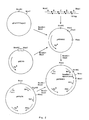
- Fig. 2 shows the construction of plasmid pKFN-802 and pKFN-803.
- Fig. 3 shows the construction of plasmid pKFN-849 and pKFN-855.
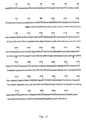
- Fig. 4 shows the DNA sequence of a 406 bp EcoRI-Xbal fragment from pKFN-849 and pKFN-855.
- the arrow denotes the site at which proteolytic cleavage takes place during secretion.
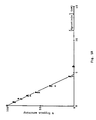
- Fig. 5A and 5B show the inhibition of trypsin and plasmin, respectively, by aprotinin; ⁇ denotes bovine pancreatic aprotinin, X denotes GluLeu-aprotinin and ⁇ denotes GluLeuAspLeu-aprotinin.
- Fig. 6 shows the construction of plasmids pKFN-852 and pKFN-858.
- Fig. 7 shows the DNA sequence of a 412 bp EcoRI-Xbal fragment from pKFN-852 and pKFN-858.
- the arrow denotes the site at which proteolytic cleavage takes place during secretion.
- Fig. 8 shows the construction of plasmid pKFN-995 and pKFN-998.
- Fig. 9 shows the DNA sequence of a 412 bp EcoRI-Xbal fragment from pKFN-995 and pKFN-998.
- the arrow denotes the site of proteolytic cleavage during secretion.
- Fig. 10 shows the construction of plasmids pKFN-1000 and pKFN-1003.
- Fig. 11 shows the DNA sequence of the 412 bp EcoRI-Xbal fragment from pKFN-1000 and pKFN-1003.
- the arrow denotes the site at which proteolytic cleavage takes place during secretion.
- Fig. 12 shows the DNA sequence of a synthetic aprotinin(3-58) gene.
- the staggered lines within the sequence indicate the sites where five duplexes formed from 10 synthesized oligonucleotides are ligated.
- Fig. 13 shows the construction of plasmid pKFN-305 and pKFN-374/375.
- Fig. 14 shows the construction of plasmid pMT-636.
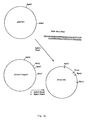
- Fig. 15 shows the construction of plasmid pLaC-240.
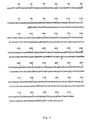
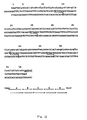
- Fig. 16 shows the DNA sequence of the modified leader-insulin precursor gene from pLaC-240.
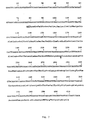
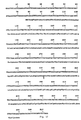
- Fig. 17 shows the DNA sequence of a 508 bp EcoRI-Xbal fragment from pKFN-458 encoding the MF ⁇ 1-signal-leader(1-85) and insulin analogue precursor B(1-29,1Glu + 27Glu)-AlaAlaLys-A(1-21).
- a synthetic gene coding for aprotinin(1-58) was constructed from 10 oligonucleotides by ligation.
- oligonucleotides were synthesized on an automatic DNA synthesizer using phosphoramidite chemistry on a controlled pore glass support (Beaucage, S.L., and Caruthers, M.H., Tetrahedron Letters 22, (1981)1859-1869).
- oligonucleotides were synthesized: 5 duplexes A - E were formed from the above 10 oligonucleotides as shown in Fig. 1.
- each of the duplexes A - E 20 pmole of each of the duplexes A - E were formed from the corresponding pairs of 5'-phosphorylated oligonucleotides by heating for 5 min. at 90°C followed by cooling to room temperature over a period of 75 minutes.
- the five duplexes were mixed and treated with T 4 DNA ligase.
- the synthetic gene was isolated as a 191 bp band after electrophoresis of the ligation mixture on a 2% agarose gel. The obtained synthetic gene is shown in Fig. 1.
- the synthetic gene was ligated to a 209 bp EcoRl-Ncol fragment from pLaC212spx3 and to the 2.7 kb EcoRI-Xbal fragment of plasmid pUC19 (Yanisch-Perron, C., Vieira, J. and Messing, J., Gene 33 (1985), 103-119). Plasmid pLaC212spx3 is described in Example 3 of International Patent Application, Publication No. WO 89/02463.
- the 209 bp EcoRl-Ncol fragment from pLaC212spx3 encodes a synthetic yeast leader peptide.
- the ligation mixture was used to transform a competent E. coli strain r - , m + ) selecting for ampicillin resistance. Sequencing of a 32 P-Xbal-EcoRl fragment (Maxam, A. and Gilbert, W., Methods Enzymol. 65 - (1980), 499-560) showed that plasmids from the resulting colonies contained the correct DNA sequence for aprotinin(1.58).
- Plasmid pKFN802 was selected for further use.
- the construction of plasmid pKFN802 is illustrated in Fig. 2.
- the 3.0 kb Ncol-Stul fragment of pKFN-802 was ligated to the synthetic fragment NOR-790/791 with T 4 DNA ligase:
- the ligation mixture was digested with the restriction enzyme Stul in order to reduce any background of pKFN-802, and the resulting mixture was used to transform a competent E. coli strain (r - , m + ) selecting for ampicillin resistance.
- Plasmid pKFN-849 from one of the resulting colonies was shown by DNA sequencing (Sanger, F., Micklen, S., and Coulson, A.R., Proc.Natl.Acad.Sci. USA 74 (1977), 5463-5467) to contain the DNA sequence for Glu-Leu-Aprotinin(1.58) correctly fused to the synthetic yeast leader gene.
- the construction of plasmid pKFN-849 is illustrated in Fig. 3.
- Plasmid pMT636 is described in International Patent Application No. PCT/DK88/00138.
- pMT636 is an E. coli - S. cerevisiae shuttle vector containing the Schizosaccharomyces pombe TPI gene (POT) (Russell, P.R., Gene 40 (1985), 125-130), the S. cerevisiae triosephosphate isomerase promoter and terminator, TPlp and TPI T (Alber, T., and Kawasaki, G. J.Mol.Appl.Gen. 1 (1982), 419-434).
- POT Schizosaccharomyces pombe TPI gene
- Plasmid pKFN-855 contains the following sequence: TPlp-LaC212spx3 signal-leader-Glu-Leu-aprotinin(1-58)-TPIT where LaC212spx3 signal-leader is the synthetic yeast leader described in International Patent Application, Publication No. WO 89/02463.
- the DNA sequence of the 406 bp EcoRI-Xbal fragment from pKFN-849 and pKFN-855 is shown in Fig. 4.
- S. cerevisiae strain MT663 (E2-7B XE11.36 a/ ⁇ , ⁇ tpi ⁇ tpi, pep 4-3/pep 4-3) was grown on YPGaL (1% Bacto yeast extract, 2% Bacto peptone, 2% galactose, 1% lactate) to an O.D. at 600 nm of 0.6.
- 0.1 ml of CAS-resuspended cells were mixed with approx. 1 ⁇ g of plasmid pKFN-855 and left at room temperature for 15 minutes.
- a synthetic gene encoding Glu-Leu-Asp-Leu-aprotinin(1-58) was constructed as described in Example 1.
- the synthetic fragment NOR-793/794 was used instead of NOR-790/791:
- the pUC19 derived plasmid pKFN-852 was constructed in a similar way as pKFN-849.
- a plasmid pKFN-858 was obtained containing the following construction TPl p -LaC212spx3 signal-leader-GluLeuAspLeu-aprotinin(1-58)-TPl T .
- plasmids pKFN-852 and pKFN-858 are illustrated in Fig. 6.
- the DNA sequence of the 412 bp EcoRI-Xbal fragment from pKFN-852 and pKFN-858 is given in Fig. 7.
- Plasmid pKFN-858 was transformed into yeast strain MT663 as described above resulting in yeast strain KFN-840.
- the amino acid analysis appears from table 1 and confirms the expected amino acid composition.
- Plasmid pKFN-995 was constructed from pKFN-802 by ligation of the 3.0 kb Ncol-Stul fragment to the synthetic fragment NOR-848/849: The ligation mixture was digested with the restriction enzyme Ball in order to reduce any background of pKFN-802.
- the yeast expression plasmid pKFN-998 was constructed substantially as described in Example 1 and as shown in Fig. 8: TPl p -LaC212spx3 signal-leader(1-47) Lys-Glu-Leu-Glu(Lys-Arg)-aprotinin(1-58) -TPl T
- the DNA sequence of the 412 bp EcoRI-Xbal fragment from pKFN-995 and pKFN-998 is given in Fig. 9.
- Plasmid pKFN-998 was transformed into yeast strain MT663 as described in Example 1 resulting in yeast strain KFN-1006. Culturing of the transformed strain KFN-1006 in YPD-medium and analysis for aprotinin(1-58) in the supernatant was performed as described above.
- the yield was 30 mg/liter of aprotinin(1.58).
- the amino acid analysis of the purified material confirmed the expected amino acid composition.
- the pUC-derived plasmid pKFN-1000 was constructed as described in Example 1 by ligation of the 3.0 kb Ncol-Stul fragment of pKFN-802 to the synthetic fragment NOR-850/851: By following the procedure of Examples 1 and 3 a yeast expression plasmid pKFN-1003 was obtained containing the following construction TPlp-LaC212spx3 signal-leader(1-47)-GluArgLeuGlu(Lys-Arg)-aprotinin(1-58).TPI T .
- plasmids pKFN-1000 and pKFN-1003 The construction of plasmids pKFN-1000 and pKFN-1003 is illustrated in fig. 10.
- the DNA sequence of the 412 bp EcoRI-Xbal fragment from pKFN-1000 and pKFN-1003 is given in fig. 11.
- Plasmid pKFN-1003 was transformed in yeast strain MT663 as described above resulting in yeast strain KFN-1008.
- the amino acid analysis of purified material confirmed the expected amino acid composition.
- confirmation of the complete primary structure was obtained by gas phase sequencing of the reduced, pyridylethylated polypeptide.
- Plasmid pKFN-802 (cf. Example 1) was cut with EcoRi and Xbal and the 400 bp fragment was ligated to the 9.5 kb Ncol-Xbal fragment from pMT636 and the 1.4 kb Ncol-EcoRI fragment from pMT636, resulting in plasmid pKFN-803, see fig. 2.
- pKFN-803 contains the following construction: TPl P -LaC212spx3 signal-leader-aprotinin(1-58)-TPI T Plasmid pKFN-803 was transformed in yeast strain MT663 as described above.
- Amino acid composition Amino Acid Aprotinin Theoretical Aprotinin Found KFN-837 Found KFN-840 Found Asp 5 5.00 4.95 5.93 (+ 1) Thr 3 2.86 2.84 2.85 Ser 1 0.94 0.92 0.93 Glu 3 3.04 3.97 (+ 1) 3.99 (+ 1) Pro 4 4.18 3.90 3.86 Gly 6 5.95 5.91 5.94 Ala 6 5.85 5.92 5.94 Cys 6 5.20 5.21 5.22 Val 1 0.99 1.00 1.01 Met 1 0.83 0.65 0.67 lle 2 1.39 1.58 1.58 Leu 2 1.97 3.00 (+ 1) 4.00 (+ 2) Tyr 4 3.84 3.74 3.71 Phe 4 3.98 3.94 3.92 Lys 4 3.92 3.99 3.99 Arg 6 6.39 6.35 6.34 Totals 58 56.33 57.87 59.88
- a synthetic gene for aprotinin(3-58) was constructed from a number of oligonucleotides by ligation.
- the following 10 oligonucleotides were synthesized as described in Example 1: 5 duplexes A - E were formed from the above 10 oligonucleotides as shown in fig. 12.
- each of the duplexes A - E 20 pmole of each of the duplexes A - E was formed from the corresponding pairs of 5'-phosphorylated oligonucleotides I-X by heating for 5 min. at 90°C followed by cooling to room temperature over a period of 75 minutes.
- the five duplexes were mixed and treated with T4 ligase.
- the synthetic gene was isolated as a 176 bp band after electrophoresis of the ligation mixture on a 2% agarose gel. The obtained synthetic gene is shown in fig. 12.
- the synthetic 176 bp gene was ligated to a 330 bp EcoRl-Hgal fragment from plasmid pKFN-9 coding for the S. cerevisiae mating factor ⁇ 1 signal-leader (1-85) sequence (Markussen, J. et al., Protein-Engineering 1 (1987), 215-223) and to the 2.7 kb EcoRI-Xbal fragment from pUC19 (Yanish-Perron, C., Vieira, J. and Messing, J., Gene 33 (1985), 103-119).
- the construction of pKFN-9 containing a Hgal site immediately after the MF ⁇ 1 leader sequence is described in EP 214 826.
- the ligation mixture was used to transform a competent E. coli strain (r - , m + ) selecting for ampicillin resistance. Sequencing of a 32 P-Xbal-EcoRl fragment (Maxam, A. and Gilbert, W., Methods Enzymol. 65 - (1980), 499-560) showed that plasmids from the resulting colonies contained the correct DNA-sequence for aprotinin(3-58).
- Plasmid pKNF305 was selected for further use.
- the construction of plasmid pKFN305 is illustrated in fig. 13.
- Plasmid pMT636 was constructed from pMT608 after deletion of the LEU-2 gene and from pMT479, see fig. 14.
- pMT608 is described in EP 195 691.
- pMT479 is described in EP 163 529.
- pMT479 contains the Schizosaccharomyces pombe TPI gene (POT), the S.
- Plasmid pKFN374 contains the following sequence: TPl P -MF ⁇ 1 -signal-leader(1-85)-aprotinin(3-58)-TPI T .
- MF ⁇ 1 is the S. cerevisiae mating factor alpha 1 coding sequence (Kurjan, J.
- signal-leader (1-85) means that the sequence contains the first 85 amino acid residues of the MF ⁇ 1 signal-leader sequence and aprotinin(3-58) is the synthetic sequence encoding an aprotinin derivative lacking the first two amino acid residues.
- S. cerevisiae strain MT663 (E2-7B XE11.36 a/ ⁇ , ⁇ tpi ⁇ tpi, pep 4-3/pep 4-3) was grown on YPGaL (1% Bacto yeast extract, 2% Bacto peptone, 2% galactose, 1% lactate) to an O.D. at 600 nm of 0.6.
- 0.1 ml of CAS-resuspended cells were mixed with approximately 1 ⁇ g of plasmid pKFN374 and left at room temperature for 15 minutes.
- Yeast strain KFN322 was grown on YPD medium (1% yeast extract, 2% peptone (from Difco Laboratories), and 2% glucose). A 10 ml culture of the strain was shaken at 30°C to an O.D. at 600 nm of 32. After centrifugation the supernatant was analyzed by FPLC ion exchange chromatography. The yeast supernatant was filtered through a 0.22 ⁇ m Millex@ GV filter unit and 1 ml was applied on a MonoS cation exchange column (0.5 x 5 cm) equilibrated with 20 mM Bicine, pH 8.7.
- the 589bp Sphl-Ncol and the 172bp Hpal-Xbal fragments were isolated from pLaC212spx3 (described in WO 89/02463). These fragments were joined with the synthetic adaptor and the 10kb Xbal-Sphl fragment from pMT743 (described in WO 89/02463), resulting in the plasmid pLaC240 (see fig. 15). The DNA sequence of the modified leader-insulin precursor gene from pLaC240 is shown in fig. 16.
- Transformation of yeast strain MT663 with plasmid pLaC240 gave rise to an insulin precursor secreting strain, LaC1667 (MT663/pLaC240), the productivity of which is 165% relative to the strain LaC1414 (MT663/pLaC212spx3) containing the gene for the unmodified leader-insulin precursor described in WO 89/02463.
- B(1-29,1 Glu + 27Glu)-AlaAlaLys-A(1-21) By ligation of 10 oligonucleotides a synthetic gene coding for the insulin analogue precursor B(1-29,1 Glu + 27Glu)-AlaAlaLys-A(1-21) was constructed.
- B(1-29,1Glu +27Glu) signifies the polypeptide containing the first 29 amino acid residues of the B-chain of human insulin in which Glu residues have been substituted for the B1Phe and B27Thr residues.
- A(1-21) is the A-chain of human insulin.
- a tripeptide, AlaAlaLys connects the B29Lys residue to the A1Gly residue.
- oligonucleotides were synthesized: 5 duplexes were formed from the above 10 oligonucleotides and the duplexes were ligated in an similar way as described in Example 1.
- the synthetic 178bp gene was ligated to the 330bp EcoRl-Hgal fragment from pKFN-9 encoding the S. cerevisiae mating factor alpha 1 signal-leader (1-85) sequence (Markussen, J. et al., Protein Engineering 1 - (1987), 215-223) and to the 2.7kb EcoRI-Xbal fragment of plasmid pUC19 (Yanisch-Perron, C., Vieira, J. and Messing, J., Gene 33 (1985), 103-119).
- the ligation mixture was used to transform a competent E. coli strain (r - , m + ) selecting for ampicillin resistance. Sequencing of a 32 P-Xbal-EcoRl fragment (Maxam, A. and Gilbert, W., Methods Enzymol. 65 - (1980), 499-560) showed that plasmids from the resulting colonies contained the correct DNA sequence for the insulin analogue precursor.
- One plasmid pKFN-456 was selected for further use.
- Example 2 By following the procedure of Example 1 a yeast expression pladmid pKFN-458 was obtained containing the following expression cassette: TPl P -MF ⁇ 1-signal-leader(1-85)-B(1-29,1 Glu + 27Glu)-AlaAlaLys-A(1-21)-TPl T .
- Plasmid pKFN-458 was transformed into yeast strain MT-663 as described above resulting in yeast strain KFN-470.
- TPl P -MF ⁇ 1 -signal-leader(1-85)-precursor-TPl T Expression levels of precursors of insulin and insulin analogues in yeast transformants Precursor Expression Level B(1-29)-AlaAlaLys-A(1-21) 100% B(1-29),27Glu)-AlaAlaLys-A(1-21) 148% B(1-29,1Glu + 27Glu)-AlaAlaLys-A(1-21) 479%
Landscapes
- Health & Medical Sciences (AREA)
- Life Sciences & Earth Sciences (AREA)
- Genetics & Genomics (AREA)
- Chemical & Material Sciences (AREA)
- Engineering & Computer Science (AREA)
- Organic Chemistry (AREA)
- Biomedical Technology (AREA)
- Zoology (AREA)
- Molecular Biology (AREA)
- Bioinformatics & Cheminformatics (AREA)
- Wood Science & Technology (AREA)
- Biotechnology (AREA)
- General Health & Medical Sciences (AREA)
- Biochemistry (AREA)
- General Engineering & Computer Science (AREA)
- Biophysics (AREA)
- Medicinal Chemistry (AREA)
- Microbiology (AREA)
- Physics & Mathematics (AREA)
- Plant Pathology (AREA)
- Gastroenterology & Hepatology (AREA)
- Proteomics, Peptides & Aminoacids (AREA)
- Mycology (AREA)
- Endocrinology (AREA)
- Toxicology (AREA)
- Diabetes (AREA)
- Botany (AREA)
- Virology (AREA)
- Tropical Medicine & Parasitology (AREA)
- Preparation Of Compounds By Using Micro-Organisms (AREA)
- Micro-Organisms Or Cultivation Processes Thereof (AREA)
- Peptides Or Proteins (AREA)
- Medicines That Contain Protein Lipid Enzymes And Other Medicines (AREA)
- Silver Salt Photography Or Processing Solution Therefor (AREA)
- Chemical Or Physical Treatment Of Fibers (AREA)
- Processing Of Solid Wastes (AREA)
- Pharmaceuticals Containing Other Organic And Inorganic Compounds (AREA)
- Organic Low-Molecular-Weight Compounds And Preparation Thereof (AREA)
- Acyclic And Carbocyclic Compounds In Medicinal Compositions (AREA)
- Transition And Organic Metals Composition Catalysts For Addition Polymerization (AREA)
Claims (44)
- Ein Polypeptid, das eine Fusion eines Signalpeptids, eines Leaderpeptids und eines heterologen Proteins oder Polypeptids umfaßt, wobei das Polypeptid in seiner Aminosäuresequenz benachbart zu einer Hefe-Verarbeitungsstelle, die zwischen dem C-terminalen Ende des Leaderpeptids und dem N-terminalen Ende des heterologen Proteins angeordnet ist, modifiziert ist, um für eine Präsentation der Verarbeitungsstelle zu sorgen, die diese proteolytischer Spaltung zugänglich macht, wobei das Polypeptid die folgende Struktur besitztSignalpeptid-Leaderpeptid-X1-X2-X3-X4-heterologes Protein,worin X1 eine Peptidbindung ist oder eine oder mehrere Aminosäuren darstellt, die identisch oder verschieden sein können,X2 und X3 identisch oder verschieden sind und eine basische Aminosäure darstellen, die ausgewählt ist aus der Gruppe, die aus Lys und Arg besteht, wobei X2 und X3 zusammen eine HefeVerarbeitungsstelle definieren, undX4 eine Peptidbindung ist oder eine oder mehrere Aminosäuren darstellt, die identisch oder verschieden sein können,mit der Maßgabe, daß X1 und/oder X4 eine oder mehrere Aminosäuren darstellen und daß wenigstens eine der Aminosäuren, die durch X1 und/oder X4 dargestellt sind, eine negativ geladene Aminosäure ist, die ausgewählt ist aus der Gruppe, die aus Glu und Asp besteht, und mit der weiteren Maßgabe, daß, wenn X1 eine Peptidbindung ist, X4 nicht Glu-Ala-Glu-Ala, Glu-Ala-Glu-Ala-Glu-Ala, Glu-Ala-Glu-Ala-Ser-Leu-Asp-Lys-Arg oder Glu-Ala-Glu-Ala-Ser-Leu-Asp ist, und daß,wenn X4 eine Peptidbindung ist, X1 nicht Ser-Leu-Asp ist, und mit der weiteren Maßgabe, daß das Signalpeptid -Leaderpeptid - X1 nicht ist:α-Faktor Signal und Leader(1-85)-Glu-Ala-Glu-Ala-Ser-Leu-Asp,α-Faktor Signal und Leader(1-80)-Pro-Leu-Asp,α-Faktor Signal und Leader(1-80)-Gln-Leu-Asp,Met-Lys-Trp-Val-Ser-Phe-lle-Ser-Leu-Leu-Phe-Leu-Phe-Ser-Ser-Ala-Tyr-Ser-Arg-Ser-Leu-Asp.
- Ein Polypeptid nach Anspruch 1, wobei X1 Glu oder Asp darstellt.
- Ein Polypeptid nach Anspruch 1, wobei X1 eine Sequenz von zwei Aminosäuren mit der Struktur BA darstellt, worin A Glu oder Asp ist und B Glu, Asp, Val, Gly oder Leu ist.
- Ein Polypeptid nach Anspruch 1, wobei X1 eine Sequenz von drei Aminosäuren mit der Struktur CBA darstellt, worin A und B wie oben definiert sind und C Glu, Asp, Pro, Gly, Val, Leu, Arg oder Lys ist.
- Ein Polypeptid nach Anspruch 1, wobei X1 eine Sequenz von vier Aminosäuren mit der Struktur DCBA darstellt, worin A, B und C wie oben definiert sind und D dieselben Bedeutungen wie C besitzt.
- Ein Polypeptid nach Anspruch 1, wobei X1 eine Sequenz von fünf Aminosäuren mit der Struktur EDCBA darstellt, worin A, B, C und D wie oben definiert sind und E dieselben Bedeutungen wie C besitzt.
- Ein Polypeptid nach Anspruch 1, wobei X1 eine Sequenz von sechs Aminosäuren mit der Struktur FEDCBA darstellt, worin A, B, C, D und E wie oben definiert sind und F dieselben Bedeutungen wie C besitzt.
- Ein Polypeptid nach Anspruch 1, wobei X4 Glu oder Asp ist.
- Ein Polypeptid nach Anspruch 1, wobei X4 eine Sequenz von zwei Aminosäuren mit der Struktur AB darstellt, worin A Glu oder Asp ist und B Glu, Asp, Val, Gly oder Leu ist.
- Ein Polypeptid nach Anspruch 1, wobei X4 eine Sequenz von drei Aminosäuren mit der Struktur ABC darstellt, worin A und B wie oben definiert sind und C Glu, Asp, Pro, Gly, Val, Leu, Arg oder Lys ist.
- Ein Polypeptid nach Anspruch 1, wobei X4 eine Sequenz von vier Aminosäuren mit der Struktur ABCD darstellt, worin A, B und C wie oben definiert sind und D dieselben Bedeutungen wie C besitzt.
- Ein Polypeptid nach Anspruch 1, wobei X4 eine Sequenz von fünf Aminosäuren mit der Struktur ABCDE darstellt, worin A, B, C und D wie oben definiert sind und E dieselben Bedeutungen wie C besitzt.
- Ein Polypeptid nach Anspruch 1, wobei X4 eine Sequenz von sechs Aminosäuren mit der Struktur ABCDEF darstellt, worin A, B, C, D und E wie oben definiert sind und F dieselben Bedeutungen wie C besitzt.
- Ein Polypeptid nach Anspruch 1, wobei, wenn X1 und/oder X4 >1 Aminosäure darstellen, die unmittelbar zu X2 benachbarte Aminosäure Glu oder Asp ist, die unmittelbar zu X3 benachbarte Aminosäure Glu oder Asp ist oder beide Glu oder Asp sind.
- Ein Polypeptid nach Anspruch 1, wobei, wenn X1 und/oder X4 >1 Aminosäure darstellen, entweder X1 oder X4 oder beide mehr als ein Glu oder Asp umfassen.
- Ein Polypeptid nach Anspruch 1, wobei X1 und X4 beide ≥1 Aminosäure darstellen.
- Ein Polypeptid nach Anspruch 16, wobei X1 und X4 symmetrisch identisch sind.
- Ein Polypeptid nach Anspruch 1, wobei, wenn X4 eine oder mehrere Aminosäuren darstellt, eine zusätzliche Verarbeitungsstelle zwischen X4 und dem N-terminalen Ende des heterologen Proteins vorgesehen ist.
- Ein Polypeptid nach Anspruch 1, wobei das Signalpeptid das α-Faktor-Signalpeptid, das Signalpeptid von Mause-Speichelamylase, das Carboxypeptidase-Signalpeptid oder das Hefe-BAR1-Signalpeptid ist.
- Ein Polypeptid nach Anspruch 1, wobei das Leaderpeptid ein natürliches Leaderpeptid ist, wie etwa das α-Faktor-Leaderpeptid.
- Ein Polypeptid nach Anspruch 1, wobei das Leaderpeptid ein synthetisches Leaderpeptid ist, wie etwa





- Ein Polypeptid nach Anspruch 1, wobei das heterologe Protein oder Polypeptid ausgewählt ist aus der Gruppe, die aus Aprotinin oder anderen Protease-Inhibitoren, Insulin und Insulinvorläufern, Human- oder Rinder-Wachstumshormon, Interleukin, Gewebeplasminogenaktivator, Glucagon, Faktor VII, Faktor VIII, Faktor XIII, platelet derived growth factor, Enzymen und einem funktionalen Analog von irgendeinem dieser Proteine besteht.
- Ein Polypeptid nach Anspruch 22, wobei das heterologe Protein oder Polypeptid Aprotinin oder ein funktionales Analog desselben ist.
- Ein Polypeptid nach Anspruch 23, wobei X1 Glu-Arg-Leu-Glu oder Lys-Glu-Leu-Glu ist.
- Ein Polypeptid nach Anspruch 23, wobei X4 Glu-Leu oder Glu-Leu-Asp-Leu ist.
- Ein Polypeptid nach Anspruch 22, wobei das heterologe Protein oder Polmeptid Insulin oder ein Insulinvorläufer oder ein funktionales Analog derselben ist.
- Ein Polypeptid nach Anspruch 26, wobei X1 Glu-Arg-Leu-Glu oder Lys-Glu-Leu-Glu ist.
- Ein Polypeptid nach Anspruch 26, wobei X4 Glu ist.
- Ein Polypeptid nach einem der Ansprüche 26 - 28, wobei das heterologe Protein oder Polypeptid der Insulin-Vorläufer B(1-29)-AlaAlaLys-A(1-29) ist und wobei X1 Lys-Glu-Leu-Glu ist.
- Ein Polypeptid nach einem der Ansprüche 26 - 28, wobei das heterologe Protein oder Polypeptid der Insulin-Vorläufer B(1-29)-SerAspAspAlaLys-A(1-29) ist und wobei X1 Lys-Glu-Leu-Glu ist.
- Ein DNA-Konstrukt, das eine DNA-Sequenz umfaßt, die ein Polypeptid nach einem der Ansprüche 1 - 30 kodiert.
- Ein DNA-Konstrukt nach Anspruch 31, das die in Fig. 4, 7, 9 oder 11 dargestellte DNA-Sequenz oder eine geeignete Modifikation derselben umfaßt.
- Ein rekombinanter Expressionsvektor, der zur Replikation in Hefe in der Lage ist und der ein DNA-Konstrukt nach Anspruch 31 oder 32 trägt.
- Ein Hefestamm, der zur Expression eines heterologen Proteins oder Polypeptids in der Lage ist und der mit einem Vektor nach Anspruch 33 transformiert ist.
- Ein Verfahren zur Herstellung eines heterologen Proteins oder Polypeptids in Hefe, welches umfaßt, daß ein Hefestamm nach Anspruch 34 in einem geeigneten Medium kultiviert wird, um Expression und Sekretion/Verarbeitung des heterologen Proteins oder Polypeptids zu erreichen, woraufhin das Protein oder Polypeptid aus dem Medium isoliert wird.
- Ein Aprotinin-Analog der allgemeinen Formel X4-Aprotinin(1-58), worin X4 eine N-terminale Extension um eine oder mehrere Aminosäuren darstellt, von denen wenigstens eine eine negativ geladene Aminosäure ist, die ausgewählt ist aus der Gruppe, die aus Glu und Asp besteht.
- Ein Analog nach Anspruch 36, wobei X4 Glu oder Asp ist.
- Ein Analog nach Anspruch 36, wobei X4 eine Sequenz von zwei Aminosäuren mit der Struktur AB darstellt, worin A Glu oder Asp ist und B Glu, Asp, Val, Gly oder Leu ist.
- Ein Analog nach Anspruch 36, wobei X4 eine Sequenz von drei Aminosäuren mit der Struktur ABC darstellt, worin A und B wie oben definiert sind und C Glu, Asp, Pro, Gly, Val, Leu, Arg oder Lys ist.
- Ein Analog nach Anspruch 36, wobei X4 eine Sequenz von vier Aminosäuren mit der Struktur ABCD darstellt, worin A, B und C wie oben definiert sind und D dieselben Bedeutungen wie C besitzt.
- Ein Analog nach Anspruch 36, wobei X4 eine Sequenz von fünf Aminosäuren mit der Struktur ABCDE darstellt, worin A, B, C und D wie oben definiert sind und E dieselben Bedeutungen wie C besitzt.
- Ein Analog nach Anspruch 36, wobei X4 eine Sequenz von sechs Aminosäuren mit der Struktur ABCDEF darstellt, worin A, B, C, D und E wie oben definiert sind und F dieselben Bedeutungen wie C besitzt.
- Ein Polypeptid nach Anspruch 36, wobei, wenn X4 >1 Aminosäure darstellt, X4 mehr als ein Glu oder Asp umfaßt.
- Ein Analog nach Anspruch 36, wobei X4 Glu-Leu oder Glu-Leu-Asp-Leu ist.
Applications Claiming Priority (7)
| Application Number | Priority Date | Filing Date | Title |
|---|---|---|---|
| DK105489A DK105489D0 (da) | 1989-03-03 | 1989-03-03 | Polypeptid |
| DK1054/89 | 1989-03-03 | ||
| DK105489 | 1989-03-03 | ||
| DK494189 | 1989-10-06 | ||
| DK4941/89 | 1989-10-06 | ||
| DK494189A DK494189D0 (da) | 1989-10-06 | 1989-10-06 | Polypeptid |
| PCT/DK1990/000058 WO1990010075A1 (en) | 1989-03-03 | 1990-03-01 | Yeast processing system comprising a negatively charged amino acid adjacent to the processing site |
Publications (3)
| Publication Number | Publication Date |
|---|---|
| EP0461165A1 EP0461165A1 (de) | 1991-12-18 |
| EP0461165B1 EP0461165B1 (de) | 1994-08-24 |
| EP0461165B2 true EP0461165B2 (de) | 1998-03-25 |
Family
ID=26065137
Family Applications (1)
| Application Number | Title | Priority Date | Filing Date |
|---|---|---|---|
| EP90904258A Expired - Lifetime EP0461165B2 (de) | 1989-03-03 | 1990-03-01 | System zur bearbeitung von hefe, welches eine zur bearbeitungsstelle benachbarte negativ geladene aminosäure beeinhaltet |
Country Status (23)
| Country | Link |
|---|---|
| US (3) | US5395922A (de) |
| EP (1) | EP0461165B2 (de) |
| JP (1) | JP2609367B2 (de) |
| KR (1) | KR970005928B1 (de) |
| AT (1) | ATE110414T1 (de) |
| AU (1) | AU624694B2 (de) |
| CA (1) | CA2050336C (de) |
| CZ (1) | CZ285239B6 (de) |
| DD (1) | DD296965A5 (de) |
| DE (1) | DE69011853T3 (de) |
| DK (2) | DK105489D0 (de) |
| ES (1) | ES2062514T5 (de) |
| FI (1) | FI104985B (de) |
| HU (2) | HU215538B (de) |
| IE (1) | IE66469B1 (de) |
| IL (1) | IL93609A (de) |
| NO (2) | NO304236B1 (de) |
| NZ (1) | NZ232742A (de) |
| PL (1) | PL163532B1 (de) |
| RU (1) | RU2194758C2 (de) |
| UA (1) | UA27706C2 (de) |
| WO (1) | WO1990010075A1 (de) |
| ZA (1) | ZA901476B (de) |
Families Citing this family (73)
| Publication number | Priority date | Publication date | Assignee | Title |
|---|---|---|---|---|
| US5591603A (en) * | 1987-08-28 | 1997-01-07 | Novo Nordisk A/S | Process for preparing aprotinin and aprotinin analogs in yeast cells |
| DK105489D0 (da) * | 1989-03-03 | 1989-03-03 | Novo Nordisk As | Polypeptid |
| CA2057908A1 (en) * | 1989-05-19 | 1990-11-20 | John E. Cronan, Jr. | Fusion proteins having an in vivo post-translational modification site and methods of manufacture and purification |
| GB9015825D0 (en) * | 1990-07-18 | 1990-09-05 | Ciba Geigy Ag | In vitro processing of fusion proteins |
| DK300090D0 (da) * | 1990-12-19 | 1990-12-19 | Novo Nordisk As | Fremgangsmaade til fremstilling af leadersekvenser |
| GB9106185D0 (en) * | 1991-03-22 | 1991-05-08 | Wellcome Found | Biological control agents |
| FR2686899B1 (fr) * | 1992-01-31 | 1995-09-01 | Rhone Poulenc Rorer Sa | Nouveaux polypeptides biologiquement actifs, leur preparation et compositions pharmaceutiques les contenant. |
| FI92601C (fi) * | 1992-03-11 | 1994-12-12 | Marja Makarow | Menetelmä hyötyproteiinien erittämiseksi hiivoista |
| US5521086A (en) * | 1993-09-16 | 1996-05-28 | Cephalon, Inc. | Secretion sequence for the production of a heterologous protein in yeast |
| DE4417353A1 (de) * | 1994-05-18 | 1996-01-25 | Bayer Ag | Verfahren zur Herstellung von rekombinantem Aprotinin und rekombinanten Aprotinin Varianten mit der natürlichen N-terminlaen Sequenz |
| US6500645B1 (en) | 1994-06-17 | 2002-12-31 | Novo Nordisk A/S | N-terminally extended proteins expressed in yeast |
| ZA954983B (en) * | 1994-06-17 | 1996-02-14 | Novo Nordisk As | N-terminally extended proteins expressed in yeast |
| US5861267A (en) * | 1995-05-01 | 1999-01-19 | Vertex Pharmaceuticals Incorporated | Methods, nucleotide sequences and host cells for assaying exogenous and endogenous protease activity |
| ZA9610456B (en) * | 1995-12-20 | 1997-06-20 | Novo Nordisk As | N-terminally extended proteins expressed in yeast |
| US5851800A (en) * | 1996-05-14 | 1998-12-22 | Pharmacia & Upjohn Ab | Process for producing a protein |
| DE19629982A1 (de) | 1996-07-25 | 1998-01-29 | Bayer Ag | Aprotinin-Varianten mit verbesserten Eigenschaften |
| DE69725881T2 (de) | 1996-12-13 | 2004-09-09 | Chiron Corp. (N.D.Ges.D. Staates Delaware), Emeryville | Verfahren zur expression von heterologen proteinen in hefe |
| EP0946735B1 (de) * | 1996-12-20 | 2006-02-08 | Novo Nordisk A/S | N-terminal verlängerte proteine exprimiert in hefe |
| JP2001527387A (ja) * | 1997-01-24 | 2001-12-25 | ノボ ノルディスク アクティーゼルスカブ | 合成リーダーペプチド配列 |
| US6046000A (en) * | 1997-11-07 | 2000-04-04 | Millennium Biotherapeutics, Inc. | Method for identifying genes encoding signal sequences |
| JP2003525570A (ja) | 1998-01-23 | 2003-09-02 | ノボ ノルディスク アクティーゼルスカブ | 酵母において所望のポリペプチドを産生する方法 |
| EP1246933B1 (de) | 1999-12-29 | 2010-07-21 | Novo Nordisk A/S | VERFAHREN ZUR HERSTELLUNG VON INSULINVORLäUFERN UND ANALOGEN VON INSULINVORLÄUFERN MIT VERBESSERTER FERMENTATIONSAUSBEUTE IN HEFE |
| US20050100991A1 (en) * | 2001-04-12 | 2005-05-12 | Human Genome Sciences, Inc. | Albumin fusion proteins |
| EP2206720A1 (de) * | 2000-04-12 | 2010-07-14 | Human Genome Sciences, Inc. | Albuminfusionsproteine |
| US7507413B2 (en) * | 2001-04-12 | 2009-03-24 | Human Genome Sciences, Inc. | Albumin fusion proteins |
| US20050054051A1 (en) * | 2001-04-12 | 2005-03-10 | Human Genome Sciences, Inc. | Albumin fusion proteins |
| US7595172B2 (en) | 2001-07-24 | 2009-09-29 | Novo Nordisk A/S | Method for making acylated polypeptides |
| EP2261250B1 (de) * | 2001-12-21 | 2015-07-01 | Human Genome Sciences, Inc. | GCSF-Albumin Fusionsproteine |
| AU2002364587A1 (en) * | 2001-12-21 | 2003-07-30 | Human Genome Sciences, Inc. | Albumin fusion proteins |
| US7309505B2 (en) | 2002-09-13 | 2007-12-18 | Cornell Research Foundation, Inc. | Using mutations to improve Aspergillus phytases |
| CA2513213C (en) | 2003-01-22 | 2013-07-30 | Human Genome Sciences, Inc. | Albumin fusion proteins |
| EP1687428A1 (de) | 2003-11-14 | 2006-08-09 | Novo Nordisk A/S | Verfahren zur herstellung von acyliertem insulin |
| CN1902226A (zh) | 2003-12-03 | 2007-01-24 | 诺和诺德公司 | 单链胰岛素 |
| CN102660614A (zh) | 2005-08-16 | 2012-09-12 | 诺沃-诺迪斯克有限公司 | 制备成熟胰岛素多肽的方法 |
| EP1991576B1 (de) | 2006-02-27 | 2010-09-29 | Novo Nordisk A/S | Insulinderivate |
| US8198046B2 (en) | 2006-07-11 | 2012-06-12 | Danisco Us Inc. | KEX2 cleavage regions of recombinant fusion proteins |
| US20080026376A1 (en) * | 2006-07-11 | 2008-01-31 | Huaming Wang | KEX2 cleavage regions of recombinant fusion proteins |
| DK2074141T3 (en) | 2006-09-22 | 2016-11-28 | Novo Nordisk As | The protease resistant insulin analogues. |
| EP2069502B1 (de) | 2006-09-27 | 2014-02-26 | Novo Nordisk A/S | Verfahren zur herstellung gereifter insulinpolypeptide |
| EP2084179B1 (de) | 2006-11-22 | 2013-05-22 | Novo Nordisk A/S | Verfahren zur herstellung aktivierter carboxypeptidasen |
| WO2009010428A1 (en) | 2007-07-16 | 2009-01-22 | Novo Nordisk A/S | Protease stabilized, pegylated insulin analogues |
| JP5710253B2 (ja) | 2007-08-13 | 2015-04-30 | ノボ・ノルデイスク・エー/エス | 速効型インスリンアナログ |
| EP2178910B1 (de) | 2007-08-15 | 2014-10-08 | Novo Nordisk A/S | Insuline mit einer acyl-einheit mit verstärkungseinheiten aus alkylenglycol mit aminosäuren |
| KR20100053561A (ko) | 2007-08-15 | 2010-05-20 | 노보 노르디스크 에이/에스 | 아실 및 알킬렌 글리콜 부분을 갖는 인슐린 유사체 |
| US8501449B2 (en) | 2007-12-04 | 2013-08-06 | Proteon Therapeutics, Inc. | Recombinant elastase proteins and methods of manufacturing and use thereof |
| CN102037008B (zh) | 2008-03-18 | 2016-08-31 | 诺沃-诺迪斯克有限公司 | 蛋白酶稳定化的、酰化胰岛素类似物 |
| ES2563553T3 (es) | 2008-04-01 | 2016-03-15 | Novo Nordisk A/S | Conjugados de insulina-albúmina |
| EP2406377B1 (de) * | 2009-03-12 | 2016-01-06 | Bigtec Private Limited | Polynukleotid- und polypeptidsequenz sowie verfahren dafür |
| AU2010264636B2 (en) | 2009-06-26 | 2013-06-27 | Novo Nordisk A/S | Preparation comprising insulin, nicotinamide and an amino acid |
| US8815541B2 (en) | 2009-11-25 | 2014-08-26 | Novo Nordisk A/S | Method for making polypeptides |
| ES2543634T3 (es) | 2010-01-22 | 2015-08-20 | Novo Nordisk A/S | Proceso para preparación de FGF-21 con grado de O-glicosilación bajo |
| CN102933599A (zh) | 2010-06-23 | 2013-02-13 | 诺沃—诺迪斯克有限公司 | 包含额外的二硫键的人胰岛素 |
| EP2585484A1 (de) | 2010-06-23 | 2013-05-01 | Novo Nordisk A/S | Zusätzliche disulfidbindungen enthaltende insulinanaloga |
| RU2598273C2 (ru) | 2010-06-23 | 2016-09-20 | Ново Нордиск А/С | Производные инсулина, содержащие дополнительные дисульфидные связи |
| MX2013006174A (es) | 2010-12-14 | 2013-07-15 | Novo Nordisk As | Preparacion que comprende insulina, nicotinamida y un aminoacido. |
| JP2013545782A (ja) | 2010-12-14 | 2013-12-26 | ノヴォ ノルディスク アー/エス | 長時間作用型インスリンと組み合わせた速効型インスリン |
| CN103596584B (zh) | 2011-06-15 | 2016-12-14 | 诺沃—诺迪斯克有限公司 | 多取代的胰岛素 |
| RU2460795C1 (ru) * | 2011-07-06 | 2012-09-10 | Федеральное государственное унитарное предприятие "Государственный научно-исследовательский институт генетики и селекции промышленных микроорганизмов" (ФГУП "ГосНИИгенетика") | Способ микробиологического синтеза секретируемого соматотропина человека и штамм дрожжей saccharomyces cerevisiae - продуцент секретируемого соматотропина человека |
| WO2013186138A1 (en) | 2012-06-14 | 2013-12-19 | Novo Nordisk A/S | Preparation comprising insulin, nicotinamide and arginine |
| US9707276B2 (en) | 2012-12-03 | 2017-07-18 | Merck Sharp & Dohme Corp. | O-glycosylated carboxy terminal portion (CTP) peptide-based insulin and insulin analogues |
| CN103254277B (zh) * | 2013-05-03 | 2017-02-08 | 南京工业大学 | 强分泌性信号肽增强小肽模序及其应用 |
| JP2016521701A (ja) | 2013-06-07 | 2016-07-25 | ノヴォ ノルディスク アー/エス | 成熟インスリンポリペプチドを作製するための方法 |
| PL233560B1 (pl) | 2014-12-05 | 2019-10-31 | Mabion Spolka Akcyjna | Sposób otrzymywania insuliny lub analogu insuliny z prekursora rekombinowanego białka |
| US10562951B2 (en) | 2015-03-10 | 2020-02-18 | Merck Sharp & Dohme Corp. | Process for preparing recombinant insulin using microfiltration |
| JP6983075B2 (ja) | 2015-06-02 | 2021-12-17 | ノヴォ ノルディスク アー/エス | 極性の組換え延長部を有するインスリン |
| MX2018002223A (es) | 2015-08-25 | 2018-03-23 | Novo Nordisk As | Derivados de insulina novedosos y usos medicos de los mismos. |
| EP3341401A1 (de) | 2015-08-25 | 2018-07-04 | Novo Nordisk A/S | Neuartige insulinderivate und medizinische verwendungen davon |
| JP2018531899A (ja) | 2015-08-25 | 2018-11-01 | ノヴォ ノルディスク アー/エス | 新規インスリン誘導体及びその医学的使用 |
| KR102043067B1 (ko) * | 2017-08-08 | 2019-11-11 | 엘지전자 주식회사 | 차량용 사이드 미러 및 차량 |
| CN111032685A (zh) | 2017-08-17 | 2020-04-17 | 诺沃挪第克公司 | 新型酰化胰岛素类似物及其用途 |
| EP4480492A3 (de) | 2019-12-11 | 2025-03-19 | Novo Nordisk A/S | Neue insulinanaloga und verwendungen davon |
| WO2023144240A1 (en) | 2022-01-26 | 2023-08-03 | Novo Nordisk Research Centre Oxford Limited | Glucose sensitive insulin derivatives and uses thereof |
| DE202024104234U1 (de) | 2024-07-26 | 2024-12-18 | Australian Geekkit Health Pty Ltd | Peptid-Struktur-Partikel mit Signalübertragung |
Family Cites Families (16)
| Publication number | Priority date | Publication date | Assignee | Title |
|---|---|---|---|---|
| AU5712580A (en) * | 1979-04-05 | 1980-10-09 | James Joseph Connell | Engine charging and scavenging |
| US4546082A (en) * | 1982-06-17 | 1985-10-08 | Regents Of The Univ. Of California | E. coli/Saccharomyces cerevisiae plasmid cloning vector containing the alpha-factor gene for secretion and processing of hybrid proteins |
| JPS60501140A (ja) * | 1983-04-22 | 1985-07-25 | アムジエン | 酵母による外因性ポリペプチドの分泌 |
| US4588684A (en) * | 1983-04-26 | 1986-05-13 | Chiron Corporation | a-Factor and its processing signals |
| DK58285D0 (da) * | 1984-05-30 | 1985-02-08 | Novo Industri As | Peptider samt fremstilling og anvendelse deraf |
| EP0195680A3 (de) * | 1985-03-21 | 1987-06-10 | Immunex Corporation | Proteinsynthese mit einem Identifizierungspeptid |
| AU5912586A (en) * | 1985-06-20 | 1986-12-24 | Salk Institute Biotechnology/Industrial Associates, Inc., The | Alpha-factor leader peptide-facilitated secretion from transformed s cerevisiae |
| MC1834A1 (fr) * | 1986-07-10 | 1988-06-03 | Transgene Sa | Bloc fonctionnel d'adn et plasmide codant pour l'hirudine,levure transformee,procede de preparation de l'hirudine,hirudine obtenue et son utilisation |
| US4987070A (en) * | 1987-03-04 | 1991-01-22 | Suntory Limited | Use of a 97 amino acid leader sequence from the E. coli B-galactosidase gene for the production of hanp and hptc as fusion proteins |
| WO1988010299A1 (en) * | 1987-06-24 | 1988-12-29 | Novo-Nordisk A/S | A process for preparing a protein or polypeptide, a dna sequence coding for the polypeptide, a microorganism containing the dna sequence as well as the polypeptide and its use as a pharmaceutical preparation |
| DK450187D0 (da) * | 1987-08-28 | 1987-08-28 | Novo Industri As | Fremgangsmaade til fremstilling af proteiner |
| DK463887D0 (da) * | 1987-09-07 | 1987-09-07 | Novo Industri As | Gaerleader |
| JPH01240191A (ja) * | 1988-02-16 | 1989-09-25 | Green Cross Corp:The | 酵母で機能する新規シグナルペプチドおよびこれを用いた異種蛋白質の分泌発現 |
| DK336188D0 (da) * | 1988-06-20 | 1988-06-20 | Nordisk Gentofte | Propeptider |
| WO1990001063A1 (en) * | 1988-07-23 | 1990-02-08 | Delta Biotechnology Limited | New secretory leader sequences |
| DK105489D0 (da) * | 1989-03-03 | 1989-03-03 | Novo Nordisk As | Polypeptid |
-
1989
- 1989-03-03 DK DK105489A patent/DK105489D0/da not_active Application Discontinuation
-
1990
- 1990-02-27 ZA ZA901476A patent/ZA901476B/xx unknown
- 1990-03-01 JP JP2504527A patent/JP2609367B2/ja not_active Expired - Lifetime
- 1990-03-01 CA CA002050336A patent/CA2050336C/en not_active Expired - Fee Related
- 1990-03-01 KR KR1019910701029A patent/KR970005928B1/ko not_active Expired - Fee Related
- 1990-03-01 RU SU5010019/13A patent/RU2194758C2/ru not_active IP Right Cessation
- 1990-03-01 UA UA5010019A patent/UA27706C2/uk unknown
- 1990-03-01 ES ES90904258T patent/ES2062514T5/es not_active Expired - Lifetime
- 1990-03-01 AU AU52612/90A patent/AU624694B2/en not_active Ceased
- 1990-03-01 HU HU902376A patent/HU215538B/hu not_active IP Right Cessation
- 1990-03-01 DK DK90904258.2T patent/DK0461165T3/da active
- 1990-03-01 NZ NZ232742A patent/NZ232742A/xx unknown
- 1990-03-01 AT AT90904258T patent/ATE110414T1/de not_active IP Right Cessation
- 1990-03-01 WO PCT/DK1990/000058 patent/WO1990010075A1/en not_active Ceased
- 1990-03-01 EP EP90904258A patent/EP0461165B2/de not_active Expired - Lifetime
- 1990-03-01 DE DE69011853T patent/DE69011853T3/de not_active Expired - Lifetime
- 1990-03-02 CZ CS901039A patent/CZ285239B6/cs not_active IP Right Cessation
- 1990-03-02 IE IE74990A patent/IE66469B1/en not_active IP Right Cessation
- 1990-03-02 DD DD90338353A patent/DD296965A5/de unknown
- 1990-03-02 IL IL9360990A patent/IL93609A/en not_active IP Right Cessation
- 1990-03-02 PL PL90284146A patent/PL163532B1/pl not_active IP Right Cessation
-
1991
- 1991-09-02 FI FI914125A patent/FI104985B/fi not_active IP Right Cessation
- 1991-09-02 NO NO913427A patent/NO304236B1/no unknown
-
1994
- 1994-02-15 US US08/196,887 patent/US5395922A/en not_active Expired - Lifetime
-
1995
- 1995-03-02 US US08/397,595 patent/US5510249A/en not_active Expired - Lifetime
- 1995-03-02 US US08/397,597 patent/US5514585A/en not_active Expired - Lifetime
- 1995-06-29 HU HU95P/P00592P patent/HU211600A9/hu unknown
-
1997
- 1997-10-23 NO NO974899A patent/NO974899L/no unknown
Also Published As
Similar Documents
| Publication | Publication Date | Title |
|---|---|---|
| EP0461165B2 (de) | System zur bearbeitung von hefe, welches eine zur bearbeitungsstelle benachbarte negativ geladene aminosäure beeinhaltet | |
| US6500645B1 (en) | N-terminally extended proteins expressed in yeast | |
| JP3730255B2 (ja) | イーストにおいて発現されたn末端に伸長した蛋白質 | |
| US5316923A (en) | Synthetic yeast leader peptides | |
| JP3085973B2 (ja) | 組換え酵母による成熟タンパク質の分泌に関するシグナルペプチドについてコードする配列として新規dna断片の適用、発現カセット、形質転換酵母及びそれに対応するタンパク質の製造方法 | |
| US6214547B1 (en) | Synthetic leader peptide sequences | |
| EP0792367B1 (de) | Für das yap3 signalpeptid kodierendes dna-konstrukt | |
| JPH10501413A (ja) | 合成リーダーペプチド配列類 | |
| EP0946735B1 (de) | N-terminal verlängerte proteine exprimiert in hefe | |
| JP2806958B2 (ja) | アプロチニン相同体及び酵母におけるアプロチニン及びアプロチニン相同体の生成方法 | |
| EP0868523B1 (de) | Vektor zur expression von n-terminal verlängerten proteinen in hefezellen | |
| US20020192753A1 (en) | Method of making proteins in transformed yeast cells | |
| EP1097228B1 (de) | Verfahren zur herstellung von proteinen in transformierten hefezellen |
Legal Events
| Date | Code | Title | Description |
|---|---|---|---|
| PUAI | Public reference made under article 153(3) epc to a published international application that has entered the european phase |
Free format text: ORIGINAL CODE: 0009012 |
|
| 17P | Request for examination filed |
Effective date: 19910812 |
|
| AK | Designated contracting states |
Kind code of ref document: A1 Designated state(s): AT BE CH DE DK ES FR GB IT LI LU NL SE |
|
| 17Q | First examination report despatched |
Effective date: 19931025 |
|
| GRAA | (expected) grant |
Free format text: ORIGINAL CODE: 0009210 |
|
| AK | Designated contracting states |
Kind code of ref document: B1 Designated state(s): AT BE CH DE DK ES FR GB IT LI LU NL SE |
|
| REF | Corresponds to: |
Ref document number: 110414 Country of ref document: AT Date of ref document: 19940915 Kind code of ref document: T |
|
| REF | Corresponds to: |
Ref document number: 69011853 Country of ref document: DE Date of ref document: 19940929 |
|
| ITF | It: translation for a ep patent filed | ||
| REG | Reference to a national code |
Ref country code: DK Ref legal event code: T3 |
|
| ET | Fr: translation filed | ||
| REG | Reference to a national code |
Ref country code: ES Ref legal event code: FG2A Ref document number: 2062514 Country of ref document: ES Kind code of ref document: T3 |
|
| EAL | Se: european patent in force in sweden |
Ref document number: 90904258.2 |
|
| PLBI | Opposition filed |
Free format text: ORIGINAL CODE: 0009260 |
|
| 26 | Opposition filed |
Opponent name: UNILEVER N.V. Effective date: 19950522 |
|
| NLR1 | Nl: opposition has been filed with the epo |
Opponent name: UNILEVER N.V. |
|
| PLBF | Reply of patent proprietor to notice(s) of opposition |
Free format text: ORIGINAL CODE: EPIDOS OBSO |
|
| PLAW | Interlocutory decision in opposition |
Free format text: ORIGINAL CODE: EPIDOS IDOP |
|
| PLAW | Interlocutory decision in opposition |
Free format text: ORIGINAL CODE: EPIDOS IDOP |
|
| PUAH | Patent maintained in amended form |
Free format text: ORIGINAL CODE: 0009272 |
|
| STAA | Information on the status of an ep patent application or granted ep patent |
Free format text: STATUS: PATENT MAINTAINED AS AMENDED |
|
| 27A | Patent maintained in amended form |
Effective date: 19980325 |
|
| AK | Designated contracting states |
Kind code of ref document: B2 Designated state(s): AT BE CH DE DK ES FR GB IT LI LU NL SE |
|
| REG | Reference to a national code |
Ref country code: DK Ref legal event code: T4 |
|
| REG | Reference to a national code |
Ref country code: ES Ref legal event code: DC2A Kind code of ref document: T5 Effective date: 19980417 |
|
| NLR2 | Nl: decision of opposition | ||
| ITF | It: translation for a ep patent filed | ||
| NLR3 | Nl: receipt of modified translations in the netherlands language after an opposition procedure | ||
| ET3 | Fr: translation filed ** decision concerning opposition | ||
| REG | Reference to a national code |
Ref country code: GB Ref legal event code: IF02 |
|
| PGFP | Annual fee paid to national office [announced via postgrant information from national office to epo] |
Ref country code: CH Payment date: 20050301 Year of fee payment: 16 |
|
| PGFP | Annual fee paid to national office [announced via postgrant information from national office to epo] |
Ref country code: NL Payment date: 20050303 Year of fee payment: 16 |
|
| PGFP | Annual fee paid to national office [announced via postgrant information from national office to epo] |
Ref country code: SE Payment date: 20050304 Year of fee payment: 16 |
|
| PGFP | Annual fee paid to national office [announced via postgrant information from national office to epo] |
Ref country code: LU Payment date: 20050310 Year of fee payment: 16 |
|
| PGFP | Annual fee paid to national office [announced via postgrant information from national office to epo] |
Ref country code: AT Payment date: 20050311 Year of fee payment: 16 |
|
| PGFP | Annual fee paid to national office [announced via postgrant information from national office to epo] |
Ref country code: BE Payment date: 20050509 Year of fee payment: 16 |
|
| PG25 | Lapsed in a contracting state [announced via postgrant information from national office to epo] |
Ref country code: AT Free format text: LAPSE BECAUSE OF NON-PAYMENT OF DUE FEES Effective date: 20060301 |
|
| PG25 | Lapsed in a contracting state [announced via postgrant information from national office to epo] |
Ref country code: SE Free format text: LAPSE BECAUSE OF NON-PAYMENT OF DUE FEES Effective date: 20060302 |
|
| PG25 | Lapsed in a contracting state [announced via postgrant information from national office to epo] |
Ref country code: BE Free format text: LAPSE BECAUSE OF NON-PAYMENT OF DUE FEES Effective date: 20060331 Ref country code: CH Free format text: LAPSE BECAUSE OF NON-PAYMENT OF DUE FEES Effective date: 20060331 Ref country code: LU Free format text: LAPSE BECAUSE OF NON-PAYMENT OF DUE FEES Effective date: 20060331 Ref country code: LI Free format text: LAPSE BECAUSE OF NON-PAYMENT OF DUE FEES Effective date: 20060331 |
|
| PG25 | Lapsed in a contracting state [announced via postgrant information from national office to epo] |
Ref country code: NL Free format text: LAPSE BECAUSE OF NON-PAYMENT OF DUE FEES Effective date: 20061001 |
|
| REG | Reference to a national code |
Ref country code: CH Ref legal event code: PL |
|
| EUG | Se: european patent has lapsed | ||
| NLV4 | Nl: lapsed or anulled due to non-payment of the annual fee |
Effective date: 20061001 |
|
| BERE | Be: lapsed |
Owner name: *NOVO NORDISK A/S Effective date: 20060331 |
|
| PGFP | Annual fee paid to national office [announced via postgrant information from national office to epo] |
Ref country code: DK Payment date: 20090313 Year of fee payment: 20 |
|
| PGFP | Annual fee paid to national office [announced via postgrant information from national office to epo] |
Ref country code: GB Payment date: 20090225 Year of fee payment: 20 |
|
| PGFP | Annual fee paid to national office [announced via postgrant information from national office to epo] |
Ref country code: ES Payment date: 20090428 Year of fee payment: 20 |
|
| PGFP | Annual fee paid to national office [announced via postgrant information from national office to epo] |
Ref country code: DE Payment date: 20090226 Year of fee payment: 20 Ref country code: IT Payment date: 20090320 Year of fee payment: 20 |
|
| PGFP | Annual fee paid to national office [announced via postgrant information from national office to epo] |
Ref country code: FR Payment date: 20090316 Year of fee payment: 20 |
|
| REG | Reference to a national code |
Ref country code: DK Ref legal event code: EUP |
|
| REG | Reference to a national code |
Ref country code: GB Ref legal event code: PE20 Expiry date: 20100228 |
|
| REG | Reference to a national code |
Ref country code: ES Ref legal event code: FD2A Effective date: 20100302 |
|
| PG25 | Lapsed in a contracting state [announced via postgrant information from national office to epo] |
Ref country code: GB Free format text: LAPSE BECAUSE OF EXPIRATION OF PROTECTION Effective date: 20100228 |
|
| PG25 | Lapsed in a contracting state [announced via postgrant information from national office to epo] |
Ref country code: ES Free format text: LAPSE BECAUSE OF EXPIRATION OF PROTECTION Effective date: 20100302 |
|
| PG25 | Lapsed in a contracting state [announced via postgrant information from national office to epo] |
Ref country code: DE Free format text: LAPSE BECAUSE OF EXPIRATION OF PROTECTION Effective date: 20100301 |