EP0465600B1 - Production enzymatique d'acide 7-aminocephalosporanique - Google Patents
Production enzymatique d'acide 7-aminocephalosporanique Download PDFInfo
- Publication number
- EP0465600B1 EP0465600B1 EP90906671A EP90906671A EP0465600B1 EP 0465600 B1 EP0465600 B1 EP 0465600B1 EP 90906671 A EP90906671 A EP 90906671A EP 90906671 A EP90906671 A EP 90906671A EP 0465600 B1 EP0465600 B1 EP 0465600B1
- Authority
- EP
- European Patent Office
- Prior art keywords
- enzyme
- amino
- cephalosporin
- reactor
- cephalosporanic acid
- Prior art date
- Legal status (The legal status is an assumption and is not a legal conclusion. Google has not performed a legal analysis and makes no representation as to the accuracy of the status listed.)
- Expired - Lifetime
Links
Images
Classifications
-
- C—CHEMISTRY; METALLURGY
- C12—BIOCHEMISTRY; BEER; SPIRITS; WINE; VINEGAR; MICROBIOLOGY; ENZYMOLOGY; MUTATION OR GENETIC ENGINEERING
- C12N—MICROORGANISMS OR ENZYMES; COMPOSITIONS THEREOF; PROPAGATING, PRESERVING, OR MAINTAINING MICROORGANISMS; MUTATION OR GENETIC ENGINEERING; CULTURE MEDIA
- C12N1/00—Microorganisms; Compositions thereof; Processes of propagating, maintaining or preserving microorganisms or compositions thereof; Processes of preparing or isolating a composition containing a microorganism; Culture media therefor
- C12N1/20—Bacteria; Culture media therefor
-
- C—CHEMISTRY; METALLURGY
- C12—BIOCHEMISTRY; BEER; SPIRITS; WINE; VINEGAR; MICROBIOLOGY; ENZYMOLOGY; MUTATION OR GENETIC ENGINEERING
- C12P—FERMENTATION OR ENZYME-USING PROCESSES TO SYNTHESISE A DESIRED CHEMICAL COMPOUND OR COMPOSITION OR TO SEPARATE OPTICAL ISOMERS FROM A RACEMIC MIXTURE
- C12P35/00—Preparation of compounds having a 5-thia-1-azabicyclo [4.2.0] octane ring system, e.g. cephalosporin
- C12P35/02—Preparation of compounds having a 5-thia-1-azabicyclo [4.2.0] octane ring system, e.g. cephalosporin by desacylation of the substituent in the 7 position
-
- C—CHEMISTRY; METALLURGY
- C12—BIOCHEMISTRY; BEER; SPIRITS; WINE; VINEGAR; MICROBIOLOGY; ENZYMOLOGY; MUTATION OR GENETIC ENGINEERING
- C12N—MICROORGANISMS OR ENZYMES; COMPOSITIONS THEREOF; PROPAGATING, PRESERVING, OR MAINTAINING MICROORGANISMS; MUTATION OR GENETIC ENGINEERING; CULTURE MEDIA
- C12N1/00—Microorganisms; Compositions thereof; Processes of propagating, maintaining or preserving microorganisms or compositions thereof; Processes of preparing or isolating a composition containing a microorganism; Culture media therefor
- C12N1/14—Fungi; Culture media therefor
-
- C—CHEMISTRY; METALLURGY
- C12—BIOCHEMISTRY; BEER; SPIRITS; WINE; VINEGAR; MICROBIOLOGY; ENZYMOLOGY; MUTATION OR GENETIC ENGINEERING
- C12N—MICROORGANISMS OR ENZYMES; COMPOSITIONS THEREOF; PROPAGATING, PRESERVING, OR MAINTAINING MICROORGANISMS; MUTATION OR GENETIC ENGINEERING; CULTURE MEDIA
- C12N1/00—Microorganisms; Compositions thereof; Processes of propagating, maintaining or preserving microorganisms or compositions thereof; Processes of preparing or isolating a composition containing a microorganism; Culture media therefor
- C12N1/14—Fungi; Culture media therefor
- C12N1/145—Fungi isolates
-
- C—CHEMISTRY; METALLURGY
- C12—BIOCHEMISTRY; BEER; SPIRITS; WINE; VINEGAR; MICROBIOLOGY; ENZYMOLOGY; MUTATION OR GENETIC ENGINEERING
- C12N—MICROORGANISMS OR ENZYMES; COMPOSITIONS THEREOF; PROPAGATING, PRESERVING, OR MAINTAINING MICROORGANISMS; MUTATION OR GENETIC ENGINEERING; CULTURE MEDIA
- C12N1/00—Microorganisms; Compositions thereof; Processes of propagating, maintaining or preserving microorganisms or compositions thereof; Processes of preparing or isolating a composition containing a microorganism; Culture media therefor
- C12N1/20—Bacteria; Culture media therefor
- C12N1/205—Bacterial isolates
-
- C—CHEMISTRY; METALLURGY
- C12—BIOCHEMISTRY; BEER; SPIRITS; WINE; VINEGAR; MICROBIOLOGY; ENZYMOLOGY; MUTATION OR GENETIC ENGINEERING
- C12R—INDEXING SCHEME ASSOCIATED WITH SUBCLASSES C12C - C12Q, RELATING TO MICROORGANISMS
- C12R2001/00—Microorganisms ; Processes using microorganisms
- C12R2001/01—Bacteria or Actinomycetales ; using bacteria or Actinomycetales
-
- C—CHEMISTRY; METALLURGY
- C12—BIOCHEMISTRY; BEER; SPIRITS; WINE; VINEGAR; MICROBIOLOGY; ENZYMOLOGY; MUTATION OR GENETIC ENGINEERING
- C12R—INDEXING SCHEME ASSOCIATED WITH SUBCLASSES C12C - C12Q, RELATING TO MICROORGANISMS
- C12R2001/00—Microorganisms ; Processes using microorganisms
- C12R2001/645—Fungi ; Processes using fungi
Definitions
- cephalosporins A major class of antibiotics is the cephalosporins.
- Cephalosporins such as cephalosporin C and its derivatives, including 7-amino cephalosporanic acid, are important antibiotics.
- Methods of preparing cephalosporin C and its derivatives have been described, for example in U.S. patent 3,821,209; U.S. patent 3,658,649; U.S. patent 4,113,941; U.S. patent 3,776,815; U.S. patent 3,725,400; U.S. patent 4,145,539 and U.S. patent 3,960,662.
- better and more efficient methods for preparing cephalosporins are needed.
- US-A-3,960,662 describes the production of 7-amino-cephem compounds from substituted 7-amino-cephem compounds by using a deacylase from Comamonas sp. SY-77-1 FERM-P-2410 or Pseudomonas ovalis ATCC 950.
- EP-A-0 283 218 discloses a process for producing 7-amino cephalosporanic acid from cephalosporin C by contacting cephalosporin C with an enzyme, a cephalosporin C amidase.
- the process is a one-step method for enzymatically cleaving the amide linkage of cephalosporin C to form 7-amino cephalosporanic acid using amidase enzymes derived from Arthrobacter viscosus ATCC 53594.
- amidase enzymes derived from Arthrobacter viscosus ATCC 53594 amidase enzymes derived from Arthrobacter viscosus ATCC 53594.
- the present invention is a fully integrated process for the enzymatic production of 7-amino cephalosporanic acid from cephalosporin C, and related compounds.
- the process is a two step enzymatic reaction.
- the first step involves contacting cephalosporin C with an enzyme mixture comprising catalase and D-amino acid oxidase (DAO) to produce an intermediate, glutaryl 7-amino acid cephalosporanic acid.
- DAO D-amino acid oxidase
- the second step involves contacting the acylated product with a deacylating enzyme, thereby producing 7-amino cephalosporanic acid in high yield.
- the reaction is carried out under a pressurized oxygen atmosphere, thereby allowing both steps of the reaction to be carried out in a single reaction vessel.
- the invention also relates to a mutant strain of yeast, which produces large quantities of D-amino acid oxidase, and a mutant strain of bacteria which produces large quantities of deacylating enzyme.
- the preferred mutant is a strain of Trigonopsis variabilis , which expresses D-amino acid oxidase at a level about 160 times greater than wild type strains.
- the mutant yeast cells can be utilized in the present process for production of 7-amino cephalosporanic acid.
- the preferred mutant bacteria is a strain of Acinetobacter spp. , which expresses deacylating enzyme at a significantly higher level than the wild type strain.
- the present process provides an efficient, single-vessel system for conversion of cephalosporin C to 7-amino cephalosporanic acid.
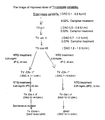
- the Figure depicts a flow chart showing the lineage of the improved strain of Trigonopsis variabilis .
- the production of 7-amino cephalosporanic acid from cephalosporin C is a two-step enzymatic reaction: (1) the first step involves contacting cephalosporin C with a mixture of catalase and DAO to produce glutaryl 7-amino cephalosporanic acid (glutaryl-7ACA); (2) the second step involves contacting glutaryl 7ACA with a deacylating enzyme to produce 7-ACA.
- the first enzyme step produces a reaction mixture; glutaryl 7ACA and a ⁇ -ketoacid intermediate with glutaryl 7ACA as the predominant product.
- glutaryl 7ACA and a ⁇ -ketoacid intermediate with glutaryl 7ACA as the predominant product.
- the ⁇ -ketoacid intermediate reacts poorly with the deacylating enzyme.
- an additional chemical reaction has been employed: a trace amount of hydrogen peroxide was introduced to the first enzymatic reaction mixture and the hydrogen peroxide reacts with the ⁇ -ketoacid product non-enzymatically in in oxidative decarboxylation.
- glutaryl 7-ACA is formed, and, the overall reaction takes place and is driven to completion.
- the reaction solution is then introduced into a second enzyme reactor, which contains the deacylating enzyme, forming 7-ACA.
- the hydrogen peroxide must be removed.
- the reaction solution must be exposed to a catalase enzyme to remove the hydrogen peroxide.
- the present process eliminates the need for hydrogen peroxide, thus, the entire reaction can be performed in one reaction vessel. This is made possible because in the present system, the first enzyme reactor is operating under an oxygen atmosphere of about 50 psig, or higher, and glutaryl 7-ACA becomes the dominant product. Therefore, the steps of adding hydrogen peroxide to the reactor effluent and then removing the excess hydrogen peroxide with a catalase reactor can be eliminated.
- the enzymes used in the present process are DAO, catalase and a deacylating enzyme specific for glutaric acid.
- DAO can be found in several sources, such as molds (e.g., Penicillium chrysogenum , Penicillium roqueforti , Aspergillus niger , Neurospora crassa ), bacteria (e.g., Aerobacter spp. , Bacillus proteus , Pseudomonas aeruginosa ) yeast, (e.g., Trigonopsis variabilis , Candida tropicalis , Saccharomyces cerevisiae ) , mammalian organs (e.g., hog kidney, hog liver, rat liver) and rattlesnake venom.
- molds e.g., Penicillium chrysogenum , Penicillium roqueforti , Aspergillus niger , Neurospora crassa
- bacteria e.g., Aerobacter spp. , Bacillus proteus , Pseudom
- Yeast cells such as Trigonopsis variabilis (ATCC culture #10679) and the polyploid mutant of the present invention (see Example 1) are particularly useful sources of this enzyme.
- DAO cleaves the amino group of cephalosporin C.
- DAO is located in the microbody and cytoplasm of yeast Trigonopsis variabilis .
- the enzyme can be extracted from the yeast cells by the following procedure: The yeast cell wall is broken open by a high pressure homogenizer, and the clarified cell free extract is treated with an inorganic salt (anmonium sulfate). The ammonium sulfate treated supernatant is fractionated with a chromatographic column containing phenyl Sepharose. This crude enzyme is further purified with mild acid precipitation. At this stage, the specific enzyme activity is approximately 30 units per milligram protein. If further purification is required, an additional chromatographic column containing DEAE functionality may be applied. This enzyme can then be immobilized on to a substrate, such as microporous membrane sheet stock, to form an enzyme reactor.
- a substrate such as microporous membrane sheet stock
- catalase promotes the decomposition of hydrogen peroxide to oxygen and water. However, under high oxygen tension and accompanied with DAO as in the present process, catalase is also a promoter for the oxidative deamination of cephalosporin C to glutaryl 7-ACA. Catalase is an enzyme present in many animal cells. In free solution, the reactivity of the DAO/catalase enzyme mixture increases significantly (at least 180%) compared to DAO alone. With immobilized enzymes (e.g. an enzyme reactor) and under high oxygen tension [e.g.,3.4 bar (50 psig)], the reactivity increases at least ten to fifteen times.
- immobilized enzymes e.g. an enzyme reactor
- high oxygen tension e.g.,3.4 bar (50 psig)
- the dissolved oxygen is no longer the limiting factor and the reaction becomes dependent on the concentration of its substrate which is cephalosporin C, i.e., the reaction becomes first order.
- the reactivity of the reaction system under about 3.4 bar (50 psig)pressure increased eight to ten times in the initial production rate and four to five times in the overall reaction rate.
- the deacylating enzyme used in the second stage of the present process as an enzyme is expressed in a bacterium, Acinetobacter spp .
- This bacterium is a gram negative small rod of about 0.1 x 0.3 » in size.
- Deacylating enzyme also referred to herein as deacylase, cleaves the glutaryl side chain of the intermediate compound, glutaryl-7 amino-cephalosporanic acid (glutaryl 7-ACA).
- the deacylating enzyme is located in the cytoplasm of the Acinetobacter spp. gram negative bacterium.
- Deacylating enzyme can be extracted from the bacterium by the following procedure: A cell paste made from the culture is suspended in a buffer solution containing 0.05 M sodium phosphate salt at pH 8.0. The cell wall is broken open by a high pressure homogenizer and the clarified cell free extract is fractioned and concentrated with treatment of ammonium sulfate. The protein concentrate is purified with a liquid chromatographic column containing DEAE. This enzyme is stable for at least six months in frozen condition.
- This enzyme solution can be immobilized on a substrate, such as silica impregnated microporous plastic sheet (MPS) stock to form an enzyme reactor.
- MPS microporous plastic sheet
- the reaction can be carried out at a pH of from about 7.5 to about 8.5.
- the optimal pH value for conversion is about 8.5.
- the biological activity of the glutaryl 7ACA and cephalosporin C are more stable below pH 8.0.
- pH 8.0 was used in the present process as the operating pH value.
- DAO and deacylase are expressed by a number of cells from many different sources. In most cases, however, the levels of the enzymes produced by the cells are too low to be practically useful.
- the present invention includes mutant cell lines which are capable of greatly increased expression of DAO and deacylase compared to wild-type cells. These mutant cells were produced by exposing wild-type cells to one or more mutagens under selected conditions and selecting for the surviving cells which showed increased production of the enzymes.
- the resulting mutant yeast cells produced levels of DAO significantly higher than the wild-type cells.
- the present process is carried out using immobilized enzymes, or enzyme reactors.
- the enzymes are generally immobilized on a substrate, such as a plastic or cloth support, or, under some conditions, can be free in the reaction solution.
- a substrate such as a plastic or cloth support
- Microporous plastic sheets (MPS) are particularly useful supports. However, other support material, such as cotton cloth, can also be used.
- Microporous plastic sheet is a silicapolyvinylchloride composite in sheet form which can be molded into cartridges of different diameter.
- MPS can be derivatized with polyethleneimine and glutaraldehyde.
- the derivatized MPS (PEIGLUT) can react with the amino groups of protein. It has a large surface area per unit weight and can react with protein up to 10% of its own weight.
- a polyetheneimine-glutaraldehyde derivatized MPS cartridge (Amerace) is used in the present process for the immobilization of the enzymes.
- the enzymes, or whole cells which produce the enzymes can be immobilized on the supports.
- DAO can be immobilized on the support, or a DAO-producing cell, such as the mutant strain of Trigonopsis variabilis described above, can be immobilized, which will produce DAO in the reactor.
- Approximately 7 grams of protein are immobilized on 100 grams of the activated MPS.
- a solution which contains a buffer such as 0.05 M sodium phosphate salt at a neutral pH, (e.g.
- the process of the invention is carried out in a single reactor vessel.
- the enzymes are immobilized on the appropriate support, and contacted with a starting material, cephalosporin C.
- a solution of cephalosporin C having a concentration of about 1.0 g/liter, and a pH of from about 6.0 to about 8.5. The particularly preferred pH is about 8.0.
- the cephalosporin C is dissolved in a buffer, such as TRIS buffer.
- the cephalosporin C solution is first contacted with the immobilized DAO/catalase enzymes, where cephalosporin C becomes oxidized and deaminated, to form glutaryl-7-ACA.
- the glutaryl 7-ACA product of the first stop is then contacted with the second immobilized enzyme, deacylase. which catalyzes its conversion to the desired product 7-ACA.
- the products of the reaction are 7-ACA, glutaric acid and ammonia.
- the reaction is carried out at a temperature of from about 20 to about 50°C, preferably at a temperature of from about 25°C to about 35°C.
- the pH range of the reaction can be from about 6.5 to about 9.0, preferably about 8.0.
- the reaction is carried out under a pressurized oxygen atmosphere, causing oxygen to dissolve in the reaction medium, thereby making it available for the oxidation of cephalosporin C.
- a pressure, or oxygen tension, of about 3.4 bar (50 psig) is particularly effective in the present reaction.
- sodium borohydride is added to the reaction mixture.
- Sodium borohydride (NaBH4) increases the half-life of the immobilized DAO enzyme in the reaction.
- the present process results in the efficient production of 7-amino cephalosporanic acid in high yield.
- Cephalosporins are closely related to penicillin. These compounds are useful as antimicrobial agents for pharmaceutical and medical applications.
- the present process can be used to produce a cephalosporin derivative, 7-ACA, in high yields which can be the basis for a new series of effective drugs.
- 7-ACA is a major ingredient, or intermediate, for all the third and fourth cephalosporin family antibiotics including cephalexin, cephaloglycin, cephaloridine, cephalothin, cefaclor, and cephamandole.
- most of the 7-ACA production utilized or employed a chemical process using some toxic chemical under an extreme process condition.
- a biocatalyst for the environmental aspects and economical aspects, there is a trend to utilizing a biocatalyst to replace the existing chemical process.
- the alpha amino adipic acid side chain must be removed from the cephalosporin C molecule. This side chain is too long for most enzymes to react.
- the present process utilizes a two-step enzymatic process; however, since process conditions are very similar for both enzymes, both steps can be combined in one and becomes a single step process.
- Trigonopsis variabilis polyploid mutant was derived from the wild-type Trigonopsis variabilis , as shown in the Figure and described below. Wild type cells were treated three times with 0.02% camphor and/or camphor analogues (camphor carboxylic acid and camphor sulfonic acid) for 48 hours. The treated microorganisms were cultivated in YM agar plate for three days at 30°C. A group of fast growing, and also largest in size, single colonies were found. These colonies were then individually treated with N-methyl-N'-nitro-N-Nitrosoguanidine (NTG) for further mutation. 0.25 mg NTG/ml culture was added at a temperature of 0°C, for 40-60 minutes).
- NTG N-methyl-N'-nitro-N-Nitrosoguanidine
- Trigonopsis variabilis polyploid mutated single colonies were isolated and cultured. With a combination of modified culture medium and fermentation conditions, the D-amino acid oxidase activity which was expressed in the mutant Trigonopsis variabilis were increased from (wild type) 0.1 international unit /ml to 15 international units/ml.
- Trigonopsis variabilis 33187 The improved strain of Trigonopsis variabilis , designated Trigonopsis variabilis 33187, has been deposited with the American Type Culture Collection, as ATCC No. 20931.
- yeast of trigonopsis variabilis was transferred to a 100 ml culture broth containing: yeast extract, 5 g/l; malt extract; 5 g/l, peptone 5 g/l and glucose 10 g/l (YM medium).
- yeast extract 5 g/l
- malt extract 5 g/l
- peptone 5 g/l glucose 10 g/l
- glucose 10 g/l glucose 10 g/l
- the mixture is incubated at 30°C for 24 hours and transferred to a 500 ml culture flask.
- the second stage is incubated for 24 hours under the same operating condition as mentioned above.
- This freshly grown inoculum is then transferred to a fermentation medium which contains solulys, biotin, DL methionine, thiamine, urea and certain inorganic salt.
- the medium recipe is listed below.
- the fermenter is maintained at 30°C for 24 to 48 hours with mild agitation (150-300 rpm) and moderate aeration (0.3 liter/liter/min at atm).
- the dissolved oxygen is maintained above 50% for the first 12 hours and below 10% thereafter.
- stationary phase OD 660 reaches 35, pH value of the culture medium is below 5.0 and the cells turn to dark brown
- the enzyme expression reached the highest at 36 hours after inoculation.
- This 60 liter fermentation produced approximately 1730 grams of packed wet cells and 900,000 IUs of D-amino acid oxidase.
- the clarified supernatant (9.3 liters) was put onto a phenyl Sepharose liquid chromatographic column which was equilibrated with 1.2 M ammonium sulfate.
- the enzyme was eluted with 0.01 M pryophosphate buffer with 0.001 M EDTA at pH 8.3. The result: 58.5% of the enzyme activity was recovered.
- the pooled fraction then treated with acetic acid to pH 5.2.
- the recovered enzyme had a specific activity of 30 units per milligram protein. Approximately 95,000 IU of D-amino acid oxidase were recovered.
- the enzyme was stored at 4°C with DTT (5mg/ml) and was stable for two weeks until immobilization.
- a wild type gram negative bacteria utilizes glutaric acid as its sole carbon source and produces 0.005 to 0.01 international units of deacylase per milliliter.
- the bacteria was treated with N-methyl-N'-nitro-N-nitrosoguanidine (NTG) and ethylmethanesulfonate.
- NTG N-methyl-N'-nitro-N-nitrosoguanidine
- ethylmethanesulfonate ethylmethanesulfonate.
- the conditions of this treatment were 0.2 to 0.5 mg/ml at 0°C for 10 to 50 minutes.
- the enzyme deacylase activity was increased from (wild-type) 0.005 - 0.01 IUs/ml to 0.4 IUs/ml.
- Acinetobacter spp. designated Acinetobacter spp. YSll4, has been deposited with the American Type Culture Collection as ATCC No. 53891.
- a single colony of YSll4 strain was transferred to 100 ml of culture medium at 25°C for 24 hours.
- the inoculum medium formula is listed below:
- inoculum culture medium for YSll4.
- YM medium Becto Peptone 10 g/l yeast extract 2 g/l beef extract 5 g/l NaCl 5 g/l glutaric acid 1 g/l at pH 7.0
- the fermentation medium formula is listed below:
- a 550 liter fermenter was used for the enzyme production.
- a 10 liter inoculum was used and the fermentation was operated at 25°C with moderate air (2 l/l/m) and high agitation (400-600 rpm).
- the dissolved oxygen levels was maintained at or above 50% of saturation, pH was not controlled throughout the run, the pH value eventually rose to 8.5.
- the culture was fermented for 30 hours end the enzyme expression attained 400 international units per liter of broth. Approximately 2527 international units of enzyme and 5500 grams of cell paste were recovered from a Sharples centrifuge.
- This protein precipitate was dissolved in 0.05 M sodium phosphate buffer at pH 8.0 and dialysed with the same buffer overnight.
- the enzyme solution was then fractionated with a DEAE liquid chromatographic column and eluted with a 0 to 0.3 M NaCl linear concentration gradient.
- the enzyme peak was eluted at 0.1 M NaCl salt.
- 4.7 grams and 426 international units (0.089 IUs/mg protein) of deacylating enzyme were recovered.
- the enzyme was stored frozen at -20°C and was ready for immobilization. This preparation was stable for six months.
- DAO D-amino acid oxidase
- a PEI/CLU activated module with 12 sheets of MPS (47 mm diameter and 4800 mg) was used.
- 110 milliliters of enzyme II solution (0.2 international units/ml, 22.2 units and 392 mg protein) was passed through the reactor three times at 6 ml/min.
- the reactor was washed with 200 ml of 0.5 M glycine in 0.05 M TRIS buffer at pH 8.0, followed by flushing with 100 ml of 0.05 M TRIS buffer. After washing, the reactor was stored in 0.05 M TRIS buffer at pH 8.0 with 10 »g/ml gentamycin. In result, a total of 331 mg of protein and 19 international units was attached onto the reactor.
- 84.5% of enzyme 2-deacylating enzyme was attached (1.56 IUs per sheets of MPS).
- the effect of pH on deacylase was studied using a dilute substrate, single pass mode of approach.
- a stock solution of 5.55 g/l of glutaryl 7-ACA was made and 100 ml aliquots were divided and pH adjusted with 1N NaOH to the following values: pH 5.0, 7.0, 7.5, 8.0, 8.5 and 9.0.
- Each aliquot of substrate was then pumped through an enzyme II reactor in single pass mode at a rate of 2 ml/min with a peristaltic pump. The experiment was run at room temperature and at atmospheric pressure.
- This experiment demonstrated the effectiveness of dissolved oxygen in the de-amination reaction of cephalosporin C to glutaryl 7-ACA.
- the reactor was operated under a 50 psig pressure with pure oxygen diffused into the reaction vessel.
- the cephalosporin C solution 51.3 to 64.5 g/l in concentration, pH 8.0, was pumped through the reactor in a recycled mode.
- This reactor demonstrated a high initial reaction rate of 19.6 gm of glutaryl 7-ACA produced per minute per sheet of reactor and overall rate of 8.4.
- the reaction rate reduced to a range between 1.7 to 2.3 gm of glutaryl 7-ACA produced per minute per sheet of reactor.
- the reactivity was similar between the initial and overall production rate.
- Example 7 Condition and result of enzyme reactor of D-amino acid oxidase/catalase, under 3.4 bar (50 psig) oxygen tension
- cephalosporin C (Lot number 235CX6) were dissolved in 300 ml of 0.15M TRIS buffer and pH was adjusted to 8.0 with 0.1 N NaOH. Cephalosporin C solution was pumped through enzyme reactor I (DAO/catalase) and recycled at 6.0 milliliters per minute. The whole system was under a 3.4 bar (50 psig)pressure pure oxygen enriched environment. Within 80 minutes, all of cephalosporin C was converted to ⁇ -keto acid (14.88 gm/l) and glutaryl 7-ACA (52.6 gm/l).
- a single step conversion of Cephalosporin C to 7ACA was achieved using the following enzyme reactor configuration.
- An enzyme 1 reactor (5 sheets of 47 mm diameter containing a total of 3450 units D-amino oxidase) was followed immediately downstream by an enzyme 2 reactor composite (24 sheets of 47 mm diameter containing a total of 31 international units deacylating enzyme).
- the entire system was pressurized under 3.4 bar (50 psig) oxygen.
- Table VIII Time(min) Ceph C(ag/l) alpha-keto(g/l) GL 7ACA(g/l) 7ACA(g/l) 0 6.6 0 0 0 30 6.3 0 0 0.03 60 5.36 0 0.07 0.11 90 4.15 0 0.18 0.23 120 3.94 0 0.30 0.37 180 2.85 0 0.46 0.70 240 1.97 0 0.50 1.0 300 1.85 0 0.51 1.53 360 1.45 0 0.41 1.70 420 0.90 0 0.29 1.80 465 0.75 0 0.23 1.89
- the reactor was flushed with 95 ml of TRIS buffer 0.05 M pH 8.0. A total of 10.45 mg Ceph C, 30.4 mg glutaryl 7-ACA, and 123.5 mg 7-ACA were recovered. The overall production rate of 7-ACA was 1.49 mg/min with an overall recovery of 62.9%. No alpha-keto intermediate was detected.
- Bond stabilization between the enzyme and support was attempted by using a treatment of glutaraldehyde followed by sodium borohydride.
- Glutaraldehyde was used to attach enzyme to any possible pendant PEI group.
- Sodium borohydride was used to reduce Schiff bases formed by the aldehyde-to-amino linkage, thereby, saturating the bond and protecting it from attack.
- # 1765B untreated # 1816C Glu-NaBH4 Projected half life 12 hours 130 hours Glutaryl-7ACA made mg/IU in first 1/2 life 5.8 mg/IU 44 mg/IU
- Projected half life is 170 hours (based on assayed activity of cells).
- Average rate is 0.516 mg/hr IU.
- Trigonopsis variabilis 33187 Two samples of Trigonopsis variabilis 33187 were treated as follows: 25 grams of cell paste with 3% ethyl acetate for 20 minutes. The cell mixture was spun down and the supernatant was removed. Both samples were resuspended in 100 mls. each of 0.05 M phosphate buffer, pH 8.0. The samples were passed once through a 4.9 gram stack of polyethyleneimine glutaraldehyde derivatized flannel, 47 mm x 1/2" thick, packed into the reactor cartridge shell, and fixed with 2% glutaraldehyde for 2 hours. The samples were then flushed with the same buffer. The binding capacity was 4.5g of whole cell and 10 g of minus-extract cell.
Landscapes
- Life Sciences & Earth Sciences (AREA)
- Chemical & Material Sciences (AREA)
- Engineering & Computer Science (AREA)
- Health & Medical Sciences (AREA)
- Organic Chemistry (AREA)
- Wood Science & Technology (AREA)
- Zoology (AREA)
- Biotechnology (AREA)
- Genetics & Genomics (AREA)
- Bioinformatics & Cheminformatics (AREA)
- Microbiology (AREA)
- General Health & Medical Sciences (AREA)
- Biochemistry (AREA)
- General Engineering & Computer Science (AREA)
- Virology (AREA)
- Medicinal Chemistry (AREA)
- Tropical Medicine & Parasitology (AREA)
- Biomedical Technology (AREA)
- Botany (AREA)
- Mycology (AREA)
- Chemical Kinetics & Catalysis (AREA)
- General Chemical & Material Sciences (AREA)
- Preparation Of Compounds By Using Micro-Organisms (AREA)
- Enzymes And Modification Thereof (AREA)
- Micro-Organisms Or Cultivation Processes Thereof (AREA)
Claims (11)
- Procédé pour la production d'acide 7-amino céphalosporanique comprenant les étapes consistant à :a) mettre en contact la céphalosporine C avec de la catalase et de la D-amino acide oxidase dérivée de Trigonopsis variabilisis, souche ATCC 20931 en présence d'oxygène sous pression pour provoquer la désamination de la céphalosporine C, de façon à produire l'acide glutaryl 7-amino céphalosporanique ; etb) mettre en contact le produit résultant de l'étape (a) avec une désacylase dérivée de Acinétobacter spp, souche ATCC 53891 dans des conditions permettant la production d'acide 7-amino céphalosporanique.
- Procédé selon la revendication 1, dans lequel la D-amino acide oxidase et/ou la désacylase est immobilisée sur un support.
- Procédé selon la revendication 1 dans lequel les conditions permettant la désamination de la céphalosporine C comprenne une température située dans l'intervalle compris entre 20°C à 45°C (par exemple 25°C-35°C), une pression de l'oxygène d'environ 3,4 bars (50 psig), et un pH de 6,5 à 8,5 ; par exemple un pH de 8,0.
- Procédé pour la production d'acide 7-amino céphalosporanique comprenant l'étape consistant à mettre en présence dans un réacteur de la céphalosporine C, de la catalase, de la D-amino acide oxidase dérivée de Trigonopsis variabilis, souche ATCC 20931, de l'oxygène et de la désacylase dérivée de Acinétobacter spp, souche ATCC 53891 dans les conditions appropriées permettant la production d'acide 7-amino céphalosporanique.
- Procédé selon la revendication 4, dans lequel le réacteur est mis sous pression.
- Procédé selon la revendication 4, caractérisé en ce que du borohydrure de sodium est en outre ajouté.
- Procédé pour la production d'acide 7-amino céphalosporanique comprenant l'étape consistant à mettre en présence dans un réacteur de la céphalosporine C, une source de D-amino acide oxidase, de la catalase, une source de désacylase et de l'oxygène dans les conditions appropriées permettant la production d'acide 7-amino céphalosporanique, la source de D-amino acide oxidase étant constituée de cellules de Trigonopsis variabilis, ATCC 20931 et la source de désacylase étant constituée de cellules d'Acinétobacter supp., ATCC 53891.
- Procédé selon la revendication 7, dans lequel les cellules de Trigonopsis variabilis et/ou les cellules d'Acinétobacter supp. sont immobilisées.
- Procédé selon la revendication 7, dans lequel les conditions appropriées permettant la production d'acide 7-amino céphalosporanique comprennent une température entre 20°C et 35°C, un pH entre 6,5 et 8,5 et une pression d'environ 3,4 bar (50 psig).
- Le mutant de Trigonopsis variabilis ATCC 20931.
- Le mutant d'Acinétobacter supp. ATCC 53891.
Applications Claiming Priority (3)
| Application Number | Priority Date | Filing Date | Title |
|---|---|---|---|
| US33354689A | 1989-04-04 | 1989-04-04 | |
| PCT/US1990/001696 WO1990012110A1 (fr) | 1989-04-04 | 1990-03-30 | Production enzymatique d'acide 7-aminocephalosporanique |
| US333546 | 1999-06-15 |
Publications (2)
| Publication Number | Publication Date |
|---|---|
| EP0465600A1 EP0465600A1 (fr) | 1992-01-15 |
| EP0465600B1 true EP0465600B1 (fr) | 1995-06-07 |
Family
ID=23303257
Family Applications (1)
| Application Number | Title | Priority Date | Filing Date |
|---|---|---|---|
| EP90906671A Expired - Lifetime EP0465600B1 (fr) | 1989-04-04 | 1990-03-30 | Production enzymatique d'acide 7-aminocephalosporanique |
Country Status (9)
| Country | Link |
|---|---|
| US (1) | US5618687A (fr) |
| EP (1) | EP0465600B1 (fr) |
| JP (1) | JPH04504362A (fr) |
| KR (1) | KR0173124B1 (fr) |
| AT (1) | ATE123533T1 (fr) |
| CA (1) | CA2049958A1 (fr) |
| DE (1) | DE69019967T2 (fr) |
| HK (1) | HK36997A (fr) |
| WO (1) | WO1990012110A1 (fr) |
Families Citing this family (19)
| Publication number | Priority date | Publication date | Assignee | Title |
|---|---|---|---|---|
| ES2020792A6 (es) * | 1990-08-03 | 1991-09-16 | Antibioticos Sa | Un procedimiento enzimatico para la presentacion de acido 7-amino-cefa-losporanico y un procedimiento para expresar la enzima 7b (4-carboxibutanamido) cefalosporinacilasa. |
| DE4028119C1 (fr) * | 1990-09-05 | 1991-12-05 | Hoechst Ag, 6230 Frankfurt, De | |
| GB9022907D0 (en) * | 1990-10-22 | 1990-12-05 | Fujisawa Pharmaceutical Co | Novel gl-7aca acylase |
| IT1252308B (it) * | 1990-12-21 | 1995-06-08 | Antibioticos Spa | Procedimento enzimatico per la produzione di acido 7- amminocefalosporanico e derivati |
| SK280569B6 (sk) * | 1991-10-15 | 2000-03-13 | Gist-Brocades B.V. | Biologický spôsob výroby kyseliny7-aminodeacetylce |
| CA2100987C (fr) * | 1992-07-27 | 1999-06-15 | Kaoru Furuya | Un transformant pouvant produire une d-amino-acide oxydase |
| GB2275925B (en) * | 1993-03-08 | 1996-08-14 | Asahi Chemical Ind | A process for converting cephalosporin C to glutaryl-7-aminocephalosporanic acid |
| US5512454A (en) * | 1994-02-03 | 1996-04-30 | Bristol-Myers Squibb Company | Enzymatic acylation of 3-hydroxymethyl cephalosporins |
| KR100345994B1 (ko) * | 1994-06-22 | 2002-12-16 | 제일제당주식회사 | 7-아미노세팔로스포란산의효소적제조방법 |
| CN1065278C (zh) * | 1994-08-27 | 2001-05-02 | 中国科学院上海植物生理研究所 | 一步两酶法制造7-氨基头孢烷酸 |
| EP0990023A4 (fr) * | 1997-06-25 | 2001-04-18 | Bristol Myers Squibb Co | Promoteur de d-amino acide oxydase extrait de t.variabilis |
| EP0991752A2 (fr) * | 1997-09-09 | 2000-04-12 | Biochemie Gesellschaft M.B.H. | Enzymes exemptes d'esterase |
| EP1044205A4 (fr) * | 1997-10-30 | 2001-12-05 | Bristol Myers Squibb Co | Acetylation de desacetyl-cephalosporines |
| DK1322751T3 (da) * | 2000-09-22 | 2006-02-20 | Bristol Myers Squibb Co | Glutarylcephalosporinamidase fra Pseudomonas diminuta BS-203 |
| WO2002085914A2 (fr) | 2001-04-19 | 2002-10-31 | Bioferma Murcia, S.A. | Procede permettant de preparer des derives d'acide 3-cephalosporanique a l'aide de derives d'acide cetonique alpha |
| EP1344830A1 (fr) * | 2002-03-12 | 2003-09-17 | Bioferma Murcia, S.A. | Procédé de préparation de dérivés d'acide céphalosporanique à partir de céphalosporine C |
| EP1689875B2 (fr) | 2003-12-02 | 2017-02-22 | Ciba Specialty Chemicals Water Treatments Limited | Fabrication d'amides |
| CN110554097A (zh) * | 2018-05-30 | 2019-12-10 | 青岛谱尼测试有限公司 | 一种水和废水中7-氨基头孢烷酸残留量的测定方法 |
| CN114618410A (zh) * | 2022-03-03 | 2022-06-14 | 清华大学 | 一种利用微反应器溶解d-7-aca的方法 |
Citations (3)
| Publication number | Priority date | Publication date | Assignee | Title |
|---|---|---|---|---|
| US3655649A (en) * | 1968-10-25 | 1972-04-11 | Merck Patent Gmbh | Process for the preparation of 19-norsteroids |
| GB1272769A (en) * | 1968-08-02 | 1972-05-03 | Glaxo Lab Ltd | Improvements in or relating to cephalosporin derivatives |
| EP0283218A2 (fr) * | 1987-03-18 | 1988-09-21 | Merck & Co. Inc. | Conversion enzymatique en une étape de la céphalosporine C et dérivés en acide 7-aminocéphalosporamique et dérivés |
Family Cites Families (10)
| Publication number | Priority date | Publication date | Assignee | Title |
|---|---|---|---|---|
| US3239394A (en) * | 1964-06-15 | 1966-03-08 | Merck & Co Inc | Process for producing 7-amino-cephalosporanic acid |
| DE1967074C3 (de) * | 1968-09-18 | 1978-11-02 | Kyowa Hakko Kogyo Co., Ltd., Tokio | Verfahren zur Herstellung von a-Aminobenzylpenicillin |
| CH541579A (de) * | 1969-05-13 | 1973-09-15 | Ciba Geigy Ag | Verfahren zur Abtrennung von Cephalosporin C aus Rohlösungen |
| CH553850A (de) * | 1970-01-21 | 1974-09-13 | Ciba Geigy Ag | Verfahren zur darstellung von fuer die gesteuerte biosynthese von cephalosporin c, geeigneten mangel-mutanten und deren verwendung zur gesteuerten biosynthese von cephalosporin c. |
| US3655864A (en) * | 1970-09-21 | 1972-04-11 | Smith Kline French Lab | Glyceryl tristerate and higher fatty acid mixture for improving digestive absorption |
| JPS5417032B2 (fr) * | 1974-01-23 | 1979-06-27 | ||
| DE2528622A1 (de) * | 1975-06-26 | 1977-01-13 | Bayer Ag | Verfahren zur reinigung der bei der enzymatischen spaltung von beta-lactam- antibiotika anfallenden produkte |
| JPS5829079B2 (ja) * | 1976-04-20 | 1983-06-20 | 藤沢薬品工業株式会社 | セファロスポリン化合物の分離・精製方法 |
| JPS6121097A (ja) * | 1984-07-10 | 1986-01-29 | Asahi Chem Ind Co Ltd | 7−アミノセフアロスポラン酸及びその誘導体の製造法 |
| EP0322032A3 (fr) * | 1987-12-21 | 1991-01-30 | Merck & Co. Inc. | Conversion en une étape de céphalosporine C et ses dérivés en acide 7-aminocéphalosporanique et ses dérivés |
-
1990
- 1990-03-30 EP EP90906671A patent/EP0465600B1/fr not_active Expired - Lifetime
- 1990-03-30 AT AT90906671T patent/ATE123533T1/de not_active IP Right Cessation
- 1990-03-30 DE DE69019967T patent/DE69019967T2/de not_active Expired - Fee Related
- 1990-03-30 CA CA002049958A patent/CA2049958A1/fr not_active Abandoned
- 1990-03-30 KR KR1019910701280A patent/KR0173124B1/ko not_active Expired - Fee Related
- 1990-03-30 JP JP2506422A patent/JPH04504362A/ja active Pending
- 1990-03-30 WO PCT/US1990/001696 patent/WO1990012110A1/fr not_active Ceased
-
1994
- 1994-11-02 US US08/333,623 patent/US5618687A/en not_active Expired - Fee Related
-
1997
- 1997-03-27 HK HK36997A patent/HK36997A/en not_active IP Right Cessation
Patent Citations (3)
| Publication number | Priority date | Publication date | Assignee | Title |
|---|---|---|---|---|
| GB1272769A (en) * | 1968-08-02 | 1972-05-03 | Glaxo Lab Ltd | Improvements in or relating to cephalosporin derivatives |
| US3655649A (en) * | 1968-10-25 | 1972-04-11 | Merck Patent Gmbh | Process for the preparation of 19-norsteroids |
| EP0283218A2 (fr) * | 1987-03-18 | 1988-09-21 | Merck & Co. Inc. | Conversion enzymatique en une étape de la céphalosporine C et dérivés en acide 7-aminocéphalosporamique et dérivés |
Non-Patent Citations (1)
| Title |
|---|
| AGRIC. BIOL. CHEMISTRY, vol. 45, no. 7, 1981; Y SHIBUYA et al., pp. 1561-1567# * |
Also Published As
| Publication number | Publication date |
|---|---|
| WO1990012110A1 (fr) | 1990-10-18 |
| JPH04504362A (ja) | 1992-08-06 |
| DE69019967T2 (de) | 1996-02-22 |
| CA2049958A1 (fr) | 1990-10-05 |
| HK36997A (en) | 1997-04-04 |
| DE69019967D1 (de) | 1995-07-13 |
| KR920701468A (ko) | 1992-08-11 |
| EP0465600A1 (fr) | 1992-01-15 |
| KR0173124B1 (ko) | 1999-02-01 |
| ATE123533T1 (de) | 1995-06-15 |
| US5618687A (en) | 1997-04-08 |
Similar Documents
| Publication | Publication Date | Title |
|---|---|---|
| US5618687A (en) | Production of 7-amino cephalosporanic acid with D-amino oxidase and deacylase | |
| Conlon et al. | Two‐step immobilized enzyme conversion of cephalosporin C to 7‐aminocephalosporanic acid | |
| US5283182A (en) | Preparation of immobilized hydantoinase stabilized with divalent metal ions | |
| US5424196A (en) | Enzymatic process for preparing 7-aminocephalosporanic acid and derivatives | |
| US4221869A (en) | Enzymatic synthesis of L-carnitine | |
| US5164309A (en) | Process for the microbiological preparation of 1,3-propane-diol from glycerol by citrobacter | |
| US4774179A (en) | Process for preparing a 7-aminocephalosporanic acid compound | |
| US5098841A (en) | Process for the preparation of hydroxy acids | |
| CA1195276A (fr) | Procede de preparation du glucosone | |
| US4535059A (en) | Muconic acid productivity by a stabilized mutant microorganism population | |
| EP0244920B1 (fr) | Procédé de préparation d'une oxydase exempte de catalase et d'une levure contenant une oxydase exempte de catalase et leur emploi | |
| CN1357051A (zh) | 7-氨基去乙酰氧基头孢菌素酸(7-adca)的制备方法 | |
| US4533632A (en) | Production of a cephalosporin by fermentation | |
| Chibata et al. | Immobilized living microbial cells | |
| JPH022396A (ja) | セファロスポリンc及び類似体の一段階酵素反応による7‐アミノセファロスポラン酸及びその類似体への変換 | |
| EP0242007B1 (fr) | Procédé de préparation de levure contenant une oxidase exempte de catalase et son utilisation | |
| US4248967A (en) | Enzymic complexes adapted to convert racemic hydantoins into optically active aminoacids, and their applications | |
| EP0261836B1 (fr) | Préparation d'enzyme immobilisée et son utilisation | |
| US5116752A (en) | Process for preparing neuraminidase | |
| JPH0420597B2 (fr) | ||
| EP0295622B1 (fr) | Procédé pour la production de l-tryptophane | |
| D'acunzo et al. | d-Amino acid oxidase from Trigonopsis variabilis: Immobilization of whole cells in natural polymeric gels for glutaryl-7-aminocephalosporanic acid production | |
| US4699883A (en) | Process for producing N-acylneuraminate aldolase | |
| IE893773L (en) | Biocatalysts and processes for the manufacture thereof | |
| CA1160170A (fr) | Methode de production de l'uricase |
Legal Events
| Date | Code | Title | Description |
|---|---|---|---|
| PUAI | Public reference made under article 153(3) epc to a published international application that has entered the european phase |
Free format text: ORIGINAL CODE: 0009012 |
|
| 17P | Request for examination filed |
Effective date: 19911021 |
|
| AK | Designated contracting states |
Kind code of ref document: A1 Designated state(s): AT BE CH DE DK ES FR GB IT LI LU NL SE |
|
| 17Q | First examination report despatched |
Effective date: 19931029 |
|
| GRAA | (expected) grant |
Free format text: ORIGINAL CODE: 0009210 |
|
| AK | Designated contracting states |
Kind code of ref document: B1 Designated state(s): AT BE CH DE DK ES FR GB IT LI LU NL SE |
|
| PG25 | Lapsed in a contracting state [announced via postgrant information from national office to epo] |
Ref country code: IT Free format text: LAPSE BECAUSE OF FAILURE TO SUBMIT A TRANSLATION OF THE DESCRIPTION OR TO PAY THE FEE WITHIN THE PRE;WARNING: LAPSES OF ITALIAN PATENTS WITH EFFECTIVE DATE BEFORE 2007 MAY HAVE OCCURRED AT ANY TIME BEFORE 2007. THE CORRECT EFFECTIVE DATE MAY BE DIFFERENT FROM THE ONE RECORDED.SCRIBED TIME-LIMIT Effective date: 19950607 Ref country code: ES Free format text: THE PATENT HAS BEEN ANNULLED BY A DECISION OF A NATIONAL AUTHORITY Effective date: 19950607 Ref country code: DK Effective date: 19950607 |
|
| REF | Corresponds to: |
Ref document number: 123533 Country of ref document: AT Date of ref document: 19950615 Kind code of ref document: T |
|
| REF | Corresponds to: |
Ref document number: 69019967 Country of ref document: DE Date of ref document: 19950713 |
|
| PG25 | Lapsed in a contracting state [announced via postgrant information from national office to epo] |
Ref country code: SE Effective date: 19950907 |
|
| ET | Fr: translation filed | ||
| PG25 | Lapsed in a contracting state [announced via postgrant information from national office to epo] |
Ref country code: LU Free format text: LAPSE BECAUSE OF NON-PAYMENT OF DUE FEES Effective date: 19960331 |
|
| PLBE | No opposition filed within time limit |
Free format text: ORIGINAL CODE: 0009261 |
|
| STAA | Information on the status of an ep patent application or granted ep patent |
Free format text: STATUS: NO OPPOSITION FILED WITHIN TIME LIMIT |
|
| 26N | No opposition filed | ||
| PGFP | Annual fee paid to national office [announced via postgrant information from national office to epo] |
Ref country code: BE Payment date: 19990315 Year of fee payment: 10 |
|
| PGFP | Annual fee paid to national office [announced via postgrant information from national office to epo] |
Ref country code: CH Payment date: 19990329 Year of fee payment: 10 |
|
| PGFP | Annual fee paid to national office [announced via postgrant information from national office to epo] |
Ref country code: AT Payment date: 19990330 Year of fee payment: 10 |
|
| PGFP | Annual fee paid to national office [announced via postgrant information from national office to epo] |
Ref country code: NL Payment date: 19990331 Year of fee payment: 10 |
|
| PGFP | Annual fee paid to national office [announced via postgrant information from national office to epo] |
Ref country code: FR Payment date: 20000217 Year of fee payment: 11 |
|
| PG25 | Lapsed in a contracting state [announced via postgrant information from national office to epo] |
Ref country code: AT Free format text: LAPSE BECAUSE OF NON-PAYMENT OF DUE FEES Effective date: 20000330 |
|
| PG25 | Lapsed in a contracting state [announced via postgrant information from national office to epo] |
Ref country code: BE Free format text: LAPSE BECAUSE OF NON-PAYMENT OF DUE FEES Effective date: 20000331 Ref country code: CH Free format text: LAPSE BECAUSE OF NON-PAYMENT OF DUE FEES Effective date: 20000331 Ref country code: LI Free format text: LAPSE BECAUSE OF NON-PAYMENT OF DUE FEES Effective date: 20000331 |
|
| BERE | Be: lapsed |
Owner name: BIOPURE CORP. Effective date: 20000331 |
|
| PG25 | Lapsed in a contracting state [announced via postgrant information from national office to epo] |
Ref country code: NL Free format text: LAPSE BECAUSE OF NON-PAYMENT OF DUE FEES Effective date: 20001001 |
|
| REG | Reference to a national code |
Ref country code: CH Ref legal event code: PL |
|
| NLV4 | Nl: lapsed or anulled due to non-payment of the annual fee |
Effective date: 20001001 |
|
| PG25 | Lapsed in a contracting state [announced via postgrant information from national office to epo] |
Ref country code: FR Free format text: LAPSE BECAUSE OF NON-PAYMENT OF DUE FEES Effective date: 20011130 |
|
| REG | Reference to a national code |
Ref country code: FR Ref legal event code: ST |
|
| REG | Reference to a national code |
Ref country code: GB Ref legal event code: IF02 |
|
| PGFP | Annual fee paid to national office [announced via postgrant information from national office to epo] |
Ref country code: GB Payment date: 20030326 Year of fee payment: 14 |
|
| PGFP | Annual fee paid to national office [announced via postgrant information from national office to epo] |
Ref country code: DE Payment date: 20030409 Year of fee payment: 14 |
|
| PG25 | Lapsed in a contracting state [announced via postgrant information from national office to epo] |
Ref country code: GB Free format text: LAPSE BECAUSE OF NON-PAYMENT OF DUE FEES Effective date: 20040330 |
|
| PG25 | Lapsed in a contracting state [announced via postgrant information from national office to epo] |
Ref country code: DE Free format text: LAPSE BECAUSE OF NON-PAYMENT OF DUE FEES Effective date: 20041001 |
|
| GBPC | Gb: european patent ceased through non-payment of renewal fee |
Effective date: 20040330 |