EP0470969B1 - Verfahren zur abtrennung und reinigung von sialyl-transferasen - Google Patents
Verfahren zur abtrennung und reinigung von sialyl-transferasen Download PDFInfo
- Publication number
- EP0470969B1 EP0470969B1 EP90906090A EP90906090A EP0470969B1 EP 0470969 B1 EP0470969 B1 EP 0470969B1 EP 90906090 A EP90906090 A EP 90906090A EP 90906090 A EP90906090 A EP 90906090A EP 0470969 B1 EP0470969 B1 EP 0470969B1
- Authority
- EP
- European Patent Office
- Prior art keywords
- sialyltransferase
- acceptor
- buffer
- purification
- alpha
- Prior art date
- Legal status (The legal status is an assumption and is not a legal conclusion. Google has not performed a legal analysis and makes no representation as to the accuracy of the status listed.)
- Expired - Lifetime
Links
Images


Classifications
-
- C—CHEMISTRY; METALLURGY
- C12—BIOCHEMISTRY; BEER; SPIRITS; WINE; VINEGAR; MICROBIOLOGY; ENZYMOLOGY; MUTATION OR GENETIC ENGINEERING
- C12N—MICROORGANISMS OR ENZYMES; COMPOSITIONS THEREOF; PROPAGATING, PRESERVING, OR MAINTAINING MICROORGANISMS; MUTATION OR GENETIC ENGINEERING; CULTURE MEDIA
- C12N9/00—Enzymes; Proenzymes; Compositions thereof; Processes for preparing, activating, inhibiting, separating or purifying enzymes
- C12N9/10—Transferases (2.)
- C12N9/1048—Glycosyltransferases (2.4)
- C12N9/1081—Glycosyltransferases (2.4) transferring other glycosyl groups (2.4.99)
-
- Y—GENERAL TAGGING OF NEW TECHNOLOGICAL DEVELOPMENTS; GENERAL TAGGING OF CROSS-SECTIONAL TECHNOLOGIES SPANNING OVER SEVERAL SECTIONS OF THE IPC; TECHNICAL SUBJECTS COVERED BY FORMER USPC CROSS-REFERENCE ART COLLECTIONS [XRACs] AND DIGESTS
- Y10—TECHNICAL SUBJECTS COVERED BY FORMER USPC
- Y10S—TECHNICAL SUBJECTS COVERED BY FORMER USPC CROSS-REFERENCE ART COLLECTIONS [XRACs] AND DIGESTS
- Y10S435/00—Chemistry: molecular biology and microbiology
- Y10S435/803—Physical recovery methods, e.g. chromatography, grinding
-
- Y—GENERAL TAGGING OF NEW TECHNOLOGICAL DEVELOPMENTS; GENERAL TAGGING OF CROSS-SECTIONAL TECHNOLOGIES SPANNING OVER SEVERAL SECTIONS OF THE IPC; TECHNICAL SUBJECTS COVERED BY FORMER USPC CROSS-REFERENCE ART COLLECTIONS [XRACs] AND DIGESTS
- Y10—TECHNICAL SUBJECTS COVERED BY FORMER USPC
- Y10S—TECHNICAL SUBJECTS COVERED BY FORMER USPC CROSS-REFERENCE ART COLLECTIONS [XRACs] AND DIGESTS
- Y10S435/00—Chemistry: molecular biology and microbiology
- Y10S435/814—Enzyme separation or purification
- Y10S435/815—Enzyme separation or purification by sorption
Definitions
- the invention is directed to methods of separating various specificities of sialyl transferases (ST). Specifically, the invention concerns a method to specifically adsorb ST enzymes using supports derivatized to acceptors appropriate to the relevant ST in the presence of substrate analogs, such as cytidine diphosphate (CDP).
- substrate analogs such as cytidine diphosphate (CDP).
- Sialyl transferases are important enzymes for use in the preparation of pharmaceutical compounds and as diagnostic and clinical reagents for specifically reacting carbohydrates. All sialyl transferases (ST) catalyze the general reaction: sialyl-CMP + acceptor ⁇ sialyl-acceptor + CMP
- Purified forms of specific ST enzymes are useful both as research tools and as synthetic reagents for the manufacture of pharmaceuticals (Gross, H.J. et al. Eur J Biochem (1987) 168 :595).
- these enzymes have been used in the regiospecific and stereospecific synthesis of disialylated tetrasaccharides analogous to M and N blood group determinants of glycophorin A (DeHeij, H.T. et al. J Carbohydrate Chem (1988) 7 :209-222).
- the necessity for purified enzymes in order to produce desired sialylated oligosaccharides was pointed out by, for example, David, et al. Pure Appl Chem (1987) 59:1501-1508.
- Gal(beta)1,4GlcNAc-specific alpha 2,6-ST and porcine submaxilary gland Gal(beta) 1,3GalNAc-specific alpha 2,3-ST are commercially available; alpha 2,3-ST specific for Gal(beta)1,3GlcNAc cannot, however, be prepared easily.
- Gal(beta)1,4GlcNAc (LacNAc).
- Elices, et al. Arch Biochem Biophys (1987) 254 :329-341 utilized LacNAc derivatized to the commercially available SynsorbTM support beads for assay of alpha 2,3-ST and alpha 2,6-ST from rat liver. However, these supports were not used for purification of the enzymes.
- a simple purification procedure using synthetic oligosaccharide derivatized beads as affinity supports is employed to purify selected sialyl transferases from crude tissue extracts.
- the method preferably utilizes a partially purified sialyl transferase (ST) in this affinity step.
- ST partially purified sialyl transferase
- the adsorption is conducted in the absence of manganous or other metal ions, but in the presence of analogs of CMP, preferably cytidine-5'-diphosphate (CDP).
- the affinity adsorbant comprises simple oligosaccharides such as Gal(beta)1,3GlcNAc (Le c ) and Gal(beta)1,4GlcNAc (LacNAc) which behave as acceptors for alpha 2,3-ST and alpha 2,6-ST respectively.
- the acceptor residues are derivatized to the supporting matrix, such as silica particles, preferably with covalently-linked spacer arms such as those described in U.S. Patents 4,137,401 and 4,238,473 incorporated herein by reference.
- the invention is directed to a method to isolate a first sialyl transferase of defined specificity from other sialyl transferases of alternate specificities or from other contaminating proteins, which method comprises adsorbing said first ST to an affinity support which is derivatized to an acceptor for said first sialyl transferase in the presence of a CMP analog, and in the absence of metal ions, under conditions suitable for the adsorption of said ST, followed by elution of the adsorbed ST in the absence of the CMP analog.
- the method is preferably conducted on a sample which is enriched in the desired ST.
- Figure 1 shows the elution profile of alpha 2,3-ST and alpha 2,6-ST from affinity purification on Le c derivatized beads.
- Figure 2 shows the elution profile of alpha 2,3-ST and alpha 2,6-ST from affinity purification on Le c derivatized beads with the addition of lactose as an eluting agent.
- Figure 3 shows the elution profile of alpha 2,3-ST and alpha 2,6-ST from affinity purification using LacNAc derivatized beads.
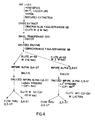
- Figure 4 is a flow diagram showing a preferred protocol for the isolation of alpha 2,6-ST which uses LacNAc as an acceptor and for purification of alpha 2,3-ST which utilizes Le c as an acceptor.
- the invention utilizes affinity supports which are derivatized to disaccharide or oligosaccharide units representing acceptor moieties for the particular sialyl transferase to be purified.
- affinity supports which are derivatized to disaccharide or oligosaccharide units representing acceptor moieties for the particular sialyl transferase to be purified.
- alpha 2,3-ST which utilizes Le c (Gal(beta)1,3GlcNAc) as well as LacNAc as acceptor
- alpha 2,6-ST which utilizes only LacNAc (Gal(beta)1,4GlcNAc) as acceptor
- the approach can be used for the purification of any ST with a known acceptor specificity.
- sialyl transferases which use beta-Gal or GalNAc as acceptors or which use Gal(beta)1,3GalNAc or Gal(beta)1,4GalNAc as acceptors, can also be purified using these corresponding acceptors or extensions thereof derivatized to support.
- the invention method takes advantage of the affinity of the ST enzyme for its substrates.
- the desired ST will bind to its corresponding acceptor in the presence of an analog for the sialyl-CMP transferring moiety that is the additional substrate of the enzyme.
- Suitable analogs include cytidine-5'-diphosphate (CDP) and other modified cytidine derivatives.
- CDP cytidine-5'-diphosphate
- the acceptor is derivatized to the support through a covalently-bound spacer arm to permit accessibility for the ST to the acceptor moiety.
- the adsorbed ST is then eluted by use of conditions which include the absence of the CMP-sialyl analog, which conditions may be modified advantageously by addition of eluting agents suitable to the ST to be purified.
- modified forms of the spacer arm including heteroatoms may also be used, and a variety of solid supports may be employed for derivatization.
- a solid support "derivatized" with an oligosaccharide or acceptor is meant a suitable inert support conjugated through a spacer arm (of sufficient length to provide access to the affinity ligand of an ST to be purified) to the ligand.
- the ligand will be a mono-, di- or trisaccharide or other extended saccharide residue which corresponds to the acceptor for which the ST is specific.
- Suitable solid support materials include various silica derivatives such as silica powder, synthetic silicate such as porous glass, biogenic silicate such as diatomaceous earth, silicate-containing minerals such as kaolinite and so forth.
- Other suitable supports include synthetic resins or particulate polymers such as polystyrenes, polypropylenes, polysaccharides, and so forth or other commonly used chromatographic supports such as alumina.
- Silacious materials are particularly preferred groups, especially calcined diatomaceous earth of the cristobollite type which contain surface hydroxy. Mesh sizes vary according to intended use from about 150 to about 12.
- the solid support may need to be modified to provide reactive groups for conjugation to spacer which is in turn conjugated to the affinity ligand.
- porous glass beads may be provided with amino groups using 3-aminopropyl triethoxysilane using the method of Weetall, H. H. et al. Method Enzymol (1974) 34b :59-72.
- acid-washed calcined diatomite is treated with 3-aminopropyl triethoxysilane and acetone; the acetone is removed by evaporation in a vacuum and the silane-coated diatomite is washed with methanol and dried.
- This is coupled with the 8-azido carbonyloctyl derivative of the preferred oligosaccharide which has been prepared by treatment of the corresponding hydrazide with nitrous acid in dimethyl formamide.
- the conjugation is conducted in the presence of acetonitrile, which is then evaporated, and the remaining unreacted amino groups are acetylated with acetic anhydride and methanol.
- the methanol is removed and the product washed with water and dried overnight in an oven at 70°C.
- the derivatized support prepared by this method typically contains at least 0.35 umol of ligand per gram of matrix.
- supports also, are materials which do not require derivatization such as agarose, cellulose, aminoethylated styrene/divinyl benzene polymers, etc. These materials can be coupled to a carboxyl derivative using a suitable linker such as di-(N-succinimidyl) carbonate (DSC) or other bis-N hydroxy succinimidyl ester, followed by reaction with an amino-terminated ligand or matrix. Coupling of amino groups via activation with a bifunctional agent such as glutaraldehyde may also be used. Amide formation using a suitable carbodiimide is an additional illustrative standard method.
- a suitable linker such as di-(N-succinimidyl) carbonate (DSC) or other bis-N hydroxy succinimidyl ester
- DSC di-(N-succinimidyl) carbonate
- Coupling of amino groups via activation with a bifunctional agent such as glutaraldeh
- acceptor oligosaccharide is derivatized to the support in a range of 0.3-1 umol per gram which provides capacity for purification of 5-10 mU of ST per gram of support.
- the affinity support may be further treated to obtain an integral membrane coating as described in U.S. Serial no. 270,950, filed 9 November 1988, assigned to the same assignee, and incorporated herein by reference.
- the coating technique provides a coherent and ultra-thin porous polymeric film around the particles which prevents the release of fines or disintegration, while the porosity is sufficient to allow interaction between the affinity ligand and the ST to be purified.
- the method by which the particles are coated is described in detail in the above-referenced application and involves coating under conditions normally employed to obtain synthetic membranes such as described by Sourirajan, S., "Reverse Osmosis and Synthetic Membranes", National Research Council of Canada, Ottowa (1977).
- the coating may be applied before or after the introduction of the affinity ligand.
- Affinity supports containing such coatings are commercially available under the trademark SynsorbTM (Chembiomed, Edmonton, Alberta, Canada).
- the sample containing the mixture of sialyl transferases to be purified is preferably initially concentrated and enriched in the desired ST prior to final purification using the method of the invention.
- Direct use of the affinity method as applied to crude extracts without prior purification is possible, but disadvantageous due to the low concentration of STs in such extracts. Accordingly, some concentration of the ST in the sample is helpful, and, if possible, enrichment in the desired species is advantageous.
- Cibacron Blue F3GA is covalently attached to sepharose 6B using the triazine coupling method of Dean, FDG, et al. J Chromatog (1979) 165 :301-319.
- Sepharose 6B is suspended in water and a solution of Cibacron Blue F3GA is added; the mixture is treated with sodium chloride and then with base. The mixture is then incubated for three days at 40°C, filtered and washed with water, 1 M NaCl, 4-6 M urea and water.
- the adsorbant contains 2-4 umol dye per gram gel.
- the desired sialyl transferases are extracted from various tissues, e.g., rat or porcine liver, porcine or bovine submaxilary gland, bovine colostrum, etc., using a non-ionic detergent as set forth by Weinstein, et al. J Biol Chem (1982) 257 :13835-13844, incorporated herein by reference.
- the extraction is conducted using sodium cacodylate buffer, pH 6 in the presence of manganous ion and non-ionic detergent such as Triton X-100, Nonidet P-40, and preferably Triton CF-54.
- the detergent extracts are then neutralized with EDTA to remove Mn+2 and concentrated on the Cibacron Blue-Sepharose column.
- An initial concentration is accomplished by adsorption onto the dye support followed by elution with a 2 M NaCl pulse.
- the concentrate is applied to a second Cibacron Blue-Sepharose column and separated into fractions enriched in the desired sialyl transferases.
- high concentrations of alpha 2,3-ST specific for the acceptor Le c (or LacNAc) and alpha 2,6-ST specific for LacNAc are obtained.
- an initial elution at pH 4.8 (in the presence of 2 M salt) provides a fraction enriched in the alpha 2,6-ST; a second fraction eluted at pH 6.5 (in 2 M NaCl) is enriched in alpha 2,3-ST.
- the ST-containing fractions are then prepared for use in the affinity method of the invention by dialysis, and can be stored at -20°C in a buffer containing 50% glycerol.
- the solid support derivatized to acceptor moiety preferably in the form of beads, is extensively washed and equilibrated with a suitable buffer, such as sodium cacodylate at a suitable pH wherein the buffer contains 1-5 mM of the CMP-sialic acid analog, such as CDP.
- a suitable buffer such as sodium cacodylate at a suitable pH wherein the buffer contains 1-5 mM of the CMP-sialic acid analog, such as CDP.
- the sample enriched in the partially purified ST and dissolved in the same analog-containing buffer, is applied to the derivatized support for sufficient time to accomplish adsorption. An equilibration time of 1-2 hrs is required. If the derivatized support is contained in a column, low flow rates of 2-6 ml/hr are needed.
- the ST specific for the acceptor ligand is adsorbed to the column, while contaminating ST and other proteins are not adsorbed.
- the adsorbed ST is then eluted from the support using buffer free of the CMP-sialic acid analog; elution may be aided by salt or appropriate competitive oligosaccharides, such as lactose in the case of Le c columns.
- the presence of ST in the eluates (or other samples) can be assayed using standard procedures as described by Paulson, et al. J Biol Chem (1977) 252 :2363-2371 and by Weinstein, et al. J Biol Chem (1982) 257 :13835-13844.
- the assay (60 ul volume) contains acceptor substrate appropriate to the ST to be assayed. Suitable concentrations are, for example, lacto-N-tetraose, 10 ug; Le c , 2 mM; and LacNAc, 2 mM. Suitable amounts of enzyme are (0-0.2 mU).
- bovine serum albumin BSA
- CMP-14C-sialic acid about 5000 cpm/nmol
- Triton CF-54 Triton CF-54
- the reaction mixtures are incubated at 37°C for 15-60 min, and the radioactive product is isolated and quantitated on Pasteur pipette columns of Dowex 1-X8 (phosphate, 100-200 mesh).
- One unit of activity is defined as 1 umol product formed per minute of incubation at saturating substrate concentrations. Protein concentrations are measured using the commercially available Bio Rad assay, using BSA as standard.
- Example 1 describes the preparation of samples from rat liver to obtain enriched and concentrated alpha 2,3-ST and alpha 2,6-ST for application in the method of the invention.
- Example 2 is a control showing that adsorption to affinity support does not occur in the presence of CMP and manganous ion.
- Example 3 illustrates the purification of alpha 2,3-ST using Le c derivatized support in the presence of CDP;
- Example 4 illustrates an improved elution procedure in the protocol of Example 3 using lactose;
- Example 5 illustrates a different acceptor concentration on the support.
- Example 6 illustrates the purification of alpha 2,6-ST using LacNAc dervatized support.
- Frozen rat livers (195 g) are thawed, rinsed with distilled water, grounded, and then homogenized in a Cuisinart blender (four 10 s bursts with 30 s rest intervals) with 1 L of 25 mM sodium cocodylate (pH 6,0). 20 mM MnCl2 (buffer A). The homogenate is centrifuged at 7,000 x g for 1 h, and the resulting pellet is suspended in 0.6 L of buffer A by homogenization (two 10 s bursts) and centrifuged as above.
- Washed pellets are resuspended in 0.6 L of 25 mM sodium cacodylate (pH 6.0), 10 mM MnCl2 (buffer B) by homogenization (two 10 s bursts) and a solution of Triton CF-54 is added to a final concentration of 1.4% (w/v). After stirring for 45 min, the suspension is centrifuged as before. The supernatant is decanted, filtered through glass wool, and the Mn2+ (used in the extraction buffer) is titrated with 0.5 M EDTA (pH 7.7) while maintaining the pH at 6.0 by dropwise addition of 5 N NaOH. The detergent extraction is repeated twice with the pellets by using the same procedure as above, and the supernatants thus obtained are combined with the first extract after EDTA treatment.
- the crude extract (1.6 L, 3.5 mg protein/mL) is applied at a flow rate of 240 mL/h to a column (5 x 17 cm) of Cibacron Blue F3GA-Sepharose 6B (prepared according to Dean and Watson, 1979) equilibrated in 10 mM sodium cacodylate (pH 6.5), 0.15 M NaCl. 25% glycerol, 0.1% Triton CF-54 (buffer C in two portions, with a wash step in between with buffer C.
- the column is washed extensively with ⁇ 4L of buffer C to remove inert protein, and the adsorbed sialyltransferases are eluted with buffer C containing 2.0 M NaCl.
- Active fractions containing sialyltransferase are pooled (90 mL, 4.5 mg protein mL) and dialyzed against 2 x 2 L of buffer C.
- the dialyzed enzyme is applied to a second dye column, (1.5 x 15 cm) pre-equilibrated with buffer C at a flow rate of 30 mL/b.
- the column is washed with 500 mL of buffer C followed by 200 mL of 50 mM sodium cacodylate, pH 4.8, 0.15 M NaCl, 25% glycerol, 0.1% Triton CF-54 (buffer D).
- the column is then eluted with buffer D containing 2.0 M NaCl, and the active fractions which contain mainly ⁇ 2,6-sialyltransferase are pooled (22 mL, 1.2 mg protein/mL, approximately 384 mU of ⁇ 2,6-sialyltransferase and 53 mU of ⁇ 2,3-sialyltransferase based on assays using LacNac and lacto-N-tetraose as the acceptor substrates, respectively) and dialyzed against 2 x 1.5 L of buffer C.
- the column is re-equilibrated with 500 mL of buffer C, and the remainder of the adsorbed enzymes which is rich in ⁇ 2.3-sialyltransferase is eluted from the column with buffer C containing 2.0 M NaCl.
- the second active fractions are pooled together (18 mL, 0.9 mg protein/mL, 245 mU of ⁇ 2.3-sialyltransferase and 55 mU of ⁇ 2,6-sialyltransferase), and dialyzed as above. Both dialyzed enzyme fractions are adjusted to 50% glycerol and stored at -20°C until final purification by affinity chromatography as described in Examples 2-6.
- Le c -SYNSORB beads (0.48 ⁇ mol of oligosaccharide g of beads) are washed with water, degassed under vacuum for 10-15 min, and packed into a column (1.4 x 2.5 cm). The column is equilibrated with 10 mM sodium cacodylate (pH 6.5), 0.15 M NaCl, 1 mM CMP, 5 mM MnCl2, 25% glycerol, 0.1% Triton CF-54 (buffer I), and is kept at 4°C throughout the procedure.
- the column is washed with ⁇ 50 mL of 10 mM sodium cacodylate (pH 6.5), 0.5 M NaCl, 1 mM CMP, 5 mM MnCl2, 25% glycerol, 0.1% Triton CF-54 (buffer II) to remove any loosely bound proteins.
- the column is eluted with 10 mM sodium cacodylate (pH6.5), 0.5 M NaCl, 25% glycerol, 0.1 % Triton CF-54 (buffer III).
- Protein estimation and also the enzyme activity determination shows that most of the ⁇ 2,3-sialyltransferase elutes unretarded with the contaminating ⁇ 2,6-sialyltransferase and inert protein in the flow-through volume and subsequent wash step. This indicates that the ⁇ 2,3-sialyltransferase does not efficiently bind to the Le c -SYNSORB column in presence of CMP and MnCl2.
- Example 2 The same purification procedure as in Example 2 is carried out except that only CDP (1 mM) is used instead of CMP (1 mM) and MnCl2 (5 mM) is omitted in both buffers I and II.
- the size of the Le c -SYNSORB (0.48 ⁇ mol of oligosaccharide/g of beads) column and the amount of partially purified ⁇ 2,3-sialyltransferase applied to the column are about the same as in Example 2. Fractions eluting from the column are assayed for protein content and enzyme activity.
- the active fractions containing ⁇ 2,3-sialyltransferase ( ⁇ 35 mU, ⁇ 0.04 mg protein) with undetectable ⁇ 2,6-sialyltransferase are pooled, and dialyzed against 100 bed volumes of 50 mM sodium cacodylate (pH 6.0), 0.3 M NaCl, 50% glycerol, 0.1% Triton CF-54 (buffer IV) for 48 h with a change of buffer after 24 h before storage at -20°C. This procedure yields ⁇ 2,3-sialyltransferase with ⁇ 47% recovery of the total enzyme activity applied to the column.
- Example 3 The same purification procedure as in Example 3 is carried out with the following exceptions: (a) 5 mM (instead of 1 mM) CDP is used in buffer I and II, (b) lactose (0.2 M) is added to buffer III, and c) about 85 mU of ⁇ 2,3-sialyltransferase and 18 mU of ⁇ 2,6-sialyltransferase activity ( ⁇ 6 mg total protein), partially purified as in Example 1, is applied to a column (1.4 x 14 cm) of Le c -SYNSORB beads ( ⁇ 10 g) containing 0.48 ⁇ mol of oligosaccharide per g of beads after dilution with equal volume of buffer I containing 10 mM CDP.
- the elution profile is shown in Figure 2 which indicates that ⁇ 2,3-sialyltransferase is adsorbed almost quantitatively to the Le c -SYNSORB column during application and subsequent wash steps. Also, the adsorbed ⁇ 2,3-sialyltransferase elutes in a very sharp peak upon inclusion of lactose, an alternate acceptor substrate, in buffer III which when compared to Figure 1 (Example 3) suggests that lactose facilitates the elution of the enzyme.
- ⁇ 2,3-sialyltransferase About 60 mU of purified ⁇ 2,3-sialyltransferase ( ⁇ 0.08 mg protein) is obtained from this procedure which accounts for 71% recovery of the total enzyme activity applied to the column. This represents about 55-fold purification of the ⁇ 2,3-sialyltransferase by the Le c -SYNSORB beads with a complete separation from the containing ⁇ 2,6-sialyltransferase, and roughly 17,000-fold purification of the ⁇ 2,3-sialyltransferase activity over that present in the tissue homogenate.
- the purified enzyme is dialyzed against buffer IV as in Example 3, and stored at -20°C.
- Example 4 The same purification procedure as in Example 4 is carried out except that the partially purified ⁇ 2,3-sialyltransferase (85 mU) is applied to a column (1.4 x 7 cm) of Le c -SYNSORB beads ( ⁇ 5 g) containing 1.10 ⁇ mole of oligosaccharide/g of beads.
- the lower recovery is due to insufficient amount of the affinity adsorbent (5 g vs 10 g used in Example 4) in the column which means a higher oligosaccharide concentration in the beads is not necessarily useful with respect to increased binding of the enzyme, possibly due to steric and/or diffusional restrictions.
- Example 4 The same purification procedure as in Example 4 is carried out except that about 75 mU (based on assay using LacNac as acceptor substrate) of ⁇ 2,6-sialyltransferase and 10 mU of ⁇ 2,3-sialyltransferase ( ⁇ 5 mg protein), partially purified as in Example 1, is applied to a column (1.4 x 14 cm) of LacNAc-SYNSORB beads ( ⁇ 10 g; 0.70 ⁇ mol of oligosaccharide/g of beads) equilibrated with buffer I which contains 5 mM CDP and 0.15 M NaCl.
- buffer I which contains 5 mM CDP and 0.15 M NaCl.
- the elution profile of the column indicates that ⁇ 2,6-sialyltransferase adsorbs almost quantitively to the column during application, while the contaminating ⁇ 2,3-sialyltransferase elutes unretarded with buffer I, i.e. in flow-through volume.
- the adsorbed ⁇ 2,6-sialyltransferase elutes from the column with the bulk of the protein during the wash step with buffer II containing high salt (0.5 M NaCl) as well as CDP (5 mM) This suggests that even in the presence of CDP the interaction between LacNac-beads and the ⁇ 2,6-sialyltransferase is reversed by the higher salt concentration.
- Example 4 The same purification procedure as in Example 4 is carried out with the exception that Le c -Synsorb bead is substituted by Le c -Agarose bead, the latter being prepared by epichlorohydrin-activation of commercially available Sepharose 4B and opening of the epoxide group with an amine, followed by reaction with di(N-succinimidyl) carbonate-activated ester of Le c , viz. 8-methoxycarbonyloctyl-derivative of Le c , according to published procedures (Matsumoto et al., Anal. Biochem. (1981) 116 : 103-110 and J. Biochem. (1979) 85 : 1091-1098; Ogura et al., Tetrahedron Letts. (1979) 4745).
- the ⁇ 2,3-sialyltransferase enzyme purified as described in this Example, is esterase-free as judged by its characteristics (unpublished results).
- the same type of support (Agarose) coupled with the acceptor substrate LacNAc as the alternative affinity ligand, i.e. LacNac-Agarose bead can be used to prepare the ⁇ 2,6-sialyltransferase which is free from any esterase or other contaminating activities (other than, of course, the 2,3-sialyltransferase) by the same procedure as described in Example 6.
- FIGURE 1 shows the elution profile (2.1 mL fractions) of total protein as well as the ⁇ 2,3-sialyltransferase ( ⁇ ) and ⁇ 2,6-sialyltransferase activities ( ⁇ ) from affinity purification of rat liver ⁇ 2,3-sialyltransferase on Le c -SYNSORB beads (2 g. 0.48 ⁇ mole/g) using cytidine 5'-diphosphate (CDP, 1 mM) for reversible binding (Example 3).
- CDP cytidine 5'-diphosphate
- buffers to the affinity column (1.4 x 2.5 cm) are as indicated: (A) Buffer I containing 10 mM sodium cacodylate (pH 6.5), 0.15 M NaCl, 1 mM CDP, 25% glycerol and 0.1% Triton CF-54; (B) Buffer II, same as I except that the concentration of NaCl is increased to 0.5 M; (C) Buffer III, same as II except that CDP is omitted.
- Buffer I containing 10 mM sodium cacodylate (pH 6.5), 0.15 M NaCl, 1 mM CDP, 25% glycerol and 0.1% Triton CF-54
- Buffer II same as I except that the concentration of NaCl is increased to 0.5 M
- Buffer III same as II except that CDP is omitted.
- FIGURE 2 shows the elution profile (2.2 mL fractions) of total protein as well as the ⁇ 2,3-sialyltransferase ( ⁇ ) and ⁇ 2,6-sialyltransferase activities ( ⁇ ) from affinity purification of rat liver ⁇ 2,3-sialyltransferase on Le c -SYNSORB beads (10g, 0.48 ⁇ mole/g) using cytidine 5'-diphosphate (CDP, 5 mM) for reversible binding and lactose (0.2 M) to facilitate elution (Example 4).
- CDP cytidine 5'-diphosphate
- buffers to the affinity column (1.4 x 14 cm) are as indicated: (A) Buffer I containing 10 mM sodium cacodylate (pH 6.5), 0.15 M NaCl, 5 mM CDP, 25% glycerol and 0.1% Triton CF-54; (B) Buffer II, same as I except that 0.5 M NaCl is used; (C) Buffer III, same as II except that CDP is omitted and 0.2 M lactose is added.
- Buffer I containing 10 mM sodium cacodylate (pH 6.5), 0.15 M NaCl, 5 mM CDP, 25% glycerol and 0.1% Triton CF-54
- Buffer II same as I except that 0.5 M NaCl is used
- Buffer III same as II except that CDP is omitted and 0.2 M lactose is added.
- FIGURE 3 shows the elution profile (2.0 mL fractions) of total protein as well as the ⁇ 2,3-sialyltransferase ( ⁇ ) and ⁇ 2,6-sialyltransferase ( ⁇ ) activities from affinity purification of rat liver ⁇ 2,6-sialyltransferase on LacNAc-SYNSORB beads (10 g.
Landscapes
- Life Sciences & Earth Sciences (AREA)
- Chemical & Material Sciences (AREA)
- Health & Medical Sciences (AREA)
- Genetics & Genomics (AREA)
- Organic Chemistry (AREA)
- Zoology (AREA)
- Engineering & Computer Science (AREA)
- Bioinformatics & Cheminformatics (AREA)
- Wood Science & Technology (AREA)
- Microbiology (AREA)
- Biotechnology (AREA)
- Biomedical Technology (AREA)
- Molecular Biology (AREA)
- Biochemistry (AREA)
- General Engineering & Computer Science (AREA)
- General Health & Medical Sciences (AREA)
- Medicinal Chemistry (AREA)
- Preparation Of Compounds By Using Micro-Organisms (AREA)
- Enzymes And Modification Thereof (AREA)
- Measuring Or Testing Involving Enzymes Or Micro-Organisms (AREA)
- Saccharide Compounds (AREA)
Claims (9)
- Verfahren zur Reinigung einer ersten Sialyltransferase (ST), die das Sialylation eines definierten Akzeptors in Gegenwart von einem Sialyl-CMP (Sialyl-Cytidin-5'-Monophosphat) katalysiert, wobei es die Hälfte eines zweiten ST und/oder einer anderen Proteinverseuchung überträgt, wobei das Verfahren folgende Schritte umfaßt:
in Kontakt bringen einer Probe, die das erste ST enthält mit einem chromatographischen Träger, der an den Akzeptor angepaßt ist, in Gegenwart eines Analogon, der übertragenen Hälfte unter Bedingungen, in welchen die erste ST absorbiert wird und
eluieren der ersten adsorbierten ST in Abwesenheit dieses Analogon. - Verfahren nach Anspruch 1, in welchem das Analog Cytidin-5'Diphosphat (CDP) oder Cytidin-5'-Monophosphat (CMP) ist.
- Verfahren nach Anspruch 1 oder 2, in welchem die erste große ST eine Alpha-2,3-Sialyltransferase und der Akzeptor ein Gal(beta)1,3GlcNAc ist.
- Verfahren nach einem der Ansprüche 1 bis 3, in welchem die erste ST von dem Träger in Gegenwart von Lactose eluiert wird.
- Verfahren nach einem der Ansprüche 1 bis 4, in welchem die ST dadurch hergestellt wird, daß die Sialyltransferase von einer Cibacron Blau F3GA-Sepharose 6B Säule mit einem pH 6,5 Puffer in Gegenwart von 2 M NaCl eluiert wird.
- Verfahren nach einem der Ansprüche 1 bis 5, in dem die Chromatographträgersubstanz ein synthetisches Harz oder ein spezielles Polymer ist.
- Verfahren nach Anspruch 6, in welchem der Träger ein Polysteren, Polypropylen oder ein Polysaccharid ist.
- Verfahren nach einem der Ansprüche 1 bis 5, in dem der chromatographische Träger Aluminiumoxid ist.
- Verfahren nach einem der Ansprüche 1 bis 5, in welchem der an den Akzeptor angepaßte chromatographische Träger eine Silidamatrix ist, die an Gal(beta)2,3GlcNAc über einen Kovalentbindunsgarm angepaßt ist.
Applications Claiming Priority (2)
| Application Number | Priority Date | Filing Date | Title |
|---|---|---|---|
| US07/336,932 US5059535A (en) | 1989-04-12 | 1989-04-12 | Process for the separation and purification of sialyl transferases |
| US336932 | 1994-11-15 |
Publications (2)
| Publication Number | Publication Date |
|---|---|
| EP0470969A1 EP0470969A1 (de) | 1992-02-19 |
| EP0470969B1 true EP0470969B1 (de) | 1993-08-04 |
Family
ID=23318345
Family Applications (1)
| Application Number | Title | Priority Date | Filing Date |
|---|---|---|---|
| EP90906090A Expired - Lifetime EP0470969B1 (de) | 1989-04-12 | 1990-04-12 | Verfahren zur abtrennung und reinigung von sialyl-transferasen |
Country Status (10)
| Country | Link |
|---|---|
| US (1) | US5059535A (de) |
| EP (1) | EP0470969B1 (de) |
| JP (1) | JPH05500154A (de) |
| AT (1) | ATE92523T1 (de) |
| AU (1) | AU633912B2 (de) |
| CA (1) | CA2051374C (de) |
| DE (1) | DE69002623T2 (de) |
| DK (1) | DK0470969T3 (de) |
| ES (1) | ES2058908T3 (de) |
| WO (1) | WO1990012090A1 (de) |
Families Citing this family (26)
| Publication number | Priority date | Publication date | Assignee | Title |
|---|---|---|---|---|
| US5079353A (en) * | 1987-12-02 | 1992-01-07 | Chembiomed, Ltd. | Sialic acid glycosides, antigens, immunoadsorbents, and methods for their preparation |
| DE4009630C2 (de) * | 1990-03-26 | 1995-09-28 | Reinhard Prof Dr Dr Brossmer | CMP-aktivierte fluoreszierende Sialinsäuren sowie Verfahren zu ihrer Herstellung |
| US5374655A (en) * | 1991-06-10 | 1994-12-20 | Alberta Research Council | Methods for the synthesis of monofucosylated oligosaccharides terminating in di-N-acetyllactosaminyl structures |
| CA2110582C (en) * | 1991-06-10 | 2001-02-27 | Andre P. Venot | Modified sialyl lewis a compounds |
| US5646123A (en) * | 1991-06-10 | 1997-07-08 | Alberta Research Council | Time dependent administration of oligosaccharide glycosides related to blood group determinants having a type I or type II core structure in reducing inflammation in a sensitized mammal arising form exposure to an antigen |
| US5352670A (en) * | 1991-06-10 | 1994-10-04 | Alberta Research Council | Methods for the enzymatic synthesis of alpha-sialylated oligosaccharide glycosides |
| CA2110797C (en) * | 1991-06-10 | 2001-02-20 | Andre P. Venot | Modified sialyl lewis x compounds |
| DK0632831T3 (da) * | 1992-03-09 | 2003-03-24 | Univ California | Nukleinsyre, ekspressionsvektor og sammensætninger til identificering og syntese af rekombinante sialyltransferaser |
| WO1995018217A1 (en) * | 1993-12-24 | 1995-07-06 | The Institute Of Physical And Chemical Research | Novel sugar-chain synthetase and process for producing the same |
| US7214660B2 (en) | 2001-10-10 | 2007-05-08 | Neose Technologies, Inc. | Erythropoietin: remodeling and glycoconjugation of erythropoietin |
| NZ542586A (en) | 2003-04-09 | 2009-11-27 | Biogenerix Ag | Method of forming a covalent conjugate between a G-CSF peptide and PEG |
| US9005625B2 (en) | 2003-07-25 | 2015-04-14 | Novo Nordisk A/S | Antibody toxin conjugates |
| US20080305992A1 (en) | 2003-11-24 | 2008-12-11 | Neose Technologies, Inc. | Glycopegylated erythropoietin |
| EP3061461A1 (de) | 2004-10-29 | 2016-08-31 | ratiopharm GmbH | Remodellierung und glykopegylierung von fibroblasten-wachstumsfaktor (fgf) |
| US9029331B2 (en) | 2005-01-10 | 2015-05-12 | Novo Nordisk A/S | Glycopegylated granulocyte colony stimulating factor |
| EP1871795A4 (de) | 2005-04-08 | 2010-03-31 | Biogenerix Ag | Zusammensetzungen und verfahren zur herstellung von glycosylierungsmutanten eines proteaseresistenten menschlichen wachstumshormons |
| US20070105755A1 (en) | 2005-10-26 | 2007-05-10 | Neose Technologies, Inc. | One pot desialylation and glycopegylation of therapeutic peptides |
| WO2007056191A2 (en) | 2005-11-03 | 2007-05-18 | Neose Technologies, Inc. | Nucleotide sugar purification using membranes |
| US20080242607A1 (en) | 2006-07-21 | 2008-10-02 | Neose Technologies, Inc. | Glycosylation of peptides via o-linked glycosylation sequences |
| US8969532B2 (en) | 2006-10-03 | 2015-03-03 | Novo Nordisk A/S | Methods for the purification of polypeptide conjugates comprising polyalkylene oxide using hydrophobic interaction chromatography |
| CN101796063B (zh) | 2007-04-03 | 2017-03-22 | 拉蒂奥法姆有限责任公司 | 使用糖聚乙二醇化g‑csf的治疗方法 |
| US9493499B2 (en) | 2007-06-12 | 2016-11-15 | Novo Nordisk A/S | Process for the production of purified cytidinemonophosphate-sialic acid-polyalkylene oxide (CMP-SA-PEG) as modified nucleotide sugars via anion exchange chromatography |
| DE102008005159B4 (de) | 2008-01-18 | 2018-02-15 | Robert Bosch Gmbh | Verfahren und Steuergerät zur Ansteuerung von Personenschutzmittel für ein Fahrzeug |
| DK2257311T3 (da) | 2008-02-27 | 2014-06-30 | Novo Nordisk As | Konjugerede Faktor VIII-Molekyler |
| US12622876B2 (en) * | 2016-08-22 | 2026-05-12 | Lonza Sales Ag | Methods of suppressing delivery of exosomes to liver and spleen |
| CA3181285A1 (en) * | 2020-07-20 | 2022-01-27 | Jessica BASSO | Methods for extracting neutrophil serine proteases and treating dipeptidyl peptidase 1-mediated conditions |
Family Cites Families (4)
| Publication number | Priority date | Publication date | Assignee | Title |
|---|---|---|---|---|
| US4250262A (en) * | 1979-12-14 | 1981-02-10 | Forsyth Dental Infirmary For Children | Method of preparing a purified glucosyltransferase |
| JPS58209980A (ja) * | 1982-04-27 | 1983-12-07 | Kyowa Hakko Kogyo Co Ltd | 酵素の精製法 |
| EP0263533A3 (de) * | 1983-03-01 | 1990-05-30 | C.R.C. Compagnia di Ricerca Chimica S.p.A. | Verfahren zur Herstellung von Cytidinmonophosphat von 5-Acetamido-3,5-dideoxy-D-glycero-D-galactononulosaminsaeure |
| US4925796A (en) * | 1986-03-07 | 1990-05-15 | Massachusetts Institute Of Technology | Method for enhancing glycoprotein stability |
-
1989
- 1989-04-12 US US07/336,932 patent/US5059535A/en not_active Expired - Fee Related
-
1990
- 1990-04-12 WO PCT/CA1990/000124 patent/WO1990012090A1/en not_active Ceased
- 1990-04-12 CA CA002051374A patent/CA2051374C/en not_active Expired - Fee Related
- 1990-04-12 ES ES90906090T patent/ES2058908T3/es not_active Expired - Lifetime
- 1990-04-12 DK DK90906090.7T patent/DK0470969T3/da active
- 1990-04-12 AU AU55289/90A patent/AU633912B2/en not_active Ceased
- 1990-04-12 EP EP90906090A patent/EP0470969B1/de not_active Expired - Lifetime
- 1990-04-12 JP JP2506291A patent/JPH05500154A/ja active Pending
- 1990-04-12 AT AT90906090T patent/ATE92523T1/de not_active IP Right Cessation
- 1990-04-12 DE DE90906090T patent/DE69002623T2/de not_active Expired - Fee Related
Also Published As
| Publication number | Publication date |
|---|---|
| AU633912B2 (en) | 1993-02-11 |
| US5059535A (en) | 1991-10-22 |
| CA2051374C (en) | 1996-02-27 |
| WO1990012090A1 (en) | 1990-10-18 |
| ES2058908T3 (es) | 1994-11-01 |
| JPH05500154A (ja) | 1993-01-21 |
| ATE92523T1 (de) | 1993-08-15 |
| DE69002623D1 (de) | 1993-09-09 |
| AU5528990A (en) | 1990-11-05 |
| EP0470969A1 (de) | 1992-02-19 |
| DK0470969T3 (da) | 1994-01-03 |
| DE69002623T2 (de) | 1993-11-25 |
| CA2051374A1 (en) | 1990-10-13 |
Similar Documents
| Publication | Publication Date | Title |
|---|---|---|
| US5059535A (en) | Process for the separation and purification of sialyl transferases | |
| EP0481038B1 (de) | Saccharidzusammensetzungen, Verfahren und Apparate zu deren Synthese | |
| US5874261A (en) | Method for the purification of glycosyltransferases | |
| Palcic et al. | Enzymic synthesis of oligosaccharides terminating in the tumor-associated sialyl-Lewis-a determinant | |
| Therisod et al. | An essential function for acyl carrier protein in the biosynthesis of membrane-derived oligosaccharides of Escherichia coli. | |
| US4111838A (en) | Composition for chromatography | |
| Mellis et al. | Structures of the O-glycosidically linked oligosaccharides of human IgD. | |
| Matsumoto et al. | Derivatization of epoxy-activated agarose with various carbohydrates for the preparation of stable and high-capacity affinity adsorbents: their use for affinity chromatography of carbohydrate-binding proteins | |
| Sadler et al. | [41] Purification of mammalian glycosyltransferases | |
| Das et al. | Dolichyldiphosphoryloligosaccharide—protein oligosaccharyltransferase: Solubilization, purification, and properties | |
| Pazur | Affinity chromatography of macromolecular substances on adsorbents bearing carbohydrate ligands | |
| Spiro et al. | Glycoprotein Biosynthesis: Studies on Thyroglobulin: Thyroid galactosyltransferase | |
| Mian | Characterization of a high-M r plasma-membrane-bound protein and assessment of its role as a constituent of hyaluronate synthase complex | |
| Funahashi et al. | Preparation of three types of heparin-Sepharose and their binding activities to thrombin and antithrombin III | |
| Brossmer et al. | [12] Fluorescent and photoactivatable sialic acids | |
| Hanabusa et al. | Phosphoglucomutase: II. PREPARATION AND PROPERTIES OF PHOSPHOGLUCOMUTASES FROM MICROCOCCUS LYSODEIKTICUS AND BACILLUS CEREUS | |
| Reitman et al. | UDP-N-acetylglucosamine: lysosomal enzyme N-acetylglucosamine-1-phosphotransferase | |
| Anttinen et al. | Affinity chromatography of collagen glucosyltransferase on a UDP-glucose derivative coupled to agarose | |
| SUGUMARAN et al. | Subcellular co-localization and potential interaction of glucuronosyltransferases with nascent proteochondroitin sulphate at Golgi sites of chondroitin synthesis | |
| AU642253B2 (en) | Saccharide compositions, methods and apparatus for their synthesis | |
| Blake et al. | [7] Resolution of carbohydrates by lectin affinity chromatography | |
| Bailly et al. | Biosynthesis of the blood group Pk and P1 antigens by human kidney microsomes | |
| Sadler et al. | Affinity chromatography of glycosyltransferases | |
| Shailubhai et al. | Purification and characterization of a lymph node sulfotransferase responsible for 6-O-sulfation of the galactose residues in 2′-fucosyllactose and other sialyl LewisX-related sugars | |
| JP2687224B2 (ja) | 新規トランスフェリン |
Legal Events
| Date | Code | Title | Description |
|---|---|---|---|
| PUAI | Public reference made under article 153(3) epc to a published international application that has entered the european phase |
Free format text: ORIGINAL CODE: 0009012 |
|
| 17P | Request for examination filed |
Effective date: 19911022 |
|
| AK | Designated contracting states |
Kind code of ref document: A1 Designated state(s): AT BE CH DE DK ES FR GB IT LI LU NL SE |
|
| 17Q | First examination report despatched |
Effective date: 19920630 |
|
| RIN1 | Information on inventor provided before grant (corrected) |
Inventor name: KASHEM, MOHAMMED, A. Inventor name: MAZID, M., ABDUL |
|
| GRAA | (expected) grant |
Free format text: ORIGINAL CODE: 0009210 |
|
| AK | Designated contracting states |
Kind code of ref document: B1 Designated state(s): AT BE CH DE DK ES FR GB IT LI LU NL SE |
|
| REF | Corresponds to: |
Ref document number: 92523 Country of ref document: AT Date of ref document: 19930815 Kind code of ref document: T |
|
| REF | Corresponds to: |
Ref document number: 69002623 Country of ref document: DE Date of ref document: 19930909 |
|
| RAP2 | Party data changed (patent owner data changed or rights of a patent transferred) |
Owner name: ALBERTA RESEARCH COUNCIL |
|
| ITF | It: translation for a ep patent filed | ||
| ET | Fr: translation filed | ||
| REG | Reference to a national code |
Ref country code: DK Ref legal event code: T3 |
|
| PLBE | No opposition filed within time limit |
Free format text: ORIGINAL CODE: 0009261 |
|
| STAA | Information on the status of an ep patent application or granted ep patent |
Free format text: STATUS: NO OPPOSITION FILED WITHIN TIME LIMIT |
|
| 26N | No opposition filed | ||
| EPTA | Lu: last paid annual fee | ||
| REG | Reference to a national code |
Ref country code: ES Ref legal event code: FG2A Ref document number: 2058908 Country of ref document: ES Kind code of ref document: T3 |
|
| EAL | Se: european patent in force in sweden |
Ref document number: 90906090.7 |
|
| PGFP | Annual fee paid to national office [announced via postgrant information from national office to epo] |
Ref country code: GB Payment date: 19980407 Year of fee payment: 9 |
|
| PGFP | Annual fee paid to national office [announced via postgrant information from national office to epo] |
Ref country code: FR Payment date: 19980409 Year of fee payment: 9 |
|
| PGFP | Annual fee paid to national office [announced via postgrant information from national office to epo] |
Ref country code: AT Payment date: 19980415 Year of fee payment: 9 |
|
| PGFP | Annual fee paid to national office [announced via postgrant information from national office to epo] |
Ref country code: SE Payment date: 19980416 Year of fee payment: 9 |
|
| PGFP | Annual fee paid to national office [announced via postgrant information from national office to epo] |
Ref country code: DK Payment date: 19980417 Year of fee payment: 9 Ref country code: DE Payment date: 19980417 Year of fee payment: 9 |
|
| PGFP | Annual fee paid to national office [announced via postgrant information from national office to epo] |
Ref country code: NL Payment date: 19980428 Year of fee payment: 9 |
|
| PGFP | Annual fee paid to national office [announced via postgrant information from national office to epo] |
Ref country code: ES Payment date: 19980430 Year of fee payment: 9 |
|
| PGFP | Annual fee paid to national office [announced via postgrant information from national office to epo] |
Ref country code: LU Payment date: 19980504 Year of fee payment: 9 |
|
| PGFP | Annual fee paid to national office [announced via postgrant information from national office to epo] |
Ref country code: CH Payment date: 19980505 Year of fee payment: 9 |
|
| PGFP | Annual fee paid to national office [announced via postgrant information from national office to epo] |
Ref country code: BE Payment date: 19980609 Year of fee payment: 9 |
|
| PG25 | Lapsed in a contracting state [announced via postgrant information from national office to epo] |
Ref country code: LU Free format text: LAPSE BECAUSE OF NON-PAYMENT OF DUE FEES Effective date: 19990412 Ref country code: GB Free format text: LAPSE BECAUSE OF NON-PAYMENT OF DUE FEES Effective date: 19990412 Ref country code: AT Free format text: LAPSE BECAUSE OF NON-PAYMENT OF DUE FEES Effective date: 19990412 |
|
| PG25 | Lapsed in a contracting state [announced via postgrant information from national office to epo] |
Ref country code: SE Free format text: LAPSE BECAUSE OF NON-PAYMENT OF DUE FEES Effective date: 19990413 Ref country code: ES Free format text: LAPSE BECAUSE OF NON-PAYMENT OF DUE FEES Effective date: 19990413 |
|
| PG25 | Lapsed in a contracting state [announced via postgrant information from national office to epo] |
Ref country code: LI Free format text: LAPSE BECAUSE OF NON-PAYMENT OF DUE FEES Effective date: 19990430 Ref country code: DK Free format text: LAPSE BECAUSE OF NON-PAYMENT OF DUE FEES Effective date: 19990430 Ref country code: CH Free format text: LAPSE BECAUSE OF NON-PAYMENT OF DUE FEES Effective date: 19990430 Ref country code: BE Free format text: LAPSE BECAUSE OF NON-PAYMENT OF DUE FEES Effective date: 19990430 |
|
| BERE | Be: lapsed |
Owner name: ALBERTA RESEARCH COUNCIL Effective date: 19990430 |
|
| PG25 | Lapsed in a contracting state [announced via postgrant information from national office to epo] |
Ref country code: NL Free format text: LAPSE BECAUSE OF NON-PAYMENT OF DUE FEES Effective date: 19991101 |
|
| GBPC | Gb: european patent ceased through non-payment of renewal fee |
Effective date: 19990412 |
|
| REG | Reference to a national code |
Ref country code: CH Ref legal event code: PL |
|
| PG25 | Lapsed in a contracting state [announced via postgrant information from national office to epo] |
Ref country code: FR Free format text: LAPSE BECAUSE OF NON-PAYMENT OF DUE FEES Effective date: 19991231 |
|
| NLV4 | Nl: lapsed or anulled due to non-payment of the annual fee |
Effective date: 19991101 |
|
| EUG | Se: european patent has lapsed |
Ref document number: 90906090.7 |
|
| REG | Reference to a national code |
Ref country code: FR Ref legal event code: ST |
|
| PG25 | Lapsed in a contracting state [announced via postgrant information from national office to epo] |
Ref country code: DE Free format text: LAPSE BECAUSE OF NON-PAYMENT OF DUE FEES Effective date: 20000201 |
|
| REG | Reference to a national code |
Ref country code: DK Ref legal event code: EBP |
|
| REG | Reference to a national code |
Ref country code: ES Ref legal event code: FD2A Effective date: 20010503 |
|
| PG25 | Lapsed in a contracting state [announced via postgrant information from national office to epo] |
Ref country code: IT Free format text: LAPSE BECAUSE OF NON-PAYMENT OF DUE FEES;WARNING: LAPSES OF ITALIAN PATENTS WITH EFFECTIVE DATE BEFORE 2007 MAY HAVE OCCURRED AT ANY TIME BEFORE 2007. THE CORRECT EFFECTIVE DATE MAY BE DIFFERENT FROM THE ONE RECORDED. Effective date: 20050412 |