EP0490862B1 - Verfahren zur Herstellung von N-Phosphonomethylglyzin - Google Patents
Verfahren zur Herstellung von N-Phosphonomethylglyzin Download PDFInfo
- Publication number
- EP0490862B1 EP0490862B1 EP91870199A EP91870199A EP0490862B1 EP 0490862 B1 EP0490862 B1 EP 0490862B1 EP 91870199 A EP91870199 A EP 91870199A EP 91870199 A EP91870199 A EP 91870199A EP 0490862 B1 EP0490862 B1 EP 0490862B1
- Authority
- EP
- European Patent Office
- Prior art keywords
- quinone
- molar
- catalyst
- concentration
- phosphonomethylglycine
- Prior art date
- Legal status (The legal status is an assumption and is not a legal conclusion. Google has not performed a legal analysis and makes no representation as to the accuracy of the status listed.)
- Expired - Lifetime
Links
- XYLFFOSVQCBSDT-UHFFFAOYSA-N O=Nc(cccc1)c1N=O Chemical compound O=Nc(cccc1)c1N=O XYLFFOSVQCBSDT-UHFFFAOYSA-N 0.000 description 1
- AUQLFLRZHITKPS-UHFFFAOYSA-N OC(C(Cc1ccccc11)C2CCCC2)C1O Chemical compound OC(C(Cc1ccccc11)C2CCCC2)C1O AUQLFLRZHITKPS-UHFFFAOYSA-N 0.000 description 1
Classifications
-
- C—CHEMISTRY; METALLURGY
- C07—ORGANIC CHEMISTRY
- C07F—ACYCLIC, CARBOCYCLIC OR HETEROCYCLIC COMPOUNDS CONTAINING ELEMENTS OTHER THAN CARBON, HYDROGEN, HALOGEN, OXYGEN, NITROGEN, SULFUR, SELENIUM OR TELLURIUM
- C07F9/00—Compounds containing elements of Groups 5 or 15 of the Periodic Table
- C07F9/02—Phosphorus compounds
- C07F9/28—Phosphorus compounds with one or more P—C bonds
- C07F9/38—Phosphonic acids [RP(=O)(OH)2]; Thiophosphonic acids ; [RP(=X1)(X2H)2(X1, X2 are each independently O, S or Se)]
- C07F9/3804—Phosphonic acids [RP(=O)(OH)2]; Thiophosphonic acids ; [RP(=X1)(X2H)2(X1, X2 are each independently O, S or Se)] not used, see subgroups
- C07F9/3808—Acyclic saturated acids which can have further substituents on alkyl
- C07F9/3813—N-Phosphonomethylglycine; Salts or complexes thereof
Definitions
- This invention relates to a process for preparing N-phosphonomethylglycine by the oxidation of N-phosphonomethyliminodiacetic acid using a homogeneous catalyst system. More particularly, this invention relates to a process for producing N-phosphonomethylglycine by the oxidation N-phosphonomethyliminodiacetic acid using a salt of a selected metal in the presence of a quinone or quinone derivative.
- N-Phosphonomethylglycine known in the agricultural chemical art as glyphosate, is a highly effective and commercially important phytotoxicant useful in controlling the growth of germinating seeds, emerging seedlings, maturing and established woody and herbaceous vegetation, and aquatic plants.
- N-Phosphonomethylglycine and its salts are conveniently applied in an aqueous formulation as a postemergent phytotoxicant for the control of numerous plant species.
- N-phosphonomethylglycine and its salts are characterized by broad spectrum activity, i.e., the controlled growth of a wide variety of plants.
- U.S. Patent 3,950,402 to Franz discloses a process for the production of N-phosphonomethylglycine by forming an admixture of N-phosphonomethyliminodiacetic acid, water, and a metallic catalyst selected from the noble metals, heating the admixture to an elevated temperature (greater than 70°C to avoid low yields) and contacting the admixture with a free oxygen-containing gas.
- U.S. Patent 3,954,848 to Franz discloses a process for the production of N-phosphonomethylglycine by reacting N-phosphonomethyliminodiacetic acid with an oxidizing agent, such as hydrogen peroxide, in an aqueous acidic medium in the presence of a strong acid at a temperature of from about 70°C to about 100°C. It is disclosed that one should employ at least 2 moles of the hydrogen peroxide for each mole of the N-phosphonomethyliminodiacetic acid, and preferably more.
- an oxidizing agent such as hydrogen peroxide
- Hungarian Patent Application No. 187,347 discloses a process for the preparation of N-phosphonomethylglycine by the oxidation of N-phosphonomethyliminodiacetic acid with peroxides using a catalytic amount of a metal compound selected from compounds of silver, iron, tin, lead, manganese or molybdenum. Molybdates are preferred. At temperatures lower than 80°C, usually a contaminated end product is obtained. Typically, the reaction is carried out at a temperature of above 80°C and preferably above 100°C at pressures exceeding atmospheric, wherein the intermediate N-oxide is decomposed as rapidly as it forms. It is further disclosed that at least two mole equivalents of peroxide should be used for each mole equivalent of N-phosphonomethyliminodiacetic acid.
- N-phosphonomethylglycine comprising contacting at a temperature of less than 100°C and under atmospheric pressure N-phosphonomethyliminodiacetic acid with a stoichiometric amount of peroxide required to convert the N-phosphonomethyliminodiacetic acid to N-phosphonomethylglycine, in the presence of a catalyst selected from the group consisting of the salts and salt complexes of cobalt and vanadium, and an effective amount of a quinone or quinone derivative represented by the formulas and the corresponding hydroquinones represented by the formulas wherein R and R1 are groups to solubilize the quinone or hydroquinone in the reaction medium.
- the process of the present invention involves contacting N-phosphonomethyliminodiacetic acid in a slurry or solution with a water soluble salt or a salt complex of selected metals in the presence of a quinone or hydroquinone.
- the mixture or solution is contacted with a peroxide while heating the reaction mass to a temperature sufficiently high to initiate and sustain the oxidation reaction of N-phosphonomethyliminodiacetic acid to produce N-phosphonomethylglycine.
- the catalyst in the present invention can be any one or more of the salt and salt complexes of cobalt or vanadium.
- Suitable salts include cobalt sulfate, cobalt (II or III) acetylacetonate, cobalt chloride, cobalt bromide, cobalt nitrate, cobalt acetate, vanadium sulfate, vanadium bromide, vanadium chloride, and the like.
- the catalyst can be added to the N-phosphonomethyliminodiacetic acid in the salt form, or the salt may be generated in situ by the addition of a source of the metal ion, such as cobalt oxide or vanadium pentoxide, which dissolves in the reaction mixture.
- a source of the metal ion such as cobalt oxide or vanadium pentoxide
- the concentration of the catalyst in the process of the present invention can vary within wide limits.
- the concentration can vary between 1 molar to 0.0001 molar total metal ion concentration.
- the reaction appears to have a first order dependency on the catalyst concentration, i.e. the reaction rate increases linearly as a catalyst concentration increases.
- the preferred concentration for the catalyst metal ion is in the range of 0.1 molar to 0.001 molar which gives a suitably fast rate of reaction that can be easily controlled and favors selectivity to N-phosphonomethylglycine.
- Suitable water soluble quinone compounds include, hydroxy substituted p-benzoquinone, o-benzoquinone, p-benzoquinone, 1,4-naphthoquinone, 1,2-naphthoquinone, 2,6-naphthoquinone, 1,4,5,8-naphthodiquinone.
- Compounds that have been substituted with appropriate substituents to make them water soluble in the reaction mixture include dihydroquinones, stilbenequinones, 9,10-phenanthrenequinones, 1,4-phenanthrenequinones, 1,2-phenanthrenequinonea, 3,4-phenanthrenequinones, 9,10-anthraquinones, 1,2-anthraquinones, 1,4-anthraquinones, 1,2-benz-9,10-anthraquinone(benz-[a]anthracene-7,12-dione)s, 1,2-benz-3,4-anthraquinone (benz[a]-anthracene-5,6-dione)s, 1,2, 5,6-dibenz-9,10-anthraquinone (dibenz[a,h]anthracene-7,14-dione)s, 5,6-chrysenequinone (5,6-chrysenedione)s, and 6,12-chrysenequinone
- quinones or hydroquinones that are substituted on at least one of the ring structures can be used in the process of the present invention, provided that the substituted group does not interfere with the process of the present invention.
- groups that can be substituted on the ring structures include: halo, such as chloro or bromo; sulfonyl groups; alkyl having from one to six carbon atoms; oxyalkyl having from one to six carbon atoms; benzyl; amino; carboxy; cyano; nitro; hydroxy; phosphonic; phosphinic; phosphonium; quaternary amino groups; and the like.
- the concentration of the quinone and hydroquinone compounds in the process of the present invention can vary within wide limits, depending upon the catalyst salt and the amount of N-phosphonomethyliminodiacetic acid that are used, and the particular quinone or hydroquinone compound that is selected.
- concentration of the quinone and hydroquinone compounds can vary from 0.005 molar in the reaction solution to one molar, and higher concentrations of the quinone and hydroquinone compounds can be used, although such higher concentrations do not seem to have a significant effect on the selectivity of the oxidation of N-phosphonomethyliminodiacetic acid to N-phosphonomethylglycine. It has been found that concentrations of the quinone and hydroquinone compounds between 0.01 molar to 0.5 molar provides satisfactory results, and this is the concentration that is preferred.
- the temperature of the present process can vary from as low as 20°C to 100°C. Although temperatures below 20°C can be used, such temperatures would require the use of cooling, and no advantages are obtained. At temperatures above 100°C, degradation is observed, which affects the final yield of the desire N-phosphonomethylglycine. Temperatures between 20°C and 85°C are preferred.
- N-phosphonomethyliminodiacetic acid it is only necessary to bring N-phosphonomethyliminodiacetic acid together with an effective amount of the catalyst salt and an effective amount of the quinone or hydroquinone compounds in the presence of a peroxide in an aqueous solution or slurry.
- a peroxide Any number of peroxides known to those skilled in the art can be used in the present process. Suitable peroxides include hydrogen peroxide, performic acid, peracetic acid, perbenzoic acid, peroxytrifluoroacetic acid, benzoyl peroxide, benzenepersulfonic acid, and the like. Hydrogen peroxide is preferred, and it is advantageous to use hydrogen peroxide in the form of a concentrated solution, say between 30% and 60%.
- the amount of peroxide should be the stoichiometric amount required to convert the N-phosphonomethyliminodiacetic acid to N-phosphonomethylglycine.
- the yield of the desired N-phosphonomethylglycine is lower.
- a slight excess of peroxide can be used to insure a quantitative conversion of the N-phosphonomethyliminodiacetic acid, but there is no advantage to using large excesses of peroxide.
- the initial pH of the reaction affects the reaction rate and the selectivity to N-phosphonomethylglycine.
- the initial pH of the reaction can vary between pH 0.1 to pH 7.
- a preferred range is from pH 0.1 to pH 3
- a more preferred pH range is the natural pH of the N-phosphonomethyliminodiacetic acid in an aqueous solution which varies with the N-phosphonomethyliminodiacetic acid concentration and the reaction temperature.
- the oxidation reaction can take place in a solution or a slurry.
- the initial concentration of the N-phosphonomethyliminodiacetic acid in the reaction mass is a function of the solubility of the N-phosphonomethyliminodiacetic acid in the solvent (i.e. water) at both the desired reaction temperature and the initial pH of the solution.
- the solvent i.e. water
- the solubility of N-phosphonomethyliminodiacetic acid changes. It has been found that the process of the present invention works with very dilute solutions, or even with a slurry of the N-phosphonomethyliminodiacetic acid in an aqueous solution.
- the reaction is typically carried out in an aqueous solvent, i.e., containing at least about 50 wt.% water.
- the preferred aqueous solvent is distilled, deionized water.
- Conversion is calculated by dividing the moles of other compounds produced by the moles of starting N-phosphonomethyliminodiacetic acid and multiplying by 100.
- Selectivity is calculated by dividing the moles of N-phosphonomethylglycine produced by the moles of N-phosphonomethyliminodiacetic acid converted and multiplying by 100.
Landscapes
- Chemical & Material Sciences (AREA)
- Organic Chemistry (AREA)
- Health & Medical Sciences (AREA)
- Life Sciences & Earth Sciences (AREA)
- Biochemistry (AREA)
- General Health & Medical Sciences (AREA)
- Molecular Biology (AREA)
- Pharmaceuticals Containing Other Organic And Inorganic Compounds (AREA)
- Low-Molecular Organic Synthesis Reactions Using Catalysts (AREA)
Claims (14)
- Verfahren zur Herstellung von N-Phosphonomethylglycin, welches umfaßt: Inberührungbringen, bei einer Temperatur von weniger als 100°C und unter Atmosphärendruck, von N-Phosphonomethyliminodiessigsäure mit der stöchiometrischen Menge an Peroxid, die zur Überführung von N-Phosphonomethyliminodiessigsäure in N-Phosphonomethylglycin erforderlich ist, in Anwesenheit eines Katalysators, ausgewählt aus der Gruppe bestehend aus den Salzen und Salz-Komplexen von Kobalt und Vanadium, und einer wirksamen Menge eines Chinons oder Chinon-Derivats der Formeln:


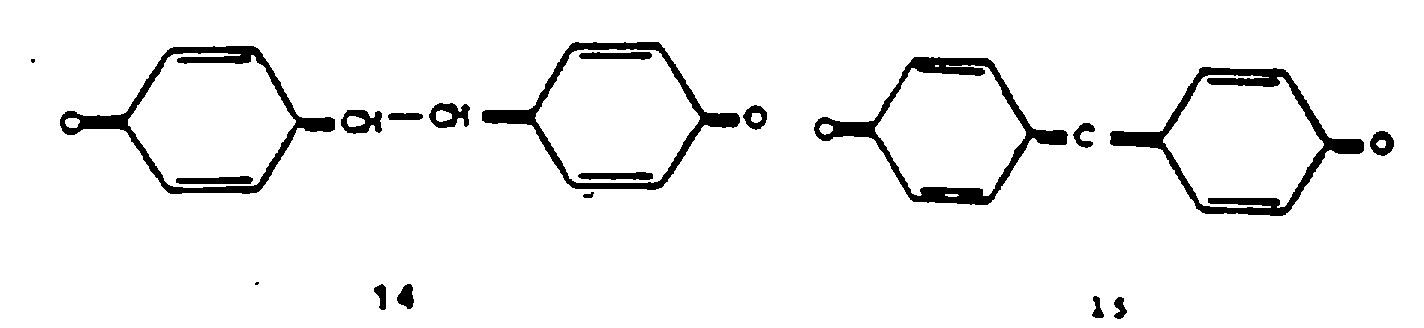


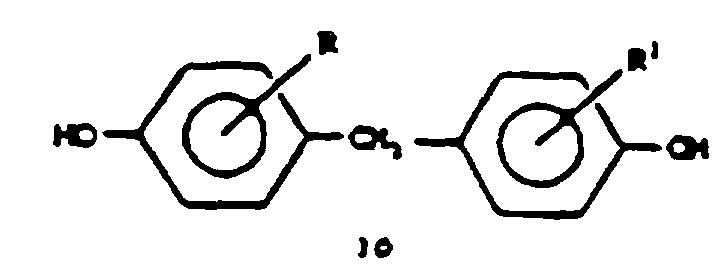
- Verfahren nach Anspruch 1, wobei R und R¹ einzeln ausgewählt werden aus der Gruppe bestehend aus Wasserstoff, Halogen, Sulfonyl, Nitro, Cyano, quaternären Aminogruppen, Hydroxy, Carboxy, Amino, Phosphon, Phosphin, Phosphonium, mit der Maßgabe, daß nicht sowohl R als auch R¹ Wasserstoff sein können.
- Verfahren nach Anspruch 1, bei welchem die Konzentration des Chinons oder Chinon-Derivats zumindest 0,01 M beträgt.
- Verfahren nach Anspruch 3, bei welchem die Katalysatorsalz-Konzentration zwischen 0,1 M und 0,001 M der gesamten Metallionenkonzentration beträgt.
- Verfahren nach Anspruch 1, bei welchem das Peroxid Wasserstoffperoxid ist.
- Verfahren nach Anspruch 1, bei welchem das Chinon oder Chinon-Derivat ausgewählt wird aus der Gruppe bestehend aus Benzochinon, Anthrachinon, Naphthachinon und Hydrochinon.
- Verfahren nach Anspruch 6, bei welchem das Chinon oder Chinon-Derivat Benzochinon ist.
- Verfahren nach Anspruch 6, bei welchem das Chinon oder Chinon-Derivat ein wasserlösliches Anthrachinon ist.
- Verfahren nach Anspruch 8, bei welchem das Anthrachinon sulfoniertes Anthrachinon ist.
- Verfahren nach Anspruch 6, bei welchem der Katalysator ein Vanadiumsalz ist.
- Verfahren nach Anspruch 6, bei welchem der Katalysator ein Kobaltsalz ist.
- Verfahren nach Anspruch 6, bei welchem die Konzentration des Chinons oder Chinon-Derivats zumindest 0,01 M beträgt.
- Verfahren nach Anspruch 6, bei welchem die Katalysatorsalz-Konzentration zwischen 0,1 M und 0,5 M der Gesamtmetallkonzentration beträgt.
- Verfahren nach Anspruch 1 oder 13, bei welchem die N-Phosphonomethyliminodiessigsäure als Aufschlämmung vorliegt.
Applications Claiming Priority (2)
| Application Number | Priority Date | Filing Date | Title |
|---|---|---|---|
| US07/625,342 US5072033A (en) | 1990-12-11 | 1990-12-11 | Process for producing N-phosphonomethylglycine |
| US625342 | 1990-12-11 |
Publications (2)
| Publication Number | Publication Date |
|---|---|
| EP0490862A1 EP0490862A1 (de) | 1992-06-17 |
| EP0490862B1 true EP0490862B1 (de) | 1996-01-24 |
Family
ID=24505625
Family Applications (1)
| Application Number | Title | Priority Date | Filing Date |
|---|---|---|---|
| EP91870199A Expired - Lifetime EP0490862B1 (de) | 1990-12-11 | 1991-12-09 | Verfahren zur Herstellung von N-Phosphonomethylglyzin |
Country Status (12)
| Country | Link |
|---|---|
| US (1) | US5072033A (de) |
| EP (1) | EP0490862B1 (de) |
| JP (1) | JPH0813831B2 (de) |
| AT (1) | ATE133420T1 (de) |
| AU (1) | AU643096B2 (de) |
| CA (1) | CA2057375C (de) |
| DE (1) | DE69116664T2 (de) |
| DK (1) | DK0490862T3 (de) |
| ES (1) | ES2051669T3 (de) |
| GR (1) | GR3018990T3 (de) |
| MY (1) | MY110295A (de) |
| NZ (1) | NZ240922A (de) |
Families Citing this family (3)
| Publication number | Priority date | Publication date | Assignee | Title |
|---|---|---|---|---|
| US6274760B1 (en) | 2000-03-14 | 2001-08-14 | Monsanto Co. | Preparation of formylphosphonic acid from tertiary aminomethylphosphonic acid N-oxides |
| US6441223B1 (en) | 2000-11-30 | 2002-08-27 | Monsanto Technology Llc | Method of making phosphorus-containing compounds and products thereof |
| CN100362002C (zh) * | 2004-03-25 | 2008-01-16 | 浙江新安化工集团股份有限公司 | 一种双甘膦氧化制备草甘膦的方法 |
Family Cites Families (3)
| Publication number | Priority date | Publication date | Assignee | Title |
|---|---|---|---|---|
| US3950402A (en) * | 1972-05-31 | 1976-04-13 | Monsanto Company | Process for producing N-phosphonomethyl glycine |
| US3954848A (en) * | 1972-05-31 | 1976-05-04 | Monsanto Company | Process for producing N-phosphonomethyl glycine |
| US4937376A (en) * | 1989-05-25 | 1990-06-26 | Monsanto Company | Process for producing N-phosphonomethylglycine |
-
1990
- 1990-12-11 US US07/625,342 patent/US5072033A/en not_active Expired - Fee Related
-
1991
- 1991-12-09 DK DK91870199.6T patent/DK0490862T3/da active
- 1991-12-09 AT AT91870199T patent/ATE133420T1/de not_active IP Right Cessation
- 1991-12-09 EP EP91870199A patent/EP0490862B1/de not_active Expired - Lifetime
- 1991-12-09 DE DE69116664T patent/DE69116664T2/de not_active Expired - Fee Related
- 1991-12-09 ES ES91870199T patent/ES2051669T3/es not_active Expired - Lifetime
- 1991-12-10 MY MYPI91002281A patent/MY110295A/en unknown
- 1991-12-10 CA CA002057375A patent/CA2057375C/en not_active Expired - Fee Related
- 1991-12-10 NZ NZ240922A patent/NZ240922A/en unknown
- 1991-12-10 AU AU88942/91A patent/AU643096B2/en not_active Ceased
- 1991-12-10 JP JP3325883A patent/JPH0813831B2/ja not_active Expired - Lifetime
-
1996
- 1996-02-14 GR GR960400391T patent/GR3018990T3/el unknown
Also Published As
| Publication number | Publication date |
|---|---|
| ES2051669T3 (es) | 1996-04-16 |
| DK0490862T3 (da) | 1996-02-26 |
| US5072033A (en) | 1991-12-10 |
| MY110295A (en) | 1998-04-30 |
| ATE133420T1 (de) | 1996-02-15 |
| DE69116664D1 (de) | 1996-03-07 |
| ES2051669T1 (es) | 1994-07-01 |
| AU8894291A (en) | 1992-06-18 |
| EP0490862A1 (de) | 1992-06-17 |
| JPH04275292A (ja) | 1992-09-30 |
| CA2057375A1 (en) | 1992-06-12 |
| CA2057375C (en) | 1998-05-19 |
| GR3018990T3 (en) | 1996-05-31 |
| NZ240922A (en) | 1994-03-25 |
| DE69116664T2 (de) | 1996-08-22 |
| AU643096B2 (en) | 1993-11-04 |
| JPH0813831B2 (ja) | 1996-02-14 |
Similar Documents
| Publication | Publication Date | Title |
|---|---|---|
| JPH0798829B2 (ja) | タングステン触媒を用いたn−ホスホノメチルグリシンの製造方法 | |
| JPH04224593A (ja) | N−ホスホノメチルグリシンを製造するための過酸化物法 | |
| EP0490862B1 (de) | Verfahren zur Herstellung von N-Phosphonomethylglyzin | |
| EP0412074B1 (de) | Verfahren zur Herstellung von N-Phosphonmethylglyzin | |
| EP0399985B1 (de) | Verfahren zur Herstellung von N-Phosphonomethylglyzin | |
| EP0362180A2 (de) | Verfahren zur Herstellung von N-Phosphonomethylglyzin | |
| EP0483098B1 (de) | Verfahren zur Herstellung von N-Phosphonomethylglycin | |
| US5047579A (en) | Process for producing n-phosphonomethylglycine | |
| JPH0692425B2 (ja) | N−ホスホノメチルグリシンの製造方法 | |
| HK1007144B (en) | Process for producing n-phosphonomethylglycine | |
| HK1007147B (en) | Process for producing n-phosphonomethylglycine |
Legal Events
| Date | Code | Title | Description |
|---|---|---|---|
| PUAI | Public reference made under article 153(3) epc to a published international application that has entered the european phase |
Free format text: ORIGINAL CODE: 0009012 |
|
| AK | Designated contracting states |
Kind code of ref document: A1 Designated state(s): AT BE CH DE DK ES FR GB GR IT LI LU NL SE |
|
| 17P | Request for examination filed |
Effective date: 19921110 |
|
| 17Q | First examination report despatched |
Effective date: 19940225 |
|
| GRAA | (expected) grant |
Free format text: ORIGINAL CODE: 0009210 |
|
| AK | Designated contracting states |
Kind code of ref document: B1 Designated state(s): AT BE CH DE DK ES FR GB GR IT LI LU NL SE |
|
| REF | Corresponds to: |
Ref document number: 133420 Country of ref document: AT Date of ref document: 19960215 Kind code of ref document: T |
|
| REG | Reference to a national code |
Ref country code: DK Ref legal event code: T3 |
|
| REF | Corresponds to: |
Ref document number: 69116664 Country of ref document: DE Date of ref document: 19960307 |
|
| REG | Reference to a national code |
Ref country code: CH Ref legal event code: NV Representative=s name: A. BRAUN, BRAUN, HERITIER, ESCHMANN AG PATENTANWAE |
|
| ET | Fr: translation filed | ||
| ITF | It: translation for a ep patent filed | ||
| REG | Reference to a national code |
Ref country code: ES Ref legal event code: FG2A Ref document number: 2051669 Country of ref document: ES Kind code of ref document: T3 |
|
| REG | Reference to a national code |
Ref country code: GR Ref legal event code: FG4A Free format text: 3018990 |
|
| PLBE | No opposition filed within time limit |
Free format text: ORIGINAL CODE: 0009261 |
|
| STAA | Information on the status of an ep patent application or granted ep patent |
Free format text: STATUS: NO OPPOSITION FILED WITHIN TIME LIMIT |
|
| 26N | No opposition filed | ||
| PGFP | Annual fee paid to national office [announced via postgrant information from national office to epo] |
Ref country code: FR Payment date: 19971119 Year of fee payment: 7 |
|
| PGFP | Annual fee paid to national office [announced via postgrant information from national office to epo] |
Ref country code: SE Payment date: 19971120 Year of fee payment: 7 |
|
| PGFP | Annual fee paid to national office [announced via postgrant information from national office to epo] |
Ref country code: AT Payment date: 19971124 Year of fee payment: 7 |
|
| PGFP | Annual fee paid to national office [announced via postgrant information from national office to epo] |
Ref country code: DE Payment date: 19971125 Year of fee payment: 7 |
|
| PGFP | Annual fee paid to national office [announced via postgrant information from national office to epo] |
Ref country code: GB Payment date: 19971126 Year of fee payment: 7 Ref country code: DK Payment date: 19971126 Year of fee payment: 7 |
|
| PGFP | Annual fee paid to national office [announced via postgrant information from national office to epo] |
Ref country code: CH Payment date: 19971127 Year of fee payment: 7 |
|
| PGFP | Annual fee paid to national office [announced via postgrant information from national office to epo] |
Ref country code: GR Payment date: 19971128 Year of fee payment: 7 |
|
| PGFP | Annual fee paid to national office [announced via postgrant information from national office to epo] |
Ref country code: NL Payment date: 19971130 Year of fee payment: 7 |
|
| PGFP | Annual fee paid to national office [announced via postgrant information from national office to epo] |
Ref country code: LU Payment date: 19971208 Year of fee payment: 7 |
|
| PGFP | Annual fee paid to national office [announced via postgrant information from national office to epo] |
Ref country code: ES Payment date: 19971211 Year of fee payment: 7 |
|
| PGFP | Annual fee paid to national office [announced via postgrant information from national office to epo] |
Ref country code: BE Payment date: 19971212 Year of fee payment: 7 |
|
| PG25 | Lapsed in a contracting state [announced via postgrant information from national office to epo] |
Ref country code: LU Free format text: LAPSE BECAUSE OF NON-PAYMENT OF DUE FEES Effective date: 19981209 Ref country code: GB Free format text: LAPSE BECAUSE OF NON-PAYMENT OF DUE FEES Effective date: 19981209 Ref country code: DK Free format text: LAPSE BECAUSE OF NON-PAYMENT OF DUE FEES Effective date: 19981209 Ref country code: AT Free format text: LAPSE BECAUSE OF NON-PAYMENT OF DUE FEES Effective date: 19981209 |
|
| PG25 | Lapsed in a contracting state [announced via postgrant information from national office to epo] |
Ref country code: SE Free format text: LAPSE BECAUSE OF NON-PAYMENT OF DUE FEES Effective date: 19981210 |
|
| PG25 | Lapsed in a contracting state [announced via postgrant information from national office to epo] |
Ref country code: LI Free format text: LAPSE BECAUSE OF NON-PAYMENT OF DUE FEES Effective date: 19981231 Ref country code: GR Free format text: LAPSE BECAUSE OF NON-PAYMENT OF DUE FEES Effective date: 19981231 Ref country code: CH Free format text: LAPSE BECAUSE OF NON-PAYMENT OF DUE FEES Effective date: 19981231 Ref country code: BE Free format text: LAPSE BECAUSE OF NON-PAYMENT OF DUE FEES Effective date: 19981231 |
|
| BERE | Be: lapsed |
Owner name: MONSANTO CY Effective date: 19981231 |
|
| PG25 | Lapsed in a contracting state [announced via postgrant information from national office to epo] |
Ref country code: NL Free format text: LAPSE BECAUSE OF NON-PAYMENT OF DUE FEES Effective date: 19990701 |
|
| GBPC | Gb: european patent ceased through non-payment of renewal fee |
Effective date: 19981209 |
|
| REG | Reference to a national code |
Ref country code: CH Ref legal event code: PL |
|
| PG25 | Lapsed in a contracting state [announced via postgrant information from national office to epo] |
Ref country code: FR Free format text: LAPSE BECAUSE OF NON-PAYMENT OF DUE FEES Effective date: 19990831 |
|
| NLV4 | Nl: lapsed or anulled due to non-payment of the annual fee |
Effective date: 19990701 |
|
| REG | Reference to a national code |
Ref country code: FR Ref legal event code: ST |
|
| PG25 | Lapsed in a contracting state [announced via postgrant information from national office to epo] |
Ref country code: DE Free format text: LAPSE BECAUSE OF NON-PAYMENT OF DUE FEES Effective date: 19991001 |
|
| PG25 | Lapsed in a contracting state [announced via postgrant information from national office to epo] |
Ref country code: ES Free format text: LAPSE BECAUSE OF NON-PAYMENT OF DUE FEES Effective date: 19991210 |
|
| REG | Reference to a national code |
Ref country code: DK Ref legal event code: EBP |
|
| REG | Reference to a national code |
Ref country code: ES Ref legal event code: FD2A Effective date: 20000114 |
|
| PG25 | Lapsed in a contracting state [announced via postgrant information from national office to epo] |
Ref country code: IT Free format text: LAPSE BECAUSE OF NON-PAYMENT OF DUE FEES;WARNING: LAPSES OF ITALIAN PATENTS WITH EFFECTIVE DATE BEFORE 2007 MAY HAVE OCCURRED AT ANY TIME BEFORE 2007. THE CORRECT EFFECTIVE DATE MAY BE DIFFERENT FROM THE ONE RECORDED. Effective date: 20051209 |