EP0493601B1 - Flüssigkristallcopolymer, seine herstellung, dienverbindung zur herstelllung des copolymers und die herstellung dieser dienverbindung - Google Patents
Flüssigkristallcopolymer, seine herstellung, dienverbindung zur herstelllung des copolymers und die herstellung dieser dienverbindung Download PDFInfo
- Publication number
- EP0493601B1 EP0493601B1 EP91911940A EP91911940A EP0493601B1 EP 0493601 B1 EP0493601 B1 EP 0493601B1 EP 91911940 A EP91911940 A EP 91911940A EP 91911940 A EP91911940 A EP 91911940A EP 0493601 B1 EP0493601 B1 EP 0493601B1
- Authority
- EP
- European Patent Office
- Prior art keywords
- compound
- represented
- integer
- reaction
- mmol
- Prior art date
- Legal status (The legal status is an assumption and is not a legal conclusion. Google has not performed a legal analysis and makes no representation as to the accuracy of the status listed.)
- Expired - Lifetime
Links
- 0 C1CC*CC1 Chemical compound C1CC*CC1 0.000 description 24
- CWUFOXGNEQIIGX-UHFFFAOYSA-N CC(C=C1)=CCC1=C Chemical compound CC(C=C1)=CCC1=C CWUFOXGNEQIIGX-UHFFFAOYSA-N 0.000 description 1
- BCWRAEXLMFRGMP-UHFFFAOYSA-N Cc(cc1)ccc1-c(cc1)ccc1C1=CC1 Chemical compound Cc(cc1)ccc1-c(cc1)ccc1C1=CC1 BCWRAEXLMFRGMP-UHFFFAOYSA-N 0.000 description 1
Images











Classifications
-
- C—CHEMISTRY; METALLURGY
- C08—ORGANIC MACROMOLECULAR COMPOUNDS; THEIR PREPARATION OR CHEMICAL WORKING-UP; COMPOSITIONS BASED THEREON
- C08G—MACROMOLECULAR COMPOUNDS OBTAINED OTHERWISE THAN BY REACTIONS ONLY INVOLVING UNSATURATED CARBON-TO-CARBON BONDS
- C08G77/00—Macromolecular compounds obtained by reactions forming a linkage containing silicon with or without sulfur, nitrogen, oxygen or carbon in the main chain of the macromolecule
- C08G77/48—Macromolecular compounds obtained by reactions forming a linkage containing silicon with or without sulfur, nitrogen, oxygen or carbon in the main chain of the macromolecule in which at least two but not all the silicon atoms are connected by linkages other than oxygen atoms
- C08G77/50—Macromolecular compounds obtained by reactions forming a linkage containing silicon with or without sulfur, nitrogen, oxygen or carbon in the main chain of the macromolecule in which at least two but not all the silicon atoms are connected by linkages other than oxygen atoms by carbon linkages
-
- C—CHEMISTRY; METALLURGY
- C08—ORGANIC MACROMOLECULAR COMPOUNDS; THEIR PREPARATION OR CHEMICAL WORKING-UP; COMPOSITIONS BASED THEREON
- C08G—MACROMOLECULAR COMPOUNDS OBTAINED OTHERWISE THAN BY REACTIONS ONLY INVOLVING UNSATURATED CARBON-TO-CARBON BONDS
- C08G77/00—Macromolecular compounds obtained by reactions forming a linkage containing silicon with or without sulfur, nitrogen, oxygen or carbon in the main chain of the macromolecule
- C08G77/04—Polysiloxanes
- C08G77/38—Polysiloxanes modified by chemical after-treatment
-
- C—CHEMISTRY; METALLURGY
- C08—ORGANIC MACROMOLECULAR COMPOUNDS; THEIR PREPARATION OR CHEMICAL WORKING-UP; COMPOSITIONS BASED THEREON
- C08G—MACROMOLECULAR COMPOUNDS OBTAINED OTHERWISE THAN BY REACTIONS ONLY INVOLVING UNSATURATED CARBON-TO-CARBON BONDS
- C08G77/00—Macromolecular compounds obtained by reactions forming a linkage containing silicon with or without sulfur, nitrogen, oxygen or carbon in the main chain of the macromolecule
- C08G77/42—Block-or graft-polymers containing polysiloxane sequences
-
- C—CHEMISTRY; METALLURGY
- C09—DYES; PAINTS; POLISHES; NATURAL RESINS; ADHESIVES; COMPOSITIONS NOT OTHERWISE PROVIDED FOR; APPLICATIONS OF MATERIALS NOT OTHERWISE PROVIDED FOR
- C09K—MATERIALS FOR MISCELLANEOUS APPLICATIONS, NOT PROVIDED FOR ELSEWHERE
- C09K19/00—Liquid crystal materials
- C09K19/04—Liquid crystal materials characterised by the chemical structure of the liquid crystal components, e.g. by a specific unit
- C09K19/38—Polymers
- C09K19/3833—Polymers with mesogenic groups in the side chain
-
- C—CHEMISTRY; METALLURGY
- C09—DYES; PAINTS; POLISHES; NATURAL RESINS; ADHESIVES; COMPOSITIONS NOT OTHERWISE PROVIDED FOR; APPLICATIONS OF MATERIALS NOT OTHERWISE PROVIDED FOR
- C09K—MATERIALS FOR MISCELLANEOUS APPLICATIONS, NOT PROVIDED FOR ELSEWHERE
- C09K19/00—Liquid crystal materials
- C09K19/04—Liquid crystal materials characterised by the chemical structure of the liquid crystal components, e.g. by a specific unit
- C09K19/40—Liquid crystal materials characterised by the chemical structure of the liquid crystal components, e.g. by a specific unit containing elements other than carbon, hydrogen, halogen, oxygen, nitrogen or sulfur, e.g. silicon, metals
- C09K19/406—Liquid crystal materials characterised by the chemical structure of the liquid crystal components, e.g. by a specific unit containing elements other than carbon, hydrogen, halogen, oxygen, nitrogen or sulfur, e.g. silicon, metals containing silicon
- C09K19/408—Polysiloxanes
Definitions
- the present invention relates to novel liquid-crystalline copolymers, a process for the preparation thereof, diene compounds used for the preparation thereof and processes for the preparation of the diene compounds.
- the present invention relates to novel liquid-crystalline copolymers which exhibit ferroelectricity even at temperatures around room temperature, respond to the changes of external electric fields at such a high speed as to enable display of motion pictures and is useful as display elements for display in a large plane or a bent plane, to a process for the preparation thereof, diene compounds used for the preparation thereof and processs for the preparation of the diene compounds.
- the liquid-crystalline copolymers are useful in various fields of optoelectronics, particularly, as a display element of desk calculators, clocks and watches, etc., and as various kinds of electronic, optical elements for, for example, electronic optical shatters, electronic optical diaphragms, optical modulators, optical-path transfer switches in optical communication systems, memories, liquid crystal printer heads, varifocal lenses, etc.
- Display devices containing low molecular weight liquid crystals as display elements have been widely used for digital display of desk calculators, clocks and watches, etc.
- the conventional low molecular weight liquid crystals are generally interposed between a couple of glass substrates which are arranged with a separation distance adjusted in micron unit.
- such adjustment of a space has been practically impossible in production of displays with a large picture plane or a bent picture plane.
- some attempts have been made to develop polymeric liquid crystals so as to render liquid crystals themselves moldable (for example, J. Polym., Sci, Polym., Lett., Ed. 13 , 243 (1975), Polym., Bull., 6 , 309 (1982), Japanese Patent Application Kokai Koho (Laid-open) No. 56-21479).
- Japanese Patent Application Kokai Koho (Laid-open) No. 63-99204 reports the synthesis of polyacrylate-type ferroelectric liquid-crystalline polymers and shows that they are improved in performances as compared with the above-described polymeric liquid crystals. Nevertheless, even these side-chain type polymeric liquid crystals are unsatisfactory in their response speeds and the temperature ranges in which they can function,
- polyether-type ferroelectric polymeric liquid crystals obtainable by polymerizing epoxy monomers, for example polymeric liquid crystals represented by the following formula wherein s is an integer of 1 to 30, obtained by polymerizing epoxy compounds represented by the following formula
- side-chain type polymeric liquid crystals have an advantageous capability to respond to stimulations with external electric fields at a wide range of temperature including room temperature or the vicinity, they are still insufficient for practical use.
- An object of the present invention is to provide a novel polymeric liquid crystal which not only exhibits ferroelectricity at a wide range of temperature including room temperature but also responds to external electric fields at great speed.
- Another object of the present invention is to provide a process for the preparation of the polymeric liquid crystal, a diene compound usable for the preparation of the polymeric liquid crystals and a process for the preparation of the diene compound.
- novel copolymers comprising a repeating unit of a linear hydrocarbon structure having aromatic rings in side chains and a repeating unit of a siloxane structure exhibit SmC* phase at a wide range of temperature including room temperature and respond to the changes of electric fields at great speed, and the finding led them to completion of the present invention.
- the present invention provides a liquid-crystalline copolymer comprising a repeating unit represented by the following general formula and a repeating unit represented by the following general formula
- the liquid-crystalline copolymer of the present invention preferably has a number average molecular weight (Mn) of 1,000 to 1,000,000, more preferably 1,000 to 100,000.
- liquid-crystalline copolymer has a number average molecular weight of less than 1,000, they may sometimes be difficult to made into film or coating, and a number average molecular weight of more than 1,000,000 may sometimes cause disadvantages, such as a poor response speed.
- m is an integer of 1 to 20, preferably 6 to 12, and each of a and d is an integer of 0 to 10, and a is preferably 0 or 1 and b is an integer of 0 or 1.
- the liquid-crystalline copolymer of the present invention may be prepared by carrying out a hydrosilylating reaction of substantially equimolecular quantities of a diene compound represented by the following general formula wherein r, p, m, R1, R, R3, R4 R5, a, b and d are as defined above, and a silicon compound represented by the following general formula wherein q is as defined above, in a solvent in the presence of a catalyst.
- Preferred examples of the solvent in which the hydrosilylating reaction of the compound [III] and the compound [IV] is carried out include an inert aromatic hydrocarbon having a boiling point of not lower than 70 °C, such as benzene, toluene of xylene, and an inert ether solvent having a boiling point of not lower than 70 °C, such as tetrahydrofuran or diisopropyl ether.
- Preferred examples of the catalyst to be used for the reaction include a platinum catalyst, such as a chloroplatinic acid such as hexachloroplatinic acid hexahydrate, and dicyclopentadienylplatinum chloride. The reaction is carried out preferably in an inert atmosphere at 60 to 90 °C for 5 to 20 hours.
- the diene compound which is used as a starting material of the above-described copolymer and is represented by the following general formula, is a novel compound, and the presence of a repeating unit derived from this starting material renders a decreased viscosity to the copolymer so that the copolymer responds to the changes of electric fields at an increased speed.
- the diene compound may be used not only for the preparation of the liquid-crystalline copolymer of the present invention but also as a modifying agent for other liquid-crystalline polymers.
- the diene compound [III] may be prepared by carrying out an etherification reaction of an alcohol [V] represented by the following general formula wherein each of r and p is an integer of 2 to 5, and a difunctional compound [VI] represented by the following general formula X(CH2) m X wherein m is an integer of 1 to 20, X is -Br, -I or in a solvent in the presence of an alkali agent, purifying a reaction mixture obtained by the etherification reaction to obtain a purified product, and carrying out an etherification reaction of the purified product and a hydroxy compound [VII] represented by the following general formula HO-R1 wherein R1, R, R3, R4, R5, a, b and d are as defined above, in a solvent in the presence of an alkali agent.
- an alcohol [V] represented by the following general formula wherein each of r and p is an integer of 2 to 5
- a difunctional compound [VI] represented by the following general formula X(CH2) m
- reaction is conducted as follows.
- Typical examples of the alcohol [V] include 1,4-pentadiene-3-ol, 1,5-hexadiene-3-ol, 1,6-heptadiene-3-ol, 1,7-octadiene-3-ol, 1,6-heptadiene-4-ol, 1,7-octadiene-4-ol, 1,8-nonadiene-5-ol and 1,10-undecadiene-6-ol.
- difunctional compound [VI] examples include dibromomethane, diiodomethane, ditosylmethane, dibromoethane, diiodoethane, ditosylethane, dibromopropane, diiodopropane, ditosylpropane, dibromobutane, diiodobutane, ditosylbutane, dibromopentane, diiodopentane, ditosylpentane, dibromohexane, diiodohexane, ditosylhexane, dibromoheptane, diiodoheptane, ditosylheptane, dibromooctane, diiodooctane, ditosyloctane, dibromononane, diiodononane, ditosylnonane, dibro
- R1-OH [VII] examples include those represented by the formulas wherein R is -COOR3, -OR3 or -OCOR3, and R3 is an optically active group as described above.
- optically active group of R is introduced into the R by the following reactions using an optically active alcohol R3-OH and or an optically active carboxylic acid R3COOH.
- R3-OH an optically active alcohol
- R3COOH an optically active carboxylic acid
- optically active alcohol R3-OH examples include (+)-2-methylbutanol, (-)-2-methylbutanol, (+)-2-chlorobutanol, (-)-2-chlorobutanol, (+)-2-methylpentanol, (-)-2-methylpentanol, (+)-3-methylpentanol, (-)-3-methylpentanol, (+)-4-methylhexanol, (-)-4-methylhexanol, (+)-2-chloropropanol, (-)-2-chloropropanol, (+)-6-methyloctanol, (-)-6-methyloctanol, (+)-2-cyanobutanol, (-)-2-cyanobutanol, (+)-2-butanol, (+)-2-butanol, (+)-2-butanol, (+)-2-pentanol, (-)-2-pentanol, (+)-2-octan
- optically active carboxylic acid R3-COOH examples include (+)-2-methylbutanoic acid, (-)-2-methylbutanoic acid, (+)-2-chlorobutanoic acid, (-)-2-chlorobutanoic acid, (+)-2-methylpentanoic acid, (-)-2-methylpentanoic acid, (+)-3-methylpentanoic acid, (-)-3-methylpentanoic acid, (+)-4-methylhexanoic acid, (-)-4-methylhexanoic acid, (+)-2-chloropropanoic acid, (+)-2-chloropropanoic acid, (+)-6-methyloctanoic acid, (-)-6-methyloctanoic acid, (+)-2-cyanobutanoic acid, (-)-2-cyanobutanoic acid, (+)-2-cyanobutanoic acid, (+)-2-cyanobutanoic acid, (+)-2-cyanobutanoic acid, (+
- pyrimidine derivatives are novel compounds which are prepared by the following process.
- amidine salt (b) and 2-ethoxycarbonyl-3-dimethylaminoacrolein are allowed to react with each other in ethanol solvent in the presence of sodium ethoxide, to obtain the above compound (c).
- the protecting group is removed from the compound (c) by a HBr/acetic acid treatment to obtain a compound (d), which is then acetylated with acetic anhydride to obtain a compound (e).
- the acetylated carboxylic acid derivative (e) is treated with thionyl chloride or the like to form an acid chloride (f), which is then subjected to an esterification reaction with an optically active alcohol to obtain an ester compound (g).
- the protecting group, namely acetyl group, is then removed by using benzylamine or the like to obtain the objective alcohol compound.
- the iminium salt (i) and the amidine salt (b) obtained in the course of the preparation of are allowed to react with each other in methanol solvent in the presence of sodium methoxide, to obtain a compound (j).
- reaction is carried out by adding the compound (o) thereto, to obtain a compound (p).
- the compounds (p) and (q) dissolved in ethanol solvent are allowed to react with each other by adding sodium methoxide, to obtain a compound (r).
- the protecting group of the compound (r) is removed in an atmosphere of gaseous hydrogen in the presence of palladium carbon catalyst, to obtain the objective compound.
- Butyllithium is added to a THF solution of methoxymethyltriphenylphosphonium bromide.
- the compound (s) is added thereto and allowed to react to obtain a compound (t).
- Removal of the protecting group from the compound (v) is carried out in an atmosphere of gaseous hydrogen in the presence of palladium carbon catalyst, to obtain the objective compound.
- Preferred examples of the solvent used in the etherification reaction [1] include an aprotic polar solvent, such as tetrahydrofuran or N,N-dimethylformamide, and preferred examples of the etherificating agent include a metal hydride, such as sodium hydride, a metal hydroxide, such as potassium hydroxide or sodium hydroxide, and a basic compound having an ability of ionizing -OH.
- an aprotic polar solvent such as tetrahydrofuran or N,N-dimethylformamide
- the etherificating agent include a metal hydride, such as sodium hydride, a metal hydroxide, such as potassium hydroxide or sodium hydroxide, and a basic compound having an ability of ionizing -OH.
- an alkali agent is introduced in a mixture of the alcohol [V] and a solvent to convert the alcohol to an alkoxide at room temperature (when the reactivity between the alcohol and the alkali agent is low, the reaction system may be heated). Subsequently, a dibromo compound [VI] is introduced therein, and the reaction is performed by conducting heating to 60 to 100 °C with stirring.
- Preferred examples of the solvent used in the etherification reaction [2] include a ketone solvent, such as acetone or methyl ethyl ketone, an inert ether solvent, such as tetrahydrofuran or ether, and a lower alcohol, such as methanol or ethanol, and preferred examples of the etherifying agent include a carbonate, such as potassium carbonate or sodium carbonate, and a metal hydroxide, such as potassium hydroxide or sodium hydroxide.
- a ketone solvent such as acetone or methyl ethyl ketone
- an inert ether solvent such as tetrahydrofuran or ether
- a lower alcohol such as methanol or ethanol
- preferred examples of the etherifying agent include a carbonate, such as potassium carbonate or sodium carbonate, and a metal hydroxide, such as potassium hydroxide or sodium hydroxide.
- the etherification reaction [2] is carried out by introducing a hydroxy compound [VII], a dibromo compound [VI], an alkali agent and a solvent into a reaction vessel not in order and heating them to 60 to 100 °C with stirring.
- An example of the alternative to the process for the preparation of the compound [III] is a process which comprises carrying out an etherification reaction of an alcohol [V] represented by the following general formula wherein each of r and p is an integer of 2 to 5, and a difunctional compound [VI] represented by the following general formula X(CH2) m X wherein m is an integer of 1 to 20, X is -Br, -I or in a solvent in the presence of an alkali agent, purifying a reaction mixture obtained by the etherification reaction to obtain a purified product, carrying out an etherification reaction of the purified product and a compound [VIII] represented by the following general formula wherein e is an integer of 1 or 2, in a solvent in the presence of an alkali agent, collecting off a product from a reaction mixture obtained by the etherification reaction by filtration, hydrolyzing the product in water or an alcohol, pouring a reaction solution obtained by the hydrolysis into water to obtain a solution, making the pH of the solution acidic by adding a
- the hydroxy compound [IX] used in the esterification reaction [6] is a compound represented by the formula and the optically active group of R is introduced in the same manner as described above.
- a hydrolysis [4] is carried out in water or alcohol in the presence of an alkali agent, and the obtained compound (4) is subjected to a halogenation reaction [5] using an acid halogenating agent to convert it to an acid chloride.
- An esterification reactidn [6] of the acid chloride and a hydroxy compound [IX] represented by the general formula HO-A-R is carried out in a solvent, such as THF, in the presence of triethylamine, to obtain the objective diene compound (5), namely the diene compound [III].
- the compound [VIII] is methyl 4-hydroxybenzoate or methyl 4' -hydroxybiphenyl-4-carboxylate.
- the solvent, agents and reaction conditions employed in the etherification reaction [3] are the same as those employed in the etherification reaction [2].
- Preferred examples of the alkali agent used in the hydrolysis reaction [4] include a metal hydroxide, such as potassium hydroxide or sodium hydroxide, and preferred examples of the alcohol include a water-soluble lower alcohol, such as methanol or ethanol.
- a metal hydroxide such as potassium hydroxide or sodium hydroxide
- preferred examples of the alcohol include a water-soluble lower alcohol, such as methanol or ethanol.
- any known acid halogenating agent such as thionyl chloride, phosphorus oxychloride and phosphorus pentachloride are used.
- Preferred examples of the solvent used in the esterification reaction [6] include an inert ether solvent, such as tetrahydrofuran, and an inert hydrocarbon solvent, such as toluene or hexane.
- the esterification reaction is carried out by introducing the acid chloride or the acid chloride dissolved in a solvent into a solution containing a receptor of hydrogen halides, such as pyridine or a tertiary amine such as triethylamine, and agitating the resulting mixture.
- a receptor of hydrogen halides such as pyridine or a tertiary amine such as triethylamine
- the mixture When the mixture has low reactivity, the mixture may be heated to 20 to 80 °C.
- silicon compound [IV] which is another starting material of the copolymer of the present invention and includes two Si-H bonds, include 1,1,3,3-tetramethyldisiloxane, 1,1,3,3,5,5-hexamethyltrisyloxane, 1,1,3,3,5,5,7,7-octamethyltetrasiloxane and 1,1,3,3,5,5,7,7,9,9-decamethylpentasiloxane.
- liquid-crystalline copolymer of the present invention and the diene compound used for the preparation of the liquid-crystalline copolymer are obtained.
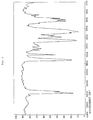
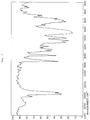
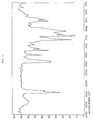
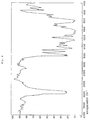
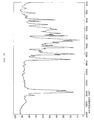
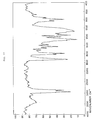
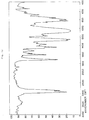
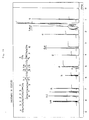
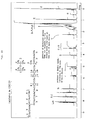
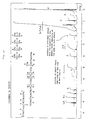
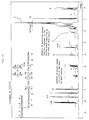
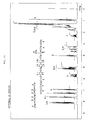
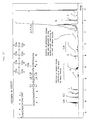
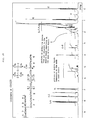
- Figures 1 to 16 are charts showing IR spectra of the copolymers obtained in Examples 1 to 16, respectively.
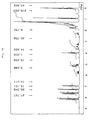
- Figures 17 and 18 are charts showing 1H-NMR spectra of the copolymers obtained in Examples 17 and 18, respectively.
- Figure 19 is a chart showing 1H-NMR spectrum of the diene compound obtained in Example 19.
- Figure 20 is a chart showing 1H-NMR spectrum of the copolymer obtained in Example 19.
- Figure 21 is a chart showing 1H-NMR spectrum of the copolymer obtained in Example 20.
- Figure 22 is a chart showing 1H-NMR spectrum of the copolymer obtained in Example 21.
- Figure 23 is a chart showing 1H-NMR spectrum of the diene compound obtained in Example 22.
- Figure 24 is a chart showing 1H-NMR spectrum of the copolymer obtained in Example 22.
- Figure 25 is a chart showing 1H-NMR spectrum of the diene compound obtained in Example 23.
- Figure 26 is a chart showing 1H-NMR spectrum of the copolymer obtained in Example 23.
- Figure 27 is a chart showing 1H-NMR spectrum of the copolymer obtained in Example 24.
- Figure 28 is a chart showing 1H-NMR spectrum of the diene compound obtained in Example 25.
- Figure 29 is a chart showing 1H-NMR spectrum of the copolymer obtained in Example 25.
- a liquid crystal material was interposed between two circular sheets of substrate with ITO electrode of 0.2 cm in area, the thickness of the liquid crystal material was then adjusted to 25 ⁇ m with spacers, and the liquid crystal material was oriented by applying a shearing stress three to five times to obtain a liquid crystal optical device.
- a liquid crystal cell was produced by sandwiching the liquid crystal optical device between two polarizing plates whose axes perpendicularly intersect each other.
- a rectangular wave of ⁇ 10 MV/M was applied between the ITO electrodes of the liquid crystal cell to measure the electric field response time (t10 ⁇ 90) required for the change of the light transmission from 0 to 90 %.
- the diene compound exhibited liquid crystal properties and the following phase transition behavior and properties.
- the results of elementary analysis are shown in Table 2.
- the diene compound exhibited liquid crystal properties and the following phase transition behavior and properties.
- the results of elementary analysis are shown in Table 2.
- the diene compound exhibited liquid crystal properties and the following phase transition behavior and properties.
- the results of elementary analysis are shown in Table 2.
- a copolymer comprising and
- the diene compound exhibited liquid crystal properties and the following phase transition behavior and properties.
- the results of elementary analysis are shown in Table 2.
- a copolymer comprising and
- a copolymer comprising and
- the molecular weight, phase transition temperatures and response time of the obtained copolymer are shown in Table 1, and IR spectrum thereof is shown in figure 5.
- the diene compound exhibited liquid crystal properties and the following phase transition behavior and properties.
- the results of elementary analysis are shown in Table 2.
- a copolymer comprising and
- a copolymer comprising and
- the diene compound exhibited liquid crystal properties and the following phase transition behavior and properties.
- the results of elementary analysis are shown in Table 2.
- a copolymer comprising and
- the diene compound exhibited liquid crystal properties and the following phase transition behavior and properties.
- the results of elementary analysis are shown in Table 2.
- a copolymer comprising and
- a copolymer comprising and
- Example 10-[1] The above-described iminium salt (46) and 42 g of the amidine salt (39) obtained in Example 10-[1] were dissolved in methanol, 25 g of sodium methoxide was added thereto gradually, and the mixture was refluxed for 2 hours. After insoluble matters were removed out from the reaction solution while the reaction solution was hot, the remaining reaction solution was allowed to cool, and the generated precipitation (47) was collected.
- a solution prepared by adding 30 g of dried N.N-dimethylformamide to dried dichloroethane was cooled to 5 °C or lower. After a solution containing 63 g of phosphorus oxychlorate dissolved in dichloroethane was added to the cooled solution dropwise, the mixture was stirred for 30 minutes at 5 °C or lower. Subsequently, to the reaction solution was added a dichloroethane solution of the compound (54), and the resulting mixture was stirred for 30 minutes at room temperature and then for one hour at 70 °C. After the reaction solution was cooled to room temperature, the reaction solution was poured into ice water and was then made basic by addition of potassium carbonate. The reaction solution was then concentrated under reduced pressure.
- a copolymer comprising and
- reaction mixture was further heated for one hour at 65 °C and for 30 minutes at 80 °C by using an aspirator under reduced pressure to remove out the toluene used and residual thionyl chloride.
- the reaction mixture was then cooled to room temperature.
- 170 ml of toluene and 11.8 ml of pyridine the mixture was made into a homogeneous solution.
- To the solution was added dropwise 170 ml of a solution containing 37.9 g of optically active 1-methylheptyl 4' - hydroxybiphenyl-4-carboxylate dissolved in toluene with stirring over a period of 30 minutes.
- the mixture was then stirred for a night at room temperature to complete the reaction.
- the reaction mixture was filtered to remove out a pyridine salt precipitated therein. Subsequently, the solvent was distilled out from the filtrate by using a rotary evaporator under reduced pressure at a bath temperature of 50 °C to obtain 79.8 g of a concentrate. To the concentrate was added 80 g of methylene chloride, and the mixture was stirred to form a homogeneous, transparent solution. Separation of the objective compound from the solution was carried out by employing a liquid chromatography using a pre-column filled with activated alumina and a main column filled with silica gel.
- the diene compound exhibited liquid crystal properties and the following phase transition behavior and properties.
- the results of elementary analysis are shown below.
- a copolymer comprising and
- the diene compound exhibited liquid crystal properties and the following phase transition behavior and properties.
- the results of elementary analysis are shown below.
- a copolymer comprising and
- Example 15 The same treatments and purification procedure as those of Example 15 were carried out to obtain 36.5 g of the objective liquid-crystalline copolymer.
- the molecular weight, phase transition temperatures and response time of the obtained copolymer are as follows. IR spectrum of the obtained copolymer Is shown in figure 16.
- a copolymer comprising and
- the diene compound exhibited liquid crystal properties and the following phase transition behavior and properties.
- 1H-NMR spectrum of the diene compound is shown in figure 19, and the results of elementary analysis in Table 4.
- a copolymer comprising and
- the molecular weight, phase transition temperatures and response time of the obtained copolymer are shown in Table 5, and 1H-NMR spectrum of the copolymer is shown in figure 20.
- the molecular weight, phase transition temperatures and response time of the obtained copolymer are shown in Table 5, and 1H-NMR spectrum of the copolymer is shown in figure 21.
- a copolymer comprising and
- the molecular weight, phase transition temperatures and response time of the obtained copolymer are shown in Table 5, and 1H-NMR spectrum of the copolymer is shown in figure 22.
- the diene compound exhibited liquid crystal properties and the following phase transition behavior and properties.
- 1H-NMR spectrum of the diene compound is shown in figure 23, and the results of elementary analysis in Table 4.
- a copolymer comprising and
- the molecular weight, phase transition temperatures and response time of the obtained copolymer are shown in Table 5, and 1H-NMR spectrum of the copolymer is shown in figure 24.
- the diene compound exhibited liquid crystal properties and the following phase transition behavior and properties.
- 1H-NMR spectrum of the diene compound is shown in figure 25, and the results of elementary analysis in Table 4.
- a copolymer comprising and
- the diene compound exhibited liquid crystal properties and the following phase transition behavior and properties.
- 1H-NMR spectrum of the diene compound is shown in figure 28, and the results of elementary analysis in Table 4.
- a copolymer comprising and
- the molecular weight, phase transition temperatures and response time of the obtained copolymer are shown in Table 5, and 1H-NMR spectrum of the copolymer is shown in figure 29.
- the liquid-crystalline copolymer obtained according to the present invention exhibits ferroelectricity at a wide range of temperature including room temperature and as well responds to external electric fields at high speed.
- the liquid-crystalline copolymer therefore, is useful for various kinds of electronic optical devices in the field of optoelectronics and is also usable advantageously as a display element for display devices of large picture plane or bent picture plane.
Landscapes
- Chemical & Material Sciences (AREA)
- Organic Chemistry (AREA)
- Health & Medical Sciences (AREA)
- Chemical Kinetics & Catalysis (AREA)
- Medicinal Chemistry (AREA)
- Polymers & Plastics (AREA)
- Crystallography & Structural Chemistry (AREA)
- Engineering & Computer Science (AREA)
- Materials Engineering (AREA)
- General Chemical & Material Sciences (AREA)
- Liquid Crystal Substances (AREA)
- Organic Low-Molecular-Weight Compounds And Preparation Thereof (AREA)
Claims (18)
- Flüssigkristallines Copolymer, das eine durch die folgende allgemeine Formel dargestellte wiederkehrende Einheit


worin r und p jeweils eine ganze Zahl von 2 bis 5 sind, q eine ganze Zahl von 0 bis 3 ist, m eine ganze Zahl von 1 bis 20 ist, und R¹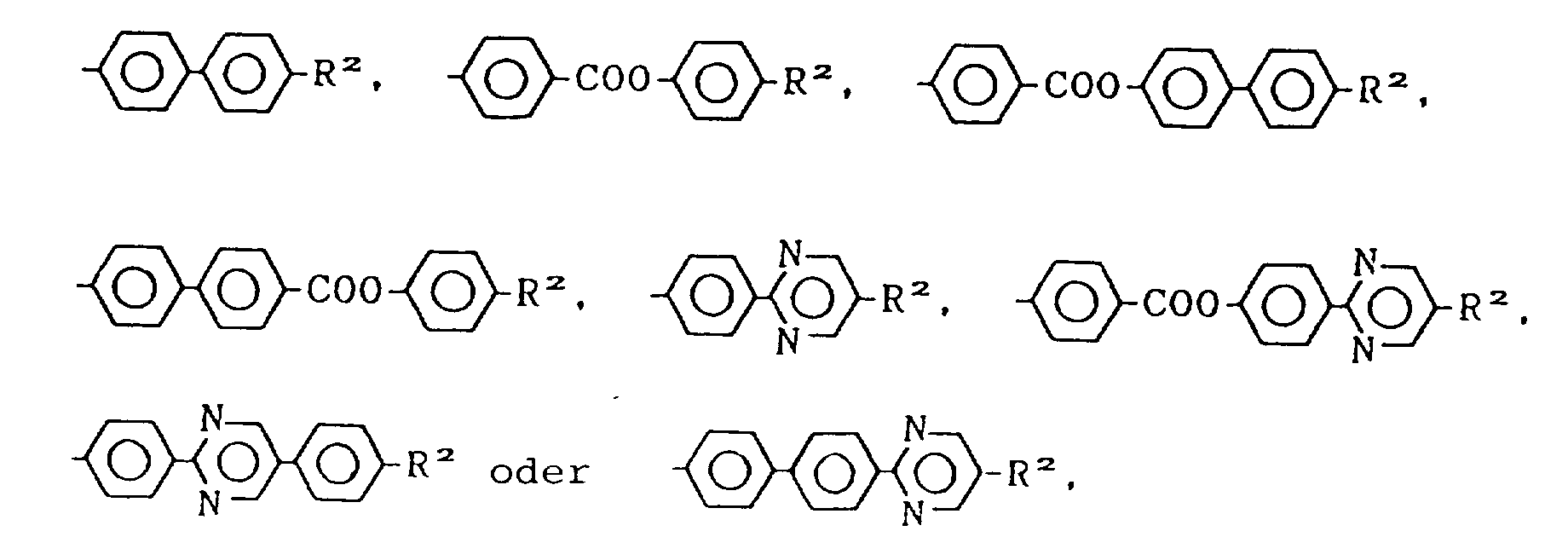
R -COOR³, -OR³ oder -OCOR³ ist,
R³
R⁴ und R⁵ jeweils -CH₃ oder ein Halogenatom sind, a und d jeweils eine ganze Zahl von 0 bis 10 sind, b eine ganze Zahl von 0 oder 1 ist,
mit der Maßgabe, daß d nicht 0 ist wenn R⁵ -CH₃ ist,
wobei die durch die allgemeine Formel [I] dargestellte wiederkehrende Einheit und die durch die allgemeine Formel [II] dargestellte wiederkehrende Einheit in einem molaren Substanzverhältnis [I]:[II] von 1:1 in dem flüssigkristallinen Polymer vorhanden sind. - Flüssigkristallines Copolymer gemäß Anspruch 1, worin das flüssigkristalline Copolymer ein Zahlenmittel des Molekulargewichts von 1.000 bis 1.000.000 besitzt.
- Flüssigkristallines Copolymer gemäß Anspruch 2, worin R¹ aus der Gruppe bestehend aus


- Flüssigkristallines Copolymer gemäß Anspruch 3, worin R³ aus der Gruppe bestehend aus

- Flüssigkristallines Copolymer gemäß Anspruch 2, worin die wiederkehrende Einheit [I] durch die folgende Formel dargestellt wird


- Flüssigkristallines Copolymer gemäß Anspruch 2, worin die wiederkehrende Einheit [I] durch die folgende Formel dargestellt wird


- Flüssigkristallines Copolymer gemäß Anspruch 2, worin die wiederkehrende Einheit [I] durch die folgende Formel dargestellt wird


- Flüssigkristallines Copolymer gemäß Anspruch 2, worin die wiederkehrende Einheit [I] durch die folgende Formel dargestellt wird


- Flüssigkristallines Copolymer gemäß Anspruch 2, worin die wiederkehrende Einheit [I] durch die folgende Formel dargestellt wird


- Verfahren zur Herstellung des flüssigkristallinen Copolymers gemäß Anspruch 1, das umfaßt:
Durchführen einer Hydrosilylierungsreaktion zwischen im wesentlichen äquimolaren Mengen einer durch die folgende allgemeine Formel dargestellten Dienverbindung


R -COOR³, -OR³ oder -OCOR³ ist,
R³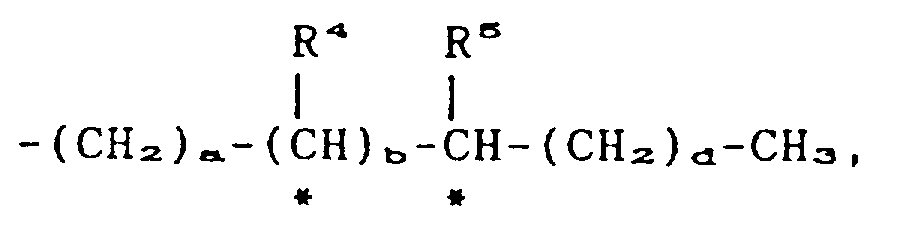
R⁴ und R⁵ jeweils -CH₃ oder ein Halogenatom sind, a und d jeweils eine ganze Zahl von 0 bis 10 sind, b eine ganze Zahl von 0 oder 1 ist,
mit der Maßgabe, daß d nicht 0 ist, wenn R⁵ -CH₃ ist,
und einer durch die folgende Formel dargestellten Siliciumverbindung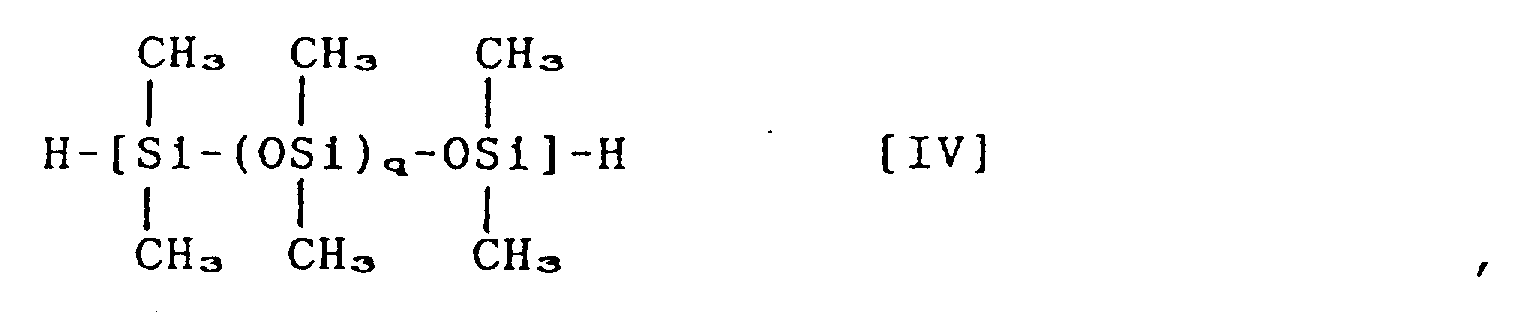
in einem Lösungsmittel in Gegenwart eines Katalysators. - Dienverbindung, die durch die folgende allgemeine Formel dargestellt wird


R -COOR³, -OR³ oder -OCOR³ ist,
R³
mit der Maßgabe, daß d nicht 0 ist, wenn R⁵ -CH₃ ist. - Dienverbindung gemäß Anspruch 11, worin R¹ aus der Gruppe bestehend aus


- Dienverbindung gemäß Anspruch 12, worin R³ aus der Gruppe bestehend aus

- Dienverbindung gemäß Anspruch 11, die durch die folgende Formel dargestellt wird

- Dienverbindung gemäß Anspruch 11, die durch die folgende Formel dargestellt wird

- Dienverbindung gemäß Anspruch 11, die durch die folgende Formel dargestellt wird

- Verfahren zur Herstellung der Dienverbindung gemäß Anspruch 11, das umfaßt:
Durchführen einer Veretherungsreaktion zwischen einem durch die folgende allgemeine Formel dargestellten Alkohol
und einer bifunktionellen, durch die folgende allgemeine Formel dargestellten Verbindung
X(CH₂)mX ,
worin m eine ganze Zahl von 1 bis 20 ist, X -Br, -I oder in einem Lösungsmittel in Gegenwart eines alkalischen Mittels;Reinigen des bei der Veretherungsreaktion erhaltenen Reaktionsgemisches, wobei ein gereinigtes Produkt erhalten wird;undDurchführen einer Veretherungsreaktion zwischen dem gereinigten Produkt und einer durch die folgende allgemeine Formel dargestellten Hydroxyverbindungworin R¹
HO-R¹ ,

R -COOR³, -OR³ oder -OCOR³ ist,
R³
mit der Maßgabe, daß d nicht 0 ist, wenn R⁵ -CH₃ ist,
in einem Lösungsmittel in Gegenwart eines alkalischen Mittels. - Verfahren zur Herstellung der Dienverbindung gemäß Anspruch 11, das umfaßt:
Durchführen einer Veretherungsreaktion zwischen einem durch die folgende allgemeine Formel dargestellten Alkohol
X (CH₂)mX
worin m eine ganze Zahl von 1 bis 20 ist, X -Br, -I oder
in einem Lösungsmittel in Gegenwart eines alkalischen Mittels;
Reinigen des bei der Veretherungsreaktion erhaltenen Reaktionsgemisches, wobei ein gereinigtes Produkt erhalten wird;
Durchführen einer Veretherungsreaktion zwischen dem gereinigten Produkt und einer durch die folgende allgemeine Formel dargestellten Verbindung in einem Lösungsmittel in Gegenwart eines alkalischen Mittels;Auffangen des Produkts durch Filtration aus dem in der Veretherungsreaktion erhaltenen Reaktionsgemisch;Hydrolysieren des Produkts in Wasser oder einem Alkohol;Eingießen der bei der Hydrolyse erhaltenen Reaktionslösung in Wasser, wobei ein Lösung erhalten wird;Einstellen eines sauren pH-Wertes der Lösung durch Zugabe einer Mineralsäure;Extrahieren der angesäuerten Lösung mit Ether;Entfernen des Ethers aus dem Extrakt, wobei ein festes Produkt erhalten wird;Umsetzen des festen Produkts mit einem Säure-Halogenierungsmittel, wobei ein Säurehalogenid erhalten wird;Durchführen einer Veretherungsreaktion zwischen dem Säurehalogenid und einer durch die folgende allgemeine Formel dargestellten Hydroxyverbindungworin A
HO-A-R,

in einem Lösungsmittel.
Applications Claiming Priority (3)
| Application Number | Priority Date | Filing Date | Title |
|---|---|---|---|
| JP19406590 | 1990-07-24 | ||
| JP194065/90 | 1990-07-24 | ||
| PCT/JP1991/000859 WO1992001731A1 (fr) | 1990-07-24 | 1991-06-26 | Copolymere a cristaux liquides, son procede de production, compose de diene utilise dans ladite production et production dudit compose |
Publications (3)
| Publication Number | Publication Date |
|---|---|
| EP0493601A1 EP0493601A1 (de) | 1992-07-08 |
| EP0493601A4 EP0493601A4 (en) | 1992-11-25 |
| EP0493601B1 true EP0493601B1 (de) | 1996-03-20 |
Family
ID=16318371
Family Applications (1)
| Application Number | Title | Priority Date | Filing Date |
|---|---|---|---|
| EP91911940A Expired - Lifetime EP0493601B1 (de) | 1990-07-24 | 1991-06-26 | Flüssigkristallcopolymer, seine herstellung, dienverbindung zur herstelllung des copolymers und die herstellung dieser dienverbindung |
Country Status (4)
| Country | Link |
|---|---|
| US (3) | US5281685A (de) |
| EP (1) | EP0493601B1 (de) |
| DE (1) | DE69118154T2 (de) |
| WO (1) | WO1992001731A1 (de) |
Families Citing this family (8)
| Publication number | Priority date | Publication date | Assignee | Title |
|---|---|---|---|---|
| DE69118154T2 (de) * | 1990-07-24 | 1996-11-28 | Idemitsu Kosan Co | Flüssigkristallcopolymer, seine herstellung, dienverbindung zur herstelllung des copolymers und die herstellung dieser dienverbindung |
| US5316693A (en) * | 1991-04-18 | 1994-05-31 | Idemitsu Kosan Co., Ltd. | Liquid crystal composition and information display apparatus using the liquid crystal composition |
| JP3246931B2 (ja) * | 1991-11-14 | 2002-01-15 | 出光興産株式会社 | 新規な高分子化合物及びそれを用いた強誘電性液晶組成物 |
| JP3246935B2 (ja) * | 1991-12-20 | 2002-01-15 | 出光興産株式会社 | 新規な高分子化合物及びそれを用いた強誘電性液晶組成物 |
| US5495037A (en) * | 1994-09-09 | 1996-02-27 | National Science Council | Liquid crystalline polymer having a polysiloxane backbone |
| US5656197A (en) * | 1995-02-06 | 1997-08-12 | National Science Council | Ferroelectric liquid crystal |
| US6294109B1 (en) | 1995-06-13 | 2001-09-25 | The United States Of America As Represented By The Secretary Of The Navy | Ferroelectric and electroclinic liquid crystal materials with sub-ambient temperature stability, broad operation range, and fast dynamic response |
| US7601274B2 (en) * | 2004-03-31 | 2009-10-13 | The University Of Connecticut | Shape memory main-chain smectic-C elastomers |
Family Cites Families (19)
| Publication number | Priority date | Publication date | Assignee | Title |
|---|---|---|---|---|
| FR2407950A1 (fr) * | 1977-11-08 | 1979-06-01 | Rhone Poulenc Ind | Elastomeres organopolysiloxaniques thermoplastiques |
| DE3119459A1 (de) * | 1981-05-15 | 1982-12-09 | Consortium für elektrochemische Industrie GmbH, 8000 München | Fluessig-kristalline eigenschaften aufweisende, vernetzte organopolysiloxane |
| US4671103A (en) * | 1985-04-08 | 1987-06-09 | Exxon Chemical Patents Inc. | Method for determining crude oil fouling by high performance liquid chromatography |
| JPH0647620B2 (ja) * | 1987-02-02 | 1994-06-22 | 東レ・ダウコーニング・シリコーン株式会社 | ジオルガノポリシロキサン・アゾベンゼン交互共重合体およびその製造方法 |
| JPS63234086A (ja) * | 1987-03-20 | 1988-09-29 | Kuraray Co Ltd | シロキサン骨格側鎖型高分子液晶 |
| JPH0826154B2 (ja) * | 1987-05-13 | 1996-03-13 | 出光興産株式会社 | 高分子液晶化合物 |
| JPH01139551A (ja) * | 1987-08-26 | 1989-06-01 | Sanyo Chem Ind Ltd | 液晶化合物および組成物 |
| JP2812970B2 (ja) * | 1988-01-08 | 1998-10-22 | 出光興産株式会社 | 液晶重合体 |
| JP2630973B2 (ja) * | 1988-02-26 | 1997-07-16 | 日本ユニカー株式会社 | オルガノポリシロキサン―ポリメチレンブロック交互共重合体及びその製造法 |
| DE3808430A1 (de) * | 1988-03-14 | 1989-09-28 | Consortium Elektrochem Ind | Fluessigkristalline polymere mit chromophoren seitengruppen |
| JPH01271431A (ja) * | 1988-04-22 | 1989-10-30 | Toray Dow Corning Silicone Co Ltd | 液晶性オルガノポリシロキサン及びその製造方法 |
| JPH01278532A (ja) * | 1988-04-30 | 1989-11-08 | Japan Synthetic Rubber Co Ltd | 含ケイ素重合体およびその製造方法 |
| DE3827603A1 (de) * | 1988-08-13 | 1990-03-15 | Hoechst Ag | Chirale smektische fluessigkristalle und diese enthaltende glasartige materialien zur darstellung und speicherung von information |
| JPH0267393A (ja) * | 1988-08-31 | 1990-03-07 | Ricoh Co Ltd | 液晶素子 |
| JPH0618882B2 (ja) * | 1988-10-24 | 1994-03-16 | 信越化学工業株式会社 | 液晶相を有するオルガノポリシロキサン化合物 |
| FR2647455A1 (en) * | 1989-05-26 | 1990-11-30 | Rhone Poulenc Chimie | Linear thermotropic copolymers consisting of mesogenic units of the aromatic azomethine type and polysiloxane spacers and process for their manufacture |
| US5138010A (en) * | 1990-06-25 | 1992-08-11 | University Of Colorado Foundation, Inc. | Fast switching polysiloxane ferroelectric liquid crystals |
| DE69118154T2 (de) * | 1990-07-24 | 1996-11-28 | Idemitsu Kosan Co | Flüssigkristallcopolymer, seine herstellung, dienverbindung zur herstelllung des copolymers und die herstellung dieser dienverbindung |
| JP3246935B2 (ja) * | 1991-12-20 | 2002-01-15 | 出光興産株式会社 | 新規な高分子化合物及びそれを用いた強誘電性液晶組成物 |
-
1991
- 1991-06-26 DE DE69118154T patent/DE69118154T2/de not_active Expired - Fee Related
- 1991-06-26 US US07/838,242 patent/US5281685A/en not_active Expired - Lifetime
- 1991-06-26 WO PCT/JP1991/000859 patent/WO1992001731A1/ja not_active Ceased
- 1991-06-26 EP EP91911940A patent/EP0493601B1/de not_active Expired - Lifetime
-
1993
- 1993-05-26 US US08/067,135 patent/US5380915A/en not_active Expired - Fee Related
-
1994
- 1994-08-26 US US08/297,052 patent/US5425897A/en not_active Expired - Fee Related
Also Published As
| Publication number | Publication date |
|---|---|
| WO1992001731A1 (fr) | 1992-02-06 |
| EP0493601A4 (en) | 1992-11-25 |
| US5425897A (en) | 1995-06-20 |
| US5281685A (en) | 1994-01-25 |
| DE69118154D1 (de) | 1996-04-25 |
| US5380915A (en) | 1995-01-10 |
| DE69118154T2 (de) | 1996-11-28 |
| EP0493601A1 (de) | 1992-07-08 |
Similar Documents
| Publication | Publication Date | Title |
|---|---|---|
| EP0258898B1 (de) | Flüssigkristallpolymere | |
| EP0297554B1 (de) | Polymere Flüssigkristallzusammensetzung | |
| KR100207568B1 (ko) | 전도성 측쇄형 액정화합물 및 이를 사용한 배향막 | |
| EP0348873B1 (de) | Ferroelektrisches Flüssigkristallpolymer und Epoxyd zur Herstellung des Polymers | |
| EP0274128A2 (de) | Flüssigkristall-Polymer | |
| EP0376310B1 (de) | Mesomorphisches Polymer, monomere mesomorphische Verbindung, Flüssigkristallzusammensetzung und Flüssigkristallvorrichtung | |
| EP0493601A1 (de) | Flüssigkristallcopolymer, seine herstellung, dienverbindung zur herstelllung des copolymers und die herstellung dieser dienverbindung | |
| Moment et al. | Synthesis of polystyrene‐polysiloxane side‐chain liquid crystalline block copolymers | |
| EP0355772B1 (de) | Flüssigkristallpolymer | |
| JPH0457694B2 (de) | ||
| EP0362714B1 (de) | Flüssigkristallverbindungen und Flüssigkristallpolymere | |
| JP3246935B2 (ja) | 新規な高分子化合物及びそれを用いた強誘電性液晶組成物 | |
| Keller | Ferroelectric liquid crystalline side-chain polysiloxanes | |
| JP3246931B2 (ja) | 新規な高分子化合物及びそれを用いた強誘電性液晶組成物 | |
| EP0578135A2 (de) | Hochpolymer, dieses enthaltende, ferroelektrische, flüssig-kristalline Zusammensetzung und Ausgangsmaterial für das Hochpolymer | |
| Cooray et al. | Novel fluorine-containing ferroelectric side chain liquid-crystalline polysiloxanes showing bistable fast switching | |
| JP3246938B2 (ja) | 液晶共重合体の製造方法 | |
| JP3153324B2 (ja) | 液晶共重合体、その製造に用いられるジエン化合物及び強誘電性液晶組成物 | |
| JP2765942B2 (ja) | 液晶性ポリマー及びその製造に用いられるエポキシ化合物 | |
| JPH0816158B2 (ja) | 液晶性共重合体及びその製造方法並びにその製造に用いられるジエン化合物及びその製造方法 | |
| Cooray et al. | Preparation and Properties of Ferroelectric Liquid-Crystalline Polysiloxanes Possessing (S)-(−)-4-(2-methylbutyloxycarbonyl) phenyl 4′-(5-hexyloxy) biphenyl-4-carboxylate as Side Chain Mesogen Unit | |
| JP3246937B2 (ja) | 耐久性に優れた液晶共重合体とその組成物及び液晶共重合体の製造方法 | |
| JP3315198B2 (ja) | 新規高分子化合物及びそれを用いた強誘電性液晶組成物並びに原料化合物 | |
| JPH0816223B2 (ja) | 強誘電性液晶組成物 | |
| JP3315225B2 (ja) | 新規高分子化合物及びそれを用いた強誘電性液晶組成物並びに原料化合物 |
Legal Events
| Date | Code | Title | Description |
|---|---|---|---|
| PUAI | Public reference made under article 153(3) epc to a published international application that has entered the european phase |
Free format text: ORIGINAL CODE: 0009012 |
|
| AK | Designated contracting states |
Kind code of ref document: A1 Designated state(s): BE CH DE FR GB IT LI NL SE |
|
| 17P | Request for examination filed |
Effective date: 19920716 |
|
| A4 | Supplementary search report drawn up and despatched |
Effective date: 19921003 |
|
| AK | Designated contracting states |
Kind code of ref document: A4 Designated state(s): BE CH DE FR GB IT LI NL SE |
|
| 17Q | First examination report despatched |
Effective date: 19950412 |
|
| GRAH | Despatch of communication of intention to grant a patent |
Free format text: ORIGINAL CODE: EPIDOS IGRA |
|
| GRAA | (expected) grant |
Free format text: ORIGINAL CODE: 0009210 |
|
| ITF | It: translation for a ep patent filed | ||
| AK | Designated contracting states |
Kind code of ref document: B1 Designated state(s): BE CH DE FR GB IT LI NL SE |
|
| PG25 | Lapsed in a contracting state [announced via postgrant information from national office to epo] |
Ref country code: LI Effective date: 19960320 Ref country code: CH Effective date: 19960320 Ref country code: BE Effective date: 19960320 |
|
| REF | Corresponds to: |
Ref document number: 69118154 Country of ref document: DE Date of ref document: 19960425 |
|
| ET | Fr: translation filed | ||
| PG25 | Lapsed in a contracting state [announced via postgrant information from national office to epo] |
Ref country code: SE Effective date: 19960620 |
|
| REG | Reference to a national code |
Ref country code: CH Ref legal event code: PL |
|
| PLBE | No opposition filed within time limit |
Free format text: ORIGINAL CODE: 0009261 |
|
| STAA | Information on the status of an ep patent application or granted ep patent |
Free format text: STATUS: NO OPPOSITION FILED WITHIN TIME LIMIT |
|
| 26N | No opposition filed | ||
| REG | Reference to a national code |
Ref country code: GB Ref legal event code: IF02 |
|
| PGFP | Annual fee paid to national office [announced via postgrant information from national office to epo] |
Ref country code: GB Payment date: 20020626 Year of fee payment: 12 |
|
| PGFP | Annual fee paid to national office [announced via postgrant information from national office to epo] |
Ref country code: NL Payment date: 20020628 Year of fee payment: 12 |
|
| PGFP | Annual fee paid to national office [announced via postgrant information from national office to epo] |
Ref country code: FR Payment date: 20030610 Year of fee payment: 13 |
|
| PG25 | Lapsed in a contracting state [announced via postgrant information from national office to epo] |
Ref country code: GB Free format text: LAPSE BECAUSE OF NON-PAYMENT OF DUE FEES Effective date: 20030626 |
|
| PGFP | Annual fee paid to national office [announced via postgrant information from national office to epo] |
Ref country code: DE Payment date: 20030707 Year of fee payment: 13 |
|
| PG25 | Lapsed in a contracting state [announced via postgrant information from national office to epo] |
Ref country code: NL Free format text: LAPSE BECAUSE OF NON-PAYMENT OF DUE FEES Effective date: 20040101 |
|
| GBPC | Gb: european patent ceased through non-payment of renewal fee |
Effective date: 20030626 |
|
| NLV4 | Nl: lapsed or anulled due to non-payment of the annual fee |
Effective date: 20040101 |
|
| PG25 | Lapsed in a contracting state [announced via postgrant information from national office to epo] |
Ref country code: DE Free format text: LAPSE BECAUSE OF NON-PAYMENT OF DUE FEES Effective date: 20050101 |
|
| PG25 | Lapsed in a contracting state [announced via postgrant information from national office to epo] |
Ref country code: FR Free format text: LAPSE BECAUSE OF NON-PAYMENT OF DUE FEES Effective date: 20050228 |
|
| REG | Reference to a national code |
Ref country code: FR Ref legal event code: ST |
|
| PG25 | Lapsed in a contracting state [announced via postgrant information from national office to epo] |
Ref country code: IT Free format text: LAPSE BECAUSE OF NON-PAYMENT OF DUE FEES Effective date: 20050626 |