EP0494716A2 - Préparation d'acides carboxyliques optiquement actifs par catalyse enzymatique - Google Patents
Préparation d'acides carboxyliques optiquement actifs par catalyse enzymatique Download PDFInfo
- Publication number
- EP0494716A2 EP0494716A2 EP92200030A EP92200030A EP0494716A2 EP 0494716 A2 EP0494716 A2 EP 0494716A2 EP 92200030 A EP92200030 A EP 92200030A EP 92200030 A EP92200030 A EP 92200030A EP 0494716 A2 EP0494716 A2 EP 0494716A2
- Authority
- EP
- European Patent Office
- Prior art keywords
- amide
- hydrolysis
- carboxylic acid
- enzyme
- optically active
- Prior art date
- Legal status (The legal status is an assumption and is not a legal conclusion. Google has not performed a legal analysis and makes no representation as to the accuracy of the status listed.)
- Granted
Links
- 238000002360 preparation method Methods 0.000 title claims abstract description 9
- 150000001735 carboxylic acids Chemical class 0.000 title 1
- 238000006460 hydrolysis reaction Methods 0.000 claims abstract description 38
- 230000007062 hydrolysis Effects 0.000 claims abstract description 36
- 241000588814 Ochrobactrum anthropi Species 0.000 claims abstract description 16
- 150000001732 carboxylic acid derivatives Chemical class 0.000 claims abstract description 16
- 102000004190 Enzymes Human genes 0.000 claims abstract description 15
- 108090000790 Enzymes Proteins 0.000 claims abstract description 15
- 150000001408 amides Chemical class 0.000 claims abstract description 11
- 241000588754 Klebsiella sp. Species 0.000 claims abstract description 10
- 239000000203 mixture Substances 0.000 claims abstract description 8
- HBAQYPYDRFILMT-UHFFFAOYSA-N 8-[3-(1-cyclopropylpyrazol-4-yl)-1H-pyrazolo[4,3-d]pyrimidin-5-yl]-3-methyl-3,8-diazabicyclo[3.2.1]octan-2-one Chemical class C1(CC1)N1N=CC(=C1)C1=NNC2=C1N=C(N=C2)N1C2C(N(CC1CC2)C)=O HBAQYPYDRFILMT-UHFFFAOYSA-N 0.000 claims abstract description 5
- 238000000034 method Methods 0.000 claims description 27
- 239000000758 substrate Substances 0.000 claims description 12
- 235000008206 alpha-amino acids Nutrition 0.000 claims description 6
- 229940061720 alpha hydroxy acid Drugs 0.000 claims description 5
- 150000001280 alpha hydroxy acids Chemical class 0.000 claims description 5
- 230000007071 enzymatic hydrolysis Effects 0.000 claims description 5
- 238000006047 enzymatic hydrolysis reaction Methods 0.000 claims description 5
- -1 amino- Chemical class 0.000 claims description 4
- AVXURJPOCDRRFD-UHFFFAOYSA-N Hydroxylamine Chemical group ON AVXURJPOCDRRFD-UHFFFAOYSA-N 0.000 claims description 3
- 239000002253 acid Substances 0.000 claims description 3
- 150000001370 alpha-amino acid derivatives Chemical class 0.000 claims description 3
- 230000002255 enzymatic effect Effects 0.000 claims description 2
- 238000002955 isolation Methods 0.000 claims description 2
- 230000000694 effects Effects 0.000 abstract description 21
- 244000005700 microbiome Species 0.000 abstract description 6
- 230000003287 optical effect Effects 0.000 abstract description 4
- 238000011534 incubation Methods 0.000 description 17
- 239000011541 reaction mixture Substances 0.000 description 17
- 238000006243 chemical reaction Methods 0.000 description 16
- QGZKDVFQNNGYKY-UHFFFAOYSA-N Ammonia Chemical compound N QGZKDVFQNNGYKY-UHFFFAOYSA-N 0.000 description 12
- 238000004458 analytical method Methods 0.000 description 11
- 239000006285 cell suspension Substances 0.000 description 8
- IJGRMHOSHXDMSA-UHFFFAOYSA-N Atomic nitrogen Chemical compound N#N IJGRMHOSHXDMSA-UHFFFAOYSA-N 0.000 description 7
- 229940024606 amino acid Drugs 0.000 description 7
- MAGPZHKLEZXLNU-UHFFFAOYSA-N mandelamide Chemical compound NC(=O)C(O)C1=CC=CC=C1 MAGPZHKLEZXLNU-UHFFFAOYSA-N 0.000 description 7
- 239000008057 potassium phosphate buffer Substances 0.000 description 7
- WEVYAHXRMPXWCK-UHFFFAOYSA-N Acetonitrile Chemical compound CC#N WEVYAHXRMPXWCK-UHFFFAOYSA-N 0.000 description 6
- HEMHJVSKTPXQMS-UHFFFAOYSA-M Sodium hydroxide Chemical compound [OH-].[Na+] HEMHJVSKTPXQMS-UHFFFAOYSA-M 0.000 description 6
- 229910021529 ammonia Inorganic materials 0.000 description 6
- 239000000047 product Substances 0.000 description 6
- 238000004128 high performance liquid chromatography Methods 0.000 description 5
- KZSNJWFQEVHDMF-BYPYZUCNSA-N L-valine Chemical compound CC(C)[C@H](N)C(O)=O KZSNJWFQEVHDMF-BYPYZUCNSA-N 0.000 description 4
- 235000001014 amino acid Nutrition 0.000 description 4
- 239000000872 buffer Substances 0.000 description 4
- 239000000243 solution Substances 0.000 description 4
- QBYIENPQHBMVBV-HFEGYEGKSA-N (2R)-2-hydroxy-2-phenylacetic acid Chemical compound O[C@@H](C(O)=O)c1ccccc1.O[C@@H](C(O)=O)c1ccccc1 QBYIENPQHBMVBV-HFEGYEGKSA-N 0.000 description 3
- QTBSBXVTEAMEQO-UHFFFAOYSA-N Acetic acid Chemical compound CC(O)=O QTBSBXVTEAMEQO-UHFFFAOYSA-N 0.000 description 3
- CSCPPACGZOOCGX-UHFFFAOYSA-N Acetone Chemical compound CC(C)=O CSCPPACGZOOCGX-UHFFFAOYSA-N 0.000 description 3
- IWYDHOAUDWTVEP-UHFFFAOYSA-N R-2-phenyl-2-hydroxyacetic acid Natural products OC(=O)C(O)C1=CC=CC=C1 IWYDHOAUDWTVEP-UHFFFAOYSA-N 0.000 description 3
- YXFVVABEGXRONW-UHFFFAOYSA-N Toluene Chemical compound CC1=CC=CC=C1 YXFVVABEGXRONW-UHFFFAOYSA-N 0.000 description 3
- ZMANZCXQSJIPKH-UHFFFAOYSA-N Triethylamine Chemical compound CCN(CC)CC ZMANZCXQSJIPKH-UHFFFAOYSA-N 0.000 description 3
- 150000001413 amino acids Chemical class 0.000 description 3
- 229960002510 mandelic acid Drugs 0.000 description 3
- 239000003960 organic solvent Substances 0.000 description 3
- KIYRSYYOVDHSPG-SSDOTTSWSA-N (2r)-2-amino-2-phenylacetamide Chemical compound NC(=O)[C@H](N)C1=CC=CC=C1 KIYRSYYOVDHSPG-SSDOTTSWSA-N 0.000 description 2
- XDEHMKQLKPZERH-BYPYZUCNSA-N (2s)-2-amino-3-methylbutanamide Chemical compound CC(C)[C@H](N)C(N)=O XDEHMKQLKPZERH-BYPYZUCNSA-N 0.000 description 2
- IWYDHOAUDWTVEP-ZETCQYMHSA-N (S)-mandelic acid Chemical compound OC(=O)[C@@H](O)C1=CC=CC=C1 IWYDHOAUDWTVEP-ZETCQYMHSA-N 0.000 description 2
- KIYRSYYOVDHSPG-UHFFFAOYSA-N 2-amino-2-phenylacetamide Chemical compound NC(=O)C(N)C1=CC=CC=C1 KIYRSYYOVDHSPG-UHFFFAOYSA-N 0.000 description 2
- 239000005541 ACE inhibitor Substances 0.000 description 2
- OKTJSMMVPCPJKN-UHFFFAOYSA-N Carbon Chemical compound [C] OKTJSMMVPCPJKN-UHFFFAOYSA-N 0.000 description 2
- DHMQDGOQFOQNFH-UHFFFAOYSA-N Glycine Chemical compound NCC(O)=O DHMQDGOQFOQNFH-UHFFFAOYSA-N 0.000 description 2
- WRUZLCLJULHLEY-UHFFFAOYSA-N N-(p-hydroxyphenyl)glycine Chemical compound OC(=O)CNC1=CC=C(O)C=C1 WRUZLCLJULHLEY-UHFFFAOYSA-N 0.000 description 2
- 241000588843 Ochrobactrum Species 0.000 description 2
- KWYUFKZDYYNOTN-UHFFFAOYSA-M Potassium hydroxide Chemical compound [OH-].[K+] KWYUFKZDYYNOTN-UHFFFAOYSA-M 0.000 description 2
- 239000007983 Tris buffer Substances 0.000 description 2
- 239000003905 agrochemical Substances 0.000 description 2
- 150000001371 alpha-amino acids Chemical class 0.000 description 2
- 229940044094 angiotensin-converting-enzyme inhibitor Drugs 0.000 description 2
- 239000003242 anti bacterial agent Substances 0.000 description 2
- 229940088710 antibiotic agent Drugs 0.000 description 2
- QVGXLLKOCUKJST-UHFFFAOYSA-N atomic oxygen Chemical compound [O] QVGXLLKOCUKJST-UHFFFAOYSA-N 0.000 description 2
- 239000011942 biocatalyst Substances 0.000 description 2
- 230000003115 biocidal effect Effects 0.000 description 2
- 230000015572 biosynthetic process Effects 0.000 description 2
- 229910052799 carbon Inorganic materials 0.000 description 2
- 125000004432 carbon atom Chemical group C* 0.000 description 2
- 238000005119 centrifugation Methods 0.000 description 2
- 239000000470 constituent Substances 0.000 description 2
- 238000006114 decarboxylation reaction Methods 0.000 description 2
- 238000000855 fermentation Methods 0.000 description 2
- 230000004151 fermentation Effects 0.000 description 2
- 239000001963 growth medium Substances 0.000 description 2
- 150000002500 ions Chemical class 0.000 description 2
- 229910000360 iron(III) sulfate Inorganic materials 0.000 description 2
- JVTAAEKCZFNVCJ-UHFFFAOYSA-N lactic acid Chemical compound CC(O)C(O)=O JVTAAEKCZFNVCJ-UHFFFAOYSA-N 0.000 description 2
- 238000004519 manufacturing process Methods 0.000 description 2
- 239000002609 medium Substances 0.000 description 2
- 229910052760 oxygen Inorganic materials 0.000 description 2
- 239000001301 oxygen Substances 0.000 description 2
- 108090000765 processed proteins & peptides Proteins 0.000 description 2
- 102000004196 processed proteins & peptides Human genes 0.000 description 2
- 239000012429 reaction media Substances 0.000 description 2
- 238000007086 side reaction Methods 0.000 description 2
- 238000003786 synthesis reaction Methods 0.000 description 2
- LENZDBCJOHFCAS-UHFFFAOYSA-N tris Chemical compound OCC(N)(CO)CO LENZDBCJOHFCAS-UHFFFAOYSA-N 0.000 description 2
- 229960004295 valine Drugs 0.000 description 2
- WBCBXMRPCFBDJH-SNVBAGLBSA-N (2R)-2-anilinopentanamide Chemical compound C(CC)[C@@H](NC1=CC=CC=C1)C(=O)N WBCBXMRPCFBDJH-SNVBAGLBSA-N 0.000 description 1
- PGBIPKRJYRBDCT-SSDOTTSWSA-N (2R)-2-anilinopropanamide Chemical compound C[C@@H](NC1=CC=CC=C1)C(=O)N PGBIPKRJYRBDCT-SSDOTTSWSA-N 0.000 description 1
- AAYJFJQAAMNQBM-GFCCVEGCSA-N (2r)-2-amino-2-methyl-5-phenylpent-4-enamide Chemical compound NC(=O)[C@@](N)(C)CC=CC1=CC=CC=C1 AAYJFJQAAMNQBM-GFCCVEGCSA-N 0.000 description 1
- QCVCCWSPZIUXEA-BYPYZUCNSA-N (2r)-2-amino-3,3-dimethylbutanamide Chemical compound CC(C)(C)[C@@H](N)C(N)=O QCVCCWSPZIUXEA-BYPYZUCNSA-N 0.000 description 1
- XDEHMKQLKPZERH-SCSAIBSYSA-N (2r)-2-amino-3-methylbutanamide Chemical compound CC(C)[C@@H](N)C(N)=O XDEHMKQLKPZERH-SCSAIBSYSA-N 0.000 description 1
- FDCJXHIWLITAFB-SECBINFHSA-N (2r)-2-anilinobutanamide Chemical compound CC[C@H](C(N)=O)NC1=CC=CC=C1 FDCJXHIWLITAFB-SECBINFHSA-N 0.000 description 1
- GZRZQYMPUHUFSQ-QMMMGPOBSA-N (2s)-2-(dipropylazaniumyl)propanoate Chemical compound CCCN(CCC)[C@@H](C)C(O)=O GZRZQYMPUHUFSQ-QMMMGPOBSA-N 0.000 description 1
- YCPQUHCGFDFLSI-LURJTMIESA-N (2s)-2-amino-2,3-dimethylbutanamide Chemical compound CC(C)[C@](C)(N)C(N)=O YCPQUHCGFDFLSI-LURJTMIESA-N 0.000 description 1
- KIYRSYYOVDHSPG-ZETCQYMHSA-N (2s)-2-amino-2-phenylacetamide Chemical compound NC(=O)[C@@H](N)C1=CC=CC=C1 KIYRSYYOVDHSPG-ZETCQYMHSA-N 0.000 description 1
- QCVCCWSPZIUXEA-SCSAIBSYSA-N (2s)-2-amino-3,3-dimethylbutanamide Chemical compound CC(C)(C)[C@H](N)C(N)=O QCVCCWSPZIUXEA-SCSAIBSYSA-N 0.000 description 1
- NPDBDJFLKKQMCM-SCSAIBSYSA-N (2s)-2-amino-3,3-dimethylbutanoic acid Chemical compound CC(C)(C)[C@H](N)C(O)=O NPDBDJFLKKQMCM-SCSAIBSYSA-N 0.000 description 1
- LZHXNUAOYPZQJM-VIFPVBQESA-N (2s)-2-anilinobutanoic acid Chemical compound CC[C@@H](C(O)=O)NC1=CC=CC=C1 LZHXNUAOYPZQJM-VIFPVBQESA-N 0.000 description 1
- UTZOCZZGSVUPBG-JTQLQIEISA-N (2s)-2-anilinopentanoic acid Chemical compound CCC[C@@H](C(O)=O)NC1=CC=CC=C1 UTZOCZZGSVUPBG-JTQLQIEISA-N 0.000 description 1
- XWKAVQKJQBISOL-ZETCQYMHSA-N (2s)-2-anilinopropanoic acid Chemical compound OC(=O)[C@H](C)NC1=CC=CC=C1 XWKAVQKJQBISOL-ZETCQYMHSA-N 0.000 description 1
- GPYTYOMSQHBYTK-LURJTMIESA-N (2s)-2-azaniumyl-2,3-dimethylbutanoate Chemical compound CC(C)[C@](C)([NH3+])C([O-])=O GPYTYOMSQHBYTK-LURJTMIESA-N 0.000 description 1
- IVWWFWFVSWOTLP-YVZVNANGSA-N (3'as,4r,7'as)-2,2,2',2'-tetramethylspiro[1,3-dioxolane-4,6'-4,7a-dihydro-3ah-[1,3]dioxolo[4,5-c]pyran]-7'-one Chemical compound C([C@@H]1OC(O[C@@H]1C1=O)(C)C)O[C@]21COC(C)(C)O2 IVWWFWFVSWOTLP-YVZVNANGSA-N 0.000 description 1
- YCPTZRUVAHGKMX-UHFFFAOYSA-N 2-amino-2-phenylbutanamide Chemical compound CCC(N)(C(N)=O)C1=CC=CC=C1 YCPTZRUVAHGKMX-UHFFFAOYSA-N 0.000 description 1
- WWEXNHBQQMUZHA-UHFFFAOYSA-N 2-amino-2-phenylpentanamide Chemical compound CCCC(N)(C(N)=O)C1=CC=CC=C1 WWEXNHBQQMUZHA-UHFFFAOYSA-N 0.000 description 1
- HGKUPDZBTAQFGJ-UHFFFAOYSA-N 2-amino-2-phenylpropanamide Chemical compound NC(=O)C(N)(C)C1=CC=CC=C1 HGKUPDZBTAQFGJ-UHFFFAOYSA-N 0.000 description 1
- QCVCCWSPZIUXEA-UHFFFAOYSA-N 2-amino-3,3-dimethylbutanamide Chemical compound CC(C)(C)C(N)C(N)=O QCVCCWSPZIUXEA-UHFFFAOYSA-N 0.000 description 1
- XDEHMKQLKPZERH-UHFFFAOYSA-N 2-amino-3-methylbutanamide Chemical compound CC(C)C(N)C(N)=O XDEHMKQLKPZERH-UHFFFAOYSA-N 0.000 description 1
- GXBRYTMUEZNYJT-UHFFFAOYSA-N 2-anilinoacetamide Chemical compound NC(=O)CNC1=CC=CC=C1 GXBRYTMUEZNYJT-UHFFFAOYSA-N 0.000 description 1
- FDCJXHIWLITAFB-UHFFFAOYSA-N 2-anilinobutanamide Chemical compound CCC(C(N)=O)NC1=CC=CC=C1 FDCJXHIWLITAFB-UHFFFAOYSA-N 0.000 description 1
- WBCBXMRPCFBDJH-UHFFFAOYSA-N 2-anilinopentanamide Chemical compound CCCC(C(N)=O)NC1=CC=CC=C1 WBCBXMRPCFBDJH-UHFFFAOYSA-N 0.000 description 1
- PGBIPKRJYRBDCT-UHFFFAOYSA-N 2-anilinopropanamide Chemical compound NC(=O)C(C)NC1=CC=CC=C1 PGBIPKRJYRBDCT-UHFFFAOYSA-N 0.000 description 1
- ARSWQPLPYROOBG-UHFFFAOYSA-N 2-azaniumyl-2,4-dimethylpentanoate Chemical compound CC(C)CC(C)(N)C(O)=O ARSWQPLPYROOBG-UHFFFAOYSA-N 0.000 description 1
- QYCBZFRDGXIZIP-UHFFFAOYSA-N 2-hydroxy-2-phenylbutanoic acid Chemical compound CCC(O)(C(O)=O)C1=CC=CC=C1 QYCBZFRDGXIZIP-UHFFFAOYSA-N 0.000 description 1
- ARSWQPLPYROOBG-ZETCQYMHSA-N 2-methylleucine Chemical compound CC(C)C[C@](C)(N)C(O)=O ARSWQPLPYROOBG-ZETCQYMHSA-N 0.000 description 1
- 241000607528 Aeromonas hydrophila Species 0.000 description 1
- 102000004092 Amidohydrolases Human genes 0.000 description 1
- 108090000531 Amidohydrolases Proteins 0.000 description 1
- 102000004400 Aminopeptidases Human genes 0.000 description 1
- 108090000915 Aminopeptidases Proteins 0.000 description 1
- VHUUQVKOLVNVRT-UHFFFAOYSA-N Ammonium hydroxide Chemical compound [NH4+].[OH-] VHUUQVKOLVNVRT-UHFFFAOYSA-N 0.000 description 1
- PMATZTZNYRCHOR-CGLBZJNRSA-N Cyclosporin A Chemical compound CC[C@@H]1NC(=O)[C@H]([C@H](O)[C@H](C)C\C=C\C)N(C)C(=O)[C@H](C(C)C)N(C)C(=O)[C@H](CC(C)C)N(C)C(=O)[C@H](CC(C)C)N(C)C(=O)[C@@H](C)NC(=O)[C@H](C)NC(=O)[C@H](CC(C)C)N(C)C(=O)[C@H](C(C)C)NC(=O)[C@H](CC(C)C)N(C)C(=O)CN(C)C1=O PMATZTZNYRCHOR-CGLBZJNRSA-N 0.000 description 1
- 229930105110 Cyclosporin A Natural products 0.000 description 1
- 108010036949 Cyclosporine Proteins 0.000 description 1
- ZGUNAGUHMKGQNY-SSDOTTSWSA-N D-alpha-phenylglycine Chemical compound OC(=O)[C@H](N)C1=CC=CC=C1 ZGUNAGUHMKGQNY-SSDOTTSWSA-N 0.000 description 1
- 239000004471 Glycine Substances 0.000 description 1
- 206010020772 Hypertension Diseases 0.000 description 1
- 241000588748 Klebsiella Species 0.000 description 1
- ZGUNAGUHMKGQNY-ZETCQYMHSA-N L-alpha-phenylglycine zwitterion Chemical compound OC(=O)[C@@H](N)C1=CC=CC=C1 ZGUNAGUHMKGQNY-ZETCQYMHSA-N 0.000 description 1
- JTTHKOPSMAVJFE-VIFPVBQESA-N L-homophenylalanine Chemical compound OC(=O)[C@@H](N)CCC1=CC=CC=C1 JTTHKOPSMAVJFE-VIFPVBQESA-N 0.000 description 1
- 241000588621 Moraxella Species 0.000 description 1
- 241000589776 Pseudomonas putida Species 0.000 description 1
- 240000004808 Saccharomyces cerevisiae Species 0.000 description 1
- INISTDXBRIBGOC-CGAIIQECSA-N [cyano-(3-phenoxyphenyl)methyl] (2s)-2-[2-chloro-4-(trifluoromethyl)anilino]-3-methylbutanoate Chemical compound N([C@@H](C(C)C)C(=O)OC(C#N)C=1C=C(OC=2C=CC=CC=2)C=CC=1)C1=CC=C(C(F)(F)F)C=C1Cl INISTDXBRIBGOC-CGAIIQECSA-N 0.000 description 1
- 229960003767 alanine Drugs 0.000 description 1
- 125000000217 alkyl group Chemical group 0.000 description 1
- CJCSPKMFHVPWAR-JTQLQIEISA-N alpha-methyl-L-dopa Chemical compound OC(=O)[C@](N)(C)CC1=CC=C(O)C(O)=C1 CJCSPKMFHVPWAR-JTQLQIEISA-N 0.000 description 1
- 235000011114 ammonium hydroxide Nutrition 0.000 description 1
- LSQZJLSUYDQPKJ-NJBDSQKTSA-N amoxicillin Chemical compound C1([C@@H](N)C(=O)N[C@H]2[C@H]3SC([C@@H](N3C2=O)C(O)=O)(C)C)=CC=C(O)C=C1 LSQZJLSUYDQPKJ-NJBDSQKTSA-N 0.000 description 1
- 229960003022 amoxicillin Drugs 0.000 description 1
- AVKUERGKIZMTKX-NJBDSQKTSA-N ampicillin Chemical compound C1([C@@H](N)C(=O)N[C@H]2[C@H]3SC([C@@H](N3C2=O)C(O)=O)(C)C)=CC=CC=C1 AVKUERGKIZMTKX-NJBDSQKTSA-N 0.000 description 1
- 229960000723 ampicillin Drugs 0.000 description 1
- 230000000259 anti-tumor effect Effects 0.000 description 1
- 239000002876 beta blocker Substances 0.000 description 1
- 229940097320 beta blocking agent Drugs 0.000 description 1
- 230000004071 biological effect Effects 0.000 description 1
- 239000003054 catalyst Substances 0.000 description 1
- ZAIPMKNFIOOWCQ-UEKVPHQBSA-N cephalexin Chemical compound C1([C@@H](N)C(=O)N[C@H]2[C@@H]3N(C2=O)C(=C(CS3)C)C(O)=O)=CC=CC=C1 ZAIPMKNFIOOWCQ-UEKVPHQBSA-N 0.000 description 1
- 229940106164 cephalexin Drugs 0.000 description 1
- 239000007795 chemical reaction product Substances 0.000 description 1
- 239000003153 chemical reaction reagent Substances 0.000 description 1
- 239000003795 chemical substances by application Substances 0.000 description 1
- 238000001514 detection method Methods 0.000 description 1
- 239000003814 drug Substances 0.000 description 1
- 239000003480 eluent Substances 0.000 description 1
- 238000005516 engineering process Methods 0.000 description 1
- 239000000284 extract Substances 0.000 description 1
- 238000011010 flushing procedure Methods 0.000 description 1
- 235000013305 food Nutrition 0.000 description 1
- XLYOFNOQVPJJNP-ZSJDYOACSA-N heavy water Substances [2H]O[2H] XLYOFNOQVPJJNP-ZSJDYOACSA-N 0.000 description 1
- 239000004009 herbicide Substances 0.000 description 1
- 239000000411 inducer Substances 0.000 description 1
- 230000005764 inhibitory process Effects 0.000 description 1
- 238000011081 inoculation Methods 0.000 description 1
- 229910052500 inorganic mineral Inorganic materials 0.000 description 1
- 239000002917 insecticide Substances 0.000 description 1
- 238000004246 ligand exchange chromatography Methods 0.000 description 1
- 239000012528 membrane Substances 0.000 description 1
- 230000002906 microbiologic effect Effects 0.000 description 1
- 239000011707 mineral Substances 0.000 description 1
- 229910052757 nitrogen Inorganic materials 0.000 description 1
- LSQZJLSUYDQPKJ-UHFFFAOYSA-N p-Hydroxyampicillin Natural products O=C1N2C(C(O)=O)C(C)(C)SC2C1NC(=O)C(N)C1=CC=C(O)C=C1 LSQZJLSUYDQPKJ-UHFFFAOYSA-N 0.000 description 1
- 239000000825 pharmaceutical preparation Substances 0.000 description 1
- 229940127557 pharmaceutical product Drugs 0.000 description 1
- 239000002243 precursor Substances 0.000 description 1
- 238000004007 reversed phase HPLC Methods 0.000 description 1
- 230000000707 stereoselective effect Effects 0.000 description 1
- 239000000126 substance Substances 0.000 description 1
- 238000000825 ultraviolet detection Methods 0.000 description 1
- 239000011782 vitamin Substances 0.000 description 1
- 235000013343 vitamin Nutrition 0.000 description 1
- 229940088594 vitamin Drugs 0.000 description 1
- 229930003231 vitamin Natural products 0.000 description 1
- XLYOFNOQVPJJNP-UHFFFAOYSA-N water Substances O XLYOFNOQVPJJNP-UHFFFAOYSA-N 0.000 description 1
Images

Classifications
-
- C—CHEMISTRY; METALLURGY
- C12—BIOCHEMISTRY; BEER; SPIRITS; WINE; VINEGAR; MICROBIOLOGY; ENZYMOLOGY; MUTATION OR GENETIC ENGINEERING
- C12P—FERMENTATION OR ENZYME-USING PROCESSES TO SYNTHESISE A DESIRED CHEMICAL COMPOUND OR COMPOSITION OR TO SEPARATE OPTICAL ISOMERS FROM A RACEMIC MIXTURE
- C12P41/00—Processes using enzymes or microorganisms to separate optical isomers from a racemic mixture
- C12P41/006—Processes using enzymes or microorganisms to separate optical isomers from a racemic mixture by reactions involving C-N bonds, e.g. nitriles, amides, hydantoins, carbamates, lactames, transamination reactions, or keto group formation from racemic mixtures
-
- C—CHEMISTRY; METALLURGY
- C12—BIOCHEMISTRY; BEER; SPIRITS; WINE; VINEGAR; MICROBIOLOGY; ENZYMOLOGY; MUTATION OR GENETIC ENGINEERING
- C12P—FERMENTATION OR ENZYME-USING PROCESSES TO SYNTHESISE A DESIRED CHEMICAL COMPOUND OR COMPOSITION OR TO SEPARATE OPTICAL ISOMERS FROM A RACEMIC MIXTURE
- C12P13/00—Preparation of nitrogen-containing organic compounds
- C12P13/04—Alpha- or beta- amino acids
-
- Y—GENERAL TAGGING OF NEW TECHNOLOGICAL DEVELOPMENTS; GENERAL TAGGING OF CROSS-SECTIONAL TECHNOLOGIES SPANNING OVER SEVERAL SECTIONS OF THE IPC; TECHNICAL SUBJECTS COVERED BY FORMER USPC CROSS-REFERENCE ART COLLECTIONS [XRACs] AND DIGESTS
- Y10—TECHNICAL SUBJECTS COVERED BY FORMER USPC
- Y10S—TECHNICAL SUBJECTS COVERED BY FORMER USPC CROSS-REFERENCE ART COLLECTIONS [XRACs] AND DIGESTS
- Y10S435/00—Chemistry: molecular biology and microbiology
- Y10S435/8215—Microorganisms
- Y10S435/822—Microorganisms using bacteria or actinomycetales
-
- Y—GENERAL TAGGING OF NEW TECHNOLOGICAL DEVELOPMENTS; GENERAL TAGGING OF CROSS-SECTIONAL TECHNOLOGIES SPANNING OVER SEVERAL SECTIONS OF THE IPC; TECHNICAL SUBJECTS COVERED BY FORMER USPC CROSS-REFERENCE ART COLLECTIONS [XRACs] AND DIGESTS
- Y10—TECHNICAL SUBJECTS COVERED BY FORMER USPC
- Y10S—TECHNICAL SUBJECTS COVERED BY FORMER USPC CROSS-REFERENCE ART COLLECTIONS [XRACs] AND DIGESTS
- Y10S435/00—Chemistry: molecular biology and microbiology
- Y10S435/8215—Microorganisms
- Y10S435/822—Microorganisms using bacteria or actinomycetales
- Y10S435/824—Achromobacter
Definitions
- the present invention concerns a process for the preparation of an ⁇ -substituted, optically active carboxylic acid, by means of enzyme-catalysed enantioselective hydrolysis of a mixture of the enantiomers of the corresponding amide and isolation of the optically active carboxylic acid.
- ⁇ -amino acids both naturally-occurring and synthetic, are important molecules with many applications in the food industry, the pharmaceutical industry, the agrochemical industry, etc.
- Optically pure D-(-)-phenylglycine is an important building block for the antibiotics ampicillin and cephalexin, while D-(-)-parahydroxyphenylglycine is an intermediate in the preparation of the antibiotic amoxicillin.
- the naturally-occurring amino acid L-valine is highly suitable as a precursor of cyclosporine-A fermentations, while the D-enantiomer is a valuable intermediate for fluvalinate (insecticide).
- D- and L-homophenylalanine, as well as synthetic amino acids can be used as building blocks in the synthesis of various ACE-inhibitors.
- ⁇ -alkyl- ⁇ -amino acids are also important in various industries.
- L- ⁇ -methyl-3,4-dihydroxyphenylalanine, for example, is an important pharmacon for hypertension.
- ⁇ -N-hydroxyamino acids and/or derivatives thereof as well as peptides thereof generally have biological activity and usually antibiotic and/or antitumour activity.
- E. Buehler and G.B. Brown J. Org. Chem. 32 (1967) 265) state that various N-hydroxyamino acids are constituents of different antibiotics obtained during microbiological fermentations, and these authors list a number of ⁇ -N-hydroxyamino acids obtained from naturally-occurring peptides.
- Chiral ⁇ -hydroxy acids are also important molecules in the production of both pharmaceutical products and agrochemical products: for example ⁇ -hydroxypropionic acid (herbicides), ⁇ -hydroxyphenyl butyric acid (ACE inhibitors) and mandelic acid (splitting agents).
- ⁇ -hydroxypropionic acid herebicides
- ACE inhibitors ⁇ -hydroxyphenyl butyric acid
- splittting agents mandelic acid
- An additional important advantage of the current splitting technology when used with ⁇ -hydroxy acids is that optically active ⁇ -hydroxy acid amides are left over, which can be reduced to chiral ⁇ -hydroxyamines, which are of great interest for the synthesis of ⁇ -blockers.
- Enzyme-catalyzed, enantioselective hydrolysis of ⁇ -hydroxycarboxylic acid amides is described in JP-A-6188894.
- the process described there uses Aeromonas hydrophila (FERM P-7360) and Moraxella phenylperuvica (FERM P-7359).
- the substrates are limited to ⁇ -hydroxycarboxylic acid amides.
- a disadvantage of this process is that the yield and the optical purity (enantiomeric excess) are relatively low.
- the optical purity achieved is only 90 - 95 %, whereas, for many applications, particularly pharmaceutical applications, an optical purity of at least 99 % is required.
- the purpose of this invention is to provide a process by means of which the optically active L-carboxylic acid and also the remaining D-carboxylic acid amides are obtained with an enantiomeric excess (e.e.) of more than 95 %, more specifically more than 98 % and in most cases more than 99 % and in which, also, a high yield is achieved.
- an enantiomeric excess e.e.
- this is achieved by hydrolysis of racemic carboxylic acid amides ⁇ -substituted with an amino-, hydroxy- or N-hydroxy amine group, the enzyme used being an Ochrobactrum anthropi or a Klebsiella sp..
- Ochrobactrum anthropi or a Klebsiella sp. is used, the L-carboxylic acid and the remaining D-carboxylic acid amide are obtained in a highly optically-pure form and with a high yield, while, moreover, the micro-organism has an extremely high activity, which makes its application on a commercial scale possible. It has also been found that using the micro-organism according to this invention, a very large number of ⁇ -substituted carboxylic acid amides with a remarkable structural diversity can be hydrolysed with high selectivity and activity.
- Ochrobactrum anthropi NCIB 40321 or Klebsiella sp. NCIB 40322 is used.
- suitable substrates are ⁇ -aminoacid amides with 2-20 carbon atoms such as phenylglycine amide, para-hydroxyphenylglycine amide, valine amide, etc.
- Hydrolysis of, for example, ⁇ -amino acid amides proceeds rapidly compared with hydrolysis in the presence of known amidases (aminopeptidases) such as those from Pseudomonas putida .
- amidases aminopeptidases
- suitable substrates are, for example, ⁇ -hydroxy acid amides and ⁇ -N-hydroxy amino acid amides.
- the carboxylic acid amides mainly contain 2-20 carbon atoms and can contain a second substitute in the ⁇ -position, for example an alkyl group.
- the present invention is based on an enantioselective enzymatic hydrolysis, wherein there is a very great preference for the L-enantiomer of the substrate to be hydrolysed to the corresponding L-acid and the D-enantiomer to remain a D-amide.
- the organisms used in the present process are Ochrobactrum anthropi and Klebsiella sp., particularly Ochrobactrum anthropi NCIB 40321 and Klebsiella sp. NCIB 40322.
- the production of these organisms takes place in aerated media which contain components/constituents such as a carbon source, a nitrogen source, vitamins and minerals.
- a small amount of the amide to be hydrolysed or another suitable inducer can be added to the culture medium. Cultivation can be carried out in batches, in fed-batches or continuously.
- the enzyme preparation as used in the present invention is not subject to the constraints of purity and suchlike and may be either a crude enzyme solution or a purified enzyme; it may also consist of permeabilised cells which have the required activity, or of a homogenate of cells with a similar activity.
- the enzyme can also be used in immobilized form or in a chemically modified form.
- the invention is in no way limited by the form in which the enzyme is used for the present invention.
- an enzyme derived from a mutant or from a genetically modified micro-organism can of course also be used.
- Enantioselective enzymatic hydrolysis is known as such.
- the enantioselectivity is based on a difference in the conversion speed of the various enantiomers. It has been found that in the present process almost exclusively one enantiomer of the amide is hydrolysed, resulting in a conversion of approximately 50 % and an e.e. product and an e.e. substrate of approximately 100 %.
- An additional advantage of the process according to the invention is that the remaining substrate, the D-enantiomer of the carboxylic acid amide, can also be recovered. Using a known process, for example non-stereospecific enzymes, this carboxylic acid amide can subsequently be hydrolysed to the other enantiomer of the carboxylic acid.
- the cells used in the reaction can be separated off if desired and re-used in a subsequent conversion without the activity being appreciably affected.
- the hydrolysis can be carried out by adding the amide to the culture medium at the start of, during or after the cultivation of the micro-organism in question.
- Cultivated cells can also be harvested, for example by centrifugation, and added to the reaction medium containing the amide.
- both cell suspensions and dried cells can be used, for example lyophilized cells, spray-dried cells, and cells treated with an organic solvent, such as acetone or toluene. Destroyed cells or extracts from cells can also be used.
- the reactions are usually carried out in an aqueous environment. It is also possible to carry out these hydrolysis reactions in the presence of organic solvents.
- the reaction conditions for the hydrolysis are not too critical.
- the reaction is usually carried out in an aqueous environment, but mixtures of water and organic solvents can also be used.
- the pH is set using, for example, KOH, NaOH or NH4OH to a value within the activity range of the enzyme; this is usually from 3 to 11 and preferably from 4 to 9.5.
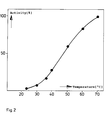
- the hydrolysis is usually carried out at an ambient, or slightly higher, temperature, i.e. between 20 °C and 85 °C. A temperature of between 30 °C and 70 °C is preferred.
- the reaction conditions should be chosen in such a way as to avoid any inconvenient side reactions.
- the concentration of the substrate can vary within wide limits and can be, for example, from 2.5 to 500 g/l.
- the conversion can take place in the absence of oxygen, for example by flushing with molecular nitrogen.
- the enantiomer composition of mandelic acid was determined by separating both enantiomers on a reversed phase column (Nucleosil 120-C18) using ligand-exchange chromatography.
- the eluent used was prepared as follows: 0.2 g triethylamine was added to 1,800 ml of H2O in a 2 l volumetric flask; then 0.8 g Cu(CH3COO)2.2H2O and 1.38 g N,N-di-n-propyl-L-alanine were added.
- the pH was set to 5.3 using acetic acid (1.8 mol/l) and then the volumetric flask was topped up to 2 litres with H2O.
- the solution obtained was filtered through a Sartorius membrane filter (0.45 ⁇ m) and mixed with acetonitrile in the following ratio: 230 Cu-solution/ 20 acetonitrile (v/v).
- the flow rate was 1.5 ml/min, and the temperature was 40 °C.
- the components were selectively detected using a post-column reaction with a Fe2(SO4)3 reagent (500 mg Fe2(SO4)3.nH2O in 600 ml of H2O; pH set at 2.1 using H2(SO4)/H2O (10/240-solution). Detection was carried out with an UV-vis detector at 420 nm.
- the above-mentioned HPLC methods were used, either a reversed phase HPLC system with UV detection or an ion-selective ammonia electrode with which the ammonia released during the hydrolysis reaction was measured.
- NCIB 40322 took place in 2 l Erlenmeyer flasks filled with 500 ml of medium, which, while being stirred (150 rpm), were incubated at 28 °C.
- the medium contained the following components: 10 g/l yeast carbon base (Difco), 1.5 g/l DL-mandelic acid amide, and 50 mM potassium phosphate buffer pH 7.0.
- Approximately twenty hours after inoculation the cultivated cells were harvested by centrifugation (10 min, 15,000 g), washed using a potassium phosphate buffer (50 mM, pH 7.0) and resuspended in the same buffer.
- the cell suspension thus obtained was either used direct for enzymatic hydrolysis or first deep-frozen for a short time (- 20 °C).
- Ochrobactrum anthropi NCIB 40321 was cultivated as described in example I.
- the cell suspension thus obtained contained 50 mg dry weight per ml. 0.5 ml of this cell suspension was added to 19.5 ml of 100 mM potassium phosphate buffer pH 8.0 which contained 5.0 g/l DL-phenylglycine amide. After 15 min. incubation (40 °C, 150 rpm), 50 % of the added amide was hydrolysed. HPLC analyses showed that only the L-amide was hydrolysed.
- the remaining reaction mixture contained both L-phenylglycine and D-phenylglycine amide with an e.e. ⁇ 99.5 %. During incubation with L- and D-phenylglycine amide separately only the L-phenylglycine amide was hydrolysed. Ammonia accumulated in stoichiometric amounts.
- Ochrobactrum anthropi NCIB 40321 and Klebsiella sp. NCIB 40322 were cultivated as described in example I.
- the cell suspension of Ochrobactrum obtained contained 50 mg dry weight/ml and the Klebsiella cells 48 mg dry weight/ml. 2.0 ml of these cell suspensions were added to 18 ml of 100 mM potassium phosphate buffer pH 7.0 which contained 1.0 g/l DL-mandelic acid amide. After 70 min. incubation (28 °C, 150 rpm) the incubation was stopped and the reaction mixture analysed. The conversion was determined with both HPLC and the ion-selective ammonia electrode. The results are given in table 1.
- Ochrobactrum anthropi NCIB 40321 was cultivated. 19.5 ml of 100 mM potassium phosphate buffer pH 6.0, containing 2.0 g/l DL- ⁇ -N-hydroxyphenylglycine amide, was flushed with molecular nitrogen. Then 0.5 ml of Ochrobactrum cell suspension (50 mg dry weight per ml) was added to this reaction medium. This was again flushed with molecular nitrogen, and the incubation mixture was incubated at 40 °C with shaking (150 rpm). After 60 minutes 50 % of the DL amide had been hydrolysed (HPLC analysis and ammonia determination). After 120 minutes and 180 minutes exactly the same concentrations of amide and ammonia were measured. An incubation with D- and L- ⁇ -N-hydroxyphenylglycine amide separately showed that only the L-amide had been hydrolysed.
- Ochrobactrum anthropi NCIB 40321 cell suspension 50 mg dry weight per ml was added to 18 ml of 100 mM potassium phosphate buffer (pH 8.0) containing 2.0 g/l DL- ⁇ -methylphenylglycine amide. After 60 min. incubation (40 °C, 150 rpm) 50 % of the amide had been hydrolysed. Analysis of the remaining reaction mixture showed that both L- ⁇ -methylphenylglycine and D- ⁇ -methylphenylglycine amide were present with an e.e. of ⁇ 99 %.
Landscapes
- Chemical & Material Sciences (AREA)
- Organic Chemistry (AREA)
- Engineering & Computer Science (AREA)
- Zoology (AREA)
- Life Sciences & Earth Sciences (AREA)
- Wood Science & Technology (AREA)
- Chemical Kinetics & Catalysis (AREA)
- Microbiology (AREA)
- General Chemical & Material Sciences (AREA)
- Biotechnology (AREA)
- Health & Medical Sciences (AREA)
- Biochemistry (AREA)
- Bioinformatics & Cheminformatics (AREA)
- General Engineering & Computer Science (AREA)
- General Health & Medical Sciences (AREA)
- Genetics & Genomics (AREA)
- Analytical Chemistry (AREA)
- Preparation Of Compounds By Using Micro-Organisms (AREA)
- Organic Low-Molecular-Weight Compounds And Preparation Thereof (AREA)
Applications Claiming Priority (2)
| Application Number | Priority Date | Filing Date | Title |
|---|---|---|---|
| NL9100038 | 1991-01-11 | ||
| NL9100038A NL9100038A (nl) | 1991-01-11 | 1991-01-11 | Enzym-gekatalyseerde bereiding van optisch aktieve carbonzuren. |
Publications (3)
| Publication Number | Publication Date |
|---|---|
| EP0494716A2 true EP0494716A2 (fr) | 1992-07-15 |
| EP0494716A3 EP0494716A3 (en) | 1992-10-07 |
| EP0494716B1 EP0494716B1 (fr) | 1996-08-28 |
Family
ID=19858714
Family Applications (1)
| Application Number | Title | Priority Date | Filing Date |
|---|---|---|---|
| EP92200030A Expired - Lifetime EP0494716B1 (fr) | 1991-01-11 | 1992-01-07 | Préparation d'acides carboxyliques optiquement actifs par catalyse enzymatique |
Country Status (9)
| Country | Link |
|---|---|
| US (1) | US5248608A (fr) |
| EP (1) | EP0494716B1 (fr) |
| JP (1) | JP3135653B2 (fr) |
| AT (1) | ATE141952T1 (fr) |
| CA (1) | CA2059075A1 (fr) |
| DE (1) | DE69213033T2 (fr) |
| DK (1) | DK0494716T3 (fr) |
| ES (1) | ES2093764T3 (fr) |
| NL (1) | NL9100038A (fr) |
Cited By (10)
| Publication number | Priority date | Publication date | Assignee | Title |
|---|---|---|---|---|
| WO1995016786A1 (fr) * | 1993-12-17 | 1995-06-22 | Dsm N.V. | Amides de phenylserine et preparation de phenylserines/amides de phenylserine |
| EP0686698A3 (fr) * | 1994-06-09 | 1997-05-02 | Lonza Ag | Procédé biotechnologique pour la préparation des acides S-alpha-aminocarboxyliques et des amides d'acides R-alpha-aminocarboxyliques |
| DE19634446A1 (de) * | 1996-05-20 | 1997-11-27 | Fraunhofer Ges Forschung | Enzymatische Synthese optisch aktiver Hydroxamsäuren und ihre Umsetzung zu optisch aktiven primären Aminen durch Lossen-Umlagerung |
| WO1998004733A1 (fr) * | 1996-07-29 | 1998-02-05 | Allied Colloids Limited | Production d'acides amines et enzymes utilises a cette fin |
| US6281003B1 (en) | 1996-05-20 | 2001-08-28 | Fraunhofer-Gesellschaft Zur Forderung Der Angewandten Forschung E. V. | Enzymatic synthesis of optically active hydroxamic acids and their conversion to optically active primary amines by a lossen rearrangement |
| EP1170375A3 (fr) * | 2000-06-27 | 2002-01-16 | Nissan Chemical Industries Ltd. | Procédé de transformation microbienne pour produits hydroaromatiques |
| WO2002048383A1 (fr) * | 2000-12-11 | 2002-06-20 | Mitsubishi Gas Chemical Co., Inc. | Procede de production d'acide (4r)-1,3-thiazolidine-4-carboxylique actif au niveau optique |
| WO2003010312A3 (fr) * | 2001-07-23 | 2003-10-30 | Dsm Ip Assets Bv | Sequences d'acides nucleiques codant pour des amidases enantioselectives |
| WO2003106691A1 (fr) * | 2002-06-14 | 2003-12-24 | Dsm Ip Assets B.V. | Polypeptides a activite amide d'$g(a)-h-$g(a)-aminoacide racemase et acides nucleiques codant pour ces polypeptides |
| EP2508615A4 (fr) * | 2009-12-04 | 2013-07-10 | Mitsubishi Gas Chemical Co | Procédé de production d'un acide aminé optiquement actif ou d'un amide d'acide aminé optiquement actif |
Families Citing this family (16)
| Publication number | Priority date | Publication date | Assignee | Title |
|---|---|---|---|---|
| US6551618B2 (en) | 1994-03-15 | 2003-04-22 | University Of Birmingham | Compositions and methods for delivery of agents for neuronal regeneration and survival |
| WO1995034525A1 (fr) * | 1994-06-13 | 1995-12-21 | Mitsubishi Rayon Co., Ltd. | DERIVE D'ACIDE CARBOXYLIQUE OPTIQUEMENT ACTIF A SUBSTITUTION α ET PROCEDE DE PRODUCTION DUDIT DERIVE |
| AU728202B2 (en) * | 1996-11-22 | 2001-01-04 | Pioneer Hi-Bred International, Inc. | Moniliformin detoxification compositions and methods |
| JP4094232B2 (ja) | 1999-04-16 | 2008-06-04 | 三菱レイヨン株式会社 | 新規なアミダーゼ遺伝子 |
| US7732404B2 (en) | 1999-12-30 | 2010-06-08 | Dexcel Ltd | Pro-nanodispersion for the delivery of cyclosporin |
| US9572840B2 (en) | 2003-06-27 | 2017-02-21 | DePuy Synthes Products, Inc. | Regeneration and repair of neural tissue using postpartum-derived cells |
| US8790637B2 (en) | 2003-06-27 | 2014-07-29 | DePuy Synthes Products, LLC | Repair and regeneration of ocular tissue using postpartum-derived cells |
| US9592258B2 (en) | 2003-06-27 | 2017-03-14 | DePuy Synthes Products, Inc. | Treatment of neurological injury by administration of human umbilical cord tissue-derived cells |
| WO2005001080A2 (fr) | 2003-06-27 | 2005-01-06 | Ethicon, Incorporated | Cellules derivees de tissus post-partum destinees a etre utilisees pour traiter des maladies du coeur et du systeme circulatoire |
| WO2006071794A2 (fr) | 2004-12-23 | 2006-07-06 | Ethicon Incorporated | Cellules postnatales derivees de tissus du cordon ombilical, et procedes de production et d'utilisation de celles-ci |
| WO2007070870A1 (fr) | 2005-12-16 | 2007-06-21 | Ethicon, Inc. | Compositions et procedes d'inhibition d'une reponse immunitaire negative en transplantation avec defaut d'histocompatibilite |
| US9125906B2 (en) | 2005-12-28 | 2015-09-08 | DePuy Synthes Products, Inc. | Treatment of peripheral vascular disease using umbilical cord tissue-derived cells |
| PL2089511T3 (pl) | 2006-11-13 | 2015-02-27 | Depuy Synthes Products Llc | Rozrost in vitro komórek pochodzących z tkanki pępowinowej wykorzystujących mikronośniki |
| CN102387807A (zh) * | 2008-12-19 | 2012-03-21 | 先进科技及再生医学有限责任公司 | 肺部疾病和病症的治疗 |
| US10179900B2 (en) | 2008-12-19 | 2019-01-15 | DePuy Synthes Products, Inc. | Conditioned media and methods of making a conditioned media |
| SG174551A1 (en) | 2009-03-26 | 2011-10-28 | Ethicon Inc | Human umbilical cord tissue cells as therapy for alzheimer' s disease |
Family Cites Families (5)
| Publication number | Priority date | Publication date | Assignee | Title |
|---|---|---|---|---|
| JPS5713000A (en) * | 1980-06-24 | 1982-01-22 | Ube Ind Ltd | Preparation of optical active tryptophane |
| JPS57186495A (en) * | 1981-05-14 | 1982-11-16 | Ube Ind Ltd | Preparation of l-alpha-methylphenylalanine |
| DE3683512D1 (de) * | 1985-02-25 | 1992-03-05 | Mitsubishi Gas Chemical Co | Verfahren zur optischen isomerisierung von optisch aktiver aminosaeure und verfahren zur herstellung von optisch aktiver aminosaeure. |
| JPS6255097A (ja) * | 1985-09-04 | 1987-03-10 | Nitto Chem Ind Co Ltd | L−アミノ酸の製造法 |
| EP0383403A1 (fr) * | 1989-02-16 | 1990-08-22 | Stamicarbon B.V. | Procédé de préparation de produits chimiques organiques |
-
1991
- 1991-01-11 NL NL9100038A patent/NL9100038A/nl not_active Application Discontinuation
-
1992
- 1992-01-07 DK DK92200030.2T patent/DK0494716T3/da active
- 1992-01-07 EP EP92200030A patent/EP0494716B1/fr not_active Expired - Lifetime
- 1992-01-07 ES ES92200030T patent/ES2093764T3/es not_active Expired - Lifetime
- 1992-01-07 AT AT92200030T patent/ATE141952T1/de not_active IP Right Cessation
- 1992-01-07 DE DE69213033T patent/DE69213033T2/de not_active Expired - Lifetime
- 1992-01-09 CA CA002059075A patent/CA2059075A1/fr not_active Abandoned
- 1992-01-10 US US07/819,129 patent/US5248608A/en not_active Expired - Lifetime
- 1992-01-10 JP JP04002845A patent/JP3135653B2/ja not_active Expired - Fee Related
Cited By (16)
| Publication number | Priority date | Publication date | Assignee | Title |
|---|---|---|---|---|
| WO1995016786A1 (fr) * | 1993-12-17 | 1995-06-22 | Dsm N.V. | Amides de phenylserine et preparation de phenylserines/amides de phenylserine |
| US5773284A (en) * | 1993-12-17 | 1998-06-30 | Dsm N.V. | Phenylserine amides and the preparation of phenylserines/phenylserine amides |
| EP0686698A3 (fr) * | 1994-06-09 | 1997-05-02 | Lonza Ag | Procédé biotechnologique pour la préparation des acides S-alpha-aminocarboxyliques et des amides d'acides R-alpha-aminocarboxyliques |
| US5766893A (en) * | 1994-06-09 | 1998-06-16 | Lonza Ag | Biotechnological process for the preparation of cyclic s-alpha-imino carboxylic acids and r-alpha-imino carboxamides |
| DE19634446A1 (de) * | 1996-05-20 | 1997-11-27 | Fraunhofer Ges Forschung | Enzymatische Synthese optisch aktiver Hydroxamsäuren und ihre Umsetzung zu optisch aktiven primären Aminen durch Lossen-Umlagerung |
| US6281003B1 (en) | 1996-05-20 | 2001-08-28 | Fraunhofer-Gesellschaft Zur Forderung Der Angewandten Forschung E. V. | Enzymatic synthesis of optically active hydroxamic acids and their conversion to optically active primary amines by a lossen rearrangement |
| WO1998004733A1 (fr) * | 1996-07-29 | 1998-02-05 | Allied Colloids Limited | Production d'acides amines et enzymes utilises a cette fin |
| US6268185B1 (en) | 1996-07-29 | 2001-07-31 | Ciba Specialty Chemicals Water Treatments Limited | Production of amino acids and enzymes used therefor |
| EP1170375A3 (fr) * | 2000-06-27 | 2002-01-16 | Nissan Chemical Industries Ltd. | Procédé de transformation microbienne pour produits hydroaromatiques |
| WO2002048383A1 (fr) * | 2000-12-11 | 2002-06-20 | Mitsubishi Gas Chemical Co., Inc. | Procede de production d'acide (4r)-1,3-thiazolidine-4-carboxylique actif au niveau optique |
| US7015029B2 (en) | 2000-12-11 | 2006-03-21 | Mitsubishi Gas Chemical Co, Inc. | Process for producing optically active (4R)-1,3-tiazolidine-4-carboxylic acid |
| WO2003010312A3 (fr) * | 2001-07-23 | 2003-10-30 | Dsm Ip Assets Bv | Sequences d'acides nucleiques codant pour des amidases enantioselectives |
| US7241602B2 (en) | 2001-07-23 | 2007-07-10 | Dsm Ip Assets B.V. | Nucleic acid sequences encoding enantioselective amidases |
| WO2003106691A1 (fr) * | 2002-06-14 | 2003-12-24 | Dsm Ip Assets B.V. | Polypeptides a activite amide d'$g(a)-h-$g(a)-aminoacide racemase et acides nucleiques codant pour ces polypeptides |
| US7371555B2 (en) | 2002-06-14 | 2008-05-13 | Dsm Ip Assets B.V. | Polypeptides having α-H-α-amino acid amide racemase activity and nucleic acids encoding the same |
| EP2508615A4 (fr) * | 2009-12-04 | 2013-07-10 | Mitsubishi Gas Chemical Co | Procédé de production d'un acide aminé optiquement actif ou d'un amide d'acide aminé optiquement actif |
Also Published As
| Publication number | Publication date |
|---|---|
| ES2093764T3 (es) | 1997-01-01 |
| ATE141952T1 (de) | 1996-09-15 |
| JP3135653B2 (ja) | 2001-02-19 |
| JPH0530992A (ja) | 1993-02-09 |
| EP0494716A3 (en) | 1992-10-07 |
| US5248608A (en) | 1993-09-28 |
| DE69213033T2 (de) | 1997-04-03 |
| NL9100038A (nl) | 1992-08-03 |
| DK0494716T3 (fr) | 1997-02-10 |
| DE69213033D1 (de) | 1996-10-02 |
| CA2059075A1 (fr) | 1992-07-12 |
| EP0494716B1 (fr) | 1996-08-28 |
Similar Documents
| Publication | Publication Date | Title |
|---|---|---|
| US5248608A (en) | Process for separation of αsubstituted carboxylic acid amides using l-amidase from Ochrobactrum anthropi | |
| EP0449648B1 (fr) | Procédé de préparation de l'acide R(-)mandélique et ses dérivés | |
| EP0348901A2 (fr) | Procédé de préparation d'acides organiques optiquement actifs et alpha substitués, micro-organismes et enzymes utilisés à cet effet | |
| Sambyal et al. | Exploitation of E. coli for the production of penicillin G amidase: a tool for the synthesis of semisynthetic β-lactam antibiotics | |
| EP0610048A2 (fr) | Procédé de préparation d'acides alpha-hydroxycarboxyliques optiquement actifs contenant un groupe phénylique | |
| EP0527553A1 (fr) | Procédé de production de R(-)-acide mandélique et son dérivé | |
| Nakajima et al. | Enantioselective synthesis of various D-amino acids by a multi-enzyme system | |
| Van den Tweel et al. | Ochrobactrum anthropi NCIMB 40321: a new biocatalyst with broad-spectrum L-specific amidase activity | |
| EP0330695B1 (fr) | Procede de preparation de produits chimiques organiques | |
| US4981799A (en) | Acylamino acid racemase, production and use thereof | |
| US4943528A (en) | Process for the production of optically active (R)-(-)-3-halo-1,2-propanediol | |
| EP0383403A1 (fr) | Procédé de préparation de produits chimiques organiques | |
| Yokoigawa et al. | Enantioselective synthesis of N-acetyl-L-methionine with aminoacylase in organic solvent | |
| Syldatk et al. | Biotechnological production of D‐or L‐amino acids from 5‐monosubstituted hydantoins | |
| JPH0499495A (ja) | R(‐)―マンデル酸の製造法 | |
| US5215897A (en) | Process for producing L-amino acids | |
| WO1991005870A1 (fr) | Production enzymatique de d-amino acides | |
| Takahashi et al. | d-Methionine preparation from racemic methionines by Proteus vulgaris IAM 12003 with asymmetric degrading activity | |
| EP0723586B1 (fr) | Enzyme et son utilisation dans la preparation de l'acide (s) - pipecolique | |
| Pietzsch et al. | Microbial and Enzymatic Synthesis of Optically Pure D-and L-3-Trimethylsilyl-alanine by Deracemization of D, L-5-Trimethylsilyl-methyl-hydantion | |
| JPS61293394A (ja) | L−α−アミノ酸の製法 | |
| EP1487990A2 (fr) | Procede de preparation d'acides beta-aminocarboxyliques optiquement actifs a partir d'acides beta-aminocarboxyliques n-acyles racemiques | |
| EP0352846B1 (fr) | Procédé de préparation de biocatalyseurs auparavant dépourvus d'activité enzymatique stéréoselective | |
| Kamphuis et al. | Chemo-enzymatic synthesis of enantiomerically pure aH and a-alkyl-amino acids and derivatives | |
| US5134073A (en) | Microbiologically produced n-acetyl-2,3-didehydroleucine acylase |
Legal Events
| Date | Code | Title | Description |
|---|---|---|---|
| PUAI | Public reference made under article 153(3) epc to a published international application that has entered the european phase |
Free format text: ORIGINAL CODE: 0009012 |
|
| AK | Designated contracting states |
Kind code of ref document: A2 Designated state(s): AT BE CH DE DK ES FR GB GR IT LI NL PT SE |
|
| PUAL | Search report despatched |
Free format text: ORIGINAL CODE: 0009013 |
|
| AK | Designated contracting states |
Kind code of ref document: A3 Designated state(s): AT BE CH DE DK ES FR GB GR IT LI NL PT SE |
|
| 17P | Request for examination filed |
Effective date: 19930311 |
|
| 17Q | First examination report despatched |
Effective date: 19950601 |
|
| GRAH | Despatch of communication of intention to grant a patent |
Free format text: ORIGINAL CODE: EPIDOS IGRA |
|
| GRAH | Despatch of communication of intention to grant a patent |
Free format text: ORIGINAL CODE: EPIDOS IGRA |
|
| GRAA | (expected) grant |
Free format text: ORIGINAL CODE: 0009210 |
|
| AK | Designated contracting states |
Kind code of ref document: B1 Designated state(s): AT BE CH DE DK ES FR GB GR IT LI NL PT SE |
|
| PG25 | Lapsed in a contracting state [announced via postgrant information from national office to epo] |
Ref country code: BE Effective date: 19960828 Ref country code: GR Free format text: LAPSE BECAUSE OF FAILURE TO SUBMIT A TRANSLATION OF THE DESCRIPTION OR TO PAY THE FEE WITHIN THE PRESCRIBED TIME-LIMIT Effective date: 19960828 |
|
| REF | Corresponds to: |
Ref document number: 141952 Country of ref document: AT Date of ref document: 19960915 Kind code of ref document: T |
|
| REF | Corresponds to: |
Ref document number: 69213033 Country of ref document: DE Date of ref document: 19961002 |
|
| ITF | It: translation for a ep patent filed | ||
| PG25 | Lapsed in a contracting state [announced via postgrant information from national office to epo] |
Ref country code: SE Effective date: 19961128 Ref country code: PT Effective date: 19961128 |
|
| ET | Fr: translation filed | ||
| REG | Reference to a national code |
Ref country code: ES Ref legal event code: FG2A Ref document number: 2093764 Country of ref document: ES Kind code of ref document: T3 |
|
| REG | Reference to a national code |
Ref country code: DK Ref legal event code: T3 |
|
| PLBE | No opposition filed within time limit |
Free format text: ORIGINAL CODE: 0009261 |
|
| STAA | Information on the status of an ep patent application or granted ep patent |
Free format text: STATUS: NO OPPOSITION FILED WITHIN TIME LIMIT |
|
| 26N | No opposition filed | ||
| REG | Reference to a national code |
Ref country code: GB Ref legal event code: IF02 |
|
| PGFP | Annual fee paid to national office [announced via postgrant information from national office to epo] |
Ref country code: NL Payment date: 20031216 Year of fee payment: 13 |
|
| PGFP | Annual fee paid to national office [announced via postgrant information from national office to epo] |
Ref country code: DK Payment date: 20040131 Year of fee payment: 13 |
|
| PGFP | Annual fee paid to national office [announced via postgrant information from national office to epo] |
Ref country code: ES Payment date: 20040212 Year of fee payment: 13 |
|
| REG | Reference to a national code |
Ref country code: GB Ref legal event code: 732E |
|
| REG | Reference to a national code |
Ref country code: FR Ref legal event code: TP |
|
| REG | Reference to a national code |
Ref country code: CH Ref legal event code: PUE Owner name: DSM IP ASSETS B.V. Free format text: DSM N.V.#HET OVERLOON 1#6411 TE HEERLEN (NL) -TRANSFER TO- DSM IP ASSETS B.V.#HET OVERLOON 1#6411 TE HEERLEN (NL) |
|
| PG25 | Lapsed in a contracting state [announced via postgrant information from national office to epo] |
Ref country code: IT Free format text: LAPSE BECAUSE OF NON-PAYMENT OF DUE FEES;WARNING: LAPSES OF ITALIAN PATENTS WITH EFFECTIVE DATE BEFORE 2007 MAY HAVE OCCURRED AT ANY TIME BEFORE 2007. THE CORRECT EFFECTIVE DATE MAY BE DIFFERENT FROM THE ONE RECORDED. Effective date: 20050107 |
|
| PG25 | Lapsed in a contracting state [announced via postgrant information from national office to epo] |
Ref country code: ES Free format text: LAPSE BECAUSE OF NON-PAYMENT OF DUE FEES Effective date: 20050108 |
|
| PG25 | Lapsed in a contracting state [announced via postgrant information from national office to epo] |
Ref country code: DK Free format text: LAPSE BECAUSE OF NON-PAYMENT OF DUE FEES Effective date: 20050131 |
|
| PG25 | Lapsed in a contracting state [announced via postgrant information from national office to epo] |
Ref country code: NL Free format text: LAPSE BECAUSE OF NON-PAYMENT OF DUE FEES Effective date: 20050801 |
|
| REG | Reference to a national code |
Ref country code: DK Ref legal event code: EBP |
|
| NLV4 | Nl: lapsed or anulled due to non-payment of the annual fee |
Effective date: 20050801 |
|
| REG | Reference to a national code |
Ref country code: ES Ref legal event code: FD2A Effective date: 20050108 |
|
| PGFP | Annual fee paid to national office [announced via postgrant information from national office to epo] |
Ref country code: CH Payment date: 20100125 Year of fee payment: 19 |
|
| PGFP | Annual fee paid to national office [announced via postgrant information from national office to epo] |
Ref country code: FR Payment date: 20100205 Year of fee payment: 19 |
|
| PGFP | Annual fee paid to national office [announced via postgrant information from national office to epo] |
Ref country code: GB Payment date: 20100125 Year of fee payment: 19 Ref country code: DE Payment date: 20100127 Year of fee payment: 19 Ref country code: AT Payment date: 20091223 Year of fee payment: 19 |
|
| REG | Reference to a national code |
Ref country code: CH Ref legal event code: PL |
|
| GBPC | Gb: european patent ceased through non-payment of renewal fee |
Effective date: 20110107 |
|
| REG | Reference to a national code |
Ref country code: FR Ref legal event code: ST Effective date: 20110930 |
|
| PG25 | Lapsed in a contracting state [announced via postgrant information from national office to epo] |
Ref country code: FR Free format text: LAPSE BECAUSE OF NON-PAYMENT OF DUE FEES Effective date: 20110131 Ref country code: LI Free format text: LAPSE BECAUSE OF NON-PAYMENT OF DUE FEES Effective date: 20110131 Ref country code: CH Free format text: LAPSE BECAUSE OF NON-PAYMENT OF DUE FEES Effective date: 20110131 |
|
| PG25 | Lapsed in a contracting state [announced via postgrant information from national office to epo] |
Ref country code: AT Free format text: LAPSE BECAUSE OF NON-PAYMENT OF DUE FEES Effective date: 20110107 Ref country code: GB Free format text: LAPSE BECAUSE OF NON-PAYMENT OF DUE FEES Effective date: 20110107 |
|
| REG | Reference to a national code |
Ref country code: DE Ref legal event code: R119 Ref document number: 69213033 Country of ref document: DE Effective date: 20110802 |
|
| PG25 | Lapsed in a contracting state [announced via postgrant information from national office to epo] |
Ref country code: DE Free format text: LAPSE BECAUSE OF NON-PAYMENT OF DUE FEES Effective date: 20110802 |