EP0516549A2 - Verfahren zur Regulierung der Enzym-Aktivitäten durch Edelgase - Google Patents
Verfahren zur Regulierung der Enzym-Aktivitäten durch Edelgase Download PDFInfo
- Publication number
- EP0516549A2 EP0516549A2 EP92401470A EP92401470A EP0516549A2 EP 0516549 A2 EP0516549 A2 EP 0516549A2 EP 92401470 A EP92401470 A EP 92401470A EP 92401470 A EP92401470 A EP 92401470A EP 0516549 A2 EP0516549 A2 EP 0516549A2
- Authority
- EP
- European Patent Office
- Prior art keywords
- enzymes
- enzyme
- noble gases
- gas
- mixtures
- Prior art date
- Legal status (The legal status is an assumption and is not a legal conclusion. Google has not performed a legal analysis and makes no representation as to the accuracy of the status listed.)
- Granted
Links
Images























Classifications
-
- C—CHEMISTRY; METALLURGY
- C12—BIOCHEMISTRY; BEER; SPIRITS; WINE; VINEGAR; MICROBIOLOGY; ENZYMOLOGY; MUTATION OR GENETIC ENGINEERING
- C12N—MICROORGANISMS OR ENZYMES; COMPOSITIONS THEREOF; PROPAGATING, PRESERVING, OR MAINTAINING MICROORGANISMS; MUTATION OR GENETIC ENGINEERING; CULTURE MEDIA
- C12N9/00—Enzymes; Proenzymes; Compositions thereof; Processes for preparing, activating, inhibiting, separating or purifying enzymes
- C12N9/0004—Oxidoreductases (1.)
-
- C—CHEMISTRY; METALLURGY
- C12—BIOCHEMISTRY; BEER; SPIRITS; WINE; VINEGAR; MICROBIOLOGY; ENZYMOLOGY; MUTATION OR GENETIC ENGINEERING
- C12N—MICROORGANISMS OR ENZYMES; COMPOSITIONS THEREOF; PROPAGATING, PRESERVING, OR MAINTAINING MICROORGANISMS; MUTATION OR GENETIC ENGINEERING; CULTURE MEDIA
- C12N9/00—Enzymes; Proenzymes; Compositions thereof; Processes for preparing, activating, inhibiting, separating or purifying enzymes
-
- C—CHEMISTRY; METALLURGY
- C12—BIOCHEMISTRY; BEER; SPIRITS; WINE; VINEGAR; MICROBIOLOGY; ENZYMOLOGY; MUTATION OR GENETIC ENGINEERING
- C12N—MICROORGANISMS OR ENZYMES; COMPOSITIONS THEREOF; PROPAGATING, PRESERVING, OR MAINTAINING MICROORGANISMS; MUTATION OR GENETIC ENGINEERING; CULTURE MEDIA
- C12N9/00—Enzymes; Proenzymes; Compositions thereof; Processes for preparing, activating, inhibiting, separating or purifying enzymes
- C12N9/10—Transferases (2.)
-
- C—CHEMISTRY; METALLURGY
- C12—BIOCHEMISTRY; BEER; SPIRITS; WINE; VINEGAR; MICROBIOLOGY; ENZYMOLOGY; MUTATION OR GENETIC ENGINEERING
- C12N—MICROORGANISMS OR ENZYMES; COMPOSITIONS THEREOF; PROPAGATING, PRESERVING, OR MAINTAINING MICROORGANISMS; MUTATION OR GENETIC ENGINEERING; CULTURE MEDIA
- C12N9/00—Enzymes; Proenzymes; Compositions thereof; Processes for preparing, activating, inhibiting, separating or purifying enzymes
- C12N9/14—Hydrolases (3)
-
- C—CHEMISTRY; METALLURGY
- C12—BIOCHEMISTRY; BEER; SPIRITS; WINE; VINEGAR; MICROBIOLOGY; ENZYMOLOGY; MUTATION OR GENETIC ENGINEERING
- C12N—MICROORGANISMS OR ENZYMES; COMPOSITIONS THEREOF; PROPAGATING, PRESERVING, OR MAINTAINING MICROORGANISMS; MUTATION OR GENETIC ENGINEERING; CULTURE MEDIA
- C12N9/00—Enzymes; Proenzymes; Compositions thereof; Processes for preparing, activating, inhibiting, separating or purifying enzymes
- C12N9/88—Lyases (4.)
-
- C—CHEMISTRY; METALLURGY
- C12—BIOCHEMISTRY; BEER; SPIRITS; WINE; VINEGAR; MICROBIOLOGY; ENZYMOLOGY; MUTATION OR GENETIC ENGINEERING
- C12N—MICROORGANISMS OR ENZYMES; COMPOSITIONS THEREOF; PROPAGATING, PRESERVING, OR MAINTAINING MICROORGANISMS; MUTATION OR GENETIC ENGINEERING; CULTURE MEDIA
- C12N9/00—Enzymes; Proenzymes; Compositions thereof; Processes for preparing, activating, inhibiting, separating or purifying enzymes
- C12N9/90—Isomerases (5.)
-
- C—CHEMISTRY; METALLURGY
- C12—BIOCHEMISTRY; BEER; SPIRITS; WINE; VINEGAR; MICROBIOLOGY; ENZYMOLOGY; MUTATION OR GENETIC ENGINEERING
- C12N—MICROORGANISMS OR ENZYMES; COMPOSITIONS THEREOF; PROPAGATING, PRESERVING, OR MAINTAINING MICROORGANISMS; MUTATION OR GENETIC ENGINEERING; CULTURE MEDIA
- C12N9/00—Enzymes; Proenzymes; Compositions thereof; Processes for preparing, activating, inhibiting, separating or purifying enzymes
- C12N9/99—Enzyme inactivation by chemical treatment
Definitions
- the present invention relates to a method for regulating enzyme activities by noble gases.
- the ability of the noble gases helium (He), neon (Ne), argon (Ar), krypton (Kr), xenon (Xe) and radon (Ra) to enter into chemical combination with other atoms is extremely limited. Generally, only krypton, xenon and radon have been induced to react with other atoms, such as fluorine and oxygen, and the compounds thus formed are explosively unstable. See Advanced Inorganic Chemistry , by F.A. Cotton and G. Wilkinson (Wiley, Third Edition). However, while the noble gases are, in general, chemically inert, xenon is known to exhibit certain physiological effects, such as anesthesia. Other physiological effects have also been observed with other inert gases such as nitrogen, which, for example, is known to cause narcosis when used under great pressure in deep-sea diving.
- enzyme activities can be inhibited in several ways.
- many enzymes can be inhibited by specific poisons that may be structurally related to their normal substrates.
- many different reagents ar known to be specific inactivators of target enzymes. These reagents generally cause chemical modification at the active site of the enzyme to induce loss of catalytic activity, active-site-directed irreversible inactivation or affinity labeling.
- Enzymatic Reaction Mechanisms by C. Walsh (W. H. Freeman & Co., 1979).
- certain multi-enzyme sequences are known to be regulated by particular enzymes known as regulatory or allosteric enzymes. See Bioenergetics , by A.L. Leninger (Benjamin/Cummings Publishing Co., 1973).
- a method for regulating enzyme activities which entails contacting one or more enzymes with a gas comprising one or more noble gases.
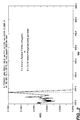
- Figure 1 illustrates the absorption spectrum of tyrosinase.
- Figure 2 illustrates the absorption spectrum of L-tyrosine.
- Figure 3 illustrates the absorption spectrum of tyrosinase and L-tyrosine blanked with L-tyrosine.
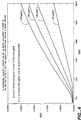
- Figure 4 illustrates an overlay of results of reactions run with varying concentrations of tyrosinase, showing direct linear first-order tyrosinase concentration dependence.
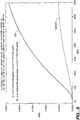
- Figure 5 demonstrates the inhibition of tyrosinase by xenon at equal w/w.
- Figure 6 demonstrates a very large inhibition of tyrosinase by xenon at 26°C.
- Figure 7 illustrates that at 15°C, argon slightly inhibits equilibrium of the tyrosinase-L-tyrosine reaction; xenon has a small but significant inhibitory effect and xenon and krypton exhibit a large inhibitory effect.
- Figure 8 illustrates the inhibiting effects of xenon, krypton, neon and argon on the tyrosinase-L-tyrosine reaction at 20°C.
- Figure 9 illustrates that oxygen has no enhancing effect on the tyrosinase-L-tyrosine reaction at 20°C.
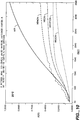
- Figure 10 illustrates the inhibitory effect of neon, argon, krypton and xenon on the tyrosinase-L-tyrosine reaction at 25°C.
- Figure 11 illustrates that oxygen has no enhancing effect on the tyrosinase-L-tyrosine reaction at 25°C.
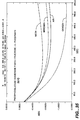
- Figure 12 illustrates the inhibitory effect of neon, argon, krypton and xenon on the tyrosinase-L-tyrosine reaction at 30°C.
- Figure 13 illustrates that oxygen has no enhancing effect on the tyrosinase-L-tyrosine reaction at 30°C.
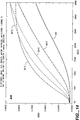
- Figure 14 illustrates a standard run in air at various temperatures, and demonstrates that rate changes are directly attributable to oxygen solubility differences.
- Figure 15 illustrates the inhibitory effect of neon on the tyrosine-L-tyrosine reaction which is positively temperature dependent.
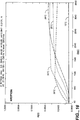
- Figure 16 illustrates the direct inverse (negative) relationship between the ability of krypton to inhibit tyrosinase and temperature.
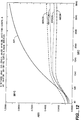
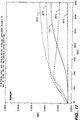
- Figure 17 illustrates the inhibition of tyrosinase-L-tyrosine equilibrium with xenon, which interacts inversely with temperature.
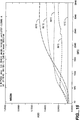
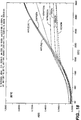
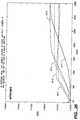
- Figure 18 illustrates that at 20°C, oxygen does not enhance the tyrosinase-L-tyrosine reaction, whereas argon, xenon and neon each dramatically inhibit the reaction. Krypton has a lesser inhibitory effect as does nitrogen.
- Figure 19 illustrates that at 25°C, argon and nitrogen inhibit the tyrosinase-L-tyrosine to a lesser extent than the noble gases, and oxygen enhances the reaction.
- Figure 20 illustrates that at 30°C, oxygen no longer enhances the tyrosinase-L-tyrosine reaction due to lessened solubility.
- Figure 21 illustrates the inhibition of the tyrosinase-L-tyrosine reaction by neon at various temperatures, and shows a transition between 20°C and 25°C.
- Figure 22 illustrates the inhibition of the tyrosinase-L-tyrosine reaction by argon at various temperatures.
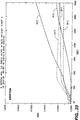
- Figure 23 illustrates the inhibition of the tyrosinase-L-tyrosine reaction by krypton at various temperatures.
- Figure 24 illustrates the inhibition of the tyrosinase-L-tyrosine reaction by xenon at various temperatures.
- Figure 25 illustrates the inhibition of the tyrosinase-L-tyrosine reaction purely by a solubility mechanism involving the displacement of oxygen from solution.
- Figure 26 illustrates the inhibition of tyrosinase activity by nitrogen.
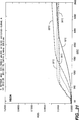
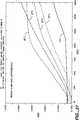
- Figure 27 illustrates the large difference in xenon activity between 20° and 25°C.
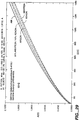
- Figure 28 illustrates the inhibition of glucose oxidase by krypton, xenon, argon, nitrogen and neon.
- Figure 29 illustrates the inhibition of ⁇ -glutamyltranspeptidase by krypton, xenon, argon and a mixture of krypton and xenon.
- Figure 30 illustrates the inhibition of aspartate aminotransferase by krypton, xenon, argon and a mixture of krypton and xenon.
- Figure 31 illustrates the enhancement of ⁇ -D-glucosidase by nitrogen, neon and oxygen.
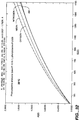
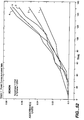
- Figure 32 illustrates the enhancement of phenylalanine ammonia-lyase by neon, oxygen and nitrogen.
- Figure 33 illustrates the enhancement of citrate synthase by xenon and krypton and the inhibition thereof by argon.
- Figure 34 illustrates the enhancement of phosphoglucose isomerase by xenon, krypton, argon and a mixture of krypton and xenon at 10°C.
- Figure 35 illustrates the enhancement of phosphoglucose isomerase by neon and nitrogen, and the inhibition thereof by oxygen at 25°C.
- Figure 36 illustrates the enhancement of S-acetyl CoA synthetase by krypton and a mixture of krypton and xenon at 25°C.
- Figure 37 illustrates the inhibitory effect of air and nitrogen upon ⁇ -glucosidase at 100 atm. pressure at 25°C.
- Figure 38 illustrates the inhibitory effect of air and nitrogen upon ⁇ -glucosidase at 30 atm. pressure.
- Figure 39 illustrates the inhibitory effect of air, xenon and nitrogen upon tyrosinase at 30 atm. pressure.
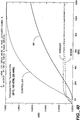
- Figure 40 illustrates the inhibitory effect of air, xenon and nitrogen upon tyrosinase at 100 atm. pressure.
- FIG 41 illustrates that enzyme-substrate concentrations influence the results of noble gas enhancement/inhibition.
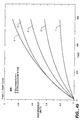
- Figure 42 illustrates the differing effects of xenon and neon, in respectively enhancing, then inhibiting lactate dehydrogenase at 10°C, for example.
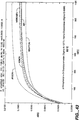
- Figure 43 illustrates that even at 60°C, noble gases exhibit enhancing or inhibitory effects on enzymes.
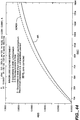
- Figure 44 illustrates the effect of xenon in enhancing ⁇ -glucosidase in immobilized form.
- Figure 45 illustrates uv/vis absorbance power curves for ⁇ -glucosidase under air at five different substrate concentrations.
- Figure 46 illustrates uv/vis absorbance power curves for ⁇ -glucosidase under xenon at five different substrate concentrations.
- Figure 47 illustrates the first-order power curve regression rate linear transformations for the ⁇ -glucosidase-air gassed reactions.
- Figure 48 illustrates the first-order power curve regression rate linear transformations for the ⁇ -glucosidase-xenon gassed reactions.
- Figure 49 and 50 illustrate the same first-order rate approximation regression linearizations for all gases studies in this run.
- Figures 51 and 52 illustrates data from the first 160 seconds of a single tyrosinase experiment expressed as power curves for air, then xenon gassing.
- the present invention is, indeed, quite surprising, for several reasons.
- any gas may be used in the gas mixtures in addition to the present noble gases. however, most typically such other gases include oxygen, nitrogen and carbon dioxide.
- non-noble gas means any gas from the group of helium, neon, argon, krypton, xenon or radon. However, it is generally preferred that neon, argon, krypton or xenon be used simply because helium has a low solubility and high rate of departure from application systems and radon is dangerously radioactive.
- single, pure noble gas may be used, or mixtures of noble gases may be used.
- mixtures of one or more noble gases with other gases, such as nitrogen, sulfur hexafluoride, carbon oxygen or oxygen may be used, for example.
- the effects of one or more noble gases upon enzyme activity is observed in aqueous or organic solutions, dispersions, suspensions or in other types of matrices, such as gels.
- the enzymes regulated may be bound or unbound to supports.
- the noble gases, themselves, may be in solution, in the atmosphere or in a bound form.
- the present invention is predicated upon the fundamental discovery that enzymes representing all six enzyme classes, as classified by the Joint Commission on Biochemical Nomenclature of the International Union of Biochemistry and International Union of Pure and Applied Chemistry, are reproducibly enhanced or inhibited in their activity by contact even at low pressures with pure noble gases or in mixtures thereof or even in mixtures with other gases.
- the gases and gas mixtures of the present invention can effect both kinetic and thermodynamic control over enzymatic activity. That is, it is now possible to control both the rate and yield of an enzymatic reaction.
- the solubility of the present gases and gas mixtures in reaction mixtures influences the measured effect of the gases and gas mixtures, the solubility does not wholly determine the effect.
- the effect is largely due to molecular effects such as polarizability, ionicity, Van der Waals forces and atomic radii.
- increasing temperature will limit the gas available due to decreasing solubility and decrease the effects.
- the increased polarizability of the gases and gas mixtures has a more pronounced influence as the effect of the gases and gas mixtures than the solubility characteristics.
- the observed effect on the enzyme is increased.
- the effects appear to be based upon the interaction of gas molecules with enzymes, which is independent of, but can be ameliorated or potentiated by, the admixture of other gases.
- mixtures of noble gases behave in the same manner as pure noble gases, and mixtures of several gases are found to mimic, reverse or improve the effects observed with a single noble gas.
- a particular noble gas or mixtures thereof may either inhibit or enhance enzymatic activity as a function of temperature.
- the present invention may be utilized to regulate enzyme activities in any application where enzymes are used.
- the present invention may be used advantageously in the production of antibiotics, such as penicillin; in the production of ethanol and acetic acid; in the manufacture of diagnostic kits; in the manufacture of fermentation products, such as beer, wine and cheese; and in large scale enzymatic conversions generally.
- the present invention may be used advantageously in regulating the activities of enzymes from any of the six recognized enzyme categories.
- the examples provided hereinbelow are illustrative and are not intended to be limitative.
- oxidoreductases which include, for example, dehydrogenases, oxidases, peroxidases, hydroxylases and oxygenases.
- oxidoreductases are tyrosinase, glucose oxidase, acetoin dehydrogenase, taurine dehydrogenase, octopine dehydrogenase, azobenzene reductase, acetoindoxyl oxidase, hypotaurine dehydrogenase, pseudomonas cytochrome oxidase, 3-hydroxyanthranilate oxidase, chloride peroxidase, cytochrome C3 hydrogenase, meliotate 3-monooxygenase, CDP-4-keto-6-deoxy-deglucose reductase and rubredoxin NaD+ reductase and chlorate reductase, for example.
- oxidoreductases include, for example, dehydrogen
- a second category of enzymes which can be regulated in accordance with the present invention are the transferases.
- transferases are carnosine N-methyl transferase, 3-oxoacyl acyl carrier protein synthase, laminaribose phosphorylase, galactose 6-sulfurylase, diiodo tyrosine aminotransferase, sedoheptylokinase and psychosine sulfurotransferase, 8-glutamyl transpeptidase and aspartate aminotransferase, for example.
- any transferase may be used.
- a third category of enzymes which can be regulated in accordance with the present invention are hydrolases, which include esterases, phosphatases, glycosidases and peptidases, for example.
- hydrolases are dihydrocoumarin hydrolase, ⁇ -D-glucosidase, ⁇ -glucosidase, ribosohomocysteinase, acylmuramylalanine carboxypeptidase, ureidosuccinase, phloretin hydrolase and 2-haloacid dehalogenase, for example.
- any hydrolase may be used.
- a fourth category of enzymes which can be regulated in accordance with the present invention are lyases, including decarboxylases, aldolases and dehydratases, for example.
- lyases include phenylalamine ammonia lyase, citrate synthetase, methyl glyoxyl synthase, ureidoglycolate lyase, alliin lyase, chorismate synthase and alkyl mercury lyase, for example.
- any lyase may be used.
- a fifth category of enzymes which can be regulated in accordance with the present invention are isomerases, including racemases, epimerases, cis-trans isomerases, intramolecular oxidoreductases and intramolecular transferases, for example.
- isomerases including racemases, epimerases, cis-trans isomerases, intramolecular oxidoreductases and intramolecular transferases, for example.
- Specific examples which may be mentioned are glucose phosphate isomerase, UDP arabinose 4-epimerase, maleyl acetoacetate isomerase, chorismate mutase and muconate cycloisomerase, for example.
- any isomerase may be used.
- a sixth category of enzymes which can be regulated in accordance with the present invention are ligases, which include amino acid-RNA ligases, acid-thiol ligases, amide synthetases, peptide synthetases and cyclo-ligases, for example. Specific mention may be made of acetyl choline synthase, seryl-2-RNA synthetase, carnosine synthetase and methyl crotonyl CoA carboxylase, for example. However, any ligase may be used.
- the present invention also provides a method of enhancing enzyme activities by contacting one or more enzymes with a gas containing one or more noble gases or mixtures thereof.
- the present invention also provides a method of inhibiting enzyme activities by contacting one or more enzymes with a gas containing one or more noble gases or mixtures thereof.
- the present invention provides a method of shifting the optimal pH and/or temperature of one or more enzymes by contacting one or more enzymes with a gas containing one or more noble gases or mixtures thereof.
- the present invention provides a particular method for regulating oxidoreductase enzyme activities by contacting one or more oxidoreductase enzymes with a gas containing one or more noble gases or mixtures thereof.
- the present invention also provides a method for the specific regulation of hydrolase enzymatic activity by contacting one or more hydrolase enzymes with a gas containing one or more noble gases or mixtures thereof.
- the present invention also provides a method for the specific regulatgion of lyase enzymatic activity by contacting one or more lyase enzymes with a gas containing one or more noble gases or mixtures thereof.
- the present invention also provides a method for the specific regulation of isomerase enzymatic activity by contacting one or more isomerase enzymes with a gas containing one or more noble gases or mixtures thereof.
- the present invention also provides a method for the specific regulation of ligase enzymatic activity by contacting one or more lyase enzymes with a gas containing one or more noble gases or mixtures thereof.
- the present invention also provides a method for the specific regulation of transferase enzymatic activity by contacting one or more transferase enzymes with a gas containing one or more noble gases or mixtures thereof.
- the present invention also provides a method for changing optimal relative enzyme-substrate concentration by contacting one or more enzymes with a gas containing one or more noble gases or mixtures thereof.
- the present invention also provides a method for selectively regulating one enzyme in a mixture of two or more enzymes.
- any enzyme may be regulated using the present gases and gas mixtures.
- any of the enzymes described in Enzymes by M. Dixon and E.C. Webb, Third Edition (Academic Press) may be regulated in accordance with the present invention.
- the gas containing one or more noble gases may be a single, pure noble gas or a mixture of noble gases.
- the gas may also be a mixture of one or more noble gases with other gases as mentioned above.
- the enzymes may be in any form.
- the enzyme reflated may be in aqueous, aqueous-based or organic solutions.
- the enzyme may also be in other matrices, such as a gel.
- the enzyme may be in unbound or bound form, and even in bound form in cells, or in living cells, such as vegetables and other tissue.
- the present invention may be used in numerous types of applications.
- the bound enzymes may be in use in batch reactors, continuous-flow-stirred-tank reactors, column reactors, such as a packed-bed reactor, or even fluidized bed reactors.
- L-citrulline may be prepared using immobilized cells of Pseudomonas putida and urocanic acid may be prepared using immobilized cells of Achromobacter liquidium .
- the present invention may also be used to regulate enzyme activity in conjunction with enzyme electrodes, such as an electrode used to measure glucose using glucose oxidase.
- the present invention may be used advantageously whenever the regulation of enzyme activity in a controllable and predictable manner is desired.
- oxidoreductase enzymes are strongly inhibited by noble gases.
- the amount of inhibition varies from one noble gas to another, and from one noble gas mixture to another.
- Xenon enhibits the largest effect on the rate of oxidoreductase reactions and depresses the final equilibrium of the reductions.
- the other noble gases all inhibit the reaction rate and depress the final equilibrium of the reaction to lesser extent, depending both upon their solubility and molecular properties.
- Krypton has a somewhat lesser effect than xenon, and argon is very active at low temperatures.
- different gas mixtures may be used to optimize oxidoreductase activity depending upon whether ambient or refrigerated temperatures are used.
- variable oxidoreductase inhibitions obtained depending on the precise gas or mixture, substrate, temperature and gas pressure used.
- transferase enzymes are generally inhibited.
- aminotransferases are inhibited and transpeptidases are inhibited by the noble gases or mixtures thereof.
- krypton exhibits the largest inhibitory or effect with some variation depending upon the subclass of transferase which is subjected thereto.
- Neon by contrast, exhibits both the lowest inhibitory or enhancing effect depending upon the subclass of transferase used.
- xenon exhibits the largest enhancing effect, whereas krypton exhibits the least such effect.
- hydrolases may also be inhibited.
- lyase enzymes are strongly or moderately enhanced by noble gases or mixtures thereof. However, some gases inhibit lyase enzymatic activity under suboptimal conditions.
- Xenon exhibits the largest enhancing effect, whereas argon exhibits the least such effect.
- isomerase enzymes are either strongly or moderately enhanced by noble gases or mixtures thereof.
- argon and mixtures containing the same can be induced to inhibit enzyme activity at higher temperatures.
- ligase enzymes are strongly enhanced by noble gases or mixtures thereof.
- Solution preparation Optimized w/v solutions are prepared by diluting the enzyme (units/ml) and the substrate ( ⁇ g/ml) in appropriate buffer (optimized pH and molarity for enzymes). The solutions are used for gas experiments at once to avoid loss of activity. Various enzyme and substrate concentrations and inhibitors may be employed. Physical parameters are varied as required.
- Spectrophotometric equipment The experimental runs are performed with a Perkin-Elmer Lambda 6 UV/VIS spectrophotometer, temperature controlled, connected to an IBM PS/2 30 personal computer. The IBM is loaded with two software packages (PECSS or UVDM to record and view spectra, modified ENZFITTER and Grafit to do kinetic studies).
- Full range spectra The taking of full range spectra of enzyme and substrate species as well as completed reaction mixes allows the determination of a suitable wavelength to follow the enzymatic reaction (wavelength corresponding to the main absorbance peak), on a real-time basis. Absorbent species are measured and blanked. Various chromogenic substrates may be used, and in certain circumstances, chromogenic reactions may be coupled to the enzyme reaction under study.
- Dilution series Dilution series are run to find the optimal enzyme/substrate ratio for proceeding with gas experiments. Reactions are run at optimal conditions, then with super- and suboptimal substrate ranges, then with various inhibitors.
- silicone sealed cuvets 1-cm lightpath acrylic or quartz cuvets are stoppered with silicone rubber sealer. The silicone is allowed to cure for 48 hours in order to obtain gas tight cuvets. Cuvets are purged with air to remove any chemical gas contaminants as measured by GC/MS, and tested for leaks.
- Cuvets are filled with 2 ml of substrate solution by means of a gas-tight syringe.
- Gas-tight serum vials are filled with enzyme and solvent.
- Sufficient gas is consecutively bubbled in the cuvets and serum vials, with a 1-hr wait between injections to maximize equilibration of gas. All syringes and dead spaces are purged before filling with the appropriate gas. The amount of gas used has been measured sufficient to saturate the solution required.
- Controls All possible interfering parameters are controlled including T, P, other gases, air leaks, materials, variation in gas and reagent quality, pH. Repetitions to significance are conducted.
- Spectrophotometric time-drive, reaction rate, and kinetic analyses cuvets and serum vials are saturated with gas 40 minutes before the run. A gas-filled syringe is used to retrieve 0.5 ml of enzyme solution to avoid air contact. The 0.5 ml syringe injections of enzyme are made simultaneously to effect a common starting time to for the samples. 7 gases (air, O2, N2, Ne, Ar, Kr, Xe) are run at various temperatures each (from 0 to 60°). Changes in the rate or final equilibrium of the reaction versus ambient air are recorded. Comparison is also made with added oxygen, and with deoxygenation. Some samples are also prepared under pressure.
- an enzyme at optimal pH and buffering salt concentration is reacted with 5 substrate concentrations in solution with noble gas at 1 atm. (saturated solution), at 10% and 50% of saturation, and at 1. 5 and 2 atm. and at least one much higher pressure, and with supplemental oxygen equivalent to 10%, 20%, and 50% of total gas at 1 and 2 atm. total pressure, at each temperature from 0 - 65°C in 5° increments, using N2, O2, Ar, Ne, Kr, Xe, Air, and occasionally other gases, and using decile mixtures of the above gases, plus the enzyme is exposed to very high pressures in a hydrostatic control. Controls are also run after evacuation of solution by vacuum.
- reaction is monitored colorimetrically in a scanning spectrophotometer in real time, and the signals are treated mathematically to obtain rate and yield differences. Sample numbers are constant and sufficient to ensure significance of results. All parameters are independently controlled and measured, and more complex experiments are occasionally carried out.
- Triosephosphate isomerase 10°C:
- Phosphoglucose isomerase Stressed refers to conditions of nonoptimal substrate concentration or temperature.
- Turosinase (Monophenol, dihydroxyphenylalanine: oxygen oxidoreductase; EC 1.14.18.1) is a monophenol monooxygenase which catalyzes the reaction of ortho-diphenols to orthoquinones.
- Tyrosinase is important in fruit browning and food product spoilage.
- Tyrosinase (Sigma Chemical Co., St Louis, MO):
- Tyrosinase solution (100 ⁇ g/ml; 208 units/ml; 2.08 units/ ⁇ g):
- Air Ambient
- Argon Alphagaz, research grade
- Krypton Alphagaz, research grade, minimum purity 99.995% [ppm]
- Neon Alphagaz, research grade, minimum purity 99.999% [ppm]
- Nitrogen (Alphagaz, research grade, minimum purity 99.9995% [ppm]).
- Oxygen (Alphagaz, research grade, minimum purity 99.997% [ppm]).
- Xenon (Alphagaz, research grade, minimum purity 99.995% [ppm])
- Perkin-Elmer Lambda 6 UV/VIS Spectrophotometer (narrow-bandwidth spectrophotometer) equipped with automatic transport thermoelectric five-cell holders (5x5 Sample and Reference Cell Holder, Model C 005-0515) Perkin-Elmer Lambda Accessory Interface (Model C691-0000) Perkin-Elmer Digital Controller (Model C 570-0701) Perkin-Elmer Temperature Programmer (Model C 570-0710) IBM PS/2 30 personal computer Epson EX800 printer Software:
- FISHERbrand Acrylic Cuvets (Standard Type/Methacrylate/UV Grade/Disposable): 1-cm lightpath, square cuvets capable of holding 3 ml of solution 100% Silicone Rubber Sealer (Clear) 3 ml Rubber Capped Serum Vials 1 ml in 1/100 ml Disposable Serological Pipets 1 cc in 1/100 cc Disposable Tuberculin Syringes 10 cc in 1/5 cc Disposable Syringes 20Gl1 ⁇ 2 ⁇ Disposable Needles
- reaction final products peak absorbance at 480 nm and 305 nm
- the optimal conditions are [E]/[S] (100 ⁇ g/ml)/(100 ⁇ g/ml), the changes in absorbance being observed at 305nm.
- Air samples acrylic cuvets filled with 2 ml of substrate T-3754 with a 1 ml pipet, and capped with plastic cap. This procedure was later changed from the use of plastic caps to using silicone-sealed cuvets. No significant differences were found. References (blanks): acrylic cuvets capped with plastic cap.
- the L-tyrosine blank (B1) is found to depress absorbance readings, so the tyrosinase blanked experiment (B2) is used in preference.
- Acrylic disposable cuvets are stoppered with clear silicone rubber sealer. The silicone is allowed to dry for 24 hrs. After 24 hrs, we have gas-tight acrylic cuvets. These were tested for bubbling under water.
- Silicone-sealed acrylic cuvets are filled with 2 ml of substrate by means of a 1 cc syringe (in 1/100 cc).
- the syringe is tapped and vacated of air (which interferes with the substrate solution volume).
- the filled cuvets are stored in refrigerator (0-5°C).
- the blank B1 (2 ml T-3754 + 0.5 ml Na Phosphate buffer) is prepared in a plastic capped cuvet. This was changed later to the use of silicone-sealed cuvets.
- Serum vials are filled with 2 ml of enzyme by means of a 1 ml pipet (in 1/100 ml), capped with a rubber septum and crimp-sealed with an aluminium cap. Serum vials are gas-tight.
- the filled serum vials are stored in refrigerator (0-5°C).
- Step 4 gas saturation procedure (ARGON, KRYPTON, NEON, OXYGEN, XENON)
- 3x10 cc of gas are consecutively bubbled in the silicone-sealed cuvets and serum vials (T-3754, T-7755), with a 1-hr wait between injections. This represents a 10x displacement of dead volume while maximizing equilibration of gas.
- the air samples do not undergo any bubbling.
- the acrylic cuvet is stoppered with a regular vinyl cap (non gas-tight). This procedure was later changed to the use of silicone-sealed cuvettes. Multiple comparisons with sealed air-bubbled treatments show no difference between the two methods.
- Timedrives overlay / Temperature - appended pages Timedrives overlay / Gas - appended pages
- Step 2 substrate sampling procedure
- the blank B2 (2 ml Na phosphate buffer + 0.5 ml T-7755) is prepared according to the same procedure (in a silicone-sealed cuvet) but does not undergo the gas saturation step (7.1.4.).
- Control checks show no absorbance by any of the gases within working absorbance range.
- Step 4 gas saturation procedure (AIR, ARGON, KRYPTON, NEON, NITROGEN, OXYGEN, XENON)
- 3x10 cc of gas are bubbled in the silicone-sealed cuvets and serum vials (T-3754, T-7755), with an interval of 20 min (at 0-5°C) between each gas injection.
- the silicone-sealed cuvets are briefly removed from the cell holder and tapped to suppress gas bubbles that may from while the cuvets are warming up (this is especially true at 30 and 35°C), and replaced in the cell holder.
- the 0.5 ml syringe injections of enzyme are made simultaneously to effect a common starting time t0 for the samples.
- Timedrives overlay / Temperature - appended pages Timedrives overlay / Gas - appended pages
- Xenon significantly inhibits the rate and depressed the final equilibrium of the tyrosinase-L-tyrosine reaction. Moreover, the other noble gases all inhibit the rate and depress the final equilibrium of the reaction to a lesser extent, depending both on their solubility and molecular properties. Krypton generally has a similar by smaller effect as xenon, while argon is surprisingly active at low temperatures.
- nitrogen is found to lack the physical ability for active site interaction. It appears that argon is more active relative to nitrogen. This also appears to be true for other enzyme classes.
- the present invention generally provides a method of regulating enzymatic activity by contacting one or more enzymes with a gas containing one or more noble gases or mixtures thereof.
- the enzyme regulated may be a single, isolated enzyme or one or more enzymes which comprise a mixture.
- a mixture of enzymes may be regulated by selectively inhibiting the activities of one or more enzymes and selectively enhancing the activities of one or more enzymes.
- enzymatic activity may be regulated in accordance with the present invention over a temperature range of from the boiling point of liquid nitrogen (about -200°C) to about 120°C.
- any enzyme can be regulated using the present noble gases.
- all enzymes can be inhibited specifically by all of the noble gases of the present invention.
- Figure 1 illustrates the absorption spectrum of 2.5 ml tyrosinase (100 ⁇ g/ml) vs. 2.5 ml sodium phosphase buffer at pH 6.85.
- Figure 2 illustrates the absorption spectrum of 2.5 ml L-tyrosine (100 ⁇ g/ml) vs. 2.5 ml sodium phosphase buffer at pH 6.85.
- Figure 3 illustrates the absorption spectrum of tyrosinase and L-tyrosine blanked with L-tyrosine at the concentrations and pH indicated.
- Figure 4 illustrates an overlay of results of reactions run with varying concentrations of tyrosinase (40, 60, 80 and 100 ⁇ g/ml), showing direct linear first-order tyrosinase concentration dependence.
- Figure 5 illustrates the inhibition of tyrosinase by xenon at equal (w/w), using the concentrations and pH indicated.
- Figure 7 illustrates that 15°C, argon slightly inhibits equilibrium of the tyrosinase-L-tyrosine reaction, xenon exhibits a small, by significant inhibitory effect, and neon and krypton exhibit strong effects. Oxygen and air exhibit approximately the same effect.
- Figure 8 illustrates that at 20°C, xenon inhibits the tyrosinase-L-tyrosine reaction quite strongly, whereas the other gases neon, krypton and argon are all effective inhibitors.
- Figure 9 illustrates that oxygen has only a moderate inhibitory effect on the tyrosinase-L-tyrosine reaction.
- Figure 10 illustrates the strong inhibition at 20°C of the tyrosinase-L-tyrosine reaction by argon, with krypton being almost of equal effect. However, the other gases indicated are also effective inhibitors.
- Figure 11 illustrates that oxygen has only a slight inhibitory effect on the tyrosinase-L-tyrosine reaction of 25°C.
- Figure 12 illustrates the inhibitory effect of neon, argon, krypton and xenon on tyrosinase activity at 30°C.
- Figure 13 illustrates the inhibitory effect of oxygen on tyrosinase-L-tyrosine activity at 30°C.
- Figure 14 illustrates a standard tyrosinase-L-tyrosine reaction run in air showing rate changes directly attributable to oxygen solubility differences. The curves obtained with oxygen instead of air are identical.
- Figure 15 illustrates an inhibitory effect with neon which is temperature dependent.
- Figure 16 illustrates a direct inverse (negative) relationship between the ability of krypton to inhibit tyrosinase and temperature.
- Figure 17 illustrates that xenon inhibits the equilibrium of the tyrosinase-L-tyrosine reaction better than other gases, byt depresses the rate only as well as krypton and argon for this reaction. Further, the variability in curve shape is high, which strangely suggests a direct active site interaction with tyrosinate. Xenon interacts inversely with temperature and shares a dynamic transition of effect between 20°C and 25°C.
- Figure 18 illustrates that at 20°C argon, xenon and neon all dramatically inhibit tyrosinase activity, whereas krypton has a lesser effect. Nitrogen also inhibits the reaction fairly well, however, oxygen exhibits little effect.
- Figure 19 illustrates that at 25°C, argon and nitrogen inhibit at a lesser level than the other noble gases, whereas oxygen enhances the reaction.
- the small difference in curve shape between the krypton-xenon and neon-argon curve pairs is highly significant due to the likely relative effects of Van der Walls exclusion and oxygen dilution.
- Figure 20 illustrates that at 30°C, oxygen no longer enhances tyrosinase activity due to lessened solubility. Xenon inhibits the reaction much better than other gases, although all are effective.
- Figure 21 illustrates the inhibition of tyrosinase activity by neon, with an activity transition occuring between 20°C and 25°C.
- Figure 22 illustrates the inhibition of tyrosinase activity by argon, showing better inhibition by argon at 20°C than neon, but less inhibition at 25°C than neon. These differences are considered to be directly attributable to solubility/oxygen diffusabilities.
- Figure 23 illustrates the inhibition of tyrosinase activity by krypton with an activity transition occuring between 20 °C and 25°C. This provides strong evidence for a direct interaction between the gas and the enzyme active site,
- Figure 24 illustrates the existence of at least two activity transitions for xenon in the inhibition of tyrosinase activity.
- a first activity transition is between 25°C and 30°C, and a second is between 30°C and 35°C.
- a third activity transition may exist between 20°C and 25°C.
- Figure 25 illustrates the inhibition of tyrosinase purely by a solubility mechanism involving the displacement of oxygen from solution. Air shows the expected dissolution - driven rate pattern, while oxygen saturates at 30°C.
- Figure 26 illustrates the inhibition of tyrosinase activity by nitrogen.
- Nitrogen can only inhibit enzymes by a solubility mechanism involving the displacement of oxygen from solution, but is effective in inhibiting tyrosinase activity.
- a transitional maximum is observed after 20°C.
- the difference between the nitrogen curves and noble gas curves represents potential active site inhibition. In most cases, these differences are significant for each gas at at least one temperature.
- Figure 27 illustrates the large difference in xenon activity between 20°C and 25°C. This corresponds with an enzyme active site optical temperature.
- Figure 28 illustrates the inhibition of glucose oxidase by krypton, xenon, argon, nitrogen and neon.
- Figure 29 illustrates the inhibition of ⁇ -glutamyltranspeptidase by krypton, xenon, argon and a mixture of krypton and xenon.
- Figure 30 illustrates the inhibition of aspartate aminotransferase by krypton, xenon, argon and a mixture of krypton and xenon.
- Figure 31 illustrates the enhancement of ⁇ -D-glucosidades by SF6, argon, nitrogen, neon and oxygen.
- Figure 32 illustrates the enhancement of phenylalanine ammonia-lyase by neon, oxygen and nitrogen.
- Figure 33 illustrates the enhancement of citrate synthase by xenon and krypton and the inhibition thereof by argon.
- Figure 34 illustrates the enhancement of phosphoglucose isomerase by xenon, krypton, argon and a mixture of krypton and xenon at 10°C.
- Figure 35 illustrates the enhancement of phosphoglucose isomerase by neon and nitrogen, and the inhibition thereof by oxygen at 25°C.
- Figure 36 illustrates the enhancement of S-acetyl CoA synthetase by krypton and a mixture of krypton and xenon at 25°C.
- Figure 37 illustrates the inhibitory effect of air and nitrogen upon ⁇ -glucosidase at 100 atm. pressure. This effect is simply due to enzyme damage due to high pressure.
- Figure 38 illustrates the inhibitory effect of air and nitrogen upon ⁇ -glucosidase at 30 atm. pressure. This effect is similarly due enzyme damage form high pressure.
- Figure 39 illustrates the inhibitory effect of air, xenon and nitrogen on tyrosinase activity at 30 atm. pressure.
- the ffect is due to enzyme damage from high pressure.
- Figure 40 illustrates the inhibitory effect of air, xenon and nitrogen on tyrosinase at 100 atm. pressure. This effect is due to enzyme damage from high pressure.
- Figure 41 illustrates that enzyme-substrate concentrations influence the results of noble gas enhancement or inhibition, as exemplified with ⁇ -D-glucosidase activity.
- S1, S2 and S3 represent three different and increasing substrate concentrations. This result is advantageous as it means that existing biotechnological processes can be modified to lower the cost of enzyme and/or substrate or even to facilitate reactions not presently possible.
- Figure 42 illustrates the differing effects of xenon and neon in, respectively, enhancing, then inhibiting lactate dehydrogenase at 10°C, for example. This is advantageous as it means that a given enzyme may be either enhanced or inhibited depending upon the gas selected.
- Figure 43 illustrates that even at high temperatures, the effect of the present invention is observed.
- ⁇ -glucosidase activity is enhanced by argon, nitrogen and xenon and inhibited by krypton.
- argon is a potent enhancer at 60°C.
- Figure 44 illustrates the effect of xenon at 25°C in enhancing the enzymatic activity of ⁇ -glucosidase in immobilized form.
- enzymatic activities may be regulated in accordance with the present invention over a wide temperature range ranging from as low as the temperature of liquid nitrogen (about -200°C) to about 120°C.
- the pressure of the gases or gas mixtures used may be as low as an ultra-high vacuum of about 10 ⁇ 8 atmospheres to up to about 100 atmospheres. However, it may be desirable to use even lower or even higher pressures. Generally, however, gas pressures of about 10 ⁇ 3 to about 3 atmospheres are used, with gas pressures of about 10 ⁇ 2 to about 2 atmospheres most commonly used.
- the present invention is effective in regulating enzymatic activity regardless of the enzyme selected and the form of the enzyme.
- the following example is provided to illustrate the effectiveness of the present invention in regulating the enzymatic activity of immobilized enzymes.
- Absorbance curve data as previously exemplified reveal differences in enzymatic activity under different gas atmospheres both in terms of yield and in terms of rate. Yield can be calculated after equilibrium is reached by comparative curve differencing, and through formal linearization and calculation - which are also necessary for rate calculations. Rate differences are calculated using commercially available computer programs (ENZFITTER, GRAFIT, ENZPACK, PEAKFIT) which transform the initial uv/vis absorbance data curve (in these examples, a power curve) into straight lines (linear regression of power curve). These lines may be expressed as a mathematical equation in which the slope is approximately the rate, and the limit Y-intercept is approximately the yield. These data may be further treated to derive Michaelis-Menten or other standard biochemical relationships (expressed graphically or mathematically), from which the rate and yield may be exactly derived. The examples and figures described below represent these steps in exemplary form.
- Figure 45 illustrates uv/vis absorbance power curves for ⁇ -glucosidase under air at five different substrate concentrations.
- Table 1 illustrates Michaelis-Menten enzyme kinetics calculations of Vmax and Km, and the rates for each reaction.
- Vmax is the limiting rate
- Km is the Michaelis-Menten constant.
- Figure 46 and Table 2 illustrate the same as Figure 45 and Table 1, however, for xenon reactions. It is readily apparent that the Vmax and Km for xenon are larger.
- Figure 47, Table 3, Figure 48 and Table 4 illustrate the first-order power curve regression rate linear transformations for the above air and xenon gassed reactions, showing an approximation to the Michaelis-Menten data, wherein the Xe/Air rate relationship is in the same ratio as above.
- Figure 49, Figure 50 and table 5 illustrate the same first-order rate approximation regression linearizations for all gases studied in this run. In this case, only the xenon showed a significant enhancement, at the power curve analysis, but linearization clearly shows that other gases were enhancing the reaction.
- Figure 51, Table 6, Figure 52 and Table 7 illustrate data from the first 160 seconds of a single tyrosinase experiment expressed as power curves for air, then for xenon gassing.
- the linearized rate regression shows that, and the Michaelis-Menten calculations shown confirms that, xenon is strongly inhibiting tyrosinase activity.
- the present invention provides a method of regulating enzymatic activity of any enzyme and in any form. Further, this regulation may be effected over the broad temperature and pressure ranges indicated.
- the regulated enzyme or enzymes of the present invention may be in an aqueous or organic solution, in immobilized form, in a dispersion or in any type of organic matrix, such as a gel, for example.
- aqueous or organic solution in immobilized form, in a dispersion or in any type of organic matrix, such as a gel, for example.
- immobilized forms, dispersions or organic matrices are known to those skilled in the art.
- a mixture of enzymes may be regulated by inhibiting one or more enzymes therein or by enhancing one or more enzymes therein.
- optical conditions of pH, pressure, temperature, [E] and [S] may be ascertained when purchasing the enzyme or enzymes, and by using well known reference manuals. See, for example, the catalogues of the Sigma Chemical Company for 1990 and 1991, and Enzymes by Dixon and Webb, Third Edition (Wiley, 1979). Form this knowledge, the artisan can then ascertain, using the present disclosure, the optimal mixture of gases, temperature and pressure in order to obtain the desired effects in accordance with the present invention.
Landscapes
- Chemical & Material Sciences (AREA)
- Life Sciences & Earth Sciences (AREA)
- Health & Medical Sciences (AREA)
- Genetics & Genomics (AREA)
- Organic Chemistry (AREA)
- Zoology (AREA)
- Engineering & Computer Science (AREA)
- Bioinformatics & Cheminformatics (AREA)
- Wood Science & Technology (AREA)
- Microbiology (AREA)
- Biotechnology (AREA)
- Biomedical Technology (AREA)
- Molecular Biology (AREA)
- Biochemistry (AREA)
- General Engineering & Computer Science (AREA)
- General Health & Medical Sciences (AREA)
- Medicinal Chemistry (AREA)
- General Chemical & Material Sciences (AREA)
- Enzymes And Modification Thereof (AREA)
- Preparation Of Compounds By Using Micro-Organisms (AREA)
- Immobilizing And Processing Of Enzymes And Microorganisms (AREA)
- Measuring Or Testing Involving Enzymes Or Micro-Organisms (AREA)
Applications Claiming Priority (2)
| Application Number | Priority Date | Filing Date | Title |
|---|---|---|---|
| US70658791A | 1991-05-28 | 1991-05-28 | |
| US706587 | 1991-05-28 |
Publications (3)
| Publication Number | Publication Date |
|---|---|
| EP0516549A2 true EP0516549A2 (de) | 1992-12-02 |
| EP0516549A3 EP0516549A3 (en) | 1993-06-09 |
| EP0516549B1 EP0516549B1 (de) | 2003-07-02 |
Family
ID=24838243
Family Applications (1)
| Application Number | Title | Priority Date | Filing Date |
|---|---|---|---|
| EP92401470A Expired - Lifetime EP0516549B1 (de) | 1991-05-28 | 1992-05-29 | Verfahren zur Regulierung der Enzym-Aktivitäten durch Edelgase |
Country Status (20)
| Country | Link |
|---|---|
| US (2) | US5462861A (de) |
| EP (1) | EP0516549B1 (de) |
| JP (1) | JP3655322B2 (de) |
| KR (1) | KR100226649B1 (de) |
| CN (1) | CN1037980C (de) |
| AR (1) | AR246982A1 (de) |
| AT (1) | ATE244301T1 (de) |
| AU (1) | AU660675B2 (de) |
| BR (1) | BR9202016A (de) |
| CA (1) | CA2069534A1 (de) |
| DE (1) | DE69233112T2 (de) |
| DK (1) | DK0516549T3 (de) |
| ES (1) | ES2202300T3 (de) |
| FI (1) | FI103984B1 (de) |
| HU (1) | HU214697B (de) |
| IL (1) | IL101996A (de) |
| MX (1) | MX9202486A (de) |
| PT (1) | PT516549E (de) |
| TW (1) | TW284788B (de) |
| ZA (1) | ZA923847B (de) |
Cited By (3)
| Publication number | Priority date | Publication date | Assignee | Title |
|---|---|---|---|---|
| WO1993020168A1 (en) * | 1992-04-03 | 1993-10-14 | L'air Liquide, Societe Anonyme Pour L'etude Et L'exploitation Des Procedes Georges Claude | A method of controlling the oxidation of chemicals during storage using noble gases |
| WO1993020181A1 (en) * | 1992-04-03 | 1993-10-14 | L'air Liquide, Societe Anonyme Pour L'etude Et L'exploitation Des Procedes Georges Claude | Method for improving the aroma and/or the flavor of wine using noble gases |
| FR2742765A1 (fr) * | 1995-12-21 | 1997-06-27 | Armines | Procede d'inactivation irreversible d'enzymes en solution |
Families Citing this family (8)
| Publication number | Priority date | Publication date | Assignee | Title |
|---|---|---|---|---|
| US5693354A (en) * | 1996-05-01 | 1997-12-02 | L'air Liquide, Societe Anonyme Pour L'etude Et, L'exploitation Des Procedes Georges Claude | Method of disinfecting fresh vegetables by processing the same with a liquid containing a mixture of argon:carbon dioxide |
| US7297800B2 (en) * | 2001-12-27 | 2007-11-20 | Ajinomoto Co., Inc. | Process of producing glutamate derivatives |
| RU2307871C2 (ru) | 2002-08-26 | 2007-10-10 | Адзиномото Ко., Инк. | НОВАЯ АЛЬДОЛАЗА И СПОСОБ ПОЛУЧЕНИЯ ЗАМЕЩЕННЫХ α-КЕТОКИСЛОТ |
| AU2003289264A1 (en) | 2002-12-09 | 2004-06-30 | Ajinomoto Co., Inc. | Mutant d-aminotransferase and process for producing optically active glutamic acid derivative using the same |
| US20080076675A1 (en) * | 2004-06-07 | 2008-03-27 | Bjornvad Mads E | Lipolytic Enzyme Assay |
| US7180370B2 (en) * | 2004-09-01 | 2007-02-20 | Micron Technology, Inc. | CMOS amplifiers with frequency compensating capacitors |
| WO2010088364A2 (en) * | 2009-01-30 | 2010-08-05 | L'air Liquide Societe Anonyme Pour L'etude Et L'exploitation Des Procedes Georges Claude | Process for preserving biological materials for extended periods of time |
| WO2017035253A1 (en) | 2015-08-24 | 2017-03-02 | The Regents Of The University Of California | Methods and compositions for protein purification and enzyme reaction |
Family Cites Families (66)
| Publication number | Priority date | Publication date | Assignee | Title |
|---|---|---|---|---|
| DE635601C (de) * | 1933-08-01 | 1936-09-21 | Francesco Illy | Verfahren zum Frischhalten von geroestetem, gegebenenfalls gemahlenem Kaffee |
| GB415656A (en) * | 1934-02-17 | 1934-08-30 | Francesco Illy | Improved processes for preserving roasted or roasted and ground coffee |
| US2569217A (en) * | 1949-05-02 | 1951-09-25 | Aram A Arabian | Method and package for preserving food |
| US3143471A (en) * | 1962-01-18 | 1964-08-04 | Merck & Co Inc | Argon method of drying and preserving lyophilized therapeutic products |
| US3183171A (en) * | 1962-07-24 | 1965-05-11 | Union Carbide Corp | Process for controlling the growth rate of fungi |
| FR1339669A (fr) * | 1962-08-31 | 1963-10-11 | Air Liquide | Procédé de stabilisation de produits altérables à l'air |
| NL6513990A (de) * | 1964-10-29 | 1966-01-25 | ||
| US3378443A (en) * | 1966-04-05 | 1968-04-16 | American Cyanamid Co | Anhydrous liquid suspensions of biologics |
| US4044004A (en) * | 1968-11-22 | 1977-08-23 | Hoffmann-La Roche Inc. | Total steroid synthesis employing substituted isoxazole derivatives |
| US3677024A (en) * | 1970-01-20 | 1972-07-18 | Paul E Segall | Preservation and storage of biologic materials |
| US3725076A (en) * | 1970-12-21 | 1973-04-03 | Gen Foods Corp | Coffee of improved aroma and freshness retention |
| FR2194418B2 (de) * | 1971-08-02 | 1977-01-28 | Sada Pietro | |
| BE787573A (fr) * | 1971-10-22 | 1973-02-14 | Hag Ag | Procede de fabrication de poudres ayant la couleur de la substance de depart, a partir d'extraits aqueux de produits vegetaux par lyophilisation |
| FR2225095A1 (en) * | 1973-04-11 | 1974-11-08 | Inst Scient Tech Alimentat | Packaging roasted coffee in gas-tight packets - with preservative gas to assist aroma retention |
| US3957892A (en) * | 1973-05-23 | 1976-05-18 | Ethyl Corporation | Stabilized vinylidene halide |
| FR2261518A1 (en) * | 1974-02-20 | 1975-09-12 | Commissariat Energie Atomique | Removal and storage of sodium products - transfer from sealed container for storage in neutral atmosphere |
| DE2437812C3 (de) * | 1974-08-06 | 1980-06-26 | Messer Griesheim Gmbh, 6000 Frankfurt | Verfahren zum Konservieren isolierter Organe oder Organteile |
| US4138565A (en) * | 1975-05-31 | 1979-02-06 | Sandoz Ltd. | Stable solutions and processes for their preparation |
| US4017363A (en) * | 1975-12-19 | 1977-04-12 | Novo Industri A/S | Production of high purity glucose syrups |
| JPS5286987A (en) * | 1976-01-14 | 1977-07-20 | Mitsubishi Gas Chem Co Inc | Disoxidant composition |
| JPS607609B2 (ja) * | 1976-02-10 | 1985-02-26 | 東亞合成株式会社 | α―シアノアクリル酸エステルの貯蔵方法 |
| JPS5319998A (en) * | 1976-08-09 | 1978-02-23 | Toda Kogyo Corp | Process for preparing cobalttdoped acicular magnetite particle having magnetic stability |
| FR2406567A1 (fr) * | 1977-10-24 | 1979-05-18 | Dubois Jacques | Procede et dispositif destines a l'emballage etanche sous film thermoplastique et thermoformable de produits exigeant une protection absolue |
| JPS54129185A (en) * | 1978-03-30 | 1979-10-06 | Unitika Ltd | Storing of immobilized enzyme |
| JPS5516A (en) * | 1978-05-08 | 1980-01-05 | Ajinomoto Co Inc | Production of high concentration dextrin solution |
| FR2431860A1 (fr) * | 1978-07-27 | 1980-02-22 | Oreal | Lyophilisats de melanges reactionnels en milieu anaerobie de polhydroxybenzenes et de precurseurs de colorants par oxydation de type para, leur procede de preparation et leur utilisation dans des compositions tinctoriales pour cheveux |
| US4501814A (en) * | 1978-10-26 | 1985-02-26 | The Amalgamated Sugar Company | Process for producing a high fructose sweetener, high protein meal, and cereal germ oils |
| FR2463780A1 (fr) * | 1979-08-24 | 1981-02-27 | Rhone Poulenc Ind | Procede de preparation de solutions aqueuses d'acides polyacryliques de faibles masses moleculaires ou de leurs sels |
| DE3007712C2 (de) * | 1980-02-29 | 1983-12-15 | Rheinmetall GmbH, 4000 Düsseldorf | Verpackung für Treibladungspulver, Treibladungen oder verbrennbare Munitionsformteile |
| US4315266A (en) * | 1980-07-25 | 1982-02-09 | Nasa | Spiral slotted phased antenna array |
| US4308264A (en) * | 1981-01-28 | 1981-12-29 | Abbott Laboratories | Stabilized, dilute aqueous preparation of 1α,25-dihydroxycholecalciferol for neonatal administration |
| JPS5839650A (ja) * | 1981-09-04 | 1983-03-08 | Nippon Kasei Kk | D−2−アミノ−2−(1,4−シクロヘキサジエニル)酢酸の保存方法 |
| JPS58107180A (ja) * | 1981-12-17 | 1983-06-25 | Matsushita Electric Ind Co Ltd | 固定化酵素膜の保存方法 |
| US4450960A (en) * | 1982-08-30 | 1984-05-29 | Empak Inc. | Package |
| JPS5984719A (ja) * | 1982-10-30 | 1984-05-16 | テルモ株式会社 | 長期間変質することのない薬液入りプラスチツク容器の製造方法 |
| EP0111595A1 (de) * | 1982-12-22 | 1984-06-27 | Dow Chemical (Belgium) S.A. | Verfahren zur Herstellung eines fruktosehaltigen Sirups |
| JPS6056984A (ja) * | 1983-09-06 | 1985-04-02 | Nippon Youriyokuso Kk | 天然クロロフィルの製造法 |
| US4664256A (en) * | 1983-09-06 | 1987-05-12 | Farmaceutisk Laboratorium Ferring A/S | Packaged stable enema solution or suspension containing 5-aminosalicyclic acid |
| US4496397A (en) * | 1984-03-07 | 1985-01-29 | University Of Connecticut | Process for purifying and stabilizing catechol-containing proteins and materials obtained thereby |
| SU1289437A1 (ru) * | 1984-08-20 | 1987-02-15 | Казахский научно-исследовательский институт клинической и экспериментальной хирургии им.А.Н.Сызганова | Способ консервации изолированных клеток печени |
| US4830858A (en) * | 1985-02-11 | 1989-05-16 | E. R. Squibb & Sons, Inc. | Spray-drying method for preparing liposomes and products produced thereby |
| US4643976A (en) * | 1985-06-03 | 1987-02-17 | Ciba Corning Diagnostics Corp. | Liquid clinical control, standard, and reagent products |
| US4812320A (en) * | 1986-05-05 | 1989-03-14 | Geo. A. Hormel & Co. | Process for vacuum packaging fresh meat products |
| JPS6377848A (ja) * | 1986-09-19 | 1988-04-08 | Kohjin Co Ltd | N,n−ジアルキルアミノプロピル型化合物の安定化法 |
| EP0412155A4 (en) * | 1987-03-27 | 1991-04-03 | Terumo Kabushiki Kaisha | Enzyme sensor |
| CA1301533C (en) * | 1987-03-31 | 1992-05-26 | William Duncan Powrie | Preservation of cut and segmented fresh fruit pieces |
| CH672996A5 (de) * | 1987-06-26 | 1990-01-31 | Battelle Memorial Institute | |
| JPS6459647A (en) * | 1987-08-31 | 1989-03-07 | Nippon Denki Home Electronics | Objective lens actuator for optical head |
| US4919955A (en) * | 1987-09-08 | 1990-04-24 | Mitchell Jerry L | Method for packaging perishable products |
| FR2627696B1 (fr) * | 1988-02-26 | 1991-09-13 | Fournier Innovation Synergie | Nouvelle forme galenique du fenofibrate |
| US4892579A (en) * | 1988-04-21 | 1990-01-09 | The Dow Chemical Company | Process for preparing an amorphous alloy body from mixed crystalline elemental metal powders |
| US4946326A (en) * | 1988-06-07 | 1990-08-07 | American Air Liquide | Method for preservation of fresh fish or sea-food |
| US5108656A (en) * | 1988-06-07 | 1992-04-28 | American Air Liquide | Method for preservation of fresh fish or sea-food |
| JPH02104502A (ja) * | 1988-10-13 | 1990-04-17 | Nippon Nohyaku Co Ltd | 水中懸濁状農薬組成物 |
| FR2643232A1 (fr) * | 1988-12-16 | 1990-08-24 | Mansour Robert | Methode de protection de beaucoup d'articles durant les periodes de stockage et de conservation, par l'emploi de l'evacuation de l'air suivie par le passage de gaz inerte dans un cycle clos |
| US5045529A (en) * | 1989-03-27 | 1991-09-03 | Bionostics, Inc. | Tonometric fluid for blood gas and co-oximetry instruments |
| US4965165A (en) * | 1989-05-30 | 1990-10-23 | The Mead Corporation | Donor media shelf life stabilization by control of exposure to contacting oxygen and moisture |
| JPH0357689A (ja) * | 1989-07-25 | 1991-03-13 | Brother Ind Ltd | 顕色剤シートの保存方法及び梱包方法 |
| FR2652719B1 (fr) * | 1989-10-05 | 1996-07-19 | Air Liquide | Procede de traitement de conservation de produits alimentaires vegetaux frais. |
| JPH03200568A (ja) * | 1989-12-28 | 1991-09-02 | Sanden Corp | オイル保管用容器 |
| EP0440273B1 (de) * | 1990-01-04 | 2003-04-09 | Genencor International Inc. | Eine Methode zur Herstellung von Glukose-Isomerasen mit geänderter Substratspezifität |
| US4971813A (en) * | 1990-02-13 | 1990-11-20 | The Procter & Gamble Company | Process for making concentrated low calorie fruit juice |
| US5006222A (en) * | 1990-05-23 | 1991-04-09 | Texaco Inc. | Solvent dewaxing of lubricating oils |
| US5030778A (en) * | 1990-06-04 | 1991-07-09 | Ethyl Corporation | Decabromodiphenyl alkane process |
| US5021251A (en) * | 1990-07-23 | 1991-06-04 | Borden, Inc. | Process for preserving lemon juice utilizating a non-sulfite preservative |
| JPH05227699A (ja) * | 1992-02-18 | 1993-09-03 | Aisin Seiki Co Ltd | アクチュエータ装置 |
-
1992
- 1992-05-15 TW TW081103785A patent/TW284788B/zh active
- 1992-05-25 AU AU17116/92A patent/AU660675B2/en not_active Ceased
- 1992-05-25 FI FI922385A patent/FI103984B1/fi active
- 1992-05-26 KR KR1019920008922A patent/KR100226649B1/ko not_active Expired - Fee Related
- 1992-05-26 AR AR92322399A patent/AR246982A1/es active
- 1992-05-26 ZA ZA923847A patent/ZA923847B/xx unknown
- 1992-05-26 MX MX9202486A patent/MX9202486A/es not_active IP Right Cessation
- 1992-05-26 IL IL101996A patent/IL101996A/xx not_active IP Right Cessation
- 1992-05-26 CA CA002069534A patent/CA2069534A1/en not_active Abandoned
- 1992-05-27 JP JP16046092A patent/JP3655322B2/ja not_active Expired - Fee Related
- 1992-05-27 HU HU9201767A patent/HU214697B/hu not_active IP Right Cessation
- 1992-05-27 BR BR929202016A patent/BR9202016A/pt not_active Application Discontinuation
- 1992-05-27 CN CN92103909A patent/CN1037980C/zh not_active Expired - Fee Related
- 1992-05-29 EP EP92401470A patent/EP0516549B1/de not_active Expired - Lifetime
- 1992-05-29 ES ES92401470T patent/ES2202300T3/es not_active Expired - Lifetime
- 1992-05-29 AT AT92401470T patent/ATE244301T1/de not_active IP Right Cessation
- 1992-05-29 DE DE69233112T patent/DE69233112T2/de not_active Expired - Fee Related
- 1992-05-29 PT PT92401470T patent/PT516549E/pt unknown
- 1992-05-29 DK DK92401470T patent/DK0516549T3/da active
-
1993
- 1993-05-17 US US08/062,332 patent/US5462861A/en not_active Expired - Lifetime
-
1995
- 1995-05-22 US US08/445,525 patent/US5707842A/en not_active Expired - Fee Related
Cited By (3)
| Publication number | Priority date | Publication date | Assignee | Title |
|---|---|---|---|---|
| WO1993020168A1 (en) * | 1992-04-03 | 1993-10-14 | L'air Liquide, Societe Anonyme Pour L'etude Et L'exploitation Des Procedes Georges Claude | A method of controlling the oxidation of chemicals during storage using noble gases |
| WO1993020181A1 (en) * | 1992-04-03 | 1993-10-14 | L'air Liquide, Societe Anonyme Pour L'etude Et L'exploitation Des Procedes Georges Claude | Method for improving the aroma and/or the flavor of wine using noble gases |
| FR2742765A1 (fr) * | 1995-12-21 | 1997-06-27 | Armines | Procede d'inactivation irreversible d'enzymes en solution |
Also Published As
| Publication number | Publication date |
|---|---|
| IL101996A0 (en) | 1992-12-30 |
| KR920021707A (ko) | 1992-12-18 |
| IL101996A (en) | 1997-07-13 |
| FI922385L (fi) | 1992-11-29 |
| KR100226649B1 (ko) | 1999-10-15 |
| ATE244301T1 (de) | 2003-07-15 |
| US5462861A (en) | 1995-10-31 |
| DE69233112D1 (de) | 2003-08-07 |
| CN1068369A (zh) | 1993-01-27 |
| TW284788B (de) | 1996-09-01 |
| ZA923847B (en) | 1993-01-27 |
| FI922385A0 (fi) | 1992-05-25 |
| AR246982A1 (es) | 1994-10-31 |
| PT516549E (pt) | 2003-11-28 |
| AU660675B2 (en) | 1995-07-06 |
| CA2069534A1 (en) | 1992-11-29 |
| FI103984B (fi) | 1999-10-29 |
| HU9201767D0 (en) | 1992-08-28 |
| AU1711692A (en) | 1992-12-03 |
| FI103984B1 (fi) | 1999-10-29 |
| CN1037980C (zh) | 1998-04-08 |
| EP0516549B1 (de) | 2003-07-02 |
| HUT64585A (en) | 1994-01-28 |
| ES2202300T3 (es) | 2004-04-01 |
| JP3655322B2 (ja) | 2005-06-02 |
| US5707842A (en) | 1998-01-13 |
| HU214697B (hu) | 1998-04-28 |
| EP0516549A3 (en) | 1993-06-09 |
| MX9202486A (es) | 1992-11-01 |
| BR9202016A (pt) | 1993-01-26 |
| JPH05328968A (ja) | 1993-12-14 |
| DK0516549T3 (da) | 2003-10-27 |
| DE69233112T2 (de) | 2004-04-15 |
Similar Documents
| Publication | Publication Date | Title |
|---|---|---|
| Bugg | Introduction to enzyme and coenzyme chemistry | |
| Venkatasubban et al. | The Proton Inventory Techniqu | |
| Rao et al. | Identification and characterization of the enzymatic activity of zeta-crystallin from guinea pig lens. A novel NADPH: quinone oxidoreductase. | |
| Khmelnitsky et al. | Salts dramatically enhance activity of enzymes suspended in organic solvents | |
| Mai et al. | Indolepyruvate ferredoxin oxidoreductase from the hyperthermophilic archaeon Pyrococcus furiosus. A new enzyme involved in peptide fermentation | |
| Juszczak et al. | The extremely thermophilic eubacterium, Thermotoga maritima, contains a novel iron-hydrogenase whose cellular activity is dependent upon tungsten | |
| Blamey et al. | Characterization of an ancestral type of pyruvate ferredoxin oxidoreductase from the hyperthermophilic bacterium, Thermotoga maritima | |
| EP0516549B1 (de) | Verfahren zur Regulierung der Enzym-Aktivitäten durch Edelgase | |
| Jones et al. | Glutamine as a feedback inhibitor of the Rhodopseudomonas sphaeroides nitrogenase system | |
| Dilworth et al. | The adenosine triphosphate requirement for nitrogen fixation in cell-free extracts of Clostridium pasteurianum | |
| Tittmann et al. | Mechanism of elementary catalytic steps of pyruvate oxidase from Lactobacillus plantarum | |
| Smith et al. | Pyruvate ferredoxin oxidoreductases of the hyperthermophilic archaeon, Pyrococcus furiosus, and the hyperthermophilic bacterium, Thermotoga maritima, have different catalytic mechanisms | |
| US5449613A (en) | Reacting an enzyme in a non-aqueous solvent by adding a lyophilizate of enzyme and salt to the solvent | |
| Mansouri et al. | Bacterial ethylene synthesis from 2-oxo-4-thiobutyric acid and from methionine | |
| Brunhuber et al. | Steady-state kinetic mechanism of recombinant avocado ACC oxidase: initial velocity and inhibitor studies | |
| Cho et al. | Glucoamylase and glucose oxidase preparations and their combined application for conversion of maltose to gluconic acid | |
| Hyman et al. | Carbonyl sulfide inhibition of CO dehydrogenase from Rhodospirillum rubrum | |
| Mäntsälä et al. | Enzymes: The biological catalysts of life | |
| Eggleston et al. | Permeability of Escherichia coli to ribose and ribose nucleotides | |
| US5364777A (en) | Method of improving lipase activity using noble gases | |
| El Kasmi et al. | Hydroxybenzoyl-CoA reductase: coupling kinetics and electrochemistry to derive enzyme mechanisms | |
| Garcia et al. | Metal ion dependence of phosphorothioate atp analogs in the bacillus stearothermophilus tyrosyl-trna synthetase | |
| Yahong et al. | Highly sensitive spectrofluorimetric determination of l-cysteine based on inhibition of hemoglobin | |
| Bhatia et al. | Kinetic and stereochemical comparison of wild-type and active-site K145Q mutant enzyme of bacterial D-amino acid transaminase. | |
| Blow et al. | Conventional X-ray diffraction approaches to the study of enzyme mechanism: serine proteinases, aminoacyl-tRNA synthetases and xylose isomerase |
Legal Events
| Date | Code | Title | Description |
|---|---|---|---|
| PUAI | Public reference made under article 153(3) epc to a published international application that has entered the european phase |
Free format text: ORIGINAL CODE: 0009012 |
|
| 17P | Request for examination filed |
Effective date: 19920603 |
|
| AK | Designated contracting states |
Kind code of ref document: A2 Designated state(s): AT BE CH DE DK ES FR GB GR IT LI LU MC NL PT SE |
|
| PUAL | Search report despatched |
Free format text: ORIGINAL CODE: 0009013 |
|
| AK | Designated contracting states |
Kind code of ref document: A3 Designated state(s): AT BE CH DE DK ES FR GB GR IT LI LU MC NL PT SE |
|
| 17Q | First examination report despatched |
Effective date: 19971211 |
|
| RAP1 | Party data changed (applicant data changed or rights of an application transferred) |
Owner name: L'AIR LIQUIDE, S.A. A DIRECTOIRE ET CONSEIL DE SUR |
|
| GRAH | Despatch of communication of intention to grant a patent |
Free format text: ORIGINAL CODE: EPIDOS IGRA |
|
| GRAH | Despatch of communication of intention to grant a patent |
Free format text: ORIGINAL CODE: EPIDOS IGRA |
|
| GRAA | (expected) grant |
Free format text: ORIGINAL CODE: 0009210 |
|
| AK | Designated contracting states |
Designated state(s): AT BE CH DE DK ES FR GB GR IT LI LU MC NL PT SE |
|
| REG | Reference to a national code |
Ref country code: GB Ref legal event code: FG4D |
|
| REG | Reference to a national code |
Ref country code: CH Ref legal event code: EP |
|
| REF | Corresponds to: |
Ref document number: 69233112 Country of ref document: DE Date of ref document: 20030807 Kind code of ref document: P |
|
| REG | Reference to a national code |
Ref country code: GR Ref legal event code: EP Ref document number: 20030403538 Country of ref document: GR |
|
| REG | Reference to a national code |
Ref country code: SE Ref legal event code: TRGR |
|
| REG | Reference to a national code |
Ref country code: ES Ref legal event code: FG2A Ref document number: 2202300 Country of ref document: ES Kind code of ref document: T3 |
|
| PLBE | No opposition filed within time limit |
Free format text: ORIGINAL CODE: 0009261 |
|
| STAA | Information on the status of an ep patent application or granted ep patent |
Free format text: STATUS: NO OPPOSITION FILED WITHIN TIME LIMIT |
|
| ET | Fr: translation filed | ||
| PG25 | Lapsed in a contracting state [announced via postgrant information from national office to epo] |
Ref country code: MC Free format text: LAPSE BECAUSE OF NON-PAYMENT OF DUE FEES Effective date: 20040531 |
|
| 26N | No opposition filed |
Effective date: 20040405 |
|
| PGFP | Annual fee paid to national office [announced via postgrant information from national office to epo] |
Ref country code: LU Payment date: 20080612 Year of fee payment: 17 Ref country code: ES Payment date: 20080512 Year of fee payment: 17 Ref country code: DK Payment date: 20080415 Year of fee payment: 17 Ref country code: DE Payment date: 20080425 Year of fee payment: 17 Ref country code: CH Payment date: 20080421 Year of fee payment: 17 |
|
| PGFP | Annual fee paid to national office [announced via postgrant information from national office to epo] |
Ref country code: AT Payment date: 20080410 Year of fee payment: 17 |
|
| PGFP | Annual fee paid to national office [announced via postgrant information from national office to epo] |
Ref country code: PT Payment date: 20080417 Year of fee payment: 17 Ref country code: IT Payment date: 20080422 Year of fee payment: 17 Ref country code: BE Payment date: 20080506 Year of fee payment: 17 |
|
| PGFP | Annual fee paid to national office [announced via postgrant information from national office to epo] |
Ref country code: SE Payment date: 20080421 Year of fee payment: 17 Ref country code: NL Payment date: 20080418 Year of fee payment: 17 |
|
| PGFP | Annual fee paid to national office [announced via postgrant information from national office to epo] |
Ref country code: FR Payment date: 20080414 Year of fee payment: 17 |
|
| PGFP | Annual fee paid to national office [announced via postgrant information from national office to epo] |
Ref country code: GB Payment date: 20080425 Year of fee payment: 17 |
|
| PGFP | Annual fee paid to national office [announced via postgrant information from national office to epo] |
Ref country code: GR Payment date: 20080416 Year of fee payment: 17 |
|
| BERE | Be: lapsed |
Owner name: S.A. L'*AIR LIQUIDE A DIRECTOIRE ET CONSEIL DE SUR Effective date: 20090531 |
|
| REG | Reference to a national code |
Ref country code: PT Ref legal event code: MM4A Free format text: LAPSE DUE TO NON-PAYMENT OF FEES Effective date: 20091130 |
|
| REG | Reference to a national code |
Ref country code: CH Ref legal event code: PL |
|
| REG | Reference to a national code |
Ref country code: DK Ref legal event code: EBP |
|
| GBPC | Gb: european patent ceased through non-payment of renewal fee |
Effective date: 20090529 |
|
| PG25 | Lapsed in a contracting state [announced via postgrant information from national office to epo] |
Ref country code: LI Free format text: LAPSE BECAUSE OF NON-PAYMENT OF DUE FEES Effective date: 20090531 Ref country code: CH Free format text: LAPSE BECAUSE OF NON-PAYMENT OF DUE FEES Effective date: 20090531 Ref country code: AT Free format text: LAPSE BECAUSE OF NON-PAYMENT OF DUE FEES Effective date: 20090529 |
|
| NLV4 | Nl: lapsed or anulled due to non-payment of the annual fee |
Effective date: 20091201 |
|
| PG25 | Lapsed in a contracting state [announced via postgrant information from national office to epo] |
Ref country code: NL Free format text: LAPSE BECAUSE OF NON-PAYMENT OF DUE FEES Effective date: 20091201 |
|
| REG | Reference to a national code |
Ref country code: FR Ref legal event code: ST Effective date: 20100129 |
|
| PG25 | Lapsed in a contracting state [announced via postgrant information from national office to epo] |
Ref country code: PT Free format text: LAPSE BECAUSE OF NON-PAYMENT OF DUE FEES Effective date: 20091130 |
|
| PG25 | Lapsed in a contracting state [announced via postgrant information from national office to epo] |
Ref country code: FR Free format text: LAPSE BECAUSE OF NON-PAYMENT OF DUE FEES Effective date: 20090602 Ref country code: DK Free format text: LAPSE BECAUSE OF NON-PAYMENT OF DUE FEES Effective date: 20090531 |
|
| PG25 | Lapsed in a contracting state [announced via postgrant information from national office to epo] |
Ref country code: GB Free format text: LAPSE BECAUSE OF NON-PAYMENT OF DUE FEES Effective date: 20090529 |
|
| PG25 | Lapsed in a contracting state [announced via postgrant information from national office to epo] |
Ref country code: GR Free format text: LAPSE BECAUSE OF NON-PAYMENT OF DUE FEES Effective date: 20091202 Ref country code: DE Free format text: LAPSE BECAUSE OF NON-PAYMENT OF DUE FEES Effective date: 20091201 Ref country code: BE Free format text: LAPSE BECAUSE OF NON-PAYMENT OF DUE FEES Effective date: 20090531 |
|
| REG | Reference to a national code |
Ref country code: ES Ref legal event code: FD2A Effective date: 20090530 |
|
| PG25 | Lapsed in a contracting state [announced via postgrant information from national office to epo] |
Ref country code: ES Free format text: LAPSE BECAUSE OF NON-PAYMENT OF DUE FEES Effective date: 20090530 |
|
| PG25 | Lapsed in a contracting state [announced via postgrant information from national office to epo] |
Ref country code: IT Free format text: LAPSE BECAUSE OF NON-PAYMENT OF DUE FEES Effective date: 20090529 |
|
| PG25 | Lapsed in a contracting state [announced via postgrant information from national office to epo] |
Ref country code: LU Free format text: LAPSE BECAUSE OF NON-PAYMENT OF DUE FEES Effective date: 20090529 |
|
| PG25 | Lapsed in a contracting state [announced via postgrant information from national office to epo] |
Ref country code: SE Free format text: LAPSE BECAUSE OF NON-PAYMENT OF DUE FEES Effective date: 20090530 |