EP0528041B1 - Nouvelle composition metallique de transition et nouveau procede de polymerisation des olefines a l'aide de cette composition - Google Patents
Nouvelle composition metallique de transition et nouveau procede de polymerisation des olefines a l'aide de cette composition Download PDFInfo
- Publication number
- EP0528041B1 EP0528041B1 EP92904236A EP92904236A EP0528041B1 EP 0528041 B1 EP0528041 B1 EP 0528041B1 EP 92904236 A EP92904236 A EP 92904236A EP 92904236 A EP92904236 A EP 92904236A EP 0528041 B1 EP0528041 B1 EP 0528041B1
- Authority
- EP
- European Patent Office
- Prior art keywords
- group
- transition metal
- compound
- carbon atoms
- cyclopentadienyl
- Prior art date
- Legal status (The legal status is an assumption and is not a legal conclusion. Google has not performed a legal analysis and makes no representation as to the accuracy of the status listed.)
- Expired - Lifetime
Links
Images

Classifications
-
- C—CHEMISTRY; METALLURGY
- C07—ORGANIC CHEMISTRY
- C07F—ACYCLIC, CARBOCYCLIC OR HETEROCYCLIC COMPOUNDS CONTAINING ELEMENTS OTHER THAN CARBON, HYDROGEN, HALOGEN, OXYGEN, NITROGEN, SULFUR, SELENIUM OR TELLURIUM
- C07F17/00—Metallocenes
-
- C—CHEMISTRY; METALLURGY
- C08—ORGANIC MACROMOLECULAR COMPOUNDS; THEIR PREPARATION OR CHEMICAL WORKING-UP; COMPOSITIONS BASED THEREON
- C08F—MACROMOLECULAR COMPOUNDS OBTAINED BY REACTIONS ONLY INVOLVING CARBON-TO-CARBON UNSATURATED BONDS
- C08F10/00—Homopolymers and copolymers of unsaturated aliphatic hydrocarbons having only one carbon-to-carbon double bond
-
- C—CHEMISTRY; METALLURGY
- C08—ORGANIC MACROMOLECULAR COMPOUNDS; THEIR PREPARATION OR CHEMICAL WORKING-UP; COMPOSITIONS BASED THEREON
- C08F—MACROMOLECULAR COMPOUNDS OBTAINED BY REACTIONS ONLY INVOLVING CARBON-TO-CARBON UNSATURATED BONDS
- C08F2420/00—Metallocene catalysts
- C08F2420/09—Cyclic bridge, i.e. Cp or analog where the bridging unit linking the two Cps or analogs is part of a cyclic group
-
- C—CHEMISTRY; METALLURGY
- C08—ORGANIC MACROMOLECULAR COMPOUNDS; THEIR PREPARATION OR CHEMICAL WORKING-UP; COMPOSITIONS BASED THEREON
- C08F—MACROMOLECULAR COMPOUNDS OBTAINED BY REACTIONS ONLY INVOLVING CARBON-TO-CARBON UNSATURATED BONDS
- C08F4/00—Polymerisation catalysts
- C08F4/42—Metals; Metal hydrides; Metallo-organic compounds; Use thereof as catalyst precursors
- C08F4/44—Metals; Metal hydrides; Metallo-organic compounds; Use thereof as catalyst precursors selected from light metals, zinc, cadmium, mercury, copper, silver, gold, boron, gallium, indium, thallium, rare earths or actinides
- C08F4/60—Metals; Metal hydrides; Metallo-organic compounds; Use thereof as catalyst precursors selected from light metals, zinc, cadmium, mercury, copper, silver, gold, boron, gallium, indium, thallium, rare earths or actinides together with refractory metals, iron group metals, platinum group metals, manganese, rhenium technetium or compounds thereof
- C08F4/62—Refractory metals or compounds thereof
- C08F4/64—Titanium, zirconium, hafnium or compounds thereof
- C08F4/659—Component covered by group C08F4/64 containing a transition metal-carbon bond
- C08F4/65904—Component covered by group C08F4/64 containing a transition metal-carbon bond in combination with another component of C08F4/64
-
- C—CHEMISTRY; METALLURGY
- C08—ORGANIC MACROMOLECULAR COMPOUNDS; THEIR PREPARATION OR CHEMICAL WORKING-UP; COMPOSITIONS BASED THEREON
- C08F—MACROMOLECULAR COMPOUNDS OBTAINED BY REACTIONS ONLY INVOLVING CARBON-TO-CARBON UNSATURATED BONDS
- C08F4/00—Polymerisation catalysts
- C08F4/42—Metals; Metal hydrides; Metallo-organic compounds; Use thereof as catalyst precursors
- C08F4/44—Metals; Metal hydrides; Metallo-organic compounds; Use thereof as catalyst precursors selected from light metals, zinc, cadmium, mercury, copper, silver, gold, boron, gallium, indium, thallium, rare earths or actinides
- C08F4/60—Metals; Metal hydrides; Metallo-organic compounds; Use thereof as catalyst precursors selected from light metals, zinc, cadmium, mercury, copper, silver, gold, boron, gallium, indium, thallium, rare earths or actinides together with refractory metals, iron group metals, platinum group metals, manganese, rhenium technetium or compounds thereof
- C08F4/62—Refractory metals or compounds thereof
- C08F4/64—Titanium, zirconium, hafnium or compounds thereof
- C08F4/659—Component covered by group C08F4/64 containing a transition metal-carbon bond
- C08F4/65908—Component covered by group C08F4/64 containing a transition metal-carbon bond in combination with an ionising compound other than alumoxane, e.g. (C6F5)4B-X+
-
- C—CHEMISTRY; METALLURGY
- C08—ORGANIC MACROMOLECULAR COMPOUNDS; THEIR PREPARATION OR CHEMICAL WORKING-UP; COMPOSITIONS BASED THEREON
- C08F—MACROMOLECULAR COMPOUNDS OBTAINED BY REACTIONS ONLY INVOLVING CARBON-TO-CARBON UNSATURATED BONDS
- C08F4/00—Polymerisation catalysts
- C08F4/42—Metals; Metal hydrides; Metallo-organic compounds; Use thereof as catalyst precursors
- C08F4/44—Metals; Metal hydrides; Metallo-organic compounds; Use thereof as catalyst precursors selected from light metals, zinc, cadmium, mercury, copper, silver, gold, boron, gallium, indium, thallium, rare earths or actinides
- C08F4/60—Metals; Metal hydrides; Metallo-organic compounds; Use thereof as catalyst precursors selected from light metals, zinc, cadmium, mercury, copper, silver, gold, boron, gallium, indium, thallium, rare earths or actinides together with refractory metals, iron group metals, platinum group metals, manganese, rhenium technetium or compounds thereof
- C08F4/62—Refractory metals or compounds thereof
- C08F4/64—Titanium, zirconium, hafnium or compounds thereof
- C08F4/659—Component covered by group C08F4/64 containing a transition metal-carbon bond
- C08F4/65912—Component covered by group C08F4/64 containing a transition metal-carbon bond in combination with an organoaluminium compound
-
- C—CHEMISTRY; METALLURGY
- C08—ORGANIC MACROMOLECULAR COMPOUNDS; THEIR PREPARATION OR CHEMICAL WORKING-UP; COMPOSITIONS BASED THEREON
- C08F—MACROMOLECULAR COMPOUNDS OBTAINED BY REACTIONS ONLY INVOLVING CARBON-TO-CARBON UNSATURATED BONDS
- C08F4/00—Polymerisation catalysts
- C08F4/42—Metals; Metal hydrides; Metallo-organic compounds; Use thereof as catalyst precursors
- C08F4/44—Metals; Metal hydrides; Metallo-organic compounds; Use thereof as catalyst precursors selected from light metals, zinc, cadmium, mercury, copper, silver, gold, boron, gallium, indium, thallium, rare earths or actinides
- C08F4/60—Metals; Metal hydrides; Metallo-organic compounds; Use thereof as catalyst precursors selected from light metals, zinc, cadmium, mercury, copper, silver, gold, boron, gallium, indium, thallium, rare earths or actinides together with refractory metals, iron group metals, platinum group metals, manganese, rhenium technetium or compounds thereof
- C08F4/62—Refractory metals or compounds thereof
- C08F4/64—Titanium, zirconium, hafnium or compounds thereof
- C08F4/659—Component covered by group C08F4/64 containing a transition metal-carbon bond
- C08F4/6592—Component covered by group C08F4/64 containing a transition metal-carbon bond containing at least one cyclopentadienyl ring, condensed or not, e.g. an indenyl or a fluorenyl ring
- C08F4/65922—Component covered by group C08F4/64 containing a transition metal-carbon bond containing at least one cyclopentadienyl ring, condensed or not, e.g. an indenyl or a fluorenyl ring containing at least two cyclopentadienyl rings, fused or not
- C08F4/65927—Component covered by group C08F4/64 containing a transition metal-carbon bond containing at least one cyclopentadienyl ring, condensed or not, e.g. an indenyl or a fluorenyl ring containing at least two cyclopentadienyl rings, fused or not two cyclopentadienyl rings being mutually bridged
-
- Y—GENERAL TAGGING OF NEW TECHNOLOGICAL DEVELOPMENTS; GENERAL TAGGING OF CROSS-SECTIONAL TECHNOLOGIES SPANNING OVER SEVERAL SECTIONS OF THE IPC; TECHNICAL SUBJECTS COVERED BY FORMER USPC CROSS-REFERENCE ART COLLECTIONS [XRACs] AND DIGESTS
- Y10—TECHNICAL SUBJECTS COVERED BY FORMER USPC
- Y10S—TECHNICAL SUBJECTS COVERED BY FORMER USPC CROSS-REFERENCE ART COLLECTIONS [XRACs] AND DIGESTS
- Y10S526/00—Synthetic resins or natural rubbers -- part of the class 520 series
- Y10S526/943—Polymerization with metallocene catalysts
Definitions
- the present invention relates to a novel transition metal compound, and more specifically, it relates to a novel transition metal compound having two transition metal atoms in one molecule and a method for polymerising an olefin by the use of the same.
- a transition metal compound having a cyclopentadienyl group, an indenyl group, a fluorenyl group or their derivative as a ligand i.e., the so-called metallocene compound can be used together with a co-catalyst such as an aluminoxane to polymerise an olefin, whereby a polyolefin can be prepared.
- Japanese Patent Application Laid-open Nos. 19309/'83 and 35008/'85 disclose a method for polymerizing or copolymerizing an olefin in the presence of a catalyst comprising a metallocene compound and an aluminoxane.
- a catalyst comprising a metallocene compound having a bridged ligand and an aluminoxane can be employed to prepare a poly- ⁇ -olefin having a high isotactic degree.
- a catalyst comprising a metallocene compound having mutually asymmetric and bridged ligands and an aluminoxane can be used to prepare a syndiotactic poly- ⁇ -olefin.
- Kaminsky type catalyst is a transition metal cation which can be represented by [Cp 2 MR] + (wherein Cp is a cyclopentadienyl derivative; M is Ti, Zr or Hf; and R is alkyl).
- Zambelli et al. have reported in Macromolecules, 22 , 2186 (1989) that a catalyst comprising a combination of a zirconium compound containing a derivative of cyclopentadiene as a ligand, trimethyl aluminum and fluorodimethyl aluminum permits preparing an isotactic polypropylene.
- Japanese Patent Application Laid-open No. 179005/'91 discloses an olefin polymerization catalyst comprising (a) a neutral metallocene compound, (b) an aluminum alkyl and (c) a Lewis acid.
- the present inventors have intensively researched on a metallocene compound by which the above-mentioned problems can be solved and which permits effectively preparing a polyolefin having a wide molecular weight distribution by the use of the combination with a known metallocene compound. As a result, they have found that the employment of a novel transition metal compound having two transition metal atoms in one molecule can solve the above-mentioned problems, and the present invention has been completed on the basis of this knowledge.
- the present invention is directed to a novel transition metal compound represented by the formula (wherein each of A 1 , A 2 , A 3 and A 4 is a cyclopentadienyl group, an indenyl group, a fluorenyl group or their derivative; A 5 is a hydrocarbondiylidene group having 4 to 30 carbon atoms; a pair of A 1 and A 2 as well as a pair of A 3 and A 4 is respectively bonded to the identical carbon atom in A 5 to form a crosslinking structure; each of R 1 and R 2 is a halogen atom, a hydrogen atom, an alkyl group or a silicon-containing alkyl group having 1 to 10 carbon atoms, an aryl group, an alkylaryl group, an arylalkyl group or a halogenated aryl group having 6 to 20 carbon atoms; R 1 and R 2 may be identical or different; each of M 1 and M 2 is titanium, zirconium or hafnium; and
- the present invention is directed to a method for polymerizing an olefin by the use of a catalyst comprising the above-mentioned transition metal compound and a promotor, and a method for polymerizing an olefin which is characterized by polymerizing an olefin in the presence of a catalyst made from a promotor and at least two kinds of transition metal compounds comprising the above-mentioned transition metal compound and another transition metal compound represented by the formula (wherein each of A 1 and A 2 is a cyclopentadienyl group, an indenyl group, a fluorenyl group or their derivative; A 1 and A 2 may be mutually identical or different; each of A 6 and A 7 is an alkyl group having 1 to 10 carbon atoms, an aryl group, an alkylaryl group, an arylalkyl group, a halogenated aryl group or a hetero-atom such as oxygen, nitrogen, sulfur or silicon atom-containing hydrocarbon group having 6 to 20 carbon
- the transition metal compound represented by the formula (I) is a novel compound, and when a syndiotactic polypropylene is prepared in accordance with the method of the present invention by the use of this novel transition metal compound, there are features that a crystallization rate is high and that the polymer having a low molecular weight can be effectively obtained. Furthermore, when this novel transition metal compound is used together with the other known transition metal compound, the polyolefin having a wide molecular weight distribution can be prepared. Thus, it is fair to say that the novel transition metal compound is industrially very valuable.
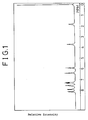
- Fig. 1 shows the measured results of a 1 H-NMR spectrum of 1,4-cyclohexanediylidenebis[(cyclopentadienyl-9-fluorenyl)zirconium dichloride obtained in Example 1.
- Fig. 2 shows the measured results of a 1 H-NMR spectrum of 3,7-dicyclopentadienyl-3,7-difluorenylbicyclo[3,3,0]octane obtained in Example 7.
- a transition metal compound represented by the formula (I) which can be used in the present invention is a novel metallocene compound having two transition metal atoms in one molecule.
- each of A 1 , A 2 , A 3 and A 4 is a cyclopentadienyl group,indenyl group, fluorenyl group or their derivative.
- Typical examples of these groups include a cyclopentadienyl group, methylcyclopentadienyl group, dimethylcyclopentadienyl group, trimethylcyclopentadienyl group, tetramethylcyclopentadienyl group, indenyl group, 3-methylindenyl group, 4,5,6,7-tetrahydroindenyl group, fluorenyl group, 1-methylfluorenyl group and 2,7-di-t-butylfluorenyl group.
- a 5 is a hydrocarbondiylidene group having 4 to 30 carbon atoms.
- Typical examples of this group include a 2,3-butanediylidene group, 2,4-pentanediylidene group, 1,3-cyclopentanediylidene group, 4-cyclopentene-1,3-diylidene group, 2,5-hexanediylidene group, 1,4-cyclohexanediylidene group, 6-methyl-2,4-heptanediylidene group, bicyclo[3,3,0]octane-3,7-diylidene group, bicyclo[3,3,1]nonane-3,7-diylidene group and 9,10-anthracenediylidene group.
- each of R 1 and R 2 is a halogen atom, hydrogen atom, alkyl group or silicon-containing alkyl group having 1 to 10 carbon atoms, an aryl group, alkylaryl group, arylalkyl group or halogenated aryl group having 6 to 20 carbon atoms, and preferable examples are a methyl group and chlorine atom.
- M is titanium, zirconium or hafnium, and preferably it is zirconium or hafnium.
- Typical examples of the transition metal compound having the formula (I) of the present invention include 2,5-hexanediylidenebis(dicyclopentadienylzirconium dichloride), 2,5-hexanediylidenebis[(cyclopentadienyl)(3-methylcyclopentadienyl)zirconium dichloride], 2,5-hexanediylidenebis[(cyclopentadienyl)(1-indenyl)zirconium dichloride], 2,5-hexanediylidenebis[(cyclopentadienyl)(9-fluorenyl)zirconium dichloride], 2,5-hexanediylidenebis[bis(methylcyclopentadienyl)zirconium dichloride], 2,5-hexanediylidenebis[(methylcyclopentadienyl)zirconium dichloride], 2,5-he
- the compound of the formula (I) can be synthesized, for example, in accordance with the following synthetic route. (wherein X is a halogen atom).
- the synthetic route is as follows.
- the halogen compound obtained by the above-mentioned formula (4) is reacted with an organometallic compound of a metal in the group IA or IIA of the periodic table such as R 1 Li, R 2 Li, R 1 MgCl, or R 2 MgCl (each of R 1 and R 2 is an alkyl group or a silicon-containing alkyl group having 1 to 10 carbon atoms, an aryl group, an alkylaryl group, an arylalkyl group or a halogenated aryl group having 6 to 20 carbon atoms), thereby obtaining a compound in which at least one of X is replaced with R 1 or R 2 .
- an organometallic compound of a metal in the group IA or IIA of the periodic table such as R 1 Li, R 2 Li, R 1 MgCl, or R 2 MgCl (each of R 1 and R 2 is an alkyl group or a silicon-containing alkyl group having 1 to 10 carbon atoms, an aryl
- the reaction of the formula (I) is carried out by reacting a diketone compound with cyclopentadiene or its derivative, indene or its derivative, fluorene or its derivative, or a mixture thereof in the presence of an amine in an alcohol.
- a diketone compound with cyclopentadiene or its derivative, indene or its derivative, fluorene or its derivative, or a mixture thereof in the presence of an amine in an alcohol.
- the synthetic method of a fulvene compound described in J. Org. Chem. 49, 1849 (1984) can be similarly employed.
- Examples of the solvent which can be used in this reaction include alcohols such as methanol, ethanol and isopropanol, and ethers such as diethyl ether, tetrahydrofuran and 1,2-dimethoxyethane.
- Examples of the amine which can be used as a catalyst in this reaction include triethylamine, pyridine and pyrrolidine.
- the reaction of the formula (2) is a reaction of the compound obtained by the formula (1) with an alkaline metal salt of cyclopentadiene or its derivative, indene or its derivative, fluorene or its derivative, or a mixture thereof.
- an alkaline metal salt of cyclopentadiene or its derivative, indene or its derivative, fluorene or its derivative, or a mixture thereof is shown, but another alkaline metal salt may be acceptable.
- the reaction of the formula (2) is known, and for example, it is described in Justus Liebig; Ann Chem., 511, 101 (1934); J. Organometal. Chem., 303, 213 (1986), J. Am. Chem. Soc., 112, 2030 (1990) and Japanese Patent Application Laid-open No. 41303/'90. In accordance with the described procedure, the reaction of the formula (2) can be carried out.
- Examples of the solvent which can be used in the reaction of the formula (2) include ethers such as diethyl ether, tetrahydrofuran and 1,2-dimethoxyethane.
- the compound obtained by the formula (2) can be reacted with an alkyl lithium in accordance with the formula (3) to form a tetralithium salt.
- the alkyl lithium may be replaced with an alkyl potassium or alkyl sodium to form a tetrapotassium salt or tetrasodium salt, and this product can be used in the subsequent reaction.
- an organic metallic compound of a metal in the groups IA or IIA of the periodic table such as metallic lithium, metallic potassium, metallic sodium or magnesium can substituted for the above-mentioned organic alkaline metals.
- Examples of the solvent which can be used in the reaction of the formula (3) include ethers such as diethyl ether, tetrahydrofuran and 1,2-dimethoxyethane, and saturated hydrocarbon compounds such as heptane, hexane and pentane.
- a molar ratio of the alkaline metal or organic alkaline metal compound to HA 1 (HA 2 )A 5 (HA 3 )A 4 H is in the range of from 3.0 to 10.0, preferably from 4.0 to 8.0, and reaction temperature is in the range of from -100°C to 150°C, preferably from -80°C to 80°C.
- Examples of the solvent which can be used in the reaction of the formula (4) include halogenated hydrocarbon compounds such as chloroform and methylene chloride, saturated hydrocarbon compounds such as heptane, hexane and pentane, aromatic hydrocarbon compounds such as benzene, toluene and xylene, and ethers such as diethyl ether, tetrahydrofuran and 1,2-dimethoxyethane.
- halogenated hydrocarbon compounds such as chloroform and methylene chloride
- saturated hydrocarbon compounds such as heptane, hexane and pentane
- aromatic hydrocarbon compounds such as benzene, toluene and xylene
- ethers such as diethyl ether, tetrahydrofuran and 1,2-dimethoxyethane.
- a molar ratio of [A 1 (A 2 )A 5 (A 3 )A 4 ]Li 4 to (M 1 X 4 + M 2 X 4 ) is in the range of from 0.4 to 3.0, preferably from 0.5 to 1.0, and reaction temperature is in the range of from -100°C to 100°C, preferably from -90°C to 50°C.
- the compound obtained by the formula (4) can be reacted with a metallic organic compound such as R 1 Li, R 2 Li, R 1 MgCl or R 2 MgCl, whereby the halogen can be replaced with R 1 or R 2 .
- a molar ratio of the alkyl metallic compound to [X 2 M 1 A 1 (A 2 )]A 5 [A 3 (A 4 )M 2 X 2 ] is in the range of from 1.0 to 10.0, preferably from 2.0 to 6.0, and reaction temperature is in the range of from -100°C to 100°C, preferably from -90°C to 80°C.
- the formed compound of the formula (I) can be purified by recrystallization or sublimation.
- the transition metal compound represented by the formula (I) can be used in combination with the undermentioned co-catalyst to polymerize an olefin, but in this case, when the compound represented by the formula (I) is used together with the known transition metal compound represented by the formula (II) or (III) as the transition metal compound, the polyolefin having a wide molecular weight distribution can be effectively prepared.
- Typical examples of such a known transition metal compound having a non-bridged ligand of the formula (II) include bis(cyclopentadienyl)zirconium dichloride, bis(pentamethylcyclopentadienyl)zirconium dichloride, (cyclopentadienyl)(pentamethylcyclopentadienyl)zirconium dichloride, and those compounds in which the zirconium atom of each compound is replaced with a hafnium atom.
- transition metal compound having the bridged ligand of the formula (III) examples include ethylenebis(1-indenyl)zirconium dichloride, ethylenebis(4,5,6,7-tetrahydro-1-indenyl)zirconium dichloride, dimethylsilylenebis(methylcyclopentadienyl)zirconium dichloride, dimethylsilylenebis(dimethylcyclopentadienyl)zirconium dichloride, isopropylidene(cyclopentadienyl)(9-fluorenyl)zirconium dichloride, isopropylidene(cyclopentadienyl)(2,7-di-t-butyl-9-fluorenyl)zirconium dichloride, diphenylmethylene(cyclopentadienyl)(9-fluorenyl)zirconium dichloride, those compounds in which the zirconium atom of each compound is replaced with a hafnium
- co-catalyst which can be used together with the transition metal compound at the time of the polymerization
- a co-catalyst comprising (a) an organic aluminum compound and (b) a compound capable of stabilizing transition metal cations, in addition to known aluminoxanes.
- the aluminoxanes are compounds represented by the formula (wherein R 3 is a hydrocarbon group having 1 to 10 carbon atoms, and n is an integer of 2 or more).
- R 3 is a hydrocarbon group having 1 to 10 carbon atoms, and n is an integer of 2 or more.
- a methylaluminoxane can be utilized in which R 3 is a methyl group and n is 5 or more, preferably 10 or more.
- the contamination of the above-mentioned aluminoxane with a small amount of an alkylaluminum compound is allowable.
- a use ratio by mole of the aluminoxane to the transition metal compound is in the range of from 1 to 100000, usually from 10 to 10000.
- organic aluminum compound examples include trimethylaluminum, triethylaluminum, triisobutylalumimum, diethylaluminum chloride, ethylaluminum dichloride and diisobutylaluminum hydride. Above all, triethylaluminum and triisobutylalumimum can be suitably used.
- the compound capable of stabilizing the transition metal cations which can be used as the component (b), there can be mentioned an ionic compound containing an anion capable of stabilizing the transition metal cation and a cation which forms an ion pair with said anion, and a Lewis acidic compound.
- anions capable of stabilizing the transition metal cations include organic boron compound anions, organic arsenic compound anions, organic phosphorus compound anions, organic aluminum compound anions and organic gallium compound anions, and among others, what can be suitably utilized are the anions which have a relatively high bulk and which neither bond to nor strongly coordinate to a produced transition metal cation compound so as to keep up the activation of the polymerization-activating species.
- suitable anions include tetraphenyl boron anions suggested by the above-mentioned Taube and Jordan, tetrakis(pentafluorophenyl)boron anions mentioned in Japanese Patent Application Disclosure (Kohyo) Nos.
- cation No particular restriction is put on the cation for forming an ionic compound in the state of the pair with the anion, so long as it does not inactivate the polymerization-activating species.
- the cation include known cations capable of forming the pair with the above-mentioned anion.
- cations include metallic cations, organometallic cations, carbonium cations, tripium cations and ammonium cations.
- Typical examples of the cations include silver cations, dicyclopentadienyl iron cations, triphenyl carbenium cations , triphenyl phosphonium cations, and tributylammonium cations.
- the Lewis acidic compound may be a known compound showing Lewis acidity, and the compound which does not inactivate the polymerization-activate species is acceptable without any particular limitation.
- the preferable example of the Lewis acidic compound is tris(pentafluorophenyl)boron mentioned in Japanese Patent Application Laid-open No. 179005/'91.
- the transition metal catalyst component and/or the promotor component in the polymerization of the present invention can be used without an additional treatment, but it may be supported on a carrier known as for a Ziegler catalyst, such as SiO 2 , Al 2 O 3 or MgCl 2 .
- Polymerization temperature is in the range of from -100 to 200°C
- polymerization pressure is usually in the range of from atmospheric pressure to 100 kg/cm 2 -G.
- the former is from -50 to 100°C
- the latter is from atmospheric pressure to 50 kg/cm 2 -G.
- olefins having 2 to 25 carbon atoms such as ethylene, propylene, 1-butene, 4-methyl-1-pentene, 1-hexene, 1-octene, 1-decene, 1-dodecene, 1-tetradecene, 1-hexadecene and 1-octadecene.
- the present invention can be utilized not only in the homopolymerization of the olefin but also in the preparation of a copolymer of propylene and ethylene as well as a copolymer of propylene and another olefin having 2 to about 25 carbon atoms such as 1-butene.
- the intrinsic viscosity (hereinafter abbreviated to [ ⁇ ]) of the powder measured in a tetralin solution at 135°C was 0.6 dl/g, and the molecular weight distribution (Mw/Mn) of the powder measured by GPC (gel permeation chromatography) was 2.7.
- Mw/Mn molecular weight distribution of the powder measured by GPC (gel permeation chromatography)
- GPC gel permeation chromatography
- the isothermal semicrystallization rate (t 1/2) of the obtained syndiotactic polypropylene was measured by melting the same at 230°C and then cooling it to 110°C in accordance with a differential scanning calorimetric measurement (DSC), and as a result, the rate was 1 minute and 22 seconds.
- Polymerization was carried out by the same procedure as in Example 2 except that 2.0 mg of 1,4-cyclohexanediylidenebis[(cyclopentadienyl)(9-fluorenyl)zirconium dichloride] synthesized in Example 1 and 1.0 mg of isopropylidene(cyclopentadienyl)(9-fluorenyl)zirconium dichloride synthesized by a method described in Japanese Patent Application Laid-open No. 41303/'90 were used as catalysts and that 0.4 g of methylaluminoxane was used as a promotor, to obtain 84.3 g of a syndiotactic polypropylene powder. With regard to this powder, [ ⁇ ] was 0.96 dl/g; Mw/Mn was 6.2; and rrrr was 0.91.
- Polymerization was carried out by the same procedure as in Example 4 except that 4.5 mg of 1,4-cyclohexanediylidenebis[(cyclopentadienyl)(9-fluorenyl)zirconium dichloride] synthesized in Example 1 and 5.5 mg of diphenylmethylene(cyclopentadienyl)(9-fluorenyl)zirconium dichloride synthesized by the process described in Japanese Patent Application Laid-open No.
- the resultant slurry was taken out, filtered and then dried to obtain 91.7 g of a polyethylene powder.
- Example 7 Polymerization was carried out by the same procedure as in Example 2 except that 2.0 mg of bicyclo[3,3,0]octane-3,7-diylidenebis[(cyclopentadienyl)(9-fluorenyl)zirconium dichloride] synthesized in Example 7 were used as a catalyst and 0.3 g of methylaluminoxane were used as a promotor, to obtain 72.4 g of a syndiotactic polypropylene powder. With regard to this powder, [ ⁇ ] was 0.91 dl/g; Mw/Mn was 2.4; rrrr was 0.89, and t 1/2 was 1 minute and 48 seconds.
Landscapes
- Chemical & Material Sciences (AREA)
- Organic Chemistry (AREA)
- Health & Medical Sciences (AREA)
- Chemical Kinetics & Catalysis (AREA)
- Medicinal Chemistry (AREA)
- Polymers & Plastics (AREA)
- Transition And Organic Metals Composition Catalysts For Addition Polymerization (AREA)
- Addition Polymer Or Copolymer, Post-Treatments, Or Chemical Modifications (AREA)
Abstract
Claims (7)
- Composé de métal de transition représenté par la formule

- Procédé pour polymériser une oléfine en présence d'un catalyseur comprenant le composé de métal de transition décrit dans la revendication 1 et un promoteur.
- Procédé pour polymériser une oléfine en présence d'un catalyseur comprenant un promoteur et au moins deux types de composés de métal de transition, comprenant une combinaison du composé de métal de transition décrit dans la revendication 1 et d'un autre composé de métal de transition représenté par la formule


- Procédé selon la revendication 2, où on utilise un aluminoxane comme cocatalyseur.
- Procédé selon la revendication 3, où on utilise un aluminoxane comme cocatalyseur.
- Procédé selon la revendication 2, où on utilise comme cocatalyseurs (a) un composé organique de l'aluminium et (b) un composé capable de stabiliser les cations des métaux de transition.
- Procédé selon la revendication 3, où on utilise comme cocatalyseurs (a) un composé organique de l'aluminium et (b) un composé capable de stabiliser les cations des métaux de transition.
Applications Claiming Priority (3)
| Application Number | Priority Date | Filing Date | Title |
|---|---|---|---|
| JP44682/91 | 1991-03-11 | ||
| JP03044682A JP3117231B2 (ja) | 1991-03-11 | 1991-03-11 | 幅広い分子量分布を有するシンジオタクチックポリ−α−オレフィンの製造方法 |
| PCT/JP1992/000080 WO1992015596A1 (fr) | 1991-03-11 | 1992-01-29 | Nouvelle composition metallique de transition et nouveau procede de polymerisation des olefines a l'aide de cette composition |
Publications (3)
| Publication Number | Publication Date |
|---|---|
| EP0528041A1 EP0528041A1 (fr) | 1993-02-24 |
| EP0528041A4 EP0528041A4 (en) | 1993-09-29 |
| EP0528041B1 true EP0528041B1 (fr) | 1997-11-19 |
Family
ID=12698205
Family Applications (1)
| Application Number | Title | Priority Date | Filing Date |
|---|---|---|---|
| EP92904236A Expired - Lifetime EP0528041B1 (fr) | 1991-03-11 | 1992-01-29 | Nouvelle composition metallique de transition et nouveau procede de polymerisation des olefines a l'aide de cette composition |
Country Status (6)
| Country | Link |
|---|---|
| US (2) | US5359102A (fr) |
| EP (1) | EP0528041B1 (fr) |
| JP (1) | JP3117231B2 (fr) |
| KR (1) | KR950009197B1 (fr) |
| DE (1) | DE69223190T2 (fr) |
| WO (1) | WO1992015596A1 (fr) |
Cited By (1)
| Publication number | Priority date | Publication date | Assignee | Title |
|---|---|---|---|---|
| US6818585B2 (en) | 1998-12-30 | 2004-11-16 | Univation Technologies, Llc | Catalyst compounds, catalyst systems thereof and their use in a polymerization process |
Families Citing this family (33)
| Publication number | Priority date | Publication date | Assignee | Title |
|---|---|---|---|---|
| US5372980A (en) * | 1993-06-03 | 1994-12-13 | Polysar | Bimetallic metallocene alumoxane catalyst system and its use in the preparation of ethylene-alpha olefin and ethylene-alpha olefin-non-conjugated diolefin elastomers |
| DE4337233A1 (de) * | 1993-10-30 | 1995-05-04 | Basf Ag | Verfahren zur Herstellung von Polymerisaten von C¶2¶- bis C¶1¶¶0¶-Alk-1-enen unter Verwendung von racemischen Metallocenkomplexen als Katalysatoren |
| ATE198893T1 (de) * | 1993-11-24 | 2001-02-15 | Targor Gmbh | Metallocene, verfahren zu ihrer herstellung und ihrer verwendung als katalysatoren |
| FI945958A7 (fi) * | 1993-12-21 | 1995-06-22 | Targor Gmbh | Menetelmä polyolefiinien valmistamiseksi |
| FI945959L (fi) * | 1993-12-21 | 1995-06-22 | Hoechst Ag | Metalloseenejä ja niiden käyttö katalyytteinä |
| EP0664304B1 (fr) * | 1993-12-27 | 1999-08-04 | Mitsui Chemicals, Inc. | Catalyseur et procédé pour la polymérisation d'oléfines |
| DE4344689A1 (de) * | 1993-12-27 | 1995-06-29 | Hoechst Ag | Metallocenverbindung |
| JP3850048B2 (ja) * | 1994-12-08 | 2006-11-29 | 東ソー株式会社 | 有機遷移金属化合物およびそれを用いたポリオレフィンの製造方法 |
| DE4446922A1 (de) * | 1994-12-28 | 1996-07-04 | Hoechst Ag | Metallocenverbindung und ihre Verwendung als Katalysatorkomponente |
| EP0739897A1 (fr) * | 1995-04-27 | 1996-10-30 | Hoechst Aktiengesellschaft | Composé métallocène à plusieurs noyaux, procédé pour sa préparation et son utilisation comme catalyseur |
| US6143682A (en) * | 1995-06-07 | 2000-11-07 | Exxon Chemical Patents Inc. | Bimetallocyclic transition metal catalyst systems |
| US6225426B1 (en) * | 1996-04-10 | 2001-05-01 | Uniroyal Chemical Company, Inc. | Process for producing polyolefin elastomer employing a metallocene catalyst |
| US6177377B1 (en) * | 1996-12-18 | 2001-01-23 | Amherst Polymer Technology, Inc. | Polymer blends and process for preparation |
| KR19980072719A (ko) * | 1997-03-07 | 1998-11-05 | 박홍기 | 스티렌 중합용 탄소 및/또는 규소 다리화 두금속 메탈로센 촉매, 및 이를 이용한 스티렌 중합방법 |
| US6297392B1 (en) * | 1997-06-23 | 2001-10-02 | Industrial Technology Research Institute | Group IV elements-bridged metallocene catalyst for preparing bimodal olefin polymers |
| US5986024A (en) * | 1997-10-17 | 1999-11-16 | Sri International | Preparation of multimodal polymer compositions using multinuclear metallocene catalysts |
| US6096677A (en) * | 1997-10-17 | 2000-08-01 | Sri International | Supported metallocene catalysts |
| US6069213A (en) * | 1997-12-16 | 2000-05-30 | Union Carbide Chemicals & Plastics Technology Corporation | Mixed catalyst system |
| WO1999045042A1 (fr) | 1998-03-04 | 1999-09-10 | Exxon Chemical Patents Inc. | Anions non coordonnants pour polymerisation d'olefine |
| US6342568B1 (en) | 1998-05-06 | 2002-01-29 | Mitsui Chemicals, Inc. | Metallocene compound, and process for preparing polyolefin by using it |
| US6225427B1 (en) | 1998-10-15 | 2001-05-01 | Uniroyal Chemical Company, Inc. | Olefin polymerization process employing metallocene catalyst provided by cocatalyst activation of a metallocene procatalyst |
| US6048992A (en) * | 1999-03-25 | 2000-04-11 | Sri International | Metallocene compounds from amino alcohol-derived ligands |
| US6339134B1 (en) | 1999-05-06 | 2002-01-15 | Univation Technologies, Llc | Polymerization process for producing easier processing polymers |
| US6858767B1 (en) | 2000-08-11 | 2005-02-22 | Uniroyal Chemical Company, Inc. | Process for producing liquid polyalphaolefin polymer, metallocene catalyst therefor, the resulting polymer and lubricant containing same |
| KR100455713B1 (ko) * | 2001-01-29 | 2004-11-06 | 호남석유화학 주식회사 | 올레핀 중합용 다중핵 메탈로센 촉매 및 이를 이용한중합방법 |
| SG96700A1 (en) * | 2001-09-27 | 2003-06-16 | Sumitomo Chemical Co | Catalyst component for addition polymerization, process for producing catalyst for addition polymerization and process for producing addition polymer |
| US7223822B2 (en) | 2002-10-15 | 2007-05-29 | Exxonmobil Chemical Patents Inc. | Multiple catalyst and reactor system for olefin polymerization and polymers produced therefrom |
| US7550528B2 (en) | 2002-10-15 | 2009-06-23 | Exxonmobil Chemical Patents Inc. | Functionalized olefin polymers |
| BR0315341B1 (pt) | 2002-10-15 | 2014-02-18 | Adesivos compreendendo poliolefina. | |
| US7700707B2 (en) | 2002-10-15 | 2010-04-20 | Exxonmobil Chemical Patents Inc. | Polyolefin adhesive compositions and articles made therefrom |
| US7541402B2 (en) | 2002-10-15 | 2009-06-02 | Exxonmobil Chemical Patents Inc. | Blend functionalized polyolefin adhesive |
| US7601255B2 (en) | 2006-09-06 | 2009-10-13 | Chemtura Corporation | Process for removal of residual catalyst components |
| US8067652B2 (en) | 2009-08-13 | 2011-11-29 | Chemtura Corporation | Processes for controlling the viscosity of polyalphaolefins |
Family Cites Families (18)
| Publication number | Priority date | Publication date | Assignee | Title |
|---|---|---|---|---|
| US2818416A (en) * | 1952-12-10 | 1957-12-31 | Ethyl Corp | Cyclomatic compounds |
| GB785760A (en) * | 1953-09-23 | 1957-11-06 | Union Carbide Corp | Process for the production of cyclopentadiene compounds of transition elements |
| BE551283A (fr) * | 1955-09-27 | |||
| US2952670A (en) * | 1957-08-26 | 1960-09-13 | Shell Oil Co | Polymerization and catalyst therefor |
| US3046288A (en) * | 1957-10-29 | 1962-07-24 | American Cyanamid Co | Cyclopentadienyl-metal halides and method of making |
| US2922803A (en) * | 1958-08-27 | 1960-01-26 | Nat Lead Co | Di-cyclopentadienyl di-titanium hexahalide and process of preparation |
| DE3127133A1 (de) * | 1981-07-09 | 1983-01-27 | Hoechst Ag, 6000 Frankfurt | Verfahren zur herstellung von polyolefinen und deren copolymerisaten |
| US4530914A (en) * | 1983-06-06 | 1985-07-23 | Exxon Research & Engineering Co. | Process and catalyst for producing polyethylene having a broad molecular weight distribution |
| DE3443087A1 (de) * | 1984-11-27 | 1986-05-28 | Hoechst Ag, 6230 Frankfurt | Verfahren zur herstellung von polyolefinen |
| US4728706A (en) * | 1986-08-29 | 1988-03-01 | E. I. Du Pont De Nemours And Company | Titanium, zirconium- and hafnium containing initiators in the polymerization of acrylic monomers to "living" polymers |
| IL85097A (en) * | 1987-01-30 | 1992-02-16 | Exxon Chemical Patents Inc | Catalysts based on derivatives of a bis(cyclopentadienyl)group ivb metal compound,their preparation and their use in polymerization processes |
| PL276385A1 (en) * | 1987-01-30 | 1989-07-24 | Exxon Chemical Patents Inc | Method for polymerization of olefines,diolefins and acetylene unsaturated compounds |
| JP2641459B2 (ja) * | 1987-09-08 | 1997-08-13 | 三井石油化学工業株式会社 | α−オレフイン系重合体の製法 |
| US4975403A (en) * | 1987-09-11 | 1990-12-04 | Fina Technology, Inc. | Catalyst systems for producing polyolefins having a broad molecular weight distribution |
| US4892851A (en) * | 1988-07-15 | 1990-01-09 | Fina Technology, Inc. | Process and catalyst for producing syndiotactic polyolefins |
| DE3907965A1 (de) * | 1989-03-11 | 1990-09-13 | Hoechst Ag | Verfahren zur herstellung eines syndiotaktischen polyolefins |
| DE3907964A1 (de) * | 1989-03-11 | 1990-09-13 | Hoechst Ag | Verfahren zur herstellung eines syndiotaktischen polyolefins |
| CA2027145C (fr) * | 1989-10-10 | 2002-12-10 | Michael J. Elder | Catalyseurs a base de metallocene, d'acides de lewis et d'alkylaluminium |
-
1991
- 1991-03-11 JP JP03044682A patent/JP3117231B2/ja not_active Expired - Fee Related
-
1992
- 1992-01-29 EP EP92904236A patent/EP0528041B1/fr not_active Expired - Lifetime
- 1992-01-29 KR KR1019920702682A patent/KR950009197B1/ko not_active Expired - Fee Related
- 1992-01-29 US US07/941,056 patent/US5359102A/en not_active Expired - Fee Related
- 1992-01-29 WO PCT/JP1992/000080 patent/WO1992015596A1/fr not_active Ceased
- 1992-01-29 DE DE69223190T patent/DE69223190T2/de not_active Expired - Fee Related
-
1994
- 1994-07-20 US US08/277,570 patent/US5439994A/en not_active Expired - Fee Related
Cited By (1)
| Publication number | Priority date | Publication date | Assignee | Title |
|---|---|---|---|---|
| US6818585B2 (en) | 1998-12-30 | 2004-11-16 | Univation Technologies, Llc | Catalyst compounds, catalyst systems thereof and their use in a polymerization process |
Also Published As
| Publication number | Publication date |
|---|---|
| EP0528041A1 (fr) | 1993-02-24 |
| DE69223190D1 (de) | 1998-01-02 |
| JPH04283206A (ja) | 1992-10-08 |
| JP3117231B2 (ja) | 2000-12-11 |
| EP0528041A4 (en) | 1993-09-29 |
| DE69223190T2 (de) | 1998-04-09 |
| KR950009197B1 (ko) | 1995-08-16 |
| WO1992015596A1 (fr) | 1992-09-17 |
| US5439994A (en) | 1995-08-08 |
| KR937000516A (ko) | 1993-03-15 |
| US5359102A (en) | 1994-10-25 |
Similar Documents
| Publication | Publication Date | Title |
|---|---|---|
| US5359102A (en) | Transition metal compound having two transition metal atoms in one molecule and method for polymerizing olefin by using the compound | |
| EP0611772B1 (fr) | Composant de catalyseur à utiliser dans la polymérisation d'alpha-oléfines et procédé de production de polymères d'alpha-oléfines utilisant le-même | |
| US5470927A (en) | Ionic metallocene catalyst compositions | |
| EP0498675B1 (fr) | Production de polymères d'alpha-oléfines | |
| JP3459272B2 (ja) | オレフィンの重合および共重合方法 | |
| JPH08512063A (ja) | モノシクロペンタジエニル遷移金属触媒系による非晶質ポリ−α−オレフィンの製造方法 | |
| JP2000095791A (ja) | 遷移金属化合物、オレフィン重合用触媒成分およびα―オレフィン重合体の製造方法 | |
| JP3117257B2 (ja) | ポリオレフィン製造用固体触媒およびポリオレフィンの製造方法 | |
| JP3102933B2 (ja) | ポリオレフィン製造用固体触媒およびポリオレフィンの製造方法 | |
| JP3102929B2 (ja) | ポリオレフィン製造用固体触媒およびポリオレフィンの製造方法 | |
| JPH05155927A (ja) | オレフィンの重合方法 | |
| JP3289834B2 (ja) | 新規遷移金属化合物およびそれを用いたα−オレフィンの重合方法 | |
| JPH06239917A (ja) | α‐オレフィン重合用触媒成分およびそれを用いたα‐オレフィン重合体の製造法 | |
| JP3176092B2 (ja) | 新規遷移金属化合物及びそれを用いたポリオレフィンの製造方法 | |
| JP3201802B2 (ja) | オレフィンの重合方法 | |
| JP3392205B2 (ja) | 新規遷移金属化合物およびこれを用いたオレフィンの重合方法 | |
| JP3025350B2 (ja) | シンジオタクチックポリ−α−オレフィン製造用触媒およびシンジオタクチックポリ−α−オレフィンの製造方法 | |
| JP3144851B2 (ja) | オレフィンの重合方法 | |
| JP3092974B2 (ja) | シンジオタクチックポリ−α−オレフィン製造用触媒およびシンジオタクチックポリ−α−オレフィンの製造方法 | |
| JPH04366107A (ja) | シンジオタクチックポリプロピレンの製造方法 | |
| JP3295076B1 (ja) | α−オレフィン重合用触媒成分 | |
| JPH04366106A (ja) | ポリ−α−オレフィンの製造方法 | |
| JP2995098B2 (ja) | ポリ−α−オレフィン製造用遷移金属触媒成分およびそれを用いたα−オレフィンの重合方法 | |
| JPH05170822A (ja) | オレフィン重合用固体触媒およびオレフィンの重合方法 | |
| JPH0551411A (ja) | オレフインの重合方法 |
Legal Events
| Date | Code | Title | Description |
|---|---|---|---|
| PUAI | Public reference made under article 153(3) epc to a published international application that has entered the european phase |
Free format text: ORIGINAL CODE: 0009012 |
|
| 17P | Request for examination filed |
Effective date: 19921223 |
|
| AK | Designated contracting states |
Kind code of ref document: A1 Designated state(s): BE DE FR GB IT NL |
|
| A4 | Supplementary search report drawn up and despatched |
Effective date: 19930806 |
|
| AK | Designated contracting states |
Kind code of ref document: A4 Designated state(s): BE DE FR GB IT NL |
|
| GRAG | Despatch of communication of intention to grant |
Free format text: ORIGINAL CODE: EPIDOS AGRA |
|
| 17Q | First examination report despatched |
Effective date: 19970217 |
|
| GRAH | Despatch of communication of intention to grant a patent |
Free format text: ORIGINAL CODE: EPIDOS IGRA |
|
| GRAH | Despatch of communication of intention to grant a patent |
Free format text: ORIGINAL CODE: EPIDOS IGRA |
|
| GRAA | (expected) grant |
Free format text: ORIGINAL CODE: 0009210 |
|
| AK | Designated contracting states |
Kind code of ref document: B1 Designated state(s): BE DE FR GB IT NL |
|
| REF | Corresponds to: |
Ref document number: 69223190 Country of ref document: DE Date of ref document: 19980102 |
|
| ITF | It: translation for a ep patent filed | ||
| ET | Fr: translation filed | ||
| REG | Reference to a national code |
Ref country code: GB Ref legal event code: 732E |
|
| REG | Reference to a national code |
Ref country code: FR Ref legal event code: TP |
|
| PLBE | No opposition filed within time limit |
Free format text: ORIGINAL CODE: 0009261 |
|
| STAA | Information on the status of an ep patent application or granted ep patent |
Free format text: STATUS: NO OPPOSITION FILED WITHIN TIME LIMIT |
|
| 26N | No opposition filed | ||
| PGFP | Annual fee paid to national office [announced via postgrant information from national office to epo] |
Ref country code: DE Payment date: 20010122 Year of fee payment: 10 |
|
| PGFP | Annual fee paid to national office [announced via postgrant information from national office to epo] |
Ref country code: GB Payment date: 20010124 Year of fee payment: 10 |
|
| PGFP | Annual fee paid to national office [announced via postgrant information from national office to epo] |
Ref country code: FR Payment date: 20010125 Year of fee payment: 10 |
|
| PGFP | Annual fee paid to national office [announced via postgrant information from national office to epo] |
Ref country code: NL Payment date: 20010131 Year of fee payment: 10 |
|
| PGFP | Annual fee paid to national office [announced via postgrant information from national office to epo] |
Ref country code: BE Payment date: 20010313 Year of fee payment: 10 |
|
| REG | Reference to a national code |
Ref country code: GB Ref legal event code: IF02 |
|
| PG25 | Lapsed in a contracting state [announced via postgrant information from national office to epo] |
Ref country code: GB Free format text: LAPSE BECAUSE OF NON-PAYMENT OF DUE FEES Effective date: 20020129 |
|
| PG25 | Lapsed in a contracting state [announced via postgrant information from national office to epo] |
Ref country code: BE Free format text: LAPSE BECAUSE OF NON-PAYMENT OF DUE FEES Effective date: 20020131 |
|
| BERE | Be: lapsed |
Owner name: MITSUI CHIMICALS INC. Effective date: 20020131 |
|
| PG25 | Lapsed in a contracting state [announced via postgrant information from national office to epo] |
Ref country code: NL Free format text: LAPSE BECAUSE OF NON-PAYMENT OF DUE FEES Effective date: 20020801 Ref country code: DE Free format text: LAPSE BECAUSE OF NON-PAYMENT OF DUE FEES Effective date: 20020801 |
|
| GBPC | Gb: european patent ceased through non-payment of renewal fee |
Effective date: 20020129 |
|
| PG25 | Lapsed in a contracting state [announced via postgrant information from national office to epo] |
Ref country code: FR Free format text: LAPSE BECAUSE OF NON-PAYMENT OF DUE FEES Effective date: 20020930 |
|
| NLV4 | Nl: lapsed or anulled due to non-payment of the annual fee |
Effective date: 20020801 |
|
| REG | Reference to a national code |
Ref country code: FR Ref legal event code: ST |
|
| PG25 | Lapsed in a contracting state [announced via postgrant information from national office to epo] |
Ref country code: IT Free format text: LAPSE BECAUSE OF NON-PAYMENT OF DUE FEES;WARNING: LAPSES OF ITALIAN PATENTS WITH EFFECTIVE DATE BEFORE 2007 MAY HAVE OCCURRED AT ANY TIME BEFORE 2007. THE CORRECT EFFECTIVE DATE MAY BE DIFFERENT FROM THE ONE RECORDED. Effective date: 20050129 |