EP0537007B1 - Utilisation d'inhibiteurs de farnésyl-protéine transferase pour la fabrication d'un médicament pour bloquer les transformations néoplastiques de cellules provoquées par des oncogènes ras - Google Patents
Utilisation d'inhibiteurs de farnésyl-protéine transferase pour la fabrication d'un médicament pour bloquer les transformations néoplastiques de cellules provoquées par des oncogènes ras Download PDFInfo
- Publication number
- EP0537007B1 EP0537007B1 EP92309184A EP92309184A EP0537007B1 EP 0537007 B1 EP0537007 B1 EP 0537007B1 EP 92309184 A EP92309184 A EP 92309184A EP 92309184 A EP92309184 A EP 92309184A EP 0537007 B1 EP0537007 B1 EP 0537007B1
- Authority
- EP
- European Patent Office
- Prior art keywords
- lower alkyl
- halogen
- alkyl
- alkenyl
- different
- Prior art date
- Legal status (The legal status is an assumption and is not a legal conclusion. Google has not performed a legal analysis and makes no representation as to the accuracy of the status listed.)
- Revoked
Links
- 0 C1*CC=CC1 Chemical compound C1*CC=CC1 0.000 description 8
- XDTMQSROBMDMFD-UHFFFAOYSA-N C1CCCCC1 Chemical compound C1CCCCC1 XDTMQSROBMDMFD-UHFFFAOYSA-N 0.000 description 2
- QRDSDKAGXMWBID-UHFFFAOYSA-N C1N2C1CCC2 Chemical compound C1N2C1CCC2 QRDSDKAGXMWBID-UHFFFAOYSA-N 0.000 description 1
Classifications
-
- A—HUMAN NECESSITIES
- A61—MEDICAL OR VETERINARY SCIENCE; HYGIENE
- A61K—PREPARATIONS FOR MEDICAL, DENTAL OR TOILETRY PURPOSES
- A61K31/00—Medicinal preparations containing organic active ingredients
- A61K31/66—Phosphorus compounds
- A61K31/662—Phosphorus acids or esters thereof having P—C bonds, e.g. foscarnet, trichlorfon
- A61K31/663—Compounds having two or more phosphorus acid groups or esters thereof, e.g. clodronic acid, pamidronic acid
-
- A—HUMAN NECESSITIES
- A61—MEDICAL OR VETERINARY SCIENCE; HYGIENE
- A61K—PREPARATIONS FOR MEDICAL, DENTAL OR TOILETRY PURPOSES
- A61K31/00—Medicinal preparations containing organic active ingredients
- A61K31/66—Phosphorus compounds
-
- A—HUMAN NECESSITIES
- A61—MEDICAL OR VETERINARY SCIENCE; HYGIENE
- A61P—SPECIFIC THERAPEUTIC ACTIVITY OF CHEMICAL COMPOUNDS OR MEDICINAL PREPARATIONS
- A61P35/00—Antineoplastic agents
Definitions
- ras genes comprise a family of guanine nucleotide binding proteins that are involved in the control of eukaryotic cell proliferation. Specific point mutations result in ras oncoproteins which have the ability to neoplasticly transform mammalian cells, and activated ras genes have been observed in at least 10% of all human tumors. Their incidence in certain malignancies, such as in colorectal and pancreatic cancers, is far greater.
- FPP farnesyl pyrophosphate
- FT protein-farnesyl transferase
- European patent application No. 91107390.6 published as EP-A-456,180 on 13th November 1991, discloses protein-farnesyl transferase (FT) assays for identifying compounds that block the farnesylation of ras oncogene products.
- the Barbacid et al invention is based, in part, on the discovery and identification of the FT enzyme which catalyzes the transfer of the farnesyl group from the donor, farnesyl pyrophosphate (FPP), to the ras p21 Cys186 residue.
- FPP farnesyl pyrophosphate
- Farnesylation of ras proteins is required for their attachment to the inner cell membrane and biological activity.
- Farnesylation of ras oncogene products is required for ras mediated transforming activity.
- the assays of the Barbacid et al invention are designed to target a step subsequent to the synthesis of FPP (in the cholesterol chain), they allow for the identification of compounds that interfere with farnesylation of the ras oncogene products and inhibit their transforming activity, yet do not interfere with the synthesis of FPP, a precursor in the synthesis of cholesterol, ubiquinones, dolichols and Haem A. Therefore, FT inhibitory compounds that do not disrupt important cellular pathways which require FPP may be identified using the Barbacid et al assay.
- Squalene synthetase is a microsomal enzyme which catalyzes the reductive dimerization of two molecules of farnesyl pyrophosphate (FPP) in the presence of nicotinamide adenine dinucleotide phosphate (reduced form) (NADPH) to form squalene (Poulter, C. D.; Rilling, H. C., in "Biosynthesis of Isoprenoid Compounds," Vol. I, Chapter 8, pp. 413-441, J. Wiley and Sons, 1981, and references therein). This enzyme is the first committed step of the de novo cholesterol biosynthetic pathway.
- FPP farnesyl pyrophosphate
- NADPH nicotinamide adenine dinucleotide phosphate
- Squalene synthetase inhibitors which block the action of squalene synthetase (after the formation of farnesyl pyrophosphate) are disclosed in U.S. Patent Nos. 4,871,721 and 5,025,003, European patent application No. 89115400.7 (EP-A-356,866), European patent application No. 90113700.0 (EP-A-409,181), and European patent application No. 92108074.3 (EP-A-513761).
- post-translational modification of CAAX box containing proteins may be inhibited by administering a phosphorus containing protein-prenyl transferase inhibitor which inhibits the transfer of the prenyl group [such as farnesyl (in the case of ras oncogene products), geranyl or geranylgeranyl] to the cysteine of the CAAX box by the protein-prenyl transferase enzyme.
- a phosphorus containing protein-prenyl transferase inhibitor which inhibits the transfer of the prenyl group [such as farnesyl (in the case of ras oncogene products), geranyl or geranylgeranyl] to the cysteine of the CAAX box by the protein-prenyl transferase enzyme.
- the protein-prenyl transferase inhibitor will block the protein-prenyl transferase enzyme from catalyzing the transfer of the prenyl group (for example, farnesyl, geranyl or geranylgeranyl) from the prenyl pyrophosphate to the cys residue of the CAAX box, such as the ras p21 cys, or to the CAAX box cysteine of other CAAX box containing proteins.
- the prenyl group for example, farnesyl, geranyl or geranylgeranyl
- CAAX box containing proteins which have been demonstrated or are believed to undergo prenylation include, but are not limited to, nuclear lamins, ⁇ or ⁇ subunits of heterotrimeric G-proteins, ⁇ -subunits of retinal transducin, G25K and K-rev p21, and protein families including rho, rap, rac, ral, and rab.
- the present invention resides in a method for blocking or preventing the prenylation of CAAX box containing proteins such as ras oncogene products, and thereby inhibit disease promoting effects of the CAAX box containing protein or more specifically prevent and/or treat ras -related tumors, by administering to a patient in need of treatment a therapeutic amount of a protein-prenyl transferase inhibitor.
- the protein-prenyl transferase inhibitors unlike HMG CoA reductase inhibitors, will interfere with prenylation of the ras oncogene products and inhibit their transforming activity, yet may or may not interfere with the synthesis of FPP, a precursor in the synthesis of ubiquinones, dolichols and Haem A.
- Protein-prenyl transferase inhibitors suitable for use herein include compounds disclosed in European patent application No. 92108074.3. These protein-prenyl transferase inhibitors have the following structure wherein R1, R2, R3 and R4 are the same or different and are H, alkyl, a metal ion or a prodrug ester; R5 is H, halogen or lower alkyl; Z a lipophilic group containing at least 6 carbons and can be substituted alkenyl wherein the alkenyl group contains from 7 to 25 carbon atoms in the chain and from 1 to 4 double bonds; substituted alkynyl containing 1 to 4 triple bonds; mixed alkenyl-alkynyl containing 1 to 3 double bonds and 1 to 3 triple bonds and wherein alkenyl and/or alkynyl may be substituted or unsubstituted; or a substituted phenylalkyl group of the structure wherein (CH2) p contains from 1 to 15 carbons, preferably 2 to
- substituted alkenyl and “substituted alkynyl” as employed herein with respect to Z refers to alkenyl or alkynyl substituted with 1 to 4 groups which may be alkyl, alkenyl, alkynyl, halogen, hydroxy, alkoxy, alkenyloxy, alkynyloxy, aryl and/or cycloalkyl.
- the (CH2) p group may contain one or more alkyl, alkoxy, alkenyl, alkynyl, hydroxy and/or halogen substituents.
- Preferred embodiments of formula I protein-prenyl transferase inhibitors have the structure wherein R1, R2, R3, R4 and R5 are as defined above and Za is substituted alkenyl which includes from 1 to 4 double bonds and is substituted with from 1 to 4 alkyl groups.
- protein-prenyl transferase inhibitors suitable for use herein and disclosed in application No. 92108074.3 have the structure wherein Zb is wherein R1, R2, R3, R4, R5, R6, R7 and (CH2) p are as defined hereinbefore, except that R6 and R7 may be any one of the groups included under the definition R6 and R7, set out hereinbefore, without limitation; R 8' , R9 and R10 are the same or different and are as defined hereinbefore with respect to R6 and R7, without limitation.
- compounds which are protein-prenyl transferase inhibitors may be employed which have the structure wherein R1, R2, R3, R4 and R5 are as defined herein-before and Zc is alkyl wherein the alkyl group contains from 9 to 14 carbons in the normal chain and is substituted with 1, 2, 3 or 4 alkyl groups.
- R7 is H, halogen, lower alkyl or alkylthio;
- R8 is H, halogen, trimethylsilyl or lower alkyl;
- R9 is H, or lower alkyl;
- R5 is R16-C ⁇ CH2-(wherein R16 is lower alkyl or H), or CH3(CH2) p - where p is 2 to 7;
- R10 and R11 are independently hydrogen, lower alkyl such as methyl or ethyl, halogen, lower alkenyl or haloalkyl or R10 and R11 can be taken together to form (CH2) s , where s is 2 to 7;
- R12 is hydrogen, lower alkyl, halogen or lower alkenyl;
- R13 and R14 are independently lower alkyl such as methyl or ethyl; with the provisos that if all of Q1, Q2 and Q3 are bonds, then R10 and R11 cannot both be H, and R5 cannot be CH3(CH
- Preferred are those compounds of formula VI which have the following formula: wherein R5 is Q3 is a bond; Q2 is -CH2-C ⁇ C-CH2-; or -CH2-CH CH-CH2-; Q1 is n is O or 1; m is 1 or 2; X is O and Y1 and Y2 are each H or F, in the form of the salts or acid.
- protein-prenyl transferase inhibitors which may be employed herein include compounds disclosed in U.S. Patent No. 5,025,003 to Biller and have the following structure wherein R2 is a metal ion, lower alkyl or H; R3 is a metal ion or lower alkyl; R is R1-(CH2) n -, R1-(CH2) m O- or R1-(CH2) m OCH2-, wherein n is 1 to 4, m is 0 to 3; and R1 is R5-Q1-Q2-Q3- wherein Q1, Q2 and Q3 are independently: -CH2-C ⁇ C-CH2-, or a bond, with the stipulation that if Q1 is a bond, then Q2 and Q3 must be bonds, and if Q2 is a bond, then Q3 is a bond; R6 is H, lower alkyl, fluoro or fluoroalkyl (e.g., CH2F, CF3); R7 is
- Preferred are those compounds of formula IX which have the following structure wherein Q is Z is -CH2CH2- or -CH CH-; R2 and R3 are each H or each F; R, R1 and R 1a are OH or metal ions.
- a pharmaceutical composition will be employed containing at least one protein-prenyl transferase inhibitor in association with a pharmaceutical vehicle or diluent.
- the pharmaceutical composition can be formulated employing conventional solid or liquid vehicles or diluents and pharmaceutical additives of a type appropriate to the mode of desired administration.
- the compounds can be administered to mammalian species including humans, monkeys, dogs, etc. by an oral route, for example, in the form of tablets, capsules, granules or-powders, or they can be administered by a parenteral route in the form of injectable preparations.
- the dose for adults is preferably between 200 and 2,000 mg per day, which can be administered in a single dose or in the form of individual doses from 1-4 times per day.
- a typical capsule for oral administration contains protein-prenyl transferase inhibitor (250 mg), lactose (75 mg) and magnesium stearate (15 mg). The mixture is passed through a 60 mesh sieve and packed into a No. 1 gelatin capsule.
Landscapes
- Health & Medical Sciences (AREA)
- Veterinary Medicine (AREA)
- Chemical & Material Sciences (AREA)
- Medicinal Chemistry (AREA)
- Pharmacology & Pharmacy (AREA)
- Life Sciences & Earth Sciences (AREA)
- Animal Behavior & Ethology (AREA)
- General Health & Medical Sciences (AREA)
- Public Health (AREA)
- Epidemiology (AREA)
- Chemical Kinetics & Catalysis (AREA)
- General Chemical & Material Sciences (AREA)
- Nuclear Medicine, Radiotherapy & Molecular Imaging (AREA)
- Organic Chemistry (AREA)
- Pharmaceuticals Containing Other Organic And Inorganic Compounds (AREA)
- Medicines That Contain Protein Lipid Enzymes And Other Medicines (AREA)
- Enzymes And Modification Thereof (AREA)
- Acyclic And Carbocyclic Compounds In Medicinal Compositions (AREA)
Claims (8)
- Utilisation d'un inhibiteur de protéine-prényl transférase contenant du phosphore pour la fabrication d'un médicament permettant de traiter et/ou de prévenir les tumeurs liées aux ras chez une espèce mammifère.
- Utilisation d'un inhibiteur de protéine-prényl transférase contenant du phosphore pour la fabrication d'un médicament permettant de bloquer la farnésylation de produits oncogènes ras chez une espèce mammifère.
- Utilisation d'un inhibiteur de protéine-prényl transférase contenant du phosphore pour la fabrication d'un médicament permettant de bloquer la transformation néoplastique induite par des oncogènes ras chez une espèce mammifère.
- Utilisation d'un inhibiteur de protéine-prényl transférase contenant du phosphore pour la fabrication d'un médicament permettant de prévenir la prénylation du reste cys de la boîte CAAX d'une protéine ras pour prévenir l'action des oncogènes ras chez une espèce mammifère.
- Utilisation selon l'une quelconque des revendications 1, 2, 3 ou 4, dans laquelle l'inhibiteur de protéine-prényl transférase est un bisphosphonate.
- Utilisation selon l'une quelconque des revendications 1, 2, 3 ou 4, dans laquelle l'inhibiteur de protéine-prényl transférase a pour formule développée

R⁵ est un atome d'hydrogène ou d'halogène ou un groupe alkyle inférieur;
Z est un groupe : alcényle substitué dans lequel le groupe alcényle contient au moins 7 atomes de carbone dans a chaîne et de 1 à 4 doubles liaisons; alcynyle substitué contenant de 1 à 4 triples liaisons; alcényle-alcynyle mixte contenant de 1 à 3 doubles liaisons et ce 1 à 3 triples liaisons, les groupes alcényle et/ou alcynyle pouvant être ou ne pas être substitués; ou bien un groupe phénylalkyle substitué de formule développée


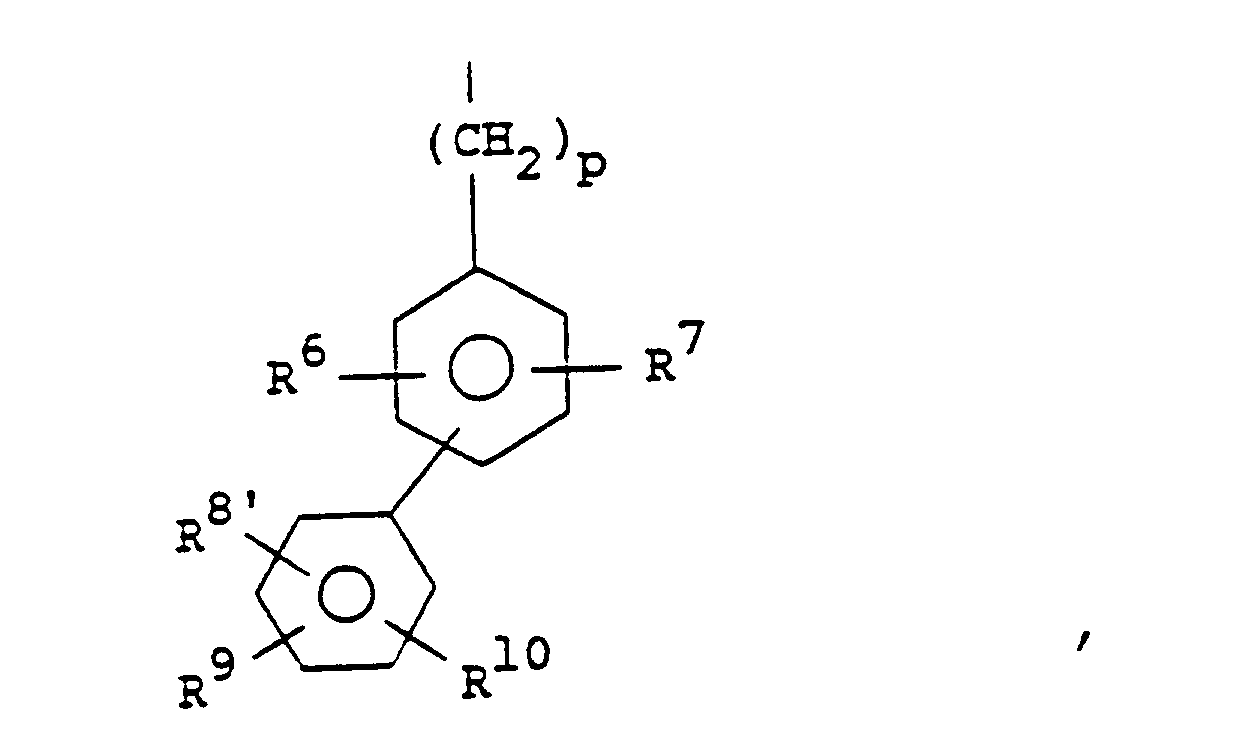
R⁵ est un atome d'hydrogène ou d'halogène ou un groupe alkyle;
p est un nombre de 1 à 15;
(CH₂)p peut comporter 0, 1, 2 ou 3 doubles liaisons et/ou 0, 1, 2 ou 3 triples liaisons dans la chaîne normale, et/ou peut comporter 0, 1, 2 ou 3 substituants qui sont des groupes alkyle, alcoxy, alcényle, alcynyle, ou hydroxy et/ou des atomes d'halogène; et
R⁶, R⁷, R8', R⁹ et R¹⁰ sont identiques ou différents et sont l'hydrogène ou un groupe alkyle contenant de 1 à 40 atomes de carbone, alcoxy contenant de 1 à 40 atomes de carbone, alcényle contenant de 2 à 40 atomes de carbone, alcényloxy contenant de 2 à 40 atomes de carbone, hydroxy, alcynyle contenant de 2 à 40 atomes de carbone, alcynyloxy contenant de 2 à 40 atomes de carbone, aryloxy, halogène, nitro, amine, thio, alkylthio, arylthio, arylsulfinyle, alkylsulfinyle, arylsulfonyle, alkylsulfonyle, carboxy, alkylcarbonyloxy, arylcarbonyloxy, alcoxycarbonyle, aminocarbonyle, arylcarbonylamine ou alkylcarbonylamine;
R¹, R², R³ et R⁴ sont identiques ou différents et sont l'hydrogène, un groupe alkyle, un ion métallique ou un ester de pro-médicament; et
R⁵ est un atome d'hydrogène ou d'halogène ou un groupe alkyle;
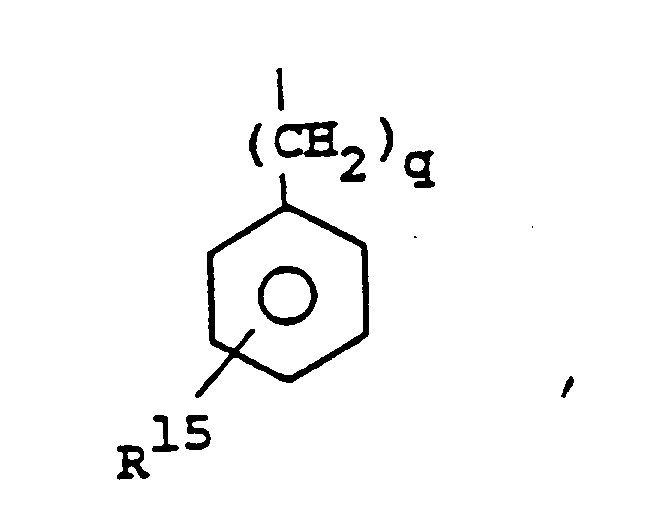
R¹, R², R³ et R⁴ sont identiques ou différents et sont l'hydrogène, un groupe alkyle, un ion métallique ou un ester de pro-médicament; et
R⁵ est un atome d'hydrogène ou d'halogène ou un groupe alkyle inférieur; et R¹⁵ est un groupe alkyle contenant de 2 à 20 atomes de carbone;
le nombre total d'atomes de carbone de Zd est supérieur à 10;
Y¹ et Y² sont un atome d'hydrogène ou d'halogène;
R², R³ et R⁴ peuvent être identiques ou différents et sont indépendamment l'hydrogène, un ion métallique, un groupe alkyle en C₁ à C₈ ou un groupe alcényle en C₃ à C₁₂;
X est O, S, NH ou -NCH₂R¹⁵ où R¹⁵ est l'hydrogène ou un groupe alkyle en C₁ à C₅; et
R¹ est R⁵-Q¹-Q²-Q³- où Q¹, Q² et Q³ sont identiques ou différents et sont indépendamment

réserve que, si Q¹ est une liaison, alors Q² et Q³ sont aussi des liaisons, et que si Q² est une liaison, alors Q³ est aussi une liaison, et où R⁶ est un atome d'hydrogène, un groupe alkyle inférieur, un atome d'halogène ou un groupe haloalkyle; R⁷ est un atome d'hydrogène ou d'halogène, ou un groupe alkyle inférieur ou alkylthio inférieur; R⁸ est un atome d'hydrogène ou d'halogène ou un groupe triméthylsilyle ou alkyle inférieur; et R⁹ est un atome d'hydrogène ou un groupe alkyle inférieur; R⁵ est


Y¹ et Y² sont des atomes d'hydrogène ou d'halogène;
R², R³ et R⁴ peuvent être identiques ou différents et sont indépendamment l'hydrogène, un ion métallique, un groupe alkyle en C₁ à C₈ ou un groupe alcényle en C₃ à C₁₂;
X est O, S, NH ou -NCH₂R¹⁵ où R¹⁵ est l'hydrogène ou un groupe alkyle en C₁ à C₅; et
R¹ est R⁵-Q¹-Q²-Q³- où Q¹, Q² et Q³ sont identiques ou différents et sont indépendamment

réserve que, si Q¹ est une liaison, alors Q² et Q³ sont aussi des liaisons, et que si Q² est une liaison, alors Q³ est aussi une liaison, et où R⁶ et un atome d'hydrogène, un groupe alkyle inférieur, un atome d'halogène ou un groupe haloalkyle; R⁷ est un atome d'hydrogène ou d'halogène ou un groupe alkyle inférieur ou alkylthio inférieur; R⁸ est un atome d'hydrogène ou d'halogène ou un groupe triméthylsilyle ou alkyle inférieur; et R⁹ est l'hydrogène ou un groupe alkyle inférieur;
R⁵ est

entier de 2 à 7, ou bien R¹⁶-C≡C-CH₂- où R¹⁶ est l'hydrogène ou un groupe alkyle inférieur; R¹⁰ et R¹¹ sont identiques ou différents et sont indépendamment l'hydrogène ou un groupe alkyle inférieur ou haloalkyle, un atome d'halogène ou un groupe alcényle en C₂ à C₁₂, ou bien R¹⁰ et R¹¹ peuvent former ensemble un groupe (CH₂)s où est s un nombre entier de 2 à 7; R¹² est un atome d'hydrogène, un groupe alkyle inférieur, un atome d'halogène ou un groupe alcényle en C₂ à C₁₂; et R¹³ et R¹⁴ sont identiques ou différents et sont indépendamment des groupes alkyle inférieur; avec cette réserve que, si Q¹, Q² et Q³ sont tous des liaisons, alors R¹⁰ et R¹¹ ne peuvent être tous deux l'hydrogène, et que R⁵ ne peut être CH₃(CH₂)p- avec un p inférieur ou égal à 4,
y compris tous les stéréo-isomères;

n est un nombre de 0 à 4;
X est O, -NH- ou NCH₂R¹⁵;
R², R³ et R⁴ sont identiques ou différents et sont l'hydrogène, un groupe alkyle inférieur, un groupe alcényle en C₂ à C₁₂, ou un ion métallique;
Y¹ et Y² peuvent être identiques ou différents et sont un atome d'hydrogène ou d'halogène; et
R¹⁵ est l'hydrogène ou un groupe alkyle inférieur;
avec cette réserve que, lorsque X est O, n est égal à 1, 2, 3 ou 4;
Y¹ et Y² sont des atomes d'hydrogène ou d'halogène;
R², R³ et R⁴ peuvent être identiques ou différents et sont indépendamment l'hydrogène, un ion métallique, un groupe alkyle en C₁ à C₈ ou un groupe alcényle en C₃ à C₁₂;
X est O, s, NH ou -NCH₂R¹⁵ où R¹⁵ est un atome d'hydrogène ou un groupe alkyle en C₁ à C₅; et
R¹ est R⁵-Q¹-Q²-Q³- où Q¹, Q² et Q³ sont identiques ou différents et sont indépendamment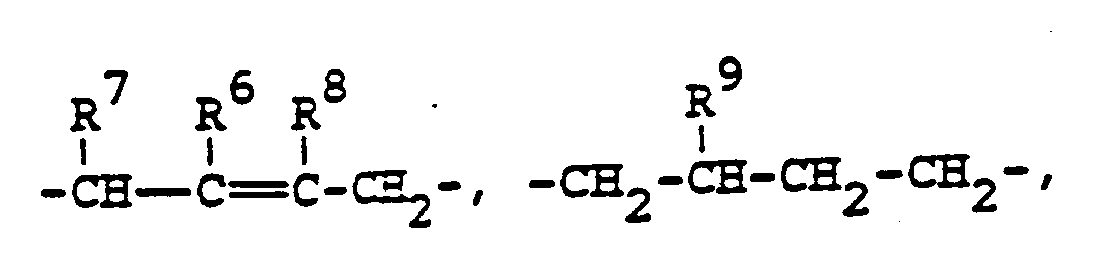
ou une liaison simple, avec cette réserve que, si Q¹ est une liaison, alors Q² et Q³ sont aussi des liaisons, et que si Q² est une liaison, alors Q³ est aussi une liaison, et où R⁶ est l'hydrogène, un groupe alkyle inférieur, un atome d'halogène ou un groupe haloalkyle; R⁷ est un atome d'hydrogène ou d'halogène ou un groupe alkyle inférieur ou alkylthio inférieur; R⁸ est un atome d'hydrogène ou d'halogène ou un groupe triméthylsilyle ou alkyle inférieur; et R⁹ est un atome d'hydrogène ou un groupe alkyle inférieur;
R⁵ est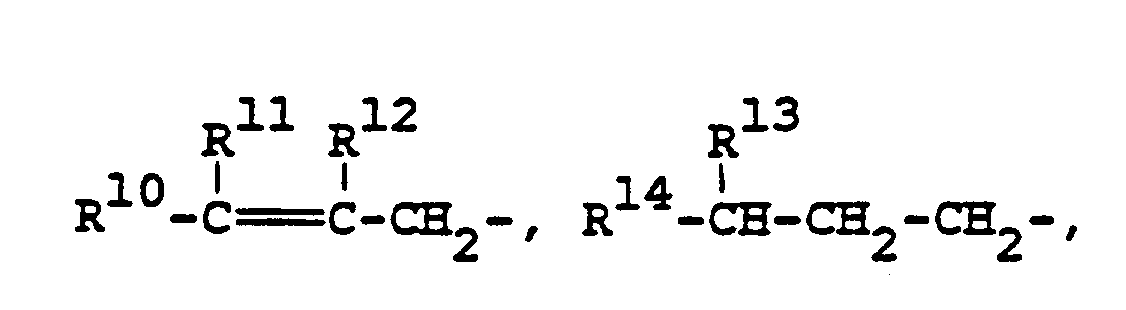
y compris tous les stéréo-isomères;

ou une liaison, avec cette réserve que, si Q¹ est une liaison, alors Q² et Q³ doivent aussi être des liaisons, et que si Q² est une liaison, alors Q³ est aussi une liaison; R⁶ est l'hydrogène, un groupe alkyle inférieur, un atome de fluor ou un groupe fluoralkyle; R⁷ est un atome d'hydrogène ou de fluor ou un groupe alkyle inférieur ou alkylthio; R⁸ est un atome d'hydrogène ou de fluor ou un groupe triméthylsilyle ou alkyle inférieur; R⁹ est un atome d'hydrogène ou un groupe alkyle inférieur;
R⁵ est
y compris tous les stéréo-isomères;

Z est -(CH₂)n- ou -(CH₂)p-CH=CH-(CH₂)m-, où n est un nombre de 1 à 5; p est égal à 0, 1 ou 2; m est égal à 0, 1 ou 2;
R, R¹ et R1a sont identiques ou différents et sont l'hydrogène, un groupe alkyle inférieur ou un ion métallique;
R² et R³ peuvent être identiques ou différents et sont des atomes d'hydrogène ou d'halogène; et
X est

- Utilisation d'un inhibiteur de protéine-prényl transférase contenant du phosphore pour la fabrication d'un médicament permettant de traiter et/ou de prévenir des tumeurs liées aux ras ou des maladies causées par d'autres protéines à boîte CAAX apparentées, en bloquant la prénylation de produits oncogènes ras ou de protéines à boîte CAAX apparentées en empêchant une enzyme, la protéine-prényl transférase, de catalyser le transfert du groupe prényle du pyrophosphate de prényle au reste cystéine de la boîte CAAX.
- Utilisation d'un inhibiteur de protéine-prényl transférase contenant du phosphore pour la fabrication d'un médicament permettant de prévenir la prénylation de protéines à boîte CAAX pour inhiber les effets pathogènes de cette protéine chez une espèce mammifère.
Applications Claiming Priority (2)
| Application Number | Priority Date | Filing Date | Title |
|---|---|---|---|
| US77495791A | 1991-10-11 | 1991-10-11 | |
| US774957 | 1991-10-11 |
Publications (2)
| Publication Number | Publication Date |
|---|---|
| EP0537007A1 EP0537007A1 (fr) | 1993-04-14 |
| EP0537007B1 true EP0537007B1 (fr) | 1995-08-09 |
Family
ID=25102836
Family Applications (1)
| Application Number | Title | Priority Date | Filing Date |
|---|---|---|---|
| EP92309184A Revoked EP0537007B1 (fr) | 1991-10-11 | 1992-10-08 | Utilisation d'inhibiteurs de farnésyl-protéine transferase pour la fabrication d'un médicament pour bloquer les transformations néoplastiques de cellules provoquées par des oncogènes ras |
Country Status (9)
| Country | Link |
|---|---|
| US (1) | US6087349A (fr) |
| EP (1) | EP0537007B1 (fr) |
| JP (1) | JPH05221866A (fr) |
| AT (1) | ATE126059T1 (fr) |
| CA (1) | CA2080172A1 (fr) |
| DE (1) | DE69204007T2 (fr) |
| DK (1) | DK0537007T3 (fr) |
| ES (1) | ES2075630T3 (fr) |
| GR (1) | GR3017904T3 (fr) |
Families Citing this family (13)
| Publication number | Priority date | Publication date | Assignee | Title |
|---|---|---|---|---|
| US5312814A (en) * | 1992-12-09 | 1994-05-17 | Bristol-Myers Squibb Co. | α-phosphonocarboxylate squalene synthetase inhibitors |
| HUT77406A (hu) * | 1994-03-15 | 1998-04-28 | Eisai Co., Ltd., | 1-(4-Amino-5-tio-pent-2-en)-il oldalláncot tartalmazó peptidomimetikumok és az ezeket tartalmazó gyógyszerkészítmények |
| US5436263A (en) * | 1994-03-22 | 1995-07-25 | Merck & Co., Inc. | Inhibitors of farnesyl-protein transferase |
| US5420334A (en) * | 1994-04-04 | 1995-05-30 | Merck & Co., Inc. | Inhibitors of farnesyl-protein transferase |
| US5510371A (en) * | 1994-06-06 | 1996-04-23 | Merck & Co., Inc. | Inhibitors of farnesyl-protein transferase |
| GB9515975D0 (en) | 1995-08-04 | 1995-10-04 | Zeneca Ltd | Chemical compounds |
| JP2000508661A (ja) * | 1996-04-15 | 2000-07-11 | ザ・トラステイーズ・オブ・ザ・ユニバーシテイ・オブ・ペンシルベニア | 放射線および化学療法に対する細胞の感作 |
| AU4020897A (en) | 1996-08-17 | 1998-03-06 | Zeneca Limited | 3-mercaptopyrrolidines as farnesyl protein transferase inhibitors |
| FR2780974B1 (fr) * | 1998-07-08 | 2001-09-28 | Sod Conseils Rech Applic | Utilisation de derives d'imidazopyrazines pour preparer un medicament destine a traiter les pathologies qui resultent de la formation de la proteine g heterotrimetrique |
| GB9930317D0 (en) | 1999-12-22 | 2000-02-09 | Zeneca Ltd | Novel compounds |
| GB9930318D0 (en) | 1999-12-22 | 2000-02-09 | Zeneca Ltd | Novel compounds |
| CA2372450A1 (fr) * | 2001-05-10 | 2001-09-19 | Pharmaceutical Partners Of Canada Inc. | Preparation injectable liquide de pamidronate disodique |
| WO2005000858A2 (fr) | 2003-06-27 | 2005-01-06 | Akira Odani | Composés de bis-phosphonate |
Family Cites Families (5)
| Publication number | Priority date | Publication date | Assignee | Title |
|---|---|---|---|---|
| US4871721A (en) * | 1988-01-11 | 1989-10-03 | E. R. Squibb & Sons, Inc. | Phosphorus-containing squalene synthetase inhibitors |
| EP0356866A3 (fr) * | 1988-08-29 | 1991-03-27 | E.R. SQUIBB & SONS, INC. | Inhibiteurs phosphorés de la synthétase du squalène et procédé |
| US5196409A (en) * | 1989-08-20 | 1993-03-23 | Yissum, Research Development Company Of The Hebrew University Of Jerusalem | Bisphosphonates, pharmaceutical compositions, and process for the treatment of irregularities in calcium metabolism |
| US5025003A (en) * | 1989-09-18 | 1991-06-18 | E. R. Squibb & Sons, Inc. | Isoprenoid phosphinylformic acid squalene synthetase inhibitors |
| US5185248A (en) * | 1990-05-08 | 1993-02-09 | E. R. Squibb & Sons, Inc. | Farnesyl-protein transferase assay for identifying compounds that block neoplastic transformation |
-
1992
- 1992-10-08 EP EP92309184A patent/EP0537007B1/fr not_active Revoked
- 1992-10-08 CA CA002080172A patent/CA2080172A1/fr not_active Abandoned
- 1992-10-08 ES ES92309184T patent/ES2075630T3/es not_active Expired - Lifetime
- 1992-10-08 AT AT92309184T patent/ATE126059T1/de not_active IP Right Cessation
- 1992-10-08 DE DE69204007T patent/DE69204007T2/de not_active Revoked
- 1992-10-08 DK DK92309184.7T patent/DK0537007T3/da active
- 1992-10-12 JP JP92272813A patent/JPH05221866A/ja active Pending
-
1995
- 1995-10-27 GR GR950403003T patent/GR3017904T3/el unknown
-
1998
- 1998-05-06 US US09/081,972 patent/US6087349A/en not_active Expired - Fee Related
Non-Patent Citations (1)
| Title |
|---|
| P. DAS ET AL.: 'Inhibition of farnesyl transferases from malignant and non-malignant cultured human lymphocytes by prenyl substrate analogs' * |
Also Published As
| Publication number | Publication date |
|---|---|
| DE69204007D1 (de) | 1995-09-14 |
| ATE126059T1 (de) | 1995-08-15 |
| DK0537007T3 (da) | 1995-09-25 |
| DE69204007T2 (de) | 1996-03-21 |
| JPH05221866A (ja) | 1993-08-31 |
| EP0537007A1 (fr) | 1993-04-14 |
| GR3017904T3 (en) | 1996-01-31 |
| CA2080172A1 (fr) | 1993-04-12 |
| ES2075630T3 (es) | 1995-10-01 |
| US6087349A (en) | 2000-07-11 |
Similar Documents
| Publication | Publication Date | Title |
|---|---|---|
| Waller et al. | Inhibition of farnesyl pyrophosphate (FPP) and/or geranylgeranyl pyrophosphate (GGPP) biosynthesis and its implication in the treatment of cancers | |
| Iannelli et al. | Targeting mevalonate pathway in cancer treatment: repurposing of statins | |
| Wang et al. | Post-translational modification of KRAS: potential targets for cancer therapy | |
| Sonnemann et al. | The bisphosphonate pamidronate is a potent inhibitor of human osteosarcoma cell growth in vitro | |
| US6087349A (en) | Method for blocking neoplastic transformation of cells induced by ras oncogenes | |
| Rogers et al. | Biochemical and molecular mechanisms of action of bisphosphonates | |
| J Roelofs et al. | Bisphosphonates: molecular mechanisms of action and effects on bone cells, monocytes and macrophages | |
| Manne et al. | Ras farnesylation as a target for novel antitumor agents: potent and selective farnesyl diphosphate analog inhibitors of farnesyltransferase | |
| Wiemer et al. | The intermediate enzymes of isoprenoid metabolism as anticancer targets | |
| Soma et al. | In vivo enhanced antitumor activity of carmustine [N, N′-bis (2-chloroethyl)-N-nitrosourea] by simvastatin | |
| US6727234B2 (en) | Isoprenoid analog compounds and methods of making and use thereof | |
| JP5244917B2 (ja) | C2−c5−アルキル−イミダゾール−ビスホスホネート類 | |
| JPH11322610A (ja) | サイクリン依存性キナーゼ阻害剤 | |
| Allen et al. | Olefin isomers of a triazole bisphosphonate synergistically inhibit geranylgeranyl diphosphate synthase | |
| CA2960750A1 (fr) | Compositions et methodes de traitement d'un carcinome de la prostate | |
| CA2294399C (fr) | Inhibiteurs de farnesyle transferase associes a des inhibiteurs de hmg coa reductase, et leur utilisation anticancereuse | |
| EP0537008B1 (fr) | Utilisation de biphosphonates pour la fabrication d'un médicament pour bloquer des transformations néoplastiques de cellules provoquées par des oncogènes ras | |
| US20020035058A1 (en) | Isopentenyl pyrophosphate isomerase (IPI) and/or prenyl transferase inhibitors | |
| JP3518611B2 (ja) | 蛋白質のイソプレニル化に関連する疾病の治療方法 | |
| WO2005117864A1 (fr) | Produit combine comprenant de l'anastrozole et un inhibiteur double de la prenyl transferase | |
| Kamath et al. | Prenylated proteins: structural diversity and functions | |
| US5827838A (en) | Method for the treatment of diseases related with protein isoprenylation | |
| Coxon et al. | Resorbing osteoclasts increase the availability of mineral-bound bisphosphonates to non-resorbing cells | |
| USH1345H (en) | Method for preventing or treating hepatitis D | |
| AU724676C (en) | Farnesyl transferase inhibitors in combination with hmg CoA reductase inhibitors for the treatment of cancer |
Legal Events
| Date | Code | Title | Description |
|---|---|---|---|
| PUAI | Public reference made under article 153(3) epc to a published international application that has entered the european phase |
Free format text: ORIGINAL CODE: 0009012 |
|
| AK | Designated contracting states |
Kind code of ref document: A1 Designated state(s): AT BE CH DE DK ES FR GB GR IE IT LI LU MC NL PT SE |
|
| 17P | Request for examination filed |
Effective date: 19930923 |
|
| 17Q | First examination report despatched |
Effective date: 19931108 |
|
| GRAA | (expected) grant |
Free format text: ORIGINAL CODE: 0009210 |
|
| AK | Designated contracting states |
Kind code of ref document: B1 Designated state(s): AT BE CH DE DK ES FR GB GR IE IT LI LU MC NL PT SE |
|
| REF | Corresponds to: |
Ref document number: 126059 Country of ref document: AT Date of ref document: 19950815 Kind code of ref document: T |
|
| REG | Reference to a national code |
Ref country code: IE Ref legal event code: FG4D Free format text: 64797 |
|
| REF | Corresponds to: |
Ref document number: 69204007 Country of ref document: DE Date of ref document: 19950914 |
|
| ET | Fr: translation filed | ||
| REG | Reference to a national code |
Ref country code: DK Ref legal event code: T3 |
|
| REG | Reference to a national code |
Ref country code: ES Ref legal event code: FG2A Ref document number: 2075630 Country of ref document: ES Kind code of ref document: T3 |
|
| ITF | It: translation for a ep patent filed | ||
| REG | Reference to a national code |
Ref country code: GR Ref legal event code: FG4A Free format text: 3017904 |
|
| PLBQ | Unpublished change to opponent data |
Free format text: ORIGINAL CODE: EPIDOS OPPO |
|
| PLBI | Opposition filed |
Free format text: ORIGINAL CODE: 0009260 |
|
| PLAV | Examination of admissibility of opposition |
Free format text: ORIGINAL CODE: EPIDOS OPEX |
|
| 26 | Opposition filed |
Opponent name: MERCK & CO., INC. Effective date: 19960502 |
|
| PLAV | Examination of admissibility of opposition |
Free format text: ORIGINAL CODE: EPIDOS OPEX |
|
| PLBF | Reply of patent proprietor to notice(s) of opposition |
Free format text: ORIGINAL CODE: EPIDOS OBSO |
|
| NLR1 | Nl: opposition has been filed with the epo |
Opponent name: MERCK & CO., INC. |
|
| PLBF | Reply of patent proprietor to notice(s) of opposition |
Free format text: ORIGINAL CODE: EPIDOS OBSO |
|
| PLBF | Reply of patent proprietor to notice(s) of opposition |
Free format text: ORIGINAL CODE: EPIDOS OBSO |
|
| REG | Reference to a national code |
Ref country code: GB Ref legal event code: IF02 |
|
| PGFP | Annual fee paid to national office [announced via postgrant information from national office to epo] |
Ref country code: PT Payment date: 20020917 Year of fee payment: 11 |
|
| PGFP | Annual fee paid to national office [announced via postgrant information from national office to epo] |
Ref country code: GB Payment date: 20021002 Year of fee payment: 11 |
|
| PGFP | Annual fee paid to national office [announced via postgrant information from national office to epo] |
Ref country code: SE Payment date: 20021004 Year of fee payment: 11 |
|
| PGFP | Annual fee paid to national office [announced via postgrant information from national office to epo] |
Ref country code: FR Payment date: 20021008 Year of fee payment: 11 |
|
| RDAH | Patent revoked |
Free format text: ORIGINAL CODE: EPIDOS REVO |
|
| PGFP | Annual fee paid to national office [announced via postgrant information from national office to epo] |
Ref country code: DE Payment date: 20021011 Year of fee payment: 11 Ref country code: AT Payment date: 20021011 Year of fee payment: 11 |
|
| PGFP | Annual fee paid to national office [announced via postgrant information from national office to epo] |
Ref country code: DK Payment date: 20021014 Year of fee payment: 11 |
|
| PGFP | Annual fee paid to national office [announced via postgrant information from national office to epo] |
Ref country code: LU Payment date: 20021016 Year of fee payment: 11 Ref country code: CH Payment date: 20021016 Year of fee payment: 11 |
|
| PGFP | Annual fee paid to national office [announced via postgrant information from national office to epo] |
Ref country code: IE Payment date: 20021029 Year of fee payment: 11 |
|
| PGFP | Annual fee paid to national office [announced via postgrant information from national office to epo] |
Ref country code: NL Payment date: 20021031 Year of fee payment: 11 Ref country code: MC Payment date: 20021031 Year of fee payment: 11 Ref country code: ES Payment date: 20021031 Year of fee payment: 11 |
|
| PGFP | Annual fee paid to national office [announced via postgrant information from national office to epo] |
Ref country code: BE Payment date: 20021219 Year of fee payment: 11 |
|
| RDAH | Patent revoked |
Free format text: ORIGINAL CODE: EPIDOS REVO |
|
| RDAG | Patent revoked |
Free format text: ORIGINAL CODE: 0009271 |
|
| 27W | Patent revoked |
Effective date: 20001026 |
|
| GBPR | Gb: patent revoked under art. 102 of the ep convention designating the uk as contracting state |
Free format text: 20001026 |
|
| REG | Reference to a national code |
Ref country code: CH Ref legal event code: PL |
|
| NLR2 | Nl: decision of opposition |
Effective date: 20001026 |
|
| PGFP | Annual fee paid to national office [announced via postgrant information from national office to epo] |
Ref country code: GR Payment date: 20031029 Year of fee payment: 12 |