EP0544308A1 - Nouveau métallocène et procédé de préparation de polyoléfines d'utilisant - Google Patents
Nouveau métallocène et procédé de préparation de polyoléfines d'utilisant Download PDFInfo
- Publication number
- EP0544308A1 EP0544308A1 EP92120228A EP92120228A EP0544308A1 EP 0544308 A1 EP0544308 A1 EP 0544308A1 EP 92120228 A EP92120228 A EP 92120228A EP 92120228 A EP92120228 A EP 92120228A EP 0544308 A1 EP0544308 A1 EP 0544308A1
- Authority
- EP
- European Patent Office
- Prior art keywords
- enantiomer
- metallocene
- atom
- formula
- hydrogen atom
- Prior art date
- Legal status (The legal status is an assumption and is not a legal conclusion. Google has not performed a legal analysis and makes no representation as to the accuracy of the status listed.)
- Granted
Links
- 238000000034 method Methods 0.000 title claims abstract description 28
- 229920000098 polyolefin Polymers 0.000 title claims abstract description 14
- 239000003054 catalyst Substances 0.000 claims abstract description 33
- 150000001875 compounds Chemical class 0.000 claims description 31
- VGGSQFUCUMXWEO-UHFFFAOYSA-N Ethene Chemical compound C=C VGGSQFUCUMXWEO-UHFFFAOYSA-N 0.000 claims description 27
- 239000005977 Ethylene Substances 0.000 claims description 27
- CPOFMOWDMVWCLF-UHFFFAOYSA-N methyl(oxo)alumane Chemical compound C[Al]=O CPOFMOWDMVWCLF-UHFFFAOYSA-N 0.000 claims description 21
- 125000004432 carbon atom Chemical group C* 0.000 claims description 20
- VYPSYNLAJGMNEJ-UHFFFAOYSA-N Silicium dioxide Chemical compound O=[Si]=O VYPSYNLAJGMNEJ-UHFFFAOYSA-N 0.000 claims description 19
- 229910052799 carbon Inorganic materials 0.000 claims description 16
- 150000002430 hydrocarbons Chemical group 0.000 claims description 16
- 125000004435 hydrogen atom Chemical group [H]* 0.000 claims description 16
- 229910052735 hafnium Inorganic materials 0.000 claims description 14
- 125000005103 alkyl silyl group Chemical group 0.000 claims description 13
- 125000005104 aryl silyl group Chemical group 0.000 claims description 13
- 239000004711 α-olefin Substances 0.000 claims description 12
- 229920001577 copolymer Polymers 0.000 claims description 9
- 239000000377 silicon dioxide Substances 0.000 claims description 9
- 229910052726 zirconium Inorganic materials 0.000 claims description 9
- VBJZVLUMGGDVMO-UHFFFAOYSA-N hafnium atom Chemical group [Hf] VBJZVLUMGGDVMO-UHFFFAOYSA-N 0.000 claims description 8
- 229910052809 inorganic oxide Inorganic materials 0.000 claims description 8
- 239000003426 co-catalyst Substances 0.000 claims description 7
- 239000011949 solid catalyst Substances 0.000 claims description 6
- 229910052723 transition metal Inorganic materials 0.000 claims description 6
- 150000003624 transition metals Chemical class 0.000 claims description 6
- PNEYBMLMFCGWSK-UHFFFAOYSA-N aluminium oxide Inorganic materials [O-2].[O-2].[O-2].[Al+3].[Al+3] PNEYBMLMFCGWSK-UHFFFAOYSA-N 0.000 claims description 5
- 229910052719 titanium Inorganic materials 0.000 claims description 5
- XUIMIQQOPSSXEZ-UHFFFAOYSA-N Silicon Chemical group [Si] XUIMIQQOPSSXEZ-UHFFFAOYSA-N 0.000 claims description 4
- 229910052732 germanium Inorganic materials 0.000 claims description 4
- GNPVGFCGXDBREM-UHFFFAOYSA-N germanium atom Chemical group [Ge] GNPVGFCGXDBREM-UHFFFAOYSA-N 0.000 claims description 4
- 125000005843 halogen group Chemical group 0.000 claims description 4
- 229910052710 silicon Inorganic materials 0.000 claims description 4
- 150000001721 carbon Chemical group 0.000 claims 10
- ZMMRKRFMSDTOLV-UHFFFAOYSA-N cyclopenta-1,3-diene zirconium Chemical compound [Zr].C1C=CC=C1.C1C=CC=C1 ZMMRKRFMSDTOLV-UHFFFAOYSA-N 0.000 claims 2
- 239000003446 ligand Substances 0.000 abstract description 7
- 238000004519 manufacturing process Methods 0.000 abstract description 7
- 230000000707 stereoselective effect Effects 0.000 abstract 1
- -1 polypropylene Polymers 0.000 description 45
- YXFVVABEGXRONW-UHFFFAOYSA-N Toluene Chemical compound CC1=CC=CC=C1 YXFVVABEGXRONW-UHFFFAOYSA-N 0.000 description 42
- 238000006116 polymerization reaction Methods 0.000 description 33
- WYURNTSHIVDZCO-UHFFFAOYSA-N Tetrahydrofuran Chemical compound C1CCOC1 WYURNTSHIVDZCO-UHFFFAOYSA-N 0.000 description 26
- 239000004743 Polypropylene Substances 0.000 description 22
- 229920001155 polypropylene Polymers 0.000 description 22
- 238000006243 chemical reaction Methods 0.000 description 21
- LIKMAJRDDDTEIG-UHFFFAOYSA-N 1-hexene Chemical compound CCCCC=C LIKMAJRDDDTEIG-UHFFFAOYSA-N 0.000 description 18
- YMWUJEATGCHHMB-UHFFFAOYSA-N Dichloromethane Chemical compound ClCCl YMWUJEATGCHHMB-UHFFFAOYSA-N 0.000 description 18
- VLKZOEOYAKHREP-UHFFFAOYSA-N n-Hexane Chemical compound CCCCCC VLKZOEOYAKHREP-UHFFFAOYSA-N 0.000 description 18
- 239000000203 mixture Substances 0.000 description 16
- 229920000642 polymer Polymers 0.000 description 16
- 150000001336 alkenes Chemical class 0.000 description 14
- YLQBMQCUIZJEEH-UHFFFAOYSA-N tetrahydrofuran Natural products C=1C=COC=1 YLQBMQCUIZJEEH-UHFFFAOYSA-N 0.000 description 13
- IJGRMHOSHXDMSA-UHFFFAOYSA-N Atomic nitrogen Chemical compound N#N IJGRMHOSHXDMSA-UHFFFAOYSA-N 0.000 description 12
- QQONPFPTGQHPMA-UHFFFAOYSA-N propylene Natural products CC=C QQONPFPTGQHPMA-UHFFFAOYSA-N 0.000 description 11
- 125000004805 propylene group Chemical group [H]C([H])([H])C([H])([*:1])C([H])([H])[*:2] 0.000 description 11
- 230000000694 effects Effects 0.000 description 10
- OKKJLVBELUTLKV-UHFFFAOYSA-N Methanol Chemical compound OC OKKJLVBELUTLKV-UHFFFAOYSA-N 0.000 description 9
- 230000000052 comparative effect Effects 0.000 description 9
- 238000001816 cooling Methods 0.000 description 9
- ZSWFCLXCOIISFI-UHFFFAOYSA-N endo-cyclopentadiene Natural products C1C=CC=C1 ZSWFCLXCOIISFI-UHFFFAOYSA-N 0.000 description 9
- 238000002360 preparation method Methods 0.000 description 9
- WSSSPWUEQFSQQG-UHFFFAOYSA-N 4-methyl-1-pentene Chemical compound CC(C)CC=C WSSSPWUEQFSQQG-UHFFFAOYSA-N 0.000 description 8
- XOJVVFBFDXDTEG-UHFFFAOYSA-N pristane Chemical compound CC(C)CCCC(C)CCCC(C)CCCC(C)C XOJVVFBFDXDTEG-UHFFFAOYSA-N 0.000 description 8
- VPGLGRNSAYHXPY-UHFFFAOYSA-L zirconium(2+);dichloride Chemical compound Cl[Zr]Cl VPGLGRNSAYHXPY-UHFFFAOYSA-L 0.000 description 8
- JSESQYMOBOQAEZ-UHFFFAOYSA-L CC(C)=[Zr](Cl)(Cl)(C1C=CC(=C1)C(C)(C)C)C1C=C(c2ccccc12)C(C)(C)C Chemical compound CC(C)=[Zr](Cl)(Cl)(C1C=CC(=C1)C(C)(C)C)C1C=C(c2ccccc12)C(C)(C)C JSESQYMOBOQAEZ-UHFFFAOYSA-L 0.000 description 7
- 239000013078 crystal Substances 0.000 description 7
- 238000002844 melting Methods 0.000 description 7
- 230000008018 melting Effects 0.000 description 7
- JRZJOMJEPLMPRA-UHFFFAOYSA-N olefin Natural products CCCCCCCC=C JRZJOMJEPLMPRA-UHFFFAOYSA-N 0.000 description 7
- 239000000725 suspension Substances 0.000 description 7
- MZRVEZGGRBJDDB-UHFFFAOYSA-N N-Butyllithium Chemical compound [Li]CCCC MZRVEZGGRBJDDB-UHFFFAOYSA-N 0.000 description 6
- KWGKDLIKAYFUFQ-UHFFFAOYSA-M lithium chloride Chemical compound [Li+].[Cl-] KWGKDLIKAYFUFQ-UHFFFAOYSA-M 0.000 description 6
- 238000012986 modification Methods 0.000 description 6
- 230000004048 modification Effects 0.000 description 6
- 229910052757 nitrogen Inorganic materials 0.000 description 6
- YBYIRNPNPLQARY-UHFFFAOYSA-N 1H-indene Natural products C1=CC=C2CC=CC2=C1 YBYIRNPNPLQARY-UHFFFAOYSA-N 0.000 description 5
- 229920000089 Cyclic olefin copolymer Polymers 0.000 description 5
- 229920001038 ethylene copolymer Polymers 0.000 description 5
- 230000037048 polymerization activity Effects 0.000 description 5
- 239000002002 slurry Substances 0.000 description 5
- 239000002904 solvent Substances 0.000 description 5
- 125000001424 substituent group Chemical group 0.000 description 5
- VXNZUUAINFGPBY-UHFFFAOYSA-N 1-Butene Chemical compound CCC=C VXNZUUAINFGPBY-UHFFFAOYSA-N 0.000 description 4
- KAKZBPTYRLMSJV-UHFFFAOYSA-N Butadiene Chemical compound C=CC=C KAKZBPTYRLMSJV-UHFFFAOYSA-N 0.000 description 4
- 102100037815 Fas apoptotic inhibitory molecule 3 Human genes 0.000 description 4
- 101000878510 Homo sapiens Fas apoptotic inhibitory molecule 3 Proteins 0.000 description 4
- CPLXHLVBOLITMK-UHFFFAOYSA-N Magnesium oxide Chemical compound [Mg]=O CPLXHLVBOLITMK-UHFFFAOYSA-N 0.000 description 4
- 229910052782 aluminium Inorganic materials 0.000 description 4
- XAGFODPZIPBFFR-UHFFFAOYSA-N aluminium Chemical compound [Al] XAGFODPZIPBFFR-UHFFFAOYSA-N 0.000 description 4
- 238000004458 analytical method Methods 0.000 description 4
- 238000007334 copolymerization reaction Methods 0.000 description 4
- IDASTKMEQGPVRR-UHFFFAOYSA-N cyclopenta-1,3-diene;zirconium(2+) Chemical compound [Zr+2].C=1C=C[CH-]C=1.C=1C=C[CH-]C=1 IDASTKMEQGPVRR-UHFFFAOYSA-N 0.000 description 4
- 125000000058 cyclopentadienyl group Chemical group C1(=CC=CC1)* 0.000 description 4
- LPIQUOYDBNQMRZ-UHFFFAOYSA-N cyclopentene Chemical compound C1CC=CC1 LPIQUOYDBNQMRZ-UHFFFAOYSA-N 0.000 description 4
- 238000004821 distillation Methods 0.000 description 4
- 238000002329 infrared spectrum Methods 0.000 description 4
- NNPPMTNAJDCUHE-UHFFFAOYSA-N isobutane Chemical compound CC(C)C NNPPMTNAJDCUHE-UHFFFAOYSA-N 0.000 description 4
- YWAKXRMUMFPDSH-UHFFFAOYSA-N pentene Chemical compound CCCC=C YWAKXRMUMFPDSH-UHFFFAOYSA-N 0.000 description 4
- 239000000126 substance Substances 0.000 description 4
- QMBQEXOLIRBNPN-UHFFFAOYSA-L zirconocene dichloride Chemical compound [Cl-].[Cl-].[Zr+4].C=1C=C[CH-]C=1.C=1C=C[CH-]C=1 QMBQEXOLIRBNPN-UHFFFAOYSA-L 0.000 description 4
- PRBHEGAFLDMLAL-UHFFFAOYSA-N 1,5-Hexadiene Natural products CC=CCC=C PRBHEGAFLDMLAL-UHFFFAOYSA-N 0.000 description 3
- UHOVQNZJYSORNB-UHFFFAOYSA-N Benzene Chemical compound C1=CC=CC=C1 UHOVQNZJYSORNB-UHFFFAOYSA-N 0.000 description 3
- DWIQUNHZWCFRJA-UHFFFAOYSA-L CC(C)=[Hf](Cl)(Cl)(C1C=CC(=C1)C(C)(C)C)C1C=C(C2=CC=CC=C12)C(C)(C)C Chemical compound CC(C)=[Hf](Cl)(Cl)(C1C=CC(=C1)C(C)(C)C)C1C=C(C2=CC=CC=C12)C(C)(C)C DWIQUNHZWCFRJA-UHFFFAOYSA-L 0.000 description 3
- PEGOQUBALBZBTC-UHFFFAOYSA-L CC(C)=[Zr](Cl)(Cl)(C1C=CC(C)=C1)C1C=C(C2=CC=CC=C12)C(C)(C)C Chemical compound CC(C)=[Zr](Cl)(Cl)(C1C=CC(C)=C1)C1C=C(C2=CC=CC=C12)C(C)(C)C PEGOQUBALBZBTC-UHFFFAOYSA-L 0.000 description 3
- UXEUIZRWCUDAOH-UHFFFAOYSA-L C[SiH]C.CC1=CC(C)=C(C)C1[Zr](Cl)(Cl)C1C(C)=CC(C)=C1C Chemical compound C[SiH]C.CC1=CC(C)=C(C)C1[Zr](Cl)(Cl)C1C(C)=CC(C)=C1C UXEUIZRWCUDAOH-UHFFFAOYSA-L 0.000 description 3
- UFHFLCQGNIYNRP-UHFFFAOYSA-N Hydrogen Chemical compound [H][H] UFHFLCQGNIYNRP-UHFFFAOYSA-N 0.000 description 3
- CTQNGGLPUBDAKN-UHFFFAOYSA-N O-Xylene Chemical group CC1=CC=CC=C1C CTQNGGLPUBDAKN-UHFFFAOYSA-N 0.000 description 3
- QCWXUUIWCKQGHC-UHFFFAOYSA-N Zirconium Chemical compound [Zr] QCWXUUIWCKQGHC-UHFFFAOYSA-N 0.000 description 3
- 229910052783 alkali metal Inorganic materials 0.000 description 3
- 150000001340 alkali metals Chemical class 0.000 description 3
- 238000012685 gas phase polymerization Methods 0.000 description 3
- PYGSKMBEVAICCR-UHFFFAOYSA-N hexa-1,5-diene Chemical compound C=CCCC=C PYGSKMBEVAICCR-UHFFFAOYSA-N 0.000 description 3
- 239000001257 hydrogen Substances 0.000 description 3
- 229910052739 hydrogen Inorganic materials 0.000 description 3
- 239000011261 inert gas Substances 0.000 description 3
- 239000007791 liquid phase Substances 0.000 description 3
- 125000002496 methyl group Chemical group [H]C([H])([H])* 0.000 description 3
- 238000001953 recrystallisation Methods 0.000 description 3
- 125000000999 tert-butyl group Chemical group [H]C([H])([H])C(*)(C([H])([H])[H])C([H])([H])[H] 0.000 description 3
- PRBHEGAFLDMLAL-GQCTYLIASA-N (4e)-hexa-1,4-diene Chemical compound C\C=C\CC=C PRBHEGAFLDMLAL-GQCTYLIASA-N 0.000 description 2
- ZGEGCLOFRBLKSE-UHFFFAOYSA-N 1-Heptene Chemical compound CCCCCC=C ZGEGCLOFRBLKSE-UHFFFAOYSA-N 0.000 description 2
- AFFLGGQVNFXPEV-UHFFFAOYSA-N 1-decene Chemical compound CCCCCCCCC=C AFFLGGQVNFXPEV-UHFFFAOYSA-N 0.000 description 2
- KWKAKUADMBZCLK-UHFFFAOYSA-N 1-octene Chemical compound CCCCCCC=C KWKAKUADMBZCLK-UHFFFAOYSA-N 0.000 description 2
- XKRFYHLGVUSROY-UHFFFAOYSA-N Argon Chemical compound [Ar] XKRFYHLGVUSROY-UHFFFAOYSA-N 0.000 description 2
- 239000004215 Carbon black (E152) Substances 0.000 description 2
- YNQLUTRBYVCPMQ-UHFFFAOYSA-N Ethylbenzene Chemical compound CCC1=CC=CC=C1 YNQLUTRBYVCPMQ-UHFFFAOYSA-N 0.000 description 2
- 238000005033 Fourier transform infrared spectroscopy Methods 0.000 description 2
- TWRXJAOTZQYOKJ-UHFFFAOYSA-L Magnesium chloride Chemical compound [Mg+2].[Cl-].[Cl-] TWRXJAOTZQYOKJ-UHFFFAOYSA-L 0.000 description 2
- 238000005481 NMR spectroscopy Methods 0.000 description 2
- URLKBWYHVLBVBO-UHFFFAOYSA-N Para-Xylene Chemical group CC1=CC=C(C)C=C1 URLKBWYHVLBVBO-UHFFFAOYSA-N 0.000 description 2
- HEDRZPFGACZZDS-MICDWDOJSA-N Trichloro(2H)methane Chemical compound [2H]C(Cl)(Cl)Cl HEDRZPFGACZZDS-MICDWDOJSA-N 0.000 description 2
- 125000000217 alkyl group Chemical group 0.000 description 2
- 229910052810 boron oxide Inorganic materials 0.000 description 2
- IAQRGUVFOMOMEM-UHFFFAOYSA-N but-2-ene Chemical compound CC=CC IAQRGUVFOMOMEM-UHFFFAOYSA-N 0.000 description 2
- 125000000484 butyl group Chemical group [H]C([*])([H])C([H])([H])C([H])([H])C([H])([H])[H] 0.000 description 2
- OCKPCBLVNKHBMX-UHFFFAOYSA-N butylbenzene Chemical compound CCCCC1=CC=CC=C1 OCKPCBLVNKHBMX-UHFFFAOYSA-N 0.000 description 2
- MVPPADPHJFYWMZ-UHFFFAOYSA-N chlorobenzene Chemical compound ClC1=CC=CC=C1 MVPPADPHJFYWMZ-UHFFFAOYSA-N 0.000 description 2
- 238000010586 diagram Methods 0.000 description 2
- JKWMSGQKBLHBQQ-UHFFFAOYSA-N diboron trioxide Chemical compound O=BOB=O JKWMSGQKBLHBQQ-UHFFFAOYSA-N 0.000 description 2
- 150000001993 dienes Chemical class 0.000 description 2
- 238000009826 distribution Methods 0.000 description 2
- 229930195733 hydrocarbon Natural products 0.000 description 2
- 125000003454 indenyl group Chemical group C1(C=CC2=CC=CC=C12)* 0.000 description 2
- 238000003780 insertion Methods 0.000 description 2
- 239000001282 iso-butane Substances 0.000 description 2
- IVSZLXZYQVIEFR-UHFFFAOYSA-N m-xylene Chemical group CC1=CC=CC(C)=C1 IVSZLXZYQVIEFR-UHFFFAOYSA-N 0.000 description 2
- 229920002521 macromolecule Polymers 0.000 description 2
- 239000000395 magnesium oxide Substances 0.000 description 2
- 238000001819 mass spectrum Methods 0.000 description 2
- 239000000178 monomer Substances 0.000 description 2
- 125000002524 organometallic group Chemical group 0.000 description 2
- RGSFGYAAUTVSQA-UHFFFAOYSA-N pentamethylene Natural products C1CCCC1 RGSFGYAAUTVSQA-UHFFFAOYSA-N 0.000 description 2
- 230000000704 physical effect Effects 0.000 description 2
- 229920000306 polymethylpentene Polymers 0.000 description 2
- 238000004321 preservation Methods 0.000 description 2
- 238000000425 proton nuclear magnetic resonance spectrum Methods 0.000 description 2
- 238000012721 stereospecific polymerization Methods 0.000 description 2
- 150000003613 toluenes Chemical class 0.000 description 2
- MCULRUJILOGHCJ-UHFFFAOYSA-N triisobutylaluminium Chemical compound CC(C)C[Al](CC(C)C)CC(C)C MCULRUJILOGHCJ-UHFFFAOYSA-N 0.000 description 2
- 238000002424 x-ray crystallography Methods 0.000 description 2
- DUNKXUFBGCUVQW-UHFFFAOYSA-J zirconium tetrachloride Chemical compound Cl[Zr](Cl)(Cl)Cl DUNKXUFBGCUVQW-UHFFFAOYSA-J 0.000 description 2
- 238000001644 13C nuclear magnetic resonance spectroscopy Methods 0.000 description 1
- KUHNOJVYAYZOND-UHFFFAOYSA-N 3-tert-butyl-1-[2-(3-butylcyclopenta-2,4-dien-1-yl)propan-2-yl]-1H-indene Chemical compound CC(C1C=C(C2=CC=CC=C12)C(C)(C)C)(C1C=CC(=C1)CCCC)C KUHNOJVYAYZOND-UHFFFAOYSA-N 0.000 description 1
- YXDILMDEEWPOEU-UHFFFAOYSA-N 3-tert-butyl-1-[2-(3-methylcyclopenta-2,4-dien-1-yl)propan-2-yl]-1H-indene Chemical compound CC(C1C=C(C2=CC=CC=C12)C(C)(C)C)(C1C=CC(=C1)C)C YXDILMDEEWPOEU-UHFFFAOYSA-N 0.000 description 1
- WQHZDZSYURADMV-UHFFFAOYSA-N 3-tert-butyl-1-[2-(3-tert-butylcyclopenta-2,4-dien-1-yl)propan-2-yl]-1H-indene Chemical compound CC(C1C=C(C2=CC=CC=C12)C(C)(C)C)(C1C=CC(=C1)C(C)(C)C)C WQHZDZSYURADMV-UHFFFAOYSA-N 0.000 description 1
- HBAQYPYDRFILMT-UHFFFAOYSA-N 8-[3-(1-cyclopropylpyrazol-4-yl)-1H-pyrazolo[4,3-d]pyrimidin-5-yl]-3-methyl-3,8-diazabicyclo[3.2.1]octan-2-one Chemical class C1(CC1)N1N=CC(=C1)C1=NNC2=C1N=C(N=C2)N1C2C(N(CC1CC2)C)=O HBAQYPYDRFILMT-UHFFFAOYSA-N 0.000 description 1
- KFEOSVJFDZBDAK-UHFFFAOYSA-N C1(C=CC2=CC=CC=C12)[Hf]([SiH](C)C)C1C=CC=C1 Chemical compound C1(C=CC2=CC=CC=C12)[Hf]([SiH](C)C)C1C=CC=C1 KFEOSVJFDZBDAK-UHFFFAOYSA-N 0.000 description 1
- CHARKSAEPRPSSU-UHFFFAOYSA-L CC(C)=[Hf](Cl)(Cl)(C1C=CC(=C1)C(C)(C)C)C1C=C(C)C2=CC=CC=C12 Chemical compound CC(C)=[Hf](Cl)(Cl)(C1C=CC(=C1)C(C)(C)C)C1C=C(C)C2=CC=CC=C12 CHARKSAEPRPSSU-UHFFFAOYSA-L 0.000 description 1
- HYNHMRLEPKKPEF-UHFFFAOYSA-L CC(C)=[Hf](Cl)(Cl)(C1C=CC(C)=C1)C1C=C(C)C2=CC=CC=C12 Chemical compound CC(C)=[Hf](Cl)(Cl)(C1C=CC(C)=C1)C1C=C(C)C2=CC=CC=C12 HYNHMRLEPKKPEF-UHFFFAOYSA-L 0.000 description 1
- IMODASAWHGFVFX-UHFFFAOYSA-L CC(C)=[Zr](Cl)(Cl)(C1C=CC(=C1)C(C)(C)C)C1C=C(C)C2=CC=CC=C12 Chemical compound CC(C)=[Zr](Cl)(Cl)(C1C=CC(=C1)C(C)(C)C)C1C=C(C)C2=CC=CC=C12 IMODASAWHGFVFX-UHFFFAOYSA-L 0.000 description 1
- JTIYYHUATWZOJR-UHFFFAOYSA-L CC(C)=[Zr](Cl)(Cl)(C1C=CC(C)=C1)C1C=C(C)C2=CC=CC=C12 Chemical compound CC(C)=[Zr](Cl)(Cl)(C1C=CC(C)=C1)C1C=C(C)C2=CC=CC=C12 JTIYYHUATWZOJR-UHFFFAOYSA-L 0.000 description 1
- OLJMGEDDGQYBTE-UHFFFAOYSA-L CC1=CC(C2=CC=CC=C12)[Hf](Cl)(Cl)(C1C=CC(=C1)C(C)(C)C)=[Si](C)C Chemical compound CC1=CC(C2=CC=CC=C12)[Hf](Cl)(Cl)(C1C=CC(=C1)C(C)(C)C)=[Si](C)C OLJMGEDDGQYBTE-UHFFFAOYSA-L 0.000 description 1
- UCFLCQPBSPRKIR-UHFFFAOYSA-L CC1=CC(C2=CC=CC=C12)[Zr](Cl)(Cl)(C1C=CC(=C1)C(C)(C)C)=[Si](C)C Chemical compound CC1=CC(C2=CC=CC=C12)[Zr](Cl)(Cl)(C1C=CC(=C1)C(C)(C)C)=[Si](C)C UCFLCQPBSPRKIR-UHFFFAOYSA-L 0.000 description 1
- ZABXHILAVMYZNT-UHFFFAOYSA-L CC1=CC(C=C1)[Hf](Cl)(Cl)(C1C=C(C)C2=CC=CC=C12)=[Si](C)C Chemical compound CC1=CC(C=C1)[Hf](Cl)(Cl)(C1C=C(C)C2=CC=CC=C12)=[Si](C)C ZABXHILAVMYZNT-UHFFFAOYSA-L 0.000 description 1
- UCTXRTQQEWRCNX-UHFFFAOYSA-L CC1=CC(C=C1)[Zr](Cl)(Cl)(C1C=C(C)C2=CC=CC=C12)=[Si](C)C Chemical compound CC1=CC(C=C1)[Zr](Cl)(Cl)(C1C=C(C)C2=CC=CC=C12)=[Si](C)C UCTXRTQQEWRCNX-UHFFFAOYSA-L 0.000 description 1
- VCUIYZFMBNVXHV-UHFFFAOYSA-L C[Si](C)=[Hf](Cl)(Cl)(C1C=CC(=C1)C(C)(C)C)C1C=C(C2=CC=CC=C12)C(C)(C)C Chemical compound C[Si](C)=[Hf](Cl)(Cl)(C1C=CC(=C1)C(C)(C)C)C1C=C(C2=CC=CC=C12)C(C)(C)C VCUIYZFMBNVXHV-UHFFFAOYSA-L 0.000 description 1
- QFQRISWYIRZGEW-UHFFFAOYSA-L C[Si](C)=[Zr](Cl)(Cl)(C1C=CC(=C1)C(C)(C)C)C1C=C(C2=CC=CC=C12)C(C)(C)C Chemical compound C[Si](C)=[Zr](Cl)(Cl)(C1C=CC(=C1)C(C)(C)C)C1C=C(C2=CC=CC=C12)C(C)(C)C QFQRISWYIRZGEW-UHFFFAOYSA-L 0.000 description 1
- PGTKVMVZBBZCKQ-UHFFFAOYSA-N Fulvene Chemical compound C=C1C=CC=C1 PGTKVMVZBBZCKQ-UHFFFAOYSA-N 0.000 description 1
- 239000004698 Polyethylene Substances 0.000 description 1
- BURUBEGPJDKBJV-UHFFFAOYSA-L [Cl-].[Cl-].C(C)(C)(C)C1(C=CC=C1)[Zr+2]C1(C=CC=C1)C(C)(C)C Chemical compound [Cl-].[Cl-].C(C)(C)(C)C1(C=CC=C1)[Zr+2]C1(C=CC=C1)C(C)(C)C BURUBEGPJDKBJV-UHFFFAOYSA-L 0.000 description 1
- IQKCJTANSYQIEV-UHFFFAOYSA-L [Cl-].[Cl-].C(C)(C)=[Hf+2](C1C=C(C(=C1C)C)C)C1C=CC(=C1)C Chemical compound [Cl-].[Cl-].C(C)(C)=[Hf+2](C1C=C(C(=C1C)C)C)C1C=CC(=C1)C IQKCJTANSYQIEV-UHFFFAOYSA-L 0.000 description 1
- ZVIUEFMTGZFWMI-UHFFFAOYSA-L [Cl-].[Cl-].C(C)(C)=[Zr+2](C1C=C(C(=C1C(C)(C)C)C(C)(C)C)C(C)(C)C)C1C=CC(=C1)C(C)(C)C Chemical compound [Cl-].[Cl-].C(C)(C)=[Zr+2](C1C=C(C(=C1C(C)(C)C)C(C)(C)C)C(C)(C)C)C1C=CC(=C1)C(C)(C)C ZVIUEFMTGZFWMI-UHFFFAOYSA-L 0.000 description 1
- VRUASLXYVKOPQB-UHFFFAOYSA-L [Cl-].[Cl-].C(C)(C)=[Zr+2](C1C=C(C(=C1C)C)C)C1C=CC(=C1)C Chemical compound [Cl-].[Cl-].C(C)(C)=[Zr+2](C1C=C(C(=C1C)C)C)C1C=CC(=C1)C VRUASLXYVKOPQB-UHFFFAOYSA-L 0.000 description 1
- CHZWRNCUQIOIKO-UHFFFAOYSA-L [Cl-].[Cl-].C(C)(C)=[Zr+2](C1C=C(C(=C1C)C)C)C1C=CC(=C1)C(C)(C)C Chemical compound [Cl-].[Cl-].C(C)(C)=[Zr+2](C1C=C(C(=C1C)C)C)C1C=CC(=C1)C(C)(C)C CHZWRNCUQIOIKO-UHFFFAOYSA-L 0.000 description 1
- AUSXHBQPVJOPIQ-UHFFFAOYSA-N [Li].C1=CC(C(C)(C)C)=CC1C(C)(C)C1C2=CC=CC=C2C(C(C)(C)C)=C1 Chemical compound [Li].C1=CC(C(C)(C)C)=CC1C(C)(C)C1C2=CC=CC=C2C(C(C)(C)C)=C1 AUSXHBQPVJOPIQ-UHFFFAOYSA-N 0.000 description 1
- VSWZVUTYQFTMOK-UHFFFAOYSA-N [Li].C1=CC(C)=CC1C(C)(C)C1C2=CC=CC=C2C(C(C)(C)C)=C1 Chemical compound [Li].C1=CC(C)=CC1C(C)(C)C1C2=CC=CC=C2C(C(C)(C)C)=C1 VSWZVUTYQFTMOK-UHFFFAOYSA-N 0.000 description 1
- OTHLUNANFROZQO-UHFFFAOYSA-N [Li].C1=CC(CCCC)=CC1C(C)(C)C1C2=CC=CC=C2C(C(C)(C)C)=C1 Chemical compound [Li].C1=CC(CCCC)=CC1C(C)(C)C1C2=CC=CC=C2C(C(C)(C)C)=C1 OTHLUNANFROZQO-UHFFFAOYSA-N 0.000 description 1
- 238000010521 absorption reaction Methods 0.000 description 1
- 125000002877 alkyl aryl group Chemical group 0.000 description 1
- 229910000323 aluminium silicate Inorganic materials 0.000 description 1
- 239000003708 ampul Substances 0.000 description 1
- 150000001450 anions Chemical class 0.000 description 1
- 229910052786 argon Inorganic materials 0.000 description 1
- 150000004945 aromatic hydrocarbons Chemical class 0.000 description 1
- 125000003710 aryl alkyl group Chemical group 0.000 description 1
- 125000003118 aryl group Chemical group 0.000 description 1
- 230000015572 biosynthetic process Effects 0.000 description 1
- BRPQOXSCLDDYGP-UHFFFAOYSA-N calcium oxide Chemical compound [O-2].[Ca+2] BRPQOXSCLDDYGP-UHFFFAOYSA-N 0.000 description 1
- 239000000292 calcium oxide Substances 0.000 description 1
- ODINCKMPIJJUCX-UHFFFAOYSA-N calcium oxide Inorganic materials [Ca]=O ODINCKMPIJJUCX-UHFFFAOYSA-N 0.000 description 1
- 238000001460 carbon-13 nuclear magnetic resonance spectrum Methods 0.000 description 1
- 230000003197 catalytic effect Effects 0.000 description 1
- 238000007796 conventional method Methods 0.000 description 1
- CYKLGTUKGYURDP-UHFFFAOYSA-L copper;hydrogen sulfate;hydroxide Chemical compound O.[Cu+2].[O-]S([O-])(=O)=O CYKLGTUKGYURDP-UHFFFAOYSA-L 0.000 description 1
- QRUYYSPCOGSZGQ-UHFFFAOYSA-L cyclopentane;dichlorozirconium Chemical compound Cl[Zr]Cl.[CH]1[CH][CH][CH][CH]1.[CH]1[CH][CH][CH][CH]1 QRUYYSPCOGSZGQ-UHFFFAOYSA-L 0.000 description 1
- 230000003247 decreasing effect Effects 0.000 description 1
- 230000007547 defect Effects 0.000 description 1
- BUACSMWVFUNQET-UHFFFAOYSA-H dialuminum;trisulfate;hydrate Chemical compound O.[Al+3].[Al+3].[O-]S([O-])(=O)=O.[O-]S([O-])(=O)=O.[O-]S([O-])(=O)=O BUACSMWVFUNQET-UHFFFAOYSA-H 0.000 description 1
- 238000004455 differential thermal analysis Methods 0.000 description 1
- XNMQEEKYCVKGBD-UHFFFAOYSA-N dimethylacetylene Natural products CC#CC XNMQEEKYCVKGBD-UHFFFAOYSA-N 0.000 description 1
- HNPSIPDUKPIQMN-UHFFFAOYSA-N dioxosilane;oxo(oxoalumanyloxy)alumane Chemical compound O=[Si]=O.O=[Al]O[Al]=O HNPSIPDUKPIQMN-UHFFFAOYSA-N 0.000 description 1
- 238000001035 drying Methods 0.000 description 1
- 125000001495 ethyl group Chemical group [H]C([H])([H])C([H])([H])* 0.000 description 1
- 238000001640 fractional crystallisation Methods 0.000 description 1
- 238000005227 gel permeation chromatography Methods 0.000 description 1
- PDPJQWYGJJBYLF-UHFFFAOYSA-J hafnium tetrachloride Chemical compound Cl[Hf](Cl)(Cl)Cl PDPJQWYGJJBYLF-UHFFFAOYSA-J 0.000 description 1
- 239000002815 homogeneous catalyst Substances 0.000 description 1
- 230000007062 hydrolysis Effects 0.000 description 1
- 238000006460 hydrolysis reaction Methods 0.000 description 1
- 230000037431 insertion Effects 0.000 description 1
- 238000011835 investigation Methods 0.000 description 1
- 125000000959 isobutyl group Chemical group [H]C([H])([H])C([H])(C([H])([H])[H])C([H])([H])* 0.000 description 1
- 150000002576 ketones Chemical class 0.000 description 1
- 229920000092 linear low density polyethylene Polymers 0.000 description 1
- 239000004707 linear low-density polyethylene Substances 0.000 description 1
- 229910001629 magnesium chloride Inorganic materials 0.000 description 1
- 239000000155 melt Substances 0.000 description 1
- AUHZEENZYGFFBQ-UHFFFAOYSA-N mesitylene Substances CC1=CC(C)=CC(C)=C1 AUHZEENZYGFFBQ-UHFFFAOYSA-N 0.000 description 1
- 125000001827 mesitylenyl group Chemical group [H]C1=C(C(*)=C(C([H])=C1C([H])([H])[H])C([H])([H])[H])C([H])([H])[H] 0.000 description 1
- 229910052751 metal Inorganic materials 0.000 description 1
- 239000002184 metal Substances 0.000 description 1
- 229910044991 metal oxide Inorganic materials 0.000 description 1
- 150000004706 metal oxides Chemical class 0.000 description 1
- 239000012968 metallocene catalyst Substances 0.000 description 1
- TVMXDCGIABBOFY-UHFFFAOYSA-N n-Octanol Natural products CCCCCCCC TVMXDCGIABBOFY-UHFFFAOYSA-N 0.000 description 1
- SYSQUGFVNFXIIT-UHFFFAOYSA-N n-[4-(1,3-benzoxazol-2-yl)phenyl]-4-nitrobenzenesulfonamide Chemical class C1=CC([N+](=O)[O-])=CC=C1S(=O)(=O)NC1=CC=C(C=2OC3=CC=CC=C3N=2)C=C1 SYSQUGFVNFXIIT-UHFFFAOYSA-N 0.000 description 1
- JFNLZVQOOSMTJK-KNVOCYPGSA-N norbornene Chemical compound C1[C@@H]2CC[C@H]1C=C2 JFNLZVQOOSMTJK-KNVOCYPGSA-N 0.000 description 1
- 238000000655 nuclear magnetic resonance spectrum Methods 0.000 description 1
- 229940078552 o-xylene Drugs 0.000 description 1
- 230000003287 optical effect Effects 0.000 description 1
- QYZLKGVUSQXAMU-UHFFFAOYSA-N penta-1,4-diene Chemical compound C=CCC=C QYZLKGVUSQXAMU-UHFFFAOYSA-N 0.000 description 1
- 229920013639 polyalphaolefin Polymers 0.000 description 1
- 229920000573 polyethylene Polymers 0.000 description 1
- 230000000379 polymerizing effect Effects 0.000 description 1
- 125000001436 propyl group Chemical group [H]C([*])([H])C([H])([H])C([H])([H])[H] 0.000 description 1
- 238000000746 purification Methods 0.000 description 1
- 150000003839 salts Chemical class 0.000 description 1
- 238000000926 separation method Methods 0.000 description 1
- 238000003756 stirring Methods 0.000 description 1
- 230000002194 synthesizing effect Effects 0.000 description 1
- 125000004665 trialkylsilyl group Chemical group 0.000 description 1
- 125000005106 triarylsilyl group Chemical group 0.000 description 1
- VOITXYVAKOUIBA-UHFFFAOYSA-N triethylaluminium Chemical compound CC[Al](CC)CC VOITXYVAKOUIBA-UHFFFAOYSA-N 0.000 description 1
- JLTRXTDYQLMHGR-UHFFFAOYSA-N trimethylaluminium Chemical compound C[Al](C)C JLTRXTDYQLMHGR-UHFFFAOYSA-N 0.000 description 1
- LFXVBWRMVZPLFK-UHFFFAOYSA-N trioctylalumane Chemical compound CCCCCCCC[Al](CCCCCCCC)CCCCCCCC LFXVBWRMVZPLFK-UHFFFAOYSA-N 0.000 description 1
- XLYOFNOQVPJJNP-UHFFFAOYSA-N water Substances O XLYOFNOQVPJJNP-UHFFFAOYSA-N 0.000 description 1
- 238000004260 weight control Methods 0.000 description 1
- 239000008096 xylene Substances 0.000 description 1
Images

Classifications
-
- C—CHEMISTRY; METALLURGY
- C07—ORGANIC CHEMISTRY
- C07F—ACYCLIC, CARBOCYCLIC OR HETEROCYCLIC COMPOUNDS CONTAINING ELEMENTS OTHER THAN CARBON, HYDROGEN, HALOGEN, OXYGEN, NITROGEN, SULFUR, SELENIUM OR TELLURIUM
- C07F17/00—Metallocenes
-
- C—CHEMISTRY; METALLURGY
- C08—ORGANIC MACROMOLECULAR COMPOUNDS; THEIR PREPARATION OR CHEMICAL WORKING-UP; COMPOSITIONS BASED THEREON
- C08F—MACROMOLECULAR COMPOUNDS OBTAINED BY REACTIONS ONLY INVOLVING CARBON-TO-CARBON UNSATURATED BONDS
- C08F10/00—Homopolymers and copolymers of unsaturated aliphatic hydrocarbons having only one carbon-to-carbon double bond
-
- C—CHEMISTRY; METALLURGY
- C08—ORGANIC MACROMOLECULAR COMPOUNDS; THEIR PREPARATION OR CHEMICAL WORKING-UP; COMPOSITIONS BASED THEREON
- C08F—MACROMOLECULAR COMPOUNDS OBTAINED BY REACTIONS ONLY INVOLVING CARBON-TO-CARBON UNSATURATED BONDS
- C08F4/00—Polymerisation catalysts
- C08F4/42—Metals; Metal hydrides; Metallo-organic compounds; Use thereof as catalyst precursors
- C08F4/44—Metals; Metal hydrides; Metallo-organic compounds; Use thereof as catalyst precursors selected from light metals, zinc, cadmium, mercury, copper, silver, gold, boron, gallium, indium, thallium, rare earths or actinides
- C08F4/60—Metals; Metal hydrides; Metallo-organic compounds; Use thereof as catalyst precursors selected from light metals, zinc, cadmium, mercury, copper, silver, gold, boron, gallium, indium, thallium, rare earths or actinides together with refractory metals, iron group metals, platinum group metals, manganese, rhenium technetium or compounds thereof
- C08F4/62—Refractory metals or compounds thereof
- C08F4/64—Titanium, zirconium, hafnium or compounds thereof
- C08F4/659—Component covered by group C08F4/64 containing a transition metal-carbon bond
- C08F4/65912—Component covered by group C08F4/64 containing a transition metal-carbon bond in combination with an organoaluminium compound
-
- C—CHEMISTRY; METALLURGY
- C08—ORGANIC MACROMOLECULAR COMPOUNDS; THEIR PREPARATION OR CHEMICAL WORKING-UP; COMPOSITIONS BASED THEREON
- C08F—MACROMOLECULAR COMPOUNDS OBTAINED BY REACTIONS ONLY INVOLVING CARBON-TO-CARBON UNSATURATED BONDS
- C08F4/00—Polymerisation catalysts
- C08F4/42—Metals; Metal hydrides; Metallo-organic compounds; Use thereof as catalyst precursors
- C08F4/44—Metals; Metal hydrides; Metallo-organic compounds; Use thereof as catalyst precursors selected from light metals, zinc, cadmium, mercury, copper, silver, gold, boron, gallium, indium, thallium, rare earths or actinides
- C08F4/60—Metals; Metal hydrides; Metallo-organic compounds; Use thereof as catalyst precursors selected from light metals, zinc, cadmium, mercury, copper, silver, gold, boron, gallium, indium, thallium, rare earths or actinides together with refractory metals, iron group metals, platinum group metals, manganese, rhenium technetium or compounds thereof
- C08F4/62—Refractory metals or compounds thereof
- C08F4/64—Titanium, zirconium, hafnium or compounds thereof
- C08F4/659—Component covered by group C08F4/64 containing a transition metal-carbon bond
- C08F4/65916—Component covered by group C08F4/64 containing a transition metal-carbon bond supported on a carrier, e.g. silica, MgCl2, polymer
-
- C—CHEMISTRY; METALLURGY
- C08—ORGANIC MACROMOLECULAR COMPOUNDS; THEIR PREPARATION OR CHEMICAL WORKING-UP; COMPOSITIONS BASED THEREON
- C08F—MACROMOLECULAR COMPOUNDS OBTAINED BY REACTIONS ONLY INVOLVING CARBON-TO-CARBON UNSATURATED BONDS
- C08F4/00—Polymerisation catalysts
- C08F4/42—Metals; Metal hydrides; Metallo-organic compounds; Use thereof as catalyst precursors
- C08F4/44—Metals; Metal hydrides; Metallo-organic compounds; Use thereof as catalyst precursors selected from light metals, zinc, cadmium, mercury, copper, silver, gold, boron, gallium, indium, thallium, rare earths or actinides
- C08F4/60—Metals; Metal hydrides; Metallo-organic compounds; Use thereof as catalyst precursors selected from light metals, zinc, cadmium, mercury, copper, silver, gold, boron, gallium, indium, thallium, rare earths or actinides together with refractory metals, iron group metals, platinum group metals, manganese, rhenium technetium or compounds thereof
- C08F4/62—Refractory metals or compounds thereof
- C08F4/64—Titanium, zirconium, hafnium or compounds thereof
- C08F4/659—Component covered by group C08F4/64 containing a transition metal-carbon bond
- C08F4/6592—Component covered by group C08F4/64 containing a transition metal-carbon bond containing at least one cyclopentadienyl ring, condensed or not, e.g. an indenyl or a fluorenyl ring
- C08F4/65922—Component covered by group C08F4/64 containing a transition metal-carbon bond containing at least one cyclopentadienyl ring, condensed or not, e.g. an indenyl or a fluorenyl ring containing at least two cyclopentadienyl rings, fused or not
- C08F4/65927—Component covered by group C08F4/64 containing a transition metal-carbon bond containing at least one cyclopentadienyl ring, condensed or not, e.g. an indenyl or a fluorenyl ring containing at least two cyclopentadienyl rings, fused or not two cyclopentadienyl rings being mutually bridged
-
- Y—GENERAL TAGGING OF NEW TECHNOLOGICAL DEVELOPMENTS; GENERAL TAGGING OF CROSS-SECTIONAL TECHNOLOGIES SPANNING OVER SEVERAL SECTIONS OF THE IPC; TECHNICAL SUBJECTS COVERED BY FORMER USPC CROSS-REFERENCE ART COLLECTIONS [XRACs] AND DIGESTS
- Y10—TECHNICAL SUBJECTS COVERED BY FORMER USPC
- Y10S—TECHNICAL SUBJECTS COVERED BY FORMER USPC CROSS-REFERENCE ART COLLECTIONS [XRACs] AND DIGESTS
- Y10S526/00—Synthetic resins or natural rubbers -- part of the class 520 series
- Y10S526/943—Polymerization with metallocene catalysts
Definitions
- This invention relates to a novel metallocene having a crosslinked ligand having an asymmetric substituent and to a process for producing a polyolefin using the same as a catalyst.
- Kaminsky's catalyst (metallocene/methylaluminoxane) is widely known as a homogeneous catalyst for olefin polymerization. This catalyst system is characterized by its markedly high activity per unit transition metal thereof.
- metallocenes which are widely known and have been classically used is bis(cyclopentadienyl)zirconium dichloride (zirconocene dichloride).
- Kaminsky et al proposed to copolymerize ethylene and an ⁇ -olefin using a catalyst system composed of zirconocene dichloride and methylaluminoxane as disclosed in JP-A-58-19303 (the term "JP-A" as used herein means an "unexamined published Japanese patent application”).
- the above catalyst system is disadvantageous in that it is difficult to obtain a copolymer having a sufficiently high molecular weight in an industrially advantageous temperature range (50° to 70°C) and that a large quantity of a comonomer must be charged in a polymerization system in order to obtain a linear low-density polyethylene having a desired density.
- Ewen et al succeeded in obtaining a high-molecular-weight copolymer in a preferred temperature range (50° to 70°C) by using a metallocene having a substituent on the cyclopentadienyl ligand (see JP-A-60-35007).
- the technique involves a problem from an industrial view point because very expensive methylaluminoxane must be used in a large quantity as a co-catalyst.
- Ishihara et al proposed to use a co-catalyst composed of methylaluminoxane and other organoaluminum compound in an attempt to increase the polymerization activity per aluminoxane (see JP-A-60-130604 and JP-A-60-260602).
- the effect obtained is not so high as expected.
- metallocenes which make it possible to produce industrially important isotactic polypropylene are very limited in kind and performance.
- ethylenebis( ⁇ 5-indenyl)zirconium dichloride or ethylenebis( ⁇ 5-tetrahydroindenyl)zirconium dichloride disclosed in JP-A-63-295607 enables production of isotactic polypropylene in the presence of methylaluminoxane, but the stereospecificity of the isotactic polypropylene obtained is relatively low as about 95% in terms of mm%.
- the resulting polymer has a melting point as low as 135 - 146°C because of the occurrence of hydrogen shift polymerization in the polymer chain, called 1,3-insertion (see Macromol. Chem., Rapid Cons. , Vol. 8, p. 305 (1987)).
- JP-A-2-75609 and JP-A-2-75610 describe that an isoblock polymer is obtained by polymerization of propylene in the presence of indenyl(cyclopentadienyl)(dimethylsilyl)hafnium and methylaluminoxane.
- the polymer obtained here is a soft polymer having a low melting point and low stereospecificity (mm%), differing from so-called isotactic polypropylene of industrial importance.
- the greatest problem associated with this catalyst system resides in that the above zirconium complex includes from the nature of its structure two stereoisomers, a racemic modification and a meso form, and that it is only the racemic modification that enables production of highly isotactic polypropylene.
- The-other isomer, a meso form catalyzes formation of atactic polypropylene with non-negligible activity. Therefore, the preparation of the complex involves a complicated purification step for complete removal of the meso form and thus incurs so increased cost.
- An object of the present invention is to provide a novel and useful metallocene free from the above-mentioned problems associated with the conventional techniques.
- Another object of the present invention is to provide an economical process for producing a polyolefin using a metallocene catalyst.
- the present invention relates to a metallocene represented by formula (I) and its enantiomer: wherein M represents a transition metal selected from Ti, Zr, and Hf; X1 and X2, which may be the same or different, each represents a hydrogen atom, a hydrocarbon group containing from 1 to 10 carbon atoms, an alkylsilyl group, an arylsilyl group, or a halogen atom; R1, R2, R3, R6, and R7 each represents a hydrogen atom, a hydrocarbon group containing from 1 to 10 carbon atoms, an alkylsilyl group, or an arylsilyl group, provided that either one of R1 and R2 is not a hydrogen atom; R4 and R5 each represents a hydrocarbon group containing from 1 to 10 carbon atoms, an alkylsilyl group, or an arylsilyl group, or they are connected together to form a ring; Y represents a carbon atom, a silicon atom, or
- the present invention also relates to a process for producing a polyolefin comprising polymerizing an olefin in the presence of a metallocene represented by formula (I) or its enantiomer as a catalyst.
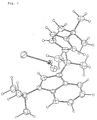
- Fig.1 is an Ortep diagram of the metallocene prepared in Example 2 obtained by X-ray crystallography.
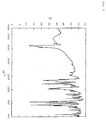
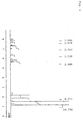
- Fig.2, 3 and 4 are the IR spectrum, the 1H-NMR spectrum, and the mass spectrum, respectively, of the metallocene prepared in Example 2.
- metallocenes of the present invention include not only those represented by formula (I) and formulae (II) and (III) described later but also their enantiomers, the present invention will be hereinafter explained with reference to those of formulae (I), (II) and (III) representatively.
- metallocenes represented by formula (I) those wherein Y is a carbon atom are preferred. More preferred are those wherein Y is a carbon atom; and R4 and R5 are connected to each other to form a ring, and particularly an indenyl ring, that is, compounds represented by formula (II): wherein M, X1, X2, R1, R2, R3, R6, R7, and n are as defined above; and Y' represents a carbon atom.
- M is preferably Zr or Hf. Included in preferred metallocenes of formula (I) wherein M is Zr are those represented by formula (III): wherein X1, X2, R1, R2, R3, R6, and R7 are defined above; and Y' represents a carbon atom.
- Metallocenes of formula (III) wherein Zr is replaced with Hf are also preferred.
- All the compounds represented by formulae (I) through (III) are novel metallocenes having an asymmetric ligand.
- the substituents on each cyclopentadienyl ring at the respective positions as specified in the formulae are selected from hydrocarbon groups having from 1 to 10 carbon atoms (e.g., alkyl, aryl, alkylaryl, and arylalkyl groups), alkylsilyl groups (e.g., trialkylsilyl groups) and arylsilyl groups (e.g., triarylsilyl groups), and preferably selected from those which are more bulky than a methyl group, such as a t-butyl group.
- nBt is a normal butyl group
- tBu is a t-butyl group
- THF is tetrahydrofuran.
- the reactions shown by schemes (1) and (2) are to introduce a substituent onto the indene ring or the cyclopentadiene ring and are carried out by generating an indenyl anion or a cyclopentadienyl anion in a dry THF using an alkali metal, followed by reacting the anion with a halogenated alkyl compound at room temperature to 80°C.
- the reaction of scheme (3) is to form a fulvene, wherein a cyclopentadienyl anion is generated in a dry THF using an alkali metal and is reacted with a ketone.
- the reaction of scheme (4) is to bond the indene compound obtained by the reaction of scheme (1) and the fulvene compound produced through the reactions of schemes (2) and (3), wherein an indenyl anion is generated in a dry THF using an alkali metal and is reacted with the fulvene compound.
- the reaction of scheme (5) is to form a coordination compound of the present invention, wherein a dianion (ligand) of the compounds obtained by the reaction of scheme (4) is generated in a dry THF and is reacted with a halogenated metal at a temperature of not higher than -20°C.
- zirconocenes of formula (I) wherein M is zirconium are ethylene(4-methylcyclopentadienyl)(3'-methylindenyl)zirconium dichloride, ethylene(4-t-butylcyclopentadienyl)(3'-methylindenyl)zirconium dichloride, ethylene(4-t-butylcyclopentadienyl)(3'-t-butylindenyl)zirconium dichloride, ethylene(4-methylcyclopentadienyl)(3'-t-butylindenyl)zirconium dichloride, ethylene(4-methylcyclopentadienyl)(3'-trimethylsilylindenyl)zirconium dichloride, isopropylidene(4-methylcyclopentadienyl)(3'-methylindenyl)zirconium dichloride, isopropylidene(4-t-t-
- hafnocenes of formula (I) wherein M is hafnium are ethylene(4-methylcyclopentadienyl)(3'-methylindenyl)hafnium dichloride, ethylene(4-t-butylcyclopentadienyl)(3'-methylindenyl)hafnium dichloride, ethylene(4-t-butylcyclopentadienyl)(3'-t-butylindenyl)hafnium dichloride, ethylene(4-methylcyclopentadienyl)(3'-t-butylindenyl)hafnium dichloride, ethylene(4-methylcyclopentadienyl)(3'-trimethylsilylindenyl)hafnium dichloride, isopropylidene(4-methylcyclopentadienyl)(3'-methylindenyl)hafnium dichloride, isopropylidene(4-t-t-
- the ligand has such a structure as providing no meso form which catalyzes production of atactic polypropylene. It is important that one of the two stereoisomers should have a considerably low activity or be inactive.
- the zirconocene of formula (III) includes two stereoisomers as shown by the following formulas (IV)-A and (IV)-B, each of which is a racemic modification but not a meso form.
- R1, R2, R3, R6, R7, X1, X2, and Y' are as defined above.
- isomer (B) (the metallocenes of formula (I) wherein R1 is a hydrogen atom) catalyzes production of highly isotactic polyolefins
- isomer (A) (those wherein R2 is a hydrogen atom) has no or very low polymerization activity and produces no substantial atactic polyolefin. Therefore, a highly isotactic polyolefin can be produced even if the metallocene used as a catalyst component is a mixture of isomers (A) and (B). That is, there is no need to remove isomer (A) in the preparation of the complex. This is a point greatly different from the conventional metallocenes and is thus characteristic of the present invention.
- organoaluminumoxy compounds are preferably used.
- suitable organoaluminumoxy compounds include partial hydrolysis products of organoaluminum compounds (e.g., trialkylaluminum and dialkylaluminum dichloride).
- aluminoxane compounds represented by formula (V) or (VI) are particularly preferred.
- R8 may be the same or different and each represents a hydrocarbon group such as an alkyl group (e.g., methyl, ethyl, propyl, butyl, or isobutyl, and preferably methyl); and m represents an integer of from 4 to 100, preferably 6 or greater, and more preferably 10 or greater.
- alkyl group e.g., methyl, ethyl, propyl, butyl, or isobutyl, and preferably methyl
- m represents an integer of from 4 to 100, preferably 6 or greater, and more preferably 10 or greater.
- aluminoxane compounds are well known as described in H. Sinn, Transition Metals and Organometallics as Catalysts for Olefin Polymerization , p.257, ed. by W. Kaminsky and H. Sinn, Springer Verlag, Berlin (1988).
- they may be obtained by adding a trialkylaluminum to a suspension of a crystal water-containing salt (e.g., copper sulfate hydrate or aluminum sulfate hydrate) in a hydrocarbon solvent.
- a crystal water-containing salt e.g., copper sulfate hydrate or aluminum sulfate hydrate
- Olefins which may be polymerized according to the process of the present invention include olefins, cyclic olefins and dienes, such as propylene, 1-butene, 2-butene, 1-pentene, 4-methyl-1-pentene, cyclopentene, norbornene, cyclopentadiene, butadiene, 1,5-hexadiene, and 1,4-hexadiene. These olefins may be used either individually or as a mixture of two or more thereof.
- the present invention is particularly advantageous in the polymerization of olefins having 3 or more carbon atoms.
- the polymerization may be carried out by any of liquid phase polymerization, slurry polymerization and gas phase polymerization.
- Solvents to be used in liquid phase polymerization include hydrocarbon solvents capable of dissolving both the metallocene and organoaluminumoxy compound, such as aromatic hydrocarbons, e.g., benzene, toluene, o-xylene, m-xylene, p-xylene, ethylbenzene, butylbenzene, mesitylene, and chlorobenzene, with toluene and xylene being preferred.
- aromatic hydrocarbons e.g., benzene, toluene, o-xylene, m-xylene, p-xylene, ethylbenzene, butylbenzene, mesitylene, and chlorobenzene, with toluene and xylene being preferred.
- the metallocene and organoaluminumoxy compound may be supplied to a reaction system either separately or in the form of a mixture thereof.
- the metallocene of the present invention may also be used as being supported on a carrier, such has silica, alumina, or magnesium chloride.
- the concentration of the metallocene having the catalytic activity (i.e., isomer (B)) in a reaction solution (including a solvent) of the reaction system is not particularly limited, and it is preferably used in an amount of from 10 ⁇ 10 to 10 ⁇ 3 mol/l, with the Al/M molar ratio (M: Ti, Zr and Hf) being 10 or more, and particularly 100 or more.
- olefin pressure of the reaction system and the polymerization temperature are not critical, it is preferred to carry out the reaction at a temperature of from -30° to 200°C, more preferably from 0° to 80°C, and most preferably from 50 to 70°C, at an olefin pressure of from normal pressure to 50 kg/cm2.
- Molecular weight control during the polymerization can be effected by any known means, such as proper selection of a reaction temperature or hydrogen introduction.
- the metallocene and organoaluminumoxy compound are employed in the form of a solid catalyst supported on an inorganic oxide carrier together with an organoaluminum compound (other than organoaluminumoxy compounds) as a co-catalyst thereby to exhibit extremely effective catalyzing performance.
- the inorganic oxide as a carrier includes silica, alumina, magnesia, aluminosilicate, boron oxide, and calcium oxide.
- the above inorganic oxide carrier having been sintered at a high temperature and treated with an organoaluminum compound is preferred.
- the amounts of the metallocene and the organoaluminumoxy compound to be supported on the inorganic oxide carrier preferably range from 0.05 to 10% by weight and from 0.01 to 70% by weight, and more preferably from 0.5 to 5% by weight and from 0.01 to 30% by weight, respectively, based on the carrier.
- the organoaluminum compound which can be used as a co-catalyst preferably includes trialkylaluminum compounds, and particularly triisobutylaluminum, trimethylaluminum, and trioctylaluminum.
- concentration of the organoaluminum compound in a reaction solution of the reaction system is usually from 0.001 to 1 mmol/l in terms of aluminum.
- the organoaluminum compound may be premixed with the metallocene-carried solid catalyst immediately before polymerization.
- ⁇ -Olefins which are copolymerized with ethylene according to the above-mentioned preferred embodiment of the present invention include olefins, cyclic olefins and dienes, such as propylene, 1-butene, 1-pentene, 1-hexene, 1-heptene, 1-octene, 1-decene, 4-methyl-1-pentene, cyclopentene, cyclopentadiene, butadiene, 1,5-hexadiene, 1,4-hexadiene, and 1,4-pentadiene. These comonomers may be used either individually or in combination of two or more thereof.
- the molar ratio of ethylene to ⁇ -olefin in the ethylene copolymer is not particularly limited but preferably ranges from 0.5/1 to 10000/1, and particularly from 10/1 to 1000/1.
- the possible lowest density that the resulting copolymer may have is 0.80.
- Ethylene copolymers having a density of from 0.89 to 0.94 are preferably used.
- the copolymerization may be carried out by any of liquid phase polymerization, slurry polymerization and gas phase polymerization, and preferably slurry polymerization in isobutane or gas phase polymerization. Multi-stage polymerization is also feasible. Size control of the ethylene copolymer may be effected by prepolymerization of the olefins. While the ethylene pressure of the reaction system is not particularly limited, it is preferably from normal pressure to 1000 Kg/cm2 and more preferably from 1 to 40 Kg/cm2.
- the catalyst system exhibits high activity per unit co-catalyst and undergoes no change in activity with time, and an ethylene- ⁇ -olefin copolymer having a low melting point, high transparency, and a narrow composition distribution can be produced.
- the molecular weight of the polyolefins obtained was estimated through gel-permeation chromatography using "Waters-150C” and a column “Shodex”.
- the molecular weight of the ethylene- ⁇ -olefin copolymers obtained was evaluated in terms of a melt flow rate (hereinafter abbreviated as MFR) as measured at 190°C under a load of 2.16 kg in accordance with JIS K-6760.
- MFR melt flow rate
- HLMI High-load melt index
- the ratio of an ⁇ -olefin in the ethylene- ⁇ -olefin copolymers was expressed by the number of branches in the polymer main chain as determined by the FT-IR analysis. Specifically, the number of branches per 1000 carbon atoms in the polymer main chain was calculated from a ratio of the peak height at 1380 cm ⁇ 1 of the IR spectrum of a sample copolymer to that at 4250 cm ⁇ 1 of the IR spectrum of polyethylene having no branching.
- the Ortep diagram of the crystal obtained by X-ray crystallography is shown in Fig.1.
- the IR spectrum of the crystal was measured according to the KBr method using an IR analyzer "Perkin-Elmer 5150" and it is shown in Fig.2.
- the 1H-NMR spectrum of the crystal (in CDCl3) was also measured using the NMR analyzer "EX-400” and shown in Fig.3.
- the mass spectrum was measured according to the direct introduction method using a mass spectrometer "JMS-AX500” manufactured by Japan Electron Optics Laboratory Co., Ltd. and it is shown in Fig.4.
- Propylene was polymerized in the same manner as in Example 1, except for replacing isopropylidene(4-methylcyclopentadienyl)(3'-t-butylindenyl)zirconium dichloride with ethylenebis(indenyl)zirconium dichloride. There was obtained 40 g of isotactic polypropylene. mm%: 94.2% Molecular Weight: 65000
- Propylene was polymerized in the same manner as in Example 2, except for replacing isopropylidene(4-t-butylcyclopentadienyl)(3'-t-butylindenyl)zirconium dichloride with a mixture thereof with its stereoisomer (purity: 60%). There was obtained 25 g of highly isotactic polypropylene. mm%: 99.6%
- Propylene was polymerized in the same manner as in Example 2, except for replacing isopropylidene(4-t-butylcyclopentadienyl)(3'-t-butylindenyl)zirconium dichloride with an isomeric mixture of dimethylsilylbis(2,3,5-trimethylcyclopentadienyl)zirconium dichloride (racemic modification/meso form: 60%). There was obtained 30 g of a mixture of isotactic polypropylene and atactic polypropylene. mm%: 78.5%
- 4-Methylpentene-1 was polymerized in the same manner as in Example 5, except for replacing isopropylidene(4-t-butylcyclopentadienyl)(3'-t-butylindenyl)zirconium dichloride with zirconocene dichloride, to obtain 9 g of atactic poly(4-methylpentene-1).
- Polymerization reaction was carried out in the same manner as in Example 5, except for replacing 4-methylpentene-1 to be polymerized with 20 ml of 1,5-hexadiene, to obtain 16 g of a cyclized polymer.
- Polymerization reaction was carried out in the same manner as in Example 5, except for replacing 4-methylpentene-1 to be polymerized with 20 ml of 1,7-hexadiene, to obtain 9 g of a polymer.
- Example 2 To the residue was added 7.5 ml of a 1 mmol/l hexane solution of isopropylidene(4-t-butylcyclopentadienyl)(3'-t-butylindenyl)zirconium dichloride as prepared in Example 2, and the mixture was allowed to react for 1 hour, followed by drying under reduced pressure to obtain a solid catalyst (designated A type).
- a solid catalyst component was prepared in the same manner as in Process A described in Example 8, except for using silica having been treated in hexane with 0.6 mmol of triethylaluminum per gram of silica and changing the amounts of methylaluminoxane and the complex as shown in Table 2 below (designated B type).
- Ethylene and 1-hexene were copolymerized in the same manner as in Example 8, except for using the above-prepared B type catalyst.
- Ethylene and 1-hexene were copolymerized in the same manner as in Example 8 or 9, except for using A type or B type catalyst prepared by using alumina as a carrier and changing the amounts of the complex and methylaluminoxane as shown in Table 2 below.
- Ethylene and 1-hexene were copolymerized in the same manner as in Example 8, except for replacing silica as a carrier with magnesia and changing the amounts of methylaluminoxane and the complex catalyst as shown in Table 2 below.
- Ethylene and 1-hexene were copolymerized in the same manner as in Example 8, except for replacing silica as a carrier with boron oxide and changing the amounts of methylaluminoxane and the complex catalyst as shown in Table 2 below.
- Ethylene and 1-hexene were copolymerized in the same manner as in Example 8, except for replacing the catalyst used in Example 8 with zirconocene dichloride having the composition shown in Table 2 below (prepared by Process A).
- Each of the catalysts used in Examples 8 to 14 and Comparative Example 5 was evaluated for activity in terms of specific rate (RSP) calculated by dividing an amount (g) of polymers produced with 1 g of the catalyst component for 1 hour, by the ethylene pressure (atm) in the reaction system. Further, physical properties of each of the ethylene/1-hexene copolymers obtained in these Examples were measured. The results obtained are shown in Table 2.
- RSP specific rate
- Example 8 The catalyst used in Example 8 was preserved in an ampule containing nitrogen for a long time, and the change in activity in terms of RSP (per gram of methylaluminoxane) was observed with time. The results obtained are shown in Table 3 below.
- Ethylene and 1-hexene were copolymerized in the same manner as in Example 8, except for conducting polymerization in the co-presence of hydrogen.
- the resulting ethylene copolymer had an MFR of 2.3.
- the asymmetric metallocene of formula (I) can be used as a catalyst component for olefin polymerization without requiring any treatment for separation of an isomer, such as a high technique of fractional crystallization, to produce an industrially valuable poly- ⁇ -olefin with very high stereospecificity and reduced chemical inversion in its polymer chain at good efficiency.
- an ethylene- ⁇ -olefin copolymer having a high molecular weight and a low and mono-modal melting point (this means that the copolymer has a narrow composition distribution) can be obtained with good activity per unit organoaluminumoxy component.
Landscapes
- Chemical & Material Sciences (AREA)
- Organic Chemistry (AREA)
- Health & Medical Sciences (AREA)
- Chemical Kinetics & Catalysis (AREA)
- Medicinal Chemistry (AREA)
- Polymers & Plastics (AREA)
- Transition And Organic Metals Composition Catalysts For Addition Polymerization (AREA)
Applications Claiming Priority (8)
| Application Number | Priority Date | Filing Date | Title |
|---|---|---|---|
| JP314978/91 | 1991-11-28 | ||
| JP31497891A JP3192186B2 (ja) | 1991-11-28 | 1991-11-28 | 非対称な配位子を有するジルコニウム化合物及び触媒成分 |
| JP31927591 | 1991-12-03 | ||
| JP319275/91 | 1991-12-03 | ||
| JP114985/92 | 1992-05-07 | ||
| JP11498592A JP3205384B2 (ja) | 1991-12-03 | 1992-05-07 | ポリオレフィンの製造方法 |
| JP23739392A JP3284320B2 (ja) | 1992-09-04 | 1992-09-04 | オレフィン共重合体の製造方法 |
| JP237393/92 | 1992-09-04 |
Publications (2)
| Publication Number | Publication Date |
|---|---|
| EP0544308A1 true EP0544308A1 (fr) | 1993-06-02 |
| EP0544308B1 EP0544308B1 (fr) | 1998-02-18 |
Family
ID=27470218
Family Applications (1)
| Application Number | Title | Priority Date | Filing Date |
|---|---|---|---|
| EP92120228A Expired - Lifetime EP0544308B1 (fr) | 1991-11-28 | 1992-11-26 | Nouveau métallocène et procédé de préparation de polyoléfines d'utilisant |
Country Status (3)
| Country | Link |
|---|---|
| US (2) | US5329031A (fr) |
| EP (1) | EP0544308B1 (fr) |
| DE (1) | DE69224463T2 (fr) |
Cited By (8)
| Publication number | Priority date | Publication date | Assignee | Title |
|---|---|---|---|---|
| EP0650973A1 (fr) * | 1993-10-30 | 1995-05-03 | BASF Aktiengesellschaft | Complexes metallocènes racémiques, et procédé pour leur préparation |
| EP0659756A1 (fr) * | 1993-12-27 | 1995-06-28 | Hoechst Aktiengesellschaft | Métallocènes |
| US5532396A (en) * | 1993-12-27 | 1996-07-02 | Hoechst Aktiengesellschaft | Metallocene compound |
| EP0722949A3 (fr) * | 1995-01-23 | 1996-09-18 | Montell Technology Company Bv | Procédé de préparation de composés cyclopentadiényles |
| EP0802206A3 (fr) * | 1996-04-19 | 1997-11-05 | Fina Technology, Inc. | Procédé et catalyseur pour la production de polyoléfines à bas poids moléculaires |
| EP0755948A3 (fr) * | 1995-06-29 | 1998-01-07 | Ciba SC Holding AG | Procédé pour la fabrication de polymères oléfiniques stabilisés |
| EP0848022A1 (fr) * | 1996-12-16 | 1998-06-17 | Fina Technology, Inc. | Production de copolymères éthylène/butène en présence d'un unique catalyseur métallocène et d'un unique monomère |
| WO1998051716A1 (fr) * | 1997-05-13 | 1998-11-19 | Montell Technology Company B.V. | Procede de preparation de polyolefines tactioselectives en phase condensee a l'aide d'hafnocenes |
Families Citing this family (51)
| Publication number | Priority date | Publication date | Assignee | Title |
|---|---|---|---|---|
| USRE37573E1 (en) * | 1990-11-12 | 2002-03-05 | Basell Polyolefin Gmbh | Process for the preparation of an olefin polymer using metallocenes containing specifically substituted indenyl ligands |
| DE59308494D1 (de) * | 1992-08-03 | 1998-06-10 | Targor Gmbh | Verfahren zur Herstellung eines Olefinpolymers unter Verwendung von Metallocenen mit speziell substituierten Indenylliganden |
| IT1255365B (it) * | 1992-09-15 | 1995-10-31 | Enichem Polimeri | Catalizzatore e procedimento per la polimerizzazione di alfa-olefine |
| JPH0733812A (ja) * | 1993-07-02 | 1995-02-03 | Idemitsu Kosan Co Ltd | スチレン系重合体製造触媒及びそれを用いたスチレン系重合体の製造方法 |
| US5486585A (en) * | 1993-08-26 | 1996-01-23 | Exxon Chemical Patents Inc. | Amidosilyldiyl bridged catalysts and method of polymerization using said catalysts. |
| WO1995031490A1 (fr) * | 1994-05-12 | 1995-11-23 | Showa Denko K. K. | Polymere du propylene, son procede de production, sa composition, constituant de catalyseur de polymerisation et son procede de production |
| US6184328B1 (en) | 1994-09-07 | 2001-02-06 | Showa Denko Kabushiki Kaisha | Propylene-based polymer, method for its production, composition thereof, catalyst component for polymerization, and method for its production |
| US5420320A (en) * | 1994-06-08 | 1995-05-30 | Phillips Petroleum Company | Method for preparing cyclopentadienyl-type ligands and metallocene compounds |
| KR100368194B1 (ko) * | 1994-10-13 | 2003-04-03 | 니혼폴리올레핀 가부시키가이샤 | 폴리올레핀제조용촉매성분,당해촉매성분을포함하는폴리올레핀제조용촉매및당해촉매존재하의폴리올레핀의제조방법 |
| US5556997A (en) * | 1995-04-24 | 1996-09-17 | Albemarle Corporation | Enhanced synthesis of racemic metallocenes |
| US5883278A (en) * | 1995-04-24 | 1999-03-16 | Albemarle Corporation | Enhanced synthesis of racemic metallocenes |
| US5869570A (en) * | 1996-03-19 | 1999-02-09 | Energy & Environmental International, L.C. | Composition of and process for forming polyalphaolefin drag reducing agents |
| US6015779A (en) | 1996-03-19 | 2000-01-18 | Energy & Environmental International, L.C. | Methods for forming amorphous ultra-high molecular weight polyalphaolefin drag reducing agents |
| US6225426B1 (en) * | 1996-04-10 | 2001-05-01 | Uniroyal Chemical Company, Inc. | Process for producing polyolefin elastomer employing a metallocene catalyst |
| US6759499B1 (en) | 1996-07-16 | 2004-07-06 | Exxonmobil Chemical Patents Inc. | Olefin polymerization process with alkyl-substituted metallocenes |
| US5900497A (en) * | 1996-12-20 | 1999-05-04 | Union Carbide Chemicals & Plsatics Technology Corporation | Process for preparing metallocene procatalysts |
| US6180736B1 (en) * | 1996-12-20 | 2001-01-30 | Exxon Chemical Patents Inc | High activity metallocene polymerization process |
| US6225427B1 (en) | 1998-10-15 | 2001-05-01 | Uniroyal Chemical Company, Inc. | Olefin polymerization process employing metallocene catalyst provided by cocatalyst activation of a metallocene procatalyst |
| US6339134B1 (en) | 1999-05-06 | 2002-01-15 | Univation Technologies, Llc | Polymerization process for producing easier processing polymers |
| US6281306B1 (en) | 1999-12-16 | 2001-08-28 | Univation Technologies, Llc | Method of polymerization |
| US6858767B1 (en) | 2000-08-11 | 2005-02-22 | Uniroyal Chemical Company, Inc. | Process for producing liquid polyalphaolefin polymer, metallocene catalyst therefor, the resulting polymer and lubricant containing same |
| US6815011B2 (en) | 2000-11-27 | 2004-11-09 | Energy & Environmental International, L.C. | Alpha olefin monomer partitioning agents for drag reducing agents and methods of forming drag reducing agents using alpha olefin monomer partitioning agents |
| CN1310960C (zh) | 2001-01-16 | 2007-04-18 | 能源及环境国际有限公司 | 用作减阻剂的无定形超高分子量聚烯烃的形成方法 |
| US7012046B2 (en) | 2001-06-08 | 2006-03-14 | Eaton Gerald B | Drag reducing agent slurries having alfol alcohols and processes for forming drag reducing agent slurries having alfol alcohols |
| CA2447769C (fr) | 2001-06-13 | 2011-07-26 | Energy & Environmental International, L.C. | Reacteurs de polymerisation en masse et procedes de polymerisation |
| BR0315341B1 (pt) | 2002-10-15 | 2014-02-18 | Adesivos compreendendo poliolefina. | |
| US7223822B2 (en) | 2002-10-15 | 2007-05-29 | Exxonmobil Chemical Patents Inc. | Multiple catalyst and reactor system for olefin polymerization and polymers produced therefrom |
| WO2004094487A1 (fr) | 2003-03-21 | 2004-11-04 | Dow Global Technologies, Inc. | Procede de polymerisation d'olefines avec controle de la morphologie |
| US20050148742A1 (en) * | 2004-01-02 | 2005-07-07 | Hagerty Robert O. | Method for controlling sheeting in gas phase reactors |
| US7985811B2 (en) * | 2004-01-02 | 2011-07-26 | Univation Technologies, Llc | Method for controlling sheeting in gas phase reactors |
| US20070073012A1 (en) * | 2005-09-28 | 2007-03-29 | Pannell Richard B | Method for seed bed treatment before a polymerization reaction |
| WO2007005400A2 (fr) | 2005-07-01 | 2007-01-11 | Albemarle Corporation | Compositions de sel d'aluminoxanate possedant une stabilite amelioree dans des solvants aromatiques et aliphatiques |
| EP1803747A1 (fr) | 2005-12-30 | 2007-07-04 | Borealis Technology Oy | Catalyseur de polymérisation à surface modifiée pour réduire la formation de gels dans des films |
| US7601255B2 (en) | 2006-09-06 | 2009-10-13 | Chemtura Corporation | Process for removal of residual catalyst components |
| TW200932762A (en) | 2007-10-22 | 2009-08-01 | Univation Tech Llc | Polyethylene compositions having improved properties |
| EP2222723B1 (fr) | 2007-12-18 | 2013-02-27 | Univation Technologies, LLC | Procédé pour régler l'activité d'un catalyseur bimodal au cours d'une polymérisation |
| EP2172490A1 (fr) | 2008-10-03 | 2010-04-07 | Ineos Europe Limited | Procédé de polymérisation |
| MY173869A (en) | 2009-06-16 | 2020-02-25 | Chevron Phillips Chemical Co Lp | Oligomerization of alpha olefins using metallocene-ssa catalyst systems and use of the resultant polyalphaolefins to prepare lubricant blends |
| US8067652B2 (en) | 2009-08-13 | 2011-11-29 | Chemtura Corporation | Processes for controlling the viscosity of polyalphaolefins |
| WO2011044150A1 (fr) * | 2009-10-06 | 2011-04-14 | Chevron Phillips Chemical Company Lp | Oligomérisation de cires d'oléfine utilisant des systèmes de catalyseur à base de métallocène |
| EP2357035A1 (fr) | 2010-01-13 | 2011-08-17 | Ineos Europe Limited | Stockage et/ou transport de poudre de polymère et/ou récipients de dégazage |
| EP2383298A1 (fr) | 2010-04-30 | 2011-11-02 | Ineos Europe Limited | Procédé de polymérisation |
| EP2383301A1 (fr) | 2010-04-30 | 2011-11-02 | Ineos Europe Limited | Procédé de polymérisation |
| WO2012071205A2 (fr) | 2010-11-22 | 2012-05-31 | Albemarle Corporation | Compositions d'activateurs, leur préparation et leur utilisation en catalyse |
| US9394381B2 (en) | 2010-11-29 | 2016-07-19 | Ineos Sales (Uk) Limited | Polymerisation control process |
| US8383740B1 (en) | 2011-08-12 | 2013-02-26 | Ineos Usa Llc | Horizontal agitator |
| US9181367B2 (en) | 2011-10-17 | 2015-11-10 | Ineos Europe Ag | Polymer degassing process control |
| PT2841471T (pt) | 2012-04-27 | 2020-05-29 | Grace W R & Co | Composições de ativador, a sua preparação e a sua utilização em catalisadores |
| CN107001504B (zh) | 2014-11-25 | 2020-07-17 | 尤尼威蒂恩技术有限责任公司 | 控制聚烯烃熔融指数的方法 |
| US9732300B2 (en) | 2015-07-23 | 2017-08-15 | Chevron Phillipa Chemical Company LP | Liquid propylene oligomers and methods of making same |
| US20240209124A1 (en) | 2021-04-30 | 2024-06-27 | Exxonmobil Chemical Patents Inc. | Processes for transitioning between different polymerization catalysts in a polymerization reactor |
Citations (2)
| Publication number | Priority date | Publication date | Assignee | Title |
|---|---|---|---|---|
| EP0316155A2 (fr) * | 1987-11-09 | 1989-05-17 | Chisso Corporation | Composé de métal de transition contenant un ligand ponté de bis(cyclopentadiényl substitué) |
| EP0498675A2 (fr) * | 1991-02-07 | 1992-08-12 | Mitsubishi Chemical Corporation | Production de polymères d'alpha-oléfines |
Family Cites Families (10)
| Publication number | Priority date | Publication date | Assignee | Title |
|---|---|---|---|---|
| DE3751694T2 (de) * | 1987-04-03 | 1996-08-01 | Fina Technology | Metallocen-katalysatorsysteme für die Polymersation von Olefinen, mit einer Silizium-Hydrocarbyl-Brücke. |
| JPH0713075B2 (ja) * | 1988-06-20 | 1995-02-15 | チッソ株式会社 | 橋架け構造のビス置換シクロペンタジエニル配位子を有するジルコニウム化合物 |
| JP2587251B2 (ja) * | 1987-11-09 | 1997-03-05 | チッソ株式会社 | 立体規則性オレフィン重合体製造用触媒 |
| JPH0720973B2 (ja) * | 1988-06-20 | 1995-03-08 | チッソ株式会社 | 橋架け構造のビス置換シクロペンタジエニル配位子を有するハフニウム化合物 |
| US5017714A (en) * | 1988-03-21 | 1991-05-21 | Exxon Chemical Patents Inc. | Silicon-bridged transition metal compounds |
| DE3826074A1 (de) * | 1988-07-30 | 1990-02-01 | Hoechst Ag | Propylen-isoblockpolymer und verfahren zu seiner herstellung |
| DE3826075A1 (de) * | 1988-07-30 | 1990-02-01 | Hoechst Ag | 1-olefin-isoblockpolymer und verfahren zu seiner herstellung |
| DE3840772A1 (de) * | 1988-12-03 | 1990-06-07 | Hoechst Ag | Verfahren zur herstellung einer heterogenen metallocenkatalysatorkomponente |
| IT1237398B (it) * | 1989-01-31 | 1993-06-01 | Ausimont Srl | Catalizzatori per la polimerizzazione di olefine. |
| DE4005947A1 (de) * | 1990-02-26 | 1991-08-29 | Basf Ag | Loesliche katalysatorsysteme zur polymerisation von c(pfeil abwaerts)2(pfeil abwaerts)- bis c(pfeil abwaerts)1(pfeil abwaerts)(pfeil abwaerts)0(pfeil abwaerts)-alk-1-enen |
-
1992
- 1992-11-26 EP EP92120228A patent/EP0544308B1/fr not_active Expired - Lifetime
- 1992-11-26 DE DE69224463T patent/DE69224463T2/de not_active Expired - Fee Related
- 1992-11-30 US US07/982,894 patent/US5329031A/en not_active Expired - Lifetime
-
1994
- 1994-03-15 US US08/212,931 patent/US5349032A/en not_active Expired - Fee Related
Patent Citations (2)
| Publication number | Priority date | Publication date | Assignee | Title |
|---|---|---|---|---|
| EP0316155A2 (fr) * | 1987-11-09 | 1989-05-17 | Chisso Corporation | Composé de métal de transition contenant un ligand ponté de bis(cyclopentadiényl substitué) |
| EP0498675A2 (fr) * | 1991-02-07 | 1992-08-12 | Mitsubishi Chemical Corporation | Production de polymères d'alpha-oléfines |
Non-Patent Citations (1)
| Title |
|---|
| KAMINSKY W., ET AL.: "STANDARDIZED POLYMERIZATIONS OF ETHYLENE AND PROPENE WITH BRIDGED AND UNBRIDGED METALLOCENE DERIVATIVES: A COMPARISON.", MAKROMOLEKULARE CHEMIE, MACROMOLECULAR CHEMISTRY AND PHYSICS., WILEY - V C H VERLAG GMBH & CO. KGAA, CH, vol. 193., no. 07., 1 July 1992 (1992-07-01), CH, pages 1643 - 1651., XP000282066, ISSN: 0025-116X, DOI: 10.1002/macp.1992.021930708 * |
Cited By (17)
| Publication number | Priority date | Publication date | Assignee | Title |
|---|---|---|---|---|
| US5670683A (en) * | 1993-10-30 | 1997-09-23 | Basf Aktiengesellschaft | Racemic metallocene complexes and their preparation |
| EP0650973A1 (fr) * | 1993-10-30 | 1995-05-03 | BASF Aktiengesellschaft | Complexes metallocènes racémiques, et procédé pour leur préparation |
| US5554776A (en) * | 1993-10-30 | 1996-09-10 | Basf Aktiengesellschaft | Racemic metallocene complexes and their preparation |
| US5543373A (en) * | 1993-12-27 | 1996-08-06 | Hoechst Ag | Metallocene compound |
| US5532396A (en) * | 1993-12-27 | 1996-07-02 | Hoechst Aktiengesellschaft | Metallocene compound |
| US5576260A (en) * | 1993-12-27 | 1996-11-19 | Hoechst Aktiengesellschaft | Metallocene-based catalysts |
| US5612428A (en) * | 1993-12-27 | 1997-03-18 | Hoechst Aktiengesellschaft | Process for preparing olefin polymer with catalyst containing metallocene |
| EP0659756A1 (fr) * | 1993-12-27 | 1995-06-28 | Hoechst Aktiengesellschaft | Métallocènes |
| US5741868A (en) * | 1993-12-27 | 1998-04-21 | Hoechst Aktiengesellschaft | Olefin polymerization process by using a substituted indenyl containing metallocene catalyst |
| RU2142466C1 (ru) * | 1993-12-27 | 1999-12-10 | Хехст АГ | Металлоцены, содержащая их каталитическая система, способ полимеризации олефинов, полиолефин, формованное изделие |
| EP0722949A3 (fr) * | 1995-01-23 | 1996-09-18 | Montell Technology Company Bv | Procédé de préparation de composés cyclopentadiényles |
| US6043403A (en) * | 1995-01-23 | 2000-03-28 | Montell Technology Company Bv | Process for the preparation of cyclopentadienyl compounds and compounds obtained therefrom |
| EP0755948A3 (fr) * | 1995-06-29 | 1998-01-07 | Ciba SC Holding AG | Procédé pour la fabrication de polymères oléfiniques stabilisés |
| US5955522A (en) * | 1995-06-29 | 1999-09-21 | Ciba Specialty Chemicals Corporation | Process for the preparation of stabilized olefin polymers |
| EP0802206A3 (fr) * | 1996-04-19 | 1997-11-05 | Fina Technology, Inc. | Procédé et catalyseur pour la production de polyoléfines à bas poids moléculaires |
| EP0848022A1 (fr) * | 1996-12-16 | 1998-06-17 | Fina Technology, Inc. | Production de copolymères éthylène/butène en présence d'un unique catalyseur métallocène et d'un unique monomère |
| WO1998051716A1 (fr) * | 1997-05-13 | 1998-11-19 | Montell Technology Company B.V. | Procede de preparation de polyolefines tactioselectives en phase condensee a l'aide d'hafnocenes |
Also Published As
| Publication number | Publication date |
|---|---|
| DE69224463T2 (de) | 1998-07-09 |
| EP0544308B1 (fr) | 1998-02-18 |
| US5349032A (en) | 1994-09-20 |
| US5329031A (en) | 1994-07-12 |
| DE69224463D1 (de) | 1998-03-26 |
Similar Documents
| Publication | Publication Date | Title |
|---|---|---|
| EP0544308B1 (fr) | Nouveau métallocène et procédé de préparation de polyoléfines d'utilisant | |
| US5539066A (en) | Process for the preparation of syndiotactic polyolefins having a broad molecular weight distribution | |
| US5439994A (en) | Method of polymerizing an olefin using a novel transition metal compound | |
| JP3285370B2 (ja) | ポリオレフィンの製造方法 | |
| KR19990082158A (ko) | 올레핀 중합 촉매계용 헤테로원자 치환 메탈로센 화합물 및 그의 제조방법 | |
| KR100311244B1 (ko) | 에틸렌/α-올레핀공중합체의제조방법 | |
| HU218358B (hu) | Szubsztituált indenil nemhídszerkezetű metallocének, ezeket tartalmazó katalizátor-rendszer és ennek alkalmazása olefinek polimerizációjában | |
| JPWO2003014166A1 (ja) | 重合体の製造方法 | |
| JP3779759B2 (ja) | メタロセン化合物及び触媒成分としてのその使用 | |
| US6627574B2 (en) | Process for the production of stereoregular polymers and elastomers of alpha-olefins and certain novel catalysts therefor | |
| JP3205384B2 (ja) | ポリオレフィンの製造方法 | |
| JP3264338B2 (ja) | 特定のアルミニウム化合物を含有する重合用触媒 | |
| EP1195386B1 (fr) | Composant catalyseur a metal de transition pour la polymerisation, et procede de production de polymere a l'aide de ce composant | |
| CA2160101C (fr) | Compose de type metallocene | |
| EP0426645B1 (fr) | Procédé de fabrication de copolymères syndiotactiques de propylène et d'oléfines | |
| US5733990A (en) | Catalyst for producing polyolefin and process for producing polyolefin | |
| KR100583822B1 (ko) | 비대칭성 비가교형 메탈로센 화합물 및 이를 포함하는촉매 조성물 | |
| JP4166324B2 (ja) | 遷移金属化合物、オレフィン重合用触媒及びオレフィン系重合体の製造方法 | |
| JP3704205B2 (ja) | 遷移金属化合物および該遷移金属化合物からなるオレフィン重合用触媒成分 | |
| JP3408594B2 (ja) | ポリオレフィンの製造方法 | |
| JP3176092B2 (ja) | 新規遷移金属化合物及びそれを用いたポリオレフィンの製造方法 | |
| JP3392205B2 (ja) | 新規遷移金属化合物およびこれを用いたオレフィンの重合方法 | |
| JP3284320B2 (ja) | オレフィン共重合体の製造方法 | |
| WO1991006582A1 (fr) | Homopolymeres syndiotactiques d'olefines | |
| KR980009293A (ko) | 2핵 헤테로 메탈로센 촉매와 그 제조 방법 |
Legal Events
| Date | Code | Title | Description |
|---|---|---|---|
| PUAI | Public reference made under article 153(3) epc to a published international application that has entered the european phase |
Free format text: ORIGINAL CODE: 0009012 |
|
| AK | Designated contracting states |
Kind code of ref document: A1 Designated state(s): DE FR GB |
|
| 17P | Request for examination filed |
Effective date: 19931029 |
|
| 17Q | First examination report despatched |
Effective date: 19941223 |
|
| GRAG | Despatch of communication of intention to grant |
Free format text: ORIGINAL CODE: EPIDOS AGRA |
|
| GRAG | Despatch of communication of intention to grant |
Free format text: ORIGINAL CODE: EPIDOS AGRA |
|
| GRAH | Despatch of communication of intention to grant a patent |
Free format text: ORIGINAL CODE: EPIDOS IGRA |
|
| GRAH | Despatch of communication of intention to grant a patent |
Free format text: ORIGINAL CODE: EPIDOS IGRA |
|
| GRAA | (expected) grant |
Free format text: ORIGINAL CODE: 0009210 |
|
| AK | Designated contracting states |
Kind code of ref document: B1 Designated state(s): DE FR GB |
|
| REF | Corresponds to: |
Ref document number: 69224463 Country of ref document: DE Date of ref document: 19980326 |
|
| ET | Fr: translation filed | ||
| PLBE | No opposition filed within time limit |
Free format text: ORIGINAL CODE: 0009261 |
|
| STAA | Information on the status of an ep patent application or granted ep patent |
Free format text: STATUS: NO OPPOSITION FILED WITHIN TIME LIMIT |
|
| 26N | No opposition filed | ||
| REG | Reference to a national code |
Ref country code: GB Ref legal event code: IF02 |
|
| PGFP | Annual fee paid to national office [announced via postgrant information from national office to epo] |
Ref country code: FR Payment date: 20051108 Year of fee payment: 14 |
|
| PGFP | Annual fee paid to national office [announced via postgrant information from national office to epo] |
Ref country code: GB Payment date: 20051123 Year of fee payment: 14 |
|
| PGFP | Annual fee paid to national office [announced via postgrant information from national office to epo] |
Ref country code: DE Payment date: 20051124 Year of fee payment: 14 |
|
| PG25 | Lapsed in a contracting state [announced via postgrant information from national office to epo] |
Ref country code: DE Free format text: LAPSE BECAUSE OF NON-PAYMENT OF DUE FEES Effective date: 20070601 |
|
| GBPC | Gb: european patent ceased through non-payment of renewal fee |
Effective date: 20061126 |
|
| REG | Reference to a national code |
Ref country code: FR Ref legal event code: ST Effective date: 20070731 |
|
| PG25 | Lapsed in a contracting state [announced via postgrant information from national office to epo] |
Ref country code: GB Free format text: LAPSE BECAUSE OF NON-PAYMENT OF DUE FEES Effective date: 20061126 |
|
| PG25 | Lapsed in a contracting state [announced via postgrant information from national office to epo] |
Ref country code: FR Free format text: LAPSE BECAUSE OF NON-PAYMENT OF DUE FEES Effective date: 20061130 |