EP0567149A1 - Nichtwässerige Sekundärbatterie - Google Patents
Nichtwässerige Sekundärbatterie Download PDFInfo
- Publication number
- EP0567149A1 EP0567149A1 EP93106656A EP93106656A EP0567149A1 EP 0567149 A1 EP0567149 A1 EP 0567149A1 EP 93106656 A EP93106656 A EP 93106656A EP 93106656 A EP93106656 A EP 93106656A EP 0567149 A1 EP0567149 A1 EP 0567149A1
- Authority
- EP
- European Patent Office
- Prior art keywords
- active material
- range
- lithium
- transition metal
- anode active
- Prior art date
- Legal status (The legal status is an assumption and is not a legal conclusion. Google has not performed a legal analysis and makes no representation as to the accuracy of the status listed.)
- Granted
Links
Images

Classifications
-
- H—ELECTRICITY
- H01—ELECTRIC ELEMENTS
- H01M—PROCESSES OR MEANS, e.g. BATTERIES, FOR THE DIRECT CONVERSION OF CHEMICAL ENERGY INTO ELECTRICAL ENERGY
- H01M4/00—Electrodes
- H01M4/02—Electrodes composed of, or comprising, active material
- H01M4/36—Selection of substances as active materials, active masses, active liquids
- H01M4/48—Selection of substances as active materials, active masses, active liquids of inorganic oxides or hydroxides
- H01M4/485—Selection of substances as active materials, active masses, active liquids of inorganic oxides or hydroxides of mixed oxides or hydroxides for inserting or intercalating light metals, e.g. LiTi2O4 or LiTi2OxFy
-
- H—ELECTRICITY
- H01—ELECTRIC ELEMENTS
- H01M—PROCESSES OR MEANS, e.g. BATTERIES, FOR THE DIRECT CONVERSION OF CHEMICAL ENERGY INTO ELECTRICAL ENERGY
- H01M10/00—Secondary cells; Manufacture thereof
- H01M10/05—Accumulators with non-aqueous electrolyte
- H01M10/056—Accumulators with non-aqueous electrolyte characterised by the materials used as electrolytes, e.g. mixed inorganic/organic electrolytes
-
- H—ELECTRICITY
- H01—ELECTRIC ELEMENTS
- H01M—PROCESSES OR MEANS, e.g. BATTERIES, FOR THE DIRECT CONVERSION OF CHEMICAL ENERGY INTO ELECTRICAL ENERGY
- H01M10/00—Secondary cells; Manufacture thereof
- H01M10/05—Accumulators with non-aqueous electrolyte
- H01M10/056—Accumulators with non-aqueous electrolyte characterised by the materials used as electrolytes, e.g. mixed inorganic/organic electrolytes
- H01M10/0564—Accumulators with non-aqueous electrolyte characterised by the materials used as electrolytes, e.g. mixed inorganic/organic electrolytes the electrolyte being constituted of organic materials only
- H01M10/0565—Polymeric materials, e.g. gel-type or solid-type
-
- H—ELECTRICITY
- H01—ELECTRIC ELEMENTS
- H01M—PROCESSES OR MEANS, e.g. BATTERIES, FOR THE DIRECT CONVERSION OF CHEMICAL ENERGY INTO ELECTRICAL ENERGY
- H01M4/00—Electrodes
- H01M4/02—Electrodes composed of, or comprising, active material
- H01M4/13—Electrodes for accumulators with non-aqueous electrolyte, e.g. for lithium-accumulators; Processes of manufacture thereof
- H01M4/131—Electrodes based on mixed oxides or hydroxides, or on mixtures of oxides or hydroxides, e.g. LiCoOx
-
- H—ELECTRICITY
- H01—ELECTRIC ELEMENTS
- H01M—PROCESSES OR MEANS, e.g. BATTERIES, FOR THE DIRECT CONVERSION OF CHEMICAL ENERGY INTO ELECTRICAL ENERGY
- H01M4/00—Electrodes
- H01M4/02—Electrodes composed of, or comprising, active material
- H01M4/64—Carriers or collectors
- H01M4/66—Selection of materials
- H01M4/661—Metal or alloys, e.g. alloy coatings
-
- H—ELECTRICITY
- H01—ELECTRIC ELEMENTS
- H01M—PROCESSES OR MEANS, e.g. BATTERIES, FOR THE DIRECT CONVERSION OF CHEMICAL ENERGY INTO ELECTRICAL ENERGY
- H01M6/00—Primary cells; Manufacture thereof
- H01M6/14—Cells with non-aqueous electrolyte
- H01M6/18—Cells with non-aqueous electrolyte with solid electrolyte
- H01M6/185—Cells with non-aqueous electrolyte with solid electrolyte with oxides, hydroxides or oxysalts as solid electrolytes
- H01M6/186—Only oxysalts-containing solid electrolytes
-
- H—ELECTRICITY
- H01—ELECTRIC ELEMENTS
- H01M—PROCESSES OR MEANS, e.g. BATTERIES, FOR THE DIRECT CONVERSION OF CHEMICAL ENERGY INTO ELECTRICAL ENERGY
- H01M4/00—Electrodes
- H01M4/02—Electrodes composed of, or comprising, active material
- H01M4/36—Selection of substances as active materials, active masses, active liquids
- H01M4/48—Selection of substances as active materials, active masses, active liquids of inorganic oxides or hydroxides
- H01M4/50—Selection of substances as active materials, active masses, active liquids of inorganic oxides or hydroxides of manganese
- H01M4/505—Selection of substances as active materials, active masses, active liquids of inorganic oxides or hydroxides of manganese of mixed oxides or hydroxides containing manganese for inserting or intercalating light metals, e.g. LiMn2O4 or LiMn2OxFy
-
- H—ELECTRICITY
- H01—ELECTRIC ELEMENTS
- H01M—PROCESSES OR MEANS, e.g. BATTERIES, FOR THE DIRECT CONVERSION OF CHEMICAL ENERGY INTO ELECTRICAL ENERGY
- H01M4/00—Electrodes
- H01M4/02—Electrodes composed of, or comprising, active material
- H01M4/36—Selection of substances as active materials, active masses, active liquids
- H01M4/48—Selection of substances as active materials, active masses, active liquids of inorganic oxides or hydroxides
- H01M4/52—Selection of substances as active materials, active masses, active liquids of inorganic oxides or hydroxides of nickel, cobalt or iron
- H01M4/525—Selection of substances as active materials, active masses, active liquids of inorganic oxides or hydroxides of nickel, cobalt or iron of mixed oxides or hydroxides containing iron, cobalt or nickel for inserting or intercalating light metals, e.g. LiNiO2, LiCoO2 or LiCoOxFy
-
- H—ELECTRICITY
- H01—ELECTRIC ELEMENTS
- H01M—PROCESSES OR MEANS, e.g. BATTERIES, FOR THE DIRECT CONVERSION OF CHEMICAL ENERGY INTO ELECTRICAL ENERGY
- H01M4/00—Electrodes
- H01M4/02—Electrodes composed of, or comprising, active material
- H01M4/62—Selection of inactive substances as ingredients for active masses, e.g. binders, fillers
- H01M4/621—Binders
-
- H—ELECTRICITY
- H01—ELECTRIC ELEMENTS
- H01M—PROCESSES OR MEANS, e.g. BATTERIES, FOR THE DIRECT CONVERSION OF CHEMICAL ENERGY INTO ELECTRICAL ENERGY
- H01M4/00—Electrodes
- H01M4/02—Electrodes composed of, or comprising, active material
- H01M4/62—Selection of inactive substances as ingredients for active masses, e.g. binders, fillers
- H01M4/624—Electric conductive fillers
-
- H—ELECTRICITY
- H01—ELECTRIC ELEMENTS
- H01M—PROCESSES OR MEANS, e.g. BATTERIES, FOR THE DIRECT CONVERSION OF CHEMICAL ENERGY INTO ELECTRICAL ENERGY
- H01M4/00—Electrodes
- H01M4/02—Electrodes composed of, or comprising, active material
- H01M4/62—Selection of inactive substances as ingredients for active masses, e.g. binders, fillers
- H01M4/624—Electric conductive fillers
- H01M4/625—Carbon or graphite
-
- H—ELECTRICITY
- H01—ELECTRIC ELEMENTS
- H01M—PROCESSES OR MEANS, e.g. BATTERIES, FOR THE DIRECT CONVERSION OF CHEMICAL ENERGY INTO ELECTRICAL ENERGY
- H01M6/00—Primary cells; Manufacture thereof
- H01M6/14—Cells with non-aqueous electrolyte
- H01M6/16—Cells with non-aqueous electrolyte with organic electrolyte
-
- H—ELECTRICITY
- H01—ELECTRIC ELEMENTS
- H01M—PROCESSES OR MEANS, e.g. BATTERIES, FOR THE DIRECT CONVERSION OF CHEMICAL ENERGY INTO ELECTRICAL ENERGY
- H01M6/00—Primary cells; Manufacture thereof
- H01M6/14—Cells with non-aqueous electrolyte
- H01M6/16—Cells with non-aqueous electrolyte with organic electrolyte
- H01M6/162—Cells with non-aqueous electrolyte with organic electrolyte characterised by the electrolyte
-
- H—ELECTRICITY
- H01—ELECTRIC ELEMENTS
- H01M—PROCESSES OR MEANS, e.g. BATTERIES, FOR THE DIRECT CONVERSION OF CHEMICAL ENERGY INTO ELECTRICAL ENERGY
- H01M6/00—Primary cells; Manufacture thereof
- H01M6/14—Cells with non-aqueous electrolyte
- H01M6/18—Cells with non-aqueous electrolyte with solid electrolyte
-
- H—ELECTRICITY
- H01—ELECTRIC ELEMENTS
- H01M—PROCESSES OR MEANS, e.g. BATTERIES, FOR THE DIRECT CONVERSION OF CHEMICAL ENERGY INTO ELECTRICAL ENERGY
- H01M6/00—Primary cells; Manufacture thereof
- H01M6/14—Cells with non-aqueous electrolyte
- H01M6/18—Cells with non-aqueous electrolyte with solid electrolyte
- H01M6/181—Cells with non-aqueous electrolyte with solid electrolyte with polymeric electrolytes
-
- Y—GENERAL TAGGING OF NEW TECHNOLOGICAL DEVELOPMENTS; GENERAL TAGGING OF CROSS-SECTIONAL TECHNOLOGIES SPANNING OVER SEVERAL SECTIONS OF THE IPC; TECHNICAL SUBJECTS COVERED BY FORMER USPC CROSS-REFERENCE ART COLLECTIONS [XRACs] AND DIGESTS
- Y02—TECHNOLOGIES OR APPLICATIONS FOR MITIGATION OR ADAPTATION AGAINST CLIMATE CHANGE
- Y02E—REDUCTION OF GREENHOUSE GAS [GHG] EMISSIONS, RELATED TO ENERGY GENERATION, TRANSMISSION OR DISTRIBUTION
- Y02E60/00—Enabling technologies; Technologies with a potential or indirect contribution to GHG emissions mitigation
- Y02E60/10—Energy storage using batteries
Definitions
- This invention relates to a nonaqueous secondary battery having high discharge capacity, excellent characteristics in charge-discharge cycle and assured safety.
- a nonaqueous secondary battery basically comprises an anode active material, an electrolyte and a cathode active material comprising a lithium metal or a lithium alloy.
- a cathode active material comprising a lithium metal or a lithium alloy.
- highly active tree-like lithium metal (dendrite) or mossy lithium metal (moss) is formed on the anode during repetition of charging and discharging.
- dendrite or the moss peels off to become in contact with the cathode active material of the battery or when it grows to touch the cathode active material directly, an inner short circuit is produced within the battery.
- TiS2 in which lithium ion can be intercalated and deintercalated
- LiTiS2 U.S. Patent No. 3,983,476
- WO2 having a rutile structure U.S. Patent No. 4,198,476
- spinel compounds such as Li x Fe(Fe2)O4 and Li x MnO4
- lithium compounds of electrochemically-synthesized Fe2O3 U.S. Patent No. 4,464,447)
- lithium compounds of Fe2O3 Japanese Patent Provisional Publication No.
- any of these combinations can not give a lithium secondary battery which has high capacity and high discharge potential of 3 V or higher.
- a compound that is scarcely changed in the crystalline structure during repetition of charging and discharging and that there is little restrict in the insertion amount of lithium ions is preferred as an anode active material.
- such compound is desired to produce a nonaqueous secondary battery having a high discharge potential and high discharge capacity and showing little the lowering of the discharge capacity during repeated charging and discharging.
- the present inventors have studied in order to obtain an anode active material having high discharge potential and high discharge capacity. As a result, they have found that the following lithium-inserted transition metal oxide satisfies the above required characteristics.
- the invention resides in a nonaqueous secondary battery which comprises an anode active material, a cathode active material and a nonaqueous electrolyte; wherein said anode active material is a transition metal oxide of which an inherent crystal structure has been changed by insertion of lithium ions, and is in the condition that said changed crystal structure is essentially not changed during repeated charging and discharging.
- the invention further resides in a nonaqueous secondary battery which comprises an anode active material, a cathode active material and a nonaqueous electrolyte; wherein said anode active material comprises lithium-containing transition metal oxide, of which crystal structure is characterized by X-ray diffractogram wherein each peak strength observed in X-ray diffractogram at the diffraction angle (2 ⁇ ) of 5 to 70 degree using Cu-K ⁇ ray is in the range of 20 to 1,000 cps.
- Transition metals in the invention means metals of atomic number 21 (Sc) to atomic number 30 (Zn), atomic number 39 (Y) to atomic number 48 (Cd), and atomic number 57 (La) to atomic number 80 (Hg).
- the nonaqueous secondary battery of the invention which comprises an anode active material of lithium inserted transition metal oxide, a cathode active material and a nonaqueous electrolyte, is extremely improved in discharge capacity compared with a conventional nonaqueous secondary battery, and has long life in the charge-discharge cycle.
- the anode active material of the invention is a transition metal oxide of which inherent crystal structure has been changed by insertion of lithium ions, and is in the condition that the changed crystal structure is not changed during repetition of charging and discharging.
- the lithium-inserted transition metal oxide has itself low redox potential in discharging condition and stability during repetition of charging and discharging, and therefore it is very suitable as an anode active material.
- a nonaqueous secondary battery employing the anode active material shows high discharge capacity and a long life in the charge-discharge cycle.
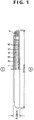
- Fig. 1 is a schematic sectional view of a typical battery of coin-type according to the invention.
- Fig. 2 shows X-ray diffractograms of the anode active material (prior to charging (prior to insertion of lithium), after one charge-discharge cycle and after 10 charge-discharge cycles) used for Sample 4 of Example 1.
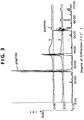
- Fig. 3 shows X-ray diffractograms of the anode active material (rutile type-WO2; prior to charging, after one charge-discharge cycle and after 10 charge-discharge cycles) used for Sample 30 of Comparison Example 1.
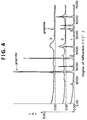
- Fig. 4 shows X-ray diffractograms of the anode active material (spinel type-Fe3O4; after one charge-discharge cycle and after 10 charge-discharge cycles) used for Sample 31 of Comparison Example 1.
- the nonaqueous secondary battery of the invention has a basic structure comprising an anode active material, a cathode active material and a nonaqueous electrolyte containing lithium salt.
- the anode active material of the invention is obtained by inserting (preferably electrochemically) lithium ions to a transition metal oxide which may contain lithium.
- the insertion of lithium ions is carried out until an inherent crystal structure of the transition metal oxide has been changed. Further, the resultant changed crystal structure is not changed during repeated charging and discharging.
- the change of the inherent crystal structure means change from a certain crystal structure to a different crystal structure, or change from a certain crystal structure to a structure having no crystal structure (noncrystal structure). The above change of inherent crystal structure and no change of the lithium-inserted crystal structure can be confirmed on X-ray diffractograms.
- the transition metal oxide prior to insertion of lithium (hereinafter is referred to as a precursor for an anode active material) is preferably obtained by mixing a lithium compound and one or more transition metal compound(s) at a ratio of the lithium compound and the total transition metal compounds (lithium compound/total transition metal compounds) of not more than 3.1 by mole to subjecting them to reaction.
- the transition metal generally includes at least one metal selected from the group consisting of Ti, V, Mn, Co, Ni, Fe, Cr, Nb and Mo.
- the transition metal preferably includes at least one metal selected from the group consisting of Ti, V, Mn, Co, Ni and Fe.
- the ratio of the lithium compound and the total transition metal compounds preferably is in the range of 0.2 to 3.1.
- the precursor for the anode active material of the invention generally is at least one transition metal oxide represented by Li p MO j wherein M is at least one transition metal of which at least one is selected from the group consisting of Ti, V, Mn, Co, Fe, Ni, Cr, Nb and Mo, p is in the range of 0 to 3.1, and j is in the range of 1.6 to 4.1.
- the precursor for the anode active material preferably is a transition metal oxide represented by Li p M 1q1 M 2q2 ------- M nqn O j wherein M1M2 ------- M n are each a transition metal of which at least one is selected from the group consisting of Ti, V, Mn, Co, Ni and Fe, p is in the range of 0 to 3.1, q1 + q2 + ------ qn is 1, n is in the range of 1 to 10, and j is in the range of 1.6 to 4.1.
- p is in the range of 0 to 3.1
- n is in the range of 1 to 4
- j is in the range of 1.8 to 4.1.
- Particularly preferred are p of 0.2 to 3.1, n of 1 to 3, and j of 1.8 to 4.1.
- the precursor for the anode active material advantageously contains a transition metal such as V, Cr, Nb or Mo which has stably 5 or 6 valence, from the viewpoint of discharge capacity.
- the precursor preferably contains V.
- the above precursor for the anode active material containing V generally is a transition metal oxide represented by Li x M q V 1-q O j wherein M is at least one transition metal (M preferably is at least one metal selected from the group consisting of Ti, Mn, Co, Ni, Fe, Cr, Nb and Mo), x is in the range of 0.17 to 11.25, q is in the range of 0 to 0.7, and j is in the range of 1.3 to 4.1.
- M is at least one transition metal
- M preferably is at least one metal selected from the group consisting of Ti, Mn, Co, Ni, Fe, Cr, Nb and Mo
- x is in the range of 0.17 to 11.25
- q is in the range of 0 to 0.7
- j is in the range of 1.3 to 4.1.
- the precursor preferably is a transition metal oxide represented by Li p M 1q1 M2 q 2 ------- M nqn V qv O j wherein M1M2 ------- M n are each a transition metal, p is in the range of 0 to 3.1, q1 + q2 + ------ qn is 1, n is in the range of 1 to 9, and j is in the range of 1.3 to 4.1.
- the precursor for the anode active material containing V more preferably is a transition metal oxide represented by Li p M 1q1 M 2q2 V 1-(q1+q2) O j wherein M1 and M2 are each a transition metal, p is in the range of 0.2 to 3.1, q1 + q2 is in the range of 0 to 0.7, and j is in the range of 1.3 to 4.1.
- the precursor for the anode active material containing V most preferably is a transition metal oxide represented by Li p Co q V 1-q O j or Li p Ni q V 1-q O j wherein M1 and M2 are each a transition metal, p is in the range of 0.3 to 2.2, q is in the range of 0.02 to 0.7, and j is in the range of 1.5 to 2.5.
- Particularly preferred examples of the precursor for the anode active material include Li p CoVO4 or Li p NiVO4 wherein p is in the range of 0.3 to 2.2.
- the anode active material of the invention is obtained by inserting lithium ions into the above precursor for the anode active material and is different in crystal structure (i.e., X-ray diffractogram) from the precursor.
- the total number of transition metal is "1" and therefore the number may be multiplied by integer in the case of representing a crystallographic composition formula corresponding to the formula or in the case of having plural metals.
- the anode active material of the invention is obtained by inserting lithium ions into the precursor for the anode active material. Therefore, the anode active material corresponds to the precursor for the anode active material in which L p is changed to L x (x generally is in the range of 0.17 to 11.25, and mole number of inserted lithium ions is expressed by "x" minus "p").
- the anode active material of the invention preferably is a transition metal oxide represented by Li x MO j wherein M is at least one transition metal at least of which one is selected from the group consisting of Ti, V, Mn, Co, Fe, Ni, Cr, Nb and Mo, x is in the range of 0.17 to 11.25 and j is in the range of 1.6 to 4.1. x preferably is in the range of 0.26 to 9.9 and more preferably in the range of 0.34 to 9.1.
- Such anode active material is obtained by inserting lithium ions in the precursor for the anode active material represented by the above formula Li p MO j .
- the anode active material more preferably is a transition metal oxides represented by Li x M q V 1-q O j wherein M is a transition metal, x is in the range of 0.17 to 11.25, q is in the range of 0 to 0.7, and j is in the range of 1.3 to 4.1. x preferably is in the range of 0.26 to 9.9 and more preferably in the range of 0.34 to 9.1.
- the anode active material is obtained by inserting lithium ions into the precursor for the anode active material (i.e., a transition metal oxide or a lithium-containing transition metal oxide), in the following manner.
- the oxide is caused to react with lithium metal, lithium alloy or lithium butylate, or lithium ion is electrochemically inserted into the oxide.
- the method of electrochemically inserting lithium ions is preferred. Particularly, it is preferred to electrochemically insert lithium ions into the oxide using a lithium-containing transition metal oxide as the precursor for the anode active material.
- a method of electrochemically inserting lithium ions there can be mentioned a method of discharging a battery of an oxidation-reduction system (e.g., open system (electrolysis) or closed system (battery) which comprises the aimed lithium-containing transition metal oxide (corresponding to the anode active material) as a cathode active material, lithium metal as an anode active material and a nonaqueous electrolyte containing lithium salt.
- a method of a battery of charging an oxidation-reduction system e.g., open system (electrolysis) or closed system (battery) which comprises the lithium-containing transition metal oxide as a cathode active material, the (lithium-containing) transition metal oxide as an anode active material having a different formula from that of the cathode active material and a non-aqueous electrolyte containing lithium salt.
- an oxidation-reduction system e.g., open system (electrolysis) or closed system (battery)
- the lithium-containing transition metal oxide as a cathode active material
- the (lithium-containing) transition metal oxide as an anode active material having a different formula from that of the cathode active material
- a non-aqueous electrolyte containing lithium salt e.g., open system (electrolysis) or closed system (battery)
- the anode active material generally is obtained by electrochemically inserting lithium ions in the transition metal oxide of the precursor for the anode active material in the amount of 27 to 1340 mAh (corresponding to 1 to 50 mmole) per 1 g of the oxide.
- the amount of the lithium ions preferably is in the range of 40 to 1070 mAh (1.5 to 40 mmole), and more preferably in the range of 54 to 938 mAh (2 to 35 mmole).
- the ratio of the anode active material and the cathode active material generally is set up so as to equal each effective equivalent (the effective equivalent means equivalent capable of keeping cycle characteristics). In this case, it is preferred to use either of the materials in more amount than the other.
- Cut-off voltage for charge-discharge cycle preferably is voltage that can discharge high voltage and essentially keep cycle characteristic.
- the anode active material (having crystal structure different from that of the precursor for the anode active material) prepared in the above manner, generally has strength of one fifth or less based on strength of a maximum peak of the transition metal oxide prior to insertion of lithium ions, said maximum peak being observed in X-ray diffractogram at the diffraction angle of 5 to 70 degree using Cu-K ⁇ ray.
- the anode active material preferably has the strength of one tenth or less, and more preferably the strength of one twentieth.
- the strength of "0 " means that the precursor for the anode active material is essentially all converted into the anode active material. The location of the "0" almost corresponds to that of the base line of the X-ray diffractogram. Further, it is preferred that at least one peak other than the maximum peak disappears from the diffractogram or at least one new peak appear in the diffractogram.
- the anode active material of the invention generally comprises lithium-containing transition metal oxide, and is characterized by X-ray diffractogram wherein each peak strength observed in X-ray diffractogram at the diffraction angle of 5 to 70 degree using Cu-K ⁇ ray is in the range of 20 to 1,000 cps.
- the peak strength preferably is in the range of 20 to 800 cps, more preferably in the range of 20 to 500 cps, and most preferably in the range of 20 to 400 cps.
- the measurement of the X-ray diffraction is performed in 40 kV and 120 mA at scanning speed of 32°/min.
- the maximum peak of LiCoO2 used as a standard compound has signal strength of 7990 cps at 18.9° (2 ⁇ ; 4.691 ⁇ ).
- the anode active material is in the condition that said changed crystal structure is not changed during repeated charging and discharging. Such condition is described in more detail below.
- the crystal structure or noncrystal structure of the anode active material is expanded or shrinked through intercalation or deintercalation of lithium ions.
- change of the bonding distance and the like of the structure derived from the above expansion or shrinkage may be produced, basis of the structure (crystal or noncrystal structure) should be not changed.
- an interval of faces which is determined from the X-ray diffractogram, may be changed in the range of -0.05 to 0.05 ⁇ , and strength or half width of the peak may be changed.
- the lithium-inserted anode active material of the invention is in the condition that its X-ray diffractogram is not essentially changed by repetition of charging and discharging.
- LiCoVO4 of precursor for an anode active material has inverse-spinel structure represented by V5+(Li+Co2+)O4.
- the crystalline structure is changed so that the oxide is converted into an oxide having a unknown crystal structure or noncrystal structure which gives a broad peak at interval of faces of about 2 ⁇ .
- the oxide having the changed crystal structure or the noncrystal structure, i.e., the oxide of the invention is not changed during repeated charging and discharging.
- the oxide of the invention has a low oxidation-reduction potential and hence the oxide is suitable as an anode active material.
- the cathode active material employable for the invention may be a transition metal oxide which can intercalate and deintercalate lithium ions.
- Preferred is a lithium-containing transition metal oxide.
- the preferred lithium-containing transition metal oxides are lithium-containing transition metal oxides containing at least one selected from the group consisting of Ti, V, Mn, Cr, Ni, Fe, Co, Cu, W and Mo.
- the cathode active material preferably has different composition from that of the anode active material.
- the lithium-containing transition metal oxide used as the cathode active material is preferably obtained by mixing a lithium compound and one or more transition metal compound(s) at ratio of the lithium compound and the total transition metal compounds (lithium compound/total transition metal compounds) of 0.3 to 2.2 by mole for subjecting them to reaction.
- the transition metal includes at least one metal selected from the group consisting of Ti, V, Mn, Cr, Ni, Fe, Co, W and Mo.
- the transition metal preferably includes at least one metal selected from the group consisting of V, Cr, Mn, Co, Ni and Fe.
- the cathode active material preferably is at least one transition metal oxide represented by Li y MO z wherein M is at least one transition metal of which at least one is selected from the group consisting of Co, Mn, Fe, Ni and V, y is in the range of 0.3 to 1.2, and z is in the range of 1.4 to 3.
- the cathode active material more preferably is at least one oxide selected from the group consisting of Li y CoO2, Li y NiO2, Li y Co a Ni 1-a O2, Li y Co b V 1-b O z , Li y Co b Fe 1-b O2, Li y Mn2O4, Li y Mn c Co 2-c O4, Li y Mn c Ni 2-c O4, Li y Mn c V 2-c O4 and Li y Mn c Fe 2-c O4, and a mixture of Li y Mn2O4 and MnO2, a mixture of Li 2y Mn2O3 and MnO2, and a mixture of Li y Mn2O4, Li 2y Mn2O3 and MnO2, wherein y is in the range of 0.5 to 1.2, a is in the range of 0.1 to 0.9, b is in the range of 0.8 to 0.98, c is in the range of 1.6 to 1.96, and z is in the range of 2.01 to 5.
- y is in the range of 0.7 to 1.04, a is in the range of 0.1 to 0.9, b is in the range of 0.8 to 0.98, c is in the range of 1.6 to 1.96, and z is in the range of 2.01 to 2.3.
- the cathode active material most preferably is at least one oxide selected from the group consisting of Li y CoO2, Li y NiO2, Li y Co a Ni 1-a O2, Li y Mn2O4,and Li y Co b V 1-b O z wherein y is in the range of 0.7 to 1.1, a is in the range of 0.1 to 0.9, b is in the range of 0.9 to 0.98 and z is in the range of 2.01 to 2.3. Further, in the formulae, y preferably is in the range of 0.7 to 1.04.
- the cathode active material of the invention may be a crystalline or noncrystalline compound, and however preferably is a crystalline compound.
- the transition metal oxide used as the cathode active material preferably is different from the transition metal oxide used as the anode active material in terms of chemical formula. This means that:
- the cathode active material and the anode active material preferably have essentially different redox potentials (the former is higher than the latter).
- the cathode active material of the invention can be prepared by chemically or electrochemically introducing lithium into a transition metal oxide, or by burning a lithium compound together with a transition metal compound.
- the cathode active material is prepared by chemically inserting lithium into a transition metal oxide, it is preferable that lithium metal, lithium alloy or butyl lithium is reacted with the transition metal oxide.
- the cathode active material of the invention is prepared by burning a lithium compound together with a transition metal compound.
- the precursor for the anode active material of the invention can be also obtained by chemically inserting lithium into a transition metal oxide through solution reaction, or by burning the mixture of the lithium compound and transition metal compound.
- the anode active material preferably is prepared by the burning.
- the burning may be conducted in any temperature range capable of decomposing or melting the mixture employed for the invention.
- the burning is preferably conducted at a temperature of 250 to 2,000°C, and more preferably at a temperature of 350 to 1,500°C.
- the burning may be carried out in any gas atmosphere.
- the cathode active material is preferably burned in air or gas containing oxygen in an amount more than the other gases (e.g., not less than about 30 %), and the precursor for the anode active material preferably is burned in air or gas containing oxygen in an amount less than the other gas (e.g., not more than about 10 %) or in an inert gas (e.g., nitrogen gas or argon gas).
- a low active material such as LiVO3 or Li3VO4 is sometimes produced.
- the precursor for the anode active material may contain such low active material but the low active material may be removed if desired.
- the precursor for the anode active materials or the cathode active material employable for the invention preferably is obtained by burning the mixture of the following lithium compounds and transition metal compounds.
- lithium compounds are oxygen compounds, oxyacid salts and halogenates.
- transition metal compounds are oxides, salts and complex salts of transition metals having valences of (I) - (VI).
- lithium compounds employable for the invention include lithium oxide, lithium hydroxide, lithium carbonate, lithium nitrate, lithium sulfate, lithium sulfite, lithium phosphate, lithium tetraborate, lithium chlorate, lithium perchlorate, lithium thiocyanate, lithium formate, lithium acetate, lithium oxalate, lithium citrate, lithium lactate, lithium tartrate, lithium pyruvate, lithium trifluoromethanesulfonate, lithium tetraboronate, lithium hexafluorophosphate, lithium fluoride, lithium chloride, lithium bromide and lithium iodide.
- lithium compounds such as lithium oxide, lithium hydroxide, lithium carbonate and lithium acetate
- the compounds can be compounds containing Ca2+ which are capable of increasing ionic conductive property such as calcium carbonate, calcium chloride, calcium oxide, calcium hydroxide, calcium sulfate, calcium nitrate, calcium acetate, calcium oxalate, calcium citrate and calcium phosphate.
- agents for forming noncrystalline structure such as P2O5, Li3PO4, H3BO3 and SiO2; and compounds containing alkaline metal ions such as Na, K and Mg and/or elements such as Sn, Al, Ga, Ge, Ce, In and Bi (e.g., oxides thereof, hydroxides thereof, carbonates thereof and nitrates thereof).
- Preferred are calcium carbonate and P2O5.
- the compound preferably is used in the amount of 0.2 to 10 molar %.
- the precursor for the anode active material and the cathode active material preferably have a mean grain size of 0.03 to 50 ⁇ m.
- the material having the above grain size can be prepared using a known grinder or classifier. Examples of the grinder or classifier include mortar, ball mill, vibrating ball mill, satellite ball mill, spinning air jet mill and sieve.
- Each formula of the compounds prepared by burning is determined by ICP (Inductively Coupled Plasma) emission spectrometry or by the simple method in which the compound is weighed before and after burning and the content of the prepared compound is calculated from the difference of the weight.
- ICP Inductively Coupled Plasma
- the anode active material and the cathode active material of the invention which are prepared in the above manner, is thought to be a compound that their valences are varied with intercalation or deintercalation of lithium ions. Therefore, the anode active material of the invention is basically different from a metal-anode active material such as lithium metal or lithium alloy which is dissolved or deposited through charging and discharging. Further, the material of the invention is also different from a carbonaceous material. In more detail, the carbonaceous material is not a compound that can change valence, and the material has high conductive property and brings about deposition of lithium during charging and discharging. Thus, the anode active material of the invention is a compound of different type from the the metal material and the carbonaceous material.
- Examples of materials which can be employed together with anode active material of the invention include: lithium metal, lithium alloys (e.g., Al, Al-Mn [U.S. Patent No. 4,820,599], Al-Mg [Japanese Patent Provisional Publication No. 57(1982) -98977], Al-Sn [Japanese Patent Provisional Publication No. 63(1988) -6742], Al-In, Al-Cd [Japanese Patent Provisional Publication No. 1(1989) - 144573), and burned carbonaceous materials in which lithium ion can be intercalated and deintercalated (Japanese Patent Provisional Publication Nos.
- the above lithium metal or lithium alloy is used for inserting lithium ions into a battery and is not used for dissolving or depositing lithium metal.
- Binders, electrically conductive agents, and/or filers may be added to a mixture for electrode (anode or cathode) (i.e., depolarizing mix for electrode).
- Examples of the electrically conductive agents include natural graphite (e.g., flaky graphite, flake graphite and amorphous graphite), artificial graphite, acetylene black, furnace black, ketjen black, carbon fiber, metal powder (e.g., Cu, Ni, Al or Ag (Japanese Patent Provisional Publication No. 63(1988) -148554)), metal fiber and polyphenylene derivatives (Japanese Patent Provisional Publication No. 59(1984) -20971).
- the agents may be used singly or in combination.
- the graphite and acetylene black are preferably used in combination.
- the amount of the agent preferably is in the range of 1 to 50 weight %, and more preferably is in the range of 2 to 30 weight %. In use of carbon black a or graphite, the amount preferably is in the range of 2 to 15 weight %.
- binders include natural polysaccharide, synthesized polysaccharide, synthesized polyhydroxyl compounds, thermoplastic polymers, fluorine-containing compounds and synthesized rubber.
- Preferred examples include starch, polyvinyl alcohol, carboxymethyl cellulose, diacetyl cellulose, hydroxylpropyl cellulose, regenerated cellulose, polyvinyl chloride, polyvinyl pyrrolidone, polytetrafluoroethylene, polyfluorovinylidene, ethylene-propylene-diene copolymer (EPDM), sulfonated EPDM, styrene-butadiene rubber, polybutadiene, fluororubber and polyethylene oxide.
- EPDM ethylene-propylene-diene copolymer
- the polymers may be used singly or in combination. If a polymer such as polysaccharide having a functional group that reacts with lithium is employed, it is preferred that the functional group is inactivated by reacting the group with a compound such as isocyanate compound.
- the amount of the polymer preferably is in the range of 1 to 50 weight %, and more preferably is in the range of 2 to 30 weight %.
- Examples of the filers employable for the invention include fibers of olefin polymers such as polypropylene and polyethylene, glass and carbon.
- the amount of the filer preferably is in the range of 0 to 30 weight %.
- the electrolytic conductor comprises a solvent containing at least one aprotic organic solvent, and one or more lithium salts (comprising anion and lithium cation) which are soluble in the solvent.
- aprotic organic solvent examples include propylene carbonate, ethylene carbonate, butylene carbonate, dimethyl carbonate, diethylcarbonate, ⁇ -butyrolactone, methyl formate, methyl acetate, 1,2-dimethoxyethane, tetrahydrofuran, 2-methyltetrahydrofuran, dimethyl sulfoxide, 1,3-dioxolan, formamide, dimethylformamide, dioxolan, acetonitrile, nitromethane, ethylmonoglyme, phosphoric acid triester (Japanese Patent Provisional Publication No. 60(1985) -23973), trimethoxymethane (Japanese Patent Provisional Publication No.
- lithium salt examples include: salts of ClO4 ⁇ , BF4 ⁇ , PF6 ⁇ , CF3SO3 ⁇ , CF3CO2 ⁇ , AsF6 ⁇ , SbF6 ⁇ , (CF3SO2)2N ⁇ , B10Cl10 ⁇ (Japanese Patent Provisional Publication No. 57(1982) -74974) and (1,2-dimethoxyethane)2ClO4 ⁇ (Japanese Patent Provisional Publication No. 57(1982) -74977); lower aliphatic carboxylic acids (Japanese Patent Provisional Publication No. 60(1985) -41773); AlCl4 ⁇ , Cl ⁇ , Br ⁇ and I ⁇ (Japanese Patent Provisional Publication No.
- a preferred example of the electrolyte is an electrolytic solution prepared by dissolving LiCF3SO3, LiClO4, LiBF4 and/or LiPF6 in a mixture of propylene carbonate or ethylene carbonate and 1,2-dimethoxyethane and/or diethylcarbonate.
- the ratio of propylene carbonate or ethylene carbonate to 1,2-dimethoxyethane and/or diethylcarbonate preferably is in the range of 0.4/0.6 to 0.6/0.4, by volume.
- the ratio of 1,2-dimethoxyethane and diethylcarbonate preferably is in the range of 0.4/0.6 to 0.6/0.4.
- the concentration of electrolyte preferably is in the range of 0.2 to 3 mole per electrolytic solution of 1 liter.
- Solid electrolytes described below are also employable. Solid electrolytes can be classified into inorganic solid electrolytes and organic solid electrolytes.
- lithium nitride, lithium halide and oxyacidic salts of lithium can be mentioned.
- the inorganic solid electrolytes preferably employable for the invention include Li3N, LiI, Li5NI2, Li3N-LiI-LiOH, LiSiO4, LiSiO4-LiI-LiOH (Japanese Patent Provisional Publication No. 49(1974) -81899), xLi3PO4-(1-x)Li4SiO4 (Japanese Patent Provisional Publication No. 59(1984) -60866), Li2SiS3 (Japanese Patent Provisional Publication No. 60(1985) -501731) and phosphorus sulfide compounds (Japanese Patent Provisional Publication No. 62(1987) -82665).
- Examples of the organic solid electrolytes employable for the invention include: polyethylene oxide derivatives and polymers containing said derivatives (Japanese Patent Provisional Publication No. 63(1988) -135447); polypropylene oxide derivatives and polymers containing said derivatives; polymers containing ion-dissociating groups (Japanese Patent Provisional Publication Nos. 62(1987) -254302, 62(1987) -254303 and 63(1988) -193954); a mixture of polymers containing ion-dissociating groups and the above-mentioned aprotic electrolytic solutions (U.S. Patent Nos. 4,792,504 and 4,830,939, Japanese Patent Provisional Publication Nos.
- an electrolytic solution containing polyacrylonitrile (Japanese Patent Provisional Publication No. 62(1987) -278774) may be also employed. Further, inorganic and organic solid electrolytes may be used in combination (Japanese Patent Provisional Publication No. 60(1985) -1768).
- a separator provided between the anode and the cathode is an insulated film having both high ion permeability and desired mechanical strength.
- a generally used separator is a porous sheet or non-woven fabric made of olefinic polymers such as polypropylene or a sheet of glass fiber, because they have hydrophobic property and resistance of organic solvent.
- the diameter of the aperture of the separator generally is in the range of 0.01 to 10 ⁇ m.
- the thickness of the separator generally is in the range of 5 to 300 ⁇ m.
- the other compounds may be added into the electrolyte in order to improve characteristics in charge-discharge cycle.
- Examples of the compounds include pyridine (Japanese Patent Provisional Publication No. 49(1974) -108525), triethylphosphite (Japanese Patent Provisional Publication No. 47(1972) -4376), triethanolamine (Japanese Patent Provisional Publication No. 52(1977) -72425), cyclic ethers (Japanese Patent Provisional Publication No. 57(1982) - 152684), ethylene diamine (Japanese Patent Provisional Publication No. 58(1983) -87777), n-glyme (Japanese Patent Provisional Publication No.
- Japanese Patent Provisional Publication No. 58(1983) -87778 Japanese Patent Provisional Publication No. 58(1983) -87779
- nitrobenzene derivatives Japanese Patent Provisional Publication No. 58(1983) -214281
- sulfur Japanese Patent Provisional Publication No. 59(1984) - 8280
- quinoneimine dye Japanese Patent Provisional Publication No. 59(1984) -68184
- N-substituted oxazolidinone and N,N'-substituted imidazolidinone Japanese Patent Provisional Publication No.
- Japanese Patent Provisional Publication No. 60(1984) -154778 ethylene glycol dialkyl ether
- Japanese Patent Provisional Publication No. 60(1984) -205167 quaternary ammonium salts
- Japanese Patent Provisional Publication No. 60(1985) - 30065 polyethylene glycol
- Japanese Patent Provisional Publication No. 60(1985) -41773 polyethylene glycol
- pyrrole Japanese Patent Provisional Publication No. 60(1985) -79677
- 2-methoxyethanol Japanese Patent Provisional Publication No. 60(1985) -89075
- AlCl3 Japanese Patent Provisional Publication No.
- halogen-containing solvents such as carbon tetrachloride and ethylene chloride trifluoride may be added (Japanese Patent Provisional Publication No. 48(1972) - 36632). Further, carbon dioxide may be contained in the electrolytic solution so as to give preservability at high temperatures (Japanese Patent Provisional Publication No. 59(1984) -134567).
- the mixture for the cathode or anode active material may contain an electrolytic solution or an electrolyte.
- electrolytic solution or an electrolyte examples include the above-mentioned ion conductive polymers and nitromethane (Japanese Patent Provisional Publication No. 48(1973) -36633, or electrolytic solutions (Japanese Patent Provisional Publication No. 57(1982) - 124870).
- the surface of the cathode active material may be modified.
- the surface of the metal oxide can be treated with an agent for esterification (Japanese Patent Provisional Publication No. 55(1980) - 163779), a chelating agent (Japanese Patent Provisional Publication No. 55(1980) -163780), conductive polymers (Japanese Patent Provisional Publication Nos. 58(1983) - 163188 and 59(1984) -14274), or polyethylene oxide (Japanese Patent Provisional Publication No. 60(1985) -97561).
- the surface of the anode active material may be modified.
- a layer of ion conductive polymer or a layer of polyacetylene may be provided on the surface (Japanese Patent Provisional Publication No. 58(1983) -111276), or the surface may be treated with LiCl (Japanese Patent Provisional Publication No. 58(1983) - 142771) or with ethylene carbonate (Japanese Patent Provisional Publication No. 59(1984) -31573).
- any electronic conductors can be employed unless they induce chemical reaction in the prepared battery.
- materials employable for the collector for the cathode generally include stainless steel, titanium, aluminium, nickel and burned carbon, and stainless steel or aluminium plated with carbon, nickel, titanium or silver thereon.
- materials employable for the collector for the anode generally include stainless steel, titanium, copper, aluminium, nickel and burned carbon, and stainless steel or aluminium treated with carbon, nickel, titanium or silver thereon as well as Al-Cd alloy. These surface may be oxidized.
- the shape of the collector include foil, film, sheet, net, punched material, lath, porous film, foam or fiber molded product.
- the thickness of the collector generally is in the range of 1 to 500 ⁇ m.
- the above-mentioned materials can be employed for a battery of any shape such as coin-type, button-type, sheet-type, cylindrical type or square type.
- a mixture for anode or cathode In a battery of coin-type or button-type, a mixture for anode or cathode generally is compressed to form a pellet. The thickness or diameter of the pellet is determined depending upon size of battery.
- a mixture for anode or cathode In a battery of sheet-type, cylindrical type or square type, a mixture for anode or cathode generally is coated on the collector, dried and compressed.
- the coating method there can be generally employed reverse roller coating, direct roller coating, blade coating, knife coating, extrusion coating, curtain coating, gravure coating, bar coating, dip coating and squeeze coating. Preferred are blade coating, knife coating and extrusion coating. The coating is preferably carried out at a rate of 0.1 to 100 m/min.
- a coated layer having uniform surface By selecting a coating method suitable for properties (with respect to solution and drying) of the mixture for anode or cathode from the above coating methods, a coated layer having uniform surface can be formed.
- the thickness, length and width of the coated layer are generally determined depending on a size of a battery.
- the thickness of the coated layer, which is compressed after drying, preferably is in the range of 1 to 2,000 ⁇ m.
- thermospray drying or dehydration of the pellet or sheet there can be employed known methods. Preferred methods include those using hot air, vacuum, infrared rays, far-infrared rays, electron beam and dry air. These methods may be employed singly or in combination. Temperature for the drying or dehydration preferably is in the range of 80 to 350°C, and more preferably in the range of 100 to 250°C. The moisture content of a battery having the pellet or sheet is not more than 2,000 ppm based on the total weight of the battery. Further, each of the mixture for anode, the mixture of cathode and the electrolyte preferably has moisture content of not more than 500 ppm in terms of cycle characteristics.
- pressing methods of the pellet or sheet there can be employed known methods.
- Pressure for pressing preferably is in the range of 0.2 to 3 t/cm2.
- Pressing rate of the calendering method preferably is in the range of 0.1 to 50 m/min and pressing temperature preferably is in the range of room temperature to 200°C.
- a safety valve may be substituted for the plate for seal.
- the battery may be provided with known various safety elements other than the safety valve. For example, there can be mentioned elements for preventing overcurrent such as fuse, bimetal and PTC (positive temperature coefficient) element. Further, in order to depress increase of pressure in the can, a method of partially cutting the can, an undercut gasket method or a method of undercutting a plate for sheel may be employed. Furthermore, a charger for charging may have a circuit which can prevent overcharge or overdischarge.
- materials for a can or a lead plate there can be mentioned metals and alloys which have electric conductive property.
- the materials include metals such as iron, nickel, titanium, chromium, molybdenum, copper and aluminium and alloys thereof.
- a cap (for joining), a can, sheet and a lead plate are welded each other according to known molding methods (e.g., electric weld of D.C. or A.C., laser weld and ultrasonic weld).
- seal agents used for the plate for seal there can be mentioned known compounds or mixtures such as asphalt.
- a mixture for cathode was prepared by mixing each of LiCoO2 as the cathode active material (82 wt.%), flake graphite as conductive agent (12 wt.%) and polytetrafluoroethylene as binder (6 wt.%). The obtained mixture was molded under compression to prepare a cathode pellet (diameter:13 mm, 0.35 g). The pellet was sufficiently dehydrated using a heater of far-infrared rays in a drying box (dew point of -40 to 70°C, dried air). The resultant pellet was used as a cathode material.
- a mixture for anode was prepared by mixing each of the precursor for the anode active material indicated in Table 1 (82 wt.%), flake graphite as conductive agent (12 wt.%) and polyfluorovinylidene as binder (6 wt.%).
- the obtained mixture was molded under compression to prepare an anode pellet (diameter:13 mm, 0.060 g). The pellet was sufficiently dehydrated in the above drying box. The resultant pellet was used as a anode material.
- a net of SUS316 having thickness of 80 ⁇ m was used as the collector. Each net for anode and cathode was welded to a coin can.
- nonaqueous electrolyte 1 mol/L electrolytic solution of LiPF6 (dissolved in a solvent which was prepared by mixing equal volumes of ethylene carbonate and diethyl carbonate) was used in the amount of 250 ⁇ L.
- a porous sheet of polypropylene and non-woven fabric of polypropylene were used as separators. The non-woven fabric was soaked with the electrolytic solution.
- a secondary battery of coin-type shown in Fig. 1 was produced using the resultant elements in the above drying box.
- the anode pellet 2 is sealed between the anode seal 1 and the separator 3
- the cathode seal 1 is sealed between the cathode case 6 having the collector 5 and the separator 3
- the gasket 7 is provided between the outer periphery of the anode seal 1 and that of the gasket 7.
- each of the materials for the anode active material was prepared by burning each of the materials ((i) and (ii)) indicated in Tables 1a and 1b in air at 800°C for 6 hours.
- Example 1 Samples of Example 1 were evaluated in the following manner: The charging-discharging test was carried out by iteratively charging and discharging at current density of 0.75 mA/cm2 in the range of from 3.9 to 1.8 V. The test started from charging.
- Example 20 The procedures of Sample 5 of Example 1 were repeated except for burning the materials in air at 900°C for 6 hours (Sample 20), in argon gas at 900°C for 6 hours (Sample 21) and in air at 660°C for 6 hours (Sample 22), instead of in air at 800°C for 6 hours. With respect to the obtained battery, the same test as described in Example 1 was carried out.
- Samples 23 and 24 are the same as Sample 5. With respect to the obtained battery, the same test as described in Example 1 was carried out.
- Sample 4 of Example 1 The procedures of Sample 4 of Example 1 were repeated except for using compounds (k), (m), (n) and (n) mentioned above as the cathode active material instead of compound (k) (Samples 25 and 28).
- Sample 25 is the same as Sample 4. With respect to the obtained battery, the same test as described in Example 1 was carried out.
- Example 1 The procedures of Example 1 were repeated except for using WO2 of rutile type (Sample 30), Fe3O4 of spinel type (Sample 31), and LiNi 0.5 Co 0.5 O2 of (Sample 32) as the precursor for anode active material to prepare secondary batteries of coin-type.
- WO2 of rutile type (Sample 30), Fe3O4 of spinel type (Sample 31), and LiNi 0.5 Co 0.5 O2 of (Sample 32)
- the same test as described in Example 1 was carried out.
- the charging-discharging test was carried out by iteratively charging and discharging at current density of 0.75 mA/cm2 in the range of from 2.5 to 1.5 V. The test started from charging.
- the battery using the anode active material of the invention shows high discharging voltage, high discharge capacity and a long life in charge-discharge cycle.
- the X-ray diffractograms (Fig. 2) of the precursor for the anode active material and the anode active material of Sample 4 of Example 1 shows that the X-ray diffractogram is changed (in location or height of peak) by insertion of lithium ions (charging) but is not changed during repetition of charging and discharging.
- the X-ray diffractograms (Fig. 3) of the anode active material of Sample 30 of Comparison Example 1 show that the X-ray diffractograms are not changed (in location or height of peak) after one cycle of repetition of charging and discharging but are changed after 10 cycles of the repetition.
- the X-ray diffractograms (Fig. 2) of the precursor for the anode active material and the anode active material of Sample 4 of Example 1 shows that the X-ray diffractogram is changed (in location or height of peak) by insertion of lithium ions (charging) but is not changed during repetition of charging and discharging.
- the density of the pellet of the anode active material of the invention is in the range of 2.5 to 2.8 (g/cm3) and therefore is about two times as large as that of burned carbonaceous material (1.1 to 1.4 (g/cm3). Further, discharge capacity per volume of the anode active material of the invention is 2 to 3 times as large as that of burned carbonaceous material. Hence, discharge capacity of the anode active material of the invention is four or more times as large as that of burned carbonaceous material.
Landscapes
- Chemical & Material Sciences (AREA)
- Chemical Kinetics & Catalysis (AREA)
- General Chemical & Material Sciences (AREA)
- Electrochemistry (AREA)
- Engineering & Computer Science (AREA)
- Inorganic Chemistry (AREA)
- Manufacturing & Machinery (AREA)
- Materials Engineering (AREA)
- Physics & Mathematics (AREA)
- General Physics & Mathematics (AREA)
- Dispersion Chemistry (AREA)
- Condensed Matter Physics & Semiconductors (AREA)
- Battery Electrode And Active Subsutance (AREA)
- Secondary Cells (AREA)
Applications Claiming Priority (3)
| Application Number | Priority Date | Filing Date | Title |
|---|---|---|---|
| JP106642/92 | 1992-04-24 | ||
| JP10664292 | 1992-04-24 | ||
| JP10664292 | 1992-04-24 |
Publications (2)
| Publication Number | Publication Date |
|---|---|
| EP0567149A1 true EP0567149A1 (de) | 1993-10-27 |
| EP0567149B1 EP0567149B1 (de) | 2001-11-28 |
Family
ID=14438779
Family Applications (1)
| Application Number | Title | Priority Date | Filing Date |
|---|---|---|---|
| EP93106656A Expired - Lifetime EP0567149B1 (de) | 1992-04-24 | 1993-04-23 | Nichtwässerige Sekundärbatterie |
Country Status (3)
| Country | Link |
|---|---|
| US (1) | US5478671A (de) |
| EP (1) | EP0567149B1 (de) |
| DE (1) | DE69331206D1 (de) |
Cited By (17)
| Publication number | Priority date | Publication date | Assignee | Title |
|---|---|---|---|---|
| EP0594965A1 (de) * | 1992-10-29 | 1994-05-04 | Fuji Photo Film Co., Ltd. | Wiederaufladbare Sekundärbatterie |
| WO1994019836A1 (en) * | 1993-02-17 | 1994-09-01 | Valence Technology, Inc. | Electrodes for rechargeable lithium batteries |
| EP0617474A1 (de) * | 1993-03-17 | 1994-09-28 | Matsushita Electric Industrial Co., Ltd. | Wiederaufladbare Lithiumzelle und Verfahren zur Herstellung einer Anode für Anwendung in der Zelle |
| EP0630064A1 (de) * | 1993-04-28 | 1994-12-21 | Fuji Photo Film Co., Ltd. | Akkumulator mit nicht-wässrigem Elektrolyt |
| US5378560A (en) * | 1993-01-21 | 1995-01-03 | Fuji Photo Film Co., Ltd. | Nonaqueous secondary battery |
| GB2281655A (en) * | 1993-09-02 | 1995-03-08 | Technology Finance Corp | Primary or secondary electrochemical cell having as anode a lithium-transition metal oxide or sulphide of spinel structure |
| EP0656667A1 (de) * | 1993-11-09 | 1995-06-07 | Moli Energy (1990) Limited | Inversspinell Verbindungen als Kathoden für Lithiumbatterien |
| FR2718728A1 (fr) * | 1994-04-14 | 1995-10-20 | Bollore Technologies | Bioxyde de manganèse faiblement dopé, générateur électrochimique au lithium rechargeable comportant une électrode positive dont le constituant actif est formé dudit bioxyde de manganèse. |
| FR2725709A1 (fr) * | 1994-10-14 | 1996-04-19 | Centre Nat Rech Scient | Oxyde de lithium et son utilisation comme matiere active d'une electrode |
| EP0715366A1 (de) * | 1994-12-01 | 1996-06-05 | Canon Kabushiki Kaisha | Wiederaufladbare Lithiumbatterie mit einem Film beschichteten Anode aus spezifikem Oxydmaterial, Verfahren zur Herstellung dieser Anode, und Verfahren zur Herstellung dieser wiederaufladbarer Lithiumbatterie |
| EP0871233A4 (de) * | 1996-07-30 | 1998-10-21 | ||
| WO2002009215A2 (en) | 2000-07-24 | 2002-01-31 | Shell Internationale Research Maatschappij B.V. | Lithium ion secondary battery and manufacturing method of the same |
| EP0918361A4 (de) * | 1997-03-11 | 2004-11-24 | Matsushita Electric Industrial Co Ltd | Sekundärbatterie |
| EP1009055A4 (de) * | 1997-03-10 | 2004-12-01 | Sanyo Electric Co | Batterie mit nichtwässrigem elektrolyten und lademethode dafür |
| EP1679756A1 (de) * | 1995-03-06 | 2006-07-12 | Ube Industries, Ltd. | Nichtwässrige Lithium-Sekundärzelle |
| WO2008103118A1 (en) * | 2007-02-23 | 2008-08-28 | Sandvik Intellectual Property Ab | Contact element coated by electron beam evaporation of a steel strip with titanium or an alloy of titanium for use in a licfx coin cell battery |
| WO2008130318A1 (en) * | 2007-04-23 | 2008-10-30 | Sandvik Intellectual Property Ab | Contact element coated by electron beam evaporation of a steel strip with nickel for use in an alkaline battery |
Families Citing this family (97)
| Publication number | Priority date | Publication date | Assignee | Title |
|---|---|---|---|---|
| JPH0864240A (ja) * | 1994-08-25 | 1996-03-08 | Sanyo Electric Co Ltd | 非水電解液電池 |
| US5792442A (en) * | 1995-12-05 | 1998-08-11 | Fmc Corporation | Highly homogeneous spinel Li1+X Mn2-X O4 intercalation compounds and method for preparing same |
| US5851696A (en) * | 1996-01-29 | 1998-12-22 | Valence Technology, Inc. | Rechargeable lithium battery |
| US5698338A (en) * | 1996-03-15 | 1997-12-16 | Valence Technology, Inc. | Solid secondary lithium cell based on Lix Niy Co1-y VO4< or=x< or=1.1 and 0<y<1 cathode material |
| JPH11509827A (ja) * | 1996-04-05 | 1999-08-31 | エフエムシー・コーポレイション | スピネルLi▲下1+x▼Mn▲下2―x▼0▲下4+y▼層間化合物の製造方法 |
| US5718877A (en) * | 1996-06-18 | 1998-02-17 | Fmc Corporation | Highly homogeneous spinal Li1+x Mn2-x O4+y intercalation compounds and method for preparing same |
| US6090506A (en) * | 1996-08-02 | 2000-07-18 | Fuji Photo Film Co. Ltd. | Nonaqueous secondary battery |
| US6077496A (en) * | 1996-09-12 | 2000-06-20 | Dowa Mining Co., Ltd. | Positive electrode active material for nonaqueous secondary cells and a process for producing said active material |
| US6007945A (en) * | 1996-10-15 | 1999-12-28 | Electrofuel Inc. | Negative electrode for a rechargeable lithium battery comprising a solid solution of titanium dioxide and tin dioxide |
| US5783333A (en) * | 1996-11-27 | 1998-07-21 | Polystor Corporation | Lithium nickel cobalt oxides for positive electrodes |
| US6040089A (en) * | 1997-02-28 | 2000-03-21 | Fmc Corporation | Multiple-doped oxide cathode material for secondary lithium and lithium-ion batteries |
| US6277521B1 (en) | 1997-05-15 | 2001-08-21 | Fmc Corporation | Lithium metal oxide containing multiple dopants and method of preparing same |
| JP3045998B2 (ja) | 1997-05-15 | 2000-05-29 | エフエムシー・コーポレイション | 層間化合物およびその作製方法 |
| US6300012B1 (en) * | 1997-05-27 | 2001-10-09 | Tdk Corporation | Electrode for non-aqueous electrolytic cells |
| US6110442A (en) * | 1997-05-30 | 2000-08-29 | Hughes Electronics Corporation | Method of preparing Lix Mn2 O4 for lithium-ion batteries |
| US6267943B1 (en) | 1998-10-15 | 2001-07-31 | Fmc Corporation | Lithium manganese oxide spinel compound and method of preparing same |
| CA2350710C (en) | 1998-11-13 | 2005-09-13 | Fmc Corporation | Layered lithium metal oxides free of localized cubic spinel-like structural phases and methods of making same |
| CN1170773C (zh) | 1998-11-20 | 2004-10-13 | Fmc公司 | 含多种掺杂剂的含锂、锰和氧的化合物及其制备方法 |
| US6306544B1 (en) | 1999-02-25 | 2001-10-23 | Wilson Greatbatch Ltd. | Cobalt-based alloys as positive electrode current collectors in nonaqueous electrochemical cells |
| JP4411691B2 (ja) * | 1999-06-30 | 2010-02-10 | パナソニック株式会社 | 非水電解液二次電池および非水電解液二次電池の充電制御システムおよびこれを用いた機器 |
| US6322928B1 (en) * | 1999-09-23 | 2001-11-27 | 3M Innovative Properties Company | Modified lithium vanadium oxide electrode materials and products |
| EP1242311B1 (de) | 1999-12-10 | 2003-05-02 | Fmc Corporation | Lithium kobaltoxide und verfahren zur herstellung |
| US6964828B2 (en) * | 2001-04-27 | 2005-11-15 | 3M Innovative Properties Company | Cathode compositions for lithium-ion batteries |
| US20040101755A1 (en) * | 2001-07-17 | 2004-05-27 | Hong Huang | Electrochemical element and process for its production |
| AU2002319587B2 (en) * | 2001-07-20 | 2007-05-10 | Altair Nanomaterials Inc. | Process for making lithium titanate |
| EP1282180A1 (de) * | 2001-07-31 | 2003-02-05 | Xoliox SA | Verfahren zur Herstellung von Li4Ti5O12 und Elektrodenmaterial |
| US20030108793A1 (en) * | 2001-08-07 | 2003-06-12 | 3M Innovative Properties Company | Cathode compositions for lithium ion batteries |
| JP4702510B2 (ja) * | 2001-09-05 | 2011-06-15 | 信越化学工業株式会社 | リチウム含有酸化珪素粉末及びその製造方法 |
| JP2004063433A (ja) * | 2001-12-26 | 2004-02-26 | Shin Etsu Chem Co Ltd | 導電性酸化珪素粉末、その製造方法及び該粉末を用いた非水電解質二次電池用負極材 |
| US6881393B2 (en) * | 2002-03-08 | 2005-04-19 | Altair Nanomaterials Inc. | Process for making nano-sized and sub-micron-sized lithium-transition metal oxides |
| TWI278429B (en) | 2002-05-17 | 2007-04-11 | Shinetsu Chemical Co | Conductive silicon composite, preparation thereof, and negative electrode material for non-aqueous electrolyte secondary cell |
| US8524397B1 (en) | 2004-11-08 | 2013-09-03 | Quallion Llc | Battery having high rate and high capacity capabilities |
| US6787268B2 (en) * | 2002-09-03 | 2004-09-07 | Quallion Llc | Electrolyte |
| US7572554B2 (en) | 2002-09-03 | 2009-08-11 | Quallion Llc | Electrolyte |
| JP4025995B2 (ja) * | 2002-11-26 | 2007-12-26 | 信越化学工業株式会社 | 非水電解質二次電池負極材及びその製造方法並びにリチウムイオン二次電池 |
| US20040121234A1 (en) * | 2002-12-23 | 2004-06-24 | 3M Innovative Properties Company | Cathode composition for rechargeable lithium battery |
| JP4171904B2 (ja) * | 2003-08-05 | 2008-10-29 | 信越化学工業株式会社 | リチウムイオン二次電池負極材及びその製造方法 |
| US7348100B2 (en) * | 2003-10-21 | 2008-03-25 | Valence Technology, Inc. | Product and method for the processing of precursors for lithium phosphate active materials |
| US7211237B2 (en) | 2003-11-26 | 2007-05-01 | 3M Innovative Properties Company | Solid state synthesis of lithium ion battery cathode material |
| KR100570648B1 (ko) * | 2004-01-26 | 2006-04-12 | 삼성에스디아이 주식회사 | 리튬 이차 전지용 음극 활물질, 그의 제조 방법 및 그를포함하는 리튬 이차 전지 |
| US7790316B2 (en) * | 2004-03-26 | 2010-09-07 | Shin-Etsu Chemical Co., Ltd. | Silicon composite particles, preparation thereof, and negative electrode material for non-aqueous electrolyte secondary cell |
| JP4450192B2 (ja) | 2004-07-01 | 2010-04-14 | 信越化学工業株式会社 | 珪素複合体及びその製造方法並びに非水電解質二次電池用負極材 |
| US7658863B2 (en) * | 2004-07-30 | 2010-02-09 | Shin-Etsu Chemical Co., Ltd. | Si-C-O composite, making method, and non-aqueous electrolyte secondary cell negative electrode material |
| US20060051670A1 (en) * | 2004-09-03 | 2006-03-09 | Shin-Etsu Chemical Co., Ltd. | Non-aqueous electrolyte secondary cell negative electrode material and metallic silicon power therefor |
| US7635541B2 (en) | 2004-10-29 | 2009-12-22 | Medtronic, Inc. | Method for charging lithium-ion battery |
| US7337010B2 (en) | 2004-10-29 | 2008-02-26 | Medtronic, Inc. | Medical device having lithium-ion battery |
| US7662509B2 (en) | 2004-10-29 | 2010-02-16 | Medtronic, Inc. | Lithium-ion battery |
| US8105714B2 (en) | 2004-10-29 | 2012-01-31 | Medtronic, Inc. | Lithium-ion battery |
| US7563541B2 (en) | 2004-10-29 | 2009-07-21 | Medtronic, Inc. | Lithium-ion battery |
| US9077022B2 (en) | 2004-10-29 | 2015-07-07 | Medtronic, Inc. | Lithium-ion battery |
| US9065145B2 (en) | 2004-10-29 | 2015-06-23 | Medtronic, Inc. | Lithium-ion battery |
| US7641992B2 (en) | 2004-10-29 | 2010-01-05 | Medtronic, Inc. | Medical device having lithium-ion battery |
| CN101048898B (zh) | 2004-10-29 | 2012-02-01 | 麦德托尼克公司 | 锂离子电池及医疗装置 |
| US8980453B2 (en) | 2008-04-30 | 2015-03-17 | Medtronic, Inc. | Formation process for lithium-ion batteries |
| US7927742B2 (en) | 2004-10-29 | 2011-04-19 | Medtronic, Inc. | Negative-limited lithium-ion battery |
| US7811705B2 (en) | 2004-10-29 | 2010-10-12 | Medtronic, Inc. | Lithium-ion battery |
| US7582387B2 (en) | 2004-10-29 | 2009-09-01 | Medtronic, Inc. | Lithium-ion battery |
| US7682746B2 (en) * | 2005-03-31 | 2010-03-23 | Panasonic Corporation | Negative electrode for non-aqueous secondary battery |
| US20060263686A1 (en) * | 2005-05-19 | 2006-11-23 | Medtronic, Inc. | Lithium battery manufacturing method |
| CA2626554A1 (en) * | 2005-10-21 | 2007-04-26 | Altairnano, Inc. | Lithium ion batteries |
| US7776473B2 (en) | 2006-03-27 | 2010-08-17 | Shin-Etsu Chemical Co., Ltd. | Silicon-silicon oxide-lithium composite, making method, and non-aqueous electrolyte secondary cell negative electrode material |
| JP4207055B2 (ja) * | 2006-04-26 | 2009-01-14 | 信越化学工業株式会社 | SiOx(x<1)の製造方法 |
| KR100759410B1 (ko) * | 2006-11-20 | 2007-09-19 | 삼성에스디아이 주식회사 | 리튬 이차 전지용 음극 활물질, 그의 제조 방법 및 그를포함하는 리튬 이차 전지 |
| KR100778450B1 (ko) * | 2006-11-22 | 2007-11-28 | 삼성에스디아이 주식회사 | 리튬 이차 전지용 음극 활물질, 이의 제조 방법 및 이를포함하는 리튬 이차 전지 |
| KR100814880B1 (ko) * | 2006-11-22 | 2008-03-18 | 삼성에스디아이 주식회사 | 리튬 이차 전지용 음극 활물질, 이의 제조 방법 및 이를포함하는 리튬 이차 전지 |
| KR100805123B1 (ko) * | 2007-02-15 | 2008-02-21 | 삼성에스디아이 주식회사 | 리튬 이차 전지 |
| CN101785132B (zh) * | 2007-03-30 | 2013-09-04 | 爱尔达纳米公司 | 制备锂离子电池的方法 |
| JP5511128B2 (ja) * | 2007-06-07 | 2014-06-04 | 三星エスディアイ株式会社 | 非水二次電池用負極材料及び非水二次電池 |
| KR100898291B1 (ko) * | 2007-09-12 | 2009-05-18 | 삼성에스디아이 주식회사 | 리튬 이차 전지 |
| JP5338676B2 (ja) | 2007-11-12 | 2013-11-13 | 三洋電機株式会社 | 非水電解質二次電池負極材、非水電解質二次電池用負極及び非水電解質二次電池 |
| JP5196149B2 (ja) * | 2008-02-07 | 2013-05-15 | 信越化学工業株式会社 | 非水電解質二次電池用負極材及びその製造方法並びにリチウムイオン二次電池及び電気化学キャパシタ |
| KR101406013B1 (ko) * | 2008-03-17 | 2014-06-11 | 신에쓰 가가꾸 고교 가부시끼가이샤 | 비수 전해질 2차 전지용 부극재 및 그것의 제조 방법, 및 비수 전해질 2차 전지용 부극 및 비수 전해질 2차 전지 |
| JP5245559B2 (ja) * | 2008-06-16 | 2013-07-24 | 信越化学工業株式会社 | 非水電解質二次電池用負極材及びその製造方法、ならびにリチウムイオン二次電池及び電気化学キャパシタ |
| JP5320847B2 (ja) * | 2008-06-23 | 2013-10-23 | 信越化学工業株式会社 | 31p変換多結晶珪素粒子の製造方法 |
| JP5245592B2 (ja) * | 2008-07-14 | 2013-07-24 | 信越化学工業株式会社 | 非水電解質二次電池用負極材、ならびにリチウムイオン二次電池及び電気化学キャパシタ |
| US9991391B2 (en) * | 2008-07-25 | 2018-06-05 | The Board Of Trustees Of The Leland Stanford Junior University | Pristine and functionalized graphene materials |
| JP4883323B2 (ja) * | 2008-08-26 | 2012-02-22 | 信越化学工業株式会社 | 非水電解質二次電池負極材及びSi−O−Al複合体の製造方法、ならびに非水電解質二次電池負極及び非水電解質二次電池 |
| WO2010035950A2 (ko) * | 2008-09-23 | 2010-04-01 | 한국기초과학지원연구원 | 리튬 이차 전지용 음극 활물질, 이의 제조방법 및 이를 포함하는 리튬 이차 전지 |
| US9099738B2 (en) * | 2008-11-03 | 2015-08-04 | Basvah Llc | Lithium secondary batteries with positive electrode compositions and their methods of manufacturing |
| JP2010225494A (ja) * | 2009-03-25 | 2010-10-07 | Shin-Etsu Chemical Co Ltd | 非水電解質二次電池用負極材及びその製造方法、ならびにリチウムイオン二次電池 |
| JP5310251B2 (ja) * | 2009-05-18 | 2013-10-09 | 信越化学工業株式会社 | 非水電解質二次電池用負極材の製造方法 |
| CN102449823B (zh) | 2009-05-28 | 2015-05-13 | 德克萨斯大学系统董事会 | 用于锂离子电池的新型组合阳极材料 |
| CN102804460A (zh) * | 2009-11-02 | 2012-11-28 | 巴斯瓦有限公司 | 用于锂离子电池的活性材料 |
| CN103329334B (zh) * | 2011-01-19 | 2016-02-03 | 住友电气工业株式会社 | 非水电解质电池 |
| US9287580B2 (en) | 2011-07-27 | 2016-03-15 | Medtronic, Inc. | Battery with auxiliary electrode |
| US20130149560A1 (en) | 2011-12-09 | 2013-06-13 | Medtronic, Inc. | Auxiliary electrode for lithium-ion battery |
| KR20130108816A (ko) * | 2012-03-26 | 2013-10-07 | 삼성에스디아이 주식회사 | 이차 전지 |
| JP6020331B2 (ja) | 2012-05-16 | 2016-11-02 | 信越化学工業株式会社 | 珪素酸化物粒子及びその製造方法、ならびにリチウムイオン二次電池及び電気化学キャパシタ |
| US20130337345A1 (en) * | 2012-06-15 | 2013-12-19 | Ali Abouimrane | Oxide anode materials for lithium batteries |
| JP5737265B2 (ja) | 2012-10-23 | 2015-06-17 | 信越化学工業株式会社 | 珪素酸化物及びその製造方法、負極、ならびにリチウムイオン二次電池及び電気化学キャパシタ |
| JP6156089B2 (ja) | 2012-12-10 | 2017-07-05 | 信越化学工業株式会社 | 珪素酸化物及びその製造方法、負極、ならびにリチウムイオン二次電池及び電気化学キャパシタ |
| JP6030995B2 (ja) | 2013-05-15 | 2016-11-24 | 信越化学工業株式会社 | 非水電解質二次電池用負極材及びその製造方法並びにリチウムイオン二次電池 |
| KR102084496B1 (ko) | 2013-05-23 | 2020-03-04 | 신에쓰 가가꾸 고교 가부시끼가이샤 | 비수전해질 이차전지용 부극재 및 이차전지 |
| EP3089245B1 (de) * | 2013-12-25 | 2019-01-30 | Shin-Etsu Chemical Co., Ltd. | Negativelektrodenaktivmaterial für sekundärbatterien mit nichtwässrigem elektrolyt und verfahren zur herstellung davon |
| JP6281306B2 (ja) | 2014-02-06 | 2018-02-21 | 信越化学工業株式会社 | リチウムイオン二次電池用負極材、その製造方法、負極及びリチウムイオン二次電池 |
| US11623875B2 (en) * | 2017-10-03 | 2023-04-11 | The Government Of The United States, As Represented By The Secretary Of The Army | Stabilized lithium, manganese AB2O4 spinel for rechargeable lithium electrochemical systems through A and B site doping, method of preparing the same, and Li electrochemical cell containing the same |
| CN112186166B (zh) * | 2020-10-19 | 2022-02-08 | 中国人民解放军国防科技大学 | 一种钼/钴氧化物-碳复合材料及其制备方法、锂离子电池负极极片和锂离子电池 |
Citations (1)
| Publication number | Priority date | Publication date | Assignee | Title |
|---|---|---|---|---|
| EP0511632A1 (de) * | 1991-04-30 | 1992-11-04 | Sony Corporation | Sekundärbatterie mit nichtwässrigen Elektrolyten |
Family Cites Families (5)
| Publication number | Priority date | Publication date | Assignee | Title |
|---|---|---|---|---|
| IT1131478B (it) * | 1980-05-13 | 1986-06-25 | Consiglio Nazionale Ricerche | Pile ricaricabili ad elevata energia specifica con anodo e catodo a intercalazione |
| US4980080A (en) * | 1988-06-09 | 1990-12-25 | Societe Anonyme Dite: Saft | Process of making a cathode material for a secondary battery including a lithium anode and application of said material |
| JPH0574456A (ja) * | 1991-03-07 | 1993-03-26 | Fuji Photo Film Co Ltd | リチウム二次電池 |
| US5192629A (en) * | 1992-04-21 | 1993-03-09 | Bell Communications Research, Inc. | High-voltage-stable electrolytes for Li1+x Mn2 O4 /carbon secondary batteries |
| US5300376A (en) * | 1992-09-15 | 1994-04-05 | The United States Of America As Represented By The Secretary Of The Army | Highly conductive electrolyte for use in an ambient temperature rechargeable lithium battery and ambient temperature rechargeable lithium battery including said electrolyte |
-
1993
- 1993-04-03 US US08/051,307 patent/US5478671A/en not_active Expired - Fee Related
- 1993-04-23 DE DE69331206T patent/DE69331206D1/de not_active Expired - Lifetime
- 1993-04-23 EP EP93106656A patent/EP0567149B1/de not_active Expired - Lifetime
Patent Citations (1)
| Publication number | Priority date | Publication date | Assignee | Title |
|---|---|---|---|---|
| EP0511632A1 (de) * | 1991-04-30 | 1992-11-04 | Sony Corporation | Sekundärbatterie mit nichtwässrigen Elektrolyten |
Non-Patent Citations (1)
| Title |
|---|
| JOURNAL OF POWER SOURCES. vol. 7, no. 2, January 1982, LAUSANNE CH pages 145 - 152 M. PASQUALI ET AL '(Mo0.3V0.7)2O5 as a Solid Solution Cathode for Li Cells. Part II. Structural Characteristics and Secondary Cells' * |
Cited By (34)
| Publication number | Priority date | Publication date | Assignee | Title |
|---|---|---|---|---|
| EP0594965A1 (de) * | 1992-10-29 | 1994-05-04 | Fuji Photo Film Co., Ltd. | Wiederaufladbare Sekundärbatterie |
| US5478673A (en) * | 1992-10-29 | 1995-12-26 | Fuji Photo Film Co., Ltd. | Nonaqueous secondary battery |
| US5378560A (en) * | 1993-01-21 | 1995-01-03 | Fuji Photo Film Co., Ltd. | Nonaqueous secondary battery |
| WO1994019836A1 (en) * | 1993-02-17 | 1994-09-01 | Valence Technology, Inc. | Electrodes for rechargeable lithium batteries |
| EP0617474A1 (de) * | 1993-03-17 | 1994-09-28 | Matsushita Electric Industrial Co., Ltd. | Wiederaufladbare Lithiumzelle und Verfahren zur Herstellung einer Anode für Anwendung in der Zelle |
| CN1047692C (zh) * | 1993-03-17 | 1999-12-22 | 松下电器产业株式会社 | 可充电锂电池及这种电池阳极的制造工艺过程 |
| US5545468A (en) * | 1993-03-17 | 1996-08-13 | Matsushita Electric Industrial Co., Ltd. | Rechargeable lithium cell and process for making an anode for use in the cell |
| US5478674A (en) * | 1993-04-28 | 1995-12-26 | Fuji Photo Film Co., Ltd. | Nonaqueous electrolyte-secondary battery |
| EP0630064A1 (de) * | 1993-04-28 | 1994-12-21 | Fuji Photo Film Co., Ltd. | Akkumulator mit nicht-wässrigem Elektrolyt |
| GB2281655A (en) * | 1993-09-02 | 1995-03-08 | Technology Finance Corp | Primary or secondary electrochemical cell having as anode a lithium-transition metal oxide or sulphide of spinel structure |
| US7964310B2 (en) | 1993-09-02 | 2011-06-21 | Technology Finance Corporation (Proprietary) Limited | Electrochemical cell |
| GB2281655B (en) * | 1993-09-02 | 1996-10-30 | Technology Finance Corp | Electrochemical cell |
| US7855016B2 (en) | 1993-09-02 | 2010-12-21 | Technology Finance Corporation (Proprietary) Limited | Electrochemical cell |
| US7452630B2 (en) | 1993-09-02 | 2008-11-18 | Technology Finance Corporation (Proprietary) Limited | Electrochemical cell |
| US7838149B2 (en) | 1993-09-02 | 2010-11-23 | Technology Finance Corporation (Proprietary) Limited | Electrochemical cell |
| US7824804B2 (en) | 1993-09-02 | 2010-11-02 | Technology Finance Corporation (Proprietary) Limited | Electrochemical cell |
| US7722990B2 (en) | 1993-09-02 | 2010-05-25 | Technology Finance Corporation (Proprietary) Limited | Electrochemical cell |
| US7556890B2 (en) | 1993-09-02 | 2009-07-07 | Technology Finance Corporation (Proprietary) Limited | Electrochemical cell |
| EP0656667A1 (de) * | 1993-11-09 | 1995-06-07 | Moli Energy (1990) Limited | Inversspinell Verbindungen als Kathoden für Lithiumbatterien |
| FR2718728A1 (fr) * | 1994-04-14 | 1995-10-20 | Bollore Technologies | Bioxyde de manganèse faiblement dopé, générateur électrochimique au lithium rechargeable comportant une électrode positive dont le constituant actif est formé dudit bioxyde de manganèse. |
| FR2725709A1 (fr) * | 1994-10-14 | 1996-04-19 | Centre Nat Rech Scient | Oxyde de lithium et son utilisation comme matiere active d'une electrode |
| US6063142A (en) * | 1994-12-01 | 2000-05-16 | Canon Kabushiki Kaisha | Process for producing a rechargeable lithium battery having an improved anode coated by a film containing a specific metal oxide material |
| EP0715366A1 (de) * | 1994-12-01 | 1996-06-05 | Canon Kabushiki Kaisha | Wiederaufladbare Lithiumbatterie mit einem Film beschichteten Anode aus spezifikem Oxydmaterial, Verfahren zur Herstellung dieser Anode, und Verfahren zur Herstellung dieser wiederaufladbarer Lithiumbatterie |
| EP1679756A1 (de) * | 1995-03-06 | 2006-07-12 | Ube Industries, Ltd. | Nichtwässrige Lithium-Sekundärzelle |
| US7070883B2 (en) | 1996-07-30 | 2006-07-04 | Sony Corporation | Non-aqueous electrolyte secondary battery |
| US6686094B2 (en) | 1996-07-30 | 2004-02-03 | Sony Corporation | Non-acqueous electrolyte secondary cell |
| EP0871233A4 (de) * | 1996-07-30 | 1998-10-21 | ||
| EP1009055A4 (de) * | 1997-03-10 | 2004-12-01 | Sanyo Electric Co | Batterie mit nichtwässrigem elektrolyten und lademethode dafür |
| EP0918361A4 (de) * | 1997-03-11 | 2004-11-24 | Matsushita Electric Industrial Co Ltd | Sekundärbatterie |
| AU2001289681B2 (en) * | 2000-07-24 | 2005-08-04 | Shell Internationale Research Maatschappij B.V. | Electrochemical element and process for its production |
| WO2002009215A3 (en) * | 2000-07-24 | 2003-04-10 | Shell Int Research | Lithium ion secondary battery and manufacturing method of the same |
| WO2002009215A2 (en) | 2000-07-24 | 2002-01-31 | Shell Internationale Research Maatschappij B.V. | Lithium ion secondary battery and manufacturing method of the same |
| WO2008103118A1 (en) * | 2007-02-23 | 2008-08-28 | Sandvik Intellectual Property Ab | Contact element coated by electron beam evaporation of a steel strip with titanium or an alloy of titanium for use in a licfx coin cell battery |
| WO2008130318A1 (en) * | 2007-04-23 | 2008-10-30 | Sandvik Intellectual Property Ab | Contact element coated by electron beam evaporation of a steel strip with nickel for use in an alkaline battery |
Also Published As
| Publication number | Publication date |
|---|---|
| EP0567149B1 (de) | 2001-11-28 |
| US5478671A (en) | 1995-12-26 |
| DE69331206D1 (de) | 2002-01-10 |
Similar Documents
| Publication | Publication Date | Title |
|---|---|---|
| EP0567149B1 (de) | Nichtwässerige Sekundärbatterie | |
| US5478673A (en) | Nonaqueous secondary battery | |
| US5686203A (en) | Non-aqueous secondary battery | |
| JP3242751B2 (ja) | 非水二次電池 | |
| US5571637A (en) | Non-aqueous secondary battery | |
| US5378560A (en) | Nonaqueous secondary battery | |
| US5478674A (en) | Nonaqueous electrolyte-secondary battery | |
| US6083644A (en) | Non-aqueous electrolyte secondary battery | |
| US5618640A (en) | Nonaqueous secondary battery | |
| EP0504678B1 (de) | Lithiumakkumulator | |
| JPH09293512A (ja) | リチウムイオン二次電池及び正極活物質前駆体 | |
| JPH06325791A (ja) | 非水二次電池 | |
| JPH07288127A (ja) | 非水電解質電池 | |
| JPH0729603A (ja) | 非水電解質二次電池 | |
| JPH08298121A (ja) | 非水二次電池 | |
| JPH08130011A (ja) | 非水二次電池 | |
| JP3230893B2 (ja) | 非水電解質二次電池 | |
| JPH07114915A (ja) | 非水二次電池 | |
| JP3422119B2 (ja) | 非水二次電池 | |
| JPH0714610A (ja) | 非水二次電池 | |
| JPH07122298A (ja) | 非水二次電池の充放電方法 | |
| JPH0729600A (ja) | 非水二次電池 | |
| JPH0714579A (ja) | 非水電解質二次電池 | |
| JPH0737619A (ja) | 非水二次電池 | |
| JPH08162158A (ja) | 非水二次電池 |
Legal Events
| Date | Code | Title | Description |
|---|---|---|---|
| PUAI | Public reference made under article 153(3) epc to a published international application that has entered the european phase |
Free format text: ORIGINAL CODE: 0009012 |
|
| AK | Designated contracting states |
Kind code of ref document: A1 Designated state(s): DE FR GB |
|
| 17P | Request for examination filed |
Effective date: 19940321 |
|
| 17Q | First examination report despatched |
Effective date: 19950331 |
|
| GRAG | Despatch of communication of intention to grant |
Free format text: ORIGINAL CODE: EPIDOS AGRA |
|
| GRAG | Despatch of communication of intention to grant |
Free format text: ORIGINAL CODE: EPIDOS AGRA |
|
| GRAH | Despatch of communication of intention to grant a patent |
Free format text: ORIGINAL CODE: EPIDOS IGRA |
|
| GRAH | Despatch of communication of intention to grant a patent |
Free format text: ORIGINAL CODE: EPIDOS IGRA |
|
| GRAA | (expected) grant |
Free format text: ORIGINAL CODE: 0009210 |
|
| AK | Designated contracting states |
Kind code of ref document: B1 Designated state(s): DE FR GB |
|
| PG25 | Lapsed in a contracting state [announced via postgrant information from national office to epo] |
Ref country code: FR Free format text: LAPSE BECAUSE OF FAILURE TO SUBMIT A TRANSLATION OF THE DESCRIPTION OR TO PAY THE FEE WITHIN THE PRESCRIBED TIME-LIMIT Effective date: 20011128 |
|
| REG | Reference to a national code |
Ref country code: GB Ref legal event code: IF02 |
|
| REF | Corresponds to: |
Ref document number: 69331206 Country of ref document: DE Date of ref document: 20020110 |
|
| PG25 | Lapsed in a contracting state [announced via postgrant information from national office to epo] |
Ref country code: DE Free format text: LAPSE BECAUSE OF FAILURE TO SUBMIT A TRANSLATION OF THE DESCRIPTION OR TO PAY THE FEE WITHIN THE PRESCRIBED TIME-LIMIT Effective date: 20020301 |
|
| REG | Reference to a national code |
Ref country code: GB Ref legal event code: 732E |
|
| EN | Fr: translation not filed | ||
| PLBE | No opposition filed within time limit |
Free format text: ORIGINAL CODE: 0009261 |
|
| 26N | No opposition filed | ||
| PGFP | Annual fee paid to national office [announced via postgrant information from national office to epo] |
Ref country code: GB Payment date: 20040401 Year of fee payment: 12 |
|
| PG25 | Lapsed in a contracting state [announced via postgrant information from national office to epo] |
Ref country code: GB Free format text: LAPSE BECAUSE OF NON-PAYMENT OF DUE FEES Effective date: 20050423 |
|
| GBPC | Gb: european patent ceased through non-payment of renewal fee |
Effective date: 20050423 |