EP0576471B1 - Für proteine des menschlichen papillomavirus kodierende rekombinante virusvektoren - Google Patents
Für proteine des menschlichen papillomavirus kodierende rekombinante virusvektoren Download PDFInfo
- Publication number
- EP0576471B1 EP0576471B1 EP92906294A EP92906294A EP0576471B1 EP 0576471 B1 EP0576471 B1 EP 0576471B1 EP 92906294 A EP92906294 A EP 92906294A EP 92906294 A EP92906294 A EP 92906294A EP 0576471 B1 EP0576471 B1 EP 0576471B1
- Authority
- EP
- European Patent Office
- Prior art keywords
- open reading
- virus vector
- wild
- sequences
- nucleotide sequences
- Prior art date
- Legal status (The legal status is an assumption and is not a legal conclusion. Google has not performed a legal analysis and makes no representation as to the accuracy of the status listed.)
- Expired - Lifetime
Links
- 108090000623 proteins and genes Proteins 0.000 title claims abstract description 168
- 241000700605 Viruses Species 0.000 title claims abstract description 167
- 102000004169 proteins and genes Human genes 0.000 title claims abstract description 101
- 239000013598 vector Substances 0.000 title claims abstract description 87
- 241000701806 Human papillomavirus Species 0.000 title claims abstract description 62
- 108091028043 Nucleic acid sequence Proteins 0.000 claims abstract description 77
- 229960005486 vaccine Drugs 0.000 claims abstract description 40
- 108010021466 Mutant Proteins Proteins 0.000 claims abstract description 22
- 102000008300 Mutant Proteins Human genes 0.000 claims abstract description 22
- 230000006798 recombination Effects 0.000 claims abstract description 20
- 238000005215 recombination Methods 0.000 claims abstract description 20
- 230000001024 immunotherapeutic effect Effects 0.000 claims abstract description 14
- 206010008342 Cervix carcinoma Diseases 0.000 claims abstract description 9
- 208000006105 Uterine Cervical Neoplasms Diseases 0.000 claims abstract description 9
- 201000010881 cervical cancer Diseases 0.000 claims abstract description 9
- 208000009608 Papillomavirus Infections Diseases 0.000 claims abstract description 8
- 108090000765 processed proteins & peptides Proteins 0.000 claims abstract description 7
- 102000004196 processed proteins & peptides Human genes 0.000 claims abstract description 7
- 229920001184 polypeptide Polymers 0.000 claims abstract description 6
- 101000767629 Human papillomavirus type 18 Protein E7 Proteins 0.000 claims abstract description 5
- 108700026244 Open Reading Frames Proteins 0.000 claims description 94
- 241000700618 Vaccinia virus Species 0.000 claims description 63
- 241000341655 Human papillomavirus type 16 Species 0.000 claims description 52
- 230000007935 neutral effect Effects 0.000 claims description 45
- 210000004027 cell Anatomy 0.000 claims description 38
- 230000002068 genetic effect Effects 0.000 claims description 28
- 230000014509 gene expression Effects 0.000 claims description 24
- 238000003780 insertion Methods 0.000 claims description 24
- 230000037431 insertion Effects 0.000 claims description 24
- 238000000034 method Methods 0.000 claims description 18
- 101000954519 Human papillomavirus type 18 Protein E6 Proteins 0.000 claims description 17
- 239000002773 nucleotide Substances 0.000 claims description 17
- 125000003729 nucleotide group Chemical group 0.000 claims description 17
- 108020004705 Codon Proteins 0.000 claims description 15
- 150000001413 amino acids Chemical class 0.000 claims description 12
- DHMQDGOQFOQNFH-UHFFFAOYSA-N Glycine Chemical compound NCC(O)=O DHMQDGOQFOQNFH-UHFFFAOYSA-N 0.000 claims description 10
- 230000000890 antigenic effect Effects 0.000 claims description 10
- 230000004075 alteration Effects 0.000 claims description 9
- 230000003612 virological effect Effects 0.000 claims description 8
- 230000002411 adverse Effects 0.000 claims description 7
- 230000006870 function Effects 0.000 claims description 7
- 239000003814 drug Substances 0.000 claims description 6
- 230000003362 replicative effect Effects 0.000 claims description 6
- 239000004471 Glycine Substances 0.000 claims description 5
- 230000004927 fusion Effects 0.000 claims description 5
- 238000004519 manufacturing process Methods 0.000 claims description 5
- 125000003630 glycyl group Chemical group [H]N([H])C([H])([H])C(*)=O 0.000 claims description 4
- 210000000987 immune system Anatomy 0.000 claims description 3
- 210000004962 mammalian cell Anatomy 0.000 claims description 3
- 230000003213 activating effect Effects 0.000 claims 1
- 208000015181 infectious disease Diseases 0.000 abstract description 9
- 235000018102 proteins Nutrition 0.000 description 65
- 108020004414 DNA Proteins 0.000 description 41
- 239000012634 fragment Substances 0.000 description 20
- 239000013612 plasmid Substances 0.000 description 20
- 108091034117 Oligonucleotide Proteins 0.000 description 19
- 108700010070 Codon Usage Proteins 0.000 description 18
- 206010046865 Vaccinia virus infection Diseases 0.000 description 16
- 208000007089 vaccinia Diseases 0.000 description 16
- 101150013359 E7 gene Proteins 0.000 description 14
- JLCPHMBAVCMARE-UHFFFAOYSA-N [3-[[3-[[3-[[3-[[3-[[3-[[3-[[3-[[3-[[3-[[3-[[5-(2-amino-6-oxo-1H-purin-9-yl)-3-[[3-[[3-[[3-[[3-[[3-[[5-(2-amino-6-oxo-1H-purin-9-yl)-3-[[5-(2-amino-6-oxo-1H-purin-9-yl)-3-hydroxyoxolan-2-yl]methoxy-hydroxyphosphoryl]oxyoxolan-2-yl]methoxy-hydroxyphosphoryl]oxy-5-(5-methyl-2,4-dioxopyrimidin-1-yl)oxolan-2-yl]methoxy-hydroxyphosphoryl]oxy-5-(6-aminopurin-9-yl)oxolan-2-yl]methoxy-hydroxyphosphoryl]oxy-5-(6-aminopurin-9-yl)oxolan-2-yl]methoxy-hydroxyphosphoryl]oxy-5-(6-aminopurin-9-yl)oxolan-2-yl]methoxy-hydroxyphosphoryl]oxy-5-(6-aminopurin-9-yl)oxolan-2-yl]methoxy-hydroxyphosphoryl]oxyoxolan-2-yl]methoxy-hydroxyphosphoryl]oxy-5-(5-methyl-2,4-dioxopyrimidin-1-yl)oxolan-2-yl]methoxy-hydroxyphosphoryl]oxy-5-(4-amino-2-oxopyrimidin-1-yl)oxolan-2-yl]methoxy-hydroxyphosphoryl]oxy-5-(5-methyl-2,4-dioxopyrimidin-1-yl)oxolan-2-yl]methoxy-hydroxyphosphoryl]oxy-5-(5-methyl-2,4-dioxopyrimidin-1-yl)oxolan-2-yl]methoxy-hydroxyphosphoryl]oxy-5-(6-aminopurin-9-yl)oxolan-2-yl]methoxy-hydroxyphosphoryl]oxy-5-(6-aminopurin-9-yl)oxolan-2-yl]methoxy-hydroxyphosphoryl]oxy-5-(4-amino-2-oxopyrimidin-1-yl)oxolan-2-yl]methoxy-hydroxyphosphoryl]oxy-5-(4-amino-2-oxopyrimidin-1-yl)oxolan-2-yl]methoxy-hydroxyphosphoryl]oxy-5-(4-amino-2-oxopyrimidin-1-yl)oxolan-2-yl]methoxy-hydroxyphosphoryl]oxy-5-(6-aminopurin-9-yl)oxolan-2-yl]methoxy-hydroxyphosphoryl]oxy-5-(4-amino-2-oxopyrimidin-1-yl)oxolan-2-yl]methyl [5-(6-aminopurin-9-yl)-2-(hydroxymethyl)oxolan-3-yl] hydrogen phosphate Polymers Cc1cn(C2CC(OP(O)(=O)OCC3OC(CC3OP(O)(=O)OCC3OC(CC3O)n3cnc4c3nc(N)[nH]c4=O)n3cnc4c3nc(N)[nH]c4=O)C(COP(O)(=O)OC3CC(OC3COP(O)(=O)OC3CC(OC3COP(O)(=O)OC3CC(OC3COP(O)(=O)OC3CC(OC3COP(O)(=O)OC3CC(OC3COP(O)(=O)OC3CC(OC3COP(O)(=O)OC3CC(OC3COP(O)(=O)OC3CC(OC3COP(O)(=O)OC3CC(OC3COP(O)(=O)OC3CC(OC3COP(O)(=O)OC3CC(OC3COP(O)(=O)OC3CC(OC3COP(O)(=O)OC3CC(OC3COP(O)(=O)OC3CC(OC3COP(O)(=O)OC3CC(OC3COP(O)(=O)OC3CC(OC3COP(O)(=O)OC3CC(OC3CO)n3cnc4c(N)ncnc34)n3ccc(N)nc3=O)n3cnc4c(N)ncnc34)n3ccc(N)nc3=O)n3ccc(N)nc3=O)n3ccc(N)nc3=O)n3cnc4c(N)ncnc34)n3cnc4c(N)ncnc34)n3cc(C)c(=O)[nH]c3=O)n3cc(C)c(=O)[nH]c3=O)n3ccc(N)nc3=O)n3cc(C)c(=O)[nH]c3=O)n3cnc4c3nc(N)[nH]c4=O)n3cnc4c(N)ncnc34)n3cnc4c(N)ncnc34)n3cnc4c(N)ncnc34)n3cnc4c(N)ncnc34)O2)c(=O)[nH]c1=O JLCPHMBAVCMARE-UHFFFAOYSA-N 0.000 description 13
- 238000010367 cloning Methods 0.000 description 13
- 101100366942 Mus musculus Ston1 gene Proteins 0.000 description 12
- 206010028980 Neoplasm Diseases 0.000 description 11
- 239000000427 antigen Substances 0.000 description 10
- 108091007433 antigens Proteins 0.000 description 10
- 102000036639 antigens Human genes 0.000 description 10
- 238000011144 upstream manufacturing Methods 0.000 description 10
- 238000003752 polymerase chain reaction Methods 0.000 description 9
- 230000001225 therapeutic effect Effects 0.000 description 9
- 238000013519 translation Methods 0.000 description 9
- 230000014616 translation Effects 0.000 description 9
- 101000767631 Human papillomavirus type 16 Protein E7 Proteins 0.000 description 8
- 238000002741 site-directed mutagenesis Methods 0.000 description 8
- 102000053602 DNA Human genes 0.000 description 7
- 108020005038 Terminator Codon Proteins 0.000 description 7
- 238000002255 vaccination Methods 0.000 description 7
- 101100540311 Human papillomavirus type 16 E6 gene Proteins 0.000 description 6
- 238000010276 construction Methods 0.000 description 6
- 210000001151 cytotoxic T lymphocyte Anatomy 0.000 description 6
- 210000004881 tumor cell Anatomy 0.000 description 6
- 108020004202 Guanylate Kinase Proteins 0.000 description 5
- 241001465754 Metazoa Species 0.000 description 5
- 241001631646 Papillomaviridae Species 0.000 description 5
- 108091081024 Start codon Proteins 0.000 description 5
- 235000001014 amino acid Nutrition 0.000 description 5
- 230000002246 oncogenic effect Effects 0.000 description 5
- 238000002360 preparation method Methods 0.000 description 5
- 239000000047 product Substances 0.000 description 5
- 210000003501 vero cell Anatomy 0.000 description 5
- WHUUTDBJXJRKMK-VKHMYHEASA-N L-glutamic acid Chemical compound OC(=O)[C@@H](N)CCC(O)=O WHUUTDBJXJRKMK-VKHMYHEASA-N 0.000 description 4
- 241000699670 Mus sp. Species 0.000 description 4
- 238000012408 PCR amplification Methods 0.000 description 4
- 230000024932 T cell mediated immunity Effects 0.000 description 4
- 238000001574 biopsy Methods 0.000 description 4
- 208000019065 cervical carcinoma Diseases 0.000 description 4
- 238000002474 experimental method Methods 0.000 description 4
- 102000006638 guanylate kinase Human genes 0.000 description 4
- 230000000977 initiatory effect Effects 0.000 description 4
- 231100000590 oncogenic Toxicity 0.000 description 4
- 108091008146 restriction endonucleases Proteins 0.000 description 4
- 108091026890 Coding region Proteins 0.000 description 3
- 108020005350 Initiator Codon Proteins 0.000 description 3
- 108091029795 Intergenic region Proteins 0.000 description 3
- 240000004808 Saccharomyces cerevisiae Species 0.000 description 3
- 108020004440 Thymidine kinase Proteins 0.000 description 3
- 241000700647 Variola virus Species 0.000 description 3
- 238000004458 analytical method Methods 0.000 description 3
- 230000002238 attenuated effect Effects 0.000 description 3
- 230000028993 immune response Effects 0.000 description 3
- 238000001727 in vivo Methods 0.000 description 3
- 230000006698 induction Effects 0.000 description 3
- 210000004072 lung Anatomy 0.000 description 3
- 238000010561 standard procedure Methods 0.000 description 3
- 238000013518 transcription Methods 0.000 description 3
- 230000035897 transcription Effects 0.000 description 3
- 230000029812 viral genome replication Effects 0.000 description 3
- 206010059313 Anogenital warts Diseases 0.000 description 2
- 101000954493 Human papillomavirus type 16 Protein E6 Proteins 0.000 description 2
- XUJNEKJLAYXESH-REOHCLBHSA-N L-Cysteine Chemical compound SC[C@H](N)C(O)=O XUJNEKJLAYXESH-REOHCLBHSA-N 0.000 description 2
- 108700018351 Major Histocompatibility Complex Proteins 0.000 description 2
- 241000699666 Mus <mouse, genus> Species 0.000 description 2
- 108020004682 Single-Stranded DNA Proteins 0.000 description 2
- 102000006601 Thymidine Kinase Human genes 0.000 description 2
- 239000002253 acid Substances 0.000 description 2
- 150000007513 acids Chemical class 0.000 description 2
- 238000013459 approach Methods 0.000 description 2
- 238000003556 assay Methods 0.000 description 2
- 239000007795 chemical reaction product Substances 0.000 description 2
- 238000012790 confirmation Methods 0.000 description 2
- 235000018417 cysteine Nutrition 0.000 description 2
- XUJNEKJLAYXESH-UHFFFAOYSA-N cysteine Natural products SCC(N)C(O)=O XUJNEKJLAYXESH-UHFFFAOYSA-N 0.000 description 2
- 238000011161 development Methods 0.000 description 2
- 238000010586 diagram Methods 0.000 description 2
- 230000029087 digestion Effects 0.000 description 2
- 201000010099 disease Diseases 0.000 description 2
- 208000037265 diseases, disorders, signs and symptoms Diseases 0.000 description 2
- 230000008030 elimination Effects 0.000 description 2
- 238000003379 elimination reaction Methods 0.000 description 2
- 108020001507 fusion proteins Proteins 0.000 description 2
- 102000037865 fusion proteins Human genes 0.000 description 2
- 229930195712 glutamate Natural products 0.000 description 2
- 238000002744 homologous recombination Methods 0.000 description 2
- 230000006801 homologous recombination Effects 0.000 description 2
- 230000001900 immune effect Effects 0.000 description 2
- 230000036039 immunity Effects 0.000 description 2
- 238000002649 immunization Methods 0.000 description 2
- 239000000463 material Substances 0.000 description 2
- 230000037361 pathway Effects 0.000 description 2
- 239000013600 plasmid vector Substances 0.000 description 2
- 230000020382 suppression by virus of host antigen processing and presentation of peptide antigen via MHC class I Effects 0.000 description 2
- 230000005030 transcription termination Effects 0.000 description 2
- 238000011282 treatment Methods 0.000 description 2
- 238000001262 western blot Methods 0.000 description 2
- 108091032973 (ribonucleotides)n+m Proteins 0.000 description 1
- 229920000936 Agarose Polymers 0.000 description 1
- 241000701822 Bovine papillomavirus Species 0.000 description 1
- 206010006187 Breast cancer Diseases 0.000 description 1
- 208000026310 Breast neoplasm Diseases 0.000 description 1
- 208000000907 Condylomata Acuminata Diseases 0.000 description 1
- 239000003298 DNA probe Substances 0.000 description 1
- 230000004543 DNA replication Effects 0.000 description 1
- 101150071673 E6 gene Proteins 0.000 description 1
- 102000004190 Enzymes Human genes 0.000 description 1
- 108090000790 Enzymes Proteins 0.000 description 1
- 101150109586 Gk gene Proteins 0.000 description 1
- 101000798109 Homo sapiens Melanotransferrin Proteins 0.000 description 1
- 241000722343 Human papillomavirus types Species 0.000 description 1
- 239000000020 Nitrocellulose Substances 0.000 description 1
- 238000010222 PCR analysis Methods 0.000 description 1
- 108010057576 Papillomavirus E7 Proteins Proteins 0.000 description 1
- 101710132594 Protein E6 Proteins 0.000 description 1
- 101710132595 Protein E7 Proteins 0.000 description 1
- 206010038707 Respiratory papilloma Diseases 0.000 description 1
- 201000000582 Retinoblastoma Diseases 0.000 description 1
- 238000002105 Southern blotting Methods 0.000 description 1
- 206010042566 Superinfection Diseases 0.000 description 1
- 108091008874 T cell receptors Proteins 0.000 description 1
- 102000016266 T-Cell Antigen Receptors Human genes 0.000 description 1
- 210000001744 T-lymphocyte Anatomy 0.000 description 1
- 101150003725 TK gene Proteins 0.000 description 1
- 206010043458 Thirst Diseases 0.000 description 1
- 108700019146 Transgenes Proteins 0.000 description 1
- 102000044209 Tumor Suppressor Genes Human genes 0.000 description 1
- 108700025716 Tumor Suppressor Genes Proteins 0.000 description 1
- 108020005202 Viral DNA Proteins 0.000 description 1
- 108010067390 Viral Proteins Proteins 0.000 description 1
- 230000004913 activation Effects 0.000 description 1
- 230000003321 amplification Effects 0.000 description 1
- 238000010171 animal model Methods 0.000 description 1
- 238000000137 annealing Methods 0.000 description 1
- 208000025009 anogenital human papillomavirus infection Diseases 0.000 description 1
- 201000004201 anogenital venereal wart Diseases 0.000 description 1
- 230000009286 beneficial effect Effects 0.000 description 1
- 230000008901 benefit Effects 0.000 description 1
- 230000008827 biological function Effects 0.000 description 1
- 210000004556 brain Anatomy 0.000 description 1
- 201000011510 cancer Diseases 0.000 description 1
- 230000010307 cell transformation Effects 0.000 description 1
- 230000007969 cellular immunity Effects 0.000 description 1
- 230000008859 change Effects 0.000 description 1
- 239000003795 chemical substances by application Substances 0.000 description 1
- 230000000295 complement effect Effects 0.000 description 1
- 230000002939 deleterious effect Effects 0.000 description 1
- 238000009826 distribution Methods 0.000 description 1
- 230000000694 effects Effects 0.000 description 1
- 230000008029 eradication Effects 0.000 description 1
- 210000002950 fibroblast Anatomy 0.000 description 1
- 238000010353 genetic engineering Methods 0.000 description 1
- 238000000227 grinding Methods 0.000 description 1
- 230000036541 health Effects 0.000 description 1
- 102000049905 human MELTF Human genes 0.000 description 1
- 210000005260 human cell Anatomy 0.000 description 1
- 208000021145 human papilloma virus infection Diseases 0.000 description 1
- 230000004727 humoral immunity Effects 0.000 description 1
- 238000009396 hybridization Methods 0.000 description 1
- 238000011293 immunotherapeutic strategy Methods 0.000 description 1
- 238000000338 in vitro Methods 0.000 description 1
- 230000001939 inductive effect Effects 0.000 description 1
- 238000011081 inoculation Methods 0.000 description 1
- 230000003993 interaction Effects 0.000 description 1
- 210000004698 lymphocyte Anatomy 0.000 description 1
- 238000012423 maintenance Methods 0.000 description 1
- 230000014759 maintenance of location Effects 0.000 description 1
- 239000003550 marker Substances 0.000 description 1
- 230000001404 mediated effect Effects 0.000 description 1
- 108020004999 messenger RNA Proteins 0.000 description 1
- MYWUZJCMWCOHBA-VIFPVBQESA-N methamphetamine Chemical compound CN[C@@H](C)CC1=CC=CC=C1 MYWUZJCMWCOHBA-VIFPVBQESA-N 0.000 description 1
- 230000004048 modification Effects 0.000 description 1
- 238000012986 modification Methods 0.000 description 1
- 238000010369 molecular cloning Methods 0.000 description 1
- 229920001220 nitrocellulos Polymers 0.000 description 1
- 231100001221 nontumorigenic Toxicity 0.000 description 1
- 238000003199 nucleic acid amplification method Methods 0.000 description 1
- 230000007918 pathogenicity Effects 0.000 description 1
- 239000000546 pharmaceutical excipient Substances 0.000 description 1
- 230000035755 proliferation Effects 0.000 description 1
- 230000000644 propagated effect Effects 0.000 description 1
- 230000000069 prophylactic effect Effects 0.000 description 1
- 238000011321 prophylaxis Methods 0.000 description 1
- 230000008707 rearrangement Effects 0.000 description 1
- 108020003175 receptors Proteins 0.000 description 1
- 230000009467 reduction Effects 0.000 description 1
- 230000010076 replication Effects 0.000 description 1
- 230000004044 response Effects 0.000 description 1
- 230000000717 retained effect Effects 0.000 description 1
- 239000000523 sample Substances 0.000 description 1
- 238000012163 sequencing technique Methods 0.000 description 1
- 206010041823 squamous cell carcinoma Diseases 0.000 description 1
- 241001515965 unidentified phage Species 0.000 description 1
- 230000001018 virulence Effects 0.000 description 1
Images
















Classifications
-
- C—CHEMISTRY; METALLURGY
- C12—BIOCHEMISTRY; BEER; SPIRITS; WINE; VINEGAR; MICROBIOLOGY; ENZYMOLOGY; MUTATION OR GENETIC ENGINEERING
- C12N—MICROORGANISMS OR ENZYMES; COMPOSITIONS THEREOF; PROPAGATING, PRESERVING, OR MAINTAINING MICROORGANISMS; MUTATION OR GENETIC ENGINEERING; CULTURE MEDIA
- C12N7/00—Viruses; Bacteriophages; Compositions thereof; Preparation or purification thereof
-
- A—HUMAN NECESSITIES
- A61—MEDICAL OR VETERINARY SCIENCE; HYGIENE
- A61P—SPECIFIC THERAPEUTIC ACTIVITY OF CHEMICAL COMPOUNDS OR MEDICINAL PREPARATIONS
- A61P31/00—Antiinfectives, i.e. antibiotics, antiseptics, chemotherapeutics
- A61P31/04—Antibacterial agents
-
- C—CHEMISTRY; METALLURGY
- C07—ORGANIC CHEMISTRY
- C07K—PEPTIDES
- C07K14/00—Peptides having more than 20 amino acids; Gastrins; Somatostatins; Melanotropins; Derivatives thereof
- C07K14/005—Peptides having more than 20 amino acids; Gastrins; Somatostatins; Melanotropins; Derivatives thereof from viruses
-
- C—CHEMISTRY; METALLURGY
- C12—BIOCHEMISTRY; BEER; SPIRITS; WINE; VINEGAR; MICROBIOLOGY; ENZYMOLOGY; MUTATION OR GENETIC ENGINEERING
- C12N—MICROORGANISMS OR ENZYMES; COMPOSITIONS THEREOF; PROPAGATING, PRESERVING, OR MAINTAINING MICROORGANISMS; MUTATION OR GENETIC ENGINEERING; CULTURE MEDIA
- C12N15/00—Mutation or genetic engineering; DNA or RNA concerning genetic engineering, vectors, e.g. plasmids, or their isolation, preparation or purification; Use of hosts therefor
- C12N15/09—Recombinant DNA-technology
- C12N15/63—Introduction of foreign genetic material using vectors; Vectors; Use of hosts therefor; Regulation of expression
- C12N15/79—Vectors or expression systems specially adapted for eukaryotic hosts
- C12N15/85—Vectors or expression systems specially adapted for eukaryotic hosts for animal cells
- C12N15/86—Viral vectors
-
- C—CHEMISTRY; METALLURGY
- C12—BIOCHEMISTRY; BEER; SPIRITS; WINE; VINEGAR; MICROBIOLOGY; ENZYMOLOGY; MUTATION OR GENETIC ENGINEERING
- C12P—FERMENTATION OR ENZYME-USING PROCESSES TO SYNTHESISE A DESIRED CHEMICAL COMPOUND OR COMPOSITION OR TO SEPARATE OPTICAL ISOMERS FROM A RACEMIC MIXTURE
- C12P41/00—Processes using enzymes or microorganisms to separate optical isomers from a racemic mixture
- C12P41/003—Processes using enzymes or microorganisms to separate optical isomers from a racemic mixture by ester formation, lactone formation or the inverse reactions
- C12P41/004—Processes using enzymes or microorganisms to separate optical isomers from a racemic mixture by ester formation, lactone formation or the inverse reactions by esterification of alcohol- or thiol groups in the enantiomers or the inverse reaction
-
- C—CHEMISTRY; METALLURGY
- C12—BIOCHEMISTRY; BEER; SPIRITS; WINE; VINEGAR; MICROBIOLOGY; ENZYMOLOGY; MUTATION OR GENETIC ENGINEERING
- C12P—FERMENTATION OR ENZYME-USING PROCESSES TO SYNTHESISE A DESIRED CHEMICAL COMPOUND OR COMPOSITION OR TO SEPARATE OPTICAL ISOMERS FROM A RACEMIC MIXTURE
- C12P7/00—Preparation of oxygen-containing organic compounds
- C12P7/62—Carboxylic acid esters
-
- C—CHEMISTRY; METALLURGY
- C07—ORGANIC CHEMISTRY
- C07K—PEPTIDES
- C07K2319/00—Fusion polypeptide
-
- C—CHEMISTRY; METALLURGY
- C07—ORGANIC CHEMISTRY
- C07K—PEPTIDES
- C07K2319/00—Fusion polypeptide
- C07K2319/40—Fusion polypeptide containing a tag for immunodetection, or an epitope for immunisation
-
- C—CHEMISTRY; METALLURGY
- C12—BIOCHEMISTRY; BEER; SPIRITS; WINE; VINEGAR; MICROBIOLOGY; ENZYMOLOGY; MUTATION OR GENETIC ENGINEERING
- C12N—MICROORGANISMS OR ENZYMES; COMPOSITIONS THEREOF; PROPAGATING, PRESERVING, OR MAINTAINING MICROORGANISMS; MUTATION OR GENETIC ENGINEERING; CULTURE MEDIA
- C12N2710/00—MICROORGANISMS OR ENZYMES; COMPOSITIONS THEREOF; PROPAGATING, PRESERVING, OR MAINTAINING MICROORGANISMS; MUTATION OR GENETIC ENGINEERING; CULTURE MEDIA dsDNA viruses
- C12N2710/00011—Details
- C12N2710/20011—Papillomaviridae
- C12N2710/20022—New viral proteins or individual genes, new structural or functional aspects of known viral proteins or genes
-
- C—CHEMISTRY; METALLURGY
- C12—BIOCHEMISTRY; BEER; SPIRITS; WINE; VINEGAR; MICROBIOLOGY; ENZYMOLOGY; MUTATION OR GENETIC ENGINEERING
- C12N—MICROORGANISMS OR ENZYMES; COMPOSITIONS THEREOF; PROPAGATING, PRESERVING, OR MAINTAINING MICROORGANISMS; MUTATION OR GENETIC ENGINEERING; CULTURE MEDIA
- C12N2710/00—MICROORGANISMS OR ENZYMES; COMPOSITIONS THEREOF; PROPAGATING, PRESERVING, OR MAINTAINING MICROORGANISMS; MUTATION OR GENETIC ENGINEERING; CULTURE MEDIA dsDNA viruses
- C12N2710/00011—Details
- C12N2710/24011—Poxviridae
- C12N2710/24111—Orthopoxvirus, e.g. vaccinia virus, variola
- C12N2710/24141—Use of virus, viral particle or viral elements as a vector
- C12N2710/24143—Use of virus, viral particle or viral elements as a vector viral genome or elements thereof as genetic vector
Definitions
- This invention relates to recombinant virus vectors.
- it relates to recombinant virus vectors designed to overcome the problem of recombination between homologous nucleotide sequences.
- It also relates to recombinant virus vectors encoding human papillomavirus proteins; to immunotherapeutics and vaccines for conditions associated with HPV infection; to the production of a virus (e.g. vaccinia virus) engineered to express antigens encoded by human papillomavirus types 16 and 18 and to immunotherapeutics and vaccines for cervical cancer.
- a virus e.g. vaccinia virus
- the extent and location of the deleted information within the virus genome is variable, but a general feature is the retention of the part of the genome encoding the E7 protein (Schwarz et al., Nature 314, 111, 1985).
- the adjacent E6-encoding region is usually present.
- the ubiquitous presence of the E7-encoding region in tumour cells suggests that the protein product of this gene might play a role in the induction or maintenance of the transformed phenotype. Indeed in most cell lines established from tumour biopsies, expression of the E7 gene can be detected (Smotkin & Wettstein, PNAS, 83, 4680, 1986).
- the E7 gene product can bind to the retinoblastoma (Rb) gene product, a recognised "anti-oncogene” in normal human cells (Munger et al., EMBO J. 8,4099, 1989). This strengthens the belief that E7 is directly involved in cell transformation.
- Rb retinoblastoma
- tumour cells derived from cervical carcinoma biopsies suggest the possibility that these proteins could be potential targets for the immunological recognition of the tumour cells.
- viral proteins produced inside mammalian cells can be processed through a host cell pathway to short peptides, which then form a complex with host Major Histocompatibility Complex (MHC) Class 1 molecules and are transported to the cell surface. These complexes may then present a target for recognition by the host immune system. Interaction of the complex with the receptor molecule on the surface of cytotoxic T cells (the T cell receptor) can then lead to activation of the T cells to proliferate or to destroy the recognised cell.
- MHC Major Histocompatibility Complex
- CTLs cytotoxic T lymphocytes
- tumour-specific antigens such as the human melanoma-associated antigen P97 (Estin et al., PNAS, 85, 1052, 1988), the bovine papillomavirus E7 protein (Meneguzzi et al., Vaccine, 8, 199, 1990) and the human breast cancer-associated antigen ETA (Hareuveni et al., PNAS, 87, 9498, 1990) has been demonstrated to result in the induction of immunity against tumour initiation and progression.
- human melanoma-associated antigen P97 Estin et al., PNAS, 85, 1052, 1988
- the bovine papillomavirus E7 protein Melanoma-associated antigen
- ETA human breast cancer-associated antigen
- WO 90/10459 discloses a recombinant virus vector encoding at least the essential region of a non-structural papillomavirus protein.
- this reference does not discuss extending the range of a vaccine or providing more than one HPV antigen.
- the present invention provides further recombinant virus vaccines for human papillomavirus infection.
- the present applicants have recognised the desirability of producing a recombinant virus vector which is useful as an immunotherapeutic or vaccine for conditions caused by HPV infection, for example for cervical cancer.
- the art at the time of the applicants making the present invention recognised the E7 gene as having the potential to immortalise cells. Therefore, it would be felt inappropriate to incorporate the E7 gene in an immunotherapeutic.
- the applicants however, have recognized the surprising usefulness of including the E7 gene in an immunotherapeutic. They have also recognized that the beneficial effects to be gained by treatment with an immunotherapeutic comprising the E7 gene are likely to outweigh by far any risk associated with the oncogenic activity of the E7 gene.
- an aspect of the applicants invention involves the use of a recombinant virus vector which expresses an E7 gene, as an immunotherapeutic or vaccine. Furthermore, the applicants provide embodiments of their invention in which these risks are reduced still further by specific alteration of the gene sequences in order to reduce the oncogenic potential of the E7 gene without compromising its ability to stimulate an appropriate immune response.
- HPV proteins which may be encoded by different HPV strains are implicated as being associated with a particular HPV-associated condition (for example, cervical carcinoma, HPV16 nd HPV18; genital warts, condyloma acuminata, respiratory papillomatosis, HPV6 and HPV11; squamous cell carcinoma in immunosuppressed individuals, HPV5 and HPV8), rather than produce a plurality of recombinant viruses engineered separately to express each of the implicated proteins, it would be advantageous to produce a single virus recombinant which is able to express an antigenic part or all of the sequences of more than one of the proteins.
- HPV-associated condition for example, cervical carcinoma, HPV16 nd HPV18; genital warts, condyloma acuminata, respiratory papillomatosis, HPV6 and HPV11; squamous cell carcinoma in immunosuppressed individuals, HPV5 and HPV8
- HPV16 E6 and HPV18 E6 proteins show overall homology of 62% and comprise regions of very high homology.
- HPV16 E7 and HPV18 E7 show overall homology of 57%, with particular regions of very high homology. This means that one would expect recombination to create problems such as loss of gene sequences.
- the applicants have, however, devised a novel strategy designed to minimise the likelihood of such recombination events and to circumvent the deleterious effect of those events should they indeed arise.
- the present invention provides a vaccine comprising a recombinant virus vector which comprises at least one pair of nucleotide sequences heterologous to said virus, each comprising a promoter and an open reading frame which encodes all or an antigenic part of a human papillomavirus (HPV) wild-type protein or mutant protein immunologically cross-reactive with said wild-type protein, which nucleotide sequences have sufficient sequence homology that recombination between them might be expected; wherein said pair of nucleotide sequences are arranged in said virus vector such that they are inverted with respect to each other to reduce the likelihood of recombination events leading to loss or part or all of said sequences and said virus vector is able to infect a mammalian host cell and express as polypeptide said open reading frame in said host cell.
- the invention provides a recombinant vector which can maintain stably, and express, part or all of four of the desired gene sequences from HPV16 and HPV18.
- a recombinant virus vector for use as an immunotherapeutic or vaccine which comprises at least one pair of nucleotide sequences heterologous to said virus, each comprising a promoter and an open reading frame which encodes all or an antigenic part of a human papillomavirus (HPV) wild-type protein or mutant protein immunologically cross-reactive with said wild-type protein, which nucleotide sequences have sufficient sequence homology that recombination between them might be expected; wherein said pair of nucleotide sequences are arranged in said virus vector such that they are inverted with respect to each other to reduce the likelihood of recombination events leading to loss of part or all of said sequences and said virus vector is able to infect a mammalian host cell and express as polypeptide said open reading frame in said host cell.
- HPV human papillomavirus
- the pair of nucleotide sequences may encode part or all of the protein E7 from both HPV16 and HPV18 or functional equivalents thereof.
- the pair of nucleotide sequences may encode antigenic part or all of the proteins E6 from both HPV16 and HPV18 or functional equivalents thereof.
- the recombinant virus vector may comprise a further pair of nucleotide sequences heterologous to said virus and which (i) have sufficient sequence homology that recombination between them might be expected wherein said further pair of nucleotide sequences are arranged in said virus vector such that they are inverted with respect to each other and said virus vector is able to infect a mammalian host cell and express as polypeptide the further pair of heterologous nucleotide sequences in said host cell.
- the further pair of nucleotide sequences may encode part or all of HPV wild-type proteins or mutant proteins immunologically cross-reactive therewith.
- the present invention also provides a recombinant virus vector which in addition to the E7 coding sequences, also comprises and is adapted to express genetic sequences encoding part or all of the protein E6 from both HPV16 and HPV18 or functional equivalents thereof.
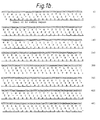
- the genetic sequences may comprise sequences encoding HPV16 E6/E7 and HPV18 E6/E7 as shown in figures 1(a) and 1(b) respectively.
- the genetic sequences may encode an antigenic moiety of the said proteins.
- Either or both of the nucleotide sequences in a pair of nucleotide sequences may be altered to make them less homologous than an equivalent pair of nucleotide sequences encoding wild-type HPV proteins.
- the alteration in nucleotide sequence may be in an area of high sequence homology.
- the alteration in nucleotide sequence will not result in an alteration of the encoded amino acid sequence.
- Two or more nucleotide sequences each encoding separate proteins may be fused together to form a single open reading frame.
- the genetic sequences encoding part or all of the proteins E6 and E7 from HPV16 may be fused together to form a single open reading frame.
- the genetic sequences encoding part or all of the proteins E6 and E7 from HPV18 may be fused together to form a single open reading frame.
- the genetic sequences encoding part or all of the proteins E6 and E7 from both HPV16 and HPV18 may be fused together to form a single open reading frame.
- the recombinant virus vector may have the pairs of nucleotide sequences arranged according to any one of the options shown in Figure 26.
- the two open reading frames may be inverted with respect to one another.
- the two open reading frames may be arranged in the recombinant virus vector adjacent to each other. The inversion may be such that the E6 coding sequences of HPV16 and HPV18 are both located between the E7 coding sequences of HPV16 and HPV18.
- the inversion could be such that the E7 coding sequences of HPV16 and HPV18 are both located between the E6 coding sequences of HPV16 and HPV18.
- the two open reading frames, each with its respective promoter may be arranged next to each other in the recombinant vector.
- the promoters may be located between the genes, which are transcribed outwardly, or the promoters may be located outside the genes, which are transcribed inwardly.
- the genetic sequences encoding part or all of the E7 protein from HPV16 and the E7 protein from HPV18 may be fused together to form a single open reading frame.
- the genetic sequences encoding part or all of the E6 protein from HPV16 and the E6 protein from HPV18 may be fused together to form a single open reading frame. This leads to another range of arrangements similar to those shown in Figure 26.
- the fusions may be via a single codon encoding a relatively small neutral amino acid e.g. glycine.
- the present invention also provides a recombinant virus vector which comprises a first open reading frame having a fused genetic sequence encoding part or all of the wild-type proteins E6 and E7 from HPV16; and a separate second open reading frame having a fused genetic sequence encoding part or all of the wild-type proteins E6 and E7 from HPV18; wherein the first and second open reading frames may be inverted with respect to one another whereby either: i) the E6 coding sequences of HPV16 and HPV18 are both located between the E7 coding sequences of HPV16 and HPV18; or ii) the E7 coding sequences of HPV16 and HPV18 are both located between the E6 coding sequences of HPV16 and HPV18; and wherein any of said wild-type proteins may be replaced by a mutant protein immunologically cross-reactive therewith.
- Each of the first and second open reading frames may have a corresponding promoter and the two open reading frames each with its promoter, are arranged next to each other in the virus.
- the present invention also provides a recombinant virus vector wherein either: i) the promoters are located between the first and second reading frames whereby the open reading frames are transcribed outwardly; or ii) the promoters are located outside the first and second open reading frames whereby the open reading frames are transcribed inwardly.
- the present invention also provides a recombinant virus vector which comprises a first open reading frame having a fused genetic sequence encoding part or all of the wild-type proteins E6 and E7 from HPV16; and a separate second open reading frame having a fused genetic sequence encoding part or all of the wild-type proteins E6 and E7 from HPV18; wherein the E6 coding sequences of HPV16 and HPV18 are both located between the E7 coding sequences of HPV16 and HPV18; and each open reading frame has a corresponding promoter, the promoters being located between the first and second open reading frames whereby the open reading frames are transcribed outwardly; and wherein any of said wild-type proteins may be replaced by a mutant protein immunologically cross-reactive therewith.
- the wild-type proteins HPV16E7 and HPV18E7 may be replaced with mutant proteins which are substantially homologous to said wild-type proteins and in which the residues cys 24 and glu 26 of wild-type protein HPV16E7 and the residues cys 27 and glu 29 of wild-type protein HPV18E7 are replaced with glycine residues.
- the recombinant virus vector may be derivable from vaccinia virus.
- the applicants have also recognized that for effective function as an immunotherapeutic, it is desirable for the recombinant virus to retain its ability to replicate and thereby generate an active infection in order that a cellular immune response may be mounted against the virus-encoded proteins.
- the applicants propose that the foreign gene sequences should be inserted into the vector virus at sites, the disruption of which by the insertion of the heterologous gene sequences will not substantially interfere with, and therefore have a substantially adverse affect on any viral functions which relate to the replicative ability of the virus in the infected host animal.
- the applicants have named these sites 'neutral sites' (although the term 'neutral' should not be interpreted strictly as it is acknowledged that the disruption of these sites may have a small, but relatively speaking inconsequential adverse affect on replicative ability).
- DNA sequences which affect virus replication can fall into several categories:
- Neutral sites can be easily tested for according to techniques well known in the art. For example, a site may be selected, interrupted or deleted using standard methodologies and the resultant recombinant virus placed in conditions which normally support growth of the wild type virus vector, to assess the effect of the manipulations. The pathogenicity of the virus may be further compared with that of the unmodified virus vector strain in animal models, in order to assess its level of attenuation.
- the virus vector may be vaccinia virus.
- the vaccinia virus may be attenuated or disabled so that it is unable to fully replicate and esablish an extensive infection of host cells.
- Vaccinia virus has been used extensively in the past for vaccination against smallpox, and its use worldwide has led to the complete eradication of the disease (Bhebehami, Microbiol. Rev., 47, 455, 1983).
- WHO World Health Organization
- several different strains of vaccinia virus were used as vaccines.
- a meeting was sponsored by the WHO to discuss the use of vaccinia virus as live virus vectors (Bulletin of the WHO 63(3):471-477).
- the data in this report indicates that the number of complications associated with vaccination was lowest for the Wyeth strain of vaccinia virus, and so this strain has been chosen as a basis for the construction of the recombinant virus according to an embodiment of the present invention.
- the present invention provides a method for inserting foreign genes at neutral sites within the genome of a virus, the disruption of which sites by the insertion will not interfere with and therefore have a substantially adverse affect on virus replication.
- the neutral site may be identified herein within the Wyeth strain of vaccinia virus on the basis of the related WR strain nucleotide sequence.
- sites equivalent to those sites identified above may be used.
- the neutral sites may be any as identified hereinafter as A,B,C and D, or a functional equivalent.
- the recombinant virus vector may comprise a single promoter which controls the expression of all the heterologous genetic sequences within a single open reading frame.
- the virus may comprise a first promoter which controls the expression of the genetic sequences from a first open reading frame, and one or more further promoters which control the expression of the genetic sequences from one or more further open reading frames.
- the promoter sequence may be virus- specific and several have been characterised so far (Davison & Moss, J. Mol.
- the single promoter and the first and one or more further promoters may be the p 7.5 promoter.
- the single promoter and the first and one or more further promoters may be the p 7.5 promoter.
- a recombinant virus as provided by the present invention may involve the use of the p7.5 promoter (Venkatesan et al., Cell, 125, 805, 1981) and/or the H6 promoter (Rosel et al., J. Virol, 60, 436, 1988), both of which are active both early and late in infection.
- the strategy for expression of the protein involves production of E7 as a fusion protein with E6, which is unlikely to retain biological function.
- Embodiments of the invention provide for reducing this risk still further, by making changes within the E7 gene which are known to destroy its oncogenic capacity (Chesters et al., J. Gen Virol. 71, 449. 1990).
- the genetic sequences encoding part or all of the E7 proteins may be altered from the equivalent wild type sequences, in order to render the sequences, used in the recombinant virus vectors less oncogenic than their equivalent wild type sequences.
- the present invention also provides pharmaceuticals comprising recombinant virus vectors as herein defined.
- the pharmaceutical may be for use against a condition caused by HPV infection which comprises an immunotherapeutically effective amount of a recombinant virus vector.
- the pharmaceutical may be for use against cervical cancer.
- the pharmaceutical may be a vaccine to immunise against a condition caused by HPV infection which comprises an amount of recombinant virus vector as herein provided which when administered to a recipient can specifically activate cells of the immune system to HPV proteins.
- the vaccine may be for immunisation against cervical cancer.
- the pharmaceuticals may comprise one or more excipients.
- the present invention also provides methods of using the recombinant virus vectors as herein defined to make medicaments for use as immunotherapeutics or vaccines against conditions thought to be caused by HPV infection. For example for the prophylaxis and treatment of cervical cancer.
- the present invention also provides methods of treating mammalian patients with recombinant virus vectors and pharmaceuticals as herein provided.
- the present invention also provides a method of determining a neutral site in a virus vector, the disruption of which by the insertion of heterologous gene sequences will not interfere with, and therefore, have a substantially adverse affect on viral function which relates to the replicative ability of the virus.
- the method for this determination comprises: (a) analysing a viral genome to identify open reading frames which are likely to encode functional genes, by looking for expected codon usage between spaced apart start and stop codons; and (b) selecting sites which are not in such open reading frames, likely to encode functional genes, as identified in (a) This may include selecting sites between open reading frames for sequences of functional genes and selecting sites which are in open reading frames which have some functional gene characteristics, such as an expected codon usage, but have lost other essential characteristics such as a start codon.
- the method may also comprise interrupting or deleting the selected sites from the viral genome and placing the resultant virus in conditions which normally support growth of the wild type virus.
- the present invention also provides neutral sites identified by use of the above methods.
- the present invention provides an embodiment which shows a way of inducing a cellular immune response against the papillomavirus proteins usually expressed in cervical tumour cells by the creation of a recombinant vaccinia virus, which has been engineered to produce the HPV E6 and E7 proteins, or proteins containing HPV E6 and E7 sequences, during its replication cycle.
- This therapeutic vaccinia virus contains the E6 and E7 genes from both HPV16 and HPV18, the viruses most commonly associated with cervical carcinoma. Vaccination with this single virus may thus stimulate immunity to the E6 and E7 proteins of the HPV types associated with more than 80% of cervical tumours. Expression of all four gene sequences (e.g.
- HPV16 E6 and E7; HPV18 E6 and E7) in a single virus however presents a problem, because of the likelihood of loss of genetic sequences through recombination.
- the present invention provides a method for circumventing this difficulty, firstly through specific sequence alteration, in order to reduce sequence homology and secondly through their insertion into the vaccinia virus genome in such a way that if such recombination were to occur, it would not lead to loss of sequences (i.e. in inverted orientation with respect to each other).
- Expression of the desired four gene sequences in the vaccinia virus genome could also be difficult (though not impossible) to achieve as independent expression units, and so the invention provides that instead, the E6 and E7 open reading frames may be fused together.
- a problem with standard methods for insertion of foreign information into the vaccinia virus genome is that the use of selectable markers to increase the efficiency of recombination results in the ultimate presence in the recombinant virus also of the selectable marker gene itself.
- Methods for insertion have been developed however, which allow subsequent elimination of these extraneous sequences (Falkner & Moss J. Virol., 64, 3108, 1990) and these are used in an embodiment of the present invention to ensure that the final recombinant vaccinia virus has only those additional sequences which are necessary for its required function.
- a fragment of DNA containing the HPV16 E6/7 coding region is prepared by polymerase chain reaction (PCR) amplification from the plasmid pBR322/HPV16 (Durst et al., PNAS, 80, 3812, 1983) using the oligonucleotides SO5 and SO6.
- a fragment containing the same region from HPV18 is prepared by the same procedure from plasmid pBR322/HPV18 (Boshart et al., EMBO J. 3,1151) using the oligonucleotides SO1 and S02.
- Plasmids pBR322/HPV16 and pBR322/HPV18 are both available from Behringwerke AG, P.O. Box 1140 D-3550, Marburg, Germany (alternatively the necessary sequences can be created synthetically from the sequence information provided by the present application).
- this produces a DNA fragment of about 800 base pairs (bp) with a site for the restriction enzyme Nco 1 (CC ATG G) located exactly at the beginning of the E6 gene, and a Smal site immediately downstream of the termination codon for the E7 gene (figure 1(a) and (b)).
- Ncol-Smal digested plasmid pUC118NS (a modified version of the "phagemid" pUC118 (Viera & Messing, Methods Enzymol., 153,3, 1987) in which Ncol and Smal sites have been created by site-directed mutagenesis within the poly-linker region) to generate the plasmid plMS7, containing the HPV16 sequences, and pIMS8 containing the HPV18 sequences (figure 2).
- the use of pUC118 is not crucial to the present strategy as any plasmid which can be manipulated by site directed mutagenesis can be successfully used.
- the E6 and E7 genes from each HPV type are first fused together to form a single continuous ORF. This is achieved by site-directed mutagenesis as follows:
- the invention provides ways of minimising this risk. Firstly, by inserting the two sets of genetic information in the vaccinia genome in opposite orientation to each other (so that recombination will result not in the loss of sequence information, but rather in its inversion). Secondly, by creating specific changes in the E6/7 sequence of one of the HPV virus strains at sites where the homology is greatest. These changes however are made in such a way that the amino acid coding potential of the genes remains unaltered.
- HPV18 E6 sequences is therefore altered by site-directed mutagenesis as follows: The sequence TTTTTATTCTAGAATTAGAG (which begins 210 nucleotides from the start of E6 - underlined in figure 1(b)) is mutated, using oligonucleotide S24 to the sequence TTTCTACAGTAGAATCAGAG (pIMS8.2 - figure 2) (changed nucleotides are in bold type).
- a second aim of this change is to eliminate from the HPV18 E6 sequence, the sequence TTTTTAT, which is a potential termination signal for the early vaccinia virus transcription enzyme (Rohrmann et al., Cell.,, 46, 1029, 1986).
- the Wyeth strain of vaccinia virus is used for construction of the therapeutic virus. It is propagated in Vero cells for the purposes of genetic manipulation, and in the human diploid fibroblast cell line MRC5 for the production of the final therapeutic virus stock. Both cell lines are obtained from the National Institute of Biological Standards and Control, South Mims, U.K..
- the Wyeth strain of vaccinia virus, vero cells and the cell line MRC5 are also available from the American Type Culture Collection, 12301 Parklawn Drive, Rockville, Maryland 20852, USA.
- sites For the purpose of insertion of papillomavirus genes within the vaccinia virus genome, sites have been chosen to have two characteristics.
- TK thymidine kinase
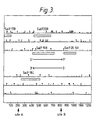
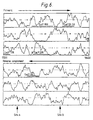
- Site A is marked on figures 3 and 6.
- Figure 9 shows the actual DNA sequence with a translation of the ORFs on either side of the site. It can be seen that Site A is placed in an intergenic region between SalF17R and SalF19R. It is placed some 195 bases upstream of SalF19R to avoid any promoter elements associated with that gene.
- the sequence TTTTTCT (shown in italics) will act as a terminator of early RNA transcription for the SalF17R gene if it is an early gene. However, the site is placed downstream of the first of these, so it will not affect early termination of transcription if it occurs. Examination of figure 6 shows that there is no recognisable gene on the opposite strand at this point, and hence this sequence location is suitable as a neutral insertion site.
- Site B is marked on figures 3 and 6.
- Figure 10 shows the actual DNA sequence with a translation of the ORFs on either side of the site. It can be seen that Site B is placed in an intergenic region between SalF19R and SalF20.5R.
- Figure 6 shows that it is within a region of high vaccinia codon usage, but that this region does not form a genuine gene, having no initiation codon.
- figure 6 suggests that Sal20.5R is not a complete gene, as the conformation to vaccinia codon usage drops off dramatically at the start of the gene.
- Site B is placed some 70 bases upstream of SalF20.5R which may well avoid any promoter elements associated with that gene.
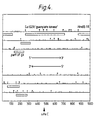
- the SalG2R gene is not active as a guanylate kinase and can be referred to as a 'pseudogene', If the gene is inactive as the applicants deduce, then it will serve as a neutral insertion site.
- Figure 5 shows that site D lies within the region designated HindB3.5R. This region, although conforming to vaccinia codon usage, has no start codon and is therefore not a genuine gene.
- the codon usage plot shown in figure 8 indicates that it probably was once a functional gene, and may well have been attached to HindB3R (a shift in the codon usage preference occurs here well away from the termination codon of the HindB3R ORF which suggests that the last section of HindB3R is not properly part of this gene.)
- HindB3.5R is not active as a gene and can be used as a neutral insertion site.
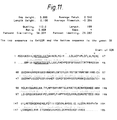
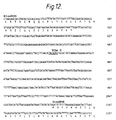
- Figure 12 shows the actual DNA sequence with a translation of the ORFs on either side of the site. It can be seen that site D is placed in an intergenic region between HindB3R and HindB4R as well as being within the non-functional HindB3.5R.
- DNA copies of the neutral sites together with an appropriate amount of flanking DNA from the vaccinia genome (approximately 500 bases on either side) must first be cloned into a plasmid vector.
- These plasmids may then be used to introduce the foreign DNA into the vaccinia virus genome; the vaccinia virus 'flanking sequences' around the inserted gene serve to allow homologous recombination between the plasmid DNA and the viral DNA, with the consequent insertion of the foreign gene at the desired location.
- Plasmids containing flanking regions from the neutral sites are constructed as follows.
- DNA is prepared from the Wyeth strain of vaccinia virus by the method of Esposito et al., (J. Virol. Meth. 2: 175, 1981).
- the polymerase chain reaction (PCR) is used to remove an approximately 1000 base pair (bp) fragment from DNA of the Wyeth strain of vaccinia virus.
- Pairs of oligonucleotides are chosen approximately 500 bp either side of the chosen neutral site. These oligonucleotides are based on the sequence of the WR strain, but are chosen in regions where the sequence of the WR strain is identical to that of the Copenhagen strain (Goebel et al., Virology 179:247, 1990).
- the oligonucleotides incorporate restriction enzyme recognition sequences so that they can be cloned easily into a plasmid.
- the restriction sites are EcoR1 and HindIII.
- neutral site C the HindIII site is replaced by an Sphl site, since there is an internal HindIII site in the chosen flanking sequences.
- the oligonucleotides used for PCR are listed below:
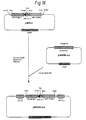
- DNA fragments of approximately lkb are then prepared using these pairs of oligonucleotides by PCR amplification, digested with EcoRI and HindIII (for site A,B and D) or with EcoRI and Sphl (for site C) and cloned into HindIII and EcoRI-digested pUC118 (figure 13) to generate the plasmids pIMMC7a, pIMMC7b, pIMMC7c and pIMMC7d.
- a suitable restriction enzyme site is then introduced at the selected location within each of the plasmids. This is achieved using site directed mutagenesis using an oligonucleotide containing the desired new unique site and flanked by 15 bases of sequence to either side (see below).
- the plasmids modified in this fashion are designated pIMMC8a-d (figure 13).
- original plasmid oligonucleotidesite new plasmid introduced pIMMC7a MB35SnaBl pIMMC8a pIMMC7b MB36Hpal pIMMCb pIMMC7c MB37Stul pIMMC8c pIMMC7d MB38SnaBl pIMMC8d
- the p7.5 and H6 promoters from vaccinia virus genomic DNA are prepared by PCR amplification as described below.
- a pair of complementary oligonucleotides (S7 and S8) is synthesised to include the following restriction enzyme sites, HindIII, SnaBl, Hpal, HindIII, Sall, Ncol, Smal, SnaBl and EcoRl, such that the pair, after annealing, present at one end HindIII compatible overhanging ends, and at the other, EcoRl compatible overhanging ends.
- the two oligonucleotides are allowed to anneal and are inserted into pUC118 cut with EcoRl and HindIII (figure 14). The resulting vector is called pIMMC3.
- a DNA molecule of approximately 180 bp containing the H6 promoter is removed from the WR strain of vaccinia virus by PCR amplification using the oligonucleotides MB15 (anneals upstream and includes a 5'-Sall site) and MB7 (anneals downstream and includes a 5'-HindIII site). This is cloned into pIMMC3 cleaved with HindIII and Sall to create pIMMC4a (figure 14).
- a DNA molecule of approximately 200bp containing the p7.5 promoter is then removed from the WR strain of vaccinia virus by PCR amplification using the oligonucleotides MB32 (anneals upstream and includes a 5'-Sall site) and MB33 (anneals downstream and includes a 5'Ncol site). This is cloned into pIMMC3 cleaved with Ncol and Sall to create pIMMC14b.
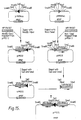
- the strategy required to generate a recombinant vaccinia virus containing and expressing the E6-E7 proteins from HPV16 and HPV18, based on the elements described above involves five main stages as outlined below.
- Stocks of the final recombinant virus are prepared by growth in Vero cells, and are used to infect MRC5 cells deemed suitable for the preparation of material suitable for use as human vaccines.
- the virus is plaque-purified three times by standard methods, and finally a stock prepared for clinical use.
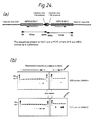
- Figure 22 shows the analysis by PCR, of a recombinant vaccinia virus (v9a.1) in which the HPV DNA cassette is inserted at Site A.
- the diagram shown in panel (a) indicates the DNA fragments expected if insertion of the correct DNA has occurred. It can be seen in panel (b) that the actual pattern of PCR products generated is consistent with that expected.
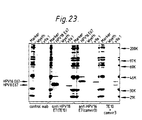
- Vero cells are infected with with recombinant virus v9a.1 (HPV DNA inserted at Site A), and the cells examined by western blotting for the presence of the HPV E67 fusions proteins using monoclonal antibodies specific for the HPV16 E7 protein (camvir3) and for the HPV18 E7 protein (7E10). It can be seen that both monoclonal antibodies recognise specifically proteins of the expected size in cells infected with the recombinant virus v9a.1, but not in cells infected with the control parent virus Wyeth strain.
- the recombinant virus For the recombinant virus to be of use clinically, it is important that the inserted sequences remain genetically stable over multiple virus passage, and the DNA insert was carefully designed to promote this genetic instability.
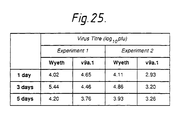
- the virulence of the recombinant virus is compared in animal experiments with that of the parental Wyeth strain.
- Groups of 20 mice are inoculated intranasally each with 10 7 pfu of Wyeth strain or recombinant virus in a total volume of 20 ⁇ l.
- Two mice are sacrificed at 1 day, 3 days and 5days following inoculation, and the lungs dissected out.
- the amount of virus present in the lungs is then measured by grinding the tissue, and assay of the homogenate by standard vaccinia virus plaque 5 assay.
- the results of such an experiment for the recombinant virus v9a.1 HPV infromation inserted at site A) are shown in Figure 25. It can be seen that the recombinant virus retains the ability to replicate in mice, and that the level of virus produced in the lungs of the infected animals is similar to that seen with the parental Wyeth strain.
- a stock of the recombinant virus is prepared by infection of MRC5 cells, and adjusted to a concentration of not less than 10 8 pfu/ml. 20 ⁇ l of this material is applied to the arm of the patient, which is then scarified through the virus droplet with a bifurcated needle, according to the standard procedure used for vaccination against smallpox.
Landscapes
- Chemical & Material Sciences (AREA)
- Life Sciences & Earth Sciences (AREA)
- Health & Medical Sciences (AREA)
- Organic Chemistry (AREA)
- Engineering & Computer Science (AREA)
- Genetics & Genomics (AREA)
- Zoology (AREA)
- Wood Science & Technology (AREA)
- Bioinformatics & Cheminformatics (AREA)
- General Health & Medical Sciences (AREA)
- Biotechnology (AREA)
- General Engineering & Computer Science (AREA)
- Biochemistry (AREA)
- Microbiology (AREA)
- Virology (AREA)
- Biomedical Technology (AREA)
- Medicinal Chemistry (AREA)
- General Chemical & Material Sciences (AREA)
- Chemical Kinetics & Catalysis (AREA)
- Biophysics (AREA)
- Molecular Biology (AREA)
- Physics & Mathematics (AREA)
- Proteomics, Peptides & Aminoacids (AREA)
- Gastroenterology & Hepatology (AREA)
- Immunology (AREA)
- Analytical Chemistry (AREA)
- Plant Pathology (AREA)
- Public Health (AREA)
- Oncology (AREA)
- Nuclear Medicine, Radiotherapy & Molecular Imaging (AREA)
- Communicable Diseases (AREA)
- Pharmacology & Pharmacy (AREA)
- Animal Behavior & Ethology (AREA)
- Veterinary Medicine (AREA)
- Micro-Organisms Or Cultivation Processes Thereof (AREA)
- Medicines Containing Antibodies Or Antigens For Use As Internal Diagnostic Agents (AREA)
- Peptides Or Proteins (AREA)
- Preparation Of Compounds By Using Micro-Organisms (AREA)
- Medicines Containing Material From Animals Or Micro-Organisms (AREA)
Claims (48)
- Vakzine, umfassend einen rekombinanten Virusvektor, der zumindest ein Paar zum Virus heterologer Nukleotidsequenzen umfasst, die jeweils einen Promotor und einen offenen Leserahmen umfassen, der für ein gesamtes oder einen antigenischen Teil eines Human-Papillomavirus- (HPV-) Proteins der Wildform oder eines mutierten Proteins kodiert, das mit dem Protein der Wildform kreuzreaktiv ist, wobei die Nukleotidsequenzen ausreichende Sequenzhomologie aufweisen, damit Rekombination zwischen ihnen zu erwarten ist; worin das Paar Nukleotidsequenzen im Virusvektor so angeordnet ist, dass sie zueinander umgekehrt vorliegen, so dass die Wahrscheinlichkeit verringert wird, dass Rekombinationsereignisse zum Verlust eines Teils der oder aller Sequenzen führt und der Virusvektor in der Lage ist, eine Säugetier-Wirtszelle zu infizieren und die offenen Leserahmen in der Wirtszelle als Polypeptide zu exprimieren.
- Vakzine nach Anspruch 1, worin das Paar Nukleotidsequenzen für einen Teil der oder die gesamten HPV-Proteine der Wildform HPV16E7 und HPV18E7 oder mutierte Proteine, die damit immunologisch kreuzreaktiv sind, kodiert.
- Vakzine nach Anspruch 1, worin das Paar Nukleotidsequenzen für einen Teil der oder die gesamten HPV-Proteine der Wildform HPV16E6 und HPV18E6 oder mutierte Proteine, die damit immunologisch kreuzreaktiv sind, kodiert.
- Vakzine nach Anspruch 2, die ein weiteres Paar Nukleotidsequenzen umfasst, die für einen antigenischen Teil oder die gesamten HPV-Proteine der Wildform HPV16-E6 und HPV18E6 oder mutierte Proteine, die damit immunologisch kreuzreaktiv sind, kodieren.
- Vakzine nach einem der vorangegangenen Ansprüche, worin zwei oder mehr Nukleotidsequenzen verschiedener Paare miteinander fusioniert sind, um einen einzigen offenen Leserahmen zu bilden.
- Vakzine nach Anspruch 5, worin die Fusionen über ein einziges Codon, das für eine kleine neutrale Aminosäure kodiert, gegeben sind.
- Vakzine nach Anspruch 6, worin die Aminosäure Glycin ist.
- Vakzine nach Anspruch 4, worin zumindest einer der Leserahmen in der heterologen Nukleotidsequenz ein fusionierter Leserahmen ist.
- Vakzine nach Anspruch 4, worin die heterologen Nukleotidsequenzen so angeordnet sind, dass die Leserichtung jedes Leserahmens zum anderen hin verläuft.
- Vakzine nach Anspruch 4, worin die heterologen Nukleotidsequenzen so angeordnet sind, dass die Leserichtung jedes Leserahmens vom anderen weg verläuft.
- Vakzine nach einem der Ansprüche 8 bis 10, Folgendes umfassend:einen ersten offenen Leserahmen mit einer fusionierten Gensequenz, die für einen Teil der oder die gesamten Proteine der Wildform E6 und E7 von HPV16 kodiert; undeinen getrennten zweiten offenen Leserahmen mit einer fusionierten Gensequenz, die für einen Teil der oder die gesamten Proteine der Wildform E6 und E7 von HPV18 kodiert;worin der erste und der zweite offene Leserahmen zueinander umgekehrt vorliegen, wodurch entweder(i) die E6-Kodiersequenzen von HPV16 und HPV18 beide zwischen den E7-Kodiersequenzen von HPV16 und HPV18 angeordnet sind; oder(ii) die E7-Kodiersequenzen von HPV16 und HPV18 beide zwischen den E6-Kodiersequenzen von HPV16 und HPV18 angeordnet sind; undworin jedes der Proteine der Wildform durch ein mutiertes Protein ersetzt sein kann, das damit immunologisch kreuzreaktiv ist.
- Vakzine nach Anspruch 11, worin der erste und der zweite offene Leserahmen jeweils einen entsprechenden Promotor aufweisen und die beiden offenen Leserahmen mit ihrem jeweiligen Promotor im Virus nebeneinander angeordnet sind.
- Vakzine nach Anspruch 12, worin entweder(i) die Promotoren zwischen dem ersten und dem zweiten offenen Leserahmen angeordnet sind, wodurch die offenen Leserahmen nach außen transkribiert werden; oder(ii) die Promotoren außerhalb des ersten und des zweiten offenen Leserahmens angeordnet sind, wodurch die offenen Leserahmen nach innen transkribiert werden.
- Vakzine nach einem der Ansprüche 8 bis 13, Folgendes umfassend:einen ersten offenen Leserahmen mit einer fusionierten Gensequenz, die für einen Teil der oder die gesamten Proteine der Wildform E6 und E7 von HPV16 kodiert; undeinen getrennten zweiten offenen Leserahmen mit einer fusionierten Gensequenz, die für einen Teil der oder die gesamten Proteine der Wildform E6 und E7 von HPV18 kodiert;worin die E6-Kodiersequenzen von HPV16 und HPV18 beide zwischen den E7-Kodiersequenzen von HPV16 und HPV18 angeordnet sind; undjeder offene Leserahmen einen entsprechenden Promotor aufweist, wobei die Promotoren zwischen dem ersten und dem zweiten offenen Leserahmen angeordnet sind, wodurch die offenen Leserahmen nach außen transkribiert werden; undworin jedes der Proteine der Wildform durch ein mutiertes Protein ersetzt sein kann, das damit immunologisch kreuzreaktiv ist.
- Vakzine nach einem der vorangegangenen Ansprüche, worin eines oder beide der Nukleotidsequenzen im Paar von Nukleotidsequenzen verändert ist bzw. sind, um sie weniger homolog als ein äquivalentes Paar von Nukleotidsquenzen zu machen, die für die HPV-Proteine der Wildform kodieren.
- Vakzine nach Anspruch 15, worin die Änderung in der Nukleotidsequenz nicht zu einer Änderung der kodierten Aminosäuresequenz führt.
- Vakzine nach Anspruch 2, worin die Proteine der Wildform HPV16E7 und HPV-18E7 durch mutierte Proteine ersetzt sind, die zu den Proteinen der Wildform homolog sind und in denen die Reste cys 24 und glu 26 des Proteins der Wildform HPV16E7 und die Reste cys 27 und glu 29 des Proteins der Wildform HPV18E7 durch Glycinreste ersetzt sind.
- Vakzine nach einem der vorangegangenen Ansprüche, worin die heterologen Nukleotidsequenzen einen Teil der oder die gesamten in den Fig. 1(a) und 1(b) dargestellten Sequenzen umfassen können.
- Vakzine nach einem der vorangegangenen Ansprüche, worin der rekombinante Virusvektor ein rekombinantes Vaccinia-Virus ist.
- Vakzine nach einem der vorangegangenen Ansprüche, worin die Nukleotidsequenzen in den Virusvektor an einer oder mehreren neutralen Stellen insertiert sind, wobei deren Unterbrechung durch die Insertion der Nukleotidsequenzen virale Funktionen, die mit der Replizierbarkeit des Virus in der Säugetier-Zelle in Zusammenhang stehen, im Wesentlichen nicht beeinträchtigt.
- Vakzine nach Anspruch 20, worin der rekombinante Virusvektor ein rekombinantes Vaccinia-Virus ist und worin die neutralen Stellen eine oder mehrere der folgenden umfassen:A) den Zwischenraum zwischen SalF17R und SalF19R von Stamm WR, der zumindest einen Teil der Sequenzumfasst;
 B) den Zwischenraum zwischen SalF19R und SalF20.5R von Stamm WR, der zumindest einen Teil der Sequenzumfasst;
 C) einen Bereich in SalG2R von Stamm WR, der zumindest einen Teil der Sequenzumfasst;
 D) einen Bereich in HindB3.5R von Stamm WR, der zumindest einen Teil der Sequenzumfasst;
 E) eine Sequenz mit zumindest 90 % Sequenzhomologie zu den oben angeführten Sequenzen A) bis D).
 - Rekombinanter Virusvektor zur Verwendung als Immuntherpeutikum oder Vakzine, umfassend zumindest ein Paar zum Virus heterologer Nukleotidsequenzen, die jeweils einen Promotor und einen offenen Leserahmen umfassen, der für ein gesamtes oder einen antigenischen Teil eines Human-Papillomavirus- (HPV-) Proteins der Wildform oder eines mutierten Proteins kodiert, das mit dem Protein der Wildform kreuzreaktiv ist, wobei die Nukleotidsequenzen ausreichende Sequenzhomologie aufweisen, damit Rekombination zwischen ihnen zu erwarten ist; worin das Paar Nukleotidsequenzen im Virusvektor so angeordnet ist, dass sie zueinander umgekehrt vorliegen, so dass die Wahrscheinlichkeit verringert wird, dass Rekombinationsereignisse zum Verlust eines Teils der oder aller Sequenzen führt und der Virusvektor in der Lage ist, eine Säugetier-Wirtszelle zu infizieren und die offenen Leserahmen in der Wirtszelle als Polypeptide zu exprimieren.
- Rekombinanter Virusvektor nach Anspruch 22, worin das Paar Nukleotidsequenzen für einen Teil der oder die gesamten HPV-Proteine der Wildform HPV16E7 und HPV18E7 oder mutierte Proteine, die damit immunologisch kreuzreaktiv sind, kodiert.
- Rekombinanter Virusvektor nach Anspruch 22, worin das Paar Nukleotidsequenzen für einen Teil der oder die gesamten HPV-Proteine der Wildform HPV16E6 und HPV18E6 oder mutierte Proteine, die damit immunologisch kreuzreaktiv sind, kodiert.
- Rekombinanter Virusvektor nach Anspruch 23, der ein weiteres Paar Nukleotidsequenzen umfasst, die für einen antigenischen Teil oder die gesamten HPV-Proteine der Wildform HPV16E6 und HPV18E6 oder mutierte Proteine, die damit immunologisch kreuzreaktiv sind, kodieren.
- Rekombinanter Virusvektor nach einem der vorangegangenen Ansprüche, worin zwei oder mehr Nukleotidsequenzen verschiedener Paare miteinander fusioniert sind, um einen einzigen offenen Leserahmen zu bilden.
- Rekombinanter Virusvektor nach Anspruch 26, worin die Fusionen über ein einziges Codon, das für eine kleine neutrale Aminosäure kodiert, gegeben sind.
- Rekombinanter Virusvektor nach Anspruch 27, worin die Aminosäure Glycin ist.
- Rekombinanter Virusvektor nach Anspruch 25, worin zumindest einer der Leserahmen in der heterologen Nukleotidsequenz ein fusionierter Leserahmen ist.
- Rekombinanter Virusvektor nach Anspruch 25, worin die heterologen Nukleotidsequenzen so angeordnet sind, dass die Leserichtung jedes Leserahmens zum anderen hin verläuft.
- Rekombinanter Virusvektor nach Anspruch 25, worin die heterologen Nukleotidsequenzen so angeordnet sind, dass die Leserichtung jedes Leserahmens vom anderen weg verläuft.
- Rekombinanter Virusvektor nach einem der Ansprüche 29 bis 31, Folgendes umfassend:einen ersten offenen Leserahmen mit einer fusionierten Gensequenz, die für einen Teil der oder die gesamten Proteine der Wildform E6 und E7 von HPV16 kodiert; undeinen getrennten zweiten offenen Leserahmen mit einer fusionierten Gensequenz, die für einen Teil der oder die gesamten Proteine der Wildform E6 und E7 von HPV18 kodiert;worin der erste und der zweite offene Leserahmen zueinander umgekehrt vorliegen, wodurch entweder(i) die E6-Kodiersequenzen von HPV16 und HPV18 beide zwischen den E7-Kodiersequenzen von HPV16 und HPV18 angeordnet sind; oder(ii) die E7-Kodiersequenzen von HPV16 und HPV18 beide zwischen den E6-Kodiersequenzen von HPV16 und HPV18 angeordnet sind; undworin jedes der Proteine der Wildform durch ein mutiertes Protein ersetzt sein kann, das damit immunologisch kreuzreaktiv ist.
- Rekombinanter Virusvektor nach Anspruch 32, worin der erste und der zweite offene Leserahmen jeweils einen entsprechenden Promotor aufweisen und die beiden offenen Leserahmen mit ihrem jeweiligen Promotor im Virus nebeneinander angeordnet sind.
- Rekombinanter Virusvektor nach Anspruch 33, worin entweder(i) die Promotoren zwischen dem ersten und dem zweiten offenen Leserahmen angeordnet sind, wodurch die offenen Leserahmen nach außen transkribiert werden; oder(ii) die Promotoren außerhalb des ersten und des zweiten offenen Leserahmens angeordnet sind, wodurch die offenen Leserahmen nach innen transkribiert werden.
- Rekombinanter Virusvektor nach einem der Ansprüche 29 bis 34, Folgendes umfassend:einen ersten offenen Leserahmen mit einer fusionierten Gensequenz, die für einen Teil der oder die gesamten Proteine der Wildform E6 und E7 von HPV16 kodiert; undeinen getrennten zweiten offenen Leserahmen mit einer fusionierten Gensequenz, die für einen Teil der oder die gesamten Proteine der Wildform E6 und E7 von HPV18 kodiert;worin die E6-Kodiersequenzen von HPV16 und HPV18 beide zwischen den E7-Kodiersequenzen von HPV16 und HPV18 angeordnet sind; undjeder offene Leserahmen einen entsprechenden Promotor aufweist, wobei die Promotoren zwischen dem ersten und dem zweiten offenen Leserahmen angeordnet sind, wodurch die offenen Leserahmen nach außen transkribiert werden; undworin jedes der Proteine der Wildform durch ein mutiertes Protein ersetzt sein kann, das damit immunologisch kreuzreaktiv ist.
- Rekombinanter Virusvektor nach einem der vorangegangenen Ansprüche, worin eines oder beide der Nukleotidsequenzen im Paar von Nukleotidsequenzen verändert ist bzw. sind, um sie weniger homolog als ein äquivalentes Paar von Nukleotidsequenzen zu machen, die für die HPV-Proteine der Wildform kodieren.
- Rekombinanter Virusvektor nach Anspruch 36, worin die Änderung in der Nukleotidsequenz nicht zu einer Änderung der kodierten Aminosäuresequenz führt.
- Rekombinanter Virusvektor nach Anspruch 23, worin die Proteine der Wildform HPV16E7 und HPV18E7 durch mutierte Proteine ersetzt sind, die zu den Proteinen der Wildform homolog sind und in denen die Reste cys 24 und glu 26 des Proteins der Wildform HPV16E7 und die Reste cys 27 und glu 29 des Proteins der Wildform HPV18-E7 durch Glycinreste ersetzt sind.
- Rekombinanter Virusvektor nach einem der vorangegangenen Ansprüche, worin die heterologen Nukleotidsequenzen einen Teil der oder die gesamten in den Fig. 1(a) und 1(b) dargestellten Sequenzen umfassen können.
- Rekombinanter Virusvektor nach einem der vorangegangenen Ansprüche, der ein rekombinantes Vaccinia-Virus ist.
- Rekombinanter Virusvektor nach einem der vorangegangenen Ansprüche, worin die Nukleotidsequenzen in den Virusvektor an einer oder mehreren neutralen Stellen insertiert sind, wobei deren Unterbrechung durch die Insertion der Nukleotidsequenzen virale Funktionen, die mit der Replizierbarkeit des Virus in der Säugetier-Zelle in Zusammenhang stehen, nicht nennenswert beeinträchtigt.
- Rekombinanter Virusvektor nach Anspruch 41, der ein rekombinantes Vaccinia-Virus ist und worin die neutralen Stellen eine oder mehrere der folgenden umfassen:A) den Zwischenraum zwischen SalF17R und SalF19R von Stamm WR, der zumindest einen Teil der Sequenzumfasst;
 B) den Zwischenraum zwischen SalF19R und SalF20.5R von Stamm WR, der zumindest einen Teil der Sequenzumfasst;
 C) einen Bereich in SalG2R von Stamm WR, der zumindest einen Teil der Sequenzumfasst;
 D) einen Bereich in HindB3.5R von Stamm WR, der zumindest einen Teil der Sequenzumfasst;
 E) eine Sequenz mit zumindest 90 % Sequenzhomologie zu den oben angeführten Sequenzen A) bis D).
 - Verfahren zur Herstellung eines rekombinanten Virusvektors nach Anspruch 41 oder 42, welches das Insertieren einer der heterologen Nukleotidsequenzen in eine oder mehrere neutrale Stellen in einem Virusvektor umfasst, wobei die Unterbrechung einer solchen Stelle durch die Insertion die Replizierbarkeit des Virus im Wesentlichen nicht beeinträchtigt und worin die neutrale Stelle durch: (a) Analysieren eines viralen Genoms, um offene Leserahmen zu identifizieren, die wahrscheinlich für funktionelle Gene kodieren; und (b) Selektieren von Stellen zwischen offenen Leserahmen für funktionelle Gene oder Stellen innerhalb von Sequenzen auf nicht-funktionelle Gene; zuvor identifiziert worden ist.
- Rekombinanter Virusvektor nach Anspruch 22, umfassend einen ersten Promotor, der zur Steuerung der Expression von Gensequenzen aus einem ersten der offenen Leserahmen angeordnet ist, sowie einen weiteren Promotor, der zur Steuerung der Expression von Gensequenzen aus einem weiteren der offenen Leserahmen angeordnet ist, worin der erste Promotor und der weitere Promotor jeweils ein p7.5-Promotor sind.
- Rekombinanter Virusvektor nach Anspruch 22, umfassend einen ersten Promotor, der zur Steuerung der Expression von Gensequenzen aus einem ersten der offenen Leserahmen angeordnet ist, sowie einen weiteren Promotor, der zur Steuerung der Expression von Gensequenzen aus einem weiteren der offenen Leserahmen angeordnet ist, worin der erste Promotor und der weitere Promotor jeweils ein H6-Promotor sind.
- Rekombinanter Virusvektor nach Anspruch 22, umfassend einen ersten Promotor, der zur Steuerung der Expression von Gensequenzen aus einem ersten der offenen Leserahmen angeordnet ist, und einen weiteren Promotor, der zur Steuerung der Expression von Gensequenzen aus einem weiteren der offenen Leserahmen angeordnet ist, worin der erste Promotor ein p7.5-Promotor ist und der weitere Promotor ein H6-Promotor ist.
- Verfahren, umfassend die Verwendung eines rekombinanten Virusvektors nach einem der Ansprüche 22 bis 42 oder 44 bis 46 zur Herstellung eines Medikaments zur Verwendung als Immuntherapeutikum oder Vakzine gegen ein Leiden, das mit HPV-Infektion in Zusammenhang steht, beispielsweise Gebärmutterhalskrebs.
- Verfahren, umfassend die Verwendung eines rekombinanten Virusvektors nach einem der Ansprüche 22 bis 42 oder 44 bis 47 zur Herstellung eines Medikaments zur Verwendung bei der spezifischen Aktivierung von Zellen des Immunsystems gegen HPV-Proteine.
Applications Claiming Priority (3)
| Application Number | Priority Date | Filing Date | Title |
|---|---|---|---|
| GB919105383A GB9105383D0 (en) | 1991-03-14 | 1991-03-14 | An immunotherapeutic for cervical cancer |
| GB91053835 | 1991-03-14 | ||
| PCT/GB1992/000424 WO1992016636A1 (en) | 1991-03-14 | 1992-03-10 | Recombinant virus vectors encoding human papillomavirus proteins |
Publications (2)
| Publication Number | Publication Date |
|---|---|
| EP0576471A1 EP0576471A1 (de) | 1994-01-05 |
| EP0576471B1 true EP0576471B1 (de) | 2001-11-14 |
Family
ID=10691550
Family Applications (1)
| Application Number | Title | Priority Date | Filing Date |
|---|---|---|---|
| EP92906294A Expired - Lifetime EP0576471B1 (de) | 1991-03-14 | 1992-03-10 | Für proteine des menschlichen papillomavirus kodierende rekombinante virusvektoren |
Country Status (17)
| Country | Link |
|---|---|
| US (1) | US5719054A (de) |
| EP (1) | EP0576471B1 (de) |
| JP (1) | JPH06505626A (de) |
| KR (1) | KR100240183B1 (de) |
| CN (1) | CN1090239C (de) |
| AT (1) | ATE208824T1 (de) |
| AU (1) | AU665531B2 (de) |
| BR (1) | BR9205771A (de) |
| CA (1) | CA2106069A1 (de) |
| DE (1) | DE69232201T2 (de) |
| DK (1) | DK0576471T3 (de) |
| ES (1) | ES2168258T3 (de) |
| GB (1) | GB9105383D0 (de) |
| MX (1) | MX9205131A (de) |
| NO (1) | NO310033B1 (de) |
| OA (1) | OA10085A (de) |
| WO (1) | WO1992016636A1 (de) |
Families Citing this family (121)
| Publication number | Priority date | Publication date | Assignee | Title |
|---|---|---|---|---|
| WO1993023570A1 (en) * | 1992-05-11 | 1993-11-25 | Pharmagenics, Inc. | Oligonucleotides having conjugates attached at the 2'-position of the sugar moiety |
| US8062642B1 (en) | 1993-03-09 | 2011-11-22 | University Of Rochester | Production of papillomavirus capsid protein and virus-like particles |
| US6153201A (en) * | 1993-03-09 | 2000-11-28 | University Of Rochester | Oral immunization with papillomavirus virus-like particles |
| AT399656B (de) * | 1993-03-19 | 1995-06-26 | Boehringer Ingelheim Int | Verfahren zur herstellung von krebsvakzinen |
| US8956621B2 (en) * | 1994-11-08 | 2015-02-17 | The Trustees Of The University Of Pennsylvania | Compositions and methods for treatment of cervical dysplasia |
| US8791237B2 (en) | 1994-11-08 | 2014-07-29 | The Trustees Of The University Of Pennsylvania | Compositions and methods for treatment of non-hodgkins lymphoma |
| AUPN015794A0 (en) * | 1994-12-20 | 1995-01-19 | Csl Limited | Variants of human papilloma virus antigens |
| JP3958360B2 (ja) * | 1995-02-24 | 2007-08-15 | キャンタブ ファーマシューティカルズ リサーチ リミティド | 免疫治療剤として役立つポリペプチド及びポリペプチド調製の方法 |
| GB9505784D0 (en) * | 1995-03-22 | 1995-05-10 | Lynxvale Ltd | Anti-tumour treatment |
| US6165460A (en) * | 1995-07-10 | 2000-12-26 | Therion Biologics Corporation | Generation of immune responses to prostate-specific antigen (PSA) |
| AUPN443995A0 (en) * | 1995-07-27 | 1995-08-17 | Csl Limited | Papillomavirus polyprotein |
| CZ28899A3 (cs) * | 1996-07-29 | 1999-07-14 | Cantab Pharmaceuticals Research Limited | Polypeptidy použitelné jako imunoterapeutická činidla a způsoby přípravy polypeptidů |
| US7118754B1 (en) * | 1996-07-30 | 2006-10-10 | Transgene S.A. | Pharmaceutical composition for treating papillomavirus tumors and infection |
| DE19631357A1 (de) * | 1996-08-02 | 1998-02-05 | Deutsches Krebsforsch | Vektor zur Aktivierung des Immunsystems gegen mit Papillomviren bzw. Sequenzen davon assoziierten Zellen |
| MY150893A (en) * | 1996-09-24 | 2014-03-14 | Bavarian Nordic As | Recombinant mva virus expressing dengue virus antigens, and the use thereof in vaccines |
| DE69829995T2 (de) * | 1997-12-01 | 2006-02-23 | Fang, Fang, San Diego | Multivalente rekombinante antikörper zur behandlung von hrv infektionen |
| AUPP249298A0 (en) * | 1998-03-20 | 1998-04-23 | Ag-Gene Australia Limited | Synthetic genes and genetic constructs comprising same I |
| CN101818145A (zh) * | 1998-03-20 | 2010-09-01 | 联邦科学和工业研究组织 | 控制基因表达 |
| WO1999049891A1 (en) * | 1998-03-30 | 1999-10-07 | Thomas Jefferson University | Compositions and methods for providing a vpr-binding protein to a virion |
| DE19819476C1 (de) * | 1998-04-30 | 2000-01-05 | Deutsches Krebsforsch | Polypeptid mit immunogenen Eigenschaften und veränderten biologischen Funktionen eines Proteins |
| SI1108035T1 (sl) * | 1998-09-04 | 2007-12-31 | Sanofi Pasteur Ltd | Zdravljenje raka materničnega vratu |
| US20030035798A1 (en) | 2000-08-16 | 2003-02-20 | Fang Fang | Humanized antibodies |
| US6423885B1 (en) | 1999-08-13 | 2002-07-23 | Commonwealth Scientific And Industrial Research Organization (Csiro) | Methods for obtaining modified phenotypes in plant cells |
| US20050100928A1 (en) * | 1999-09-16 | 2005-05-12 | Zycos Inc., A Delaware Corporation | Nucleic acids encoding polyepitope polypeptides |
| CA2384987A1 (en) * | 1999-09-16 | 2001-03-22 | Zycos Inc. | Nucleic acids encoding polyepitope polypeptides |
| AU2007201619B2 (en) * | 1999-09-16 | 2011-05-12 | Eisai Inc. | Nucleic acids encoding polyepitope polypeptides |
| WO2001068828A2 (en) | 2000-03-13 | 2001-09-20 | Engene, Inc. | Compositions and methods for regulated protein expression in gut |
| AU2001249389A1 (en) * | 2000-03-22 | 2001-10-03 | The Children's Hospital Of Philadelphia | Modified blood clotting factors and methods of use |
| GB0105606D0 (en) * | 2001-03-07 | 2001-04-25 | Cantab Pharmaceuticals Res Ltd | Immunogens and vaccines and their preparation and use |
| AU2002252370A1 (en) * | 2001-03-12 | 2002-09-24 | Irm, Llc. | Genomics-driven high speed cellular assays, development thereof, and collections of cellular reporters |
| AU2002254212A1 (en) * | 2001-03-12 | 2002-09-24 | Irm, Llc | Identification of cellular targets for biologically active molecules |
| WO2002077012A2 (en) * | 2001-03-23 | 2002-10-03 | The Government Of The United States Of America, Represented By The Secretary, Department Of Health And Human Services | Human papilloma virus immunoreative peptides |
| US8771702B2 (en) * | 2001-03-26 | 2014-07-08 | The Trustees Of The University Of Pennsylvania | Non-hemolytic LLO fusion proteins and methods of utilizing same |
| US20040091995A1 (en) * | 2001-06-15 | 2004-05-13 | Jeffrey Schlom | Recombinant non-replicating virus expressing gm-csf and uses thereof to enhance immune responses |
| AUPR621501A0 (en) * | 2001-07-06 | 2001-08-02 | Commonwealth Scientific And Industrial Research Organisation | Delivery of ds rna |
| EP1578917A4 (de) | 2001-07-19 | 2008-01-23 | Perlan Therapeutics Inc | Multimere proteine und verfahren zu deren herstellung und verwendung |
| WO2003046205A2 (en) * | 2001-11-28 | 2003-06-05 | The Burnham Institute | Methods for identifying modulators of apoptosis |
| KR20120002613A (ko) | 2002-08-12 | 2012-01-06 | 제네렉스, 인코포레이티드 | 폭스바이러스 및 암과 관련된 방법 및 조성물 |
| EP1553966B1 (de) | 2002-10-03 | 2012-08-01 | Wyeth Holdings Corporation | Fusionsproteine bestehend aus den humanen papillomavirus E7 und E6 Proteinen sowie immunogene Zusammensetzungen davon |
| AU2003284239B2 (en) * | 2002-10-21 | 2008-08-21 | Eisai Inc. | Compositions and methods for treating human papillomavirus-mediated disease |
| WO2004073641A2 (en) | 2003-02-18 | 2004-09-02 | Kevin Slawin | Induced activation in dendritic cells |
| ATE500267T1 (de) | 2003-07-21 | 2011-03-15 | Transgene Sa | Multifunktionelle cytokine |
| JP2007529201A (ja) * | 2004-03-11 | 2007-10-25 | シャーンタ ウェスト インコーポレーティッド | Rm1抗原の治療目的使用方法 |
| EP1819732A2 (de) | 2004-12-06 | 2007-08-22 | Kirin Beer Kabushiki Kaisha | Humane monoklonale influenza-m2-protein-antikörper und verfahren zu deren herstellung und verwendung |
| JP5225069B2 (ja) | 2005-03-23 | 2013-07-03 | ゲンマブ エー/エス | 多発性骨髄腫の治療のためのcd38に対する抗体 |
| CN1308036C (zh) * | 2005-03-28 | 2007-04-04 | 浙江大学医学院附属妇产科医院 | 一种hpv多肽疫苗及其制备方法 |
| KR101772375B1 (ko) * | 2005-09-07 | 2017-08-29 | 신라젠(주) | Gm-csf를 발현하는 폭스바이러스를 사용한 전이성 및/또는 전신 파종성 암의 전신 치료법 |
| US8980246B2 (en) | 2005-09-07 | 2015-03-17 | Sillajen Biotherapeutics, Inc. | Oncolytic vaccinia virus cancer therapy |
| CA2524619A1 (en) * | 2005-11-22 | 2007-05-22 | Ottawa Health Research Institute | Novel stem cells, nucleotide sequences and proteins therefrom |
| TWI461436B (zh) | 2005-11-25 | 2014-11-21 | Kyowa Hakko Kirin Co Ltd | 人類cd134(ox40)之人類單株抗體及其製造及使用方法 |
| US20070248539A1 (en) * | 2006-04-24 | 2007-10-25 | Shantha West Inc. | AgRM2 antigen |
| MX2008016036A (es) * | 2006-06-20 | 2009-04-07 | Transgene Sa | Vacuna viral recombinante. |
| EP2097517B1 (de) | 2006-10-16 | 2014-06-04 | Genelux Corporation | Rekombinantes Lister-Stamm Vaccinia Virus kodierend für einen einzelkettigen anti-VEGF Antikörper |
| CA3058450A1 (en) | 2006-10-19 | 2008-04-24 | Baylor College Of Medicine | Generating an immune response by inducing cd40 and pattern recognition receptors |
| EP2101813B1 (de) | 2006-11-27 | 2014-04-02 | Patrys Limited | Neues glykosyliertes zielpeptid in neoplastischen zellen |
| CL2008000249A1 (es) * | 2007-01-30 | 2008-05-30 | Transgene Sa | Uso de una molecula de acido nucleico que codifica al menos un polipeptido e2 del papilomavirus, un vector o una particula virica infecciosa que la comprenda para tratar una infeccion permanente por papilomavirus causada por al menos un papilomavirus |
| KR20080084528A (ko) * | 2007-03-15 | 2008-09-19 | 제네렉스 바이오테라퓨틱스 인크. | 종양살상형 백시니아 바이러스 암 치료 |
| RU2462513C2 (ru) * | 2007-05-15 | 2012-09-27 | Трансген С.А. | Векторы для множественной генной экспрессии |
| US20090081639A1 (en) * | 2007-05-31 | 2009-03-26 | Phil Hill | Assay for sensitivity to chemotherapeutic agents |
| GB0710538D0 (en) * | 2007-06-01 | 2007-07-11 | Glaxo Group Ltd | Vaccine |
| CA2690627C (en) * | 2007-06-15 | 2014-12-02 | Genelux Corporation | Microorganisms for imaging and/or treatment of tumors |
| JP2010533718A (ja) * | 2007-07-18 | 2010-10-28 | ジェネラックス・コーポレイション | 腫瘍溶解性ウイルス治療に付随する副作用の処置もしくは改善用医薬の製造における化学治療剤の使用 |
| EP2185694A2 (de) | 2007-08-02 | 2010-05-19 | California Stem Cell, Inc. | Neuronale vorläuferzellen und verfahren zur ableitung und reinigung neuronaler vorläuferzellen aus embryonischen stammzellen |
| JP2011500036A (ja) * | 2007-10-15 | 2011-01-06 | ザ ユニバーシティー オブ クイーンズランド | 構築物系およびその使用 |
| RU2503717C2 (ru) * | 2007-11-19 | 2014-01-10 | Трансжене Са | Поксвирусные онколитические векторы |
| US8426163B2 (en) | 2007-12-07 | 2013-04-23 | National Health Research Institutes | Production of lipidated proteins in E. coli |
| US8466259B2 (en) | 2007-12-07 | 2013-06-18 | National Health Research Institutes | Adjuvants |
| CA2738031C (en) * | 2008-09-22 | 2022-11-29 | Baylor College Of Medicine | Methods and compositions for generating an immune response by inducing cd40 and pattern recognition receptor adapters |
| US8211487B2 (en) * | 2008-11-26 | 2012-07-03 | Srinivasan Damodaran | Inhibition of ice crystal growth |
| JP5748653B2 (ja) | 2009-04-10 | 2015-07-15 | 協和発酵キリン株式会社 | 抗tim−3抗体を用いた血液腫瘍治療法 |
| JP5694923B2 (ja) | 2009-04-27 | 2015-04-01 | 協和発酵キリン株式会社 | 血液腫瘍治療を目的とした抗IL−3Rα抗体 |
| US8287880B2 (en) | 2009-06-02 | 2012-10-16 | National Health Research Institutes | Lipidated vaccine against dengue virus infection |
| EP2445927B1 (de) | 2009-06-22 | 2014-04-23 | National Health Research Institutes | Lipidierte tumorassoziierte antigene und immuntherapiezusammensetzungen |
| ES2848650T3 (es) | 2009-09-14 | 2021-08-11 | Sillajen Biotherapeutics Inc | Terapia combinada contra el cáncer con virus vaccinia oncolítico |
| WO2011060233A1 (en) | 2009-11-11 | 2011-05-19 | The Trustees Of The University Of Pennsylvania | Anti-tem1 antibodies and uses thereof |
| US9795658B2 (en) | 2010-04-20 | 2017-10-24 | Admedus Vaccines Pty Ltd | Expression system for modulating an immune response |
| US9089520B2 (en) | 2010-05-21 | 2015-07-28 | Baylor College Of Medicine | Methods for inducing selective apoptosis |
| JP6153866B2 (ja) | 2010-05-25 | 2017-06-28 | キアゲン ガイサーズバーグ アイエヌシー. | 迅速なハイブリッド捕捉アッセイ、及び関連する戦略的に切断されたプローブ |
| TW201221642A (en) | 2010-11-15 | 2012-06-01 | Nat Health Research Institutes | Method of producing lipidated polypeptides |
| TWI507413B (zh) | 2010-11-15 | 2015-11-11 | Nat Health Research Institutes | 脂質化多抗原表位疫苗 |
| AU2012204467B2 (en) | 2011-01-04 | 2016-08-18 | Sillajen, Inc. | Generation of antibodies to tumor antigens and generation of tumor specific complement dependent cytotoxicity by administration of oncolytic vaccinia virus |
| ES2733211T3 (es) | 2011-04-15 | 2019-11-28 | Genelux Corp | Cepas clonales de virus vaccinia atenuados y métodos de uso de las mismas |
| CN105601748B (zh) | 2011-07-01 | 2021-08-27 | 恩格姆生物制药公司 | 用于代谢病症和疾病治疗的组合物、应用和方法 |
| BR112014015016B1 (pt) * | 2011-12-21 | 2023-10-03 | Nykode Therapeutics ASA | Proteína homodimérica de duas cadeias de aminoácidos idênticas,cadeia de aminoácido, molécula de ácido nucléico, composição farmacêutica,célula hospedeira, método de preparação de uma proteína homodimérica, método de preparação de uma vacina e vacina |
| US20140087362A1 (en) | 2012-03-16 | 2014-03-27 | Aladar A. Szalay | Methods for assessing effectiveness and monitoring oncolytic virus treatment |
| WO2013158265A1 (en) | 2012-04-20 | 2013-10-24 | Genelux Corporation | Imaging methods for oncolytic virus therapy |
| US9783610B2 (en) | 2012-04-27 | 2017-10-10 | The Trustees Of The University Of Pennsylvania | Anti-tumor endothelial marker-1 (TEM1) antibody variants and uses thereof |
| CN102787134B (zh) * | 2012-07-20 | 2014-11-05 | 西安交通大学 | 一种用于同源重组的自转运载体及其构建的经粘膜免疫疫苗 |
| US20140140959A1 (en) | 2012-10-05 | 2014-05-22 | Aladar A. Szalay | Energy Absorbing-Based Diagnostic and Therapeutic Methods Employing Nucleic Acid Molecules Encoding Chromophore-Producing Enzymes |
| EP3587455A1 (de) | 2012-10-23 | 2020-01-01 | Emory University | Gm-csf- und il-4-konjugate, zusammensetzungen und zugehörige verfahren |
| IL238323B2 (en) | 2012-10-30 | 2023-11-01 | Esperance Pharmaceuticals Inc | Antibody/drug conjugates and methods of use |
| HK1214832A1 (zh) | 2012-11-28 | 2016-08-05 | 恩格姆生物制药公司 | 用於代謝病症和疾病治療的組合物和方法 |
| ES2915851T3 (es) | 2012-12-27 | 2022-06-27 | Ngm Biopharmaceuticals Inc | Péptidos quiméricos de FGF19 para usar en el tratamiento de trastornos de ácidos biliares |
| US9790269B2 (en) | 2013-02-08 | 2017-10-17 | Misfolding Diagnostics, Inc. | Transthyretin antibodies and uses thereof |
| US9434935B2 (en) | 2013-03-10 | 2016-09-06 | Bellicum Pharmaceuticals, Inc. | Modified caspase polypeptides and uses thereof |
| CA2905352A1 (en) | 2013-03-14 | 2014-09-25 | Bellicum Pharmaceuticals, Inc. | Methods for controlling t cell proliferation |
| ES2791598T3 (es) | 2013-06-05 | 2020-11-05 | Bellicum Pharmaceuticals Inc | Métodos para inducir apoptosis parcial utilizando polipéptidos de caspasa |
| EP3013945B1 (de) | 2013-06-25 | 2020-05-27 | Temple University Of The Commonwealth System Of Higher Education | Aus kortikalem knochen gewonnene stammzellen |
| US10238700B2 (en) | 2014-01-02 | 2019-03-26 | Genelux Corporation | Oncolytic virus adjunct therapy with agents that increase virus infectivity |
| CN103772508B (zh) * | 2014-01-15 | 2017-05-10 | 深圳泰来生物医药有限公司 | 免疫增强的人乳头瘤病毒感染及相关疾病的治疗性疫苗 |
| US10934346B2 (en) | 2014-02-14 | 2021-03-02 | Bellicum Pharmaceuticals, Inc. | Modified T cell comprising a polynucleotide encoding an inducible stimulating molecule comprising MyD88, CD40 and FKBP12 |
| AU2015312117A1 (en) | 2014-09-02 | 2017-03-02 | Bellicum Pharmaceuticals, Inc. | Costimulation of chimeric antigen receptors by Myd88 and CD40 polypeptides |
| RU2729161C2 (ru) | 2014-10-23 | 2020-08-04 | ЭнДжиЭм БАЙОФАРМАСЬЮТИКАЛЗ, ИНК. | Фармацевтические композиции, содержащие варианты пептидов, и способы их применения |
| JP6718444B2 (ja) | 2014-11-03 | 2020-07-08 | アカデミッシュ ザイケンホイス レイデン (エイチ.オー.ディー.エヌ. エルユーエムシー) | Bob1に対して指向されるT細胞レセプターおよびその使用 |
| WO2016118780A1 (en) | 2015-01-21 | 2016-07-28 | Fred Hutchinson Cancer Research Center | Point-of-care and/or portable platform for gene therapy |
| US9901639B2 (en) | 2015-02-13 | 2018-02-27 | Temple University—Of the Commonwealth System of Higher Education | Bone marrow origin progenitor cell or endothelial progenitor cell in combination with DNMT1 gene therapy for vascular repair in metabolic disease |
| CA2978171A1 (en) | 2015-03-10 | 2016-09-15 | J.H. Frederik Falkenburg | T-cell receptors directed against the preferentially expressed antigen of melanoma and uses thereof |
| US10149887B2 (en) | 2015-10-23 | 2018-12-11 | Canbas Co., Ltd. | Peptides and peptidomimetics in combination with t cell activating and/or checkpoint inhibiting agents for cancer treatment |
| JP6728352B2 (ja) | 2015-11-09 | 2020-07-22 | エヌジーエム バイオファーマシューティカルス,インコーポレーテッド | 胆汁酸に関係した障害の治療方法 |
| WO2017096432A1 (en) | 2015-12-09 | 2017-06-15 | Admedus Vaccines Pty Ltd | Immunomodulating composition for treatment |
| IL260030B2 (en) | 2016-01-08 | 2025-12-01 | Nykode Therapeutics ASA | Therapeutic anticancer neoepitope vaccine |
| BR112018070948A2 (pt) | 2016-04-13 | 2019-01-29 | Orimabs Ltd. | anticorpos anti-psma e utilização dos mesmos |
| US10512683B2 (en) * | 2017-03-03 | 2019-12-24 | Papivax Biotech Inc. | Combination therapies for human papillomavirus-associated diseases comprising administration of therapeutic vaccine and recombinant virus vector |
| EP3621988A1 (de) | 2017-05-09 | 2020-03-18 | Bellicum Pharmaceuticals, Inc. | Verfahren zur verstärkung oder änderung der signaltransduktion |
| WO2019036753A1 (en) | 2017-08-22 | 2019-02-28 | Monash University | SCREENING TESTS, MODULATORS AND MODULATION OF RECEIVER ACTIVATION FOR ADVANCED GLYCATION TERMINAL PRODUCTS (RAGE) |
| US12428641B2 (en) | 2017-09-15 | 2025-09-30 | Commonwealth Scientific And Industrial Research Organisation | RNA molecules |
| WO2019113509A2 (en) | 2017-12-08 | 2019-06-13 | Bellicum Pharmaceuticals, Inc. | Methods for enhancing and maintaining car-t cell efficacy |
| WO2020056170A1 (en) | 2018-09-12 | 2020-03-19 | Fred Hutchinson Cancer Research Center | Reducing cd33 expression to selectively protect therapeutic cells |
| JP2024502832A (ja) | 2020-12-31 | 2024-01-23 | アラマー バイオサイエンシーズ, インコーポレイテッド | 高親和性及び/または特異性を有する結合剤分子ならびにその製造及び使用方法 |
| IL318055A (en) | 2022-07-08 | 2025-02-01 | Viromissile Inc | ONCOLYTIC VACCINIA VIRUSES AND RECOMBINANT VIRUSES AND METHODS OF USE THEREOF |
| CN119464385B (zh) * | 2024-12-04 | 2026-04-07 | 华中科技大学同济医学院附属同济医院 | Matv11重组腺病毒载体、应用、制备方法及hpv治疗性疫苗 |
Family Cites Families (3)
| Publication number | Priority date | Publication date | Assignee | Title |
|---|---|---|---|---|
| US5338683A (en) * | 1981-12-24 | 1994-08-16 | Health Research Incorporated | Vaccinia virus containing DNA sequences encoding herpesvirus glycoproteins |
| FR2643817B1 (fr) * | 1989-03-06 | 1993-12-17 | Transgene Sa | Composition pharmaceutique, utile a titre preventif ou curatif contre les tumeurs induites par les papillomavirus |
| DE69031735T2 (de) * | 1989-04-18 | 1998-03-12 | Applied Biotechnology Inc | Erzeugung von hybrid-genen und proteinen durch rekombination mittels viren |
-
1991
- 1991-03-14 GB GB919105383A patent/GB9105383D0/en active Pending
-
1992
- 1992-03-10 AU AU14147/92A patent/AU665531B2/en not_active Ceased
- 1992-03-10 US US08/117,083 patent/US5719054A/en not_active Expired - Fee Related
- 1992-03-10 DK DK92906294T patent/DK0576471T3/da active
- 1992-03-10 EP EP92906294A patent/EP0576471B1/de not_active Expired - Lifetime
- 1992-03-10 DE DE69232201T patent/DE69232201T2/de not_active Expired - Fee Related
- 1992-03-10 ES ES92906294T patent/ES2168258T3/es not_active Expired - Lifetime
- 1992-03-10 JP JP4505584A patent/JPH06505626A/ja not_active Withdrawn
- 1992-03-10 CA CA002106069A patent/CA2106069A1/en not_active Abandoned
- 1992-03-10 BR BR9205771A patent/BR9205771A/pt not_active Application Discontinuation
- 1992-03-10 MX MX9205131A patent/MX9205131A/es not_active IP Right Cessation
- 1992-03-10 AT AT92906294T patent/ATE208824T1/de not_active IP Right Cessation
- 1992-03-10 WO PCT/GB1992/000424 patent/WO1992016636A1/en not_active Ceased
- 1992-03-10 KR KR1019930702746A patent/KR100240183B1/ko not_active Expired - Fee Related
- 1992-03-14 CN CN92101747A patent/CN1090239C/zh not_active Expired - Fee Related
-
1993
- 1993-09-13 NO NO933260A patent/NO310033B1/no not_active IP Right Cessation
- 1993-09-14 OA OA60411A patent/OA10085A/en unknown
Also Published As
| Publication number | Publication date |
|---|---|
| ES2168258T3 (es) | 2002-06-16 |
| DK0576471T3 (da) | 2002-03-11 |
| US5719054A (en) | 1998-02-17 |
| NO933260L (no) | 1993-10-22 |
| NO310033B1 (no) | 2001-05-07 |
| CN1090239C (zh) | 2002-09-04 |
| MX9205131A (es) | 1994-06-30 |
| OA10085A (en) | 1996-12-18 |
| KR100240183B1 (ko) | 2000-01-15 |
| DE69232201T2 (de) | 2002-07-11 |
| HK1001657A1 (en) | 1998-07-03 |
| BR9205771A (pt) | 1994-06-07 |
| GB9105383D0 (en) | 1991-05-01 |
| JPH06505626A (ja) | 1994-06-30 |
| CN1064892A (zh) | 1992-09-30 |
| ATE208824T1 (de) | 2001-11-15 |
| CA2106069A1 (en) | 1992-09-15 |
| EP0576471A1 (de) | 1994-01-05 |
| AU1414792A (en) | 1992-10-21 |
| WO1992016636A1 (en) | 1992-10-01 |
| AU665531B2 (en) | 1996-01-11 |
| NO933260D0 (no) | 1993-09-13 |
| DE69232201D1 (de) | 2001-12-20 |
Similar Documents
| Publication | Publication Date | Title |
|---|---|---|
| EP0576471B1 (de) | Für proteine des menschlichen papillomavirus kodierende rekombinante virusvektoren | |
| US7198934B2 (en) | Recombinant MVA virus, and the use thereof | |
| AU595190B2 (en) | A transcriptional regulatory sequence from the 5'flanking region of the vaccinia virus | |
| JP3044062B2 (ja) | 組換えポックスウイルス宿主選択系 | |
| JP4198735B2 (ja) | パピローマウイルス腫瘍および感染を治療するための医薬組成物 | |
| KR101196178B1 (ko) | Hiv 조절/부속 단백질의 융합 단백질 | |
| CA2110489A1 (en) | Immunodeficiency virus recombinant poxvirus vaccine | |
| JP2011234731A (ja) | ポックスウイルスゲノムへの異種遺伝子の組込みのためのベクター | |
| EP0652967A1 (de) | Selbstständig zusammenfügende replikationsdefekte hybride viruspartikel | |
| Smith et al. | The design, construction, and use of vaccinia virus recombinants | |
| Gritz et al. | Generation of hybrid genes and proteins by vaccinia virus-mediated recombination: application to human immunodeficiency virus type 1 env | |
| JPH01500161A (ja) | Aidsの原因ウィルスの糖蛋白質、該糖蛋白質の製造方法及びワクチン | |
| WO1989012095A1 (en) | A method of evaluating recombinant vaccines against immunodeficiency virus | |
| JPH09206084A (ja) | Cho細胞において増殖可能な組換えワクシニアウイルスを用いる方法 | |
| WO1990001546A1 (en) | Equine herpesvirus-1 vaccine | |
| HK1001657B (en) | Recombinant virus vectors encoding human papillomavirus proteins | |
| JPH01148183A (ja) | 組み換えワクチニアウイルス | |
| AU8723701A (en) | Pharmaceutical composition for treating papollomavirus tumour and infection |
Legal Events
| Date | Code | Title | Description |
|---|---|---|---|
| PUAI | Public reference made under article 153(3) epc to a published international application that has entered the european phase |
Free format text: ORIGINAL CODE: 0009012 |
|
| 17P | Request for examination filed |
Effective date: 19931001 |
|
| AK | Designated contracting states |
Kind code of ref document: A1 Designated state(s): AT BE CH DE DK ES FR GB GR IT LI LU MC NL SE |
|
| 17Q | First examination report despatched |
Effective date: 19970505 |
|
| GRAG | Despatch of communication of intention to grant |
Free format text: ORIGINAL CODE: EPIDOS AGRA |
|
| GRAG | Despatch of communication of intention to grant |
Free format text: ORIGINAL CODE: EPIDOS AGRA |
|
| GRAG | Despatch of communication of intention to grant |
Free format text: ORIGINAL CODE: EPIDOS AGRA |
|
| GRAH | Despatch of communication of intention to grant a patent |
Free format text: ORIGINAL CODE: EPIDOS IGRA |
|
| GRAH | Despatch of communication of intention to grant a patent |
Free format text: ORIGINAL CODE: EPIDOS IGRA |
|
| GRAA | (expected) grant |
Free format text: ORIGINAL CODE: 0009210 |
|
| AK | Designated contracting states |
Kind code of ref document: B1 Designated state(s): AT BE CH DE DK ES FR GB GR IT LI LU MC NL SE |
|
| PG25 | Lapsed in a contracting state [announced via postgrant information from national office to epo] |
Ref country code: GR Free format text: LAPSE BECAUSE OF FAILURE TO SUBMIT A TRANSLATION OF THE DESCRIPTION OR TO PAY THE FEE WITHIN THE PRESCRIBED TIME-LIMIT Effective date: 20011114 |
|
| REF | Corresponds to: |
Ref document number: 208824 Country of ref document: AT Date of ref document: 20011115 Kind code of ref document: T |
|
| REG | Reference to a national code |
Ref country code: CH Ref legal event code: EP |
|
| REF | Corresponds to: |
Ref document number: 69232201 Country of ref document: DE Date of ref document: 20011220 |
|
| REG | Reference to a national code |
Ref country code: GB Ref legal event code: IF02 |
|
| REG | Reference to a national code |
Ref country code: DK Ref legal event code: T3 |
|
| REG | Reference to a national code |
Ref country code: GR Ref legal event code: EP Ref document number: 20020400500 Country of ref document: GR |
|
| REG | Reference to a national code |
Ref country code: ES Ref legal event code: FG2A Ref document number: 2168258 Country of ref document: ES Kind code of ref document: T3 |
|
| PLBE | No opposition filed within time limit |
Free format text: ORIGINAL CODE: 0009261 |
|
| STAA | Information on the status of an ep patent application or granted ep patent |
Free format text: STATUS: NO OPPOSITION FILED WITHIN TIME LIMIT |
|
| 26N | No opposition filed | ||
| PGFP | Annual fee paid to national office [announced via postgrant information from national office to epo] |
Ref country code: GB Payment date: 20030228 Year of fee payment: 12 |
|
| PGFP | Annual fee paid to national office [announced via postgrant information from national office to epo] |
Ref country code: MC Payment date: 20030303 Year of fee payment: 12 |
|
| PGFP | Annual fee paid to national office [announced via postgrant information from national office to epo] |
Ref country code: GR Payment date: 20030305 Year of fee payment: 12 Ref country code: ES Payment date: 20030305 Year of fee payment: 12 |
|
| PGFP | Annual fee paid to national office [announced via postgrant information from national office to epo] |
Ref country code: DK Payment date: 20030321 Year of fee payment: 12 Ref country code: LU Payment date: 20030321 Year of fee payment: 12 Ref country code: FR Payment date: 20030321 Year of fee payment: 12 Ref country code: CH Payment date: 20030321 Year of fee payment: 12 |
|
| PGFP | Annual fee paid to national office [announced via postgrant information from national office to epo] |
Ref country code: AT Payment date: 20030324 Year of fee payment: 12 |
|
| PGFP | Annual fee paid to national office [announced via postgrant information from national office to epo] |
Ref country code: DE Payment date: 20030326 Year of fee payment: 12 Ref country code: SE Payment date: 20030326 Year of fee payment: 12 Ref country code: NL Payment date: 20030326 Year of fee payment: 12 Ref country code: BE Payment date: 20030326 Year of fee payment: 12 |
|
| PG25 | Lapsed in a contracting state [announced via postgrant information from national office to epo] |
Ref country code: LU Free format text: LAPSE BECAUSE OF NON-PAYMENT OF DUE FEES Effective date: 20040310 Ref country code: GB Free format text: LAPSE BECAUSE OF NON-PAYMENT OF DUE FEES Effective date: 20040310 Ref country code: AT Free format text: LAPSE BECAUSE OF NON-PAYMENT OF DUE FEES Effective date: 20040310 |
|
| PG25 | Lapsed in a contracting state [announced via postgrant information from national office to epo] |
Ref country code: SE Free format text: LAPSE BECAUSE OF NON-PAYMENT OF DUE FEES Effective date: 20040311 Ref country code: ES Free format text: LAPSE BECAUSE OF NON-PAYMENT OF DUE FEES Effective date: 20040311 |
|
| PG25 | Lapsed in a contracting state [announced via postgrant information from national office to epo] |
Ref country code: MC Free format text: LAPSE BECAUSE OF NON-PAYMENT OF DUE FEES Effective date: 20040331 Ref country code: LI Free format text: LAPSE BECAUSE OF NON-PAYMENT OF DUE FEES Effective date: 20040331 Ref country code: DK Free format text: LAPSE BECAUSE OF NON-PAYMENT OF DUE FEES Effective date: 20040331 Ref country code: CH Free format text: LAPSE BECAUSE OF NON-PAYMENT OF DUE FEES Effective date: 20040331 Ref country code: BE Free format text: LAPSE BECAUSE OF NON-PAYMENT OF DUE FEES Effective date: 20040331 |
|
| BERE | Be: lapsed |
Owner name: *CANTAB PHARMACEUTICALS RESEARCH LTD Effective date: 20040331 |
|
| PG25 | Lapsed in a contracting state [announced via postgrant information from national office to epo] |
Ref country code: NL Free format text: LAPSE BECAUSE OF NON-PAYMENT OF DUE FEES Effective date: 20041001 Ref country code: DE Free format text: LAPSE BECAUSE OF NON-PAYMENT OF DUE FEES Effective date: 20041001 |
|
| EUG | Se: european patent has lapsed | ||
| GBPC | Gb: european patent ceased through non-payment of renewal fee |
Effective date: 20040310 |
|
| REG | Reference to a national code |
Ref country code: CH Ref legal event code: PL |
|
| PG25 | Lapsed in a contracting state [announced via postgrant information from national office to epo] |
Ref country code: FR Free format text: LAPSE BECAUSE OF NON-PAYMENT OF DUE FEES Effective date: 20041130 |
|
| NLV4 | Nl: lapsed or anulled due to non-payment of the annual fee |
Effective date: 20041001 |
|
| REG | Reference to a national code |
Ref country code: FR Ref legal event code: ST |
|
| PG25 | Lapsed in a contracting state [announced via postgrant information from national office to epo] |
Ref country code: IT Free format text: LAPSE BECAUSE OF NON-PAYMENT OF DUE FEES;WARNING: LAPSES OF ITALIAN PATENTS WITH EFFECTIVE DATE BEFORE 2007 MAY HAVE OCCURRED AT ANY TIME BEFORE 2007. THE CORRECT EFFECTIVE DATE MAY BE DIFFERENT FROM THE ONE RECORDED. Effective date: 20050310 |
|
| REG | Reference to a national code |
Ref country code: ES Ref legal event code: FD2A Effective date: 20040311 |