EP0600985B1 - Fibres optiques plaquees a forte ouverture numerique et a faibles pertes - Google Patents
Fibres optiques plaquees a forte ouverture numerique et a faibles pertes Download PDFInfo
- Publication number
- EP0600985B1 EP0600985B1 EP92917902A EP92917902A EP0600985B1 EP 0600985 B1 EP0600985 B1 EP 0600985B1 EP 92917902 A EP92917902 A EP 92917902A EP 92917902 A EP92917902 A EP 92917902A EP 0600985 B1 EP0600985 B1 EP 0600985B1
- Authority
- EP
- European Patent Office
- Prior art keywords
- fluorinated
- monomer
- grams
- acrylate
- optical fiber
- Prior art date
- Legal status (The legal status is an assumption and is not a legal conclusion. Google has not performed a legal analysis and makes no representation as to the accuracy of the status listed.)
- Expired - Lifetime
Links
Images
Classifications
-
- G—PHYSICS
- G02—OPTICS
- G02B—OPTICAL ELEMENTS, SYSTEMS OR APPARATUS
- G02B1/00—Optical elements characterised by the material of which they are made; Optical coatings for optical elements
- G02B1/04—Optical elements characterised by the material of which they are made; Optical coatings for optical elements made of organic materials, e.g. plastics
- G02B1/045—Light guides
- G02B1/048—Light guides characterised by the cladding material
-
- C—CHEMISTRY; METALLURGY
- C09—DYES; PAINTS; POLISHES; NATURAL RESINS; ADHESIVES; COMPOSITIONS NOT OTHERWISE PROVIDED FOR; APPLICATIONS OF MATERIALS NOT OTHERWISE PROVIDED FOR
- C09D—COATING COMPOSITIONS, e.g. PAINTS, VARNISHES OR LACQUERS; FILLING PASTES; CHEMICAL PAINT OR INK REMOVERS; INKS; CORRECTING FLUIDS; WOODSTAINS; PASTES OR SOLIDS FOR COLOURING OR PRINTING; USE OF MATERIALS THEREFOR
- C09D4/00—Coating compositions, e.g. paints, varnishes or lacquers, based on organic non-macromolecular compounds having at least one polymerisable carbon-to-carbon unsaturated bond ; Coating compositions, based on monomers of macromolecular compounds of groups C09D183/00 - C09D183/16
Definitions
- This invention relates to cladding compositions that are curable by actinic radiation.
- it relates to an article such as an optical fiber or waveguide comprising the cured cladding composition surrounding or covering a siliceous or polymeric core.
- Silane coupling agents having ambifunctionality are known in the art to provide a stable bond between two dissimilar substrates, usually organic to inorganic, such as organic polymers to inorganic substrates such as glass, mineral fillers, metals, and metallic oxides.
- organic to inorganic such as organic polymers to inorganic substrates such as glass, mineral fillers, metals, and metallic oxides.
- the bond between the inorganic and the organic components generally result in greater strength and service life to the polymer.
- Polymerizable silane coupling agents are commercially available from numerous sources. Despite their general availability, however, only nonfluorinated polymerizable silane coupling agents are known.
- the polymerizable group contains either (meth)acrylate, allyl, styryl, amino, or epoxy functionalities, while the silane group is usually an alkoxy silyl moiety (generally methoxy or ethoxy) which serves as a binding site to hydroxy-functional inorganic substrates via displacement of the alkoxy groups. Additional information concerning silane coupling agents may be found in the book by E.P. Pleuddeman ("Silane Coupling Agents", Plenum Press: New York, 1982, p 20).
- Fluorinated (meth)acrylamide monomers have been described in several patents.
- U.S. Patent Nos. 2,743,297 and 3,997,604 disclose fluorinated (meth)acrylamide monomers prepared by the reaction of fluorinated secondary or primary amines and (meth)acryloyl chloride; a complication in the synthesis is the removal of by-product hydrogen chloride.
- 2-Alkenyl azlactones are known to react with certain nucleophiles such as primary amines and alcohols to afford (meth)acrylamide-functional products. It is disclosed in U.S. Patent No. 4,931,582 that linear fluorinated-alcohols and -diols, when reacted with 2-alkenyl azlactones, yield desirable fluorinated, acrylamide-functional monomers.
- Optical fibers and waveguides in their simplest construction consist of a so-called core material through which the majority of the optical information passes and, surrounding the core, a cladding material which transmits some of the light but whose principal function is to restrict the optical information to the core region of the construction.
- Glass cores have either been siliceous (glass) or organic polymer in nature. While certain advantages, such as outstanding flexural strength, ease of processing, and facile connectorization attend organic polymer cores, glass cores are virtually unchallenged in their ability to transmit optical information with a low degree of attenuation or loss. Therefore, considerable effort has been made in the art to utilize glass cores despite obvious drawbacks such as brittleness, moisture sensitivity, and extreme processing conditions.
- Effective cladding materials exhibit low refractive indices and low moisture vapor transmission rates.
- Fluorinated polymer claddings have been described to meet these criteria on both organic polymer cores (for example, in U.S. Patent Nos. 4,505;543; 4,544,235; 4,557,562; 4,660,923; 4,687,295; 4,720,428; and 4,836,642) and glass cores (for example, in Eur. Patent Appl. 128,516; Eur. Patent Appl. 239,935; U.S. Patent No. 4,804,246).
- HCS fibers (further described by W.B. Beck and M.H. Hodge, "Laser Focus/Electrooptics", pp 90-96 (1984) and by B.J. Skutnik, et. al., Mat. Res. Symp. Proc. , 1987, 88 , 27) feature a hard polymer cladding that is chemically bonded to a glass core.
- the above-mentioned cladding compositions provide optical fibers which are useful for transmitting optical information and have numerical apertures (NA) generally in the range of 0.35-0.39.
- NA numerical apertures
- Plastic optical fibers such as polymethyl methacrylate have high NA values. However, these fibers are limited in use since high temperature applications cannot be achieved and optical loss values are extremely high when utilizing long lengths for data transmission.
- the present invention provides a curable coating composition
- a curable coating composition comprising a) at least one fluorinated mono-acrylate monomer, b) at least one polyethylenically unsaturated fluorinated crosslinking monomer different from the acrylate monomer, c) at least one fluorinated acrylamide silane adhesion promoting monomer having the formula wherein:
- the present invention discloses a cladding material for optical fibers which is the free radical polymerization product of the aforementioned coating composition.
- optical fibers of the invention can be used as waveguides in communications systems or preferably as laser delivery systems.
- the curable coating compositions of the invention contain no inert solvents that must be removed from the resultant cladding.
- the compositions When exposed to actinic radiation, the compositions yield cladding materials which possess very low refractive indices and provide silica optical fibers with improved light accepting and transmitting abilities.
- the cladding materials of the invention strongly adhere to an information transmitting component (i.e., core, grating, or support) without undergoing extensive shrinkage and are amorphous and relatively optically transparent. They are toughened coatings capable of withstanding normal handling and subsequent processing operations.
- Cladding materials are essential components of an optical fiber or waveguide, and design of proper cladding materials can often compensate for disadvantages of the glass cores.
- the most important requirement for an effective cladding, which is provided by the present invention, is a refractive index which is lower than that of the core material. This requirement derives from Snell's Law and the consequence that as electromagnetic radiation passes from a medium of high refractive index into a medium of low refractive index, the path of the light is deviated, i.e., refracted, away from a 90° angle (the normal angle) between the two media. This then allows incident light at angles other than 0° to be transmitted along the fiber path by total internal reflection. The maximum angle of incident light that will be accepted by the core is called the critical angle.
- Cladding compositions of the invention have refractive indices in the range of 1.32 to 1.40, preferably in the range of 1.37 to 1.40, more preferably 1.37 to 1.38.
- NA numerical aperture
- Cladding materials of the present invention have a low moisture vapor transmission rate, which is especially important for glass cores and supports.
- migration of water to the clad-core interface causes a significant loss in performance.
- Water either becomes physically adsorbed or actually engages in a chemical reaction with the siliceous core surface forming silanol groups.
- Both physically adsorbed moisture and generation of silanol groups are very disadvantageous because they can adversely affect adhesion, tensile strength, and optical transmission of the core.
- the cladding material should be non-tacky and sufficiently tough so that physical integrity is maintained under normal handling and operating conditions. Even though the clad-core assembly is usually covered with an additional protective coating, called a "buffer", the buffer is not always applied immediately, i.e., in line with the cladding application. Therefore, a cladding material possessing considerable physical integrity is highly desirable. Also, as a consequence of applying the buffer coating, the cladding must be tolerant of buffer application conditions which are often thermal extrusion operations conducted at temperatures as high as 335°C.
- Fluorinated adhesion promoting monomers are disclosed in assignee's copending patent application EP-A-0 529 895 which has the same priority date as this application.
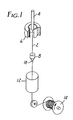
- the drawing shows an apparatus for coating an optical fiber.
- the present invention provides curable coating compositions comprising 100 parts by weight of ethylenically unsaturated monomers which comprise:
- such compounds include: 1,1-dihydroperfluorocyclohexane carbinol acrylate, 1,1-dihydroperfluorocyclohexane carbinol methacrylate, 1,1-dihydroperfluorocyclopentane carbinol acrylate, 1,1-dihydroperfluorocyclopentane carbinol methacrylate, 1,1-dihydroperfluorooctyl acrylate, 1,1-dihydroperfluorooctyl methacrylate, 1,1-dihydroperfluorobutyl acrylate, 1,1,2,2-tetrahydroperfluorooctyl acrylate, 1,1,2,2-tetrahydroperfluorooctyl methacrylate, 1,1,2,2-tetrahydroperfluorodecyl acrylate, 1,1,2,2-tetrahydroperfluorodecyl methacrylate, 1
- the acrylates may also contain other atoms, i.e., heteroatoms such as oxygen, sulfur or nitrogen, in addition to fluorine.
- fluorinated monoacrylates of Formula IV may be employed: wherein:
- Such compounds include: 2-(N-ethyl perfluorooctane sulphamido)ethyl acrylate, 2-(N-ethyl perfluorooctane sulphamido)ethyl methacrylate, 2-(N-butyl perfluorooctane sulphamido)ethyl acrylate.
- Combinations of two or more fluorinated mono-acrylates may also be employed.
- Crosslinking monomers provide insolubility to the resulting polymer as well as high thermal stability;
- Representative examples of such compounds include: 2,2-difluoro-1,3-propanediol diacrylate, 2,2,3,3-tetrafluoro-1,4-butanediol diacrylate, 2,2,3,3,4,4-hexafluoro-1,5-pentanediol diacrylate, 2,2,3,3,4,4,5,5-octafluoro-1,6-hexanediol diacrylate, 2,2,3,3,4,4,5,5,6,6-decafluoro-1,7-hepatanediol diacrylate, 2,2,3,3,4,4,5,5,6,6,7,7-dodecafluoro-1,8-octanediol diacrylate, 1H,1H,7H,7H-tetrahydroperfluoro[2-methyl-3-oxa-heptane]-1,7-dio
- the polyethylenically unsaturated crosslinking monomers may also be non-fluorinated.
- polyfunctional acrylic acid esters such as 1,2-ethylenediacrylate, 1,6-hexanediol diacrylate, 1,4-butanediol diacrylate, trimethylolpropanetriacrylate, and pentaerythritol tetraacrylate may be employed.
- the preferred non-fluorinated crosslinker would be trimethylolpropanetriacrylate.
- Preferred fluorinated acrylamide silanes are those of Formula V in which each R 1 and R 8 is hydrogen; each R 4 and R 5 is methyl; R 9 is propylene; R 10 is ethyl; X is CH 2 ; R F is (CF 2 ),OCF(CF 3 ); and a is zero.
- An especially preferred fluorinated acrylamide monomer is where R 1 and R 8 are hydrogen; R 4 and R 5 are methyl; X is CH 2 OCH 2 ; R F is CF 3 (CF 2 ) 6 ; and a is zero. Mixtures of fluorinated mono-acrylates and fluorinated mono-acrylamides may also be employed.
- styrene and monofunctional acrylate esters such as butyl acrylate, ethyl acrylate, methyl acrylate, methyl methacrylate, 2-ethylhexyl acrylate, cyclohexylmethyl acrylate, and phenethyl acrylate.
- Preferred non-fluorinated monomers are ethyl acrylate and methyl methacrylate.
- polyfunctional acrylic acid esters such as 1,2-ethylene diacrylate, 1,6-hexanediol diacrylate, 1,4-butanediol diacrylate, trimethylolpropanetriacrylate, and pentaerythritol tetraacrylate, with trimethylolpropane triacrylate being preferred.
- novel and useful curable coating compositions are obtained by incorporating therein other curable monomers.
- the invention provides novel claddings for siliceous cores and transparent organic polymer cores and substrates which are useful for transmitting optical information.
- Representative polymer cores and supports include poly(methyl methacrylate), poly(styrene), and poly(carbonates).
- the cladding materials are the free radical polymerization products of the above described coating compositions selected to provide a refractive index lower than that of the core, preferably at least 0.03 units less, more preferably at least 0.05 units less than the refractive index of the core.
- cores have diameters in the range of 100 to 1000 micrometers.
- Claddings can range in thickness from 5 to 100 micrometers.
- Actinic radiation necessary for the polymerization of the monomeric cladding compositions to form the polymeric cladding compositions of the invention can be supplied in two forms: high energy electrons (emitted from commercial electron beam generators) and ultraviolet light. With ultraviolet light a photoinitiator is generally required for the light to be absorbed and for polymerization to be initiated. A photoinitator can be added to the system in a concentration range of from 0.1 to 5.0 percent, preferably 1.0 to 3.0 percent, by weight (based on polymerizable monomers). Useful photoinitators include acyloins and acyloin ethers which are commercially available.
- the cladding compositions may also comprise a thermal stabilizer/antioxidant.
- Optical fibers must retain a high level of signal transmitting capability over a relatively wide operating temperature range and must pass a stringent cold/hot temperature cycling test. In the test the optical fibers are kept at -40°C for four hours and monitored as a function of loss in decibles per kilometer (dB/Km). The fibers are then brought back to room temperature (20-23°C) for two hours and thereafter held at +70°C for four hours. Again the temperature is brought back to room temperature for two hours and the loss of the optical fiber is recorded.
- dB/Km decibles per kilometer
- thermal stabilizers/antioxidants compatible with the cladding composition provides stability to the cold/hot cycling test.
- Suitable stabilizers/antioxidants include low melting hindered phenols and thioesters.
- Optical fibers of the present invention may be prepared by conventional techniques employing the cladding compositions of the invention. A low loss of optical information is desired, and it is preferred that optical losses of clad fiber of the invention be less than 10 dB/Km for siliceous cores, more preferably less than 6.0 dB/km at 820 nm.
- the accompanying drawing illustrates a suitable apparatus for preparing a coated optical fiber in accordance with the invention.
- a glass fiber 2 is drawn from a pure silica preform 4 held in a furnace 6 on a standard glass drawing tower.
- the tower is provided with a coating station comprising a coating cup 8 containing the cladding composition and a metering die 10.
- the coated fiber is passed immediately through an ultraviolet curing station 12 where the fiber is photopolymerized and cooled on a take-up spool 14.
- a typical fiber will have an overall diameter of 200 micrometers and a cladding thickness of 10 micrometers.
- Optical fibers of the invention may also possess a protective layer such as those known in the art.
- a protective coating of a fluoropolymer may be coated by passing the clad fiber through a melt of the fluoropolymer.
- a suitable fluoropolymer is TefzelTM 210 fluoropolymer (E.I. Du Pont de Nemours & Co., Wilmington, DE).
- Polymeric claddings of the present invention are useful in optical fiber waveguides for transmitting data.
- Information transfer using a modulated light beam guided by the optical fibers of the invention can have applications, for example, in telecommunications and computer link-ups. Due to the increase of NA, other applications such as laser delivery systems where real time sensing capabilities are feasible with fibers cladded with compositions of the present invention.
- These optical fiber linkages have advantages compared to metal wires carrying electrical signals in that they have a very high information carrying capacities and are free from external interferences, such as radio frequency interference and electromagnetic interference.
- the following monomeric cladding composition was prepared using the fluorinated diacrylate from Example 2.
- Monomers (perfluorocyclohexyl)methyl acrylate (Minnesota Mining & Manufacturing, St. Paul, MN 85.25 grams trimethoxysilylpropyl methacrylate (adhesion promoter) (Union Carbide Corp., Danbury, CT) 2.0 grams fluorinated diacrylate (from Example 2) 8.0 grams NaugawhiteTM thermal stabilizer (hindered phenol) (Uniroyal Chemical Co., Inc., Naugatuck, CT)) 0.25 grams CyanoxTM 711 thermal stabilizer (thioester) (American Cyanamid Co., Wayne, NJ) 0.5 grams Darocur 1173 benzoin (UV initiator) (EM Industries, Inc., Hawthorne, NY 4.0 grams
- the apparatus for producing the optical fiber was a 6.7 meter (22 foot) Astro Tower equipped with an Astro Graphite Resistance Furnace (available from the Astro Division of Thermal Technologies, Santa Rosa, CA).
- the glass core material emanated from a Diasil Preform Rod (available from Mitsubishi Rayon Co., Ltd., Tokyo, Japan), and the coating station where the cladding composition was applied, was an open cup design.
- Ultraviolet actinic radiation was supplied by a medium pressure mercury lamp, and irradiation of the coated monomeric cladding composition took place in an atmosphere of nitrogen; the optical fiber was produced at a constant speed of 20 meters/minute.
- the loss measurement was obtained using a TektronixTM 506 Optical Time Domain Reflectometer (OTDR) (available from Tektronix, Portland, OR) with the loss value at 812 nm being recorded.
- OTDR Optical Time Domain Reflectometer
- the principle of the OTDR measurement is discussed by D. Marcuse in his book entitled “Principles of Optical Fiber Measurements", Academic Press: New York, 1981, pp 236-241, and procedures utilized were that of Electronic Industries Association Standard 455-46 (May 1983).
- the numerical aperture (NA) of a 2 meter length of the optical fiber was measured to be 0.45, at 633 nm.
- Examples 4-13 describe the preparation of cladded optical fibers according to the present invention.
- a 500 meter section of an optical fiber over-coated with the Tefzel 210 fluorinated polymer protective coating prepared as in Example 3 exhibited a loss of 3.9 dB/Km.
- the NA measurement of this optical fiber was determined to be 0.43.
- Monomers (perfluorocyclohexyl)methyl acrylate 91.0 grams fluorinated diacrylate (from Example 2) 5.0 grams fluorinated acrylamide silane (from Example 1) 2.0 grams Darocur 1173 benzoin UV initiator 2.0 grams
- a 600 meter section of an optical fiber over-coated with Tefzel 210 prepared as in Example 3 exhibited a loss of 4.3 dB/Km. Using the procedure of Example 3 the NA measurement of this optical fiber was found to be 0.46.
- Monomers (perfluorocyclohexyl)methyl acrylate 86.0 grams fluorinated diacrylate (from Example 2) 10.0 grams fluorinated acrylamide silane (from Example 1) 2.0 grams Darocur 1173 benzoin UV initiator 2.0 grams
- a 1.2 kilometer section of an optical fiber over-coated with Tefzel 210 prepared as in Example 3 exhibited a loss of 3.7 dB/Km.
- the NA measurement of this optical fiber was found to be 0.45.
- the strength of the fiber was determined by proof testing the fiber at 3.45 x 10 9 dynes/cm 2 (50 kpsi) without evidence of optical loss change.
- the principle of proof testing optical fibers is discussed by F.C. Allard in his book entitled "Fiber Optics Handbook For Engineers and Engineers", McGraw-Hill, Inc.: New York, 1990, pp 1.40-1.41 and 4.49-4.52 and test methods utilized were that of Fiber Optic Test Procedures, FOTP-31.
- a 1.2 kilometer section of an optical fiber over-coated with Tefzel 210 prepared as in Example 3 exhibited a loss of 4.2 dB/Km.
- the NA measurement of this optical fiber was found to be 0.44.
- the strength of the fiber was determined by proof testing the fiber at 3.45 x 10 9 dynes/cm 2 (50 kpsi) without evidence of optical loss change.
- Monomers (perfluorocyclohexyl)methyl acrylate 65.0 grams 1,1-dihydroperfluorooctyl acrylate (3M, St. Paul, MN) 21.0 grams fluorinated diacrylate (from Example 2) 10.0 grams trimethoxysilylpropyl methacrylate 2.0 grams Darocur 1173 benzoin UV initiator 2.0 grams
- a 500 meter section of an optical fiber over-coated with Tefzel 210 prepared as in Example 3 exhibited a loss of 5.4 dB/Km. Using the procedure of Example 3 the NA measurement of this optical fiber was found to be 0.46.
- a 500 meter section of an optical fiber over-coated with Tefzel 210 prepared as in Example 3 exhibited a loss of 4.9 dB/Km. Using the procedure of Example 3 the NA measurement of this optical fiber was found to be 0.5.
- a 1.2 kilometer section of an optical fiber over-coated with Tefzel 210 prepared as in Example 3 exhibited a loss of 3.4 dB/Km.
- the NA measurement of this optical fiber was found to be 0.48.
- the strength of the fiber was measured by proof testing the fiber at 3.45 X 10 9 dynes/cm 2 (50 kpsi) without evidence of optical loss change.
- a 1.2 kilometer section of an optical fiber over-coated with Tefzel 210 prepared as in Example 3 exhibited a loss of 2.01 dB/Km.
- the NA measurement of this optical fiber was 0.48.
- the strength of the fiber was measured by proof testing the fiber at 3.45 X 10 9 dynes/cm 2 (50 kpsi) without evidence of optical loss change.
- the thermal stability of the fiber was determined by thermal cycling the fiber between -40°C and 70°C. The fiber was continuously cycled five times. Each temperature cycle consisted of holding the temperature constant at each extreme (-40°C and 70°C) for four hours; between each extreme the fiber was held at 25°C for one hour.
- the optical loss after the cycling test was recorded at 2.34 dB/Km.
- a 500 meter section of an optical fiber over-coated with Tefzel 210 prepared as in Example 3 exhibited a loss of 7.0 dB/Km. Using the procedure of Example 3 the NA measurement of this optical fiber was found to be 0.48.
- Monomers (perfluorocyclohexyl)methyl acrylate 45.25 grams 1,1,2,2-tetrahydroperfluorodecyl acrylate 42.0 grams trimethoxysilylpropyl methacrylate 2.0 grams trimethylolpropanetriacrylate 8.0 grams Naugawhite thermal stabilizer 0.25 grams Cyanox 711 thermal stabilizer 0.5 grams Darocur 1173 benzoin UV initiator 2.0 grams
- a 1.2 kilometer section of an optical fiber over-coated with Tefzel 210 prepared as in Example 3 exhibited a loss of 2.95 dB/Km. Using the procedure of Example 3 the NA measurement of this optical fiber was found to be 0.45.
Landscapes
- Physics & Mathematics (AREA)
- Chemical & Material Sciences (AREA)
- Materials Engineering (AREA)
- Life Sciences & Earth Sciences (AREA)
- Wood Science & Technology (AREA)
- Organic Chemistry (AREA)
- Engineering & Computer Science (AREA)
- General Physics & Mathematics (AREA)
- Optics & Photonics (AREA)
- Addition Polymer Or Copolymer, Post-Treatments, Or Chemical Modifications (AREA)
- Paints Or Removers (AREA)
- Surface Treatment Of Glass Fibres Or Filaments (AREA)
- Optical Fibers, Optical Fiber Cores, And Optical Fiber Bundles (AREA)
Abstract
Claims (9)
- Composition de placage durcissable comprenant a) au moins un monomère de monoacrylate fluoré, b) au moins un monomère réticulant fluoré polyéthyléniquement insaturé différent du monomère d'acrylate, c) au moins un monomère favorisant l'adhérence d'acrylamide - silane fluoré différent de tout autre monomère dans la composition, de formule
 R1 et R8 représentent indépendamment un hydrogène ou un méthyle,R4 et R5 peuvent être indépendamment un groupe alkyle, cycloalkyle ou aryle, ou R4 et R5 pris ensemble avec l'atome de carbone auquel ils sont réunis peuvent former un noyau carbocyclique contenant de 4 à 12 atomes dans son noyau ;R6 et R7 représentent indépendamment un hydrogène ou un alkyle inférieur ;R9 est un alkylène, un cycloalkylène ou un arylène,R10 est un hydrogène ou un alkyle inférieur,a vaut 0 ou 1,X est une liaison simple carbone-carbone, CH2, CH2OCH2, ou CH2CH2OCH2, etRF est un groupe alkylène, cycloalkylène, ou arylène sensiblement perfluoré, facultativement comprenant jusqu'à 6 atomes d'oxygène non peroxydique caténaires,et d) facultativement au moins l'un des corps suivants : (1) un monomère d'acrylamide fluoré dépourvu de silane, (2) un monomère mono- ou polyéthyléniquement insaturé non fluoré, (3) un monomère de silane non fluoré, (4) un photoinducteur, (5) un stabilisateur thermique, et (6) un antioxydant.
 - Composition selon la revendication 1, dans laquelle 100 parties en poids de ladite composition comprennent dans un intervalle de 10 à 99 parties en poids dudit monomère de monoacrylate fluoré, de 1 à 20 parties en poids dudit monomère réticulant fluoré polyéthyléniquement insaturé, de 0,5 à 10 parties en poids dudit monomère favorisant l'adhérence, de zéro à 88 parties en poids dudit monomère d'acrylamide fluoré dépourvu de silane, de zéro à 50 parties en poids d'un monomère mono-éthyléniquement insaturé non fluoré, et de zéro à 10 parties en poids d'un monomère réticulant polyéthyléniquement insaturé non fluoré.
- Composition selon les revendications 1 ou 2, dans laquelle ledit monoacrylate fluoré est choisi dans le groupe constitué par les composés de formules générales :
Y-CnZq-(CH2)m-OCOCR1=CH2
et
R11SO2NR2(CH2)2-OCOCR1=CH2
dans lesquelles :Y représente H, F, Br ou Cl ;Z représente H, F, Br ou Cl ;R1 représente H, ou un groupe alkyle inférieur,n représente un nombre entier allant de 1 à 12 ;q représente un nombre entier allant de 4 à 24, de manière que q = (2n-2) ou (2n) ;m représente 0, 1, ou 2 ; sous réserve que pour Z pas plus d'un atome d'hydrogène ou de chlore n'est présent tous les deux atomes de carbone dans le groupe CnZq.R2 représente un hydrogène ou un groupe alkyle inférieur ;R11 représente un radical fluoroaliphatique ayant de 3 à 12 atomes de carbone. - Composition selon l'une quelconque des revendications 1 à 3, dans laquelle ledit monomère fluoré polyéthyléniquement insaturé est un composé de formule
CH2=CR1COOCH2-CnZq-CH2OCOCR1=CH2
dans laquelle R1, n, Z et q sont tels que définis ci-dessus. - Composition durcie selon l'une quelconque des revendications 1 à 4.
- Structure stratifiée comprenant un substrat transparent sur au moins une des surfaces duquel est plaquée la composition durcissable ou durcie selon l'une quelconque des revendications 1 à 5.
- Structure stratifiée selon la revendication 6, qui est une fibre optique comprenant un noyau de polymère organique siliceux ou transparent sur laquelle se trouve un placage de ladite composition durcissable ou durcie.
- Fibre optique selon la revendication 7 comprenant en outre une couche protectrice sur ledit placage.
- Guide d'onde à fibre optique comprenant la fibre optique selon les revendications 7 ou 8.
Applications Claiming Priority (3)
| Application Number | Priority Date | Filing Date | Title |
|---|---|---|---|
| US07/750,092 US5239026A (en) | 1991-08-26 | 1991-08-26 | Low loss high numerical aperture cladded optical fibers |
| US750092 | 1991-08-26 | ||
| PCT/US1992/005976 WO1993004132A1 (fr) | 1991-08-26 | 1992-07-16 | Fibres optiques plaquees a forte ouverture numerique et a faibles pertes |
Publications (2)
| Publication Number | Publication Date |
|---|---|
| EP0600985A1 EP0600985A1 (fr) | 1994-06-15 |
| EP0600985B1 true EP0600985B1 (fr) | 1997-01-15 |
Family
ID=25016464
Family Applications (1)
| Application Number | Title | Priority Date | Filing Date |
|---|---|---|---|
| EP92917902A Expired - Lifetime EP0600985B1 (fr) | 1991-08-26 | 1992-07-16 | Fibres optiques plaquees a forte ouverture numerique et a faibles pertes |
Country Status (8)
| Country | Link |
|---|---|
| US (1) | US5239026A (fr) |
| EP (1) | EP0600985B1 (fr) |
| JP (1) | JP2756188B2 (fr) |
| KR (1) | KR0179070B1 (fr) |
| CA (1) | CA2114796C (fr) |
| DE (1) | DE69216840T2 (fr) |
| ES (1) | ES2096098T3 (fr) |
| WO (1) | WO1993004132A1 (fr) |
Families Citing this family (48)
| Publication number | Priority date | Publication date | Assignee | Title |
|---|---|---|---|---|
| WO1996003609A1 (fr) * | 1994-07-22 | 1996-02-08 | Optical Polymer Research, Inc. | Compositions d'inter-polymeres susceptibles de cuisson et destinees au placage de fibres optiques |
| GB2347448B (en) * | 1996-03-29 | 2000-12-06 | Sensor Dynamics Ltd | Apparatus for the remote measurement of physical parameters |
| US5729645A (en) * | 1996-08-13 | 1998-03-17 | The Trustees Of The University Of Pennsylvania | Graded index optical fibers |
| US5756209A (en) | 1996-12-31 | 1998-05-26 | Lucent Technologies Inc. | Photocurable low refractive index coatings |
| US5822489A (en) * | 1996-12-31 | 1998-10-13 | Lucent Technologies, Inc. | Low refractive index photo-curable composition for waveguide applications |
| UA67739C2 (uk) * | 1997-04-25 | 2004-07-15 | Ісіхара Сангіо Кайся Лтд. | Композиція та спосіб боротьби з шкідливими біоорганізмами |
| US5951920A (en) * | 1997-06-20 | 1999-09-14 | Optical Polymer Research, Inc. | Process for preparing optical fiber cladding solutions |
| US6245194B1 (en) | 1998-12-21 | 2001-06-12 | Sikorsky Aircraft Corporation | Processed fiber for emission of energy into a medium and method therefor |
| US6238798B1 (en) | 1999-02-22 | 2001-05-29 | 3M Innovative Properties Company | Ceramer composition and composite comprising free radically curable fluorochemical component |
| CN1250988C (zh) * | 1999-12-27 | 2006-04-12 | 三菱丽阳株式会社 | 塑料光纤维、塑料光导纤维光缆和带插头的光导纤维光缆 |
| US6361530B1 (en) | 2000-03-22 | 2002-03-26 | Indigo Medical Incorporated | Durable fiber optic diffuser tip and method of making same |
| IL135550A0 (en) * | 2000-04-09 | 2001-05-20 | Acktar Ltd | Method and apparatus for temperature controlled vapor deposition on a substrate |
| US6577802B1 (en) | 2000-07-13 | 2003-06-10 | Corning Incorporated | Application of silane-enhanced adhesion promoters for optical fibers and fiber ribbons |
| KR20030097532A (ko) * | 2002-06-21 | 2003-12-31 | 한국화학연구원 | 불소화된 카보네이트기-함유 아크릴레이트 유도체 및 이를포함하는 중합성 조성물 |
| US6833391B1 (en) | 2003-05-27 | 2004-12-21 | General Electric Company | Curable (meth)acrylate compositions |
| US7207732B2 (en) * | 2003-06-04 | 2007-04-24 | Corning Incorporated | Coated optical fiber and curable compositions suitable for coating optical fiber |
| US7271283B2 (en) * | 2003-08-29 | 2007-09-18 | General Electric Company | High refractive index, UV-curable monomers and coating compositions prepared therefrom |
| CN1938391B (zh) * | 2004-03-26 | 2012-06-06 | 大金工业株式会社 | 表面处理剂、含氟单体以及含氟聚合物 |
| US7101618B2 (en) * | 2004-05-07 | 2006-09-05 | 3M Innovative Properties Company | Article comprising fluorochemical surface layer |
| US7288619B2 (en) * | 2004-05-07 | 2007-10-30 | 3M Innovative Properties Company | Fluorinated polyether polyamine and method of making the same |
| US7342080B2 (en) * | 2004-05-07 | 2008-03-11 | 3M Innovative Properties Company | Polymerizable compositions, methods of making the same, and composite articles therefrom |
| EP1758959A1 (fr) * | 2004-05-07 | 2007-03-07 | 3M Innovative Properties Company | Revetement dur optique anti-taches |
| US20050249940A1 (en) * | 2004-05-07 | 2005-11-10 | 3M Innovative Properties Company | Fluoropolyether poly(meth)acryl compounds |
| JP4851446B2 (ja) * | 2004-07-01 | 2012-01-11 | スリーエム イノベイティブ プロパティズ カンパニー | ハードコート組成物 |
| US20070014018A1 (en) * | 2004-12-30 | 2007-01-18 | Wheatley John A | Internal components of optical device comprising hardcoat |
| US7239785B2 (en) * | 2004-12-30 | 2007-07-03 | Corning Incorporated | Method of preventing optical fiber failure in high power application |
| CA2593694A1 (fr) * | 2004-12-30 | 2006-07-13 | 3M Innovative Properties Company | Articles comprenant une couche superficielle a base de composes fluores et procedes correspondants |
| CN101103083B (zh) * | 2004-12-30 | 2012-03-28 | 3M创新有限公司 | 抗污性含氟化合物组合物 |
| US20060216524A1 (en) | 2005-03-23 | 2006-09-28 | 3M Innovative Properties Company | Perfluoropolyether urethane additives having (meth)acryl groups and hard coats |
| US20070285778A1 (en) * | 2006-06-13 | 2007-12-13 | Walker Christopher B | Optical films comprising high refractive index and antireflective coatings |
| US20070285779A1 (en) * | 2006-06-13 | 2007-12-13 | Walker Christopher B | Optical films comprising high refractive index and antireflective coatings |
| US20080145545A1 (en) * | 2006-12-15 | 2008-06-19 | Bret Ja Chisholm | Metal oxide and sulfur-containing coating compositions, methods of use, and articles prepared therefrom |
| WO2009029438A1 (fr) * | 2007-08-31 | 2009-03-05 | 3M Innovative Properties Company | Revêtements durs |
| JP5180693B2 (ja) * | 2008-06-12 | 2013-04-10 | 富士フイルム株式会社 | 内視鏡用ライトガイド |
| US8552083B1 (en) | 2009-12-03 | 2013-10-08 | Ovation Polymer Technology And Engineered Materials, Inc. | Ultra low refractive index curable coatings |
| JP2013533839A (ja) | 2010-05-25 | 2013-08-29 | スリーエム イノベイティブ プロパティズ カンパニー | 抗微生物コーティング |
| FR2985215B1 (fr) | 2011-12-28 | 2014-09-19 | Saint Gobain Performance Plast | Revetements polymeres deposes sur des substrats par des techniques de projection thermique |
| CN103182808A (zh) | 2011-12-28 | 2013-07-03 | 圣戈班高功能塑料集团 | 一种包括含氟聚合物表面层以及非氟聚合物过渡层的多层复合物 |
| PL2867019T3 (pl) | 2012-06-29 | 2023-04-24 | Saint-Gobain Performance Plastics Pampus Gmbh | Łożysko ślizgowe zawierające system podkładu jako promotor przyczepności |
| KR101663975B1 (ko) | 2012-09-28 | 2016-10-12 | 생―고뱅 퍼포먼스 플라스틱스 팜푸스 게엠베하 | 조합성 접착 슬라이드 층을 가지는 무-보수 슬라이드 베어링 |
| JPWO2014119250A1 (ja) | 2013-02-04 | 2017-01-26 | 古河電気工業株式会社 | 光ファイバ及びその製造方法 |
| CN105229077B (zh) * | 2013-05-21 | 2017-06-09 | 信越聚合物株式会社 | 导电性高分子分散液及导电性涂膜 |
| US9322986B2 (en) | 2013-06-24 | 2016-04-26 | Corning Incorporated | Optical fiber coating for short data network |
| US10035915B2 (en) * | 2013-10-16 | 2018-07-31 | Ofs Fitel, Llc | Low refractive index coating for optical fibers, methods of manufacture thereof and articles comprising the same |
| CN104671676A (zh) * | 2013-10-16 | 2015-06-03 | Ofs菲特尔有限责任公司 | 改进的用于光纤的低折射率涂层,其制造方法和包含其的制品 |
| EP3659964A1 (fr) | 2018-11-28 | 2020-06-03 | Hysilabs, SAS | Procédé catalysé de production d'hydrogène à partir de dérivés silylés en tant que composés porteurs d'hydrogène |
| US12405421B2 (en) | 2020-09-01 | 2025-09-02 | Arizona Board Of Regents On Behalf Of The University Of Arizona | Refractive index contrast polymers and methods for producing and using the same |
| US20260079293A1 (en) * | 2024-09-18 | 2026-03-19 | Nufern | Amorphous fluorinated polyimide optical-fiber coating |
Family Cites Families (19)
| Publication number | Priority date | Publication date | Assignee | Title |
|---|---|---|---|---|
| US2743297A (en) * | 1954-02-08 | 1956-04-24 | Minnesota Mining & Mfg | N-substituted amide derivatives of 1, 1-dihydroperfluoroalkylamines |
| US3997604A (en) * | 1967-01-02 | 1976-12-14 | Produits Chimiques Ugine Kuhlmann | Mixtures of perfluoroaliphatic substituted amino compounds and the method for preparing the same |
| US4277270A (en) * | 1978-04-21 | 1981-07-07 | Eotec Corporation | Method of manufacture of optical fiber |
| US4317616A (en) * | 1979-10-09 | 1982-03-02 | Raychem Corporation | Fluorosiloxane optical cladding |
| JPS5865402A (ja) * | 1981-10-14 | 1983-04-19 | Sumitomo Electric Ind Ltd | プラスチツク光フアイバ |
| CA1221795A (fr) * | 1982-02-24 | 1987-05-12 | Bolesh J. Skutnik | Gainage des fibres optiques |
| JPS58196218A (ja) * | 1982-05-11 | 1983-11-15 | Daikin Ind Ltd | 光学繊維用鞘材 |
| AU560480B2 (en) * | 1982-07-05 | 1987-04-09 | Mitsubishi Rayon Company Limited | Plastic optical fibres |
| JPS59227908A (ja) * | 1983-06-10 | 1984-12-21 | Daikin Ind Ltd | 光学繊維プラスチック系さや材 |
| JPS60199007A (ja) * | 1984-03-22 | 1985-10-08 | Daikin Ind Ltd | 光学材料 |
| JPS60250310A (ja) * | 1984-05-28 | 1985-12-11 | Daikin Ind Ltd | 光学繊維鞘材 |
| JPS6122305A (ja) * | 1984-07-11 | 1986-01-30 | Central Glass Co Ltd | 光伝送繊維 |
| EP0208239B1 (fr) * | 1985-07-04 | 1990-07-04 | Asahi Glass Company Ltd. | Fibre optique à revêtement plastique |
| JPH0679095B2 (ja) * | 1986-04-03 | 1994-10-05 | 旭硝子株式会社 | プラスチツククラツド光伝送フアイバ− |
| CA1335022C (fr) * | 1987-07-30 | 1995-03-28 | Tsuruyoshi Matsumoto | Revetement pour fibres optiques |
| AU608420B2 (en) * | 1988-03-15 | 1991-03-28 | Minnesota Mining And Manufacturing Company | Polymer claddings for optical fibre waveguides |
| US4931582A (en) * | 1988-11-04 | 1990-06-05 | Minnesota Mining And Manufacturing Company | Fluorinated, acrylamide-functional monomers |
| US4971424A (en) * | 1989-10-26 | 1990-11-20 | Minnesota Mining And Manufacturing Co. | Radiation curable cladding compositions |
| US5024507A (en) * | 1990-05-10 | 1991-06-18 | Polaroid Corporation | Photopolymerizable composition for cladding optical fibers |
-
1991
- 1991-08-26 US US07/750,092 patent/US5239026A/en not_active Expired - Lifetime
-
1992
- 1992-07-16 JP JP5504296A patent/JP2756188B2/ja not_active Expired - Fee Related
- 1992-07-16 WO PCT/US1992/005976 patent/WO1993004132A1/fr not_active Ceased
- 1992-07-16 EP EP92917902A patent/EP0600985B1/fr not_active Expired - Lifetime
- 1992-07-16 DE DE69216840T patent/DE69216840T2/de not_active Expired - Fee Related
- 1992-07-16 CA CA002114796A patent/CA2114796C/fr not_active Expired - Fee Related
- 1992-07-16 ES ES92917902T patent/ES2096098T3/es not_active Expired - Lifetime
- 1992-07-16 KR KR1019940700575A patent/KR0179070B1/ko not_active Expired - Fee Related
Also Published As
| Publication number | Publication date |
|---|---|
| CA2114796A1 (fr) | 1993-03-04 |
| KR0179070B1 (ko) | 1999-04-01 |
| JP2756188B2 (ja) | 1998-05-25 |
| ES2096098T3 (es) | 1997-03-01 |
| CA2114796C (fr) | 2003-05-13 |
| EP0600985A1 (fr) | 1994-06-15 |
| WO1993004132A1 (fr) | 1993-03-04 |
| DE69216840D1 (de) | 1997-02-27 |
| JPH06510316A (ja) | 1994-11-17 |
| DE69216840T2 (de) | 1997-12-18 |
| US5239026A (en) | 1993-08-24 |
Similar Documents
| Publication | Publication Date | Title |
|---|---|---|
| US5239026A (en) | Low loss high numerical aperture cladded optical fibers | |
| US4511209A (en) | Composition having improved optical qualities | |
| EP0425305B1 (fr) | Composition de revêtement durcissable par radiation | |
| US4968116A (en) | Polymer claddings for optical fibre waveguides | |
| US5492987A (en) | Process and composition for cladding optical fibers | |
| JP3588358B2 (ja) | 光ファイバー成分の製造方法 | |
| JPH01133011A (ja) | 合成樹脂コーティングを備えた光ファイバ及びその製造方法 | |
| EP0529895B1 (fr) | Monomères et polymères fluorés d'acrylamide silanes | |
| US4835057A (en) | Glass fibers having organosilsesquioxane coatings and claddings | |
| CA1142377A (fr) | Revetement optique a base de fluorosiloxane | |
| JP2000026559A (ja) | 液状放射線硬化型樹脂組成物及び光ファイバ | |
| EP0257863B1 (fr) | Composition de matière plastique de revêtement pour fibre optique à coeur de verre ou de silice, et fibre optique à coeur de verre ou de silice ainsi préparée | |
| JP4618479B2 (ja) | 光ファイバー被覆用樹脂組成物及びそれを用いた光ファイバーユニット | |
| JP2000319384A (ja) | 放射線硬化型組成物並びに光ファイバー用被覆材及び光ファイバー | |
| KR100643710B1 (ko) | 자외선 경화 수지로 코팅된 광섬유 및 그의 제조방법 | |
| JP2000335943A (ja) | 光ファイバー被覆用組成物及び光ファイバー | |
| Moren et al. | United States Patent [19][1i] Patent Number: 5,210,248 | |
| JPH05112619A (ja) | 樹脂組成物およびそれを用いたプラスチツククラツド光フアイバー | |
| JPS63128307A (ja) | 石英ガラス系光フアイバ | |
| JPH05222136A (ja) | 樹脂組成物およびそれを用いたプラスチッククラッド光ファイバー |
Legal Events
| Date | Code | Title | Description |
|---|---|---|---|
| PUAI | Public reference made under article 153(3) epc to a published international application that has entered the european phase |
Free format text: ORIGINAL CODE: 0009012 |
|
| 17P | Request for examination filed |
Effective date: 19940321 |
|
| AK | Designated contracting states |
Kind code of ref document: A1 Designated state(s): AT BE CH DE DK ES FR GB GR IT LI LU MC NL SE |
|
| RBV | Designated contracting states (corrected) |
Designated state(s): CH DE ES FR GB LI NL |
|
| 17Q | First examination report despatched |
Effective date: 19950803 |
|
| GRAG | Despatch of communication of intention to grant |
Free format text: ORIGINAL CODE: EPIDOS AGRA |
|
| GRAH | Despatch of communication of intention to grant a patent |
Free format text: ORIGINAL CODE: EPIDOS IGRA |
|
| GRAH | Despatch of communication of intention to grant a patent |
Free format text: ORIGINAL CODE: EPIDOS IGRA |
|
| GRAA | (expected) grant |
Free format text: ORIGINAL CODE: 0009210 |
|
| AK | Designated contracting states |
Kind code of ref document: B1 Designated state(s): CH DE ES FR GB LI NL |
|
| REG | Reference to a national code |
Ref country code: CH Ref legal event code: NV Representative=s name: E. BLUM & CO. PATENTANWAELTE Ref country code: CH Ref legal event code: EP |
|
| REF | Corresponds to: |
Ref document number: 69216840 Country of ref document: DE Date of ref document: 19970227 |
|
| REG | Reference to a national code |
Ref country code: ES Ref legal event code: FG2A Ref document number: 2096098 Country of ref document: ES Kind code of ref document: T3 |
|
| ET | Fr: translation filed | ||
| PG25 | Lapsed in a contracting state [announced via postgrant information from national office to epo] |
Ref country code: LI Free format text: LAPSE BECAUSE OF NON-PAYMENT OF DUE FEES Effective date: 19970731 Ref country code: CH Free format text: LAPSE BECAUSE OF NON-PAYMENT OF DUE FEES Effective date: 19970731 |
|
| PLBE | No opposition filed within time limit |
Free format text: ORIGINAL CODE: 0009261 |
|
| 26N | No opposition filed | ||
| REG | Reference to a national code |
Ref country code: CH Ref legal event code: PL |
|
| PGFP | Annual fee paid to national office [announced via postgrant information from national office to epo] |
Ref country code: NL Payment date: 20000703 Year of fee payment: 9 Ref country code: DE Payment date: 20000703 Year of fee payment: 9 |
|
| PGFP | Annual fee paid to national office [announced via postgrant information from national office to epo] |
Ref country code: ES Payment date: 20000808 Year of fee payment: 9 |
|
| PG25 | Lapsed in a contracting state [announced via postgrant information from national office to epo] |
Ref country code: ES Free format text: LAPSE BECAUSE OF NON-PAYMENT OF DUE FEES Effective date: 20010717 |
|
| REG | Reference to a national code |
Ref country code: GB Ref legal event code: IF02 |
|
| PG25 | Lapsed in a contracting state [announced via postgrant information from national office to epo] |
Ref country code: NL Free format text: LAPSE BECAUSE OF NON-PAYMENT OF DUE FEES Effective date: 20020201 |
|
| NLV4 | Nl: lapsed or anulled due to non-payment of the annual fee |
Effective date: 20020201 |
|
| PG25 | Lapsed in a contracting state [announced via postgrant information from national office to epo] |
Ref country code: DE Free format text: LAPSE BECAUSE OF NON-PAYMENT OF DUE FEES Effective date: 20020501 |
|
| REG | Reference to a national code |
Ref country code: ES Ref legal event code: FD2A Effective date: 20020810 |
|
| PGFP | Annual fee paid to national office [announced via postgrant information from national office to epo] |
Ref country code: GB Payment date: 20070727 Year of fee payment: 16 |
|
| PGFP | Annual fee paid to national office [announced via postgrant information from national office to epo] |
Ref country code: FR Payment date: 20070717 Year of fee payment: 16 |
|
| GBPC | Gb: european patent ceased through non-payment of renewal fee |
Effective date: 20080716 |
|
| REG | Reference to a national code |
Ref country code: FR Ref legal event code: ST Effective date: 20090331 |
|
| PG25 | Lapsed in a contracting state [announced via postgrant information from national office to epo] |
Ref country code: GB Free format text: LAPSE BECAUSE OF NON-PAYMENT OF DUE FEES Effective date: 20080716 |
|
| PG25 | Lapsed in a contracting state [announced via postgrant information from national office to epo] |
Ref country code: FR Free format text: LAPSE BECAUSE OF NON-PAYMENT OF DUE FEES Effective date: 20080731 |