EP0607206B1 - Zusammensetzung für das einbringen von nukleinsäure-komplexen in höhere eukaryotische zellen - Google Patents
Zusammensetzung für das einbringen von nukleinsäure-komplexen in höhere eukaryotische zellen Download PDFInfo
- Publication number
- EP0607206B1 EP0607206B1 EP92920580A EP92920580A EP0607206B1 EP 0607206 B1 EP0607206 B1 EP 0607206B1 EP 92920580 A EP92920580 A EP 92920580A EP 92920580 A EP92920580 A EP 92920580A EP 0607206 B1 EP0607206 B1 EP 0607206B1
- Authority
- EP
- European Patent Office
- Prior art keywords
- cells
- virus
- gly
- adenovirus
- nucleic acid
- Prior art date
- Legal status (The legal status is an assumption and is not a legal conclusion. Google has not performed a legal analysis and makes no representation as to the accuracy of the status listed.)
- Expired - Lifetime
Links
- 0 C*C(C(C(O)OCC(COC1C2*C1)(C2O)O)O)O Chemical compound C*C(C(C(O)OCC(COC1C2*C1)(C2O)O)O)O 0.000 description 3
Images





















Classifications
-
- C—CHEMISTRY; METALLURGY
- C12—BIOCHEMISTRY; BEER; SPIRITS; WINE; VINEGAR; MICROBIOLOGY; ENZYMOLOGY; MUTATION OR GENETIC ENGINEERING
- C12N—MICROORGANISMS OR ENZYMES; COMPOSITIONS THEREOF; PROPAGATING, PRESERVING, OR MAINTAINING MICROORGANISMS; MUTATION OR GENETIC ENGINEERING; CULTURE MEDIA
- C12N15/00—Mutation or genetic engineering; DNA or RNA concerning genetic engineering, vectors, e.g. plasmids, or their isolation, preparation or purification; Use of hosts therefor
- C12N15/09—Recombinant DNA-technology
- C12N15/87—Introduction of foreign genetic material using processes not otherwise provided for, e.g. co-transformation
-
- A—HUMAN NECESSITIES
- A61—MEDICAL OR VETERINARY SCIENCE; HYGIENE
- A61K—PREPARATIONS FOR MEDICAL, DENTAL OR TOILETRY PURPOSES
- A61K47/00—Medicinal preparations characterised by the non-active ingredients used, e.g. carriers or inert additives; Targeting or modifying agents chemically bound to the active ingredient
- A61K47/50—Medicinal preparations characterised by the non-active ingredients used, e.g. carriers or inert additives; Targeting or modifying agents chemically bound to the active ingredient the non-active ingredient being chemically bound to the active ingredient, e.g. polymer-drug conjugates
-
- A—HUMAN NECESSITIES
- A61—MEDICAL OR VETERINARY SCIENCE; HYGIENE
- A61K—PREPARATIONS FOR MEDICAL, DENTAL OR TOILETRY PURPOSES
- A61K47/00—Medicinal preparations characterised by the non-active ingredients used, e.g. carriers or inert additives; Targeting or modifying agents chemically bound to the active ingredient
- A61K47/50—Medicinal preparations characterised by the non-active ingredients used, e.g. carriers or inert additives; Targeting or modifying agents chemically bound to the active ingredient the non-active ingredient being chemically bound to the active ingredient, e.g. polymer-drug conjugates
- A61K47/69—Medicinal preparations characterised by the non-active ingredients used, e.g. carriers or inert additives; Targeting or modifying agents chemically bound to the active ingredient the non-active ingredient being chemically bound to the active ingredient, e.g. polymer-drug conjugates the conjugate being characterised by physical or galenical forms, e.g. emulsion, particle, inclusion complex, stent or kit
- A61K47/6901—Conjugates being cells, cell fragments, viruses, ghosts, red blood cells or viral vectors
-
- A—HUMAN NECESSITIES
- A61—MEDICAL OR VETERINARY SCIENCE; HYGIENE
- A61K—PREPARATIONS FOR MEDICAL, DENTAL OR TOILETRY PURPOSES
- A61K48/00—Medicinal preparations containing genetic material which is inserted into cells of the living body to treat genetic diseases; Gene therapy
-
- A—HUMAN NECESSITIES
- A61—MEDICAL OR VETERINARY SCIENCE; HYGIENE
- A61P—SPECIFIC THERAPEUTIC ACTIVITY OF CHEMICAL COMPOUNDS OR MEDICINAL PREPARATIONS
- A61P31/00—Antiinfectives, i.e. antibiotics, antiseptics, chemotherapeutics
- A61P31/12—Antivirals
-
- A—HUMAN NECESSITIES
- A61—MEDICAL OR VETERINARY SCIENCE; HYGIENE
- A61P—SPECIFIC THERAPEUTIC ACTIVITY OF CHEMICAL COMPOUNDS OR MEDICINAL PREPARATIONS
- A61P35/00—Antineoplastic agents
-
- C—CHEMISTRY; METALLURGY
- C07—ORGANIC CHEMISTRY
- C07K—PEPTIDES
- C07K14/00—Peptides having more than 20 amino acids; Gastrins; Somatostatins; Melanotropins; Derivatives thereof
- C07K14/005—Peptides having more than 20 amino acids; Gastrins; Somatostatins; Melanotropins; Derivatives thereof from viruses
-
- C—CHEMISTRY; METALLURGY
- C07—ORGANIC CHEMISTRY
- C07K—PEPTIDES
- C07K14/00—Peptides having more than 20 amino acids; Gastrins; Somatostatins; Melanotropins; Derivatives thereof
- C07K14/435—Peptides having more than 20 amino acids; Gastrins; Somatostatins; Melanotropins; Derivatives thereof from animals; from humans
- C07K14/52—Cytokines; Lymphokines; Interferons
- C07K14/555—Interferons [IFN]
- C07K14/56—IFN-alpha
-
- C—CHEMISTRY; METALLURGY
- C07—ORGANIC CHEMISTRY
- C07K—PEPTIDES
- C07K14/00—Peptides having more than 20 amino acids; Gastrins; Somatostatins; Melanotropins; Derivatives thereof
- C07K14/435—Peptides having more than 20 amino acids; Gastrins; Somatostatins; Melanotropins; Derivatives thereof from animals; from humans
- C07K14/775—Apolipopeptides
-
- C—CHEMISTRY; METALLURGY
- C07—ORGANIC CHEMISTRY
- C07K—PEPTIDES
- C07K14/00—Peptides having more than 20 amino acids; Gastrins; Somatostatins; Melanotropins; Derivatives thereof
- C07K14/435—Peptides having more than 20 amino acids; Gastrins; Somatostatins; Melanotropins; Derivatives thereof from animals; from humans
- C07K14/79—Transferrins, e.g. lactoferrins, ovotransferrins
-
- C—CHEMISTRY; METALLURGY
- C07—ORGANIC CHEMISTRY
- C07K—PEPTIDES
- C07K16/00—Immunoglobulins [IG], e.g. monoclonal or polyclonal antibodies
-
- C—CHEMISTRY; METALLURGY
- C07—ORGANIC CHEMISTRY
- C07K—PEPTIDES
- C07K16/00—Immunoglobulins [IG], e.g. monoclonal or polyclonal antibodies
- C07K16/18—Immunoglobulins [IG], e.g. monoclonal or polyclonal antibodies against material from animals or humans
- C07K16/28—Immunoglobulins [IG], e.g. monoclonal or polyclonal antibodies against material from animals or humans against receptors, cell surface antigens or cell surface determinants
- C07K16/2803—Immunoglobulins [IG], e.g. monoclonal or polyclonal antibodies against material from animals or humans against receptors, cell surface antigens or cell surface determinants against the immunoglobulin superfamily
-
- C—CHEMISTRY; METALLURGY
- C12—BIOCHEMISTRY; BEER; SPIRITS; WINE; VINEGAR; MICROBIOLOGY; ENZYMOLOGY; MUTATION OR GENETIC ENGINEERING
- C12N—MICROORGANISMS OR ENZYMES; COMPOSITIONS THEREOF; PROPAGATING, PRESERVING, OR MAINTAINING MICROORGANISMS; MUTATION OR GENETIC ENGINEERING; CULTURE MEDIA
- C12N7/00—Viruses; Bacteriophages; Compositions thereof; Preparation or purification thereof
-
- A—HUMAN NECESSITIES
- A61—MEDICAL OR VETERINARY SCIENCE; HYGIENE
- A61K—PREPARATIONS FOR MEDICAL, DENTAL OR TOILETRY PURPOSES
- A61K38/00—Medicinal preparations containing peptides
-
- C—CHEMISTRY; METALLURGY
- C07—ORGANIC CHEMISTRY
- C07K—PEPTIDES
- C07K2317/00—Immunoglobulins specific features
- C07K2317/70—Immunoglobulins specific features characterized by effect upon binding to a cell or to an antigen
- C07K2317/77—Internalization into the cell
-
- C—CHEMISTRY; METALLURGY
- C07—ORGANIC CHEMISTRY
- C07K—PEPTIDES
- C07K2319/00—Fusion polypeptide
-
- C—CHEMISTRY; METALLURGY
- C12—BIOCHEMISTRY; BEER; SPIRITS; WINE; VINEGAR; MICROBIOLOGY; ENZYMOLOGY; MUTATION OR GENETIC ENGINEERING
- C12N—MICROORGANISMS OR ENZYMES; COMPOSITIONS THEREOF; PROPAGATING, PRESERVING, OR MAINTAINING MICROORGANISMS; MUTATION OR GENETIC ENGINEERING; CULTURE MEDIA
- C12N2710/00—MICROORGANISMS OR ENZYMES; COMPOSITIONS THEREOF; PROPAGATING, PRESERVING, OR MAINTAINING MICROORGANISMS; MUTATION OR GENETIC ENGINEERING; CULTURE MEDIA dsDNA viruses
- C12N2710/00011—Details
- C12N2710/10011—Adenoviridae
- C12N2710/10211—Aviadenovirus, e.g. fowl adenovirus A
- C12N2710/10251—Methods of production or purification of viral material
-
- C—CHEMISTRY; METALLURGY
- C12—BIOCHEMISTRY; BEER; SPIRITS; WINE; VINEGAR; MICROBIOLOGY; ENZYMOLOGY; MUTATION OR GENETIC ENGINEERING
- C12N—MICROORGANISMS OR ENZYMES; COMPOSITIONS THEREOF; PROPAGATING, PRESERVING, OR MAINTAINING MICROORGANISMS; MUTATION OR GENETIC ENGINEERING; CULTURE MEDIA
- C12N2710/00—MICROORGANISMS OR ENZYMES; COMPOSITIONS THEREOF; PROPAGATING, PRESERVING, OR MAINTAINING MICROORGANISMS; MUTATION OR GENETIC ENGINEERING; CULTURE MEDIA dsDNA viruses
- C12N2710/00011—Details
- C12N2710/10011—Adenoviridae
- C12N2710/10211—Aviadenovirus, e.g. fowl adenovirus A
- C12N2710/10261—Methods of inactivation or attenuation
-
- C—CHEMISTRY; METALLURGY
- C12—BIOCHEMISTRY; BEER; SPIRITS; WINE; VINEGAR; MICROBIOLOGY; ENZYMOLOGY; MUTATION OR GENETIC ENGINEERING
- C12N—MICROORGANISMS OR ENZYMES; COMPOSITIONS THEREOF; PROPAGATING, PRESERVING, OR MAINTAINING MICROORGANISMS; MUTATION OR GENETIC ENGINEERING; CULTURE MEDIA
- C12N2710/00—MICROORGANISMS OR ENZYMES; COMPOSITIONS THEREOF; PROPAGATING, PRESERVING, OR MAINTAINING MICROORGANISMS; MUTATION OR GENETIC ENGINEERING; CULTURE MEDIA dsDNA viruses
- C12N2710/00011—Details
- C12N2710/10011—Adenoviridae
- C12N2710/10311—Mastadenovirus, e.g. human or simian adenoviruses
- C12N2710/10322—New viral proteins or individual genes, new structural or functional aspects of known viral proteins or genes
-
- C—CHEMISTRY; METALLURGY
- C12—BIOCHEMISTRY; BEER; SPIRITS; WINE; VINEGAR; MICROBIOLOGY; ENZYMOLOGY; MUTATION OR GENETIC ENGINEERING
- C12N—MICROORGANISMS OR ENZYMES; COMPOSITIONS THEREOF; PROPAGATING, PRESERVING, OR MAINTAINING MICROORGANISMS; MUTATION OR GENETIC ENGINEERING; CULTURE MEDIA
- C12N2710/00—MICROORGANISMS OR ENZYMES; COMPOSITIONS THEREOF; PROPAGATING, PRESERVING, OR MAINTAINING MICROORGANISMS; MUTATION OR GENETIC ENGINEERING; CULTURE MEDIA dsDNA viruses
- C12N2710/00011—Details
- C12N2710/10011—Adenoviridae
- C12N2710/10311—Mastadenovirus, e.g. human or simian adenoviruses
- C12N2710/10351—Methods of production or purification of viral material
-
- C—CHEMISTRY; METALLURGY
- C12—BIOCHEMISTRY; BEER; SPIRITS; WINE; VINEGAR; MICROBIOLOGY; ENZYMOLOGY; MUTATION OR GENETIC ENGINEERING
- C12N—MICROORGANISMS OR ENZYMES; COMPOSITIONS THEREOF; PROPAGATING, PRESERVING, OR MAINTAINING MICROORGANISMS; MUTATION OR GENETIC ENGINEERING; CULTURE MEDIA
- C12N2710/00—MICROORGANISMS OR ENZYMES; COMPOSITIONS THEREOF; PROPAGATING, PRESERVING, OR MAINTAINING MICROORGANISMS; MUTATION OR GENETIC ENGINEERING; CULTURE MEDIA dsDNA viruses
- C12N2710/00011—Details
- C12N2710/10011—Adenoviridae
- C12N2710/10311—Mastadenovirus, e.g. human or simian adenoviruses
- C12N2710/10361—Methods of inactivation or attenuation
-
- C—CHEMISTRY; METALLURGY
- C12—BIOCHEMISTRY; BEER; SPIRITS; WINE; VINEGAR; MICROBIOLOGY; ENZYMOLOGY; MUTATION OR GENETIC ENGINEERING
- C12N—MICROORGANISMS OR ENZYMES; COMPOSITIONS THEREOF; PROPAGATING, PRESERVING, OR MAINTAINING MICROORGANISMS; MUTATION OR GENETIC ENGINEERING; CULTURE MEDIA
- C12N2710/00—MICROORGANISMS OR ENZYMES; COMPOSITIONS THEREOF; PROPAGATING, PRESERVING, OR MAINTAINING MICROORGANISMS; MUTATION OR GENETIC ENGINEERING; CULTURE MEDIA dsDNA viruses
- C12N2710/00011—Details
- C12N2710/10011—Adenoviridae
- C12N2710/10311—Mastadenovirus, e.g. human or simian adenoviruses
- C12N2710/10361—Methods of inactivation or attenuation
- C12N2710/10363—Methods of inactivation or attenuation by chemical treatment
-
- C—CHEMISTRY; METALLURGY
- C12—BIOCHEMISTRY; BEER; SPIRITS; WINE; VINEGAR; MICROBIOLOGY; ENZYMOLOGY; MUTATION OR GENETIC ENGINEERING
- C12N—MICROORGANISMS OR ENZYMES; COMPOSITIONS THEREOF; PROPAGATING, PRESERVING, OR MAINTAINING MICROORGANISMS; MUTATION OR GENETIC ENGINEERING; CULTURE MEDIA
- C12N2740/00—Reverse transcribing RNA viruses
- C12N2740/00011—Details
- C12N2740/10011—Retroviridae
- C12N2740/11011—Alpharetrovirus, e.g. avian leucosis virus
- C12N2740/11022—New viral proteins or individual genes, new structural or functional aspects of known viral proteins or genes
-
- C—CHEMISTRY; METALLURGY
- C12—BIOCHEMISTRY; BEER; SPIRITS; WINE; VINEGAR; MICROBIOLOGY; ENZYMOLOGY; MUTATION OR GENETIC ENGINEERING
- C12N—MICROORGANISMS OR ENZYMES; COMPOSITIONS THEREOF; PROPAGATING, PRESERVING, OR MAINTAINING MICROORGANISMS; MUTATION OR GENETIC ENGINEERING; CULTURE MEDIA
- C12N2740/00—Reverse transcribing RNA viruses
- C12N2740/00011—Details
- C12N2740/10011—Retroviridae
- C12N2740/15011—Lentivirus, not HIV, e.g. FIV, SIV
- C12N2740/15022—New viral proteins or individual genes, new structural or functional aspects of known viral proteins or genes
-
- C—CHEMISTRY; METALLURGY
- C12—BIOCHEMISTRY; BEER; SPIRITS; WINE; VINEGAR; MICROBIOLOGY; ENZYMOLOGY; MUTATION OR GENETIC ENGINEERING
- C12N—MICROORGANISMS OR ENZYMES; COMPOSITIONS THEREOF; PROPAGATING, PRESERVING, OR MAINTAINING MICROORGANISMS; MUTATION OR GENETIC ENGINEERING; CULTURE MEDIA
- C12N2740/00—Reverse transcribing RNA viruses
- C12N2740/00011—Details
- C12N2740/10011—Retroviridae
- C12N2740/16011—Human Immunodeficiency Virus, HIV
- C12N2740/16022—New viral proteins or individual genes, new structural or functional aspects of known viral proteins or genes
-
- C—CHEMISTRY; METALLURGY
- C12—BIOCHEMISTRY; BEER; SPIRITS; WINE; VINEGAR; MICROBIOLOGY; ENZYMOLOGY; MUTATION OR GENETIC ENGINEERING
- C12N—MICROORGANISMS OR ENZYMES; COMPOSITIONS THEREOF; PROPAGATING, PRESERVING, OR MAINTAINING MICROORGANISMS; MUTATION OR GENETIC ENGINEERING; CULTURE MEDIA
- C12N2740/00—Reverse transcribing RNA viruses
- C12N2740/00011—Details
- C12N2740/10011—Retroviridae
- C12N2740/16011—Human Immunodeficiency Virus, HIV
- C12N2740/16111—Human Immunodeficiency Virus, HIV concerning HIV env
- C12N2740/16122—New viral proteins or individual genes, new structural or functional aspects of known viral proteins or genes
-
- C—CHEMISTRY; METALLURGY
- C12—BIOCHEMISTRY; BEER; SPIRITS; WINE; VINEGAR; MICROBIOLOGY; ENZYMOLOGY; MUTATION OR GENETIC ENGINEERING
- C12N—MICROORGANISMS OR ENZYMES; COMPOSITIONS THEREOF; PROPAGATING, PRESERVING, OR MAINTAINING MICROORGANISMS; MUTATION OR GENETIC ENGINEERING; CULTURE MEDIA
- C12N2760/00—MICROORGANISMS OR ENZYMES; COMPOSITIONS THEREOF; PROPAGATING, PRESERVING, OR MAINTAINING MICROORGANISMS; MUTATION OR GENETIC ENGINEERING; CULTURE MEDIA ssRNA viruses negative-sense
- C12N2760/00011—Details
- C12N2760/16011—Orthomyxoviridae
- C12N2760/16111—Influenzavirus A, i.e. influenza A virus
- C12N2760/16122—New viral proteins or individual genes, new structural or functional aspects of known viral proteins or genes
-
- C—CHEMISTRY; METALLURGY
- C12—BIOCHEMISTRY; BEER; SPIRITS; WINE; VINEGAR; MICROBIOLOGY; ENZYMOLOGY; MUTATION OR GENETIC ENGINEERING
- C12N—MICROORGANISMS OR ENZYMES; COMPOSITIONS THEREOF; PROPAGATING, PRESERVING, OR MAINTAINING MICROORGANISMS; MUTATION OR GENETIC ENGINEERING; CULTURE MEDIA
- C12N2770/00—MICROORGANISMS OR ENZYMES; COMPOSITIONS THEREOF; PROPAGATING, PRESERVING, OR MAINTAINING MICROORGANISMS; MUTATION OR GENETIC ENGINEERING; CULTURE MEDIA ssRNA viruses positive-sense
- C12N2770/00011—Details
- C12N2770/32011—Picornaviridae
- C12N2770/32711—Rhinovirus
- C12N2770/32722—New viral proteins or individual genes, new structural or functional aspects of known viral proteins or genes
-
- C—CHEMISTRY; METALLURGY
- C12—BIOCHEMISTRY; BEER; SPIRITS; WINE; VINEGAR; MICROBIOLOGY; ENZYMOLOGY; MUTATION OR GENETIC ENGINEERING
- C12N—MICROORGANISMS OR ENZYMES; COMPOSITIONS THEREOF; PROPAGATING, PRESERVING, OR MAINTAINING MICROORGANISMS; MUTATION OR GENETIC ENGINEERING; CULTURE MEDIA
- C12N2770/00—MICROORGANISMS OR ENZYMES; COMPOSITIONS THEREOF; PROPAGATING, PRESERVING, OR MAINTAINING MICROORGANISMS; MUTATION OR GENETIC ENGINEERING; CULTURE MEDIA ssRNA viruses positive-sense
- C12N2770/00011—Details
- C12N2770/32011—Picornaviridae
- C12N2770/32711—Rhinovirus
- C12N2770/32761—Methods of inactivation or attenuation
-
- Y—GENERAL TAGGING OF NEW TECHNOLOGICAL DEVELOPMENTS; GENERAL TAGGING OF CROSS-SECTIONAL TECHNOLOGIES SPANNING OVER SEVERAL SECTIONS OF THE IPC; TECHNICAL SUBJECTS COVERED BY FORMER USPC CROSS-REFERENCE ART COLLECTIONS [XRACs] AND DIGESTS
- Y10—TECHNICAL SUBJECTS COVERED BY FORMER USPC
- Y10T—TECHNICAL SUBJECTS COVERED BY FORMER US CLASSIFICATION
- Y10T436/00—Chemistry: analytical and immunological testing
- Y10T436/14—Heterocyclic carbon compound [i.e., O, S, N, Se, Te, as only ring hetero atom]
- Y10T436/142222—Hetero-O [e.g., ascorbic acid, etc.]
- Y10T436/143333—Saccharide [e.g., DNA, etc.]
Definitions
- the invention relates to the introduction of Nucleic acids in higher eukaryotic cells.
- Need for an efficient system for introduction of nucleic acid in living cells consists mainly in Framework of gene therapy. This involves genes in cells introduced to therapeutically synthesize in vivo to achieve effective gene products, e.g. around in case of a genetic defect to replace the missing gene.
- the "classic" gene therapy is based on the principle permanent healing through a single treatment to achieve.
- Treatment methods in which the therapeutic effective DNA (or mRNA) like a drug (“Gene therapy”) once or as required is administered repeatedly.
- genetic conditional diseases in which gene therapy promising approach are hemophilia, beta thalassemia and "Severe Combined Immune Deficiency "(SCID), a syndrome caused by a genetic deficiency of the enzyme adenosine deaminase is caused.
- SCID severe Combined Immune Deficiency
- Other examples of genetic defects, in which an administration of nucleic acid which is for encodes the defective gene e.g.
- Muscular dystrophy dystrophin gene
- cystic fibrosis cystic fibrosis transmembrane conductance regulator gene
- hypercholesterolemia LDL receptor gene
- Cancer vaccine can be administered.
- To the To increase immunogenicity of tumor cells these changed to either make them more antigenic make, or to get them to do certain to produce immunomodulating substances, e.g. Cytokines, which then trigger an immune response.
- the cells are transfected with DNA, those for a cytokine, e.g. IL-2, IL-4, IFN-gamma, TNF- ⁇ , coded. So far, gene transfer has been autologous Tumor cells mainly using retroviral vectors carried out.
- retroviral systems for the Transfer of genes into the cell (Wilson et al., 1990, Kasid et al., 1990).
- the use of retroviruses is however problematic because they, at least to one low percentage, the risk of side effects like Infection with the virus (by recombination with endogenous viruses or contamination with helper viruses and possible subsequent mutation to a pathogenic form) or the development of cancer.
- the stable transformation of the somatic cells of the Patients, as achieved with the help of retroviruses is not desirable in every case because it does the treatment, e.g. if side effects occur, difficult to undo. It is also difficult with this form of therapy to get a high enough titer to get enough Infect cells.
- Nucleic acids as therapeutically active substances also apply to certain Inhibit cell functions, e.g. have antisense RNAs and DNAs as effective agents for the selective Inhibition of certain gene sequences has been demonstrated. Your Mode of action enables their use as Therapeutics to block the expression of certain Genes (such as deregulated oncogenes or viral genes) in vivo. It has already been shown that short antisense oligonucleotides imported into cells and there can exert their inhibitory effect (Zamecnik et al., 1986), although their intracellular Concentration, because of their limited intake through the cell membrane due to the strong negative Charge of the nucleic acids is low.
- RNA decoys The application of gene therapy to achieve a intracellular immunity involves transduction of Genes that have a protective effect against viruses (so-called. "protective genes"), e.g. transdominant mutations of Genes that code for viral proteins, or DNA molecules, which code for so-called “RNA decoys”.
- PCT application WO91 / 17773 relates to System for the transport of nucleic acids with specific effect for T cells.
- This system does Use of cell surface proteins of the T cell lineage, e.g. CD4, the one used by the HIV virus Receptor.
- the nucleic acid to be imported is with complexed a protein-polycation conjugate, the Protein content is a protein with the ability to bind to that T cell surface protein, e.g. CD4, bind and Cells that express this surface protein with the protein polycation / nucleic acid complexes obtained brought into contact. It could be proven be that into the cell with the help of this system transported DNA is expressed in the cell.
- the internalization factor is transferrin or a protein which binds to a T cell surface antigen, for example an anti-CD4 antibody.
- the internalization factor is conjugated to a substance of polycationic character which, due to its affinity for nucleic acids creates a connection between the internalization factor and the nucleic acid.
- a substance of polycationic character which, due to its affinity for nucleic acids creates a connection between the internalization factor and the nucleic acid.
- nucleic acid-affine substances or, in connection with DNA, "DNA binding domain”. If such a substance establishes a connection as part of the conjugate between the nucleic acid and an internalization factor, it is hereinafter referred to as " Connection factor ".
- nucleic acid ratio was chosen so that the internalization factor polycation / nucleic acid complexes were largely electroneutral.
- nucleic acid-affine substance causes an increase in the efficiency of the Import system if another nucleic acid affine Substance is used as a connection factor.
- the complexes described by Wagner et al., 1991a which by means of internalization factor via endocytosis in higher eukaryotic cells are absorbed contain nucleic acid complexed with a Internalizing factor-binding factor conjugate.
- the complexes contain one or more Nucleic acid-affine substances, if necessary are identical to the connection factor, in non-covalent bound form such that the by the Conjugate achieved internalization and / or expression the nucleic acid is increased, what in the first place on a condensing effect, but possibly may also be due to other mechanisms.
- chloroquine pH increased in the lysosomes; based on various Experiments it was found that other substances, which, like chloroquine, has the ability to modulate of pH, such as monensin, ammonium chloride or methylamine, could not replace chloroquine in various experiments showed some of these Substances even have an inhibitory effect. Furthermore, it was found that different target cells different reactions to the same lysosomatrop show acting substance.
- the present invention was based on the object the import of nucleic acid into higher eukaryotic Improve cells. (Under “Import” or “Transfer” is within the scope of the present invention in addition to Entry of the nucleic acid complexes into the cell the cell membrane also localizes the complexes or the nucleic acid released therefrom within the cell until it reaches one for its expression understood appropriate place.)
- the higher eukaryotic cells are familiar to the person skilled in the art; yeasts are not counted (Watson et al., 1987).
- a virus infection based on this Mechanism generally begins with the binding of Virus particles on receptors on the cell membrane. in the The virus is then internalized to the cell. This internalization process follows a common route, corresponding to the entry of physiological ligands or of macromolecules in the Cell: Arrange the receptors on the cell surface first come together in groups to create a so-called "coated pit” to form, then the membrane turns inside and forms a vesicle surrounded by an envelope. After this vesicle becomes its clathrin envelope has got rid of, takes place inside with the help a proton pump located in the membrane Acidification.
- viruses with a lipid coating e.g. adenovirus, poliovirus, rhinovirus
- viruses with a lipid coating e.g. adenovirus, poliovirus, rhinovirus
- Vesicular Stomatitis Virus, Semliki Forest Virus, Influenza Virus is thought to be low pH the structure or conformation of some Virus proteins modified, causing the fusion of Virus membrane is promoted with the endosome membrane. Viruses that enter the cell using this mechanism penetrate, have certain molecular peculiarities on that allow them the endosome membrane break up to enter the cytoplasm gain.
- viruses e.g. the enveloping viruses Sendai, HIV and some Moloney strains of leukemia virus, or the non-envelope viruses SV40 and Polyoma do not need to enter the cell low pH, can either be directly on the Cause the cell surface to fuse with the membrane (Sendai virus, possibly HIV) or they are able to trigger mechanisms around the cell membrane to break up or to pass it. It is believed, that the pH-independent viruses also follow the endocytosis route can use (McClure et al., 1990).
- EGF epidermal growth Factor
- the present invention thus relates to a Composition for the transfection of higher eukaryotic cells with a complex Nucleic acid and nucleic acid-affine substance that if necessary with an internalization factor for these cells is coupled.
- the composition is characterized in that it contains an agent which has the ability per se or as part of the Nucleic acid complex in which to be transfected Cells to be included and the content of the Endosomomes in which the complex after entering the Cell is localized to release into the cytoplasm.
- the ability of the endosomolytic agent in the to transfecting cells and the Contents of the endosomomes in which they enter after the cell are localized into the cytoplasm release, is hereinafter referred to as the "recording function" designated.
- This recording function is composed from the ability to be active, via receptor-dependent Mechanisms of endocytosis, or passive, via the Liquid phase or as part of the nucleic acid complex, to be internalized into the cell, and the ability to break up endosomes that generally called “endosomolytic activity” or “Endosomolysis” is called.
- a virus In one embodiment of the invention that is endosomolytic agent a virus. In another One embodiment is the endosomolytic agent Virus component.
- the virus or the virus component, those in these embodiments of the invention are used in the following as “free (s) Virus (component) ".
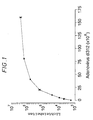
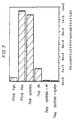
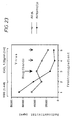
- the effect of an increasing dose of adenoviruses on the gene transfer capacity of a constant amount of transferrin-polylysine conjugate in HeLa cells was investigated, the luciferase gene being used as the reporter gene.
- the enhancement of gene transfer brought about by the adenovirus reached a maximum at 1x10 4 virus particles per cell, a number which corresponds to the approximate number of adenovirus receptors per HeLa cell.
- the up to 2000-fold increase in luciferase expression compared to the expression achieved with the transferrin-polylysine conjugates alone corresponded to the higher virus dose.
- conjugate-DNA complexes were examined in the presence of a constant dose of adenovirus.
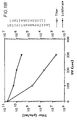
- the uptake of adenoviruses into the cells was found to enhance gene transfer mediated by the transferrin-polylysine over a wide range of doses of DNA.
- the maximum level of gene expression achieved by the conjugate-DNA complexes corresponded to the level achieved with 100 times less DNA when adenoviruses were used to enhance transfection efficiency.
- connection transferrin-polylysine DNA or polylysine-DNA complexes at low temperature without Internalization allows for treatment before the adenovirus excess complex in the liquid Remove phase (FitzGerald et al., 1983). If so was carried out, the transport of the receptor-bound Transferrin-polylysine-DNA complexes Addition of adenovirus particles significantly increased what did not apply to the polylysine-DNA complexes. It is hence the entry of the DNA into the cell via receptor-mediated Endocytosis that is specifically enhanced.
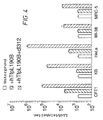
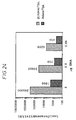
- Cystic cells Fibrosis cell line (CFT1) showed moderate luciferase gene expression after treatment with transferrin-polylysine-DNA complexes alone.
- the extent of Expression was by treatment with the adenovirus dl312 increased significantly.
- KB cells with the transferrin-polylysine-DNA complexes were treated despite the Presence of transferrin receptors Luciferase gene expression that is barely above the background level was.
- Treatment with adenovirus dl312 caused clearly detectable in these cells Luciferase activities. It had a similar effect Treatment with adenovirus on HeLa cells, whereby however, this effect is still significant in these cells was stronger.
- Treatment with adenovirus is therefore likely Gene transfer using conjugate-DNA complexes in reinforce those cases where gene transfer via receptor-mediated endocytosis is possible, such as in the case of the CFT1 cells, as well as in some cases, in to whom gene transfer via this route is inefficient runs like HeLa and KB cells. That the extent of Gain between different target cells clearly varies, this could be due to the fact that this Effect both a function of the number of virus receptors, e.g. of the adenovirus receptors, one certain cell type as well as the number of Is transferrin receptors.
- the Nucleic acid-affine substance preferably a organic polycation, preferably with a Internalizing factor is conjugated.
- DNA that only with Nucleic acid-affine substance is complexed, so without internalization factor, in the presence of free Virus can be introduced into the cell.
- the uptake in some cell lines the complex consisting of nucleic acid and Nucleic acid-affine substance, via the liquid phase can take place when the concentration of the complexes is correspondingly high.
- Some cells have a relative high affinity for certain nucleic acids Substances so that the conjugates of nucleic acid and connection factor are added to the cell, without the involvement of an internalization factor is required. This applies e.g. towards hepatocytes, of which within the scope of the present invention was found to be DNA-polylysine complexes take up.
- the endosomolytic agent a virus that is transmitted to the Nucleic acid-affine substance is bound and that Has ability to enter the cell as part of the Conjugate / nucleic acid complex to penetrate and Contents of the endosomes in which the complex after the Entry into the cell is localized, into the cytoplasm release.
- this is endosomolytic agent a viral component that affects a nucleic acid-affine substance is bound and the has the ability to enter the cell as part of the Conjugate / nucleic acid complex to penetrate and Contents of the endosomes in which the complex after the Entry into the cell is localized, into the cytoplasm release.
- Viruses or virus components that bind to a nucleic acid binding domain are bound below regardless of the type of binding as "viral conjugates" designated.
- the viral conjugates which are also the subject of are present, contain the virus or the virus component as an integral part of their functional construct and combine the advantages of vector systems based on Internalizing factor conjugates with the advantages bring the viruses into the system.
- the viral conjugates according to these Embodiments of the invention have the advantage that they circumvent the fundamental limitation that the known bifunctional conjugate system for the Gene transfer via receptor-mediated endocytosis is inherent by going through a specific Mechanism of their release from the Enables cell vesicle system.
- the invention viral conjugates represent a fundamental one conceptual departure from the recombinant viral Vectors represent the foreign DNA to be transported is worn on the outside of the virion. Thereby can also with the help of the conjugates according to the invention very large gene constructs are transported into the cell be, with regard to the sequence none There are restrictions.
- a virus as free or bound Virus (part) as a virus component in the context of present invention is to be used defined by its recording function.
- Suitable viruses are on the one hand those who have the ability during the transfection of the cells with the Nucleic acid complex, via receptor-mediated Endocytosis invade the cell and its Release - and thus the release of the Nucleic acid - from the endosome into the cytoplasm bring about. Without being committed to this theory this mechanism could get into the cell imported nucleic acid complexes come as this, provided they are internalizing come together in the same endosomes as the viruses with the viruses from the endosomes into the cytoplasm to get promoted.
- nucleic acid complexes Contained virus in bound form they benefit from the endosomolytic activity of the virus and will transported from the endosomes into the cytoplasm. there the fusion between endosomes and lysosomes and so that normally in these cell organelles enzymatic degradation taking place can be avoided.
- viruses and higher eukaryotic cells in that they can penetrate are e.g. Fields and Knipe, 1990, removable.
- the receptivity of a given Cell line for transformation by a virus that is in Form of a free virus to facilitate the Entry of nucleic acid complexes into cells used depends on the existence and the number of surface receptors for the virus on the Target cell.
- the cell surface receptor for adenovirus methods for determining its Number on HeLa and KB cells from Svensson, 1990, and Defer, 1990.
- Viruses responsible for the composition according to the invention are suitable and their at the beginning of the infection ongoing recording function via receptor-mediated Endocytosis occurs, on the one hand, include viruses without a lipid envelope such as adenovirus, poliovirus, rhinovirus, on the other hand, the envelope viruses vesicular stomatitis Virus, Semliki Forest Virus, influenza virus; suitable are also pH-dependent strains of Moloney virus.
- Particularly preferred viruses for use of the present invention include adenovirus, Sub-group C, type 5, Semliki Forest Virus, Vesicular Stomatitis Virus, Poliovirus, Rhinoviruses and Moloney Leukemia virus strains.
- RNA viruses that are not reverse Have transcriptase for the present invention the advantage that a transfection in the presence of a such virus does not prevent the formation of viral DNA in the Cell.
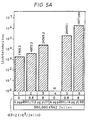
- rhinovirus HRV2 a Representative of the picornavirus group, the expression of a Reporter gene increased.
- the performance of the Rhinovirus was in both free form and in form shown by virus conjugates.
- viruses - provided that they are included in the cell and the content of the endosomes in which they are get, release - in addition to the wild types Mutants understood that due to one or more Mutations functions of the wild type by the Recording function are different, especially the Replication ability have been lost.
- Such mutants are caused by mutations or Deletions in virus protein regions responsible for Responsible for and replication functions Recording function are dispensable and by the Packaging line can be complemented by means of conventional methods of mutagenesis.
- ts mutants temperature sensitive mutants
- E1A and E1B mutants Mutants that have mutations in MLP-driven genes exhibit (Berkner, 1988) and mutants, the mutations in areas of certain capsid proteins.
- Virus strains are also suitable, the corresponding have natural mutations.
- the Replication ability of the viruses can e.g. with help known plaque assays are examined in those cell cultures with different suspensions Virus concentration to be coated and the number of lysed cells, which is visible on plaques, is found (Dulbecco, 1980).
- defective viruses are also suitable Viruses in which one or more genes are responsible for autonomous virus replication lacks the required function, for which you need helper viruses.
- DI particles defective interfering particles
- This group also includes the satellite viruses (Holland, 1990).
- Another group is the class of Parvoviruses, which are called "adeno-associated virus” (Berns, 1990). Because the acquisition cycles of many Viruses in the cell have not yet been fully elucidated it is likely that there are other viruses which have the endosomolytic activity required for their suitability for use in the present Invention is required.
- Viruses also fall within the scope of inactivated viruses, e.g. by chemical treatment such as formaldehyde treatment UV radiation, combined by chemical treatment with UV radiation, e.g. Psoralen / UV or Bromodeoxyuridine / UV treatment, by gamma radiation or viruses inactivated by neutron bombardment.
- chemical treatment such as formaldehyde treatment UV radiation
- UV radiation e.g. Psoralen / UV or Bromodeoxyuridine / UV treatment
- UV radiation e.g. Psoralen / UV or Bromodeoxyuridine / UV treatment
- Inactivated viruses e.g. also for vaccine can be used by means of literature Standard methods (Davis and Dulbecco, 1980, Hearst and Thiry, 1977) and used for Increase in the import of DNA complexes to be tested.
- literature Standard methods Dale and Dulbecco, 1980, Hearst and Thiry, 1977
- Attempts have been made to prepare adenovirus using a conventional UV sterilization lamp or inactivated with formaldehyde and surprisingly found that the extent of Inactivation of the virus was much larger than that Decrease in the gene transfer effect that was achieved when adenovirus is added to the transfection medium has been.
- virus components includes parts of Viruses understood, e.g. the one freed from nucleic acid Protein content (the empty virus capsid, which with the help recombinant methods can be produced, see e.g. Ansardi et al., 1991, Urakawa et al., 1989), Proteins obtained by fractionation or peptides that are required for the uptake function essential endosomolytic ability of the intact Own virus. These virus components can too be synthetically produced depending on their size either by means of peptide synthesis or using recombinant methods. As part of the present invention could be shown that Adenovirus proteins containing biotin / streptavidin Polylysine are conjugated, increase gene transfer can.
- influenza virus hemagglutinin HA
- the N-terminal Sequence of the influenza virus hemagglutinin HA2 subunit is responsible for the release of the Virus from the endosome. It has been shown that peptides, which consist of 20 amino acids of this sequence, Lipid membranes merge and partially can break up / destroy (Wharton et al., 1988). In of the present invention have been authentic and modified influenza peptides successfully in different embodiments used.
- envelope proteins from retroviruses e.g. HIV gp41 (Rafalski et al., 1990) or parts thereof Viral proteins.
- the coupling to a DNA binding domain e.g. a polycation, ensures that the virus or the virus component thus has a strong affinity for DNA molecules complexed and as part of the DNA complex that also an internalization factor / DNA binding domain conjugate contains, is transported into the cell.
- a DNA binding domain e.g. a polycation
- Whether a given virus or a virus component is a Recording function in the sense of the present invention and thus for use in reinforcing the Gene transfers can be done using a simple Screening assays can be determined.
- Assay e.g. to a virus on its applicability as To test free virus, target cells with a DNA complex in the presence or absence of the virus brought into contact. The amount of DNA complex that ins Cytoplasm can then be released easily Detection of a marker gene product, e.g. luciferase, be determined. If the presence of the virus resulted has that the DNA complex to a greater extent than without Virus taken up into the cell and into the cytoplasm released, this can affect the recording function of the virus.
- a marker gene product e.g. luciferase
- test virus with regard to its recording function to compare a virus that is known to be has a suitable recording function, e.g. With Adenovirus, subgroup C, type 5.Tests of this type can also be applied to viral conjugates, taking additional parameters, such as different Internalizing factor conjugates, in various Amounts of such tests can be subjected.
- assays of this kind possibly in conjunction with others Tests such as Liposome permeability assay ("Liposome Leakage Assays"), in a simple way Virus components or other means with potential apply endosomolytic activity to them on their Ability to increase gene expression too investigate.
- viruses are used, expediently parallel to the preliminary tests, in which the virus affects on its ability to amplify the virus Gene transfers are examined, checked to see if the virus is replicable.
- the investigation on Replication ability is used in the case of cythopathic Viruses or, in the case of viruses, the growth of the Noticeably affect host cells with the help of Plaque assays performed (see above).
- Viruses are detection methods specifically for that respective virus applied, e.g. the Hemagglutionation test or chemical-physical Methods (electron microscopic).
- viruses that can be produced in high titer, which are stable, which as a wild type have low pathogenicity have and in which a targeted switching off of the Replication functions are possible, in particular Adenoviruses. If a certain cell population Viruses that are to be transfected are preferred specifically infect this cell population. For the Case that different cell types from transfection viruses can be used, those infectious for a wide range of cell types are.
- the requirements for virus preparation are in essential greatest possible purity as well as an on the virus-coordinated stabilizing buffer.
- the present invention in vivo only such viruses or virus components in which Security risks, especially regarding replication of the virus in the cell as well as the recombination of Virus DNA with host DNA, are minimized as far as possible.
- Viruses that infect animals other than humans used to record and release of DNA in higher eukaryotic cells, in particular human cells, if the virus in the cells the ability to break open Endosomes.
- Members of the adenovirus family were made from bird species, amphibians and various isolated from other animals (see e.g. Laver et al., 1971; Bragg et al., 1991; Akopian et al., 1991; Takase et al., 1990; Khang and Nagaraji, 1989, and Reece et al., 1987).
- Amphibian, bird, cattle, dog, mouse, Sheep, pig and monkey adenoviruses, as well as human Adenoviruses are available from the American Type Culture Collection, Rockville, Maryland (see American Type Culture Collection Catalog of Animal Viruses and Antisera, Chlamydae and Rickettsiae, 6th ed., 1990, C. Buck and G. Paulino eds., Pp. 1-17).
- a virus e.g. an adenovirus
- a distant species is likely to be one reduced toxicity in the target cells (e.g. would not be expected from the chicken or frog adenovirus be that it replicates in mammalian cells or that Expression of earlier genes initiated), a compared to human adenovirus reduces risk to the researchers who have this virus of a distant species manufactures, and a reduced disruption Antibodies against human or mouse adenovirus.
- the lack of interference from the human or Mouse antibodies are particularly important when the viruses for gene therapy in humans or in the mouse be used.
- the chicken adenovirus CELO (Chick Embryo Lethal Orphan Virus) shows no reactivity with antibodies that the Recognize main group epitopes of the adenoviruses that Infect mammalian cells.
- CELO viruses are bred in eggs with embryo development in order to obtain large amounts of virus (0.5 mg / egg; Laver et al., 1971).
- Viruses from distant species are preferred as Components of viral conjugates in Combination complexes (as defined in the framework of the present invention) used.
- conjugates according to the invention which are a virus contain the binding of the virus to the Nucleic acid binding domain covalent or noncovalent the latter e.g. via a biotin-streptavidin bridge or, in the event that the virus has regions on its surface proteins that are acidic and can therefore bind to a polycation, about an ionic bond.
- virus components in the invention Conjugates with endosomolytic activity are the empty viral capsids or viral peptides.
- the connection the virus component to the nucleic acid binding domain can be covalent, e.g. through chemical coupling of the viral peptide with polylysine, or non-covalent, e.g. ionic in the event that the virus component is acidic Has leftovers to bind to a polycation.
- the ratio of virus or virus component to Nucleic acid-affine substance can be varied. in the Trap of the influenza hemagglutinin peptide-polylysine conjugate was within the scope of the present invention found that gene transfer to a greater extent can be enhanced if the viral content Peptide was higher in the conjugates.
- the present invention relates in a further Aspect methods for producing the invention Conjugates from virus (component) and nucleic acid affine Substance.
- the viral conjugates can (like that Internalization factor-polycation conjugates) Coupling the components or, if the Virus component and the polycation are polypeptides, be produced by the recombinant route with respect to Manufacturing methods are based on the disclosure of EP 388 758 Reference.
- adenovirus was coupled to polylysine using various methods.
- One type of coupling to polylysine was carried out in a manner similar to that in the production of transferrin-polylysine conjugates (Wagner et al., 1990) after modification of the defective adenovirus dl312 by means of a heterobifunctional reagent. Unbound polylysine was separated by centrifugation. The DNA binding ability was demonstrated in a binding experiment with radiolabelled DNA.
- the virus or the virus component is suitable Have carbohydrate chains, you can with the Nucleic acid affine substance over one or more Carbohydrate chains of the glycoprotein with each other get connected.
- Another preferred method of making the conjugates according to the invention is the enzymatic Coupling the virus or the virus component to a Nucleic acid affine substance, especially a Polyamine, by a transglutaminase.
- transglutaminases comprises several different enzymes, which are found in the epidermis (epidermal transglutaminase), in the blood (factor XIII) and in the cells of different tissues (tissue transglutaminase) (Folk, 1985).
- Transglutaminases catalyze the formation of ⁇ - ( ⁇ -glutamyl) lysine bonds in the presence of Ca ++ and with the elimination of NH3.
- the prerequisite for this is that corresponding glutamines and lysines are present on proteins, which can be converted by the enzyme.
- (poly) amines such as ethanolamine, putreszine, spermine or spermidine can also serve as the substrate (Clarke et al., 1959).
- glutamine or lysine of a protein or a polyamine can be converted by the enzyme.
- numerous cell proteins such as cytokeratins (Zatloukal et al., 1989), tubulin, cell membrane proteins and also surface proteins of influenza viruses (Iwanij, 1977) can bind polyamines by means of transglutaminase.
- polylysine can be coupled to adenoviruses by means of transglutaminase. It has been found that the coupling can be carried out in the presence of glycerol.
- a virus preparation for example an adenovirus preparation, which contains glycerol as a stabilizing agent in the buffer, can be used directly for the coupling.
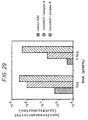
- adenovirus-polylysine conjugates which were complexed together with transferrin-polylysine conjugates with plasmid DNA, gene expression was many times higher than with transferrin-polylysine conjugates in the presence of non-polylysine-coupled adenovirus.
- Another within the scope of the present invention preferred method of making the conjugates according to the invention is the virus or the virus component via a biotin-protein bridge, preferably a biotin-streptavidin bridge, to couple to the polycation.
- a biotin-protein bridge preferably a biotin-streptavidin bridge
- the binding to biotin can also Avidin done.
- Virus component
- polylysine by on the one hand the virus is biotinylated and on the other hand an anti-biotin antibody conjugated to polylysine and the bond between virus and polylysine via the Biotin / antibody binding is established, whereby commercially available polyclonal or monoclonal antibodies can be used against biotin.
- the bond between the virus and polylysine can also be made by polylysine with a lectin is coupled, the affinity for a virus surface glycoprotein has, with the bond in one such conjugate via the bond between the lectin and the glycoprotein. Rejects the virus from suitable carbohydrate side chains, can it can be modified accordingly.
- a virus can also be bound to a substance with an affinity for nucleic acids by first modifying its surface with a non-virus antigen (eg digoxigenin DIG, available from Boehringer Mannheim; or with biotin) and the connection between the modified virus and the nucleic acid.
- affine substance is produced via an antibody that binds to this antigen.
- which method is used to produce the conjugates according to the invention depends on various criteria. For example, coupling via biotin is the most unspecific and therefore the most widely applicable method, the biotin-mediated binding represents a very strong non-covalent binding.
- the enzymatic reaction with transglutaminase has the advantage that it can be carried out even on the smallest scale.
- Chemical coupling is generally used when larger amounts of conjugate are to be synthesized; this method is generally also most expedient when virus proteins or peptides are to be coupled. If inactivated viruses are used, the inactivation is generally carried out before the coupling, provided that the coupling is not impaired by the inactivation.
- a virus e.g. Adenovirus or a endosomolytic component thereof, accessible Has binding domains, e.g. acid domains for Binding to a polycation
- the positive charges are the Polycations, optionally with a Internalizing factor is conjugated, in part by neutralizes the acidic domain of the virus (component), the rest of the positive charges are essentially from neutralizes the nucleic acid.
- nucleic acid-affine substance intercalating substance it is with one for the respective coupling of virus (component) modified suitable linker, e.g. for the coupling with transglutaminase with spermine, or with a bifunctional, competent for chemical coupling Group, e.g. an active ester.
- virus (component) modified suitable linker e.g. for the coupling with transglutaminase with spermine
- a bifunctional, competent for chemical coupling Group e.g. an active ester.
- the ratio of virus (component): nucleic acid affine Substance can vary, it usually does determined empirically, e.g. by a constant amount Virus (component) with different amounts of polylysine conjugated and the optimal for transfection Conjugate is selected.
- the virus component e.g. an endosomolytic viral Peptide
- the peptide itself can be a DNA binding domain which can be obtained by producing the peptide using peptide synthesis being a section of positively charged Amino acids is provided, preferably by Extension of the peptide, particularly preferably at the C-terminus.
- a non-viral, optionally synthetic peptide in a further embodiment of the invention that is endosomolytic agent a non-viral, optionally synthetic peptide.
- a peptide of this Type is preferably in the invention Contain composition such that it is ionic to the Nucleic acid affine substance, e.g. on polylysine in the case of DNA / internalizing factor-polylysine complexes, is bound.
- the binding to polylysine also through the here for the Binding of peptides to polylysine Methods are done.
- this Peptide with a suitable terminal amino acid as "Stalk" can be modified for conjugation.
- Non-viral endosomolytic peptides to incorporate into the nucleic acid complexes is to provide them with sequences that bind to DNA.
- the position of such a sequence must be such that it endosomolytic activity of the peptide does not interfere. Therefore e.g. Peptides whose N-terminus for this Activity is responsible at the C-terminus with DNA binding Sequences extended. Extensions of this Kind can be homologous or heterologous cationic Be oligopeptides, e.g. an oligolysin tail, or a natural DNA binding domain, e.g. one by one Histone derived peptide.
- endosomolytic peptide preferably include an integral part of the endosomolytic peptide forming DNA binding sequences about 10 - 40 Amino acids.
- This embodiment of the invention offers the possibility of a higher ratio endosomolytic sequence: DNA binding sequence as in Peptide conjugates, the larger proportions of polycations included to greater performance of the To achieve complexes.
- non-viral endosomolytic peptides should be the meet the following requirements:
- Peptides that break membranes contain in general amphipathic sequences, namely a hydrophobic side with the lipid membrane in Can interact, and a hydrophilic side, the the aqueous phase at the point where the Membrane breaks open, stabilizes.
- peptides in nature Break open membranes, usually small peptides or peptide domains of large polypeptides.
- Such peptides can according to their function in a natural context are classified, namely either in membranes breaking peptides (e.g. peptides from naked viruses) and / or membrane fusing peptides (e.g. peptides of viruses with envelopes).
- membranes breaking peptides e.g. peptides from naked viruses
- membrane fusing peptides e.g. peptides of viruses with envelopes.
- synthetic peptides can do both Classes of peptide sequences may be useful.
- the Most natural peptides can use amphipathic ⁇ -helices form.
- a putative amphipathic ⁇ helix such that the helix can only form at an acidic pH, but not at a neutral pH at which the Charge rejection between the negatively charged acids Residues that prevent helix formation can cause pH specificity can be achieved.
- This property is also found in naturally occurring sequences (e.g. the N-terminus of the influenza HA2 peptide).
- endosomolytic peptides can also be obtained by naturally occurring and artificial sequences be united.
- examples with different peptides were derived from that described by Parente et al., 1990 synthetic peptide GALA.
- Some of the in used the examples of the present invention Derivatives were obtained by the peptide GALA or Modifications thereof with sequences of the influenza apeptide or modifications thereof, e.g. the Peptides with the names EALA-Inf and EALA-P50 corresponding to example 37.
- the length of the peptide sequence can be determined with regard to the amphipathic helix be critical; an increase in Stability of short domains, that of natural Proteins are derived and the context of stabilizing protein is absent, can by Extension of the helix can be achieved.
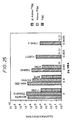
- the inventors have the effect of synthetic peptides on DNA uptake using transferrin-polylysine conjugates shown. There were several different ones Peptides synthesized, their ability to liposomes and To make erythrocytes permeable, determined and their Effect on luciferase expression in TIB 73 cells and tested in NIH 3T3 cells.
- a non-peptide amphipathic substance In a further embodiment of the invention that is endosomolytic agent a non-peptide amphipathic substance.
- the invention relates in a further aspect Complexes in higher eukaryotic cells are recorded, containing nucleic acid and a Conjugate that has the ability to interact with nucleic acid to form a complex for the introduction of nucleic acid into higher eukaryotic cells.
- the complexes are characterized in that they contain a conjugate, that of a nucleic acid affine substance and one endosomolytic agent that is attached to the Nucleic acid-affine substance is bound and the Possesses ability as part of a Conjugate / nucleic acid complex in the cell to be included and the content of the endosomes in which the complex after entering the cell is localized to release into the cytoplasm.
- nucleic acid complexes that are part of the present invention are used preferably those in which the nucleic acid with complexed a nucleic acid affine substance is that the complexes are essentially electroneutral are.
- the endosomolytic agent is a virus or a Virus component, the or the covalently to a Polycation is bound.
- the endosomolytic conjugates - in addition to conjugates, in which endosomolytic agents are ionic to a DNA binding domain are bound - by definition also endosomolytic agents that bind directly to DNA, e.g. about their basic extension, although "conjugates" strictly speaking, not by conjugation, i.e. by connecting two components together, were obtained.
- the function of endosomolytic Means of this type as part of the composition according to the invention is independent of whether by conjugation of an endosomolytic Synthesized using and a DNA binding domain or whether a DNA binding domain was originally in endosomolytic agent was present.
- a preferred embodiment of the invention contain the complexes in addition to the endosomolytic Conjugate another conjugate in which a Nucleic acid-affine substance, in the case of a endosomolytic polycation conjugate in general the same as that of the conjugate, with one Internalization factor with affinity for the target cell is coupled.
- This embodiment of the present Invention is used especially when the Target cell no or only a few receptors for the Virus that is part of the endosomolytic conjugate is used.
- a further application of this embodiment is the, at which is a virus component, e.g.
- the combination complexes want to be determined of cells either by binding to the for the internalization factor specific Surface receptor or, if using a Virus or a virus component, by binding to the Virus receptor or by binding to both receptors on the pathway of receptor-mediated endocytosis added. With the release of the endosomolytic The endosomes also become those in the complexes DNA contained in the cytoplasm released and thereby escapes lysosomal degradation.
- ternary complexes transported DNA even in very small amounts.
- 30 pg DNA per 3 ⁇ 10 5 cells 1.8 ⁇ 10 4 light units were obtained (resulting from the expression of a sequence encoding a luciferase coding sequence).
- the less efficient calcium precipitation regulation uses 2 x 10 5 DNA molecules per cell (Sambrook et al., 1989).
- the present invention represents a significant advance in that it allows the efficient transformation of higher eukaryotic cells with very small amounts of DNA.
- internalization factor is understood to mean ligands or fragments thereof which are internalized after binding to the cell via endocytosis, preferably receptor-mediated endocytosis, or factors whose binding / internalization takes place via fusion with cell membrane elements.
- Suitable internalization factors include the ligands transferrin (Klausner et al., 1983), conalbumin (Sennett et al., 1981), asialoglycoproteins (such as asialotransferrin, asialorosomucoid or asialofetuin), (Ashwell et al., 1982), lectins (Goldstein et al ., 1980 and Shardon, 1987), or substances which contain galactose and are internalized via the asialoglycoprotein receptor; mannosylated glycoproteins (Stahl et al., 1987), lysosomal enzymes (Sly et al., 1982), LDL (Goldstein et al., 1982), modified LDL (Goldstein et al., 1979), lipoproteins that are receptors in the Cell are taken up (apo B100 / LDL); viral proteins such as the HIV protein gp120; Antibodies (Mellman et al., 1984
- immunoglobulins or fragments thereof as ligands for the Fc receptor or anti-immunoglobulin antibodies that bind to SIgs ("surface immunoglobulins").
- the ligands can be of natural or synthetic origin (see Trends Pharmacol. Sci., 1989, and those cited therein) Credentials).
- Preliminary tests can be used to determine whether in the case of using free virus as endosomolytic agent the application of a Internalization factor, or whether in the event that endosomolytic agent a virus or a Viral component or a non-viral peptide as part of an endosomolytic conjugate is a "additional" connection factor the inclusion of Enables or improves nucleic acid complexes.
- Such tests include parallel transfections Nucleic acid complexes once without (additional) Internalization factor, e.g. in the case of viral Conjugates with complexes consisting of nucleic acid and viral conjugate, and once with complexes, in which the nucleic acid with another conjugate, containing another internalization factor, for that the target cells have a receptor.
- an internalization factor or additional internalization factor i.e. when a Combination complex is used, this is mainly defined by the target cells, e.g. by certain surface antigens or receptors for are specific to a cell type and thus one directed import of the nucleic acid into this cell type enable.
- Nucleic acid-affine substances are e.g. homologous organic polycations such as polylysine, polyarginine, Polyornithine or heterologous polycations with two or more different positively charged amino acids, these polycations having different chain lengths may have, furthermore non-peptidic synthetic polycations such as polyethyleneimine.
- Suitable nucleic acid-affine substances are also natural DNA binding polycationic proteins Character such as histones or protamines or analogues or Fragments thereof, as well as spermine or spermidines.
- nucleic acid-affine substances as Intercalating are part of the conjugates Substances such as ethidium dimers, acridine or intercalating peptides containing tryptophan and / or Tyrosine and / or phenylalanine.
- nucleic acid complexes are generally the first nucleic acid to be imported into the cell.
- the nucleic acid is mainly produced in the cell defined biological effect to be achieved, in the case the application in the context of gene therapy by the Gene to be expressed or the gene segment, e.g. for the purpose of substituting a defective gene, or by the Target sequence of a gene to be inhibited.
- the Nucleic acids to be transported can be are DNAs or RNAs, with regard to the There are no restrictions on the nucleotide sequence.
- a cell immunomodulating substance e.g. a cytokine like IL-2, IL-4, IFN-gamma, TNF- ⁇ .
- a cell immunomodulating substance e.g. a cytokine like IL-2, IL-4, IFN-gamma, TNF- ⁇ .
- cytokines e.g. IL-2 and IFN-gamma.
- Another gene that's for that Introducing it into tumor cells is useful is the "Multi Drug resistance gene "(mdr).
- Dependent on of the specific application can be done in preliminary tests determine which ligand for the particular Suitable for the respective tumor cell type is.
- Insert nucleic acid sequences into the cell e.g. a plasmid containing cDNAs coding for two different proteins, under the control of appropriate regulatory sequences, or two different plasmid constructs containing different ones cDNAs.
- RNA or ribozymes are transcribed become.
- oligonucleotides e.g. Antisense oligonucleotides
- Antisense oligonucleotides include preferably 15 nucleotides or more. Possibly the oligonucleotides can be multimerized.
- Ribozymes are preferably used as part of a Gene construct containing stabilizing gene elements, e.g. contains tRNA gene elements, introduced into the cell. Gene constructs of this type are in EP A 0 387 775 revealed. Inhibitory nucleic acids and their Mechanisms of action are the average specialist common; In this regard, the review article by Hélène and Toulme, 1990, and Takayama and Inouye, 1990, as well as the references cited therein.
- the genes e.g. viral Inhibit genes because of their complementarity, can also have genes with other inhibitory effects be used. Examples of this are genes that are responsible for encode viral proteins, the so-called transdominant Have mutations (Herskowitz, 1987). Expression of Genes in the cell deliver proteins that do that corresponding wild type protein dominate and on this Way the cell that acquires cellular immunity protect by preventing virus replication. Transdominant mutations are more viral Proteins required for replication and expression are required, e.g. Gag, Tat and Rev mutants, which have been shown to be HIV replication inhibit (Trono et al., 1989; Green et al., 1989; Malim et al., 1989).
- RNA molecules that the binding site for an essential viral protein included, e.g. so-called "TAR Decoys” (Sullenger et al., 1990).
- somatic gene therapy applicable genes which are available with the help of the present Invention as part of gene constructs in the Factor VIII can be introduced into the cell (Hemophilia A), (see e.g. Wood et al., 1984), factor IX (hemophilia B), (see e.g. Kurachi et al., 1982), Adenosine deaminase (SCID), (see e.g. Valerio et al., 1984), ⁇ -1 antitrypsin (emphysema), (see e.g. Ciliberto et al., 1985) or the "Cystic fibrosis transmembrane conductance regulator gene "(see e.g. Riordan et al., 1989).
- Hemophilia A see e.g. Wood et al., 1984
- factor IX hemophilia B
- SCID Adenosine deaminase
- ⁇ -1 antitrypsin emphys
- nucleic acids there are applications regarding the size of the nucleic acids possible in a wide range; with the help of The present invention can be nucleic acid molecules of the order of approx. 0.15 kb (in the case of a TRNA gene containing ribozyme gene) up to approx. 50 kb and about to be carried into the cell; smaller Nucleic acid molecules can act as oligonucleotides be applied.
- the nucleic acid Starting from the nucleic acid, the nucleic acid becomes affine Substance, preferably an organic one polycationic substance, which determines the Complexation of the nucleic acid ensures that complexes obtained are preferably essentially electroneutral. If the complexes next to the endosomolytic conjugate is a conjugate of a Internalization factor and a nucleic acid affine The cation content of both contains substance Conjugates on the aspect of Considered electroneutrality.
- affine Substance preferably an organic one polycationic substance, which determines the Complexation of the nucleic acid ensures that complexes obtained are preferably essentially electroneutral. If the complexes next to the endosomolytic conjugate is a conjugate of a Internalization factor and a nucleic acid affine The cation content of both contains substance Conjugates on the aspect of Considered electroneutrality.
- nucleic acid was chosen so that the Internalizing polycation / nucleic acid complexes were largely electroneutral. It was found that the amount of in the cell the amount of nucleic acid ingested is not reduced, if part of the transferrin-polycation conjugates replaced by non-covalently bound polycation becomes; in certain cases even one achieved a substantial increase in DNA uptake (Wagner et al., 1991a). It was observed been that the DNA within the complexes in too toroidal structures with a diameter of 80 - 100 nm compressed form is present.
- the amount of Polycation is thus with regard to the two Parameters electroneutrality and achievement of a compact structure chosen, the amount of Polycation, which is aimed at achieving the Electroneutrality from the charge of the nucleic acid generally results in a compacting of the DNA guaranteed.
- the complexes additionally Nucleic acid binding substances in non-covalently bound Shape that is the same or different from the Connection factor, i.e. the nucleic acid affine Substance in the conjugates.
- the endosomolytic agent is free virus, include the complexes nucleic acid and Internalizing conjugate.
- a endosomolytic e.g. used a viral conjugate is the nucleic acid with this conjugate complexed, possibly together with one Conjugate of an additional internalization factor.
- connection factor e.g. a substance that has no or only has poor ability to condense DNA with a view to efficient internalization of the Complexes generally useful, such DNA-affine Use substances that have this property in have a more pronounced degree.
- the Connection factor itself a nucleic acid condensing substance and already becomes a in terms of efficient internalization causes sufficient compacting of the nucleic acid, expediently becomes a nucleic acid affine Substance used due to other mechanisms causes an increase in expression.
- nucleic acid-affine Substances count compounds with the ability Condense nucleic acid and / or this protect against unwanted degradation in the cell, especially the substances already mentioned polycationic in character.
- Another group suitable substances are those that bind to the nucleic acid an improvement thereof Effect transcription / expression by the Accessibility of the nucleic acid for the Improve cell expression machinery.
- chromosomal one Non-histone protein HMG1 which has been found that it has the ability to compact DNA and to express in the cell.
- nucleic acid (s) When determining the molar ratio of endosomolytic agent and / or Internalizing / affinity for nucleic acid Substance / nucleic acid (s) must be taken into account that Complexation of the nucleic acid (s) takes place and it is ensured that the complex formed to the Cell bound, transported to the cell and that he either by itself or with the help of endosomolytic agent released from the endosomes becomes.
- the chosen ratio Internalizing factor / binding factor / nucleic acid depends mainly on the size of the Polycation molecules as well as by number and distribution the positively charged groupings, criteria based on Size and structure of the goods to be transported Nucleic acid (s) can be tuned.
- s Nucleic acid
- DNA can with the help of titrations the amount of the internalizing factor conjugate portion be determined, if necessary can be replaced by free nucleic acid-affine substance.
- polycations both as Connection factor as well as free nucleic acid affine
- the polycations can be the same or substance to be different.
- the viral Conjugates there is a suitable one Method for determining the ratio of those in the Complex components contained in it, first that in to define the cell construct to be imported and, as described above, a virus or a Find virus component that for the special transfection is suitable. Then it will Virus or the virus component to the polycation bound and complexed with the gene construct. Starting from a defined amount of viral Conjugate titrations can be performed by the target cells with this (constant) amount of conjugate and decreasing DNA concentrations are treated or the other way around. In this way, the optimal DNA: virus conjugate ratio determined. Using an additional internalization factor is e.g. proceeded so that starting from a constant amount of DNA the optimal ratio through titrations between virus conjugate and internalizing factor conjugate is determined.
- the complexes can be prepared by the Components i) nucleic acid, ii) viral conjugate, if applicable iii) Internalization factor / conjugate factor and optionally iv) non-covalently bound Nucleic acid-affine substance, each in the form dilute solutions are available, mixed. in the In case of using polycations as Connection factor and at the same time as "free" Polycations are generally convenient first a mixture of conjugates with free polycations to produce and combine this mixture with DNA.
- the optimal ratio of DNA to Conjugate (s) and polycations Titration experiments i.e. in a number of Transfection experiments with constant amount of DNA and increasing amount of conjugate (s) / polycation mixture, certainly.
- the optimal ratio of Conjugate (s): Polycations in the mixture can with With the help of routine experiments or comparison the optimal ratios of the in Titration experiments used mixtures obtained become.
- the preparation of the DNA complexes can physiological salt concentrations occur.
- a Another possibility is to use high Salt concentrations (about 2 M NaCl) and subsequent ones Attitude to physiological conditions through slow dilution or dialysis.
- nucleic acid, conjugate (s), optionally free non-covalently bound Nucleic acid-affine substance is described in detail in Preliminary tests determined. Occasionally it can turn out to be prove useful, first the nucleic acid with the Complex the conjugate and only then the free one Nucleic acid affine substance, e.g. the polycation inflict e.g. in the case of transferrin-ethidium dimer conjugates and polylysine.
- the (additional) internalizing factor transferrin and the connecting factor is a polycation.
- Transportrin means both the natural transferrin and those transferrin modifications that are bound by the receptor and transported into the cell.
- the nucleic acid is taken up in the form of complexes in which internalizing factor-polycation conjugates are complexed with nucleic acid. In the case of the content of non-covalently bound nucleic acid-affine substance, this is preferably a polycation which is the same or different from the polycation contained in the conjugate.
- the Internalized nucleic acid in the form of complexes in on the one hand, the internalizing factor conjugates and on the other hand the endosomolytic with nucleic acid are complex.
- the internalizing factor-polycation conjugates that together with free virus or with the viral Conjugates in the combination complexes for use can come on chemical or, if that Polycation is a polypeptide, by a recombinant route be made, in terms of manufacturing methods reference is made to the disclosure of EP 388 758.
- the conjugates can also be prepared by connecting a glycoprotein, eg transferrin, and the connection factor via one or more carbohydrate chains of the glycoprotein.
- a glycoprotein eg transferrin
- the connection factor via one or more carbohydrate chains of the glycoprotein.
- conjugates produced by means of conventional coupling methods such conjugates are free from modifications which originate from the linker substances used.
- these conjugates also have the advantage that they are precisely defined with regard to their glycoprotein / connecting factor binding site.
- the amount of endosomolytic agent or its concentration depends on the individual transfection. It is appropriate that Use minimum amount of virus or virus component, which is required to internalize virus and nucleic acid complex and the release from the To ensure endosomes.
- the amount of Virus (conjugate) is specific to the cell type coordinated, the infectivity of the Virus to consider for this cell type.
- the respective one Internalizing factor-binding factor conjugate especially with regard to the internalization factor, for which the target cell has a defined number of Has receptors.
- the amount is aimed Virus (conjugate) according to the amount of imported DNA.
- the invention relates to a Process for the introduction of complexes Nucleic acid, a nucleic acid binding substance and if necessary, an internalization factor, in higher ones eukaryotic cells.
- the procedure is thereby characterized in that the cells with an agent in Be brought into contact with the ability either on its own or as part of the Nucleic acid complexes are absorbed into the cells and the content of the endosomomes in which the Nucleic acid complexes after entering the cell are localized to release into the cytoplasm.
- the method according to the invention is the endosomolytic Agent as part of a combination complex used.
- compositions according to the invention also repeated be applied.
- the cells are primary tumor cells.
- the nucleic acid is a DNA that is a or contains several sequences for one immunomodulating substance, preferably a cytokine, encode.
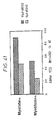
- the cells are Myoblasts, preferably primary myoblasts.
- the cells are Fibroblasts, preferably primary fibroblasts.
- the cells are Hepatocytes, preferably primary hepatocytes.
- the cells are primary endothelial cells.
- the cells are primary airway epithelial cells.
- the cells are T cells.
- the cells are B cells.
- Table 1 shows the successful transfection with the help of the present invention using the example of various Cell types.
- composition of the invention was also in the Transfection of canine hemophilia B fibroblasts examined. Both luciferase and ⁇ -galactosidase could be successfully expressed in these cases.
- the system was also used to factor the 1.4 dogs IX insert cDNA into these fibroblasts. Using sandwich ELISA, factor IX was able to continue for 24 hours of transfection can be demonstrated.
- the endosomolytic agent it is useful to add to the endosomolytic agent to a lysosomatropic substance use, e.g. if the endosomolytic agent Peptide conjugate or a retrovirus, the endosomolytic activity not strictly pH-dependent is.
- lysosomatropic substances Inhibit activity of proteases and nucleases and thus can inhibit the degradation of nucleic acids (Luthmann and Magnusson, 1983). These substances include Chloroquine, monensin, nigericin and methylamine. It could be shown that Monensin increases the Reporter gene expression in the case of using Moloney virus causes. It could be shown that the presence of chloroquine in practically 100% of K562 cells lead to expression of a reporter gene, the transferrin mediated by transferrin into the Cells was introduced.
- BNL.CL2 or HepG2 hepatocytes did not respond as well to chloroquine as the K562 cells, however, were able to an extent of 5 up to 10% are transfected when the endosomolytic properties of added replication defective or chemically inactivated Adenovirus can be exploited.
- the present invention relates in a further Aspect pharmaceutical compositions that as active ingredient a complex therapeutically effective nucleic acid, preferably as part of a Gene construct, as well as an endosomolytic agent, the optionally conjugated, and optionally a Internalization factor conjugate included.
- a complex therapeutically effective nucleic acid preferably as part of a Gene construct
- an endosomolytic agent the optionally conjugated
- optionally a Internalization factor conjugate included.
- Inert pharmaceutically acceptable carriers can be used e.g. Saline or phosphate buffered Saline or any vehicle in which the DNA complexes have suitable solubility properties to applied in the context of the present invention become.
- formulation methods pharmaceutical preparations is on Remington's Pharmaceutical Sciences, 1980.
- the present invention offers the advantage greatest possible flexibility in use, including as pharmaceutical preparation.
- the invention Composition can be as a lyophilisate or in a suitable buffers are frozen. It can also be used as a ready-to-use reagent in solution, preferably transported and stored refrigerated, to be provided. If necessary, they are for the components required for transfection, namely DNA, endosomolytic agent, if necessary conjugated or ready for conjugation with a separate conjugation partner, DNA binding substance, optionally conjugated with a Internalization factor, free if necessary Polycation, separated in a suitable buffer or partially separated as part of a Transfection kits, which is also the subject of present invention.
- the transfection kit of the The present invention includes a carrier having a or several containers, such as tubes, vials or contains similar that for the transfection of the higher eukaryotic cell corresponding to the present invention required materials contain.
- a transfection kit one can first container one or more different DNAs, e.g. coding for different antigens.
- a second container can be one or more different Internalizing factor conjugates contain, the Use of the transfection kit in the form of a Modular system is made possible. Whether the ingredients as a ready-to-use preparation or separately be present to be mixed immediately before use depends on the specific application of the stability of the complexes that are routinely in Stability tests can be examined.
- a Transglutaminase-coupled adenovirus-polylysine conjugate that has proven to be stable in storage in one of the containers of a kit.
- biotinylated Adenovirus and streptavidin-polylysine in separate Containers before and are mixed before use. Taking advantage of the flexibility of the invention the average specialist numerous different Develop transfection kits.
- composition as a pharmaceutical preparation can done systemically, doing the intravenous route prefers.
- Target organs for this application are e.g. Liver, spleen, lungs, bone marrow and tumors.
- Lung tissue application of the invention Composition as a liquid for instillation or as an aerosol for inhalation.
- ligand for the differentiated Lung cells can be used as an accompanying measure Various factors may be required in the Lung tissue are present and the could affect gene transfer (e.g. paralysis of the eyelash movement, dissolution of the Bronchial mucus, application of protease inhibitors).
- the pharmaceutical Preparations by direct injection into the liver, ins Muscle tissue or into a tumor or through local Application to be administered in the gastrointestinal cycle.
- Another method for administering the pharmaceutical composition is the application via the bile duct system. This application method allows direct access to the hepatocyte membranes on the biliary tubules, the interaction of the Composition with blood components is avoided.
- myoblasts (immature muscle cells) to use to insert genes into the Introduce muscle fibers from mice. Because of myoblasts was shown to have the gene product in the blood secrete, this method can be used more widely find than to treat genetic defects of Muscle cells such as the defect related to Muscular dystrophy. It can thus be manipulated Myoblasts are used to deliver gene products that either work in the blood or from the blood be transported.
- the experiments of the present Invention have shown that both myoblast and also myotube cultures, even primary ones, with high Efficiency can be transfected.
- the Transfection media that showed the best results contained combination complexes of biotinylated Adenovirus, transferrin polylysine and streptavidin polylysine.
- the therapeutic application can also be ex vivo the treated cells, e.g. Bone marrow cells, hepatocytes or myoblasts in the Bodies are returned, e.g. Ponder et al., 1991, Dhawan et al., 1991.
- Another ex vivo application of The present invention relates to so-called cancer vaccines.
- the principle of this therapeutic approach is Isolate tumor cells from a patient and the Cells with a DNA coding for a cytokine transfect.
- the Cells inactivated if necessary, e.g. by rays, in such a way that they no longer reproduce, but still express the cytokine.
- the present invention can also be used in assays be the immune response to a given antigen to determine.
- Antigen-specific cytotoxic T lymphocytes (CTL) that kill infected cells play an important role in the defense against viral Infections or tumors from the host.
- CTL cytotoxic T lymphocytes
- APC antigen presenting cells
- HLA restricted Human Lyphocytic Antigens
- MHC MHC, “Major Histocompatibility Molecules
- a "CTL Killing Assay” can be like are carried out as follows: APCs are constructed using a DNA construct transfected, the one for an antigen contains coding sequence. Antigen epitopes are on MHC class I molecules bound and attached to the Cell surface as a target for a specific CTL response presents. After incubation with a sample of patient serum are dependent on Presence of specific CTLs that lysed APCs. The Cell lysis can e.g. by tracking the release of radioactive chromium, which is added to the serum before the serum APCs were introduced to be measured.
- B-LCLs B-lymphoblastoids Cell lines
- CTL Killing Assays that overcome the gene transfer system of the present invention use for antigens inserting coding DNA into the cell, e.g. around Constructs coding for HIV or tumor antigens, in Introduce fibroblasts to these the antigen to express.
- Primary fibroblasts can easily obtained from biopsies are easy to breed and have proven to be particularly efficient (approx.
- Invention also used to be recombinant To produce proteins.
- Sequence or the size of the transferred DNA there is little or no restrictions on the Sequence or the size of the transferred DNA, further there is a wide range of cell types associated with the composition of the invention are transfectable. It can therefore be used for almost any cell type recombinant proteins are used, the ensures that the recombinant protein in lifelike and in fully modified post-translational processed form that the high ensures biological activity of the product, is produced.
- Gene transfer to the cells can be achieved as in the present examples using luciferase and shown by IFN- ⁇ , virtually any Gene construct that leads to the emergence of a desired one Protein product leads to be transported.
- the Desired protein product can last 24 hours to 1 week or longer after transfection from the cell culture (either from the cell supernatant or from a suitable cell homogenate, according to the Regulation for the respective protein product).
- Iron incorporation was accomplished by adding 4 ⁇ l 10 mM Iron (III) citrate buffer (containing 200 mM citrate, by Add sodium bicarbonate to a pH of 7.8 set) per mg transferrin content.
- the iron-containing conjugates were made before their use for DNA complex formation in small aliquots split, snap frozen in liquid nitrogen or Dry ice / ethanol and stored at -20 ° C. (This Measure turned out to be useful after had shown that repeated thawing and freezing spoilage of the conjugates.)
- the plasmid pCMV was created by the BamHI insert plasmid pSTCX556 (Severne et al., 1988) removed, the plasmid treated with Klenow fragment and the HindIII / SspI and Klenow-treated fragment the plasmid pRSVL, which encodes the luciferase Contains sequence, or that for ⁇ -galactosidase (Macgregor and Caskey, 1989) was used.
- the Complex formation was carried out analogously to pRSVL.
- the purified virus was taken up in storage buffer (100 mM Tris, pH 8.0, 100 mM NaCl, 0.1% BSA, 50% glycerol) or in HBS / 40% glycerol and aliquots were stored at -70 ° C.
- the virion concentration was determined by means of UV spectrophotometric analysis of the extracted genomic virus DNA (formula: an optical density unit (OD, A260) corresponds to 10 12 virus particles / ml; (Chardonnet and Dales, 1970)).
- the Moloney mouse leukemia retrovirus N2 was packaged in an ecotropic packaging line (Keller et al., 1985, Armentano et al., 1987). Supernatants from virus-expressing cell lines were collected, snap frozen in liquid nitrogen and stored at -20 ° C. The supernatants used in the examples had a titer of approximately 10 6 cfu / ml, which was measured by neomycin resistance colonization with NIH3T3 cells. For the virus concentration experiments, the supernatants were passed through a 300 Kb membrane filter (FILTRON) in an AMICON stirred cell concentrator under nitrogen pressure. Normally 10 - 30 ml of supernatant could be concentrated 10-fold.
- FILTRON 300 Kb membrane filter
- HeLa cells were grown in DMEM medium supplemented with 5% heat-inactivated fetal calf serum (FCS), penicillin at 100 IU / ml, streptomycin at 100 ⁇ g / ml and 2 mM glutamine.
- FCS heat-inactivated fetal calf serum
- WI-38, MRC-5, and KB cells were grown in EMEM medium (Eagle's modified essential medium) supplemented with 10% heat-inactivated FCS, antibiotics such as DMEM medium, 10 mM nonessential amino acids and 2 mM glutamine.
- CFT1 a respiratory cystic fibrosis epithelial cell line (made by the method described by Yankaskas et al., 1991; the CFT1 cell line is characterized by being homozygous for the ⁇ F508 deletion CF mutation) was found in F12-7X Medium grown (Willumsen et al., 1989). For the gene transfer experiments, the cells were grown in 6 cm cell culture plates until they were approximately 50% confluent (5 ⁇ 10 5 cells). The medium was removed and 1 ml of DMEM or EMEM / 2% FCS medium was added.
- the conjugate-DNA complexes were then added, followed immediately by the adenovirus d1312 (0.05 - 3.2 x 10 4 particles / cell) or a comparable volume of virus storage buffer (1 - 80 ⁇ l).
- the plates were returned to the incubator for one hour (5% CO 2 , 37 ° C), after which 3 ml of complete medium was added. After another 24 h of incubation, the cells were harvested to determine luciferase gene expression. In the case of the CFT1 cells, the cells were grown in F12-7X medium without human transferrin for 4 hours prior to the gene transfer experiments.
- Enhancement of that caused by transferrin polylysine Gene transfers by adenoviruses occur via receptor-mediated endocytosis
- Conjugate-DNA complexes (DNA + hTfpL190B) or polylysine-DNA complexes (DNA + pL) were bound to HeLa cells without being internalized by incubating at 4 ° C. Unbound complex was removed prior to adding adenovirus d1312 (1 x 10 4 virus particles / cell) or a comparable buffer volume. The subsequent incubation was carried out at 37 ° C. to allow internalization of the bound DNA complexes and the adenoviruses. The luciferase activity was determined as indicated (FIG. 3B).
- Conjugate-DNA complexes containing 6 ⁇ g pRSVL-DNA plus 12 ⁇ g transferrin-polylysine (DNA + hTfpL190B) were at a concentration of 1 x 10 4 adenovirus particles (dl312) / cell or a comparable amount of heat-inactivated adenovirus dl312 (d1312 hi) added to the HeLa cells. Heat inactivation was carried out by incubation at 45 ° C. for 30 min (Defer et al., 1990).
- Conjugate-DNA complexes (6 ⁇ g pRSVL + 12 ⁇ g hTfpL190B) were added to cells of the cell lines CFT1, KB, HeLa, WI38 and MRC5 with or without adenovirus dl312 (1 x 10 4 virus particles / cell). The efficiency of gene transfer for the various cell lines was determined by means of the luciferase assay as in the previous examples (FIG. 4).
- a luciferase became constitutive expressing cell line of the designation K562 10/6 prepared by cells with a plasmid were transfected with an RSV luciferase gene fragment (an ApaI / PvuI fragment from pRSVL (De Wet et al., 1987)), cloned into the ClaI site of the pUC ⁇ locus (Collis et al., 1990).
- This plasmid was complexed with a transferrin-polylysine conjugate and transfected K562 cells with these complexes, according to that described by Cotten et al., 1990 Method was followed. Since the pUC ⁇ locus plasmid contains a neomycin resistance gene, due to the Neomycin resistance to clones expressing luciferase be selected. For the further attempts selected a clone called K562 10/6.
- liver cells with asialofetuin-polylysine conjugates (AFpL) or with tetra-galactose peptide-pL conjugates ((gal) 4pL) in the presence of adenovirus
- Conjugates were prepared by 1.5 ⁇ mol of the in a) prepared lactosylated peptide in 3 ml of 20 mM NaCl with 0.146 ⁇ mol of the modified from b) pL290 in 620 ⁇ l of 100 mM sodium acetate buffer Argon atmosphere were mixed. After adding 100 ⁇ l The reaction mixture became 2 M HEPES pH 7.9 for 18 h left at room temperature. By adding NaCl the salt concentration was brought to 0.66 M, and the conjugates were made by Cation exchange chromatography (Pharmacia Mono S Pillar HR 5/5; Gradient elution, buffer A: 50 mM HEPES pH 7.3; Buffer B: buffer A plus 3 M NaCl) isolated.
- the conjugates were made on the same principle made like the transferrin conjugates; on similar process for the production of Asialoorosomucoid-polylysine conjugates were developed by Wu and Wu, 1988.
- Conjugates were made by 1.4 ⁇ mol modified asialofetuin in 5 ml 100 mM HEPES pH 7.9 with 0.33 ⁇ mol modified pL190 (containing 1.07 ⁇ mol Mercaptopropionat phenomenon; it was just like for the Production of the transferrin conjugates proceeded) in 6.5 ml 200 mM HEPES pH 7.6 under an argon atmosphere were mixed. The reaction mixture was for 24 hours left at room temperature.
- the conjugates were through from the reaction mixture Cation exchange chromatography (Pharmacia Mono S-pillar HR 10/10; Gradient elution, buffer A: 50 mM HEPES pH 7.9; Buffer B: Buffer A plus 3 sts Sodium chloride) and sodium chloride up to a final concentration of 0.6 M before loading the Pillar added.
- the product fraction eluted a salt concentration of approx. 1.5 M.
- Dialysis against HBS gave conjugates containing 0.52 ⁇ mol asialofetuin, modified with 0.24 ⁇ mol pL190.
- HepG2 cells were in DMEM medium plus 10% FCS 100 IU / ml penicillin, 100 ⁇ g / ml streptomycin and 2 mM glutamine grown in T25 bottles.
- the Transfections were carried out at a density of 400,000 cells / bottle performed. Before the The cells were transfected with 4 ml fresh Medium containing 10% FCS washed. Just before chloroquine (Sigma) was added to the transfection, so that the final concentration in the cell suspension (plus DNA solution) was 100 ⁇ M.
- Fig. 7 represent the Total luciferase activity of the transfected cells As can be seen from the figure, pL and TfpL show low luciferase activities; (gal) 4pL shows similar high values like AfpL; Add (gal) 4 or Af compete for the asialoglycoprotein receptor and lower the values, as expected.
- HepG2 cells were placed in 6 cm plates up to one Cell density of 300,000 cells / plate grown as in e) specified. Before transfection, the cells with 1 ml of fresh medium containing 2% FCS, washed.
- lactosylated peptide (gal) 4pL ((gal) 4pL1 + (gal) 4 or (gal) 4pL2 + (gal) 4) added.
- the Mixture was added to the cells; the cells were Incubated for 2 h at 37 ° C, then 1.5 ml medium, containing 10% FCS added. 2 hours later that was Transfection medium through 4 ml fresh DMEM medium plus 10% FCS replaced. After 24 h the cells were made for harvested the luciferase assay; the values in FIG. 8 represent the total luciferase activity of the transfected cells.
- pLys290 shows an effect (gal) 4pL shows a stronger effect; adding (gal) 4, which is around the asialoglycoprotein receptor competes, reduces the values to that for polylysine received value.
- Cells of the embryonic mouse liver cell line ATCC TIB73 (BNL CL.2; Patek et al., 1978) were at 37 ° C. in a 5% CO 2 atmosphere in "high glucose” DMEM (0.4% glucose), supplemented with 10% heat-inactivated FCS, containing 100 IU / ml penicillin, 100 ⁇ g / ml streptomycin and 2 mM glutamine, grown in 6 cm plates.
- the transfections were carried out at a cell density of 300,000 cells / plate performed. Before the The cells were transfected with 1 ml of fresh medium plus 2% FCS washed.
- Fig. 9A represent the Total luciferase activity of the transfected cells represents.
- a transfection without adenovirus was used for comparison made in the presence of chloroquine: The Transfections were carried out at a cell density of 300,000 cells / plate performed. Before the The cells were transfected with 1 ml fresh Medium containing 2% FCS washed. Just before chloroquine (Sigma) was added to the transfection, see above that the final concentrations in the cell suspension (plus DNA solution) was 100 ⁇ M. 6 ⁇ g pCMVL-DNA in 330 ⁇ l HBS were mixed with the specified amounts of mTfpL, AFpL, pLys290, (gal) 4pL1 or (gal) 4pL2 in 170 ⁇ l HBS mixed. After 30 min the DNA complexes became the Given cells.
- the cells were kept at 37 ° C for 2 hours incubated, then 1.5 ml of medium containing 10% FCS and 100 ⁇ M chloroquine added. 2 hours later the transfection medium was replaced by 4 ml of fresh Medium replaced. After 24 hours, the cells for the Harvested luciferase. The one for the luciferase activity values obtained are shown in Fig. 9B.
- conjugates were isolated by Ion exchange chromatography (Mono S, Pharmacia, 50 mM HEPES pH 7.3, salt gradient 0.6 M to 3 M NaCl); after dialysis against 10 mM HEPES pH 7.3 corresponding conjugates, consisting of 0.51 mg (3.2 nmol) antiCD7 antibody, modified with 6.2 nmol of polylysine190.
- pCMVL-DNA (6 ⁇ g / sample) was complexed with the specified amounts of Polylysin90 or the specified Polylysin conjugates in 500 ⁇ l HBS.
- H9 cells (10 6 cells in 5 ml RPMI with 2% FCS) or primary human lymphocytes (3 x 10 6 cells in Iscove's modified Dulbecco's medium (IMDM) plus 2% FCS) were prepared.
- IMDM Iscove's modified Dulbecco's medium
- FCS 2% FCS
- FIG. 10A H9 cells
- FIG. 10B primary lymphocytes
- adenovirus dl312 preparation prepared and stored as described in the introduction to the examples, was placed in the 2 cm wells of a cell culture plate (300 pl / well) on ice at 8 cm distance from two UV lamps (Philips TUV15 (G15 T8 ) Lamps). The virus was exposed to UV radiation for the duration of the times shown in FIG. 11A and aliquots of each preparation were examined for their virus titer and for their ability to determine whether and to what extent they are capable of gene transfer with polylysine-transferrin conjugates in HeLa cells. Cell growth and transfection were performed essentially as indicated above under "Cells and Media"; the components used for the transfection are shown in Fig. 11A.
- the complexes of pCMVL-DNA and 12 ⁇ g TfpL were prepared in 500 ⁇ l HBS and 3 ⁇ 10 5 HeLa cells (in 1 ml DMEM plus 2% FCS) were added. Approximately 5 min later, 54 ul of each virus preparation of each culture was added and the culture was incubated at 37 ° C for one and a half to two hours. A 5 ml aliquot of DMEM plus 10% FCS was then added to each culture, incubation continued at 37 ° C for 24 hours and the cultures were harvested and examined for luciferase activity. The amount of 54 ⁇ l of non-irradiated virus is not in the saturation range, ie the test is sensitive to at least 3 times the amount of virus. The values obtained for the luciferase expression are shown in FIG. 11B (closed squares).
- the virus titer of each preparation was determined using the E1A complementing cell line 293. Serial dilutions of the unirradiated and irradiated virus samples were first prepared in DMEM plus 2% FCS. In parallel, samples of 5 x 10 4 293 cells (in a 2 cm well) were prepared and placed in 200 ul DMEM plus 2% FCS. A 5 ⁇ l aliquot of each dilution was placed in a second well for comparison. To effect virus binding to the cells, incubation was carried out at 37 ° C for one and a half hours, then 2 ml of DMEM plus 10% FCS was added to each well. The cultures were counted 48 hours later to determine the cytopathic effect.
- the virus dilution above which less than 50% of the cells in the culture show a clear cytopathic effect after 48 h indicates the relative amount of infectious virus in each virus preparation.
- the values obtained are shown in Fig. 11B (open squares).
- the result of the experiments carried out in this example shows that a decrease by 4 orders of magnitude in the virus titer by UV irradiation brings about only a 20-fold reduction in the luciferase gene transfer. This shows that mechanisms that govern the infectivity of the virus can be destroyed without affecting the ability of the virus to enhance gene transfer.
- adenovirus preparation 2 ml of adenovirus preparation were passed through a 10 ml G25 column (Pharmacia PD 10 G, 25 M), pre-equilibrated with 150 mM NaCl, 25 mM HEPES pH 7.9, 10% glycerol, and collected in a volume of 2.5 ml. Aliquots of the gel-filtered virus preparation were incubated on ice without (0), with 0.01%, 0.1% or 1% formaldehyde for 20 h.
- Tris pH 7.4 was added to a concentration of 100 mM, then the samples were first against 1 l of 150 mM NaCl, 50 mM Tris pH 7.4 and 50% glycerol and then overnight against 2 x 1 l of 150 mM NaCl, 20 mM HEPES pH 7.9 and 50% glycerin dialyzed. Aliquots of the virus were then assayed for 293 cells for their titer (CPE endpoint assay or plaque assay, Precious and Russel, 1985). The effect of the formaldehyde-treated viruses on gene transfer in HeLa cells (300,000) was then determined as in the previous examples by measuring the luciferase activity.
- 90 ⁇ l of the virus preparation caused a DNA transfer that corresponded to more than 10 8 light units.
- Treatment of the virus with 0.01% or 0.1% formaldehyde resulted in a slight decrease in the gene transfer activity (approx. 10-fold decrease in 0.1%).
- treatment with 1% formaldehyde causes a conspicuous loss of gene transfer activity, 90 ⁇ l of the virus was still able to produce a gene expression corresponding to 10 4 light units.
- a decrease in the virus titer to 10 5 PFU (“Piaque forming units") was coupled with a decrease in the luciferase activity by only 10%. The result of the tests carried out is shown in FIG. 12A.
- Virus samples were then passed through a Sephadex G-25 column (Pharmacia, PD-10) equilibrated with HBS + 40% glycerin sent and stored at -70 ° C.
- the Virus preparations were made on their one hand Ability to gene transfer using pCMVL / hTfpL complexes in HeLa cells (shown as light units, left axis in Fig. 12B), on the other hand, on their ability to work in 293 cells replicate (virus titer, left axis in Fig. 12B).
- the virus preparation used in Example 9 was a crude, unfractionated supernatant from cells expressing retrovirus.
- the supernatant was subjected to the dialysis / concentration purification described above, the retrovirus supernatant (in Fig. indicated with RVS) was concentrated by a factor of 10. If the retrovirus is responsible for amplification, the activity found in the membrane residue should be approximately 10 times the original supernatant, apart from any inactivation of the extremely labile retrovirus during the concentration step.
- 10 6 NIH3T3 cells were transfected under the conditions shown in FIG. 14. It can be seen from Fig.
- the peptide of the sequence (SEQ ID NO: 1) Gly-Leu-Phe-Glu-Ala-Ile-Ala-Gly-Phe-Ile-Glu-Asn-Gly-Trp-Glu-Gly-Met-Ile-Asp-Gly -Gly-Gly-Cys was synthesized using the Fmoc (fluorenylmethoxycarbonyl) method (Atherton et al., 1979) using an Applied Biosystems 431A peptide synthesizer.
- the side chain protecting groups were t-butyl for Cys, Glu and Asp and trityl for Asn.
- the precipitate was washed 3 times with 40 ml of ether and dried in a high vacuum.
- the 58 mg of crude product obtained were dissolved in 3.5 ml of 20 mM NH 4 HCO 3 , containing 300 ⁇ l of 25% NH 3 / l.
- the solution was gel filtered on a prepackaged Sephadex G-25 column (Pharmacia PD-10) using the same buffer.
- the entire material was applied to a Mono Q column (Pharmacia 100 x 14 mm) (gradient: 0-10 min 100% A, 10-100 min 0-100% B.
- B A + 3 M NaCl.
- the product fraction was evaporated on a Speedvac, redissolved in buffer A and finally lyophilized.
- the yield was 8.4 mg of the HPLC-purified product in the cysteine-protected form (the peptide was designated "P16")).
- the t-butyl-protected substance was treated with thioanisole / ethanedithiol / trifluoroacetic acid / trifluoromethanesulfonic acid (2/1/40/3; trifluoromethanesulfonic acid was added in the ratio given after the other components) for 30 min treated at room temperature.
- the peptide was isolated by ether precipitation and subsequent gel filtration (Sephadex G-25) with the above-mentioned buffer A under an argon atmosphere.
- the mixture was then dialyzed twice against 2 l of 20 mM HEPES / 0.5 M guanidine hydrochloride.
- the solution obtained was applied to a Mono S column (0.7 x 6 cm, Pharmacia) (gradient: 0-20 min 100% A, 20-140 min 0-100% B.
- the product fraction which eluted with 1.5 M guanidine hydrochloride, was dialyzed against 2 ⁇ 2 l HBS.
- the subsequent determination of the pL concentration by the ninhydrin test showed a concentration of approximately 1.14 mg / ml.
- the amount of peptide in the solution of the conjugate was calculated from its absorption at 280 nm; this resulted in a molar ratio of peptide: pL of 4: 1.
- the solution of the reduced SPDP-modified pL was by adding 1 M NaOH to a pH of 7-8 brought. 1,373 ml of this solution were more intense Mix using the vortex of the above Reaction mixture added. This resulted in a molar Peptide-SH: POE-EMCS: pL-SH ratio of 1: 2.4: 1.4 (based on EMCS or SH). After 2.5 h reaction no more free thiol groups with the Ellmann test detectable. The material was exposed to 2 l overnight 20 mM HEPES pH 7.3 / 0.6 M NaCl dialyzed and then applied to a Mono S column (Gradient: 0-20 min 22% A, 20-150 min 22-100% B.
- A 20 mM HEPES pH 7.3
- B A + 3 M NaCl. flow rate 0.3 ml / min.
- the measurement was at 280 nm and the Fluorescence measurement carried out at 354 nm).
- the Product that eluted with 1.5-1.6 M NaCl was counteracted 2 l HBS dialyzed.
- the determination of the pL concentration using a ninhydrin test and photometric determination the peptide concentration at 280 nm resulted in a calculated peptide: pL ratio of 12: 1 for a pL concentration of 0.49 mg / ml in a total volume of 4.5 ml.
- Liposomes were made (Szoka and Papahadjopoulos, 1978; Straubinger and Papahadjopoulos, 1983): Aqueous phase 10 mM HEPES pH 7.3, 100 mM Calcein 150 mM NaCl; organic phase: a solution of 300 ⁇ mol L- ⁇ -lecithin (from egg yolk, mainly palmitoyl; Avanti Polar Lipids) in 260 ul chloroform using a Rotary evaporator evaporated. The material was then dried in a high vacuum and then again dissolved in 3 ml of diethyl ether.
- the emulsion obtained (1.7 ml) was at Centrifuged 500 rpm and then through a Nucleopore polycarbonate membrane (0.1 ⁇ m) extrudes what a final volume of 0.7 ml of liposome solution resulted.
- the Liposomes were made from the non-incorporated material by gel filtration (Sephadex G-50 medium, Pharmacia; 23 ml gel volume, 10 mM HEPES pH 7.3 / 150 mM NaCl) Cut. There were six fractions of 500 ul collected. Lipid phosphorus was made by the method of Bartlett, 1959, determined to be 2 mM.
- the release of the liposome content was based on the exit of the enclosed calcein and the resulting dilution, the one Self-extinction of fluorescence (Bondeson et al., 1984).
- the Calcein fluorescence was measured using a Kontron SMF 25 Spectral fluorimeter (excitation at 490 nm, emission at 515 nm).
- 100 ⁇ l aliquots of the above liposome solution 100 times with 0.1 M sodium acetate or 10 mM HEPES / 150 mM NaCl buffer with the corresponding pH value (4.3, 4.5, 5.0, 6.0, 7.3) diluted to obtain a volume of 1 ml.
- the peptide conjugate was active at a much lower pH, with a strong activity being found even at a neutral pH, which is increased when the pH is lowered. Complexation of the conjugate with DNA eliminated the activity at neutral pH, while there was significant activity at acidic pH.
- K562 cells were suspended in RPMI 1640 medium (Gibco BRL plus 2 g sodium bicarbonate / l) plus 10% FCS, 100 units / ml penicillin, 100 ⁇ l / ⁇ l streptomycin and 2 mM glutamine to a density of 500,000 cells / ml bred. 12 to 20 h before the transfection Cells placed in fresh medium containing 50 ⁇ M Desferrioxamine contained (this measure was taken to increase the transferrin receptor number to reach). On the morning of the transfection the cells are collected in fresh medium containing 10% FCS plus 50 ⁇ M desferrioxamine suspended (250,000 cells / ml) and 2 ml each in a bowl with Given 24 wells.
- HeLa cells were grown in 6 cm culture dishes, such as under "Cells and Media”. The transfections were at a density of 300,000 cells / plate carried out. Before transfection, the cells with 1 ml of fresh medium containing 2% FCS, incubated.
- the peptide of the sequence (SEQ ID NO: 2) Gly-Leu-Phe-Gly-Ala-Ile-Ala-Gly-Phe-Ile-Glu-Asn-Gly-Trp-Glu-Gly-Met-Ile-Asp-Gly -Gly-Gly-Cys the designation P41) was in synthesized analogously to that in Example 13 a) described peptide.
- the coupling of the peptide Polylysine (pL300) was passed through as in Example 13 b1) Binding done via SPDP. Thereby conjugates with a molar ratio of peptide: polylysine of 4: 1 receive.
- HeLa cells were grown in 6 cm dishes as indicated, the transfections were carried out at a density of 300,000 cells / dish. Before transfection, the cells were incubated with 1.5 ml of fresh medium containing 2% FCS. 6 ⁇ g pCMVL-DNA in 160 ⁇ l HBS (150 mM NaCl, 20 mM HEPES pH 7.3) were mixed with 6 ⁇ g of the conjugate TfpL190B in 160 ⁇ l HBS, after 15 min 10 ⁇ g influenza-peptide-polylysine conjugate P41pL or, for comparison, 18 ⁇ g of influenza peptide-polylysine conjugate P16pL (see Example 13) added (FIG.
- BNL CL.2 cells were grown as in Example 6 described.
- the influenza peptide P41 was included Polylysine300 at molar ratios peptide: polylysine of 1: 1, 3: 1 and 8: 1 conjugated. 6 ⁇ g complexes pCMVL-DNA and 20 ⁇ g of the conjugates were added to the cells added. For comparison, 20 ⁇ g pL300 or 20 ⁇ g P16-polylysine conjugates, prepared as in Example 13 described, used.
- the cells were kept at 37 ° C for 4 h incubated for a long time, then 2 ml of medium containing 18 % FCS, added. After 24 hours, the cells for the Luciferase test, the results of which are shown in Fig. 20B are shown harvested.
- chloroquine in one Final concentration of 100 ⁇ M or 50 ⁇ l of the adenovirus stock solution dl312C additionally the medium that the Contains DNA polycation complexes added.
- the original was used for the transfections Culture medium removed from the cells and 1 ml medium, containing the DNA complexes with or without chloroquine or virus, added. After an incubation period of 2 ml at 37 ° C., 1 ml of DMEM, containing 10% FCS, Antibiotics and glutamine, added to the cells and the Incubation continued for a further 2 h. Then that became All medium was removed and the cells were placed in 3 ml fresh DMEM plus 10% FCS, antibiotics and glutamine, bred.
- the medium was removed, the cells were washed once with phosphate-buffered saline (PBS) and fixed with 0.5% glutaraldehyde in PBS for 5 min at room temperature. The fixative was then removed and the cells washed 1 ⁇ with PBS.
- PBS phosphate-buffered saline
- the staining solution (10 mM phosphate buffer pH 7.0, 150 mM NaCl, 1 mM MgCl 2 , 3.3 mM K 4 Fe (CN) 6 3H 2 O, 3.3 mM K 3 Fe (CN) 6 and 0.2% 5-bromo 4-chloro-3-indolyl- ⁇ -galactopyranoside) at 37 ° C for 20 min to 3 h (Lim and Chae, 1989).
- the coverslips were then rinsed in PBS, water and 96% ethanol, dried and covered in slides in Mowiol. A Zeiss Axiophot microscope was used for analysis.
- Fig. 21 shows images of the microscopic Magnifications (112 x).
- A HeLa cells, transfected with 6 ⁇ g pCMV- ⁇ -gal, complexed with 12 ⁇ g TfpL190B. The staining reaction for ⁇ -galactosidase was during 3 hours. The figure shows that very few Cells (55 cells; the group of stained cells is indicated by an arrow) the ⁇ -galactosidase gene express.
- B HeLa cells transfected with 6 ⁇ g pCMV- ⁇ -gal, complexed with 6 ⁇ g TfpL190B and 12 ⁇ g P16pL. Staining reaction: 3 h. Few cells (250 cells) express the ⁇ -galactosidase gene.
- C HeLa cells, transfected with 6 ⁇ g pCMV- ⁇ -gal, complexed with 6 ⁇ g TfpL190B and 12 ⁇ g P16pL in Presence of 100 ⁇ M chloroquine. staining reaction: 3 h. Many groups of cells show a strong one positive reaction (more than 1,000 cells).
- D HeLa cells, transfected with 6 ⁇ g pCMV- ⁇ -gal, complexed with 12 ⁇ g TfpL190B in the presence of adenovirus dl312. Dyeing reaction: 20 min. Almost all cells (more than 90%) show a positive reaction.
- E Not transfected HeLa cells (control for specificity the ⁇ -galactosidase reaction). Staining reaction: 3 h.
- a 3.0 kb SalI fragment containing a single P. pyralis luciferase coding sequence under the control of the RSV promoter was ligated from plasmid p22RSVLuca and into the only SalI site of cosmid clone C1-7a1 to form concatamers.
- C1-7a1 contains a 37 kb human genomic DNA Sau3A fragment (partial digest), coding for no obvious genes, cloned into the BamHI site of the cosmid vector pW15 (Stratagene)).
- the ligation reaction product was then packaged in vitro and an aliquot of the phage particles obtained was infected in E.coli MN544 and plated on LB amp plates.
- the recombinants were screened by colony hybridization using the 3.0 kb SalI fragment ( 32- P-labeled by randomized priming) as a hybridization probe and a number of positives were analyzed by restriction mapping.
- a cosmid construct (CosLuc) containing a single copy of the SalI insert was grown and purified on a cesium gradient (total size: 48 kb).
- a small control cosmid pWELuc (12 kb) was made by digesting CosLuc with Not I, religating, transforming bacteria and isolating the correct plasmid. This resulted in a 12 kb DNA molecule lacking part of the human DNA insert and part of the CosLuc polylinker.
- the plasmid pSPNeoLuc (8 kb) is the plasmid described in Example 5, which clones an RSV luciferase gene fragment (an Apal / Pvul fragment of pRSVL, cloned into the Cla1 site of the pUC ⁇ locus).
- HeLa cells (3 x 10 4 cells per 6 cm dish), covered with 1 ml DMEM + 2% FCS, were prepared with TfpL / DNA complexes, as described in the introduction to the examples, containing the stated amounts of hTfpL, free polylysine and DNA.
- the incubation mixtures contained either 100 ⁇ M chloroquine (columns 1 and 2) or 10 ⁇ l adenovirus dl312, containing 5 ⁇ 10 11 particles per ml (columns 3-12). After a 2 hour incubation at 37 ° C, 4 ml DMEM + 10% FCS were added to each dish. 24 hours later, the cells were harvested and the luciferase activity measured. The results are shown in Fig. 22A.
- the solution (2.5 ml) was flushed with argon and reacted with the exclusion of oxygen and argon with 42 ⁇ l of a solution of FITC-labeled polylysine (1 nmol) modified with 2.3 nmol mercaptopropionate groups (prepared as described in EP 388 758). After 18 h at room temperature, half of the solution was transferred to a centrifuge tube, carefully layered with 1 ml of a cesium chloride solution (density 1.33 mg / ml) and centrifuged for 2 h at 35000 rpm (SW60 rotor) at room temperature.
- a cesium chloride solution density 1.33 mg / ml
- the virus band was collected as a 200 ul cesium chloride fraction and diluted to 1 ml with HBS / 50% glycerin.
- a DNA binding assay was carried out with 300 ⁇ l of the modified virus: the virus solution was diluted with 1 ml HBS and 100 ⁇ l solution of a 35 S-labeled DNA (15 ng pRSVL, produced by nick translation) was added. As a control, the experiment was carried out in parallel with the same amount of unmodified virus dl312.
- K562 cells (ATCC CCL 243) were suspended in RPMI 1640 medium (Gibco BRL plus 2 g sodium bicarbonate / l) plus 10% FCS, 100 units / ml penicillin, 100 ⁇ l / ⁇ l streptomycin and 2 mM glutamine to a density of 500,000 cells / ml. 12 to 20 hours before the transfection, the cells were placed in fresh medium which contained 50 ⁇ M desferrioxamine (this measure was taken in order to achieve an increase in the number of transferrin receptors).
- the cells were collected, suspended in fresh medium containing 10% FCS plus 50 ⁇ M desferrioxamine (250,000 cells / ml) and placed in a 24-well dish in each case 2 ml.
- Specified amounts of pCMVL-DNA (6, 0.6, 0.06 ⁇ g) in 100 ⁇ l HBS were mixed with 50 ⁇ l polylysine adenovirus (pLAdeno) or corresponding amounts (35 ⁇ l) control adenovirus d1312. After 20 min, appropriate amounts (12, 1.2, 0.12 ⁇ g) of TfpL190B conjugate in 150 ⁇ l HBS were added. After a further 20 minutes, the mixture was added to the K562 cells.
- the cells were incubated at 37 ° C for 24 hours and then harvested for the luciferase assay. Luciferase activity was determined as indicated in the previous examples. The values given in Fig. 24 represent the total luciferase activity of the transfected cells.
- One way to check the activity of a polylysine-virus conjugate is to check the conjugate's ability to transport very small amounts of DNA (less than ⁇ g). Increased DNA transfer capacity was expected when the adenovirus is bound directly to the polylysine-condensed DNA because the internalizing factors (transferrin and adenovirus fiber protein) are directly associated with the DNA to be transported. In order to check the accuracy of this assumption, a constant amount of the polylysine-adenovirus conjugate (2.5 ⁇ l, approx. 5x10 7 virus particles) was complexed with different amounts (3 ⁇ g to 0.0003 ⁇ g) of reporter plasmid in 475 ⁇ l HBS.
- 2 ml of the adenovirus preparation (strain dl312; 5x10 10 PFU / ml) were applied to a Sephadex G-25 gel filtration column (Pharmacia), which was treated with 25 ml reaction buffer (0.1 M Tris-HCl; pH 8.0, 2 mM DTT, 30% glycerol ) was equilibrated, applied. The elution was carried out with 3.5 ml reaction buffer.
- the reaction mixture for enzymatic coupling consists of 1150 ⁇ l of the virus elution fraction, 0.5 nmol guinea pig liver transglutaminase (TG) (Sigma), 2 nmol or 20 nmol polylysine290, 10 mM CaCl 2 and reaction buffer in a final volume of 1500 ⁇ l.
- the reaction was carried out at 37 ° C. for 1 hour and then stopped by adding 30 ⁇ l of 0.5M EDTA. To check the specificity of the coupling, reaction batches without transglutaminase were also carried out.
- Unincorporated polylysine was separated from the viruses by centrifugation over a CsCl gradient (density 1.33 g / ml; 170,000 xg, 2 hours). The fraction containing the viruses was drawn off and mixed with the same volume of glycerol and frozen in liquid nitrogen and stored at -70 ° C.
- 5x10 5 cells (mouse hepatocytes; ATCC No.: TIB 73) were sown in DMEM with 10% heat-inactivated fetal calf serum (FCS), 2 mM glutamine, 100 IU / ml penicillin and 100 ⁇ g / ml streptomycin in 6 cm culture dishes.
- FCS heat-inactivated fetal calf serum
- the virus-DNA transferrin complexes were treated with 1.5 ml Medium (DMEM with 2% FCS, 2 mM glutamine and Antibiotics) and mixed the cells after the old one Medium was removed, added. After an incubation After 2 h at 37 ° C., 2 ml of DMEM with 10 % FCS, glutamine and antibiotics added. After a another cultivation phase of 2 hours removed all medium and the cells 4 ml of fresh DMEM with 10% FCS, glutamine and antibiotics added.
- the cells were harvested and the luciferase assay as above described, carried out.
- the Virus preparation in which the adenoviruses with TG and 20 nmol polylysine were treated (dl312 / TG-20 nmol pL), the strongest expression (153540000 light units).
- the Virus preparation with TG and 2 nmol polylysine (dl312 / TG-2 nmol pL) was slightly less active (57880000 Light units).
- the control fraction at which the Adenoviruses with 20 nmol polylysine, but without TG, treated was almost a factor of 500 less effective.
- transfection was also used Complexes used with the initial preparation of Adenoviruses that do not contain TG or polylysine were treated (dl312). This preparation revealed 4403000 light units.
- transfection was described as in Example 3c) carried out, for complex formation 50 ul the Adenovirus fraction dl312 / TG-20 nmol pL and 6 ⁇ g pCMVL / 8 ⁇ g mTfpL, 0.6 ⁇ g pCMV-Luc / 0.8 ⁇ g mTfpL or 0.06 ⁇ g PCMVL / 0.08 ⁇ g mTfpL were used.
- transfections were also carried out with 6 ⁇ g, 0.6 ⁇ g, 0.06 ⁇ g pCMVL / mTfpL complexes and not modified adenoviruses (dl312). It turned out that the complexes with polylysine-modified adenoviruses still high even with low amounts of DNA Expression values resulted, while not adenoviruses strongly modified expression was reduced (Fig. 28).
- the biotinylation of the virus could be demonstrated in a qualitative detection after drops of various dilutions on a cellulose nitrate membrane: after drying at 80 ° C / 2 h in a vacuum drying cabinet, blocking with BSA, incubation with streptavidin-conjugated alkaline phosphatase (BRL), washing and 1 h incubation with the developing solution NBT / X-phosphate (nitro blue tetrazolium salt / 5-bromo-4-chloro-3-indolyl phosphate, toluidine salt; Boehringer Mannheim) a positive color reaction was found.
- NBT / X-phosphate nitro blue tetrazolium salt / 5-bromo-4-chloro-3-indolyl phosphate, toluidine salt; Boehringer Mannheim
- the modified Protein was modified with 3-mercaptopropionate Polylysine (75 nmol, average chain length 290 lysine monomers modified with 190 nmol Mercaptopropionate linker) in 2.6 ml 100 mM HEPES pH 7.9, 150 mM NaCl react under an argon atmosphere calmly. Conjugates were made using Cation exchange chromatography on a Mono S HR5 column (Pharmacia) isolated. (Gradient: 20 - 100% Buffer. Buffer A: 50 mM HEPES pH 7.9; Buffer B: buffer A plus 3 M sodium chloride. The product fraction eluted at a salt concentration between 1.2 M and 1.7 M. Dialysis against HBS (20 mM HEPES pH 7.3, 150 mM NaCl) gave a conjugate consisting of 45 nmol streptavidin and 53 nmol polylysine.
- HeLa cells were grown in 6 cm culture dishes, such as given in Example 1. The transfections were at a density of 300,000 cells / plate. Before transfection, the cells were washed with 1 ml fresh medium, containing 2% FCS, incubated.
- the alternative complex formation was carried out by adding 65 ⁇ l biotinylated adenovirus first with 0.3 ⁇ g Streptavidin-polylysine were mixed in 50 ⁇ l HBS, after 20 min, 0.6 ⁇ g pCMVL-DNA in 50 ⁇ l HBS was added were.
- the complex mixture (“biotinAdV / complex B") were left for a further 20 min and then with HBS diluted to 500 ⁇ l.
- the mixtures were added to the cells.
- the cells were incubated at 37 ° C for 2 h, then 2.5 ml fresh medium with an addition of 10% FCS added.
- the cells were kept at 37 ° C for 24 hours incubated and then harvested for the luciferase assay.
- Luciferase activity was determined as in the previous examples given.
- the in Fig. 29 specified values represent the total luciferase activity of the transfected cells.
- K562 cells were suspended in RPMI 1640 medium (Gibco BRL, plus 2 g sodium bicarbonate per liter) + 10 % FCS, 100 units / ml penicillin, 100 ⁇ g / ml Streptomycin and 2 mM glutamine to a cell density of 500,000 cells / ml. 16 h before The cells were transfected into fresh medium, containing 50 ⁇ M desferrioxamine (Sigma) given. At the The cells became closed tomorrow after the transfection 250,000 cells / ml in fresh medium containing 10% FCS + 50 uM desferrioxamine, taken up and 2 ml each Place well in a 24-well plate.
- mice Primary bone marrow cells were harvested from mice by culture medium (IMDM containing 10% FCS, 5 x 10⁻⁵ M ⁇ -mercaptoethanol, 1% IL-3 conditioned medium and antibiotics) connected to an injection needle (0.4 mm or 0.5 mm diameter), with a 1 ml ampoule, flushed through isolated thigh and tibia. The cells were then washed 1 x in culture medium by centrifugation at 100 xg for 8 min. The cells were then resuspended at a concentration of 10 7 cells / ml and sown in T25 culture bottles. After 4 hours, the non-adherent cells were transferred to a new T25 culture bottle and grown overnight in the presence of 50 ⁇ M desferrioxamine.
- IMDM containing 10% FCS, 5 x 10⁻⁵ M ⁇ -mercaptoethanol, 1% IL-3 conditioned medium and antibiotics
- the bone marrow cells were used for transfection by centrifugation at 100 x g for 8 minutes from the Culture medium won.
- the cell precipitation was in 3 ml of culture medium containing 2% FCS and 250 ⁇ l of Adenovirus-transferrin-polylysine / DNA complexes, and added in a new T25 bottle for 3 hours Grown at 37 ° C. Then 3 ml and after 2 h more 6 ml of culture medium containing 10% FCS added.
- the cells were harvested and examined for luciferase expression as in the other examples.
- the transfection led to a luciferase activity corresponding to 310 x 10 3 light units / 100 ⁇ g total cell protein.
- Cells from the cell line designated GI-ME-N were, as described in Example 16, transfected with the 48 kb cosmid with the stated amounts of hTfpL, free polylysine and DNA.
- the incubation mixtures contained either 100 ⁇ M chloroquine (columns 3 and 4) or 10 ⁇ l adenovirus dl312, containing 5 ⁇ 10 11 particles per ml (columns 5 and 6).
- the last two samples contained 15 ⁇ l biotinylated adenovirus dl312 (1 ⁇ 10 11 particles), incubated for 30 min with streptavidin-polylysine (0.8 ⁇ g, prepared as in Example 19) in 150 ⁇ l HBS. Then 6 ⁇ g DNA in 150 ⁇ l HBS was added to the sample, left for 30 min at room temperature, whereupon 150 ⁇ l HBS containing 6 ⁇ g hTfpL + 1 ⁇ g free pL were added. After a further 30 min incubation at room temperature, the mixture was added to the cells. After a 2 hour incubation at 37 ° C, 4 ml DMEM + 10% FCS were added to each dish. 24 hours later, the cells were harvested and the luciferase activity measured. The results are shown in Fig. 31.
- FBS fetal bovine serum
- Biotinylated adenoviruses (approx. 10 9 PFUs, see Example 19 a) and 19 b)) were reacted with 800 ng streptavidynilated polylysine in 50 ⁇ l HBS. After 30 min at room temperature, 6 ⁇ g pCMVL-DNA in 170 ⁇ l HBS were added, incubated for 30 min and then 3 ⁇ g pL300 in 200 ⁇ l HBS added and after a further 30 min the solution was used for the transfection experiments. Formation of ternary complexes: Biotinylated adenoviruses (approx.
- ⁇ -galactosidase assay BNL CL.2 cells were revealed Cover glasses sown and 24 h the cells with the Reporter plasmid pCMV- ⁇ gal (Lim and Chae, 1989) transfected. 48 hours later the ⁇ -galactosidase test was carried out carried out as indicated in Example 15.
- Fig. 32 The result of the transfer of DNA into hepatocytes using binary and ternary DNA complexes is shown in Fig. 32: The gene transfer effect was enhanced in the presence of free adenovirus.
- Columns pLAdenoV / TfpL show the results of transfections with adenovirus conjugated to polylysine using transglutaminase and then allowed to react with DNA that neutralized some of the negative charges. Transferrin-polylysine was later added, which neutralized the remaining negative charges. In this way a ternary complex adenovirus-polylysine / transferrin-polylysine / DNA was formed.
- the transfection was moderate as with AdenoV + TfpL, because in both experiments the localization of virus and DNA / transferrin-polylysine complex was a stochastic process, in contrast to the experiment shown in column pLAdenoV / TfpL, in which the common localization through the connection of virus and DNA in the ternary complex deliver a high degree of transfer infection (transfection with transferrin).
- Cells of the human erythroleukemia cell line K562 contain approx. 150,000 transferrin receptors (Klausner et al., 1983 b). Can in the presence of chloroquine these cells even in the absence of adenovirus to a large extent with TfpL / reporter-DNA complexes be transfected (Fig. 33, TfpL), as already by Cotten et al., 1990.
- FIG. 34 shows the ⁇ -galactosidase assay according to a) Transfer infection in the presence of chloroquine, b) Transfer infection in the presence of free adenovirus dl312 and c) transfection with ternary adenovirus (Dl312)-polylysine-transferrin-DNA complexes.
- Dl312 ternary adenovirus
- Fig. 34B With free adenovirus express about 5-10% of the Cells the reporter gene (Fig. 34B) while the ternaries Complexes with transglutaminase-modified virus Expression in most if not all cells lead (Fig. 34C). Because the ternary complexes at high Dilution can be used high doses of free (inactivated) adenovirus observed toxic effect usually not. It however, it should be noted that when using the ternary Complexes in high concentration, around 100% of the To achieve tissue culture cells, a similar one toxic effect becomes noticeable. The toxic Effects can be rooted in residual viral effects Gene activity or in the endosomolytic Properties of the added virus, or they are simply a consequence of the very high expression of the transfected gene.
- pLAdenoV / TfpL Ternary transport complexes
- One confluent to 2/3 Hepatocyte cell culture was performed as in that in Fig. 34B experiment shown with the luciferase reporter gene plasmid pCMVL transfected and the Luciferase activity at different times measured.
- Fig. 35 the Luciferase activity after 3 days than that Hepatocyte cell culture became confluent and the cells stopped dividing the highest.
- the expression the reporter gene stopped in the non-dividing one Cell culture without a selection on the Preservation of the gene was applied and lasted for at least 6 weeks, especially if Psoralen-inactivated adenovirus for the formation of the ternary complexes was used.
- the chicken adenovirus CELO was tested for its suitability for enhancing DNA transfer in human HeLa cells analogous to the previous examples using the human adenovirus type 5.
- the chicken adenovirus CELO strain Phelps, serotype FAV-1.7, chicken kidney cell passage
- the virus (2 ml) was passed through a PD-10 gel filtration column equilibrated with 20 mM HEPES pH 7.3, 150 mM NaCl (HBS) + 10% glycerol, and 2 ml of the eluate were treated with 20 ⁇ l 1 mM NHS-LC-Biotin ( Pierce) reacted for 3 hours at room temperature.
- the biotinylated virus was then dialyzed against 3 x 300 ml HBS + 40% glycerol at 4 ° C and stored in aliquots at -70 ° C.
- HeLa cells (5 x 10 5 cells per 6 cm dish) were in 2 ml DMEM + 2% FCS with 6 ug of plasmid pCMVL, complexed with polylysine (pLys) - or transferrin-polylysine (TfpL) mixtures in 500 ul HBS incubated (the complexes were preincubated for 30 min at room temperature). The samples were then added to the cells in the presence of the amounts of virus shown in FIG. 36.
- the indicated amount of virus was preincubated with the indicated amount of streptavidin-polylysine (StrpL) in 200 ⁇ l HBS for 30 minutes at room temperature before adding 6 ⁇ g of the plasmid pCMVL in 100 ⁇ l HBS were. After a 30 minute incubation at room temperature, the indicated amount of TfpL material was added to the cells at 37 ° C. 2 hours later, 5 ml of DMEM + 10% FCS were added to the cells and the cells were harvested 24 hours later and prepared for the luciferase assay. As can be seen from FIG. 36, the CELO virus in free form increased the DNA transport in HeLa cells (columns 1-6).
- CELO virus when the CELO virus was modified with biotin and contained in a complex with streptavidin, it was found that the virus, both with and without additional transferrin polylysine, enhanced the DNA transfer to a comparable extent with that achieved with human adenovirus d1312.
- the special line of HeLa cells shows a high binding capacity for polylysine / DNA complexes in the absence of transferrin (cf. the luciferase activity of samples 1 and 4 in FIG. 36).
- the inclusion of the CELO virus in a polylysine-DNA complex is therefore sufficient to effect the uptake of the complex.
- C2C12 myoblasts (Blau et al., 1985; ATCC no .: CRL 1772) and G8 myoblasts (ATCC no .: CRL 1456) were in "high glucose DMEM” + 10% FCS myoblast cultures were subconfluent with approx. 5 x10 5 Transfected cells per 6 cm dish.
- Myotube cultures were prepared by plating myoblasts in 6 cm dishes (approximately 5 x 10 5 cells per dish) and exchanging the medium for "high glucose DMEM” + 2% horse serum when the cells reached confluence (Barr and Leiden, 1991 ; Dhawan et al., 1991). The myotubes were transfected 5 to 7 days later.
- the transfection complexes were prepared as described in Example 19 using the indicated amounts of TfpL, StrpL and biotinylated adenovirus dl312.
- the cells were harvested 20 h after the transfection and the luciferase activity was measured.
- the luciferase activity shown in FIG. 37 relates to the entire cell sample. It was shown that both myoblast and myotube cultures could be transfected with high efficiency. After differentiation to myotubes, the transfection efficiency decreased less than 1 log (C2C12) or showed no significant decrease (G8).
- the formation of myotubes occurred at a lower frequency in the G8 cell line, which could partly be responsible for the lack of a detectable decrease in performance in the differentiated culture.
- the low transfection with free virus and the strong transfection with coupled virus complexes both in the presence and in the absence of transferrin-polylysine suggest that the adenovirus serves as a ligand in these cells and that the free virus may penetrate into the cells without coupling, however, the TfpL / DNA complex does not enter to a productive extent (the pCMVL DNA used in this example is designated pCLuc in the figure).
- C2C12 myotube cultures (how the myoblasts were sown in 6 cm dishes, 5 ⁇ 10 5 cells, differentiated in myotubes) were prepared as described in a).
- pCMV ⁇ -gal DNA (6 ⁇ g) was complexed with 8 ⁇ g TfpL in the presence of 500 ⁇ l HBS and the cells in the presence of 18 ⁇ l adenovirus dl312 (1 x 10 12 virus particles per ml) in 2 ml DMEM / 2% FCS added.
- the coupled virus samples were prepared with pCMVLacz DNA (6 ⁇ g), complexed with 7 ⁇ g TfpL and 800 ng StrpL + 18 ⁇ l biotinylated adenovirus dl312 (1 x 10 12 viruses per ml) in 500 ⁇ l HBS and the cells in 2 ml DMEM / 2% FCS added. After an incubation of 24 h, the cells were stained as described in Example 15 to determine the ⁇ -galactosidase activity.
- the DNA complexes used for the transfection were made by the specified amount Psoralen / UV inactivated biotinylated adenovirus d1312 (prepared as in Example 19) in 150 ul HBS diluted, 1 ⁇ g StrpL in 150 ⁇ l HBS added and was then incubated at room temperature for 30 min. Each sample was then HBS (100 ⁇ l) containing 6 ⁇ g pCMVL (designated in the Fig. pCLuc), added and incubated for a further 30 min at room temperature.
- each sample was 7 ⁇ g TfpL in 100 ⁇ l HBS added, incubated at room temperature for 30 min and then either the myoblast or myotube cultures in 6 cm dishes containing 2 ml DMEM + 2% FCS, added. After an hour of incubation, it became Medium through 5 ml DMEM + 20% FCS (myoblasts) or DMEM + 2% horse serum (myotubes) replaced and the Cells harvested 48 hours later for luciferase analysis. The luciferase activity of the entire cell sample is in Fig. 38 shown.
- Biotinylated CELO virus was generated as previously described. Complexes containing 6 ⁇ g pCMVL plus the indicated amounts of StrpL, TfpL, biotinylated wheat no agglutinin (WGA-B) and CELO virus were prepared as follows: Virus and WGA were diluted together in 150 ⁇ l HBS. StrpL was also diluted in 150 ⁇ l HBS, the two solutions were mixed and incubated for 30 min at room temperature.
- the DNA diluted in 100 ul HBS, was added to the StrpL / Virus / WGA solution, followed by another 30 minute incubation at room temperature. Finally, TfpL in 100 ul HBS was added to the mixture and the sample was incubated again at room temperature for 30 min.
- the complexes were added to the C2C12 myoblasts (5 x 10 5 cells per 6 cm dish) in 2 ml DMEM + 2% FCS. One hour later, 5 ml DMEM + 10% FCS were added to the cells and 20 hours later the cells were prepared for the luciferase activity measurement.
- the activity (light units) in each whole cell sample is shown in Fig. 40 (the DNA used in this example was pCMVL, designated pCLuc in the figure).
- the myoblast and myotube cultures were made as described above. transfections were made using 6 ⁇ g of a plasmid, containing a full length factor VIII cDNA (Wood et al., 1984; Eaton et al., 1986) and complexed according to the usual complex formation regulation with 5 or 15 ⁇ l biotinylated adenovirus (as indicated) plus 0.5 or 1 ⁇ g StrpL and 7 or 6 ⁇ g TfpL performed.
- the DNA / virus complexes were applied to the cells in 2% FCS / DMEM. After a 4 hour incubation at 37 ° C, 3 ml of fresh DMEM + 10% FCS were added to each dish. 18 h later, the medium was harvested and examined using a COATEST (KABI, Pharmacia) test system with an international standard as a reference for the presence of factor VIII. The factor VIII amounts were applied as mUnits, formed in 24 h per 1 ⁇ 10 6 cells (FIG. 41).
- Adenovirus wild type 300 was found in HeLa cells grown, purified and as for adenovirus dl312 described, biotinylated. 1.2 ml of the virus was against 3 x 300 ml 5 mM MES (2- (N-morpholino) ethanesulfonic acid), 1 mM EDTA pH 6.25, 4 ° C, dialyzed for 18 h. The Material was then at 27K in one for 30 minutes SW60 rotor centrifuged. The supernatant was carefully removed the pellet in HBS / 40% glycerin resuspended.
- HEPES, pH 7.4 and NaCl were added Supernatant added to 20 mM and 150 mM and both the Pellet- (containing the viral core proteins and the Bulk of the hexon capsid; 42 "core”) as also the supernatant fractions (containing the vertices; in Fig. 42 “vertices”) on their DNA transport activity in Mov13 mouse fibroblasts (Strauss and Jaenisch, 1992) or HeLa cells examined.
- Examples 13 and 14 have shown that polylysine conjugate Peptides, the sequences derived from the N-terminus the influenza virus hemagglutinin HA-2 subunit, contained in DNA / transferrin-polylysine complexes gene transfer using transferrin-polylysine significantly increase.
- Poly (L) lysine 300 (average Degree of polymerization of 300 lysine residues (Sigma)) modified analogously with SPDP and by treatment with Dithiothreitol and subsequent gel filtration into the modified form with free mercapto groups.
- a solution of 12 nmoles of polylysine 300 modified with 29 nmoles of mercapto groups in 0.3 ml of HBS was added Exclusion of oxygen with the above modified anti-human-Ig mixed and overnight at Leave room temperature.
- the reaction mixture was adjusted to a content of by adding 5 M NaCl Brought to 0.6 M NaCl.
- Poly (L) lysine 300 (average Degree of polymerization of 300 lysine residues; Sigma) was modified analogously with SPDP and by treatment with Dithiothreitol and subsequent gel filtration into the modified form with free mercapto groups.
- a solution of 119 nmoles of polylysine 300 modified with 282 nmol mercapto groups, in 1 ml HBS was added Exclusion of oxygen with the above modified human IgG mixed and overnight at room temperature ditched. The reaction mixture was through Add 5 M NaCl to a content of approx. 0.6 M NaCl brought.
- the conjugates were isolated by Ion exchange chromatography (Mono S, Pharmacia, 50 mM HEPES pH 7.3, salt gradient 0.6 M to 3 M NaCl); to Dialysis against HBS pH 7.3 were appropriate Conjugates consisting of 9 mg (57 nmol) antibody, modified with 90 nmol polylysine 300 obtained (molar Ratio 1: 1.6).
- Rhinovirus HRV-2 was manufactured and purified as by Skern et al., 1984.
- Photosensitive rhinovirus made by Cultivation of the virus in the presence of acridine orange, as described by Madshus et al., 1984, inactivated.
- the DNA complexes were prepared by first mixing 30 ⁇ l adenovirus d1312 (approx. 10 9 PFUs) with 1 ⁇ g polylysine pLys450 (average chain length 450 monomers) in 170 ⁇ l HBS and then after 30 min at room temperature with 6 ⁇ g pCMVL-DNA in 170 ul HBS were added. After an incubation of a further 30 min, the complexes were mixed with 9 ⁇ g TfpL190 in 170 ⁇ l HBS.
- Complex formation B (control experiment): The DNA complexes were prepared by first 6 ⁇ g pCMVL-DNA in 170 ⁇ l HBS with 1 ⁇ g polylysine pLys450 in 170 ⁇ l HBS and, after 30 min at room temperature, then with 9 ⁇ g TfpL190 in 170 ⁇ l HBS was mixed. After incubation for a further 30 min, the complexes were mixed with 30 ⁇ l adenovirus d1312 (approx. 10 9 PFUs).
- the DNA complexes were prepared as in Example 19 described. They contained 200 ⁇ l adenovirus dl312, 6.4 ⁇ g streptavidin polylysine, 48 ⁇ g pCMVL and 48 ⁇ g TfpL290 in a total volume of 2,000 ⁇ l HBS.
- a male Sprague-Dawley rat (body weight 240 g) was anesthetized with Avertin and a 4 cm long Laparotomy performed. Injection of complexes took place over a period of 2 min in the left lateral lobe of the liver. After that the Laparotomy wound closed in layers.
- the rat was in 48 h after injection of the complexes Ether anesthesia killed and the luciferase expression in different samples of the liver were measured. It was found a luciferase activity of 5,615 light units / mg Protein content of the liver homogenate in the area of Injection site; the total activity was 370,600 Light units. In the from the injection site no removed liver parts Measure luciferase activity.
- the complexes were prepared as follows: 200 ⁇ l biotinylated adenovirus dl312, diluted with 200 ⁇ l HBS, were incubated with 6.4 ⁇ g streptavidin-modified polylysine in 400 ⁇ l HBS for 30 min at room temperature. Then 48 ⁇ g pCMVL in 800 ⁇ l HBS were added. After 30 min incubation, 48 ⁇ g TfpL in 900 ⁇ l HBS were added. To use the complexes, male Sprague-Dawley rats (250 g body weight) were anesthetized with avertine and the abdomen opened with a median incision.
- the intestine was placed on the left side of the body and a 27 G needle connected to a tube and a 1 ml syringe was inserted into the bile duct.
- the complexes were injected in 4 minutes.
- the needle was then withdrawn from the bile duct and the injection site sealed with a fibrin glue (Immuno).
- the abdominal wound was closed with sutures and metal clips.
- the rat was sacrificed and samples from various liver lobes were examined for luciferase expression.
- the peak luciferase activity was 19,000 light units per mg protein; the calculated total expression in the whole liver was in the range of 2.7 x 10 6 light units.
- the complexes were formed as in Example 19 described. They consisted of 45 ⁇ l adenovirus dl312, 0.8 ⁇ g streptavidin polylysine, 6 ⁇ g pCMVL and 24 ⁇ g mTfpL290 in a total volume of 150 ⁇ l HBS.
- the Complexes were found in the tail vein of a male C3H / He mouse (age: 2 months) under anesthesia with Avertine injected. Immediately at the end of the injection the tail vein was at the proximal and distal Tail end compressed so that the complex solution during the time of compression (25 min) in the injected tail vein section was retained and could not be washed out with the blood.
- the mouse became cervical Dislocation killed and the injected tail vein prepared.
- the expression of luciferase was in the Homogeneity of the tail vein section measured. It the luciferase activity was 2,600 Light units / 3 cm tail vein.
- Primary melanoma cells were isolated from a patient's surgically removed melanoma. For this purpose, the tumor was mechanically divided into RPMI 1640 cell culture medium with 5% FCS 2mM glutamine and antibiotic additive and the tissue fragments were pressed through a steel sieve. The tumor cells were then washed several times by centrifugation and resuspension and seeded in T25 cell culture bottles.
- transfection with ternary complexes consisting of: 3 ⁇ l, 9 ⁇ l or 27 ⁇ l biotinylated adenovirus dl312 (1 x 10 12 / ml), 0.5 ⁇ g streptavidin-polylysine, 6 ⁇ g pCMVL and 7 ⁇ g TfpL290 ( in a batch with 27 ⁇ l adenovirus: 1 ⁇ g streptavidin-polylysine and 6 ⁇ g TfpL290) in a total volume of 500 ⁇ l HBS. 36 hours after the transfection, the cells were harvested and the luciferase activity (light units) was measured (see FIG. 47; the upper bar shows the results with the cells in suspension, the lower one with the adhering cells).
- the solution was mixed with 1.2 ml of 5 M NaCl in order to subsequent addition of polylysine which otherwise to prevent precipitation from occurring.
- Poly (L) lysine with an average chain length of 300 monomers was modified with SPDP as described and by Treatment with dithiothreitol and subsequent Gel filtration in the modified with mercapto groups Formed.
- the modified LDL solution described above was with the solution of 0.33 ⁇ mol polylysine 300, modified with 0.76 ⁇ mol mercapto groups, in 4 ml 2 M NaCl, 0.5 M HEPES, pH 7.9, mixed under argon and Allow to stand for 48 hours at room temperature.
- the Reaction solution was made up to 32 ml with sterile water diluted (NaCl concentration approx.
- conjugates consisting of 2.35 mg (3.4 nmol) LDL modified with 190 nmol polylysine (corresponds to 7.5 mg of free Polylysine base form) obtained. This corresponds to one average modification of the LDL particles with 55 polylysine chains.
- biotinylated adenovirus dl312 preparation was diluted to 100 ⁇ l volume with HBS.
- 1.2 ⁇ g streptavidin-polylysine were adjusted to a volume of 100 ⁇ l with HBS and mixed with the 100 ml adenovirus preparation.
- 150 ⁇ l of HBS were mixed with 6 ⁇ g of pCMVL.
- 300 ⁇ l of HBS with 4 ⁇ g of LDLpL (polylysine content 20 ⁇ g) were added.
- This prepared solution was mixed with 1.5 ml DMEM (10% PCS) and added to 3 x 10 5 primary melanoma cells (prepared as described under a) and designated as HMM1 and HMM4), which were in a cell culture dish with a diameter of 6 mm.
- the further cell culture work and luciferase measurements were carried out as described under a).
- the gene expression is shown in Fig. 48; A) shows the results with the melanoma cells HMM1; all experiments were carried out with AdpL conjugates, which are not shown separately in the figure.
- the cells were thawed in 6 cm Seeded Petri dishes and in DMEM containing 2 mM Bred glutamine, 10% FCS and antibiotics.
- the Conjugates for transfection were as follows prepared: 3 ⁇ l, 10 ⁇ l, 20 ⁇ l and 30 ⁇ l biotinylated adenovirus dl312 with 0.1 ⁇ g, 0.3 ⁇ g, 0.5 ⁇ g and 0.8 ⁇ g polylysine-modified Streptavidin in 150 ⁇ l HBS for 30 min at room temperature incubated. Then 6 ug of the plasmid pCMV ⁇ -gal in 170 ul HBS added and the mixture for a further 30 min incubated.
- hTfpL Human transferrin-polylysine-DNA complexes
- hTfpL Human transferrin-polylysine-DNA complexes
- the rat Sigmodon hispidus (“Cotton Rat”) was used, which has been shown to be a suitable animal model for human adenoviral lung diseases (Pacini et al., 1984).
- the animals were anesthetized with methoxyflurane. After a vertical cut in the ventral side of the neck, the trachea was bluntly dissected.
- the complexes (250 to 300 ⁇ l; 3 ⁇ g plasmid DNA) were injected directly into the trachea of the animals inclined at an angle of 45 °. At the times shown in FIG.
- the animals were sacrificed by CO 2 and the trachea and lungs were harvested en bloc after in situ rinsing with cold phosphate-buffered saline (PBS).
- PBS cold phosphate-buffered saline
- the lung tissue was homogenized in extraction buffer, the lysates standardized to total protein content and the luciferase gene expression measured as described.
- the specified light units refer to 1,250 ⁇ g total protein obtained from the lung lysates.
- the experiments were carried out 3-4 times, the results are shown as mean values ⁇ SEM.
- the peptides were on an automatic synthesizer (ABI 431A) using the solid phase method using p-alkoxybenyl alcohol resin (0.97 mmol / g) as the solid phase and Fmoc-protected amino acids.
- the carboxy-terminal amino acid was bound to the resin via the symmetrical anhydride.
- the following amino acids were coupled using the 1-hydroxybenzotriazole dicyclohexylcarbodiimide method.
- the following side chain protecting groups were used: (Trt) Asn, (Trt) Cys [( t -Bu) Cys in the case of EALA and GLF], ( t -Bu) Glu, (Trt) His, ( t -Bu) Ser ,
- the peptides had the following sequences:
- the peptides were cleaved from the resin and the Side chain protecting groups, with the exception of (t-Bu) cys, by treating 100 mg peptide-loaded solid phase with 3 ml of a mixture of phenol / ethanedithiol / thioanisole / Water / trifluoroacetic acid 0.75: 0.25: 0.5: 0.5: 10 during Removed 1.5 h at room temperature.
- the raw peptides were precipitated in ether and washed twice.
- the S-t-Bu protected peptides EALA and GLF were in one small volume 1 M triethylammonium bicarbonate (TEAB) pH 8 dissolved, diluted to 100 mM TEAB and further through Reverse phase HPLC on a Nucleosil 500-5C4 column purified (0.1% TFA / acetonitrile gradient), both Peptides eluted at approximately 50% acetonitrile.
- TEAB triethylammonium bicarbonate
- the raw peptides (5 mg) were dissolved in 100 ⁇ l of 100 mM TEAB, pH 8, containing 1 ⁇ l of ⁇ -mercaptoethanol, dissolved and by gel filtration (Sephadex G-25, 100mM TEAB, 0.5mM EDTA) and Freeze drying or ion exchange chromatography (Mono Q Pharmacia, 20 mM HEPES, pH 7.3, gradient 0 to 3 M NaCl; the peptide eluted at 1.5 M NaCl) purified.
- the C-terminal SH group of the peptides GLF-delta, GLF-II, EALA-Inf, EALA-P50, P50 was after the Gel filtration (Sephadex G-25, 20 mM HEPES, pH 7.3, 0.5 mM EDTA) from the free SH form by reaction with a 1.3 to 10-fold molar excess of N- (hydroxyethyl) maleimide (1 h room temperature) blocked.
- the free SH peptides were extracted with 10 equivalents of 2,2'-dithiobispyridine (20mM HEPES, pH 7.9, 0.5mM EDTA) reacted overnight at room temperature. Excess reagent was removed by gel filtration (Sephadex G-25, 100mM TEAB, pH 8) or Ion exchange chromatography (Mono Q Pharmacia, 20 mM HEPES, pH 7.3, gradient 0 to 3 M NaCl; the peptide eluted at 1.5 M NaCl) to remove the (2-pyridylthio) -Cys peptides (GLF-delta-SSPy, GLF-II-SSPy, EALA-Inf-SSPy, EALA-P50-SSPy, P50-SSPy).
- the homodimer of P50 was made by equimolar amounts of P50-Cys- (2-pyridylthio) and P50-Cys-SH in 20 mM HEPES, pH 7.3 for 3 days Were reacted at room temperature.
- the reaction mixture was separated on a Mono Q column (HR-5/5 Pharmacia, 20 mM HEPES pH 7.3, gradient 0.09 M up to 3 M NaCl; the P50 dimer eluted at 1.1 M NaCl).
- the heterodimer GLF-SS-P50 became analogous by reaction of the peptide P50 (free mercaptoform) with pyridylthiomodified peptide GLF produced.
- the ability of the synthetic peptides to break liposomes was measured by the escape of fluorescent dye from liposomes loaded with a self-quenching concentration of calcein.
- the liposomes were prepared using the REV method ("reverse phase evaporation") (Szoka and Papahadjopoulos, 1978) with an aqueous phase of 100 mM calcein, 375 mM Na + , 50 mM NaCl, pH 7.3 and through a 100 nm polycarbonate filter ( MacDonald et al., 1991) extruded to obtain a uniform size distribution.
- the liposomes were separated from unincorporated material by gel filtration on Sephadex G-25 with an iso-osmotic buffer (200 mM NaCl, 25 mM HEPES, pH 7.3).
- an iso-osmotic buffer 200 mM NaCl, 25 mM HEPES, pH 7.3.
- the stock solution (6 ⁇ l / ml) was diluted in 2 ⁇ assay buffer (400 mM NaCl, 40 mM Na citrate).
- Fresh human erythrocytes were washed several times with HBS and resuspended in 2 x assay buffer of suitable pH (300 mM NaCl, 30 mM Na citrate) at a concentration of 6.6 x 10 7 / ml. An aliquot of 75 ⁇ l was added to 75 ⁇ l of a serial dilution of the peptide in water in a 96-well microtiter plate (cone type) and incubated for 1 h at 37 ° C. with constant shaking.
- suitable pH 300 mM NaCl, 30 mM Na citrate
- P50 dim and EALA-P50 had the highest pH-specific activity with regard to the lysis of cells and / or the release of larger molecules such as hemoglobin.
- the P50 monomers P50mal and P50 SS-Py had lower activity.
- Melittin showed the highest activity, but it was not specific for acidic pH.
- the DNA complexes were prepared by first 6 ⁇ g pCMVL-DNA in 150 ⁇ l HBS with 4 ⁇ g TfpL290 in 150 ⁇ l HBS mixed and then after 30 min Room temperature with 4 to 20 ⁇ g poly (L) lysine290 in 100 ⁇ l of HBS were added. After a further 30 min incubation 0.3 to 30 ug peptide were in at room temperature 100 ul HBS added and incubated for a further 30 min. The optimal amount of endosomolytic agent was in Pre-titrations determined, the obtained Efficiency of gene transfer was measured (see Table 3: gene transfer in BNL CL.2 cells).
- the peptides showed P50 dim and EALA-P50 the highest activity, EALA and GLF had moderate activity while P50 monomers and Melittin had low activity.
- This peptide is from Staphylococcus aureus ⁇ -toxin (SEQ ID NO: 3) Met Ala Gln Asp Ile Ile Ser Thr Ile Gly Asp Leu Val Lys Trp Ile Ile Asp Thr Val Asn Lys Phe Thr Lys Lys derived from which is known to be specificity for breaking membranes at acidic pH derived by this peptide by 10 additional lysine was extended.
- the DNA complexes were prepared by first 6 ⁇ g pCMVL-DNA in 170 ⁇ l HBS with 4 ⁇ g TfpL290 in 170 ⁇ l HBS mixed and then after 30 min Room temperature with approx. 3 ⁇ g peptide in 170 ⁇ l HBS were transferred. After another 30 min incubation at The complexes were at room temperature with 1.5 ml DMEM + 2% FCS mixed and 450,000 BNL CL.2 hepatocytes added. After 2 h, 2 ml of DMEM + 20% FCS added. The cell harvest 24 h after transfection and the measurement of luciferase activity was as in the previous examples. The Luciferase activity according to the total extract was 481,000 light units.
- the DNA complexes were prepared by first 6 ⁇ g pCMVL-DNA in 170 ⁇ l HBS with 4 ⁇ g TfpL290 in 170 ⁇ l HBS mixed and then after 30 min Room temperature with approx. 3 ⁇ g peptide mel1 or 5 ⁇ g mel2 was added to 170 ul HBS. After an incubation of the complexes were treated with 1.5 ml of DMEM + for a further 30 min 2% FCS mixed and 450,000 BNL CL.2 cells were grown as in Example 38. The Cell harvest 24 h after transfection and Luciferase tests were performed as described. The Luciferase activity, based on the total extract, was 9,200 light units (in the case of mel1) and 9,400 light units (in the case of mel2).
- HeLa cells (5 x 10 5 cells per 6 cm dish) were transfected with the plasmid pAD-CMV1-IFN, which codes for human interferon alpha2c under the control of the CMV enhancer / promoter sequence (the plasmid is described in DE 40 21 917 A.
- pAD-CMV1-IFN was obtained by recloning the HindIII-XbaI IFN- ⁇ 2c insert in pAD-CMV1). Samples of 6 ⁇ g DNA in 330 ⁇ l HBS were mixed with 8 ⁇ g TfpL in 330 ⁇ l HBS and left at room temperature for 30 minutes.
- Samples 6-10 contained only 4 ⁇ g TfpL, and after the first 30 min incubation, samples 6 and 7 each received an aliquot of P16pL (20 ⁇ g) in 160 ⁇ l HBS and samples 8, 9 and 10 an aliquot of pLys 290 (20 ⁇ g) added. After a further 30 min incubation, aliquots of 160 ⁇ l HBS containing 10 ⁇ l (sample 8) or 50 ⁇ l (samples 9 and 10) free P16 were added (for the synthesis of P16 and P16pL see example 13).
- Samples 2, 7 and 10 contained 100 ⁇ M chloroquine
- samples 3 and 4 contained 5 and 15 ⁇ l Adenovirus dl312 (1 x 10 12 particles / ml)
- sample 5 contained 15 ul of the same, psoralen-inactivated virus.
- samples 11, 12 and 13 were treated with aliquots of virus as in Examples 3, 4 and 5.
- the medium was removed 48 h after the transfection and replaced with 2 ml of fresh DMEM + 10% FCS. This medium was harvested 72 h after the transfection and an ELISA test for the determination of IFN- ⁇ was carried out, as described in DE 40 21 917 A.
- the IFN- ⁇ amounts (in ng / ml) are shown in Fig. 54.
- TfpL functioned poorly in transferring the IFN gene into these cells.
- the presence of chloroquine produced a detectable signal (approx. 7 ng / ml, sample 2), while adenovirus d1312 stimulated DNA transfer in a dose-dependent manner (samples 3 and 4).
- Treatment of these cells with comparable amounts of virus in the absence of IFN-DNA complexes gave no detectable IFN signal (samples 11 and 12).
- Heroine C-H. et al., 1982, J. Biol. Chem., 257, 4216-4221.
Landscapes
- Health & Medical Sciences (AREA)
- Chemical & Material Sciences (AREA)
- Life Sciences & Earth Sciences (AREA)
- Organic Chemistry (AREA)
- Genetics & Genomics (AREA)
- General Health & Medical Sciences (AREA)
- Medicinal Chemistry (AREA)
- Biochemistry (AREA)
- Engineering & Computer Science (AREA)
- Molecular Biology (AREA)
- Zoology (AREA)
- Biophysics (AREA)
- Proteomics, Peptides & Aminoacids (AREA)
- Bioinformatics & Cheminformatics (AREA)
- Immunology (AREA)
- Veterinary Medicine (AREA)
- Biotechnology (AREA)
- Public Health (AREA)
- Animal Behavior & Ethology (AREA)
- Pharmacology & Pharmacy (AREA)
- Gastroenterology & Hepatology (AREA)
- Wood Science & Technology (AREA)
- Virology (AREA)
- Toxicology (AREA)
- Epidemiology (AREA)
- General Engineering & Computer Science (AREA)
- Biomedical Technology (AREA)
- Microbiology (AREA)
- Plant Pathology (AREA)
- Physics & Mathematics (AREA)
- General Chemical & Material Sciences (AREA)
- Hematology (AREA)
- Nuclear Medicine, Radiotherapy & Molecular Imaging (AREA)
- Cell Biology (AREA)
- Chemical Kinetics & Catalysis (AREA)
- Oncology (AREA)
- Communicable Diseases (AREA)
- Micro-Organisms Or Cultivation Processes Thereof (AREA)
- Medicines That Contain Protein Lipid Enzymes And Other Medicines (AREA)
- Pharmaceuticals Containing Other Organic And Inorganic Compounds (AREA)
Description
In beiden Fällen laufen die Aufnahmemechanismen unter Beteiligung von Faktoren ab, die im Rahmen der vorliegenden Erfindung als "Internalisierungsfaktoren" bezeichnet werden. Darunter sind Faktoren zu verstehen, die, im engeren oder weiteren Sinn zelltypspezifisch, gegebenenfalls unter Mitwirkung weiterer Faktoren (z.B. Zelloberflächenproteinen), an die Zelloberfläche binden und internalisiert werden. (Im Falle der beiden oben erwähnten Erfindungen ist der Internalisierungsfaktor Transferrin bzw. ein an ein T-Zell-Oberflächenantigen bindendes Protein, z.B. ein anti-CD4-Antikörper.) Der Internalisierungsfaktor ist mit einer Substanz polykationischen Charakters konjugiert, die aufgrund ihrer Affinität zu Nukleinsäuren eine Verbindung zwischen dem Internalisierungsfaktor und der Nukleinsäure herstellt. (Derartige Substanzen werden im folgenden als "Nukleinsäure-affine Substanzen" oder, im Zusammenhang mit DNA "DNA-Bindungsdomäne" bezeichnet. Wenn eine solche Substanz als Bestandteil des Konjugats zwischen der Nukleinsäure und einem Internalisierungsfaktor eine Verbindung herstellt, wird sie im folgenden als "Verbindungsfaktor" bezeichnet.)
Eine Art der Kopplung an Polylysin erfolgte in ähnlicher Weise wie bei der Herstellung von Transferrin-Polylysinkonjugaten (Wagner et al., 1990) nach Modifizierung des defekten Adenovirus dl312 mittels eines heterobifunktionellen Reagens. Ungebundenes Polylysin wurde durch Zentrifugation abgetrennt. Die DNA Bindungsfähigkeit wurde in einem Bindungsexperiment mit radioaktiv markierter DNA nachgewiesen.
In K562 Zellen in Abwesenheit von Chloroquin konnte mit Komplexen, bestehend aus DNA, Adenovirus-Polylysin und Transferrin-Polylysin ein wesentlich höherer Gentransfer gefunden werden als mit unmodifiziertem Adenovirus, das nicht an die DNA gebunden vorliegt. Weiters wurde gefunden, daß in HeLa Zellen mittels Polylysin-modifiziertem Adenovirus eine deutliche Genexpression mit nur 0.0003 µg DNA in 5x10⁵ HeLa-Zellen stattfand.
Transglutaminasen katalysieren in Gegenwart von Ca++ und unter Abspaltung von NH3 die Bildung von ε-(γ-glutamyl)Lysin Bindungen. Vorrausetzung hierfür ist, daß an Proteinen entsprechende Glutamine und Lysine vorhanden sind, die von dem Enzym umgesetzt werden können. Neben der ε-Amino Gruppe von Lysin, können auch (poly)Amine wie Ethanolamin, Putreszin, Spermin oder Spermidin als Substrat dienen (Clarke et al., 1959). Zur Zeit ist noch ungeklärt, von welchen Faktoren es abhängt, ob ein Glutamin oder Lysin eines Proteins oder ein Polyamin von dem Enzym umgesetzt werden können. Bekannt ist, daß an zahlreiche Zellproteine wie Zytokeratine (Zatloukal et al., 1989), Tubulin, Zellmembranproteine und auch Oberflächenproteine von Influenzaviren (Iwanij, 1977) Polyamine mittels Transglutaminase gebunden werden können.
Mit Hilfe von Adenovirus-Polylysin-Konjugaten, die gemeinsam mit Transferrin-Polylysin-Konjugaten mit Plasmid-DNA komplexiert wurden, konnte eine um ein Vielfaches höhere Genexpression erzielt werden als mit Transferrin-Polylysin-Konjugaten in Gegenwart von nicht-Polylysin-gekoppelten Adenovirus.
Welche Methode zur Herstellung der erfindungsgemäßen Konjugate eingesetzt wird, richtet sich nach verschiedenen Kriterien. So ist z.B. die Kopplung über Biotin die unspezifischste und daher am breitesten einsetzbare Methode, die Biotin-vermittelte Bindung stellt eine sehr starke nicht-kovalent Bindung dar.
Die enzymatische Reaktion mit Transglutaminase weist den Vorteil auf, daß sie auch in kleinstem Maßstab durchführbar ist. Die chemische Kopplung kommt im allgemeinen zum Einsatz, wenn größere Konjugatmengen synthetisiert werden sollen, diese Methode ist im allgemeinen auch am zweckmäßigsten, wenn Virusproteine oder -peptide gekoppelt werden sollen.
Im Falle der Verwendung inaktivierter Viren wird im allgemeinen die Inaktivierung vor der Kopplung vorgenommen, sofern die Kopplung durch die Inaktivierung nicht beeinträchtigt wird.
Zu geeigneten Internalisierungsfaktoren zählen die Liganden Transferrin (Klausner et al., 1983), Conalbumin (Sennett et al., 1981), Asialoglykoproteine (wie Asialotransferrin, Asialorosomucoid oder Asialofetuin), (Ashwell et al., 1982), Lectine (Goldstein et al., 1980 und Shardon, 1987), bzw. Substanzen, die Galaktose enthalten und über den Asialoglykoproteinrezeptor internalisiert werden; mannosylierte Glykoproteine (Stahl et al., 1987), lysosomale Enzyme (Sly et al., 1982), LDL (Goldstein et al., 1982), modifizierter LDL (Goldstein et al., 1979), Lipoproteine, die über Rezeptoren in die Zelle aufgenommen werden (apo B100/LDL); virale Proteine, wie das HIV-Protein gp120; Antikörper (Mellman et al., 1984, Kuhn et al., 1982, Abrahamson et al., 1982) bzw. Fragmente davon gegen Zelloberflächenantigene, z.B. anti-CD4, anti-CD7; Zytokine wie Interleukin-l (Mizel et al., 1987), Interleukin-2 (Smith et al., 1985), TNF (Imamure et al., 1987), Interferone (Anderson et al., 1982); CSF ("Colony-stimulating Factor"), (Walker et al., 1987), Faktoren und Wachstumsfaktoren wie Insulin (Marshall, 1985), EGF ("Epidermal Growth Factor"), (Carpenter, 1984); PDGF ("Platelet-derived Growth Factor"), (Heldin et al., 1982), TGFβ (Transforming Growth Factor β"), (Massague et al., 1986), Nervenwachstumsfaktor (Hosang et al., 1987), Insulinähnlicher Wachstumsfaktor I ("Insulin-like Growth Factor"), (Schalch et al., 1986), LH, FSH (Ascoli et al., 1978), Wachstumshormon (Hizuka et al., 1981), Prolactin (Posner et al., 1982), Glucagon (Asada-Kubota et al., 1983), Thyroidhormone (Cheng et al., 1980), α-2-Makroglobulin-Protease (Kaplan et al., 1979), sowie "entwaffnete" Toxine. Weitere Beispiele sind Immunglobuline oder Fragmente davon als Liganden für den Fc-Rezeptor oder Anti-Immunglobulin-Antikörper, die an SIgs ("Surface Immunoglobulins") binden. Die Liganden können natürlichen oder synthetischen Ursprungs sein (siehe Trends Pharmacol. Sci., 1989, und die darin zitierten Referenzen).
Die Aufnahme der Nukleinsäure erfolgt in Form von Komplexen, in denen Internalisierungsfaktor-Polykation-Konjugate mit Nukleinsäure komplexiert sind. Im Falle des Gehalts an nicht-kovalent gebundener Nukleinsäure-affiner Substanz ist diese bevorzugt ein Polykation, das gleich oder verschieden ist von dem im Konjugat enthaltenen Polykation.
Diese Konjugate weisen im Falle von Glykoproteinen, die nur eine oder wenige für die Kopplung geeignete Kohlenhydratgruppen aufweisen, z.B. Transferrin, außerdem den Vorteil auf, daß sie hinsichtlich ihrer Bindungsstelle Glykoprotein/Verbindungsfaktor exakt definiert sind.
- Fig. 1:
- Wirkung der Adenovirus-Infektion auf den Gentransfer mittels Transferrin-PolylysinKonjugaten
- Fig. 2:
- Konjugat-DNA-Komplex-Dosiseffekt
- Fig. 3:
- Verstärkung des Transferrin-Polylysin-vermittelten
Gentransfers durch Adenoviren
erfolgt über Rezeptor-vermittelte Endozytose:
- A) Wirkung auf komplexierte DNA
- B) Wirkung auf Rezeptor-gebundene DNA
- C) Wirkung auf Gentransfer mittels
- Fig. 4:
- Wirkung der Adenovirus-Infektion auf den Gentransfer mittels Transferrin-Polylysin-Konjugaten in ausgewählten Zellinien
- Fig. 5:
- Untersuchung, ob die Verstärkung der Genexpression auf Ebene des Gentransports oder auf Transaktivierung beruht
- Fig. 6:
- Tetra-Galaktosepeptid-Polylysin-Konjugat
- Fig. 7:
- Transfektion von HepG2-Zellen mit pRSVL-DNA-Komplexen in Gegenwart von Adenovirus
- Fig. 8:
- Transfektion von HepG2-Zellen mit pCMVL-DNA-Komplexen in Gegenwart von Adenovirus
- Fig. 9:
- Transfektion von TIB73-Zellen mit pCMVL-DNA-Komplexen:
- A) Vergleichswerte mit Chloroquin
- B) in Gegenwart von Adenovirus
- Fig. 10:
- Import von pCMVL-DNA in T-Zellen in Gegenwart
von Adenovirus:
- A) H9-Zellen
- B) primäre Lymphozyten
- Fig. 11:
- UV-Inaktivierung von Adenoviren:
- A) Verstärkung des Gentransfer-Effekts in HeLa-Zellen durch UV-inaktivierte Viren
- B) Vergleich der UV-Inaktivierung mit dem Gentransfer-Effekt
- Fig. 12:
- Inaktivierung von Adenoviren durch Formaldehyd
- Fig. 13:
- Transfektion von NIH3T3-Zellen mit Transferrin-Polylysin-DNA-Komplexen in Gegenwart von Moloney-Virus
- Fig. 14:
- Untersuchung, ob der Gentransfer-Effekt bei der Transfektion von NIH3T3-Zellen mit Transferrin-Polylysin-DNA-Komplexen auf Moloney-Virus zurückzuführen ist
- Fig. 15:
- Wechselwirkungen zwischen Transferrin und seinem Rezeptor spielen für den Gentransfer-Effekt von Moloney-Virus eine Rolle
- Fig. 16:
- Einfluß des pH-Werts auf den Gentransfer-Effekt von Retroviren
- Fig. 17:
- Influenza-Hämagglutinin-Peptid; Liposomen-Leakage-Assay
- Fig. 18:
- Transfektion von K562-Zellen mit Transferrin-Polylysin-Konjugaten in Gegenwart von Influenzapeptid-Polylysin-Konjugat
- Fig. 19:
- Transfektion von HeLa-Zellen mit Transferrin-Polylysin-Konjugaten in Gegenwart von Influenzapeptid-Polylysin-Konjugat
- Fig. 20:
- In situ Nachweis der β-Galaktosidase-Expression nach Transfektion von HeLa-Zellen mit Transferrin-Polylysin-pCMV-β-gal-DNA in Gegenwart von Adenovirus
- Fig. 21:
- In situ β-Galaktosidaseexpression in HeLa-Zellen in Gegenwart von Adenovirus
- Fig. 22:
- Transfektion von Zellen mit einem 48 kb Cosmid in Gegenwart von Adenovirus. A: Hela-Zellen. B: Neuroblastomzellen
- Fig. 23:
- Herstellung von Adenovirus-Polylysin durch chemische Kopplung
- Fig. 24:
- Transfektion von K562-Zellen mit chemisch gekoppelten Adenovirus-Konjugaten
- Fig. 25:
- Transfektion von HeLa-Zellen mit chemisch gekoppelten Adenovirus-Konjugaten
- Fig. 26:
- Bindung von Polylysin an Adenovirus mittels Transglutaminase
- Fig. 27:
- Transfektion von Maus-Hepatozyten mittels Transglutaminase-gekoppelten Adenovirus-Polylysin-Konjugaten
- Fig. 28:
- Verstärkung der Transfektionseffizienz durch Transglutaminase-gekoppelte Adenovirus-Polylysin-Konjugate im Vergleich zu nichtgekoppeltem Virus
- Fig. 29:
- Transfektion von HeLa-Zellen mit Biotin-Streptavidin-gekoppelten Adenovirus-Konjugaten
- Fig. 30:
- Transfektion von K562-Zellen mit Biotin-Streptavidin-gekoppelten Adenovirus-Konjugaten
- Fig. 31:
- Transfektion von Neuroblastom-Zellen mit einem 48 kb Cosmid mittels Biotin-Streptavidingekoppelten Adenovirus-Konjugaten
- Fig. 32:
- Transfektion von Hepatozyten in Gegenwart von Chloroquin oder von Adenovirus
- Fig. 33:
- Transfektion von K562-Zellen in Gegenwart von verschiedenen endosomolytischen Mitteln
- Fig. 34:
- Vergleich der Transfektionsprotokolle auf zellulärer Ebene mit β-Galaktosidase als Reportergen in Gegenwart verschiedener endosomolytischer Mittel
- Fig. 35:
- Langzeit-Luciferaseexpression in konfluenten, nicht-teilenden Hepatozyten
- Fig. 36:
- Expression in HeLa-Zellen, transfiziert in Gegenwart von freiem und über Biotin-Streptavidin an Polylysin gebundenes CELO-Virus
- Fig. 37:
- Transfektion von Myoblasten und Myotuben in Gegenwart von freiem und über Biotin-Streptavidin an Polylysin gebundenes Adenovirus
- Fig. 38:
- Transfektion von primären Myoblasten- und Myotubenkulturen
- Fig. 39:
- Vergleich von Adenovirus dl312 und CELO-Virus bei der Transfektion von HeLa-Zellen und C2C12-Myoblasten
- Fig. 40:
- Verbesserung der Transfektion mit CELO-Virus durch Verwendung eines Lectin-Liganden
- Fig. 41:
- Expression einer Faktor VIII cDNA in C2C12-Myoblasten- und Myotuben-Kulturen
- Fig. 42:
- Verstärkung des DNA-Transports durch
Adenovirus-Proteine. A: HeLa-Zellen.
B: Fibroblasten - Fig. 43:
- Galaktose-Influenzapeptid-Konjugate für den DNA Transport in Hepatozyten
- Fig. 44:
- Galaktose-Adenovirus-Konjugate für den DNA Transport in Hepatozyten
- Fig. 45:
- Gentransfer in B-lymphoblastoide B-Zellen
- Fig. 46:
- DNA-Transfer mit Transferrin-Polylysin in Gegenwart von Rhinovirus. A: freies Rhinovirus. B: konjugiertes Rhinovirus
- Fig. 47:
- Transfektion von primären humanen Melanomzellen mit Kombinations-Komplexen enthaltend Transferrin- und Adenovirus-Konjugate
- Fig. 48:
- Transfektion von primären humanen Melanomzellen mit Kombinations-Komplexen enthaltend LDL- und Adenovirus-Konjugate
- Fig. 49:
- Gentransfer in Atemwegsepithelzellen von Ratten in vivo
- Fig. 50:
- Liposomen Leakage Assay mit amphipathischen Peptiden
- Fig. 51:
- Erythrozyten Leakage Assay mit amphipathischen Peptiden
- Fig. 52:
- Transfektion von BNL CL.2 Zellen in Gegenwart amphipathischer Peptide
- Fig. 53:
- Transfektion von NIH3T-Zellen in Gegenwart von amphipathischen Peptiden
- Fig. 54:
- Expression von IFN-α in HeLa-Zellen, transfiziert in Gegenwart verschiedener endosomolytischer Mittel
Die Züchtung der Zellen und die Transfektion wurde im wesentlichen vorgenommen, wie oben unter "Zellen und Medien" angegeben; die für die Transfektion verwendeten Komponenten sind aus Fig. 11A ersichtlich. Die Komplexe aus pCMVL-DNA und 12 µg TfpL wurden in 500 µl HBS hergestellt und 3 x 10⁵ HeLa-Zellen (in 1 ml DMEM plus 2 % FCS) beigegeben. Ca. 5 min später wurden 54 µl jeder Viruspräparation jeder Kultur zugegeben und die Kultur bei 37°C eineinhalb bis zwei Stunden inkubiert. Daraufhin wurde ein 5 ml Aliquot DMEM plus 10 % FCS jeder Kultur beigegeben, die Inkubation bei 37°C 24 h lang fortgesetzt und die Kulturen geerntet und auf Luciferase-Aktivität untersucht. Die Menge von 54 µl von nichtbestrahltem Virus liegt nicht im Sättigungsbereich, d.h. der Test ist empfindlich auf eine mindestens 3 x höhere Virusmenge. Die erhaltenen Werte für die Luciferaseexpression sind in Fig. 11B dargestellt (geschlossene Vierecke).
Aliquots des Virus wurden daraufhin auf 293-Zellen auf ihren Titer untersucht (CPE-Endpunkt-Assay oder Plaque-Assay, Precious und Russel, 1985). Dann wurde die Wirkung der Formaldehyd-behandelten Viren auf den Gentransfer in HeLa-Zellen (300.000) wie in den vorangegangenen Beispielen bestimmt, indem die Luciferase-Aktivität gemessen wurde. 90 µl der Viruspräparation bewirkten einen DNA-Transfer, der mehr als 108 Lichteinheiten entsprach. Behandlung des Virus mit 0.01 % oder mit 0.1 % Formaldehyd resultierten in einer geringfügigen Abnahme der Gentransfer-Aktivität (ca. 10fache Abnahme bei 0.1 %). Obwohl die Behandlung mit 1 % Formaldehyd einen auffälligen Verlust der Gentransfer-Aktivität bewirkt, konnten 90 µl des Virus noch immer eine Genexpression entsprechend 104 Lichteinheiten hervorrufen. Bei der Behandlung mit 0.1% Formaldehyd war eine Abnahme des Virustiters auf 105 PFU ("Piaque forming units") mit einer Abnahme der Luciferase-Aktivität um nur 10 % gekoppelt. Das Ergebnis der durchgeführten Versuche ist in Fig. 12A dargestellt.
Die Komplexierung des Konjugats mit DNA eliminierte die Aktivität bei neutralem pH-Wert, während bei saurem pH-Wert eine deutliche Aktivität vorhanden war.
Der Vergleich der Experimente mit den beiden Peptidkonjugaten zeigt eine mehr als 3,5fach höhere Verstärkung des Gentransfers durch das Peptidkonjugat P41pL.
Ein DNA-Bindungsassay wurde mit 300 µl des modifizierten Virus durchgeführt: die Viruslösung wurde mit 1 ml HBS verdünnt und mit 100 µl Lösung einer 35S-markierten DNA (15 ng pRSVL, hergestellt durch Nick-Translation) versetzt. Zur Kontrolle wurde das Experiment mit gleicher Menge unmodifiziertem Virus dl312 parallel durchgeführt. Nach 30 min wurden die Proben in Zentrifugenröhrchen überführt, mit 1 ml einer Cesiumchlorid-Lösung (Dichte 1.33 mg/ml) vorsichtig unterschichtet und 2 h bei 35000 rpm (SW60 Rotor) bei Raumtemperatur zentrifugiert. Der Gradient wurde je in 5 Fraktionen geteilt; Fraktion 1, 1 ml; Fraktion 2, 0.6 ml; Fraktion 3-5, je 200 µl. Die Radioaktivität von je 200 µl der Fraktionen wurde bestimmt und ist in Fig. 23 wiedergegeben. Dabei findet man in den Virushältigen Fraktionen (3-5), hauptsächlich Fraktion 3, eine deutlich höhere Radioaktivität als im Kontrollexperiment; dies ist auf spezifische Assoziation des Polylysin-modifizierten Adenovirus mit der markierten DNA zurückzuführen.
Angegebene Mengen an pCMVL-DNA (6, 0.6, 0.06 µg) in 100 µl HBS wurden mit 50 µl Polylysin-Adenovirus (pLAdeno) bzw. entsprechenden Mengen (35 µl) Kontroll-Adenovirus d1312 gemischt. Nach 20 min wurden jeweils entsprechende Mengen (12, 1.2, 0.12 µg) TfpL190B-Konjugat in 150 µl HBS zugegeben. Nach weiteren 20 min wurde die Mischung den K562-Zellen beigegeben. Die Zellen wurden bei 37°C 24 h lang inkubiert und dann für den Luciferase-Assay geerntet. Die Luciferaseaktivität wurde bestimmt, wie in den vorangegangenen Beispielen angegeben. Die in Fig. 24 angegebenen Werte stellen die Gesamtluciferaseaktivität der transfizierten Zellen dar.
Bildung ternärer Komplexe: Biotinylierte Adenoviren (ca. 109 PFUs)) wurden mit 800 ng streptavidyniliertem Polylysin in 50 µl HBS reagieren gelassen. Nach 30 min bei Raumtemperatur wurden 6 µg pCMVL-DNA in 170 µl HBS zugegeben, 30 min inkubiert und daraufhin 10 µg TfpL190B in 200 µl HBS zugegeben und nach weiteren 30 min die Lösung für die Transfektionsversuche verwendet.
Es wurde das Hühner-Adenovirus CELO (Stamm Phelps, Serotyp FAV-1,7, Hühnernierenzellpassage) verwendet. Das Virus (2 ml) wurde durch eine PD-10 Gelfiltrationssäule, equilibriert mit 20 mM HEPES pH 7.3, 150 mM NaCl (HBS) + 10 % Glyzerin, und 2 ml des Eluats wurden mit 20 µl 1 mM NHS-LC-Biotin (Pierce) 3 h lang bei Raumtemperatur reagieren gelassen. Das biotinylierte Virus wurde daraufhin gegen 3 x 300 ml HBS + 40 % Glyzerin bei 4°C dialysiert und in Aliquots bei -70°C gelagert.
Wie sich aus Fig. 36 ergibt, verstärkte das CELO-Virus in freier Form den DNA-Transport in HeLa-Zellen (Spalten 1-6). Wenn jedoch das CELO-Virus mit Biotin modifiziert und in einem Komplex mit Streptavidin enthalten war, zeigte sich, daß das Virus sowohl mit als auch ohne zusätzliches Transferrin-Polylysin den DNA-Transfer in einem mit mittels humanem Adenovirus d1312 erreichtem vergleichbaren Ausmaß verstärkt wird. Die spezielle Linie von HeLa-Zellen zeigt eine hohe Bindungskapazität für Polylysin/DNA-Komplexe in Abwesenheit von Transferrin (vgl. die Luciferaseaktivität der Proben 1 und 4 in Fig. 36). Es ist daher der Einschluß des CELO-Virus in einem Polylysin-DNA-Komplex ausreichend, die Aufnahme des Komplexes zu bewirken.


und (SEQ ID NO:13) Gly Ile Gly Ala Val Leu Glu Val Leu Glu Thr Gly Leu Pro Ala Leu Ile Ser Trp Ile Lys Arg Lys Arg Gln Gln Lys Lys Lys Lys Lys Lys Lys Lys Lys Lys (saure Mutante, bezeichnet als mel 2) wurden synthetisiert, wie in Beispiel 38 beschrieben.


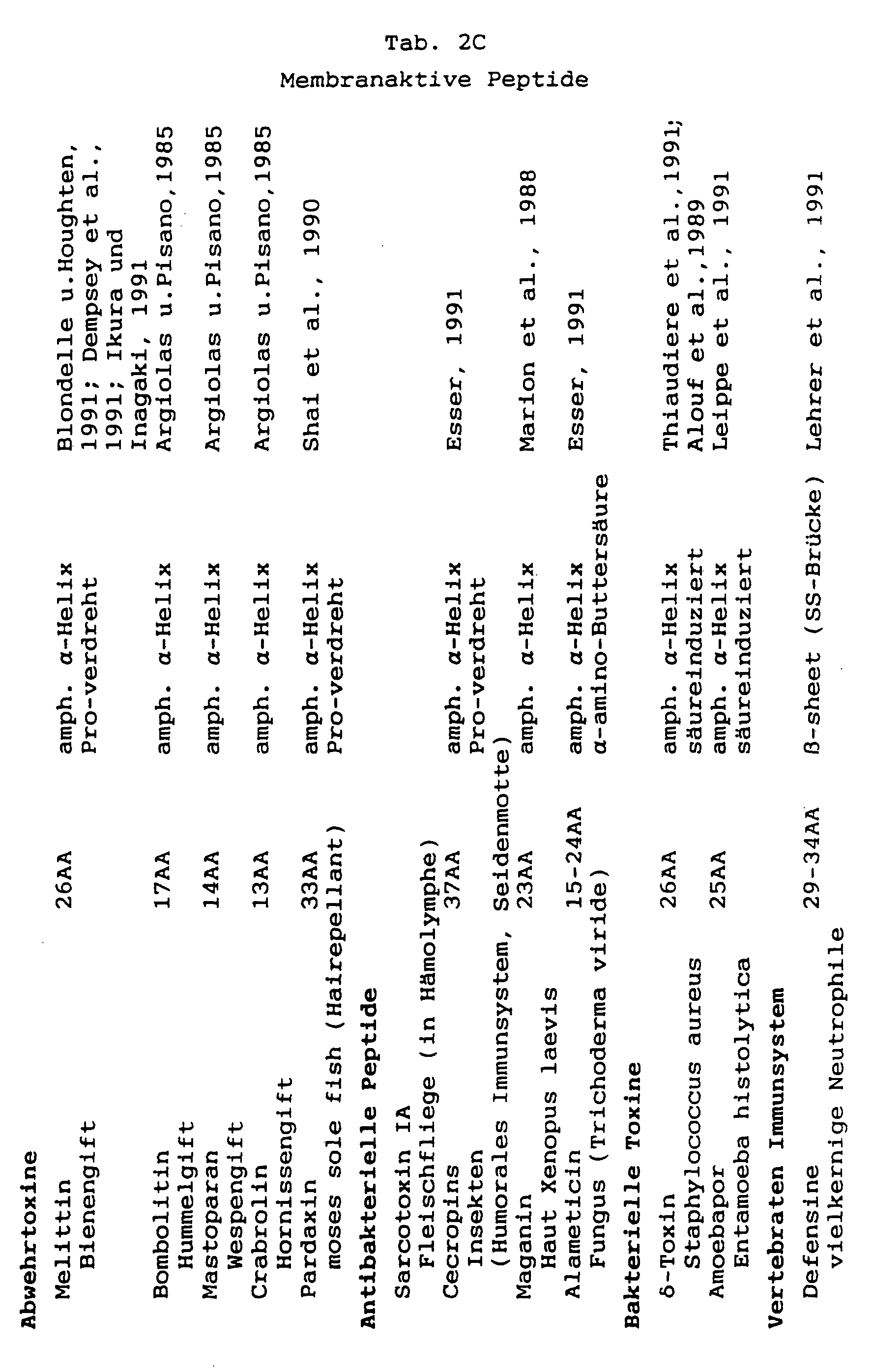
| Transfektion von BNL CL.2 Zellen (6 µg pCMV-L DNA, 4 µg TfpL290) | ||||||||
| pLys | 0 µg | 0.3 µg | 1 µg | 3 µg | 10 µg | 20 µg | 30 µg | |
| 0 µg | P50 dim | 160 | 330 | 540 | 300 | |||
| GLF | 490 | 290 | 340 | |||||
| Melittin | 0 | 0 | 0 | 70 | 425 | |||
| 4 µg | P50 dim | 3 100 | 200 | 430 | 180 | 410 | ||
| GLF | 670 | 600 | 170 | |||||
| EALA | 3 140 | 150 | 560 | |||||
| 10 µg | P50 dim | 5 700 | 760 | 1 330 | 3 424 800 | |||
| GLF | 1 950 | 16 600 | 217 000 | 215 000 | 1 980 | |||
| EALA | 2 120 | 16 800 | 179 300 | 181 700 | 76 360 | |||
| 20 µg | P50 dim | 3 200 | 23 300 | 185 100 | 7 054 800 | 9 344 000 | ||
| GLF | 418 400 | 320 600 | 294 200 | |||||
| EALA | 191 000 | 181 000 | 273 600 | |||||
| Mellittin | 6 545 | |||||||
| Desoxy- | 6 730 | 34 700 | 16 000 | |||||
| cholic acid | ||||||||
| Oleic acid | 12 200 | 11 900 | 4 100 |
- (2) INFORMATION FÜR SEQ ID NO:1:
- (i) SEQUENZCHARAKTERISIERUNG:
- (A) LÄNGE: 23 Aminosäuren
- (B) TYP: Aminosäure
- (C) STRANGFORM: Einzelstrang
- (D) TOPOLOGIE: beide


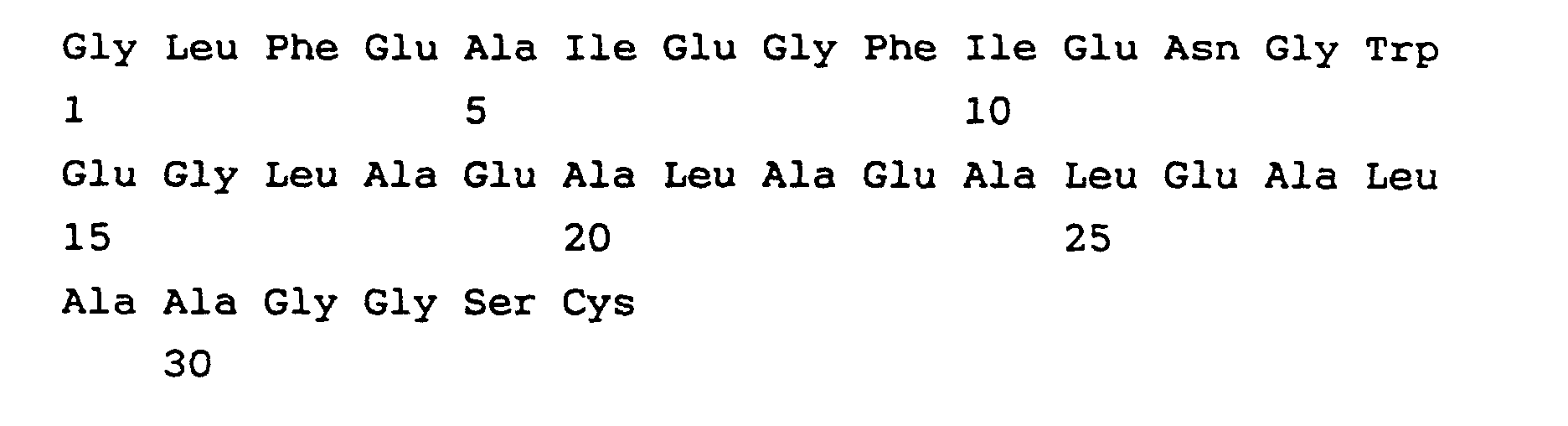


Claims (114)
- Zusammensetzung für die Transfektion von höheren eukaryotischen Zellen, enthaltend einen Komplex, in dem Nukleinsäure mit Nukleinsäure-affiner Substanz, gegebenenfalls konjugiert mit einem Internalisierungsfaktor für die Zellen, komplexiert ist, dadurch gekennzeichnet, daß die Zusammensetzung außerdem ein endosomolytisches Mittel enthält, wobeia) das endosomolytische Mittel als Bestandteil des Komplexes vorliegt, indem es über eine ihm eigene Nukleinsäure-Bindungsdomäne oder über eine Nukleinsäure-affine Substanz, an die es gebunden ist, mit der Nukleinsäure komplexiert ist, und wobei der Komplex gegebenenfalls außerdem einen Internalisierungsfaktor enthält, der über eine Nukleinsäure-affine Substanz, mit der er konjugiert ist, ebenfalls mit der Nukleinsäure komplexiert ist, oder wobeib) als endosomolytisches Mittel ein Virus oder eine Viruskomponente, das bzw. die die Fähigkeit hat, per se in die zu transfizierende Zelle einzudringen, außerhalb des Komplexes vorliegt, in dem Nukleinsäure-affine Substanz, die gegebenenfalls einem Internalisierungsfaktor konjugiert ist, mit der Nukleinsäure komplexiert ist.
- Zusammensetzung nach Anspruch 1, dadurch gekennzeichnet, daß in einer Zusammensetzung gemäßa) das endosomolytische Mittel kovalent an eine Nukleinsäure-affine Substanz gebunden ist.
- Zusammensetzung nach Anspruch 1, dadurch gekennzeichnet, daß in einer Zusammensetzung gemäß a) das endosomolytische Mittel nicht-kovalent an die Nukleinsäure-affine Substanz gebunden ist.
- Zusammensetzung nach Anspruch 3, dadurch gekennzeichnet, daß die Bindung über eine Biotin-Streptavidin-Brücke erfolgt.
- Zusammensetzung nach Anspruch 3, dadurch gekennzeichnet, daß die Bindung ionisch erfolgt.
- Zusammensetzung nach Anspruch 1, dadurch gekennzeichnet, daß in einer Zusammensetzung gemäß a) das endosomolytische Mittel ein Virus oder eine Viruskomponente ist.
- Zusammensetzung nach Anspruch 1 oder 6, dadurch gekennzeichnet, daß in einer Zusammensetzung gemäß a) oder b) das endosomolytische Mittel ein Adenovirus ist.
- Zusammensetzung nach Anspruch 7, dadurch gekennzeichnet, daß das Adenovirus eine Mutante ist.
- Zusammensetzung nach Anspruch 8, dadurch gekennzeichnet, daß das Adenovirus eine replikationsinkompetente Mutante ist.
- Zusammensetzung nach Anspruch 9, dadurch gekennzeichnet, daß das Adenovirus eine oder mehrere Mutationen und/oder Deletionen in der ElA-Region aufweist.
- Zusammensetzung nach Anspruch 7, dadurch gekennzeichnet, daß das Adenovirus inaktiviert ist.
- Zusammensetzung nach Anspruch 11, dadurch gekennzeichnet, daß das Adenovirus durch kurzwelliges UV inaktiviert ist.
- Zusammensetzung nach Anspruch 11, dadurch gekennzeichnet, daß das Adenovirus durch UV/Psoralen inaktiviert ist.
- Zusammensetzung nach Anspruch 11, dadurch gekennzeichnet, daß das Adenovirus durch Formaldehyd inaktiviert ist.
- Zusammensetzung nach Anspruch 6, dadurch gekennzeichnet, daß die Viruskomponente aus einem oder mehreren Adenovirusproteinen besteht.
- Zusammensetzung nach Anspruch 1 oder 6, dadurch gekennzeichnet, daß in einer Zusammensetzung gemäß a) oder b) das endosomolytische Mittel ein Picornavirus ist.
- Zusammensetzung nach Anspruch 16, dadurch gekennzeichnet, daß das Picornavirus ein, gegebenenfalls inaktiviertes, Rhinovirus ist.
- Zusammensetzung nach Anspruch 1, dadurch gekennzeichnet, daß das endosomolytische Mittel in einer Zusammensetzung gemäß a) ein Virus ist, das für eine Spezies verschieden vom Menschen infektiös ist.
- Zusammensetzung nach Anspruch 18, dadurch gekennzeichnet, daß das Virus ein Adenovirus ist.
- Zusammensetzung nach Anspruch 19, dadurch gekennzeichnet, daß das Adenovirus ein Vogel-Adenovirus ist.
- Zusammensetzung nach Anspruch 20, dadurch gekennzeichnet, daß das Adenovirus das Chick Embryo Lethal Orphan Virus ist.
- Zusammensetzung nach Anspruch 1, dadurch gekennzeichnet, daß das endosomolytische Mittel in einer Zusammensetzung gemäß a) ein, gegebenenfalls modifiziertes, endosomolytisches virales Peptid ist.
- Zusammensetzung nach Anspruch 22, dadurch gekennzeichnet, daß das endosomolytische Peptid ein Influenza-Hämagglutinin HA2-Peptid ist.
- Zusammensetzung nach Anspruch 23, dadurch gekennzeichnet, daß das Peptid die Sequenz Gly-Leu-Phe-Glu-Ala-Ile-Ala-Gly-Phe-Ile-Glu-Asn-Gly-Trp-Glu-Gly-Met-Ile-Asp-Gly-Gly-Gly-Cys hat.
- Zusammensetzung nach Anspruch 23, dadurch gekennzeichnet, daß das Peptid die Sequenz Gly-Leu-Phe-Gly-Ala-Ile-Ala-Gly-Phe-Ile-Glu-Asn-Gly-Trp-Glu-Gly-Met-Ile-Asp-Gly-Gly-Gly-Cys hat.
- Zusammensetzung nach Anspruch 1, dadurch gekennzeichnet, daß das endosomolytische Mittel in einer Zusammensetzung gemäß a) ein nicht-virales, gegebenenfalls modifiziertes, natürliches oder synthetisches Peptid ist, das die Fähigkeit des Aufbrechens von Zellmembranen, bestimmbar mittels Liposomendurchlässigkeitstest und/oder Erythrozytenlysetest, aufweist.
- Zusammensetzung nach Anspruch 26, dadurch gekennzeichnet, daß das Peptid die Sequenz Gly Leu Phe Glu Ala Ile Glu Gly Phe Ile Glu Asn Gly Trp Glu Gly Met Ile Asp Gly Gly Gly Cys aufweist.
- Zusammensetzung nach Anspruch 26, dadurch gekennzeichnet, daß das Peptid ein Homo- oder Heterodimer des in Anspruch 27 definierten Peptids ist.
- Zusammensetzung nach Anspruch 28, dadurch gekennzeichnet, daß das Peptid ein Homodimer ist.
- Zusammensetzung nach Anspruch 28, dadurch gekennzeichnet, daß das Peptid ein Heterodimer ist, das die Sequenz Gly Leu Phe Glu Ala Ile Glu Gly Phe Ile Glu Asn Gly Trp Glu Gly Leu Ala Glu Ala Leu Ala Glu Ala Leu Glu Ala Leu Ala Ala Gly Gly Ser Cys aufweist.
- Zusammensetzung nach Anspruch 26, dadurch gekennzeichnet, daß das Peptid die Sequenz Trp Glu Ala Ala Leu Ala Glu Ala Leu Ala Glu Ala Leu Ala Glu His Leu Ala Glu Ala Leu Ala Glu Ala Leu Glu Ala Leu Ala Ala Gly Gly Ser Cys aufweist.
- Zusammensetzung nach Anspruch 26, dadurch gekennzeichnet, daß das Peptid die Sequenz Gly Leu Phe Gly Ala Leu Ala Glu Ala Leu Ala Glu Ala Leu Ala Glu His Leu Ala Glu Ala Leu Ala Glu Ala Leu Glu Ala Leu Ala Ala Gly Gly Ser Cys aufweist.
- Zusammensetzung nach Anspruch 22 oder 26, dadurch gekennzeichnet, daß das Peptid eine Nukleinsäure-Bindungsdomäne aufweist.
- Zusammensetzung nach Anspruch 33, dadurch gekennzeichnet, daß das Peptid eine Oligolysinverlängerung aufweist.
- Zusammensetzung nach Anspruch 1, dadurch gekennzeichnet, daß der Internalisierungsfaktor Transferrin ist.
- Zusammensetzung nach Anspruch 1, dadurch gekennzeichnet, daß der Internalisierungsfaktor ein Ligand für T-Zellen ist.
- Zusammensetzung nach Anspruch 1, dadurch gekennzeichnet, daß der Internalisierungsfaktor ein Ligand für B-Zellen ist.
- Zusammensetzung nach Anspruch 37, dadurch gekennzeichnet, daß der Internalisierungsfaktor ein Immunglobulin ist.
- Zusammensetzung nach Anspruch 37, dadurch gekennzeichnet, daß der Ligand ein anti-Immunglobulin ist.
- Zusammensetzung nach Anspruch 1, dadurch gekennzeichnet, daß der Internalisierungsfaktor ein Ligand für Hepatozyten ist.
- Zusammensetzung nach Anspruch 40, dadurch gekennzeichnet, daß der Internalisierungsfaktor ein Ligand für den Asialoglykoproteinrezeptor ist.
- Zusammensetzung nach Anspruch 41, dadurch gekennzeichnet, daß der Internalisierungsfaktor ein Tetragalaktose-Polylysin ist.
- Zusammensetzung nach Anspruch 1, dadurch gekennzeichnet, daß der Internalisierungsfaktor ein Lectin ist.
- Zusammensetzung nach Anspruch 1, dadurch gekennzeichnet, daß der Internalisierungsfaktor ein Low Density Lipoprotein ist.
- Komplex als Bestandteil einer Zusammensetzung nach einem der Ansprüche 1 bis 44, dadurch gekennzeichnet, daß er eine oder mehrere Nukleinsäuren enthält, mit denen ein endosomolytisches Mittel über eine ihm eigene Nukleinsäure-Bindungsdomäne oder über eine Nukleinsäure-affine Substanz, an die es gebunden ist, komplexiert ist und daß er gegebenenfalls einen Internalisierungsfaktor enthält, der über eine Nukleinsäure-affine Substanz, mit der er konjugiert ist, ebenfalls mit der Nukleinsäure komplexiert ist.
- Komplex nach Anspruch 45, dadurch gekennzeichnet, daß er eine therapeutisch aktive Nukleinsäure enthält.
- Komplex nach Anspruch 46, dadurch gekennzeichnet, daß die Nukleinsäure aus einem oder mehreren gentherapeutisch wirksamen DNA-Molekülen besteht.
- Komplex nach Anspruch 47, dadurch gekennzeichnet, daß das DNA-Molekül für ein Zytokin kodiert.
- Komplex nach Anspruch 47, dadurch gekennzeichnet, daß das DNA-Molekül für Faktor VIII kodiert.
- Komplex nach Anspruch 46, dadurch gekennzeichnet, daß die Nukleinsäure eine Nukleotidsequenz enthält, von der RNA-Moleküle transkribiert werden, die spezifisch Zellfunktionen inhibieren.
- Komplex nach Anspruch 45, dadurch gekennzeichnet, daß die Nukleinsäure-affine Substanz ein organisches Polykation ist.
- Komplex nach Anspruch 51, dadurch gekennzeichnet, daß das Polykation Polylysin ist.
- Komplex nach Anspruch 51, dadurch gekennzeichnet, daß das Polykation Polyethylenimin ist.
- Komplex nach Anspruch 45, dadurch gekennzeichnet, daß er einen Internalisierungsfaktor enthält, der an dieselbe Nukleinsäure-affine Substanz gebunden ist wie das endosomolytische Mittel.
- Komplex nach Anspruch 54, dadurch gekennzeichnet, daß die Nukleinsäure-affine Substanz Polylysin ist.
- Komplex nach Anspruch 55, dadurch gekennzeichnet, daß er außerdem nicht-kovalent gebundenes Polylysin enthält.
- Konjugat als Bestandteil eines Komplexes nach einem der Ansprüche 45 bis 56, dadurch gekennzeichnet, daß das Konjugat aus einem endosomolytischen Mittel und einer Nukleinsäure-affinen Substanz besteht.
- Konjugat nach Anspruch 57, dadurch gekennzeichnet, daß das endosomolytische Mittel kovalent an eine Nukleinsäure-affine Substanz gebunden ist.
- Konjugat nach Anspruch 57, dadurch gekennzeichnet, daß das endosomolytische Mittel nicht-kovalent an eine Nukleinsäure-affine Substanz gebunden ist.
- Konjugat nach Anspruch 59, dadurch gekennzeichnet, daß die Bindung über eine Biotin-Streptavidin-Brücke erfolgt.
- Konjugat nach Anspruch 59, dadurch gekennzeichnet, daß die Bindung ionisch erfolgt.
- Konjugat nach Anspruch 57, dadurch gekennzeichnet, daß das endosomolytische Mittel ein Virus oder eine Viruskomponente ist.
- Konjugat nach Anspruch 62, dadurch gekennzeichnet, daß das endosomolytische Mittel ein Adenovirus ist.
- Konjugat nach Anspruch 63, dadurch gekennzeichnet, daß das Adenovirus eine Mutante ist.
- Konjugat nach Anspruch 64, dadurch gekennzeichnet, daß das Adenovirus eine replikationsinkompetente Mutante ist.
- Konjugat nach Anspruch 65, dadurch gekennzeichnet, daß das Adenovirus eine oder mehr Mutationen und/oder Deletionen in der ElA-Region aufweist.
- Konjugat nach Anspruch 63, dadurch gekennzeichnet, daß das Adenovirus inaktiviert ist.
- Konjugat nach Anspruch 67, dadurch gekennzeichnet, daß das Adenovirus durch kurzwelliges UV inaktiviert ist.
- Konjugat nach Anspruch 67, dadurch gekennzeichnet, daß das Adenovirus durch UV/Psoralen inaktiviert ist.
- Konjugat nach Anspruch 67, dadurch gekennzeichnet, daß Adenovirus durch Formaldehyd inaktiviert ist.
- Konjugat nach Anspruch 62, dadurch gekennzeichnet, daß die Viruskomponente aus einem oder mehreren Adenovirusproteinen besteht.
- Konjugat nach Anspruch 62, dadurch gekennzeichnet, daß das Virus ein Picornavirus ist.
- Konjugat nach Anspruch 72, dadurch gekennzeichnet, daß das Virus ein, gegebenenfalls inaktiviertes, Rhinovirus ist.
- Konjugat nach Anspruch 57, dadurch gekennzeichnet, daß das endosomolytische Mittel nicht per se die Fähigkeit aufweist, in die zu transfizierende Zelle einzudringen.
- Konjugat nach Anspruch 74, dadurch gekennzeichnet, daß das endosomolytische Mittel ein Virus oder eine Viruskomponente ist, das bzw. die kein Internalisierungsfaktor für eine humane Zelle ist.
- Konjugat nach Anspruch 75, dadurch gekennzeichnet, daß das endosomolytische Mittel ein Virus ist, das für eine Spezies verschieden vom Menschen infektiös ist.
- Konjugat nach Anspruch 76, dadurch gekennzeichnet, daß das Virus ein Adenovirus ist.
- Konjugat nach Anspruch 77, dadurch gekennzeichnet, daß das Adenovirus ein Vogeladenovirus ist.
- Konjugat nach Anspruch 78, dadurch gekennzeichnet, daß das Adenovirus das Chick Embryo Lethal Orphan Virus ist.
- Konjugat nach Anspruch 74, dadurch gekennzeichnet, daß das endosomolytische Mittel ein gegebenenfalls modifiziertes endosomolytisches virales Peptid mit der in Anspruch 26 definierten Eigenschaft ist.
- Konjugat nach Anspruch 80, dadurch gekennzeichnet, daß das endosomolytische Peptid ein Influenza-Hämagglutinin HA2-Peptid ist.
- Konjugat nach Anspruch 81, dadurch gekennzeichnet, daß das Peptid die Sequenz Gly-Leu-Phe-Glu-Ala-Ile-Ala-Gly-Phe-Ile-Glu-Asn-Gly-Trp-Glu-Gly-Met-Ile-Asp-Gly-Gly-Gly-Cys hat.
- Konjugat nach Anspruch 81, dadurch gekennzeichnet, daß das Peptid die Sequenz Gly-Leu-Phe-Gly-Ala-Ile-Ala-Gly-Phe-Ile-Glu-Asn-Gly-Trp-Glu-Gly-Met-Ile-Asp-Gly-Gly-Gly-Cys hat.
- Konjugat nach Anspruch 74, dadurch gekennzeichnet, daß das endosomolytische Mittel ein in Anspruch 26 definiertes Peptid ist.
- Konjugat nach Anspruch 84, dadurch gekennzeichnet, daß das Peptid die Sequenz Gly Leu Phe Glu Ala Ile Glu Gly Phe Ile Glu Asn Gly Trp Glu Gly Met Ile Asp Gly Gly Gly Cys aufweist.
- Konjugat nach Anspruch 84, dadurch gekennzeichnet, daß das Peptid ein Homo- oder Heterodimer des in Anspruch 85 definierten Peptids ist.
- Konjugat nach Anspruch 86, dadurch gekennzeichnet, daß das Peptid ein Homodimer ist.
- Konjugat nach Anspruch 86, dadurch gekennzeichnet, daß das Peptid ein Heterodimer ist, das die Sequenz Gly Leu Phe Glu Ala Ile Glu Gly Phe Ile Glu Asn Gly Trp Glu Gly Leu Ala Glu Ala Leu Ala Glu Ala Leu Glu Ala Leu Ala Ala Gly Gly Ser Cys aufweist.
- Konjugat nach Anspruch 84, dadurch gekennzeichnet, daß das Peptid die Sequenz Trp Glu Ala Ala Leu Ala Glu Ala Leu Ala Glu Ala Leu Ala Glu His Leu Ala Glu Ala Leu Ala Glu Ala Leu Glu Ala Leu Ala Ala Gly Gly Ser Cys aufweist.
- Konjugat nach Anspruch 84, dadurch gekennzeichnet, daß das Peptid die Sequenz Gly Leu Phe Gly Ala Leu Ala Glu Ala Leu Ala Glu Ala Leu Ala Glu His Leu Ala Glu Ala Leu Ala Glu Ala Leu Glu Ala Leu Ala Ala Gly Gly Ser Cys aufweist.
- Konjugat nach Anspruch 84, dadurch gekennzeichnet, daß das Peptid eine Nukleinsäure-Bindungsdomäne aufweist.
- Konjugat nach Anspruch 91, dadurch gekennzeichnet, daß das Peptid eine Oligolysinverlängerung auf weist.
- Endosomolytisches Peptid, geeignet als Bestandteil der Zusammensetzung nach Anspruch 33, dadurch gekennzeichnet, daß es eine endosomolytische Domäne und eine künstlich eingeführte Nukleinsäure-Bindungsdomäne hat.
- Peptid nach Anspruch 93, dadurch gekennzeichnet, daß die Nukleinsäure-Bindungsdomäne eine Oligolysinverlängerung ist.
- Verfahren zur Herstellung eines Konjugats nach Anspruch 58, dadurch gekennzeichnet, daß ein Virus oder ein (poly)peptidisches endosomolytisches Mittel und ein Polyamin enzymatisch in Gegenwart einer Transglutaminase gekoppelt werden.
- Verfahren zur Herstellung eines Konjugats nach Anspruch 58, dadurch gekennzeichnet, daß ein Virus oder ein (poly)peptidisches endosomolytisches Mittel und ein Polyamin chemisch gekoppelt werden.
- Verfahren zur Herstellung eines Konjugats nach Anspruch 60, dadurch gekennzeichnet, daß ein Virus oder eine Viruskomponente mit Biotin modifiziert wird und daß das modifizierte Virus oder die modifizierte Viruskomponente an ein Streptavidingekoppeltes Polyamin gebunden wird.
- Verfahren zum Einbringen von Nukleinsäure in höhere eukaryotische Zellen in vitro oder ex vivo, dadurch gekennzeichnet, daß die Zellen mit einer Zusammensetzung nach einem der Ansprüche 1 bis 44 behandelt werden.
- Verfahren nach Anspruch 98, dadurch gekennzeichnet, daß die Zellen humane Zellen sind.
- Verfahren nach Anspruch 99, dadurch gekennzeichnet, daß die Zellen Tumorzellen sind.
- Verfahren nach Anspruch 99, dadurch gekennzeichnet, daß die Zellen Myoblasten sind.
- Verfahren nach Anspruch 99, dadurch gekennzeichnet, daß die Zellen Fibroblasten sind.
- Verfahren nach Anspruch 99, dadurch gekennzeichnet, daß die Zellen Hepatozyten sind.
- Verfahren nach Anspruch 99, dadurch gekennzeichnet, daß die Zellen endotheliale Zellen sind.
- Verfahren nach Anspruch 104, dadurch gekennzeichnet, daß die Zellen Atemwegszellen sind.
- Verfahren nach einem der Ansprüche 99 bis 105, dadurch gekennzeichnet, daß die Nukleinsäure in der Zusammensetzung gentherapeutisch wirksam ist.
- Verfahren nach den Ansprüchen 100 und 106, dadurch gekennzeichnet, daß die Tumorzellen mit der Zusammensetzung ex vivo behandelt werden und daß die DNA für eine oder mehrere immunmodulierende Substanzen, vorzugsweise Zytokine, kodiert.
- Verfahren zur Herstellung eines heterologen Proteins in einer höheren eukaryotischen Zelle, dadurch gekennzeichnet, daß man die Zellen mit einer Zusammensetzung gemäß Anspruch 1 behandelt,
wobei die Nukleinsäure eine DNA-Sequenz enthält, die für das gewünschte Protein kodiert, die Zellen unter Bedingungen, die für die Expression des Proteins geeignet sind, kultiviert und das Protein isoliert. - Pharmazeutische Zubereitung, enthaltend als wirksamen Bestandteil eine Zusammensetzung nach einem der Ansprüche 1 bis 44, enthaltend eine therapeutisch aktive Nukleinsäure und einen pharmazeutisch annehmbaren Träger.
- Transfektionskit, enthaltend eine Trägereinheit, in der sich zwei oder mehrere Behälter befinden, wobei ein erster Behälter eine Nukleinsäure-affine Substanz enthält, die gegebenenfalls mit einem Internalisierungsfaktor für eine höhere eukaryotische Zelle konjugiert ist und ein zweiter Behälter ein endosomolytisches Mittel enthält, welches ein Virus oder eine Viruskomponente, ist, das bzw. die die Fähigkeit hat, per se in die zu transfizierende Zelle einzudringen.
- Transfektionskit, enthaltend eine Trägereinheit, in der sich zwei oder mehrere Behälter befinden, wobei ein erster Behälter eine Nukleinsäure-affine Substanz enthält, die mit einem Internalisierungsfaktor für eine höhere eukaryotische Zelle konjugiert ist und ein zweiter Behälter eine Nukleinsäure-affine Substanz enthält, die an ein endosomolytisches Mittel gebunden ist.
- Transfektionskit nach Anspruch 111, dadurch gekennzeichnet, daß er in dem zweiten Behälter Transglutaminase-gekoppeltes Adenovirus-Polylysin-Konjugat enthält.
- Transfektionskit, enthaltend eine Trägereinheit, in der sich zwei oder mehrere Behälter befinden, wobei ein erster Behälter ein Biotin-modifiziertes endosomolytisches Mittel und ein zweiter Behälter eine Streptavidin-modifizierte Nukleinsäure-affine Substanz enthält.
- Transfektionskit nach Anspruch 113, dadurch gekennzeichnet, daß der erste Behälter biotinyliertes Adenovirus und ein zweiter Behälter Streptavidin-Polylysin enthält.
Applications Claiming Priority (13)
| Application Number | Priority Date | Filing Date | Title |
|---|---|---|---|
| US76778891A | 1991-09-30 | 1991-09-30 | |
| US76803991A | 1991-09-30 | 1991-09-30 | |
| US768039 | 1991-09-30 | ||
| US767788 | 1991-09-30 | ||
| US82710392A | 1992-01-30 | 1992-01-30 | |
| US82710292A | 1992-01-30 | 1992-01-30 | |
| US827102 | 1992-01-30 | ||
| US86475992A | 1992-04-07 | 1992-04-07 | |
| US864759 | 1992-04-07 | ||
| US93778892A | 1992-09-02 | 1992-09-02 | |
| US937788 | 1992-09-02 | ||
| PCT/EP1992/002234 WO1993007283A1 (de) | 1991-09-30 | 1992-09-28 | Zusammensetzung für das einbringen von nukleinsäure-komplexen in höhere eukaryotische zellen |
| US827103 | 2004-04-19 |
Publications (2)
| Publication Number | Publication Date |
|---|---|
| EP0607206A1 EP0607206A1 (de) | 1994-07-27 |
| EP0607206B1 true EP0607206B1 (de) | 2002-04-10 |
Family
ID=27560281
Family Applications (2)
| Application Number | Title | Priority Date | Filing Date |
|---|---|---|---|
| EP92920580A Expired - Lifetime EP0607206B1 (de) | 1991-09-30 | 1992-09-28 | Zusammensetzung für das einbringen von nukleinsäure-komplexen in höhere eukaryotische zellen |
| EP92116576A Pending EP0545016A1 (de) | 1991-09-30 | 1992-09-28 | Zusammensetzung für das Einbringen von Nukleinsäure-Komplexen in höhere eukaryotische Zellen |
Family Applications After (1)
| Application Number | Title | Priority Date | Filing Date |
|---|---|---|---|
| EP92116576A Pending EP0545016A1 (de) | 1991-09-30 | 1992-09-28 | Zusammensetzung für das Einbringen von Nukleinsäure-Komplexen in höhere eukaryotische Zellen |
Country Status (27)
| Country | Link |
|---|---|
| US (4) | US5547932A (de) |
| EP (2) | EP0607206B1 (de) |
| JP (1) | JPH10506001A (de) |
| CN (1) | CN1059705C (de) |
| AT (1) | ATE215990T1 (de) |
| AU (1) | AU671084B2 (de) |
| BG (1) | BG62740B1 (de) |
| BR (1) | BR9206559A (de) |
| CA (1) | CA2118816C (de) |
| CZ (1) | CZ293141B6 (de) |
| DE (1) | DE59209951D1 (de) |
| DK (1) | DK0607206T3 (de) |
| EE (1) | EE03195B1 (de) |
| ES (1) | ES2173083T3 (de) |
| FI (1) | FI941474A0 (de) |
| HU (2) | HU218846B (de) |
| IL (1) | IL103171A (de) |
| MX (1) | MX9205543A (de) |
| NO (1) | NO316744B1 (de) |
| NZ (1) | NZ244306A (de) |
| PL (1) | PL180304B1 (de) |
| PT (1) | PT607206E (de) |
| RO (1) | RO117861B1 (de) |
| SG (1) | SG44680A1 (de) |
| SI (1) | SI9200236B (de) |
| SK (1) | SK281682B6 (de) |
| WO (1) | WO1993007283A1 (de) |
Families Citing this family (423)
| Publication number | Priority date | Publication date | Assignee | Title |
|---|---|---|---|---|
| US5354844A (en) * | 1989-03-16 | 1994-10-11 | Boehringer Ingelheim International Gmbh | Protein-polycation conjugates |
| US5981273A (en) * | 1991-09-30 | 1999-11-09 | Boehringer Ingelheim Int'l. Gmbh | Composition comprising an endosomolytic agent for introducing nucleic acid complexes into higher eucaryotic cells |
| NZ244306A (en) * | 1991-09-30 | 1995-07-26 | Boehringer Ingelheim Int | Composition for introducing nucleic acid complexes into eucaryotic cells, complex containing nucleic acid and endosomolytic agent, peptide with endosomolytic domain and nucleic acid binding domain and preparation |
| CA2131620A1 (en) * | 1992-03-20 | 1993-09-30 | Louis C. Smith | A dna transporter system and method of use |
| WO1993019768A1 (en) * | 1992-04-03 | 1993-10-14 | The Regents Of The University Of California | Self-assembling polynucleotide delivery system |
| WO1994006923A1 (en) * | 1992-09-24 | 1994-03-31 | The University Of Connecticut | Modification of a virus to redirect infectivity and enhance targeted delivery of polynucleotides to cells |
| HUT73383A (en) * | 1993-03-19 | 1996-07-29 | Boehringer Sohn Ingelheim | Process for preparing cancer vaccines |
| DE4311651A1 (de) * | 1993-04-08 | 1994-10-13 | Boehringer Ingelheim Int | Virus für den Transport von Fremd-DNA in höhere eukaryotische Zellen |
| US5578475A (en) * | 1993-07-12 | 1996-11-26 | Life Technologies, Inc. | Composition and methods for transfecting eukaryotic cells |
| DE4335025A1 (de) * | 1993-10-14 | 1995-04-20 | Boehringer Ingelheim Int | Endosomolytisch wirksame Partikel |
| EP0648493A1 (de) * | 1993-10-19 | 1995-04-19 | Tadatsugu Prof. Dr. Taniguchi | Verfahren zur Umkehrung des Phänotyps transformierter Zellen durch Transkriptionsfaktor IRF-1 |
| US5928944A (en) * | 1994-02-04 | 1999-07-27 | The United States Of America As Represented By The Department Of Health And Human Services | Method of adenoviral-medicated cell transfection |
| MX9603866A (es) * | 1994-03-18 | 1997-03-29 | Boehringer Ingelheim Int | Procedimiento para el tratamiento de celulas eucarioticas. |
| AU2194895A (en) * | 1994-03-25 | 1995-10-17 | Uab Research Foundation, The | Composition and methods for creating syngeneic recombinant virus-producing cells |
| US5670347A (en) | 1994-05-11 | 1997-09-23 | Amba Biosciences Llc | Peptide-mediated gene transfer |
| MX9605941A (es) | 1994-05-30 | 1997-12-31 | Boehringer Ingelheim Int | Procedimiento para introducir material extraño en celulas eucarioticas superiores. |
| DE4418965A1 (de) * | 1994-05-31 | 1995-12-07 | Boehringer Ingelheim Int | Verfahren zum Einbringen von Nukleinsäure in höhere eukaryotische Zellen |
| DE4426429A1 (de) * | 1994-07-26 | 1996-02-01 | Boehringer Ingelheim Int | Verfahren zum Einführen von DNA in höhere eukaryotische Zellen |
| US6468981B1 (en) | 1994-07-29 | 2002-10-22 | Emory University | Compositions and methods for targeting pharmaceutically active materials to cells containing androgen receptors |
| US5525606A (en) * | 1994-08-01 | 1996-06-11 | The United States Of America As Represented By The Department Of Health And Human Services | Substituted 06-benzylguanines and 6(4)-benzyloxypyrimidines |
| US5846782A (en) | 1995-11-28 | 1998-12-08 | Genvec, Inc. | Targeting adenovirus with use of constrained peptide motifs |
| US6465253B1 (en) | 1994-09-08 | 2002-10-15 | Genvec, Inc. | Vectors and methods for gene transfer to cells |
| US5962311A (en) * | 1994-09-08 | 1999-10-05 | Genvec, Inc. | Short-shafted adenoviral fiber and its use |
| US5559099A (en) * | 1994-09-08 | 1996-09-24 | Genvec, Inc. | Penton base protein and methods of using same |
| US5965541A (en) * | 1995-11-28 | 1999-10-12 | Genvec, Inc. | Vectors and methods for gene transfer to cells |
| US5837533A (en) * | 1994-09-28 | 1998-11-17 | American Home Products Corporation | Complexes comprising a nucleic acid bound to a cationic polyamine having an endosome disruption agent |
| EP0785276A4 (de) * | 1994-09-29 | 2002-01-09 | Ajinomoto Kk | Modifizierung eines peptids und eines proteins |
| US6221959B1 (en) | 1994-11-18 | 2001-04-24 | Supratek Pharma, Inc. | Polynucleotide compositions |
| US6359054B1 (en) | 1994-11-18 | 2002-03-19 | Supratek Pharma Inc. | Polynucleotide compositions for intramuscular administration |
| US6008202A (en) * | 1995-01-23 | 1999-12-28 | University Of Pittsburgh | Stable lipid-comprising drug delivery complexes and methods for their production |
| US5795587A (en) | 1995-01-23 | 1998-08-18 | University Of Pittsburgh | Stable lipid-comprising drug delivery complexes and methods for their production |
| US6127525A (en) * | 1995-02-21 | 2000-10-03 | Cornell Research Foundation, Inc. | Chimeric adenoviral coat protein and methods of using same |
| US5770442A (en) | 1995-02-21 | 1998-06-23 | Cornell Research Foundation, Inc. | Chimeric adenoviral fiber protein and methods of using same |
| WO1996028563A1 (en) * | 1995-03-09 | 1996-09-19 | Bavarian Nordic | Vectors carrying therapeutic genes encoding antimicrobial peptides for gene therapy |
| WO1996029423A1 (en) * | 1995-03-20 | 1996-09-26 | Baylor College Of Medicine | Compositions and methods for inducing infection by retroviral vectors outside of their host range |
| DE19510344C1 (de) * | 1995-03-22 | 1996-11-07 | Boehringer Ingelheim Int | Verwendung einer Tumorvakzine |
| US6420549B1 (en) | 1995-06-06 | 2002-07-16 | Isis Pharmaceuticals, Inc. | Oligonucleotide analogs having modified dimers |
| EP0832269A1 (de) * | 1995-06-07 | 1998-04-01 | Baylor College Of Medicine | Nukleinsäure transporter zur abgabe von nukleinsäure in zellen |
| US6051429A (en) | 1995-06-07 | 2000-04-18 | Life Technologies, Inc. | Peptide-enhanced cationic lipid transfections |
| US20030069173A1 (en) * | 1998-03-16 | 2003-04-10 | Life Technologies, Inc. | Peptide-enhanced transfections |
| EP0874910A4 (de) * | 1995-06-07 | 1999-04-21 | Life Technologies Inc | Durch peptide erhöhte kationische lipid transfektionen |
| US6783980B2 (en) * | 1995-06-15 | 2004-08-31 | Crucell Holland B.V. | Packaging systems for human recombinant adenovirus to be used in gene therapy |
| IL160406A0 (en) | 1995-06-15 | 2004-07-25 | Crucell Holland Bv | A cell harbouring nucleic acid encoding adenoritus e1a and e1b gene products |
| US5908777A (en) * | 1995-06-23 | 1999-06-01 | University Of Pittsburgh | Lipidic vector for nucleic acid delivery |
| GB9515356D0 (en) * | 1995-07-26 | 1995-09-20 | Medical Res Council | Improvements in or relating to delivery of nucleic acid |
| US5770720A (en) * | 1995-08-30 | 1998-06-23 | Barnes-Jewish Hospital | Ubiquitin conjugating enzymes having transcriptional repressor activity |
| IL115199A (en) | 1995-09-07 | 2005-05-17 | Opperbas Holding Bv | Composition comprising a polynucleic acid molecule in a liposome and method using said composition |
| US6630351B1 (en) * | 1999-06-07 | 2003-10-07 | Mirus Corporation | Compositions and methods for drug delivery using pH sensitive molecules |
| CA2279673A1 (en) * | 1995-12-15 | 1997-06-16 | Enzo Therapeutics, Inc. | Property effecting and/or property exhibiting constructs for the expression of non-native nucleic acids for therapeutic and diagnostic uses |
| AU2112697A (en) * | 1996-02-09 | 1997-08-28 | Pi-Wan Cheng | Receptor ligand-facilitated delivery of biologically active molecules |
| DE19605548A1 (de) * | 1996-02-15 | 1997-09-04 | Boehringer Ingelheim Int | Zusammensetzung für die Transfektion höherer eukaryotischer Zellen |
| WO1997033998A1 (en) * | 1996-03-14 | 1997-09-18 | The Immune Response Corporation | Targeted delivery of genes encoding interferon |
| DE19615803A1 (de) | 1996-04-20 | 1997-10-23 | Boehringer Ingelheim Int | CELO-Virus |
| US9096636B2 (en) | 1996-06-06 | 2015-08-04 | Isis Pharmaceuticals, Inc. | Chimeric oligomeric compounds and their use in gene modulation |
| US7812149B2 (en) | 1996-06-06 | 2010-10-12 | Isis Pharmaceuticals, Inc. | 2′-Fluoro substituted oligomeric compounds and compositions for use in gene modulations |
| US5898031A (en) | 1996-06-06 | 1999-04-27 | Isis Pharmaceuticals, Inc. | Oligoribonucleotides for cleaving RNA |
| US6251433B1 (en) | 1996-08-13 | 2001-06-26 | Chiron Corporation | Polycationic polymers |
| DE19632532A1 (de) * | 1996-08-13 | 1998-02-19 | Boehringer Ingelheim Int | Verfahren zur Herstellung von Säugetieren mit definierten genetischen Eigenschaften |
| US5948681A (en) * | 1996-08-14 | 1999-09-07 | Children's Hospital Of Philadelphia | Non-viral vehicles for use in gene transfer |
| CN1181422A (zh) * | 1996-10-31 | 1998-05-13 | 上海市肿瘤研究所 | 与生长因子受体结合的多肽所构建的基因转移载体 |
| US6544523B1 (en) | 1996-11-13 | 2003-04-08 | Chiron Corporation | Mutant forms of Fas ligand and uses thereof |
| US5965441A (en) * | 1996-11-13 | 1999-10-12 | The General Hospital Coporation | HSV/AAV hybrid amplicon vectors |
| US5980898A (en) | 1996-11-14 | 1999-11-09 | The United States Of America As Represented By The U.S. Army Medical Research & Material Command | Adjuvant for transcutaneous immunization |
| US20060002949A1 (en) | 1996-11-14 | 2006-01-05 | Army Govt. Of The Usa, As Rep. By Secretary Of The Office Of The Command Judge Advocate, Hq Usamrmc. | Transcutaneous immunization without heterologous adjuvant |
| US6797276B1 (en) | 1996-11-14 | 2004-09-28 | The United States Of America As Represented By The Secretary Of The Army | Use of penetration enhancers and barrier disruption agents to enhance the transcutaneous immune response |
| WO1998027209A1 (en) * | 1996-12-18 | 1998-06-25 | Emory University | Polycationic oligomers |
| EP1005376B1 (de) * | 1997-03-14 | 2010-11-03 | The Children's Hospital of Philadelphia | Zusammensetzungen zum einsatz in einer gentherapie zur behandlung von hämophilie |
| EP0979102A4 (de) | 1997-04-30 | 2005-11-23 | Enzon Inc | Einzelsträngige polypeptide modifiziert durch polyalkylenoxid |
| US20040009166A1 (en) * | 1997-04-30 | 2004-01-15 | Filpula David R. | Single chain antigen-binding polypeptides for polymer conjugation |
| US6635623B1 (en) | 1997-06-13 | 2003-10-21 | Baylor College Of Medicine | Lipoproteins as nucleic acid vectors |
| US20050096288A1 (en) * | 1997-06-13 | 2005-05-05 | Aragene, Inc. | Lipoproteins as nucleic acid vectors |
| DE19726186A1 (de) * | 1997-06-20 | 1998-12-24 | Boehringer Ingelheim Int | Komplexe für den Transport von Nukleinsäure in höhere eukaryotische Zellen |
| AU8569698A (en) | 1997-07-11 | 1999-02-08 | Brandeis University | Method of inducing apoptosis by reducing the level of thiamin |
| US6172211B1 (en) | 1997-07-11 | 2001-01-09 | Boehringer Ingelheim International Gmbh | Nucleic acid encoding tag7 polypeptide |
| US7923250B2 (en) | 1997-07-30 | 2011-04-12 | Warsaw Orthopedic, Inc. | Methods of expressing LIM mineralization protein in non-osseous cells |
| ES2320603T3 (es) | 1997-07-30 | 2009-05-25 | Emory University | Sistemas de expresion, vectores, adn, proteinas de mineralizacion osea novedosos. |
| WO1999007723A1 (en) * | 1997-08-07 | 1999-02-18 | University Of Maryland, Baltimore | Nucleic acid uptake and release vehicle |
| US6348450B1 (en) | 1997-08-13 | 2002-02-19 | The Uab Research Foundation | Noninvasive genetic immunization, expression products therefrom and uses thereof |
| US6197332B1 (en) * | 1997-08-13 | 2001-03-06 | Chiron Corporation | Lipid-conjugated polyamide compounds and related compositions and methods thereof |
| US20030125278A1 (en) * | 1997-08-13 | 2003-07-03 | Tang De-Chu C. | Immunization of animals by topical applications of a salmonella-based vector |
| US6706693B1 (en) | 1997-08-13 | 2004-03-16 | The Uab Research Foundation | Vaccination by topical application of genetic vectors |
| US6716823B1 (en) | 1997-08-13 | 2004-04-06 | The Uab Research Foundation | Noninvasive genetic immunization, expression products therefrom, and uses thereof |
| US20030045492A1 (en) * | 1997-08-13 | 2003-03-06 | Tang De-Chu C. | Vaccination by topical application of recombinant vectors |
| US5998386A (en) * | 1997-09-19 | 1999-12-07 | Feldman; Arthur M. | Pharmaceutical compositions and method of using same for the treatment of failing myocardial tissue |
| US6555367B1 (en) * | 1997-10-10 | 2003-04-29 | The United States Of America As Represented By The Department Of Health And Human Services | Complex of biotinylated viral vector and ligand for targeted gene delivery |
| CA2671261A1 (en) | 1997-11-06 | 1999-05-20 | Novartis Vaccines And Diagnostics S.R.L. | Neisserial antigens |
| US6914131B1 (en) | 1998-10-09 | 2005-07-05 | Chiron S.R.L. | Neisserial antigens |
| US7294755B1 (en) | 1997-11-14 | 2007-11-13 | Cedars-Sinai Medical Center | Genetic modification of male germ cells for generation of transgenic species and genetic therapies |
| US6734338B1 (en) | 1997-11-14 | 2004-05-11 | Cedars-Sinai Medical Center | Transfection, storage and transfer of male germ cells for generation of transgenic species and genetic therapies |
| DE69840671D1 (de) | 1997-11-14 | 2009-04-30 | Cedars Sinai Medical Center | Transfektion und transfer nicht humaner männlicher keimzellen zur generierung transgener nicht humaner säugetiere |
| EP0945138A1 (de) * | 1997-12-04 | 1999-09-29 | Université Louis Pasteur de Strasbourg | Partikeltransfektion |
| DE69941447D1 (de) * | 1998-01-05 | 2009-11-05 | Univ Washington | Erhöhter transport unter benutzung membranzerstörender stoffe |
| EP1047784B2 (de) | 1998-01-14 | 2015-03-18 | Novartis Vaccines and Diagnostics S.r.l. | Antigene aus neisseria meningitidis |
| US6958148B1 (en) | 1998-01-20 | 2005-10-25 | Pericor Science, Inc. | Linkage of agents to body tissue using microparticles and transglutaminase |
| US6919076B1 (en) | 1998-01-20 | 2005-07-19 | Pericor Science, Inc. | Conjugates of agents and transglutaminase substrate linking molecules |
| AU4070499A (en) | 1998-04-30 | 1999-11-16 | Cornell Research Foundation Inc. | Adenoviral vectors with tandem fiber proteins |
| EP2261338A3 (de) | 1998-05-01 | 2012-01-04 | Novartis Vaccines and Diagnostics, Inc. | Antigene und Zusammensetzungen gegen Neisseria meningitidis |
| US7244714B1 (en) * | 1998-06-12 | 2007-07-17 | Aradigm Corporation | Methods of delivering aerosolized polynucleotides to the respiratory tract |
| US7091192B1 (en) * | 1998-07-01 | 2006-08-15 | California Institute Of Technology | Linear cyclodextrin copolymers |
| US6509323B1 (en) | 1998-07-01 | 2003-01-21 | California Institute Of Technology | Linear cyclodextrin copolymers |
| US6245427B1 (en) | 1998-07-06 | 2001-06-12 | DüZGüNES NEJAT | Non-ligand polypeptide and liposome complexes as intracellular delivery vehicles |
| US20030017138A1 (en) * | 1998-07-08 | 2003-01-23 | Menzo Havenga | Chimeric adenoviruses |
| US20040043489A1 (en) * | 1998-07-08 | 2004-03-04 | Menzo Havenga | Gene delivery vectors provided with a tissue tropism for dendritic cells and methods of use |
| US7396919B1 (en) * | 1998-07-17 | 2008-07-08 | Mirus Bio Corporation | Charge reversal of polyion complexes |
| AU8818398A (en) | 1998-08-21 | 2000-03-14 | Felix Frey | Conjugates of dna interacting groups with steroid hormones for use as nucleic acid transfection agent |
| US6455314B1 (en) | 1998-09-11 | 2002-09-24 | Genvec, Inc. | Alternatively targeted adenovirus |
| US6077709A (en) | 1998-09-29 | 2000-06-20 | Isis Pharmaceuticals Inc. | Antisense modulation of Survivin expression |
| ATE386804T1 (de) | 1998-10-15 | 2008-03-15 | Novartis Vaccines & Diagnostic | Gene mit veränderter expression in metastatischen brust- oder dickdarm- krebszellen |
| US6333396B1 (en) | 1998-10-20 | 2001-12-25 | Enzon, Inc. | Method for targeted delivery of nucleic acids |
| NZ512244A (en) | 1998-11-12 | 2003-12-19 | Invitrogen Corp | Polycationic transfection reagents for introducing anions into a cell |
| ATE483816T1 (de) | 1998-11-19 | 2010-10-15 | Univ Georgetown | Systemisches virus/ligand genabgabemittel und gentherapie |
| US20050063950A1 (en) * | 1998-11-19 | 2005-03-24 | Georgetown University | Systemic viral/ligand gene delivery system and gene therapy |
| US6929946B1 (en) * | 1998-11-20 | 2005-08-16 | Crucell Holland B.V. | Gene delivery vectors provided with a tissue tropism for smooth muscle cells, and/or endothelial cells |
| EP1961813B1 (de) | 1998-12-16 | 2011-08-10 | Novartis Vaccines and Diagnostics, Inc. | Menschliche Cyclin-abhängige Kinase (hPNQALRE) |
| US7098192B2 (en) | 1999-04-08 | 2006-08-29 | Isis Pharmaceuticals, Inc. | Antisense oligonucleotide modulation of STAT3 expression |
| GB9908195D0 (en) | 1999-04-09 | 1999-06-02 | Microbiological Res Authority | Treatment of intracellular infection |
| DE19918446A1 (de) * | 1999-04-23 | 2000-11-23 | Univ Eberhard Karls | Verwendung von Coxsackievirus B3 zur Verbesserung der Transfektion von Zellen |
| US6514762B1 (en) | 1999-04-23 | 2003-02-04 | New Mexico State University Technology Transfer Corporation | Delivery of nucleotides by electrochemical release |
| WO2000066741A2 (en) | 1999-04-30 | 2000-11-09 | Chiron S.P.A. | Conserved neisserial antigens |
| US20040009936A1 (en) * | 1999-05-03 | 2004-01-15 | Tang De-Chu C. | Vaccine and drug delivery by topical application of vectors and vector extracts |
| WO2003104467A1 (en) * | 2002-04-25 | 2003-12-18 | Crucell Holland B.V. | Means and methods for the production of adenovirus vectors |
| US20050232900A1 (en) * | 1999-05-18 | 2005-10-20 | Crucell Holland B.V. | Serotype of adenovirus and uses thereof |
| US6492169B1 (en) * | 1999-05-18 | 2002-12-10 | Crucell Holland, B.V. | Complementing cell lines |
| US6913922B1 (en) * | 1999-05-18 | 2005-07-05 | Crucell Holland B.V. | Serotype of adenovirus and uses thereof |
| GB9911683D0 (en) | 1999-05-19 | 1999-07-21 | Chiron Spa | Antigenic peptides |
| US6696272B1 (en) | 1999-06-02 | 2004-02-24 | Hsc Research & Development Limited Partnership | Products and methods for gaucher disease therapy |
| US20080281041A1 (en) * | 1999-06-07 | 2008-11-13 | Rozema David B | Reversibly Masked Polymers |
| US8541548B2 (en) * | 1999-06-07 | 2013-09-24 | Arrowhead Madison Inc. | Compounds and methods for reversible modification of biologically active molecules |
| GB9916529D0 (en) | 1999-07-14 | 1999-09-15 | Chiron Spa | Antigenic peptides |
| DE1221490T1 (de) * | 1999-09-17 | 2003-05-28 | Tgt Lab S A De C V | Rekombinante, adenovirale vektoren und ihre verwendung zur behandlung von unterschiedlichen typen der leber-, nieren- und lungenfibrose und hypertrophischen narben |
| JP2004508801A (ja) | 1999-10-29 | 2004-03-25 | カイロン ソチエタ ア レスポンサビリタ リミタータ | ナイセリア抗原性ペプチド |
| CA2395636A1 (en) * | 1999-12-30 | 2001-07-12 | Novartis Ag | Novel colloid synthetic vectors for gene therapy |
| US7737108B1 (en) | 2000-01-07 | 2010-06-15 | University Of Washington | Enhanced transport using membrane disruptive agents |
| PT2289545T (pt) | 2000-01-17 | 2016-09-06 | Glaxosmithkline Biologicals Sa | Vacina de omv suplementada contra meningococos |
| US6261840B1 (en) | 2000-01-18 | 2001-07-17 | Isis Pharmaceuticals, Inc. | Antisense modulation of PTP1B expression |
| US20020055479A1 (en) | 2000-01-18 | 2002-05-09 | Cowsert Lex M. | Antisense modulation of PTP1B expression |
| NZ521531A (en) | 2000-02-28 | 2005-12-23 | Chiron S | Heterologous expression of neisserial proteins |
| US6680172B1 (en) | 2000-05-16 | 2004-01-20 | Regents Of The University Of Michigan | Treatments and markers for cancers of the central nervous system |
| EP1157999A1 (de) * | 2000-05-24 | 2001-11-28 | Introgene B.V. | Verfahren und Mitteln zur Verbesserung der Haut-Transplantation mittels Genabgabe-Vehikel mit Tropismus für primären Fibroblasten, sowie andere Verwendungsmöglichkeiten für diesen |
| EP1950297A2 (de) | 2000-05-31 | 2008-07-30 | Novartis Vaccines and Diagnostics, Inc. | Zusammensetzungen und Verfahren zur Behandlung neoplastischer Erkrankungen mithilfe von Chemotherapie und Strahlungssensibilisatoren |
| WO2001092549A2 (en) * | 2000-05-31 | 2001-12-06 | Genvec, Inc. | Method and composition for targeting an adenoviral vector |
| EP1294908B1 (de) * | 2000-06-28 | 2006-03-08 | Max-Delbrück-Centrum Für Molekulare Medizin | Verfahren zur verbesserung der transfektionseffizienz |
| WO2002010219A1 (en) * | 2000-07-26 | 2002-02-07 | Cho, Sung-Woo | Oligolysine transducing domain, oligolysine-cargo molecule complex and uses thereof |
| US7198924B2 (en) | 2000-12-11 | 2007-04-03 | Invitrogen Corporation | Methods and compositions for synthesis of nucleic acid molecules using multiple recognition sites |
| CA2421864A1 (en) * | 2000-09-20 | 2002-03-28 | Crucell Holland B.V. | Transduction of dendritic cells using adenoviral vectors |
| EP1191104A1 (de) * | 2000-09-26 | 2002-03-27 | Introgene B.V. | Genträger und deren Verwendung zur Herstellung von Arzneimitteln und/oder Impfstöffen |
| DE60138403D1 (de) * | 2000-09-26 | 2009-05-28 | Crucell Holland Bv | Adenovirale vektoren für die übertragung von genen in zellen der skelettmuskulatur oder myoblasten |
| DE10049010A1 (de) * | 2000-10-04 | 2002-04-18 | Boehringer Ingelheim Int | Transferrin-Polykation/DNS-Komplexe für die systemische Therapie von Tumorerkrankungen mit zytotoxischen Proteinen |
| EP1337664A4 (de) * | 2000-10-27 | 2005-01-19 | Invitrogen Corp | Verfahren zur einführung von antisense-oligonukleotiden in eukaryontische zellen |
| CA2881568C (en) | 2000-10-27 | 2019-09-24 | Novartis Vaccines And Diagnostics, Inc. | Nucleic acids and proteins from streptococcus groups a & b |
| US6892140B1 (en) * | 2000-11-27 | 2005-05-10 | Enteron, Inc. | Immunogenic cancer peptides and uses thereof |
| MXPA00011713A (es) * | 2000-11-28 | 2002-05-31 | Tgt Lab S A De C V | Vectores recombinantes virales y no virales conteniendo el gen humano del activador de plasminogeno derivado de urocinasa y su utilidad en el tratamiento de diversos tipos de fibrosis hepatica, renal, pulmonar, pancreatica, cardiaca y cicatrices hipe |
| US7635571B2 (en) * | 2000-12-07 | 2009-12-22 | Siemens Healthcare Diagnostics Products Gmbh | Amplified signal in binding assays |
| US6635466B2 (en) * | 2001-01-09 | 2003-10-21 | University Of Iowa Research Foundation | Adenovirus serotype 30 (Ad30) |
| KR100912741B1 (ko) * | 2001-01-10 | 2009-08-18 | 아막사 아게 | 모듈식 트랜스펙션 시스템 |
| AU2002240201A1 (en) * | 2001-02-02 | 2002-08-19 | Yale University | Peptides for facilitating composite receptor expression and translocation of macromolecules |
| DK1372708T3 (da) | 2001-02-13 | 2008-10-20 | Us Gov Sec Army | Vaccine til transkutan immunisering mod rejsediarre |
| US20020150566A1 (en) * | 2001-03-23 | 2002-10-17 | Kun-Liang Guan | Method of inhibiting cancerous cell proliferation using Ras mutants of GDP-bound conformation |
| GB0107661D0 (en) | 2001-03-27 | 2001-05-16 | Chiron Spa | Staphylococcus aureus |
| GB0107658D0 (en) | 2001-03-27 | 2001-05-16 | Chiron Spa | Streptococcus pneumoniae |
| US20020193295A1 (en) * | 2001-05-04 | 2002-12-19 | Emanuel Calenoff | Immunogenic peptides and uses thereof |
| JP2004535388A (ja) * | 2001-04-30 | 2004-11-25 | ターゲティッド ジェネティクス コーポレイション | 脂質含有薬物送達複合体およびそれらの生成方法 |
| WO2002089586A1 (en) * | 2001-05-10 | 2002-11-14 | St. Jude Children's Research Hospital | Lung epithelial cell line for propagating viruses |
| US20030003074A1 (en) * | 2001-06-14 | 2003-01-02 | Macromed, Inc. | Formulations of lymphokines and method of use thereof for local or both local and systemic control of proliferative cell disorders |
| US20060159657A1 (en) * | 2001-06-14 | 2006-07-20 | Macromed, Incorporated | Formulations of lymphokines and method of use thereof for local or both local and systemic control of proliferative cell disorders |
| US7803915B2 (en) | 2001-06-20 | 2010-09-28 | Genentech, Inc. | Antibody compositions for the diagnosis and treatment of tumor |
| PT2000545E (pt) | 2001-06-20 | 2011-12-21 | Genentech Inc | Composições e métodos para o diagnóstico e tratamento do tumor pulmonar |
| EP2221376B1 (de) | 2001-06-21 | 2012-11-21 | Isis Pharmaceuticals, Inc. | Antisense-Modulation von Superoxid-Dismutase 1, Expression in Lösung |
| US6964950B2 (en) | 2001-07-25 | 2005-11-15 | Isis Pharmaceuticals, Inc. | Antisense modulation of C-reactive protein expression |
| US7425545B2 (en) | 2001-07-25 | 2008-09-16 | Isis Pharmaceuticals, Inc. | Modulation of C-reactive protein expression |
| US20030096772A1 (en) | 2001-07-30 | 2003-05-22 | Crooke Rosanne M. | Antisense modulation of acyl CoA cholesterol acyltransferase-2 expression |
| US7407943B2 (en) | 2001-08-01 | 2008-08-05 | Isis Pharmaceuticals, Inc. | Antisense modulation of apolipoprotein B expression |
| US7227014B2 (en) | 2001-08-07 | 2007-06-05 | Isis Pharmaceuticals, Inc. | Antisense modulation of apolipoprotein (a) expression |
| GB0120022D0 (en) | 2001-08-16 | 2001-10-10 | Photobiotics Ltd | Conjugate |
| DE60238143D1 (de) | 2001-09-18 | 2010-12-09 | Genentech Inc | Zusammensetzungen und verfahren für die diagnose von tumoren |
| US20060199778A1 (en) * | 2001-09-19 | 2006-09-07 | Rutledge Ellis-Behnke | Methods and products related to non-viral transfection |
| NZ585001A (en) | 2001-10-09 | 2011-08-26 | Isis Pharmaceuticals Inc | Antisense modulation of insulin-like growth factor binding protein 5 expression |
| US6750019B2 (en) | 2001-10-09 | 2004-06-15 | Isis Pharmaceuticals, Inc. | Antisense modulation of insulin-like growth factor binding protein 5 expression |
| US7745418B2 (en) * | 2001-10-12 | 2010-06-29 | Alnylam Pharmaceuticals, Inc. | Compositions and methods for inhibiting viral replication |
| US20030157030A1 (en) | 2001-11-02 | 2003-08-21 | Insert Therapeutics, Inc. | Methods and compositions for therapeutic use of rna interference |
| AU2002348163A1 (en) * | 2001-11-02 | 2003-05-19 | Intradigm Corporation | Therapeutic methods for nucleic acid delivery vehicles |
| US6965025B2 (en) | 2001-12-10 | 2005-11-15 | Isis Pharmaceuticals, Inc. | Antisense modulation of connective tissue growth factor expression |
| RU2331435C2 (ru) | 2001-12-12 | 2008-08-20 | Чирон Срл. | Иммунизация против chlamydia trachomatis |
| AU2002367318B2 (en) | 2002-01-02 | 2007-07-12 | Genentech, Inc. | Compositions and methods for the diagnosis and treatment of tumor |
| US8138383B2 (en) * | 2002-03-11 | 2012-03-20 | Arrowhead Madison Inc. | Membrane active heteropolymers |
| US8008355B2 (en) * | 2002-03-11 | 2011-08-30 | Roche Madison Inc. | Endosomolytic poly(vinyl ether) polymers |
| US20030186916A1 (en) * | 2002-03-12 | 2003-10-02 | Lei Yu | Vector for transfection of eukaryotic cells |
| US7282222B2 (en) * | 2002-03-15 | 2007-10-16 | The United States Of America As Represented By The Department Of Veterans Affairs | Methods and compositions for directing cells to target organs |
| US20030180712A1 (en) | 2002-03-20 | 2003-09-25 | Biostratum Ab | Inhibition of the beta3 subunit of L-type Ca2+ channels |
| JP2005536190A (ja) | 2002-04-16 | 2005-12-02 | ジェネンテック・インコーポレーテッド | 腫瘍の診断と治療のための組成物と方法 |
| US20040142450A1 (en) * | 2002-05-10 | 2004-07-22 | Seo Sang Heui | Lung epithelial cell line for propagating viruses |
| US7199107B2 (en) | 2002-05-23 | 2007-04-03 | Isis Pharmaceuticals, Inc. | Antisense modulation of kinesin-like 1 expression |
| US20050233993A1 (en) * | 2002-06-05 | 2005-10-20 | Kadonaga James T | Methods for promoting homologous recombination |
| PT1515752E (pt) | 2002-06-19 | 2009-03-05 | Univ Health Network | Activação de ace2 para o tratamento de doença cardíaca, pulmonar e renal e de hipertensão |
| US20060003316A1 (en) * | 2002-07-15 | 2006-01-05 | John Simard | Immunogenic compositions derived from poxviruses and methods of using same |
| ES2377318T3 (es) | 2002-09-06 | 2012-03-26 | Cerulean Pharma Inc. | Polímeros a base de ciclodextrina para el suministro de los agentes terapéuticos enlazados covalentemente a ellos |
| AU2003268505A1 (en) * | 2002-09-09 | 2004-03-29 | University Of Tennessee Research Foundation | Recombinatant mutants of rhabdovirus and methods of use thereof |
| BR0314236A (pt) | 2002-09-13 | 2005-08-09 | Replicor Inc | Formulação de oligonucleotìdeo, composição farmacêutica, kit, composto antiviral, preparação de oligonucleotìdeo e métodos para seleção de um oligonucleotìdeo antiviral para uso como um agente antiviral, para profilaxia ou tratamento de uma infecção viral em um paciente, para tratamento profilático de câncer causado por oncovìrus, para identificação de um composto que altera a ligação de um oligonucleotìdeo a pelo menos um componente viral, para purificação da ligação de oligonucleotìdeos a pelo menos um componente viral e para enriquecimento de oligonucleotìdeos a partir de um agrupamento de oligonucleotìdeos |
| US7229976B2 (en) | 2002-09-26 | 2007-06-12 | Isis Pharmaceuticals, Inc. | Modulation of forkhead box O1A expression |
| BR0314471A (pt) * | 2002-10-10 | 2005-08-02 | Us Dept Veterans Affairs | Detecção, localização e estadiamento de tumores usando linfócitos ativados classificados dirigidos a um epitopo especìfico do tumor |
| CA2504720C (en) | 2002-11-05 | 2013-12-24 | Isis Pharmaceuticals, Inc. | Chimeric oligomeric compounds and their use in gene modulation |
| AU2003291755A1 (en) | 2002-11-05 | 2004-06-07 | Isis Pharmaceuticals, Inc. | Oligomers comprising modified bases for binding cytosine and uracil or thymine and their use |
| US20080026077A1 (en) * | 2002-11-12 | 2008-01-31 | John Hilfinger | Methods and compositions of gene delivery agents for systemic and local therapy |
| US20050026859A1 (en) * | 2002-11-12 | 2005-02-03 | John Hilfinger | Methods and compositions of gene delivery agents for systemic and local therapy |
| EP2336318B1 (de) | 2002-11-13 | 2013-04-24 | Genzyme Corporation | Antisense-modulation von apolipoprotein-b-expression |
| SI1569695T1 (sl) | 2002-11-13 | 2013-08-30 | Genzyme Corporation | Protismiselna modulacija ekspresije apolipoproteina B |
| US7144999B2 (en) | 2002-11-23 | 2006-12-05 | Isis Pharmaceuticals, Inc. | Modulation of hypoxia-inducible factor 1 alpha expression |
| NZ541637A (en) | 2003-02-11 | 2008-07-31 | Antisense Therapeutics Pty Ltd | Modulation of insulin like growth factor I receptor |
| US7803781B2 (en) | 2003-02-28 | 2010-09-28 | Isis Pharmaceuticals, Inc. | Modulation of growth hormone receptor expression and insulin-like growth factor expression |
| US20040185559A1 (en) | 2003-03-21 | 2004-09-23 | Isis Pharmaceuticals Inc. | Modulation of diacylglycerol acyltransferase 1 expression |
| US7217566B2 (en) * | 2003-03-24 | 2007-05-15 | Invitrogen Corporation | Attached cell lines |
| GB0308198D0 (en) | 2003-04-09 | 2003-05-14 | Chiron Srl | ADP-ribosylating bacterial toxin |
| US7598227B2 (en) | 2003-04-16 | 2009-10-06 | Isis Pharmaceuticals Inc. | Modulation of apolipoprotein C-III expression |
| CA2522184A1 (en) * | 2003-04-17 | 2004-11-04 | The Trustees Of Columbia University In The City Of New York | Desmoglein 4 is a novel gene involved in hair growth |
| US7399853B2 (en) | 2003-04-28 | 2008-07-15 | Isis Pharmaceuticals | Modulation of glucagon receptor expression |
| US20040220084A1 (en) * | 2003-05-02 | 2004-11-04 | Jasbir Sandhu | Methods for nucleic acid delivery |
| US20040220085A1 (en) * | 2003-05-02 | 2004-11-04 | Jasbir Sandhu | Compositions for nucleic acid delivery |
| JP4579911B2 (ja) | 2003-06-03 | 2010-11-10 | アイシス・ファーマシューティカルズ・インコーポレイテッド | スルビビン発現の調節 |
| WO2005002509A2 (en) * | 2003-06-09 | 2005-01-13 | Corixa Corporation | Dna vectors |
| US7883720B2 (en) | 2003-07-09 | 2011-02-08 | Wisconsin Alumni Research Foundation | Charge-dynamic polymers and delivery of anionic compounds |
| US7683036B2 (en) | 2003-07-31 | 2010-03-23 | Regulus Therapeutics Inc. | Oligomeric compounds and compositions for use in modulation of small non-coding RNAs |
| US7825235B2 (en) | 2003-08-18 | 2010-11-02 | Isis Pharmaceuticals, Inc. | Modulation of diacylglycerol acyltransferase 2 expression |
| EP2256201A3 (de) | 2003-09-18 | 2012-07-04 | Isis Pharmaceuticals, Inc. | Modulation der eIF4E expression |
| CA2541438C (en) | 2003-10-10 | 2013-11-26 | Meditech Research Limited | The modulation of hyaluronan synthesis and degradation in the treatment of disease |
| CN1910293B (zh) * | 2003-10-23 | 2011-04-13 | 伊洛默格生物科学公司 | 检测与抗病毒感染性有关的基因oas1中的突变的方法 |
| US8507277B2 (en) | 2003-10-24 | 2013-08-13 | Gencia Corporation | Nonviral vectors for delivering polynucleotides |
| US8062891B2 (en) | 2003-10-24 | 2011-11-22 | Gencia Corporation | Nonviral vectors for delivering polynucleotides to plants |
| CA2543257C (en) | 2003-10-24 | 2013-12-31 | Gencia Corporation | Methods and compositions for delivering polynucleotides |
| US20090208478A1 (en) * | 2003-10-24 | 2009-08-20 | Gencia Corporation | Transducible polypeptides for modifying metabolism |
| US8133733B2 (en) | 2003-10-24 | 2012-03-13 | Gencia Corporation | Nonviral vectors for delivering polynucleotides to target tissues |
| US20090123468A1 (en) | 2003-10-24 | 2009-05-14 | Gencia Corporation | Transducible polypeptides for modifying metabolism |
| US20050191653A1 (en) | 2003-11-03 | 2005-09-01 | Freier Susan M. | Modulation of SGLT2 expression |
| DK2295073T3 (da) | 2003-11-17 | 2014-07-28 | Genentech Inc | Antistof mod cd22 til behandling af tumor af hæmatopoietisk oprindelse |
| WO2005054438A2 (en) | 2003-12-01 | 2005-06-16 | Invitrogen Corporation | Nucleic acid molecules containing recombination sites and methods of using the same |
| US20050265956A1 (en) * | 2004-01-12 | 2005-12-01 | Ye Liu | Polyalkyleneimine-graft-biodegradable polymers for delivery of bioactive agents |
| EP1711606A2 (de) | 2004-01-20 | 2006-10-18 | Isis Pharmaceuticals, Inc. | Modulation der expression des glucocorticoidrezeptors |
| US7468431B2 (en) | 2004-01-22 | 2008-12-23 | Isis Pharmaceuticals, Inc. | Modulation of eIF4E-BP2 expression |
| US20050227940A1 (en) * | 2004-01-23 | 2005-10-13 | City Of Hope | Amplifying interfering RNA (RNAi) expression and effects |
| US8569474B2 (en) | 2004-03-09 | 2013-10-29 | Isis Pharmaceuticals, Inc. | Double stranded constructs comprising one or more short strands hybridized to a longer strand |
| US20050203047A1 (en) * | 2004-03-10 | 2005-09-15 | Ulrich Thomann | Delivery vectors for short interfering RNA, micro-RNA and antisense RNA |
| US8790919B2 (en) | 2004-03-15 | 2014-07-29 | Isis Pharmaceuticals, Inc. | Compositions and methods for optimizing cleavage of RNA by RNase H |
| WO2005097207A2 (en) * | 2004-03-26 | 2005-10-20 | Curis, Inc. | Rna interference modulators of hedgehog signaling and uses thereof |
| JP4792390B2 (ja) | 2004-03-29 | 2011-10-12 | 株式会社ガルファーマ | 新規ガレクチン9改変体タンパク質及びその用途 |
| US20050244869A1 (en) | 2004-04-05 | 2005-11-03 | Brown-Driver Vickie L | Modulation of transthyretin expression |
| US8394947B2 (en) | 2004-06-03 | 2013-03-12 | Isis Pharmaceuticals, Inc. | Positionally modified siRNA constructs |
| US7884086B2 (en) | 2004-09-08 | 2011-02-08 | Isis Pharmaceuticals, Inc. | Conjugates for use in hepatocyte free uptake assays |
| US8697139B2 (en) | 2004-09-21 | 2014-04-15 | Frank M. Phillips | Method of intervertebral disc treatment using articular chondrocyte cells |
| EP1799825B1 (de) | 2004-10-05 | 2011-06-29 | The California Institute of Technology | Aptamer-regulierte nukleinsäuren und verwendungen davon |
| AU2005294265A1 (en) | 2004-10-06 | 2006-04-20 | University Of Rochester | Treatment of pulmonary hypertension using an agent that inhibits a tissue factor pathway |
| US7833513B2 (en) | 2004-12-03 | 2010-11-16 | Rhode Island Hospital | Treatment of Alzheimer's Disease |
| US8999944B2 (en) | 2005-01-20 | 2015-04-07 | University Of Rochester | Thioredoxin interacting protein (TXNIP) as regulator of vascular function |
| EP1855694B1 (de) | 2005-02-09 | 2020-12-02 | Sarepta Therapeutics, Inc. | Antisense-zusammensetzung zur behandlung von muskelatrophie |
| CN101163494A (zh) * | 2005-02-23 | 2008-04-16 | Uab研究基金会 | 烷基糖苷增强的接种 |
| ZA200707490B (en) | 2005-03-10 | 2008-12-31 | Genentech Inc | Methods and compositions for modulatiing vascular integrity |
| JP2008537551A (ja) | 2005-03-31 | 2008-09-18 | カランド ファーマシューティカルズ, インコーポレイテッド | リボヌクレオチドレダクターゼサブユニット2の阻害剤およびその使用 |
| US8734851B2 (en) * | 2005-04-29 | 2014-05-27 | Wisconsin Alumni Research Foundation | Localized delivery of nucleic acid by polyelectrolyte assemblies |
| UA95446C2 (ru) | 2005-05-04 | 2011-08-10 | Іллюміджен Байосайєнсіз, Інк. | Мутаци в генах oas1 |
| DE102005023993A1 (de) * | 2005-05-20 | 2006-11-23 | TransMIT Gesellschaft für Technologietransfer mbH | Nicht virales Vektorsystem zum Transport von Nukleinsäure in die Lunge |
| CA2630602A1 (en) | 2005-11-21 | 2007-05-31 | Isis Pharmaceuticals, Inc. | Modulation of eif4e-bp2 expression |
| US7977314B2 (en) | 2005-12-02 | 2011-07-12 | Amorfix Life Sciences Limited | Methods and compositions to treat and detect misfolded-SOD1 mediated diseases |
| US20090068158A1 (en) * | 2005-12-09 | 2009-03-12 | Medin Jeffrey A | Thymidylate kinase mutants and uses thereof |
| US20090074733A1 (en) * | 2005-12-09 | 2009-03-19 | Medin Jeffrey A | Thymidylate kinase mutants and uses thereof |
| WO2007067733A2 (en) * | 2005-12-09 | 2007-06-14 | Massachusetts Institute Of Technology | Compositions and methods to monitor rna delivery to cells |
| EP1991677A2 (de) | 2006-01-26 | 2008-11-19 | Isis Pharmaceuticals, Inc. | Zusammensetzungen und deren auf huntingtin gerichtete verwendungen |
| US8273867B2 (en) * | 2006-02-10 | 2012-09-25 | The Regents Of The University Of California | Transducible delivery of siRNA by dsRNA binding domain fusions to PTD/CPPS |
| US7718193B2 (en) * | 2006-03-16 | 2010-05-18 | University Of Washington | Temperature- and pH-responsive polymer compositions |
| AU2007243946B2 (en) | 2006-04-05 | 2012-11-29 | Curis, Inc. | Method for using BOC/CDO to modulate hedgehog signaling |
| CN101437943A (zh) | 2006-05-03 | 2009-05-20 | 波罗的科技发展有限公司 | 牢固结合的碱基-修饰的寡核苷酸和人工核酸酶组合的反义药剂 |
| PT2054431E (pt) | 2006-06-09 | 2011-11-03 | Novartis Ag | Confórmeros de adesinas bacterianas |
| AU2007272906B2 (en) * | 2006-07-12 | 2013-01-31 | The Regents Of The University Of California | Transducible delivery of nucleic acids by reversible phosphotriester charge neutralization protecting groups |
| US8198253B2 (en) | 2006-07-19 | 2012-06-12 | Isis Pharmaceuticals, Inc. | Compositions and their uses directed to HBXIP |
| US8017109B2 (en) * | 2006-08-18 | 2011-09-13 | Roche Madison Inc. | Endosomolytic poly(acrylate) polymers |
| CN101500548A (zh) * | 2006-08-18 | 2009-08-05 | 弗·哈夫曼-拉罗切有限公司 | 用于体内递送多核苷酸的多缀合物 |
| CA2663115C (en) | 2006-09-08 | 2015-04-28 | Rhode Island Hospital | Treatment, prevention, and reversal of alcohol-induced liver disease |
| WO2008030604A2 (en) | 2006-09-08 | 2008-03-13 | Rhode Island Hospital | Treatment, prevention, and reversal of alcohol-induced brain disease |
| US8158595B2 (en) | 2006-11-09 | 2012-04-17 | California Institute Of Technology | Modular aptamer-regulated ribozymes |
| WO2008073856A2 (en) * | 2006-12-08 | 2008-06-19 | Massachusetts Institute Of Technology | Delivery of nanoparticles and/or agents to cells |
| WO2008086807A2 (en) * | 2007-01-19 | 2008-07-24 | Exiqon A/S | Mediated cellular delivery of lna oligonucleotides |
| US8834918B2 (en) * | 2007-01-22 | 2014-09-16 | Wisconsin Alumni Research Foundation | Modified multilayered film |
| US20080176958A1 (en) | 2007-01-24 | 2008-07-24 | Insert Therapeutics, Inc. | Cyclodextrin-based polymers for therapeutics delivery |
| EP2114981B1 (de) | 2007-01-29 | 2013-05-08 | Isis Pharmaceuticals, Inc. | Verbindungen und Methoden zur Modulation der Proteinexpression |
| WO2009045469A2 (en) | 2007-10-02 | 2009-04-09 | Amgen Inc. | Increasing erythropoietin using nucleic acids hybridizable to micro-rna and precursors thereof |
| AU2008218199B2 (en) | 2007-02-22 | 2013-10-31 | Genentech, Inc. | Methods for detecting inflammatory bowel disease |
| US7981688B2 (en) | 2007-03-08 | 2011-07-19 | University Of Washington | Stimuli-responsive magnetic nanoparticles and related methods |
| EP2139447A2 (de) | 2007-03-20 | 2010-01-06 | Harold Brem | Gm-csf-kosmezeutikazusammensetzungen und verfahren zu ihrer verwendung |
| CA2584494A1 (en) * | 2007-03-27 | 2008-09-27 | Jeffrey A. Medin | Vector encoding therapeutic polypeptide and safety elements to clear transduced cells |
| WO2008134879A1 (en) | 2007-05-04 | 2008-11-13 | University Health Network | Il-12 immunotherapy for cancer |
| US20090082217A1 (en) * | 2007-07-16 | 2009-03-26 | California Institute Of Technology | Selection of nucleic acid-based sensor domains within nucleic acid switch platform |
| US8367815B2 (en) * | 2007-08-28 | 2013-02-05 | California Institute Of Technology | Modular polynucleotides for ligand-controlled regulatory systems |
| US20120165387A1 (en) | 2007-08-28 | 2012-06-28 | Smolke Christina D | General composition framework for ligand-controlled RNA regulatory systems |
| US8865667B2 (en) * | 2007-09-12 | 2014-10-21 | California Institute Of Technology | Higher-order cellular information processing devices |
| WO2009049100A2 (en) | 2007-10-09 | 2009-04-16 | Wisconsin Alumni Research Foundation | Ultrathin multilayered films for controlled release of anionic reagents |
| US9029524B2 (en) * | 2007-12-10 | 2015-05-12 | California Institute Of Technology | Signal activated RNA interference |
| EP2077119A1 (de) * | 2007-12-21 | 2009-07-08 | Apeiron Biologics Forschungs- und Entwicklungsgesellschaft M.B.H. | Behandlung von Fibrosen und Lebererkrankungen |
| US8344116B2 (en) * | 2008-03-17 | 2013-01-01 | Case Western Reserve University | Polymers and complexes for delivery of nucleic acids to intracellular targets |
| US8568709B2 (en) | 2008-03-20 | 2013-10-29 | University Health Network | Thymidylate kinase fusions and uses thereof |
| AU2009232355A1 (en) | 2008-04-04 | 2009-10-08 | Calando Pharmaceuticals, Inc. | Compositions and use of EPAS1 inhibitors |
| GB2459436A (en) * | 2008-04-08 | 2009-10-28 | Henderson Morley Plc | Vaccine adjuvant |
| US8324333B2 (en) | 2008-06-05 | 2012-12-04 | Wisconsin Alumni Research Foundation | Anionic charge-dynamic polymers for release of cationic agents |
| US8815818B2 (en) | 2008-07-18 | 2014-08-26 | Rxi Pharmaceuticals Corporation | Phagocytic cell delivery of RNAI |
| NZ601660A (en) | 2008-08-25 | 2014-05-30 | Excaliard Pharmaceuticals Inc | Antisense oligonucleotides directed against connective tissue growth factor and uses thereof |
| EP2342340A1 (de) | 2008-09-22 | 2011-07-13 | Rxi Pharmaceuticals Corporation | Rna-interferenz bei hautindikationen |
| US20110237649A1 (en) | 2008-12-04 | 2011-09-29 | Opko Curna, Llc | Treatment of sirtuin 1 (sirt1) related diseases by inhibition of natural antisense transcript to sirtuin 1 |
| US20110294870A1 (en) | 2008-12-04 | 2011-12-01 | Opko Curna, Llc | Treatment of tumor suppressor gene related diseases by inhibition of natural antisense transcript to the gene |
| ES2629630T3 (es) | 2008-12-04 | 2017-08-11 | Curna, Inc. | Tratamiento de enfermedades relacionadas con eritropoyetina (EPO) mediante inhibición del transcrito antisentido natural a EPO |
| WO2010078536A1 (en) | 2009-01-05 | 2010-07-08 | Rxi Pharmaceuticals Corporation | Inhibition of pcsk9 through rnai |
| ES2762610T3 (es) | 2009-02-12 | 2020-05-25 | Curna Inc | Tratamiento de enfermedades relacionadas con el factor neurotrófico derivado de cerebro (BDNF) por inhibición de transcrito antisentido natural para BDNF |
| CN102439149B (zh) | 2009-02-12 | 2018-01-02 | 库尔纳公司 | 通过抑制针对胶质细胞衍生神经营养因子(gdnf)的天然反义转录物来治疗gdnf相关的疾病 |
| US8329882B2 (en) | 2009-02-18 | 2012-12-11 | California Institute Of Technology | Genetic control of mammalian cells with synthetic RNA regulatory systems |
| WO2010102058A2 (en) | 2009-03-04 | 2010-09-10 | Curna, Inc. | Treatment of sirtuin 1 (sirt1) related diseases by inhibition of natural antisense transcript to sirt 1 |
| CN102482677B (zh) | 2009-03-16 | 2017-10-17 | 库尔纳公司 | 通过抑制nrf2的天然反义转录物治疗核因子(红细胞衍生2)‑样2(nrf2)相关疾病 |
| WO2010107740A2 (en) | 2009-03-17 | 2010-09-23 | Curna, Inc. | Treatment of delta-like 1 homolog (dlk1) related diseases by inhibition of natural antisense transcript to dlk1 |
| WO2010107991A2 (en) | 2009-03-18 | 2010-09-23 | Government Of The United States Of America As Represented By The Secretary, Department Of Health And Human Services | Use of ixolaris, a tissue factor inhibitor, for the treatment and prevention of cancer |
| US9145555B2 (en) | 2009-04-02 | 2015-09-29 | California Institute Of Technology | Integrated—ligand-responsive microRNAs |
| EP3248618A1 (de) | 2009-04-22 | 2017-11-29 | Massachusetts Institute Of Technology | Angeborene immununterdrückung mit ermöglichung der wiederholten verabreichung von langen rna-molekülen |
| EP2424987B1 (de) | 2009-05-01 | 2017-11-15 | CuRNA, Inc. | Behandlung von hämoglobin (hbf / hbg) verwandten krankheiten durch die inhibition des natürlichen antisense transcripts zu hbf / hbg |
| ES2609655T3 (es) | 2009-05-06 | 2017-04-21 | Curna, Inc. | Tratamiento de enfermedades relacionadas con tristetraprolina (TTP) mediante inhibición de transcrito antisentido natural para TTP |
| CN103223177B (zh) | 2009-05-06 | 2016-08-10 | 库尔纳公司 | 通过针对脂质转运和代谢基因的天然反义转录物的抑制治疗脂质转运和代谢基因相关疾病 |
| DK2432881T3 (en) | 2009-05-18 | 2018-02-26 | Curna Inc | TREATMENT OF REPROGRAMMING FACTOR-RELATED DISEASES BY INHIBITING NATURAL ANTISENSE TRANSCRIPTS TO A REPROGRAMMING FACTOR |
| CA2762987A1 (en) | 2009-05-22 | 2010-11-25 | Joseph Collard | Treatment of transcription factor e3 (tfe3) and insulin receptor substrate 2 (irs2) related diseases by inhibition of natural antisense transcript to tfe3 |
| KR101704988B1 (ko) | 2009-05-28 | 2017-02-08 | 큐알엔에이, 인크. | 항바이러스 유전자에 대한 천연 안티센스 전사체의 억제에 의한 항바이러스 유전자 관련된 질환의 치료 |
| CN106390107B (zh) | 2009-06-10 | 2019-12-31 | 纽约大学 | 病理tau蛋白的免疫靶向 |
| US8426214B2 (en) * | 2009-06-12 | 2013-04-23 | University Of Washington | System and method for magnetically concentrating and detecting biomarkers |
| WO2010148050A2 (en) | 2009-06-16 | 2010-12-23 | Curna, Inc. | Treatment of collagen gene related diseases by inhibition of natural antisense transcript to a collagen gene |
| US8951981B2 (en) | 2009-06-16 | 2015-02-10 | Curna, Inc. | Treatment of paraoxonase 1 (PON1) related diseases by inhibition of natural antisense transcript to PON1 |
| WO2010151671A2 (en) | 2009-06-24 | 2010-12-29 | Curna, Inc. | Treatment of tumor necrosis factor receptor 2 (tnfr2) related diseases by inhibition of natural antisense transcript to tnfr2 |
| EP2446037B1 (de) | 2009-06-26 | 2016-04-20 | CuRNA, Inc. | Behandlung von krankheiten im zusammenhang mit dem down-syndrom-gen durch hemmung des natürlichen antisense-transkripts zu einem down-syndrom-gen |
| CN102762731B (zh) | 2009-08-05 | 2018-06-22 | 库尔纳公司 | 通过抑制针对胰岛素基因(ins)的天然反义转录物来治疗胰岛素基因(ins)相关的疾病 |
| CA2771172C (en) | 2009-08-25 | 2021-11-30 | Opko Curna, Llc | Treatment of 'iq motif containing gtpase activating protein' (iqgap) related diseases by inhibition of natural antisense transcript to iqgap |
| CA2772715C (en) | 2009-09-02 | 2019-03-26 | Genentech, Inc. | Mutant smoothened and methods of using the same |
| AU2010306940A1 (en) | 2009-10-12 | 2012-06-07 | Smith, Larry | Methods and compositions for modulating gene expression using oligonucleotide based drugs administered in vivo or in vitro |
| JP5819308B2 (ja) | 2009-10-22 | 2015-11-24 | ジェネンテック, インコーポレイテッド | マクロファージ刺激タンパク質のヘプシン活性化を調節するための方法及び組成物 |
| WO2011052804A1 (en) * | 2009-10-30 | 2011-05-05 | Tokyo University Of Science Educational Foundation Administrative Organization | Method of delivering agent into target cell |
| US20120244169A1 (en) | 2009-11-06 | 2012-09-27 | Fibrogen, Inc. | Treatment for Radiation-Induced Disorders |
| US20110117668A1 (en) * | 2009-11-09 | 2011-05-19 | University Of Washington Through Its Center For Commercialization | Self-powered smart diagnostic devices |
| US9080933B2 (en) | 2009-11-09 | 2015-07-14 | University Of Washington Through Its Center For Commercialization | Stimuli-responsive polymer diagnostic assay comprising magnetic nanoparticles and capture conjugates |
| CN102781237A (zh) * | 2009-11-23 | 2012-11-14 | 天蓝制药公司 | 用于传递治疗剂的基于环糊精的聚合物 |
| PH12012500982A1 (en) | 2009-11-30 | 2019-07-10 | Genentech Inc | Antibodies for treating and diagnosing tumors expressing slc34a2 (tat211=seqid2) |
| US8901129B2 (en) | 2009-12-11 | 2014-12-02 | Genecode As | Methods of facilitating neural cell survival using GDNF family ligand (GFL) mimetics or RET signaling pathway activators |
| JP6025567B2 (ja) | 2009-12-16 | 2016-11-16 | カッパーアールエヌエー,インコーポレイテッド | 膜結合転写因子ペプチダーゼ、部位1(mbtps1)に対する天然アンチセンス転写物の阻害によるmbtps1関連性疾患の治療 |
| RU2619185C2 (ru) | 2009-12-23 | 2017-05-12 | Курна, Инк. | Лечение заболеваний, связанных с разобщающим белком 2 (ucp2), путем ингибирования природного антисмыслового транскрипта к ucp2 |
| CN102869776B (zh) | 2009-12-23 | 2017-06-23 | 库尔纳公司 | 通过抑制肝细胞生长因子(hgf)的天然反义转录物而治疗hgf相关疾病 |
| EP2519633B1 (de) | 2009-12-29 | 2017-10-25 | CuRNA, Inc. | Behandlung von erkrankungen im zusammenhang mit dem nuclear-respirator-faktor 1 (nrf1) mittels hemmung des natürlichen antisense-transkripts gegen nrf1 |
| ES2585829T3 (es) | 2009-12-29 | 2016-10-10 | Curna, Inc. | Tratamiento de las enfermedades relacionadas con la proteína tumoral 63 (p63) por inhibición de transcripción antisentido natural a p63 |
| CA2785832A1 (en) | 2010-01-04 | 2011-07-07 | Curna, Inc. | Treatment of interferon regulatory factor 8 (irf8) related diseases by inhibition of natural antisense transcript to irf8 |
| KR101853509B1 (ko) | 2010-01-06 | 2018-04-30 | 큐알엔에이, 인크. | 췌장 발달 유전자에 대한 천연 안티센스 전사체의 억제에 의한 췌장 발달 유전자와 관련된 질환의 치료 |
| JP6027893B2 (ja) | 2010-01-11 | 2016-11-16 | カッパーアールエヌエー,インコーポレイテッド | 性ホルモン結合グロブリン(shbg)に対する天然アンチセンス転写物の阻害による性ホルモン結合グロブリン(shbg)関連疾患の治療 |
| EP2525808A2 (de) | 2010-01-19 | 2012-11-28 | The Trustees Of Columbia University In The City Of New York | Osteocalcin als behandlungsmittel für männliche fortpflanzungsstörungen |
| EP2529015B1 (de) | 2010-01-25 | 2017-11-15 | CuRNA, Inc. | Behandlung von krankheiten im zusammenhang mit rnase h1 mittels hemmung des natürlichen antisense-transkripts gegen rnase h1 |
| CN102844435B (zh) | 2010-02-22 | 2017-05-10 | 库尔纳公司 | 通过抑制吡咯啉‑5‑羧酸还原酶1(pycr1)的天然反义转录物而治疗pycr1相关疾病 |
| MA34057B1 (fr) | 2010-02-23 | 2013-03-05 | Genentech Inc | Compositions et methodes pour le diagnostic et le traitement d'une tumeur |
| SI2539451T1 (sl) * | 2010-02-24 | 2016-04-29 | Arrowhead Research Corporation | Sestavki za ciljano dostavo sirna |
| WO2011127337A2 (en) | 2010-04-09 | 2011-10-13 | Opko Curna Llc | Treatment of fibroblast growth factor 21 (fgf21) related diseases by inhibition of natural antisense transcript to fgf21 |
| US8362207B2 (en) | 2010-04-16 | 2013-01-29 | Wake Forest University Health Sciences | Multi-level specific targeting of cancer cells with IL-13 |
| PL2563920T3 (pl) | 2010-04-29 | 2017-08-31 | Ionis Pharmaceuticals, Inc. | Modulacja ekspresji transtyretyny |
| WO2011139387A1 (en) | 2010-05-03 | 2011-11-10 | Opko Curna, Llc | Treatment of sirtuin (sirt) related diseases by inhibition of natural antisense transcript to a sirtuin (sirt) |
| SG185027A1 (en) | 2010-05-03 | 2012-11-29 | Genentech Inc | Compositions and methods for the diagnosis and treatment of tumor |
| CN103429739B (zh) | 2010-05-12 | 2018-11-13 | 哥伦比亚大学纽约管理委员会 | 制备产生和分泌胰岛素的肠内分泌细胞的方法 |
| TWI531370B (zh) | 2010-05-14 | 2016-05-01 | 可娜公司 | 藉由抑制par4天然反股轉錄本治療par4相關疾病 |
| US8895528B2 (en) | 2010-05-26 | 2014-11-25 | Curna, Inc. | Treatment of atonal homolog 1 (ATOH1) related diseases by inhibition of natural antisense transcript to ATOH1 |
| US9057067B2 (en) | 2010-07-10 | 2015-06-16 | Kinki University | Method for transfecting nucleic acid to cell and nucleic acid complex |
| JP5998131B2 (ja) | 2010-07-14 | 2016-09-28 | カッパーアールエヌエー,インコーポレイテッド | Discslargehomolog(dlg)dlg1への天然アンチセンス転写物の阻害によるdlg関連疾患の治療 |
| DK2625197T3 (en) | 2010-10-05 | 2016-10-03 | Genentech Inc | Smoothened MUTANT AND METHODS OF USING THE SAME |
| CN103210086B (zh) | 2010-10-06 | 2017-06-09 | 库尔纳公司 | 通过抑制唾液酸酶4(neu4)的天然反义转录物而治疗neu4相关疾病 |
| KR101865433B1 (ko) | 2010-10-22 | 2018-07-13 | 큐알엔에이, 인크. | 알파-l 이두로니다아제 (idua)에 대한 자연 안티센스 전사체의 저해에 의한 idua 관련된 질환의 치료 |
| KR101913232B1 (ko) | 2010-10-27 | 2018-10-30 | 큐알엔에이, 인크. | 인터페론-관련된 발달성 조절물질 1 (ifrd1)에 대한 자연 안티센스 전사체의 저해에 의한 ifrd1 관련된 질환의 치료 |
| US20140134181A1 (en) | 2010-11-05 | 2014-05-15 | Kenneth E. Lipson | Treatment Method For Lung Remodeling Diseases |
| EP2638149B1 (de) | 2010-11-12 | 2019-05-15 | Georgetown University | Immortalisierung von epithelzellen und verwendungsverfahren dafür |
| WO2012071238A2 (en) | 2010-11-23 | 2012-05-31 | Opko Curna Llc | Treatment of nanog related diseases by inhibition of natural antisense transcript to nanog |
| WO2012092341A1 (en) | 2010-12-28 | 2012-07-05 | University Of Rochester | Methods of modifying insulin signaling using biliverdin reductase (bvr) and bvr derived peptides |
| PT2670411T (pt) | 2011-02-02 | 2019-06-18 | Excaliard Pharmaceuticals Inc | Compostos anti sentido visando um fator de crescimento do tecido conetivo (ctfg) para utilização num método de tratamento de queloides ou cicatrizes hipertróficas |
| WO2012109495A1 (en) | 2011-02-09 | 2012-08-16 | Metabolic Solutions Development Company, Llc | Cellular targets of thiazolidinediones |
| ES2832330T3 (es) | 2011-03-14 | 2021-06-10 | Univ Hokkaido Nat Univ Corp | Vector para administración pulmonar, agente inductor y usos |
| CN103547588B (zh) | 2011-04-13 | 2016-06-29 | Isis制药公司 | Ptp1b表达的反义调节 |
| KR102043422B1 (ko) | 2011-06-09 | 2019-11-11 | 큐알엔에이, 인크. | 프라탁신 (fxn)에 대한 자연 안티센스 전사체의 저해에 의한 프라탁신 (fxn) 관련된 질환의 치료 |
| JP6043347B2 (ja) | 2011-06-16 | 2016-12-14 | アイオーニス ファーマシューティカルズ, インコーポレーテッドIonis Pharmaceuticals,Inc. | 線維芽細胞増殖因子受容体4の発現のアンチセンス調節 |
| LT2753346T (lt) | 2011-09-07 | 2020-08-10 | Mount Sinai School Of Medicine | Ceramidazė ir ląstelių diferenciacija |
| WO2013043817A1 (en) | 2011-09-20 | 2013-03-28 | Isis Phamaceuticals, Inc. | Antisense modulation of gcgr expression |
| US20130085139A1 (en) | 2011-10-04 | 2013-04-04 | Royal Holloway And Bedford New College | Oligomers |
| AU2012328680A1 (en) | 2011-10-25 | 2014-05-01 | Ionis Pharmaceuticals, Inc. | Antisense modulation of GCCR expression |
| HK1210211A1 (en) | 2012-03-15 | 2016-04-15 | 科纳公司 | Treatment of brain derived neurotrophic factor (bdnf) related diseases by inhibition of natural antisense transcript to bdnf |
| CN104781271B (zh) | 2012-08-20 | 2018-07-06 | 加利福尼亚大学董事会 | 具有生物可逆的基团的多核苷酸 |
| WO2014041179A1 (en) | 2012-09-17 | 2014-03-20 | Chemedest Ltd. | Treatment of peripheral neuropathy using gfr(alpha)3 type receptor agonists |
| US20140094432A1 (en) | 2012-10-02 | 2014-04-03 | Cerulean Pharma Inc. | Methods and systems for polymer precipitation and generation of particles |
| WO2014063155A1 (en) | 2012-10-21 | 2014-04-24 | University Of Rochester | Thy1 (cd90) as a novel therapy to control adipose tissue accumulation |
| CA2891510C (en) | 2012-11-16 | 2022-10-18 | Transposagen Biopharmaceuticals, Inc. | Site-specific enzymes and methods of use |
| WO2014152497A2 (en) | 2013-03-15 | 2014-09-25 | The Trustees Of Columbia University In The City Of New York | Osteocalcin as a treatment for cognitive disorders |
| EP2992112B1 (de) | 2013-04-22 | 2020-06-03 | Icahn School of Medicine at Mount Sinai | Mutationen in pdgfrb und notch3 als ursachen für autosomale dominante infantile myofibromatose |
| JP6869720B2 (ja) | 2013-06-13 | 2021-05-12 | アンチセンス セラピューティクス リミテッド | 併用療法 |
| US11236338B2 (en) | 2013-09-05 | 2022-02-01 | Sarepta Therapeutics, Inc. | Antisense-induced exon2 inclusion in acid alpha-glucosidase |
| EP3047023B1 (de) | 2013-09-19 | 2019-09-04 | The United States Of America, As Represented By The Secretary, Department Of Health And Human Services | Zusammensetzungen und methoden zur inhibierung des jc virus (jcv) |
| WO2015070210A1 (en) | 2013-11-11 | 2015-05-14 | Wake Forest University Health Sciences | Epha3 and multi-valent targeting of tumors |
| WO2015116902A1 (en) | 2014-01-31 | 2015-08-06 | Genentech, Inc. | G-protein coupled receptors in hedgehog signaling |
| ES2694857T3 (es) | 2014-02-04 | 2018-12-27 | Genentech, Inc. | Smoothened mutante y métodos de uso de la misma |
| WO2015171918A2 (en) | 2014-05-07 | 2015-11-12 | Louisiana State University And Agricultural And Mechanical College | Compositions and uses for treatment thereof |
| KR102589295B1 (ko) | 2014-05-14 | 2023-10-13 | 타르그이뮨 테라퓨틱스 아게 | 개선된 폴리에틸렌이민 폴리에틸렌글리콜 벡터 |
| WO2015176737A1 (en) * | 2014-05-19 | 2015-11-26 | Biontech Ag | Particles comprising protamine and rna in combination with endosome destabilizing agents |
| US10487314B2 (en) | 2014-06-26 | 2019-11-26 | The Trustees Of Columbia University In The City Of New York | Inhibition of serotonin expression in gut enteroendocrine cells results in conversion to insulin-positive cells |
| EP3169310A1 (de) | 2014-07-15 | 2017-05-24 | Life Technologies Corporation | Zusammensetzungen mit lipidaggregaten und verfahren zur effizienten bereitstellung von molekülen an zellen |
| WO2016033424A1 (en) | 2014-08-29 | 2016-03-03 | Genzyme Corporation | Methods for the prevention and treatment of major adverse cardiovascular events using compounds that modulate apolipoprotein b |
| JP7175608B2 (ja) | 2014-11-19 | 2022-11-21 | ザ トラスティーズ オブ コロンビア ユニバーシティ イン ザ シティ オブ ニューヨーク | 加齢に伴うフレイルのための治療としてのオステオカルシン |
| JP2018504380A (ja) | 2014-12-18 | 2018-02-15 | アルナイラム ファーマシューティカルズ, インコーポレイテッドAlnylam Pharmaceuticals, Inc. | Reversir(商標)化合物 |
| MA41795A (fr) | 2015-03-18 | 2018-01-23 | Sarepta Therapeutics Inc | Exclusion d'un exon induite par des composés antisens dans la myostatine |
| MA50829A (fr) | 2015-06-01 | 2018-04-11 | Sarepta Therapeutics Inc | Exclusion d'exon induite pat technologie antisens dans le collagène de type vii |
| US11473082B2 (en) | 2015-06-17 | 2022-10-18 | Poseida Therapeutics, Inc. | Compositions and methods for directing proteins to specific loci in the genome |
| WO2017058881A1 (en) | 2015-09-28 | 2017-04-06 | The Trustees Of Columbia University In The City Of New York | Use of pentoxifylline with immune checkpoint-blockade therapies for the treatment of melanoma |
| EP3858993A1 (de) | 2015-10-09 | 2021-08-04 | Sarepta Therapeutics, Inc. | Zusammensetzungen und verfahren zur behandlung von duchenne-muskeldystrophie und damit assoziierten erkrankungen |
| EP3371211B1 (de) | 2015-11-04 | 2025-01-01 | Icahn School of Medicine at Mount Sinai | Rho-assoziierte proteinkinasehemmer zur behandlung von tumoren und krebs sowie identifizierung von kandidatenpatienten für solch eine behandlung |
| EP3370734B1 (de) | 2015-11-05 | 2023-01-04 | Children's Hospital Los Angeles | Antisense-oligo zur verwendung bei der behandlung von akuter myeloischer leukämie |
| JP7412079B2 (ja) | 2015-12-23 | 2024-01-12 | レプルカ プロプライアタリー リミティド | 核酸オリゴマーとその用途 |
| EP3411396A1 (de) | 2016-02-04 | 2018-12-12 | Curis, Inc. | Smoothened-mutant und verfahren zur verwendung davon |
| WO2017184529A1 (en) | 2016-04-18 | 2017-10-26 | Sarepta Therapeutics, Inc. | Antisense oligomers and methods of using the same for treating diseases associated with the acid alpha-glucosidase gene |
| WO2017189730A1 (en) | 2016-04-26 | 2017-11-02 | Icahn School Of Medicine At Mount Sinai | Treatment of hippo pathway mutant tumors and methods of identifying subjects as candidates for treatment |
| CA3033867A1 (en) | 2016-08-17 | 2018-02-22 | Solstice Biologics, Ltd. | Polynucleotide constructs |
| US12544344B2 (en) | 2017-04-19 | 2026-02-10 | Phio Pharmaceuticals Corp. | Topical delivery of nucleic acid compounds |
| US10994025B2 (en) | 2017-05-12 | 2021-05-04 | Massachusetts Institute Of Technology | Argonaute protein-double stranded RNA complexes and uses related thereto |
| US11597744B2 (en) | 2017-06-30 | 2023-03-07 | Sirius Therapeutics, Inc. | Chiral phosphoramidite auxiliaries and methods of their use |
| US11999953B2 (en) | 2017-09-13 | 2024-06-04 | The Children's Medical Center Corporation | Compositions and methods for treating transposon associated diseases |
| US11555189B2 (en) | 2017-10-18 | 2023-01-17 | Sarepta Therapeutics, Inc. | Antisense oligomer compounds |
| WO2019126578A1 (en) | 2017-12-20 | 2019-06-27 | Poseida Therapeutics, Inc. | Compositions and methods for directing proteins to specific loci in the genome |
| JP7522038B2 (ja) | 2018-04-06 | 2024-07-24 | ザ チルドレンズ メディカル センター コーポレーション | 体細胞リプログラミングおよびインプリンティングのモジュレートのための組成物および方法 |
| JP2024516168A (ja) | 2021-04-22 | 2024-04-12 | デイナ ファーバー キャンサー インスティチュート,インコーポレイテッド | がんを治療するための組成物および方法 |
| TW202449152A (zh) | 2023-02-09 | 2024-12-16 | 美商艾拉倫製藥股份有限公司 | Reversir分子及其使用方法 |
Family Cites Families (25)
| Publication number | Priority date | Publication date | Assignee | Title |
|---|---|---|---|---|
| IN165717B (de) * | 1986-08-07 | 1989-12-23 | Battelle Memorial Institute | |
| US5166320A (en) * | 1987-04-22 | 1992-11-24 | University Of Connecticut | Carrier system and method for the introduction of genes into mammalian cells |
| US5428132A (en) * | 1987-10-11 | 1995-06-27 | United States Of America | Conjugate and method for integration of foreign DNA into cells |
| US5192553A (en) * | 1987-11-12 | 1993-03-09 | Biocyte Corporation | Isolation and preservation of fetal and neonatal hematopoietic stem and progenitor cells of the blood and methods of therapeutic use |
| US5149782A (en) * | 1988-08-19 | 1992-09-22 | Tanox Biosystems, Inc. | Molecular conjugates containing cell membrane-blending agents |
| US5354844A (en) * | 1989-03-16 | 1994-10-11 | Boehringer Ingelheim International Gmbh | Protein-polycation conjugates |
| US5108921A (en) * | 1989-04-03 | 1992-04-28 | Purdue Research Foundation | Method for enhanced transmembrane transport of exogenous molecules |
| US5240846A (en) * | 1989-08-22 | 1993-08-31 | The Regents Of The University Of Michigan | Gene therapy vector for cystic fibrosis |
| JPH03127622A (ja) * | 1989-10-09 | 1991-05-30 | Green Cross Corp:The | pH感受性リポソーム |
| EP0532525B1 (de) * | 1990-05-18 | 1995-08-16 | BOEHRINGER INGELHEIM INTERNATIONAL GmbH | Neue protein-polykation-konjugate |
| CA2092323A1 (en) * | 1990-10-01 | 1992-04-02 | George Y. Wu | Targeting viruses and cells for selective internalization by cells |
| AU1922092A (en) * | 1991-05-03 | 1992-12-21 | Albert Einstein College Of Medicine Of Yeshiva University | Targeted delivery of genes encoding cell surface receptors |
| CA2103064A1 (en) * | 1991-05-14 | 1992-11-15 | George Y. Wu | Targeted delivery of genes encoding immunogenic proteins |
| DK0587738T3 (da) * | 1991-06-05 | 2000-12-18 | Univ Connecticut | Destineret levering af gener, som koder for sekretionsproteiner |
| EP0666923A1 (de) * | 1991-09-05 | 1995-08-16 | The University Of Connecticut | Gezielte bereitstellung von poly- oder oligonukleotiden in zellen |
| US5981273A (en) | 1991-09-30 | 1999-11-09 | Boehringer Ingelheim Int'l. Gmbh | Composition comprising an endosomolytic agent for introducing nucleic acid complexes into higher eucaryotic cells |
| US5521291A (en) * | 1991-09-30 | 1996-05-28 | Boehringer Ingelheim International, Gmbh | Conjugates for introducing nucleic acid into higher eucaryotic cells |
| NZ244306A (en) * | 1991-09-30 | 1995-07-26 | Boehringer Ingelheim Int | Composition for introducing nucleic acid complexes into eucaryotic cells, complex containing nucleic acid and endosomolytic agent, peptide with endosomolytic domain and nucleic acid binding domain and preparation |
| US5225182A (en) * | 1991-10-31 | 1993-07-06 | Sharma Yash P | Vectored drug delivery system using a cephaloplastin linking agent and a methed of using the system |
| US5922859A (en) | 1992-02-01 | 1999-07-13 | Boehringer Ingelheim International Gmbh | Complexes containing nucleic acid which can be taken-up by endocytosis into higher eukaryotic cells |
| US5583020A (en) * | 1992-11-24 | 1996-12-10 | Ribozyme Pharmaceuticals, Inc. | Permeability enhancers for negatively charged polynucleotides |
| AU6133394A (en) | 1993-02-09 | 1994-08-29 | Scripps Research Institute, The | Targeting and delivery of genes and antiviral agents into cells by the adenovirus penton |
| DE4311651A1 (de) | 1993-04-08 | 1994-10-13 | Boehringer Ingelheim Int | Virus für den Transport von Fremd-DNA in höhere eukaryotische Zellen |
| DE4335025A1 (de) | 1993-10-14 | 1995-04-20 | Boehringer Ingelheim Int | Endosomolytisch wirksame Partikel |
| US5928944A (en) | 1994-02-04 | 1999-07-27 | The United States Of America As Represented By The Department Of Health And Human Services | Method of adenoviral-medicated cell transfection |
-
1992
- 1992-09-11 NZ NZ244306A patent/NZ244306A/en not_active IP Right Cessation
- 1992-09-15 IL IL10317192A patent/IL103171A/xx not_active IP Right Cessation
- 1992-09-23 US US07/948,357 patent/US5547932A/en not_active Expired - Lifetime
- 1992-09-28 PT PT92920580T patent/PT607206E/pt unknown
- 1992-09-28 PL PL92303106A patent/PL180304B1/pl not_active IP Right Cessation
- 1992-09-28 WO PCT/EP1992/002234 patent/WO1993007283A1/de not_active Ceased
- 1992-09-28 RO RO94-00499A patent/RO117861B1/ro unknown
- 1992-09-28 AU AU26526/92A patent/AU671084B2/en not_active Ceased
- 1992-09-28 DK DK92920580T patent/DK0607206T3/da active
- 1992-09-28 JP JP5506590A patent/JPH10506001A/ja active Pending
- 1992-09-28 BR BR9206559A patent/BR9206559A/pt not_active Application Discontinuation
- 1992-09-28 HU HU9400898A patent/HU218846B/hu not_active IP Right Cessation
- 1992-09-28 SG SG1996005474A patent/SG44680A1/en unknown
- 1992-09-28 AT AT92920580T patent/ATE215990T1/de not_active IP Right Cessation
- 1992-09-28 EP EP92920580A patent/EP0607206B1/de not_active Expired - Lifetime
- 1992-09-28 CZ CZ1994746A patent/CZ293141B6/cs not_active IP Right Cessation
- 1992-09-28 CA CA002118816A patent/CA2118816C/en not_active Expired - Fee Related
- 1992-09-28 DE DE59209951T patent/DE59209951D1/de not_active Expired - Fee Related
- 1992-09-28 SK SK368-94A patent/SK281682B6/sk unknown
- 1992-09-28 ES ES92920580T patent/ES2173083T3/es not_active Expired - Lifetime
- 1992-09-28 FI FI941474A patent/FI941474A0/fi not_active Application Discontinuation
- 1992-09-28 EP EP92116576A patent/EP0545016A1/de active Pending
- 1992-09-29 MX MX9205543A patent/MX9205543A/es not_active IP Right Cessation
- 1992-09-29 SI SI9200236A patent/SI9200236B/sl not_active IP Right Cessation
- 1992-09-30 CN CN92112030A patent/CN1059705C/zh not_active Expired - Fee Related
-
1994
- 1994-03-29 NO NO19941154A patent/NO316744B1/no unknown
- 1994-04-14 BG BG98718A patent/BG62740B1/bg unknown
- 1994-11-23 EE EE9400436A patent/EE03195B1/xx not_active IP Right Cessation
-
1995
- 1995-05-25 US US08/449,754 patent/US6077663A/en not_active Expired - Lifetime
- 1995-05-25 US US08/449,741 patent/US6022735A/en not_active Expired - Fee Related
- 1995-06-30 HU HU95P/P00694P patent/HU211925A9/hu unknown
-
1999
- 1999-12-16 US US09/465,646 patent/US6274322B1/en not_active Expired - Lifetime
Also Published As
Similar Documents
| Publication | Publication Date | Title |
|---|---|---|
| EP0607206B1 (de) | Zusammensetzung für das einbringen von nukleinsäure-komplexen in höhere eukaryotische zellen | |
| US5981273A (en) | Composition comprising an endosomolytic agent for introducing nucleic acid complexes into higher eucaryotic cells | |
| EP0606280B1 (de) | Neue konjugate zum einführen von nukleinsäure in höhere eukaryotische zellen | |
| DE69232782T2 (de) | Zielgerichtetes Einbringen eines Virus-Vektors in Säugetierzellen. | |
| DE68927996T2 (de) | Modifizierte hepatozyten und deren anwendung | |
| EP0689604A1 (de) | Verfahren zur herstellung von krebsvakzinen | |
| EP0571414B1 (de) | Neue, über endozytose in höhere eukaryotische zellen aufnehmbare, nukleinsäure enthaltende komplexe | |
| DE4110409C2 (de) | Neue Protein-Polykation-Konjugate | |
| DE69628298T2 (de) | Immunovektoren zum transport in die zelle und den zellkern | |
| KR100241685B1 (ko) | 핵산 복합체를 고등 진핵세포내로 도입시키기 위한 조성물 | |
| RU2138553C1 (ru) | Трансфекционная композиция для высших эукариотных клеток, комплекс нуклеиновой кислоты, пригодный в качестве компонента трансфекционной композиции, конъюгат, пригодный в качестве компонента трансфекционной композиции, эндосомолитический пептид, пригодный в качестве компонента трансфекционной композиции | |
| HRP920602A2 (hr) | Sastav za uvođenje kompleksa nukleinskih kiselina u više eukariotične stanice | |
| DE4326821A1 (de) | Verfahren zur Herstellung von Krebsvakzinen | |
| AT399656B (de) | Verfahren zur herstellung von krebsvakzinen | |
| DE4110410C2 (de) | Neue Protein-Polykation-Konjugate | |
| HK1013104B (en) | Composition for inserting nucleic acid complexes into higher eucaryotic cells |
Legal Events
| Date | Code | Title | Description |
|---|---|---|---|
| PUAI | Public reference made under article 153(3) epc to a published international application that has entered the european phase |
Free format text: ORIGINAL CODE: 0009012 |
|
| 17P | Request for examination filed |
Effective date: 19940406 |
|
| AK | Designated contracting states |
Kind code of ref document: A1 Designated state(s): AT BE CH DE DK ES FR GB GR IE IT LI LU MC NL PT SE |
|
| 17Q | First examination report despatched |
Effective date: 19960909 |
|
| XX | Miscellaneous (additional remarks) |
Free format text: VERBUNDEN MIT 92116576.7/0545016 (EUROPAEISCHE ANMELDENUMMER/VEROEFFENTLICHUNGSNUMMER) DURCH ENTSCHEIDUNG VOM 21.05.97. |
|
| GRAG | Despatch of communication of intention to grant |
Free format text: ORIGINAL CODE: EPIDOS AGRA |
|
| GRAG | Despatch of communication of intention to grant |
Free format text: ORIGINAL CODE: EPIDOS AGRA |
|
| RAP1 | Party data changed (applicant data changed or rights of an application transferred) |
Owner name: GENENTECH, INC. Owner name: UNIVERSITY OF NORTH CAROLINA AT CHAPEL HILL Owner name: BOEHRINGER INGELHEIM INTERNATIONAL GMBH |
|
| GRAG | Despatch of communication of intention to grant |
Free format text: ORIGINAL CODE: EPIDOS AGRA |
|
| GRAG | Despatch of communication of intention to grant |
Free format text: ORIGINAL CODE: EPIDOS AGRA |
|
| GRAH | Despatch of communication of intention to grant a patent |
Free format text: ORIGINAL CODE: EPIDOS IGRA |
|
| REG | Reference to a national code |
Ref country code: GB Ref legal event code: IF02 |
|
| GRAH | Despatch of communication of intention to grant a patent |
Free format text: ORIGINAL CODE: EPIDOS IGRA |
|
| GRAA | (expected) grant |
Free format text: ORIGINAL CODE: 0009210 |
|
| RIC1 | Information provided on ipc code assigned before grant |
Free format text: 7C 12N 15/87 A, 7A 61K 48/00 B, 7C 12N 7/04 B, 7A 61K 47/48 B, 7C 07K 14/005 B, 7C 12N 15/34 B, 7C 12N 15/41 B, 7C 12N 15/44 B |
|
| AK | Designated contracting states |
Kind code of ref document: B1 Designated state(s): AT BE CH DE DK ES FR GB GR IE IT LI LU MC NL PT SE |
|
| REF | Corresponds to: |
Ref document number: 215990 Country of ref document: AT Date of ref document: 20020415 Kind code of ref document: T |
|
| XX | Miscellaneous (additional remarks) |
Free format text: VERBUNDEN MIT 92116576.7/0545016 (EUROPAEISCHE ANMELDENUMMER/VEROEFFENTLICHUNGSNUMMER) DURCH ENTSCHEIDUNG VOM 21.05.97. |
|
| REG | Reference to a national code |
Ref country code: CH Ref legal event code: EP |
|
| REG | Reference to a national code |
Ref country code: IE Ref legal event code: FG4D Free format text: GERMAN |
|
| REF | Corresponds to: |
Ref document number: 59209951 Country of ref document: DE Date of ref document: 20020516 |
|
| REG | Reference to a national code |
Ref country code: PT Ref legal event code: SC4A Free format text: AVAILABILITY OF NATIONAL TRANSLATION Effective date: 20020412 |
|
| REG | Reference to a national code |
Ref country code: DK Ref legal event code: T3 |
|
| GBT | Gb: translation of ep patent filed (gb section 77(6)(a)/1977) |
Effective date: 20020716 |
|
| ET | Fr: translation filed | ||
| REG | Reference to a national code |
Ref country code: GR Ref legal event code: EP Ref document number: 20020401870 Country of ref document: GR |
|
| REG | Reference to a national code |
Ref country code: ES Ref legal event code: FG2A Ref document number: 2173083 Country of ref document: ES Kind code of ref document: T3 |
|
| BECA | Be: change of holder's address |
Free format text: 20020410 *BOEHRINGER INGELHEIM INTERNATIONAL G.M.B.H.;*UNIVERSITY OF NORTH CAROLINA AT CHAPEL HILL;*GENENTECH INC.:BINGER STRASSE 173, 55218 INGELHEIM AM RHEIN;CB 4105, 300 BYNUM HALL, CHAPEL HILL, NC 27599-4105 (US);1 DNA WAY, SOUTH SAN FRANCISCO, CA 94080-4990 (US) |
|
| PLBE | No opposition filed within time limit |
Free format text: ORIGINAL CODE: 0009261 |
|
| STAA | Information on the status of an ep patent application or granted ep patent |
Free format text: STATUS: NO OPPOSITION FILED WITHIN TIME LIMIT |
|
| 26N | No opposition filed |
Effective date: 20030113 |
|
| PGFP | Annual fee paid to national office [announced via postgrant information from national office to epo] |
Ref country code: PT Payment date: 20060831 Year of fee payment: 15 |
|
| PGFP | Annual fee paid to national office [announced via postgrant information from national office to epo] |
Ref country code: MC Payment date: 20060913 Year of fee payment: 15 |
|
| PGFP | Annual fee paid to national office [announced via postgrant information from national office to epo] |
Ref country code: AT Payment date: 20060914 Year of fee payment: 15 Ref country code: CH Payment date: 20060914 Year of fee payment: 15 |
|
| PGFP | Annual fee paid to national office [announced via postgrant information from national office to epo] |
Ref country code: NL Payment date: 20060915 Year of fee payment: 15 Ref country code: DK Payment date: 20060915 Year of fee payment: 15 |
|
| PGFP | Annual fee paid to national office [announced via postgrant information from national office to epo] |
Ref country code: LU Payment date: 20060921 Year of fee payment: 15 Ref country code: GB Payment date: 20060921 Year of fee payment: 15 |
|
| PGFP | Annual fee paid to national office [announced via postgrant information from national office to epo] |
Ref country code: FR Payment date: 20060922 Year of fee payment: 15 |
|
| PGFP | Annual fee paid to national office [announced via postgrant information from national office to epo] |
Ref country code: GR Payment date: 20060925 Year of fee payment: 15 |
|
| PGFP | Annual fee paid to national office [announced via postgrant information from national office to epo] |
Ref country code: DE Payment date: 20060926 Year of fee payment: 15 |
|
| PGFP | Annual fee paid to national office [announced via postgrant information from national office to epo] |
Ref country code: IE Payment date: 20060927 Year of fee payment: 15 |
|
| PGFP | Annual fee paid to national office [announced via postgrant information from national office to epo] |
Ref country code: ES Payment date: 20060928 Year of fee payment: 15 |
|
| PGFP | Annual fee paid to national office [announced via postgrant information from national office to epo] |
Ref country code: IT Payment date: 20060930 Year of fee payment: 15 |
|
| PGFP | Annual fee paid to national office [announced via postgrant information from national office to epo] |
Ref country code: BE Payment date: 20061012 Year of fee payment: 15 |
|
| PGFP | Annual fee paid to national office [announced via postgrant information from national office to epo] |
Ref country code: SE Payment date: 20060914 Year of fee payment: 15 |
|
| BERE | Be: lapsed |
Owner name: *GENENTECH INC. Effective date: 20070930 Owner name: *UNIVERSITY OF NORTH CAROLINA AT CHAPEL HILL Effective date: 20070930 Owner name: *BOEHRINGER INGELHEIM INTERNATIONAL G.M.B.H. Effective date: 20070930 |
|
| REG | Reference to a national code |
Ref country code: PT Ref legal event code: MM4A Free format text: LAPSE DUE TO NON-PAYMENT OF FEES Effective date: 20080328 |
|
| PG25 | Lapsed in a contracting state [announced via postgrant information from national office to epo] |
Ref country code: SE Free format text: LAPSE BECAUSE OF NON-PAYMENT OF DUE FEES Effective date: 20070929 Ref country code: MC Free format text: LAPSE BECAUSE OF NON-PAYMENT OF DUE FEES Effective date: 20070930 |
|
| REG | Reference to a national code |
Ref country code: DK Ref legal event code: EBP |
|
| REG | Reference to a national code |
Ref country code: CH Ref legal event code: PL |
|
| EUG | Se: european patent has lapsed | ||
| GBPC | Gb: european patent ceased through non-payment of renewal fee |
Effective date: 20070928 |
|
| PG25 | Lapsed in a contracting state [announced via postgrant information from national office to epo] |
Ref country code: PT Free format text: LAPSE BECAUSE OF NON-PAYMENT OF DUE FEES Effective date: 20080328 Ref country code: NL Free format text: LAPSE BECAUSE OF NON-PAYMENT OF DUE FEES Effective date: 20080401 |
|
| NLV4 | Nl: lapsed or anulled due to non-payment of the annual fee |
Effective date: 20080401 |
|
| REG | Reference to a national code |
Ref country code: IE Ref legal event code: MM4A |
|
| PG25 | Lapsed in a contracting state [announced via postgrant information from national office to epo] |
Ref country code: AT Free format text: LAPSE BECAUSE OF NON-PAYMENT OF DUE FEES Effective date: 20070928 |
|
| PG25 | Lapsed in a contracting state [announced via postgrant information from national office to epo] |
Ref country code: LI Free format text: LAPSE BECAUSE OF NON-PAYMENT OF DUE FEES Effective date: 20070930 Ref country code: DE Free format text: LAPSE BECAUSE OF NON-PAYMENT OF DUE FEES Effective date: 20080401 Ref country code: CH Free format text: LAPSE BECAUSE OF NON-PAYMENT OF DUE FEES Effective date: 20070930 |
|
| PG25 | Lapsed in a contracting state [announced via postgrant information from national office to epo] |
Ref country code: BE Free format text: LAPSE BECAUSE OF NON-PAYMENT OF DUE FEES Effective date: 20070930 |
|
| REG | Reference to a national code |
Ref country code: FR Ref legal event code: ST Effective date: 20080531 |
|
| PG25 | Lapsed in a contracting state [announced via postgrant information from national office to epo] |
Ref country code: IE Free format text: LAPSE BECAUSE OF NON-PAYMENT OF DUE FEES Effective date: 20070928 Ref country code: FR Free format text: LAPSE BECAUSE OF NON-PAYMENT OF DUE FEES Effective date: 20071001 Ref country code: DK Free format text: LAPSE BECAUSE OF NON-PAYMENT OF DUE FEES Effective date: 20071001 |
|
| PG25 | Lapsed in a contracting state [announced via postgrant information from national office to epo] |
Ref country code: GB Free format text: LAPSE BECAUSE OF NON-PAYMENT OF DUE FEES Effective date: 20070928 |
|
| REG | Reference to a national code |
Ref country code: ES Ref legal event code: FD2A Effective date: 20070929 |
|
| PG25 | Lapsed in a contracting state [announced via postgrant information from national office to epo] |
Ref country code: ES Free format text: LAPSE BECAUSE OF NON-PAYMENT OF DUE FEES Effective date: 20070929 |
|
| PG25 | Lapsed in a contracting state [announced via postgrant information from national office to epo] |
Ref country code: GR Free format text: LAPSE BECAUSE OF NON-PAYMENT OF DUE FEES Effective date: 20080402 |
|
| PG25 | Lapsed in a contracting state [announced via postgrant information from national office to epo] |
Ref country code: LU Free format text: LAPSE BECAUSE OF NON-PAYMENT OF DUE FEES Effective date: 20070928 Ref country code: IT Free format text: LAPSE BECAUSE OF NON-PAYMENT OF DUE FEES Effective date: 20070928 |