EP0611573A2 - Conjugués bioactifs de cellulose avec de composés aminés - Google Patents
Conjugués bioactifs de cellulose avec de composés aminés Download PDFInfo
- Publication number
- EP0611573A2 EP0611573A2 EP94300991A EP94300991A EP0611573A2 EP 0611573 A2 EP0611573 A2 EP 0611573A2 EP 94300991 A EP94300991 A EP 94300991A EP 94300991 A EP94300991 A EP 94300991A EP 0611573 A2 EP0611573 A2 EP 0611573A2
- Authority
- EP
- European Patent Office
- Prior art keywords
- polymer
- cellulose
- trypsin
- reactant
- hydroxy groups
- Prior art date
- Legal status (The legal status is an assumption and is not a legal conclusion. Google has not performed a legal analysis and makes no representation as to the accuracy of the status listed.)
- Withdrawn
Links
Images












Classifications
-
- A—HUMAN NECESSITIES
- A61—MEDICAL OR VETERINARY SCIENCE; HYGIENE
- A61L—METHODS OR APPARATUS FOR STERILISING MATERIALS OR OBJECTS IN GENERAL; DISINFECTION, STERILISATION OR DEODORISATION OF AIR; CHEMICAL ASPECTS OF BANDAGES, DRESSINGS, ABSORBENT PADS OR SURGICAL ARTICLES; MATERIALS FOR BANDAGES, DRESSINGS, ABSORBENT PADS OR SURGICAL ARTICLES
- A61L26/00—Chemical aspects of, or use of materials for, wound dressings or bandages in liquid, gel or powder form
- A61L26/0057—Ingredients of undetermined constitution or reaction products thereof
-
- A—HUMAN NECESSITIES
- A61—MEDICAL OR VETERINARY SCIENCE; HYGIENE
- A61K—PREPARATIONS FOR MEDICAL, DENTAL OR TOILETRY PURPOSES
- A61K47/00—Medicinal preparations characterised by the non-active ingredients used, e.g. carriers or inert additives; Targeting or modifying agents chemically bound to the active ingredient
- A61K47/50—Medicinal preparations characterised by the non-active ingredients used, e.g. carriers or inert additives; Targeting or modifying agents chemically bound to the active ingredient the non-active ingredient being chemically bound to the active ingredient, e.g. polymer-drug conjugates
- A61K47/51—Medicinal preparations characterised by the non-active ingredients used, e.g. carriers or inert additives; Targeting or modifying agents chemically bound to the active ingredient the non-active ingredient being chemically bound to the active ingredient, e.g. polymer-drug conjugates the non-active ingredient being a modifying agent
- A61K47/56—Medicinal preparations characterised by the non-active ingredients used, e.g. carriers or inert additives; Targeting or modifying agents chemically bound to the active ingredient the non-active ingredient being chemically bound to the active ingredient, e.g. polymer-drug conjugates the non-active ingredient being a modifying agent the modifying agent being an organic macromolecular compound, e.g. an oligomeric, polymeric or dendrimeric molecule
- A61K47/61—Medicinal preparations characterised by the non-active ingredients used, e.g. carriers or inert additives; Targeting or modifying agents chemically bound to the active ingredient the non-active ingredient being chemically bound to the active ingredient, e.g. polymer-drug conjugates the non-active ingredient being a modifying agent the modifying agent being an organic macromolecular compound, e.g. an oligomeric, polymeric or dendrimeric molecule the organic macromolecular compound being a polysaccharide or a derivative thereof
-
- A—HUMAN NECESSITIES
- A61—MEDICAL OR VETERINARY SCIENCE; HYGIENE
- A61L—METHODS OR APPARATUS FOR STERILISING MATERIALS OR OBJECTS IN GENERAL; DISINFECTION, STERILISATION OR DEODORISATION OF AIR; CHEMICAL ASPECTS OF BANDAGES, DRESSINGS, ABSORBENT PADS OR SURGICAL ARTICLES; MATERIALS FOR BANDAGES, DRESSINGS, ABSORBENT PADS OR SURGICAL ARTICLES
- A61L15/00—Chemical aspects of, or use of materials for, bandages, dressings or absorbent pads
- A61L15/16—Bandages, dressings or absorbent pads for physiological fluids such as urine or blood, e.g. sanitary towels, tampons
- A61L15/40—Bandages, dressings or absorbent pads for physiological fluids such as urine or blood, e.g. sanitary towels, tampons containing ingredients of undetermined constitution or reaction products thereof, e.g. plant or animal extracts
-
- A—HUMAN NECESSITIES
- A61—MEDICAL OR VETERINARY SCIENCE; HYGIENE
- A61P—SPECIFIC THERAPEUTIC ACTIVITY OF CHEMICAL COMPOUNDS OR MEDICINAL PREPARATIONS
- A61P43/00—Drugs for specific purposes, not provided for in groups A61P1/00-A61P41/00
-
- Y—GENERAL TAGGING OF NEW TECHNOLOGICAL DEVELOPMENTS; GENERAL TAGGING OF CROSS-SECTIONAL TECHNOLOGIES SPANNING OVER SEVERAL SECTIONS OF THE IPC; TECHNICAL SUBJECTS COVERED BY FORMER USPC CROSS-REFERENCE ART COLLECTIONS [XRACs] AND DIGESTS
- Y10—TECHNICAL SUBJECTS COVERED BY FORMER USPC
- Y10S—TECHNICAL SUBJECTS COVERED BY FORMER USPC CROSS-REFERENCE ART COLLECTIONS [XRACs] AND DIGESTS
- Y10S530/00—Chemistry: natural resins or derivatives; peptides or proteins; lignins or reaction products thereof
- Y10S530/81—Carrier - bound or immobilized peptides or proteins and the preparation thereof, e.g. biological cell or cell fragment as carrier
- Y10S530/812—Peptides or proteins is immobilized on, or in, an organic carrier
- Y10S530/815—Carrier is a synthetic polymer
-
- Y—GENERAL TAGGING OF NEW TECHNOLOGICAL DEVELOPMENTS; GENERAL TAGGING OF CROSS-SECTIONAL TECHNOLOGIES SPANNING OVER SEVERAL SECTIONS OF THE IPC; TECHNICAL SUBJECTS COVERED BY FORMER USPC CROSS-REFERENCE ART COLLECTIONS [XRACs] AND DIGESTS
- Y10—TECHNICAL SUBJECTS COVERED BY FORMER USPC
- Y10T—TECHNICAL SUBJECTS COVERED BY FORMER US CLASSIFICATION
- Y10T428/00—Stock material or miscellaneous articles
- Y10T428/24—Structurally defined web or sheet [e.g., overall dimension, etc.]
- Y10T428/24802—Discontinuous or differential coating, impregnation or bond [e.g., artwork, printing, retouched photograph, etc.]
-
- Y—GENERAL TAGGING OF NEW TECHNOLOGICAL DEVELOPMENTS; GENERAL TAGGING OF CROSS-SECTIONAL TECHNOLOGIES SPANNING OVER SEVERAL SECTIONS OF THE IPC; TECHNICAL SUBJECTS COVERED BY FORMER USPC CROSS-REFERENCE ART COLLECTIONS [XRACs] AND DIGESTS
- Y10—TECHNICAL SUBJECTS COVERED BY FORMER USPC
- Y10T—TECHNICAL SUBJECTS COVERED BY FORMER US CLASSIFICATION
- Y10T428/00—Stock material or miscellaneous articles
- Y10T428/24—Structurally defined web or sheet [e.g., overall dimension, etc.]
- Y10T428/24802—Discontinuous or differential coating, impregnation or bond [e.g., artwork, printing, retouched photograph, etc.]
- Y10T428/24893—Discontinuous or differential coating, impregnation or bond [e.g., artwork, printing, retouched photograph, etc.] including particulate material
-
- Y—GENERAL TAGGING OF NEW TECHNOLOGICAL DEVELOPMENTS; GENERAL TAGGING OF CROSS-SECTIONAL TECHNOLOGIES SPANNING OVER SEVERAL SECTIONS OF THE IPC; TECHNICAL SUBJECTS COVERED BY FORMER USPC CROSS-REFERENCE ART COLLECTIONS [XRACs] AND DIGESTS
- Y10—TECHNICAL SUBJECTS COVERED BY FORMER USPC
- Y10T—TECHNICAL SUBJECTS COVERED BY FORMER US CLASSIFICATION
- Y10T442/00—Fabric [woven, knitted, or nonwoven textile or cloth, etc.]
- Y10T442/20—Coated or impregnated woven, knit, or nonwoven fabric which is not [a] associated with another preformed layer or fiber layer or, [b] with respect to woven and knit, characterized, respectively, by a particular or differential weave or knit, wherein the coating or impregnation is neither a foamed material nor a free metal or alloy layer
- Y10T442/2525—Coating or impregnation functions biologically [e.g., insect repellent, antiseptic, insecticide, bactericide, etc.]
Definitions
- amines which may be bioactive compounds, e.g. proteins, onto functionalized polymeric surfaces, is commonly accomplished by interacting amine groups of the proteins with desired functional groups of the polymers.
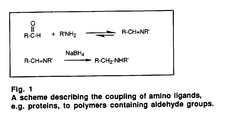
- Fig. 1 the binding of amino ligands, e.g. proteins, to polymers containing aldehyde groups (polyaldehyde polymers) is depicted in Fig. 1.
- the Schiff base products are unstable in aqueous solution since they are in equilibrium with the interacting reagents, but they may be stabilized, e.g. by reduction of the Schiff base bonds with an appropriate reducing agent, e.g. NaBH4.
- Dialdehyde dextran and dialdehyde cellulose are examples of polyaldehyde polymers commonly used for immobilization of proteins through the formation of Schiff base products. These polymers are commonly obtained by periodate oxidation of vicinal hydroxyl groups of the parent polymers, dextran and cellulose, respectively, see J. Turkova, et al, Can. Pat. 1217134 (1987). The aldehyde content of these polymers can be controlled by oxidation conditions, i.e. periodate concentration. The backbone of these dialdehyde polymers has a completely different structure than that of the parent polymers (Fig. 2 ).
- cellulose is considered to be a non-biodegradable polymer while dialdehyde cellulose is a biodegradable polymer, a property which is desired for controlled release studies (see M. Singh, P. Vasudevan, T.J.M. Sinha, A.R. Ray, M.M. Misro and K. Guha, J. of Biomed. Mat. Res. 15, 655 (1981)), but undesired for other biomedical applications, e.g. wounds treatment.
- Blocking of residual aldehyde groups and stabilization of Schiff base bonds may be effected by reduction with reducing agents, e.g. NaBH4 (Figs. 1 and 2).
- reducing agents e.g. NaBH4 (Figs. 1 and 2).
- the reduced polymers possess significantly decreased mechanical strength, higher water solubility and frequently significantly decreased protein activity, due to reduction of bonds such as disulfide required for native protein activity, see L. Peng, G.J. Calton and J.B. Burnett, Applied Biochem. and Biotechn. 14, 91 (1987).
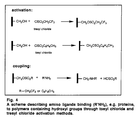
- Fig. 3 describes the binding chemistry of proteins to polymers containing free hydroxy groups, e.g. cellulose, agarose, dextran, etc.
- This binding method is based on the activation of hydroxyl groups of the polymeric matrix by reaction with various reagents, e.g. cyanogen bromide, tosyl chloride, tresyl chloride, etc., see E.V. Groman, and M. Wilchek, TIBTECH, 5, 22 (1987).
- the activated polymer is then used for covalent binding of amino ligands (and thiol ligands), e.g. proteins, by nucleophilc-substitution reaction, according to Fig. 3.
- the polymer is then washed with an appropriate organic solvent from an unbound activating reagent.
- the dried activated polymer is then reacted in aqueous solution with the desired amino (or thiol) ligand. Any unbound ligand may then be removed. If necessary, residual tosylate groups may be blocked by known methods, e.g. basic conditions or a reaction with a second amino (or thiol) ligand.
- the common organic bases used for neutralizing liberated HCl in this activation procedure are pyridine and triethylamine.
- tosyl chloride and tresyl chloride are stable, thus preventing any significant leakage of bound protein into the solvent, see S.P. Colowick and N.O. Kaplan in "Methods in Enzymology” 135-B, 29 (1987).
- Wounds may be defined as damage to the skin.
- a wound may be caused by a scratch on the skin, heat, cold, chemical substances (including radioactive substances), electricity, etc.
- the term wound also includes burns and scars.
- the skin is one of the most important sensory organ in the body and it is our defensive mechanism against the environment. When part of the skin is damaged, water, salts, proteins and energy are leaked out of the body through the damaged skin. The body loses a significant amount of heat, and bacteria may penetrate into the body through the damaged skin. Fungi and bacteria may cause local contamination in the wound with the threat of deep penetration into the body, resulting in total inflammation.
- the purpose of treating wounds is to repair the damage caused to the skin. If the damage is small and local, it will usually take a few days or weeks to cure. However, if the damaged area is extensive and severe, the curing process will be slow and usually skin implantation and other treatments, e.g. drug administration, are essential. Often, curing wounds involves severe pains, leaves scars and requires physiotherapy and/or psychological treatment; in severe cases the treatment will have to deal with problems such as bleeding, contamination, pains, poisons, water accumulation, etc.
- proteolytic enzymes e.g. trypsin and chymotrypsin
- lysozyme which dissolves bacteria cell walls
- collagenase which decomposes collagen and prevents formation of rough scars
- Enzymatic preparations usually take the form of gels, powders or liquids, which are spread on the wounds.
- native proteolytic enzymes to treat wounds is quite common.
- Dialdehyde cellulose dressings were formed by periodate oxidation of cellulose and aldehyde-polycaproamide dressings were formed by acidic hydrolysis (3 M HCl) of polycaproamide, followed by glutaraldehyde coupling to the terminal amino groups of the hydrolyzed products, see Fig. 6.
- Immobilized enzyme dressings under the commercial name "PAKS-TRYPSIN” (trypsin bound onto aldehyde-polycaproamide, see K. Lakin, V. Pronin, V. Ryltsev, S. Sturchak and V. Filatov , USSR Pat. N 117365 (1981)) and "DALCEKS-TRYPSIN” ( trypsin bound onto dialdehyde cellulose, see S. Sturchak, V. Filatov, K. Lakin and V. Ryltsev, USSR Pat. N 21 938 (1984)), are commercially available.
- PAKS-TRYPSIN trypsin bound onto aldehyde-polycaproamide, see K. Lakin, V. Pronin, V. Ryltsev, S. Sturchak and V. Filatov , USSR Pat. N 117365 (1981)
- DALCEKS-TRYPSIN trypsin bound onto dialdehy
- the present invention provides in one aspect a method for preactivating polymers containing a plurality of free hydroxy groups.
- the presently preferred polymers are polysaccharides, but it is to be understood that reference herein to polysaccharides is exemplary, and that the invention accordingly applies to other hydroxy-polymers such as, e.g., polyvinyl alcohol and its copolymers, e.g. with polyolefins such as polyethylene, as well as grafted polymers based on polyolefins such as polyethylene and which contain surface hydroxyl groups.
- the method according to the invention comprises contacting the hydroxy-polymer in absence of reactants for hydroxy groups, with at least one N-heterocyclic compound, e.g.
- N-heterocyclic ring in such compounds may be partially or fully saturated, as e.g., in the case of pyrroline, pyrrolidine or piperidine, and these compounds may be substituted or unsubstituted.
- the N-heterocyclic compound When the N-heterocyclic compound is substituted, it preferably contains at least one substituent selected from C1 ⁇ 6 alkyl, C1 ⁇ 6 alkoxy, fluorine, chlorine, bromine and trifluoromethyl.
- the polymers thus preactivated also form part of the invention.
- the invention provides a method for making a derivatized polysaccharide polymer, which comprises making a preactivated polymer as just described, and then reacting it with at least one reactant for free hydroxy groups in said polymer, said reactant being such that it contains, at least potentially, at least one functional group capable of reacting with amino groups containing unsubstituted hydrogen atoms, and being preferably selected from cyanogen halides, carbonate esters, halogenated s-triazines, haloformates, sulfonyl halides and N-heterocyclic compounds containing nuclear-bound active halogen atoms.
- a process for making conjugates of at least one amino compound containing at least one unsubstituted N-attached hydrogen atom with at least one polysaccharide polymer containing a plurality of free hydroxy groups comprising at least steps (a) and (b) of the following steps (a), (b) and (c), namely: (a) derivatizing the at least one polysaccharide polymer by reaction with at least one reactant for free hydroxy groups in said polymer, such reactant being additionally characterized by the fact that it contains, at least potentially, at least one functional group capable of reacting with said at least one amino compound, (b) reacting the thus-derivatized polysaccharide polymer with the at least one amino compound, and optionally (c) reconverting to hydroxy groups by known methods any polymer-bound groups which are the product of reacting polysaccharide hydroxy groups with such reactant;
- the present invention in particular provides the improvement which comprises effecting a preactivation step prior to step (a) in order to increase the
- the at least one polysaccharide polymer (which is preferably cellulose but is not limited thereto), both prior to said process and at the end of said process, may be e.g. in powdered form, or in the form of a textile web which may be adapted for use as a bandage, patch or like wound cover.
- the invention further relates to a powder, bandage, patch or like cover for application to wounds which has been manufactured from polymer containing a plurality of hydroxy groups by a process which includes the step of providing an amine, such as a protein, conjugated to the polymer.
- an amine such as a protein
- manufacturing process may include the method described herein for conjugating the amine to the polymer.
- the amine is a protein, this may be, e.g., one selected from trypsin, chymotrypsin, lysozyme, collagenase, albumin and hyaluronidase.
- the amine in particular a protein (e.g.
- an enzyme which has been conjugated to the polymer containing hydroxy groups following pretreatment of the polymer by contacting it in absence of reactants for hydroxy groups, with at least one N-heterocyclic compound, as described herein, has been found to have the important advantage that it has an activity which is significantly greater than when such pretreatment has not been effected.
- the present invention yet further provides conjugates of at least one amino compound containing at least one unsubstituted N-attached hydrogen atom with at least one polymer containing a plurality of hydroxy groups, which have been obtained according to the process described herein.
- Fig. 1 depicts a scheme describing the coupling of amino ligands, e.g. proteins, to polymers containing aldehyde groups.
- Fig. 2 depicts a scheme describing the periodate oxidation of cellulose and the coupling of amino ligands, e.g. proteins, to the resulted dialdehyde cellulose.
- Fig. 3 depicts the activation of hydroxyl-containing polymers for covalent coupling of amino ligands, e.g. proteins.
- Fig. 4 depicts a scheme describing the binding of amino ligands e.g. proteins, to polymers containing hydroxyl groups, by means of tosyl chloride and tresyl chloride.
- Fig. 5 depicts a scheme describing the interaction of cellulose with amino ligands, e.g. proteins, by means of tosyl chloride or tresyl chloride.
- Fig. 6 depicts a scheme describing the hydrolysis of polycaproamide and the binding of glutaraldehyde to the hydrolyzed product.
- Fig. 7 depicts a scheme describing the known activation method and a method in accordance with an embodiment of the invention, for coupling amino ligands, e.g. proteins, to cellulose through its hydroxyl groups.
- amino ligands e.g. proteins
- Fig. 8 depicts a scheme describing the inclusion of pyridine in cellulose.
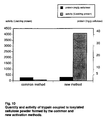
- Fig. 9 compares the quantity and activity of trypsin coupled to tosylated cellulose formed by the known method and in accordance with an embodiment of the invention.
- Fig. 1 compares the quantity and activity of trypsin coupled to tosylated cellulose powder formed by the known method and in accordance with an embodiment of the invention.
- Fig. 11 compares the quantity of tresyl groups, and the quantity and activity of trypsin coupled to tresylated cellulose, formed by the known method and in accordance with an embodiment of the invention.
- Fig. 12 compares the quantity of tosyl groups coupled to cellulose formed by variation in pyridine concentration in the known activation method.
- Fig. 13 compares the effect of cellulose pre-treatment with pyridine on the quantity of bound tosyl groups and on the quantity and activity of trypsin coupled to tosylated cellulose.
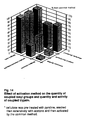
- Fig. 14 shows the effect of the activation method in accordance with an embodiment of the invention on the quantity of coupled tosyl groups and quantity and activity of coupled trypsin.
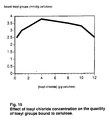
- Fig. 15 depicts the effect of tosyl chloride concentration on the quantity of tosyl groups bound to cellulose.
- Fig. 16 depicts the effect of the tosyl chloride/pyridine molar ratio on the quantity of tosyl groups coupled to cellulose.
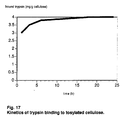
- Fig. 17 depicts the kinetics of trypsin binding to tosylated cellulose.
- Fig. 18 depicts the effect of trypsin concentration on its binding to tosylated cellulose.
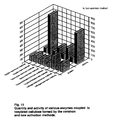
- Fig. 19 depicts the quantity and activity of various enzymes coupled to tosylated cellulose formed by the known activation method and a method in accordance with an embodiment of the invention.
- Fig. 2 depicts the activity of enzymes consecutively coupled to tosylated cellulose formed by the known activation method and a method in accordance with an embodiment of the invention.
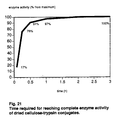
- Fig. 21 shows the time required for reaching complete enzyme activity of dried cellulose-trypsin conjugates.
- Fig. 22 illustrates activity of trypsin bound to different polymers as a function of time.
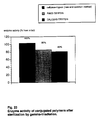
- Fig. 23 depicts enzyme activity of trypsin conjugated polymers after sterilization by gamma-irradiation.
- Fig. 24 compares the DALCEKS-TRYPSIN method with trypsin coupled to cellulose in accordance with an embodiment of the invention, in the treatment of burn wounds.
- Fig. 25 depicts enzyme activity of trypsin bound polymers, after treatment of wounds.
- Fig. 26 compares non-treated cellulose dressings, with multienzyme cellulose dressings prepared in accordance with an embodiment of the invention.
- bioactive compounds such as proteins may be conjugated with (and thus immobilized on) cellulose via its hydroxyl groups.
- increased activating agent binding capacity, similar or increased protein binding capacity, increased hygroscopicity and higher activity of the bound proteins were obtained by using this new activation method as compared to the known one.
- Fig. 7 demonstrates the major differences between the known activation method and the method in accordance with an embodiment of the invention.
- a major difference between this new activation method and the known one is due to the pre-treatment step, e.g. of cellulose with an N-heterocyclic base such as pyridine. It is believed that this pre-treatment breaks hydrogen bonds between cellulose chains, entrapping pyridine molecules between cellulose chains (c.f. L. Segal in "Cellulose and Cellulose Derivatives", Part V (197 ) Ed. N.M. Bikates and L. Segal, pp 719-729)) and results in a more open reactive form of cellulose (Fig. 8).
- the present invention also makes available novel polymeric surfaces composed of polysaccharides such as cellulose, coupled with proteins, such as trypsin, lysozyme, etc., for the treatment of wounds.
- conjugated cellulose materials in different manufactured forms, such as powders and dressings, are basically different from the commercial ones, e.g. PAKS-TRYPSIN and DALCEKS-TRYPSIN, because of the reasons previously described (different backbone structure, non-biodegradability, higher mechanical strength, and stable bonds between the protein and the polymer).
- the conjugated materials obtained by the new activation method were significantly more efficient for wounds treatment than those obtained by the known method.
- the activity of trypsin bound onto cellulose through the new activation method was approximately 5-1 times higher than that obtained by the known method as well as that obtained by DALCEKS-TRYPSIN and PAKS-TRYPSIN, although a similar amount of enzyme was bound to the polymers.
- mice female guinea-pigs from Anilab., Rehovot, Israel, weighting 3 -3 3 g were conditioned for two weeks prior to experiments. The animals received water and basal diet without antibiotics and were housed with controlled temperature (23 - 25°C) and light and dark (12 h/12 h LD).
- each guinea pig was prepared for wounding by hair removal with a shaver, hair removing cream and then washing the skin with water. Soap and antiseptics were not used because of their potential influence on the wound healing process. Burn wounds were made according to the methodology of S.C. Davis, P.P. Mertz and W.H. Eaglstein, J. Surg. Res., 48, 245 (199 ). On the day of burning, the guinea pigs were anesthetized with ether according to the methodology of J.S. Paterson in " The UFAW Handbook on Care and Management of Laboratory Animals", Ed. by UFAW, 223-241 (1972).
- Fig. 7 having shown that major differences existed between the known and present activation methods for coupling bioactive compounds, e.g. proteins, to polysaccharides, e.g. cellulose, through hydroxyl groups, a detailed example of both activation methods is now provided.
- bioactive compounds e.g. proteins
- polysaccharides e.g. cellulose
- the derivatized cellulose samples were then washed with 5 ml carbonate buffer, 5 x 5 ml saline, 5 ml distilled water and then air-dried at room temperature.
- the amount of coupled trypsin was similar for cellulose activated by both known or new methods, but the enzyme activity of cellulose activated by the new method was approximately 9-fold higher. (Fig. 9).
- Example 1-B (new activation method) was repeated substituting soaking of 1 g cellulose in 2 ml pyridine for soaking cellulose in increased amount of pyridine, i.e. > 2 ml. Similar results were obtained. (It is also be noted that 1 g cellulose is not completely wetted by less than 2 ml pyridine). Similar results were also obtained when the pre-treatment of cellulose in pyridine was effected for > 3 min. On the other hand, pre-treatment for ⁇ 3 min. resulted in a slightly lower amount of cellulose bound tosyl groups and trypsin.
- Examples 1-2 were repeated substituting textile cellulose (medical gauze) for cellulose powder.
- the amounts of trypsin coupled to the powdered cellulose activated by the known and new methods and their enzyme activity were similar to that obtained for the textile cellulose, Example 1, (Fig. 1 ).
- Examples 1-3 were repeated substituting the activating agent tosyl chloride for tresyl chloride (5 ml for 1 g of cellulose).
- a comparison between the known activation method and the new one with regard to the amount of tresyl groups and trypsin molecules coupled to cellulose and the activity of the bound trypsin is demonstrated in Fig. 11. Both, the quantity of tresyl groups and quantity of coupled trypsin, as well as its activity were significantly higher for cellulose activated by the new activation method compared to the known one.
- Example 1-A (known activation method) was repeated substituting soaking of cellulose in 1 ml acetone and 2 ml pyridine (17 % pyridine in acetone) with solutions of A. 5 % pyridine in acetone (6 ml acetone + 6 ml pyridine) and B. 1 % dried pyridine.
- the quantity of tosyl groups coupled to cellulose was higher for 1 % pyridine than for 5 % pyridine ( . 75 mmol/g compared to . 59 mmol/g, respectively), but lower than that obtained in the known activation method described in Example 1-A, .125 mmol/g, (Fig.12).
- Example 1-B was repeated for different concentrations of tosyl chloride in acetone ( .25, 1, 4, 8, 1 , 12 g/1 ml acetone).
- Fig. 15 demonstrates that the highest amount of bound tosyl groups is obtained for initial tosyl chloride concentration of 4 g /1 ml acetone.
- Examples 1 and 8-d cellulose pre-treated with pyridine, washed then from excess pyridine with acetone and then activated by the known activation method
- Fig. 16 demonstrates that the lowest amount of bound tosyl groups is always obtained by the known activation method.
- similar amounts of bound tosyl groups were obtained by the new activation method and the method described in Example 8-d.
- the amount of bound tosyl groups was significantly higher in the new activation method relative to the method described in Example 8-d.
- Example 1 was repeated substituting pyridine with triethylamine and/or propylamine.
- Table 1 demonstrates the significant superiority of pyridine on triethylamine and propylamine in the new activation method, i.e. the obtained activity of the bound trypsin was 672 Uact/mg protein for pyridine, 874 Uact/mg protein for triethylamine and Uact/mg protein for propylamine.
- the differences in the activity of the bound trypsin due to the change in the organic bases do not exist or significantly reduced, i.e.
- the obtained bound trypsin activity was 743 Uact/mg protein for pyridine, 765 Uact/mg protein for triethylamine and 167 Uact/mg protein for propylamine.
- Example 1 was repeated, using instead of pyridine the following: piperidine, pyridazine, pyrrolidine, pyrroline and pyrrole.
- Table 2 demonstrates the significant superiority of the new method of activation over the known method, as indicated by the similar or greater quantity of bound tosyl groups, and the greater quantity and activity of bound trypsin.
- Examples 1 and 12 (in part) were repeated, replacing cellulose by agarose.
- Table 4 demonstrates the significant superiority of the new method of activation over the known method, in the case of agarose, as indicated by the greater quantity of bound tosyl groups, and the greater quantity and activity of bound trypsin.
- Example 1-B The new activation method described in Example 1-B was repeated.
- the formed dried tosyl activated cellulose was then retreated with pyridine by re-soaking at room temperature for 1 h in pyridine.
- the purpose of this post-retreatment with pyridine is to substitute part of tosyl groups of the tosylated cellulose with bound pyridine.
- the derivatized cellulose was then extensively washed with acetone and dried then at room temperature. The amount of bound tosyl groups decreased by this procedure by twice (from 3.12 mmol/g cellulose to 1.47 mmol/g cellulose).
- the derivatized cellulose was soaked at room temperature for 1 h in 1 ml . 5 M aqueous bicarbonate buffer at pH 11. The derivatized cellulose was then washed extensively with water and then air dried. Coupling of trypsin to the derivatized pyridine post-treated cellulose was then accomplished according to the description in Example 1.
- the amount of coupled trypsin decreased significantly by the pyridine post-treatment ( .5 mg/g cellulose instead of 3.8 mg/g cellulose), but the activity of the bound enzyme increased significantly (from 6744 Uact/mg protein to 1 242 Uact/mg protein).
- Table 5 demonstrates that the amount of bound trypsin was similar in all buffers, but the enzyme activity was the highest for carbonate buffer at pH 8.5.
- Example 16-B was repeated at the following temperatures:
- Table 6 demonstrates similar binding capacity and enzyme activity at 4°C and at 25°C. On the other hand, at 4 °C similar binding capacity was obtained, but due to denaturation the bound enzyme completely lost its activity.
- Example 17-B was repeated at different interval of incubation time of the tosylated cellulose with trypsin solution.
- the results demonstrated in Fig. 17 show that under these experimental conditions after approximately 6 h ,or more, maximum trypsin binding was reached.
- Example 18 was repeated at the following trypsin concentrations:
- Fig. 18 demonstrates that the maximum amount of coupled trypsin was reached for initial trypsin concentration of 4 mg/ml, or more, i.e. 4 mg/g cellulose.
- initial trypsin concentration of 4 mg/ml the percent of trypsin coupled to cellulose is relatively low, i.e. 4 % for initial trypsin concentration of 4 mg/ml.
- percent trypsin coupled to cellulose is relatively higher, i.e. at initial trypsin concentration of 5 mg/ml the percent of trypsin coupled to cellulose was 27 %.
- Example 1-B new activation method and then trypsin coupling was repeated in presence of the following reagents which aim to hydrolyze residual tosyl groups coupled to cellulose:
- Table 7 demonstrates that the highest amount of coupled trypsin and enzyme activity was obtained at the presence of . 5 M NaHCO3 aqueous buffer, pH 11.
- Example 1 was repeated substituting the proteolytic enzyme trypsin with the following enzymes:
- Fig 19 shows that in both activation methods, the known method and the new one, the amounts of coupled enzymes (collagenase, lysozyme and hyaluronidase) to cellulose was similar. However, the activity of the bound enzymes was significantly higher for the enzymes coupled to cellulose by the new activation method.
- Example 21 was repeated substituting textile cellulose (medical gauze) for cellulose powder. Similar results were obtained.
- Example 22 was repeated substituting the collagenase solution with a solution containing 3 enzymes: collagenase, lysozyme and hyaluronidase (5 mg/ml of each enzyme in 2.5 ml of .1 M NaHCO3 buffer at pH 8.5).
- Fig. 2 demonstrates the significant higher activity of the enzymes coupled to tosylated cellulose prepared by the new activation method compared to the known activation method.
- dialdehyde cellulose 1 g dialdehyde cellulose was soaked for 3 min. at room temperature in 2 ml pyridine. The dialdehyde cellulose was then washed with 6 x 5 ml acetone and then air dried. Coupling of trypsin to the pyridine pre-treated dialdehyde cellulose was then accomplished as described in materials and methods.
- Table 9 demonstrates that the binding and activity of the bound trypsin did not change significantly by the pre-treatment of the dialdehyde cellulose with the above solvents.
- Fig. 21 demonstrates that after approximately 1 h in the aqueous solution the enzyme reached its complete activity.
- Table 1 demonstrates the relative hygroscopicity of the following activated polymers prepared for wounds treatment:
- Table 1 demonstrates that the highest degree of hygroscopicity was obtained for tosylated cellulose pre-treated with pyridine according to the new activation method and for tosylated cellulose pre- and post-treated with pyridine.
- Fig. 22 demonstrates that the activity of trypsin coupled to cellulose according to the new and/or known activation methods did not change during time.
- a significant decrease in activity during time of trypsin coupled to dialdehyde cellulose and/or polycaproamide has been observed.
- bound trypsin leached from the polymers into the aqueous solution of the conjugated cellulose prepared according to the new and/or known activation methods was not detected.
- significant amount of free trypsin and/or trypsin bound to water soluble polymers was observed for PAKS-TRYPSIN and for DALCEKS-TRYPSIN.
- Fig. 23 demonstrates that the activity of trypsin coupled to dialdehyde cellulose (DALCEKS-TRYPSIN) and/or to polycaproamide (PAKS-TRYPSIN) decreased significantly by the sterilization procedure.
- the activity of the enzymes coupled to cellulose by the new activation method and/or known activation method and/or by the pre- and post-treatment with pyridine did not change significantly by the gamma sterilization process.
- the data presented in Table 11 show that the activity of the enzymes coupled to cellulose in the multienzyme dressings, in accordance with an embodiment of the invention, was retained after irradiation at low temperatures.
- the activity of enzymes bound to cellulose according to the known method was significantly decreased by irradiation.
- the activity of lysozyme bound to cellulose by the known method retained only 31% of its original activity after irradiation, whereas using the present method there was no loss of lysozyme activity after irradiation.
- Each bandage was first soaked in saline solution ( .85% NaCl). The wet bandages were then placed on the burn wounds and covered by nylon, preventing thereby evaporation of water. The bandages were then replaced every 24 h.
- Fig. 24 and Table 12 demonstrate the significant faster cleaning of wounds from necrotic tissue treated by bandages prepared by the new activation method compared to bandages prepared by the known activation method and/or bandages composed of DALCEKS-TRYPSIN and/or PAKS-TRYPSIN.
- Fig. 25 demonstrates that the enzyme activity of bandages composed of DALCEKS-TRYPSIN and/or PAKS-TRYPSIN decreased by the treatment by 65% and 54%, respectively. On the other hand, the enzyme activity of bandages prepared by the new and/or known activation methods did not change significantly during the wounds treatment.
- the amount of proteins adsorbed from burn wounds into the bandages was studied by shaking each bandage after the wound treatment in 5 ml saline. The amount of proteins in the aqueous solution was then determined from ultraviolet spectrum at 28 nm. The largest amount of protein absorbed from burn wounds was found for bioactive conjugated bandages prepared by the new activation method (Table 13).
- Example 31 was repeated with non-treated cellulose and with multienzyme cellulose dressings prepared in accordance with an embodiment of the present invention, as described in Example 24.
- Fig. 26 shows that when using these multienzyme cellulose dressings of the present invention, the necrotic tissues exhibit a significantly faster cleaning rate, compared with non-treated cellulose dressings.
Landscapes
- Health & Medical Sciences (AREA)
- Chemical & Material Sciences (AREA)
- Life Sciences & Earth Sciences (AREA)
- Animal Behavior & Ethology (AREA)
- Veterinary Medicine (AREA)
- Public Health (AREA)
- General Health & Medical Sciences (AREA)
- Engineering & Computer Science (AREA)
- Epidemiology (AREA)
- Chemical Kinetics & Catalysis (AREA)
- Materials Engineering (AREA)
- Bioinformatics & Cheminformatics (AREA)
- Medicinal Chemistry (AREA)
- Pharmacology & Pharmacy (AREA)
- Hematology (AREA)
- Zoology (AREA)
- Botany (AREA)
- General Chemical & Material Sciences (AREA)
- Nuclear Medicine, Radiotherapy & Molecular Imaging (AREA)
- Organic Chemistry (AREA)
- Materials For Medical Uses (AREA)
- Polysaccharides And Polysaccharide Derivatives (AREA)
- Medicinal Preparation (AREA)
- Medicines That Contain Protein Lipid Enzymes And Other Medicines (AREA)
Applications Claiming Priority (2)
| Application Number | Priority Date | Filing Date | Title |
|---|---|---|---|
| IL104734A IL104734A0 (en) | 1993-02-15 | 1993-02-15 | Bioactive conjugates of cellulose with amino compounds |
| IL104734 | 1993-02-15 |
Publications (2)
| Publication Number | Publication Date |
|---|---|
| EP0611573A2 true EP0611573A2 (fr) | 1994-08-24 |
| EP0611573A3 EP0611573A3 (fr) | 1995-11-15 |
Family
ID=11064528
Family Applications (1)
| Application Number | Title | Priority Date | Filing Date |
|---|---|---|---|
| EP19940300991 Withdrawn EP0611573A3 (fr) | 1993-02-15 | 1994-02-11 | Conjugués bioactifs de cellulose avec de composés aminés. |
Country Status (5)
| Country | Link |
|---|---|
| US (2) | US5516673A (fr) |
| EP (1) | EP0611573A3 (fr) |
| JP (1) | JPH07330803A (fr) |
| CA (1) | CA2115630A1 (fr) |
| IL (1) | IL104734A0 (fr) |
Cited By (4)
| Publication number | Priority date | Publication date | Assignee | Title |
|---|---|---|---|---|
| DE19503338A1 (de) * | 1995-02-02 | 1996-08-08 | Lohmann Therapie Syst Lts | Arzneiform zur Abgabe von Kollagenase an Wunden und Verfahren zu ihrer Herstellung |
| WO1998002189A3 (fr) * | 1996-07-14 | 1998-05-07 | Univ Bar Ilan | Procede de preparation de polymeres bioactifs |
| WO2002100440A1 (fr) * | 2001-06-12 | 2002-12-19 | Bartholdy-Consultadoria E Servicos Ltd | Conjugues de polymeres de polysaccharide d'origine naturelle |
| ITMI20091380A1 (it) * | 2009-07-30 | 2011-01-31 | Franzoni Filati S P A | Aminoglicosidi ed aminoglicosidi pregelatinizzati coniugati covalentemente al cotone |
Families Citing this family (94)
| Publication number | Priority date | Publication date | Assignee | Title |
|---|---|---|---|---|
| DK100592D0 (da) | 1992-08-10 | 1992-08-10 | Mouritsen & Elsner Aps | Metode til kemisk kobling paa faste faser |
| IL127209A0 (en) * | 1998-11-23 | 1999-09-22 | Bio Silk Ltd | Composition and method for treatment of hypertrophic skin accumulations and their prevention |
| ITMI991458A1 (it) * | 1999-07-01 | 2001-01-01 | Ring Holding S P A | Biopolimeri non digeribili e/o non assorbibili chimicamente derivatizzati quali antagonisti competitivi dell'assorbimento intestinale di nut |
| KR100773323B1 (ko) | 2000-01-10 | 2007-11-05 | 맥시겐 홀딩스 리미티드 | 지-씨에스에프 접합체 |
| CA2739933A1 (fr) | 2000-02-11 | 2001-08-16 | Bayer Healthcare Llc | Molecules de type facteur vii ou viia |
| US6749865B2 (en) * | 2000-02-15 | 2004-06-15 | Genzyme Corporation | Modification of biopolymers for improved drug delivery |
| WO2002074806A2 (fr) | 2001-02-27 | 2002-09-26 | Maxygen Aps | Nouvelles molecules de type interferon beta |
| EP2295971B1 (fr) * | 2001-03-09 | 2016-09-07 | TrovaGene, Inc. | Sondes de conjugué et détection optique d'analytes |
| WO2003062290A1 (fr) | 2002-01-16 | 2003-07-31 | Biocompatibles Uk Limited | Conjugues polymeres |
| US20030159200A1 (en) * | 2002-02-28 | 2003-08-28 | Don Elrod | Antimicrobial fabrics through surface modification |
| UA86744C2 (en) | 2002-06-21 | 2009-05-25 | Ново Нордиск Хэлс Кеа Аг | Pegylated factor vii glycoforms |
| US6774206B2 (en) * | 2002-09-26 | 2004-08-10 | Bayer Polymers Llc | Polyaspartate resins with improved flexibility |
| GB0301014D0 (en) * | 2003-01-16 | 2003-02-19 | Biocompatibles Ltd | Conjugation reactions |
| CN1867581B (zh) | 2003-10-10 | 2012-02-01 | 诺沃挪第克公司 | Il-21衍生物 |
| EP2641611A3 (fr) | 2003-10-17 | 2013-12-18 | Novo Nordisk A/S | Thérapie combinée |
| AT413819B (de) * | 2003-10-31 | 2006-06-15 | Chemiefaser Lenzing Ag | Cellulosederivat |
| BRPI0507169A (pt) * | 2004-02-02 | 2007-06-26 | Ambrx Inc | polipeptìdeos do hormÈnio de crescimento humano modificados e seu usos |
| US7842382B2 (en) * | 2004-03-11 | 2010-11-30 | Knauf Insulation Gmbh | Binder compositions and associated methods |
| US7632924B2 (en) * | 2004-06-18 | 2009-12-15 | Ambrx, Inc. | Antigen-binding polypeptides and their uses |
| WO2006091231A2 (fr) * | 2004-07-21 | 2006-08-31 | Ambrx, Inc. | Polypeptides biosynthetiques obtenus a partir d'acides amines codes par voie non naturelle |
| EP1814927A1 (fr) * | 2004-10-13 | 2007-08-08 | Knauf Insulation GmbH | Compositions de liaison au polyester |
| CN103520735B (zh) * | 2004-12-22 | 2015-11-25 | Ambrx公司 | 包含非天然编码的氨基酸的人生长激素配方 |
| BRPI0519430A2 (pt) | 2004-12-22 | 2009-02-10 | Ambrx Inc | hormânio do crescimento humano modificado |
| EP1836298B1 (fr) * | 2004-12-22 | 2012-01-18 | Ambrx, Inc. | Compositions de synthetase d'aminoacyl-arnt et utilisations correspondantes |
| EP1836316A4 (fr) | 2004-12-22 | 2009-07-22 | Ambrx Inc | Procédés pour l'expression et la purification d'hormone de croissance humaine recombinante |
| AU2006255122B2 (en) * | 2005-06-03 | 2010-10-21 | Ambrx, Inc. | Improved human interferon molecules and their uses |
| ES2553160T3 (es) | 2005-06-17 | 2015-12-04 | Novo Nordisk Health Care Ag | Reducción y derivatización selectivas de proteínas Factor VII transformadas por ingeniería que comprenden al menos una cisteína no nativa |
| KR101410624B1 (ko) * | 2005-07-26 | 2014-06-20 | 크나우프 인설레이션 게엠베하 | 접착제 및 이들로 만들어진 물질 |
| AU2005335491B2 (en) * | 2005-08-18 | 2010-11-25 | Ambrx, Inc. | Compositions of tRNA and uses thereof |
| CN101400646A (zh) * | 2005-11-08 | 2009-04-01 | Ambrx公司 | 用于修饰非天然氨基酸和非天然氨基酸多肽的促进剂 |
| DK2339014T3 (en) * | 2005-11-16 | 2015-07-20 | Ambrx Inc | Methods and compositions comprising non-natural amino acids |
| WO2007070659A2 (fr) * | 2005-12-14 | 2007-06-21 | Ambrx, Inc. | Compositions contenant des acides aminés et polypeptides non naturels, procédés mettant en jeu ceux-ci et utilisations de ceux-ci |
| KR20090013816A (ko) | 2006-05-24 | 2009-02-05 | 노보 노르디스크 헬스 케어 악티엔게젤샤프트 | 연장된 생체내 반감기를 갖는 인자 ⅸ 유사체 |
| JP5399906B2 (ja) * | 2006-09-08 | 2014-01-29 | アンブルックス,インコーポレイテッド | 脊椎動物細胞用のハイブリッドサプレッサーtrna |
| CN106008699A (zh) * | 2006-09-08 | 2016-10-12 | Ambrx公司 | 经修饰的人类血浆多肽或Fc骨架和其用途 |
| EP2064333B1 (fr) * | 2006-09-08 | 2014-02-26 | Ambrx, Inc. | Transcription d'arnt suppresseur dans des cellules de vertébrés |
| EP2108026A1 (fr) | 2007-01-25 | 2009-10-14 | Knauf Insulation Limited | Panneau de bois composite |
| EP2109594A1 (fr) * | 2007-01-25 | 2009-10-21 | Knauf Insulation Limited | Isolation par fibres minérales |
| US7854980B2 (en) | 2007-01-25 | 2010-12-21 | Knauf Insulation Limited | Formaldehyde-free mineral fibre insulation product |
| PL2108006T3 (pl) | 2007-01-25 | 2021-04-19 | Knauf Insulation Gmbh | Spoiwa i wytworzone z nich materiały |
| US8082609B2 (en) * | 2007-01-25 | 2011-12-27 | Best Bath Systems, Inc. | Walk-in bathtub having a flip-up seat portion over a rearward foot well recess |
| ES2986038T3 (es) | 2007-01-25 | 2024-11-08 | Knauf Insulation | Tablero de fibras minerales |
| CN107501407B (zh) | 2007-03-30 | 2022-03-18 | Ambrx公司 | 经修饰fgf-21多肽和其用途 |
| EP2137223B1 (fr) * | 2007-04-13 | 2019-02-27 | Knauf Insulation GmbH | Liants de maillard-résole composites |
| US8114630B2 (en) * | 2007-05-02 | 2012-02-14 | Ambrx, Inc. | Modified interferon beta polypeptides and their uses |
| BRPI0814014A2 (pt) * | 2007-07-05 | 2015-02-03 | Knauf Insulation Gmbh | Material colante de maillard de base ácido hidróxi-monocarboxílico |
| GB0715100D0 (en) | 2007-08-03 | 2007-09-12 | Knauf Insulation Ltd | Binders |
| WO2009040811A2 (fr) * | 2007-09-24 | 2009-04-02 | Bar-Ilan University | Nanoparticules de polymère revêtues d'oxyde métallique magnétique et utilisations de celles-ci |
| MX2010005317A (es) | 2007-11-20 | 2010-06-02 | Ambrx Inc | Polipeptidos de insulina modificados y sus usos. |
| MX344166B (es) | 2008-02-08 | 2016-12-07 | Ambrx Inc | Leptina-polipeptidos modificados y sus usos. |
| CN102159230A (zh) | 2008-07-23 | 2011-08-17 | Ambrx公司 | 经修饰的牛g-csf多肽和其用途 |
| AU2009296267B2 (en) * | 2008-09-26 | 2013-10-31 | Ambrx, Inc. | Non-natural amino acid replication-dependent microorganisms and vaccines |
| BR122012024318A2 (pt) | 2008-09-26 | 2019-07-30 | Ambrx, Inc. | Polipeptídeos modificados de eritropoetina animal e seus usos |
| CZ301899B6 (cs) * | 2009-03-17 | 2010-07-21 | Contipro C, A.S. | Zpusob prípravy derivátu kyseliny hyaluronové pomocí O-acyl-O´-alkylkarbonátu v prítomnosti substituovaného pyridinu |
| US8900495B2 (en) | 2009-08-07 | 2014-12-02 | Knauf Insulation | Molasses binder |
| BR112012015597A2 (pt) | 2009-12-21 | 2017-01-31 | Ambrx Inc | peptídeos de somatotropina suínos modificados e seus usos |
| MX349301B (es) | 2009-12-21 | 2017-07-21 | Ambrx Inc | Polipéptidos de somatotropina bovina modificados y sus usos. |
| US9815876B2 (en) | 2010-03-05 | 2017-11-14 | Omeros Corporation | Chimeric inhibitor molecules of complement activation |
| AU2011249760B2 (en) | 2010-05-07 | 2015-01-15 | Knauf Insulation | Carbohydrate binders and materials made therewith |
| US20130059075A1 (en) | 2010-05-07 | 2013-03-07 | Knauf Insulation | Carbohydrate polyamine binders and materials made therewith |
| WO2011143274A1 (fr) | 2010-05-10 | 2011-11-17 | Perseid Therapeutics | Polypeptides inhibiteurs de vla4 |
| CA2801546C (fr) | 2010-06-07 | 2018-07-10 | Knauf Insulation | Produits a base de fibres contenant des additifs de regulation de la temperature |
| EA030886B1 (ru) | 2010-08-17 | 2018-10-31 | Амбркс, Инк. | Модифицированные полипептиды релаксина, содержащие некодируемую в природе аминокислоту, связанную с полимером, и их применение |
| US9567386B2 (en) | 2010-08-17 | 2017-02-14 | Ambrx, Inc. | Therapeutic uses of modified relaxin polypeptides |
| TWI480288B (zh) | 2010-09-23 | 2015-04-11 | Lilly Co Eli | 牛顆粒細胞群落刺激因子及其變體之調配物 |
| RU2452510C1 (ru) * | 2011-02-08 | 2012-06-10 | Общество с ограниченной ответственностью "Саентифик Фьючер Менеджмент" ООО "Саентифик Фьючер Менеджмент" | Анальгетическое средство |
| US20140186635A1 (en) | 2011-05-07 | 2014-07-03 | Knauf Insulation | Liquid high solids binder composition |
| RU2014103288A (ru) | 2011-07-01 | 2015-08-10 | Байер Интеллектчуал Проперти Гмбх | Слитые полипептиды релаксина и их применение |
| GB201206193D0 (en) | 2012-04-05 | 2012-05-23 | Knauf Insulation Ltd | Binders and associated products |
| EP2859017B1 (fr) | 2012-06-08 | 2019-02-20 | Sutro Biopharma, Inc. | Anticorps comprenant des résidus d'acides aminés non endogènes spécifiques d'un site, leurs procédés de préparation et leurs procédés d'utilisation |
| WO2014004639A1 (fr) | 2012-06-26 | 2014-01-03 | Sutro Biopharma, Inc. | Protéines de fc modifiées, comprenant des résidus d'acides aminés non naturels spécifiques de site, leurs conjugués, leur préparation et leurs procédés d'utilisation |
| GB201214734D0 (en) | 2012-08-17 | 2012-10-03 | Knauf Insulation Ltd | Wood board and process for its production |
| EP2890402B1 (fr) | 2012-08-31 | 2019-04-17 | Sutro Biopharma, Inc. | Acides aminés modifiés comprenant un groupe azido |
| PL2928936T3 (pl) | 2012-12-05 | 2022-12-27 | Knauf Insulation Sprl | Spoiwo |
| WO2015006555A2 (fr) | 2013-07-10 | 2015-01-15 | Sutro Biopharma, Inc. | Anticorps comprenant plusieurs résidus d'acides aminés non naturels site-spécifiques, des procédés permettant leur préparation et leurs méthodes d'utilisation |
| EP3055298B1 (fr) | 2013-10-11 | 2020-04-29 | Sutro Biopharma, Inc. | Acides aminés modifiés comprenant des groupes fonctionnels de tétrazine, procédés de préparation et procédés d'utilisation associés |
| PL3102587T3 (pl) | 2014-02-07 | 2019-01-31 | Knauf Insulation, Inc. | Nieutwardzone wyroby o ulepszonym okresie trwałości |
| GB201408909D0 (en) | 2014-05-20 | 2014-07-02 | Knauf Insulation Ltd | Binders |
| GB201412709D0 (en) | 2014-07-17 | 2014-09-03 | Knauf Insulation And Knauf Insulation Ltd | Improved binder compositions and uses thereof |
| CN114805532A (zh) | 2014-10-24 | 2022-07-29 | 百时美施贵宝公司 | 修饰的fgf-21多肽及其用途 |
| GB201517867D0 (en) | 2015-10-09 | 2015-11-25 | Knauf Insulation Ltd | Wood particle boards |
| GB201610063D0 (en) | 2016-06-09 | 2016-07-27 | Knauf Insulation Ltd | Binders |
| GB201701569D0 (en) | 2017-01-31 | 2017-03-15 | Knauf Insulation Ltd | Improved binder compositions and uses thereof |
| PE20191716A1 (es) | 2017-02-08 | 2019-12-05 | Bristol Myers Squibb Co | Polipeptidos de relaxina modificada que comprenden un mejorador farmacocinetico y sus usos |
| GB201804908D0 (en) | 2018-03-27 | 2018-05-09 | Knauf Insulation Ltd | Binder compositions and uses thereof |
| GB201804907D0 (en) | 2018-03-27 | 2018-05-09 | Knauf Insulation Ltd | Composite products |
| CA3111576A1 (fr) | 2018-09-11 | 2020-03-19 | Ambrx, Inc. | Conjugues polypeptidiques d'interleukine-2 et leurs utilisations |
| JP2022512746A (ja) | 2018-10-19 | 2022-02-07 | アンブルックス,インコーポレイテッド | インターロイキン-10ポリペプチド複合体、その二量体、およびそれらの使用 |
| CA3128081A1 (fr) | 2019-02-12 | 2020-08-20 | Ambrx, Inc. | Contenant de compositions, procedes et utilisations de conjugues anticorps-agonistes tlr |
| EP4117732A1 (fr) | 2020-03-11 | 2023-01-18 | Ambrx, Inc. | Conjugués polypeptidiques d'interleukine-2 et leurs procédés d'utilisation |
| JP2023538071A (ja) | 2020-08-20 | 2023-09-06 | アンブルックス,インコーポレイテッド | 抗体-tlrアゴニストコンジュゲート、その方法及び使用 |
| CA3213805A1 (fr) | 2021-04-03 | 2022-10-06 | Feng Tian | Conjugues anticorps-medicament anti-her2 et leurs utilisations |
| CN114009858B (zh) * | 2021-12-03 | 2024-05-14 | 厦门悠派无纺布制品有限公司 | 一种具有高透气性能的一次性棉内裤及其制备方法 |
| WO2026043823A2 (fr) | 2024-08-19 | 2026-02-26 | Sutro Biopharma, Inc. | Anticorps comprenant des résidus d'acides aminés non naturels spécifiques à un site, leurs procédés de préparation et leurs utilisations |
Family Cites Families (12)
| Publication number | Priority date | Publication date | Assignee | Title |
|---|---|---|---|---|
| SU117365A1 (ru) * | 1957-10-03 | 1957-11-30 | А.Е. Лаптев | Путева машина дл прорезани мерзлого грунта у шпал железнодорожного пути |
| US4229537A (en) * | 1978-02-09 | 1980-10-21 | New York University | Preparation of trichloro-s-triazine activated supports for coupling ligands |
| CS249311B1 (en) * | 1983-09-29 | 1987-03-12 | Jaroslava Turkova | Proteolytic wound dressing |
| SE460017B (sv) * | 1984-03-14 | 1989-09-04 | Landstingens Inkopscentral | Bakterieadsorberande komposition i vattenoloeslig form |
| DK108685A (da) * | 1984-03-19 | 1985-09-20 | Fujisawa Pharmaceutical Co | Vaekstfaktor i |
| US5028531A (en) * | 1984-03-19 | 1991-07-02 | Fujisawa Pharmaceutical Company, Ltd. | IGF-I fusion proteins; protection of IGF-I from degradation by host cell; and processes for the production thereof |
| DD279486A1 (de) * | 1986-03-10 | 1990-06-06 | Akad Wissenschaften Ddr | Verfahren zur aktivierung von hydroxylgruppenhaltigen polymeren verbindungen |
| DE3723897A1 (de) * | 1987-07-18 | 1989-01-26 | Akzo Gmbh | Cellulosederivate und daraus hergestellte fasern und membranen |
| DD291477A5 (de) * | 1990-01-09 | 1991-07-04 | Vnii Textilno-Galantereinoi Promyshlennesti "Textilgalantereya",Su | Verfahren zur herstellung eines biologisch aktiven materials |
| US5238940A (en) * | 1990-03-22 | 1993-08-24 | Quadra Logic Technologies Inc. | Compositions for photodynamic therapy |
| US5053423A (en) * | 1990-03-22 | 1991-10-01 | Quadra Logic Technologies Inc. | Compositions for photodynamic therapy |
| US5330823A (en) * | 1993-03-19 | 1994-07-19 | Xerox Corporation | Transparent recording sheets |
-
1993
- 1993-02-15 IL IL104734A patent/IL104734A0/xx unknown
-
1994
- 1994-02-10 US US08/196,390 patent/US5516673A/en not_active Expired - Fee Related
- 1994-02-11 EP EP19940300991 patent/EP0611573A3/fr not_active Withdrawn
- 1994-02-14 CA CA 2115630 patent/CA2115630A1/fr not_active Abandoned
- 1994-02-15 JP JP5436794A patent/JPH07330803A/ja active Pending
-
1995
- 1995-04-04 US US08/416,351 patent/US5855987A/en not_active Expired - Fee Related
Cited By (6)
| Publication number | Priority date | Publication date | Assignee | Title |
|---|---|---|---|---|
| DE19503338A1 (de) * | 1995-02-02 | 1996-08-08 | Lohmann Therapie Syst Lts | Arzneiform zur Abgabe von Kollagenase an Wunden und Verfahren zu ihrer Herstellung |
| DE19503338C2 (de) * | 1995-02-02 | 1998-07-30 | Lohmann Therapie Syst Lts | Arzneiform zur Abgabe von Kollagenase an Wunden und Verfahren zu ihrer Herstellung und ihre Verwendung |
| WO1998002189A3 (fr) * | 1996-07-14 | 1998-05-07 | Univ Bar Ilan | Procede de preparation de polymeres bioactifs |
| WO2002100440A1 (fr) * | 2001-06-12 | 2002-12-19 | Bartholdy-Consultadoria E Servicos Ltd | Conjugues de polymeres de polysaccharide d'origine naturelle |
| ITMI20091380A1 (it) * | 2009-07-30 | 2011-01-31 | Franzoni Filati S P A | Aminoglicosidi ed aminoglicosidi pregelatinizzati coniugati covalentemente al cotone |
| EP2279762A1 (fr) | 2009-07-30 | 2011-02-02 | Franzoni Filati S.p.A. | Aminoglycosides prégélatinisés conjugués de manière covalente au coton |
Also Published As
| Publication number | Publication date |
|---|---|
| US5855987A (en) | 1999-01-05 |
| US5516673A (en) | 1996-05-14 |
| JPH07330803A (ja) | 1995-12-19 |
| IL104734A0 (en) | 1993-06-10 |
| EP0611573A3 (fr) | 1995-11-15 |
| CA2115630A1 (fr) | 1994-08-16 |
Similar Documents
| Publication | Publication Date | Title |
|---|---|---|
| US5516673A (en) | Bioactive conjugates of cellulose with amino compounds | |
| US4004979A (en) | Preparation of active proteins cross-linked to inactive proteins | |
| EP1152013B1 (fr) | Derive fonctionnel du chitosane | |
| US5529986A (en) | Conjugate, its preparation and use and a substrate prepared with the conjugate | |
| FR2556222A1 (fr) | Agent de pansement proteolytique | |
| JPH11511355A (ja) | ヘパリン化生体材料の製造法 | |
| JPH10502665A (ja) | 創傷治癒剤 | |
| Nikolic et al. | Preparation of cellulosic fibers with biological activity by immobilization of trypsin on periodate oxidized viscose fibers | |
| US6476204B1 (en) | Dextran-maleic acid monoesters and hydrogels based thereon | |
| Dosadina et al. | The effect of immobilization, drying and storage on the activity of proteinases immobilized on modified cellulose and chitosan | |
| JP2000516828A (ja) | 改善されたヘパリン化生体物質の作製方法 | |
| Painter | Concerning the wound-healing properties of Sphagnum holocellulose: the Maillard reaction in pharmacology | |
| CS249311B1 (en) | Proteolytic wound dressing | |
| JP2008523129A (ja) | 二次元及び三次元ポリマー支持体の調製法 | |
| WO1998002189A2 (fr) | Procede de preparation de polymeres bioactifs | |
| Guler et al. | Developing an antibacterial biomaterial | |
| GB2043668A (en) | Cross-linked hydroxyethyl starch | |
| Simionescu et al. | Bioactive polymers. III. Cellulose derivatives as support for biologically active compounds | |
| JPH0566148B2 (fr) | ||
| WO1996015236A1 (fr) | Conjugues bioactifs de polymeres-polyhydroxy et d'amines | |
| WO1996015236A9 (fr) | Conjugues bioactifs de polymeres-polyhydroxy et d'amines | |
| RU2137507C1 (ru) | Способ формирования гепаринизированной поверхности | |
| KR100523701B1 (ko) | 히알루론산을 주재로 한 다공성 스폰지의 제조방법 | |
| RU2155593C2 (ru) | Способ формирования гепаринизированной поверхности | |
| RU2792783C1 (ru) | Способ получения гибридного препарата фицина и ацетата хитозана в виде густого раствора |
Legal Events
| Date | Code | Title | Description |
|---|---|---|---|
| PUAI | Public reference made under article 153(3) epc to a published international application that has entered the european phase |
Free format text: ORIGINAL CODE: 0009012 |
|
| AK | Designated contracting states |
Kind code of ref document: A2 Designated state(s): AT BE CH DE DK ES FR GB GR IE IT LI LU MC NL PT SE |
|
| PUAL | Search report despatched |
Free format text: ORIGINAL CODE: 0009013 |
|
| AK | Designated contracting states |
Kind code of ref document: A3 Designated state(s): AT BE CH DE DK ES FR GB GR IE IT LI LU MC NL PT SE |
|
| 17P | Request for examination filed |
Effective date: 19960509 |
|
| STAA | Information on the status of an ep patent application or granted ep patent |
Free format text: STATUS: THE APPLICATION HAS BEEN WITHDRAWN |
|
| 18W | Application withdrawn |
Withdrawal date: 19970326 |