EP0630973A2 - Compositions de diagnostic, éléments, procédés et kits pour tests d'amplification et de détection de deux ou plusieurs ADN's utilisant des amorces à températures de fusion-adaptés - Google Patents
Compositions de diagnostic, éléments, procédés et kits pour tests d'amplification et de détection de deux ou plusieurs ADN's utilisant des amorces à températures de fusion-adaptés Download PDFInfo
- Publication number
- EP0630973A2 EP0630973A2 EP94201349A EP94201349A EP0630973A2 EP 0630973 A2 EP0630973 A2 EP 0630973A2 EP 94201349 A EP94201349 A EP 94201349A EP 94201349 A EP94201349 A EP 94201349A EP 0630973 A2 EP0630973 A2 EP 0630973A2
- Authority
- EP
- European Patent Office
- Prior art keywords
- target dna
- primers
- dna
- nucleic acid
- capture
- Prior art date
- Legal status (The legal status is an assumption and is not a legal conclusion. Google has not performed a legal analysis and makes no representation as to the accuracy of the status listed.)
- Withdrawn
Links
Images



Classifications
-
- C—CHEMISTRY; METALLURGY
- C12—BIOCHEMISTRY; BEER; SPIRITS; WINE; VINEGAR; MICROBIOLOGY; ENZYMOLOGY; MUTATION OR GENETIC ENGINEERING
- C12Q—MEASURING OR TESTING PROCESSES INVOLVING ENZYMES, NUCLEIC ACIDS OR MICROORGANISMS; COMPOSITIONS OR TEST PAPERS THEREFOR; PROCESSES OF PREPARING SUCH COMPOSITIONS; CONDITION-RESPONSIVE CONTROL IN MICROBIOLOGICAL OR ENZYMOLOGICAL PROCESSES
- C12Q1/00—Measuring or testing processes involving enzymes, nucleic acids or microorganisms; Compositions therefor; Processes of preparing such compositions
- C12Q1/70—Measuring or testing processes involving enzymes, nucleic acids or microorganisms; Compositions therefor; Processes of preparing such compositions involving virus or bacteriophage
- C12Q1/701—Specific hybridization probes
- C12Q1/708—Specific hybridization probes for papilloma
-
- C—CHEMISTRY; METALLURGY
- C12—BIOCHEMISTRY; BEER; SPIRITS; WINE; VINEGAR; MICROBIOLOGY; ENZYMOLOGY; MUTATION OR GENETIC ENGINEERING
- C12Q—MEASURING OR TESTING PROCESSES INVOLVING ENZYMES, NUCLEIC ACIDS OR MICROORGANISMS; COMPOSITIONS OR TEST PAPERS THEREFOR; PROCESSES OF PREPARING SUCH COMPOSITIONS; CONDITION-RESPONSIVE CONTROL IN MICROBIOLOGICAL OR ENZYMOLOGICAL PROCESSES
- C12Q1/00—Measuring or testing processes involving enzymes, nucleic acids or microorganisms; Compositions therefor; Processes of preparing such compositions
- C12Q1/68—Measuring or testing processes involving enzymes, nucleic acids or microorganisms; Compositions therefor; Processes of preparing such compositions involving nucleic acids
- C12Q1/6876—Nucleic acid products used in the analysis of nucleic acids, e.g. primers or probes
- C12Q1/6888—Nucleic acid products used in the analysis of nucleic acids, e.g. primers or probes for detection or identification of organisms
- C12Q1/689—Nucleic acid products used in the analysis of nucleic acids, e.g. primers or probes for detection or identification of organisms for bacteria
-
- C—CHEMISTRY; METALLURGY
- C12—BIOCHEMISTRY; BEER; SPIRITS; WINE; VINEGAR; MICROBIOLOGY; ENZYMOLOGY; MUTATION OR GENETIC ENGINEERING
- C12Q—MEASURING OR TESTING PROCESSES INVOLVING ENZYMES, NUCLEIC ACIDS OR MICROORGANISMS; COMPOSITIONS OR TEST PAPERS THEREFOR; PROCESSES OF PREPARING SUCH COMPOSITIONS; CONDITION-RESPONSIVE CONTROL IN MICROBIOLOGICAL OR ENZYMOLOGICAL PROCESSES
- C12Q1/00—Measuring or testing processes involving enzymes, nucleic acids or microorganisms; Compositions therefor; Processes of preparing such compositions
- C12Q1/70—Measuring or testing processes involving enzymes, nucleic acids or microorganisms; Compositions therefor; Processes of preparing such compositions involving virus or bacteriophage
- C12Q1/701—Specific hybridization probes
- C12Q1/702—Specific hybridization probes for retroviruses
- C12Q1/703—Viruses associated with AIDS
-
- C—CHEMISTRY; METALLURGY
- C12—BIOCHEMISTRY; BEER; SPIRITS; WINE; VINEGAR; MICROBIOLOGY; ENZYMOLOGY; MUTATION OR GENETIC ENGINEERING
- C12Q—MEASURING OR TESTING PROCESSES INVOLVING ENZYMES, NUCLEIC ACIDS OR MICROORGANISMS; COMPOSITIONS OR TEST PAPERS THEREFOR; PROCESSES OF PREPARING SUCH COMPOSITIONS; CONDITION-RESPONSIVE CONTROL IN MICROBIOLOGICAL OR ENZYMOLOGICAL PROCESSES
- C12Q1/00—Measuring or testing processes involving enzymes, nucleic acids or microorganisms; Compositions therefor; Processes of preparing such compositions
- C12Q1/70—Measuring or testing processes involving enzymes, nucleic acids or microorganisms; Compositions therefor; Processes of preparing such compositions involving virus or bacteriophage
- C12Q1/701—Specific hybridization probes
- C12Q1/705—Specific hybridization probes for herpetoviridae, e.g. herpes simplex, varicella zoster
Definitions
- This invention relates to diagnostic compositions, elements, methods and test kits for the amplification and detection of a multiplicity of nucleic acids associated with one or more infectious agents.
- it relates to improved methods of polymerase chain reaction (PCR) using test kits and buffered compositions containing "matched" primers for a bacterial or viral DNA.
- PCR polymerase chain reaction
- probes and primers in such technology is based upon the concept of complementarity, that is the bonding of two strands of a nucleic acid by hydrogen bonds between complementary nucleotides (also known as nucleotide pairs).
- PCR is a significant advance in the art to allow detection of very small concentrations of a targeted nucleic acid.
- the details of PCR are described, for example, in US-A-4,683,195, US-A-4,683,202, and US-A-4,965,188 and by Mullis et al, Methods of Enzymology , 155 , pp. 335-350 (1987).
- PCR involves hybridizing primers to the strands of a targeted nucleic acid (considered "templates") in the presence of a polymerization agent (such as a DNA polymerase) and deoxyribonucleoside triphosphates under the appropriate conditions. The result is the formation of primer extension products along the templates, the products having added thereto nucleotides which are complementary to the templates.
- a polymerization agent such as a DNA polymerase
- the cycle of priming, extending and denaturation can be carried out as many times as desired to provide an exponential increase in the amount of nucleic acid which has the same sequence as the target nucleic acid.
- PCR is susceptible to a "carry-over” problem whereby amplified nucleic acids from one reaction may be inadvertently carried over into subsequent reactions using "fresh” PCR reaction mixtures, and thereby causing “false” positives when testing later specimens.
- test packs or test devices have been designed to contain PCR procedures for this reason. Such test packs are described, for example, in US-A-5,229,297. These test devices can be used in PCR in combination with automatic PCR processing equipment such as that described in US-A-5,089,660 and in US-A-5,089,233. This equipment is characterized by its capability to simultaneously process several test specimens in separate test devices.
- multiplexing it would be desirable to detect a multiplicity of target nucleic acids (or a multiplicity of nucleic acid sequences in the same nucleic acid) in a single test device. This is referred to herein as "multiplexing".
- a specific set of primers and a capture probe are needed for each target nucleic acid which is to be amplified and detected.
- the three oligonucleotides are complementary and specific to that target nucleic acid.
- the three oligonucleotides are complementary and specific to that target nucleic acid.
- detection of the multiple nucleic acids requires a multiplicity of test devices, and perhaps different sets of PCR conditions (that is, temperature and time conditions) to obtain efficient amplification of each target nucleic acid.
- an aqueous composition buffered to a pH of from 7 to 9 which comprises:
- This invention also provides a diagnostic test kit for the amplification of a first target DNA comprising, in separate packaging:
- a method of this invention for the simultaneous amplification and detection of a first target DNA and a second target DNA comprises:
- a diagnostic element comprises a water-insoluble, heat or ultrasonic sealable support, having disposed thereon in distinct regions thereof, a plurality of capture reagents, the element characterized wherein each of the capture reagents has a capture probe specific for and hybridizable with a distinct target DNA associated with an infectious agent at a temperature of from 40 to 55°C, each of the capture probes has from 10 to 40 nucleotides and a T m greater than 50°C, and the T m 's of all capture probes differ by no more than 15°C.
- Novel oligonucleotides of this invention have one of the sequences:
- the present invention provides an effective and efficient means for multiplexing, or amplifying and detecting a multiplicity of target nucleic acid sequences using the same test device, if desired, and the same processing equipment (processing one or more test devices simultaneously). It is particularly useful for the detection of one or more nucleic acid sequences of a first DNA associated with an infectious agent and one or more nucleic acid sequences of a second target DNA associated with the same or another infectious agent. Any number of nucleic acid sequences of the same or different DNA molecules can be amplified and determined simultaneously using the appropriate primer sets in combination.
- matched primers primers in each set having melting temperatures (T m 's) which are essentially the same, that is they differ by no more than 5°C. Moreover, the T m 's of the two primers of each set are within the range of from 65 to 74°C, and the two primers in each primer set have nucleotide lengths which differ from each other by no more than 5 nucleotides. Further, all of the primers of all primer sets used in an amplification method are also "matched", that is, they all have T m 's which differ by no more than 5°C and all are within the range of from 65 to 74°C.
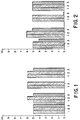
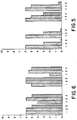
- FIGS. 1-6 are sets of bar graphs showing dye signals for replicate PCR assays of various concentrations of both of hCMV DNA and HIV-I DNA, as described in Example 2 below.
- FIGS. 7 and 8 are sets of bar graphs showing dye signals for replicate PCR assays of various concentrations of HIV-I DNA, as described in Example 3 below.
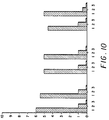
- FIGS. 9 and 10 are sets of bar graphs showing dye signals for replicated PCR assays of various concentrations of hCMV DNA, as described in Example 5 below.
- the present invention is directed to the amplification and detection of two or more specific nucleic acid sequences from DNA molecules associated with infectious agents in a test specimen.
- specimens can include bacterial or viral material, hair, body fluids or cellular materials containing DNA which can be detected.
- Bacteria which can be detected include bacteria found in human blood, Salmonella species, Streptococcus species, Chlamydia species, Gonococcal species, Mycobacterium tuberculosis, Mycobacterium fortuitum, Mycobacterium avium complex, Legionella pneumopbila, Clostridium difficile, Borrelia burgdorferei, Pneumocystis carinii, Mycoplasma Haemophilus influenzae , Shigella species and Listeria species.
- Viruses which are detectable include cytomegalovirus, herpes, Epstein Barr virus, influenza viruses, human papilloma virus, hepatitis and retroviruses such as HTLV-I, HTLV-II, HIV-I and HIV-II. Protozoan parasites, yeasts and molds are also detectable. Other detectable species would be readily apparent to one skilled in the art.
- the invention is particularly useful for the simultaneous amplification and detection of one or more nucleic acid sequences of a retroviral DNA (such as HTLV-I, HTLV-II, HIV-I or HIV-II DNA), human cytomegaloviral (hCMV) DNA, human papilloma viral DNA, Mycobacterium tuberculosis DNA, Mycobacterium avium DNA, hepatitis viral DNA and Pneumocystis carinii DNA.
- a retroviral DNA such as HTLV-I, HTLV-II, HIV-I or HIV-II DNA
- hCMV human cytomegaloviral
- a "target" DNA as used in this application also includes nucleic acids which are added to a test specimen to provide positive controls in an assay.
- PCR reagent refers to any of the reagents considered essential to PCR, namely primers for the target nucleic acid, a thermostable DNA polymerase, a DNA polymerase cofactor, and deoxyribonucleoside-5'-triphosphates.
- primer refers to an oligonucleotide, whether naturally occurring or synthetically produced, which is capable of acting as a point of initiation of synthesis when placed under conditions in which synthesis of a primer extension product complementary to a nucleic acid strand (that is, template) is induced.
- the primers used in this invention will have from 12 to 60 nucleotides, and preferably, they have from 20 to 40 nucleotides. More preferably, each primer in a set has from 25 to 35 nucleotides.
- the lengths of the primers in each primer set differ from each other by no more than 5 nucleotides, and preferably by no more than 2 nucleotides. Most preferably, the primers within a set have the same length.
- One set of primers used in the practice of the invention includes first and second primers which are specific to, respectively, first and second nucleic acid sequences in opposing strands of a first target DNA.
- the first and second sequences are spaced along the opposing strands from each other by from 90 to 400 nucleotides, and preferably from 100 to 300 nucleotides apart on opposing strands.
- the two primers hybridize to nucleic acid sequences which are relatively close to each other along the opposing strands.
- a second set of primers (including third and fourth primers) is used to amplify and detect third and fourth sequences of opposing strands of the same target DNA or of another target DNA from a different source. Additional sets of primers can be used to amplify and detect additional target DNA's.
- each primer in the set has a T m within the range of from 65 to 74°C, and preferably within the range of from 67 to 74°C.
- the primer T m 's are within 5°C of each other, and preferably they differ by no more than 2°C.
- the T m 's of the primers in each additional set differ from the T m 's of all other primers in the other sets of primers used in the method by no more than 5°C, and preferably by no more than 2°C.
- the additional primers also hybridize to nucleic acid sequences in the opposing strands of the particular target nucleic acid, which sequences are spaced apart along the strands by from 90 to 400 nucleotides (more preferably, from 100 to 300 nucleotides apart).
- T m melting temperature
- T m melting temperature
- the determination of T m can be accomplished using several standard procedures, based on ultraviolet hypochromism, for example, by monitoring the spectrum at 260 nm as described in Biochemistry- The Molecular Basis of Cell Structure and Function , 2nd Edition, Lehninger, Worth Publishers, Inc., 1970, pp. 876-7.
- the various methods of determining T m values may produce slightly differing values for the same DNA molecule, but those values should not vary from each other by more than 2 or 3°C.
- T m values obtained by this calculation correlate very well with the values determined empirically at room temperature using conventional UV hypochromism and a conventional Hewlett-Packard diode array spectrophotometer (scanning rate of +1°C/min.) for a solution of oligonucleotide (primer or probe) in 10 ⁇ molar tris(hydroxymethyl)aminomethane buffer (pH 8.5) having an ionic strength of at least 60 ⁇ molar provided by one or more inorganic or organic salts, such as magnesium chloride, magnesium sulfate, potassium chloride, sodium chloride, and others readily apparent to one skilled in the art.
- the amount of oligonucleotide and its complement in the solution used to determine the noted formula was sufficient to provide an optical density of from 0.5 to 1.0 OD units.
- Primers useful for the amplification and detection of HIV-I DNA include those having the sequences in the seven primer sets shown below with the T m in parenthesis:
- the primers of sets 1 and 3-7 are complementary to nucleic acid sequences in the "gag” region of HIV-I DNA, and the primers in set 2 are complementary to nucleic acid sequences in the "env” region of HIV-I DNA.
- Each primer in each set is not limited to use in that set, but can be used with any primer specific to HIV-I DNA that meets the requirements for primers described herein.
- Two primer sets useful for the amplification of nucleic acid sequences in opposing strands of HIV-II DNA have the following sequences (and T m 's):
- Primers of particular usefulness in the amplification and detection of hCMV DNA include those having the sequences in the three primer sets shown below with the T m in parenthesis:
- the primers of Set 10 are complementary to nucleic acid sequences in the "major immediate early” region of hCMV DNA
- the primers in Set 11 are complementary to nucleic acid sequences in the "major capsid protein” region of hCMV DNA
- the primers in Set 12 are complementary to nucleic acid sequences in the "late antigen” region of hCMV DNA.
- the primers noted above are not limited in use to the particular set, but can be used with any primer for hCMV DNA which has the properties noted herein.
- Matched primers useful for the amplification of human papilloma virus (hPV) DNA include:
- Matched primers useful for the amplification o f Mycobacterium tuberculosis (Mtb) DNA include:
- SEQ ID:NO:42 is slightly outside the claimed range of matched primers, but PCR is still possible using it, although not as efficiently for "multiplexing".
- a matched primer set useful for the amplification of Mycobacterium avium (Mav) DNA is as follows:
- a matched primer set useful for the amplification of the thymidine kinase gene of Herpes simplex virus 1 (HSV-1) DNA is as follows:
- Primers useful for the amplification and detection of additional target nucleic acids would be readily determinable by a skilled worker in the art by consultation with the considerable literature in this field to determine appropriate nucleic acid sequences of target nucleic acids. Those sequences can then be used as patterns for preparing primers using known technology. The primers can be readily screened by determining if they have the requisite T m (using appropriate methods defined above) and other requirements as defined above.
- a "probe” is an oligonucleotide which is substantially complementary to a nucleic acid sequence of the target nucleic acid (for example, HIV-I DNA or any additional target nucleic acid) and which is used for detection or capture of the amplified target nucleic acid.
- the probes generally have from 10 to 40 nucleotides, and a T m greater than 50°C.
- the probes are hybridizable with a nucleic acid sequence of the particular target nucleic acid at a temperature in the range of from 40 to 55°C (preferably in the range of from 45 to 53°C).
- all of the capture probes have T m 's which differ by no more than 15°C.
- Representative capture probes for HIV-I DNA include the following oligonucleotides, with the T m 's in parenthesis:
- the first listed probe is complementary to a nucleic acid sequence in the "gag” region of HIV-I DNA
- the second listed probe is complementary to a nucleic acid sequence in the "env” region of HIV-I DNA.
- Representative capture probes useful in the detection of an amplified nucleic acid sequence of HIV-II DNA include the following (with T m ):
- Representative useful capture probes for hCMV DNA include the following oligonucleotides, with the T m in parenthesis:
- the first two listed probes are complementary to nucleic acid sequences in the "major immediate early” region of hCMV DNA, the next two listed probes are complementary to nucleic acid sequences in the "late antigen” region of hCMV DNA, and the last probe is complementary to a nucleic acid sequence in the "major capsid protein” region of hCMV DNA.
- Representative probes useful for the detection of human papilloma viral (hPV) DNA include:
- Capture probes useful for the detection of Mycobacterium tuberculosis (Mtb) DNA include:
- Useful capture probes for the detection of Mycobacterium avium (Mav) DNA include:
- a useful capture probe for the detection of Mycobacterium fortuitum DNA is:
- a useful capture probe for the detection of the thymidine kinase gene of herpes simple virus 1 (HSV-1) DNA is as follows:
- Probes useful for the detection or capture of additional target nucleic acids would be readily apparent to one skilled in the art if the targeted nucleic acid sequences are known. Thus, the practice of this invention is adequately enabled by knowing those sequences and following the representative teaching herein regarding primers and probes actually shown. Presently, unknown target nucleic acids will also be similarly amplified and detected because this technology could predictably be used in a similar fashion. Potential probes can be screened to see if they have the requisite T m as defined above. Such probes can be prepared using the same procedures and starting reagents described for primers above.
- PCR reagents necessary for PCR include a thermostable DNA polymerase, a DNA polymerase cofactor and appropriate dNTP's. These reagents can be provided individually, as part of a test kit, in reagent chambers of a test device, or in the composition of this invention.
- thermostable DNA polymerase is an enzyme which will add deoxynucleoside monophosphate molecules to the 3' hydroxy end of the primer in a complex of primer and template. Synthesis of extension products proceeds in the 5' to 3' direction of the newly synthesized strand until synthesis is terminated.
- the DNA polymerase is "thermostable” meaning that it is stable to heat and preferentially active at higher temperatures, especially the high temperatures used for priming and extension of DNA strands.
- thermostable DNA polymerases have been reported in the art, including those mentioned in detail in US-A-4,965,188 and US-A-4,889,818. Particularly useful polymerases are those obtained from various Thermus bacterial species, such as Thermus aquaticus, Thermus thermophilus, Thermus filiformis or Thermus flavus. Other useful thermostable polymerases are obtained from a variety of other microbial sources including Thermococcus literalis, Pyrococcus furiosus, Thermotoga sp. and those described in WO-A-89/06691.
- a DNA polymerase cofactor refers to a nonprotein compound on which the enzyme depends for activity.
- cofactors including manganese or magnesium in such a form that divalent cations are released into an aqueous solution.
- Useful cofactors include manganese and magnesium salts, such as chlorides, sulfates, acetates and fatty acid salts (for example, butyric, caproic, caprylic, capric and lauric acid salts).
- dNTP's deoxyribonucleoside-5'-triphosphates
- dATP deoxyribonucleoside-5'-triphosphate
- dCTP deoxyribonucleoside-5'-triphosphate
- dGTP deoxyribonucleoside-5'-triphosphate
- dTTP deoxyribonucleoside-5'-triphosphate
- dITP deoxyribonucleoside-5'-triphosphate
- dITP and 7-deaza-dGTP are also useful.
- the preferred materials, dATP, dCTP, dGTP and dTTP are used collectively in the assays.
- the PCR reagents described herein are provided and used in PCR in any concentration suitable for a given process.
- from 0.1 to 50 units of thermostable DNA polymerase per 100 ⁇ l of reaction mixture are used for PCR, depending upon the particular activity of a given enzyme.
- a "unit" is defined herein as the amount of enzyme activity required to incorporate 10 nmoles of total nucleotides (dNTP's) into an extending nucleic acid chain in 30 minutes at 74°C. More preferably, from 10 to 40 units of DNA polymerase/100 ⁇ l of solution are used.
- the amount of primer is at least 0.075 ⁇ molar with from 0.1 to 2 ⁇ molar being preferred.
- each primer is present in the same amount.
- the cofactor is generally present in an amount of from 2 to 15 ⁇ molar.
- Each dNTP is present at from 0.25 to 3.5 ⁇ molar (1 to 14 ⁇ molar for total of four common dNTP's).
- the aqueous composition of this invention is buffered to a pH of from 7 to 9 (preferably from 8 to 8.5) using one or more suitable buffers.
- a particularly useful composition of this invention is a buffered mixture of the primers noted herein, a magnesium cofactor as noted above, each of dATP, dCTP, dGTP and dTTP as noted above, gelatin or a similar hydrophilic colloidal material (in an amount of at least 5%, by weight), and an alkali metal salt (such as sodium chloride or potassium chloride) present in an amount of from 10 to 100 ⁇ molar.
- an alkali metal salt such as sodium chloride or potassium chloride
- a method for preparing a reaction mixture for polymerase chain reaction of two or more target DNA's comprises:
- a target nucleic acid can be obtained from any of a variety of sources as noted above, such as a whole blood sample. Generally, it is extracted in some manner to make it available for contact with the primers and other PCR reagents. This usually means removing unwanted proteins and cellular matter from the specimen in a suitable manner.
- the nucleic acid to be amplified and detected is usually in double stranded form, the two strands must be separated (that is, denatured) before priming can take place. This can occur during the extraction process, or be a separate step afterwards. Denaturation is accomplished using a heat treatment alone or in combination with any suitable other physical, chemical or enzymatic means as described in the art. Initial denaturation is generally carried out by heating the specimen suspected of containing the targeted nucleic acid at a first temperature of from 85 to 100°C for a suitable time, for example from 1 second to 3 minutes.
- the denatured strands are then cooled to a second temperature which is generally in the range of from 55 to 70°C for priming the strands.
- the time needed for cooling the denatured strands will vary depending upon the type of apparatus used for the PCR process.
- the reaction mixture containing PCR reagents is incubated at a suitable temperature to effect formation of primer extension products.
- this temperature is at least 50°C, and preferably in the range of from 62 to 75°C.
- the time for incubation can vary widely depending upon the incubation temperature and the length of extension products desired, but in preferred embodiments, it is from 1 to 120 seconds.
- Each cycle of PCR can be carried out using either two or three different temperatures, one for denaturation, and a second and/or third temperature for priming and/or primer extension product formation. That is, some PCR processes utilize a second temperature for priming and a third temperature for primer extension. Preferably, in the practice of this invention, the same temperature is used for both priming and primer extension.
- PCR can be carried out further in as many cycles of priming, extension and denaturation as desired. Generally, at least 20 cycles will be carried out, with from 20 to 50 cycles being preferred.
- this instrument includes a heat conducting container for holding a number of reaction tubes containing reaction mixture, a means for heating, cooling and temperature maintenance, and a computing means to generate signals to control the amplification process, changes in temperature and timing.
- a preferred instrument for processing amplification reactions in a disposable chemical test pack is described in some detail in US-A-5,089,233 (Devaney et al).
- this instrument comprises a surface for supporting one or more chemical test packs, pressure applicators supported above the surface for acting on the reaction pack to transfer fluids between adjacent chambers in the test pack, and means for operating the pressure applicators through a range of movements extending across the test pack.
- a suitable container It is also useful for the method of this invention to be carried out in a suitable container.
- the most crude container would be a test tube, cuvette, flask or beaker, but more sophisticated containers have been fashioned in order to facilitate automated procedures for performing the method (see for example, WO-A-91/12342).
- cuvette and chemical test packs also known as pouches
- Such test packs have a multiplicity of reagent chambers having various reagents, buffers and other materials which are useful at various stages in the amplification or detection method.
- the aqueous composition of this invention can be incorporated into a reaction chamber for use in PCR.
- the packs can be appropriately and rapidly heated and cooled in cycles to promote the various steps of the amplification method of this invention.
- Detection of the amplified target DNA's can be accomplished in a number of known ways, such as those described in US-A-4,965,188. For example, it can be detected using Southern blotting or dot blot techniques. Alternatively, amplification can be carried out using primers that are appropriately labeled (such as with a radioisotope), and the amplified primer extension products are detected using procedures and equipment for detection of radioisotopic emissions.
- the amplified target nucleic acid is detected using an oligonucleotide probe which is labeled for detection and can be directly or indirectly hybridized with one of the primer extension products.
- Procedures for attaching labels and preparing probes are well known in the art, for example, as described by Agrawal et al, Nucleic Acid Res. , 14 , pp. 6227-45 (1986), US-A-4,914,210, US-A-4,962, 029, and the references noted therein.
- Useful labels include radioisotopes, electron-dense reagents, chromogens, fluorogens, phosphorescent moieties, ferritin and other magnetic particles (see US-A-4,795,698 and US-A-4,920,061, chemiluminescent moieties and enzymes.
- Useful enzymes include, glucose oxidase, peroxidases, uricase, alkaline phosphatase and others known in the art and can be attached to oligonucleotides using known procedures. Substrate reagents which provide a chemiluminescent or colorimetric signal in the presence of a particular enzyme label would be readily apparent to one skilled in the art.
- the label is a preferred enzyme such as a peroxidase
- hydrogen peroxide and a suitable dye-forming composition are added to provide a detectable dye (that is, a colorimetric signal).
- useful dye-providing reagents include tetramethylbenzidine and derivatives thereof, and leuco dyes, such as triarylimidazole leuco dyes (as described in US-A-4,089,747), or other compounds which react to provide a dye in the presence of peroxidase and an oxidant such as hydrogen peroxide.
- leuco dyes such as triarylimidazole leuco dyes (as described in US-A-4,089,747)
- Particularly useful dye-providing compositions are described in US-A-5,024,935. Chemiluminescent signals can be generated using acridinium salts or luminol and similar compounds in combination with enhancers in the presence of peroxidase.
- one or both of the primers in each primer set used to detect a target nucleic acid is labeled with a specific binding moiety.
- the specific binding moiety can be the same or different for each set of primers.
- Such labels include any molecule for which there is a receptor molecule that reacts specifically with the specific binding moiety. Examples of specific binding pairs (one of which can be the label) include avidin/biotin, streptavidin/biotin, sugar/lectin, antibody/hapten and antibody/antigen.
- the receptor is then conjugated with a detectable label moiety, such as an enzyme using known technology.
- one or both primers of each primer set are labeled with biotin (or a equivalent derivative thereof), and the amplified target nucleic acid is detected using a conjugate of avidin (or streptavidin) with an enzyme.
- the amplified target nucleic acid In order for the amplified target nucleic acid to be detected, it is often useful for it to be separated from the other materials in the reaction medium. This is done by any of a number of ways, including using a capture reagent having a capture probe which is covalently attached to a water-insoluble support.
- the capture probe hybridizes with the amplified target nucleic acid and the captured material can then be separated from unhybridized materials in a suitable manner, such as by filtration, centrifugation, washing or other suitable separation techniques.
- Capture probes can be attached to water-insoluble supports using known attachment techniques.
- One such technique is described in EP-A-0 439 222.
- Other techniques are described for example in US-A-4,713,326, US-A-4,914,210 and EP-B-0 070 687.
- Useful separation means are microporous filtration membranes such as the polyamide membranes marketed by Pall Corp. which can be used to separate captured target nucleic acids from unhybridized materials.
- Any useful solid support can be used for separation of water-insoluble product for detection, including a microtiter plate, test tube, beaker, beads, film, membrane filters, filter papers, gels, magnetic particles or glass wool. It can be made of a number of materials including glass, ceramics, metals, naturally occurring or synthetic polymers, cellulosic materials, filter materials and others readily apparent to one of ordinary skill in the art. Particularly useful solid support materials are polymeric or magnetic particles generally having an average particle size of from 0.001 to 10 ⁇ meters. Further details about such preferred polymeric particles are provided in US-A-4,997,772, US-A-5,147,777, US-A-5,155,166.
- the detection can also be carried out by immobilizing a capture probe or capture reagent on a flat substrate, such as the microporous filtration membranes described above, or on thin polymeric films, uncoated papers or polymer coated papers, a number of which are known in the art. Other details about such materials are provided in EP-A-0 408 738.
- a capture reagent is described, for example, in WO 92/16659 and US-A-5,173,260.
- the capture probes are covalently attached (either directly or through chemical linking groups) to the same type of polymeric particles, and the resulting capture reagents are immobilized on a heat or ultrasonic sealable support (for example, a sheet, membrane, fibrous mat, film).
- a heat or ultrasonic sealable support for example, a sheet, membrane, fibrous mat, film.
- One particularly useful sealable support is a laminate of polyethylene and a polyester such as polyethylene terephthalate.
- the capture reagents can be disposed in distinct regions on the water-insoluble support which is part of a suitable test device (as described above). Such test devices can also be defined as diagnostic elements.
- the support can have disposed thereon a plurality of stripes or spots of various capture reagents.
- the multiplicity of capture probes arranged in defined regions on such supports all have the T m values as described above, that is the T m values differ by no more than 15°C (preferably by no more than 5°C).
- a diagnostic element comprises a water-insoluble, heat or ultrasonic sealable support, having disposed thereon in distinct regions thereof, a plurality (two or more) of capture reagents, each of the capture reagents having a capture probe specific for and hybridizable with a distinct (that is, unique to that capture probe) target DNA associated with an infectious agent at a temperature of from 40 to 55°C, each of the capture probes having from 10 to 40 nucleotides and a T m greater than 50°C, and the T m 's of all capture probes differing by no more than 15°C.
- the present invention includes diagnostic test kits which can include the composition of this invention, an additional PCR reagent and other materials, equipment and instructions needed to carry out the method of the invention.
- the kits can include one or more detection or capture probes, multiple primer sets and test devices for the assays.
- the kit components are separately packaged for use in a suitable container or test device.
- the kit contains a test device having within separate compartments, some or all of the reagents and compositions needed for the assay.
- the separate packaging of the kit components can be within a single test device.
- Recombinant DNA polymerase from Thermus aquaticus was prepared using known procedures, such as that described in EP-A-0 482 714 and had an activity of 250,000 units/mg of protein.
- the primers and probes were prepared using known starting materials and procedures using an Applied Biosystems Model 380B, three column DNA synthesizer using standard phosphoramidite chemistry and the ABI 1 ⁇ molar scale, fast cycle protocol. Nucleoside-3'-phosphoramidites and nucleoside derivatized controlled pore glass supports were obtained from Applied Biosystems.
- the primers had the sequences identified above. They were functionalized at the 5' end with two tetraethylene glycol spacers followed by a single commercially available DuPont biotin phosphoramidite.
- the probes were functionalized at the 3' end with two tetraethylene glycol spacers followed by a single aminodiol linking group according to US-A-4,914,210. All purifications were carried out using a nucleic acid purification column, followed by reversed phase HPLC techniques.
- the monoclonal antibody specific to the noted DNA polymerase was prepared as described in EPC Application 93202801.2. Generally, it was prepared from the immune cells of DNA polymerase immunized mice using conventional procedures, such as those described by Milstein et al, Nature 256 , pp. 495-497, 1975 and hybridoma cell lines (either HB 11126 or 11127 from ATCC), whereby antibody secreting cells of the host animal were isolated from lymphoid tissue (such as the spleen) and fused with SP2/0-Ag14 murine myeloma cells in the presence of polyethylene glycol, diluted into selective media and plated in multiwell tissue culture dishes. About 7-14 days later, the hybridoma cells containing the antibodies were harvested, and purified using conventional techniques.
- An avidin-peroxidase conjugate solution comprised a commercially available (Zymed Laboratories, Inc.) conjugate of avidin and horseradish peroxidase (126 ⁇ l/l), casein (0.5%) and merthiolate (0.5%).
- a wash solution contained sodium phosphate, monobasic 1-hydrate (25 ⁇ molar), sodium chloride (373 ⁇ molar), (ethylenedinitrilo)tetracetic acid disodium salt (2.5 ⁇ molar), ethylmercurithiosalicylic acid sodium salt (25 ⁇ molar), and decyl sodium sulfate (38 ⁇ molar).
- the dye-providing composition contained 4,5-bis(4-dimethylaminophenyl)-2-(4-hydroxy-3-methoxyphenyl)imidazole (250 ⁇ molar), poly(vinyl pyrrolidone) (112 ⁇ molar), agarose (0.5%), diethylenetriaminepentaacetic acid (100 ⁇ molar), 4'-hydroxyacetanilide (5 ⁇ molar) and sodium phosphate, monobasic, 1-hydrate (10 ⁇ molar).
- HIV-I DNA was extracted from the HUT/AAV 78 cell line using conventional procedures, and following cell lysis and protein digestion, was purified by phenol/chloroform extraction: tris-saturated phenol (750 ⁇ l) was added to the cell suspension, and phenol/lysate solutions were mixed and separated by centrifugation. The aqueous phase was then transferred into a fresh 2 ml tube. This procedure was repeated using chloroform isoamyl alcohol. The aqueous layer was brought to 0.3 molar sodium acetate. Nucleic acids were precipitated by adding 95% cold ethanol and storing at -70°C for 1 hour.
- the concentration of HIV-I DNA was then determined at A260 and serial dilutions of varying copy number were made in TE buffer [tris(hydroxymethyl)aminomethane (1 ⁇ molar) and (ethylenedinitrilo)tetraacetic acid (0.1 ⁇ molar)] for experimental use.
- TE buffer tris(hydroxymethyl)aminomethane (1 ⁇ molar) and (ethylenedinitrilo)tetraacetic acid (0.1 ⁇ molar)
- a sample (10 ⁇ l) of the diluted solutions was added to each PCR reaction mixture (300 ⁇ l).
- Pure hCMV DNA was obtained by purifying commercially available crude hCMV DNA (Advanced Biotech's strain AD169) using a conventional sucrose gradient and phenol/chloroform extraction procedures. The concentration of hCMV DNA was then determined at A260 and target dilutions of varying calculations of copy number were made for experimental use in TE buffer [tris(hydroxymethyl)aminomethane (1 ⁇ molar), ethylenediaminetetraacetic acid (0.1 ⁇ molar)]. A sample (10 ⁇ l) of the diluted solutions was added to 300 ⁇ l of PCR reaction mixture.
- Capture reagents were prepared by attaching the capture probes identified above to particles of poly[styrene- co -3-( p -vinylbenzylthio)propionic acid] (95:5 molar ratio, 1 ⁇ m average diameter) in the following manner. A suspension of the particles in water was washed twice with 2-(N-morpholino)ethanesulfonic acid buffer (0.1 molar, pH 6), and suspended to approximately 10% solids.
- the resulting suspension was heated at 50°C in a water bath for about two hours with intermittent mixing and centrifuged.
- the particles were washed three times with tris (hydroxy-methyl) aminomethane buffer (0.01 molar, pH 8) containing (ethylenedinitrilo)tetraacetic acid disodium salt (0.0001 molar) and resuspended therein to 4% solids.
- Capture probes used for the detection of amplified HIV-I DNA were SEQ ID:NO:6 and SEQ ID:NO:7, with the first one being for the "gag” region of HIV-I DNA and the second one for the "env" region of HIV-I DNA.
- Control capture reagents were similarly prepared using the "nonsense" probes identified above.
- a capture reagent for hCMV DNA was prepared as described above using the following capture probe (T m ):
- composition of this invention was prepared by mixing primers with additional PCR reagents.
- This composition contained tris(hydroxymethyl)aminomethane hydrochloride buffer (10 ⁇ molar, pH 8), tris(hydroxymethyl)aminomethane buffer (6.86 ⁇ molar), potassium chloride (50 ⁇ molar), ethylenediaminetetraacetic acid (686 ⁇ molar), magnesium chloride (10 ⁇ molar), gelatin (100 ⁇ g/ml), dATP, dCTP, dGTP and dTTP (1.5 ⁇ molar of each), glycerol (9.5%), primers (0.4 ⁇ molar of each), DNA polymerase identified above (48 units/300 ⁇ l), and a monoclonal antibody specific to DNA polymerase identified above (50:1 molar ratio to DNA polymerase).
- the primers included were those identified as SEQ ID:NO:1 and SEQ ID:NO:5 which are specific to nucleic acid sequences in the "gag” region of HIV-I DNA, and SEQ ID:NO:3 and SEQ ID:NO:4 which are specific to nucleic acid sequences in the "env" region of HIV-I DNA.
- the composition also contained phenol/chloroform purified CEM cells (normal uninfected lymphocytes, at either 2.75 or 6 ⁇ g/300 ⁇ l) to simulate a human blood sample.
- Example 1 demonstrates the practice of the present invention using the composition described in Example 1 to simultaneously detect HIV-I DNA along with hCMV DNA, except that the composition further contained 0.4 ⁇ molar of each of the primers identified above as SEQ ID:NO:10 and SEQ ID:NO:11.
- Denature by heating at 95°C for 60 seconds, 40 cycles of priming and extending at 68°C for 30 seconds, and heating at 94°C for 15 seconds.
- the results of the assays (two replicates of each assay) of Samples a)-f), are shown in the bar graphs of FIGS. 1-6, respectively, where the dye signal is shown in the y-axis (where "0" represents no dye signal, and "10" represents highest dye density).
- the first set of bar graphs are assays whereby 2.75 ⁇ g CEM cells were present
- the second set of bar graphs are assays whereby 6 ⁇ g CEM cells were present.
- the first bar (identified as “1") in each set of bars represents the signal from hCMV DNA ("late antigen” region)
- the second bar (identified as “2”) represents the signal from HIV-I DNA ("gag” region)
- the third bar (identified as “3”) represents the signal from HIV-I DNA ("env” region).
- the dye signals for both Control capture reagents were essentially zero, so they are not illustrated on the bar graphs.
- Example 2 This example was carried out similarly to Example 2 for the amplification and detection of two nucleic acid sequences of HIV-I DNA ("gag” and "env” regions) only in Samples a)-f) using the composition of Example 1 (6 ⁇ g CEM cells only).
- FIG. 7 shows the dye signal results of the PCR process for the two replicates of each of Samples a)-c), and FIG. 8 shows the dye signal results of the PCR process for the replicates of each of Samples d)-f). Clear signals were observed for the presence of HIV-I DNA (bars identified as “2" and “3”). Small background signals were also observed (bar identified as "1" in each set of bar graphs).
- composition of this invention was prepared by mixing primers with additional PCR reagents.
- This composition contained tris(hydroxymethyl)aminomethane hydrochloride buffer (10 ⁇ molar, pH 8), potassium chloride (50 ⁇ molar), magnesium chloride (10 ⁇ molar), gelatin (100 ⁇ g/ml), dATP, dCTP, dGTP and dTTP (1.5 ⁇ molar of each), glycerol (7.5%), primers (0.4 ⁇ molar of each), DNA polymerase identified above (48 units/300 ⁇ l), and a monoclonal antibody specific to DNA polymerase identified above (50:1 molar ratio to DNA polymerase).
- the primers included were those identified as SEQ ID:NO:10 and 11 which are specific to nucleic acid sequences of hCMV DNA.
- the composition also contained phenol/chloroform purified CEM cells (normal uninfected lymphocytes, at either 2.75 or 6 ⁇ g/300 ⁇ l) to simulate a human blood sample.
- Example 4 This example was carried out similarly to Example 2 for the amplification and detection of hCMV DNA ("late antigen" region only) in Samples a)-f) using the composition of Example 4 (2.75 ⁇ g CEM cells only).
- FIG. 9 shows the dye signal results of the PCR process for the two replicates of each of Samples a)-c), and FIG. 10 shows the dye signal results of the PCR process for the replicates of each of Samples d)-f).
- Clear signals were observed for the presence of hCMV DNA (bar graphs labeled "1").
- Small background signals were also observed (labeled as “2" and “3", respectively in each set of bar graphs) from the presence of HIV-I DNA ("gag” and "env” regions).
Landscapes
- Chemical & Material Sciences (AREA)
- Life Sciences & Earth Sciences (AREA)
- Health & Medical Sciences (AREA)
- Organic Chemistry (AREA)
- Proteomics, Peptides & Aminoacids (AREA)
- Zoology (AREA)
- Wood Science & Technology (AREA)
- Engineering & Computer Science (AREA)
- Immunology (AREA)
- Analytical Chemistry (AREA)
- Virology (AREA)
- Biotechnology (AREA)
- Molecular Biology (AREA)
- Microbiology (AREA)
- Physics & Mathematics (AREA)
- Biophysics (AREA)
- Biochemistry (AREA)
- Bioinformatics & Cheminformatics (AREA)
- General Engineering & Computer Science (AREA)
- General Health & Medical Sciences (AREA)
- Genetics & Genomics (AREA)
- AIDS & HIV (AREA)
- Measuring Or Testing Involving Enzymes Or Micro-Organisms (AREA)
Applications Claiming Priority (6)
| Application Number | Priority Date | Filing Date | Title |
|---|---|---|---|
| US62023 | 1987-06-15 | ||
| US62021 | 1993-05-14 | ||
| US08/062,022 US5403707A (en) | 1993-05-14 | 1993-05-14 | Diagnostic compositions, elements, methods and test kits for amplification and detection of retroviral DNA using primers having matched melting temperatures |
| US08/062,021 US6709813B1 (en) | 1993-05-14 | 1993-05-14 | Diagnostic compositions, elements, methods and test kits for amplification and detection of human CMV DNA using primers having matched melting temperatures |
| US08/062,023 US6174668B1 (en) | 1993-05-14 | 1993-05-14 | Diagnostic compositions, elements, methods and test kits for amplification and detection of two or more target DNA's using primers having matched melting temperatures |
| US62022 | 2002-01-31 |
Publications (2)
| Publication Number | Publication Date |
|---|---|
| EP0630973A2 true EP0630973A2 (fr) | 1994-12-28 |
| EP0630973A3 EP0630973A3 (fr) | 1995-04-26 |
Family
ID=27370197
Family Applications (1)
| Application Number | Title | Priority Date | Filing Date |
|---|---|---|---|
| EP94201349A Withdrawn EP0630973A3 (fr) | 1993-05-14 | 1994-05-11 | Compositions de diagnostic, éléments, procédés et kits pour tests d'amplification et de détection de deux ou plusieurs ADN's utilisant des amorces à températures de fusion-adaptés. |
Country Status (3)
| Country | Link |
|---|---|
| EP (1) | EP0630973A3 (fr) |
| JP (2) | JPH06319597A (fr) |
| SG (1) | SG63589A1 (fr) |
Cited By (15)
| Publication number | Priority date | Publication date | Assignee | Title |
|---|---|---|---|---|
| EP0648845A3 (fr) * | 1993-07-08 | 1995-09-06 | Eastman Kodak Co | Procédé pour la coamplification de deux acides nucléiques différentes utilisant la réaction en chaîne de polymérase. |
| FR2786786A1 (fr) * | 1998-12-07 | 2000-06-09 | Microdiag | Procede et kit pour l'amplification, la detection et/ou la quantification de populations de genomes |
| EP0774518A3 (fr) * | 1995-11-15 | 2000-11-22 | Gen-Probe Incorporated | Sondes d'acides nucléiques complémentaires aux acides nucléiques du virus du Papillome humain, procédés associés et trousse d'essais |
| EP0865503A4 (fr) * | 1995-11-03 | 2001-05-16 | Kelly J Henrickson | Procede de detection de virus |
| EP0887427A3 (fr) * | 1997-06-25 | 2001-10-17 | Ortho-Clinical Diagnostics, Inc. | Amplification et détection du HIV-1 et/or HIV-2 |
| WO2000060123A3 (fr) * | 1999-04-06 | 2002-01-24 | Genome Technologies Llc | Procede de selection d'amorces pour l'amplification d'acides nucleiques |
| WO2001079548A3 (fr) * | 2000-04-14 | 2003-02-06 | Cornell Res Foundation Inc | Procede de conception d'un reseau adressable dans la detection de differences de sequences d'acides nucleiques, au moyen d'une reaction de detection de ligase |
| AU766744B2 (en) * | 1995-11-15 | 2003-10-23 | Gen-Probe Incorporated | Nucleic acid probes complementary to human papillomavirus nucleic acid and related methods and kits |
| WO2006013144A3 (fr) * | 2004-08-06 | 2006-06-01 | Genomadrid S A | Procede de detection et numeration in-vitro de l'adn du vih par pcr quantitative |
| DE102008025328A1 (de) | 2008-05-27 | 2009-12-03 | DRK-Blutspendedienst Baden-Württemberg-Hessen gGmbH | Zusammensetzung und Verfahren zur Amplifikation von HI-Viren mittels Multiplex-PCR in multiplen Genombereichen |
| US7943346B2 (en) | 1994-09-12 | 2011-05-17 | Geneohm Sciences Canada Inc. | Probes and primers for detection of bacterial pathogens and antibiotic resistance genes |
| US8034588B2 (en) | 1997-11-04 | 2011-10-11 | Geneohm Sciences Canada Inc. | Species-specific, genus-specific and universal DNA probes and amplification primers to rapidly detect and identify common bacterial and fungal pathogens and associated antibiotic resistance genes from clinical specimens for diagnosis in microbiology laboratories |
| US8114601B2 (en) | 1999-09-28 | 2012-02-14 | Geneohm Sciences Canada Inc. | Highly conserved genes and their use to generate probes and primers for detection of microorganisms |
| US8426137B2 (en) | 1996-11-04 | 2013-04-23 | Genohm Sciences Canada, Inc. | Methods and probes for detecting a vancomycin resistance gene |
| AU2011210734B2 (en) * | 2010-01-29 | 2017-02-09 | Qiagen Gaithersburg, Inc. | Methods and compositions for sequence-specific purification and multiplex analysis of nucleic acids |
Families Citing this family (1)
| Publication number | Priority date | Publication date | Assignee | Title |
|---|---|---|---|---|
| EP1111044A4 (fr) * | 1998-09-08 | 2003-06-04 | Takara Shuzo Co | Procede de synthese de l'adn |
Family Cites Families (16)
| Publication number | Priority date | Publication date | Assignee | Title |
|---|---|---|---|---|
| AU3694689A (en) * | 1988-04-28 | 1989-11-24 | Mark H. Skolnick | Amplified sequence polymorphisms (asps) |
| WO1990001564A1 (fr) * | 1988-08-09 | 1990-02-22 | Microprobe Corporation | Procedes d'analyse a cibles multiples par hybridation d'acides nucleiques |
| CA1339731C (fr) * | 1988-10-12 | 1998-03-17 | Charles T. Caskey | Amplification multiplex de l'dn genomique pour la detection de la detection de la deletion |
| DE3838269A1 (de) * | 1988-11-11 | 1990-05-17 | Behringwerke Ag | Nachweis humaner papillomavirus dna und ihrer expression in zervix-abstrichen |
| CA2012983A1 (fr) * | 1989-03-27 | 1990-09-27 | Sydney Brenner | Procede pour la detection de l'acide nucleique par amplification binaire |
| FR2645878B1 (fr) * | 1989-04-17 | 1994-02-25 | Institut Nal Sante Recherc Medic | Sequences nucleotidiques d'actinomycetales, applications a la synthese ou a la detection d'acides nucleiques, produits d'expression de ces sequences et application en tant que compositions immunogenes |
| JP2802125B2 (ja) * | 1989-06-23 | 1998-09-24 | キヤノン株式会社 | 核酸の検出方法 |
| AU6164890A (en) * | 1989-08-10 | 1991-03-11 | Northwestern University | Method of identifying herpesviruses and oligonucleotides for use therein |
| US5231015A (en) * | 1989-10-18 | 1993-07-27 | Eastman Kodak Company | Methods of extracting nucleic acids and pcr amplification without using a proteolytic enzyme |
| WO1992004458A1 (fr) * | 1990-09-11 | 1992-03-19 | The Brookdale Hospital Medical Center | Procede de depistage de la resistance aux medicaments |
| FR2667079B1 (fr) * | 1990-09-26 | 1993-08-13 | Genset Sa | Procedes, oligonucleotides amorces et oligonucleotides sondes pour la detection de bacteries pathogenes de la cavite buccale. |
| IT1244462B (it) * | 1990-12-06 | 1994-07-15 | Sclavo Spa | Oligonucleotidi sintetici utili per la diagnosi di infezione da tipi diversi di virus del gruppo papilloma e loro utilizzazione |
| JPH05507206A (ja) * | 1990-12-20 | 1993-10-21 | エフ.ホフマン ― ラ ロシュ アーゲー | レジオネラ種の検出用pcrプライマーおよびハイブリダイゼーションアッセイにおける光学的強度の調整方法 |
| JPH0830704B2 (ja) * | 1991-03-21 | 1996-03-27 | イーストマン コダック カンパニー | 核酸増幅のための要素および方法ならびに付着プローブを使用する検出方法 |
| JPH0549477A (ja) * | 1991-08-05 | 1993-03-02 | Wakunaga Pharmaceut Co Ltd | スタフイロコツカス属細菌類の検出 |
| EP0528306B1 (fr) * | 1991-08-15 | 1999-11-17 | F. Hoffmann-La Roche Ag | Paire d'amorces pour la détection de mycobactérium |
-
1994
- 1994-05-11 SG SG1996005346A patent/SG63589A1/en unknown
- 1994-05-11 EP EP94201349A patent/EP0630973A3/fr not_active Withdrawn
- 1994-05-13 JP JP6099772A patent/JPH06319597A/ja active Pending
-
2004
- 2004-11-22 JP JP2004336960A patent/JP2005095184A/ja active Pending
Cited By (29)
| Publication number | Priority date | Publication date | Assignee | Title |
|---|---|---|---|---|
| EP0648845A3 (fr) * | 1993-07-08 | 1995-09-06 | Eastman Kodak Co | Procédé pour la coamplification de deux acides nucléiques différentes utilisant la réaction en chaîne de polymérase. |
| US7943346B2 (en) | 1994-09-12 | 2011-05-17 | Geneohm Sciences Canada Inc. | Probes and primers for detection of bacterial pathogens and antibiotic resistance genes |
| EP0865503A4 (fr) * | 1995-11-03 | 2001-05-16 | Kelly J Henrickson | Procede de detection de virus |
| US9194008B2 (en) | 1995-11-15 | 2015-11-24 | Gen-Probe Incorporated | Hybridization assay detection probes for detecting human papilloma virus in a sample |
| US8501410B2 (en) | 1995-11-15 | 2013-08-06 | Gen-Probe Incorporated | Oligonucleotides for detecting human papilloma virus in a test sample |
| US7470512B2 (en) | 1995-11-15 | 2008-12-30 | Gen-Probe Incorporated | Oligonucleotides for use in determining the presence of human papilloma virus in a test sample |
| EP0774518A3 (fr) * | 1995-11-15 | 2000-11-22 | Gen-Probe Incorporated | Sondes d'acides nucléiques complémentaires aux acides nucléiques du virus du Papillome humain, procédés associés et trousse d'essais |
| US7355034B2 (en) | 1995-11-15 | 2008-04-08 | Gen-Probe Incorporated | Oligonucleotides for use in determining the presence of human papilloma virus in a test sample |
| US6583278B1 (en) | 1995-11-15 | 2003-06-24 | Gen-Probe Incorporated | Nucleic acid probes complementary to human papilloma virus nucleic acid |
| AU766744B2 (en) * | 1995-11-15 | 2003-10-23 | Gen-Probe Incorporated | Nucleic acid probes complementary to human papillomavirus nucleic acid and related methods and kits |
| US8426137B2 (en) | 1996-11-04 | 2013-04-23 | Genohm Sciences Canada, Inc. | Methods and probes for detecting a vancomycin resistance gene |
| EP0887427A3 (fr) * | 1997-06-25 | 2001-10-17 | Ortho-Clinical Diagnostics, Inc. | Amplification et détection du HIV-1 et/or HIV-2 |
| US8034588B2 (en) | 1997-11-04 | 2011-10-11 | Geneohm Sciences Canada Inc. | Species-specific, genus-specific and universal DNA probes and amplification primers to rapidly detect and identify common bacterial and fungal pathogens and associated antibiotic resistance genes from clinical specimens for diagnosis in microbiology laboratories |
| US8067207B2 (en) | 1997-11-04 | 2011-11-29 | Geneohm Sciences Canada Inc. | Species-specific, genus-specific and universal DNA probes and amplification primers to rapidly detect and identify common bacterial and fungal pathogens and associated antibiotic resistance genes from clinical specimens for diagnosis in microbiology laboratories |
| WO2000034528A1 (fr) * | 1998-12-07 | 2000-06-15 | Microdiag | Procede et kit pour l'amplification, la detection et/ou la quantification de populations de genomes |
| FR2786786A1 (fr) * | 1998-12-07 | 2000-06-09 | Microdiag | Procede et kit pour l'amplification, la detection et/ou la quantification de populations de genomes |
| WO2000060123A3 (fr) * | 1999-04-06 | 2002-01-24 | Genome Technologies Llc | Procede de selection d'amorces pour l'amplification d'acides nucleiques |
| US10047404B2 (en) | 1999-09-28 | 2018-08-14 | Geneohm Sciences Canada, Inc. | Highly conserved tuf genes and their use to generate probes and primers for detection of coagulase-negative Staphylococcus |
| US8114601B2 (en) | 1999-09-28 | 2012-02-14 | Geneohm Sciences Canada Inc. | Highly conserved genes and their use to generate probes and primers for detection of microorganisms |
| US8182996B2 (en) | 1999-09-28 | 2012-05-22 | Geneohm Sciences Canada Inc. | Compositions and methods for detecting Klebsiella pneumoniae |
| US8492085B2 (en) | 2000-04-14 | 2013-07-23 | Cornell Research Foundation, Inc. | Method of designing addressable array suitable for detection of nucleic acid sequence differences using ligase detection reaction |
| US7455965B2 (en) | 2000-04-14 | 2008-11-25 | Cornell Research Foundation, Inc. | Method of designing addressable array for detection of nucleic acid sequence differences using ligase detection reaction |
| US9340834B2 (en) | 2000-04-14 | 2016-05-17 | Cornell Research Foundation, Inc. | Method of designing addressable array suitable for detection of nucleic acid sequence differences using ligase detection reaction |
| US9725759B2 (en) | 2000-04-14 | 2017-08-08 | Cornell Research Foundation, Inc. | Method of designing addressable array suitable for detection of nucleic acid sequence differences using ligase detection reaction |
| WO2001079548A3 (fr) * | 2000-04-14 | 2003-02-06 | Cornell Res Foundation Inc | Procede de conception d'un reseau adressable dans la detection de differences de sequences d'acides nucleiques, au moyen d'une reaction de detection de ligase |
| US10131938B2 (en) | 2000-04-14 | 2018-11-20 | Cornell Research Foundation, Inc. | Method of designing addressable array suitable for detection of nucleic acid sequence differences using ligase detection reaction |
| WO2006013144A3 (fr) * | 2004-08-06 | 2006-06-01 | Genomadrid S A | Procede de detection et numeration in-vitro de l'adn du vih par pcr quantitative |
| DE102008025328A1 (de) | 2008-05-27 | 2009-12-03 | DRK-Blutspendedienst Baden-Württemberg-Hessen gGmbH | Zusammensetzung und Verfahren zur Amplifikation von HI-Viren mittels Multiplex-PCR in multiplen Genombereichen |
| AU2011210734B2 (en) * | 2010-01-29 | 2017-02-09 | Qiagen Gaithersburg, Inc. | Methods and compositions for sequence-specific purification and multiplex analysis of nucleic acids |
Also Published As
| Publication number | Publication date |
|---|---|
| EP0630973A3 (fr) | 1995-04-26 |
| JP2005095184A (ja) | 2005-04-14 |
| JPH06319597A (ja) | 1994-11-22 |
| SG63589A1 (en) | 1999-03-30 |
Similar Documents
| Publication | Publication Date | Title |
|---|---|---|
| US6936415B1 (en) | Diagnostic compositions, elements, methods and test kits for amplification and detection of two or more DNA's using primers having matched melting temperatures | |
| US5403707A (en) | Diagnostic compositions, elements, methods and test kits for amplification and detection of retroviral DNA using primers having matched melting temperatures | |
| EP0592035B1 (fr) | Composition de polymérase d'ADN thermostable contenant un inhibiteur à température, kits pour des tests diagnostiques et son utilisation | |
| EP0702090B1 (fr) | Procédé pour la coamplification d'acide nucléique utilisant un agent d'exclusion volumique dans la composition de réaction, trousse d'analyse et dispositif de test | |
| EP0726312B1 (fr) | Procédés pour la capture et la libération sélective d'acides nucléiques | |
| US6001558A (en) | Amplification and detection of HIV-1 and/or HIV 2 | |
| CA2199337C (fr) | Preparation d'un echantillon de sang entier pour reaction en chaine par la polymerase a l'aide de chlorure d'ammonium et d'un acide carboxylique ou d'un carboxylate de metal pour lyse selective des erythrocytes | |
| EP0648845B1 (fr) | Procédé pour la coamplification de deux acides nucléiques différents utilisant la réaction en chaíne par polymérase | |
| US6475729B1 (en) | Nucleic acid amplification and detection methods using rapid polymerase chain reaction cycle | |
| EP0630973A2 (fr) | Compositions de diagnostic, éléments, procédés et kits pour tests d'amplification et de détection de deux ou plusieurs ADN's utilisant des amorces à températures de fusion-adaptés | |
| US6709813B1 (en) | Diagnostic compositions, elements, methods and test kits for amplification and detection of human CMV DNA using primers having matched melting temperatures | |
| JP4387479B2 (ja) | トラコーマクラミジア潜在プラスミドの増幅および検出による、トラコーマクラミジアの検定 | |
| US6280930B1 (en) | Amplifying and detecting target nucleic acids using a post amplification incubation step | |
| CA2145957C (fr) | Methode, element et trousse d'analyse pour la detection semi-quantitative d'acides nucleiques cibles | |
| US5559013A (en) | Method of amplification using intermediate renaturation step | |
| EP0586011A2 (fr) | Procédés de production et d'amplification d'acides nucléiques | |
| IE903415A1 (en) | Nucleic acid detection method using unequal primer¹concentrations in polymerase chain reaction |
Legal Events
| Date | Code | Title | Description |
|---|---|---|---|
| PUAI | Public reference made under article 153(3) epc to a published international application that has entered the european phase |
Free format text: ORIGINAL CODE: 0009012 |
|
| AK | Designated contracting states |
Kind code of ref document: A2 Designated state(s): AT BE CH DE DK FR GB IT LI NL SE |
|
| PUAL | Search report despatched |
Free format text: ORIGINAL CODE: 0009013 |
|
| AK | Designated contracting states |
Kind code of ref document: A3 Designated state(s): AT BE CH DE DK FR GB IT LI NL SE |
|
| 17P | Request for examination filed |
Effective date: 19950929 |
|
| RAP1 | Party data changed (applicant data changed or rights of an application transferred) |
Owner name: JOHNSON & JOHNSON CLINICAL DIAGNOSTICS, INC. |
|
| 17Q | First examination report despatched |
Effective date: 19990929 |
|
| STAA | Information on the status of an ep patent application or granted ep patent |
Free format text: STATUS: THE APPLICATION HAS BEEN WITHDRAWN |
|
| 18W | Application withdrawn |
Effective date: 20070816 |