EP0649906B1 - Nukleotidsequenzen, die für ein Protein mit Ureaseaktivität kodieren - Google Patents
Nukleotidsequenzen, die für ein Protein mit Ureaseaktivität kodieren Download PDFInfo
- Publication number
- EP0649906B1 EP0649906B1 EP94110776A EP94110776A EP0649906B1 EP 0649906 B1 EP0649906 B1 EP 0649906B1 EP 94110776 A EP94110776 A EP 94110776A EP 94110776 A EP94110776 A EP 94110776A EP 0649906 B1 EP0649906 B1 EP 0649906B1
- Authority
- EP
- European Patent Office
- Prior art keywords
- sequence
- pylori
- fragments
- fragment
- protein
- Prior art date
- Legal status (The legal status is an assumption and is not a legal conclusion. Google has not performed a legal analysis and makes no representation as to the accuracy of the status listed.)
- Expired - Lifetime
Links
Images
Classifications
-
- C—CHEMISTRY; METALLURGY
- C07—ORGANIC CHEMISTRY
- C07K—PEPTIDES
- C07K16/00—Immunoglobulins [IG], e.g. monoclonal or polyclonal antibodies
- C07K16/40—Immunoglobulins [IG], e.g. monoclonal or polyclonal antibodies against enzymes
-
- A—HUMAN NECESSITIES
- A61—MEDICAL OR VETERINARY SCIENCE; HYGIENE
- A61P—SPECIFIC THERAPEUTIC ACTIVITY OF CHEMICAL COMPOUNDS OR MEDICINAL PREPARATIONS
- A61P1/00—Drugs for disorders of the alimentary tract or the digestive system
- A61P1/04—Drugs for disorders of the alimentary tract or the digestive system for ulcers, gastritis or reflux esophagitis, e.g. antacids, inhibitors of acid secretion, mucosal protectants
-
- A—HUMAN NECESSITIES
- A61—MEDICAL OR VETERINARY SCIENCE; HYGIENE
- A61P—SPECIFIC THERAPEUTIC ACTIVITY OF CHEMICAL COMPOUNDS OR MEDICINAL PREPARATIONS
- A61P1/00—Drugs for disorders of the alimentary tract or the digestive system
- A61P1/14—Prodigestives, e.g. acids, enzymes, appetite stimulants, antidyspeptics, tonics, antiflatulents
-
- A—HUMAN NECESSITIES
- A61—MEDICAL OR VETERINARY SCIENCE; HYGIENE
- A61P—SPECIFIC THERAPEUTIC ACTIVITY OF CHEMICAL COMPOUNDS OR MEDICINAL PREPARATIONS
- A61P31/00—Antiinfectives, i.e. antibiotics, antiseptics, chemotherapeutics
- A61P31/04—Antibacterial agents
-
- C—CHEMISTRY; METALLURGY
- C12—BIOCHEMISTRY; BEER; SPIRITS; WINE; VINEGAR; MICROBIOLOGY; ENZYMOLOGY; MUTATION OR GENETIC ENGINEERING
- C12N—MICROORGANISMS OR ENZYMES; COMPOSITIONS THEREOF; PROPAGATING, PRESERVING, OR MAINTAINING MICROORGANISMS; MUTATION OR GENETIC ENGINEERING; CULTURE MEDIA
- C12N9/00—Enzymes; Proenzymes; Compositions thereof; Processes for preparing, activating, inhibiting, separating or purifying enzymes
- C12N9/14—Hydrolases (3)
- C12N9/78—Hydrolases (3) acting on carbon to nitrogen bonds other than peptide bonds (3.5)
- C12N9/80—Hydrolases (3) acting on carbon to nitrogen bonds other than peptide bonds (3.5) acting on amide bonds in linear amides (3.5.1)
-
- C—CHEMISTRY; METALLURGY
- C12—BIOCHEMISTRY; BEER; SPIRITS; WINE; VINEGAR; MICROBIOLOGY; ENZYMOLOGY; MUTATION OR GENETIC ENGINEERING
- C12Q—MEASURING OR TESTING PROCESSES INVOLVING ENZYMES, NUCLEIC ACIDS OR MICROORGANISMS; COMPOSITIONS OR TEST PAPERS THEREFOR; PROCESSES OF PREPARING SUCH COMPOSITIONS; CONDITION-RESPONSIVE CONTROL IN MICROBIOLOGICAL OR ENZYMOLOGICAL PROCESSES
- C12Q1/00—Measuring or testing processes involving enzymes, nucleic acids or microorganisms; Compositions therefor; Processes of preparing such compositions
- C12Q1/68—Measuring or testing processes involving enzymes, nucleic acids or microorganisms; Compositions therefor; Processes of preparing such compositions involving nucleic acids
- C12Q1/6876—Nucleic acid products used in the analysis of nucleic acids, e.g. primers or probes
- C12Q1/6888—Nucleic acid products used in the analysis of nucleic acids, e.g. primers or probes for detection or identification of organisms
- C12Q1/689—Nucleic acid products used in the analysis of nucleic acids, e.g. primers or probes for detection or identification of organisms for bacteria
-
- A—HUMAN NECESSITIES
- A61—MEDICAL OR VETERINARY SCIENCE; HYGIENE
- A61K—PREPARATIONS FOR MEDICAL, DENTAL OR TOILETRY PURPOSES
- A61K38/00—Medicinal preparations containing peptides
-
- Y—GENERAL TAGGING OF NEW TECHNOLOGICAL DEVELOPMENTS; GENERAL TAGGING OF CROSS-SECTIONAL TECHNOLOGIES SPANNING OVER SEVERAL SECTIONS OF THE IPC; TECHNICAL SUBJECTS COVERED BY FORMER USPC CROSS-REFERENCE ART COLLECTIONS [XRACs] AND DIGESTS
- Y02—TECHNOLOGIES OR APPLICATIONS FOR MITIGATION OR ADAPTATION AGAINST CLIMATE CHANGE
- Y02A—TECHNOLOGIES FOR ADAPTATION TO CLIMATE CHANGE
- Y02A50/00—TECHNOLOGIES FOR ADAPTATION TO CLIMATE CHANGE in human health protection, e.g. against extreme weather
- Y02A50/30—Against vector-borne diseases, e.g. mosquito-borne, fly-borne, tick-borne or waterborne diseases whose impact is exacerbated by climate change
-
- Y—GENERAL TAGGING OF NEW TECHNOLOGICAL DEVELOPMENTS; GENERAL TAGGING OF CROSS-SECTIONAL TECHNOLOGIES SPANNING OVER SEVERAL SECTIONS OF THE IPC; TECHNICAL SUBJECTS COVERED BY FORMER USPC CROSS-REFERENCE ART COLLECTIONS [XRACs] AND DIGESTS
- Y10—TECHNICAL SUBJECTS COVERED BY FORMER USPC
- Y10S—TECHNICAL SUBJECTS COVERED BY FORMER USPC CROSS-REFERENCE ART COLLECTIONS [XRACs] AND DIGESTS
- Y10S435/00—Chemistry: molecular biology and microbiology
- Y10S435/975—Kit
Definitions
- the subject of the invention is nucleotide sequences coding for a urease as expressed naturally in Campylobacter pylori and its biological applications, in particular for the detection of C. pylori in humans or in the environment.
- C. pylori is a gram negative bacterium found to date exclusively on the surface of the mucosa of the antral part of the stomach in humans, and more particularly around the lesions and craters of gastric and duodenal ulcers. 25% of the population is a carrier of C. pylori : 8% have an ulcerative disease, 9% suffer from non-ulcerative dyspepsia and 8% are asymptomatic carriers.
- Bacteria produce a urease with a great activity.
- C. pylori produce and release an enzyme with proteolytic activity leading to the breakdown of mucus and therefore to a weakening of the natural barrier protecting the gastric mucosa.
- the determination of the nucleotide sequence of an intragenic fragment has made it possible to have a tool which can be used as a detection probe for the specific identification of C. pylori .
- the invention therefore aims to provide new nucleotide sequences capable of coding for proteins with urease activity as expressed in C. pylori .
- the invention further aims to provide a protein with urease activity as expressed in C. pylori , of high purity, and fragments of this protein.
- the nucleotide sequence according to the invention is characterized in that it comprises at least part of a sequence coding for a protein with urease activity as expressed in C. pylori .
- the invention more particularly relates to a nucleotide sequence capable of hybridizing with genes coding for a protein with urease activity as expressed in C. pylori , under the following conditions: 68 ° C, 6 x SSC (1 x SSC consists of 0.15M NaCl and 0.015M sodium citrate, pH7), in Denhardt medium (1% Ficoll, 1% polyvinylpyrrolidone, 1% bovine serum albumin).
- the nucleotide sequence is characterized in that it carries the information required for the production of a protein with urease activity or of its fragments, capable of forming an immunological complex with directed antibodies respectively against a protein of urease activity as expressed in C. pylori or against fragments of the latter.
- sequence according to the invention is also characterized in that it comprises at least part of a fragment of approximately 8 kb corresponding to the restriction fragment Eco RI ( Cla I, Bam HI) - Pst I ( Hind III).
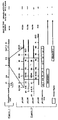
- a more especially preferred sequence comprises at least minus part of a fragment of approximately 4.2kb ( ⁇ 5%) delimited by the end nucleotides located respectively at a distance of approximately 0.55kb upstream of the H2 site shown in Figure 2, and about 0.7kb downstream of the site B1 represented in FIG. 2.
- sequences formed by this fragment carry the information necessary for the expression of a protein with urease activity as expressed naturally in C. pylori .
- sequences can occur in any other microorganism capable of exploiting to its advantage the information carried by these sequences, in particular in a Campylobacter strain naturally deficient in genes coding for the production of a protein with urease activity (or still Campylobacter urease strain).
- the invention relates to a recombinant sequence comprising one of the sequences defined above, if applicable associated with a promoter capable of controlling transcription of the sequence and a DNA sequence encoding signals for termination of transcription.
- the present application also describes vectors expression and cloning recombinants capable of transform an appropriate host cell, comprising at least at least part of a nucleotide sequence such as defined above under the control of elements of regulation allowing its expression.
- Preferred recombinant vectors contain minus part of the sequence of around 4.2kb evoked upper.
- the transformed microorganism strains are also described in the context of this application. These strains have one of the defined nucleotide sequences above or a recombinant vector as defined previously.
- the invention further relates to a protein exhibiting urease activity of the type of that expressed naturally in C. pylori as well as the peptide fragments of this protein.
- the protein of the invention correspond according to the universal genetic code, to nucleotide sequences defined above, in particular to at least part of the sequence about 4.2kb.
- the protein of the invention is also characterized in that it is a protein such that obtained by transformation of host cells using of a recombinant vector as defined above, implemented culture, in an appropriate medium, of the host cells transformed and recovery of protein from these cells or directly from the middle of culture.
- the production of urease or fragments thereof last by this process is also part of the invention.
- the protein of the invention and its fragments which can also be obtained by chemical synthesis, advantageously have a high degree of purity and are used to form, according to the techniques classical, polyclonal antibodies.
- polyclonal antibodies as well as monoclonal antibodies capable of recognizing specifically the above protein and its fragments are also targeted by the invention.
- nucleotide sequences defined above are obtained according to conventional techniques of genetic engineering by cloning and identification of the genes responsible for the synthesis of a protein with urease activity in C. pylori .
- the invention also relates to applications biological nucleotide sequences, proteins corresponding and monoclonal antibodies or Polyclonal.
- These applications include the development, from intragenic fragments, of probes for the detection of C. pylori .
- This development includes, in particular, the denaturation of double-stranded sequences to obtain a single-stranded sequence usable as a probe.
- the invention therefore relates to detection probes characterized in that they comprise at least one part of a nucleotide sequence defined above.
- the DNA fragment used as a probe contains a enough nucleotides to get the specificity required and the formation of a stable hybrid.
- Appropriate probes for this type of detection are advantageously marked with a radioactive element or any other group allowing its recognition to the hybridized state with the preparation containing the DNA to to study.
- these probes are put in contact with a biological sample containing bacteria, or directly with these bacteria or their nucleic acids, under conditions authorizing the possible hybridization of the sequence of nucleotides of the probe with a complementary sequence, possibly contained in the product tested.
- This method includes after denaturation of DNA previously obtained from bacteria from antral biopsies, the deposition of a aliquot of this DNA on membranes of nitrocellulose, the hybridization of each membrane in the usual conditions with the probe and detection, classic way, the hybrid formed.
- Detection for the specific identification of C. pylori can also be carried out by DNA amplification techniques (PCR). These techniques are described in particular in US Patents 4,683,202 and 4,683,195 in the name of Cetus Corporation.
- primers of 10 to 40 nucleotides, advantageously about twenty nucleotides, these primers being included in one of the nucleotide sequences defined above or likely to hybridize with a part of one of the nucleotide sequences defined above, or their complementary sequences. So advantageous, these primers are distant from about 200 to 250 nucleotides when they are hybridized (or linked), to the strands of DNA to be amplified.
- one of the sequences is capable of binding to a nucleotide sequence of one of strands of DNA fragments to be amplified, this sequence being located at one end of this fragment (for example the 5 'end); the other sequence is able to bind to a nucleotide sequence of the second strand of the DNA fragment to be amplified, this last sequence being located at the end of this fragment opposite to that mentioned above (this last end was still called end 3 'in the example proposed).
- Preferred primers are included in the restriction nucleotide sequence H2-H3 in Figure 2, and are about 200 to 250 apart nucleotides.
- the invention thus provides tools enabling rapid detection of C. pylori , in situ , and in the environment with high specificity, without having to practice cultures.
- Such detection tools are particularly useful for studying the natural reservoir of these bacteria, methods of transmission, circulation and contamination.
- the use of these probes saves considerable time compared to current techniques which also require technology that can only be realized in specialized services, namely, techniques bacteriological or using microscopy electronic.
- C.pylori To study the pathogenicity of C.pylori in order to prevent infection, it is thus possible to study the role played by C.pylori in the development of ulcerative diseases and to identify the genetic determinants which seem to be involved in the potency pathogen of this organism in order to create isogenic mutants of C. pylori in vitro, ie bacteria genetically modified in each of the determinants which seem to play a role in the pathogenesis of the infection, mutants which can be tested in animal models.
- the invention also relates to the detection of the polymorphism of the genes coding for urease in C. pylori using the nucleotide probes defined above and appropriate restriction enzymes.
- the conditions under which this detection is carried out are more particularly described in the article by Gusella JF in J. of Clin. - investigations (1986), 77, 1723-1726.
- the invention also relates to applications of the encoded protein, more specifically for the development of specific antiserum as well as polyclonal and monoclonal antibodies.
- Antibodies polyclonal are formed according to classical techniques by injecting protein into animals, recovery antisera, then antibodies from antisera for example by affinity chromatography.
- Monoclonal antibodies are produced so usual by fusing myeloma cells with spleen cells from animals previously immunized to using the proteins of the invention.
- jejuni (of the type of that explained in the detailed description which follows) was used to identify the regions essential for the expression of urease activity and correlate the deletion of a region with the disappearance of a polypeptide and the loss of urease activity. It was thus determined that the genes coding for the two polypeptides necessary for the expression of urease activity are located in the central region of 03.35 kb, downstream of the H3 site of FIG. 2, and straddling B1. The transcription of the genes coding for the 61kDa or 26kDa polypeptides is done in the EcoRI-PstI direction. The 3.35 kb fragment is necessary but not sufficient for the expression of the urease activity in C.jejuni . An adjacent region of 0.85 kb, located upstream and apparently not associated with the expression of polypeptides in E. coli , is essential for the expression of urease activity in C. jejuni .
- nucleotide sequence (V) is also described below:
- nucleotide sequence corresponding, according to the universal genetic code to the animated acid sequence (VI) of 26kDa (coded by the following nucleotide sequence (V)): 239 amino acids Molecular weight: 26,522 daltons
- the subject of the invention is more particularly any nucleotide sequence corresponding, according to the universal genetic code to at least part of the amino acid sequence (VIII) of 61kDa (coded by the following nucleotide sequence (VII)): 569 Amino acids Molecular Weight: 61,729 Daltons
- the request also describes a sequence corresponding nucleotide, according to genetic code universal to at least part of the acid sequence amines (X) of 87kDa successively consisting of sequence VI and sequence VIII.
- the application also describes probes for detecting the possible presence of C. pylori in a biological sample, characterized in that they comprise at least part of a nucleotide sequence defined above.
- the bases of the nucleotide sequences under consideration may be in a different order from that found in the genes and / or that these bases may, where appropriate, be substituted, as soon as a probe produced from such sequences gives a characteristic and unequivocal response to the ability to recognize the presence of genes coding for the protein with urease activity of C. pylori .
- nucleotide sequence hybridizable with that of the above-mentioned nucleotide sequences such as that obtained by reverse enzymatic transcription of RNA corresponding or by chemical synthesis, between also in the context of the invention.
- the above-mentioned probes can be used in in vitro diagnostic methods for the possible presence of C. pylori in a biological sample described above.
- the invention also relates to primers nucleotides of about 10 to about 40 nucleotides, these primers being included in one of the sequences nucleotide V or VII defined above (or in one sequences derived from these sequences V and VII), or being likely to hybridize with part of a above-mentioned nucleotide sequences or with their complementary sequences (especially in the hybridization conditions defined above).
- the invention also relates to the use of these primers in the in vitro diagnostic methods defined above, for the prior amplification of the quantity of C. pylori nucleotides which may be contained in the biological sample according to the method described above.
- the invention also relates to the vectors expression and cloning recombinants capable of transform an appropriate host cell comprising any or part of an identical nucleotide sequence or derived from the nucleotide sequences V, VII and IX mentioned above.
- the invention also relates to a production process of proteins corresponding to all or part of the X sequence mentioned above, this process including transformation of host cells appropriate (including those described above) to using the aforementioned vectors and recovering proteins thus produced followed, if necessary, by a step of purification of these proteins.
- the protein production process defined above if necessary includes a preliminary step amplification of a gene coding for the protein whose production is sought, this stage being carried out at using pairs of primers of the invention according to the process described above.
- a subject of the invention is also the polypeptides (or proteins) encoded by the nucleotide sequences described above.
- the invention targets the 87kDa amino acid sequence X, and its fragments, said fragments not being a peptide fragment of the sequence (VI or VIII).
- the invention also relates to antibodies.
- polyclonal and monoclonal obtained from all or part of the polypeptides described above and susceptible to form an immunological complex with them.
- the invention particularly relates to antibodies, especially monoclonal, obtained using a sequence peptide of at least about 10 to 15 amino acids from the sequence VI, or sequence VIII.
- Preferred monoclonal antibodies of the invention are directed against all or part of the sequence bounded by amino acids located at positions 206 and 338 of sequence VIII, and more particularly those obtained using a peptide sequence of at least about 10 to 15 amino acids from the sequence bounded by amino acids located at positions 206 and 338 of sequence VIII.
- the invention also relates to the use of the above-mentioned antibodies for the implementation of in vitro diagnostic methods as well as in in vitro diagnostic kits for the infection of an individual by C. pylori as described above.
- the invention also relates to compositions immunogens comprising all or part of the polypeptides described above, and more particularly, all or part of the polypeptide sequence delimited by amino acids located at positions 206 and 338 of the sequence VIII, in combination with a vehicle pharmaceutically acceptable.
- Such immunogenic compositions can be used as vaccine compositions for the prevention of the infection of an individual by C. pylori .
- compositions pharmaceuticals comprising one (or more) antibodies as described above, and more particularly antibodies capable of forming a complex immunological with all or part of the sequence peptide delimited by the amines located at the positions 206 and 338 of sequence VIII, in association with a pharmaceutically acceptable vehicle.
- compositions according to the invention can be used for the treatment of pathologies linked to the infection of an individual with C. pylori , in particular gastritis, and gastric and duodenal ulcers.
- the chromosomal DNA of the C. pylori (85P) strain is prepared so as to generate DNA fragments of high molecular weight; approximately 300 ⁇ g of this chromosomal DNA are subjected to a partial digestion controlled by the restriction endonuclease Sau 3A and deposited on a sucrose gradient so as to selectively isolate digestion fragments of between 35 and 45 kilobases. 1.5 ⁇ g of these fragments are ligated in vitro to the shuttle-cosmid vector pILL575 linearized by the endonuclease Bam HI and dephosphorylated. pILL575 was built from the cosmid shuttle pILL550 described by Labigne-Roussel et al. in J. Bacteriol.
- Each of the recombinant cosmids is then transferred by conjugation of E. coli to a receptor strain of Campylobacter jejuni C31, naturally urease.
- a cosmid is isolated out of 106 analyzed carrying genetic information conferring on Campyloba Budapest jejuni C31 the capacity to produce a urease.
- the recombinant cosmid (IID2) has a size of 54 kilobases.
- the relative position of the cleavage sites by the restriction endonucleases PstI, BamHI, SmaI and EcoRI on this sequence is presented in FIG. 1.
- the urease genes are subcloned by carrying out, from the cosmid DNA IID2 prepared in E. coli, partial digests with the endonuclease Sau3A so as to generate fragments of partial digestions ranging from 8 to 15 kilobases.
- the EcoRI-Pst I fragment of pILL590 was used as a probe in hybridizations with the total DNA of C. pylori 85P in order to ensure that the various restriction fragments generated with BamHI and HindIII from pILL590 were present in 85P.
- the results obtained show that the 8kb sequence present in pILL590 did not undergo rearrangements during the various cloning steps.
- the sequence of the HindIII fragment between sites H2 and H3 corresponds to the sequence of 294 sequence nucleotides (I).
- the 8kb Eco RI- Pst I fragment from pILL590 was used as a radioactive probe in hybridization experiments.
- Campylobacter pylori were tested in colony hybridization and gave a positive signal; out of 35 Campylobacter jejuni , fetus and coli studied none gave a positive signal under standard stringent hybridization conditions (50% formamide, 37 °, 3XSSC).
Landscapes
- Chemical & Material Sciences (AREA)
- Health & Medical Sciences (AREA)
- Life Sciences & Earth Sciences (AREA)
- Organic Chemistry (AREA)
- Engineering & Computer Science (AREA)
- General Health & Medical Sciences (AREA)
- Wood Science & Technology (AREA)
- Zoology (AREA)
- Proteomics, Peptides & Aminoacids (AREA)
- Genetics & Genomics (AREA)
- Bioinformatics & Cheminformatics (AREA)
- Medicinal Chemistry (AREA)
- Molecular Biology (AREA)
- Biochemistry (AREA)
- Analytical Chemistry (AREA)
- Biophysics (AREA)
- General Engineering & Computer Science (AREA)
- Microbiology (AREA)
- Immunology (AREA)
- Biotechnology (AREA)
- Veterinary Medicine (AREA)
- Pharmacology & Pharmacy (AREA)
- Animal Behavior & Ethology (AREA)
- Public Health (AREA)
- Nuclear Medicine, Radiotherapy & Molecular Imaging (AREA)
- General Chemical & Material Sciences (AREA)
- Chemical Kinetics & Catalysis (AREA)
- Biomedical Technology (AREA)
- Physics & Mathematics (AREA)
- Oncology (AREA)
- Communicable Diseases (AREA)
- Nutrition Science (AREA)
- Measuring Or Testing Involving Enzymes Or Micro-Organisms (AREA)
- Enzymes And Modification Thereof (AREA)
- Peptides Or Proteins (AREA)
- Medicines Containing Antibodies Or Antigens For Use As Internal Diagnostic Agents (AREA)
- Preparation Of Compounds By Using Micro-Organisms (AREA)
- Micro-Organisms Or Cultivation Processes Thereof (AREA)
- Medicines That Contain Protein Lipid Enzymes And Other Medicines (AREA)
- Saccharide Compounds (AREA)
Claims (7)
- Nukleotidsequenz, die gemäß dem universellen genetischen Code der Sequenz entspricht, die zwischen den Aminosäuren an den Positionen 206 und 338 der Sequenz (VIII) liegt.
- Nukleotidsequenz, dadurch gekennzeichnet, dass sie durch 2 Restriktionsstellen aus Figur 2, die zwischen den Stellen H1 und B2 liegen und die Stellen H1, H2, H3, H4, B1 und B2 umfassen, begrenzt wird.
- Peptidfragmente, dadurch gekennzeichnet, dass sie ausgewählt werden ausa) der Aminosäuresequenz (X) mit 87 kDab) einem Fragment der Sequenz a), wobei das Fragment eine Urease-Aktivität aufweist und kein Peptidfragment der Sequenz (VI) oder (VIII) ist.
- Verfahren zur Herstellung eines immunologischen Komplexes zwischen einem Protein mit Urease-Aktivität, exprimiert durch C. pylori, oder Fragmenten davon gemäß jenen nach Anspruch 3 und Antikörpern, wobei das Verfahren dadurch gekennzeichnet ist, dass das Protein oder die Peptidfragmente mit einer biologischen Flüssigkeit, die die Antikörper enthält, in Kontakt gebracht wird bzw. werden.
- Verwendung der Sequenzen gemäß den Ansprüchen 1 und 2 als Detektionssonde in einem Verfahren zum in vitro Nachweis im Hinblick auf das Vorliegen von C. pylori in einer Probe, die dieses enthalten könnte.
- Verwendung der Fragmente gemäß Anspruch 3 bei der Herstellung einer Zusammensetzung zur Induktion der Synthese von spezifischen Antikörpern gegen die Fragmente oder einer Immunantwort.
- Verwendung der Peptidfragmente, ausgewählt aus a) der Aminosäuresequenz (VI) mit 26 kDa, b) der Aminosäuresequenz (VIII) mit 61 kDa oder c) einem Fragment der Sequenzen a) oder b), wobei das Fragment eine Urease-Aktivität aufweist, bei der Herstellung einer Zusammensetzung zur Induktion der Synthese von spezifischen Antikörpern gegen die Fragmente oder einer Immunantwort.
Applications Claiming Priority (3)
| Application Number | Priority Date | Filing Date | Title |
|---|---|---|---|
| FR8813135A FR2637612B1 (fr) | 1988-10-06 | 1988-10-06 | Sequences de nucleotides codant pour une proteine a activite ureasique |
| FR8813135 | 1988-10-06 | ||
| EP89402764A EP0367644B1 (de) | 1988-10-06 | 1989-10-06 | Nukleotidesequenzen, die ein Protein mit Ureareaktivität kodieren |
Related Parent Applications (2)
| Application Number | Title | Priority Date | Filing Date |
|---|---|---|---|
| EP89402764A Division EP0367644B1 (de) | 1988-10-06 | 1989-10-06 | Nukleotidesequenzen, die ein Protein mit Ureareaktivität kodieren |
| EP89402764.8 Division | 1989-10-06 |
Publications (2)
| Publication Number | Publication Date |
|---|---|
| EP0649906A1 EP0649906A1 (de) | 1995-04-26 |
| EP0649906B1 true EP0649906B1 (de) | 2004-01-07 |
Family
ID=9370758
Family Applications (2)
| Application Number | Title | Priority Date | Filing Date |
|---|---|---|---|
| EP89402764A Expired - Lifetime EP0367644B1 (de) | 1988-10-06 | 1989-10-06 | Nukleotidesequenzen, die ein Protein mit Ureareaktivität kodieren |
| EP94110776A Expired - Lifetime EP0649906B1 (de) | 1988-10-06 | 1989-10-06 | Nukleotidsequenzen, die für ein Protein mit Ureaseaktivität kodieren |
Family Applications Before (1)
| Application Number | Title | Priority Date | Filing Date |
|---|---|---|---|
| EP89402764A Expired - Lifetime EP0367644B1 (de) | 1988-10-06 | 1989-10-06 | Nukleotidesequenzen, die ein Protein mit Ureareaktivität kodieren |
Country Status (9)
| Country | Link |
|---|---|
| US (5) | US5695931A (de) |
| EP (2) | EP0367644B1 (de) |
| JP (3) | JP2628767B2 (de) |
| AT (2) | ATE118821T1 (de) |
| DE (2) | DE68921287T2 (de) |
| ES (2) | ES2068907T3 (de) |
| FR (1) | FR2637612B1 (de) |
| SG (1) | SG49097A1 (de) |
| WO (1) | WO1990004030A1 (de) |
Families Citing this family (38)
| Publication number | Priority date | Publication date | Assignee | Title |
|---|---|---|---|---|
| FR2637612B1 (fr) * | 1988-10-06 | 1993-09-10 | Pasteur Institut | Sequences de nucleotides codant pour une proteine a activite ureasique |
| GB8928625D0 (en) * | 1989-12-19 | 1990-02-21 | 3I Res Expl Ltd | H.pylori dna probes |
| IE76730B1 (en) * | 1990-07-30 | 1997-11-05 | Abbott Laboraties | Method and product for the treatment of gastric disease |
| JPH04169539A (ja) * | 1990-11-01 | 1992-06-17 | Imuno Japan:Kk | 消化器疾患治療・予防剤およびその製造方法 |
| FR2682122B1 (fr) * | 1991-10-03 | 1995-06-09 | Pasteur Institut | Nouveaux genes d'helicobacter pylori. leur utilisation pour la preparation de souches recombinantes de h. pylori. |
| US7141244B1 (en) | 1992-03-02 | 2006-11-28 | Chiron Srl | Helicobacter pylori proteins useful for vaccines and diagnostics |
| US6130059A (en) * | 1992-03-02 | 2000-10-10 | Covacci; Antonello | Helicobacter pylori proteins useful for vaccines and diagnostics |
| EP0967279B1 (de) * | 1992-03-02 | 2008-01-02 | Novartis Vaccines and Diagnostics S.r.l. | Helicobacter pylori Cytotoxin verwendbar in Impfstoffe und Diagnostik |
| US5928865A (en) * | 1992-03-02 | 1999-07-27 | Chiron S.P.A. | Compositions comprising isolated Helicobacter pylori CagI polynucleotides and method of preparation thereof |
| IT1262895B (it) * | 1992-03-02 | 1996-07-22 | Proteina estratta da ceppi citotossici di helicobacter pylori, gene che la esprime, uso della proteina come vaccino o diagnostico. | |
| MX9301706A (es) * | 1992-04-13 | 1994-05-31 | Oravax Inc | Composicion de vacuna para el tratamiento de la infeccion por helicobacter. |
| US6290962B1 (en) * | 1992-11-03 | 2001-09-18 | Oravax, Inc. | Urease-based vaccine and treatment for helicobacter infection |
| US5972336A (en) * | 1992-11-03 | 1999-10-26 | Oravax Merieux Co. | Urease-based vaccine against helicobacter infection |
| WO1994026907A1 (en) * | 1993-05-14 | 1994-11-24 | Voon Loong Chan | Hippuricase gene |
| US5843460A (en) * | 1993-05-19 | 1998-12-01 | Institut Pasteur | Immunogenic compositions against helicobacter infection, polypeptides for use in the compositions, and nucleic acid sequences encoding said polypeptides |
| WO1995014093A1 (en) * | 1993-05-19 | 1995-05-26 | Institut Pasteur | Immunogenic compositions against helicobacter infection, polypeptides for use in the compositions and nucleic acid sequences encoding said polypeptides |
| GB9313437D0 (en) * | 1993-06-30 | 1993-08-11 | Smith Andrew W | Pathogenicity sequences in helicobacter pylori |
| JP3919812B2 (ja) * | 1993-07-27 | 2007-05-30 | シーエスエル、リミテッド | H.ピロリ関連胃十二指腸疾患の治療 |
| US6406703B1 (en) | 1993-07-27 | 2002-06-18 | Csl Limited | Treatment of H. pylori associated gastroduodenal disease |
| FR2719998B1 (fr) * | 1994-04-08 | 1996-09-27 | Pasteur Merieux Serums Vacc | Composition immunisante anti-hélicobacter pylori à base de catalase. |
| AUPM612494A0 (en) * | 1994-06-08 | 1994-06-30 | Csl Limited | Treatment or prevention of helicobacter infection |
| GB2290710B (en) * | 1994-06-29 | 1998-03-25 | Reckitt & Colmann Prod Ltd | Protease from helicobacter pylori for use in vaccines/therapeutic compositions |
| US6468765B1 (en) | 1995-04-21 | 2002-10-22 | Human Genome Sciences, Inc. | Selected Haemophilus influenzae Rd polynucleotides and polypeptides |
| GB2307987A (en) * | 1995-12-06 | 1997-06-11 | Univ Manchester | Epitopes of the urease of Helicobacter pylori as dignostic agents; pharmaceuticals comprising such epitopes or the antibodies thereto |
| GB2324093A (en) | 1996-01-04 | 1998-10-14 | Rican Limited | Helicobacter pylori bacterioferritin |
| US6060241A (en) * | 1996-04-05 | 2000-05-09 | Kieta Holding Sa | Compositions and methods relating to drug discovery and detection and treatment of gastrointestinal diseases |
| US6248551B1 (en) * | 1997-03-28 | 2001-06-19 | Institut Pasteur | Helicobacter aliphatic amidase AmiE polypeptides, and DNA sequences encoding those polypeptides |
| JP3430853B2 (ja) * | 1997-04-11 | 2003-07-28 | 株式会社ゲン・コーポレーション | 胃炎、胃潰瘍および十二指腸潰瘍の予防剤並びに治療剤 |
| EP1105159A2 (de) | 1998-06-19 | 2001-06-13 | Mérieux Oravax | Lt und ct in verfahren zur parenteralen immunisierung gegen helicobacter-infektionen |
| US6190667B1 (en) * | 1998-06-30 | 2001-02-20 | Institut Pasteur | Methods of inhibiting Helicobacter pylori |
| TWI237695B (en) * | 1999-12-14 | 2005-08-11 | Joy Biomedical Corp | Helicobacter pylori antigens in blood |
| US7556807B2 (en) | 2001-02-20 | 2009-07-07 | Kane Biotech, Inc. | Signal peptides, nucleic acid molecules and methods for treatment of caries |
| US7597895B2 (en) * | 2001-02-20 | 2009-10-06 | The Governing Council Of The University Of Toronto | Signal peptides, nucleic acid molecules and methods for treatment of caries |
| MXPA05000778A (es) | 2002-07-18 | 2005-08-29 | Helix Biopharma Corp | Uso de ureasa para inhibir el crecimiento de celulas cancerosas. |
| EP2358908B1 (de) | 2008-11-14 | 2014-01-08 | Gen-Probe Incorporated | Zusammensetzungen und verfahren für den nachweis von campylobacter-nukleinsäure |
| HK1216903A1 (zh) | 2013-04-08 | 2016-12-09 | 赫利克斯生物药品公司 | 抗体-尿素酶偶联物在诊断和治疗中的应用 |
| WO2016018465A1 (en) * | 2014-07-30 | 2016-02-04 | Medtronic, Inc. | Urease purification from jack beans or other organisms |
| AU2016210551B2 (en) | 2015-01-23 | 2019-03-07 | Helix Biopharma Corp. | Antibody-urease conjugates for therapeutic purposes |
Family Cites Families (9)
| Publication number | Priority date | Publication date | Assignee | Title |
|---|---|---|---|---|
| US4785086A (en) * | 1985-01-17 | 1988-11-15 | Integrated Genetics, Inc. | Test for Campylobacter |
| ES8706823A1 (es) * | 1985-03-28 | 1987-06-16 | Cetus Corp | Un procedimiento para detectar la presencia o ausencia de al menos una secuencia especifica de acidos nucleicos en una muestra |
| CA1274757A (en) * | 1985-05-17 | 1990-10-02 | Barry James Marshall | Compositions and methods for the detection of urease for the diagnosis of campylobacter pyloridis infection |
| WO1987001119A1 (en) * | 1985-08-16 | 1987-02-26 | Gregory Murray Winn | Monoclonal antibodies reactive against campylobacter pyloridis |
| US4837017A (en) * | 1987-03-12 | 1989-06-06 | Leveen Harry H | Urease antigen product and process |
| US4882271A (en) * | 1988-03-10 | 1989-11-21 | Baylor College Of Medicine | Process for preparation of high molecular weight cell-associated protein of campylobacter pylori and use for serological detection of campylobacter pylori infection |
| WO1989009407A1 (en) * | 1988-03-23 | 1989-10-05 | Julie Claire Dent | Detection of campylobacter pylori urease antibodies and reagent therefor |
| FR2637612B1 (fr) * | 1988-10-06 | 1993-09-10 | Pasteur Institut | Sequences de nucleotides codant pour une proteine a activite ureasique |
| KR19990008155A (ko) * | 1995-04-28 | 1999-01-25 | 랜스 고든 | 다가, 재조합 우레아제 백신 |
-
1988
- 1988-10-06 FR FR8813135A patent/FR2637612B1/fr not_active Expired - Lifetime
-
1989
- 1989-10-06 SG SG1996005982A patent/SG49097A1/en unknown
- 1989-10-06 EP EP89402764A patent/EP0367644B1/de not_active Expired - Lifetime
- 1989-10-06 ES ES89402764T patent/ES2068907T3/es not_active Expired - Lifetime
- 1989-10-06 ES ES94110776T patent/ES2214479T3/es not_active Expired - Lifetime
- 1989-10-06 EP EP94110776A patent/EP0649906B1/de not_active Expired - Lifetime
- 1989-10-06 DE DE68921287T patent/DE68921287T2/de not_active Expired - Lifetime
- 1989-10-06 AT AT89402764T patent/ATE118821T1/de not_active IP Right Cessation
- 1989-10-06 AT AT94110776T patent/ATE257516T1/de not_active IP Right Cessation
- 1989-10-06 DE DE1989629510 patent/DE68929510T2/de not_active Expired - Lifetime
- 1989-10-06 JP JP1510804A patent/JP2628767B2/ja not_active Expired - Lifetime
- 1989-10-06 WO PCT/FR1989/000518 patent/WO1990004030A1/fr not_active Ceased
-
1990
- 1990-06-05 US US07/499,325 patent/US5695931A/en not_active Expired - Lifetime
-
1995
- 1995-06-06 US US08/467,283 patent/US5837472A/en not_active Expired - Lifetime
- 1995-06-06 US US08/467,284 patent/US5849295A/en not_active Expired - Lifetime
- 1995-06-06 US US08/470,245 patent/US5811237A/en not_active Expired - Lifetime
- 1995-10-11 JP JP26338395A patent/JP3375470B2/ja not_active Expired - Lifetime
-
1996
- 1996-05-15 JP JP8120532A patent/JP2974966B2/ja not_active Expired - Lifetime
-
1998
- 1998-07-31 US US09/126,584 patent/US6146634A/en not_active Expired - Lifetime
Also Published As
| Publication number | Publication date |
|---|---|
| JP2974966B2 (ja) | 1999-11-10 |
| DE68929510T2 (de) | 2004-11-18 |
| JP2628767B2 (ja) | 1997-07-09 |
| SG49097A1 (en) | 1998-05-18 |
| DE68921287D1 (de) | 1995-03-30 |
| JP3375470B2 (ja) | 2003-02-10 |
| US5695931A (en) | 1997-12-09 |
| JPH08196283A (ja) | 1996-08-06 |
| ATE118821T1 (de) | 1995-03-15 |
| EP0649906A1 (de) | 1995-04-26 |
| JPH09117286A (ja) | 1997-05-06 |
| ES2214479T3 (es) | 2004-09-16 |
| US6146634A (en) | 2000-11-14 |
| WO1990004030A1 (fr) | 1990-04-19 |
| ES2068907T3 (es) | 1995-05-01 |
| EP0367644A1 (de) | 1990-05-09 |
| ATE257516T1 (de) | 2004-01-15 |
| DE68929510D1 (de) | 2004-02-12 |
| FR2637612B1 (fr) | 1993-09-10 |
| US5811237A (en) | 1998-09-22 |
| JPH03501928A (ja) | 1991-05-09 |
| DE68921287T2 (de) | 1995-06-22 |
| EP0367644B1 (de) | 1995-02-22 |
| US5837472A (en) | 1998-11-17 |
| FR2637612A1 (fr) | 1990-04-13 |
| US5849295A (en) | 1998-12-15 |
Similar Documents
| Publication | Publication Date | Title |
|---|---|---|
| EP0367644B1 (de) | Nukleotidesequenzen, die ein Protein mit Ureareaktivität kodieren | |
| CA2260079C (fr) | Adn et proteines ou peptides specifiques des bacteries de l'espece neisseria meningitidis, leurs procedes d'obtention et leurs applications biologiques | |
| JP3581352B2 (ja) | ウレアーゼの調節及び成熟のために必要なHelicobacterpyloriの遺伝子及びその用途 | |
| JPH08509873A (ja) | ヘリコバクター感染に対する免疫組成物、該組成物に用いられるポリペプチドおよび該ポリペプチドをコードする核酸配列 | |
| EP0719861B1 (de) | Salmonella Genom Nukleinsäure, ihre Verwendung, besonders bei der in vitro Diagnose der Anwesenheit von Bakterien der Gattung Salmonella in Lebensmitteln | |
| JPH06233699A (ja) | リステリア検出のための方法および試薬 | |
| EP0918854B1 (de) | Nukleinsäure-fragmente, die spezifische für die mitglieder des m. tuberculosis komplexes sind, deren anwendung zur detektion und differentiale diagnose der mitglieder des m. tuberculosis komplexes | |
| EP0939800A2 (de) | HELICOBACTER ANTIGEN (gamma-GLUTAMYLTRANSFERASE) UND SEQUENZEN DIE SIE KODIEREN | |
| FR2685334A1 (fr) | Polypeptides contenant des sequences caracteristiques de pyrrolidone carboxylyl peptidases, polynucleotides contenant une sequence codant pour de tels polypeptides, et leur utilisation. | |
| EP0643134B1 (de) | Nukleinsäuresequenzen und Plasmide welche mindestens einen Mechanismus für Phagenresistenz haben, Bakterien diese beinhaltend und ihre Verwendung | |
| JP2002320494A (ja) | 特にグラム陽性バクテリアのグリコペプタイドに対する抵抗力の発現に係るポリペプタイド、ポリペプタイドをコードするヌクレオチドシーケンスおよび診断への使用 | |
| FR2686604A1 (fr) | Polypeptides contenant des sequences caracteristiques de pyrrolidone carboxylyl peptidases, polynucleotides contenant une sequence codant pour de tels polypeptides, et leur utilisation. | |
| FR2641792A1 (fr) | Sequences de nucleotides codant pour la calmoduline chez l'homme et leurs applications biologiques | |
| FR2715167A1 (fr) | Procédé de production de la L-carnitine par voie microbiologique. | |
| FR2621597A1 (fr) | Procede de clonage et d'expression de genes codant pour des proteines constituant des edifices fonctionnels organises | |
| FR2616804A1 (fr) | Sonde d'adn destinee a la detection de listeria monocytogenes, kit analytique et methode permettant d'effectuer cette detection | |
| FR2601965A1 (fr) | Fragment d'adn comprenant au moins une partie d'un determinant codant pour l'acetyltransferase 6'-amino-glycoside et/ou la phosphotransferase 2''-aminoglycoside son procede d'obtention et ses applications biochimiques. | |
| FR2602794A1 (fr) | Fragment d'adn comprenant au moins une partie d'un gene de resistance a la tetracycline, son procede d'obtention et ses applications biochimiques | |
| FR2705348A1 (fr) | Procédé pour la détection et la caractérisation de Xanthomonas phytopathogènes et produits mis en Óoeuvre. | |
| EP0219407A1 (de) | DNS-Fragment, das mindestens einen Teil eines lincosamidresistenten Gens enthält, Verfahren zu dessen Herstellung und biochemische Anwendungen |
Legal Events
| Date | Code | Title | Description |
|---|---|---|---|
| PUAI | Public reference made under article 153(3) epc to a published international application that has entered the european phase |
Free format text: ORIGINAL CODE: 0009012 |
|
| 17P | Request for examination filed |
Effective date: 19940810 |
|
| AC | Divisional application: reference to earlier application |
Ref document number: 367644 Country of ref document: EP |
|
| AK | Designated contracting states |
Kind code of ref document: A1 Designated state(s): AT BE CH DE ES FR GB GR IT LI LU NL SE |
|
| 17Q | First examination report despatched |
Effective date: 19990611 |
|
| GRAH | Despatch of communication of intention to grant a patent |
Free format text: ORIGINAL CODE: EPIDOS IGRA |
|
| GRAS | Grant fee paid |
Free format text: ORIGINAL CODE: EPIDOSNIGR3 |
|
| GRAA | (expected) grant |
Free format text: ORIGINAL CODE: 0009210 |
|
| AC | Divisional application: reference to earlier application |
Ref document number: 0367644 Country of ref document: EP Kind code of ref document: P |
|
| AK | Designated contracting states |
Kind code of ref document: B1 Designated state(s): AT BE CH DE ES FR GB GR IT LI LU NL SE |
|
| REG | Reference to a national code |
Ref country code: GB Ref legal event code: FG4D Free format text: NOT ENGLISH |
|
| REG | Reference to a national code |
Ref country code: CH Ref legal event code: EP |
|
| REF | Corresponds to: |
Ref document number: 68929510 Country of ref document: DE Date of ref document: 20040212 Kind code of ref document: P |
|
| REG | Reference to a national code |
Ref country code: SE Ref legal event code: TRGR |
|
| REG | Reference to a national code |
Ref country code: GR Ref legal event code: EP Ref document number: 20040401129 Country of ref document: GR |
|
| REG | Reference to a national code |
Ref country code: CH Ref legal event code: NV Representative=s name: KELLER & PARTNER PATENTANWAELTE AG |
|
| GBT | Gb: translation of ep patent filed (gb section 77(6)(a)/1977) |
Effective date: 20040506 |
|
| REG | Reference to a national code |
Ref country code: ES Ref legal event code: FG2A Ref document number: 2214479 Country of ref document: ES Kind code of ref document: T3 |
|
| PLBE | No opposition filed within time limit |
Free format text: ORIGINAL CODE: 0009261 |
|
| STAA | Information on the status of an ep patent application or granted ep patent |
Free format text: STATUS: NO OPPOSITION FILED WITHIN TIME LIMIT |
|
| 26N | No opposition filed |
Effective date: 20041008 |
|
| PGFP | Annual fee paid to national office [announced via postgrant information from national office to epo] |
Ref country code: NL Payment date: 20080922 Year of fee payment: 20 |
|
| PGFP | Annual fee paid to national office [announced via postgrant information from national office to epo] |
Ref country code: LU Payment date: 20081021 Year of fee payment: 20 Ref country code: DE Payment date: 20081010 Year of fee payment: 20 Ref country code: CH Payment date: 20081017 Year of fee payment: 20 |
|
| PGFP | Annual fee paid to national office [announced via postgrant information from national office to epo] |
Ref country code: SE Payment date: 20080918 Year of fee payment: 20 Ref country code: ES Payment date: 20081022 Year of fee payment: 20 Ref country code: AT Payment date: 20080918 Year of fee payment: 20 |
|
| PGFP | Annual fee paid to national office [announced via postgrant information from national office to epo] |
Ref country code: IT Payment date: 20081018 Year of fee payment: 20 Ref country code: BE Payment date: 20081029 Year of fee payment: 20 |
|
| PGFP | Annual fee paid to national office [announced via postgrant information from national office to epo] |
Ref country code: FR Payment date: 20081031 Year of fee payment: 20 |
|
| PGFP | Annual fee paid to national office [announced via postgrant information from national office to epo] |
Ref country code: GR Payment date: 20080926 Year of fee payment: 20 Ref country code: GB Payment date: 20081010 Year of fee payment: 20 |
|
| REG | Reference to a national code |
Ref country code: CH Ref legal event code: PL |
|
| REG | Reference to a national code |
Ref country code: GB Ref legal event code: PE20 Expiry date: 20091005 |
|
| BE20 | Be: patent expired |
Owner name: INSTITUT NATIONAL DE LA SANTE ET DE LA RECHERCHE M Effective date: 20091006 Owner name: INSTITUT *PASTEUR Effective date: 20091006 |
|
| NLV7 | Nl: ceased due to reaching the maximum lifetime of a patent | ||
| EUG | Se: european patent has lapsed | ||
| REG | Reference to a national code |
Ref country code: ES Ref legal event code: FD2A Effective date: 20091007 |
|
| PG25 | Lapsed in a contracting state [announced via postgrant information from national office to epo] |
Ref country code: ES Free format text: LAPSE BECAUSE OF EXPIRATION OF PROTECTION Effective date: 20091007 |
|
| PG25 | Lapsed in a contracting state [announced via postgrant information from national office to epo] |
Ref country code: NL Free format text: LAPSE BECAUSE OF EXPIRATION OF PROTECTION Effective date: 20091006 |
|
| PG25 | Lapsed in a contracting state [announced via postgrant information from national office to epo] |
Ref country code: GB Free format text: LAPSE BECAUSE OF EXPIRATION OF PROTECTION Effective date: 20091005 |