EP0656541B1 - Verfahren zur Bestimmung von Protein und Kreatinin in Harn - Google Patents
Verfahren zur Bestimmung von Protein und Kreatinin in Harn Download PDFInfo
- Publication number
- EP0656541B1 EP0656541B1 EP94118288A EP94118288A EP0656541B1 EP 0656541 B1 EP0656541 B1 EP 0656541B1 EP 94118288 A EP94118288 A EP 94118288A EP 94118288 A EP94118288 A EP 94118288A EP 0656541 B1 EP0656541 B1 EP 0656541B1
- Authority
- EP
- European Patent Office
- Prior art keywords
- creatinine
- protein
- reaction
- determination
- reagent
- Prior art date
- Legal status (The legal status is an assumption and is not a legal conclusion. Google has not performed a legal analysis and makes no representation as to the accuracy of the status listed.)
- Expired - Lifetime
Links
- DDRJAANPRJIHGJ-UHFFFAOYSA-N creatinine Chemical compound CN1CC(=O)NC1=N DDRJAANPRJIHGJ-UHFFFAOYSA-N 0.000 title claims abstract description 165
- 229940109239 creatinine Drugs 0.000 title claims abstract description 82
- 102000004169 proteins and genes Human genes 0.000 title claims abstract description 57
- 108090000623 proteins and genes Proteins 0.000 title claims abstract description 57
- 238000000034 method Methods 0.000 title claims abstract description 26
- 230000002485 urinary effect Effects 0.000 title abstract description 7
- 238000006243 chemical reaction Methods 0.000 claims abstract description 56
- 238000003018 immunoassay Methods 0.000 claims abstract description 9
- 230000004520 agglutination Effects 0.000 claims abstract description 8
- 239000003153 chemical reaction reagent Substances 0.000 claims description 59
- 210000002700 urine Anatomy 0.000 claims description 35
- 238000003556 assay Methods 0.000 claims description 22
- 239000012530 fluid Substances 0.000 claims description 18
- VYWYYJYRVSBHJQ-UHFFFAOYSA-N 3,5-dinitrobenzoic acid Chemical compound OC(=O)C1=CC([N+]([O-])=O)=CC([N+]([O-])=O)=C1 VYWYYJYRVSBHJQ-UHFFFAOYSA-N 0.000 claims description 10
- 239000007864 aqueous solution Substances 0.000 claims description 2
- OXNIZHLAWKMVMX-UHFFFAOYSA-N picric acid Chemical group OC1=C([N+]([O-])=O)C=C([N+]([O-])=O)C=C1[N+]([O-])=O OXNIZHLAWKMVMX-UHFFFAOYSA-N 0.000 claims description 2
- 239000003125 aqueous solvent Substances 0.000 claims 1
- 230000003993 interaction Effects 0.000 claims 1
- 238000010924 continuous production Methods 0.000 abstract 1
- 235000018102 proteins Nutrition 0.000 description 47
- 102000008100 Human Serum Albumin Human genes 0.000 description 26
- 108091006905 Human Serum Albumin Proteins 0.000 description 26
- 238000010521 absorption reaction Methods 0.000 description 16
- 239000007788 liquid Substances 0.000 description 15
- 238000012360 testing method Methods 0.000 description 13
- CVSVTCORWBXHQV-UHFFFAOYSA-N creatine Chemical compound NC(=[NH2+])N(C)CC([O-])=O CVSVTCORWBXHQV-UHFFFAOYSA-N 0.000 description 12
- 239000000203 mixture Substances 0.000 description 11
- PXIPVTKHYLBLMZ-UHFFFAOYSA-N Sodium azide Chemical compound [Na+].[N-]=[N+]=[N-] PXIPVTKHYLBLMZ-UHFFFAOYSA-N 0.000 description 10
- 239000000654 additive Substances 0.000 description 9
- 238000005259 measurement Methods 0.000 description 9
- 230000000996 additive effect Effects 0.000 description 8
- 238000004458 analytical method Methods 0.000 description 8
- 239000007853 buffer solution Substances 0.000 description 8
- 239000002202 Polyethylene glycol Substances 0.000 description 7
- 239000007983 Tris buffer Substances 0.000 description 7
- 238000001035 drying Methods 0.000 description 7
- 229920001223 polyethylene glycol Polymers 0.000 description 7
- 239000000243 solution Substances 0.000 description 7
- WCUXLLCKKVVCTQ-UHFFFAOYSA-M Potassium chloride Chemical compound [Cl-].[K+] WCUXLLCKKVVCTQ-UHFFFAOYSA-M 0.000 description 6
- KWYUFKZDYYNOTN-UHFFFAOYSA-M Potassium hydroxide Chemical compound [OH-].[K+] KWYUFKZDYYNOTN-UHFFFAOYSA-M 0.000 description 6
- 239000003513 alkali Substances 0.000 description 6
- 239000000872 buffer Substances 0.000 description 6
- 229960003624 creatine Drugs 0.000 description 6
- 239000006046 creatine Substances 0.000 description 6
- 238000002731 protein assay Methods 0.000 description 6
- LENZDBCJOHFCAS-UHFFFAOYSA-N tris Chemical compound OCC(N)(CO)CO LENZDBCJOHFCAS-UHFFFAOYSA-N 0.000 description 6
- KCXVZYZYPLLWCC-UHFFFAOYSA-N EDTA Chemical compound OC(=O)CN(CC(O)=O)CCN(CC(O)=O)CC(O)=O KCXVZYZYPLLWCC-UHFFFAOYSA-N 0.000 description 5
- 206010027525 Microalbuminuria Diseases 0.000 description 5
- 239000004816 latex Substances 0.000 description 5
- 229920000126 latex Polymers 0.000 description 5
- 206010067584 Type 1 diabetes mellitus Diseases 0.000 description 4
- 238000010790 dilution Methods 0.000 description 4
- 239000012895 dilution Substances 0.000 description 4
- 208000017169 kidney disease Diseases 0.000 description 4
- 102000009027 Albumins Human genes 0.000 description 3
- 108010088751 Albumins Proteins 0.000 description 3
- 108010010803 Gelatin Proteins 0.000 description 3
- 230000015572 biosynthetic process Effects 0.000 description 3
- 239000007795 chemical reaction product Substances 0.000 description 3
- 238000004891 communication Methods 0.000 description 3
- 206010012601 diabetes mellitus Diseases 0.000 description 3
- 238000004090 dissolution Methods 0.000 description 3
- 229920000159 gelatin Polymers 0.000 description 3
- 239000008273 gelatin Substances 0.000 description 3
- 235000019322 gelatine Nutrition 0.000 description 3
- 235000011852 gelatine desserts Nutrition 0.000 description 3
- 239000001103 potassium chloride Substances 0.000 description 3
- 235000011164 potassium chloride Nutrition 0.000 description 3
- 208000035408 type 1 diabetes mellitus 1 Diseases 0.000 description 3
- 208000001072 type 2 diabetes mellitus Diseases 0.000 description 3
- HDTRYLNUVZCQOY-UHFFFAOYSA-N α-D-glucopyranosyl-α-D-glucopyranoside Natural products OC1C(O)C(O)C(CO)OC1OC1C(O)C(O)C(O)C(CO)O1 HDTRYLNUVZCQOY-UHFFFAOYSA-N 0.000 description 2
- 241000283707 Capra Species 0.000 description 2
- 229910019142 PO4 Inorganic materials 0.000 description 2
- CZMRCDWAGMRECN-UGDNZRGBSA-N Sucrose Chemical compound O[C@H]1[C@H](O)[C@@H](CO)O[C@@]1(CO)O[C@@H]1[C@H](O)[C@@H](O)[C@H](O)[C@@H](CO)O1 CZMRCDWAGMRECN-UGDNZRGBSA-N 0.000 description 2
- 229930006000 Sucrose Natural products 0.000 description 2
- HDTRYLNUVZCQOY-WSWWMNSNSA-N Trehalose Natural products O[C@@H]1[C@@H](O)[C@@H](O)[C@@H](CO)O[C@@H]1O[C@@H]1[C@H](O)[C@@H](O)[C@@H](O)[C@@H](CO)O1 HDTRYLNUVZCQOY-WSWWMNSNSA-N 0.000 description 2
- 229910001854 alkali hydroxide Inorganic materials 0.000 description 2
- 150000008044 alkali metal hydroxides Chemical class 0.000 description 2
- HDTRYLNUVZCQOY-LIZSDCNHSA-N alpha,alpha-trehalose Chemical compound O[C@@H]1[C@@H](O)[C@H](O)[C@@H](CO)O[C@@H]1O[C@@H]1[C@H](O)[C@@H](O)[C@H](O)[C@@H](CO)O1 HDTRYLNUVZCQOY-LIZSDCNHSA-N 0.000 description 2
- 239000012491 analyte Substances 0.000 description 2
- 238000012801 analytical assay Methods 0.000 description 2
- 239000003795 chemical substances by application Substances 0.000 description 2
- 210000003734 kidney Anatomy 0.000 description 2
- 239000003550 marker Substances 0.000 description 2
- 239000000463 material Substances 0.000 description 2
- NBIIXXVUZAFLBC-UHFFFAOYSA-K phosphate Chemical compound [O-]P([O-])([O-])=O NBIIXXVUZAFLBC-UHFFFAOYSA-K 0.000 description 2
- 239000010452 phosphate Substances 0.000 description 2
- 201000001474 proteinuria Diseases 0.000 description 2
- 238000003127 radioimmunoassay Methods 0.000 description 2
- 238000005063 solubilization Methods 0.000 description 2
- 230000007928 solubilization Effects 0.000 description 2
- 239000003381 stabilizer Substances 0.000 description 2
- 239000005720 sucrose Substances 0.000 description 2
- LWIHDJKSTIGBAC-UHFFFAOYSA-K tripotassium phosphate Chemical compound [K+].[K+].[K+].[O-]P([O-])([O-])=O LWIHDJKSTIGBAC-UHFFFAOYSA-K 0.000 description 2
- 229920003169 water-soluble polymer Polymers 0.000 description 2
- QKNYBSVHEMOAJP-UHFFFAOYSA-N 2-amino-2-(hydroxymethyl)propane-1,3-diol;hydron;chloride Chemical compound Cl.OCC(N)(CO)CO QKNYBSVHEMOAJP-UHFFFAOYSA-N 0.000 description 1
- 102000003966 Alpha-1-microglobulin Human genes 0.000 description 1
- 101800001761 Alpha-1-microglobulin Proteins 0.000 description 1
- 108700004676 Bence Jones Proteins 0.000 description 1
- BTBUEUYNUDRHOZ-UHFFFAOYSA-N Borate Chemical compound [O-]B([O-])[O-] BTBUEUYNUDRHOZ-UHFFFAOYSA-N 0.000 description 1
- 208000024172 Cardiovascular disease Diseases 0.000 description 1
- 108010076119 Caseins Proteins 0.000 description 1
- 208000007342 Diabetic Nephropathies Diseases 0.000 description 1
- 238000002965 ELISA Methods 0.000 description 1
- 102000004190 Enzymes Human genes 0.000 description 1
- 108090000790 Enzymes Proteins 0.000 description 1
- 108010058846 Ovalbumin Proteins 0.000 description 1
- 239000004721 Polyphenylene oxide Substances 0.000 description 1
- 239000004793 Polystyrene Substances 0.000 description 1
- 239000004372 Polyvinyl alcohol Substances 0.000 description 1
- 230000002159 abnormal effect Effects 0.000 description 1
- 239000002535 acidifier Substances 0.000 description 1
- 230000006978 adaptation Effects 0.000 description 1
- 238000007818 agglutination assay Methods 0.000 description 1
- 239000012670 alkaline solution Substances 0.000 description 1
- 238000000149 argon plasma sintering Methods 0.000 description 1
- 239000012131 assay buffer Substances 0.000 description 1
- 230000003139 buffering effect Effects 0.000 description 1
- 239000005018 casein Substances 0.000 description 1
- BECPQYXYKAMYBN-UHFFFAOYSA-N casein, tech. Chemical compound NCCCCC(C(O)=O)N=C(O)C(CC(O)=O)N=C(O)C(CCC(O)=N)N=C(O)C(CC(C)C)N=C(O)C(CCC(O)=O)N=C(O)C(CC(O)=O)N=C(O)C(CCC(O)=O)N=C(O)C(C(C)O)N=C(O)C(CCC(O)=N)N=C(O)C(CCC(O)=N)N=C(O)C(CCC(O)=N)N=C(O)C(CCC(O)=O)N=C(O)C(CCC(O)=O)N=C(O)C(COP(O)(O)=O)N=C(O)C(CCC(O)=N)N=C(O)C(N)CC1=CC=CC=C1 BECPQYXYKAMYBN-UHFFFAOYSA-N 0.000 description 1
- 235000021240 caseins Nutrition 0.000 description 1
- 238000009535 clinical urine test Methods 0.000 description 1
- 230000002596 correlated effect Effects 0.000 description 1
- 238000005336 cracking Methods 0.000 description 1
- 238000001514 detection method Methods 0.000 description 1
- 208000033679 diabetic kidney disease Diseases 0.000 description 1
- 150000002016 disaccharides Chemical class 0.000 description 1
- 230000029142 excretion Effects 0.000 description 1
- 239000012634 fragment Substances 0.000 description 1
- 230000001434 glomerular Effects 0.000 description 1
- 230000005484 gravity Effects 0.000 description 1
- 150000002357 guanidines Chemical class 0.000 description 1
- 229940083094 guanine derivative acting on arteriolar smooth muscle Drugs 0.000 description 1
- 230000000984 immunochemical effect Effects 0.000 description 1
- 230000000951 immunodiffusion Effects 0.000 description 1
- 230000000977 initiatory effect Effects 0.000 description 1
- 230000007774 longterm Effects 0.000 description 1
- 239000012528 membrane Substances 0.000 description 1
- IZXGZAJMDLJLMF-UHFFFAOYSA-N methylaminomethanol Chemical compound CNCO IZXGZAJMDLJLMF-UHFFFAOYSA-N 0.000 description 1
- 150000002772 monosaccharides Chemical class 0.000 description 1
- 229920001542 oligosaccharide Polymers 0.000 description 1
- 150000002482 oligosaccharides Chemical class 0.000 description 1
- 229940092253 ovalbumin Drugs 0.000 description 1
- 239000002245 particle Substances 0.000 description 1
- 229940075930 picrate Drugs 0.000 description 1
- OXNIZHLAWKMVMX-UHFFFAOYSA-M picrate anion Chemical compound [O-]C1=C([N+]([O-])=O)C=C([N+]([O-])=O)C=C1[N+]([O-])=O OXNIZHLAWKMVMX-UHFFFAOYSA-M 0.000 description 1
- 229920000570 polyether Polymers 0.000 description 1
- 229920000642 polymer Polymers 0.000 description 1
- 229920002223 polystyrene Polymers 0.000 description 1
- 229920002451 polyvinyl alcohol Polymers 0.000 description 1
- 235000019422 polyvinyl alcohol Nutrition 0.000 description 1
- 229910000160 potassium phosphate Inorganic materials 0.000 description 1
- 235000011009 potassium phosphates Nutrition 0.000 description 1
- 239000003755 preservative agent Substances 0.000 description 1
- 239000000047 product Substances 0.000 description 1
- 239000011541 reaction mixture Substances 0.000 description 1
- 239000012070 reactive reagent Substances 0.000 description 1
- 230000035945 sensitivity Effects 0.000 description 1
- 238000002798 spectrophotometry method Methods 0.000 description 1
- 208000024891 symptom Diseases 0.000 description 1
- 238000010998 test method Methods 0.000 description 1
- 238000002560 therapeutic procedure Methods 0.000 description 1
- 238000002054 transplantation Methods 0.000 description 1
- XLYOFNOQVPJJNP-UHFFFAOYSA-N water Substances O XLYOFNOQVPJJNP-UHFFFAOYSA-N 0.000 description 1
Images


Classifications
-
- B—PERFORMING OPERATIONS; TRANSPORTING
- B01—PHYSICAL OR CHEMICAL PROCESSES OR APPARATUS IN GENERAL
- B01L—CHEMICAL OR PHYSICAL LABORATORY APPARATUS FOR GENERAL USE
- B01L3/00—Containers or dishes for laboratory use, e.g. laboratory glassware; Droppers
- B01L3/50—Containers for the purpose of retaining a material to be analysed, e.g. test tubes
- B01L3/502—Containers for the purpose of retaining a material to be analysed, e.g. test tubes with fluid transport, e.g. in multi-compartment structures
-
- G—PHYSICS
- G01—MEASURING; TESTING
- G01N—INVESTIGATING OR ANALYSING MATERIALS BY DETERMINING THEIR CHEMICAL OR PHYSICAL PROPERTIES
- G01N33/00—Investigating or analysing materials by specific methods not covered by groups G01N1/00 - G01N31/00
- G01N33/48—Biological material, e.g. blood, urine; Haemocytometers
- G01N33/50—Chemical analysis of biological material, e.g. blood, urine; Testing involving biospecific ligand binding methods; Immunological testing
- G01N33/53—Immunoassay; Biospecific binding assay; Materials therefor
-
- G—PHYSICS
- G01—MEASURING; TESTING
- G01N—INVESTIGATING OR ANALYSING MATERIALS BY DETERMINING THEIR CHEMICAL OR PHYSICAL PROPERTIES
- G01N33/00—Investigating or analysing materials by specific methods not covered by groups G01N1/00 - G01N31/00
- G01N33/48—Biological material, e.g. blood, urine; Haemocytometers
- G01N33/483—Physical analysis of biological material
- G01N33/487—Physical analysis of biological material of liquid biological material
- G01N33/493—Physical analysis of biological material of liquid biological material urine
-
- G—PHYSICS
- G01—MEASURING; TESTING
- G01N—INVESTIGATING OR ANALYSING MATERIALS BY DETERMINING THEIR CHEMICAL OR PHYSICAL PROPERTIES
- G01N33/00—Investigating or analysing materials by specific methods not covered by groups G01N1/00 - G01N31/00
- G01N33/48—Biological material, e.g. blood, urine; Haemocytometers
- G01N33/50—Chemical analysis of biological material, e.g. blood, urine; Testing involving biospecific ligand binding methods; Immunological testing
- G01N33/68—Chemical analysis of biological material, e.g. blood, urine; Testing involving biospecific ligand binding methods; Immunological testing involving proteins, peptides or amino acids
- G01N33/6803—General methods of protein analysis not limited to specific proteins or families of proteins
- G01N33/6827—Total protein determination, e.g. albumin in urine
-
- G—PHYSICS
- G01—MEASURING; TESTING
- G01N—INVESTIGATING OR ANALYSING MATERIALS BY DETERMINING THEIR CHEMICAL OR PHYSICAL PROPERTIES
- G01N33/00—Investigating or analysing materials by specific methods not covered by groups G01N1/00 - G01N31/00
- G01N33/48—Biological material, e.g. blood, urine; Haemocytometers
- G01N33/50—Chemical analysis of biological material, e.g. blood, urine; Testing involving biospecific ligand binding methods; Immunological testing
- G01N33/70—Chemical analysis of biological material, e.g. blood, urine; Testing involving biospecific ligand binding methods; Immunological testing involving creatine or creatinine
-
- Y—GENERAL TAGGING OF NEW TECHNOLOGICAL DEVELOPMENTS; GENERAL TAGGING OF CROSS-SECTIONAL TECHNOLOGIES SPANNING OVER SEVERAL SECTIONS OF THE IPC; TECHNICAL SUBJECTS COVERED BY FORMER USPC CROSS-REFERENCE ART COLLECTIONS [XRACs] AND DIGESTS
- Y10—TECHNICAL SUBJECTS COVERED BY FORMER USPC
- Y10S—TECHNICAL SUBJECTS COVERED BY FORMER USPC CROSS-REFERENCE ART COLLECTIONS [XRACs] AND DIGESTS
- Y10S435/00—Chemistry: molecular biology and microbiology
- Y10S435/973—Simultaneous determination of more than one analyte
-
- Y—GENERAL TAGGING OF NEW TECHNOLOGICAL DEVELOPMENTS; GENERAL TAGGING OF CROSS-SECTIONAL TECHNOLOGIES SPANNING OVER SEVERAL SECTIONS OF THE IPC; TECHNICAL SUBJECTS COVERED BY FORMER USPC CROSS-REFERENCE ART COLLECTIONS [XRACs] AND DIGESTS
- Y10—TECHNICAL SUBJECTS COVERED BY FORMER USPC
- Y10T—TECHNICAL SUBJECTS COVERED BY FORMER US CLASSIFICATION
- Y10T436/00—Chemistry: analytical and immunological testing
- Y10T436/14—Heterocyclic carbon compound [i.e., O, S, N, Se, Te, as only ring hetero atom]
- Y10T436/145555—Hetero-N
- Y10T436/147777—Plural nitrogen in the same ring [e.g., barbituates, creatinine, etc.]
Definitions
- HSA Human serum albumin
- IDDM insulin dependent diabetes mellitus
- NIDDM non-insulin dependent diabetes mellitus
- Proteinuria which is indicated if the protein concentration in urine is greater than 30 mg/dL, is the common symptom for a variety of different kidney diseases. Accordingly, there is a need on the part of nephrologists, diabetologists and cardiologists for test methods that are sensitive, specific and quantitative for the determination of these proteins in urine.
- protein/creatinine ratios are used in urine protein assay results to normalize the urine concentration.
- Typical urinary protein analyses involve immunoassays such as radioimmunoassay, enzyme immunoassay, latex assisted immunoassay and immunoturbidimetric assay.
- Common creatinine assays such as the alkaline Jaffe and Benedict-Behre methods, are run at a high pH, typically in the range of from 11.5 to 12.5. The common practice in present day clinical laboratories is to run the protein and creatinine assays separately, and then combine the values obtained from these assays to generate the protein creatinine ratio.
- Watts et al discuss four immunochemical methods (radioimmunoassay, radial immunodiffusion, immunoturbidimetry and enzyme-linked immunosorbent assay) for measuring urinary albumin at low concentrations. They point out that diabetic nephropathy is a major cause of death in insulin dependent diabetics and that the clinical chemistry laboratory requires a technique that is sensitive, specific for albumin and practicable. Watts et al go on to point out in Practical Diabetes Vol. 9, No. 3, Pp.
- microalbuminuria is a supranormal quantity of urinary albumin which escapes detection by indicator dye binding tests and that it is a powerful marker of both early nephropathy and cardiovascular disease in patients with diabetes mellitus.I.S. Ross, R.E. Stroud and J. Scheymans describe an immunoturbidimetric assay for microalbuminuria in normal and diabetic urine (Transplantation Proceedings, Vol. XVIII, No. 6 (December), 1986, 1654-1655).
- the present invention is a method for the determination of urinary protein and creatinine in a single reaction vessel using the same aliquot of urine sample.
- the method involves the steps of:
- option A in which creatinine is determined before the protein
- option B in which the protein concentration is initially determined followed by the determination of creatinine concentration in the urine sample being tested.
- the creatinine assay is carried out at a pH of from about 11.5 to 12.5 in order to deprotonate the creatinine so that the assay system can work properly.
- the first practical test for the determination of creatinine in urine involves the formation of the red-yellowish brown colored creatinine picrate by the bonding of picric acid and creatinine in the alkaline solution.
- a more recent method for creatinine determination known as the Benedict-Behre method, involves the reaction of another creatinine reactive reagent, 3,5-dinitrobenzoic acid, with creatinine in the alkaline medium. Any reagent which will provide a colored response when contacted with creatine at the high pH required to deprotonate it is suitable for use in this step.
- the analytical method of the present invention can be carried out in either order of protein and creatinine determination.
- a urine sample is mixed with a suitable reagent for creatinine determination and a strong alkali to generate color for the creatinine concentration measurement which is typically obtained by spectrophotometric means.
- the pH of the reaction mixture is then lowered using an appropriate acidifier and mixed with the antibody reagent to generate turbidity for the protein concentration measurement.
- the urine sample is mixed with the antibody reagent to generate turbidity for the protein concentration measurement.
- An alkaline reagent and appropriate creatinine indicator are then added to raise the pH and to generate color for the creatinine concentration measurement.
- volume of urine sample and reagent solutions can be whatever is convenient for a particular analytical environment, rather small volumes, e.g. 1 to 50 ⁇ L of urine and 20 to 1,000 ⁇ L of buffer solution containing the creatinine reagent and the immuno reagent for the protein are sufficient.
- option B is the preferred method since it has been discovered that the agglutination products of the antibody/protein reaction dissolve almost immediately upon addition of the alkali and creatinine reagent, so that this part of the assay can be carried out within about 1 second of the protein determination.
- a protein assay technique involving light scattering as in nephelometric or turbidometric assays involving immuno agglutination is particularly suitable for use in this invention.
- This can be an agglutination assay between antibodies and the protein or of the latex bound antibody agglutination type where an antibody, or fragment thereof, specific for particular epitopes of the protein, is bound to a water suspensible particle (e.g., polystyrene or other latex) and protein.
- a water suspensible particle e.g., polystyrene or other latex
- a large aggregate can be . formed between the antibodies or antibody-latex and the protein. This aggregate creates the turbidity which can be measured spectrophotometrically and the degree of turbidity correlated to the concentration of protein in the test sample.
- the following example illustrates an analysis for HSA and creatinine employing the method of the present invention.
- a sample consisting of HSA, creatinine or a mixture of HSA and creatinine.
- alkaline reagent potassium phosphate, pH 13.5
- DNBA DNBA
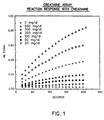
- the rate of increase of the absorption is proportional to the concentration of the creatinine in the sample and is illustrated by Fig. 1. From Fig. 1 it can be determined that the concentration of creatinine in a sample can be measured accurately between a range of 20 to 500 mg/dL.
- Tris HCl Tris buffer is tris (hydroxymethylaminomethane)
- 60 ⁇ L of antiserum (goat antibody for HSA) was added.
- the absorption at 531 nm was again measured for 150 seconds.
- the rate of increase of the absorption is proportional to the concentration of HSA in the sample as illustrated by Fig. 2. From Fig. 2 it can be determined that the concentration of HSA can be measured accurately within the range of 5 to 500 mg/L.
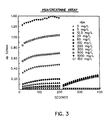
- sample consisting of 4% polyethylene glycol, 10 mM Tris, 10 mM EDTA and 0.02% sodium azide was added 60 ⁇ L of sample (HSA, creatinine or a mixture of HSA and creatinine). This was followed by 60 ⁇ L of antiserum reagent to initiate the HSA assay. The absorption at 531 nm was measured for 200 seconds. The rate of increase in the absorption is proportional to the concentration of HSA in the sample. After the turbidometric HSA measurement, 30 ⁇ L of the alkaline reagent was added followed by 30 ⁇ L of 3,5-dinitrobenzoic acid (DNBA) reagent.
- DNBA 3,5-dinitrobenzoic acid
- Fig. 3 From Fig. 3 it can be determined that the concentration of HSA in a sample can be measured accurately between a range of 5 to 1,000 mg/L and subsequently the creatinine (150 mg/dL) in the samples can be accurately measured.
- the second reaction zone is situated a predetermined distance away from and in fluid communication with the first reaction zone whereby a liquid test sample disposed in the reaction channel is capable of being transported by gravity along the reaction channel between the reaction zones by rotating the reaction vessel about the axis of rotation.
- the reaction vessel has liquid test sample delivery means for providing a unidirectional flow of the liquid test sample into the reaction vessel and inlet means in liquid communication with the delivery means for introducing the liquid test sample into the delivery means.
- the protein/creatinine assay can be carried out in this reaction vessel using either configuration A or B described hereafter.
- a mixture of the antibody and an additive such as a monosaccharide, disaccharide or oligosaccharide is dried onto the first reagent site 28 in the first reaction chamber 24 of the reaction vessel 10.
- the additive is desirable since it tends to stabilize the antibody during drying and during its long term storage after having been dried.
- the additives also provide physical stability to prevent peeling and cracking of the dried reagent.
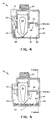
- the device has inner walls 14 which form a delivery chamber 23 permitting the introduction of a liquid test sample, such as a small amount of urine to be analyzed, into the device, and, since the delivery chamber is in fluid communication with reaction channel 21, the liquid test sample can enter the reaction channel through the delivery chamber and be caused to flow along the reaction channel by clockwise rotation of the device along its horizontal axis of rotation.
- the test sample is conveniently delivered through capillary dispenser 12 as depicted in Fig. 4. Since only a small amount of urine will be introduced through the delivery channel, additional reaction fluid containing suitable buffers can be introduced either through the delivery channel or from another source such as liquid delivery reservoir 26 adapted to contain a buffer and/or liquid reagent for performing the analytical assay procedures of the present invention.
- the liquid delivery reservoir comprises a reservoir body 27 having a depression therein 26 to act as fluid reservoir for holding the fluid until needed which is covered by a membrane (not shown) which can be removed to allow the fluid in the reservoir 26 to flow into reaction channel 21. Simple manipulation of the device will cause the liquid test sample carried by the fluid from liquid reservoir 26 to flow into position for viewing through viewing chamber 42.
- Fig. 5 represents the reaction vessel of the claims after the reaction fluid has been added to it.
- the reaction vessel has a first reaction one 24, which is typically disposed in the reaction channel 21.
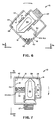
- the first reaction zone contains dried antibody reagent at the first reagent site 28 which is typically attached to one of the side walls depicted as 18 a & b in Fig. 8 or to the inner wall of the reaction vessel 16. Suitable rotation of the device will bring the reaction fluid into contact with the dried antibody reagent at site 28 to facilitate its dissolution.
- the device 10 is rotated 45° to the right to cause the fluid to cover viewing port 42 where spectrophotometric readings are taken and the change in turbidity as a function of time is determined. By comparing these readings with graphs prepared using a urine sample containing known amounts of protein, the protein concentration in the test sample is determined.
- a mixture of alkaline reagent and additive together with a water soluble polymer is dried onto the third reagent site 32b which is on the opposite wall of the vessel from reagent site 32a so that they are physically separated from each other.
- a liquid buffer reagent typically comprising polyethylene glycol to enhance the agglutination, Tris, EDTA and sodium azide as preservatives, potassium chloride as a stabilizer for the antibody and to prevent the formation of undesirable reaction products and a non-reactive protein such as gelatin, hydrolyzed gelatin, ovalbumin and casein to prevent non-specific absorption of proteins to the reaction vessel at a pH between 7 and 9 is introduced into the vessel along with the urine sample containing the protein to be assayed and creatinine.
- a non-reactive protein such as gelatin, hydrolyzed gelatin, ovalbumin and casein
- the vessel is rotated another 135° to the right to invert it from its original position and bring the buffer solution into contact with the dried creatinine detecting reagent at reagent site 32a and the alkaline reagent at site 32b thereby causing their solubilization as depicted in Fig. 7.
- the creatinine concentration can be spectrophotometrically determined shortly after this solubilization step, i.e.
- the creatinine assay can be carried out immediately after taking the spectrophotometric measurement of the protein.
- the device After dissolution of the creatinine detecting reagent and alkaline reagent the device is rotated back to the position depicted in Fig. 6 where spectrophotometric readings are taken through viewing port 42 over a period of time to obtain color formation as a function of time which can be compared with creatinine determinations made on sample having known concentrations of creatinine to ascertain the unknown creatine concentrations.
- a mixture of antibody and additive is dried onto the first reagent site 28 and the mixture of alkaline reagent and additive is dried onto the second reagent site, either 32a or b.
- the liquid buffer agent comprising the creatinine reagent, polyethylene glycol, Tris, EDTA, sodium azide, potassium chloride and a non-reactive protein at a pH of 7 to 9 is introduced to the reaction vessel along with a urine sample containing the protein and creatinine.
- the buffer solution solubilizes the antibody reagent as before and the protein concentration is determined spectrophotometrically through viewing port 42.
- the buffer solution is brought into contact with the dried alkaline reagent at the second reagent site to thereby solubilize the alkali and raise the pH to the level necessary for the creatinine assay to be carried out.
- Either configuration can be used in conjunction with the previously described reaction vessel to achieve equivalent results.
- goat antiserum against HSA was used as the antibody reagent by drying it onto the first reagent site.
- This material is commercially available and can be used without further treatment.
- the antiserum is concentrated two-fold and combined with a sucrose/trehalose mixture at a level of from 2-5% as stabilizer.
- a 15 ⁇ L sample of the reagent is dried onto the reaction site using a drying tunnel operated at 60°C and a drying time of 15 minutes.
- the alkaline reagent for creatinine comprises either an alkali hydroxide solution (e.g. 2.5 M KOH) or a mixture of alkaline buffering materials such as phosphate, borate or guanidine derivatives to maintain the proper pH and the alkali hydroxide.
- an alkali hydroxide solution e.g. 2.5 M KOH
- a mixture of alkaline buffering materials such as phosphate, borate or guanidine derivatives to maintain the proper pH and the alkali hydroxide.
- 15 ⁇ l of a mixture of 1 M phosphate and 4 M potassium hydroxide combined with the sucrose/trehalose mixture is dried onto the second reagent site using a drying tunnel operated at 60°C with a drying time of 15 minutes.
- the preferred creatinine reagent, DNBA is typically applied to the second reagent site from its 1.4 M aqueous solution containing 10% of either the sugar or polymer additive by applying a 15 ⁇ L sample of the solution and drying as before.
- the antibody reagent was dissolved and the absorption at 531 nm was measured for 120 seconds. The rate of increase in absorption was used to determine the HSA concentration.
- the alkaline reagent and DNBA reagent were then dissolved and the creatinine concentration determined by the rate of increase in absorption. It was possible to carry out this step within as little as 1, usually 1-5, seconds of the HSA determination since the solution cleared rapidly after the dissolution of the creatinine reagents.
- An analysis employing configuration B was carried out in which 0.57 mL of a solution of DNBA in buffer (4% polyethylene glycol, 25 mM Tris, 5 mM EDTA, 0.1% sodium azide, 100 mM KCl and 10 mg/mL DNBA); pH 8.5 and 30 ⁇ L of HSA and creatinine in urine was introduced into the cartridge to initiate the reaction. After measurement of the sample blank, the antibody reagent was dissolved and the absorption at 531 nm was measured for one to two minutes. The HSA concentration was determined as a function of the rate of increase in absorption. The alkali reagent was then dissolved and the absorption at 531 nm was again measured for three minutes with the creatinine concentration being determined from the rate of increase in absorption.
- buffer 4% polyethylene glycol, 25 mM Tris, 5 mM EDTA, 0.1% sodium azide, 100 mM KCl and 10 mg/mL DNBA
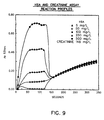
- Fig. 9 illustrates the reaction response profile of samples containing different concentrations of HSA and 148 mg/dL creatinine measured by this procedure. From Fig. 9 it can be determined that the concentration of HSA in a urine sample can be accurately measured between a range of 5 to 500 mg/L and subsequently the creatinine (148 mg/dL) in the sample can be measured accurately.
Landscapes
- Health & Medical Sciences (AREA)
- Life Sciences & Earth Sciences (AREA)
- Engineering & Computer Science (AREA)
- Chemical & Material Sciences (AREA)
- Molecular Biology (AREA)
- Biomedical Technology (AREA)
- Urology & Nephrology (AREA)
- Hematology (AREA)
- Immunology (AREA)
- Physics & Mathematics (AREA)
- General Health & Medical Sciences (AREA)
- Analytical Chemistry (AREA)
- Pathology (AREA)
- Food Science & Technology (AREA)
- Medicinal Chemistry (AREA)
- General Physics & Mathematics (AREA)
- Biochemistry (AREA)
- Biotechnology (AREA)
- Microbiology (AREA)
- Cell Biology (AREA)
- Biophysics (AREA)
- Clinical Laboratory Science (AREA)
- Chemical Kinetics & Catalysis (AREA)
- Bioinformatics & Cheminformatics (AREA)
- Bioinformatics & Computational Biology (AREA)
- Proteomics, Peptides & Aminoacids (AREA)
- Investigating Or Analysing Biological Materials (AREA)
- Investigating Or Analysing Materials By The Use Of Chemical Reactions (AREA)
Claims (8)
- Verfahren zur Bestimmung von Protein und Kreatinin in wässriger Lösung in einem Einzelreaktionsgefäß (10), welches die Stufen umfasst, in denen man:a) ein Reaktionsgefäß (10) bereitstellt, das eine im wesentlichen horizontale Drehachse und einen Analysereagens-Kanal (23) aufweist, der eine erste (24) und eine zweite (34) Reaktionszone enthält, wobei die genannte erste Reaktionszone (24) mit einem für das Protein (28) spezifischen trockenen Immunoreagens und die genannte zweite Reaktionszone (34) mit einem trockenen basischen Reagens (32b) beaufschlagt sind, das dazu befähigt ist, den pH-Wert einer Reaktionsflüssigkeit, die in den Reaktionskanal (23) eingebracht wird, auf ein zur Bestimmung von Kreatinin geeignetes Niveau anzuheben,b) eine Probe einer wässrigen Flüssigkeit, die unter dem Verdacht steht, Protein und Kreatinin zu enthalten, und eine Reaktionsflüssigkeit (21), die auf einen pH-Wert gepuffert ist, der sich zur Bestimmung der Protein-Konzentration durch immunoturbimetrische Mittel eignet, in das Reaktionsgefäß (10) einbringt und das Ganze in Kontakt mit dem getrockneten Immunoreagens (28) bringt, um dadurch das Immunoreagens aufzulösen und einen Anstieg der Trübung der Reaktionsflüssigkeit durch Wechselwirkung des Immunoreagens mit dem Protein zu verursachen,c) die Konzentration des Proteins auf Basis der Änderung der Trübung als Funktion der Zeit bestimmt,d) die Reaktionsflüssigkeit (21) und ein Reagens zur Bestimmung von Kreatinin (32a) in Kontakt mit dem trockenen basischen Reagens (32b) in der zweiten Reaktionszone (34) bringt, um dadurch das basische Reagens aufzulösen und den pH-Wert der Reaktionsflüssigkeit auf das Niveau anzuheben, das zur kolorimetrischen Bestimmung von Kreatinin notwendig ist, und mane) die Konzentration von Kreatinin in der flüssigen Probe durch spektrofotometrische Mittel bestimmt.
- Verfahren gemäß Anspruch 1, wobei der pH-Wert auf ein Niveau von 7 bis 9 vor Durchführung des Immunoassay eingestellt wird.
- Verfahren gemäß Anspruch 1, wobei der pH-Wert auf ein Niveau von 11,5 bis 12,5 vor Durchführung des Kreatinin-Assay eingestellt wird.
- Verfahren gemäß Anspruch 1, worin das Reagens zur kolorimetrischen Bestimmung von Kreatinin Pikrinsäure oder 3,5-Dinitrobenzoesäure ist.
- Verfahren gemäß Anspruch 1, worin das wässrige Lösungsmittel Urin ist.
- Verfahren gemäß Anspruch 1, worin der Urinassay vom Agglutinationstyp ist.
- Verfahren gemäß Anspruch 1, wobei die Protein-Konzentration zuerst bei einem geeigneten pH-Wert bestimmt und dann der pH-Wert auf ein Niveau angehoben werden, das sich zur Bestimmung von Kreatinin eignet.
- Verfahren gemäß Anspruch 7, wobei die Bestimmung von Kreatinin innerhalb von ca. 30 min der Zeit bis zur Anhebung des pH-Wertes initiiert wird.
Applications Claiming Priority (2)
| Application Number | Priority Date | Filing Date | Title |
|---|---|---|---|
| US08/160,239 US5385847A (en) | 1993-12-02 | 1993-12-02 | Method for the determination of urinary protein and creatinine |
| US160239 | 1993-12-02 |
Publications (3)
| Publication Number | Publication Date |
|---|---|
| EP0656541A2 EP0656541A2 (de) | 1995-06-07 |
| EP0656541A3 EP0656541A3 (de) | 1996-08-28 |
| EP0656541B1 true EP0656541B1 (de) | 2002-06-12 |
Family
ID=22576091
Family Applications (1)
| Application Number | Title | Priority Date | Filing Date |
|---|---|---|---|
| EP94118288A Expired - Lifetime EP0656541B1 (de) | 1993-12-02 | 1994-11-21 | Verfahren zur Bestimmung von Protein und Kreatinin in Harn |
Country Status (16)
| Country | Link |
|---|---|
| US (1) | US5385847A (de) |
| EP (1) | EP0656541B1 (de) |
| JP (1) | JP3707814B2 (de) |
| KR (1) | KR950019732A (de) |
| AT (1) | ATE219248T1 (de) |
| AU (1) | AU677106B2 (de) |
| BR (1) | BR9404242A (de) |
| CA (1) | CA2131146C (de) |
| DE (1) | DE69430789T2 (de) |
| ES (1) | ES2177560T3 (de) |
| FI (1) | FI114342B (de) |
| IL (1) | IL110220A (de) |
| NO (1) | NO315957B1 (de) |
| NZ (1) | NZ264209A (de) |
| TW (1) | TW348216B (de) |
| ZA (1) | ZA945837B (de) |
Cited By (1)
| Publication number | Priority date | Publication date | Assignee | Title |
|---|---|---|---|---|
| CN112577940A (zh) * | 2019-09-30 | 2021-03-30 | 厦门大学 | 一种快速低成本定量检测尿液中肌酐浓度的方法 |
Families Citing this family (28)
| Publication number | Priority date | Publication date | Assignee | Title |
|---|---|---|---|---|
| US5464777A (en) * | 1994-09-26 | 1995-11-07 | Miles Inc. | Dry reagent for creatinine assay |
| US5593895A (en) * | 1995-04-27 | 1997-01-14 | Bayer Corporation | Method for the detection of protein in urine |
| US5804452A (en) * | 1995-04-27 | 1998-09-08 | Quidel Corporation | One step urine creatinine assays |
| US5610073A (en) * | 1995-09-26 | 1997-03-11 | Bayer Corporation | Use of CO2 absorbant for stabilization of dried alkaline reagent in creatinine assay |
| KR100461987B1 (ko) * | 1995-12-06 | 2005-07-01 | 시스멕스 가부시키가이샤 | 데이터체크장치 |
| US5753517A (en) * | 1996-03-29 | 1998-05-19 | University Of British Columbia | Quantitative immunochromatographic assays |
| US5733787A (en) * | 1996-06-17 | 1998-03-31 | Bayer Corporation | Method for the detection of creatinine |
| EP0864863A3 (de) * | 1997-03-13 | 1999-02-24 | Imtec Immundiagnostika Gmbh | Verwendung von Anti-Creatinin-Antikörpern oder anderen Creatinin bindenden Substanzen zur Bestimmung von Creatinin in physiologischen Flüssigkeiten und Verfahren zu ihrer Herstellung |
| US5822071A (en) * | 1997-03-27 | 1998-10-13 | Bayer Corporation | Spectrometer normalization system |
| US6436721B1 (en) * | 1997-07-25 | 2002-08-20 | Bayer Corporation | Device and method for obtaining clinically significant analyte ratios |
| US6566051B1 (en) * | 1999-01-15 | 2003-05-20 | Medtox Scientific, Inc. | Lateral flow test strip |
| US6210971B1 (en) * | 1999-01-25 | 2001-04-03 | Bayer Corporation | Assay for the detection of creatinine |
| US6514770B1 (en) * | 1999-07-30 | 2003-02-04 | Mitsubishi Chemical Corporation | Immunoassay |
| EP1258732A4 (de) * | 2000-01-21 | 2005-02-09 | Sekisui Chemical Co Ltd | Verfahren zur quantifizierung von im urin ausgeschiedenem kreatin, verfahren zum bestimmen von urinkomponenten und vorrichtung dafür |
| US20030013129A1 (en) * | 2000-12-04 | 2003-01-16 | Tatsurou Kawamura | Method of determining solution concentration and method of examining urine |
| HRP20031022A2 (en) | 2001-05-09 | 2005-10-31 | Axis Shield Asa | Assay system |
| AU2003285969A1 (en) * | 2002-11-25 | 2004-06-18 | Albert Missbichler | Method for detecting membrane-bound and/or amyloid proteins |
| ATE525656T1 (de) * | 2004-01-23 | 2011-10-15 | Arkray Inc | Proteinmessverfahren |
| US8105840B2 (en) * | 2007-09-27 | 2012-01-31 | Niigata University | Urine pretreatment agent for urinary protein quantitation, urine pretreatment method, and urinary protein quantitation method |
| JP6055236B2 (ja) * | 2011-08-17 | 2016-12-27 | 株式会社三和化学研究所 | 測定方法 |
| JP6055317B2 (ja) * | 2012-01-20 | 2016-12-27 | 株式会社三和化学研究所 | 糖化タンパク質及びタンパク質の測定方法 |
| US9804154B2 (en) | 2013-03-12 | 2017-10-31 | Epinex Diagnostics, Inc. | Rapid test for urine albumin and urine creatinine |
| CN105021544B (zh) | 2015-07-03 | 2018-02-02 | 艾康生物技术(杭州)有限公司 | 检测系统 |
| CN105013546B (zh) | 2015-07-03 | 2017-12-08 | 艾康生物技术(杭州)有限公司 | 生物样品反应盒 |
| US11291641B2 (en) | 2016-10-03 | 2022-04-05 | The Children's Medical Center Corporation | Prevention and treatment of diabetic nephropathy |
| KR102652419B1 (ko) | 2018-01-09 | 2024-03-27 | 아이덱스 래보러토리즈, 인코포레이티드 | 생물학적 샘플에서 분석물 및/또는 단백질을 측정하기 위한 방법 |
| EP3821056B1 (de) * | 2018-07-13 | 2024-03-13 | Siemens Healthcare Diagnostics, Inc. | Mikroalbumin-kreatinin-assay-detektionsfahne und verfahren zur herstellung und verwendung im zusammenhang damit |
| CN118177086A (zh) * | 2024-03-18 | 2024-06-14 | 威海龙峰硅胶有限公司 | 一种可判定肾脏病变的变色硅胶猫砂的制备方法 |
Family Cites Families (9)
| Publication number | Priority date | Publication date | Assignee | Title |
|---|---|---|---|---|
| US2785057A (en) * | 1953-12-08 | 1957-03-12 | Union Central Life Insurance C | Device for testing liquids |
| US3705013A (en) * | 1970-01-05 | 1972-12-05 | Xerox Corp | Analytical procedures and compositions therefor |
| US4205954A (en) * | 1978-05-26 | 1980-06-03 | Warner-Lambert Company | Kinetic latex agglutinometry |
| US4426451A (en) * | 1981-01-28 | 1984-01-17 | Eastman Kodak Company | Multi-zoned reaction vessel having pressure-actuatable control means between zones |
| CA1183367A (en) * | 1981-09-24 | 1985-03-05 | Ali H. Eseifan | Optical analyzing method and system |
| US4990075A (en) * | 1988-04-11 | 1991-02-05 | Miles Inc. | Reaction vessel for performing sequential analytical assays |
| IL94408A0 (en) * | 1989-07-11 | 1991-03-10 | Miles Inc | Method,reaction cassette and kit for performing analytical assays |
| EP0580383A3 (de) * | 1992-07-20 | 1995-04-12 | Csir | Flüssigkeitsanalyse. |
| US5464777A (en) * | 1994-09-26 | 1995-11-07 | Miles Inc. | Dry reagent for creatinine assay |
-
1993
- 1993-12-02 US US08/160,239 patent/US5385847A/en not_active Expired - Lifetime
-
1994
- 1994-07-05 IL IL11022094A patent/IL110220A/xx not_active IP Right Cessation
- 1994-07-15 TW TW083106464A patent/TW348216B/zh active
- 1994-08-04 ZA ZA945837A patent/ZA945837B/xx unknown
- 1994-08-09 NZ NZ264209A patent/NZ264209A/en unknown
- 1994-08-12 NO NO19942987A patent/NO315957B1/no unknown
- 1994-08-30 KR KR1019940021492A patent/KR950019732A/ko not_active Ceased
- 1994-08-30 CA CA002131146A patent/CA2131146C/en not_active Expired - Fee Related
- 1994-10-25 BR BR9404242A patent/BR9404242A/pt not_active IP Right Cessation
- 1994-11-21 AT AT94118288T patent/ATE219248T1/de not_active IP Right Cessation
- 1994-11-21 ES ES94118288T patent/ES2177560T3/es not_active Expired - Lifetime
- 1994-11-21 DE DE69430789T patent/DE69430789T2/de not_active Expired - Lifetime
- 1994-11-21 EP EP94118288A patent/EP0656541B1/de not_active Expired - Lifetime
- 1994-11-30 AU AU79150/94A patent/AU677106B2/en not_active Ceased
- 1994-12-01 JP JP29829994A patent/JP3707814B2/ja not_active Expired - Lifetime
- 1994-12-01 FI FI945670A patent/FI114342B/fi not_active IP Right Cessation
Cited By (1)
| Publication number | Priority date | Publication date | Assignee | Title |
|---|---|---|---|---|
| CN112577940A (zh) * | 2019-09-30 | 2021-03-30 | 厦门大学 | 一种快速低成本定量检测尿液中肌酐浓度的方法 |
Also Published As
| Publication number | Publication date |
|---|---|
| CA2131146C (en) | 2004-03-30 |
| EP0656541A3 (de) | 1996-08-28 |
| FI945670L (fi) | 1995-06-03 |
| JP3707814B2 (ja) | 2005-10-19 |
| ATE219248T1 (de) | 2002-06-15 |
| FI114342B (fi) | 2004-09-30 |
| KR950019732A (ko) | 1995-07-24 |
| CA2131146A1 (en) | 1995-06-03 |
| TW348216B (en) | 1998-12-21 |
| NZ264209A (en) | 1996-04-26 |
| ES2177560T3 (es) | 2002-12-16 |
| EP0656541A2 (de) | 1995-06-07 |
| IL110220A0 (en) | 1994-10-21 |
| NO942987L (no) | 1995-06-06 |
| ZA945837B (en) | 1995-03-09 |
| NO315957B1 (no) | 2003-11-17 |
| AU7915094A (en) | 1995-06-08 |
| DE69430789D1 (de) | 2002-07-18 |
| AU677106B2 (en) | 1997-04-10 |
| US5385847A (en) | 1995-01-31 |
| FI945670A0 (fi) | 1994-12-01 |
| NO942987D0 (no) | 1994-08-12 |
| DE69430789T2 (de) | 2002-10-24 |
| BR9404242A (pt) | 1995-07-25 |
| IL110220A (en) | 1999-04-11 |
| JPH07198719A (ja) | 1995-08-01 |
Similar Documents
| Publication | Publication Date | Title |
|---|---|---|
| EP0656541B1 (de) | Verfahren zur Bestimmung von Protein und Kreatinin in Harn | |
| US5464777A (en) | Dry reagent for creatinine assay | |
| Zuk et al. | Enzyme immunochromatography--a quantitative immunoassay requiring no instrumentation. | |
| US6514770B1 (en) | Immunoassay | |
| JP3447360B2 (ja) | 分析検定を実施するための方法およびその反応容器 | |
| WO2002039114A2 (en) | Improved assay and reagents or immunological determination of analyte concentration | |
| US4971904A (en) | Heterogeneous immunoassay | |
| Lucertini et al. | Enzyme-linked immunosorbent assay of retinol-binding protein in serum and urine. | |
| US4962021A (en) | Analyte determination using gel including a reagent system reacts with analyte to change transmissive property of gel detectable by light beam transmitted through gel by total internal reflectance | |
| JPH09508707A (ja) | 改善された直線性を有する競合結合アッセイ | |
| JPS61202142A (ja) | 吸光度を用いた分析方法および分析装置 | |
| EP2309265B1 (de) | Verfahren zur untersuchung eines komplexes und darin zu verwendendes kit | |
| EP0079962B1 (de) | Test durch immunoniederschlag | |
| Dietzler et al. | Adaptation of the EMIT theophylline assay to kinetic analyzers: The relationship of reaction kinetics to calculation procedures | |
| JP2534067B2 (ja) | C反応性タンパクの定量法 | |
| PrIce et al. | Kinetic immunoturbidimetry of human choriomammotropin in serum. | |
| JPS61243363A (ja) | Crpの高感度定量法 | |
| Li et al. | One-step enzyme immunochromatographic assay for theophylline | |
| JPH08220098A (ja) | 酵素免疫測定法及び酵素免疫測定試薬キット | |
| IE68446B1 (en) | A colour stable chromogen composition | |
| MONROE | 6. Enzyme Channelling Immunoassay (ECIA): A Unique and Rapid Quantitative | |
| Monroe | Enzyme Channelling Immunoassay (ECIA): A Unique and Rapid Quantitative Technique | |
| JPH05203643A (ja) | 糞便中の潜血検出方法 | |
| JP2001108678A (ja) | 免疫測定方法 | |
| JPH0275955A (ja) | 逆受身抗体赤血球凝集反応によるヒト尿中蛋白測定方法及びそのためのキット |
Legal Events
| Date | Code | Title | Description |
|---|---|---|---|
| PUAI | Public reference made under article 153(3) epc to a published international application that has entered the european phase |
Free format text: ORIGINAL CODE: 0009012 |
|
| AK | Designated contracting states |
Kind code of ref document: A2 Designated state(s): AT BE CH DE DK ES FR GB GR IE IT LI LU NL PT SE |
|
| RAX | Requested extension states of the european patent have changed |
Free format text: SI PAYMENT 941121 |
|
| RAP1 | Party data changed (applicant data changed or rights of an application transferred) |
Owner name: BAYER CORPORATION |
|
| RAP1 | Party data changed (applicant data changed or rights of an application transferred) |
Owner name: BAYER CORPORATION |
|
| PUAL | Search report despatched |
Free format text: ORIGINAL CODE: 0009013 |
|
| AK | Designated contracting states |
Kind code of ref document: A3 Designated state(s): AT BE CH DE DK ES FR GB GR IE IT LI LU NL PT SE |
|
| AX | Request for extension of the european patent |
Free format text: SI PAYMENT 941121 |
|
| 17P | Request for examination filed |
Effective date: 19970213 |
|
| RAP1 | Party data changed (applicant data changed or rights of an application transferred) |
Owner name: BAYER CORPORATION |
|
| 17Q | First examination report despatched |
Effective date: 19991025 |
|
| GRAG | Despatch of communication of intention to grant |
Free format text: ORIGINAL CODE: EPIDOS AGRA |
|
| GRAG | Despatch of communication of intention to grant |
Free format text: ORIGINAL CODE: EPIDOS AGRA |
|
| GRAH | Despatch of communication of intention to grant a patent |
Free format text: ORIGINAL CODE: EPIDOS IGRA |
|
| GRAH | Despatch of communication of intention to grant a patent |
Free format text: ORIGINAL CODE: EPIDOS IGRA |
|
| GRAA | (expected) grant |
Free format text: ORIGINAL CODE: 0009210 |
|
| AK | Designated contracting states |
Kind code of ref document: B1 Designated state(s): AT BE CH DE DK ES FR GB GR IE IT LI LU NL PT SE |
|
| AX | Request for extension of the european patent |
Free format text: SI PAYMENT 19941121 |
|
| PG25 | Lapsed in a contracting state [announced via postgrant information from national office to epo] |
Ref country code: LI Free format text: LAPSE BECAUSE OF FAILURE TO SUBMIT A TRANSLATION OF THE DESCRIPTION OR TO PAY THE FEE WITHIN THE PRESCRIBED TIME-LIMIT Effective date: 20020612 Ref country code: GR Free format text: LAPSE BECAUSE OF FAILURE TO SUBMIT A TRANSLATION OF THE DESCRIPTION OR TO PAY THE FEE WITHIN THE PRESCRIBED TIME-LIMIT Effective date: 20020612 Ref country code: CH Free format text: LAPSE BECAUSE OF FAILURE TO SUBMIT A TRANSLATION OF THE DESCRIPTION OR TO PAY THE FEE WITHIN THE PRESCRIBED TIME-LIMIT Effective date: 20020612 |
|
| REF | Corresponds to: |
Ref document number: 219248 Country of ref document: AT Date of ref document: 20020615 Kind code of ref document: T |
|
| REG | Reference to a national code |
Ref country code: GB Ref legal event code: FG4D |
|
| REG | Reference to a national code |
Ref country code: CH Ref legal event code: EP |
|
| REF | Corresponds to: |
Ref document number: 69430789 Country of ref document: DE Date of ref document: 20020718 |
|
| REG | Reference to a national code |
Ref country code: IE Ref legal event code: FG4D |
|
| PG25 | Lapsed in a contracting state [announced via postgrant information from national office to epo] |
Ref country code: PT Free format text: LAPSE BECAUSE OF FAILURE TO SUBMIT A TRANSLATION OF THE DESCRIPTION OR TO PAY THE FEE WITHIN THE PRESCRIBED TIME-LIMIT Effective date: 20020912 Ref country code: DK Free format text: LAPSE BECAUSE OF FAILURE TO SUBMIT A TRANSLATION OF THE DESCRIPTION OR TO PAY THE FEE WITHIN THE PRESCRIBED TIME-LIMIT Effective date: 20020912 |
|
| PG25 | Lapsed in a contracting state [announced via postgrant information from national office to epo] |
Ref country code: IE Free format text: LAPSE BECAUSE OF NON-PAYMENT OF DUE FEES Effective date: 20021121 |
|
| ET | Fr: translation filed | ||
| PG25 | Lapsed in a contracting state [announced via postgrant information from national office to epo] |
Ref country code: LU Free format text: LAPSE BECAUSE OF NON-PAYMENT OF DUE FEES Effective date: 20021130 |
|
| REG | Reference to a national code |
Ref country code: ES Ref legal event code: FG2A Ref document number: 2177560 Country of ref document: ES Kind code of ref document: T3 |
|
| REG | Reference to a national code |
Ref country code: CH Ref legal event code: PL |
|
| PLBE | No opposition filed within time limit |
Free format text: ORIGINAL CODE: 0009261 |
|
| STAA | Information on the status of an ep patent application or granted ep patent |
Free format text: STATUS: NO OPPOSITION FILED WITHIN TIME LIMIT |
|
| 26N | No opposition filed |
Effective date: 20030313 |
|
| REG | Reference to a national code |
Ref country code: IE Ref legal event code: MM4A |
|
| PGFP | Annual fee paid to national office [announced via postgrant information from national office to epo] |
Ref country code: AT Payment date: 20041103 Year of fee payment: 11 |
|
| PGFP | Annual fee paid to national office [announced via postgrant information from national office to epo] |
Ref country code: LU Payment date: 20041129 Year of fee payment: 11 |
|
| PGFP | Annual fee paid to national office [announced via postgrant information from national office to epo] |
Ref country code: NL Payment date: 20051029 Year of fee payment: 12 |
|
| PG25 | Lapsed in a contracting state [announced via postgrant information from national office to epo] |
Ref country code: AT Free format text: LAPSE BECAUSE OF NON-PAYMENT OF DUE FEES Effective date: 20051121 |
|
| PGFP | Annual fee paid to national office [announced via postgrant information from national office to epo] |
Ref country code: BE Payment date: 20051208 Year of fee payment: 12 |
|
| PG25 | Lapsed in a contracting state [announced via postgrant information from national office to epo] |
Ref country code: BE Free format text: LAPSE BECAUSE OF NON-PAYMENT OF DUE FEES Effective date: 20061130 |
|
| PG25 | Lapsed in a contracting state [announced via postgrant information from national office to epo] |
Ref country code: NL Free format text: LAPSE BECAUSE OF NON-PAYMENT OF DUE FEES Effective date: 20070601 |
|
| NLV4 | Nl: lapsed or anulled due to non-payment of the annual fee |
Effective date: 20070601 |
|
| BERE | Be: lapsed |
Owner name: *BAYER CORP. Effective date: 20061130 |
|
| PGFP | Annual fee paid to national office [announced via postgrant information from national office to epo] |
Ref country code: SE Payment date: 20091110 Year of fee payment: 16 |
|
| PGFP | Annual fee paid to national office [announced via postgrant information from national office to epo] |
Ref country code: IT Payment date: 20091125 Year of fee payment: 16 |
|
| REG | Reference to a national code |
Ref country code: GB Ref legal event code: 732E Free format text: REGISTERED BETWEEN 20101104 AND 20101110 |
|
| REG | Reference to a national code |
Ref country code: FR Ref legal event code: TP |
|
| REG | Reference to a national code |
Ref country code: SE Ref legal event code: EUG |
|
| PG25 | Lapsed in a contracting state [announced via postgrant information from national office to epo] |
Ref country code: SE Free format text: LAPSE BECAUSE OF NON-PAYMENT OF DUE FEES Effective date: 20101122 |
|
| PG25 | Lapsed in a contracting state [announced via postgrant information from national office to epo] |
Ref country code: IT Free format text: LAPSE BECAUSE OF NON-PAYMENT OF DUE FEES Effective date: 20101121 |
|
| PGFP | Annual fee paid to national office [announced via postgrant information from national office to epo] |
Ref country code: GB Payment date: 20131111 Year of fee payment: 20 Ref country code: FR Payment date: 20131119 Year of fee payment: 20 |
|
| PGFP | Annual fee paid to national office [announced via postgrant information from national office to epo] |
Ref country code: ES Payment date: 20131220 Year of fee payment: 20 |
|
| PGFP | Annual fee paid to national office [announced via postgrant information from national office to epo] |
Ref country code: DE Payment date: 20140120 Year of fee payment: 20 |
|
| REG | Reference to a national code |
Ref country code: DE Ref legal event code: R071 Ref document number: 69430789 Country of ref document: DE |
|
| REG | Reference to a national code |
Ref country code: GB Ref legal event code: PE20 Expiry date: 20141120 |
|
| PG25 | Lapsed in a contracting state [announced via postgrant information from national office to epo] |
Ref country code: GB Free format text: LAPSE BECAUSE OF EXPIRATION OF PROTECTION Effective date: 20141120 |
|
| REG | Reference to a national code |
Ref country code: ES Ref legal event code: FD2A Effective date: 20150826 |
|
| PG25 | Lapsed in a contracting state [announced via postgrant information from national office to epo] |
Ref country code: ES Free format text: LAPSE BECAUSE OF EXPIRATION OF PROTECTION Effective date: 20141122 |