EP0682046B1 - Procédé de fabrication d'un copolymère améliorant l'indice de viscosité - Google Patents
Procédé de fabrication d'un copolymère améliorant l'indice de viscosité Download PDFInfo
- Publication number
- EP0682046B1 EP0682046B1 EP95302470A EP95302470A EP0682046B1 EP 0682046 B1 EP0682046 B1 EP 0682046B1 EP 95302470 A EP95302470 A EP 95302470A EP 95302470 A EP95302470 A EP 95302470A EP 0682046 B1 EP0682046 B1 EP 0682046B1
- Authority
- EP
- European Patent Office
- Prior art keywords
- meth
- weight
- monomer
- methacrylate
- parts
- Prior art date
- Legal status (The legal status is an assumption and is not a legal conclusion. Google has not performed a legal analysis and makes no representation as to the accuracy of the status listed.)
- Expired - Lifetime
Links
- 229920001577 copolymer Polymers 0.000 title claims description 44
- 238000000034 method Methods 0.000 title claims description 25
- 239000000178 monomer Substances 0.000 claims description 132
- NIXOWILDQLNWCW-UHFFFAOYSA-M Acrylate Chemical compound [O-]C(=O)C=C NIXOWILDQLNWCW-UHFFFAOYSA-M 0.000 claims description 58
- 239000000203 mixture Substances 0.000 claims description 49
- PPBRXRYQALVLMV-UHFFFAOYSA-N Styrene Chemical group C=CC1=CC=CC=C1 PPBRXRYQALVLMV-UHFFFAOYSA-N 0.000 claims description 21
- 239000003085 diluting agent Substances 0.000 claims description 20
- 239000010687 lubricating oil Substances 0.000 claims description 20
- 125000000217 alkyl group Chemical group 0.000 claims description 16
- 239000003921 oil Substances 0.000 claims description 15
- 239000003505 polymerization initiator Substances 0.000 claims description 15
- 229920000642 polymer Polymers 0.000 claims description 11
- 239000000654 additive Substances 0.000 claims description 9
- 238000006116 polymerization reaction Methods 0.000 claims description 8
- 230000000996 additive effect Effects 0.000 claims description 7
- 150000003440 styrenes Chemical class 0.000 claims description 6
- COCLLEMEIJQBAG-UHFFFAOYSA-N 8-methylnonyl 2-methylprop-2-enoate Chemical compound CC(C)CCCCCCCOC(=O)C(C)=C COCLLEMEIJQBAG-UHFFFAOYSA-N 0.000 claims description 5
- 230000000379 polymerizing effect Effects 0.000 claims description 5
- HMZGPNHSPWNGEP-UHFFFAOYSA-N octadecyl 2-methylprop-2-enoate Chemical compound CCCCCCCCCCCCCCCCCCOC(=O)C(C)=C HMZGPNHSPWNGEP-UHFFFAOYSA-N 0.000 claims description 4
- GTBGXKPAKVYEKJ-UHFFFAOYSA-N decyl 2-methylprop-2-enoate Chemical compound CCCCCCCCCCOC(=O)C(C)=C GTBGXKPAKVYEKJ-UHFFFAOYSA-N 0.000 claims description 3
- GMSCBRSQMRDRCD-UHFFFAOYSA-N dodecyl 2-methylprop-2-enoate Chemical compound CCCCCCCCCCCCOC(=O)C(C)=C GMSCBRSQMRDRCD-UHFFFAOYSA-N 0.000 claims description 3
- PAIQEFSJYGYULU-UHFFFAOYSA-N heptadecyl 2-methylprop-2-enoate Chemical compound CCCCCCCCCCCCCCCCCOC(=O)C(C)=C PAIQEFSJYGYULU-UHFFFAOYSA-N 0.000 claims description 3
- ZNAOFAIBVOMLPV-UHFFFAOYSA-N hexadecyl 2-methylprop-2-enoate Chemical compound CCCCCCCCCCCCCCCCOC(=O)C(C)=C ZNAOFAIBVOMLPV-UHFFFAOYSA-N 0.000 claims description 3
- CFBXDFZIDLWOSO-UHFFFAOYSA-N icosyl 2-methylprop-2-enoate Chemical compound CCCCCCCCCCCCCCCCCCCCOC(=O)C(C)=C CFBXDFZIDLWOSO-UHFFFAOYSA-N 0.000 claims description 3
- YGPZXPHFJSYIKP-UHFFFAOYSA-N nonadecyl 2-methylprop-2-enoate Chemical compound CCCCCCCCCCCCCCCCCCCOC(=O)C(C)=C YGPZXPHFJSYIKP-UHFFFAOYSA-N 0.000 claims description 3
- LKEDKQWWISEKSW-UHFFFAOYSA-N nonyl 2-methylprop-2-enoate Chemical compound CCCCCCCCCOC(=O)C(C)=C LKEDKQWWISEKSW-UHFFFAOYSA-N 0.000 claims description 3
- YOTGRUGZMVCBLS-UHFFFAOYSA-N pentadecyl 2-methylprop-2-enoate Chemical compound CCCCCCCCCCCCCCCOC(=O)C(C)=C YOTGRUGZMVCBLS-UHFFFAOYSA-N 0.000 claims description 3
- ATZHWSYYKQKSSY-UHFFFAOYSA-N tetradecyl 2-methylprop-2-enoate Chemical compound CCCCCCCCCCCCCCOC(=O)C(C)=C ATZHWSYYKQKSSY-UHFFFAOYSA-N 0.000 claims description 3
- KEROTHRUZYBWCY-UHFFFAOYSA-N tridecyl 2-methylprop-2-enoate Chemical compound CCCCCCCCCCCCCOC(=O)C(C)=C KEROTHRUZYBWCY-UHFFFAOYSA-N 0.000 claims description 3
- KRLHYNPADOCLAJ-UHFFFAOYSA-N undecyl 2-methylprop-2-enoate Chemical compound CCCCCCCCCCCOC(=O)C(C)=C KRLHYNPADOCLAJ-UHFFFAOYSA-N 0.000 claims description 3
- MDNFYIAABKQDML-UHFFFAOYSA-N heptyl 2-methylprop-2-enoate Chemical compound CCCCCCCOC(=O)C(C)=C MDNFYIAABKQDML-UHFFFAOYSA-N 0.000 claims description 2
- NZIDBRBFGPQCRY-UHFFFAOYSA-N octyl 2-methylprop-2-enoate Chemical compound CCCCCCCCOC(=O)C(C)=C NZIDBRBFGPQCRY-UHFFFAOYSA-N 0.000 claims description 2
- 238000006243 chemical reaction Methods 0.000 description 29
- 239000000243 solution Substances 0.000 description 22
- 239000003999 initiator Substances 0.000 description 16
- -1 alkyl styrene Chemical compound 0.000 description 9
- 239000007787 solid Substances 0.000 description 9
- 230000007935 neutral effect Effects 0.000 description 8
- 239000011541 reaction mixture Substances 0.000 description 8
- 239000012986 chain transfer agent Substances 0.000 description 6
- 239000002904 solvent Substances 0.000 description 5
- IJGRMHOSHXDMSA-UHFFFAOYSA-N Atomic nitrogen Chemical compound N#N IJGRMHOSHXDMSA-UHFFFAOYSA-N 0.000 description 4
- WKBOTKDWSSQWDR-UHFFFAOYSA-N Bromine atom Chemical compound [Br] WKBOTKDWSSQWDR-UHFFFAOYSA-N 0.000 description 4
- GDTBXPJZTBHREO-UHFFFAOYSA-N bromine Substances BrBr GDTBXPJZTBHREO-UHFFFAOYSA-N 0.000 description 4
- 229910052794 bromium Inorganic materials 0.000 description 4
- 239000002480 mineral oil Substances 0.000 description 4
- 235000010446 mineral oil Nutrition 0.000 description 4
- 238000003756 stirring Methods 0.000 description 4
- 125000003118 aryl group Chemical group 0.000 description 3
- WNAHIZMDSQCWRP-UHFFFAOYSA-N dodecane-1-thiol Chemical compound CCCCCCCCCCCCS WNAHIZMDSQCWRP-UHFFFAOYSA-N 0.000 description 3
- 125000000999 tert-butyl group Chemical group [H]C([H])([H])C(*)(C([H])([H])[H])C([H])([H])[H] 0.000 description 3
- 229920002554 vinyl polymer Polymers 0.000 description 3
- 239000004342 Benzoyl peroxide Substances 0.000 description 2
- OMPJBNCRMGITSC-UHFFFAOYSA-N Benzoylperoxide Chemical compound C=1C=CC=CC=1C(=O)OOC(=O)C1=CC=CC=C1 OMPJBNCRMGITSC-UHFFFAOYSA-N 0.000 description 2
- 239000004215 Carbon black (E152) Substances 0.000 description 2
- 235000019400 benzoyl peroxide Nutrition 0.000 description 2
- 125000004432 carbon atom Chemical group C* 0.000 description 2
- ZQMIGQNCOMNODD-UHFFFAOYSA-N diacetyl peroxide Chemical compound CC(=O)OOC(C)=O ZQMIGQNCOMNODD-UHFFFAOYSA-N 0.000 description 2
- 150000002148 esters Chemical class 0.000 description 2
- DNJIEGIFACGWOD-UHFFFAOYSA-N ethanethiol Chemical compound CCS DNJIEGIFACGWOD-UHFFFAOYSA-N 0.000 description 2
- 239000012530 fluid Substances 0.000 description 2
- 239000007789 gas Substances 0.000 description 2
- 238000005227 gel permeation chromatography Methods 0.000 description 2
- 238000003988 headspace gas chromatography Methods 0.000 description 2
- HJSMBDKULYJQKM-UHFFFAOYSA-N hexacosan-13-yl 2-methylprop-2-enoate Chemical compound CCCCCCCCCCCCCC(OC(=O)C(C)=C)CCCCCCCCCCCC HJSMBDKULYJQKM-UHFFFAOYSA-N 0.000 description 2
- 229930195733 hydrocarbon Natural products 0.000 description 2
- 150000002430 hydrocarbons Chemical class 0.000 description 2
- 125000002496 methyl group Chemical group [H]C([H])([H])* 0.000 description 2
- 229910052757 nitrogen Inorganic materials 0.000 description 2
- 150000002978 peroxides Chemical class 0.000 description 2
- 238000010926 purge Methods 0.000 description 2
- GJBRNHKUVLOCEB-UHFFFAOYSA-N tert-butyl benzenecarboperoxoate Chemical compound CC(C)(C)OOC(=O)C1=CC=CC=C1 GJBRNHKUVLOCEB-UHFFFAOYSA-N 0.000 description 2
- CIHOLLKRGTVIJN-UHFFFAOYSA-N tert‐butyl hydroperoxide Chemical compound CC(C)(C)OO CIHOLLKRGTVIJN-UHFFFAOYSA-N 0.000 description 2
- 0 *ONN*1*CC1 Chemical compound *ONN*1*CC1 0.000 description 1
- WAEOXIOXMKNFLQ-UHFFFAOYSA-N 1-methyl-4-prop-2-enylbenzene Chemical group CC1=CC=C(CC=C)C=C1 WAEOXIOXMKNFLQ-UHFFFAOYSA-N 0.000 description 1
- CISIJYCKDJSTMX-UHFFFAOYSA-N 2,2-dichloroethenylbenzene Chemical compound ClC(Cl)=CC1=CC=CC=C1 CISIJYCKDJSTMX-UHFFFAOYSA-N 0.000 description 1
- OZAIFHULBGXAKX-UHFFFAOYSA-N 2-(2-cyanopropan-2-yldiazenyl)-2-methylpropanenitrile Chemical compound N#CC(C)(C)N=NC(C)(C)C#N OZAIFHULBGXAKX-UHFFFAOYSA-N 0.000 description 1
- XMNIXWIUMCBBBL-UHFFFAOYSA-N 2-(2-phenylpropan-2-ylperoxy)propan-2-ylbenzene Chemical compound C=1C=CC=CC=1C(C)(C)OOC(C)(C)C1=CC=CC=C1 XMNIXWIUMCBBBL-UHFFFAOYSA-N 0.000 description 1
- ZSDQQJHSRVEGTJ-UHFFFAOYSA-N 2-(6-amino-1h-indol-3-yl)acetonitrile Chemical compound NC1=CC=C2C(CC#N)=CNC2=C1 ZSDQQJHSRVEGTJ-UHFFFAOYSA-N 0.000 description 1
- SBYMUDUGTIKLCR-UHFFFAOYSA-N 2-chloroethenylbenzene Chemical compound ClC=CC1=CC=CC=C1 SBYMUDUGTIKLCR-UHFFFAOYSA-N 0.000 description 1
- WFUGQJXVXHBTEM-UHFFFAOYSA-N 2-hydroperoxy-2-(2-hydroperoxybutan-2-ylperoxy)butane Chemical compound CCC(C)(OO)OOC(C)(CC)OO WFUGQJXVXHBTEM-UHFFFAOYSA-N 0.000 description 1
- JLBJTVDPSNHSKJ-UHFFFAOYSA-N 4-Methylstyrene Chemical compound CC1=CC=C(C=C)C=C1 JLBJTVDPSNHSKJ-UHFFFAOYSA-N 0.000 description 1
- JTHZUSWLNCPZLX-UHFFFAOYSA-N 6-fluoro-3-methyl-2h-indazole Chemical compound FC1=CC=C2C(C)=NNC2=C1 JTHZUSWLNCPZLX-UHFFFAOYSA-N 0.000 description 1
- 239000004793 Polystyrene Substances 0.000 description 1
- YMOONIIMQBGTDU-VOTSOKGWSA-N [(e)-2-bromoethenyl]benzene Chemical compound Br\C=C\C1=CC=CC=C1 YMOONIIMQBGTDU-VOTSOKGWSA-N 0.000 description 1
- 150000001252 acrylic acid derivatives Chemical class 0.000 description 1
- XYLMUPLGERFSHI-UHFFFAOYSA-N alpha-Methylstyrene Chemical compound CC(=C)C1=CC=CC=C1 XYLMUPLGERFSHI-UHFFFAOYSA-N 0.000 description 1
- 125000001204 arachidyl group Chemical group [H]C([*])([H])C([H])([H])C([H])([H])C([H])([H])C([H])([H])C([H])([H])C([H])([H])C([H])([H])C([H])([H])C([H])([H])C([H])([H])C([H])([H])C([H])([H])C([H])([H])C([H])([H])C([H])([H])C([H])([H])C([H])([H])C([H])([H])C([H])([H])[H] 0.000 description 1
- 125000000751 azo group Chemical group [*]N=N[*] 0.000 description 1
- 239000002199 base oil Substances 0.000 description 1
- SQHOHKQMTHROSF-UHFFFAOYSA-N but-1-en-2-ylbenzene Chemical compound CCC(=C)C1=CC=CC=C1 SQHOHKQMTHROSF-UHFFFAOYSA-N 0.000 description 1
- 239000003795 chemical substances by application Substances 0.000 description 1
- 238000002485 combustion reaction Methods 0.000 description 1
- 238000007334 copolymerization reaction Methods 0.000 description 1
- XJOBOFWTZOKMOH-UHFFFAOYSA-N decanoyl decaneperoxoate Chemical compound CCCCCCCCCC(=O)OOC(=O)CCCCCCCCC XJOBOFWTZOKMOH-UHFFFAOYSA-N 0.000 description 1
- FWLDHHJLVGRRHD-UHFFFAOYSA-N decyl prop-2-enoate Chemical compound CCCCCCCCCCOC(=O)C=C FWLDHHJLVGRRHD-UHFFFAOYSA-N 0.000 description 1
- 125000004177 diethyl group Chemical group [H]C([H])([H])C([H])([H])* 0.000 description 1
- 238000010790 dilution Methods 0.000 description 1
- 239000012895 dilution Substances 0.000 description 1
- 125000000118 dimethyl group Chemical group [H]C([H])([H])* 0.000 description 1
- QZYRMODBFHTNHF-UHFFFAOYSA-N ditert-butyl benzene-1,2-dicarboperoxoate Chemical compound CC(C)(C)OOC(=O)C1=CC=CC=C1C(=O)OOC(C)(C)C QZYRMODBFHTNHF-UHFFFAOYSA-N 0.000 description 1
- 125000003438 dodecyl group Chemical group [H]C([H])([H])C([H])([H])C([H])([H])C([H])([H])C([H])([H])C([H])([H])C([H])([H])C([H])([H])C([H])([H])C([H])([H])C([H])([H])C([H])([H])* 0.000 description 1
- 230000007613 environmental effect Effects 0.000 description 1
- 238000010438 heat treatment Methods 0.000 description 1
- JEBMFONDEFPKAD-UHFFFAOYSA-N heptacosan-13-yl 2-methylprop-2-enoate Chemical compound CCCCCCCCCCCCCCC(OC(=O)C(C)=C)CCCCCCCCCCCC JEBMFONDEFPKAD-UHFFFAOYSA-N 0.000 description 1
- KVILQFSLJDTWPU-UHFFFAOYSA-N heptadecyl prop-2-enoate Chemical compound CCCCCCCCCCCCCCCCCOC(=O)C=C KVILQFSLJDTWPU-UHFFFAOYSA-N 0.000 description 1
- 125000003187 heptyl group Chemical group [H]C([*])([H])C([H])([H])C([H])([H])C([H])([H])C([H])([H])C([H])([H])C([H])([H])[H] 0.000 description 1
- OAYMNBMXGBFHKX-UHFFFAOYSA-N hexatriacontyl 2-methylprop-2-enoate Chemical compound CCCCCCCCCCCCCCCCCCCCCCCCCCCCCCCCCCCCOC(=O)C(C)=C OAYMNBMXGBFHKX-UHFFFAOYSA-N 0.000 description 1
- 239000012456 homogeneous solution Substances 0.000 description 1
- 150000002432 hydroperoxides Chemical class 0.000 description 1
- 239000007788 liquid Substances 0.000 description 1
- 230000001050 lubricating effect Effects 0.000 description 1
- 125000002960 margaryl group Chemical group [H]C([*])([H])C([H])([H])C([H])([H])C([H])([H])C([H])([H])C([H])([H])C([H])([H])C([H])([H])C([H])([H])C([H])([H])C([H])([H])C([H])([H])C([H])([H])C([H])([H])C([H])([H])C([H])([H])C([H])([H])[H] 0.000 description 1
- 150000002734 metacrylic acid derivatives Chemical class 0.000 description 1
- 125000001421 myristyl group Chemical group [H]C([*])([H])C([H])([H])C([H])([H])C([H])([H])C([H])([H])C([H])([H])C([H])([H])C([H])([H])C([H])([H])C([H])([H])C([H])([H])C([H])([H])C([H])([H])C([H])([H])[H] 0.000 description 1
- HNBDRPTVWVGKBR-UHFFFAOYSA-N n-pentanoic acid methyl ester Natural products CCCCC(=O)OC HNBDRPTVWVGKBR-UHFFFAOYSA-N 0.000 description 1
- 125000001196 nonadecyl group Chemical group [H]C([*])([H])C([H])([H])C([H])([H])C([H])([H])C([H])([H])C([H])([H])C([H])([H])C([H])([H])C([H])([H])C([H])([H])C([H])([H])C([H])([H])C([H])([H])C([H])([H])C([H])([H])C([H])([H])C([H])([H])C([H])([H])C([H])([H])[H] 0.000 description 1
- 125000001400 nonyl group Chemical group [H]C([*])([H])C([H])([H])C([H])([H])C([H])([H])C([H])([H])C([H])([H])C([H])([H])C([H])([H])C([H])([H])[H] 0.000 description 1
- NFXJMYPNKFQAQT-UHFFFAOYSA-N octyl 2-methylprop-2-enoate;octyl prop-2-enoate Chemical compound CCCCCCCCOC(=O)C=C.CCCCCCCCOC(=O)C(C)=C NFXJMYPNKFQAQT-UHFFFAOYSA-N 0.000 description 1
- 125000002347 octyl group Chemical group [H]C([*])([H])C([H])([H])C([H])([H])C([H])([H])C([H])([H])C([H])([H])C([H])([H])C([H])([H])[H] 0.000 description 1
- 125000000913 palmityl group Chemical group [H]C([*])([H])C([H])([H])C([H])([H])C([H])([H])C([H])([H])C([H])([H])C([H])([H])C([H])([H])C([H])([H])C([H])([H])C([H])([H])C([H])([H])C([H])([H])C([H])([H])C([H])([H])C([H])([H])[H] 0.000 description 1
- 229920002223 polystyrene Polymers 0.000 description 1
- ZYHMJXZULPZUED-UHFFFAOYSA-N propargite Chemical compound C1=CC(C(C)(C)C)=CC=C1OC1C(OS(=O)OCC#C)CCCC1 ZYHMJXZULPZUED-UHFFFAOYSA-N 0.000 description 1
- 238000010526 radical polymerization reaction Methods 0.000 description 1
- 150000003254 radicals Chemical class 0.000 description 1
- 238000010992 reflux Methods 0.000 description 1
- 125000004079 stearyl group Chemical group [H]C([*])([H])C([H])([H])C([H])([H])C([H])([H])C([H])([H])C([H])([H])C([H])([H])C([H])([H])C([H])([H])C([H])([H])C([H])([H])C([H])([H])C([H])([H])C([H])([H])C([H])([H])C([H])([H])C([H])([H])C([H])([H])[H] 0.000 description 1
- 125000003011 styrenyl group Chemical group [H]\C(*)=C(/[H])C1=C([H])C([H])=C([H])C([H])=C1[H] 0.000 description 1
- 125000001424 substituent group Chemical group 0.000 description 1
- OIUCPPFBFOLPIO-UHFFFAOYSA-N tetratriacontyl 2-methylprop-2-enoate Chemical compound CCCCCCCCCCCCCCCCCCCCCCCCCCCCCCCCCCOC(=O)C(C)=C OIUCPPFBFOLPIO-UHFFFAOYSA-N 0.000 description 1
- 125000002889 tridecyl group Chemical group [H]C([*])([H])C([H])([H])C([H])([H])C([H])([H])C([H])([H])C([H])([H])C([H])([H])C([H])([H])C([H])([H])C([H])([H])C([H])([H])C([H])([H])C([H])([H])[H] 0.000 description 1
Classifications
-
- C—CHEMISTRY; METALLURGY
- C10—PETROLEUM, GAS OR COKE INDUSTRIES; TECHNICAL GASES CONTAINING CARBON MONOXIDE; FUELS; LUBRICANTS; PEAT
- C10M—LUBRICATING COMPOSITIONS; USE OF CHEMICAL SUBSTANCES EITHER ALONE OR AS LUBRICATING INGREDIENTS IN A LUBRICATING COMPOSITION
- C10M145/00—Lubricating compositions characterised by the additive being a macromolecular compound containing oxygen
- C10M145/02—Macromolecular compounds obtained by reactions only involving carbon-to-carbon unsaturated bonds
- C10M145/10—Macromolecular compounds obtained by reactions only involving carbon-to-carbon unsaturated bonds containing monomers having an unsaturated radical bound to a carboxyl radical, e.g. acrylate
- C10M145/12—Macromolecular compounds obtained by reactions only involving carbon-to-carbon unsaturated bonds containing monomers having an unsaturated radical bound to a carboxyl radical, e.g. acrylate monocarboxylic
- C10M145/14—Acrylate; Methacrylate
-
- C—CHEMISTRY; METALLURGY
- C08—ORGANIC MACROMOLECULAR COMPOUNDS; THEIR PREPARATION OR CHEMICAL WORKING-UP; COMPOSITIONS BASED THEREON
- C08F—MACROMOLECULAR COMPOUNDS OBTAINED BY REACTIONS ONLY INVOLVING CARBON-TO-CARBON UNSATURATED BONDS
- C08F212/00—Copolymers of compounds having one or more unsaturated aliphatic radicals, each having only one carbon-to-carbon double bond, and at least one being terminated by an aromatic carbocyclic ring
- C08F212/02—Monomers containing only one unsaturated aliphatic radical
- C08F212/04—Monomers containing only one unsaturated aliphatic radical containing one ring
- C08F212/06—Hydrocarbons
- C08F212/08—Styrene
-
- C—CHEMISTRY; METALLURGY
- C08—ORGANIC MACROMOLECULAR COMPOUNDS; THEIR PREPARATION OR CHEMICAL WORKING-UP; COMPOSITIONS BASED THEREON
- C08F—MACROMOLECULAR COMPOUNDS OBTAINED BY REACTIONS ONLY INVOLVING CARBON-TO-CARBON UNSATURATED BONDS
- C08F212/00—Copolymers of compounds having one or more unsaturated aliphatic radicals, each having only one carbon-to-carbon double bond, and at least one being terminated by an aromatic carbocyclic ring
- C08F212/02—Monomers containing only one unsaturated aliphatic radical
- C08F212/04—Monomers containing only one unsaturated aliphatic radical containing one ring
- C08F212/14—Monomers containing only one unsaturated aliphatic radical containing one ring substituted by heteroatoms or groups containing heteroatoms
-
- C—CHEMISTRY; METALLURGY
- C08—ORGANIC MACROMOLECULAR COMPOUNDS; THEIR PREPARATION OR CHEMICAL WORKING-UP; COMPOSITIONS BASED THEREON
- C08F—MACROMOLECULAR COMPOUNDS OBTAINED BY REACTIONS ONLY INVOLVING CARBON-TO-CARBON UNSATURATED BONDS
- C08F220/00—Copolymers of compounds having one or more unsaturated aliphatic radicals, each having only one carbon-to-carbon double bond, and only one being terminated by only one carboxyl radical or a salt, anhydride ester, amide, imide or nitrile thereof
- C08F220/02—Monocarboxylic acids having less than ten carbon atoms; Derivatives thereof
- C08F220/10—Esters
- C08F220/12—Esters of monohydric alcohols or phenols
- C08F220/16—Esters of monohydric alcohols or phenols of phenols or of alcohols containing two or more carbon atoms
- C08F220/18—Esters of monohydric alcohols or phenols of phenols or of alcohols containing two or more carbon atoms with acrylic or methacrylic acids
- C08F220/1808—C8-(meth)acrylate, e.g. isooctyl (meth)acrylate or 2-ethylhexyl (meth)acrylate
-
- C—CHEMISTRY; METALLURGY
- C08—ORGANIC MACROMOLECULAR COMPOUNDS; THEIR PREPARATION OR CHEMICAL WORKING-UP; COMPOSITIONS BASED THEREON
- C08F—MACROMOLECULAR COMPOUNDS OBTAINED BY REACTIONS ONLY INVOLVING CARBON-TO-CARBON UNSATURATED BONDS
- C08F220/00—Copolymers of compounds having one or more unsaturated aliphatic radicals, each having only one carbon-to-carbon double bond, and only one being terminated by only one carboxyl radical or a salt, anhydride ester, amide, imide or nitrile thereof
- C08F220/02—Monocarboxylic acids having less than ten carbon atoms; Derivatives thereof
- C08F220/10—Esters
- C08F220/12—Esters of monohydric alcohols or phenols
- C08F220/16—Esters of monohydric alcohols or phenols of phenols or of alcohols containing two or more carbon atoms
- C08F220/18—Esters of monohydric alcohols or phenols of phenols or of alcohols containing two or more carbon atoms with acrylic or methacrylic acids
- C08F220/1811—C10or C11-(Meth)acrylate, e.g. isodecyl (meth)acrylate, isobornyl (meth)acrylate or 2-naphthyl (meth)acrylate
-
- C—CHEMISTRY; METALLURGY
- C08—ORGANIC MACROMOLECULAR COMPOUNDS; THEIR PREPARATION OR CHEMICAL WORKING-UP; COMPOSITIONS BASED THEREON
- C08F—MACROMOLECULAR COMPOUNDS OBTAINED BY REACTIONS ONLY INVOLVING CARBON-TO-CARBON UNSATURATED BONDS
- C08F220/00—Copolymers of compounds having one or more unsaturated aliphatic radicals, each having only one carbon-to-carbon double bond, and only one being terminated by only one carboxyl radical or a salt, anhydride ester, amide, imide or nitrile thereof
- C08F220/02—Monocarboxylic acids having less than ten carbon atoms; Derivatives thereof
- C08F220/10—Esters
- C08F220/12—Esters of monohydric alcohols or phenols
- C08F220/16—Esters of monohydric alcohols or phenols of phenols or of alcohols containing two or more carbon atoms
- C08F220/18—Esters of monohydric alcohols or phenols of phenols or of alcohols containing two or more carbon atoms with acrylic or methacrylic acids
- C08F220/1812—C12-(meth)acrylate, e.g. lauryl (meth)acrylate
-
- C—CHEMISTRY; METALLURGY
- C08—ORGANIC MACROMOLECULAR COMPOUNDS; THEIR PREPARATION OR CHEMICAL WORKING-UP; COMPOSITIONS BASED THEREON
- C08F—MACROMOLECULAR COMPOUNDS OBTAINED BY REACTIONS ONLY INVOLVING CARBON-TO-CARBON UNSATURATED BONDS
- C08F220/00—Copolymers of compounds having one or more unsaturated aliphatic radicals, each having only one carbon-to-carbon double bond, and only one being terminated by only one carboxyl radical or a salt, anhydride ester, amide, imide or nitrile thereof
- C08F220/02—Monocarboxylic acids having less than ten carbon atoms; Derivatives thereof
- C08F220/10—Esters
- C08F220/12—Esters of monohydric alcohols or phenols
- C08F220/16—Esters of monohydric alcohols or phenols of phenols or of alcohols containing two or more carbon atoms
- C08F220/18—Esters of monohydric alcohols or phenols of phenols or of alcohols containing two or more carbon atoms with acrylic or methacrylic acids
- C08F220/1818—C13or longer chain (meth)acrylate, e.g. stearyl (meth)acrylate
-
- C—CHEMISTRY; METALLURGY
- C10—PETROLEUM, GAS OR COKE INDUSTRIES; TECHNICAL GASES CONTAINING CARBON MONOXIDE; FUELS; LUBRICANTS; PEAT
- C10M—LUBRICATING COMPOSITIONS; USE OF CHEMICAL SUBSTANCES EITHER ALONE OR AS LUBRICATING INGREDIENTS IN A LUBRICATING COMPOSITION
- C10M143/00—Lubricating compositions characterised by the additive being a macromolecular hydrocarbon or such hydrocarbon modified by oxidation
- C10M143/10—Lubricating compositions characterised by the additive being a macromolecular hydrocarbon or such hydrocarbon modified by oxidation containing aromatic monomer, e.g. styrene
-
- C—CHEMISTRY; METALLURGY
- C10—PETROLEUM, GAS OR COKE INDUSTRIES; TECHNICAL GASES CONTAINING CARBON MONOXIDE; FUELS; LUBRICANTS; PEAT
- C10M—LUBRICATING COMPOSITIONS; USE OF CHEMICAL SUBSTANCES EITHER ALONE OR AS LUBRICATING INGREDIENTS IN A LUBRICATING COMPOSITION
- C10M2205/00—Organic macromolecular hydrocarbon compounds or fractions, whether or not modified by oxidation as ingredients in lubricant compositions
- C10M2205/04—Organic macromolecular hydrocarbon compounds or fractions, whether or not modified by oxidation as ingredients in lubricant compositions containing aromatic monomers, e.g. styrene
-
- C—CHEMISTRY; METALLURGY
- C10—PETROLEUM, GAS OR COKE INDUSTRIES; TECHNICAL GASES CONTAINING CARBON MONOXIDE; FUELS; LUBRICANTS; PEAT
- C10M—LUBRICATING COMPOSITIONS; USE OF CHEMICAL SUBSTANCES EITHER ALONE OR AS LUBRICATING INGREDIENTS IN A LUBRICATING COMPOSITION
- C10M2209/00—Organic macromolecular compounds containing oxygen as ingredients in lubricant compositions
- C10M2209/02—Macromolecular compounds obtained by reactions only involving carbon-to-carbon unsaturated bonds
- C10M2209/08—Macromolecular compounds obtained by reactions only involving carbon-to-carbon unsaturated bonds containing monomers having an unsaturated radical bound to a carboxyl radical, e.g. acrylate type
- C10M2209/084—Acrylate; Methacrylate
Definitions
- the present invention is concerned with viscosity index improving additives for lubricating oils and, more particularly, to a method for making a copolymer from alkyl (meth)acrylate monomers and vinyl aromatic monomer(s).
- Lubricating oil compositions for internal combustion engines typically include polymeric additives for improving the viscosity index of the lubricating composition, that is, modifying the relationship between temperature and the viscosity of the oil composition to reduce the temperature dependence of the viscosity and to lower the "pour point" of the composition, that is, to allow the composition to remain fluid at reduced temperature.
- Japanese Patent Publication JP-B-84020715 discloses an oil soluble copolymer obtained by reaction of 40 weight percent (wt%) to 75 wt% (meth) acrylate monomers composed of 0 parts by weight (pbw) to 80 pbw of a (meth)acrylate having a (C 8 -C 15 )alkyl group and 20 pbw to 100 pbw of a (meth)acrylate having a (C 16 -C 28 )alkyl group; and 25 wt% to 60 wt% of styrene or an alkyl styrene.
- JP-B-84020715 While the properties of the copolymer disclosed in JP-B-84020715 are desirable, current environmental and health concerns dictate that the amount of residual styrenic monomer present in any commercial embodiment of the copolymer be reduced to a level below 1000 parts per million. Japanese Patent 84020715 is silent with respect to the amount of residual styrene monomer present in the copolymers disclosed in that patent.
- the present invention provides a method for making a viscosity index improving copolymer from monomers comprising (meth)acrylate monomers and styrenic monomer(s) that enables the above-noted difficulties to be overcome.
- a viscosity index improving polymer which comprises:
- the additional (meth)acrylate monomer(s) comprise(s) substantially the (meth)acrylate monomer(s) of formula (1), or comprise(s) substantially the (meth)acrylate monomer of formula (2).
- the limitation on the amount of residual styrenic monomer(s) in the product solution may, alternatively, be expressed on the basis of copolymer solids as less than or equal to 3,333 pbw residual styrene monomer(s) per 1,000,000 pbw copolymer solids.
- the method of the present invention provides a copolymer solution that includes less than or equal to 1,000 pbw, more preferably, less than or equal 500 pbw, residual styrene monomer(s) per 1,000,000 pbw copolymer solids.
- (meth)acrylate is used herein to generally refer to acrylate esters, methacrylate esters, and mixtures thereof.
- Commercially available alkyl (meth)acrylate monomers may be, and typically are, mixtures of esters. Such mixtures are typically referred to, and are referred to herein, using a contracted version of the names of the ester species predominating in the mixture, e.g., "lauryl-myristyl methacrylate", “cetyl-eicosyl methacrylate”, “cetyl-stearyl methacrylate”, "dodecylpentadecyl methacrylate".
- (C 16 -C 24 )alkyl means any straight or branched alkyl group having 16 to 24 carbon atoms per group, e.g., stearyl, cetyl, heptadecyl, nonadecyl, eicosyl.
- Monomers having the structural formula (1) include, for example, stearyl acrylate, stearyl methacrylate, cetyl methacrylate, heptadecyl acrylate, heptadecyl methacrylate, nonadecyl methacrylate, eicosyl methacrylate and mixtures thereof, e.g., cetyl-stearyl methacrylate, cetyl-eicosyl methacrylate.
- the monomer(s) of formula (1) is/are selected from the group consisting of stearyl methacrylate, cetyl methacrylate, heptadecyl methacrylate, nonadecyl methacrylate, eicosyl methacrylate, and mixtures of two or more of such monomers.
- (C 7 -C 15 )alkyl means any straight or branched alkyl group having 7 to 15 carbon atoms per group, e.g., heptyl, octyl, nonyl, n-decyl, isodecyl undecyl, lauryl, tridecyl and myristyl.
- Monomers having the structural formula (2) include, for example, octyl acrylate octyl methacrylate, nonyl methacrylate, decyl acrylate, decyl methacrylate, isodecyl methacrylate, undecyl methacrylate, lauryl methacrylate, tridecyl methacrylate, myristyl methacrylate, pentadecyl methacrylate and mixtures thereof, e.g., lauryl-myristyl methacrylate.
- the monomer(s) of formula (2) is/are selected from the group consisting of heptyl methacrylate, octyl methacrylate, nonyl methacrylate, n-decyl methacrylate, isodecyl methacrylate, undecyl methacrylate, lauryl methacrylate, tridecyl methacrylate, myristyl methacrylate, pentadecyl methacrylate, and mixtures of two or more of such monomers.
- styrenic monomer means those polymerizable vinyl aromatic compounds having a single aromatic ring per molecule, and mixtures thereof, and includes, for example, styrene, alkyl-substituted styrenes such as ⁇ -methyl styrene, ⁇ -ethyl styrene, p-methyl styrene and vinyl xylene, halogenated styrenes such as chlorostyrene, bromostyrene and dichlorostyrene, and other vinyl aromatic compounds having a single aromatic ring per molecule and having one or more nonreactive substituents on the aromatic ring.
- the styrenic monomer(s) is/are selected from the group consisting of styrene, alkyl-substituted styrenes and halogenated styrenes.
- the styrenic monomer is styrene.
- the copolymer of the present invention is made, e.g., by free radical polymerization of selected relative amounts of the above-disclosed monomers in an oil soluble hydrocarbon diluent in the presence of an effective amount of a polymerization initiator.
- the total monomer charge includes from about 20 wt% to about 50 wt%, more preferably about 25 wt% to about 35 wt%, (meth)acrylate monomer(s) of the structural formula (1), from about 20 wt% to about 50 wt%, more preferably about 25 wt% to about 40 wt%, (meth)acrylate monomer(s)of the structural formula (2), and from about 20 wt% to about 40 wt%, more preferably about 25 wt% to about 35 wt%, of the styrenic monomer(s).
- the diluent may be any inert oil soluble organic liquid and is preferably a hydrocarbon lubricating oil which is miscible with or identical to the lubricating oil base oil in which the additive is to be subsequently employed.
- the oil soluble diluent is a paraffinic or naphthenic neutral oil.
- the reaction mixture includes from about 15 to about 400 pbw diluent per 100 pbw total monomer charge and, more preferably, from about 50 to about 200 pbw diluent per 100 pbw total monomer charge.
- total monomer charge means all monomers charged to the reaction vessel during the process of the present invention, i.e., the combined monomers of the monomer mixture and the additional (meth)acrylate monomer(s).
- Suitable polymerization initiators include those initiators which dissociate upon relatively mild heating, e.g., at temperatures in the range of 70°C to 140°C, to yield a free radical.
- the specific reaction temperature to be used in the polymerization reaction is selected in a known way, based on the composition of the initiator used in the reaction.
- Suitable initiators include, e.g., peroxides, hydroperoxides and related initiators such as benzoyl peroxide, tert-butyl hydroperoxide, cumene peroxide, acetyl peroxide, caproyl peroxide, tert -butyl perbenzoate, tert-butyl diperphthalate, methyl ethyl ketone peroxide, azo initiators such as, e.g., azo diisobutyronitrile, azo diisobutyramide, azobis(a, a-dimethylvaleronitrile), azobis(a-methylbutyronitrile) and dimethyl, diethyl or dibutyl azobis(methylvalerate), and mixtures thereof.
- the peroxide initiators are preferably used at a level of from about 0.01% to 3% by weight, based on the total monomer charge, and the azo initiators are preferably used at a level from about 0.01% to about 2% by weight, based on the total monomer charge.
- the reaction mixture includes from about 0.05 pbw to about 2.0 pbw polymerization initiator(s) per 100 pbw total monomers and, more preferably, from about 0.1 pbw to about 1.0 pbw polymerization initiator(s) per 100 pbw total monomer charge.
- the reaction mixture may, optionally, include a chain transfer agent.
- Suitable chain transfer agents include those conventional in the art, e.g., dodecyl mercaptan, ethyl mercaptan. Dodecyl mercaptan is preferred as the chain transfer agent.
- the selection of the amount of chain transfer agent to be used is based on the desired molecular weight of the polymer being synthesized in a manner conventional in the art.
- the reaction mixture includes from about 0.01 pbw to about 0.6 pbw chain transfer agent per 100 pbw total monomer charge, and more preferably includes from about 0.01 pbw to about 0.3 pbw chain transfer agent per 100 pbw total monomer charge.
- the method of the present invention may be carried out as follows:- (i).
- the diluent, an effective amount of first polymerization initiator(s), the styrenic monomer(s) and a first portion of the (meth)acrylate monomers are charged to a reaction vessel and heated with stirring, preferably under an inert, e.g., nitrogen, blanket to a temperature within a first reaction temperature range.
- a first reaction temperature range is selected based on the composition of the first initiator(s).
- the batch is then maintained at a temperature within the first reaction temperature range, with stirring, for a time period effective to allow copolymerization of the monomers in the reaction mixture, e.g., for about 2 hours to about 12 hours.
- a portion, e.g., from about 25% to about 60%, of the styrenic monomer(s) and the first portion of the (meth)acrylate monomers is initially charged to the reaction vessel and heated in the diluent in the presence of the polymerization initiator(s) to a temperature within the first reaction temperature range.
- the remaining portion of the styrenic monomer(s) and the first portion of the (meth)acrylate monomers is then fed into the reaction vessel with stirring and while maintaining the batch at a temperature within the first reaction temperature range over a time period of about 30 minutes to about 180 minutes.
- the batch is maintained at a temperature within the first reaction temperature range for a holding period of up to about 4 hours.
- the second portion of (meth)acrylate monomer(s) comprises about 2 pbw to about 20 pbw (meth)acrylate monomer(s) per 100 pbw of the first portion of the (meth)acrylate monomers. More preferably, the second portion of (meth)acrylate monomer(s) comprises about 5 pbw to about 10 pbw (meth)acrylate monomer(s) per 100 pbw of the first portion of the (meth)acrylate monomer(s).
- the second portion of the (meth)acrylate monomer(s) comprises substantially either the (meth)acrylate monomer(s) of formula (1), i.e., the (C 16 -C 24 )alkyl (meth)acrylate monomer(s), or the (meth)acrylate monomer(s) of formula (2), i.e., the (C 7 -C 15 )alkyl (meth)acrylate monomer(s).
- the second portion of the (meth)acrylate monomer(s) comprises substantially the (meth)acrylate monomer(s) of formula (2), i.e., the (C 7 -C 15 )alkyl (meth)acrylate monomer(s).
- composition of the second amount of initiator(s) may differ from the initiator(s) present in the initial reaction mixture.
- a second reaction temperature range is selected based on the composition of the second amount of initiator(s).
- the batch is maintained at a temperature within the second reaction temperature range for a second holding period of up to about 4 hours.
- a third portion of initiator(s), e.g. in an amount of about 0.05 pbw to about 1.0 pbw polymerization initiator per 100 pbw total monomer charge, is added to the reaction mixture subsequent to the second holding period.
- a third reaction temperature range is selected based on the composition of the third amount of initiator.
- the reaction mixture is held within the third reaction temperature range for a time period of about 30 minutes to about 180 minutes subsequent to the addition of the third portion of polymerization initiator(s) to complete the polymerization reaction.
- the polymer solids content of the solution may, optionally, be further adjusted, i.e., by further dilution, on the basis of the viscosity of the copolymer to provide a tractable fluid.
- the copolymer exhibits a weight average molecular weight, determined, e.g., by gel permeation chromatography, from about 20,000 to about 500,000, more preferably from about 150,000 to about 400,000.
- the copolymer exhibits a polydispersity factor, i.e., the ratio of the number average molecular weight of the copolymer to weight average molecular weight of the copolymer, of about 1.5 to about 10, more preferably from about 1.5 to about 5.
- the copolymer may be synthesized, using the method of the present invention, at a molecular weight that is higher than desired for the intended end use and then be mechanically or thermally degraded to adjust the molecular weight of the copolymer into the desired range, in a manner known in the art.
- the polymer solution formed in the method of the present invention is useful as an additive composition for improving the viscosity of a lubricating oil and includes from about 30 weight percent to about 90 weight percent, more preferably from about 40 weight percent to about 80 weight percent, polymer solids dissolved in an oil soluble diluent.
- the copolymer made by the method of the present invention, may be added, typically in the form of the above-disclosed additive composition, to a lubricating oil base stock, e.g., a paraffinic solvent neutral oil, to provide a lubricating oil composition having the desired viscometric properties.
- a lubricating oil base stock e.g., a paraffinic solvent neutral oil
- Suitable lubricating oil base stocks include paraffinic and naphthenic neutral oils.
- the present invention also provides an additive for improving the viscosity index of a lubricating oil, which comprises from 30 weight percent to 90 weight percent of the copolymer, and from 10 weight percent to 70 weight percent of an oil soluble diluent.
- the present invention also provides a lubricating oil composition, which comprises from 2 pbw to 20 pbw, more preferably from about 5 pbw to about 15 pbw, of the copolymer (on the basis of polymer solids) per 100 pbw lubricating oil base stock.
- a copolymer was made by the process of the present invention.
- a styrenic monomer (styrene (165 g)) and a polymerization initiator (74 % benzoyl peroxide (0.95 g)) were mixed in a closed vessel at room temperature to form a homogeneous solution of the initiator in the styrenic monomer.
- a first alkyl methacrylate monomer (isodecyl methacrylate (112.5 g)), a second alkyl methacrylate monomer (stearyl methacrylate (192.5 g)), a polymerization initiator (t-butyl perbenzoate (0.10 g)) and a chain transfer agent (n-dodecyl mercaptan (0.39 g)) were then added to the solution and stirred for 10 minutes to form a "monomer mixture".
- a 1 liter reaction vessel was fitted with a thermometer, a temperature controller, a purge gas inlet, a water-cooled reflux condenser with purge gas outlet, a stirrer, and an addition funnel.
- a portion of the monomer mixture (120 g) and a diluent (a grade 90, solvent neutral mineral oil having a bromine index less than 12 (50 g)) were charged to the reaction vessel.
- the contents of the reaction vessel were then heated to 120 °C over a time period of 30 minutes with stirring and with a nitrogen sparge of 50 cubic cm per minute.
- the remaining monomer mixture was fed to the kettle at a substantially constant rate over a time period of about 2.5 hours.
- the reactive mixture was maintained at 120 °C for a time period of 30 minutes and then an additional amount of polymerization initiator (t-butyl peroctoate (0.75 g)) and an additional amount of diluent (a grade 90, solvent neutral mineral oil having a bromine index less than 20 ( 58 g)) were quickly added to the reaction vessel.
- the contents of the reaction vessel were then maintained at 120 °C for a first holding time period of 30 minutes.
- an additional amount of the first alkyl methacrylate monomer (isodecyl methacrylate (25 g)) and an additional amount of polymerization initiator (t-butyl peroctoate (0.75 g)) were charged to the reaction vessel.
- the contents of the reaction vessel were then maintained at 120°C for a second holding time period of 30 minutes.
- an additional amount of polymerization initiator (t-butyl peroctoate (0.75 g)) and an additional amount of diluent (a grade 90, solvent neutral mineral oil having a bromine index less than 20 ( 58 g)) were charged to the reaction vessel.
- the contents of the reaction vessel were then heated from 120°C to 130°C over a time period of 30 minutes, then maintained at 130°C for a time period of 30 minutes and finally allowed to cool to ambient temperature.
- the above described process produced a viscous solution of a copolymer in the diluent.
- the solution was further diluted with additional diluent (a grade 90, solvent neutral mineral oil having a bromine index less than 20 (324 g)).
- additional diluent a grade 90, solvent neutral mineral oil having a bromine index less than 20 (324 g)
- the copolymer solution of Example 1 exhibited a polymer solids content of 73 wt% and a viscosity of 22,239 mm 2 /s (22,239 centiStokes (cSt)) at 100°C measured according to ASTM D445-88. Conversion of monomer to copolymer was calculated to be 98%.
- the product solution included 170 pbw nonreacted styrene monomer per one million pbw solution (227 pbw nonreacted styrene monomer per one million pbw copolymer), as determined by headspace gas chromatography.
- a further copolymer solution was made by the method of Example 1, using the same relative amounts of the respective monomers.
- the copolymer solution of Example 2 exhibited a polymer solids content of 74 wt% and a viscosity of 25,300 mm 2 /s (cSt) at 100°C measured according to ASTM D445-88. Conversion of monomer to copolymer was calculated to be 99%.
- the product solution included 80 pbw nonreacted styrene monomer per one million pbw solution (160 pbw nonreacted styrene monomer per one million pbw copolymer), as determined by headspace gas chromatography.
- the copolymer of the solution of Example 2 exhibited a weight average molecular weight of 240,000, measured by gel permeation chromatography using a polystyrene calibration standard, and a polydispersity of 4.5.
- Example 2 The concentrated copolymer solution of Example 2 was diluted with 150 neutral oil (viscosity index of 92, pour point of -9°C) to provide the lubricating oil composition of Example 3.
- the lubricating oil composition of Example 3 included 8.7 wt% copolymer solids and exhibited a kinematic viscosity of 13.94 mm 2 /s (cSt) at 100°C, measured according to ASTM D445-88.
- the lubricating oil composition exhibited a kinematic viscosity of 85.67 mm 2 /s (cSt) at 40°C, measured according to ASTM D445-88, and a viscosity index of 168.
- the lubricating oil composition exhibited a sonic shear index (SSI) of 28 and viscosity loss of 17.4 %, determined according to Comite Europeen de Coordination (CEC) L 14 A 88 (30 cycles).
- SSI sonic shear index
- CEC Comite Europeen de Coordination
- the lubricating oil composition exhibited a pour point of -39°C, measured according to ASTM D97-87.
- the process of the present invention provides viscosity index improving and pour point lowering copolymeric additive for lubricating oils that is derived from alkyl (meth)acrylate monomers and styrenic monomer(s) and that includes less than or equal to about 1000 ppm residual styrenic monomer(s).
- the process of the present invention provides an oil additive solution that includes a copolymer having repeating units derived from styrenic monomer(s) but that exhibits a very low residual styrenic monomer(s) content and avoids such costly process steps as, e.g., stripping of the copolymeric product to remove unreacted styrenic monomer(s).
Landscapes
- Chemical & Material Sciences (AREA)
- Chemical Kinetics & Catalysis (AREA)
- Organic Chemistry (AREA)
- Health & Medical Sciences (AREA)
- Medicinal Chemistry (AREA)
- Polymers & Plastics (AREA)
- General Chemical & Material Sciences (AREA)
- Oil, Petroleum & Natural Gas (AREA)
- Addition Polymer Or Copolymer, Post-Treatments, Or Chemical Modifications (AREA)
- Lubricants (AREA)
- Polymerisation Methods In General (AREA)
Claims (8)
- Procédé de préparation d'un polymère améliorant l'indice de viscosité, qui consiste :a) à polymériser un mélange de monomères dans un diluant soluble dans une huile, et en présence d'un ou plusieurs amorceurs de polymérisation, pour former un intermédiaire de polymérisation, ledit mélange de monomères comprenant :de 5 à 70 parties en poids d'un ou plusieurs (méth)acrylates monomères ayant la formule développée :dans laquelle :
 chaque radical R1 est d'une manière indépendante H ou CH3 ; etchaque radical R2 est d'une manière indépendante choisi parmi les groupes alkyle en C16-C24 ;de 5 à 85 parties en poids d'un ou plusieurs (méth)acrylates monomères ayant la formule développée :dans laquelle
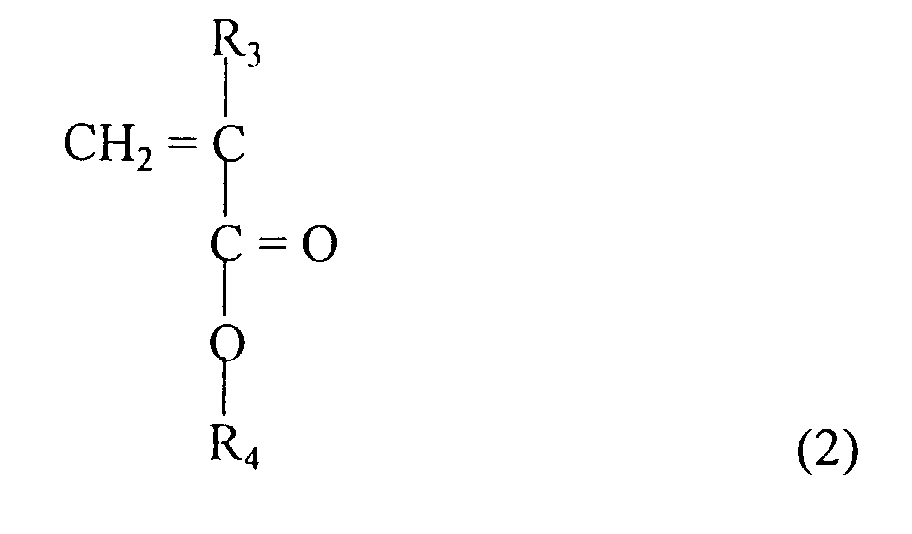 chaque radical R3 est d'une manière indépendante H ou CH3 ; etchaque radical R4 est d'une manière indépendante choisi parmi les groupes alkyle en C7-C15 ; etde 5 à 50 parties en poids d'un ou plusieurs monomères styréniques ; etb) à polymériser de 2 à 20 parties en poids d'un ou plusieurs (méth)acrylates monomères additionnels pour 100 parties en poids des (méth)acrylates monomères combinés de formules (1) et (2) du mélange de monomères, ledit ou lesdits (méth)acrylates monomères additionnels comprenant un ou plusieurs (méth)acrylates monomères de formule (1), un ou plusieurs (méth)acrylates monomères de formule (2) ou un de leurs mélanges, en présence de l'intermédiaire de polymérisation, à la condition que les monomères combinés du mélange de monomères et le ou les monomères additionnels comprennent de 5 à 70 % en poids du ou des (méth)acrylates monomères de formule (1), de 5 à 85 % en poids du ou des (méth)acrylates monomères de formule (2) et de 5 à 50 % en poids du ou dcs monomères styréniques, pour donner une solution, à 30 à 90 % en poids, dans le diluant, d'un copolymère améliorant l'indice de viscosité, ladite solution comprenant une quantité inférieure ou égale à 1000 parties en poids d'un ou plusieurs monomères styréniques résiduels par million de parties en poids de solution.
 - Procédé selon la revendication 1, dans lequel le ou les (méth)acrylates monomères additionnels comprennent essentiellement le ou les (méth)acrylates monomères de formule (1), ou comprennent essentiellement le ou les (méth)acrylates monomères de formule (2).
- Procédé selon la revendication 1 ou 2, dans lequel le ou les (méth)acrylates monomères de formule (1) sont choisis dans le groupe comprenant le méthacrylate de stéaryle, le méthacrylate de cétyle, le méthacrylate d'heptadécyle, le méthacrylate de nonadécyle, le méthacrylate d'éicosyle, et les mélanges d'au moins deux de ces monomères.
- Procédé selon l'une quelconque des revendications précédentes, dans lequel le ou les (méth)acrylates monomères de formule (2) sont choisis dans le groupe comprenant le méthacrylate d'heptyle, le méthacrylate d'octyle, le méthacrylate de nonyle, le méthacrylate de n-décyle, le méthacrylate d'isodécyle, le méthacrylate d'undécyle, le méthacrylate de lauryle, le méthacrylate de tridécyle, le méthacrylate de myristyle, le méthacrylate de pentadécyle, et les mélanges d'au moins deux de ces monomères.
- Procédé selon l'une quelconque des revendications précédentes, dans lequel le ou les monomères styréniques sont choisis dans le groupe comprenant le styrène, les styrènes à substitution alkyle et les styrènes halogénés.
- Procédé selon l'une quelconque des revendications précédentes, qui consiste à polymériser de 2 à 10 parties en poids d'un ou plusieurs (méth)acrylates monomères additionnels pour 100 parties en poids des (méth)acrylates monomères combinés ayant les formules (1) et (2) du mélange de monomères.
- Additif pour améliorer l'indice de viscosité d'une huile lubrifiante, qui comprend de 30 à 90 % en poids d'un polymère améliorant l'indice de viscosité, préparé par un procédé selon l'une quelconque des revendications précédentes, et de 10 à 70 % en poids d'un diluant soluble dans une huile.
- Composition d'huile lubrifiante, qui comprend de 2 à 20 parties en poids d'un polymère améliorant l'indice de viscosité, préparé par un procédé selon l'une quelconque des revendications 1 à 6, pour 100 parties en poids d'huile lubrifiante de base.
Applications Claiming Priority (2)
| Application Number | Priority Date | Filing Date | Title |
|---|---|---|---|
| US230582 | 1994-04-14 | ||
| US08/230,582 US6228819B1 (en) | 1994-04-14 | 1994-04-14 | Process for making a viscosity index improving copolymer |
Publications (2)
| Publication Number | Publication Date |
|---|---|
| EP0682046A1 EP0682046A1 (fr) | 1995-11-15 |
| EP0682046B1 true EP0682046B1 (fr) | 1998-02-04 |
Family
ID=22865764
Family Applications (1)
| Application Number | Title | Priority Date | Filing Date |
|---|---|---|---|
| EP95302470A Expired - Lifetime EP0682046B1 (fr) | 1994-04-14 | 1995-04-12 | Procédé de fabrication d'un copolymère améliorant l'indice de viscosité |
Country Status (9)
| Country | Link |
|---|---|
| US (1) | US6228819B1 (fr) |
| EP (1) | EP0682046B1 (fr) |
| JP (1) | JP3541081B2 (fr) |
| KR (1) | KR950032441A (fr) |
| AU (1) | AU707823B2 (fr) |
| CA (1) | CA2146604C (fr) |
| CZ (1) | CZ96195A3 (fr) |
| DE (1) | DE69501564T2 (fr) |
| PL (1) | PL179841B1 (fr) |
Families Citing this family (8)
| Publication number | Priority date | Publication date | Assignee | Title |
|---|---|---|---|---|
| EP1038933B1 (fr) * | 1998-10-14 | 2005-05-11 | JFE Steel Corporation | Composition de revetement et feuilles metalliques lubrifiees |
| US6348554B1 (en) | 1999-11-30 | 2002-02-19 | Rohmax Additives Gmbh | Method for preparation of a liquid polymer composition and use of this composition |
| US6403746B1 (en) * | 1999-11-30 | 2002-06-11 | Rohmax Additives Gmbh | Method for preparation of a composition that contains polymer ester compounds with long-chain alkyl residues and use of this composition |
| JP3831203B2 (ja) * | 2001-04-06 | 2006-10-11 | 三洋化成工業株式会社 | 粘度指数向上剤および潤滑油組成物 |
| CA2477081C (fr) * | 2002-03-01 | 2009-12-01 | Rohmax Additives Gmbh | Copolymeres utilises comme additifs de deparaffinage |
| DE102011003855A1 (de) * | 2011-02-09 | 2012-08-09 | Evonik Rohmax Additives Gmbh | Verfahren zur Entparaffinierung von Mineralölzusammensetzungen |
| US20190330553A1 (en) | 2016-06-17 | 2019-10-31 | Akzo Nobel Chemicals International B.V. | Lubricant spray polymers |
| US11091575B2 (en) | 2016-11-30 | 2021-08-17 | Kuraray Co., Ltd. | Method for producing methacrylate copolymer solution |
Family Cites Families (14)
| Publication number | Priority date | Publication date | Assignee | Title |
|---|---|---|---|---|
| GB1189281A (en) | 1969-01-01 | 1970-04-22 | Shell Int Research | Copolymers containing Free Hydroxyl Groups |
| US3816315A (en) | 1974-05-08 | 1974-06-11 | Texaco Inc | Mineral oil compositions |
| JPS5120715A (en) | 1974-08-13 | 1976-02-19 | Sumitomo Metal Ind | Jikotokuseino ryokonashiboryokohanno seizoho |
| FR2497822A1 (fr) * | 1981-01-12 | 1982-07-16 | Organo Synthese Ste Fse | Additifs pour huiles lubrifiantes a base de styrene et de methacrylates lourds d'alkyle en c12-c20, procede de fabrication et applications |
| JPS5920715A (ja) | 1982-07-27 | 1984-02-02 | Mazda Motor Corp | 自動車のリヤサスペンション |
| CZ279474B6 (cs) * | 1983-09-19 | 1995-05-17 | Polymer Technology Inc. | Způsob kontinuální roztokové polymerizace monomerů |
| DE3339103A1 (de) | 1983-10-28 | 1985-05-09 | Röhm GmbH, 6100 Darmstadt | Additive fuer schmieroele |
| FR2589866B1 (fr) | 1985-11-07 | 1988-07-15 | Inst Francais Du Petrole | Compositions de copolymeres, utilisables comme additifs pour huiles lubrifiantes |
| EP0349319B1 (fr) * | 1988-07-01 | 1994-12-14 | MITSUI TOATSU CHEMICALS, Inc. | Emulsion de polymère vinylique à particules à surface plane ayant une face concave, et leur procédé de préparation |
| JP2705812B2 (ja) * | 1988-10-31 | 1998-01-28 | 三菱レイヨン株式会社 | 熱可塑性樹脂用滑剤およびこれを用いた熱可塑性樹脂組成物 |
| DE3843922A1 (de) | 1988-12-24 | 1990-06-28 | Hoechst Ag | Neue copolymere, deren mischungen mit poly(meth)acrylsaeureestern und deren verwendung zur verbesserung der fliessfaehigkeit von rohoelen in der kaelte |
| DE4136657A1 (de) | 1991-11-07 | 1993-05-13 | Basf Ag | Emulsionspolymerisate mit niedrigem restmonomerengehalt |
| US5312884A (en) * | 1993-04-30 | 1994-05-17 | Rohm And Haas Company | Copolymer useful as a pour point depressant for a lubricating oil |
| EP1189281B1 (fr) | 1998-06-30 | 2007-08-22 | Micronas GmbH | Agencement de puce électronique |
-
1994
- 1994-04-14 US US08/230,582 patent/US6228819B1/en not_active Expired - Fee Related
-
1995
- 1995-04-07 CA CA002146604A patent/CA2146604C/fr not_active Expired - Fee Related
- 1995-04-11 KR KR1019950008383A patent/KR950032441A/ko not_active Abandoned
- 1995-04-12 AU AU16440/95A patent/AU707823B2/en not_active Ceased
- 1995-04-12 EP EP95302470A patent/EP0682046B1/fr not_active Expired - Lifetime
- 1995-04-12 DE DE69501564T patent/DE69501564T2/de not_active Expired - Lifetime
- 1995-04-13 JP JP11108695A patent/JP3541081B2/ja not_active Expired - Fee Related
- 1995-04-13 PL PL95308136A patent/PL179841B1/pl unknown
- 1995-04-14 CZ CZ95961A patent/CZ96195A3/cs unknown
Also Published As
| Publication number | Publication date |
|---|---|
| DE69501564T2 (de) | 1998-09-17 |
| AU707823B2 (en) | 1999-07-22 |
| CA2146604C (fr) | 2006-07-11 |
| AU1644095A (en) | 1995-10-26 |
| DE69501564D1 (de) | 1998-03-12 |
| JPH07304803A (ja) | 1995-11-21 |
| JP3541081B2 (ja) | 2004-07-07 |
| CA2146604A1 (fr) | 1995-10-15 |
| KR950032441A (ko) | 1995-12-20 |
| PL179841B1 (pl) | 2000-11-30 |
| CZ96195A3 (en) | 1995-11-15 |
| PL308136A1 (en) | 1995-10-16 |
| US6228819B1 (en) | 2001-05-08 |
| EP0682046A1 (fr) | 1995-11-15 |
Similar Documents
| Publication | Publication Date | Title |
|---|---|---|
| US4282132A (en) | Lubricating oil additives | |
| DE69614323T2 (de) | Dispergier- und Viskositätsverbesserer für Schmierölzusammensetzungen | |
| US4867894A (en) | Pour point improving additives for mineral oils | |
| CA2112317C (fr) | Copolymere pouvant servir a ameliorer le point d'ecoulement d'un huile lubrifiante | |
| JP4477709B2 (ja) | 安定化遊離ラジカル重合により調製したビニル芳香族−(ビニル芳香族−共−アクリル)ブロック共重合体 | |
| US6712991B2 (en) | Method of making a copolymer useful as viscosity index improving additive for hydraulic fluid | |
| US5726136A (en) | Multifunctional additive for lubricating oils compatible with fluoroelastomers | |
| JPH10237135A (ja) | 組成連続変動コポリマーを製造する方法 | |
| US20090048406A1 (en) | Process for preparing continuously variable-composition copolymers | |
| US5416162A (en) | Compatibilizer for a viscosity index improving polymer blend | |
| JPH0713125B2 (ja) | 濃厚重合体ブレンド用相溶化剤の製造方法及び濃厚潤滑油添加剤としてそれらを使用する方法 | |
| EP0682046B1 (fr) | Procédé de fabrication d'un copolymère améliorant l'indice de viscosité | |
| US5851967A (en) | Dispersant viscosity index improving additive for lubricating oils | |
| US4756843A (en) | Copolymer compositions usable as additives for lubricating oils | |
| US5484866A (en) | Concentrates of a highly branched polymer and functional fluids prepared therefrom | |
| EP0635561A2 (fr) | Copolymère utilisable comme additif améliorant l'indice de viscosité pour fluide hydraulique | |
| JP4632547B2 (ja) | フリーラジカル重合したコポリマーを製造するための改良された方法 | |
| DE69526832T2 (de) | Viskositätsindexverbesserungsdispergiermittel für Schmieröle | |
| US5244978A (en) | Thermoplastic elastomers and other copolymers of acrylate-terminated poly(vinylidene flouride) | |
| PL145535B1 (en) | Method of obtaining depressing additive for lubricating oils | |
| JPWO1997017417A1 (ja) | 粘度指数向上剤、その製造方法及び潤滑油組成物 | |
| JPH02274796A (ja) | 潤滑油添加剤 |
Legal Events
| Date | Code | Title | Description |
|---|---|---|---|
| PUAI | Public reference made under article 153(3) epc to a published international application that has entered the european phase |
Free format text: ORIGINAL CODE: 0009012 |
|
| 17P | Request for examination filed |
Effective date: 19950422 |
|
| AK | Designated contracting states |
Kind code of ref document: A1 Designated state(s): BE DE FR GB IT NL |
|
| GRAG | Despatch of communication of intention to grant |
Free format text: ORIGINAL CODE: EPIDOS AGRA |
|
| 17Q | First examination report despatched |
Effective date: 19970121 |
|
| GRAG | Despatch of communication of intention to grant |
Free format text: ORIGINAL CODE: EPIDOS AGRA |
|
| GRAH | Despatch of communication of intention to grant a patent |
Free format text: ORIGINAL CODE: EPIDOS IGRA |
|
| GRAH | Despatch of communication of intention to grant a patent |
Free format text: ORIGINAL CODE: EPIDOS IGRA |
|
| GRAA | (expected) grant |
Free format text: ORIGINAL CODE: 0009210 |
|
| AK | Designated contracting states |
Kind code of ref document: B1 Designated state(s): BE DE FR GB IT NL |
|
| ITF | It: translation for a ep patent filed | ||
| REF | Corresponds to: |
Ref document number: 69501564 Country of ref document: DE Date of ref document: 19980312 |
|
| ET | Fr: translation filed | ||
| PGFP | Annual fee paid to national office [announced via postgrant information from national office to epo] |
Ref country code: BE Payment date: 19980326 Year of fee payment: 4 |
|
| PLBE | No opposition filed within time limit |
Free format text: ORIGINAL CODE: 0009261 |
|
| STAA | Information on the status of an ep patent application or granted ep patent |
Free format text: STATUS: NO OPPOSITION FILED WITHIN TIME LIMIT |
|
| 26N | No opposition filed | ||
| REG | Reference to a national code |
Ref country code: FR Ref legal event code: TP |
|
| NLS | Nl: assignments of ep-patents |
Owner name: ROEHM ROHMAX HOLDING GMBH |
|
| PG25 | Lapsed in a contracting state [announced via postgrant information from national office to epo] |
Ref country code: BE Free format text: LAPSE BECAUSE OF NON-PAYMENT OF DUE FEES Effective date: 19990430 |
|
| BERE | Be: lapsed |
Owner name: ROHM ROHMAX HOLDING G.M.B.H. Effective date: 19990430 |
|
| REG | Reference to a national code |
Ref country code: GB Ref legal event code: 732E |
|
| REG | Reference to a national code |
Ref country code: GB Ref legal event code: IF02 |
|
| NLS | Nl: assignments of ep-patents |
Owner name: ROHMAX ADDITIVES GMBH |
|
| PGFP | Annual fee paid to national office [announced via postgrant information from national office to epo] |
Ref country code: IT Payment date: 20080426 Year of fee payment: 14 |
|
| PGFP | Annual fee paid to national office [announced via postgrant information from national office to epo] |
Ref country code: NL Payment date: 20080415 Year of fee payment: 14 |
|
| PGFP | Annual fee paid to national office [announced via postgrant information from national office to epo] |
Ref country code: GB Payment date: 20080421 Year of fee payment: 14 |
|
| NLT1 | Nl: modifications of names registered in virtue of documents presented to the patent office pursuant to art. 16 a, paragraph 1 |
Owner name: EVONIK ROHMAX ADDITIVES GMBH |
|
| GBPC | Gb: european patent ceased through non-payment of renewal fee |
Effective date: 20090412 |
|
| REG | Reference to a national code |
Ref country code: FR Ref legal event code: CD |
|
| NLV4 | Nl: lapsed or anulled due to non-payment of the annual fee |
Effective date: 20091101 |
|
| PG25 | Lapsed in a contracting state [announced via postgrant information from national office to epo] |
Ref country code: NL Free format text: LAPSE BECAUSE OF NON-PAYMENT OF DUE FEES Effective date: 20091101 |
|
| PG25 | Lapsed in a contracting state [announced via postgrant information from national office to epo] |
Ref country code: GB Free format text: LAPSE BECAUSE OF NON-PAYMENT OF DUE FEES Effective date: 20090412 |
|
| PGFP | Annual fee paid to national office [announced via postgrant information from national office to epo] |
Ref country code: FR Payment date: 20100506 Year of fee payment: 16 |
|
| PGFP | Annual fee paid to national office [announced via postgrant information from national office to epo] |
Ref country code: DE Payment date: 20100423 Year of fee payment: 16 |
|
| PG25 | Lapsed in a contracting state [announced via postgrant information from national office to epo] |
Ref country code: IT Free format text: LAPSE BECAUSE OF NON-PAYMENT OF DUE FEES Effective date: 20090412 |
|
| REG | Reference to a national code |
Ref country code: DE Ref legal event code: R119 Ref document number: 69501564 Country of ref document: DE |
|
| REG | Reference to a national code |
Ref country code: DE Ref legal event code: R119 Ref document number: 69501564 Country of ref document: DE |
|
| REG | Reference to a national code |
Ref country code: FR Ref legal event code: ST Effective date: 20111230 |
|
| PG25 | Lapsed in a contracting state [announced via postgrant information from national office to epo] |
Ref country code: FR Free format text: LAPSE BECAUSE OF NON-PAYMENT OF DUE FEES Effective date: 20110502 |
|
| PG25 | Lapsed in a contracting state [announced via postgrant information from national office to epo] |
Ref country code: DE Free format text: LAPSE BECAUSE OF NON-PAYMENT OF DUE FEES Effective date: 20111031 |