EP0682709B1 - Methode de production de la proteinase nla de tabac - Google Patents
Methode de production de la proteinase nla de tabac Download PDFInfo
- Publication number
- EP0682709B1 EP0682709B1 EP94907952A EP94907952A EP0682709B1 EP 0682709 B1 EP0682709 B1 EP 0682709B1 EP 94907952 A EP94907952 A EP 94907952A EP 94907952 A EP94907952 A EP 94907952A EP 0682709 B1 EP0682709 B1 EP 0682709B1
- Authority
- EP
- European Patent Office
- Prior art keywords
- proteinase
- protein
- seq
- sequence
- proteins
- Prior art date
- Legal status (The legal status is an assumption and is not a legal conclusion. Google has not performed a legal analysis and makes no representation as to the accuracy of the status listed.)
- Expired - Lifetime
Links
Images




Classifications
-
- C—CHEMISTRY; METALLURGY
- C12—BIOCHEMISTRY; BEER; SPIRITS; WINE; VINEGAR; MICROBIOLOGY; ENZYMOLOGY; MUTATION OR GENETIC ENGINEERING
- C12N—MICROORGANISMS OR ENZYMES; COMPOSITIONS THEREOF; PROPAGATING, PRESERVING, OR MAINTAINING MICROORGANISMS; MUTATION OR GENETIC ENGINEERING; CULTURE MEDIA
- C12N15/00—Mutation or genetic engineering; DNA or RNA concerning genetic engineering, vectors, e.g. plasmids, or their isolation, preparation or purification; Use of hosts therefor
- C12N15/09—Recombinant DNA-technology
- C12N15/11—DNA or RNA fragments; Modified forms thereof; Non-coding nucleic acids having a biological activity
- C12N15/62—DNA sequences coding for fusion proteins
-
- C—CHEMISTRY; METALLURGY
- C12—BIOCHEMISTRY; BEER; SPIRITS; WINE; VINEGAR; MICROBIOLOGY; ENZYMOLOGY; MUTATION OR GENETIC ENGINEERING
- C12N—MICROORGANISMS OR ENZYMES; COMPOSITIONS THEREOF; PROPAGATING, PRESERVING, OR MAINTAINING MICROORGANISMS; MUTATION OR GENETIC ENGINEERING; CULTURE MEDIA
- C12N9/00—Enzymes; Proenzymes; Compositions thereof; Processes for preparing, activating, inhibiting, separating or purifying enzymes
- C12N9/14—Hydrolases (3)
- C12N9/48—Hydrolases (3) acting on peptide bonds (3.4)
- C12N9/50—Proteinases, e.g. Endopeptidases (3.4.21-3.4.25)
- C12N9/503—Proteinases, e.g. Endopeptidases (3.4.21-3.4.25) derived from viruses
-
- C—CHEMISTRY; METALLURGY
- C07—ORGANIC CHEMISTRY
- C07K—PEPTIDES
- C07K2319/00—Fusion polypeptide
- C07K2319/20—Fusion polypeptide containing a tag with affinity for a non-protein ligand
- C07K2319/21—Fusion polypeptide containing a tag with affinity for a non-protein ligand containing a His-tag
-
- C—CHEMISTRY; METALLURGY
- C07—ORGANIC CHEMISTRY
- C07K—PEPTIDES
- C07K2319/00—Fusion polypeptide
- C07K2319/20—Fusion polypeptide containing a tag with affinity for a non-protein ligand
- C07K2319/23—Fusion polypeptide containing a tag with affinity for a non-protein ligand containing a GST-tag
Definitions
- the invention relates generally to the field of molecular biology and to methods of isolating and purifying recombinant proteins.
- Expression vectors and methods for use in overproducing recombinant plant virus proteinase, particularly tobacco etch virus proteinase, are disclosed.
- the recombinant plant virus proteinase is unaffected by cell protease inhibitors, thereby permitting isolation of significantly improved yields of proteolytically sensitive polypeptides in the presence of added cell protease inhibitors.
- Isolation and purification of recombinant polypeptides expressed in bacterial and other hosts is of interest because these systems are capable of providing relatively large quantities of polypeptides having therapeutic or commercial value. Such systems are especially desirable where synthesis is expensive and time-consuming and/or the protein occurs naturally only in small quantities. Unfortunately, yields of recombinant polypeptides are frequently drastically reduced because of any one of several problems that may be encountered, including difficulties associated with isolation, purification and segregation.
- Fusion proteins are frequently the method of choice for purifying proteins because of the benefit of allowing affinity purification and the increase in solubility that is frequently observed.
- proteases employed for cleavage typically thrombin and factor x, have recognition sites with low specificity so that the protein is often cleaved at several sites. Cleavage may result in several foreign amino acid residues attached to the protein, thereby altering the properties of the protein.
- proteases not only lack selectively but are also relatively inefficient, so that yields of the cleaved protein are significantly decreased. In some cases, this is due to impurities which may either partially inactivate the protease or, more commonly, themselves have nonselective proteolytic activity.
- Fusion proteins tend to be more soluble than the single protein, contributing to higher yields and simpler purification; however, there are often problems in removing the fusion "partner". This is generally accomplished by cleaving the two proteins, provided there is a selective cleavage site that will leave the desired protein intact. Often, however, it is difficult to obtain the desired polypeptide free of contaminating segments of the fusion partner.
- fusion proteins may be generated as single chain polypeptides following translation of appropriately joined DNA segments. Fusion proteins incorporate the protein of interest, a carrier protein and, typically, a polylinker sequence between the two proteins. Carrier proteins may be selected on the basis of transport characteristics to assure that the fusion protein is secreted into either the periplasmic space or the growth medium on the basis of solubility. Regardless of the amount of fusion protein expressed, isolation and purification of the desired polypeptide is frequently difficult and inefficient.
- One approach to the isolation problem has been to engineer fusions of a desired polypeptide with a carrier protein having specific binding properties; for example; binding to affinity columns that incorporate antibodies, chelates, metals etc. Isolation is thereby facilitated and product yields improved.
- Recombinant eukaryotic proteins have been synthesized from gene fusions of foreign proteins with the carbohydrate-recognition domain (CRD) of the galactose-specific rat hepatic lectin (Taylor and Drickamer, 1991). These fusion proteins are isolated by affinity chromatography, then cleaved at a proteinase-sensitive linker.
- a popular carrier protein is Staphylococcus aureus protein A.
- a recombinant protein is first isolated by affinity chromatography, which binds protein A, then separated by domain-specific enzymatic cleavage with chymotrypsin while immobilized on the affinity column.
- the affinity column is specific for protein A which binds to the F c portion of certain subclasses of human immunoglobulins, including IgG.
- Eukaryotic proteins expressed in Escherichia coli have been isolated from crude bacterial extracts by affinity chromatography on glutathione agarose when the protein is expressed as a polypeptide in frame with glutathione-S-transferase (Smith and Johnson, 1988).
- the vector system usually incorporates specific protease cleavage sites to facilitate proteolysis for cleavage of the desired protein from glutathione-S-transferase. Modification of the vector in one instance to include a glycine-rich linker has resulted in increased thrombin cleavage efficiency for several fusion proteins (Guan and Dixon, 1991).
- a significant problem may be cleavage of the expressed foreign protein or peptide by the proteinase employed (e.g. , thrombin, factor x), employed to release the desired polypeptide from the carrier protein.
- the proteinase employed e.g. , thrombin, factor x
- spurious cleavages are the result of the limited specificity displayed by the proteinases frequently employed.
- spurious amino acids are frequently attached to the cleaved polypeptide product. These amino acids are typically present when a linker is cleaved, and the unrelated amino acids may have an effect on the properties of the isolated protein. This may be critical for proteins produced for human therapeutics. Ideally, one seeks efficient cleavage to produce pure native protein free of extraneous amino acid short sequences or residues.
- the present invention addresses one or more of the foregoing problems by providing a method of overproducing tobacco etch virus proteinase, a plant virus proteinase.
- a method of overproducing tobacco etch virus proteinase NIa comprising the steps: transforming an E. coli or S. cerevisiae cell with the vector of Figure 11B; and culturing the transformed cell under conditions appropriate for translation and expression of the proteinase wherein the expressed fusion protein undergoes self-proteolysis to produce a histidine-tagged NIa tobacco etch virus proteinase.
- the new methods employ a unique plant virus proteinase recognition site incorporated into the recombinant protein.
- Cleavage of this unique cleavage site is efficient and specific, even in the presence of cell protease inhibitors.
- the cleavage leaves only an extra glycine residue.
- Recombinant tobacco etch virus proteinase may be overproduced in eukaryotic or prokaryotic cells and purified to near homogeneity. Without contaminating proteases, the tobacco etch virus proteinase preparations are superior to most other proteinase commonly employed because of specificity resulting in increased yields of intact protein.
- the recombinant plant viral proteinases or any desired fusion proteins may be prepared with "tags". These tags, such as affinity tags, allow binding of the expressed fusion product to a carrier, isolation from other cell material, and cleavage in a simple, rapid operation. Yields of desired polypeptides are significantly increased due to efficient and substantially complete cleavage by the viral proteinase. Resistance of the recombinant plant virus proteinase to cell protease inhibitors which may be added to cell extracts to prevent cleavage by endogenous cell proteases also is a factor in increasing yields.
- protein, peptide and polypeptide should necessarily indicate a limit on the size of the polymer.
- Peptides are generally relatively short sequences, on the order of up to 50 or so amino acids, while polypeptides and proteins are typically longer, although the terms peptide, protein and polypeptide may be.used interchangeably in the context of the present invention.
- the tobacco etch virus produced by the method of the present invention may be used in methods for isolating and purifying fusion products from recombinant proteins. Such methods are especially suitable for proteolytically sensitive proteins whose yields are decreased due to the presence of cell proteases in the host organism.
- the method involves DNA transformation of a suitable host.
- the DNA includes one DNA segment encoding a tobacco etch virus proteinase cleavage site and another DNA segment encoding the protein or polypeptide that one desires to isolate.
- the host is transformed with the DNA, then cultured to promote transcription and translation of the DNA.
- Recombinant protein is collected after cleaving at the tobacco etch virus proteinase cleavage site with a tobacco etch virus proteinase.
- Cell extract may be prepared or incubated in the presence of cell protease inhibitors.
- the plant virus cleavage site is not susceptible to proteolysis by ordinary cell proteases.
- the tobacco etch virus proteinase itself is unaffected by ordinary protease inhibitors so that such inhibitors may be added in amounts sufficient to inactivate cell proteases.
- Typical and commonly used cell protease inhibitors include leupeptin, pepstatin A, PMSF, E-64, TLCK, bestatin and aprotinin.
- the inventors believe that any of a number of proteinase inhibitors may be employed so long as they are not inhibitors of the tobacco etch virus proteinase.
- the practitioner will typically culture in a media or grow in an environment suitable for the host selected, prepare cell extract, then add appropriate cell protease inhibitors.
- the desired protein may be purified using standard procedures such as chromatography, electrophoresis or density gradient centrifugation.
- the DNA encoding the virus proteinase cleavage site includes a nucleic acid segment coding for a carrier protein or fusion partner, i . e ., a protein fused with the protein of interest where the carrier has properties that facilitate its isolation from other proteins.
- carrier proteins are not limited to any particular protein, but may be selected from a wide variety of proteins such as beta galactosidase, ubiquitin, glutathione S-transferase, alkaline phosphatase, maltose binding protein, Protein A, polyhistidines, monoclonal antibody epitopes and so forth.
- Carrier proteins typically will be selected on the basis of characteristics contributing to easy isolation, most desirable being those that are readily secreted by the microorganisms or which have some property or feature which facilitates isolation and purification of the protein. Glutathione S-transferase, maltose binding protein and polyhistidine sequences, for example, are generally preferred because there are readily available affinity columns to which they can be bound and eluted. Other suitable fusion partners include antigenic tags that readily bind to corresponding antibodies or proteins that have special affinity properties, for example, selective binding to particular metals, as with polyhistidine peptide binding to nickel.
- the inventors are the first to have overproduced recombinant tobacco etch virus proteinase in E. coli or yeast cells.
- the recombinant TEV proteinase unlike the proteinase obtained from natural sources, is pure, free of extraneous proteins and other contaminants and, surprisingly, has been found by the inventors to be highly resistant to the action of commonly employed cell protease inhibitors such as leupeptin and the like.
- engineered cell is intended to refer to a cell into which a recombinant gene, such as a gene encoding a viral proteinase unit has been introduced. Therefore, engineered cells are distinguishable from naturally occurring cells.
- Engineered cells are those cells having a gene or genes introduced through the hand of man. Recombinantly introduced genes will either be in the form of a cDNA (i.e., they will not contain introns), a copy of a genomic gene, or will include genes positioned adjacent to a promoter not naturally associated with the particular introduced gene.
- a cDNA version of the gene it may be more convenient to employ as the recombinant gene a cDNA version of the gene. It is believed that the use of the cDNA version provides advantages and that the size of the gene will generally be much smaller and more readily employed to transfect a target than will be a genomic gene, which will typically be up to an order of magnitude larger than the cDNA gene. However, the inventors do not exclude the possibility of employing a genomic version of a particular gene in the appropriate host.
- Numerous host cells may be selected as appropriate for transformation and expression of the described fusion proteins, including mammalian, insect, fungal, plant and bacterial host cells which are particularly desirable.
- Commonly used bacterial strains include Escherichia, Klebsiella, Erwinia, Bacillus, Staphylococcus and Salmonella.
- E. coli TG-1, or E . coli BL-21 are considered to be preferred bacterial strains.
- Eukaryotic cells such as Saccharomyces cerevisiae or transgenic plants may also be employed with good results.
- the recombinant DNA may be used either in the form of an expression vector or as the DNA alone to transform a host cell. Methods of injecting DNA directly into a cell are known, such as by electroporation, biolistic techniques or transformation. Alternatively, vectors incorporating the DNA may be prepared, for example, by packaging in vitro into bacteriophage as found in Maniatis, et al . (1982). Cells are then infected with the recombinant phage, plated and grown in appropriate media.
- Vectors employed in prokaryotic systems will include an origin of replication, a promoter and transcriptional termination signal and preferably a selective marker.
- promoters include tac , T7, trc, trp , or P L .
- Some promoters such as Ptac or Ptrc , when present in E . coli host cells, are repressed by lac repressor. Expression of the recombinant protein encoded in the vector may be induced with IPTG.
- Other inducible promoters include Pmal and the aforementioned trp and P L . This feature is useful for expression of toxic proteins because one may increase cell density in the culture prior to inducing expression of the desired polypeptide.
- eukaryotic expression vectors could be utilized for the expression of fusion proteins that incorporate viral proteinase cleavage sites, whether wild type or mutant; for example, Baculovirus-based, glutamine synthetase-based, neomycin phosphotransferase or dihydrofolate reductase-based systems could be employed.
- Plasmid vectors incorporating an origin of replication and an efficient eukaryotic promoter, as exemplified by the eukaryotic vectors of the PCNV series, such as PCNV-5, may also be of use.
- an appropriate adenylation site e.g., 5' AATAAA-3'
- the poly A addition site is placed about 30 to 2000 nucleotides "downstream" of the termination site of the protein at a position adjacent to a transcription termination signal.
- the virus proteinase cleavage site which is included in the recombinant DNA of the present invention will generally be selected from naturally occurring cleavage sites of a virus proteinase.
- the proteinase cleavage site will typically be unique and susceptible to cleavage only by the proteinase.
- the amino acid sequence of the cleavage site will depend on the particular viral proteinase one desires to use to cleave the fusion protein. It is believed that different potyviral proteinases will have unique cleavage sites responsive only to the viral proteinase from which it is derived. Thus it may be expected that some cleavage sites will be more selective than others or may be more desirable for use in certain host cells.
- tobacco etch virus NI a proteinase cleavage sites are particularly suited for DNA constructs employed to transform bacterial hosts.
- tobacco etch virus NI a proteinase cleavage sites are encoded within the TEV nucleic acid sequence shown in Figure 1.
- a 7-amino acid (7-mer) sequence will permit effective cleavage, although there is no reason why longer segments including these residues could not be used.
- the cleavage sequence will generally include either a glutamine-glycine or a glutamine-serine dipeptide, between which cleavage occurs. Residues other than gly or ser may be used.
- Preferred examples of tobacco etch virus recognition sequences include a 7-mer sequence represented by glu xaa xaa tyr xaa gln ser (seq id no:1) or glu xaa xaa tyr xaa gln gly (seq id no:2) where xaa represents Asn (P6), Leu (P5) or Phe (P2).
- a particularly preferred sequence is glu asn leu tyr phe gln gly (seq id no:3).
- the tobacco etch virus proteinase employed in the practice of the invention is resistant to the usual cell protease inhibitors. Such resistance allows one to use relatively large quantities of cell protease inhibitors when isolating polypeptide fusion products.
- cell protease inhibitors such as leupeptin, pepstatin A, PMSF, EDTA, TLCK or aprotinin may be used during isolation without affecting the activity of viral proteinase.
- potyvirus cleavage sites have not been well characterized and each potyvirus NI a proteinase appears to be slightly different. The inventors believe that certain individual viral proteinases may not process other potyvirus substrates (Partis and dougherty, 1991). Other proteinases such as picorna and flavi viruses are expected to have reduced substrate specificity compared with TEV proteinase.
- the present invention provides a method of overproducing tobacco etch virus proteinase NIa, comprising the steps: transforming an E. coli or S. cerevisiae cell with the vector of Figure 11B; and culturing the transformed cell under conditions appropriate for translation and expression of the proteinase wherein the expressed fusion protein undergoes self-proteolysis to produce a histidine-tagged NIa tobacco etch virus proteinase.
- the method takes advantage of a unique cleavage site obtained from a plant virus proteinase and the relative insensitivity of the virus proteinase to commonly available protease inhibitors which are desirably added to cell extracts to prevent proteolysis of the recombinant protein.
- the tobacco etch virus proteinase produced using the method of the present invention may be used in methods of purifying recombinant polypeptides in transformed cells.
- a functional cleavage site for tobacco etch virus (TEV) proteinase is incorporated into the polylinker region of a convenient cloning vector, enabling isolation of fusion polypeptides in the presence of relatively large amounts of added cell protease inhibitors. Yields of polypeptides sensitive to cell proteases are thus significantly increased. Isolation of a desired polypeptide is more efficient because cleavage is selective for the unique potyvirus proteinase site.
- Engineered fusion proteins linked to various carriers or fusion partners designed for selective absorption may be efficiently separated from cellular debris and other protein contaminants prior to cleaving the polypeptide from the carrier with the plant virus proteinase to release the polypeptide from the carrier.
- Expression vectors incorporating DNA encoding unique potyvirus cleavage sites may be constructed employing well known recombinant techniques.
- Figure 8 indicates how vector pGEX is modified by the introduction of a primer-introduced cleavage site.
- a 33 bp DNA coding sequence GAG AAT CTT TAT TTT CAG GGC GCC ATG GAT CCC (residues 1-33 of seq id no:5) encodes the 11-mer peptide sequence glu asn leu tyr phe gln gly ala met asp pro (residues 1-11 of seq id no:6).
- This construct contains two restriction sites for Ehe I and Nco I. DNA may be cloned into either site maintaining the reading frame of the inserted DNA.
- Plasmid vectors containing the tobacco-etch virus (TEV) NI a proteinase coding sequence were linked to a sequence which codes for a polyhistidine tract.
- the product is expressed as TEV proteinase with polyhistidine end residues.
- the polyhistidine tract may be placed at the amino or carboxyl terminus of the 27k NI a proteinase.
- a typical tag contains six histidine residues.
- One may employ pN-27, a readily available plasmid containing the TEV-27 kDa proteinase sequence.
- the 27-kDa NI a gene of TEV is amplified by PCR in a manner such that an Nco I site and Bam -HI site followed by codons for a polyhistidine tract are added at the 5' end.
- the 27 kDa gene for the TEV NI a proteinase may then be inserted into plasmid pGEX-CS which is constructed with a glutathione S-transferase gene and a tac promoter.
- the resulting plasmid is designated pGEX-6HisPro.
- the proteinase initially expressed from this system is a fusion protein containing N-terminus glutathione S-transferase, a tobacco etch virus CS, a 6-histidine residue, and the 27k NI a proteinase C-terminus.
- This 56-58 kDa fusion protein undergoes self-cleavage to generate a GST moiety (26 kDa) and a his-tagged proteinase moiety (29 kDa).
- This plasmid coding for this fusion is presented in a schematic form in Figure 11.
- Bacterial cells are conveniently employed for transformation and expression of recombinant proteins although eukaryotic cells may be preferred for certain proteins.
- the expression vector shown in figure 8 was constructed by cloning a segment of TEV containing the proteinase recognition site into the pGEX polycloning site.
- E. coli cells are grown and harvested as described in detail in Example 1.
- the lac repressor product of the lacl gene
- binds to the P tac promoter repressing expression of GST/fusion protein.
- the GST fusion protein/polypeptide is expressed.
- leupeptin, pepstatin and other protease inhibitors are added.
- the fusion protein product is separated from other cell proteins, most conveniently by affinity chromatography.
- TEV proteinase is then employed to cleave the protein from its affinity carrier. By design, the cleaved protein carries only one or a few extra amino acids at the amino terminus.
- Potyvirus proteinases such as tobacco etch virus NI a proteinase are difficult to isolate and purify to homogeneity in an active form.
- the present invention is a method of overproducing such viral proteinases in bacterial cells, illustrated with three different constructs for expression of tobacco etch virus proteinase.
- the 27k gene encoding TEV proteinase (seq id no:4) was obtained from plasmid pN-27, the 5' primer having NcoI and Bam restriction sites and the 3' primer having an Eco RI site.
- the DNA sequence encoding 27k TEV proteinase and the restriction sites was inserted into pGEX-2T, shown schematically in Figure 11, which contained the glutathione-S-transferase coding sequence.
- This resulting plasmid designated pGEX-2T/27k coded for a 56 kDa fusion protein containing GST at the amino terminus and the TEV 27k at the carboxy terminus ( Figure 11).
- the plasmid which carries a gene for ampicillin resistance was transformed into E. coli TG1 and/or BL21 cells.
- the bacteria also contained an additional plasmid, plysS, coding for chloramphenicol resistance and the production of lysozyme which aided in cell disruption.
- Plasmid pGEX-CS3 was constructed starting with plasmid pGEX-1 obtained from Pharmacia.
- a TEV cleavage site was added to the carboxy terminus of the glutathione S-transferase gene using a polymerase chain reaction amplification and 2 oligonucleotide primers.
- the primer sequences were 5' G TGG ATC CAT GGC GCC CTG AAA ATA AAG ATT CTC GAG ATG (seq id no:8) for the 3' primer and 5' TA TCC ATG GCC CCT ATA CTA GG-3' (seq id no:9) for the 5' primer.
- oligonucleotide primers resulted in a DNA fragment that coded for the following: Nco I restriction endonuclease site, glutathione S-transferase, a TEV cleavage site sequence (glu asn leu tyr phe gln; seq id no:10) and the nucleotide sequence which codes for the overlapping restriction endonuclease recognition sites Ehe I, Nco I and Bam HI.
- the amplified DNA fragment was digested with Nco I and ligated into an expression vector designated pTL27N (Parks, et al ., 1992).
- This intermediate vector was designated pTL27N:GST ( Figure 7A).
- This vector was digested with Bst BI and Bam HI and the resulting fragment containing part of the GST ORF with TEV cleavage site was isolated and ligated into pGEX-1 which had been digested with Bst BI and Bam HI.
- the resulting plasmid was designated pGEX-CS1 ( Figure 7B).
- a fragment containing the 27 kDa TEV proteinase was amplified by PCR from plasmid pTL27/5473 with primers that introduced Bam HI and Eco RI sites at the 5' and 3' ends of the gene respectively.
- pTL27/58 is an in vitro expression vector cDNA of TEV genomic RNA. The plasmid is described in Parks, et al ., 1992. The resulting -750 bp PCR fragment of the TEV protease was cut with BamHI and Eco RI and cloned into the BamHI and Eco RI sites of pGEX-2T (Pharmacia LKB, Gaithersburg, MD). The resulting plasmid, pGEX-27k TEV Proteinase, yields a GST-TEV Protease fusion protein upon induction with IPTG.
- pGEX-6HisPro was constructed by polymerase chain reaction amplification of the 27 kDa TEV ORF with oligonucleotide primers which added an Nco I restriction endonuclease site and codons for 6 additional histidine residues to the amino terminus, and a stop codon and recognition sequence for Eco RI at the carboxy terminus. This resulting DNA fragment was digested with the restriction enzymes Nco I and Eco RI and ligated into plasmid pGEX-CS1 also digested with Nco I and Eco RI.
- Another proteinase expression plasmid, pTRC-7His-Pro was generated by polymerase chain reaction amplification using oligonucleotide primers which generated a nucleotide sequence containing a Bsp HI endonuclease restriction site, 7 His codons and an Nco I restriction site at the amino terminus of the proteinase ORF.
- a second oligonucleotide primer added a stop codon and Hind III and Sac I restriction endonuclease sites at the carboxy terminus of the 27 kDa ORF.
- This DNA fragment was amplified, digested with the restriction enzymes Bsp HI and Sac I and the fragment was ligated into pTRC99A (Pharmacia), digested with restriction enzymes Nco I and Sac I. Proteinase expressed from this plasmid had an additional met residue and 7 his residues at the N-terminus.
- Transformed E. coli TG1 cells were inoculated into L-broth and grown overnight at 37°C.
- the culture was diluted 1:10 into L-broth containing ampicillin and chloramphenicol at a final concentration each of 25 ⁇ g/ml.
- 1:100 dilutions were employed.
- After removing a culture sample as a control the remaining culture was induced by adding IPTG to a concentration of 0.3 mM. Culturing was continued for an additional 2-4 hours and the cells then harvested by centrifuging at 5000 x g.
- Cells were resuspended in 1:100 PBS, pH 7.3 containing 1 mM PMSF, 1 ⁇ g/ml leupeptin, 1 ⁇ g/ml pepstatin A, 1 mM DTT or 0.2 mM sodium sulfite and 0.5 mM EDTA.
- Cells were lysed by freeze thawing and/or by adding 0.5-1% Triton X-100. If strains without pLysS were used, cells were lysed by sonication.
- the beads were then washed three times with PBS containing 1 mM DTT, 0.5 mM EDTA and 0.5-1% Triton X-100 followed by washing two times with PBS containing 1 mM DTT and 0.5 mM EDTA.
- the beads were decanted and the fusion protein product eluted twice with a solution of 50 mM Tris, pH 8.0, 15 mM reduced glutathione, 1 mM DTT and 0.5 mM EDTA.
- the eluate was analyzed by SDS-PAGE.
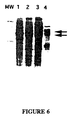
- the induction profile of the fusion protein is shown in Figure 5. Protein products remaining at different steps in the purification were separated on SDS-PAGE as shown in Figure 6.
- the fusion protein appeared on the gel as a doublet, differing by several kDa. This doublet band is typical in preparations of TEV proteinase. Preparations were active, based on the ability to cleave known TEV substrates.
- the yield of purified proteinase was typically in the range of 5 mg/liter of culture.
- the fusion protein was aliquoted and stored at -80°C in 20% glycerol under argon.
- Either of these plasmids were used to express proteins. Induction of protein expression and lysis of bacteria were identical to pGST/27K. Purification of proteinase employed affinity chromatography using nickel agarose affinity chromatograph.
- the lysate was treated with DNAse (250 ⁇ g/ml) for 15 min at 37°C and centrifuged at 8000 x g. The supernatant was made 0.3M in NaCl. The supernatant was passed through a Ni-agarose affinity column and the histidine-tagged proteinase bound to this matrix. The column was washed with 8 bed volumes of a solution of 10 mM Tris-HCl (pH 7.5), 0.3M NaCl and 10 mM imidazol, followed by 5 bed volumes of 50 mM sodium phosphate buffer (pH 6.75), 0.3M NaCl and 50 mM imidazol.
- the bound proteinase was eluted from the column by competing with 25 mM sodium phosphate buffer (pH 8.0), 0.3M NaCl, and 100 mM imidazol. The proteinase was collected to afford a typical yield of 4-5 mg from 500 ml of culture.
- the following is an example of the expression and purification of a relatively small polypeptide fused with glutathione-S-transferase.
- Tobacco etch virus proteinase is employed to selectively cleave the polypeptide from the fusion partner, GST.
- the example is illustrated with E. coli TG1 and with E. coli BL21, which is a strain deficient in the lon protease and in Omp T encoded outer membrane protease.
- a 34 amino acid sequence (34-mer) corresponding to the C-terminal domain of yeast transcriptional activator GAL4 was cloned into pGEX-CS as an Nco I- Bam HI fragment obtained by PCR amplification.
- the 34-mer is encoded by nucleotide sequences from position 841 through position 874 of the GAL4 protein sequence (Leuther and Johnson, 1992).
- the cells were harvested by centrifugation and resuspended in 1/100 volume of PBS (pH 7.3) to which protease inhibitors 1mM PMSF, 1 ⁇ g/ml Leupeptin, 1 ⁇ g/ml Pepstatin A were added. Cells were lysed by freeze thawing and/or by adding Triton X-100 to 0.5 to 1%. If cells did not carry the pLysS plasmid, cells were disrupted by sonication.
- GST beads (Glutathione Sepharose 4B, Pharmacia) were washed in PBS before adding to the supernatant, employing 1 ml of a 50% bead slurry per liter of E. coli culture. The beads were incubated at room temperature for ⁇ 1 hour with gentle shaking, centrifuged briefly and the supernatant decanted. The beads were then washed 3 x in PBS + 0.5% to 1% Triton X-100 and 2 x in PBS. The last wash was decanted and 200 ⁇ l of TEV proteinase (or GST-TEV Proteinase fusion) per 1 liter of original E. coli culture added to the bead slurry. Protease inhibitors may be added to the reaction mixture at this point.
- the TEV proteinase recognition sequence in pGEX-CS3 is glu asn leu tyr phe gln gly (seq id no:11).
- the proteinase cleaved between gln and gly.
- the met codon is part of the Nco I site used to clone the DNA encoding the 34-mer.
- the 34-mer as isolated contained gly ala met residues at the N-terminus.
- This example illustrates expression of a large protein in an E. Coli cell using the pGEX-CS3 vector of figure 8.
- Nco I site was introduced at the start codon (position 443-445 from the 5'-end of sequence published in Laughon and Gesbelaud (1984) using site-directed mutagenesis.
- the GAL4 gene was cut with Hind III at the 3' end and filled in to generate a blunt end. The gene was then cut with Nco I.
- the Nco I-blunt fragment was cloned into pGEX-CS that had been cut with Nco I and Sma I.
- compositions and methods of this invention have been described in terms of preferred embodiments, it will be apparent to those of skill in the art that variations may be applied to the compositions and methods and in the steps or in the sequence of steps of the methods described herein without departing from the concept, spirit and scope of the invention. More specifically, it will be apparent that numerous polypeptides may be isolated and purified using this system and that it will be particularly useful for protease sensitive polypeptides. Additionally, while only particular carriers have been demonstrated with the fusions, there are numerous other carriers, including antigenic segments which could be bound to affinity columns, which could be employed. All such similar substitutes and modifications apparent to those skilled in the art are deemed to be within the spirit, scope and concept of the invention as defined by the appended claims.
Landscapes
- Life Sciences & Earth Sciences (AREA)
- Health & Medical Sciences (AREA)
- Genetics & Genomics (AREA)
- Engineering & Computer Science (AREA)
- Chemical & Material Sciences (AREA)
- Wood Science & Technology (AREA)
- Bioinformatics & Cheminformatics (AREA)
- Biomedical Technology (AREA)
- Organic Chemistry (AREA)
- Zoology (AREA)
- Biotechnology (AREA)
- Molecular Biology (AREA)
- General Engineering & Computer Science (AREA)
- General Health & Medical Sciences (AREA)
- Microbiology (AREA)
- Biochemistry (AREA)
- Medicinal Chemistry (AREA)
- Virology (AREA)
- Physics & Mathematics (AREA)
- Biophysics (AREA)
- Plant Pathology (AREA)
- Micro-Organisms Or Cultivation Processes Thereof (AREA)
- Peptides Or Proteins (AREA)
- Enzymes And Modification Thereof (AREA)
- Preparation Of Compounds By Using Micro-Organisms (AREA)
Claims (2)
- Procédé pour la surproduction de la protéinase NIa du virus de la gravure du tabac, comprenant les étapes consistant :dans lequel la protéine de fusion exprimée subit une autoprotéolyse pour produire une protéinase NIa marquée à l'histidine de virus de la gravure du tabac.à transformer une cellule de E. coli ou S. cerevisiae avec le vecteur de la figure 11B ; età cultiver la cellule transformée dans des conditions appropriées pour la traduction et l'expression de la protéinase ;
- Procédé suivant la revendication 1, dans lequel la protéinase comprend une séquence d'aminoacides de 27 kDa codée par la séquence d'acide nucléique de la SEQ ID N° 4.
Applications Claiming Priority (3)
| Application Number | Priority Date | Filing Date | Title |
|---|---|---|---|
| US21603 | 1993-02-12 | ||
| US08/021,603 US5532142A (en) | 1993-02-12 | 1993-02-12 | Method of isolation and purification of fusion polypeptides |
| PCT/US1994/001176 WO1994018331A2 (fr) | 1993-02-12 | 1994-01-31 | Proteines de fusion comportant un site de coupure reconnu par une protease virale de plante |
Publications (2)
| Publication Number | Publication Date |
|---|---|
| EP0682709A1 EP0682709A1 (fr) | 1995-11-22 |
| EP0682709B1 true EP0682709B1 (fr) | 2005-05-04 |
Family
ID=21805141
Family Applications (1)
| Application Number | Title | Priority Date | Filing Date |
|---|---|---|---|
| EP94907952A Expired - Lifetime EP0682709B1 (fr) | 1993-02-12 | 1994-01-31 | Methode de production de la proteinase nla de tabac |
Country Status (6)
| Country | Link |
|---|---|
| US (1) | US5532142A (fr) |
| EP (1) | EP0682709B1 (fr) |
| AT (1) | ATE294870T1 (fr) |
| AU (1) | AU6132294A (fr) |
| DE (1) | DE69434358D1 (fr) |
| WO (1) | WO1994018331A2 (fr) |
Families Citing this family (77)
| Publication number | Priority date | Publication date | Assignee | Title |
|---|---|---|---|---|
| US5821088A (en) * | 1990-05-11 | 1998-10-13 | Siga Pharmaceuticals, Inc. | Use of gram-positive bacteria to express recombinant proteins |
| US5593877A (en) * | 1993-03-11 | 1997-01-14 | The Rockefeller University | Nucleic acid and recombinant production of vespid venom hyaluronidase |
| WO1995021248A1 (fr) * | 1994-02-03 | 1995-08-10 | The Scripps Research Institute | Procede d'utilisation du virus de la mosaique du tabac pour surproduire des peptides et des proteines |
| JP3637087B2 (ja) * | 1994-11-28 | 2005-04-06 | 和男 鈴木 | 新規な白血球活性化因子 |
| US5795587A (en) | 1995-01-23 | 1998-08-18 | University Of Pittsburgh | Stable lipid-comprising drug delivery complexes and methods for their production |
| CA2218601A1 (fr) * | 1995-03-24 | 1996-10-03 | Ophidian Pharmaceuticals, Inc. | Traitement contre escherichia coli producteur de verotoxines |
| JPH11505421A (ja) * | 1995-05-11 | 1999-05-21 | ヒューマン ジノーム サイエンシーズ,インコーポレイテッド | ヒトウリジンジホスフェートガラクトース−4−エピメラーゼ |
| US20030069173A1 (en) * | 1998-03-16 | 2003-04-10 | Life Technologies, Inc. | Peptide-enhanced transfections |
| US6051429A (en) | 1995-06-07 | 2000-04-18 | Life Technologies, Inc. | Peptide-enhanced cationic lipid transfections |
| AT404838B (de) * | 1995-11-24 | 1999-03-25 | Immuno Ag | Herstellung von proteinen aus pro-proteinen durch fusionsproteine abgeleitet von furin oder furinanalogen |
| US5935824A (en) * | 1996-01-31 | 1999-08-10 | Technologene, Inc. | Protein expression system |
| CA2252439C (fr) * | 1996-04-19 | 2014-09-30 | Henry M. Jackson Foundation For The Advancement Of Military Medicine | Procede de stimulation d'une reaction immunitaire par administration d'organismes hotes qui expriment l'intimine seule ou sous forme de proteine de fusion associee a un ou plusieurs antigenes |
| JP2001513987A (ja) * | 1997-08-22 | 2001-09-11 | ワシントン大学 | 誘導性制御システムおよびその使用 |
| US6960457B1 (en) * | 1997-09-04 | 2005-11-01 | Stanford University | Reversible immobilization of arginine-tagged moieties on a silicate surface |
| WO1999029721A1 (fr) | 1997-12-10 | 1999-06-17 | Washington University | Systeme anti-pathogene et procedes d'utilisation |
| US7794946B1 (en) | 1998-02-04 | 2010-09-14 | Life Technologies Corporation | Microarray and uses therefor |
| US6506595B2 (en) * | 1998-03-31 | 2003-01-14 | Itoham Foods Inc. | DNAs encoding new fusion proteins and processes for preparing useful polypeptides through expression of the DNAs |
| US6406921B1 (en) * | 1998-07-14 | 2002-06-18 | Zyomyx, Incorporated | Protein arrays for high-throughput screening |
| US6576478B1 (en) * | 1998-07-14 | 2003-06-10 | Zyomyx, Inc. | Microdevices for high-throughput screening of biomolecules |
| US20030138973A1 (en) * | 1998-07-14 | 2003-07-24 | Peter Wagner | Microdevices for screening biomolecules |
| US6897073B2 (en) * | 1998-07-14 | 2005-05-24 | Zyomyx, Inc. | Non-specific binding resistant protein arrays and methods for making the same |
| US6913749B2 (en) * | 1998-11-02 | 2005-07-05 | Resistentia Pharmaceuticals Ab | Immunogenic polypeptides for inducing anti-self IgE responses |
| NZ512244A (en) | 1998-11-12 | 2003-12-19 | Invitrogen Corp | Polycationic transfection reagents for introducing anions into a cell |
| US7262005B1 (en) * | 2000-02-04 | 2007-08-28 | Aurora Biosciences Corporation | Methods of protein destabilization and uses thereof |
| AU2001259512B2 (en) * | 2000-05-04 | 2007-03-01 | Yale University | High density protein arrays for screening of protein activity |
| CA2435381C (fr) | 2000-06-15 | 2013-09-17 | Yale University | Proteinase mutante presentant une activite auto-clivante reduite et procede de purification |
| JP2006513692A (ja) * | 2002-04-22 | 2006-04-27 | ジェネンコー・インターナショナル・インク | 様々なレベルの遺伝子発現を生じる修飾プロモーターを作成する方法 |
| US7825227B2 (en) * | 2002-05-09 | 2010-11-02 | Prolexys Pharmaceuticals, Inc. | Method for purification of a protein complex and identification of its components |
| CA2513072A1 (fr) * | 2003-01-09 | 2004-07-29 | Invitrogen Corporation | Liberation et activation de cellules de complexes de polypeptides et d'acides nucleiques |
| US7348420B2 (en) | 2003-04-25 | 2008-03-25 | North Carolina State University | Lactobacillus acidophilus nucleic acid sequences encoding cell surface protein homologues and uses therefore |
| EP1651750B1 (fr) | 2003-06-23 | 2011-04-06 | North Carolina State University | Composes utilisant les acides nucleiques lactobacillus acidophilus codants pour le fructo-oligosaccharide et leurs utilisations |
| BRPI0507169A (pt) * | 2004-02-02 | 2007-06-26 | Ambrx Inc | polipeptìdeos do hormÈnio de crescimento humano modificados e seu usos |
| US7459289B2 (en) | 2004-03-08 | 2008-12-02 | North Carolina State University | Lactobacillus acidophilus nucleic acid sequences encoding carbohydrate utilization-related proteins and uses therefor |
| US7632924B2 (en) * | 2004-06-18 | 2009-12-15 | Ambrx, Inc. | Antigen-binding polypeptides and their uses |
| WO2006091231A2 (fr) * | 2004-07-21 | 2006-08-31 | Ambrx, Inc. | Polypeptides biosynthetiques obtenus a partir d'acides amines codes par voie non naturelle |
| CN103520735B (zh) * | 2004-12-22 | 2015-11-25 | Ambrx公司 | 包含非天然编码的氨基酸的人生长激素配方 |
| EP1836298B1 (fr) * | 2004-12-22 | 2012-01-18 | Ambrx, Inc. | Compositions de synthetase d'aminoacyl-arnt et utilisations correspondantes |
| EP1836316A4 (fr) | 2004-12-22 | 2009-07-22 | Ambrx Inc | Procédés pour l'expression et la purification d'hormone de croissance humaine recombinante |
| BRPI0519430A2 (pt) | 2004-12-22 | 2009-02-10 | Ambrx Inc | hormânio do crescimento humano modificado |
| EP1871868A2 (fr) | 2005-04-15 | 2008-01-02 | North Carolina State University | Procédés et compositions pour moduler l'adhésion et la résistance au stress chez des bactéries |
| JP5362349B2 (ja) | 2005-04-15 | 2013-12-11 | ノボ ノルディスク ヘルス ケア アクチェンゲゼルシャフト | タンパク質を精製する方法 |
| AU2006255122B2 (en) * | 2005-06-03 | 2010-10-21 | Ambrx, Inc. | Improved human interferon molecules and their uses |
| MX2008000985A (es) | 2005-07-21 | 2008-04-07 | Abbott Lab | Expresion de gen multiple que incluye construcciones y metodos sorf (cuadro de lectura abierta simple) con poliproteinas, pro-proteinas y proteolisis. |
| AU2005335491B2 (en) * | 2005-08-18 | 2010-11-25 | Ambrx, Inc. | Compositions of tRNA and uses thereof |
| CN101400646A (zh) * | 2005-11-08 | 2009-04-01 | Ambrx公司 | 用于修饰非天然氨基酸和非天然氨基酸多肽的促进剂 |
| DK2339014T3 (en) * | 2005-11-16 | 2015-07-20 | Ambrx Inc | Methods and compositions comprising non-natural amino acids |
| WO2007070659A2 (fr) * | 2005-12-14 | 2007-06-21 | Ambrx, Inc. | Compositions contenant des acides aminés et polypeptides non naturels, procédés mettant en jeu ceux-ci et utilisations de ceux-ci |
| JP5399906B2 (ja) * | 2006-09-08 | 2014-01-29 | アンブルックス,インコーポレイテッド | 脊椎動物細胞用のハイブリッドサプレッサーtrna |
| CN106008699A (zh) * | 2006-09-08 | 2016-10-12 | Ambrx公司 | 经修饰的人类血浆多肽或Fc骨架和其用途 |
| EP2064333B1 (fr) * | 2006-09-08 | 2014-02-26 | Ambrx, Inc. | Transcription d'arnt suppresseur dans des cellules de vertébrés |
| JP2010505437A (ja) | 2006-10-13 | 2010-02-25 | ノボ ノルディスク ヘルス ケア アーゲー | 塩基性タンパク質タグに融合したプロセシング酵素 |
| CN107501407B (zh) | 2007-03-30 | 2022-03-18 | Ambrx公司 | 经修饰fgf-21多肽和其用途 |
| US8114630B2 (en) * | 2007-05-02 | 2012-02-14 | Ambrx, Inc. | Modified interferon beta polypeptides and their uses |
| MX2010005317A (es) * | 2007-11-20 | 2010-06-02 | Ambrx Inc | Polipeptidos de insulina modificados y sus usos. |
| MX344166B (es) | 2008-02-08 | 2016-12-07 | Ambrx Inc | Leptina-polipeptidos modificados y sus usos. |
| CN102159230A (zh) * | 2008-07-23 | 2011-08-17 | Ambrx公司 | 经修饰的牛g-csf多肽和其用途 |
| AU2009296267B2 (en) * | 2008-09-26 | 2013-10-31 | Ambrx, Inc. | Non-natural amino acid replication-dependent microorganisms and vaccines |
| BR122012024318A2 (pt) | 2008-09-26 | 2019-07-30 | Ambrx, Inc. | Polipeptídeos modificados de eritropoetina animal e seus usos |
| CA2756244A1 (fr) | 2009-04-02 | 2010-10-07 | Roche Glycart Ag | Anticorps multispecifiques renfermant des anticorps de longueur entiere et des fragments fab a chaine unique |
| EP2478013B1 (fr) * | 2009-09-16 | 2018-10-24 | F.Hoffmann-La Roche Ag | Complexes protéiques contenant une super-hélice et/ou une attache et leurs utilisations |
| WO2011053699A1 (fr) * | 2009-10-30 | 2011-05-05 | Abbott Laboratories | Produits de recombinaison à sorf et expression de multiple gène |
| TW201138821A (en) | 2010-03-26 | 2011-11-16 | Roche Glycart Ag | Bispecific antibodies |
| EA030886B1 (ru) | 2010-08-17 | 2018-10-31 | Амбркс, Инк. | Модифицированные полипептиды релаксина, содержащие некодируемую в природе аминокислоту, связанную с полимером, и их применение |
| US9567386B2 (en) | 2010-08-17 | 2017-02-14 | Ambrx, Inc. | Therapeutic uses of modified relaxin polypeptides |
| CN103068846B9 (zh) | 2010-08-24 | 2016-09-28 | 弗·哈夫曼-拉罗切有限公司 | 包含二硫键稳定性Fv片段的双特异性抗体 |
| TWI480288B (zh) | 2010-09-23 | 2015-04-11 | Lilly Co Eli | 牛顆粒細胞群落刺激因子及其變體之調配物 |
| SG191153A1 (en) | 2010-12-23 | 2013-07-31 | Hoffmann La Roche | Polypeptide-polynucleotide-complex and its use in targeted effector moiety delivery |
| CA2861124A1 (fr) | 2012-02-10 | 2013-08-15 | Genentech, Inc. | Anticorps et autres heteromultimeres monocatenaires |
| RU2639287C2 (ru) | 2012-06-27 | 2017-12-20 | Ф. Хоффманн-Ля Рош Аг | Способ отбора и получения высокоселективных и мультиспецифичных нацеливающих групп с заданными свойствами, включающих по меньшей мере две различные связывающие группировки, и их применения |
| KR20150030744A (ko) | 2012-06-27 | 2015-03-20 | 에프. 호프만-라 로슈 아게 | 표적에 특이적으로 결합하는 하나 이상의 결합 단위를 포함하는 항체 Fc-영역 접합체의 제조 방법 및 그의 용도 |
| KR101536963B1 (ko) * | 2013-09-17 | 2015-07-16 | 재단법인 전주생물소재연구소 | 식물에서 tev 프로테아제를 대량생산하는 방법 및 상기 방법에 의해 제조된 tev 프로테아제 |
| EP3169310A1 (fr) | 2014-07-15 | 2017-05-24 | Life Technologies Corporation | Compositions comprenant des agrégats lipidiques et procédés d'administration efficace de molécules dans des cellules |
| CN114805532A (zh) | 2014-10-24 | 2022-07-29 | 百时美施贵宝公司 | 修饰的fgf-21多肽及其用途 |
| EP3227332B1 (fr) | 2014-12-03 | 2019-11-06 | F.Hoffmann-La Roche Ag | Anticorps multi-spécifiques |
| PE20191716A1 (es) | 2017-02-08 | 2019-12-05 | Bristol Myers Squibb Co | Polipeptidos de relaxina modificada que comprenden un mejorador farmacocinetico y sus usos |
| CN118974227A (zh) | 2022-03-01 | 2024-11-15 | 丹尼斯科美国公司 | 用于清洁的酶和酶组合物 |
| CN116144689A (zh) * | 2023-03-06 | 2023-05-23 | 优睿赛思(武汉)生物科技有限公司 | 重组猫血清淀粉样蛋白a的表达载体、宿主菌及其制备方法 |
Family Cites Families (7)
| Publication number | Priority date | Publication date | Assignee | Title |
|---|---|---|---|---|
| US5221619A (en) * | 1977-11-08 | 1993-06-22 | Genentech, Inc. | Method and means for microbial polypeptide expression |
| SE8300693L (sv) * | 1983-02-09 | 1984-08-10 | Sven Lofdahl | Sett att framstella och isolera proteiner och polypeptider samt en hybridvektor for detta |
| CA1340522C (fr) * | 1987-03-10 | 1999-05-04 | Heinz Dobeli | Proteins hybrides renfermant des histidines voisines pour une purification amelioree |
| NZ224663A (en) * | 1987-05-28 | 1990-11-27 | Amrad Corp Ltd | Fusion proteins containing glutathione-s-transferase and expression of foreign polypeptides using glutathione-s-transferase encoding vectors |
| US5179007A (en) * | 1989-07-07 | 1993-01-12 | The Texas A & M University System | Method and vector for the purification of foreign proteins |
| US5162601A (en) * | 1989-11-22 | 1992-11-10 | The Upjohn Company | Plant potyvirus expression vector with a gene for protease |
| GB8927008D0 (en) * | 1989-11-29 | 1990-01-17 | Ciba Geigy | Novel process for the production of unfused protein in e.coli |
-
1993
- 1993-02-12 US US08/021,603 patent/US5532142A/en not_active Expired - Lifetime
-
1994
- 1994-01-31 AU AU61322/94A patent/AU6132294A/en not_active Abandoned
- 1994-01-31 AT AT94907952T patent/ATE294870T1/de not_active IP Right Cessation
- 1994-01-31 DE DE69434358T patent/DE69434358D1/de not_active Expired - Lifetime
- 1994-01-31 EP EP94907952A patent/EP0682709B1/fr not_active Expired - Lifetime
- 1994-01-31 WO PCT/US1994/001176 patent/WO1994018331A2/fr not_active Ceased
Also Published As
| Publication number | Publication date |
|---|---|
| WO1994018331A3 (fr) | 1994-10-13 |
| WO1994018331A2 (fr) | 1994-08-18 |
| DE69434358D1 (de) | 2005-06-09 |
| ATE294870T1 (de) | 2005-05-15 |
| AU6132294A (en) | 1994-08-29 |
| US5532142A (en) | 1996-07-02 |
| EP0682709A1 (fr) | 1995-11-22 |
Similar Documents
| Publication | Publication Date | Title |
|---|---|---|
| EP0682709B1 (fr) | Methode de production de la proteinase nla de tabac | |
| CN108085306B (zh) | 一种玉米赤霉烯酮降解酶突变体及其编码基因和应用 | |
| AU2008221532B2 (en) | Cleavage of fusion proteins using Granzyme B protease | |
| CN107099520B (zh) | 一种玉米赤霉烯酮降解酶与其编码基因和应用 | |
| JPH01199578A (ja) | Kex2エンドプロテアーゼ及びその製造方法 | |
| CN111117977B (zh) | 一种重组多肽连接酶原及其制备、激活方法与应用 | |
| KR20200037819A (ko) | 재조합 단백질 발현을 위한 융합 태그 | |
| CN101967493A (zh) | 一种原核表达载体及其应用 | |
| KR100735791B1 (ko) | 자가 단백질 분해성 절단에 의한 단백질 생산 | |
| JP6138151B2 (ja) | 修飾されたエンテロキナーゼ軽鎖 | |
| US11267863B2 (en) | N-terminal fusion partner for producing recombinant polypeptide, and method for producing recombinant polypeptide using same | |
| US5869315A (en) | Modified interleukin-1β converting enzyme with increased stability | |
| CA2159079C (fr) | Methodes et systemes d'expression de l'adn, utilises pour la surexpression de proteines dans des cellules hotes | |
| CN118006535A (zh) | 一种产生耐高温高压脯肽酶的重组菌及其制备方法和应用 | |
| CN113481230B (zh) | 一种利用抗冻蛋白-内含肽作为纯化标签实现重组蛋白纯化的方法和应用 | |
| IE914559A1 (en) | RECOMBINANT IgA PROTEASE | |
| KR102064810B1 (ko) | 재조합 폴리펩타이드 생산용 n-말단 융합 파트너 및 이를 이용하여 재조합 폴리펩타이드를 생산하는 방법 | |
| Tomasselli et al. | Recombinant Human Cytomegalovirus Protease with a C-Terminal (His) 6Extension: Purification, Autocatalytic Release of the Mature Enzyme, and Biochemical Characterization | |
| EP0312346A2 (fr) | Protéase acide d'E. coli spécifique pour une séquence | |
| JP4891581B2 (ja) | ポリペプチドの製造方法およびキット | |
| KR102011291B1 (ko) | 신규한 융합 폴리펩타이드 및 이를 이용하여 인간 부갑상선 호르몬 1-34를 생산하는 방법 | |
| Krachmarova et al. | Production of Functional Recombinant Human Interferon-gamma by RTX CPD-fusion Technology | |
| HK40072579B (zh) | 一种胰岛素或其类似物前体 | |
| KR20170089583A (ko) | 항균 펩타이드를 포함하는 불용성 융합단백질 및 이를 이용한 항균 펩타이드의 제조 방법 | |
| JP4022611B2 (ja) | 好熱性アミノペプチダーゼ |
Legal Events
| Date | Code | Title | Description |
|---|---|---|---|
| PUAI | Public reference made under article 153(3) epc to a published international application that has entered the european phase |
Free format text: ORIGINAL CODE: 0009012 |
|
| 17P | Request for examination filed |
Effective date: 19950908 |
|
| AK | Designated contracting states |
Kind code of ref document: A1 Designated state(s): AT BE CH DE DK ES FR GB GR IE IT LI LU MC NL PT SE |
|
| 17Q | First examination report despatched |
Effective date: 20010221 |
|
| GRAP | Despatch of communication of intention to grant a patent |
Free format text: ORIGINAL CODE: EPIDOSNIGR1 |
|
| RTI1 | Title (correction) |
Free format text: METHOD FOR PRODUCING TOBACCO PROTEINASE NIA |
|
| RTI1 | Title (correction) |
Free format text: METHOD FOR PRODUCING TOBACCO PROTEINASE NLA |
|
| GRAS | Grant fee paid |
Free format text: ORIGINAL CODE: EPIDOSNIGR3 |
|
| GRAA | (expected) grant |
Free format text: ORIGINAL CODE: 0009210 |
|
| AK | Designated contracting states |
Kind code of ref document: B1 Designated state(s): AT BE CH DE DK ES FR GB GR IE IT LI LU MC NL PT SE |
|
| PG25 | Lapsed in a contracting state [announced via postgrant information from national office to epo] |
Ref country code: NL Free format text: LAPSE BECAUSE OF FAILURE TO SUBMIT A TRANSLATION OF THE DESCRIPTION OR TO PAY THE FEE WITHIN THE PRESCRIBED TIME-LIMIT Effective date: 20050504 Ref country code: LI Free format text: LAPSE BECAUSE OF FAILURE TO SUBMIT A TRANSLATION OF THE DESCRIPTION OR TO PAY THE FEE WITHIN THE PRESCRIBED TIME-LIMIT Effective date: 20050504 Ref country code: IT Free format text: LAPSE BECAUSE OF FAILURE TO SUBMIT A TRANSLATION OF THE DESCRIPTION OR TO PAY THE FEE WITHIN THE PRESCRIBED TIME-LIMIT;WARNING: LAPSES OF ITALIAN PATENTS WITH EFFECTIVE DATE BEFORE 2007 MAY HAVE OCCURRED AT ANY TIME BEFORE 2007. THE CORRECT EFFECTIVE DATE MAY BE DIFFERENT FROM THE ONE RECORDED. Effective date: 20050504 Ref country code: CH Free format text: LAPSE BECAUSE OF FAILURE TO SUBMIT A TRANSLATION OF THE DESCRIPTION OR TO PAY THE FEE WITHIN THE PRESCRIBED TIME-LIMIT Effective date: 20050504 Ref country code: BE Free format text: LAPSE BECAUSE OF FAILURE TO SUBMIT A TRANSLATION OF THE DESCRIPTION OR TO PAY THE FEE WITHIN THE PRESCRIBED TIME-LIMIT Effective date: 20050504 Ref country code: AT Free format text: LAPSE BECAUSE OF FAILURE TO SUBMIT A TRANSLATION OF THE DESCRIPTION OR TO PAY THE FEE WITHIN THE PRESCRIBED TIME-LIMIT Effective date: 20050504 |
|
| REG | Reference to a national code |
Ref country code: GB Ref legal event code: FG4D |
|
| REG | Reference to a national code |
Ref country code: CH Ref legal event code: EP |
|
| REG | Reference to a national code |
Ref country code: IE Ref legal event code: FG4D |
|
| REF | Corresponds to: |
Ref document number: 69434358 Country of ref document: DE Date of ref document: 20050609 Kind code of ref document: P |
|
| PG25 | Lapsed in a contracting state [announced via postgrant information from national office to epo] |
Ref country code: SE Free format text: LAPSE BECAUSE OF FAILURE TO SUBMIT A TRANSLATION OF THE DESCRIPTION OR TO PAY THE FEE WITHIN THE PRESCRIBED TIME-LIMIT Effective date: 20050804 Ref country code: GR Free format text: LAPSE BECAUSE OF FAILURE TO SUBMIT A TRANSLATION OF THE DESCRIPTION OR TO PAY THE FEE WITHIN THE PRESCRIBED TIME-LIMIT Effective date: 20050804 Ref country code: DK Free format text: LAPSE BECAUSE OF FAILURE TO SUBMIT A TRANSLATION OF THE DESCRIPTION OR TO PAY THE FEE WITHIN THE PRESCRIBED TIME-LIMIT Effective date: 20050804 |
|
| PG25 | Lapsed in a contracting state [announced via postgrant information from national office to epo] |
Ref country code: DE Free format text: LAPSE BECAUSE OF FAILURE TO SUBMIT A TRANSLATION OF THE DESCRIPTION OR TO PAY THE FEE WITHIN THE PRESCRIBED TIME-LIMIT Effective date: 20050805 |
|
| PG25 | Lapsed in a contracting state [announced via postgrant information from national office to epo] |
Ref country code: PT Free format text: LAPSE BECAUSE OF FAILURE TO SUBMIT A TRANSLATION OF THE DESCRIPTION OR TO PAY THE FEE WITHIN THE PRESCRIBED TIME-LIMIT Effective date: 20051017 |
|
| NLV1 | Nl: lapsed or annulled due to failure to fulfill the requirements of art. 29p and 29m of the patents act | ||
| REG | Reference to a national code |
Ref country code: CH Ref legal event code: PL |
|
| PG25 | Lapsed in a contracting state [announced via postgrant information from national office to epo] |
Ref country code: MC Free format text: LAPSE BECAUSE OF NON-PAYMENT OF DUE FEES Effective date: 20060131 Ref country code: LU Free format text: LAPSE BECAUSE OF NON-PAYMENT OF DUE FEES Effective date: 20060131 Ref country code: IE Free format text: LAPSE BECAUSE OF NON-PAYMENT OF DUE FEES Effective date: 20060131 Ref country code: GB Free format text: LAPSE BECAUSE OF NON-PAYMENT OF DUE FEES Effective date: 20060131 |
|
| PLBE | No opposition filed within time limit |
Free format text: ORIGINAL CODE: 0009261 |
|
| STAA | Information on the status of an ep patent application or granted ep patent |
Free format text: STATUS: NO OPPOSITION FILED WITHIN TIME LIMIT |
|
| 26N | No opposition filed |
Effective date: 20060207 |
|
| EN | Fr: translation not filed | ||
| GBPC | Gb: european patent ceased through non-payment of renewal fee |
Effective date: 20060131 |
|
| REG | Reference to a national code |
Ref country code: IE Ref legal event code: MM4A |
|
| PG25 | Lapsed in a contracting state [announced via postgrant information from national office to epo] |
Ref country code: FR Free format text: LAPSE BECAUSE OF FAILURE TO SUBMIT A TRANSLATION OF THE DESCRIPTION OR TO PAY THE FEE WITHIN THE PRESCRIBED TIME-LIMIT Effective date: 20050504 |
|
| PG25 | Lapsed in a contracting state [announced via postgrant information from national office to epo] |
Ref country code: ES Free format text: LAPSE BECAUSE OF NON-PAYMENT OF DUE FEES Effective date: 20060131 |