EP0699199B1 - Benzylaminochinuclidinen mit ein durch ein heteronom substituiertes alkyl als substanz p antagoniste - Google Patents
Benzylaminochinuclidinen mit ein durch ein heteronom substituiertes alkyl als substanz p antagoniste Download PDFInfo
- Publication number
- EP0699199B1 EP0699199B1 EP94914619A EP94914619A EP0699199B1 EP 0699199 B1 EP0699199 B1 EP 0699199B1 EP 94914619 A EP94914619 A EP 94914619A EP 94914619 A EP94914619 A EP 94914619A EP 0699199 B1 EP0699199 B1 EP 0699199B1
- Authority
- EP
- European Patent Office
- Prior art keywords
- compound
- alkyl
- formula
- pharmaceutically acceptable
- substance
- Prior art date
- Legal status (The legal status is an assumption and is not a legal conclusion. Google has not performed a legal analysis and makes no representation as to the accuracy of the status listed.)
- Expired - Lifetime
Links
- 0 C*(CC1C2)CN2CC1O Chemical compound C*(CC1C2)CN2CC1O 0.000 description 4
Classifications
-
- C—CHEMISTRY; METALLURGY
- C07—ORGANIC CHEMISTRY
- C07D—HETEROCYCLIC COMPOUNDS
- C07D453/00—Heterocyclic compounds containing quinuclidine or iso-quinuclidine ring systems, e.g. quinine alkaloids
- C07D453/02—Heterocyclic compounds containing quinuclidine or iso-quinuclidine ring systems, e.g. quinine alkaloids containing not further condensed quinuclidine ring systems
-
- A—HUMAN NECESSITIES
- A61—MEDICAL OR VETERINARY SCIENCE; HYGIENE
- A61P—SPECIFIC THERAPEUTIC ACTIVITY OF CHEMICAL COMPOUNDS OR MEDICINAL PREPARATIONS
- A61P1/00—Drugs for disorders of the alimentary tract or the digestive system
-
- A—HUMAN NECESSITIES
- A61—MEDICAL OR VETERINARY SCIENCE; HYGIENE
- A61P—SPECIFIC THERAPEUTIC ACTIVITY OF CHEMICAL COMPOUNDS OR MEDICINAL PREPARATIONS
- A61P11/00—Drugs for disorders of the respiratory system
-
- A—HUMAN NECESSITIES
- A61—MEDICAL OR VETERINARY SCIENCE; HYGIENE
- A61P—SPECIFIC THERAPEUTIC ACTIVITY OF CHEMICAL COMPOUNDS OR MEDICINAL PREPARATIONS
- A61P25/00—Drugs for disorders of the nervous system
-
- A—HUMAN NECESSITIES
- A61—MEDICAL OR VETERINARY SCIENCE; HYGIENE
- A61P—SPECIFIC THERAPEUTIC ACTIVITY OF CHEMICAL COMPOUNDS OR MEDICINAL PREPARATIONS
- A61P25/00—Drugs for disorders of the nervous system
- A61P25/04—Centrally acting analgesics, e.g. opioids
-
- A—HUMAN NECESSITIES
- A61—MEDICAL OR VETERINARY SCIENCE; HYGIENE
- A61P—SPECIFIC THERAPEUTIC ACTIVITY OF CHEMICAL COMPOUNDS OR MEDICINAL PREPARATIONS
- A61P25/00—Drugs for disorders of the nervous system
- A61P25/06—Antimigraine agents
-
- A—HUMAN NECESSITIES
- A61—MEDICAL OR VETERINARY SCIENCE; HYGIENE
- A61P—SPECIFIC THERAPEUTIC ACTIVITY OF CHEMICAL COMPOUNDS OR MEDICINAL PREPARATIONS
- A61P29/00—Non-central analgesic, antipyretic or antiinflammatory agents, e.g. antirheumatic agents; Non-steroidal antiinflammatory drugs [NSAID]
Definitions
- This invention relates to novel and useful substituted alkyl benzylaminoquinuclidine compounds of interest to those in the field of medical chemistry and chemotherapy. More particularly, it is concerned with a novel series of heteroatom substituted alkyl benzylaminoquinuclidines, including the pharmaceutically acceptable salts and pharmaceutical composition thereof, which are of special value in view of their ability to antagonize substance P. In this way, these compounds are of use in treating gastrointestinal disorders, central nervous system disorders, inflammatory diseases, asthma and pain, migraine or emesis in mammalia.
- Substance P is a naturally occurring undecapeptide belonging to the tachykinin family of peptides, the latter being so-named because of their prompt stimulatory action on smooth muscle tissue. More specially, substance P is a pharmaceutically active neuropeptide that is produced in mammals (having originally been isolated from gut) and possesses a characteristic amino acid sequence that is illustrated by D. F. Veber et al. in US Pat. 4680283. The wide involvement of substance P and other tachykinins in the pathophysiology of numerous diseases has been amply demonstrated in the art. For instance, substance P has recently been shown to be involved in the transmission of pain or migraine (see B. E. B. Sandberg et al., J. Med. Chem.
- peptide-like substances that are antagonists for substance P and other tachykinin peptides in order to more effectively treat the various disorders and diseases listed above.
- the peptide-like nature of such substances make them too labile from a metabolic point of view to serve as practical therapeutic agents in the treatment of disease.
- the non-peptidic antagonists of the present invention do not possess this draw back, being far more stable from a metabolic point of view.
- WO 90/05729 discloses a series of cis-3-[(cyclic)methylamino]-2-[( ⁇ -substituted)arylmethyl] quinuclidines including 2-benzhydryl derivatives, 2-substituted benzhydryl derivatives (wherein the substituents are alkyl, alkoxy, halogen and the like), 2-(bis-(2-thienyl)methyl) derivatives and the like.
- WO 92/20676 a series of 3-[2-methoxy-5-(substituted) benzylamino]-2-benzhydrylquinuclidine compounds, which include 4-alkenyl derivatives, 6-phenethyl derivatives, 5- and 6-dialkylaminocarbonyl derivatives, 5-dialkylaminoalkyl derivatives, 5- and 6-hydroxyalkyl derivatives, 5-alkylaminocarbonyl derivatives, 5-aminocarbonyl derivatives, 5- and 6-carboxyl derivatives, 5- and 6-alkoxycarbonyl derivatives, 5-(N-alkoxy-N-alkyl)aminocarbonyl derivatives and 5-morpholinocarbonyl derivatives and the like, are disclosed.
- the compounds disclosed in that patent application have various kind of substituents also at 5-position on the benzene ring in benzylamino moiety, i.e. alkoxy such as methoxy, alkyl such as isopropyl, alkylthio such as methylthio, halosubstituted alkoxy such as trifluoromethoxy, halogen, alkylsulfinyl such as methylsulfinyl, dialkylamino such as dimethylamino and the like.
- JP application No. 307179/92 discloses peptidic 3-aminoquinuclidine derivatives having amido side chain on the quinuclidine ring.
- the compounds disclosed in WO 90/05729, WO 92/20676 and JP application No. 307179/92 have activity as substance P antagonists, anti-inflammatory activity and antipsychotic activity.
- the inventors made a effort in order to create compounds with substance P antagonistic activity.
- the novel heteroatom substituted alkyl benzylaminoquinuclidines which are described in the following fomula (I) and their pharmaceutically acceptable salts, have excellent activity for the treatment of gastrointestinal disorders, central nervous system disorders, inflammatory diseases, asthma, pain migraine or emesis based on substance P antagonistic activity: wherein R is C 1 -C 6 alkyl; X is C 3 -C 6 alkyl having one or two substituents selected from hydroxy and C 1 -C 6 alkoxy; Ar 1 and Ar 2 are each phenyl optionally substituted by one halogen; and Y is hydrogen or -CO 2 H at the 4-, 5- or 6- position.
- the compounds of formula I show pharmaceutical activity as substance P antagonists. Therefore they are useful for treatment or prevention of a condition selected from the group consisting of inflammatory diseases (e.g, arthritis, psoriasis, asthma and inflammatory bowel disease), anxiety, depression or dysthymic disorders, colitis, psychosis, pain, emesis gastroesophageal reflux disease, allergies such as eczema and rhinitis, chronic obstructive airways disease, hypersensitivity disorders such as poison ivy, vasospastic disease such as angina, migraine and Reynaud's disease, fibrosing and collagen diseases such as scleroderma and eosinophilic fascioliasis, reflex sympathetic dystrophy such as shoulder/hand syndrome, addiction disorders such as alcoholism, stress related somatic disorders, peripheral neuropathy, neuralgia, neuropathological disorders such as Alzheimer's disease, AIDS related dementia, diabetic neuropathy and multiple sclerosis, disorders related to immune enhancement or suppression such as systemic l
- the present invention includes pharmaceutical compositions for antagonizing mammal's Substance P which comprises a pharmaceutically acceptable carrier or diluent and a compound of formula I or a pharmaceutically acceptable salt thereof.
- These pharmaceutical compositions are useful for treating or preventing one of the aformentioned conditions, in a mammal, including a human.
- the preferred groups for Ar 1 and Ar 2 are phenyl and phenyl substituted by halogen, especially phenyl.
- Especially preferred for Ar 1 -CH-Ar 2 is diphenylmethyl.
- Especially preferred groups for X are -C(CH 3 ) 2 OH, -C(OH)(CH 3 )CH 2 OH, or -C(CH 3 ) 2 OCH 3 .
- a particularly preferred sub-group of compounds of the invention consists of the compounds of formula I, wherein Ar 1 and Ar 2 are each phenyl; R is methyl and the OR group is at the 2 position; X is -C(CH 3 ) 2 OH, -C(OH)(CH 3 )CH 2 OH or C(CH 3 ) 2 OCH 3 ; and Y is hydrogen or carboxy at the 5 or 6 position.
- Preferred individual compounds of the present invention are:
- the compounds of formula I may form acid addition salts.
- the pharmaceutically acceptable acid addition salts are those formed from acids which form non-toxic acid salts.
- novel heteroatom substituted alkyl benzylaminoquinuclidines of formula I of this invention may be prepared by a number of synthetic methods well known by those skilled in the art.
- the first route in Equation 1 is through the condensation of a 2-diarylmethylquinuclidine-3-one (i) and a substituted benzylamine (ii), and subsequent reduction of a resulting intermediate, an imine.
- This transformation is accomplished by, first, formation of an imine with (i) and a corresponding benzylamine (ii), in most cases, catalyzed by acid (e.g. camphor sulfonic acid) in hot toluene under a dehydrating conditions. Then, the imine is reduced to afford compound (I).
- acid e.g. camphor sulfonic acid
- the imine is reduced to afford compound (I).
- This reduction can be carried out by catalytic hydrogenation, or with several hydride reagents such as aluminum-based reagents, boranes, borohydrides or trialkylsilanes. In most of the cases, the reaction with trialkylboranes (e.g.
- the starting material, 2-diarylmethylquinuclidin-3-one derivative (i) can be prepared according to the equation 3:
- the quinuclidin-3-one (v) can be prepared from properly substituted isonicotinates by the same method as unsubstituted quinuclidine-3-one reported in Org. Synth. Coll. Vol., V, 989 (1973).
- 5-methyl-, 5-methoxycarbonyl-, 5-carbamoyl, 5-dimethylaminocarbonyl-, 6-dimethylaminocarbonyl-, 5-diethylaminocarbonyl-, 6-diethylaminocarbonyl-, 5-carboxy-, 4-allyl- and 6-phenethylquinuclidin-3-ones have already been prepared by this method ( J. Chem. Soc. Perkin Trans. , 1 , 409 (1991) and WO 92/20676).
- Ar 1 Ar 2 CH- group such as benzhydryl or its congener at the 2-position of a quinuclidine-3-one (v) can be performed by following the procedure reported in J. Med. Chem. , 18 , 587 (1975).
- Compound (v) can be converted to the 2-aryliden compound (vi) by aldol condensation with an aromatic aldehyde (Ar 1 CHO) catalyzed by a base such as sodium hydroxide in a protic solvent (e.g. ethanol) heating at its reflux temperature.
- a protic solvent e.g. ethanol
- Introduction of another aryl group (Ar 2 ) can be carried out by the Grignard reaction in an aprotic solvent such as THF, ether or toluene.
- an addition of catalytical amount of copper(I) halide such as cuprous bromide or cuprous iodide gives satisfactory results.
- the reactions are usually conducted at low temperature such as from -78 to 0°C.
- the procedure reported by Kuwajima Tetrahedron , 45 , 349 (1989) employing trimethylsilylchloride, HMPA and CuBr-DMS is also prefered in some cases to improve the selectivity.
- the substituted benzylamine (ii) in Equation 1 can be prepared according to methods well known by those skilled in the art such as (a) chloromethylation / azido-replacement / reduction, (b) amidomethylation / hydrolysis and (c) formylation / imine, hydrazone, oxime, etc. / reduction (See equation 4 and WO 92/20676).
- the second route to obtain the compounds of the present invention (I) in Equation 2 is through the condensation of 3-amino-2-diarylmethylquinuclidine (iii) and a substituted benzaldehyde (iv) followed by reduction.
- Q-NH 2 ammonia or primary amines
- the obtained product (vii) is reduced with a variety of reducing reagents such as lithium alminium hydride, borane reagent, catalytic hydrogenation or combination of such conditions.
- reducing reagents such as lithium alminium hydride, borane reagent, catalytic hydrogenation or combination of such conditions.
- imines derived 'from ammonia formic acid can be used as a reductant.
- the formed 3-amino derivative (iii) is, then, arylmethylated with a proper benzaldehyde (iv) under an ordinary condition for reductive amination (e.g. sodium cyanoborohydride in methanol ; J. Am. Chem. Soc. , 93 , 2897 (1971)).
- a proper benzaldehyde (iv) under an ordinary condition for reductive amination (e.g. sodium cyanoborohydride in methanol ; J. Am. Chem. Soc. , 93 , 2897 (1971)).
- Several other reducing agents such as NaBH 4 , NaBH(OAc) 3 or trialkylsilanes can be also used to perform this transformation.
- the substituted benzaldehyde obtained here can be converted to other benzaldehydes by well-known methods to those skilled in the art.
- the benzyl position of the compound which has an electrodonating group on the benzene ring is easy to oxidize and various kinds of substituent can be introduced by oxidant DDQ under adequate nucleophile (A. B. Turner et al., J. Chem. Soc. Chem. Commun., 126 (1975); T. Mukaiyama et al., Chem. Lett., 1811 (1987); A. Guy et al., Synthesis, 900 (1988); O. Yonemitsu et al., Chem. Pharm.
- Equation 6 benzaldehyde (viii) is oxidized by DDQ at room temperature in the presence of water to give the hydroxy compound (ix).
- the compound (ix) is subjected to nucleophile in the presence of acid catalyst to give the aldehyde (x) which has various kinds of substituents at the benzyl position.
- the oxidation reaction using DDQ is carried out in the presence of an adequate nucleophile such as an alcohol, alkylthiol, TMS-azide, TMSCN, enolesilylether, ketenesilylacetal, alkylsilane or aryltin to give directly the aldehyde which has a various kind of substituent at the benzyl position (See Equation 7).
- an adequate nucleophile such as an alcohol, alkylthiol, TMS-azide, TMSCN, enolesilylether, ketenesilylacetal, alkylsilane or aryltin
- Oxidation of a double bond is also useful for the synthesis of other X groups.
- the oxidation agent such as OsO 4 /N-methylmorphorine N-oxide can be used. Such example is described in Equation 8.
- the side chain (Y) on the quinuclidine ring in the objective compound (I) can be converted into other Y groups by chemical modification which is well known to those skilled in the art.
- a compound having a group Y in which an amide is contained can be converted to the corresponding amine derivative with a reducing reagent such as lithium alminium hydride, and also to the corresponding carboxylic acid by hydrolysis.
- a reducing reagent such as lithium alminium hydride
- the obtained carboxylic acid can be also converted to the corresponding ester by a standard procedure such as an acid or base catalyzed esterification in adequate alcohol or methylation by diazomethane.
- a compound having an ester or carboxylic acid included in Y can be converted to the corresponding hydroxymethyl by treating with a suitable reducing agent such as lithium alminium hydride.
- a reaction-inert solvent such as dichloromethane, ether, THF, alcohols, dimethylformamide and toluene are suitable in the above reaction.
- a compound having protected amino acid (W-(CH 2 ) m -CHR 2 -(CH 2 ) n -NR 1 CO-) in Y can be synthesized by a various conventional methods for peptide synthesis as described in "Peptide synthesis, the basis and experiments" edited by N. Izumiya, 1985 (Maruzen).
- those methods include an activated ester method with acid chloride or mixed acid anhydride, and a condensation method employing an appropriate condensing agent which is selected from dicyclohexylcarbodiimide (DCC), water soluble carbodiimide, 2-ethoxy-N-ethoxycarbonyl-1,2dihydroquinoline, Bop agent, diethyl azodicarboxylate-triphenylphosphine, diethylcyanophosphonic acid and diphenylphospholylazide and the like.
- DCC dicyclohexylcarbodiimide
- a reaction-inert solvent such as dichloromethane, THF, dimethylformamide and toluene are suitable in the condensation reaction.
- the products with various side chain (Y) on the quinuclidine ring such as methoxycarbonyl,carbamoyl,ethylaminocarbonyl,N-methoxy-N-methylaminocarbonyl, dimethylaminocarbonyl, diethylaminocarbonyl, morpholinocarbonyl, thiamorpholinocarbonyl, (4-sulfoxypiperidino)carbonyl, (4-sulfodioxypiperidino)carbonyl, carboxy, hydroxymethyl, allyl and phenethyl, carbamoylmethyl, carboxymethyl, N-(2-carbamoylpyrrolidin-1-yl)carbonyl, N-(1-carbamoylethyl)carbamoyl, N-(carbamoylmethyl)carbamoyl, N-(1-carbamoyl-3-methylbutyl)carbamoyl, N-(2-carb
- the reaction temperatures for the reactions in Equations 1 and 2 are preferably in the range of ice-cooled temperature to the reflux temperature of the solvent, e. g., 5-100 °C, but if necessary, temperatures lower or higher can be adopted.
- the reactions are easily monitored by TLC.
- the reaction time is in general from a few minutes to several hours.
- the compounds of formula I can be isolated and purified by conventional procedures, such as recrystallisation or chromatographic purification.
- the quinuclidine compounds of this invention all possess at least two asymmetric center, they are capable of occurring in various stereoisomeric forms or configurations.
- the compounds can exist in separated (+)- and (-)-optically active forms, as well as in racemic or ( ⁇ )-mixtures thereof.
- the present invention includes all such forms within its scope.
- the diastereomers can be obtained by methods well known to those skilled in the art, e.g., by separation of mixtures by fractional crystallization or chromatographic separation, asymmetric synthesis and the like.
- they may choose any desired isomers, such as optical isomers and diastereomers, or mixtures thereof, from among the objective compounds of the present invention.
- the quinuclidine compounds of this invention are basic compounds, they are all capable of forming a wide variety of different salts with various inorganic and organic acids. Although such salts must be pharmaceutically acceptable for administration to animals, it is often desirable in practice to initially isolate the quinuclidine base compound from the reaction mixture as a pharmaceutically unacceptable salt and then simply convert to the free base compound by treatment with an alkaline reagent and thereafter convert the free base to a pharmaceutically acceptable acid addition salt.
- the acid addition salts of the quinuclidine base compounds of this invention are readily prepared by treating the base compound with a substantially equivalent amount of the chosen mineral or organic acid in an aqueous solvent or in a suitable organic solvent, such as methanol or ethanol.
- the acid which are used to prepare the pharmaceutically acceptable acid addition salts of the aforementioned quinuclidine base compounds of this invention are those which form non-toxic acid addition salts, i.e., salts containing pharmaceutically acceptable anions, such as the hydrochloride, hydrobromide, hydroiodide, nitrate, sulfate or bisulfate, phosphate or acid phosphate, acetate, lactate, citrate or acid citrate, tartrate or bi-tartrate, succinate, maleate, fumarate, gluconate, saccharate, benzoate, methanesulfonate, ethanesulfonate, benzenesulfonate, ptoluenesulfonate and pamoate (i.e., 1,1'-methylene-bis-(2-hydroxy-3-naphthoate))salts.
- non-toxic acid addition salts i.e., salts containing pharmaceutically acceptable anions, such
- the quinuclidine compounds of the invention which have also acidic groups are capable of forming base salts with various pharmaceutically acceptable cations.
- Examples of such salts include the alkali metal or alkaline-earth metal salts and particularly, the sodium and potassium salts. These salts are all prepared by conventional techniques.
- the chemical bases which are used as reagents to prepare the pharmaceutically acceptable base salts of this invention are those which form non-toxic base salts with the herein described acidic quinuclidine derivatives.
- These particular non-toxic base salts include those derived form such pharmaceutically acceptable cations as sodium, potassium, calcium and magnesium, etc.
- These salts can easily be prepared by treating the aforementioned acidic quinuclidine compounds with an aqueous solution containing the desired pharmaceutically acceptable cation, and then evaporating the resulting solution to dryness, preferably under reduced pressure.
- they may also be prepared by mixing lower alkanoic solutions of the acidic compounds and the desired alkali metal alkoxide together, and then evaporating the resulting solution to dryness in the same manner as before.
- stoichiometric quantities of reagents are preferably employed in order to ensure completeness of reaction and maximum production of yields of the desired final product.
- the active quinuclidine compounds of the present invention exhibit substance P receptor-binding activity and therefore, are of value in the treatment of a wide variety of clinical conditions which are characterized by the presence of an excess of said substance P activity.
- Such conditions include gastrointestinal disorders such as ulcer and colitis and other like diseases of the gastrointestinal tract, central nervous system disorders such as anxiety and psychosis, inflammatory diseases such as rheumatoid arthritis and inflammatory bowel diseases, respiratory diseases such as asthma, as well as pain in any of the aforesaid conditions, including migraine.
- these compounds are readily adapted to therapeutic use as substance P antagonists for the control and/or treatment of any of the aforesaid clinical conditions in mammals, including humans.
- the compounds of the present invention are particularly useful as antiinflammatory agents. They exhibit a significant degree of activity in the mustard oil-induced rat foot edema test [described by A. Nagahisa et al., European Journal of Pharmacology , 217, 191 (1992)].
- the radiolabelled quinuclidine compounds of the formula are useful as research and diagnostic tools in metabolism pharmacokinetic studies and in binding assays with the drug- in both animal and human. Specific applications in research include radioligand binding assays, autoradiography studies and in vivo binding studies, while specific applications in the diagnostic area include studies of substance P receptor in the human brain, such as up/down regulation in a diseases state, and in vivo binding in the relevant tissues for inflammation, e.g., immune-type cell or cells that are directly involved in inflammatory bowel disorders and the like.
- the radiolabelled forms of the quinuclidine compounds are the tritium and 14 C-isotopes of substituted 3-aminoquinuclidine in this invention.
- the quinuclidine compounds of the formula I of this invention can be administered via either the oral, parenteral or topical routes to mammals.
- these compounds are administered to humans in doses ranging from about 3 mg up to 750 mg per day. Variations will occur depending upon the disease state being treated, the species of animal being treated and its individual response to said medicament, as well as on the type of pharmaceutical formulation chosen and the time period and interval at which such administration is carried out.
- a dosage level that is in the range of from about 0.06 mg to about 2 mg per kg of body weight per day is most desirably employed for oral treatment of an inflammatory disease in a human subject.
- the compounds of the present invention may be administered alone or in combination with pharmaceutically acceptable carriers or diluents by either of the above routes previously indicated, and such administration can be carried out in single or multiple doses. More particularly, the novel therapeutic agents of of the invention can be administered in a wide variety of different dosage forms, i.e., they may be combined with various pharmaceutically acceptable inert carriers in the form of tablets, capsules, lozenges, troches, hard candies, powders, sprays, creams, salves, suppositories, jellies, gels, pastes, lotions, ointments, aqueous suspensions, injectable solutions, elixirs, syrups, and the like.
- Such carriers include solid diluents or fillers, sterile aqueous media and various nontoxic organic solvents, etc.
- oralpharmaceutical compositions can be suitably sweetened and/or flavored.
- the therapeutically-effective compounds of this invention are present in such dosage forms at concentration levels ranging about 5.0% to about 70% by weight.
- tablets containing various excipients such as microcrystalline cellulose, sodium citrate, calcium carbonate, dicalcium phosphate and glycine may be employed along with various disintegrants such as starch and preferably corn, potato or tapioca starch, alginic acid and certain complex silicates, together with granulation binders like polyvinylpyrrolidone, sucrose, gelatin and acacia.
- disintegrants such as starch and preferably corn, potato or tapioca starch, alginic acid and certain complex silicates, together with granulation binders like polyvinylpyrrolidone, sucrose, gelatin and acacia.
- lubricating agents such as magnesium stearate, sodium lauryl sulfate and talc are often very useful for tabletting purposes.
- compositions of a similar type may also be employed as fillers in gelatine capsules; preferred materials in this connection also include lactose or milk sugar as well as high molecular weight polyethylene grycols.
- the active ingredient may be combined with various sweetening or flavoring agents, coloring matter or dyes, and, if so desired, emulsifying and/or suspending agents as well, together with such diluents as water, ethanol, propylene glycol, glycerin and various like combinations thereof.
- solutions of a compound of the present invention in either sesame or peanut oil or in aqueous propylene glycol may be employed.
- the aqueous solutions should be suitably buffered (preferably pH>8) if necessary and the liquid diluent first rendered isotonic.
- These aqueous solutions are suitable for intravenous injection purposes.
- the oily solutions are suitable for intra-articular, intramuscular and subcutaneous injection purposes. The preparation of all these solutions under sterile conditions is readily accomplished by standard pharmaceutical techniques well-known to those skilled in the art.
- the activity of the compounds of the present invention is determined by their ability to inhibit the binding of substance P at its receptor sites in CHO-cells which reveal NK1 receptor or IM-9 cells employing radioactive ligands.
- the substance P antagonist activity of the herein described quinuclidine compounds is evaluated by using the standard assay procedure described by M. A. Cascieri et al., as reported in the Journal of Biological Chemistry, 258 , 5158 (1983). This method essentially involves determining the concentration of the individual compound required to reduce by 50% the amount of radiolabelled substance P ligands at their receptor sites in said isolated cow tissues or IM-9 cells, thereby affording characteristic IC 50 values for each compound tested. In this test, some preferred compounds indicated low IC 50 values of less than 0.1 nM with respect to inhibition of binding at its receptor.
- the antiinflammatory activity of the compounds of the present invention is demonstrated by a capsaicin-indused plasma extravasation test.
- antiinflammatory activity is determined as the percent inhibition of plasma protein extravasation in the ureter of male.
- Hartley quinea pigs (weighing 300-350 g) in response to the intraperitoneal injection of capsaicin into anesthetized animals.
- the compounds of the present invention are dissolved in 0.1 % methyl cellulose/water and dosed orally lh before capsaicin challenge.
- Evans Blue dye (30 mg/kg) is administered intravenously 5 min before capsaicin challenge.
- the animals are killed 10min after capsaicin injection and both right and left ureters are removed.
- the Evans Blue dye is extracted and determined colorimetrically.
- the anti-psychotic activity of the compounds of the present invention as neuroleptic agents for the control of various psychotic disorders can be determined by a study of their ability to suppress substance P-induced hypermotility in rats. This study is carried out by first dosing the rats with a control compound or with an appropriate test compound of the present invention, then injecting the rats with substance P by intracerebral administration via canula and thereafter measuring their individual locomotor response to said stimuli.
- DDQ 5-isopropyl-2-methoxybenzaldehyde (2.63 g, 15.3 mmol) dissolved in methylene chloride (100 ml) contained water (10 ml) at room temperature, and the resulting mixture was stirred for 24 h.
- Ether 200 ml was added to the reaction mixture, and insoluble materials were removed by filtration. The filtrate was washed with aq. sodium thiosulfate solution, aq. sodium carbonate solution, and brine, successively and dried over magnesium sulfate.
- the aqueous residue was basified to pH 10.5 with aq. sodium carbonate aolution, and extracted with methylene chloride. The organic extracts were dried over magunesium sulfate. After concentration the crude products were purified by chromatography (Aluminum oxide 90, Merck 70-230 mesh, 25 % - 100% ethylacetate / hexane, then 0 - 10% methanol / ethylacetate) to afford 166 mg of the title compound as amorphous solid.
Landscapes
- Health & Medical Sciences (AREA)
- Chemical & Material Sciences (AREA)
- Organic Chemistry (AREA)
- General Health & Medical Sciences (AREA)
- Veterinary Medicine (AREA)
- General Chemical & Material Sciences (AREA)
- Medicinal Chemistry (AREA)
- Nuclear Medicine, Radiotherapy & Molecular Imaging (AREA)
- Chemical Kinetics & Catalysis (AREA)
- Pharmacology & Pharmacy (AREA)
- Life Sciences & Earth Sciences (AREA)
- Animal Behavior & Ethology (AREA)
- Public Health (AREA)
- Engineering & Computer Science (AREA)
- Bioinformatics & Cheminformatics (AREA)
- Neurosurgery (AREA)
- Biomedical Technology (AREA)
- Neurology (AREA)
- Pain & Pain Management (AREA)
- Rheumatology (AREA)
- Pulmonology (AREA)
- Pharmaceuticals Containing Other Organic And Inorganic Compounds (AREA)
- Nitrogen Condensed Heterocyclic Rings (AREA)
- Pyrrole Compounds (AREA)
- Plural Heterocyclic Compounds (AREA)
- Medicines That Contain Protein Lipid Enzymes And Other Medicines (AREA)
Claims (11)
- Verbindung der chemischen Formel (I) oder ein pharmazeutisch verträgliches Salz davon:worin R C1-C6-Alkyl darstellt;

X C3-C6-Alkyl mit ein oder zwei Substituenten, ausgewählt aus Hydroxy und C1-C6-Alkoxy, darstellt;
Ar1 und Ar2 jeweils Phenyl, gegebenenfalls substituiert mit einem Halogen, darstellen; und
Y Wasserstoff oder -CO2H an der 4-, 5- oder 6-Position darstellt. - Verbindung nach Anspruch 1, worin R Methyl darstellt und die Gruppe -OR in 2-Position vorliegt; Ar1 und Ar2 jeweils Phenyl, Monochlorphenyl oder Monofluorphenyl darstellen; Y Wasserstoff oder Carboxy darstellt; und Y an der 5- oder 6-Position vorliegt.
- Verbindung nach Anspruch 2, worin X -C(CH3)2OH, -C(OH) (CH3)CH2OH oder -C(CH3)OCH3 darstellt; und Ar1 und Ar2 jeweils Phenyl darstellen.
- Verbindung nach Anspruch 3, ausgewählt aus(2S,3S)-N-[5-(1-Hydroxy-1-methylethyl)-2-methoxyphenyl]methyl-2-diphenylmethyl-1-azabicyclo[2.2.2]octan-3-amin;(2S,3S)-N-[2-Methoxy-5-(1-methoxy-1-methylethyl)phenyl]methyl-2-diphenylmethyl-1-azabicyclo[2.2.2]octan-3-amin;(2S,3S)-2-Diphenylmethyl-N- [5-(1-hydroxy-1-hydroxymethylethyl)-2-methoxyphenyl]methyl-1-azabicyclo[2.2.2]octan-3-amin.
- Verbindung der Formelworin Ar1 und Ar2 jeweils Phenyl, gegebenenfalls substituiert mit einem Halogen, darstellen und Y Wasserstoff oder -CO2H an der 4-, 5- oder 6-Position darstellt, mit der Maßgabe, dass wenn Y H darstellt, Ar1 und Ar2 nicht beide Phenyl sein dürfen.
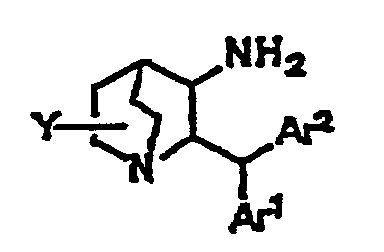
- Pharmazeutische Zusammensetzung zum Entgegenwirken von Substanz P in einem Säuger, die eine therapeutisch wirksame Menge einer Verbindung nach einem der Ansprüche 1 bis 4 zusammen mit einem pharmazeutisch verträglichen Träger oder Verdünnungsmittel umfasst.
- Pharmazeutische Zusammensetzung zum Behandeln oder Verhindern einer Gastrointestinalstörung, einer Störung des zentralen Nervensystems, einer entzündlichen Erkrankung, Asthma, Schmerz, Migräne oder Emesis bei einem Säuger, die eine therapeutisch wirksame Menge einer Verbindung nach einem der Ansprüche 1 bis 4 zusammen mit einem pharmazeutisch verträglichen Träger oder Verdünnungsmittel umfasst.
- Verbindung der Formel (I) oder ein pharmazeutisch verträgliches Salz oder eine pharmazeutisch verträgliche Zusammensetzung davon, nach einem der Ansprüche 1 bis 4 beziehungsweise 6 bis 7 zur Verwendung als Substanz P-Antagonist.
- Verwendung einer Verbindung der Formel (I) oder eines pharmazeutisch verträglichen Salzes oder einer pharmazeutisch verträglichen Zusammensetzung davon, nach einem der Ansprüche 1 bis 4 beziehungsweise 6 bis 7 zur Herstellung eines Arzneimittels zum Entgegenwirken von Substanz P bei einem Säuger.
- Verwendung einer Verbindung der Formel (I) oder eines pharmazeutisch verträglichen Salzes oder einer pharmazeutisch verträglichen Zusammensetzung davon, nach einem der Ansprüche 1 bis 4 beziehungsweise 6 bis 7 zur Herstellung eines Arzneimittels zur Behandlung oder Verhinderung einer Gastrointestinalstörung, einer Störung des zentralen Nervensystems, einer entzündlichen Erkrankung, Asthma, Schmerz, Migräne oder Emesis bei einem Säuger.
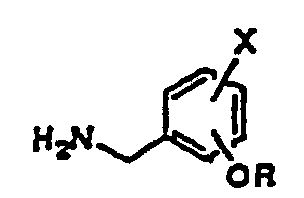
- Verfahren zur Herstellung einer Verbindung nach Anspruch 1, welches umfasst, entweder:wobei dem Verfahren gegebenenfalls Umwandlung zu einem pharmazeutisch verträglichen Salz davon folgt.(A) Umsetzen einer Verbindung der Formelmit einem Benzylamin der Formel
 in Gegenwart eines Reduktionsmittels; oder
 (B) Umsetzen einer Verbindung der Formelmit einem Benzaldehyd der Formel
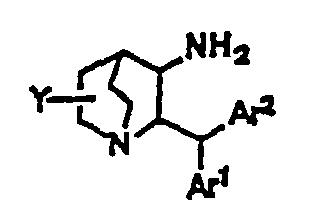 in Gegenwart eines Reduktionsmittels;
Applications Claiming Priority (4)
| Application Number | Priority Date | Filing Date | Title |
|---|---|---|---|
| JP11710293 | 1993-05-19 | ||
| JP117102/93 | 1993-05-19 | ||
| JP11710293 | 1993-05-19 | ||
| PCT/JP1994/000781 WO1994026740A1 (en) | 1993-05-19 | 1994-05-13 | Heteroatom substituted alkyl benzylaminoquinuclidines as substance p antagonists |
Publications (2)
| Publication Number | Publication Date |
|---|---|
| EP0699199A1 EP0699199A1 (de) | 1996-03-06 |
| EP0699199B1 true EP0699199B1 (de) | 2002-11-20 |
Family
ID=14703456
Family Applications (1)
| Application Number | Title | Priority Date | Filing Date |
|---|---|---|---|
| EP94914619A Expired - Lifetime EP0699199B1 (de) | 1993-05-19 | 1994-05-13 | Benzylaminochinuclidinen mit ein durch ein heteronom substituiertes alkyl als substanz p antagoniste |
Country Status (12)
| Country | Link |
|---|---|
| US (1) | US5741797A (de) |
| EP (1) | EP0699199B1 (de) |
| AT (1) | ATE228129T1 (de) |
| AU (1) | AU6691094A (de) |
| CA (1) | CA2161886C (de) |
| DE (1) | DE69431751T2 (de) |
| DK (1) | DK0699199T3 (de) |
| ES (1) | ES2184762T3 (de) |
| FI (1) | FI942314A7 (de) |
| IL (1) | IL109646A0 (de) |
| PT (1) | PT699199E (de) |
| WO (1) | WO1994026740A1 (de) |
Families Citing this family (50)
| Publication number | Priority date | Publication date | Assignee | Title |
|---|---|---|---|---|
| JPH10508837A (ja) * | 1994-11-10 | 1998-09-02 | ファイザー・インコーポレーテッド | 眼の疾患を治療するためのnk−1レセプターアンタゴニスト |
| DE69623580T2 (de) | 1995-12-21 | 2003-01-09 | Pfizer Inc., New York | 3-((5-Substituierte Benzyl)Amino)-2-Phenylpiperidine als Substance-P-Antagonisten |
| MX9706944A (es) * | 1996-09-12 | 1998-08-30 | Pfizer | Quinuclidinas sustituidas con tetrazolilo como antagonistas de la sustancia p. |
| WO2001032625A1 (en) | 1999-11-03 | 2001-05-10 | Du Pont Pharmaceuticals Company | Aryl- and heteroaryl-substituted tetrahydroisoquinolines and use thereof to block reuptake of norepinephrine, dopamine and serotonin |
| US7163949B1 (en) | 1999-11-03 | 2007-01-16 | Amr Technology, Inc. | 4-phenyl substituted tetrahydroisoquinolines and use thereof |
| JP5132864B2 (ja) | 2000-07-11 | 2013-01-30 | アルバニー モレキュラー リサーチ, インコーポレイテッド | 4−フェニル置換テトラヒドロイソキノリンおよびその使用方法 |
| KR20040029375A (ko) * | 2001-07-20 | 2004-04-06 | 화이자 프로덕츠 인코포레이티드 | 개, 고양이 및 말에서 결함있는 행태를 변화시키기 위한nk-1 수용체 길항제의 용도 |
| US20060205724A1 (en) * | 2002-05-29 | 2006-09-14 | The Regents Of The University Of California | Antagonizing nk-1 receptors inhibits consumption of substances of abuse |
| US6861526B2 (en) | 2002-10-16 | 2005-03-01 | Pfizer Inc. | Process for the preparation of (S,S)-cis-2-benzhydryl-3-benzylaminoquinuclidine |
| AU2005274927B2 (en) | 2004-07-15 | 2011-11-03 | Albany Molecular Research, Inc. | Aryl-and heteroaryl-substituted tetrahydroisoquinolines and use thereof to block reuptake of norepinephrine, dopamine, and serotonin |
| US8362075B2 (en) | 2005-05-17 | 2013-01-29 | Merck Sharp & Dohme Corp. | Cyclohexyl sulphones for treatment of cancer |
| KR101594898B1 (ko) | 2005-07-15 | 2016-02-18 | 알바니 몰레큘라 리써치, 인크. | 아릴- 및 헤테로아릴-치환된 테트라히드로벤자제핀, 및 노르에피네프린, 도파민 및 세로토닌의 재흡수를 차단하기 위한 용도 |
| KR20080048502A (ko) | 2005-09-29 | 2008-06-02 | 머크 앤드 캄파니 인코포레이티드 | 멜라노코르틴-4 수용체 조절제로서의 아실화스피로피페리딘 유도체 |
| GB0603041D0 (en) | 2006-02-15 | 2006-03-29 | Angeletti P Ist Richerche Bio | Therapeutic compounds |
| US20070238630A1 (en) * | 2006-03-29 | 2007-10-11 | Phillips Douglas H | Subcutaneous skin cleanser |
| US8173629B2 (en) | 2006-09-22 | 2012-05-08 | Merck Sharp & Dohme Corp. | Method of treatment using fatty acid synthesis inhibitors |
| US20110218176A1 (en) | 2006-11-01 | 2011-09-08 | Barbara Brooke Jennings-Spring | Compounds, methods, and treatments for abnormal signaling pathways for prenatal and postnatal development |
| EA016079B1 (ru) | 2007-01-10 | 2012-01-30 | Институто Ди Ричерке Ди Биолоджиа Молеколаре П. Анджелетти Спа | Амидзамещенные индазолы в качестве ингибиторов поли(adp-рибоза)полимеразы (parp) |
| JP5319518B2 (ja) | 2007-04-02 | 2013-10-16 | Msd株式会社 | インドールジオン誘導体 |
| AU2008269154B2 (en) | 2007-06-27 | 2014-06-12 | Merck Sharp & Dohme Llc | 4-carboxybenzylamino derivatives as histone deacetylase inhibitors |
| CN102014631A (zh) | 2008-03-03 | 2011-04-13 | 泰格尔医药科技公司 | 酪氨酸激酶抑制剂 |
| US9156812B2 (en) | 2008-06-04 | 2015-10-13 | Bristol-Myers Squibb Company | Crystalline form of 6-[(4S)-2-methyl-4-(2-naphthyl)-1,2,3,4-tetrahydroisoquinolin-7-yl]pyridazin-3-amine |
| WO2010114780A1 (en) | 2009-04-01 | 2010-10-07 | Merck Sharp & Dohme Corp. | Inhibitors of akt activity |
| WO2010132487A1 (en) | 2009-05-12 | 2010-11-18 | Bristol-Myers Squibb Company | CRYSTALLINE FORMS OF (S)-7-([1,2,4]TRIAZOLO[1,5-a]PYRIDIN-6-YL)-4-(3,4-DICHLOROHPHENYL)-1,2,3,4-TETRAHYDROISOQUINOLINE AND USE THEREOF |
| CN102458123A (zh) | 2009-05-12 | 2012-05-16 | 阿尔巴尼分子研究公司 | 芳基、杂芳基和杂环取代的四氢异喹啉及其用途 |
| US8802696B2 (en) | 2009-05-12 | 2014-08-12 | Albany Molecular Research, Inc. | 7-([1,2,4]triazolo[1,5-a]pyridin-6-yl)-4-(3,4-dichlorophenyl)-1,2,3,4-tetrahydroisoqu inoli and use thereof |
| JP5099731B1 (ja) | 2009-10-14 | 2012-12-19 | メルク・シャープ・アンド・ドーム・コーポレーション | p53活性を増大する置換ピペリジン及びその使用 |
| EP2584903B1 (de) | 2010-06-24 | 2018-10-24 | Merck Sharp & Dohme Corp. | Neue heterozyklische verbindungen als erk-hemmer |
| AU2011285909B2 (en) | 2010-08-02 | 2016-11-10 | Sirna Therapeutics, Inc. | RNA interference mediated inhibition of catenin (cadherin-associated protein), beta 1 (CTNNB1) gene expression using short interfering nucleic acid (siNA) |
| EP2606134B1 (de) | 2010-08-17 | 2019-04-10 | Sirna Therapeutics, Inc. | Rna-interferenz-vermittelte hemmung der hepatitis b-virus (hbv)-genexpression mittels kurzer interferierender nukleinsäure (sina) |
| US8883801B2 (en) | 2010-08-23 | 2014-11-11 | Merck Sharp & Dohme Corp. | Substituted pyrazolo[1,5-a]pyrimidines as mTOR inhibitors |
| EP2613782B1 (de) | 2010-09-01 | 2016-11-02 | Merck Sharp & Dohme Corp. | Indazolderivate als erk-hemmer |
| US9242981B2 (en) | 2010-09-16 | 2016-01-26 | Merck Sharp & Dohme Corp. | Fused pyrazole derivatives as novel ERK inhibitors |
| EP3766975A1 (de) | 2010-10-29 | 2021-01-20 | Sirna Therapeutics, Inc. | Rna-interferenz-vermittelte inhibition von genexpression unter verwendung kurzer interferierender nukleinsäure (sina) |
| EP2654748B1 (de) | 2010-12-21 | 2016-07-27 | Merck Sharp & Dohme Corp. | Indazolderivate als erk-hemmer |
| EP2699567A1 (de) | 2011-04-21 | 2014-02-26 | Merck Sharp & Dohme Corp. | Hemmer des insulinähnlichen wachstumsfaktor-1-rezeptors |
| WO2013063214A1 (en) | 2011-10-27 | 2013-05-02 | Merck Sharp & Dohme Corp. | Novel compounds that are erk inhibitors |
| EP3358013B1 (de) | 2012-05-02 | 2020-06-24 | Sirna Therapeutics, Inc. | Sina-zusammensetzungen |
| KR20150060724A (ko) | 2012-09-28 | 2015-06-03 | 머크 샤프 앤드 돔 코포레이션 | Erk 억제제인 신규 화합물 |
| WO2014078568A1 (en) | 2012-11-14 | 2014-05-22 | The Johns Hopkins University | Methods and compositions for treating schizophrenia |
| DK2925888T3 (en) | 2012-11-28 | 2017-12-18 | Merck Sharp & Dohme | COMPOSITIONS AND METHODS OF CANCER TREATMENT |
| EP2935263B1 (de) | 2012-12-20 | 2018-12-05 | Merck Sharp & Dohme Corp. | Substituierte imidazopyridine als hdm2 inhibitoren |
| US9540377B2 (en) | 2013-01-30 | 2017-01-10 | Merck Sharp & Dohme Corp. | 2,6,7,8 substituted purines as HDM2 inhibitors |
| WO2015034925A1 (en) | 2013-09-03 | 2015-03-12 | Moderna Therapeutics, Inc. | Circular polynucleotides |
| WO2018071283A1 (en) | 2016-10-12 | 2018-04-19 | Merck Sharp & Dohme Corp. | Kdm5 inhibitors |
| US11098059B2 (en) | 2017-11-08 | 2021-08-24 | Merck Sharp & Dohme Corp. | PRMT5 inhibitors |
| WO2019094311A1 (en) | 2017-11-08 | 2019-05-16 | Merck Sharp & Dohme Corp. | Prmt5 inhibitors |
| EP3833667B1 (de) | 2018-08-07 | 2024-03-13 | Merck Sharp & Dohme LLC | Prmt5-inhibitoren |
| BR112021002267A8 (pt) | 2018-08-07 | 2023-02-07 | Merck Sharp & Dohme | Inibidores de prmt5 |
| EP3833668B1 (de) | 2018-08-07 | 2025-03-19 | Merck Sharp & Dohme LLC | Prmt5-inhibitoren |
Family Cites Families (10)
| Publication number | Priority date | Publication date | Assignee | Title |
|---|---|---|---|---|
| WO1990005525A1 (en) * | 1988-11-23 | 1990-05-31 | Pfizer Inc. | Quinuclidine derivatives as substance p antagonists |
| PL172069B1 (pl) * | 1991-05-22 | 1997-07-31 | Pfizer | Sposób wytwarzania nowych pochodnych podstawionej 3-aminochinuklidyny PL PL PL PL PL |
| CA2102179C (en) * | 1991-05-31 | 1998-10-27 | Fumitaka Ito | Quinuclidine derivatives |
| HU224443B1 (hu) * | 1991-06-20 | 2005-09-28 | Pfizer Inc. | Fluor-alkoxi-benzaldehid-származékok |
| JP2656702B2 (ja) * | 1992-03-23 | 1997-09-24 | ファイザー製薬株式会社 | ペプチド性キヌクリジン |
| JP2656700B2 (ja) * | 1992-10-28 | 1997-09-24 | ファイザー製薬株式会社 | 置換キヌクリジン誘導体 |
| US5294744A (en) * | 1993-04-20 | 1994-03-15 | Pfizer Inc. | Formylation process for aromatic aldehydes |
| JP3326489B2 (ja) * | 1996-02-10 | 2002-09-24 | 好高 青山 | 部品供給ロッド装置とそれによる供給方法 |
| JPH09221677A (ja) * | 1996-02-14 | 1997-08-26 | Kansai Coke & Chem Co Ltd | 石炭の高温予熱方法 |
| JPH09319064A (ja) * | 1996-05-29 | 1997-12-12 | Konica Corp | 写真製品の生産方法及び生産装置 |
-
1994
- 1994-05-12 IL IL10964694A patent/IL109646A0/xx unknown
- 1994-05-13 ES ES94914619T patent/ES2184762T3/es not_active Expired - Lifetime
- 1994-05-13 AT AT94914619T patent/ATE228129T1/de not_active IP Right Cessation
- 1994-05-13 DK DK94914619T patent/DK0699199T3/da active
- 1994-05-13 DE DE69431751T patent/DE69431751T2/de not_active Expired - Fee Related
- 1994-05-13 US US08/556,916 patent/US5741797A/en not_active Expired - Fee Related
- 1994-05-13 PT PT94914619T patent/PT699199E/pt unknown
- 1994-05-13 WO PCT/JP1994/000781 patent/WO1994026740A1/en not_active Ceased
- 1994-05-13 AU AU66910/94A patent/AU6691094A/en not_active Abandoned
- 1994-05-13 EP EP94914619A patent/EP0699199B1/de not_active Expired - Lifetime
- 1994-05-13 CA CA002161886A patent/CA2161886C/en not_active Expired - Fee Related
- 1994-05-18 FI FI942314A patent/FI942314A7/fi unknown
Also Published As
| Publication number | Publication date |
|---|---|
| FI942314A0 (fi) | 1994-05-18 |
| ES2184762T3 (es) | 2003-04-16 |
| DE69431751T2 (de) | 2003-04-03 |
| WO1994026740A1 (en) | 1994-11-24 |
| CA2161886A1 (en) | 1994-11-24 |
| PT699199E (pt) | 2003-01-31 |
| FI942314L (fi) | 1994-11-20 |
| FI942314A7 (fi) | 1994-11-20 |
| CA2161886C (en) | 1999-12-07 |
| ATE228129T1 (de) | 2002-12-15 |
| DE69431751D1 (de) | 2003-01-02 |
| US5741797A (en) | 1998-04-21 |
| AU6691094A (en) | 1994-12-12 |
| DK0699199T3 (da) | 2002-12-16 |
| EP0699199A1 (de) | 1996-03-06 |
| IL109646A0 (en) | 1994-08-26 |
Similar Documents
| Publication | Publication Date | Title |
|---|---|---|
| US5741797A (en) | Heteroatom substituted alkyl benzylaminoquinuclidines | |
| EP0665844B1 (de) | Substituierte benzylaminoquinuclidine als substanz p antagonisten | |
| US5869499A (en) | Benzyloxyquinuclidines as substance P antagonists | |
| EP0632809B1 (de) | Chinuclidine derivate als substanz p antagonisten | |
| EP0613458B1 (de) | Azyklische ethylendiaminderivate als 'substance p rezeptor' antagonisten | |
| EP0665843B1 (de) | Substituierte chinuclidine als substanz p antagonisten | |
| EP0607164B1 (de) | Kondensierte trizyklische, stickstoffenthaltende Verbindungen als Substanz P Rezeptor Antagonisten | |
| AP643A (en) | Substituted benzylaminopiperidine compounds. | |
| IE921662A1 (en) | Substituted 3-aminoquinuclidines | |
| IE83327B1 (en) | Substituted 3-aminoquinuclidines | |
| US5604241A (en) | Substituted benzylaminoquinuclidines as substance P antagonists | |
| US5789423A (en) | 3- 5-substituted benzyl)amino!-2-phenylpiperidines as substance P antagonists | |
| US5569662A (en) | Quinuclidine derivatives as substance P antagonists | |
| CA2215020C (en) | Tetrazolyl-substituted quinuclidines as substance p antagonists | |
| JP2822274B2 (ja) | P物質拮抗剤としてのヘテロ原子置換アルキルベンジルアミノキヌクリジン類 | |
| US5837711A (en) | Substituted quinuclidines as substance P antagonists | |
| JP3172461B2 (ja) | サブスタンスpアンタゴニストとしての3−[(5−置換ベンジル)アミノ]−2−フェニルピペリジン |
Legal Events
| Date | Code | Title | Description |
|---|---|---|---|
| PUAI | Public reference made under article 153(3) epc to a published international application that has entered the european phase |
Free format text: ORIGINAL CODE: 0009012 |
|
| 17P | Request for examination filed |
Effective date: 19951023 |
|
| AK | Designated contracting states |
Kind code of ref document: A1 Designated state(s): AT BE CH DE DK ES FR GB GR IE IT LI LU NL PT SE |
|
| 17Q | First examination report despatched |
Effective date: 19960520 |
|
| APAB | Appeal dossier modified |
Free format text: ORIGINAL CODE: EPIDOS NOAPE |
|
| APAD | Appeal reference recorded |
Free format text: ORIGINAL CODE: EPIDOS REFNE |
|
| APAB | Appeal dossier modified |
Free format text: ORIGINAL CODE: EPIDOS NOAPE |
|
| APBJ | Interlocutory revision of appeal recorded |
Free format text: ORIGINAL CODE: EPIDOS IRAPE |
|
| GRAG | Despatch of communication of intention to grant |
Free format text: ORIGINAL CODE: EPIDOS AGRA |
|
| GRAG | Despatch of communication of intention to grant |
Free format text: ORIGINAL CODE: EPIDOS AGRA |
|
| GRAH | Despatch of communication of intention to grant a patent |
Free format text: ORIGINAL CODE: EPIDOS IGRA |
|
| GRAH | Despatch of communication of intention to grant a patent |
Free format text: ORIGINAL CODE: EPIDOS IGRA |
|
| GRAA | (expected) grant |
Free format text: ORIGINAL CODE: 0009210 |
|
| AK | Designated contracting states |
Kind code of ref document: B1 Designated state(s): AT BE CH DE DK ES FR GB GR IE IT LI LU NL PT SE |
|
| REF | Corresponds to: |
Ref document number: 228129 Country of ref document: AT Date of ref document: 20021215 Kind code of ref document: T |
|
| REG | Reference to a national code |
Ref country code: GB Ref legal event code: FG4D |
|
| REG | Reference to a national code |
Ref country code: CH Ref legal event code: NV Representative=s name: E. BLUM & CO. PATENTANWAELTE Ref country code: CH Ref legal event code: EP |
|
| REG | Reference to a national code |
Ref country code: DK Ref legal event code: T3 |
|
| REG | Reference to a national code |
Ref country code: IE Ref legal event code: FG4D |
|
| REF | Corresponds to: |
Ref document number: 69431751 Country of ref document: DE Date of ref document: 20030102 |
|
| REG | Reference to a national code |
Ref country code: PT Ref legal event code: SC4A Free format text: AVAILABILITY OF NATIONAL TRANSLATION Effective date: 20021212 |
|
| REG | Reference to a national code |
Ref country code: GR Ref legal event code: EP Ref document number: 20020404520 Country of ref document: GR |
|
| ET | Fr: translation filed | ||
| REG | Reference to a national code |
Ref country code: ES Ref legal event code: FG2A Ref document number: 2184762 Country of ref document: ES Kind code of ref document: T3 |
|
| PGFP | Annual fee paid to national office [announced via postgrant information from national office to epo] |
Ref country code: CH Payment date: 20030417 Year of fee payment: 10 |
|
| PLBE | No opposition filed within time limit |
Free format text: ORIGINAL CODE: 0009261 |
|
| STAA | Information on the status of an ep patent application or granted ep patent |
Free format text: STATUS: NO OPPOSITION FILED WITHIN TIME LIMIT |
|
| 26N | No opposition filed |
Effective date: 20030821 |
|
| PGFP | Annual fee paid to national office [announced via postgrant information from national office to epo] |
Ref country code: LU Payment date: 20040325 Year of fee payment: 11 |
|
| PGFP | Annual fee paid to national office [announced via postgrant information from national office to epo] |
Ref country code: PT Payment date: 20040326 Year of fee payment: 11 |
|
| PGFP | Annual fee paid to national office [announced via postgrant information from national office to epo] |
Ref country code: IE Payment date: 20040406 Year of fee payment: 11 Ref country code: GB Payment date: 20040406 Year of fee payment: 11 Ref country code: AT Payment date: 20040406 Year of fee payment: 11 |
|
| PGFP | Annual fee paid to national office [announced via postgrant information from national office to epo] |
Ref country code: NL Payment date: 20040413 Year of fee payment: 11 |
|
| PGFP | Annual fee paid to national office [announced via postgrant information from national office to epo] |
Ref country code: GR Payment date: 20040427 Year of fee payment: 11 |
|
| PGFP | Annual fee paid to national office [announced via postgrant information from national office to epo] |
Ref country code: FR Payment date: 20040503 Year of fee payment: 11 |
|
| PGFP | Annual fee paid to national office [announced via postgrant information from national office to epo] |
Ref country code: DK Payment date: 20040517 Year of fee payment: 11 |
|
| PGFP | Annual fee paid to national office [announced via postgrant information from national office to epo] |
Ref country code: DE Payment date: 20040528 Year of fee payment: 11 |
|
| PG25 | Lapsed in a contracting state [announced via postgrant information from national office to epo] |
Ref country code: LI Free format text: LAPSE BECAUSE OF NON-PAYMENT OF DUE FEES Effective date: 20040531 Ref country code: CH Free format text: LAPSE BECAUSE OF NON-PAYMENT OF DUE FEES Effective date: 20040531 |
|
| PGFP | Annual fee paid to national office [announced via postgrant information from national office to epo] |
Ref country code: BE Payment date: 20040603 Year of fee payment: 11 |
|
| PGFP | Annual fee paid to national office [announced via postgrant information from national office to epo] |
Ref country code: ES Payment date: 20040826 Year of fee payment: 11 |
|
| REG | Reference to a national code |
Ref country code: CH Ref legal event code: PL |
|
| PGFP | Annual fee paid to national office [announced via postgrant information from national office to epo] |
Ref country code: SE Payment date: 20050506 Year of fee payment: 12 |
|
| PG25 | Lapsed in a contracting state [announced via postgrant information from national office to epo] |
Ref country code: LU Free format text: LAPSE BECAUSE OF NON-PAYMENT OF DUE FEES Effective date: 20050513 Ref country code: IT Free format text: LAPSE BECAUSE OF NON-PAYMENT OF DUE FEES;WARNING: LAPSES OF ITALIAN PATENTS WITH EFFECTIVE DATE BEFORE 2007 MAY HAVE OCCURRED AT ANY TIME BEFORE 2007. THE CORRECT EFFECTIVE DATE MAY BE DIFFERENT FROM THE ONE RECORDED. Effective date: 20050513 Ref country code: IE Free format text: LAPSE BECAUSE OF NON-PAYMENT OF DUE FEES Effective date: 20050513 Ref country code: GB Free format text: LAPSE BECAUSE OF NON-PAYMENT OF DUE FEES Effective date: 20050513 Ref country code: AT Free format text: LAPSE BECAUSE OF NON-PAYMENT OF DUE FEES Effective date: 20050513 |
|
| PG25 | Lapsed in a contracting state [announced via postgrant information from national office to epo] |
Ref country code: ES Free format text: LAPSE BECAUSE OF NON-PAYMENT OF DUE FEES Effective date: 20050514 |
|
| PG25 | Lapsed in a contracting state [announced via postgrant information from national office to epo] |
Ref country code: DK Free format text: LAPSE BECAUSE OF NON-PAYMENT OF DUE FEES Effective date: 20050531 Ref country code: BE Free format text: LAPSE BECAUSE OF NON-PAYMENT OF DUE FEES Effective date: 20050531 |
|
| APAH | Appeal reference modified |
Free format text: ORIGINAL CODE: EPIDOSCREFNO |
|
| PG25 | Lapsed in a contracting state [announced via postgrant information from national office to epo] |
Ref country code: PT Free format text: LAPSE BECAUSE OF NON-PAYMENT OF DUE FEES Effective date: 20051114 |
|
| BERE | Be: lapsed |
Owner name: *PFIZER INC. Effective date: 20050531 |
|
| PG25 | Lapsed in a contracting state [announced via postgrant information from national office to epo] |
Ref country code: NL Free format text: LAPSE BECAUSE OF NON-PAYMENT OF DUE FEES Effective date: 20051201 Ref country code: DE Free format text: LAPSE BECAUSE OF NON-PAYMENT OF DUE FEES Effective date: 20051201 |
|
| PG25 | Lapsed in a contracting state [announced via postgrant information from national office to epo] |
Ref country code: GR Free format text: LAPSE BECAUSE OF NON-PAYMENT OF DUE FEES Effective date: 20051205 |
|
| GBPC | Gb: european patent ceased through non-payment of renewal fee |
Effective date: 20050513 |
|
| PG25 | Lapsed in a contracting state [announced via postgrant information from national office to epo] |
Ref country code: FR Free format text: LAPSE BECAUSE OF NON-PAYMENT OF DUE FEES Effective date: 20060131 |
|
| NLV4 | Nl: lapsed or anulled due to non-payment of the annual fee |
Effective date: 20051201 |
|
| REG | Reference to a national code |
Ref country code: IE Ref legal event code: MM4A |
|
| REG | Reference to a national code |
Ref country code: DK Ref legal event code: EBP |
|
| REG | Reference to a national code |
Ref country code: FR Ref legal event code: ST Effective date: 20060131 |
|
| PG25 | Lapsed in a contracting state [announced via postgrant information from national office to epo] |
Ref country code: SE Free format text: LAPSE BECAUSE OF NON-PAYMENT OF DUE FEES Effective date: 20060514 |
|
| REG | Reference to a national code |
Ref country code: ES Ref legal event code: FD2A Effective date: 20050514 |
|
| EUG | Se: european patent has lapsed | ||
| BERE | Be: lapsed |
Owner name: *PFIZER INC. Effective date: 20050531 |