EP0701839B1 - Therapeutische Produkte mit organischen Aschen, welche Ferninfrarotstrahlen emitieren - Google Patents
Therapeutische Produkte mit organischen Aschen, welche Ferninfrarotstrahlen emitieren Download PDFInfo
- Publication number
- EP0701839B1 EP0701839B1 EP95112617A EP95112617A EP0701839B1 EP 0701839 B1 EP0701839 B1 EP 0701839B1 EP 95112617 A EP95112617 A EP 95112617A EP 95112617 A EP95112617 A EP 95112617A EP 0701839 B1 EP0701839 B1 EP 0701839B1
- Authority
- EP
- European Patent Office
- Prior art keywords
- ashes
- base material
- product
- organic
- organic ashes
- Prior art date
- Legal status (The legal status is an assumption and is not a legal conclusion. Google has not performed a legal analysis and makes no representation as to the accuracy of the status listed.)
- Expired - Lifetime
Links
- 239000002956 ash Substances 0.000 title claims description 307
- 235000002918 Fraxinus excelsior Nutrition 0.000 title claims description 249
- 230000005855 radiation Effects 0.000 title claims description 86
- 230000001225 therapeutic effect Effects 0.000 title description 6
- 239000000463 material Substances 0.000 claims description 194
- 238000000576 coating method Methods 0.000 claims description 77
- 239000011248 coating agent Substances 0.000 claims description 76
- 229920005989 resin Polymers 0.000 claims description 55
- 239000011347 resin Substances 0.000 claims description 55
- 238000000034 method Methods 0.000 claims description 36
- 241001474374 Blennius Species 0.000 claims description 35
- 238000002156 mixing Methods 0.000 claims description 26
- 230000036760 body temperature Effects 0.000 claims description 24
- 239000002674 ointment Substances 0.000 claims description 23
- OKTJSMMVPCPJKN-UHFFFAOYSA-N Carbon Chemical compound [C] OKTJSMMVPCPJKN-UHFFFAOYSA-N 0.000 claims description 21
- 229910052799 carbon Inorganic materials 0.000 claims description 21
- 239000004744 fabric Substances 0.000 claims description 20
- 239000000835 fiber Substances 0.000 claims description 19
- 239000003814 drug Substances 0.000 claims description 15
- 239000000853 adhesive Substances 0.000 claims description 13
- 230000001070 adhesive effect Effects 0.000 claims description 13
- 239000011521 glass Substances 0.000 claims description 13
- 239000002390 adhesive tape Substances 0.000 claims description 11
- 238000010304 firing Methods 0.000 claims description 11
- 239000000919 ceramic Substances 0.000 claims description 10
- 239000002537 cosmetic Substances 0.000 claims description 9
- 239000000126 substance Substances 0.000 claims description 9
- 239000000203 mixture Substances 0.000 claims description 8
- 229920002994 synthetic fiber Polymers 0.000 claims description 7
- 239000012209 synthetic fiber Substances 0.000 claims description 7
- 238000004519 manufacturing process Methods 0.000 claims description 6
- 241000251468 Actinopterygii Species 0.000 claims description 3
- 241001465754 Metazoa Species 0.000 claims description 3
- 235000019688 fish Nutrition 0.000 claims description 3
- 238000010413 gardening Methods 0.000 claims description 3
- 241000271566 Aves Species 0.000 claims 1
- 210000000056 organ Anatomy 0.000 claims 1
- 239000011368 organic material Substances 0.000 claims 1
- 230000000694 effects Effects 0.000 description 47
- 238000012360 testing method Methods 0.000 description 44
- 239000000047 product Substances 0.000 description 30
- 239000003610 charcoal Substances 0.000 description 21
- 239000000123 paper Substances 0.000 description 21
- XEEYBQQBJWHFJM-UHFFFAOYSA-N Iron Chemical compound [Fe] XEEYBQQBJWHFJM-UHFFFAOYSA-N 0.000 description 20
- 239000003973 paint Substances 0.000 description 20
- 241000196324 Embryophyta Species 0.000 description 18
- -1 pottery Substances 0.000 description 16
- PXHVJJICTQNCMI-UHFFFAOYSA-N Nickel Chemical compound [Ni] PXHVJJICTQNCMI-UHFFFAOYSA-N 0.000 description 14
- 239000004035 construction material Substances 0.000 description 12
- 235000019512 sardine Nutrition 0.000 description 12
- 208000002193 Pain Diseases 0.000 description 11
- 239000002245 particle Substances 0.000 description 11
- BZHJMEDXRYGGRV-UHFFFAOYSA-N Vinyl chloride Chemical compound ClC=C BZHJMEDXRYGGRV-UHFFFAOYSA-N 0.000 description 10
- 239000011575 calcium Substances 0.000 description 10
- 230000008859 change Effects 0.000 description 10
- 239000010408 film Substances 0.000 description 10
- 229910052742 iron Inorganic materials 0.000 description 10
- XLYOFNOQVPJJNP-UHFFFAOYSA-N water Substances O XLYOFNOQVPJJNP-UHFFFAOYSA-N 0.000 description 10
- 239000002023 wood Substances 0.000 description 10
- HCHKCACWOHOZIP-UHFFFAOYSA-N Zinc Chemical compound [Zn] HCHKCACWOHOZIP-UHFFFAOYSA-N 0.000 description 9
- 229910052782 aluminium Inorganic materials 0.000 description 9
- XAGFODPZIPBFFR-UHFFFAOYSA-N aluminium Chemical compound [Al] XAGFODPZIPBFFR-UHFFFAOYSA-N 0.000 description 9
- 229910052725 zinc Inorganic materials 0.000 description 9
- 239000011701 zinc Substances 0.000 description 9
- RYGMFSIKBFXOCR-UHFFFAOYSA-N Copper Chemical compound [Cu] RYGMFSIKBFXOCR-UHFFFAOYSA-N 0.000 description 8
- 241001125048 Sardina Species 0.000 description 8
- 229920000122 acrylonitrile butadiene styrene Polymers 0.000 description 8
- 230000017531 blood circulation Effects 0.000 description 8
- 229910052802 copper Inorganic materials 0.000 description 8
- 239000010949 copper Substances 0.000 description 8
- 210000004209 hair Anatomy 0.000 description 8
- 230000036407 pain Effects 0.000 description 8
- 229920000139 polyethylene terephthalate Polymers 0.000 description 8
- 239000005020 polyethylene terephthalate Substances 0.000 description 8
- 235000015277 pork Nutrition 0.000 description 8
- 230000008569 process Effects 0.000 description 8
- ZCYVEMRRCGMTRW-UHFFFAOYSA-N 7553-56-2 Chemical compound [I] ZCYVEMRRCGMTRW-UHFFFAOYSA-N 0.000 description 7
- OYPRJOBELJOOCE-UHFFFAOYSA-N Calcium Chemical compound [Ca] OYPRJOBELJOOCE-UHFFFAOYSA-N 0.000 description 7
- ZAMOUSCENKQFHK-UHFFFAOYSA-N Chlorine atom Chemical compound [Cl] ZAMOUSCENKQFHK-UHFFFAOYSA-N 0.000 description 7
- VYZAMTAEIAYCRO-UHFFFAOYSA-N Chromium Chemical compound [Cr] VYZAMTAEIAYCRO-UHFFFAOYSA-N 0.000 description 7
- 235000010469 Glycine max Nutrition 0.000 description 7
- DGAQECJNVWCQMB-PUAWFVPOSA-M Ilexoside XXIX Chemical compound C[C@@H]1CC[C@@]2(CC[C@@]3(C(=CC[C@H]4[C@]3(CC[C@@H]5[C@@]4(CC[C@@H](C5(C)C)OS(=O)(=O)[O-])C)C)[C@@H]2[C@]1(C)O)C)C(=O)O[C@H]6[C@@H]([C@H]([C@@H]([C@H](O6)CO)O)O)O.[Na+] DGAQECJNVWCQMB-PUAWFVPOSA-M 0.000 description 7
- WHXSMMKQMYFTQS-UHFFFAOYSA-N Lithium Chemical compound [Li] WHXSMMKQMYFTQS-UHFFFAOYSA-N 0.000 description 7
- FYYHWMGAXLPEAU-UHFFFAOYSA-N Magnesium Chemical compound [Mg] FYYHWMGAXLPEAU-UHFFFAOYSA-N 0.000 description 7
- PWHULOQIROXLJO-UHFFFAOYSA-N Manganese Chemical compound [Mn] PWHULOQIROXLJO-UHFFFAOYSA-N 0.000 description 7
- OAICVXFJPJFONN-UHFFFAOYSA-N Phosphorus Chemical compound [P] OAICVXFJPJFONN-UHFFFAOYSA-N 0.000 description 7
- ZLMJMSJWJFRBEC-UHFFFAOYSA-N Potassium Chemical compound [K] ZLMJMSJWJFRBEC-UHFFFAOYSA-N 0.000 description 7
- XUIMIQQOPSSXEZ-UHFFFAOYSA-N Silicon Chemical compound [Si] XUIMIQQOPSSXEZ-UHFFFAOYSA-N 0.000 description 7
- NINIDFKCEFEMDL-UHFFFAOYSA-N Sulfur Chemical compound [S] NINIDFKCEFEMDL-UHFFFAOYSA-N 0.000 description 7
- 239000005864 Sulphur Substances 0.000 description 7
- 239000000654 additive Substances 0.000 description 7
- 230000036772 blood pressure Effects 0.000 description 7
- 229910052791 calcium Inorganic materials 0.000 description 7
- 239000000460 chlorine Substances 0.000 description 7
- 229910052801 chlorine Inorganic materials 0.000 description 7
- 229910052804 chromium Inorganic materials 0.000 description 7
- 239000011651 chromium Substances 0.000 description 7
- 235000019504 cigarettes Nutrition 0.000 description 7
- 239000011630 iodine Substances 0.000 description 7
- 229910052740 iodine Inorganic materials 0.000 description 7
- 229910052744 lithium Inorganic materials 0.000 description 7
- 239000011777 magnesium Substances 0.000 description 7
- 229910052749 magnesium Inorganic materials 0.000 description 7
- 229910052748 manganese Inorganic materials 0.000 description 7
- 239000011572 manganese Substances 0.000 description 7
- 229910052759 nickel Inorganic materials 0.000 description 7
- 239000003921 oil Substances 0.000 description 7
- 239000011574 phosphorus Substances 0.000 description 7
- 229910052698 phosphorus Inorganic materials 0.000 description 7
- 239000011591 potassium Substances 0.000 description 7
- 229910052700 potassium Inorganic materials 0.000 description 7
- 239000000843 powder Substances 0.000 description 7
- 229910052710 silicon Inorganic materials 0.000 description 7
- 239000010703 silicon Substances 0.000 description 7
- 239000011734 sodium Substances 0.000 description 7
- 229910052708 sodium Inorganic materials 0.000 description 7
- 229910052712 strontium Inorganic materials 0.000 description 7
- CIOAGBVUUVVLOB-UHFFFAOYSA-N strontium atom Chemical compound [Sr] CIOAGBVUUVVLOB-UHFFFAOYSA-N 0.000 description 7
- 229920003002 synthetic resin Polymers 0.000 description 7
- 244000068988 Glycine max Species 0.000 description 6
- 239000004743 Polypropylene Substances 0.000 description 6
- 229920001903 high density polyethylene Polymers 0.000 description 6
- 239000004700 high-density polyethylene Substances 0.000 description 6
- 229910052751 metal Inorganic materials 0.000 description 6
- 239000002184 metal Substances 0.000 description 6
- 229920001155 polypropylene Polymers 0.000 description 6
- 230000035488 systolic blood pressure Effects 0.000 description 6
- 230000002411 adverse Effects 0.000 description 5
- 210000004369 blood Anatomy 0.000 description 5
- 239000008280 blood Substances 0.000 description 5
- 229910010293 ceramic material Inorganic materials 0.000 description 5
- 210000003298 dental enamel Anatomy 0.000 description 5
- 230000035487 diastolic blood pressure Effects 0.000 description 5
- 230000036541 health Effects 0.000 description 5
- 238000010438 heat treatment Methods 0.000 description 5
- 239000004922 lacquer Substances 0.000 description 5
- 239000002952 polymeric resin Substances 0.000 description 5
- 241000555825 Clupeidae Species 0.000 description 4
- 206010020772 Hypertension Diseases 0.000 description 4
- BQCADISMDOOEFD-UHFFFAOYSA-N Silver Chemical compound [Ag] BQCADISMDOOEFD-UHFFFAOYSA-N 0.000 description 4
- 208000000453 Skin Neoplasms Diseases 0.000 description 4
- 208000013738 Sleep Initiation and Maintenance disease Diseases 0.000 description 4
- 230000000996 additive effect Effects 0.000 description 4
- 239000003086 colorant Substances 0.000 description 4
- 238000001816 cooling Methods 0.000 description 4
- 239000000839 emulsion Substances 0.000 description 4
- PCHJSUWPFVWCPO-UHFFFAOYSA-N gold Chemical compound [Au] PCHJSUWPFVWCPO-UHFFFAOYSA-N 0.000 description 4
- 229910052737 gold Inorganic materials 0.000 description 4
- 239000010931 gold Substances 0.000 description 4
- 206010022437 insomnia Diseases 0.000 description 4
- 238000004898 kneading Methods 0.000 description 4
- 239000000025 natural resin Substances 0.000 description 4
- 239000000049 pigment Substances 0.000 description 4
- 229910052709 silver Inorganic materials 0.000 description 4
- 239000004332 silver Substances 0.000 description 4
- 201000000849 skin cancer Diseases 0.000 description 4
- 229920006337 unsaturated polyester resin Polymers 0.000 description 4
- QTBSBXVTEAMEQO-UHFFFAOYSA-N Acetic acid Chemical compound CC(O)=O QTBSBXVTEAMEQO-UHFFFAOYSA-N 0.000 description 3
- DNIAPMSPPWPWGF-UHFFFAOYSA-N Propylene glycol Chemical compound CC(O)CO DNIAPMSPPWPWGF-UHFFFAOYSA-N 0.000 description 3
- YXFVVABEGXRONW-UHFFFAOYSA-N Toluene Chemical compound CC1=CC=CC=C1 YXFVVABEGXRONW-UHFFFAOYSA-N 0.000 description 3
- 239000005557 antagonist Substances 0.000 description 3
- 210000004556 brain Anatomy 0.000 description 3
- 239000004568 cement Substances 0.000 description 3
- 235000013339 cereals Nutrition 0.000 description 3
- 238000002485 combustion reaction Methods 0.000 description 3
- 150000001875 compounds Chemical class 0.000 description 3
- GVJHHUAWPYXKBD-UHFFFAOYSA-N d-alpha-tocopherol Natural products OC1=C(C)C(C)=C2OC(CCCC(C)CCCC(C)CCCC(C)C)(C)CCC2=C1C GVJHHUAWPYXKBD-UHFFFAOYSA-N 0.000 description 3
- 210000003811 finger Anatomy 0.000 description 3
- 230000035876 healing Effects 0.000 description 3
- 238000005259 measurement Methods 0.000 description 3
- 229940127554 medical product Drugs 0.000 description 3
- 239000004570 mortar (masonry) Substances 0.000 description 3
- 239000010899 old newspaper Substances 0.000 description 3
- 230000002093 peripheral effect Effects 0.000 description 3
- 229920003023 plastic Polymers 0.000 description 3
- 239000004033 plastic Substances 0.000 description 3
- 229910052573 porcelain Inorganic materials 0.000 description 3
- 230000035807 sensation Effects 0.000 description 3
- 235000019615 sensations Nutrition 0.000 description 3
- 239000002904 solvent Substances 0.000 description 3
- 229920001187 thermosetting polymer Polymers 0.000 description 3
- 125000000391 vinyl group Chemical group [H]C([*])=C([H])[H] 0.000 description 3
- 229920002554 vinyl polymer Polymers 0.000 description 3
- 210000000707 wrist Anatomy 0.000 description 3
- LVYLCBNXHHHPSB-UHFFFAOYSA-N 2-hydroxyethyl salicylate Chemical compound OCCOC(=O)C1=CC=CC=C1O LVYLCBNXHHHPSB-UHFFFAOYSA-N 0.000 description 2
- 102100036475 Alanine aminotransferase 1 Human genes 0.000 description 2
- 108010082126 Alanine transaminase Proteins 0.000 description 2
- 206010002383 Angina Pectoris Diseases 0.000 description 2
- 108010003415 Aspartate Aminotransferases Proteins 0.000 description 2
- 102000004625 Aspartate Aminotransferases Human genes 0.000 description 2
- 230000005457 Black-body radiation Effects 0.000 description 2
- 229940127291 Calcium channel antagonist Drugs 0.000 description 2
- 240000008574 Capsicum frutescens Species 0.000 description 2
- 206010008111 Cerebral haemorrhage Diseases 0.000 description 2
- 206010014970 Ephelides Diseases 0.000 description 2
- 208000032843 Hemorrhage Diseases 0.000 description 2
- 208000003351 Melanosis Diseases 0.000 description 2
- 239000004677 Nylon Substances 0.000 description 2
- KDLHZDBZIXYQEI-UHFFFAOYSA-N Palladium Chemical compound [Pd] KDLHZDBZIXYQEI-UHFFFAOYSA-N 0.000 description 2
- 241000209504 Poaceae Species 0.000 description 2
- 206010039085 Rhinitis allergic Diseases 0.000 description 2
- VYPSYNLAJGMNEJ-UHFFFAOYSA-N Silicium dioxide Chemical compound O=[Si]=O VYPSYNLAJGMNEJ-UHFFFAOYSA-N 0.000 description 2
- PPBRXRYQALVLMV-UHFFFAOYSA-N Styrene Chemical compound C=CC1=CC=CC=C1 PPBRXRYQALVLMV-UHFFFAOYSA-N 0.000 description 2
- 208000025865 Ulcer Diseases 0.000 description 2
- 239000004676 acrylonitrile butadiene styrene Substances 0.000 description 2
- FPIPGXGPPPQFEQ-OVSJKPMPSA-N all-trans-retinol Chemical compound OC\C=C(/C)\C=C\C=C(/C)\C=C\C1=C(C)CCCC1(C)C FPIPGXGPPPQFEQ-OVSJKPMPSA-N 0.000 description 2
- 201000010105 allergic rhinitis Diseases 0.000 description 2
- 230000008901 benefit Effects 0.000 description 2
- 239000011230 binding agent Substances 0.000 description 2
- 210000004204 blood vessel Anatomy 0.000 description 2
- 238000009529 body temperature measurement Methods 0.000 description 2
- 239000011449 brick Substances 0.000 description 2
- 239000004566 building material Substances 0.000 description 2
- 238000006243 chemical reaction Methods 0.000 description 2
- DDRJAANPRJIHGJ-UHFFFAOYSA-N creatinine Chemical compound CN1CC(=O)NC1=N DDRJAANPRJIHGJ-UHFFFAOYSA-N 0.000 description 2
- 230000034994 death Effects 0.000 description 2
- 231100000517 death Toxicity 0.000 description 2
- 230000000916 dilatatory effect Effects 0.000 description 2
- 230000005670 electromagnetic radiation Effects 0.000 description 2
- 239000003822 epoxy resin Substances 0.000 description 2
- 239000000284 extract Substances 0.000 description 2
- 238000001125 extrusion Methods 0.000 description 2
- 239000012212 insulator Substances 0.000 description 2
- JEIPFZHSYJVQDO-UHFFFAOYSA-N iron(III) oxide Inorganic materials O=[Fe]O[Fe]=O JEIPFZHSYJVQDO-UHFFFAOYSA-N 0.000 description 2
- 239000007788 liquid Substances 0.000 description 2
- 239000006210 lotion Substances 0.000 description 2
- 238000002844 melting Methods 0.000 description 2
- 230000008018 melting Effects 0.000 description 2
- 229910001092 metal group alloy Inorganic materials 0.000 description 2
- LXCFILQKKLGQFO-UHFFFAOYSA-N methylparaben Chemical compound COC(=O)C1=CC=C(O)C=C1 LXCFILQKKLGQFO-UHFFFAOYSA-N 0.000 description 2
- 239000011859 microparticle Substances 0.000 description 2
- 238000000465 moulding Methods 0.000 description 2
- 229920001778 nylon Polymers 0.000 description 2
- 238000004806 packaging method and process Methods 0.000 description 2
- 229920000647 polyepoxide Polymers 0.000 description 2
- QELSKZZBTMNZEB-UHFFFAOYSA-N propylparaben Chemical compound CCCOC(=O)C1=CC=C(O)C=C1 QELSKZZBTMNZEB-UHFFFAOYSA-N 0.000 description 2
- 235000021251 pulses Nutrition 0.000 description 2
- 238000010298 pulverizing process Methods 0.000 description 2
- 230000002285 radioactive effect Effects 0.000 description 2
- 239000002994 raw material Substances 0.000 description 2
- 239000004071 soot Substances 0.000 description 2
- 238000001228 spectrum Methods 0.000 description 2
- 238000009987 spinning Methods 0.000 description 2
- 239000007921 spray Substances 0.000 description 2
- 239000000057 synthetic resin Substances 0.000 description 2
- 239000008399 tap water Substances 0.000 description 2
- 235000020679 tap water Nutrition 0.000 description 2
- 229920005992 thermoplastic resin Polymers 0.000 description 2
- 210000003813 thumb Anatomy 0.000 description 2
- 231100000397 ulcer Toxicity 0.000 description 2
- 239000002966 varnish Substances 0.000 description 2
- 230000000304 vasodilatating effect Effects 0.000 description 2
- NOOLISFMXDJSKH-KXUCPTDWSA-N (-)-Menthol Chemical compound CC(C)[C@@H]1CC[C@@H](C)C[C@H]1O NOOLISFMXDJSKH-KXUCPTDWSA-N 0.000 description 1
- FPIPGXGPPPQFEQ-UHFFFAOYSA-N 13-cis retinol Natural products OCC=C(C)C=CC=C(C)C=CC1=C(C)CCCC1(C)C FPIPGXGPPPQFEQ-UHFFFAOYSA-N 0.000 description 1
- SPSPIUSUWPLVKD-UHFFFAOYSA-N 2,3-dibutyl-6-methylphenol Chemical compound CCCCC1=CC=C(C)C(O)=C1CCCC SPSPIUSUWPLVKD-UHFFFAOYSA-N 0.000 description 1
- WBHAUHHMPXBZCQ-UHFFFAOYSA-N 2-methoxy-6-methylphenol Chemical compound COC1=CC=CC(C)=C1O WBHAUHHMPXBZCQ-UHFFFAOYSA-N 0.000 description 1
- RSWGJHLUYNHPMX-UHFFFAOYSA-N Abietic-Saeure Natural products C12CCC(C(C)C)=CC2=CCC2C1(C)CCCC2(C)C(O)=O RSWGJHLUYNHPMX-UHFFFAOYSA-N 0.000 description 1
- 206010027654 Allergic conditions Diseases 0.000 description 1
- 208000023275 Autoimmune disease Diseases 0.000 description 1
- XEMPUKIZUCIZEY-YSCHMLPRSA-N Barnidipine hydrochloride Chemical compound Cl.C1([C@@H]2C(=C(C)NC(C)=C2C(=O)OC)C(=O)O[C@@H]2CN(CC=3C=CC=CC=3)CC2)=CC=CC([N+]([O-])=O)=C1 XEMPUKIZUCIZEY-YSCHMLPRSA-N 0.000 description 1
- 244000056139 Brassica cretica Species 0.000 description 1
- 235000003351 Brassica cretica Nutrition 0.000 description 1
- 235000003343 Brassica rupestris Nutrition 0.000 description 1
- 244000025254 Cannabis sativa Species 0.000 description 1
- 235000012766 Cannabis sativa ssp. sativa var. sativa Nutrition 0.000 description 1
- 235000012765 Cannabis sativa ssp. sativa var. spontanea Nutrition 0.000 description 1
- 229920000049 Carbon (fiber) Polymers 0.000 description 1
- VEXZGXHMUGYJMC-UHFFFAOYSA-M Chloride anion Chemical compound [Cl-] VEXZGXHMUGYJMC-UHFFFAOYSA-M 0.000 description 1
- QPLDLSVMHZLSFG-UHFFFAOYSA-N Copper oxide Chemical compound [Cu]=O QPLDLSVMHZLSFG-UHFFFAOYSA-N 0.000 description 1
- 239000005751 Copper oxide Substances 0.000 description 1
- 229920000742 Cotton Polymers 0.000 description 1
- 208000000059 Dyspnea Diseases 0.000 description 1
- 206010013975 Dyspnoeas Diseases 0.000 description 1
- ZGTMUACCHSMWAC-UHFFFAOYSA-L EDTA disodium salt (anhydrous) Chemical compound [Na+].[Na+].OC(=O)CN(CC([O-])=O)CCN(CC(O)=O)CC([O-])=O ZGTMUACCHSMWAC-UHFFFAOYSA-L 0.000 description 1
- LFQSCWFLJHTTHZ-UHFFFAOYSA-N Ethanol Chemical compound CCO LFQSCWFLJHTTHZ-UHFFFAOYSA-N 0.000 description 1
- 238000005033 Fourier transform infrared spectroscopy Methods 0.000 description 1
- 244000043261 Hevea brasiliensis Species 0.000 description 1
- 239000004166 Lanolin Substances 0.000 description 1
- VTAJIXDZFCRWBR-UHFFFAOYSA-N Licoricesaponin B2 Natural products C1C(C2C(C3(CCC4(C)CCC(C)(CC4C3=CC2)C(O)=O)C)(C)CC2)(C)C2C(C)(C)CC1OC1OC(C(O)=O)C(O)C(O)C1OC1OC(C(O)=O)C(O)C(O)C1O VTAJIXDZFCRWBR-UHFFFAOYSA-N 0.000 description 1
- 238000005481 NMR spectroscopy Methods 0.000 description 1
- FAIIFDPAEUKBEP-UHFFFAOYSA-N Nilvadipine Chemical compound COC(=O)C1=C(C#N)NC(C)=C(C(=O)OC(C)C)C1C1=CC=CC([N+]([O-])=O)=C1 FAIIFDPAEUKBEP-UHFFFAOYSA-N 0.000 description 1
- 206010033557 Palpitations Diseases 0.000 description 1
- 235000008331 Pinus X rigitaeda Nutrition 0.000 description 1
- 235000011613 Pinus brutia Nutrition 0.000 description 1
- 241000018646 Pinus brutia Species 0.000 description 1
- 201000004328 Pulpitis Diseases 0.000 description 1
- 206010037464 Pulpitis dental Diseases 0.000 description 1
- KHPCPRHQVVSZAH-HUOMCSJISA-N Rosin Natural products O(C/C=C/c1ccccc1)[C@H]1[C@H](O)[C@@H](O)[C@@H](O)[C@@H](CO)O1 KHPCPRHQVVSZAH-HUOMCSJISA-N 0.000 description 1
- GSNOZLZNQMLSKJ-UHFFFAOYSA-N Trapidil Chemical compound CCN(CC)C1=CC(C)=NC2=NC=NN12 GSNOZLZNQMLSKJ-UHFFFAOYSA-N 0.000 description 1
- LEHOTFFKMJEONL-UHFFFAOYSA-N Uric Acid Chemical compound N1C(=O)NC(=O)C2=C1NC(=O)N2 LEHOTFFKMJEONL-UHFFFAOYSA-N 0.000 description 1
- TVWHNULVHGKJHS-UHFFFAOYSA-N Uric acid Natural products N1C(=O)NC(=O)C2NC(=O)NC21 TVWHNULVHGKJHS-UHFFFAOYSA-N 0.000 description 1
- XTXRWKRVRITETP-UHFFFAOYSA-N Vinyl acetate Chemical compound CC(=O)OC=C XTXRWKRVRITETP-UHFFFAOYSA-N 0.000 description 1
- FPIPGXGPPPQFEQ-BOOMUCAASA-N Vitamin A Natural products OC/C=C(/C)\C=C\C=C(\C)/C=C/C1=C(C)CCCC1(C)C FPIPGXGPPPQFEQ-BOOMUCAASA-N 0.000 description 1
- 229930003427 Vitamin E Natural products 0.000 description 1
- PTFCDOFLOPIGGS-UHFFFAOYSA-N Zinc dication Chemical compound [Zn+2] PTFCDOFLOPIGGS-UHFFFAOYSA-N 0.000 description 1
- PNNCWTXUWKENPE-UHFFFAOYSA-N [N].NC(N)=O Chemical compound [N].NC(N)=O PNNCWTXUWKENPE-UHFFFAOYSA-N 0.000 description 1
- 238000010521 absorption reaction Methods 0.000 description 1
- 230000001133 acceleration Effects 0.000 description 1
- 239000002253 acid Substances 0.000 description 1
- 238000001467 acupuncture Methods 0.000 description 1
- 230000001154 acute effect Effects 0.000 description 1
- 206010000891 acute myocardial infarction Diseases 0.000 description 1
- 229920000180 alkyd Polymers 0.000 description 1
- PNEYBMLMFCGWSK-UHFFFAOYSA-N aluminium oxide Inorganic materials [O-2].[O-2].[O-2].[Al+3].[Al+3] PNEYBMLMFCGWSK-UHFFFAOYSA-N 0.000 description 1
- DLHONNLASJQAHX-UHFFFAOYSA-N aluminum;potassium;oxygen(2-);silicon(4+) Chemical compound [O-2].[O-2].[O-2].[O-2].[O-2].[O-2].[O-2].[O-2].[Al+3].[Si+4].[Si+4].[Si+4].[K+] DLHONNLASJQAHX-UHFFFAOYSA-N 0.000 description 1
- 239000012298 atmosphere Substances 0.000 description 1
- 230000003796 beauty Effects 0.000 description 1
- 238000005452 bending Methods 0.000 description 1
- 230000009286 beneficial effect Effects 0.000 description 1
- QZVNQOLPLYWLHQ-ZEQKJWHPSA-N benidipine Chemical compound C1([C@H]2C(=C(C)NC(C)=C2C(=O)OC)C(=O)O[C@H]2CN(CC=3C=CC=CC=3)CCC2)=CC=CC([N+]([O-])=O)=C1 QZVNQOLPLYWLHQ-ZEQKJWHPSA-N 0.000 description 1
- 229960004916 benidipine Drugs 0.000 description 1
- QKSKPIVNLNLAAV-UHFFFAOYSA-N bis(2-chloroethyl) sulfide Chemical compound ClCCSCCCl QKSKPIVNLNLAAV-UHFFFAOYSA-N 0.000 description 1
- 238000009835 boiling Methods 0.000 description 1
- 235000010354 butylated hydroxytoluene Nutrition 0.000 description 1
- 239000000480 calcium channel blocker Substances 0.000 description 1
- 235000009120 camo Nutrition 0.000 description 1
- 239000004917 carbon fiber Substances 0.000 description 1
- 206010008118 cerebral infarction Diseases 0.000 description 1
- 208000026106 cerebrovascular disease Diseases 0.000 description 1
- 229960000541 cetyl alcohol Drugs 0.000 description 1
- 235000005607 chanvre indien Nutrition 0.000 description 1
- 239000003795 chemical substances by application Substances 0.000 description 1
- 239000004927 clay Substances 0.000 description 1
- 238000004040 coloring Methods 0.000 description 1
- 210000001520 comb Anatomy 0.000 description 1
- 230000002301 combined effect Effects 0.000 description 1
- 238000010276 construction Methods 0.000 description 1
- 229910000431 copper oxide Inorganic materials 0.000 description 1
- 210000004351 coronary vessel Anatomy 0.000 description 1
- 238000012937 correction Methods 0.000 description 1
- 239000006071 cream Substances 0.000 description 1
- 229940109239 creatinine Drugs 0.000 description 1
- 238000005520 cutting process Methods 0.000 description 1
- 238000000354 decomposition reaction Methods 0.000 description 1
- 230000007423 decrease Effects 0.000 description 1
- 230000003247 decreasing effect Effects 0.000 description 1
- 230000007547 defect Effects 0.000 description 1
- 201000010099 disease Diseases 0.000 description 1
- 208000037265 diseases, disorders, signs and symptoms Diseases 0.000 description 1
- 239000002270 dispersing agent Substances 0.000 description 1
- 235000013399 edible fruits Nutrition 0.000 description 1
- 229920001971 elastomer Polymers 0.000 description 1
- 238000005516 engineering process Methods 0.000 description 1
- 150000002148 esters Chemical class 0.000 description 1
- 238000005530 etching Methods 0.000 description 1
- 230000003203 everyday effect Effects 0.000 description 1
- 239000002657 fibrous material Substances 0.000 description 1
- 239000012467 final product Substances 0.000 description 1
- 239000010419 fine particle Substances 0.000 description 1
- 238000005187 foaming Methods 0.000 description 1
- 235000013305 food Nutrition 0.000 description 1
- 210000001652 frontal lobe Anatomy 0.000 description 1
- 230000006870 function Effects 0.000 description 1
- WIGCFUFOHFEKBI-UHFFFAOYSA-N gamma-tocopherol Natural products CC(C)CCCC(C)CCCC(C)CCCC1CCC2C(C)C(O)C(C)C(C)C2O1 WIGCFUFOHFEKBI-UHFFFAOYSA-N 0.000 description 1
- 239000007789 gas Substances 0.000 description 1
- 239000003292 glue Substances 0.000 description 1
- 229960002389 glycol salicylate Drugs 0.000 description 1
- LPLVUJXQOOQHMX-UHFFFAOYSA-N glycyrrhetinic acid glycoside Natural products C1CC(C2C(C3(CCC4(C)CCC(C)(CC4C3=CC2=O)C(O)=O)C)(C)CC2)(C)C2C(C)(C)C1OC1OC(C(O)=O)C(O)C(O)C1OC1OC(C(O)=O)C(O)C(O)C1O LPLVUJXQOOQHMX-UHFFFAOYSA-N 0.000 description 1
- 229960004949 glycyrrhizic acid Drugs 0.000 description 1
- UYRUBYNTXSDKQT-UHFFFAOYSA-N glycyrrhizic acid Natural products CC1(C)C(CCC2(C)C1CCC3(C)C2C(=O)C=C4C5CC(C)(CCC5(C)CCC34C)C(=O)O)OC6OC(C(O)C(O)C6OC7OC(O)C(O)C(O)C7C(=O)O)C(=O)O UYRUBYNTXSDKQT-UHFFFAOYSA-N 0.000 description 1
- 239000001685 glycyrrhizic acid Substances 0.000 description 1
- 235000019410 glycyrrhizin Nutrition 0.000 description 1
- LPLVUJXQOOQHMX-QWBHMCJMSA-N glycyrrhizinic acid Chemical compound O([C@@H]1[C@@H](O)[C@H](O)[C@H](O[C@@H]1O[C@@H]1C([C@H]2[C@]([C@@H]3[C@@]([C@@]4(CC[C@@]5(C)CC[C@@](C)(C[C@H]5C4=CC3=O)C(O)=O)C)(C)CC2)(C)CC1)(C)C)C(O)=O)[C@@H]1O[C@H](C(O)=O)[C@@H](O)[C@H](O)[C@H]1O LPLVUJXQOOQHMX-QWBHMCJMSA-N 0.000 description 1
- 229910052602 gypsum Inorganic materials 0.000 description 1
- 239000010440 gypsum Substances 0.000 description 1
- 210000004247 hand Anatomy 0.000 description 1
- 239000011487 hemp Substances 0.000 description 1
- BXWNKGSJHAJOGX-UHFFFAOYSA-N hexadecan-1-ol Chemical compound CCCCCCCCCCCCCCCCO BXWNKGSJHAJOGX-UHFFFAOYSA-N 0.000 description 1
- 230000002631 hypothermal effect Effects 0.000 description 1
- 230000003053 immunization Effects 0.000 description 1
- 239000002440 industrial waste Substances 0.000 description 1
- 229910052500 inorganic mineral Inorganic materials 0.000 description 1
- 125000001449 isopropyl group Chemical group [H]C([H])([H])C([H])(*)C([H])([H])[H] 0.000 description 1
- 210000003734 kidney Anatomy 0.000 description 1
- 229940039717 lanolin Drugs 0.000 description 1
- 235000019388 lanolin Nutrition 0.000 description 1
- 239000004816 latex Substances 0.000 description 1
- 229920000126 latex Polymers 0.000 description 1
- 210000004185 liver Anatomy 0.000 description 1
- 206010025135 lupus erythematosus Diseases 0.000 description 1
- 230000007246 mechanism Effects 0.000 description 1
- 239000000155 melt Substances 0.000 description 1
- 229940067190 mentholatum Drugs 0.000 description 1
- 230000004060 metabolic process Effects 0.000 description 1
- 229910044991 metal oxide Inorganic materials 0.000 description 1
- 150000004706 metal oxides Chemical class 0.000 description 1
- 150000002739 metals Chemical class 0.000 description 1
- 239000004292 methyl p-hydroxybenzoate Substances 0.000 description 1
- 235000010270 methyl p-hydroxybenzoate Nutrition 0.000 description 1
- 229960002216 methylparaben Drugs 0.000 description 1
- 239000011707 mineral Substances 0.000 description 1
- 230000004048 modification Effects 0.000 description 1
- 238000012986 modification Methods 0.000 description 1
- 235000010460 mustard Nutrition 0.000 description 1
- 208000010125 myocardial infarction Diseases 0.000 description 1
- 208000031225 myocardial ischemia Diseases 0.000 description 1
- 229920003052 natural elastomer Polymers 0.000 description 1
- 229920001194 natural rubber Polymers 0.000 description 1
- 229960005366 nilvadipine Drugs 0.000 description 1
- 231100000957 no side effect Toxicity 0.000 description 1
- 229910052763 palladium Inorganic materials 0.000 description 1
- 239000008188 pellet Substances 0.000 description 1
- 230000035515 penetration Effects 0.000 description 1
- 239000002304 perfume Substances 0.000 description 1
- 210000005259 peripheral blood Anatomy 0.000 description 1
- 239000011886 peripheral blood Substances 0.000 description 1
- 230000036581 peripheral resistance Effects 0.000 description 1
- 239000005011 phenolic resin Substances 0.000 description 1
- 239000011120 plywood Substances 0.000 description 1
- 229920000728 polyester Polymers 0.000 description 1
- 229920001225 polyester resin Polymers 0.000 description 1
- 239000004645 polyester resin Substances 0.000 description 1
- 229920005749 polyurethane resin Polymers 0.000 description 1
- 230000001737 promoting effect Effects 0.000 description 1
- 235000010232 propyl p-hydroxybenzoate Nutrition 0.000 description 1
- 239000004405 propyl p-hydroxybenzoate Substances 0.000 description 1
- 229960003415 propylparaben Drugs 0.000 description 1
- 230000000191 radiation effect Effects 0.000 description 1
- 230000008707 rearrangement Effects 0.000 description 1
- 238000011084 recovery Methods 0.000 description 1
- 238000011160 research Methods 0.000 description 1
- 235000019991 rice wine Nutrition 0.000 description 1
- 239000005060 rubber Substances 0.000 description 1
- 229940040359 salonpas Drugs 0.000 description 1
- 150000003839 salts Chemical class 0.000 description 1
- 239000000377 silicon dioxide Substances 0.000 description 1
- 229920002050 silicone resin Polymers 0.000 description 1
- 229940037001 sodium edetate Drugs 0.000 description 1
- 230000006641 stabilisation Effects 0.000 description 1
- 238000011105 stabilization Methods 0.000 description 1
- 238000003756 stirring Methods 0.000 description 1
- 230000035900 sweating Effects 0.000 description 1
- 229920003051 synthetic elastomer Polymers 0.000 description 1
- 201000000596 systemic lupus erythematosus Diseases 0.000 description 1
- 238000005979 thermal decomposition reaction Methods 0.000 description 1
- 239000010409 thin film Substances 0.000 description 1
- 229930003799 tocopherol Natural products 0.000 description 1
- 235000010384 tocopherol Nutrition 0.000 description 1
- 229960001295 tocopherol Drugs 0.000 description 1
- 239000011732 tocopherol Substances 0.000 description 1
- KHPCPRHQVVSZAH-UHFFFAOYSA-N trans-cinnamyl beta-D-glucopyranoside Natural products OC1C(O)C(O)C(CO)OC1OCC=CC1=CC=CC=C1 KHPCPRHQVVSZAH-UHFFFAOYSA-N 0.000 description 1
- 229960000363 trapidil Drugs 0.000 description 1
- 229940116269 uric acid Drugs 0.000 description 1
- 235000013311 vegetables Nutrition 0.000 description 1
- 230000002861 ventricular Effects 0.000 description 1
- 235000019155 vitamin A Nutrition 0.000 description 1
- 239000011719 vitamin A Substances 0.000 description 1
- 235000019165 vitamin E Nutrition 0.000 description 1
- 239000011709 vitamin E Substances 0.000 description 1
- 229940046009 vitamin E Drugs 0.000 description 1
- 229940045997 vitamin a Drugs 0.000 description 1
- 238000010792 warming Methods 0.000 description 1
- 238000005406 washing Methods 0.000 description 1
- 210000002268 wool Anatomy 0.000 description 1
- GVJHHUAWPYXKBD-IEOSBIPESA-N α-tocopherol Chemical compound OC1=C(C)C(C)=C2O[C@@](CCC[C@H](C)CCC[C@H](C)CCCC(C)C)(C)CCC2=C1C GVJHHUAWPYXKBD-IEOSBIPESA-N 0.000 description 1
Images




Classifications
-
- A—HUMAN NECESSITIES
- A61—MEDICAL OR VETERINARY SCIENCE; HYGIENE
- A61K—PREPARATIONS FOR MEDICAL, DENTAL OR TOILETRY PURPOSES
- A61K8/00—Cosmetics or similar toiletry preparations
- A61K8/02—Cosmetics or similar toiletry preparations characterised by special physical form
- A61K8/0212—Face masks
-
- A—HUMAN NECESSITIES
- A61—MEDICAL OR VETERINARY SCIENCE; HYGIENE
- A61K—PREPARATIONS FOR MEDICAL, DENTAL OR TOILETRY PURPOSES
- A61K35/00—Medicinal preparations containing materials or reaction products thereof with undetermined constitution
- A61K35/02—Medicinal preparations containing materials or reaction products thereof with undetermined constitution from inanimate materials
-
- A—HUMAN NECESSITIES
- A61—MEDICAL OR VETERINARY SCIENCE; HYGIENE
- A61L—METHODS OR APPARATUS FOR STERILISING MATERIALS OR OBJECTS IN GENERAL; DISINFECTION, STERILISATION OR DEODORISATION OF AIR; CHEMICAL ASPECTS OF BANDAGES, DRESSINGS, ABSORBENT PADS OR SURGICAL ARTICLES; MATERIALS FOR BANDAGES, DRESSINGS, ABSORBENT PADS OR SURGICAL ARTICLES
- A61L15/00—Chemical aspects of, or use of materials for, bandages, dressings or absorbent pads
- A61L15/16—Bandages, dressings or absorbent pads for physiological fluids such as urine or blood, e.g. sanitary towels, tampons
- A61L15/18—Bandages, dressings or absorbent pads for physiological fluids such as urine or blood, e.g. sanitary towels, tampons containing inorganic materials
-
- A—HUMAN NECESSITIES
- A61—MEDICAL OR VETERINARY SCIENCE; HYGIENE
- A61N—ELECTROTHERAPY; MAGNETOTHERAPY; RADIATION THERAPY; ULTRASOUND THERAPY
- A61N5/00—Radiation therapy
- A61N5/06—Radiation therapy using light
-
- A—HUMAN NECESSITIES
- A61—MEDICAL OR VETERINARY SCIENCE; HYGIENE
- A61P—SPECIFIC THERAPEUTIC ACTIVITY OF CHEMICAL COMPOUNDS OR MEDICINAL PREPARATIONS
- A61P3/00—Drugs for disorders of the metabolism
-
- A—HUMAN NECESSITIES
- A61—MEDICAL OR VETERINARY SCIENCE; HYGIENE
- A61Q—SPECIFIC USE OF COSMETICS OR SIMILAR TOILETRY PREPARATIONS
- A61Q19/00—Preparations for care of the skin
-
- A—HUMAN NECESSITIES
- A61—MEDICAL OR VETERINARY SCIENCE; HYGIENE
- A61K—PREPARATIONS FOR MEDICAL, DENTAL OR TOILETRY PURPOSES
- A61K2800/00—Properties of cosmetic compositions or active ingredients thereof or formulation aids used therein and process related aspects
- A61K2800/20—Chemical, physico-chemical or functional or structural properties of the composition as a whole
- A61K2800/24—Thermal properties
- A61K2800/242—Exothermic; Self-heating; Heating sensation
-
- A—HUMAN NECESSITIES
- A61—MEDICAL OR VETERINARY SCIENCE; HYGIENE
- A61Q—SPECIFIC USE OF COSMETICS OR SIMILAR TOILETRY PREPARATIONS
- A61Q5/00—Preparations for care of the hair
- A61Q5/06—Preparations for styling the hair, e.g. by temporary shaping or colouring
- A61Q5/065—Preparations for temporary colouring the hair, e.g. direct dyes
Definitions
- This invention relates to therapeutic products such as ointments, cataplasm poultices, accessories, ceramics, paints, paper and cloth materials, resins and energy-saving construction materials having ashes of organic origins mixed therewith and being capable of promoting health and healing patients by the heating effects of far infrared radiation emitted therefrom.
- Examples of material with the property of emitting far infrared radiation include ceramics, alumina and silica. Ceramics, for example, have emissivity of about 60% under a high-temperature condition of about 500°C - 700°C.
- Far infrared radiation is in the wavelength range of 4.0 - 1000 ⁇ m. Although its photon energy is smaller than that of near infrared radiation, far infrared radiation has stronger transmissivity and can reach and effectively heat the interior of an organism with only a small temperature increase on the surface. It is known that far infrared radiation in the wavelength range of 8 - 12 ⁇ m is particularly effective to a human body. If the emission temperature of far infrared radiation is as high as 500°C - 700°C, however, its usefulness is limited.
- Silicone resin paints capable of emitting far infrared radiation using metal oxides such as copper oxide have also been known, but they are costly. Materials emitting far infrared radiation at high temperatures about 100°C are not practical and not suited as a building material. Although building materials for residential homes are required to have heat-insulating property in addition to light-dimming, sound-absorbing and decorative properties, there is a limit to their heat-insulating capability. Although an air conditioner may be used to adjust the indoor temperature at a fixed level, the indoor temperature is easily influenced by the temperature outdoors, and it is difficult to maintain the temperature at a constant level. In other words, the cooling and heating effects of presently available materials are not very good.
- seaweed charcoal contains a large amount of carbon as shown in Table 1 and is black, it is difficult to use when it is desired to obtain a product having a specified color other than black.
- a carbon-containing coloring agent is used for the purpose of making anything black, such as resin, only a few percent of carbon is usually enough for the purpose. This means that, if seaweed charcoal is added even by a small amount, the mixture can only be very black, or that the color of anything that contains seaweed charcoal is limited to black. If an ointment mixed with seaweed charcoal is applied on a skin part, for example, the applied area of the skin will turn black, and this black color will begin to flow as the sweating is accelerated by the far infrared effect.
- Another problem to be considered is that ill effects of micro-particles of carbon and its compounds on human body are being reported. Since wood charcoal and seaweed charcoal contain micro-particles of carbon, ill effects of their use when they are contacted with or rubbed into the skin may be very serious. In fact, many deaths by skin cancer caused by soot among chimney sweeps were reported in Europe. It may be considered that the many instances of skin cancer were due to a combined effect of carbon or its compounds with heat energy. Even now, the rate of occurrence of skin cancer is said to be high among people who work with soot such as makers of ink-sticks, but it is reported that the rate of occurrence among them is much lower probably because there is no element of heat in the case of ink-stick makers.
- Still another problem is that it is difficult to mix wood charcoal or seaweed charcoal into a metal, glass or a ceramic material since they contain a large amount of carbon which burns at the time of the mixing at the temperature of molding.
- a special oven is required such that temperature and air supply can be controlled. Since the quality of the product depends sensitively on the control of conditions during the burning process, the production cost becomes high.
- This invention has been accomplished in order to eliminate these problems of prior art technologies, and its object is to provide an emitter of far infrared radiation which can be produced inexpensively and does not have the problem of color.
- the present invention teaches the use of organic ashes as a source of far infrared radiation at human body temperatures.
- Ashes of organic origin such as ashes of animals, inclusive of birds, fishes and shells, parts thereof and their excrements, ashes of woods, grasses, plants and grains, as well as their products such as old newspapers and magazines, and exclusive of radioactive ashes from a nuclear reactor, will be referred to as "organic ashes" throughout herein.
- this invention relates to natural and polymer resins containing organic ashes as a far infrared radiation emitter by at least 0.01% to be used for making containers, electrical home appliances, containers for dental equipments, containers for cosmetic materials and many kinds of health items.
- the invention also relates to sheets and films containing organic ashes as a far infrared radiation emitter by at least 0.01% to be used for making vinyl sheets for household use and water-proof sheets.
- This invention also relates to coating materials of all kinds such as oil-based paints, water-based paints, coloring paints, artist's paints, fluorescent paints and household paints containing organic ashes as a far infrared radiation emitter by 0.01% to 90%.
- This invention also relates to health-promoting construction materials such as heat insulators, wall papers, cloth products and materials, cement and mortar containing organic ashes as a far infrared radiation emitter by 0.01% to 50%.
- This invention also relates to medical products such as ointments and medical equipment containing organic ashes as a far infrared radiation emitter by 0.01% to 30%.
- This invention also relates to cataplasm poultices having organic ashes as a far infrared radiation emitter mixed with a medicament by 0.01% to 20%.
- This invention also relates to tapes for medical applications such as emergency adhesive tapes and cloth-backed tapes as well as tapes for office use and for packaging, containing organic ashes as a far infrared radiation emitter by 0.01% to 50%.
- This invention also relates to health items combining a mixture of a magnetic healing product and organic ashes with an adhesive tape.
- This invention also relates to accessories such as rings and bracelets made of a material containing organic ashes as a far infrared radiation emitter by 0.01% to 90%.
- This invention also relates to hygienic items made of a material containing organic ashes as a far infrared radiation emitter by 0.01% to 30%.
- This invention also relates to household items including dinnerware and paper products containing organic ashes as a far infrared radiation emitter by 0.01% to 30%.
- This invention also relates to porcelain housewares with a glaze containing organic ashes as a far infrared radiation emitter by 0.01% to 100%.
- This invention also relates to enamels containing organic ashes as a far infrared radiation emitter by 0.01% to 50%.
- This invention also relates to household glass products such as glass dinnerware, thermos bottles and window panes containing organic ashes as a far infrared radiation emitter by 0.01% to 70%.
- This invention also relates to beauty and cosmetic products such as hair washes, cosmetic liquids and packs containing organic ashes as a far infrared radiation emitter by 0.01% to 40%.
- This invention also relates to health-promoting clothing items such as underclothes and garments made of a cloth material containing organic ashes as a far infrared radiation emitter by 0.01% to 50% in the fibers or in the coating material which is spread over them.
- This invention also relates to furniture made of a material containing organic ashes as a far infrared radiation emitter by 0.01% to 30%.
- the heat energy of body temperature of a person in contact therewith or in the vicinity thereof can be converted at a high efficiency of about 90% into far infrared radiation which is a kind of electromagnetic waves.
- the far infrared radiation serves to raise the body temperature, and this energy is again converted into far infrared radiation.
- This invention provides materials which make this repeated processes possible, and desirable results such as improved blood circulation, raised peripheral body temperature and increased rate of alpha-wave generation are obtained by using products made with such materials.
- the materials to which organic ashes are to be added according to this invention include wood materials, resins, paper, cloth fibers, metals, medicaments, raw materials for porcelain and paints and glass materials.
- the invention is described below by way of examples. To start, methods of producing organic ashes to be mixed according to this invention will be described.
- Materials for the ashes include, as explained above, animals of all kinds inclusive of birds, fishes and shells, parts thereof and their excrements, as well as woods, grasses, plants and grains, their products such as old newspapers and magazines, but exclude radioactive ashes from a nuclear reactor.
- seaweeds of all kinds may be dried in the sun to reduce their water content to 30% or less and piled on a bridge for the hearth of a burning oven.
- a gas burner may then be applied from one side for a complete combustion process for 6 to 12 hours at 725°C-900°C to remove carbon.
- the ash which drops from the bridge is crashed and sifted, say, by means of a 200-mesh filter.
- Seaweed ash thus collected is in the form of powder with a light grayish color.
- old newspaper and the like may be heated to 900°C - 1500°C.
- the newspaper ash thus obtained is continually heated in the melted condition at 900°C or over for at least 30 minutes and is suddenly cooled in water to produce a frit.
- Particles obtained from the frit are colloidal particles. When fired, these particles melt again but there takes place hardly any chemical reaction.
- powder of organic ash is fired onto a metal, it is necessary to match the coefficients of expansion of the metal and the ash as closely as possible, say, within 0.7 - 0.9% in the range of 900°C - 1500°C. This problem is solved because the coefficient of expansion of the ashes is increased when they are made into a frit.
- Particle size of the powder may be further adjusted by means of a bowl mill or the like. If this production method is carried out carefully so as to avoid thermal non-uniformity during a long time of high-temperature thermal decomposition process, the composition obtained as a result will include no non-decomposed salts and there will be sufficient rearrangements of atoms of the substances obtained by decomposition. There will be reduced defects and non-uniformities and the composition and particle sizes will be uniform. Powder thus obtained is dried before being used.
- the heating may be stopped to allow the object cool naturally to the normal temperature.
- the cooled object may then be crashed by means of a bowl mill or the like until particles which can pass through a 200-mesh filter are obtained.
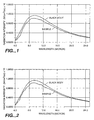
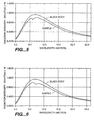
- Figs. 1-6 The radiation intensity of these ashes measured at 35°C at the Far Infrared Application Research Association is shown in Figs. 1-6. Use was made of a Fourier transform infrared spectroscope, and radiation spectra were measured in the wavelength range of 4.0 - 24.0 ⁇ m.
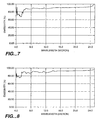
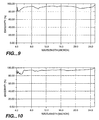
- the black body radiation intensity shown in Figs. 1-6 represents theoretical values, and the ratios of these measured radiation intensity values to the theoretical black body radiation intensity values are defined as the emissivity and shown in Figs. 7-12.
- Fig. 1 and 7 are for ashes of seaweeds
- Figs. 2 and 8 are for ashes of plants
- Figs. 4 and 10 are for ashes of sardines
- Figs. 5 and 11 are for ashes of pork
- Figs. 6 and 12 are for ashes of defatted soy beans.
- This invention relates to resins containing organic ashes, including polymer resins such as thermoplastic resins, thermosetting resins, foaming styrene and artificial rubbers, as well as natural resins such as pine resin and natural rubbers. If too much ash is contained, however, this can affect the strength of the material adversely.
- polymer resins such as thermoplastic resins, thermosetting resins, foaming styrene and artificial rubbers
- natural resins such as pine resin and natural rubbers.
- test samples were prepared by mixing newspaper ashes at weight ratios of 0%, 20%, 40% 60%, 80% 90% and 95% into high-density polyethylene (HDPE), polypropylene (PP) resin, hard vinyl chloride resin, polyethylene terephthalate (PET) resin and acrylonitrile butadiene styrene (ABS) resin by means of a two-shaft extruder for mixing and kneading.
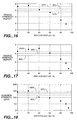
- Test pieces were produced from these sample materials according to JIS (Japanese Industrial Standards) K-7113, and their tensile strengths (in units of kg/mm 2 ) were measured by means of a multi-purpose tension tester. The results of these tests are shown in Figs. 13-17.
- the tensile strength of HDPE, hard vinyl chloride resin and ABS resin is nearly constant if the ash content is about 60% or less but it drops rapidly over 80%, dropping to less than one third of the original value and becoming impractical for use if the ash content exceeds 90%.
- the tensile strength of PP resin drops with the mixing of the ashes, dropping to less than one quarter of the original value if the ash content exceeds 90%.
- PET resin its tensile strength reaches a maximum when the ash content is 20%. When the ash content is 30%, the tensile strength becomes about the same as when the ash content is zero (or in the no-ash condition).
- Figs. 13-17 show that the contents of newspaper ashes, at which the tensile strength of a resin drops to 90% and 80% of its value in the no-ash condition, are respectively 65% and 75% for HDPE, 6% and 13% for PP resin, 53% and 63% for hard vinyl chloride resin, 43% and 54% for PET resin, and 62% and 69% for ABS resin.
- ABS resin as an example of thermoplastic resins, and measuring its radiation intensity
- Resin particles in the form of pellets or resin powder is mixed with separately prepared newspaper ashes (weight ratio of 2%) in a same container and kneaded together.
- an apparatus such as a drum blender may be used.
- an appropriate coloring agent may be added such that the final product will have a desired color.
- An extruder of either a single-shaft or two-shaft type may be used to mix and pulverize at about 220°C at which ABC resins melts. Apparatus of many other kinds may be substituted for this purpose as long as they are capable of uniformly dispersing the ashes throughout the resin material.
- the grains of ABS resin thus prepared were used to obtain a plastic plate of thickness 2mm by using a press machine at temperature of 200°C. Its radiation intensity was measured by means of a high-sensitivity detector over a wavelength interval of 8-24 ⁇ m, and the measured intensity values were integrated over the same interval, and the Planck's law was used to obtain the intensity of far infrared radiation emitted per unit area, or in units of W/m 2 . For a plastic plate produced similarly but without newspaper ashes, the intensity value thus obtained was 290. With newspaper ashes mixed in, it increased to 690, indicating that the far infrared radiation intensity is significantly increased if newspaper ashes are mixed. When the mixing ratio of newspaper ashes was reduced to 0.01%, an increase in the intensity was observable in the wavelength interval of 8-24 ⁇ m. When the ash content was reduced to 0.001%, however, there was only an insignificant increase.
- the mixing ratio of organic ashes is increased, the increase in the effects of far infrared radiation becomes correspondingly significant. If it exceeds 90%, however, the strength of the plastic products drops to such an extent that it may not be possible to keep the intended shape of the product.
- the preferred mixing ratio is 0.01% to 20%.
- ulcers may be formed inside the mouth. It typically takes 5 to 7 days to heal while a correction is made to the denture. If the denture is made of a material containing seaweed ashes by 0.1%, it was discovered that the ulcer can be made to disappear in 2-3 days. Similar effects could be observed by using other kinds of organic ashes.
- Inexpensive sheets and films can be produced by using the same resin material containing newspaper ashes as described above by a method such as the extrusion method and the single-shaft and two-shaft drawing methods. Sheets and films functioning as an emitter of far infrared radiation can also be produced by applying or coating such newspaper ashes on surfaces of an ordinary sheet or film not containing any organic ashes. It does not matter whether such application or coating process is carried out before or after the sheet or film is drawn.
- Such radiation emitting sheets and films may be used as a single sheet or film, but they may also be used in layers for the purpose of providing additional advantages.
- a highly effective product can be obtained if one or more of the plurality of layers contain organic ashes.
- a sample plate of ABS resin with thickness 2mm containing newspaper ashes and a comparison plate of ABS resin with thickness 2mm not containing any ashes were each subjected to a single-shaft drawing process at 200°C to produce thin sheets of thickness 0.5mm and their far infrared radiation intensity values were measured similarly as described above, corresponding to electromagnetic radiation of 8-24 ⁇ m. There was no change in the measured values, indicating that the radiation emitting property is not affected by the drawing process. Similar results were obtained with organic ashes of other kinds.
- This invention also relates to coating materials containing organic ashes by 0.01% - 90% with respect to the base coating material (defined as the material before diluted by a solvent such as a thinner, toluene and water to make what is commonly referred to as a coating material). If the ash content is 0.01%, effects of adding far infrared emission property is already significant.
- One of representative physical characteristics of coating materials affected by the mixing of newspaper ashes is the adhesive strength. If the adhesive strength of a coating material is too low, it begins to peel off easily and ceases to be useful as a coating material.
- newspaper ashes were mixed into coating materials of vinyl chloride resin (with molecular weight of 50000), aminoalkyd resin, unsaturated polyester resin and acryl lacquer by 0%, 20%, 40%, 60%, 80%, 90% and 95%.
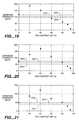
- Adhesive strengths were measured (in units of g/cm 2 ) by the so-called adherometer method using an ivory knife of width 4mm to peel off the coating material from the coated surface and to thereby measure the resistance on the knife. The results of the tests are shown in Figs. 18-21.
- Fig. 18 shows that the adhesion strength attains its maximum value when the ash content is about 20%, slowly decreasing if the ash content is further increased, dropping rapidly if the ash content is greater than 80% and becoming about one tenth of the original value if the ash content much exceeds 90%.
- FIG. 19 shows that the adhesion strength attains a much greater maximum value when the ash content is 20% than in the control condition, dropping gradually thereafter and dropping rapidly and becoming about one fifth of the maximum value if the ash content exceeds 90%.
- Fig. 20 shows that the adhesion strength reaches its much greater maximum value when the ash content is 40% than in the control condition, dropping gradually thereafter and dropping to less than one fifth of the maximum value if the ash content exceeds 90%.
- ashes may be mixed in up to a critical pigment volume concentration which is uniquely determined by a relationship among the pigment, newspaper ashes and the binder.
- the critical pigment volume concentration was 75% if the binder was acryl latex.
- newspaper ashes could be mixed by up to 75% by weight to obtain a smooth coated surface. If a flat finish is desired, however, more newspaper ashes could be added by up to 95% without adversely affecting stability of the ashes. It was similar with vinyl acetate emulsions, except the critical pigment volume concentration in the case of newspaper ashes was 71%.
- Coating materials can be applied almost to any product and on any area.
- newspaper ashes are mixed to an oil-based or water-based coating material, say, by 10%, the property of emitting far infrared radiation can be provided to almost any existing item.
- charcoal is mixed, a coating material thus prepared can be used only for making anything black because charcoal itself is very black.
- Newspaper ashes by contrast, can be mixed into coating materials of any color.
- Organic ashes may be mixed also into a dye by 0.01% to 30%.
- Examples of coating material into which organic ashes can be mixed include oil-based coating materials, water-based coating materials, other solvent-based coating materials and powder materials.
- oil-based coating materials water-based coating materials, other solvent-based coating materials and powder materials.
- Organic ashes can be mixed into such coating materials at any stage between the time of production of the coating material and the time of actual coating.
- organic ashes may be preliminarily mixed with a coloring agent at an appropriate rate.
- the ashes may be preliminarily mixed in a solvent or other material. It goes without saying that ashes may be mixed with more than one of these components.
- ashes are to be mixed at the time of actual coating, they may be added either directly or by using an appropriate amount of a dispersant or the like and stirring to disperse them. If a device such as an air spray is used for the coating, a mechanism may be provided for mixing the base material with ashes and dispersing them.
- organic ashes do not participate in chemical reactions and are thermally stable at temperatures up to 700°C, they can be mixed not only into coating materials for use only at normal temperatures but also coating materials intended to be subjected to a firing process.
- a vinyl chloride resin powder coating material can be produced by preliminarily adding 2% of newspaper ashes to the resin before the melting and kneading process by a melt-blend method and the usual steps of melting, kneading, cooling, pulverizing and classifying, after coloring agents, additives and hardening agents are preliminarily mixed in.
- a 10cm square test iron plate was coated with the material thus obtained with firing.
- a similar coating material was prepared without mixing any ashes in and another test iron plate was similarly coated with this comparison material with firing.
- the far infrared radiation intensity values of these two test iron plates were measured in units of W/m 2 at 35°C corresponding to electromagnetic radiation of wavelengths in the range of 8-24 ⁇ m. It was 255 with the coating material without ashes but it was 676 for the coating material containing newspaper ashes. This again shows that the mixing of newspaper ashes significantly increases the intensity of far infrared radiation.
- a room was painted with a paint containing ashes from plants by 3 weight %. Insomnia of a patient was cured after the patient slept in this room for 10 days. Another patient had a chilly constitution, but it improved after about 14 days. Next, the room was coated with a paint containing ashes from plants by 30 weight %. Under this condition, insomnia was cured in 2 days and a chilly constitution was improved in about 2 days. Similar results were obtained by using paints containing organic ashes of other origins.
- the invention also relates to construction materials containing organic ashes by 0.01% to 30%.
- construction materials include thermal insulators, wall papers, natural and polymer resins such as nylon and vinyl and cloth materials for covering walls and ceilings, cements, blocks, roof tiles, bricks, mortars and plates. If the ash content is less than 0.01%, no intended effects could be obtained. From the point of view of strength, it is preferred that the mixing ratio be less than 30%.
- ashes from plants were mixed with a water-based coating material at a rate of 1 weight %, stirred, dispersed uniformly and spray-coated on commercially available construction materials.
- the content of wood charcoal is reduced such that the resulting color would be about the same as when the coating material containing organic ashes is used, the charcoal content becomes as small as 0.002% and the far infrared radiation intensity values are not significantly larger than when no coating material was used, the differences being within the limit of error of measurement.
- a patient was made to lie on constructional cloth materials (including synthetic fiber materials comprising polymer resins such as nylon, polyesters and vinyls, as well as natural fibers such hemp, cotton and wool) containing newspaper ashes by 3%, and his systolic pressure dropped by 30mmHg from 185mmHg to 155mmHg in 15 minutes. In the meantime, the diastolic pressure dropped from 98mmHg to 83mmHg. In 8 hours, improvements were observed in palpitation, breathlessness, stiff shoulders and pains in the waist.
- constructional cloth materials including synthetic fiber materials comprising polymer resins such as nylon, polyesters and vinyls, as well as natural fibers such hemp, cotton and wool
- the invention also relates to ointments containing organic ashes by 0.01% to 30%. If the content of ashes was less than 0.01%, no intended effects could be obtained. If the content exceeds 30%, the oil component of the ointment becomes separated and the product could not be used as an ointment.
- seaweed ashes were mixed into commercially available ointments including Jubela ointment (trade name of Eisai, Inc.), Oronine H ointment (trade name of Otsuka Pharmaceutical Factory, Inc.) and Mentholatum cream (trade name of Roht Pharmaceutical Co., Ltd.) at rates of 0.01% to 30% and uniformly kneaded by using a mixing apparatus.
- the kneaded ointments are gray in color but their gray color substantially disappears when they are applied in a thin film on the skin and rubbed in. Similar effects could be obtained with organic ashes from other sources.
- a sample ointment was prepared, containing (per 1g of the ointment) 20mg of tocopherol, 5mg of vitamin-A oil (5000 units as vitamin A), 20mg of seaweed ashes and additives including isopropyl myristicate, propylene glycol, polysolvate 60, lanolin alcohol, cetanol, methylparaben, propylparaben, and sodium edetate.
- a 50-year old female patient with system lupus erythematosus (which is an autoimmune disease) and allergic rhinitis was made to rest quietly for 30 minutes inside a room maintained at 25°C.
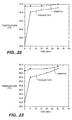
- Fig. 22 shows the change in body temperature of this patient.
- her body temperature was 36.9°C in the pit of the right arm and her fingertip temperature (measured with the thermometer held between the thumb and the index finger) was 34.5°C.
- the armpit body temperature was 36.9°C and the fingertip temperature was 36.5°C After 30 minutes, they were respectively 37.0°C and 36.7°C, increasing by 0.1°C and about 2.2°C.
- the fact that the fingertip temperature on the right-hand side increased although the ointment was applied on the frontal left-hand side of the head implies that the blood circulation improved throughout the entire body.
- the invention also relates to cataplasm poultices containing organic ashes by 0.01% to 20%.
- medicaments were prepared by mixing organic ashes by 0.01% to 20% into commercially available cataplasm poultices such as Salonpas (trade name of Hisamitu Pharmaceutical Factory, Inc.) and Tokuhon (trade name of Tokuhon, Inc.), kneading and applying the mixture to a base of a paper or cloth material. If the ash content is less than 0.01%, no desired effects can be observed. If the content exceeds 20%, on the other hand, the adhesive characteristic of the cataplasm poultice is adversely affected.
- Salonpas trade name of Hisamitu Pharmaceutical Factory, Inc.
- Tokuhon trade name of Tokuhon, Inc.
- a sample cataplasm poultice was prepared, containing (per 1m 3 ) 10.5g of glycol salicylate, 4.2g of L-menthol, 4.2g of acetic acid extract of Vitamin E, 0.21g of glycyrrhizic acid, 0.945g of mustard extract, 0.41g of newspaper ashes, and additives inclusive of dibutyl hydroxytoluene, rosin ester and perfume.
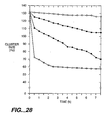
- Fig. 23 The subsequent changes in the patient's body temperature are shown in Fig. 23.
- the patient's body temperature was 36.2°C in the pit of the right arm and the fingertip temperature (measured as above) was 32.5°C.
- the armpit temperature was 36.5°C
- the fingertip temperature was 35.5°C
- the fact that the fingertip temperature on the right-hand side increased although the cataplasm poultice was applied to the wrist of the left hand implies that the blood circulation improved throughout the entire body. This indicates a possibility of improving the patient's congelation and hypothermia.
- a concentration in the range of 0.05% to 5% is preferred.
- brain waves were measured on eight test subjects consisting of a 20-year old female, a 28-year old male, a 38-year old female, a 30-year old male, a 47-year old female, a 58-year old female and a 37-year old female. None of these test subjects had any particular history of diseases.
- the alpha-wave is a kind of brain wave said to be emitted when a person is in a relaxed, peaceful frame of mind.
- the rate of alpha-wave emission was 6.1% when a simple piece of cloth used for cataplasm poultice not containing any medicament was attached to the body, 7.3% when nothing was attached (as a control), 7.5% when use was made of a commercially available ointment, 9.5% when a commercially available cataplasm poultice was attached, 15.0% when use was made of the ointment of Test No. 5 containing seaweed ashes, and over 16.6% when the cataplasm poultice described above containing newspaper ashes was used.
- cataplasm poultices and ointments according to this invention contain natural far infrared radiation emitters (seaweed ashes, in particular), test subjects could relax due to improved blood circulation and recovery from fatigue, and hence emitted more alpha-waves.
- the cataplasm poultices were more effective than the ointments for the emission of alpha-waves. This was probably due to the localized attachment at pressure of 0.13 atmosphere. Similar effects could be observed with organic ashes of other kinds.
- the invention also relates to adhesive tapes with its base material or adhesive material containing organic ashes by 0.01% to 20%. If the ash content is less than 0.01%, no desired effects can be obtained. If the content exceeds 20%, the strength of the base material and the adhesive characteristic of the adhesive material become insufficient to the extent that the product can no longer function adequately as an adhesive tape.
- an adhesive tape was produced by mixing 0.1g of ashes of defatted soy beans to a medicament per 10cm 2 of surface area.
- a 27-year old male having a pain in the first molar on the upper left-hand side of the jaws with acute purulent pulpitis was treated by cutting this tape into squares of sides 0.5cm and pasting them at the position of the pain (the upper left-hand side of the jaws) and one of the so-called vital spots, according to the oriental medical science, located at the junction of the roots of the thumb and the index finger. The pain disappeared substantially entirely in 30 minutes.
- This healing process is probably based on the principle of acupuncture and moxibustion, and the result hereby obtained was similar to what can be accomplished by applying gold particles at the location of pain and silver particles at this vital spot, (the gold and silver particles being products of Sakamura Lab & Co., sold under the trade name of Magrain, Permission No. 48B-114 for treating stiffness in the neck, shoulder and waist, as well as pains in the neck and shoulder derived from the stiffness.) The effect is probably due to the electrical potential difference between two different kinds of metal which accelerates the blood circulation in a body.
- an adhesive tape according to this invention was attached to the position of pain at the waist of a patient. The pain disappeared in three days. Similar effects were observed with organic ashes of different origins.
- This invention also relates broadly to all kinds of a product having attached to its surface a material such as metallic and coating materials containing organic ashes of plants by 0.01% to 50% either by firing a metallic (magnetic or otherwise) or resin material or by means of an adhesive.
- the invention also relates to such products using an adhesive with such an ash content. If the ash content is less than 0.01% in all these examples, no desirable effects are observed. From the point of view of strength, the preferred ash content is 30%.
- a ring was produced by firing to attach a coating material containing plant ashes by 10% onto the surface of a metal alloy containing zinc by 2%, gold by 12%, silver by 13%, palladium by 70% and copper 3%.
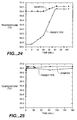
- the subsequent changes in the body temperatures of the patient are shown in Fig. 24.
- the patient's body temperature was initially 36.0°C in the right armpit, and the fingertip temperature (measured as described above) was 32.3°C.
- the armpit temperature was 36.0°C and the fingertip temperature was 32.3°C, showing no change.
- the fingertip temperature was 32.3°C, showing no change.
- the patient kept the ring on, and the insomnia improved in two days and was completely gone in ten days. Similar results were obtained with a ring having a hole filled with a resin material containing plant ashes by 10%. Such results were also obtained with organic ashes of other kinds.
- the patient's body temperature was initially 36.5°C in the right armpit, and the fingertip temperature (measured as described above) was 35.5°C. When the temperature measurements were repeated 7 minutes later, the armpit temperature was 36.5°C and the fingertip temperature was 36.4°C. Blood pressure of the patient was measured throughout the test. Initially, the patient's systolic pressure was 148mmHg, diastolic pressure was 90mmHg, and the pulse rate was 66 times/minute. Seven minutes later, the systolic pressure was 133mmHg, diastolic pressure was 80mmHg, and the pulse rate was 66 times/minutes.
- This invention relates also to medical products including a paper material which contains organic ashes by 0.01% to 30% or a material such as resin film containing organic ashes by 0.01% to 80%. If the ash content is less than 0.01%, no desirable effects are obtained. From the point of view of the strength of the product, the ash content is preferably 30% or less.
- Cerebral hemorrhage takes place where the systolic pressure exceeds the inner pressure of the brain. In order words, the higher the blood pressure, the greater the hemorrhage and the more severe the damage, increasing the possibility of resulting in a permanent damage or even death. If a paper sheet mixed with organic ashes is used to cover the pillow for an emergency patient, if a far infrared radiating sheet is used as the surface material of a pillow, or if organic ashes are mixed with the stuffing of a pillow, its user can obtain the benefit of far infrared radiation through such a pillow.
- a pillow Since a pillow is used frequently in medical emergency situations for keeping the head of the patient at an elevated position, and since the pillow touches the patient's head and neck directly, far infrared radiation through a pillow can be very effective. Such pillows are not only effective in an emergency medical care, but also usable beneficially in an ordinary medical care as well as in everyday life situations. It may be useful to equip ambulance cars with arm rings and/or leg rings made of a metal or resin material mixed with organic ashes so that they can be put on a patient while the patient is being transported.
- calcium antagonists with vasodilatory property will be considered.
- Examples of commercially available calcium antagonist with vasodilatory property include Hypoca (trade name: Yamanouchi Pharmaceutical Co., Ltd.), Coniel (trade name: Kyowa Hakko Kogyo Co., Ltd.), Nivadil (trade name: Fujisawa Pharmaceutical Co., Ltd.) and Rocornal (trade name: Mochida Pharmaceutical Co., Ltd.) for hypertension, angina pectoris, renoparenchymal hypertension, after-effects of cerebral infarction and/or after-effects of ventricular hemorrhage. Most of these are orally administered and their concentration in blood reaches a maximum value in 1 - 2 hours after its rise.
- sheets according to this invention containing pork ashes and having the property of emitting far infrared radiation, blood pressure can be lowered in a short time, and the effectiveness was nearly 100%. This makes them extremely useful in emergency situations.
- the prior art Ca antagonists mentioned above are known to have side effects such as an increase in glutamic oxaloacetic transaminase (GOT) and glutamic pyruvic transaminase (GPT) in the liver and an increase in uric acid, blood urea nitrogen (BUN) and creatinine in the kidney
- GAT glutamic oxaloacetic transaminase
- GPT glutamic pyruvic transaminase
- BUN blood urea nitrogen
- creatinine in the kidney
- graying hair gradually regains its original black color in about 8 months if a hair lotion containing seaweed ashes by 3% is used. If use is made of a lotion containing seaweed ashes by 20%, it was discovered that graying hair begins to turn black in about 1.5 months. This is probably because far infrared radiation, like a massage, promotes blood circulation.
- the body temperature began to rise until the temperature in the right armpit reached 36.5°C and the fingertip temperature reached 36.0°C. Four minutes after the start, they were respectively 36.7°C and 36.5°C. They remained stabilized thereafter at 5 minutes, 10 minutes and 30 minutes.
- the armpit temperature dropped to 36.6°C 35 minutes after the start.
- the armpit temperature reached 36.7°C and the fingertip temperature reached 36.5°C 95 minutes after the start, remaining stabilized thereafter.
- the patient said that both her hands and feet felt warmer than when only the therapeutic tape with the magnetic ball was used.
- the invention also relates to paper products containing organic ashes by 0.01% to 30%. If the ash content is less than 0.01%, no desirable effects are obtained. Ash contents over 30% are not preferred because strength of the paper product is thereby adversely affected.
- paper sheets capable of emitting far infrared radiation were prepared by mixing seaweed ashes by 5% into the pulp for the production of the paper or into the additive to be coated thereon or absorbed thereby. Products made from such paper sheets are useful not only in hospitals but also at homes for their ability to emit far infrared radiation. If cups and plates are produced with such paper sheets, food can be kept warm for a longer period of time. Face masks made with such paper sheets are advantageous because air is warmed before it is breathed in. If such paper sheets are used cosmetically, they serve to gradually remove stains and freckles from the skin. Cardboard boxes made with paper sheets according to this invention can keep vegetables, plants, flowers and fruits fresh as they are shipped. Still better results are obtained if an aluminum sheet is attached inside. Similar effects can be obtained by mixing organic ashes of other kinds.
- caps were made with paper and cloth materials having ashes of plants either mixed therewith or attached thereon by 1%. Graying hair of a person wearing such a cap gradually turns black in ten months. If the ash content is increased to 25%, the color change takes place in about three months. This is probably due to improved blood circulation. Similar effects were observed with organic ashes from different sources.
- the invention further relates to cloth materials having organic ashes mixed with the fibers by 0.01% to 50%. Desired effects cannot be obtained if the ash content is less than 0.01%. If too much ashes are added to the resin material from which fibers are produced, however, the strength of the produced fibers is adversely affected.
- One of representative physical characteristics of fibers affected by the addition of organic ashes according to this invention is the elongation, defined as the fractional change in length when the fiber is subjected to a tensile force until it breaks.
- Effects similar to those obtained in Test No. 11, could be obtained by using cloth materials produced with fibers (inclusive of chemical fibers) containing seaweed ashes by 5%. Similar effects were obtained by using cloth materials coated with a coating material containing seaweed ashes, those processed with a resin material containing seaweed ashes, or those to which seaweed ashes mixed in a glue have been applied.
- This invention also relates to cosmetic articles such as packs containing organic ashes by 0.01% to 40%. Desired effects cannot be obtained if the ash content is less than 0.01%. In order to keep the pack elastic, ash contents up to 40% are preferred.
- cosmetic packs were produced by mixing organic ashes to the pack material or to the additive to the material by 2%. By applying such packs to the skin, a significant amount of far infrared radiation could be obtained at body temperatures with effects such as acceleration of metabolism.
- This invention also relates to enamel materials containing organic ashes by 0.01% to 50%. If the ash content is less than 0.01%, no desirable effect can be obtained. If the ash content is greater than 50%, problems arise in the material strength.
- the bath tub thus produced has an energy-conserving quality because it holds heat well and the toilet seat thus produced is more comfortable because of its heat-retaining property.
- the invention also relates to ceramics made from a material containing organic ashes.
- One of the physical characteristics of ceramic materials which are significantly affected by the temperature of the final heating process is the tensile strength. Compressive and bending strengths are said to be not significantly affected.
- test samples were prepared by heating potassium feldspar to 1500°C and cooling it suddenly in water to pulverize it. Sardine ashes were then mixed in at weight ratios of 0%, 20%, 40%, 80%, 90% and 95% and sample pieces of 1cm x 1cm x 10cm were prepared by firing at 950°C. As shown in Fig. 27, the tensile strength was 345kg/cm 2 and at its maximum when the sardine ash content was 60%, the same at 90% as when no ashes were added (content of 0%) and lower at 95% than when no ashes were added.
- flower vases were produced by mixing sardine ashes into a ceramic material by 0.005%, 0.01%, 50% and 90% and tap water with cluster size of 132Hz was poured therein.
- the subsequent changes in the cluster size of the water were studied by nuclear magnetic resonance spectroscopy. The results are shown in Fig. 28. It can be seen that the cluster size of water can be reduced sufficiently if the ash content is 0.1% to 90%. The effects were negligible if the ash content was 0.005%. Similar results were also obtained by using glass jars containing sardine ashes or organic ashes of other kinds.
Landscapes
- Health & Medical Sciences (AREA)
- Life Sciences & Earth Sciences (AREA)
- Veterinary Medicine (AREA)
- Public Health (AREA)
- General Health & Medical Sciences (AREA)
- Animal Behavior & Ethology (AREA)
- Engineering & Computer Science (AREA)
- Epidemiology (AREA)
- Chemical & Material Sciences (AREA)
- Birds (AREA)
- Hematology (AREA)
- Nuclear Medicine, Radiotherapy & Molecular Imaging (AREA)
- Pharmacology & Pharmacy (AREA)
- Medicinal Chemistry (AREA)
- Biomedical Technology (AREA)
- Materials Engineering (AREA)
- Obesity (AREA)
- Chemical Kinetics & Catalysis (AREA)
- Diabetes (AREA)
- Bioinformatics & Cheminformatics (AREA)
- General Chemical & Material Sciences (AREA)
- Pathology (AREA)
- Radiology & Medical Imaging (AREA)
- Inorganic Chemistry (AREA)
- Organic Chemistry (AREA)
- Dermatology (AREA)
- Radiation-Therapy Devices (AREA)
- Paints Or Removers (AREA)
- Medicines Containing Material From Animals Or Micro-Organisms (AREA)
- Glass Compositions (AREA)
- Cosmetics (AREA)
- Medicines Containing Plant Substances (AREA)
- Artificial Filaments (AREA)
- Woven Fabrics (AREA)
- Paper (AREA)
- Medicinal Preparation (AREA)
- Pharmaceuticals Containing Other Organic And Inorganic Compounds (AREA)
- Compositions Of Macromolecular Compounds (AREA)
Claims (40)
- Kohlenstofffreies strahlungsemittierendes Produkt, umfassend ein Basismaterial und wenigstens 0,01 Gew.-% organischer Aschen, wobei die organischen Aschen ein Emissionsvermögen von größer 60% an ferner Infrarotstrahlung mit Wellenlängen von 8 bis 12 µm bei Temperaturen des menschlichen Körpers besitzen.
- Produkt nach Anspruch 1 für eine Salbe, enthaltend die organischen Aschen mit 0,01 bis 30 Gew.-%, wobei das Basismaterial ein Medikament ist.
- Produkt nach Anspruch 1 für einen Brei-Umschlag, enthaltend die organischen Aschen mit 0,01 bis 20 Gew.-%, wobei das Basismaterial ein Medikament ist.
- Produkt nach Anspruch 1 für ein Klebeband für medizinische Verwendung, enthaltend die organischen Aschen mit 0,01 bis 20 Gew.-%, wobei das Basismaterial eine Basis und ein an diese Basis befestigtes Klebematerial einschließt.
- Produkt nach Anspruch 1, worin das Basismaterial ein Harz ist, und der Gehalt an organischen Aschen im Basismaterial derart ist, dass die Zugfestigkeit des Basismaterials mit den organischen Aschen größer ist als 80% der Zugfestigkeit des Basismaterials, welches keine organischen Aschen enthält.
- Produkt nach Anspruch 1, worin das Basismaterial aus synthetischen Fasern besteht, und der Gehalt der organischen Aschen im Basismaterial derart ist, dass die Dehnung der synthetischen Fasern mit den organischen Aschen größer ist als 80% der Dehnung des Basismaterials, welches keine der organischen Aschen enthält.
- Produkt nach Anspruch 1, worin das Basismaterial ein Beschichtungsmaterial ist, und der Gehalt der organischen Aschen im Basismaterial derart ist, dass die Adhäsionsfestigkeit des Basismaterials mit den organische Aschen größer ist als 80% der Adhäsionsfestigkeit des Basismaterials, welches keine der organischen Aschen enthält.
- Produkt nach Anspruch 1, enthaltend die organischen Aschen mit 0,01 bis 30 Gew.-%, wobei das Basismaterial ein Papiermaterial umfasst.
- Produkt nach Anspruch 1 für ein kosmetisches Produkt, enthaltend die organischen Aschen mit 0,01 bis 40 Gew.-%, wobei das Basismaterial ein Medikament umfasst.
- Produkt nach Anspruch 1 für ein durch eine Person zu tragendes Accessoire, umfassend weiterhin einen Hauptkörper, wobei das Basismaterial ein Harz ist, enthaltend die organischen Aschen mit wenigstens 0,01 Gew.-%, und welches innerhalb des Hauptkörpers eingebettet ist.
- Produkt nach Anspruch 1 für ein durch eine Person zu tragendes Accessiore, umfassend weiterhin einen Hauptkörper, wobei das Basismaterial ein Beschichtungsmaterial ist, enthaltend die organischen Aschen mit wenigstens 0,01 Gew.-%, und welches an den Hauptkörper durch Hartbrennen befestigt ist.
- Produkt nach Anspruch 1, welches eine organische Substanz ist, umfassend Glas, wobei das Glas die organischen Aschen mit 0,01 bis 70 Gew.-% enthält.
- Produkt nach Anspruch 1, welches eine anorganische Substanz ist, umfassend eine Keramik, wobei die Keramik die organischen Aschen mit 0,01 bis 90 Gew.-% enthält.
- Produkt nach Anspruch 1, worin die organischen Aschen über das Basismaterial beschichtet sind.
- Produkt nach Anspruch 1, worin die organischen Aschen mit dem Basismaterial gemischt sind, wobei das Produkt für wenigstens ein Mitglied, ausgewählt aus der Gruppe, bestehend aus Fahrzeugaccessoires, Geschirrwaren, Gartenwerkzeugen, Bettzeug und Möbel, einsetzbar ist.
- Produkt nach Anspruch 15, enthaltend die organischen Aschen mit 0,01 bis 30 Gew.-%, wobei das Produkt Papier umfasst.
- Produkt nach Anspruch 15 für ein Beschichtungsmaterial, wobei das Basismaterial die organischen Aschen mit 0,01 bis 90 Gew.-% enthält.
- Produkt nach Anspruch 15, enthaltend die organischen Aschen mit 0,01 bis 50 Gew.-%, wobei das Basismaterial Fasern umfasst, und das Produkt für Tuch einsetzbar ist.
- Produkt nach Anspruch 1 für Kleidungsmaterial, wobei das Basismaterial synthetische Fasern umfasst.
- Produkt nach Anspruch 1 für ein Beschichtungsmaterial, wobei das Basismaterial Harze umfasst.
- Verfahren zur Herstellung einer Zusammensetzung, welche fähig ist, Strahlung im fernen Infrarot anzuwenden bei Temperaturen, die nicht höher sind als die Temperatur des menschlichen Körpers, wobei das Verfahren die Schritte umfasst:Erhalten kohlenstofffreier organischer Aschen mit einem Emissionsvermögen von größer 60% Strahlung im fernen Infrarot mit Wellenlängen von 8 bis 12 µm bei Temperaturen des menschlichen Körpers, durch vollständiges Verbrennen organischer Materialien, ausgewählt aus der Gruppe, bestehend aus Tieren, Vögeln, Fischen, Schalentieren, Organen und Exkrementen davon, Seetang, Pflanzen, Hölzern und Körnern, und anschließendes Entfernen von Kohlenstoff;Zugeben der organischen Aschen zu einem Basismaterial zur Herstellung eines im fernen Infrarot Strahlung emittierenden Produkts.
- Verfahren nach Anspruch 21, worin das im fernen Infrarot Strahlung emittierende Produkt für eine Salbe einsetzbar ist und die organischen Aschen mit 0,01 bis 30 Gew.-% enthält, wobei das Basismaterial ein Medikament ist.
- Verfahren nach Anspruch 21, worin das im fernen Infrarot Strahlung emittierende Produkt für einen Brei-Umschlag verwendbar ist und die organischen Aschen mit 0,01 bis 20 Gew.-% enthält, wobei das Basismaterial ein Medikament ist.
- Verfahren nach Anspruch 21, worin das im fernen Infrarot Strahlung emittierende Produkt als Klebeband für medizinische Verwendung einsetzbar ist und die organischen Aschen mit 0,01 bis 20 Gew.-% enthält, wobei das Basismaterial eine Basis und ein an diese Basis befestigtes Klebematerial einschließt.
- Verfahren nach Anspruch 21, worin das Basismaterial ein Harz ist, und der Gehalt der organischen Aschen in dem Basismaterial derart ist, dass die Zugfestigkeit des Basismaterials mit organischen Aschen größer als 80% der Zugfestigkeit des Basismaterials ist, welches keine der organischen Aschen enthält.
- Verfahren nach Anspruch 21, worin das Basismaterial aus synthetischen Fasern besteht, und der Gehalt der organischen Aschen in dem Basismaterial derart ist, dass die Dehnung der synthetischen Fasern mit organischen Aschen größer als 80% der Dehnung des Basismaterials ist, welches keine der organischen Aschen enthält.
- Verfahren nach Anspruch 21, worin das Basismaterial ein Beschichtungsmaterial ist, und der Gehalt der organischen Aschen in dem Basismaterial derart ist, dass die Adhäsionsfestigkeit des Basismaterials mit den organischen Aschen größer als 80% der Adhäsionsfestigkeit des Basismaterials ist, welches keine der organischen Aschen enthält.
- Verfahren nach Anspruch 21, worin das im fernen Infrarot Strahlung emittierende Produkt die organischen Aschen mit 0,01 bis 30 Gew.-% enthält, wobei das Basismaterial Papiermaterial umfasst.
- Verfahren nach Anspruch 21, worin das im fernen Infrarot Strahlung emittierende Produkt für ein kosmetisches Produkt einsetzbar ist und die organischen Aschen mit 0,01 bis 40 Gew.-% enthält, wobei das Basismaterial ein Medikament umfasst.
- Verfahren nach Anspruch 21, worin das im fernen Infrarot Strahlung emittierende Produkt weiterhin einen Hauptkörper umfasst und als von einer Person zu tragendes Zusatzteil einsetzbar ist, wobei das Basismaterial ein Harz ist, enthaltend die organischen Aschen mit wenigstens 0,01 Gew.-%, wobei das Verfahren weiterhin den Schritt des Einbettens des die organischen Aschen enthaltenden Basismaterials in den Hauptkörper umfasst.
- Verfahren nach Anspruch 21, worin das im fernen Infrarot Strahlung emittierende Produkt weiterhin einen Hauptkörper umfasst und als von einer Person zu tragendes Zusatzteil einsetzbar ist, wobei das Basismaterial ein Beschichtungsmaterial ist, welches die organischen Aschen mit wenigstens 0,01 Gew.-% enthält, wobei das Verfahren weiterhin den Schritt des Befestigens des die organischen Aschen enthaltenden Basismaterials auf dem Hauptkörper mittels Hartbrennen umfasst.
- Verfahren nach Anspruch 21, worin das im fernen Infrarot Strahlung emittierende Produkt eine anorganische Substanz ist, umfassend Glas, wobei das Glas die organischen Aschen mit 0,01 bis 70 Gew.-% enthält.
- Verfahren nach Anspruch 21, worin das im fernen Infrarot Strahlung emittierende Produkt eine anorganische Substanz ist, umfassend eine Keramik, wobei die Keramik die organischen Aschen mit 0,01 bis 90 Gew.-% enthält.
- Verfahren nach Anspruch 21, worin der Schritt des Zugebens der organischen Aschen das Beschichten der organischen Aschen über das Basismaterial umfasst.
- Verfahren nach Anspruch 21, worin der Schritt des Zugebens der organischen Aschen das Mischen der organischen Aschen in dem Basismaterial umfasst, wobei das Produkt für wenigstens ein Mitglied, ausgewählt aus der Gruppe, bestehend aus Fahrzeugzusatzteilen, Geschirrware, Gartenwerkzeuge, Bettzeug und Möbel, einsetzbar ist.
- Verfahren nach Anspruch 35, worin das im fernen Infrarot Strahlung emittierende Produkt Papier umfasst, welches die organischen Aschen mit 0,01 bis 30 Gew.-% enthält.
- Verfahren nach Anspruch 35, worin das im fernen Infrarot Strahlung emittierende Produkt die organischen Aschen mit 0,01 bis 90 Gew.-% enthält und als Beschichtungsmaterial einsetzbar ist.
- Verfahren nach Anspruch 35, worin das im fernen Infrarot Strahlung emittierende Produkt die organischen Aschen mit 0,01 bis 50 Gew.-% enthält und als Kleidungsmaterial einsetzbar ist, wobei das Basismaterial chemische Fasern umfasst.
- Verfahren nach Anspruch 21, worin das im fernen Infrarot Strahlung emittierende Produkt für Tuch einsetzbar ist, wobei das Basismaterial synthetische Fasern umfasst.
- Verfahren nach Anspruch 21, worin das im fernen Infrarot Strahlung emittierende Produkt für Beschichtungsmaterial einsetzbar ist, wobei das Basismaterial Harze umfasst.
Applications Claiming Priority (6)
| Application Number | Priority Date | Filing Date | Title |
|---|---|---|---|
| JP211802/94 | 1994-08-11 | ||
| JP21180294 | 1994-08-11 | ||
| JP21180294 | 1994-08-11 | ||
| JP7216746A JP2859832B2 (ja) | 1994-08-11 | 1995-08-01 | 遠赤外線を放射する灰および遠赤外線を放射する組成物 |
| JP21674695 | 1995-08-01 | ||
| JP216746/95 | 1995-08-01 |
Publications (3)
| Publication Number | Publication Date |
|---|---|
| EP0701839A2 EP0701839A2 (de) | 1996-03-20 |
| EP0701839A3 EP0701839A3 (de) | 1997-12-17 |
| EP0701839B1 true EP0701839B1 (de) | 2001-05-23 |
Family
ID=26518848
Family Applications (1)
| Application Number | Title | Priority Date | Filing Date |
|---|---|---|---|
| EP95112617A Expired - Lifetime EP0701839B1 (de) | 1994-08-11 | 1995-08-10 | Therapeutische Produkte mit organischen Aschen, welche Ferninfrarotstrahlen emitieren |
Country Status (4)
| Country | Link |
|---|---|
| EP (1) | EP0701839B1 (de) |
| JP (1) | JP2859832B2 (de) |
| CN (2) | CN1133405C (de) |
| DE (1) | DE69520994T2 (de) |
Families Citing this family (11)
| Publication number | Priority date | Publication date | Assignee | Title |
|---|---|---|---|---|
| ITVA990026A1 (it) * | 1999-09-28 | 2001-03-28 | Clemente Nicolucci | Produzione di carte e cartoni di qualita' contenenti prodotti naturali inorganici di scarto. |
| KR20030012703A (ko) * | 2001-08-03 | 2003-02-12 | 임성문 | 전열 매트용 세라믹 |
| WO2008007935A1 (es) * | 2006-07-12 | 2008-01-17 | Sonia Cecilia Ochoa Dieguez | Sustancia para tratar enfermedades infecciosas en animales, incluyendo al humano y su método de obtención |
| TWI352613B (en) * | 2007-06-13 | 2011-11-21 | Nat Applied Res Laboratories | Method for increasing the amount of effective chem |
| US20080311059A1 (en) * | 2007-06-15 | 2008-12-18 | National Applied Research Laboratories | Composition for skin care and method for the same |
| CN101756761B (zh) * | 2009-12-31 | 2011-06-01 | 武汉天地通生物工程有限公司 | 一种带有耦合剂的发热贴剂及其制备方法 |
| CN102286802A (zh) * | 2010-06-17 | 2011-12-21 | 罗莱家纺股份有限公司 | 一种纳米锗保健型牛奶蛋白复合纤维 |
| JP2012122648A (ja) * | 2010-12-07 | 2012-06-28 | Ishinoyu Co Ltd | 室内環境調整システム |
| CN102560720A (zh) * | 2010-12-21 | 2012-07-11 | 上海德福伦化纤有限公司 | 一种无机纳米海藻炭聚酯纤维的制造方法 |
| CN104667430B (zh) * | 2013-11-29 | 2018-05-18 | 北京金信泰和科技有限公司 | 远红外等频谱理疗仪 |
| JP2016065036A (ja) * | 2014-09-17 | 2016-04-28 | 株式会社理研テクノシステム | ウィルス防除用組成物およびウィルスの防除方法 |
Family Cites Families (3)
| Publication number | Priority date | Publication date | Assignee | Title |
|---|---|---|---|---|
| JPH0665113B2 (ja) * | 1987-06-22 | 1994-08-22 | 憲親 武部 | 低温遠赤外線放射体 |
| JPH03104983A (ja) * | 1989-09-14 | 1991-05-01 | Tadao Isshiki | 充填材用動物繊維 |
| JPH05309138A (ja) * | 1990-11-30 | 1993-11-22 | Tachibana Orimono Kk | 保健および治療効果を有する製品およびその製造方法 |
-
1995
- 1995-08-01 JP JP7216746A patent/JP2859832B2/ja not_active Expired - Fee Related
- 1995-08-10 DE DE69520994T patent/DE69520994T2/de not_active Expired - Fee Related
- 1995-08-10 EP EP95112617A patent/EP0701839B1/de not_active Expired - Lifetime
-
1996
- 1996-01-15 CN CNB961040971A patent/CN1133405C/zh not_active Expired - Fee Related
- 1996-01-15 CN CNB2003101144007A patent/CN1304073C/zh not_active Expired - Fee Related
Also Published As
| Publication number | Publication date |
|---|---|
| CN1304073C (zh) | 2007-03-14 |
| JP2859832B2 (ja) | 1999-02-24 |
| EP0701839A3 (de) | 1997-12-17 |
| CN1133405C (zh) | 2004-01-07 |
| DE69520994T2 (de) | 2001-12-06 |
| JPH08104609A (ja) | 1996-04-23 |
| DE69520994D1 (de) | 2001-06-28 |
| EP0701839A2 (de) | 1996-03-20 |
| CN1500532A (zh) | 2004-06-02 |
| CN1141767A (zh) | 1997-02-05 |
Similar Documents
| Publication | Publication Date | Title |
|---|---|---|
| EP0701839B1 (de) | Therapeutische Produkte mit organischen Aschen, welche Ferninfrarotstrahlen emitieren | |
| KR100518698B1 (ko) | 이산화탄소 함유 점성 화장용 조성물 | |
| ATE129148T1 (de) | Zusammensetzungen und verfahren zur herstellung von im mund zersetzlichen heilmitteln. | |
| JP5199026B2 (ja) | 血糖を制御するための医薬組成物及びその方法 | |
| WO1997009963A1 (en) | Skin peel maintenance composition and method | |
| US20240299769A1 (en) | Bioceramic compositions for cancer recovery | |
| CN106983113A (zh) | 无蔗糖蜂胶蜜丸的制备方法 | |
| CN103040916A (zh) | 一种治疗多种烧烫伤的肌肤再生中药外用油剂 | |
| KR20050110849A (ko) | 원적외선 황토 도자기 및 이의 제조방법 | |
| CN1623598A (zh) | 一种促进入睡、改善睡眠质量的挥发精油及其外用产品 | |
| CN107158575A (zh) | 一种红外鼻敏贴及其制备方法 | |
| CN100457081C (zh) | 一种祛斑增白中药面膜 | |
| JPH0317004A (ja) | 皮膚化粧料 | |
| JPH08215294A (ja) | 吸着・脱臭剤及び吸着マット | |
| CN1251749A (zh) | 远红外线磁性保健睡袋 | |
| JPH03112849A (ja) | 遠赤外線放射性粉末、及びその焼結物の製造方法とその使用方法。 | |
| CN1057389A (zh) | 消皱护肤霜的配方及制造工艺 | |
| CN1027792C (zh) | 塑性健身泥的生产方法 | |
| JPH11285541A (ja) | 健康維持用具及びその製造方法 | |
| KR20000066057A (ko) | 은조롱을 이용한 피부미용 팩분말 및 그 제조방법 | |
| KR0182842B1 (ko) | 다용도 광석분 | |
| JPH11279432A (ja) | 合成フッ素金雲母粉末を用いた着色剤、およびそれを配合した化粧料 | |
| KR100567777B1 (ko) | 파라핀 화장료의 조성물 및 그의 제조방법 | |
| CN2241508Y (zh) | 可调式矿泉药浴巾 | |
| KR20050099337A (ko) | 양구사토를 주요 구성성분으로 하는 조성물 및 건축구조물또는 일상용품의 제조방법 |
Legal Events
| Date | Code | Title | Description |
|---|---|---|---|
| PUAI | Public reference made under article 153(3) epc to a published international application that has entered the european phase |
Free format text: ORIGINAL CODE: 0009012 |
|
| AK | Designated contracting states |
Kind code of ref document: A2 Designated state(s): DE FR GB |
|
| PUAL | Search report despatched |
Free format text: ORIGINAL CODE: 0009013 |
|
| AK | Designated contracting states |
Kind code of ref document: A3 Designated state(s): DE FR GB |
|
| 17P | Request for examination filed |
Effective date: 19980210 |
|
| 17Q | First examination report despatched |
Effective date: 19990916 |
|
| GRAG | Despatch of communication of intention to grant |
Free format text: ORIGINAL CODE: EPIDOS AGRA |
|
| GRAG | Despatch of communication of intention to grant |
Free format text: ORIGINAL CODE: EPIDOS AGRA |
|
| GRAH | Despatch of communication of intention to grant a patent |
Free format text: ORIGINAL CODE: EPIDOS IGRA |
|
| GRAH | Despatch of communication of intention to grant a patent |
Free format text: ORIGINAL CODE: EPIDOS IGRA |
|
| GRAA | (expected) grant |
Free format text: ORIGINAL CODE: 0009210 |
|
| AK | Designated contracting states |
Kind code of ref document: B1 Designated state(s): DE FR GB |
|
| REF | Corresponds to: |
Ref document number: 69520994 Country of ref document: DE Date of ref document: 20010628 |
|
| ET | Fr: translation filed | ||
| REG | Reference to a national code |
Ref country code: GB Ref legal event code: IF02 |
|
| PLBE | No opposition filed within time limit |
Free format text: ORIGINAL CODE: 0009261 |
|
| STAA | Information on the status of an ep patent application or granted ep patent |
Free format text: STATUS: NO OPPOSITION FILED WITHIN TIME LIMIT |
|
| 26N | No opposition filed | ||
| PGFP | Annual fee paid to national office [announced via postgrant information from national office to epo] |
Ref country code: FR Payment date: 20080806 Year of fee payment: 14 |
|
| PGFP | Annual fee paid to national office [announced via postgrant information from national office to epo] |
Ref country code: GB Payment date: 20080909 Year of fee payment: 14 |
|
| PGFP | Annual fee paid to national office [announced via postgrant information from national office to epo] |
Ref country code: DE Payment date: 20081030 Year of fee payment: 14 |
|
| GBPC | Gb: european patent ceased through non-payment of renewal fee |
Effective date: 20090810 |
|
| REG | Reference to a national code |
Ref country code: FR Ref legal event code: ST Effective date: 20100430 |
|
| PG25 | Lapsed in a contracting state [announced via postgrant information from national office to epo] |
Ref country code: FR Free format text: LAPSE BECAUSE OF NON-PAYMENT OF DUE FEES Effective date: 20090831 Ref country code: DE Free format text: LAPSE BECAUSE OF NON-PAYMENT OF DUE FEES Effective date: 20100302 |
|
| PG25 | Lapsed in a contracting state [announced via postgrant information from national office to epo] |
Ref country code: GB Free format text: LAPSE BECAUSE OF NON-PAYMENT OF DUE FEES Effective date: 20090810 |