EP0704466A2 - Particules fines de polymère à haute résistance à la chaleur - Google Patents
Particules fines de polymère à haute résistance à la chaleur Download PDFInfo
- Publication number
- EP0704466A2 EP0704466A2 EP95114717A EP95114717A EP0704466A2 EP 0704466 A2 EP0704466 A2 EP 0704466A2 EP 95114717 A EP95114717 A EP 95114717A EP 95114717 A EP95114717 A EP 95114717A EP 0704466 A2 EP0704466 A2 EP 0704466A2
- Authority
- EP
- European Patent Office
- Prior art keywords
- epoxy ester
- particle size
- epoxy
- fine particles
- heat resistant
- Prior art date
- Legal status (The legal status is an assumption and is not a legal conclusion. Google has not performed a legal analysis and makes no representation as to the accuracy of the status listed.)
- Withdrawn
Links
- 150000002148 esters Chemical class 0.000 title claims abstract description 82
- 239000004593 Epoxy Substances 0.000 title claims abstract description 75
- 229920000642 polymer Polymers 0.000 title claims abstract description 63
- 239000010419 fine particle Substances 0.000 title claims abstract description 21
- 239000002245 particle Substances 0.000 claims abstract description 105
- 150000002118 epoxides Chemical class 0.000 claims abstract description 51
- -1 monocyclic hydrocarbon Chemical class 0.000 claims abstract description 29
- 239000000839 emulsion Substances 0.000 claims abstract description 23
- 239000000178 monomer Substances 0.000 claims abstract description 18
- 239000002253 acid Substances 0.000 claims abstract description 16
- 125000003055 glycidyl group Chemical group C(C1CO1)* 0.000 claims abstract description 12
- 229930195733 hydrocarbon Natural products 0.000 claims abstract description 9
- 239000004215 Carbon black (E152) Substances 0.000 claims abstract description 7
- 230000001476 alcoholic effect Effects 0.000 claims abstract description 6
- 125000003700 epoxy group Chemical group 0.000 claims abstract description 6
- 238000006116 polymerization reaction Methods 0.000 claims description 30
- 238000007720 emulsion polymerization reaction Methods 0.000 claims description 13
- CERQOIWHTDAKMF-UHFFFAOYSA-N Methacrylic acid Chemical compound CC(=C)C(O)=O CERQOIWHTDAKMF-UHFFFAOYSA-N 0.000 claims description 10
- MGNZXYYWBUKAII-UHFFFAOYSA-N cyclohexa-1,3-diene Chemical group C1CC=CC=C1 MGNZXYYWBUKAII-UHFFFAOYSA-N 0.000 claims description 8
- XLYOFNOQVPJJNP-UHFFFAOYSA-N water Substances O XLYOFNOQVPJJNP-UHFFFAOYSA-N 0.000 claims description 8
- 125000000113 cyclohexyl group Chemical group [H]C1([H])C([H])([H])C([H])([H])C([H])(*)C([H])([H])C1([H])[H] 0.000 claims description 7
- 125000001997 phenyl group Chemical group [H]C1=C([H])C([H])=C(*)C([H])=C1[H] 0.000 claims description 6
- 125000000596 cyclohexenyl group Chemical group C1(=CCCCC1)* 0.000 claims description 4
- 125000000217 alkyl group Chemical group 0.000 claims description 3
- SMZOUWXMTYCWNB-UHFFFAOYSA-N 2-(2-methoxy-5-methylphenyl)ethanamine Chemical compound COC1=CC=C(C)C=C1CCN SMZOUWXMTYCWNB-UHFFFAOYSA-N 0.000 claims description 2
- NIXOWILDQLNWCW-UHFFFAOYSA-N 2-Propenoic acid Natural products OC(=O)C=C NIXOWILDQLNWCW-UHFFFAOYSA-N 0.000 claims description 2
- 239000002904 solvent Substances 0.000 abstract description 21
- 239000006185 dispersion Substances 0.000 abstract description 13
- 125000000391 vinyl group Chemical group [H]C([*])=C([H])[H] 0.000 abstract description 3
- 239000000463 material Substances 0.000 abstract description 2
- 229920005989 resin Polymers 0.000 description 45
- 239000011347 resin Substances 0.000 description 45
- 238000004519 manufacturing process Methods 0.000 description 26
- NIXOWILDQLNWCW-UHFFFAOYSA-M Acrylate Chemical compound [O-]C(=O)C=C NIXOWILDQLNWCW-UHFFFAOYSA-M 0.000 description 21
- PPBRXRYQALVLMV-UHFFFAOYSA-N Styrene Chemical compound C=CC1=CC=CC=C1 PPBRXRYQALVLMV-UHFFFAOYSA-N 0.000 description 17
- 238000000034 method Methods 0.000 description 17
- 150000001875 compounds Chemical class 0.000 description 13
- QIGBRXMKCJKVMJ-UHFFFAOYSA-N Hydroquinone Chemical compound OC1=CC=C(O)C=C1 QIGBRXMKCJKVMJ-UHFFFAOYSA-N 0.000 description 12
- 230000000052 comparative effect Effects 0.000 description 12
- 238000009826 distribution Methods 0.000 description 12
- 238000006243 chemical reaction Methods 0.000 description 11
- XEKOWRVHYACXOJ-UHFFFAOYSA-N Ethyl acetate Chemical compound CCOC(C)=O XEKOWRVHYACXOJ-UHFFFAOYSA-N 0.000 description 9
- WYURNTSHIVDZCO-UHFFFAOYSA-N Tetrahydrofuran Chemical compound C1CCOC1 WYURNTSHIVDZCO-UHFFFAOYSA-N 0.000 description 9
- YXFVVABEGXRONW-UHFFFAOYSA-N Toluene Chemical compound CC1=CC=CC=C1 YXFVVABEGXRONW-UHFFFAOYSA-N 0.000 description 9
- 238000004132 cross linking Methods 0.000 description 9
- 239000003431 cross linking reagent Substances 0.000 description 9
- 239000011734 sodium Substances 0.000 description 9
- 229910052708 sodium Inorganic materials 0.000 description 9
- IJGRMHOSHXDMSA-UHFFFAOYSA-N Atomic nitrogen Chemical compound N#N IJGRMHOSHXDMSA-UHFFFAOYSA-N 0.000 description 8
- DGAQECJNVWCQMB-PUAWFVPOSA-M Ilexoside XXIX Chemical compound C[C@@H]1CC[C@@]2(CC[C@@]3(C(=CC[C@H]4[C@]3(CC[C@@H]5[C@@]4(CC[C@@H](C5(C)C)OS(=O)(=O)[O-])C)C)[C@@H]2[C@]1(C)O)C)C(=O)O[C@H]6[C@@H]([C@H]([C@@H]([C@H](O6)CO)O)O)O.[Na+] DGAQECJNVWCQMB-PUAWFVPOSA-M 0.000 description 8
- GYZLOYUZLJXAJU-UHFFFAOYSA-N diglycidyl ether Chemical compound C1OC1COCC1CO1 GYZLOYUZLJXAJU-UHFFFAOYSA-N 0.000 description 8
- 239000000203 mixture Substances 0.000 description 8
- 238000003756 stirring Methods 0.000 description 8
- MYRTYDVEIRVNKP-UHFFFAOYSA-N 1,2-Divinylbenzene Chemical compound C=CC1=CC=CC=C1C=C MYRTYDVEIRVNKP-UHFFFAOYSA-N 0.000 description 7
- 239000000126 substance Substances 0.000 description 7
- HGCIXCUEYOPUTN-UHFFFAOYSA-N cyclohexene Chemical compound C1CCC=CC1 HGCIXCUEYOPUTN-UHFFFAOYSA-N 0.000 description 6
- XXBDWLFCJWSEKW-UHFFFAOYSA-N dimethylbenzylamine Chemical compound CN(C)CC1=CC=CC=C1 XXBDWLFCJWSEKW-UHFFFAOYSA-N 0.000 description 6
- 238000000227 grinding Methods 0.000 description 6
- 239000011256 inorganic filler Substances 0.000 description 6
- 229910003475 inorganic filler Inorganic materials 0.000 description 6
- SNVLJLYUUXKWOJ-UHFFFAOYSA-N methylidenecarbene Chemical compound C=[C] SNVLJLYUUXKWOJ-UHFFFAOYSA-N 0.000 description 6
- 125000002723 alicyclic group Chemical group 0.000 description 5
- 238000004945 emulsification Methods 0.000 description 5
- 239000000945 filler Substances 0.000 description 5
- 229920003986 novolac Polymers 0.000 description 5
- 238000010008 shearing Methods 0.000 description 5
- 239000000243 solution Substances 0.000 description 5
- 239000003381 stabilizer Substances 0.000 description 5
- YLQBMQCUIZJEEH-UHFFFAOYSA-N tetrahydrofuran Natural products C=1C=COC=1 YLQBMQCUIZJEEH-UHFFFAOYSA-N 0.000 description 5
- UUODQIKUTGWMPT-UHFFFAOYSA-N 2-fluoro-5-(trifluoromethyl)pyridine Chemical compound FC1=CC=C(C(F)(F)F)C=N1 UUODQIKUTGWMPT-UHFFFAOYSA-N 0.000 description 4
- HRPVXLWXLXDGHG-UHFFFAOYSA-N Acrylamide Chemical compound NC(=O)C=C HRPVXLWXLXDGHG-UHFFFAOYSA-N 0.000 description 4
- VTYYLEPIZMXCLO-UHFFFAOYSA-L Calcium carbonate Chemical compound [Ca+2].[O-]C([O-])=O VTYYLEPIZMXCLO-UHFFFAOYSA-L 0.000 description 4
- ISWSIDIOOBJBQZ-UHFFFAOYSA-N Phenol Chemical compound OC1=CC=CC=C1 ISWSIDIOOBJBQZ-UHFFFAOYSA-N 0.000 description 4
- 239000007864 aqueous solution Substances 0.000 description 4
- 239000006227 byproduct Substances 0.000 description 4
- FWFSEYBSWVRWGL-UHFFFAOYSA-N cyclohexene oxide Natural products O=C1CCCC=C1 FWFSEYBSWVRWGL-UHFFFAOYSA-N 0.000 description 4
- 239000008367 deionised water Substances 0.000 description 4
- 229910021641 deionized water Inorganic materials 0.000 description 4
- 239000007789 gas Substances 0.000 description 4
- 229910052757 nitrogen Inorganic materials 0.000 description 4
- 238000000655 nuclear magnetic resonance spectrum Methods 0.000 description 4
- 230000000704 physical effect Effects 0.000 description 4
- USHAGKDGDHPEEY-UHFFFAOYSA-L potassium persulfate Chemical compound [K+].[K+].[O-]S(=O)(=O)OOS([O-])(=O)=O USHAGKDGDHPEEY-UHFFFAOYSA-L 0.000 description 4
- 238000002360 preparation method Methods 0.000 description 4
- AMLFJZRZIOZGPW-UHFFFAOYSA-N prop-1-en-1-amine Chemical compound CC=CN AMLFJZRZIOZGPW-UHFFFAOYSA-N 0.000 description 4
- 238000010557 suspension polymerization reaction Methods 0.000 description 4
- 230000004580 weight loss Effects 0.000 description 4
- QTWJRLJHJPIABL-UHFFFAOYSA-N 2-methylphenol;3-methylphenol;4-methylphenol Chemical compound CC1=CC=C(O)C=C1.CC1=CC=CC(O)=C1.CC1=CC=CC=C1O QTWJRLJHJPIABL-UHFFFAOYSA-N 0.000 description 3
- 229930185605 Bisphenol Natural products 0.000 description 3
- HLLFRGQLOOWBOA-UHFFFAOYSA-N CC=CN.C(C1OC1)OCC1OC1 Chemical compound CC=CN.C(C1OC1)OCC1OC1 HLLFRGQLOOWBOA-UHFFFAOYSA-N 0.000 description 3
- RTZKZFJDLAIYFH-UHFFFAOYSA-N Diethyl ether Chemical compound CCOCC RTZKZFJDLAIYFH-UHFFFAOYSA-N 0.000 description 3
- LYCAIKOWRPUZTN-UHFFFAOYSA-N Ethylene glycol Chemical compound OCCO LYCAIKOWRPUZTN-UHFFFAOYSA-N 0.000 description 3
- OKKJLVBELUTLKV-UHFFFAOYSA-N Methanol Chemical compound OC OKKJLVBELUTLKV-UHFFFAOYSA-N 0.000 description 3
- 229920003171 Poly (ethylene oxide) Polymers 0.000 description 3
- 239000004793 Polystyrene Substances 0.000 description 3
- VYPSYNLAJGMNEJ-UHFFFAOYSA-N Silicium dioxide Chemical compound O=[Si]=O VYPSYNLAJGMNEJ-UHFFFAOYSA-N 0.000 description 3
- DHKHKXVYLBGOIT-UHFFFAOYSA-N acetaldehyde Diethyl Acetal Natural products CCOC(C)OCC DHKHKXVYLBGOIT-UHFFFAOYSA-N 0.000 description 3
- 239000000084 colloidal system Substances 0.000 description 3
- 229930003836 cresol Natural products 0.000 description 3
- 238000002296 dynamic light scattering Methods 0.000 description 3
- 239000003995 emulsifying agent Substances 0.000 description 3
- 239000003822 epoxy resin Substances 0.000 description 3
- 230000005484 gravity Effects 0.000 description 3
- 125000002887 hydroxy group Chemical group [H]O* 0.000 description 3
- 239000002609 medium Substances 0.000 description 3
- 125000002496 methyl group Chemical group [H]C([H])([H])* 0.000 description 3
- 229920003023 plastic Polymers 0.000 description 3
- 239000004033 plastic Substances 0.000 description 3
- 229920000647 polyepoxide Polymers 0.000 description 3
- 239000007921 spray Substances 0.000 description 3
- 238000002411 thermogravimetry Methods 0.000 description 3
- VZCYOOQTPOCHFL-UHFFFAOYSA-N trans-butenedioic acid Natural products OC(=O)C=CC(O)=O VZCYOOQTPOCHFL-UHFFFAOYSA-N 0.000 description 3
- JNYAEWCLZODPBN-JGWLITMVSA-N (2r,3r,4s)-2-[(1r)-1,2-dihydroxyethyl]oxolane-3,4-diol Chemical class OC[C@@H](O)[C@H]1OC[C@H](O)[C@H]1O JNYAEWCLZODPBN-JGWLITMVSA-N 0.000 description 2
- OZAIFHULBGXAKX-UHFFFAOYSA-N 2-(2-cyanopropan-2-yldiazenyl)-2-methylpropanenitrile Chemical compound N#CC(C)(C)N=NC(C)(C)C#N OZAIFHULBGXAKX-UHFFFAOYSA-N 0.000 description 2
- 239000004342 Benzoyl peroxide Substances 0.000 description 2
- OMPJBNCRMGITSC-UHFFFAOYSA-N Benzoylperoxide Chemical compound C=1C=CC=CC=1C(=O)OOC(=O)C1=CC=CC=C1 OMPJBNCRMGITSC-UHFFFAOYSA-N 0.000 description 2
- XDTMQSROBMDMFD-UHFFFAOYSA-N Cyclohexane Chemical compound C1CCCCC1 XDTMQSROBMDMFD-UHFFFAOYSA-N 0.000 description 2
- LFQSCWFLJHTTHZ-UHFFFAOYSA-N Ethanol Chemical compound CCO LFQSCWFLJHTTHZ-UHFFFAOYSA-N 0.000 description 2
- IAYPIBMASNFSPL-UHFFFAOYSA-N Ethylene oxide Chemical class C1CO1 IAYPIBMASNFSPL-UHFFFAOYSA-N 0.000 description 2
- VZCYOOQTPOCHFL-OWOJBTEDSA-N Fumaric acid Chemical compound OC(=O)\C=C\C(O)=O VZCYOOQTPOCHFL-OWOJBTEDSA-N 0.000 description 2
- MHAJPDPJQMAIIY-UHFFFAOYSA-N Hydrogen peroxide Chemical compound OO MHAJPDPJQMAIIY-UHFFFAOYSA-N 0.000 description 2
- VVQNEPGJFQJSBK-UHFFFAOYSA-N Methyl methacrylate Chemical compound COC(=O)C(C)=C VVQNEPGJFQJSBK-UHFFFAOYSA-N 0.000 description 2
- OFOBLEOULBTSOW-UHFFFAOYSA-N Propanedioic acid Natural products OC(=O)CC(O)=O OFOBLEOULBTSOW-UHFFFAOYSA-N 0.000 description 2
- QQONPFPTGQHPMA-UHFFFAOYSA-N Propene Chemical compound CC=C QQONPFPTGQHPMA-UHFFFAOYSA-N 0.000 description 2
- DBMJMQXJHONAFJ-UHFFFAOYSA-M Sodium laurylsulphate Chemical compound [Na+].CCCCCCCCCCCCOS([O-])(=O)=O DBMJMQXJHONAFJ-UHFFFAOYSA-M 0.000 description 2
- 150000001241 acetals Chemical class 0.000 description 2
- 125000001931 aliphatic group Chemical group 0.000 description 2
- 239000012298 atmosphere Substances 0.000 description 2
- 235000019400 benzoyl peroxide Nutrition 0.000 description 2
- ABWBESYWLDAQFC-UHFFFAOYSA-N bis(oxiran-2-ylmethyl) cyclohexane-1,2-dicarboxylate;2-methylprop-2-enoic acid Chemical compound CC(=C)C(O)=O.CC(=C)C(O)=O.C1CCCC(C(=O)OCC2OC2)C1C(=O)OCC1CO1 ABWBESYWLDAQFC-UHFFFAOYSA-N 0.000 description 2
- IISBACLAFKSPIT-UHFFFAOYSA-N bisphenol A Chemical compound C=1C=C(O)C=CC=1C(C)(C)C1=CC=C(O)C=C1 IISBACLAFKSPIT-UHFFFAOYSA-N 0.000 description 2
- WERYXYBDKMZEQL-UHFFFAOYSA-N butane-1,4-diol Chemical compound OCCCCO WERYXYBDKMZEQL-UHFFFAOYSA-N 0.000 description 2
- 229910000019 calcium carbonate Inorganic materials 0.000 description 2
- 238000004364 calculation method Methods 0.000 description 2
- 150000007942 carboxylates Chemical class 0.000 description 2
- 238000004581 coalescence Methods 0.000 description 2
- 229920001577 copolymer Polymers 0.000 description 2
- ZWAJLVLEBYIOTI-UHFFFAOYSA-N cyclohexene oxide Chemical compound C1CCCC2OC21 ZWAJLVLEBYIOTI-UHFFFAOYSA-N 0.000 description 2
- USIUVYZYUHIAEV-UHFFFAOYSA-N diphenyl ether Chemical compound C=1C=CC=CC=1OC1=CC=CC=C1 USIUVYZYUHIAEV-UHFFFAOYSA-N 0.000 description 2
- 238000012674 dispersion polymerization Methods 0.000 description 2
- 125000004185 ester group Chemical group 0.000 description 2
- 238000011156 evaluation Methods 0.000 description 2
- 229910052736 halogen Inorganic materials 0.000 description 2
- 150000002367 halogens Chemical class 0.000 description 2
- VZCYOOQTPOCHFL-UPHRSURJSA-N maleic acid Chemical compound OC(=O)\C=C/C(O)=O VZCYOOQTPOCHFL-UPHRSURJSA-N 0.000 description 2
- 239000011976 maleic acid Substances 0.000 description 2
- FPYJFEHAWHCUMM-UHFFFAOYSA-N maleic anhydride Chemical compound O=C1OC(=O)C=C1 FPYJFEHAWHCUMM-UHFFFAOYSA-N 0.000 description 2
- 125000005395 methacrylic acid group Chemical group 0.000 description 2
- 238000000465 moulding Methods 0.000 description 2
- 239000004843 novolac epoxy resin Substances 0.000 description 2
- 239000012766 organic filler Substances 0.000 description 2
- 150000002978 peroxides Chemical class 0.000 description 2
- 239000000047 product Substances 0.000 description 2
- WQGWDDDVZFFDIG-UHFFFAOYSA-N pyrogallol Chemical compound OC1=CC=CC(O)=C1O WQGWDDDVZFFDIG-UHFFFAOYSA-N 0.000 description 2
- 238000000926 separation method Methods 0.000 description 2
- 239000012798 spherical particle Substances 0.000 description 2
- 229920002554 vinyl polymer Polymers 0.000 description 2
- KMOUUZVZFBCRAM-OLQVQODUSA-N (3as,7ar)-3a,4,7,7a-tetrahydro-2-benzofuran-1,3-dione Chemical compound C1C=CC[C@@H]2C(=O)OC(=O)[C@@H]21 KMOUUZVZFBCRAM-OLQVQODUSA-N 0.000 description 1
- KAKVFSYQVNHFBS-UHFFFAOYSA-N (5-hydroxycyclopenten-1-yl)-phenylmethanone Chemical compound OC1CCC=C1C(=O)C1=CC=CC=C1 KAKVFSYQVNHFBS-UHFFFAOYSA-N 0.000 description 1
- FFJCNSLCJOQHKM-CLFAGFIQSA-N (z)-1-[(z)-octadec-9-enoxy]octadec-9-ene Chemical compound CCCCCCCC\C=C/CCCCCCCCOCCCCCCCC\C=C/CCCCCCCC FFJCNSLCJOQHKM-CLFAGFIQSA-N 0.000 description 1
- WBYWAXJHAXSJNI-VOTSOKGWSA-M .beta-Phenylacrylic acid Natural products [O-]C(=O)\C=C\C1=CC=CC=C1 WBYWAXJHAXSJNI-VOTSOKGWSA-M 0.000 description 1
- CHRJZRDFSQHIFI-UHFFFAOYSA-N 1,2-bis(ethenyl)benzene;styrene Chemical compound C=CC1=CC=CC=C1.C=CC1=CC=CC=C1C=C CHRJZRDFSQHIFI-UHFFFAOYSA-N 0.000 description 1
- VXNZUUAINFGPBY-UHFFFAOYSA-N 1-Butene Chemical compound CCC=C VXNZUUAINFGPBY-UHFFFAOYSA-N 0.000 description 1
- QEDJMOONZLUIMC-UHFFFAOYSA-N 1-tert-butyl-4-ethenylbenzene Chemical compound CC(C)(C)C1=CC=C(C=C)C=C1 QEDJMOONZLUIMC-UHFFFAOYSA-N 0.000 description 1
- HECLRDQVFMWTQS-RGOKHQFPSA-N 1755-01-7 Chemical compound C1[C@H]2[C@@H]3CC=C[C@@H]3[C@@H]1C=C2 HECLRDQVFMWTQS-RGOKHQFPSA-N 0.000 description 1
- STMDPCBYJCIZOD-UHFFFAOYSA-N 2-(2,4-dinitroanilino)-4-methylpentanoic acid Chemical compound CC(C)CC(C(O)=O)NC1=CC=C([N+]([O-])=O)C=C1[N+]([O-])=O STMDPCBYJCIZOD-UHFFFAOYSA-N 0.000 description 1
- JAHNSTQSQJOJLO-UHFFFAOYSA-N 2-(3-fluorophenyl)-1h-imidazole Chemical compound FC1=CC=CC(C=2NC=CN=2)=C1 JAHNSTQSQJOJLO-UHFFFAOYSA-N 0.000 description 1
- FALRKNHUBBKYCC-UHFFFAOYSA-N 2-(chloromethyl)pyridine-3-carbonitrile Chemical compound ClCC1=NC=CC=C1C#N FALRKNHUBBKYCC-UHFFFAOYSA-N 0.000 description 1
- WYGWHHGCAGTUCH-UHFFFAOYSA-N 2-[(2-cyano-4-methylpentan-2-yl)diazenyl]-2,4-dimethylpentanenitrile Chemical compound CC(C)CC(C)(C#N)N=NC(C)(C#N)CC(C)C WYGWHHGCAGTUCH-UHFFFAOYSA-N 0.000 description 1
- HIGURUTWFKYJCH-UHFFFAOYSA-N 2-[[1-(oxiran-2-ylmethoxymethyl)cyclohexyl]methoxymethyl]oxirane Chemical compound C1OC1COCC1(COCC2OC2)CCCCC1 HIGURUTWFKYJCH-UHFFFAOYSA-N 0.000 description 1
- NKANYVMWDXJHLE-UHFFFAOYSA-N 2-[[2-(oxiran-2-ylmethoxy)phenoxy]methyl]oxirane Chemical compound C1OC1COC1=CC=CC=C1OCC1CO1 NKANYVMWDXJHLE-UHFFFAOYSA-N 0.000 description 1
- BWDQITNIYSXSON-UHFFFAOYSA-N 2-[[3,5-bis(oxiran-2-ylmethoxy)phenoxy]methyl]oxirane Chemical compound C1OC1COC(C=C(OCC1OC1)C=1)=CC=1OCC1CO1 BWDQITNIYSXSON-UHFFFAOYSA-N 0.000 description 1
- FSYPIGPPWAJCJG-UHFFFAOYSA-N 2-[[4-(oxiran-2-ylmethoxy)phenoxy]methyl]oxirane Chemical compound C1OC1COC(C=C1)=CC=C1OCC1CO1 FSYPIGPPWAJCJG-UHFFFAOYSA-N 0.000 description 1
- PULOARGYCVHSDH-UHFFFAOYSA-N 2-amino-3,4,5-tris(oxiran-2-ylmethyl)phenol Chemical compound C1OC1CC1=C(CC2OC2)C(N)=C(O)C=C1CC1CO1 PULOARGYCVHSDH-UHFFFAOYSA-N 0.000 description 1
- 125000000954 2-hydroxyethyl group Chemical group [H]C([*])([H])C([H])([H])O[H] 0.000 description 1
- 125000003903 2-propenyl group Chemical group [H]C([*])([H])C([H])=C([H])[H] 0.000 description 1
- FRIBMENBGGCKPD-UHFFFAOYSA-N 3-(2,3-dimethoxyphenyl)prop-2-enal Chemical compound COC1=CC=CC(C=CC=O)=C1OC FRIBMENBGGCKPD-UHFFFAOYSA-N 0.000 description 1
- RDIGYBZNNOGMHU-UHFFFAOYSA-N 3-amino-2,4,5-tris(oxiran-2-ylmethyl)phenol Chemical compound OC1=CC(CC2OC2)=C(CC2OC2)C(N)=C1CC1CO1 RDIGYBZNNOGMHU-UHFFFAOYSA-N 0.000 description 1
- VPWNQTHUCYMVMZ-UHFFFAOYSA-N 4,4'-sulfonyldiphenol Chemical class C1=CC(O)=CC=C1S(=O)(=O)C1=CC=C(O)C=C1 VPWNQTHUCYMVMZ-UHFFFAOYSA-N 0.000 description 1
- CXXSQMDHHYTRKY-UHFFFAOYSA-N 4-amino-2,3,5-tris(oxiran-2-ylmethyl)phenol Chemical compound C1=C(O)C(CC2OC2)=C(CC2OC2)C(N)=C1CC1CO1 CXXSQMDHHYTRKY-UHFFFAOYSA-N 0.000 description 1
- OECTYKWYRCHAKR-UHFFFAOYSA-N 4-vinylcyclohexene dioxide Chemical compound C1OC1C1CC2OC2CC1 OECTYKWYRCHAKR-UHFFFAOYSA-N 0.000 description 1
- XAYDWGMOPRHLEP-UHFFFAOYSA-N 6-ethenyl-7-oxabicyclo[4.1.0]heptane Chemical compound C1CCCC2OC21C=C XAYDWGMOPRHLEP-UHFFFAOYSA-N 0.000 description 1
- YXALYBMHAYZKAP-UHFFFAOYSA-N 7-oxabicyclo[4.1.0]heptan-4-ylmethyl 7-oxabicyclo[4.1.0]heptane-4-carboxylate Chemical compound C1CC2OC2CC1C(=O)OCC1CC2OC2CC1 YXALYBMHAYZKAP-UHFFFAOYSA-N 0.000 description 1
- NLHHRLWOUZZQLW-UHFFFAOYSA-N Acrylonitrile Chemical compound C=CC#N NLHHRLWOUZZQLW-UHFFFAOYSA-N 0.000 description 1
- 101100481033 Arabidopsis thaliana TGA7 gene Proteins 0.000 description 1
- KAKZBPTYRLMSJV-UHFFFAOYSA-N Butadiene Chemical group C=CC=C KAKZBPTYRLMSJV-UHFFFAOYSA-N 0.000 description 1
- FONFNXLLBLVLBL-UHFFFAOYSA-N C1(CC2C(CC1)O2)CC=C(C(=O)O)C.C(C(=C)C)(=O)O Chemical compound C1(CC2C(CC1)O2)CC=C(C(=O)O)C.C(C(=C)C)(=O)O FONFNXLLBLVLBL-UHFFFAOYSA-N 0.000 description 1
- KWYKODHEICKVIW-UHFFFAOYSA-N CC=CN.C(C1OC1)OC1=CC=CC=C1 Chemical compound CC=CN.C(C1OC1)OC1=CC=CC=C1 KWYKODHEICKVIW-UHFFFAOYSA-N 0.000 description 1
- 0 CO[N+]([N+](*)[N-])[O-] Chemical compound CO[N+]([N+](*)[N-])[O-] 0.000 description 1
- PBHTWIJAGGDTHB-UHFFFAOYSA-N CO[NH+]([NH+]([NH-])N)[O-] Chemical compound CO[NH+]([NH+]([NH-])N)[O-] PBHTWIJAGGDTHB-UHFFFAOYSA-N 0.000 description 1
- WBYWAXJHAXSJNI-SREVYHEPSA-N Cinnamic acid Chemical compound OC(=O)\C=C/C1=CC=CC=C1 WBYWAXJHAXSJNI-SREVYHEPSA-N 0.000 description 1
- SNRUBQQJIBEYMU-UHFFFAOYSA-N Dodecane Natural products CCCCCCCCCCCC SNRUBQQJIBEYMU-UHFFFAOYSA-N 0.000 description 1
- ZZSNKZQZMQGXPY-UHFFFAOYSA-N Ethyl cellulose Chemical compound CCOCC1OC(OC)C(OCC)C(OCC)C1OC1C(O)C(O)C(OC)C(CO)O1 ZZSNKZQZMQGXPY-UHFFFAOYSA-N 0.000 description 1
- 239000001856 Ethyl cellulose Substances 0.000 description 1
- 241000287828 Gallus gallus Species 0.000 description 1
- 108010010803 Gelatin Proteins 0.000 description 1
- 229920002153 Hydroxypropyl cellulose Polymers 0.000 description 1
- YIVJZNGAASQVEM-UHFFFAOYSA-N Lauroyl peroxide Chemical compound CCCCCCCCCCCC(=O)OOC(=O)CCCCCCCCCCC YIVJZNGAASQVEM-UHFFFAOYSA-N 0.000 description 1
- 239000004372 Polyvinyl alcohol Substances 0.000 description 1
- BCKXLBQYZLBQEK-KVVVOXFISA-M Sodium oleate Chemical compound [Na+].CCCCCCCC\C=C/CCCCCCCC([O-])=O BCKXLBQYZLBQEK-KVVVOXFISA-M 0.000 description 1
- LSNNMFCWUKXFEE-UHFFFAOYSA-N Sulfurous acid Chemical class OS(O)=O LSNNMFCWUKXFEE-UHFFFAOYSA-N 0.000 description 1
- ZJCCRDAZUWHFQH-UHFFFAOYSA-N Trimethylolpropane Chemical compound CCC(CO)(CO)CO ZJCCRDAZUWHFQH-UHFFFAOYSA-N 0.000 description 1
- BZHJMEDXRYGGRV-UHFFFAOYSA-N Vinyl chloride Chemical compound ClC=C BZHJMEDXRYGGRV-UHFFFAOYSA-N 0.000 description 1
- FYYIUODUDSPAJQ-XVBQNVSMSA-N [(1S,6R)-7-oxabicyclo[4.1.0]heptan-3-yl]methyl 2-methylprop-2-enoate Chemical compound CC(=C)C(=O)OCC1CC[C@H]2O[C@H]2C1 FYYIUODUDSPAJQ-XVBQNVSMSA-N 0.000 description 1
- MZVQCMJNVPIDEA-UHFFFAOYSA-N [CH2]CN(CC)CC Chemical group [CH2]CN(CC)CC MZVQCMJNVPIDEA-UHFFFAOYSA-N 0.000 description 1
- 150000001252 acrylic acid derivatives Chemical class 0.000 description 1
- WNLRTRBMVRJNCN-UHFFFAOYSA-L adipate(2-) Chemical compound [O-]C(=O)CCCCC([O-])=O WNLRTRBMVRJNCN-UHFFFAOYSA-L 0.000 description 1
- 125000005037 alkyl phenyl group Chemical group 0.000 description 1
- 239000003945 anionic surfactant Substances 0.000 description 1
- 238000013459 approach Methods 0.000 description 1
- 239000012736 aqueous medium Substances 0.000 description 1
- 230000001588 bifunctional effect Effects 0.000 description 1
- JRPRCOLKIYRSNH-UHFFFAOYSA-N bis(oxiran-2-ylmethyl) benzene-1,2-dicarboxylate Chemical compound C=1C=CC=C(C(=O)OCC2OC2)C=1C(=O)OCC1CO1 JRPRCOLKIYRSNH-UHFFFAOYSA-N 0.000 description 1
- ZXOATMQSUNJNNG-UHFFFAOYSA-N bis(oxiran-2-ylmethyl) benzene-1,3-dicarboxylate Chemical compound C=1C=CC(C(=O)OCC2OC2)=CC=1C(=O)OCC1CO1 ZXOATMQSUNJNNG-UHFFFAOYSA-N 0.000 description 1
- NEPKLUNSRVEBIX-UHFFFAOYSA-N bis(oxiran-2-ylmethyl) benzene-1,4-dicarboxylate Chemical compound C=1C=C(C(=O)OCC2OC2)C=CC=1C(=O)OCC1CO1 NEPKLUNSRVEBIX-UHFFFAOYSA-N 0.000 description 1
- KIKYOFDZBWIHTF-UHFFFAOYSA-N bis(oxiran-2-ylmethyl) cyclohex-3-ene-1,2-dicarboxylate Chemical compound C1CC=CC(C(=O)OCC2OC2)C1C(=O)OCC1CO1 KIKYOFDZBWIHTF-UHFFFAOYSA-N 0.000 description 1
- XFUOBHWPTSIEOV-UHFFFAOYSA-N bis(oxiran-2-ylmethyl) cyclohexane-1,2-dicarboxylate Chemical compound C1CCCC(C(=O)OCC2OC2)C1C(=O)OCC1CO1 XFUOBHWPTSIEOV-UHFFFAOYSA-N 0.000 description 1
- XQTLTZXGLRMUQI-UHFFFAOYSA-N bis(oxiran-2-ylmethyl) cyclohexane-1,3-dicarboxylate Chemical compound C1CCC(C(=O)OCC2OC2)CC1C(=O)OCC1CO1 XQTLTZXGLRMUQI-UHFFFAOYSA-N 0.000 description 1
- HGXHJQLDZPXEOG-UHFFFAOYSA-N bis(oxiran-2-ylmethyl) cyclohexane-1,4-dicarboxylate Chemical compound C1CC(C(=O)OCC2OC2)CCC1C(=O)OCC1CO1 HGXHJQLDZPXEOG-UHFFFAOYSA-N 0.000 description 1
- 239000004841 bisphenol A epoxy resin Substances 0.000 description 1
- IAQRGUVFOMOMEM-UHFFFAOYSA-N butene Natural products CC=CC IAQRGUVFOMOMEM-UHFFFAOYSA-N 0.000 description 1
- 125000000484 butyl group Chemical group [H]C([*])([H])C([H])([H])C([H])([H])C([H])([H])[H] 0.000 description 1
- 239000001506 calcium phosphate Substances 0.000 description 1
- 229910000389 calcium phosphate Inorganic materials 0.000 description 1
- 235000011010 calcium phosphates Nutrition 0.000 description 1
- 239000000969 carrier Substances 0.000 description 1
- 239000003054 catalyst Substances 0.000 description 1
- 239000003093 cationic surfactant Substances 0.000 description 1
- 239000007795 chemical reaction product Substances 0.000 description 1
- 239000003153 chemical reaction reagent Substances 0.000 description 1
- 239000003638 chemical reducing agent Substances 0.000 description 1
- 150000001805 chlorine compounds Chemical class 0.000 description 1
- 238000004587 chromatography analysis Methods 0.000 description 1
- 229930016911 cinnamic acid Natural products 0.000 description 1
- 235000013985 cinnamic acid Nutrition 0.000 description 1
- 239000004927 clay Substances 0.000 description 1
- 229910052570 clay Inorganic materials 0.000 description 1
- 238000005345 coagulation Methods 0.000 description 1
- 230000015271 coagulation Effects 0.000 description 1
- 239000011362 coarse particle Substances 0.000 description 1
- 238000007796 conventional method Methods 0.000 description 1
- LDHQCZJRKDOVOX-NSCUHMNNSA-N crotonic acid Chemical compound C\C=C\C(O)=O LDHQCZJRKDOVOX-NSCUHMNNSA-N 0.000 description 1
- SWXVUIWOUIDPGS-UHFFFAOYSA-N diacetone alcohol Chemical compound CC(=O)CC(C)(C)O SWXVUIWOUIDPGS-UHFFFAOYSA-N 0.000 description 1
- BQQUFAMSJAKLNB-UHFFFAOYSA-N dicyclopentadiene diepoxide Chemical compound C12C(C3OC33)CC3C2CC2C1O2 BQQUFAMSJAKLNB-UHFFFAOYSA-N 0.000 description 1
- 235000014113 dietary fatty acids Nutrition 0.000 description 1
- GRWZHXKQBITJKP-UHFFFAOYSA-N dithionous acid Chemical class OS(=O)S(O)=O GRWZHXKQBITJKP-UHFFFAOYSA-N 0.000 description 1
- 125000003438 dodecyl group Chemical group [H]C([H])([H])C([H])([H])C([H])([H])C([H])([H])C([H])([H])C([H])([H])C([H])([H])C([H])([H])C([H])([H])C([H])([H])C([H])([H])C([H])([H])* 0.000 description 1
- 238000001035 drying Methods 0.000 description 1
- 230000001804 emulsifying effect Effects 0.000 description 1
- BEFDCLMNVWHSGT-UHFFFAOYSA-N ethenylcyclopentane Chemical compound C=CC1CCCC1 BEFDCLMNVWHSGT-UHFFFAOYSA-N 0.000 description 1
- 229920001249 ethyl cellulose Polymers 0.000 description 1
- 235000019325 ethyl cellulose Nutrition 0.000 description 1
- 125000001495 ethyl group Chemical group [H]C([H])([H])C([H])([H])* 0.000 description 1
- 239000000194 fatty acid Substances 0.000 description 1
- 229930195729 fatty acid Natural products 0.000 description 1
- 150000002194 fatty esters Chemical class 0.000 description 1
- 230000002349 favourable effect Effects 0.000 description 1
- 238000004108 freeze drying Methods 0.000 description 1
- 239000001530 fumaric acid Substances 0.000 description 1
- 229920000159 gelatin Polymers 0.000 description 1
- 239000008273 gelatin Substances 0.000 description 1
- 235000019322 gelatine Nutrition 0.000 description 1
- 235000011852 gelatine desserts Nutrition 0.000 description 1
- 238000001879 gelation Methods 0.000 description 1
- 229920000578 graft copolymer Polymers 0.000 description 1
- XXMIOPMDWAUFGU-UHFFFAOYSA-N hexane-1,6-diol Chemical compound OCCCCCCO XXMIOPMDWAUFGU-UHFFFAOYSA-N 0.000 description 1
- 229920001519 homopolymer Polymers 0.000 description 1
- 239000001863 hydroxypropyl cellulose Substances 0.000 description 1
- 235000010977 hydroxypropyl cellulose Nutrition 0.000 description 1
- 239000003112 inhibitor Substances 0.000 description 1
- 238000002347 injection Methods 0.000 description 1
- 239000007924 injection Substances 0.000 description 1
- 229910010272 inorganic material Inorganic materials 0.000 description 1
- 239000011147 inorganic material Substances 0.000 description 1
- 159000000014 iron salts Chemical class 0.000 description 1
- 238000009533 lab test Methods 0.000 description 1
- 239000004973 liquid crystal related substance Substances 0.000 description 1
- 238000005259 measurement Methods 0.000 description 1
- 238000010297 mechanical methods and process Methods 0.000 description 1
- 230000005226 mechanical processes and functions Effects 0.000 description 1
- 238000010128 melt processing Methods 0.000 description 1
- WBYWAXJHAXSJNI-UHFFFAOYSA-N methyl p-hydroxycinnamate Natural products OC(=O)C=CC1=CC=CC=C1 WBYWAXJHAXSJNI-UHFFFAOYSA-N 0.000 description 1
- LVHBHZANLOWSRM-UHFFFAOYSA-N methylenebutanedioic acid Natural products OC(=O)CC(=C)C(O)=O LVHBHZANLOWSRM-UHFFFAOYSA-N 0.000 description 1
- JAYXSROKFZAHRQ-UHFFFAOYSA-N n,n-bis(oxiran-2-ylmethyl)aniline Chemical compound C1OC1CN(C=1C=CC=CC=1)CC1CO1 JAYXSROKFZAHRQ-UHFFFAOYSA-N 0.000 description 1
- 229920005615 natural polymer Polymers 0.000 description 1
- QJGQUHMNIGDVPM-UHFFFAOYSA-N nitrogen group Chemical group [N] QJGQUHMNIGDVPM-UHFFFAOYSA-N 0.000 description 1
- 239000002736 nonionic surfactant Substances 0.000 description 1
- 229920002114 octoxynol-9 Polymers 0.000 description 1
- 150000001451 organic peroxides Chemical class 0.000 description 1
- WXZMFSXDPGVJKK-UHFFFAOYSA-N pentaerythritol Chemical compound OCC(CO)(CO)CO WXZMFSXDPGVJKK-UHFFFAOYSA-N 0.000 description 1
- JRKICGRDRMAZLK-UHFFFAOYSA-L persulfate group Chemical group S(=O)(=O)([O-])OOS(=O)(=O)[O-] JRKICGRDRMAZLK-UHFFFAOYSA-L 0.000 description 1
- 229920002432 poly(vinyl methyl ether) polymer Polymers 0.000 description 1
- 229920000058 polyacrylate Polymers 0.000 description 1
- 230000000379 polymerizing effect Effects 0.000 description 1
- 229920000259 polyoxyethylene lauryl ether Polymers 0.000 description 1
- 229920002223 polystyrene Polymers 0.000 description 1
- 229920002451 polyvinyl alcohol Polymers 0.000 description 1
- 229920000036 polyvinylpyrrolidone Polymers 0.000 description 1
- 239000001267 polyvinylpyrrolidone Substances 0.000 description 1
- 235000013855 polyvinylpyrrolidone Nutrition 0.000 description 1
- 150000003112 potassium compounds Chemical class 0.000 description 1
- 239000000843 powder Substances 0.000 description 1
- HJWLCRVIBGQPNF-UHFFFAOYSA-N prop-2-enylbenzene Chemical compound C=CCC1=CC=CC=C1 HJWLCRVIBGQPNF-UHFFFAOYSA-N 0.000 description 1
- 125000001436 propyl group Chemical group [H]C([*])([H])C([H])([H])C([H])([H])[H] 0.000 description 1
- 229940079877 pyrogallol Drugs 0.000 description 1
- 239000007870 radical polymerization initiator Substances 0.000 description 1
- 239000012966 redox initiator Substances 0.000 description 1
- 238000007670 refining Methods 0.000 description 1
- 150000003839 salts Chemical class 0.000 description 1
- 239000000377 silicon dioxide Substances 0.000 description 1
- 150000003388 sodium compounds Chemical class 0.000 description 1
- BTURAGWYSMTVOW-UHFFFAOYSA-M sodium dodecanoate Chemical compound [Na+].CCCCCCCCCCCC([O-])=O BTURAGWYSMTVOW-UHFFFAOYSA-M 0.000 description 1
- 229940082004 sodium laurate Drugs 0.000 description 1
- 239000004334 sorbic acid Substances 0.000 description 1
- 235000010199 sorbic acid Nutrition 0.000 description 1
- 229940075582 sorbic acid Drugs 0.000 description 1
- 125000006850 spacer group Chemical group 0.000 description 1
- 238000001694 spray drying Methods 0.000 description 1
- 229940014800 succinic anhydride Drugs 0.000 description 1
- LSNNMFCWUKXFEE-UHFFFAOYSA-L sulfite Chemical class [O-]S([O-])=O LSNNMFCWUKXFEE-UHFFFAOYSA-L 0.000 description 1
- 150000003871 sulfonates Chemical class 0.000 description 1
- 150000003467 sulfuric acid derivatives Chemical class 0.000 description 1
- 239000004094 surface-active agent Substances 0.000 description 1
- 239000000725 suspension Substances 0.000 description 1
- 230000008961 swelling Effects 0.000 description 1
- 230000002194 synthesizing effect Effects 0.000 description 1
- 229920001059 synthetic polymer Polymers 0.000 description 1
- 239000000454 talc Substances 0.000 description 1
- 229910052623 talc Inorganic materials 0.000 description 1
- LDHQCZJRKDOVOX-UHFFFAOYSA-N trans-crotonic acid Natural products CC=CC(O)=O LDHQCZJRKDOVOX-UHFFFAOYSA-N 0.000 description 1
- QORWJWZARLRLPR-UHFFFAOYSA-H tricalcium bis(phosphate) Chemical compound [Ca+2].[Ca+2].[Ca+2].[O-]P([O-])([O-])=O.[O-]P([O-])([O-])=O QORWJWZARLRLPR-UHFFFAOYSA-H 0.000 description 1
- 150000004670 unsaturated fatty acids Chemical class 0.000 description 1
- 235000021122 unsaturated fatty acids Nutrition 0.000 description 1
- 229920003169 water-soluble polymer Polymers 0.000 description 1
- 238000001238 wet grinding Methods 0.000 description 1
Images




Classifications
-
- C—CHEMISTRY; METALLURGY
- C08—ORGANIC MACROMOLECULAR COMPOUNDS; THEIR PREPARATION OR CHEMICAL WORKING-UP; COMPOSITIONS BASED THEREON
- C08L—COMPOSITIONS OF MACROMOLECULAR COMPOUNDS
- C08L63/00—Compositions of epoxy resins; Compositions of derivatives of epoxy resins
- C08L63/10—Epoxy resins modified by unsaturated compounds
-
- C—CHEMISTRY; METALLURGY
- C08—ORGANIC MACROMOLECULAR COMPOUNDS; THEIR PREPARATION OR CHEMICAL WORKING-UP; COMPOSITIONS BASED THEREON
- C08F—MACROMOLECULAR COMPOUNDS OBTAINED BY REACTIONS ONLY INVOLVING CARBON-TO-CARBON UNSATURATED BONDS
- C08F290/00—Macromolecular compounds obtained by polymerising monomers on to polymers modified by introduction of aliphatic unsaturated end or side groups
- C08F290/02—Macromolecular compounds obtained by polymerising monomers on to polymers modified by introduction of aliphatic unsaturated end or side groups on to polymers modified by introduction of unsaturated end groups
- C08F290/04—Polymers provided for in subclasses C08C or C08F
- C08F290/046—Polymers of unsaturated carboxylic acids or derivatives thereof
-
- C—CHEMISTRY; METALLURGY
- C08—ORGANIC MACROMOLECULAR COMPOUNDS; THEIR PREPARATION OR CHEMICAL WORKING-UP; COMPOSITIONS BASED THEREON
- C08F—MACROMOLECULAR COMPOUNDS OBTAINED BY REACTIONS ONLY INVOLVING CARBON-TO-CARBON UNSATURATED BONDS
- C08F220/00—Copolymers of compounds having one or more unsaturated aliphatic radicals, each having only one carbon-to-carbon double bond, and only one being terminated by only one carboxyl radical or a salt, anhydride ester, amide, imide or nitrile thereof
- C08F220/02—Monocarboxylic acids having less than ten carbon atoms; Derivatives thereof
- C08F220/04—Acids; Metal salts or ammonium salts thereof
- C08F220/06—Acrylic acid; Methacrylic acid; Metal salts or ammonium salts thereof
-
- C—CHEMISTRY; METALLURGY
- C08—ORGANIC MACROMOLECULAR COMPOUNDS; THEIR PREPARATION OR CHEMICAL WORKING-UP; COMPOSITIONS BASED THEREON
- C08F—MACROMOLECULAR COMPOUNDS OBTAINED BY REACTIONS ONLY INVOLVING CARBON-TO-CARBON UNSATURATED BONDS
- C08F290/00—Macromolecular compounds obtained by polymerising monomers on to polymers modified by introduction of aliphatic unsaturated end or side groups
- C08F290/02—Macromolecular compounds obtained by polymerising monomers on to polymers modified by introduction of aliphatic unsaturated end or side groups on to polymers modified by introduction of unsaturated end groups
- C08F290/06—Polymers provided for in subclass C08G
- C08F290/064—Polymers containing more than one epoxy group per molecule
-
- C—CHEMISTRY; METALLURGY
- C08—ORGANIC MACROMOLECULAR COMPOUNDS; THEIR PREPARATION OR CHEMICAL WORKING-UP; COMPOSITIONS BASED THEREON
- C08G—MACROMOLECULAR COMPOUNDS OBTAINED OTHERWISE THAN BY REACTIONS ONLY INVOLVING UNSATURATED CARBON-TO-CARBON BONDS
- C08G59/00—Polycondensates containing more than one epoxy group per molecule; Macromolecules obtained by polymerising compounds containing more than one epoxy group per molecule using curing agents or catalysts which react with the epoxy groups
- C08G59/14—Polycondensates modified by chemical after-treatment
- C08G59/1433—Polycondensates modified by chemical after-treatment with organic low-molecular-weight compounds
- C08G59/1438—Polycondensates modified by chemical after-treatment with organic low-molecular-weight compounds containing oxygen
- C08G59/1455—Monocarboxylic acids, anhydrides, halides, or low-molecular-weight esters thereof
- C08G59/1461—Unsaturated monoacids
- C08G59/1466—Acrylic or methacrylic acids
Definitions
- the present invention relates to fine particles of epoxy ester polymer being prepared from a selected epoxy ester and having a high degree of crosslinking, excellent heat resistance and solvent resistance, and a narrow particle size distribution.
- Fine polymer particles having a high degree of crosslinking, excellent heat resistance and solvent resistance, and a narrow particle size distribution are useful as fillers for resins, carriers for chromatography, spacers of liquid crystal display panels, standard samples for microscope observation, and reagents of clinical laboratory tests.
- inorganic fillers such as calcium carbonate, silica, talc, or clay
- inorganic fillers have been extensively used as fillers for resins for the purpose of improving the physical properties of the resultant resin articles.
- These inorganic fillers are advantageous in that they exhibit very useful properties inherent to inorganic materials, i.e., very high heat resistance and solvent resistance, and, thus, for example, they can be added in the process of synthesizing or molding resins even a high temperature of 250°C or higher.
- the fillers are required to have a uniform particle size and for this requirement, classification should be repeatedly conducted on the fillers for the desired uniformity in particle size. Such repeated classification is a very time- and cost-consuming operation.
- inorganic fillers having a uniform particle size such as spherical silica particles
- inorganic fillers having a uniform particle size such as spherical silica particles
- they have some significant disadvantages inherent to inorganic fillers i.e., poor affinity for resins and large difference in specific gravity between the fillers and resins.
- the inorganic fillers accordingly do not exert the required physical properties in molding or in use of molded articles.
- organic fillers having a good affinity for plastics and specific gravities comparable to those of plastics.
- the organic fillers are also required to have excellent solvent resistance, uniformity in particle size, good affinity for plastics and toughness as well as heat resistance at a high temperature as described previously.
- Fine polymer particles are generally prepared by grinding polymers or through emulsion polymerization or suspension polymerization.
- emulsion polymerization is well suited for manufacturing fine polymer particles of substantially uniform particle size.
- Particles obtained by emulsion polymerization or other methods, such as dispersion polymerization are used as seeds, which are swollen with a solvent and a polymerizable monomer and grown through polymerization in the swollen seeds. This method with appropriately selected seeds gives particles having a sharp particle size distribution.
- the particle size can be controlled by the swelling rate of the seeds with respect to the polymerizable monomer.
- This method of polymerization restricts the molecular weight and content of applicable monomers or crosslinking oligomers used therein, and thus fails to give fine polymer particles which simultaneously satisfy all the requirements for heat resistance, solvent resistance, good affinity for resins, toughness, etc.
- heat resistance and solvent resistance can be achieved to a certain extent by using corsslinked poly-styrenes such as divinylbenzene-styrene, but in this case the content of divinylbenze should be limited to such a level that emulsion polymerization may proceed smoothly without any problem caused due to the introduction of divinylbenze. Therefore, sufficient heat resistance and solvent resistance cannot be achieved by the foregoing corsslinked poly-styrenes.
- the crosslinked polystyrenes are Poor in toughness because of the absence of flexible part and poor in affinity for resins because of the absence of ester group, hydroxyl group, or the like.
- aliphatic (meth)acrylate or aliphatic epoxy ester is used as a crosslinking agent
- emulsion polymerization cannot proceed smoothly when the crosslinking agent is used in an amount sufficient to obtain high heat resistance.
- the amount is suppressed to successfully proceed emulsion polymerization, any satisfactory hardness at a high temperature cannot not be obtained because of such a suppressed use of crosslinking agents.
- epoxy esters such as bisphenols, phenol novolacs, or cresol novolacs, etc.
- they are not smoothly transferred into micells thereof in emulsion polymerization. This causes separation of an oil phase from a water phase or generates a large quantity of aggregates, thereby not giving a stable emulsion.
- the epoxy ester content should be suppressed below 20% by weight and therefore, a practical heat resistance cannot be obtained.
- Suspension polymerization is technically not suited for preparing fine polymer particles of substantially uniform particle size. This is partly ascribed to coalescence of particles in the suspension porimerization.
- Dispersion stabilizers are generally used to prevent coalescence of particles and stabilize the polymerization process.
- Typical examples of dispersion stabilizer include inorganic salts, such as calcium carbonate or calcium phosphate, and water-soluble polymers, such as polyvinyl alcohol or gelatin. Even addition of such a dispersion stabilizer, however, can not make stirring-based shearing forces, which affect the particle size of growing particles, uniform at every point in the system.
- the mill In case of a colloid mill (made by APV Gaulin Inc.), the mill is so designed that refining of particles may be achieved by a shearing force generated when an emulsion injected by application of high pressures passes through the space between the slits which are pressed by a strong spring. Pulsative injection of the emulsion, however, results in a non-uniform slit distance and accordingly prevents preparation of an emulsion having substantially uniform particle sizes.
- Homogenizers having a high-speed rotating disc and fine slits make it possible to attain particles having some degree of fineness. Restrictions in the rotating speed of the disc and the slit distance, however, prevent preparation of substantially uniform, fine particles. These mechanical processes can not accurately control the particle size and thus do not give particles of desired,particle size.
- any effective method proposed so far is manufacture of fine polymer particles having excellent heat resistance and a narrow particle size distribution disclosed by the applicant of the present invention.
- This method prepares an emulsion of fine particles by vigorously colliding an unstable emulsion of polycyclic-aromatic epoxy ester, such as a bisphenol, phenol novolac, or cresol novolac under high pressure with MICROFLUIDIZER (made by Microfluidics Corporation) or NANOMIZER (made by Nanomizer Inc.), and polymerizes this emulsion (Japanese Patent Application Laid-Open No. 7-133328).
- This method requires an additional process of preparing a stable emulsion and a powerful, rather special emulsifier for that purpose, thereby having disadvantages of productivity and cost.
- an object of the present invention is to provide fine polymer particles prepared by a customarily used polymerization process without requiring any cost-consuming special emulsification and having a sharp particle size distribution and excellent heat resistance and solvent resistance, as well as a stable aqueous or alcoholic dispersion of such fine polymer particles and a novel epoxy ester used as an intermediate material therefor.
- the inventors have intensively studied to solve the above problems and found that fine particles of high heat resistant polymer having a desired combination of physical properties (i.e., a high degree of crosslinking due to the use of a sufficient content of a crosslinking agent, high heat resistance peculiar to epoxy esters, superior solvent resistance, uniform particle size distribution through emulsion porimerization or seeded polymerization, and good affinity for resins due to the presence of ester group and hydroxyl group) can be prepared by copolymerizing at least one monomer having at least one unsaturated double bond and at least one epoxy ester prepared by adding at least one unsaturated monobasic acid to at least one epoxide having a monocyclic hydrocarbon and/or at least one epoxide having an cycloaliphatic epoxy group, in place of a conventional crosslinking agent.
- a desired combination of physical properties i.e., a high degree of crosslinking due to the use of a sufficient content of a crosslinking agent, high heat resistance peculiar to
- the present invention is directed to fine particles of high heat resistant polymer obtained by copolymerizing at least one epoxy ester (C) having two or more unsaturated bonds in one molecule and at least one reactive monomer (D) having at least one unsaturated double bond in one molecule, said epoxy ester (C) being obtained by adding at least one unsaturated monobasic acid (B) to at least one epoxide (A-1) having at least one glycidyl group in one molecule and a monocyclic hydrocarbon, and/or at least one epoxide (A-2) having at least one cycloaliphatic epoxy group in one molecule.
- the invention is also directed to an aqueous or alcoholic dispersion of such high heat resistant fine polymer particles, and to an epoxy ester represented by the following formula (1) given below: (where one of X1 and X2 represents -OH while the other represents: (where R1 represents H or CH3-); one of Y1 and Y2 represents -OH while the other represents: (where R2 represents H or CH3-); Z represents -O- or: and represents a benzene ring or a cyclohexane ring, which may be optional substituted by one or more lower alkyl groups or optionally includes one or more double bonds.
- an epoxy ester represented by the following formula (1) given below: (where one of X1 and X2 represents -OH while the other represents: (where R1 represents H or CH3-); one of Y1 and Y2 represents -OH while the other represents: (where R2 represents H or CH3-); Z represents -O- or: and represents a benzene ring or a
- the epoxy ester used in the present invention is prepared by a known production process, that is, through reaction of an epoxide with an unsaturated monobasic acid, in the presence of a catalyst or a polymerization inhibitor according to the requirements.
- Fig. 1 is a gas chromatograph showing an epoxy ester (Example 1) according to the invention.
- Fig. 2 is a mass spectrograph showing the epoxy ester (Example 1).
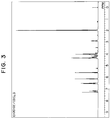
- Fig. 3 is an NMR spectrum showing the epoxy ester (Example 1).
- Fig. 4 is a gas chromatograph showing another epoxy ester (Example 2) according to the invention.
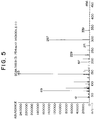
- Fig. 5 is a mass spectrograph showing the epoxy ester (Example 2).
- Fig. 6 is an NMR spectrum showing the epoxy ester (Example 2).
- the epoxide (A-1) used in the present invention has at least one glycidyl group in one molecule and a monocyclic hydrocarbon.
- the monocyclic hydrocarbons are preferably monocyclic hydrocarbons of three-membered through seven-membered rings, and more preferably those of six-membered ring.
- the most preferably epoxides includes any one of a benzene ring, a cyclohexane ring, a cyclohexene ring, and a cyclohexadiene ring.
- benzene ring-containing epoxides include phenyl glycidyl ether methylvinylamide, phenyl glycidyl ester methylvinylamide, catechol diglycidyl ether, resorcinol diglycidyl ether, hydroquinone diglycidyl ether, diglycidyl phthalate, diglycidyl isophthalate, diglycidyl terephthalate, pyrogallol triglycidyl ether, phloroglucinol triglycidyl ether, diglycidyl aniline, triglycidyl-o-aminophenol, triglycidyl-m-aminophenol, triglycidyl-p-aminophenol, tetraglycidyl-o-xylenediamine, tetraglycidyl-m-xylenediamine, tetraglycidyl-p-
- cyclohexane ring-containing epoxides include cyclohexane glycidyl ether methylvinylamide, cyclohexane glycidyl ester methylvinylamide, cyclohexane-o-dimethanol diglycidyl ether, cyclohexane-m-dimethanol diglycidyl ether, cyclohexane-p-dimethanol diglycidyl ether, cyclohexane-o-diglycidyl ether, cyclohexane-m-diglycidyl ether, cyclohexane-p-diglycidyl ether, diglycidyl hexahydrophthalate, diglycidyl hexahydrophthalate, diglycidyl hexahydrophthalate, diglycidyl hexahydrophthalate, diglycidyl hexahydrophthalate, diglycidyl
- cyclohexene ring-containing epoxides include cyclohexene glycidyl ether methylvinylamide, cyclohexene glycidyl ester methylvinylamide, cyclohexene diglycidyl ether, diglycidyl tetrahydrophthalate, etc.
- cyclohexadiene ring-containing epoxides examples include cyclohexadiene glycidyl ether methylvinylamide, cyclohexadiene glycidyl ester methylvinylamide, 1,3-cyclohexadiene-5,6-diglycidyl ether, 1,3-cyclohexadiene-5,6-diglycidyl ester, 1,4-cyclohexadiene-3,6-diglycidyl ether, 1,4-cyclohexadiene-3,6-diglycidyl ester, etc.
- One or more halogens or lower alkyl substituents may be introduced into the benzene ring, cyclohexane ring, cyclohexene ring, or cyclohexadiene ring of these epoxides.
- the epoxide (A-2) used in the present invention has at least one cycloaliphatic epoxide in one molecule and optionally includes one or more glycidyl groups, ethylene oxides, or reactive unsaturated double bonds.
- epoxides having two or more cycloaliphatic epoxy groups such as alicyclic diepoxy acetal represented by the following formula: alicyclic diepoxy adipate represented by the following formula: alicyclic diepoxy carboxylate represented by the following formula: dicyclopentadiene dioxide represented by the following formula: epoxides having an cycloaliphatic epoxide and ethylene oxide, such as vinyl cyclohexene dioxide represented by the following formula: epoxides having an cycloaliphatic epoxide and a vinyl group, such as vinyl cyclohexene monoxide represented by the following formula:
- the epoxide (A-1) and (A-2) preferably have a molecular weight of 100 through 2,000, or more specifically 100 through 1,000.
- the above epoxides (A-1) and (A-2) may be used alone or in combination.
- Bisphenol, phenol novolac, or cresol novolac epoxy resins may also be mixed with such epoxides.
- Examples of the unsaturated group-containing monobasic acid (B) used in the present invention include (meth)acrylic acid, crotonic acid, cinnamic acid, sorbic acid; and half-esters of maleic acid with methanol, ethanol, 2-hydroxyethyl (meth)acrylate, 2-hydroxypropyl (meth)acrylate, dicyclopentadiene, or the like. Especially preferable are acrylic acid, methacrylic acid.
- the term "(meth)acrylate” is used to mean acrylate and mathacrylate and the term “(meth)” is used in a similar meaning. One or any mixture of these compounds may be used.
- the epoxy esters (C) used in the present invention are reaction products of the epoxide(s) (A-1) and/or (A-2) and the unsaturated monobasic acid(s) (B) and have two or more unsaturated double bonds. These epoxy esters may be used singly or in combination thereof and, further, may be used in combination with an acid-modified compound in which OH groups of the epoxy ester (C) are partially modified with phthalic anhidride, tetrahydrophthalic anhydride, succinic anhydride, maleic anhydride, etc. Further, bifunctional compounds like glycidyl (meth)acrylate or allyl glycidyl ether may be mixed with the epoxy ester (C).
- the epoxy esters represented by the above formula (1) may be mentioned as especially preferable ones and a series of such epoxy esters per se are novel compounds and included in the present invention.
- esters examples include: unsaturated fatty acids, such as (meth)acrylic acid, itaconic acid, cronotic acid, fumaric acid, maleic acid, and maleic anhydride; unsaturated fatty esters, such as glycidyl (meth)acrylate, methyl (meth)acrylate, ethyl (meth)acrylate, propyl (meth)acrylate, butyl (meth)acrylate, and 2-ethylhexyl (meth)acrylate; and dodecyl (meth)acrylate; nitrogen-containing monomers, such as (meth)acrylamide, (meth)acrylonitrile, N-methylol(meth)acrylamide, diacetone(meth)acrylamide, and diethylaminoethyl(meth)acrylamide; aliphatic vinyls, such as vinyl chloride, propene;
- reactive monomers (D) having two or more polymerizable double bonds in one molecule may be used.
- reactive monomer (D) having two or more polymerizable double bonds in one molecule include: non-conjugated divinyl compounds, such as divinyl benzene; polyfunctional (meth)acrylates, such as ethylene glycol di(meth)acrylate, 1,4-butanediol di(meth)acrylate, 1,6-hexanediol di(meth)acrylate, allyl (meth)acrylate, trimethylolpropane tri(meth)acrylate, and pentaerythritol tri(meth)acrylate.
- These reactive monomers work as a co-crosslinking agent, etc., and may be used singly or in combination thereof.
- the fine polymer particles of the present invention preferably include 80% or less by weight of the reactive monomer (D) not containing a co-crosslinking agent.
- the polymer particles preferably include 20% through 100% by weight of the crosslinking epoxy ester (C) and the co-crosslinking agent.
- the content of the crosslinking epoxy ester (C) and the co-crosslinking agent is less than 20 % by weight, a practical high heat resistance cannot be achieved.
- Examples of surfacant applicable for polymerization to produce the fine polymer particles of the present invention are: anionic surfactants including fatty acid salts, such as sodium laurate (and potassium laurate: hereinafter sodium compounds represent both sodium and potassium compounds) and sodium oleate, sulfonates, such as sodium alkanesulfonates, sodium dialkylsulfosuccinates, sodium dialkyl diphenyl ether disulfonates, sodium alkylbenzenesulfonates, and sodium alkylnaphthalenesulfonates, and sulfates, such as sodium alkylsulfates, sodium polyoxyethylene alkyl ether sulfates, and sodium polyoxyethylene alkyl phenyl ether sulfates; nonionic surfactants, such as polyoxyethylene lauryl ether, polyoxyethylene oleyl ether, polyoxyethylene octyl phenyl ether, and polyoxyethylene nonyl phenyl
- surfactants may be used alone or in mixture thereof.
- synthetic polymer compounds including various homopolymers, copolymers, graft polymers and block polymers; sorbitan esters; natural polymer compounds; and derivatives thereof functioning as a dispersion stabilizer may also be used.
- polyvinyl pyrrolidone polyvinyl methyl ether, polyethylene-imine, polyacrylates, vinyl alcohol-vinyl acetate copolymers, ethyl cellulose, hydroxypropyl cellulose, sorbitan stearic monoesters, etc.
- organic peroxides such as benzoyl peroxide, lauroyl peroxide, and cumene hydroperoxide
- azo compounds such as 2,2'-azobisisobutyronitrile and 2,2'-azobis(2,4-dimethylvaleronitrile
- the epoxy ester(s) (C) which has two or more unsaturated bonds in one molecule and has been obtained by adding at least one unsaturated monobasic acid (B) to at least one epoxide (A-1) having at least one glycidyl group in one molecule and a monocyclic hydrocarbon and/or at least one epoxide (A-2) having at least one cycloaliphatic epoxy group in one molecule, is used as a crosslinking monomer or oligomer, in place of a polycyclic-aromatic epoxy ester heretofor used.
- Such an epoxy ester facilitates a stable, homogeneous emulsion in water or an alcoholic polymerization medium without requiring collisions under high pressures or high shearing forces.
- Such a stable emulsion makes it easy to produce the fine polymer particles of the present invention through known emulsion polymerization, seeded polymerization, suspension polymerization, or dispersion polymerization.
- the fine polymer particles thus obtained satisfy the required heat resistance and solvent resistance.
- the porimerization to produce the inventive fine polymer particles can be conducted under a sufficiently dispersed condition in a polymerization medium, the method of the invention does not require forcible, mechanical emulsification of monomers or crosslinking oligomers into the medium.
- Dispersions emulsified with a homogenizer like T.K. HOMOMIXER, a colloid mill, MICROFLUIDIZER, or NANOMIZER, may be used for emulsion polymerization.
- Emulsion polymerization and seeded polymerization generally carried out in aqueous media are especially suited for producing the fine polymer particles of the present invention. These methods give fine polymer particles having excellent heat resistance and solvent resistance and high monodispersibility (that is, having substantially uniform particle sizes), and stable emulsions of such fine polymer particles.
- the polymer emulsions obtained as above are dried and used as powder.
- Applicable processes for drying are a spray drying method typically with a spray dryer, a method of applying the emulsion on a heated rotary drum like a drum dryer, a freeze-drying method, etc.
- the fine particles thus obtained have a particle size (by weight average) ranging from 0.01 to 10 ⁇ m, preferably from 0.01 to 3 ⁇ m, and more preferably from 0.03 to 3 ⁇ m, and a ratio Dw/Dn of a weight-average particle size Dw to a number-average particle size Dn being not greater than 5, preferably not greater than 2, and more preferably not greater than 1.5.
- the fine polymer particles obtained in the present invention have favorable emulsion stability and excellent heat resistance and solvent resistance.
- the temperature at which the weight loss by 10% in thermogravimetric analysis (TGA) is at least not less than 250°C, preferably not less than 300°C, and more preferably not less than 330°C.
- the epoxy ester was identified as resorcinol diglycidyl ether dimethacrylate represented by the formula (2) given below:
- resorcinol diglycidyl ether dimethacrylate represented by the formula (2) given below:
- the molar ratio of the by-product was approximately 29 with respect to 100 of the epoxy ester represented by the formula (2), based on calculation of the area ratio of the peaks observed at 2.9 ppm and 5.2 ppm. This by-product epoxy ester was also applicable for manufacturing the fine polymer particles of the invention.
- a resin A containing 50% of non-volatile component was prepared by adding 394 parts of styrene monomer to the epoxy ester thus obtained with vigorous stirring.
- a resin B containing 70% of non-volatile component was prepared in the same manner as Production Example 1, except that 169 parts of styrene monomer was added.
- the epoxy ester was identified as hexahydrophthalic acid diglycidyl ester dimethacrylate represented by the formula (4) given below:
- the molar ratio of the by-product was approximately 73 with respect to 100 of the epoxy ester represented by the formula (4), based on calculation of the area ratio of the peaks observed at 3.8 ppm and 5.2 ppm. This by-product epoxy ester was also applicable for manufacturing the fine polymer particles of the invention.
- a resin C containing 50% of non-volatile component was prepared by adding 516 parts of styrene monomer to the epoxy ester thus obtained with vigorous stirring.
- a resin D containing 70% of non-volatile component was prepared in the same manner as Production Example 3, except that 221 parts of styrene monomer was added.
- a resin F containing 70% of non-volatile component was prepared in the same manner as Production Example 5, except that 210 parts of styrene monomer was added.
- NEOCOL P made by Dai-ichi Kogyo Seiyaku Co., Ltd.
- 3.0 parts of methyl methacrylate, and 2.7 parts of a 2% aqueous solution of potassium persulfate were set in a 2 L separable flask, the mixture was stirred at 70°C in an atmosphere of nitrogen for 30 minutes.
- an emulsified solution containing 297 parts of the resin A manufactured in Production Example 1 1 part of NEOCOL P, and 500 parts of deionized water was added dropwise to the mixture over 6 hours for polymerization, while 53 parts of a 2% aqueous solution of potassium persulfate was simultaneously added dropwise.
- Emulsions of fine polymer particles were prepared in the same manner as Example 3, except that the resin B (Example 4), the resin C (Example 5), the resin D (Example 6), the resin E (Example 7) and the resin F (Example 8) were used respectively in place of the resin A in Example 3.
- the polymer emulsions obtained in Examples 3 through 8 were dried with a spray dryer Type L8 (made by Ohkawara Kakohki Co., Ltd.) to yield fine polymer particles.
- the fine polymer particles obtained were observed by a scanning electron microscope, which showed true spherical particles having high monodispersibility and a mean particle size of 0.5 ⁇ m (coefficient of variation of the particle size distribution (CV) within 10%).
- Polymerization was carried out in the same manner as Example 3 except that a styrene resin solution G (content of non-volatile component: 50%) of methacrylic acid-addition product of bisphenol A epoxy resin (EPOTOHTO YD128: made by Tohto Kasei Co., Ltd.) was used in place of the resin A in Example 3.
- a styrene resin solution G content of non-volatile component: 50%
- methacrylic acid-addition product of bisphenol A epoxy resin EPOTOHTO YD128: made by Tohto Kasei Co., Ltd.
- Polymerization was carried out in the same manner as Example 3, except that a resin H (content of non-volatile component: 30%) which had been produced by changing the content of the non-volatile component of the resin G in Comparative Example 1. A large quantity of aggregates were also generated in the course of polymerization.
- Example 3 Polymerization was carried out in the same manner as Example 3 except that a styrene resin solution I (content of non-volatile component: 50%) of methacrylic acid-addition product of phenol novolac epoxy resin (EPOTOHTO YDPN638: made by Tohto Kasei Co., Ltd.) was used in place of the resin A in Example 3.
- the emulsified solution was geled in the course of polymerization like Comparative Example 1.
- the particles obtained were evaluated for solvent resistance and heat resistance according to the methods described below. The results of evaluation are shown in Table 1.
- the fine particles obtained in Examples 3 through 9 (0.5 g) were dispersed respectively in 50 ml of each of ethyl acetate, toluene, and tetrahydrofuran (THF). The dispersions were left at 25°C for 48 hours and then air-dried for measurement of the degree of weight increase.
- the fine particles obtained in Examples 3 through 9 (0.01 g) were heated at a temperature rise rate of 10°C/min in a stream of nitrogen, and a temperature resulting in a weight loss of 10% was measured with TGA 7 (thermogravimetric analyzer made by Perkin-Elmer Corporation).
- a resin K containing 50 % of non-volatile substance was prepared in the same manner as Production Example 7, except that 592 parts of styrene monomer was added.
- Aqueous dispersions of fine polymer particles were prepared in the same manner as Example 10, except that the resin K (Example 11), the resin L (Example 12), and the resin M (Example 13) were used respectively in place of the resin J in Example 10.
- aqueous polymer dispersions obtained in Examples 10 through 13 were dried with a spray dryer L8 (made by Ohkawara Kakohki, Co., Ltd.) to yield fine polymer particles.
- the fine polymer particles obtained were observed by a scanning electron microscope, which showed true spherical particles having high monodispersibility and mean particle size of 0.5 ⁇ m (CV within 10%).
- a 1mm thick slab-like substance of crosslinking polymer A was obtained by curing 100 parts of the resin J used in Example 10 mixed with 1.0 part of benzoyl peroxide.
- the slab-like substance was roughly ground with BANTAM MILL (made by Hosokawa Micron Corporation) and dry-ground with MICRON JET (made by Hosokawa Micron Corporation).
- the grounded particles were observed by a scanning electron microscope, which showed particles having mean particle size of 12 ⁇ m with a very large particle size distribution, i.e., a CV of 90%.
- Example 11 The resin K used in Example 11 was cured, roughly ground, and dry-ground in the same manner as Comparative Example 4 before two-hour wet-grinding with ATOLITER S (Mitsui Miike engineering Corporation).
- the grounded particles were observed by a scanning electron microscope, which showed particles having mean particle size of 2.5 ⁇ m with a very large particle size distribution, i.e., a CV of 60%.
- Polymerization was carried out in the same manner as Example 10 except that 347.2 parts of styrene monomer and 148.8 parts of divinyl benzene were used in place of 496 parts of the resin J in Example 10. A large quantity of aggregates were generated in the course of polymerization and interfered with further polymerization.
- the particles obtained were evaluated for heat resistance and solvent resistance according to the methods described below. The results of evaluation are shown in Table 2.
- Example 14 The fine particles obtained in Example 14 (0.5 g) were dispersed respectively in 50 ml of each of ethyl acetate, toluene, and tetrahydrofuran (THF). The dispersions were left at 25°C for 48 hours. The particle size was measured by a particle size measuring device LPA 3000/3100 (by a scanning electron microscope for Comparative Examples 4 and 5), and the rate of particle size increase was calculated.
- Example 14 The fine particles obtained in Example 14 (0.01 g) were heated at the temperature rise rate of 10°C/min in a stream of nitrogen, and the temperature giving a weight loss of 10% was measured with TGA7.
- Table 2 Examples Comparative Examples 10 11 12 13 4 5 6 Resin J K L M J K SM/DVB Epoxy ester content (% by weight) 30 50 50 50 30 50 30 Production method of fine particles *4 Seed Seed Seed Seed Grinding Grinding Seed Conversion (%) 96 98 98 97 - - - Polymerization stability *1 o o o o - - x Weight-average particle size ( ⁇ m)*2 0.56 0.55 0.49 0.51 - - - Dw/Dn 1.04 1.05 1.03 1.04 - - - Mean particle size ( ⁇ m)*3 0.5 0.5 0.5 0.5 12 2.5 - Coefficient of variation (%) 8 9 10 8 90 60 - Solvent resistance: Percentage of particle size increase (%) Ethyl acetate 0.3 0.4 0.2
- the epoxy ester content is the amount of divinylbenzene.
- the present invention provides fine polymer particles having excellent solvent resistance and heat resistance and a sharp particle size distribution, as well as a emulsion of such fine polymer particles.
- the fine polymer particles or the emulsion according to the invention can be added in the stage of polymerizing or melt processing resins at high temperatures. There is only a small difference in specific gravities between the fine polymer particles of the invention and the resins, which leads to a significant improvement of dispersibility in and affinity for the resins.
- the invention also provides an novel epoxy ester used for preparing such fine polymer particles.
Landscapes
- Chemical & Material Sciences (AREA)
- Health & Medical Sciences (AREA)
- Chemical Kinetics & Catalysis (AREA)
- Medicinal Chemistry (AREA)
- Polymers & Plastics (AREA)
- Organic Chemistry (AREA)
- Emergency Medicine (AREA)
- General Chemical & Material Sciences (AREA)
- Epoxy Resins (AREA)
- Addition Polymer Or Copolymer, Post-Treatments, Or Chemical Modifications (AREA)
- Polymerisation Methods In General (AREA)
- Macromonomer-Based Addition Polymer (AREA)
Applications Claiming Priority (6)
| Application Number | Priority Date | Filing Date | Title |
|---|---|---|---|
| JP23337594 | 1994-09-28 | ||
| JP233375/94 | 1994-09-28 | ||
| JP17163/95 | 1995-02-03 | ||
| JP1716395 | 1995-02-03 | ||
| JP199955/95 | 1995-08-04 | ||
| JP7199955A JPH08269146A (ja) | 1994-09-28 | 1995-08-04 | 高耐熱性高分子重合体微粒子及びエポキシエステル |
Publications (2)
| Publication Number | Publication Date |
|---|---|
| EP0704466A2 true EP0704466A2 (fr) | 1996-04-03 |
| EP0704466A3 EP0704466A3 (fr) | 1997-12-10 |
Family
ID=27281705
Family Applications (1)
| Application Number | Title | Priority Date | Filing Date |
|---|---|---|---|
| EP95114717A Withdrawn EP0704466A3 (fr) | 1994-09-28 | 1995-09-19 | Particules fines de polymère à haute résistance à la chaleur |
Country Status (4)
| Country | Link |
|---|---|
| EP (1) | EP0704466A3 (fr) |
| JP (1) | JPH08269146A (fr) |
| KR (1) | KR960010704A (fr) |
| CA (1) | CA2159287A1 (fr) |
Cited By (1)
| Publication number | Priority date | Publication date | Assignee | Title |
|---|---|---|---|---|
| CN113024773A (zh) * | 2020-03-13 | 2021-06-25 | 深圳市百柔新材料技术有限公司 | 改性丙烯酸酯树脂及其制备方法、防焊墨水和印刷电路板 |
Families Citing this family (2)
| Publication number | Priority date | Publication date | Assignee | Title |
|---|---|---|---|---|
| KR100357902B1 (ko) * | 2000-05-27 | 2002-10-25 | 주식회사 큐시스 | 전기 전도성 마이크로겔 및 이의 제조방법 |
| CN101490118B (zh) * | 2006-07-14 | 2013-04-17 | 帝斯曼知识产权资产管理有限公司 | 一种用于制备有机纳米粒子的方法 |
Citations (1)
| Publication number | Priority date | Publication date | Assignee | Title |
|---|---|---|---|---|
| JPH07133328A (ja) | 1993-11-08 | 1995-05-23 | Takeda Chem Ind Ltd | 高分子重合体微粒子、高分子重合体分散液及びそれらの製造法 |
Family Cites Families (12)
| Publication number | Priority date | Publication date | Assignee | Title |
|---|---|---|---|---|
| US3933935A (en) * | 1974-08-08 | 1976-01-20 | The Dow Chemical Company | Flexible vinyl ester resin compositions |
| DE3173960D1 (en) * | 1981-05-15 | 1986-04-10 | Dow Chemical Rheinwerk Gmbh | Stabilized thermosettable ethylenically unsaturated epoxy ester resin compositions |
| US4847337A (en) * | 1985-10-24 | 1989-07-11 | The Dow Chemical Company | Polystyrene modified advanced epoxy resin and polyester copolymers |
| AU592601B2 (en) * | 1985-10-24 | 1990-01-18 | Dow Chemical Company, The | Low gloss, high impact strength powder coating resins |
| BR8707258A (pt) * | 1986-04-08 | 1988-04-19 | Dow Chemical Co | Resinas para tintas em po de alta resistencia ao impacto e baixo brilho |
| JPH01161038A (ja) * | 1987-12-18 | 1989-06-23 | Nippon Kayaku Co Ltd | 樹脂組成物及びソルダーレジスト樹脂組成物 |
| US5196296A (en) * | 1989-10-06 | 1993-03-23 | Nippon Steel Corporation | Epoxy acrylate resins and photosensitive resin compositions therefrom |
| US5223558A (en) * | 1990-01-22 | 1993-06-29 | The Dow Chemical Company | Process for preparation of high-molecular-weight epoxy dimer acid ester resin |
| DE4025687A1 (de) * | 1990-08-14 | 1992-02-20 | Ruetgerswerke Ag | Durch strahlung vernetzbare bindemittelgemische |
| TW311923B (fr) * | 1992-01-27 | 1997-08-01 | Ciba Sc Holding Ag | |
| GB9217056D0 (en) * | 1992-08-12 | 1992-09-23 | Dow Deutschland Inc | Curable epoxy vinylester or polyester composition having a low peak exotherm during cure |
| JPH07258359A (ja) * | 1994-03-24 | 1995-10-09 | Takeda Chem Ind Ltd | 高分子重合体微粒子、高分子重合体分散液の製造法 |
-
1995
- 1995-08-04 JP JP7199955A patent/JPH08269146A/ja not_active Withdrawn
- 1995-09-19 EP EP95114717A patent/EP0704466A3/fr not_active Withdrawn
- 1995-09-19 KR KR1019950030800A patent/KR960010704A/ko not_active Withdrawn
- 1995-09-27 CA CA002159287A patent/CA2159287A1/fr not_active Abandoned
Patent Citations (1)
| Publication number | Priority date | Publication date | Assignee | Title |
|---|---|---|---|---|
| JPH07133328A (ja) | 1993-11-08 | 1995-05-23 | Takeda Chem Ind Ltd | 高分子重合体微粒子、高分子重合体分散液及びそれらの製造法 |
Cited By (1)
| Publication number | Priority date | Publication date | Assignee | Title |
|---|---|---|---|---|
| CN113024773A (zh) * | 2020-03-13 | 2021-06-25 | 深圳市百柔新材料技术有限公司 | 改性丙烯酸酯树脂及其制备方法、防焊墨水和印刷电路板 |
Also Published As
| Publication number | Publication date |
|---|---|
| CA2159287A1 (fr) | 1996-03-29 |
| EP0704466A3 (fr) | 1997-12-10 |
| KR960010704A (ko) | 1996-04-20 |
| JPH08269146A (ja) | 1996-10-15 |
Similar Documents
| Publication | Publication Date | Title |
|---|---|---|
| US5854313A (en) | Fine particles of high heat resistant polymer and epoxy esters | |
| Qian et al. | Synthesis and application of core–shell particles as toughening agents for epoxies | |
| Liu et al. | Morphology and performance of epoxy nanocomposites modified with organoclay and rubber | |
| US5373052A (en) | Organic polymer microparticle and process for producing the same | |
| KR930001697B1 (ko) | 3차원 망상구조를 갖는 내부 가교결합된 중합체 미소입자의 제조방법 | |
| EP3502054A1 (fr) | Formulations durcissables fonctionnalisées d'oxyde de graphène | |
| CA2727872C (fr) | Procede pour disperser des microparticules/nanoparticules organiques dans un milieu de resine non aqueux | |
| JPH02611A (ja) | 安定な非水溶性のポリウレタン微粒子分散体 | |
| CN113771259B (zh) | 一种力学性能可控的可反应中空微球及其制备方法 | |
| EP0152425B1 (fr) | Dispersions stables de polymeres organiques dans des polyepoxydes | |
| JPH07118620A (ja) | エポキシ系接着剤組成物 | |
| EP0704466A2 (fr) | Particules fines de polymère à haute résistance à la chaleur | |
| JP5845044B2 (ja) | 硬化剤及び/又は硬化促進剤内包カプセル、及び、熱硬化性樹脂組成物 | |
| JP3509085B2 (ja) | プラスチゾル用合成樹脂粉末及びその製造方法 | |
| JP3174199B2 (ja) | 低粘度エポキシ樹脂組成物及びその製造方法 | |
| JP3451116B2 (ja) | 高分子重合体微粒子、高分子重合体分散液及びそれらの製造法 | |
| Teng et al. | Effect of introduction mode of hydroxyl functionality on morphology and film properties of cycloaliphatic diepoxide crosslinkable core‐shell latex | |
| JP2621317B2 (ja) | 熱硬化性粉体塗料の製造方法 | |
| JP2740434B2 (ja) | エポキシ系樹脂微粒子及びその製造方法 | |
| KR20150053731A (ko) | 경화제 및/또는 경화 촉진제 복합 입자의 제조 방법, 경화제 및/또는 경화 촉진제 복합 입자, 그리고 열경화성 수지 조성물 | |
| KR100546817B1 (ko) | 단분산성 기능성 입자의 제조 방법 | |
| JPH10310684A (ja) | エポキシ樹脂組成物 | |
| JPH11158230A (ja) | 水酸基含有多孔質樹脂の製造方法 | |
| JP2722700B2 (ja) | ポリマー粒子の製造方法 | |
| JP5620323B2 (ja) | 硬化剤及び/又は硬化促進剤複合粒子の製造方法、硬化剤及び/又は硬化促進剤複合粒子、並びに、熱硬化性樹脂組成物 |
Legal Events
| Date | Code | Title | Description |
|---|---|---|---|
| PUAI | Public reference made under article 153(3) epc to a published international application that has entered the european phase |
Free format text: ORIGINAL CODE: 0009012 |
|
| AK | Designated contracting states |
Kind code of ref document: A2 Designated state(s): DE FR GB IT LU NL |
|
| PUAL | Search report despatched |
Free format text: ORIGINAL CODE: 0009013 |
|
| AK | Designated contracting states |
Kind code of ref document: A3 Designated state(s): DE FR GB IT LU NL |
|
| 17P | Request for examination filed |
Effective date: 19980305 |
|
| 17Q | First examination report despatched |
Effective date: 19980702 |
|
| RTI1 | Title (correction) |
Free format text: FINE PARTICLES OF HIGH-HEAT RESISTANT POLYMER |
|
| GRAG | Despatch of communication of intention to grant |
Free format text: ORIGINAL CODE: EPIDOS AGRA |
|
| STAA | Information on the status of an ep patent application or granted ep patent |
Free format text: STATUS: THE APPLICATION HAS BEEN WITHDRAWN |
|
| 18W | Application withdrawn |
Withdrawal date: 20000128 |