EP0726317A2 - Aus Bacillus stammende Transglutaminase - Google Patents
Aus Bacillus stammende Transglutaminase Download PDFInfo
- Publication number
- EP0726317A2 EP0726317A2 EP96101905A EP96101905A EP0726317A2 EP 0726317 A2 EP0726317 A2 EP 0726317A2 EP 96101905 A EP96101905 A EP 96101905A EP 96101905 A EP96101905 A EP 96101905A EP 0726317 A2 EP0726317 A2 EP 0726317A2
- Authority
- EP
- European Patent Office
- Prior art keywords
- cells
- activity
- dna
- bacillus
- transglutaminase
- Prior art date
- Legal status (The legal status is an assumption and is not a legal conclusion. Google has not performed a legal analysis and makes no representation as to the accuracy of the status listed.)
- Granted
Links
Images




Classifications
-
- C—CHEMISTRY; METALLURGY
- C12—BIOCHEMISTRY; BEER; SPIRITS; WINE; VINEGAR; MICROBIOLOGY; ENZYMOLOGY; MUTATION OR GENETIC ENGINEERING
- C12N—MICROORGANISMS OR ENZYMES; COMPOSITIONS THEREOF; PROPAGATING, PRESERVING, OR MAINTAINING MICROORGANISMS; MUTATION OR GENETIC ENGINEERING; CULTURE MEDIA
- C12N9/00—Enzymes; Proenzymes; Compositions thereof; Processes for preparing, activating, inhibiting, separating or purifying enzymes
- C12N9/10—Transferases (2.)
- C12N9/1025—Acyltransferases (2.3)
- C12N9/104—Aminoacyltransferases (2.3.2)
- C12N9/1044—Protein-glutamine gamma-glutamyltransferase (2.3.2.13), i.e. transglutaminase or factor XIII
-
- C—CHEMISTRY; METALLURGY
- C12—BIOCHEMISTRY; BEER; SPIRITS; WINE; VINEGAR; MICROBIOLOGY; ENZYMOLOGY; MUTATION OR GENETIC ENGINEERING
- C12N—MICROORGANISMS OR ENZYMES; COMPOSITIONS THEREOF; PROPAGATING, PRESERVING, OR MAINTAINING MICROORGANISMS; MUTATION OR GENETIC ENGINEERING; CULTURE MEDIA
- C12N15/00—Mutation or genetic engineering; DNA or RNA concerning genetic engineering, vectors, e.g. plasmids, or their isolation, preparation or purification; Use of hosts therefor
- C12N15/09—Recombinant DNA-technology
- C12N15/11—DNA or RNA fragments; Modified forms thereof; Non-coding nucleic acids having a biological activity
-
- C—CHEMISTRY; METALLURGY
- C12—BIOCHEMISTRY; BEER; SPIRITS; WINE; VINEGAR; MICROBIOLOGY; ENZYMOLOGY; MUTATION OR GENETIC ENGINEERING
- C12N—MICROORGANISMS OR ENZYMES; COMPOSITIONS THEREOF; PROPAGATING, PRESERVING, OR MAINTAINING MICROORGANISMS; MUTATION OR GENETIC ENGINEERING; CULTURE MEDIA
- C12N9/00—Enzymes; Proenzymes; Compositions thereof; Processes for preparing, activating, inhibiting, separating or purifying enzymes
- C12N9/88—Lyases (4.)
-
- C—CHEMISTRY; METALLURGY
- C12—BIOCHEMISTRY; BEER; SPIRITS; WINE; VINEGAR; MICROBIOLOGY; ENZYMOLOGY; MUTATION OR GENETIC ENGINEERING
- C12P—FERMENTATION OR ENZYME-USING PROCESSES TO SYNTHESISE A DESIRED CHEMICAL COMPOUND OR COMPOSITION OR TO SEPARATE OPTICAL ISOMERS FROM A RACEMIC MIXTURE
- C12P21/00—Preparation of peptides or proteins
-
- Y—GENERAL TAGGING OF NEW TECHNOLOGICAL DEVELOPMENTS; GENERAL TAGGING OF CROSS-SECTIONAL TECHNOLOGIES SPANNING OVER SEVERAL SECTIONS OF THE IPC; TECHNICAL SUBJECTS COVERED BY FORMER USPC CROSS-REFERENCE ART COLLECTIONS [XRACs] AND DIGESTS
- Y10—TECHNICAL SUBJECTS COVERED BY FORMER USPC
- Y10S—TECHNICAL SUBJECTS COVERED BY FORMER USPC CROSS-REFERENCE ART COLLECTIONS [XRACs] AND DIGESTS
- Y10S435/00—Chemistry: molecular biology and microbiology
- Y10S435/8215—Microorganisms
- Y10S435/822—Microorganisms using bacteria or actinomycetales
- Y10S435/832—Bacillus
- Y10S435/839—Bacillus subtilis
Definitions
- the present invention relates to (1) a transglutaminase (hereinafter referred to as TG) to be produced by bacilli such as those of Bacillus subtilis , etc., (2) a fraction having transglutaminase activity, and (3) a method for producing a protein, a non-proteinaceous amino acid polymer, a peptide or derivatives thereof having a crosslinked structure, characterized in that the glutamine and lysine residues in a protein, a non-proteinaceous amino acid polymer, a peptide or derivatives thereof are crosslinked by the action of the TG or the TG activity-having fraction to thereby form intermolecular or intramolecular crosslinked ⁇ -( ⁇ -Glu)-Lys bonds between or in the molecules of the protein, non-proteinaceous amino acid polymer, peptide or derivatives thereof.
- TG transglutaminase
- the present invention also relates to (4) a DNA coding for a transglutaminase as derived from bacilli such as those of Bacillus subtilis , etc., (5) a recombinant DNA to be obtained by linking a vector DNA to the DNA, (6) a cell as transformed with the recombinant DNA, and (7) a method for producing a bacillus-derived transglutaminase by incubating the transformant.
- DNA coding for transglutaminase may be linked to vectors such as plamids or phages or may be introduced into the chromosome of a host cell, e.g. by transposonation.
- crosslinked polymers The protein, non-proteinaceous amino acid polymer, peptide and derivatives thereof having a crosslinked structure to be formed by the action of the TG or the TG activity-having fraction are referred to herein as crosslinked polymers.
- TG is an enzyme which catalyzes the transacylation of a substrate of ⁇ -carboxyamide group in the glutamine residue existing in a peptide chain.
- the ⁇ -amino group in the lysine residue in the peptide chain is an acyl receptor
- intramolecular or intermolecular, crosslinked ⁇ -( ⁇ -Glu)-Lys bonds (hereinafter referred to as "GL bonds") are formed in or between the peptide molecules.
- GL bonds intramolecular or intermolecular, crosslinked ⁇ -( ⁇ -Glu)-Lys bonds
- Crosslinked polymers can be produced by utilizing the bacillus-derived TG of the present invention.
- the crosslinked polymers thus produced are used in foods such as tofu (soybean curd), pudding, yogurt, cheese, ground fish meat, boiled fish paste, sausage and other fish and meat products and also in cosmetics, etc.
- TG exists in many animal tissues.
- TG existing in the liver of guinea pigs has been studied (see Connellan et al., Journal of Biological Chemistry, Vol. 246, pp. 1093-1098, 1971).
- microorganisms-derived TG only TG derived from Actinomycetes (ray fungi) or Bacillus subtilis (see M.V Ramanujam et al., FASEB J. Vol. 4, A2321) and TG derived from Myxomycetes (slime molds) (see J.D. Klein et al., J. Bacteriol., Vol. 174, pp. 2599-2605) have heretofore been reported.
- TG produced by ray fungi has been put to practical and industrial use (see Japanese Patent Publication No. 6-65280, Japanese Patent Laid-Open No. 1-27471).
- Ray fungus-derived TG also has some drawbacks. Since ray fungi grow more slowly than ordinary bacteria, they need a long period of time for incubation, resulting in the increase in the costs in producing TG.
- the object of the present invention is to isolate a novel TG from bacilli that have heretofore been utilized in producing foods, such as Bacillus subtilis , etc., and to provide a method for producing crosslinked polymers by the use of the TG.
- the present inventors have assiduously studied so as to obtain a novel TG derived from bacilli which are microorganisms that have heretofore been utilized in producing foods, such as Bacillus subtilis , etc., and, as a result, have found that bacilli, such as Bacillus subtilis , etc., have a novel TG. On the basis of this finding, we have completed the present invention.
- the present invention includes a bacillus-derived TG having the following properties, and a method for producing a protein, a non-proteinaceous amino acid polymer, a peptide or derivatives thereof having a crosslinked structure by the use of the TG or a fraction comprising the TG, the method being characterized in that the glutamine and lysine residues in a protein, a non-proteinaceous amino acid polymer, a peptide or derivatives thereof are crosslinked by the action of the TG or TG-containing fraction to thereby form intermolecular or intramolecular, crosslinked ⁇ -( ⁇ -Glu)-Lys bonds between or in the molecules of the protein, non-proteinaceous amino acid polymer, peptide or derivatives thereof.
- the present invention further includes a DNA coding for TG as derived from bacilli such as typically those of Bacillus subtilis , a recombinant DNA to be obtained by linking a vector DNA to the DNA, a cell as transformed with the recombinant DNA, and a method for producing a bacillus-derived transglutaminase by incubating the transformant.
- a DNA coding for TG as derived from bacilli such as typically those of Bacillus subtilis
- a recombinant DNA to be obtained by linking a vector DNA to the DNA, a cell as transformed with the recombinant DNA and a method for producing a bacillus-derived transglutaminase by incubating the transformant.
- GL bonds thus broadly exist in the connective tissue in blood vessels, hair, etc., in animals and, in addition, it has been recognized that TG also exists in the tissue. Accordingly, it is believed that the GL bonds are formed by the action of TG, by which the strength of the tissue is enhanced.
- the present inventors have analyzed the structure of the spores of bacilli, such as Bacillus subtilis , etc., by means of solid NMR, HPLC analysis, etc. and, as a result, have found the presence of GL bonds in the spores. On the basis of this finding, we, the present inventors have believed that TG that catalyzes the formation of GL bonds will exist also in bacilli.
- sporogenic bacteria such as bacilli, typically those of Bacillus subtilis , existing in the natural world, especially in soil and have screened them to isolate TG-producing bacteria therefrom.
- Bacillus subtilis AJ1307 was deposited on August 22, 1995 in NIBH, to which a deposition number of FERM P-15123 was applied. Bacillus subtilis AJ1307 was then transferred to the international deposition on January 18, 1996, based on the Budapest Treaty, to which an international deposition number of FERM BP-5367 was applied.
- TG of the present invention broadly exists in bacilli having spores. Namely, TG exists in not only Bacillus subtilis but also the following bacilli.
- the bacilli include Bacillus licheniformis , Bacillus megaterium , Bacillus stearothermophilus , Bacillus brevis , Bacillus sphaericus , Bacillus polymyxa , Bacillus alcalophilus , etc.
- Bacilli can be incubated by any of liquid cultivation or solid cultivation.
- deep aerating and stirring cultivation is industrially advantageous.
- nutrient sources in nutrient media where bacilli are incubated employable are ordinary carbon sources, nitrogen sources, inorganic salts and other minor nutrients that are generally used in incubation of microorganisms. All nutrient sources which bacilli can utilize can be employed.
- the incubation temperature is not specifically defined but is generally from 10 to 50°C, preferably from 30 to 40°C.
- thermophilic bacteria can be incubated at temperatures higher than the above-mentioned range.
- the incubation time varies, depending on the incubation time and other incubation conditions.
- bacilli are incubated for a long period of time for which they produce the largest amount of TG. In general, they are incubated for from 5 hours to 7 days or so, preferably for from 10 hours to 3 days or so.
- the stage at which bacilli exhibit their TG activity according to the present invention is limited to only the sporulation stage. This is the most significant point in which the TG of the present invention is basically different from the Bacillus subtilis -derived TG as reported by the group of the New Mexico State University.
- TG activity begins to increase. Then, the TG activity becomes the largest at the sporulation stages IV to VI or so, and thereafter it decreases. The TG activity is detected in the culture only slightly but is detected much more in the grown cells.
- the thus-grown cells are disrupted or lysed under low-temperature conditions.
- the thus-processed cells are centrifuged at 20000 x g for 10 minutes. Then, the supernatant fraction and the precipitate fraction are separated from each other, and the TG activity of each fraction is detected. In that manner, it is verified that the precipitate fraction that contains the spores has the activity.
- the culture comprising the grown cells of bacilli may be directly processed to obtain a purified TG, but it is advantageous that the sporangia of the grown cells are first disrupted or lysed and then the resulting spores are processed to obtain a purified TG.
- a surfactant such as Triton X-100, alkylglucoside or the like is added to the insoluble fraction, by which the TG activity is recovered in the resulting soluble fraction. It is also possible to treat the spores-containing fraction with a basic buffer (for example, 20 mM sodium bicarbonate buffer, pH 10), by which the TG activity is recovered in the resulting soluble fraction. And it is also possible to suspend the spores-containing fraction in a buffer and to heat the resulting suspension, by which the TG activity is recovered in the resulting soluble fraction. For example, by heating the suspension at 10°C or higher, the TG activity can be recovered in the soluble fraction.
- a basic buffer for example, 20 mM sodium bicarbonate buffer, pH 10
- the solubilized TG can be utilized as a gelling agent.
- the solubilized TG can be further purified.
- TG having a higher relative activity can be obtained.
- the thus-purified TG can be a gelling agent having a higher relative TG activity.
- the measurement of the TG activity shall be conducted in the manner mentioned below.
- 14 C-labeled putrescine and dimethylcasein are used as the substrates, and a sample containing TG is applied to these to make them reacted with each other.
- the putrescine-bonded dimethylcasein is precipitated with 10 % TCA, and the resulting precipitate is adsorbed onto filter paper. Since the radioactivity existing in the filter paper is proportional to the TG activity in the sample, it is possible to quantitatively determine the TG activity in the sample.
- the radioactivity can be measured with a liquid scintillation counter.
- TG-1 The Bacillus subtilis AJ1307-derived TG is hereinafter referred to as TG-1, while the Bacillus subtilis AJ12866-derived TG is as TG-2.
- TG-1 and TG-2 the Bacillus subtilis AJ1307-derived TG are hereinafter referred to as TG-1, while the Bacillus subtilis AJ12866-derived TG is as TG-2.
- TG-1 and TG-2 the enzymochemical properties of TG of the present invention are mentioned below.
- the pH suitable for TG of the present invention falls between about 7 and about 9 or so.
- the temperature suitable for the TG falls between about 40°C and about 65°C or so.
- the TG was stable at about 60°C or lower.
- the TG was subjected to high-temperature treatment at pH of 7.5 for 10 minutes, whereupon the temperature stability of the TG was checked. Even when the TG was subjected to high-temperature treatment at 60°C, it still maintained about 80 % of the TG activity.
- the bacillus-derived TG of the present invention is greatly inhibited by NEM (N-ethylmaleimide) and cystamine. In addition, it is also greatly inhibited by (NH 4 ) 2 SO 4 (ammonium sulfate).
- the activity of the bacillus-derived TG of the present invention increases in the presence of DTT (dithiothreitol).
- DTT dithiothreitol
- EDTA ethylenediamine-tetraacetic acid
- the TG of the present invention does not have the property of requiring Ca 2+ ions. Namely, it is a Ca 2+ -independent enzyme. The TG still maintains 50 % or more of its activity in the presence of 5 mM of Ca 2+ .
- the TG has a molecular weight of (a) from about 18,000 to about 22,000 (as measured by gel permeation) and (b) from about 28,000 to about 30,000 (as measured by SDS-PAGE).
- the TG catalyzes the transacylation of a substrate, ⁇ -carboxyamide group in the glutamine residue existing in a peptide chain.
- the ⁇ -amino group in the lysine residue in the peptide chain is an acyl receptor
- intramolecular or intermolecular, crosslinked ⁇ -( ⁇ -Glu)-Lys bonds are formed in or between the peptide molecules.
- water is an acyl receptor in the transacylation
- the glutamine residue in the peptide chain is subjected to de-amidation by which the glutamine residue is converted into a glutamic acid residue.
- TG of the present invention that is derived from Bacillus subtilis AJ12866 and Bacillus subtilis AJ1307 were obviously different from those of the Bacillus subtilis -derived TG as reported by the group of the New Mexico State University.
- TG to be applied to the production of crosslinked polymers according to the present invention
- employable are any of (1) a concentrate of an insoluble, spores-containing fraction that is obtained by disrupting or lysing the sporangia of bacilli incubated, (2) a TG activity-having fraction that is obtained by solubilizing the insoluble fraction in various manners, and (3) a purified TG having a high relative activity.
- bacillus-derived TG that is obtained by incubating the transformant cells as transformed with a recombinant DNA, which is constructed by linking a DNA that codes for a bacillus-derived TG to a vector DNA in the manner that is mentioned hereinunder.
- any and every other fraction having bacillus-derived TG activity can be used.
- the substrate for the TG or TG-active fraction one or more of proteins, non-proteinaceous amino acid polymers, peptides and derivatives thereof shall be used.
- proteins have lysine and glutamine residues and are catalyzed by the above-mentioned catalysts.
- casein, gelatin, soybean protein, etc. are employable as the substrate.
- proteins as partly cut by proteases, etc. are also employable.
- the non-proteinaceous amino acid polymers include amino acid polymers to be produced by chemical synthesis, such as polylysine, etc.
- the peptides may be those as obtained by chemical synthesis or those as obtained by decomposing natural proteins with acids, alkalis, proteases, etc.
- the derivatives of such substances include glycoproteins, chemically-modified proteins, etc.
- any others can also be used as the substrate for the TG or TG-active fraction, provided that they have lysine and glutamine residues.
- the TG or TG-active fraction of the present invention is added to and reacted with a solution or slurry containing a protein or the like at a substrate concentration of 0.1 % or more, whereby a crosslinked polymer product is obtained.
- the crosslinked polymers to be obtained according to the present invention may be classified into a group of gelled products, a group of highly-viscous products and a group of merely-polymerized products, depending on the degree of crosslinking in them.
- the present invention encompasses all such crosslinked polymers.
- the pH of the reaction solution is from about 4 to about 10
- the reaction temperature is from about 5°C to about 80°C
- the reaction time is from about 10 seconds to about 24 hours.
- a DNA coding for the bacillus-derived TG is needed.
- the DNA is linked to a vector DNA to construct the intended recombinant DNA.
- Host cells are transformed with the recombinant DNA.
- the transformant cells that have been transformed to be able to produce the bacillus-derived TG are incubated in a medium to thereby make the cells produce and accumulate the bacillus-derived TG in the medium or in the cells, and thereafter the TG is collected.
- the method for obtaining the DNA that codes for the bacillus-derived TG is mentioned below.
- the amino acid sequence of the purified TG is determined. It is possible to determine the intended amino acid sequence according to the Edman method (see Edman, P., Acta Chem. Scand., 4, 227 (1950)). In addition, it is also possible to determine the amino acid sequence by the use of a sequencer produced by Applied Biosystems Co.
- amino acid sequence of from the N-terminal to the 35th residue of the bacillus-derived TG of the present invention was determined, which was clarified to correspond to the sequence of Sequence Number 1 in the Sequence List.
- the base sequence of the DNA that codes for this can be deduced.
- DNA molecules having from 30 to 50 base pairs or so are synthesized.
- the method for synthesizing such DNA molecules is described in Tetrahedron Letters, 22, 1859 (1981).
- the DNA molecules can also be synthesized by the use of a synthesizer produced by Applied Biosystems Co.
- the DNA molecules can be used as probes, when the whole length DNA that codes for the bacillus-derived TG is isolated from the bacillus chromosome gene library. In addition, these can also be used as primers, when the DNA that codes for the bacillus-derived TG is amplified by PCR.
- the DNA as amplified by PCR does not include the whole length DNA that codes for the bacillus-derived TG
- the DNA as amplified by PCR is used as the probe and the whole length DNA that codes for the bacillus-derived TG is isolated from the bacillus chromosome gene library.
- the operations for PCR are written by White, T.J. et al., in Trends Genet., 5, 185 (1989), etc.
- the method for preparing the chromosome DNA of bacilli is described in Molecular Biological Methods for Bacillus, John Wiley & Sons, Ltd. (1990), etc.
- the method for constructing the chromosome gene library of bacilli, etc. is described in Molecular Biological Methods for Bacillus, John Wiley & Sons, Ltd. (1990), etc.
- the method of isolating the intended DNA molecule from the gene library by using DNA molecules as probes is described in Molecular Cloning, 2nd Edition, Cold Spring Harbor Press (1989), etc.
- Sequence Number 2 One DNA that codes for the bacillus-derived TG of the invention is shown as Sequence Number 2 in the Sequence List.
- This DNA was isolated from the chromosome DNA of Bacillus subtilis AJ1307.
- the DNA that codes for the bacillus-derived TG is not limited to only that shown as Sequence Number 2 in the Sequence List.
- the DNA shall have a different base sequence, in accordance with the species and the strain of the bacillus from which it is derived.
- the DNA may encode tranglutaminase having amino acid substitutions and/or deletions and/or insertions with respect to the amino acid sequence of the transglutaminase encoded by the sequence as depicted in Seq. ID No. 2.
- the cells of Escherichia coli AJ13172 that have the recombinant DNA as constructed by linking the DNA coding for the Bacillus subtilis AJ1307-derived TG to a vector DNA were subjected to international deposition in NIBH on December 20, 1995 on the basis of the Budapest Treaty, to which an international deposition number of FERM BP-5346 was applied.
- the protein produced is often intramolecularly associated to give its inclusion body in the transformant that is producing the protein.
- the advantages of the expression method of producing protein are that the intended protein can be protected from being digested by the protease existing in the cells used and that the intended protein can be easily purified by disrupting the cells followed by centrifuging the resulting cell debris.
- the protein inclusion body thus obtained is solubilized with a protein-denaturating agent, then the activity of the thus-solubilized protein is regenerated essentially by removing the denaturating agent, and thereafter the soluble protein is converted into a correctly-folded, physiologically-active protein.
- a protein-denaturating agent for removing the denaturating agent.
- the soluble protein is converted into a correctly-folded, physiologically-active protein.
- the activated protein from the protein inclusion body, a series of operations for solubilization, regeneration of the activity, etc. is necessary, and such operations are more complicated than those for directly producing the activated protein.
- the protein can be accumulated in the cells in the form of such an inactive protein inclusion body whereby the influence of the protein can be retarded.
- the method for producing a large amount of the intended protein inclusion body there are known a method of expressing the intended protein by itself under the control of a strong promoter and a method of expressing the intended protein as a fused protein with a different protein that is known to be expressed in large quantities.
- the host cells to be transformed for the production of a large amount of protein by recombinant DNA technology include cells of bacteria, cells of ray fungi, cells of yeasts, mold cells, vegetable cells, animal cells, etc.
- cells of a colon bacillus, Escherichia coli are preferably employed. This is because there are many prior art techniques for producing a large amount of protein by the use of cells of Escherichia coli .
- a method of producing the bacillus-derived TG of the present invention by the use of transformed cells of Escherichia coli is described hereinunder.
- promoters which are generally used for making Escherichia coli produce foreign proteins.
- strong promoters such as T7 promoter, trp promoter, lac promoter, tac promoter, PL promoter, etc.
- a gene that codes for another protein preferably a hydrophilic peptide shall be linked to the upstream or downstream site of the bacillus-derived TG gene in each host cell to construct a fused protein gene therein.
- the gene that codes for another protein may be any one that has the ability to increase the amount of the intended fused protein to be accumulated in the host cells and to enhance the solubility of the fused protein after the denaturation and regeneration of the fused protein.
- T7 gene 10 As candidates for the gene, for example, mentioned are T7 gene 10 , ⁇ -galactosidase gene, dehydrofolic acid reductase gene, interferon ⁇ -gene, interleukin-2 gene, prochymosin gene, etc.
- the terminator includes, for example, T7 terminator, fd phage terminator, T4 terminator, tetracycline-resistant gene terminator, E. coli trpA gene terminator, etc.
- the vector via which the gene that codes for the bacillus-derived TG or codes for a fused protein composed of the bacillus-derived TG and another protein is introduced into Escherichia coli
- a so-called multicopying vector is preferred.
- the vector includes, for example, pUC plasmids, pBR322 plasmids and their derivatives.
- the vector contains a marker such as an ampicillin-resistant gene, etc.
- plasmids various expression vectors having a strong promoter are commercially available (for example, pUC plasmids produced by Takara Shuzo Co., pPROK plasmids produced by Clonetec Co., pKK233-2 produced by Clonetec Co., etc.).
- a DNA fragment comprising a promoter, a gene that codes for the bacillus-derived TG or codes for a fused protein composed of the bacillus-derived TG and another protein, and a terminator as linked in that order is linked to a vector DNA to construct a recombinant DNA.
- Cells of Escherichia coli are transformed with the recombinant DNA, and the resulting transformant cells are incubated to make them express and produce the bacillus-derived TG or the fused protein composed of the bacillus-derived TG and another protein.
- any strains which are generally used for expression of foreign genes can be employed.
- Escherichia coli JM109(DE3) strain and JM109 strain are particularly preferred.
- the method for transformation and the method for screening the resulting transformants are described in Molecular Cloning, 2nd Edition, Cold Spring Harbor Press (1989), etc.
- a fused protein is expressed, it is possible to modify it in such that TG can be cut out of the fused protein using a restriction protease which has, as the recognition sequence, a sequence not existing in TG, such as a blood coagulation factor Xa, kallikrein or the like.
- a restriction protease which has, as the recognition sequence, a sequence not existing in TG, such as a blood coagulation factor Xa, kallikrein or the like.
- the production media usable are any ordinary media which are generally used for incubating cells of Escherichia coli , such as M9-Casamino medium, LB medium, etc.
- the incubation conditions and the production-inducing conditions shall be suitably selected in accordance with the vector marker, the promoter, the type of the host cells used, etc.
- the bacillus-derived TG or the fused protein composed of the bacillus-derived TG and another protein employable are various methods such as those mentioned below.
- the TG or the fused protein has been solubilized in the incubated cells, the cells are collected and then disrupted or lysed and the thus-obtained, cell debris-containing liquid can be used as a crude enzyme liquid. If desired, the liquid is further subjected to ordinary precipitation, filtration, column chromatography or the like to thereby purify the TG or the fused protein before use.
- a method of purifying the TG or the fused protein by the use of an antibody thereto can also be employed.
- a protein inclusion body is formed, this is solubilized with a protein-denaturating agent.
- the protein inclusion body can be solubilized along with the cells containing it.
- the isolation of the inclusion body from the cells can be conducted by any known methods. For example, the cells are disrupted and then subjected to centrifugation or the like through which the inclusion body is recovered.
- guanidine hydrochloride for example, at a concentration of 6 M and at pH of from 5 to 8
- urea for example, at a concentration of 8 M
- the protein-denaturating agent used is removed by dialysis or the like, and the active protein is regenerated.
- the dialyzing solution to be used for the dialysis may be a tris-HCl buffer, a phosphate buffer or the like. Its concentration may be from 20 mM to 0.5 M and its pH may be from 5 to 8.
- the protein concentration during the regeneration step is restricted to be not higher than 500 ⁇ g/ml or so.
- the dialysis temperature is not higher than 5°C.
- a dilution method, an ultrafiltration method, etc. in addition to the above-mentioned dialysis method. Any of these methods are employable to attain the intended regeneration of the activity of the protein.
- the DNA having the sequence of Sequence Number 2 in the Sequence List is used as the DNA that codes for the bacillus-derived TG
- the bacillus-derived TG having the amino acid sequence shown under the base sequence of Sequence Number 2 is obtained.
- the open reading frame in the DNA ranges from the 118th adenosine residue to the 8692nd cytosine residue.
- the Schaeffer's medium used had a composition comprising 8 g/liter of Bacto-nutrient broth, 1 g/liter of KCl, 0.12 g/liter of MgSO 4 ⁇ 7H 2 O, 1 mM of CaCl 2 , 10 ⁇ M of MnCl 2 and 1 ⁇ M of FeSO 4 and had pH of 7.0.
- cells of AJ1307 strain were incubated in 20 ml of one medium for 24 hours for seed cultivation. 5 ml of the culture comprising the seed cells were again incubated in a series of three batch media of 100 ml each. After the cells reached the latter stage of logarithmic growth phase in each medium, each culture was transferred to 900 ml of another medium. These three batch media were connected in series, where the incubation of the cells was continued. After the cells again reached the latter stage of logarithmic growth phase in each medium, three liters in all of the cultures were transferred to 27 liters of another medium and were further incubated therein while aerating at 1/4 vvm and stirring at 350 rpm.
- the TG activity of the enzyme liquids obtained hereinunder was determined according to an enzymatic activity measuring method, which is as follows. 50 ⁇ l of a reagent liquid (100 mM Tris-HCl, pH 7.5, 6.3 mg/ml dimethylcasein, 10 nM 14 C-putrescine, 1.2 ⁇ Ci) containing 10 ⁇ l of an enzyme liquid to be measured was reacted at 37°C for 30 minutes, and then 40 ⁇ l of the thus-reacted liquid was adsorbed onto filter paper and fixed thereon with 10 % TCA. Next, this was washed three times with a 5 % TCA solution, and its radioactivity was counted using a liquid scintillation counter. The thus-counted value was referred to as the TG activity of the enzyme liquid.
- a reagent liquid 100 mM Tris-HCl, pH 7.5, 6.3 mg/ml dimethylcasein, 10 nM 14 C-putrescine, 1.2 ⁇ Ci
- the cells as collected after the incubation were suspended in 50 mM Tris-HCl (pH 7.5) and centrifuged for 30 minutes at 20,000 x g to again collect the cells in the precipitated fraction. The operations for such suspension and centrifugation are to wash the cells. Such washing of the cells was repeated for a total of two times.
- Buffer 1 100 mM Tris-HCl (pH 7.5), 0.5 mg/ml lysozyme, 20 ⁇ g/ml DNase I, 1 mM EDTA, 2 mM phenylmethanesulfonyl fluoride (PMSF)
- PMSF phenylmethanesulfonyl fluoride
- the resulting solution was centrifuged for 30 minutes at 4°C and at 20,000 x g.
- the TG activity of each of the centrifuged supernatant and the suspension as prepared by suspending the centrifuged precipitate in Buffer 2 100 mM Tris-HCl (pH 7.5), 1 mM EDTA) was measured.
- Buffer 2 100 mM Tris-HCl (pH 7.5), 1 mM EDTA
- the precipitate suspension whose TG activity had been detected was stirred for 30 minutes while cooling with ice. Next, this was again centrifuged for 30 minutes at 20,000 x g, and the TG activity of each of the centrifuged supernatant and the suspension as prepared by suspending the centrifuged precipitate in Buffer 2 was measured. As a result, the TG activity was detected in the precipitate suspension.
- the operations for such suspension, stirring and centrifugation using Buffer 2 are to wash the spores. Such washing of the spores was repeated for a total of four times. During the operations, the TG activity was always detected in the precipitate fractions. After the spores were thus washed for a total of four times, the last suspension of the precipitate fraction whose TG activity had been detected was observed with a microscope, and the result showed that the suspension contained almost no cell debris residue but contained only the bacterial spores. The microscopic observation further revealed the absence of any germinated spores.
- the spores were centrifuged and collected in the precipitate fraction, and these were suspended in Buffer 3 (0.1 M sodium carbonate, 1 mM EDTA, 50 mM dithiothreitol, pH 10.0) that had been previously heated at 37°C.
- Buffer 3 0.1 M sodium carbonate, 1 mM EDTA, 50 mM dithiothreitol, pH 10.0
- the pH of the resulting suspension was adjusted to 10.0, and then the suspension was stirred for 30 minutes at 37°C. Next, this was centrifuged for 30 minutes at 20,000 x g, and the TG activity of each of the centrifuged supernatant and the suspension as prepared by suspending the centrifuged precipitate in Buffer 3 was measured.
- the TG-containing solution is referred to as a crude TG solution.
- the crude TG solution was filtered through filter paper, and acetic acid was added to the resulting filtrate to thereby make the filtrate have pH of 5.8. Then, the filtrate was stirred at 5°C for 1 hour. As a result of this operation, a white precipitate was formed, which was considered to be an isoelectric protein precipitate. Next, this was centrifuged at 20,000 x g for 30 minutes, whereby the precipitate was separated from the centrifuged supernatant. The precipitate was dissolved in Buffer 3. The TG activity of each of the centrifuged supernatant and the solution of the precipitate was measured. As a result, the TG activity was detected in the centrifuged supernatant.
- the thus-centrifuged supernatant was dialyzed against Buffer 4 (25 mM Tris-HCl (pH 7.5), 5 mM sodium azide), while the centrifuged precipitate was dissolved in Buffer 4 and then dialyzed against Buffer 4.
- Buffer 4 25 mM Tris-HCl (pH 7.5), 5 mM sodium azide
- the TG activity of each of the supernatant fraction and the precipitate fraction was measured.
- the TG activity was detected in the fraction of the centrifuged precipitate or, that is, the fraction of the precipitate as formed in the presence of 50 %-saturated ammonium sulfate.
- the solution whose TG activity had been detected was dialyzed against Buffer 5 (50 mM Tris-HCl, 0.75 M magnesium sulfate, 0.02 % (w/v) sodium azide, pH 9.0).
- the resulting dialysate was centrifuged at 20,000 x g for 30 minutes to isolate the supernatant.
- the thus-obtained supernatant was applied to a hydrophobic chromatography column, Phenyl Sepharose HP (produced by Pharmacia Co.) that had been equilibrated with the buffer. By this operation, the TG was adsorbed onto the gel.
- the protein not adsorbed onto the gel was washed away, using Buffer 5.
- the adsorbed protein was eluted, using the buffer containing ethylene glycol as the eluent.
- the magnesium sulfate concentration and the ethylene glycol concentration in the buffer were varied linearly. Namely, the elution was conducted in such a way that the magnesium sulfate concentration in the buffer used was varied linearly from 0.75 M to 0 M while the ethylene glycol concentration therein was varied also linearly from 0 % (v/v) to 10 % (v/v).
- the TG activity of each eluate fraction obtained by the elution was measured with the result that the TG activity was observed in the eluate as eluted at the magnesium sulfate concentration of approximately from 150 to 200 mM and at the ethylene glycol concentration of approximately from 7 to 8 % (v/v).
- the fraction having TG activity was concentrated, using an ultrafiltration device (Centriprep, produced by Amicon Co.), and dialyzed against Buffer 6 (25 mM Tris-HCl, 150 mM NaCl, 1 % (v/v) ethylene glycol, 0.02 % (2/v) sodium azide, pH 8.0).
- Buffer 6 25 mM Tris-HCl, 150 mM NaCl, 1 % (v/v) ethylene glycol, 0.02 % (2/v) sodium azide, pH 8.0.
- the resulting dialysate was centrifuged at 20,000 x g for 10 minutes to collect the resulting supernatant.
- the thus-obtained supernatant was applied to a gel permeation column, Sepharacryl S200HR (produced by Pharmacia Co.) that had been equilibrated with Buffer 6.
- the TG activity of each fraction as eluted was measured. As a result, the TG activity was detected in the fraction whose
- the TG fraction thus obtained was concentrated through an ultrafiltration membrane and dialyzed against Buffer 7 (25 mM piperazine, 1 % (v/v) ethylene glycol, 0.02 % sodium azide, pH 10.5).
- Buffer 7 25 mM piperazine, 1 % (v/v) ethylene glycol, 0.02 % sodium azide, pH 10.5
- the resulting dialysate was centrifuged at 20,000 x g for 10 minutes to collect the supernatant.
- the thus-obtained supernatant was applied to an anion-exchange chromatography column, Mono-Q (produced by Pharmacia Co.) that had been equilibrated with Buffer 7.
- the TG was adsorbed onto the gel.
- the non-adsorbed protein was washed away, using Buffer 7.
- the adsorbed protein was eluted, using the buffer containing NaCl as the eluent.
- the elution was conducted in such a way that the NaCl concentration in the buffer used was varied linearly from 0 mM to 500 mM.
- the TG activity of each eluate fraction obtained by the elution was measured with the result that the TG activity was observed in the eluate as eluted at the NaCl concentration of approximately from 50 mM to 150 mM.
- the thus-obtained active fraction was subjected to SDS-PAGE and stained with Coomassie Brilliant Blue. From this, it was confirmed that the TG was purified to show one single band, and it was estimated that the molecular weight of the TG would be from about 28,000 to about 30,000 (see Fig. 1).
- the increase in the relative activity of the purified fraction was determined. Concretely, the TG activity of the above-mentioned crude TG solution and that of the purified active fraction were measured. The results showed that the relative TG activity per the unit protein weight of the purified fraction increased to about 600 times of that of the crude solution due to the series of the purification operations. In the method of measuring the activity as employed herein, the relative TG activity of the purified fraction was estimated to be about 2.5 x 10 4 dpm/mg/30 min (37°C, pH 7.5).
- amino acid sequence around the N-terminal of the TG as purified in the manner mentioned above was determined as follows.
- amino acid sequence of the TG comprised of 35 residues from its N-terminal was determined.
- the amino acid sequence around the N-terminal of the transglutaminase thus sequenced is shown as Sequence Number 1 in Sequence List.
- the pH-dependent variation in the enzymatic activity of the TG was measured according to the method mentioned below, from which the pH range suitable for the TG was determined.
- buffers for the enzymatic reaction used were sodium formate buffers (pH: 2.0, 3.0, 3.5, 4.0), sodium acetate buffers (pH: 4.5, 5.0, 5.5, 6.0), Tris-HCl buffers (pH: 7.0, 7.5, 8.0, 8.5, 9.0) and sodium carbonate buffers (pH: 9.0, 9.5, 10.5, 12.0).
- TG activity employed was the above-mentioned method of using 14 C-labeled putrescine and dimethylcasein as the substrates. Each buffer was added to the reaction system at a concentration of 50 mM. As the enzyme source, used was the previously-prepared pure TG fraction at a concentration of 2 ⁇ g/ml. The reaction was conducted at 37°C for 30 minutes.
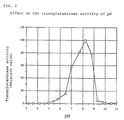
- the pH range suitable for the TG of the present invention is from about 7 to about 9, strictly from about 7.7 to about 8.8 (see Fig. 2.).
- the pH range suitable for the Bacillus subtilis -derived TG as reported by the group of the New Mexico State University is 9.5 or higher. Therefore, the TG as reported by them is obviously different from the bacillus-derived TG of the present invention.
- the temperature-dependent variation in the enzymatic activity of the TG was measured according to the method mentioned below, from which the temperature range suitable for the TG was determined.
- TG activity employed was the above-mentioned method of using 14 C-labeled putrescine and dimethylcasein as the substrates. Concretely, the pH of the reaction system was adjusted to 7.5, using 0.1 M Tris-HCl. As the enzyme source, the previously-prepared pure TG fraction was added to the reaction system at a concentration of 2 ⁇ g/ml. The reaction system was reacted for 30 minutes in a bath at temperatures varying from 25°C to 80°C.
- the temperature range suitable for the TG of the present invention is from about 40°C to about 65°C, more strictly from about 50°C to about 62°C (see Fig. 3).
- the temperature-dependent stability of the TG of the invention was measured according to the method mentioned below.
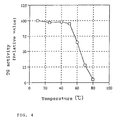
- the previously-prepared pure TG fraction was reacted for 10 minutes in a bath at temperatures varying from 10°C to 80°C. After this, the TG activity in each system was measured in the same manner as in Example 2. The relative values of the enzymatic activity were measured in accordance with the varying reaction temperatures. The highest TG activity as shown by the reaction system was referred to as a standard of 100. The results are shown in Fig. 4.
- TG of the present invention is stable at temperatures not higher than about 60°C (see Fig. 4).
- the protein-crosslinking activity of the TG of the invention was measured according to the method mentioned below.
- a reaction system comprising ⁇ -casein at a final concentration of 1 mg/ml, 0.1 M Tris-HCl (pH 7.5), 5 mM dithiothreitol and 5 mM sodium azide was prepared.
- the ⁇ -casein used herein was a commercial product produced by Sigma Co. To this system, added was the previously-prepared pure TG fraction at a final concentration of 440 ⁇ g/ml.
- the reaction system was reacted for 18 hours in a bath at 37°C.
- the thus-reacted system was subjected to SDS-PAGE, which gave an additional band at a higher polymer side in addition to the band for the substrate, ⁇ -casein. This indicates the cross-linking polymerization of ⁇ -casein.
- the results are shown in Fig. 5.
- NEM N-ethylmaleimide
- PMSF phenylmethanesulfonyl fluoride
- ammonium sulfate sodium sulfate
- EDTA EDTA
- EGTA calcium chloride
- DTT dithiothreitol
- 2-ME 2-mercaptoethanol
- the previously-prepared pure TG fraction was used at a concentration of 2 ⁇ g/ml.
- the protein concentration was measured, using a protein assay kit (produced by Bio Rad Co.).
- TG activity employed was the above-mentioned method of using 14 C-labeled putrescine and dimethylcasein as the substrates (at pH of 7.5 and at 37°C).
- the enzyme source the previously-prepared pure TG fraction was used at a concentration of 2 ⁇ g/ml. The reaction was conducted at 37°C for 30 minutes.
- the TG activity was measured in the following manner.
- the above-mentioned pure TG fraction was mixed with each one of the reagents that had been adjusted to have a suitable concentration and then left on ice for 30 minutes.
- the solution of the enzyme source thus reacted with each reagent was adjusted to have a TG concentration of 2 ⁇ g/ml and then reacted with the substrates, whereupon the TG activity still remained in the resulting reaction system was measured (at pH of 7.5 and at 37°C).
- the TG activity of the TG fraction that had not been reacted with any one of the reagents was referred to as 100 (as control), and the TG activity as remained in the reaction system that had been reacted with each reagent was obtained as a relative value to the control.
- the results are shown in Table 1 below.
- the TG activity of the TG of the present invention was inhibited by NEM, while it was not inhibited by the reducing agents of DTT and 2-ME but was rather enhanced by these in some degree. These results suggest the probability that the cysteine residue will participate in the expression of the TG activity.
- the TG of the present invention was not inhibited by DTT, while the Bacillus subtilis -derived TG as reported by the group of the New Mexico State University is known to have been inhibited by DTT. That is, the both TGs have obviously different properties.
- the TG of the present invention was not inhibited by sodium sulfate but was inhibited by ammonium sulfate and cystamine. Accordingly, it has been clarified that the TG of the present invention is characterized in that its activity is inhibited in reaction systems containing some amines.
- the TG of the present invention was not inhibited by the chelating agents of EGTA and EDTA. In view of this property of it, the TG of the present invention is different from the TG as reported by the group of the New Mexico State University. In other words, it shall be said that the TG of the present invention does not have the property of requiring metal ions such as Ca 2+ , etc.
- the reaction systems containing the TG of the present invention, which were used herein for measuring the TG activity did not contain Ca 2+ , and the TG of the present invention exhibited the TG activity in these Ca 2+ -free reaction systems. From the results, it shall be concluded that the TG of the present invention is independent of Ca 2+ .
- the TG of the present invention maintained the TG activity of not less than 50 % in the presence of Ca 2+ of not less than 5 mM.
- the TG of the present invention is different from the TG as reported by the group of the New Mexico State University in that the latter is known to have been greatly inhibited by Ca 2+ of 5 mM or more (see Table 1).
- TG derived from Bacillus subtilis AJ12866 strain was purified, and its properties were determined.
- the Schaeffer's media used had a composition comprising 8 g/liter of Bacto-nutrient broth, 1 g/liter of KCl, 0.12 g/liter of MgSO 4 ⁇ 7H 2 O, 1 mM of CaCl 2 , 10 ⁇ M of MnCl 2 and 1 ⁇ M of FeSO 4 and had pH of 7.0.
- the culture was centrifuged at 10,000 x g for 20 minutes to separate the precipitate from the supernatant.
- the precipitate was ground, using glass beads.
- the TG activity of each of the culture supernatant, the culture precipitate and the ground precipitate liquid (cell debris liquid) was measured.
- the method for measuring the enzymatic activity as employed herein was as follows. 50 ⁇ l of a reaction system (100 mM Tris-HCl, pH 7.5, 6.3 mg/ml dimethylcasein, 10 nM 14 C-putrescine, 1.2 ⁇ Ci) containing 10 ⁇ l of the enzyme sample to be measured was kept at 37°C for 30 minutes thereby to make the substrates reacted. After the reaction, 40 ⁇ l of the reaction mixture was adsorbed onto filter paper.
- the putrescine was reacted with the dimethylcasein due to the catalysis of the TG therein.
- a bonded reaction product of the putrescine and the dimethylcasein was adsorbed on the filter paper.
- the bonded reaction product was fixed on the filter paper.
- the filter paper was washed three times with a 5 % TCA solution, and the 14 C radioactivity as fixed to the filter paper was counted with a liquid scintillation counter. The value thus measured corresponds to the relative TG activity of the enzyme sample.
- Table 2 The results obtained are shown in Table 2 below.
- Example 6 Cells of Bacillus subtilis AJ12866 strain were incubated in the same manner as in Example 6, while the TG activity of the cell debris suspension as sampled was measured at given intervals.
- the degree of growth of the cells of Bacillus subtilis AJ12866 being incubated was represented by the degree of turbidity of the culture.
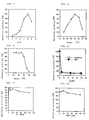
- a ray having a wavelength of 610 nm was applied to the culture and the absorbance of the ray was measured. The results obtained are shown in Fig. 6.
- the TG activity of the culture began to increase after the growth of the cells therein reached the stage of stationary phase and the cells began to form their spores (about 4 hours after the start of the incubation).
- the cells of Bacillus subtilis AJ12866 strain were suspended in a reaction system (0.5 mg/ml lysozyme, 20 ⁇ g/ml DNase I, 0.1 M Tris-HCl (pH 7.5), 2 mM DTT, 1 mM EDTA, 2 mM PMSF) and reacted on ice for 2 hours whereby the cells were lysed.
- the resulting reaction mixture was centrifuged at 20,000 x g for 20 minutes, and the precipitate fraction thus obtained was suspended in a washing system (0.1 M Tris-HCl (pH 7.5), 1 mM EDTA, 2 mM PMSF).
- the resulting suspension was centrifuged, and the precipitate was collected. This operation was repeated for a total of two times.
- the thus-obtained precipitate fraction was suspended in a buffer (0.1 M sodium carbonate (pH 10), 1 mM EDTA, 2 mM PMSF) and left at 37°C for 30 minutes. Meanwhile, a part of the substances that had existed in the precipitate fraction were dissolved in the buffer and the TG activity was transferred to the soluble fraction. This was then centrifuged and the resulting supernatant exhibited TG activity. The pH of the supernatant was adjusted to 6.0 by adding acetic acid thereto. This is referred to as a crude enzyme liquid. The crude enzyme liquid was concentrated by ultrafiltration and then dialyzed against a buffer (50 mM Tris-HCl (pH 7.5), 0.1 M NaCl), whereby the buffer was exchanged. The resulting crude enzyme liquid was subjected to gel permeation, and the TG active fraction thus eluted was collected. The enzymatic properties of the fraction were measured.
- a buffer 0.1 M sodium carbonate (pH 10), 1 mM
- the pH range suitable for the TG was from about 7 to about 9 (see Fig. 7).
- the temperature range suitable for the TG was from about 40°C to about 65°C (see Fig. 8).
- the TG was stable at about 60°C or lower (see Fig. 9).
- the TG was greatly inhibited by cystamine, NEM and (NH 4 ) 2 SO 4 (see Fig. 10 and Table 3).
- the TG activity was not inhibited by DTT but rather increased by about 1.5 times or more in the presence of 1 mM of DTT (see Fig. 11).
- the TG activity was not inhibited by Ca 2+ of 5 mM or more.
- the expression of the TG activity does not require the presence of Ca 2+ ions.
- the TG is independent of Ca 2+ (see Fig. 13).
- the TG had a molecular weight of (a) from about 18,000 to about 22,000 (as measured by gel permeation) and (b) from about 28,000 to about 30,000 (as measured by SDS-PAGE).
- the amino acid sequence of the TG near its N-terminal or, namely, the amino acid sequence thereof of 35 residues from its N-terminal was determined.
- the AJ1307-derived TG has asparagine residue at the 22nd amino acid residue, while the AJ12866-derived TG has aspartic acid residue at the 22nd amino acid residue.
- the TG active fraction as obtained after the gel permeation in Example 8 was mixed with a 10 % casein solution (25 mM Tris-HCl (pH 7.5), 5 mM DTT) at a ratio of 1:9 and reacted at 37°C for 24 hours. After the reaction, the solution was gelled.
- a 10 % casein solution 25 mM Tris-HCl (pH 7.5), 5 mM DTT
- Example 2 The pure TG as obtained in Example 1 was added to a 7 % gelatin solution at a concentration of 2 units/g-protein and reacted at 35°C for 2 hours. After the reaction, the gelatin protein solution was gelled.
- the amino acid sequence of the TG was back-translated on the basis of the universal codon, from which the base sequence that codes for the amino acid sequence was deduced. Then, the base sequence was checked as to whether or not it is homologous to any base sequences of known nucleic acids. The results revealed the presence of high homology of the former to one base sequence as registered in GenBank (LASL-GDB).
- GenBank GenBank
- the base sequence that was found herein to be homologous to the base sequence of the TG of the invention has an accession number of L29189, and its source is D.W. Hanlon & G.W. Ordal, J. Biol. Chem., Vol. 269, pp. 14038-14046 (1994).
- sequence composed of 68 base pairs might be a part of the gene that codes for the bacillus-derived TG of the invention, and isolated the whole length of the gene.
- the base sequence of Primer S1 is complementary to the region of from the 566th guanosine residue to the 600th adenosine residue in the base sequences of the above-mentioned genes that code for the transmembrane receptor of Bacillus subtilis .
- the PCR reaction was conducted for a total of 30 cycles under the conditions mentioned below, using GeneAmp PCR System 9600 (produced by Perkin Elmer Co.).
- the reaction mixture was diluted to 1/100, to which were added Primer C2 and Primer S2 for the 2nd PCR.
- the conditions for the 2nd PCR were the same as those for the 1st PCR.
- the base sequence of Primer C2 and that of Primer S2 correspond to Sequence Number 5 and Sequence Number 6, respectively, in Sequence List.
- Primer C2 is contained in the TaKaRa LA PCR in vitro Cloning Kit used, of which the base sequence is within the base sequence of the Hin d III cassette.
- the base sequence of Primer S2 is complementary to the region of from the 34th thymidine residue to the 68th thymidine residue in the base sequences of the above-mentioned genes that code for the transmembrane receptor of Bacillus subtilis .
- the PCR-amplified DNA fragment of about 2 kb was cloned by ligating it with pUC18.
- the cloning was conducted using Sure Clone Ligation Kit (produced by Pharmacia Co.). Unless otherwise specifically indicated hereinunder, the following experiments were carried out according to the method as instructed in the specification attached to the kit. 400 ng of the thus-amplified DNA fragment of about 2 kb were processed to make the both ends thereof blunt, and then phosphorylated. After the phosphorylation, the DNA fragment was purified and then ligated with pUC18 that had been digested with Sma I. Using the reaction liquid thus containing the ligated DNA fragment, cells of Escherichia coli were transformed with the DNA.
- JM109 transformants as intentionally transformed with the pUC18 containing the DNA fragment of about 2 kg were selected by screening.
- For the screening referred to was the screening method described in Molecular Cloning, 2nd Edition, Cold Spring Harbor Press (1989).
- the plasmid which the screened transformants had was prepared in accordance with the method described in Molecular Cloning, 2nd Edition, Cold Spring Harbor Press (1989), from which the base sequence of the amplified DNA fragment of about 2 kb was determined.
- the sequencing was conducted, using Dye Terminator Cycle Sequencing Kit (produced by ABI Co.) and according to the method as instructed in the specification attached to the kit.
- the electrophoresis was conducted, using DNA Sequencer 373 (produced by ABI Co.).
- the region of from 118th adenosine residue to the 852th cytosine residue is the open reading frame.
- the amino acid sequence of the polypeptide which the ORF codes for can be presumed on the basis of the universal codon. The amino acid sequence in question is shown hereinunder along with the base sequence of Sequence Number 2.
- the region of from its N-terminal to the 35th amino acid residue is entirely the same as the amino acid sequence composed of 35 amino acid residues as referred to in the previous process (1). This concludes that the PCR-amplified DNA fragment is the intended bacillus-derived TG gene.
- pBSTG75-11 The plasmid having the bacillus-derived TG gene as inserted thereinto in the direction in which the pUC18-derived lac promoter acts on the gene for transcription is referred to as pBSTG75-11.
- telomere As the probe, used was the whole length of the TG gene as obtained in Example 1. Using pBSTG75-11 as the template, this was subjected to PCR with Primer S2 and Primer S3. The PCR was conducted, using TaKaRa LA PCR Kit Ver. 2.
- Primer S3 is a 35-mer that is complementary to the region of 35 bases of from 818th base to the 852nd base of the base sequence (Sequence Number 2) of the TG gene, and its base sequence corresponds to Sequence Number 7 in Sequence List.
- the PCR was conducted for a total of 30 cycles under the following conditions. One PCR cycle: 94°C, 30 seconds 55°C, 30 seconds 72°C, one minute
- the DNA fragment thus amplified by the above-mentioned reaction was separated by electrophoresis with 1 % agarose gel (Seaplaque GTG, produced by FMC Co.). The intended band was cut out, and the DNA was purified therefrom, using Easy Prep System (produced by Pharmacia Co.) and PCR Products Prep Kit (produced by Pharmacia Co.). Thus finally, 200 ⁇ l of a DNA (4 ng/ ⁇ l) solution was obtained.
- the DNA fragment was labeled with 32 P and used as the probe.
- the probe was labeled with [ ⁇ - 32 P]dCTP (3000 Ci/mmol) (produced by Amersham Co.), in accordance with the method as instructed in the specification attached to the kit.
- Colonies of the chromosome DNA library were transferred onto a nylon membrane filter (Hybond-N, produced by Amersham Co.), which was then alkali-denatured, neutralized and fixed.
- the hybridization was conducted, using Rapid-hyb Buffer (produced by Amersham Co.). Concretely, the filter was dipped in the buffer and subjected to prehybridization at 65°C for 4 hours. After this, the labeled probe as prepared in the previous process (2) was added to the buffer, in which the hybridization was conducted at 65°C for 2 hours. Next, the filter was washed with 2 x SSC containing 0.1 % SDS at room temperature for 20 minutes. Further, this was washed twice with 0.1 x SSC containing 0.1 % SDS at 65°C for 15 minutes.
- the novel TG of the present invention is advantageous in that (1) it does not require calcium, being different from any other animal-derived TGs, and therefore its use is not limited and it can be produced at low costs and that (2) the bacilli which produce the TG of the present invention grow faster than ray fungi and therefore the bacillus-derived TG can be produced at lower costs than the ray fungus-derived TG.
- the TG of the present invention is different from the TG as reported by the group of the New Mexico State University, in that (1) the activity of the former is not inhibited by Ca 2+ of 5 mM or more, (2) the pH range suitable for the former falls from neutral to weak alkaline, (3) the former is not inhibited by DTT, (4) the former is not inhibited by chelating agents such as EGTA, etc., and (5) the former is produced by bacilli only at the stage of their sporulation.
- the TG of the present invention can be used for producing crosslinked polymer substances, it can be applied to the industrial production of various foods.
Landscapes
- Life Sciences & Earth Sciences (AREA)
- Health & Medical Sciences (AREA)
- Chemical & Material Sciences (AREA)
- Engineering & Computer Science (AREA)
- Genetics & Genomics (AREA)
- Organic Chemistry (AREA)
- Zoology (AREA)
- Wood Science & Technology (AREA)
- Bioinformatics & Cheminformatics (AREA)
- Biomedical Technology (AREA)
- General Engineering & Computer Science (AREA)
- Biotechnology (AREA)
- Molecular Biology (AREA)
- Microbiology (AREA)
- Biochemistry (AREA)
- General Health & Medical Sciences (AREA)
- Medicinal Chemistry (AREA)
- Plant Pathology (AREA)
- Biophysics (AREA)
- Physics & Mathematics (AREA)
- Chemical Kinetics & Catalysis (AREA)
- General Chemical & Material Sciences (AREA)
- Micro-Organisms Or Cultivation Processes Thereof (AREA)
- Enzymes And Modification Thereof (AREA)
- Preparation Of Compounds By Using Micro-Organisms (AREA)
Applications Claiming Priority (9)
| Application Number | Priority Date | Filing Date | Title |
|---|---|---|---|
| JP2196395 | 1995-02-09 | ||
| JP2196395 | 1995-02-09 | ||
| JP21963/95 | 1995-02-09 | ||
| JP226316/95 | 1995-09-04 | ||
| JP22631695 | 1995-09-04 | ||
| JP22631695 | 1995-09-04 | ||
| JP01307296A JP3669390B2 (ja) | 1995-02-09 | 1996-01-29 | バチルス属細菌由来のトランスグルタミナーゼ |
| JP13072/96 | 1996-01-29 | ||
| JP1307296 | 1996-01-29 |
Publications (3)
| Publication Number | Publication Date |
|---|---|
| EP0726317A2 true EP0726317A2 (de) | 1996-08-14 |
| EP0726317A3 EP0726317A3 (de) | 1999-06-09 |
| EP0726317B1 EP0726317B1 (de) | 2007-05-02 |
Family
ID=27280100
Family Applications (1)
| Application Number | Title | Priority Date | Filing Date |
|---|---|---|---|
| EP96101905A Expired - Lifetime EP0726317B1 (de) | 1995-02-09 | 1996-02-09 | Aus Bacillus stammende Transglutaminase |
Country Status (9)
| Country | Link |
|---|---|
| US (2) | US5731183A (de) |
| EP (1) | EP0726317B1 (de) |
| JP (1) | JP3669390B2 (de) |
| KR (1) | KR100358824B1 (de) |
| AT (1) | ATE361366T1 (de) |
| AU (1) | AU691714B2 (de) |
| CA (1) | CA2169249A1 (de) |
| DE (1) | DE69637054T2 (de) |
| TW (1) | TW403785B (de) |
Cited By (12)
| Publication number | Priority date | Publication date | Assignee | Title |
|---|---|---|---|---|
| WO1999051723A3 (de) * | 1998-04-02 | 2000-03-16 | Fuchsbauer Hans Lothar | Bakterielle transglutaminasen |
| EP1001992A2 (de) * | 1997-07-30 | 2000-05-24 | Hans-Lothar Fuchsbauer | Verfahren zum transglutaminase-katalysierten koppeln von protein oder peptid an einen träger |
| WO2000058450A1 (de) * | 1999-03-31 | 2000-10-05 | Norbert Hampp | Linkerfreie kovalente kopplung von bakteriorhodopsin in purpurmembran-form |
| WO2010125163A1 (en) * | 2009-04-29 | 2010-11-04 | Dynea Oy | Composite material comprising crosslinkable resin of proteinous material |
| CN101984052A (zh) * | 2010-12-09 | 2011-03-09 | 江南大学 | 一种谷氨酰胺转胺酶的分离纯化方法 |
| WO2012172179A1 (en) * | 2011-06-16 | 2012-12-20 | Valio Ltd | Cheese and preparing the same |
| US9078447B2 (en) | 2007-09-20 | 2015-07-14 | Bayer Cropscience Lp | Combinations comprising a fungicidal strain and an active compound |
| CN105754892A (zh) * | 2016-02-01 | 2016-07-13 | 华东师范大学 | 一种微生物谷氨酰胺转氨酶的分离纯化方法 |
| US9636433B2 (en) | 2006-12-15 | 2017-05-02 | Lifebond Ltd | Gelatin-transglutaminase hemostatic dressings and sealants |
| US10202585B2 (en) | 2009-12-22 | 2019-02-12 | Lifebond Ltd | Modification of enzymatic crosslinkers for controlling properties of crosslinked matrices |
| US11590747B2 (en) | 2016-05-13 | 2023-02-28 | Rockwool International A/S | Method of producing a mineral wool product comprising a multiple of lamellae and a product of such kind |
| US11998654B2 (en) | 2018-07-12 | 2024-06-04 | Bard Shannon Limited | Securing implants and medical devices |
Families Citing this family (48)
| Publication number | Priority date | Publication date | Assignee | Title |
|---|---|---|---|---|
| JP3684577B2 (ja) | 1995-06-08 | 2005-08-17 | 味の素株式会社 | トランスグルタミナーゼ産生微生物のスクリーニング方法 |
| JP3635801B2 (ja) * | 1996-08-01 | 2005-04-06 | 味の素株式会社 | 乳ホエイ蛋白含有粉末及びこれを使用した加工食品 |
| DE69822251T2 (de) * | 1997-07-04 | 2005-01-27 | Ajinomoto Co., Inc. | Verfahren zur Herstellung von mikrobieller Transglutaminase |
| US6821763B2 (en) * | 1997-07-04 | 2004-11-23 | Ajinomoto Co., Inc. | Process for producing microbial transglutaminase |
| US6093424A (en) * | 1999-04-27 | 2000-07-25 | Kraft Foods, Inc. | Process for making cheese using transglutaminase and a non-rennet protease |
| US6251445B1 (en) | 1999-05-19 | 2001-06-26 | Kraft Foods, Inc. | Method for producing enzyme-modified cheese flavorings |
| US6270814B1 (en) | 1999-06-03 | 2001-08-07 | Kraft Foods, Inc. | Incorporation of whey into process cheese |
| US6224914B1 (en) | 1999-06-03 | 2001-05-01 | Kraft Foods, Inc. | Process for incorporating whey proteins into cheese using transglutaminase |
| AU776775B2 (en) | 1999-09-17 | 2004-09-23 | Ajinomoto Co., Inc. | Salting agent for food processing |
| KR20010078440A (ko) * | 2001-01-11 | 2001-08-21 | 김형순,성문희 | 고분자량의 폴리-감마-글루탐산을 생산하는 내염성 균주바실러스 서브틸리스 청국장 |
| US6416797B1 (en) | 2001-02-14 | 2002-07-09 | Kraft Foods Holdings, Inc. | Process for making a wheyless cream cheese using transglutaminase |
| US6572901B2 (en) | 2001-05-02 | 2003-06-03 | Kraft Foods Holdings, Inc. | Process for making a cheese product using transglutaminase |
| ES2223227B1 (es) * | 2002-05-31 | 2006-04-16 | Consejo Sup. Investig. Cientificas | Secuencia de nucleotidos de maiz codificante de una proteina con actividad transglutaminasa, y su uso. |
| KR100399091B1 (en) * | 2002-07-10 | 2003-09-22 | Bioleaders Corp | Macromolecular weight poly(gamma-glutamic acid) and its use |
| US7069233B2 (en) * | 2002-12-31 | 2006-06-27 | Bracken Foster & Associates, Llc | System and method for identification and notification of elevated over-the-counter medication sales with response coordination |
| US6908634B2 (en) * | 2003-03-20 | 2005-06-21 | Solae, Llc | Transglutaminase soy fish and meat products and analogs thereof |
| ES2642214T3 (es) | 2004-01-21 | 2017-11-15 | Novo Nordisk Health Care Ag | Conjugación de péptidos mediante transglutaminasa |
| KR100517114B1 (ko) * | 2005-02-25 | 2005-09-27 | 주식회사 바이오리더스 | 폴리감마글루탐산을 함유하는 면역보강제 조성물 |
| EP2543394A1 (de) * | 2008-06-18 | 2013-01-09 | Lifebond Ltd | Verfahren zur enzymatischen Vernetzung eines Proteins |
| WO2009153748A2 (en) * | 2008-06-18 | 2009-12-23 | Lifebond Ltd | Methods and devices for use with sealants |
| EP2487206A3 (de) | 2008-06-18 | 2012-11-28 | Lifebond Ltd | Vernetzbare Gelatine-Zusammensetzungen |
| MX2011000847A (es) * | 2008-08-06 | 2011-02-25 | Novo Nordisk Healthcare Ag | Proteinas conjugadas con eficacia prolongada in vivo. |
| MX2011007736A (es) | 2009-01-22 | 2011-09-06 | Novo Nordisk Healthcare Ag | Compuestos de hormona del crecimiento estables. |
| ES2401965T3 (es) | 2009-02-19 | 2013-04-25 | Novo Nordisk A/S | Modificación de Factor VIII |
| US20100316764A1 (en) * | 2009-06-10 | 2010-12-16 | Engrain, LLC | Flour supplement compositions and methods for preparing wheat flour |
| WO2011015649A1 (en) | 2009-08-06 | 2011-02-10 | Novo Nordisk Health Care Ag | Growth hormones with prolonged in-vivo efficacy |
| RS59459B1 (sr) | 2010-01-22 | 2019-11-29 | Novo Nordisk Healthcare Ag | Hormoni rasta sa produženom in-vivo efikasnošću |
| MX338357B (es) | 2010-01-22 | 2016-04-13 | Novo Nordisk Healthcare Ag | Compuestos estables de la hormona de crecimiento. |
| ITPD20100155A1 (it) | 2010-05-19 | 2011-11-20 | Univ Padova | Metodo per la preparazione di coniugati mediante transglutaminasi |
| US8961544B2 (en) | 2010-08-05 | 2015-02-24 | Lifebond Ltd. | Dry composition wound dressings and adhesives comprising gelatin and transglutaminase in a cross-linked matrix |
| CN102146361B (zh) * | 2011-02-01 | 2013-06-19 | 泰兴市一鸣生物制品有限公司 | 一种分离纯化谷氨酰胺转胺酶的方法 |
| EP2793947B1 (de) | 2011-12-23 | 2021-02-03 | Innate Pharma | Enzymatische konjugation von polypeptiden |
| US10132799B2 (en) | 2012-07-13 | 2018-11-20 | Innate Pharma | Screening of conjugated antibodies |
| EP3564259A3 (de) | 2012-11-09 | 2020-02-12 | Innate Pharma | Kennungen für tgase-vermittelte konjugation |
| US10611824B2 (en) | 2013-03-15 | 2020-04-07 | Innate Pharma | Solid phase TGase-mediated conjugation of antibodies |
| US11045523B2 (en) | 2013-04-05 | 2021-06-29 | Novo Nordisk Healthcare Ag | Formulation of growth hormone albumin-binder conjugate |
| EP3010547B1 (de) | 2013-06-20 | 2021-04-21 | Innate Pharma | Enzymatische konjugation von polypeptiden |
| CN105517577A (zh) | 2013-06-21 | 2016-04-20 | 先天制药公司 | 多肽的酶促偶联 |
| AU2014286990A1 (en) | 2013-07-11 | 2016-02-11 | Novartis Ag | Lysine-specific chemoenzymatic protein modifications using microbial transglutaminase |
| WO2015191883A1 (en) | 2014-06-12 | 2015-12-17 | Dophen Biomedical | Homogenous antibody drug conjugates via enzymatic methods |
| EP3419670A2 (de) | 2016-02-26 | 2019-01-02 | Regeneron Pharmaceuticals, Inc. | Optimierte ortsspezifische transglutaminase-antikörperkonjugation |
| WO2019092148A1 (en) | 2017-11-10 | 2019-05-16 | Innate Pharma | Antibodies with functionalized glutamine residues |
| CN111349594A (zh) * | 2018-12-21 | 2020-06-30 | 南京百斯杰生物工程有限公司 | 一株能够生产谷氨酰胺转氨酶的菌株 |
| EP3986917A1 (de) | 2019-06-20 | 2022-04-27 | CSPC Megalith Biopharmaceutical Co., Ltd. | Modifizierte il-2 proteine, peg-konjugate und deren verwendungen |
| JP2025505835A (ja) | 2022-02-22 | 2025-02-28 | アーデーセー セラピューティクス ソシエテ アノニム | トリミングされたn-グリカンを含むfc領域でのトランスグルタミナーゼを伴うコンジュゲーション方法 |
| CN117063780B (zh) * | 2023-10-17 | 2023-12-26 | 四川朕源生物科技有限公司 | 一种冬虫夏草子囊孢子采收培养基及其采收方法 |
| EP4541376A1 (de) | 2023-10-17 | 2025-04-23 | ADC Therapeutics SA | Antikörper-wirkstoff-konjugate |
| US20250186604A1 (en) | 2023-12-06 | 2025-06-12 | Adc Therapeutics Sa | Anti-psma antibody conjugates |
Family Cites Families (4)
| Publication number | Priority date | Publication date | Assignee | Title |
|---|---|---|---|---|
| JPH0665280B2 (ja) * | 1987-03-04 | 1994-08-24 | 味の素株式会社 | タンパクゲル化剤及びそれを用いるタンパクのゲル化方法 |
| EP0481504B1 (de) * | 1990-10-19 | 1996-01-17 | Amano Pharmaceutical Co., Ltd. | Rekombinante Transglutaminase |
| US5736356A (en) * | 1994-01-28 | 1998-04-07 | Ajinomoto Co., Inc. | Transglutaminase originating from Crassostrea gigas |
| NZ291414A (en) * | 1994-08-26 | 1998-05-27 | Novo Nordisk As | Microbial transglutaminases and methods of production using fungi and dna constructs |
-
1996
- 1996-01-29 JP JP01307296A patent/JP3669390B2/ja not_active Expired - Fee Related
- 1996-02-07 AU AU43371/96A patent/AU691714B2/en not_active Ceased
- 1996-02-09 CA CA002169249A patent/CA2169249A1/en not_active Abandoned
- 1996-02-09 AT AT96101905T patent/ATE361366T1/de not_active IP Right Cessation
- 1996-02-09 EP EP96101905A patent/EP0726317B1/de not_active Expired - Lifetime
- 1996-02-09 KR KR1019960003112A patent/KR100358824B1/ko not_active Expired - Fee Related
- 1996-02-09 US US08/596,864 patent/US5731183A/en not_active Expired - Lifetime
- 1996-02-09 DE DE69637054T patent/DE69637054T2/de not_active Expired - Lifetime
- 1996-03-12 TW TW085102984A patent/TW403785B/zh not_active IP Right Cessation
-
1997
- 1997-12-12 US US08/989,667 patent/US5948662A/en not_active Expired - Lifetime
Cited By (24)
| Publication number | Priority date | Publication date | Assignee | Title |
|---|---|---|---|---|
| EP1001992A2 (de) * | 1997-07-30 | 2000-05-24 | Hans-Lothar Fuchsbauer | Verfahren zum transglutaminase-katalysierten koppeln von protein oder peptid an einen träger |
| WO1999051723A3 (de) * | 1998-04-02 | 2000-03-16 | Fuchsbauer Hans Lothar | Bakterielle transglutaminasen |
| WO2000058450A1 (de) * | 1999-03-31 | 2000-10-05 | Norbert Hampp | Linkerfreie kovalente kopplung von bakteriorhodopsin in purpurmembran-form |
| US6927050B1 (en) | 1999-03-31 | 2005-08-09 | Norbert Hampp | Linker-free covalent coupling of bacteriorhodopsin in purple membrane form |
| US9655988B2 (en) | 2006-12-15 | 2017-05-23 | Lifebond Ltd | Gelatin-transglutaminase hemostatic dressings and sealants |
| US9636433B2 (en) | 2006-12-15 | 2017-05-02 | Lifebond Ltd | Gelatin-transglutaminase hemostatic dressings and sealants |
| US9078447B2 (en) | 2007-09-20 | 2015-07-14 | Bayer Cropscience Lp | Combinations comprising a fungicidal strain and an active compound |
| CN102459320A (zh) * | 2009-04-29 | 2012-05-16 | 太尔公司 | 包含可交联蛋白材料树脂的复合材料 |
| CN102459320B (zh) * | 2009-04-29 | 2015-04-01 | 太尔公司 | 包含可交联蛋白材料树脂的复合材料 |
| WO2010125163A1 (en) * | 2009-04-29 | 2010-11-04 | Dynea Oy | Composite material comprising crosslinkable resin of proteinous material |
| US10202585B2 (en) | 2009-12-22 | 2019-02-12 | Lifebond Ltd | Modification of enzymatic crosslinkers for controlling properties of crosslinked matrices |
| CN101984052A (zh) * | 2010-12-09 | 2011-03-09 | 江南大学 | 一种谷氨酰胺转胺酶的分离纯化方法 |
| CN101984052B (zh) * | 2010-12-09 | 2012-09-26 | 江南大学 | 一种谷氨酰胺转胺酶的分离纯化方法 |
| AU2012270301B2 (en) * | 2011-06-16 | 2016-02-04 | Valio Ltd | Cheese and preparing the same |
| CN103607901A (zh) * | 2011-06-16 | 2014-02-26 | 维利奥有限公司 | 干酪及其制备 |
| US10080374B2 (en) | 2011-06-16 | 2018-09-25 | Valio Ltd. | Cheese and preparing the same |
| WO2012172179A1 (en) * | 2011-06-16 | 2012-12-20 | Valio Ltd | Cheese and preparing the same |
| CN105754892A (zh) * | 2016-02-01 | 2016-07-13 | 华东师范大学 | 一种微生物谷氨酰胺转氨酶的分离纯化方法 |
| CN105754892B (zh) * | 2016-02-01 | 2019-09-06 | 华东师范大学 | 一种微生物谷氨酰胺转氨酶的分离纯化方法 |
| US11590747B2 (en) | 2016-05-13 | 2023-02-28 | Rockwool International A/S | Method of producing a mineral wool product comprising a multiple of lamellae and a product of such kind |
| US11865826B2 (en) | 2016-05-13 | 2024-01-09 | Rockwool A/S | Method of producing a mineral wool product comprising a multiple of lamellae and a product of such kind |
| US12070929B2 (en) | 2016-05-13 | 2024-08-27 | Rockwool A/S | Mineral wool product |
| US12502879B2 (en) | 2016-05-13 | 2025-12-23 | Rockwool A/S | Binder composition |
| US11998654B2 (en) | 2018-07-12 | 2024-06-04 | Bard Shannon Limited | Securing implants and medical devices |
Also Published As
| Publication number | Publication date |
|---|---|
| JPH09131180A (ja) | 1997-05-20 |
| EP0726317A3 (de) | 1999-06-09 |
| AU4337196A (en) | 1996-08-15 |
| US5948662A (en) | 1999-09-07 |
| US5731183A (en) | 1998-03-24 |
| DE69637054D1 (de) | 2007-06-14 |
| KR960031608A (ko) | 1996-09-17 |
| CA2169249A1 (en) | 1996-08-10 |
| TW403785B (en) | 2000-09-01 |
| DE69637054T2 (de) | 2007-12-27 |
| ATE361366T1 (de) | 2007-05-15 |
| KR100358824B1 (ko) | 2003-01-24 |
| JP3669390B2 (ja) | 2005-07-06 |
| EP0726317B1 (de) | 2007-05-02 |
| AU691714B2 (en) | 1998-05-21 |
Similar Documents
| Publication | Publication Date | Title |
|---|---|---|
| EP0726317B1 (de) | Aus Bacillus stammende Transglutaminase | |
| EP0777726B1 (de) | Mikrobielle transglutaminasen, ihre herstellung und ihre verwendung | |
| Suzuki et al. | Purification and characterization of novel transglutaminase from Bacillus subtilis spores | |
| EP0693556B1 (de) | Transglutominase aus japanischer auster | |
| KR20070034625A (ko) | 신규 펩타이드 신타제 유전자 | |
| EP0821064B1 (de) | Recombinante Fructosyl-Aminosäure-Oxidase | |
| Yohda et al. | Molecular cloning and nucleotide sequencing of the aspartate racemase gene from lactic acid bacteria Streptococcus thermophilus | |
| EP0739983A2 (de) | Für Lacto-N-biosidase kodierendes Gen | |
| CN100591757C (zh) | 转谷氨酰胺酶生产菌 | |
| EP1882740A1 (de) | N-Acetyl-(R,S)-B-Aminosäuren-Acylase-Gene | |
| Lu et al. | Purification and properties of transglutaminase from Streptoverticillium mobaraense | |
| Stelkes-Ritter et al. | Purification and characterization of a newly screened microbial peptide amidase | |
| US5756339A (en) | Hyperthermostable protease gene | |
| US6235516B1 (en) | Biocatalysts with amine acylase activity | |
| US5314819A (en) | Protein having nitrile hydratase activity obtained from rhizobium, gene encoding the same, and a method for producing amides from nitriles via a transformant containing the gene | |
| Cacciapuoti et al. | Heterologous Expression of 5′-Methylthioadenosine Phosphorylase from the ArchaeonSulfolobus solfataricus: Characterization of the Recombinant Protein and Involvement of Disulfide Bonds in Thermophilicity and Thermostability | |
| Kraiwattanapong et al. | Cloning and sequencing of a Deleya marina gene encoding for alginate lyase | |
| US6194190B1 (en) | Amino-terminal deblocking enzyme | |
| JPH05501651A (ja) | P.クリソゲナムから得られるオキシドリダクターゼ酵素系、それをコードする遺伝子のセットと、抗生物質を増産するためのオキシドリダクターゼ酵素系あるいはそれをコードする遺伝子の使用 | |
| Suzuki et al. | Purification and Properties of Thermostable Tryptophanase from an Obligately Symbiotic Thermophile, Symbiobactevium thermophilum | |
| JP4815568B2 (ja) | 好熱性プロリルエンドペプチダーゼ | |
| JP4069129B2 (ja) | 新規なアミダーゼ遺伝子 | |
| US20020115141A1 (en) | Method for improved production of cyanophycin and secondary products thereof | |
| JP3340658B2 (ja) | 新規な細胞内pha分解酵素 | |
| Bazukyan | Phenylalanine-Ammonia-Lyase |
Legal Events
| Date | Code | Title | Description |
|---|---|---|---|
| PUAI | Public reference made under article 153(3) epc to a published international application that has entered the european phase |
Free format text: ORIGINAL CODE: 0009012 |
|
| AK | Designated contracting states |
Kind code of ref document: A2 Designated state(s): AT BE CH DE DK ES FR GB GR IE IT LI LU MC NL PT SE |
|
| PUAL | Search report despatched |
Free format text: ORIGINAL CODE: 0009013 |
|
| AK | Designated contracting states |
Kind code of ref document: A3 Designated state(s): AT BE CH DE DK ES FR GB GR IE IT LI LU MC NL PT SE |
|
| 17P | Request for examination filed |
Effective date: 19991201 |
|
| 17Q | First examination report despatched |
Effective date: 20050316 |
|
| GRAP | Despatch of communication of intention to grant a patent |
Free format text: ORIGINAL CODE: EPIDOSNIGR1 |
|
| GRAS | Grant fee paid |
Free format text: ORIGINAL CODE: EPIDOSNIGR3 |
|
| GRAA | (expected) grant |
Free format text: ORIGINAL CODE: 0009210 |
|
| AK | Designated contracting states |
Kind code of ref document: B1 Designated state(s): AT BE CH DE DK ES FR GB GR IE IT LI LU MC NL PT SE |
|
| PG25 | Lapsed in a contracting state [announced via postgrant information from national office to epo] |
Ref country code: LI Free format text: LAPSE BECAUSE OF FAILURE TO SUBMIT A TRANSLATION OF THE DESCRIPTION OR TO PAY THE FEE WITHIN THE PRESCRIBED TIME-LIMIT Effective date: 20070502 Ref country code: CH Free format text: LAPSE BECAUSE OF FAILURE TO SUBMIT A TRANSLATION OF THE DESCRIPTION OR TO PAY THE FEE WITHIN THE PRESCRIBED TIME-LIMIT Effective date: 20070502 |
|
| REG | Reference to a national code |
Ref country code: GB Ref legal event code: FG4D |
|
| REG | Reference to a national code |
Ref country code: CH Ref legal event code: EP |
|
| REG | Reference to a national code |
Ref country code: IE Ref legal event code: FG4D |
|
| REF | Corresponds to: |
Ref document number: 69637054 Country of ref document: DE Date of ref document: 20070614 Kind code of ref document: P |
|
| PG25 | Lapsed in a contracting state [announced via postgrant information from national office to epo] |
Ref country code: SE Free format text: LAPSE BECAUSE OF FAILURE TO SUBMIT A TRANSLATION OF THE DESCRIPTION OR TO PAY THE FEE WITHIN THE PRESCRIBED TIME-LIMIT Effective date: 20070802 |
|
| PG25 | Lapsed in a contracting state [announced via postgrant information from national office to epo] |
Ref country code: ES Free format text: LAPSE BECAUSE OF FAILURE TO SUBMIT A TRANSLATION OF THE DESCRIPTION OR TO PAY THE FEE WITHIN THE PRESCRIBED TIME-LIMIT Effective date: 20070813 |
|
| ET | Fr: translation filed | ||
| NLV1 | Nl: lapsed or annulled due to failure to fulfill the requirements of art. 29p and 29m of the patents act | ||
| REG | Reference to a national code |
Ref country code: CH Ref legal event code: PL |
|
| PG25 | Lapsed in a contracting state [announced via postgrant information from national office to epo] |
Ref country code: AT Free format text: LAPSE BECAUSE OF FAILURE TO SUBMIT A TRANSLATION OF THE DESCRIPTION OR TO PAY THE FEE WITHIN THE PRESCRIBED TIME-LIMIT Effective date: 20070502 |
|
| PG25 | Lapsed in a contracting state [announced via postgrant information from national office to epo] |
Ref country code: BE Free format text: LAPSE BECAUSE OF FAILURE TO SUBMIT A TRANSLATION OF THE DESCRIPTION OR TO PAY THE FEE WITHIN THE PRESCRIBED TIME-LIMIT Effective date: 20070502 |
|
| PG25 | Lapsed in a contracting state [announced via postgrant information from national office to epo] |
Ref country code: PT Free format text: LAPSE BECAUSE OF FAILURE TO SUBMIT A TRANSLATION OF THE DESCRIPTION OR TO PAY THE FEE WITHIN THE PRESCRIBED TIME-LIMIT Effective date: 20071002 Ref country code: NL Free format text: LAPSE BECAUSE OF FAILURE TO SUBMIT A TRANSLATION OF THE DESCRIPTION OR TO PAY THE FEE WITHIN THE PRESCRIBED TIME-LIMIT Effective date: 20070502 Ref country code: DK Free format text: LAPSE BECAUSE OF FAILURE TO SUBMIT A TRANSLATION OF THE DESCRIPTION OR TO PAY THE FEE WITHIN THE PRESCRIBED TIME-LIMIT Effective date: 20070502 |
|
| PLBE | No opposition filed within time limit |
Free format text: ORIGINAL CODE: 0009261 |
|
| STAA | Information on the status of an ep patent application or granted ep patent |
Free format text: STATUS: NO OPPOSITION FILED WITHIN TIME LIMIT |
|
| 26N | No opposition filed |
Effective date: 20080205 |
|
| PG25 | Lapsed in a contracting state [announced via postgrant information from national office to epo] |
Ref country code: IT Free format text: LAPSE BECAUSE OF FAILURE TO SUBMIT A TRANSLATION OF THE DESCRIPTION OR TO PAY THE FEE WITHIN THE PRESCRIBED TIME-LIMIT Effective date: 20070502 Ref country code: GR Free format text: LAPSE BECAUSE OF FAILURE TO SUBMIT A TRANSLATION OF THE DESCRIPTION OR TO PAY THE FEE WITHIN THE PRESCRIBED TIME-LIMIT Effective date: 20070803 |
|
| PG25 | Lapsed in a contracting state [announced via postgrant information from national office to epo] |
Ref country code: MC Free format text: LAPSE BECAUSE OF NON-PAYMENT OF DUE FEES Effective date: 20080228 |
|
| PG25 | Lapsed in a contracting state [announced via postgrant information from national office to epo] |
Ref country code: IE Free format text: LAPSE BECAUSE OF NON-PAYMENT OF DUE FEES Effective date: 20080211 |
|
| PG25 | Lapsed in a contracting state [announced via postgrant information from national office to epo] |
Ref country code: LU Free format text: LAPSE BECAUSE OF NON-PAYMENT OF DUE FEES Effective date: 20080209 |
|
| PGFP | Annual fee paid to national office [announced via postgrant information from national office to epo] |
Ref country code: FR Payment date: 20130301 Year of fee payment: 18 Ref country code: GB Payment date: 20130207 Year of fee payment: 18 Ref country code: DE Payment date: 20130206 Year of fee payment: 18 |
|
| REG | Reference to a national code |
Ref country code: DE Ref legal event code: R119 Ref document number: 69637054 Country of ref document: DE |
|
| GBPC | Gb: european patent ceased through non-payment of renewal fee |
Effective date: 20140209 |
|
| REG | Reference to a national code |
Ref country code: FR Ref legal event code: ST Effective date: 20141031 |
|
| REG | Reference to a national code |
Ref country code: DE Ref legal event code: R119 Ref document number: 69637054 Country of ref document: DE Effective date: 20140902 |
|
| PG25 | Lapsed in a contracting state [announced via postgrant information from national office to epo] |
Ref country code: DE Free format text: LAPSE BECAUSE OF NON-PAYMENT OF DUE FEES Effective date: 20140902 Ref country code: GB Free format text: LAPSE BECAUSE OF NON-PAYMENT OF DUE FEES Effective date: 20140209 Ref country code: FR Free format text: LAPSE BECAUSE OF NON-PAYMENT OF DUE FEES Effective date: 20140228 |