EP0731397A1 - Methode und system zur optimierung der nützlichkeit einer anlage - Google Patents
Methode und system zur optimierung der nützlichkeit einer anlage Download PDFInfo
- Publication number
- EP0731397A1 EP0731397A1 EP95932239A EP95932239A EP0731397A1 EP 0731397 A1 EP0731397 A1 EP 0731397A1 EP 95932239 A EP95932239 A EP 95932239A EP 95932239 A EP95932239 A EP 95932239A EP 0731397 A1 EP0731397 A1 EP 0731397A1
- Authority
- EP
- European Patent Office
- Prior art keywords
- steam
- plant
- total
- physical amounts
- turbines
- Prior art date
- Legal status (The legal status is an assumption and is not a legal conclusion. Google has not performed a legal analysis and makes no representation as to the accuracy of the status listed.)
- Granted
Links
Images







Classifications
-
- F—MECHANICAL ENGINEERING; LIGHTING; HEATING; WEAPONS; BLASTING
- F01—MACHINES OR ENGINES IN GENERAL; ENGINE PLANTS IN GENERAL; STEAM ENGINES
- F01K—STEAM ENGINE PLANTS; STEAM ACCUMULATORS; ENGINE PLANTS NOT OTHERWISE PROVIDED FOR; ENGINES USING SPECIAL WORKING FLUIDS OR CYCLES
- F01K13/00—General layout or general methods of operation of complete plants
- F01K13/02—Controlling, e.g. stopping or starting
-
- G—PHYSICS
- G05—CONTROLLING; REGULATING
- G05B—CONTROL OR REGULATING SYSTEMS IN GENERAL; FUNCTIONAL ELEMENTS OF SUCH SYSTEMS; MONITORING OR TESTING ARRANGEMENTS FOR SUCH SYSTEMS OR ELEMENTS
- G05B13/00—Adaptive control systems, i.e. systems automatically adjusting themselves to have a performance which is optimum according to some preassigned criterion
-
- G—PHYSICS
- G05—CONTROLLING; REGULATING
- G05B—CONTROL OR REGULATING SYSTEMS IN GENERAL; FUNCTIONAL ELEMENTS OF SUCH SYSTEMS; MONITORING OR TESTING ARRANGEMENTS FOR SUCH SYSTEMS OR ELEMENTS
- G05B13/00—Adaptive control systems, i.e. systems automatically adjusting themselves to have a performance which is optimum according to some preassigned criterion
- G05B13/02—Adaptive control systems, i.e. systems automatically adjusting themselves to have a performance which is optimum according to some preassigned criterion electric
-
- G—PHYSICS
- G05—CONTROLLING; REGULATING
- G05B—CONTROL OR REGULATING SYSTEMS IN GENERAL; FUNCTIONAL ELEMENTS OF SUCH SYSTEMS; MONITORING OR TESTING ARRANGEMENTS FOR SUCH SYSTEMS OR ELEMENTS
- G05B13/00—Adaptive control systems, i.e. systems automatically adjusting themselves to have a performance which is optimum according to some preassigned criterion
- G05B13/02—Adaptive control systems, i.e. systems automatically adjusting themselves to have a performance which is optimum according to some preassigned criterion electric
- G05B13/04—Adaptive control systems, i.e. systems automatically adjusting themselves to have a performance which is optimum according to some preassigned criterion electric involving the use of models or simulators
- G05B13/042—Adaptive control systems, i.e. systems automatically adjusting themselves to have a performance which is optimum according to some preassigned criterion electric involving the use of models or simulators in which a parameter or coefficient is automatically adjusted to optimise the performance
Definitions
- the present invention relates to a plant utility optimizing method for optimizing an operation state of a plant system while satisfying various demands for the plant system and to an optimizing system.
- an optimal operation system for a power generation plant operates the power generation plant (hereinafter referred to as a BTG plant) so as to supply energy which is required in a manufacturing process to power and steam loads at a minimal cost.
- FIG. 18 shows a conceptual diagram of the BTG plant and FIG. 19 shows a practical system arrangement of the BTG plant.
- a plurality (Xm) of steam turbines T (hereinafter referred to simply as the turbines) are operated by the steam generated by steam generation boilers B (hereinafter referred to as the boilers) using fuel F such as the oil, gas, coal, recovered black liquor, etc.
- the respective turbine T drives a corresponding generator G to generate electric power.
- the electric power is supplied to electric power loads in the associated plant.
- the steam bled from the turbine T is supplied to the steam loads in the plant. In this case, if only an electric power generated from the generators is not sufficient to meet the electric load demand in the plant, a commercial power is supplied to the loads.
- the system arrangement of the BTG plant comprises, as shown in FIG. 19 for instance, boilers B1, B2 using the well-controlled fuel such as the oil, gas, etc., boilers B3, B4 using the fuel of better economic efficiency such as the coal, black liquor, etc., a high-pressure steam header SL supplied with the steam generated from the boilers B1, B2, a high-pressure steam header SH supplied with the steam generated from the boilers B3, B4, steam turbines T1, T2 operated by the steam pressure coming from the high-pressure vapor header SH and driving the generator G, steam turbines T3, T4 operated by the steam pressure coming from the high-pressure steam header SL and driving the generator G, a supply header DH for supplying the steam which is bled from the steam turbines T1, T2 to the associated loads, and a supply header DL for supplying the steam which is bled from the steam turbines T3, T4 to the associated loads.
- the pressure of the high-pressure steam header SH is higher than that of the high-pressure steam header SL, while the pressure
- the high-pressure steam and low-pressure steam supplied to the headers DH and DL are supplied, respectively, to the steam loads H and L in the plant.
- a pressure-reducing valve RPV1 is connected between the high-pressure steam header SH and the high-pressure steam header SL and a pressure-reducing valve is connected between the headers DH and DL.
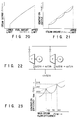
- the fuel amount/steam generation amount characteristic of the boiler shows a gentle, near-flat curve as shown in FIG. 20.
- the evaporation amount from the boiler is found to be substantially in proportion to the fuel amount in an upper/lower limit operation range.
- the steam amount/generation power output characteristic of the turbine has a non-convex characteristic called a valve loop characteristic (valve point characteristic), the characteristic curve having several recesses.
- the non-convex characteristic is due to a fall in a shaft output resulting from a pressure drop produced when the steam input valve is half-opened.
- a plurality of peak points are normally connected together to provide an envelope, an aspect which is different from a real aspect shown in FIG. 21. That is, according to the turbine characteristic as shown in FIG. 21 it has been found that the generation output power differs in the upper/lower limit range in terms of the valve points and their intervening recesses.
- the BTG plant is modeled with a mathematical formula and a cost minimum is found from boiler/turbine distribution combinations which can satisfy the electric power/steam loads.
- the BTG plant model with a mathematically formatted distribution amount at which the function becomes minimal (or maximal) is found, as a mathematical solution, with a high-speed computer.
- FIG. 26 is a block diagram showing one form of an optimal operation system of this kind.
- the optimal operation system of the BTG plant comprises a plant model 32 and a total energy cost minimizing point calculating section 31.
- the characteristics and operation restrictions of the turbines, boilers, pressure-reducing valves, etc., as the constituent elements of the BTG plant, as well as the electric power balance and steam balance at each system part, are provided from the plant model 32 to the total energy cost minimizing point calculating section 31.
- the mathematically formulated model as a target in the linear programming can solve only all linear (linear equation) problem and it is necessary, therefore, to apply the plant model, being nonlinear in actual practice, through a linear approximation. For this reason, it is not possible to avoid a lowering in the accuracy of a solution through such approximation, so that the cost lowering effect is small.
- the non-linear programming can solve the multi-dimensional program and, therefore, handle the nonlinear plant model but, in the case where the problem to be handled is non-linear, it is possible to obtain only a local optimization solution with the attendant drawback.
- the initial value and search method have to be modified in accordance with the problem.
- the search logic becomes complex when aiming at an optimal solution and lots of time and labor are taken in tuning calculation parameters.
- NLP nonlinear programming
- the initial value is used to determine from where the calculation is started.
- the method of how to determine the initial value is often by, for example,
- the search range has to be tuned to the problem so that a single peak (trough) is obtained in the search range.
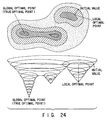
- FIG. 25 shows a relation among the linear, non-linear and true optimal resolutions.
- the optimal solution by the LP is located at a D point.
- the initial value is started from a K point by the NLP, it is possible to obtain, as an optimal solution, a minimal point A in the vicinity of the search done. This, being greater than a true optimal point T , provides a local optimal point.
- a point B is one shifted by L2 from the local optimal point A at the search of a better point.
- the optimal point is shifted to the B point.
- a local optimal point T in the vicinity of the search is obtained as an optimal solution as in the case of the A point.
- a point C spaced apart by L1 is located in a position higher than the A point, so that there is no shift of the optimal point.
- the non-linear programming is based on the assumption that the problem to be dealt with is on the convex characteristic, it cannot be used unless it is known whether there is one peak (single peak) and wether the position of the peak is located.
- a first object of the present invention is to provide a plant utility optimization method which can satisfy various demands for a plant system and find an optimal operation state reflecting non-convex characteristics possessed by plant elements.
- a second object of the present invention is to provide a plant optimization system which can ensure the obtainment of a solution of higher accuracy than in a conventional system and can obviate the need to tune calculation parameters involved and, in addition, enables the user with no expert's knowledge on optimization calculation to do the system changes of a target energy plant and do a system maintenance such as the correction of a plant model corresponding to apparatus changes.
- a utility optimizing method of the present invention for searching optimal operation parameters of a plant including a plurality of first plant elements having a linear input/output characteristic with first physical amounts as an input and second physical amounts as an output and a plurality of second plant elements having an input/output characteristic with the second physical amounts as an input, corresponding to the output of the first plant element, and third physical amounts as an output, the input/output characteristic containing a non-convex characteristic portion, the method comprising:
- a utility optimizing method of the present invention for searching optimal operation parameters of a plant including a plurality of first plant elements having a linear input/output characteristic with first physical amounts as an input and second physical amounts as an output and a plurality of second plant elements having a linear input/output characteristic with the second physical amounts as an input, corresponding to the output of the first plant elements, and third physical amounts as an output, the input/output characteristic containing a non-convex characteristic portion, the method comprising:
- a utility optimizing method of the present invention for searching optimal operation parameters of a power generation plant including a plurality of boilers, a plurality of turbines operated by steams generated from the boilers, and generators driven by the respective turbines to generate electric power in which the electric power is supplied to electric power loads while the steams bled from the respective turbines are supplied to steam loads via a plurality of turbine discharge systems, the method comprising:
- a utility optimizing method of the present invention for searching optimal operation parameters of a power generation plant including a plurality of boilers, a plurality of turbines operated by steams generated from the boilers, and generators driven by the respective turbines to generate electric power in which the electric power is supplied to electric power loads while the steams bled from the respective turbines are supplied to steam loads via a plurality of turbine discharge systems, comprising the steps of
- a plant utility optimizing system of the present invention comprising:
- a plant for example, the turbine-type power generation system
- first physical amounts for example, fuel
- second physical amounts for example, steam amounts
- second plant elements having an input/output characteristic with the second physical amounts as an input, corresponding to the output of the first plant elements
- third physical amounts for example, output power
- the first physical amounts input to the respective second elements and first cost required to supply these first physical amounts are found by a linear or a nonlinear programming on the basis of the values in the found set.
- a second cost for example, external cost
- first cost for example, a total fuel cost
- a respective value for example, the sum total of the second physical amounts, distribution of the second physical amounts to the second plant elements, sum total of the third physical amounts, first physical amounts input to the respective second plant elements, first cost required to supply the first physical amounts, total cost, etc., belonging to a set, that is, a set in which that total cost is minimized, is decided as an optimal solution.
- the plant utility optimizing system of the present invention it is possible to decide such a steam distribution (point) of the respective turbines as to maximize a total of the outputs of the respective turbines for each supply steam amount given from the turbine-side model in the plant model and it is also possible to decide such a steam distribution amount of the respective boilers as to generate, at a minimal cost, the sum total of the per pressure supply steam amounts given from the boiler-side model for each point.
- a total energy cost minimum operation point including a power buying cost
- the non-utility generation system is adapted to reutilize steam discharged from turbines and, there, a demand is made for both a steam discharged from the turbines and an energy output from the generators.
- the plant utility optimizing system of the present embodiment is directed to, while satisfying the steam demand and power demand as well as various kinds of restriction requirements, satisfying an operation state at a minimal total cost through the utilization of a dynamic programming, that is, in such a way as to allow the minimization of the total cost required for the operation of the plant system.
- the above-mentioned dynamic programming is one procedure for solving a decision problem in which an optimal solution is normally decided in a multistage fashion with a result of its analysis providing a precondition to its sequential decision problem.
- a decision selection sequence for a realizable optimal solution is called a "policy” and the policy of maximizing a specific function (criterion function) of a final state variable is called as an "optimal policy”.
- the dynamic programming utilizes the "principle of optimality" throughout in which the optimal policy has the property that, whatever an initial state and initial decision are, a subsequent decision sequence has to be given the optimal policy with respect to a state produced as a result of the initial decision.
- the dynamic programming is set out in detail, for example, in Dynamic Programming, Princeton University Press, 1957 by R. Bellman.
- FIG. 1 is a diagrammatic view showing a plant energy system according to the present embodiment.
- the system comprises a plant system including non-utility generation system 11 of a BTG (a boiler/turbine/ generator), an external power input apparatus 12 and steam system 13, a plant controller 4 for controlling the non-utility generation apparatus 11 and external power input apparatus 12, and a plant utility optimizing system 2 connected to the plant controller 4 to find an optimal operation point (distribution amount) of the respective components in the plant system 6 and transfer the optimal operation distribution amount to the plant controller 4.
- BTG a boiler/turbine/ generator
- a plant controller 4 for controlling the non-utility generation apparatus 11 and external power input apparatus 12
- a plant utility optimizing system 2 connected to the plant controller 4 to find an optimal operation point (distribution amount) of the respective components in the plant system 6 and transfer the optimal operation distribution amount to the plant controller 4.
- the plant utility optimizing system 2 may be of such a type that the inputting and outputting of the data to and from the plant utility optimizing system 2 are done through the use of an information memory medium such as a magnetic disk.
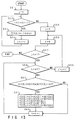
- FIG. 2 diagrammatically shows one example of the flow of processing regarding the plant utility optimizing system 2.
- Detailed system configuration information of the plant system 6 is input to the plant utility optimizing system 2 (step S11).
- Step S12 decides a power demand/steam demand and inputs its value to the plant controller 4.
- Step S13 transmits the power demand/steam demand from the plant controller 4 to the plant utility optimizing system 2 and makes a request to execute optimization processing.
- the plant utility optimizing system 2 searches an optimal solution on the given power/steam demand (step S14).
- the plant utility optimizing system 2 transmits the searched optimal solution to the plant controller 4 (step S15).
- the plant controller 4 controls the plant system (step S16).
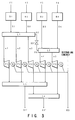
- FIG. 3 shows a detail of the plant system 6 in FIG. 1.
- the present embodiment is equipped with four steam generation boilers (hereinafter referred to as boilers) B1 to B4, five steam turbines (hereinafter referred to as turbines) T1 to T5 and five generators G.
- boilers steam generation boilers
- turbines steam turbines
- generators G generators
- the respective boilers B1 to B4 generate steam with the use of fuel fed. Let it be supposed that fuel amounts fed to the respective boilers B1 to B4 are given by f1 to f4 and that steam amounts generated by the boilers B1 to B4 are given by S1 to S4.
- L1 and L2 show high-pressure steam headers of different pressures (L1 is on the high voltage side). Further, S5 and S6 show an input steam amount and output steam amount of a pressure reducing valve 20.
- the respective turbines T1 to T5 have functions p1, p2, p3 and p5, respectively, of an input steam amount-output power characteristic and generate electric powers corresponding to the input steam amounts.
- the steam amounts input to the respective turbines T1 to T2 are represented by S1 and S5.
- the steams discharged from the respective turbines T1 to T5 are connected to corresponding load steam headers L3, L4 of different pressures. And a steam amount S1' is output from the steam system L3 and a steam amount S2' from the steam system L4.
- the electric powers generated from the generators G driven by the corresponding turbines T1 to T5 are output as a total power.
- the fuel amounts f1 to f4 input to the corresponding boilers B1 to B4 have their upper and lower limit values determined, respectively. Incidentally, further restriction is sometimes added as upper and lower limit values of those amounts of fuel input based on the amounts of fuels currently burned at the respective boilers B1 to B4.
- steam demands SD1 , SD2 (a minimal value to be satisfied by S1', a minimal value to be satisfied by S2') for the respective steam systems L3, L4, as well as an energy demand ED, are determined.
- an external commercial electric power is input for replenishment.
- the turbines T1 to T5 have been explained as being not of a bleeding type, a plant system regarding the bleeding turbines can be so configured as to incorporate the bleeding turbines into the same arrangement as shown in FIG. 3 where these bleeding turbines are regarded as being connected in parallel with a plurality of turbines of non-bleeding type.
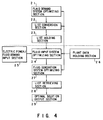
- FIG. 4 shows a schematic arrangement of a major portion of the plant utility optimizing system 2 according to the first embodiment of the present embodiment.
- the plant utility optimizing system of the present embodiment comprises a fluid demand system optimizing section 21, list converting section 22, list holding section 23, fluid input system optimizing section 24, energy/fluid demand input section 25, plant data holding section 26, fluid generation optimizing section 27, list retrieving section 28 and a optimal solution outputting section 29.
- the plant data holding section 26 stores, therein, the upper and lower limit values of the fuel amounts f1 to f4 input to the respective boilers B1 to B4, upper and lower limit values of steam amounts (steam discharge amounts) input to the respective turbines T1 to T5, functions p1, p2, p3, p4 and p5 of an input steam amount-output power characteristic, and other various constants and functions such as functions of the input/output characteristic of the respective boilers.
- the plant data holding section 26 supplies, to the fluid demand system optimizing section 21, list conversion section 22, fluid input system optimizing section 24 and fluid generation system optimizing section 27, their demanded numerical values and functions as will be set out below.
- the fluid demand system optimizing section 21 decides steam discharge amounts S1, S2 and S4 of the respective turbines T1, T2 and T4 through the use of the dynamic programming to maximize the total output power of the generators G driven by the turbines T1, T2 and T4 connected to the steam system L3 and, in this case, the steam flow amounts in the steam system L3 are given their respective values.
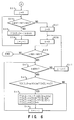
- FIGS. 5 and 6 show one example of the operation of such fluid demand system maximizing section 21.
- p1, p2, ..., p5 show the characteristic functions of the respective turbines and M1, M2 and M4 show the upper limit values of the discharge steam amounts of the respective turbines T1, T2, T4.
- M1, M2 and M4 are integers and the lower limit values of the steam amounts discharged from the respective turbines T1, T2, T4 all zeroes.
- T and T' represent arrays, a first [ ] following the T and T' represents a row and the next [ ] represents a column, the following [0] [1] [2] representing first, second and third elements in the row/column.
- the steam flow amounts are found for the case where they are given respective integer values from 0 to M1 + M2 + M4.
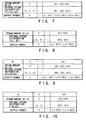
- a table as shown in FIG. 7 is obtained by the operation as shown in FIGS. 5 and 6.
- the fluid demand system optimizing section 21 decides steam discharge amounts S3, S5 of the respective turbines T3, T5 through the use of the dynamic programming to maximize the total output power of the generators G driven by the turbines T3, T5 connected to the steam system L4.
- Such fluid demand system optimizing section 21 is such as to correct M1 and M2 in FIG. 5 to M3 and M5 and correct to A to "an end" in the case of NO in step S27.
- ⁇ represents the total amount of the generated steam in terms of the high pressure steam.
- the list conversion section 22 prepares a table as shown in FIG. 9 with the value u added to each column of the table shown in FIG. 7 and a table as shown in FIG. 10 with the valve v to the table as shown in FIG. 8.
- the value uM in FIG. 9 shows a maximal step value not exceeding M1 + M2 + ⁇ M4
- the value vM in FIG. 10 shows a maximal step value not exceeding M3 + ⁇ M5 .
- the list conversion section 22 sends these Tables as shown in FIGS. 9 and 10 to the list holding section 23.
- the list conversion section 22 decide the step widths of the values u and v and properly interpolate the steam amount, optimal steam distribution and output voltage with respect to the value u and v on the basis of the values of FIGS. 7 and 8.
- the interpolation method the following may be conceived for instance. If the total steam amount corresponding to the values u and v exists on the row of the steam amount of L3, L4 on the tables shown in FIGS. 7 and 8, a corresponding column is adopted as it is and, if such is not the case, a row of a minimal value of those equal to, or exceeding, the total steam amount is adopted.
- the list holding section 23 stores, therein, the tables shown in FIGS. 9 and 10 on a given form.
- the energy demand and steam demand made from the plant controller 4 is sent from the energy/liquid demand input section 25 to the liquid input system optimizing section 24.
- the fluid input system optimizing section 24 extracts, from the table as shown in FIG. 9, the row in which the steam amount of the steam system L3 satisfies the steam demand SD1 for the L3 system and, similarly, from the table as shown in FIG. 10, the column in which the steam demand SD2 satisfies the steam demand SD2 for the L4 system.
- L3l and L3u are lower and upper limit values of the L3 steam amount as shown in FIG. 9 they satisfy the steam demand for the L3 system and Um, (sm1, sm2, sm4) and Em3 correspond to u, (sM1, sM2, sM4) and output power in the column of L3l.
- uM sM2, sM2, sM3
- the meaning of the respective symbols in Table as shown in FIG. 12 is the same as shown in Table in FIG. 11.
- the fluid input system optimizing section 24 uses the dynamic programming based on the tables as shown in FIGS. 11 and 12 to decide steam supply amounts S1 to S5 to the respective turbines T1 to T5 so that the total output power of the generators G driven by the turbines T1 to T5 may be made maximal.
- the tables of FIGS. 11 and 12 are regarded as two-dimensional arrays, 4 ⁇ 11, 4 ⁇ 12, and referred to as A, B, noting that 11, 12 represent the lengths of the tables.
- a [0] [11-12] corresponds to uM.
- FIG. 13 shows the operation of the fluid input system optimizing section 24.
- T represents an array in which a first [ ] and next [ ] represent the row and column, respectively, with the following [0], [1] representing first and second elements, respectively, in the row/column array.
- An A [2] [j] + B [2] [k] in FIG. 13 shows a merge operation of a list A [2] [j] and list B [2] [k].
- the elements in the list A [2] [j] and these in the list B [2] [k] be (a1, a2, a4) and (a3, a5), respectively, and as a result of the merge operation these elements of A [2] [j] + B [2] [k] becomes (a1, a2, a3, a4, a5).
- the steam distribution (s1, ..., s5) with the total power output maximal to respective column (that is, the respective input steam amount) is obtained, so that the steam amounts ⁇ 1, ⁇ 2 flowing through the respective systems of L1, L2 with respect to the respective total input steam amounts are uniquely decided.
- the fluid generation system optimizing section 27 finds a fuel distribution by which the fuel cost is minimized.
- the boiler characteristics of the respective boilers B1 to B4 become, in any case, a linear function of the fuel costs also become a linear function of the fuel. Therefore, the fuel distribution and fuel cost can be found by the linear or the nonlinear programming.
- the table is sent to the list retrieving section 28.
- the list retrieving section 28 decides an optimal solution from the respective optimal candidates of the table as shown in FIG. 15.
- the list retrieving section 28 calculates the total costs, for each column, that is, for each optimal solution candidate, on the basis of the values on the Table as shown in FIG. 15.
- total cost (total fuel cost) + e (ED - (total output power))
- This case is based on the condition that the total output power amount is set to be lower than the energy amount.
- the total output power amount may set, for example, (ED - (total output power)) to be zero.
- e' may be calculated as a unit value to be sold.
- the list retrieving section 28 prepares a table as shown in FIG. 16 while adding the calculated total cost to the respective column of the table as shown in FIG. 15. From this table a column of a minimal total cost is found and a set of various kinds of values in the column is supplied as an optimal solution on the whole system to the optimal output section 29.
- the optimal solution output section 29 holds the optimal solution sent from the list retrieving section 28. Out of various values in the optimal solution, requisite information is sent as an optimal operation parameter to the plant controller 4.
- the plant utility optimizing system of the first embodiment it is possible to satisfy various demands for the plant system and find an optimal operation state reflecting the non-convex characteristic of the turbines. Therefore, the operation cost can be largely reduced in comparison with the conventional counterpart.
- the present invention can be applied not only to the non-utility generation system but also generally to the plant system including those elements having the non-convex characteristic.
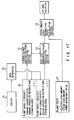
- FIG. 17 is a block diagram showing a schematic form of an optimal operation system of a power generation plant (BTG plant).
- 26 shows a plant model separated into the turbine-and the boiler-side model.
- the turbine characteristic, turbine operation restrictions, steam balance, etc. are given to the turbine-side model and the boiler operation, boiler operation restrictions, steam balance, etc., are given to the boiler-side model.
- 21 shows a turbine output maximizing point calculation section for deciding the steam distribution of each turbine to maximize the total of turbine outputs on the basis of data of each steam amount supplied from the turbine-side model and 22 shows a fuel cost minimizing point calculation section for deciding a steam distribution amount of each boiler to generate the total of per-pressure supply steam amounts at a minimal cost, the supply steam amounts being given from the boiler-side model at each point found at the turbine output maximizing point calculation point 21.
- 23 shows a total energy cost minimizing point calculation section for searching a total energy cost minimizing point based on the steam distribution amount of each boiler, that is, on the steam distribution amount given as a plant load (electric load amount, steam load amount) of a plant state, including a power buying unit price, and determined by the fuel cost minimizing point calculation section 23.
- 24 shows an editor for changing the plant model 26.
- the editor 24 is comprised of a plant model preparing means for preparing/editing system graphics for modifying or correcting the plant model used at the calculations of the turbine output maximizing point calculation section 21 and fuel cost minimizing point calculation section 21 as well as the system model described with mathematical expressions.
- 25 shows a data generator for enabling data which is necessary for the turbine output maximizing point calculation section 21 and fuel cost minimizing point calculation section 22 to be changed from an optimalized model modified or corrected by the editor 24 to a format matched to the calculation system.
- the turbine output maximizing point calculation section 21 decides the steam distribution of each turbine to maximize a turbine output at each supply steam amount total given from the turbine side model.
- the supply steam amount total is imparted to the turbines and a steam distribution combination is found at that turbine whose power generation amount is maximal at that time.
- the most primitive method for finding a global optimal point is by dividing the supply steam amount total into a few hundred steps, varying the steam amounts distributed to the respective turbines at each one step to find power generation output totals and selecting, out of these, a distribution combination whose power generation is maximal, noting that, in order to prevent a lowering in calculation accuracy, the number of steps in the step function for one turbine is adequately greater (for example, 100) than about 3 to 5 for a turbine case (the number of valve points ⁇ industrial steam turbines). In such all point checking, a vast number of times of calculations is necessary and a difficulty is encountered in actual practice.
- a DP dynamic programming: subsequent optimal method
- a DP dynamic programming: subsequent optimal method
- the result of calculation by the DP is found, for each a few hundreds to a few thousands of input steam amounts corresponding to sums of step functions of all the turbines over a range from a minimal value to a maximal value taken by the sums of all the turbines for example.
- the fuel cost minimizing point calculation section 22 decides a steam distribution amount of each boiler so as to generate, at a minimal cost, the sum total of per-pressure supply steam amounts given from the boiler-side model at each point of a turbine input steam amount sum total found at the turbine output maximizing point calculation section 21.
- the fuel unit is not varied in a time unit as in the case of an electric power unit and is given a fixed value and, if the need arises, can be varied with a manual instruction.
- An optimal distribution point is found by rearranging the costs C of the total energies in a decreasing value order and, checking to see whether or not the load supply steam amount sum total of each pressure satisfies the load steam amount sum total and finding such an initially satisfied point as that optimal distribution point.
- the user prepares a steam system diagram in the editor 24 in an "AD" feeling and inputs the apparatus characteristic, rating, etc., from the steam system diagram to correct the optimizing model.
- the data generator 25 Upon receipt of the system diagram, apparatus data and restricted conditional equation prepared by the editor 24, the data generator 25 automatically generates data necessary for optimization calculation from these information items in a form fit for an solution, so that the plant model 26 is corrected.
- the optimal calculation logic is separated from a data description portion such as the system configuration, characteristics and restriction condition and, with the use of a system not requiring any timing parameters in the optimal solution method, the system maintenance can be achieved simply by modifying the model.
- a solution can be obtained with higher accuracy than according to the conventional system. Further, it is not necessary to tune the calculation parameters. Thus the user of no expert's knowledge on the optimization calculation can carry out the system modification of the target energy plant as well as the system maintenance such as the correction of the plant model corresponding to the apparatus modification.
Landscapes
- Engineering & Computer Science (AREA)
- General Physics & Mathematics (AREA)
- Physics & Mathematics (AREA)
- Automation & Control Theory (AREA)
- Evolutionary Computation (AREA)
- Health & Medical Sciences (AREA)
- Artificial Intelligence (AREA)
- Software Systems (AREA)
- Medical Informatics (AREA)
- Computer Vision & Pattern Recognition (AREA)
- Combustion & Propulsion (AREA)
- General Engineering & Computer Science (AREA)
- Chemical & Material Sciences (AREA)
- Mechanical Engineering (AREA)
- Control Of Turbines (AREA)
- Feedback Control In General (AREA)
Applications Claiming Priority (7)
| Application Number | Priority Date | Filing Date | Title |
|---|---|---|---|
| JP229367/94 | 1994-09-26 | ||
| JP22936794A JP3197165B2 (ja) | 1994-09-26 | 1994-09-26 | 発電プラントの最適運用システム |
| JP22936794 | 1994-09-26 | ||
| JP23570394 | 1994-09-29 | ||
| JP235703/94 | 1994-09-29 | ||
| JP23570394A JP3431306B2 (ja) | 1994-09-29 | 1994-09-29 | プラント・ユーティリティ最適化方法 |
| PCT/JP1995/001945 WO1996010219A1 (en) | 1994-09-26 | 1995-09-26 | Method and system for optimizing plant utility |
Publications (3)
| Publication Number | Publication Date |
|---|---|
| EP0731397A1 true EP0731397A1 (de) | 1996-09-11 |
| EP0731397A4 EP0731397A4 (de) | 1996-12-04 |
| EP0731397B1 EP0731397B1 (de) | 2001-05-16 |
Family
ID=26528767
Family Applications (1)
| Application Number | Title | Priority Date | Filing Date |
|---|---|---|---|
| EP95932239A Expired - Lifetime EP0731397B1 (de) | 1994-09-26 | 1995-09-26 | Methode und system zur optimierung der nützlichkeit einer anlage |
Country Status (4)
| Country | Link |
|---|---|
| US (1) | US5886895A (de) |
| EP (1) | EP0731397B1 (de) |
| DE (1) | DE69520934T2 (de) |
| WO (1) | WO1996010219A1 (de) |
Cited By (5)
| Publication number | Priority date | Publication date | Assignee | Title |
|---|---|---|---|---|
| WO2000065495A3 (de) * | 1999-04-22 | 2001-12-13 | Siemens Ag | Verfahren zur kontrolle der im betrieb einer anlage entstehenden kosten |
| WO2006037417A1 (de) * | 2004-10-02 | 2006-04-13 | Abb Technology Ag | Verfahren und modul zum vorrausschauenden anfahren von dampfturbinen |
| EP1701005A1 (de) * | 2005-02-21 | 2006-09-13 | Siemens Aktiengesellschaft | Verfahren und Vorrichtung zur Berechnung energie- und verfahrenstechnischer Prozesse |
| WO2009150121A1 (de) * | 2008-06-10 | 2009-12-17 | Siemens Aktiengesellschaft | Verfahren zur optimierten kraftwerkseinsatzplanung |
| US11261761B2 (en) | 2019-10-14 | 2022-03-01 | Saudi Arabian Oil Company | Energy real-time optimizer for steam and condensation balance using GAMS |
Families Citing this family (42)
| Publication number | Priority date | Publication date | Assignee | Title |
|---|---|---|---|---|
| US6112126A (en) * | 1997-02-21 | 2000-08-29 | Baker Hughes Incorporated | Adaptive object-oriented optimization software system |
| US6434435B1 (en) * | 1997-02-21 | 2002-08-13 | Baker Hughes Incorporated | Application of adaptive object-oriented optimization software to an automatic optimization oilfield hydrocarbon production management system |
| US6163730A (en) * | 1997-08-11 | 2000-12-19 | Motorola, Inc. | Method and control system for changing the state of a plant |
| US6681155B1 (en) * | 1998-08-31 | 2004-01-20 | Mitsubishi Chemical Corporation | Optimizing control method and optimizing control system for power plant |
| AU7859000A (en) | 1999-10-05 | 2001-05-10 | L-3 Communications Corporation | A method for improving the performance of micromachined devices |
| JP2001255903A (ja) * | 2000-03-14 | 2001-09-21 | Toshiba Corp | プロセス制御システム |
| JP3614751B2 (ja) * | 2000-03-21 | 2005-01-26 | 東京電力株式会社 | コンバインド発電プラントの熱効率診断方法および装置 |
| US6591225B1 (en) * | 2000-06-30 | 2003-07-08 | General Electric Company | System for evaluating performance of a combined-cycle power plant |
| EP1217473A1 (de) * | 2000-12-21 | 2002-06-26 | Abb Research Ltd. | Verfahren zur Optimierung von Regelungsparametern in einer Kraftwerkanlage |
| US7275025B2 (en) * | 2000-12-27 | 2007-09-25 | General Electric Company | Method and system for analyzing performance of a turbine |
| US6735490B2 (en) | 2001-10-12 | 2004-05-11 | General Electric Company | Method and system for automated integration of design analysis subprocesses |
| DE60120192T2 (de) * | 2001-11-29 | 2006-11-16 | Abb Research Ltd. | Optimaler Betrieb eines Kraftwerks |
| US7050943B2 (en) * | 2001-11-30 | 2006-05-23 | General Electric Company | System and method for processing operation data obtained from turbine operations |
| US7376472B2 (en) | 2002-09-11 | 2008-05-20 | Fisher-Rosemount Systems, Inc. | Integrated model predictive control and optimization within a process control system |
| US20040103068A1 (en) * | 2002-11-22 | 2004-05-27 | Eker Sukru Alper | Process for optimally operating an energy producing unit and an energy producing unit |
| US8069077B2 (en) * | 2003-06-11 | 2011-11-29 | Kabushiki Kaisha Toshiba | Electric-power-generating-facility operation management support system, electric-power-generating-facility operation management support method, and program for executing support method, and program for executing operation management support method on computer |
| US20050171704A1 (en) * | 2004-01-29 | 2005-08-04 | Lewis Bradley M. | Method for the automated quantification of power production, resource utilization and wear of turbines |
| RU2277259C1 (ru) * | 2004-12-01 | 2006-05-27 | Государственное образовательное учреждение высшего профессионального образования Кузбасская государственная педагогическая академия (КузГПА) | Способ идентификации действующих объектов в системах управления |
| US7974826B2 (en) * | 2005-09-23 | 2011-07-05 | General Electric Company | Energy system modeling apparatus and methods |
| US7451004B2 (en) * | 2005-09-30 | 2008-11-11 | Fisher-Rosemount Systems, Inc. | On-line adaptive model predictive control in a process control system |
| US20070135938A1 (en) * | 2005-12-08 | 2007-06-14 | General Electric Company | Methods and systems for predictive modeling using a committee of models |
| DE102007061604A1 (de) * | 2007-12-20 | 2009-06-25 | Alstom Technology Ltd. | Optimierung des Betriebs eines Kraftwerks |
| US8352148B2 (en) * | 2008-05-21 | 2013-01-08 | General Electric Company | System for controlling input profiles of combined cycle power generation system |
| US9442470B2 (en) | 2008-06-06 | 2016-09-13 | Saudi Arabian Oil Company | Methods for planning and retrofit of energy efficient eco-industrial parks through inter-time-inter-systems energy integration |
| US9612635B2 (en) | 2012-03-19 | 2017-04-04 | Saudi Arabian Oil Company | Systems and computer programs for simultaneous process and utility systems synthesis in partially and fully decentralized environments |
| US9378313B2 (en) * | 2009-10-30 | 2016-06-28 | Saudi Arabian Oil Company | Methods for enhanced energy efficiency via systematic hybrid inter-processes integration |
| CA2726984C (en) * | 2008-06-06 | 2014-12-30 | Aramco Services Company | System, program product, and related methods for global targeting of process utilities under varying conditions |
| US9360910B2 (en) * | 2009-10-30 | 2016-06-07 | Saudi Arabian Oil Company | Systems, computer readable media, and computer programs for enhancing energy efficiency via systematic hybrid inter-processes integration |
| US9760099B2 (en) | 2008-06-06 | 2017-09-12 | Saudi Arabian Oil Company | Systems, program code, computer readable media for planning and retrofit of energy efficient eco-industrial parks through inter-time-inter-systems energy integration |
| WO2009156299A2 (en) * | 2008-06-26 | 2009-12-30 | Alstom Technology Ltd | A method of estimating the maximum power generation capacity and for controlling a specified power reserve of a single cycle or combined cycle gas turbine power plant, and a power generating system for use with said method |
| US8190536B2 (en) * | 2008-09-10 | 2012-05-29 | King Fahd University Of Petroleum & Minerals | Method of performing parallel search optimization |
| US8342009B2 (en) * | 2011-05-10 | 2013-01-01 | General Electric Company | Method for determining steampath efficiency of a steam turbine section with internal leakage |
| US20130184883A1 (en) * | 2012-01-18 | 2013-07-18 | General Electric Company | System and method to control subsystems |
| US20130282190A1 (en) * | 2012-04-24 | 2013-10-24 | General Electric Company | System and method for configuration and management of power plant assets |
| US10521518B2 (en) | 2012-12-05 | 2019-12-31 | Deif A/S | Emulating power system operations |
| US9477214B2 (en) * | 2013-03-07 | 2016-10-25 | General Electric Company | Plant control systems and methods |
| US9423781B2 (en) * | 2013-03-29 | 2016-08-23 | General Electric Company | Model based control with engine perturbation feedback |
| JP6158107B2 (ja) * | 2014-02-06 | 2017-07-05 | 株式会社東芝 | エネルギーマネジメントシステム |
| US10205322B1 (en) | 2015-03-09 | 2019-02-12 | Cummins Power Generation Ip, Inc. | Economically efficient operation of a power generator |
| JP6720562B2 (ja) * | 2016-02-10 | 2020-07-08 | 富士電機株式会社 | 制御装置、制御システム、制御プログラム、及び制御方法 |
| JP6735219B2 (ja) * | 2016-12-05 | 2020-08-05 | 株式会社日立製作所 | 予測システム及び予測方法 |
| HUE073502T2 (hu) * | 2021-09-09 | 2026-01-28 | Sumitomo SHI FW Energia Oy | Kazánvezérlési eljárás, kazán és kazánvezérlési rendszer |
Family Cites Families (17)
| Publication number | Priority date | Publication date | Assignee | Title |
|---|---|---|---|---|
| US4069675A (en) * | 1976-03-16 | 1978-01-24 | Measurex Corporation | Method of optimizing the performance of a multi-unit power |
| US4577280A (en) * | 1983-11-03 | 1986-03-18 | Westinghouse Electric Corp. | Control system for fluid flow distribution |
| US4604714A (en) * | 1983-11-08 | 1986-08-05 | Westinghouse Electric Corp. | Steam optimization and cogeneration system and method |
| US4628462A (en) * | 1984-09-11 | 1986-12-09 | Westinghouse Electric Corp. | Multiplane optimization method and apparatus for cogeneration of steam and power |
| JPS62170709A (ja) * | 1986-01-22 | 1987-07-27 | Hitachi Ltd | 多峰性の負荷配分制御方法 |
| JPS62212701A (ja) * | 1986-03-13 | 1987-09-18 | Yokogawa Electric Corp | 最適負荷分配制御装置 |
| US4805114A (en) * | 1987-04-20 | 1989-02-14 | Westinghouse Electric Corp. | Economical dispatching arrangement for a boiler system having a cogenerative capability |
| JPH0814241B2 (ja) * | 1988-08-10 | 1996-02-14 | 三菱重工業株式会社 | タービン制御装置 |
| JPH02264303A (ja) * | 1989-04-04 | 1990-10-29 | Idemitsu Kosan Co Ltd | 発電システムの最適運転方法 |
| US5077661A (en) * | 1989-05-03 | 1991-12-31 | Hewlett-Packard Company | Assignment-dependent resource allocation method |
| JP2561265Y2 (ja) * | 1989-07-03 | 1998-01-28 | 三菱重工業株式会社 | 自家発電プラント運転支援装置 |
| JPH0782486B2 (ja) * | 1989-09-12 | 1995-09-06 | 株式会社日立製作所 | 非線形最適化処理方法及び非線形最適化処理装置 |
| US5159562A (en) * | 1990-07-31 | 1992-10-27 | Westinghouse Electric Corp. | Optimization of a plurality of multiple-fuel fired boilers using iterated linear programming |
| JP2823371B2 (ja) * | 1991-02-26 | 1998-11-11 | 株式会社東芝 | 電力最適化管理装置 |
| US5347466A (en) * | 1991-07-15 | 1994-09-13 | The Board Of Trustees Of The University Of Arkansas | Method and apparatus for power plant simulation and optimization |
| JPH05260567A (ja) * | 1992-03-11 | 1993-10-08 | Hitachi Ltd | 分散制御システム |
| US5517424A (en) * | 1994-03-31 | 1996-05-14 | Electric Power Research Institute, Inc. | Steam turbine fuzzy logic cyclic control method and apparatus therefor |
-
1995
- 1995-09-26 EP EP95932239A patent/EP0731397B1/de not_active Expired - Lifetime
- 1995-09-26 WO PCT/JP1995/001945 patent/WO1996010219A1/ja not_active Ceased
- 1995-09-26 DE DE69520934T patent/DE69520934T2/de not_active Expired - Lifetime
-
1996
- 1996-07-01 US US08/640,949 patent/US5886895A/en not_active Expired - Lifetime
Cited By (7)
| Publication number | Priority date | Publication date | Assignee | Title |
|---|---|---|---|---|
| WO2000065495A3 (de) * | 1999-04-22 | 2001-12-13 | Siemens Ag | Verfahren zur kontrolle der im betrieb einer anlage entstehenden kosten |
| US7058554B1 (en) | 1999-04-22 | 2006-06-06 | Siemens Aktiengesellschaft | Method of controlling the costs arising during operations of an installation |
| WO2006037417A1 (de) * | 2004-10-02 | 2006-04-13 | Abb Technology Ag | Verfahren und modul zum vorrausschauenden anfahren von dampfturbinen |
| EP1701005A1 (de) * | 2005-02-21 | 2006-09-13 | Siemens Aktiengesellschaft | Verfahren und Vorrichtung zur Berechnung energie- und verfahrenstechnischer Prozesse |
| WO2006087382A3 (de) * | 2005-02-21 | 2006-11-16 | Siemens Ag | Verfahren und vorrichtung zur berechnung energie- und verfahrenstechnischer prozesse |
| WO2009150121A1 (de) * | 2008-06-10 | 2009-12-17 | Siemens Aktiengesellschaft | Verfahren zur optimierten kraftwerkseinsatzplanung |
| US11261761B2 (en) | 2019-10-14 | 2022-03-01 | Saudi Arabian Oil Company | Energy real-time optimizer for steam and condensation balance using GAMS |
Also Published As
| Publication number | Publication date |
|---|---|
| DE69520934D1 (de) | 2001-06-21 |
| EP0731397A4 (de) | 1996-12-04 |
| EP0731397B1 (de) | 2001-05-16 |
| US5886895A (en) | 1999-03-23 |
| DE69520934T2 (de) | 2001-10-04 |
| WO1996010219A1 (en) | 1996-04-04 |
Similar Documents
| Publication | Publication Date | Title |
|---|---|---|
| EP0731397A1 (de) | Methode und system zur optimierung der nützlichkeit einer anlage | |
| US5347466A (en) | Method and apparatus for power plant simulation and optimization | |
| Bechert et al. | Area automatic generation control by multi-pass dynamic programming | |
| US7058552B2 (en) | Optimizing plant control values of a power plant | |
| Hajabdollahi et al. | Soft computing based multi-objective optimization of steam cycle power plant using NSGA-II and ANN | |
| Baviere et al. | Optimal control of district heating systems using dynamic simulation and mixed integer linear programming | |
| Mitchell et al. | An initial assessment of the value of Allam Cycle power plants with liquid oxygen storage in future GB electricity system | |
| Chipperfield et al. | Fuzzy scheduling control of a gas turbine aero-engine: a multiobjective approach | |
| Aguilar et al. | Design and optimization of flexible utility systems subject to variable conditions: Part 2: Methodology and applications | |
| Santos et al. | A practical model for energy dispatch in cogeneration plants | |
| Mavromatis et al. | Conceptual optimisation of utility networks for operational variations—II. Network development and optimisation | |
| US20040103068A1 (en) | Process for optimally operating an energy producing unit and an energy producing unit | |
| Irving et al. | Optimisation techniques for electrical power systems. 1. Mathematical optimisation methods | |
| Kalitventzeff | Mixed integer non-linear programming and its application to the management of utility networks | |
| Del Nogal et al. | Synthesis of mechanical driver and power generation configurations, Part 1: Optimization framework | |
| Donne et al. | Application of modern methods in power plant simulation and control | |
| JPH0895604A (ja) | 発電プラントの最適運用システム | |
| Shchinnikov et al. | Enhancing the calculation accuracy of performance characteristics of power-generating units by correcting general measurands based on matching energy balances | |
| US20250110456A1 (en) | Cogeneration optimization model in upstream crude processing facility | |
| Kim et al. | Simulation of a Linear Quadratic Regulator Controller for sCO2 Cycle Using MARS-KS | |
| Spinelli et al. | A hierarchical architecture for optimal unit commitment and control of an ensemble of steam generators | |
| JP3431306B2 (ja) | プラント・ユーティリティ最適化方法 | |
| Cerri et al. | Inverse methodologies for actual status recognition of gas turbine components | |
| Ilichev et al. | Development of methodology for calculation of optimal distribution of electric power between power units of condensing power plant | |
| Vieira et al. | Optimization of the operation of a complex combined-cycle cogeneration plant using a professional process simulator |
Legal Events
| Date | Code | Title | Description |
|---|---|---|---|
| PUAI | Public reference made under article 153(3) epc to a published international application that has entered the european phase |
Free format text: ORIGINAL CODE: 0009012 |
|
| 17P | Request for examination filed |
Effective date: 19960523 |
|
| AK | Designated contracting states |
Kind code of ref document: A1 Designated state(s): DE SE |
|
| A4 | Supplementary search report drawn up and despatched | ||
| AK | Designated contracting states |
Kind code of ref document: A4 Designated state(s): DE SE |
|
| 17Q | First examination report despatched |
Effective date: 19990215 |
|
| GRAG | Despatch of communication of intention to grant |
Free format text: ORIGINAL CODE: EPIDOS AGRA |
|
| GRAG | Despatch of communication of intention to grant |
Free format text: ORIGINAL CODE: EPIDOS AGRA |
|
| GRAH | Despatch of communication of intention to grant a patent |
Free format text: ORIGINAL CODE: EPIDOS IGRA |
|
| GRAH | Despatch of communication of intention to grant a patent |
Free format text: ORIGINAL CODE: EPIDOS IGRA |
|
| GRAA | (expected) grant |
Free format text: ORIGINAL CODE: 0009210 |
|
| AK | Designated contracting states |
Kind code of ref document: B1 Designated state(s): DE SE |
|
| REF | Corresponds to: |
Ref document number: 69520934 Country of ref document: DE Date of ref document: 20010621 |
|
| PLBE | No opposition filed within time limit |
Free format text: ORIGINAL CODE: 0009261 |
|
| STAA | Information on the status of an ep patent application or granted ep patent |
Free format text: STATUS: NO OPPOSITION FILED WITHIN TIME LIMIT |
|
| 26N | No opposition filed | ||
| PGFP | Annual fee paid to national office [announced via postgrant information from national office to epo] |
Ref country code: SE Payment date: 20090910 Year of fee payment: 15 |
|
| PGFP | Annual fee paid to national office [announced via postgrant information from national office to epo] |
Ref country code: DE Payment date: 20090923 Year of fee payment: 15 |
|
| REG | Reference to a national code |
Ref country code: SE Ref legal event code: EUG |
|
| REG | Reference to a national code |
Ref country code: DE Ref legal event code: R119 Ref document number: 69520934 Country of ref document: DE Effective date: 20110401 |
|
| PG25 | Lapsed in a contracting state [announced via postgrant information from national office to epo] |
Ref country code: DE Free format text: LAPSE BECAUSE OF NON-PAYMENT OF DUE FEES Effective date: 20110401 |
|
| PG25 | Lapsed in a contracting state [announced via postgrant information from national office to epo] |
Ref country code: SE Free format text: LAPSE BECAUSE OF NON-PAYMENT OF DUE FEES Effective date: 20100927 |