EP0756821A2 - Para-Hydroxyphenylessigsäure zur Reduktion der Repellenz von Insektiziden - Google Patents
Para-Hydroxyphenylessigsäure zur Reduktion der Repellenz von Insektiziden Download PDFInfo
- Publication number
- EP0756821A2 EP0756821A2 EP96111748A EP96111748A EP0756821A2 EP 0756821 A2 EP0756821 A2 EP 0756821A2 EP 96111748 A EP96111748 A EP 96111748A EP 96111748 A EP96111748 A EP 96111748A EP 0756821 A2 EP0756821 A2 EP 0756821A2
- Authority
- EP
- European Patent Office
- Prior art keywords
- oder
- alkyl
- für
- acid
- phenyl
- Prior art date
- Legal status (The legal status is an assumption and is not a legal conclusion. Google has not performed a legal analysis and makes no representation as to the accuracy of the status listed.)
- Granted
Links
Classifications
-
- A—HUMAN NECESSITIES
- A01—AGRICULTURE; FORESTRY; ANIMAL HUSBANDRY; HUNTING; TRAPPING; FISHING
- A01N—PRESERVATION OF BODIES OF HUMANS OR ANIMALS OR PLANTS OR PARTS THEREOF; BIOCIDES, e.g. AS DISINFECTANTS, AS PESTICIDES OR AS HERBICIDES; PEST REPELLANTS OR ATTRACTANTS; PLANT GROWTH REGULATORS
- A01N37/00—Biocides, pest repellants or attractants, or plant growth regulators containing organic compounds containing a carbon atom having three bonds to hetero atoms with at the most two bonds to halogen, e.g. carboxylic acids
- A01N37/36—Biocides, pest repellants or attractants, or plant growth regulators containing organic compounds containing a carbon atom having three bonds to hetero atoms with at the most two bonds to halogen, e.g. carboxylic acids containing at least one carboxylic group or a thio analogue, or a derivative thereof, and a singly bound oxygen or sulfur atom attached to the same carbon skeleton, this oxygen or sulfur atom not being a member of a carboxylic group or of a thio analogue, or of a derivative thereof, e.g. hydroxy-carboxylic acids
- A01N37/38—Biocides, pest repellants or attractants, or plant growth regulators containing organic compounds containing a carbon atom having three bonds to hetero atoms with at the most two bonds to halogen, e.g. carboxylic acids containing at least one carboxylic group or a thio analogue, or a derivative thereof, and a singly bound oxygen or sulfur atom attached to the same carbon skeleton, this oxygen or sulfur atom not being a member of a carboxylic group or of a thio analogue, or of a derivative thereof, e.g. hydroxy-carboxylic acids having at least one oxygen or sulfur atom attached to an aromatic ring system
-
- A—HUMAN NECESSITIES
- A01—AGRICULTURE; FORESTRY; ANIMAL HUSBANDRY; HUNTING; TRAPPING; FISHING
- A01N—PRESERVATION OF BODIES OF HUMANS OR ANIMALS OR PLANTS OR PARTS THEREOF; BIOCIDES, e.g. AS DISINFECTANTS, AS PESTICIDES OR AS HERBICIDES; PEST REPELLANTS OR ATTRACTANTS; PLANT GROWTH REGULATORS
- A01N25/00—Biocides, pest repellants or attractants, or plant growth regulators, characterised by their forms, or by their non-active ingredients or by their methods of application, e.g. seed treatment or sequential application; Substances for reducing the noxious effect of the active ingredients to organisms other than pests
- A01N25/002—Biocides, pest repellants or attractants, or plant growth regulators, characterised by their forms, or by their non-active ingredients or by their methods of application, e.g. seed treatment or sequential application; Substances for reducing the noxious effect of the active ingredients to organisms other than pests containing a foodstuff as carrier or diluent, i.e. baits
- A01N25/006—Biocides, pest repellants or attractants, or plant growth regulators, characterised by their forms, or by their non-active ingredients or by their methods of application, e.g. seed treatment or sequential application; Substances for reducing the noxious effect of the active ingredients to organisms other than pests containing a foodstuff as carrier or diluent, i.e. baits insecticidal
-
- A—HUMAN NECESSITIES
- A01—AGRICULTURE; FORESTRY; ANIMAL HUSBANDRY; HUNTING; TRAPPING; FISHING
- A01N—PRESERVATION OF BODIES OF HUMANS OR ANIMALS OR PLANTS OR PARTS THEREOF; BIOCIDES, e.g. AS DISINFECTANTS, AS PESTICIDES OR AS HERBICIDES; PEST REPELLANTS OR ATTRACTANTS; PLANT GROWTH REGULATORS
- A01N2300/00—Combinations or mixtures of active ingredients covered by classes A01N27/00 - A01N65/48 with other active or formulation relevant ingredients, e.g. specific carrier materials or surfactants, covered by classes A01N25/00 - A01N65/48
Definitions
- the present invention relates to the new use of para-hydroxyphenylacetic acid alone or in a mixture with other chemical compounds for reducing the repellency of insecticides, inter alia in combating cockroaches, and cockroach control agents which contain para-hydroxyphenylacetic acid and mixtures of this carboxylic acid with other chemical compounds.
- Cockroach infestation is a major hygienic problem in the home and business, which in many cases makes it necessary to control cockroaches. Due to their way of life, cockroaches are difficult to control. A particular problem lies in the fact that many insecticides have repellent properties which reduce the success in controlling them.
- A.E. Glaser (International Pest Control 22 (1) (1980), 7-8, 21) describes the same phenomenon for fenitrothion.
- the method is not suitable for commercial use since only small amounts of antirepellant substance can be made available for insecticides by extracting cockroach droppings.
- the compound of the formula (I) is known, stable and, according to the invention, highly effective on its own and in mixtures with other chemical compounds in chemical insecticides, preferably in bait and spray applications.
- the compound of formula (I) can be used both as an acid and in the form of its salts. It can also be used as a mixture of its free acid with the respective salts.
- bases for the preparation of the respective salts of p-hydroxyphenylacetic acid all bases customary in active substance chemistry, preferably alkali, alkaline earth, ammonium, alkylammonium, dialkylammonium, trialkylammonium or tetraalkylammonium hydroxides, particularly preferably sodium, potassium, calcium, or ammonium hydroxide and very particularly preferably sodium hydroxide.
- the compound of the formula (I) and / or its mixtures with other chemical compounds can be used according to the invention in the control of cockroaches, that is to say insects of the Blattariae order, in particular the Blattellidae family, preferably the Blattella germanica species or the Blattidae family, preferably the Blatta orientalis species and Periplaneta americana, but also against other cockroaches, but very particularly preferably against Blattella germanica.
- the compound of formula (I) and / or its mixtures with other chemical compounds act on the cockroaches in such a way that the repellent action of insecticides, for example pyrethroids, is reduced.
- the para-hydroxyphenylacetic acid and / or its mixtures with other chemical compounds can thus be used quite generally in cockroach control, regardless of the type of control method used. It can preferably be used in chemical control processes and, if appropriate, together with other effective agents, such as attracting bait materials or other attractants, synthetic or natural insecticides, etc.
- the p-hydroxyphenylacetic acid and / or its mixtures with other chemical compounds are preferably applied in the customary spray compositions.
- the usual formulations can be used, which can be applied with the commonly used application devices.
- the application rates of p-hydroxyphenylacetic acid and / or its mixtures with other chemical compounds are preferably 0.1 to 500 mg per m 2 and particularly preferably 1 to 200 mg per m 2 (based on the p-hydroxyphenylacetic acid).
- the p-hydroxyphenylacetic acid and / or its mixtures with other chemical compounds are incorporated or placed near (eg above) the bait material.
- the p-hydroxyphenylacetic acid and / or its mixtures with other chemical compounds can also be in a form in which they are released over a longer period of time (slow-release formulations).
- it can, for example, be incorporated into polymer material, paraffins, waxes, etc. or be microencapsulated.
- the usual devices can serve as traps and the usual feed attractive agents can serve as bait materials.
- the p-hydroxyphenylacetic acid and / or its mixtures with other chemical compounds are preferably used in amounts of 0.0001 to 100 mg (whole particularly preferably 0.01 to 20 mg) per gram of bait (based on p-hydroxyphenylacetic acid).
- cockroach control agents which optionally contain p-hydroxyphenylacetic acid and / or their mixtures with other chemical compounds and at least one insecticidally active substance, in addition to conventional carriers and auxiliaries and / or other additives (such as baits, attractants), the p Hydroxyphenylacetic acid and / or its mixtures with other chemical compounds can be mixed with the other constituents, or can be present in a separate arrangement.
- Other chemical compounds particularly mean organic carboxylic acids, particularly preferred are benzoic acid, phenylacetic acid, anthranilic acid, (3- (m-hydroxyphenyl) propionic acid, 3- (p-hydroxyphenyl) propionic acid, 2-hydroxypropionic acid, capric acid, palmitic acid, stearic acid, glutaric acid, Adipic acid, pimelic acid, suberic acid, azelaic acid, methylpimelic acid, fumaric acid or maleic acid.
- benzoic acid phenylacetic acid, anthranilic acid, (3- (m-hydroxyphenyl) propionic acid, 3- (p-hydroxyphenyl) propionic acid, 2-hydroxypropionic acid, capric acid, palmitic acid, stearic acid, glutaric acid, Adipic acid, pimelic acid, suberic acid, azelaic acid, methylpimelic acid, fumaric acid or maleic acid.
- All substances which are effective against cockroaches can be used as insecticidal substances, since there is no undesirable interaction between the insecticidal substances and the p-hydroxyphenylacetic acid or the mixtures according to the invention.
- Insecticidal substances can be, for example, the insecticidal phosphoric acid esters, carbamates, natural pyrethrins and synthetic pyrethroids, amidinohydrazones, sulfuramides, nitroimino, nitromethylene, cyanoimino or cyanomethylene compounds, pyrrolidine-2,4-dione derivatives, pyrazoline derivatives, avermectin derivatives - and ivermectin derivatives, azadirachtrines, annonins and / or ryanodines
- chitin synthesis inhibitors eg triflumeron, duflubenzuron, lufenuron, flufenoxuron etc.
- juvenile hormones and their mimetics eg methoprene, hydroprene, fenoxycarb, pyriproxyfen etc.
- home remedies borax, yeast, baking powder etc.
- radicals have the following general and preferred meanings:
- Alkyl as such or as a constituent of alkoxy or alkoxycarbonyl means straight-chain or branched alkyl having 1 to 5, preferably 1 to 4 and particularly preferably 1 to 3, carbon atoms, methyl, ethyl, n- and i-propyl, n-, i- , s- and t-butyl are specifically mentioned, methyl and ethyl, in particular methyl, being particularly emphasized.
- the phenyl ring preferably carries one to three, particularly preferably one or two, substituents, which can be the same or different. All substituents customary in active substance chemistry can be used as substituents. As preferred substituents are: C 1 -C 4 alkyl, C 1 -C 4 alkoxy, C 1 -C 4 alkylthio, C 1 -C 4 haloalkyl, C 1 -C 4 -haloalkoxy, nitro, hydroxy, and Halogen (preferably fluorine, chlorine and / or bromine).
- substituents are: C 1 -C 4 alkyl, C 1 -C 4 alkoxy, C 1 -C 4 alkylthio, C 1 -C 4 haloalkyl, C 1 -C 4 -haloalkoxy, nitro, hydroxy, and Halogen (preferably fluorine, chlorine and / or bromine).
- the p-hydroxyphenylacetic acid and / or its mixtures with other chemical compounds and / or the insecticidal substances as well as the mixtures of p-hydroxyphenylacetic acid and / or its mixtures with other chemical compounds with the insecticidal substances can, depending on their respective physical and / or chemical properties can be converted into customary formulations, such as solutions, emulsions, suspensions, powders, foams, pastes, granules, aerosols, active substance-impregnated natural and synthetic substances, and very fine encapsulations in polymeric substances.
- formulations are made in a known manner, e.g. by mixing the active ingredients with auxiliaries and / or extenders, that is to say liquid solvents and / or solid carriers, optionally using surface-active agents, that is to say emulsifiers and / or dispersants and / or foam-generating agents. If water is used as an extender, e.g. organic solvents can also be used as auxiliary solvents.
- aromatics such as xylene, toluene, or alkylnaphthalenes
- chlorinated aromatics or chlorinated aliphatic hydrocarbons such as chlorobenzenes, chlorethylenes or methylene chloride
- aliphatic hydrocarbons such as cyclohexane or paraffins, e.g.
- Petroleum fractions such as butanol or glycol, and their ethers and esters, ketones, such as acetone, methyl ethyl ketone, methyl isobutyl ketone or cyclohexanone, strongly polar solvents, such as dimethylformamide and dimethyl sulfoxide, and water; as solid carriers are possible: e.g. natural rock meals, such as kaolins, clays, talc, chalk, quartz, attapulgite, montmorillonite or diatomaceous earth and synthetic rock meals, such as highly disperse silica, aluminum oxide and silicates; as solid carriers for granules are possible: e.g.
- emulsifiers and / or foaming agents are possible: e.g. nonionic and anionic emulsifiers such as polyoxyethylene fatty acid esters, polyoxyethylene fatty alcohol ethers, e.g. Alkylaryl polyglycol ethers, alkyl sulfonates, alkyl sulfates, aryl sulfonates and protein hydrolyzates; Possible dispersants are: e.g. Lignin sulfite liquor and methyl cellulose.
- Adhesives such as carboxymethylcellulose, natural and synthetic powdery, granular or latex-shaped polymers, such as gum arabic, polyvinyl alcohol, polyvinyl acetate, and also natural phospholipids, such as cephalins and lecithins, and synthetic phospholipids can be used in the formulations.
- Other additives can be mineral and vegetable oils.
- Dyes such as inorganic pigments, e.g. Iron oxide, titanium oxide, ferrocyan blue and organic dyes such as alizarin, azo and metal phthalocyanine dyes and trace nutrients such as salts of iron, manganese, boron, copper, cobalt, molybdenum and zinc can be used.
- the formulations can additionally contain further additives which attract cockroaches and / or cause the insecticidal substances to be absorbed.
- All commonly used preparations can be used as attractants and bulking agents, such as natural or synthetic odorants and / or substances which cockroaches like to absorb, such as starch, protein and / or sugar-containing products based on cereals or sugar.
- the formulations preferably contain 0.001 to 95, in particular 0.01 to 70 percent by weight of p-hydroxyphenylacetic acid and / or their mixtures with other chemical compounds.
- the formulations contain (optionally in addition to p-hydroxyphenylacetic acid and / or its mixtures with other chemical compounds), preferably between 0.1 and 95, in particular 0.5 and 90 percent by weight of insecticidal substances.
- the cockroach control agents are used in a customary manner adapted to the form of use.
- This bait either contains p-hydroxyphenylacetic acid or is untreated.
- Test result Treatment type % Mortality after 1 d 2 d 3 d Control (insecticide only) 22 42 52 Insecticide + 10 mg p-hydroxyphenylacetic acid 46 58 63
- Ceramic tiles are sprayed with an aqueous spray mixture which contains (a) the insecticidal active ingredient cyfluthrin or (b) cyfluthrin and p-hydroxyphenylacetic acid, so that the application rate of cyfluthrin 20 mg active ingredient per m 2 and the application rate of p-hydroxyphenylacetic acid 1 mg per m 2 is.
- an aqueous spray mixture which (a) contained the insecticidal active ingredient ⁇ -cyfluthrin or (b) ⁇ -cyfluthrin and p-hydroxyphenylacetic acid, so that the application rate of ⁇ -cyfluthrin 6.25 mg active ingredient per m 2 (half of the recommended amount) and the application rate of p-hydroxyphenylacetic acid is 1 mg per m 2 .
Landscapes
- Life Sciences & Earth Sciences (AREA)
- Health & Medical Sciences (AREA)
- Pest Control & Pesticides (AREA)
- General Health & Medical Sciences (AREA)
- Wood Science & Technology (AREA)
- Engineering & Computer Science (AREA)
- Dentistry (AREA)
- Plant Pathology (AREA)
- Agronomy & Crop Science (AREA)
- Zoology (AREA)
- Environmental Sciences (AREA)
- Insects & Arthropods (AREA)
- Food Science & Technology (AREA)
- Toxicology (AREA)
- Agricultural Chemicals And Associated Chemicals (AREA)
- Organic Low-Molecular-Weight Compounds And Preparation Thereof (AREA)
Abstract
Description
- Die vorliegende Erfindung betrifft die neue Verwendung von para-Hydroxyphenylessigsäure alleine oder in Mischung mit anderen chemischen Verbindungen zur Reduktion der Repellenz von Insektiziden unter anderem bei der Bekämpfung von Schaben sowie Schabenbekämpfungsmittel, die para-Hydroxyphenylessigsäure sowie Mischungen dieser Carbonsäure mit anderen chemischen Verbindungen enthalten.
- Schabenbefall stellt in Haushalt und Gewerbe ein erhebliches hygienischen Problem dar, das die Bekämpfung der Schaben in vielen Fällen erforderlich macht. Aufgrund ihrer Lebensweise sind Schaben jedoch schwer bekämpfbar. Ein besonderes Problem liegt dabei darin, daß viele Insektizide Repellenteigenschaften aufweisen, die den Bekämpfungserfolg herabsetzen.
- M.K. Rust und D.A. Reierson (Journal of Economic Entomology 70 (1) (1977), 34-38) beschreiben die Verwendung von Schabenkotextrakt zur Verbesserung der Wirkung von Chlorpyrifos, Propoxur, Diazinon sowie Dri-die 67 und diskutieren diesen Effekt als eine Herabsetzung der Repellenz dieser Insektizide.
- A.E. Glaser (International Pest Control 22 (1) (1980), 7-8, 21) beschreibt das gleiche Phänomen für Fenitrothion.
- Für einen kommerziellen Einsatz ist das Verfahren jedoch nicht geeignet, da durch Extraktion von Schabenkot nur geringe Mengen an antirepellierender Substanz für Insektizide zur Verfügung gestellt werden können.
- Es wurde nun überraschenderweise gefunden, daß die Verbindung para-Hydroxyphenylessigsäure der nachstehenden Formel (I)

- Die erfindungsgemäße antirepellierend wirkende p-Hydroxyphenylessigsäure (p = para) sowie Mischungen derselben mit anderen chemischen Verbindungen setzen gegenüber Schaben die Repellentwirkung von Insektiziden, insbesondere Pyrethroiden, herab und erhöhen daher die Wirkung von chemischen Insektenbekämpfüngsmitteln.
- Die Verbindung der Formel (I) ist bekannt, stabil und erfindungsgemäß alleine sowie in Mischungen mit anderen chemischen Verbindungen in chemischen Insektenbekämpfungsmitteln, bevorzugt in Köder- und Spritzmittelapplikationen, hochwirksam.
- Die Verbindung der Formel (I) kann sowohl als Säure, als auch in Form ihrer Salze verwendet werden. Sie kann auch als Mischung ihrer freien Säure mit den jeweiligen Salzen verwendet werden.
- Als Basen zur Herstellung der jeweiligen Salze der p-Hydroxyphenylessigsäure können alle in der Wirkstoffchemie üblichen Basen, vorzugsweise Alkali-, Erdalkali-, Ammonium-, Alkylammonium-, Dialkylammonium-, Trialkylammonium- oder Tetraalkylammoniumhydroxide, besonders bevorzugt Natrium-, Kalium-, Calcium- oder Ammoniumhydroxid und ganz besonders bevorzugt Natriumhydroxid verwendet werden.
- Die Verbindung der Formel (I) und/oder ihre Mischungen mit anderen chemischen Verbindungen können erfindungsgemäß bei der Bekämpfung von Schaben, also Insekten der Ordnung Blattariae, insbesondere der Familie Blattellidae, vorzugsweise der Art Blattella germanica oder der Familie Blattidae, vorzugsweise der Arten Blatta orientalis und Periplaneta americana, aber auch gegen andere Schabenarten, ganz besonders bevorzugt jedoch gegen Blattella germanica, eingesetzt werden.
- Die Verbindung der Formel (I) und/oder ihre Mischungen mit anderen chemischen Verbindungen wirken erfindungsgemäß auf die Schaben derart, daß die Repellentwirkung von Insektiziden, z.B. von Pyrethroiden, verringert wird.
- Dieser Effekt tritt bei allen beweglichen Entwicklungsstadien (Larven, Adulte) der Schaben auf. Die para-Hydroxyphenylessigsäure und/oder ihre Mischungen mit anderen chemischen Verbindungen können somit ganz allgemein bei der Schabenbekämpfung, unabhängig von der Art der angewandten Bekämpfungsmethode eingesetzt werden. Sie kann bevorzugt bei chemischen Bekämpfungsverfahren und gegebenenfalls zusammen mit weiteren wirksamen Mitteln, wie anlockenden Ködermaterialien oder anderen Lockmitteln, synthetischen oder natürlichen Insektiziden usw. angewandt werden.
- Dem Fachmann ist es anhand einfacher Überlegungen oder einfacher Untersuchungen leicht möglich, die für die jeweiligen Verwendungszwecke günstigen Mischungen sowie Anwendungsarten und Mengen zu ermitteln.
- Vorzugsweise werden die p-Hydroxyphenylessigsäure und/oder ihre Mischungen mit anderen chemischen Verbindungen in den üblichen Spritzmitteln ausgebracht. Dabei können die üblichen Formulierungen verwendet werden, die mit den üblicherweise gebräuchlichen Applikationsgeräten ausgebracht werden können. Ebenso ist es möglich, die p-Hydroxyphenylessigsäure und/oder ihre Mischungen mit anderen chemischen Verbindungen gegebenenfalls in Mischung mit geeigneten Insektiziden, zu streufähigen Stäuben oder Granulaten zu formulieren. Die Aufwandmengen an p-Hydroxyphenylessigsäure und/oder ihren Mischungen mit anderen chemischen Verbindungen liegen vorzugsweise bei 0,1 bis 500 mg je m2 und besonders bevorzugt bei 1 bis 200 mg je m2 (bezogen auf die p-Hydroxyphenylessigsäure).
- Bei der Anwendung in einem Insektizide enthaltenden Köder wird die p-Hydroxyphenylessigsäure und/oder ihre Mischungen mit anderen chemischen Verbindungen eingearbeitet oder in der Nähe des Ködermaterials (z.B. darüber) angebracht. Die p-Hydroxyphenylessigsäure und/oder ihre Mischungen mit anderen chemischen Verbindungen können auch in einer Form vorliegen, in der sie über einen längeren Zeitraum freigegeben werden (Slow-release-Formulierungen). Hierzu kann sie z.B. in Polymermaterial, Paraffinen, Wachsen usw. eingearbeitet werden oder mikroverkapselt vorliegen. Als Fallen können die üblichen Vorrichtungen dienen und als Ködermaterialien können übliche fraßattraktive Mittel dienen. Vorzugsweise werden die p-Hydroxyphenylessigsäure und/oder ihre Mischungen mit anderen chemischen Verbindungen in Mengen von 0,0001 bis 100 mg (ganz besonders bevorzugt 0,01 bis 20 mg) je Gramm Köder eingesetzt (bezogen auf p-Hydroxyphenylessigsäure).
- Ebenfalls Teil der vorliegenden Erfindung sind Schabenbekämpfungsmittel, welche gegebenenfalls neben üblichen Träger- und Hilfsstoffen und/oder sonstigen Zusatzstoffen (wie Ködermittel, Lockstoffe) p-Hydroxyphenylessigsäure und/oder ihre Mischungen mit anderen chemischen Verbindungen und wenigstens einen insektizid wirksamen Stoff enthalten, wobei die p-Hydroxyphenylessigsäure und/oder ihre Mischungen mit anderen chemischen Verbindungen mit den übrigen Bestandteilen vermischt sein können, oder in einer separaten Anordnung vorliegen können.
- Mit anderen chemischen Verbindungen sind besonders organische Carbonsäuren gemeint, insbesondere bevorzugt sind Benzoesäure, Phenylessigsäure, Anthranilsäure, (3-(m-Hydroxyphenyl)propionsäure, 3-(p-Hydroxyphenyl)propionsäure, 2-Hydroxypropionsäure, Caprinsäure, Palmitinsäure, Stearinsäure, Glutarsäure, Adipinsäure, Pimelinsäure, Suberinsäure, Azelainsäure, Methylpimelinsäure, Fumarsäure oder Maleinsäure.
- Als insektizide Stoffe können alle Stoffe verwendet werden, die gegen Schaben wirksam sind, da es zu keiner unerwünschten Wechselwirkung zwischen den insektizid wirkenden Stoffen und der p-Hydroxyphenylessigsäure bzw. den erfindungsgemäßen Mischungen kommt.
- Insektizid wirkende Stoffe können beispielsweise den insektizid wirkenden Phosphorsäureestern, Carbamaten, natürlichen Pyrethrinen und synthetischen Pyrethroiden, Amidinohydrazonen, Sulfuramiden, Nitroimino-, Nitromethylen-, Cyanoimino- oder Cyanomethylen-Verbindungen, Pyrrolidin-2,4-dion-Derivaten, Pyrazolin-Derivaten, Avermectin- und Ivermectinderivaten, Azadirachtrinen, Annoninen und/oder Ryanodinen angehören
- Genauso können Chitinsynthesehemmer (z.B. Triflumeron, Duflubenzuron, Lufenuron, Flufenoxuron u.a.) aber auch Juvenilhormone und deren Mimetika (z.B. Methoprene, Hydroprene, Fenoxycarb, Pyriproxyfen u.a.) oder "Hausmittel" (Borax, Hefe, Backpulver u.a.) verwendet werden.
- Als erfindungsgemäß besonders bevorzugte insektizide Mischungspartner mit p-Hydroxyphenylessigsäure und/oder ihren Mischungen mit anderen chemischen Verbindungen seien aufgeführt:
- 1) Carbamidsäureester der Formel (II)

- R1
- für einen gegebenenfalls substituierten carbocyclischen oder heterocyclischen aromatischen Rest oder für einen gegebenenfalls substituierten Oximrest steht, wobei die weiter unten erläuterten Reste R1 bevorzugt werden,
- R2
- für C1-C4-Alkyl steht und
- R3
- für Wasserstoff, C1-C4-Alkyl oder für einen Rest U steht, wobei
- U
- für den Rest -CO-R4 steht, worin
- R4
- für Halogen, C1-C4-Alkyl, C1-C4-Alkoxy, C3-C5-Alkenoxy, C3-C5-Alkinoxy, C1-C4-Alkylthio, C1-C4-Alkylamino, Di-C1-C4-Alkylamino, C1-C4-Alkylhydroxylamino,
für gegebenenfalls durch Halogen, Nitro, Cyano, Trifluormethyl, C1-C4-Alkyl, C1-C4-Alkoxy, C1-C4-Alkylendioxy, C1-C4-Alkylthio, C1-C4-Alkoxy-carbonyl substituiertes Phenoxy, Phenylthio oder Phenylamino, für 2,3-Dihydro-2,2-dimethyl-7-benzofuranyl oder für den Rest
- R5
- für Waserstoff, C1-C4-Alkyl oder Di-C1-C4-alkylaminocarbonyl steht und
- R6
- für C1-C4-Alkyl, C1-C4-Alkylthio, Cyano-C1-C4-alkylthio, C1-C4-Alkylthio-C1-C4-alkyl steht,
oder die beiden Reste R5 und R6 zusammen für gegebenenfalls durch Sauerstoff, Schwefel, SO oder SO2 unterbrochenes C2-C8-Alkandiyl stehen, oder
in welcher - U
- für den Rest -Sv(O)w-R7 steht, worin
- v
- für 1 oder 2 und
- w
- für 0, 1 oder 2 stehen, wobei im Falle daß v für 2 steht, w 0 bedeutet,
- R7
- für gegebenenfalls durch Halogen substituiertes C1-C4-Alkyl, C3-C5-Alkenyl, C3-C5-Alkinyl oder C3-C6-Cycloalkyl, für gegebenenfalls durch Halogen, Cyano, Nitro, Trifluormethyl, Trifluormethoxy, Trifluormethylthio, C1-C4-Alkyl oder C1-C4-Alkoxy substituiertes Phenyl, Benzyl oder Phenylethyl oder für den Rest

- R8
- für C1-C4-Alkyl, C3-C5-Alkenyl, C3-C5-Alkinyl, C3-C6-Cycloalkyl oder Benzyl steht und
- R9
- für C1-C4-Alkyl, C3-C5-Alkenyl, C3-C5-Alkinyl, C3-C6-Cycloalkyl, Benzyl, Phenylethyl, Halogencarbonyl, Formyl, C1-C4-Alkylcarbonyl, C1-C4-Alkoxycarbonyl, C1-C4-Alkoxyphenoxycarbonyl, C3-C5-Alkinoxycarbonyl, C3-C5-Alkenoxycarbonyl, C1-C4-Alkylthiocarbonyl, C1-C4-Alkyl-amino-carbonyl, C1-C4-Alkyl-hydroxylamino-carbonyl, C1-C10-Alkylphenoxycarbonyl, Di-C1-C4-alkylaminocarbonyl, Phenylthiocarbonyl, Phenoxycarbonyl, 2,3-Dihydro-2,2-dimethyl-7-benzofuranyloxycarbonyl, für gegebenenfalls durch Halogen, Cyano, Nitro, Trifluormethyl, C1-C10-Alkyl oder C1-C4-Alkoxy substituiertes Phenylsulfenyl, Phenylsulfinyl, Phenylsulfonyl oder Phenyl steht, oder für den Rest

- R10
- die oben für R5 angegebene Bedeutung und
- R11
- die oben für R6 angegebene Bedeutung hat,
wobei ferner im Rest
und R9
Als Wirkstoffkomponenten ganz besonders bevorzugt sind Carbamidsäureester der Formel II, in welcher- R1
- für gegebenenfalls durch C1-C4-Alkyl, C2-C4-Alkenyl, C1-C4-Alkoxy, C1-C4-Alkoxy-methyl, C1-C4-Alkylthio, C1-C4-Alkylthiomethyl, C1-C4-Alkylamino, Di-(C1-C4-alkyl)-amino, Di-(C3-C4-alkenyl)-amino, Halogen, Dioxolanyl, Methylendioxy und/oder durch den Rest -N=CH-N(CH3)2 substituierte Reste aus der Reihe Phenyl, Naphthyl, 2,3-Dihydro-7-benzofuranyl, Pyrazolyl oder Pyrimidinyl steht, oder in welcher
- R1
- für einen Alkylidenaminorest der Formel

- R12 und R13
- die oben für R5 bzw. R6 angegebene Bedeutung haben,
- R2
- für C1-C4-Alkyl steht und
- R3
- für Wasserstoff oder C1-C4-Alkyl (vorzugsweise für Wasserstoff) steht.
Als Beispiele für die Carbamidsäureester der Formel (II) seien die folgenden N-Methylcarbamidsäureester genannt: 2-Methyl-phenyl-, 2-Ethyl-phenyl-, 2-iso-Propyl-phenyl-, 2-sec.-Butyl-phenyl-, 2-Methoxy-phenyl-, 2-Ethoxy-phenyl, 2-iso-Propoxy-phenyl-, 4-Methyl-phenyl-, 4-Ethyl-phenyl-, 4-n-Propyl-phenyl-, 4-Methoxy-phenyl-, 4-Ethoxy-phenyl-, 4-n-Propoxy-phenyl-, 3,4,5-Trimethyl-phenyl-, 3,5-Dimethyl-4-methylthio-phenyl-, 3-Methyl-4-dimethylaminophenyl-, 2-Ethylthiomethyl-phenyl-, 1-Naphthyl-, 2,3-Dihydro-2,2-dimethyl-7-benzofuranyl-, 2,3-(Dimethyl-methylendioxy)-phenyl-, 2-(4,5-Dimethyl-1,3-dioxolan-1-yl)-phenyl-, 1-Methylthio-ethyliden-amino-, 2-Methylthio-2-methylpropylidenamino-, 1-(2-Cyano-ethylthio)-ethylidenamino- und 1-Methylthiomethyl-2,2-dimethylpropylidenamino-N-methyl-carbamidsäureester, wobei das 2-iso-Propoxy-phenyl-N-methylcarbamat bevorzugt wird. - 2) Carbonsäureester der Formel (III)

- R14
- für einen offenkettigen oder cyclischen Alkylrest steht, der gegebenenfalls substituiert ist durch Halogen, Alkyl, Cycloalkyl, durch gegebenenfalls durch Halogen, Alkyl und/oder Alkoxy substituiertes Alkenyl, durch Phenyl oder Styryl, welche gegebenenfalls durch Halogen, gegebenenfalls Halogen-substituierte Reste aus der Reihe Alkyl, Alkoxy, Alkylendioxy und/oder Alkylthio substituiert sind, durch spirocyclisch verknüpftes, gegebenenfalls Halogen-substituiertes Cycloalk(en)yl, welches gegebenenfalls benzannelliert ist, in welcher weiter
- R15
- für Wasserstoff, Alkyl, Halogenalkyl, Alkenyl, Alkinyl oder Cyano steht, und
- R16
- für einen gegebenenfalls substituierten Alkyl- oder Alylrest oder für einen Heterocyclus steht, oder zusammen mit R15 und dem Kohlenstoffatom, an das beide Reste gebunden sind, einen Cyclopentenonring bildet.
Ganz besonders als Wirkstoffkomponenten bevorzugt sind Carbonsäureester der Formel (III), in welcher- (a) R14 für den Rest

- R17
- für Wasserstoff, Methyl, Fluor, Chlor oder Brom und
- R18
- für Methyl, Fluor, Chlor, Brom, C1-C2-Fluoralkyl oder C1-C2-Chlorfluoralkyl oder für gegebenenfalls durch Halogen und/oder gegebenenfalls Halogen-substituierte Reste der Reihe C1-C4-Alkyl, C1-C4-Alkoxy, C1-C4-Alkylthio und/oder C1-C2-Alkylendioxy substituiertes Phenyl steht, oder worin beide Reste R7 und R8 für C2-C5-Alkandiyl (Alkylen) stehen;
- (b) R14 für den Rest

- R19
- für gegebenenfalls durch Halogen und/oder durch gegebenenfalls Halogen-substituierte Reste der Reihe C1-C4-Alkyl, C1-C4-Alkoxy, C1-C4-Alkylthio oder C1-C2-Alkylendioxy substituiertes Phenyl steht und
- R20
- für Isopropyl oder Cyclopropyl steht;
- (c) R14 für Methyl oder einen der Reste

- R14
- für Wasserstoff, C1-C4-Alkyl, C1-C4-Halogenalkyl, Cyano oder Ethinyl steht und
- R16
- für die Reste der Reihe Phenyl, Furyl oder Tetrahydrophthalimido steht, wobei diese Reste substituiert sein können durch Halogen und/oder Reste der Reihe C1-C4-Alkyl, C2-C4-Alkenyl, C1-C4-Alkoxy, C2-C4-Alkenoxy, C1-C4-Alkylthio, C1-C2-Alkylendioxy, Phenoxy und/oder Benzyl, welche ihrerseits durch Halogen substituiert sein können und wobei R6 vorzugsweise für Tetrafluorphenyl, 3,4-Dichlorphenyl, Tetrahydrophthalimido oder für Phenoxy-phenyl steht, welches in einem oder beiden Phenylringen durch Halogen (vorzugsweise Fluor) substituiert sein kann.
Weiterhin sind die natürlich vorkommenden Pyrethroide (wie Pyrethrum) oder synthetische Pyrethroide als Carbonsäureester der Formel (III) besonders bevorzugt.
Als Beispiele für erfindungsgemäß besonders bevorzugte Carbonsäureester der Formel (III) seinen genannt
2,2-Dimethyl-3-(2-methyl-propen-1-yl)-cyclopropan-carbonsäure-(3,4,5,6-tetrahydro-phthalimido-methyl)-ester, 2,2-Dimethyl-3-(2,2-dichlorvinyl)-cyclopropan-carbonsäure-(3-phenoxy-benzyl)-ester, 2,2-Dimethyl-3-(2,2-dichlorvinyl)-cyclopropancarbonsäure-(α-cyano-3-phenoxy-benzyl)-ester, 2,2-Dimethyl-3-(2,2-dichlorvinyl)-cyclopropan-carbonsäure-(α-cyano-4-fluor-3-phenoxy-benzyl)-ester, 2,2-Dimethyl-3-(2,2-dichlorvinyl)-cyclopropancarbonsäure-(2,3,5,6-tetrafluor-benzyl)-ester, 2,2-Dimethyl-3-(2,2-dibromvinyl)-cyclopropancarbonsäure-(α-cyano-3-phenoxy-benzyl)-ester und 3-Methyl-2-(4-chlor-phenyl)-butansäure-(α-cyano-3-phenoxy-benzyl)-ester. - 3) Phosphorsäure- und Phosphonsäureestern der allgemeinen Formel (IV)

- A
- gleich oder verschieden ist und für O oder S steht und
- B
- für O, S, -NH- oder für eine direkte Bindung zwischen dem zentralen P-Atom und R23 steht und
- R21 und R22
- gleich oder verschieden sind und für gegebenenfalls substituiertes Alkyl oder Aryl stehen,
- R23
- für Wasserstoff gegebenenfalls substituiertes Alkyl, Aryl, Heteroaryl, Aralkyl, Alkenyl, Dioxanyl oder einen Oximrest oder für den gleichen Rest steht, an den es gebunden ist.
Besonders bevorzugt sind Phosphorsäure- und Phosphonsäureester der Formel (IV), in welcher- R21 und R22
- gleich oder verschieden sind und für C1-C4-Alkyl oder Phenyl stehen,
- R23
- für Wasserstoff oder für Alkyl mit 1 bis 4 Kohlenstoffatomen steht, das gegebenenfalls durch Halogen, Hydroxyl, Cyano, gegebenenfalls Halogen-substituiertes Phenyl, Carbamoyl, Alkylsulfonyl, Alkylsulfinyl, Alkylcarbonyl, Alkoxy, Alkylthio, Alkoxycarbonyl, Alkylaminocarbonyl, letztere mit jeweils bis zu 6 Kohlenstoffatomen, substituiert ist, steht
- R23
- weiterhin für Alkenyl mit bis zu 4 Kohlenstoffatomen, das gegebenenfalls durch Halogen-substituiertes Phenyl oder C1-C4-Alkoxycarbonyl substituiert ist, steht, oder
- R23
- für den Rest der allgemeinen Formel
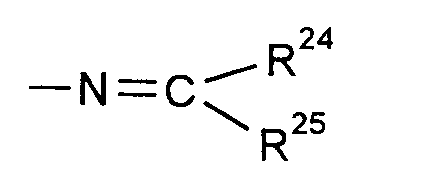
- R23
- ferner für Dioxanyl, das durch denselben Rest substituiert ist, an den R22 gebunden ist, oder R23 für den gleichen Rest an den es gebunden ist steht, oder R23 für Phenyl, das gegebenenfalls durch Methyl, Nitro, Cyano, Halogen und/oder Methylthio substituiert ist steht, wobei
- R23
- außerdem besonders bevorzugt für gegebenenfalls durch C1-C4-Alkoxy, C1-C4-Alkylthiomethyl, C1-C4-Alkyl und/oder durch Halogen substituierte heteroaromatische Reste, wie Pyridinyl, Chinolinyl, Chinoxalinyl, Pyrimidinyl oder Benzo-1,2,4-triazinyl steht.
O,O-Dimethyl- bzw. O,O-Diethyl-O-(2,2-dichlor- bzw. 2,2-dibromvinyl)-phosphorsäureester,
O,O-Diethyl-O-(4-nitro-phenyl)-thionophosphorsäureester,
O,O-Dimethyl-O-(3-methyl-4-methylthio-phenyl)-thionophosphorsäureester,
O,O-Dimethyl-O-(3-methyl-4-nitro-phenyl)-thionophosphorsäureester,
O-Ethyl-S-n-propyl-O-(2,4-dichlorphenyl)-thionophosphorsaureester,
O-Ethyl-S-n-propyl-O-(4-methylthio-phenyl)-thionophosphorsäureester,
O,O-Dimethyl-S-(4-oxo-1,2,3-benzotriazin(3)yl-methyl)-thionothiolphosphorsäureester,
O-methyl-O-(2-iso-propyl-6-methoxy-pyrimidin(4)yl)-thionomethanphosphonsäureester,
O,O-Diethyl-O-(2-iso-propyl-6-methyl-pyrimidin(4)yl)-thionosphosphorsäureester,
O,O-Diethyl-O-(3-chlor-4-methyl-cumarin(7)yl)-thionophosphorsäureester,
O,O-Dimethyl-2,2,2-trichlor-1-hydroxy-ethan-phosphonsäureester,
O,O-Dimethyl-S-(methylaminocarbonyl-methyl)-thionophosphonsäureester,
O-Methyl-O-(6-methoxy-2-tert.-butyl-pyrimidin-4-yl)-thionoethan-phosphonsäure-diester. - 4) Nitromethylen-, Nitroimino-, Cyanoimino- oder Cyanomethylen-Derivate der Formel (V)

- R26
- für C1-C4-Alkyl (vorzugsweise für Methyl oder Ethyl) oder für die Gruppe

- R30
- C1-C4-Alkyl (vorzugsweise Methyl oder Ethyl) bedeutet oder
- R30
- gemeinsam mit R27 eine gegebenenfalls verzweigte C2-C5-Alkandiyl-Kette (vorzugsweise -(CH2)2- oder -(CH2)3-) darstellt,
und - R31
- Wasserstoff oder C1-C4-Alkyl (vorzugsweise Wasserstoff) bedeutet;
- R27
- für C1-C4-Alkyl (vorzugsweise Methyl oder Ethyl) steht oder gemeinsam mit R30 eine gegebenenfalls verzweigte C2-C5-Alkandiyl-Kette (vorzugsweise -(CH2)2- oder -(CH2)3-) darstellt,
- R28
- für NO2 oder CN steht;
- R29
- für einen gegebenenfalls substituierten (vorzugsweise durch Halogen und/oder C1-C4-Alkyl substituierten) heteroaromatischen Rest (vorzugsweise Pyridylrest) steht (wobei R29 besonders bevorzugt für die 2-Chlorpyridyl-5-Gruppe steht);
- Q
- für =C- oder =N- steht; und
- V
- für eine direkte Bindung oder für einen C1-C3-Alkandiyl-Rest (vorzugsweise für -CH2-) steht.
Im folgenden werden beispielhaft einige besonders bevorzugte Verbindungen der Formel (V) speziell aufgeführt:

- In den vorstehend aufgeführten allgemeinen Formeln und Restedefinitionen haben die Reste die folgenden allgemeinen sowie bevorzugten Bedeutungen:
- Alkyl als solches oder als Bestandteil von Alkoxy oder Alkoxycarbonyl bedeutet geradkettiges oder verzweigtes Alkyl mit 1 bis 5, vorzugsweise 1 bis 4 und besonders bevorzugt 1 bis 3, Kohlenstoffatomen, wobei Methyl, Ethyl, n- und i-Propyl, n-, i-, s- und t-Butyl speziell genannt seien, wobei Methyl und Ethyl, insbesondere Methyl besonders hervorgehoben werden sollen.
- Im gegebenenfalls substituierten Phenyl, Phenoxy oder Phenoxycarbonyl trägt der Phenylring vorzugsweise ein bis drei, besonders bevorzugt ein oder zwei Substituenten, die gleich oder verschieden sein können. Als Substituenten können alle in der Wirkstoffchemie üblichen Substituenten stehen. Als bevorzugte Substituenten seien aufgeführt: C1-C4-Alkyl, C1-C4-Alkoxy, C1-C4-Alkylthio, C1-C4-Halogenalkyl, C1-C4-Halogenalkoxy, Nitro, Hydroxy und Halogen (vorzugsweise Fluor, Chlor und/oder Brom).
- Die p-Hydroxyphenylessigsäure und/oder ihre Mischungen mit anderen chemischen Verbindungen und/oder die insektiziden Stoffe sowie die Mischungen der p-Hydroxyphenylessigsäure und/oder ihre Mischungen mit anderen chemischen Verbindungen mit den insektiziden Stoffen können in Abhängigkeit von ihren jeweiligen physikalischen und/oder chemischen Eigenschaften in übliche Formulierungen übergeführt werden, wie Lösungen, Emulsionen, Suspensionen, Pulver, Schäume, Pasten, Granulate, Aerosole, Wirkstoff-imprägnierte Natur- und synthetische Stoffe sowie Feinstverkapselungen in polymeren Stoffen.
- Diese Formulierungen werden in bekannter Weise hergestellt, z.B. durch Vermischen der Wirkstoffe mit Hilfs- und/oder Streckmitteln, also flüssigen Lösungsmitteln und/oder festen Trägerstoffen, gegebenenfalls unter Verwendung von oberflächenaktiven Mitteln, also Emulgiermitteln und/oder Dispergiermitteln und/oder schaumerzeugenden Mitteln. Im Falle der Benutzung von Wasser als Streckmittel können z.B. auch organische Lösungsmittel als Hilfslösungsmittel verwendet werden. Als flüssige Lösungsmittel kommen im wesentlichen in Frage: Aromaten, wie Xylol, Toluol, oder Alkylnaphthaline, chlorierte Aromaten oder chlorierte aliphatische Kohlenwasserstoffe, wie Chlorbenzole, Chlorethylene oder Methylenchlorid, aliphatische Kohlenwasserstoffe, wie Cyclohexan oder Paraffine, z.B. Erdölfraktionen, Alkohole, wie Butanol oder Glycol sowie deren Ether und Ester, Ketone, wie Aceton, Methylethylketon, Methylisobutylketon oder Cyclohexanon, stark polare Lösungsmittel, wie Dimethylformamid und Dimethylsulfoxid, sowie Wasser; als feste Trägerstoffe kommen in Frage: z.B. natürliche Gesteinsmehle, wie Kaoline, Tonerden, Talkum, Kreide, Quarz, Attapulgit, Montmorillonit oder Diatomeenerde und synthetische Gesteinsmehle, wie hochdisperse Kieselsäure, Aluminiumoxid und Silikate; als feste Trägerstoffe für Granulate kommen in Frage: z.B. gebrochene und fraktionierte natürliche Gesteine wie Calcit, Marmor, Bims, Sepiolith, Dolomit sowie synthetische Granulate aus anorganischen und organischen Mehlen sowie Granulate aus organischem Material wie Sagemehl, Kokosnußschalen, Maiskolben und Tabakstengel; als Emulgier und/oder schaumerzeugende Mittel kommen in Frage: z.B. nichtionogene und anionische Emulgatoren, wie Polyoxyethylen-Fettsäure-Ester, Polyoxyethylen-Fettalkohol-Ether, z.B. Alkylarylpolyglykol-Ether, Alkylsulfonate, Alkylsulfate, Arylsulfonate sowie Eiweißhydrolysate; als Dispergiermittel kommen in Frage: z.B. Lignin-Sulfitablaugen und Methylcellulose.
- Es können in den Formulierungen Haftmittel wie Carboxy-methylcellulose, natürliche und synthetische pulverige, körnige oder latexförmige Polymere verwendet werden, wie Gummiarabicum, Polyvinylalkohol, Polyvinylacetat, sowie natürliche Phospholipide, wie Kephaline und Lecithine, und synthetische Phospholipide. Weitere Additive können mineralische und vegetabile Öle sein.
- Es können Farbstoffe wie anorganische Pigmente, z.B. Eisenoxid, Titanoxid, Ferrocyanblau und organische Farbstoffe, wie Alizarin-, Azo- und Metallphthalocyaninfarbstoffe und Spurennährstoffe wie Salze von Eisen, Mangan, Bor, Kupfer, Kobalt, Molybdän und Zink verwendet werden.
- Die Formulierungen können im Falle von Köderformulierungen (vorzugsweise Streuköderformulierungen oder Festköderformulierungen) zusätzlich weitere Zusatzstoffe enthalten, die Schaben anlocken und/oder zur Aufnahme der insektiziden Stoffe veranlassen. Als Lockstoffe und Fraßstoffe können alle üblicherweise verwendeten Präparate verwendet werden, wie natürliche oder synthetische Geruchsstoffe und/oder Stoffe, die von Schaben gerne aufgenommen werden, wie stärke-, protein- und/oder zuckerhaltige Produkte auf Getreide- oder Zuckerbasis.
- Die Formulierungen enthalten vorzugsweise 0,001 bis 95, insbesondere 0,01 bis 70 Gewichtsprozente p-Hydroxyphenylessigsäure und/oder ihrer Mischungen mit anderen chemischen Verbindungen.
- Die Formulierungen enthalten (gegebenenfalls neben der p-Hydroxyphenylessigsäure und/oder ihrer Mischungen mit anderen chemischen Verbindungen), vorzugsweise zwischen 0,1 und 95, insbesondere 0,5 und 90 Gewichtsprozente insektizide Stoffe.
- Die Anwendung der Schabenbekämpfungsmittel erfolgt in einer an die Anwendungsform angepaßten üblichen Weise.
- Die biologische Wirksamkeit der p-Hydroxyphenylessigsäure und/oder ihrer Mischungen mit anderen chemischen Verbindungen soll anhand der folgenden Beispiele erläutert werden.
- In einem Raum (2,25 x 4,70 m) befinden sich in 2 gegenüberliegenden Ecken je ein Versteck sowie je eine Tränke, in den anderen Ecken je ein Stück Zwieback. Einen Tag nach Freilassen von 20 männlichen und 20 weiblichen Schaben (Blattella germanica) wird in 40 cm Wandabstand zum Zwieback je eine Köderdose mit einem insektizidhaltigen Fraßköder (insektizider Wirkstoff: 0,5 Gew.-% Ethylchlorpyrifos) aufgestellt.
- Dieser Köder enthält entweder p-Hydroxyphenylessigsäure oder ist unbehandelt.
- 3 Räume werden jeweils mit behandelten Köderdosen und 3 mit unbehandelten Köderdosen besetzt.
- An den folgenden 3 Tagen wird die Mortalität der männlichen und weiblichen Tiere bestimmt.
Testergebnis: Behandlungsart % Mortalität nach 1 d 2 d 3 d Kontrolle (nur Insektizid) 22 42 52 Insektizid + 10 mg p-Hydroxyphenylessigsäure 46 58 63 - Keramikkacheln werden mit einer wäßrigen Spritzbrühe besprüht, welche (a) den insektiziden Wirkstoff Cyfluthrin oder (b) Cyfluthrin und p-Hydroxyphenylessigsäure enthält, so daß die Aufwandmenge an Cyfluthrin 20 mg Wirkstoff je m2 und die Aufwandmenge von p-Hydroxyphenylessigsäure 1 mg je m2 beträgt.
- Je eine dieser Kacheln wird in die Ecke eines Behälters (49 x 59 cm, Höhe 29,5 cm) gelegt, in dem sich eine Tränke, Futter, ein Versteck sowie 24 Stunden zuvor eingesetzte Männchen und Weibchen von Blattella germanica (je 5 Stück) befinden. Jeder Versuch besteht aus 5 Wiederholungen.
Testergebnis: Behandlungsart % Mortalität nach 1 d 2 d Kontrolle (nur Insektizid) 32 44 Insektizid + p-Hydroxyphenylessigsäure 68 78 - In Australien wurde eine wäßrige Spritzbrühe verwendet, welche (a) den insektiziden Wirkstoff β-Cyfluthrin oder (b) β-Cyfluthrin und p-Hydroxyphenylessigsäure enthielt, so daß die Aufwandmenge an β-Cyfluthrin 6,25 mg Wirkstoff je m2 (Hälfte der empfohlenen Menge) und die Aufwandmenge von p-Hydroxyphenylessigsäure 1 mg je m2 beträgt.
- Die Versuche fanden in Wohnungen mit schwierigsten hygienischen Bedingungen statt. Pro Präparat (β-Cyfluthrin oder β-Cyfluthrin und p-Hydroxyphenylessigsäure) wurden 7 bis 8 Einheiten behandelt. Die Wirksamkeit wurde durch die Auswertung von Klebfallenfängen vor und zu bestimmten Zeitpunkten nach der Behandlung ermittelt.
Testergebnisse: Behandlungsart % Reduktion nach 7 Tagen Kontrolle (nur Insektizid) 37 Insektizid + p-Hydroxyphenylessigsäure 65
Claims (9)
- Verwendung von para-Hydroxyphenylessigsäure zur Reduktion der Repellenz von Insektiziden.
- Verwendung von Mischungen von para-Hydroxyphenylessigsäure mit anderen chemischen Verbindungen zur Reduktion der Repellenz von Insektiziden.
- Insektizide Mittel, dadurch gekennzeichnet, daß die repellierende Wirkung des eingesetzten Insektizids durch para-Hydroxyphenylessigsäure und/oder deren Mischungen mit anderen chemischen Verbindungen reduziert wird.
- Verfahren zur Herstellung von antirepellierend wirkenden insektiziden Mitteln, dadurch gekennzeichnet, daß man para-Hydroxyphenylessigsäure und/oder deren Mischungen mit anderen chemischen Verbindungen mit Hilfs- und/oder Streckmitteln gegebenenfalls unter Verwendung von oberflächenaktiven Mitteln vermischt.
- Verwendung von p-Hydroxyphenylessigsäure und/oder deren Mischungen mit anderen chemischen Verbindungen zur Reduktion der Repellenz von Insektiziden, dadurch gekennzeichnet, daß man die freie Säure oder deren Salze einsetzt.
- Verwendung von p-Hydroxyphenylessigsäure und/oder deren Mischungen mit anderen chemischen Verbindungen zur Reduktion der Repellenz von Insektiziden, dadurch gekennzeichnet, daß man diese auf Insekten und/oder deren Lebensraum einwirken läßt.
- Verwendung gemäß Anspruch 6, dadurch gekennzeichnet, daß man die Wirkstoffe auf Schaben und/oder deren Lebensraum einwirken läßt.
- Insektizide Mittel gemäß Anspruch 3 zur Bekämpfung von Schaben.
- Insektizide Mittel gemaß Anspruch 3, dadurch gekennzeichnet, daß sie neben para-Hydroxyphenylessigsäure und/oder deren Salze und/oder deren Mischungen mit anderen chemischen Verbindungen Carbamidsäureester, Carbonsäureester, Phosphonsäureester, Phosphonsäureester, Nitromethylen-, Nitroimino-, Cyanoimino- oder Cyanomethylen-Derivate enthalten.
Applications Claiming Priority (2)
| Application Number | Priority Date | Filing Date | Title |
|---|---|---|---|
| DE19528306A DE19528306A1 (de) | 1995-08-02 | 1995-08-02 | Para-Hydroxyphenylessigsäure zur Reduktion der Repellenz von Insektiziden |
| DE19528306 | 1995-08-02 |
Publications (3)
| Publication Number | Publication Date |
|---|---|
| EP0756821A2 true EP0756821A2 (de) | 1997-02-05 |
| EP0756821A3 EP0756821A3 (de) | 1997-11-26 |
| EP0756821B1 EP0756821B1 (de) | 2001-03-14 |
Family
ID=7768459
Family Applications (1)
| Application Number | Title | Priority Date | Filing Date |
|---|---|---|---|
| EP96111748A Expired - Lifetime EP0756821B1 (de) | 1995-08-02 | 1996-07-22 | Para-Hydroxyphenylessigsäure zur Reduktion der Repellenz von Insektiziden |
Country Status (22)
| Country | Link |
|---|---|
| US (1) | US5741501A (de) |
| EP (1) | EP0756821B1 (de) |
| JP (1) | JP3963505B2 (de) |
| KR (1) | KR970009555A (de) |
| CN (1) | CN1106146C (de) |
| AR (1) | AR003075A1 (de) |
| AT (1) | ATE199627T1 (de) |
| AU (1) | AU702909B2 (de) |
| BG (1) | BG100761A (de) |
| BR (1) | BR9603254A (de) |
| CA (1) | CA2182349A1 (de) |
| DE (2) | DE19528306A1 (de) |
| ES (1) | ES2155157T3 (de) |
| GR (1) | GR3035866T3 (de) |
| HU (1) | HUP9602125A2 (de) |
| MX (1) | MX9603133A (de) |
| MY (1) | MY112982A (de) |
| NO (1) | NO963218L (de) |
| PL (1) | PL315467A1 (de) |
| PT (1) | PT756821E (de) |
| SV (1) | SV1996000066A (de) |
| TR (1) | TR199600607A2 (de) |
Families Citing this family (4)
| Publication number | Priority date | Publication date | Assignee | Title |
|---|---|---|---|---|
| US20110117153A1 (en) * | 2008-03-27 | 2011-05-19 | Christine Kritikou | Spinosyn bait formulations for the control of cockroaches and methods of using the same |
| CN111743885B (zh) * | 2020-08-17 | 2022-03-15 | 山东省科学院生物研究所 | 一种对羟基苯乙酸在预防和/或治疗心血管疾病中的应用 |
| CN113861154B (zh) * | 2021-10-21 | 2022-09-13 | 华南师范大学 | 一种二氢异香豆素类衍生物及其制备方法与应用 |
| CN114903043B (zh) * | 2022-04-28 | 2023-07-28 | 中国科学院昆明植物研究所 | 一种新型绿色农药的应用 |
Family Cites Families (3)
| Publication number | Priority date | Publication date | Assignee | Title |
|---|---|---|---|---|
| JPS5042053A (de) * | 1973-08-20 | 1975-04-16 | ||
| US5384120A (en) * | 1989-09-08 | 1995-01-24 | Burlington Bio-Medical & Scientific Corp. | Attractants and lures for cockroaches and palmettos |
| DE4231281A1 (de) * | 1992-09-18 | 1994-03-24 | Bayer Ag | Schabenbekämpfungsverfahren und Mittel zur Bekämpfung von Schaben |
-
1995
- 1995-08-02 DE DE19528306A patent/DE19528306A1/de not_active Withdrawn
-
1996
- 1996-07-22 EP EP96111748A patent/EP0756821B1/de not_active Expired - Lifetime
- 1996-07-22 DE DE59606574T patent/DE59606574D1/de not_active Expired - Fee Related
- 1996-07-22 PT PT96111748T patent/PT756821E/pt unknown
- 1996-07-22 ES ES96111748T patent/ES2155157T3/es not_active Expired - Lifetime
- 1996-07-22 AT AT96111748T patent/ATE199627T1/de not_active IP Right Cessation
- 1996-07-24 TR TR96/00607A patent/TR199600607A2/xx unknown
- 1996-07-26 JP JP21412096A patent/JP3963505B2/ja not_active Expired - Fee Related
- 1996-07-26 US US08/690,286 patent/US5741501A/en not_active Expired - Fee Related
- 1996-07-29 AU AU60793/96A patent/AU702909B2/en not_active Ceased
- 1996-07-29 AR ARP960103795A patent/AR003075A1/es active IP Right Grant
- 1996-07-29 KR KR1019960030958A patent/KR970009555A/ko not_active Withdrawn
- 1996-07-30 CA CA002182349A patent/CA2182349A1/en not_active Abandoned
- 1996-07-31 PL PL96315467A patent/PL315467A1/xx unknown
- 1996-07-31 MY MYPI96003139A patent/MY112982A/en unknown
- 1996-07-31 SV SV1996000066A patent/SV1996000066A/es unknown
- 1996-07-31 BG BG100761A patent/BG100761A/xx unknown
- 1996-08-01 HU HU9602125A patent/HUP9602125A2/hu unknown
- 1996-08-01 BR BR9603254A patent/BR9603254A/pt not_active IP Right Cessation
- 1996-08-01 NO NO963218A patent/NO963218L/no unknown
- 1996-08-01 MX MX9603133A patent/MX9603133A/es not_active IP Right Cessation
- 1996-08-02 CN CN96112296A patent/CN1106146C/zh not_active Expired - Fee Related
-
2001
- 2001-05-15 GR GR20010400717T patent/GR3035866T3/el not_active IP Right Cessation
Also Published As
| Publication number | Publication date |
|---|---|
| GR3035866T3 (en) | 2001-08-31 |
| AU702909B2 (en) | 1999-03-11 |
| US5741501A (en) | 1998-04-21 |
| CN1148464A (zh) | 1997-04-30 |
| NO963218D0 (no) | 1996-08-01 |
| TR199600607A2 (tr) | 1997-02-21 |
| PL315467A1 (en) | 1997-02-03 |
| KR970009555A (ko) | 1997-03-27 |
| EP0756821A3 (de) | 1997-11-26 |
| EP0756821B1 (de) | 2001-03-14 |
| BR9603254A (pt) | 1998-04-28 |
| ES2155157T3 (es) | 2001-05-01 |
| JPH0940510A (ja) | 1997-02-10 |
| CA2182349A1 (en) | 1997-02-03 |
| AU6079396A (en) | 1997-02-06 |
| AR003075A1 (es) | 1998-05-27 |
| DE19528306A1 (de) | 1997-02-06 |
| HU9602125D0 (en) | 1996-09-30 |
| CN1106146C (zh) | 2003-04-23 |
| BG100761A (en) | 1997-04-30 |
| NO963218L (no) | 1997-02-03 |
| SV1996000066A (es) | 1997-02-17 |
| HUP9602125A2 (en) | 1997-05-28 |
| JP3963505B2 (ja) | 2007-08-22 |
| MX9603133A (es) | 1997-03-29 |
| PT756821E (pt) | 2001-08-30 |
| MY112982A (en) | 2001-10-31 |
| DE59606574D1 (de) | 2001-04-19 |
| ATE199627T1 (de) | 2001-03-15 |
Similar Documents
| Publication | Publication Date | Title |
|---|---|---|
| EP0107022B1 (de) | Köder zur Bekämpfung von Fliegen | |
| AT406676B (de) | Neue aminopyrazole und ihre verwendung als pestizide | |
| EP0845944B2 (de) | Wirkstoffkombinationen aus pyrethroiden und insekten-entwicklungshemmern | |
| ITRM940820A1 (it) | "composizione per il controllo degli insetti nocivi" | |
| DE69728958T2 (de) | Anstriche inhibierend die Chitinsynthese in Arthropoden zur Bekämpfung von Schädlingen und Allergenen | |
| DD206731A5 (de) | Zusammensetzungen zum kampf gegen parasiten | |
| DE68911160T2 (de) | Arthropodizide Zusammensetzungen. | |
| EP0756821B1 (de) | Para-Hydroxyphenylessigsäure zur Reduktion der Repellenz von Insektiziden | |
| EP0582915B1 (de) | Insektenbekämpfungsverfahren und Insektenbekämpfungsmittel | |
| DE3410319A1 (de) | Neue cyclodextrinkomplexe | |
| EP0584653B1 (de) | Schabenbekämpfungsverfahren und Mittel zur Bekämpfung von Schaben | |
| DE4005628A1 (de) | Schabenkoeder und verfahren zu seiner herstellung | |
| DE4231281A1 (de) | Schabenbekämpfungsverfahren und Mittel zur Bekämpfung von Schaben | |
| DE4403062A1 (de) | Formulierung und Verfahren zur Bekämpfung von sozialen Insekten | |
| EP1085805B1 (de) | Verwendung mindestens einer säure des zitronensäure-kreislaufs in kombination mit glycerin als schädlingsbekämpfungsmittel | |
| DE60214989T2 (de) | Verwendung von vicinalen 1,2-Diole zur Bekämpfung von Anthropoden | |
| EP0973387A1 (de) | Mittel zur bekämpfung von schaben | |
| JP2003095813A (ja) | 動物の外部寄生虫駆除用液剤 | |
| DE19605773A1 (de) | Wirkstoffkombinationen aus Pyrethroiden und Insekten-Entwicklungshemmern | |
| DD202380A5 (de) | Schaedlingsbekaempfungsmittel | |
| DD229920A5 (de) | Mittel zur bekaempfung von varoa jacobsoni | |
| DE3119965A1 (de) | Schaedlingsbekaempfungsmittel | |
| DE3940267A1 (de) | Insektizide mittel | |
| DE3302398A1 (de) | Insektizide und akarizide zusammensetzungen auf basis von ethion und eines pyrethroids, und verfahren zur behandlung von pflanzen gegen arthropoden mittels dieser zusammensetzungen | |
| DE3006834A1 (de) | Herbizide mittel |
Legal Events
| Date | Code | Title | Description |
|---|---|---|---|
| PUAI | Public reference made under article 153(3) epc to a published international application that has entered the european phase |
Free format text: ORIGINAL CODE: 0009012 |
|
| AK | Designated contracting states |
Kind code of ref document: A2 Designated state(s): AT BE CH DE DK ES FI FR GB GR IT LI NL PT SE |
|
| PUAL | Search report despatched |
Free format text: ORIGINAL CODE: 0009013 |
|
| AK | Designated contracting states |
Kind code of ref document: A3 Designated state(s): AT BE CH DE DK ES FI FR GB GR IT LI NL PT SE |
|
| 17P | Request for examination filed |
Effective date: 19980526 |
|
| 17Q | First examination report despatched |
Effective date: 19990201 |
|
| GRAG | Despatch of communication of intention to grant |
Free format text: ORIGINAL CODE: EPIDOS AGRA |
|
| GRAG | Despatch of communication of intention to grant |
Free format text: ORIGINAL CODE: EPIDOS AGRA |
|
| GRAH | Despatch of communication of intention to grant a patent |
Free format text: ORIGINAL CODE: EPIDOS IGRA |
|
| GRAH | Despatch of communication of intention to grant a patent |
Free format text: ORIGINAL CODE: EPIDOS IGRA |
|
| GRAA | (expected) grant |
Free format text: ORIGINAL CODE: 0009210 |
|
| AK | Designated contracting states |
Kind code of ref document: B1 Designated state(s): AT BE CH DE DK ES FI FR GB GR IT LI NL PT SE |
|
| PG25 | Lapsed in a contracting state [announced via postgrant information from national office to epo] |
Ref country code: NL Free format text: LAPSE BECAUSE OF FAILURE TO SUBMIT A TRANSLATION OF THE DESCRIPTION OR TO PAY THE FEE WITHIN THE PRESCRIBED TIME-LIMIT Effective date: 20010314 Ref country code: GB Free format text: LAPSE BECAUSE OF FAILURE TO SUBMIT A TRANSLATION OF THE DESCRIPTION OR TO PAY THE FEE WITHIN THE PRESCRIBED TIME-LIMIT Effective date: 20010314 Ref country code: FI Free format text: LAPSE BECAUSE OF FAILURE TO SUBMIT A TRANSLATION OF THE DESCRIPTION OR TO PAY THE FEE WITHIN THE PRESCRIBED TIME-LIMIT Effective date: 20010314 |
|
| REF | Corresponds to: |
Ref document number: 199627 Country of ref document: AT Date of ref document: 20010315 Kind code of ref document: T |
|
| REG | Reference to a national code |
Ref country code: CH Ref legal event code: EP |
|
| REF | Corresponds to: |
Ref document number: 59606574 Country of ref document: DE Date of ref document: 20010419 |
|
| ET | Fr: translation filed | ||
| REG | Reference to a national code |
Ref country code: ES Ref legal event code: FG2A Ref document number: 2155157 Country of ref document: ES Kind code of ref document: T3 |
|
| ITF | It: translation for a ep patent filed | ||
| PG25 | Lapsed in a contracting state [announced via postgrant information from national office to epo] |
Ref country code: SE Free format text: LAPSE BECAUSE OF FAILURE TO SUBMIT A TRANSLATION OF THE DESCRIPTION OR TO PAY THE FEE WITHIN THE PRESCRIBED TIME-LIMIT Effective date: 20010614 Ref country code: DK Free format text: LAPSE BECAUSE OF FAILURE TO SUBMIT A TRANSLATION OF THE DESCRIPTION OR TO PAY THE FEE WITHIN THE PRESCRIBED TIME-LIMIT Effective date: 20010614 |
|
| PG25 | Lapsed in a contracting state [announced via postgrant information from national office to epo] |
Ref country code: AT Free format text: LAPSE BECAUSE OF NON-PAYMENT OF DUE FEES Effective date: 20010722 |
|
| PG25 | Lapsed in a contracting state [announced via postgrant information from national office to epo] |
Ref country code: LI Free format text: LAPSE BECAUSE OF NON-PAYMENT OF DUE FEES Effective date: 20010731 Ref country code: CH Free format text: LAPSE BECAUSE OF NON-PAYMENT OF DUE FEES Effective date: 20010731 Ref country code: BE Free format text: LAPSE BECAUSE OF NON-PAYMENT OF DUE FEES Effective date: 20010731 |
|
| NLV1 | Nl: lapsed or annulled due to failure to fulfill the requirements of art. 29p and 29m of the patents act | ||
| GBV | Gb: ep patent (uk) treated as always having been void in accordance with gb section 77(7)/1977 [no translation filed] |
Effective date: 20010314 |
|
| PLBE | No opposition filed within time limit |
Free format text: ORIGINAL CODE: 0009261 |
|
| STAA | Information on the status of an ep patent application or granted ep patent |
Free format text: STATUS: NO OPPOSITION FILED WITHIN TIME LIMIT |
|
| BERE | Be: lapsed |
Owner name: BAYER A.G. Effective date: 20010731 |
|
| 26N | No opposition filed | ||
| REG | Reference to a national code |
Ref country code: CH Ref legal event code: PL |
|
| PGFP | Annual fee paid to national office [announced via postgrant information from national office to epo] |
Ref country code: DE Payment date: 20070627 Year of fee payment: 12 |
|
| PGFP | Annual fee paid to national office [announced via postgrant information from national office to epo] |
Ref country code: PT Payment date: 20080630 Year of fee payment: 13 |
|
| PGFP | Annual fee paid to national office [announced via postgrant information from national office to epo] |
Ref country code: ES Payment date: 20080821 Year of fee payment: 13 |
|
| PGFP | Annual fee paid to national office [announced via postgrant information from national office to epo] |
Ref country code: IT Payment date: 20080728 Year of fee payment: 13 Ref country code: FR Payment date: 20080718 Year of fee payment: 13 |
|
| PG25 | Lapsed in a contracting state [announced via postgrant information from national office to epo] |
Ref country code: DE Free format text: LAPSE BECAUSE OF NON-PAYMENT OF DUE FEES Effective date: 20090203 |
|
| PGFP | Annual fee paid to national office [announced via postgrant information from national office to epo] |
Ref country code: GR Payment date: 20080626 Year of fee payment: 13 |
|
| REG | Reference to a national code |
Ref country code: PT Ref legal event code: MM4A Free format text: LAPSE DUE TO NON-PAYMENT OF FEES Effective date: 20100122 |
|
| REG | Reference to a national code |
Ref country code: FR Ref legal event code: ST Effective date: 20100331 |
|
| PG25 | Lapsed in a contracting state [announced via postgrant information from national office to epo] |
Ref country code: PT Free format text: LAPSE BECAUSE OF NON-PAYMENT OF DUE FEES Effective date: 20100122 Ref country code: FR Free format text: LAPSE BECAUSE OF NON-PAYMENT OF DUE FEES Effective date: 20090731 |
|
| REG | Reference to a national code |
Ref country code: ES Ref legal event code: FD2A Effective date: 20090723 |
|
| PG25 | Lapsed in a contracting state [announced via postgrant information from national office to epo] |
Ref country code: GR Free format text: LAPSE BECAUSE OF NON-PAYMENT OF DUE FEES Effective date: 20100204 Ref country code: ES Free format text: LAPSE BECAUSE OF NON-PAYMENT OF DUE FEES Effective date: 20090723 |
|
| PG25 | Lapsed in a contracting state [announced via postgrant information from national office to epo] |
Ref country code: IT Free format text: LAPSE BECAUSE OF NON-PAYMENT OF DUE FEES Effective date: 20090722 |