EP0804281B1 - Appareil et procede pour syntheses multiples de composes organiques sur support polymere - Google Patents
Appareil et procede pour syntheses multiples de composes organiques sur support polymere Download PDFInfo
- Publication number
- EP0804281B1 EP0804281B1 EP96906212A EP96906212A EP0804281B1 EP 0804281 B1 EP0804281 B1 EP 0804281B1 EP 96906212 A EP96906212 A EP 96906212A EP 96906212 A EP96906212 A EP 96906212A EP 0804281 B1 EP0804281 B1 EP 0804281B1
- Authority
- EP
- European Patent Office
- Prior art keywords
- synthetic
- synthesis
- syringes
- steps
- species
- Prior art date
- Legal status (The legal status is an assumption and is not a legal conclusion. Google has not performed a legal analysis and makes no representation as to the accuracy of the status listed.)
- Expired - Lifetime
Links
Images


Classifications
-
- B—PERFORMING OPERATIONS; TRANSPORTING
- B25—HAND TOOLS; PORTABLE POWER-DRIVEN TOOLS; MANIPULATORS
- B25J—MANIPULATORS; CHAMBERS PROVIDED WITH MANIPULATION DEVICES
- B25J9/00—Program-controlled manipulators
- B25J9/16—Program controls
- B25J9/1679—Program controls characterised by the tasks executed
-
- B—PERFORMING OPERATIONS; TRANSPORTING
- B01—PHYSICAL OR CHEMICAL PROCESSES OR APPARATUS IN GENERAL
- B01J—CHEMICAL OR PHYSICAL PROCESSES, e.g. CATALYSIS OR COLLOID CHEMISTRY; THEIR RELEVANT APPARATUS
- B01J19/00—Chemical, physical or physico-chemical processes in general; Their relevant apparatus
- B01J19/0046—Sequential or parallel reactions, e.g. for the synthesis of polypeptides or polynucleotides; Apparatus and devices for combinatorial chemistry or for making molecular arrays
-
- C—CHEMISTRY; METALLURGY
- C07—ORGANIC CHEMISTRY
- C07K—PEPTIDES
- C07K1/00—General methods for the preparation of peptides, i.e. processes for the organic chemical preparation of peptides or proteins of any length
- C07K1/04—General methods for the preparation of peptides, i.e. processes for the organic chemical preparation of peptides or proteins of any length on carriers
- C07K1/045—General methods for the preparation of peptides, i.e. processes for the organic chemical preparation of peptides or proteins of any length on carriers using devices to improve synthesis, e.g. reactors, special vessels
-
- C—CHEMISTRY; METALLURGY
- C07—ORGANIC CHEMISTRY
- C07K—PEPTIDES
- C07K1/00—General methods for the preparation of peptides, i.e. processes for the organic chemical preparation of peptides or proteins of any length
- C07K1/04—General methods for the preparation of peptides, i.e. processes for the organic chemical preparation of peptides or proteins of any length on carriers
- C07K1/047—Simultaneous synthesis of different peptide species; Peptide libraries
-
- B—PERFORMING OPERATIONS; TRANSPORTING
- B01—PHYSICAL OR CHEMICAL PROCESSES OR APPARATUS IN GENERAL
- B01J—CHEMICAL OR PHYSICAL PROCESSES, e.g. CATALYSIS OR COLLOID CHEMISTRY; THEIR RELEVANT APPARATUS
- B01J2219/00—Chemical, physical or physico-chemical processes in general; Their relevant apparatus
- B01J2219/00274—Sequential or parallel reactions; Apparatus and devices for combinatorial chemistry or for making arrays; Chemical library technology
- B01J2219/00277—Apparatus
- B01J2219/00279—Features relating to reactor vessels
- B01J2219/00281—Individual reactor vessels
- B01J2219/00286—Reactor vessels with top and bottom openings
- B01J2219/00288—Reactor vessels with top and bottom openings in the shape of syringes
-
- B—PERFORMING OPERATIONS; TRANSPORTING
- B01—PHYSICAL OR CHEMICAL PROCESSES OR APPARATUS IN GENERAL
- B01J—CHEMICAL OR PHYSICAL PROCESSES, e.g. CATALYSIS OR COLLOID CHEMISTRY; THEIR RELEVANT APPARATUS
- B01J2219/00—Chemical, physical or physico-chemical processes in general; Their relevant apparatus
- B01J2219/00274—Sequential or parallel reactions; Apparatus and devices for combinatorial chemistry or for making arrays; Chemical library technology
- B01J2219/00277—Apparatus
- B01J2219/00279—Features relating to reactor vessels
- B01J2219/00281—Individual reactor vessels
- B01J2219/00286—Reactor vessels with top and bottom openings
- B01J2219/00288—Reactor vessels with top and bottom openings in the shape of syringes
- B01J2219/0029—Reactor vessels with top and bottom openings in the shape of syringes with pistons or plungers
-
- B—PERFORMING OPERATIONS; TRANSPORTING
- B01—PHYSICAL OR CHEMICAL PROCESSES OR APPARATUS IN GENERAL
- B01J—CHEMICAL OR PHYSICAL PROCESSES, e.g. CATALYSIS OR COLLOID CHEMISTRY; THEIR RELEVANT APPARATUS
- B01J2219/00—Chemical, physical or physico-chemical processes in general; Their relevant apparatus
- B01J2219/00274—Sequential or parallel reactions; Apparatus and devices for combinatorial chemistry or for making arrays; Chemical library technology
- B01J2219/00277—Apparatus
- B01J2219/00279—Features relating to reactor vessels
- B01J2219/00306—Reactor vessels in a multiple arrangement
- B01J2219/00308—Reactor vessels in a multiple arrangement interchangeably mounted in racks or blocks
-
- B—PERFORMING OPERATIONS; TRANSPORTING
- B01—PHYSICAL OR CHEMICAL PROCESSES OR APPARATUS IN GENERAL
- B01J—CHEMICAL OR PHYSICAL PROCESSES, e.g. CATALYSIS OR COLLOID CHEMISTRY; THEIR RELEVANT APPARATUS
- B01J2219/00—Chemical, physical or physico-chemical processes in general; Their relevant apparatus
- B01J2219/00274—Sequential or parallel reactions; Apparatus and devices for combinatorial chemistry or for making arrays; Chemical library technology
- B01J2219/00277—Apparatus
- B01J2219/00351—Means for dispensing and evacuation of reagents
-
- B—PERFORMING OPERATIONS; TRANSPORTING
- B01—PHYSICAL OR CHEMICAL PROCESSES OR APPARATUS IN GENERAL
- B01J—CHEMICAL OR PHYSICAL PROCESSES, e.g. CATALYSIS OR COLLOID CHEMISTRY; THEIR RELEVANT APPARATUS
- B01J2219/00—Chemical, physical or physico-chemical processes in general; Their relevant apparatus
- B01J2219/00274—Sequential or parallel reactions; Apparatus and devices for combinatorial chemistry or for making arrays; Chemical library technology
- B01J2219/00277—Apparatus
- B01J2219/00351—Means for dispensing and evacuation of reagents
- B01J2219/00353—Pumps
-
- B—PERFORMING OPERATIONS; TRANSPORTING
- B01—PHYSICAL OR CHEMICAL PROCESSES OR APPARATUS IN GENERAL
- B01J—CHEMICAL OR PHYSICAL PROCESSES, e.g. CATALYSIS OR COLLOID CHEMISTRY; THEIR RELEVANT APPARATUS
- B01J2219/00—Chemical, physical or physico-chemical processes in general; Their relevant apparatus
- B01J2219/00274—Sequential or parallel reactions; Apparatus and devices for combinatorial chemistry or for making arrays; Chemical library technology
- B01J2219/00277—Apparatus
- B01J2219/00351—Means for dispensing and evacuation of reagents
- B01J2219/00414—Means for dispensing and evacuation of reagents using suction
- B01J2219/00416—Vacuum
-
- B—PERFORMING OPERATIONS; TRANSPORTING
- B01—PHYSICAL OR CHEMICAL PROCESSES OR APPARATUS IN GENERAL
- B01J—CHEMICAL OR PHYSICAL PROCESSES, e.g. CATALYSIS OR COLLOID CHEMISTRY; THEIR RELEVANT APPARATUS
- B01J2219/00—Chemical, physical or physico-chemical processes in general; Their relevant apparatus
- B01J2219/00274—Sequential or parallel reactions; Apparatus and devices for combinatorial chemistry or for making arrays; Chemical library technology
- B01J2219/00277—Apparatus
- B01J2219/00351—Means for dispensing and evacuation of reagents
- B01J2219/00418—Means for dispensing and evacuation of reagents using pressure
-
- B—PERFORMING OPERATIONS; TRANSPORTING
- B01—PHYSICAL OR CHEMICAL PROCESSES OR APPARATUS IN GENERAL
- B01J—CHEMICAL OR PHYSICAL PROCESSES, e.g. CATALYSIS OR COLLOID CHEMISTRY; THEIR RELEVANT APPARATUS
- B01J2219/00—Chemical, physical or physico-chemical processes in general; Their relevant apparatus
- B01J2219/00274—Sequential or parallel reactions; Apparatus and devices for combinatorial chemistry or for making arrays; Chemical library technology
- B01J2219/00277—Apparatus
- B01J2219/00351—Means for dispensing and evacuation of reagents
- B01J2219/00423—Means for dispensing and evacuation of reagents using filtration, e.g. through porous frits
-
- B—PERFORMING OPERATIONS; TRANSPORTING
- B01—PHYSICAL OR CHEMICAL PROCESSES OR APPARATUS IN GENERAL
- B01J—CHEMICAL OR PHYSICAL PROCESSES, e.g. CATALYSIS OR COLLOID CHEMISTRY; THEIR RELEVANT APPARATUS
- B01J2219/00—Chemical, physical or physico-chemical processes in general; Their relevant apparatus
- B01J2219/00274—Sequential or parallel reactions; Apparatus and devices for combinatorial chemistry or for making arrays; Chemical library technology
- B01J2219/00583—Features relative to the processes being carried out
- B01J2219/0059—Sequential processes
-
- B—PERFORMING OPERATIONS; TRANSPORTING
- B01—PHYSICAL OR CHEMICAL PROCESSES OR APPARATUS IN GENERAL
- B01J—CHEMICAL OR PHYSICAL PROCESSES, e.g. CATALYSIS OR COLLOID CHEMISTRY; THEIR RELEVANT APPARATUS
- B01J2219/00—Chemical, physical or physico-chemical processes in general; Their relevant apparatus
- B01J2219/00274—Sequential or parallel reactions; Apparatus and devices for combinatorial chemistry or for making arrays; Chemical library technology
- B01J2219/00583—Features relative to the processes being carried out
- B01J2219/00596—Solid-phase processes
-
- B—PERFORMING OPERATIONS; TRANSPORTING
- B01—PHYSICAL OR CHEMICAL PROCESSES OR APPARATUS IN GENERAL
- B01J—CHEMICAL OR PHYSICAL PROCESSES, e.g. CATALYSIS OR COLLOID CHEMISTRY; THEIR RELEVANT APPARATUS
- B01J2219/00—Chemical, physical or physico-chemical processes in general; Their relevant apparatus
- B01J2219/00274—Sequential or parallel reactions; Apparatus and devices for combinatorial chemistry or for making arrays; Chemical library technology
- B01J2219/0068—Means for controlling the apparatus of the process
- B01J2219/00686—Automatic
- B01J2219/00689—Automatic using computers
-
- B—PERFORMING OPERATIONS; TRANSPORTING
- B01—PHYSICAL OR CHEMICAL PROCESSES OR APPARATUS IN GENERAL
- B01J—CHEMICAL OR PHYSICAL PROCESSES, e.g. CATALYSIS OR COLLOID CHEMISTRY; THEIR RELEVANT APPARATUS
- B01J2219/00—Chemical, physical or physico-chemical processes in general; Their relevant apparatus
- B01J2219/00274—Sequential or parallel reactions; Apparatus and devices for combinatorial chemistry or for making arrays; Chemical library technology
- B01J2219/0068—Means for controlling the apparatus of the process
- B01J2219/00686—Automatic
- B01J2219/00691—Automatic using robots
-
- B—PERFORMING OPERATIONS; TRANSPORTING
- B01—PHYSICAL OR CHEMICAL PROCESSES OR APPARATUS IN GENERAL
- B01J—CHEMICAL OR PHYSICAL PROCESSES, e.g. CATALYSIS OR COLLOID CHEMISTRY; THEIR RELEVANT APPARATUS
- B01J2219/00—Chemical, physical or physico-chemical processes in general; Their relevant apparatus
- B01J2219/00274—Sequential or parallel reactions; Apparatus and devices for combinatorial chemistry or for making arrays; Chemical library technology
- B01J2219/0068—Means for controlling the apparatus of the process
- B01J2219/00695—Synthesis control routines, e.g. using computer programs
-
- B—PERFORMING OPERATIONS; TRANSPORTING
- B01—PHYSICAL OR CHEMICAL PROCESSES OR APPARATUS IN GENERAL
- B01J—CHEMICAL OR PHYSICAL PROCESSES, e.g. CATALYSIS OR COLLOID CHEMISTRY; THEIR RELEVANT APPARATUS
- B01J2219/00—Chemical, physical or physico-chemical processes in general; Their relevant apparatus
- B01J2219/00274—Sequential or parallel reactions; Apparatus and devices for combinatorial chemistry or for making arrays; Chemical library technology
- B01J2219/00718—Type of compounds synthesised
- B01J2219/0072—Organic compounds
-
- B—PERFORMING OPERATIONS; TRANSPORTING
- B01—PHYSICAL OR CHEMICAL PROCESSES OR APPARATUS IN GENERAL
- B01J—CHEMICAL OR PHYSICAL PROCESSES, e.g. CATALYSIS OR COLLOID CHEMISTRY; THEIR RELEVANT APPARATUS
- B01J2219/00—Chemical, physical or physico-chemical processes in general; Their relevant apparatus
- B01J2219/00274—Sequential or parallel reactions; Apparatus and devices for combinatorial chemistry or for making arrays; Chemical library technology
- B01J2219/00718—Type of compounds synthesised
- B01J2219/0072—Organic compounds
- B01J2219/00725—Peptides
-
- C—CHEMISTRY; METALLURGY
- C40—COMBINATORIAL TECHNOLOGY
- C40B—COMBINATORIAL CHEMISTRY; LIBRARIES, e.g. CHEMICAL LIBRARIES
- C40B40/00—Libraries per se, e.g. arrays, mixtures
- C40B40/04—Libraries containing only organic compounds
- C40B40/10—Libraries containing peptides or polypeptides, or derivatives thereof
-
- C—CHEMISTRY; METALLURGY
- C40—COMBINATORIAL TECHNOLOGY
- C40B—COMBINATORIAL CHEMISTRY; LIBRARIES, e.g. CHEMICAL LIBRARIES
- C40B60/00—Apparatus specially adapted for use in combinatorial chemistry or with libraries
- C40B60/14—Apparatus specially adapted for use in combinatorial chemistry or with libraries for creating libraries
-
- G—PHYSICS
- G05—CONTROLLING; REGULATING
- G05B—CONTROL OR REGULATING SYSTEMS IN GENERAL; FUNCTIONAL ELEMENTS OF SUCH SYSTEMS; MONITORING OR TESTING ARRANGEMENTS FOR SUCH SYSTEMS OR ELEMENTS
- G05B2219/00—Program-control systems
- G05B2219/30—Nc systems
- G05B2219/40—Robotics, robotics mapping to robotics vision
- G05B2219/40101—Generate concurrent tasks
-
- G—PHYSICS
- G05—CONTROLLING; REGULATING
- G05B—CONTROL OR REGULATING SYSTEMS IN GENERAL; FUNCTIONAL ELEMENTS OF SUCH SYSTEMS; MONITORING OR TESTING ARRANGEMENTS FOR SUCH SYSTEMS OR ELEMENTS
- G05B2219/00—Program-control systems
- G05B2219/30—Nc systems
- G05B2219/45—Nc applications
- G05B2219/45092—Analysing or chemical synthesis robot, moving samples from station to station
-
- Y—GENERAL TAGGING OF NEW TECHNOLOGICAL DEVELOPMENTS; GENERAL TAGGING OF CROSS-SECTIONAL TECHNOLOGIES SPANNING OVER SEVERAL SECTIONS OF THE IPC; TECHNICAL SUBJECTS COVERED BY FORMER USPC CROSS-REFERENCE ART COLLECTIONS [XRACs] AND DIGESTS
- Y10—TECHNICAL SUBJECTS COVERED BY FORMER USPC
- Y10S—TECHNICAL SUBJECTS COVERED BY FORMER USPC CROSS-REFERENCE ART COLLECTIONS [XRACs] AND DIGESTS
- Y10S706/00—Data processing: artificial intelligence
- Y10S706/902—Application using ai with detail of the ai system
- Y10S706/903—Control
- Y10S706/906—Process plant
Definitions
- This invention relates to an apparatus and method for the multiple synthesis of compounds consisting essentially of repeating structural units formed, for example, by repeated washing, deprotection, and coupling. More particularly, the invention is directed to a system for the multiple synthesis of organic compounds, such as peptides, which uses an automated robot for handling multiple synthetic tasks.
- peptide synthesis systems have been automated for the synthesis of multiple peptides, they generally exhibit poor "respite" time, unable to handle efficiently multiple synthetic tasks.
- commercial peptide synthesis systems such as those from Gilson, USA and Advanced Chem Tech, are capable of synthesizing multiple peptide sequences.
- these automated synthesis systems perform each step in the synthetic cycles for all peptides one by one or sequentially.
- the timing protocol more specifically, involves washing all peptides one by one, deprotecting all peptides one by one and then coupling all peptides one by one. For example, coupling is initiated for a first peptide and then when those first initiation coupling steps are completed, coupling is initiated for a second peptide.
- timing protocol results in an especially long delay or respite time between peptide synthesis steps. Washing all peptides one by one is time consuming. Moreover, during coupling, the system is idle while waiting for coupling to finish. With coupling taking up to 2 hours, the efficiency of prior art automated synthesis systems is severely limited.
- prior art automated peptide synthesis systems critically lack flexibility. Once the synthesis of a peptide set has started, any additional peptides, even those urgently required, cannot be started. Furthermore, prior art systems lack the flexibility so as to execute more than one type of coupling reaction, which is typically required for the synthesis of non-peptide compounds.
- a novel synthesis system overcoming the drawbacks of the prior art is realized by employing a fully automated robot that operates with a novel timing protocol for handling multiple synthetic tasks efficiently.
- the novel timing protocol is realized by performing different steps in the synthesis cycles for multiple organic compounds concurrently rather than on a sequential basis.
- this novel timing protocol provides the flexibility of readily adding desired compounds to the list of compounds to be synthesized, changing the order in which the compounds are synthesized, or deleting previously entered compounds. More importantly, such a timing approach or protocol decreases the "respite" time - new synthesis steps of the next compound synthesis being initiated prior to the completion of those in the previous synthesis.
- the novel synthesis system includes an industrial robot system operating under computer control for effecting the synthesis steps within each cycle of the selected compounds, for example, peptides.
- Each synthetic cycle comprises five different steps: washing, adding deprotection reagents, deprotection, adding coupling reagents and coupling. Because deprotection and coupling do not involve any robot action they are passive synthetic steps, although chemically active; the other steps are active synthetic steps.
- the novel timing protocol is realized by having the robot system, during the passive synthetic steps of a compound synthesis, perform active synthetic steps for the synthesis cycle of the synthesis of the next compound.
- a solid-phase peptide synthesis is used, with a first set of plastic syringes containing the resin used as the solid support and serving as the reaction vessel. Additionally, a second set of plastic syringes contains amino acids.
- the robot system equipped with a gripper arm positions any one of the plurality of syringes to selectively aspirate and dispense solvents and reagents from the desired syringe in accordance with the novel timing protocol for coupling predetermined amino acids to the solid support.
- the invention relates to an apparatus for the multiple synthesis of compounds consisting essentially of repeating structural units, for example peptides, formed by repeated washing, deprotection, and coupling.
- the apparatus or synthesis system employs a fully automated robot system that operates with a novel timing protocol for handling multiple synthetic tasks efficiently.
- the novel timing protocol is realized by performing different steps in the different synthesis cycles of multiple organic compounds concurrently rather than on a sequential basis, as discussed in more detail below.
- Peptide synthesis involves the coupling of amino acids and may be accomplished by techniques familiar to those skilled in the art. See, for example, Stewart and Young, Solid Phase Synthesis, Second Edition, Pierce Chemical Co., Rockford, IL (1984).
- the process of peptide synthesis on solid supports generally involves building a peptide from the carboxyl or C-terminal end in which the C-terminal amino acid with its protected ⁇ -amino group is attached to a solid phase polymer.
- the protecting group is then cleaved off, and the next amino acid, also protected, is coupled by a peptide bond to the ⁇ -amino group of the amino acid attached to the solid support.
- the cycle of deprotecting the prior amino acid and coupling the additional amino acid is repeated until the desired peptide is synthesized.
- Any reactive side chains of the amino acids are protected by chemical groups that can withstand the coupling and N ⁇ -deprotection procedure. These side chain protecting groups, however, can be removed at the end of the synthesis.
- the carboxyl group of the blocked amino acid In order to couple an amino acid to the growing synthetic chain, the carboxyl group of the blocked amino acid must be activated. Many methods of activation may be used, including, for example, preformed symmetrical anhydrides (PSA), preformed mixed anhydride (PMA), acid chlorides, active esters, and in situ activation of the carboxylic acid.
- PSA symmetrical anhydrides
- PMA preformed mixed anhydride
- acid chlorides acid chlorides
- active esters active esters
- in situ activation of the carboxylic acid in situ activation of the carboxylic acid.
- the present synthesis system includes a fully automated robot system interfaced to a computer for effecting the synthesis cycle of each desired peptide to be synthesized.
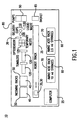
- Fig. 1 there is illustrated a block diagram of a preferred embodiment of a system for the multiple synthesis of compounds, more particularly peptides, applying standard Fmoc/tBu chemistry in accordance with the principles of the invention.
- Synthesis system 10 comprises an industrial robot system 20, such as Model A251 from CRC Plus, Inc., Harrington, Canada, that is interfaced to a IBM personal computer 25.
- Computer 25 includes such hardware as a central processing unit, program and random access memories, timing and control circuitry, input and output interface devices, and other digital subsystems necessary to the operation of the central processing unit, all of which are well known and understood in the art. Accordingly, such computer hardware is not discussed herein for the sake of clarity.
- Robot system 20 is programmed to effect different mechanical manipulations through the use of pre-programmed steps typically provided for in software programs delivered with the robot system. Alternatively, such preprogrammed steps can be provided for in third party software programs, such as Total Control For Windows, Hudson Control Group Inc., Springfield, New Jersey. Those skilled in the art will readily note that other computer means, microcomputer control means or other automated control means, including other programming software, may be alternatively provided to effect mechanical manipulations.
- Automated robot system 20 equipped with a gripper arm 30 that is movable under program control along track 35 can pick up and position (X,Y,Z) any one of a plurality of syringes to any predetermined location.
- the gripper arm is used to selectively aspirate and dispense solvents and reagents from the desired syringe which serves as the reaction vessel for coupling predetermined amino acids to a solid support.
- each syringe has a plunger that is movable by the gripper arm so as to aspirate or dispense reagents in a manner well known to those skilled in the art.
- the gripper arm provides a means for shaking the contents, of the syringes.
- the content amount of reagents in each syringe can be readily determined by detecting the position of the plunger within the desired syringe.
- an optical sensor 36 detecting the motion of the syringes is preferably used to provide feedback to the synthesis system.
- a suitable solid support may be selected, such as a polystyrene or polyethylene glycol/polystyrene resin.
- the protected amino acids may be readily obtained from a number of places, such as Bachem (Torrance, California), Advanced ChemTech (Louisville, Kentucky) or Propeptide (Vert-le-Petit, France).
- computer 25 also controls when each step in the synthesis cycle is initiated so as to implement the novel timing protocol of the present invention wherein different steps in the synthesis cycles of multiple peptides are performed concurrently rather than on a sequential basis.
- synthesis system 10 includes a first set of plastic syringes 40 for holding resin used as the solid support, herein referred to as "resin syringes.”
- resin syringes used as the solid support
- RAM-TentaGel (0.21 mmol/g) obtained from Rapp-Polymere, Tubingen, Germany, is used as the resin.
- First set of plastic resin syringes 40 is placed in incoming racks 50, each holding up to, for example, thirty 10 ml and thirty 2.5 ml syringes.
- Synthesis system 10 also includes a second set of plastic syringes 60 for holding amino acid solutions, herein referred to as "amino acid syringes.”
- second set of syringes 60 are placed in racks 70, each holding up to, for example, a hundred 10.0 ml and a hundred 2.5 ml syringes.
- Basket 65 holds the completed synthesized peptides.
- the number and size of the first and second sets of syringes will be dependent on the number of different peptides synthesized, the length of the peptides and the number of different amino acids required.
- Plastic syringes 40, 60 preferably are made of a material, such as polypropylene, that is sufficiently chemically inert to all solvents and reagents used in the solid-phase peptide synthesis, including trifluoroacetic acid.
- Alternative materials include Kevlar, Teflon or cast glass.
- Each plastic resin syringe 40 which serves as the reaction vessel, is equipped at the bottom with a frit (not shown).
- a frit (not shown).
- various other vessels and means for retaining the solid phase and removing the excess reagents and solvents may be used.
- columns or wells fitted with a frit or filter may be used as alternative reaction vessels that are compatible with the present synthesis system.
- the columns or wells are connected to a vacuum source in such a manner that they can be disconnected from the reaction vessel.
- the frit or the means for retaining the solid phase does not have to be integral with the reaction vessel. Rather, it can be external or only present when necessary to retain the solid phase during the removal of solution therefrom.
- Appropriate solvents and reagents are introduced from solvent reservoirs to delivery cups 80 using four 10 ml piston pump systems 90, such as the Hamilton MicroLab 900, Reno Nevada. Commercial-grade solvents and reagents, such as dimethylformaminde (DMF), piperidine/DMF, DIC/DMF, are used. Three of the piston pumps deliver solvents and reagents to delivery cups 80 whereas the fourth piston pump removes waste as well as wash solution from cups 80 where the amino acids and the coupling reagents are mixed.
- DMF dimethylformaminde
- DIC/DMF DIC/DMF
- Delivery cups 80 comprise a first cup 100 that is used for all washing and for receiving the protected amino acids and coupling reagents, and a second cup 110 that is used for receiving deprotection reagents.
- robot system 20 would only be required to position the appropriate syringes in the desired manipulating stations. This would decrease the required time to perform the active synthetic steps because the most time consuming tasks would be distributed among multiple and independent manipulating stations.
- multiple peptides are synthesized by manipulating the syringes so as to repeatably attach during a synthetic cycle a desired amino acid to the solid support.
- a physical link such as tubing and valves, between the reagent vessels and the reaction vessels nor between the mixing chambers and the reaction vessels.
- different reagents and reaction conditions may be used within the same or different peptide synthesis.
- Each synthetic cycle consists of the following sequence of basic operations or steps: washing, adding deprotection reagents, deprotection, adding coupling reagents, and coupling. Judiciously combining synthetic cycles, each coupling a desired amino acid, creates a synthesis protocol for the synthesis of the desired peptide. Only three of the above synthetic steps, washing, adding deprotection reagents and adding coupling reagents, however, directly require the use of robot system 20. These steps are referred herein to as "active synthetic steps,” although chemically passive, and are discussed in more detail below.
- robot system 20 positions a selected resin syringe from rack 40, a tumbler 120 or holding position 125 and then dispenses any liquid therein into liquid waste 130.
- a preprogrammed amount of washing liquid is subsequently delivered to first cup 100 using piston pump system 90 and then aspirated together with a preprogrammed amount of air using the selected resin syringe.
- Robot system 20 finally then shakes the selected resin syringe for a preprogrammed time to ensure efficient mixing.
- Robot system 20 positions the desired resin syringe over liquid waste 130 and dispenses any liquid therein. A preprogrammed amount of deprotection mixture is subsequently delivered to second cup 110 and then aspirated together with a preprogrammed amount of air using the selected resin syringe.
- Robot system 20 positions the selected resin syringe in holding position 125. Robot system 20 then selects and positions a selected amino acid syringe, dispensing a predetermined amount of desired amino acid into first cup 100. The selected amino acid syringe is repositioned in rack 40. A preprogrammed amount of activating agents is then delivered to first cup 100 and aspirated together with a preprogrammed amount of air using the selected resin syringe located in holding position 125. That selected resin syringe is then positioned into tumbler 120. Next, robot system 20 dispenses a preprogrammed amount of washing solvent into first cup 100 which is then aspirated. Typically, the latter steps of tumbling and washing are repeated a number of times, preferably three times.
- the syringes are placed on 2.5 ml or 10.0 ml tumbling racks 120, each of which holds up to 18 syringes, to ensure an efficient mixing.
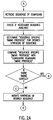
- Timing protocol that allows the handling of multiple synthetic tasks more efficiently, a discussion of the underlying basis for the timing protocol would be instructive, particularly with reference to the flow charts of Figs. 2A and 2B.
- the user enters the sequence of compounds to be synthesized. And, if the necessary reagents are available, the system will start to initiate a desired synthesis - otherwise, the user is notified of the deficiencies. More particularly, for each desired synthesis, the system determines the particular synthetic steps, both active and passive, that are required to synthesize the sequence as well as determines when those synthetic steps are to be performed - that is, their timing or temporal relationship within the synthetic cycle.
- sequence specific timing protocol In considering to initiate a new synthesis, the "sequence specific timing protocol" of the new desired synthesis is compared to the sequence specific steps or timing protocol for those sequences already initiated. These latter sequence specific steps are referred to as a “cumulative remaining timing protocol” because they are a compilation of all the individual "sequence specific timing protocols" of currently initiated syntheses.
- the above comparison requires the system to plot out when the active synthetic steps of the new desired synthesis occur with respect to the active synthetic steps of the sequences currently being synthesized. And, unless there is a timing conflict in performing the active synthetic steps of the new desired synthesis and those already initiated, the system begins to initiate the start of the new synthesis, if necessary reagents are available. It should be understood that the new sequence specific timing protocol of the desired new synthesis is added to the "cumulative remaining timing protocol.”
- the system attempts to determine if the initiation of the new desired synthesis can be delayed or "time shifted", up and until the start of the next active synthetic step of any of the initiated syntheses, so as to eliminate the timing conflict. Unless the system is able to resolve the timing conflict, the system will not initiate the new desired synthesis, but will instead proceed to execute the next required active synthetic step of the syntheses currently in progress. Once the active synthetic step has been performed, the system updates the "cumulative remaining timing protocol" and then attempts again to resolve the timing conflict during the next passive synthetic step of any of the ongoing syntheses. This timing protocol is repeatably performed until all the desired syntheses have been initiated.
- each synthetic protocol in the multiple synthesis is a sequenced cycle order of pre-programmed steps or procedures.
- one synthetic cycle consists of the following synthetic steps: (i) washing the resin three times with dimethylformamide (DMF) for thirty (30) seconds each time; (ii) deprotecting the amino acid with fifty percent (50%) solution of piperidine/DMF for ten (10) minutes; (iii) washing the resin five (5) times with dimethylformamide (DMF) for thirty (30) seconds each time; and (iv) two (2) hour coupling using three (3) molar excess of DIC/HOBt activated Fmoc protected amino acids.
- the synthesis is finished by washing, or by washing, deprotecting and washing, if that is applicable.
- Robot system 30 operating in accordance with the above illustrative synthetic cycle positions a first resin syringe (peptide synthesis no. 1), manipulates the plunger to aspirate a wash solution of dimethylformamide (DMF), and then shakes the resin syringe. This washes the resin with wash solution for thirty (30) seconds. Preferably, the washing is repeated three times. Subsequently, the first resin syringe is used to aspirate from the delivery cup the deprotection reagents that have been dispensed by the piston pump. This latter step is the "adding deprotection reagents" step. This repeated washing and adding deprotection reagents takes about five (5) minutes.
- a first resin syringe peptide synthesis no. 1
- Robot system 30 operating in accordance with the above illustrative synthetic cycle positions a first resin syringe (peptide synthesis no. 1), manipulates the plunger to aspirate a wash solution of dimethylform
- the synthesis system can advantageously direct the robot system to initiate washing and adding deprotection reagents for a second resin syringe or the next peptide synthesis (peptide synthesis no. 2). Since that washing and adding deprotection reagents, however, only takes less than five minutes, there are at least five minutes still remaining before the deprotection is completed for the first resin syringe. To ensure that the respite time between steps is minimized, the synthesis system further directs the robot system to initiate yet another washing and adding deprotection reagents for a third resin syringe (peptide synthesis no. 3).
- Determining whether to initiate another washing and adding deprotection reagents for a subsequent resin syringe is controlled automatically under program control by comparing the sequence specific timing protocol with the cumulative remaining timing protocol, as discussed above. In effect, washing and adding deprotection agents are initiated if the least remaining time for deprotection is sufficiently long to complete the task.
- the synthesis system directs the robot system to position the first resin syringe so as to wash the resin for thirty seconds with dimethylformamide (DMF). This is repeated, preferably, five times, after which the resin syringe is positioned in a temporary holding location.
- the amino acid syringe containing the desired amino acid to be coupled is next positioned and a preprogrammed amount dispensed into the delivery cup which then receives a DIC solution.
- the first resin syringe is used to aspirate from the delivery cup the amino acid solution so as to couple that amino acid. This latter step is the "adding coupling reagents" step.
- the time for washing and adding coupling reagents takes about five (5) minutes.
- the synthesis system advantageously directs the robot system to initiate coupling for the second resin syringe (peptide synthesis no. 2), and then subsequently for the third resin syringe (peptide synthesis no. 3).
- determining whether to initiate another washing and add coupling reagents for a subsequent resin syringe or peptide synthesis is controlled automatically under program control by comparing the sequence specific timing protocol with the cumulative remaining timing protocol, as discussed above. In effect, washing and adding coupling reagents are initiated if the least remaining time for coupling is sufficiently long to complete the task.
- the synthesis system takes a fourth resin syringe (peptide synthesis no. 4) and initiates washing and deprotection.
- the synthesis system initiates washing and deprotection for as many resin syringes (peptide syntheses) as possible before the least remaining coupling time expires.
- the maximum amount of peptide synthesized is limited by the size of the syringe. For example, with 10 ml syringes containing about 500 mg of resin (0.5 mmol/g resin), it is anticipated that 0.25 mmol of peptide (ca 300 mg crude decapeptide) can be synthesized.
- each new initiated synthetic cycle for a peptide synthesis follows the order in which the prior cycle was initiated.
- different coupling times if that is desired, may be used.
- the principles of the timing protocol do not change - the system, if time permits, initiates an active synthesis step of the next peptide synthesis during the passive steps of the prior peptide synthesis.
- a program listing implementing the principles of the invention, including the timing protocol, is contained in the microfiche appendix.
- FIG. 3 there is illustrated the timing protocol or timing relationship between washing, adding deprotection reagents, deprotection, adding coupling reagents and coupling for the multiple synthesis of twelve peptides using the above described solid phase peptide synthetic protocol.
- Those skilled in the art will readily note based on the discussion above that during passive synthetic steps (deprotection and coupling), active synthetic steps in the synthetic cycles of the next peptide synthesis are concurrently initiated with the prior peptide synthesis.
- peptide synthesis no. 1 during deprotection of the first peptide synthesis
- washing and adding deprotection reagents is initiated for the second and third peptide syntheses (peptide synthesis nos. 2 and 3).
- the synthesis system In addition to the various parameter variables which must be specified or retrieved from existing stored synthetic protocols, the synthesis system must also be initialized with other information, including the assignment and identification of solvents and reagents contained in the peptide synthetic protocols; the reagent and amino acid concentrations (mmol/ml) used to calculate the corresponding reagent and amino acid solution volumes, respectively; the size of the syringes; the amount of resin in the syringes; the substitution of resin in mmol/g; the positions and content of each amino acid syringe, preferably identified by a three to five letter code, including its concentration and available volume; the peptide sequences desired to be synthesized using the identifying three to five letter codes; and for each peptide its identifying code, and sequence.
- the system prompts the user for the information. Alternatively, however, this information may be entered prior to initiating the peptide syntheses or stored in a file or database.
- sequences to be synthesized establishes their priority for synthesis, and establishes a synthesis queue.
- any compound can be entered with any priority.
- additional sequences can be added to the synthesis queue together with the necessary synthetic protocol.
- additional reagents may be added, if necessary.
- the system calculates whether the amount of amino acid and reagents is sufficient to prepare all the peptides. Unless there is enough amino acid and reagents available for the synthesis, the synthesis system will not initiate that synthesis, indicating instead its status as "not ready.”
- the above timing protocol allows handling multiple synthetic tasks efficiently since active synthetic steps requiring the use of the robot system in the synthesis cycles of multiple peptides are performed concurrently with passive synthetic steps in different synthetic cycles.
- synthesis resources become immediately available with each completed synthesis, a new peptide synthesis can be initiated without waiting for the complete synthesis of the entire set of desired peptides.
- the new peptide synthesis is taken from the top of a waiting list of peptides that has been prioritized according to need.
- that prioritized waiting list can be changed at any time, either by adding or deleting any peptide, to meet varying situations. Further, any peptide currently being synthesized can be halted without affecting the synthesis of the others.
- the principles of the invention can be equally applied to any chemistry that involves repeated procedures, such as washing, deprotection and coupling - particularly, solid phase synthesis, including but not limited to the organic reactions described in Borchardt et al., J. Am. Chem. Soc., 116: 373 (1994); Chen et al., J. Am. Chem. Soc., 116: 2661 (1994); Simon et al., PNAS , 89: 9367 (1992); Nikolaiev et al., Pept. Res., 6: 161-70 (1993); and Lebl et al., Vol. 5: 541-548, Techniques In Protein Chemistry , Academic Press, San Diego (1994).
Landscapes
- Chemical & Material Sciences (AREA)
- Organic Chemistry (AREA)
- General Health & Medical Sciences (AREA)
- Molecular Biology (AREA)
- Health & Medical Sciences (AREA)
- Life Sciences & Earth Sciences (AREA)
- Biochemistry (AREA)
- Biophysics (AREA)
- Engineering & Computer Science (AREA)
- Genetics & Genomics (AREA)
- Medicinal Chemistry (AREA)
- Analytical Chemistry (AREA)
- Proteomics, Peptides & Aminoacids (AREA)
- Chemical Kinetics & Catalysis (AREA)
- Robotics (AREA)
- Mechanical Engineering (AREA)
- Peptides Or Proteins (AREA)
- Addition Polymer Or Copolymer, Post-Treatments, Or Chemical Modifications (AREA)
- Organic Low-Molecular-Weight Compounds And Preparation Thereof (AREA)
Claims (39)
- Système pour la synthèse en phase solide d'espèces multiples de composés organiques, chacune formée par des cycles de synthèse répétés d'étapes de synthèses, ledit système comprenant :un ordinateur pour traiter un programme d'instructions en corrélation avec des cycles prédéterminés de synthèse pour la synthèse de chacune desdites espèces multiples ;un robot automatisé répondant au dit ordinateur, ledit robot automatisé fonctionnant pour provoquer lesdites étapes de synthèse à réaliser selon les cycles de synthèse de chacune desdites espèces multiples ; etun protocole de synchronisation, mis en place par ledit programme d'instructions et exécuté par ledit ordinateur, pour diriger les étapes de synthèse d'au moins deux différentes espèces à réaliser concurremment, ledit protocole de synchronisation déterminant si la durée d'une étape de synthèse dans le cycle de synthèse de l'une desdites au moins deux espèces différentes est suffisante pour initier une étape de synthèse dans le cycle de synthèse d'une autre desdites au moins deux espèces différentes ; le système robotisé réalisant, au cours des étapes de synthèse passives d'une synthèse de composé, des étapes actives de synthèse pour le cycle de synthèse du prochain composé.
- Système de la revendication 1, dans lequel chacune desdites espèces a un protocole de synchronisation spécifique à une séquence qui lui est associé, le rassemblement de tous les protocoles de synchronisation spécifiques à une séquence pour les espèces en cours de synthèse étant un protocole de synchronisation cumulatif restant, ledit système comprenant en outre des moyens pour déterminer s'il existe un conflit de synchronisation entre le protocole de synchronisation spécifique à une séquence pour une nouvelle espèce désirée et le protocole de synchronisation cumulatif restant.
- Système de la revendication 1, dans lequel lesdites étapes de synthèse comprennent les étapes de lavage, d'ajout de réactifs de déprotection, de déprotection, d'ajout de réactifs de couplage et de couplage.
- Système de la revendication 1, dans lequel lesdites étapes de synthèses comprennent les étapes de synthèse actives et passives, ledit protocole de synchronisation dirigeant lesdites étapes actives au sein d'une première synthèse d'une première espèce à réaliser concurremment avec les étapes passives au sein d'une deuxième synthèse d'une deuxième espèce.
- Système de la revendication 1, dans lequel lesdits composés organiques comprennent des peptides.
- Système de la revendication 1, comprenant en outre :un premier jeu de plusieurs seringues, chaque seringue contenant une résine pour coupler de manière reproductible les composés sur un support solide afin de synthétiser une première espèce ; etun deuxième jeu de plusieurs seringues, chaque seringue contenant le composé désiré qui doit être couplé au support solide au cours de l'un desdits cycles de synthèse.
- Système de la revendication 6, dans lequel ledit composé qui doit être couplé est un acide aminé pour la synthèse d'un peptide.
- Système de la revendication 7, dans lequel ladite synthèse en phase solide est une synthèse de peptides en phase solide de Merrifield.
- Système de la revendication 6, dans lequel ledit robot automatisé comprend :un bras de préhension répondant au dit ordinateur, ledit bras de préhension positionnant sélectivement et manipulant des seringues provenant des premier et deuxième jeux de plusieurs seringues pour aspirer ou distribuer ainsi les solvants et réactifs requis au sein desdits cycles de synthèse.
- Système de la revendication 1, comprenant en outre une base de données contenant des variables de paramètres nécessaires à la synthèse desdites espèces multiples de composés organiques, ladite base de données comprenant la séquence caractéristique des cycles de synthèse répétés pour chacune desdites espèces multiples.
- Système pour la synthèse en phase solide de peptides multiples, chacun formé par des cycles de synthèse répétés, ledit système comprenant :un premier jeu de seringues, chacune renfermant un support solide ;un deuxième jeu de seringues, chacune renfermant un acide aminé désiré, ledit premier jeu de seringues servant de récipients de réaction pour coupler les acides aminés désirés provenant dudit deuxième jeu de seringues à des supports solides ;un ordinateur pour traiter un programme d'instructions en corrélation avec des cycles de synthèse prédéterminés pour la synthèse de peptides multiples ; etun robot automatisé répondant au dit ordinateur, ledit robot automatisé étant couplé opérationnellement aux dits premier et deuxième jeux de seringues pour aspirer et distribuer les réactifs afin de provoquer lesdits cycles de synthèse répétés à réaliser selon une synthèse de peptide désiré pour coupler ainsi de manière reproductible un acide aminé désiré à un support solide, lesdits cycles répétés de synthèse comprenant les étapes de synthèse de lavage, d'ajout de réactifs de déprotection, de déprotection, d'ajout de réactifs de couplage et de couplage,lesdits cycles de synthèse répétés étant réalisés selon un protocole de synchronisation dans lequel lesdits lavage, ajout de réactifs de protection ou ajout de réactifs de couplage sont réalisés concurremment à ladite déprotection ou au dit couplage pour les différentes synthèses de peptides.
- Système de la revendication 11, dans lequel ledit premier jeu de seringues est fait en polypropylène.
- Système de la revendication 11, dans lequel chacun desdits premiers jeux de seringues comprend un dispositif de rétention de la phase solide.
- Système de la revendication 13, dans lequel ledit dispositif de rétention de la phase solide est une fritte.
- Système de la revendication 11, dans lequel ledit support solide comprend une résine choisie parmi le groupe constitué du polystyrène et du polyéthylène glycol.
- Système de la revendication 11, dans lequel le robot automatisé comprend un bras connecté opérationnellement au dit automate afin de manipuler chacun desdits premiers et deuxièmes jeux de seringues.
- Système de la revendication 16, dans lequel lesdits premiers et deuxièmes jeux de seringues comprennent chacun un piston couplé opérationnellement à ceux-ci, ledit piston étant déplaçable par ledit bras dudit robot automatisé pour aspirer ou distribuer ainsi les réactifs.
- Système de la revendication 17, dans lequel la quantité de réactifs dans chacune desdites seringues est déterminée par la position du piston de ladite seringue correspondante.
- Système de la revendication 11, comprenant en outre un capteur optique répondant au mouvement desdits premier et deuxième jeux de seringues, ledit capteur optique confirmant la position desdits premier et deuxième jeux de seringues.
- Système de la revendication 11, dans lequel ladite synthèse de peptides utilise la chimie Fmoc/tBu.
- Système de la revendication 11, comprenant en outre des pompes à piston et des bacs de distribution, lesdites pompes à piston distribuant les solvants et réactifs aux dits bacs de distribution à partir desquels lesdits premier et deuxième jeux de seringues distribuent ou aspirent lesdits solvants ou réactifs.
- Système de la revendication 11, comprenant en outre une base de données contenant des variables de paramètres nécessaires à la synthèse de peptides multiples.
- Procédé pour la synthèse automatisée en phase solide d'espèces multiples de composés organiques, formées par les cycles de synthèse répétés d'étapes de synthèse, ledit procédé comprenant les étapes consistant à :a) initier une étape de synthèse dans un cycle de synthèse d'une espèce ;b) déterminer si la durée de ladite étape de synthèse de l'étape a) est suffisante pour initier une étape de synthèse dans le cycle de synthèse d'une espèce différente, et si oui,c) initier une étape de synthèse dans le cycle de synthèse de ladite espèce différente ; etd) répéter les étapes a), b) et c) jusqu'à ce que lesdites espèces multiples soient synthétisées.
- Procédé de la revendication 23, dans lequel lesdites étapes de synthèse comprennent le lavage, la déprotection et le couplage pour la synthèse de peptides multiples.
- Procédé de la revendication 24, dans lequel ladite déprotection et ledit couplage sont réalisés dans plusieurs seringues servant de récipients de réaction.
- Procédé pour la synthèse automatisée en phase solide de peptides multiples, formés par des cycles répétés de lavage, d'ajout de réactifs de déprotection, de déprotection, d'ajout de réactifs de couplage et de couplage afin de coupler de manière reproductible les acides aminés à un support solide, ledit procédé comprenant les étapes consistant à :a) remplir un premier jeu de seringues, chacune avec un support solide de résine ;b) remplir un deuxième jeu de seringues, chacune avec l'acide aminé désiré ;d) laver l'un desdits premiers jeux de seringues avec la première solution ;e) ajouter une solution de déprotection à la seringue de l'étape d) pour initier la déprotection ;f) en procédant à la déprotection de l'étape e), répéter les étapes d) et e) si la durée de réalisation de ces étapes est inférieure à la durée nécessaire à la déprotection, sinon passer à l'étape g) ;g) ajouter une solution de couplage à la seringue de l'étape d) pour initier le couplage afin de coupler ainsi un acide aminé désiré au support solide ; eth) en procédant au couplage de l'étape g), répéter les étapes f) et g) si la durée de réalisation de ces étapes est inférieure à la durée du couplage,
sinon passer aux étapes d) et e) jusqu'à ce que la durée de couplage soit terminée. - Procédé de la revendication 26, dans lequel les étapes a) à h) sont reproduites jusqu'à ce qu'un peptide soit synthétisé.
- Procédé de la revendication 26, comprenant en outre l'étape de lavage de chacun desdits premiers jeux de seringues de l'étape d) avant l'ajout d'une solution de couplage.
- Procédé de la revendication 26, dans lequel le système est automatisé par le biais de l'utilisation d'un robot, ledit robot ajoutant la solution de couplage et de déprotection en manipulant les seringues afin d'aspirer et de distribuer les réactifs.
- Procédé de la revendication 26, dans lequel la première solution est le diméthylformamide.
- Procédé de la revendication 26, dans lequel la solution de déprotection est la pipéridine/DMF.
- Procédé de la revendication 26, dans lequel la solution de couplage est une solution de DIC/HOBt.
- Procédé de la revendication 26, comprenant en outre l'étape consistant à guider de manière interactive un utilisateur pour les variables de paramètre en formant une base de données nécessaire à la synthèse de peptides multiples, ladite base de données comprenant la séquence d'acides aminés caractéristique de chacun des peptides multiples.
- Procédé de la revendication 26, comprenant en outre l'étape d'ajout ou de destruction de séquences de peptides sur une liste de peptides à synthétiser.
- Procédé pour la synthèse automatisée en phase solide d'espèces multiples de composés organiques, formées par des cycles de synthèse répétés des étapes de synthèse, ledit procédé comprenant les étapes consistant à :a) déterminer un protocole de synchronisation spécifique à une séquence, associé à une espèce désirée à synthétiser, ledit protocole de synchronisation spécifique à une séquence comprenant le moment où chaque étape de synthèse pour l'espèce désirée se produit temporellement ;b) déterminer le protocole de synchronisation cumulatif restant de l'espèce en cours de synthèse, ledit protocole de synchronisation cumulatif restant comprenant le moment où chaque étape de synthèse pour l'espèce en cours de synthèse se produit temporellement ; etc) déterminer s'il existe un conflit de synchronisation entre ledit protocole de synchronisation spécifique à une séquence et ledit protocole de synchronisation cumulatif restant, un conflit de synchronisation se produisant quand une étape de synthèse pour l'espèce désirée à synthétiser ne peut être réalisée concurremment aux étapes de synthèse d'espèces en cours de synthèse.
- Procédé de la revendication 35, comprenant en outre l'étape d'augmentation de la durée de l'initiation de la synthèse de l'espèce désirée à synthétiser afin de résoudre le conflit temporel.
- Procédé de la revendication 35, dans lequel un conflit temporel survient quand une étape de synthèse active de l'espèce désirée à synthétiser coïncide temporellement avec une étape quelconque de synthèse de l'espèce en cours de synthèse.
- Procédé de la revendication 35, dans lequel lesdits composés organiques comprennent les peptides.
- Procédé de la revendication 35, comprenant en outre l'étape consistant à entrer les variables de paramètres nécessaires à la synthèse des composés organiques.
Applications Claiming Priority (3)
| Application Number | Priority Date | Filing Date | Title |
|---|---|---|---|
| US08/375,879 US5614608A (en) | 1995-01-20 | 1995-01-20 | Apparatus and method for multiple synthesis of organic compounds on polymer support |
| US375879 | 1995-01-20 | ||
| PCT/US1996/001168 WO1996022157A1 (fr) | 1995-01-20 | 1996-01-19 | Appareil et procede pour syntheses multiples de composes organiques sur support polymere |
Publications (3)
| Publication Number | Publication Date |
|---|---|
| EP0804281A1 EP0804281A1 (fr) | 1997-11-05 |
| EP0804281A4 EP0804281A4 (fr) | 1998-09-02 |
| EP0804281B1 true EP0804281B1 (fr) | 2002-06-05 |
Family
ID=23482745
Family Applications (1)
| Application Number | Title | Priority Date | Filing Date |
|---|---|---|---|
| EP96906212A Expired - Lifetime EP0804281B1 (fr) | 1995-01-20 | 1996-01-19 | Appareil et procede pour syntheses multiples de composes organiques sur support polymere |
Country Status (15)
| Country | Link |
|---|---|
| US (1) | US5614608A (fr) |
| EP (1) | EP0804281B1 (fr) |
| JP (1) | JPH10512866A (fr) |
| AR (1) | AR000775A1 (fr) |
| AT (1) | ATE218578T1 (fr) |
| AU (1) | AU687670B2 (fr) |
| CA (1) | CA2211029A1 (fr) |
| DE (1) | DE69621592T2 (fr) |
| DK (1) | DK0804281T3 (fr) |
| ES (1) | ES2177766T3 (fr) |
| IL (1) | IL116837A (fr) |
| PT (1) | PT804281E (fr) |
| TW (1) | TW457130B (fr) |
| WO (1) | WO1996022157A1 (fr) |
| ZA (1) | ZA96447B (fr) |
Families Citing this family (32)
| Publication number | Priority date | Publication date | Assignee | Title |
|---|---|---|---|---|
| US6589726B1 (en) | 1991-09-04 | 2003-07-08 | Metrigen, Inc. | Method and apparatus for in situ synthesis on a solid support |
| US7034110B2 (en) * | 1994-01-05 | 2006-04-25 | Arqule, Inc. | Method of identifying chemical compounds having selected properties for a particular application |
| US5712171A (en) | 1995-01-20 | 1998-01-27 | Arqule, Inc. | Method of generating a plurality of chemical compounds in a spatially arranged array |
| US5945070A (en) * | 1996-10-31 | 1999-08-31 | Merck & Co., Inc. | Reaction vessel filter for combinatorial chemistry or biological use |
| US6274094B1 (en) | 1997-01-13 | 2001-08-14 | Weller, Iii Harold Norris | Nestable, modular apparatus for synthesis of multiple organic compounds |
| US6126904A (en) * | 1997-03-07 | 2000-10-03 | Argonaut Technologies, Inc. | Apparatus and methods for the preparation of chemical compounds |
| US6045755A (en) * | 1997-03-10 | 2000-04-04 | Trega Biosciences,, Inc. | Apparatus and method for combinatorial chemistry synthesis |
| US5882601A (en) * | 1997-06-18 | 1999-03-16 | Merck & Co., Ltd. | Deflected septum seal access port |
| US5961925A (en) | 1997-09-22 | 1999-10-05 | Bristol-Myers Squibb Company | Apparatus for synthesis of multiple organic compounds with pinch valve block |
| EP1164514A1 (fr) * | 1998-10-19 | 2001-12-19 | Symyx Technologies, Inc. | Procédé mis en oeuvre sur ordinateur pour générer une conception de bibliothèque pour une bibliothèque combinatoire de matériaux |
| US7199809B1 (en) | 1998-10-19 | 2007-04-03 | Symyx Technologies, Inc. | Graphic design of combinatorial material libraries |
| US6507945B1 (en) * | 1999-05-05 | 2003-01-14 | Symyx Technologies, Inc. | Synthesizing combinatorial libraries of materials |
| EP1235932A2 (fr) * | 1999-10-08 | 2002-09-04 | Protogene Laboratories, Inc. | Procede et appareil destines a produire un grand nombre de reactions au moyen d'une plaque matrice |
| US6846455B1 (en) * | 2001-01-26 | 2005-01-25 | Ta Instruments-Waters, Llc | Automatic sampling device |
| US20030149933A1 (en) * | 2002-02-01 | 2003-08-07 | Marco Falcioni | Graphical design of chemical discovery processes |
| US7393920B2 (en) | 2003-06-23 | 2008-07-01 | Cem Corporation | Microwave-assisted peptide synthesis |
| WO2007022110A2 (fr) * | 2005-08-12 | 2007-02-22 | Symyx Technologies, Inc. | Conception d'un processus destine a etre execute dans une bibliotheque basee sur des evenements |
| JP5055282B2 (ja) * | 2005-09-14 | 2012-10-24 | イルミナ インコーポレイテッド | 連続的なポリマー合成器 |
| EP2126766A2 (fr) * | 2007-01-26 | 2009-12-02 | Illumina Inc. | Procédé et système de séquençage génétique efficace par données d'image |
| US12497656B2 (en) | 2007-01-26 | 2025-12-16 | Illumina, Inc. | Independently removable nucleic acid sequencing system and method |
| US8315817B2 (en) | 2007-01-26 | 2012-11-20 | Illumina, Inc. | Independently removable nucleic acid sequencing system and method |
| US20090004063A1 (en) * | 2007-06-29 | 2009-01-01 | Symyx Technologies, Inc. | Apparatus and method for actuating a syringe |
| EP2525905B1 (fr) | 2010-01-19 | 2020-11-04 | Illumina, Inc. | Procédés et compositions pour le traitement de réactions chimiques |
| US20120095735A1 (en) * | 2010-10-13 | 2012-04-19 | Ayyadurai V A Shiva | Method of Integration of Molecular Pathway Models |
| US9616404B2 (en) | 2012-05-24 | 2017-04-11 | Peptide Machines, Inc | Automated peptide production machine |
| WO2014039077A1 (fr) * | 2012-09-10 | 2014-03-13 | Boroomand Mohammad | Synthétiseur de peptides automatisé |
| US10450343B2 (en) | 2013-03-21 | 2019-10-22 | Sanofi-Aventis Deutschland Gmbh | Synthesis of cyclic imide containing peptide products |
| CA2907454C (fr) | 2013-03-21 | 2021-05-04 | Sanofi-Aventis Deutschland Gmbh | Synthese de produits peptidiques contenant de l'hydantoine |
| US10040048B1 (en) | 2014-09-25 | 2018-08-07 | Synthego Corporation | Automated modular system and method for production of biopolymers |
| WO2017070512A1 (fr) * | 2015-10-23 | 2017-04-27 | Cem Corporation | Améliorations dans la synthèse peptidique en phase solide |
| USRE49961E1 (en) | 2016-10-21 | 2024-05-07 | Cem Corporation | Solid phase peptide syntheses |
| US20190076814A1 (en) | 2017-09-11 | 2019-03-14 | Synthego Corporation | Biopolymer synthesis system and method |
Family Cites Families (4)
| Publication number | Priority date | Publication date | Assignee | Title |
|---|---|---|---|---|
| US5147608A (en) * | 1988-04-29 | 1992-09-15 | Millipore Corporation | Apparatus and process for performing repetitive chemical processing |
| US5252296A (en) * | 1990-05-15 | 1993-10-12 | Chiron Corporation | Method and apparatus for biopolymer synthesis |
| JPH0720546B2 (ja) * | 1991-08-26 | 1995-03-08 | 株式会社島津製作所 | 多種品目同時化学反応装置 |
| US5368823A (en) * | 1993-02-11 | 1994-11-29 | University Of Georgia Research Foundation, Inc. | Automated synthesis of oligonucleotides |
-
1995
- 1995-01-20 US US08/375,879 patent/US5614608A/en not_active Expired - Fee Related
-
1996
- 1996-01-19 DK DK96906212T patent/DK0804281T3/da active
- 1996-01-19 WO PCT/US1996/001168 patent/WO1996022157A1/fr not_active Ceased
- 1996-01-19 ZA ZA96447A patent/ZA96447B/xx unknown
- 1996-01-19 IL IL11683796A patent/IL116837A/xx not_active IP Right Cessation
- 1996-01-19 CA CA002211029A patent/CA2211029A1/fr not_active Abandoned
- 1996-01-19 JP JP8522457A patent/JPH10512866A/ja not_active Withdrawn
- 1996-01-19 AU AU49671/96A patent/AU687670B2/en not_active Ceased
- 1996-01-19 AT AT96906212T patent/ATE218578T1/de not_active IP Right Cessation
- 1996-01-19 EP EP96906212A patent/EP0804281B1/fr not_active Expired - Lifetime
- 1996-01-19 DE DE69621592T patent/DE69621592T2/de not_active Expired - Fee Related
- 1996-01-19 PT PT96906212T patent/PT804281E/pt unknown
- 1996-01-19 ES ES96906212T patent/ES2177766T3/es not_active Expired - Lifetime
- 1996-01-22 AR ARP960101108A patent/AR000775A1/es active IP Right Grant
- 1996-02-15 TW TW085101912A patent/TW457130B/zh not_active IP Right Cessation
Also Published As
| Publication number | Publication date |
|---|---|
| ATE218578T1 (de) | 2002-06-15 |
| AR000775A1 (es) | 1997-08-06 |
| EP0804281A1 (fr) | 1997-11-05 |
| DE69621592T2 (de) | 2003-01-23 |
| EP0804281A4 (fr) | 1998-09-02 |
| ZA96447B (en) | 1996-10-07 |
| CA2211029A1 (fr) | 1996-07-25 |
| US5614608A (en) | 1997-03-25 |
| JPH10512866A (ja) | 1998-12-08 |
| AU687670B2 (en) | 1998-02-26 |
| DK0804281T3 (da) | 2002-10-14 |
| AU4967196A (en) | 1996-08-07 |
| PT804281E (pt) | 2002-11-29 |
| TW457130B (en) | 2001-10-01 |
| DE69621592D1 (de) | 2002-07-11 |
| ES2177766T3 (es) | 2002-12-16 |
| WO1996022157A1 (fr) | 1996-07-25 |
| IL116837A0 (en) | 1996-07-23 |
| IL116837A (en) | 2000-02-29 |
Similar Documents
| Publication | Publication Date | Title |
|---|---|---|
| EP0804281B1 (fr) | Appareil et procede pour syntheses multiples de composes organiques sur support polymere | |
| JP2544269B2 (ja) | バイオポリマ―合成のための方法と装置 | |
| EP0529504B1 (fr) | Appareillage pour la synthèse simultanée de différents peptides | |
| EP0156588B1 (fr) | Appareil de synthèse automatisé pour la préparation des polypeptides | |
| EP0355266B1 (fr) | Dispositif pour exécuter des réactions chimiques répétitives | |
| ZUCKERMANN et al. | Design, construction and application of a fully automated equimolar peptide mixture synthesizer | |
| US4800166A (en) | Method and apparatus for monitoring the automated synthesis of peptides | |
| EP0445915B1 (fr) | Méthode pour effectuer la synthèse de plusieurs peptides sur un support solide et appareillage pour exécuter cette méthode | |
| US5273715A (en) | Automated system for providing a sequence of chemicals to a reaction process | |
| CA2076683A1 (fr) | Procede et appareil pour la synthese simultanee de plusieurs polypeptides | |
| DK173633B1 (da) | Fremgangsmåde og kanyle til pipetteringsrobot til fuldautomatisk simultan syntese af flere polypeptider | |
| US20130184436A1 (en) | Apparatus and method for semi-automated parallel synthesis of peptides | |
| US6031074A (en) | Automated Peptide design and synthesis | |
| Krchnak et al. | MARS-Multiple Automated Robotic Synthesizer for Continuous Flow of Peptides | |
| US20070189934A1 (en) | Automated solid phase synthesis systems and methods | |
| Bicciato et al. | An improved system for automated peptide synthesis | |
| Cammish et al. | phase peptide synthesis | |
| Furka | The “Portioning-Mixing”(Split-Mix) Synthesis | |
| JPS61205298A (ja) | 自動化ポリペプチド合成装置 |
Legal Events
| Date | Code | Title | Description |
|---|---|---|---|
| PUAI | Public reference made under article 153(3) epc to a published international application that has entered the european phase |
Free format text: ORIGINAL CODE: 0009012 |
|
| 17P | Request for examination filed |
Effective date: 19970731 |
|
| AK | Designated contracting states |
Kind code of ref document: A1 Designated state(s): AT BE CH DE DK ES FR GB GR IE IT LI LU MC NL PT SE |
|
| RHK1 | Main classification (correction) |
Ipc: C07K 1/04 |
|
| A4 | Supplementary search report drawn up and despatched |
Effective date: 19980714 |
|
| AK | Designated contracting states |
Kind code of ref document: A4 Designated state(s): AT BE CH DE DK ES FR GB GR IE IT LI LU MC NL PT SE |
|
| 17Q | First examination report despatched |
Effective date: 20001205 |
|
| GRAG | Despatch of communication of intention to grant |
Free format text: ORIGINAL CODE: EPIDOS AGRA |
|
| GRAG | Despatch of communication of intention to grant |
Free format text: ORIGINAL CODE: EPIDOS AGRA |
|
| GRAH | Despatch of communication of intention to grant a patent |
Free format text: ORIGINAL CODE: EPIDOS IGRA |
|
| GRAH | Despatch of communication of intention to grant a patent |
Free format text: ORIGINAL CODE: EPIDOS IGRA |
|
| GRAA | (expected) grant |
Free format text: ORIGINAL CODE: 0009210 |
|
| AK | Designated contracting states |
Kind code of ref document: B1 Designated state(s): AT BE CH DE DK ES FR GB GR IE IT LI LU MC NL PT SE |
|
| REF | Corresponds to: |
Ref document number: 218578 Country of ref document: AT Date of ref document: 20020615 Kind code of ref document: T |
|
| REG | Reference to a national code |
Ref country code: GB Ref legal event code: FG4D |
|
| REG | Reference to a national code |
Ref country code: CH Ref legal event code: EP |
|
| REG | Reference to a national code |
Ref country code: IE Ref legal event code: FG4D |
|
| REF | Corresponds to: |
Ref document number: 69621592 Country of ref document: DE Date of ref document: 20020711 |
|
| RAP2 | Party data changed (patent owner data changed or rights of a patent transferred) |
Owner name: AVENTIS PHARMACEUTICALS, INC. |
|
| REG | Reference to a national code |
Ref country code: CH Ref legal event code: NV Representative=s name: KIRKER & CIE SA |
|
| REG | Reference to a national code |
Ref country code: GB Ref legal event code: 732E |
|
| REG | Reference to a national code |
Ref country code: DK Ref legal event code: T3 |
|
| NLT2 | Nl: modifications (of names), taken from the european patent patent bulletin |
Owner name: AVENTIS PHARMACEUTICALS, INC. |
|
| REG | Reference to a national code |
Ref country code: GR Ref legal event code: EP Ref document number: 20020402902 Country of ref document: GR |
|
| ET | Fr: translation filed | ||
| REG | Reference to a national code |
Ref country code: PT Ref legal event code: SC4A Free format text: AVAILABILITY OF NATIONAL TRANSLATION Effective date: 20020830 Ref country code: PT Ref legal event code: PC4A Free format text: AVENTIS PHARMACEUTICALS, INC. US Effective date: 20020830 |
|
| NLS | Nl: assignments of ep-patents |
Owner name: AVENTIS PHARMACEUTICALS, INC. |
|
| REG | Reference to a national code |
Ref country code: ES Ref legal event code: FG2A Ref document number: 2177766 Country of ref document: ES Kind code of ref document: T3 |
|
| BECA | Be: change of holder's address |
Free format text: 20020605 *AVENTIS PHARMACEUTICALS INC.:300 SOMERSET CORPORATE BOULEVARD, BRIDGWATER, NEW JERSEY 08807-2854 |
|
| BECH | Be: change of holder |
Free format text: 20020605 *AVENTIS PHARMACEUTICALS INC. |
|
| PLBE | No opposition filed within time limit |
Free format text: ORIGINAL CODE: 0009261 |
|
| STAA | Information on the status of an ep patent application or granted ep patent |
Free format text: STATUS: NO OPPOSITION FILED WITHIN TIME LIMIT |
|
| 26N | No opposition filed |
Effective date: 20030306 |
|
| PGFP | Annual fee paid to national office [announced via postgrant information from national office to epo] |
Ref country code: NL Payment date: 20031229 Year of fee payment: 9 |
|
| PGFP | Annual fee paid to national office [announced via postgrant information from national office to epo] |
Ref country code: AT Payment date: 20040102 Year of fee payment: 9 |
|
| PGFP | Annual fee paid to national office [announced via postgrant information from national office to epo] |
Ref country code: PT Payment date: 20040107 Year of fee payment: 9 Ref country code: MC Payment date: 20040107 Year of fee payment: 9 |
|
| PGFP | Annual fee paid to national office [announced via postgrant information from national office to epo] |
Ref country code: GB Payment date: 20040114 Year of fee payment: 9 |
|
| PGFP | Annual fee paid to national office [announced via postgrant information from national office to epo] |
Ref country code: SE Payment date: 20040122 Year of fee payment: 9 Ref country code: FR Payment date: 20040122 Year of fee payment: 9 |
|
| PGFP | Annual fee paid to national office [announced via postgrant information from national office to epo] |
Ref country code: IE Payment date: 20040123 Year of fee payment: 9 |
|
| PGFP | Annual fee paid to national office [announced via postgrant information from national office to epo] |
Ref country code: CH Payment date: 20040126 Year of fee payment: 9 |
|
| PGFP | Annual fee paid to national office [announced via postgrant information from national office to epo] |
Ref country code: LU Payment date: 20040127 Year of fee payment: 9 |
|
| PGFP | Annual fee paid to national office [announced via postgrant information from national office to epo] |
Ref country code: DK Payment date: 20040131 Year of fee payment: 9 |
|
| PGFP | Annual fee paid to national office [announced via postgrant information from national office to epo] |
Ref country code: ES Payment date: 20040212 Year of fee payment: 9 |
|
| PGFP | Annual fee paid to national office [announced via postgrant information from national office to epo] |
Ref country code: BE Payment date: 20040216 Year of fee payment: 9 |
|
| PGFP | Annual fee paid to national office [announced via postgrant information from national office to epo] |
Ref country code: DE Payment date: 20040301 Year of fee payment: 9 |
|
| PG25 | Lapsed in a contracting state [announced via postgrant information from national office to epo] |
Ref country code: LU Free format text: LAPSE BECAUSE OF NON-PAYMENT OF DUE FEES Effective date: 20050119 Ref country code: IT Free format text: LAPSE BECAUSE OF NON-PAYMENT OF DUE FEES Effective date: 20050119 Ref country code: GB Free format text: LAPSE BECAUSE OF NON-PAYMENT OF DUE FEES Effective date: 20050119 Ref country code: AT Free format text: LAPSE BECAUSE OF NON-PAYMENT OF DUE FEES Effective date: 20050119 |
|
| PG25 | Lapsed in a contracting state [announced via postgrant information from national office to epo] |
Ref country code: SE Free format text: LAPSE BECAUSE OF NON-PAYMENT OF DUE FEES Effective date: 20050120 Ref country code: ES Free format text: LAPSE BECAUSE OF NON-PAYMENT OF DUE FEES Effective date: 20050120 |
|
| PG25 | Lapsed in a contracting state [announced via postgrant information from national office to epo] |
Ref country code: MC Free format text: LAPSE BECAUSE OF NON-PAYMENT OF DUE FEES Effective date: 20050131 Ref country code: LI Free format text: LAPSE BECAUSE OF NON-PAYMENT OF DUE FEES Effective date: 20050131 Ref country code: DK Free format text: LAPSE BECAUSE OF NON-PAYMENT OF DUE FEES Effective date: 20050131 Ref country code: CH Free format text: LAPSE BECAUSE OF NON-PAYMENT OF DUE FEES Effective date: 20050131 Ref country code: BE Free format text: LAPSE BECAUSE OF NON-PAYMENT OF DUE FEES Effective date: 20050131 |
|
| PG25 | Lapsed in a contracting state [announced via postgrant information from national office to epo] |
Ref country code: PT Free format text: LAPSE BECAUSE OF NON-PAYMENT OF DUE FEES Effective date: 20050719 |
|
| BERE | Be: lapsed |
Owner name: *AVENTIS PHARMACEUTICALS INC. Effective date: 20050131 |
|
| PG25 | Lapsed in a contracting state [announced via postgrant information from national office to epo] |
Ref country code: NL Free format text: LAPSE BECAUSE OF NON-PAYMENT OF DUE FEES Effective date: 20050801 |
|
| PG25 | Lapsed in a contracting state [announced via postgrant information from national office to epo] |
Ref country code: DE Free format text: LAPSE BECAUSE OF NON-PAYMENT OF DUE FEES Effective date: 20050802 |
|
| EUG | Se: european patent has lapsed | ||
| REG | Reference to a national code |
Ref country code: DK Ref legal event code: EBP |
|
| GBPC | Gb: european patent ceased through non-payment of renewal fee |
Effective date: 20050119 |
|
| REG | Reference to a national code |
Ref country code: CH Ref legal event code: PL |
|
| PG25 | Lapsed in a contracting state [announced via postgrant information from national office to epo] |
Ref country code: FR Free format text: LAPSE BECAUSE OF NON-PAYMENT OF DUE FEES Effective date: 20050930 |
|
| REG | Reference to a national code |
Ref country code: PT Ref legal event code: MM4A Effective date: 20050719 |
|
| NLV4 | Nl: lapsed or anulled due to non-payment of the annual fee |
Effective date: 20050801 |
|
| REG | Reference to a national code |
Ref country code: IE Ref legal event code: MM4A |
|
| REG | Reference to a national code |
Ref country code: FR Ref legal event code: ST |
|
| PGFP | Annual fee paid to national office [announced via postgrant information from national office to epo] |
Ref country code: GR Payment date: 20060131 Year of fee payment: 11 |
|
| REG | Reference to a national code |
Ref country code: ES Ref legal event code: FD2A Effective date: 20050120 |
|
| BERE | Be: lapsed |
Owner name: *AVENTIS PHARMACEUTICALS INC. Effective date: 20050131 |
|
| PG25 | Lapsed in a contracting state [announced via postgrant information from national office to epo] |
Ref country code: GR Free format text: LAPSE BECAUSE OF NON-PAYMENT OF DUE FEES Effective date: 20070802 |