EP0808344B1 - Verfahren zur herstellung von elektrofotografisch aktivem titanylphthalocyanin - Google Patents
Verfahren zur herstellung von elektrofotografisch aktivem titanylphthalocyanin Download PDFInfo
- Publication number
- EP0808344B1 EP0808344B1 EP96902220A EP96902220A EP0808344B1 EP 0808344 B1 EP0808344 B1 EP 0808344B1 EP 96902220 A EP96902220 A EP 96902220A EP 96902220 A EP96902220 A EP 96902220A EP 0808344 B1 EP0808344 B1 EP 0808344B1
- Authority
- EP
- European Patent Office
- Prior art keywords
- acid
- mixture
- titanylphthalocyanine
- process according
- sulphonic
- Prior art date
- Legal status (The legal status is an assumption and is not a legal conclusion. Google has not performed a legal analysis and makes no representation as to the accuracy of the status listed.)
- Expired - Lifetime
Links
Images


Classifications
-
- C—CHEMISTRY; METALLURGY
- C09—DYES; PAINTS; POLISHES; NATURAL RESINS; ADHESIVES; COMPOSITIONS NOT OTHERWISE PROVIDED FOR; APPLICATIONS OF MATERIALS NOT OTHERWISE PROVIDED FOR
- C09B—ORGANIC DYES OR CLOSELY-RELATED COMPOUNDS FOR PRODUCING DYES, e.g. PIGMENTS; MORDANTS; LAKES
- C09B67/00—Influencing the physical, e.g. the dyeing or printing properties of dyestuffs without chemical reactions, e.g. by treating with solvents grinding or grinding assistants, coating of pigments or dyes; Process features in the making of dyestuff preparations; Dyestuff preparations of a special physical nature, e.g. tablets, films
- C09B67/0001—Post-treatment of organic pigments or dyes
- C09B67/0017—Influencing the physical properties by treatment with an acid, H2SO4
- C09B67/0019—Influencing the physical properties by treatment with an acid, H2SO4 of phthalocyanines
-
- C—CHEMISTRY; METALLURGY
- C09—DYES; PAINTS; POLISHES; NATURAL RESINS; ADHESIVES; COMPOSITIONS NOT OTHERWISE PROVIDED FOR; APPLICATIONS OF MATERIALS NOT OTHERWISE PROVIDED FOR
- C09B—ORGANIC DYES OR CLOSELY-RELATED COMPOUNDS FOR PRODUCING DYES, e.g. PIGMENTS; MORDANTS; LAKES
- C09B67/00—Influencing the physical, e.g. the dyeing or printing properties of dyestuffs without chemical reactions, e.g. by treating with solvents grinding or grinding assistants, coating of pigments or dyes; Process features in the making of dyestuff preparations; Dyestuff preparations of a special physical nature, e.g. tablets, films
- C09B67/0025—Crystal modifications; Special X-ray patterns
- C09B67/0026—Crystal modifications; Special X-ray patterns of phthalocyanine pigments
-
- G—PHYSICS
- G03—PHOTOGRAPHY; CINEMATOGRAPHY; ANALOGOUS TECHNIQUES USING WAVES OTHER THAN OPTICAL WAVES; ELECTROGRAPHY; HOLOGRAPHY
- G03G—ELECTROGRAPHY; ELECTROPHOTOGRAPHY; MAGNETOGRAPHY
- G03G5/00—Recording-members for original recording by exposure, e.g. to light, to heat or to electrons; Manufacture thereof; Selection of materials therefor
- G03G5/02—Charge-receiving layers
- G03G5/04—Photoconductive layers; Charge-generation layers or charge-transporting layers; Additives therefor; Binders therefor
- G03G5/06—Photoconductive layers; Charge-generation layers or charge-transporting layers; Additives therefor; Binders therefor characterised by the photoconductive material being organic
- G03G5/0664—Dyes
- G03G5/0696—Phthalocyanines
-
- G—PHYSICS
- G03—PHOTOGRAPHY; CINEMATOGRAPHY; ANALOGOUS TECHNIQUES USING WAVES OTHER THAN OPTICAL WAVES; ELECTROGRAPHY; HOLOGRAPHY
- G03G—ELECTROGRAPHY; ELECTROPHOTOGRAPHY; MAGNETOGRAPHY
- G03G9/00—Developers
- G03G9/08—Developers with toner particles
- G03G9/09—Colouring agents for toner particles
- G03G9/0906—Organic dyes
- G03G9/0918—Phthalocyanine dyes
Definitions
- the invention relates to a new method of manufacture of titanyl phthalocyanine modifications. These highly active forms can be used as an imaging component in electrophotography become.
- R C 1 -C 6
- the production of various polymorphic titanyl phthalocyanine forms is described in detail in EP-A-460565 and additional applications therefor.
- Form IV is prepared from crude titanyl phthalocyanine with trifluoroacetic acid / methylene chloride as the solvent and subsequent precipitation of the titanyl phthalocyanine with a solvent system, in particular an alcohol (MeOH) and water. The precipitate is then washed and dried.
- the invention has for its object a new method for the production of electrophotographically active titanyl phthalocyanine to provide.
- the process for the production of electrophotographically active titanyl phthalocyanine in that one crude, electrophotographically inactive titanyl phthalocyanine in a mixture of pentafluoropropionic acid and a solvent from the group halogenated alkanes, halogenated aromatics or halogenated Alkanes and / or halogenated aromatics and sulfonic acids or sulfonic acid mixtures, and the titanyl phthalocyanine with water, optionally in the presence of a precipitates another polar organic solvent.
- Alkane is a polychloro or polybromoalkane, preferably selected from methylene chloride, dichloroethane, trichloromethane, Trichloroethane, especially methylene chloride.
- a Halogenated aromatic used is, for example, chlorobenzene.
- Sulfonic acid is an aliphatic or an aromatic sulfonic acid, especially a fluorinated sulfonic acid. It can be next to Monosulfonic acids also disulfonic acids, carboxysulfonic acids, sulfophosphonic acids be used. Particularly advantageous sulfonic acids are selected from p-toluenesulfonic acid, methanesulfonic acid, Trifluoromethanesulfonic acid, preferably p-toluenesulfonic acid or methanesulfonic acid or a mixture of the two. It however, other sulfonic acid mixtures can also be used.
- the ratio of pentafluoropropionic acid to halogenated Alkane / aromatics to sulfonic acid or sulfonic acid mixture is in Range from 1: 2 to 6: 0.1 to 4, preferably in the range of 1: 2.5 to 4.5: 1 to 2.5.
- titanyl phthalocyanine made from diiminoisoindolenine.
- the precipitation of the solvent (mixture) described in the above dissolved titanyl phthalocyanine can be done in water but is preferably with a mixture of methanol: water carried out, the proportion of methanol in the range of 40 up to 60%, in particular in the range from 45 to 55%, is preferred the ratio is 1: 1.
- the raw material can be less pure Titanyl phthalocyanine can be used, making it economical Advantages.
- Example 3 The procedure was as in Example 3, but the precipitation with a mixture of methanol: water of 60:40. After filtering, washing and drying gave a deep blue Titanyl phthalocyanine with the desired electrophotographic Properties as in example 3.
- Example 3 The procedure was as in Example 3, except that that instead of methanesulfonic acid, a mixture of trifluoromethanesulfonic acid and toluenesulfonic acid in the ratio 1: 2 and in an amount of 15 ml. After this Filtration, washing and drying gave a deep blue Titanyl phthalocyanine with the desired electrophotographic Properties as in example 3.
- the electrophotographic properties of the titanyl phthalocyanines prepared by the various methods were determined in a double-layer system.
- an aluminized polyester base was coated with a dispersion of the titanyl phthalocyanine in polycarbonate / methylene chloride.
- the CGL produced in this way after drying was coated with a solution of N, N'-diphenyl-N, N'-di- (m-tolyl) benzidine in polycarbonate / methylene chloride and measured after drying.
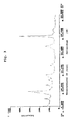
- the products produced according to Example 1 or 2 or 3 show the X-ray diffraction spectra according to FIG. 1 or FIG. 2 or FIG. 3.
Landscapes
- Chemical & Material Sciences (AREA)
- Physics & Mathematics (AREA)
- General Physics & Mathematics (AREA)
- Chemical Kinetics & Catalysis (AREA)
- Organic Chemistry (AREA)
- Photoreceptors In Electrophotography (AREA)
- Organic Low-Molecular-Weight Compounds And Preparation Thereof (AREA)
Description
| Produkt nach Beispiel | UD[V/3sec] | U0[V] | E0,5[µJ/cm-2] | UR[V] |
| 1 | 32 | 930 | 0,15 | < 10 |
| 2 | 25 | 920 | 0,13 | < 10 |
| 3 | 30 | 870 | 0,12 | < 10 |
- UD =
- Dunkelabfall
- U0 =
- Aufladepotential
- E0,5 =
- Lichtmenge, die notwendig ist, U0 auf 50% zu reduzieren
- UR =
- Restpotential mit 6µJcm-2 Weißlicht
Claims (8)
- Verfahren zur Herstellung von elektrofotografisch aktivem Titanylphthalocyanin, dadurch gekennzeichnet, daß man Titanylphthalocyanin in einem Gemisch von Pentafluorpropionsäure und einem Lösungsmittel der Gruppe löst, die aus (1) halogenierten Alkanen, (2) halogenierten Aromaten und (3) einer Kombination von halogenierten Alkanen und/oder halogenierten Aromaten und Sulfonsäuren oder Sulfonsäuregemischen besteht, und das Titanylphthalocyanin mit Wasser, gegebenenfalls in Anwesenheit eines weiteren polaren organischen Lösungsmittels ausfällt.
- Verfahren nach Anspruch 1, dadurch gekennzeichnet, daß das halogenierte Alkan ausgewählt ist unter Methylenchlorid, Dichlorethan, Trichlormethan und Trichlorethan, und es vorzugsweise Methylenchlorid ist.
- Verfahren nach Anspruch 1, dadurch gekennzeichnet, daß die Sulfonsäure eine aliphatische Sulfonsäure ist, ausgewählt unter Methansulfonsäure, Trifluormethansulfonsäure.
- Verfahren nach Anspruch 1, dadurch gekennzeichnet, daß die Sulfonsäure eine aromatische Sulfonsäure ist, ausgewählt unter Benzensulfonsäure, p-Toluensulfonsäure, 1-Naphthalinsulfonsäure, 2-Naphthalinsulfonsäure, insbesondere p-Toluensulfonsäure ist.
- Verfahren nach Anspruch 1, dadurch gekennzeichnet, daß die Sulfonsäure ein Gemisch von 2 oder mehreren Sulfonsäuren ist, vorzugsweise ein Gemisch von p-Toluensulfonsäure und Methansulfonsäure.
- Verfahren nach Anspruch 1, dadurch gekennzeichnet, daß die Fällung mit einem Gemisch polares organisches Lösungsmittel/Wasser erfolgt.
- Verfahren nach Anspruch 6, dadurch gekennzeichnet, daß die Fällung mit einem Gemisch Methanol/Wasser im Bereich von 40 bis 60 Vol-% Methanol erfolgt, vorzugsweise im Bereich von 45 bis 55 Vol-% Methanol, insbesondere im Verhältnis 1:1.
- Verfahren nach Anspruch 1, dadurch gekennzeichnet, daß das eingesetzte Titanylphthalocyanin aus Diiminoisoindolenin hergestellt ist.
Applications Claiming Priority (3)
| Application Number | Priority Date | Filing Date | Title |
|---|---|---|---|
| DE19505784A DE19505784A1 (de) | 1995-02-08 | 1995-02-08 | Verfahren zur Herstellung von elektrofotografisch aktivem Titanylphthalocyanin |
| DE19505784 | 1995-02-08 | ||
| PCT/DE1996/000207 WO1996024638A1 (de) | 1995-02-08 | 1996-02-02 | Verfahren zur herstellung von elektrofotografisch aktivem titanylphthalocyanin |
Publications (2)
| Publication Number | Publication Date |
|---|---|
| EP0808344A1 EP0808344A1 (de) | 1997-11-26 |
| EP0808344B1 true EP0808344B1 (de) | 1999-09-08 |
Family
ID=7754511
Family Applications (1)
| Application Number | Title | Priority Date | Filing Date |
|---|---|---|---|
| EP96902220A Expired - Lifetime EP0808344B1 (de) | 1995-02-08 | 1996-02-02 | Verfahren zur herstellung von elektrofotografisch aktivem titanylphthalocyanin |
Country Status (6)
| Country | Link |
|---|---|
| US (1) | US5786121A (de) |
| EP (1) | EP0808344B1 (de) |
| JP (1) | JP3718526B2 (de) |
| AT (1) | ATE184306T1 (de) |
| DE (2) | DE19505784A1 (de) |
| WO (1) | WO1996024638A1 (de) |
Families Citing this family (7)
| Publication number | Priority date | Publication date | Assignee | Title |
|---|---|---|---|---|
| EP0832941B1 (de) * | 1996-09-25 | 2002-07-31 | Lexmark International, Inc. | Herstellprozess für Typ I Titanylphthalocyanin mit verbesserter Photoleitfähigkeit |
| AU717269B2 (en) * | 1996-09-25 | 2000-03-23 | Lexmark International Inc. | Processing which enhances photoconductivity to type I titanyl phthalocyanine |
| AU6299598A (en) * | 1998-03-05 | 1999-09-20 | Zeneca Limited | Titanyl phthalocyanine and its use |
| KR100528734B1 (ko) * | 2003-10-08 | 2006-01-10 | (주)프탈로스 | 옥시티타늄 프탈로시아닌 전하발생물질의 제조방법 및이로부터 제조된 새로운 결정형의 옥시티타늄프탈로시아닌 전하발생물질 |
| KR100528735B1 (ko) | 2003-10-08 | 2005-12-27 | (주)프탈로스 | 옥시티타늄 프탈로시아닌 전하발생물질의 제조 방법 및이를 위한 장치 |
| US20080079941A1 (en) * | 2004-09-07 | 2008-04-03 | Agency For Science, Technology And Research | Differential Geomety-Based Method and Apparatus for Measuring Polarization Mode Dispersion Vectors in Optical Fibers |
| WO2007108488A1 (ja) * | 2006-03-20 | 2007-09-27 | Mitsubishi Chemical Corporation | フタロシアニン結晶、並びにそれを用いた電子写真感光体、電子写真感光体カートリッジ、及び画像形成装置 |
Family Cites Families (8)
| Publication number | Priority date | Publication date | Assignee | Title |
|---|---|---|---|---|
| US3825422A (en) * | 1972-10-26 | 1974-07-23 | Xerox Corp | Imaging process |
| JPH0813942B2 (ja) * | 1987-12-28 | 1996-02-14 | 東洋インキ製造株式会社 | 準非結晶性チタニウムフタロシアニン化合物,およびそれを用いた電子写真感光体 |
| JP2861090B2 (ja) * | 1989-08-10 | 1999-02-24 | 三菱化学株式会社 | 電子写真感光体の製造方法 |
| US5166339A (en) * | 1990-06-04 | 1992-11-24 | Xerox Corporation | Processes for the preparation of titanium phthalocyanines |
| DE69124061T2 (de) * | 1990-10-24 | 1997-05-15 | Canon Kk | Verfahren zur Herstellung von kristallinem Oxytitanphthalocyanin |
| US5206359A (en) * | 1991-04-11 | 1993-04-27 | Xerox Corporation | Processes for preparation of titanyl phthalocyanines type x |
| US5182382A (en) * | 1991-05-28 | 1993-01-26 | Xerox Corporation | Processes for the preparation of titaniumphthalocyanine type x |
| US5334478A (en) * | 1992-09-14 | 1994-08-02 | Xerox Corporation | Oxytitanium phthalocyanine imaging members and processes thereof |
-
1995
- 1995-02-08 DE DE19505784A patent/DE19505784A1/de not_active Withdrawn
-
1996
- 1996-02-02 DE DE59603001T patent/DE59603001D1/de not_active Expired - Lifetime
- 1996-02-02 US US08/875,616 patent/US5786121A/en not_active Expired - Lifetime
- 1996-02-02 AT AT96902220T patent/ATE184306T1/de not_active IP Right Cessation
- 1996-02-02 EP EP96902220A patent/EP0808344B1/de not_active Expired - Lifetime
- 1996-02-02 WO PCT/DE1996/000207 patent/WO1996024638A1/de not_active Ceased
- 1996-02-02 JP JP52389996A patent/JP3718526B2/ja not_active Expired - Fee Related
Also Published As
| Publication number | Publication date |
|---|---|
| DE59603001D1 (de) | 1999-10-14 |
| JPH10513573A (ja) | 1998-12-22 |
| US5786121A (en) | 1998-07-28 |
| WO1996024638A1 (de) | 1996-08-15 |
| JP3718526B2 (ja) | 2005-11-24 |
| ATE184306T1 (de) | 1999-09-15 |
| EP0808344A1 (de) | 1997-11-26 |
| DE19505784A1 (de) | 1996-08-14 |
Similar Documents
| Publication | Publication Date | Title |
|---|---|---|
| DE2601785C2 (de) | Optisch aktive Anthracyclinone, ihre Herstellung und Weiterverarbeitung zu Daunosaminylderivaten | |
| DE69721290T2 (de) | Kristalline substanz von pivoxilcefditoren und verfahren zu ihrer herstellung | |
| DE2626783C2 (de) | Verfahren zur Herstellung von Daunomycin und dessen im Ring D modifizierten Analoga | |
| EP0808344B1 (de) | Verfahren zur herstellung von elektrofotografisch aktivem titanylphthalocyanin | |
| DE2346535B2 (de) | Verfahren zur Herstellung von 7-Dimethylamino-e-desmethyl-e-desoxytetracyclin über 9-tert.Butyl-6-desmethyl-6-desoxytetracyclin | |
| DE2640275A1 (de) | Pharmakologisch wirksame substanz aus labiaten | |
| DE3028873C2 (de) | Verfahren zur Herstellung von 1,4 zu 3,6-Dianhydro-D-glucit-5-nitrat (Isosorbid-5-nitrat) | |
| DE69828166T2 (de) | Verfahren zur herstellung von mit radioaktivem iod markierten, neurorezeptor-wirksamen mitteln | |
| DE2637733C3 (de) | Verfahren zur Trennung von Dinitroanthrachinon-Gemischen | |
| DE2032170C3 (de) | Verfahren zur Herstellung von Isobornylphenolen | |
| DE19962661B4 (de) | Verfahren zur Herstellung von Hexahydro-2-oxo-1H-thieno[3,4-d]-imidazol-4-pentansäure | |
| DE3331011C2 (de) | Verfahren zur Herstellung wärmebeständiger Harze | |
| WO2012163508A1 (de) | Kristallisierung von epirubicinhydrochlorid | |
| DE2442245A1 (de) | Verfahren zur reinigung der dimeren indolalkaloide vincristin, des-n-methylvinblastin und vinblastin | |
| Tomita et al. | Studies on the Alkaloids of Menispermaceous Plants. CXI.: On the Structure of Biscoclaurine Alkaloids.(14).: Synthesis of Trilobine-Type Alkaloid from Isotetrandrine.(1). | |
| DE19515371C2 (de) | Photochrome Spirooxazinverbindungen | |
| DE69714363T2 (de) | Herstellprozess für Typ I Titanylphthalocyanin mit verbesserter Photoleitfähigkeit | |
| AT390614B (de) | Verfahren zur herstellung von neuen 2-halogen-nicergolinen | |
| DE19719831B4 (de) | Verfahren zur Herstellung der beta-Modifikation von Hexanitrohexaazaisowurtzitan | |
| DE825686C (de) | Verfahren zur UEberfuehrung von í¸-20-Cyanpregnenen mit einer oder mehreren kerngebundenen Hydroxylgruppen in 17 alpha-Oxy-20-ketopregnane | |
| DE2754292A1 (de) | Verfahren zur reinigung von steroiden | |
| DE2208631C3 (de) | N-Isobornyloxycarbonylcephalosporin C, Verfahren zu seiner Herstellung und Verwendung zur Herstellung von Cephalosporin C | |
| DE873700C (de) | Verfahren zur Darstellung von Androstenol-(17)-onen-(3) bzw. deren Derivaten | |
| DE1924801A1 (de) | Verfahren zur Herstellung von 4-Chlor-3-oxo-14beta-hydroxy- bzw. 4-Chlor-3,14beta-dihydroxy-carda-4,20(22)-dienoliden | |
| DD248364A1 (de) | Verfahren zur reindarstellung von androsta-3,17-dionen |
Legal Events
| Date | Code | Title | Description |
|---|---|---|---|
| PUAI | Public reference made under article 153(3) epc to a published international application that has entered the european phase |
Free format text: ORIGINAL CODE: 0009012 |
|
| 17P | Request for examination filed |
Effective date: 19970829 |
|
| AK | Designated contracting states |
Kind code of ref document: A1 Designated state(s): AT CH DE FR GB IT LI |
|
| GRAG | Despatch of communication of intention to grant |
Free format text: ORIGINAL CODE: EPIDOS AGRA |
|
| 17Q | First examination report despatched |
Effective date: 19981023 |
|
| GRAG | Despatch of communication of intention to grant |
Free format text: ORIGINAL CODE: EPIDOS AGRA |
|
| GRAH | Despatch of communication of intention to grant a patent |
Free format text: ORIGINAL CODE: EPIDOS IGRA |
|
| GRAH | Despatch of communication of intention to grant a patent |
Free format text: ORIGINAL CODE: EPIDOS IGRA |
|
| GRAA | (expected) grant |
Free format text: ORIGINAL CODE: 0009210 |
|
| AK | Designated contracting states |
Kind code of ref document: B1 Designated state(s): AT CH DE FR GB IT LI |
|
| PG25 | Lapsed in a contracting state [announced via postgrant information from national office to epo] |
Ref country code: IT Free format text: LAPSE BECAUSE OF FAILURE TO SUBMIT A TRANSLATION OF THE DESCRIPTION OR TO PAY THE FEE WITHIN THE PRE;WARNING: LAPSES OF ITALIAN PATENTS WITH EFFECTIVE DATE BEFORE 2007 MAY HAVE OCCURRED AT ANY TIME BEFORE 2007. THE CORRECT EFFECTIVE DATE MAY BE DIFFERENT FROM THE ONE RECORDED.SCRIBED TIME-LIMIT Effective date: 19990908 |
|
| REF | Corresponds to: |
Ref document number: 184306 Country of ref document: AT Date of ref document: 19990915 Kind code of ref document: T |
|
| REG | Reference to a national code |
Ref country code: CH Ref legal event code: EP |
|
| REF | Corresponds to: |
Ref document number: 59603001 Country of ref document: DE Date of ref document: 19991014 |
|
| ET | Fr: translation filed | ||
| GBT | Gb: translation of ep patent filed (gb section 77(6)(a)/1977) |
Effective date: 19991102 |
|
| PG25 | Lapsed in a contracting state [announced via postgrant information from national office to epo] |
Ref country code: AT Free format text: LAPSE BECAUSE OF NON-PAYMENT OF DUE FEES Effective date: 20000202 |
|
| PG25 | Lapsed in a contracting state [announced via postgrant information from national office to epo] |
Ref country code: LI Free format text: LAPSE BECAUSE OF NON-PAYMENT OF DUE FEES Effective date: 20000229 Ref country code: CH Free format text: LAPSE BECAUSE OF NON-PAYMENT OF DUE FEES Effective date: 20000229 |
|
| PLBE | No opposition filed within time limit |
Free format text: ORIGINAL CODE: 0009261 |
|
| STAA | Information on the status of an ep patent application or granted ep patent |
Free format text: STATUS: NO OPPOSITION FILED WITHIN TIME LIMIT |
|
| 26N | No opposition filed | ||
| REG | Reference to a national code |
Ref country code: CH Ref legal event code: PL |
|
| REG | Reference to a national code |
Ref country code: GB Ref legal event code: IF02 |
|
| PGFP | Annual fee paid to national office [announced via postgrant information from national office to epo] |
Ref country code: FR Payment date: 20110301 Year of fee payment: 16 |
|
| PGFP | Annual fee paid to national office [announced via postgrant information from national office to epo] |
Ref country code: GB Payment date: 20110221 Year of fee payment: 16 |
|
| GBPC | Gb: european patent ceased through non-payment of renewal fee |
Effective date: 20120202 |
|
| REG | Reference to a national code |
Ref country code: FR Ref legal event code: ST Effective date: 20121031 |
|
| PG25 | Lapsed in a contracting state [announced via postgrant information from national office to epo] |
Ref country code: FR Free format text: LAPSE BECAUSE OF NON-PAYMENT OF DUE FEES Effective date: 20120229 Ref country code: GB Free format text: LAPSE BECAUSE OF NON-PAYMENT OF DUE FEES Effective date: 20120202 |
|
| PGFP | Annual fee paid to national office [announced via postgrant information from national office to epo] |
Ref country code: DE Payment date: 20140429 Year of fee payment: 19 |
|
| REG | Reference to a national code |
Ref country code: DE Ref legal event code: R119 Ref document number: 59603001 Country of ref document: DE |
|
| PG25 | Lapsed in a contracting state [announced via postgrant information from national office to epo] |
Ref country code: DE Free format text: LAPSE BECAUSE OF NON-PAYMENT OF DUE FEES Effective date: 20150901 |