EP0842282B1 - Proteines hetero-multimeriques recombinantes du type alpha-beta c4bp - Google Patents
Proteines hetero-multimeriques recombinantes du type alpha-beta c4bp Download PDFInfo
- Publication number
- EP0842282B1 EP0842282B1 EP96926424A EP96926424A EP0842282B1 EP 0842282 B1 EP0842282 B1 EP 0842282B1 EP 96926424 A EP96926424 A EP 96926424A EP 96926424 A EP96926424 A EP 96926424A EP 0842282 B1 EP0842282 B1 EP 0842282B1
- Authority
- EP
- European Patent Office
- Prior art keywords
- polypeptide
- multimeric protein
- chain
- protein according
- fragment
- Prior art date
- Legal status (The legal status is an assumption and is not a legal conclusion. Google has not performed a legal analysis and makes no representation as to the accuracy of the status listed.)
- Expired - Lifetime
Links
- 108090000623 proteins and genes Proteins 0.000 title claims abstract description 62
- 102000004169 proteins and genes Human genes 0.000 title claims abstract description 56
- 239000012634 fragment Substances 0.000 claims abstract description 58
- 229920001184 polypeptide Polymers 0.000 claims abstract description 52
- 108090000765 processed proteins & peptides Proteins 0.000 claims abstract description 52
- 102000004196 processed proteins & peptides Human genes 0.000 claims abstract description 52
- 230000004927 fusion Effects 0.000 claims abstract description 25
- 210000004899 c-terminal region Anatomy 0.000 claims abstract description 22
- 210000004900 c-terminal fragment Anatomy 0.000 claims abstract description 11
- 102100037080 C4b-binding protein beta chain Human genes 0.000 claims abstract 6
- 101000740689 Homo sapiens C4b-binding protein beta chain Proteins 0.000 claims abstract 6
- 239000013612 plasmid Substances 0.000 claims description 41
- 239000000427 antigen Substances 0.000 claims description 36
- 102000036639 antigens Human genes 0.000 claims description 35
- 108091007433 antigens Proteins 0.000 claims description 35
- 210000004027 cell Anatomy 0.000 claims description 35
- 102100036011 T-cell surface glycoprotein CD4 Human genes 0.000 claims description 31
- 101000716102 Homo sapiens T-cell surface glycoprotein CD4 Proteins 0.000 claims description 28
- 239000003446 ligand Substances 0.000 claims description 17
- 108090000790 Enzymes Proteins 0.000 claims description 13
- 102000004190 Enzymes Human genes 0.000 claims description 13
- 150000001413 amino acids Chemical class 0.000 claims description 11
- 239000000178 monomer Substances 0.000 claims description 11
- 102100030886 Complement receptor type 1 Human genes 0.000 claims description 9
- 101000727061 Homo sapiens Complement receptor type 1 Proteins 0.000 claims description 9
- 238000000034 method Methods 0.000 claims description 9
- 239000003814 drug Substances 0.000 claims description 8
- 230000001225 therapeutic effect Effects 0.000 claims description 8
- 206010060935 Alloimmunisation Diseases 0.000 claims description 7
- 101000917858 Homo sapiens Low affinity immunoglobulin gamma Fc region receptor III-A Proteins 0.000 claims description 7
- 101000917839 Homo sapiens Low affinity immunoglobulin gamma Fc region receptor III-B Proteins 0.000 claims description 7
- 102100029185 Low affinity immunoglobulin gamma Fc region receptor III-B Human genes 0.000 claims description 7
- 210000004698 lymphocyte Anatomy 0.000 claims description 7
- 108091028043 Nucleic acid sequence Proteins 0.000 claims description 6
- 238000004519 manufacturing process Methods 0.000 claims description 6
- 230000003612 virological effect Effects 0.000 claims description 6
- 230000001580 bacterial effect Effects 0.000 claims description 5
- 210000003527 eukaryotic cell Anatomy 0.000 claims description 5
- 230000003472 neutralizing effect Effects 0.000 claims description 5
- 230000007170 pathology Effects 0.000 claims description 5
- 210000000987 immune system Anatomy 0.000 claims description 4
- 238000002560 therapeutic procedure Methods 0.000 claims description 4
- 208000035143 Bacterial infection Diseases 0.000 claims description 3
- 108010021625 Immunoglobulin Fragments Proteins 0.000 claims description 3
- 102000008394 Immunoglobulin Fragments Human genes 0.000 claims description 3
- 208000036142 Viral infection Diseases 0.000 claims description 3
- 230000001363 autoimmune Effects 0.000 claims description 3
- 208000022362 bacterial infectious disease Diseases 0.000 claims description 3
- 201000010099 disease Diseases 0.000 claims description 3
- 208000037265 diseases, disorders, signs and symptoms Diseases 0.000 claims description 3
- 239000008194 pharmaceutical composition Substances 0.000 claims description 3
- 208000023275 Autoimmune disease Diseases 0.000 claims description 2
- 101000946843 Homo sapiens T-cell surface glycoprotein CD8 alpha chain Proteins 0.000 claims description 2
- 102100034922 T-cell surface glycoprotein CD8 alpha chain Human genes 0.000 claims description 2
- 238000002405 diagnostic procedure Methods 0.000 claims description 2
- 238000009169 immunotherapy Methods 0.000 claims description 2
- 230000001590 oxidative effect Effects 0.000 claims description 2
- 230000008569 process Effects 0.000 claims description 2
- 210000001236 prokaryotic cell Anatomy 0.000 claims description 2
- 238000011321 prophylaxis Methods 0.000 claims description 2
- 230000000717 retained effect Effects 0.000 claims description 2
- 108010052285 Membrane Proteins Proteins 0.000 claims 1
- 102000018697 Membrane Proteins Human genes 0.000 claims 1
- 208000030852 Parasitic disease Diseases 0.000 claims 1
- 230000002163 immunogen Effects 0.000 claims 1
- 150000007523 nucleic acids Chemical group 0.000 claims 1
- 201000000596 systemic lupus erythematosus Diseases 0.000 claims 1
- 230000002463 transducing effect Effects 0.000 claims 1
- 235000018102 proteins Nutrition 0.000 description 34
- 210000003743 erythrocyte Anatomy 0.000 description 30
- 238000010276 construction Methods 0.000 description 21
- 241000725303 Human immunodeficiency virus Species 0.000 description 12
- 108091026890 Coding region Proteins 0.000 description 11
- 230000000295 complement effect Effects 0.000 description 11
- 229940088598 enzyme Drugs 0.000 description 11
- 230000024203 complement activation Effects 0.000 description 10
- 230000006870 function Effects 0.000 description 10
- 239000013598 vector Substances 0.000 description 10
- 210000002845 virion Anatomy 0.000 description 10
- 241000700605 Viruses Species 0.000 description 9
- 230000004913 activation Effects 0.000 description 9
- 230000001413 cellular effect Effects 0.000 description 8
- 238000001890 transfection Methods 0.000 description 8
- 235000001014 amino acid Nutrition 0.000 description 7
- 230000000890 antigenic effect Effects 0.000 description 7
- 235000018417 cysteine Nutrition 0.000 description 7
- 206010025135 lupus erythematosus Diseases 0.000 description 7
- 230000014207 opsonization Effects 0.000 description 7
- 239000013600 plasmid vector Substances 0.000 description 7
- 108010008281 Recombinant Fusion Proteins Proteins 0.000 description 6
- 102000007056 Recombinant Fusion Proteins Human genes 0.000 description 6
- 108020001507 fusion proteins Proteins 0.000 description 6
- 102000037865 fusion proteins Human genes 0.000 description 6
- 108020003175 receptors Proteins 0.000 description 6
- 102000005962 receptors Human genes 0.000 description 6
- 230000006378 damage Effects 0.000 description 5
- 230000000694 effects Effects 0.000 description 5
- 238000000338 in vitro Methods 0.000 description 5
- 208000015181 infectious disease Diseases 0.000 description 5
- 230000005764 inhibitory process Effects 0.000 description 5
- IQFYYKKMVGJFEH-XLPZGREQSA-N Thymidine Chemical compound O=C1NC(=O)C(C)=CN1[C@@H]1O[C@H](CO)[C@@H](O)C1 IQFYYKKMVGJFEH-XLPZGREQSA-N 0.000 description 4
- 229910000389 calcium phosphate Inorganic materials 0.000 description 4
- 239000001506 calcium phosphate Substances 0.000 description 4
- 235000011010 calcium phosphates Nutrition 0.000 description 4
- 239000002299 complementary DNA Substances 0.000 description 4
- 150000001945 cysteines Chemical group 0.000 description 4
- 230000029087 digestion Effects 0.000 description 4
- 238000000684 flow cytometry Methods 0.000 description 4
- FDGQSTZJBFJUBT-UHFFFAOYSA-N hypoxanthine Chemical compound O=C1NC=NC2=C1NC=N2 FDGQSTZJBFJUBT-UHFFFAOYSA-N 0.000 description 4
- 238000003780 insertion Methods 0.000 description 4
- 230000037431 insertion Effects 0.000 description 4
- 238000002955 isolation Methods 0.000 description 4
- 230000002265 prevention Effects 0.000 description 4
- 210000002966 serum Anatomy 0.000 description 4
- QORWJWZARLRLPR-UHFFFAOYSA-H tricalcium bis(phosphate) Chemical compound [Ca+2].[Ca+2].[Ca+2].[O-]P([O-])([O-])=O.[O-]P([O-])([O-])=O QORWJWZARLRLPR-UHFFFAOYSA-H 0.000 description 4
- 108010041397 CD4 Antigens Proteins 0.000 description 3
- 108020004705 Codon Proteins 0.000 description 3
- 241000588724 Escherichia coli Species 0.000 description 3
- 101000740685 Homo sapiens C4b-binding protein alpha chain Proteins 0.000 description 3
- 241001465754 Metazoa Species 0.000 description 3
- 230000009471 action Effects 0.000 description 3
- 230000004520 agglutination Effects 0.000 description 3
- XUJNEKJLAYXESH-UHFFFAOYSA-N cysteine Natural products SCC(N)C(O)=O XUJNEKJLAYXESH-UHFFFAOYSA-N 0.000 description 3
- 239000012636 effector Substances 0.000 description 3
- 230000028996 humoral immune response Effects 0.000 description 3
- 239000002609 medium Substances 0.000 description 3
- 239000000203 mixture Substances 0.000 description 3
- 230000035515 penetration Effects 0.000 description 3
- 238000002360 preparation method Methods 0.000 description 3
- 238000011160 research Methods 0.000 description 3
- 238000012360 testing method Methods 0.000 description 3
- 108010032595 Antibody Binding Sites Proteins 0.000 description 2
- DWRXFEITVBNRMK-UHFFFAOYSA-N Beta-D-1-Arabinofuranosylthymine Natural products O=C1NC(=O)C(C)=CN1C1C(O)C(O)C(CO)O1 DWRXFEITVBNRMK-UHFFFAOYSA-N 0.000 description 2
- 108020004414 DNA Proteins 0.000 description 2
- 208000031886 HIV Infections Diseases 0.000 description 2
- UGQMRVRMYYASKQ-UHFFFAOYSA-N Hypoxanthine nucleoside Natural products OC1C(O)C(CO)OC1N1C(NC=NC2=O)=C2N=C1 UGQMRVRMYYASKQ-UHFFFAOYSA-N 0.000 description 2
- 102000018071 Immunoglobulin Fc Fragments Human genes 0.000 description 2
- 108010091135 Immunoglobulin Fc Fragments Proteins 0.000 description 2
- 239000002202 Polyethylene glycol Substances 0.000 description 2
- 239000004365 Protease Substances 0.000 description 2
- -1 alpha-galactosyl Chemical group 0.000 description 2
- 230000003321 amplification Effects 0.000 description 2
- 238000004458 analytical method Methods 0.000 description 2
- 210000004102 animal cell Anatomy 0.000 description 2
- 230000005875 antibody response Effects 0.000 description 2
- IQFYYKKMVGJFEH-UHFFFAOYSA-N beta-L-thymidine Natural products O=C1NC(=O)C(C)=CN1C1OC(CO)C(O)C1 IQFYYKKMVGJFEH-UHFFFAOYSA-N 0.000 description 2
- 244000309466 calf Species 0.000 description 2
- 230000015556 catabolic process Effects 0.000 description 2
- 238000012512 characterization method Methods 0.000 description 2
- 239000003795 chemical substances by application Substances 0.000 description 2
- 239000000470 constituent Substances 0.000 description 2
- 238000007796 conventional method Methods 0.000 description 2
- 230000009089 cytolysis Effects 0.000 description 2
- 230000002950 deficient Effects 0.000 description 2
- 230000001419 dependent effect Effects 0.000 description 2
- 238000001514 detection method Methods 0.000 description 2
- 238000009826 distribution Methods 0.000 description 2
- 230000002255 enzymatic effect Effects 0.000 description 2
- 229940023064 escherichia coli Drugs 0.000 description 2
- 239000013604 expression vector Substances 0.000 description 2
- ZDXPYRJPNDTMRX-UHFFFAOYSA-N glutamine Natural products OC(=O)C(N)CCC(N)=O ZDXPYRJPNDTMRX-UHFFFAOYSA-N 0.000 description 2
- 230000013595 glycosylation Effects 0.000 description 2
- 230000028993 immune response Effects 0.000 description 2
- 238000001727 in vivo Methods 0.000 description 2
- 239000012678 infectious agent Substances 0.000 description 2
- 230000002401 inhibitory effect Effects 0.000 description 2
- 230000002101 lytic effect Effects 0.000 description 2
- 230000007246 mechanism Effects 0.000 description 2
- 239000013642 negative control Substances 0.000 description 2
- 238000003199 nucleic acid amplification method Methods 0.000 description 2
- 239000002773 nucleotide Substances 0.000 description 2
- 125000003729 nucleotide group Chemical group 0.000 description 2
- 229940055729 papain Drugs 0.000 description 2
- 230000037361 pathway Effects 0.000 description 2
- 229920001223 polyethylene glycol Polymers 0.000 description 2
- 108010043277 recombinant soluble CD4 Proteins 0.000 description 2
- 230000002829 reductive effect Effects 0.000 description 2
- 108091008146 restriction endonucleases Proteins 0.000 description 2
- 241000894007 species Species 0.000 description 2
- 229940104230 thymidine Drugs 0.000 description 2
- 238000002054 transplantation Methods 0.000 description 2
- 241001430294 unidentified retrovirus Species 0.000 description 2
- 229960005486 vaccine Drugs 0.000 description 2
- 208000000104 Arthus reaction Diseases 0.000 description 1
- 108010034753 Complement Membrane Attack Complex Proteins 0.000 description 1
- 108020004635 Complementary DNA Proteins 0.000 description 1
- 102100031673 Corneodesmosin Human genes 0.000 description 1
- 101710139375 Corneodesmosin Proteins 0.000 description 1
- 102100024746 Dihydrofolate reductase Human genes 0.000 description 1
- 241000206602 Eukaryota Species 0.000 description 1
- 108700024394 Exon Proteins 0.000 description 1
- 108010087819 Fc receptors Proteins 0.000 description 1
- 102000009109 Fc receptors Human genes 0.000 description 1
- 108010040721 Flagellin Proteins 0.000 description 1
- 206010071602 Genetic polymorphism Diseases 0.000 description 1
- 102000051366 Glycosyltransferases Human genes 0.000 description 1
- 108700023372 Glycosyltransferases Proteins 0.000 description 1
- 208000037357 HIV infectious disease Diseases 0.000 description 1
- 241000700721 Hepatitis B virus Species 0.000 description 1
- 241000861223 Issus Species 0.000 description 1
- 101150004219 MCR1 gene Proteins 0.000 description 1
- 229930193140 Neomycin Natural products 0.000 description 1
- 108091034117 Oligonucleotide Proteins 0.000 description 1
- 108090000526 Papain Proteins 0.000 description 1
- ONIBWKKTOPOVIA-UHFFFAOYSA-N Proline Natural products OC(=O)C1CCCN1 ONIBWKKTOPOVIA-UHFFFAOYSA-N 0.000 description 1
- 229940096437 Protein S Drugs 0.000 description 1
- 102000029301 Protein S Human genes 0.000 description 1
- 108010066124 Protein S Proteins 0.000 description 1
- 240000004808 Saccharomyces cerevisiae Species 0.000 description 1
- 241000607142 Salmonella Species 0.000 description 1
- 241001080024 Telles Species 0.000 description 1
- 206010053614 Type III immune complex mediated reaction Diseases 0.000 description 1
- 239000002253 acid Substances 0.000 description 1
- 230000003213 activating effect Effects 0.000 description 1
- 230000004523 agglutinating effect Effects 0.000 description 1
- 230000003110 anti-inflammatory effect Effects 0.000 description 1
- 238000013459 approach Methods 0.000 description 1
- 230000008901 benefit Effects 0.000 description 1
- 239000011230 binding agent Substances 0.000 description 1
- 102000023732 binding proteins Human genes 0.000 description 1
- 108091008324 binding proteins Proteins 0.000 description 1
- 230000001851 biosynthetic effect Effects 0.000 description 1
- 230000015572 biosynthetic process Effects 0.000 description 1
- 210000004369 blood Anatomy 0.000 description 1
- 239000008280 blood Substances 0.000 description 1
- 210000000601 blood cell Anatomy 0.000 description 1
- 238000010804 cDNA synthesis Methods 0.000 description 1
- 150000001720 carbohydrates Chemical class 0.000 description 1
- 239000000969 carrier Substances 0.000 description 1
- 230000020411 cell activation Effects 0.000 description 1
- 238000004113 cell culture Methods 0.000 description 1
- 230000007910 cell fusion Effects 0.000 description 1
- 230000007969 cellular immunity Effects 0.000 description 1
- 230000008859 change Effects 0.000 description 1
- 238000012412 chemical coupling Methods 0.000 description 1
- 238000006243 chemical reaction Methods 0.000 description 1
- 230000015271 coagulation Effects 0.000 description 1
- 238000005345 coagulation Methods 0.000 description 1
- 230000004154 complement system Effects 0.000 description 1
- 239000012228 culture supernatant Substances 0.000 description 1
- 238000011161 development Methods 0.000 description 1
- UREBDLICKHMUKA-CXSFZGCWSA-N dexamethasone Chemical compound C1CC2=CC(=O)C=C[C@]2(C)[C@]2(F)[C@@H]1[C@@H]1C[C@@H](C)[C@@](C(=O)CO)(O)[C@@]1(C)C[C@@H]2O UREBDLICKHMUKA-CXSFZGCWSA-N 0.000 description 1
- 229960003957 dexamethasone Drugs 0.000 description 1
- 108020001096 dihydrofolate reductase Proteins 0.000 description 1
- 229940079593 drug Drugs 0.000 description 1
- 230000008030 elimination Effects 0.000 description 1
- 238000003379 elimination reaction Methods 0.000 description 1
- 229940082150 encore Drugs 0.000 description 1
- 230000009088 enzymatic function Effects 0.000 description 1
- 238000002474 experimental method Methods 0.000 description 1
- 230000002349 favourable effect Effects 0.000 description 1
- 230000003328 fibroblastic effect Effects 0.000 description 1
- 230000004907 flux Effects 0.000 description 1
- 230000037406 food intake Effects 0.000 description 1
- 230000005714 functional activity Effects 0.000 description 1
- 125000003147 glycosyl group Chemical group 0.000 description 1
- 238000006206 glycosylation reaction Methods 0.000 description 1
- 239000001963 growth medium Substances 0.000 description 1
- 125000005842 heteroatom Chemical group 0.000 description 1
- 239000012510 hollow fiber Substances 0.000 description 1
- 102000052964 human C4BPA Human genes 0.000 description 1
- 208000033519 human immunodeficiency virus infectious disease Diseases 0.000 description 1
- 230000004727 humoral immunity Effects 0.000 description 1
- 230000036039 immunity Effects 0.000 description 1
- 238000002649 immunization Methods 0.000 description 1
- 230000003053 immunization Effects 0.000 description 1
- 238000001114 immunoprecipitation Methods 0.000 description 1
- 238000002372 labelling Methods 0.000 description 1
- 230000000670 limiting effect Effects 0.000 description 1
- 210000002540 macrophage Anatomy 0.000 description 1
- 238000012423 maintenance Methods 0.000 description 1
- 239000000463 material Substances 0.000 description 1
- 230000001404 mediated effect Effects 0.000 description 1
- 108020004999 messenger RNA Proteins 0.000 description 1
- 230000004048 modification Effects 0.000 description 1
- 238000012986 modification Methods 0.000 description 1
- 238000010369 molecular cloning Methods 0.000 description 1
- 230000004001 molecular interaction Effects 0.000 description 1
- 208000031225 myocardial ischemia Diseases 0.000 description 1
- 210000004898 n-terminal fragment Anatomy 0.000 description 1
- 230000004719 natural immunity Effects 0.000 description 1
- 229960004927 neomycin Drugs 0.000 description 1
- 238000006386 neutralization reaction Methods 0.000 description 1
- 235000019834 papain Nutrition 0.000 description 1
- 230000003071 parasitic effect Effects 0.000 description 1
- 239000002245 particle Substances 0.000 description 1
- 230000001991 pathophysiological effect Effects 0.000 description 1
- 230000008289 pathophysiological mechanism Effects 0.000 description 1
- 230000007310 pathophysiology Effects 0.000 description 1
- 230000035790 physiological processes and functions Effects 0.000 description 1
- 239000013641 positive control Substances 0.000 description 1
- 230000000069 prophylactic effect Effects 0.000 description 1
- 239000000700 radioactive tracer Substances 0.000 description 1
- 238000012216 screening Methods 0.000 description 1
- 238000002415 sodium dodecyl sulfate polyacrylamide gel electrophoresis Methods 0.000 description 1
- 125000006850 spacer group Chemical group 0.000 description 1
- 238000001228 spectrum Methods 0.000 description 1
- 238000003786 synthesis reaction Methods 0.000 description 1
- 229960000814 tetanus toxoid Drugs 0.000 description 1
- 229940124597 therapeutic agent Drugs 0.000 description 1
- 125000003396 thiol group Chemical group [H]S* 0.000 description 1
- 230000014616 translation Effects 0.000 description 1
- 230000002792 vascular Effects 0.000 description 1
- 230000009385 viral infection Effects 0.000 description 1
- 238000002689 xenotransplantation Methods 0.000 description 1
Images



Classifications
-
- C—CHEMISTRY; METALLURGY
- C07—ORGANIC CHEMISTRY
- C07K—PEPTIDES
- C07K14/00—Peptides having more than 20 amino acids; Gastrins; Somatostatins; Melanotropins; Derivatives thereof
- C07K14/435—Peptides having more than 20 amino acids; Gastrins; Somatostatins; Melanotropins; Derivatives thereof from animals; from humans
- C07K14/46—Peptides having more than 20 amino acids; Gastrins; Somatostatins; Melanotropins; Derivatives thereof from animals; from humans from vertebrates
- C07K14/47—Peptides having more than 20 amino acids; Gastrins; Somatostatins; Melanotropins; Derivatives thereof from animals; from humans from vertebrates from mammals
-
- A—HUMAN NECESSITIES
- A61—MEDICAL OR VETERINARY SCIENCE; HYGIENE
- A61P—SPECIFIC THERAPEUTIC ACTIVITY OF CHEMICAL COMPOUNDS OR MEDICINAL PREPARATIONS
- A61P31/00—Antiinfectives, i.e. antibiotics, antiseptics, chemotherapeutics
-
- A—HUMAN NECESSITIES
- A61—MEDICAL OR VETERINARY SCIENCE; HYGIENE
- A61P—SPECIFIC THERAPEUTIC ACTIVITY OF CHEMICAL COMPOUNDS OR MEDICINAL PREPARATIONS
- A61P31/00—Antiinfectives, i.e. antibiotics, antiseptics, chemotherapeutics
- A61P31/04—Antibacterial agents
-
- A—HUMAN NECESSITIES
- A61—MEDICAL OR VETERINARY SCIENCE; HYGIENE
- A61P—SPECIFIC THERAPEUTIC ACTIVITY OF CHEMICAL COMPOUNDS OR MEDICINAL PREPARATIONS
- A61P31/00—Antiinfectives, i.e. antibiotics, antiseptics, chemotherapeutics
- A61P31/12—Antivirals
-
- A—HUMAN NECESSITIES
- A61—MEDICAL OR VETERINARY SCIENCE; HYGIENE
- A61P—SPECIFIC THERAPEUTIC ACTIVITY OF CHEMICAL COMPOUNDS OR MEDICINAL PREPARATIONS
- A61P33/00—Antiparasitic agents
-
- A—HUMAN NECESSITIES
- A61—MEDICAL OR VETERINARY SCIENCE; HYGIENE
- A61P—SPECIFIC THERAPEUTIC ACTIVITY OF CHEMICAL COMPOUNDS OR MEDICINAL PREPARATIONS
- A61P37/00—Drugs for immunological or allergic disorders
-
- A—HUMAN NECESSITIES
- A61—MEDICAL OR VETERINARY SCIENCE; HYGIENE
- A61K—PREPARATIONS FOR MEDICAL, DENTAL OR TOILETRY PURPOSES
- A61K38/00—Medicinal preparations containing peptides
-
- C—CHEMISTRY; METALLURGY
- C07—ORGANIC CHEMISTRY
- C07K—PEPTIDES
- C07K2319/00—Fusion polypeptide
-
- Y—GENERAL TAGGING OF NEW TECHNOLOGICAL DEVELOPMENTS; GENERAL TAGGING OF CROSS-SECTIONAL TECHNOLOGIES SPANNING OVER SEVERAL SECTIONS OF THE IPC; TECHNICAL SUBJECTS COVERED BY FORMER USPC CROSS-REFERENCE ART COLLECTIONS [XRACs] AND DIGESTS
- Y10—TECHNICAL SUBJECTS COVERED BY FORMER USPC
- Y10S—TECHNICAL SUBJECTS COVERED BY FORMER USPC CROSS-REFERENCE ART COLLECTIONS [XRACs] AND DIGESTS
- Y10S435/00—Chemistry: molecular biology and microbiology
- Y10S435/81—Packaged device or kit
Definitions
- the present invention relates to hetero-multimeric fusion proteins C4BP, the compositions containing them and their process of preparation. More particularly, this invention relates to hetero-multimeric fusion proteins derived from the combination of ⁇ and ⁇ monomers of the C4BP protein or fragments thereof, these monomers being fused to polypeptides derived from functional activity having ligand or receptor properties.
- C4BP-binding protein (C4BP) formerly called protein rich in proline, is an important protein both in the system of the coagulation (1), and in the complement system (2, 3).
- the form The majority of the C4BP consists of 7 identical ⁇ chains of 75 Kd and a chain ⁇ of 45 Kd.
- the nucleotide sequence of cDNA and the Protein sequence of the ⁇ chain were determined (4).
- a complete description of the human C4BP, its isolation and its characterization have been described in (2); an update of knowledge on this molecule was synthesized in (5).
- BIOGEN WO 91/11461 describes proteins multimers of the C4BP type consisting solely of ⁇ -monomers in which the N-terminal part has been substituted by a fragment of the CD4 protein.
- bi-specific antibodies have a part that could bind to a antigen and the other part having a ligand quality vis-à-vis a receiver for routing to a cellular system (8).
- these systems do not allow to associate several ligands in the same complex, which in some cases seems necessary to triggering an immune response.
- Another proposed multimerizing system relies on IgM Fc; he has several disadvantages: the main one is to make species Molecules of varying sizes leaving free sulfhydryl residues able to react with plasma molecules or surfaces cell. In addition, the functions of the receptor-binding Fc fragment cell and complement activation may be undesirable.
- a recombinant hetero-multimeric molecule may allow the contrary to associating several antibody functions, or several molecules enzymes or several antigens or fragments or mixtures of these, realizing a multi-valent tracer having a better potential amplification of the detected signal in comparison with a fusion protein combining a single antibody or a bi-specific antibody and a molecule enzymatic or antigenic.
- This approach may make it possible to envisage, in addition to opsonization triggering of cellular immunity, the provoked implementation of humoral immunity by complement activation.
- a recombinant multimeric protein according to the invention is characterized in that the C-terminal fragment of the ⁇ chain is between amino acids 549 and 493 and, in that the fragment C-terminal of the ⁇ chain is between amino acids 235 and 176.
- the reassociation of the fusion molecules is achieved by the formation of disulfide bridges between cysteines at position 498 and 510 of the C-terminus of the ⁇ chain, and the cysteines in position 199 and 185 of the C-terminal end of the ⁇ chain.
- Any chimera between the chains ⁇ and ⁇ associating if necessary a cysteine of the ⁇ chain and a cysteine of the ⁇ chain in the molecule of A or B merger, or both, is also within the scope of multimeric protein constructs of the invention.
- the possibility of changing the spacing between the two cysteines can allow to change the number of incoming monomers in the constitution of the multimer.
- cysteines can lead to an increase in the number of monomers entering the multimer; on the other hand, a decrease in this distance would a decrease in this number.
- a multimerizing system has been developed to obtain hepta and octameric formulas using the C-terminal end of the elementary chains of the C4BP molecule.
- the fragment from the ⁇ chain of the C4BP must be lacking protein S binding sites, which sites are at level of the two SCRs of the proximal part of the N-terminus of the chain ⁇ .
- a recombinant multimeric protein according to the invention is characterized in that the number ratio of ⁇ / ⁇ monomers varies between 7/1 and 5/3, and is preferably 7/1 when the fragments of C-terminal parts have a homogeneous provenance in fragments A and B above.
- the multimeric recombinant molecule is a protein associating only human constituents, thus avoiding any immunization xenogeneic, and not activating complement except specific functions intentionally added in this direction.
- Such a molecule must not interact with cell receptors or plasma molecules and thus ensure a better activity to the chimeric molecule by its multivalence, as well as a longer life.
- a multimeric protein according to the present invention has properties relating to immuno-intervention, including an ability to modulate complement activity for the purpose of generating opsonization of artificial way. It is by the heterofunctional character that we can attribute to this protein, thanks to the contribution of N-terminal fragments heterologous, that this result is obtained.
- the present invention is directed to eukaryotic or prokaryotic cells transfected with one or more plasmids containing an acid sequence heterologous nucleic and encoding at least one molecule fusion polypeptide A and a fusion polypeptide molecule B.
- the different cell lines that can be used to be transfected with plasmids are preferably eukaryotic cells likely to achieve post-translational glycosylation; we can cite for example, yeasts or cells of animal lineages such as fibroblastic type cells, such as BHK or CHO, or still lymphocyte lines such as immortalized lymphocytes.
- Cell fusions are performed by conventional methods, either by action of PEG (polyethylene glycol), or by action of the virus Epstein-Barr, or any other conventional method to merge two different eukaryotic cells.
- PEG polyethylene glycol
- said cells can be transfected by the first plasmid which is the one deposited on July 12, 1995 at C.N.C.M. under No. 1-1610 and by the second plasmid which is the one deposited at the
- the present invention relates to the use of a recombinant protein as previously defined in the manufacture a drug that, depending on the functionality assigned to the ligands, receptors, an immuno-intervention especially in opsonization or non-opsonization of target cells, by activation, modulation or inhibition of complement.
- the use of the multimeric protein according to the invention is characterized in that it allows activation of the complement sufficient to cause the opsonization of cells whose sites antigenic or epitopic agents are not naturally susceptible to trigger such activation.
- composition pharmaceutical characterized in that it comprises as a principle activates a recombinant multimeric protein as described above.
- Said pharmaceutical composition may allow immunotherapy or immuno-prevention of different pathologies including those related to viral, bacterial, autoimmune or alloimmune.
- a recombinant protein according to the invention can also be used in a diagnostic test requiring the intervention of at least two ligands or different receivers.
- CR1 in a multimeric construction according to the invention results from the work of the inventors on the physiological fate CR1 in the normal subject. They were able to determine the parameters physiological catabolism of erythrocyte CR1 and its relationships with the genetic polymorphism of erythrocyte CR1 density. They have could also point out the catabolism of erythrocyte CR1 in lupus patients, that is to say suffering from lupus erythrematosus erythematosus. Distribution among lupus patients and subjects of the different genotypes of polymorphism of length and number of C3b / C4b binding sites of CR1 was also studied.
- FIGS. 3, 4 and 8 The constructs used to perform C4 BP-CR1 transfection are represented in FIGS. 3, 4 and 8 in the plasmids pMAMneo, pCDM8 and pKC3b.
- the coding sequence for the extramembrane portion of CR1 is extracted by digestion of this plasmid with restriction enzymes Xho I and Bal I.
- the C-terminal portion of C4BP is amplified by the primers 5'-GAGACCCCCGAAGGCTGTGA-3 ', and 5'-CTCGAGTTATAGTTCTTTATCCCAAGTGG-3', this second primer containing a stop codon and an Xho I restriction site.
- sequences coding for the C-terminal portion of C4BP and for the extramembrane portion of CR1 are inserted into pMAM Neo (Clontech, Palo Alto, USA) at the XhoI site (FIG. 3) CR1-C4BP by Xho I digestion. and inserted into plasmid pCDM8 (Invitrogen, San Diego, USA).
- the coding sequence for the CR1-C4BP fusion protein was extracted from pMAM Neo CR1-C4BP by Xho I digestion, and inserted into the plasmid pCDM8 (Invitrogen, San Diego, USA) (FIG. 4).
- the coding sequence for the CR1-C4BP fusion protein was extracted from pMAM Neo CR1-C4BP by Xho I digestion, and inserted into the plasmid pKC3b (FIG. 8).
- a C-terminal fragment of the ⁇ chain of C4BP was copied by PCR from genomic DNA. He figures in a single exon. Size minimum is beyond the second cysteine from the end C-terminal, the optimal size is a few amino acids beyond, producing a spacer of 5 to 10 amino acids, a total of 58 AA.
- the maximum size chosen is 6 SCR to avoid the C3b-C4b binding site.
- This maximal fragment is synthesized from a mRNA cDNA of the C4 BP, since it includes several exons.
- the optimal fragment of C-terminal part of the C4 BP is recopied again by PCR using primers provided at their arm ends with the sites of Enzyme restriction adequate for mounting in a given vector already having the gene of the protein that is to be multimerized.
- a enzymatic site close to the C-terminal part of this protein, or located in its extra-membranous part, is chosen allowing insertion into 3 'of the multimerizing fragment.
- the 3 'end of the multimerizing fragment is linked either to a site of the vector, either at a site located beyond in the gene of the protein of interest.
- the part of the gene of the protein of interest situated in 3 'of the multimerizing fragment is anyway no longer translated, since the multimerizing fragment has a stop codon
- the vectors pCDM8, ST4, pMAMneo were used for the different examples of application of the multimeric system according to the invention.
- hetero-multimeric molecules associating erythrocyte functions and CR1 are produced. They will allow an easy link of CR1 to erythrocytes ensuring perfectly controllable CR1 densities.
- the antibody molecule used to produce the scFv anti Rh (D) was produced and sequenced in Philippe ROUGER's laboratory at the Institut National Blood Transfusion (INTS) (9).
- an epitopic site of an anti-Rh antibody been reduced to a scFv type structure (for single chain Fv) for a expression in E. coli by transfection with a phage vector.
- ScFv constructs are fragments of antibodies representing the variable part of the antibody and containing only one chain. This technique has been described by G. WINTER (10). The sequence coding for this scFv was then transferred into a vector expression after addition of the multimerizer system.
- C4BP The C-terminal portion of C4BP was amplified by primers 5'-GCGGCCGCAGAGACCCCCGAAGGCTGTG-3 'containing a Not I restriction site and 5'-CCACTTTGGATAAAGAACTATAA-3' containing an Xho I restriction site.
- Figure 5 shows another construction of the scFv of anti Rh (D) C4BP in plasmid pKC 3B.
- the plasmids are then used to transfect animal cells, in particular CHO DHFR - cells.
- CHO-DHFR - cells (American Type Culture Collection, Rockville, USA) were transfected according to the calcium phosphate technique (Calcium phosphate transfection kit, Prime Prime Inc., Boulder, USA).
- the cells are cultured in HAM medium deficient in hypoxanthine and Thymidine (Biochrom, Vindelle, France) with 10% calf serum dyalized (SVF GIBCO BRL, Paisley, Scotland) and 1% glutamine (Sigma, St Louis, USA).
- multimeric scFv has been performed, as demonstrated by (i) biosynthetic labeling and immunoprecipitation followed by SDS PAGE analysis, (ii) by flow cytometry detection of multi scFv anti Rh (D) fixed on erythrocytes, (iii) by the character agglutinating in low ionic strength on papainated globules of chimeras multi scFv anti Rh (D), (iiii) by analysis of molecular interactions at means of an evanescent wave detection apparatus (IASys FISONS) checking the fixation on erythrocytes of the multimeric chimera scFv anti Rh (D).
- IASys FISONS evanescent wave detection apparatus
- the humoral immune response is powerless to eradicate the HIV virus, however, it is effective against many infectious agents against neutralizing antibodies are regularly produced by vaccinated subjects.
- Natural antibodies may confer protection against many infectious agents, bacterial or viral, infecting others species.
- Some antigenic motifs have been characterized as targets of this type of antibodies for their role in vascular hyperacute rejection of xenogeneic transplantation.
- the opsonization of virions may lead to facilitate macrophage ingestion or lymphocyte binding of virions through cellular receptors for complement or Fc fragment of IgG.
- the HIV virus as a virus enveloped, is extremely sensitive to the lytic action of the complement when the activation of the latter is sufficient to initiate its final path as well as the fixation of its membrane attack complex.
- the xenogeneic retroviruses are destroyed extremely efficiently by serum normal human being by the existence of natural antibodies, by through complement activation. This phenomenon even concluded in the 1970s with the natural immunity of the species human against retroviruses.
- the goal is the diversion of a humoral immune response to the HIV virions, the attachment to virions being realized by the CD4 component of a recombinant heteromultimeric protein.
- the inventors have taken into account the fact that the very great variability
- the HIV virus is limited by the constant maintenance essential for the virus, with a CD4 binding capacity, for its cellular penetration.
- the CD4 molecule is able to bind to all HIV virions, unlike many spectrum neutralizing antibodies efficiency restricted to a small number of subtypes.
- the CD4 molecule soluble inhibits cell infection with HIV.
- concentrations necessary for its action, particularly for neutralization of wild isolates render impracticable its clinical use.
- Various attempts have been made to improve his half-life, his greed and / or provide an effector Fc gamma effector function of cell binding or of complement activation by constructions of the type: CD4 / IgG bi or tetravalent.
- the inventors have developed a heptameric multivalent CD4 molecule using a C4BP multimerizing system, whose in vitro biological efficacy has been demonstrated by the inhibition of the infection of HIV-sensitive cells with usual inhibitory concentrations of Monomeric soluble CD4.
- the inventors have, rather than inhibit the cellular penetration of the virus, sought to obtain its destruction extracellular with the help of soluble molecules capable, on the one hand, of to bind on the virion, and on the other hand to bring an effector antigen function, eliciting the destruction of the virus by an antibody response dependent pre-existing complement in the individual.
- This answer is directed against an antigen unrelated to HIV, but with respect to which neutralizing and lytic immune system was nevertheless tested.
- the HIV virus has the ability to "disguise” itself, to "hide” or “agitate decoys", the inventors sought to adorn it with targets that the individual's immune system knows how to identify and deal effectively.
- two plasmid constructs were made carrying CD4 or the CD4 fragment carrying the fraction "Ligand” and an antigen.
- the last 183 nucleotides of the coding sequence for C4BP were amplified by PCR on genomic DNA, using the primers: 5'-GAGACCCCCGAAGGCTGTGTGA-3 'and 5'ATTTCTAGAGAGTTATAGTTCTTTATCCAAAGTGGA-3', this latter primer containing a stop codon and a restriction site for Xba I.
- This PCR fragment was ligated in 5 'to a synthetic double-stranded oligonucleotide sequence: 5'CCGGGACAGGTCCTGCTGGAATCCAACATCAAGGTTCTGCCCACAG-3 '. This fragment coding for the C-terminal end of the extramembrane portion of CD4 and having a 5 'Ava I site.
- mini-antibodies will be used as erythrocyte binding agents of heterochemers comprising them, they will represent only a C4BP ⁇ -type valency associated with a multimeric antigenic molecule of C4BP ⁇ heptameric type.
- the most effective antigenic system will thus be selected in an easily quantifiable screening test. It will then be transferred into a CD4 recombinant chimera / antigenic target of which different CD4 / antigen ratios (1CD4 / 7 antigens or nCD4 / M antigens) will be tested in a model of inhibition of viral infection in vitro.
- the most interesting target antigens were inserted in heteromultimeric constructs comprising CD4 and tested for their ability to allow the destruction of HIV virions in the presence of human serum and complement, the residual infectivity being evaluated in an inhibition test. in vitro cell infection
- transfection and of cell culture used were as follows:
- CHO-DHFR - cells (American Type Culture Collection, Rockville, USA) were transfected according to the calcium phosphate technique (Calcium phosphate transfection kit, Prime Prime Inc., Boulder, USA).
- the cells are cultured in HAM medium deficient in hypoxanthine and Thymidine (Biochrom, Vindelle, France) with 10% calf serum dyalized (SVF GIBCO BRL, Paisley, Scotland) and 1% glutamine (Sigma, St Louis, USA).
- the cells transfected with pMAMNeo are selected by their resistance to neomycin (G418, 0.7 microg / ml) (Sigma).
- CR1-C4BP is induced by dexamethasone (0.8 microg / ml).
- the inventors used for their experiments a crop apparatus continuous cell, hollow fiber for protein production recombinants on the scale of a few milligrams or a few tens of milligrams of recombinant proteins. Most experiences can be conducted from raw culture supernatants or concentrated. Purified small-scale preparations have also been prepared.
- the multimeric proteins of the invention are very powerful.
Landscapes
- Health & Medical Sciences (AREA)
- Chemical & Material Sciences (AREA)
- Life Sciences & Earth Sciences (AREA)
- Organic Chemistry (AREA)
- General Health & Medical Sciences (AREA)
- Medicinal Chemistry (AREA)
- Veterinary Medicine (AREA)
- Chemical Kinetics & Catalysis (AREA)
- General Chemical & Material Sciences (AREA)
- Public Health (AREA)
- Animal Behavior & Ethology (AREA)
- Pharmacology & Pharmacy (AREA)
- Nuclear Medicine, Radiotherapy & Molecular Imaging (AREA)
- Communicable Diseases (AREA)
- Oncology (AREA)
- Toxicology (AREA)
- Zoology (AREA)
- Gastroenterology & Hepatology (AREA)
- Proteomics, Peptides & Aminoacids (AREA)
- Molecular Biology (AREA)
- Biochemistry (AREA)
- Genetics & Genomics (AREA)
- Biophysics (AREA)
- Engineering & Computer Science (AREA)
- Virology (AREA)
- Tropical Medicine & Parasitology (AREA)
- Bioinformatics & Cheminformatics (AREA)
- Immunology (AREA)
- Peptides Or Proteins (AREA)
- Preparation Of Compounds By Using Micro-Organisms (AREA)
- Micro-Organisms Or Cultivation Processes Thereof (AREA)
- Medicines Containing Antibodies Or Antigens For Use As Internal Diagnostic Agents (AREA)
- Medicines That Contain Protein Lipid Enzymes And Other Medicines (AREA)
Description
- à la pathologie du transport et de l'élimination des complexes immuns par les érythrocytes, avec une application notamment au Lupus erythrémateux disséminé, ou aux infections VIH,
- à la capture des antigènes médiée par les récepteurs Fc en surface des cellules de la lignée monocyte-macrophage,
- à la modulation par des molécules à activité CD16 soluble,
- à la prévention de l'allo-immunisation anti Rh(D) érythrocytaire,
- à l'inhibition de la pénétration cellulaire du virus VIH à l'aide de formes solubles de CD4, d'anticorps dirigés contre les constituants du virus, et/ou de molécules à fonctions enzymatiques.
- en B le sc Fv d'un anti Rh(D) ou d'autres anticorps notamment des anticorps neutralisants, ou des cibles antigéniques.
- en A un antigène notamment un antigène vaccinant ou une enzyme thérapeutique ou un CD35 (ou CR1) ou un anticorps, ou tout fragment de ceux-ci possédant la propriété de ligand de la molécule entière ;
- en B un anticorps ou un fragment de celui-ci ayant conservé son paratope ;
- en A un immogène vaccinant et
- en B un CD4 ou une molécule dérivée pourvu qu'elle conserve la propriété du ligand de la molécule entière.
- co-transfectées; par deux plasmides distincts, ou
- transfectées par un plasmide codant pour un premier polypeptide puis sur-transfectées par le deuxième plasmide codant pour le deuxième polypeptide
- résultent de la fusion de deux cellules dont l'une a été transfectée par le Plasmide codant pour le premier polypeptide et l'autre a été transfectée par un plasmide codant pour le deuxième poplypeptide.
- la transfection de lignées cellulaires cibles par au moins un plasmide contenant une séquence hétérologue codant pour une chaíne A ou B, telles que définies ci-dessus,
- l'expression et l'isolement des chaínes hétérologues A ou B,
- la mise en milieu oxydant desdits polypeptides, dans des proportions déterminées,
- l'isolement des multimères.
- co-transfectées par deux plasmides porteurs de séquences d'ADN codant respectivement pour les polypeptides A et B, ou
- transfectées par un plasmide codant pour un premier polypeptide puis sur-transfectées par le deuxième plasmide codant pour le deuxième polypeptide, ou ,
- résultent de la fusion de deux cellules dont l'une a été transfectée par le plasmide codant pour le premier polypeptide et l'autre a été transfectée par un plasmide codant pour le deuxième poplypeptide.
- la prévention de l'allo-immunisation foeto-matemelle ou,
- la thérapeutique, ou la prophylaxie des infections virales, bactériennes
- la thérapeutique des maladies auto-immunes et notamment le lupus erythrémateux disséminé, ou les maladies allo-immunes.
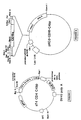
- la figure 1 représente un vecteur d'expression constitué d'un plasmide contenant la séquence codant pour le CD4 et appelé sT4CD4-C4 BP ;
- la figure 2 représente un vecteur plasmidique contenant la séquence codant pour le CD16 multimérique .
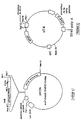
- la figure 3 représente un vecteur plasmidique contenant la séquence codant pour le CR1 multimérique ;
- la figure 4 représente un autre vecteur plasmidique, pCDM8, codant pour le même CR1 multimérique ;
- la figure 5 représente un vecteur plasmidique contenant la séquence codant pour le scFv de l'anticorps anti Rh(D) multimérique ;
- la figure 6 représente un autre vecteur plasmidique, pST4, contenant la même séquence codant pour le scFv de l'anticorps anti Rh(D) ;
- la figure 7 représente un troisième vecteur plasmidique contenant cette même séquence codant pour le scFv de l'anticorps anti Rh(D) ;
- la figure 8 représente un vecteur plasmidique de type pKC3B contenant la séquence codant pour le CR1 multimérique. Dans toutes ces figures, les enzymes de restriction permettant l'insertion de la séquence hétérologue sont indiqués par leur nomenclature classique.
- la figure 9 représente le résultat obtenu avec le scFv multimérique sur l'agglutination des globules rouges présentant ou ne présentant pas l'antigène Rhésus. Le tube en A représente le témoin positif dans lequel les globules rouges O Rh+ sont agglutinées par un anticorps monoclonal anti R(h) natif ; le tube B représente le témoin négatif dans lequel des globules rouges O Rh- ne sont pas agglutinées par le scFv anti R(h) des multimériques ; le tube C représente l'essai dans lequel des globules rouges O Rh+ et scFv anti Rh+ sont agglutinées ; le tube D est un autre témoin négatif dans lequel des globules rouges O Rh- sont mis en présence d'un milieu de culture sans anticorps.
- la figure 10 représente le profil obtenu en cytométrie de flux après fixation erythrocytaire d'une hétéro-chimère anti Rh(D) -CR1.
- la première piste représente des globules rouges O Rh+ non papaïnés avec une densité de CR1 de 180 sites ;
- la deuxième piste représente des glolules rouges O Rh+ non papaïnés avec une densité de CR1 de 550 sites ;
- la troisième piste représente des globules rouges O Rh+ papaïnés, qui ont perdu leur densité de 180 sites de CR1 ; ces erythrocytes reconstitués en CR1 à l'aide de l'hétéro-chimère scFv anti Rh+/CR1 expriment la densité supra physiologique de 1 200 sites CR1 par erythrocyte ;
- les pistes 4 et 5 représentent des témoins dans lesquels pour la piste 4, sont des globules rouges O Rh+ papaïnés, et pour la piste 5, sont des globules rouges O Rh- papaïnés traités avec l'hétéro-chimère scFv anti Rh(D)/CR1.
5'CCGGGACAGGTCCTGCTGGAATCCAACATCAAGGTTCTGCCCACAG-3'. Ce fragment codant pour l'extrémité C-terminale de la partie extramembranaire de CD4 et ayant un site Ava I en 5'.
- des antigènes vaccinaux existant sous forme de gènes clonés codant pour une protéine exprimable en cellules eucaryotes (antigène Hbs, anatoxine tétanique...),
- des antigènes bactériens vis-à-vis desquels il existe une forte immunité dans l'espèce humaine (Escherichia-Coli, Klebsielle, flagelline de Shigelle, ou antigène de Salmonelle),
- des molécules possédant les séquences protéiques acceptrices de glycosylations xénogéniques peuvent également être envisagées après qu'elles aient été produites par des cellules animales possédant de fortes activités glycosyl transférase qui leur grefferont les cibles glucidiques d'anticorps naturels connus comme réagissant fortement en xénotransplantation (par exemple : groupement alpha-galactosyl, obstacle aux transplantations xénogéniques porc-homme).
Claims (21)
- Protéine multimérique recombinante permettant une immuno-intervention en pathologie dysimmunitaire humaine, caractérisée en ce qu'elle comprend au moins :les molécules en a) et b) étant associées dans leur partie C-terminale pour former ladite protéine multimérique.a) un monomère de fusion A, de nature polypeptidique constituée d'un fragment C-terminal de la chaíne α de la C4BP compris entre les acides aminés 124 et 549 formant des ponts disulfures avec l'extrémité C-terminale de la chaíne β de la C4BP et d'un fragment polypeptidique hétérologue à ladite chaíne α,b) un monomère de fusion B, de nature polypeptidique constituée d'un fragment C-terminal de la chaíne β de la C4BP compris entre les acides aminés 120 et 235 formant des ponts disulfures avec l'extrémité C-terminale de la chaíne α de la C4BP et d'un fragment polypeptidique hétérologue à la chaíne β,
- Protéine multimérique recombinante selon la revendication 1, caractérisée en ce que le fragment C-terminal de la chaíne α est compris entre les acides aminés 493 et 549 et, en ce que le fragment C-terminal de la chaíne β est compris entre les acides aminés 176 et 235.
- Protéine multimérique recombinante selon la revendication 1 ou 2, caractérisée en ce que le rapport en nombre de monomère α / β varie entre 7/1 et 5/3, et est de préférence de 7/1.
- Protéine multimérique recombinante selon l'une des revendications 1 à 3 caractérisée en ce que les fragments hétérologues en A et en B sont issus de ligands spécifiques du système immunitaire, notamment issus de protéines lymphocytaires de surface du type CD, d'anticorps ou de fragments d'anticorps, d'antigènes ou de fragments d'antigènes.
- Protéine multimérique recombinante selon la revendication 4, caractérisée en ce que les fragments issus de protéines lymphocytaires sont le CD4, le CD8, le CD16, le CD35 (ou CR1).
- Protéine multimérique recombinante selon la revendication 4, caractérisée en ce que les anticorps ou fragments d'anticorps ont une spécificité anti Rh(D).
- Protéine multimérique recombinante selon la revendication 4, caractérisée en ce que les antigènes sont des antigènes vaccinants.
- Protéine multimérique recombinante selon l'une des revendications 1 à 3, caractérisée en ce que le fragment hétérologue en A est une enzyme thérapeutique.
- Protéine multimérique recombinante selon l'une des revendications 1 à 3, caractérisée en ce que les fragments polypeptidiques hétérologues contiennent :en A le CD4 ou un dérivé du CD4 et;en B le scFv d'un anticorps, notamment un anticorps neutralisant ou, un anti Rh (D).
- Protéine multimérique recombinante selon l'une des revendications 1 à 3, caractérisée en ce que les fragments polypeptidiques hétérologues contiennent :en A un antigène, notamment un antigène vaccinant, ou une enzyme thérapeutique ou un CD35 (ou CR1) ou un anticorps, ou tout fragment de ceux-ci possédant la propriété de ligand de la molécule entière,en B un anticorps ou un fragment de celui-ci ayant conservé son épitope.
- Protéine multimérique recombinante selon l'une des revendications 1 à 3, caractérisée en ce que les fragments polypeptidiques hétérologues contiennent :en A un immunogène vaccinant eten B un CD4 ou une molécule dérivée pourvu qu'elle conserve la propriété du ligand de la molécule entière.
- Cellules procaryotes ou eucaryotes caractérisées en ce qu'elles ont été transfectées par un ou plusieurs plasmides contenant une séquence d'acide nucléique hétérologue codant pour au moins une molécule polypeptidique de fusion A et une molécule polypeptidique de fusion B selon la revendication 1.
- Cellules selon la revendication 12 caractérisées en ce que les cellules ont été soit,co-transfectées par deux plasmides distincts, soittransfectées par un premier plasmide codant pour un premier polypeptide puis sur-transfectées par le deuxième plasmide codant pour le deuxième polypeptide, soit,résultent de la fusion de deux cellules dont l'une a été transfectée par un plasmide codant pour le premier polypeptide et l'autre a été transfectée par un plasmide codant pour le deuxième polypeptide.
- Cellules selon l'une des revendications 12 ou 13 caractérisées en ce que le premier plasmide est celui déposé le 12 juillet 1995 à la C.N.C.M. sous le N° I-1610 et le deuxième plasmide est celui déposé à la C.N.C.M., le 12 juillet 1995 sous le N° I-1611.
- Procédé de préparation d'une protéine multimérique définie selon l'une quelconque des revendications 1 à 11, caractérisé en ce qu'il comprend au moins les étapes suivantes :la transfection de lignées cellulaires cibles par au moins un plasmide contenant chacun une séquence hétérologue codant respectivement pour une chaíne A ou B selon l'une quelconque des revendications 1 à 11;l'expression et isolement des chaínes hétérologues A ou B ;la mise en milieu oxydant desdits polypeptides dans des proportions déterminées ;l'isolement des multimères.
- Procédé selon la revendication 15 caractérisé en ce que les lignées transfectées ont été soit :co-transfectées.par deux plasmides porteurs de séquences d'ADN codant respectivement pour les polypeptides A et B, outransfectées par un plasmide codant pour un premier polypeptide A puis sur-transfectées par le deuxième plasmide codant pour le deuxième polypeptide B, ourésultent de la fusion de cellules ayant respectivement été transfectées par un plasmide porteur d'une séquence d'ADN codant pour le polypeptide A et par un plasmide porteur d'une séquence d'ADN codant pour le polypeptide B.
- Utilisation d'une protéine multimérique recombinante selon l'une quelconque des revendications 1 à 11 à la fabrication d'un médicament destiné à la prévention de l'allo-immunisation foeto-matemelle.
- Utilisation d'une protéine multimérique recombinante selon l'une quelconque des revendications 1 à 11 à la fabrication d'un médicament destiné à la thérapeutique ou à la prophylaxie des infections virales, bactériennes ou parasitaires.
- Utilisation d'une protéine multimérique recombinante selon l'une quelconque des revendications 1 à 11 à la fabrication d'un médicament destiné à la thérapeutique des maladies auto-immunes et notamment le lupus erythémateux disséminé.
- Protéine multimérique recombinante selon l'une quelconque des revendications 1 à 11 pour utilisation dans un test de diagnostic nécessitant l'intervention d'au moins deux ligands différents.
- Composition pharmaceutique caractérisée en ce qu'elle comprend en tant que principe actif une protéine multimérique selon l'une quelconque des revendications 1 à 11, ladite composition pharmaceutique permettant une immuno-thérapie ou une immuno-prévention de pathologies liées notamment aux infections virales, bactériennes, aux maladies auto-immunes ou allo-immune.
Applications Claiming Priority (3)
| Application Number | Priority Date | Filing Date | Title |
|---|---|---|---|
| FR9508901A FR2736916B1 (fr) | 1995-07-21 | 1995-07-21 | Proteines hetero-multimeriques recombinantes du type alpha-beta c4bp |
| FR9508901 | 1995-07-21 | ||
| PCT/FR1996/001132 WO1997004109A1 (fr) | 1995-07-21 | 1996-07-18 | PROTEINES HETERO-MULTIMERIQUES RECOMBINANTES DU TYPE α - β C4BP |
Publications (2)
| Publication Number | Publication Date |
|---|---|
| EP0842282A1 EP0842282A1 (fr) | 1998-05-20 |
| EP0842282B1 true EP0842282B1 (fr) | 2005-09-07 |
Family
ID=9481265
Family Applications (1)
| Application Number | Title | Priority Date | Filing Date |
|---|---|---|---|
| EP96926424A Expired - Lifetime EP0842282B1 (fr) | 1995-07-21 | 1996-07-18 | Proteines hetero-multimeriques recombinantes du type alpha-beta c4bp |
Country Status (8)
| Country | Link |
|---|---|
| US (2) | US7074411B1 (fr) |
| EP (1) | EP0842282B1 (fr) |
| JP (1) | JPH11510687A (fr) |
| AT (1) | ATE304054T1 (fr) |
| CA (1) | CA2227030A1 (fr) |
| DE (1) | DE69635161T2 (fr) |
| FR (1) | FR2736916B1 (fr) |
| WO (1) | WO1997004109A1 (fr) |
Families Citing this family (9)
| Publication number | Priority date | Publication date | Assignee | Title |
|---|---|---|---|---|
| FR2736916B1 (fr) * | 1995-07-21 | 1997-09-19 | Univ Paris Curie | Proteines hetero-multimeriques recombinantes du type alpha-beta c4bp |
| JP2004005435A (ja) * | 2002-03-28 | 2004-01-08 | Seiko Epson Corp | ダウンロード管理システム |
| CN100455600C (zh) * | 2002-08-14 | 2009-01-28 | 阿维迪斯公司 | 包含支架,佐剂和抗原的异源多聚体化合物及其用途 |
| WO2004020639A2 (fr) * | 2002-08-14 | 2004-03-11 | Avidis Sa | Production de proteines de fusion multimeres utilisant un echafaudage c4bp |
| WO2005077976A2 (fr) * | 2004-02-13 | 2005-08-25 | Avidis Sa | Domaines bispirales |
| FR2869323B1 (fr) | 2004-04-22 | 2006-07-21 | Univ Reims Champagne Ardenne | Utilisation du gene codant la chaine beta de la proteine c4bp dans la production de proteines dimeriques recombinantes |
| WO2006136892A2 (fr) * | 2005-06-20 | 2006-12-28 | Alexander Cherkasky | Nouvelles proteines de fusion cherkasky contenant des proteines de liaison aux anticorps ou leurs regions |
| EP1790358A1 (fr) * | 2005-11-23 | 2007-05-30 | Université de Reims Champagne-Ardennes | Constructions protéiques concues pour cibler et lyser des cellules |
| JP2023515827A (ja) * | 2020-02-28 | 2023-04-14 | ノースウェスタン ユニバーシティ | 房水流出を高め、眼圧を減少させる方法 |
Family Cites Families (4)
| Publication number | Priority date | Publication date | Assignee | Title |
|---|---|---|---|---|
| CA2049964A1 (fr) * | 1990-01-26 | 1991-07-27 | Biogen, Inc. | Proteines hybrides de la proteine de liaison de c4 |
| US5405946A (en) * | 1992-12-02 | 1995-04-11 | The Scripps Research Institute | Recombinant protein S variants deficient in C4BP binding activity, compositions and therapeutic methods |
| US5679546A (en) * | 1993-09-24 | 1997-10-21 | Cytomed, Inc. | Chimeric proteins which block complement activation |
| FR2736916B1 (fr) * | 1995-07-21 | 1997-09-19 | Univ Paris Curie | Proteines hetero-multimeriques recombinantes du type alpha-beta c4bp |
-
1995
- 1995-07-21 FR FR9508901A patent/FR2736916B1/fr not_active Expired - Fee Related
-
1996
- 1996-07-18 JP JP9506368A patent/JPH11510687A/ja not_active Withdrawn
- 1996-07-18 EP EP96926424A patent/EP0842282B1/fr not_active Expired - Lifetime
- 1996-07-18 CA CA002227030A patent/CA2227030A1/fr not_active Abandoned
- 1996-07-18 DE DE69635161T patent/DE69635161T2/de not_active Expired - Lifetime
- 1996-07-18 US US08/983,474 patent/US7074411B1/en not_active Expired - Fee Related
- 1996-07-18 AT AT96926424T patent/ATE304054T1/de not_active IP Right Cessation
- 1996-07-18 WO PCT/FR1996/001132 patent/WO1997004109A1/fr not_active Ceased
-
2006
- 2006-06-01 US US11/444,442 patent/US7504483B2/en not_active Expired - Fee Related
Also Published As
| Publication number | Publication date |
|---|---|
| US7074411B1 (en) | 2006-07-11 |
| ATE304054T1 (de) | 2005-09-15 |
| FR2736916B1 (fr) | 1997-09-19 |
| DE69635161D1 (de) | 2005-10-13 |
| CA2227030A1 (fr) | 1997-02-06 |
| EP0842282A1 (fr) | 1998-05-20 |
| JPH11510687A (ja) | 1999-09-21 |
| DE69635161T2 (de) | 2006-07-13 |
| US20070015258A1 (en) | 2007-01-18 |
| FR2736916A1 (fr) | 1997-01-24 |
| US7504483B2 (en) | 2009-03-17 |
| WO1997004109A1 (fr) | 1997-02-06 |
Similar Documents
| Publication | Publication Date | Title |
|---|---|---|
| JP3696232B2 (ja) | レセプターキメラ体による細胞性免疫の再設定 | |
| JP6940406B2 (ja) | キメラ抗原レセプター分子の制御的発現のためのレンチウイルスベクター | |
| JP4170390B2 (ja) | 受容体キメラによる細胞性免疫の再指示 | |
| Carlyle et al. | Molecular and genetic basis for strain-dependent NK1. 1 alloreactivity of mouse NK cells | |
| EP0510079B1 (fr) | Proteines produites par les lymphocytes humains, sequence d'adn codant pour ces proteines et applications pharmaceutiques et biologiques | |
| JP5706225B2 (ja) | T細胞同時刺激シグナル2(b7/cd28相互作用)を遮断することによる免疫抑制 | |
| JP3832850B2 (ja) | キメラcd4レセプターを有する細胞によるhiv感染細胞を標的とする細胞傷害 | |
| US7049136B2 (en) | Redirection of cellular immunity by receptor chimeras | |
| ES2315016T3 (es) | Moleculas llamadas b7l-1. | |
| JPH05505112A (ja) | Aids、arcおよびhiv感染の予防および治療に有用な抗cd4抗体ホモログ | |
| JPH10513348A (ja) | ヒトgp39の種々のエピトープに対して特異的なモノクローナル抗体およびその診断および治療における使用 | |
| KR20030028466A (ko) | 새로운 수상 세포 상호자극 분자 | |
| US20240101616A1 (en) | Dap10/12 based cars adapted for rush | |
| JP2010280728A (ja) | Kim−1アンタゴニストおよび免疫系を調節するための使用 | |
| EP0842282B1 (fr) | Proteines hetero-multimeriques recombinantes du type alpha-beta c4bp | |
| JPH09500020A (ja) | レセプターキメラによる細胞性免疫の回復 | |
| JPH07509776A (ja) | B型肝炎ウイルス受容体活性を有するエンドネキシン■由来ポリペプチド,並びに診断および製剤組成物におけるその用途 | |
| JP3832856B2 (ja) | Cd4デコイレセプターを有する細胞ならびに関連する分子および方法 | |
| JPH08149981A (ja) | T細胞α鎖による抗原特異的免疫制御の方法 | |
| FR2822846A1 (fr) | Procede de preparation et de selection d'anticorps | |
| CA2251036A1 (fr) | Utilisation d'un polypeptide a titre de recepteur cellulaire des adenovirus | |
| Timmusk et al. | The generation of monoclonal antibodies by genetic immunisation: antibodies against trout TCRα and IgL isotypes | |
| CN116194574A (zh) | 嵌合抗原受体细胞 | |
| RU2859808C2 (ru) | Рецепторы клеточной поверхности, чувствительные к потере гетерозиготности | |
| FR2758821A1 (fr) | Utilisation d'un polypeptide a titre de recepteur cellulaire des adenovirus |
Legal Events
| Date | Code | Title | Description |
|---|---|---|---|
| PUAI | Public reference made under article 153(3) epc to a published international application that has entered the european phase |
Free format text: ORIGINAL CODE: 0009012 |
|
| 17P | Request for examination filed |
Effective date: 19980220 |
|
| AK | Designated contracting states |
Kind code of ref document: A1 Designated state(s): AT BE CH DE DK ES FI FR GB GR IE IT LI LU MC NL PT SE |
|
| 17Q | First examination report despatched |
Effective date: 20030714 |
|
| GRAP | Despatch of communication of intention to grant a patent |
Free format text: ORIGINAL CODE: EPIDOSNIGR1 |
|
| GRAS | Grant fee paid |
Free format text: ORIGINAL CODE: EPIDOSNIGR3 |
|
| GRAA | (expected) grant |
Free format text: ORIGINAL CODE: 0009210 |
|
| AK | Designated contracting states |
Kind code of ref document: B1 Designated state(s): AT BE CH DE DK ES FI FR GB GR IE IT LI LU MC NL PT SE |
|
| PG25 | Lapsed in a contracting state [announced via postgrant information from national office to epo] |
Ref country code: NL Free format text: LAPSE BECAUSE OF FAILURE TO SUBMIT A TRANSLATION OF THE DESCRIPTION OR TO PAY THE FEE WITHIN THE PRESCRIBED TIME-LIMIT Effective date: 20050907 Ref country code: IT Free format text: LAPSE BECAUSE OF FAILURE TO SUBMIT A TRANSLATION OF THE DESCRIPTION OR TO PAY THE FEE WITHIN THE PRE;WARNING: LAPSES OF ITALIAN PATENTS WITH EFFECTIVE DATE BEFORE 2007 MAY HAVE OCCURRED AT ANY TIME BEFORE 2007. THE CORRECT EFFECTIVE DATE MAY BE DIFFERENT FROM THE ONE RECORDED.SCRIBED TIME-LIMIT Effective date: 20050907 Ref country code: IE Free format text: LAPSE BECAUSE OF FAILURE TO SUBMIT A TRANSLATION OF THE DESCRIPTION OR TO PAY THE FEE WITHIN THE PRESCRIBED TIME-LIMIT Effective date: 20050907 Ref country code: FI Free format text: LAPSE BECAUSE OF FAILURE TO SUBMIT A TRANSLATION OF THE DESCRIPTION OR TO PAY THE FEE WITHIN THE PRESCRIBED TIME-LIMIT Effective date: 20050907 Ref country code: AT Free format text: LAPSE BECAUSE OF FAILURE TO SUBMIT A TRANSLATION OF THE DESCRIPTION OR TO PAY THE FEE WITHIN THE PRESCRIBED TIME-LIMIT Effective date: 20050907 |
|
| REG | Reference to a national code |
Ref country code: GB Ref legal event code: FG4D Free format text: NOT ENGLISH |
|
| REG | Reference to a national code |
Ref country code: CH Ref legal event code: EP |
|
| REG | Reference to a national code |
Ref country code: IE Ref legal event code: FG4D Free format text: LANGUAGE OF EP DOCUMENT: FRENCH |
|
| REF | Corresponds to: |
Ref document number: 69635161 Country of ref document: DE Date of ref document: 20051013 Kind code of ref document: P |
|
| PG25 | Lapsed in a contracting state [announced via postgrant information from national office to epo] |
Ref country code: SE Free format text: LAPSE BECAUSE OF FAILURE TO SUBMIT A TRANSLATION OF THE DESCRIPTION OR TO PAY THE FEE WITHIN THE PRESCRIBED TIME-LIMIT Effective date: 20051207 Ref country code: GR Free format text: LAPSE BECAUSE OF FAILURE TO SUBMIT A TRANSLATION OF THE DESCRIPTION OR TO PAY THE FEE WITHIN THE PRESCRIBED TIME-LIMIT Effective date: 20051207 Ref country code: DK Free format text: LAPSE BECAUSE OF FAILURE TO SUBMIT A TRANSLATION OF THE DESCRIPTION OR TO PAY THE FEE WITHIN THE PRESCRIBED TIME-LIMIT Effective date: 20051207 |
|
| PG25 | Lapsed in a contracting state [announced via postgrant information from national office to epo] |
Ref country code: ES Free format text: LAPSE BECAUSE OF FAILURE TO SUBMIT A TRANSLATION OF THE DESCRIPTION OR TO PAY THE FEE WITHIN THE PRESCRIBED TIME-LIMIT Effective date: 20051218 |
|
| GBT | Gb: translation of ep patent filed (gb section 77(6)(a)/1977) |
Effective date: 20051221 |
|
| PG25 | Lapsed in a contracting state [announced via postgrant information from national office to epo] |
Ref country code: PT Free format text: LAPSE BECAUSE OF FAILURE TO SUBMIT A TRANSLATION OF THE DESCRIPTION OR TO PAY THE FEE WITHIN THE PRESCRIBED TIME-LIMIT Effective date: 20060207 |
|
| NLV1 | Nl: lapsed or annulled due to failure to fulfill the requirements of art. 29p and 29m of the patents act | ||
| REG | Reference to a national code |
Ref country code: IE Ref legal event code: FD4D |
|
| PLBE | No opposition filed within time limit |
Free format text: ORIGINAL CODE: 0009261 |
|
| STAA | Information on the status of an ep patent application or granted ep patent |
Free format text: STATUS: NO OPPOSITION FILED WITHIN TIME LIMIT |
|
| PG25 | Lapsed in a contracting state [announced via postgrant information from national office to epo] |
Ref country code: MC Free format text: LAPSE BECAUSE OF NON-PAYMENT OF DUE FEES Effective date: 20060731 Ref country code: LI Free format text: LAPSE BECAUSE OF NON-PAYMENT OF DUE FEES Effective date: 20060731 Ref country code: CH Free format text: LAPSE BECAUSE OF NON-PAYMENT OF DUE FEES Effective date: 20060731 Ref country code: BE Free format text: LAPSE BECAUSE OF NON-PAYMENT OF DUE FEES Effective date: 20060731 |
|
| 26N | No opposition filed |
Effective date: 20060608 |
|
| REG | Reference to a national code |
Ref country code: CH Ref legal event code: PL |
|
| BERE | Be: lapsed |
Owner name: UNIVERSITE DE REIMS CHAMPAGNE-ARDENNES Effective date: 20060731 Owner name: UNIVERSITE PIERRE ET MARIE CURIE Effective date: 20060731 |
|
| PG25 | Lapsed in a contracting state [announced via postgrant information from national office to epo] |
Ref country code: LU Free format text: LAPSE BECAUSE OF NON-PAYMENT OF DUE FEES Effective date: 20060718 |
|
| PGFP | Annual fee paid to national office [announced via postgrant information from national office to epo] |
Ref country code: GB Payment date: 20100621 Year of fee payment: 15 Ref country code: DE Payment date: 20100705 Year of fee payment: 15 |
|
| PGFP | Annual fee paid to national office [announced via postgrant information from national office to epo] |
Ref country code: FR Payment date: 20110810 Year of fee payment: 16 |
|
| GBPC | Gb: european patent ceased through non-payment of renewal fee |
Effective date: 20110718 |
|
| PG25 | Lapsed in a contracting state [announced via postgrant information from national office to epo] |
Ref country code: DE Free format text: LAPSE BECAUSE OF NON-PAYMENT OF DUE FEES Effective date: 20120201 |
|
| REG | Reference to a national code |
Ref country code: DE Ref legal event code: R119 Ref document number: 69635161 Country of ref document: DE Effective date: 20120201 |
|
| PG25 | Lapsed in a contracting state [announced via postgrant information from national office to epo] |
Ref country code: GB Free format text: LAPSE BECAUSE OF NON-PAYMENT OF DUE FEES Effective date: 20110718 |
|
| REG | Reference to a national code |
Ref country code: FR Ref legal event code: ST Effective date: 20130329 |
|
| PG25 | Lapsed in a contracting state [announced via postgrant information from national office to epo] |
Ref country code: FR Free format text: LAPSE BECAUSE OF NON-PAYMENT OF DUE FEES Effective date: 20120731 |