EP0851659B1 - Informationsverarbeitungssystem und Verfahren dafür - Google Patents
Informationsverarbeitungssystem und Verfahren dafür Download PDFInfo
- Publication number
- EP0851659B1 EP0851659B1 EP97310633A EP97310633A EP0851659B1 EP 0851659 B1 EP0851659 B1 EP 0851659B1 EP 97310633 A EP97310633 A EP 97310633A EP 97310633 A EP97310633 A EP 97310633A EP 0851659 B1 EP0851659 B1 EP 0851659B1
- Authority
- EP
- European Patent Office
- Prior art keywords
- information
- information processing
- analysis
- received
- input
- Prior art date
- Legal status (The legal status is an assumption and is not a legal conclusion. Google has not performed a legal analysis and makes no representation as to the accuracy of the status listed.)
- Expired - Lifetime
Links
- 238000000034 method Methods 0.000 title claims description 87
- 230000010365 information processing Effects 0.000 title claims description 42
- 230000008569 process Effects 0.000 claims description 68
- 230000004044 response Effects 0.000 claims description 50
- 238000004458 analytical method Methods 0.000 claims description 48
- 230000005540 biological transmission Effects 0.000 claims description 30
- 238000003672 processing method Methods 0.000 claims description 19
- 238000006243 chemical reaction Methods 0.000 claims description 5
- 238000001514 detection method Methods 0.000 claims 4
- 238000000605 extraction Methods 0.000 claims 2
- 238000010586 diagram Methods 0.000 description 30
- 230000009471 action Effects 0.000 description 14
- 238000007726 management method Methods 0.000 description 10
- 230000000875 corresponding effect Effects 0.000 description 5
- 238000013075 data extraction Methods 0.000 description 3
- 230000000694 effects Effects 0.000 description 3
- 230000006870 function Effects 0.000 description 3
- 238000002360 preparation method Methods 0.000 description 3
- 239000003086 colorant Substances 0.000 description 1
- 239000002131 composite material Substances 0.000 description 1
- 230000002596 correlated effect Effects 0.000 description 1
- 238000009795 derivation Methods 0.000 description 1
- 238000003780 insertion Methods 0.000 description 1
- 230000037431 insertion Effects 0.000 description 1
- 230000003287 optical effect Effects 0.000 description 1
- 230000008707 rearrangement Effects 0.000 description 1
- 239000012925 reference material Substances 0.000 description 1
Images













Classifications
-
- H—ELECTRICITY
- H04—ELECTRIC COMMUNICATION TECHNIQUE
- H04N—PICTORIAL COMMUNICATION, e.g. TELEVISION
- H04N1/00—Scanning, transmission or reproduction of documents or the like, e.g. facsimile transmission; Details thereof
- H04N1/32—Circuits or arrangements for control or supervision between transmitter and receiver or between image input and image output device, e.g. between a still-image camera and its memory or between a still-image camera and a printer device
- H04N1/32561—Circuits or arrangements for control or supervision between transmitter and receiver or between image input and image output device, e.g. between a still-image camera and its memory or between a still-image camera and a printer device using a programmed control device, e.g. a microprocessor
-
- H—ELECTRICITY
- H04—ELECTRIC COMMUNICATION TECHNIQUE
- H04N—PICTORIAL COMMUNICATION, e.g. TELEVISION
- H04N1/00—Scanning, transmission or reproduction of documents or the like, e.g. facsimile transmission; Details thereof
- H04N1/00962—Input arrangements for operating instructions or parameters, e.g. updating internal software
- H04N1/00968—Input arrangements for operating instructions or parameters, e.g. updating internal software by scanning marks on a sheet
Definitions
- the present invention relates to an information processing apparatus for performing a process with received information, and a method therefor.
- a facsimile machine for reading and transmitting image information has been widely employed.
- An image filing device for reading image information and recording it on a magneto optical disk is also employed.
- a character recognition process is performed for such a retrieved image to acquire character code information from the image information.
- a user must designate a destination for the transmission of images by a facsimile machine, and must designate a filing destination for the filing of images in an image filing device.
- a user To perform character recognition, a user must designate a target block for recognition after an entire image has been read.
- US-A-5126858 discloses a system in which a job control sheet is fed to a picture image processing system along with one or more input sheets.
- the images on the input sheets are processed according to instructions on the job control sheet.
- the job control sheet may, for example, instruct the insertion of sheet numbers, headings or messages, and the sending of the images to specified fax destinations.
- EP-A-0568140 discloses a fax system which is controlled by input form sheets.
- the type of form is indicated by a machine readable code at the top of the sheet.
- An address specification form allows an address and fax number to be input by writing in preprinted boxes on the form. The writing is read by OCR.
- Another form allows sender information and a fax header to be input.
- Another form allows a fax to be sent by indicating the addressee in one region, and writing the fax message in another. The system scans the addressee region to determine who to send the fax to, and sends a fax made up of the pre-registered header, an identification of the destination, and an image of the contents of the fax message region of the input form.
- an information processing apparatus as set out in claim 1, an information processing method as set out in claim 19, and a machine readable storage medium as set out in claim 37.
- Optional features are set out in the remaining claims.
- Fig. 1 is a diagram illustrating a system arrangement according to a first background example in which a PC (Personal computer) 101, a scanner 102, a color printer 103 and a monochrome printer 104 are connected to a network.
- PC Personal computer
- the apparatus when an apparatus in a system wherein a plurality of apparatuses are connected together is instructed to execute a specific job, the apparatus analyzes the object of the job by examining its contents, and thus ascertains which job to execute. As a result of the analysis, the apparatus acquires necessary information concerning the job and thereafter executes it.
- Job types are : an operation input by a user; an execution of an instruction received from another apparatus; the acquisition of results by analyzing a job; or a job that is newly generated by an apparatus itself during an idle period.
- a document is to be read by a scanner and printed by a printer, the following jobs are generated.
- Fig. 2 is a diagram illustrating the functional arrangement for performing the processing in this example.
- a job reception unit 201 receives a job from a user or another apparatus. The received job is registered in a job table.
- a job analysis unit 203 reads and analyses a job registered in the job table 202.
- An other-apparatus information acquisition unit 204 acquires the attributes and the current states of the other apparatuses that are connected.
- a state determination unit 205 determines the state from the current states of the other apparatuses.
- An optimum planning unit 206 makes an optimal plan for the execution of a job.
- a job execution determination unit 207 determines whether a job should be executed, or when the job is to be executed, and determines whether the apparatus in question or another apparatus will execute the job.
- an other-apparatus instruction unit 208 sends an instruction to another apparatus for the job execution.
- a job execution unit 209 executes the job.
- An execution notification unit 210 notifies a user that the execution instruction has been issued to another apparatus.
- Fig. 3 is a diagram showing the hardware arrangement of the units that perform the processing in this example.
- An I/O 301 exchanges input/output data with external apparatuses.
- a CPU 302 executes a program and controls the individual units.
- a ROM 303 is used to store programs, which correspond to individual flowcharts that will be described later and which are to be executed by the CPU 302, and fixed data.
- a RAM 304 is used to temporarily store variables and intermediate data, such as the attributes and the current states of the other apparatuses acquired by the other apparatus information acquisition unit 204, that are generated during the processing.
- a program from an external source may be loaded into the RAM 304 and stored therein.
- Fig. 4 is a flowchart showing the processing performed for the first background example.
- step S109 the contents of the job table are initialized.
- step S110 in order to determine whether a job has been input, a check is performed to determine whether or not a job has been input by a user, a job has been input by a device that can be detected by the system, from results obtained by analyzing the job, or a new job has been generated by the apparatus in question during idling.
- the input job is added to the job table.
- step S112 the job table is examined to determine whether there is job. If there is a job, at step S113 the job is extracted.
- step S114 a received instruction is analyzed, and from the information thus obtained, the object of the job is acquired.
- the analyzed instruction is employed to search for a job that is to be executed.
- step S116 a job that is searched for at S115 is registered.
- step S117 a check is performed to determine whether or not there is a job that has not yet been executed. If there is such a job, program control advances to step S118. At step S118 a check is performed to determine whether or not the job can be executed. When it is ascertained that the job can not be executed, program control returns to step S115 and a job to be executed is searched for. At step S119 the job is executed and program control returns thereafter to step S117.
- a user sends an instruction, for example, to read a document using a scanner and to print the document using a printer
- an instruction for example, to read a document using a scanner and to print the document using a printer
- the acquisition of a printed document is the object of a user.
- a document reading and analysis process which is generated by analyzing information received by the scanner from the user, and a process for instructing a printer to print the document that has been read are searched for as jobs.
- Fig. 5 is a diagram showing a process for selecting from among a plurality of printers an optimal printer for performing printing.
- job information is input/transmitted as a command from a host computer or an instruction from a remote controller, or is obtained by analyzing a voice command issued by a user using natural language, or from bar code or a sentence read from a cover page.
- a device that has received the job information analyzes the job, and then selects a printer that can execute a process suitable for the job and outputs the data to the printer. Further, when there is an instruction for notification, the device selects an optimal medium and dispatches a notice thereto.
- the structure of the printer is referred to, and an appropriate printer is selected to perform the printing.
- the processing can be allocated for a plurality of printers.
- an optimal medium is selected to dispatch a notification that the printing has been terminated along with the name of the printer that has performed the printing.
- a request submitted by a user concerns paper sizes, printing quality, colors and time limit (e.g., completion of printing by 5 o'clock).
- the printer configuration covers the printer types and the number of printers in the system, and their performances or their current statuses (whether the printers are normally operated, whether there is a printing queue, or whether paper or toner is insufficient).
- a notification is transmitted by voice through a user's terminal or by telephone, or a notification message is transmitted to a pager, or a document describing the contents of a notification is transmitted by electronic mail or by facsimile.
- step S111 a job is added to a job table.
- step S113 the job is extracted from the job table and at step S114 the received instruction is analyzed to obtain the object of the job.
- step S115 the following jobs are searched for following the analysis of the instruction.
- step S116 the job found at step S115 is registered. The above process is repeated until, at step S117, there are no jobs to be searched for.
- step S118 a check is instituted to determine whether or not the job can be performed. When the performance of the job is not possible, another job that must be executed is searched for.
- the jobs that have been searched for are sequentially performed.
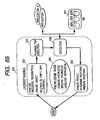
- FIG. 65 is a diagram showing the functional arrangement of a system according to the embodiment.
- a processor 650 includes an understanding unit 652, a planning unit 653, an execution unit 654, a response unit 655 and a knowledge base 656, and is connected to a database 651.
- Fig. 64 is a flowchart showing the processing performed by the functional arrangement in Fig. 65 in this embodiment.
- step S640 a check is performed to determine whether or not there is external input. If so, at step S641 the understanding unit 652 employs the knowledge base 656 to analyze an input document as the units of words and sentences, and at step S643 the object of the input contents is analyzed and ascertained. At step S644 a check is performed to determine whether information required for an understanding of the object is insufficient. If the information is unsatisfactory, at step S645 a query is issued to a user, and a response from the user is studied in the knowledge base 656. Program control thereafter returns to step S643. If the information is adequate, program control moves to step S646. When, at step S640, there is no input, at step S642 a job to be executed is found and program control advances to step S646.
- the planning unit 653 prepares a plan to achieve the object.
- a check is performed to determine whether information required for planning is insufficient. If the information is unsatisfactory, at step S648 a query is issued to the user, and a response from the user is studied in the knowledge base 656. Program control thereafter returns to step S646. If the information is adequate, at step S649 the execution unit 654 executes the plan. At this time, the execution unit 654 accesses the database 651 or communicates with another application, as needed.
- the response unit 655 determines whether or not a response should be made. If a response should be made, a decision is made concerning the selection of the contents for the response. Further, at step S651 a response is prepared in accordance with the selected contents, and is transmitted to the user.
- the understanding unit 652 acknowledges, as needed, externally input information, such as keyboard input, voice input, E-mail or facsimile or news information, analyzes the received information and also the time concept contained in the words in sentences, and obtains an understanding of the contents of the sentences that are concerned with time.
- externally input information such as keyboard input, voice input, E-mail or facsimile or news information
- Fig. 67 is a diagram showing an example where schedule information is extracted from electronic mail.
- the contents of a document received by E-mail are analyzed, and the time concepts such as "February 22nd", “13:00” and "15:00” are found and analyzed.
- an understanding of the sentence concerning the concept, "We have scheduled a patent system explanation meeting at conference room B from 13:00 to 15:00 on February 22" is obtained, and an action associated with the time can be correlated with the schedule.
- the analyzed time concept is compared with the current time. If the time concept describes the future, a corresponding action is registered in the schedule, but if the time concept describes the past, it is abandoned without being registered or it is registered as an information of a type other than that for a schedule, such as information for a personal data base, that is used to record past events.
- the understanding unit 652 analyses the contents of externally input information, such as keyboard input, voice input, E-mail, facsimile or news information.
- externally input information such as keyboard input, voice input, E-mail, facsimile or news information.
- the understanding unit 652 finds in the sentences a term (a word or a concept) that is unknown to the system, or a plan that the system has not yet executed, and when the word or the plan that is detected is not urgent, the understanding unit 652 studies the term or the plan by sequentially searching for information concerning it, and stores it as knowledge in the knowledge base 656.
- the understanding unit 652 studies the plan as an example of how to make a plan for when a user is absent.
- the understanding unit 652 analyzes the contents of externally input information and also analyzes the object.
- the planning unit 653 prepares a plan of an action for the system to take to achieve the object.
- the execution unit 654 performs the processing.
- the response unit 655 notifies a user of the results of the processing.
- information concerning a sender upon the receipt of the E-mail message shown in Fig. 67 that the mail is from a sender who is not registered in the database, information concerning the sender is extracted from the message and is registered in the personal database in the database 651. Further, when more information is obtained concerning the sender who is not registered in the personal database, the information may be registered in the personal database.
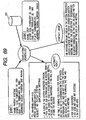
- the understanding unit 652 Since the understanding unit 652 understands the message is for a notice for an explanation meeting, it accesses the schedule of a user (addressee) in the database 651, and compares new schedule data with the current schedule data. When the new schedule data and the current schedule data do not conflict, the new data are additionally registered in the schedule. However, as is shown in Fig. 69, when the schedule data conflict, a reply to the sender and a notice for the addressee user are prepared.
- the system prepares a reply to the sender of the E-mail without confirming it with the addresee user, and transmits the reply.
- the sentence, "Please contact me as soon as possible if there is any difficulty" is in the message, and as a result of the analysis of this sentence, it is determined that a response is very urgently required. If the urgency of a response is determined to be low because a date for the holding the meeting is fairly advanced and the attendance at the meeting is arbitrary, the system confirms it with the addressee before transmitting a response. In other words, the system determines which action to take in consonance with the degree of urgency.
- the schedule or the personal database can be accessed to transmit a response, in accordance with a natural language input by a user, as well as to act on a natural language instruction received from a user.
- the personal database can be accessed by asking the natural language question, "What is the telephone number of Mr. XX?".
- the schedule can be accessed when the natural language question, "Where will the meeting on the 16th be held?" is received, to send a reply to a user.
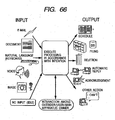
- Fig. 66 is a diagram showing the input/output types between the system that performs the overall processing in this embodiment and external devices.
- Input data can be data input via a keyboard, natural language information received by E-mail, documents or pictures input as images by a scanner, voice input via a microphone or images input by a camera.
- a character recognition process is performed for a document that is read by the scanner, or a voice recognition process is performed for speech, so that input information in natural language can be obtained.
- step S642 in Fig. 64 when there is no external input the system searches for a job that it should execute and regards it as input.
- the system In the idle state, when no job is given to the system, the system, for example, accesses news and aggressively acquires as input, information concerning the user.
- output there are the registration of a schedule in a database, the filing or erasure of data relative to a file memory device, or the dispatch of a notice to a user or a reply to a sender. If it is determined that a process can not be performed within the control range of a system, another action, such as transmitting a response to that effect, can be performed.
- An input/output destination is a user or an external device, or a different processor in the system or another application.
- input documents are analyzed, and data concerning people and data concerning time are extracted and stored in the personal database and the schedule database. Also, data required for the anticipation of an action is extracted to use for planning.
- Fig. 68 is a specific flowchart, including details within step S649, prepared by extracting from the flowchart in Fig. 64 the portions that are required for performing the processes in Figs. 67 and 69.
- E-mail is input and at step S681 each word and sentence of the input E-mail document is analyzed.
- step S683 it is ascertained from a signature and a header that "there is information concerning persons" and “an event, an explanation meeting, will be held”. Further, it is ascertained that "a reply is requested if there is a difficulty”.
- step S684 the data concerning a person is extracted and a plan for registering the data in a database and a plan for registering the explanation meeting event in the schedule are made.
- step S685 it is ascertained that there is a plan to be executed.
- step S686 it is found that there is no problem with the plan, and program control thereafter moves to step S688.
- step S688 the data concerning the person is extracted and registered in the database, and program control returns to step S685.
- step S685 there is a plan to be executed: registration of the explanation meeting event in the schedule.
- step S686 it is assumed that the event can be registered in the schedule with no problem, and program control goes to step S688.
- step S688 the event is registered in the schedule, and program control returns to step S685.
- step S685 there is no other plan to be executed, and at step S689 no acknowledgement receipt is required. The processing is thereafter terminated.
- step S685 there is a plan to be executed: registration of the explanation meeting event in the schedule, and at step S686 a conflict is found in the schedule. Since there is a problem with the execution of a plan, at step S687 a reply to that effect is planned and a plan is made to notify the addressee user that there is a problem. At step S685 there is a plan for writing a reply and transmitting it, and at step S686 no problem concerning the execution of the plan is found. At step S688, therefore, a reply indicating that the timing is inconvenient is prepared and transmitted to the sender. At step S685 there is a plan for preparing a document for notification of the addressee user.
- step S686 there is no problem in execution, and at step S688 a notification to the addressee user is prepared describing that a reply was sent for reconsideration because of the contents of the E-mail and the conflict of the schedules.
- step S685 there is no plan to be executed and at step S689 since there is an notice to a user, it is transmitted to the user. The processing is thereafter terminated.
- the user of the system in this embodiment is notified that the system automatically has transmitted a reply on behalf of the user.
- Fig. 70 is a diagram showing an example where a user sends a question by voice to the system.
- the system can examine the schedule information of the user and tell him the location of the conference.
- the system examines the database, performs planning for an explanation to make the user understand, prepares a briefing story, and uses graphical images and sounds to explain how to get to the location.
- Fig. 71 is a flowchart showing the processing performed in Fig. 70 by referring to the basic flowchart in Fig. 64.
- An external input is regarded as a query.
- step S710 voice (where will tomorrow's conference be held?) is externally input, and at step S711 the input sentence is analyzed.
- step S712 it is understood that the input sentence is an inquiry for the conference, and that the object of the user is to know the location of the conference.
- step S713 the following planning is performed to answer the inquiry. (1) tomorrow's schedule is extracted. (2) The location registered in the schedule is acquired. (3) A reply is prepared to tell the user the acquired location.
- step S714 information is sufficient and program control moves to step S716. If the schedule shows a plurality of conferences, the system does not identify which conference is intended. Therefore, at step S715 a query is sent to a user to remake a plan. At step S716 the plan made at step S713 is executed, and a reply document to the user is prepared. At step S717 it is ascertained that there is a response to the user, and the system determines the transmission of the response. At this time, since it is understood that the input was done by voice, transmission of the reply by voice is also determined. At step S718 the response, which is voice data obtained by conversion, is transmitted to the user.
- the processing is temporarily terminated, and following this, an inquiry from the user is input.
- the process relative to the second inquiry will now be described.
- step S710 voice (In which area in Shimomaruko?) is input externally, and at step S711 the input sentence is analyzed. At step S712 it is understood that this inquiry is a continuous question of the first one, and also that a specific location of the place name that was answered is being asked.
- step S713 the following plans are made to respond the question: (1) a plan for explaining that it is difficult to explain the location by writing; (2) a plan for explaining the location by sequentially sending images; (3) a plan for acquiring necessary images from an image database and a location database; and (4) a plan for preparing sentences corresponding to images.
- step S714 the information is adequate, and at step S716 the plans made at step S713 are sequentially executed and a reply to a user consonant with the images is prepared.
- step S717 since there is a reply document to be transmitted to the user, the transmission of the response is determined. At this time, it is understood that the input was done by voice, so that it is also determined that explanation will be given by voice while displaying images on a monitor.
- step S718 the response is transmitted to the user. The processing sequence in Fig. 70 is thereafter terminated.
- the user can send the system a response to that effect.
- the system can then perform an action in consonance with the response.
- the system can study a plan for despatching another person as a proxy.
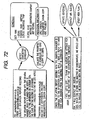
- Fig. 72 is shown a combination of other methods performed at step S646 in Fig. 64 to make plans when the schedule conflict is found at step S686 in the flowchart in Fig. 68.
- Fig. 68 has been explained for unconditionally transmitting to a user a response for an inconvenience.
- the processing for a plurality of plans is employed as the re-planning method at step S646.
- Fig. 73 is a flowchart for evaluating a priority extracted from the contents of a document and for proposing it to a user. The processing will now be explained.
- the priorities of the scheduled events are determined by using information that the user has set in advance for each schedule, attendance at an event included in the schedule, the object of a scheduled event and the result obtained as a result of the analysis of the received document.
- a user may set the priorities of persons that are expected to attend the pertinent event.
- the priority determined according to the object of the scheduled event may be set in advance by a user, or may be determined while taking into account the object or the field that the system knows, from study of the past, that the user is interested in. That is, when the user engages in computer associated work, the schedule for a computer associated event is given priority over an event associated with real estate. Of course, if a user plans to purchase a house and that data is stored as information concerning the user, the schedule of an event associated with real estate may take priority.
- the first document received is determined to take priority.
- Fig. 73 at step S730 the current schedule information is acquired.
- the priority for new schedule information is evaluated.
- the priorities of both schedules are compared.
- a plan is made to prepare a notice for addressing a query to a user (e.g., display two conflicting scheduled events and ask whether the event having the lower priority can be cancelled).
- the prepared notice is transmitted to the user.
- a response from the user relative to the inquiry concerning the plan is acquired.
- the same re-planning process as in Fig. 68 is performed to again prepare a plan by using the response obtained from the user so that an action consonant with the response of the user can be taken.
- Fig. 74 is a flowchart showing the re-planning process.
- step S740 the response finally obtained in Fig. 73 is regarded as input.
- step S741 the input sentence is analyzed.
- step S742 it is ascertained that the schedule is to be changed and that this is the first instructed plan.
- step S743 the following plans are made: (a) the changing of the schedule; (b) the preparation of a document to transmit the schedule to a proxy; (c) the study of a new plan; (d) the preparation of a document to transmit the new plan to the user; and (e) the notification sent to a user concerning another schedule that should be recalled.
- step S744 the plans made at step S743 are executed: (a) the schedule is changed; (b) a document is prepared to transmit the schedule to a proxy; (c) a new plan is studied; (d) a document is prepared to transmit the new plan to the user; and (e) a user is notified of another schedule that should be recalled.
- step S745 the notification document is transmitted to the user.
- the processing for performing the process in Fig 72 is thereafter terminated.
- Fig. 75 is a diagram illustrating the overall image of a system according to this embodiment, including input/output devices.
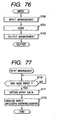
- Fig. 76 is a flowchart showing the processing performed by the system in Fig. 75.
- a core unit 752 ascertains the contents of the information and plans an appropriate process (step S761).
- An output management unit 753 determines an output medium and prepares the contents to be output and an output route (step S763). Then, the information is output by E-mail, by voice, across the WWW, or by output devices, such as a telephone, a facsimile machine, a printer and a copier.
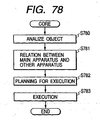
- Figs. 77 to 79 are specific flowcharts showing the process at step S760 (the process performed by the input management unit 751), at step S761 (the process performed by the core unit 752) and at step S763 (the process performed by the output management unit 753).
- step S771 when, at step S770, it is determined that there is new input, at step S771 the input information is obtained. At step S772 the input information is analyzed, as needed, after the information has been identified. At this time, the input management unit 751 accepts information from various media and identifies or analyzes the data using methods corresponding to the individual media.
- the core unit 752 receives the information that is analyzed in Fig. 77.
- step S780 the object of the input information is analyzed and ascertained from the result of the analysis.
- step S781 how the object of the input information is related to the main apparatus (the system or the user) is examined.
- step S782 from the relationship with the main apparatus, planning for what to execute is performed in consonance with the object.
- step S783 the plan made at step S782 is executed.
- the output management unit 753 employs the results obtained in Fig. 78 to determine whether a response is needed. If a response is required, it is prepared and output.
- step S790 the result obtained in Fig. 78 is analyzed.
- a check is performed to determine whether or not there is a response relative to the results. When there is no response, the processing is thereafter terminated. If there is a response, at step S792 a response relative to the external response is determined.
- a medium for the response is determined.
- step S794 a response is prepared in consonance with the designated medium.
- step S795 the prepared response is issued by the designated medium.
- step S896 the response is actually output.
- the processing performed by the arrangement in Fig. 75 has been explained.
- the input management unit 751 analyses the input information according to the procedures in Fig. 77. From the obtained result, the core unit 752 prepares a plan, according to the procedures in Fig. 78, as to how the user and the system should handle the information. The plan is transmitted to the output management unit 753, which in turn performs the process according to the procedures in Fig. 79. When a response should be transmitted with the plan, a response is actually prepared and transmitted.
- a plan is prepared for the aggressive transmission of the response to the user, so that preparation of the response is required.
- the contents of the response are determined.
- a medium is selected by which the contents of the response can be transmitted most effectively.
- a medium such as a telephone or a facsimile machine
- a medium such as the personal computer
- a response is prepared using a method for converting the data into voiced natural language in consonance with a specific medium, and is issued.
- Fig. 80 is a detailed flowchart for Fig. 75 to explain the processing for extracting data from input information.
- type identification symbols such as the layout and a bar code of a document, are employed to infer the document type. If the document is inferred to be a letter, a report or a patent publication, program control moves to step S803. When no identification of the document is possible, program control goes to step S810 whereat OCR is thoroughly performed to ascertain the document type.
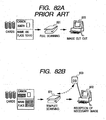
- step S803 in order to confirm the inferred document type is correct, a characteristic block is interpreted by the OCR to identify the document type (see Figs. 82A and 82B).
- step S804 the addressee of a letter and the patent serial number of the patent publication are found and the document type is confirmed.
- step S806 If the document types do not match, program control moves to step S810.
- the document type can be easily determined by employing OCR on the upper portion of the sheet.
- step S806 the knowledge base about the document type that has been confirmed, is employed to read and interpret a specific block using OCR.
- step S807 a check is performed to determine whether there was information in the past that concerns the resultant information. If such information was present, program control moves to step S808. If such information was not present, program control goes to step S810. As a result, the addressee or the patent number is found and whether the information is a reply to a letter that was sent in the past can be ascertained.
- step S808 based on the identified status, the object is decided from the contents of the important text, and at step S809 a process to be executed is determined.
- step S811 because of the above object, the information is analyzed in another range where OCR has not yet been performed.
- step S812 a required process is actually performed. As a result, a filing process, etc., is performed as needed.
- Fig. 81 is a diagram showing an example letter/facsimile that is a target for data extraction.
- step S801 the document type is inferred from the layout of a document.
- DocTypel letter/fax.
- Figs. 82A and 82B are diagrams for explaining this process.
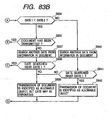
- the system in this embodiment employs date data to perform the determination process according to the procedures in Figs. 83A and 83B.
- a sender is a user, the following process is performed.
- Date1 is the date of a document
- Date2 is the today's date
- Figs. 83A and 83B are flowcharts showing the processing for analyzing the object extracted from an input document.
- a check is performed to determine whether the sender is a user. If the sender is a person other than a user, the input document is determined to be a received document.
- a corresponding object such as filing or data extraction, is examined, and the processing is thereafter terminated.
- step S832 When the sender is a user, program control advances to step S832 to analyze the date of the input document.
- step 5833 the date of the document is compared with the current date.
- step S835 a check is performed to determine whether the document was transmitted before.
- the document was not transmitted before its object is determined to be "transmission of a document”. If the same document was transmitted before, at step S843 the object for filing or re-transmission is extracted.
- step S836 When the date of the document is a fairly old date, program control moves to step S836, whereat a check is performed to determine whether or not the same document was transmitted before. When the document was transmitted before, program control moves to step S843. When the document was not transmitted, program control goes to step S837 whereat a check is performed to determine whether any other date is described in the information for the document. When there is another date, program control goes to step S843. When no other date is found, it is ascertained that the object can be transmission of the document, and also that the date may be wrong.
- step S840 a check is performed to determine whether any other date is described in the information for the document.
- step S841 there is another date, the object is determined to be "transmission of the document".
- program control moves to step S839.
- Fig. 84 is a diagram showing an arrangement of a system according to this example.
- the system serves as a current facsimile machine.
- the addressee for a document is determined from a bar code on a document that is read or information on a cover sheet, so that the document can be transmitted to the correct addressee.
- Fig. 85 is a diagram illustrating an arrangement of a system according to this embodiment.
- the system implements a desk sorter function for processing all the kinds of documents on the desk.
- Fig. 86 is a detailed diagram for explaining the system in Fig. 85. The processing performed by the system shown in Fig. 86 will be specifically described while referring to the flowchart in Fig. 87.
- Fig. 87 is a flowchart showing the processing for this embodiment.
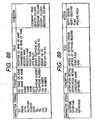
- Figs. 88 and 89 are tables for knowledge used during the processing; the table in Fig. 88 shows the knowledge in general knowledge base, and the table in Fig. 89 shows the knowledge in a knowledge base of a field specified on a cover sheet.
- information defined in the tables in Figs. 88 and 89 is employed to compare a character string included in an input document with a character string defined in a character string column in the table.
- the Conception in a corresponding column, a Role for further specifying the meaning, and a Condition for specifying succeeding information or an instructed process Action are acquired, and analysis for them is performed.
- a cover page is scanned and an OCR process is performed.
- the knowledge base in Fig. 88 is examined to extract from it data, such as the names of a sender and a receiver and their telephone numbers and facsimile numbers.
- the obtained data are registered in a database.
- character string "To: Macrohard Corp.” is included in the cover page of a received document.
- this character string is compared with an item defined in the character string column in Fig. 88.
- matching item "To" is found and its Role is a reception company name or an individual name, so that "Macrohard Corp.” is extracted as information concerning a receiver.
- a notification method and means a filing job, an action for a place, and a job are extracted.
- character string "File: MH/Contract” is included in the cover page of the received document.
- this character string is compared with the items defined in the character string column in Fig. 89, matching item "File” is found, filing is extracted from the column as an instructed action, and "MH/Contract” is extracted from the document as information for a filing place.
- a check is performed to determine whether an action for the object of the processing is present. Since the transmission of the document to a receiver is the object, at step S875 a transmission action is performed. At step S876 the information on the cover page is employed to determine whether the filing is necessary. Since the filing is required in the example in Fig. 86, at step S877 the document is filed at the instructed place, "MH/Contract".
- the information on the cover page is employed to determine whether or not a notification for the transmission of the document should be issued to the sender. Since it is instructed to notify the sender, by voice, of the transmission of the document, at step S879 the sender is notified by voice that the document has been transmitted to the receiver. At step S880 it is determined whether or not another action is to be executed. At step S881 a keyword is designated, and an index is prepared by using keyword ABC.
Landscapes
- Engineering & Computer Science (AREA)
- Multimedia (AREA)
- Signal Processing (AREA)
- Computer Hardware Design (AREA)
- Microelectronics & Electronic Packaging (AREA)
- Facsimiles In General (AREA)
- Information Transfer Between Computers (AREA)
- Management, Administration, Business Operations System, And Electronic Commerce (AREA)
- Character Discrimination (AREA)
- Computer And Data Communications (AREA)
- Processing Or Creating Images (AREA)
Claims (37)
- Informationsverarbeitungsvorrichtung mit:einer Eingabeeinrichtung, die zum Empfangen von Informationen ausgelegt ist;einer Analyseeinrichtung, die zum Wandeln von durch die Eingabeeinrichtung empfangenen Informationen in natürliche Sprache in dem Fall, dass sie nicht in natürlicher Sprache empfangen werden, und zum Analysieren von durch die Eingabeeinrichtung empfangenen oder durch eine Wandlung von durch die Eingabeeinrichtung empfangenen Informationen erhaltenen Informationen in natürlicher Sprache und Extrahieren eines Datums daraus ausgelegt ist;einer Vergleichseinrichtung, die zum Vergleichen des derzeitigen Datums mit dem durch die Analyseeinrichtung extrahierten Datum ausgelegt ist;einer BesLimmungseinrichtung, die zum Bestimmen, welcher Prozess einer Vielzahl von Prozessen durchzuführen ist, gemäß dem Ergebnis des Vergleichs ausgelegt ist; undeiner Ausführungseinrichtung, die zum Durchführen des durch die Bestimmungseinrichtung bestimmten Prozesses für die durch die Eingabeeinrichtung empfangenen Informationen ausgelegt ist.
- Informationsverarbeitungsvorrichtung nach Anspruch 1, wobei die Eingabeeinrichtung eine Einrichtung zum Lesen und Eintragen von durch sie empfangenen Informationen umfasst und die Analyseeinrichtung eine Zeichenerkennungseinrichtung zum Durchführen einer Zeichenerkennung für die Informationen umfasst.
- Informationsverarbeitungsvorrichtung nach Anspruch 2, wobei die Eingebeeinrichtung zum Lesen eines spezifischen Blocks auf einem Aufzeichnungsblatt ausgelegt ist.
- Informationsverarbeitungsvorrichtung nach Anspruch 3, ferner mit:einer Erfassungseinrichtung zum Erfassen eines Dokumenttyps,wobei der spezifische Block gemäß dem Dokumenttyp bestimmt wird.
- Informationsverarbeitungsvorrichtung nach Anspruch 4, wobei die Erfassungseinrichtung zum Lesen eines Dokuments zum Erfassen des Dokumenttyps mit einer höheren Geschwindigkeit und mit einer niedrigeren Auflösung ausgelegt ist als die Eingabeeinrichtung zum Lesen des spezifischen Blocks ausgelegt ist.
- Informationsverarbeitungsvorrichtung nach einem der vorstehenden Ansprüche, die derart ausgelegt ist, dass dann, wenn die Bestimmungseinrichtung bestimmt, dass der durchzuführende Prozess ein Ablageprozess ist, die Ausführungseinrichtung die empfangenen Informationen gemäß dem Ergebnis der Analyse durch die Analyseeinrichtung sortiert und ablegt.
- Informationsverarbeitungsvorrichtung nach Anspruch 6, die zum Bestimmen eines Ablageziels gemäß den Ergebnissen der Analyse durch die Analyseeinrichtung, bevor die Ausführungseinrichtung die Informationen ablegt, ausgelegt ist.
- Informationsverarbeitungsvorrichtung nach einem der vorstehenden Ansprüche, die derart ausgelegt ist, dass dann, wenn die Bestimmungseinrichtung bestimmt, dass der durchzuführende Prozess die Übertragung von Informationen ist, die Ausführungseinrichtung ein Übertragungsziel gemäß den Ergebnissen der Analyse durch die Analyseeinrichtung bestimmt, bevor die empfangenen Informationen übertragen werden.
- Informationsverarbeitungsvorrichtung nach Anspruch 8, die derart ausgelegt ist, dass die Ausführungseinrichtung ein Medium bei dem Übertragungsziel gemäß den Ergebnissen der Analyse identifiziert und nötigenfalls eine Mediumwandlung bei den empfangenen Informationen durchführt, bevor sie die Informationen überträgt.
- Informationsverarbeitungsvorrichtung nach einem der vorstehenden Ansprüche, bei der die Bestimmungseinrichtung dazu ausgelegt ist, zu bestimmen, dass der durchzuführende Prozess eine Übertragung ist, falls das Ergebnis des Vergleichs darin besteht, dass das in den analysierten Informationen enthaltene Datum mit dem derzeitigen Datum übereinstimmt.
- Informationsverarbeitungsvorrichtung nach einem der vorstehenden Ansprüche, bei der die Bestimmungseinrichtung dazu ausgelegt ist, zu bestimmen, dass der durchzuführende Prozess ein Ablageprozess ist, falls das Ergebnis des Vergleichs darin besteht, dass das in den analysierten Informationen enthaltene Datum älter als das derzeitige Datum ist.
- Informationsverarbeitungsvorrichtung nach einem der Ansprüche 1 bis 9, bei der die Bestimmungseinrichtung zum Bestimmen des durchzuführenden Prozesses gemäß einem in den analysierten Informationen enthaltenen Befehl ausgelegt ist.
- Informationsverarbeitungsvorrichtung nach einem der Ansprüche 1 bis 9, ferner mit einer Verlaufsspeichereinrichtung zum Speichern eines Verlaufs von durch die Ausführungseinrichtung durchgeführten Operationen,
wobei die Bestimmungseinrichtung zum Bestimmen des durchzuführenden Prozesses gemäß dem Verlauf ausgelegt ist. - Informationsverarbeitungsvorrichtung nach Anspruch 13, bei der die Bestimmungseinrichtung dazu ausgelegt ist, zu bestimmen, dass der durchzuführende Prozess eine Übertragung sein kann, falls eine Übertragung der empfangenen Informationen nicht in dem Verlauf aufgezeichnet ist.
- Informationsverarbeitungsvorrichtung nach einem der vorstehenden Ansprüche, ferner mit:einer Extraktionseinrichtung, die zum Extrahieren von vorbestimmten Attributinformationen aus den Ergebnissen der Analyse durch die Analyseeinrichtung ausgelegt ist; undeiner Speichereinrichtung, die zum Speichern der vorbestimmten Attributinformationen, die extrahiert werden, in einer Datenbank ausgelegt ist.
- Informationsverarbeitungsvorrichtung nach einem der vorstehenden Ansprüche, ferner mit einer Empfangseinrichtung zum Empfangen einer Antwort von einem Benutzer.
- Informationsverarbeitungsvorrichtung nach einem der vorstehenden Ansprüche, ferner mit einer Abfrageeinrichtung zum Ausgeben einer Abfrage zu einem Benutzer.
- Informationsverarbeitungsvorrichtung nach einem der vorstehenden Ansprüche, die zum Empfangen von Informationen von einer Vielzahl von Typen von Medium bei der Eingabeeinrichtung ausgelegt ist, und wobei die Analyseeinrichtung zum Analysieren der empfangenen Informationen durch ein Durchführen von dem Medium, von dem die Informationen empfangen werden, entsprechenden Prozessen ausgelegt ist.
- Informationsverarbeitungsverfahren mit:einem Eingabeschritt des Empfangens von Informationen;einem Analyseschritt des Wandelns von in dem Eingabeschritt empfangenen Informationen in natürliche Sprache in dem Fall, dass sie nicht in natürlicher Sprache empfangen werden, und des Analysierens von in dem Eingabeschritt empfangenen oder durch eine Wandlung von in dem Eingabeschritt empfangenen Informationen erhaltenen Informationen in natürlicher Sprache und Extrahierens eines Datums daraus;einem Vergleichsschritt des Vergleichens des derzeitigen Datums mit dem in dem Analyseschritt extrahierten Datum;einem Bestimmungsschritt des Bestimmens, welcher Prozess einer Vielzahl von Prozessen durchzuführen ist, gemäß dem Ergebnis des Vergleichsschritts; undeinem Ausführungsschritt des Durchführens des in dem Bestimmungsschritt bestimmten Prozesses für die Informationen.
- Informationsverarbeitungsverfahren nach Anspruch 19, wobei der Eingabeschritt einen Schritt des Lesens und Eintragens von Informationen, die empfangen werden, umfasst und wobei der Analyseschritt einen Zeichenerkennungsschritt des Durchführens einer Zeichenerkennung für die Informationen aufweist.
- Informationsverarbeitungsverfahren nach Anspruch 20, wobei in dem Eingebeschritt ein spezifischer Block auf einem Aufzeichnungsblatt gelesen wird.
- Informationsverarbeitungsverfahren nach Anspruch 21, ferner mit:einem Erfassungsschritt des Erfassens eines Dokumenttyps,wobei der spezifische Block gemäß dem Dokumenttyp bestimmt wird.
- Informationsverarbeitungsverfahren nach Anspruch 22, wobei in dem Erfassungsschritt ein Dokument zum Erfassen des Dokumenttyps mit einer höheren Geschwindigkeit und mit einer niedrigeren Auflösung als bei dem Lesen des spezifischen Blocks in dem Eingabeschritt gelesen wird.
- Informationsverarbeitungsverfahren nach einem der Ansprüche 19 bis 23, bei dem dann, wenn es in dem Bestimmungsschritt bestimmt wird, dass der durchzuführende Prozess ein Ablageprozess ist, der Ausführungsschritt ein Sortieren und Ablegen der empfangenen Informationen gemäß den Ergebnissen der Analyse in dem Analyseschritt umfasst.
- Informationsverarbeitungsverfahren nach Anspruch 24, wobei der Bestimmungsschritt ein Bestimmen eines Ablageziels gemäß den Ergebnissen der Analyse in dem Analyseschritt umfasst.
- Informationsverarbeitungsverfahren nach einem der Ansprüche 19 bis 25, bei dem dann, wenn es in dem Bestimmungsschritt bestimmt wird, dass der durchzuführende Prozess die Übertragung von Informationen ist, der Ausführungsschritt ein Bestimmen eines Übertragungsziels gemäß den Ergebnissen der Analyse in dem Analyseschritt, bevor die empfangenen Informationen übertragen werden, umfasst.
- Informationsverarbeitungsverfahren nach Anspruch 26, wobei der Ausführungsschritt ein Identifizieren eines Mediums bei dem Übertragungsziel gemäß den Ergebnissen der Analyse und nötigenfalls ein Durchführen einer Mediumwandlung bei den empfangenen Informationen, bevor sie übertragen werden, umfasst.
- Informationsverarbeitungsverfahren nach einem der Ansprüche 19 bis 27, wobei es in dem Bestimmungsschritt bestimmt wird, dass der durchzuführende Prozess eine Übertragung ist, falls das in den analysierten Informationen enthaltene Datum mit dem derzeitigen Datum übereinstimmt.
- Informationsverarbeitungsverfahren nach einem der Ansprüche 19 bis 28, wobei es in dem Bestimmungsschritt bestimmt wird, dass der durchzuführende Prozess ein Ablageprozess ist, falls das in den analysierten Informationen enthaltene Datum älter als das derzeitige Datum ist.
- Informationsverarbeitungsverfahren nach einem der Ansprüche 19 bis 27, bei dem der Bestimmungsschritt ein Bestimmen des durchzuführenden Prozesses gemäß einem in den analysierten Informationen enthaltenen Befehl umfasst.
- Informationsverarbeitungsverfahren nach einem der Ansprüche 19 bis 27, ferner mit einem Verlaufsspeicherschritt des Speicherns eines Verlaufs von in dem Ausführungsschritt durchgeführten Operationen,
wobei der Bestimmungsschritt ein Bestimmen des durchzuführenden Prozesses gemäß dem Verlauf umfasst. - Informationsverarbeitungsverfahren nach Anspruch 31, wobei der Bestimmungsschritt ein Bestimmen, dass der durchzuführende Prozess eine Übertragung sein kann, falls eine Übertragung der empfangenen Informationen nicht in dem Verlauf aufgezeichnet ist, umfasst.
- Informationsverarbeitungsverfahren nach einem der Ansprüche 19 bis 32, ferner mit:einem Extraktionsschritt des Extrahierens von vorbestimmten Attributinformationen aus den Ergebnissen der Analyse in dem Analyseschritt; undeinem Speicherschritt des Speicherns der vorbestimmten Attributinformationen, die extrahiert werden, in einer Datenbank.
- Informationsverarbeitungsverfahren nach einem der Ansprüche 19 bis 33, ferner mit einem Empfangsschritt des Empfangens einer Antwort von einem Benutzer.
- Informationsverarbeitungsverfahren nach einem der Ansprüche 19 bis 34, ferner mit einem Abfrageschritt des Ausgebens einer Abfrage zu einem Benutzer.
- Informationsverarbeitungsverfahren nach einem der Ansprüche 19 bis 35, wobei in dem Eingabeschritt Informationen von einem Typ einer Vielzahl von Typen von Medium empfangen werden können und der Analyseschritt ein Analysieren der empfangenen Informationen durch ein Durchführen von dem Medium, von dem die Informationen empfangen werden, entsprechenden Prozessen umfasst.
- Maschinell lesbares Speichermedium, auf dem ein Informationsverarbeitungsprogramm zum Steuern eines Computers zum Durchführen eines Verfahrens nach einem der Ansprüche 19 bis 36 in einer maschinell lesbaren Form gespeichert ist.
Applications Claiming Priority (4)
| Application Number | Priority Date | Filing Date | Title |
|---|---|---|---|
| JP348309/96 | 1996-12-26 | ||
| JP34830996 | 1996-12-26 | ||
| JP44531/97 | 1997-02-28 | ||
| JP9044531A JPH10240658A (ja) | 1996-12-26 | 1997-02-28 | 情報処理装置及びその方法 |
Publications (3)
| Publication Number | Publication Date |
|---|---|
| EP0851659A2 EP0851659A2 (de) | 1998-07-01 |
| EP0851659A3 EP0851659A3 (de) | 1999-04-21 |
| EP0851659B1 true EP0851659B1 (de) | 2006-11-22 |
Family
ID=26384469
Family Applications (1)
| Application Number | Title | Priority Date | Filing Date |
|---|---|---|---|
| EP97310633A Expired - Lifetime EP0851659B1 (de) | 1996-12-26 | 1997-12-24 | Informationsverarbeitungssystem und Verfahren dafür |
Country Status (4)
| Country | Link |
|---|---|
| US (1) | US6697165B2 (de) |
| EP (1) | EP0851659B1 (de) |
| JP (1) | JPH10240658A (de) |
| DE (1) | DE69736973T2 (de) |
Families Citing this family (57)
| Publication number | Priority date | Publication date | Assignee | Title |
|---|---|---|---|---|
| EP0910008A3 (de) * | 1997-10-14 | 2005-01-26 | Canon Kabushiki Kaisha | Verfahren und Gerät zum Ändern, Zufügen, Entfernen einer Aufgabe, und Speichermedium für so ein Programm |
| JP2000174948A (ja) * | 1998-12-04 | 2000-06-23 | Canon Inc | 画像入出力装置、画像入出力方法および画像処理システム |
| US7126716B1 (en) * | 1999-08-20 | 2006-10-24 | Zih Corp. | Printer for printing labels, tags or the like |
| US6429946B1 (en) * | 1999-08-30 | 2002-08-06 | Pitney Bowes, Inc. | System and method for bar code recognition in an electronic printstream |
| US6932523B1 (en) * | 1999-08-31 | 2005-08-23 | Brother Kogyo Kabushiki Kaisha | Printing system including a printer and client devices connected by a network |
| JP3946043B2 (ja) * | 1999-09-30 | 2007-07-18 | 富士通株式会社 | 帳票識別装置及び識別方法 |
| JP2001136319A (ja) * | 1999-11-05 | 2001-05-18 | Ricoh Co Ltd | ファクシミリ装置 |
| JP4069569B2 (ja) * | 2000-03-17 | 2008-04-02 | コニカミノルタビジネステクノロジーズ株式会社 | 印刷装置及び印刷方法 |
| US6906817B1 (en) * | 2000-06-23 | 2005-06-14 | Esker, Inc. | Network system for directing the transmission of facsimiles |
| US20020054329A1 (en) * | 2000-07-13 | 2002-05-09 | Murata Kikai Kabushiki Kaisha | Image-forming apparatus |
| US20020163662A1 (en) * | 2000-08-18 | 2002-11-07 | Kaufman Jeffrey R. | Printer with means for automatically reordering consumable media and associated method |
| JP2002094848A (ja) * | 2000-09-12 | 2002-03-29 | Canon Inc | 画像通信装置、画像入力装置および画像出力装置 |
| US7548331B2 (en) * | 2001-01-11 | 2009-06-16 | Sharp Laboratories Of America, Inc. | Methods and systems for print system component-based remote printing |
| US7480068B2 (en) * | 2001-01-11 | 2009-01-20 | Sharp Laboratories Of America, Inc. | Methods and systems for page-independent spool file sheet assembly |
| US8411298B2 (en) * | 2001-01-11 | 2013-04-02 | Sharp Laboratories Of America, Inc. | Methods and systems for printing device load-balancing |
| US8456665B2 (en) | 2001-01-11 | 2013-06-04 | Sharp Laboratories Of America, Inc. | Methods and systems for printing error recovery |
| US20020089687A1 (en) * | 2001-01-11 | 2002-07-11 | Ferlitsch Andrew Rodney | Methods and systems for print-processor-based printer status detection and print task distribution |
| US20030227644A1 (en) * | 2001-01-11 | 2003-12-11 | Sharp Laboratories Of America, Inc. | Methods and systems for driver independent customized printing |
| US20020143804A1 (en) * | 2001-04-02 | 2002-10-03 | Dowdy Jacklyn M. | Electronic filer |
| US20030084105A1 (en) * | 2001-10-31 | 2003-05-01 | Wiley Jeffrey G. | Methods for providing a remote document history repository and multifunction device therefor |
| US7123376B2 (en) * | 2002-04-16 | 2006-10-17 | Pitney Bowes, Inc. | Method for using printstream bar code information for electronic document presentment |
| EP1404102A1 (de) * | 2002-09-26 | 2004-03-31 | Hewlett-Packard Company, A Delaware Corporation | System und Methode für den Druck eines Prüfblatts eines Bildes einer digitalen Kamera |
| KR100529314B1 (ko) * | 2003-05-02 | 2005-11-17 | 삼성전자주식회사 | 네트워크 팩시밀리 및 그의 동작 방법 |
| US7124123B1 (en) * | 2003-06-30 | 2006-10-17 | America Online, Inc. | Intelligent processing in the context of away and offline instant messages |
| JP4581404B2 (ja) * | 2004-01-06 | 2010-11-17 | 富士ゼロックス株式会社 | 情報処理装置及び情報処理プログラム |
| US7796287B2 (en) * | 2005-02-04 | 2010-09-14 | Canon Kabushiki Kaisha | Image processing system, image processing device, and audit data transfer mode |
| US20060290886A1 (en) * | 2005-05-24 | 2006-12-28 | Mr. Dario Santos | Digital Capturing Pharmaceutical System |
| US7847964B2 (en) * | 2005-06-14 | 2010-12-07 | Celery, Llc | Document delivery system |
| JP2007058332A (ja) * | 2005-08-22 | 2007-03-08 | Canon Inc | オブジェクト操作装置及びオブジェクト操作方法 |
| JP2007060027A (ja) | 2005-08-22 | 2007-03-08 | Canon Inc | 情報処理装置及びグループ化方法 |
| US20070098086A1 (en) * | 2005-10-28 | 2007-05-03 | Vasudev Bhaskaran | Spatio-temporal noise filter for digital video |
| JP2007180789A (ja) * | 2005-12-27 | 2007-07-12 | Brother Ind Ltd | 複写機能付画像形成装置 |
| US20090124354A1 (en) * | 2007-11-12 | 2009-05-14 | Acres-Fiore, Inc. | Method for attributing gameplay credit to a player |
| US20090239648A1 (en) * | 2008-03-21 | 2009-09-24 | Acres-Fiore Patents | Method and apparatus for altering gaming device configuration responsive to information related to a player of the gaming device |
| US20090264171A1 (en) | 2008-04-16 | 2009-10-22 | Acres-Fiore, Inc. | Generating a score related to play on gaming devices |
| JP4666029B2 (ja) * | 2008-09-02 | 2011-04-06 | ブラザー工業株式会社 | 多機能機 |
| US8657662B2 (en) | 2008-09-04 | 2014-02-25 | Patent Investment & Licensing Company | Gaming device having variable speed of play |
| US20100124980A1 (en) | 2008-11-17 | 2010-05-20 | Acres-Fiore Patents | method for configuring casino operations |
| JP5441426B2 (ja) * | 2009-02-12 | 2014-03-12 | キヤノン株式会社 | 画像処理装置及びその制御方法、並びにプログラム |
| US8702490B2 (en) | 2009-07-24 | 2014-04-22 | Patent Investment & Licensing Company | Gaming device having multiple game play option |
| US9997007B2 (en) | 2009-10-01 | 2018-06-12 | Patent Investment & Licensing Company | Method and system for implementing mystery bonus in place of base game results on gaming machine |
| US8313369B2 (en) | 2009-10-14 | 2012-11-20 | Patent Investments & Licensing Company | Outcome determination method for gaming device |
| US9659442B2 (en) | 2009-11-10 | 2017-05-23 | Patent Investment & Licensing Company | System and method for measuring gaming player behavior |
| US8696436B2 (en) | 2009-11-16 | 2014-04-15 | Patent Investment & Licensing Company | Method for displaying gaming result |
| US8684811B2 (en) | 2009-12-03 | 2014-04-01 | Patent Investment & Licensing Company | Gaming device having advance game information analyzer |
| US9240094B2 (en) | 2009-12-03 | 2016-01-19 | Patent Investment & Licensing Company | Rapid play poker gaming device |
| JP5634132B2 (ja) * | 2010-06-01 | 2014-12-03 | キヤノン株式会社 | 情報処理システム、情報処理装置、それらの制御方法及びプログラム |
| JP5748473B2 (ja) * | 2010-12-15 | 2015-07-15 | キヤノン株式会社 | 画像形成装置、その制御方法、およびプログラム |
| US9721423B2 (en) | 2010-12-29 | 2017-08-01 | Patent Investment & Licensing Company | Event-based gaming operation for gaming device |
| US9728043B2 (en) | 2010-12-29 | 2017-08-08 | Patent Investment & Licensing Company | Means for enhancing game play of gaming device |
| US9704331B2 (en) | 2010-12-29 | 2017-07-11 | Patent Investment & Licensing Company | Means for controlling payback percentage of gaming device |
| EP3576372B1 (de) | 2012-02-21 | 2023-09-27 | Zebra Technologies Corporation | Verfahren, vorrichtungen und computerprogrammprodukte zur implementierung von in einer cloud verbundenen druckern und adaptives anwendungs-framework auf druckerbasis |
| JP5541403B2 (ja) * | 2013-07-25 | 2014-07-09 | 富士ゼロックス株式会社 | サービス処理システム |
| US10187545B2 (en) | 2016-09-07 | 2019-01-22 | Zih Corp. | Method and apparatus to communicate data associated with media processing devices |
| US10644944B2 (en) | 2017-06-30 | 2020-05-05 | Datamax-O'neil Corporation | Managing a fleet of devices |
| US10778690B2 (en) * | 2017-06-30 | 2020-09-15 | Datamax-O'neil Corporation | Managing a fleet of workflow devices and standby devices in a device network |
| US10977594B2 (en) | 2017-06-30 | 2021-04-13 | Datamax-O'neil Corporation | Managing a fleet of devices |
Family Cites Families (28)
| Publication number | Priority date | Publication date | Assignee | Title |
|---|---|---|---|---|
| US5282265A (en) * | 1988-10-04 | 1994-01-25 | Canon Kabushiki Kaisha | Knowledge information processing system |
| US5291592A (en) * | 1989-05-15 | 1994-03-01 | Sharp Kabushiki Kaisha | System having document scanner for optically scanning information whereby a first information contains control information indicating a number of sheets to be scanned |
| US5099340A (en) * | 1989-05-15 | 1992-03-24 | Sharp Kabushiki Kaisha | Electronic filing apparatus |
| US5159667A (en) * | 1989-05-31 | 1992-10-27 | Borrey Roland G | Document identification by characteristics matching |
| US5038392A (en) * | 1990-02-12 | 1991-08-06 | International Business Machines Corporation | Method and apparatus for adaptive image processing by recognizing a characterizing indicium in a captured image of a document |
| US5126858A (en) * | 1990-10-10 | 1992-06-30 | Fuji Xerox Co., Ltd. | Picture image processing system |
| US5247591A (en) * | 1990-10-10 | 1993-09-21 | Interfax, Inc. | Method and apparatus for the primary and secondary routing of fax mesages using hand printed characters |
| US5247371A (en) * | 1990-10-10 | 1993-09-21 | Fuji Xerox Co., Ltd. | Image processing system using job control sheets with attributes |
| JPH04160469A (ja) * | 1990-10-23 | 1992-06-03 | Matsushita Electric Ind Co Ltd | ファクシミリ利用自動受注販売管理システム |
| US5340966A (en) * | 1990-10-23 | 1994-08-23 | Matsushita Electric Industrial Co., Ltd. | Automatic facsimile-receiving-sheet recognizing apparatus |
| US5175684A (en) * | 1990-12-31 | 1992-12-29 | Trans-Link International Corp. | Automatic text translation and routing system |
| US5452379A (en) * | 1991-09-13 | 1995-09-19 | Meadowbrook Industries, Ltd. | Image capture and storage techniques in association with optical mark reading |
| US5926565A (en) * | 1991-10-28 | 1999-07-20 | Froessl; Horst | Computer method for processing records with images and multiple fonts |
| JPH05189336A (ja) * | 1992-01-09 | 1993-07-30 | Fuji Xerox Co Ltd | 文書認識装置および認識処理方法 |
| EP0564201B1 (de) * | 1992-03-30 | 2000-05-24 | Canon Kabushiki Kaisha | Gerät und Verfahren zur Bildverarbeitung |
| EP0568140A1 (de) * | 1992-04-27 | 1993-11-03 | Koninklijke Philips Electronics N.V. | System zur automatischen Formularbearbeitung und -erzeugung und zu diesem System gehörendes Formularblatt |
| US5359667A (en) * | 1992-08-24 | 1994-10-25 | Unisys Corporation | Method for identifying and tracking document characteristics in a document image processing system |
| US5555325A (en) * | 1993-10-22 | 1996-09-10 | Lockheed Martin Federal Systems, Inc. | Data capture variable priority method and system for managing varying processing capacities |
| US5499109A (en) * | 1994-02-18 | 1996-03-12 | Microsoft Corporation | System for transferring messages between input and output devices in a communication device |
| US5671067A (en) * | 1994-09-26 | 1997-09-23 | Matsushita Graphic Communication Systems, Inc. | Facsimile apparatus for optically recognizing characters and transmitting the recognized characters and communication system for transmitting the recognized characters between a terminal and a center |
| JP3563783B2 (ja) * | 1994-10-19 | 2004-09-08 | キヤノン株式会社 | 複合画像形成装置 |
| US5764866A (en) * | 1995-05-26 | 1998-06-09 | Ricoh Company, Ltd. | Scanner, network scanner system, and method for network scanner system |
| US5664109A (en) * | 1995-06-07 | 1997-09-02 | E-Systems, Inc. | Method for extracting pre-defined data items from medical service records generated by health care providers |
| US5963966A (en) * | 1995-11-08 | 1999-10-05 | Cybernet Systems Corporation | Automated capture of technical documents for electronic review and distribution |
| US5937084A (en) * | 1996-05-22 | 1999-08-10 | Ncr Corporation | Knowledge-based document analysis system |
| US5983200A (en) * | 1996-10-09 | 1999-11-09 | Slotznick; Benjamin | Intelligent agent for executing delegated tasks |
| JPH10240552A (ja) | 1996-12-26 | 1998-09-11 | Canon Inc | 情報処理装置及びその方法 |
| JP4054398B2 (ja) | 1997-03-24 | 2008-02-27 | キヤノン株式会社 | 情報処理装置及びその方法 |
-
1997
- 1997-02-28 JP JP9044531A patent/JPH10240658A/ja active Pending
- 1997-12-24 EP EP97310633A patent/EP0851659B1/de not_active Expired - Lifetime
- 1997-12-24 DE DE69736973T patent/DE69736973T2/de not_active Expired - Lifetime
- 1997-12-29 US US08/999,140 patent/US6697165B2/en not_active Expired - Fee Related
Non-Patent Citations (2)
| Title |
|---|
| Linux Programmer's Manual (1): Manual Page for the command AT (Nov 1996), found on*r*nhttp://www.fifi.org/cgi-bin/man2html/usr/share/man/man1/at.1.gz * |
| Linux Programmer's Manual (8): Manual Page for the command ATRUN (Nov 1996), found on:*r*nhttp://www.fifi.org/cgi-bin/man2html/usr/share/man/man8/atrun.8.gz * |
Also Published As
| Publication number | Publication date |
|---|---|
| JPH10240658A (ja) | 1998-09-11 |
| DE69736973D1 (de) | 2007-01-04 |
| EP0851659A3 (de) | 1999-04-21 |
| US20020015166A1 (en) | 2002-02-07 |
| DE69736973T2 (de) | 2007-07-05 |
| EP0851659A2 (de) | 1998-07-01 |
| US6697165B2 (en) | 2004-02-24 |
Similar Documents
| Publication | Publication Date | Title |
|---|---|---|
| US6157465A (en) | System for transferring jobs between processing units based upon content of job and ability of unit to perform job | |
| US6697165B2 (en) | Information processing system and method therefor | |
| EP0855640B1 (de) | Informationsverarbeitungsgerät und -verfahren | |
| US6947156B1 (en) | Remote control apparatus and system in which identification or control information is obtained from a device to be controlled | |
| US6279000B1 (en) | Information processing apparatus for managing schedule data and a method therefor | |
| US6567176B1 (en) | Information processing apparatus and control method therefor | |
| US5619649A (en) | Network printing system for programming a print job by selecting a job ticket identifier associated with remotely stored predefined document processing control instructions | |
| US6996555B2 (en) | Device searching apparatus | |
| US7031982B2 (en) | Publication confirming method, publication information acquisition apparatus, publication information providing apparatus and database | |
| US7715061B2 (en) | Document routing method for utilizing paper medium to direct outcome of scanned documents and software therefor | |
| JPH10240550A (ja) | 情報処理装置及びその方法 | |
| CN101039366B (zh) | 扫描解决方案系统 | |
| EP0851372A2 (de) | Informationsverarbeitungsvorrichtung zum Verwalten von Zeitplanungsdaten und Verfahren dafür | |
| JP2007082238A (ja) | 個人情報端末とインタフェースを取る方法及び通信機器 | |
| US8031352B2 (en) | Apparatus and method for processing received data | |
| JPH10240657A (ja) | 遠隔操作装置及びそのシステム | |
| CN1972352A (zh) | 文档处理装置、文档处理方法及记录介质 | |
| JPH07271822A (ja) | 情報検索装置 | |
| JP3000578B2 (ja) | メールサービスシステム | |
| JP3573601B2 (ja) | ファクシミリ機能を有する装置 | |
| JPH10240461A (ja) | 印刷装置及びその方法 | |
| US20030140314A1 (en) | Image information server for storing image information | |
| JPH07152856A (ja) | 光学的文字読取装置 | |
| JP2003016376A (ja) | 自動識別番号付与機能を有するデータ入力管理システム | |
| JPH09224113A (ja) | 情報検索方法及び情報検索装置 |
Legal Events
| Date | Code | Title | Description |
|---|---|---|---|
| PUAI | Public reference made under article 153(3) epc to a published international application that has entered the european phase |
Free format text: ORIGINAL CODE: 0009012 |
|
| AK | Designated contracting states |
Kind code of ref document: A2 Designated state(s): DE FR GB IT NL |
|
| AX | Request for extension of the european patent |
Free format text: AL;LT;LV;MK;RO;SI |
|
| PUAL | Search report despatched |
Free format text: ORIGINAL CODE: 0009013 |
|
| AK | Designated contracting states |
Kind code of ref document: A3 Designated state(s): AT BE CH DE DK ES FI FR GB GR IE IT LI LU MC NL PT SE |
|
| AX | Request for extension of the european patent |
Free format text: AL;LT;LV;MK;RO;SI |
|
| 17P | Request for examination filed |
Effective date: 19990913 |
|
| AKX | Designation fees paid |
Free format text: DE FR GB IT NL |
|
| 17Q | First examination report despatched |
Effective date: 20011005 |
|
| GRAP | Despatch of communication of intention to grant a patent |
Free format text: ORIGINAL CODE: EPIDOSNIGR1 |
|
| GRAS | Grant fee paid |
Free format text: ORIGINAL CODE: EPIDOSNIGR3 |
|
| GRAA | (expected) grant |
Free format text: ORIGINAL CODE: 0009210 |
|
| AK | Designated contracting states |
Kind code of ref document: B1 Designated state(s): DE FR GB IT NL |
|
| PG25 | Lapsed in a contracting state [announced via postgrant information from national office to epo] |
Ref country code: NL Free format text: LAPSE BECAUSE OF FAILURE TO SUBMIT A TRANSLATION OF THE DESCRIPTION OR TO PAY THE FEE WITHIN THE PRESCRIBED TIME-LIMIT Effective date: 20061122 Ref country code: IT Free format text: LAPSE BECAUSE OF FAILURE TO SUBMIT A TRANSLATION OF THE DESCRIPTION OR TO PAY THE FEE WITHIN THE PRESCRIBED TIME-LIMIT;WARNING: LAPSES OF ITALIAN PATENTS WITH EFFECTIVE DATE BEFORE 2007 MAY HAVE OCCURRED AT ANY TIME BEFORE 2007. THE CORRECT EFFECTIVE DATE MAY BE DIFFERENT FROM THE ONE RECORDED. Effective date: 20061122 |
|
| REG | Reference to a national code |
Ref country code: GB Ref legal event code: FG4D |
|
| REF | Corresponds to: |
Ref document number: 69736973 Country of ref document: DE Date of ref document: 20070104 Kind code of ref document: P |
|
| ET | Fr: translation filed | ||
| NLV1 | Nl: lapsed or annulled due to failure to fulfill the requirements of art. 29p and 29m of the patents act | ||
| PLBE | No opposition filed within time limit |
Free format text: ORIGINAL CODE: 0009261 |
|
| STAA | Information on the status of an ep patent application or granted ep patent |
Free format text: STATUS: NO OPPOSITION FILED WITHIN TIME LIMIT |
|
| 26N | No opposition filed |
Effective date: 20070823 |
|
| PGFP | Annual fee paid to national office [announced via postgrant information from national office to epo] |
Ref country code: DE Payment date: 20141231 Year of fee payment: 18 Ref country code: GB Payment date: 20141222 Year of fee payment: 18 |
|
| PGFP | Annual fee paid to national office [announced via postgrant information from national office to epo] |
Ref country code: FR Payment date: 20141223 Year of fee payment: 18 |
|
| REG | Reference to a national code |
Ref country code: DE Ref legal event code: R119 Ref document number: 69736973 Country of ref document: DE |
|
| GBPC | Gb: european patent ceased through non-payment of renewal fee |
Effective date: 20151224 |
|
| REG | Reference to a national code |
Ref country code: FR Ref legal event code: ST Effective date: 20160831 |
|
| PG25 | Lapsed in a contracting state [announced via postgrant information from national office to epo] |
Ref country code: DE Free format text: LAPSE BECAUSE OF NON-PAYMENT OF DUE FEES Effective date: 20160701 Ref country code: GB Free format text: LAPSE BECAUSE OF NON-PAYMENT OF DUE FEES Effective date: 20151224 |
|
| PG25 | Lapsed in a contracting state [announced via postgrant information from national office to epo] |
Ref country code: FR Free format text: LAPSE BECAUSE OF NON-PAYMENT OF DUE FEES Effective date: 20151231 |