EP0891393B1 - Asymmetrische benzoxanthenfarbstoffe - Google Patents
Asymmetrische benzoxanthenfarbstoffe Download PDFInfo
- Publication number
- EP0891393B1 EP0891393B1 EP97920028A EP97920028A EP0891393B1 EP 0891393 B1 EP0891393 B1 EP 0891393B1 EP 97920028 A EP97920028 A EP 97920028A EP 97920028 A EP97920028 A EP 97920028A EP 0891393 B1 EP0891393 B1 EP 0891393B1
- Authority
- EP
- European Patent Office
- Prior art keywords
- compound
- group
- linkage
- dye
- labeled
- Prior art date
- Legal status (The legal status is an assumption and is not a legal conclusion. Google has not performed a legal analysis and makes no representation as to the accuracy of the status listed.)
- Expired - Lifetime
Links
- 239000000975 dye Substances 0.000 title claims abstract description 216
- VVZRKVYGKNFTRR-UHFFFAOYSA-N 12h-benzo[a]xanthene Chemical compound C1=CC=CC2=C3CC4=CC=CC=C4OC3=CC=C21 VVZRKVYGKNFTRR-UHFFFAOYSA-N 0.000 title claims abstract description 45
- 239000002157 polynucleotide Substances 0.000 claims abstract description 82
- 108091033319 polynucleotide Proteins 0.000 claims abstract description 79
- 102000040430 polynucleotide Human genes 0.000 claims abstract description 79
- 150000001875 compounds Chemical class 0.000 claims abstract description 77
- 238000000034 method Methods 0.000 claims abstract description 61
- -1 cyano, substituted phenyl Chemical group 0.000 claims abstract description 59
- 239000012634 fragment Substances 0.000 claims abstract description 39
- 229910052739 hydrogen Inorganic materials 0.000 claims abstract description 38
- 239000000460 chlorine Substances 0.000 claims abstract description 35
- 229910052801 chlorine Inorganic materials 0.000 claims abstract description 35
- 125000002887 hydroxy group Chemical group [H]O* 0.000 claims abstract description 33
- 239000001257 hydrogen Substances 0.000 claims abstract description 32
- 229910052731 fluorine Inorganic materials 0.000 claims abstract description 31
- 125000005647 linker group Chemical group 0.000 claims abstract description 30
- 239000011737 fluorine Substances 0.000 claims abstract description 29
- ZAMOUSCENKQFHK-UHFFFAOYSA-N Chlorine atom Chemical compound [Cl] ZAMOUSCENKQFHK-UHFFFAOYSA-N 0.000 claims abstract description 27
- QVGXLLKOCUKJST-UHFFFAOYSA-N atomic oxygen Chemical compound [O] QVGXLLKOCUKJST-UHFFFAOYSA-N 0.000 claims abstract description 20
- 229910052760 oxygen Inorganic materials 0.000 claims abstract description 19
- 239000001301 oxygen Substances 0.000 claims abstract description 19
- PXGOKWXKJXAPGV-UHFFFAOYSA-N Fluorine Chemical compound FF PXGOKWXKJXAPGV-UHFFFAOYSA-N 0.000 claims abstract description 18
- 125000004435 hydrogen atom Chemical class [H]* 0.000 claims abstract description 18
- 238000004458 analytical method Methods 0.000 claims abstract description 15
- 238000012163 sequencing technique Methods 0.000 claims abstract description 14
- 125000002924 primary amino group Chemical group [H]N([H])* 0.000 claims abstract description 13
- 125000003368 amide group Chemical group 0.000 claims abstract description 11
- 150000001412 amines Chemical class 0.000 claims abstract description 11
- BDHFUVZGWQCTTF-UHFFFAOYSA-M sulfonate Chemical compound [O-]S(=O)=O BDHFUVZGWQCTTF-UHFFFAOYSA-M 0.000 claims abstract description 11
- 125000003545 alkoxy group Chemical group 0.000 claims abstract description 9
- 150000002825 nitriles Chemical class 0.000 claims abstract description 7
- 150000001336 alkenes Chemical class 0.000 claims abstract description 4
- HSFWRNGVRCDJHI-UHFFFAOYSA-N alpha-acetylene Natural products C#C HSFWRNGVRCDJHI-UHFFFAOYSA-N 0.000 claims abstract description 4
- 125000002534 ethynyl group Chemical group [H]C#C* 0.000 claims abstract description 4
- 239000002773 nucleotide Substances 0.000 claims description 57
- KDCGOANMDULRCW-UHFFFAOYSA-N Purine Natural products N1=CNC2=NC=NC2=C1 KDCGOANMDULRCW-UHFFFAOYSA-N 0.000 claims description 52
- 125000003729 nucleotide group Chemical group 0.000 claims description 52
- 239000002777 nucleoside Substances 0.000 claims description 37
- 125000000714 pyrimidinyl group Chemical group 0.000 claims description 30
- 150000003833 nucleoside derivatives Chemical class 0.000 claims description 24
- 125000000561 purinyl group Chemical group N1=C(N=C2N=CNC2=C1)* 0.000 claims description 24
- 125000001997 phenyl group Chemical group [H]C1=C([H])C([H])=C(*)C([H])=C1[H] 0.000 claims description 22
- 239000000203 mixture Substances 0.000 claims description 21
- 125000004432 carbon atom Chemical group C* 0.000 claims description 19
- 125000003178 carboxy group Chemical group [H]OC(*)=O 0.000 claims description 17
- ISAKRJDGNUQOIC-UHFFFAOYSA-N Uracil Chemical compound O=C1C=CNC(=O)N1 ISAKRJDGNUQOIC-UHFFFAOYSA-N 0.000 claims description 16
- OPTASPLRGRRNAP-UHFFFAOYSA-N cytosine Chemical compound NC=1C=CNC(=O)N=1 OPTASPLRGRRNAP-UHFFFAOYSA-N 0.000 claims description 16
- 238000000926 separation method Methods 0.000 claims description 15
- 125000001153 fluoro group Chemical group F* 0.000 claims description 13
- 125000003342 alkenyl group Chemical group 0.000 claims description 12
- 150000001732 carboxylic acid derivatives Chemical class 0.000 claims description 12
- UFHFLCQGNIYNRP-UHFFFAOYSA-N Hydrogen Chemical compound [H][H] UFHFLCQGNIYNRP-UHFFFAOYSA-N 0.000 claims description 11
- LSNNMFCWUKXFEE-UHFFFAOYSA-M Bisulfite Chemical compound OS([O-])=O LSNNMFCWUKXFEE-UHFFFAOYSA-M 0.000 claims description 10
- 238000001962 electrophoresis Methods 0.000 claims description 10
- 150000004713 phosphodiesters Chemical class 0.000 claims description 9
- 229940104302 cytosine Drugs 0.000 claims description 8
- 229910052757 nitrogen Inorganic materials 0.000 claims description 8
- 229940035893 uracil Drugs 0.000 claims description 8
- IJGRMHOSHXDMSA-UHFFFAOYSA-N Atomic nitrogen Chemical compound N#N IJGRMHOSHXDMSA-UHFFFAOYSA-N 0.000 claims description 7
- BZTDTCNHAFUJOG-UHFFFAOYSA-N 6-carboxyfluorescein Chemical compound C12=CC=C(O)C=C2OC2=CC(O)=CC=C2C11OC(=O)C2=CC=C(C(=O)O)C=C21 BZTDTCNHAFUJOG-UHFFFAOYSA-N 0.000 claims description 6
- 125000001309 chloro group Chemical group Cl* 0.000 claims description 6
- 150000008301 phosphite esters Chemical group 0.000 claims description 6
- 125000006850 spacer group Chemical group 0.000 claims description 6
- 125000000304 alkynyl group Chemical group 0.000 claims description 5
- 125000000753 cycloalkyl group Chemical group 0.000 claims description 5
- 125000004433 nitrogen atom Chemical group N* 0.000 claims description 5
- 239000002213 purine nucleotide Substances 0.000 claims description 5
- 239000002719 pyrimidine nucleotide Substances 0.000 claims description 5
- 150000003230 pyrimidines Chemical class 0.000 claims description 5
- 230000001419 dependent effect Effects 0.000 claims description 4
- 238000002189 fluorescence spectrum Methods 0.000 claims description 4
- 238000005286 illumination Methods 0.000 claims description 4
- 125000000959 isobutyl group Chemical group [H]C([H])([H])C([H])(C([H])([H])[H])C([H])([H])* 0.000 claims description 4
- 125000001449 isopropyl group Chemical group [H]C([H])([H])C([H])(*)C([H])([H])[H] 0.000 claims description 4
- 125000002914 sec-butyl group Chemical group [H]C([H])([H])C([H])([H])C([H])(*)C([H])([H])[H] 0.000 claims description 4
- 125000000999 tert-butyl group Chemical group [H]C([H])([H])C(*)(C([H])([H])[H])C([H])([H])[H] 0.000 claims description 4
- NINIDFKCEFEMDL-UHFFFAOYSA-N Sulfur Chemical compound [S] NINIDFKCEFEMDL-UHFFFAOYSA-N 0.000 claims description 3
- 125000006615 aromatic heterocyclic group Chemical group 0.000 claims description 3
- 125000005842 heteroatom Chemical group 0.000 claims description 3
- 125000000956 methoxy group Chemical group [H]C([H])([H])O* 0.000 claims description 3
- 125000002496 methyl group Chemical group [H]C([H])([H])* 0.000 claims description 3
- 125000004573 morpholin-4-yl group Chemical group N1(CCOCC1)* 0.000 claims description 3
- 150000003013 phosphoric acid derivatives Chemical class 0.000 claims description 3
- 229910052717 sulfur Inorganic materials 0.000 claims description 3
- XKKCQTLDIPIRQD-JGVFFNPUSA-N 1-[(2r,5s)-5-(hydroxymethyl)oxolan-2-yl]-5-methylpyrimidine-2,4-dione Chemical group O=C1NC(=O)C(C)=CN1[C@@H]1O[C@H](CO)CC1 XKKCQTLDIPIRQD-JGVFFNPUSA-N 0.000 claims description 2
- WVXRAFOPTSTNLL-NKWVEPMBSA-N 2',3'-dideoxyadenosine Chemical group C1=NC=2C(N)=NC=NC=2N1[C@H]1CC[C@@H](CO)O1 WVXRAFOPTSTNLL-NKWVEPMBSA-N 0.000 claims description 2
- OCLZPNCLRLDXJC-NTSWFWBYSA-N 2-amino-9-[(2r,5s)-5-(hydroxymethyl)oxolan-2-yl]-3h-purin-6-one Chemical group C1=2NC(N)=NC(=O)C=2N=CN1[C@H]1CC[C@@H](CO)O1 OCLZPNCLRLDXJC-NTSWFWBYSA-N 0.000 claims description 2
- WREGKURFCTUGRC-POYBYMJQSA-N Zalcitabine Chemical group O=C1N=C(N)C=CN1[C@@H]1O[C@H](CO)CC1 WREGKURFCTUGRC-POYBYMJQSA-N 0.000 claims description 2
- 150000003457 sulfones Chemical class 0.000 claims description 2
- 239000011593 sulfur Substances 0.000 claims description 2
- 229960000523 zalcitabine Drugs 0.000 claims description 2
- 125000004209 (C1-C8) alkyl group Chemical group 0.000 claims 8
- 150000002431 hydrogen Chemical class 0.000 claims 5
- 125000002843 carboxylic acid group Chemical group 0.000 claims 1
- 238000003786 synthesis reaction Methods 0.000 abstract description 45
- 230000015572 biosynthetic process Effects 0.000 abstract description 38
- 239000003153 chemical reaction reagent Substances 0.000 abstract description 36
- 125000000217 alkyl group Chemical group 0.000 abstract description 30
- 239000000543 intermediate Substances 0.000 abstract description 22
- 150000008300 phosphoramidites Chemical class 0.000 abstract description 18
- 125000001424 substituent group Chemical group 0.000 abstract description 18
- 239000007850 fluorescent dye Substances 0.000 abstract description 11
- 239000005546 dideoxynucleotide Substances 0.000 abstract description 5
- 150000001335 aliphatic alkanes Chemical class 0.000 abstract description 2
- 230000002194 synthesizing effect Effects 0.000 abstract description 2
- 150000001345 alkine derivatives Chemical class 0.000 abstract 1
- 108091034117 Oligonucleotide Proteins 0.000 description 48
- 238000006243 chemical reaction Methods 0.000 description 27
- 108020004414 DNA Proteins 0.000 description 24
- ABZLKHKQJHEPAX-UHFFFAOYSA-N tetramethylrhodamine Chemical compound C=12C=CC(N(C)C)=CC2=[O+]C2=CC(N(C)C)=CC=C2C=1C1=CC=CC=C1C([O-])=O ABZLKHKQJHEPAX-UHFFFAOYSA-N 0.000 description 24
- YMWUJEATGCHHMB-UHFFFAOYSA-N Dichloromethane Chemical compound ClCCl YMWUJEATGCHHMB-UHFFFAOYSA-N 0.000 description 23
- 238000001712 DNA sequencing Methods 0.000 description 20
- IAZDPXIOMUYVGZ-UHFFFAOYSA-N Dimethylsulphoxide Chemical compound CS(C)=O IAZDPXIOMUYVGZ-UHFFFAOYSA-N 0.000 description 18
- OKKJLVBELUTLKV-UHFFFAOYSA-N Methanol Chemical compound OC OKKJLVBELUTLKV-UHFFFAOYSA-N 0.000 description 18
- 230000000295 complement effect Effects 0.000 description 18
- XEKOWRVHYACXOJ-UHFFFAOYSA-N Ethyl acetate Chemical compound CCOC(C)=O XEKOWRVHYACXOJ-UHFFFAOYSA-N 0.000 description 17
- 0 *c(c(*)c1*)c(*)c2c1C1=C(*)c(c(*)c(*)c(*)c3*)c3OC1=C(*)C2=* Chemical compound *c(c(*)c1*)c(*)c2c1C1=C(*)c(c(*)c(*)c(*)c3*)c3OC1=C(*)C2=* 0.000 description 15
- ZMXDDKWLCZADIW-UHFFFAOYSA-N N,N-Dimethylformamide Chemical compound CN(C)C=O ZMXDDKWLCZADIW-UHFFFAOYSA-N 0.000 description 15
- JLCPHMBAVCMARE-UHFFFAOYSA-N [3-[[3-[[3-[[3-[[3-[[3-[[3-[[3-[[3-[[3-[[3-[[5-(2-amino-6-oxo-1H-purin-9-yl)-3-[[3-[[3-[[3-[[3-[[3-[[5-(2-amino-6-oxo-1H-purin-9-yl)-3-[[5-(2-amino-6-oxo-1H-purin-9-yl)-3-hydroxyoxolan-2-yl]methoxy-hydroxyphosphoryl]oxyoxolan-2-yl]methoxy-hydroxyphosphoryl]oxy-5-(5-methyl-2,4-dioxopyrimidin-1-yl)oxolan-2-yl]methoxy-hydroxyphosphoryl]oxy-5-(6-aminopurin-9-yl)oxolan-2-yl]methoxy-hydroxyphosphoryl]oxy-5-(6-aminopurin-9-yl)oxolan-2-yl]methoxy-hydroxyphosphoryl]oxy-5-(6-aminopurin-9-yl)oxolan-2-yl]methoxy-hydroxyphosphoryl]oxy-5-(6-aminopurin-9-yl)oxolan-2-yl]methoxy-hydroxyphosphoryl]oxyoxolan-2-yl]methoxy-hydroxyphosphoryl]oxy-5-(5-methyl-2,4-dioxopyrimidin-1-yl)oxolan-2-yl]methoxy-hydroxyphosphoryl]oxy-5-(4-amino-2-oxopyrimidin-1-yl)oxolan-2-yl]methoxy-hydroxyphosphoryl]oxy-5-(5-methyl-2,4-dioxopyrimidin-1-yl)oxolan-2-yl]methoxy-hydroxyphosphoryl]oxy-5-(5-methyl-2,4-dioxopyrimidin-1-yl)oxolan-2-yl]methoxy-hydroxyphosphoryl]oxy-5-(6-aminopurin-9-yl)oxolan-2-yl]methoxy-hydroxyphosphoryl]oxy-5-(6-aminopurin-9-yl)oxolan-2-yl]methoxy-hydroxyphosphoryl]oxy-5-(4-amino-2-oxopyrimidin-1-yl)oxolan-2-yl]methoxy-hydroxyphosphoryl]oxy-5-(4-amino-2-oxopyrimidin-1-yl)oxolan-2-yl]methoxy-hydroxyphosphoryl]oxy-5-(4-amino-2-oxopyrimidin-1-yl)oxolan-2-yl]methoxy-hydroxyphosphoryl]oxy-5-(6-aminopurin-9-yl)oxolan-2-yl]methoxy-hydroxyphosphoryl]oxy-5-(4-amino-2-oxopyrimidin-1-yl)oxolan-2-yl]methyl [5-(6-aminopurin-9-yl)-2-(hydroxymethyl)oxolan-3-yl] hydrogen phosphate Polymers Cc1cn(C2CC(OP(O)(=O)OCC3OC(CC3OP(O)(=O)OCC3OC(CC3O)n3cnc4c3nc(N)[nH]c4=O)n3cnc4c3nc(N)[nH]c4=O)C(COP(O)(=O)OC3CC(OC3COP(O)(=O)OC3CC(OC3COP(O)(=O)OC3CC(OC3COP(O)(=O)OC3CC(OC3COP(O)(=O)OC3CC(OC3COP(O)(=O)OC3CC(OC3COP(O)(=O)OC3CC(OC3COP(O)(=O)OC3CC(OC3COP(O)(=O)OC3CC(OC3COP(O)(=O)OC3CC(OC3COP(O)(=O)OC3CC(OC3COP(O)(=O)OC3CC(OC3COP(O)(=O)OC3CC(OC3COP(O)(=O)OC3CC(OC3COP(O)(=O)OC3CC(OC3COP(O)(=O)OC3CC(OC3COP(O)(=O)OC3CC(OC3CO)n3cnc4c(N)ncnc34)n3ccc(N)nc3=O)n3cnc4c(N)ncnc34)n3ccc(N)nc3=O)n3ccc(N)nc3=O)n3ccc(N)nc3=O)n3cnc4c(N)ncnc34)n3cnc4c(N)ncnc34)n3cc(C)c(=O)[nH]c3=O)n3cc(C)c(=O)[nH]c3=O)n3ccc(N)nc3=O)n3cc(C)c(=O)[nH]c3=O)n3cnc4c3nc(N)[nH]c4=O)n3cnc4c(N)ncnc34)n3cnc4c(N)ncnc34)n3cnc4c(N)ncnc34)n3cnc4c(N)ncnc34)O2)c(=O)[nH]c1=O JLCPHMBAVCMARE-UHFFFAOYSA-N 0.000 description 15
- WYURNTSHIVDZCO-UHFFFAOYSA-N Tetrahydrofuran Chemical compound C1CCOC1 WYURNTSHIVDZCO-UHFFFAOYSA-N 0.000 description 14
- 238000001514 detection method Methods 0.000 description 14
- XKRFYHLGVUSROY-UHFFFAOYSA-N Argon Chemical compound [Ar] XKRFYHLGVUSROY-UHFFFAOYSA-N 0.000 description 13
- HEMHJVSKTPXQMS-UHFFFAOYSA-M Sodium hydroxide Chemical compound [OH-].[Na+] HEMHJVSKTPXQMS-UHFFFAOYSA-M 0.000 description 12
- 230000005284 excitation Effects 0.000 description 11
- TWRXJAOTZQYOKJ-UHFFFAOYSA-L Magnesium chloride Chemical compound [Mg+2].[Cl-].[Cl-] TWRXJAOTZQYOKJ-UHFFFAOYSA-L 0.000 description 10
- 238000000295 emission spectrum Methods 0.000 description 10
- 238000002372 labelling Methods 0.000 description 10
- 102000039446 nucleic acids Human genes 0.000 description 10
- 108020004707 nucleic acids Proteins 0.000 description 10
- 150000007523 nucleic acids Chemical class 0.000 description 10
- 239000001226 triphosphate Substances 0.000 description 10
- YLQBMQCUIZJEEH-UHFFFAOYSA-N Furan Chemical compound C=1C=COC=1 YLQBMQCUIZJEEH-UHFFFAOYSA-N 0.000 description 9
- 239000000872 buffer Substances 0.000 description 9
- 125000003835 nucleoside group Chemical group 0.000 description 9
- 238000011160 research Methods 0.000 description 9
- 239000000126 substance Substances 0.000 description 9
- KCXVZYZYPLLWCC-UHFFFAOYSA-N EDTA Chemical compound OC(=O)CN(CC(O)=O)CCN(CC(O)=O)CC(O)=O KCXVZYZYPLLWCC-UHFFFAOYSA-N 0.000 description 8
- CSNNHWWHGAXBCP-UHFFFAOYSA-L Magnesium sulfate Chemical compound [Mg+2].[O-][S+2]([O-])([O-])[O-] CSNNHWWHGAXBCP-UHFFFAOYSA-L 0.000 description 8
- 150000008064 anhydrides Chemical class 0.000 description 8
- 229910052786 argon Inorganic materials 0.000 description 8
- 125000003118 aryl group Chemical group 0.000 description 8
- 150000002148 esters Chemical class 0.000 description 8
- 239000007787 solid Substances 0.000 description 8
- 230000003595 spectral effect Effects 0.000 description 8
- 235000011178 triphosphate Nutrition 0.000 description 8
- QTBSBXVTEAMEQO-UHFFFAOYSA-N Acetic acid Chemical compound CC(O)=O QTBSBXVTEAMEQO-UHFFFAOYSA-N 0.000 description 7
- 102000053602 DNA Human genes 0.000 description 7
- 230000006820 DNA synthesis Effects 0.000 description 7
- 239000003795 chemical substances by application Substances 0.000 description 7
- 235000019439 ethyl acetate Nutrition 0.000 description 7
- 239000000047 product Substances 0.000 description 7
- LENZDBCJOHFCAS-UHFFFAOYSA-N tris Chemical compound OCC(N)(CO)CO LENZDBCJOHFCAS-UHFFFAOYSA-N 0.000 description 7
- NGNBDVOYPDDBFK-UHFFFAOYSA-N 2-[2,4-di(pentan-2-yl)phenoxy]acetyl chloride Chemical compound CCCC(C)C1=CC=C(OCC(Cl)=O)C(C(C)CCC)=C1 NGNBDVOYPDDBFK-UHFFFAOYSA-N 0.000 description 6
- WFDIJRYMOXRFFG-UHFFFAOYSA-N Acetic anhydride Chemical compound CC(=O)OC(C)=O WFDIJRYMOXRFFG-UHFFFAOYSA-N 0.000 description 6
- 102000004190 Enzymes Human genes 0.000 description 6
- 108090000790 Enzymes Proteins 0.000 description 6
- ZHNUHDYFZUAESO-UHFFFAOYSA-N Formamide Chemical compound NC=O ZHNUHDYFZUAESO-UHFFFAOYSA-N 0.000 description 6
- XSQUKJJJFZCRTK-UHFFFAOYSA-N Urea Chemical group NC(N)=O XSQUKJJJFZCRTK-UHFFFAOYSA-N 0.000 description 6
- 238000010521 absorption reaction Methods 0.000 description 6
- 238000007171 acid catalysis Methods 0.000 description 6
- 150000007942 carboxylates Chemical class 0.000 description 6
- 125000004122 cyclic group Chemical group 0.000 description 6
- 239000000178 monomer Substances 0.000 description 6
- 150000002790 naphthalenes Chemical class 0.000 description 6
- 238000006862 quantum yield reaction Methods 0.000 description 6
- 238000001308 synthesis method Methods 0.000 description 6
- AVBGNFCMKJOFIN-UHFFFAOYSA-N triethylammonium acetate Chemical compound CC(O)=O.CCN(CC)CC AVBGNFCMKJOFIN-UHFFFAOYSA-N 0.000 description 6
- XLYOFNOQVPJJNP-UHFFFAOYSA-N water Substances O XLYOFNOQVPJJNP-UHFFFAOYSA-N 0.000 description 6
- 150000005207 1,3-dihydroxybenzenes Chemical class 0.000 description 5
- VHUUQVKOLVNVRT-UHFFFAOYSA-N Ammonium hydroxide Chemical compound [NH4+].[OH-] VHUUQVKOLVNVRT-UHFFFAOYSA-N 0.000 description 5
- LFQSCWFLJHTTHZ-UHFFFAOYSA-N Ethanol Chemical compound CCO LFQSCWFLJHTTHZ-UHFFFAOYSA-N 0.000 description 5
- 108091092878 Microsatellite Proteins 0.000 description 5
- NQTADLQHYWFPDB-UHFFFAOYSA-N N-Hydroxysuccinimide Chemical compound ON1C(=O)CCC1=O NQTADLQHYWFPDB-UHFFFAOYSA-N 0.000 description 5
- 239000007983 Tris buffer Substances 0.000 description 5
- 239000002253 acid Substances 0.000 description 5
- 125000003277 amino group Chemical group 0.000 description 5
- 229910052799 carbon Inorganic materials 0.000 description 5
- 239000003054 catalyst Substances 0.000 description 5
- SUYVUBYJARFZHO-RRKCRQDMSA-N dATP Chemical compound C1=NC=2C(N)=NC=NC=2N1[C@H]1C[C@H](O)[C@@H](COP(O)(=O)OP(O)(=O)OP(O)(O)=O)O1 SUYVUBYJARFZHO-RRKCRQDMSA-N 0.000 description 5
- SUYVUBYJARFZHO-UHFFFAOYSA-N dATP Natural products C1=NC=2C(N)=NC=NC=2N1C1CC(O)C(COP(O)(=O)OP(O)(=O)OP(O)(O)=O)O1 SUYVUBYJARFZHO-UHFFFAOYSA-N 0.000 description 5
- RGWHQCVHVJXOKC-SHYZEUOFSA-J dCTP(4-) Chemical compound O=C1N=C(N)C=CN1[C@@H]1O[C@H](COP([O-])(=O)OP([O-])(=O)OP([O-])([O-])=O)[C@@H](O)C1 RGWHQCVHVJXOKC-SHYZEUOFSA-J 0.000 description 5
- NHVNXKFIZYSCEB-XLPZGREQSA-N dTTP Chemical compound O=C1NC(=O)C(C)=CN1[C@@H]1O[C@H](COP(O)(=O)OP(O)(=O)OP(O)(O)=O)[C@@H](O)C1 NHVNXKFIZYSCEB-XLPZGREQSA-N 0.000 description 5
- 230000002255 enzymatic effect Effects 0.000 description 5
- 238000001914 filtration Methods 0.000 description 5
- 239000000499 gel Substances 0.000 description 5
- 238000009396 hybridization Methods 0.000 description 5
- 229910001629 magnesium chloride Inorganic materials 0.000 description 5
- 125000006239 protecting group Chemical group 0.000 description 5
- 108090000623 proteins and genes Proteins 0.000 description 5
- 238000000746 purification Methods 0.000 description 5
- 239000011541 reaction mixture Substances 0.000 description 5
- PYWVYCXTNDRMGF-UHFFFAOYSA-N rhodamine B Chemical compound [Cl-].C=12C=CC(=[N+](CC)CC)C=C2OC2=CC(N(CC)CC)=CC=C2C=1C1=CC=CC=C1C(O)=O PYWVYCXTNDRMGF-UHFFFAOYSA-N 0.000 description 5
- 239000000523 sample Substances 0.000 description 5
- 238000001228 spectrum Methods 0.000 description 5
- HZAXFHJVJLSVMW-UHFFFAOYSA-N 2-Aminoethan-1-ol Chemical compound NCCO HZAXFHJVJLSVMW-UHFFFAOYSA-N 0.000 description 4
- OSBLTNPMIGYQGY-UHFFFAOYSA-N 2-amino-2-(hydroxymethyl)propane-1,3-diol;2-[2-[bis(carboxymethyl)amino]ethyl-(carboxymethyl)amino]acetic acid;boric acid Chemical compound OB(O)O.OCC(N)(CO)CO.OC(=O)CN(CC(O)=O)CCN(CC(O)=O)CC(O)=O OSBLTNPMIGYQGY-UHFFFAOYSA-N 0.000 description 4
- TVTJUIAKQFIXCE-HUKYDQBMSA-N 2-amino-9-[(2R,3S,4S,5R)-4-fluoro-3-hydroxy-5-(hydroxymethyl)oxolan-2-yl]-7-prop-2-ynyl-1H-purine-6,8-dione Chemical compound NC=1NC(C=2N(C(N(C=2N=1)[C@@H]1O[C@@H]([C@H]([C@H]1O)F)CO)=O)CC#C)=O TVTJUIAKQFIXCE-HUKYDQBMSA-N 0.000 description 4
- MBHUWFBTQONAMA-UHFFFAOYSA-N 3-ethoxy-2-fluoro-3-oxopropanoic acid Chemical compound CCOC(=O)C(F)C(O)=O MBHUWFBTQONAMA-UHFFFAOYSA-N 0.000 description 4
- HRPVXLWXLXDGHG-UHFFFAOYSA-N Acrylamide Chemical compound NC(=O)C=C HRPVXLWXLXDGHG-UHFFFAOYSA-N 0.000 description 4
- QGZKDVFQNNGYKY-UHFFFAOYSA-N Ammonia Chemical compound N QGZKDVFQNNGYKY-UHFFFAOYSA-N 0.000 description 4
- QOSSAOTZNIDXMA-UHFFFAOYSA-N Dicylcohexylcarbodiimide Chemical compound C1CCCCC1N=C=NC1CCCCC1 QOSSAOTZNIDXMA-UHFFFAOYSA-N 0.000 description 4
- UFWIBTONFRDIAS-UHFFFAOYSA-N Naphthalene Chemical compound C1=CC=CC2=CC=CC=C21 UFWIBTONFRDIAS-UHFFFAOYSA-N 0.000 description 4
- 102000009609 Pyrophosphatases Human genes 0.000 description 4
- 108010009413 Pyrophosphatases Proteins 0.000 description 4
- 239000007984 Tris EDTA buffer Substances 0.000 description 4
- 238000000862 absorption spectrum Methods 0.000 description 4
- 229940125851 compound 27 Drugs 0.000 description 4
- 238000001035 drying Methods 0.000 description 4
- 229910052736 halogen Inorganic materials 0.000 description 4
- 150000002367 halogens Chemical class 0.000 description 4
- 229910052740 iodine Inorganic materials 0.000 description 4
- 229910052943 magnesium sulfate Inorganic materials 0.000 description 4
- 229920002401 polyacrylamide Polymers 0.000 description 4
- 239000011734 sodium Substances 0.000 description 4
- 238000004809 thin layer chromatography Methods 0.000 description 4
- 125000002264 triphosphate group Chemical class [H]OP(=O)(O[H])OP(=O)(O[H])OP(=O)(O[H])O* 0.000 description 4
- 125000002221 trityl group Chemical group [H]C1=C([H])C([H])=C([H])C([H])=C1C([*])(C1=C(C(=C(C(=C1[H])[H])[H])[H])[H])C1=C([H])C([H])=C([H])C([H])=C1[H] 0.000 description 4
- 239000001018 xanthene dye Substances 0.000 description 4
- ABJSOROVZZKJGI-OCYUSGCXSA-N (1r,2r,4r)-2-(4-bromophenyl)-n-[(4-chlorophenyl)-(2-fluoropyridin-4-yl)methyl]-4-morpholin-4-ylcyclohexane-1-carboxamide Chemical compound C1=NC(F)=CC(C(NC(=O)[C@H]2[C@@H](C[C@@H](CC2)N2CCOCC2)C=2C=CC(Br)=CC=2)C=2C=CC(Cl)=CC=2)=C1 ABJSOROVZZKJGI-OCYUSGCXSA-N 0.000 description 3
- STBLNCCBQMHSRC-BATDWUPUSA-N (2s)-n-[(3s,4s)-5-acetyl-7-cyano-4-methyl-1-[(2-methylnaphthalen-1-yl)methyl]-2-oxo-3,4-dihydro-1,5-benzodiazepin-3-yl]-2-(methylamino)propanamide Chemical compound O=C1[C@@H](NC(=O)[C@H](C)NC)[C@H](C)N(C(C)=O)C2=CC(C#N)=CC=C2N1CC1=C(C)C=CC2=CC=CC=C12 STBLNCCBQMHSRC-BATDWUPUSA-N 0.000 description 3
- WEVYAHXRMPXWCK-UHFFFAOYSA-N Acetonitrile Chemical compound CC#N WEVYAHXRMPXWCK-UHFFFAOYSA-N 0.000 description 3
- UHOVQNZJYSORNB-UHFFFAOYSA-N Benzene Chemical compound C1=CC=CC=C1 UHOVQNZJYSORNB-UHFFFAOYSA-N 0.000 description 3
- BVKZGUZCCUSVTD-UHFFFAOYSA-L Carbonate Chemical compound [O-]C([O-])=O BVKZGUZCCUSVTD-UHFFFAOYSA-L 0.000 description 3
- 229920002307 Dextran Polymers 0.000 description 3
- RTZKZFJDLAIYFH-UHFFFAOYSA-N Diethyl ether Chemical compound CCOCC RTZKZFJDLAIYFH-UHFFFAOYSA-N 0.000 description 3
- 102000003960 Ligases Human genes 0.000 description 3
- 108090000364 Ligases Proteins 0.000 description 3
- CZPWVGJYEJSRLH-UHFFFAOYSA-N Pyrimidine Chemical compound C1=CN=CN=C1 CZPWVGJYEJSRLH-UHFFFAOYSA-N 0.000 description 3
- 239000008051 TBE buffer Substances 0.000 description 3
- YXFVVABEGXRONW-UHFFFAOYSA-N Toluene Chemical compound CC1=CC=CC=C1 YXFVVABEGXRONW-UHFFFAOYSA-N 0.000 description 3
- ZMANZCXQSJIPKH-UHFFFAOYSA-N Triethylamine Chemical compound CCN(CC)CC ZMANZCXQSJIPKH-UHFFFAOYSA-N 0.000 description 3
- 239000000908 ammonium hydroxide Substances 0.000 description 3
- 125000003710 aryl alkyl group Chemical group 0.000 description 3
- 125000004429 atom Chemical group 0.000 description 3
- 238000005815 base catalysis Methods 0.000 description 3
- 229910052794 bromium Inorganic materials 0.000 description 3
- 239000004202 carbamide Chemical group 0.000 description 3
- 150000001721 carbon Chemical group 0.000 description 3
- 229940125878 compound 36 Drugs 0.000 description 3
- 239000007859 condensation product Substances 0.000 description 3
- 238000005859 coupling reaction Methods 0.000 description 3
- IJKVHSBPTUYDLN-UHFFFAOYSA-N dihydroxy(oxo)silane Chemical compound O[Si](O)=O IJKVHSBPTUYDLN-UHFFFAOYSA-N 0.000 description 3
- 238000010828 elution Methods 0.000 description 3
- 238000000695 excitation spectrum Methods 0.000 description 3
- 238000003818 flash chromatography Methods 0.000 description 3
- GNBHRKFJIUUOQI-UHFFFAOYSA-N fluorescein Chemical compound O1C(=O)C2=CC=CC=C2C21C1=CC=C(O)C=C1OC1=CC(O)=CC=C21 GNBHRKFJIUUOQI-UHFFFAOYSA-N 0.000 description 3
- 125000005843 halogen group Chemical group 0.000 description 3
- 238000010348 incorporation Methods 0.000 description 3
- 238000011068 loading method Methods 0.000 description 3
- 235000019341 magnesium sulphate Nutrition 0.000 description 3
- 239000011159 matrix material Substances 0.000 description 3
- 239000003068 molecular probe Substances 0.000 description 3
- XOOMNEFVDUTJPP-UHFFFAOYSA-N naphthalene-1,3-diol Chemical compound C1=CC=CC2=CC(O)=CC(O)=C21 XOOMNEFVDUTJPP-UHFFFAOYSA-N 0.000 description 3
- 125000004430 oxygen atom Chemical group O* 0.000 description 3
- NMHMNPHRMNGLLB-UHFFFAOYSA-N phloretic acid Chemical compound OC(=O)CCC1=CC=C(O)C=C1 NMHMNPHRMNGLLB-UHFFFAOYSA-N 0.000 description 3
- 238000012746 preparative thin layer chromatography Methods 0.000 description 3
- 230000002285 radioactive effect Effects 0.000 description 3
- 229910052708 sodium Inorganic materials 0.000 description 3
- 239000000243 solution Substances 0.000 description 3
- 230000002269 spontaneous effect Effects 0.000 description 3
- 125000000547 substituted alkyl group Chemical group 0.000 description 3
- XXLKCUTUGWSJJO-UHFFFAOYSA-N (2-cyanophenyl) acetate Chemical class CC(=O)OC1=CC=CC=C1C#N XXLKCUTUGWSJJO-UHFFFAOYSA-N 0.000 description 2
- TVUAECVTZYVUPQ-UHFFFAOYSA-N 1-fluorocyclohexa-3,5-diene-1,3-diol Chemical compound OC1=CC=CC(O)(F)C1 TVUAECVTZYVUPQ-UHFFFAOYSA-N 0.000 description 2
- NBJKWEHXLWUBOS-UHFFFAOYSA-N 14h-phenanthro[9,10-b]chromene Chemical compound C12=CC=CC=C2C2=CC=CC=C2C2=C1CC1=CC=CC=C1O2 NBJKWEHXLWUBOS-UHFFFAOYSA-N 0.000 description 2
- FLLKEIPUAOSBCF-UHFFFAOYSA-N 2-chloro-4-methoxybenzene-1,3-diol Chemical compound COC1=CC=C(O)C(Cl)=C1O FLLKEIPUAOSBCF-UHFFFAOYSA-N 0.000 description 2
- WFLALXNBVTWGKP-UHFFFAOYSA-N 3,6-dichlorobenzene-1,2,4-tricarboxylic acid Chemical compound OC(=O)C1=CC(Cl)=C(C(O)=O)C(C(O)=O)=C1Cl WFLALXNBVTWGKP-UHFFFAOYSA-N 0.000 description 2
- PEHVGBZKEYRQSX-UHFFFAOYSA-N 7-deaza-adenine Chemical compound NC1=NC=NC2=C1C=CN2 PEHVGBZKEYRQSX-UHFFFAOYSA-N 0.000 description 2
- BVKZGUZCCUSVTD-UHFFFAOYSA-M Bicarbonate Chemical compound OC([O-])=O BVKZGUZCCUSVTD-UHFFFAOYSA-M 0.000 description 2
- 108020003215 DNA Probes Proteins 0.000 description 2
- 239000003298 DNA probe Substances 0.000 description 2
- 102000016928 DNA-directed DNA polymerase Human genes 0.000 description 2
- 108010014303 DNA-directed DNA polymerase Proteins 0.000 description 2
- 102000007260 Deoxyribonuclease I Human genes 0.000 description 2
- 108010008532 Deoxyribonuclease I Proteins 0.000 description 2
- OAKJQQAXSVQMHS-UHFFFAOYSA-N Hydrazine Chemical compound NN OAKJQQAXSVQMHS-UHFFFAOYSA-N 0.000 description 2
- DGAQECJNVWCQMB-PUAWFVPOSA-M Ilexoside XXIX Chemical compound C[C@@H]1CC[C@@]2(CC[C@@]3(C(=CC[C@H]4[C@]3(CC[C@@H]5[C@@]4(CC[C@@H](C5(C)C)OS(=O)(=O)[O-])C)C)[C@@H]2[C@]1(C)O)C)C(=O)O[C@H]6[C@@H]([C@H]([C@@H]([C@H](O6)CO)O)O)O.[Na+] DGAQECJNVWCQMB-PUAWFVPOSA-M 0.000 description 2
- SIKJAQJRHWYJAI-UHFFFAOYSA-N Indole Chemical compound C1=CC=C2NC=CC2=C1 SIKJAQJRHWYJAI-UHFFFAOYSA-N 0.000 description 2
- AFVFQIVMOAPDHO-UHFFFAOYSA-N Methanesulfonic acid Chemical compound CS(O)(=O)=O AFVFQIVMOAPDHO-UHFFFAOYSA-N 0.000 description 2
- BAVYZALUXZFZLV-UHFFFAOYSA-N Methylamine Chemical compound NC BAVYZALUXZFZLV-UHFFFAOYSA-N 0.000 description 2
- 239000007832 Na2SO4 Substances 0.000 description 2
- 229910019093 NaOCl Inorganic materials 0.000 description 2
- 229910019142 PO4 Inorganic materials 0.000 description 2
- 229920003171 Poly (ethylene oxide) Polymers 0.000 description 2
- KAESVJOAVNADME-UHFFFAOYSA-N Pyrrole Chemical compound C=1C=CNC=1 KAESVJOAVNADME-UHFFFAOYSA-N 0.000 description 2
- 108091081062 Repeated sequence (DNA) Proteins 0.000 description 2
- VYPSYNLAJGMNEJ-UHFFFAOYSA-N Silicium dioxide Chemical compound O=[Si]=O VYPSYNLAJGMNEJ-UHFFFAOYSA-N 0.000 description 2
- 108020004682 Single-Stranded DNA Proteins 0.000 description 2
- PMZURENOXWZQFD-UHFFFAOYSA-L Sodium Sulfate Chemical compound [Na+].[Na+].[O-]S([O-])(=O)=O PMZURENOXWZQFD-UHFFFAOYSA-L 0.000 description 2
- UIIMBOGNXHQVGW-UHFFFAOYSA-M Sodium bicarbonate Chemical compound [Na+].OC([O-])=O UIIMBOGNXHQVGW-UHFFFAOYSA-M 0.000 description 2
- IQFYYKKMVGJFEH-XLPZGREQSA-N Thymidine Chemical compound O=C1NC(=O)C(C)=CN1[C@@H]1O[C@H](CO)[C@@H](O)C1 IQFYYKKMVGJFEH-XLPZGREQSA-N 0.000 description 2
- LJOOWESTVASNOG-UFJKPHDISA-N [(1s,3r,4ar,7s,8s,8as)-3-hydroxy-8-[2-[(4r)-4-hydroxy-6-oxooxan-2-yl]ethyl]-7-methyl-1,2,3,4,4a,7,8,8a-octahydronaphthalen-1-yl] (2s)-2-methylbutanoate Chemical compound C([C@H]1[C@@H](C)C=C[C@H]2C[C@@H](O)C[C@@H]([C@H]12)OC(=O)[C@@H](C)CC)CC1C[C@@H](O)CC(=O)O1 LJOOWESTVASNOG-UFJKPHDISA-N 0.000 description 2
- OIRDTQYFTABQOQ-KQYNXXCUSA-N adenosine Chemical compound C1=NC=2C(N)=NC=NC=2N1[C@@H]1O[C@H](CO)[C@@H](O)[C@H]1O OIRDTQYFTABQOQ-KQYNXXCUSA-N 0.000 description 2
- 230000002411 adverse Effects 0.000 description 2
- MWPLVEDNUUSJAV-UHFFFAOYSA-N anthracene Chemical compound C1=CC=CC2=CC3=CC=CC=C3C=C21 MWPLVEDNUUSJAV-UHFFFAOYSA-N 0.000 description 2
- 238000003556 assay Methods 0.000 description 2
- 125000003236 benzoyl group Chemical group [H]C1=C([H])C([H])=C(C([H])=C1[H])C(*)=O 0.000 description 2
- 230000008033 biological extinction Effects 0.000 description 2
- 238000004587 chromatography analysis Methods 0.000 description 2
- 210000000349 chromosome Anatomy 0.000 description 2
- 238000003776 cleavage reaction Methods 0.000 description 2
- 229940125810 compound 20 Drugs 0.000 description 2
- 229940127204 compound 29 Drugs 0.000 description 2
- 238000009833 condensation Methods 0.000 description 2
- 230000005494 condensation Effects 0.000 description 2
- 125000004093 cyano group Chemical group *C#N 0.000 description 2
- 230000001351 cycling effect Effects 0.000 description 2
- 238000010511 deprotection reaction Methods 0.000 description 2
- JXTHNDFMNIQAHM-UHFFFAOYSA-N dichloroacetic acid Chemical compound OC(=O)C(Cl)Cl JXTHNDFMNIQAHM-UHFFFAOYSA-N 0.000 description 2
- ZUOUZKKEUPVFJK-UHFFFAOYSA-N diphenyl Chemical compound C1=CC=CC=C1C1=CC=CC=C1 ZUOUZKKEUPVFJK-UHFFFAOYSA-N 0.000 description 2
- 238000005516 engineering process Methods 0.000 description 2
- VCYZVXRKYPKDQB-UHFFFAOYSA-N ethyl 2-fluoroacetate Chemical compound CCOC(=O)CF VCYZVXRKYPKDQB-UHFFFAOYSA-N 0.000 description 2
- 125000001495 ethyl group Chemical group [H]C([H])([H])C([H])([H])* 0.000 description 2
- 230000005281 excited state Effects 0.000 description 2
- JAXFJECJQZDFJS-XHEPKHHKSA-N gtpl8555 Chemical compound OC(=O)C[C@H](N)C(=O)N[C@@H](CCC(O)=O)C(=O)N[C@@H](C(C)C)C(=O)N[C@@H](C(C)C)C(=O)N1CCC[C@@H]1C(=O)N[C@H](B1O[C@@]2(C)[C@H]3C[C@H](C3(C)C)C[C@H]2O1)CCC1=CC=C(F)C=C1 JAXFJECJQZDFJS-XHEPKHHKSA-N 0.000 description 2
- UYTPUPDQBNUYGX-UHFFFAOYSA-N guanine Chemical compound O=C1NC(N)=NC2=C1N=CN2 UYTPUPDQBNUYGX-UHFFFAOYSA-N 0.000 description 2
- 230000002140 halogenating effect Effects 0.000 description 2
- 238000004128 high performance liquid chromatography Methods 0.000 description 2
- 238000003018 immunoassay Methods 0.000 description 2
- JVTZFYYHCGSXJV-UHFFFAOYSA-N isovanillin Chemical compound COC1=CC=C(C=O)C=C1O JVTZFYYHCGSXJV-UHFFFAOYSA-N 0.000 description 2
- 239000012280 lithium aluminium hydride Substances 0.000 description 2
- 230000037230 mobility Effects 0.000 description 2
- ZIUHHBKFKCYYJD-UHFFFAOYSA-N n,n'-methylenebisacrylamide Chemical compound C=CC(=O)NCNC(=O)C=C ZIUHHBKFKCYYJD-UHFFFAOYSA-N 0.000 description 2
- VLKZOEOYAKHREP-UHFFFAOYSA-N n-Hexane Chemical class CCCCCC VLKZOEOYAKHREP-UHFFFAOYSA-N 0.000 description 2
- 238000002515 oligonucleotide synthesis Methods 0.000 description 2
- CTSLXHKWHWQRSH-UHFFFAOYSA-N oxalyl chloride Chemical compound ClC(=O)C(Cl)=O CTSLXHKWHWQRSH-UHFFFAOYSA-N 0.000 description 2
- 230000003647 oxidation Effects 0.000 description 2
- 238000007254 oxidation reaction Methods 0.000 description 2
- 239000012071 phase Substances 0.000 description 2
- ISWSIDIOOBJBQZ-UHFFFAOYSA-N phenol group Chemical group C1(=CC=CC=C1)O ISWSIDIOOBJBQZ-UHFFFAOYSA-N 0.000 description 2
- 239000010452 phosphate Substances 0.000 description 2
- LGRFSURHDFAFJT-UHFFFAOYSA-N phthalic anhydride Chemical class C1=CC=C2C(=O)OC(=O)C2=C1 LGRFSURHDFAFJT-UHFFFAOYSA-N 0.000 description 2
- 229920000642 polymer Polymers 0.000 description 2
- 238000003752 polymerase chain reaction Methods 0.000 description 2
- XAEFZNCEHLXOMS-UHFFFAOYSA-M potassium benzoate Chemical compound [K+].[O-]C(=O)C1=CC=CC=C1 XAEFZNCEHLXOMS-UHFFFAOYSA-M 0.000 description 2
- LPNYRYFBWFDTMA-UHFFFAOYSA-N potassium tert-butoxide Chemical compound [K+].CC(C)(C)[O-] LPNYRYFBWFDTMA-UHFFFAOYSA-N 0.000 description 2
- 108090000765 processed proteins & peptides Proteins 0.000 description 2
- 102000004169 proteins and genes Human genes 0.000 description 2
- 238000010791 quenching Methods 0.000 description 2
- 230000002829 reductive effect Effects 0.000 description 2
- 238000010992 reflux Methods 0.000 description 2
- GHMLBKRAJCXXBS-UHFFFAOYSA-N resorcinol Chemical compound OC1=CC=CC(O)=C1 GHMLBKRAJCXXBS-UHFFFAOYSA-N 0.000 description 2
- 238000004007 reversed phase HPLC Methods 0.000 description 2
- 238000007480 sanger sequencing Methods 0.000 description 2
- 239000000741 silica gel Substances 0.000 description 2
- 229910002027 silica gel Inorganic materials 0.000 description 2
- URGAHOPLAPQHLN-UHFFFAOYSA-N sodium aluminosilicate Chemical class [Na+].[Al+3].[O-][Si]([O-])=O.[O-][Si]([O-])=O URGAHOPLAPQHLN-UHFFFAOYSA-N 0.000 description 2
- SUKJFIGYRHOWBL-UHFFFAOYSA-N sodium hypochlorite Chemical compound [Na+].Cl[O-] SUKJFIGYRHOWBL-UHFFFAOYSA-N 0.000 description 2
- 229910052938 sodium sulfate Inorganic materials 0.000 description 2
- 239000002904 solvent Substances 0.000 description 2
- 241000894007 species Species 0.000 description 2
- 238000010561 standard procedure Methods 0.000 description 2
- 239000000725 suspension Substances 0.000 description 2
- YBRBMKDOPFTVDT-UHFFFAOYSA-N tert-butylamine Chemical compound CC(C)(C)N YBRBMKDOPFTVDT-UHFFFAOYSA-N 0.000 description 2
- RWQNBRDOKXIBIV-UHFFFAOYSA-N thymine Chemical compound CC1=CNC(=O)NC1=O RWQNBRDOKXIBIV-UHFFFAOYSA-N 0.000 description 2
- 238000013519 translation Methods 0.000 description 2
- YNJBWRMUSHSURL-UHFFFAOYSA-N trichloroacetic acid Chemical compound OC(=O)C(Cl)(Cl)Cl YNJBWRMUSHSURL-UHFFFAOYSA-N 0.000 description 2
- UNXRWKVEANCORM-UHFFFAOYSA-N triphosphoric acid Chemical class OP(O)(=O)OP(O)(=O)OP(O)(O)=O UNXRWKVEANCORM-UHFFFAOYSA-N 0.000 description 2
- 238000010626 work up procedure Methods 0.000 description 2
- JNELGWHKGNBSMD-UHFFFAOYSA-N xanthone Chemical compound C1=CC=C2C(=O)C3=CC=CC=C3OC2=C1 JNELGWHKGNBSMD-UHFFFAOYSA-N 0.000 description 2
- UAOUIVVJBYDFKD-XKCDOFEDSA-N (1R,9R,10S,11R,12R,15S,18S,21R)-10,11,21-trihydroxy-8,8-dimethyl-14-methylidene-4-(prop-2-enylamino)-20-oxa-5-thia-3-azahexacyclo[9.7.2.112,15.01,9.02,6.012,18]henicosa-2(6),3-dien-13-one Chemical compound C([C@@H]1[C@@H](O)[C@@]23C(C1=C)=O)C[C@H]2[C@]12C(N=C(NCC=C)S4)=C4CC(C)(C)[C@H]1[C@H](O)[C@]3(O)OC2 UAOUIVVJBYDFKD-XKCDOFEDSA-N 0.000 description 1
- IUSARDYWEPUTPN-OZBXUNDUSA-N (2r)-n-[(2s,3r)-4-[[(4s)-6-(2,2-dimethylpropyl)spiro[3,4-dihydropyrano[2,3-b]pyridine-2,1'-cyclobutane]-4-yl]amino]-3-hydroxy-1-[3-(1,3-thiazol-2-yl)phenyl]butan-2-yl]-2-methoxypropanamide Chemical compound C([C@H](NC(=O)[C@@H](C)OC)[C@H](O)CN[C@@H]1C2=CC(CC(C)(C)C)=CN=C2OC2(CCC2)C1)C(C=1)=CC=CC=1C1=NC=CS1 IUSARDYWEPUTPN-OZBXUNDUSA-N 0.000 description 1
- UDQTXCHQKHIQMH-KYGLGHNPSA-N (3ar,5s,6s,7r,7ar)-5-(difluoromethyl)-2-(ethylamino)-5,6,7,7a-tetrahydro-3ah-pyrano[3,2-d][1,3]thiazole-6,7-diol Chemical compound S1C(NCC)=N[C@H]2[C@@H]1O[C@H](C(F)F)[C@@H](O)[C@@H]2O UDQTXCHQKHIQMH-KYGLGHNPSA-N 0.000 description 1
- HUWSZNZAROKDRZ-RRLWZMAJSA-N (3r,4r)-3-azaniumyl-5-[[(2s,3r)-1-[(2s)-2,3-dicarboxypyrrolidin-1-yl]-3-methyl-1-oxopentan-2-yl]amino]-5-oxo-4-sulfanylpentane-1-sulfonate Chemical compound OS(=O)(=O)CC[C@@H](N)[C@@H](S)C(=O)N[C@@H]([C@H](C)CC)C(=O)N1CCC(C(O)=O)[C@H]1C(O)=O HUWSZNZAROKDRZ-RRLWZMAJSA-N 0.000 description 1
- KQZLRWGGWXJPOS-NLFPWZOASA-N 1-[(1R)-1-(2,4-dichlorophenyl)ethyl]-6-[(4S,5R)-4-[(2S)-2-(hydroxymethyl)pyrrolidin-1-yl]-5-methylcyclohexen-1-yl]pyrazolo[3,4-b]pyrazine-3-carbonitrile Chemical compound ClC1=C(C=CC(=C1)Cl)[C@@H](C)N1N=C(C=2C1=NC(=CN=2)C1=CC[C@@H]([C@@H](C1)C)N1[C@@H](CCC1)CO)C#N KQZLRWGGWXJPOS-NLFPWZOASA-N 0.000 description 1
- WZZBNLYBHUDSHF-DHLKQENFSA-N 1-[(3s,4s)-4-[8-(2-chloro-4-pyrimidin-2-yloxyphenyl)-7-fluoro-2-methylimidazo[4,5-c]quinolin-1-yl]-3-fluoropiperidin-1-yl]-2-hydroxyethanone Chemical compound CC1=NC2=CN=C3C=C(F)C(C=4C(=CC(OC=5N=CC=CN=5)=CC=4)Cl)=CC3=C2N1[C@H]1CCN(C(=O)CO)C[C@@H]1F WZZBNLYBHUDSHF-DHLKQENFSA-N 0.000 description 1
- MCTWTZJPVLRJOU-UHFFFAOYSA-N 1-methyl-1H-imidazole Chemical compound CN1C=CN=C1 MCTWTZJPVLRJOU-UHFFFAOYSA-N 0.000 description 1
- XMTMNGJVSITJCN-UHFFFAOYSA-N 1-phosphanyloxy-n,n,n',n'-tetra(propan-2-yl)methanediamine Chemical compound CC(C)N(C(C)C)C(OP)N(C(C)C)C(C)C XMTMNGJVSITJCN-UHFFFAOYSA-N 0.000 description 1
- 238000005160 1H NMR spectroscopy Methods 0.000 description 1
- OAKPWEUQDVLTCN-NKWVEPMBSA-N 2',3'-Dideoxyadenosine-5-triphosphate Chemical compound C1=NC=2C(N)=NC=NC=2N1[C@H]1CC[C@@H](CO[P@@](O)(=O)O[P@](O)(=O)OP(O)(O)=O)O1 OAKPWEUQDVLTCN-NKWVEPMBSA-N 0.000 description 1
- YKBGVTZYEHREMT-KVQBGUIXSA-N 2'-deoxyguanosine Chemical compound C1=NC=2C(=O)NC(N)=NC=2N1[C@H]1C[C@H](O)[C@@H](CO)O1 YKBGVTZYEHREMT-KVQBGUIXSA-N 0.000 description 1
- GEQNZVKIDIPGCO-UHFFFAOYSA-N 2,4-dimethoxyaniline Chemical compound COC1=CC=C(N)C(OC)=C1 GEQNZVKIDIPGCO-UHFFFAOYSA-N 0.000 description 1
- JRYMOPZHXMVHTA-DAGMQNCNSA-N 2-amino-7-[(2r,3r,4s,5r)-3,4-dihydroxy-5-(hydroxymethyl)oxolan-2-yl]-1h-pyrrolo[2,3-d]pyrimidin-4-one Chemical compound C1=CC=2C(=O)NC(N)=NC=2N1[C@@H]1O[C@H](CO)[C@@H](O)[C@H]1O JRYMOPZHXMVHTA-DAGMQNCNSA-N 0.000 description 1
- 125000001731 2-cyanoethyl group Chemical group [H]C([H])(*)C([H])([H])C#N 0.000 description 1
- VKIGAWAEXPTIOL-UHFFFAOYSA-N 2-hydroxyhexanenitrile Chemical compound CCCCC(O)C#N VKIGAWAEXPTIOL-UHFFFAOYSA-N 0.000 description 1
- JMTMSDXUXJISAY-UHFFFAOYSA-N 2H-benzotriazol-4-ol Chemical compound OC1=CC=CC2=C1N=NN2 JMTMSDXUXJISAY-UHFFFAOYSA-N 0.000 description 1
- 125000002103 4,4'-dimethoxytriphenylmethyl group Chemical group [H]C1=C([H])C([H])=C(C([H])=C1[H])C(*)(C1=C([H])C([H])=C(OC([H])([H])[H])C([H])=C1[H])C1=C([H])C([H])=C(OC([H])([H])[H])C([H])=C1[H] 0.000 description 1
- UHVIHQSYQVURFV-UHFFFAOYSA-N 4,6-dichlorotriazin-5-amine Chemical compound NC1=C(Cl)N=NN=C1Cl UHVIHQSYQVURFV-UHFFFAOYSA-N 0.000 description 1
- CSDQQAQKBAQLLE-UHFFFAOYSA-N 4-(4-chlorophenyl)-4,5,6,7-tetrahydrothieno[3,2-c]pyridine Chemical compound C1=CC(Cl)=CC=C1C1C(C=CS2)=C2CCN1 CSDQQAQKBAQLLE-UHFFFAOYSA-N 0.000 description 1
- CKTSBUTUHBMZGZ-ULQXZJNLSA-N 4-amino-1-[(2r,4s,5r)-4-hydroxy-5-(hydroxymethyl)oxolan-2-yl]-5-tritiopyrimidin-2-one Chemical compound O=C1N=C(N)C([3H])=CN1[C@@H]1O[C@H](CO)[C@@H](O)C1 CKTSBUTUHBMZGZ-ULQXZJNLSA-N 0.000 description 1
- HZVWUBNSJFILOV-UHFFFAOYSA-N 4-aminonaphthalen-2-ol Chemical class C1=CC=C2C(N)=CC(O)=CC2=C1 HZVWUBNSJFILOV-UHFFFAOYSA-N 0.000 description 1
- DNWRLMRKDSGSPL-UHFFFAOYSA-N 5-iodopyrimidine Chemical compound IC1=CN=CN=C1 DNWRLMRKDSGSPL-UHFFFAOYSA-N 0.000 description 1
- ZCYVEMRRCGMTRW-UHFFFAOYSA-N 7553-56-2 Chemical compound [I] ZCYVEMRRCGMTRW-UHFFFAOYSA-N 0.000 description 1
- GJCOSYZMQJWQCA-UHFFFAOYSA-N 9H-xanthene Chemical compound C1=CC=C2CC3=CC=CC=C3OC2=C1 GJCOSYZMQJWQCA-UHFFFAOYSA-N 0.000 description 1
- 229930024421 Adenine Natural products 0.000 description 1
- GFFGJBXGBJISGV-UHFFFAOYSA-N Adenine Chemical compound NC1=NC=NC2=C1N=CN2 GFFGJBXGBJISGV-UHFFFAOYSA-N 0.000 description 1
- 244000105975 Antidesma platyphyllum Species 0.000 description 1
- 241000894006 Bacteria Species 0.000 description 1
- DWRXFEITVBNRMK-UHFFFAOYSA-N Beta-D-1-Arabinofuranosylthymine Natural products O=C1NC(=O)C(C)=CN1C1C(O)C(O)C(CO)O1 DWRXFEITVBNRMK-UHFFFAOYSA-N 0.000 description 1
- BTBUEUYNUDRHOZ-UHFFFAOYSA-N Borate Chemical compound [O-]B([O-])[O-] BTBUEUYNUDRHOZ-UHFFFAOYSA-N 0.000 description 1
- ISMDILRWKSYCOD-GNKBHMEESA-N C(C1=CC=CC=C1)[C@@H]1NC(OCCCCCCCCCCCNC([C@@H](NC(C[C@@H]1O)=O)C(C)C)=O)=O Chemical compound C(C1=CC=CC=C1)[C@@H]1NC(OCCCCCCCCCCCNC([C@@H](NC(C[C@@H]1O)=O)C(C)C)=O)=O ISMDILRWKSYCOD-GNKBHMEESA-N 0.000 description 1
- BQXUPNKLZNSUMC-YUQWMIPFSA-N CCN(CCCCCOCC(=O)N[C@H](C(=O)N1C[C@H](O)C[C@H]1C(=O)N[C@@H](C)c1ccc(cc1)-c1scnc1C)C(C)(C)C)CCOc1ccc(cc1)C(=O)c1c(sc2cc(O)ccc12)-c1ccc(O)cc1 Chemical compound CCN(CCCCCOCC(=O)N[C@H](C(=O)N1C[C@H](O)C[C@H]1C(=O)N[C@@H](C)c1ccc(cc1)-c1scnc1C)C(C)(C)C)CCOc1ccc(cc1)C(=O)c1c(sc2cc(O)ccc12)-c1ccc(O)cc1 BQXUPNKLZNSUMC-YUQWMIPFSA-N 0.000 description 1
- 229940126639 Compound 33 Drugs 0.000 description 1
- VMQMZMRVKUZKQL-UHFFFAOYSA-N Cu+ Chemical compound [Cu+] VMQMZMRVKUZKQL-UHFFFAOYSA-N 0.000 description 1
- 102000004594 DNA Polymerase I Human genes 0.000 description 1
- 108010017826 DNA Polymerase I Proteins 0.000 description 1
- 230000004543 DNA replication Effects 0.000 description 1
- QXNVGIXVLWOKEQ-UHFFFAOYSA-N Disodium Chemical compound [Na][Na] QXNVGIXVLWOKEQ-UHFFFAOYSA-N 0.000 description 1
- JOYRKODLDBILNP-UHFFFAOYSA-N Ethyl urethane Chemical group CCOC(N)=O JOYRKODLDBILNP-UHFFFAOYSA-N 0.000 description 1
- BDAGIHXWWSANSR-UHFFFAOYSA-M Formate Chemical compound [O-]C=O BDAGIHXWWSANSR-UHFFFAOYSA-M 0.000 description 1
- 241000282412 Homo Species 0.000 description 1
- 208000026350 Inborn Genetic disease Diseases 0.000 description 1
- PEEHTFAAVSWFBL-UHFFFAOYSA-N Maleimide Chemical compound O=C1NC(=O)C=C1 PEEHTFAAVSWFBL-UHFFFAOYSA-N 0.000 description 1
- WGZDBVOTUVNQFP-UHFFFAOYSA-N N-(1-phthalazinylamino)carbamic acid ethyl ester Chemical compound C1=CC=C2C(NNC(=O)OCC)=NN=CC2=C1 WGZDBVOTUVNQFP-UHFFFAOYSA-N 0.000 description 1
- 229910003202 NH4 Inorganic materials 0.000 description 1
- 238000005481 NMR spectroscopy Methods 0.000 description 1
- 229910052779 Neodymium Inorganic materials 0.000 description 1
- 108020005187 Oligonucleotide Probes Proteins 0.000 description 1
- 238000012408 PCR amplification Methods 0.000 description 1
- 239000004721 Polyphenylene oxide Substances 0.000 description 1
- ZLMJMSJWJFRBEC-UHFFFAOYSA-N Potassium Chemical compound [K] ZLMJMSJWJFRBEC-UHFFFAOYSA-N 0.000 description 1
- 229920005654 Sephadex Polymers 0.000 description 1
- 239000012507 Sephadex™ Substances 0.000 description 1
- 239000005864 Sulphur Substances 0.000 description 1
- SMNRFWMNPDABKZ-WVALLCKVSA-N [[(2R,3S,4R,5S)-5-(2,6-dioxo-3H-pyridin-3-yl)-3,4-dihydroxyoxolan-2-yl]methoxy-hydroxyphosphoryl] [[[(2R,3S,4S,5R,6R)-4-fluoro-3,5-dihydroxy-6-(hydroxymethyl)oxan-2-yl]oxy-hydroxyphosphoryl]oxy-hydroxyphosphoryl] hydrogen phosphate Chemical compound OC[C@H]1O[C@H](OP(O)(=O)OP(O)(=O)OP(O)(=O)OP(O)(=O)OC[C@H]2O[C@H]([C@H](O)[C@@H]2O)C2C=CC(=O)NC2=O)[C@H](O)[C@@H](F)[C@@H]1O SMNRFWMNPDABKZ-WVALLCKVSA-N 0.000 description 1
- HDRRAMINWIWTNU-NTSWFWBYSA-N [[(2s,5r)-5-(2-amino-6-oxo-3h-purin-9-yl)oxolan-2-yl]methoxy-hydroxyphosphoryl] phosphono hydrogen phosphate Chemical compound C1=2NC(N)=NC(=O)C=2N=CN1[C@H]1CC[C@@H](COP(O)(=O)OP(O)(=O)OP(O)(O)=O)O1 HDRRAMINWIWTNU-NTSWFWBYSA-N 0.000 description 1
- ARLKCWCREKRROD-POYBYMJQSA-N [[(2s,5r)-5-(4-amino-2-oxopyrimidin-1-yl)oxolan-2-yl]methoxy-hydroxyphosphoryl] phosphono hydrogen phosphate Chemical compound O=C1N=C(N)C=CN1[C@@H]1O[C@H](COP(O)(=O)OP(O)(=O)OP(O)(O)=O)CC1 ARLKCWCREKRROD-POYBYMJQSA-N 0.000 description 1
- 238000002835 absorbance Methods 0.000 description 1
- 150000008065 acid anhydrides Chemical class 0.000 description 1
- 239000000654 additive Substances 0.000 description 1
- 230000000996 additive effect Effects 0.000 description 1
- 229960000643 adenine Drugs 0.000 description 1
- 238000004220 aggregation Methods 0.000 description 1
- 230000002776 aggregation Effects 0.000 description 1
- 125000003158 alcohol group Chemical group 0.000 description 1
- 125000006319 alkynyl amino group Chemical group 0.000 description 1
- 150000001414 amino alcohols Chemical class 0.000 description 1
- 229910021529 ammonia Inorganic materials 0.000 description 1
- 239000012491 analyte Substances 0.000 description 1
- 239000003957 anion exchange resin Substances 0.000 description 1
- 238000013459 approach Methods 0.000 description 1
- 239000000010 aprotic solvent Substances 0.000 description 1
- 150000001555 benzenes Chemical class 0.000 description 1
- IQFYYKKMVGJFEH-UHFFFAOYSA-N beta-L-thymidine Natural products O=C1NC(=O)C(C)=CN1C1OC(CO)C(O)C1 IQFYYKKMVGJFEH-UHFFFAOYSA-N 0.000 description 1
- 125000002619 bicyclic group Chemical group 0.000 description 1
- 229920001222 biopolymer Polymers 0.000 description 1
- 239000004305 biphenyl Substances 0.000 description 1
- 235000010290 biphenyl Nutrition 0.000 description 1
- KGBXLFKZBHKPEV-UHFFFAOYSA-N boric acid Chemical compound OB(O)O KGBXLFKZBHKPEV-UHFFFAOYSA-N 0.000 description 1
- 239000004327 boric acid Substances 0.000 description 1
- 125000001246 bromo group Chemical group Br* 0.000 description 1
- 150000001718 carbodiimides Chemical class 0.000 description 1
- 239000011203 carbon fibre reinforced carbon Substances 0.000 description 1
- BVKZGUZCCUSVTD-UHFFFAOYSA-N carbonic acid Chemical group OC(O)=O BVKZGUZCCUSVTD-UHFFFAOYSA-N 0.000 description 1
- 230000003197 catalytic effect Effects 0.000 description 1
- 210000004027 cell Anatomy 0.000 description 1
- 239000007795 chemical reaction product Substances 0.000 description 1
- 230000002301 combined effect Effects 0.000 description 1
- 229940125782 compound 2 Drugs 0.000 description 1
- 229940125877 compound 31 Drugs 0.000 description 1
- 229940125807 compound 37 Drugs 0.000 description 1
- 229940125936 compound 42 Drugs 0.000 description 1
- 239000012468 concentrated sample Substances 0.000 description 1
- 230000008878 coupling Effects 0.000 description 1
- 238000010168 coupling process Methods 0.000 description 1
- 150000004292 cyclic ethers Chemical class 0.000 description 1
- HAAZLUGHYHWQIW-KVQBGUIXSA-N dGTP Chemical compound C1=NC=2C(=O)NC(N)=NC=2N1[C@H]1C[C@H](O)[C@@H](COP(O)(=O)OP(O)(=O)OP(O)(O)=O)O1 HAAZLUGHYHWQIW-KVQBGUIXSA-N 0.000 description 1
- 238000007405 data analysis Methods 0.000 description 1
- URGJWIFLBWJRMF-JGVFFNPUSA-N ddTTP Chemical compound O=C1NC(=O)C(C)=CN1[C@@H]1O[C@H](COP(O)(=O)OP(O)(=O)OP(O)(O)=O)CC1 URGJWIFLBWJRMF-JGVFFNPUSA-N 0.000 description 1
- 238000000354 decomposition reaction Methods 0.000 description 1
- 230000003247 decreasing effect Effects 0.000 description 1
- 238000004925 denaturation Methods 0.000 description 1
- 230000036425 denaturation Effects 0.000 description 1
- 239000005549 deoxyribonucleoside Substances 0.000 description 1
- SAIKDASRPDRSGZ-UHFFFAOYSA-O di(propan-2-yl)azanium;1,2,3-triaza-4-azanidacyclopenta-2,5-diene Chemical compound C1=NN=N[N-]1.CC(C)[NH2+]C(C)C SAIKDASRPDRSGZ-UHFFFAOYSA-O 0.000 description 1
- 229960005215 dichloroacetic acid Drugs 0.000 description 1
- WGLUMOCWFMKWIL-UHFFFAOYSA-N dichloromethane;methanol Chemical compound OC.ClCCl WGLUMOCWFMKWIL-UHFFFAOYSA-N 0.000 description 1
- GOWQBFVDZPZZFA-UHFFFAOYSA-N diethyl 2-fluoropropanedioate Chemical compound CCOC(=O)C(F)C(=O)OCC GOWQBFVDZPZZFA-UHFFFAOYSA-N 0.000 description 1
- PGUYAANYCROBRT-UHFFFAOYSA-N dihydroxy-selanyl-selanylidene-lambda5-phosphane Chemical compound OP(O)([SeH])=[Se] PGUYAANYCROBRT-UHFFFAOYSA-N 0.000 description 1
- NAGJZTKCGNOGPW-UHFFFAOYSA-K dioxido-sulfanylidene-sulfido-$l^{5}-phosphane Chemical compound [O-]P([O-])([S-])=S NAGJZTKCGNOGPW-UHFFFAOYSA-K 0.000 description 1
- 201000010099 disease Diseases 0.000 description 1
- 208000037265 diseases, disorders, signs and symptoms Diseases 0.000 description 1
- 238000004821 distillation Methods 0.000 description 1
- 230000000694 effects Effects 0.000 description 1
- 230000007613 environmental effect Effects 0.000 description 1
- 230000032050 esterification Effects 0.000 description 1
- 238000005886 esterification reaction Methods 0.000 description 1
- 229940052296 esters of benzoic acid for local anesthesia Drugs 0.000 description 1
- 125000004494 ethyl ester group Chemical group 0.000 description 1
- 238000002474 experimental method Methods 0.000 description 1
- 239000000706 filtrate Substances 0.000 description 1
- 239000012467 final product Substances 0.000 description 1
- 238000000684 flow cytometry Methods 0.000 description 1
- 238000001215 fluorescent labelling Methods 0.000 description 1
- QEWYKACRFQMRMB-UHFFFAOYSA-N fluoroacetic acid Chemical compound OC(=O)CF QEWYKACRFQMRMB-UHFFFAOYSA-N 0.000 description 1
- 238000011010 flushing procedure Methods 0.000 description 1
- 238000005194 fractionation Methods 0.000 description 1
- 230000005021 gait Effects 0.000 description 1
- 238000001502 gel electrophoresis Methods 0.000 description 1
- 238000012252 genetic analysis Methods 0.000 description 1
- 208000016361 genetic disease Diseases 0.000 description 1
- 230000002068 genetic effect Effects 0.000 description 1
- 238000010353 genetic engineering Methods 0.000 description 1
- 150000004676 glycans Chemical class 0.000 description 1
- 230000005283 ground state Effects 0.000 description 1
- 235000009424 haa Nutrition 0.000 description 1
- 125000005179 haloacetyl group Chemical group 0.000 description 1
- 125000001188 haloalkyl group Chemical group 0.000 description 1
- BHEPBYXIRTUNPN-UHFFFAOYSA-N hydridophosphorus(.) (triplet) Chemical compound [PH] BHEPBYXIRTUNPN-UHFFFAOYSA-N 0.000 description 1
- 150000002430 hydrocarbons Chemical group 0.000 description 1
- 230000007062 hydrolysis Effects 0.000 description 1
- 238000006460 hydrolysis reaction Methods 0.000 description 1
- NPZTUJOABDZTLV-UHFFFAOYSA-N hydroxybenzotriazole Substances O=C1C=CC=C2NNN=C12 NPZTUJOABDZTLV-UHFFFAOYSA-N 0.000 description 1
- 238000000338 in vitro Methods 0.000 description 1
- 238000011065 in-situ storage Methods 0.000 description 1
- PZOUSPYUWWUPPK-UHFFFAOYSA-N indole Natural products CC1=CC=CC2=C1C=CN2 PZOUSPYUWWUPPK-UHFFFAOYSA-N 0.000 description 1
- RKJUIXBNRJVNHR-UHFFFAOYSA-N indolenine Natural products C1=CC=C2CC=NC2=C1 RKJUIXBNRJVNHR-UHFFFAOYSA-N 0.000 description 1
- 229920000592 inorganic polymer Polymers 0.000 description 1
- 239000013067 intermediate product Substances 0.000 description 1
- 239000011630 iodine Substances 0.000 description 1
- 125000002346 iodo group Chemical group I* 0.000 description 1
- PGLTVOMIXTUURA-UHFFFAOYSA-N iodoacetamide Chemical compound NC(=O)CI PGLTVOMIXTUURA-UHFFFAOYSA-N 0.000 description 1
- 230000001678 irradiating effect Effects 0.000 description 1
- 150000002540 isothiocyanates Chemical class 0.000 description 1
- 238000001499 laser induced fluorescence spectroscopy Methods 0.000 description 1
- QDLAGTHXVHQKRE-UHFFFAOYSA-N lichenxanthone Natural products COC1=CC(O)=C2C(=O)C3=C(C)C=C(OC)C=C3OC2=C1 QDLAGTHXVHQKRE-UHFFFAOYSA-N 0.000 description 1
- 230000000670 limiting effect Effects 0.000 description 1
- 150000002632 lipids Chemical class 0.000 description 1
- 239000007791 liquid phase Substances 0.000 description 1
- 238000004020 luminiscence type Methods 0.000 description 1
- 159000000003 magnesium salts Chemical class 0.000 description 1
- LVKCSZQWLOVUGB-UHFFFAOYSA-M magnesium;propane;bromide Chemical compound [Mg+2].[Br-].C[CH-]C LVKCSZQWLOVUGB-UHFFFAOYSA-M 0.000 description 1
- 210000004962 mammalian cell Anatomy 0.000 description 1
- 238000004519 manufacturing process Methods 0.000 description 1
- 238000005259 measurement Methods 0.000 description 1
- QSHDDOUJBYECFT-UHFFFAOYSA-N mercury Chemical compound [Hg] QSHDDOUJBYECFT-UHFFFAOYSA-N 0.000 description 1
- 244000005700 microbiome Species 0.000 description 1
- 238000002156 mixing Methods 0.000 description 1
- 238000010369 molecular cloning Methods 0.000 description 1
- ZSIAUFGUXNUGDI-UHFFFAOYSA-N n-hexyl alcohol Natural products CCCCCCO ZSIAUFGUXNUGDI-UHFFFAOYSA-N 0.000 description 1
- QEFYFXOXNSNQGX-UHFFFAOYSA-N neodymium atom Chemical compound [Nd] QEFYFXOXNSNQGX-UHFFFAOYSA-N 0.000 description 1
- 125000001971 neopentyl group Chemical group [H]C([*])([H])C(C([H])([H])[H])(C([H])([H])[H])C([H])([H])[H] 0.000 description 1
- QJGQUHMNIGDVPM-UHFFFAOYSA-N nitrogen group Chemical group [N] QJGQUHMNIGDVPM-UHFFFAOYSA-N 0.000 description 1
- 210000004940 nucleus Anatomy 0.000 description 1
- 239000002751 oligonucleotide probe Substances 0.000 description 1
- 150000007524 organic acids Chemical class 0.000 description 1
- 239000012044 organic layer Substances 0.000 description 1
- 229920000620 organic polymer Polymers 0.000 description 1
- 239000007800 oxidant agent Substances 0.000 description 1
- 150000002972 pentoses Chemical class 0.000 description 1
- 125000001805 pentosyl group Chemical group 0.000 description 1
- ISWSIDIOOBJBQZ-UHFFFAOYSA-M phenolate Chemical compound [O-]C1=CC=CC=C1 ISWSIDIOOBJBQZ-UHFFFAOYSA-M 0.000 description 1
- WLJVXDMOQOGPHL-UHFFFAOYSA-N phenylacetic acid Chemical class OC(=O)CC1=CC=CC=C1 WLJVXDMOQOGPHL-UHFFFAOYSA-N 0.000 description 1
- 125000006245 phosphate protecting group Chemical group 0.000 description 1
- PTMHPRAIXMAOOB-UHFFFAOYSA-L phosphoramidate Chemical compound NP([O-])([O-])=O PTMHPRAIXMAOOB-UHFFFAOYSA-L 0.000 description 1
- OJMIONKXNSYLSR-UHFFFAOYSA-N phosphorous acid Chemical compound OP(O)O OJMIONKXNSYLSR-UHFFFAOYSA-N 0.000 description 1
- 238000006303 photolysis reaction Methods 0.000 description 1
- IUGYQRQAERSCNH-UHFFFAOYSA-N pivalic acid Chemical compound CC(C)(C)C(O)=O IUGYQRQAERSCNH-UHFFFAOYSA-N 0.000 description 1
- 238000002264 polyacrylamide gel electrophoresis Methods 0.000 description 1
- 229920000570 polyether Polymers 0.000 description 1
- 238000006116 polymerization reaction Methods 0.000 description 1
- 102000054765 polymorphisms of proteins Human genes 0.000 description 1
- 229920001184 polypeptide Polymers 0.000 description 1
- 229920001282 polysaccharide Polymers 0.000 description 1
- 239000005017 polysaccharide Substances 0.000 description 1
- 239000011591 potassium Substances 0.000 description 1
- 229910052700 potassium Inorganic materials 0.000 description 1
- 238000001556 precipitation Methods 0.000 description 1
- 102000004196 processed proteins & peptides Human genes 0.000 description 1
- 125000001436 propyl group Chemical group [H]C([*])([H])C([H])([H])C([H])([H])[H] 0.000 description 1
- 230000005588 protonation Effects 0.000 description 1
- 239000002718 pyrimidine nucleoside Substances 0.000 description 1
- 230000005855 radiation Effects 0.000 description 1
- 239000012048 reactive intermediate Substances 0.000 description 1
- 239000011347 resin Substances 0.000 description 1
- 229920005989 resin Polymers 0.000 description 1
- 238000007894 restriction fragment length polymorphism technique Methods 0.000 description 1
- 238000012552 review Methods 0.000 description 1
- 239000001022 rhodamine dye Substances 0.000 description 1
- 239000002342 ribonucleoside Substances 0.000 description 1
- 230000007017 scission Effects 0.000 description 1
- JRPHGDYSKGJTKZ-UHFFFAOYSA-K selenophosphate Chemical compound [O-]P([O-])([O-])=[Se] JRPHGDYSKGJTKZ-UHFFFAOYSA-K 0.000 description 1
- 238000001542 size-exclusion chromatography Methods 0.000 description 1
- 239000002002 slurry Substances 0.000 description 1
- 229910000030 sodium bicarbonate Inorganic materials 0.000 description 1
- QDRKDTQENPPHOJ-UHFFFAOYSA-N sodium ethoxide Chemical compound [Na+].CC[O-] QDRKDTQENPPHOJ-UHFFFAOYSA-N 0.000 description 1
- 239000007790 solid phase Substances 0.000 description 1
- CTDQAGUNKPRERK-UHFFFAOYSA-N spirodecane Chemical compound C1CCCC21CCCCC2 CTDQAGUNKPRERK-UHFFFAOYSA-N 0.000 description 1
- 108010068698 spleen exonuclease Proteins 0.000 description 1
- 239000007858 starting material Substances 0.000 description 1
- 125000005420 sulfonamido group Chemical group S(=O)(=O)(N*)* 0.000 description 1
- 125000004434 sulfur atom Chemical group 0.000 description 1
- YBBRCQOCSYXUOC-UHFFFAOYSA-N sulfuryl dichloride Chemical compound ClS(Cl)(=O)=O YBBRCQOCSYXUOC-UHFFFAOYSA-N 0.000 description 1
- 239000013076 target substance Substances 0.000 description 1
- 125000001973 tert-pentyl group Chemical group [H]C([H])([H])C([H])([H])C(*)(C([H])([H])[H])C([H])([H])[H] 0.000 description 1
- 238000012360 testing method Methods 0.000 description 1
- 150000003536 tetrazoles Chemical class 0.000 description 1
- 238000005382 thermal cycling Methods 0.000 description 1
- 125000003396 thiol group Chemical group [H]S* 0.000 description 1
- RYYWUUFWQRZTIU-UHFFFAOYSA-K thiophosphate Chemical compound [O-]P([O-])([O-])=S RYYWUUFWQRZTIU-UHFFFAOYSA-K 0.000 description 1
- 229940104230 thymidine Drugs 0.000 description 1
- 229940113082 thymine Drugs 0.000 description 1
- 210000001519 tissue Anatomy 0.000 description 1
- 238000012546 transfer Methods 0.000 description 1
- 229940086542 triethylamine Drugs 0.000 description 1
- 238000009281 ultraviolet germicidal irradiation Methods 0.000 description 1
Images


Classifications
-
- C—CHEMISTRY; METALLURGY
- C07—ORGANIC CHEMISTRY
- C07H—SUGARS; DERIVATIVES THEREOF; NUCLEOSIDES; NUCLEOTIDES; NUCLEIC ACIDS
- C07H21/00—Compounds containing two or more mononucleotide units having separate phosphate or polyphosphate groups linked by saccharide radicals of nucleoside groups, e.g. nucleic acids
-
- C—CHEMISTRY; METALLURGY
- C07—ORGANIC CHEMISTRY
- C07C—ACYCLIC OR CARBOCYCLIC COMPOUNDS
- C07C39/00—Compounds having at least one hydroxy or O-metal group bound to a carbon atom of a six-membered aromatic ring
- C07C39/24—Halogenated derivatives
- C07C39/38—Halogenated derivatives with at least one hydroxy group on a condensed ring system containing two rings
-
- C—CHEMISTRY; METALLURGY
- C09—DYES; PAINTS; POLISHES; NATURAL RESINS; ADHESIVES; COMPOSITIONS NOT OTHERWISE PROVIDED FOR; APPLICATIONS OF MATERIALS NOT OTHERWISE PROVIDED FOR
- C09B—ORGANIC DYES OR CLOSELY-RELATED COMPOUNDS FOR PRODUCING DYES, e.g. PIGMENTS; MORDANTS; LAKES
- C09B11/00—Diaryl- or thriarylmethane dyes
-
- C—CHEMISTRY; METALLURGY
- C09—DYES; PAINTS; POLISHES; NATURAL RESINS; ADHESIVES; COMPOSITIONS NOT OTHERWISE PROVIDED FOR; APPLICATIONS OF MATERIALS NOT OTHERWISE PROVIDED FOR
- C09B—ORGANIC DYES OR CLOSELY-RELATED COMPOUNDS FOR PRODUCING DYES, e.g. PIGMENTS; MORDANTS; LAKES
- C09B11/00—Diaryl- or thriarylmethane dyes
- C09B11/04—Diaryl- or thriarylmethane dyes derived from triarylmethanes, i.e. central C-atom is substituted by amino, cyano, alkyl
- C09B11/06—Hydroxy derivatives of triarylmethanes in which at least one OH group is bound to an aryl nucleus and their ethers or esters
- C09B11/08—Phthaleins; Phenolphthaleins; Fluorescein
-
- C—CHEMISTRY; METALLURGY
- C12—BIOCHEMISTRY; BEER; SPIRITS; WINE; VINEGAR; MICROBIOLOGY; ENZYMOLOGY; MUTATION OR GENETIC ENGINEERING
- C12Q—MEASURING OR TESTING PROCESSES INVOLVING ENZYMES, NUCLEIC ACIDS OR MICROORGANISMS; COMPOSITIONS OR TEST PAPERS THEREFOR; PROCESSES OF PREPARING SUCH COMPOSITIONS; CONDITION-RESPONSIVE CONTROL IN MICROBIOLOGICAL OR ENZYMOLOGICAL PROCESSES
- C12Q1/00—Measuring or testing processes involving enzymes, nucleic acids or microorganisms; Compositions therefor; Processes of preparing such compositions
- C12Q1/68—Measuring or testing processes involving enzymes, nucleic acids or microorganisms; Compositions therefor; Processes of preparing such compositions involving nucleic acids
- C12Q1/6869—Methods for sequencing
Definitions
- This invention relates generally to fluorescent dye compounds useful as molecular probes. More specifically, this invention relates to asymmetric benzoxanthene dyes useful as fluorescent labeling reagents.
- non-radioactive detection of biological analytes is an important technology in modern analytical biotechnology. By eliminating the need for radioactive labels, safety is enhanced and the environmental impact of reagent disposal is greatly reduced, resulting in decreased costs for analysis. Examples of methods utilizing such non-radioactive detection methods include DNA sequencing, oligonucleotide probe methods, detection of polymerase-chain-reaction products, immunoassays, and the like.
- the independent detection of multiple spatially overlapping analytes in a mixture is required, e.g., single-tube multiplex DNA probe assays, immuno assays, multicolor DNA sequencing methods, and the like.
- multi-loci DNA probe assays by providing multicolor detection, the number of reaction tubes may be reduced thereby simplifying the experimental protocols and facilitating the manufacturing of application-specific kits.
- multicolor labeling allows for the analysis of all four bases in a single lane thereby increasing throughput over single-color methods and eliminating uncertainties associated with inter-lane electrophoretic mobility variations.
- spectral resolution in reference to a set of dyes means that the fluorescent emission bands of the dyes are sufficiently distinct, i.e., sufficiently non-overlapping, that reagents to which the respective dyes are attached, e.g.
- polynucleotides can be distinguished on the basis of the fluorescent signal generated by the respective dyes using standard photodetection systems, e.g. employing a system of band pass filters and photomultiplier tubes, charged-coupled devices and spectrographs, or the like, as exemplified by the systems described in U.S. Pat. Nos. 4,230,558, 4,811,218, or in Wheeless et al, pgs. 21-76, in Flow Cytometry: Instrumentation and Data Analysis (Academic Press, New York, 1985). Second, even if dyes with non-overlapping emission spectra are found, the set may still not be suitable if the respective fluorescent efficiencies are too low.
- standard photodetection systems e.g. employing a system of band pass filters and photomultiplier tubes, charged-coupled devices and spectrographs, or the like, as exemplified by the systems described in U.S. Pat. Nos. 4,230,558, 4,811,218,
- FIG. 1 shows examples of fluorescent xanthene dyes currently used as long-wavelength labels emitting above 550 nm including the two rhodamine-based dyes TAMRA (22) and ROX (26) and the two fluorescein-based dyes HEX (23) and NAN (24).
- WO-A-91/07507 describes 4,7-dichloro- and 1',2',7',8'-dibenzo-4,7-dichlorofluoresceins and the use thereof in methods for automated DNA sequencing.
- the present invention is directed towards our discovery of a class of asymmetric benzoxanthene dyes useful as fluorescent dyes.
- an asymmetric benzoxanthene dye compound having the formula: wherein Y 1 and Y 2 taken separately are hydroxyl, oxygen, imminium, or amine.
- R 1 -R 8 taken separately are hydrogen, fluorine, chlorine, lower alkyl, lower alkenyl, lower alkynyl, sulfonate, amino, ammonium, amino, nitrile, alkoxy, linking group, or combinations thereof.
- R 9 is acetylene, alkane, alkene, cyano, substituted phenyl, or combinations thereof, the substituted phenyl having the structure: wherein X 1 is carboxylic acid or sulfonic acid; X 2 and X 5 taken separately are hydrogen, chlorine, fluorine, or lower alkyl; and X 3 and X 4 taken separately are hydrogen, chlorine, fluorine, lower alkyl, carboxylic acid, sulfonic acid, or linking group.
- the invention includes a phosphoramidite compound having the formula: wherein B 1 is a phosphite ester protecting group, B 2 and B 3 taken separately are selected from the group consisting of lower alkyl, lower alkenyl, lower aryl having up to 8 carbon atoms, arylalkyl and cycloalkyl containing up to 10 carbon atoms; B 5 is an acid-cleavable hydroxyl protecting group; B is a nucleotide base; and D is the dye compound described above.
- B 1 is a phosphite ester protecting group
- B 2 and B 3 taken separately are selected from the group consisting of lower alkyl, lower alkenyl, lower aryl having up to 8 carbon atoms, arylalkyl and cycloalkyl containing up to 10 carbon atoms
- B 5 is an acid-cleavable hydroxyl protecting group
- B is a nucleotide base
- D is the dye compound described above.
- B When B is purine or 7-deazapurine, the sugar moiety is attached at the N 9 -position of the purine or 7-deazapurine, and when B is pyrimidine, the sugar moiety is attached at the N 1 -position of the pyrimidine.
- B and D are linked through a linkage formed by the reaction of a linking group and its complementary functionality, such linkage being attached to D at one of positions R 1 -R 9 . IfB is a purine, the linkage is attached to the 8-position of the purine, if B is 7-deazapurine, the linkage is attached to the 7-position of the 7-deazapurine, and if B is pyrimidine, the linkage is attached to the 5-position of the pyrimidine.
- B is selected from the group consisting of uracil, cytosine, 7-deazaadenine, and 7-deazaguanosine.
- the invention includes a nucleotide labeled with the above described asymmetric benzoxanthene dyes of the invention, the nucleotide having the formula: wherein B is a 7-deazapurine, purine, or pyrimidine nucleotide base; W 1 and W 2 taken separately are H or OH; W 3 is OH, or and, D is a dye compound ofthe invention.
- B is purine or 7-deazapurine
- the sugar moiety is attached at the N 9 -position of the purine or deazapurine
- B is pyrimidine
- the sugar moiety is attached at the N 1 -position of the pyrimidine.
- the linkage linking B and D is attached to D at one of positions R 1 -R 9 .
- B is a purine
- the linkage is attached to the 8-position ofthe purine
- B is 7-deazapurine
- the linkage is attached to the 7-position of the 7-deazapurine
- B is pyrimidine
- the linkage is attached to the 5-position of the pyrimidine.
- B is selected from the group consisting of uracil, cytosine, deazaadenine, and deazaguanosine.
- the invention includes labeled polynucleotides containing a nucleotide having the formula: wherein B is a 7-deazapurine, purine, or pyrimidine nucleotide base; Z 1 is H or OH; Z 2 is H, OH, HPO 4 , and Nuc, wherein “Nuc” refers to a nucleotide.
- nucleoside and Nuc are linked by a phosphodiester linkage, the linkage being attached to the 5'-position of Nuc;
- Z 3 is selected from the group consisting of H, HPO 3 and phosphate analogs thereof, and Nuc, wherein Nuc and the nucleoside are linked by a phosphodiester linkage, the linkage being attached to the 3'-position of Nuc;
- D is a dye compound of the invention.
- Phosphate analogs of HPO 3 include analogs wherein a non-bridging oxygen is replaced by a non-oxygen moiety, e.g., sulphur, amino, anilidate, anilinthioate, and the like.
- B When B is purine or 7-deazapurine, the sugar moiety is attached at the N 9 -position of the purine or deazapurine, and when B is pyrimidine, the sugar moiety is attached at the N 1 -position of the pyrimidine.
- the linkage linking B and D is attached to D at one of positions R 1 -R 9 . If B is a purine, the linkage is attached to the 8-position ofthe purine, if B is 7-deazapurine, the linkage is attached to the 7-position of the 7-deazapurine, and if B is pyrimidine, the linkage is attached to the 5-position of the pyrimidine.
- B is selected from the group consisting of uracil, cytosine, deazaadenine, and deazaguanosine.
- the invention includes a method of polynucleotide sequencing using the dyes of the invention.
- the method comprises the steps of forming a mixture of a first, a second, a third, and a forth class of polynucleotides such that each polynucleotide in the first class includes a 3'-terminal dideoxyadenosine and is labeled with a first dye; each polynucleotide in the second class includes a 3'-terminal dideoxycytidine and is labeled with a second dye; each polynucleotide in the third class includes a 3'-terminal dideoxyguanosine and is labeled with a third dye; and each polynucleotide in the forth class includes a 3'-terminal dideoxythymidine and is labeled with a forth dye.
- one or more of the first, second, third, or forth dyes is an asymmetric benzoxanthene dye of the invention.
- the other of the dyes is chosen such that they are spectrally resolvable from the asymmetric benzoxanthene dye(s) and from each other.
- the polynucleotides are electrophoretically separated thereby forming bands of similarly sized polynucleotides.
- the bands are illuminated with an illumination beam capable of causing the dyes to fluoresce.
- the classes of the polynucleotides are identified by the fluorescence spectrum of the labeled polynucleotides in each band.
- the invention includes a method of fragment analysis utilizing the dye compounds of the present invention.
- the method of this aspect comprises the steps of forming a labeled polynucleotide fragment, the fragment being labeled with a dye compound of the invention; subjecting the labeled polynucleotide fragment to a size-dependent separation process; and detecting the labeled polynucleotide fragment subsequent to the separation process.
- the dyes of the present invention provide at least seven important advantages over currently available dyes used for the simultaneous detection of multiple spatially-overlapping analytes, particularly in the area of multicolor fluorescence-based DNA sequencing.
- the dyes of the present invention are much more stable to DNA synthesis conditions then are presently available dyes having the desired spectral characteristics. This enhanced stability to DNA synthesis conditions makes it possible to more readily prepare labeled oligonucleotide reagents using automated DNA synthesis technologies, e.g., labeled PCR primers, DNA sequencing primers, and oligonucleotide hybridization probes.
- the dyes of the present invention are significantly more photostable than fluorescein-based dyes previously employed in the wavelength region above about 550 nm.
- the dyes of the present invention have an absorption spectrum which has a blue "shoulder" thereby permitting more efficient excitation of the dyes at shorter wavelengths than dibenzoxanthene dyes or rhodamine-based dyes.
- the asymmetric benzoxanthene dyes of the present invention have significantly higher quantum yields then do spectrally similar rhodamine-based dyes.
- the enhanced excitation efficiency with typical light sources coupled with the high quantum yields of the dyes of the present invention make the dyes significantly brighter than presently available dyes having the desired spectral characteristics.
- Brightness is particularly important in the context of DNA sequencing applications where the amount of analyte is limited by electrophoresis loading factors and the total fluorescence is distributed over hundreds of spatially separated species.
- the term “brightness” refers to the combined effects of extinction coefficient and fluorescence quantum yield on ultimate fluorescence emission intensity.
- the asymmetry of the dyes of the present invention permits tuning of the emission spectrum of the dyes by varying the substituents R 1 -R 9 , particularly substituents R 1 -R 3 on the resorcinol-derived portion of the dye. Only one equivalent substituent position is available on symmetric dibenzoxanthene compounds, thereby greatly limiting the degrees of freedom available for spectral tuning of the dyes.
- the dyes of the invention are readily converted to stable phosphoramidite derivatives which can be employed in the automated chemical synthesis of labeled oligonucleotides.
- FIG. 1 shows the structures of various fluorescent dyes previously employed as long-wavelength labels, i.e., labels emitting above 550 nm.
- FIGS. 2A and 2B depict a preferred synthesis of the asymmetric benzoxanthene dyes of the invention.
- FIG. 3 shows a preferred synthesis of oligonucleotides labeled with the dyes of the invention.
- FIG. 4 shows the excitation spectra of TAMRA ( 22 ) - and Cl-FLAN ( 2 )-labeled oligonucleotides.
- FIG. 5 shows a comparison of the quantum yields of TAMRA ( 22 )- and Cl-FLAN ( 2 )-labeled oligonucleotides.
- FIG. 6 shows a comparison of the eqimolar emission intensity of TAMRA ( 22 )- and Cl-FLAN ( 2 )-labeled oligonucleotides.
- FIG. 7 shows fluorescence emission spectra for members of a 4-plex set of dye-labeled DNA sequencing primers.
- FIG. 8 shows a synthesis of a 2-fluoro-1,3-dihydroxynapthalene intermediate of the invention.
- FIG. 9 shows the results of a DNA sequencing experiment employing an oligonucleotide sequencing primer labeled with a dye compound of the invention.
- FIG. 10 shows the results of a microsatellite analysis employing an oligonucleotide PCR primer labeled with a dye compound of the invention.
- FIG. 11 shows four preferred synthesis routes for the synthesis of the asymmetric benzoxanthene dyes of the invention.
- FIG. 12 shows three preferred synthesis routes for the synthesis of the 1-substituted,3-hydroxynapthalene intermediate of the invention.
- the present invention comprises a novel class of asymmetric benzoxanthene dye compounds having the general structure shown in Formula I immediately below. (All molecular structures provided herein are intended to encompass not only the exact electronic structure presented, but also include all resonant structures and protonation states thereof.)
- Y 1 and Y 2 are either individually hydroxyl, oxygen, amine, imminium or oxygen.
- Y 1 is hydroxyl and Y 2 is oxygen, the compound is analogous to fluorescein, while when Y 1 is amine and Y 2 is imminium, the compound is analogous to rhodamine.
- Y 1 is hydroxyl and Y 2 is oxygen.
- Moieties R 1 -R 9 are substituents used to modulate various properties of the dyes by modifying the electronic structure of the ground and excited states of the molecule. In particular, varying moieties R 1 -R 9 affects the spectral characteristics, chemical stability, and photostability of the compounds. Substituents R 1 -R 3 and R 9 are particularly important in defining the properties of the compounds of Formula I. For example, it has been observed that placing a fluorine atom at one of positions R 1 -R 3 leads to increased chemical and photostability, and that if R 9 is substituted phenyl, making substituents X 2 and X 5 chlorine leads to narrower emission bands. (See below for the definition of substituents X 2 and X 5 .)
- substituents R 1 -R 8 are hydrogen, fluorine, chlorine, lower alkyl, lower alkenyl, lower alkynyl, sulfonate, sulfone, amino, imminium, amido, nitrile, aryl, lower alkoxy, linking group, or combinations thereof, where as used herein the term "linking group” refers to a functionality capable of reacting with a "complementary functionality" attached to a reagent, such reaction forming a "linkage” connecting the dye to the reagent. More will be said about particular linking groups, complementary functionalities, and linkages in a subsequent section of this disclosure.
- R 1 is lower alkoxy, chlorine, fluorine, or hydrogen
- R 2 is lower alkyl, fluorine, or chlorine
- R 3 is lower alkyl, or fluorine. More preferably, one of R 1 , R 2 , and R 3 is fluorine. In a particularly preferred embodiment, at least R 3 is fluorine.
- lower alkyl denotes straight-chain and branched hydrocarbon moieties containing from 1 to 8 carbon atoms, i.e., methyl, ethyl, propyl, isopropyl, tert-butyl, isobutyl, sec-butyl, neopentyl, tert-pentyl, and the like.
- Lower substitued alkyl denotes a lower alkyl including electron-withdrawing substituents, such as halo, cyano, nitro, sulfo, or the like.
- “Lower haloalkyl” denotes a lower substituted alkyl with one or more halogen atom substituents, usually fluoro, chloro, bromo, or iodo.
- “Lower alkenyl” denotes a hydocarbon containing up to 8 carbon atoms wherein one or more of the carbon-carbon bonds are double bonds, wherein the non-double bonded carbons comprise lower alkyl or lower substituted alkyl.
- “Lower alkynyl” denotes a hydocarbon containing up to 8 carbon atoms wherein one or more of the carbons are bonded with a triple bond, wherein the non-triple bonded carbons comprise lower alkyl or lower substituted alkyl.
- “Sulfonate” refers to moieties including a sulfur atom bonded to 3 oxygen atoms, including mono- and di-salts thereof, e.g., sodium sulfonate, potassium sulfonate, disodium sulfonate, and the like.
- “Amino” refers to moieties including a nitrogen atom bonded to 2 hydrogen atoms, lower alkyl moieties, or any combination thereof.
- Amido refers to moieties including a carbon atom double bonded to an oxygen atom and single bonded to an amino moiety.
- Nirile refers to moieties including a carbon atom triple bonded to a nitrogen atom.
- Lower alkoxy refers to a moiety including lower alkyl single bonded to an oxygen atom.
- Aryl refers to single or multiple phenyl or substituted phenyl, e.g., benzene, naphthalene, anthracene, biphenyl, and the like.
- R 9 is acetylene, lower alkyl, lower alkenyl, cyano, phenyl or substituted phenyl, heterocyclic aromatic, or combinations thereof, the substituted phenyl having the structure: wherein X 1 -X 5 taken separately are hydrogen, chlorine, fluorine, lower alkyl, carboxylic acid, sulfonic acid, -CH 2 OH, or linking group.
- heterocyclic aromatic refers to aromatic moieties having a heteroatom as part of the cyclic structure, e.g., pyrrole, furan, indole, and the like.
- X 1 is carboxylic acid, sulfonic acid, or -CH 2 OH;
- X 2 and X 5 taken separately are hydrogen, chlorine, fluorine, or lower alkyl; and
- X 3 and X 4 taken separately are hydrogen, chlorine, fluorine, lower alkyl, carboxylic acid, sulfonic acid, or linking group.
- X 2 and X 5 are chlorine.
- one of X 3 or X 4 is linking group.
- X 1 is carboxylic acid.
- one of X 1 or X 5 is a moiety which is capable of forming a cyclic ester or cyclic ether, e.g., carboxylic acid, sulfonic acid, or -CH 2 OH, or any other group that will form a spirocyclic system, i.e., bicyclic compounds having one carbon atom common to both rings, e.g., spiro[4.5]decane.
- the linking group of the invention is isothiocyanate, sulfonyl chloride, 4,6-dichlorotriazinylamine, succinimidyl ester, or other active carboxylate whenever the complementary functionality is amine.
- the linking group is maleimide, halo acetyl, or iodoacetamide whenever the complementary functionality is sulfhydryl. See R. Haugland, Molecular Probes Handbook of Fluorescent Probes and Research Chemicals, Molecular probes, Inc. (1992).
- the linking group is an activated N-hydroxysuccinimidyl (NHS) ester which reacts with an amine complementary functionality, where to form the activated NHS ester, a dye of the invention including a carboxylate linking group is reacted with dicyclohexylcarbodiimide and N-hydroxysuccinimide to form the NHS ester. See FIG. 3.
- NHS N-hydroxysuccinimidyl
- compound 27 is a cyclic or straight chain anhydride, e.g., LVG is OCOR 9 ; ester, e.g., where LVG is OR where R is lower alkyl, phenyl, or sulfonate; or acid chloride, e.g., where LVG is chlorine or other halogen.
- ester e.g., where LVG is OR where R is lower alkyl, phenyl, or sulfonate
- acid chloride e.g., where LVG is chlorine or other halogen.
- compound 27 is reacted with 2 equivalents of a 1,3-dihydroxybenzene derivative, i.e., Y 1 is hydroxy, or a 1,3-aminohydroxybenzene derivative, i.e., Y 1 is amino, 28 to give symmetric xanthene dye 31 .
- Compound 31 is then decomposed by base hydrolysis to form intermediate benzoyl condensation product 32 .
- Condensation product 32 is then reacted under acid catalysis and heat with compound 29 to give asymmetric dye 30 , where 29 is 1,3-dihydroxynaphthalene when Y 2 is hydroxy, or 1,3-aminohydroxynaphthalene when Y 2 is amino.
- asymmetric xanthone intermediate 34 is a carbonate, e.g., LVG is OR where R is preferably lower alkyl or phenyl; or formate, e.g., where LVG is halogen and OR where R is preferably lower alkyl or phenyl.
- Compound 34 is then reacted with an anionic organometallic R 9 derivative to give the asymmetric dye 30, e.g., R 9 Li, R 9 MgX where X is halide, e.g., Br, Cl, I, and the like.
- FIGS. 2A and 2B show the synthesis of a set of particularly preferred asymmetric dye compounds of the invention.
- a 1,3 dihydroxynapthalene derivative such as 1,3-dihydroxynapthalene ( 9b ) or 2-fluoro-1,3-dihydroxynapthalene ( 9a )
- a phthalic anhydride derivative e.g., 3,6-dichlorotrimelletic acid anhydride ( 10a )
- a resorcinol derivative 11a, 11b, 11c or 11d
- the crude dye is then precipitated by addition to an ice/water mixture and isolated by filtration.
- the crude dye is then further purified into 2 isomers 1 and 2 by preparative thin layer chromatography.
- halogenating reagents e.g., commercially available sources of positive fluorine, NaOCl, NaOH / Br 2 , NaOH / I 2
- the present invention comprises novel intermediate compounds useful for the synthesis of the asymmetric benzoxanthene compounds of the subject invention, such intermediate having the general structure shown in Formula II immediately below.
- the intermediate compounds of the invention enable the synthesis of asymmetric benzoxanthene compounds with regio-selective incorporation of substituents, e.g., halogen atoms, at the 2-position of 2-substituted asymmetric benzoxanthene compounds, where the 2-position corresponds to the R 3 position in the compounds of Formulas I and II.
- substituents R 3 -R 7 in the structure of Formula II correspond to like-numbered substituents in the structure of Formula I described above, and Y 2 is hydroxyl or amine.
- R 3 is fluorine and Y 2 is hydroxyl.
- FIG. 12 shows three alternative generalized synthesis schemes for the synthesis of the substituted naphthalene intermediates of the invention.
- substituted ester enolate derivative 35 is reacted with activated homophthallic acid ester derivative 36 to give ⁇ -keto-ester derivative 37 , e.g., by spontaneous loss of CO 2 when R' is carboxylate.
- R' is hydrogen, carboxylate, or halogen and R is lower alkyl.
- LVG is halogen, N-hydroxysuccinimide, phenoxide, hydroxybenzotriazole, or carboxylate.
- Compound 37 is then cyclized under base catalysis and heat to give substituted 1,3-naphthalene diol 38 , i.e., Y 2 is OH.
- compound 35 is reacted with cyano-phenyl acetate derivatives 41, where LVG is as described above for compound 36 in Route A, to give cyano ⁇ -keto-ester derivatives 42, e.g., by spontaneous loss of CO 2 when R' is carboxylate.
- Compound 42 is then cyclized under base catalysis and heat to give substituted 1-amino-3-hydroxynaphthalenes 38, i.e., Y 2 is NH 2 .
- the present invention comprises reagents labeled with the asymmetric benzoxanthene dye compounds of Formula I.
- Reagents of the invention can be virtually anything to which the dyes of the invention can be attached.
- the dyes are covalently attached to the reagent.
- Reagents include proteins, polypeptides, polysaccharides, nucleotides, nucleosides, polynucleotides, lipids, solid supports, organic and inorganic polymers, and combinations and assemblages thereof, such as chromosomes, nuclei, living cells, such as bacteria, other microorganisms, mammalian cells, tissues, and the like.
- a preferred class of reagents of the present invention comprise nucleotides and nucleosides which incorporate the asymmetric benzoxanthene dyes of the invention.
- Such nucleotide reagents are particularly useful in the context of labeling polynucleotides formed by enzymatic synthesis, e.g., nucleotide triphosphates used in the context of PCR amplification, Sanger-type polynucleotide sequencing, and nick-translation reactions.
- nucleoside refers to a compound consisting of a purine, deazapurine, or pyrimidine nucleoside base, e.g., adenine, guanine, cytosine, uracil, thymine, deazaadenine, deazaguanosine, and the like, linked to a pentose at the 1' position, including 2'-deoxy and 2'-hydroxyl forms, e.g. as described in Kornberg and Baker, DNA Replication, 2nd Ed. (Freeman, San Francisco, 1992).
- adenine, guanine, cytosine, uracil, thymine, deazaadenine, deazaguanosine, and the like linked to a pentose at the 1' position, including 2'-deoxy and 2'-hydroxyl forms, e.g. as described in Kornberg and Baker, DNA Replication, 2nd Ed. (Freeman, San Francisco, 1992).
- nucleotide refers to a phosphate ester of a nucleoside, e.g., triphosphate esters, wherein the most common site of esterification is the hydroxyl group attached to the C-5 position of the pentose.
- nucleosides include synthetic nucleosides having modified base moieties and/or modified sugar moieties, e.g. described generally by Scheit, Nucleotide Analogs (John Wiley, New York, 1980).
- labeled nucleoside refers to nucleosides which are covalently attached to the dye compounds of Formula I through a linkage.
- nucleotides of the present invention are shown below in Formula III wherein B is a nucleotide base, e.g., uracil, cytosine, deazaadenine, and deazaguanosine.
- W 1 and W 2 taken separately are H or OH.
- W 3 is OH, or including associated counterions if present, e.g., H, Na, NH 4 , and the like.
- D is a dye compound of Formula I.
- the nucleotides of the present invention are dideoxynucleotide triphosphates having the structure shown in Formula III.1 below, including associated counterions if present.
- Labeled dideoxy nucleotides such as that shown in Formula III.1 find particular application as chain terminating agents in Sanger-type DNA sequencing methods.
- the nucleotides of the present invention are deoxynucleotide triphosphates having the structure shown in Formula III.2 below, including associated counterions if present.
- Labeled deoxynucleotides such as that shown in Formula III.2 find particular application as means for labeling polymerase extension products, e.g., in the polymerase chain reaction.
- the sugar moiety When B is purine or 7-deazapurine, the sugar moiety is attached at the N 9 -position of the purine or deazapurine, and when B is pyrimidine, the sugar moiety is attached at the N 1 -position of the pyrimidine.
- the linkage linking B and D is attached to D at one of positions R 1 -R 9 .
- the linkage is not attached at R 1 -R 3 .
- R 9 is preferably substituted phenyl and the linkage is attached to the dye at one of the X 3 or X 4 positions of the substituted phenyl, the other position being a hydrogen atom.
- Nucleoside labeling can be accomplished using any of a large number of known nucleoside labeling techniques using known linkages, linking groups, and associated complementary functionalities.
- the linkage linking the dye and nucleoside should (i) be stable to oligonucleotide synthesis conditions, (ii) not interfere with oligonucleotide-target hybridization, (iii) be compatible with relevant enzymes, e.g., polymerases, ligases, and the like, and (iv) not quench the fluorescence of the dye.
- the dyes are covalently linked to the 5-carbon of pyrimidine bases and to the 7-carbon of 7-deazapurine bases.
- suitable base labeling procedures have been reported that can be used with the invention, e.g. Gibson et al, Nucleic Acids Research, 15:6455-6467 (1987); Gebeyehu et al, Nucleic Acids Research, 15: 4513-4535 (1987); Haralambidis et al, Nucleic Acids Research, 15: 4856-4876 (1987); Nelson et al., Nucleosides and Nucleotides, 5(3): 233-241 (1986); Bergstrom, et al., JACS, 111: 374-375 (1989); U.S. Patent Nos. 4,855,225, 5,231,191, and 5,449,767.
- the linkages are acetylenic amido or alkenic amido linkages, the linkage between the dye and the nucleotide base being formed by reacting an activated N-hydroxysuccinimide (NHS) ester of the dye with an alkynylamino- or alkenylamino-derivatized base of a nucleotide. More preferably, the resulting linkage is 3-(carboxy)amino-1-propynyl or 3-amino-1-propyn-1-yl (Formula III.3).
- Several preferred linkages for linking the dyes of the invention to a nucleoside base are shown below in Formulas III.3, III.4, and III.5.
- alkynylamino-derivatized nucleosides are taught by Hobbs et al. in European Patent Application No. 87305844.0 (EP-A-0 251 786), and Hobbs et al., J. Org. Chem., 54: 3420 (1989), which is incorporated herein by reference. Briefly, the alkynylamino-derivatized nucleotides are formed by placing the appropriate halodideoxynucleoside (usually 5-iodopyrimidine and 7-iodo-7-deazapurine dideoxynucleosides as taught by Hobbs et al.
- halodideoxynucleoside usually 5-iodopyrimidine and 7-iodo-7-deazapurine dideoxynucleosides as taught by Hobbs et al.
- the alkynylamino-nucleoside can be isolated by concentrating the reaction mixture and chromatographing on silica gel using an eluting solvent which contains ammonium hydroxide to neutralize the hydrohalide generated in the coupling reaction.
- methanol/methylene chloride can be added to the reaction mixture, followed by the bicarbonate form of a strongly basic anion exchange resin.
- the slurry can then be stirred for about 45 minutes, filtered, and the resin rinsed with additional methanol/methylene chloride.
- the combined filtrates can be concentrated and purified by flash-chromatography on silica gel using a methanol-methylene chloride gradient.
- the triphosphates are obtained by standard techniques.
- reagents comprise phosphoramidite compounds which incorporate the asymmetric benzoxanthene dyes of the invention.
- Such phosphoramidite reagents are particularly useful for the automated chemical synthesis of polynucleotides labeled with the asymmetric benzoxanthene dyes of the invention.
- Such phosphoramidite compounds when reacted with a 5'-hydroxyl group of a nucleotide or polynucleotide form a phosphite ester linker which, in turn, is oxidized to give a phosphate ester linker, e.g., U.S. Patent Nos. 4,458,066 and 4,415,732.
- Non-nucleotide Phosphoramidite Reagents have the structure of Formula IV immediately below, where X is a spacer arm; D is an asymmetric benzoxanthene dye of Formula I or a protected derivative thereof; Y is a linkage formed with a linking group on the dye; B 1 is a phosphite ester protecting group, and B 2 , and B 3 taken separately are lower alkyl, lower alkenyl, lower aryl having up to 8 carton atoms, aralkyl, or cycloalkyl containing up to 10 carbon atoms.
- Non-nucleotidic phosphoramidites as shown in Formula IV are particularly well suited for labeling the 5'-end of a chemically-synthesized polynucleotide through the sugar-portion of the nucleotide.
- Spacer X and linkage Y may take a variety of forms, however, the structure X-Y must be such that (i) it is stable to DNA synthesis conditions, (ii) does not interfere with oligonucleotide-target hybridization, and (iii) does not quench the fluorescence of the dye to which it is attached, e.g., U.S. Patent Nos. 5,231,191, 5,258,538, and 4,757,141, 5,212,304.
- X is linear or cyclic lower alkyl, linear or cyclic substituted lower alkyl, polyethylene oxide, lower aryl having up to 8 carbon atoms, peptide, or polyether.
- the linkage Y is amido, sulfonamido, urea, urethane, or thourea.
- the linkage Y is amido and the spacer X is linear alkyl having the structure below in Formula IV.1 where n is from 2 to 30, preferably from 2 to 10, and more preferably from 2 to 6.
- the linkage Y is amido and the spacer X is linear polyethylene oxide having the structure shown below in Formula IV.2 where n is from 2 to 30, preferably from 2 to 10, and more preferably from 2 to 6.
- B 2 and B 3 taken together form an alkyl chain containing up to 5 carbon atoms in the principle chain and a total of up to 10 carbon atoms with both terminal valence bonds of said chains being attached to the nitrogen atom.
- B 2 and B 3 taken together with the nitrogen atom form a saturated nitrogen heterocycle which contains one or more heteroatoms selected from the group consisting of nitrogen, oxygen, and sulfur.
- B 2 and B 3 taken separately are isopropyl, t-butyl, isobutyl, or sec-butyl, and B 2 and B 3 taken together is a morpholino group.
- B 1 is a phosphite ester protecting group which prevents unwanted extension of the polynucleotide to which the phosphoramidite is attached.
- B 1 is stable to polynucleotide synthesis conditions yet is able to be removed from the polynucleotide product with a reagent that does not adversely affect the integrity of the polynucleotide or the dye.
- B 1 is methyl, ⁇ -cyanoethyl, or 4-nitrophenylethyl.
- B 2 and B 3 taken separately are isopropyl, t-butyl, isobutyl, or sec-butyl, and B 2 and B 3 taken together is morpholino group.
- the linkage linking Y and D is attached to D at one of positions R 1 -R 9 .
- the linkage is not attached at R 1 -R 3 .
- R 9 is preferably substituted phenyl and the linkage is attached to the dye at one of the X 3 or X 4 positions ofthe substituted phenyl.
- Such phosphoramidite compounds may be synthesized by known methods. Generally, the synthesis proceeds as follows. Phenolic hydroxyls of the dye are protected with dye-protecting groups that can be removed with a DNA synthesis deprotection agent, e.g., ammonia, ethanolamine, methylamine/ammonium hydroxide mixtures, and mixtures of t-butylamine/water/methanol (1:2:1), e.g., see U.S. Patent no. 5,231,191. Dyes so protected are referred to herein as "protected derivatives" of the dye.
- Preferred protecting groups include esters of benzoic acid or pivalic acid.
- the linking group of the protected dye e.g., carboxylic acid
- an alcohol linker derivative e.g., an amino alcohol, e.g., ethanolamine, hexanol amine, or the like, in N,N-dimethylformamide (DMF), or another like aprotic solvent to yield a protected dye with a free alcohol functionality, e.g., alcohol-amide derivative.
- DMF N,N-dimethylformamide
- the free alcohol is then reacted with a phosphitylating Agent using standard procedures, e.g., di-(N,N-diisopropylamino)methoxyphosphine in acetonitrile containing catalytic amounts of tetrazole diisopropylamine, to yield the phosphoramidite, e.g., U.S. Patent No. 5,231,191.
- a phosphitylating Agent e.g., di-(N,N-diisopropylamino)methoxyphosphine in acetonitrile containing catalytic amounts of tetrazole diisopropylamine, to yield the phosphoramidite, e.g., U.S. Patent No. 5,231,191.
- Nucleotidic Phosphoramidite Reagents Generally, in a second aspect, the phosphoramidite reagents of the invention have the structure of Formula V immediately below, where B 1 -B 3 are as described above, B 5 is hydrogen or a hydroxyl protecting group, B is a nucleotide base, and D is an asymmetric benzoxanthene dye of Formula I, or a protected derivative thereof. Nucleotide phosphoramidites such as shown in Formula V are particularly well suited for the internal labeling of chemically-synthesized polynucleotides.
- B When B is purine or 7-deazapurine, the sugar moiety is attached at the N 9 -position of the purine or deazapurine.
- B when B is pyrimidine, the sugar moiety is attached at the N 1 -position of the pyrimidine.
- B and D are linked through a linkage formed by the reaction of a linking group and its complementary functionality, such linkages between dyes and nucleotide bases have been described in detail above. If B is a purine, the linkage is attached to the 8-position ofthe purine, while if B is 7-deazapurine, the linkage is attached to the 7-position of the 7-deazapurine. If B is pyrimidine, the linkage is attached to the 5-position of the pyrimidine.
- B 5 refers generally to hydrogen or an acid-cleavable hydroxyl protecting group.
- B5 is the triphenylmethyl group and its electron-donating-substituted derivatives, where, as used herein, the term "electron-donating" denotes the tendency of a substituent to release valence electrons to neighboring atoms in the molecule of which it is a part, i.e., it is electropositive with respect to neighboring atoms.
- electron-donating substituents include amino, lower alkyl, lower aryl having up to 8 carbon atoms, lower alkoxy, and the like. More preferably, the electron-donating substituents are methoxy.
- trityls include 4,4'-dimethoxytrityl, i.e. bis(p-anisyl)phenylmethyl, monomethoxytrityl, ⁇ -naphthyldiphenylmethyl, tri(p-methoxyphenyl)methyl, and the like. Attachment and cleavage conditions for these and other trityls can be found in Greene and Wuts, Protective Groups in Organic Synthesis, 2nd Edition (John Wiley, New York, 1991).
- the nucleotide phosphoramidites of the invention may be synthesized as follows. A nucleoside bearing a hydroxyl protecting group on the 5'- hydroxyl and a protected complementary functionality on the base is selectively deprotected to expose only the complementary functionality. Next, a protected dye (as described above) is activated by converting a linking group into its reactive form. The activated linking group of the dye is then reacted with the complementary functionality of the nucleoside to form the dye labeled nucleoside that bears protecting groups on the 5'-hydroxyl (and on the 2'-hydroxyl for the case of RNA) and on the phenolic groups of the dye. The dye labeled nucleoside is then reacted with a phosphitylating agent as described above to produce the nucleotide phosphoramidite.
- the synthesis proceeds as follows.
- a protected nucleoside bearing a hydroxyl protecting group on the 5'- hydroxl, e.g., a trityl group, and a protected amino-nitrogen complementary functionality on the base is selectively deprotected to expose the amine, such selective deprotection serving to deprotect only the amine functionality without deprotecting the protected 5'-hydroxyl moiety.
- a protected dye (as described above) is activated by converting a carboxy linking group into its NHS ester with dicyclohexyl carbodiimide and N-hydroxysuccinimide.
- the NHS ester is reacted with the amino group of the nucleoside to form the dye labeled nucleoside that bears protecting groups on the 5'-hydroxyl (and on the 2'-hydroxyl for the case of RNA) and on the phenolic groups of the dye.
- the dye labeled nucleoside is then reacted with a phosphitylating agent as described above.
- Yet another preferred class of reagents of the present invention comprise polynucleotides labeled with the asymmetric benzoxanthene dyes of the invention.
- labeled polynucleotides are useful in a number of important contexts including as DNA sequencing primers, PCR primers, oligonucleotide hybridization probes, and the like.
- polynucleotide or “oligonucleotide” refer to linear polymers of natural or modified nucleoside monomers, including double and single stranded deoxyribonucleosides, ribonucleosides, ⁇ -anomeric forms thereof, and the like.
- nucleoside monomers are linked by phosphodiester linkages, where as used herein, the term “phosphodiester linkage” refers to phosphodiester bonds or analogs thereof including phosphorothioate, phosphorodithioate, phosphoroselenoate, phosphorodiselenoate, phosphoroanilothioate, phosphoranilidate, phosphoramidate, and the like, including associated counterions, e.g., H, NH 4 , Na, and the like if such counterions are present.
- the polynucleotides range in size form a few monomeric units, e.g. 840, to several thousands of monomeric units.
- a polynucleotide is represented by a sequence of letters, such as "ATGCCTG,” it will be understood that the nucleotides are in 5'->3' order from left to right and that "A” denotes deoxyadenosine, “C” denotes deoxycytidine, “G” denotes deoxyguanosine, and “T” denotes thymidine, unless otherwise noted.
- the labeled polynucleotides of the invention include a nucleotide having the formula: where B is a 7-deazapurine, purine, or pyrimidine nucleotide base.
- Z 1 is H or OH.
- Z 2 is H, OH, HPO 4 , or Nuc, wherein Nuc refers to a nucleoside or polynucleotide.
- the nucleoside of Formula VI and Nuc are linked by a phosphodiester linkage, the linkage being attached to the 5'-position of Nuc.
- Z 3 is H, HPO 3 , or Nuc, wherein Nuc and the nucleoside are linked by a phosphodiester linkage attached to the 3'-position of Nuc.
- D is a dye compound of Formula I.
- Base B is attached to the sugar moiety and to the dye compound as described above for the nucleotide phosphoramidite reagent of the invention.
- the labeled nucleotide of Formula VI can be the 5'-terminal nucleotide, the 3'-terminal nucleotide, or any internal nucleotide of the polynucleotide.
- the labeled polynucleotides of the present invention include multiple dyes located such that fluorescence energy transfer takes place between a donor dye and an acceptor dye.
- Such multi-dye polynucleotides find application as spectrally-tunable sequencing primers, e.g., Ju et al., Proc. Natl. Acad . Sci. USA 92: 4347-4351 (1995), and as hybridization probes, e.g., Lee et al. Nucleic Acids Research , 21: 3761-3766 (1993).
- Labeled polynucleotides may be synthesized either enzymatically, e.g., using a DNA polymerase or ligase, e.g., Stryer, Biochemistry, Chapter 24, W.H. Freeman and Company (1981), or by chemical synthesis, e.g., by the phosphoramidite method, the phosphite-triester method, and the like, e.g., Gait, Oligonucleotide Synthesis, IRL Press (1990).
- a DNA polymerase or ligase e.g., Stryer, Biochemistry, Chapter 24, W.H. Freeman and Company (1981
- chemical synthesis e.g., by the phosphoramidite method, the phosphite-triester method, and the like, e.g., Gait, Oligonucleotide Synthesis, IRL Press (1990).
- Labels may be introduced during enzymatic synthesis utilizing labeled nucleotide triphosphate monomers as described above, or introduced during chemical synthesis using labeled non-nucleotide or nucleotide phosphoramidites as described above, or may be introduced subsequent to synthesis.
- the labeled polynucleotide is made using enzymatic synthesis, the following procedure may be used.
- a template DNA is denatured and an oligonucleotide primer is annealed to the template DNA.
- a mixture of deoxynucleotide triphosphates is added to the reaction including dGTP, dATP, dCTP, and dTTP where at least a fraction of one of the deoxynucleotides is labeled with a dye compound of the invention as described above.
- a polymerase enzyme is added under conditions where the polymerase enzyme is active.
- a labeled polynucleotide is formed by the incorporation of the labeled deoxynucleotides during polymerase strand synthesis.
- two primers are used instead of one, one primer complementary to the + strand and the other complementary to the - strand of the target, the polymerase is a thermostable polymerase, and the reaction temperature is cycled between a denaturation temperature and an extension temperature, thereby exponentially synthesizing a labeled complement to the target sequence by PCR, e.g., PCR Protocols, Innis et al. eds., Academic Press (1990).
- Labeled polynucleotides may be chemically synthesized using the phosphoramidite method.
- Detailed descriptions of the chemistry used to form polynucleotides by the phosphoramidite method are provided elsewhere, e.g., Caruthers et al., U.S. Pat. No. 4,458,066; Caruthers et al., U.S. Pat. No. 4,415,732; Caruthers et al., Genetic Engineering, 4: 1-17 (1982); Users Manual Model 392 and 394 Polynucleotide Synthesizers, pages 6-1 through 6-22, Applied Biosystems, Part No. 901237 (1991).
- the phosphoramidite method of polynucleotide synthesis is the preferred method because of its efficient and rapid coupling and the stability of the starting materials.
- the synthesis is performed with the growing polynucleotide chain attached to a solid support, so that excess reagents, which are in the liquid phase, can be easily removed by filtration, thereby eliminating the need for purification steps between cycles.
- a solid support including a protected nucleotide monomer is treated with acid, e.g., trichloroacetic acid, to remove a 5'-hydroxyl protecting group, freeing the hydroxyl for a subsequent coupling reaction.
- acid e.g., trichloroacetic acid
- An activated intermediate is then formed by simultaneously adding a protected phosphoramidite nucleoside monomer and a weak acid, e.g., tetrazole, to the reaction.
- the weak acid protonates the nitrogen of the phosphoramidite forming a reactive intermediate. Nucleoside addition is complete within 30 s.
- a capping step is performed which terminates any polynucleotide chains that did not undergo nucleoside addition.
- Capping is preferably done with acetic anhydride and 1-methylimidazole.
- the internucleotide linkage is then converted from the phosphite to the more stable phosphotriester by oxidation using iodine as the preferred oxidizing agent and water as the oxygen donor.
- the hydroxyl protecting group is removed with a protic acid, e.g., trichloroacetic acid or dichloroacetic acid, and the cycle is repeated until chain elongation is complete.
- the polynucleotide chain is cleaved from the support using a base, e.g., ammonium hydroxide or t-butyl amine.
- a base e.g., ammonium hydroxide or t-butyl amine.
- the cleavage reaction also removes any phosphate protecting groups, e.g., cyanoethyl.
- the protecting groups on the exocyclic amines of the bases and the hydroxyl protecting groups on the dyes are removed by treating the polynucleotide solution in base at an elevated temperature, e.g., 55 °C.
- any of the phosphoramidite nucleoside monomers may be dye-labeled phosphoramidites as described above. If the 5'-terminal position of the nucleotide is labeled, a labeled non-nucleotidic phosphoramidite of the invention may be used during the final condensation step. If an internal position of the oligonucleotide is to be labeled, a labeled nucleotidic phosphoramidite of the invention may be used during any of the condensation steps.
- the polynucleotide may be labeled at a number of positions including the 5'-terminus, e.g., Oligonucleotides and Analogs, Eckstein ed., Chapter 8, IRL Press (1991) and Orgel et al., Nucleic Acids Research 11(18): 6513 (1983); U.S. Patent No. 5,118,800, hereby incorporated by reference; the phosphodiester backbone, e.g., ibid., Chapter 9; or at the 3'-terminus, e.g., Nelson, Nucleic Acids Research 20(23): 6253-6259, and U.S. Patent Nos. 5,401,837 and 5,141,813.
- oligonucleotide labeling procedures see R. Haugland in Excited States of Biopolymers, Steiner ed., Plenum Press, NY (1983).
- an oligonuleotide is labeled as follows.
- a dye including a carboxy linking group is converted to the N-hydroxysuccinimide ester by reacting with approximately 1 equivalent of 1,3-dicyclohexylcarbodiimide and approximately 3 equivalents of N-hydroxysuccinimide in dry ethyl acetate for 3 hours at room temperature.
- the reaction mixture is washed with 5 % HCl, dried over magnesium sulfate, filtered, and concentrated to a solid which is resuspended in DMSO.
- the DMSO dye stock is then added in excess (10-20 x) to an aminohexyl derivatized oligonucleotide in 0.25 M bicarbonate/carbonate buffer at pH 9.4 and allowed to react for 6 hours, e.g., U.S. Patent No. 4,757,141.
- the dye labeled oligonucleotide is separated from unreacted dye by passage through a size-exclusion chromatography column eluting with buffer, e.g., 0.1 molar triethylamine acetate (TEAA).
- buffer e.g., 0.1 molar triethylamine acetate (TEAA).
- the fraction containing the crude labeled oligonucleotide is further purified by reverse phase HPLC employing gradient elution.
- the dyes and reagents of the present invention are well suited to any method utilizing fluorescent detection, particularly methods requiring the simultaneous detection of multiple spatially-overlapping analytes.
- Dyes and reagents of the invention are particularly well suited for identifying classes of polynucleotides that have been subjected to a biochemical separation procedure, such as electrophoresis, where a series of bands or spots of target substances having similar physiochemical properties, e.g. size, conformation, charge, hydrophobicity, or the like, are present in a linear or planar arrangement.
- the term "bands" includes any spatial grouping or aggregation of analytes on the basis of similar or identical physiochemical properties. Usually bands arise in the separation of dye-polynucleotide conjugates by electrophoresis.
- Classes of polynucleotides can arise in a variety of contexts.
- fragment analysis or “genetic analysis” methods
- labeled polynucleotide fragments are generated through template-directed enzymatic synthesis using labeled primers or nucleotides, e.g., by ligation or polymerase-directed primer extension; the fragments are subjected to a size-dependent separation process, e.g., electrophoresis or chromatography; and, the separated fragments are detected subsequent to the separation, e.g., by laser-induced fluorescence.
- a size-dependent separation process e.g., electrophoresis or chromatography
- the separated fragments are detected subsequent to the separation, e.g., by laser-induced fluorescence.
- multiple classes of polynucleotides are separated simultaneously and the different classes are distinguished by spectrally resolvable labels.
- amplified fragment length polymorphism detection is based on amplified fragment length polymorphisms, i.e., restriction fragment length polymorphisms that are amplified by PCR. These amplified fragments of varying size serve as linked markers for following mutant genes through families. The closer the amplified fragment is to the mutant gene on the chromosome, the higher the linkage correlation. Because genes for many genetic disorders have not been identified, these linkage markers serve to help evaluate disease risk or paternity.
- the polynucleotides may be labeled by using a labeled polynucleotide PCR primer, or by utilizing labeled nucleotide triphosphates in the PCR.
- nick translation a reaction is used to replace unlabeled nucleoside triphosphates in a double-stranded DNA molecule with labeled ones. Free 3'-hydroxyl groups are created within the unlabeled DNA by "nicks" caused by deoxyribonuclease I (DNAase I) treatment. DNA polymerase I then catalyzes the addition ofa labeled nucleotide to the 3'-hydroxyl terminus of the nick At the same time, the 5' to 3'-exonuclease activity of this enzyme eliminates the nucleotide unit from the 5'-phosphoryl terminus of the nick.
- DNAase I deoxyribonuclease I
- a new nucleotide with a free 3'-OH group is incorporated at the position of the original excised nucleotide, and the nick is shifted along by one nucleotide unit in the 3' direction. This 3' shift will result in the sequential addition of new labeled nucleotides to the DNA with the removal of existing unlabeled nucleotides.
- the nick-translated polynucleotide is then analyzed using a separation process, e.g., electrophoresis.
- VNTRs are regions of double-stranded DNA that contain adjacent multiple copies of a particular sequence, with the number of repeating units being variable. Examples of VNTR loci are pYNZ22, pMCT118, and Apo B.
- a subset of VNTR methods are those methods based on the detection of microsatellite repeats, or short tandem repeats (STRs), i.e., tandem repeats of DNA characterized by a short (24 bases) repeated sequence.
- STRs short tandem repeats
- classes identified in accordance with the invention are defined in terms of terminal nucleotides so that a correspondence is established between the four possible terminal bases and the members of a set of spectrally resolvable dyes. Such sets are readily assembled from the dyes of the invention by measuring emission and absorption bandwidths with commercially available spectrophotometers. More preferably, the classes arise in the context of the chemical or chain termination methods of DNA sequencing, and most preferably the classes arise in the context of the chain termination method, i.e., dideoxy DNA sequencing, or Sanger sequencing. This method involves the synthesis of a DNA strand by a DNA polymerase in vitro using a single-stranded or double-stranded DNA template whose sequence is to be determined.
- Synthesis is initiated at only the one site where an oligonucleotide primer anneals to the template.
- the synthesis reaction is terminated by incorporation of a nucleotide analog that will not support continued DNA elongation.
- the chain-terminating nucleotide analogs are the 2',3'-dideoxynucleoside 5'-triphosphates (ddNTPs) which lack the 3'-OH group necessary for 3' to 5' DNA chain elongation.
- dNTPs 2'-deoxynucleoside 5'-triphosphates
- enzyme-catalyzed polymerization will be terminated in a fraction of the population of chains at each site where the ddNTP can be incorporated.
- labeled primers or labeled ddNTPs are used for each reaction, the sequence information can be detected by fluorescence after separation by high-resolution electrophoresis.
- dyes of the invention can be attached to either sequencing primers or dideoxynucleotides. Dyes can be linked to a complementary functionality on the 5' end of the primer, e.g.
- polynucleotides are preferably separated by electrophoretic procedures, e.g. Gould and Matthews, cited above; Rickwood and Hames, Eds., Gel Electrophoresis of Nucleic Acids: A Practical Approach, (IRL Press Limited, London, 1981); or Osterman, Methods of Protein and Nucleic Acid Research, Vol. 1 Springer-Verlag, Berlin, 1984).
- the type of electrophoretic matrix is crosslinked or uncrosslinked polyacrylamide having a concentration (weight to volume) of between about 2-20 weight percent. More preferably, the polyacrylamide concentration is between about 4-8 percent.
- the electrophoresis matrix includes a strand separating, or denaturing, agent, e.g., urea, formamide, and the like.
- a strand separating, or denaturing, agent e.g., urea, formamide, and the like.
- Detailed procedures for constructing such matrices are given by Maniatis et al., "Fractionation of Low Molecular Weight DNA and RNA in Polyacrylamide Gels Containing 98% Formamide or 7 M Urea," in Methods in Enzymology, 65: 299-305 (1980); Maniatis et al., “Chain Length Determination of Small Double- and Single-Stranded DNA Molecules by Polyacrylamide Gel Electrophoresis," Biochemistry, 14: 3787-3794 (1975); Maniatis et al., Molecular Cloning: A Laboratory Manual (Cold Spring Harbor Laboratory, New York, 1982), pgs.
- the optimal polymer concentration, pH, temperature, concentration of denaturing agent, etc. employed in a particular separation depends on many factors, including the size range of the nucleic acids to be separated, their base compositions, whether they are single stranded or double stranded, and the nature of the classes for which information is sought by electrophoresis. Accordingly application of the invention may require standard preliminary testing to optimize conditions for particular separations.
- oligonucleotides having sizes in the range of between about 20-300 bases have been separated and detected in accordance with the invention in the following matrix: 6 percent polyacrylamide made from 19 parts to 1 part acrylamide to bis-acrylamide, formed in a Tris-borate EDTA buffer at pH 8.3.
- the dye-polynucleotide conjugates are detected by measuring the fluorescence emission from the dye labeled polynucleotides.
- the labeled polynucleotides are illuminated by standard means, e.g. high intensity mercury vapor lamps, lasers, or the like.
- the illumination means is a laser having an illumination beam at a wavelength between 488 and 550 nm.
- the dye-polynucleotides are illuminated by laser light generated by an argon ion laser, particularly the 488 and 514 nm emission lines of an argon ion laser, or an the 532 emission line of a neodymium solid-state YAG laser.
- an argon ion laser particularly the 488 and 514 nm emission lines of an argon ion laser, or an the 532 emission line of a neodymium solid-state YAG laser.
- argon ion lasers are available commercially which lase simultaneously at these lines, e.g. Cyonics, Ltd. (Sunnyvale, Calif.) Model 2001, or the like.
- the fluorescence is then detected by a light-sensitive detector, e.g., a photomultiplier tube, a charged coupled device, or the like.
- Dry dichloromethane (CH 2 Cl 2 ) was distilled from calcium hydride and tetrahydrofuran (THF) from lithium aluminum hydride (LAH) prior to use. Absolute ethanol was used as purchased or dried by distillation from sodium and stored over activated molecular sieves. Dry ethyl acetate (EtOAc) was distilled from P 2 O 5 after pre-drying with MgSO 4 . Dry dimethylformamide (DMF) was distilled after pre-drying with magnesium sulfate and stored over activated molecular sieves. All reactions were run under anhydrous conditions under dry argon. Reactions were monitored by thin layer chromatography (TLC) (Silica gel 60, A 254 ).
- TLC thin layer chromatography
- Buffers employed for dye labeled oligonucleotide purification and identification include tris(hydroxymethyl) aminomethane / borate / EDTA (TBE), tris(hydroxymethyl) aminomethane / EDTA (TE), triethylammonium acetate (TEAA). Buffers are stored as 10 x solutions at 0 °C and diluted fresh before use. HPLC purification employed a reverse-phase RP-18 column.
- Compounds 1-7 in FIGS. 2A and 2B were synthesized by reacting a 1,3 dihydroxynapthalene derivative, such as 1,3-dihydroxynapthalene 9b or 2-fluoro-1,3-dihydroxynapthalene 9a (0.2 mole), with 1.1 equivalent of the phthalic anhydride derivative 3,6-dichlorotrimellitic acid anhydride 10a, and one equivalent of a resorcinol derivative 11 (0.2 mole), 11a, 11b, 11c, or 11d depending on the final product desired, and heated for 16 hours in neat MeSO 3 H (3 ml) at 110 °C under Argon.
- a 1,3 dihydroxynapthalene derivative such as 1,3-dihydroxynapthalene 9b or 2-fluoro-1,3-dihydroxynapthalene 9a (0.2 mole)
- the crude dye (a mixture of regioisomers in reactions employing 10a) was precipitated by addition to an ice / water mixture and isolated by filtration.
- the crude dye was purified into 2 isomers 1 and 2 by preparative thin layer chromatography eluting with a mixture of CH 2 Cl 2 : MeOH : Acetic Acid (70 : 30 :1).
- halogenating reagents NaOCl, NaOH / Br 2 , NaOH / I 2
- the DMSO dye stock (5-10 ⁇ L) was added in excess (10-20 x) to an aminohexyl derivatized -21M13 oligonucleotide primer (1x10 -3 M) in 0.25 M bicarbonate/carbonate buffer at pH 9.4 and allowed to react for 6 hours.
- the aminohexyl derivatized primer was prepared by automated solid-phase DNA synthesis using Aminolink-2 in the last cycle (PE p/n 400808).
- the dye labeled oligonucleotide was separated from unreacted dye by passage through a Sephadex G-25 column eluting with 0.1 molar triethylamine acetate (TEAA).
- the fraction containing the crude labeled oligonucleotide was purified by reverse phase HPLC employing gradient elution from 8% AcCN in 0.1 M TEAA to 25% over 25 minutes using an RP-18 chromatography column.
- the pure dye labeled oligonucleotide 13 was lyophilized to a solid and resuspended in 1 x TE buffer pH 8.4.
- the concentration of the dye labeled oligonucleotide was determined by UV absorption at 260 nm assuming additive extinction coefficient values of 6,650 for T, 7,350 for C, 11,750 for G, and 14,900 for A, and the relative contribution of the dye absorption at 260 nm determined from spectra of the free dye measured in the same buffer.
- Excitation spectra were recorded for each dye in 1 x TBE buffer at pH 8.4. Dyes where present at an equimolar concentration (ca. 1 x 10 -6 M). The emission intensity was recorded at ⁇ max Em for each dye.
- FIG. 4 shows that for excitation at 488 nm the relative excitation efficiency of CI-FLAN is approximately 2.5 times that of the TAMRA dye, while for excitation at 514 nm, the relative excitation efficiency of CI-FLAN is approximately 1.5 times that of the TAMRA dye.
- FIG. 5 shows emission spectra the fluorescense emission intensity of a TAMRA ( 22 ) labeled -21M13 oligonucleotide'and a Cl-FLAN( 2 ) labeled -21M13 oligonucleotide excited at the absorption maxima of each dye.
- the oligonucleotides were prepared as in Example 2. The data demonstrate a 60% greater quantum yield for the CI-FLAN ( 2 ) labeled oligonucleotide as compared to the TAMRA ( 22 ) labeled oligonucleotide.
- Spectra were recorded in 1 x TE buffer at pH 8.4 at a concentration resulting in an equal ⁇ max Abs of 0.05 for each labeled oligonucleotide. Emission spectra were recorded for each dye with irradiation at ⁇ max Abs for each dye.
- Emission spectra of equimolar concentrations (ca. 1x10 -6 M) of a TAMRA ( 22 ) labeled oligonucleotide and a CI-FLAN ( 2 ) labeled oligonucleotide dissolved in 1 x TE buffer at pH 8.4 were measured by irradiating each oligonucleotide at 488 nm and 514 nm, and adding the spectra to approximate the radiation of a multiline argon laser.
- FIG. 6 shows that the fluorescence intensity of the CI-FLAN ( 2 ) labeled oligonucleotide is over 2 times greater than that of the TAMRA ( 22 ) labeled oligonucleotide.
- Method A The potassium salt ( 17 ) of ethyl fluoroacetate (3 equivalents), formed by reaction of ethyl fluoroacetate and potassium t-butoxide at 0 °C in THF, or the magnesium salt of ethyl hydrogen fluoromalonate ( 18 ) (1.5 equivalents), formed by reaction of isopropyl magnesium bromide (2 equivalents) and ethyl hydrogen fluoromalonate at -60 °C, were added slowly to the THF suspension of 16 and allowed to react for 6 hours at 0 °C.
- reaction was quenched by adding 5 % HCl, extracted (3 times) with EtOAc, the organic layer was dried, concentrated, and the resulting crude mixture purified by flash chromatography employing gradient elution from 6:4 hexanes/CH 2 Cl 2 to 100 % CH 2 Cl 2 giving 35 to 50 % yield of compound 20 .
- Method B The phosphorous ylid 19 was slowly added to the THF suspension of 16 at -70 °C, then allowed to warm to room temperature and react for 16 hours. The reaction was quenched by addition of 5 % NaHCO 3 and stirred for 6 hours. The reaction was extracted with THF / water (3 times) and the product was isolated as for Method A to produce intermediate 20 in >50 % yield. Purified 20 intra-molecularly cyclized under base catalysis (2 equivalents NaOEt) to a cyclic intermediate 21 which decarboxylated in situ to give the 2-fluoro-1,3-dihydroxynapthalene ( 9a ) in 50% yield. Alternatively, the cyclic intermediate 21 can be isolated in >80 % yield when employing potassium t-butoxide in THF and decarboxylkated to 2-fluoro-1,3-dihydroxynapthalene ( 9a ).
- Cycle sequencing reactions were performed on the Catalyst 800 Molecular Biology Labstation using the 3.02 platform software.
- the Catalyst was programmed to deliver 0.6 ⁇ L of pGEM 3Z+ template DNA at a concentration of 100 ng/ ⁇ L, and 1.9 ⁇ L of premix defined below.
- Sequencing data was generated on an ABI PrismTM 377 DNA Sequencer using a 5% Long Ranger gel (FMC corporation, Rockland, Maine).
- G Premix 60mM Tris pH 9.0; 2.5 mM MgCl 2 , 4 mM Kcl; 0.04 mM DTT; 4 ⁇ M EDTA; 0.1 ⁇ M HEX labeled primer; 0.66U/ ⁇ L Amplitaq FS; 1.66 U/ ⁇ L rTth Pyrophosphatase; 0.375 ⁇ M ddGTP; 125 ⁇ M dATP; 125 ⁇ M dCTP; 150 ⁇ M c7dGTP; 125 ⁇ M dTTP.
- T Premix 60mM Tris pH 9.0; 2.5 mM MgCl2; 4 mM Kcl; 0.04 mM DTT; 4 ⁇ M EDTA; 0.1 ⁇ M FLAN labeled primer; 0.66U/ ⁇ L Amplitaq FS; 1.66 U/ ⁇ L rTth Pyrophosphatase; 0.875 ⁇ M ddTTP; 125 ⁇ M dATP; 125 ⁇ M dCTP; 150 ⁇ M c7dGTP; 125 ⁇ M dTTP.
- PCR reactions of four loci of a human CEPH family DNA using dye labeled primers was performed as described below.
- the PCR products were pooled and electrophoretically separated on a Perkin-Elmer ABI Prism 377TM DNA sequencer (PE).
- the unique fluorescent signal of each dye labeled fragment peak was analyzed using GeneScanTM Analysis Software v 2.0.2 (PE). Referring to FIG.
- the red peaks (labeled R) correspond to ROX ( 26 ) labeled internal standard fragments
- the blue peaks (labeled B) correspond to TET labeled fragments
- the green peaks (labeled G) correspond to HEX labeled fragments
- the black peaks (labeled K) correspond to CI-FLAN ( 2 ) labeled fragments.
- PCR reactions were run on a Perkin-Elmer 9600 thermocycler (PE).
- PE Perkin-Elmer 9600 thermocycler
- a separate reaction was performed for each dye labeled primer employing the following cocktail: Reaction Components Volume ( ⁇ L) Dye labeled Primer Mix (5 ⁇ M) 1.0 DNA (50 ng/ ⁇ L) 1.2 10X PE PCR Buffer II 1.5 dNTP mix (2.5 mM) 1.5 AmpliTaq a (5 units/ ⁇ L) 0.12 2.0 mM MgCl 2 1.2 Sterile D.I. Water 8.48 Total Mix 15.0
- the mixtures were amplified using the following cycling conditions: 1 cycle at 95 °C for 5 minutes; 10 cycles at 94 °C for 15 seconds, 55 °C for 15 seconds, and 72 °C for 30 seconds; 20 cycles at 89 °C for 15 seconds, 55 °C for 15 seconds, and 72 °C for 30 seconds; and 1 cycle at 72 °C for 10 minutes.
- the amplified PCR Products were pooled by mixing the Cl-FLAN ( 2 ) and TET - labeled PCR products (0.5 ⁇ L) with 1.0 ⁇ L of each HEX labeled PCR product to give an overall ratio of mixed dye labeled fragments consisting of 1:2:1 (CI-FLAN : HEX : TET).
- the pooled PCR fragments were mixed with a loading cocktail consisting of 2.5 ⁇ L formamide, 0.5 ⁇ L Blue Dextran (50 mM EDTA, 50 mg/mL Blue Dextran), and 0.5 ⁇ L Size Standard (GS-350 ROX, PE p/n 401735).
- the pooled mixture was denatured at 95 °C for five minutes and then loaded onto one gel lane of a PE ABI PrismTM 377 DNA sequencer.
- the fragments were electrophoretically separated and detected using an acrylamide gel having the following characteristics: 0.20 mm thickness, 4.25% (wt) acrylamide, 19:1 acrylamide/bisacrylamide (wt/wt), 34-well square tooth comb, 10X TBE Buffer (89 mM Tris, 89 mM Boric Acid, 2 mM EDTA) pH of 8.3.
- the instrument was run using Filter Wheel A and the GS 36D-2400 Module which has the following run parameters: EP Voltage of 3000 V, EP Current of 60.0 mA, EP Power of 200 W, Gel Temperature of 51 °C and a laser power of 40 mW.
Landscapes
- Chemical & Material Sciences (AREA)
- Organic Chemistry (AREA)
- Life Sciences & Earth Sciences (AREA)
- Health & Medical Sciences (AREA)
- Molecular Biology (AREA)
- Proteomics, Peptides & Aminoacids (AREA)
- Biochemistry (AREA)
- Engineering & Computer Science (AREA)
- Zoology (AREA)
- Wood Science & Technology (AREA)
- Genetics & Genomics (AREA)
- Biotechnology (AREA)
- General Health & Medical Sciences (AREA)
- General Engineering & Computer Science (AREA)
- Physics & Mathematics (AREA)
- Bioinformatics & Cheminformatics (AREA)
- Immunology (AREA)
- Biophysics (AREA)
- Microbiology (AREA)
- Analytical Chemistry (AREA)
- Measuring Or Testing Involving Enzymes Or Micro-Organisms (AREA)
- Pyrane Compounds (AREA)
- Organic Low-Molecular-Weight Compounds And Preparation Thereof (AREA)
- Investigating Or Analysing Materials By The Use Of Chemical Reactions (AREA)
- Saccharide Compounds (AREA)
- Investigating Or Analysing Biological Materials (AREA)
- Optical Modulation, Optical Deflection, Nonlinear Optics, Optical Demodulation, Optical Logic Elements (AREA)
- Heterocyclic Carbon Compounds Containing A Hetero Ring Having Nitrogen And Oxygen As The Only Ring Hetero Atoms (AREA)
Claims (44)
- Asymmetrische Benzoxanthen-Farbstoffverbindung der allgemeinen Formelin der
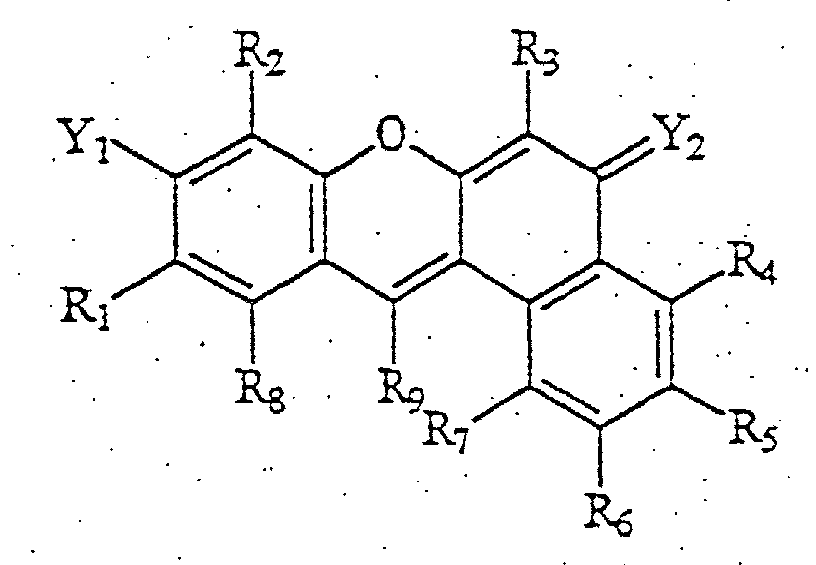 die Reste Y1 und Y2 unabhängig ausgewählt sind aus der Gruppe bestehend aus einer Hydroxylgruppe, einem Sauerstoffatom, einer Iminium- und einer Aminogruppe;die Reste R1-R8 unabhängig ausgewählt sind aus der Gruppe bestehend aus einem Wasserstoff-, Fluor-, Chloratom, einer C1-C8-Alkylgruppe, Alkenylgruppe mit bis zu 8 Kohlenstoffatomen, Alkinylgruppe mit bis zu 8 Kohlenstoffatomen, Sulfonat-, Sulfon-, Amino-, Iminium-, Amido-, Nitril-, C1-C8-Alkoxygruppen, einer verbindenden Gruppe und Kombinationen davon; undder Rest R9 ausgewählt ist aus der Gruppe bestehend aus der Acetylengruppe, einer C1-C8-Alkylgruppe, Alkenylgruppe mit bis zu 8 Kohlenstoffatomen, Cyano-, Phenyl-, substituierten Phenylgruppe, heterocyclisch-aromatischen Gruppen und Kombinationen davon, wobei die substituierte Phenylgruppe die allgemeine Formelhat, in der die Reste X1-X5 unabhängig ein Wasserstoff-, Chlor-, Fluoratom, eine C1-C8-Alkyl-, eine Carbonsäuregruppe, Sulfonsäuregruppe, -CH2OH oder eine verbindende Gruppe sind.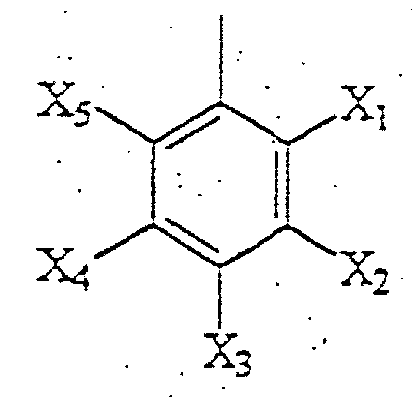
- Verbindung nach Anspruch 1, wobei einer der beiden Reste Y1 und Y2 ein Sauerstoffatom und der andere Rest eine Hydroxylgruppe ist.
- Verbindung nach Anspruch 1, wobei der Rest X1 ausgewählt ist aus der Gruppe bestehend aus einer Carbonsäuregruppe, Sulfonsäuregruppe und -CH2OH;die Reste X2 und X5 unabhängig ausgewählt sind aus der Gruppe bestehend aus einem Wasserstoff-, Chlor-, Fluoratom und einer C1-C8-Alkylgruppe; unddie Reste X3 und X4 unabhängig ausgewählt sind aus der Gruppe bestehend aus einem Wasserstoff-, Chlor-, Fluoratom, einer C1-C8-Alkylgruppe, Carbonsäuregruppe, Sulfonsäuregruppe und einer verbindenden Gruppe.
- Verbindung nach Anspruch 1, wobei die Reste X2 und X5 Chloratome sind.
- Verbindung nach Anspruch 1, wobei der Rest X1 eine Carbonsäuregruppe ist.
- Verbindung nach Anspruch 1, wobei einer der Reste X3 oder X4 eine verbindende Gruppe ist und der andere Rest ein Wasserstoffatom ist.
- Verbindung nach Anspruch 1, wobei einer der Reste X1 oder X5 ausgewählt ist aus der Gruppe bestehend aus einer Carbonsäuregruppe, Sulfonsäuregruppe und -CH2OH.
- Verbindung nach Anspruch 1, wobei einer der Reste R1 bis R3 ein Fluoratom ist.
- Verbindung nach Anspruch 8, wobei der Rest R3 ein Fluoratom ist.
- Verbindung nach Anspruch 1, wobeieiner der Reste Y1 und Y2 ein Sauerstoffatom und der andere Rest eine Hydroxylgruppe ist;der Rest R1 ein Chloratom ist;der Rest R3 ein Fluoratom ist;die Reste R2 und R4-R8 ein Wasserstoffatom sind; undder Rest R9 eine substituierte Phenylgruppe ist, in der der Rest X1 eine Carboxylgruppe ist, die Reste X2 und X5 Chloratome sind und einer der Reste X3 und X4 eine Carboxylgruppe und der andere Rest ein Wasserstoffatom ist.
- Verbindung nach Anspruch 1, wobeieiner der Reste Y1 und Y2 ein Sauerstoffatom und der andere Rest eine Hydroxylgruppe ist;die Reste R1 und R3 Fluoratome sind;die Reste R2 und R4-R8 Wasserstoffatome sind; undder Rest R9 eine substituierte Phenylgruppe ist, in der der Rest X1 eine Carboxylgruppe ist, die Reste X2 und X5 Chloratome sind und einer der Reste X3 und X4 eine Carboxylgruppe und der andere Rest ein Wasserstoffatom ist.
- Verbindung nach Anspruch 1, wobeieiner der Reste Y1 und Y2 ein Sauerstoffatom und der andere Rest eine Hydroxylgruppe ist;der Rest R1 eine Methoxygruppe, der Rest R2 ein Chloratom und der Rest R3 ein Fluoratom ist;die Reste R4-R8 Wasserstoffatome sind; undder Rest R9 eine substituierte Phenylgruppe ist, in der der Rest X1 eine Carboxylgruppe ist, die Reste X2 und X5 Chloratome sind und einer der Reste X3 und X4 eine Carboxylgruppe und der andere Rest ein Wasserstoffatom ist.
- Verbindung nach Anspruch 1, wobeieiner der Reste Y1 und Y2 ein Sauerstoffatom und der andere Rest eine Hydroxylgruppe ist;der Rest R3 ein Fluoratom ist; die Reste R1, R2 und R4-R8 Wasserstoffatome sind; undder Rest R9 eine substituierte Phenylgruppe ist, in der der Rest X1 eine Carboxylgruppe ist, die Reste X2 und X5 Chloratome sind und einer der Reste X3 und X4 eine Carboxylgruppe und der andere Rest ein Wasserstoffatom ist.
- Verbindung nach Anspruch 1, wobeieiner der Reste Y1 und Y2 ein Sauerstoffatom und der andere Rest eine Hydroxylgruppe ist;die Reste R1-R8 Wasserstoffatome sind; undder Rest R9 eine substituierte Phenylgruppe ist, in der der Rest X1 eine Carboxylgruppe ist, die Reste X2 und X5 Chloratome sind und einer der Reste X3 und X4 eine Carboxylgruppe und der andere Rest ein Wasserstoffatom ist.
- Verbindung nach Anspruch 1, wobeieiner der Reste Y1 und Y2 ein Sauerstoffatom und der andere Rest eine Hydroxylgruppe ist;der Rest R1 ein Chloratom ist; die Reste R2-R8 Wasserstoffatome sind; undder Rest R9 eine substituierte Phenylgruppe ist, in der der Rest X1 eine Carboxylgruppe ist, die Reste X2 und X5 Chloratome sind und einer der Reste X3 und X4 eine Carboxylgruppe und der andere Rest ein Wasserstoffatom ist.
- Verbindung nach Anspruch 1, wobeieiner der Reste Y1 und Y2 ein Sauerstoffatom und der andere Rest eine Hydroxylgruppe ist;der Rest R1 eine Methoxygruppe und der Rest R2 ein Chloratom ist;die Reste R3-R8 Wasserstoffatome sind; undder Rest R9 eine substituierte Phenylgruppe ist, in der der Rest X1 eine Carboxylgruppe ist, die Reste X2 und X5 Chloratome sind und einer der Reste X3 und X4 eine Carboxylgruppe und der andere Rest ein Wasserstoffatom ist.
- Verbindung der allgemeinen Formelin der
 der Rest R3 ausgewählt ist aus der Gruppe bestehend aus einem Fluor-, Chloratom, einer Sulfonat-, Amino-, Amido-, Nitril-, C1-C8-Alkoxygruppe und einer verbindenden Gruppe;die Reste R4-R7 unabhängig ausgewählt sind aus der Gruppe bestehend aus einem Wasserstoff-, Fluor-, Chloratom, einer C1-C8-Alkylgruppe, Alkenylgruppe mit bis zu 8 Kohlenstoffatomen, Alkinylgruppe mit bis zu 8 Kohlenstoffatomen, einer Sulfonat-, Amino-, Amido-, Nitril-, C1-C8-Alkoxygruppe und einer verbindenden Gruppe; undder Rest Y2 ausgewählt ist aus der Gruppe bestehend aus einer Hydroxyl- und einer Aminogruppe.
 - Verbindung nach Anspruch 17, wobei der Rest R3 ein Fluoratom ist.
- Verbindung nach Anspruch 17, wobei der Rest R3 ein Chloratom ist.
- Verbindung nach Anspruch 17, wobei der Rest Y2 eine Hydroxylgruppe ist.
- Verbindung nach Anspruch 17, wobei der Rest Y2 eine Aminogruppe ist.
- Verwendung der Verbindung nach einem der Ansprüche 17 bis 21 zur Herstellung der Benzoxanthen-Farbstoffverbindung gemäß einem der Ansprüche 1 bis 16.
- Phosphoramiditverbindung der allgemeinen Formelin der
 der Rest X ein Spacerarm ist;der Rest Y eine verbindende Gruppe ist;der Rest B1 eine Phosphitester-Schutzgruppe ist;die Reste B2 und B3 unabhängig ausgewählt sind aus der Gruppe bestehend aus einer C1-C8-Alkylgruppe, Alkenylgruppe mit bis zu 8 Kohlenstoffatomen, Aryl- und Cycloalkylgruppe mit bis zu 10 Kohlenstoffatomen; undder Rest D die Farbstoffverbindung nach Anspruch 1 ist;wobei die Reste Y und D durch eine verbindende Gruppe verbunden sind, die in einer der Positionen R1-R9 an den Farbstoff D gebunden ist.
 - Verbindung nach Anspruch 23, wobei die Reste B2 und B3 zusammengenommen eine Alkenkette mit bis zu 5 Kohlenstoffatomen in der Hauptkette bilden und eine Gesamtzahl von bis zu 10 Kohlenstoffatomen enthalten, wobei beide endständigen Bindungen der Ketten an das Stickstoffatom gebunden sind; oder wobei die Reste B2 und B3 mit dem Stickstoffatom zusammengenommen einen gesättigten Stickstoffheterocyclus ausbilden, der ein oder mehrere Heteroatome, ausgewählt aus der Gruppe bestehend aus einem Stickstoff-, Sauerstoff- und Schwefelatom enthält.
- Verbindung nach Anspruch 24, wobeider Rest B1 ausgewählt ist aus der Gruppe bestehend aus der Methyl-, β-Cyanoethyl- oder 4-Nitrophenylethylgruppe;die Reste B2 und B3 unabhängig ausgewählt sind aus der Gruppe bestehend aus der Isopropyl-, t-Butyl-, Isobutyl- und sec-Butylgruppe; unddie Reste B2 und B3 zusammengenommen die Morpholinogruppe sind.
- Verbindung nach Anspruch 23, wobei die Reste X und Y zusammengenommen die Gruppesind, wobei n einen Wert von 2 bis 10 hat.

- Verbindung nach Anspruch 23, wobei die Reste X und Y zusammengenommen die Gruppesind, wobei n einen Wert von 2 bis 10 hat.

- Phosphoramiditverbindung der allgemeinen Formelin der
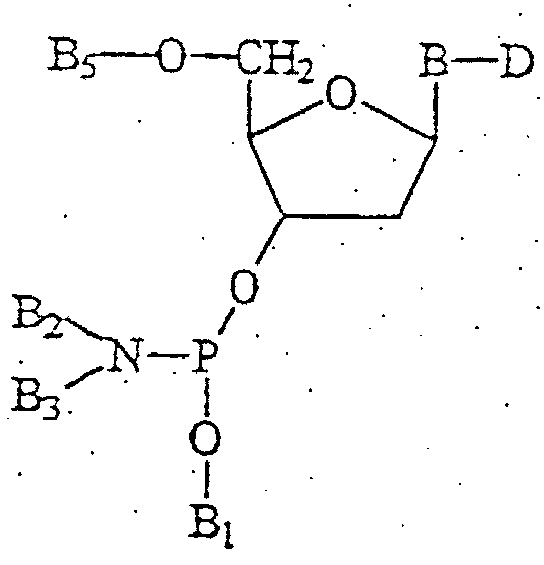 der Rest B1 eine Phosphitester-Schutzgruppe ist;die Reste B2 und B3 unabhängig ausgewählt sind aus der Gruppe bestehend aus einer C1-C8-Alkylgruppe, Alkenylgruppe mit bis zu 8 Kohlenstoffatomen, Aryl- und Cycloalkylgruppe mit bis zu 10 Kohlenstoffatomen;der Rest B5 eine säurespaltbare Hydroxyl-Schutzgruppe ist;B eine Nukleotidbase ist; undder Rest D die Farbstoffverbindung nach Anspruch 1 ist;wobei, wenn der Rest B Purin oder 7-Desazapurin ist, der Zuckerrest an der N9-Position des Purins oder des 7-Desazapurins gebunden ist, und wenn der Rest B Pyrimidin ist, der Zuckerrest an der N1-Position des Pyrimidins gebunden ist;wobei die Reste B und D durch eine verbindende Gruppe an einer der Positionen R1-R9 an den Rest D gebunden sind; undwobei, wenn der Rest B ein Purin ist, die verbindende Gruppe an die 8-Position des Purins gebunden ist, wenn der Rest B 7-Desazapurin ist, die verbindende Gruppe an die 7-Position des 7-Desazapurins gebunden ist, und wenn der Rest B Pyrimidin ist, die verbindende Gruppe an die 5-Position des Pyrimidins gebunden ist.
 - Verbindung nach Anspruch 28, wobei die verbindende Gruppeist.

- Verbindung nach Anspruch 28, wobei die verbindende Gruppeist.
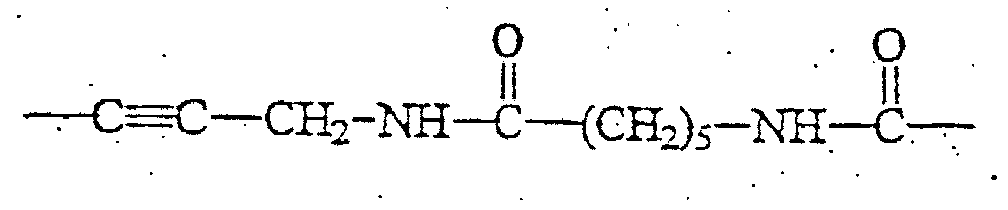
- Verbindung nach Anspruch 28, wobei die verbindende Gruppe
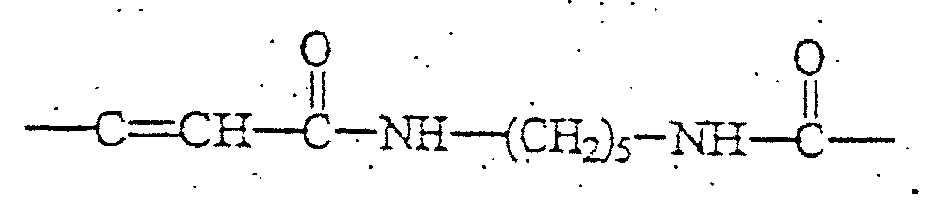
- Verbindung nach Anspruch 28, wobei der Rest B ausgewählt ist aus der Gruppe bestehend aus Uracil, Cytosin, Desazaadenin und Desazaguanosin.
- Ein markiertes Nukleotid der allgemeinen Formelin der
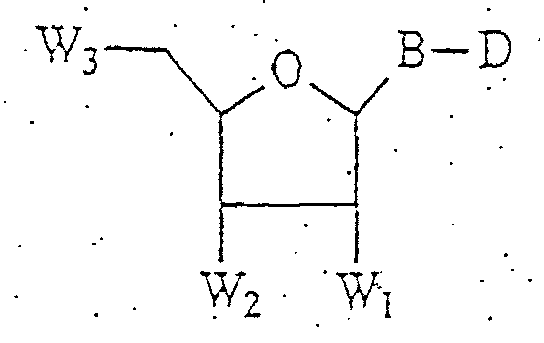 der Rest B eine 7-Desazapurin-, Purin- oder Pyrimidin-Nukleotidbase ist;die Reste W1 und W2 unabhängig ausgewählt sind aus der Gruppe bestehend aus einem Wasserstoffatom und der Hydroxylgruppe;der Rest W3 ausgewählt ist aus der Gruppe bestehend aus der Hydroxylgruppe,und
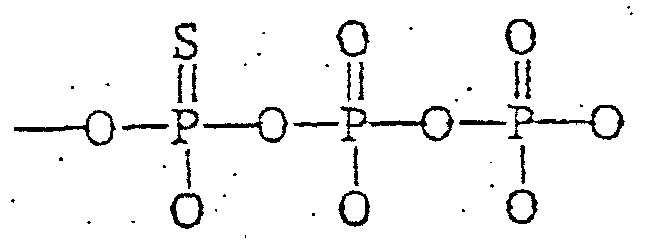 der Rest D die Farbstoffverbindung nach Anspruch 1 ist;wobei, wenn der Rest B Purin oder 7-Desazapurin ist, der Zuckerrest an der N9-Position des Purins oder des 7-Desazapurins gebunden ist, und wenn der Rest B Pyrimidin ist, der Zuckerrest an der N1-Position des Pyrimidins gebunden ist;wobei die verbindende Gruppe, die die Reste B und D verbindet, an einer der Positionen R1-R9 an den Rest D gebunden ist; undwobei, wenn der Rest B ein Purin ist, die verbindende Gruppe an die 8-Position des Purins gebunden ist, wenn der Rest B 7-Desazapurin ist, die verbindende Gruppe an die 7-Position des 7-Desazapurins gebunden ist, und wenn der Rest B Pyrimidin ist, die verbindende Gruppe an die 5-Position des Pyrimidins gebunden ist.
 - Markiertes Nukleotid nach Anspruch 33, wobei der Rest B ausgewählt ist aus der Gruppe bestehend aus Uracil, Cytosin, Desazaadenin und Desazaguanosin.
- Markiertes Nukleotid nach Anspruch 33, wobei die verbindende Gruppeist.

- Markiertes Nukleotid nach Anspruch 33, wobei sowohl der Rest W1 als auch der Rest W2 Wasserstoffatome sind und der Rest W3 die Gruppeist.

- Markiertes Nukleotid nach Anspruch 33, wobei der Rest W1 ein Wasserstoffatom; der Rest W2 eine Hydroxylgruppe und der Rest W3ist.
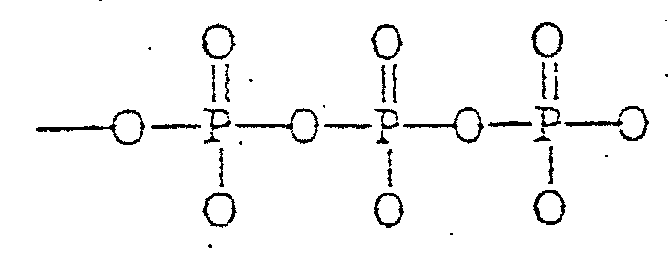
- Markiertes Polynukleotid, enthaltend ein Nukleotid der allgemeinen Formelin der
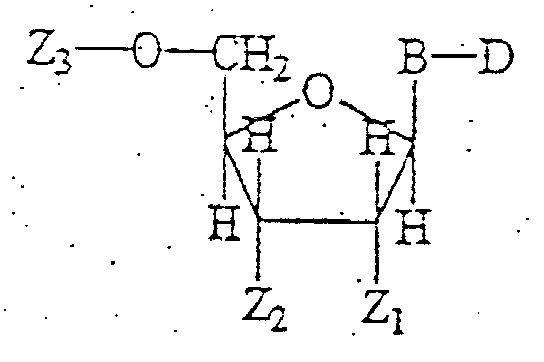 der Rest B eine 7-Desazapurin-, Purin- oder Pyrimidin-Nukleotidbase ist;der Rest Z1 ausgewählt ist aus der Gruppe bestehend aus einem Wasserstoffatom und der Hydroxylgruppe;der Rest Z2 ausgewählt ist aus der Gruppe bestehend aus einem Wasserstoffatom, der Hydroxylgruppe, HPO4 und Nuc, wobei der Rest Nuc und das Nukleosid durch eine Phosphodiestergruppe verbunden sind, wobei die Phosphodiestergruppe an die 5'-Position des Restes Nuc gebunden ist;der Rest Z3 ausgewählt ist aus der Gruppe bestehend aus einem Wasserstoffatom, HPO3, Phosphat-Analoga und Nuc, wobei der Rest Nuc und das Nukleosid durch eine Phosphodiestergruppe verbunden sind, wobei die Phosphodiestergruppe an die 3'-Position des Restes Nuc gebunden ist; undder Rest D eine Farbstoffverbindung nach Anspruch 1 ist;wobei, wenn der Rest B Purin oder 7-Desazapurin ist, der Zuckerrest an der N9-Position des Purins oder Desazapurins gebunden ist, und wenn der Rest B Pyrimidin ist, der Zuckerrest an der N1-Position des Pyrimidins gebunden ist;wobei die verbindende Gruppe, die die Reste B und D verbindet, in einer der Positionen R1-R9 an den Rest D gebunden ist; undwobei, wenn der Rest B ein Purin ist, die verbindende Gruppe an die 8-Position des Purins gebunden ist, wenn der Rest B ein 7-Desazapurin ist, die verbindende Gruppe an die 7-Position des 7-Desazapurins gebunden ist, und wenn der Rest B Pyrirnidin ist, die verbindende Gruppe an die 5-Position des Pyrimidins gebunden ist.
 - Markiertes Polynukleotid nach Anspruch 38, wobei der Rest B ausgewählt ist aus der Gruppe bestehend aus Uracil, Cytosin, Desazaadenin und Desazaguanosin.
- Markiertes Polynukleotid nach Anspruch 38, wobei die verbindende Gruppeist.

- Polynukleotid-Sequenzierverfahren, umfassend die Schritte:Bilden eines Gemisches einer ersten, einer zweiten, einer dritten und einer vierten Klasse von Polynukleotiden, so daß:jedes Polynukleotid in der ersten Klasse ein 3'-terminales Didesoxyadenosin enthält und mit einem ersten Farbstoff markiert ist;jedes Polynukleotid in der zweiten Klasse ein 3'-terminales Didesoxycytidin enthält und mit einem zweiten Farbstoff markiert ist;jedes Polynukleotid in der dritten Klasse ein 3'-terminales Didesoxyguanosin enthält und mit einem dritten Farbstoff markiert ist; undjedes Polynukleotid in der vierten Klasse ein 3'-terminales Didesoxythymidin enthält und mit einem vierten Farbstoff markiert ist;wobei einer des ersten, zweiten, dritten oder vierten Farbstoffs der asymmetrische Benzoxanthen-Farbstoff nach Anspruch 1 ist;die anderen der Farbstoffe vom asymmetrischen Benzoxanthen-Farbstoff und untereinander spektral trennbar sind;elektrophoretisches Trennen der Polynukleotide, wodurch Banden von Polynukleotiden mit ähnlicher Größe gebildet werden;Beleuchten der Banden mit einem Beleuchtungsstrahl, der Fluoreszenz der Farbstoffe erzeugen kann; undIdentifizieren der Polynukleotid-Klassen in den Banden durch das Fluoreszenzspektrum der Farbstoffe.
- Verfahren nach Anspruch 41, wobei die anderen Farbstoffe ausgewählt sind aus der Gruppe bestehend aus 6-Carboxyfluorescein, 6-Carboxy-4,7,2',7'-tetrachlorfluorescein und 6-Carboxy-4,7,2',4',5',7'-hexachlorfluorescein.
- Verfahren zur Fragment-Analyse, umfassend:Erzeugen eines markierten Polynukleotid-Fragments, wobei das Fragment mit der Farbstoffverbindung nach Anspruch 1 markiert wird;Unterwerfen des markierten Polynukleotid-Fragments einem größenabhängigen Trennverfahren; undDetektieren des markierten Polynukleotid-Fragments nach dem Trennverfahren.
- Verfahren nach Anspruch 43, wobei das größenabhängige Trennverfahren Elektrophorese ist und die Detektion durch Fluoreszenz stattfindet.
Applications Claiming Priority (3)
| Application Number | Priority Date | Filing Date | Title |
|---|---|---|---|
| US626085 | 1996-04-01 | ||
| US08/626,085 US6020481A (en) | 1996-04-01 | 1996-04-01 | Asymmetric benzoxanthene dyes |
| PCT/US1997/005376 WO1997036960A1 (en) | 1996-04-01 | 1997-04-01 | Asymmetric benzoxanthene dyes |
Publications (2)
| Publication Number | Publication Date |
|---|---|
| EP0891393A1 EP0891393A1 (de) | 1999-01-20 |
| EP0891393B1 true EP0891393B1 (de) | 1999-06-30 |
Family
ID=24508885
Family Applications (1)
| Application Number | Title | Priority Date | Filing Date |
|---|---|---|---|
| EP97920028A Expired - Lifetime EP0891393B1 (de) | 1996-04-01 | 1997-04-01 | Asymmetrische benzoxanthenfarbstoffe |
Country Status (8)
| Country | Link |
|---|---|
| US (5) | US6020481A (de) |
| EP (1) | EP0891393B1 (de) |
| JP (4) | JP3386473B2 (de) |
| AT (1) | ATE181741T1 (de) |
| AU (1) | AU707242B2 (de) |
| CA (1) | CA2250014C (de) |
| DE (1) | DE69700303T2 (de) |
| WO (1) | WO1997036960A1 (de) |
Families Citing this family (148)
| Publication number | Priority date | Publication date | Assignee | Title |
|---|---|---|---|---|
| US6020481A (en) * | 1996-04-01 | 2000-02-01 | The Perkin-Elmer Corporation | Asymmetric benzoxanthene dyes |
| US6162931A (en) * | 1996-04-12 | 2000-12-19 | Molecular Probes, Inc. | Fluorinated xanthene derivatives |
| US5847162A (en) * | 1996-06-27 | 1998-12-08 | The Perkin Elmer Corporation | 4, 7-Dichlororhodamine dyes |
| US6080852A (en) * | 1996-06-27 | 2000-06-27 | The Perkin-Elmer Corporation | 4,7-dichlororhodamine dyes |
| US7550570B2 (en) | 2000-05-25 | 2009-06-23 | Applied Biosystems, Llc. | 4,7-dichlororhodamine dyes labeled polynucleotides |
| EP1009802B1 (de) * | 1997-02-12 | 2004-08-11 | Eugene Y. Chan | Verfahren zur analyse von polymeren |
| US6130101A (en) * | 1997-09-23 | 2000-10-10 | Molecular Probes, Inc. | Sulfonated xanthene derivatives |
| US6583168B1 (en) * | 1997-11-25 | 2003-06-24 | Applera Corporation | Sulfonated diarylrhodamine dyes |
| US5936087A (en) * | 1997-11-25 | 1999-08-10 | The Perkin-Elmer Corporation | Dibenzorhodamine dyes |
| DE19940750A1 (de) | 1998-08-28 | 2000-06-21 | Febit Ferrarius Biotech Gmbh | Träger für Analytbestimmungsverfahren und Verfahren zur Herstellung des Trägers |
| ATE334197T1 (de) * | 1999-02-19 | 2006-08-15 | Febit Biotech Gmbh | Verfahren zur herstellung von polymeren |
| US6605434B1 (en) | 1999-03-16 | 2003-08-12 | Human Genome Sciences, Inc. | Direct bacterial lysate sequencing |
| DE19919120A1 (de) | 1999-04-27 | 2000-11-02 | Drexhage Karl Heinz | Neue Amidopyrylium-Fluoreszenz-Farbstoffe |
| WO2001016371A2 (en) * | 1999-08-27 | 2001-03-08 | Gen-Probe Incorporated | Method for identifying nucleic acid base phosphoramidites by fluorescence spectroscopy |
| US6372907B1 (en) * | 1999-11-03 | 2002-04-16 | Apptera Corporation | Water-soluble rhodamine dye peptide conjugates |
| US6191278B1 (en) | 1999-11-03 | 2001-02-20 | Pe Corporation | Water-soluble rhodamine dyes and conjugates thereof |
| US6232076B1 (en) | 2000-02-04 | 2001-05-15 | Genaissance Pharmaceuticals, Inc. | Stabilizer of dye sequencing products |
| US6221604B1 (en) | 2000-02-07 | 2001-04-24 | Pe Corporation | Electron-deficient nitrogen heterocycle-substituted fluorescein dyes |
| US6887664B2 (en) | 2000-06-06 | 2005-05-03 | Applera Corporation | Asynchronous primed PCR |
| CA2425663C (en) * | 2000-10-11 | 2009-12-29 | Applera Corporation | Fluorescent nucleobase conjugates having anionic linkers |
| US7211414B2 (en) | 2000-12-01 | 2007-05-01 | Visigen Biotechnologies, Inc. | Enzymatic nucleic acid synthesis: compositions and methods for altering monomer incorporation fidelity |
| DE60216468T2 (de) * | 2001-03-09 | 2007-09-27 | Boston Probes, Inc., Bedford | Kombinationsoligomere betreffende verfahren, kits und zusammensetzungen |
| US6887690B2 (en) * | 2001-06-22 | 2005-05-03 | Pe Corporation | Dye-labeled ribonucleotide triphosphates |
| US7668697B2 (en) * | 2006-02-06 | 2010-02-23 | Andrei Volkov | Method for analyzing dynamic detectable events at the single molecule level |
| US6764710B2 (en) | 2001-07-18 | 2004-07-20 | Scimed Life Systems, Inc. | Light emitting markers for use with substrates |
| US7052512B2 (en) * | 2001-07-18 | 2006-05-30 | Boston Scientific Scimed, Inc. | Fluorescent dyed lubricant for medical devices |
| EP1412724B1 (de) * | 2001-07-25 | 2016-03-23 | Life Technologies Corporation | Zeitverzögerungintegration in elektrophoretischen nachweissystemen |
| US8569516B2 (en) * | 2001-09-07 | 2013-10-29 | Elitech Holding B.V. | Compounds and methods for fluorescent labeling |
| US6972339B2 (en) * | 2001-09-07 | 2005-12-06 | Epoch Biosciences, Inc. | Compounds and methods for fluorescent labeling |
| AU2002362013B2 (en) | 2001-11-21 | 2008-04-24 | Applied Biosystems, Llc. | Digital assay |
| EP1575990B1 (de) | 2002-09-08 | 2009-11-18 | Applera Corporation | Festphasengebundene PNA-Dimere und deren Synthese |
| AU2003301148A1 (en) | 2002-12-23 | 2004-07-22 | Vical Incorporated | Codon-optimized polynucleotide-based vaccines against human cytomegalovirus infection |
| US7491830B2 (en) * | 2003-05-09 | 2009-02-17 | Applied Biosystems Inc. | Phenyl xanthene dyes |
| US7432298B2 (en) * | 2003-05-09 | 2008-10-07 | Applied Biosystems Inc. | Fluorescent polymeric materials containing lipid soluble rhodamine dyes |
| BRPI0411672A (pt) * | 2003-06-20 | 2006-08-08 | Baker Hughes Inc | testes aperfeiçoados de pv de fundo de furo para pressão de ponto de bolha |
| US7570443B2 (en) | 2003-09-19 | 2009-08-04 | Applied Biosystems, Llc | Optical camera alignment |
| US7417726B2 (en) * | 2003-09-19 | 2008-08-26 | Applied Biosystems Inc. | Normalization of data using controls |
| US20060029948A1 (en) * | 2003-09-19 | 2006-02-09 | Gary Lim | Sealing cover and dye compatibility selection |
| US7541454B2 (en) * | 2003-10-24 | 2009-06-02 | Epoch Biosciences, Inc. | Compounds and methods for fluorescent labeling |
| US7504495B2 (en) * | 2003-11-20 | 2009-03-17 | Exiqon A/S | Quencher compositions comprising anthraquinone moieties |
| JP4127204B2 (ja) * | 2003-12-17 | 2008-07-30 | セイコーエプソン株式会社 | 液晶表示装置の製造方法 |
| US7488820B2 (en) * | 2004-01-19 | 2009-02-10 | Massachusetts Institute Of Technology | Naphthofluorescein-based metal sensors, and methods of making and using the same |
| WO2005077125A2 (en) * | 2004-02-11 | 2005-08-25 | Applera Corporation | Methods and compositions for detecting nucleic acids |
| US20050255485A1 (en) * | 2004-05-14 | 2005-11-17 | Livak Kenneth J | Detection of gene duplications |
| EP2290073A3 (de) * | 2004-05-28 | 2011-08-31 | Asuragen, Inc. | Verfahren und Zusammensetzungen mit MicroRNA |
| EP1766089A1 (de) * | 2004-06-30 | 2007-03-28 | Applera Corporation | Analogsondenkomplexe |
| EP1781675B1 (de) | 2004-08-13 | 2014-03-26 | Epoch Biosciences, Inc. | Fluoreszierende phosphonatfarbstoffe und konjugate |
| CA2857878A1 (en) | 2004-11-12 | 2006-12-28 | Asuragen, Inc. | Methods and compositions involving mirna and mirna inhibitor molecules |
| US20060292586A1 (en) * | 2004-12-17 | 2006-12-28 | Schroth Gary P | ID-tag complexes, arrays, and methods of use thereof |
| US20060166238A1 (en) * | 2004-12-22 | 2006-07-27 | Ramsing Niels B | Probes, libraries and kits for analysis of mixtures of nucleic acids and methods for constructing the same |
| US20060228726A1 (en) * | 2005-01-06 | 2006-10-12 | Martin Patrick K | Polypeptides having nucleic acid binding activity and compositions and methods for nucleic acid amplification |
| EP1872135A2 (de) | 2005-03-15 | 2008-01-02 | Applera Corporation | Verwendung von antikörper-surrogatantigen-systemen zum nachweis von analyten |
| EP1886145A2 (de) | 2005-05-03 | 2008-02-13 | Applera Corporation | Fluoreszenznachweissystem und farbstoffsatz zur verwendung damit |
| US20070087360A1 (en) * | 2005-06-20 | 2007-04-19 | Boyd Victoria L | Methods and compositions for detecting nucleotides |
| US20070059713A1 (en) | 2005-09-09 | 2007-03-15 | Lee Jun E | SSB-DNA polymerase fusion proteins |
| US9677123B2 (en) | 2006-03-15 | 2017-06-13 | Siemens Healthcare Diagnostics Inc. | Degenerate nucleobase analogs |
| WO2007115265A2 (en) * | 2006-03-31 | 2007-10-11 | Applied Biosystems Inc. | Reagents useful for synthesizing rhodamine-labeled oligonucleotides |
| WO2007140015A2 (en) | 2006-05-26 | 2007-12-06 | Althea Technologies, Inc | Biochemical analysis of partitioned cells |
| JP2010510964A (ja) * | 2006-09-19 | 2010-04-08 | アシュラジェン インコーポレイテッド | 治療的介入の標的としての、miR−15、miR−26、miR−31、miR−145、miR−147、miR−188、miR−215、miR−216、miR−331、mmu−miR−292−3pによって調節される遺伝子および経路 |
| US20080131878A1 (en) * | 2006-12-05 | 2008-06-05 | Asuragen, Inc. | Compositions and Methods for the Detection of Small RNA |
| CN101622348A (zh) * | 2006-12-08 | 2010-01-06 | 奥斯瑞根公司 | 作为治疗性干预靶标的miR-20调节的基因和途径 |
| WO2008073919A2 (en) * | 2006-12-08 | 2008-06-19 | Asuragen, Inc. | Mir-20 regulated genes and pathways as targets for therapeutic intervention |
| CA2671299A1 (en) * | 2006-12-08 | 2008-06-19 | Asuragen, Inc. | Functions and targets of let-7 micro rnas |
| WO2008073920A2 (en) * | 2006-12-08 | 2008-06-19 | Asuragen, Inc. | Mir-21 regulated genes and pathways as targets for therapeutic intervention |
| US20090175827A1 (en) * | 2006-12-29 | 2009-07-09 | Byrom Mike W | miR-16 REGULATED GENES AND PATHWAYS AS TARGETS FOR THERAPEUTIC INTERVENTION |
| US20080274458A1 (en) * | 2007-05-01 | 2008-11-06 | Latham Gary J | Nucleic acid quantitation methods |
| US20090232893A1 (en) * | 2007-05-22 | 2009-09-17 | Bader Andreas G | miR-143 REGULATED GENES AND PATHWAYS AS TARGETS FOR THERAPEUTIC INTERVENTION |
| CA2689974A1 (en) * | 2007-06-08 | 2008-12-18 | Asuragen, Inc. | Mir-34 regulated genes and pathways as targets for therapeutic intervention |
| EP2198050A1 (de) | 2007-09-14 | 2010-06-23 | Asuragen, INC. | Mikrornas mit unterschiedlicher expression bei zervikalkarzinom und verwendungen davon |
| WO2009052386A1 (en) * | 2007-10-18 | 2009-04-23 | Asuragen, Inc. | Micrornas differentially expressed in lung diseases and uses thereof |
| WO2009067632A1 (en) * | 2007-11-20 | 2009-05-28 | Applied Biosystems Inc. | Method of sequencing nucleic acids using elaborated nucleotide phosphorothiolate compounds |
| US8017338B2 (en) | 2007-11-20 | 2011-09-13 | Life Technologies Corporation | Reversible di-nucleotide terminator sequencing |
| WO2009070805A2 (en) * | 2007-12-01 | 2009-06-04 | Asuragen, Inc. | Mir-124 regulated genes and pathways as targets for therapeutic intervention |
| JP5130540B2 (ja) * | 2007-12-12 | 2013-01-30 | 学校法人福岡大学 | 蛍光誘導体化試薬ならびに蛍光誘導体化方法 |
| WO2009086156A2 (en) * | 2007-12-21 | 2009-07-09 | Asuragen, Inc. | Mir-10 regulated genes and pathways as targets for therapeutic intervention |
| WO2009100430A2 (en) * | 2008-02-08 | 2009-08-13 | Asuragen, Inc | miRNAs DIFFERENTIALLY EXPRESSED IN LYMPH NODES FROM CANCER PATIENTS |
| WO2009154835A2 (en) * | 2008-03-26 | 2009-12-23 | Asuragen, Inc. | Compositions and methods related to mir-16 and therapy of prostate cancer |
| WO2009126726A1 (en) * | 2008-04-08 | 2009-10-15 | Asuragen, Inc | Methods and compositions for diagnosing and modulating human papillomavirus (hpv) |
| US8258111B2 (en) * | 2008-05-08 | 2012-09-04 | The Johns Hopkins University | Compositions and methods related to miRNA modulation of neovascularization or angiogenesis |
| US20100179213A1 (en) * | 2008-11-11 | 2010-07-15 | Mirna Therapeutics, Inc. | Methods and Compositions Involving miRNAs In Cancer Stem Cells |
| US20100159452A1 (en) * | 2008-12-22 | 2010-06-24 | Roche Molecular Systems, Inc. | Method For Detecting a Target Nucleic Acid in a Sample |
| US20120142004A1 (en) | 2009-05-21 | 2012-06-07 | Siemens Healthcare Diagnostics Inc. | Universal Tags With Non-Natural Nucleobases |
| WO2010135692A2 (en) | 2009-05-22 | 2010-11-25 | Asuragen, Inc. | Mirna biomarkers of prostate disease |
| CN102725632A (zh) | 2009-08-28 | 2012-10-10 | 奥斯瑞根公司 | 肺病的miRNA生物标志物 |
| BR112013010585B1 (pt) | 2010-10-29 | 2020-12-01 | Asuragen, Inc. | método de caracterização de um locus de fmr1 ou um locus de frm2 em uma amostra de dna e método de análise de um locus fmr1 ou um locus fmr2 de uma amostra de dna humana |
| CN107326073A (zh) | 2010-12-29 | 2017-11-07 | 生命技术公司 | 作为荧光参考标准品的 ddao 化合物 |
| DK2714939T3 (en) | 2011-05-24 | 2015-06-29 | Elitech Holding Bv | DETECTION OF METHICILLIN-RESISTENT STAPHYLOCOCCUS AUREUS |
| CN103813713A (zh) * | 2011-07-20 | 2014-05-21 | 乔治亚州大学研究基金会 | 细胞识别缀合物及使用maldi-ms成像对癌症组织进行组织学分析的方法 |
| US9945608B2 (en) | 2011-08-02 | 2018-04-17 | Air Products And Chemicals, Inc. | Natural gas processing plant |
| AU2012309824A1 (en) | 2011-09-12 | 2013-04-18 | Abbvie Biotherapeutics Inc. | Artificial NK cells and uses thereof |
| WO2013040251A2 (en) | 2011-09-13 | 2013-03-21 | Asurgen, Inc. | Methods and compositions involving mir-135b for distinguishing pancreatic cancer from benign pancreatic disease |
| CN102942553B (zh) * | 2012-10-15 | 2015-01-14 | 石平 | 一种6-羧基荧光素的制备方法 |
| WO2014093291A1 (en) | 2012-12-10 | 2014-06-19 | Advandx, Inc. | Use of probes for mass spectrometric identification of microorganisms or cells and associated conditions of interest |
| US10377734B2 (en) | 2013-02-08 | 2019-08-13 | Mitsubishi Gas Chemical Company, Inc. | Resist composition, method for forming resist pattern, polyphenol derivative for use in the composition |
| WO2014164479A1 (en) | 2013-03-11 | 2014-10-09 | Elitech Holding B.V. | Methods for true isothermal strand displacement amplification |
| US9328384B2 (en) | 2013-05-13 | 2016-05-03 | Elitechgroup B.V. | Droplet digital PCR with short minor groove probes |
| TWI707038B (zh) | 2013-08-05 | 2020-10-11 | 美商扭轉生物科技有限公司 | 重新合成之基因庫 |
| CN104672198B (zh) * | 2013-11-26 | 2018-11-16 | 东友精细化工有限公司 | 化合物及着色固化性树脂组合物 |
| CN122038564A (zh) | 2014-01-05 | 2026-05-15 | G·索兹 | 使用mirna比率确定肺癌 |
| US10619210B2 (en) | 2014-02-07 | 2020-04-14 | The Johns Hopkins University | Predicting response to epigenetic drug therapy |
| ES2832748T3 (es) | 2014-08-19 | 2021-06-11 | Hoffmann La Roche | Procedimientos y composiciones para la detección de ácidos nucleicos |
| WO2016094330A2 (en) | 2014-12-08 | 2016-06-16 | 20/20 Genesystems, Inc | Methods and machine learning systems for predicting the liklihood or risk of having cancer |
| EP3230468B1 (de) | 2014-12-12 | 2020-09-16 | ELITechGroup, Inc. | Verfahren und kits zum nachweis von antibiotikaresistenten bakterien |
| EP3230467A1 (de) | 2014-12-12 | 2017-10-18 | ELITechGroup B.V. | Verfahren und zusammensetzungen zum nachweis von antibiotikaresistenten bakterien |
| JP7026439B2 (ja) | 2014-12-25 | 2022-02-28 | 三菱瓦斯化学株式会社 | 化合物、樹脂、リソグラフィー用下層膜形成材料、リソグラフィー用下層膜、パターン形成方法及び精製方法 |
| WO2016126882A1 (en) | 2015-02-04 | 2016-08-11 | Twist Bioscience Corporation | Methods and devices for de novo oligonucleic acid assembly |
| JP6845991B2 (ja) | 2015-03-31 | 2021-03-24 | 三菱瓦斯化学株式会社 | 化合物、レジスト組成物及びそれを用いるレジストパターン形成方法 |
| US11480877B2 (en) | 2015-03-31 | 2022-10-25 | Mitsubishi Gas Chemical Company, Inc. | Resist composition, method for forming resist pattern, and polyphenol compound used therein |
| US9981239B2 (en) | 2015-04-21 | 2018-05-29 | Twist Bioscience Corporation | Devices and methods for oligonucleic acid library synthesis |
| EP3292214A1 (de) | 2015-05-04 | 2018-03-14 | Academisch Medisch Centrum | Verfahren zur quantifizierung von mirnas mittels normalisierung |
| WO2017015543A1 (en) | 2015-07-23 | 2017-01-26 | Asuragen, Inc. | Methods, compositions, kits, and uses for analysis of nucleic acids comprising repeating a/t-rich segments |
| EP3346334B1 (de) | 2015-08-31 | 2020-08-12 | Mitsubishi Gas Chemical Company, Inc. | Verwendung einer zusammensetzung zur formung eines fotoresist- unterschichtfilms für lithografie, fotoresist-unterschichtfilm für lithographie und dessen produktionsverfahren und verfahren zur formung einer resiststruktur |
| EP3346335A4 (de) | 2015-08-31 | 2019-06-26 | Mitsubishi Gas Chemical Company, Inc. | Material zur bildung von unterschichtfilmen zur lithographie, zusammensetzung zur bildung von unterschichtfilmen zur lithographie, unterschichtfilme zur lithographie und verfahren zur herstellung davon, musterbildungsverfahren, harz und reinigungsverfahren |
| CN108137478B (zh) | 2015-09-10 | 2021-09-28 | 三菱瓦斯化学株式会社 | 化合物、其组合物、纯化方法以及抗蚀图案形成方法、非晶膜的制造方法 |
| KR20180050411A (ko) | 2015-09-18 | 2018-05-14 | 트위스트 바이오사이언스 코포레이션 | 올리고핵산 변이체 라이브러리 및 그의 합성 |
| CN108698012A (zh) | 2015-09-22 | 2018-10-23 | 特韦斯特生物科学公司 | 用于核酸合成的柔性基底 |
| WO2017095958A1 (en) | 2015-12-01 | 2017-06-08 | Twist Bioscience Corporation | Functionalized surfaces and preparation thereof |
| KR102212257B1 (ko) | 2016-08-22 | 2021-02-04 | 트위스트 바이오사이언스 코포레이션 | 드 노보 합성된 핵산 라이브러리 |
| WO2018045162A1 (en) | 2016-09-01 | 2018-03-08 | Biogen Ma Inc. | Biomarkers predictive of primary progressive multiple sclerosis and uses thereof |
| WO2018057526A2 (en) | 2016-09-21 | 2018-03-29 | Twist Bioscience Corporation | Nucleic acid based data storage |
| EP3554514A4 (de) | 2016-12-16 | 2020-08-05 | Twist Bioscience Corporation | Variante bibliotheken der immunologischen synapse und synthese davon |
| JP6858545B2 (ja) * | 2016-12-19 | 2021-04-14 | 株式会社Dnpファインケミカル | 色素 |
| CN110892485B (zh) | 2017-02-22 | 2024-03-22 | 特韦斯特生物科学公司 | 基于核酸的数据存储 |
| AU2018234629A1 (en) | 2017-03-15 | 2019-10-17 | Twist Bioscience Corporation | Variant libraries of the immunological synapse and synthesis thereof |
| JP7169999B2 (ja) | 2017-06-12 | 2022-11-11 | ツイスト バイオサイエンス コーポレーション | シームレス核酸アセンブリのための方法 |
| WO2018231864A1 (en) | 2017-06-12 | 2018-12-20 | Twist Bioscience Corporation | Methods for seamless nucleic acid assembly |
| AU2018328847A1 (en) | 2017-09-11 | 2020-04-23 | Twist Bioscience Corporation | GPCR binding proteins and synthesis thereof |
| WO2019079769A1 (en) | 2017-10-20 | 2019-04-25 | Twist Bioscience Corporation | HEATED NANOWELLS FOR THE SYNTHESIS OF POLYNUCLEOTIDES |
| EP4715681A2 (de) | 2018-01-04 | 2026-03-25 | Atlas Data Storage, Inc. | Digitale informationsspeicherung auf dna-basis |
| IL278771B2 (en) | 2018-05-18 | 2025-09-01 | Twist Bioscience Corp | Polynucleotides, reagents and methods for nucleic acid hybridization |
| MX2021007492A (es) | 2018-12-20 | 2021-10-13 | Life Technologies Corp | Colorante de rodamina asimétrica y uso de este en ensayos biológicos. |
| CA3124333A1 (en) | 2018-12-20 | 2020-06-25 | Life Technologies Corporation | Modified rhodamine dye and use thereof in biological assays |
| WO2020139871A1 (en) | 2018-12-26 | 2020-07-02 | Twist Bioscience Corporation | Highly accurate de novo polynucleotide synthesis |
| AU2020227802A1 (en) | 2019-02-26 | 2021-10-14 | Twist Bioscience Corporation | Variant nucleic acid libraries for antibody optimization |
| WO2020176678A1 (en) | 2019-02-26 | 2020-09-03 | Twist Bioscience Corporation | Variant nucleic acid libraries for glp1 receptor |
| EP3719144A1 (de) | 2019-04-05 | 2020-10-07 | Fundación para la Investigación Biomédica del Hospital Universitario de la Paz (FIBHULP) | Mir-151a-3p als universelle endogene steuerung zur exosomenladungsnormalisierung |
| CA3144644A1 (en) | 2019-06-21 | 2020-12-24 | Twist Bioscience Corporation | Barcode-based nucleic acid sequence assembly |
| US20220267857A1 (en) | 2019-07-19 | 2022-08-25 | Fundación Para La Investigación Biomédikca Del Hospital Universitario La Paz (Fibhulp) | Method for determining the response to treatment of a patient affected by non-small cell lung carcinoma (nsclc) |
| US12091777B2 (en) | 2019-09-23 | 2024-09-17 | Twist Bioscience Corporation | Variant nucleic acid libraries for CRTH2 |
| EP4034564A4 (de) | 2019-09-23 | 2023-12-13 | Twist Bioscience Corporation | Variante nukleinsäurebibliotheken für einzeldomänenantikörper |
| WO2021080629A1 (en) | 2019-10-23 | 2021-04-29 | Elitechgroup, Inc. | Methods for true isothermal strand displacement amplification |
| BR112022011235A2 (pt) | 2019-12-09 | 2022-12-13 | Twist Bioscience Corp | Bibliotecas de variantes de ácido nucleico para receptores de adenosina |
| US20230304932A1 (en) | 2020-07-23 | 2023-09-28 | Life Technologies Corporation | Compositions, systems and methods for biological analysis involving energy transfer dye conjugates and analytes comprising the same |
| CA3186955A1 (en) | 2020-07-23 | 2022-01-27 | Scott Benson | Energy transfer dye conjugates for use in biological assays |
| KR102783485B1 (ko) | 2021-10-15 | 2025-03-20 | 아주대학교산학협력단 | miR-625-3p의 건선 중증도 진단용 바이오마커로서의 용도 |
| CN114736213B (zh) * | 2022-04-01 | 2024-02-02 | 合肥华纳生物医药科技有限公司 | 一种羧基-四氯-荧光素的制备方法 |
| PL443955A1 (pl) * | 2023-03-02 | 2024-09-09 | Instytut Chemii Organicznej Polskiej Akademii Nauk | Barwniki merocyjaninowe, sposób ich otrzymywania i zastosowanie |
| KR20240177780A (ko) | 2023-06-19 | 2024-12-30 | 재단법인 아산사회복지재단 | 맥락막 비후 질환의 진단 또는 예후 예측용 조성물, 키트 및 진단 또는 예후 예측을 위한 정보를 제공하는 방법 |
Family Cites Families (25)
| Publication number | Priority date | Publication date | Assignee | Title |
|---|---|---|---|---|
| DE84990C (de) * | ||||
| DE290508C (de) * | ||||
| GB1336955A (en) * | 1970-12-15 | 1973-11-14 | Yamamoto Kagaku Gosei Kk | Fluoran compounds and their use in pressure sensitive copying paper |
| US4318846A (en) * | 1979-09-07 | 1982-03-09 | Syva Company | Novel ether substituted fluorescein polyamino acid compounds as fluorescers and quenchers |
| US4415732A (en) * | 1981-03-27 | 1983-11-15 | University Patents, Inc. | Phosphoramidite compounds and processes |
| CA1244786A (en) * | 1983-12-20 | 1988-11-15 | Lloyd M. Smith | Synthesis of amino-derivitized oligonucleotides |
| US5118800A (en) * | 1983-12-20 | 1992-06-02 | California Institute Of Technology | Oligonucleotides possessing a primary amino group in the terminal nucleotide |
| JPS60242368A (ja) * | 1984-05-16 | 1985-12-02 | Hitachi Ltd | 核酸塩基配列決定方法 |
| US4757141A (en) * | 1985-08-26 | 1988-07-12 | Applied Biosystems, Incorporated | Amino-derivatized phosphite and phosphate linking agents, phosphoramidite precursors, and useful conjugates thereof |
| US5093232A (en) * | 1985-12-11 | 1992-03-03 | Chiron Corporation | Nucleic acid probes |
| US4855225A (en) * | 1986-02-07 | 1989-08-08 | Applied Biosystems, Inc. | Method of detecting electrophoretically separated oligonucleotides |
| CA1340806C (en) * | 1986-07-02 | 1999-11-02 | James Merrill Prober | Method, system and reagents for dna sequencing |
| US5047519A (en) * | 1986-07-02 | 1991-09-10 | E. I. Du Pont De Nemours And Company | Alkynylamino-nucleotides |
| JPH07113606B2 (ja) * | 1986-10-27 | 1995-12-06 | 株式会社島津製作所 | 塩基配列決定装置 |
| US4945171A (en) * | 1987-08-10 | 1990-07-31 | Molecular Probes, Inc. | Xanthene dyes having a fused (C) benzo ring |
| US5231191A (en) * | 1987-12-24 | 1993-07-27 | Applied Biosystems, Inc. | Rhodamine phosphoramidite compounds |
| US4965349A (en) * | 1987-12-24 | 1990-10-23 | Applied Biosystems, Inc. | Method of synthesizing oligonucleotides labeled with ammonia-labile groups on solid phase supports |
| US4933471A (en) * | 1988-08-31 | 1990-06-12 | Becton, Dickinson And Company | Xanthene dyes |
| US5066580A (en) * | 1988-08-31 | 1991-11-19 | Becton Dickinson And Company | Xanthene dyes that emit to the red of fluorescein |
| US5366860A (en) * | 1989-09-29 | 1994-11-22 | Applied Biosystems, Inc. | Spectrally resolvable rhodamine dyes for nucleic acid sequence determination |
| US5188934A (en) * | 1989-11-14 | 1993-02-23 | Applied Biosystems, Inc. | 4,7-dichlorofluorescein dyes as molecular probes |
| JP2612359B2 (ja) | 1990-03-01 | 1997-05-21 | 三井東圧化学株式会社 | 電子写真用感光体 |
| DE69322266T2 (de) * | 1992-04-03 | 1999-06-02 | Perkin-Elmer Corp., Foster City, Calif. | Proben zusammensetzung und verfahren |
| EP0658167B1 (de) * | 1992-09-03 | 1999-04-14 | The Perkin-Elmer Corporation | 4,7-dichlorofluoroszein-farbestoffe als molekulare sonden |
| US6020481A (en) * | 1996-04-01 | 2000-02-01 | The Perkin-Elmer Corporation | Asymmetric benzoxanthene dyes |
-
1996
- 1996-04-01 US US08/626,085 patent/US6020481A/en not_active Expired - Lifetime
-
1997
- 1997-03-26 US US08/824,102 patent/US5840999A/en not_active Expired - Lifetime
- 1997-04-01 AU AU24323/97A patent/AU707242B2/en not_active Expired
- 1997-04-01 DE DE69700303T patent/DE69700303T2/de not_active Expired - Lifetime
- 1997-04-01 EP EP97920028A patent/EP0891393B1/de not_active Expired - Lifetime
- 1997-04-01 WO PCT/US1997/005376 patent/WO1997036960A1/en not_active Ceased
- 1997-04-01 CA CA002250014A patent/CA2250014C/en not_active Expired - Lifetime
- 1997-04-01 JP JP53555097A patent/JP3386473B2/ja not_active Expired - Fee Related
- 1997-04-01 AT AT97920028T patent/ATE181741T1/de not_active IP Right Cessation
-
2000
- 2000-02-01 US US09/495,111 patent/US6303775B1/en not_active Expired - Lifetime
-
2001
- 2001-10-11 US US09/976,842 patent/US6617445B2/en not_active Expired - Lifetime
-
2002
- 2002-09-06 JP JP2002262149A patent/JP2003192931A/ja not_active Withdrawn
-
2003
- 2003-09-05 US US10/656,826 patent/US7179906B2/en not_active Expired - Fee Related
-
2006
- 2006-04-26 JP JP2006122728A patent/JP4644155B2/ja not_active Expired - Lifetime
-
2009
- 2009-12-17 JP JP2009286989A patent/JP2010070769A/ja not_active Withdrawn
Also Published As
| Publication number | Publication date |
|---|---|
| AU2432397A (en) | 1997-10-22 |
| US20040225119A1 (en) | 2004-11-11 |
| AU707242B2 (en) | 1999-07-08 |
| JP3386473B2 (ja) | 2003-03-17 |
| ATE181741T1 (de) | 1999-07-15 |
| JP2003192931A (ja) | 2003-07-09 |
| CA2250014A1 (en) | 1997-10-09 |
| US6020481A (en) | 2000-02-01 |
| US6617445B2 (en) | 2003-09-09 |
| US7179906B2 (en) | 2007-02-20 |
| JP2010070769A (ja) | 2010-04-02 |
| JP2000500183A (ja) | 2000-01-11 |
| JP2006307218A (ja) | 2006-11-09 |
| US6303775B1 (en) | 2001-10-16 |
| CA2250014C (en) | 2004-02-24 |
| JP4644155B2 (ja) | 2011-03-02 |
| EP0891393A1 (de) | 1999-01-20 |
| US5840999A (en) | 1998-11-24 |
| WO1997036960A1 (en) | 1997-10-09 |
| DE69700303D1 (de) | 1999-08-05 |
| US20020115067A1 (en) | 2002-08-22 |
| DE69700303T2 (de) | 2000-02-17 |
Similar Documents
| Publication | Publication Date | Title |
|---|---|---|
| US6617445B2 (en) | Asymmetric benzoxanthene dye labelling reagents | |
| US6008379A (en) | Aromatic-substituted xanthene dyes | |
| EP1212457B1 (de) | Mit uv-licht anregbare fluoreszenzenergietransfer-farbstoffe | |
| US5863727A (en) | Energy transfer dyes with enhanced fluorescence | |
| EP0940450B1 (de) | Energieübertragungsfarbstoffe mit verbesserter Fluoreszenz | |
| EP1165694B1 (de) | 4,7-dichlororhodaminfarbstoffe als molekulare sonden | |
| EP0915935B1 (de) | 4,7-dichlorrhodaminfarbstoffe | |
| US6111116A (en) | Dibenzorhodamine dyes | |
| US20090093623A1 (en) | 4,7-dichlororhodamine dyes | |
| US6218124B1 (en) | Method for detecting oligonucleotides using UV light source | |
| CA2450501C (en) | Asymmetric benzoxanthene dyes |
Legal Events
| Date | Code | Title | Description |
|---|---|---|---|
| PUAI | Public reference made under article 153(3) epc to a published international application that has entered the european phase |
Free format text: ORIGINAL CODE: 0009012 |
|
| 17P | Request for examination filed |
Effective date: 19981027 |
|
| AK | Designated contracting states |
Kind code of ref document: A1 Designated state(s): AT BE CH DE DK ES FI FR GB GR IE IT LI LU MC NL PT SE |
|
| GRAG | Despatch of communication of intention to grant |
Free format text: ORIGINAL CODE: EPIDOS AGRA |
|
| 17Q | First examination report despatched |
Effective date: 19990209 |
|
| GRAG | Despatch of communication of intention to grant |
Free format text: ORIGINAL CODE: EPIDOS AGRA |
|
| GRAH | Despatch of communication of intention to grant a patent |
Free format text: ORIGINAL CODE: EPIDOS IGRA |
|
| GRAG | Despatch of communication of intention to grant |
Free format text: ORIGINAL CODE: EPIDOS AGRA |
|
| GRAH | Despatch of communication of intention to grant a patent |
Free format text: ORIGINAL CODE: EPIDOS IGRA |
|
| GRAA | (expected) grant |
Free format text: ORIGINAL CODE: 0009210 |
|
| RIN1 | Information on inventor provided before grant (corrected) |
Inventor name: HAUSER, JOAN Inventor name: FURNISS, VERGINE, C. Inventor name: HENNESSEY, KEVIN, M. Inventor name: THEISEN, PETER, D. Inventor name: MENCHEN, STEVEN, M. Inventor name: BENSON, SCOTT, C. |
|
| RIN1 | Information on inventor provided before grant (corrected) |
Inventor name: HAUSER, JOAN Inventor name: FURNISS, VERGINE, C. Inventor name: HENNESSEY, KEVIN, M. Inventor name: THEISEN, PETER, D. Inventor name: MENCHEN, STEVEN, M. Inventor name: BENSON, SCOTT, C. |
|
| AK | Designated contracting states |
Kind code of ref document: B1 Designated state(s): AT BE CH DE DK ES FI FR GB GR IE IT LI LU MC NL PT SE |
|
| PG25 | Lapsed in a contracting state [announced via postgrant information from national office to epo] |
Ref country code: NL Free format text: LAPSE BECAUSE OF FAILURE TO SUBMIT A TRANSLATION OF THE DESCRIPTION OR TO PAY THE FEE WITHIN THE PRESCRIBED TIME-LIMIT Effective date: 19990630 Ref country code: GR Free format text: LAPSE BECAUSE OF NON-PAYMENT OF DUE FEES Effective date: 19990630 Ref country code: FI Free format text: LAPSE BECAUSE OF NON-PAYMENT OF DUE FEES Effective date: 19990630 Ref country code: ES Free format text: THE PATENT HAS BEEN ANNULLED BY A DECISION OF A NATIONAL AUTHORITY Effective date: 19990630 Ref country code: BE Free format text: LAPSE BECAUSE OF FAILURE TO SUBMIT A TRANSLATION OF THE DESCRIPTION OR TO PAY THE FEE WITHIN THE PRESCRIBED TIME-LIMIT Effective date: 19990630 Ref country code: AT Free format text: LAPSE BECAUSE OF FAILURE TO SUBMIT A TRANSLATION OF THE DESCRIPTION OR TO PAY THE FEE WITHIN THE PRESCRIBED TIME-LIMIT Effective date: 19990630 |
|
| REF | Corresponds to: |
Ref document number: 181741 Country of ref document: AT Date of ref document: 19990715 Kind code of ref document: T |
|
| REG | Reference to a national code |
Ref country code: CH Ref legal event code: EP |
|
| REF | Corresponds to: |
Ref document number: 69700303 Country of ref document: DE Date of ref document: 19990805 |
|
| ITF | It: translation for a ep patent filed | ||
| REG | Reference to a national code |
Ref country code: IE Ref legal event code: FG4D |
|
| PG25 | Lapsed in a contracting state [announced via postgrant information from national office to epo] |
Ref country code: PT Free format text: LAPSE BECAUSE OF FAILURE TO SUBMIT A TRANSLATION OF THE DESCRIPTION OR TO PAY THE FEE WITHIN THE PRESCRIBED TIME-LIMIT Effective date: 19990930 Ref country code: DK Free format text: LAPSE BECAUSE OF FAILURE TO SUBMIT A TRANSLATION OF THE DESCRIPTION OR TO PAY THE FEE WITHIN THE PRESCRIBED TIME-LIMIT Effective date: 19990930 |
|
| ET | Fr: translation filed | ||
| REG | Reference to a national code |
Ref country code: CH Ref legal event code: NV Representative=s name: TROESCH SCHEIDEGGER WERNER AG |
|
| NLV1 | Nl: lapsed or annulled due to failure to fulfill the requirements of art. 29p and 29m of the patents act | ||
| PG25 | Lapsed in a contracting state [announced via postgrant information from national office to epo] |
Ref country code: LU Free format text: LAPSE BECAUSE OF NON-PAYMENT OF DUE FEES Effective date: 20000401 Ref country code: IE Free format text: LAPSE BECAUSE OF NON-PAYMENT OF DUE FEES Effective date: 20000401 |
|
| PLBE | No opposition filed within time limit |
Free format text: ORIGINAL CODE: 0009261 |
|
| STAA | Information on the status of an ep patent application or granted ep patent |
Free format text: STATUS: NO OPPOSITION FILED WITHIN TIME LIMIT |
|
| 26N | No opposition filed | ||
| PG25 | Lapsed in a contracting state [announced via postgrant information from national office to epo] |
Ref country code: MC Free format text: LAPSE BECAUSE OF NON-PAYMENT OF DUE FEES Effective date: 20001031 |
|
| REG | Reference to a national code |
Ref country code: IE Ref legal event code: MM4A |
|
| REG | Reference to a national code |
Ref country code: GB Ref legal event code: IF02 |
|
| REG | Reference to a national code |
Ref country code: CH Ref legal event code: PUE Owner name: APPLERA CORPORATION Free format text: PE CORPORATION (NY)#850 LINCOLN CENTRE DRIVE#FOSTER CITY CALIFORNIA 94404 (US) -TRANSFER TO- APPLERA CORPORATION#850 LINCOLN CENTRE DRIVE#FOSTER CITY, CA 94404 (US) Ref country code: CH Ref legal event code: PFA Owner name: PE CORPORATION (NY) Free format text: THE PERKIN-ELMER CORPORATION#850 LINCOLN CENTRE DRIVE#FOSTER CITY CALIFORNIA 94404 (US) -TRANSFER TO- PE CORPORATION (NY)#850 LINCOLN CENTRE DRIVE#FOSTER CITY CALIFORNIA 94404 (US) |
|
| REG | Reference to a national code |
Ref country code: FR Ref legal event code: TP |
|
| REG | Reference to a national code |
Ref country code: GB Ref legal event code: 732E |
|
| REG | Reference to a national code |
Ref country code: CH Ref legal event code: PFA Owner name: APPLERA CORPORATION Free format text: APPLERA CORPORATION#850 LINCOLN CENTRE DRIVE#FOSTER CITY, CA 94404 (US) -TRANSFER TO- APPLERA CORPORATION#850 LINCOLN CENTRE DRIVE#FOSTER CITY, CA 94404 (US) |
|
| REG | Reference to a national code |
Ref country code: GB Ref legal event code: 732E Free format text: REGISTERED BETWEEN 20090514 AND 20090520 |
|
| REG | Reference to a national code |
Ref country code: GB Ref legal event code: 732E Free format text: REGISTERED BETWEEN 20100121 AND 20100127 |
|
| REG | Reference to a national code |
Ref country code: CH Ref legal event code: PUE Owner name: PPLIED BIOSYSTEMS INC. Free format text: APPLERA CORPORATION#850 LINCOLN CENTRE DRIVE#FOSTER CITY, CA 94404 (US) -TRANSFER TO- APPLIED BIOSYSTEMS INC.#850 LINCOLN CENTRE DRIVE#FOSTER CITY, CA 94404 (US) Ref country code: CH Ref legal event code: PUE Owner name: TOM ACQUISITION, LLC Free format text: APPLIED BIOSYSTEMS INC.#850 LINCOLN CENTRE DRIVE#FOSTER CITY, CA 94404 (US) -TRANSFER TO- ATOM ACQUISITION, LLC#850 LINCOLN CENTRE DRIVE#FOSTER CITY, CA 94404 (US) Ref country code: CH Ref legal event code: PFA Owner name: PPLIED BIOSYSTEMS, LLC Free format text: ATOM ACQUISITION, LLC#850 LINCOLN CENTRE DRIVE#FOSTER CITY, CA 94404 (US) -TRANSFER TO- APPLIED BIOSYSTEMS, LLC#5791 VAN ALLEN WAY#CARLSBAD, CA 92008 (US) |
|
| REG | Reference to a national code |
Ref country code: FR Ref legal event code: TP Ref country code: FR Ref legal event code: CD |
|
| REG | Reference to a national code |
Ref country code: FR Ref legal event code: PLFP Year of fee payment: 20 |
|
| PGFP | Annual fee paid to national office [announced via postgrant information from national office to epo] |
Ref country code: FR Payment date: 20160309 Year of fee payment: 20 Ref country code: GB Payment date: 20160330 Year of fee payment: 20 |
|
| PGFP | Annual fee paid to national office [announced via postgrant information from national office to epo] |
Ref country code: DE Payment date: 20160330 Year of fee payment: 20 Ref country code: CH Payment date: 20160411 Year of fee payment: 20 |
|
| PGFP | Annual fee paid to national office [announced via postgrant information from national office to epo] |
Ref country code: IT Payment date: 20160418 Year of fee payment: 20 Ref country code: SE Payment date: 20160412 Year of fee payment: 20 |
|
| REG | Reference to a national code |
Ref country code: DE Ref legal event code: R071 Ref document number: 69700303 Country of ref document: DE |
|
| REG | Reference to a national code |
Ref country code: CH Ref legal event code: PL |
|
| REG | Reference to a national code |
Ref country code: GB Ref legal event code: PE20 Expiry date: 20170331 |
|
| PG25 | Lapsed in a contracting state [announced via postgrant information from national office to epo] |
Ref country code: GB Free format text: LAPSE BECAUSE OF EXPIRATION OF PROTECTION Effective date: 20170331 |