EP0896024A1 - Kautschukzusammensetzung - Google Patents
Kautschukzusammensetzung Download PDFInfo
- Publication number
- EP0896024A1 EP0896024A1 EP98901555A EP98901555A EP0896024A1 EP 0896024 A1 EP0896024 A1 EP 0896024A1 EP 98901555 A EP98901555 A EP 98901555A EP 98901555 A EP98901555 A EP 98901555A EP 0896024 A1 EP0896024 A1 EP 0896024A1
- Authority
- EP
- European Patent Office
- Prior art keywords
- weight
- parts
- rubber composition
- filler
- rubber
- Prior art date
- Legal status (The legal status is an assumption and is not a legal conclusion. Google has not performed a legal analysis and makes no representation as to the accuracy of the status listed.)
- Withdrawn
Links
- 0 CCC(CC)(N(*)*)[O-] Chemical compound CCC(CC)(N(*)*)[O-] 0.000 description 1
Images
Classifications
-
- C—CHEMISTRY; METALLURGY
- C08—ORGANIC MACROMOLECULAR COMPOUNDS; THEIR PREPARATION OR CHEMICAL WORKING-UP; COMPOSITIONS BASED THEREON
- C08L—COMPOSITIONS OF MACROMOLECULAR COMPOUNDS
- C08L21/00—Compositions of unspecified rubbers
-
- C—CHEMISTRY; METALLURGY
- C08—ORGANIC MACROMOLECULAR COMPOUNDS; THEIR PREPARATION OR CHEMICAL WORKING-UP; COMPOSITIONS BASED THEREON
- C08K—Use of inorganic or non-macromolecular organic substances as compounding ingredients
- C08K5/00—Use of organic ingredients
- C08K5/54—Silicon-containing compounds
-
- C—CHEMISTRY; METALLURGY
- C08—ORGANIC MACROMOLECULAR COMPOUNDS; THEIR PREPARATION OR CHEMICAL WORKING-UP; COMPOSITIONS BASED THEREON
- C08K—Use of inorganic or non-macromolecular organic substances as compounding ingredients
- C08K5/00—Use of organic ingredients
- C08K5/54—Silicon-containing compounds
- C08K5/541—Silicon-containing compounds containing oxygen
- C08K5/5425—Silicon-containing compounds containing oxygen containing at least one C=C bond
-
- C—CHEMISTRY; METALLURGY
- C08—ORGANIC MACROMOLECULAR COMPOUNDS; THEIR PREPARATION OR CHEMICAL WORKING-UP; COMPOSITIONS BASED THEREON
- C08L—COMPOSITIONS OF MACROMOLECULAR COMPOUNDS
- C08L23/00—Compositions of homopolymers or copolymers of unsaturated aliphatic hydrocarbons having only one carbon-to-carbon double bond; Compositions of derivatives of such polymers
- C08L23/02—Compositions of homopolymers or copolymers of unsaturated aliphatic hydrocarbons having only one carbon-to-carbon double bond; Compositions of derivatives of such polymers not modified by chemical after-treatment
- C08L23/16—Ethylene-propylene or ethylene-propylene-diene copolymers
-
- C—CHEMISTRY; METALLURGY
- C08—ORGANIC MACROMOLECULAR COMPOUNDS; THEIR PREPARATION OR CHEMICAL WORKING-UP; COMPOSITIONS BASED THEREON
- C08L—COMPOSITIONS OF MACROMOLECULAR COMPOUNDS
- C08L83/00—Compositions of macromolecular compounds obtained by reactions forming in the main chain of the macromolecule a linkage containing silicon with or without sulfur, nitrogen, oxygen or carbon only; Compositions of derivatives of such polymers
- C08L83/04—Polysiloxanes
-
- A—HUMAN NECESSITIES
- A63—SPORTS; GAMES; AMUSEMENTS
- A63B—APPARATUS FOR PHYSICAL TRAINING, GYMNASTICS, SWIMMING, CLIMBING, OR FENCING; BALL GAMES; TRAINING EQUIPMENT
- A63B60/00—Details or accessories of golf clubs, bats, rackets or the like
- A63B60/06—Handles
- A63B60/14—Coverings specially adapted for handles, e.g. sleeves or ribbons
-
- C—CHEMISTRY; METALLURGY
- C08—ORGANIC MACROMOLECULAR COMPOUNDS; THEIR PREPARATION OR CHEMICAL WORKING-UP; COMPOSITIONS BASED THEREON
- C08G—MACROMOLECULAR COMPOUNDS OBTAINED OTHERWISE THAN BY REACTIONS ONLY INVOLVING UNSATURATED CARBON-TO-CARBON BONDS
- C08G2410/00—Soles
-
- C—CHEMISTRY; METALLURGY
- C08—ORGANIC MACROMOLECULAR COMPOUNDS; THEIR PREPARATION OR CHEMICAL WORKING-UP; COMPOSITIONS BASED THEREON
- C08G—MACROMOLECULAR COMPOUNDS OBTAINED OTHERWISE THAN BY REACTIONS ONLY INVOLVING UNSATURATED CARBON-TO-CARBON BONDS
- C08G77/00—Macromolecular compounds obtained by reactions forming a linkage containing silicon with or without sulfur, nitrogen, oxygen or carbon in the main chain of the macromolecule
- C08G77/04—Polysiloxanes
- C08G77/12—Polysiloxanes containing silicon bound to hydrogen
-
- C—CHEMISTRY; METALLURGY
- C08—ORGANIC MACROMOLECULAR COMPOUNDS; THEIR PREPARATION OR CHEMICAL WORKING-UP; COMPOSITIONS BASED THEREON
- C08G—MACROMOLECULAR COMPOUNDS OBTAINED OTHERWISE THAN BY REACTIONS ONLY INVOLVING UNSATURATED CARBON-TO-CARBON BONDS
- C08G77/00—Macromolecular compounds obtained by reactions forming a linkage containing silicon with or without sulfur, nitrogen, oxygen or carbon in the main chain of the macromolecule
- C08G77/04—Polysiloxanes
- C08G77/14—Polysiloxanes containing silicon bound to oxygen-containing groups
- C08G77/18—Polysiloxanes containing silicon bound to oxygen-containing groups to alkoxy or aryloxy groups
-
- C—CHEMISTRY; METALLURGY
- C08—ORGANIC MACROMOLECULAR COMPOUNDS; THEIR PREPARATION OR CHEMICAL WORKING-UP; COMPOSITIONS BASED THEREON
- C08G—MACROMOLECULAR COMPOUNDS OBTAINED OTHERWISE THAN BY REACTIONS ONLY INVOLVING UNSATURATED CARBON-TO-CARBON BONDS
- C08G77/00—Macromolecular compounds obtained by reactions forming a linkage containing silicon with or without sulfur, nitrogen, oxygen or carbon in the main chain of the macromolecule
- C08G77/70—Siloxanes defined by use of the MDTQ nomenclature
-
- C—CHEMISTRY; METALLURGY
- C08—ORGANIC MACROMOLECULAR COMPOUNDS; THEIR PREPARATION OR CHEMICAL WORKING-UP; COMPOSITIONS BASED THEREON
- C08L—COMPOSITIONS OF MACROMOLECULAR COMPOUNDS
- C08L2666/00—Composition of polymers characterized by a further compound in the blend, being organic macromolecular compounds, natural resins, waxes or and bituminous materials, non-macromolecular organic substances, inorganic substances or characterized by their function in the composition
- C08L2666/02—Organic macromolecular compounds, natural resins, waxes or and bituminous materials
- C08L2666/04—Macromolecular compounds according to groups C08L7/00 - C08L49/00, or C08L55/00 - C08L57/00; Derivatives thereof
-
- C—CHEMISTRY; METALLURGY
- C08—ORGANIC MACROMOLECULAR COMPOUNDS; THEIR PREPARATION OR CHEMICAL WORKING-UP; COMPOSITIONS BASED THEREON
- C08L—COMPOSITIONS OF MACROMOLECULAR COMPOUNDS
- C08L2666/00—Composition of polymers characterized by a further compound in the blend, being organic macromolecular compounds, natural resins, waxes or and bituminous materials, non-macromolecular organic substances, inorganic substances or characterized by their function in the composition
- C08L2666/02—Organic macromolecular compounds, natural resins, waxes or and bituminous materials
- C08L2666/14—Macromolecular compounds according to C08L59/00 - C08L87/00; Derivatives thereof
-
- Y—GENERAL TAGGING OF NEW TECHNOLOGICAL DEVELOPMENTS; GENERAL TAGGING OF CROSS-SECTIONAL TECHNOLOGIES SPANNING OVER SEVERAL SECTIONS OF THE IPC; TECHNICAL SUBJECTS COVERED BY FORMER USPC CROSS-REFERENCE ART COLLECTIONS [XRACs] AND DIGESTS
- Y10—TECHNICAL SUBJECTS COVERED BY FORMER USPC
- Y10S—TECHNICAL SUBJECTS COVERED BY FORMER USPC CROSS-REFERENCE ART COLLECTIONS [XRACs] AND DIGESTS
- Y10S138/00—Pipes and tubular conduits
- Y10S138/07—Resins
-
- Y—GENERAL TAGGING OF NEW TECHNOLOGICAL DEVELOPMENTS; GENERAL TAGGING OF CROSS-SECTIONAL TECHNOLOGIES SPANNING OVER SEVERAL SECTIONS OF THE IPC; TECHNICAL SUBJECTS COVERED BY FORMER USPC CROSS-REFERENCE ART COLLECTIONS [XRACs] AND DIGESTS
- Y10—TECHNICAL SUBJECTS COVERED BY FORMER USPC
- Y10S—TECHNICAL SUBJECTS COVERED BY FORMER USPC CROSS-REFERENCE ART COLLECTIONS [XRACs] AND DIGESTS
- Y10S198/00—Conveyors: power-driven
- Y10S198/957—Conveyor material
-
- Y—GENERAL TAGGING OF NEW TECHNOLOGICAL DEVELOPMENTS; GENERAL TAGGING OF CROSS-SECTIONAL TECHNOLOGIES SPANNING OVER SEVERAL SECTIONS OF THE IPC; TECHNICAL SUBJECTS COVERED BY FORMER USPC CROSS-REFERENCE ART COLLECTIONS [XRACs] AND DIGESTS
- Y10—TECHNICAL SUBJECTS COVERED BY FORMER USPC
- Y10T—TECHNICAL SUBJECTS COVERED BY FORMER US CLASSIFICATION
- Y10T428/00—Stock material or miscellaneous articles
- Y10T428/31504—Composite [nonstructural laminate]
- Y10T428/31652—Of asbestos
- Y10T428/31663—As siloxane, silicone or silane
Definitions
- the present invention relates to a rubber composition, more specifically relates to a rubber composition superior in the properties required for applications such as footwear, conveyor belt covers, rolls, hoses, cables, rubberized fabrics, and grips, depending upon those applications and relates to footwear, conveyor belt covers, rolls, hoses, cables, rubberized fabrics, and grips which are formed by such a rubber composition in whole or part.
- rubber compositions containing silica suffer from phenomena such as the increase in the viscosity, the scorching, the delayed vulcanization, when unvulcanized, which cause inferior processability or poor productivity.
- These unique phenomena in rubber compositions containing silica are believed to be due to the silanol groups present on the silica surface. That is, the increase in the viscosity is due to the cohesion of the silanol groups, which forms structural body in the rubber composition, whereby the viscosity is increased, the vulcanization accelerator etc.
- silane coupling agents are often used together with rubber compositions containing silica.
- silanol groups are also present in the internal cavities of the silica particles. These silanol groups are reacted with the silane coupling agent to cause a loss of the silane coupling agent and, as a result, the reinforcing effect is decreased. Therefore, there was the problem that a large amount of silane coupling agent had to be compounded.
- a superior abrasion resistance and bondability with iron metal of the vulcanizate are sought.
- rubber compositions used for hoses since the hoses expand due to the water pressure, oil pressure, etc. and the hoses contact each other or other objects, a superior modulus and abrasion resistance are sought.
- rubber compositions used for coverings of cables considering the lifetime of the products, a superior abrasion resistance is sought.
- abrasion resistance has been increasingly demanded even for rubberized clothing such as boat parkers.
- an object of the present invention is to provide rubber compositions which solve the problems inherent to rubber compositions containing silica and are superior in processability in the unvulcanized state and the physical properties of the vulcanizates and which are superior in the properties sought for the applications of footwear, conveyor belt covers, rolls, hoses, cables, rubberized fabrics, and grips depending upon those applications.
- a rubber composition comprising (A) an elastomer, (B) a filler, (C) a polysiloxane having the formula (I) having an average degree of polymerization of 3 to 1000: wherein, R 1 is a C 1 to C 18 substituted or unsubstituted monovalent hydrocarbon group which may contain an ether bond, R 2 is a hydrogen atom or a C 1 to C 18 substituted or unsubstituted monovalent hydrocarbon group, R 3 is a methyl group or phenyl group, m is an integer of 1 or more, and n is 0 or a positive integer and, optionally, (D) a silane coupling agent.
- R 1 is a C 1 to C 18 substituted or unsubstituted monovalent hydrocarbon group which may contain an ether bond
- R 2 is a hydrogen atom or a C 1 to C 18 substituted or unsubstituted monovalent hydrocarbon group
- R 3 is a methyl group or phenyl group
- a rubber composition for footwear comprising (A) 100 parts by weight of an elastomer, (B) 5 to 150 parts by weight of a filler, and (C) 1 to 100 parts by weight, based upon 100 parts by weight of the filler (B), of a polysiloxane represented by the formula (I) having an average degree of polymerization of 3 to 1000.
- a rubber composition for a cover of a conveyor belt comprising (A) 100 parts by weight of an elastomer, (B) 5 to 150 parts by weight of a filler, and (C) 1 to 50 parts by weight, based upon 100 parts by weight of the filler (B), of a polysiloxane represented by the formula (I) having an average degree of polymerization of 3 to 1000.
- a rubber composition for a roll comprising (A) 100 parts by weight of an elastomer, (B) 5 to 150 parts by weight of a filler, and (C) 1 to 100 parts by weight, based upon 100 parts by weight of the filler (B), of a polysiloxane represented by the formula (I) having an average degree of polymerization of 3 to 1000.
- a rubber composition for a hose comprising (A) 100 parts by weight of an elastomer, (B) 5 to 200 parts by weight of a filler, and (C) 1 to 40 parts by weight, based upon 100 parts by weight of the filler (B), of a polysiloxane represented by the formula (I) having an average degree of polymerization of 3 to 1000.
- a rubber composition for a cable comprising (A) 100 parts by weight of an elastomer, (B) 5 to 150 parts by weight of a filler, and (C) 1 to 40 parts by weight, based upon 100 parts by weight of the filler (B), of a polysiloxane represented by the formula (I) having an average degree of polymerization of 3 to 1000.
- a rubber composition for a rubberized fabric comprising (A) 100 parts by weight of an elastomer, (B) 5 to 250 parts by weight of a filler, and (C) 1 to 100 parts by weight, based upon 100 parts by weight of the filler (B), of a polysiloxane represented by the formula (I) having an average degree of polymerization of 3 to 1000.
- a rubber composition for a grip comprising (A) 100 parts by weight of an elastomer, (B) 5 to 250 parts by weight of a filler, and (C) 1 to 100 parts by weight, based upon 100 parts by weight of the filler (B), of a polysiloxane represented by the formula (I) having an average degree of polymerization of 3 to 1000.
- footwear conveyor belt covers, rolls, hoses, cables, rubberized fabrics, and grips comprised of these rubber composition for footwear, rubber composition for conveyor belt covers, rubber composition for rolls, rubber composition for hoses, rubber composition for cables, rubber composition for rubberized fabric, and rubber composition for grips.
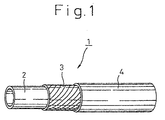
- Figure 1 is a view for explaining the structure of a test hose used for measurement of the abrasion resistance of a rubber composition for a hose.
- the present inventors found that, by blending a rubber composition having as essential ingredients (A) an elastomer, (B) a filler, and (C) a polysiloxane having the formula (I), it was possible to obtain a rubber composition superior in the processability in the unvulcanized state and the various physical properties of the vulcanizates and found that, by using a silane coupling agent in combination, it was possible to improve the abrasion resistance.
- the elastomer (A) which is one of the essential ingredients of the rubber composition of the present invention is not particularly limited and may be any elastomer commonly used for various rubber compositions or may be suitably selected depending upon the application and the required properties etc.
- diene elastomers, olefin elastomers, etc. may be mentioned.
- diene elastomers natural rubber (NR), polyisoprene rubber (IR), polychloroprene rubber (CR), styrene-butadiene copolymer rubber (SBR), polybutadiene rubber (BR), acrylonitrile-butadiene copolymer rubber (NBR), butyl rubber (IIR), etc. may be mentioned.
- ethylene-propylene copolymer rubbers EPM, EPDM
- EVA ethylene-vinyl acetate copolymer
- EMA ethylene-methacrylate copolymer
- EMMA ethylene-methyl methacrylate copolymer
- the filler which is the ingredient (B) of the rubber composition of the present invention
- general inorganic fillers e.g., calcium carbonate, clay, talc, diatomaceous earth, mica, alumina, aluminum sulfate, barium sulfate, calcium sulfate, etc.
- further reinforcing agents such as carbon black, silica.
- these may be used alone or in combination.
- silica is poor in mixability and processability and therefore, the effect of improvement of the present invention is remarkable.
- hydrous silicic acid having a nitrogen specific surface area of 50 to 300 m 2 /g used for rubber may be mentioned.
- Carplex Shionogi & Co.
- Tokusil Tokuyama Corp.
- Starsil Kamijima Kagaku
- Silton Mizusawa Industrial Chemicals Ltd.
- Vulkasil (Bayer), Ultrasil (Degussa), etc.
- R 1 is a C 1 to C 18 substituted or unsubstituted monovalent hydrocarbon group which may have an ether bond.
- the substituted or unsubstituted monovalent hydrocarbon group for example, a methyl group, ethyl group, propyl group, pentyl group, hexyl group, stearyl group, etc. may be mentioned.
- the group having an ether bond an ethoxyethyl group, butoxyethyl group, etc. may be mentioned.
- R 2 is a hydrogen atom or a substituted or unsubstituted C 1 to C 18 , preferably C 2 to C 18 , hydrocarbon group, which may contain a heteroatom.
- the C 1 to C 18 hydrocarbon group for example, a methyl group, ethyl group, propyl group, or a residual group based on styrene, ⁇ -methylstyrene, ⁇ -methylstyrene dimer, chloromethylstyrene, acrylonitrile, acrylglycidyl ether, phenylglycidyl ether, limonene, isooctene, vinylcyclohexene, etc. may be mentioned.
- R 3 is a methyl group or phenyl group. Further, m is an integer of 1 or more, while n is 0 or a positive integer. m+n is 3 or more, preferably 10 or more, in view of the boiling point of polysiloxane etc. In particular, those having 10 to 50 are easily available as a raw material. Further, in the polysiloxane used as the ingredient (C) in the present invention, a repeating unit having an OR 1 group at the side chain is an essential constituent unit and at least one thereof should be present in the molecule. Further, repeating units having the groups R 2 and R 3 at the side chains are constituent units introduced, if necessary.
- the polysiloxane is a polymer or oligomer covering the surface of the silica particles and having, as a magnitude indicating the lubricating effect, an average degree of polymerization of 3 to 1000, preferably an average degree of polymerization of 10 to 1000.
- the silanol groups of the silica contained in the rubber composition react with the polysiloxane so that the silica surface is covered with the polysiloxane. Therefore, the increase in the viscosity of the rubber composition due to the cohesion of the silanol groups is avoided and a composition having a lower viscosity than the conventional rubber compositions containing silica is obtained. Further, it is possible to avoid the phenomenon of the decrease in the mixing performance of the mixture due to the insufficient compatibility with nonpolar rubber resulting from the polarity of the silanol groups in conventional rubber compositions. That is, it is possible to improve the processability of the unvulcanized composition.
- the vulcanization delay caused by the adsorption of the vulcanization accelerator etc, due to the polarity of the silanol groups is also improved. Further, it is possible to avoid loss of the silane coupling agent, explained below, due to the reaction with the silanol groups present in the internal cavities of the silica particles, and therefore, it is possible to decrease the amount of the silane coupling agent added.
- the polysiloxane represented by the formula (I) may in general be synthesized, for example, by reacting an Si-H-group containing polysiloxane with an alcohol in the presence of a transition metal catalyst.
- methyl hydrogen polysiloxane is particularly preferred.
- alcohol usable as the reaction starting material for example, methanol, ethanol, propanol, butanol, pentanol, heptanol, octanol, octadecanol, phenol, benzyl alcohol, etc. may be mentioned. Further, alcohols having oxygen atoms such as ethylene glycol monomethyl ether, diethylene glycol monomethyl ether, may be mentioned. Among these, from the viewpoint of the improvement in the processability, ethanol is particularly preferred.
- transition metal catalyst for example, chloroplatinic acid, a platinum-ether complex, platinum-olefin complex, PdCl 2 (PPh 3 ) 2 , RhCl(PPh 3 ) 2 , a mixture of CuO 2 and Me 2 NCH 2 -CH 2 NMe 2 , tin octylate, zinc octylate, etc. may be mentioned. Further, acidic and basic catalysts may be used.
- organic groups may be introduced into the polysiloxane depending upon the type of the rubber.
- the method of introducing the organic groups into the polysiloxane the method of reacting the Si-H group of the polysiloxane with an organic compound having a double bond using the above catalysts may be mentioned.
- the organic compound having a double bond which may be used, ethylene, styrene, ⁇ -methylstyrene, ⁇ -methylstyrene dimer, chloromethylstyrene, acrylonitrile, acrylglycidyl ether, phenylglycidyl ether, limonene, isooctene, vinylcyclohexene, etc. may be mentioned.
- the rubber compositions of the present invention include the elastomer (A), filler (B), and polysiloxane (C) as essential ingredients and contain other ingredients of suitable types and proportions depending upon the properties sought for various applications such as footwear, conveyor belt covers, rolls, hoses, cables, rubberized fabrics, grips.
- the ingredient (A) that is, the elastomer, for example, one containing NR and/or NBR in an amount of at least 50 % by weight of the elastomer, preferably 55 to 100 % by weight, may be used.
- the content of NR and NBR in the elastomer (A) is less than 50 % by weight, the vulcanized properties required for a rubber composition for footwear or the abrasion resistance, oil resistance, etc. of the vulcanizate are insufficient.
- ingredients mixed in as the ingredient (A) other than NR or NBR for example, polyisoprene rubber (IR), styrene-butadiene copolymer rubber (SBR), polybutadiene rubber (BR), polychloroprene rubber (CR), ethylene-propylene copolymer rubber (EPM, EPDM), etc. may be used.
- IR polyisoprene rubber
- SBR styrene-butadiene copolymer rubber
- BR polybutadiene rubber
- CR polychloroprene rubber
- EPM ethylene-propylene copolymer rubber
- the ratio of the elastomer (A) and the filler (B) is 5 to 150 parts by weight of the filler (B) based upon 100 parts by weight of the elastomer (A), preferably 10 to 100 parts by weight of the filler (B) based upon 100 parts by weight of the elastomer (A). If the ratio of the filler (B) based upon 100 parts by weight of the elastomer (A) is less than 5 parts by weight, the effect of compounding is not obtained, while if more than 150 parts by weight, the processability is impaired.
- the proportion of the polysiloxane of the ingredient (C) in the rubber composition for footwear is an amount giving 1 to 100 % by weight of the amount of the filler (B), preferably 2 to 40 % by weight. If the amount of the polysiloxane (C) is less than 1 % by weight of the amount of the filler (B), the effect of compounding is small, while if more than 100 % by weight of the amount of the filler (B), there is the danger of bleed-out from the vulcanizate.
- the elastomer of the ingredient (A) in the rubber composition for a conveyor belt cover is not particularly limited.
- NR, SBR, BR, NBR, CR, EPM, EPDM, etc. may be mentioned.
- the ratio of the elastomer (A) and the filler (B) is 5 to 200 parts by weight of the filler (B) based upon 100 parts by weight of the elastomer (A), preferably 10 to 180 parts by weight of the filler (B) based upon 100 parts by weight of the elastomer (A). If the ratio of the filler (B) based upon 100 parts by weight of the elastomer (A) is less than 5 parts by weight, the effect of compounding is not obtained, while if more than 200 parts by weight, the processability is impaired.
- the proportion of the polysiloxane of the ingredient (C) in the rubber composition for a conveyor belt cover is an amount giving 1 to 50 % by weight of the amount of the filler (B), preferably 2 to 40 % by weight. If the amount of the polysiloxane (C) is less than 1 % by weight of the amount of the filler (B), the effect of compounding is small, while if over 50 % by weight of the amount of the filler (B), there is the danger of bleed-out from the vulcanizate.
- the elastomer of the ingredient (A) in the rubber composition for a roll is not particularly limited.
- NR, SBR, CR, BR, NBR, etc. may be mentioned.
- the ratio of the elastomer (A) and the filler (B) is 5 to 150 parts by weight of the filler (B) based upon 100 parts by weight of the elastomer (A), preferably 10 to 100 parts by weight of the filler (B) based upon 100 parts by weight of the elastomer (A). If the ratio of the filler (B) based upon 100 parts by weight of the elastomer (A) is less than 5 parts by weight, the effect of compounding is not obtained, while if more than 150 parts by weight, the processability is impaired.
- the proportion of the polysiloxane of the ingredient (C) in the rubber composition for a roll is an amount giving 1 to 100 % by weight of the amount of the filler (B), preferably 2 to 40 % by weight. If the amount of the polysiloxane (C) is less than 1 % by weight of the amount of the filler (B), the effect of compounding is not obtained, while if more than 100 % by weight of the amount of the filler (B), there is the danger of bleed-out from the vulcanizate.
- elastomer of the ingredient (A) at least one elastomer selected from diene elastomers and olefin elastomers may be used.
- the ratio of the elastomer (A) and the filler (B) is 5 to 200 parts by weight of the filler (B) based upon 100 parts by weight of the elastomer (A), preferably 10 to 180 parts by weight of the filler (B) based upon 100 parts by weight of the elastomer (A). If the ratio of the filler (B) based upon 100 parts by weight of the elastomer (A) is less than 5 parts by weight, the effect of compounding is not obtained, while if more than 200 parts by weight, the processability is impaired.
- the proportion of the polysiloxane of the ingredient (C) in the rubber composition for a hose is an amount giving 1 to 40 % by weight of the amount of the filler (B), preferably 2 to 20 % by weight. If the amount of the polysiloxane (C) is less than 1 % by weight of the amount of the filler (B), the effect of compounding is not obtained, while if more than 20 % by weight of the amount of the filler (B) blended, there is the danger of bleed-out from the vulcanizate.
- elastomer of the ingredient (A) at least one elastomer selected from diene elastomers and olefin elastomers may be used.
- diene elastomer for example, NR, SBR, IR, BR, NBR, CR, etc.
- olefin elastomer for example, EPM, EPDM, EVA, EMA, EMMA, etc. may be mentioned.
- the ratio of the elastomer (A) and the filler (B) is 5 to 150 parts by weight of the filler (B) based upon 100 parts by weight of the elastomer (A), preferably 10 to 100 parts by weight of the filler (B) based upon 100 parts by weight of the elastomer (A). If the ratio of the filler (B) based upon 100 parts by weight of the elastomer (A) is less than 5 parts by weight, the effect of compounding is not obtained, while if more than 150 parts by weight, the processability is impaired.
- the proportion of the polysiloxane of the ingredient (C) in the rubber composition for a cable is an amount giving 1 to 40 % by weight of the amount of the filler (B), preferably 2 to 20 % by weight. If the amount of the polysiloxane (C) is less than 1 % by weight of the amount of the filler (B), the effect of compounding is not obtained, while if more than 40 % by weight of the amount of the filler (B), there is the danger of bleed-out from the vulcanizate.
- the elastomer of the ingredient (A) is not particularly limited.
- diene elastomers such as NR, SBR, BR, NBR, CR, and olefin elastomers such as EPM, EPDM, may be mentioned.
- the ratio of the elastomer (A) and the filler (B) is 5 to 250 parts by weight of the filler (B) based upon 100 parts by weight of the elastomer (A), preferably 10 to 200 parts by weight of the filler (B) based upon 100 parts by weight of the elastomer (A). If the ratio of the filler (B) based upon 100 parts by weight of the elastomer (A) is less than 5 parts by weight, the effect of compounding is not obtained, while if more than 250 parts by weight, the processability is impaired.
- the proportion of the polysiloxane of the ingredient (C) in the rubber composition for a rubberized fabrics is an amount giving 1 to 100 % by weight of the amount of the filler (B), preferably 2 to 40 % by weight. If the amount of the polysiloxane (C) is less than 1 % by weight of the amount of the filler (B), the effect of compounding is not obtained, while if more than 100 % by weight of the amount of the filler (B), there is the danger of bleed-out from the vulcanizate.
- the elastomer of the ingredient (A) is not particularly limited.
- diene elastomers such as NR, SBR, BR, NBR, and olefin elastomers such as EPM, EPDM, may be mentioned.
- the ratio of the elastomer (A) and the filler (B) is 5 to 100 parts by weight of the filler (B) based upon 100 parts by weight of the elastomer (A), preferably 10 to 80 parts by weight of the filler (B) based upon 100 parts by weight of the elastomer (A). If the ratio of the filler (B) based upon 100 parts by weight of the elastomer (A) is less than 5 parts by weight, the effect of compounding is not obtained, while if more than 100 parts by weight, the processability is impaired.
- the proportion of the polysiloxane of the ingredient (C) in the rubber composition for a rubberized fabrics is an amount giving 1 to 50 % by weight of the amount of the filler (B), preferably 2 to 40 % by weight. If the amount of the polysiloxane (C) is less than 1 % by weight of the amount of the filler (B), the effect of compounding is not obtained, while if more than 50 % by weight of the amount of the filler (B) blended, there is the danger of bleed-out from the vulcanizate.
- a silane coupling agent (D) is added to the rubber composition of the present invention in addition to the elastomer (A), filler (B), and polysiloxane (C), as explained with reference to the addition of the polysiloxane (C), even if the amount of the silane coupling agent added is smaller than in the past, it is possible to obtain a sufficient reinforcing effect of the silane coupling agent, which is effective for the improvement of the abrasion resistance and other properties of the vulcanizate. Further, if a silane coupling agent is added to the rubber composition for a conveyor belt cover, a rubber composition superior in abrasion resistance in the vulcanizate can be obtained.
- a silane coupling agent is added to the rubber composition for a roll, a rubber composition superior in not only the abrasion resistance in the vulcanizate but also the bondability with iron metal can be obtained. Further, if a silane coupling agent is added to the rubber composition for a hose, a rubber composition not only superior in the abrasion resistance in the vulcanizate, but also improved in modulus can be obtained.
- the silane coupling agent added to the rubber composition of the present invention is not particularly limited. Any silane coupling agent used together with silica fillers in the past may be used. As typical examples, those mentioned above may be mentioned. Among these, bis-[3-(triethoxysilyl)-propyl]tetrasulfide is particularly preferred from the viewpoint of the improvement of the processability.
- the amount of the silane coupling agent added in the rubber compositions of the present invention is an amount giving 1 to 20 % by weight, preferably an amount giving 2 to 10 % by weight, of the amount of the filler added to the rubber compositions for the footwear, conveyor belt covers, rolls, hoses, cables, rubberized fabrics, and grips. If less than 1 % by weight, the desired effect cannot be obtained, while if more than 20 % by weight, scorching easily occurs in the mixing or extrusion process.
- the rubber compositions of the present invention may contain, in addition to the elastomer (A), the filler (B), the polysiloxane (C), and the silane coupling agent (D) added when necessary for further improvement of the abrasion resistance and other properties, various types of additives added for various objectives in general rubbers such as carbon black, a vulcanization or cross-linking agent, various oils, antioxidants, plasticizers, antiscorching agents, flame retardants. These additives may be added in the general amounts added in the past for these additives so long as this does not run counter to the object of the present invention.
- the rubber compositions of the present invention may be produced by kneading and vulcanizing the elastomer (A), the filler (B), and the polysiloxane (C) and the silane coupling agent (D) added when required for further improving the abrasion resistance and other properties and also the various types of additives to make a composition and then vulcanizing or cross-linking the same.
- the present invention provides footwear, conveyor belt covers, rolls, hoses, cables, rubberized fabrics, and grips comprising these rubber composition for footwear, rubber composition for conveyor belt covers, rubber composition for rolls, rubber composition for hoses, rubber composition for cables, rubber composition for rubberized fabrics, and rubber composition for grips.
- the footwear of the present invention comprises the above rubber composition for footwear it its soles or entirety.
- the conveyor belt cover comprises the above rubber composition for a conveyor belt cover.
- the roll of the present invention has a rubber layer comprising the above rubber composition for a roll. The rubber layer is formed laid over the outer circumference of a core of cast iron, soft iron, or other iron-based metal.
- the hose of the present invention has an outer surface rubber layer or inner surface rubber layer comprising the above rubber composition for a hose.
- the cable of the present invention has an outer covering comprising the above rubber composition for a cable.
- the rubberized fabric of the present invention has a rubber layer comprising the above rubber composition for a rubberized fabric over a fabric substrate.
- the grip of the present invention has a grip portion comprising the above rubber composition for a grip.
- the polysiloxane used in the Examples and Comparative Examples was synthesized according to the following method.
- Vulcanized rubber obtained by vulcanizing the rubber composition at 140°C for 15 minutes under pressure was measured for tensile strength at break and elongation at break based on JIS K 6301. Further, the rubber composition for a hose was also measured for the tensile strength at 100% elongation.
- a flex test was performed according to JIS K 6301. The length of the cracks occurring in the test piece after 400,000 flexings was measured and used as an index of the flex resistance.
- the peeling force when peeling a rubber piece vulcanized and bonded to an iron plate in a 90° direction was measured as the indicator of the bondability according to JIS R 6301.
- the ingredients of the formulations shown in Table 1 except for the vulcanization accelerator and the sulfur were charged into a 1.8 liter capacity internal mixer and kneaded for 3 to 5 minutes. The mixture was discharged when reaching a temperature of 120 ⁇ 5°C.
- the vulcanization accelerator and sulfur shown in Table 1 were kneaded with this master batch by an 8 inch open roll to obtain the rubber composition for footwear. The unvulcanized physical properties of the rubber composition for footwear thus obtained were measured.
- Example 2 the same procedure was followed as in Example 1 except for use of the formulations shown in Table 2 to prepare rubber compositions for footwear.
- the unvulcanized physical properties, vulcanized physical properties (vulcanization temperature: 140°C, vulcanization time: 15 minutes), and abrasion resistance were measured or evaluated.
- the results are shown in Table 2:
- Example 3 the same procedure was followed as in Example 1 except for use of the formulations shown in Table 3 to prepare rubber compositions and obtain rubber compositions for conveyor belt covers.
- the unvulcanized physical properties, vulcanized physical properties (vulcanization temperature: 150°C, vulcanization time: 30 minutes), and abrasion resistance were measured or evaluated for the rubber compositions for conveyor belt covers obtained.
- the results are shown in Table 3:
- Example 4 the same procedure was followed as in Example 1 except for use of the formulations shown in Table 4 to prepare rubber compositions and obtain rubber compositions for conveyor belt covers.
- the unvulcanized physical properties, vulcanized physical properties (vulcanization temperature: 150°C, vulcanization time: 30 minutes), and abrasion resistance were measured or evaluated for the rubber compositions for conveyor belt covers obtained.
- the results are shown in Table 4:
- Example 5 the same procedure was followed as in Example 1 except for use of the formulations shown in Table 5 to prepare rubber compositions and obtain rubber compositions for rolls.
- the unvulcanized physical properties, vulcanized physical properties (vulcanization temperature: 150°C, vulcanization time: 30 minutes), and abrasion resistance were measured or evaluated for the rubber compositions for rolls obtained. The results are shown in Table 5:
- Example 6 the same procedure was followed as in Example 1 except for use of the formulations shown in Table 6 to prepare rubber compositions and obtain rubber compositions for rolls.
- the unvulcanized physical properties, vulcanized physical properties (vulcanization temperature: 150°C, vulcanization time: 30 minutes), and abrasion resistance were measured or evaluated for the obtained rubber compositions for rolls. The results are shown in Table 6:
- Example 7 the same procedure was followed as in Example 1 except for use of the formulations shown in Table 7 to prepare rubber compositions and obtain rubber compositions for hoses.
- the unvulcanized physical properties, vulcanized physical properties (vulcanization temperature: 150°C, vulcanization time: 30 minutes), and abrasion resistance were measured or evaluated for the rubber compositions for hoses obtained.
- the results are shown in Table 7:
- Example 8 the same procedure was followed as in Example 1 except for use of the formulations shown in Table 8 to prepare rubber compositions and obtain rubber compositions for hoses.
- the unvulcanized physical properties, vulcanized physical properties (vulcanization temperature: 150°C, vulcanization time: 30 minutes), and abrasion resistance were measured or evaluated for the rubber compositions for hoses obtained.
- the results are shown in Table 8:
- Example 9 the same procedure was followed as in Example 1 except for use of the formulations shown in Table 9 to prepare rubber compositions and obtain rubber compositions for cables.
- the unvulcanized physical properties, vulcanized physical properties (vulcanization temperature: 150°C, vulcanization time: 30 minutes), and abrasion resistance were measured or evaluated for the rubber compositions for cables obtained. The results are shown in Table 9:
- Example 10 the same procedure was followed as in Example 1 except for use of the formulations shown in Table 10 to prepare rubber compositions and obtain rubber compositions for cables.
- the unvulcanized physical properties, vulcanized physical properties (vulcanization temperature: 150°C, vulcanization time: 30 minutes), and abrasion resistance were measured or evaluated for the rubber compositions for cables obtained.
- the results are shown in Table 10:
- Example 11 the same procedure was followed as in Example 1 except for use of the formulations shown in Table 11 to prepare rubber compositions and obtain rubber compositions for rubberized fabrics.
- the unvulcanized physical properties, vulcanized physical properties (vulcanization temperature: 140°C, vulcanization time: 15 minutes), and abrasion resistance were measured or evaluated for the rubber compositions for rubberized fabrics obtained.
- the results are shown in Table 11:
- Example 12 the same procedure was followed as in Example 1 except for use of the formulations shown in Table 12 to prepare rubber compositions and obtain rubber compositions for rubberized fabrics.
- the unvulcanized physical properties, vulcanized physical properties (vulcanization temperature: 160°C, vulcanization time: 15 minutes), and abrasion resistance were measured or evaluated for the rubber compositions for rubberized fabrics obtained.
- the results are shown in Table 12:
- the rubber compositions of the present invention can give rubber compositions which are superior in the processability in the unvulcanized state and have the various properties sought for individual applications.
- the rubber composition for footwear is superior in processability in the unvulcanized state and can give a vulcanizate which is superior in abrasion resistance through the addition of a silane coupling agent.
- the rubber composition for a conveyor belt cover is superior in processability in the unvulcanized state and can give a vulcanizate which is superior in abrasion resistance through the addition of a silane coupling agent. Further, it can give a vulcanizate which is superior in abrasion resistance and crack resistance by half of the polysiloxane compared with when adding a silane coupling agent alone.
- the rubber composition for a roll is superior in processability in the unvulcanized state and can give a vulcanizate which is superior in abrasion resistance and bondability with an iron metal through the addition of a silane coupling agent.
- the rubber composition for a hose is superior in processability in the unvulcanized state and can give a vulcanizate which is superior in modulus and abrasion resistance through the addition of a silane coupling agent.
- the rubber composition for a cable is superior in processability in the unvulcanized state and can give a vulcanizate which is superior in abrasion resistance through the addition of a silane coupling agent.
- the rubber composition for rubberized fabric is superior in processability in the unvulcanized state and can give a vulcanizate which is superior in abrasion resistance through the addition of a silane coupling agent.
- the rubber composition for a grip is superior in processability in the unvulcanized state and can give a vulcanizate which is superior in abrasion resistance through the addition of a silane coupling agent.
- footwear, conveyor belt covers, rolls, hoses, cables, rubberized fabrics, and grips of the present invention are comprised of the above rubber compositions in part or whole, are superior in processability when worked, and are superior in the abrasion resistance and other properties depending upon their applications.
Landscapes
- Chemical & Material Sciences (AREA)
- Health & Medical Sciences (AREA)
- Chemical Kinetics & Catalysis (AREA)
- Medicinal Chemistry (AREA)
- Polymers & Plastics (AREA)
- Organic Chemistry (AREA)
- Compositions Of Macromolecular Compounds (AREA)
- Footwear And Its Accessory, Manufacturing Method And Apparatuses (AREA)
- Belt Conveyors (AREA)
Applications Claiming Priority (3)
| Application Number | Priority Date | Filing Date | Title |
|---|---|---|---|
| JP46659/97 | 1997-02-28 | ||
| JP9046659A JPH10237229A (ja) | 1997-02-28 | 1997-02-28 | ゴム組成物 |
| PCT/JP1998/000520 WO1998038246A1 (en) | 1997-02-28 | 1998-02-09 | Rubber composition |
Publications (2)
| Publication Number | Publication Date |
|---|---|
| EP0896024A1 true EP0896024A1 (de) | 1999-02-10 |
| EP0896024A4 EP0896024A4 (de) | 2000-12-20 |
Family
ID=12753467
Family Applications (1)
| Application Number | Title | Priority Date | Filing Date |
|---|---|---|---|
| EP98901555A Withdrawn EP0896024A4 (de) | 1997-02-28 | 1998-02-09 | Kautschukzusammensetzung |
Country Status (5)
| Country | Link |
|---|---|
| US (1) | US6180703B1 (de) |
| EP (1) | EP0896024A4 (de) |
| JP (1) | JPH10237229A (de) |
| KR (1) | KR100287053B1 (de) |
| WO (1) | WO1998038246A1 (de) |
Cited By (3)
| Publication number | Priority date | Publication date | Assignee | Title |
|---|---|---|---|---|
| WO2002004558A1 (en) * | 2000-07-11 | 2002-01-17 | Mitsui Chemicals, Inc. | Rubber composition and use thereof |
| CN106474696A (zh) * | 2016-12-31 | 2017-03-08 | 桂林电子科技大学 | 一种网球拍、羽毛球拍拍柄 |
| CN107709435A (zh) * | 2015-06-22 | 2018-02-16 | 株式会社普利司通 | 橡胶组合物、层叠体和输送带 |
Families Citing this family (26)
| Publication number | Priority date | Publication date | Assignee | Title |
|---|---|---|---|---|
| US6177505B1 (en) * | 1995-08-31 | 2001-01-23 | The Yokohama Rubber Co., Ltd. | Polysiloxane-containing rubber composition |
| US6329460B1 (en) * | 1999-04-16 | 2001-12-11 | The Yokohama Rubber Co., Ltd. | Polysiloxane composition and rubber composition and resin composition |
| US6486239B2 (en) | 1999-12-31 | 2002-11-26 | Kumgang Korea Chemical Co., Ltd. | Polyester based coating composition for anti-stain PCM outside panel |
| US6508354B2 (en) | 2000-06-30 | 2003-01-21 | The Gates Corporation | Endless belt |
| JP3586668B2 (ja) * | 2000-10-16 | 2004-11-10 | 株式会社サンケイ技研 | ゴム組成物 |
| KR20020047892A (ko) * | 2000-12-14 | 2002-06-22 | 신형인 | 나노 클레이가 포함된 타이어용 고무조성물 |
| US20040157049A1 (en) * | 2001-06-21 | 2004-08-12 | Hunter Jaw | Grip for racket or the like |
| CA2449385A1 (en) * | 2001-06-21 | 2003-01-03 | Habasit Ag | Monolithic belts with ethylene-.alpha.-olefin copolymers |
| US6720062B2 (en) * | 2001-06-21 | 2004-04-13 | Hunter Jaw | Grip structure for racket or the like |
| US6701627B2 (en) | 2001-07-26 | 2004-03-09 | American Saw & Mfg. Company, Inc. | Composite utility knife blade |
| JP3983071B2 (ja) * | 2002-03-20 | 2007-09-26 | 横浜ゴム株式会社 | スチールコード被覆用ゴム組成物 |
| US20040010069A1 (en) * | 2002-06-27 | 2004-01-15 | Uniroyal Chemical Company, Inc. | Rubber compositions and methods for improving the mooney scorch value and cure rate |
| US6749708B2 (en) * | 2002-08-22 | 2004-06-15 | Goodyear Tire & Rubber | Method for splicing a conveyor belt |
| US20040191445A1 (en) * | 2003-03-27 | 2004-09-30 | Baranowski Thomas R. | Transparent closure cap liner having oxygen barrier properties |
| JP4573523B2 (ja) * | 2003-12-17 | 2010-11-04 | 住友ゴム工業株式会社 | シリカマスターバッチ、その製造方法およびシリカマスターバッチを用いてなるゴム組成物 |
| US7765720B2 (en) | 2007-01-12 | 2010-08-03 | Nike, Inc, | Outsole for an article of footwear |
| JP4910942B2 (ja) * | 2007-08-22 | 2012-04-04 | 横浜ゴム株式会社 | ゴム組成物、繊維ゴム複合体およびホース |
| JP5493548B2 (ja) * | 2009-07-29 | 2014-05-14 | 横浜ゴム株式会社 | 支承用ゴム組成物 |
| IT1403426B1 (it) * | 2010-12-23 | 2013-10-17 | Bridgestone Corp | Mescola per battistrada comprendente trialcossimercaptoalchil-silani |
| KR101186169B1 (ko) | 2011-02-21 | 2012-10-02 | 금호타이어 주식회사 | 타이어 트레드 고무조성물 |
| JP2017155177A (ja) * | 2016-03-04 | 2017-09-07 | 株式会社ブリヂストン | ゴム組成物、積層体、及びコンベアベルト |
| US11300232B2 (en) | 2017-02-10 | 2022-04-12 | Danfoss Power Solutions Ii Technology A/S | Non conductive rubber hose |
| US10689516B2 (en) * | 2017-04-20 | 2020-06-23 | Otis Elevator Company | Polymer jacket material blends with improved flame resistance |
| WO2019102864A1 (ja) * | 2017-11-27 | 2019-05-31 | Nok株式会社 | Nbr組成物 |
| JP7415141B2 (ja) * | 2019-11-25 | 2024-01-17 | 横浜ゴム株式会社 | ゴム組成物、及びゴム組成物の製造方法 |
| JP2021121659A (ja) * | 2020-01-31 | 2021-08-26 | 横浜ゴム株式会社 | ホース用ゴム組成物およびホース |
Family Cites Families (9)
| Publication number | Priority date | Publication date | Assignee | Title |
|---|---|---|---|---|
| JPH07116325B2 (ja) * | 1987-02-16 | 1995-12-13 | 日本合成ゴム株式会社 | ゴム組成物、架橋可能なゴム組成物、オイルシールおよびゴムホース |
| US4857593A (en) * | 1988-03-08 | 1989-08-15 | Union Carbide Corporation | Process for processing thermoplastic polymers |
| US5091453A (en) * | 1989-04-21 | 1992-02-25 | Bp Chemicals Limited | Flame retardant polymer composition |
| JPH0720675B2 (ja) * | 1989-07-25 | 1995-03-08 | 信越化学工業株式会社 | 自動車用二重ゴムホース |
| JPH0784534B2 (ja) * | 1991-10-09 | 1995-09-13 | 旭化成工業株式会社 | ブロック共重合体ペレット |
| JPH0649804B2 (ja) * | 1992-04-28 | 1994-06-29 | バンドー化学株式会社 | 伝動ベルト |
| DE69613969T2 (de) * | 1995-03-17 | 2002-04-04 | Nippon Zeon Co., Ltd. | Kautschukzusammensetzung |
| FR2743565B1 (fr) * | 1996-01-11 | 1998-02-20 | Rhone Poulenc Chimie | Utilisation d'une association de composes silicones comme agent de couplage dans les compositions d'elastomeres chargees de silice |
| US6172157B1 (en) * | 1996-06-26 | 2001-01-09 | Bridgestone Corporation | Rubber compositions |
-
1997
- 1997-02-28 JP JP9046659A patent/JPH10237229A/ja not_active Withdrawn
-
1998
- 1998-02-09 WO PCT/JP1998/000520 patent/WO1998038246A1/ja not_active Ceased
- 1998-02-09 US US09/171,814 patent/US6180703B1/en not_active Expired - Fee Related
- 1998-02-09 EP EP98901555A patent/EP0896024A4/de not_active Withdrawn
- 1998-02-09 KR KR1019980708618A patent/KR100287053B1/ko not_active Expired - Fee Related
Cited By (3)
| Publication number | Priority date | Publication date | Assignee | Title |
|---|---|---|---|---|
| WO2002004558A1 (en) * | 2000-07-11 | 2002-01-17 | Mitsui Chemicals, Inc. | Rubber composition and use thereof |
| CN107709435A (zh) * | 2015-06-22 | 2018-02-16 | 株式会社普利司通 | 橡胶组合物、层叠体和输送带 |
| CN106474696A (zh) * | 2016-12-31 | 2017-03-08 | 桂林电子科技大学 | 一种网球拍、羽毛球拍拍柄 |
Also Published As
| Publication number | Publication date |
|---|---|
| EP0896024A4 (de) | 2000-12-20 |
| JPH10237229A (ja) | 1998-09-08 |
| KR20000065058A (ko) | 2000-11-06 |
| WO1998038246A1 (en) | 1998-09-03 |
| KR100287053B1 (ko) | 2001-04-16 |
| US6180703B1 (en) | 2001-01-30 |
Similar Documents
| Publication | Publication Date | Title |
|---|---|---|
| US6180703B1 (en) | Rubber composition | |
| JP4285682B2 (ja) | シリカを充填したエラストマーコンパウンド | |
| KR100281944B1 (ko) | 폴리실록산을 함유하는 타이어 고무 조성물 | |
| JP2011523666A (ja) | 加硫性ゴム混合物およびゴム製品のための加硫性ゴム混合物の使用 | |
| EP1874860B1 (de) | Reifen und vernetzbare elastomere zusammensetzung | |
| JP2609369B2 (ja) | タイヤ側面部の組成物 | |
| US8192846B2 (en) | Composition and manufacturing process of a decorative surface covering | |
| US20020156173A1 (en) | Filled elastomeric butyl compounds | |
| WO2020138056A1 (ja) | シラン化合物およびその組成物 | |
| CA2446474C (en) | Silica-filled elastomeric compounds | |
| TW202124557A (zh) | 樹脂組成物及成形體 | |
| JPH1135735A (ja) | ゴム組成物 | |
| US12258450B2 (en) | Rubber compositions containing polyorganosiloxanes as plasticizers | |
| KR100307865B1 (ko) | 신발류용 고무 조성물로 부터 제조된 신발류 | |
| CN1421483A (zh) | 焦烧安全性改进的充填弹性体丁基混炼胶 | |
| KR102628502B1 (ko) | 친환경성 정수기용 브라인씰 고무 조성물 및 이에 의하여 제조되는 브라인씰 성형체 | |
| EP1781734A1 (de) | Vibrationsdämpfende und vibrationsisolierende kautschukmasse, herstellungsverfahren dafür und vibrationsdämpfende und vibrationsisolierende kautschukprodukte | |
| CN101104710B (zh) | 包覆胎体帘线用橡胶组合物及胎体使用该组合物的轮胎 | |
| JP2000336210A (ja) | 耐油耐候性ゴム組成物および積層体 | |
| JP7605366B1 (ja) | ジエン系ゴム用配合剤およびゴム組成物 | |
| JPH0655857B2 (ja) | 靴底用ゴム組成物 | |
| JPH09194641A (ja) | ゴム用配合剤及びそれを用いたゴム組成物 | |
| WO2025178047A1 (ja) | ジエン系ゴム用配合剤およびゴム組成物 | |
| JP2003034737A (ja) | 耐摩耗性などの改良されたゴム組成物 | |
| KR100544791B1 (ko) | 부착방지용 컨베어벨트 커버고무 조성물 |
Legal Events
| Date | Code | Title | Description |
|---|---|---|---|
| PUAI | Public reference made under article 153(3) epc to a published international application that has entered the european phase |
Free format text: ORIGINAL CODE: 0009012 |
|
| 17P | Request for examination filed |
Effective date: 19981023 |
|
| AK | Designated contracting states |
Kind code of ref document: A1 Designated state(s): DE FR |
|
| A4 | Supplementary search report drawn up and despatched |
Effective date: 20001103 |
|
| AK | Designated contracting states |
Kind code of ref document: A4 Designated state(s): DE FR |
|
| 17Q | First examination report despatched |
Effective date: 20020726 |
|
| STAA | Information on the status of an ep patent application or granted ep patent |
Free format text: STATUS: THE APPLICATION IS DEEMED TO BE WITHDRAWN |
|
| 18D | Application deemed to be withdrawn |
Effective date: 20021206 |