EP0897985B1 - Phytases consensus - Google Patents
Phytases consensus Download PDFInfo
- Publication number
- EP0897985B1 EP0897985B1 EP98113176A EP98113176A EP0897985B1 EP 0897985 B1 EP0897985 B1 EP 0897985B1 EP 98113176 A EP98113176 A EP 98113176A EP 98113176 A EP98113176 A EP 98113176A EP 0897985 B1 EP0897985 B1 EP 0897985B1
- Authority
- EP
- European Patent Office
- Prior art keywords
- phytase
- amino acid
- consensus
- sequence
- protein
- Prior art date
- Legal status (The legal status is an assumption and is not a legal conclusion. Google has not performed a legal analysis and makes no representation as to the accuracy of the status listed.)
- Expired - Lifetime
Links
Images



Classifications
-
- C—CHEMISTRY; METALLURGY
- C07—ORGANIC CHEMISTRY
- C07K—PEPTIDES
- C07K1/00—General methods for the preparation of peptides, i.e. processes for the organic chemical preparation of peptides or proteins of any length
-
- C—CHEMISTRY; METALLURGY
- C07—ORGANIC CHEMISTRY
- C07K—PEPTIDES
- C07K14/00—Peptides having more than 20 amino acids; Gastrins; Somatostatins; Melanotropins; Derivatives thereof
- C07K14/37—Peptides having more than 20 amino acids; Gastrins; Somatostatins; Melanotropins; Derivatives thereof from fungi
- C07K14/38—Peptides having more than 20 amino acids; Gastrins; Somatostatins; Melanotropins; Derivatives thereof from fungi from Aspergillus
-
- A—HUMAN NECESSITIES
- A23—FOODS OR FOODSTUFFS; TREATMENT THEREOF, NOT COVERED BY OTHER CLASSES
- A23K—FODDER
- A23K20/00—Accessory food factors for animal feeding-stuffs
- A23K20/10—Organic substances
- A23K20/142—Amino acids; Derivatives thereof
- A23K20/147—Polymeric derivatives, e.g. peptides or proteins
-
- A—HUMAN NECESSITIES
- A23—FOODS OR FOODSTUFFS; TREATMENT THEREOF, NOT COVERED BY OTHER CLASSES
- A23L—FOODS, FOODSTUFFS OR NON-ALCOHOLIC BEVERAGES, NOT OTHERWISE PROVIDED FOR; PREPARATION OR TREATMENT THEREOF
- A23L33/00—Modifying nutritive qualities of foods; Dietetic products; Preparation or treatment thereof
- A23L33/10—Modifying nutritive qualities of foods; Dietetic products; Preparation or treatment thereof using additives
- A23L33/17—Amino acids, peptides or proteins
- A23L33/18—Peptides; Protein hydrolysates
-
- C—CHEMISTRY; METALLURGY
- C12—BIOCHEMISTRY; BEER; SPIRITS; WINE; VINEGAR; MICROBIOLOGY; ENZYMOLOGY; MUTATION OR GENETIC ENGINEERING
- C12N—MICROORGANISMS OR ENZYMES; COMPOSITIONS THEREOF; PROPAGATING, PRESERVING, OR MAINTAINING MICROORGANISMS; MUTATION OR GENETIC ENGINEERING; CULTURE MEDIA
- C12N9/00—Enzymes; Proenzymes; Compositions thereof; Processes for preparing, activating, inhibiting, separating or purifying enzymes
- C12N9/14—Hydrolases (3)
- C12N9/16—Hydrolases (3) acting on ester bonds (3.1)
-
- A—HUMAN NECESSITIES
- A61—MEDICAL OR VETERINARY SCIENCE; HYGIENE
- A61K—PREPARATIONS FOR MEDICAL, DENTAL OR TOILETRY PURPOSES
- A61K38/00—Medicinal preparations containing peptides
Definitions
- Phytases ( myo -inositol hexakisphosphate phosphohydrolases; EC 3.1.3.8) are enzymes that hydrolyze phytate ( myo -inositol hexakisphosphate) to myo -inositol and inorganic phosphate and are known to be valuable feed additives.
- a process for the preparation of a consensus protein whereby such process is characterized by the following steps:
- the program used for the comparison of amino acids at a defined position regarding their evolutionary similarity is the program "PRETTY".
- the defined protein family is the family of phytases, especially wherein the phytases are of fungal origin.
- the host cell is of eukaryotic, especially fungal, preferably Aspergillus or yeast, preferably Saccharomyces or Hanseaula origin.
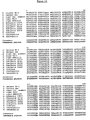
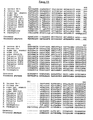
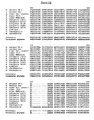
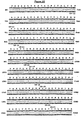
- a "variant" refers in the context of the present invention to a consensus protein with amino acid sequence shown in Figure 2 wherin at one or more positions amino acids have been deleted, added or replaced by one or more other amino acids with the provisor that the resulting sequence provides for a protein whose basic properties like enzymatic activity (type of and specific activity), thermostability, activity in a certain pH-range (pH-stability) have not significantly been changed.
- a mutein refers in the context of the present invention to replacements of the amino acid in the amino acid sequences of the consensus proteins shown in Figure 2 which lead to consensus proteins with further improved properties e. g. activity.
- Such muteins can be defined and prepared on the basis of the teachings given in European Patent Application number 97810175.6, e. g. Q50L, Q50T, Q50G, Q50L-Y51N, or Q50T-Y51N.
- Q50L means in this context that at position 50 of the amino acid sequence the amino acid Q has been replaced by amino acid L.
- a food, feed or pharmaceutical composition comprising a consensus protein as defined above is also an object of the present invention.
- amino acid sequences of such defined protein family means that three, four, five, six to 12, 20, 50 or even more sequences can be used for the alignment and the comparison to create the amino acid sequence of the consensus protein.
- sequences of a defined protein family means that such sequences fold into a three dimensional structure, wherein the ⁇ -helixes, the ⁇ -sheets and-turns are at the same position so that such structures are, as called by the man skilled in the art, superimposable.
- sequences characterize proteins which show the same type of biological activity, e.g. a defined enzyme class, e.g. the phytases.
- the three dimensional structure of one of such sequences is sufficient to allow the modelling of the structure of the other sequences of such a family.
- An example, how this can be effected, is given in the Reference Example of the present case.
- "Evolutionary similarity" in the context of the present invention refers to a schema which classifies amino acids regarding their structural similarity which allows that one amino acid can be replaced by another amino acid with a minimal influence on the overall structure, as this is done e.g. by programs, like "PRETTY", known in the art.
- the degree of similarity provided by such a program...is set to less stringent number means in the context of the present invention that values for the parameters which determine the degree of similarity in the prgram used in the practice of the present invention are chosen in a way to allow the program to define a common amino acid for a maximum of positions of the whole amino acid sequence, e. g. in case of the program PRETTY a value of 2 or 3 for the THRESHOLD and a value of 2 for the PLURALITY can be choosen.
- a vote weight of one devided by the number of such sequences means in the context of the present invention that the sequences which define a group of sequences with a higher degree of similarity as the other sequences used for the determination of the consensus sequence only contribute to such determination with a factor which is equal to one devided by a number of all sequences of this group.
- the program not allow to select the most similar amino acid, the most frequent amino acid is selected, should the latter be impossible the man skilled in the art will select an amino acid from all the sequences used for the comparison which is known in the art for its property to improve the thermostability in proteins as discussed e.g. by . Janecek, S. (1993), Process Biochem .
- thermostability of an enzyme is a critical factor for many industrial applications. Therefore, a lot of attempts, more or less successful, have been made to improve the stability, preferably the thermostability of enzymes by rational (van den Burg et al ., 1998) or irrational approaches (Akanuma et al ., 1998).
- the forces influencing the thermostability of a protein are the same as those that are responsible for the proper folding of a peptide strand (hydrophobic interactions, van der Waals interactions, H-bonds, salt bridges, conformational strain (Matthews, 1993).
- the free energy of the unfolded state has also an influence on the stability of a protein.
- Enhancing of protein stability means to increase the number and strength of favorable interactions and to decrease the number and strength of unfavorable interactions. It has been possible to introduce disulfide linkages ( Sauer et al., 1986) to replace glycine with alanine residues or to increase the proline content in order to reduce the free energy of the unfolded state (Margarit et al., 1992; Matthews, 1987a). Other groups concentrated on the importance of additional H-bonds or salt bridges for the stability of a protein (Blaber et al., 1993) or tried to fill cavities in the protein interior to increase the buried hydrophobic surface area and the van der Waals interactions (Karpusas et al ., 1989). Furthermore, the stabilization of secondary structure elements, especially ⁇ -helices, for example, by improved helix capping, was also investigated (Munoz & Serrano, 1995).
- thermostability of a protein was among the first to use the comparisons of homologous proteins to enhance the stability of a protein. They used a comparison of proteases from thermophilic with homologous ones of mesophilic organisms to enhance the stability of a mesophilic protease. Serrano et al . (1993) used the comparison of the amino acid sequences of two homologous mesophilic RNases to construct a more thermostable Rnase. They mutated individually all of the residues that differ between the two and combined the mutations that increase the stability in a multiple mutant. Pantoliano et al .
- Steipe et al . (1994) suggested that the most frequent amino acid at every position of an alignment of homologous proteins contribute to the largest amount to the stability of a protein.
- Steipe et al . (1994) proved this for a variable domain of an immunoglobulin
- Pantohano et al . (1989) looked for positions in the primary sequence of subtilisin in which the sequence of the enzyme chosen to be improved for higher stability was singularly divergent.
- Their approach resulted in the replacement M50F which increased the T m of subtilisin by 1.8 °C.
- DNA sequences can be constructed starting from genomic or cDNA sequences coding for proteins, e.g. phytases known in the state of the art [for sequence information see references mentioned above, e.g. EP 684 313 or sequence data bases, for example like Genbank (Intelligenetics, California, USA), European Bioinformatics Institute (Hinston Hall, Cambridge, GB), NBRF (Georgetown University, Medical Centre, Washington DC, USA) and Vecbase (University of Wisconsin, Biotechnology Centre, Madison, Wisconsin. USA) or disclosed in the figures by methods of in vitro mutagenesis [see e.g. Sambrook et al., Molecular Cloning, Cold Spring Harbor Laboratory Press, New York].
- Another possibility of mutating a given DNA sequence which is also preferred for the practice of the present invention is the mutagenesis by using the polymerase chain reaction (PCR).
- DNA as starting material can be isolated by methods known in the art and described e.g. in Sambrook et al. (Molecular Cloning) from the respective strains. For strain information see, e.g. EP 684 313 or any depository authority indicated below. Aspergillus niger [ATCC 9142], Myceliophthora thermophila [ATCC 48102], Talaromyces thermophilus [ATCC 20186] and Aspergillus fumigatus [ATCC 34625] have been redeposited according to the conditions of the Budapest Treaty at the American Type Culture Cell Collection under the following accession numbers: ATCC 74337, ATCC 74340, ATCC 74338 and ATCC 74339, respectively. It is however, understood that DNA encoding a consensus protein in accordance with the present invention can also be prepared in a synthetic manner as described, e.g. in EP 747 483 or the examples by methods known in the art.
- DNA sequences can be integrated into vectors by methods known in the art and described e.g. in Sambrook et al. (s.a.) to overexpress the encoded polypeptide in appropriate host systems.
- a man skilled in the art knows that also the DNA sequences themselves can be used to transform the suitable host systems of the invention to get overexpression of the encoded polypeptide.
- Appropriate host systems are for example fungi, like Aspergilli, e.g. Aspergillus niger [ATCC 9142] or Aspergillus ficuum [NRRL 3135] or like Trichoderma, e.g. Trichoderma reesei or yeasts, like Saccharomyces, e.g.
- Saccharomyces cerevisiae or Pichia like Pichia pastoris, or Hansenula polymorpha, e.g. H. polymorpha (DSM5215) or plants, as described, e.g. by Pen et al., Bio/Technology 11, 811-814 (1994).
- a man skilled in the art knows that such microorganisms are available from depository authorities, e.g. the American Type Culture Collection (ATCC), the Centraalbureau voor Schimmelcultures (CBS) or the Deutsche Sammlung für Mikroorganismen und Zellkulturen GmbH (DSM) or any other depository authority as listed in the Journal "Industrial Property" [(1991) 1 , pages 29-40].
- Bacteria which can be used are e.g.
- E. coli Bacilli as, e.g. Bacillus subtilis or Streptomyces, e.g. Streptomyces lividans (see e.g. Anné and Mallaert in FEMS Microbiol. Letters 114, 121 (1993).
- E. coli, which could be used are E. coli K12 strains e.g. M15 [described as DZ 291 by Villarejo et al. in J. Bacteriol. 120 , 466-474 (1974)], HB 101 [ATCC No. 33694] or E. coli SG13009 [Gottesman et al., J. Bacteriol. 148 , 265-273 (1981)].
- Vectors which can be used for expression in fungi are known in the art and described e.g. in EP 420 358, or by Cullen et al. [Bio/Technology 5 , 369-376 (1987)] or Ward in Molecular Industrial Mycology, Systems and Applications for Filamentous Fungi, Marcel Dekker, New York (1991), Upshall et al. [Bio/Technology 5 , 1301-1304 (1987)] Gwynne et al. [Bio/Technology 5 , 71-79 (1987)], Punt et al. [J. Biotechnol. 17 , 19-34 (1991)] and for yeast by Sreekrishna et al. [J. Basic Microbiol.
- Suitable promotor elements which can be used are known in the art and are, e.g. for Trichoderma reesei the cbh1- [Haarki et al., Biotechnology 7 , 596-600 (1989)] or the pki1-promotor [Schindler et al., Gene 130 , 271-275 (1993)], for Aspergillus oryzae the amy-promotor [Christensen et al., Abstr.
- promotor elements which could be used for expression in yeast are known in the art and are, e.g. the pho5-promotor [Vogel et al., Mol. Cell. Biol., 2050-2057 (1989); Rudolf and Hinnen, Proc. Natl. Acad. Sci. 84, 1340-1344 (1987)] or the gap-promotor for expression in Saccharomyces cerevisiae and for Pichia pastoris, e.g.
- the encoded protein can be isolated either from the medium in the case the protein is secreted into the medium or from the host organism in case such protein is present intracellularly by methods known in the art of protein purification or described in case of a phytase, e.g. in EP 420 358.
- the polypeptide of Fig 2 of the present invention can be characterized regarding their properties which make them useful in agriculture any assay known in the art and described e.g. by Simons et al. [Br. J. Nutr. 64, 525-540 (1990)], Schöner et al. [J. Anim. Physiol. a. Anim. Nutr. 66 , 248-255 (1991)], Vogt [Arch. Geerielk. 56 , 93-98 (1992)], Jongbloed et al. [J. Anim. Sci., 70 , 1159-1168 (1992)], Perney et al. [Poultry Sci.
- polypeptide of the present invention can be used without being limited to a specific field of application, e.g. in case of phytases for the conversion of inositol polyphosphates, like phytate to inositol and inorganic phosphate.
- polypeptide of the present invention can be used in a process for the preparation of a pharmaceutical composition or compound food or feeds wherein the components of such a composition are mixed with one or more polypeptides of the present invention.
- compound food or feeds or pharmaceutical compositions comprising one or more polypeptides of the present invention are also an object of the present invention.
- a man skilled in the art is familiar with their process of preparation.
- Such pharmaceutical compositions or compound foods or feeds can further comprise additives or components generally used for such purpose and known in the state of the art.
- a multiple amino acid sequence alignment of A . niger NRRL 3135 phytase, A . fumigatus phytase and A . terreus cbs116.46 phytase was calculated with the program "PILEUP" (Prog. Menu for the Wisconsin Package, version 8, September 1994, Genetics Computer Group, 575 Science Drive, Madison Wisconcin, USA 53711).
- the three-dimensional models of A . fumigatus phytase and A. terreus cbs116.46 phytase were built by using the structure of A. niger NRRL 3135 phytase as template and exchanging the amino acids of A.
- niger NRRL 3135 phytase according to the sequence alignment to amino acids of A . fumigatus and A . terreus cbs116.46 phytases, respectively.
- Model construction and energy optimization were performed by using the program Moloc (Gerber and Müller, 1995). C-alpha positions were kept fixed except for new insertions/deletions and in loop regions distant from the active site.
- the scissile phosphate group was oriented towards the catalytically essential His 59 to form the covalent phosphoenzyme intermediate.
- the oxygen of the substrate phosphoester bond which will be protonated by Asp 339 after cleavage was orientated towards the proton donor. Conformational relaxation of the remaining structural part of the substrates as well as the surrounding active site residues was performed by energy optimization with the program Moloc.
- Example 1 Using the refined alignment of Example 1 as input, the consensus sequence was calculated by the program PRETTY from the Sequence Analysis Package Release 9.0 (Devereux et al ., 1984). PRETTY prints sequences with their columns aligned and can display a consensus sequence for the alignment. A vote weight that pays regard to the similarity between the amino acid sequences of the phytases aligned were assigned to all sequences. The vote weight was set such as the combined impact of all phytases from one sequence subgroup (same species of origin but different strains), e. g. the amino acid sequences of all phytases from A .
- the program PRETTY was started with the following parameters: The plurality defining the number of votes below which there is no consensus was set on 2.0. The threshold, which determines the scoring matrix value below which an amino acid residue may not vote for a coalition of residues, was set on 2. PRETTY used the PrettyPep.Cmp consensus scoring matrix for peptides.
- Table 3 shows the homology of the calculated fungal consensus phytase amino acid sequence to the phytase sequences used for the calculation.
- the first 26 amino acid residues of A. terreus cbs116.46 phytase were used as signal peptide and, therefore, fused to the N-terminus of all consensus phytases.
- Purvis et al . (1987) proposed that the incorporation of rare codons in a gene has an influence on the folding efficiency of the protein. Therefore, at least the distribution of rare codons in the signal sequence of A . terreus cbs116.46, which was used for the fungal consensus phytase and which is very important for secretion of the protein, but converted into the S . cerevisiae codon usage, was transferred into the new signal sequence generated for expression in S. cerevisiae. For the remaining parts of the protein, we used the codon frequency table of highly expressed S. cerevisiae genes, obtained from the GCG program package, to translate the calculated amino acid sequence into a DNA sequence.
- the calculated DNA sequence of fungal consensus phytase was divided into oligonucleotides of 85 bp, alternately using the sequence of the sense and the anti-sense strand. Every oligonucleotide overlaps 20 bp with its previous and its following oligonucleotide of the opposite strand.
- the synthesized oligonucleotides were composed to the entire gene.
- the High Fidelity Kit from Boehringer Mannheim (Boehringer Mannheim, Mannheim, Germany) and the thermo cycler The ProtokolTM from AMS Biotechnology (Europe) Ltd. (Lugano, Switzerland) were used.
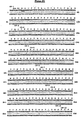
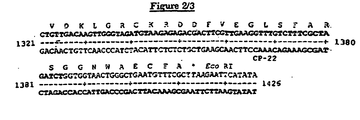
- Oligonucleotide CP-1 to CP-10 (Mix 1, Figure 2) were mixed to a concentration of 0.2 pMol/ ⁇ l per each oligonucleotide.
- a second oligonucleotide mixture (Mix 2) was prepared with CP-9 to CP-22 (0.2 pMol/ ⁇ l per each oligonucleotide).
- four short primers were used in the PCR reactions:
- the PCR products (670 and 905 bp) were purified by an agarose gel electrophoresis (0.9% agarose) and a following gel extraction (QIAEX II Gel Extraction Kit, Qiagen, Hilden, Germany). The purified DNA fragments were used for the PCR reaction c.
- the resulting PCR product (1.4 kb) was purified as mentioned above, digested with Eco RI, and ligated in an Eco RI-digested and dephosphorylated pBsk(-)-vector (Stratagene, La Jolla, CA, USA). 1 ⁇ l of the ligation mixture was used to transform E. coli XL-1 competent cells (Stratagene, La Jolla, CA, USA). All standard procedures were carried out as described by Sambrook et al. (1987). The constructed fungal consensus phytase gene ( fcp ) was verified by sequencing (plasmid pBsk-fcp).
- a fungal consensus phytase gene was isolated from the plasmid pBsk- fcp ligated into the Eco RI sites of the expression cassette of the Saccharomyces cerevisiae expression vector pYES2 (Invitrogen, San Diego, CA, USA) or subcloned between the shortened GAPFL (glyceraldhyde-3-phosphate dehydrogenase) promoter and the pho5 terminator as described by Janes et al . (1990). The correct orientation of the gene was checked by PCR. Transformation of S . cerevisiae strains. e. g. INVSc1 (Invitrogen, San Diego, CA, USA) was done according to Hinnen et al. (1978).
- cell broth was centrifuged (7000 rpm, GS3 rotor, 15 min, 5°C) to remove the cells and the supernatant was concentrated by way of ultrafiltration in Amicon 8400 cells (PM30 membranes) and ultrafree-15 centrifugal filter devices (Biomax-30K, Millipore, Bedford, MA, USA).
- the concentrate (10 ml) was desalted on a 40 ml Sephadex G25 Superfine column (Pharmacia Biotech, Freiburg, Germany), with 10 mM sodium acetate, pH 5.0, serving as elution buffer.
- the desalted sample was brought to 2 M (NH 4 ) 2 SO 4 and directly loaded onto a 1 ml Butyl Sepharose 4 Fast Flow hydrophobic interaction chromatography column (Pharmacia Biotech, Feiburg, Germany) which was eluted with a linear gradient from 2 M to 0 M (NH4) 2 SO 4 in 10 mM sodium acetate, pH 5.0.
- Phytase was eluted in the break-through, concentrated and loaded on a 120 ml Sephacryl S-300 gel permeation chromatography column (Pharmacia Biotech, Freiburg, Germany).
- Fungal consensus phytase and fungal consensus phytase 7 eluted as a homogeneous symmetrical peak and was shown by SDS-PAGE to be approx. 95% pure.
- the phytase expression vectors used to transform H. polymorpha, was constructed by inserting the Eco RI fragment of pBsk- fcp encoding the consensus phytase or a variant into the multiple cloning site of the H . polymorpha expression vector pFPMT121, which is based on an ura3 selection marker and the FMD promoter. The 5' end of the fcp gene is fused to the FMD promoter, the 3' end to the MOX terminator (Gellissen et al ., 1996; EP 0299 108 B). The resulting expression vector are designated pFPMT fcp and pBsk - fcp 7.
- the constructed plasmids were propagated in E . coli . Plasmid DNA was purified using standard state of the art procedures.
- the expression plasmids were transformed into the H . polymorpha strain RP11 deficient in orotidine-5'-phosphate decarboxylase ( ura3 ) using the procedure for preparation of competent cells and for transformation of yeast as described in Gelissen et al . (1996).
- Each transformation mixture was plated on YNB (0.14% w/v Difco YNB and 0.5% ammonium sulfate) containing 2% glucose and 1.8% agar and incubated at 37 °C. After 4 to 5 days individual transformant colonies were picked and grown in the liquid medium described above for 2 days at 37 °C.
- Plasmid pBsk - fcp or the corresponding plasmid of a variant of the fcp gene were used as template for the introduction of a Bsp HI-site upstream of the start codon of the genes and an Eco RV-site downstream of the stop codon.
- the ExpandTM High Fidelity PCR Kit (Boehringer Mannheim, Mannheim, Germany) was used with the following primers:
- the reaction was performed as described by the supplier.
- the PCR-amplified fcp gene had a new Bsp HI site at the start codon, introduced by primer Asp-1, which resulted in a replacement of the second amino acid residue glycine by serine.
- the DNA-fragment was digested with Bsp HI and Eco RV and ligated into the Nco I site downstream of the glucoamylase promoter of Aspergillus niger ( glaA ) and the Eco RV site upstream of the Aspergillus nidulans tryptophan C terminator ( trpC ) (Mullaney et al., 1985).
- the genes were sequenced to detect possible failures introduced by PCR.
- the resulting expression plasmids which basically corresponds to the pGLAC vector as described in Example 9 of EP 684 313, contained the orotidine-5'-phosphate decarboxylase gene ( pyr4 ) of Neurospora crassa as a selection marker.Transformation of Aspergillus niger and expression of the consensus phytase genes was done as described in EP 684 313. The fungal consensus phytases were purified as described in Example 5.
- One unit of enzyme activity was defined as the amount of enzyme that releases 1 ⁇ mol phosphate per minute at 37 °C.
- the protein concentration was determined using the enzyme extinction coefficient at 280 nm calculated according to Pace et al. (1995): fungal consensus phytase, 1.101; fungal consensus phytase 7, 1.068.
- phytic acid in the assay mixture was replaced by 5 mM concentrations of the respective phosphate compounds.
- the activity tests were performed as described above.
- enzyme 100 ⁇ l
- substrate solution 100 ⁇ l
- the reaction was started by addition of the substrate solution to the enzyme. After 15 min incubation, the reaction was stopped with trichloroacetic acid and the amount of phosphate released was determined.
- the pH-optimum of the original fungal consensus phytase was around pH 6.0-6.5 (70 U/mg).
- the pH-optimum shifted to pH 6.0 (130 U/mg), while the replacement by a leucine at the same position resulted in a maximum activity around pH 5.5 (212 U/mg).
- the exchange Q50G resulted in a pH-optimum of the activity above pH 6.0 (see Figure 4).
- the exchange of tyrosine at position 51 with asparagine resulted in a relative increase of the activity below pH 5.0 (see Figure 5).
- the specificity for phytate of fungal consensus phytase was drastically increased (see Figure 6).
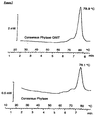
- the temperature optimum of fungal consensus phytase was 15-25 °C higher than the temperature optimum of the wild-type phytases (45-55 °C) which were used to calculate the consensus sequence (see Table 5 and Figure 3).
Landscapes
- Chemical & Material Sciences (AREA)
- Life Sciences & Earth Sciences (AREA)
- Health & Medical Sciences (AREA)
- Organic Chemistry (AREA)
- Genetics & Genomics (AREA)
- Molecular Biology (AREA)
- Engineering & Computer Science (AREA)
- Proteomics, Peptides & Aminoacids (AREA)
- Zoology (AREA)
- Biochemistry (AREA)
- General Health & Medical Sciences (AREA)
- Medicinal Chemistry (AREA)
- Bioinformatics & Cheminformatics (AREA)
- Polymers & Plastics (AREA)
- Wood Science & Technology (AREA)
- Mycology (AREA)
- Biophysics (AREA)
- Biotechnology (AREA)
- Food Science & Technology (AREA)
- General Engineering & Computer Science (AREA)
- Microbiology (AREA)
- Gastroenterology & Hepatology (AREA)
- Biomedical Technology (AREA)
- Analytical Chemistry (AREA)
- Animal Husbandry (AREA)
- Nutrition Science (AREA)
- Enzymes And Modification Thereof (AREA)
- Micro-Organisms Or Cultivation Processes Thereof (AREA)
- Fodder In General (AREA)
- Medicines That Contain Protein Lipid Enzymes And Other Medicines (AREA)
- Preparation Of Compounds By Using Micro-Organisms (AREA)
- Polymers With Sulfur, Phosphorus Or Metals In The Main Chain (AREA)
Claims (3)
- Protéine consensus qui comporte la séquence d'acides aminés représentée à la Fig. 2 ou l'une quelconque des variantes de celle-ci, dans laquelle les propriétés de base des variantes telles qu'activité enzymatique (type et activité spécifique), thermostabilité, activité dans une certaine plage de pH (stabilité au pH) n'ont pas été changées de façon significative.
- Protéine consensus suivant la revendication 1, caractérisée en ce que dans la séquence d'acides aminés de la Fig. 2 les remplacements suivants ont été effectués Q50L, Q50T, Q50G, Q50T-Y51N ou Q50L-Y51N.
- Aliment, alimentation ou composition pharmaceutique comprenant une protéine consensus suivant l'une ou l'autre des revendications 1 et 2.
Priority Applications (3)
| Application Number | Priority Date | Filing Date | Title |
|---|---|---|---|
| EP98113176A EP0897985B1 (fr) | 1997-07-24 | 1998-07-15 | Phytases consensus |
| DK98113176T DK0897985T3 (da) | 1997-07-24 | 1998-07-15 | Konsensus-phytaser |
| EP20030024497 EP1403377A1 (fr) | 1997-07-24 | 1998-07-15 | Phytases consensus |
Applications Claiming Priority (3)
| Application Number | Priority Date | Filing Date | Title |
|---|---|---|---|
| EP97112688 | 1997-07-24 | ||
| EP97112688 | 1997-07-24 | ||
| EP98113176A EP0897985B1 (fr) | 1997-07-24 | 1998-07-15 | Phytases consensus |
Related Child Applications (1)
| Application Number | Title | Priority Date | Filing Date |
|---|---|---|---|
| EP20030024497 Division EP1403377A1 (fr) | 1997-07-24 | 1998-07-15 | Phytases consensus |
Publications (3)
| Publication Number | Publication Date |
|---|---|
| EP0897985A2 EP0897985A2 (fr) | 1999-02-24 |
| EP0897985A3 EP0897985A3 (fr) | 1999-12-22 |
| EP0897985B1 true EP0897985B1 (fr) | 2004-10-13 |
Family
ID=8227106
Family Applications (2)
| Application Number | Title | Priority Date | Filing Date |
|---|---|---|---|
| EP20030024497 Withdrawn EP1403377A1 (fr) | 1997-07-24 | 1998-07-15 | Phytases consensus |
| EP98113176A Expired - Lifetime EP0897985B1 (fr) | 1997-07-24 | 1998-07-15 | Phytases consensus |
Family Applications Before (1)
| Application Number | Title | Priority Date | Filing Date |
|---|---|---|---|
| EP20030024497 Withdrawn EP1403377A1 (fr) | 1997-07-24 | 1998-07-15 | Phytases consensus |
Country Status (13)
| Country | Link |
|---|---|
| US (5) | US6153418A (fr) |
| EP (2) | EP1403377A1 (fr) |
| JP (1) | JP4177922B2 (fr) |
| KR (1) | KR100562603B1 (fr) |
| CN (2) | CN1526815A (fr) |
| BR (1) | BR9802576B1 (fr) |
| CA (1) | CA2238613C (fr) |
| DE (1) | DE69826944T2 (fr) |
| DK (1) | DK0897985T3 (fr) |
| ES (1) | ES2230639T3 (fr) |
| NO (1) | NO323106B1 (fr) |
| NZ (1) | NZ330940A (fr) |
| TW (1) | TW577921B (fr) |
Cited By (3)
| Publication number | Priority date | Publication date | Assignee | Title |
|---|---|---|---|---|
| US7320876B2 (en) | 2001-10-31 | 2008-01-22 | Phytex, Llc | Phytase-containing animal food and method |
| WO2012025462A1 (fr) | 2010-08-26 | 2012-03-01 | Dsm Ip Assets B.V. | Phytase dans des boissons gazeuses prêtes à boire |
| US9969992B2 (en) | 2009-05-21 | 2018-05-15 | Syngenta Participations Ag | Phytases, nucleic acids encoding them and methods for making and using them |
Families Citing this family (103)
| Publication number | Priority date | Publication date | Assignee | Title |
|---|---|---|---|---|
| US6699704B1 (en) | 1994-04-25 | 2004-03-02 | Roche Vitamins Inc. | Heat tolerant phytases |
| CA2231948C (fr) | 1997-03-25 | 2010-05-18 | F. Hoffmann-La Roche Ag | Phytases modifiees |
| NZ330940A (en) | 1997-07-24 | 2000-02-28 | F | Production of consensus phytases from fungal origin using computer programmes |
| US7078035B2 (en) | 1997-08-13 | 2006-07-18 | Diversa Corporation | Phytases, nucleic acids encoding them and methods for making and using them |
| US6720014B1 (en) * | 1997-08-13 | 2004-04-13 | Diversa Corporation | Phytase-containing foodstuffs and methods of making and using them |
| US6183740B1 (en) | 1997-08-13 | 2001-02-06 | Diversa Corporation | Recombinant bacterial phytases and uses thereof |
| US7432097B2 (en) | 1997-08-13 | 2008-10-07 | Verenium Corporation | Phytases, nucleic acids encoding them and methods of making and using them |
| US6855365B2 (en) | 1997-08-13 | 2005-02-15 | Diversa Corporation | Recombinant bacterial phytases and uses thereof |
| KR20010042063A (ko) * | 1998-03-23 | 2001-05-25 | 피아 스타르 | 사료 제제 및 식물 발현에 있어서의 열안정성 피타제 |
| AU765477B2 (en) * | 1998-03-23 | 2003-09-18 | Novozymes A/S | Phytase variants |
| US6514495B1 (en) | 1998-03-23 | 2003-02-04 | Novozymes A/S | Phytase varinats |
| WO2003066847A2 (fr) | 2002-02-08 | 2003-08-14 | Novozymes A/S | Variants de phytase |
| US6451572B1 (en) | 1998-06-25 | 2002-09-17 | Cornell Research Foundation, Inc. | Overexpression of phytase genes in yeast systems |
| EP0969089A1 (fr) * | 1998-06-29 | 2000-01-05 | F. Hoffmann-La Roche Ag | Formulation de phytase |
| US6610519B1 (en) | 1998-10-02 | 2003-08-26 | Novozymes A/S | Solid phytase composition stabilized with lactic acid provided by corn steep liquor |
| ATE338110T1 (de) * | 1999-01-22 | 2006-09-15 | Novozymes As | Verbesserte phytasen |
| US6720174B1 (en) | 1999-01-28 | 2004-04-13 | Novozymes A/S | Phytases |
| MXPA01009809A (es) | 1999-03-31 | 2002-07-30 | Cornell Res Foundation Inc | Fosfatasas con actividad de fitasa mejorada. |
| US6303766B1 (en) | 1999-05-14 | 2001-10-16 | Virginia Tech Intellectual Properties, Inc. | Soybean phytase and nucleic acid encoding the same |
| EP1224272B1 (fr) | 1999-10-01 | 2005-12-07 | Novozymes A/S | Produit enzymatique seche par atomisation |
| EP1092764B1 (fr) * | 1999-10-11 | 2010-01-06 | DSM IP Assets B.V. | fermentation en continu |
| US6841370B1 (en) | 1999-11-18 | 2005-01-11 | Cornell Research Foundation, Inc. | Site-directed mutagenesis of Escherichia coli phytase |
| US6960462B2 (en) | 2000-02-08 | 2005-11-01 | Dsm Ip Assets B.V | Use of acid-stable subtilisin proteases in animal feed |
| US6855548B2 (en) | 2000-02-08 | 2005-02-15 | F. Hoffman-La Roche Ag | Use of acid-stable proteases in animal feed |
| DE10126970A1 (de) * | 2001-06-01 | 2002-12-05 | Krueger Gmbh & Co Kg | Phytasehaltige Zusammensetzung |
| AR036370A1 (es) | 2001-08-27 | 2004-09-01 | Syngenta Participations Ag | Plantas con auto-procesamiento y partes de las mismas |
| WO2003038111A2 (fr) * | 2001-10-26 | 2003-05-08 | Genencor International, Inc. | Enzymes phytases, sequences d'acides nucleiques codant les phytases, vecteurs et cellules hotes comprenant ces dernieres |
| EP1325982B1 (fr) | 2001-12-27 | 2007-02-14 | Georgia-Pacific France | Feuille de papier gaufrée |
| TW200305430A (en) | 2001-12-28 | 2003-11-01 | Syngenta Participations Ag | Thermotolerant phytase for animal feed |
| MY139056A (en) | 2001-12-28 | 2009-08-28 | Ab Enzymes Gmbh | Microbially-expressed thermotolerant phytase for animal feed |
| US7238378B2 (en) | 2002-02-08 | 2007-07-03 | Novozymes A/S | Phytase variants |
| DE10233082A1 (de) * | 2002-07-19 | 2004-03-04 | Amaxa Gmbh | Fluoreszierendes Protein |
| DE10233047A1 (de) * | 2002-07-19 | 2004-02-26 | Amaxa Gmbh | Verfahren zur Herstellung eines künstlichen Polypeptids und nach diesem Verfahren hergestelltes künstliches Protein |
| CA2925807C (fr) | 2002-09-13 | 2020-09-15 | Cornell Research Foundation, Inc. | Utilisation de mutations pour ameliorer les aspergillus phytases |
| US20040063184A1 (en) | 2002-09-26 | 2004-04-01 | Novozymes North America, Inc. | Fermentation processes and compositions |
| EP1594963B1 (fr) | 2003-02-07 | 2007-07-25 | Novozymes A/S | Proteases |
| US20040253696A1 (en) | 2003-06-10 | 2004-12-16 | Novozymes North America, Inc. | Fermentation processes and compositions |
| EP1639107B1 (fr) | 2003-06-19 | 2013-08-14 | Novozymes A/S | Proteases ameliorees et procedes de production de ces dernieres |
| EP1639106B1 (fr) | 2003-06-19 | 2010-05-26 | Novozymes A/S | Proteases |
| BRPI0414959A (pt) | 2003-10-10 | 2006-11-07 | Novozymes As | variante de uma protease precursora, sequência de ácido nucleico isolado, construção de ácido nucleico, vetor de expressão e célula hospedeira recombinantes, métodos para produzir a variante de protease, para melhorar o valor nutricional de uma ração animal, e para tratar proteìnas, planta transgênica, ou parte da planta, animal transgênico, não humano, ou produtos, ou elementos deste, aditivo e composição de ração animal, uso da variante de protease e/ou da composição, protease, e, estrutura 3d |
| ES2306079T3 (es) * | 2004-01-30 | 2008-11-01 | Basf Se | Granulados que contienen formulaciones de fitasa estabilizantes. |
| CA2560613C (fr) | 2004-03-22 | 2015-11-24 | Solvay Pharmaceuticals Gmbh | Compositions pharmaceutiques par voie orale a base de lipases, en particulier de pancreatine, contenant des tensioacitfs |
| CN101014704A (zh) | 2004-06-21 | 2007-08-08 | 诺维信公司 | 蛋白酶 |
| CN101056540A (zh) | 2004-09-27 | 2007-10-17 | 诺维信公司 | 酶颗粒 |
| CN100546778C (zh) * | 2005-02-03 | 2009-10-07 | 比克-维奥利克斯公司 | 具有会合的侧表面的剃刀手柄 |
| US7658922B2 (en) | 2005-06-24 | 2010-02-09 | Ab Enzymes Gmbh | Monoclonal antibodies, hybridoma cell lines, methods and kits for detecting phytase |
| PL2278002T3 (pl) | 2005-07-29 | 2017-12-29 | Abbott Laboratories Gmbh | Pankreatyna o zmniejszonej zawartości wirusowej |
| US11266607B2 (en) | 2005-08-15 | 2022-03-08 | AbbVie Pharmaceuticals GmbH | Process for the manufacture and use of pancreatin micropellet cores |
| US9198871B2 (en) | 2005-08-15 | 2015-12-01 | Abbott Products Gmbh | Delayed release pancreatin compositions |
| US7919297B2 (en) | 2006-02-21 | 2011-04-05 | Cornell Research Foundation, Inc. | Mutants of Aspergillus niger PhyA phytase and Aspergillus fumigatus phytase |
| DK2365064T3 (en) | 2006-04-04 | 2015-03-30 | Novozymes As | Phytasevarianter |
| US10072256B2 (en) | 2006-05-22 | 2018-09-11 | Abbott Products Gmbh | Process for separating and determining the viral load in a pancreatin sample |
| PT2041278T (pt) | 2006-06-21 | 2017-10-17 | Novozymes North America Inc | Resumo |
| CN101489412B (zh) | 2006-07-13 | 2013-03-27 | 诺维信公司 | 细菌淀粉酶在牛类动物的饲料中的用途 |
| US8540984B2 (en) | 2006-08-03 | 2013-09-24 | Cornell Research Foundation, Inc. | Phytases with improved thermal stability |
| EP2051590B1 (fr) | 2006-08-07 | 2016-04-20 | Novozymes A/S | Granules d'enzyme pour alimentation animale |
| US20080031998A1 (en) | 2006-08-07 | 2008-02-07 | Novozymes A/S | Enzyme Granules for Animal Feed |
| DK2129781T3 (da) * | 2007-03-26 | 2014-03-31 | Novozymes As | Hafnia-phytase |
| US20100112663A1 (en) | 2007-04-09 | 2010-05-06 | Novozymes A/S | Enzymatic Treatment of Skin and Hide Degreasing |
| US8192734B2 (en) | 2007-07-09 | 2012-06-05 | Cornell University | Compositions and methods for bone strengthening |
| EP2116136A1 (fr) | 2008-05-08 | 2009-11-11 | Nederlandse Organisatie voor toegepast- natuurwetenschappelijk onderzoek TNO | Nouvelles phytases |
| US7561972B1 (en) | 2008-06-06 | 2009-07-14 | Dna Twopointo, Inc. | Synthetic nucleic acids for expression of encoded proteins |
| US8126653B2 (en) * | 2008-07-31 | 2012-02-28 | Dna Twopointo, Inc. | Synthetic nucleic acids for expression of encoded proteins |
| US8401798B2 (en) * | 2008-06-06 | 2013-03-19 | Dna Twopointo, Inc. | Systems and methods for constructing frequency lookup tables for expression systems |
| US7561973B1 (en) | 2008-07-31 | 2009-07-14 | Dna Twopointo, Inc. | Methods for determining properties that affect an expression property value of polynucleotides in an expression system |
| CA2726688A1 (fr) | 2008-06-23 | 2010-01-21 | Novozymes A/S | Procedes de production de produits de fermentation |
| MX2011003132A (es) | 2008-09-26 | 2011-04-21 | Novozymes As | Variantes de fitasa de hafnia. |
| CN102325876A (zh) | 2009-02-19 | 2012-01-18 | 诺维信公司 | 酿造方法 |
| US8529608B2 (en) | 2009-04-28 | 2013-09-10 | Osteomed Llc | Bone plate with a transfixation screw hole |
| WO2011000924A1 (fr) | 2009-07-03 | 2011-01-06 | Abbott Products Gmbh | Amylase séchée par pulvérisation, préparations pharmaceutiques la comprenant et son utilisation |
| ES2668202T3 (es) | 2009-12-11 | 2018-05-17 | Novozymes A/S | Variantes de proteasa |
| CN102917600B (zh) | 2010-03-26 | 2015-07-08 | 诺维信公司 | 热稳定性肌醇六磷酸酶变体 |
| DK2552934T3 (en) | 2010-03-30 | 2015-09-28 | Novozymes As | Krystalmetabolit-extraction |
| EP2579734A1 (fr) | 2010-06-11 | 2013-04-17 | Novozymes A/S | Procédé pour réduire la teneur en amine biogénique dans un aliment |
| CN109022518A (zh) | 2011-07-22 | 2018-12-18 | 诺维信北美公司 | 用于预处理纤维素材料和改进其水解的方法 |
| US20140314910A1 (en) | 2011-11-17 | 2014-10-23 | Novozymes A/S | Use of acid stable proteases in animal feed, preferably to increase performance of cocc-vaccinated broiler chickens |
| US9951364B2 (en) | 2013-09-11 | 2018-04-24 | Novozymes A/S | Processes for producing fermentation products |
| EP2910640B1 (fr) | 2014-02-25 | 2018-12-05 | Biopract GmbH | Procédé d'amélioration de dégradation de substrat dans des installations agricoles à biogaz |
| AU2015279057B2 (en) | 2014-06-27 | 2019-02-28 | Novonesis Animal Biosolutions Ag | A method for improving the nutritional value of animal feed |
| WO2016128444A1 (fr) | 2015-02-10 | 2016-08-18 | Dsm Ip Assets B.V. | Procédé pour améliorer la digestibilité d'aliments pour animaux et les performances de croissance |
| US10610575B2 (en) | 2015-02-12 | 2020-04-07 | Dsm Ip Assets B.V. | Method for improving feed digestibility in bovine animals |
| CN108699572A (zh) | 2015-12-22 | 2018-10-23 | 诺维信公司 | 使用磷脂酶c增加发酵产物得率的方法 |
| US10988749B2 (en) | 2016-02-23 | 2021-04-27 | Da Volterra | Beta-lactamase variants |
| CA3013166A1 (fr) | 2016-02-23 | 2017-08-31 | Da Volterra | Variantes de la beta-lactamase |
| CN111164214A (zh) | 2017-09-15 | 2020-05-15 | 诺维信公司 | 用于改进动物饲料营养质量的酶共混物和方法 |
| US11326187B2 (en) | 2017-10-23 | 2022-05-10 | Novozymes A/S | Processes for producing a fermentation product |
| KR20200074982A (ko) | 2017-10-25 | 2020-06-25 | 다 볼떼라 | 베타-락타마아제 변이체 |
| WO2019231944A2 (fr) | 2018-05-31 | 2019-12-05 | Novozymes A/S | Procédés d'amélioration de la croissance et de la productivité de levures |
| BR112021004826A2 (pt) | 2018-09-17 | 2021-06-08 | Dsm Ip Assets B.V. | composições de ração animal e usos das mesmas |
| WO2020115179A1 (fr) | 2018-12-05 | 2020-06-11 | Novozymes A/S | Utilisation d'un granule enzymatique |
| WO2020160126A1 (fr) | 2019-01-31 | 2020-08-06 | Novozymes A/S | Polypeptides ayant une activité xylanase et leur utilisation pour améliorer la qualité nutritionnelle d'aliments pour animaux |
| EP4009807A1 (fr) | 2019-08-05 | 2022-06-15 | Novozymes A/S | Mélanges d'enzymes et procédés de production d'un ingrédient d'alimentation animale à haute teneur en protéines à partir d'un sous-produit de type résidu de distillation entier |
| MX2022006438A (es) | 2019-12-16 | 2022-06-22 | Novozymes As | Procesos para obtener productos de fermentacion. |
| CN115605094A (zh) | 2020-05-15 | 2023-01-13 | 帝斯曼知识产权资产管理有限公司(Nl) | 用于改善动物饲料的营养价值的方法 |
| JP2023537982A (ja) | 2020-08-13 | 2023-09-06 | ノボザイムス アクティーゼルスカブ | フィターゼ変異体及びそれをコードするポリヌクレオチド |
| EP4294426A1 (fr) | 2021-02-16 | 2023-12-27 | DSM IP Assets B.V. | Procédés pour réduire e. coli pathogène par une intervention consistant en l'administration sélective d'additif alimentaire comprenant des enzymes tels que muramidase |
| EP4294204A1 (fr) | 2021-02-16 | 2023-12-27 | DSM IP Assets B.V. | Procédés de promotion sélective du bien-être d'un animal par modulation du microbiome |
| KR20230150828A (ko) | 2021-02-26 | 2023-10-31 | 디에스엠 아이피 어셋츠 비.브이. | 세린 프로테아제를 사용함으로써 동물 사료에서 카보하이드라제에 의한 탄수화물 소화율을 향상시키는 방법 |
| WO2023117463A1 (fr) | 2021-12-23 | 2023-06-29 | Novozymes A/S | Procédé pour réduire l'émission d'ammoniac par des animaux |
| WO2024047009A1 (fr) | 2022-08-30 | 2024-03-07 | Dsm Ip Assets B.V. | Procédés et utilisations pour modifier la flore intestinale chez des espèces aquatiques |
| JP2024033624A (ja) * | 2022-08-30 | 2024-03-13 | 国立大学法人北海道大学 | 耐熱性が向上した配列制御型ポリエステル合成酵素 |
| WO2025176789A1 (fr) | 2024-02-23 | 2025-08-28 | Dsm Ip Assets B.V. | Procédé pour réduire l'émission d'ammoniac par des animaux aquatiques |
| WO2026132160A1 (fr) | 2024-12-19 | 2026-06-25 | Novozymes A/S | Stabilisation d'enzymes dans un aliment pour animaux |
Family Cites Families (22)
| Publication number | Priority date | Publication date | Assignee | Title |
|---|---|---|---|---|
| DE1492060C3 (de) | 1965-09-08 | 1974-02-21 | Nordmark-Werke Gmbh, 2000 Hamburg | Verfahren zur Stabilisierung wäßriger Pepsinlösungen |
| DE3176491D1 (en) | 1980-03-05 | 1987-11-26 | Miles Lab | Pasteurized therapeutically active protein compositions |
| US6936694B1 (en) * | 1982-05-06 | 2005-08-30 | Intermune, Inc. | Manufacture and expression of large structural genes |
| US5780292A (en) * | 1987-04-29 | 1998-07-14 | Alko Group Ltd. | Production of phytate degrading enzymes in trichoderma |
| DE3789866T2 (de) * | 1987-07-17 | 1994-09-22 | Rhein Biotech Gesellschaft Fuer Neue Biotechnologische Prozesse Und Produkte Mbh, 40595 Duesseldorf | DNA-Moleküle, die für FMDH-Kontrollabschnitte und Strukturgene für ein Protein mit FMDH-Aktivität kodieren, sowie deren Anwendung. |
| CZ289014B6 (cs) * | 1989-09-27 | 2001-10-17 | Dsm N. V. | Vyčiątěná a izolovaná sekvence DNA kódující fungální fytázu, konstrukt pro expresi, vektory a transformované hostitelské buňky a způsob produkce fytázy |
| UA27702C2 (uk) * | 1989-09-27 | 2000-10-16 | Гіст-Брокейдс Н.В. | Фрагмент геномної днк, що кодує фітазу aspergillus niger,фрагмент кднк, що кодує фітазу aspergillus niger, рекомбінантна плазмідна днк для експресії фітази в aspergillus (варіанти), штам aspergillus-продуцент фітази aspergillus (варіанти), спосіб одержання фітази, рекомбінанта фітаза aspergillus niger |
| GB9006642D0 (en) | 1990-03-24 | 1990-05-23 | Gibson Timothy D | Enzyme stabilisation |
| EP0626010A1 (fr) * | 1992-02-13 | 1994-11-30 | Gist-Brocades N.V. | Formulations liquides, aqueuses et stabilisees de phytase |
| WO1994003072A1 (fr) * | 1992-07-31 | 1994-02-17 | Panlabs Incorporated | Cellules recombinees, structures d'adn, vecteurs et methodes pour exprimer des enzymes de degradation de phytate selon des rapports requis |
| DK0619369T3 (da) * | 1993-04-05 | 2003-10-06 | Aveve Nv | Phytathydrolyse og enzymsammensætning til hydrolyse af phytat |
| ES2154249T3 (es) | 1993-06-21 | 2001-12-16 | Roche Diagnostics Corp | Estabilizador de reactivos de diagnostico. |
| US6291221B1 (en) | 1994-04-25 | 2001-09-18 | Roche Vitamins Inc. | Heat tolerant phytases |
| US6358722B1 (en) | 1994-04-25 | 2002-03-19 | Roche Vitamins, Inc. | Heat tolerant phytases |
| ATE332378T1 (de) * | 1994-04-25 | 2006-07-15 | Dsm Ip Assets Bv | Polypeptide mit phytase wirkung |
| US5853973A (en) * | 1995-04-20 | 1998-12-29 | American Cyanamid Company | Structure based designed herbicide resistant products |
| DK0747483T3 (da) * | 1995-06-09 | 2004-06-28 | Dsm Ip Assets Bv | Fermentativ carotenoid-produktion |
| DE69632669T2 (de) | 1995-07-28 | 2004-10-07 | Basf Ag | Salz-stabilisierte Enzymzubereitung |
| JP3143050B2 (ja) | 1995-08-31 | 2001-03-07 | オリエンタル酵母工業株式会社 | 安定化されたグルコース6リン酸脱水素酵素 |
| CA2231948C (fr) * | 1997-03-25 | 2010-05-18 | F. Hoffmann-La Roche Ag | Phytases modifiees |
| NZ501408A (en) | 1997-06-04 | 2002-02-01 | Dsm N | Carbohydrate-based enzyme granulates |
| NZ330940A (en) | 1997-07-24 | 2000-02-28 | F | Production of consensus phytases from fungal origin using computer programmes |
-
1998
- 1998-07-10 NZ NZ330940A patent/NZ330940A/en unknown
- 1998-07-14 TW TW087111377A patent/TW577921B/zh not_active IP Right Cessation
- 1998-07-15 EP EP20030024497 patent/EP1403377A1/fr not_active Withdrawn
- 1998-07-15 DE DE69826944T patent/DE69826944T2/de not_active Expired - Lifetime
- 1998-07-15 ES ES98113176T patent/ES2230639T3/es not_active Expired - Lifetime
- 1998-07-15 DK DK98113176T patent/DK0897985T3/da active
- 1998-07-15 EP EP98113176A patent/EP0897985B1/fr not_active Expired - Lifetime
- 1998-07-21 CA CA2238613A patent/CA2238613C/fr not_active Expired - Lifetime
- 1998-07-21 NO NO19983364A patent/NO323106B1/no not_active IP Right Cessation
- 1998-07-23 US US09/121,425 patent/US6153418A/en not_active Expired - Lifetime
- 1998-07-23 KR KR1019980029633A patent/KR100562603B1/ko not_active Expired - Lifetime
- 1998-07-23 CN CNA2004100043732A patent/CN1526815A/zh active Pending
- 1998-07-23 CN CNB981179495A patent/CN1163596C/zh not_active Expired - Lifetime
- 1998-07-24 BR BRPI9802576-7A patent/BR9802576B1/pt not_active IP Right Cessation
- 1998-07-24 JP JP20906398A patent/JP4177922B2/ja not_active Expired - Lifetime
-
2000
- 2000-08-08 US US09/634,493 patent/US6579975B1/en not_active Ceased
-
2003
- 2003-04-23 US US10/421,112 patent/US7052869B2/en not_active Expired - Lifetime
-
2005
- 2005-05-24 US US11/137,849 patent/USRE39649E1/en not_active Expired - Lifetime
-
2006
- 2006-03-28 US US11/392,781 patent/US20060172390A1/en not_active Abandoned
Cited By (5)
| Publication number | Priority date | Publication date | Assignee | Title |
|---|---|---|---|---|
| US7320876B2 (en) | 2001-10-31 | 2008-01-22 | Phytex, Llc | Phytase-containing animal food and method |
| US7972805B2 (en) | 2001-10-31 | 2011-07-05 | Phytex, Llc | Phytase-containing animal food and method |
| US9969992B2 (en) | 2009-05-21 | 2018-05-15 | Syngenta Participations Ag | Phytases, nucleic acids encoding them and methods for making and using them |
| US10428340B2 (en) | 2009-05-21 | 2019-10-01 | Syngenta Participations Ag | Phytases, nucleic acids encoding them and methods for making and using them |
| WO2012025462A1 (fr) | 2010-08-26 | 2012-03-01 | Dsm Ip Assets B.V. | Phytase dans des boissons gazeuses prêtes à boire |
Also Published As
| Publication number | Publication date |
|---|---|
| USRE39649E1 (en) | 2007-05-22 |
| CA2238613A1 (fr) | 1999-01-24 |
| CA2238613C (fr) | 2010-05-25 |
| EP1403377A1 (fr) | 2004-03-31 |
| US20060172390A1 (en) | 2006-08-03 |
| BR9802576A (pt) | 2001-03-20 |
| CN1163596C (zh) | 2004-08-25 |
| DE69826944T2 (de) | 2005-03-10 |
| DE69826944D1 (de) | 2004-11-18 |
| US6153418A (en) | 2000-11-28 |
| EP0897985A2 (fr) | 1999-02-24 |
| KR100562603B1 (ko) | 2006-05-25 |
| NZ330940A (en) | 2000-02-28 |
| BR9802576B1 (pt) | 2011-04-19 |
| JPH11146791A (ja) | 1999-06-02 |
| US7052869B2 (en) | 2006-05-30 |
| NO983364L (no) | 1999-01-25 |
| TW577921B (en) | 2004-03-01 |
| ES2230639T3 (es) | 2005-05-01 |
| US6579975B1 (en) | 2003-06-17 |
| DK0897985T3 (da) | 2005-01-17 |
| EP0897985A3 (fr) | 1999-12-22 |
| NO983364D0 (no) | 1998-07-21 |
| JP4177922B2 (ja) | 2008-11-05 |
| CN1208768A (zh) | 1999-02-24 |
| CN1526815A (zh) | 2004-09-08 |
| US20030190677A1 (en) | 2003-10-09 |
| NO323106B1 (no) | 2007-01-02 |
| KR19990014095A (ko) | 1999-02-25 |
Similar Documents
| Publication | Publication Date | Title |
|---|---|---|
| CA2238613C (fr) | Phytases consensus | |
| EP1151088B1 (fr) | Phytases ameliorees | |
| EP0897010B1 (fr) | Phytases modifiées | |
| EP1092764B1 (fr) | fermentation en continu | |
| EP0969089A1 (fr) | Formulation de phytase | |
| US6720174B1 (en) | Phytases | |
| AU760737B2 (en) | Phytase formulation |
Legal Events
| Date | Code | Title | Description |
|---|---|---|---|
| PUAI | Public reference made under article 153(3) epc to a published international application that has entered the european phase |
Free format text: ORIGINAL CODE: 0009012 |
|
| AK | Designated contracting states |
Kind code of ref document: A2 Designated state(s): BE CH DE DK ES FR GB IE IT LI NL SE |
|
| AX | Request for extension of the european patent |
Free format text: AL;LT;LV;MK;RO;SI |
|
| PUAL | Search report despatched |
Free format text: ORIGINAL CODE: 0009013 |
|
| 17P | Request for examination filed |
Effective date: 19990826 |
|
| AK | Designated contracting states |
Kind code of ref document: A3 Designated state(s): AT BE CH CY DE DK ES FI FR GB GR IE IT LI LU MC NL PT SE |
|
| AX | Request for extension of the european patent |
Free format text: AL;LT;LV;MK;RO;SI |
|
| AKX | Designation fees paid |
Free format text: BE CH DE DK ES FR GB IE IT LI NL SE |
|
| 17Q | First examination report despatched |
Effective date: 20020923 |
|
| GRAH | Despatch of communication of intention to grant a patent |
Free format text: ORIGINAL CODE: EPIDOS IGRA |
|
| GRAH | Despatch of communication of intention to grant a patent |
Free format text: ORIGINAL CODE: EPIDOS IGRA |
|
| GRAS | Grant fee paid |
Free format text: ORIGINAL CODE: EPIDOSNIGR3 |
|
| GRAP | Despatch of communication of intention to grant a patent |
Free format text: ORIGINAL CODE: EPIDOSNIGR1 |
|
| RAP1 | Party data changed (applicant data changed or rights of an application transferred) |
Owner name: DSM IP ASSETS B.V. |
|
| GRAA | (expected) grant |
Free format text: ORIGINAL CODE: 0009210 |
|
| AK | Designated contracting states |
Kind code of ref document: B1 Designated state(s): BE CH DE DK ES FR GB IE IT LI NL SE |
|
| REG | Reference to a national code |
Ref country code: GB Ref legal event code: FG4D |
|
| REG | Reference to a national code |
Ref country code: CH Ref legal event code: EP |
|
| REG | Reference to a national code |
Ref country code: IE Ref legal event code: FG4D |
|
| REF | Corresponds to: |
Ref document number: 69826944 Country of ref document: DE Date of ref document: 20041118 Kind code of ref document: P |
|
| REG | Reference to a national code |
Ref country code: SE Ref legal event code: TRGR |
|
| REG | Reference to a national code |
Ref country code: DK Ref legal event code: T3 |
|
| REG | Reference to a national code |
Ref country code: ES Ref legal event code: FG2A Ref document number: 2230639 Country of ref document: ES Kind code of ref document: T3 |
|
| PLBE | No opposition filed within time limit |
Free format text: ORIGINAL CODE: 0009261 |
|
| STAA | Information on the status of an ep patent application or granted ep patent |
Free format text: STATUS: NO OPPOSITION FILED WITHIN TIME LIMIT |
|
| ET | Fr: translation filed | ||
| 26N | No opposition filed |
Effective date: 20050714 |
|
| PGFP | Annual fee paid to national office [announced via postgrant information from national office to epo] |
Ref country code: IE Payment date: 20090728 Year of fee payment: 12 |
|
| PGFP | Annual fee paid to national office [announced via postgrant information from national office to epo] |
Ref country code: SE Payment date: 20090729 Year of fee payment: 12 Ref country code: CH Payment date: 20090728 Year of fee payment: 12 |
|
| PGFP | Annual fee paid to national office [announced via postgrant information from national office to epo] |
Ref country code: BE Payment date: 20090818 Year of fee payment: 12 |
|
| PGFP | Annual fee paid to national office [announced via postgrant information from national office to epo] |
Ref country code: IT Payment date: 20090728 Year of fee payment: 12 |
|
| BERE | Be: lapsed |
Owner name: *DSM IP ASSETS B.V. Effective date: 20100731 |
|
| REG | Reference to a national code |
Ref country code: CH Ref legal event code: PL |
|
| REG | Reference to a national code |
Ref country code: IE Ref legal event code: MM4A |
|
| PG25 | Lapsed in a contracting state [announced via postgrant information from national office to epo] |
Ref country code: LI Free format text: LAPSE BECAUSE OF NON-PAYMENT OF DUE FEES Effective date: 20100731 Ref country code: CH Free format text: LAPSE BECAUSE OF NON-PAYMENT OF DUE FEES Effective date: 20100731 |
|
| PG25 | Lapsed in a contracting state [announced via postgrant information from national office to epo] |
Ref country code: IT Free format text: LAPSE BECAUSE OF NON-PAYMENT OF DUE FEES Effective date: 20100715 |
|
| PG25 | Lapsed in a contracting state [announced via postgrant information from national office to epo] |
Ref country code: BE Free format text: LAPSE BECAUSE OF NON-PAYMENT OF DUE FEES Effective date: 20100731 |
|
| PG25 | Lapsed in a contracting state [announced via postgrant information from national office to epo] |
Ref country code: IE Free format text: LAPSE BECAUSE OF NON-PAYMENT OF DUE FEES Effective date: 20100715 |
|
| PG25 | Lapsed in a contracting state [announced via postgrant information from national office to epo] |
Ref country code: SE Free format text: LAPSE BECAUSE OF NON-PAYMENT OF DUE FEES Effective date: 20100716 |
|
| REG | Reference to a national code |
Ref country code: FR Ref legal event code: PLFP Year of fee payment: 19 |
|
| REG | Reference to a national code |
Ref country code: FR Ref legal event code: PLFP Year of fee payment: 20 |
|
| PGFP | Annual fee paid to national office [announced via postgrant information from national office to epo] |
Ref country code: FR Payment date: 20170613 Year of fee payment: 20 |
|
| PGFP | Annual fee paid to national office [announced via postgrant information from national office to epo] |
Ref country code: NL Payment date: 20170712 Year of fee payment: 20 |
|
| PGFP | Annual fee paid to national office [announced via postgrant information from national office to epo] |
Ref country code: ES Payment date: 20170801 Year of fee payment: 20 Ref country code: GB Payment date: 20170712 Year of fee payment: 20 Ref country code: DE Payment date: 20170711 Year of fee payment: 20 |
|
| PGFP | Annual fee paid to national office [announced via postgrant information from national office to epo] |
Ref country code: DK Payment date: 20170711 Year of fee payment: 20 |
|
| REG | Reference to a national code |
Ref country code: DE Ref legal event code: R071 Ref document number: 69826944 Country of ref document: DE |
|
| REG | Reference to a national code |
Ref country code: DK Ref legal event code: EUP Effective date: 20180715 |
|
| REG | Reference to a national code |
Ref country code: NL Ref legal event code: MK Effective date: 20180714 |
|
| REG | Reference to a national code |
Ref country code: GB Ref legal event code: PE20 Expiry date: 20180714 |
|
| PG25 | Lapsed in a contracting state [announced via postgrant information from national office to epo] |
Ref country code: GB Free format text: LAPSE BECAUSE OF EXPIRATION OF PROTECTION Effective date: 20180714 |
|
| REG | Reference to a national code |
Ref country code: ES Ref legal event code: FD2A Effective date: 20200724 |
|
| PG25 | Lapsed in a contracting state [announced via postgrant information from national office to epo] |
Ref country code: ES Free format text: LAPSE BECAUSE OF EXPIRATION OF PROTECTION Effective date: 20180716 |