EP0904782A1 - Heilung von wirbelsäulenverletzungen - Google Patents
Heilung von wirbelsäulenverletzungen Download PDFInfo
- Publication number
- EP0904782A1 EP0904782A1 EP97907430A EP97907430A EP0904782A1 EP 0904782 A1 EP0904782 A1 EP 0904782A1 EP 97907430 A EP97907430 A EP 97907430A EP 97907430 A EP97907430 A EP 97907430A EP 0904782 A1 EP0904782 A1 EP 0904782A1
- Authority
- EP
- European Patent Office
- Prior art keywords
- spinal cord
- injury
- cord injuries
- nicaraven
- functions
- Prior art date
- Legal status (The legal status is an assumption and is not a legal conclusion. Google has not performed a legal analysis and makes no representation as to the accuracy of the status listed.)
- Withdrawn
Links
Images


Classifications
-
- C—CHEMISTRY; METALLURGY
- C07—ORGANIC CHEMISTRY
- C07D—HETEROCYCLIC COMPOUNDS
- C07D213/00—Heterocyclic compounds containing six-membered rings, not condensed with other rings, with one nitrogen atom as the only ring hetero atom and three or more double bonds between ring members or between ring members and non-ring members
- C07D213/02—Heterocyclic compounds containing six-membered rings, not condensed with other rings, with one nitrogen atom as the only ring hetero atom and three or more double bonds between ring members or between ring members and non-ring members having three double bonds between ring members or between ring members and non-ring members
- C07D213/04—Heterocyclic compounds containing six-membered rings, not condensed with other rings, with one nitrogen atom as the only ring hetero atom and three or more double bonds between ring members or between ring members and non-ring members having three double bonds between ring members or between ring members and non-ring members having no bond between the ring nitrogen atom and a non-ring member or having only hydrogen or carbon atoms directly attached to the ring nitrogen atom
- C07D213/60—Heterocyclic compounds containing six-membered rings, not condensed with other rings, with one nitrogen atom as the only ring hetero atom and three or more double bonds between ring members or between ring members and non-ring members having three double bonds between ring members or between ring members and non-ring members having no bond between the ring nitrogen atom and a non-ring member or having only hydrogen or carbon atoms directly attached to the ring nitrogen atom with hetero atoms or with carbon atoms having three bonds to hetero atoms with at the most one bond to halogen, e.g. ester or nitrile radicals, directly attached to ring carbon atoms
- C07D213/78—Carbon atoms having three bonds to hetero atoms, with at the most one bond to halogen, e.g. ester or nitrile radicals
- C07D213/81—Amides; Imides
- C07D213/82—Amides; Imides in position 3
-
- A—HUMAN NECESSITIES
- A61—MEDICAL OR VETERINARY SCIENCE; HYGIENE
- A61P—SPECIFIC THERAPEUTIC ACTIVITY OF CHEMICAL COMPOUNDS OR MEDICINAL PREPARATIONS
- A61P25/00—Drugs for disorders of the nervous system
- A61P25/02—Drugs for disorders of the nervous system for peripheral neuropathies
-
- A—HUMAN NECESSITIES
- A61—MEDICAL OR VETERINARY SCIENCE; HYGIENE
- A61P—SPECIFIC THERAPEUTIC ACTIVITY OF CHEMICAL COMPOUNDS OR MEDICINAL PREPARATIONS
- A61P25/00—Drugs for disorders of the nervous system
- A61P25/28—Drugs for disorders of the nervous system for treating neurodegenerative disorders of the central nervous system, e.g. nootropic agents, cognition enhancers, drugs for treating Alzheimer's disease or other forms of dementia
Definitions
- This invention relates to a therapeutic agent for spinal cord injuries that is characterized by containing ( ⁇ )-N,N'-propylene dinicotinamide (commonly known as "nicaraven”) or a pharmaceutically acceptable salt thereof as an active ingredient.
- Spinal cord injuries are diseases that involve traumatic injuries, malpositions, fractures and so forth of the spine and that manifest lesions such as edema, minor hemorrhage and necrosis within the spinal cord to cause disorders in the movement of the four limbs, as well as in sensory functions, urinary elimination and so forth.
- the occurrence of spinal cord injuries is particularly frequent in the cervical segments and the thoracolumbar transition where the spinal cavity is narrow.
- spinal cord injuries are traumatic and caused by traffic accidents, athletic accidents, falls and drops from heights, and so forth. They are known to occur, seldom though, as direct injury due to a puncturing needle, an injury to the femoral artery which results in a ischemic damage to regions it dominates, and as complications of high spinal anesthesia and peridural anesthesia that are caused by spinal cord compression and so forth due to the formation of hematoma in the peridural space.
- steroids For the treatment of such spinal cord injuries, steroids have been known to be effective (see Spine, 19(20), 2281 - 2287, 1994; J. Spinal Disord., 5(1), 125 - 131, 1992; J. Neurosurg., 63(5), 703 - 713, 1985; JAMA, 251(1), 45 - 52, 1984, etc.)
- dexamethasone and methylprednisolone administered in high doses are held to be effective in ameliorating the neurological symptoms of spinal cord injuries (J. Spinal Disord., 5(1), 125 - 131, 1992.).
- the conventional therapeutic regimen using steroids has substantial difficulties associated with the side effects of massive administration and is not a very convenient practical approach. Therefore, it is desired to develop a drug that causes less side effects than the existing drugs and that yet is effective in the treatment of various spinal cord injuries.
- the present inventors conducted intensive studies with a view to attaining the stated object and unexpectedly found that nicaraven was what sought for and proved to be highly effective against spinal cord injuries.
- the present invention has been accomplished on the basis of this finding.
- Nicaraven is a compound known to be useful as a thrombolytic agent, an anti-arteriosclerotic agent, a vasospasm inhibitor, an organ preservative, a radiation damage inhibitor, and so forth (see Japanese Patent Public Disclosure Nos. 75474/1981, 279328/1991, 145057/1994, 17801/1995, etc.); however, its effectiveness against spinal cord injuries has not been known at all.
- the ( ⁇ )-N,N'-propylene dinicotinamide (commonly known as "nicaraven") which is the decisivous ingredient in the present invention is a known compound and may be prepared by the methods described in Japanese Patent Public Disclosure Nos. 75474/1981, 256664/1990, etc.
- Nicaraven which is the crucial ingredient to be used in the present invention may form acid addition salts with pharmaceutically acceptable organic or inorganic acids and such salts can also be used in the invention.
- acid addition salts include hydrochlorides, hydrobromates, sulfates, phosphates, nitrates, oxalates, lactates, tartrates, acetates, salicylates, benzoates, formates, propionates, pivalates, diethylacetates, malonates, succinates, pimelates, fumarates, maleates, malates, sulfamates, phenylpropionates, gluconates, ascorbates, isonicotinates, mathanesulfonates, p-toluenesulfonates, citrates, adipates, naphthalenedisulfonates, and so forth.
- the therapeutic agent of the invention for treating spinal cord injuries has the advantage of healing or ameliorating spinal cord injuries, preventing the transition from an incomplete cord injury to a complete injury, and minimizing the consequences of spinal cord injuries including neurological disorders such as quadriplegia, paralysis of the respiratory muscle, damage to sensory functions and impairment of reflex functions, as well as impaired urinating or defecating functions.
- the therapeutic agent of the invention for treating spinal cord injuries may be administered to the human body, either orally or parenterally such as by intrarectal, subcutaneous, intramedullary, intramuscular, intravenous, intraarterial and percutaneous routes; intravenous or intramedullary administration is preferred.
- nicaraven or its salts are preferably formulated in suitable dosage forms, such as tablets, powders, granules, subtilized granules, pills, capsules, lozenges, chewables, solutions, emulsions, suspensions, suppositories, syrups, lotions, ointments, cataplasms and so forth.
- suitable dosage forms such as tablets, powders, granules, subtilized granules, pills, capsules, lozenges, chewables, solutions, emulsions, suspensions, suppositories, syrups, lotions, ointments, cataplasms and so forth.
- These dosage forms can be formulated using pharmaceutically acceptable
- a liquid is the dosage form that is preferred for intravenous or intramedullary administration of the therapeutic agent of the invention for treating spinal cord injuries.
- solvents can be used, as exemplified by purified water, physiological saline, alcohols such as ethanol, propylene glycol, glycerin and polyethylene glycol, and triacetin.
- the thus prepared liquids may be used as dilutions with a lactated Ringer's solution, a maintaining solution, a postoperative recovery fluid, a solution for supplying water to compensate for dehydration, physiological saline for use in dripping.
- the preparations may further be admixed with adjuvants such as antiseptics, moistening agents, emulsifiers, dispersing agents and stabilizers. Suspensions are another preferred dosage form to be administered.
- Solid preparations such as tablets, pills, powders, granules, subtilized granules, lozenges and chewables may be formulated by common techniques in the presence of suitable vehicles such as sodium hydrogencarbonate, calcium carbonate, starch, sucrose, mannitol and carboxymethylcellulose, and other additives including calcium stearate, magnesium stearate and glycerin.
- Enteric preparations may also be formulated by applying an enteric coat from the spray of solution in organic solvents or water of enteric substances such as cellulose acetate phthalate, hydroxypropylmethylcellulose phathalate, polyvinyl alcohol phthalate, styrene-maleic acid copolymer and methacrylic acid-methyl methacrylate copolymer.
- Other common pharmaceutically acceptable vehicles include adjuvants, fragrances, stabilizers and antiseptics that may be used as required.
- the therapeutic agent of the invention for treating spinal cord injuries may also be used in combination or admixture with other medications including steroids such as methylprednisolone and dexamethasone or other curatives of neurological disorders.
- other medications including steroids such as methylprednisolone and dexamethasone or other curatives of neurological disorders.
- the agent may even be used at different times of administration than said other medications.
- the therapeutic agent of the invention for treating spinal cord injuries may be used in combination with hypothermal spinal therapy that has a cell protecting action.
- nicaraven or its salts may be administered in doses that are appropriately determined by the condition of the patient to be treated, his or her physique, age and sex, as well as the route of administration and dosage form. Generally, they are used in such amounts that their concentration in blood or spinal fluid ranges from 10 -8 to 10 -2 mol/mL, preferably from 10 -5 to 10 -3 mol/mL
- SD rats weighing 300 - 350 g were preliminarily subjected to surgical operations for removing the vertebral column at the lumbar level under anesthetization with halothane (2% through mask) and embedding of a loop-type microdialysis catheter (hollow fibers of a Cuprophan membrane, 18 cm long; i.d., 200 ⁇ m; cutoff, 45 kDa) with the subarachnoid space from the basal cisterns according to the method of Marsala et al. (J. Neurosci. Method, 63, 43 - 53, 1995). The catheter was retained such that its tip was positioned at the level of the interspace between lumbar segments 11 and 12. All animals that developed postoperative neurological disorders or symptoms of stress were excluded from the experiment and killed with a drug.
- a loop-type microdialysis catheter hollow fibers of a Cuprophan membrane, 18 cm long; i.d., 200 ⁇ m; cutoff, 45 kDa
- the rats were divided into four groups, an untreated group (injected with physiological saline constantly to give the same volume as the drug solution), two nicaraven administered groups (0.1 and 1.0 mg/kg/min, i.v., 10 min), and a group subjected to the combination of nicaraven administration (1.0 mg/kg/min, i.v., 10 min) and hypothermal spinal therapy (33°C, contact with an ice bag).
- the surgical site in the lumbar segments was reopened under anesthetization with halothane (1% through mask) and after a rest for at least 30 minutes, a reference dialyzate (baseline) was taken.
- a 2F-Fogarty balloon catheter was retained in the lower peridural space of the lumbar segments under a surgical microscope (Zeiss) and filled with 0.1 mL of physiological saline. After 1-min compression, the peridural space was opened, the dialyzate was taken for as long as four hours and the concentrations of glutamate (Glu) and taurine (Tau) were measured by an OPA derivatization method (HPLC-ECD of Eicom Co.).
- the extracted tissue was dehydrated with saccharose (5 - 20%) for 24 hours and then frozen.
- Slices of the frozen tissue (20 ⁇ m thick) were prepared at -20°C or below and stained by Nauta's method; thereafter, the number of cells with degenerating axons and cytoplasma (as evidenced by silver deposition) was counted with an optical microscope (x 400) in tissue specimens from the level of the LI-II interspace corresponding to the site of direct injury and those from the level of the nearby LIII-IV interspace.
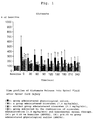
- the results of the experiments are shown in Figs. 1, 2 and 3.
- FIG. 3A and 3B represent the pathological findings from the untreated and nicaraven-treated groups at the level of the LI-II interspace (LI stands for lumbar segment 1 and II lumbar segment 2)
- Figs. 3C and 3D represent the pathological findings from the untreated and nicaraven-treated groups at the level of the LIII-IV interspace (LIII stands for lumbar segment 3 and IV lumbar segment 4).
- Each of the slices in Fig. 3 represents the accumulation of necrotic cells and neurons having a silver deposit (the cells that underwent the degeneration of axons and cytoplasm) in groups of animals each consisting of five.
- the shaded areas represent the necrotic cell region; in Figs. 3C and 3D, the dotted areas represent the neurons having a silver deposit.
- a marked increase in the concentrations of amino acids such as Glu and Tau after a spinal cord injury is considered to be one of the most important mechanisms involved as a secondary traumatic factor after the spinal cord injury. From the results of the experiments described above, it was found that in the pseudo-operation group, there was no change in the concentrations of amino acids during the four hours of measurement but that in the untreated group, Glu and Tau increased markedly by 6- and 4-folds, respectively, right after the spinal cord injury, with the Glu level remaining 2 to 3 times as high even after 4 hours. Thus, it was revealed that the sustained intravenous administration of nicaraven could suppress the increase in those amino acids in a dose-dependent manner (0.1 - 1.0 mg/kg/min).
- the group subjected to the combination of nicaraven administration and hypothermal spinal therapy showed substantially the same result as the group solely administered with nicaraven.
- Pathologically there was no difference between the untreated group and the nicaraven-treated group at the level of the LI-II interspace which was subjected to direct spinal cord compression and hemorrhage and necrosis were found to have occurred over a wide range.
- silver deposition was positive in part of the internuncial neurons in the third to the fourth layer and in almost all motor neurons in the eighth to the ninth layer in the untreated group.
- Nicaraven and its salts which are useful in the therapeutic agent of the invention for treating spinal cord injuries have less side effects than the conventional pharmacotherapeutic regimens and can heal or ameliorate spinal cord injuries, prevent the transition from an incomplete cord injury to a complete injury, and minimize the consequences of spinal cord injuries including neurological disorders such as quadriplegia, paralysis of the respitory muscle, damage to sensory functions and impairment of reflex functions, as well as impaired urinating or defecating function.
Landscapes
- Chemical & Material Sciences (AREA)
- Organic Chemistry (AREA)
- Health & Medical Sciences (AREA)
- Engineering & Computer Science (AREA)
- Bioinformatics & Cheminformatics (AREA)
- Biomedical Technology (AREA)
- Neurology (AREA)
- Neurosurgery (AREA)
- Pharmacology & Pharmacy (AREA)
- General Health & Medical Sciences (AREA)
- Medicinal Chemistry (AREA)
- Nuclear Medicine, Radiotherapy & Molecular Imaging (AREA)
- Chemical Kinetics & Catalysis (AREA)
- Life Sciences & Earth Sciences (AREA)
- Animal Behavior & Ethology (AREA)
- General Chemical & Material Sciences (AREA)
- Public Health (AREA)
- Veterinary Medicine (AREA)
- Hospice & Palliative Care (AREA)
- Psychiatry (AREA)
- Pharmaceuticals Containing Other Organic And Inorganic Compounds (AREA)
- Acyclic And Carbocyclic Compounds In Medicinal Compositions (AREA)
- Pyridine Compounds (AREA)
- Medicinal Preparation (AREA)
Applications Claiming Priority (3)
| Application Number | Priority Date | Filing Date | Title |
|---|---|---|---|
| JP65998/96 | 1996-03-22 | ||
| JP6599896 | 1996-03-22 | ||
| PCT/JP1997/000954 WO1997035577A1 (en) | 1996-03-22 | 1997-03-24 | Remedy for spinal injury |
Publications (2)
| Publication Number | Publication Date |
|---|---|
| EP0904782A1 true EP0904782A1 (de) | 1999-03-31 |
| EP0904782A4 EP0904782A4 (de) | 2003-07-30 |
Family
ID=13303194
Family Applications (1)
| Application Number | Title | Priority Date | Filing Date |
|---|---|---|---|
| EP97907430A Withdrawn EP0904782A4 (de) | 1996-03-22 | 1997-03-24 | Heilung von wirbelsäulenverletzungen |
Country Status (5)
| Country | Link |
|---|---|
| US (1) | US6090823A (de) |
| EP (1) | EP0904782A4 (de) |
| JP (1) | JPH09315972A (de) |
| AU (1) | AU1944297A (de) |
| WO (1) | WO1997035577A1 (de) |
Families Citing this family (6)
| Publication number | Priority date | Publication date | Assignee | Title |
|---|---|---|---|---|
| US6174548B1 (en) * | 1998-08-28 | 2001-01-16 | Andrx Pharmaceuticals, Inc. | Omeprazole formulation |
| US7582680B1 (en) * | 1998-11-12 | 2009-09-01 | Purdue Research Foundation | Methods and compositions for treating mammalian spinal cord injuries |
| AU4117701A (en) * | 2000-03-17 | 2001-09-24 | Toshio Tanaka | Heme oxygenase-1 inducers or induction enhancers |
| CA2740056A1 (en) | 2001-04-24 | 2002-11-21 | Purdue Research Foundation | Methods and compositions for treating mammalian nerve tissue injuries |
| US20050255098A1 (en) * | 2004-05-11 | 2005-11-17 | Rosen Steven D | Methods of treating traumatic spinal cord injury |
| US20090076085A1 (en) * | 2007-09-15 | 2009-03-19 | Protia, Llc | Deuterium-enriched nicraven |
Family Cites Families (10)
| Publication number | Priority date | Publication date | Assignee | Title |
|---|---|---|---|---|
| JPS5581861A (en) * | 1978-12-15 | 1980-06-20 | Chugai Pharmaceut Co Ltd | Nicotinamide derivative |
| JPS5675474A (en) * | 1979-11-22 | 1981-06-22 | Chugai Pharmaceut Co Ltd | Nicotinamide derivative and medicine containing the same |
| ES2061918T3 (es) * | 1988-12-27 | 1994-12-16 | Chugai Pharmaceutical Co Ltd | Procedimiento para la purificacion de 1,2-bis (nicotinamido) propano. |
| FR2644789B1 (fr) * | 1989-03-22 | 1995-02-03 | Roussel Uclaf | Nouveaux steroides 19-nor, 3-ceto comportant une chaine en 17 aminosubstituee, leur procede de preparation et les intermediaires de ce procede, leur application comme medicaments et les compositions pharmaceutiques les contenant |
| JPH0381222A (ja) * | 1989-08-22 | 1991-04-05 | Yoshitomi Pharmaceut Ind Ltd | 制癌剤 |
| JPH03279328A (ja) * | 1990-03-29 | 1991-12-10 | Chugai Pharmaceut Co Ltd | 虚血性心疾患治療剤 |
| JPH04178336A (ja) * | 1990-10-01 | 1992-06-25 | Akzo Nv | 脊髄外傷治療用セロトニン拮抗薬 |
| AU644500B2 (en) * | 1990-12-20 | 1993-12-09 | Merrell Dow Pharmaceuticals Inc. | 3-aryl-5-alkylthio-4h-1,2,4-triazoles for treatment of hyperreflexia due to spinal trauma |
| JP3170364B2 (ja) * | 1992-11-05 | 2001-05-28 | 中外製薬株式会社 | 放射線障害防護剤 |
| CA2085785C (en) * | 1992-12-18 | 2005-03-15 | Robert R. Hansebout | The use of 4-aminopyridine in the treatment of a neurological condition |
-
1997
- 1997-03-21 JP JP9068228A patent/JPH09315972A/ja not_active Withdrawn
- 1997-03-24 WO PCT/JP1997/000954 patent/WO1997035577A1/ja not_active Ceased
- 1997-03-24 EP EP97907430A patent/EP0904782A4/de not_active Withdrawn
- 1997-03-24 AU AU19442/97A patent/AU1944297A/en not_active Abandoned
- 1997-03-24 US US09/155,182 patent/US6090823A/en not_active Expired - Fee Related
Also Published As
| Publication number | Publication date |
|---|---|
| US6090823A (en) | 2000-07-18 |
| EP0904782A4 (de) | 2003-07-30 |
| AU1944297A (en) | 1997-10-17 |
| JPH09315972A (ja) | 1997-12-09 |
| WO1997035577A1 (en) | 1997-10-02 |
Similar Documents
| Publication | Publication Date | Title |
|---|---|---|
| DE69529156T2 (de) | Verwendung von amino-hydrierten chinazolinverbindungen und ihren derivaten zur entwöhnung bei drogenabhängigkeit | |
| RU2095060C1 (ru) | Композиция, обладающая аналгетической или противовоспалительной активностью, способ аналгезии или лечения аллергических заболеваний | |
| JPH09503778A (ja) | 鎮痛剤およびその使用 | |
| DE60037816T2 (de) | Pharmazeutische formulierung enthaltend megalatran und dessen pro-pharmaka | |
| DE60029340T2 (de) | Pharmazeutische zusammenstellungen enthaltend einen p2t rezeptor antagonist und melagatran | |
| EP1004316B1 (de) | Arzneimittel gegen diabetes-komplikationen | |
| KR100951542B1 (ko) | 방광 자극 및 과민성 방광을 치료하기 위한 약제학적 조성물 | |
| JP2001513814A (ja) | 小児科手術におけるレボブピバカインの使用 | |
| US6090823A (en) | Remedy for spinal injury | |
| KR19990023021A (ko) | 신규한 의약 용도 | |
| JP2720348B2 (ja) | 脳細胞機能障害改善剤 | |
| EP0363671A2 (de) | Verwendung von ACE-Inhibitoren gegen Neointimabildung nach Gefässverletzung | |
| RU2152215C1 (ru) | Применение ропивакаина при изготовлении фармацевтического препарата с анальгезирующим действием с минимальной моторной блокадой | |
| EP0305181A2 (de) | Ethyl-(+)-Apovincaminat zur Behandlung der Demyelinisierung klinischer Erscheinungen autoimmunen Ursprungs | |
| RU2089234C1 (ru) | Способ лечения воспалительных заболеваний гепатопанкреатодуоденальной зоны | |
| AU2005226901B2 (en) | Use of N-(2-aryl-propionyl)-sulfonamides for the treatment of spinal cord injury | |
| Margolis et al. | Treatment of acute gouty arthritis with pituitary adrenocorticotropic hormone (ACTH) | |
| KR20250005055A (ko) | 아스피린 및 기타 nsaid의 고 침투성 전구약물을 이용한 심혈관 질환의 예방 또는 치료 | |
| US5543421A (en) | Method of treatment of peripheral neuropathies and central neurodegenerative diseases | |
| Sabel et al. | Intracerebral injections of isotonic saline prevent behavioral deficits from brain damage | |
| WO1996002252A1 (de) | VERWENDUNG VON (S)-ADENOSYL-L-METHIONIN (SAMe) UND DESSEN PHYSIOLOGISCH VERTRÄGLICHEN SALZEN ZUR BEHANDLUNG VON REPERFUSIONSSCHÄDEN, DIE DURCH TEMPORÄRE FOKALE ISCHÄMIE AUSGELÖST WERDEN | |
| DE69421174T2 (de) | Verwendung von adenosin zur herstellung eines arzneimittels zur behandlung entzüdlicher reaktionen der lunge | |
| EP0363355A1 (de) | Arzneimittel, enthaltend lokalanästhetika und nukleoside sowie dessen verwendung zur behandlung von muskelverletzungen | |
| EP1196170B1 (de) | Verwendung einer makrolid-verbindung zur herstellung eines medikaments zur behandlung von gehirnschäden aufgrund von ischämie oder blutungen | |
| KR930007249B1 (ko) | 뇌혈관 수축 치료제 |
Legal Events
| Date | Code | Title | Description |
|---|---|---|---|
| PUAI | Public reference made under article 153(3) epc to a published international application that has entered the european phase |
Free format text: ORIGINAL CODE: 0009012 |
|
| 17P | Request for examination filed |
Effective date: 19981021 |
|
| AK | Designated contracting states |
Kind code of ref document: A1 Designated state(s): AT BE CH DE DK ES FI FR GB GR IE IT LI LU MC NL PT SE |
|
| A4 | Supplementary search report drawn up and despatched |
Effective date: 20030618 |
|
| 17Q | First examination report despatched |
Effective date: 20040330 |
|
| GRAP | Despatch of communication of intention to grant a patent |
Free format text: ORIGINAL CODE: EPIDOSNIGR1 |
|
| RIC1 | Information provided on ipc code assigned before grant |
Ipc: 7A 61P 25/28 B Ipc: 7C 07D 213/38 B Ipc: 7A 61K 31/44 A |
|
| RTI1 | Title (correction) |
Free format text: REMEDY FOR SPINAL INJURY COMPRISING N, N' PROPYLENE DINICOTINAMIDE |
|
| STAA | Information on the status of an ep patent application or granted ep patent |
Free format text: STATUS: THE APPLICATION IS DEEMED TO BE WITHDRAWN |
|
| 18D | Application deemed to be withdrawn |
Effective date: 20051011 |