EP0923010A2 - Programmierbare Steuerung - Google Patents
Programmierbare Steuerung Download PDFInfo
- Publication number
- EP0923010A2 EP0923010A2 EP98122521A EP98122521A EP0923010A2 EP 0923010 A2 EP0923010 A2 EP 0923010A2 EP 98122521 A EP98122521 A EP 98122521A EP 98122521 A EP98122521 A EP 98122521A EP 0923010 A2 EP0923010 A2 EP 0923010A2
- Authority
- EP
- European Patent Office
- Prior art keywords
- port
- memory
- user
- peripheral apparatus
- program
- Prior art date
- Legal status (The legal status is an assumption and is not a legal conclusion. Google has not performed a legal analysis and makes no representation as to the accuracy of the status listed.)
- Granted
Links
Images





Classifications
-
- G—PHYSICS
- G05—CONTROLLING; REGULATING
- G05B—CONTROL OR REGULATING SYSTEMS IN GENERAL; FUNCTIONAL ELEMENTS OF SUCH SYSTEMS; MONITORING OR TESTING ARRANGEMENTS FOR SUCH SYSTEMS OR ELEMENTS
- G05B19/00—Program-control systems
- G05B19/02—Program-control systems electric
- G05B19/04—Program control other than numerical control, i.e. in sequence controllers or logic controllers
- G05B19/05—Programmable logic controllers, e.g. simulating logic interconnections of signals according to ladder diagrams or function charts
-
- G—PHYSICS
- G05—CONTROLLING; REGULATING
- G05B—CONTROL OR REGULATING SYSTEMS IN GENERAL; FUNCTIONAL ELEMENTS OF SUCH SYSTEMS; MONITORING OR TESTING ARRANGEMENTS FOR SUCH SYSTEMS OR ELEMENTS
- G05B2219/00—Program-control systems
- G05B2219/10—Plc systems
- G05B2219/13—Plc programming
- G05B2219/13153—Modification, change of program in real time
-
- G—PHYSICS
- G05—CONTROLLING; REGULATING
- G05B—CONTROL OR REGULATING SYSTEMS IN GENERAL; FUNCTIONAL ELEMENTS OF SUCH SYSTEMS; MONITORING OR TESTING ARRANGEMENTS FOR SUCH SYSTEMS OR ELEMENTS
- G05B2219/00—Program-control systems
- G05B2219/10—Plc systems
- G05B2219/15—Plc structure of the system
- G05B2219/15118—Shared memory
Definitions
- This invention relates to a programmable controller including a plurality of processors for performing sequence operations, which has a port and an interface portion for communicating with a plurality of peripheral apparatus, and enables editing programs and monitoring performances simultaneously.
- a programmable controller 101 having two processors for performing sequence operations in the prior art is disclosed in Fig. 9.
- a central processing portion 10 includes a main processor 11, a sub processor 12 and a system program memory 7.
- the main processor 11 and the sub processor 12 are connected through a bus 20, and the system program memory (hereinafter system memory) 7 is connected with the bus B3 through a bus B4.
- system memory system memory
- either one of the main processor 11 and the sub processor 12 can access the system memory 7 through the bus B3 and B4.
- the main processor 11 is connected not only to a data memory 5 through a bus B1 but also to a user program memory (hereinafter user memory) 6 through a bus B2.
- a system program of the sub processor 12 is stored in the system memory 7, a user program is stored in the user memory 6 and I/O data such as results of operations are stored in the data memory 5.
- the sub processor 12 is connected to a port 9 through an interface portion 8 so as to communicate with a peripheral apparatus 110.
- the programmable controller 101 forms a programmable controller system together with input devices such as contacts, transducers or censors 1 (not indicated in Fig. 9) and with output devices such as relays, contactors, solenoids or stepping motors 3 (not indicated in Fig. 9).
- the main processor 11 is designed to operate or handle basic commands of simple bit-operations such as ON-OFF commands for contacts or coils, while the sub processor 12 is designed to operate or handle complicated commands such as arithmetic commands or application commands other than the basic commands.
- the sub processor 12 also executes respondent operation for the peripheral apparatus 110 and internal operations for the commands from the peripheral apparatus 110.
- the peripheral apparatus 110 can communicate with the main processor 11 through the port 9 and the interface portion 8 to the user memory 6, which enables to store a ladder-program composed thereby in the user memory 6 and also enables monitoring an operation process.
- the programmable controller in the related art is equipped with only a single set of the interface portion 8 and the port 9 for communicating with the peripheral apparatus 110, a user is forced to alternate screens of a display 111 of the peripheral apparatus 110 from a monitoring screen to a program-editing screen, or vice versa. For instance, when the user adjusts a performance of the programmable controller system at its start, he or she must change the screen from that of monitoring to that of program-editting to edit or debug the user program, and he or she must change the screen reversely to the monitoring screen from the program-editing screen after confirmation of the performance is over. When the performance of the programmable controller system is not working as is conceived, this procedure i.e., alternating screens, is required repeatedly to find out a cause of an error, which brings about inconvenience and troublesomeness in the trouble shooting.
- the programmable controller of the present invention includes an input port 2 for taking in an external signal, an output port 4 for outputting a signal for driving an external load, a first port 9A for communicating with a first peripheral apparatus 110A, a first interface portion 8A connected with said first port 9A, a user program memory 6 for storing a user program, a main processor 11 for performing an operation according to the user program, a data memory 5 for storing a result of the operation performed by the main processor 11, a sub processor 12 disposed so as to communicate with the first interface portion 8A and the main processor 11, and a system program memory 7 for storing a system program controlling the main processor 11 and the sub processor 12, wherein the main processor handles a basic command and said sub processor handles an application command, characterized in that the programmable controller further includes a second port 9B for communicating with a second peripheral apparatus 110B, the user program memory 6 is divided into at least two
- the programmable controller further includes a second sub processor 12B.
- the first port 9A communicates with the memory areas 6A,6B controlled by the sub processor 12 and the second port 9B communicates with the memory areas 6A,6B controlled by the second sub processor 12B.
- the programmable controller further includes a first peripheral apparatus 110A and a second peripheral apparatus 110B.
- the first peripheral apparatus is capable of monitoring a performance and editing the user program.
- the first peripheral apparatus is capable of accessing to the memory areas 6A, 6B through the port 9A.
- the second peripheral apparatus is capable of monitoring a performance and editing the user program.
- the second peripheral apparatus is capable of accessing to the memory areas 6A, 6B through the port 9B.
- a programmable controller convenient and efficient in trouble shooting is obtained by this invention.
- Fig. 8 discloses a basic construction of a programmable controller (hereinafter PC) 100.
- the PC 100 generally includes a central processing portion 10, a system program memory (hereinafter system memory) 7, a user program memory (hereinafter user memory) 6, a data memory 5, an input port 2, an output port 4, an interface portion 8 and a port 9.
- system memory system program memory
- user memory user program memory
- the central processing portion 10 not only handles operations such as logic operation or arithmetic operation but also controlls another elements included in the PC 100.
- the system memory 7 is connected with the central processing portion 10 and stores a system program including contents and procedures of operation of the central processing portion 10.
- the user memory 6, which is a read/write memory capable of rewriting the program stored therein, is also connected with the central processing portion 10 and stores the user program.
- the data memory 5, which is a read/write memory capable of rewriting the program stored therein, is connected with the central processing portion 10 and stores the data such as operation results of the central processing portion 10.
- the input port 2 is connected with the central processing portion 10 and disposed so as to enable a connection with the input device 1 for transferring an input signal therefrom.
- the output port 4 is connected with the central processing portion 10 and disposed so as to enable a connection with the output device 3 for transferring an output signal thereto.
- the input device 1 includes elements such as contacts, transducers or censors, and the output device 3 includes elements such as relays, contactors, solenoids or stepping motors.
- the port 9 is disposed so as to enable a connection with the peripheral apparatus 110, and is connected with the central processing portion 10 through the interface portion 8.
- PC 100 of the present invention has at least one sub processor 12 and at least one additional set of a port 9 and an interface portion 8.
- Fig. 1 shows a block diagram of PC of one embodiment of the present invention.
- PC 100 includes a sub processor 12, a set of a port 9B and an interface portion 8B and a switch 20 in addition to the basic construction.
- the sub processor is disposed within the central processing portion 10 and is connected with the main processor 11 through a bus B3.
- the sub processor is also connected with the system memory 7 through the bus B3 and a bus B4 so as to be controlled by the system program.
- the data memory is connected with the central processing portion through a bus B1 and the user memory is connected with the central processing portion 10 through a bus B2.
- a combination of a port 9A and an interface portion 8A and a combination of the port 9B and the interface portion 8B are connected with the sub processor 12, which enables the sub processor 12 to communicate with two peripheral apparatus 110A and 110B.
- the peripheral apparatus 110A has a display screen 111 and is disposed so as to be connected with the port 9A.
- the peripheral apparatus 110B has a display 112 and is disposed so as to be connected with the port 9B.
- the user memory is devided into a plurality of areas corresponding to the numbers of the sets of the port 9 and the interface portion 8, i.e., the numbers of the peripheral apparatus 110 to be connected.
- the user memory is devided into two areas 6A, 6B for storing the user programs composed by the user using the peripheral apparatus 110A, 110B respectively.
- the switch 20 sets the numbers of the user programs to be executed, sets a destination of the user program within the user memory 6, i.e., 6A or 6B, and selects the user program to be executed by the sub processor 12 from those stored in the areas of the user memory 6A and 6B. Since the sub processor 12 controls communication of the first port 9A and the second port 9B with the memory areas 6A,6B, the first peripheral apparatus 110A is capable of accessing to the memory areas 6A, 6B through the port 9A and the second peripheral apparatus 110B is capable of accessing to the memory areas 6A, 6B through the port 9B.
- each of the user program composed by the user using the peripheral apparatus 110A and the user program composed by the user using the peripheral apparatus 110B is taken into the sub processor 12 via interface portion 8A, 8B respectively, and is stored in either one of the areas of the user memory 6A, 6B according to the destination set by the switch 20.
- the sub processor 12 performs a sequence operation, it executes selected one of the user programs stored in the user memory 6A, 6B according to the setting of the switch 20.
- Fig. 2 shows a chart explaining a flow of a process in a sub processor in one embodiment of the present invention.
- the sub processor executes a main program stored in the system memory 7. It also performs a direct memory access (hereinafter DMA) transfer from the peripheral apparatus 110A, 110B in parallel to the execution of the main program.
- DMA direct memory access
- the sub processor 12 performs an interrupt for the main program by a timer, and judges priority in the processes, and performs the process having the highest priority. As is shown in Fig. 2 (b), the sub processor judges a completion of receiving on a communication protocol. When at least either one of the ports 9A, 9B is receiving data from corresponding peripheral apparatus 110A, 110B, the sub processor 12 performs other jobs. When receiving of the data is completed, the sub processor 12 executes performance such as editing the program, monitoring, and I/O set according to a communication command as a process for ports.
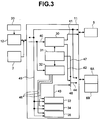
- the main processor 11 includes an address generator 30, a controller 31, a decorder 32, a program counter register 33, a program address register A 34 and a program address register B 35.
- the controller 31 is connected with the address generator 30 and the decorder 32 so as to be able to communicate with either of them. Both of the address generator 30 and the decorder 32 are connected with the sub processor 12 through a bus 40.
- the address generator 30 is connected with the data memory 5 through a bus 41 and also connected with the user memory 6 through a bus 42, a selector 48 and a bus 44.
- the decorder 32 is connected with the program counter 33, the program address register A 34 and the program address register B 35 through buses 46.
- the program counter 33, the program address register A 34 and the program address register B 35 are connected with the data memory 5 and the user memory 6 through a bus 45.
- the program counter 33 is also connected with the user memory 6 through a bus 43, the selector 48 and the bus 44.
- the controller 31 is connected with the user memory through a bus 47, the selector 48 and the bus 44.
- the user memory 6A and 6B is constructed by dividing the memory 6 according to an address of the memory area.
- the user memory 6a, 6B can also be constructed by individual memory chips.
- the sub processor 12 can access either one of the user memory by changing the address.
- the address generator 30 also generates an address in the data memory 5 and outputs on the bus 41.
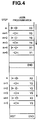
- the memory area in the user memory 6A, 6B is divided by the address, and an information about this division is controlled by an address that represents the first position of the divided memory area (hereinafter head address).
- the sub processor 12 stores this head address within the the program address register A 34 and the program address register B 35 beforehand.
- the sub processor 12 refers to the head address in case of accessing the user program 6A, 6B by a request of the peripheral apparatus 110A, 110B. For instance, in case of referring to the N th (N is a positive integer) step of the user program, the sub processor 12 accesses an address which is N ahead from the head address stored in the program address register A 34.
- the sub processor 12 stores a head address of the user program to be executed in the program counter register 33.
- the main processor 11 executes the user program sequentially counting up the program counter register 33.
- the contents of the program counter register 33 is supplied to the main procressor 11 as an address of the user memory 6A, 6B.
- the main processor can access the program counter register 33, the program address register A 34 and the program address register B 35, when they are selected by respective select signals 46a, 46b, 46c generated in the decorder 32 and outputted on the bus 46 in accordance with a signal outputted on bus 40 by the sub processor 12.
- the user memory 6A, 6B are divided into a plurality of areas (in this case, two areas).
- the first position of the divided memory area has its head address respectively, and the sub processor 12 controls the area defined from the head address "m" or "n” to the last step including "END" as a user program.
- a plurality of user programs defined above are stored in the user memory 6.
- the user memory 6 (6A, 6B) has a function of storing a plurality of user programs each including a head address
- the sub processor 12 has a function of being capable of accessing either one of the divided areas of the user memory.
- the sub processor 12 also has a function of communicating with the peripheral apparatus 110A, 110B.
- these functions are combined, which enables the peripheral apparatus 110A, 110B to access the divided areas 6A, 6B of the user memory 6 through the sub processor 12 respectively, and to display contents of the area 6A, 6B on their display screens 111, 112 respectively.
- the peripheral apparatus can perform different kind of processes or jobs at the same time.
- the programmable controller in this embodiment can perform monitoring and editing of the program at the same time, when a plurality of peripheral apparatus each having a display screen are connected.
- the PC 100 is also capable of connecting two peripheral apparatus 110A, 110B.
- PC 100 includes a sub processor 12 which is divided in two sub processors 12A, 12B, two sets of port and interface portion, i.e., a port 9A and an interface portion 8A and a port 9B and an interface portion 8B, a system memory 7 which is divided into two system memories 7A, 7B, a main processor 11, a bus controller 13, a switch 20, a data memory 5, a user memory divided into two areas 6A, 6B, an input port 2, and an output port 4.
- the sub processors 12A, 12B are disposed within the central processing portion 10 and are connected with the main processor 11 through the bus controller 13.
- the bus controller 13 controlls and switches the bus in such a manner that the sub processors can read the program to be processed when the sub processors 12A, 12B access the user memories 6A, 6B respectively or when the sub processors 12A, 12B accesses the data memory 5.
- the sub processor 7A is connected with the system memory 7A and the sub processor 7B is connected with the system memory 7B so as to be controlled by the system program.
- the system memory 7A stores a first system program and the system memory 7B stores a second system program.
- the first system program is not necessarily the same to the second system program.
- the sub processors 12A, 12B are connected with the main processor 11 through the bus controller 13.
- the data memory 5 is connected with the central processing portion 10 hrough a bus and the user memory 6 is connected with the central processing portion 10 through a bus.
- the combination of the port 9A, the interface portion 8A and the sub processor 12A enables the sub processor 12A to communicate with the peripheral apparatus 110A.
- the combination of the port 9B the interface portion 8B and the sub processor 12B enables the sub processor 12B to communicate with the peripheral apparatus 110B.
- the peripheral apparatus 110A, 110B have the display screens 111, 112 respectively.
- the user memory 6 is devided into two areas 6A, 6B for storing the user programs composed by the user using the peripheral apparatus 110A, 110B respectively.
- the switch 20 is connected with the bus controller 13 and sets the numbers of the user programs to be executed, sets a destination of the user program within the user memory 6, i.e., 6A or 6B, and selects the user program to be executed by the sub processor 12 from those stored in the areas of the user memory 6A and 6B.
- An information of many kinds of setting for the user memory 6A, 6B by the switch 20 is stored in a register (not shown in Fig.5) in the bus controller 13, which enables the sub processors 12A, 12B to read the information of the switch 20 by accessing the register.
- each of the user program composed by the user using the peripheral apparatus 110A and the user program composed by the user using the peripheral apparatus 110B is taken into the sub processor 12A, 12B via interface portion 8A, 8B respectively, and is stored in either one of the areas of the user memory 6A, 6B according to the destination set by the switch 20.
- the sub processor 12 performs a sequence operation, it executes selected one of the user programs stored in the user memory 6A, 6B according to the setting of the switch 20. In this embodiment, efficiency of minitoring and editing is improved.
- the PC 100 is also capable of connecting two peripheral apparatus 110A, 110B.
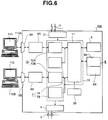
- PC 100 includes a sub processor 12 which is divided in two sub processors 12A, 12B, two sets of port and interface portion, i.e., a port 9A and an interface portion 8A and a port 9B and an interface portion 8B, a system memory 7 which is divided into two system memories 7A, 7B, a main processor 11, a switch 20, a data memory 5, a user memory divided into two areas 6A, 6B, an input port 2, and an output port 4.
- the sub processors 12A, 12B are disposed within the central processing portion 10 and are connected with the main processor 11.
- the sub processor 7A is connected with the system memory 7A and the sub processor 7B is connected with the system memory 7B so as to be controlled by the system program.
- the system memory 7A stores a first system program and the system memory 7B stores a second system program.
- the first system program is not necessarily the same to the second system program.
- the sub processors 12A, 12B are connected with the main processor 11.
- the data memory 5 is connected with the central processing portion 10 hrough a bus and the user memory 6 is connected with the central processing portion 10 through a bus.
- the combination of the port 9A, the interface portion 8A and the sub processor 12A enables the sub processor 12A to communicate with the peripheral apparatus 110A.
- the combination of the port 9B the interface portion 8B and the sub processor 12B enables the sub processor 12B to communicate with the peripheral apparatus 110B.
- the peripheral apparatus 110A, 110B have the display screens 111, 112 respectively.
- the user memory 6 is devided into two areas 6A, 6B for storing the user programs composed by the user using the peripheral apparatus 110A, 110B respectively.
- the switch 20 is connected with the main processor 11 and sets the numbers of the user programs to be executed, sets a destination of the user program within the user memory 6, i.e., 6A or 6B, and selects the user program to be executed by the sub processor 12 from those stored in the areas of the user memory 6A and 6B.
- All information of many kinds of setting for the user memory 6A, 6B by the switch 20 is stored in a register (not shown in Fig.6) in the main processor 11, which enables the sub processors 12A, 12B to read the information of the switch 20 by accessing the register.
- each of the user program composed by the user using the peripheral apparatus 110A and the user program composed by the user using the peripheral apparatus 110B is taken into the sub processor 12A, 12B via interface portion 8A, 8B respectively, and is stored in either one of the areas of the user memory 6A, 6B according to the destination set by the switch 20.
- the sub processor 12 performs a sequence operation, it executes selected one of the user programs stored in the user memory 6A, 6B according to the setting of the switch 20. In this embodiment, efficiency of minitoring and editing is improved. Further this embodiment can simplify its construction because no bus controller 13 is employed when compared to the second embodiment.
- the PC 100 is capable of connecting three peripheral apparatus 110A, 110B, 110C.
- the peripheral apparatus 110C has a display screens 113 similarly to the peripheral apparatus 110A, 110B.
- PC 100 includes an extra set of a port 9C and an interface portion 8C in addition to the two sets of port and interface portion, i.e., the port 9A and the interface portion 8A and the port 9B and the interface portion 8B, disclosed in Fig.6.
- the sub processor 12B communicates with two peripheral apparatus 110B, 110C, through the port 9B and the interface portion 8B and the port 9C and the interface portion 8C respectively.
- the user memory 6 is devided into three areas 6A, 6B, 6C for storing the user programs composed by the user using the peripheral apparatus 110A, 110B, 110C respectively.
- the switch 20 is connected with the main processor 11 and sets the numbers of the user programs to be executed, sets a destination of the user program within the user memory 6, i.e., 6A, 6B or 6C, and selects the user program to be executed by the sub processor 12 from those stored in the areas of the user memory 6A, 6B and 6C.
- An information of many kinds of setting for the user memory 6A, 6B, 6C by the switch 20 is stored in a register (not shown in Fig.
- the main processor 11 which enables the sub processors 12A, 12B, to read the information of the switch 20 by accessing the register.
- the user program composed by the user using the peripheral apparatus 110A is taken into the sub processor 12A via interface portion 8A and the user programs composed by the user using the peripheral apparatus 110B, 110C are taken into the sub processor 12B via interface portion 8B.
- Each of these programs is stored in either one of the areas of the user memory 6A, 6B, 6C according to the destination set by the switch 20.
- the other construction is the same as the third embodiment.
- above embodiments can perform monitoring and program-editing simultaneously, which provides a programable controller having high efficiency.
Landscapes
- Physics & Mathematics (AREA)
- General Physics & Mathematics (AREA)
- Engineering & Computer Science (AREA)
- Automation & Control Theory (AREA)
- Programmable Controllers (AREA)
- Control By Computers (AREA)
Applications Claiming Priority (2)
| Application Number | Priority Date | Filing Date | Title |
|---|---|---|---|
| JP34313897A JP3432728B2 (ja) | 1997-12-12 | 1997-12-12 | プログラマブルコントローラ |
| JP34313897 | 1997-12-12 |
Publications (3)
| Publication Number | Publication Date |
|---|---|
| EP0923010A2 true EP0923010A2 (de) | 1999-06-16 |
| EP0923010A3 EP0923010A3 (de) | 2002-08-21 |
| EP0923010B1 EP0923010B1 (de) | 2006-08-09 |
Family
ID=18359212
Family Applications (1)
| Application Number | Title | Priority Date | Filing Date |
|---|---|---|---|
| EP19980122521 Expired - Lifetime EP0923010B1 (de) | 1997-12-12 | 1998-11-30 | Programmierbare Steuerung |
Country Status (4)
| Country | Link |
|---|---|
| EP (1) | EP0923010B1 (de) |
| JP (1) | JP3432728B2 (de) |
| DE (1) | DE69835496T2 (de) |
| ES (1) | ES2270489T3 (de) |
Cited By (1)
| Publication number | Priority date | Publication date | Assignee | Title |
|---|---|---|---|---|
| GB2386973A (en) * | 2002-02-12 | 2003-10-01 | Fisher Rosemount Systems Inc | A versatile controller for a process industry. |
Families Citing this family (3)
| Publication number | Priority date | Publication date | Assignee | Title |
|---|---|---|---|---|
| JP4978373B2 (ja) * | 2007-08-27 | 2012-07-18 | 富士電機株式会社 | プログラマブルコントローラ、そのcpuモジュール |
| JP5661222B1 (ja) * | 2014-01-31 | 2015-01-28 | 三菱電機株式会社 | 監視制御システム及び制御装置 |
| JP6857153B2 (ja) * | 2018-03-29 | 2021-04-14 | 株式会社日立産機システム | コントロール装置 |
Family Cites Families (5)
| Publication number | Priority date | Publication date | Assignee | Title |
|---|---|---|---|---|
| DE3440917A1 (de) * | 1984-11-09 | 1986-05-15 | Inter Control Hermann Köhler Elektrik GmbH & Co KG, 8500 Nürnberg | Speicherprogrammierbare steuerungsvorrichtung |
| JP2834837B2 (ja) * | 1990-03-30 | 1998-12-14 | 松下電工株式会社 | プログラマブルコントローラ |
| US5212631A (en) * | 1990-08-31 | 1993-05-18 | Allen-Bradley Company, Inc. | Programmable controller processor module having multiple program instruction execution sections |
| CA2056829A1 (en) * | 1990-12-26 | 1992-06-27 | Allen-Bradley Company Inc. | Programmable controller processor for concurrently executing multiple user programs |
| JPH08286712A (ja) * | 1995-04-10 | 1996-11-01 | Fanuc Ltd | シーケンス・プログラムの編集方式 |
-
1997
- 1997-12-12 JP JP34313897A patent/JP3432728B2/ja not_active Expired - Fee Related
-
1998
- 1998-11-30 EP EP19980122521 patent/EP0923010B1/de not_active Expired - Lifetime
- 1998-11-30 DE DE1998635496 patent/DE69835496T2/de not_active Expired - Lifetime
- 1998-11-30 ES ES98122521T patent/ES2270489T3/es not_active Expired - Lifetime
Cited By (4)
| Publication number | Priority date | Publication date | Assignee | Title |
|---|---|---|---|---|
| GB2386973A (en) * | 2002-02-12 | 2003-10-01 | Fisher Rosemount Systems Inc | A versatile controller for a process industry. |
| US6973508B2 (en) | 2002-02-12 | 2005-12-06 | Fisher-Rosemount Systems, Inc. | Highly versatile process control system controller |
| GB2386973B (en) * | 2002-02-12 | 2006-08-30 | Fisher Rosemount Systems Inc | Highly versatile process control system controller |
| US7181550B2 (en) | 2002-02-12 | 2007-02-20 | Fisher-Rosemount Systems, Inc. | Highly versatile process control system controller |
Also Published As
| Publication number | Publication date |
|---|---|
| EP0923010B1 (de) | 2006-08-09 |
| JP3432728B2 (ja) | 2003-08-04 |
| DE69835496T2 (de) | 2007-02-22 |
| EP0923010A3 (de) | 2002-08-21 |
| ES2270489T3 (es) | 2007-04-01 |
| JPH11175113A (ja) | 1999-07-02 |
| DE69835496D1 (de) | 2006-09-21 |
Similar Documents
| Publication | Publication Date | Title |
|---|---|---|
| JP2829091B2 (ja) | データ処理システム | |
| EP0923010A2 (de) | Programmierbare Steuerung | |
| EP0230316A2 (de) | Programmsteuerung | |
| JPS6216289A (ja) | 読出し専用メモリ | |
| JPS58178445A (ja) | デ−タ処理装置 | |
| JPS6371761A (ja) | オンラインシステムのシステム条件定義方式 | |
| JPH08221106A (ja) | プログラマブルコントローラ | |
| JP4037941B2 (ja) | 制御装置 | |
| JPS6292006A (ja) | 機械インタ−フエイス装置 | |
| JPS59148918A (ja) | プログラムロ−ド方式 | |
| JPH0311457A (ja) | マイクロコンピュータシステムのモニタ用表示方式 | |
| JPH04223522A (ja) | マンマシンインタフェース装置 | |
| JPH05241986A (ja) | 入出力命令リトライ方式 | |
| JPS58175038A (ja) | ストア−ドプログラム方式の電子機器 | |
| JPS61128335A (ja) | マイクロプログラムロ−ド処理方式 | |
| JPH0713922A (ja) | データ伝送システム | |
| JPH0335326A (ja) | マイクロプロセッサ | |
| JPH03113503A (ja) | 産業用コンピュータ | |
| JPH10171509A (ja) | プロセス制御装置 | |
| JPH02176959A (ja) | バス選択回路 | |
| JPH06242821A (ja) | プログラマブルコントローラ | |
| JPH07234858A (ja) | 通信機能付きプロセッサ | |
| JPH0282342A (ja) | データ通信装置 | |
| JPH09311738A (ja) | インタフエース拡張カード | |
| JPS60215270A (ja) | ダイレクトメモリアクセス方式 |
Legal Events
| Date | Code | Title | Description |
|---|---|---|---|
| PUAI | Public reference made under article 153(3) epc to a published international application that has entered the european phase |
Free format text: ORIGINAL CODE: 0009012 |
|
| 17P | Request for examination filed |
Effective date: 19981130 |
|
| AK | Designated contracting states |
Kind code of ref document: A2 Designated state(s): AT BE CH CY DE DK ES FI FR GB GR IE IT LI LU MC NL PT SE |
|
| AX | Request for extension of the european patent |
Free format text: AL;LT;LV;MK;RO;SI |
|
| PUAL | Search report despatched |
Free format text: ORIGINAL CODE: 0009013 |
|
| AK | Designated contracting states |
Kind code of ref document: A3 Designated state(s): AT BE CH CY DE DK ES FI FR GB GR IE IT LI LU MC NL PT SE |
|
| AX | Request for extension of the european patent |
Free format text: AL;LT;LV;MK;RO;SI |
|
| RIC1 | Information provided on ipc code assigned before grant |
Free format text: 7G 05B 19/042 A, 7G 05B 19/05 B |
|
| 17Q | First examination report despatched |
Effective date: 20030214 |
|
| AKX | Designation fees paid |
Designated state(s): DE ES IT NL |
|
| GRAP | Despatch of communication of intention to grant a patent |
Free format text: ORIGINAL CODE: EPIDOSNIGR1 |
|
| GRAS | Grant fee paid |
Free format text: ORIGINAL CODE: EPIDOSNIGR3 |
|
| GRAA | (expected) grant |
Free format text: ORIGINAL CODE: 0009210 |
|
| AK | Designated contracting states |
Kind code of ref document: B1 Designated state(s): DE ES IT NL |
|
| PG25 | Lapsed in a contracting state [announced via postgrant information from national office to epo] |
Ref country code: IT Free format text: LAPSE BECAUSE OF FAILURE TO SUBMIT A TRANSLATION OF THE DESCRIPTION OR TO PAY THE FEE WITHIN THE PRE;WARNING: LAPSES OF ITALIAN PATENTS WITH EFFECTIVE DATE BEFORE 2007 MAY HAVE OCCURRED AT ANY TIME BEFORE 2007. THE CORRECT EFFECTIVE DATE MAY BE DIFFERENT FROM THE ONE RECORDED.SCRIBED TIME-LIMIT Effective date: 20060809 |
|
| REF | Corresponds to: |
Ref document number: 69835496 Country of ref document: DE Date of ref document: 20060921 Kind code of ref document: P |
|
| REG | Reference to a national code |
Ref country code: ES Ref legal event code: FG2A Ref document number: 2270489 Country of ref document: ES Kind code of ref document: T3 |
|
| PLBE | No opposition filed within time limit |
Free format text: ORIGINAL CODE: 0009261 |
|
| STAA | Information on the status of an ep patent application or granted ep patent |
Free format text: STATUS: NO OPPOSITION FILED WITHIN TIME LIMIT |
|
| 26N | No opposition filed |
Effective date: 20070510 |
|
| PGFP | Annual fee paid to national office [announced via postgrant information from national office to epo] |
Ref country code: DE Payment date: 20131127 Year of fee payment: 16 |
|
| PGFP | Annual fee paid to national office [announced via postgrant information from national office to epo] |
Ref country code: ES Payment date: 20131011 Year of fee payment: 16 Ref country code: NL Payment date: 20131010 Year of fee payment: 16 Ref country code: IT Payment date: 20131115 Year of fee payment: 16 |
|
| REG | Reference to a national code |
Ref country code: DE Ref legal event code: R119 Ref document number: 69835496 Country of ref document: DE |
|
| REG | Reference to a national code |
Ref country code: NL Ref legal event code: V1 Effective date: 20150601 |
|
| PG25 | Lapsed in a contracting state [announced via postgrant information from national office to epo] |
Ref country code: NL Free format text: LAPSE BECAUSE OF NON-PAYMENT OF DUE FEES Effective date: 20150601 |
|
| PG25 | Lapsed in a contracting state [announced via postgrant information from national office to epo] |
Ref country code: DE Free format text: LAPSE BECAUSE OF NON-PAYMENT OF DUE FEES Effective date: 20150602 |
|
| REG | Reference to a national code |
Ref country code: ES Ref legal event code: FD2A Effective date: 20151229 |
|
| PG25 | Lapsed in a contracting state [announced via postgrant information from national office to epo] |
Ref country code: IT Free format text: LAPSE BECAUSE OF NON-PAYMENT OF DUE FEES Effective date: 20141130 |
|
| PG25 | Lapsed in a contracting state [announced via postgrant information from national office to epo] |
Ref country code: ES Free format text: LAPSE BECAUSE OF NON-PAYMENT OF DUE FEES Effective date: 20141201 |