EP0970247B1 - Detection of dna damaging agents - Google Patents
Detection of dna damaging agents Download PDFInfo
- Publication number
- EP0970247B1 EP0970247B1 EP98913889A EP98913889A EP0970247B1 EP 0970247 B1 EP0970247 B1 EP 0970247B1 EP 98913889 A EP98913889 A EP 98913889A EP 98913889 A EP98913889 A EP 98913889A EP 0970247 B1 EP0970247 B1 EP 0970247B1
- Authority
- EP
- European Patent Office
- Prior art keywords
- dna
- recombinant vector
- cells
- yeast
- vector
- Prior art date
- Legal status (The legal status is an assumption and is not a legal conclusion. Google has not performed a legal analysis and makes no representation as to the accuracy of the status listed.)
- Expired - Lifetime
Links
- 239000012623 DNA damaging agent Substances 0.000 title description 19
- 238000001514 detection method Methods 0.000 title description 2
- 239000013598 vector Substances 0.000 claims abstract description 97
- 108020004414 DNA Proteins 0.000 claims abstract description 79
- 108090000623 proteins and genes Proteins 0.000 claims abstract description 42
- 102000053602 DNA Human genes 0.000 claims abstract description 34
- 230000001105 regulatory effect Effects 0.000 claims abstract description 28
- 102000004169 proteins and genes Human genes 0.000 claims abstract description 26
- 108091028043 Nucleic acid sequence Proteins 0.000 claims abstract description 19
- 230000014509 gene expression Effects 0.000 claims abstract description 17
- 108020004511 Recombinant DNA Proteins 0.000 claims abstract description 9
- 210000004027 cell Anatomy 0.000 claims description 118
- 240000004808 Saccharomyces cerevisiae Species 0.000 claims description 58
- 235000014680 Saccharomyces cerevisiae Nutrition 0.000 claims description 57
- 238000000034 method Methods 0.000 claims description 55
- 239000012634 fragment Substances 0.000 claims description 48
- 239000005090 green fluorescent protein Substances 0.000 claims description 48
- 108010043121 Green Fluorescent Proteins Proteins 0.000 claims description 47
- 102000004144 Green Fluorescent Proteins Human genes 0.000 claims description 47
- 230000005778 DNA damage Effects 0.000 claims description 36
- 231100000277 DNA damage Toxicity 0.000 claims description 36
- 239000003795 chemical substances by application Substances 0.000 claims description 33
- YQNRVGJCPCNMKT-LFVJCYFKSA-N 2-[(e)-[[2-(4-benzylpiperazin-1-ium-1-yl)acetyl]hydrazinylidene]methyl]-6-prop-2-enylphenolate Chemical compound [O-]C1=C(CC=C)C=CC=C1\C=N\NC(=O)C[NH+]1CCN(CC=2C=CC=CC=2)CC1 YQNRVGJCPCNMKT-LFVJCYFKSA-N 0.000 claims description 24
- 239000013612 plasmid Substances 0.000 claims description 24
- 101100462537 Caenorhabditis elegans pac-1 gene Proteins 0.000 claims description 23
- 101100117764 Mus musculus Dusp2 gene Proteins 0.000 claims description 23
- 101000904868 Homo sapiens Transcriptional regulator ATRX Proteins 0.000 claims description 19
- 102100023931 Transcriptional regulator ATRX Human genes 0.000 claims description 19
- 239000000284 extract Substances 0.000 claims description 16
- 102200076454 rs104894848 Human genes 0.000 claims description 15
- 102100024630 Asc-type amino acid transporter 1 Human genes 0.000 claims description 12
- 101150081875 Slc7a10 gene Proteins 0.000 claims description 12
- 150000001875 compounds Chemical class 0.000 claims description 11
- 230000029087 digestion Effects 0.000 claims description 11
- XLYOFNOQVPJJNP-UHFFFAOYSA-N water Substances O XLYOFNOQVPJJNP-UHFFFAOYSA-N 0.000 claims description 11
- 230000008439 repair process Effects 0.000 claims description 9
- 101150043522 HO gene Proteins 0.000 claims description 8
- 210000000349 chromosome Anatomy 0.000 claims description 8
- 239000002609 medium Substances 0.000 claims description 8
- 239000003814 drug Substances 0.000 claims description 7
- 239000002537 cosmetic Substances 0.000 claims description 5
- 239000002778 food additive Substances 0.000 claims description 5
- 235000013373 food additive Nutrition 0.000 claims description 5
- 238000012544 monitoring process Methods 0.000 claims description 5
- 210000000172 cytosol Anatomy 0.000 claims description 4
- 108091008146 restriction endonucleases Proteins 0.000 claims description 4
- 239000003295 industrial effluent Substances 0.000 claims description 3
- 239000001963 growth medium Substances 0.000 claims description 2
- 101150096292 Ppme1 gene Proteins 0.000 claims 2
- 239000000356 contaminant Substances 0.000 claims 2
- 230000033616 DNA repair Effects 0.000 abstract description 4
- 230000033228 biological regulation Effects 0.000 abstract description 2
- 230000001738 genotoxic effect Effects 0.000 abstract description 2
- 238000012360 testing method Methods 0.000 abstract description 2
- 231100000024 genotoxic Toxicity 0.000 abstract 1
- MBABOKRGFJTBAE-UHFFFAOYSA-N methyl methanesulfonate Chemical compound COS(C)(=O)=O MBABOKRGFJTBAE-UHFFFAOYSA-N 0.000 description 20
- 238000003752 polymerase chain reaction Methods 0.000 description 12
- 210000005253 yeast cell Anatomy 0.000 description 12
- 238000005259 measurement Methods 0.000 description 9
- 241000894006 Bacteria Species 0.000 description 7
- 238000000149 argon plasma sintering Methods 0.000 description 7
- 230000003389 potentiating effect Effects 0.000 description 7
- 239000000047 product Substances 0.000 description 7
- 238000003556 assay Methods 0.000 description 6
- 230000000694 effects Effects 0.000 description 6
- 230000005284 excitation Effects 0.000 description 6
- 102000039446 nucleic acids Human genes 0.000 description 6
- 108020004707 nucleic acids Proteins 0.000 description 6
- 150000007523 nucleic acids Chemical class 0.000 description 6
- 238000013518 transcription Methods 0.000 description 6
- 230000035897 transcription Effects 0.000 description 6
- 101150026685 RAD54 gene Proteins 0.000 description 5
- 230000000692 anti-sense effect Effects 0.000 description 5
- 230000008901 benefit Effects 0.000 description 5
- 230000006378 damage Effects 0.000 description 5
- 238000002474 experimental method Methods 0.000 description 5
- 230000006698 induction Effects 0.000 description 5
- 230000010354 integration Effects 0.000 description 5
- 238000010953 Ames test Methods 0.000 description 4
- 231100000039 Ames test Toxicity 0.000 description 4
- ISAKRJDGNUQOIC-UHFFFAOYSA-N Uracil Chemical compound O=C1C=CNC(=O)N1 ISAKRJDGNUQOIC-UHFFFAOYSA-N 0.000 description 4
- SBUJHOSQTJFQJX-NOAMYHISSA-N kanamycin Chemical compound O[C@@H]1[C@@H](O)[C@H](O)[C@@H](CN)O[C@@H]1O[C@H]1[C@H](O)[C@@H](O[C@@H]2[C@@H]([C@@H](N)[C@H](O)[C@@H](CO)O2)O)[C@H](N)C[C@@H]1N SBUJHOSQTJFQJX-NOAMYHISSA-N 0.000 description 4
- 230000035772 mutation Effects 0.000 description 4
- 230000003362 replicative effect Effects 0.000 description 4
- 230000028617 response to DNA damage stimulus Effects 0.000 description 4
- 230000035945 sensitivity Effects 0.000 description 4
- 108091026890 Coding region Proteins 0.000 description 3
- 238000012408 PCR amplification Methods 0.000 description 3
- 108091081024 Start codon Proteins 0.000 description 3
- 101150050575 URA3 gene Proteins 0.000 description 3
- 150000001413 amino acids Chemical group 0.000 description 3
- 229960000723 ampicillin Drugs 0.000 description 3
- AVKUERGKIZMTKX-NJBDSQKTSA-N ampicillin Chemical compound C1([C@@H](N)C(=O)N[C@H]2[C@H]3SC([C@@H](N3C2=O)C(O)=O)(C)C)=CC=CC=C1 AVKUERGKIZMTKX-NJBDSQKTSA-N 0.000 description 3
- 239000011324 bead Substances 0.000 description 3
- 238000005119 centrifugation Methods 0.000 description 3
- 239000003344 environmental pollutant Substances 0.000 description 3
- 229930027917 kanamycin Natural products 0.000 description 3
- 229960000318 kanamycin Drugs 0.000 description 3
- 229930182823 kanamycin A Natural products 0.000 description 3
- 230000002018 overexpression Effects 0.000 description 3
- 231100000719 pollutant Toxicity 0.000 description 3
- 230000010076 replication Effects 0.000 description 3
- 238000012216 screening Methods 0.000 description 3
- 238000001228 spectrum Methods 0.000 description 3
- 231100000419 toxicity Toxicity 0.000 description 3
- 230000001988 toxicity Effects 0.000 description 3
- FWMNVWWHGCHHJJ-SKKKGAJSSA-N 4-amino-1-[(2r)-6-amino-2-[[(2r)-2-[[(2r)-2-[[(2r)-2-amino-3-phenylpropanoyl]amino]-3-phenylpropanoyl]amino]-4-methylpentanoyl]amino]hexanoyl]piperidine-4-carboxylic acid Chemical compound C([C@H](C(=O)N[C@H](CC(C)C)C(=O)N[C@H](CCCCN)C(=O)N1CCC(N)(CC1)C(O)=O)NC(=O)[C@H](N)CC=1C=CC=CC=1)C1=CC=CC=C1 FWMNVWWHGCHHJJ-SKKKGAJSSA-N 0.000 description 2
- 108020004705 Codon Proteins 0.000 description 2
- 230000006820 DNA synthesis Effects 0.000 description 2
- 241000588724 Escherichia coli Species 0.000 description 2
- 241000206602 Eukaryota Species 0.000 description 2
- 241000282326 Felis catus Species 0.000 description 2
- 101150066002 GFP gene Proteins 0.000 description 2
- 108700039691 Genetic Promoter Regions Proteins 0.000 description 2
- WQZGKKKJIJFFOK-GASJEMHNSA-N Glucose Natural products OC[C@H]1OC(O)[C@H](O)[C@@H](O)[C@@H]1O WQZGKKKJIJFFOK-GASJEMHNSA-N 0.000 description 2
- VSNHCAURESNICA-UHFFFAOYSA-N Hydroxyurea Chemical compound NC(=O)NO VSNHCAURESNICA-UHFFFAOYSA-N 0.000 description 2
- KYRVNWMVYQXFEU-UHFFFAOYSA-N Nocodazole Chemical compound C1=C2NC(NC(=O)OC)=NC2=CC=C1C(=O)C1=CC=CS1 KYRVNWMVYQXFEU-UHFFFAOYSA-N 0.000 description 2
- 108700008625 Reporter Genes Proteins 0.000 description 2
- -1 candidate foodstuffs Substances 0.000 description 2
- 230000022131 cell cycle Effects 0.000 description 2
- 230000010261 cell growth Effects 0.000 description 2
- 238000003271 compound fluorescence assay Methods 0.000 description 2
- 238000011109 contamination Methods 0.000 description 2
- 238000013461 design Methods 0.000 description 2
- 239000012153 distilled water Substances 0.000 description 2
- 238000000295 emission spectrum Methods 0.000 description 2
- 239000011536 extraction buffer Substances 0.000 description 2
- 238000001502 gel electrophoresis Methods 0.000 description 2
- 239000011521 glass Substances 0.000 description 2
- 239000008103 glucose Substances 0.000 description 2
- 230000012010 growth Effects 0.000 description 2
- 229960001330 hydroxycarbamide Drugs 0.000 description 2
- 230000001939 inductive effect Effects 0.000 description 2
- 230000002045 lasting effect Effects 0.000 description 2
- 238000004519 manufacturing process Methods 0.000 description 2
- 244000005700 microbiome Species 0.000 description 2
- 230000011278 mitosis Effects 0.000 description 2
- 231100000350 mutagenesis Toxicity 0.000 description 2
- 238000002703 mutagenesis Methods 0.000 description 2
- 231100000219 mutagenic Toxicity 0.000 description 2
- 230000003505 mutagenic effect Effects 0.000 description 2
- 229950006344 nocodazole Drugs 0.000 description 2
- 239000002773 nucleotide Substances 0.000 description 2
- 125000003729 nucleotide group Chemical group 0.000 description 2
- 229920001184 polypeptide Polymers 0.000 description 2
- 238000002360 preparation method Methods 0.000 description 2
- 102000004196 processed proteins & peptides Human genes 0.000 description 2
- 108090000765 processed proteins & peptides Proteins 0.000 description 2
- 230000004044 response Effects 0.000 description 2
- 239000006228 supernatant Substances 0.000 description 2
- 230000009466 transformation Effects 0.000 description 2
- 230000001131 transforming effect Effects 0.000 description 2
- 238000011144 upstream manufacturing Methods 0.000 description 2
- 229940035893 uracil Drugs 0.000 description 2
- NKDFYOWSKOHCCO-YPVLXUMRSA-N 20-hydroxyecdysone Chemical compound C1[C@@H](O)[C@@H](O)C[C@]2(C)[C@@H](CC[C@@]3([C@@H]([C@@](C)(O)[C@H](O)CCC(C)(O)C)CC[C@]33O)C)C3=CC(=O)[C@@H]21 NKDFYOWSKOHCCO-YPVLXUMRSA-N 0.000 description 1
- 208000005623 Carcinogenesis Diseases 0.000 description 1
- 208000032170 Congenital Abnormalities Diseases 0.000 description 1
- 241000195493 Cryptophyta Species 0.000 description 1
- 102000012410 DNA Ligases Human genes 0.000 description 1
- 108010061982 DNA Ligases Proteins 0.000 description 1
- 102000011724 DNA Repair Enzymes Human genes 0.000 description 1
- 108010076525 DNA Repair Enzymes Proteins 0.000 description 1
- 108050009160 DNA polymerase 1 Proteins 0.000 description 1
- 230000004543 DNA replication Effects 0.000 description 1
- 108010014303 DNA-directed DNA polymerase Proteins 0.000 description 1
- 102000016928 DNA-directed DNA polymerase Human genes 0.000 description 1
- 102000004163 DNA-directed RNA polymerases Human genes 0.000 description 1
- 108090000626 DNA-directed RNA polymerases Proteins 0.000 description 1
- 241000196324 Embryophyta Species 0.000 description 1
- 102000004190 Enzymes Human genes 0.000 description 1
- 108090000790 Enzymes Proteins 0.000 description 1
- 230000005526 G1 to G0 transition Effects 0.000 description 1
- 108091005973 GFP derivatives Proteins 0.000 description 1
- 241000238631 Hexapoda Species 0.000 description 1
- FFEARJCKVFRZRR-BYPYZUCNSA-N L-methionine Chemical compound CSCC[C@H](N)C(O)=O FFEARJCKVFRZRR-BYPYZUCNSA-N 0.000 description 1
- 241001465754 Metazoa Species 0.000 description 1
- 102000029749 Microtubule Human genes 0.000 description 1
- 108091022875 Microtubule Proteins 0.000 description 1
- 108091092724 Noncoding DNA Proteins 0.000 description 1
- 102000004160 Phosphoric Monoester Hydrolases Human genes 0.000 description 1
- 108090000608 Phosphoric Monoester Hydrolases Proteins 0.000 description 1
- 241000607565 Photobacterium phosphoreum Species 0.000 description 1
- 102000000505 Ribonucleotide Reductases Human genes 0.000 description 1
- 108010041388 Ribonucleotide Reductases Proteins 0.000 description 1
- 108020001027 Ribosomal DNA Proteins 0.000 description 1
- 108091006631 SLC13A4 Proteins 0.000 description 1
- 230000027151 SOS response Effects 0.000 description 1
- 241000293869 Salmonella enterica subsp. enterica serovar Typhimurium Species 0.000 description 1
- 241000242583 Scyphozoa Species 0.000 description 1
- MTCFGRXMJLQNBG-UHFFFAOYSA-N Serine Natural products OCC(N)C(O)=O MTCFGRXMJLQNBG-UHFFFAOYSA-N 0.000 description 1
- 102100035209 Solute carrier family 13 member 4 Human genes 0.000 description 1
- AYFVYJQAPQTCCC-UHFFFAOYSA-N THREONINE Chemical compound CC(O)C(N)C(O)=O AYFVYJQAPQTCCC-UHFFFAOYSA-N 0.000 description 1
- 108091023040 Transcription factor Proteins 0.000 description 1
- 102000040945 Transcription factor Human genes 0.000 description 1
- 108091005971 Wild-type GFP Proteins 0.000 description 1
- 238000010521 absorption reaction Methods 0.000 description 1
- 230000004913 activation Effects 0.000 description 1
- 238000013019 agitation Methods 0.000 description 1
- 230000003321 amplification Effects 0.000 description 1
- XKRFYHLGVUSROY-UHFFFAOYSA-N argon Substances [Ar] XKRFYHLGVUSROY-UHFFFAOYSA-N 0.000 description 1
- 229910052786 argon Inorganic materials 0.000 description 1
- 230000001580 bacterial effect Effects 0.000 description 1
- 230000003115 biocidal effect Effects 0.000 description 1
- 230000015572 biosynthetic process Effects 0.000 description 1
- 244000309466 calf Species 0.000 description 1
- 230000036952 cancer formation Effects 0.000 description 1
- 231100000504 carcinogenesis Toxicity 0.000 description 1
- 230000036755 cellular response Effects 0.000 description 1
- 239000003153 chemical reaction reagent Substances 0.000 description 1
- 238000010367 cloning Methods 0.000 description 1
- 238000010276 construction Methods 0.000 description 1
- 238000005520 cutting process Methods 0.000 description 1
- 238000011161 development Methods 0.000 description 1
- 230000018109 developmental process Effects 0.000 description 1
- 238000010790 dilution Methods 0.000 description 1
- 239000012895 dilution Substances 0.000 description 1
- 238000005516 engineering process Methods 0.000 description 1
- 108010048367 enhanced green fluorescent protein Proteins 0.000 description 1
- 210000003527 eukaryotic cell Anatomy 0.000 description 1
- 238000000605 extraction Methods 0.000 description 1
- 230000002068 genetic effect Effects 0.000 description 1
- 231100000025 genetic toxicology Toxicity 0.000 description 1
- 238000003306 harvesting Methods 0.000 description 1
- 229910001385 heavy metal Inorganic materials 0.000 description 1
- 230000002363 herbicidal effect Effects 0.000 description 1
- 239000004009 herbicide Substances 0.000 description 1
- 230000006801 homologous recombination Effects 0.000 description 1
- 238000002744 homologous recombination Methods 0.000 description 1
- 238000010348 incorporation Methods 0.000 description 1
- 238000011534 incubation Methods 0.000 description 1
- 239000003112 inhibitor Substances 0.000 description 1
- 230000002401 inhibitory effect Effects 0.000 description 1
- 239000002054 inoculum Substances 0.000 description 1
- 230000000968 intestinal effect Effects 0.000 description 1
- 230000031700 light absorption Effects 0.000 description 1
- XIXADJRWDQXREU-UHFFFAOYSA-M lithium acetate Chemical compound [Li+].CC([O-])=O XIXADJRWDQXREU-UHFFFAOYSA-M 0.000 description 1
- 210000004962 mammalian cell Anatomy 0.000 description 1
- 239000000463 material Substances 0.000 description 1
- 230000013011 mating Effects 0.000 description 1
- 230000007246 mechanism Effects 0.000 description 1
- 229930182817 methionine Natural products 0.000 description 1
- 230000001035 methylating effect Effects 0.000 description 1
- 210000004688 microtubule Anatomy 0.000 description 1
- 239000000203 mixture Substances 0.000 description 1
- 238000001823 molecular biology technique Methods 0.000 description 1
- 238000004848 nephelometry Methods 0.000 description 1
- 231100000252 nontoxic Toxicity 0.000 description 1
- 230000003000 nontoxic effect Effects 0.000 description 1
- 238000003199 nucleic acid amplification method Methods 0.000 description 1
- 239000008188 pellet Substances 0.000 description 1
- 239000002243 precursor Substances 0.000 description 1
- 238000000751 protein extraction Methods 0.000 description 1
- 238000006862 quantum yield reaction Methods 0.000 description 1
- 230000006798 recombination Effects 0.000 description 1
- 238000005215 recombination Methods 0.000 description 1
- 230000009467 reduction Effects 0.000 description 1
- 230000008263 repair mechanism Effects 0.000 description 1
- 229920006395 saturated elastomer Polymers 0.000 description 1
- 238000005204 segregation Methods 0.000 description 1
- 239000013605 shuttle vector Substances 0.000 description 1
- 230000005783 single-strand break Effects 0.000 description 1
- 239000007858 starting material Substances 0.000 description 1
- 239000008223 sterile water Substances 0.000 description 1
- 239000000126 substance Substances 0.000 description 1
- 239000000725 suspension Substances 0.000 description 1
- 101150048432 sut1 gene Proteins 0.000 description 1
- 230000001052 transient effect Effects 0.000 description 1
- 230000014621 translational initiation Effects 0.000 description 1
- 108700026220 vif Genes Proteins 0.000 description 1
- 238000005406 washing Methods 0.000 description 1
- 238000001262 western blot Methods 0.000 description 1
Images





Classifications
-
- G—PHYSICS
- G01—MEASURING; TESTING
- G01N—INVESTIGATING OR ANALYSING MATERIALS BY DETERMINING THEIR CHEMICAL OR PHYSICAL PROPERTIES
- G01N33/00—Investigating or analysing materials by specific methods not covered by groups G01N1/00 - G01N31/00
- G01N33/48—Biological material, e.g. blood, urine; Haemocytometers
- G01N33/50—Chemical analysis of biological material, e.g. blood, urine; Testing involving biospecific ligand binding methods; Immunological testing
- G01N33/5005—Chemical analysis of biological material, e.g. blood, urine; Testing involving biospecific ligand binding methods; Immunological testing involving human or animal cells
- G01N33/5008—Chemical analysis of biological material, e.g. blood, urine; Testing involving biospecific ligand binding methods; Immunological testing involving human or animal cells for testing or evaluating the effect of chemical or biological compounds, e.g. drugs, cosmetics
- G01N33/502—Chemical analysis of biological material, e.g. blood, urine; Testing involving biospecific ligand binding methods; Immunological testing involving human or animal cells for testing or evaluating the effect of chemical or biological compounds, e.g. drugs, cosmetics for testing non-proliferative effects
- G01N33/5032—Chemical analysis of biological material, e.g. blood, urine; Testing involving biospecific ligand binding methods; Immunological testing involving human or animal cells for testing or evaluating the effect of chemical or biological compounds, e.g. drugs, cosmetics for testing non-proliferative effects on intercellular interactions
-
- C—CHEMISTRY; METALLURGY
- C07—ORGANIC CHEMISTRY
- C07K—PEPTIDES
- C07K14/00—Peptides having more than 20 amino acids; Gastrins; Somatostatins; Melanotropins; Derivatives thereof
- C07K14/37—Peptides having more than 20 amino acids; Gastrins; Somatostatins; Melanotropins; Derivatives thereof from fungi
- C07K14/39—Peptides having more than 20 amino acids; Gastrins; Somatostatins; Melanotropins; Derivatives thereof from fungi from yeasts
- C07K14/395—Peptides having more than 20 amino acids; Gastrins; Somatostatins; Melanotropins; Derivatives thereof from fungi from yeasts from Saccharomyces
-
- C—CHEMISTRY; METALLURGY
- C07—ORGANIC CHEMISTRY
- C07K—PEPTIDES
- C07K14/00—Peptides having more than 20 amino acids; Gastrins; Somatostatins; Melanotropins; Derivatives thereof
- C07K14/435—Peptides having more than 20 amino acids; Gastrins; Somatostatins; Melanotropins; Derivatives thereof from animals; from humans
- C07K14/43504—Peptides having more than 20 amino acids; Gastrins; Somatostatins; Melanotropins; Derivatives thereof from animals; from humans from invertebrates
- C07K14/43595—Peptides having more than 20 amino acids; Gastrins; Somatostatins; Melanotropins; Derivatives thereof from animals; from humans from invertebrates from coelenteratae, e.g. medusae
-
- C—CHEMISTRY; METALLURGY
- C12—BIOCHEMISTRY; BEER; SPIRITS; WINE; VINEGAR; MICROBIOLOGY; ENZYMOLOGY; MUTATION OR GENETIC ENGINEERING
- C12N—MICROORGANISMS OR ENZYMES; COMPOSITIONS THEREOF; PROPAGATING, PRESERVING, OR MAINTAINING MICROORGANISMS; MUTATION OR GENETIC ENGINEERING; CULTURE MEDIA
- C12N15/00—Mutation or genetic engineering; DNA or RNA concerning genetic engineering, vectors, e.g. plasmids, or their isolation, preparation or purification; Use of hosts therefor
- C12N15/09—Recombinant DNA-technology
- C12N15/63—Introduction of foreign genetic material using vectors; Vectors; Use of hosts therefor; Regulation of expression
- C12N15/79—Vectors or expression systems specially adapted for eukaryotic hosts
- C12N15/80—Vectors or expression systems specially adapted for eukaryotic hosts for fungi
- C12N15/81—Vectors or expression systems specially adapted for eukaryotic hosts for fungi for yeasts
-
- C—CHEMISTRY; METALLURGY
- C12—BIOCHEMISTRY; BEER; SPIRITS; WINE; VINEGAR; MICROBIOLOGY; ENZYMOLOGY; MUTATION OR GENETIC ENGINEERING
- C12Q—MEASURING OR TESTING PROCESSES INVOLVING ENZYMES, NUCLEIC ACIDS OR MICROORGANISMS; COMPOSITIONS OR TEST PAPERS THEREFOR; PROCESSES OF PREPARING SUCH COMPOSITIONS; CONDITION-RESPONSIVE CONTROL IN MICROBIOLOGICAL OR ENZYMOLOGICAL PROCESSES
- C12Q1/00—Measuring or testing processes involving enzymes, nucleic acids or microorganisms; Compositions therefor; Processes of preparing such compositions
- C12Q1/68—Measuring or testing processes involving enzymes, nucleic acids or microorganisms; Compositions therefor; Processes of preparing such compositions involving nucleic acids
- C12Q1/6897—Measuring or testing processes involving enzymes, nucleic acids or microorganisms; Compositions therefor; Processes of preparing such compositions involving nucleic acids involving reporter genes operably linked to promoters
Definitions
- the present invention relates to methods for detecting agents that cause or potentiate DNA damage and to molecules and transformed cells that may be usefully employed in such methods.
- DNA damage is induced by a variety of agents such as ultraviolet light, X rays, free radicals, methylating agents and other mutagenic compounds. These agents may cause damage to the DNA that comprises the genetic code of an organism and cause mutations in genes. In microorganisms such mutations may lead to the evolution of new undesirable strains of the microorganism. For instance, antibiotic or herbicide resistant bacteria may arise. In animals these mutations can lead to carcinogenesis or may damage the gametes to give rise to congenital defects in offspring.
- agents such as ultraviolet light, X rays, free radicals, methylating agents and other mutagenic compounds. These agents may cause damage to the DNA that comprises the genetic code of an organism and cause mutations in genes. In microorganisms such mutations may lead to the evolution of new undesirable strains of the microorganism. For instance, antibiotic or herbicide resistant bacteria may arise. In animals these mutations can lead to carcinogenesis or may damage the gametes to give rise to congenital defects in offspring.
- DNA damaging agents may chemically modify the nucleotides that comprise DNA and may also break the phosphodiester bonds that link the nucleotides or disrupt association between bases (T-A or C-G).
- T-A or C-G The DNA damaging agents may chemically modify the nucleotides that comprise DNA and may also break the phosphodiester bonds that link the nucleotides or disrupt association between bases (T-A or C-G).
- a method of detecting these agents may be used as a mutagenesis assay for screening compounds that are candidate food additives, medicaments or cosmetics to assess whether or not the compound of interest induces DNA damage.
- methods of detecting DNA damaging agents may be used to monitor for contamination of water supplies with pollutants that contain mutagenic compounds.
- WO 95/00834 relates to the use of a light emitting organism (particularly the bacterium Photobacterium phosphoreum ) for measuring the toxicity of industrial effluents.
- WO 95/07463 discloses a gene construct formed from DNA encoding for Green Fluorescent Protein and DNA encoding for a regulatory element (such as a promoter induced by heavy metals) which may be used to detect pollution.
- WO 94/17208 discloses the use of stress promotors, including for DNA stress or damage, with a reporter gene to determine the toxicity of a compound to a eukaryotic cell.
- a recombinant DNA molecule comprising a regulatory element comprising the promoter and 5' regulatory sequences of the RAD54 repair gene operatively linked to a DNA sequence that encodes a green fluorescent protein and light emitting derivatives thereof.
- a recombinant vector comprising a DNA molecule in accordance with the first aspect of the present invention and a DNA vector.
- a cell containing a DNA molecule in accordance with the first aspect of the present invention or a recombinant vector in accordance with the second aspect of the present invention is provided.
- a method of detecting for the presence of an agent that causes or potentiates DNA damage comprising:
- regulatory element we mean a DNA sequence which regulates the transcription of a gene with which it is associated.
- operatively linked we mean that the regulatory element is able to induce the expression of the reporter protein.
- reporter protein we mean a protein which when expressed in response to the regulatory element of the DNA molecule of the invention is detectable by means of a suitable assay procedure.
- the method of the fourth aspect of the invention is suitable for assessing whether or not an agent may cause DNA damage. It is particularly useful for detecting agents that cause DNA damage when assessing whether it is safe to expose a person to DNA damaging agents.
- the method may be used as a mutagenesis assay for screening whether or not known agents, such as candidate foodstuffs, medicaments or cosmetics, induce DNA damage.
- the method of the invention may be used to monitor for contamination of water supplies with pollutants containing DNA damaging agents.
- the method of the fourth aspect of the invention may equally be used for assessing whether an agent may potentiate DNA damage.
- certain agents can cause DNA damage by inhibiting DNA repair (for instance by preventing expression of a repair protein) without directly inflicting DNA damage.
- These agents are often known as co-mutagents and include agents such as lead.
- the regulatory element of the DNA molecule of the first aspect of the invention activates expression of the reporter protein when DNA damage occurs.
- Such regulatory elements ideally comprise a promotor sequence which induces RNA polymerase to bind to the DNA molecule and start transcribing the DNA encoding for the reporter protein.
- the regulatory element may also comprise other functional DNA sequences such as translation initiation sequences for ribosome binding or DNA sequences that bind transcription factors which promote gene expression following DNA damage. Regulatory elements may even code for proteins which act to dislodge inhibitors of transcription from the regulated gene and thereby increase transcription of that gene.
- the promoter and 5' regulatory sequences of the RAD54 repair gene may be derived from yeast and particularly Saccharomyces cerevisiae . It is most preferred that the regulatory element comprises the promoter and 5' regulatory sequences of the RAD54 repair gene which correspond to the DNA sequence identified as SEQ ID NO 1 or a functional analogue or fragment thereof.
- Green Fluorescent Protein is from the jelly fish Aquorea victoria and is able to absorb blue light and re-emits an easily detectable green light and is thus suitable as a reporter protein. GFP may be advantageously used as a reporter protein because its measurement is simple and reagent free and the protein is non-toxic.
- Derivatives of GFP include DNA sequences encoding for polypeptide analogues or polypeptide fragments of GFP which are able to emit light. Many of these derivatives absorb and re-emit light at wavelengths different to GFP found endogenously in Aquorea victoria .
- preferred DNA molecules according to the first aspect of the invention have a DNA sequence that encodes the S65T derivative of GFP (in which serine 65 of GFP is replaced by a theronine).
- S65T GFP has the advantage that it is brighter than wild-type GFP (when excited at its longest-wavelength peak) and shows only slow photobleaching.
- S65T GFP produces a good quantum yield of fluorescence and matches the output of argon ion lasers used in fluorescence activated cell sorters.
- Cells according to the third aspect of the invention which contain DNA molecules coding S65T GFP may be used according to the method of the fourth aspect of the invention and are particularly useful when light emission is measured from cell extracts (see below).
- YEGFP yeast enhanced GFP
- YEGFP has an amino acid sequence which is biased for usage in yeast.
- YEGFP is particularly suitable for transforming cells according to the third aspect of the invention which are yeast.
- light emitted from YEGFP in such yeast is even greater than that emitted by S65T derivatives.
- yeast strain FF18984 also known as Y486 transformed with a DNA molecule coding YEGFP was double that output from FF18984 transformed with a DNA molecule coding S65T GFP.
- YEGFP is particularly suited for use in methods according to the fourth aspect of the invention which involve monitoring light emission from intact cells according to the third aspect of the invention (discussed in more detail below).
- DNA molecules coding YEGFP are also useful because YEGFP is less heat sensitive than nascent GFP.
- DNA molecules according to the first aspect of the invention comprise a RAD54 regulatory element operatively linked to a DNA sequence that encodes a GFP or light emitting derivative thereof.
- the DNA molecule may be contained within a suitable DNA vector to form a recombinant vector according to the second aspect of the present invention.
- the vector may for example be a plasmid, cosmid or phage.
- Such recombinant vectors are of great utility when replicating the DNA molecule of the first aspect of the invention.
- recombinant vectors are highly useful for transforming cells with the DNA molecule and may also promote expression of the reporter protein.
- the recombinant vectors will frequently include one or more selectable markers to enable selection of cells transfected with the DNA vector and, preferably, to enable selection of cells harbouring the recombinant vectors that incorporate the DNA molecule of the first aspect of the invention.
- selectable markers include genes conferring resistance to kanamycin (or G148) and ampicillin.
- Selectable markers may include those which restore prototrophy, for example the yeast URA3 gene.
- Recombinant vectors may be designed such that the vector will autonomously replicate in the cytosol of the cell.
- elements which induce DNA replication may be required in the recombinant vector.
- a suitable element is derived from the 2 ⁇ plasmid.
- Such replicating vectors can give rise to multiple copies of the DNA molecule in a transformant and are therefore useful when over-expression (and thereby increased light emission) of the reporter protein is required.
- the recombinant vector may be designed such that the vector and DNA molecule of the first aspect of the invention integrate into the genome of a cell.
- integration has the advantage of improved stability compared to replicative plasmids
- DNA sequences which favour targeted integration are desirable.
- incorporation into the recombinant vector of fragments of the HO gene from chromosome IV of Saccharomyces cerevisiae favours targeted integration in Saccharomyces cerevisiae or cell-lines derived therefrom.
- the fragment of the HO gene has the sequence identified as SEQ ID No 5 or is a derivative thereof.
- the vectors may be targeted to chromosome XII using sequences from the ribosomal DNA array.
- recombinant vectors may be formed from PFA vectors or derivatives thereof which are known to the art (see Wach et al. (1994) Yeast 10 p1793-1808).
- Preferred DNA molecules according to the first aspect of the invention have a DNA sequence that encodes for a GFP or light emitting derivative thereof that is derived from these PFA vectors.
- Preferred recombinant vectors are PFA KANMX3GFP-RAD54, pWDH443 and pWDH444 which are described in detail in the Example.
- the preferred DNA molecules of the first aspect of the present invention which comprise a RAD54 regulatory element operatively linked to a DNA sequence that codes for a GFP or light emitting derivative thereof may be derived from these most preferred recombinant vectors PFA KANMX3GFP-RAD54, pWDH443 or pWDH444.
- Recombinant vector PFA KANMX3GFP-RAD54 comprises the vector of sequence listing SEQ ID NO 4 with the regulatory element of sequence listing SEQ ID NO 1 or a functional analogue or fragment thereof inserted between the Pac1 and BamH1 restriction enzyme sites of the vector of sequence listing SEQ ID NO 4.
- Preferred recombinant vector pWDH443 comprises PFA KANMX3GFP-RAD54 with a fragment of the HO gene corresponding to SEQ ID NO 5 inserted at the unique BamH1 site of the KANMX3GFP-RAD54.
- pWDH443 comprises DNA coding for S65T GFP and is capable of integrating into the yeast genome.
- Preferred recombinant vector pWDH444 comprises a fragment of the 2 ⁇ plasmid ligated with the large fragment generated from the BamH1 and Pmel digestion of pWDH443.
- the fragment of the 2 ⁇ plasmid may correspond precisely to the large HindIII/BamH fragment released from the plasmid pRDK249, described in the Journal Biological Chemistry, Volume 266, p14049, Figure 1 (1991) in the article by Johnson, A.W. and Kolodner, R.D.
- the DNA from the 2 ⁇ plasmid in pWDH444 allows this recombinant vector to autonomously replicate in the cytosol of a host cell and thereby allows the recombinant vector to be present in high copy numbers (which can be advantageous when over-expression of GFP and increased light emitting capability is desired).
- yEGFP-443 and yEGFP-444 (see Figs 11 and 12).
- yEGFP-443 is derived from pWDH443 and comprises the large fragment of pWDH443 generated by Pac1 and Asc1 digestion with the Pac1 and Asc1 digestion product of SEQ ID NO 6 (which encodes a YEGFP) ligated into the said large fragment yEGFP-443 comprises DNA coding for YEGFP and is capable of integrating into the yeast genome.
- yEGFP-444 is derived from pWDH444 and comprises the large fragment of pWDH444 generated by Pac1 and Asc1 digestion with the Pac1 and Asc1 digestion product of SEQ ID NO 6 (which encodes a YEGFP) ligated into the said large fragment.
- the DNA from the 2 ⁇ plasmid in yEGFP-444 allows this recombinant vector to autonomously replicate in the cytosol of a host cell and thereby allows the recombinant vector to be present in high copy numbers (which can be advantageous when over-expression of GFP and increased light emitting capability is desired).
- yeast cells Another benefit of using yeast cells as a host is that DNA repair systems are inducable in yeast unlike in humans where the repair systems are largely constitutive.
- Preferred yeast cells include:
- yeast strain used can influence the DNA damage response and we have found that light emission can vary greatly depending upon the yeast strain used. In this respect we have found that (i), (ii) and (iii) above are particularly useful strains for use according to the method of the invention.
- Host cells used for expression of the protein encoded by the DNA molecule of the invention are ideally stably transformed, although the use of unstably transformed (transient) cells is not precluded.
- Transformed cells according to the third aspect of the invention may be formed according to following procedures.
- PFA vectors may be used as suitable starting material from which DNA molecules of the first aspect of the invention and recombinant vectors of the second aspect of the invention may be formed.
- the known PFA vectors contain, or may be manipulated to contain, DNA encoding for GFP and derivatives thereof.
- Such vectors may be manipulated, by known molecular biology techniques, to insert a suitable regulatory element adjacent to the GFP coding sequence thus forming a DNA molecule of the first aspect of the invention which is contained within a recombinant vector according to the second aspect of the invention.
- pWDH443, pWDH444, yEGFP-443 and yEGFP-444 may be derived from such PFA vectors.
- the DNA molecule may be excised from the recombinant vector, or more preferably the DNA molecule contained within the recombinant vector may be used to transform a cell and thereby form a cell according to the third aspect of the invention.
- the cell is ideally a yeast cell (for instance one of the abovedescribed strains).
- Such transformed cells may be used according to the method of the fourth aspect of the invention to assess whether or not agents induce or potentiate DNA damage.
- GFP expression is induced in response to DNA damage and the light emitted by GFP may be easily measured using a fluorimeter as an index of the DNA damage caused.
- the light emitted by GFP at 511nm (after excitation between 475 and 495nm - e.g. 488nm) in response to DNA damage, may be evaluated either in a suspension of a defined number of whole cells or from a defined amount of material released from cells following breakage.
- DNA damage including the Ames Test and related methods
- assay lasting DNA damage, as an endpoint, either in the form of misrepaired DNA (mutations and recombinations) or unrepaired damage in the form of fragmented DNA.
- DNA damage is repaired before such an endpoint can be measured and lasting DNA damage only occurs if the conditions are so severe that the repair mechanisms have been saturated.
- Preferred methods of the fourth aspect of the present invention are much more sensitive than these known methods because they detect repair activity (which we have found to be detectable when actual DNA damage is undetectable) which prevents the above mentioned endpoint being reached. Therefore the method of the fourth aspect of the invention may be used to detect for the presence of DNA damaging agents or DNA damage potentiating agents at concentrations below the threshold for which actual DNA damage may be detected.
- the method of the fourth aspect of the invention is particularly useful for detecting agents that induce DNA damage at low concentrations.
- the methods may be used to screen compounds, such as candidate medicaments, food additives or cosmetics, to assess whether it is safe to expose a living organism, particularly people, to such compounds.
- the methods of the fourth aspect of the invention may be employed to detect whether or not water supplies are contaminated by DNA damaging agents or agents that potentiate DNA damage.
- the methods may be used to monitor industrial effluents for the presence of pollutants that may lead to increased DNA damage in people or other organisms exposed to the pollution.
- the cells according to the third aspect of the invention are ideally unicellular organisms such as bacteria, algae, protoza and particularly yeast.
- the expression of light emitting reporter protein may be monitored according to the method of the invention from cell extracts (in which case cells transformed with any of the abovedescribed recombinant DNA molecules and/or recombinant vectors may be used) or from samples containing intact, whole cells (in which case yEGFP-443 and yEGFP-444 transformed yeast cells are preferably used).
- the method of the invention is preferably performed by growing cells transformed with a recombinant vector according to the second aspect of the invention (such as yEGFP-4443 or yEGFP-444), incubating the cells with the agent which putatively causes DNA damage for a predetermined time and monitoring the expression of the light emitting reporter protein directly from a sample of the cells.
- a recombinant vector according to the second aspect of the invention such as yEGFP-4443 or yEGFP-444
- preferred yeast according to the third aspect of the invention may be grown in F1 medium (described in Walmsley et al . (1983) Mol. Gen. Genet. 192 p361-365).
- FF18984 cells may be transformed with yEGFP-444 and grown in F1 medium.
- a putative DNA damaging agent e.g. a food additive or potential medicament or an agent contained within a water sample or effluent sample
- the cells are then allowed to grow for a defined period of time after which a sample of the cells is removed and fluorescence measured therefrom. This measurement may be effected by estimating the cell concentration and fluorescence in the sample using nephelometry (light scattering). For example, cells can be illuminated at 600nm and the scattered light (at 600nm) estimated at 90 degrees to the incident beam.
- the light emitted by GFP can be measured by excitation at 495nm and fluorescent light emitted at 518nm measured at 90 degrees to the incident beam. Both measurements may be made in a single cuvette.
- a normalised GFP light emission is calculated by dividing the GFP fluorescence value by the whole cell light scattering value (at 600nm). This embodiment of the invention has the advantage that it may be easily carried out with a minimum of steps (i.e an incubation period followed by direct fluorescence measurement).
- the method of the invention should ideally employ sensitive fluorimeters and reduce light scattering in order that light emission can be accurately measured from the reporter protein.
- sensitivity can be improved by using a 495nm filter which is introduced between the sample chamber and the emission-detector of the fluorimeter. Such a filter further reduces the impact of light scattering and improves the sensitivity of the method when samples containing whole cells are used.
- a DNA fragment was prepared which contained the promoter region of the RAD54 gene and is schematically represented in Fig. 2.
- the RAD54 gene is on Chromosome VII of the yeast Saccharomyces cerevisiae .
- the sequence of the entire genome of Saccharomyces cerevisiae is available on public databases. For instance the Saccharomyces cerevisiae genome database may be accessed by the World Wide Webb at many sites such as http://genome-www.stanford.edu/.
- the relevant region of Chromosome VII which contains the RAD54 gene and regulatory element of interest spans bases 193710-198141.
- the DNA fragment containing the promoter region of the RAD54 gene was prepared by Polymerase Chain Reaction (PCR) amplification of the upstream noncoding region of RAD54 between the RAD54 start codon (ATG) and next gene (SUT1). This region spans 1729 base pairs and contains all sequences known to be involved in RAD54 regulation (i.e. the regulatory element). This region is encoded by SEQ ID NO 1.
- BAM54 comprises the following 31 bases:
- BAM54 was designed to contain the bases ggatcc to ensure that the PCR product contained a BamH1 restriction site and the bases gacatacgatgacctcaatg which correspond to the first 20 bases after the SUT1 gene in order that BAM54 may bind to the desired DNA fragment.
- the 5' bases cctcc were added to ensure BamH1 could cut at the introduced site.
- 54PAC comprises the following 44 bases:
- 54PAC was designed to contain the bases ttaattaa to ensure that the PCR product contained a Pac1 restriction site, the bases cagttataaggaaatatatatggtacc correspond to the first 27 upstream bases of the RAD54 gene in order that 54PAC may bind to the desired DNA fragment and the 5' bases cctccg were added to ensure Pac1 could cut at the introduced site.
- the primer 54PAC forms the antisense strand of the amplified fragment and therefore the bases in 54PAC that ultimately code for a reporter protein of a DNA molecule according to the first aspect of the invention are "antisense codons" such that the bases cat were introduced to add the amino acid methionine which acts as a start codon in a recombinant vector of the second aspect of the invention and the bases cctccg ttaattaa cat are also "antisense" coding sequence.
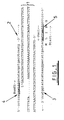
- Figure 1 shows a schematic representation of the 5' and 3' portions of the DNA fragment (1) which was PCR amplified and illustrates where primers BAM54 (2) and 54PAC (3) bind to the fragment.
- Fig 1 further shows the BamH1 restriction site (4) and the Pac1 site (5) which were introduced into the PCR amplified fragment (1).
- the transcription start, the codons for the first 5 amino acids of a protein expressed from the RAD54 promoter and the direction of transcription are also shown.
- the DNA coding for the RAD54 promoter was inserted into a PFA vector to form a recombinant vector of the invention (see 1.3).
- a PFA vector was used in the construction of recombinant vectors according to the invention.
- the PFA plasmid series has been previously published (Wach et al . (1994) Yeast 10 p1793-1808).
- a plasmid PFA KANMX3GFP was derived from the known plasmid PFA KANMX3 (shown in Figure 1B, page 1797 of Wach et al .) In the plasmid used by the inventors the lacz sequences of PFA KANMX3 were replaced by GFP sequences to form PFA KANMX3GFP, The sequence of PFA KANMX3GFP is attached as SEQ ID NO 4. (see Fig. 3)
- PFA KANMX3GFP contains a DNA sequence coding for the S65T derivative of GFP which has a Pac1 site just after the transcription start codon of the GFP gene. S65T was inserted into the vector as a Pac1/Asc1 fragment. PFA KANMX3GFP also contains DNA (2689bp) encoding for a gene capable of conferring kanamycin resistance.
- the DNA coding for the RAD54 promoter (see 1.1) and PFA KANMX3GFP (see 1.2) were treated with the restriction enzymes BamH1 and Pac 1.
- the KANMX3GFP-RAD54 construct was then made by uniquely ligating the DNA coding for the RAD54 promoter (with BamH1 and Pac 1 sticky ends) into the linearised PFA KANMX3GFP between the unique BamH1 and Pac 1 site adjacent to the S65T coding sequence.
- PFA KANMX3GFP was also treated with Smal.
- the Smal site in PFA KANMX3GFP lies between BamH1 and Pac1, therefore the Smal treatment prevented recircularisation of the vector.
- the Pac1 site is "in-frame" such that the S65T gene may be transcribed.
- the KANMX3GFP-RAD54 construct was cut at the unique BamH1 site, then treated with DNA polymerase (poll) and calf intestinal phosphatase to produce blunt and un-self ligatable ends.
- a Dra1 fragment (see SEQ ID NO 5) of the HO gene was then ligated between the blunt ends of the treated KANMX31-RAD54 construct to form the pWDH443 construct.
- the HO gene is found on Chromosome IV of the yeast chromosome and sequences are held in the Saccharomyces cerevisiae genome database, which is in the public domain.
- the database may be accessed by the World Wide Web at many sites. For example at http://genome-www.stanford.edu/
- the Dra1 fragment of the HO gene contains a BamH1 site at bases 711 - 716 of SEQ ID NO 5 and was employed to promote integration of the construct into the yeast genome by the known technique of homologous integration.
- the pWDH443 construct can be cut with BamH1 and used to transform yeast (Y485/486) with G418 selection (a derivative of kanamycin). Transformation was done using the known Lithium acetate procedure (see http://www.umanitoba.ca/faculties/medicine/human_genetics/gietz/Trafo.html).
- pWDH443 construct integrates into the yeast genome at the HO locus.
- pWDH443 is a preferred recombinant vector according to the second aspect of the invention and cells transformed with pWDH443 are preferred cells according to the third aspect of the invention.
- the pWDH444 construct was then developed (by manipulation of pWDH443) such that the construct was capable of replication inside a yeast host to be present as multicopies.
- a DNA fragment blue at one end and BamH1 cut at the other
- yeast URA3 gene uracil prototrophy
- ORI uracil prototrophy
- bacterial plasmid pBR322 sequences conferring replicative ability (ORI) and ampicillin resistance (AMPr) to the construct (when maintained in E. coli ) were ligated into pWDH443 cut with BamH1 and Pmel.
- This cut removed a fragment of pWDH443 which contained a Not1 site.
- the ligation mix was cut with Not1 prior to transformation to prevent recircularisation of pWDH443.
- the 2 ⁇ plasmid fragment contained sequences corresponding to the yeast 2 ⁇ origin, URA3 gene, pBR322 ORI sequence and Ampicillin resistance are found as a contiguous fragment in several plasmids.
- the 2 ⁇ plasmid fragment used by the inventors corresponds precisely to the large HindIII/BamH1 fragment released from the plasmid pRDK249, described in the Journal Biological Chemistry, Volume 266, p14049, Figure 1 (1991) in the article by Johnson, A.W. and Kolodner, R.D.
- the plasmid was first cut with HindIII, then treated with DNA polymerase 1 to produce a blunt end.
- the plasmid was then treated with BamH1 producing a fragment blunt at one end and with a BamH1 end at the other. This fragment was purified by gel electrophoresis.
- pWDH444 construct was used to transform yeast (as described for pWDH443) selecting for either uracil prototrophy (URA3) or G418 (kanamycin) resistance and was capable of autonomous replication with the yeast.
- pWDH444 is a preferred recombinant vector according to the second aspect of the invention and cells transformed with pWDH444 are preferred cells according to the third aspect of the invention.
- Yeast strains Y485 and Y486 in haploid form or Y485/486 in diploid form were in this Example (see above).
- the media YP plus 2% glucose (YPD) and synthetic media plus 2% glucose (SD) were prepared as described in Kaiser et al . (1994) (Methods in Yeast Genetics. Cold Spring Harbor Laboratory Course Manual, NY: Cold Spring Harbor Press, Cold Spring Harbor Laboratory, NY,NY.).
- a stationary phase culture of cells grown in SD medium was used as the inoculum source. Aliquots (30 ⁇ l) of cells were inoculated into 3ml of SD in 15ml test tubes. Half of the tubes were then supplemented with 0.01% MMS (the remaining tubes left as controls). The tubes were incubated at 25°C for 16h on an orbital shaker at 120rpm, then transferred to an ice-box whilst maintaining agitation. The cells were then transferred to 1.5ml eppendorf tubes, harvested by centrifugation (10s), washed twice in sterile distilled water, and resuspended in 250 ⁇ l extraction buffer.
- washed cells were transferred directly to cuvettes containing 2.75ml sterile distilled water.
- Fluorescence measurements were performed with a Perkin Elmer LS50 Fluorescence Spectrometer.
- the excitation and emission wavelengths were set to 488nm and 511nm respectively, with a slit width of 10nm.
- light absorption was recorded for each cuvette at either 600nm (for whole cells) or 280nm (for extracts).
- the fluorescence values obtained from the fluorometer were then divided by the absorption readings to give the"brightness value", an arbitrary unit independent of sample concentration.
- Other data handling details are dealt with either in the text or in the
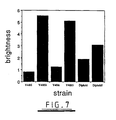
- pWDH443 transformed yeast (Y485, Y486 and diploid [Y485/486]) also showed an increase in brightness in the presence of the DNA damaging agent MMS (Y485i, Y486i and Diploidi) relative to untransformed cells also exposed to MMS (Y485, Y486 and Diploid).
- FIG. 8 and Fig. 9 show time courses of the induction of brightness by MMS in the haploid yeast strain Y486 transformed with pWDH444 (Y486p + mms) or pWDH443 (Y486i + mms) respectively.
- the effect of MMS on untransformed cells (Y486 + mms) and brightness in untreated cells (Y486, Y486p and Y486i) is also shown.
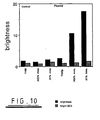
- Fig. 10 illustrates that 0.02% and 0.05% MMS causes an increase in fluorescence in the haploid yeast strain Y486 that has been transfected with pWDH444 (Y86p) but has no significant effect in untransformed cells (Y486). SDS was included as a control to abolish fluorescence from GFP.
- Protein extracts from untransformed yeast cells and yeast cells transformed with both pWDH443 and pWDH444 were used in a Western blot analysis using anti-GFP antibody.
- GFP was not detected in untransformed cells and was only detected at low levels in uninduced transformed cells.
- yeast cells transformed with pWDH443 or pWDH444 were induced with MMS there was a considerable increase in GFP antibody binding. This increase was proportional to the measured fluorescence and therefore confirmed that the increase in fluorescence was due to DNA damage inducing the RAD54 promoter and subsequently causing GFP expression.
- yeast transformed with pWDH443 and pWDH444 emit increased fluorescence (at 511nm) in the presence of a DNA damaging agent. Accordingly pWDH443 and pWDH444 are highly preferred recombinant vectors according to the second aspect of the present invention and yeast transformed with pWDH443 and pWDH444 are highly preferred cells according to the third aspect of the invention. These transformed yeast cells are highly suited to be used according to the method of the fourth aspect of the invention although it will be appreciated that alternative recombinant vectors may be constructed according to the second aspect of the present invention and cells transformed with such alternative recombinant vectors will fall within the scope of the present invention.
- Cells transformed with pWDH443 and pWDH444 may be used in a method according to the fourth aspect of the present invention as a means of screening compounds, such as candidate medicaments, food additives or cosmetics, to assess whether it is safe to expose a living organism, particularly people, to such compounds or the cells may be used to detect whether water supplies are contaminated by DNA damaging agents or agents that potentiate DNA damage.
- screening compounds such as candidate medicaments, food additives or cosmetics
- Recombinant vector yEGFP-444 was formed and used to transform yeast cells which expressed YEGFP in response to a DNA damaging agent (MMS).
- the media used was the same as described in 1.2.1.
- the S65T GFP gene was released from pWDH444 by cutting with Pac1 and Asc1, and gel electrophoresis was used to purify the remaining vector fragment (i.e. the large fragment).
- the larger Pac1 and Asc1 fragment of the PCR product was then ligated into the large fragment of pWDH444 to form yEGFP-444.
- pWDH443 and pWDH444 is suitable for use according to the method of the invention, when light production (in response to DNA damage) is measured from cell extracts derived from cells according to the fourth aspect of the invention (in order that a good signal to noise ratio is achieved).
- pWDH443 and pWDH444 are of limited use for whole cell measurements partly as a consequence of light scattering. There is only a narrow difference between the excitation (475 - 495nM) and emission (approximately 512nM) wavelengths used in GFP assessment. Using yEGFP-444, together with a sensitive spectrophotometer, it became possible to see the GFP signal as a correctly positioned shoulder on the fluorescence scan.
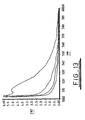
- Figure 13 illustrates emission spectra (excitation at 488 nm) from 0.2 OD600 units of FF18984 cells untransformed and transformed cells with yEGFP-444 -/+ 0.01% MMS. Cells were twice washed in sterile water before resuspending in 1x TE and further dilution. The lowest spectrum represents the fluorescence measured from untransformed cells with an MMS challenge and the next shows the same cells without MMS. The middle spectrum represents FF18984 cells transformed with the yEGFP-444 construct without an MMS challenge, whilst the upper spectrum shows the result of an MMS insult on the same transformed cells.
- pWDH443 The modular design of pWDH443 (see Example 1) may also be exploited to allow simple replacement of the S65T derivative of GFP with the YEGFP gene to form preferred recombinant vector yEGFP-443 (see Fig. 11).
- Example 2 The method described in Example 2 may be followed to produce yEGFP-443 with the exception that pWDH443 was used instead ofpWDH444.
- Cells transformed with yEGFP-443 are also useful for use according to the method of the invention.
- Cells transformed with yEGFP-444 and pWDH444 are particularly useful for detecting DNA damage without needing to disrupt cells to form an extract for assaying.
- the combination of the YEGFP gene, a sensitive host strain (e.g. FF 18984), a low fluorescence medium (e.g. F1) and optimally the limitation of light scattering in the detecting device (e.g. using a 495nm filter) allows a shift away from the time consuming and complex assay of cell extracts to direct measurements of samples containing whole cells.
Landscapes
- Health & Medical Sciences (AREA)
- Life Sciences & Earth Sciences (AREA)
- Chemical & Material Sciences (AREA)
- Engineering & Computer Science (AREA)
- Organic Chemistry (AREA)
- Genetics & Genomics (AREA)
- Molecular Biology (AREA)
- General Health & Medical Sciences (AREA)
- Biochemistry (AREA)
- Zoology (AREA)
- Biomedical Technology (AREA)
- Wood Science & Technology (AREA)
- Microbiology (AREA)
- Proteomics, Peptides & Aminoacids (AREA)
- Mycology (AREA)
- Bioinformatics & Cheminformatics (AREA)
- Biotechnology (AREA)
- Immunology (AREA)
- Biophysics (AREA)
- General Engineering & Computer Science (AREA)
- Medicinal Chemistry (AREA)
- Physics & Mathematics (AREA)
- Analytical Chemistry (AREA)
- Hematology (AREA)
- Gastroenterology & Hepatology (AREA)
- Toxicology (AREA)
- Tropical Medicine & Parasitology (AREA)
- Urology & Nephrology (AREA)
- Food Science & Technology (AREA)
- Cell Biology (AREA)
- Pathology (AREA)
- Plant Pathology (AREA)
- General Physics & Mathematics (AREA)
- Micro-Organisms Or Cultivation Processes Thereof (AREA)
- Measuring Or Testing Involving Enzymes Or Micro-Organisms (AREA)
- Saccharide Compounds (AREA)
- Peptides Or Proteins (AREA)
Priority Applications (2)
| Application Number | Priority Date | Filing Date | Title |
|---|---|---|---|
| DK98913889T DK0970247T3 (da) | 1997-03-27 | 1998-03-27 | Påvisning af DNA-beskadigende midler |
| EP04077056A EP1561822A1 (en) | 1997-03-27 | 1998-03-27 | Detection of DNA damaging agents |
Applications Claiming Priority (3)
| Application Number | Priority Date | Filing Date | Title |
|---|---|---|---|
| GBGB9706414.1A GB9706414D0 (en) | 1997-03-27 | 1997-03-27 | Detection of DNA damage |
| GB9706414 | 1997-03-27 | ||
| PCT/GB1998/000786 WO1998044149A1 (en) | 1997-03-27 | 1998-03-27 | Detection of dna damaging agents |
Related Child Applications (1)
| Application Number | Title | Priority Date | Filing Date |
|---|---|---|---|
| EP04077056A Division EP1561822A1 (en) | 1997-03-27 | 1998-03-27 | Detection of DNA damaging agents |
Publications (2)
| Publication Number | Publication Date |
|---|---|
| EP0970247A1 EP0970247A1 (en) | 2000-01-12 |
| EP0970247B1 true EP0970247B1 (en) | 2004-07-21 |
Family
ID=10809987
Family Applications (2)
| Application Number | Title | Priority Date | Filing Date |
|---|---|---|---|
| EP98913889A Expired - Lifetime EP0970247B1 (en) | 1997-03-27 | 1998-03-27 | Detection of dna damaging agents |
| EP04077056A Withdrawn EP1561822A1 (en) | 1997-03-27 | 1998-03-27 | Detection of DNA damaging agents |
Family Applications After (1)
| Application Number | Title | Priority Date | Filing Date |
|---|---|---|---|
| EP04077056A Withdrawn EP1561822A1 (en) | 1997-03-27 | 1998-03-27 | Detection of DNA damaging agents |
Country Status (11)
| Country | Link |
|---|---|
| US (2) | US6489099B1 (da) |
| EP (2) | EP0970247B1 (da) |
| JP (1) | JP4163757B2 (da) |
| AT (1) | ATE271615T1 (da) |
| AU (1) | AU747297B2 (da) |
| CA (1) | CA2285703C (da) |
| DE (1) | DE69825152T2 (da) |
| DK (1) | DK0970247T3 (da) |
| ES (1) | ES2226118T3 (da) |
| GB (1) | GB9706414D0 (da) |
| WO (1) | WO1998044149A1 (da) |
Families Citing this family (10)
| Publication number | Priority date | Publication date | Assignee | Title |
|---|---|---|---|---|
| AUPP438598A0 (en) | 1998-06-29 | 1998-07-23 | Garvan Institute Of Medical Research | NPY-Y7 receptor gene |
| US6509161B1 (en) | 2000-02-29 | 2003-01-21 | Gentronix Limited | Green fluorescent protein |
| JP2007500506A (ja) * | 2003-07-31 | 2007-01-18 | ジェントロニクス・リミテッド | 遺伝子毒性試験法 |
| GB0411198D0 (en) * | 2004-05-20 | 2004-06-23 | Gentronix Ltd | Genotoxic testing |
| US8969008B2 (en) | 2004-05-20 | 2015-03-03 | Gentronix Limited | Genotoxic testing |
| JP2006101705A (ja) * | 2004-09-30 | 2006-04-20 | Olympus Corp | 細胞内小核の検出方法 |
| US20080187927A1 (en) * | 2006-11-12 | 2008-08-07 | Palecek Sean P | Using hug1 promoter and a reporter gene to detect genotoxicity and genoprotection |
| GB0921712D0 (en) | 2009-12-11 | 2010-01-27 | Ge Healthcare Uk Ltd | Methods of detecting DNA damage |
| EP4069731A4 (en) | 2019-12-03 | 2024-05-29 | Alamar Biosciences, Inc. | Nucleic acid linked immune-sandwich assay (nulisa) |
| CN115575369B (zh) * | 2022-10-14 | 2025-10-28 | 中国药科大学 | 一种用于消化道内亚硝胺类化合物监测的金属有机配位凝胶保护的全细胞生物传感器 |
Family Cites Families (3)
| Publication number | Priority date | Publication date | Assignee | Title |
|---|---|---|---|---|
| IL75210A0 (en) | 1984-05-22 | 1985-09-29 | Bioteknika International | Yeast vector |
| HK1004920A1 (en) * | 1993-01-21 | 1998-12-11 | President And Fellows Of Harvard College | Methods and diagnostic kits utilizing mammalian stress promoters to determine toxicity of a compound |
| EP0759170B1 (en) * | 1993-09-10 | 2008-07-09 | The Trustees Of Columbia University In The City Of New York | Uses of green fluorescent protein |
-
1997
- 1997-03-27 GB GBGB9706414.1A patent/GB9706414D0/en active Pending
-
1998
- 1998-03-27 EP EP98913889A patent/EP0970247B1/en not_active Expired - Lifetime
- 1998-03-27 EP EP04077056A patent/EP1561822A1/en not_active Withdrawn
- 1998-03-27 JP JP54127198A patent/JP4163757B2/ja not_active Expired - Fee Related
- 1998-03-27 US US09/381,989 patent/US6489099B1/en not_active Expired - Fee Related
- 1998-03-27 DK DK98913889T patent/DK0970247T3/da active
- 1998-03-27 CA CA2285703A patent/CA2285703C/en not_active Expired - Fee Related
- 1998-03-27 WO PCT/GB1998/000786 patent/WO1998044149A1/en not_active Ceased
- 1998-03-27 DE DE69825152T patent/DE69825152T2/de not_active Expired - Lifetime
- 1998-03-27 ES ES98913889T patent/ES2226118T3/es not_active Expired - Lifetime
- 1998-03-27 AU AU68419/98A patent/AU747297B2/en not_active Ceased
- 1998-03-27 AT AT98913889T patent/ATE271615T1/de not_active IP Right Cessation
-
2002
- 2002-09-16 US US10/244,292 patent/US7049071B2/en not_active Expired - Fee Related
Also Published As
| Publication number | Publication date |
|---|---|
| CA2285703A1 (en) | 1998-10-08 |
| DE69825152T2 (de) | 2005-08-11 |
| US20030049690A1 (en) | 2003-03-13 |
| DE69825152D1 (de) | 2004-08-26 |
| ES2226118T3 (es) | 2005-03-16 |
| CA2285703C (en) | 2011-02-08 |
| DK0970247T3 (da) | 2004-11-29 |
| WO1998044149A1 (en) | 1998-10-08 |
| US7049071B2 (en) | 2006-05-23 |
| EP0970247A1 (en) | 2000-01-12 |
| ATE271615T1 (de) | 2004-08-15 |
| AU6841998A (en) | 1998-10-22 |
| AU747297B2 (en) | 2002-05-16 |
| US6489099B1 (en) | 2002-12-03 |
| JP4163757B2 (ja) | 2008-10-08 |
| JP2001517083A (ja) | 2001-10-02 |
| EP1561822A1 (en) | 2005-08-10 |
| GB9706414D0 (en) | 1997-05-14 |
Similar Documents
| Publication | Publication Date | Title |
|---|---|---|
| Kühne et al. | A new pair of B‐type cyclins from Saccharomyces cerevisiae that function early in the cell cycle. | |
| Hogan et al. | Addition of extra origins of replication to a minichromosome suppresses its mitotic loss in cdc6 and cdc14 mutants of Saccharomyces cerevisiae. | |
| Wemmie et al. | Transcriptional activation mediated by the yeast AP-1 protein is required for normal cadmium tolerance. | |
| Smith et al. | Genetic evidence for transcriptional activation by the yeast IME1 gene product | |
| EP0970247B1 (en) | Detection of dna damaging agents | |
| Blanchin-Roland et al. | Two upstream activation sequences control the expression of the XPR2 gene in the yeast Yarrowia lipolytica | |
| EP0756634A1 (en) | An in vivo gene expression system | |
| Marykwas et al. | Control of the Saccharomyces cerevisiae regulatory gene PET494: transcriptional repression by glucose and translational induction by oxygen | |
| Etages et al. | Functional analysis of the PUT3 transcriptional activator of the proline utilization pathway in Saccharomyces cerevisiae | |
| JP3793237B2 (ja) | ナンセンス突然変異及びフレームシフト突然変異の検出方法 | |
| EP1747287B1 (en) | Genotoxic testing | |
| US6221630B1 (en) | High copy number recombinant expression construct for regulated high-level production of polypeptides in yeast | |
| Shiiba et al. | Isolation of giant mitochondrial nucleoids from the yeast Saccharomyces cerevisiae | |
| US20080064053A1 (en) | Genotoxicity Testing | |
| US6667153B1 (en) | Composition and method for detecting mutagens | |
| Lee et al. | Synthetic lethal screen of NAA20, a catalytic subunit gene of NatB N-terminal acetylase in Saccharomyces cerevisiae | |
| CA2123906A1 (en) | Transcription adaptors in eukaryotes | |
| CA2318751A1 (en) | Method of isolation of rna-binding compounds | |
| AU697543B2 (en) | An (in vivo) gene expression system | |
| JPH08332090A (ja) | 変異原性物質感知用遺伝子、融合遺伝子、組換プラスミド、形質転換体および変異原性試験法 | |
| Billinton et al. | Green fluorescent protein as a reporter for the DNA damage-induced geneRAD54 inSaccharomyces cerevisiae | |
| Christ | Characterization of MCM1, a multifunctional yeast DNA binding protein | |
| Caplow | ATP Mediates Yeast Cell-Cell Communication Department of Biochemistry and Biophysics, University of North Carolina, Chapel Hill, NC 27599 | |
| WO2010017983A1 (en) | Clastogenicity testing | |
| JPH08269A (ja) | 融合遺伝子、組換プラスミド、形質転換体および変異原性試験法 |
Legal Events
| Date | Code | Title | Description |
|---|---|---|---|
| PUAI | Public reference made under article 153(3) epc to a published international application that has entered the european phase |
Free format text: ORIGINAL CODE: 0009012 |
|
| 17P | Request for examination filed |
Effective date: 19990923 |
|
| AK | Designated contracting states |
Kind code of ref document: A1 Designated state(s): AT BE CH DE DK ES FI FR GB GR IE IT LI LU MC NL PT SE |
|
| RAP1 | Party data changed (applicant data changed or rights of an application transferred) |
Owner name: GENTRONIX LIMITED |
|
| 17Q | First examination report despatched |
Effective date: 20011010 |
|
| GRAP | Despatch of communication of intention to grant a patent |
Free format text: ORIGINAL CODE: EPIDOSNIGR1 |
|
| GRAS | Grant fee paid |
Free format text: ORIGINAL CODE: EPIDOSNIGR3 |
|
| GRAA | (expected) grant |
Free format text: ORIGINAL CODE: 0009210 |
|
| AK | Designated contracting states |
Kind code of ref document: B1 Designated state(s): AT BE CH DE DK ES FI FR GB GR IE IT LI LU MC NL PT SE |
|
| PG25 | Lapsed in a contracting state [announced via postgrant information from national office to epo] |
Ref country code: FI Free format text: LAPSE BECAUSE OF FAILURE TO SUBMIT A TRANSLATION OF THE DESCRIPTION OR TO PAY THE FEE WITHIN THE PRESCRIBED TIME-LIMIT Effective date: 20040721 Ref country code: AT Free format text: LAPSE BECAUSE OF FAILURE TO SUBMIT A TRANSLATION OF THE DESCRIPTION OR TO PAY THE FEE WITHIN THE PRESCRIBED TIME-LIMIT Effective date: 20040721 |
|
| REG | Reference to a national code |
Ref country code: GB Ref legal event code: FG4D |
|
| REG | Reference to a national code |
Ref country code: CH Ref legal event code: EP |
|
| REG | Reference to a national code |
Ref country code: IE Ref legal event code: FG4D |
|
| REF | Corresponds to: |
Ref document number: 69825152 Country of ref document: DE Date of ref document: 20040826 Kind code of ref document: P |
|
| PG25 | Lapsed in a contracting state [announced via postgrant information from national office to epo] |
Ref country code: GR Free format text: LAPSE BECAUSE OF FAILURE TO SUBMIT A TRANSLATION OF THE DESCRIPTION OR TO PAY THE FEE WITHIN THE PRESCRIBED TIME-LIMIT Effective date: 20041021 |
|
| REG | Reference to a national code |
Ref country code: SE Ref legal event code: TRGR |
|
| REG | Reference to a national code |
Ref country code: DK Ref legal event code: T3 |
|
| REG | Reference to a national code |
Ref country code: CH Ref legal event code: NV Representative=s name: RITSCHER & PARTNER AG |
|
| REG | Reference to a national code |
Ref country code: ES Ref legal event code: FG2A Ref document number: 2226118 Country of ref document: ES Kind code of ref document: T3 |
|
| PG25 | Lapsed in a contracting state [announced via postgrant information from national office to epo] |
Ref country code: LU Free format text: LAPSE BECAUSE OF NON-PAYMENT OF DUE FEES Effective date: 20050327 |
|
| PG25 | Lapsed in a contracting state [announced via postgrant information from national office to epo] |
Ref country code: MC Free format text: LAPSE BECAUSE OF NON-PAYMENT OF DUE FEES Effective date: 20050331 |
|
| PLBE | No opposition filed within time limit |
Free format text: ORIGINAL CODE: 0009261 |
|
| STAA | Information on the status of an ep patent application or granted ep patent |
Free format text: STATUS: NO OPPOSITION FILED WITHIN TIME LIMIT |
|
| ET | Fr: translation filed | ||
| 26N | No opposition filed |
Effective date: 20050422 |
|
| PG25 | Lapsed in a contracting state [announced via postgrant information from national office to epo] |
Ref country code: PT Free format text: LAPSE BECAUSE OF NON-PAYMENT OF DUE FEES Effective date: 20041221 |
|
| REG | Reference to a national code |
Ref country code: CH Ref legal event code: PCAR Free format text: RITSCHER & PARTNER AG;RESIRAIN 1;8125 ZOLLIKERBERG (CH) |
|
| PGFP | Annual fee paid to national office [announced via postgrant information from national office to epo] |
Ref country code: IT Payment date: 20120321 Year of fee payment: 15 |
|
| PGFP | Annual fee paid to national office [announced via postgrant information from national office to epo] |
Ref country code: ES Payment date: 20120419 Year of fee payment: 15 |
|
| PGFP | Annual fee paid to national office [announced via postgrant information from national office to epo] |
Ref country code: DE Payment date: 20130322 Year of fee payment: 16 Ref country code: IE Payment date: 20130322 Year of fee payment: 16 Ref country code: SE Payment date: 20130328 Year of fee payment: 16 Ref country code: CH Payment date: 20130328 Year of fee payment: 16 Ref country code: GB Payment date: 20130118 Year of fee payment: 16 |
|
| PGFP | Annual fee paid to national office [announced via postgrant information from national office to epo] |
Ref country code: BE Payment date: 20130409 Year of fee payment: 16 Ref country code: DK Payment date: 20130328 Year of fee payment: 16 |
|
| PGFP | Annual fee paid to national office [announced via postgrant information from national office to epo] |
Ref country code: FR Payment date: 20130429 Year of fee payment: 16 Ref country code: NL Payment date: 20130328 Year of fee payment: 16 |
|
| REG | Reference to a national code |
Ref country code: CH Ref legal event code: PFA Owner name: GENTRONIX LIMITED, GB Free format text: FORMER OWNER: GENTRONIX LIMITED, GB |
|
| REG | Reference to a national code |
Ref country code: DE Ref legal event code: R119 Ref document number: 69825152 Country of ref document: DE |
|
| REG | Reference to a national code |
Ref country code: DK Ref legal event code: EBP Effective date: 20140331 |
|
| REG | Reference to a national code |
Ref country code: NL Ref legal event code: V1 Effective date: 20141001 |
|
| REG | Reference to a national code |
Ref country code: CH Ref legal event code: PL |
|
| REG | Reference to a national code |
Ref country code: SE Ref legal event code: EUG |
|
| GBPC | Gb: european patent ceased through non-payment of renewal fee |
Effective date: 20140327 |
|
| PG25 | Lapsed in a contracting state [announced via postgrant information from national office to epo] |
Ref country code: SE Free format text: LAPSE BECAUSE OF NON-PAYMENT OF DUE FEES Effective date: 20140328 |
|
| REG | Reference to a national code |
Ref country code: FR Ref legal event code: ST Effective date: 20141128 |
|
| REG | Reference to a national code |
Ref country code: IE Ref legal event code: MM4A |
|
| REG | Reference to a national code |
Ref country code: DE Ref legal event code: R119 Ref document number: 69825152 Country of ref document: DE Effective date: 20141001 |
|
| PG25 | Lapsed in a contracting state [announced via postgrant information from national office to epo] |
Ref country code: IE Free format text: LAPSE BECAUSE OF NON-PAYMENT OF DUE FEES Effective date: 20140327 Ref country code: CH Free format text: LAPSE BECAUSE OF NON-PAYMENT OF DUE FEES Effective date: 20140331 Ref country code: FR Free format text: LAPSE BECAUSE OF NON-PAYMENT OF DUE FEES Effective date: 20140331 Ref country code: GB Free format text: LAPSE BECAUSE OF NON-PAYMENT OF DUE FEES Effective date: 20140327 Ref country code: LI Free format text: LAPSE BECAUSE OF NON-PAYMENT OF DUE FEES Effective date: 20140331 Ref country code: DE Free format text: LAPSE BECAUSE OF NON-PAYMENT OF DUE FEES Effective date: 20141001 |
|
| PG25 | Lapsed in a contracting state [announced via postgrant information from national office to epo] |
Ref country code: NL Free format text: LAPSE BECAUSE OF NON-PAYMENT OF DUE FEES Effective date: 20141001 |
|
| PG25 | Lapsed in a contracting state [announced via postgrant information from national office to epo] |
Ref country code: IT Free format text: LAPSE BECAUSE OF NON-PAYMENT OF DUE FEES Effective date: 20140327 |
|
| REG | Reference to a national code |
Ref country code: ES Ref legal event code: FD2A Effective date: 20150427 |
|
| PG25 | Lapsed in a contracting state [announced via postgrant information from national office to epo] |
Ref country code: DK Free format text: LAPSE BECAUSE OF NON-PAYMENT OF DUE FEES Effective date: 20140331 |
|
| PG25 | Lapsed in a contracting state [announced via postgrant information from national office to epo] |
Ref country code: ES Free format text: LAPSE BECAUSE OF NON-PAYMENT OF DUE FEES Effective date: 20140328 |
|
| PG25 | Lapsed in a contracting state [announced via postgrant information from national office to epo] |
Ref country code: BE Free format text: LAPSE BECAUSE OF NON-PAYMENT OF DUE FEES Effective date: 20140331 |