EP0970699A2 - Solution pour dialyse péritonéale - Google Patents
Solution pour dialyse péritonéale Download PDFInfo
- Publication number
- EP0970699A2 EP0970699A2 EP99401704A EP99401704A EP0970699A2 EP 0970699 A2 EP0970699 A2 EP 0970699A2 EP 99401704 A EP99401704 A EP 99401704A EP 99401704 A EP99401704 A EP 99401704A EP 0970699 A2 EP0970699 A2 EP 0970699A2
- Authority
- EP
- European Patent Office
- Prior art keywords
- concentration
- organic acid
- peritoneal dialysis
- total
- carbon atoms
- Prior art date
- Legal status (The legal status is an assumption and is not a legal conclusion. Google has not performed a legal analysis and makes no representation as to the accuracy of the status listed.)
- Granted
Links
- 239000000385 dialysis solution Substances 0.000 title claims abstract description 112
- 150000007524 organic acids Chemical class 0.000 claims abstract description 137
- 150000001768 cations Chemical class 0.000 claims abstract description 62
- VEXZGXHMUGYJMC-UHFFFAOYSA-M Chloride anion Chemical compound [Cl-] VEXZGXHMUGYJMC-UHFFFAOYSA-M 0.000 claims abstract description 58
- 235000005985 organic acids Nutrition 0.000 claims abstract description 27
- 238000000034 method Methods 0.000 claims abstract description 15
- 125000004432 carbon atom Chemical group C* 0.000 claims description 48
- 230000003204 osmotic effect Effects 0.000 claims description 40
- WQZGKKKJIJFFOK-GASJEMHNSA-N Glucose Natural products OC[C@H]1OC(O)[C@H](O)[C@@H](O)[C@@H]1O WQZGKKKJIJFFOK-GASJEMHNSA-N 0.000 description 73
- 239000008103 glucose Substances 0.000 description 73
- 238000000108 ultra-filtration Methods 0.000 description 48
- 230000000694 effects Effects 0.000 description 45
- 230000000052 comparative effect Effects 0.000 description 42
- 238000000502 dialysis Methods 0.000 description 36
- 229940093915 gynecological organic acid Drugs 0.000 description 23
- -1 lactate ion Chemical class 0.000 description 22
- 238000010521 absorption reaction Methods 0.000 description 21
- XLYOFNOQVPJJNP-UHFFFAOYSA-N water Substances O XLYOFNOQVPJJNP-UHFFFAOYSA-N 0.000 description 17
- 239000002357 osmotic agent Substances 0.000 description 16
- 238000012360 testing method Methods 0.000 description 16
- 239000003792 electrolyte Substances 0.000 description 15
- FAPWRFPIFSIZLT-UHFFFAOYSA-M Sodium chloride Chemical compound [Na+].[Cl-] FAPWRFPIFSIZLT-UHFFFAOYSA-M 0.000 description 14
- FKNQFGJONOIPTF-UHFFFAOYSA-N Sodium cation Chemical compound [Na+] FKNQFGJONOIPTF-UHFFFAOYSA-N 0.000 description 12
- 229910001415 sodium ion Inorganic materials 0.000 description 12
- 238000002560 therapeutic procedure Methods 0.000 description 12
- 230000037396 body weight Effects 0.000 description 10
- HEMHJVSKTPXQMS-UHFFFAOYSA-M Sodium hydroxide Chemical compound [OH-].[Na+] HEMHJVSKTPXQMS-UHFFFAOYSA-M 0.000 description 9
- 230000003247 decreasing effect Effects 0.000 description 9
- 235000002639 sodium chloride Nutrition 0.000 description 9
- CIWBSHSKHKDKBQ-JLAZNSOCSA-N Ascorbic acid Chemical compound OC[C@H](O)[C@H]1OC(=O)C(O)=C1O CIWBSHSKHKDKBQ-JLAZNSOCSA-N 0.000 description 8
- OKTJSMMVPCPJKN-UHFFFAOYSA-N Carbon Chemical compound [C] OKTJSMMVPCPJKN-UHFFFAOYSA-N 0.000 description 8
- 229910052799 carbon Inorganic materials 0.000 description 8
- 150000002500 ions Chemical class 0.000 description 8
- CYDQOEWLBCCFJZ-UHFFFAOYSA-N 4-(4-fluorophenyl)oxane-4-carboxylic acid Chemical compound C=1C=C(F)C=CC=1C1(C(=O)O)CCOCC1 CYDQOEWLBCCFJZ-UHFFFAOYSA-N 0.000 description 7
- 229940001447 lactate Drugs 0.000 description 7
- 239000011780 sodium chloride Substances 0.000 description 7
- 239000001540 sodium lactate Substances 0.000 description 7
- 235000011088 sodium lactate Nutrition 0.000 description 7
- 229940005581 sodium lactate Drugs 0.000 description 7
- 239000000203 mixture Substances 0.000 description 6
- 238000002360 preparation method Methods 0.000 description 6
- 239000008215 water for injection Substances 0.000 description 6
- BHPQYMZQTOCNFJ-UHFFFAOYSA-N Calcium cation Chemical compound [Ca+2] BHPQYMZQTOCNFJ-UHFFFAOYSA-N 0.000 description 5
- JLVVSXFLKOJNIY-UHFFFAOYSA-N Magnesium ion Chemical compound [Mg+2] JLVVSXFLKOJNIY-UHFFFAOYSA-N 0.000 description 5
- GNMSLDIYJOSUSW-LURJTMIESA-N N-acetyl-L-proline Chemical compound CC(=O)N1CCC[C@H]1C(O)=O GNMSLDIYJOSUSW-LURJTMIESA-N 0.000 description 5
- 235000010323 ascorbic acid Nutrition 0.000 description 5
- 239000011668 ascorbic acid Substances 0.000 description 5
- 229910001424 calcium ion Inorganic materials 0.000 description 5
- 229910001425 magnesium ion Inorganic materials 0.000 description 5
- TWRXJAOTZQYOKJ-UHFFFAOYSA-L Magnesium chloride Chemical compound [Mg+2].[Cl-].[Cl-] TWRXJAOTZQYOKJ-UHFFFAOYSA-L 0.000 description 4
- 229960005070 ascorbic acid Drugs 0.000 description 4
- WQZGKKKJIJFFOK-VFUOTHLCSA-N beta-D-glucose Chemical compound OC[C@H]1O[C@@H](O)[C@H](O)[C@@H](O)[C@@H]1O WQZGKKKJIJFFOK-VFUOTHLCSA-N 0.000 description 4
- 230000002035 prolonged effect Effects 0.000 description 4
- KRKNYBCHXYNGOX-UHFFFAOYSA-N citric acid Chemical compound OC(=O)CC(O)(C(O)=O)CC(O)=O KRKNYBCHXYNGOX-UHFFFAOYSA-N 0.000 description 3
- 238000011161 development Methods 0.000 description 3
- 230000018109 developmental process Effects 0.000 description 3
- 206010012601 diabetes mellitus Diseases 0.000 description 3
- 201000010099 disease Diseases 0.000 description 3
- 208000037265 diseases, disorders, signs and symptoms Diseases 0.000 description 3
- 230000007774 longterm Effects 0.000 description 3
- 210000004303 peritoneum Anatomy 0.000 description 3
- 238000009877 rendering Methods 0.000 description 3
- 239000000243 solution Substances 0.000 description 3
- 239000000126 substance Substances 0.000 description 3
- 239000002441 uremic toxin Substances 0.000 description 3
- OWEGMIWEEQEYGQ-UHFFFAOYSA-N 100676-05-9 Natural products OC1C(O)C(O)C(CO)OC1OCC1C(O)C(O)C(O)C(OC2C(OC(O)C(O)C2O)CO)O1 OWEGMIWEEQEYGQ-UHFFFAOYSA-N 0.000 description 2
- 206010067484 Adverse reaction Diseases 0.000 description 2
- UXVMQQNJUSDDNG-UHFFFAOYSA-L Calcium chloride Chemical compound [Cl-].[Cl-].[Ca+2] UXVMQQNJUSDDNG-UHFFFAOYSA-L 0.000 description 2
- RGHNJXZEOKUKBD-SQOUGZDYSA-N D-gluconic acid Chemical compound OC[C@@H](O)[C@@H](O)[C@H](O)[C@@H](O)C(O)=O RGHNJXZEOKUKBD-SQOUGZDYSA-N 0.000 description 2
- 229920001353 Dextrin Polymers 0.000 description 2
- 239000004375 Dextrin Substances 0.000 description 2
- RTZKZFJDLAIYFH-UHFFFAOYSA-N Diethyl ether Chemical compound CCOCC RTZKZFJDLAIYFH-UHFFFAOYSA-N 0.000 description 2
- VZCYOOQTPOCHFL-OWOJBTEDSA-N Fumaric acid Chemical compound OC(=O)\C=C\C(O)=O VZCYOOQTPOCHFL-OWOJBTEDSA-N 0.000 description 2
- GUBGYTABKSRVRQ-PICCSMPSSA-N Maltose Natural products O[C@@H]1[C@@H](O)[C@H](O)[C@@H](CO)O[C@@H]1O[C@@H]1[C@@H](CO)OC(O)[C@H](O)[C@H]1O GUBGYTABKSRVRQ-PICCSMPSSA-N 0.000 description 2
- RFMMMVDNIPUKGG-YFKPBYRVSA-N N-acetyl-L-glutamic acid Chemical compound CC(=O)N[C@H](C(O)=O)CCC(O)=O RFMMMVDNIPUKGG-YFKPBYRVSA-N 0.000 description 2
- OKJIRPAQVSHGFK-UHFFFAOYSA-N N-acetylglycine Chemical compound CC(=O)NCC(O)=O OKJIRPAQVSHGFK-UHFFFAOYSA-N 0.000 description 2
- 208000008589 Obesity Diseases 0.000 description 2
- 241000700159 Rattus Species 0.000 description 2
- 208000001647 Renal Insufficiency Diseases 0.000 description 2
- XSQUKJJJFZCRTK-UHFFFAOYSA-N Urea Chemical compound NC(N)=O XSQUKJJJFZCRTK-UHFFFAOYSA-N 0.000 description 2
- 230000006838 adverse reaction Effects 0.000 description 2
- 230000003113 alkalizing effect Effects 0.000 description 2
- 239000008280 blood Substances 0.000 description 2
- 210000004369 blood Anatomy 0.000 description 2
- 210000004204 blood vessel Anatomy 0.000 description 2
- 210000001124 body fluid Anatomy 0.000 description 2
- 239000010839 body fluid Substances 0.000 description 2
- 239000001110 calcium chloride Substances 0.000 description 2
- 229910001628 calcium chloride Inorganic materials 0.000 description 2
- 239000003795 chemical substances by application Substances 0.000 description 2
- DDRJAANPRJIHGJ-UHFFFAOYSA-N creatinine Chemical compound CN1CC(=O)NC1=N DDRJAANPRJIHGJ-UHFFFAOYSA-N 0.000 description 2
- 235000019425 dextrin Nutrition 0.000 description 2
- XBDQKXXYIPTUBI-UHFFFAOYSA-N dimethylselenoniopropionate Natural products CCC(O)=O XBDQKXXYIPTUBI-UHFFFAOYSA-N 0.000 description 2
- 230000006870 function Effects 0.000 description 2
- 238000010348 incorporation Methods 0.000 description 2
- 238000002347 injection Methods 0.000 description 2
- 239000007924 injection Substances 0.000 description 2
- 201000006370 kidney failure Diseases 0.000 description 2
- JVTAAEKCZFNVCJ-UHFFFAOYSA-N lactic acid Chemical compound CC(O)C(O)=O JVTAAEKCZFNVCJ-UHFFFAOYSA-N 0.000 description 2
- 230000003902 lesion Effects 0.000 description 2
- 229910001629 magnesium chloride Inorganic materials 0.000 description 2
- 238000005259 measurement Methods 0.000 description 2
- 238000006386 neutralization reaction Methods 0.000 description 2
- 235000020824 obesity Nutrition 0.000 description 2
- 229920003023 plastic Polymers 0.000 description 2
- 239000004033 plastic Substances 0.000 description 2
- 241000894007 species Species 0.000 description 2
- 230000001954 sterilising effect Effects 0.000 description 2
- 238000004659 sterilization and disinfection Methods 0.000 description 2
- BJEPYKJPYRNKOW-REOHCLBHSA-N (S)-malic acid Chemical compound OC(=O)[C@@H](O)CC(O)=O BJEPYKJPYRNKOW-REOHCLBHSA-N 0.000 description 1
- RTBFRGCFXZNCOE-UHFFFAOYSA-N 1-methylsulfonylpiperidin-4-one Chemical compound CS(=O)(=O)N1CCC(=O)CC1 RTBFRGCFXZNCOE-UHFFFAOYSA-N 0.000 description 1
- 206010002091 Anaesthesia Diseases 0.000 description 1
- OYPRJOBELJOOCE-UHFFFAOYSA-N Calcium Chemical compound [Ca] OYPRJOBELJOOCE-UHFFFAOYSA-N 0.000 description 1
- 229920000742 Cotton Polymers 0.000 description 1
- RGHNJXZEOKUKBD-UHFFFAOYSA-N D-gluconic acid Natural products OCC(O)C(O)C(O)C(O)C(O)=O RGHNJXZEOKUKBD-UHFFFAOYSA-N 0.000 description 1
- AEMOLEFTQBMNLQ-AQKNRBDQSA-N D-glucopyranuronic acid Chemical compound OC1O[C@H](C(O)=O)[C@@H](O)[C@H](O)[C@H]1O AEMOLEFTQBMNLQ-AQKNRBDQSA-N 0.000 description 1
- ODBLHEXUDAPZAU-ZAFYKAAXSA-N D-threo-isocitric acid Chemical compound OC(=O)[C@H](O)[C@@H](C(O)=O)CC(O)=O ODBLHEXUDAPZAU-ZAFYKAAXSA-N 0.000 description 1
- 229920000219 Ethylene vinyl alcohol Polymers 0.000 description 1
- IAJILQKETJEXLJ-UHFFFAOYSA-N Galacturonsaeure Natural products O=CC(O)C(O)C(O)C(O)C(O)=O IAJILQKETJEXLJ-UHFFFAOYSA-N 0.000 description 1
- DGAQECJNVWCQMB-PUAWFVPOSA-M Ilexoside XXIX Chemical compound C[C@@H]1CC[C@@]2(CC[C@@]3(C(=CC[C@H]4[C@]3(CC[C@@H]5[C@@]4(CC[C@@H](C5(C)C)OS(=O)(=O)[O-])C)C)[C@@H]2[C@]1(C)O)C)C(=O)O[C@H]6[C@@H]([C@H]([C@@H]([C@H](O6)CO)O)O)O.[Na+] DGAQECJNVWCQMB-PUAWFVPOSA-M 0.000 description 1
- ODBLHEXUDAPZAU-FONMRSAGSA-N Isocitric acid Natural products OC(=O)[C@@H](O)[C@H](C(O)=O)CC(O)=O ODBLHEXUDAPZAU-FONMRSAGSA-N 0.000 description 1
- PWKSKIMOESPYIA-BYPYZUCNSA-N L-N-acetyl-Cysteine Chemical compound CC(=O)N[C@@H](CS)C(O)=O PWKSKIMOESPYIA-BYPYZUCNSA-N 0.000 description 1
- FYYHWMGAXLPEAU-UHFFFAOYSA-N Magnesium Chemical compound [Mg] FYYHWMGAXLPEAU-UHFFFAOYSA-N 0.000 description 1
- SNEIUMQYRCDYCH-LURJTMIESA-N N(alpha)-acetyl-L-arginine Chemical compound CC(=O)N[C@H](C(O)=O)CCCNC(N)=N SNEIUMQYRCDYCH-LURJTMIESA-N 0.000 description 1
- OTCCIMWXFLJLIA-BYPYZUCNSA-N N-acetyl-L-aspartic acid Chemical compound CC(=O)N[C@H](C(O)=O)CC(O)=O OTCCIMWXFLJLIA-BYPYZUCNSA-N 0.000 description 1
- KSMRODHGGIIXDV-YFKPBYRVSA-N N-acetyl-L-glutamine Chemical compound CC(=O)N[C@H](C(O)=O)CCC(N)=O KSMRODHGGIIXDV-YFKPBYRVSA-N 0.000 description 1
- KBOJOGQFRVVWBH-ZETCQYMHSA-M N-acetyl-L-histidinate Chemical compound CC(=O)N[C@H](C([O-])=O)CC1=CN=CN1 KBOJOGQFRVVWBH-ZETCQYMHSA-M 0.000 description 1
- WXNXCEHXYPACJF-ZETCQYMHSA-M N-acetyl-L-leucinate Chemical compound CC(C)C[C@@H](C([O-])=O)NC(C)=O WXNXCEHXYPACJF-ZETCQYMHSA-M 0.000 description 1
- XUYPXLNMDZIRQH-LURJTMIESA-N N-acetyl-L-methionine Chemical compound CSCC[C@@H](C(O)=O)NC(C)=O XUYPXLNMDZIRQH-LURJTMIESA-N 0.000 description 1
- IHYJTAOFMMMOPX-LURJTMIESA-N N-acetyl-L-valine Chemical compound CC(C)[C@@H](C(O)=O)NC(C)=O IHYJTAOFMMMOPX-LURJTMIESA-N 0.000 description 1
- OAICVXFJPJFONN-UHFFFAOYSA-N Phosphorus Chemical compound [P] OAICVXFJPJFONN-UHFFFAOYSA-N 0.000 description 1
- 239000004952 Polyamide Substances 0.000 description 1
- 239000004698 Polyethylene Substances 0.000 description 1
- 239000004743 Polypropylene Substances 0.000 description 1
- 229920001328 Polyvinylidene chloride Polymers 0.000 description 1
- WNFHGZLVUQBPMA-JSCKKFHOSA-M Sodium glucuronate Chemical compound [Na+].O=C[C@H](O)[C@@H](O)[C@H](O)[C@H](O)C([O-])=O WNFHGZLVUQBPMA-JSCKKFHOSA-M 0.000 description 1
- KDYFGRWQOYBRFD-UHFFFAOYSA-N Succinic acid Natural products OC(=O)CCC(O)=O KDYFGRWQOYBRFD-UHFFFAOYSA-N 0.000 description 1
- 239000002253 acid Substances 0.000 description 1
- 150000007513 acids Chemical class 0.000 description 1
- BJEPYKJPYRNKOW-UHFFFAOYSA-N alpha-hydroxysuccinic acid Natural products OC(=O)C(O)CC(O)=O BJEPYKJPYRNKOW-UHFFFAOYSA-N 0.000 description 1
- 230000037005 anaesthesia Effects 0.000 description 1
- JFCQEDHGNNZCLN-UHFFFAOYSA-N anhydrous glutaric acid Natural products OC(=O)CCCC(O)=O JFCQEDHGNNZCLN-UHFFFAOYSA-N 0.000 description 1
- 229940072107 ascorbate Drugs 0.000 description 1
- 238000009395 breeding Methods 0.000 description 1
- 230000001488 breeding effect Effects 0.000 description 1
- KDYFGRWQOYBRFD-NUQCWPJISA-N butanedioic acid Chemical compound O[14C](=O)CC[14C](O)=O KDYFGRWQOYBRFD-NUQCWPJISA-N 0.000 description 1
- 239000011575 calcium Substances 0.000 description 1
- 229910052791 calcium Inorganic materials 0.000 description 1
- 239000004202 carbamide Substances 0.000 description 1
- 208000020832 chronic kidney disease Diseases 0.000 description 1
- 229960004106 citric acid Drugs 0.000 description 1
- 238000010276 construction Methods 0.000 description 1
- 229940109239 creatinine Drugs 0.000 description 1
- 238000009792 diffusion process Methods 0.000 description 1
- 208000028208 end stage renal disease Diseases 0.000 description 1
- 201000000523 end stage renal failure Diseases 0.000 description 1
- 239000005038 ethylene vinyl acetate Substances 0.000 description 1
- 238000002474 experimental method Methods 0.000 description 1
- 235000013305 food Nutrition 0.000 description 1
- 239000001530 fumaric acid Substances 0.000 description 1
- 239000011521 glass Substances 0.000 description 1
- 239000000174 gluconic acid Substances 0.000 description 1
- 235000012208 gluconic acid Nutrition 0.000 description 1
- 229960001031 glucose Drugs 0.000 description 1
- 235000001727 glucose Nutrition 0.000 description 1
- 229940097043 glucuronic acid Drugs 0.000 description 1
- 230000005484 gravity Effects 0.000 description 1
- 238000001631 haemodialysis Methods 0.000 description 1
- 230000000322 hemodialysis Effects 0.000 description 1
- 235000003642 hunger Nutrition 0.000 description 1
- 238000007912 intraperitoneal administration Methods 0.000 description 1
- 238000011835 investigation Methods 0.000 description 1
- 230000003907 kidney function Effects 0.000 description 1
- 239000004310 lactic acid Substances 0.000 description 1
- 235000014655 lactic acid Nutrition 0.000 description 1
- 150000002632 lipids Chemical class 0.000 description 1
- 238000012153 long-term therapy Methods 0.000 description 1
- 239000011777 magnesium Substances 0.000 description 1
- 229910052749 magnesium Inorganic materials 0.000 description 1
- 239000001630 malic acid Substances 0.000 description 1
- 235000011090 malic acid Nutrition 0.000 description 1
- 239000000463 material Substances 0.000 description 1
- 230000000426 osmoregulatory effect Effects 0.000 description 1
- KHPXUQMNIQBQEV-UHFFFAOYSA-N oxaloacetic acid Chemical compound OC(=O)CC(=O)C(O)=O KHPXUQMNIQBQEV-UHFFFAOYSA-N 0.000 description 1
- 210000003200 peritoneal cavity Anatomy 0.000 description 1
- 239000011574 phosphorus Substances 0.000 description 1
- 229910052698 phosphorus Inorganic materials 0.000 description 1
- 229920001200 poly(ethylene-vinyl acetate) Polymers 0.000 description 1
- 229920002647 polyamide Polymers 0.000 description 1
- 229920000728 polyester Polymers 0.000 description 1
- 229920000573 polyethylene Polymers 0.000 description 1
- 239000005020 polyethylene terephthalate Substances 0.000 description 1
- 229920000139 polyethylene terephthalate Polymers 0.000 description 1
- 229920001155 polypropylene Polymers 0.000 description 1
- 229920000915 polyvinyl chloride Polymers 0.000 description 1
- 239000004800 polyvinyl chloride Substances 0.000 description 1
- 239000005033 polyvinylidene chloride Substances 0.000 description 1
- 235000019260 propionic acid Nutrition 0.000 description 1
- IUVKMZGDUIUOCP-BTNSXGMBSA-N quinbolone Chemical compound O([C@H]1CC[C@H]2[C@H]3[C@@H]([C@]4(C=CC(=O)C=C4CC3)C)CC[C@@]21C)C1=CCCC1 IUVKMZGDUIUOCP-BTNSXGMBSA-N 0.000 description 1
- 150000003839 salts Chemical class 0.000 description 1
- 238000004513 sizing Methods 0.000 description 1
- 239000011734 sodium Substances 0.000 description 1
- 229910052708 sodium Inorganic materials 0.000 description 1
- 229960002668 sodium chloride Drugs 0.000 description 1
- 159000000000 sodium salts Chemical class 0.000 description 1
- 238000012453 sprague-dawley rat model Methods 0.000 description 1
- 230000037351 starvation Effects 0.000 description 1
- 230000001225 therapeutic effect Effects 0.000 description 1
- ODBLHEXUDAPZAU-UHFFFAOYSA-N threo-D-isocitric acid Natural products OC(=O)C(O)C(C(O)=O)CC(O)=O ODBLHEXUDAPZAU-UHFFFAOYSA-N 0.000 description 1
- VZCYOOQTPOCHFL-UHFFFAOYSA-N trans-butenedioic acid Natural products OC(=O)C=CC(O)=O VZCYOOQTPOCHFL-UHFFFAOYSA-N 0.000 description 1
- 238000011282 treatment Methods 0.000 description 1
- 229960004799 tryptophan Drugs 0.000 description 1
- 239000002699 waste material Substances 0.000 description 1
- 238000005303 weighing Methods 0.000 description 1
Images



Classifications
-
- A—HUMAN NECESSITIES
- A61—MEDICAL OR VETERINARY SCIENCE; HYGIENE
- A61M—DEVICES FOR INTRODUCING MEDIA INTO, OR ONTO, THE BODY; DEVICES FOR TRANSDUCING BODY MEDIA OR FOR TAKING MEDIA FROM THE BODY; DEVICES FOR PRODUCING OR ENDING SLEEP OR STUPOR
- A61M1/00—Suction or pumping devices for medical purposes; Devices for carrying-off, for treatment of, or for carrying-over, body-liquids; Drainage systems
- A61M1/14—Dialysis systems; Artificial kidneys; Blood oxygenators ; Reciprocating systems for treatment of body fluids, e.g. single needle systems for hemofiltration or pheresis
- A61M1/28—Peritoneal dialysis ; Other peritoneal treatment, e.g. oxygenation
- A61M1/287—Dialysates therefor
-
- A—HUMAN NECESSITIES
- A61—MEDICAL OR VETERINARY SCIENCE; HYGIENE
- A61K—PREPARATIONS FOR MEDICAL, DENTAL OR TOILETRY PURPOSES
- A61K33/00—Medicinal preparations containing inorganic active ingredients
- A61K33/14—Alkali metal chlorides; Alkaline earth metal chlorides
Definitions
- the present invention belongs to the technical field of peritoneal dialysis solution used in peritoneal dialysis therapy.
- One of allopathies for end-stage renal failure includes peritoneal dialysis therapy.
- the principle of this therapy is to inject a peritoneal dialysis solution having an osmotic pressure higher than that of body fluid into the peritoneal cavity and utilize a difference in osmotic pressure between the body fluid (blood) and peritoneal dialysis solution across peritoneum to remove moisture from the body (to remove water by ultrafiltration).
- Removal of uremic toxins (urea, creatinine, phosphorus, etc.) is performed mainly by diffusion but the removal of those substances is also performed by transport of water upon ultrafiltration (convection).
- Peritoneal dialysis therapy which has to be practiced continuously for a long term, has various advantages in that it does not require large apparatus and instruments, requires less time, needs less therapeutic cost, and is advantageous in patient's coming back to the society or home treatment, and in addition that the decrease in patient's renal function can be reduced, as compared with hemodialysis therapy.
- peritoneal dialysis solution clinically applied to peritoneal dialysis therapy comprises generally an electrolyte (sodium ion, calcium ion, magnesium ion, chloride ion, etc.), an alkalizing agent (usually lactate ion), an osmoregulatory substance (osmotic agent, usually glucose).
- electrolyte sodium ion, calcium ion, magnesium ion, chloride ion, etc.
- alkalizing agent usually lactate ion
- osmoregulatory substance osmotic agent, usually glucose
- the efficiency of dialysis is controlled by varying the concentration of osmotic agent, i.e., glucose so as to increase or decrease the osmotic pressure with keeping the compositions of electrolytes and alkalizing agent constant.
- osmotic agent i.e., glucose
- An object of the present invention is to solve the above-mentioned problems of the prior art and provide a peritoneal dialysis solution and a method for adjusting it which can increase the net ultrafiltration volume, prolong time for transport of water (dwell time), reduce the dose of peritoneal dialysis solution, decrease glucose load, and continue long-term peritoneal dialysis therapy without increasing osmotic pressure (glucose concentration) or with further decreasing osmotic pressure.
- peritoneal dialysis solutions using glucose as the osmotic agent have problems that they give adverse reactions on blood vessel lesion of diabetic renal failure patients, accelerate a reduction in peritoneum function so that dialysis becomes impossible and the patients have to leave the therapy, and so on.
- a technique different from the study of substitute osmotic agents as conventionally made that is, provision of a difference in concentration between the total cations and chloride ion contained in peritoneal dialysis solution, electrical neutralization of the difference in concentration with an organic acid, and adjusting the concentration of organic acid to a predetermined value depending on the carbon number of organic acid can realize a peritoneal dialysis solution having excellent dialysis effects such as an increase in net ultrafiltration volume, a prolonged time for transport of water, etc. without resort to osmotic pressure and that selection of the difference in concentration and/or selection of organic acid contained can adjust the dialysis effects, thereby completing the present invention.
- the present invention provides a peritoneal dialysis solution comprising at least one cation, a chloride ion contained at a concentration differing from the concentration of total cations so that the concentration of chloride ion will be lower than the concentration of total cations, and an organic acid contained so as to maintain electrical neutrality depending on the difference in concentration between the total cations and chloride ion, the concentration of organic acid satisfies the following equation A/60+B/50+C/40+D/30+E/20+F/10 ⁇ 1 wherein A (mmol/l) is the total concentration of organic acid having 3 carbon atoms, B (mmol/l) is the total concentration of organic acid having 4 carbon atoms, C (mmol/l) is the total concentration of organic acid having 5 carbon atoms, D (mmol/l) is the total concentration of organic acid having 6 carbon atoms, E (mmol/l) is the total concentration of organic acid having 7 carbon atoms, and F (mmol/l) is the total
- A, B, C, D, E, and F may dependently be 0.
- the concentration of chloride ion is preferably 30 mEq/l to 180 mEq/l, more preferably 50 mEq/l to 180 mEq/l.
- the osmotic pressure of peritoneal dialysis solution is preferably 260 mOsm/kg to 600 mOsm/kg, more preferably 270 mOsm/kg to 600 mOsm/kg.
- the peritoneal dialysis solution may further comprise a reducing sugar.
- the present invention provides a method for adjusting a peritoneal dialysis solution, comprising providing a difference in concentration between total cations and chloride ion, adding an organic acid so as to maintain electrical neutrality depending on the difference in concentration, and adjusting dialyzing performance depending on a degree of the difference in concentration and/or kind of organic acid added.
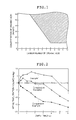
- Fig. 1 is a graph illustrating the relationship between the carbon number and preferred content of organic acid contained in peritoneal dialysis solution of the present invention.
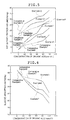
- Fig. 2 is a graph illustrating the effect of peritoneal dialysis solution of the present invention.
- Fig. 3 is a graph illustrating the effect of peritoneal dialysis solution of the present invention.
- Fig. 4 is a graph illustrating the effect of peritoneal dialysis solution of the present invention.
- Fig. 5 is a graph illustrating the effect of peritoneal dialysis solution of the present invention.
- Fig. 6 is a graph illustrating the effect of peritoneal dialysis solution of the present invention.
- Fig. 7 is a graph illustrating the effect of peritoneal dialysis solution of the present invention.
- Fig. 8 is a graph illustrating the effect of peritoneal dialysis solution of the present invention.
- Fig. 9 is a graph illustrating the effect of peritoneal dialysis solution of the present invention.
- peritoneal dialysis solution and a method for adjusting a peritoneal dialysis solution according to the present invention will be described in detail.
- the peritoneal dialysis solution includes as a basic construction provision of a difference in concentration between the total cations and chloride ion and containing organic acids for the electrical neutralization of the difference in concentration depending on the difference in concentration, whereby the present invention can realize an increase in the net ultrafiltration volume and a prolonged time for transport of water (that is, effective dialysis time) and obtain excellent dialysis effect.
- the cations contained are the same as in usual peritoneal dialysis solutions and include, for example, sodium ion, calcium ion, magnesium ion, etc.
- the concentration of cation is not limited particularly but the concentration of sodium ion is preferably 100 to 200 mEq/l, more preferably 130 to 150 mEq/l.
- the concentration of calcium ion is preferably 0 to 5 mEq/l, more preferably 1 to 5 mEq/l.
- the concentration of magnesium ion is preferably 0 to 5 mEq/l, more preferably 0.5 to 2 mEq/l.
- the concentration of chloride ion is not limited particularly so long as it is set to be lower than the concentration of total cations but is preferably 30 to 180 mEq/l, further more preferably 70 to 110 mEq/l.
- the difference in concentration between the total cations and chloride ion is determined properly depending on the targeted dialyzing effect (net ultrafiltration volume, dwell time, amount of removed uremic toxins, etc.) and organic acids used and is not limited particularly.
- Each of the ions may be caused to be contained in the peritoneal dialysis solution of the present invention in the same manner as in usual peritoneal dialysis solutions using sodium chloride, calcium chloride, magnesium chloride, and sodium, calcium, magnesium, etc. salts of organic acids such as sodium lactate.
- a difference in concentration is provided between total cations and chloride ion and an organic acid is contained to maintain electrical neutrality depending on the difference in concentration.
- the organic acid is not limited particularly but preferably an organic acid having 3 or more carbon atoms is used.
- the peritoneal dialysis solution of the present invention exhibit good dialyzing effect when it contains an organic acid in an amount of 60 mmol/l or more in the case of an organic acid having 3 carbon atoms, in an amount of 50 mmol/l or more in the case of an organic acid having 4 carbon atoms, in an amount of 40 mmol/l or more in the case of an organic acid having 5 carbon atoms, in an amount of 30 mmol/l or more in the case of an organic acid having 6 carbon atoms, in an amount of 20 mmol/l or more in the case of an organic acid having 7 carbon atoms, and in an amount of 10 mmol/l or more in the case of an organic acid having 8 or more carbon atoms. That is, when the content of organic acid is set in the shaded region in Fig. 1, good dialyzing effect can be obtained.
- the concentration of organic acids in the peritoneal dialysis solution satisfies the following equation A/60+B/50+C/40+D/30+E/20+F/10 ⁇ 1 wherein A (mmol/l) is the total concentration of organic acid having 3 carbon atoms, B (mmol/l) is the total concentration of organic acid having 4 carbon atoms, C (mmol/l) is the total concentration of organic acid having 5 carbon atoms, D (mmol/l) is the total concentration of organic acid having 6 carbon atoms, E (mmol/l) is the total concentration of organic acid having 7 carbon atoms, and F (mmol/l) isthe total concentration of organic acid having 8 or more carbon atoms.
- the organic acid is blended in order to maintain electrical neutrality of peritoneal dialysis solution. Therefore, the total content of organic acid depends on the difference in concentration between the total cations and chloride ion. If the concentration of chloride ion is set at too low a level, then there is the fear that the blood electrolyte level balance will be disturbed so that the difference in concentration between the total cations and chloride ion must be within a certain range. Accordingly, the total content of organic acids is preferably 110 mmol/l or less, more preferably 100 mmol/l or less.
- the present invention provides more excellent dialyzing effect, as the number of carbons of the organic acid is longer. Also, the greater the difference in concentration between the total cations and chloride ion (the larger the content of organic acid) is, the more excellent dialyzing effect can be obtained.
- a peritoneal dialysis solution can be obtained which not only has a high dialyzing effect but also matches the targeted dialyzing effect by properly selecting and setting difference in concentration between the totalcations and chloride ion, organic acids to be contained, and the like.
- the difference in concentration between the total cations and chloride ion may be set large and/or organic acids having a larger carbon number may be used.
- the balance betweencations and chloride ion can be adjusted while securing excellent dialyzing effect depending on the state of patient's disease and so on.
- the peritoneal dialysis solution provides a sufficiently excellent dialyzing effect at an osmotic pressure lower than that of the conventional peritoneal dialysis solution or if it is at the same osmotic pressure, it provides a higher dialyzing effect than that of the conventional peritoneal dialysis solution.
- load to patient by glucose (amount of incorporation into the body) can be decreased even when the peritoneal dialysis solution contains a large amount of glucose.
- the organic acid to be used is not limited particularly but various mono- or poly-functional organic acids can be utilized.
- mono-functional organic acid may be utilized since more amount of moles can be included in the dialysis solution.
- the organic acid having 3 carbon atoms includes preferably lactic acid, propionic acid, etc.; the organic acid having 4 carbon atoms include preferably malic acid, fumaric acid, succinic acid, oxaloacetic acid, N-acetylglycine, etc.; the organic acid having 5 carbon atoms includes preferably N-acetyl-L-cystein, glutaric acid, etc.; the organic acid having 6 carbon atoms includes preferably glucuronic acid, ascorbic acid, citric acid, isocitric acid, gluconic acid, N-acetyl-L-aspartic acid, etc.; the organic acid having 7 carbon atoms includes preferably N-acetyl-L-glutamic acid, N-acetyl-L-methionine, N-acetyl-L-proline, N-acetyl-L-valine, etc.; the organic acid having 8 carbon atoms includes preferably, N-acetyl-L-
- organic acids may be used singly or a plurality of species differing in the number of carbon or a plurality of species having the same number of carbon atoms or both of them may be used.
- any one of the following is satisfied: A/60 ⁇ 1, B/50 ⁇ 1, C/40 ⁇ 1, D/30 ⁇ 1, E/20 ⁇ 1, F/10 ⁇ 1, A/60+B/50 ⁇ 1; A/60+C/40 ⁇ 1, A/60+D/30 ⁇ 1, A/60+E/20 ⁇ 1, A/60+F/10 ⁇ 1, B/50+C/40 ⁇ 1, B/50+D/30 ⁇ 1, B/50+E/20 ⁇ 1, B/50+F/10 ⁇ 1, C/40+D/30 ⁇ 1, C/40+E/20 ⁇ 1, C/40+F/10 ⁇ 1, D/30+E/20 ⁇ 1, D/30+F/10 ⁇ 1, E/20+F/10 ⁇ 1, A60+B/50+C/40 ⁇ 1, A60+B/50+D/30 ⁇ 1, A60+B/50+E/20 ⁇ 1, A60+B/50+F/10 ⁇ 1, A60+C/40+D/30 ⁇ 1, A60+C/40+E/20 ⁇ 1, A60+C/40+F/10 ⁇ 1, A60+C/40+E/20 ⁇ 1, A
- organic acid salts containing these organic acid ions such as sodium salts of these acids can be utilized advantageously.
- the peritoneal dialysis solution of the present invention may if needed contain osmotic agents used in usual peritoneal dialysis solutions.
- osmotic agent can be used a reducing sugar because of its safety for living body as used in the prior art.
- reducing sugar examples include glucose, dextrin, maltose, etc.
- Their content is not limited particularly but, for example, in the case of glucose, it is preferably in the range of 0 to 4.0 g/dl.
- They may be selected properly depending on the osmotic pressure and pH of the peritoneal dialysis solution, the state of patient, and so on.
- the pH of the peritoneal dialysis solution of the present invention is preferably 5.0 to 8.0, more preferably 5.5 to 7.5.
- the osmotic pressure is preferably 260 to 600 mOsm/kg, more preferably 260 to 600 mOsm/kg, further more preferably 280 to 500 mOsm/kg.
- the adjustment method may be performed by a known method.
- the peritoneal dialysis solution of the present invention can be prepared by dissolving the above-mentioned cation and chloride ion sources, organic acids and other components in water.
- the prepared peritoneal dialysis solution is desirably included in a soft plastic bag or a glass container before it can be subjected to high pressure steam sterilization or hot water sterilization.
- the material for soft plastic includes polyvinyl chloride, polypropylene, polyethylene, polyester, polyamide, ethylene vinyl alcohol copolymer, polyethylene terephthalate, polyvinylidene chloride, ethylene vinyl acetate copolymer, etc. It may be a combination of them as a multilayer film.
- the method of using the peritoneal dialysis solution of the present invention is not limited in any way but it may be used by the technique of a known peritoneal dialysis therapy.
- the peritoneal dialysis solution of the present invention can increase the net ultrafiltration volume and prolong dwell time as compared with peritoneal dialysis solution generally applied to clinical use under the conditions where the osmotic pressure and injection amount are the same. Further, when glucose is contained, its amount of incorporation into the body can be decreased.
- peritoneal dialysis solution of the present invention can decrease the injection amount into intraperitoneal cavity as compared with the conventional peritoneal dialysis solution so that the selectivity of the time for exchanging the dialysate can be extended. Therefore, the frequency for exchanging the dialysate can be reduced. That is, according to the present invention, miniaturization (down-sizing) of a bag containing a peritoneal dialysis solution, a reduction in space for storing peritoneal dialysis solution bags, and a decrease in amount of wastes are possible.
- the osmotic pressure for example, by decreasing the concentration of glucose as the osmotic agent so that it is possible to continue the therapy for a long term without a load to the peritoneum.
- the present invention can decrease the amount of glucose absorbed into the body, the peritoneal dialysis solution of the present invention is advantageous to peritoneal dialysis therapy of patients suffering from lipid pathobolism, obesity, diabetes, etc.
- the present invention can contribute much to the coming back to the society and QOL (quality of life) of patients.
- Sodium chloride and sodium lactate were dissolved in water for injection so that the electrolyte ions and organic acid ion would be of the concentrations shown in Table 1 to obtain peritoneal dialysis solutions of Example 1 of the invention and Comparative Examples 1 and 2.
- the osmotic pressure was measured with a pH-osmometer (HOSM-1, manufactured by Toa Denpa Kogyo Co., Ltd.) The osmotic pressures in the following examples were measured in the same manner as in this example.
- mice Male Sprague-Dawley (SD) rats weighing about 200 g were preliminary bred for 6 days and then starved for 24 hours before they were used in the test. During the preliminary breeding period, food and water were given freely and during the starvation only water was given freely. The test was conducted under ether anesthesia but during the dialysis the rats were awaken.
- SD Male Sprague-Dawley
- a peritoneal dialysis solution (40 ml/kg) was administered intraperitoneally using a 24G syringe. After the administration, body weight B (g) was measured immediately and dialysis was started. After a fixed dwell time, body weight C (g) was measured and immediately peritoneotomy was operated and the dialysate was completely removed with a syringe and absorbent cotton followed by measurement of body weight D (g).
- the net ultrafiltration volume (mg/kg) was obtained by the following equation taking the specific gravity of the dialysate as unity.
- Net ultrafiltration volume (ml/kg) [(C-D)-(B-A)]/A ⁇ 1000
- Example 1 gave larger net ultrafiltration volume at any pool time than Comparative Examples 1 and 2.
- the similar effect was observed in other organic acids.
- Glucose, sodium chloride, and sodium lactate were dissolved in water for injection so that the reduced sugar, electrolyte ions, and organic acid ion would be of the concentrations shown in Table 2 to obtain peritoneal dialysis solutions of Example 2 of the invention and Comparative Examples 3 and 4.
- the peritoneal dialysis solutions here had the same compositions in which glucose was added to the peritoneal dialysis solutions shown in Table 1 at concentration of 1.35 W/V%.
- W/V% herein means the number of grams of glucose (osmotic agent) per 100 milliliters (100 ml) of peritoneal dialysis solution.
- Example 2 Glucose (W/V%) 1.35 1.35 1.35 Na + (mEq/l) 140 140 140 Cl - (mEq/l) 140 90 40 Lactate ion (mmol/l) 0 50 100 Osmotic pressure (mOsm/kg) 344 344 344
- Example 2 gave larger net ultrafiltration volume at any dwell time than Comparative Examples 3 and 4.
- the similar effect was observed in other osmotic agents and in other organic acids.
- Example 1 of the invention Example 3 and Example 4 of the invention were compared with Comparative Example 1, Comparative Example 5 and Comparative Example 6, respectively.
- Comparative Example 1 Comparative Example 5 Comparative Example 6 Na + (mEq/l) 140 170 200 Cl - (mEq/l) 140 170 200 Lactate ion (mmol/l) 0 0 0 Osmotic pressure (mOsm/kg) 265 320 374
- Example 3 Example 4 Na + (mEq/l) 140 170 200 Cl - (mEq/l) 40 70 100 Lactate ion (mmol/l) 100 100 100 Osmotic pressure (mOsm/kg) 265 320 374
- Glucose, sodium chloride, sodium lactate (number of carbon: 3), ascorbic acid (number of carbon: 6), N-acetyl-L-proline (number of carbon: 7), and sodium hydroxide were dissolved in water for injection so that the reduced sugar, electrolyte ions, and organic acid ions would be of the concentrations shown in Table 4 to obtain peritoneal dialysis solutions of Examples 5 to 10 of the invention and Comparative Examples 7 to 12.
- the Examples and Comparative Examples were practiced using peritoneal dialysis solutions containing 1.35 W/V% and 2.5 W/V% glucose.
- Example 5 Comparative Example 7
- Example 6 Comparative Example 8
- Example 7 Comparative Example 9
- Glucose (W/V%) 1.35 1.35 1.35 Na + (mEq/l) 140 140 140 Cl - (mEq/l) 140-40 140-40 140-40 Lactate ion (mmol/l) 0-100 0 0 Ascorbic acid ion (mmol/l) 0 0-100 0 N-Acetyl-L-proline ion (mmol/l) 0 0 0-100 Osmotic pressure (mOsm/kg) 344 344 344
- Example 8 Comparative Example 10
- Example 9 Comparative Example 11
- Example 10 Comparative Example 10
- Example 12 Glucose (W/V%) 2.5 2.5 2.5 Na + (mEq/l) 140 140 140 Cl - (mEq/l) 140-40 140-40
- Lactate ion mmol/l) 0-100 0 0
- the peritoneal dialysis solutions of Examples 5 to 10 and Comparative Examples of 7 to 12 were subjected to peritoneal dialysis tests in the same manner as in Example 1.
- the net ultrafiltration volume, glucose absorption ratio (Examples 5 to 7 and Comparative Examples 7 to 9) after 6-hour dwell time of each peritoneal dialysis solution were compared and studied.
- the glucose absorption ratio was measured by the following method.
- Example 6 (the number of carbons in the organic acid: 6) had a larger net ultrafiltration volume than Example 5 (the number of carbons in the organic acid: 3)
- Example 7 (the number of carbon atoms in the organic acid: 7) had a larger net ultrafiltration volume than Example 6
- Example 9 (the number of carbons in the organic acid: 6) had a larger net ultrafiltration volume than Example 8 (the number of carbons in the organic acid: 3)
- Example 10 (the number of carbons in the organic acid: 7) had a larger net ultrafiltration volume than Example 9, which indicated that the net ultrafiltration volume varied depending on the kind of organic acid and the greater the number of carbon atoms in the organic acid was, the more the net ultrafiltration volume was increased.
- Example 6 had a lower glucose absorption ratio than Example 5 and Example 7 than Example 6, which indicated that the glucose absorption ratio varied depending on the kind of organic acid and the greater the number of carbons in the organic acid was, the more the glucose absorption ratio was decreased.
- the Examples were practiced using peritoneal dialysis solutions containing 1.35 W/V% glucose.
- Glucose, sodium chloride, sodium lactate, ascorbic acid, N-acetyl-L-proline, and sodium hydroxide were dissolved in water for injection so that the reduced sugar, electrolyte ions, and organic acid ions would be of the concentrations shown in Table 5 to obtain peritoneal dialysis solutions of Examples 11 to 15 of the invention and Comparative Example 13.
- Glucose, sodium chloride, calcium chloride, magnesium chloride, sodium lactate, sodium glucuronate, N-acetyl-L-proline, N-acetyl-L-glutamine, and sodium hydroxide were dissolved in water for injection so that the reduced sugar, electrolyte ions, and organic acid ions would be of the concentrations shown in Table 6 to obtain peritoneal dialysis solutions of Examples 16 to 29 of the invention and Comparative Examples 14 and 15.
- the Examples and Comparative Examples were practiced using peritoneal dialysis solutions containing 1.35 W/V% and 0.72 W/V% glucose.
- the prepared peritoneal dialysis solutions were subjected to peritoneal dialysis tests in the same manner as Example 1.
- Examples 16 to 25 of the invention and Examples 26 to 29 of the invention were compared with Comparative Example 14 and Comparative Example 15, respectively.
- net ultrafiltration volume in each peritoneal dialysis solution after 6-hour dwell time glucose absorption ratio (glucose absorption ratio being measured for the peritoneal dialysis solution at a glucose concentration of 1.35 W/V%) were compared and studied.
- the glucose absorption ratios were obtained in the same manner as in Example 4.
- the net ultrafiltration volume (after 6-hour dwell time) is shown in Figs. 7 and 8.
- peritoneal dialysis solution and the method for adjusting the peritoneal dialysis solution of the present invention in which a difference in concentration is provided between the total cations and chloride ion and a predetermined concentration of organic acids for maintaining electrical neutrality is contained, there can be obtained a preferabe peritoneal dialysis solution having excellent performance of removing water, a prolonged effective dwell time and low glucose absorbability and in compliance with applications such as the state of patients as compared with the conventional peritoneal dialysis solutions using glucose as the osmotic agent.
- the net ultrafiltration volume and effective dwell time are secured at an osmotic pressure lower than the conventional peritoneal dialysis solutions and also the glucose absorption amount can be decreased, or the net ultrafiltration volume can be increased and the effective dwell time can be prolonged in peritoneal dialysis solutions having the same osmotic pressure.
Landscapes
- Health & Medical Sciences (AREA)
- Public Health (AREA)
- Heart & Thoracic Surgery (AREA)
- Urology & Nephrology (AREA)
- Emergency Medicine (AREA)
- Veterinary Medicine (AREA)
- Life Sciences & Earth Sciences (AREA)
- Animal Behavior & Ethology (AREA)
- General Health & Medical Sciences (AREA)
- Epidemiology (AREA)
- Pharmacology & Pharmacy (AREA)
- Medicinal Chemistry (AREA)
- Inorganic Chemistry (AREA)
- Chemical & Material Sciences (AREA)
- Vascular Medicine (AREA)
- Engineering & Computer Science (AREA)
- Anesthesiology (AREA)
- Biomedical Technology (AREA)
- Hematology (AREA)
- External Artificial Organs (AREA)
Applications Claiming Priority (2)
| Application Number | Priority Date | Filing Date | Title |
|---|---|---|---|
| JP19158498 | 1998-07-07 | ||
| JP19158498 | 1998-07-07 |
Publications (3)
| Publication Number | Publication Date |
|---|---|
| EP0970699A2 true EP0970699A2 (fr) | 2000-01-12 |
| EP0970699A3 EP0970699A3 (fr) | 2002-10-16 |
| EP0970699B1 EP0970699B1 (fr) | 2005-09-07 |
Family
ID=16277086
Family Applications (1)
| Application Number | Title | Priority Date | Filing Date |
|---|---|---|---|
| EP99401704A Expired - Lifetime EP0970699B1 (fr) | 1998-07-07 | 1999-07-07 | Solution pour dialyse péritonéale |
Country Status (4)
| Country | Link |
|---|---|
| US (1) | US6156797A (fr) |
| EP (1) | EP0970699B1 (fr) |
| AT (1) | ATE303812T1 (fr) |
| DE (1) | DE69927093T2 (fr) |
Cited By (1)
| Publication number | Priority date | Publication date | Assignee | Title |
|---|---|---|---|---|
| WO2008106702A1 (fr) * | 2007-03-02 | 2008-09-12 | Zytoprotec Gmbh | Liquide de dialyse péritonéale à base d'hydrate de carbone, comprenant un résidu de glutamine |
Families Citing this family (10)
| Publication number | Priority date | Publication date | Assignee | Title |
|---|---|---|---|---|
| US7186420B2 (en) * | 1999-04-26 | 2007-03-06 | Edwards Lifesciences Corporation | Multi-part substitution infusion fluids and matching anticoagulants |
| US6743191B1 (en) | 1999-04-26 | 2004-06-01 | Edwards Lifesciences Ag | Substitution infusion fluid and citrate anticoagulation |
| US8105258B2 (en) | 1999-04-26 | 2012-01-31 | Baxter International Inc. | Citrate anticoagulation system for extracorporeal blood treatments |
| CA2344910C (fr) * | 2001-04-23 | 2009-07-07 | Kureha Chemical Industry Co., Ltd. | Methode et composition pharmaceutique pour le traitement des maladies renales |
| CN101257908B (zh) | 2005-04-20 | 2010-09-08 | 株式会社林原生物化学研究所 | 腹膜透析液 |
| EP2481467A1 (fr) * | 2011-01-31 | 2012-08-01 | Siemens Aktiengesellschaft | Solvant, procédé de préparation d'un liquide d'absorption et utilisation du solvant |
| US9861733B2 (en) | 2012-03-23 | 2018-01-09 | Nxstage Medical Inc. | Peritoneal dialysis systems, devices, and methods |
| JP6049685B2 (ja) | 2011-03-23 | 2016-12-21 | ネクステージ メディカル インコーポレイテッド | 腹膜透析使い捨てユニット、コントローラ、腹膜透析システム |
| WO2018237375A1 (fr) | 2017-06-24 | 2018-12-27 | Nxstage Medical, Inc. | Procédés et systèmes de préparation et/ou de traitement de fluide de dialyse péritonéale |
| US11364328B2 (en) | 2018-02-28 | 2022-06-21 | Nxstage Medical, Inc. | Fluid preparation and treatment devices methods and systems |
Family Cites Families (6)
| Publication number | Priority date | Publication date | Assignee | Title |
|---|---|---|---|---|
| WO1984001505A1 (fr) * | 1982-10-21 | 1984-04-26 | Minneapolis Med Res | Opsonines dans une dialyse peritoneale |
| DE3812524A1 (de) * | 1988-04-15 | 1989-10-26 | Fresenius Ag | Dialysier- und spuelloesung fuer die intraperitoneale verabreichung mit antimikrobieller ausruestung |
| DE3812525C1 (fr) * | 1988-04-15 | 1989-06-22 | Fresenius Ag, 6380 Bad Homburg, De | |
| KR100309972B1 (ko) * | 1992-12-22 | 2001-12-28 | 데이비드 씨. 맥키, 토마스 제어. 시바티노 | 복막투석환자치료용의개량아미노산용액 |
| US5965533A (en) * | 1997-05-23 | 1999-10-12 | Baxter International Inc. | Atrial natriuretic peptide (ANP) as an additive to peritoneal dialysis solutions |
| DE19748290B8 (de) * | 1997-10-31 | 2009-09-03 | Fresenius Medical Care Deutschland Gmbh | Lösung für die Peritonealdialyse |
-
1999
- 1999-07-07 DE DE69927093T patent/DE69927093T2/de not_active Expired - Fee Related
- 1999-07-07 EP EP99401704A patent/EP0970699B1/fr not_active Expired - Lifetime
- 1999-07-07 AT AT99401704T patent/ATE303812T1/de not_active IP Right Cessation
- 1999-07-07 US US09/348,496 patent/US6156797A/en not_active Expired - Lifetime
Non-Patent Citations (1)
| Title |
|---|
| None |
Cited By (3)
| Publication number | Priority date | Publication date | Assignee | Title |
|---|---|---|---|---|
| WO2008106702A1 (fr) * | 2007-03-02 | 2008-09-12 | Zytoprotec Gmbh | Liquide de dialyse péritonéale à base d'hydrate de carbone, comprenant un résidu de glutamine |
| US9931369B2 (en) | 2007-03-02 | 2018-04-03 | Zytoprotec Gmbh | Carbohydrate-based peritoneal dialysis fluid comprising glutamine residue |
| US11534475B2 (en) | 2007-03-02 | 2022-12-27 | Zytoprotec Gmbh | Carbohydrate-based peritoneal dialysis fluid comprising glutamine residue |
Also Published As
| Publication number | Publication date |
|---|---|
| DE69927093D1 (de) | 2005-10-13 |
| DE69927093T2 (de) | 2006-06-29 |
| US6156797A (en) | 2000-12-05 |
| EP0970699B1 (fr) | 2005-09-07 |
| EP0970699A3 (fr) | 2002-10-16 |
| ATE303812T1 (de) | 2005-09-15 |
Similar Documents
| Publication | Publication Date | Title |
|---|---|---|
| JP5947334B2 (ja) | イコデキストリンを含有する生体適合性透析液 | |
| AU779950B2 (en) | Bicarbonate-based solution in two parts for peritoneal dialysis or substitution in continuous renal replacement therapy | |
| JP5690040B2 (ja) | 重炭酸塩ベースの腹膜透析溶液 | |
| JP4229993B2 (ja) | 炭酸水素塩含有注入または透析溶液の製法 | |
| US4574085A (en) | Method for using dialysis solution containing glycerol | |
| JP4135849B2 (ja) | 溶液、とくに、血液透析または腹膜透析のための溶液およびその調製方法 | |
| EP0970699B1 (fr) | Solution pour dialyse péritonéale | |
| EP1648410A1 (fr) | Solutions de dialyse a niveaux reduits de produits de degradation du glucose | |
| JPS58500563A (ja) | グルコ−ス、アミノ酸およびインシユリンを含む透析液 | |
| EP0076355A2 (fr) | Liquide de dialyse péritonéale | |
| JP2000245826A (ja) | 中性腹膜透析液 | |
| JP2000080033A (ja) | 腹膜透析液および腹膜透析液の調整方法 | |
| EP1517681A1 (fr) | Dialysat peritoneal contenant de la taurine | |
| JP2001190662A (ja) | 腹膜透析液およびその調整方法 | |
| HK1088535B (en) | Biocompatible dialysis fluids containing icodextrins |
Legal Events
| Date | Code | Title | Description |
|---|---|---|---|
| PUAI | Public reference made under article 153(3) epc to a published international application that has entered the european phase |
Free format text: ORIGINAL CODE: 0009012 |
|
| AK | Designated contracting states |
Kind code of ref document: A2 Designated state(s): AT BE CH CY DE DK ES FI FR GB GR IE IT LI LU MC NL PT SE |
|
| AX | Request for extension of the european patent |
Free format text: AL;LT;LV;MK;RO;SI |
|
| PUAL | Search report despatched |
Free format text: ORIGINAL CODE: 0009013 |
|
| AK | Designated contracting states |
Kind code of ref document: A3 Designated state(s): AT BE CH CY DE DK ES FI FR GB GR IE IT LI LU MC NL PT SE |
|
| AX | Request for extension of the european patent |
Free format text: AL;LT;LV;MK;RO;SI |
|
| RIC1 | Information provided on ipc code assigned before grant |
Free format text: 7A 61K 33/14 A, 7A 61K 47/12 B, 7A 61K 33/14 J, 7A 61K 31:70 J, 7A 61K 31:19 J |
|
| 17P | Request for examination filed |
Effective date: 20030411 |
|
| AKX | Designation fees paid |
Designated state(s): AT BE CH CY DE DK ES FI FR GB GR IE IT LI LU MC NL PT SE |
|
| 17Q | First examination report despatched |
Effective date: 20030820 |
|
| GRAP | Despatch of communication of intention to grant a patent |
Free format text: ORIGINAL CODE: EPIDOSNIGR1 |
|
| GRAS | Grant fee paid |
Free format text: ORIGINAL CODE: EPIDOSNIGR3 |
|
| GRAA | (expected) grant |
Free format text: ORIGINAL CODE: 0009210 |
|
| AK | Designated contracting states |
Kind code of ref document: B1 Designated state(s): AT BE CH CY DE DK ES FI FR GB GR IE IT LI LU MC NL PT SE |
|
| PG25 | Lapsed in a contracting state [announced via postgrant information from national office to epo] |
Ref country code: NL Free format text: LAPSE BECAUSE OF FAILURE TO SUBMIT A TRANSLATION OF THE DESCRIPTION OR TO PAY THE FEE WITHIN THE PRESCRIBED TIME-LIMIT Effective date: 20050907 Ref country code: LI Free format text: LAPSE BECAUSE OF FAILURE TO SUBMIT A TRANSLATION OF THE DESCRIPTION OR TO PAY THE FEE WITHIN THE PRESCRIBED TIME-LIMIT Effective date: 20050907 Ref country code: IT Free format text: LAPSE BECAUSE OF FAILURE TO SUBMIT A TRANSLATION OF THE DESCRIPTION OR TO PAY THE FEE WITHIN THE PRESCRIBED TIME-LIMIT;WARNING: LAPSES OF ITALIAN PATENTS WITH EFFECTIVE DATE BEFORE 2007 MAY HAVE OCCURRED AT ANY TIME BEFORE 2007. THE CORRECT EFFECTIVE DATE MAY BE DIFFERENT FROM THE ONE RECORDED. Effective date: 20050907 Ref country code: FI Free format text: LAPSE BECAUSE OF FAILURE TO SUBMIT A TRANSLATION OF THE DESCRIPTION OR TO PAY THE FEE WITHIN THE PRESCRIBED TIME-LIMIT Effective date: 20050907 Ref country code: CH Free format text: LAPSE BECAUSE OF FAILURE TO SUBMIT A TRANSLATION OF THE DESCRIPTION OR TO PAY THE FEE WITHIN THE PRESCRIBED TIME-LIMIT Effective date: 20050907 Ref country code: BE Free format text: LAPSE BECAUSE OF FAILURE TO SUBMIT A TRANSLATION OF THE DESCRIPTION OR TO PAY THE FEE WITHIN THE PRESCRIBED TIME-LIMIT Effective date: 20050907 Ref country code: AT Free format text: LAPSE BECAUSE OF FAILURE TO SUBMIT A TRANSLATION OF THE DESCRIPTION OR TO PAY THE FEE WITHIN THE PRESCRIBED TIME-LIMIT Effective date: 20050907 |
|
| REG | Reference to a national code |
Ref country code: GB Ref legal event code: FG4D |
|
| REG | Reference to a national code |
Ref country code: CH Ref legal event code: EP |
|
| REG | Reference to a national code |
Ref country code: IE Ref legal event code: FG4D |
|
| REF | Corresponds to: |
Ref document number: 69927093 Country of ref document: DE Date of ref document: 20051013 Kind code of ref document: P |
|
| PG25 | Lapsed in a contracting state [announced via postgrant information from national office to epo] |
Ref country code: SE Free format text: LAPSE BECAUSE OF FAILURE TO SUBMIT A TRANSLATION OF THE DESCRIPTION OR TO PAY THE FEE WITHIN THE PRESCRIBED TIME-LIMIT Effective date: 20051207 Ref country code: GR Free format text: LAPSE BECAUSE OF FAILURE TO SUBMIT A TRANSLATION OF THE DESCRIPTION OR TO PAY THE FEE WITHIN THE PRESCRIBED TIME-LIMIT Effective date: 20051207 Ref country code: DK Free format text: LAPSE BECAUSE OF FAILURE TO SUBMIT A TRANSLATION OF THE DESCRIPTION OR TO PAY THE FEE WITHIN THE PRESCRIBED TIME-LIMIT Effective date: 20051207 |
|
| PG25 | Lapsed in a contracting state [announced via postgrant information from national office to epo] |
Ref country code: ES Free format text: LAPSE BECAUSE OF FAILURE TO SUBMIT A TRANSLATION OF THE DESCRIPTION OR TO PAY THE FEE WITHIN THE PRESCRIBED TIME-LIMIT Effective date: 20051218 |
|
| PG25 | Lapsed in a contracting state [announced via postgrant information from national office to epo] |
Ref country code: PT Free format text: LAPSE BECAUSE OF FAILURE TO SUBMIT A TRANSLATION OF THE DESCRIPTION OR TO PAY THE FEE WITHIN THE PRESCRIBED TIME-LIMIT Effective date: 20060207 |
|
| NLV1 | Nl: lapsed or annulled due to failure to fulfill the requirements of art. 29p and 29m of the patents act | ||
| REG | Reference to a national code |
Ref country code: CH Ref legal event code: PL |
|
| ET | Fr: translation filed | ||
| PG25 | Lapsed in a contracting state [announced via postgrant information from national office to epo] |
Ref country code: IE Free format text: LAPSE BECAUSE OF NON-PAYMENT OF DUE FEES Effective date: 20060707 |
|
| PLBE | No opposition filed within time limit |
Free format text: ORIGINAL CODE: 0009261 |
|
| STAA | Information on the status of an ep patent application or granted ep patent |
Free format text: STATUS: NO OPPOSITION FILED WITHIN TIME LIMIT |
|
| PG25 | Lapsed in a contracting state [announced via postgrant information from national office to epo] |
Ref country code: MC Free format text: LAPSE BECAUSE OF NON-PAYMENT OF DUE FEES Effective date: 20060731 |
|
| 26N | No opposition filed |
Effective date: 20060608 |
|
| REG | Reference to a national code |
Ref country code: IE Ref legal event code: MM4A |
|
| PG25 | Lapsed in a contracting state [announced via postgrant information from national office to epo] |
Ref country code: LU Free format text: LAPSE BECAUSE OF NON-PAYMENT OF DUE FEES Effective date: 20060707 |
|
| PG25 | Lapsed in a contracting state [announced via postgrant information from national office to epo] |
Ref country code: CY Free format text: LAPSE BECAUSE OF FAILURE TO SUBMIT A TRANSLATION OF THE DESCRIPTION OR TO PAY THE FEE WITHIN THE PRESCRIBED TIME-LIMIT Effective date: 20050907 |
|
| PGFP | Annual fee paid to national office [announced via postgrant information from national office to epo] |
Ref country code: FR Payment date: 20090710 Year of fee payment: 11 |
|
| PGFP | Annual fee paid to national office [announced via postgrant information from national office to epo] |
Ref country code: GB Payment date: 20090701 Year of fee payment: 11 Ref country code: DE Payment date: 20090702 Year of fee payment: 11 |
|
| GBPC | Gb: european patent ceased through non-payment of renewal fee |
Effective date: 20100707 |
|
| REG | Reference to a national code |
Ref country code: FR Ref legal event code: ST Effective date: 20110331 |
|
| PG25 | Lapsed in a contracting state [announced via postgrant information from national office to epo] |
Ref country code: DE Free format text: LAPSE BECAUSE OF NON-PAYMENT OF DUE FEES Effective date: 20110201 |
|
| REG | Reference to a national code |
Ref country code: DE Ref legal event code: R119 Ref document number: 69927093 Country of ref document: DE Effective date: 20110201 |
|
| PG25 | Lapsed in a contracting state [announced via postgrant information from national office to epo] |
Ref country code: FR Free format text: LAPSE BECAUSE OF NON-PAYMENT OF DUE FEES Effective date: 20100802 |
|
| PG25 | Lapsed in a contracting state [announced via postgrant information from national office to epo] |
Ref country code: GB Free format text: LAPSE BECAUSE OF NON-PAYMENT OF DUE FEES Effective date: 20100707 |