EP0985729A2 - Streptokinasemutanten - Google Patents
Streptokinasemutanten Download PDFInfo
- Publication number
- EP0985729A2 EP0985729A2 EP99202639A EP99202639A EP0985729A2 EP 0985729 A2 EP0985729 A2 EP 0985729A2 EP 99202639 A EP99202639 A EP 99202639A EP 99202639 A EP99202639 A EP 99202639A EP 0985729 A2 EP0985729 A2 EP 0985729A2
- Authority
- EP
- European Patent Office
- Prior art keywords
- skc
- streptokinase
- host cell
- gene
- expression vector
- Prior art date
- Legal status (The legal status is an assumption and is not a legal conclusion. Google has not performed a legal analysis and makes no representation as to the accuracy of the status listed.)
- Granted
Links
Images






Classifications
-
- C—CHEMISTRY; METALLURGY
- C07—ORGANIC CHEMISTRY
- C07K—PEPTIDES
- C07K14/00—Peptides having more than 20 amino acids; Gastrins; Somatostatins; Melanotropins; Derivatives thereof
- C07K14/195—Peptides having more than 20 amino acids; Gastrins; Somatostatins; Melanotropins; Derivatives thereof from bacteria
- C07K14/315—Peptides having more than 20 amino acids; Gastrins; Somatostatins; Melanotropins; Derivatives thereof from bacteria from Streptococcus (G), e.g. Enterococci
- C07K14/3153—Streptokinase
-
- A—HUMAN NECESSITIES
- A61—MEDICAL OR VETERINARY SCIENCE; HYGIENE
- A61K—PREPARATIONS FOR MEDICAL, DENTAL OR TOILETRY PURPOSES
- A61K38/00—Medicinal preparations containing peptides
-
- A—HUMAN NECESSITIES
- A61—MEDICAL OR VETERINARY SCIENCE; HYGIENE
- A61K—PREPARATIONS FOR MEDICAL, DENTAL OR TOILETRY PURPOSES
- A61K39/00—Medicinal preparations containing antigens or antibodies
-
- C—CHEMISTRY; METALLURGY
- C07—ORGANIC CHEMISTRY
- C07K—PEPTIDES
- C07K2319/00—Fusion polypeptide
Definitions
- the present invention is related to the field of biotechnology and genetic engineering techniques, particularly to a method for obtaining mutants obtain from streptokinase, to the molecules obtained from this method, as well as the expression vectors and microorganisms for recombinant obtaining.
- the streptokinase is a polypeptide of 414 amino acids residues. This is an extracellular protein produced by various strains of beta haemolytic streptococci, with molecular weight about 47.000 dalton and is a potent activator of the fibrinolytic enzyme system in humans (Tillet, W.S. and Garner, R.L. (1933) Exp. Med. 58, 485-502; Tillet, W.S.; Edwards, E.D. and Garner, R.L (1934) J. Clin. Invest 13, 47-78).
- streptokinase does not possess the intrinsic protease activity necessary to activate plasminogen to plasmin. Streptokinase activates plasminogen by the formation of 1:1 molar complex of streptokinase-plasminogen, which serves as the activator of free plasminogen to form plasmin (Schick, L.A. and Castellino, F.J. (1974) Biochem. Biophys. Res. Commun. 57, 47-54).
- Streptokinase, urokinase and tissue-type plasminogen activator are at present used as thrombolytic agents in the treatment of disorders which collectively represent one of the greatest causes of death in the world, such as myocardial infarct, pulmonary thromboembolism, surgical complications and other cases of thrombosis.
- streptokinase is a bacterial protein and therefore, antigenic in humans. Antibodies to streptokinase are found in most individuals as a result of recurrent streptococcal infection (Tillet, W.S. and Garner, R.L. (1934) J. Clin. Invest. 13, 47-78). These antibodies are harmful for the use of streptokinase as thrombolytic, because high antibodies titers might neutralize streptokinase activity preventing effective thrombolysis (Urdahl, K.B.; Mathews, J.D.; Currie, B. (1996) Australian and New Zealand J. Med. 26, 49-53; Spottl, F. and Kaiser, R. (1974) Thromb. Diath. Haemorrh.32, 608). Patients are also immunized with streptokinase as a result of thrombolytic therapy and anti- streptokinase antibody titers exponentially rise post-treatment.
- the object of the present invention is to achieve streptokinase mutants from modifications of skc-2 gene previously described (European Patent No. EP 0 489 201 B1; Estrada et al (1992) Biotechnology 10, 1138-1142) and coding for streptokinase SKC-2 (Heberkinase®, Heber Biotec SA, Havana, Cuba), such that the obtained mutants conserve their capacity for plasminogen activator complex formation and having reduced antigenicity that could constitute a preferred alternatives to native streptokinase for thrombolytic therapy.
- Heberkinase® contains a recombinant SKC-2 obtained after the expression of the skc-2 gene in E. coli (European Patent No. EP 0 489 201 B1; Estrada et al (1992) Biotechnology 10, 1138-1142).
- the present invention relates to the mapping of antigenic regions located on SKC-2 using cellulose-bound peptide scans and human total sera from patients treated with Heberkinase®.
- the present invention also relates to the immunological features of a synthetic 42 amino acids peptide resembling amino acids 373-414 from the SKC-2 C-terminal region using a panel of sera collected from patients before and after Heberkinase® therapy and tested in anti-SKC-2(373-414) peptide ELISA and SKC-2 (373-414) direct binding assay.
- the present invention relates to a method for the cloning and expression of SKC-2 mutants corresponding to the fragments 40-1245 and 1-1119 from the skc-2 gene, which codes for SKC-2, previously described en the European patent No. EP 0 489 201 B1, which products are proteins presenting:
- the present invention also relates to these mutant proteins, which molecular weight is aproximately 46.000 dalton for SKC-2-N13, 47.000 dalton for SKC-2-N13-Asp-Ile-Val-Asp-Gly-Gly-6xHis, 42.000 dalton for SKC-2-C42 and 43.000 dalton for SKC-2-C42-Asp-Ile-Val-Asp-GIy-Gly-6xHis, which amino acids sequences corresponds to the Seq. Ident. No. 1-4.
- the fragments of nucleotide sequence from skc-2 gene were obtained from pEKG3 plasmid (european patent No. .EP 0 489 201 B1), by genetic amplification using the polymerase chain reaction (PCR) with 6 synthetic oligonucleotides denominated sk1, sk2, sk3, sk4, sk5 and sk6, having sequences identified with the Seq. Ident. No. 5-10.
- PCR polymerase chain reaction
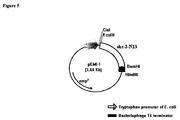
- the present invention also relates to recombinant DNA including the nucleotide fragments 40-1245 and 1-1119 from skc-2 gene, such as vectors pEMI-1 ( Figure 2), pSKH-11 ( Figure 3), pIJ-4 ( Figure 4) and pMC-8 ( Figure 5) for the expression of these fragments in bacteria.
- vectors pEMI-1 Figure 2
- pSKH-11 Figure 3
- pIJ-4 Figure 4
- pMC-8 Figure 5
- pSKH-11 and pMC8 vectors also having a coding sequence for the Asp-Ile-Val-Asp-Gly-Gly-6x His amino acids fused at the 3' end from the respective DNA fragments and translation termination codon TAA.
- the present invention relates to the microorganisms resulting from transformation of E. coli strain W 3110 with vectors pEMI-1, pSKH-11, pIJ-4 and pMC8.
- the transformants E. coli clones were called WSK-N13, WSK-N13-H, WSK-C42 and WSK-C42-H respectively.
- Another aspect of this method is the possibility to express the DNA fragments 40-1245 and 1-1119 from skc-2 gene in bacteria, reaching high levels of expression, around 350 mg/l from both mutant proteins, which were called mut-N13 and mut-C42, respectively.
- the method described in the present invention given the expression levels obtained for these products, makes it possible to reach optimum purity thereof for its administration to human beings and animals, without the need to develop a complex and expensive purification process.
- the present invention relates to biological activity of mutant protein mut-N13, which showed a dramatically diminution of their activity and of mut-C42, which conserved similar activity as native protein.
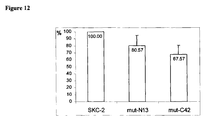
- the present invention also relates to the mutant proteins mut-N13 and mut-C42, which present reduced antigenicity with respect to the native SKC-2 protein. These mutant proteins were subjected to evaluation of their antigenicity in a direct binding assay and competition experiment between mutant and native proteins, using human sera collected from patients after Heberkinase® treatment.
- the present invention also relates to the mut-C42 activity which, when compared to the SKC-2 activity, was less afected by SKC-2 neutralizing antibodies present in sera from 15 patients treated with Heberkinase®, which was evidenced by " in vitro " neutralizing assay.
- the present invention relates to the slightly lower anti-SKC-2 antibodies generation in monkeys treated with mut-C42 in comparison with those treated with the native protein SKC-2.
- the present invention relates to the neutralizing capacity developed by monkeys treated with SKC-2, which was significantly higher against SKC-2 than against mut-C42, indicating that the 42 C-terminal residues of SKC-2 contain one or more important epitopes for induction of neutralizing antibodies.
- Example 1 Study of SKC-2 antigenic regions.
- TBS Tris-buffered saline
- serum samples obtained from ten patients 10 days after Heberkinase® therapy, diluted in 10 ml of T-TBS blocking buffer. Serum samples were diluted according to the predetermined anti-SKC-2 Ab titers.
- Sera with 5x10 5 , 10 5 and 5x10 4 Ab titers were diluted 1:1000, 1:500 and 1:300, respectively.
- Cellulose sheets were washed three times with T-TBS.
- an alkaline phosphatase-conjugated anti-human Ab Sigma was added at 1:2500 dilution in T-TBS blocking buffer for 2h. Sheets were washed three times with T-TBS.
- Detection of bound anti-SKC-2 Abs was achieved by incubating the sheets with 0.3 mg/ml 5-Bromo 4-chloro 3-Indolyl Phosphate (BCIP) (Sigma), 4.5 mg/ml 3-(4,5-Dimethylthiazol-2-yl)-2,5-diphenyl-tetrazolium bromide (MTT) (Sigma) in substrate buffer (100 mM Tris, pH 8.9, 100 mM NaCl, 2 mM MgCl 2 ). Positive spots developed a violet color. Washing with PBS stopped staining. Cellulose sheets carrying the peptides were finally regenerated for the next test.
- BCIP 5-Bromo 4-chloro 3-Indolyl Phosphate
- MTT 3-(4,5-Dimethylthiazol-2-yl)-2,5-diphenyl-tetrazolium bromide
- spots 6 and 7 indicate the presence of a continuous epitope comprised between residues 60-69 (SKPFATDSGA).
- SKPFATDSGA residues 60-69
- spots 39 and 40 the existence of a continuous epitope comprising residues 390-399 (TEEEREVYSY) was delineated.
- the recognition of spots 27, 28 and 29 indicated the presence of one or more continuous epitopes comprised between residues 270-289 (ISEKYYVLKKGEKPYDPFDR). Spots showing isolated positive signals, without recognition of adjacent positions, suggested the existence of continuous epitopes including more than ten amino acids.
- Example 2 Study of immunodominance of the SKC-2 C-terminal region.
- the reaction was developed using 100 ⁇ l per well of 1 mg/ml o -phenylenediamine (Sigma), 0.03% H 2 O 2 in substrate buffer (0.1M citric acid, 0.2M Na 2 HPO 4 , pH 5.0). After 30 min, the reaction was stopped with 50 ⁇ l of 4M H 2 SO 4 . Results were measured on a Multiskan system (Titertek, Helsinki, Finland) at 492nm. Each sample was tested by duplicated. Different degrees were considered for positive samples according to the sample/ background ratio: Samples showing absorbance values two, three and four or more times higher than the background were classified as +, ++ and +++, respectively. The results are shown in the Table 1.
- SKC-2(373-414) direct binding assay with patient sera SKC-2 SKC-2(373-414)
- Patient Absorbance dilution factor Abs x dilution Absorbance dilution factor Abs x dilution % Direct Binding SA 01 0.239 6400 1528.53 0.255 160 40.77 2.67 SA 11 0.290 12800 3709.87 0.267 20 5.35 0.14 SA 12 0.244 3200 781.87 0.284 80 22.75 2.91 SA 13 0.260 6400 1662.93 0.289 80 23.11 1.39 SA 20 0.232 6400 1486.93 0.265 40 10.59 0.71 SA 24 0.267 6400 1707.73 0.233 20 4.66 0.27 SA 28 0.272 12800 3479.47 0.292 320
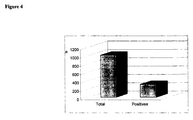
- Antibodies directed against streptokinase are found in most individuals as a result of recurrent streptococcal infections. Regarding the immunodominance of SKC-2 C-terminal region, part of this antibody response is likely to direct against amino acids 373-414 from the C-terminus of the molecule. In order to assess the proportion of this recognition in normal population, 1008 normal donor sera were tested using an anti-SKC-2(373-414) peptide Ultra-Micro-ELISA.
- TBS-Tween Tris-buffered saline, 0.05% Tween 20 (TBS-Tween), plates were blocked with 2% BSA (Sigma) at room temperature, overnight. Blocking solution was removed and plates were dried at 37°C for 1h. Ten ⁇ L of 1:20 dilution of each human serum in TBS, 0.05% Tween 20, 1% BSA were added. Plates were incubated at 37°C for 30min and washed four times. Binding of human Abs to SKC-2(373-414) peptide was measured using 1:5000 dilution of an alkaline phosphatase-conjugated anti-human IgGAb (Sigma).
- Sample/Positive (Sample fluorescence)-(Blank fluorescence) (Positive control fluorescence)-(Blank fluorescence)
- Sample/Positive ratio of the 1008 tested samples ranged between 0.005 and 1.970. The mean value was 0.369 (St. Dev. 0.499). A frequency distribution was made according to 40 classes defined by Sample/Positive ratio ( Figure 2).
- Figure 3 shows plots of Adsorbed/Intact ratio versus Sample/Positive ratio. For small Sample/Positive ratio values there is a high concentration of samples over 0.6. However, as this ratio increases, negative samples decrease. Based on these results a Sample/Positive ratio value of 0.3 was selected as cut off because it assures to take the highest number of positive individuals with a minimum unespecificity.
- oligonucleotides sk1, sk2, sk3, sk4, sk5 and sk6 were amplified by PCR using oligonucleotides sk1, sk2, sk3, sk4, sk5 and sk6.
- Oligonucleotides sk1 and sk4 have an EcoRI restriction site
- oligonucleotides sk2 and sk5 have a BamHI restriction site
- oligonucleotides sk3 and sk6 have an EcoRV restriction site.
- Oligonucleotides sk1 and sk4 have an ATG codon for the translation initiation.
- Oligonucleotides sk2 and sk5 have a TAA codon for translation termination.
- each reaction 100 pmol of each oligonucleotide, 2 units of Taq polymerase (Enzibiot) and 200 ⁇ mol of each dNTP were used. Reactions were performed in 10 mM MgCl 2 , 100mM dTT, 10mM NaCl and 100 ⁇ 1 mineral oil. Twenty five amplification cycles were performed, wherein each one the reaction was incubated at 95°C for 1 minute for denaturisation, at 50°C for 45 seconds for oligonucleotide anneling at 70°C for 80 seconds for DNA chains extension. An amplification efficacy higher than 5% was obtained.
- E.coli For cloning in bacteria ( E.coli) , a genetic construct containing the trytophan promoter of E.coli and the termination signal of bacteriophage T4 terminator was used. Fragments amplified by PCR using combinations of primer-oligonucleotides sk1-sk2 and sk4-sk5 were digested with EcoRI and BamHI, and ligated with the EcoRI-BamHI digsted vector.
- Fragments amplified by PCR using combinations of primer-oligonucleotides sk1-sk3 and sk4-sk6 were digested with EcoRI and EcoRV, and ligated with the EcoRI-EcoRV digested vector containing a coding sequence for the amino acids tail Asp-Ile-Val-Asp-Gly-Gly-6XHis that was fused to the 3' end of both fragments. These constructions were transformed into a preparation of competent cells ((Hanahan, D. (1983) J. Mol. Biol. 166, 557-580) of E.
- Resultant colonies were applied to LB plates (10gr/1 trypton, 5gr/1 yeast extract, 10gr/1 NaCl and 50 ⁇ g/ml ampicillin), and subjected to hybridization (Maniatis, T.; Frisch, E.F. and Sambrook, J. (1982) Cold Spring Harbor Laboratory, USA), using the fragment resulting from PCR amplification as a probe, labelled with dATP 32 (Amersham, RU.) and the Klenow fragment of DNA- polymerase I of E.coli for 30 minutes at 37°C. The reaction was stopped by EDTA and heat.
- the hibridization was performed in Whatman 541 filters, 8% of the colonies were positive clones, which were examined by restriction analysis and had the same pattern of digestion with more than 10 restriction enzymes. Moreover, positive clones were checked by double chain DNA sequencing (Sanger, F.; Nickler, S. and Coulson, A.K. (1977) Proc. Natl. Acad. Sci.
- the selected clones were called pEMI-1 (mutant with 39 bp deletion the at the 5' end having the skc-2 gene fragment 40-1245), pSKH-11 (mutant with 39 bp deletion at the 5' end having the skc-2 gene fragment 40-1245 fused to the coding sequence for Asp-Ile-Val-Asp-Gly-Gly-6xHis tail at the 3'end), pIJ-4 (mutant with 126 bp deletion at the 3' end having the skc-2 gene fragment 1-1119) and pMC-8 (mutant with 126 bp deletion at the 3' end having the skc-2 gene fragment 1-1119 fused to the coding sequence for Asp-Ile-Val-Asp-Gly-Gly-6xHis tail at the 3' end).
- E. coli cells were suspended in the disruption buffer that containing 50 mM Tris-HCl, 0.5 M NaCl, 3mM EDTA, pH 7.0 at a concentration of 40 % (w/v) and mechanically disrupted by using a French Pressure (Ohtake, Japan). Cells were passed twice through the French Pressure in order to achieve an optimal cell disruption. Disrupted cells were homogenized and centrifuged at 15000 rpm for 1 h at 4°C by using a RPR 20-2 rotor (Hitachi, Japan). The supernatant, containing the recombinant streptokinase, was collected for protein purification.
- the supernatant was loaded into a Sephadex G-25 gel filtration column (2.6 X 27.5; I.D. x L., in cm) (Pharmacia, Sweden) which was previously equilibrated with 0.02 M Tris-HCl pH 6.0 at a flow rate of 5 ml/min. Proteins eluted from the gel filtration support were loaded into a Q-Sepharose Fast Flow anion exchange column (2.6 x 5.5; I.D. x L., in cm) (Pharmacia, Sweden), previously equilibrated with 0.02 M Tris-HCl pH 6.0 at a flow rate of 10 ml/mm. The non-bound protein was washed from the column with this equilibrium buffer.
- Elution of proteins was carried out with a linear gradient of increasing NaCl concentrations, which was produced by using an FPLC system (Pharmacia, Sweden).
- the recombinant streptokinase was eluted at 0.12 M NaCl in the equilibrium buffer.
- the pH of the eluate from the ion exchange support was increased from 6.0 to 8.0 by adding a 1 M Tris solution. Ammonium sulfate was added to this sample up to 10 % saturation of this salt.
- This sample was loaded into a column (1.6 x 5; I.D. x L., in cm) containing a TSK-butyl (Tosohaas Technical Center, USA) hydrophobic interaction chromatography support. This column was equilibrated with 0.02 M Tris-HCl, ammonium sulfate at 10 % saturation, pH 8.0, at a flow rate of 4 ml /min.
- the recombinant streptokinase was eluted by using an FPLC system (Pharmacia, Sweden) which produced a linear gradient of decreasing ammonium sulfate concentration in the equilibrated buffer.
- the recombinant streptokinase was eluted at a concentration of ammonium sulfate of 3 % saturation.
- the material obtained was sterilized by filtration through a 0.22- ⁇ m Millipore filter.
- Example 5 Determination of biological activity of SKC-2 mutant proteins.
- mutant proteins mut-N13 and mut-C42 were determined by agarose-fibrin plates assay (Astrup, T. and Mullertz, S. (1952) Arch. Biochem. Biophys 40, 346-351), chromogenic substrate (Fiberger, P. (1982) J. Clin. Lab. Invest. 42, Suppl. 162, 49-54) and clot lysis (Westtund, L.E. and Anderson, L.O. (1985) Thrombosis Research 37, 213-223).
- mut-C42 showed a specific activity of 50 000-100 000 IU/mg similar to that obtained for native SKC-2, and mut-N13 showed a dramatic diminution of its specific activity with values of 2000-4000 IU/mg.
- mut-C42 in vivo fibrinolytic activity was verified in clinical test on animals, wherein there was success in dissolving clots in the femoral arteries of rabbits and coronary arteries of dogs. Blood parameters maintained similar to those obtained for native SKC-2 and those reported in the literature for this type of product.
- mut-N13 and mut-C42 direct binding assay by human anti-SKC-2 antibodies.
- a direct binding assay was performed in order to compare mut-N13 and mut-C42 mutant proteins with native SKC-2 regarding their capacity for binding human anti-SKC-2 Abs present in sera from patients after Heberkinasa® therapy.
- Polyviline plates (Medium binding, Costar, Cambridge, Massachusetts, U.S.A) were divided in three sections and coated with 10 ⁇ g/ml of full length SKC-2, mut-N13 and mut-C42, respectively. Then, plates were washed three times with PBS-Tween. One hundred ⁇ l of human sera collected from eight patients ten days after Heberkinase® therapy were added at a previously determined optimal dilution. Samples were diluted according to the predetermined anti-SKC-2 Ab titers.
- Percent direct binding of human anti-SKC-2 Abs to deletion mutants was determined from the following formula: 100 x (Absorbance binding to mutant proteins / (Absorbance binding to SKC-2) Direct binding assay of human anti-SKC-2 antibodies to mutant proteins mut-N13 and mut-C42.
- the reaction was developed using 100 ⁇ l per well of 1 mg/ml o -phenylenediamine (Sigma), 0.03% H 2 O 2 in substrate buffer (0.1M citric acid, 0.2M Na 2 HPO 4 , pH 5.0). After 30 min, the reaction was stopped with 50 ⁇ l of 4M H 2 SO 4 . Each sample was tested by duplicate.
- the effective dose 50% (ED50) values for mutant and native proteins were determined from plots of absorbance versus concentration of non-labeled molecules using a Probit transformation in order to obtain 50% inhibition (Table 4; Figures 10 and 11).
- Neutralizing activity titers against mut-C42 and native SKC-2 proteins were determined for 15 patients, ten days after Heberkinase® therapy.
- the chromogenic substrate (S-2251) reaction was performed in polyvinyl plates (Costar, Cambridge, Massachusetts, U.S.A.).
- Serial dilutions of SKC-2 and mut-C42 (128 -2 IU, two-fold dilutions in 20 mM Tris-HCl pH8 / 0.5 M NaCl) were prepared in a volume of 25 ⁇ l.
- Curves were mixed with 25 ⁇ l of 1:10 dilutions of each patient serum, and a negative control consisting of a human serum having low anti-SKC-2 Ab titer and preabsorbed with SKC-2.
- Fifty ⁇ l of 25 ⁇ g/ml human Plg were added and allowed to mix for 10 min at room temperature.
- the reaction was developed by addition of 50 ⁇ l of chromogenic substrate S-2251 (Chromogenix, Antwerp, Belgium). After incubation for 30 min, the reaction was stopped with 25 ⁇ l of 20% acetic acid. Results were measured on a Multiskan system (Titertek, Helsinki, Finland) at 405nm. The experiment was validated by a standard curve of each protein. All samples were tested by duplicated.
- NAT Neutralizing activity titer
- the comparative antigenicity of mutant protein mut-C42 versus native SKC-2 was studied after 850 ⁇ g (425 ⁇ g/kg of corporal weight) subcutaneous administrations in groups A and B. In each group half of monkeys were treated with mut-C42 and the other half with SKC-2.
- Humoral response was quantified at week 8 after 4 administrations, for group A; and at week 2 after one administration, for group B. Titration was performed by an anti-SKC-2 ELISA. Polyvinyl plates (Costar, Cambridge, Massachusetts, U.S.A.) were coated with 10 ⁇ g/ml SKC-2 in coating buffer (0.1M Na 2 CO 3 , 0.1M NaHCO 3 , pH 9.6), and incubated overnight at 4°C.
- Serial dilutions of SKC-2 and mut-C42 (128 - 2 IU, two-fold dilutions in 20 mM Tris-HCl pH8 / 0.5 M NaCl) were prepared in a volume of 25 ⁇ l in polyvinyl plates (Costar, Cambridge, Massachusetts, USA).
- SKC-2 and mut-C42 curves were mixed with 25 ⁇ l of each monkey diluted serum and a negative control.
- the negative control was a monkey serum without anti-SKC-2 Ab titer.
- SKC-2-NAT developed by monkeys from group A were considerably lower than SKC-2 neutralizing capacity exhibited by group B.
- mut-C42-NAT values were similar for both groups.
- Monkeys from group A treated with SKC-2 showed NAT values ranging between 35.43 and 54.17 ⁇ g (45.3 ⁇ 8.33) of SKC-2 and between 0 and 19.3 ⁇ g (9.13 ⁇ 8.47) of mut-C42 moiety neutralized per ml of tested serum.
- Monkeys from group B showed a considerable increase in Ab titers after one administration of the proteins. However, there were no differences in anti-SKC-2 Ab titers between monkeys treated with native and mutant proteins. These animals showed no SKC-2 neutralizing capacity before the treatment. After only one administration of the studied proteins, Abs from most of the monkeys inhibited the formation of SKC-2-Plg and mut-C42-Plg activator complexes in vitro .
Landscapes
- Chemical & Material Sciences (AREA)
- Organic Chemistry (AREA)
- Health & Medical Sciences (AREA)
- Medicinal Chemistry (AREA)
- Proteomics, Peptides & Aminoacids (AREA)
- Biophysics (AREA)
- General Health & Medical Sciences (AREA)
- Genetics & Genomics (AREA)
- Life Sciences & Earth Sciences (AREA)
- Molecular Biology (AREA)
- Biochemistry (AREA)
- Gastroenterology & Hepatology (AREA)
- Micro-Organisms Or Cultivation Processes Thereof (AREA)
- Enzymes And Modification Thereof (AREA)
- Medicines That Contain Protein Lipid Enzymes And Other Medicines (AREA)
- Peptides Or Proteins (AREA)
- Preparation Of Compounds By Using Micro-Organisms (AREA)
- Superconductors And Manufacturing Methods Therefor (AREA)
- Magnetic Resonance Imaging Apparatus (AREA)
Applications Claiming Priority (2)
| Application Number | Priority Date | Filing Date | Title |
|---|---|---|---|
| CU11998 | 1998-08-14 | ||
| CU1998119A CU22732A1 (es) | 1998-08-14 | 1998-08-14 | Mutantes de estreptoquinasa |
Publications (3)
| Publication Number | Publication Date |
|---|---|
| EP0985729A2 true EP0985729A2 (de) | 2000-03-15 |
| EP0985729A3 EP0985729A3 (de) | 2000-05-31 |
| EP0985729B1 EP0985729B1 (de) | 2005-04-27 |
Family
ID=5459400
Family Applications (1)
| Application Number | Title | Priority Date | Filing Date |
|---|---|---|---|
| EP99202639A Expired - Lifetime EP0985729B1 (de) | 1998-08-14 | 1999-08-13 | Streptokinasemutanten |
Country Status (7)
| Country | Link |
|---|---|
| US (2) | US6309873B1 (de) |
| EP (1) | EP0985729B1 (de) |
| AT (1) | ATE294239T1 (de) |
| AU (1) | AU769916B2 (de) |
| CA (1) | CA2277554C (de) |
| CU (1) | CU22732A1 (de) |
| DE (1) | DE69924932D1 (de) |
Families Citing this family (7)
| Publication number | Priority date | Publication date | Assignee | Title |
|---|---|---|---|---|
| US6750329B1 (en) * | 1989-05-05 | 2004-06-15 | Research Development Foundation | Antibody delivery system for biological response modifiers |
| US6348567B1 (en) * | 1995-12-06 | 2002-02-19 | Cv Molecular Therapeutics Inc. | Peptides and their use to ameliorate cell death |
| ZA200305980B (en) * | 2001-02-12 | 2007-01-31 | Res Dev Foundation | Modified proteins, designer toxins, and methods of making thereof |
| US7101977B2 (en) * | 2001-07-17 | 2006-09-05 | Research Development Foundation | Therapeutic agents comprising pro-apoptotic proteins |
| JP2006506964A (ja) * | 2002-06-12 | 2006-03-02 | リサーチ ディベロップメント ファンデーション | 治療剤としての免疫毒素及びその利用 |
| MX2010013282A (es) * | 2008-06-04 | 2010-12-21 | Talecris Biotherapeutics Inc | Composicion, metodo y kit para la preparacion de plasmina. |
| HUE025670T2 (en) | 2009-03-03 | 2016-04-28 | Grifols Therapeutics Inc | A method for producing plasminogen |
Family Cites Families (3)
| Publication number | Priority date | Publication date | Assignee | Title |
|---|---|---|---|---|
| GB2238180A (en) * | 1989-11-14 | 1991-05-22 | Stc Plc | Cable laying equipment |
| CU22277A1 (es) * | 1990-05-23 | 1995-01-31 | Cigb | Procedimiento para el aislamiento y expresion de un gen codificante para estreptoquinasa,secuencia nucleotidica obtenida,adn recombinantes y microorganismos transformados |
| US5854049A (en) * | 1995-06-09 | 1998-12-29 | President And Fellows Of Harvard College | Plasmin-resistant streptokinase |
-
1998
- 1998-08-14 CU CU1998119A patent/CU22732A1/es unknown
-
1999
- 1999-08-05 AU AU43424/99A patent/AU769916B2/en not_active Ceased
- 1999-08-06 CA CA002277554A patent/CA2277554C/en not_active Expired - Fee Related
- 1999-08-13 US US09/374,038 patent/US6309873B1/en not_active Expired - Fee Related
- 1999-08-13 AT AT99202639T patent/ATE294239T1/de not_active IP Right Cessation
- 1999-08-13 EP EP99202639A patent/EP0985729B1/de not_active Expired - Lifetime
- 1999-08-13 DE DE69924932T patent/DE69924932D1/de not_active Expired - Lifetime
-
2000
- 2000-09-08 US US09/658,179 patent/US6413759B1/en not_active Expired - Fee Related
Also Published As
| Publication number | Publication date |
|---|---|
| EP0985729B1 (de) | 2005-04-27 |
| ATE294239T1 (de) | 2005-05-15 |
| CA2277554C (en) | 2004-11-02 |
| DE69924932D1 (de) | 2005-06-02 |
| CU22732A1 (es) | 2002-02-28 |
| AU4342499A (en) | 2000-03-09 |
| CA2277554A1 (en) | 2000-02-14 |
| US6413759B1 (en) | 2002-07-02 |
| US6309873B1 (en) | 2001-10-30 |
| AU769916B2 (en) | 2004-02-12 |
| EP0985729A3 (de) | 2000-05-31 |
Similar Documents
| Publication | Publication Date | Title |
|---|---|---|
| Courtney et al. | Cloning, sequencing, and expression of a fibronectin/fibrinogen-binding protein from group A streptococci | |
| EP0397633B1 (de) | Fibronektinbindungsprotein und dessen Herstellung | |
| US5639726A (en) | Peptide mediated enhancement of thrombolysis methods and compositions | |
| US6291654B1 (en) | Method for isolating a C3 binding protein of streptococcus pneumoniae | |
| US5616686A (en) | Polypeptide of a hybrid surface protein by bacteria | |
| EP0621875A1 (de) | Fibrinogen-bildungsprotein | |
| US5328996A (en) | Bacterial plasmin receptors as fibrinolytic agents | |
| US5663066A (en) | Assay using recombinant histidyl-tRNA synthetase | |
| US5951980A (en) | Identification, production and use of new staphylokinase derivatives with reduced immunogenicity | |
| EP0985729B1 (de) | Streptokinasemutanten | |
| EP1053330B1 (de) | Identifizierung, produktion und verwendung von staphylokinase derivaten mit reduzierter immunogenizität und/oder reduzierter 'clearance' | |
| EP0504335B1 (de) | Fibronektin bindendes Peptid | |
| US6010897A (en) | Expression of signal-peptide-free staphylokinases | |
| US5695754A (en) | Staphylokinase derivatives | |
| US5310879A (en) | Antibodies which immunoreact with lapine lipopolysaccharide binding protein (LBP) | |
| Torréns et al. | A mutant streptokinase lacking the C-terminal 42 amino acids is less reactive with preexisting antibodies in patient sera | |
| AU705119B2 (en) | New staphylokinase derivatives | |
| KR970005913B1 (ko) | 항혈액응고 작용을 갖는 폴리펩티드 | |
| JPH10113189A (ja) | 新規 RNaseP | |
| JP2002262891A (ja) | スタフィロコッカス・アウレウス由来の2成分シグナルトランスダクションシステムタンパク質 | |
| US5422090A (en) | Human PAI-2 | |
| US6210667B1 (en) | Bacterial fibrin-dependent plasminogen activator | |
| US6383483B1 (en) | Staphylokinase derivatives with cysteine substitutions | |
| US5871937A (en) | Acute phase protein modulating endotoxic activity of lipopolysaccharides, assay methods and polypeptides | |
| PT623170E (pt) | Vacinas baseadas em estreptoquinase |
Legal Events
| Date | Code | Title | Description |
|---|---|---|---|
| PUAI | Public reference made under article 153(3) epc to a published international application that has entered the european phase |
Free format text: ORIGINAL CODE: 0009012 |
|
| AK | Designated contracting states |
Kind code of ref document: A2 Designated state(s): AT BE CH CY DE DK ES FI FR GB GR IE IT LI LU MC NL PT SE |
|
| AX | Request for extension of the european patent |
Free format text: AL;LT;LV;MK;RO;SI |
|
| PUAL | Search report despatched |
Free format text: ORIGINAL CODE: 0009013 |
|
| AK | Designated contracting states |
Kind code of ref document: A3 Designated state(s): AT BE CH CY DE DK ES FI FR GB GR IE IT LI LU MC NL PT SE |
|
| AX | Request for extension of the european patent |
Free format text: AL;LT;LV;MK;RO;SI |
|
| 17P | Request for examination filed |
Effective date: 20001114 |
|
| AKX | Designation fees paid |
Free format text: AT BE CH CY DE DK ES FI FR GB GR IE IT LI LU MC NL PT SE |
|
| 17Q | First examination report despatched |
Effective date: 20030627 |
|
| GRAP | Despatch of communication of intention to grant a patent |
Free format text: ORIGINAL CODE: EPIDOSNIGR1 |
|
| GRAS | Grant fee paid |
Free format text: ORIGINAL CODE: EPIDOSNIGR3 |
|
| GRAA | (expected) grant |
Free format text: ORIGINAL CODE: 0009210 |
|
| AK | Designated contracting states |
Kind code of ref document: B1 Designated state(s): AT BE CH CY DE DK ES FI FR GB GR IE IT LI LU MC NL PT SE |
|
| PG25 | Lapsed in a contracting state [announced via postgrant information from national office to epo] |
Ref country code: NL Free format text: LAPSE BECAUSE OF FAILURE TO SUBMIT A TRANSLATION OF THE DESCRIPTION OR TO PAY THE FEE WITHIN THE PRESCRIBED TIME-LIMIT Effective date: 20050427 Ref country code: LI Free format text: LAPSE BECAUSE OF FAILURE TO SUBMIT A TRANSLATION OF THE DESCRIPTION OR TO PAY THE FEE WITHIN THE PRESCRIBED TIME-LIMIT Effective date: 20050427 Ref country code: IT Free format text: LAPSE BECAUSE OF FAILURE TO SUBMIT A TRANSLATION OF THE DESCRIPTION OR TO PAY THE FEE WITHIN THE PRESCRIBED TIME-LIMIT;WARNING: LAPSES OF ITALIAN PATENTS WITH EFFECTIVE DATE BEFORE 2007 MAY HAVE OCCURRED AT ANY TIME BEFORE 2007. THE CORRECT EFFECTIVE DATE MAY BE DIFFERENT FROM THE ONE RECORDED. Effective date: 20050427 Ref country code: FI Free format text: LAPSE BECAUSE OF FAILURE TO SUBMIT A TRANSLATION OF THE DESCRIPTION OR TO PAY THE FEE WITHIN THE PRESCRIBED TIME-LIMIT Effective date: 20050427 Ref country code: CH Free format text: LAPSE BECAUSE OF FAILURE TO SUBMIT A TRANSLATION OF THE DESCRIPTION OR TO PAY THE FEE WITHIN THE PRESCRIBED TIME-LIMIT Effective date: 20050427 Ref country code: BE Free format text: LAPSE BECAUSE OF FAILURE TO SUBMIT A TRANSLATION OF THE DESCRIPTION OR TO PAY THE FEE WITHIN THE PRESCRIBED TIME-LIMIT Effective date: 20050427 Ref country code: AT Free format text: LAPSE BECAUSE OF FAILURE TO SUBMIT A TRANSLATION OF THE DESCRIPTION OR TO PAY THE FEE WITHIN THE PRESCRIBED TIME-LIMIT Effective date: 20050427 |
|
| REG | Reference to a national code |
Ref country code: GB Ref legal event code: FG4D |
|
| REG | Reference to a national code |
Ref country code: CH Ref legal event code: EP |
|
| REG | Reference to a national code |
Ref country code: IE Ref legal event code: FG4D |
|
| REF | Corresponds to: |
Ref document number: 69924932 Country of ref document: DE Date of ref document: 20050602 Kind code of ref document: P |
|
| PG25 | Lapsed in a contracting state [announced via postgrant information from national office to epo] |
Ref country code: SE Free format text: LAPSE BECAUSE OF FAILURE TO SUBMIT A TRANSLATION OF THE DESCRIPTION OR TO PAY THE FEE WITHIN THE PRESCRIBED TIME-LIMIT Effective date: 20050727 Ref country code: GR Free format text: LAPSE BECAUSE OF FAILURE TO SUBMIT A TRANSLATION OF THE DESCRIPTION OR TO PAY THE FEE WITHIN THE PRESCRIBED TIME-LIMIT Effective date: 20050727 Ref country code: DK Free format text: LAPSE BECAUSE OF FAILURE TO SUBMIT A TRANSLATION OF THE DESCRIPTION OR TO PAY THE FEE WITHIN THE PRESCRIBED TIME-LIMIT Effective date: 20050727 |
|
| PG25 | Lapsed in a contracting state [announced via postgrant information from national office to epo] |
Ref country code: DE Free format text: LAPSE BECAUSE OF FAILURE TO SUBMIT A TRANSLATION OF THE DESCRIPTION OR TO PAY THE FEE WITHIN THE PRESCRIBED TIME-LIMIT Effective date: 20050728 |
|
| PG25 | Lapsed in a contracting state [announced via postgrant information from national office to epo] |
Ref country code: ES Free format text: LAPSE BECAUSE OF FAILURE TO SUBMIT A TRANSLATION OF THE DESCRIPTION OR TO PAY THE FEE WITHIN THE PRESCRIBED TIME-LIMIT Effective date: 20050807 |
|
| PG25 | Lapsed in a contracting state [announced via postgrant information from national office to epo] |
Ref country code: LU Free format text: LAPSE BECAUSE OF NON-PAYMENT OF DUE FEES Effective date: 20050813 Ref country code: GB Free format text: LAPSE BECAUSE OF NON-PAYMENT OF DUE FEES Effective date: 20050813 Ref country code: CY Free format text: LAPSE BECAUSE OF FAILURE TO SUBMIT A TRANSLATION OF THE DESCRIPTION OR TO PAY THE FEE WITHIN THE PRESCRIBED TIME-LIMIT Effective date: 20050813 |
|
| PG25 | Lapsed in a contracting state [announced via postgrant information from national office to epo] |
Ref country code: IE Free format text: LAPSE BECAUSE OF NON-PAYMENT OF DUE FEES Effective date: 20050815 |
|
| PG25 | Lapsed in a contracting state [announced via postgrant information from national office to epo] |
Ref country code: MC Free format text: LAPSE BECAUSE OF NON-PAYMENT OF DUE FEES Effective date: 20050831 |
|
| PG25 | Lapsed in a contracting state [announced via postgrant information from national office to epo] |
Ref country code: PT Free format text: LAPSE BECAUSE OF FAILURE TO SUBMIT A TRANSLATION OF THE DESCRIPTION OR TO PAY THE FEE WITHIN THE PRESCRIBED TIME-LIMIT Effective date: 20051010 |
|
| REG | Reference to a national code |
Ref country code: CH Ref legal event code: PL |
|
| NLV1 | Nl: lapsed or annulled due to failure to fulfill the requirements of art. 29p and 29m of the patents act | ||
| PLBE | No opposition filed within time limit |
Free format text: ORIGINAL CODE: 0009261 |
|
| STAA | Information on the status of an ep patent application or granted ep patent |
Free format text: STATUS: NO OPPOSITION FILED WITHIN TIME LIMIT |
|
| 26N | No opposition filed |
Effective date: 20060130 |
|
| GBPC | Gb: european patent ceased through non-payment of renewal fee |
Effective date: 20050813 |
|
| REG | Reference to a national code |
Ref country code: IE Ref legal event code: MM4A |
|
| EN | Fr: translation not filed | ||
| PG25 | Lapsed in a contracting state [announced via postgrant information from national office to epo] |
Ref country code: FR Free format text: LAPSE BECAUSE OF NON-PAYMENT OF DUE FEES Effective date: 20050831 |
|
| PG25 | Lapsed in a contracting state [announced via postgrant information from national office to epo] |
Ref country code: FR Free format text: LAPSE BECAUSE OF NON-PAYMENT OF DUE FEES Effective date: 20050427 |