EP0987343B1 - Tôle d' acier au silicium à grains orientés et méthode pour sa fabrication - Google Patents
Tôle d' acier au silicium à grains orientés et méthode pour sa fabrication Download PDFInfo
- Publication number
- EP0987343B1 EP0987343B1 EP99117963A EP99117963A EP0987343B1 EP 0987343 B1 EP0987343 B1 EP 0987343B1 EP 99117963 A EP99117963 A EP 99117963A EP 99117963 A EP99117963 A EP 99117963A EP 0987343 B1 EP0987343 B1 EP 0987343B1
- Authority
- EP
- European Patent Office
- Prior art keywords
- annealing
- sheet
- coating
- steel
- steel sheet
- Prior art date
- Legal status (The legal status is an assumption and is not a legal conclusion. Google has not performed a legal analysis and makes no representation as to the accuracy of the status listed.)
- Expired - Lifetime
Links
Images


Classifications
-
- C—CHEMISTRY; METALLURGY
- C21—METALLURGY OF IRON
- C21D—MODIFYING THE PHYSICAL STRUCTURE OF FERROUS METALS; GENERAL DEVICES FOR HEAT TREATMENT OF FERROUS OR NON-FERROUS METALS OR ALLOYS; MAKING METAL MALLEABLE, e.g. BY DECARBURISATION OR TEMPERING
- C21D8/00—Modifying the physical properties of ferrous metals or ferrous alloys by deformation combined with, or followed by, heat treatment
- C21D8/12—Modifying the physical properties of ferrous metals or ferrous alloys by deformation combined with, or followed by, heat treatment during manufacturing of articles with special electromagnetic properties
-
- C—CHEMISTRY; METALLURGY
- C22—METALLURGY; FERROUS OR NON-FERROUS ALLOYS; TREATMENT OF ALLOYS OR NON-FERROUS METALS
- C22C—ALLOYS
- C22C38/00—Ferrous alloys, e.g. steel alloys
- C22C38/002—Ferrous alloys, e.g. steel alloys containing In, Mg, or other elements not provided for in one single group C22C38/001 - C22C38/60
-
- C—CHEMISTRY; METALLURGY
- C22—METALLURGY; FERROUS OR NON-FERROUS ALLOYS; TREATMENT OF ALLOYS OR NON-FERROUS METALS
- C22C—ALLOYS
- C22C38/00—Ferrous alloys, e.g. steel alloys
- C22C38/18—Ferrous alloys, e.g. steel alloys containing chromium
-
- C—CHEMISTRY; METALLURGY
- C22—METALLURGY; FERROUS OR NON-FERROUS ALLOYS; TREATMENT OF ALLOYS OR NON-FERROUS METALS
- C22C—ALLOYS
- C22C38/00—Ferrous alloys, e.g. steel alloys
- C22C38/18—Ferrous alloys, e.g. steel alloys containing chromium
- C22C38/34—Ferrous alloys, e.g. steel alloys containing chromium with more than 1.5% by weight of silicon
-
- C—CHEMISTRY; METALLURGY
- C22—METALLURGY; FERROUS OR NON-FERROUS ALLOYS; TREATMENT OF ALLOYS OR NON-FERROUS METALS
- C22C—ALLOYS
- C22C38/00—Ferrous alloys, e.g. steel alloys
- C22C38/60—Ferrous alloys, e.g. steel alloys containing lead, selenium, tellurium, or antimony, or more than 0.04% by weight of sulfur
-
- C—CHEMISTRY; METALLURGY
- C21—METALLURGY OF IRON
- C21D—MODIFYING THE PHYSICAL STRUCTURE OF FERROUS METALS; GENERAL DEVICES FOR HEAT TREATMENT OF FERROUS OR NON-FERROUS METALS OR ALLOYS; MAKING METAL MALLEABLE, e.g. BY DECARBURISATION OR TEMPERING
- C21D8/00—Modifying the physical properties of ferrous metals or ferrous alloys by deformation combined with, or followed by, heat treatment
- C21D8/12—Modifying the physical properties of ferrous metals or ferrous alloys by deformation combined with, or followed by, heat treatment during manufacturing of articles with special electromagnetic properties
- C21D8/1244—Modifying the physical properties of ferrous metals or ferrous alloys by deformation combined with, or followed by, heat treatment during manufacturing of articles with special electromagnetic properties characterised by the heat treatment
- C21D8/1272—Final recrystallisation annealing
-
- C—CHEMISTRY; METALLURGY
- C21—METALLURGY OF IRON
- C21D—MODIFYING THE PHYSICAL STRUCTURE OF FERROUS METALS; GENERAL DEVICES FOR HEAT TREATMENT OF FERROUS OR NON-FERROUS METALS OR ALLOYS; MAKING METAL MALLEABLE, e.g. BY DECARBURISATION OR TEMPERING
- C21D8/00—Modifying the physical properties of ferrous metals or ferrous alloys by deformation combined with, or followed by, heat treatment
- C21D8/12—Modifying the physical properties of ferrous metals or ferrous alloys by deformation combined with, or followed by, heat treatment during manufacturing of articles with special electromagnetic properties
- C21D8/1277—Modifying the physical properties of ferrous metals or ferrous alloys by deformation combined with, or followed by, heat treatment during manufacturing of articles with special electromagnetic properties involving a particular surface treatment
- C21D8/1283—Application of a separating or insulating coating
Definitions
- the present invention relates to a grain-oriented silicon steel sheet suitable for use as the iron core of transformers and other electric machines, and also to a process for producing the same.
- Grain-oriented silicon steel sheets are used mainly as a material of the iron core of transformers and rotating machines. They are required to have such magnetic properties as high magnetic flux density, low iron loss, and small magnetostriction.
- grain-oriented silicon steel sheets superior in magnetic properties from the standpoint of energy saving and material saving.
- the resulting product has a structure such that the grains of secondary recrystallization are densely arranged along the (110)[001] orientation or so-called Goss orientation.
- Grain-oriented steel sheets as mentioned above are produced by the following steps. First, grain-oriented silicon steel slabs are produced which contain MnS, MnSe, AlN, BN, or the like as an inhibitor necessary for secondary recrystallization. After heating, they undergo hot rolling. The resulting hot-rolled sheets undergo annealing, if necessary, and then undergo cold rolling (down to the final thickness) once or twice or more, with any intermediate annealing interposed. The cold-rolled sheets undergo decarburization annealing. With an annealing separator (composed mainly of MgO) coated, the steel sheets undergo final finishing annealing.
- the grain-oriented silicon steel sheets obtained in this manner usually have their surfaces coated with an insulating film composed mainly of forsterite (Mg 2 SiO 4 ) (which is simply referred to as “forsterite coating” hereinafter).
- This forsterite coating gives the steel sheets not only surface electrical insulation but also tensile stress resulting from low thermal expansion. Therefore, it improves iron loss as well as magnetostriction.
- grain-oriented silicon steel sheets are usually given a vitreous insulating coating (simply referred to as glass coating hereinafter) on the forsterite coating.
- This glass coating is very thin and transparent. Therefore, it is forsterite coating rather than glass coating that eventually determines the external appearance of the product.
- the appearance of forsterite coating greatly affects the product value. For example, any product would be regarded as inadequate if it had forsterite coating formed such that the base metal is partly exposed.
- the properties of forsterite coating seriously affect the product yields. That is, forsterite coating is required to have an uniform appearance without flaws, and with good adhesion to prevent peeling at the time of shearing, punching, and bending.
- forsterite coating is required to have a smooth surface because the steel sheets laminated to form the iron core need to have a high space factor.
- Forsterite coating is formed at the time of final finishing annealing.
- the formation of forsterite coating affects the decomposition of inhibitors (such as MnS, MsSe, and AlN) in steel. In other words, it also affects the secondary recrystallization which is an essential step to obtain good magnetic properties.
- forsterite coating absorbs the components of inhibitor which become unnecessary after the completion of secondary recrystallization, thereby purifying steel. This purification also contributes to improvement in the magnetic properties of steel sheets.
- Forsterite coating is usually formed by the following steps. First, a grain-oriented silicon steel sheet which has been cold-rolled to a desired final thickness is annealed in wet hydrogen atmosphere at 700-900°C. This annealing is called decarburization annealing. It has the following functions.
- the steel sheet After decarburization annealing, the steel sheet is coated with an annealing separator (composed mainly of MgO) and then coiled. The coil undergoes final finishing annealing (which serves also for secondary recrystallization and purification) in a reducing or non-oxidizing atmosphere at about 1200°C (maximum). Forsterite coating is formed on the surface of steel sheet according to the solid-phase reaction shown by the following formula. 2MgO + SiO 2 ⁇ Mg 2 SiO 4
- Forsterite coating is a ceramic coating densely composed of fine crystalline particles about 1 ⁇ m in size.
- one raw material of forsterite coating is subscale containing SiO 2 which has formed in the outer layer of the steel sheet at the time of decarburization annealing. Therefore, the kind, amount, and distribution of subscale are deeply associated with the nucleation and grain growth of forsterite coating. They also greatly affect the strength of grain boundary and grain of coating crystals and further affect the quality of coating after final finishing annealing.
- the annealing separator (composed mainly of MgO as another raw material) is applied to the steel sheet in the form of an aqueous slurry. Therefore, steel sheets retain physically adsorbed water even after drying, and MgO partly hydrates to form Mg(OH) 2 . As the result, steel sheets continue to give off water (although small in quantity) until the temperature reaches about 800°C during final finishing annealing. This water oxidizes the surface of the steel sheet during final finishing annealing. The oxidation by water also affects the formation of forsterite coating and the behavior of inhibitors. Added oxidation by water is a factor tending to deteriorate magnetic properties. In addition, the ease with which oxidation by water takes place depends greatly on the physical properties of subscale formed by decarburization annealing.
- any additives other than MgO incorporated into the annealing separator greatly affect the film formation as a matter of course.
- the physical properties of subscale greatly affect the behavior of denitrification during finishing annealing or the behavior of nitrification from the annealing atmosphere. Therefore, the physical properties of subscale greatly affect the magnetic properties.
- controlling the physical properties of subscale formed in the outer layer of steel sheets during decarburization annealing, controlling the properties of magnesia in the annealing separator, and controlling the kind of additive in the annealing separator are three factors indispensable in forming forsterite coating of uniform good quality at a prescribed annealing temperature which is determined by the condition of secondary recrystallization in finishing annealing. They are very important in the production of grain-oriented steel sheets.
- forsterite coating of good quality may be formed by any of the disclosed techniques given below.
- Japanese Patent Publication No. 1575/1982 keeping the degree of oxidation in the atmosphere at 0.15 and above in the front region of decarburization annealing and at 0.75 and below in the rear region that follows.
- Japanese Patent Laid-open No. 240215/1990 and Japanese Patent Publication No. 14686/1979 performing heat-treatment at 850-1050°C in a non-oxidizing atmosphere after decarburization annealing.
- Japanese Patent Publication No. 12451/1976 discloses a method of improving the uniformity and adhesion of forsterite coating by incorporating 100 pbw of Mg compound with 2-40 pbw of Ti compound.
- Japanese Patent Publication No. 15466/1981 discloses a method of eliminating black spots from the Ti compound by finely grinding TiO 2 for the annealing separator.
- Japanese Patent Publication No. 32716/1982 discloses a method of adding an Sr compound in an amount of 0.1-10 pbw (as Sr) so as to form forsterite insulating film with good adhesion and good uniformity.
- Japanese Patent Publication No. 14567/1979 discloses the addition of Cu, Sn, Ni, or Co, or a compound thereof in an amount of 0.01-15 pbw (as metallic element).
- Japanese Patent Laid-open No. 243282/1985 discloses the addition of TiO 2 or TiO (0.5-10 pbw) and SrS, SnS, or CuS (0.1-5.0 pbw), together with optional antimony nitrate (0.05-2.0 pbw).
- Japanese Patent Laid-open No. 291313/1997 discloses a method of improving both the magnetic properties and the film characteristics. This method is based on the result of investigation on the relation between the subscale (which occurs at the time of decarburization annealing) and the annealing separator.
- the object is achieved by adjusting the partial pressure of hydrogen (P(H 2 )) and the partial pressure of water vapor (P(H 2 O)) in decarburization annealing such that the ratio of P(H 2 O)/P(H 2 ) in the soaking step is lower than 0.70 and the ratio of P(H 2 O)/P(H 2 ) in the heating step is lower than that in the soaking step, and also by incorporating 100 pbw of MgO in the annealing separator with 0.5-15 pbw of TiO 2 , 0.1-10 pbw of SnO 2 , and 0.1-10 pbw of Sr compound (as Sr).
- Japanese Patent Laid-open Nos. 329829/1992 and 329830/1992 disclose a method of adding Cr and Sb simultaneously or adding Cr, Sn, and Sb simultaneously, thereby minimizing the fluctuation of the amount of oxidized layer and forming the coating film stably in finishing annealing.
- Japanese Patent Laid-open No. 329829/1992 and 329830/1992 disclose a method of adding Cr and Sb simultaneously or adding Cr, Sn, and Sb simultaneously, thereby minimizing the fluctuation of the amount of oxidized layer and forming the coating film stably in finishing annealing.
- fayalite Fe 2 SiO 4
- silica SiO 2
- Japanese Patent Laid-open No. 202924/1997 mentions that "it is assumed that Bi vapor concentrated between steel sheets adversely affects the formation of primary coating, thereby making it difficult to form good primary coating film.”
- this Japanese Patent discloses a method of increasing the magnetic flux density by the addition of Bi and also providing a material with low iron loss. (This method is based on the above-mentioned assumption.)
- Japanese Patent Laid-open No. 152725/1998 adjusting the amount of oxygen on the surface of steel sheet after decarburization annealing to 550-850 ppm.
- the Ig-loss value is hydrate amount calculated by the weight difference between before and after baking process of making magnesia.
- JP 09-279247 discloses a process for producing a grain oriented silicon steel sheet However, said document only discloses the temperatures and treatment times of the annealing carried out between the hot rolling and cold rolling.
- JP 08-269572 merely discloses a temperature profile for the secondary recrystallization finish annealing.
- JF 06-346203 only disdoses some temperatures of the heat treatment but not such a temperature profile which could possibly lead to the formation of a Cr spinel oxide in the subscale oxide film.
- the sheet according to the invention has superior coating properties and magnetic properties.
- Example 4 of Japanese Patent Laid-open No. 87316/1991 A steel containing both Bi and Cr is found in Example 4 of Japanese Patent Laid-open No. 87316/1991.
- this Japanese patent merely discloses a steel containing only 0.009 wt% of Cr and mentions nothing about the properties of coating.
- a steel containing 0.12 wt% of Cr and 0.083wt% or 0.0353 wt% of Bi is found in Example 3 of Japanese Patent Laid-open No. 269571/1996.
- the techniques in this Japanese patent is not intended to form a forsterite coating in view of the fact that the annealing separator, composed mainly of Al 2 O 3 , is applied afterward.
- 269572/1996 discloses an experiment with a steel incorporated with 0.12 wt% of Cr and 0.007 wt% of Bi.
- the techniques in this Japanese patent relate to annealing for secondary recrystallization in the presence of a temperature gradient; the reference mentions nothing about the properties of coating film.
- Japanese Patent Laid-open No. 279247/1997 discloses an experiment with a steel incorporated with 0.12 wt% of Cr and 0.007 wt% of Bi. It gives only one example in which a steel incorporated with Cr is used and it mentions nothing about the effect of Cr on the properties of coating film.
- the present inventors carried out a series of researches on a process for producing grain-oriented silicon steel sheets which are superior in magnetic properties and have defect-free uniform forsterite coating with good adhesion over the entire width and length of a product coil even when the steel contains 0.005-0.20 wt% of Bi, with emphasis placed on the properties of the subscale and the conditions of the decarburization annealing.
- a very important factor in achieving good coating is to perform decarburization annealing in such a way that the resulting subscale oxide film contains a Cr oxide of the spinel type, especially a Cr oxide composed mainly of FeCr 2 O 4 or Fe x Mn 1-x Cr 2 O 4 (0.6 ⁇ x ⁇ 1) or mixtures thereof.
- Each slab was heated at 1420°C for 20 minutes and then hot-rolled to give a 2.5-mm thick sheet.
- the hot-rolled sheet underwent annealing at 1000°C for 1 minute.
- the annealed sheet underwent cold rolling to give a 1.6-mm thick sheet.
- the cold-rolled sheet underwent intermediate annealing at 1050°C for 1 minute.
- the annealed sheet underwent cold rolling again to give a 0.23-mm thick sheet finally.
- the second cold rolling was repeated at least twice in such a way that the sheet temperature was 200°C at the exit of the rolls.
- the final cold-rolled sheet underwent decarburization annealing in an atmosphere of H 2 -H 2 O-N 2 at a soaking temperature of 830°C in such a way that the amount of oxygen was 0.25-1.10 g/m 2 (on one side).
- the temperature for decarburization annealing was raised at a rate of 5-70°C/s from room temperature to T 1 °C (where T 1 is 600, 650, 700, 740, 780, and 820) and at a rate of 0.5-20°C/s from T 1 °C to 830°C.
- the degree of oxidation of atmosphere in the soaking zone was kept in the range of 0.30-0.50 and the degree of oxidation of atmosphere in the heating zone was adjusted such that the difference between that in the soaking zone and that in the heating zone is 0.05-0.20.
- the degree of oxidation of the applicable atmosphere is represented by P(H 2 O)/P(H 2 ).
- the coiled sheet which had undergone decarburization annealing, was coated with an annealing separator (in the form of slurry) composed mainly of MgO. After drying, the sheet underwent final finishing annealing.
- the annealing separator was composed of 100 pbw of magnesia, 8 pbw of TiO 2 , and 1 pbw of Sr compound (as Sr).
- the final finishing annealing consisted of three steps. First, the coated sheet was heated to 800°C in an atmosphere of nitrogen. Then, it was heated to 1150°C at a rate of 15°C/h in an atmosphere composed of 25% nitrogen and 75% hydrogen (for secondary recrystallization annealing). Finally, it was heated at 1200°C for 5 hours in an atmosphere of hydrogen (for purifying annealing).
- the thus obtained coil was examined for magnetic properties and the forsterite coating formed thereon was also examined for appearance and bending adhesion. As the result, it was found that a steel sheet with good magnetic properties and coating properties can be obtained when the following conditions are satisfied.
- the steel sheet which had undergone decarburization annealing was examined for its surface quality by thin-film X-ray diffraction.
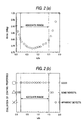
- the peak intensity I 1 due to the (202) plane of FeCr 2 O 4 or Fe x Mn 1-x Cr 2 O 4 (0.6 ⁇ x ⁇ 1) was measured, and the peak intensity I 0 due to the (130)plane of fayalite oxide was measured.
- the steel sheets which had undergone decarburization annealing were divided into two groups according to whether or not the Cr compound of the spinel type was formed in the subscale.
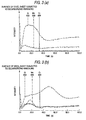
- the sheets were subjected to surface analysis by glow discharge spectrometry (GDS).
- GDS glow discharge spectrometry
- Figs. 3(a) and 3(b) those samples of Fig. 3(a) with a Cr compound of the spinel type all contain Cr that is concentrated immediately under the surface layer. It is also noted that they have an Si profile which is different from that in samples represented in Fig. 3(b) that are without a Cr compound of spinel type. It is considered that not only a Cr compound of spinel type but also the change in Si profile contributes to improvement of film properties.
- the subscale contains FeCr 2 O 4 or Fe x Mn 1-x Cr Q 4 (0.6 ⁇ x ⁇ 1) in an adequate amount. This may be reasoned as follows.
- FeCr 2 O 4 reacts with MgO according to the following formula: FeCr 2 O 4 + MgO ⁇ (Mg x Fe 1-x )O + Fe x Mg 1-x Cr 2 O 4
- the (Mg x Fe 1-x )O formed in this reaction promotes the formation of forsterite by solid-phase reaction between MgO and SiO 2 .
- the (Mg x Fe 1-x )O is formed not on the surface of the steel sheet but slightly under the surface of the steel sheet. In other words, forsterite is formed favorably at this position and hence the resulting coating film hardly peels off, with improved adhesion.
- the Cr compound of the spinel type in the subscale does not remain in the fosterite on the surface of the final product. It is absorbed in the non-reacting annealing separator as the reduced products or solid solution during the secondary recrystalization annealing or purification annealing.
- the non-reacting annealing separator is washed away after the annealing.
- the formation of coating film is promoted in the initial stage of finishing annealing; therefore, the nitrification and denitrification reactions during finishing annealing are rather stable. Such stable reactions are desirable for secondary recrystallization and hence contribute to the improved and stabilized magnetic properties.
- decarburization annealing is carried out in such a way that the rate of heating from normal temperature to 700°C is about 10-50°C/s and the rate of heating from (soaking temperature - 50°C) to soaking temperature is about 1-9°C/s.
- decarburization annealing is carried out under the condition that the degree of oxidation by the atmosphere at the time of soaking is about 0.30-0.50 and the difference in the degree of oxidation by the atmosphere between the soaking zone and the heating zone is about 0.05-0.20. In this way it is possible to control the composition of the coating film. This may be reasoned as follows.
- weight loss on pickling greatly varies depending on the condition of decarburization annealing and that magnetic properties as well as coating properties are improved according as weight loss on pickling decreases. Weight loss on pickling is affected by the properties of the outermost surface of subscale, and hence it is somewhat affected by the initial stage of reaction to form the coating film.
- the decrease in weight loss on pickling is due to the presence of dense oxide film which is formed in the initial stage of oxidation if the rate of heating from (soaking temperature - 50°C) to soaking temperature is decreased and the degree of oxidation by the atmosphere is adjusted within a prescribed range. Therefore, the rate of heating and the degree of oxidation by the atmosphere greatly influence the properties of subscale to be formed afterward.
- Cr promotes oxidation at the time of decarburization annealing; therefore, an excess amount of Cr added results in uneven oxidation, giving rise to defective coating film.
- Cr also causes oxidation to proceed comparatively uniformly if the rate of heating from (soaking temperature-50°C) to soaking temperature is reduced to about 1-9°C/s. (The starting temperature corresponds to the initial stage of oxidation.)
- the Cr added increases the resistivity of the steel sheet, and hence a larger amount of Cr added favors a decrease in eddy current loss.
- the Cr added decreases the saturation magnetic flux density. Therefore, it cannot be said unconditionally that a large amount of Cr added decreases iron loss.
- the upper limit of the amount of Cr added used to be about 0.3 wt%, because Cr greatly hampers decarburization annealing or degrades the magnetic properties and coating properties due to incomplete secondary recrystallization in the case where AlN is used as an inhibitor.
- the present invention permits satisfactory secondary recrystallization and provides good forsterite coating even in the case where the amount of Cr is as much as about 0.4-1.0 wt%. As a result, it has become possible to consistently obtain products with a very low iron loss. It was also found that a large amount of Cr added does not pose any problem with decarburization annealing if the raw material contains Bi, because Bi promotes decarburization annealing. This finding is another basis for the present invention.
- C is an important component which improves the crystal structure through the ⁇ - ⁇ transformation at the time of hot rolling.
- a C content less than 0.030 wt% any steel is poor in primary recrystallization structure.
- a C content more than 0.12 wt% any steel presents difficulties in decarburization and hence tends to become poor in magnetic properties due to inadequate decarburization. Therefore, the content of C is limited to 0.030-0.12 wt%,
- Si is an important component which increases electrical resistance and decreases eddy current loss.
- Si content less than 2.0 wt% any steel has its grain orientation impaired by ⁇ - ⁇ transformation during final finishing annealing.
- Si content more than 4.5 wt% any steel is poor in cold-rollability. Therefore, the content of Si is limited to 2.0-4.5 wt%.
- Acid-soluble Al about 0.01-0.05 wt% and N : about 0.003-0.012 wt%
- Acid-soluble Al and N are elements necessary to form the AlN inihibitor.
- the content of acid-soluble Al should be 0.01-0.05 wt% and the content of N should be 0.003-0.012 wt%. If present in excess of their upper limits, they give rise to coarse AlN which does not function properly as an inhibitor. If their content is less than their lower limits, they do not form AlN sufficiently.
- Mn is an important element which, like Si, increases electrical resistance and improves hot-rollability.
- the content of Mn necessary for this purpose is 0.02 wt% and above. However, if present in excess of 0.5 wt%, Mn brings about ⁇ transformation which deteriorates magnetic properties. Therefore, the content of Mn is limited to 0.02-0.5 wt%.
- Cr plays a critically important role in the present invention.
- Cr forms a Cr spinel compound in the oxide film (subscale) which occurs during decarburization annealing.
- Cr does not form any Cr compound of spinel type.
- Cr makes decarburization difficult, deteriorating magnetic properties due to inadequate decarburization. Therefore, the content of Cr is limited to about 0.1-1.0 wt%.
- Bi is an essential element which greatly improves magnetic properties and hence effectively contributes to a steel with a high magnetic flux density.
- a content less than about 0.005 wt% Bi does not fully produce the effect of increasing magnetic flux density.
- a content more than about 0.20 wt% Bi hampers primary recrystallization, resulting in low magnetic flux density. Therefore, the content of Bi is limited to about 0.005-0.20 wt%.
- the present invention permits the steel to contain S and/or Se as an element to form the inhibitor.
- the steel may contain one member or more than one member selected from Sb, Cu, Sn, Ge, Ni, P, Nb, and V.
- the steel may contain Mo in an adequate amount as a component to improve the surface properties.
- Se and S combine with Mn to form MnSe and MnS, respectively, which function as an inhibitor. Regardless of whether they are used alone or in combination with each other, they do not provide sufficient inhibitor if their content is less than about 0.010 wt%. On the other hand, they excessively raise the slab heating temperature necessary for the inhibitor component to form a solid solution if their content is more than about 0.040 wt%. Therefore, the content of Se and S (used alone or in combination) is limited to about 0.010-0.040 wt%.
- Sb does not produce the effect of improving magnetic flux density if its content is less than about 0.005 wt%. On other hand, Sb has an adverse effect on decarburization if its content exceeds about 0.20 wt%. Therefore, the content of Sb is limited to about 0.005-0.20 wt%.
- Cu does not produce the effect of improving magnetic flux density if its content is less than about 0.01 wt%. On the other hand, Cu has an adverse effect on pickling if its content exceeds about 0.20 wt%. Therefore, the content of Cu is limited to about 0.01-0.20 wt%.
- Sn and Ge do not produce the effect of improving magnetic flux density if their content is less than about 0.02 wt% each. On the other hand, they merely give a poor structure due to primary recrystallization, which leads to poor magnetic properties, if their content exceeds about 0.30 wt% each. Therefore, the content of Sn and Ge is limited to about 0.02-0.30 wt% each.
- Ni about 0.01-0.50 wt%
- Ni does not produce the effect of improving magnetic flux density if its content is less than about 0.01 wt%. On the other hand, Ni has an adverse effect on hot strength if its content exceeds about 0.50 wt%. Therefore, the content of Ni is limited to about 0.01-0.50 wt%.
- P does not produce the effect of improving magnetic flux density if its content is less than about 0.002 wt%. On the other hand, it merely gives a poor structure due to primary recrystallization, which leads to poor magnetic properties, if its content exceeds 0.30 wt%. Therefore, the content of P is limited to about 0.002-0.30 wt%.
- Nb about 0.003-0.10 wt%
- V about 0.003-0.10 wt%
- Nb and V do not produce the effect of improving magnetic flux density if their content is less than about 0.003 wt% each. On the other hand, they have an adverse effect on decarburization if their content exceeds about 0.10 wt% each. Therefore, the content of Nb and V is limited toa bout 0.003-0.10 wt% each.
- Mo is an element which effectively improves the surface properties. Mo does not produce the desired effect if its content is less than about 0.005 wt%. On the other hand, Mo has an adverse effect on decarburization if its content exceeds about 0.10 wt%. Therefore, the content of Mo is limited to about 0.005-0.10 wt%.
- the silicon steel sheet is produced under the desirable condition as mentioned below.
- a molten steel of the above-mentioned composition is prepared in the usual way, and it is made into slabs by continuous casting process or ingot making process, along with optional blooming.
- the slab heated to about 1100-2450°C, undergoes hot rolling, followed by optional annealing.
- the hot-rolled sheet undergoes cold rolling once or twice or more, with intermediate annealing performed after each cold rolling, so that the cold-rolled sheet has a final thickness as desired.
- at least one pass of the final cold rolling should be carried out such that the steel sheet has a temperature of about 150-300°C immediately after it has left the rolls. This practice is useful for improvement in magnetic properties.
- the cold-rolled steel sheet undergoes decarburization annealing.
- This step is most important in the present invention.
- This decarburization annealing forms a Cr spinel oxide in the subscale.
- the amount of subscale should preferably be about 0.35-0.95 g/m 2 (expressed as oxygen) in the surface layer of steel sheet (on one side).
- the Cr spinel oxide should be formed in such an amount that the ratio of I 1 /I 0 is about 0.2-1.5, where I 1 is the peak intensity of X-ray diffraction due to (202) plane of FeCr 2 O 4 or Fe x Mn 1-x Cr 2 O 4 (0.6 ⁇ x ⁇ 1) and I 0 is the peak intensity of X-ray diffraction due to (130) plane of fayalite oxide.
- the subscale containing a Cr oxide of spinel type in an adequate amount can be formed if decarburization annealing is carried out under the following conditions:
- Soaking temperature about 800-900°C; the average rate of heating from room temperature to 700°C: about 10-50°C/s; the average rate of heating from (soaking temperature - 50°C) to soaking temperature: about 1-9°C/s; the degree of oxidation by the atmosphere during soaking: about 0.30-0.50 in terms of P(H 2 O)/P(H 2 ); the difference in the degree of oxidation between the soaking zone and the heating zone: about 0.05-0.20.
- the steel sheet may be slightly nitrided (about 30-200 ppm).
- MgO constituting the annealing separator should preferably be a hydrous one which contains about 1-5% of water. (This water content is determined by ignition at 1000°C for 1 hour after hydration at 20°C for 6 minutes.) With a water content less than about 1%, MgO does not form forsterite coating satisfactorily. On the other hand, with a water content more than about 5%, MgO does not form good forsterite coating; excess water oxidizes the steel sheet excessively.
- the MgO should have a citric acid activity (CAA 40) of about 30-160 seconds at 30°C. With a CAA less than about 30 seconds, MgO is so reactive that it forms forsterite coating rapidly. (The resulting forsterite coating peels off easily.) On the other hand, with a CAA more than about 160 seconds, MgO is so inactive as to form forsterite coating poorly.
- CAA 40 citric acid activity
- the MgO should preferably have a BET specific surface area of about 10-40 m 2 /g. With a value smaller than about 10 m 2 /g, MgO is too inactive to form forsterite coating. On the other hand, with a value larger than about 40 m 2 /g, MgO is so reactive that it forms forsterite coating rapidly and the resulting forsterite coating peels off too easily.
- the annealing separator should preferably be applied in an amount of about 4-10 g/m 2 (on one side of the steel sheet). With a coating weight less than about 4 g/m 2 , the annealing separator does not form forsterite coating sufficiently. On the other hand, with a coating weight more than about 10 g/m 2 , the annealing separator forms forsterite coating excessively, which leads to a decrease in space factor.
- the annealing separator may be one which is composed of about 100 pbw of magnesia, about 0.5-15 pbw in total of at least one member selected from SnO 2 , Fe 2 O 3 , Fe 3 O 4 , MoO 3 , and WO 3 , and about 1.0-15 pbw of TiO 2 .
- This annealing separator gives rise to forsterite coating of better quality. This has been supported by the results of the following fundamental experiment, which was carried out to find out any compound which promotes the formation of forsterite at low temperatures (about 850-950°C).
- MgO powder and SiO 2 powder were mixed in a molar ratio of 2:1.
- the resulting mixture was incorporated with 10 pbw of one of any of the compounds shown in Table 2 for 100 pbw of MgO.
- the resulting mixture was molded and fired in a hydrogen atmosphere at 950°C for 1 hour.
- the fired sample was crushed and analyzed by X-ray diffraction to obtain the peak intensity (I 1 ) due to (211) plane of Mg 2 SiO 4 and the peak intensity (I 2 ) due to (200) plane of MgO.
- the same experiment as above was carried out except that the additive was not used.
- the ratio of I 1 /I 2 was compared with that of the control to see if the additive promotes the formation of forsterite.
- a slab was prepared from a steel containing C : 0.067 wt%, Si : 3. 25 wt%, Mn : 0.072 wt%, Se : 0.018 wt%, acid-soluble Al : 0.024 wt%, N : : 0.0090 wt%, Sb : 0.025 wt%, Mo : 0.012 wt%, and Bi : 0.020 wt%.
- the slab was heated at 1410°C for 30 minutes and then hot-rolled into a 2.2-mm thick sheet.
- the hot-rolled sheet was annealed at 1000°C for 1 minute.
- the annealed sheet was cold-rolled into a 1.6-mm thick sheet.
- the cold-rolled sheet underwent intermediate annealing at 1000°C for 1 minute.
- the annealed sheet was cold-rolled again into a 0.23-mm thick sheet (final thickness).
- the cold-rolled sheet was degreased to clean its surface.
- the cleaned sheet underwent decarburization annealing in an atmosphere of H 2 -H 2 O-N 2 at a soaking temperature of 820°C such that the amount of oxygen is 0.4-0.8 g/m 2 on one side.
- This decarburization annealing was carried out in such a way that the rate of heating up to 750°C was 20°C/s and the rate of heating from 750°C to 820°C was 5°C/s and the degrees of oxidation (in terms of P(H 2 O)/P(H 2 )) was 0.40 in the atmosphere of the soaking zone.
- the coiled sheet which had undergone decarburization annealing was coated with an annealing separator (in the form of slurry) which is composed of 100 pbw of MgO, 0.5-20 pbw of TiO 2 , and 0.2-20 pbw of any one member or more selected from SnO 2 , V 2 O 5 , Fe 2 O 3 , Fe 3 O 4 , MoO 3 , and WO 3 .
- the coated sheet was annealed in a nitrogen atmosphere at 850°C. This annealing was followed by annealing for secondary recrystallization in an atmosphere composed of 25% nitrogen and 75% hydrogen, with the temperature raised up to 1150°C at a rate of 20°C/h.
- the steel was finally subjected to purification annealing in an atmosphere of hydrogen at 1200°C for 5 hours.
- the annealing separator may be incorporated additionally with any one member or more selected from oxides (such as CaO), sulfates (such as MgSO 4 and SnSO 4 ).
- oxides such as CaO
- sulfates such as MgSO 4 and SnSO 4
- B compounds such as Na 2 B 4 O 7
- Sb compounds such as Sb 2 O 3 and Sb 2 (SO 4 ) 3
- Sr compounds such as SrSO 4 and Sr(OH) 2 ). They may be used alone or in combination with one another. Run No.
- Amount of compound added to the annealing separator (pbw for 100 pbw of magnesia) TiO 2 SnO 2 V 2 O 5 Fe 2 O 3 Fe 3 O 4 MoO 2 WO 3 Coating appearance 1 0.5 0 0 0 0 0 0 ⁇ 2 1 0 0 0 0 0 ⁇ 3 5 0 0 0 0 0 ⁇ 4 10 0 0 0 0 0 0 0 ⁇ 5 15 0 0 0 0 0 ⁇ 6 20 0 0 0 0 0 ⁇ 7 0.8 5 0 0 0 0 0 ⁇ 8 1 5 0 0 0 0 0 o ⁇ 9 5 5 0 0 0 0 0 0 o ⁇ 10 10 5 0 0 0 0 0 0 0 o ⁇ 11 15 5 0 0 0 0 0 0 o ⁇ 12 17 5 0 0 0 0 0
- the sheet underwent secondary recrystallization and purification annealing (final finishing annealing). It was given an insulating coating of phosphate, preferably the one which has tension. Incidentally, the annealing for secondary recrystallization may be accomplished, if necessary, after keeping at 700-1000°C for 10-70 hours.
- the final cold rolling may be followed by the known step of breaking magnetic domains which is intended to reduce iron loss more. This step may be accomplished after final cold rolling after final finishing annealing or insulting coating.
- the process of the present invention provides uniform defect-free forsterite coating with good adhesion even in the case of silicon steel containing Bi as an auxiliary inhibitor. (In the past, it was difficult to form a coating film with good adhesion on such a silicon steel.) Therefore, the steel sheet produced by the process of the present invention has both better magnetic properties and better coating properties than conventional ones.
- the Bi-containing steel sheet in the present invention varies in composition in its manufacturing steps, particularly in the decarburization annealing step and the purification annealing step.
- a desirable composition of the finished steel sheet is as follows. C ⁇ 30 wtppm, Si : 2.0-4.5 wt%, Al : 0.005-0.03 wt%, N : 0.0015-0.006 wt%, Mn : 0.02-0.5 wt%, Cr : 0.1-1.0 wt%, and Bi : 0.001-0.15 wt%.
- a silicon steel slab was prepared which contains C : 0.073 wt%, Si : 3.43 wt%, Mn : 0.069 wt%, acid-soluble Al : 0.026 wt%, N : 0.0091 wt%, Se : 0.018 wt%, Cu : 0.10 wt%, Sb : 0.044 wt%, Cr : 0.30 wt%, and Bi : 0.040 wt%.
- This slab was heated at 1430°C for 30 minutes and then hot-rolled into a 2.7-mm thick sheet. The hot-rolled sheet was annealed at 1000°C for 1 minute. The annealed sheet was cold-rolled into a 1.8-mm thick sheet.
- the cold-rolled sheet underwent intermediate annealing at 1050°C for 1 minute.
- the annealed sheet was cold-rolled again into a 0.23-mm thick sheet (final thickness).
- the cold-rolled sheet underwent decarburization annealing in an atmosphere of H 2 -H 2 O-N 2 at 850°C. During this decarburization annealing, the rate of heating and the degree of oxidation (in terms of P(H 2 O)/P(H 2 )) in the atmosphere were changed as shown in Table 5.
- the amount of oxygen was adjusted in the range of 0.25-1.10 g/m 2 on one side by controlling the soaking time and the condition of electrolytic degreasing (if carried out) after the final cold rolling (or before the decarburization annealing).
- the coiled sheet which had undergone decarburization annealing was coated with an annealing separator (in the form of slurry) which is composed of 100 pbw of MgO, 10 pbw of TiO 2 , and 2 pbw of Sr compound (as Sr). After drying, the coated sheet was annealed in a nitrogen atmosphere at 800°C.
- This annealing was followed by annealing for secondary recrystallization in an atmosphere composed of 20% nitrogen and 80% hydrogen, with the temperature raised up to 1150°C at a rate of 20°C/h.
- the steel was finally subjected to purification annealing in an atmosphere of hydrogen at 1200°C for 5 hours. After this finishing annealing, the steel was given a coating composed mainly of magnesium phosphate and colloidal silica.
- a silicon steel slab D was prepared which contains C : 0.065 wt%, Si : 3.39 wt%, Mn : 0.067 wt%, acid-soluble Al : 0.025 wt%, N : 0.008 wt%, Se : 0.018 wt%, Cu : 0.10 wt%, Sb : 0.041 wt%, Cr : 0.86 wt%, and Bi : 0.021 wt% and a slab F which contains c:0.060 wt%, Si:3.30 wt%, Mn:0.140 wt%, acid-soluble Al:0.027wt%, N:0.0087wt%, Cu:0.02wt%, Sn:0.05wt%, Cr:0.25 wt% and Bi:0.017wt% were prepared.
- This slab was heated at 1430°C for 30 minutes and then hot-rolled into a 2.5-mm thick sheet.
- the hot-rolled sheet was annealed at 1000°C for 1 minute.
- the annealed sheet was cold-rolled into a 1.7-mm thick sheet.
- the cold-rolled sheet underwent intermediate annealing at 1100°C for 1 minute.
- the annealed sheet was cold-rolled again into a 0.23-mm thick sheet (final thickness).
- the cold-rolled sheet underwent decarburization annealing in an atmosphere of H 2 -H 2 O-N 2 at 840°C.
- the rate of heating and the degree of oxidation in terms of P(H 2 O)/P(H 2 ) in the atmosphere were changed as shown in Table 6. Also, the amount of oxygen was adjusted in the range of 0.35-0.95 g/m 2 on one side by controlling the soaking time and the condition of electrolytic degreasing (if carried out) after the final cold rolling (or before the decarburization annealing).
- the coiled sheet which had undergone decarburization annealing was coated with an annealing separator (in the form of slurry) which is composed mainly of MgO.
- the coated sheet After drying, the coated sheet underwent finishing annealing, which consists of heating at 850°C for 20 hours in a nitrogen atmosphere, heating up to 1150°C at a rate of 15°C/h in an atmosphere composed of 25% nitrogen and 75% hydrogen, and purification annealing (for secondary recrystallization) in hydrogen at 1200°C for 5 hours. After this finishing annealing, the steel sheet was given a coating composed mainly of magnesium phosphate and colloidal silica.
- a silicon steel slab was prepared which contains C : 0.065 wt%, Si : 3.45 wt%, Mn : 0.069 wt%, acid-soluble Al : 0.025 wt%, N : 0.0090 wt%, Se : 0.020 wt%, Cu : 0.10 wt%, Sb : 0.043 wt%, Ni : 0.2 wt%, Bi : 0.035 wt%, and Cr : 0.18 wt%.
- This slab was heated at 1430°C for 30 minutes and then hot-rolled into a 2.5-mm thick sheet. The hot-rolled sheet was annealed at 1000°C for 1 minute.
- the annealed sheet was cold-rolled into a 1.7-mm thick sheet.
- the cold-rolled sheet underwent intermediate annealing at 1100°C for 1 minute.
- the annealed sheet was cold-rolled again into a 0.23-mm thick sheet (final thickness).
- the cold-rolled sheet underwent decarburization annealing in an atmosphere of H 2 -H 2 O-N 2 at 830°C.
- the rate of heating was varied in the range of 8-50°C/s for heating from room temperature to 750°C and the rate of heating was varied in the range of 0.2-30°C/s for heating from 750°C to 830°C, and the degree of oxidation (in terms of P(H 2 O)/P(H 2 )) in the atmosphere in the soaking zone was varied in the range of 0.2-0.7. Also, the amount of oxygen was adjusted in the range of 0.4-0.8 g/m 2 on one side by controlling the soaking time and the condition of electrolytic degreasing (if carried out) after the final cold rolling (or before the decarburization annealing).
- the coiled sheet which had undergone decarburization annealing was coated with an annealing separator (in the form of slurry) which is composed of 100 pbw of MgO, 9 pbw of TiO 2 , and 3 pbw of Sr(OH) 2 ⁇ 8H 2 O.
- the coated sheet underwent finishing annealing, which consists of heating up to 850°C in a nitrogen atmosphere, heating up to 1150°C at a rate of 15°C/h in an atmosphere composed of 20% nitrogen and 80% hydrogen (for secondary recrystallization), and purification annealing in hydrogen at 1200°C for 5 hours.
- finishing annealing the steel sheet was given a coating composed mainly of magnesium phosphate and colloidal silica.
- a silicon steel slab was prepared which had a composition as shown in Table 8. This slab was heated at 1430°C for 30 minutes and then hot-rolled into a 2.3-mm thick sheet. The hot-rolled sheet was annealed at 1000°C for 1 minute. The annealed sheet was cold-rolled into a 1.6-mm thick sheet. The cold-rolled sheet underwent intermediate annealing at 1050°C for 1 minute. The annealed sheet was cold-rolled again into a 0.23-mm thick sheet (final thickness). The cold-rolled sheet underwent decarburization annealing in an atmosphere of H 2 -H 2 O-N 2 at 840°C.
- the rate of heating was varied in the range of 8-50°C/s for heating from room temperature to 750°C and the rate of heating was varied in the range of 0.2-15°C/s for heating from 750°C to 840°C, and the degree of oxidation (in terms of P(H 2 O)/P(H 2 )) in the atmosphere in the soaking zone was varied in the range of 0.2-0.7.
- the amount of oxygen was adjusted in the range of 0.4-1.00 g/m 2 on one side by controlling the soaking time and the condition of electrolytic degreasing (if carried out) after the final cold rolling (or before the decarburization annealing).
- the coiled sheet which had undergone decarburization annealing was coated with an annealing separator (in the form of slurry) which is composed mainly of MgO.
- an annealing separator in the form of slurry
- the coated sheet underwent finishing annealing, which consists of heating at 870°C for 25 hours in a nitrogen atmosphere, heating up to 1150°C at a rate of 15°C/h in an atmosphere composed of 25% nitrogen and 75% hydrogen (for secondary recrystallization), and purification annealing in hydrogen at 1200°C for 5 hours.
- finishing annealing the steel sheet was given a coating composed mainly of magnesium phosphate and colloidal silica.
- the present invention creates a grain-oriented silicon steel that has superior coating properties and magnetic properties by performing decarburization annealing in such a way that the subscale oxide film that occurs during annealing contains a Cr spinel oxide composed mainly of FeCr 2 O 4 or Fe x Mn 1-x Cr 2 O 4 (0.6 ⁇ x ⁇ 1), despite the common belief that it is difficult to form a forsterite coating film of good quality on a Bi-containing grain-oriented silicon steel sheet.
Landscapes
- Chemical & Material Sciences (AREA)
- Engineering & Computer Science (AREA)
- Mechanical Engineering (AREA)
- Organic Chemistry (AREA)
- Metallurgy (AREA)
- Materials Engineering (AREA)
- Physics & Mathematics (AREA)
- Manufacturing & Machinery (AREA)
- Crystallography & Structural Chemistry (AREA)
- Thermal Sciences (AREA)
- Electromagnetism (AREA)
- Manufacturing Of Steel Electrode Plates (AREA)
- Chemical Treatment Of Metals (AREA)
- Soft Magnetic Materials (AREA)
Claims (7)
- Procédé de fabrication d'une tôle d'acier au silicium à grains orientés présentant un revêtement supérieur et des propriétés magnétiques dans une couche de surface de ladite tôle,
ledit procédé comprenant les étapes consistant à laminer à chaud une brame d'acier au silicium contenant C : de 0,030 à 0,12 % en poids, Si : de 2,0 à 4,5 % en poids, Al acido-soluble : de 0, 01 à 0, 05 % en poids, N : de 0, 003 à 0, 012 % en poids, Mn, : de 0,02 à 0,5 % en poids, Bi : de 0,005 à 0,20 % en poids, Cr : de 0,1 à 1,0 % en poids et contenant, éventuellement :Se et/ou S de 0,010 à 0, 040 % en poids Sb de 0,005 à 0,20 % en poids Cu de 0,01 à 0, 20 % en poids Sn de 0,02 à 0,30 % en poids Ge de 0, 02 à 0,30 % en poids Ni de 0,01 à 0,50 % en poids P de 0,002 à 0,30 % en poids Nb de 0,003 à 0,10 % en poids V de 0 , 003 à 0,10 % en poids Mo de 0, 005 à 0,10 % en poids
à laminer à froid la tôle laminée à chaud une fois, ou deux fois, ou plusieurs fois, un recuit intermédiaire étant intercalé entre les opérations, et à effectuer un recuit de décarburation sur la tôle laminée à froid finale,
à appliquer un séparateur de recuit sur ladite surface de ladite tôle d'acier décarburée,
à appliquer un recuit de finition final sur ladite tôle, y compris en appliquant un recuit de recristallisation secondaire sur ladite tôle,
à appliquer un recuit de purification sur la tôle résultante sur laquelle a été appliqué le séparateur, et
à donner à ladite brame d'acier ladite teneur en Cr, et à contrôler la vitesse de chauffage pendant le recuit de décarburation de telle sorte qu'un oxyde de spinelle de Cr se forme en un film d'oxyde à coeur sous ladite couche de surface de ladite tôle d'acier au cours dudit recuit de décarburation. - Procédé tel que défini dans,la revendication 1, dans lequel ledit recuit de décarburation est réalisé de telle manière que la température de trempe de ladite tôle est comprise entre 800 et 900 °C, et la température de recuit augmente à une vitesse moyenne d'environ 10 à 50 °C/s, depuis sa température de départ jusqu'à environ 700 °C, et dans lequel ladite température est ensuite relevée à une vitesse moyenne d'environ 1 à 9 °C/s depuis sa (température de trempe - 50 °C) jusqu'à sa température de trempe.
- Procédé tel que défini dans la revendication 1, dans lequel ledit oxyde de spinelle de Cr comprend, principalement, un composé choisi dans le groupe consistant en FeCr2O4 et FexMn1-xCr2O4 (0,6 ≤ x ≤ 1).
- Procédé tel que défini dans la revendication 1, dans lequel ledit recuit de décarburation est contrôlé pour fournir une quantité d'oxygène dans la couche de surface de la tôle d'acier à environ 0,35 à 0,95 g/m2 (d'un côté), et à fournir, sur ladite tôle d'acier, un film mince de surface ayant un rapport de I1/I0 d'environ 0,2 à 1,5, où I1 est l'intensité de crête d'une diffraction des rayons X due à un plan (202) de FeCr2O4 ou de FexMn1-xCr2O4 (0,6 ≤ x ≤ 1) et I0 est l'intensité de crête d'une diffraction des rayons X due à un plan (130) d'oxyde de fayalite.
- Procédé tel que défini dans la revendication 1, dans lequel ledit recuit de décarburation est contrôlé pour fournir un degré d'oxydation dans l'atmosphère au moment de la trempe d'environ 0,30 à 0,50 en termes de P(H2O)/P(H2), et pour fournir un degré d'oxydation dans l'atmosphère qui diffère d'environ 0,05 à 0,20 entre ledit chauffage et ladite trempe.
- Procédé tel que défini dans la revendication 1, dans lequel ledit séparateur de recuit contient environ 0,5 à 15 parties en poids, au total, d'un type ou de plusieurs types choisi(s) dans le groupe consistant en SnO2, Fe2O3, Fe3O4, MoO3 et WO3, et environ 1, 0 à 15 parties en poids de TiO2 dans 100 parties en poids de magnésie.
- Tôle d'acier au silicium à grains orientés suivant le procédé de la revendication 1, contenant Cr et Bi comme constituants de l'acier et présentant un revêtement de forstérite sur sa surface,
dans laquelle ledit acier et ledit revêtement de forstérite combinés ensemble contiennent C ≤ 30 ppm en poids, Si : de 2,0 à 4,5 % en poids, Al : de 0, 005 à 0,03 % en poids, N : de 0,0015 à 0,006 % en poids, Mn : de 0,02 à 0,5 % en poids, Cr : de 0,1 à 1,0 % en poids et Bi : de 0,001 à 0,15 % en poids.
Applications Claiming Priority (4)
| Application Number | Priority Date | Filing Date | Title |
|---|---|---|---|
| JP26476598A JP3312000B2 (ja) | 1998-09-18 | 1998-09-18 | 被膜特性および磁気特性に優れる方向性けい素鋼板の製造方法 |
| JP26476598 | 1998-09-18 | ||
| JP16831799 | 1999-06-15 | ||
| JP16831799A JP3386751B2 (ja) | 1999-06-15 | 1999-06-15 | 被膜特性と磁気特性に優れた方向性けい素鋼板の製造方法 |
Publications (2)
| Publication Number | Publication Date |
|---|---|
| EP0987343A1 EP0987343A1 (fr) | 2000-03-22 |
| EP0987343B1 true EP0987343B1 (fr) | 2003-12-17 |
Family
ID=26492056
Family Applications (1)
| Application Number | Title | Priority Date | Filing Date |
|---|---|---|---|
| EP99117963A Expired - Lifetime EP0987343B1 (fr) | 1998-09-18 | 1999-09-16 | Tôle d' acier au silicium à grains orientés et méthode pour sa fabrication |
Country Status (5)
| Country | Link |
|---|---|
| US (2) | US6287392B1 (fr) |
| EP (1) | EP0987343B1 (fr) |
| KR (1) | KR100597772B1 (fr) |
| CN (1) | CN1104507C (fr) |
| DE (1) | DE69913624T2 (fr) |
Families Citing this family (30)
| Publication number | Priority date | Publication date | Assignee | Title |
|---|---|---|---|---|
| KR100442099B1 (ko) * | 2000-05-12 | 2004-07-30 | 신닛뽄세이테쯔 카부시키카이샤 | 저철손 및 저소음 방향성 전기 강판 및 그의 제조 방법 |
| CN1321215C (zh) * | 2001-07-16 | 2007-06-13 | 新日本制铁株式会社 | 高磁场铁损和涂层特性优异的超高磁通密度单取向电工钢板及其制造方法 |
| US6676771B2 (en) * | 2001-08-02 | 2004-01-13 | Jfe Steel Corporation | Method of manufacturing grain-oriented electrical steel sheet |
| KR100530814B1 (ko) * | 2002-03-04 | 2005-11-24 | 신닛뽄세이테쯔 카부시키카이샤 | 금속띠의 간접 통전식 연속 전해 에칭 방법 및 간접통전식 연속 전해 에칭장치 |
| JP3987924B2 (ja) * | 2002-12-13 | 2007-10-10 | 国立大学法人大阪大学 | 磁性メモリアレイ、磁性メモリアレイの書き込み方法及び磁性メモリアレイの読み出し方法 |
| TWI270578B (en) * | 2004-11-10 | 2007-01-11 | Jfe Steel Corp | Grain oriented electromagnetic steel plate and method for producing the same |
| CN101748259B (zh) * | 2008-12-12 | 2011-12-07 | 鞍钢股份有限公司 | 一种低温加热生产高磁感取向硅钢的方法 |
| JP5772410B2 (ja) * | 2010-11-26 | 2015-09-02 | Jfeスチール株式会社 | 方向性電磁鋼板の製造方法 |
| JP5360272B2 (ja) | 2011-08-18 | 2013-12-04 | Jfeスチール株式会社 | 方向性電磁鋼板の製造方法 |
| JP5434999B2 (ja) * | 2011-09-16 | 2014-03-05 | Jfeスチール株式会社 | 鉄損特性に優れる方向性電磁鋼板の製造方法 |
| EP2770075B1 (fr) | 2011-10-20 | 2018-02-28 | JFE Steel Corporation | Tôle d'acier électrique à grains orientés et procédé pour la fabriquer |
| JP5854233B2 (ja) | 2013-02-14 | 2016-02-09 | Jfeスチール株式会社 | 方向性電磁鋼板の製造方法 |
| JP2014198874A (ja) * | 2013-03-29 | 2014-10-23 | 株式会社神戸製鋼所 | 耐食性と磁気特性に優れた鋼材およびその製造方法 |
| CA2920750C (fr) * | 2013-08-27 | 2018-06-26 | Jerry William Schoen | Acier electrique a grains orientes presentant des caracteristiques de revetement de forsterite ameliorees |
| CN103436796B (zh) * | 2013-09-10 | 2015-10-14 | 武汉钢铁(集团)公司 | 一种变频压缩机用无取向电工钢及其生产方法 |
| CN103572157A (zh) * | 2013-11-07 | 2014-02-12 | 新万鑫(福建)精密薄板有限公司 | 取向硅钢隔离涂层中添加微量元素、提高绝缘性能的生产方法 |
| CN106460085B (zh) | 2014-05-12 | 2019-07-02 | 杰富意钢铁株式会社 | 取向性电磁钢板的制造方法 |
| KR101696627B1 (ko) * | 2014-11-26 | 2017-01-16 | 주식회사 포스코 | 방향성 전기강판용 소둔 분리제 조성물, 및 이를 이용한 방향성 전기강판의 제조방법 |
| KR101751525B1 (ko) * | 2015-12-24 | 2017-07-11 | 주식회사 포스코 | 방향성 전기강판 및 그의 제조 방법 |
| JP6472767B2 (ja) * | 2016-03-30 | 2019-02-20 | タテホ化学工業株式会社 | 焼鈍分離剤用酸化マグネシウム及び方向性電磁鋼板 |
| US11566302B2 (en) | 2016-12-14 | 2023-01-31 | Jfe Steel Corporation | Grain-oriented electrical steel sheet and method for manufacturing same |
| CN107119175B (zh) * | 2017-07-04 | 2018-09-11 | 合肥市大卓电力有限责任公司 | 一种低碳冷轧钢板的退火工艺 |
| JP6573042B1 (ja) * | 2017-11-28 | 2019-09-11 | Jfeスチール株式会社 | 方向性電磁鋼板およびその製造方法 |
| CN108982336B (zh) * | 2018-08-13 | 2020-11-03 | 武汉钢铁有限公司 | 实现取向硅钢晶粒和磁畴同时观测的系统及方法 |
| KR102576381B1 (ko) * | 2019-01-16 | 2023-09-11 | 닛폰세이테츠 가부시키가이샤 | 방향성 전자 강판의 제조 방법 |
| WO2020149348A1 (fr) * | 2019-01-16 | 2020-07-23 | 日本製鉄株式会社 | Procédé de production de tôle d'acier électromagnétique unidirectionnelle |
| JP7268724B2 (ja) * | 2019-10-31 | 2023-05-08 | Jfeスチール株式会社 | 方向性電磁鋼板とその製造方法 |
| CN113737101A (zh) * | 2020-05-28 | 2021-12-03 | 宝山钢铁股份有限公司 | 一种可制造性优良的薄规格取向硅钢板及其制造方法 |
| JP7107454B1 (ja) * | 2020-09-01 | 2022-07-27 | Jfeスチール株式会社 | 方向性電磁鋼板の製造方法 |
| JP7396545B1 (ja) * | 2022-02-17 | 2023-12-12 | Jfeスチール株式会社 | 方向性電磁鋼板 |
Family Cites Families (16)
| Publication number | Priority date | Publication date | Assignee | Title |
|---|---|---|---|---|
| JPS62202024A (ja) * | 1986-02-14 | 1987-09-05 | Nippon Steel Corp | 磁気特性の優れた一方向性電磁鋼板の製造方法 |
| JPS63200504A (ja) * | 1987-02-16 | 1988-08-18 | Mitsubishi Metal Corp | Fe基合金製高周波用磁芯材 |
| US4797167A (en) * | 1986-07-03 | 1989-01-10 | Nippon Steel Corporation | Method for the production of oriented silicon steel sheet having excellent magnetic properties |
| JPH0753886B2 (ja) * | 1989-05-13 | 1995-06-07 | 新日本製鐵株式会社 | 鉄損の優れた薄手高磁束密度一方向性電磁鋼板の製造方法 |
| JPH0762176B2 (ja) * | 1989-08-31 | 1995-07-05 | 川崎製鉄株式会社 | 磁気特性の安定した方向性けい素鋼板の製造方法 |
| JP2883226B2 (ja) * | 1991-06-27 | 1999-04-19 | 川崎製鉄株式会社 | 磁気特性の極めて優れた薄方向性けい素鋼板の製造方法 |
| JP2671076B2 (ja) * | 1992-05-08 | 1997-10-29 | 新日本製鐵株式会社 | 超低鉄損一方向性電磁鋼板の製造方法 |
| KR960006448B1 (ko) * | 1992-08-05 | 1996-05-16 | 가와사끼 세이데쓰 가부시끼가이샤 | 저철손 방향성 전자강판의 제조방법 |
| JPH06346203A (ja) * | 1993-06-04 | 1994-12-20 | Nippon Steel Corp | 磁歪の小さい珪素鋼板及びその製造方法及び使用方法 |
| JP3277039B2 (ja) * | 1993-08-13 | 2002-04-22 | 川崎製鉄株式会社 | 均質なフォルステライト被膜を有する方向性珪素鋼板の製造方法 |
| JPH08165525A (ja) * | 1994-12-13 | 1996-06-25 | Nippon Steel Corp | グラス被膜が均一で優れ、磁気特性の極めて良好な方向性電磁鋼板の製造方法 |
| JPH08269572A (ja) * | 1995-03-28 | 1996-10-15 | Nippon Steel Corp | 超高磁束密度一方向性電磁鋼板の製造方法 |
| JP3220362B2 (ja) * | 1995-09-07 | 2001-10-22 | 川崎製鉄株式会社 | 方向性けい素鋼板の製造方法 |
| JPH09279247A (ja) * | 1996-04-12 | 1997-10-28 | Nippon Steel Corp | 磁束密度の高い一方向性電磁鋼板の製造方法 |
| JP3456352B2 (ja) * | 1996-10-21 | 2003-10-14 | Jfeスチール株式会社 | 鉄損特性に優れる方向性電磁鋼板とその製造方法 |
| BR9800978A (pt) * | 1997-03-26 | 2000-05-16 | Kawasaki Steel Co | Chapas elétricas de aço com grão orientado tendo perda de ferro muito baixa e o processo de produção da mesma |
-
1999
- 1999-09-16 DE DE69913624T patent/DE69913624T2/de not_active Expired - Lifetime
- 1999-09-16 EP EP99117963A patent/EP0987343B1/fr not_active Expired - Lifetime
- 1999-09-17 US US09/398,586 patent/US6287392B1/en not_active Expired - Lifetime
- 1999-09-17 KR KR1019990040106A patent/KR100597772B1/ko not_active Expired - Lifetime
- 1999-09-18 CN CN99125018A patent/CN1104507C/zh not_active Expired - Lifetime
-
2001
- 2001-07-18 US US09/908,269 patent/US6475304B2/en not_active Expired - Lifetime
Also Published As
| Publication number | Publication date |
|---|---|
| CN1104507C (zh) | 2003-04-02 |
| US20020000265A1 (en) | 2002-01-03 |
| KR100597772B1 (ko) | 2006-07-10 |
| US6287392B1 (en) | 2001-09-11 |
| EP0987343A1 (fr) | 2000-03-22 |
| US6475304B2 (en) | 2002-11-05 |
| DE69913624D1 (de) | 2004-01-29 |
| DE69913624T2 (de) | 2004-06-09 |
| CN1254021A (zh) | 2000-05-24 |
| KR20000023267A (ko) | 2000-04-25 |
Similar Documents
| Publication | Publication Date | Title |
|---|---|---|
| EP0987343B1 (fr) | Tôle d' acier au silicium à grains orientés et méthode pour sa fabrication | |
| EP1108794B1 (fr) | Tôle d'acier électrique pour noyaux de fer compacts et procédé de sa fabrication | |
| EP3064607B1 (fr) | Feuille d'acier électrique orientée au grain présentant d'excellentes charactéristiques magnétiques et une excellente adhérence de revêtement | |
| JP3386751B2 (ja) | 被膜特性と磁気特性に優れた方向性けい素鋼板の製造方法 | |
| EP2537947A1 (fr) | Procédé de fabrication d'une feuille en acier électromagnétique à grains orientés | |
| EP0488726B1 (fr) | TÔle d'acier au silicium mince, décarburée à grains orientés ayant des propriétés magnétiques et de revêtement améliorés | |
| US6280534B1 (en) | Grain oriented electromagnetic steel sheet and manufacturing thereof | |
| EP0528419B1 (fr) | Procédé pour la production de bandes d'acier au silicium avec une perte au feu faible d'acier | |
| JP3268198B2 (ja) | 磁気特性・被膜特性に優れる方向性けい素鋼板の製造方法 | |
| EP0551141B1 (fr) | TÔles d'acier magnétique orienté et procédé pour leur fabrication | |
| JPH09249916A (ja) | 方向性けい素鋼板の製造方法及び焼鈍分離剤 | |
| JP3312000B2 (ja) | 被膜特性および磁気特性に優れる方向性けい素鋼板の製造方法 | |
| JP3885428B2 (ja) | 方向性電磁鋼板の製造方法 | |
| JP2025500050A (ja) | 方向性電磁鋼板およびその製造方法 | |
| JP2000063985A (ja) | 焼成後強度が低下しにくいほうろう用冷延鋼板 | |
| JP2663229B2 (ja) | 均一なグラス皮膜を有し、磁気特性の著しく優れた方向性電磁鋼板の製造方法 | |
| JP7312256B2 (ja) | 方向性電磁鋼板およびその製造方法 | |
| JP2735929B2 (ja) | 磁気特性および被膜特性に優れた方向性けい素鋼板の製造方法 | |
| KR20250078231A (ko) | 방향성 전기강판 및 그의 제조방법 | |
| KR20250078216A (ko) | 방향성 전기강판 및 그의 제조방법 | |
| JPH10168521A (ja) | 耐爪とび性に優れたほうろう用冷延鋼板の製造方法 | |
| KR20250078215A (ko) | 방향성 전기강판 및 그의 제조방법 | |
| EP4621080A1 (fr) | Procédé de production d'une feuille d'acier électrique à grains orientés | |
| KR20240098446A (ko) | 무방향성 전기강판 및 그 제조방법 | |
| JPH07197128A (ja) | 方向性珪素鋼板の製造方法 |
Legal Events
| Date | Code | Title | Description |
|---|---|---|---|
| PUAI | Public reference made under article 153(3) epc to a published international application that has entered the european phase |
Free format text: ORIGINAL CODE: 0009012 |
|
| AK | Designated contracting states |
Kind code of ref document: A1 Designated state(s): DE FR GB IT |
|
| AX | Request for extension of the european patent |
Free format text: AL;LT;LV;MK;RO;SI |
|
| 17P | Request for examination filed |
Effective date: 20000502 |
|
| AKX | Designation fees paid |
Free format text: DE FR GB IT |
|
| 17Q | First examination report despatched |
Effective date: 20011129 |
|
| GRAH | Despatch of communication of intention to grant a patent |
Free format text: ORIGINAL CODE: EPIDOS IGRA |
|
| GRAS | Grant fee paid |
Free format text: ORIGINAL CODE: EPIDOSNIGR3 |
|
| GRAA | (expected) grant |
Free format text: ORIGINAL CODE: 0009210 |
|
| RAP1 | Party data changed (applicant data changed or rights of an application transferred) |
Owner name: JFE STEEL CORPORATION |
|
| AK | Designated contracting states |
Kind code of ref document: B1 Designated state(s): DE FR GB IT |
|
| REG | Reference to a national code |
Ref country code: GB Ref legal event code: FG4D |
|
| REF | Corresponds to: |
Ref document number: 69913624 Country of ref document: DE Date of ref document: 20040129 Kind code of ref document: P |
|
| ET | Fr: translation filed | ||
| PLBE | No opposition filed within time limit |
Free format text: ORIGINAL CODE: 0009261 |
|
| STAA | Information on the status of an ep patent application or granted ep patent |
Free format text: STATUS: NO OPPOSITION FILED WITHIN TIME LIMIT |
|
| 26N | No opposition filed |
Effective date: 20040920 |
|
| PGFP | Annual fee paid to national office [announced via postgrant information from national office to epo] |
Ref country code: GB Payment date: 20070912 Year of fee payment: 9 |
|
| PGFP | Annual fee paid to national office [announced via postgrant information from national office to epo] |
Ref country code: IT Payment date: 20070928 Year of fee payment: 9 |
|
| GBPC | Gb: european patent ceased through non-payment of renewal fee |
Effective date: 20080916 |
|
| PG25 | Lapsed in a contracting state [announced via postgrant information from national office to epo] |
Ref country code: IT Free format text: LAPSE BECAUSE OF NON-PAYMENT OF DUE FEES Effective date: 20080916 |
|
| PG25 | Lapsed in a contracting state [announced via postgrant information from national office to epo] |
Ref country code: GB Free format text: LAPSE BECAUSE OF NON-PAYMENT OF DUE FEES Effective date: 20080916 |
|
| REG | Reference to a national code |
Ref country code: FR Ref legal event code: PLFP Year of fee payment: 18 |
|
| REG | Reference to a national code |
Ref country code: FR Ref legal event code: PLFP Year of fee payment: 19 |
|
| REG | Reference to a national code |
Ref country code: FR Ref legal event code: PLFP Year of fee payment: 20 |
|
| PGFP | Annual fee paid to national office [announced via postgrant information from national office to epo] |
Ref country code: FR Payment date: 20180813 Year of fee payment: 20 Ref country code: DE Payment date: 20180904 Year of fee payment: 20 |
|
| REG | Reference to a national code |
Ref country code: DE Ref legal event code: R071 Ref document number: 69913624 Country of ref document: DE |