EP0997474B1 - Antithrombosemittel - Google Patents
Antithrombosemittel Download PDFInfo
- Publication number
- EP0997474B1 EP0997474B1 EP99305978A EP99305978A EP0997474B1 EP 0997474 B1 EP0997474 B1 EP 0997474B1 EP 99305978 A EP99305978 A EP 99305978A EP 99305978 A EP99305978 A EP 99305978A EP 0997474 B1 EP0997474 B1 EP 0997474B1
- Authority
- EP
- European Patent Office
- Prior art keywords
- methyl
- amino
- oxo
- pyrazinyl
- preparation
- Prior art date
- Legal status (The legal status is an assumption and is not a legal conclusion. Google has not performed a legal analysis and makes no representation as to the accuracy of the status listed.)
- Expired - Lifetime
Links
- 0 C[H]C(*)c(c(*)c1C2)c(*)cc1NC(C=C)=C2N Chemical compound C[H]C(*)c(c(*)c1C2)c(*)cc1NC(C=C)=C2N 0.000 description 20
- VGVWNUXCAWVDSL-UHFFFAOYSA-N CC(CC1)(CN1C(C)=O)O[S+](=O)=O Chemical compound CC(CC1)(CN1C(C)=O)O[S+](=O)=O VGVWNUXCAWVDSL-UHFFFAOYSA-N 0.000 description 1
- YYCSXLFYRFISRS-UHFFFAOYSA-N CC(N(CC(O)=O)C(C(NCC1N(CC2CC2)CCCC1)=N1)=O)=C1Cl Chemical compound CC(N(CC(O)=O)C(C(NCC1N(CC2CC2)CCCC1)=N1)=O)=C1Cl YYCSXLFYRFISRS-UHFFFAOYSA-N 0.000 description 1
- SDDDMVSTJSGFAT-UHFFFAOYSA-N CCCc1cccc(OCCN[ClH]I)c1 Chemical compound CCCc1cccc(OCCN[ClH]I)c1 SDDDMVSTJSGFAT-UHFFFAOYSA-N 0.000 description 1
Classifications
-
- C—CHEMISTRY; METALLURGY
- C07—ORGANIC CHEMISTRY
- C07D—HETEROCYCLIC COMPOUNDS
- C07D401/00—Heterocyclic compounds containing two or more hetero rings, having nitrogen atoms as the only ring hetero atoms, at least one ring being a six-membered ring with only one nitrogen atom
- C07D401/14—Heterocyclic compounds containing two or more hetero rings, having nitrogen atoms as the only ring hetero atoms, at least one ring being a six-membered ring with only one nitrogen atom containing three or more hetero rings
-
- A—HUMAN NECESSITIES
- A61—MEDICAL OR VETERINARY SCIENCE; HYGIENE
- A61P—SPECIFIC THERAPEUTIC ACTIVITY OF CHEMICAL COMPOUNDS OR MEDICINAL PREPARATIONS
- A61P7/00—Drugs for disorders of the blood or the extracellular fluid
-
- A—HUMAN NECESSITIES
- A61—MEDICAL OR VETERINARY SCIENCE; HYGIENE
- A61P—SPECIFIC THERAPEUTIC ACTIVITY OF CHEMICAL COMPOUNDS OR MEDICINAL PREPARATIONS
- A61P7/00—Drugs for disorders of the blood or the extracellular fluid
- A61P7/02—Antithrombotic agents; Anticoagulants; Platelet aggregation inhibitors
-
- A—HUMAN NECESSITIES
- A61—MEDICAL OR VETERINARY SCIENCE; HYGIENE
- A61P—SPECIFIC THERAPEUTIC ACTIVITY OF CHEMICAL COMPOUNDS OR MEDICINAL PREPARATIONS
- A61P9/00—Drugs for disorders of the cardiovascular system
-
- C—CHEMISTRY; METALLURGY
- C07—ORGANIC CHEMISTRY
- C07D—HETEROCYCLIC COMPOUNDS
- C07D403/00—Heterocyclic compounds containing two or more hetero rings, having nitrogen atoms as the only ring hetero atoms, not provided for by group C07D401/00
- C07D403/14—Heterocyclic compounds containing two or more hetero rings, having nitrogen atoms as the only ring hetero atoms, not provided for by group C07D401/00 containing three or more hetero rings
-
- C—CHEMISTRY; METALLURGY
- C07—ORGANIC CHEMISTRY
- C07K—PEPTIDES
- C07K5/00—Peptides containing up to four amino acids in a fully defined sequence; Derivatives thereof
- C07K5/04—Peptides containing up to four amino acids in a fully defined sequence; Derivatives thereof containing only normal peptide links
- C07K5/06—Dipeptides
- C07K5/06139—Dipeptides with the first amino acid being heterocyclic
-
- C—CHEMISTRY; METALLURGY
- C07—ORGANIC CHEMISTRY
- C07K—PEPTIDES
- C07K5/00—Peptides containing up to four amino acids in a fully defined sequence; Derivatives thereof
- C07K5/04—Peptides containing up to four amino acids in a fully defined sequence; Derivatives thereof containing only normal peptide links
- C07K5/06—Dipeptides
- C07K5/06191—Dipeptides containing heteroatoms different from O, S, or N
-
- A—HUMAN NECESSITIES
- A61—MEDICAL OR VETERINARY SCIENCE; HYGIENE
- A61K—PREPARATIONS FOR MEDICAL, DENTAL OR TOILETRY PURPOSES
- A61K38/00—Medicinal preparations containing peptides
Definitions
- This invention relates to a series of indole, indazole and benzimidazole derivatives, which are antithrombotic agents, having utility in a variety of therapeutic areas including the prevention and/or treatment of deep vein thrombosis (DVT) after surgery, major medical illness, paralysis, malignancy, prolonged immobilisation trauma, application of lower limb plaster casts, or fractures of the lower limbs or pelvis; recurrent DVT; DVT during pregnancy when there is a previous history thereof; reocclusion following thrombolytic therapy; chronic arterial obstruction; peripheral vascular disease; acute myocardial infarction; unstable angina; atrial fibrillation; thrombotic stroke; transient ischaemic attacks; disseminated intravascular coagulation; coagulation in extra-corporeal circuits; occlusion of arterio-venous shunts and blood vessel grafts (including coronary artery by-pass grafts); and restenosis and occlusion following angioplasty. They also
- the compounds of the invention are potent and selective inhibitors of thrombin, which is the final serine protease enzyme in the coagulation cascade.
- thrombin is the prime function of thrombin is the cleavage of fibrinogen to produce fibrin which forms linear insoluble polymers which, in turn, are cross-linked by factor Xllla, itself activated by thrombin.
- thrombin regulates its own production by activation of factors V and VIII earlier in the cascade. It also has important actions at the cellular level, where it acts on specific receptors to cause platelet aggregation, endothelial cell activation and fibroblast proliferation.
- thrombin has a central regulatory role in haemostasis and thrombus formation.
- thrombin potent, selective and orally bioavailable thrombin inhibitors represent an attractive target for the convenient therapeutic control of thrombosis.
- thrombin potently causes neurite retraction and therefore a thrombin inhibitor is of potential therapeutic utility in the treatment of acute and chronic neurodegenerative disorders.
- the compounds disclosed herein are of potential value in the treatment of inflammatory disorders and scarring, and in wound healing.
- arginine derivatives have been explored as thrombin inhibitors and this work led to the discovery of argatroban (see Cardiovascular Drug Rev., 1991, 9 , 247).
- argatroban see Cardiovascular Drug Rev., 1991, 9 , 247).
- other research groups have sought to express the basic arginine function in alternative structures; for example, WO-A-95/13274 discloses amidinophenylalanine and amidinopyridylalanine derivatives as antithrombotic agents.
- Further variations on the theme of arginine mimicry amongst thrombin inhibitors are represented by, inter alia , the guanidinyl- and amidinyl-substituted heterocyclic compounds disclosed in EP-A-0623595.
- compounds containing the basic arginine, amidine or guanidine function have poor oral bioavailability and are poorly selective since they inhibit trypsin as well as thrombin.
- Thrombin inhibitors containing a 3-amino-2-pyridone acetamide template have been disclosed by Corvas Int Inc in PCT patent reference WO 96/18644 and COR Therapeutics Inc in WO 98/16547.
- Compounds of the type disclosed within WO 96/18644 and WO 98/16547 contain a guanidino function as an arginine mimic and are likely to be irreversible inhibitors of thrombin by virtue of the presence of an aldehyde or an activated carbonyl fragment.
- Thrombin inhibitors containing a 3-amino-2-pyridone or pyrazinone acetamide fragment and an arginine mimic which is not a guanidine or amidine have been disclosed by Merck in PCT patent reference WO 97/40024, WO 97/01338, WO 97/30708, WO 98/09987, WO 99/11267 and in Bioorg Med Chem Letters. 1997, 7, p1497; 1998, 8, p1719, 1998, 8, p817.
- the present inventors have now found a class of non basic or weakly basic bicyclic heterocydic arginine mimics which are highly potent, selective, reversible thrombin inhibitors with good oral bioavailability.
- alkyl and alkoxy groups having three or more carbon atoms may be straight-chain or branched chain.
- C 1 -C 4 alkyl or C 1 -C 4 alkyl containing fragment means methyl, ethyl, n-propyl, isopropyl, n-butyl, sec-butyl, isobutyl and tert-butyl; and C 1-6 alkyl further includes the various straight and branched pentyl and hexyl fragments (although C 1 -C 4 is preferred).
- C 3 -C 6 cycloalkyl (used hereinafter means cyclopropyl, cyclobutyl, cyclopenyl and cyclohexyl.
- C 1 -C 6 alkyl optionally containing an oxygen atom in the chain or at the end of the chain includes moieties of the formula -(CH 2 ) t -O-(CH 2 ) u -CH 3 where t is 1 to 5 and u is 0 to 4 and in C 1 -C 4 alkyl of the same definition, t is 1,2 or 3 and u is 0,1 or 2.
- the C 3 -C 6 carbocyclyl and C 3 -C 6 carbocyclylC 1 -C 4 alkyl moieties of R 17 are an optionally substituted C 3 -C 6 cycloalkyl (such as cyclopentyl) or C 3 -C 6 cycloalkylC 1 -C 4 alkyl, (such as cyclopropylmethyl). More preferably R 17 is cyclopropylmethyl.
- Preferred compounds according to the invention are as follows:
- the compounds of the invention are selected from:
- Another aspect of the present invention provides processes for the preparation of compounds of the general formula (I), their pharmaceutically acceptable salts and acceptable solvates of either entity, as illustrated below. It will be appreciated by persons skilled in the art that, within the various processes described, the order of the synthetic steps employed may be varied and will depend, inter alia on factors such as the nature of other functional groups present in a particular substrate, the availability of key intermediates, and the protecting group strategy (if any) to be adopted. Clearly, such factors will also influence the choice of reagent for use in the said synthetic steps.
- Compounds of the general formula (la) may be prepared by coupling of the acid (II) with the appropriate heterocyclic amine (III) (Scheme 1).
- the coupling may be achieved using conventional amide bond forming techniques, in particular any one of a number of amino acid coupling variations.
- the acid (II) may be activated using a carbodiimide such as 1-(3-dimethylaminopropyl)-3-ethylcarbodiimide hydrochroride optionally in the presence of 1-hydroxybenzotriazole hydrate and or a catalyst such as 4-dimethylaminopyridine.
- Such couplings may be performed in a suitable solvent such as dichloromethane or N,N-dimethylacetamide, optionally in the presence of a tertiary amine such as N-methylmorpholine or N,N-diisopropylamine at 0°C.
- a suitable solvent such as dichloromethane or N,N-dimethylacetamide
- a tertiary amine such as N-methylmorpholine or N,N-diisopropylamine at 0°C.
- a compound of the general formula (IV) may be subject to ester hydrolysis according to the plethora of methods currently available. For example treatment with lithium hydroxide or sodium hydroxide in a mixture of methanol, THF and water at room temperature.
- Subsequent reduction of the pyrazinone chlorine substituent may be carried out by treatment with a suitable active metal catalyst under an atmosphere of hydrogen for example: Pearlmans catalyst under an atmosphere of hydrogen as described above or by transfer hydrogenation methodology for example: treatment with ammonium formate in methanol, ethanol or iso propanol in the presence of a catalytic amount of palladium on carbon catalyst.
- a suitable active metal catalyst for example: Pearlmans catalyst under an atmosphere of hydrogen as described above or by transfer hydrogenation methodology for example: treatment with ammonium formate in methanol, ethanol or iso propanol in the presence of a catalytic amount of palladium on carbon catalyst.
- Compounds of the general formula (IV) may be prepared by treatment of compounds of the general formula (VI) with a primary amine (V) in a solvent such as ethyl acetate or THF at reflux for 6 to 24hrs in the presence of a suitable tertiary amine base for example triethylamine or N,N-diisopropylethylamine.
- a solvent such as ethyl acetate or THF at reflux for 6 to 24hrs in the presence of a suitable tertiary amine base for example triethylamine or N,N-diisopropylethylamine.
- Compounds of the general formula (III) may be prepared by reduction of compounds of the general formula (IX) (Scheme 2). Such a reduction may be performed with a variety of reagents; for example, lithium aluminium hydride or hydrogen over Raney Nickel catalysis. Preferred conditions involve the use of Raney Nickel with methanol as solvent which contains 20% ammonia. The reaction is carried out at a temperature of up to 50°C in an autoclave charged with hydrogen at a pressure up to 50 bar.
- An alternative method of preparation of compounds of the general formula (la) involves dechlorination of compounds of the general formula (Xl) by reduction.
- this procedure may be performed by treatment with a suitable active metal catalyst under an atmosphere of hydrogen, for example, Pearlmans catalyst under an atmosphere of hydrogen as described above (General Method A); or by transfer hydrogenation methodology, for example; treatment with ammonium formate in methanol, ethanol or isopropanol in the presence of a catalytic amount of palladium on carbon catalyst (General Method A).
- Y has been indicated as chloro as a preferred embodiment but it will be appreciated that the reaction scheme is applicable for other components of Y, and therefore as a general principle Y can be indicated generally in scheme 3.
- the chloro leaving group (in position 3) in scheme 3, as a general principle can be indicated as a "leaving group" (formula XII) such as a halogen.
- Compounds of the general formula (Xl) may be prepared by treatment of compounds of the general formula (XIIA) with a primary amine of the general formula (V) according to the conditions described above in General Method A.
- Compounds of the general formula (XIIA) may be prepared from the carboxylic acid (XIII) and a suitable amine of the general formula (III) according to the general methods described above (General Method A).
- Compound (XIII) may be prepared from a compound of the general formula (VI) according to the plethora of methods for the hydrolysis of a carboxylic acid ester (General Method A).
- Amines of the general formula (V) may be prepared from a variety of precursors. Preferred routes include preparation from the corresponding nitrile such as illustrated by formula (XIV) (Scheme 4). Preparation of the amines (Va) from the nitrites (XIV) may be achieved by reduction of the appropriate nitrites using Raney nickel under an atmosphere of hydrogen. Compounds of the general formula (XIV) may be prepared from compounds of the general formula (XV) by palladium catalysed functionalisation of the halo substituent preferably a bromo substituent (shown for convenience).
- reaction may be carried out in the presence of a suitable reducing agent (e.g. sodium triacetoxyborohydride) in a protic solvent system (e.g. acetic acid, methanol).
- a suitable reducing agent e.g. sodium triacetoxyborohydride
- protic solvent system e.g. acetic acid, methanol
- the reaction may be carried out under conventional catalytic hydrogenation conditions.
- Amines of the general formula (Vb) may be prepared from a variety of precursors.
- Preferred routes include preparation from amino acid derivatives (XVI) (Scheme 5) and from the nitrile derivatives (XIV).
- Preparation from the amino acid derivatives (XVI) where P is a suitable protecting group for an amine (preferably BOC) may be achieved by reduction of the amide bond using lithium aluminium hydride, borane or lithium borohydride in the presence of trimethylsilyl chloride in an aprotic solvent such as diethyl ether or tetrahydrofuran. Subsequent removal of the nitrogen protecting group may be achieved using trifluoroacetic acid in dichloromethane or dichloromethane saturated with HCI.
- Amides of the general formula (XVI) may be prepared by coupling of the appropriate amine HNR 10 R 11 with the commercially available amino acid derivatives (XVII).
- the coupling may be achieved using conventional amide bond forming techniques, in particular any one of a number of amino acid coupling variations described under General Method A. This synthetic methodology allows the preparation of preferred compounds of type (a).
- Amines of the general formula (Vc) may be prepared by treatment of compounds of the general formula (XVIII) where P is a suitable nitrogen protecting group (preferably BOC) with, for example, bromoacetonitrile and a suitable base in an aprotic polar solvent such as tetrahydrofuran, followed by reduction of the nitrile and removal of the nitrogen protecting group using, for example, ether saturated with HCI or trifluoroacetic acid in dichloromethane.
- P is a suitable nitrogen protecting group (preferably BOC) with, for example, bromoacetonitrile and a suitable base in an aprotic polar solvent such as tetrahydrofuran, followed by reduction of the nitrile and removal of the nitrogen protecting group using, for example, ether saturated with HCI or trifluoroacetic acid in dichloromethane.
- a suitable nitrogen protecting group preferably BOC
- Amines of the general formula (Vd) may be prepared from intermediates of the general formula (XIX) by reduction according to the methods described above.
- Compounds of the general formula (XIX) may be prepared from compounds of the general formula (XX) by reaction of compounds of the general formula (XX) with sodium cyanide in suitable solvent for example, tetrahydrofuran or acetonitrile.
- Compounds of the general formula (XX) may be prepared from compounds of the general formula (XXI) by bromination using for example, N-bromosuccinimide as reviewed by L. Homer and E. H. Winkelmann in Angewandte Chemie 1959, 71, 349.
- Intermediates (XXI) may be prepared from compounds of the general formula (XXII) by nucleophilic attack onto the carbon atom of the cyano group according to the method of Ciganeck ( J. Org. Chem . 1992, 57, 4521) or the method of Calderwood, ( Tetrahedron Letters , 1997, 38, 1241). This synthetic methodolgy allows the preparation of preferred compounds of the type (d).
- Amines of the general formula (Ve) may be prepared by reduction of the commercially available nitrile (XXIII) using the method of F. Vogtle et al ( Chem Ber , 1984, 117, 1487).
- One of the amines in intermediate (XXIV) may be protected with a suitable protecting group P (preferably BOC) using the method of Adamczyk et al; ( Org Prep Proc Int , 1998, 30(3) 339) or the method of Krapcho et al, ( Syn Comm , 1990, 20, 2559) to give compounds of the general structure (XXV).
- Reductive amination of the unprotected primary amine of compounds of the formula (XXV) and subsequent removal of the protecting group P gives compounds of the general formula (Ve).
- This synthetic methodology allows the preparation of preferred compounds of type (e).
- Amines of the general formula (Vf) may be prepared from intermediates of the general formula (XXVI) by reduction of the nitrile group using for example, Raney nickel in ethanol saturated with ammonia.
- Compounds of the general formula (XXVI) may be prepared from compounds of the general formula (XXVII) by removal of the nitrogen protecting group P and subsequent reductive amination.
- Compounds of the general formula (XXVII) can be prepared by alkylation of the phenol (XXVIII) (or hydroxy methyl phenyl) with a suitably protected alcohol (XXIX) according to the method of O. Mitsonubu, ( Synthesis , 1981,1).
- Compound (XXVIII) is prepared from commercially available (XXX) by demethylation using for example, a solution of boron tribromide in dichloromethane. This methodology is also applicable for compounds where there is a methylene between the benzene and oxygen, such as shown in the accompanying examples 27 and 28. This said methodology allows the preparation of preferred compounds of the general type (h).
- Amines of the general formula (Vg) may be prepared according to the method described by J. Permattam et al (Tett, Let, 1991, 32, p7183).
- a suitable reducing agent eg sodium triacetoxyborohydride
- a protic solvent system eg acetic acid or methanol
- a suitable alkylating agent eg sodium triacetoxyborohydride
- Preferred compounds of the type (k) may be made according to the general method described in Scheme 11.
- Carboxylic acid (XXXIII) may be prepared according to the method described by G. R. Brown et. Al. in J. Chem. Soc. Perkin Trans I, 1985, 2577.
- Subsequent formation of the primary amide (XXXIV) may be performed using a suitable carboxylic acid activating agent (for example oxalyl chloride) in a suitable solvent system (for example, dichloromethane with a trace of dimethyl formamide).
- a suitable reducing agent for example lithium aluminium hydride
- a suitable aprotic solvent for example diethyl ether or tetrahydrofuran
- pyridone derivatives of formula (I) - i.e. formula (1b) in scheme 12 can be formed by coupling the heterocycle of formula (1c) with a carbonyl of formula (XXXVII) in the presence of a reducing agent (see hereinbefore).
- Compounds of the general formula (Ib) may also be prepared by coupling of the acid (XXXV) with the appropriate heterocyclic amine (III) (Scheme 12). The coupling may be achieved using conventional amide bond forming techniques, in particular any one of a number of amino acid coupling variations.
- the acid (XXXV) may be activated using a carbodiimide such as 1-ethyl-3-(3-dimethylamino-1-propyl)carbodiimide optionally in the presence of 1-hydroxybenzotriazole and or a catalyst such as 4-dimethylaminopyridine.
- a carbodiimide such as 1-ethyl-3-(3-dimethylamino-1-propyl)carbodiimide optionally in the presence of 1-hydroxybenzotriazole and or a catalyst such as 4-dimethylaminopyridine.
- Such couplings may be performed in a suitable solvent such as dichloromethane, optionally in the presence of a tertiary amine such as N-methylmorpholine or N,N-diisopropylamine at 0°C.
- P is a suitable carboxylic acid protecting group
- XXXVI Compounds of the general formula (XXXVI) may be prepared by the reaction of the amine (XXXVIII) with the desired carbonyl compound (XXXVII) in the presence of a suitable reducing agent. Preferred conditions involve the use of sodium triacetoxyborohydride in tetrahydrofuran and acetic acid.
- Compound (XXXVIII) may be prepared from the carbamate (XXXIX) by removal of the carbamate protecting group using a suitable catalyst under an atmosphere of hydrogen. Typical conditions involve the use of 10% palladium on carbon, at room temperature in ethyl acetate under a hydrogen pressure of 2 to 20psi.
- P the acid protecting group
- P tert-butyl
- a suitable base for example potassium carbonate, sodium carbonate, caesium carbonate, sodium hydride or potassium hydride in a polar solvent such as acetone, THF, dimethyl formamide or 2-butanone.
- Preferred conditions involve the use of potassium carbonate in 2-butanone at room temperature.
- Compound (XXXXI) is prepared from commercially available (XXXXII) following the procedure described for a closely related compound by D. J. Wolanin and C. A. Veale et al, ( J. Med Chem 1994, 37, 3303).
- Carbonyl compounds of the general formula (XXXVII) may be prepared by oxidation of alcohols of the general formula (XXXXIII) where A 1 is C(R8)(R9), CH 2 C(R8)(R9), or C(R8)(R9)CH 2 , (Scheme 13).
- Such an oxidation may be performed by a variety of agents known to oxidise an alcohol including CrO 3 /H 2 SO 4 in acetone (Jones Reagent), CrO 3 Pyr 2 (Collins Reagent), MnO 2 or the methods of Swem or Dess-Martin .
- a preferred method is that of Swem involving the use of dry DMSO and oxalyl chloride in dichloromethane as solvent at -60°C under a nitrogen atmosphere.
- Compounds of the general formula (XXXVII) may also be prepared from compounds of the general formula (XXXVIII) by treatment with a suitable triflate of the general formula (XXXXIV) in the presence of a base; for example pyridine, triethylamine or N-ethyl-diisopropylamine in a non protic solvent such as dichloromethane, THF or diethyl ether (scheme 14).
- a base for example pyridine, triethylamine or N-ethyl-diisopropylamine in a non protic solvent such as dichloromethane, THF or diethyl ether (scheme 14).
- a base for example pyridine, triethylamine or N-ethyl-diisopropylamine in a non protic solvent such as dichloromethane, THF or diethyl ether (scheme 14).
- Preferred conditions for this reaction involve the use of N-
- Triflates of the general formula (XXXXIV) may be prepared from alcohols of the general formula (XXXXV) by treatment with trifluoromethanesulfonic anhydride in the presence of a suitable base; for example pyridine, triethylamine or N-ethyl-diisopropylamine in a non protic solvent such as dichloromethane, THF or diethyl ether.
- a suitable base for example pyridine, triethylamine or N-ethyl-diisopropylamine in a non protic solvent such as dichloromethane, THF or diethyl ether.
- Preferred conditions include the use of trifluoromethane sulfonic anhydride in dichloromethane with pyridine as the solvent at 0°C to room temperature (scheme 15).
- Amines of the general formula (XXXXVIII) may be made according to the general method described in scheme 16.
- the mesylate (XXXXVI) may be prepared in a 2-step procedure from (3R)-pyrrolidinol, by suitable protection of the amine (preferably Boc), following such methods as described in "Protective groups in Organic synthesis", by TW Greene and PGM Wutz (1991) or "Protecting Groups” by PJ Kocienski (1994), followed by mesylation of the intermediate alcohol.
- the alcohol is treated with methanesulphonyl chloride in the presence of a suitable base, such as triethylamine or pyridine, in a non protic solvent such as dichloromethane, at between 0° to room temperature.
- Amines of general formula (XXXXVII) may be prepared by reaction of compounds of formula (XXXXVI) with potassium cyanide in a suitable high boiling solvent, preferably DMSO, at between room temperature and 100°C.
- Amines of general formula (XXXXVIII) may be obtained from the nitrile of formula (XXXXVII) by reduction using Raney® nickel in an alcoholic solvent, (eg methanol), under an atmosphere of hydrogen.
- Removal of the initial nitrogen protecting group may be achieved by, for example, hydrogenation in the presence of a palladium on carbon catalyst in methanol, at a pressure of, typically 15 psi.
- Suitable pharmaceutical and physiologically acceptable salts will be apparant to those skilled in the art and include for example acid addition salts formed with inorganic acids eg. hydrochloric, hydrobromic, sulphuric, nitric or phosphoric acid; and organic acids eg. succinic, maleic, acetic, fumaric, citric, tartaric, benzoic, p-toluenesulphonic, methanesulphonic or napthalenesulphonic acid.
- Other non-physiologically acceptable salts eg. oxalates may be used, for example in the isolation of compounds of formula (I) and are included within the scope of this invention.
- the acid addition salts of the compounds of formula (I) may be prepared in a conventional manner. For example a solution of the free base is treated with the appropriate acid, either neat or in a suitable solvent, and the resulting salt isolated either by filtration or by evaporation under reduced pressure of the reaction solvent.
- Base addition salts can be obtained in an analogous manner by treating a solution of a compound of formula (I) with the appropriate base. Both types of salt may be formed or interconverted using ion-exchange resin techniques.
- the subject invention also includes pharmaceutially acceptable solvates (including hydrates), and polymorphs of the compounds of the invention. It will be further appreciated that certain moieties known as “pro-moieties”, for example as described in "Design of Prodrugs” by H. Bundgaard, Elsevier, 1985 (the disclosured of which is hereby incorporated by reference), may be placed on appropriate functionalities of the compounds of formula 1. Such prodrugs are included within the scope of the invention.
- the subject invention also includes isotopically-labelled compounds, which are identical to those recited in Formula I, but for the fact that one or more atoms are replaced by an atom having an atomic mass or mass number different from the atomic mass or mass number usually found in nature.
- isotopes that can be incorporated into compounds of the invention include isotopes of hydrogen, carbon, nitrogen, oxygen, phosphorous, fluorine and chlorine, such as 2 H, 3 H, 13 C, 14 C, 15 N, 18 O, 17 O, 31 P, 32 P, 35 S, 18 F, and 36 Cl, respectively.
- Compounds of the present invention and pharmaceutically acceptable salts of said compounds or which contain the aforementioned isotopes and/or other isotopes of other atoms are within the scope of this invention.
- Certain isotopically-labelled compounds of the present invention for example those into which radioactive isotopes such as 3 H and 14 C are incorporated, are useful in drug and/or substrate tissue distribution assays. Tritiated, i.e., 3 H, and carbon-14, i.e., 14 C, isotopes are particularly preferred for their ease of preparation and detectability.
- Isotopically labelled compounds of Formula I of this invention and prodrugs thereof can generally be prepared by carrying out the procedures disclosed in the Schemes and/or in the Examples and Preparations below, by substituting a readily available isotopically labelled reagent for a non-isotopically labelled reagent.
- the compounds of formula (I), their pharmaceutically acceptable salts, and pharmaceutically acceptable solvates of either entity can be administered alone, but will generally be administered in admixture with a pharmaceutical carrier selected with regard to the intended route of administration and standard pharmaceutical practice.
- a pharmaceutical carrier selected with regard to the intended route of administration and standard pharmaceutical practice.
- they are administered orally in the form of tablets containing such excipients as starch or lactose, or in capsules or ovules either alone or in admixture with excipients, or in the form of elixirs, solutions or suspensions containing flavouring or colouring agents.
- They can also be injected parenterally, for example intravenously, intramuscularly or subcutaneously.
- parenteral administration they are best used in the form of a sterile aqueous solution which may contain other substances, for example enough salts or glucose to make the solution isotonic with blood.
- a sterile aqueous solution which may contain other substances, for example enough salts or glucose to make the solution isotonic with blood.
- buccal or sublingual administration they may be administered in the form of tablets or lozenges which can be formulated in a conventional manner.
- the daily dosage level of the compounds of formula (I) and their pharmaceutically acceptable salts and solvates may contain from 1 to 1000 mg (in single or divided doses).
- tablets or capsules may contain from 0.5 to 500 mg of active compound for administration singly, or two or more at a time, as appropriate.
- the physician in any event will determine the actual dosage which will be most suitable for an individual patient and it will vary with the age, weight and response of the particular patient.
- the above dosages are exemplary of the average case; there can, of course, be individual instances where higher or lower dosage ranges are merited and such are within the scope of this invention.
- Active ingredient means a compound according to formula 1 or a pharmaceutically acceptable salt thereof.
- Formulation 1 A tablet is prepared using the following ingredients : Quantity (mg/tablet) Active ingredient 250 cellulose, microcrystalline 400 silicon dioxide, fumed 10 stearic acid 5 total 665mg the components are blended and compressed to form tablets each weighing 665mg.
- Formulation 2 An intrvenous formulstion may be prepared as follows: Active ingredient 100mg isotonic saline 1,000ml
- Mass spectra were obtained with a Fisons Instrument Trio 1000 spectrometer using thermospray ionisation.
- Room temperature means 20-25°C.
- the reaction mixture was diluted with water (20ml) and ethyl acetate (20ml) and shaken in a separatory funnel. The organic layer was separated, washed with sat aq brine (20ml), dried over MgSO 4 . Filtration away from the drying agent followed by evaporation of the solvent gave the crude product which was purified by chromatography (SiO 2 , gradient elution 50:50 hexane:ethyl acetate; 100% ethyl acetate) to give the desired product (white foam, 0.153g, 76%).
- the catalyst was removed by filtration, the solvent evaporated to dryness and the resultant crude product purified by chromatography (SiO 2 , gradient elution 90:10 CH 2 Cl 2 :MeOH; 90:10:0.5 CH 2 Cl 2 :MeOH:NH 3 ; 90:10:1 CH 2 Cl 2 :MeOH:NH 3 ) to give, recovered starting material as the first eluted fraction (8mg at 53%) and the desired product as the second eluted fraction (white solid, 28mg at 24%).
- the title compound was prepared by a similar method to preparation 9 from 2-[3-chloro-5-(3-[(dimethylamino)methyl]phenethylamino)-2-methyl-6-oxo-1(6 H )-pyrazinyl]acetic acid hydrochroride (preparation 22) (85mg, 0.20mmol) and 1 H -indol-5-ylmethylamine (preparation 8) (35mg, 0.24mmol) to give the title compound (100mg, 0.19mmol, 98%).
- the title compound was prepared by a similar method to preparation 18 from N -[(2 S )-2-amino-3-phenylpropyl]- N,N -dimethylamine (190mg, 1.07mmol; prepared as described in Chem. Pharm. Bull . 1970, 18,1731-1736) and benzyl 2-[3,5-dichloro-2-methyl-6-oxo-1(6 H )-pyrazinyl]acetate (preparation 17) (361mg, 1.10mmol).
- the crude product was purified by chromatography (SiO 2 ; gradient elution 100% hexane; 80:20 hexane:ethyl acetate; 60:40 hexane:ethyl acetate; 40:60 hexane:ethyl acetate; 20:80 hexane:ethyl acetate) to give the desired product (yellow solid, 260mg, 50%).
- the title compound was prepared by a similar method to Example 2 from benzyl 2-[3-[(1 S )-1-benzyl-2-(dimethylamino)ethyl]amino-5-chloro-6-methyl-2-oxo-1(2 H )-pyrazinyl]acetate (preparation 24) (240mg, 0.51 mmol) which was treated with Pearlman's catalyst (see example 2) to give a crude acid (168mg, 95%).
- the title compound was prepared by a similar method to Example 2 from benzyl 2-[3-[(1 S )-1-benzyl-2-(dimethylamino)ethyl]amino-5-chloro-6-methyl-2-oxo-1(2 H )-pyrazinyl]acetate (preparation 24) (240mg, 0.51mmol) which was treated with Pearlman's catalyst (see example 2) to give a crude acid (168mg, 95%).
- Phosphoryl chloride (4.24ml, 45.48mmol) was added dropwise to dimethylformamide (3.52ml, 45.48mmol) and stirred for 30mins at room temperature.
- a solution of 1 H -indole-5-carbonitrile (5.39g, 37.9mmol) in dimethylformamide (10ml) was added dropwise.
- a solid precipitated, further dimethylformamide (10ml) was added to aid stirring and the reaction mixture was then stirred at room temperature for 3hr. Water was added to quench the reaction mixture which was then stirred for 18hr. The stirring was stopped and the reaction mixture was left to stand, after 24hr a pink solid had precipitated in the organic layer.
- Examples 9 and 10 were prepared following the general methods outlined above, in particular those described for compounds of type (g) and more particularly in accordance with example 8.
- 1 H NMR (CD 3 OD, 300MHz) ⁇ : 2.18 (s, 3H), 2.28 (s, 3H), 3.05 (t, 2H), 3.78 (m, 2H), 4.17-4.40 (m, 5H), 4.54 (m, 2H), 4.80 (s, 2H), 6.58 (m, 1H), 6.99 (m, 1H), 7.05 (d, 1H), 7.18-7.57 (m, 6H).
- LRMS m/z 485 (M+1) +
- 2-(3-Bromophenyl)acetonitrile 40g, 0.20mol
- 2-methoxyethylamine 61.3g, 0.81mol
- triphenylphosphine 8.0g, 0.03mol
- palladium acetate 4.0g, 0.01mol
- triethylamine 62g, 0.61mol
- the reaction mixture was heated to 100°C in a sealed vessel under carbon monoxide @ 100psi for 18hrs, after which time the solvent was removed under reduced pressure.
- the crude product was purified by column chromatography on silica gel using an elution gradient of dichloromethane:methanol:0.88 ammonia (95:5:0.5) changing to (92.5:7.5:0.25) changing to (90:10:1) to afford the title compound, 6.15g, (44%).
- Trifluoroacetic anhydride (0.17ml, 0.766mmol) was added to a solution of benzyl 2-[3-chloro-5-[(3- ⁇ [(2-methoxyethyl)amino]methyl ⁇ phenethyl)amino]-2-methyl-6-oxo-1(6 H )-pyrazinyl]acetate (365mg, 0.73mmol) [see preparation 42] and pyridine (0.077ml, 0.95mmol) in dichloromethane (5ml).
- N-methylmorpholine (123mg, 1.2mmol) was added followed by (3-methyl-1 H -indol-5-yl)methylamine (72mg, 0.45mmol) [see preparation 36].
- the reaction mixture was stirred at room temperature for 18hrs, after which time the mixture was partitioned between ethyl acetate (30ml) and water (30ml). The organic layer was washed with water (3x30ml), brine (30ml) and dried over MgSO 4 and the solvent evaporated under reduced pressure.
- the crude product was purified by column chromatography on silica gel using an elution gradient of dichloromethane:methanol:0.88 ammonia (99:1:0.1) changing to (98:2:0.2) to afford the title compound as a oil, 113mg (53%).
- the reaction mixture was stirred for 56hrs, after which time the reaction was heated to 50°C and sodium carbonate (1.5ml, 1.15mmol) was added. The mixture was heated for 18hrs and then partitioned between ethyl acetate and water, the organic layer was washed with brine, dried over MgSO 4 and the solvent evaporated under reduced pressure. The crude product was triturated with diethyl ether:methanol (1:1) to afford the title compound, 23mg, (25%).
- the title compound was prepared by a similar method to preparation 42 from benzyl 2-[3,5-dichloro-2-methyl-6-oxo-1(6 H )-pyrazinyl]acetate [see preparation 17] and [(2 R )-1-(cyclopropylmethyl)pyrrolidinyl]methylamine [see WO 9839295 A1], to afford the product as a orange oil (100%).
- the title compound was prepared by a similar method to preparation 44 from benzyl 2-[3-chloro-5-( ⁇ [(2 R )-1-(cyclopropylmethyl)pyrrolidinyl]methyl ⁇ amino)-2-methyl-6-oxo-1(6 H )-pyrazinyl]acetate [see preparation 47] and palladium hydroxide to afford the product as a oil, 352mg, (100%).
- the title compound was prepared by a similar method to preparation 45 from 2-[3-( ⁇ [(2 R )-1-(cyclopropylmethyl)pyrrolidinyl]methyl ⁇ amino)-6-methyl-2-oxo-1(2 H )-pyrazinyl]acetic acid hydrochloride [see preparation 48] and (3-methyl-1 H -indol-5-yl)methylamine (72mg, 0.45mmol) [see preparation 36].
- the crude product was purified by column chromatography on silica gel using dichloromethane:methanol:0.88 ammonia (96:3.5:0.5) as the eluant to afford the title compound as a yellow solid, 245mg, (55%).
- the hydrochloride salt of the product of preparation 49 was prepared by dissolving the product in methanol (5ml) and adding hydrochloric acid (1N, 0.53ml, 0.53mmol). to afford (2R)-1-(cyclopropylmethyl)-2-( ⁇ [5-methyl-4-(2- ⁇ [(3-methyl-1H-indol-5-yl)methyl]amino ⁇ -2-oxoethyl)-3-oxo-3,4-dihydro-2-pyrazinyl]amino ⁇ methyl)pyrrolidinium hydrochloride as a solid.
- the title compound was prepared by a similar method to preparation 42 from benzyl 2-[3,5-dichloro-2-methyl-6-oxo-1(6 H )-pyrazinyl]acetate (preparation 17) and tert -butyl (2 R )-2-(aminomethyl)-1-pyrrolidinecarboxylate [see preparation 52].
- the crude product was purified by column chromatography on silica gel using an elution gradient of ethyl acetate:pentane (10:90) changing to (80:20) in 10% increments to afford the title compound as a dear oil, (80%).
- the title compound was prepared by a similar method to preparation 44 from tert -butyl (2 R )-2-[( ⁇ 4-[2-(benzyloxy)-2-oxoethyl]-6-chloro-5-methyl-3-oxo-3,4-dihydro-2-pyrazinyl ⁇ amino)methyl]-1-pyrrolidinecarboxylate [see preparation 53] and palladium hydroxide to afford the product as a white foam, (68%).
- the title compound was prepared by a similar method to preparation 45 from 2-[3-( ⁇ [(2 R )-1-( tert -butoxycarbonyl)pyrrolidinyl]methyl ⁇ amino)-6-methyl-2-oxo-1(2 H )-pyrazinyl]acetic acid [see preparation 54] and (3-methyl-1 H -indol-5-yl)methylamine (72mg, 0.45mmol) [see preparation 36].
- the crude product was purified by column chromatography on silica gel using an elution gradient of dichloromethane:methanol (100:0) changing to (95:5) in 1% increments 1 H-NMR indicated starting chloro compound material.
- the product was then extracted with ethyl acetate (4x50ml), the combined organic layers were dried with MgSO 4 and the solvent evaporated under reduced pressure.
- the crude product was purified by column chromatography on silica gel using an elution gradient of dichloromethane:methanol (100:0) changing to (90:10) and then dichloromethane:methanol:0.88 ammonia (90:10:1) changing to (84:14:2) to afford the title compound as a white solid, 19.4mg, (32%).
- the title compound was prepared by a similar method to preparation 57 from R-prolinamide and 3-methylbutanal.
- the crude compound was purified by column chromatography on silica gel using dichloromethane:methanol:0.88 ammonia (96:3.5:0.5) as the eluant, to afford the product as a white solid, (87%).
- the title compound was prepared by a similar method to preparation 42 from benzyl 2-[3,5-dichloro-2-methyl-6-oxo-1(6 H )-pyrazinyl]acetate (preperation 170 and [(2 R )-1-isobutylpyrrolidinyl]methanamine [see preparation 60].
- the crude product was purified by column chromatography on silica gel using ethyl acetate as the eluant, to afford the product as a yellow oil, (94%).
- the title compound was prepared by a similar method to preparation 49 from 2-[3-( ⁇ [(2 R )-1-isobutylpyrrolidinyl]methyl ⁇ amino)-6-methyl-2-oxo-1(2 H )-pyrazinyl]acetic acid hydrochloride [see preparation 62] and (3-methyl-1 H -indol-5-yl)methylamine (72mg, 0.45mmol) [see preparation 36].
- the crude product was purified by column chromatography on silica gel using dichloromethane:methanol:0.88 ammonia (92:7:1) as the eluant, to afford the product as a foam. This was dissolved in methanol (5ml) and hydrochloric acid (1M, 0.58ml, 0.58mmol), to afford the product, (56%).
- the title compound was prepared by a similar method to preparation 42 from benzyl 2-[3,5-dichloro-2-methyl-6-oxo-1(6 H )-pyrazinyl]acetate (preperation 17) and tert -butyl (2 S )-2-(aminomethyl)-1-pyrrolidinecarboxylate [JP 63183560 A2], to afford the product as a colourless oil,(100%).
- the title compound was prepared by a similar method to preparation 44 from tert -butyl (2 S )-2-[( ⁇ 4-[2-(benzyloxy)-2-oxoethyl]-6-chloro-5-methyl-3-oxo-3,4-dihydro-2-pyrazinyl ⁇ amino)methyl]-1-pyrrolidinecarboxylate [see preparation 64] and palladium hydroxide.
- the title compound was purified by column chromatography on silica gel using an elution gradient of dichloromethane:methanol:0.88 ammonia (90:10:0.5) changing to (80:20:3), to afford the product as a colourless oil, (44%).
- the title compound was prepared by a similar method to preparation 45 from 2-[3-( ⁇ [(2 S )-1-( tert -butoxycarbonyl)pyrrolidinyl]methyl ⁇ amino)-6-methyl-2-oxo-1(2 H )-pyrazinyl]acetic acid [see preparation 65] and (3-methyl-1 H -indol-5-yl)methylamine (72mg, 0.45mmol) [see preparation 36], to afford the product as a colourless oil, (89%).
- the title compound was prepared by a similar method to preparation 56 from tert -butyl (2 S )-2-( ⁇ [6-chloro-5-methyl-4-(2- ⁇ [(3-methyl-1 H -indol-5-yl)methyl]amino ⁇ -2-oxoethyl)-3-oxo-3,4-dihydro-2-pyrazinyl]amino ⁇ methyl)-1-pyrrolidinecarboxylate [see preparation 66] and 6N hydrochloric acid, to afford the product as a white solid, (60%).
- the title compound was prepared by a similar method to preparation 57 from (2 R )-2-piperidinecarboxamide [see preparation 68] and cyclopropylcarboxaldehye.
- the crude compound was purified by column chromatography on silica gel using dichloromethane:methanol:0.88 ammonia (92:7:1) as the eluant to afford the product as a white solid, (44%).
- the title compound was prepared by a similar method to preparation 60 from (2 R )-1- ⁇ cyclopropylmethyl)-2-piperidinecarboxamide [see preparation 69] and lithium aluminium hydride.
- the crude product was purified by column chromatography on silica gel using dichloromethane:methanol:0.88 ammonia (90:10:0.1) as the eluant, to afford the product as a yellow oil, (71%).
- the title compound was prepared by a similar method to preparation 42 from benzyl 2-[3,5-dichloro-2-methyl-6-oxo-1(6 H )-pyrazinyl]acetate (preperation 17) and [(2R)-1-(cyclopropylmethyl)piperidinyl]methylamine [see preparation 70].
- the crude product was purified by column chromatography on silica gel using dichloromethane:methanol (95:5), to afford the product as a yellow oil, (87%).
- the title compound was prepared by a similar method to preparation 44 from 2-[3-chloro-5-( ⁇ [(2 R )-1-(cyclopropylmethyl)piperidinyl]methyl ⁇ amino)-2-methyl-6-oxo-1(6 H )-pyrazinyl]- N -[(3-methyl-1 H -indol-5-yl)methyl]acetamide [see preparation 73] and palladium hydroxide.
- the crude product was purified by column chromatography on silica gel using dichloromethane:methanol:0.88 ammonia (90:10:1) as the eluant to afford the product as a white solid, (36%).
- the residual orange oil was purified by column chromatography on silica gel using dichloromethane:methanol:0.88 ammonia (96:3.5:0.5) as eluant to give the desired product as a yellow oil, (476mg, 88%).
- reaction mixture was evaporated under reduced pressure and the residue purified by column chromatography on silica gel using dichloromethane:methanol:0.88 ammonia (96:3.5:0.5) as eluant.
- This product was further purified using a BiotageTM (KP-SilTM 60 ⁇ silica gel) cartridge and dichloromethane:methanol:0.88 ammonia (96:3.5:0.5) as eluant to give the title compound as a white solid, (145mg, 29%).
- Triethylamine (8.7ml, 62.4mmol) was added to a solution of (3 R )-3-pyrrolidinol (5.16g, 41.7mmol) in dichloromethane (30ml), and the solution stirred for 10 mins.
- Di- tert -butyl dicarbonate (9.11g, 41.7mmol) was added and the reaction stirred at room temperature for 20 hrs.
- the reaction mixture was concentrated under reduced pressure and the residue partitioned between water and ethyl acetate, and the layers separated.
- the organic phase was washed with 1N citric acid, water, and brine, then dried over MgSO 4 , and evaporated under reduced pressure to give a pale yellow oil, 7.14g.
- the mixture was diluted with dichloromethane (100ml), then washed with water, brine, dried over MgSO 4 , and evaporated under reduced pressure.
- the crude product was purified by column chromatography on silica gel using an elution gradient of dichloromethane:methanol (100:0 to 95:5) to give the desired product as a viscous oil, (3.5g, 52%).
- Lithium aluminium hydride (9.2ml, 1M in tetrahydrofuran, 9.2mmol) was added to a solution of (2 R ,4 R )-1-benzyl-4-methyl-2-piperidinecarboxamide (preparation 86) (3.5g, 15.0mmol) in tetrahydrofuran (60ml), and the reaction heated under reflux overnight. The reaction was cooled in an ice-bath, water (0.4ml), 15% NaOH solution (0.4ml), and water (1.2ml) were added consecutively, and the resulting precipitate filtered off. The filtrate was concentrated under reduced pressure, re-dissolved in dichloromethane and washed with brine, dried over Na 2 SO 4 and evaporated under reduced pressure.
- the cooled reaction was diluted with ethyl acetate, washed with water, brine, then dried over MgSO 4 , and evaporated under reduced pressure.
- the residual orange oil was purified by column chromatography on silica gel using an elution gradient of ethyl acetate:pentane (0:100 to 28:72) to give the title compound as an orange oil, (1.2g, 80%).
- the solution was diluted with water (50ml), and the resulting precipitate filtered off and dried under vacuum.
- the solid was purified by column chromatography on silica gel using an elution gradient of pentane:ethyl acetate (100:0 to 34:66) to give the title compound, (360mg, 42%).
- Oxalyl chloride (4ml, 45.8mmol) was added carefully to a slurry of 4-benzyl-(2 R )-5-oxo-2-morpholinecarboxylic acid (J.Chem.Soc.Perk.I; 1985;2577) (7.3g, 31mmol) in dichloromethane (90ml), followed by N,N-dimethylformamide (3 drops), and the reaction stirred at room temperature for 2 hrs. The mixture was concentrated under reduced pressure, azeotroped with dichloromethane (3x), and the resulting oil, dried under vacuum.
- Lithium aluminium hydride 35.8ml, 1M in tetrahydrofuran, 35.8mmol was added carefully to a slurry of this amide in tetrahydrofuran (100ml), and the resulting mixture stirred at room temperature for 30 minutes, and then heated under reflux for 24 hrs. Additional lithium aluminium hydride (25ml, 1M in tetrahydrofuran, 25mmol) was added, and the reaction heated under reflux for a further 48 hrs. The mixture was then cooled in an ice-bath, and treated sequentially, with stirring, with water (2.7ml), 15% NaOH solution (2.7ml), and water (8ml), and the resulting precipitate filtered off.
- 1,8-Bis(dimethylamino)naphthalene 250mg, 1.17mmol was added to a solution of benzyl 2-[3( ⁇ [(3 R )-4-benzylmorpholinyl]methyl ⁇ amino)-5-chloro-6-methyl-2-oxo-1(2H)-pyrazinyl]acetate (preparation 96) (570mg, 1.1mmol) in dichloromethane (15ml), followed by 1-chloroethyl chloroformate (120ml, 1.1mmol), and the reaction stirred at room temperature for 18 hrs.
- the solution was partitioned between water and ethyl acetate, the layers separated, and the organic phase dried over MgSO 4 and evaporated under reduced pressure.
- the crude product was purified by column chromatography on silica gel using an elution gradient of dichloromethane:methanol (95:5 to 90:10) to afford the title compound (121mg, 72%).
- Raney® nickel (170mg) was added to a solution of tert -butyl 2- ⁇ [3-(cyanomethyl)benzyl]oxy ⁇ ethylcarbamate (preparation 104) (654mg, 2.26mmol) ii ethanolic ammonia solution (15ml), and the mixture hydrogenated at 60 psi and room temperature for 24 hrs.
- the reaction mixture was filtered through Arbocel®, and the filtrate evaporated under reduced pressure.
- the residue was purified by column chromatography on silica gel using dichloromethane:methanol:0.88 ammonia (90:10:1) to afford the title compound, (536mg, 80%).
- the cooled suspension was diluted with ethyl acetate, then washed with hydrochloric acid (2N), NaHCO 3 solution, brine, then dried over MgSO 4 and evaporated under reduced pressure.
- the crude product was purified by column chromatography on silica gel using ethyl acetate:pentane (40:60) as eluant, and triturated with ether, to give the title compound as a white solid, (243mg, 45%).
- the title compound was obtained as a white solid (97%) from 2-[3- ⁇ [3-( ⁇ 2-[( tert -butoxycarbonyl)(methyl)amino]ethoxy ⁇ methyl)phenethyl]amino ⁇ -6-methyl-2-oxo-1(2 H )-pyrazinyl]acetic acid (preparation 114) and (3-methyl-1H-indol-5-yl)methylamine (preparation 36), following a similar procedure to that described in preparation 108.
- the title compound was obtained as a cream coloured solid, from tert -butyl methyl(2- ⁇ [3-(2- ⁇ [5-methyl-4-(2- ⁇ [(3-methyl-1 H -indol-5-yl)methyl]amino ⁇ -2-oxoethyl)-3-oxo-3,4-dihydro-2-pyrazinyl]amino ⁇ ethyl)benzyl]oxy ⁇ ethyl)carbamate (preparation 115), following a similar procedure to that desribed in preparation 109.
- reaction mixture was basified to pH 10 using 1N NaOH solution, extracted with dichloromethane (4x10ml), and ethyl acetate (3x10ml). The combined organic extracts were dried over MgSO 4 , and evaporated under reduced pressure to give the title compound as a white solid, (13mg, 60%). Both R, and S isomers are present although their relative proportions have not been determined.
- This yellow solid was pre-adsorbed onto silica gel, and purified by column chromatography on silica gel using dichloromethane:methanol:0.88 ammonia (92:7:1) as eluant, to give a cream coloured solid, 169mg.
- the mixture was evaporated under reduced pressure and the residue purified by column chromatography on silica gel using dichloromethane:methanol:0.88 ammonia (95:5:0.5) as eluant.
- the product was repurified using a BiotageTM (KP-SilTM 60 ⁇ silica gel) cartridge and dichloromethane:methanol:0.88 ammonia (95:5:0.5) as eluant to afford the title compound, (16mg, 30%).
- the title compound was obtained as a partially crystallised oil (32%), from 2-[3-( ⁇ [(2 R )-1-(cyclopropylmethyl)pyrrolidinyl]methyl)amino)-6-methyl-2-oxo-1(2H)-pyrazinyl]acetic acid (preparation 48) and 1H-indol-5-ylmethylamine (preparation 8), using the procedure described in preparation 45.
- Lithium aluminium hydride (2.63ml, 1M in tetrahydrofuran, 2.63mmol) was added dropwise to a solution of (2 R )-1-cyclopentyl-2-pyrrolidinecarboxamide (preparation 142) (320mg, 1.76mmol) in tetrahydrofuran (5ml), and once addition was complete, the reaction was stirred at room temperature for 4 hrs. Water was added to quench the reaction, the mixture diluted with ethyl acetate and dried over MgSO 4 . This mixture was filtered through Whatman® fibre, and the filtrate evaporated under reduced pressure.
- the crude product was purified by chromatography using a BiotageTM (KP-SilTM 60 ⁇ silica gel) cartridge and an elution gradient of dichloromethane:methanol:0.88 ammonia (100:0:0 to 95:5:0.5) to give the desired product as a cream solid, (450mg, 80%).
- the title compound was prepared from 2-[3-( ⁇ [(2 R )-1-cyclopentylpyrrolidinyl]methyl ⁇ amino)-6-methyl-2-oxo-1(2 H )-pyrazinyl]acetic acid hydrochloride (preparation 145) and 1H-indol-5-ylmethylamine (preparation 8), following the procedure described in preparation 45.
- the crude product was purified by chromatography using a BiotageTM (KP-SilTM 60 ⁇ silica gel) cartridge and dichloromethane:methanol:0.88 ammonia (95:5:0.5) as eluant.
- Lithium aluminium hydride (7.3ml, 1M in tetrahydrofuran, 7.3mmol) was added dropwise to a solution of (2 R )-1-cyclohexyl-2-pyrrolidinecarboxamide (preparation 147) (950mg, 4.85mmol) in tetrahydrofuran (15ml) and once addition was complete, the reaction was heated under reflux for 20 hrs. The cooled mixture was carefully quenched with water, and extracted with ethyl acetate. The combined organic extracts were then dried over MgSO 4 and evaporated under reduced pressure.
- the title compound was obtained as a white powder after trituration with ether (40%), from 2-[3-( ⁇ [(2 R )-1-cyclohexylpyrrolidinyl]methyl ⁇ amino)-6-methyl-2-oxo-1 (2 H )-pyrazinyl]acetic acid hydrochloride (preparation 150) and 1H-indol-5-ylmethylamine (preparation 8), following a similar procedure to that described in preparation 139.
- the title compound was obtained as a yelow oil (81%), from ⁇ (2 R )-1-[(1-methylcydopropyl)methyl]-2-pyrrolidinyl ⁇ methylamine (preparation 153) and benzyl 2-[3,5-dichloro-2-methyl-6-oxo-1(6H)-pyrazinyl]acetate (preparation 17), following a similar procedure to that described in preparation 144.
- the title compound was prepared from 2-[2-methyl-5-[( ⁇ (2 R )-1-[(1-methylcyclopropyl)methyl]-2-pyrrolidinyl ⁇ methyl)amino]-6-oxo-1(6 H )-pyrazinyl]acetic acid hydrochloride (preparation 155) using the method described in preparaton 139.
- the product was further purified by column chromatography on silica gel using hexane: i -propanol:0.88 ammonia (75:25:2) as eluant to afford the title compound as a white foam, (99mg, 48%).
- Tetrahydro-4H-pyran-4-one (291ml, 3.15mmol) and acetic acid (181ml, 3.15mmol) were added to a slurry of (2 R )-pyrrolidinecarboxamide (360mg, 3.15mmol) in tetrahydrofuran (8ml), followed by sodium triacetoxyborohydride (1.0g, 4.73mmol), and the reaction stirred at room temperature overnight. Water was added, the mixture extracted with ethyl acetate, and the combined organic extracts evaporated under reduced pressure. The residue was purified by column chromatography on silica gel using dichloromethane:methanol (95:5) as eluant to give a white solid.
- the title compound was obtained as a white powder (31%), from 2-(6-Methyl-2-oxo-3-( ⁇ [(2 R )-1-tetrahydro-2 H -pyran-4-yl-2-pyrrolidinyl]methyl ⁇ amino)-1(2 H )-pyrazinyl]acetic acid hydrochloride (preparation 159) and 1H-indol-5-ylmethylamine (preparation 8), using a similar procedure to that described in preparation 45.
- This intermediate (3g) was suspended in tetrahydrofuran (20ml), lithium aluminium hydride (17ml, 1M in tetrahydrofuran, 17mmol) added, and the reaction heated under reflux for 18 hrs. Water was added to the cooled reaction, the mixture dried over MgSO 4 , and filtered, washing well with ethyl acetate. The combined filtrates were concentrated under reduced pressure and the residue re-dissolved in ethyl acetate (12ml).
- Triethylamine (1.3ml, 9mmol) and benzyl 2-[3,5-dichloro-2-methyl-6-oxo-1(6H)-pyrazinyl]acetate (preparation 17), (2.0g, 6.11mmol) were added, and the reaction heated under reflux for 20 hrs. The cooled mixture was concentrated under reduced pressure and the residue purified by column chromatography on silica gel using ethyl acetate:pentane (5:95) as eluant to afford the title compound as a white solid, (850mg, 12%).
- the biological activities of the compounds of the present invention were determined by the following test methods.
- the inhibition of thrombin, trypsin, plasmin or factor Xa is measured in 96 well plate chromogenic assays.
- the percentage inhibition and IC 50 are calculated from triplicate samples of an 8 concentration dose-response curve. From the substrate Km and IC 50 , the Ki for each inhibitor is calculated. All assays are carried out in a total incubation of 200 ⁇ l of 50mM HEPES and 150mM NaCl at pH 8.0, and all compound dilutions are preincubated with enzyme at room temperature for 15 minutes prior to addition of substrate. After 30 minutes incubation at 30°C, the O.D. is measured at 405 nM in a 96 well plate reader.
- Thrombin activity is measured using bovine thrombin and S2238 (H-D-Phe-Pip-Arg-pNA), bovine pancreatic trypsin is assayed with S2222 (Benz-Isoleu-Glu-Gly-Arg-pNA), bovine plasma plasmin is assayed with Chromozym PL (Tosyl-Gly-Pro-Lys-pNA) and bovine factor Xa is assayed in 50mM Tris, 150mM NaCl, pH 7.5 buffer with S2222.
Landscapes
- Chemical & Material Sciences (AREA)
- Organic Chemistry (AREA)
- Health & Medical Sciences (AREA)
- Medicinal Chemistry (AREA)
- General Health & Medical Sciences (AREA)
- Life Sciences & Earth Sciences (AREA)
- Genetics & Genomics (AREA)
- Molecular Biology (AREA)
- Biochemistry (AREA)
- Biophysics (AREA)
- Proteomics, Peptides & Aminoacids (AREA)
- Animal Behavior & Ethology (AREA)
- Pharmacology & Pharmacy (AREA)
- Nuclear Medicine, Radiotherapy & Molecular Imaging (AREA)
- Bioinformatics & Cheminformatics (AREA)
- Public Health (AREA)
- Veterinary Medicine (AREA)
- General Chemical & Material Sciences (AREA)
- Engineering & Computer Science (AREA)
- Chemical Kinetics & Catalysis (AREA)
- Diabetes (AREA)
- Hematology (AREA)
- Cardiology (AREA)
- Heart & Thoracic Surgery (AREA)
- Pharmaceuticals Containing Other Organic And Inorganic Compounds (AREA)
- Plural Heterocyclic Compounds (AREA)
- Medicines That Contain Protein Lipid Enzymes And Other Medicines (AREA)
- Materials For Medical Uses (AREA)
- Peptides Or Proteins (AREA)
Claims (12)
- Verbindung der Formel Iworin:
 R1 Wasserstoff oder Methyl darstellt;R2 Wasserstoff, Methyl oder CF3 darstellt;R3 Wasserstoff oder Methyl darstellt;R4 Wasserstoff, C1-C4-Alkyl darstellt;R5 Wasserstoff oder C1-C4-Alkyl darstellt;R6 C1-C6-Alkyl, C3-C6-Carbocyclyl, gegebenenfalls substituiert mit Fluor, darstellt oder R5 und R6 zusammen eine überbrückende Kette, enthaltend 2 oder 3 Kohlenstoffatome, bilden;Y Wasserstoff, Chlor, Fluor, Brom, Methyl oder CF3 darstellt;V C oder N darstellt;W und X unabhängig CH oder N darstellen;R7-B-A ausgewählt ist aus den nachstehenden Resten:

 worin
worin R7 Wasserstoff, C1-C4-Alkyl, Perfluor-C1-C4-alkyl, OC1-C4-Alkyl, Perfluor-OC1-C4-alkyl, Fluor oder Chlor darstellt,R10 und R11 unabhängig ausgewählt sind aus Wasserstoff oder C1-C4-Alkyl, gegebenenfalls enthaltend ein Sauerstoffatom in der Kette oder am Ende der Kette, oder R10 und R11 zusammen mit dem Stickstoffatom, an das sie gebunden sind, einen 4- bis 6-gliedrigen, gesättigten heterocyclischen Ring bilden, worin, wenn der Ring 6-gliedrig ist, er gegebenenfalls ein Sauerstoff- oder ein zusätzliches Stickstoffatom, das als N(R12) vorliegt, enthalten kann; worin R12 Wasserstoff oder C1-C4-Alkyl, gegebenenfalls enthaltend ein Sauerstoffatom in der Kette oder am Ende der Kette, darstellt;R13 und R14 unabhängig Wasserstoff oder C1-C4-Alkyl, gegebenenfalls enthaltend ein Sauerstoffatom in der Kette oder am Ende der Kette, darstellen oder R13 und R14 zusammen mit dem Kohlenstoffatom, an das sie gebunden sind, einen 4-bis 6-gliedrigen carbocyclischen gesättigten Ring bilden;R15 und R16 unabhängig ausgewählt sind aus Wasserstoff oder C1-C4-Alkyl, gegebenenfalls enthaltend ein Sauerstoffatom in der Kette oder am Ende der Kette, oder R15 und R16 zusammen mit dem Stickstoffatom, an das sie gebunden sind, einen 4- bis 6-gliedrigen gesättigten heterocyclischen Ring bilden;R17 ausgewählt ist aus einem oder mehreren von C1-C6-Alkyl, C3-C6-Carbocyclyl oder C3-C6-Carbocyclyl-C1-C4-alkyl, wobei Carbocyclyl Null, eine oder mehrere Doppelbindungen enthält, worin das Alkyl oder der Carbocyclus gegebenenfalls ein Heteroatom, ausgewählt aus Sauerstoff, Schwefel und Stickstoff, enthält, und weiterhin gegebenenfalls substituiert sind mit einem oder mehreren Fluor, oder C1-C4-Alkyl, gegebenenfalls enthaltend ein Sauerstoffatom in der Alkylkette oder am Ende der Kette;R18 ausgewählt ist aus Wasserstoff, C1-C6-Alkyl und Perfluor-C1-C6-alkyl, worin das Alkyl gegebenenfalls ein Sauerstoffatom in der Kette oder am Ende der Kette enthält; oderv 0 oder 1 ist, und pharmazeutisch verträgliche Salze davon.
 - Verbindung nach Anspruch 1 und pharmazeutisch verträgliche Salze davon, worin R2 Wasserstoff oder Methyl darstellt.
- Verbindung nach einem der vorangehenden Ansprüche und pharmazeutisch verträgliche Salze davon, worin R4 Wasserstoff darstellt.
- Verbindung nach einem der vorangehenden Ansprüche und pharmazeutisch verträgliche Salze davon, worin R5 Wasserstoff darstellt.
- Verbindung nach einem der vorangehenden Ansprüche und pharmazeutisch verträgliche Salze davon, worin Y Wasserstoff, Chlor oder Brom darstellt.
- Verbindung nach einem vorangehenden Anspruch und pharmazeutisch verträgliche Salze davon, worin R17 Cyclopropylmethyl darstellt.
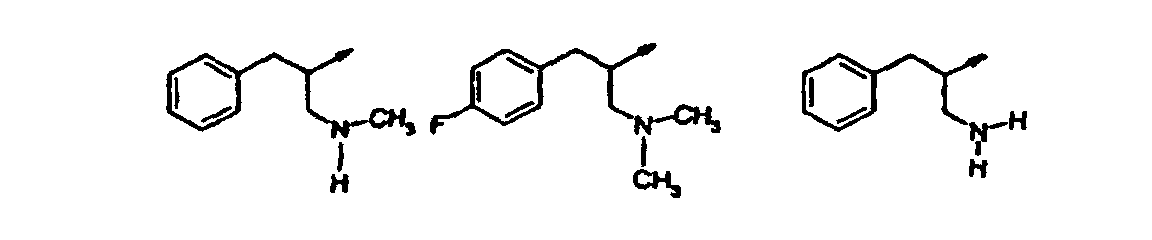
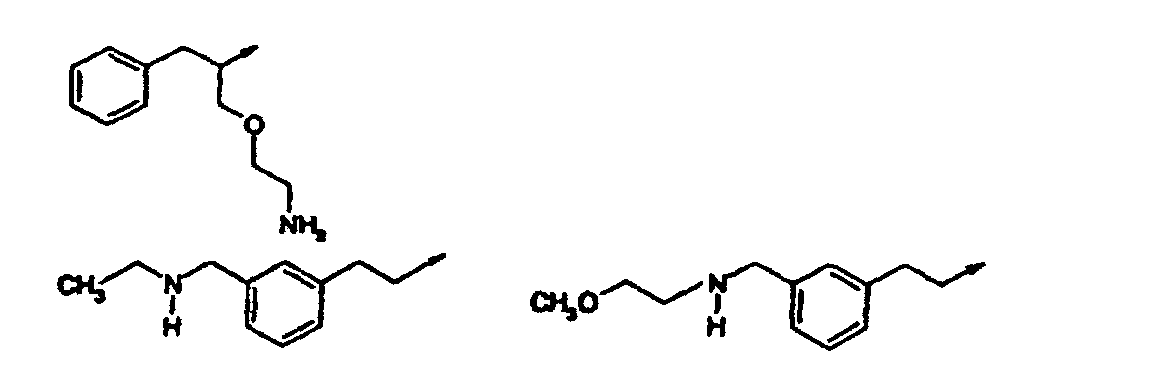
- Verbindung nach einem vorangehenden Anspruch, worin R7-B-A- ausgewählt ist aus:





- Verbindung nach einem der vorangehenden Ansprüche, ausgewählt aus der Gruppe, bestehend aus:(R,S)-2-[3-[(2-Amino-1-benzylethyl)amino]-6-methyl-2-oxo-1(2H)-pyridinyl]-N-(1H-indol-5-ylmethyl)acetamid;2-[3-(3-[(Dimethylamino)methyl]phenethylamino)-6-methyl-2-oxo-1(2H)-pyrazinyl]-N-(1H-indol-5-ylmethyl)acetamid;2-[3-Chlor-5-(3-[(dimethylamino)methyl]phenethylamino)-2-methyl-6-oxo-1(6H)-pyrazinyl]-N-(1H-indol-5-ylmethyl)acetamid;2-[3-[(1S)-1-Benzyl-2-(dimethylamino)ethyl]amino-6-methyl-2-oxo-1(2H)-pyrazinyl]-N-(1H-indol-5-ylmethyl)acetamid;2-[3-[(1S)-1-Benzyl-2-(dimethylamino)ethyl]amino-5-chlor-6-methyl-2-oxo-1(2H)-pyrazinyl]-N-(1H-indol-5-ylmethyl)acetamid;N-[(3-Methyl-1H-indol-5-yl)methyl]-2-[6-methyl-3-([3-[(methylamino)methyl]phenethyl]amino)-2-oxo-1(2H)-pyrazinyl]acetamid;2-[3-{[(1S)-1-Benzyl-2-(dimethylamino)ethyl]amino}-6-methyl-2-oxo-1(2H)-pyrazinyl]-N-[(6-methyl-1H-indazol-5-yl)-methyl]acetamid;2-[3-{[3-(3-Azetidinyl)phenethyl]amino}-6-methyl-2-oxo-1(2H)-pyrazinyl]-N-[(3-methyl-lH-indol-5-yl)methyl]acetamid;N-[(3-Methyl-1H-indol-5-yl)methyl]-2-[6-methyl-3-{[3-(1-methyl-3-azetidinyl)phenethyl]amino)-2-oxo-1(2H)-pyrazinyl] acetamid;2-[3-[(3-{[(2-Methoxyethyl)amino]methyl}phenethyl)-amino]-6-methyl-2-oxo-1(2H)-pyrazinyl]-N-[(3-methyl-1H-indol-5-yl)methyl]acetamid;2-[3-({[(2R)-1-(Cyclopropylmethyl)pyrrolidinyl]methyl}amino)-6-methyl-2-oxo-1(2H)-pyrazinyl]-N-[(3-methyl-1Hindol-5-yl)methyl]acetamid;2-[3-({[(2R)-1-Cyclopentylpyrrolidinyl]methyl}amino)-6-methyl-2-oxo-1(2H)-pyrazinyl] -N-[(3-methyl-1H-indol-5-yl)-methyl]acetamid;N-[(3-Methyl-1H-indol-5-yl)methyl]-2-[6-methyl-2-oxo-3- ({[(2R)-1-tetrahydro-2H-pyran-4-ylpyrrolidinyl]methyl}amino)-1(2H)-pyrazinyl]acetamid;N-[(3-Methyl-1H-indol-5-yl)methyl]-2-[6-methyl-3-[({(2R)-1-[(1-methylcyclopropyl)methyl]pyrrolidinyl}methyl)-amino]-2-oxo-1(2H)-pyrazinyl]acetamid;2-[3-({[(2R)-1-(2-Methoxyethyl)pyrrolidinyl]methyl}amino)-6-methyl-2-oxo-1(2H)-pyrazinyl]-N-[(3-methyl-1H-indol-5-yl)methyl]acetamid;N-[(3-Methyl-1H-indol-5-yl)methyl]-2-[6-methyl-3-({[(2R)-1-neopentylpyrrolidinyl]methyl}amino)-2-oxo-1(2H)-pyrazinyl]acetamid;2-[3-({[(2R)-1-Isobutylpyrrolidinyl]methyl}amino)-6-methyl-2-oxo-1(2H)-pyrazinyl]-N-[(3-methyl-1H-indol-5-yl)methyl]acetamid;2-[3-({[(2R)-1-(2-Methoxyethyl)pyrrolidinyl]methyl}amino)-6-methyl-2-oxo-1(2H)-pyrazinyl]-N-[(3-methyl-1H-indol-5-yl)methyl]acetamid;2-[3-({[(2R)-1-Cyclopentylpyrrolidinyl]methyl}amino)-6-methyl-2-oxo-1(2H)-pyrazinyl]-N-[(3-methyl-1H-indol-5-yl)-methyl]acetamid;2-[3-({[(2R)-1-(Cyclopropylmethyl)piperidinyl]methyl}amino)-6-methyl-2-oxo-1(2H)-pyrazinyl]-N-[(3-methyl-1Hindol-5-yl)methyl]acetamid und pharmazeutisch verträgliche Salze davon.
- Verbindung nach Anspruch 8, ausgewählt aus der Gruppe, bestehend aus:und pharmazeutisch verträgliche Salze davon.2-[3-(3-[(Dimethylamino)methyl]phenethylamino)-6-methyl-2-oxo-1(2H)-pyrazinyl]-N-(1H-indol-5-ylmethyl)acetamid;2-[3-[(1S)-1-Benzyl-2-(dimethylamino)ethyl]amino-6-methyl-2-oxo-1(2H)-pyrazinyl]-N-(1H-indol-5-ylmethyl) acetamid;N-[(3-Methyl-1H-indol-5-yl)methyl]-2-[6-methyl-3-([3-[(methylamino)methyl]phenethyl] amino)-2-oxo-1(2H)-pyrazinyl]-acetamid;2-[3-[(3-{[(2-Methoxyethyl)amino]methyl}phenethyl)-amino]-6-methyl-2-oxo-1(2H)-pyrazinyl]-N-[(3-methyl-1H-indol-5-yl)methyl]acetamid;2-[3-({[(2R)-1-(Cyclopropylmethyl)pyrrolidinyl]methyl}amino) -6-methyl-2-oxo-1(2H) -pyrazinyl]-N-[(3-methyl-1Hindol-5-yl)methyl]acetamid;2-[3-({[(2R)-1-Cyclopentylpyrrolidinyl]methyl}amino)-6-methyl-2-oxo-1(2H)-pyrazinyl]-N-[(3-methyl-1H-indol-5-yl)-methyl]acetamid;2-[3-({[(2R)-1-Isobutylpyrrolidinyl]methyl}amino)-6-methyl-2-oxo-1(2H)-pyrazinyl]-N-[(3-methyl-1H-indol-5-yl)methyl] acetamid
- Pharmazeutische Zusammensetzung, umfassend eine Verbindung der Formel (I) oder ein pharmazeutisch verträgliches Salz davon nach einem der vorangehenden Ansprüche zusammen mit einem pharmazeutisch verträglichen Träger.
- Verbindung einer Formel (I) oder ein pharmazeutisch verträgliches Salz davon nach einem der Ansprüche 1 bis 9 zur Verwendung in der Medizin.
- Verwendung einer Verbindung der Formel (I) oder eines pharmazeutisch verträglichen Salzes davon nach einem der Ansprüche 1 bis 9 bei der Herstellung eines Arzneimittels für die Behandlung oder Prophylaxe von tiefer Venenthrombose (DVT) nach Operation, schwerer medizinischer Krankheit, Paralyse, Bösartigkeit, längerem Immobilisierungstrauma, Anwendung eines Gips-Verbands an den unteren Gliedmaßen oder Brüchen der unteren Gliedmaßen oder Becken, wiederkehrender DVT, DVT während der Schwangerschaft, wenn es eine Vorgeschichte davon gibt, Wiederverschluss nach thrombolytischer Therapie, chronischer arterieller Verstopfung, peripherer vaskulärer Erkrankung, akutem Herzinfarkt, instabiler Angina, atrialer Fibrillation, thrombotischem Schlag, transienten Ischämieattacken, disseminierter intravaskulärer Gerinnung, Gerinnung in extrakorporalen Kreisläufen, Verstopfung von arteriovenösen Verzweigungen und Blutgefäßimplantaten (einschließlich Koronararterien-Bypassimplantaten), Restenose und Verstopfung nach Angioplastik, neurodegenerativen Störungen, entzündlichen Störungen oder Narbenbildung.
Applications Claiming Priority (5)
| Application Number | Priority Date | Filing Date | Title |
|---|---|---|---|
| GB9817819 | 1998-08-14 | ||
| GBGB9817819.7A GB9817819D0 (en) | 1998-08-14 | 1998-08-14 | Antithrombotic agents |
| GB9900801 | 1999-01-14 | ||
| GB9900801 | 1999-01-14 | ||
| US09/372,200 US6180627B1 (en) | 1998-08-14 | 1999-08-11 | Antithrombotic agents |
Publications (2)
| Publication Number | Publication Date |
|---|---|
| EP0997474A1 EP0997474A1 (de) | 2000-05-03 |
| EP0997474B1 true EP0997474B1 (de) | 2003-10-29 |
Family
ID=27269438
Family Applications (1)
| Application Number | Title | Priority Date | Filing Date |
|---|---|---|---|
| EP99305978A Expired - Lifetime EP0997474B1 (de) | 1998-08-14 | 1999-07-28 | Antithrombosemittel |
Country Status (10)
| Country | Link |
|---|---|
| US (1) | US6180627B1 (de) |
| EP (1) | EP0997474B1 (de) |
| JP (1) | JP3258297B2 (de) |
| AT (1) | ATE253076T1 (de) |
| BR (1) | BR9903628A (de) |
| CA (1) | CA2280279C (de) |
| DE (1) | DE69912379T2 (de) |
| DK (1) | DK0997474T3 (de) |
| ES (1) | ES2209337T3 (de) |
| PT (1) | PT997474E (de) |
Families Citing this family (37)
| Publication number | Priority date | Publication date | Assignee | Title |
|---|---|---|---|---|
| EP1124823A1 (de) * | 1998-10-30 | 2001-08-22 | Merck & Co., Inc. | Thrombin inhibitoren |
| WO2000026211A1 (en) * | 1998-10-30 | 2000-05-11 | Merck & Co., Inc. | Thrombin inhibitors |
| US6653316B1 (en) * | 1999-05-19 | 2003-11-25 | Pharmacia Corporation | Substituted polycyclic aryl and heteroaryl pyrimidinones useful for selective inhibition of the coagulation cascade |
| US6867217B1 (en) | 1999-05-19 | 2005-03-15 | Pharmacia Corporation | Substituted polycyclic aryl and heteroaryl pyridones useful for selective inhibition of the coagulation cascade |
| US6664255B1 (en) * | 1999-05-19 | 2003-12-16 | Pharmacia Corporation | Substituted polycyclic aryl and heteroaryl pyrazinones useful for selective inhibition of the coagulation cascade |
| US6908919B2 (en) * | 1999-05-19 | 2005-06-21 | Pharmacia Corporation | Substituted polycyclic aryl and heteroaryl pyrazinones useful for selective inhibition of the coagulation cascade |
| US6750342B1 (en) | 1999-05-19 | 2004-06-15 | Pharmacia Corporation | Substituted polycyclic aryl and heteroaryl pyrimidinones useful for selective inhibition of the coagulation cascade |
| US6458952B1 (en) * | 1999-05-19 | 2002-10-01 | Pharmacia Corporation | Substituted polycyclic aryl and heteroaryl uracils useful for selective inhibition of the coagulation cascade |
| US6716838B1 (en) | 1999-05-19 | 2004-04-06 | Pharmacia Corporation | Substituted polycyclic aryl and heteroaryl uracils as anticoagulative agents |
| US7015230B1 (en) | 1999-05-19 | 2006-03-21 | Pharmacia Corporation | Substituted polycyclic aryl and heteroaryl uracils useful for selective inhibition of the coagulation cascade |
| US6906068B1 (en) | 1999-05-19 | 2005-06-14 | Pharmacia Corporation | Substituted polycyclic aryl and heteroaryl 1,2,4 - triazinones useful as anticoagulants |
| WO2001068605A1 (en) | 2000-03-13 | 2001-09-20 | Pharmacia Corporation | Polycyclic aryl and heteroaryl substituted benzenes useful for selective inhibition of the coagulation cascade |
| CA2403558A1 (en) | 2000-03-23 | 2001-09-27 | Merck & Co., Inc. | Thrombin inhibitors |
| AU2001249870A1 (en) | 2000-04-05 | 2001-10-23 | Pharmacia Corporation | Polycyclic aryl and heteroaryl substituted 4-pyrones useful for selective inhibition of the coagulation cascade |
| CA2405306A1 (en) * | 2000-04-05 | 2001-10-18 | Pharmacia Corporation | Polycyclic aryl and heteroaryl substituted 4-pyridones useful for selective inhibition of the coagulation cascade |
| CA2405684A1 (en) * | 2000-04-17 | 2001-10-25 | Pharmacia Corporation | Polycyclic aryl and heteroaryl substituted 1,4-quinones useful for selective inhibition of the coagulation cascade |
| US7119094B1 (en) | 2000-11-20 | 2006-10-10 | Warner-Lambert Company | Substituted polycyclic aryl and heteroarpyl pyrazinones useful for selective inhibition of the coagulation cascade |
| US7015223B1 (en) | 2000-11-20 | 2006-03-21 | Pharmacia Corporation | Substituted polycyclic aryl and heteroaryl 1,2,4-triazinones useful for selective inhibition of the coagulation cascade |
| MXPA03004458A (es) | 2000-11-20 | 2005-01-25 | Pharmacia Corp | Arilpiridinas y heteroarilpiridinas sustituidas utiles para inhibicion selectiva de la cascada de coagulacion. |
| US20030236257A1 (en) * | 2001-04-04 | 2003-12-25 | South Michael S. | Polycyclic aryl and heteroaryl substituted 4-pyridones useful for selective inhibition of the cogulation cascade |
| CN101444496B (zh) * | 2001-06-12 | 2011-04-13 | 维尔斯达医疗公司 | 用于治疗代谢失调的化合物 |
| MXPA04003167A (es) * | 2001-10-03 | 2004-07-08 | Pharmacia Corp | Compuestos heterociclicos insaturados de 6 miembros utiles para la inhibicion selectiva de la cascada de coagulacion. |
| US20040082585A1 (en) * | 2001-10-03 | 2004-04-29 | Pharmacia Corporation | Prodrugs of substituted polycyclic compounds useful for selective inhibition of the coagulation cascade |
| EP1438292A1 (de) | 2001-10-03 | 2004-07-21 | Pharmacia Corporation | 6-gliedrige heterocyclische verbindungen, die sich zur selektiven inhibierung der koagulationskaskade eignen |
| AU2002367752A1 (en) | 2001-10-03 | 2003-11-17 | Pharmacia Corporation | Substituted 5-membered polycyclic compounds useful for selective inhibition of the coagulation cascade |
| CA2392486A1 (en) | 2002-07-05 | 2002-12-08 | Duchesnay Inc. | Pharmaceutical dosage form bearing pregnancy-friendly indicia |
| US8580782B2 (en) * | 2002-09-04 | 2013-11-12 | Merck Sharp & Dohme Corp. | Substituted pyrazolo[1,5-a]pyrimidines as cyclin dependent kinase inhibitors |
| PL224879B1 (pl) | 2002-09-04 | 2017-02-28 | Pharmacopeia Drug Discovery Inc | Pirazolo [1,5-a] pirymidynowy związek, jego zastosowanie do wytwarzania leku oraz zawierająca go farmaceutyczna kompozycja |
| US8673924B2 (en) * | 2002-09-04 | 2014-03-18 | Merck Sharp & Dohme Corp. | Substituted pyrazolo[1,5-a]pyrimidines as cyclin dependent kinase inhibitors |
| US20080039444A1 (en) * | 2006-04-20 | 2008-02-14 | Glaxo Group Limited | Compounds |
| US20100184770A1 (en) * | 2006-12-20 | 2010-07-22 | Glaxo Group Limited | Compounds |
| ATE525370T1 (de) * | 2007-10-11 | 2011-10-15 | Glaxo Group Ltd | Phthalazin- und pyridoä3,4- düpyridazinverbindungen als h1-rezeptor- antagonisten |
| RU2477144C2 (ru) * | 2010-03-22 | 2013-03-10 | Федеральное государственное бюджетное учреждение "Научно-исследовательский институт фармакологии имени В.В. Закусова" Российской академии медицинских наук | Лекарственное средство с антиаритмическим и антифибрилляторным действием |
| RU2613155C1 (ru) * | 2016-05-25 | 2017-03-15 | Общество с ограниченной ответственностью "Саентифик Фьючер Менеджмент" (ООО "СФМ") | Способ лечения больных с острыми тромбозами венозного русла нижних конечностей |
| RS66218B1 (sr) | 2019-07-01 | 2024-12-31 | Tonix Pharma Ltd | Anti-cd154 antitela i njihove upotrebe |
| WO2022150452A1 (en) | 2021-01-06 | 2022-07-14 | Seth Lederman | Methods of inducing immune tolerance with modified anti-cd154 antibodies |
| WO2025248134A1 (en) | 2024-05-31 | 2025-12-04 | Tonix Pharma Limited | Treatment methods comprising administration of modified cd154 antibodies |
Family Cites Families (14)
| Publication number | Priority date | Publication date | Assignee | Title |
|---|---|---|---|---|
| CA2122397A1 (en) | 1993-05-03 | 1994-11-04 | Spencer D. Kimball | Guanidinyl- or amidinyl-substituted heterocyclic thrombin inhibitors |
| GB9322976D0 (en) | 1993-11-08 | 1994-01-05 | Pfizer Ltd | Therapeutic agents |
| AU691673B2 (en) * | 1994-11-14 | 1998-05-21 | Dow Agrosciences Llc | Pyridazinones and their use as fungicides |
| GB9424842D0 (en) * | 1994-12-09 | 1995-02-08 | British Tech Group | Pharmaceutical compositions |
| MX9704439A (es) | 1994-12-13 | 1997-10-31 | Corvas Int Inc | Derivados heterociclicos aromaticos como inhibidores de enzima. |
| CA2224437A1 (en) | 1995-06-27 | 1997-01-16 | Merck & Co., Inc. | Pyridinone-thrombin inhibitors |
| EP0923372A4 (de) | 1996-02-22 | 2001-09-05 | Merck & Co Inc | Inhibitoren von pyridinone thrombin |
| AU714985B2 (en) * | 1996-04-23 | 2000-01-13 | Merck & Co., Inc. | Pyrazinone thrombin inhibitors |
| JP2002511052A (ja) * | 1996-08-29 | 2002-04-09 | メルク エンド カンパニー インコーポレーテッド | インテグリンアンタゴニスト |
| AU4172397A (en) | 1996-09-06 | 1998-03-26 | Biochem Pharma Inc. | Lactam inhibitors of thrombin |
| WO1998016547A1 (en) | 1996-10-11 | 1998-04-23 | Cor Therapeutics, Inc. | SELECTIVE FACTOR Xa INHIBITORS |
| ATE234091T1 (de) * | 1996-10-24 | 2003-03-15 | Merck & Co Inc | Thrombin inhibitoren |
| IL123986A (en) * | 1997-04-24 | 2011-10-31 | Organon Nv | Medicinal compounds |
| JP2001514227A (ja) | 1997-09-05 | 2001-09-11 | メルク エンド カムパニー インコーポレーテッド | ピラジノン系トロンビン阻害薬 |
-
1999
- 1999-07-28 PT PT99305978T patent/PT997474E/pt unknown
- 1999-07-28 DK DK99305978T patent/DK0997474T3/da active
- 1999-07-28 ES ES99305978T patent/ES2209337T3/es not_active Expired - Lifetime
- 1999-07-28 AT AT99305978T patent/ATE253076T1/de not_active IP Right Cessation
- 1999-07-28 DE DE69912379T patent/DE69912379T2/de not_active Expired - Fee Related
- 1999-07-28 EP EP99305978A patent/EP0997474B1/de not_active Expired - Lifetime
- 1999-08-11 US US09/372,200 patent/US6180627B1/en not_active Expired - Fee Related
- 1999-08-12 CA CA002280279A patent/CA2280279C/en not_active Expired - Fee Related
- 1999-08-13 JP JP22949199A patent/JP3258297B2/ja not_active Expired - Fee Related
- 1999-08-16 BR BR9903628-2A patent/BR9903628A/pt not_active Application Discontinuation
Also Published As
| Publication number | Publication date |
|---|---|
| DE69912379T2 (de) | 2004-05-06 |
| BR9903628A (pt) | 2000-09-26 |
| PT997474E (pt) | 2004-01-30 |
| JP3258297B2 (ja) | 2002-02-18 |
| CA2280279C (en) | 2004-02-17 |
| US6180627B1 (en) | 2001-01-30 |
| DK0997474T3 (da) | 2004-02-09 |
| ES2209337T3 (es) | 2004-06-16 |
| DE69912379D1 (de) | 2003-12-04 |
| ATE253076T1 (de) | 2003-11-15 |
| CA2280279A1 (en) | 2000-02-14 |
| EP0997474A1 (de) | 2000-05-03 |
| JP2000063380A (ja) | 2000-02-29 |
Similar Documents
| Publication | Publication Date | Title |
|---|---|---|
| EP0997474B1 (de) | Antithrombosemittel | |
| US6030972A (en) | Dipeptide amidines as thrombin inhibitors | |
| US9453048B2 (en) | IAP antagonists | |
| KR100504449B1 (ko) | 세포 유착 억제제 | |
| US7772180B2 (en) | Hepatitis C virus inhibitors | |
| CN101193908B (zh) | 有机化合物 | |
| US5550131A (en) | 2-piperazinone compounds and their use | |
| RU2097378C1 (ru) | ПРОИЗВОДНЫЕ N-АЦИЛ- α -АМИНОКИСЛОТЫ ИЛИ ИХ ФИЗИОЛОГИЧЕСКИ ПРИЕМЛЕМЫЕ СОЛИ, ПРОСТЫЕ ИЛИ СЛОЖНЫЕ ЭФИРЫ, АМИДЫ ИЛИ ГИДРАТЫ И КОМПОЗИЦИЯ ИНГИБИРУЮЩАЯ СВЯЗЫВАНИЕ АДГЕЗИВНЫХ ПРОТЕИНОВ С ТРОМБОЦИТАМИ И АГРЕГАЦИЮ ТРОМБОЦИТОВ | |
| US6515011B2 (en) | Thrombin inhibitors | |
| JP2003502314A (ja) | 化合物 | |
| UA80973C2 (uk) | Інгібітори вірусу гепатиту с | |
| HU222788B1 (hu) | Cisztein proteáz inhibitorok | |
| JPH09500391A (ja) | 抗血栓形成性アミジノフェニルアラニンおよびアミジノピリジルアラニン誘導体 | |
| JP2000505475A (ja) | イムノフィリン由来ドメインとのキメラタンパク質用の多量体化剤としてのラパマイシンの合成誘導体 | |
| KR19990007998A (ko) | 복소환식 아미드 화합물 및 그의 의약 용도 | |
| WO2013174937A1 (en) | Substituted pyrrolidines as factor xia inhibitors for the treatment thromboembolic diseases | |
| EP1055683A1 (de) | Neuartiges acetamid-derivat und verwendung desselben | |
| JP2000514818A (ja) | ブラジキニン拮抗剤としてのn−ベンゼンスルホニル−l−プロリン誘導体 | |
| US6417203B1 (en) | Antithrombotic agents | |
| US12528779B2 (en) | Heterocyclic compounds and related methods | |
| JP3943332B2 (ja) | トリペプチジルペプチダーゼインヒビター | |
| EP1283825B1 (de) | N-substituierte peptidylnitrile als cystein-cathepsin-inhibitoren | |
| JPH07330695A (ja) | 新規カルボン酸誘導体またはその塩、およびその医薬用途 | |
| EP0110484A1 (de) | Aminopyridincarbonsäure-Derivate, Verfahren zu ihrer Herstellung und diese enthaltende pharmazeutische Zusammensetzungen | |
| MXPA99007603A (en) | Antitromboti agents |
Legal Events
| Date | Code | Title | Description |
|---|---|---|---|
| PUAI | Public reference made under article 153(3) epc to a published international application that has entered the european phase |
Free format text: ORIGINAL CODE: 0009012 |
|
| 17P | Request for examination filed |
Effective date: 19990809 |
|
| AK | Designated contracting states |
Kind code of ref document: A1 Designated state(s): AT BE CH CY DE DK ES FI FR GB GR IE IT LI LU MC NL PT SE |
|
| AX | Request for extension of the european patent |
Free format text: AL;LT;LV;MK;RO;SI |
|
| AKX | Designation fees paid |
Free format text: AT BE CH CY DE DK ES FI FR GB GR IE IT LI LU MC NL PT SE |
|
| 17Q | First examination report despatched |
Effective date: 20011017 |
|
| GRAH | Despatch of communication of intention to grant a patent |
Free format text: ORIGINAL CODE: EPIDOS IGRA |
|
| GRAS | Grant fee paid |
Free format text: ORIGINAL CODE: EPIDOSNIGR3 |
|
| GRAA | (expected) grant |
Free format text: ORIGINAL CODE: 0009210 |
|
| AK | Designated contracting states |
Kind code of ref document: B1 Designated state(s): AT BE CH CY DE DK ES FI FR GB GR IE IT LI LU MC NL PT SE |
|
| REG | Reference to a national code |
Ref country code: GB Ref legal event code: FG4D |
|
| REG | Reference to a national code |
Ref country code: CH Ref legal event code: EP |
|
| REG | Reference to a national code |
Ref country code: IE Ref legal event code: FG4D |
|
| REG | Reference to a national code |
Ref country code: CH Ref legal event code: NV Representative=s name: E. BLUM & CO. PATENTANWAELTE |
|
| REF | Corresponds to: |
Ref document number: 69912379 Country of ref document: DE Date of ref document: 20031204 Kind code of ref document: P |
|
| REG | Reference to a national code |
Ref country code: GR Ref legal event code: EP Ref document number: 20030404786 Country of ref document: GR |
|
| REG | Reference to a national code |
Ref country code: SE Ref legal event code: TRGR |
|
| REG | Reference to a national code |
Ref country code: DK Ref legal event code: T3 |
|
| NLR4 | Nl: receipt of corrected translation in the netherlands language at the initiative of the proprietor of the patent | ||
| ET | Fr: translation filed | ||
| REG | Reference to a national code |
Ref country code: ES Ref legal event code: FG2A Ref document number: 2209337 Country of ref document: ES Kind code of ref document: T3 |
|
| PG25 | Lapsed in a contracting state [announced via postgrant information from national office to epo] |
Ref country code: MC Free format text: LAPSE BECAUSE OF NON-PAYMENT OF DUE FEES Effective date: 20040731 |
|
| PLBE | No opposition filed within time limit |
Free format text: ORIGINAL CODE: 0009261 |
|
| STAA | Information on the status of an ep patent application or granted ep patent |
Free format text: STATUS: NO OPPOSITION FILED WITHIN TIME LIMIT |
|
| 26N | No opposition filed |
Effective date: 20040730 |
|
| PGFP | Annual fee paid to national office [announced via postgrant information from national office to epo] |
Ref country code: AT Payment date: 20050614 Year of fee payment: 7 |
|
| PGFP | Annual fee paid to national office [announced via postgrant information from national office to epo] |
Ref country code: DK Payment date: 20050615 Year of fee payment: 7 |
|
| PGFP | Annual fee paid to national office [announced via postgrant information from national office to epo] |
Ref country code: NL Payment date: 20050616 Year of fee payment: 7 |
|
| PGFP | Annual fee paid to national office [announced via postgrant information from national office to epo] |
Ref country code: LU Payment date: 20050701 Year of fee payment: 7 |
|
| PGFP | Annual fee paid to national office [announced via postgrant information from national office to epo] |
Ref country code: SE Payment date: 20050704 Year of fee payment: 7 Ref country code: FI Payment date: 20050704 Year of fee payment: 7 |
|
| PGFP | Annual fee paid to national office [announced via postgrant information from national office to epo] |
Ref country code: GR Payment date: 20050726 Year of fee payment: 7 |
|
| PGFP | Annual fee paid to national office [announced via postgrant information from national office to epo] |
Ref country code: BE Payment date: 20050728 Year of fee payment: 7 |
|
| PGFP | Annual fee paid to national office [announced via postgrant information from national office to epo] |
Ref country code: PT Payment date: 20050729 Year of fee payment: 7 |
|
| PGFP | Annual fee paid to national office [announced via postgrant information from national office to epo] |
Ref country code: CY Payment date: 20050923 Year of fee payment: 7 |
|
| PGFP | Annual fee paid to national office [announced via postgrant information from national office to epo] |
Ref country code: CH Payment date: 20050927 Year of fee payment: 7 |
|
| REG | Reference to a national code |
Ref country code: PT Ref legal event code: NF4A Effective date: 20050729 |
|
| PGFP | Annual fee paid to national office [announced via postgrant information from national office to epo] |
Ref country code: GB Payment date: 20060614 Year of fee payment: 8 |
|
| PGFP | Annual fee paid to national office [announced via postgrant information from national office to epo] |
Ref country code: FR Payment date: 20060705 Year of fee payment: 8 |
|
| PGFP | Annual fee paid to national office [announced via postgrant information from national office to epo] |
Ref country code: ES Payment date: 20060710 Year of fee payment: 8 |
|
| PGFP | Annual fee paid to national office [announced via postgrant information from national office to epo] |
Ref country code: IE Payment date: 20060720 Year of fee payment: 8 |
|
| PG25 | Lapsed in a contracting state [announced via postgrant information from national office to epo] |
Ref country code: FI Free format text: LAPSE BECAUSE OF NON-PAYMENT OF DUE FEES Effective date: 20060728 Ref country code: CY Free format text: LAPSE BECAUSE OF NON-PAYMENT OF DUE FEES Effective date: 20060728 Ref country code: AT Free format text: LAPSE BECAUSE OF NON-PAYMENT OF DUE FEES Effective date: 20060728 |
|
| PG25 | Lapsed in a contracting state [announced via postgrant information from national office to epo] |
Ref country code: SE Free format text: LAPSE BECAUSE OF NON-PAYMENT OF DUE FEES Effective date: 20060729 |
|
| PG25 | Lapsed in a contracting state [announced via postgrant information from national office to epo] |
Ref country code: LI Free format text: LAPSE BECAUSE OF NON-PAYMENT OF DUE FEES Effective date: 20060731 Ref country code: DK Free format text: LAPSE BECAUSE OF NON-PAYMENT OF DUE FEES Effective date: 20060731 Ref country code: CH Free format text: LAPSE BECAUSE OF NON-PAYMENT OF DUE FEES Effective date: 20060731 Ref country code: BE Free format text: LAPSE BECAUSE OF NON-PAYMENT OF DUE FEES Effective date: 20060731 |
|
| PGFP | Annual fee paid to national office [announced via postgrant information from national office to epo] |
Ref country code: IT Payment date: 20060731 Year of fee payment: 8 Ref country code: DE Payment date: 20060731 Year of fee payment: 8 |
|
| PG25 | Lapsed in a contracting state [announced via postgrant information from national office to epo] |
Ref country code: PT Free format text: LAPSE BECAUSE OF NON-PAYMENT OF DUE FEES Effective date: 20070129 |
|
| PG25 | Lapsed in a contracting state [announced via postgrant information from national office to epo] |
Ref country code: NL Free format text: LAPSE BECAUSE OF NON-PAYMENT OF DUE FEES Effective date: 20070201 |
|
| REG | Reference to a national code |
Ref country code: PT Ref legal event code: MM4A Free format text: LAPSE DUE TO NON-PAYMENT OF FEES Effective date: 20070129 |
|
| REG | Reference to a national code |
Ref country code: DK Ref legal event code: EBP |
|
| REG | Reference to a national code |
Ref country code: CH Ref legal event code: PL |
|
| EUG | Se: european patent has lapsed | ||
| NLV4 | Nl: lapsed or anulled due to non-payment of the annual fee |
Effective date: 20070201 |
|
| BERE | Be: lapsed |
Owner name: *PFIZER INC. Effective date: 20060731 |
|
| GBPC | Gb: european patent ceased through non-payment of renewal fee |
Effective date: 20070728 |
|
| PG25 | Lapsed in a contracting state [announced via postgrant information from national office to epo] |
Ref country code: DE Free format text: LAPSE BECAUSE OF NON-PAYMENT OF DUE FEES Effective date: 20080201 |
|
| REG | Reference to a national code |
Ref country code: IE Ref legal event code: MM4A |
|
| PG25 | Lapsed in a contracting state [announced via postgrant information from national office to epo] |
Ref country code: GB Free format text: LAPSE BECAUSE OF NON-PAYMENT OF DUE FEES Effective date: 20070728 |
|
| REG | Reference to a national code |
Ref country code: FR Ref legal event code: ST Effective date: 20080331 |
|
| PG25 | Lapsed in a contracting state [announced via postgrant information from national office to epo] |
Ref country code: LU Free format text: LAPSE BECAUSE OF NON-PAYMENT OF DUE FEES Effective date: 20060728 |
|
| PG25 | Lapsed in a contracting state [announced via postgrant information from national office to epo] |
Ref country code: FR Free format text: LAPSE BECAUSE OF NON-PAYMENT OF DUE FEES Effective date: 20070731 |
|
| REG | Reference to a national code |
Ref country code: ES Ref legal event code: FD2A Effective date: 20070730 |
|
| PG25 | Lapsed in a contracting state [announced via postgrant information from national office to epo] |
Ref country code: IE Free format text: LAPSE BECAUSE OF NON-PAYMENT OF DUE FEES Effective date: 20070730 Ref country code: GR Free format text: LAPSE BECAUSE OF NON-PAYMENT OF DUE FEES Effective date: 20070202 |
|
| PG25 | Lapsed in a contracting state [announced via postgrant information from national office to epo] |
Ref country code: ES Free format text: LAPSE BECAUSE OF NON-PAYMENT OF DUE FEES Effective date: 20070730 |
|
| PG25 | Lapsed in a contracting state [announced via postgrant information from national office to epo] |
Ref country code: IT Free format text: LAPSE BECAUSE OF NON-PAYMENT OF DUE FEES Effective date: 20070728 |